
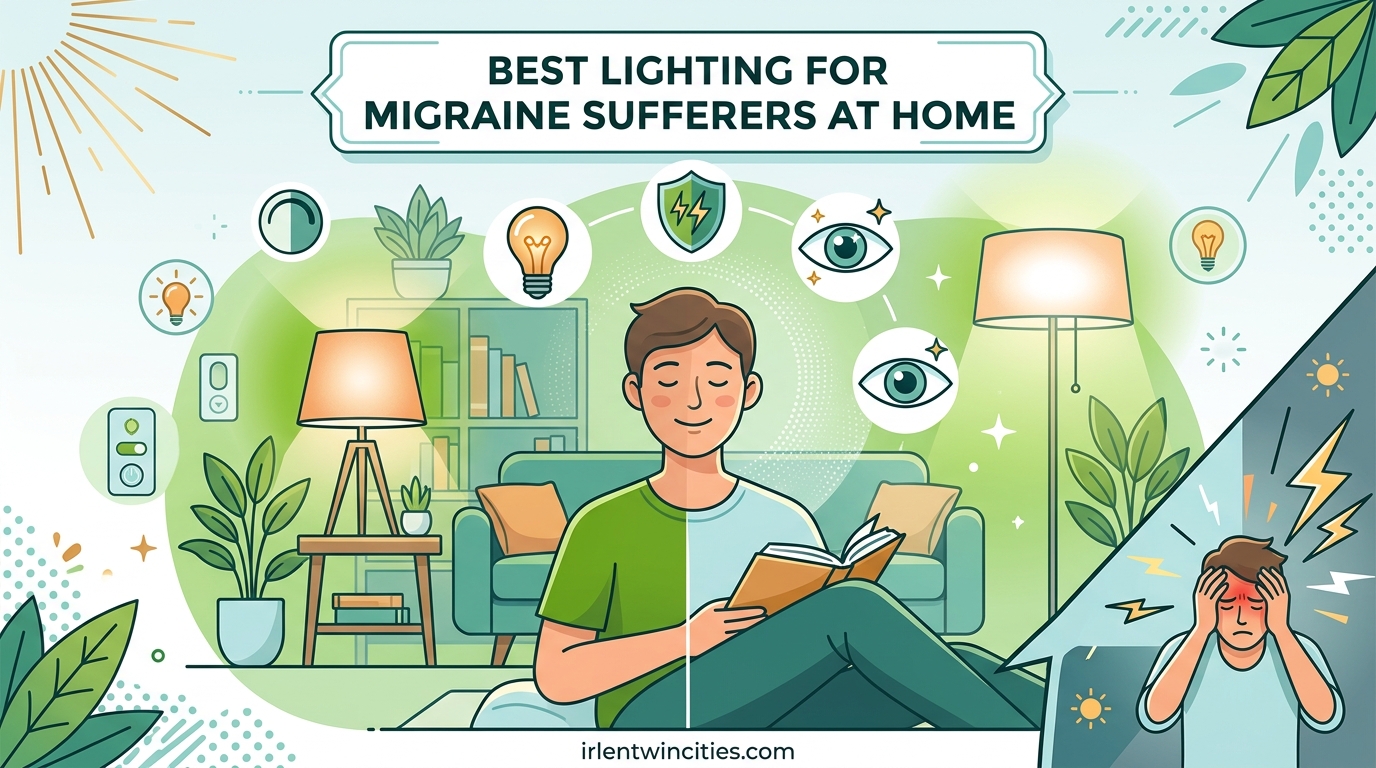
Finding the best lighting for migraine sufferers at home can feel like a constant battle. I have lived with chronic migraines for over a decade, and I have learned that the wrong light bulb can turn a productive day into hours of pain.
This guide shares everything I have discovered about creating a migraine-friendly home environment. You will learn why certain lights trigger attacks, which bulbs actually help, and how to set up each room in your house for maximum comfort.
Whether you are working from home, trying to get better sleep, or simply want to reduce your daily migraine triggers, the lighting changes in this guide can make a real difference in how you feel.
Table of Contents
How Light Sensitivity Affects Migraine Sufferers
Photophobia affects between 80% and 90% of people who experience migraines. This heightened light sensitivity makes ordinary lighting feel painful and unbearable during an attack.
When you have photophobia, the neural pathways connecting your eyes to your brain become hypersensitive. Light that seems normal to others feels intensely bright and uncomfortable to you. This is not a matter of personal preference. It is a physiological response rooted in how your nervous system processes visual information.
Research from the 2026 Annual Headache Society meeting revealed that specific wavelengths of light activate pain centers in the brain differently. Blue light wavelengths between 480 and 520 nanometers create the strongest pain response. Green light at around 520 nanometers creates the smallest pain response, which explains why green light therapy has gained attention as a treatment option.
During a migraine attack, even dim light can feel overwhelming. Studies show that exposure to light during an attack intensifies pain by activating the cerebral cortex and increasing the release of migraine-related neurotransmitters. This is why many sufferers retreat to dark rooms during attacks.
Understanding these mechanisms matters because it helps you make informed choices about your home lighting. You are not being difficult or picky when you ask for dimmer lights. You are protecting your neurological health.
Best Lighting for Migraine Sufferers at Home: The Complete Guide
The best lighting for migraine sufferers at home combines warm color temperatures, flicker-free sources, and adjustable brightness. After testing dozens of setups in my own home, I have identified the options that consistently provide relief.
Your goal should be creating an environment where your eyes and brain can relax. This means eliminating harsh, cool-toned light and replacing it with warm, steady illumination that does not strain your visual system.
Types of Lighting to Avoid
Before choosing what to add to your home, you need to know what to remove. These five lighting types are common migraine triggers that you should eliminate whenever possible.
1. Fluorescent Lights and CFL Bulbs
Fluorescent lights are the worst offenders for migraine sufferers. They emit cool, harsh light in the blue spectrum. They also flicker at a rate that your eyes detect even when you cannot consciously see it.
Old fluorescent tubes flicker at 60 hertz, which matches a brainwave frequency associated with stress and anxiety. Modern CFL bulbs have improved but still produce inconsistent light that can trigger headaches. If you have fluorescent fixtures, replacing them should be your top priority.
2. Cool White and Daylight LEDs (5000K and Above)
LED bulbs labeled “daylight,” “cool white,” or “bright white” typically have color temperatures of 5000K to 6500K. These emit a blue-rich light that activates the pain-sensitive photoreceptors in your eyes.
Many people buy these bulbs thinking more brightness equals better visibility. For migraine sufferers, this extra blue light creates more strain than clarity. Avoid anything above 4000K for living spaces.
3. Unfiltered Natural Sunlight
Natural light is generally good for your health and circadian rhythm. However, direct, unfiltered sunlight streaming through windows can trigger migraines.
The intensity of midday sun and the high blue light content can overwhelm sensitive eyes. You need natural light, but you also need ways to filter and diffuse it throughout the day.
4. RGB and Gaming Lighting
RGB lighting strips and gaming peripherals often cycle through bright colors or default to cool blue tones. Forum discussions reveal that many migraine sufferers report these lights as significant triggers.
If you use RGB lighting, set it to warm white at 2700K or below. Avoid color cycling modes entirely.
5. Cheap LED Bulbs with Visible Flicker
Not all LED bulbs are equal. Budget options often use lower-quality drivers that create visible or sub-visible flicker. You can test this by waving your hand quickly under the light. If you see a strobe effect, the bulb flickers.
Look for bulbs labeled “flicker-free” or check reviews for mentions of flickering before buying.
Best Lighting Options for Migraine Relief
Now that you know what to avoid, let us explore the lighting options that actually help. These are the solutions I use in my own home and recommend to fellow migraine sufferers.
Warm LED Bulbs (2700K to 3000K)
Warm LED bulbs with a color temperature of 2700K to 3000K are the best modern option for migraine sufferers. They provide the energy efficiency of LED technology with a color spectrum that is gentle on sensitive eyes.
Look for bulbs labeled “warm white,” “soft white,” or “2700K.” Brands like Philips Ultra Definition, Sunsy, and Waveform receive consistent positive feedback in migraine forums for their warm, steady output.
When shopping, check the color rendering index (CRI) rating. A CRI of 90 or above indicates the bulb renders colors accurately while maintaining warm tones. Lower CRI bulbs can create visual strain even at warm temperatures.
Incandescent and Halogen Bulbs
Incandescent bulbs produce the warmest, most natural light available. They operate by heating a filament until it glows, creating a continuous spectrum without the blue spike typical of LEDs.
Unfortunately, incandescent bulbs are increasingly difficult to find due to energy efficiency regulations. Halogen bulbs are the closest alternative still widely available. They produce a warm, steady light at around 2700K to 3000K without flicker.
Use these bulbs in spaces where you spend the most time during migraine attacks. Bedrooms and reading nooks benefit especially from their gentle glow.
Green Light Therapy (520nm)
Green light therapy represents one of the most exciting developments in migraine treatment. Research from Harvard Medical School and other institutions shows that narrow-band green light at 520 nanometers can actually reduce migraine pain and light sensitivity.
Unlike other light colors, green light produces the smallest electrical signal in the retina. This means it activates fewer pain pathways while still allowing you to see and function. Studies show that exposure to pure green light during a migraine attack can reduce pain intensity by 20% to 60%.
Specialty green light bulbs and lamps designed for migraine relief are now available. These emit light at the specific 520nm wavelength that research supports. You can set up a green light lamp in a relaxation area or use it during attacks for relief.
I keep a green light bulb in my bedside lamp. When a migraine hits, I switch to that bulb and find I can tolerate light much better than with regular lighting.
Smart Bulbs and Dimmer Switches
Adjustability is crucial for migraine management. Your lighting needs change throughout the day and during different migraine phases. Smart bulbs and dimmer switches let you adapt your environment without replacing bulbs.
Smart bulbs that connect to physical remotes are preferable to app-controlled options. During a migraine, looking at a phone screen to adjust lights can worsen symptoms. GE LED bulbs with included remotes receive positive reviews for this reason.
Set up your smart bulbs to default to 2700K warm white. Program lower brightness levels for evening hours to support your circadian rhythm and reduce evening migraine triggers.
Understanding Kelvin Temperature for Migraine Lighting
Kelvin temperature measures the color of light emitted by a bulb. Lower numbers mean warmer, more yellow light. Higher numbers mean cooler, more blue light. For migraine sufferers, staying in the 2700K to 3000K range is essential.
Color Temperature Comparison Guide
| Kelvin Rating | Light Color | Best For | Migraine Risk |
|---|---|---|---|
| 2200K | Very warm amber | Evening, bedrooms | Lowest |
| 2700K | Warm white | Living spaces | Low |
| 3000K | Soft white | Kitchens, offices | Moderate |
| 4000K | Neutral white | Task lighting | High |
| 5000K+ | Cool white/daylight | Avoid for migraines | Highest |
When shopping for bulbs, always check the Kelvin rating on the packaging. Ignore marketing terms like “daylight” or “natural light.” These often indicate cool, blue-rich light that triggers migraines.
Your entire home should use 2700K or 3000K bulbs for the best migraine protection. Reserve 4000K only for specific task areas where you need maximum visibility for short periods.
Room-by-Room Lighting Guide for Migraine Sufferers
Each room in your home serves different purposes and requires different lighting strategies. Here is how I have optimized each space in my house for migraine comfort.
Bedroom Lighting for Sleep and Recovery
Your bedroom is your sanctuary during migraine attacks. It needs to support both healthy sleep and comfortable wakefulness.
Use 2200K amber bulbs in bedside lamps for the gentlest light. These support melatonin production and help you wind down in the evening. Avoid overhead lighting entirely in bedrooms. Rely on multiple table and floor lamps positioned at eye level or below to eliminate glare.
Install blackout curtains to block morning sun that can trigger early-day migraines. Keep a green light bulb in one bedside lamp for use during nighttime attacks when you need some light but cannot tolerate regular bulbs.
Home Office Lighting That Works
Working from home with migraines requires careful lighting setup. The wrong configuration can turn a productive workday into hours of pain.
Position your desk perpendicular to windows, never facing them directly. This prevents screen glare while still providing natural light. Use a desk lamp with a 2700K bulb positioned to the side, not behind or in front of your monitor.
Turn off overhead fluorescent or LED panels if possible. Replace them with floor lamps or wall-mounted fixtures with warm bulbs. Add an anti-glare screen protector to your monitor if you cannot adjust the lighting around it.
Living Room and Kitchen Ambient Lighting
Living spaces need layered lighting that you can adjust throughout the day. Install dimmer switches on all overhead fixtures to reduce brightness when needed.
In the kitchen, use under-cabinet lighting with 3000K LED strips for task work. This provides visibility for cooking without the harsh overhead lighting that triggers headaches. Keep pendant lights over islands dimmable for flexible illumination.
Living rooms benefit from multiple light sources at different heights. Use floor lamps, table lamps, and wall sconces to create soft, indirect lighting. Avoid recessed can lights that create harsh downward beams.
Bathroom Lighting Without Glare
Bathrooms often have the worst lighting for migraines. Bright vanity lights above mirrors create intense glare and shadows.
Replace vanity bar lights with sconces mounted at eye level on either side of the mirror. This eliminates shadows and reduces glare. Use 2700K bulbs maximum in bathroom fixtures.
For morning routines, keep a small lamp with a warm bulb on the counter. Use this instead of bright overhead lights when you first wake up and your eyes are still adjusting.
Budget-Friendly Lighting Solutions
Creating a migraine-friendly home does not require expensive specialty products. These affordable solutions have helped many sufferers, including me, without breaking the bank.
Paper lamp shades from IKEA or similar stores cost under ten dollars and effectively diffuse harsh LED light. The paper material scatters light in all directions, eliminating harsh glare and hotspots.
Multiple small lamps spread throughout a room create better lighting than one bright overhead fixture. You can find affordable table lamps at thrift stores and discount retailers. Position three to four lamps around your living space instead of relying on ceiling lights.
LED light strips placed behind furniture or in alcoves provide indirect ambient lighting. These cost twenty to thirty dollars and create a soft glow without visible bulbs. Look for strips with adjustable color temperature and select the warmest setting.
If you rent and cannot change fixtures, use plug-in pendant lights and floor lamps to bypass built-in lighting entirely. You can take these with you when you move.
Managing Screens and Digital Eye Strain
Digital screens emit concentrated blue light that triggers migraines. Managing your screen environment is as important as managing your room lighting.
Blue Light Reduction Settings
Enable blue light filters on all your devices. Windows and macOS both include Night Light and Night Shift features. Set these to activate from sunset to sunrise at the warmest setting available.
On smartphones, use the built-in blue light filter and reduce brightness to the lowest comfortable level. Many phones can adjust white point to reduce blue light even further in accessibility settings.
Monitor Setup and Positioning
Position your monitor at least an arm’s length away from your eyes. This reduces the intensity of light hitting your retinas. Tilt the screen slightly downward to minimize glare from overhead lights.
Adjust your monitor brightness to match the ambient light in your room. A screen that is too bright or too dim compared to your surroundings creates contrast strain. Use dark mode or dark themes whenever possible, as they emit less total light.
Break Schedules and Eye Rest
Follow the 20-20-20 rule. Every 20 minutes, look at something 20 feet away for 20 seconds. This gives your eye muscles a break from the constant focus required for screen work.
During migraine-prone periods, reduce screen time further. If you must work, increase font sizes and zoom levels to reduce eye strain. Every small reduction in visual load helps prevent attacks.
Quick Start Checklist for Migraine-Friendly Lighting
Use this checklist to quickly assess and improve your home lighting. I recommend working through one room at a time to avoid overwhelm.
- Replace all bulbs above 3000K with 2700K warm white options
- Remove fluorescent bulbs and fixtures immediately
- Install dimmer switches on overhead lights
- Add paper shades to existing lamps
- Position desk lamps to the side, not in front or behind screens
- Enable blue light filters on all devices
- Install blackout curtains in the bedroom
- Add one green light bulb for migraine attack use
- Eliminate RGB color cycling on gaming and entertainment systems
- Create a lighting-free relaxation zone for severe attacks
Complete these steps over a few weeks, starting with the room where you spend the most time. Even partial implementation helps reduce your trigger load.
Frequently Asked Questions About Migraine Lighting
What type of lighting is best for migraines?
The best lighting for migraines uses warm color temperatures between 2700K and 3000K, eliminates flicker, and allows brightness adjustment. Warm LED bulbs, incandescent bulbs, halogen bulbs, and green light therapy at 520nm are all excellent options. Avoid fluorescent lights, cool white LEDs above 5000K, and any visible flicker sources.
What color light gets rid of migraines?
Green light at approximately 520 nanometers has been shown in research studies to reduce migraine pain and light sensitivity. Unlike blue light which activates pain pathways, green light produces minimal electrical signals in the retina. Specialty green light bulbs and lamps designed for migraine relief are available and can provide measurable pain reduction during attacks.
What color should I make my LED lights if I have a headache?
If you have a headache or migraine, set your LED lights to warm white at 2700K or below. Amber and red tones are gentler on sensitive eyes than cool or blue tones. Avoid bright white, cool white, or blue settings entirely. Dim the lights to the lowest level that still allows you to function safely.
Is yellow or white light better for migraines?
Yellow or warm white light is significantly better for migraines than cool white light. Yellow tones have lower blue light content, which reduces stimulation of the pain-sensitive photoreceptors in your eyes. Cool white and blue-white light activate more pain pathways and can trigger or worsen migraine attacks. Choose bulbs labeled warm white or soft white at 2700K to 3000K.
Can LED lights cause migraines?
Yes, certain LED lights can cause migraines. Cool white LEDs above 5000K emit high levels of blue light that trigger pain pathways. Cheap LED bulbs may flicker at rates that trigger headaches. However, warm white LEDs at 2700K to 3000K with flicker-free drivers are generally safe for migraine sufferers and provide good lighting without the migraine risk.
Do fluorescent lights cause migraines?
Fluorescent lights are a well-documented migraine trigger. They flicker at 60 hertz, emit cool blue-rich light, and create glare. Studies show fluorescent lighting triggers headaches and migraines in sensitive individuals. If you have migraines, replacing fluorescent fixtures should be a top priority for your home lighting improvements.
What kelvin rating is best for migraine lighting?
The best Kelvin rating for migraine lighting is 2700K for most living spaces and 2200K for bedrooms and evening use. Stay between 2700K and 3000K for general home lighting. Avoid anything above 4000K, as these cool white and daylight bulbs contain high blue light levels that trigger migraines.
Creating Your Migraine-Friendly Home Environment
The best lighting for migraine sufferers at home is warm, adjustable, and flicker-free. Start by replacing the worst offenders in your house. Remove fluorescent bulbs and cool white LEDs above 5000K immediately. Install warm 2700K bulbs throughout your living spaces.
Add dimmer switches and multiple lamp sources to give yourself control. Create one area with green light for use during attacks. Manage your screen settings to complement your room lighting improvements.
Every change you make reduces your trigger exposure. You do not need to transform your entire home overnight. Start with one room, notice the difference, and build from there. Your nervous system will thank you for every watt of warm, gentle light you add to your environment.