
I remember the first time I saw my niece rocking back and forth in the corner of the living room, flapping her hands with intense focus. Her mother watched with concern, wondering if she should intervene or let it happen. That moment captures the uncertainty so many parents face when they first encounter stimming in autism.
Stimming is short for self-stimulatory behavior. It refers to repetitive body movements or repetitive movements of objects that autistic people use to self-soothe, manage sensory input, or express emotions. Understanding what stimming is and when to worry about it can transform how you support the autistic person in your life.
Over the past three years, our team has researched extensively and spoken with occupational therapists, autism specialists, and autistic adults themselves. We have learned that stimming serves important functions, though there are times when it requires attention. In this guide, I will walk you through everything you need to know about stimming in autism, from its purpose to the specific warning signs that indicate when professional help may be needed.
Table of Contents
What Is Stimming in Autism?
Stimming is the common term for self-stimulatory behavior, also known as stereotypy in clinical settings. It describes repetitive physical movements, sounds, or object manipulation that provide sensory input to the person performing them. These behaviors can include hand flapping, rocking, spinning, humming, or repeatedly clicking a pen.
Everyone stims to some degree. If you have ever tapped your foot while waiting, bitten your nails when nervous, or twirled your hair while thinking, you have engaged in self-stimulatory behavior. The key difference is that autistic people stim more frequently, more intensely, and often in ways that are more noticeable to others.
Why the Term “Stimming” Matters
The word “stimming” comes from the clinical term “self-stimulation,” but it has been embraced by the autistic community as a neutral descriptor. Some professionals prefer “stereotypy” or “restricted repetitive behaviors” (RRB), which appear in diagnostic criteria. I find that “stimming” carries less stigma and better reflects the functional purpose these behaviors serve.
The Diagnostic and Statistical Manual of Mental Disorders (DSM-5) includes repetitive behaviors as one of the core diagnostic criteria for autism spectrum disorder. However, the manual does not distinguish well between harmful repetitive behaviors and beneficial stimming that helps with regulation.
Neurotypical Stimming vs. Autistic Stimming
Both autistic and non-autistic people stim, but there are important differences in frequency, intensity, and social context. Neurotypical stimming tends to be more socially acceptable and subtle, like leg bouncing or pen clicking. Autistic stimming is often more visible, such as full-body rocking or vocalizations.
The context matters significantly. A non-autistic person might shake their leg under the table during a meeting and no one notices. An autistic person flapping their hands in the same meeting might draw unwanted attention, even though both behaviors serve similar regulatory functions.
The fundamental purpose is the same: both groups use repetitive behaviors to manage internal states. Understanding this commonality helps reduce stigma while acknowledging that autistic individuals may need these regulatory behaviors more frequently and intensely.
Types of Stimming Behaviors
Stimming behaviors fall into categories based on which sensory system they engage. Understanding these categories helps identify what need the stimming is meeting and whether environmental changes could help.
Visual Stimming
Visual stimming involves the eyes and light perception. Common examples include staring at ceiling fans, flicking lights on and off, watching spinning wheels, repetitive blinking, and moving objects back and forth in front of the eyes. Hand flapping near the face also provides visual input through the movement.
People who engage in visual stimming are often seeking specific visual patterns or sensory input. The rhythmic, predictable nature of these visual stimuli can be calming and help block out overwhelming visual information from the environment.
Auditory Stimming
Auditory stimming includes humming, making repetitive sounds, clicking the tongue, snapping fingers, or vocalizing particular noises. Some autistic people enjoy the sound of crinkling paper, clicking pens, or tapping on hollow objects.
Covering and uncovering ears repeatedly can also be a form of auditory stimming, creating controlled variation in sound input. Others may create sounds to mask environmental noises they find distressing, essentially generating their own auditory environment.
Tactile Stimming
Tactile stimming involves touch and texture. Examples include rubbing soft fabrics, running fingers across textured surfaces, skin picking, hair twirling, and seeking specific temperature sensations like holding ice cubes. Some people may repeatedly touch the same spot on their skin or clothing.
Many autistic individuals have strong preferences for certain textures and strong aversions to others. Tactile stimming often serves to either seek pleasant sensations or create a consistent, predictable touch experience that helps with grounding.
Vestibular Stimming
Vestibular stimming engages the inner ear and balance system. Rocking back and forth, spinning, pacing in patterns, swinging, head nodding, and seeking movement-based playground equipment are all examples of vestibular stimming.
This type of stimming provides intense sensory input that can help regulate the nervous system. The vestibular system connects directly to brain areas involved in alertness and attention, which explains why movement can help some people focus better.
Olfactory Stimming
Olfactory stimming involves seeking specific smells. This might include sniffing objects, seeking out particular scented items, or smelling food before eating it. Some autistic people find certain scents extremely calming or focusing.
Smell connects directly to the limbic system, which processes emotions and memories. Olfactory stimming may tap into this connection, providing comfort or focus through specific scent associations.
Proprioceptive Stimming
Proprioception refers to body position and muscle input. Stimming in this category includes jumping, crashing into soft surfaces, deep pressure seeking, pushing against walls, and chewing. These behaviors provide input to the muscles and joints.
Proprioceptive input tends to be calming and organizing for the nervous system. Many occupational therapists recommend proprioceptive activities before tasks requiring focus and attention.
Why Do Autistic People Stim?
Understanding the purpose behind stimming transforms how we view these behaviors. Stimming is rarely random or purposeless. It serves real functions for the autistic person, even when those functions are not immediately obvious to observers.
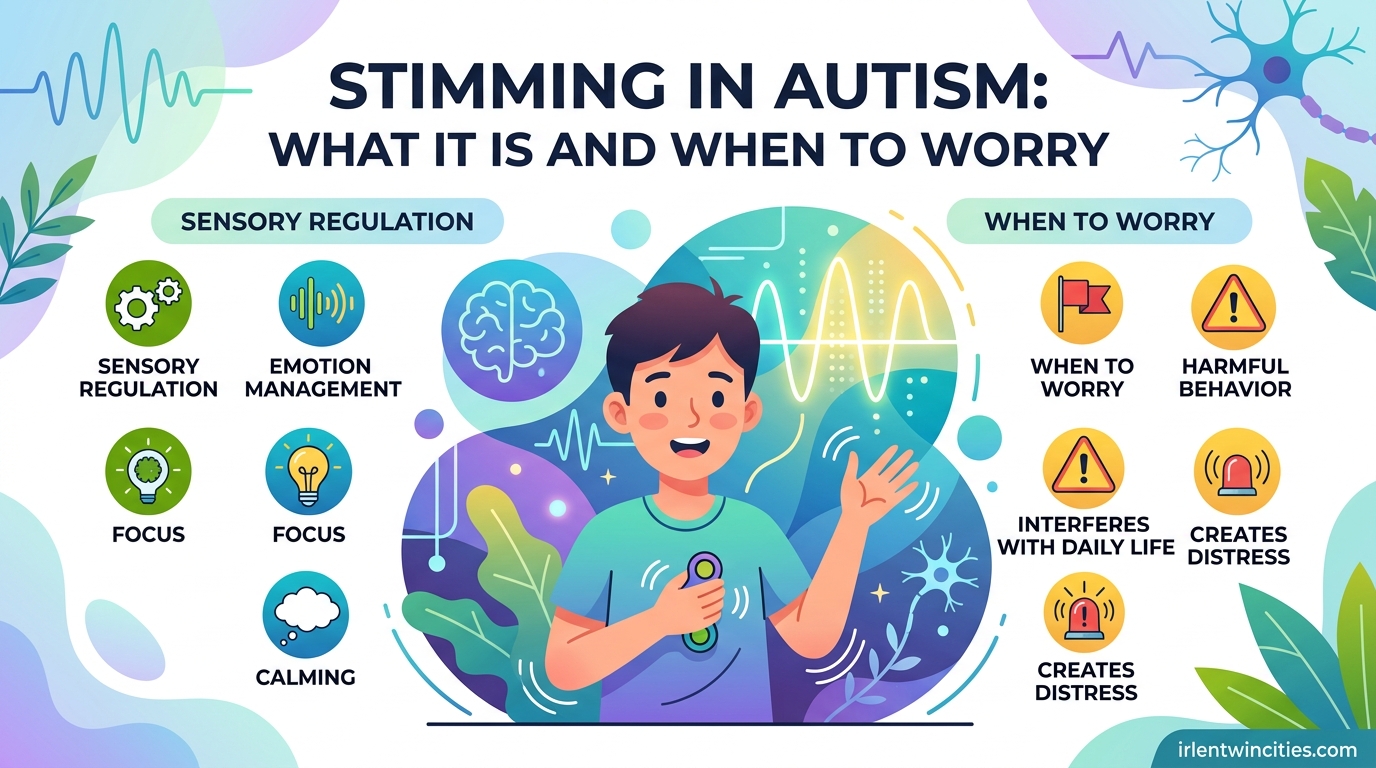
Sensory Regulation
Many autistic people experience sensory processing differences. They may be hypersensitive to certain stimuli, finding lights too bright, sounds too loud, or textures too intense. They may also be hyposensitive, requiring more input to feel regulated.
Stimming helps modulate sensory input. A person overwhelmed by fluorescent lighting might stare at a spinning object to create a controlled visual focus. Someone needing more input might jump or rock to generate the sensation their nervous system craves. Research shows that sensory regulation is the most common function of stimming.
Emotional Regulation
Stimming helps manage both positive and negative emotions. Many autistic people stim when excited, happy, or anticipating something enjoyable. They also stim when anxious, frustrated, or upset.
The repetitive nature of stimming can be grounding during emotional overwhelm. It provides something predictable to focus on when emotions feel chaotic. Some describe it as a pressure release valve that prevents emotional buildup from becoming explosive.
Self-Soothing and Calming
When overwhelmed by the environment, stimming acts as a coping mechanism. The rhythmic, repetitive nature triggers calming responses in the nervous system. This is similar to how rocking soothes a baby or how deep breathing calms an anxious adult.
Many autistic adults report that suppressing their stims increases their anxiety and makes it harder to function. Having permission to stim freely in safe environments helps them recover from stressful situations faster.
Expression of Feelings
Sometimes stimming communicates emotional states that the person cannot express in words. Intense hand flapping might signal overwhelming joy. Aggressive rocking could indicate growing frustration or distress.
Family members and caregivers can learn to read these signals. Understanding what different stims mean for a particular individual provides insight into their internal state. This can be especially valuable for autistic people who have difficulty with verbal communication.
Focus and Concentration
Contrary to the assumption that stimming indicates distraction, many autistic people find that stimming helps them concentrate. The additional sensory input can help maintain alertness during tasks that might otherwise be boring or understimulating.
Research by Kapp and colleagues, published in Autism journal, found that autistic adults reported stimming helped them concentrate, think more clearly, and absorb information better. The small movements or sounds provide just enough additional input to keep the brain engaged.
When to Worry About Stimming
Not all stimming requires intervention. Much of it is healthy, functional, and should be accepted. However, there are specific circumstances when stimming becomes problematic and warrants professional attention.
Signs That Stimming Needs Attention
Consider seeking help if you observe any of the following patterns:
The stimming causes physical injury, such as head banging that results in bruises, skin picking that breaks the skin, or biting that leaves marks. Any self-injurious behavior requires immediate assessment and intervention.
The behavior prevents the person from engaging in daily activities like eating, sleeping, going to school, or participating in family life. When stimming consumes significant portions of the day, it may indicate an underlying issue that needs addressing.
The stimming dramatically increases in frequency or intensity, suggesting heightened anxiety, sensory overload, or physical discomfort. Sudden changes often signal that something in the environment or the person’s health needs attention.
The behavior occurs in contexts where it creates genuine safety risks, such as while crossing the street or cooking. Safety must always be the priority.
Harmful vs. Harmless Stimming
Harmless stimming might look unusual but causes no problems. Examples include hand flapping while excited, humming while working, or rocking while watching television. These behaviors help the person regulate and should be accepted.
Harmful stimming includes head banging against walls, self-biting that breaks skin, skin picking that causes bleeding, or ingesting non-food items. These behaviors can cause physical damage and require intervention.
The distinction is not about social acceptability but about actual risk. A behavior that draws stares in public but helps the person cope is harmless. A behavior that causes injury is harmful, regardless of how socially acceptable it appears.
Self-Injurious Behaviors
Self-injurious stimming requires immediate attention. Head banging, self-biting, hair pulling, and severe skin picking can cause lasting damage. These behaviors often indicate extreme distress, sensory dysregulation, or underlying medical issues.
If you observe self-injurious behavior, document when it occurs, what seems to trigger it, and how long it lasts. This information helps professionals determine appropriate interventions. Do not attempt to restrain the person unless they are in immediate danger, as this can escalate the situation.
When to Seek Professional Help
Contact an occupational therapist who specializes in sensory processing if stimming interferes with daily life. A qualified therapist can assess sensory needs and develop a sensory diet that provides appropriate input in safer ways.
Consult a behavioral specialist if self-injurious behaviors are present. Applied Behavior Analysis (ABA) therapists or developmental psychologists can help identify triggers and develop replacement behaviors.
Speak with a medical professional if there is a sudden increase in stimming. Sometimes increased repetitive behavior indicates pain, illness, or medication side effects that need medical evaluation.
Managing Stimming: Strategies That Work
The goal of managing stimming is not usually to eliminate it. Rather, the focus should be on ensuring safety, reducing the need for harmful stims by addressing root causes, and creating supportive environments where beneficial stimming is accepted.
Should You Stop Stimming?
In most cases, no. Attempting to stop harmless stimming can cause significant distress and may backfire. Research consistently shows that suppressing stims increases anxiety and reduces functioning.
When you stop someone from stimming, you take away their coping mechanism without addressing what caused the need to stim. It is like taking away someone’s anxiety medication because you do not like how they act when they take it.
The autistic community strongly advocates for accepting harmless stimming as a natural and necessary part of being autistic. Many autistic adults describe attempts to suppress their stims in childhood as traumatic and damaging to their self-esteem.
Identifying Triggers
Understanding what triggers increased stimming helps you address root causes rather than just the behavior itself. Common triggers include:
Sensory overload from bright lights, loud noises, crowded spaces, or strong smells. When you identify sensory triggers, you can modify the environment or provide breaks before overstimulation occurs.
Emotional stress from transitions, unexpected changes, social demands, or anxiety-provoking situations. Addressing the underlying anxiety often reduces the need for intense stimming.
Excitement and positive emotions can also increase stimming. Many autistic people stim more when happy or anticipating something enjoyable. This is not a problem to solve but a response to celebrate.
Boredom and under-stimulation may trigger stimming as a way to generate needed sensory input. Providing appropriate stimulation can help.
Physical discomfort from illness, pain, or sensory sensitivities can increase stimming. Medical evaluation is important when stimming suddenly increases.
Creating a Supportive Environment
Environmental modifications can reduce the need for intense stimming by removing sources of distress. Consider these changes:
Lighting adjustments, such as using natural light when possible, avoiding fluorescent lights, and providing sunglasses for bright environments. Some families install dimmer switches to give the autistic person control over lighting levels.
Noise management through noise-canceling headphones, quiet spaces for breaks, and white noise machines. Creating designated quiet areas in homes and classrooms provides escape from overwhelming auditory input.
Sensory-friendly spaces with comfortable textures, pressure options like weighted blankets, and movement opportunities. A corner with pillows, soft lighting, and fidget tools gives the person a place to regulate.
Predictable routines help reduce anxiety that leads to stimming. Visual schedules, advance notice of changes, and consistent daily patterns create security.
Replacement Behaviors
For harmful stimming, introducing replacement behaviors provides the same sensory input more safely. Work with an occupational therapist to identify appropriate replacements.
Someone who head bangs might benefit from rhythmic head pressure using a head massager or leaning into a pillow. A person who bites themselves might use chewelry designed for safe oral input. Skin picking might be redirected to running fingers over textured surfaces.
The replacement must meet the same sensory need as the original behavior. Simply telling someone to stop without providing an alternative is rarely effective and often harmful.
Professional Support Options
Occupational therapists specializing in sensory integration can assess sensory needs and develop comprehensive plans. They provide sensory diets, recommend environmental modifications, and teach self-regulation strategies.
Speech and language therapists can help autistic individuals develop communication skills to express needs verbally rather than through behavior. When people can say “I need a break,” they may not need to stim intensely to communicate distress.
Developmental pediatricians and psychologists can evaluate whether co-occurring conditions like anxiety or ADHD are contributing to stimming. Treating these underlying conditions often reduces the intensity of repetitive behaviors.
What Autistic Adults Say About Stimming
The autistic adult perspective is largely missing from most articles about stimming, yet it provides crucial insight. Research by Kapp and colleagues asked autistic adults about their stimming experiences, revealing perspectives that challenge common assumptions.
Autistic adults consistently report that stimming serves important functions for them. They describe it as essential for self-regulation, not something to eliminate. Many frame attempts to stop their stimming as attempts to suppress their natural way of being.
Participants in the study emphasized that stimming helps them cope with overwhelming sensory input, manage emotions, think more clearly, and express themselves. They reported feeling distressed when prevented from stimming and relief when allowed to stim freely.
Many autistic adults advocate for societal acceptance of stimming. They argue that the problem is not the stimming itself but society’s narrow definition of acceptable behavior. Rather than teaching autistic people to suppress their natural movements, they suggest teaching the public to accept diversity in how people express themselves.
One adult in the study explained that stimming is “not just a behavior but a way of being.” This perspective shifts the conversation from how to stop stimming to how to support autistic people in being their authentic selves.
The autistic community also emphasizes that acceptance does not mean ignoring harmful behaviors. They distinguish between accepting harmless stimming that looks different and addressing behaviors that cause injury. Their message is that autistic people need support, not suppression.
Frequently Asked Questions
When to worry about stimming?
Worry about stimming when it causes physical injury, prevents daily activities like eating or sleeping, increases dramatically in frequency or intensity, or creates safety risks. Self-injurious behaviors like head banging or biting require immediate professional attention. Harmless stimming that simply looks unusual does not require intervention and should be accepted as a coping mechanism.
What is the proper name for stimming?
The proper clinical term is self-stimulatory behavior or stereotypy. In diagnostic criteria, stimming falls under restricted repetitive behaviors (RRB). The term stimming has been widely adopted by both professionals and the autistic community as a less clinical, more neutral descriptor that acknowledges the behavior without implying pathology.
Can you control stimming?
Some autistic people can temporarily suppress stimming, but doing so often causes significant distress and reduced functioning. Research shows that suppressing stims increases anxiety and makes it harder to concentrate. Rather than trying to control stimming through suppression, most professionals recommend addressing triggers, modifying environments, and only intervening when stimming causes actual harm.
When is stimming harmful?
Stimming becomes harmful when it causes physical injury such as bruises from head banging, broken skin from biting or picking, or other tissue damage. It is also harmful when it prevents essential activities like eating, sleeping, or attending school, or when it creates genuine safety risks. Stimming that simply looks unusual or draws attention is not harmful and should be accepted.
Is stimming only in autism?
No, stimming occurs in everyone. Neurotypical people stim through nail biting, foot tapping, hair twirling, and other repetitive behaviors. The difference is that autistic people typically stim more frequently, more intensely, and in ways that are more noticeable. Everyone uses repetitive behaviors for self-regulation, but autistic individuals often need these behaviors more to manage sensory and emotional input.
What triggers stimming in autism?
Common triggers include sensory overload from bright lights or loud noises, emotional stress or anxiety, excitement and positive emotions, boredom and under-stimulation, physical discomfort or illness, and unexpected changes in routine. Identifying specific triggers helps address the root causes rather than just the behavior itself, which is more effective than trying to suppress the stimming.
Conclusion
Stimming in autism is a natural, functional behavior that serves important purposes for self-regulation, sensory management, and emotional expression. Understanding what stimming is helps you distinguish between harmless repetitive behaviors that should be accepted and harmful behaviors that require intervention.
The question of when to worry about stimming has clear answers. You should seek help when the behavior causes injury, prevents essential daily activities, increases dramatically, or creates safety risks. You should offer acceptance and support when the behavior simply looks different but helps the person cope.
Working with occupational therapists, addressing sensory triggers, and creating supportive environments are more effective approaches than trying to stop stimming through suppression. Listening to autistic adult perspectives reminds us that stimming is not a problem to eliminate but a natural way of being that deserves understanding and acceptance.
If you are concerned about a loved one’s stimming, trust your instincts when safety is involved, but also trust that many forms of stimming are healthy and necessary. The goal is not to make autistic people look neurotypical. The goal is to support them in being their best selves, stims and all.