
My son was three years old when I first realized something was different about how he experienced the world. Everyday sounds like the vacuum cleaner or hand dryer would send him into a full meltdown. He couldn’t sit still for more than two minutes, yet he seemed exhausted all the time. After countless frustrating incidents and confusing behaviors, our occupational therapist introduced us to the concept of a sensory diet. Within weeks of implementing personalized sensory activities throughout his day, the meltdowns decreased, his focus improved, and our entire family felt more at peace.
If you’re a parent watching your child struggle with sensory processing challenges, you’re not alone. Research suggests that up to 1 in 6 children experience sensory processing difficulties that impact their daily life. Creating a sensory diet for your child at home can be transformative, providing the structured sensory input their brain needs to regulate responses, improve attention, and participate more fully in daily activities. In this comprehensive guide, I’ll walk you through exactly how to assess your child’s sensory needs, choose appropriate activities, and implement an effective sensory diet using items you already have at home.
Table of Contents
What is a Sensory Diet?
A sensory diet is a personalized set of sensory-based activities scheduled throughout the day to help children regulate their sensory processing, improve focus, and maintain appropriate arousal levels for daily activities. Despite the name, a sensory diet has nothing to do with food. Rather, it’s a carefully designed plan that provides specific sensory input—movement, touch, pressure, sound—at strategic times to help the brain process sensory information more effectively.
Think of your child’s sensory system like a cup. Some children have cups that overflow quickly with too much sensory input, causing them to become overwhelmed, anxious, or dysregulated. Others have cups that never seem to fill enough, constantly seeking more sensation through movement, touching everything, or making noise. A sensory diet works by either adding sensory input to fill that cup or providing calming input to prevent overflow, helping your child stay in that just-right zone for learning, playing, and interacting.
Sensory diets are important because they help children with sensory processing challenges participate more successfully in daily activities, reduce meltdowns, improve attention and focus, support emotional regulation, and enhance overall quality of life for the entire family. Children who benefit from sensory diets include those with autism spectrum disorder, ADHD, sensory processing disorder, developmental delays, or any child who struggles with sensory processing, attention, emotional regulation, or transitions between activities. However, sensory diets can also be incredibly beneficial for neurotypical children who simply need extra support with self-regulation.
Understanding the 8 Sensory Systems
Most people learn about the five senses in school—sight, sound, touch, taste, and smell. However, occupational therapists recognize eight sensory systems that play crucial roles in how children experience and interact with their environment. Understanding all eight systems is essential for creating an effective sensory diet for your child at home.
1. Tactile System (Touch) – This system processes information about temperature, texture, pain, and pressure through skin receptors. Children with tactile sensitivities might avoid messy play, certain fabrics, or light touch, while tactile seekers might constantly touch objects or people, enjoy messy textures, or prefer tight clothing.
2. Vestibular System (Balance and Movement) – Located in the inner ear, this system detects movement, gravity, and balance. It’s crucial for coordination, spatial awareness, and emotional regulation. Children with vestibular processing issues might be terrified of movement, crave constant spinning or swinging, appear clumsy, or have difficulty sitting still.
3. Proprioceptive System (Body Awareness) – This system tells our brain where our body is in space without looking. It processes information from muscles and joints about position, force, and movement. Proprioceptive input is often organizing and calming. Children with poor proprioception might bump into things, use too much force with objects, seem clumsy, or constantly seek deep pressure through tight hugs or burrowing under blankets.
4. Auditory System (Hearing) – This system processes sound information, including volume, pitch, and rhythm. Children with auditory sensitivities might cover their ears at everyday sounds, become distracted by background noise, or have trouble following verbal instructions. Those who seek auditory input might make constant noise, prefer loud environments, or have difficulty filtering out irrelevant sounds.
5. Visual System (Sight) – This system processes light, color, and movement. Visual processing issues might manifest as light sensitivity, difficulty tracking moving objects, trouble with visual discrimination, or becoming overwhelmed by visually busy environments.
6. Gustatory System (Taste) – This system processes flavors and textures in the mouth. Children with gustatory sensitivities are often extremely picky eaters, gag easily, or avoid certain textures. Those who seek oral input might chew on clothing, put non-food items in their mouth, or prefer extremely spicy or sour foods.
7. Olfactory System (Smell) – This system processes odors and scents. Children might be extremely sensitive to smells that others don’t notice, or they might seek strong smells by sniffing objects or people.
8. Interoception (Internal Body Awareness) – This often-overlooked system processes internal bodily sensations like hunger, thirst, temperature, bathroom needs, and emotional states. Children with poor interoception might have trouble recognizing when they’re hungry, thirsty, or need to use the bathroom. They might also struggle to identify their emotions or know when they’re becoming dysregulated.
How to Assess Your Child’s Sensory Needs
Before creating a sensory diet, you need to understand your child’s unique sensory profile. Every child is different, and what works for one child might not work for another. The key is careful observation and pattern recognition over time.
Signs of Sensory Processing Issues:
- Extreme reactions to everyday sounds, textures, or movements
- Constant movement or inability to sit still
- Frequent meltdowns or emotional outbursts
- Difficulty with transitions between activities
- Picky eating or extreme food preferences
- Clumsiness or coordination difficulties
- Attention and focus challenges
- Sleep difficulties
- Sensitivity to clothing textures or tags
- Excessive seeking or avoidance of touch
Sensory Seeking vs. Sensory Avoiding:
Understanding whether your child is a sensory seeker or sensory avoider in each system is crucial. Sensory seekers crave more input and might constantly move, touch everything, make noise, or seek deep pressure. They might have difficulty sitting still, seem hyperactive, or appear “wound up.” These children often benefit from more intense sensory input to reach that just-right regulation zone.
Sensory avoiders are easily overwhelmed by input and might cover their ears, avoid messy play, withdraw from touch, or become anxious in busy environments. They might be extremely picky about clothing, food textures, or sounds. These children often benefit from less intense sensory input, calming activities, and gradual exposure to new sensations.
Many children are mixed—seeking in some systems and avoiding in others. Your child might crave deep pressure and movement but avoid loud noises and messy textures. This is completely normal and highlights the importance of individualized assessment.
Observation Checklist for Parents:
Spend 3-5 days observing your child and documenting patterns. Note what times of day they seem most dysregulated, what activities calm them, what activities excite them, and what triggers meltdowns. Pay attention to their behavior during transitions, before and after meals, during playtime, and at bedtime. Look for patterns and remember that sensory needs can fluctuate based on sleep, illness, stress, and growth spurts.
When to Consult a Professional:
While you can create an effective sensory diet at home, consulting with an occupational therapist experienced in sensory integration can provide valuable insights. Consider professional evaluation if your child’s sensory issues significantly impact daily functioning, if you’re unsure about their sensory profile, if your attempts at home aren’t working, or if your child has other developmental concerns. An OT can provide formal assessment, customized activity recommendations, and guidance on implementation.
How to Make a Sensory Diet for Your Child at Home
Creating an effective sensory diet doesn’t require expensive equipment or professional training. With observation, planning, and consistency, you can design a personalized sensory diet that meets your child’s unique needs using items you already have at home. Follow this step-by-step process to create your child’s sensory diet.
Step 1: Observe and Document Patterns
Spend at least one week carefully observing your child’s behavior, energy levels, and emotional regulation throughout the day. Keep a simple log noting what times they seem most focused and calm, what times they become dysregulated, what activities help them settle, and what seems to trigger difficulties. Notice patterns around transitions, meal times, sleep, and activities. Pay attention to what sensory input they naturally seek or avoid. This observation period provides crucial data for designing an effective sensory diet.
Step 2: Identify Target Sensory Systems
Based on your observations, determine which sensory systems need attention. Does your child crave movement (vestibular)? Do they seek deep pressure (proprioceptive)? Are they overwhelmed by sounds (auditory)? Most children benefit from input across multiple systems, but identifying 2-3 priority systems helps focus your efforts. Remember that sensory needs can change throughout the day—your child might need alerting activities in the morning and calming activities before bed.
Step 3: Choose Appropriate Activities
Select 5-10 activities that target your child’s identified sensory needs. Choose activities that are feasible for your home environment, schedule, and resources. Include a mix of alerting activities for when your child needs energy and focus, and calming activities for when they need to wind down. Most importantly, choose activities your child enjoys—sensory diets work best when the child is motivated to participate. Keep a list of backup options for when preferred activities aren’t available or effective.
Step 4: Create a Daily Schedule
Map out when sensory activities will happen throughout the day. Most children benefit from sensory input every 1-2 hours, with shorter, more frequent sessions working better than long, intensive ones. Schedule alerting activities before times requiring focus (like homework or meals) and calming activities before transitions or sleep. Be realistic about your family’s schedule and start with just 2-3 planned sensory activities per day, gradually increasing as you establish the routine. Use visual schedules to help your child understand and anticipate sensory breaks.
Step 5: Implement and Track Progress
Begin implementing your sensory diet, starting with just the most critical activities. Be consistent with timing and give new activities at least a week before deciding if they’re effective. Track your child’s responses—note what works, what doesn’t, and any changes in behavior, attention, or emotional regulation. Remember that some activities might make things worse initially as your child’s nervous system adjusts. Pay attention to your child’s cues and be prepared to modify activities based on their responses.
Step 6: Adjust Based on Results
Review your tracking data weekly and adjust the sensory diet as needed. Increase or decrease activity intensity, frequency, or duration based on your child’s responses. Replace ineffective activities with new options. Consider seasonal changes, growth spurts, and life transitions that might affect sensory needs. Remember that sensory diets are not static—they should evolve as your child grows and develops. What worked at age three might need modification at age five.
Sample Daily Sensory Diet Schedule:
- 7:00 AM – Morning alerting: 5 minutes of jumping jacks or animal walks
- 9:00 AM – Pre-school focus: 3 minutes of wall push-ups and deep breathing
- 12:00 PM – Lunch reset: Crunchy foods and movement break before eating
- 3:00 PM – After-school regulation: 10 minutes of swinging or heavy work activities
- 5:00 PM – Dinner prep help: Carrying groceries, stirring, tearing lettuce (proprioceptive)
- 7:00 PM – Bedtime wind-down: Warm bath with gentle massage, weighted blanket
Sensory Diet Activities by System
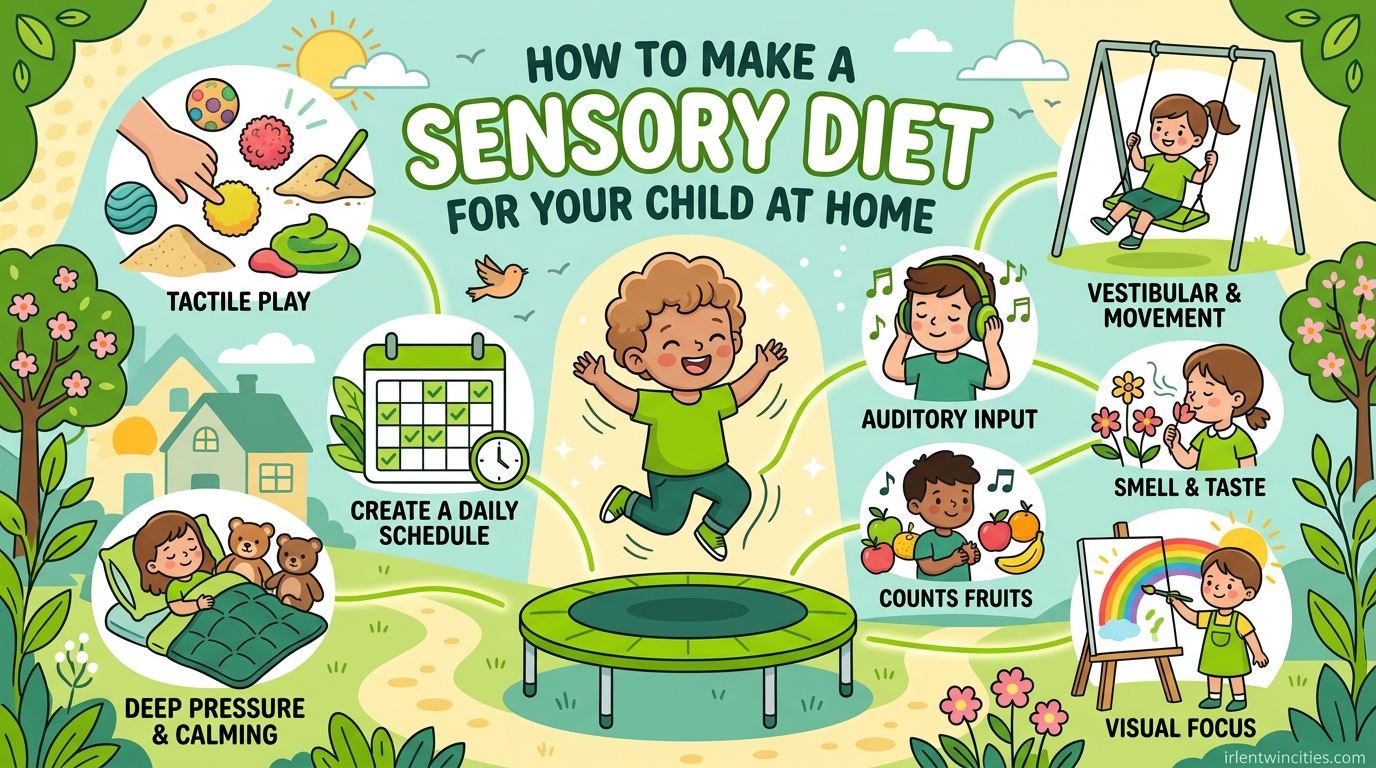
The key to a successful sensory diet is having a variety of activities that target different sensory systems and serve different regulatory purposes. Here are budget-friendly activities you can implement at home, organized by sensory system and whether they provide alerting or calming input.
Proprioceptive Activities (Body Awareness):
Proprioceptive input is often organizing and regulating for children. These heavy work activities provide deep pressure to muscles and joints, helping children understand where their body is in space. Alerting proprioceptive activities include jumping jacks, animal walks (bear walks, crab walks, frog jumps), push-ups or wall push-ups, jumping on a trampoline, carrying heavy objects (groceries, books), tug-of-war, and climbing stairs or playground equipment. Calming proprioceptive activities include bear hugs, rolling in a blanket (like a burrito), pillow sandwiches (child between pillows for gentle pressure), weighted blankets or lap pads, playdough or clay squeezing, chair push-ups, and resistance band exercises.
Vestibular Activities (Movement and Balance):
Vestibular input can be either alerting or calming depending on the type and duration of movement. Alerting vestibular activities include swinging, spinning, jumping, bouncing on a therapy ball, doing somersaults or cartwheels, dancing to fast music, and obstacle courses. Calming vestibular activities include slow, linear swinging (back and forth, not rotary), rocking in a rocking chair, gentle bouncing while sitting on a ball, and slow dance movements. Movement that is fast, rotary, or unpredictable tends to be alerting, while slow, linear, rhythmic movement tends to be calming.
Tactile Activities (Touch):
Tactile activities help children process touch information and can decrease tactile sensitivities over time. Alerting tactile activities include playing with textured materials (sand, water, rice, beans), messy play (finger painting, shaving cream, pudding), water play with varying temperatures, texture rubbing (rough fabrics, soft fabrics, bumpy surfaces), and tactile discrimination games (finding objects in rice without looking). Calming tactile activities include warm baths, massage with lotion or cream, soft blankets or stuffed animals, gentle brushing with a soft brush, and wrapping tightly in a blanket. Always respect your child’s tactile preferences and gradually introduce new textures.
Auditory Activities (Sound):
Auditory input can help children modulate their arousal level and improve attention. Alerting auditory activities include listening to upbeat music, singing songs, playing musical instruments, clapping games, rhythm activities, and sound-matching games. Calming auditory activities include listening to soft music, nature sounds, white noise, rhythmic breathing, whispering activities, and sound-canceling headphones. For children with auditory sensitivities, gradually introduce sounds and always give warning before loud noises.
Visual Activities (Sight):
Visual input can help children with attention, focus, and emotional regulation. Alerting visual activities include looking at bright colors, light tables, flashlight games, visual tracking activities (following moving objects with eyes), and busy picture books. Calming visual activities include dim lighting, looking at nature scenes, watching slow-moving visual content (like aquarium videos), visual timers for transitions, and organized, clutter-free spaces. Be mindful of visual clutter in your home, especially in areas where your child needs to focus.
Oral Motor Activities (Mouth):
Oral motor activities can help children who seek oral input or have feeding difficulties. Alerting oral activities include blowing whistles or bubbles, drinking through straws, chewing crunchy foods, sucking on sour candies, and blowing instruments. Calming oral activities include sucking on smoothies or thick drinks through a straw, chewing gum, biting on chewelry, eating soft textures, and slow rhythmic sucking. Oral input is often organizing and can help children focus and regulate.
Olfactory Activities (Smell):
Smell is strongly connected to emotions and memory, making it a powerful tool for regulation. Alerting olfactory activities include smelling strong scents like citrus, peppermint, or mint, scent matching games, and cooking with aromatic spices. Calming olfactory activities include lavender scents, vanilla, chamomile, and familiar comforting smells. Essential oils can be effective but always use safely and with proper dilution.
Interoception Activities (Body Awareness):
Helping children develop interoception improves their ability to recognize internal states and regulate emotions. Activities include body scanning exercises (noticing body sensations), naming emotions, checking in with body needs (hungry, thirsty, tired, bathroom), breathing exercises, mindfulness activities, yoga, and progressive muscle relaxation. These activities teach children to notice and respond to their internal body signals.
Tips for Successful Implementation
Creating the sensory diet is just the first step. Successful implementation requires consistency, flexibility, and ongoing adjustment. Here are proven strategies to help your sensory diet succeed.
Consistency is Key:
Sensory diets work best when activities happen consistently at similar times each day. The nervous system begins to anticipate and rely on this regular sensory input. That said, life happens—if you miss a scheduled activity, don’t stress. Simply get back on track at the next opportunity. Aim for 80% consistency rather than perfection. Consistent implementation over weeks and months is more effective than intensive implementation for just a few days.
Use Visual Schedules:
Visual schedules help children understand and anticipate sensory activities, reducing resistance and anxiety. Create a simple picture schedule showing the day’s sensory activities. Check off activities as they’re completed. Allow your child to help choose which activities to include when possible. Visual schedules are particularly helpful for children with autism or anxiety who benefit from predictability and routine.
Involve Your Child in Activity Selection:
Children are more likely to participate enthusiastically in activities they’ve chosen. Offer choices between acceptable options: “Would you like to do animal walks or wall push-ups?” Let your child help create the sensory diet schedule. Celebrate their participation and progress. When children feel ownership over their sensory diet, they’re more likely to engage willingly and even request activities when they need them.
Fit Sensory Diet Into Existing Routines:
Rather than adding entirely new activities to your day, look for ways to incorporate sensory input into routines that already exist. Add proprioceptive input to morning getting-ready routines. Include movement breaks between homework subjects. Make bedtime routines calming with sensory activities. The more integrated sensory activities become into your existing day, the more sustainable they’ll be for your family.
Handle Resistance and Refusal:
It’s normal for children to resist sensory activities sometimes, especially when they’re already dysregulated. If your child refuses an activity, stay calm and offer a choice between alternatives. Keep activities short and fun—most sensory activities should take just 2-5 minutes. Use motivation strategies like races, games, or challenges. Remember that some resistance might indicate the activity isn’t right for your child’s current needs. Be willing to adjust and try something else.
Track Progress and Celebrate Success:
Keep a simple log of activities and your child’s responses. Note improvements in behavior, attention, emotional regulation, sleep, and overall family functioning. Celebrate small wins with your child. Share progress with other caregivers to ensure consistency. Review your tracking data weekly and adjust the sensory diet based on what’s working. Seeing progress documented helps motivate you to continue even when challenging days occur.
Adjust as Your Child Grows:
Sensory needs change as children develop. Activities that worked at age three might not work at age five. Reassess your child’s sensory profile every few months or whenever you notice significant changes in behavior or regulation. Update activities to match your child’s interests and abilities. Involve your child in modifying their sensory diet as they grow and become more self-aware. The sensory diet should evolve with your child.
Troubleshooting Common Challenges:
If sensory activities seem to make your child more dysregulated, reduce the intensity and duration of activities. Focus on calming activities until regulation improves. If your child resists all activities, simplify the approach and offer choices. Involve your child in planning and make activities fun and short. If you’re not seeing results after 4-6 weeks of consistent implementation, consider consulting with an occupational therapist for professional assessment and guidance. Remember that every child is different, and what works for one family might not work for another.
Frequently Asked Questions About Sensory Diets
How to create a sensory diet?
Creating a sensory diet starts with observing your child’s behavior patterns and sensory preferences for 1-2 weeks. Document what activities calm them, what excites them, and what triggers meltdowns. Then identify which sensory systems need attention and select 5-10 activities targeting those systems. Schedule these activities strategically throughout the day, placing alerting activities before focus times and calming activities before transitions or sleep. Implement consistently for at least 4 weeks while tracking progress, then adjust based on results.
What is an example of a sensory diet for ADHD?
A sensory diet for ADHD might include: Morning alerting with 5 minutes of jumping jacks or animal walks; Mid-morning focus break with wall push-ups and deep breathing; After-school regulation with 10 minutes of swinging or heavy work activities; Before homework: crunchy snack followed by movement break; Bedtime wind-down with warm bath, gentle massage, and weighted blanket. The key is providing frequent movement and proprioceptive input throughout the day to support attention and impulse control.
What foods are good for kids with sensory issues?
For children with oral sensory needs, offer foods with varying textures and temperatures. Crunchy foods like carrots, apples, and crackers provide alerting oral input. Chewy foods like bagels, dried fruit, and jerky offer organizing input. Smoothies and thick drinks through straws provide calming input. Cold foods can be alerting while warm foods are often calming. Always respect your child’s texture preferences and gradually introduce new foods. Work with an occupational therapist or feeding specialist if your child has significant feeding difficulties.
What is the 8 sensory diet?
The 8 sensory diet addresses all eight sensory systems: tactile (touch), vestibular (movement and balance), proprioceptive (body awareness), auditory (hearing), visual (sight), gustatory (taste), olfactory (smell), and interoception (internal body awareness). Most people know the five basic senses, but sensory diets specifically target the additional three systems—vestibular, proprioceptive, and interoception—which are often overlooked but crucial for regulation, coordination, and body awareness.
How often should you do sensory diet activities?
Most children benefit from sensory input every 1-2 hours, with shorter, more frequent sessions working better than long intensive ones. Activities typically last just 2-5 minutes each. The exact frequency depends on your child’s individual needs and responses. Some children might need input every hour, while others do well with 3-4 planned sessions per day. Follow your child’s cues and adjust based on their responses. Consistency in timing is often more important than frequency.
Can sensory diet help with ADHD?
Yes, sensory diets can be very helpful for children with ADHD. The movement and proprioceptive input in sensory diets support attention, impulse control, and emotional regulation. Many children with ADHD are sensory seekers who crave input to maintain appropriate arousal levels. A well-designed sensory diet provides this input in structured ways, potentially improving focus, reducing hyperactivity, and decreasing impulsive behavior. Always consult with your child’s healthcare providers when developing interventions for ADHD.
What is proprioceptive input?
Proprioceptive input is sensory information from muscles and joints that tells the brain where the body is in space. It’s often called the ‘position sense.’ Proprioceptive activities involve heavy work—using muscles against resistance. Examples include pushing, pulling, lifting, carrying, squeezing, and chewing. Proprioceptive input is typically organizing and calming for the nervous system, helping children improve body awareness, coordination, and emotional regulation. It’s one of the most powerful types of sensory input for supporting self-regulation.
Conclusion
Creating a sensory diet for your child at home is one of the most powerful things you can do to support their sensory processing, emotional regulation, and overall well-being. By understanding your child’s unique sensory profile, providing consistent sensory input throughout the day, and adjusting based on their responses, you can help them develop the self-regulation skills they need to thrive at home, at school, and in the community.
Remember that sensory diets are not one-size-fits-all. What works for one child might not work for another, and what works today might need adjustment next month. Be patient with the process and with yourself as you learn to support your child’s sensory needs. The goal isn’t perfection—it’s progress. Even small improvements in regulation, attention, and emotional control can make a significant difference for your child and your entire family.
If you’re feeling overwhelmed or unsure where to start, consider consulting with an occupational therapist who specializes in sensory integration. They can provide professional assessment, customized recommendations, and guidance to help you create the most effective sensory diet for your child. With the right support and consistent implementation, you can help your child develop the sensory processing skills they need to navigate their world more successfully.