
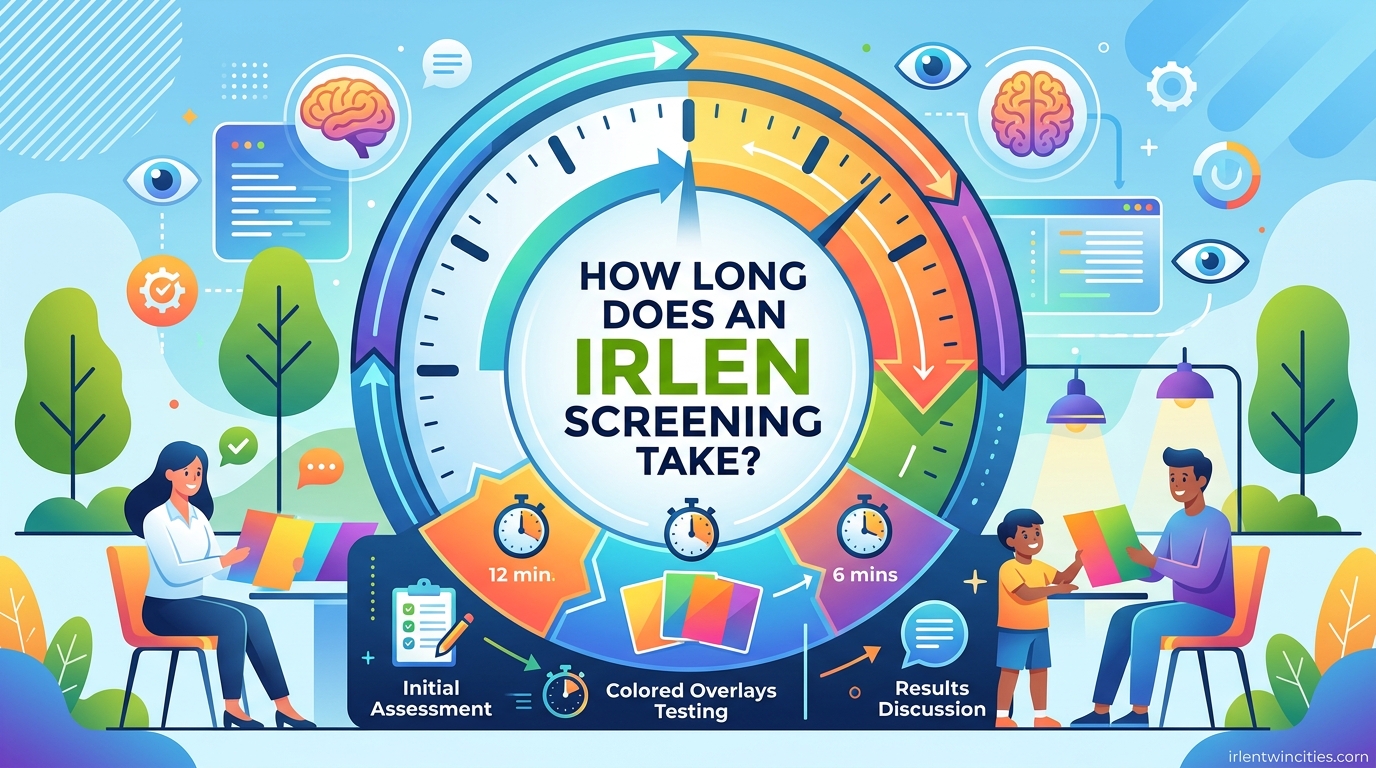
An Irlen screening takes between 1 and 2 hours to complete. This comprehensive perceptual assessment helps determine if you have Irlen Syndrome and can benefit from colored filters to improve reading, reduce headaches, and address light sensitivity.
In this guide, I will walk you through exactly what happens during an Irlen screening, who performs the test, and what you can expect from start to finish. You will learn about the two-session process, how to prepare, and what happens after your screening.
Table of Contents
What Is Irlen Syndrome and Why Screening Matters
Irlen Syndrome, also known as Scotopic Sensitivity Syndrome, is a perceptual processing disorder that affects the brain’s ability to interpret visual information correctly. It is not a problem with your eyes, but rather how your brain processes the light wavelengths coming through them.
People with Irlen Syndrome often struggle with reading difficulties that persist despite normal vision tests. They may experience words that move on the page, glare sensitivity, headaches while reading, or difficulty maintaining attention. Many children and adults with ADHD, autism, or learning disabilities find that underlying Irlen Syndrome has been making their challenges worse.
The condition affects approximately 12-14% of the general population, with a higher prevalence among those with reading problems. Research spanning over 30 years has demonstrated that precision-tinted colored overlays and lenses can significantly reduce or eliminate these symptoms for many individuals. Our team at Irlen Twin Cities has seen firsthand how proper screening changes lives when the right color filter is identified.
How Long Does an Irlen Screening Take
An Irlen screening typically takes 1 to 2 hours to complete. Most sessions fall in the 90-minute range, though the exact duration depends on several factors including your age, the complexity of your symptoms, and whether you are being screened for both reading and light sensitivity issues.
Children sometimes require additional time to feel comfortable with the process. Adults with complex visual processing patterns may need extended testing to identify their optimal color filter. The screening is conducted in a single appointment and produces immediate results.
You will leave the screening knowing whether colored overlays can help you and, if so, which specific color provides the most benefit. This differs from the full diagnostic testing session, which is scheduled separately for those who need precision-tinted lenses.
What Happens During an Irlen Screening
Your Irlen screening follows a structured protocol designed to identify how your brain processes visual information. Here is exactly what you can expect from start to finish.
Step 1: Initial Consultation and History
Your Certified Irlen Screener begins by discussing your symptoms, reading difficulties, and any headaches or light sensitivity you experience. This conversation helps identify which perceptual tasks will be most relevant for your testing.
Bring a book or reading material you find challenging. This allows the screener to observe your natural reading patterns and customize the assessment to your specific needs.
Step 2: Baseline Reading Assessment
The screener asks you to read a standardized passage without any colored filters. They observe your reading rate, fluency, and any physical symptoms you report such as eye strain or fatigue.
Many clients report discomfort during this phase. Words may appear to move, blur, or swirl. Some experience immediate headaches. These observations help establish your baseline before testing colored overlays.
Step 3: Perceptual Tasks
You complete several perceptual tasks designed to identify your specific visual processing patterns. These tasks assess how your brain interprets contrast, spacing, and light wavelengths.
Common tasks include looking at geometric patterns, reading text under different lighting conditions, and identifying when visual distortions occur. Your screener documents exactly which stimuli trigger your symptoms.
Step 4: Color Overlay Testing
This is the core of the screening process. The screener presents you with various colored plastic overlays and asks you to read with each one. You compare how the text looks and feels with different colors.
Your screener typically tests 15-20 different color combinations. You provide feedback about which colors reduce your symptoms, improve clarity, or make reading feel easier. The goal is finding your optimal color, not just any color that helps.
Step 5: Verification and Documentation
Once your optimal overlay color is identified, the screener verifies the results through additional reading passages. They measure improvements in reading rate, comprehension, and comfort.
You receive a summary report documenting your results. If overlays provide clear benefit, the screener explains the next steps for obtaining prescription Irlen lenses through the diagnostic testing session.
Understanding the Two-Session Process: Screening vs Diagnostic Testing
The Irlen assessment process involves two distinct sessions, each with different purposes and outcomes. Understanding this distinction helps set proper expectations for your journey.
The Screening Session
The screening identifies whether you have Irlen Syndrome and determines which colored overlays help your symptoms. It is conducted by a Certified Irlen Screener and focuses on plastic overlays placed over reading material.
Screening results are immediate. You leave with colored overlays to use for reading and can see the difference right away. Not everyone who is screened proceeds to diagnostic testing.
The Diagnostic Testing Session
Diagnostic testing is only for individuals who experience clear relief with overlays during their screening. This session determines the precise spectral filter combination needed for prescription Irlen lenses.
Diagnostic testing uses specialized equipment to identify the exact wavelengths of light your brain processes most effectively. The results are sent to the Irlen laboratory, which manufactures your custom-tinted lenses.
While the screening takes 1-2 hours, diagnostic testing typically requires 2-3 hours due to the precision required. Only Certified Irlen Diagnosticians can perform this second session.
Who Can Benefit from Irlen Screening
Irlen screening helps individuals experiencing a wide range of symptoms. The most common candidates include people with reading difficulties that persist despite tutoring or traditional interventions.
Children and adults with ADHD or attention problems often have undiagnosed Irlen Syndrome contributing to their inability to focus. Light sensitivity, headaches during reading, and eye strain that glasses do not correct are also strong indicators.
Individuals with autism, traumatic brain injuries, or learning disabilities frequently show high rates of Irlen Syndrome. Our team has screened clients as young as 5 years old and well into their senior years. There is no upper age limit for screening.
What Happens After Your Screening
You leave your screening with clear answers about whether Irlen Syndrome affects your visual processing. If colored overlays help during testing, you receive a set of overlays in your optimal color to use immediately.
The screener provides written documentation of your results and recommendations. For children, this often includes information to share with teachers about environmental accommodations that can help at school.
If you experienced significant improvement with overlays, your screener will discuss scheduling diagnostic testing to obtain precision-tinted lenses. These lenses provide the same benefits as overlays but in a wearable format for daily activities.
Frequently Asked Questions
How much does an Irlen Syndrome test cost?
Irlen screening costs vary by location and provider, typically ranging from $100 to $200 for the initial session. The diagnostic testing session for prescription lenses involves additional fees plus laboratory costs for manufacturing the custom-tinted lenses. Many providers offer package pricing when both sessions are scheduled together.
Who can diagnose Irlen Syndrome?
Only Certified Irlen Screeners can identify Irlen Syndrome through formal screening. These professionals complete specialized training through the Irlen Institute to conduct perceptual assessments. For prescription lenses, a Certified Irlen Diagnostician must perform the second testing session. Regular eye doctors do not diagnose Irlen Syndrome as it is a brain processing issue, not a vision problem.
Is Irlen linked to ADHD?
Research shows a significant overlap between Irlen Syndrome and ADHD symptoms. Many individuals diagnosed with ADHD actually have undiagnosed Irlen Syndrome causing their attention difficulties. The visual stress from light sensitivity makes concentration nearly impossible. Studies indicate approximately one-third of individuals with ADHD also have Irlen Syndrome. Proper colored filters often reduce or eliminate the need for ADHD medications in these cases.
Is Irlen Syndrome a form of dyslexia?
Irlen Syndrome is not dyslexia, though the two conditions can occur together. Dyslexia is a language-based learning disability affecting phonological processing. Irlen Syndrome is a visual perceptual processing disorder affecting how the brain interprets light wavelengths. Both cause reading difficulties but require different interventions. Irlen filters address the visual distortions causing reading problems, while dyslexia interventions focus on phonics and language processing.
Does Irlen Syndrome make you tired?
Yes, Irlen Syndrome frequently causes fatigue and exhaustion. The brain expends tremendous energy trying to process visual information it cannot interpret correctly. Reading becomes a physically demanding task. Headaches, eye strain, and general tiredness after short reading sessions are common complaints. Many clients report needing naps after school or work. Colored filters reduce this strain, often resulting in dramatically improved energy levels.
How do people with Irlen Syndrome see the world?
People with Irlen Syndrome experience visual distortions that vary in type and severity. Common experiences include words that appear to move, shake, or swirl on the page. Some see rivers of white running down the page between lines of text. Others experience halos around objects, blurring, or difficulty judging distances. Light sensitivity makes bright environments painful. These symptoms are not hallucinations but perceptual processing errors the brain makes when overwhelmed by certain light wavelengths.
Final Thoughts
Understanding how long an Irlen screening takes and what happens during the process removes uncertainty and helps you prepare for a successful assessment. The 1-2 hour investment can provide answers to years of reading struggles, headaches, and attention problems.
If you suspect Irlen Syndrome affects you or your child, scheduling a screening with a Certified Irlen Screener is the essential first step. The testing is non-invasive, produces immediate results, and could open the door to significant improvements in reading comfort and daily functioning.