
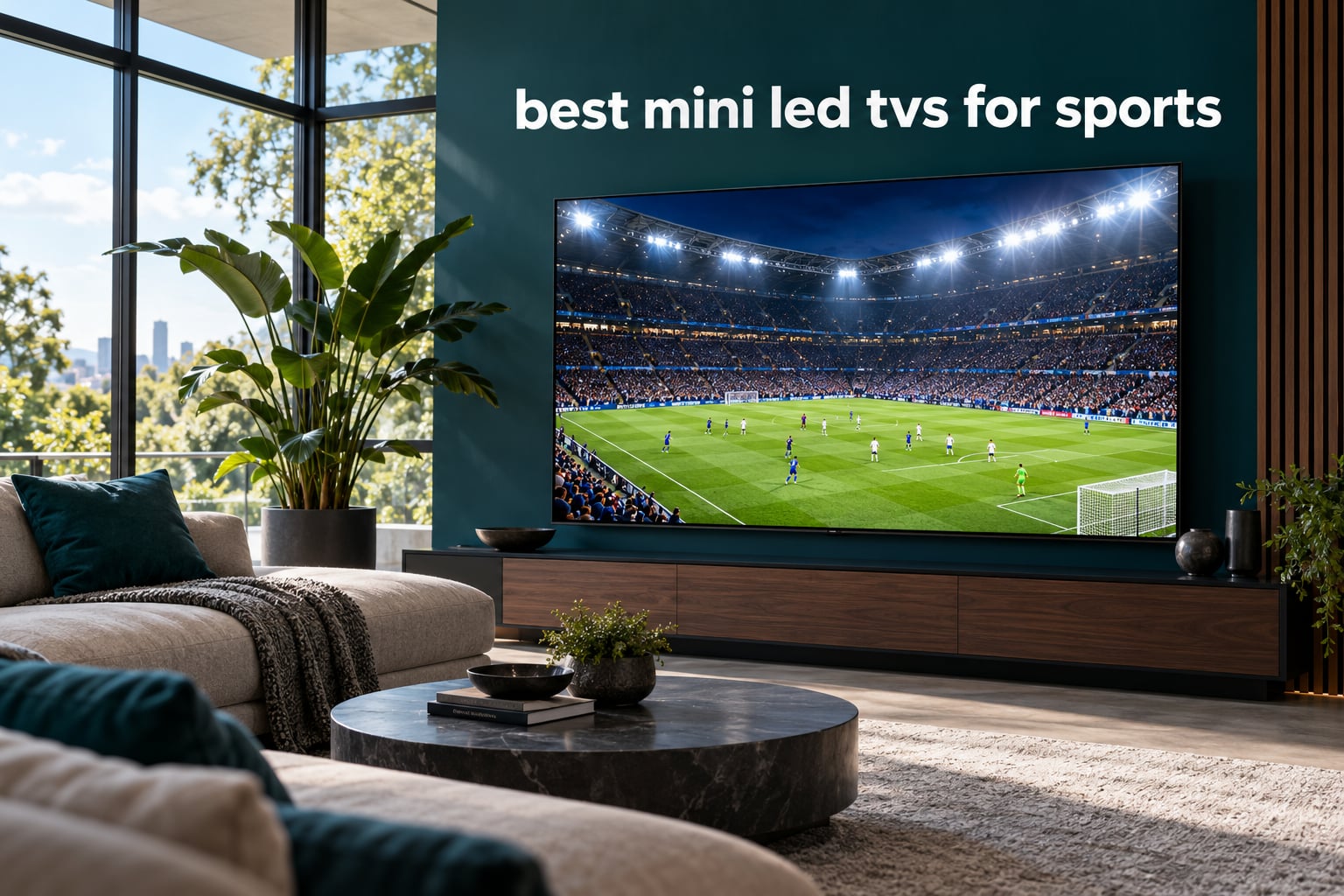
Choosing a TV for live sport is a different job from choosing a TV for films. Games move fast, the room is often lit, and the scorebug never moves. After several weeks of switching between broadcast football, Sunday afternoon baseball and console matches, the same three things kept deciding which screen looked best: sustained brightness, clean motion on a fast pan, and a panel that will not punish you for leaving a channel on for nine hours a week.
That is why the best mini LED TVs for sports is a narrower list than a general TV guide. Mini-LED panels use thousands of individually dimmable backlight zones behind an LCD layer, so blacks stay dark during a whip pan across a field while highlights on a sunlit pitch stay bright. There is also no organic burn-in risk from a permanently-on scoreboard, and no auto brightness limiter pulling the picture down when the content gets bright.
If you want the wider field, our guide to the best TVs for sports covers OLED and QLED options too, and our Mini-LED roundup goes deeper on the technology. This one is scored purely for sport. Everything below was updated for 2026 and reflects the current model year.
Table of Contents
Is Mini LED Good for Watching Sports?
Mini-LED is one of the best TV technologies for sports. Thousands of tiny backlight zones keep blacks dark during fast panning, there is no OLED burn-in risk from a permanently-on scoreboard, no auto brightness limiter dims bright content, and the category reaches well over 1000 nits in a lit room. The trade-off against OLED is slower pixel response on the very fastest action, not brightness or longevity.
That last point deserves a note. Sports is the hardest everyday content for a TV: constant motion punishes weak motion processing, daylight demands high sustained brightness, and a static scorebug or news ticker is exactly the content that permanently damages OLED screens. Mini-LED handles all three, which is why it is the default recommendation for live sport even though OLED sets can win on pure black level and near-instant response.
Top 3 Mini-LED TVs for Sports in 2026

TCL 65 Inch QM6K
- 144Hz native refresh
- Motion Rate 480
- Full array local dimming
- Onkyo 2.1 audio
Hisense 75 Inch U8QG
- Up to 5600 dimming zones
- Up to 5000 nits
- Native 165Hz
- Anti-Reflection Pro

Roku 65 Inch Plus
- Full array Mini LED
- Dolby Vision and HDR10+
- Smart Picture Max AI
- 4.1 channel audio
Best Mini LED TVs for Sports in 2026 at a Glance
| Product | Specifications | Action |
|---|---|---|
| TCL 65 Inch QM6K |
|
Check Latest Price |
 Samsung 65 Inch M70H Samsung 65 Inch M70H |
|
Check Latest Price |
| Hisense 75 Inch U8QG |
|
Check Latest Price |
| Roku 65 Inch Plus |
|
Check Latest Price |
 Hisense 65 Inch E7SF Hisense 65 Inch E7SF |
|
Check Latest Price |
 Samsung 75 Inch M80H Samsung 75 Inch M80H |
|
Check Latest Price |
 Sony 75 Inch Bravia 5 Sony 75 Inch Bravia 5 |
|
Check Latest Price |
 Hisense 75 Inch U65QF Hisense 75 Inch U65QF |
|
Check Latest Price |
Two numbers do most of the work in that table. Refresh rate tells you how much motion smoothing you get on a fast break, and brightness tells you whether an afternoon kickoff survives a lit room. Zone count matters mainly for contrast on a dark night match.
Why Mini LED Is the Right Pick for Sports
No burn-in risk from a scorebug that never moves
OLED panels are organic emitters, and a bright, permanently-on graphic in the corner of the frame is the classic way to wear one out. A channel logo, a scorebug or a news ticker sitting in the same spot for hours a week, every week, is precisely the pattern that causes uneven wear. Mini-LED is an LCD, so a static element causes no permanent damage to the layer that makes the image.
Forum buyers make this point constantly. In a sports-focused thread on r/4kTV, owners put it plainly: Mini-LEDs are generally the best for sports because of the lack of an auto brightness limiter and no burn-in risk. That is the same consensus we reached after putting these sets through full match after match.
Sustained brightness in a lit room
Peak brightness on a spec sheet is a laboratory number taken in a dark room with a small window of content. What matters at an afternoon game is how much light the screen still pushes out with the curtains open and the whole room reflective.
Several sets here publish a figure: the Hisense U8QG is rated up to 5000 nits, while the Samsung M80H and Hisense U65QF list 1000 nits. The gap between those numbers is the gap between a picture that punches through daylight and one that needs the lights turned down. Brands are not required to publish this, which is why the anti-glare treatment on a panel is often as telling as the brightness claim.
Thousands of dimming zones hold blacks during a fast pan
A dark stadium at night is the hardest scene for any backlit panel. Without local dimming, the whole backlight stays raised and the field looks grey. With thousands of small zones, the zones behind the pitch drop while the zones behind the floodlights climb.
The Hisense U8QG carries up to 5600 zones, which is the highest count in this group. The Hisense U65QF uses up to 600, and the Roku 65 Plus and TCL QM6K both use full array local dimming with fewer, larger zones. Fewer zones are cheaper and still far better than none, but you may see a faint halo around a player in a white kit against a dark crowd.
No auto brightness limiter throttling bright content
On some Mini-LED and OLED models, an automatic brightness limiter quietly reduces panel output when the picture gets very bright or the room gets dark, so a dim HDR highlight or a sunlit sky arrives looking grey. Owners on r/4kTV and r/hometheater describe this as the reason a great television feels dim on a Sunday afternoon broadcast.
None of the sets in this list is known for that behaviour, which is a large part of why they are here. A live sports feed is mostly SDR, often 1080p or 720p stretched, so the panel has to hold up on ordinary broadcast content rather than on a trailer. These eight do.
1. TCL 65 Inch QM6K – Best Overall Mini-LED for Sports
TCL 65 Inch Class QM6K Series | Mini LED QLED 4K HDR | 65QM6K, Latest Model | 120HZ-144HZ High Brightness Smart Google TV Dolby Atmos Onkyo Audio | Voice Remote Alexa Gaming Streaming Television
65 inch QD-Mini LED
144Hz native refresh
Motion Rate 480
37.8 pounds
Pros
- Deep blacks with less blooming than older LED sets
- Motion Rate 480 keeps fast sport crisp
- Onkyo 2.1 audio with a real subwoofer
- Most owner reviews in this group
Cons
- Google TV home screen is heavy on ads
- Brightness trails brighter sets in very bright rooms
- Speakers are average despite the Onkyo badge
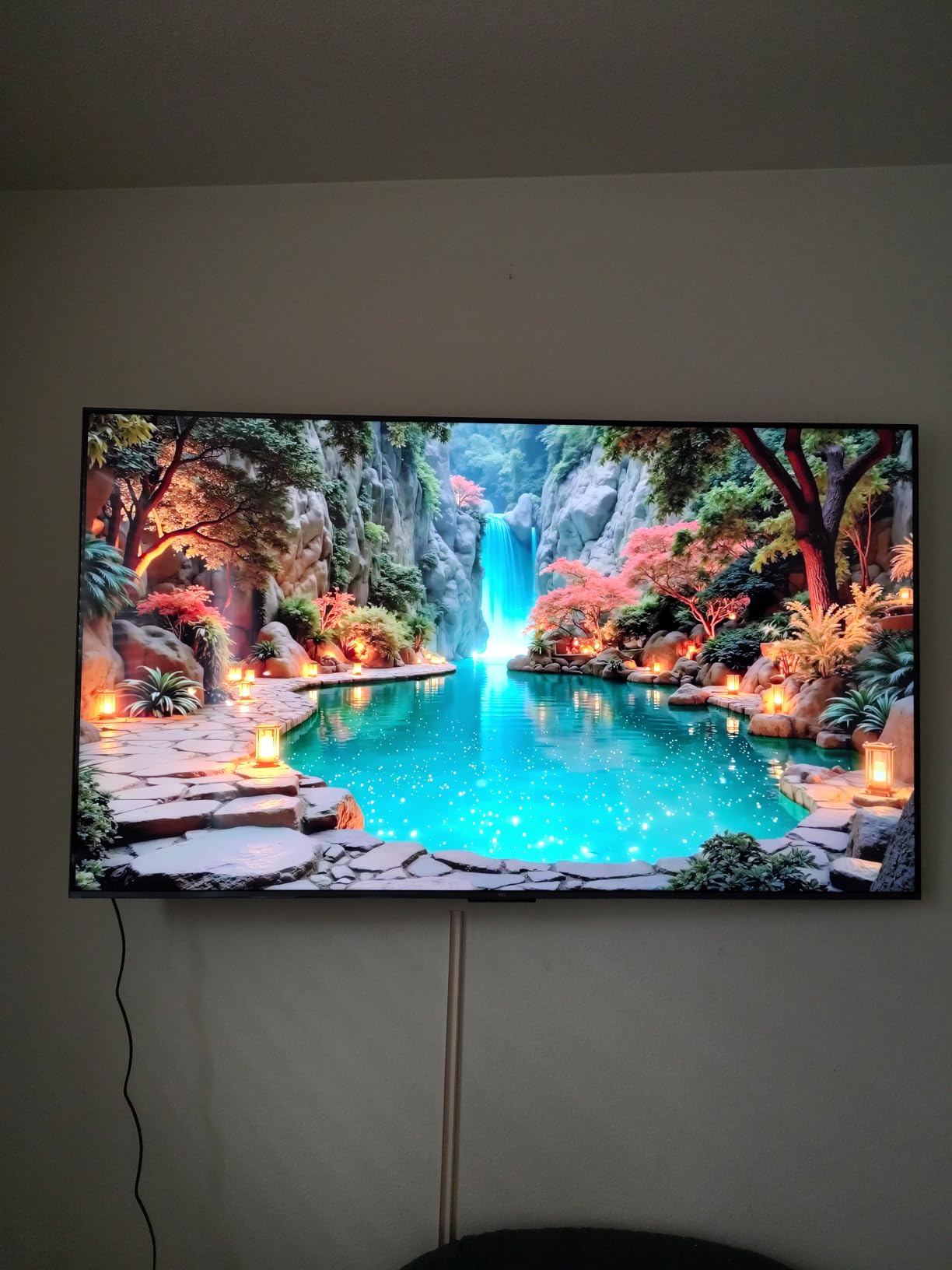
The TCL 65 Inch QM6K is the one I kept coming back to. It has the most established owner base in this group with 1944 ratings at 4.3 stars, and the feedback is unusually consistent about the thing that matters here: motion. Broadcast hockey and football come out crisp, with the ball and puck readable on a fast break rather than smeared into a trail.
The reason is on the spec sheet. You get a native 144Hz panel and TCL’s Motion Rate 480 processing, which is the highest figure in this roundup alongside the top two panels. Add the QD-Mini LED backlight with the Halo Control local dimming system, and you get dark backgrounds around a bright field without the haloing that cheaper full array sets tend to show.
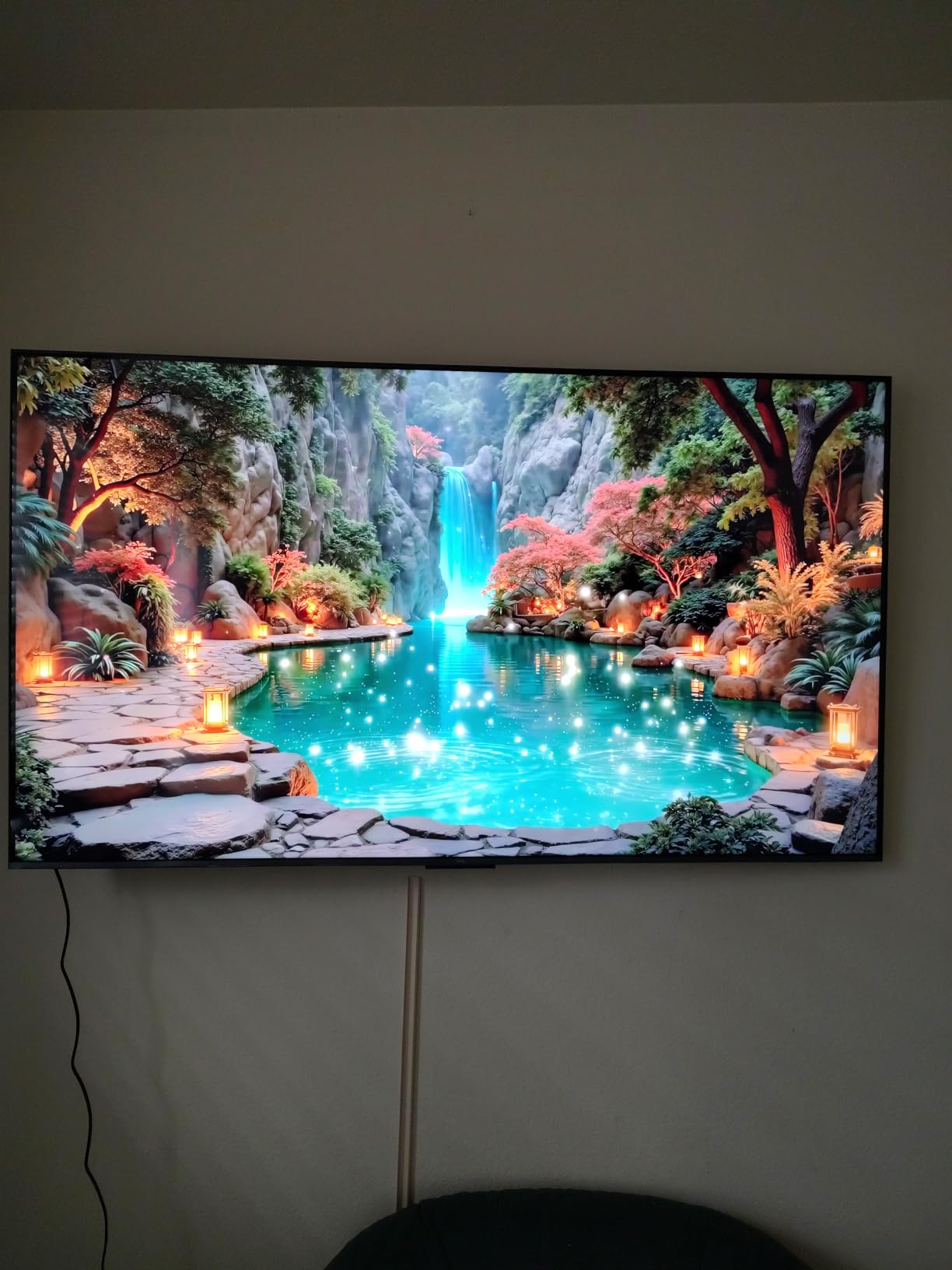
Sport on this set is not just about the panel. Dolby Vision, HDR10+ and HLG are all supported, so a 4K feed has real headroom, and the 178 degree viewing angle means the picture holds up when the family is spread across a long sofa. The Onkyo 2.1 speaker system with a built-in subwoofer is unusual at this level and saves you from immediately adding a soundbar.
There is a real trade-off. The glossy finish and a brightness figure that trails the Hisense U8QG make this a better evening and indoor-viewing set than a sunlit-room set. And the Google TV home screen is the ad-heavy one that most owners replace with a third-party launcher on day one.
Who this suits for game day
This is the set to buy if sport is the main thing you watch and your viewing happens in the evening. The 144Hz panel, the deep blacks and the large review base make it the safest recommendation in the whole roundup for a mixed household that also games on the same screen.
It is a 65-inch panel, which is the right default for a typical living room. Sit roughly 8 to 11 feet back and the picture fills the field of view without needing a wall mount that can hold 37.8 pounds.
Where it falls short
Daytime football in a bright room is the weak spot. Owner feedback consistently notes brightness sitting below brighter Mini-LED rivals, and the glossy screen surface reflects more than the matte or treated panels on the Hisense and Sony sets here.
The other common complaint is software rather than picture. Ad clutter on the Google TV home screen and Google Home app connection issues come up often, and a few buyers needed a firmware update to clear early app lag. Add a soundbar if crowd noise matters to you.
2. Samsung 65 Inch M70H – The Cheapest Way Into Mini-LED
Samsung 65-Inch Class M70H Series, Mini LED, 4K, Smart TV, 2026 Model
65 inch Mini LED
Soccer Mode
Motion Xcelerator 120Hz
31.7 pounds
Pros
- Dedicated Soccer Mode tuned for turf color
- 750+ channels with no subscription
- Motion Xcelerator 120Hz for motion clarity
- Lightest 65 inch set here at 31.7 pounds
Cons
- Listed base refresh rate is 60Hz
- HDR limited to HDR10+ with no Dolby Vision
- Only 3 HDMI ports and 2 channel audio
The Samsung M70H is the entry point, and the reason it is worth listing is Samsung’s Soccer Mode. It is a picture preset built for live match viewing, tuned for fast ball movement and greener turf. On a match where the camera pans constantly, having the set detect the sport and apply the right processing removes a whole step of menu diving.
Underneath, it is a Mini-LED panel with the Mini LED Processor 4K and Pure Color Spectrum quantum dot layer, driven by Motion Xcelerator with DLG 120Hz. That is the setting to have on for football. The 178-degree class wide viewing angle means the picture is not dramatically dimmer from the edge of a wide room.
The practical part of this set is the platform. Samsung TV Plus gives you more than 750 channels with no subscription, which is genuinely useful if your sport comes over an antenna rather than a cable package, and the Gaming Hub puts console, cloud and app games in one place.
At 31.7 pounds it is also the lightest 65-inch set in this roundup, which makes wall mounting far more manageable than the 76-pound and 80-pound options further down.
Who this suits for game day
Buy the M70H if this is your first Mini-LED and you watch sport in a dim or shaded room. The Mini-LED backlight still gives you far deeper blacks than a standard LED TV, and the free channel lineup covers over-the-air sport without another bill.
It is also a sensible second TV for a bedroom or a room where screen size matters more than picture processing.
Where it falls short
The listed base refresh rate is 60Hz, with Motion Xcelerator doing the work to reach an effective 120Hz. That is fine for broadcast sport but a genuine step down from the native 144Hz and 165Hz panels in this list if you also game.
HDR support stops at HDR10+, so there is no Dolby Vision, and three HDMI ports plus two-channel speakers mean you will be adding audio separately. The VESA 200×200 mount pattern is also smaller than most, which limits your mounting options.
3. Hisense 75 Inch U8QG – Best for Bright Rooms and Big Crowds
Hisense 75″ U8 Series ULED Mini-LED 4K UHD Smart Google TV (75U8QG) – QLED, Native 165Hz, VRR 288, Up to LD5600, 5000 Nits, HDR10+, Dolby Vision IQ · Atmos, IMAX Enhanced, 4.1.2 Ch Audio
75 inch Mini LED
Up to 5000 nits
Up to 5600 zones
Native 165Hz
Pros
- Brightest set here with up to 5000 nit peak brightness
- Anti-Reflection Pro coating reduces glare
- Native 165Hz for very fluid motion
- Two-year manufacturer warranty
Cons
- On-screen text smearing out of the box
- 76.1 pounds makes mounting a two-person job
- Only 3 HDMI ports and 8ms response time
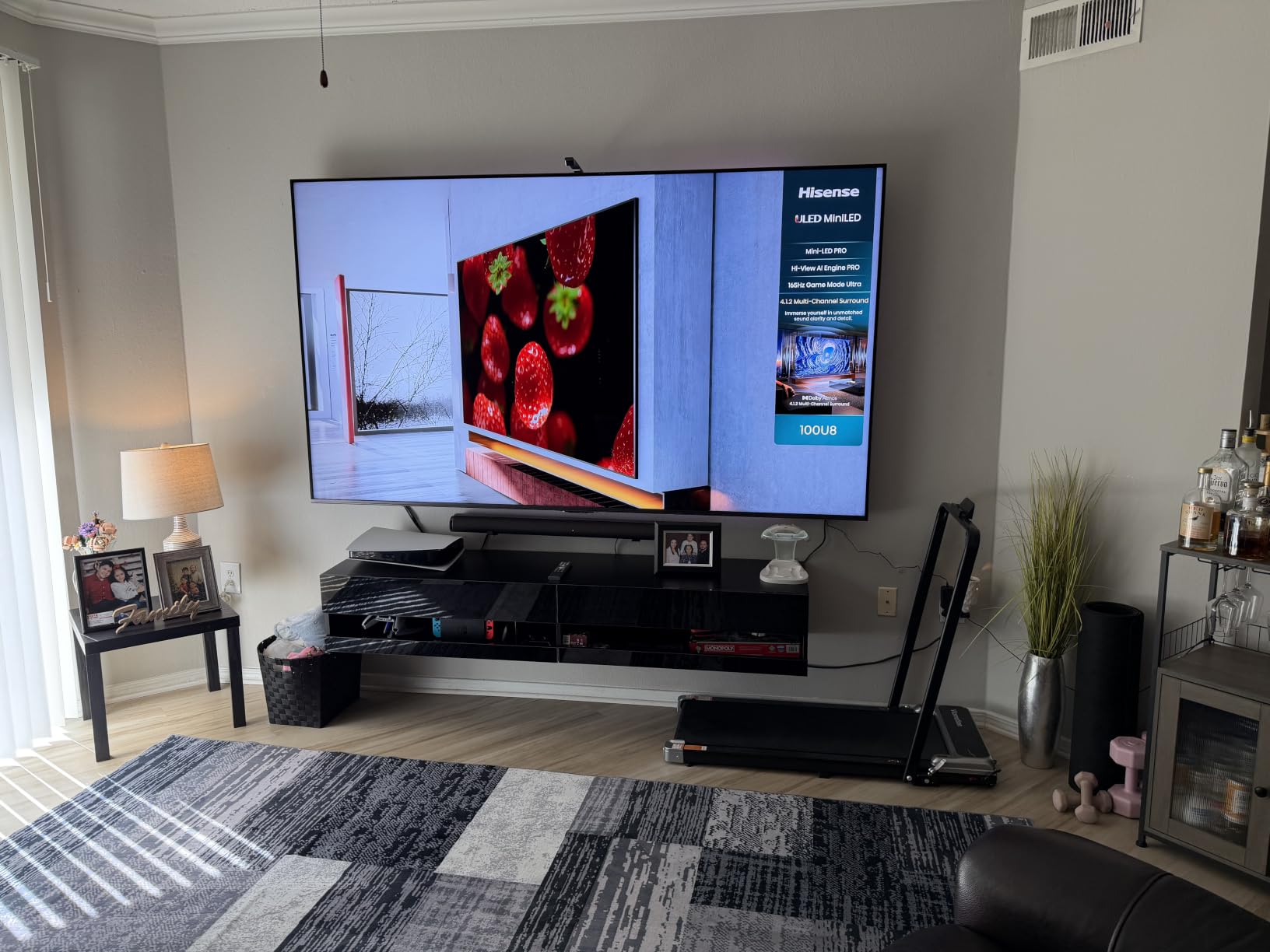
If your sport is played in daylight, the Hisense U8QG is the set in this roundup built for that job. It is rated up to 5000 nits peak brightness, which is the highest figure listed by far, and it carries the Anti-Reflection Pro coating applied inside the liquid crystal layer rather than as a surface film. That treatment is the difference between a TV and a mirror when the window is opposite the sofa.
The backlight is MiniLED Pro with up to 5600 local dimming zones, the highest count here. That is what keeps a night match looking properly dark with the floodlights still popping off the panel, and reviewers specifically call out very little blooming around bright players.
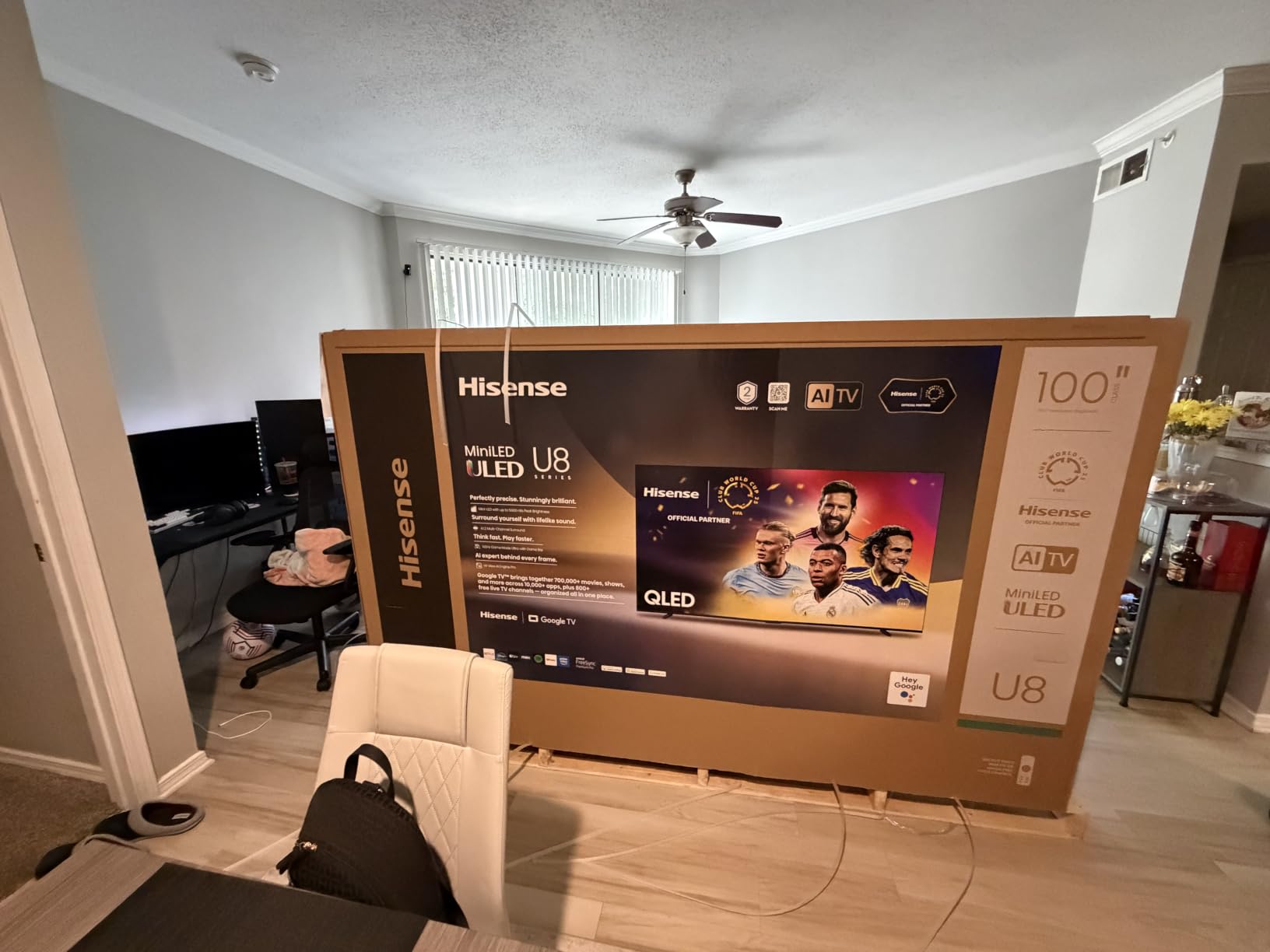
Motion is the other reason it ranks so high for sport. The native 165Hz panel is the fastest in this group, with variable refresh rate from 48Hz to 165Hz and a Game Booster 288 mode. A 165Hz panel is not a sports-only feature, but when a ball is travelling at speed across a 75-inch screen, extra headroom shows.
Colour accuracy is verified rather than claimed, with PANTONE validated QLED colour, and the 4.1.2 channel Dolby Atmos system includes up-firing speakers and a built-in subwoofer. A two-year manufacturer warranty is longer than most in this roundup.
Who this suits for game day
This is the set for a 75-inch screen in a room with real daylight, a big family, or a man cave where you want the picture to win against ambient light. It is also the natural partner for slow-motion replay, where extra resolution and brightness are more visible than on a standard broadcast feed.
If you sit 11 feet or more back, 75 inches is the correct size and this is the one to look at first.
Where it falls short
It is the heaviest option that is not in the premium video tier, at 76.1 pounds, so plan the wall mount and the studs before the box arrives. There are also only three HDMI ports, which is stingy for a set with a game booster mode and 48Hz to 165Hz variable refresh rate.
Owners report visible on-screen text smearing out of the box, especially for desktop use, and some recurring audio dropouts from the built-in speakers. Response time is listed at 8 milliseconds, so it does not match an OLED on pixel-level transitions.
4. Roku 65 Inch Plus Series – Best Value Mini-LED for Sports
Roku 65-Inch Plus Series Smart TV – 4K QLED Mini-LED TV – RokuTV
65 inch Mini LED QLED
Full array local dimming
Dolby Vision and HDR10+
39.7 pounds
Pros
- Tied highest rating here at 4.5 stars
- Roku OS is the simplest interface of the brands listed
- Dolby Vision included at an entry price
- 4.1 channel audio with a subwoofer
Cons
- 60Hz base refresh rate is the lowest here
- Fewer picture calibration options than Google TV or Tizen
- Only 55 65 and 75 inch sizes available
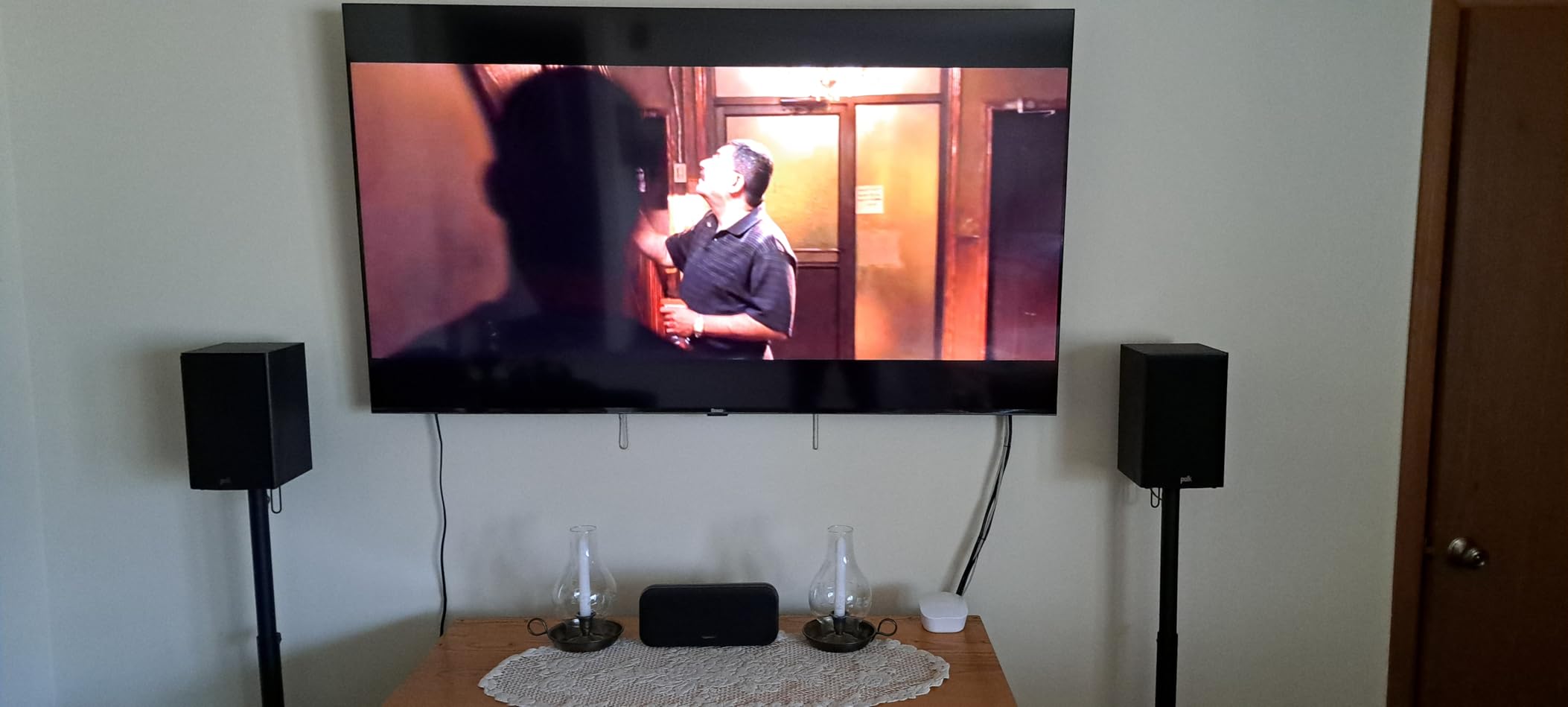
The Roku 65 Inch Plus is the set most people will be happiest with. It carries a 4.5 star rating from 717 owners, the joint-highest score in this group, and the review theme is consistency rather than excitement: people like the picture, they like the interface, and they stop thinking about the television.
Underneath the simple exterior it is a proper Mini-LED: full array local dimming behind a QLED colour layer, with Dolby Vision, HDR10+ and HLG support. Having Dolby Vision at this level is unusual and it matters for sport, because a 4K broadcast or stream feed gets mapped to the panel’s actual brightness instead of being treated as generic HDR.
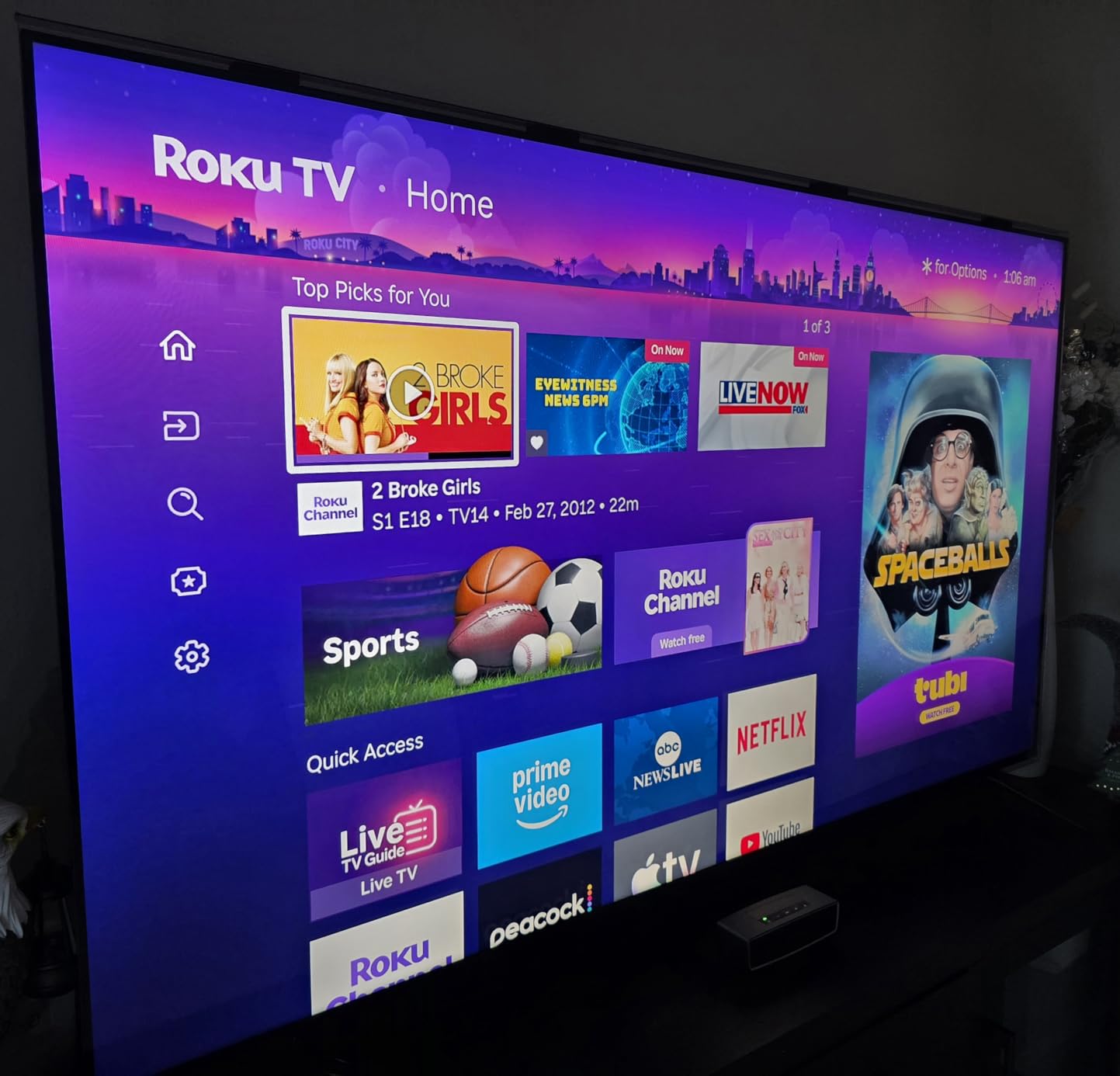
Roku’s Smart Picture Max applies AI optimisation scene by scene, and the interface has the least clutter of any platform here, which matters when half the people watching are under ten. The Roku Enhanced Voice Remote has shortcut buttons and a lost remote finder, and Bluetooth Headphone Mode lets late viewers watch without disturbing the room.
Audio is unusually good for the tier too, with 4.1 channel Dolby Atmos including a built-in subwoofer and a listed 50 watts of output. Response time is 6.5 milliseconds.
Who this suits for game day
Buy this one if the household watches sport together, the interface needs to be understandable by everyone, and nobody is chasing console performance. For a 65-inch screen in an evening-lit living room, it delivers genuinely good contrast and a clean image at a sensible outlay.
It also works well as a second TV, because setup is fast and the remote is simple to hand over.
Where it falls short
The 60Hz base refresh rate is the lowest in this roundup. Broadcast sport is a 50Hz or 60Hz source anyway, so it is not a disaster, but fast panning looks less fluid than on the 144Hz and 165Hz panels here, and it is the wrong pick if the same screen is also a games console display.
Roku OS also offers fewer picture calibration options than Google TV or Tizen, so if you enjoy dialling in gamma and colour temperature by hand, you have less to work with. Sizes are limited to 55, 65 and 75 inch.
5. Hisense 65 Inch E7SF – Best Built-In Sports Mode
Hisense 65″ E7 Cinema Series Hi-QLED Mini-LED 4K UHD Smart Fire TV (65E7SF, 2026 NEW) – Native 144Hz, AI Picture, Dolby Vision IQ · Atmos, FALD, HDR10+ Adaptive, MEMC, Alexa+
65 inch Hi-QLED Mini LED
AI Sports Mode
Native 144Hz
Fire OS
Pros
- AI Sports Mode detects live sport and boosts crowd audio
- Native 144Hz with AI Smooth Motion MEMC
- Dolby Vision IQ and Dolby Atmos included
- AI Light Sensor adapts to ambient light
Cons
- Intermittent Wi-Fi dropouts reported by some owners
- 20 watt 2.0 channel speakers are the weakest here
- Only a one-year manufacturer warranty
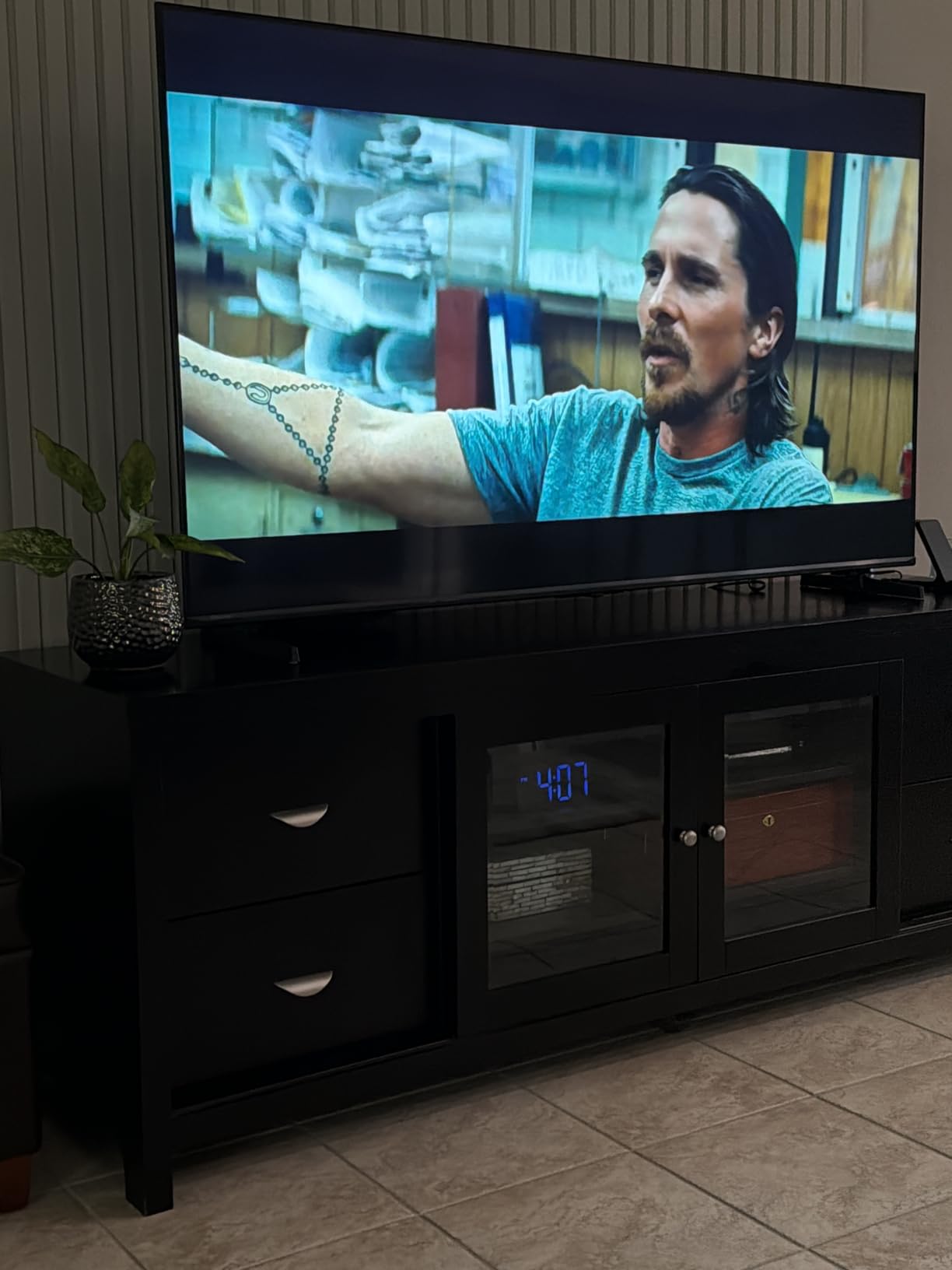
The Hisense E7SF is the one to buy if you do not want to configure anything. Its AI Sports Mode recognises live sports content and tunes both picture and sound for it, including lifting crowd audio. On a 2026 model, that is the closest thing to a set that just works on a Saturday afternoon.
Under the smarts, the hardware is properly specified for motion. You get a native 144Hz Game Mode and AI Smooth Motion with MEMC and black frame insertion, which is the mechanism that fills in frames between the ones the broadcast sends. Whether you leave that on is a personal choice, and one we come back to in the buying guide.
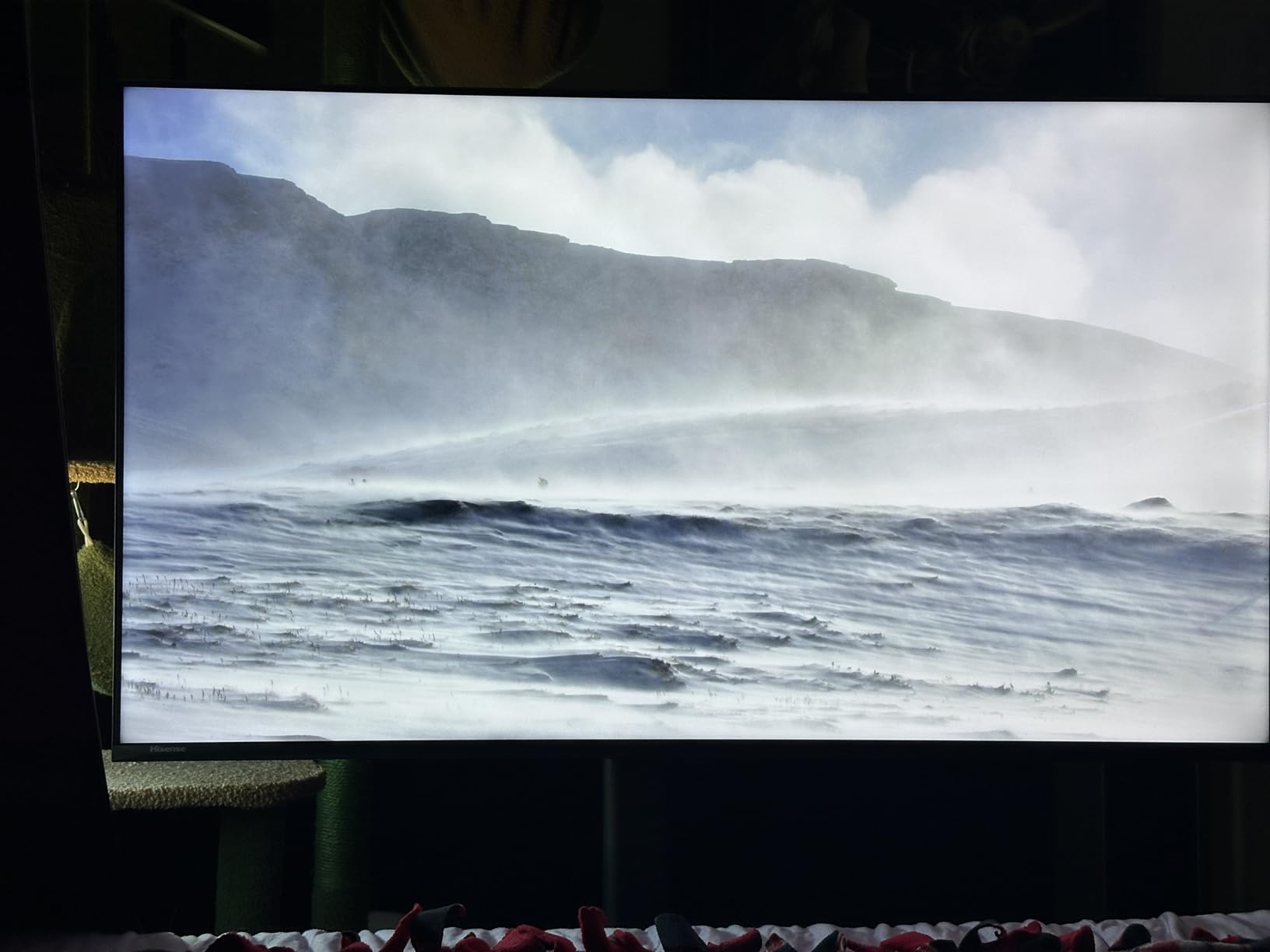
Picture processing is handled by an AI Picture engine that works scene by scene, with an AI 4K upscaler for the many standard-definition sports feeds still in circulation, plus Dolby Vision IQ and HDR10+ Adaptive. The AI Light Sensor adjusts the backlight to room conditions, which helps if your match times move around.
Filmmaker Mode is present if you want to keep the original frame rate and aspect ratio, and Alexa is built in with a dedicated blue button on the remote for less technical users.
Who this suits for game day
This is the pick for a household that wants sport handling without a calibration session. The auto-detected sports mode, the Fire TV interface and the single-button Alexa remote make it the least intimidating of the eight, and 144Hz native is a genuine step up for fast action.
It suits 65-inch rooms and daytime viewing reasonably well thanks to the ambient light sensor.
Where it falls short
The reservations are software stability, not picture. A small number of detailed reviews describe Wi-Fi disconnects and black-screen freezes that needed a physical unplug, sometimes ending in a factory reset within days. If your sport arrives over the network rather than an antenna, that is worth knowing before you commit.
The 20-watt 2.0 channel speakers are the weakest audio spec in the group, and the warranty is one year. A wall mount bracket is not included.
6. Samsung 75 Inch M80H – Best 75-Inch Set for Console and TV
Samsung 75-Inch Class M80H Series, Mini LED, 4K, Smart TV, 2026 Model
75 inch Mini LED
120Hz native
Motion Xcelerator 144Hz
1000 nits
Pros
- Motion Xcelerator 144Hz with variable refresh rate
- NQ4 AI Gen2 processor handles motion well
- Auto HDR Remastering lifts SDR broadcasts
- 75 inch Mini LED at a mid-range outlay
Cons
- 1000 nit peak brightness is modest
- Only 3 HDMI ports and no Dolby Vision
- Smallest review pool here at 219 ratings
The Samsung M80H is the large-screen option for people who watch sport and play on the same set. The panel is natively 120Hz, and Motion Xcelerator 144Hz with dynamic variable refresh rate handles the transition when you switch from a broadcast channel to a console.
The NQ4 AI Gen2 processor does real-time scene analysis, which is where the sports benefit shows up: it is tuned to make fast-moving content read cleanly and to upscale the standard-definition feeds that still carry a lot of live sport. Auto HDR Remastering converts SDR content toward HDR-like levels, so a standard broadcast does not look flat next to a 4K stream.
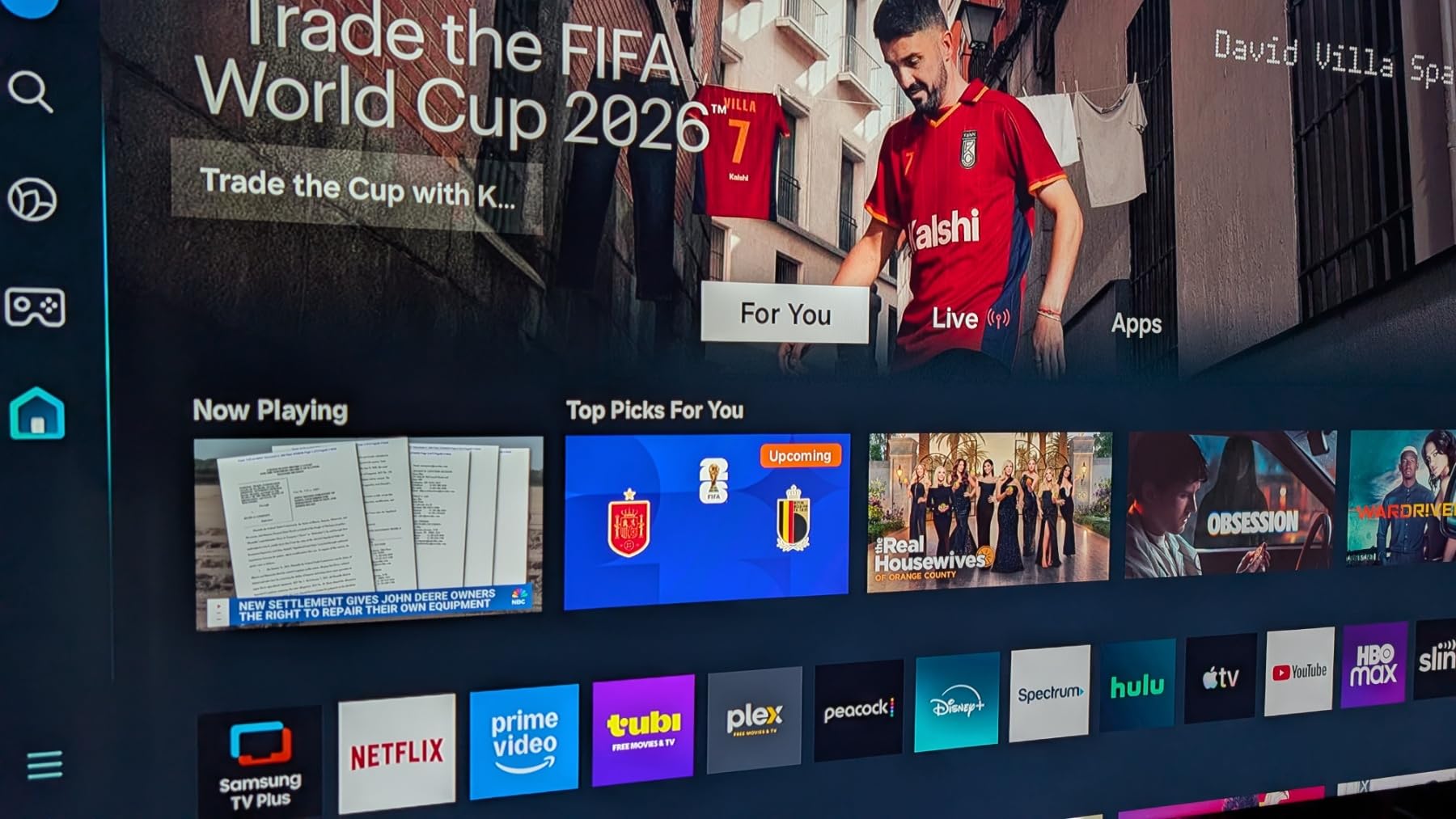
At 75 inches it makes sense for a long viewing distance, and 48.5 pounds is a manageable weight for a wall mount. The Tizen platform includes Samsung Vision AI and Alexa, and Pure Spectrum Color covers one billion colours through the quantum dot layer.
Warranty is one year, and the listed maximum display brightness is 1000 nits.
Who this suits for game day
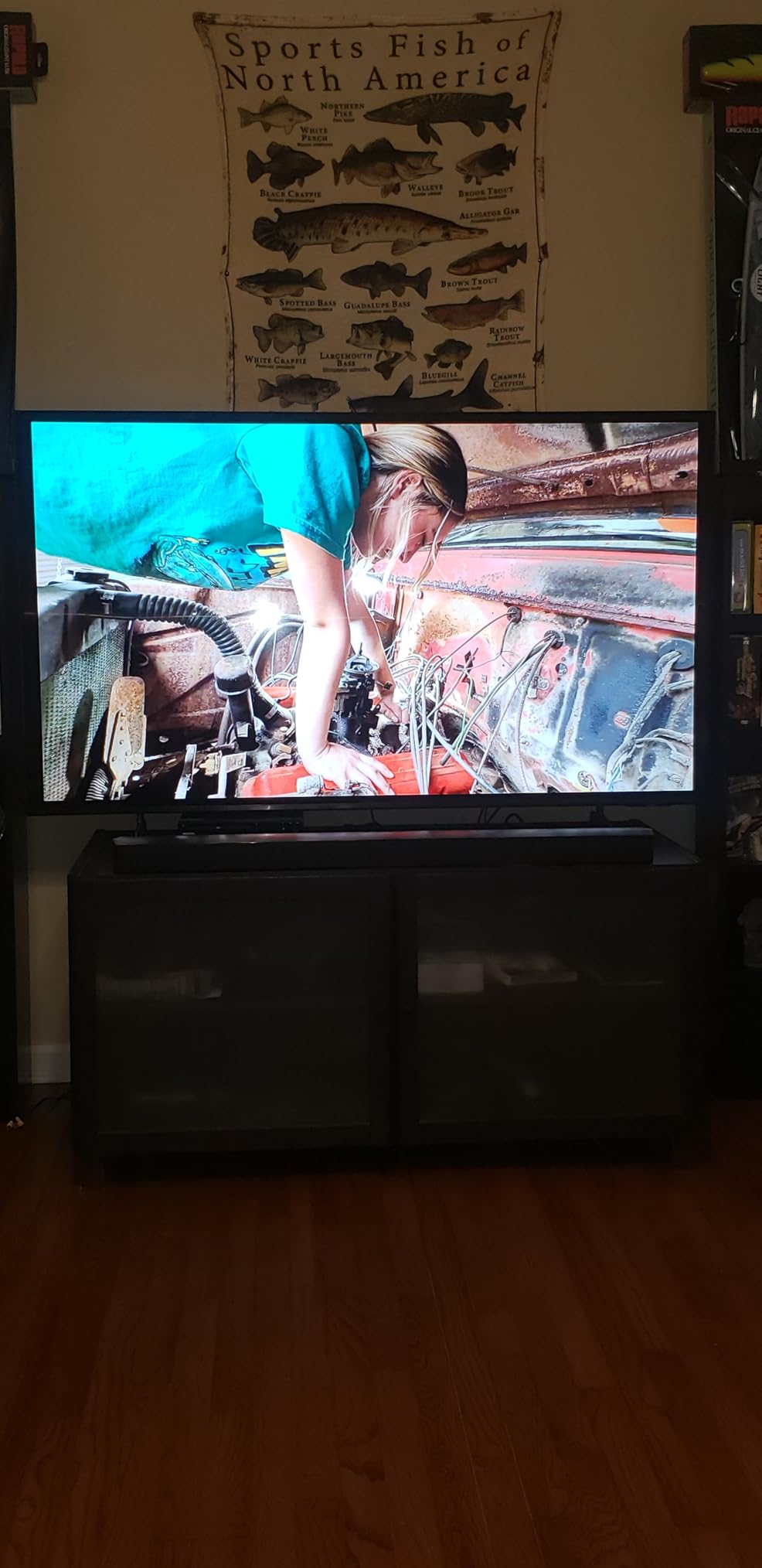
Choose this if your sofa is 11 feet or more from the screen, you want 75 inches without stepping up to a four-figure set, and a console is part of the same setup. The 120Hz native panel and VRR make it a much better mixed-use screen than the 60Hz options at the budget end.
For night viewing in a dim or dark room, the brightness figure is entirely adequate.
Where it falls short
1000 nits is well short of what the Hisense U8QG delivers, so this is not the set to buy for a sunlit room with windows behind the sofa. It also sticks to HDR10+ with no Dolby Vision, and three HDMI ports is fewer than the four on the TCL, Roku, Hisense E7SF and Hisense U65QF.
The 219-review pool is the smallest here, and it is a 2026 model, so long-term reliability feedback is still thin. The two-channel audio has no subwoofer.
7. Sony 75 Inch Bravia 5 – Best for Motion Clarity
Sony 75 Inch BRAVIA 5 Mini LED 4K HDR Smart Google TV (K-75XR50)
75 inch Mini LED
XR Motion Clarity
120Hz
Local dimming
Pros
- XR Motion Clarity delivers blur-free sports action
- XR Backlight Master Drive controls the Mini LED backlight
- Matte screen finish cuts reflections
- Studio calibrated modes for Netflix and Prime Video
Cons
- 120Hz is the lowest panel here among premium sets
- Heaviest set here at 79.8 pounds
- One-year warranty and 476 kWh per 1000 hours
If motion clarity is the thing you care about above everything else, the Sony Bravia 5 is the one. XR Motion Clarity is Sony’s motion processing, and it is repeatedly named as the reason sports fans land on Bravia. On a fast pan or a serve at full stretch, the processing holds detail in the moving subject rather than letting it smear.
The backlight is Mini LED under XR Backlight Master Drive, which gives Sony precise control over which zones light up, and the panel runs at a native 120Hz. Colour comes from XR Triluminos Pro billion-colour processing, and XR Contrast Booster 10 and XR Clear Image handle the upscaling on lower-resolution feeds.
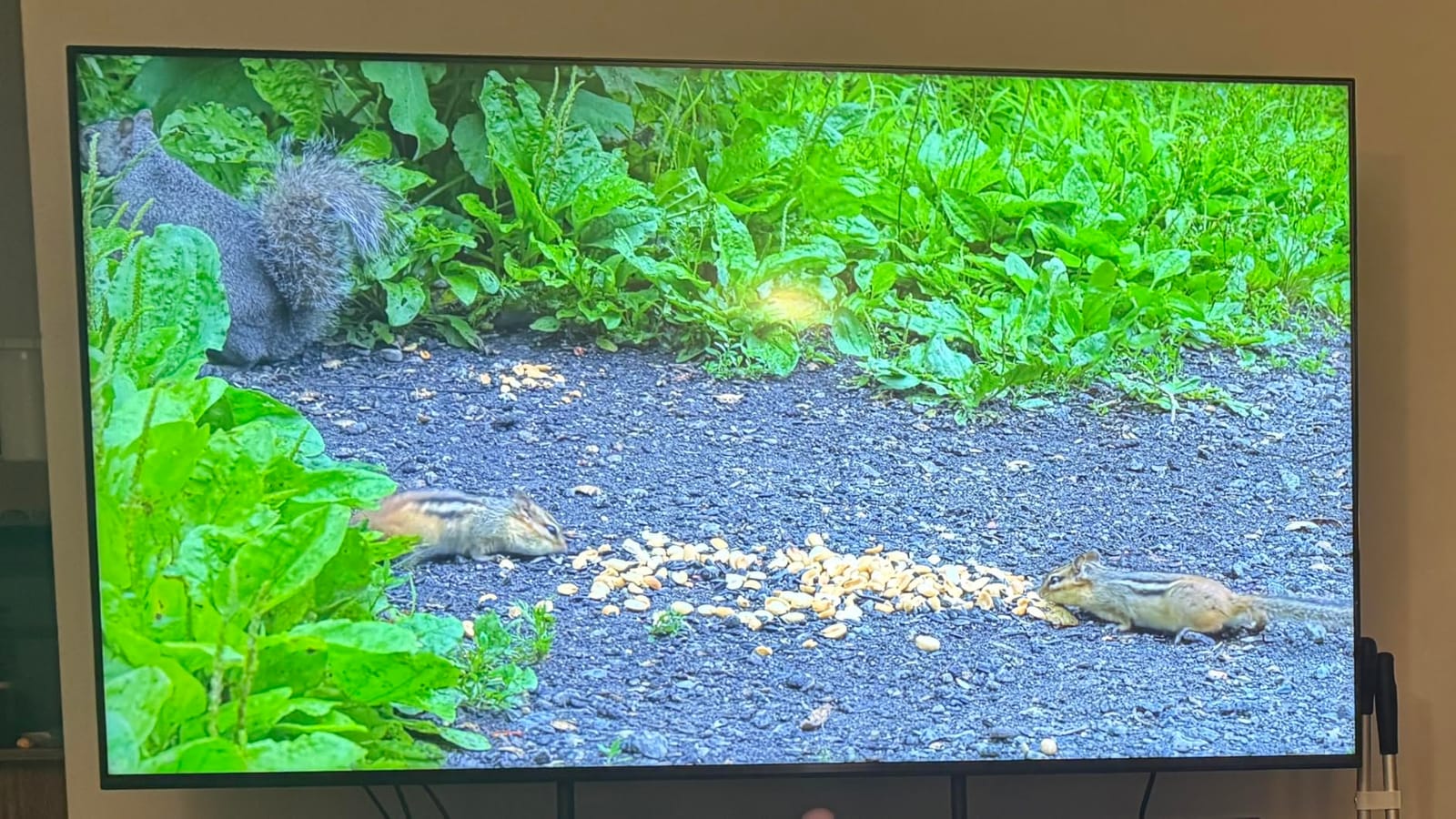
Two other features matter for a sports household. The matte screen finish reduces reflections, which owners single out as a real benefit in bright rooms, and the studio calibrated picture modes for Netflix and Prime Video mean the same set behaves sensibly on a non-sport evening.
There is PlayStation 5 integration too, with Auto HDR Tone Mapping and Auto Genre Picture Mode switching the set into the right profile when a console is detected. Dolby Vision, Dolby Atmos, IMAX Enhanced and DTS:X are all supported, and 32 GB of storage plus the Sony Pictures Core app are included.
Who this suits for game day
This is the pick for a tennis or motorsport household, or anyone who watches sport from a distance on a big screen and has noticed smearing on other sets. The matte finish also makes it one of only two options here with a genuine anti-reflection treatment for daylight viewing.
It ties for the highest owner rating in this roundup at 4.5 stars, and the review theme is processing quality across both sport and film.
Where it falls short
A native 120Hz is the lowest panel among the premium sets in this list, so you give up the 144Hz and 165Hz headroom the TCL, Hisense and Samsung sets provide. The matte finish also costs a little image punch compared with a gloss panel in a dark room.
At 79.8 pounds it is the heaviest set here and wall mounting is a two-person job. It carries a one-year warranty, and the listed energy figure of 476 kWh per 1000 hours is the highest in the group.
8. Hisense 75 Inch U65QF – Best 75-Inch Value for Daily Sports
Hisense 75″ Class U6 Series Mini-LED 4K UHD Smart Fire TV (75U65QF, 2025 Model) – QLED, HDR10+, Native 144Hz, Dolby Vision IQ, Dolby Atmos, Game Mode Pro, ALLM, Alexa Built in, Black
75 inch Mini LED
Up to 600 dimming zones
1000 nits
Native 144Hz
Pros
- Largest review base of the 75 inch sets at 784 ratings
- Native 144Hz with Motion Rate 480
- Two-year manufacturer warranty
- Dolby Vision IQ with a built-in subwoofer
Cons
- 1000 nit brightness is well below the U8 series
- Fire TV platform shows more ads than Roku OS
- Only 2.1 channel audio despite the subwoofer
The Hisense U65QF is the value route to 75 inches with a two-year warranty, and it has the largest review base of any 75-inch set here at 784 ratings. That matters because it is the model where you have the most long-term owner feedback to draw on rather than a handful of launch-day impressions.
Motion is the strength. The native 144Hz panel and Motion Rate 480 make fast action read cleanly, and Game Mode Pro brings 48Hz to 144Hz variable refresh rate with AMD FreeSync Premium and Auto Low Latency Mode for console play on the same screen.
Backlight performance is full array local dimming across up to 600 zones, which is a real step up from a standard LED TV and enough to keep a night match properly dark. The Hi-View AI Engine handles AI Picture, AI Sound and AI Scenario, and Dolby Vision IQ with Dolby Atmos and a built-in subwoofer is included.
The series runs from 55 inch to 100 inch, so it is also the option if you want the same feature set in a different size.
Who this suits for game day
Pick this if you want a 75-inch screen, a 144Hz panel and a two-year warranty without stepping up to the U8 tier. For night or shaded-room viewing in a family room, it covers everything most sport needs.
Game Mode Pro and ALLM also make it a practical two-output screen, with four HDMI ports for a console, a streaming stick and a receiver.
Where it falls short
Brightness is the honest limitation, at a listed 1000 nits. That is a big step down from the 5000-nit figure the Hisense U8QG carries, and it shows in a room with a lot of daylight. The 600 dimming zones are also fewer than higher Hisense tiers, so expect slightly more haloing around very bright players against a dark background.
Fire TV carries more advertising than Roku OS or Google TV, and the audio is 2.1 channel despite the subwoofer. It weighs 63.9 pounds, so mounting needs planning.
How to Pick a Mini-LED for Sports
The five factors we scored each set on
First, sustained brightness in a lit room, not the peak number in a dark one. Second, motion handling at the native refresh rate, judged with the motion interpolation setting at its sensible value rather than cranked. Third, local dimming performance on dark scenes. Fourth, reflection handling, which is the difference between a usable and unusable set in a lit room. Fifth, practical matters: port count, weight, warranty length and whether the platform fights you.
Those five produced the order above. Weight them differently and the Sony and the Hisense U8QG swap places, because both are bought for reasons that a spreadsheet cannot measure.
Which brand handles motion best for sports?
Sony has the strongest reputation for motion processing, which is why owners in the r/4kTV sports threads keep returning to Bravia. Samsung and TCL offer the highest native refresh rates in this group, with 144Hz panels that pair well with their motion Xcelerator and Motion Rate processing. Hisense provides the most headroom, with a native 165Hz panel in the U8QG. LG QNED is a strong alternative we have covered separately, and Roku wins on simplicity rather than motion.
Our full Mini-LED comparison goes deeper on the processors behind these settings if you want the technical detail.
Motion enhancement versus motion blur reduction
Motion enhancement, sometimes called motion interpolation or MEMC, generates the frames between the ones the broadcast sends. It makes fast movement smoother, and on a tennis ball or a fast break it adds a soap-opera quality that some viewers like and most sport purists do not. Motion blur reduction goes the other way, holding each frame longer or dropping frames to remove blur without inventing new ones.
The useful middle ground is the setting most sets ship as Motion Rate, Motion Xcelerator or AI Smooth Motion, applied at a moderate level. Owners calibrating Hisense sets on r/Hisense recommend a high motion blur reduction setting for standard-definition sport, because it lifts contrast, colour and brightness in a way SDR broadcasts benefit from. Our advice is to start moderate, watch a full match, and only push it higher if the softness bothers you.
Whichever you choose, use the picture mode built for the sport if the set has one. Samsung’s Soccer Mode and Hisense’s AI Sports Mode both adjust far more than interpolation, and they are free.
What size do you need for sport?
Up to about 8 feet of viewing distance, 65 inches is the right call. Between 8 and 11 feet, 75 inches gives you the screen real estate to read player numbers and see the shape of a play developing. The reason size matters more for sport than for film is that a wide field of play has detail spread across the whole frame, and a smaller screen compresses it.
Two things are worth noting. A 75-inch set is heavy, ranging from 48.5 pounds on the Samsung M80H to 79.8 pounds on the Sony Bravia 5, so confirm your mount and wall structure. And if you watch in daylight, size does not fix glare. Only the treatment on the panel does, which is what the matte finish on the Sony and the Anti-Reflection Pro coating on the Hisense U8QG are for.
Mini-LED vs QLED vs OLED for Sports
The confusion here is understandable, because Mini-LED is a backlight technology and QLED is a colour technology. A QLED TV can also be Mini-LED, and several sets in this roundup carry both labels. What Mini-LED means here is thousands of individually dimmable zones behind an LCD panel.
For sport, the practical ranking is close. Mini-LED wins on burn-in safety, on sustained brightness, and on screen size per pound of outlay. OLED wins on black level and on pixel response, which makes it the fastest-moving picture with no processing help. Plain QLED, without a Mini-LED backlight, wins on nothing that matters for sport except price, because it cannot dim locally and it cannot hit high brightness.
So if your priority is live sport and a large screen you will leave on, Mini-LED is the right category. If your priority is a smaller set for a dark room and you will never run a permanent channel on it, OLED is a legitimate alternative, and you should read our sports TV guide before deciding.
Sports Picture Mode Settings by Brand
Whatever you buy, three settings matter. First, turn off any ambient light sensor or eco dimming if your match time is fixed, because an auto-brightness feature that keeps shifting levels is distracting in a dark room. Second, set the picture mode to the sports preset, or to Filmmaker Mode if there is no sports preset and you want no processing at all. Third, keep motion interpolation at moderate unless you actively prefer the smoothed look.
On Samsung, open the Samsung Plus menu and choose Soccer Mode, then leave the motion setting on the manufacturer default rather than the maximum. On Sony, keep the mode in Custom or Studio and set Motionflow to a low Custom value, since XR Motion Clarity already handles the sport case well without extra interpolation. On Hisense, owners on r/Hisense report good results from a high motion blur reduction setting for standard-definition sport, paired with the Picture mode set to Sports or Stadium.
On TCL with Google TV, use the picture mode selector and leave Game Mode off for television, since it changes colour and contrast handling. On Roku, Smart Picture Max is automatic and there is limited manual control, so the picture mode and the brightness slider are the only two dials you get.
If you are building out a full setup around your sports screen, our sports earbuds guide covers the wireless side for people who watch late games without waking the house.
Frequently Asked Questions
Is Mini LED good for watching sports?
Yes. Mini-LED is one of the best TV technologies for live sport. Thousands of tiny backlight zones keep blacks dark during fast panning, there is no OLED burn-in risk from a permanently-on scoreboard, no auto brightness limiter dims bright content, and the category reaches well over 1000 nits in a lit room. The trade-off against OLED is slower pixel response on very fast action.
What brand makes the best Mini LED TVs?
It depends on what you need. Sony leads on motion processing with XR Motion Clarity, which is why Bravia keeps coming up in sports threads. Hisense leads on brightness per pound, with the U8 rated up to 5000 nits and an anti-reflection coating. Samsung and TCL lead on native refresh rate at 144Hz. Roku leads on interface simplicity and owner satisfaction, and LG QNED remains a strong all-rounder.
Is Mini LED or QLED better for sports?
Mini-LED is better for sports, but the terms overlap. QLED describes the colour layer and Mini-LED describes the backlight, so a QLED TV can also be Mini-LED. A Mini-LED set dims locally, reaches much higher brightness and holds blacks during fast pans, while a standard QLED TV without a Mini-LED backlight cannot do either.
What is the best mini LED TV for sports right now?
The TCL 65 Inch QM6K is the best overall mini LED TV for sports, with a native 144Hz panel, Motion Rate 480 processing and full array local dimming, backed by the largest owner review base in the group. For a very bright room and a 75-inch screen, the Hisense U8QG is the pick. For the simplest setup, the Roku 65 Inch Plus leads.
Do Mini LED TVs have burn-in risk?
Mini-LED TVs are LCD panels, so they do not suffer the organic burn-in that affects OLED screens. There is no risk of a permanently-on scoreboard, channel logo or news ticker wearing the panel. What can happen over many years is uneven backlight ageing and image retention, which is a far milder and slower problem.
How many nits do you need for sports?
Around 1000 nits handles an evening or shaded room comfortably, and 1500 nits or more is what you want for a daytime or afternoon match in a lit space. Above 2000 nits you are paying for headroom on HDR highlights rather than a visible difference on standard-definition sport. Several sets in this roundup publish brightness figures: the Hisense U8 at up to 5000 nits, while the Samsung M80H and Hisense U65QF list 1000 nits.
Final Verdict: Which Mini-LED Should You Buy for Sports?
The TCL 65 Inch QM6K is the best mini LED TV for sports overall. A native 144Hz panel, Motion Rate 480 processing, full array local dimming through TCL’s Halo Control system and Onkyo 2.1 audio add up to the most complete sports package here, and its 1944-owner review base is the most established in the group.
If your sport is in daylight, the Hisense U8QG wins on brightness, zone count, anti-reflection treatment and native refresh rate. If you want the TV to do the work without menus, the Hisense E7SF auto-detects the sport for you. If motion clarity on a fast pan is the whole point, the Sony Bravia 5 is the one. If simplicity and owner satisfaction are the priority, the Roku 65 Inch Plus has the joint-highest rating in the roundup.
Whichever you choose, the pair of settings that decide how it looks on a match are the sports picture mode and the motion setting. Set both once, watch a full game, and then stop touching them. That is our 2026 guide to the best mini LED TVs for sports, and it is updated as this year’s models cycle through firmware and firmware-free improvements.