
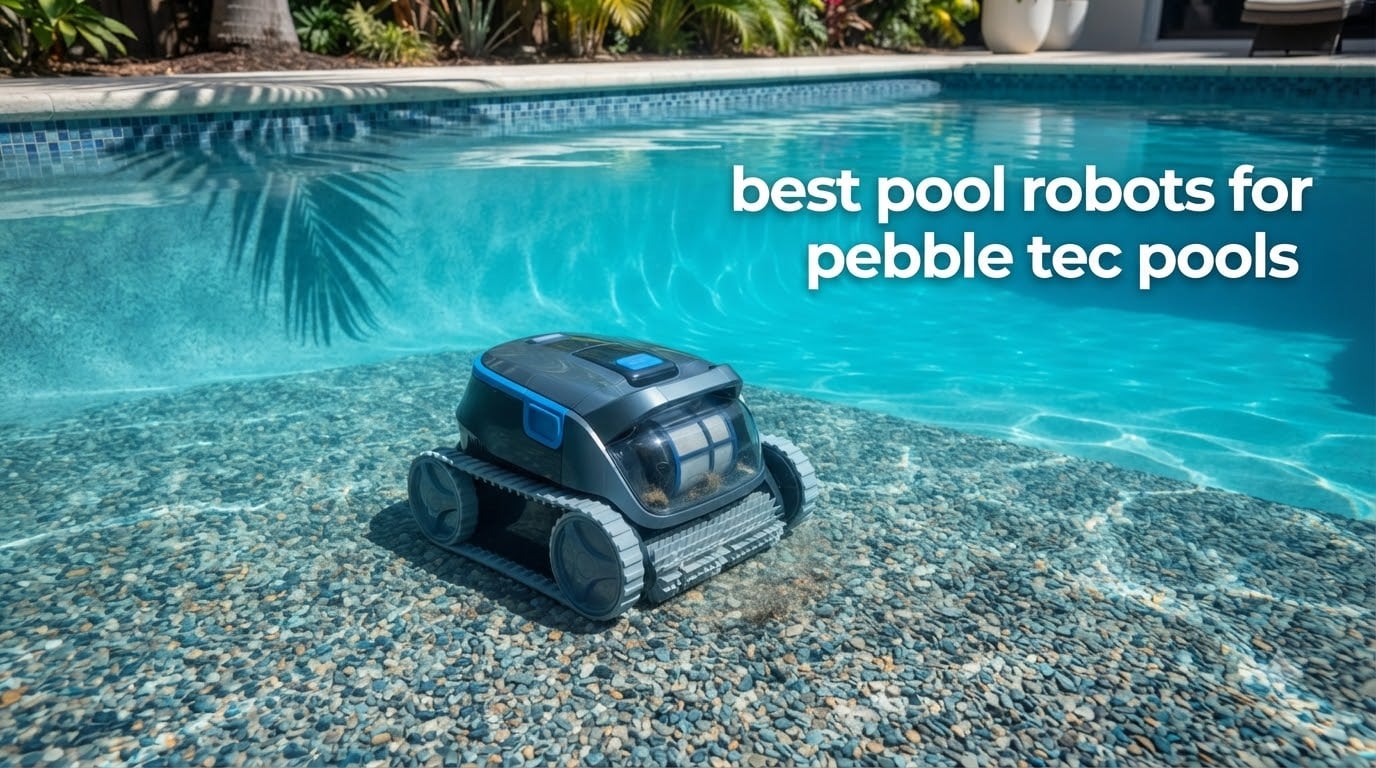
A Pebble Tec pool is not a smooth pool. The exposed aggregate in the finish works like a very fine sheet of sandpaper under the chassis of a robotic cleaner, and that single fact reverses most of the advice you will read about pool robots. The machines that last five seasons on a smooth plaster shell can grind through plastic drive treads in one on a rough pebble finish.
Our team compared ten of the highest-rated robotic pool cleaners available in 2026 against the things that actually decide survival on an exposed-aggregate surface: drive type, traction hardware, brush type, filter mesh, runtime, weight, warranty length and how easily replacement parts are found. We read multi-season owner reports on r/pools and r/swimmingpools alongside the manufacturer specs, because on a rough finish the failure mode is rarely a dead motor. It is a shredded track, a chewed brush roll, or a filter that fills with grit before the cycle ends.
This guide is written for owners of in-ground pools finished in Pebble Tec, Pebblecrete or any comparable exposed-aggregate surface. It also covers what to do in your first month with a newly finished pool, whether corded or cordless makes more sense when the floor is abrasive, and how to tell whether a worn robot is worth repairing or replacing. If you are still choosing a shell, start with our above-ground pool guide for the other end of the comparison.
Table of Contents
What Is the Best Pool Robot for a Pebble Tec Pool?
The best pool robot for a Pebble Tec pool is a track-driven or wide-tread model with a scrub brush rated for textured surfaces, a fine-mesh filter and a long enough runtime to finish a full cycle in one pass. Our pick is the Dolphin Nautilus CC Plus, which pairs a wall-scrubbing climb with a top-load filter basket and a proven parts supply. On rough finishes, traction hardware and filter quality matter far more than headline suction numbers.
That answer is deliberately short because the rest of this article is the reasoning behind it. Three things separate a robot that survives a pebble finish from one that gets eaten by it.
First, contact area. Small hard wheels concentrate the entire load of the machine onto a few square centimetres of plastic. A continuous track or a wide rubber tread spreads that load and survives the grinding. Second, filtration. A rough finish generates fine grit that a coarse basket will never hold, so a multi-layer filter with a sub-20 micron stage pays for itself in the first season. Third, time. A robot that runs out of battery mid-cycle leaves you with debris scattered across the floor rather than captured.
Everything below is ranked with those three criteria weighted highest, and the answer changes if your pool is a different shape or your finish is a different age.
Top 3 Picks for Pebble Tec Pools in 2026

Dolphin Nautilus CC Plus
- Wall-scrubbing climb
- Top-load filter basket
- Clears a 40 ft pool in 2 hours
All 10 Pool Robots Compared in 2026
Every robot below is rated for in-ground pools, and the notes below the table flag the specific characteristic that matters most on a rough finish. The Dolphin units and the Polaris are corded, the rest run on lithium-ion batteries, and that distinction shapes everything from runtime to repair cost.
| Product | Specifications | Action |
|---|---|---|
| Dolphin Nautilus CC Plus |
|
Check Latest Price |
 Dolphin Proteus DX3 Dolphin Proteus DX3 |
|
Check Latest Price |
| Dolphin Escape |
|
Check Latest Price |
 WYBOT C1 WYBOT C1 |
|
Check Latest Price |
 AIPER Scuba V3 AIPER Scuba V3 |
|
Check Latest Price |
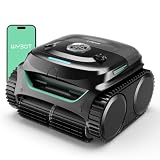 WYBOT C2 WYBOT C2 |
|
Check Latest Price |
 Beatbot Sora 70 Beatbot Sora 70 |
|
Check Latest Price |
 BOTLIFE PC10 BOTLIFE PC10 |
|
Check Latest Price |
 Beatbot AquaSense 2 Beatbot AquaSense 2 |
|
Check Latest Price |
 Polaris PCX 868 iQ Polaris PCX 868 iQ |
|
Check Latest Price |
If you want the short version before you read further, take the Dolphin Nautilus CC Plus for the most proven package, the Dolphin Escape if traction hardware is your priority, and the WYBOT C1 if cordless convenience matters more than filtration sophistication.
Why a Pebble Tec Pool Changes the Robot You Need
The surface of a Pebble Tec pool is a bonded mixture of Portland cement and small river pebbles, exposed by high-pressure water washing during the finish process. It is durable and it is beautiful, and it is abrasive. A robot with a smooth plastic underside dragging across it under several hundred pounds of load is doing the same job as sandpaper on a plastic toy.
Engineers call the pattern three-body abrasion: the pebble, the grit that comes off it, and the plastic chassis become three surfaces grinding against each other. The grit trapped between the robot and the floor is what does most of the damage, because it moves with the drive treads. A single pass does very little. Fifty cycles a year for four years adds up to a rear bumper with a soft, fuzzy edge and a drive track with visible flats.
The most serious reported failure on rough finishes is not a dead motor. On r/pools, owners describe Pebble Tec shredding the wheels of a Hayward PoolCleaner within a single season, leaving fragments floating on the water surface. That is a genuine safety issue rather than an annoyance, because small floating plastic pieces are an ingestion hazard for young children, and they appear exactly where you are trying to keep the water safe.
Scuffing shows up in a predictable place too: the waterline, where the robot grinds its side bumper and upper tracks against the tile transition as it climbs. On a smooth pool that contact is harmless. On pebble finish the tile line acts as a fixed abrasive edge, and it wears the bumper, the track lip and any plastic side flap long before the floor parts show damage.
There is a second effect that catches new owners out. Rough finishes produce grit during the first months, and a robot running over an uncured or recently cured surface can draw loose pebbles and cement dust into its impeller. This is why the community rule of thumb is to wait roughly 30 days after fill before a robot touches the shell, which is covered in its own section below.
None of this means a robot will damage your finish. It means the design details that matter on smooth plaster are not the details that matter here, and a robot marketed for fiberglass pools may be the wrong machine for your pool.
1. Dolphin Nautilus CC Plus – Best Overall for Pebble Tec Pools
Dolphin Automatic Robotic Pool Vacuum Cleaner, Wall Climbing Scrubber Brush, Smart Navigation, Ideal for In-Ground Pools up to 40FT in Length – Nautilus CC Plus
Corded, wall-scrubbing climb
Top-load filter basket
9.45 kg
Up to 40 ft pools
Pros
- Wall-scrubbing climb handles any pool shape or surface type
- Active scrubbing brush clears debris without manual effort
- Top-load filter basket is easy to remove and rinse
- Plug-and-play setup clears a pool in about 2 hours
- Dolphin brand track record of durability over 40 years
Cons
- Corded design means a cable must be managed and coiled after each use
- Top-load filter basket needs manual emptying during heavy leaf loads
The Nautilus CC Plus is the one we keep coming back to, and it comes down to evidence volume rather than a single dazzling spec. It carries 13955 ratings averaging 4.3, and a review count that large is itself a form of protection on a rough finish: when a brush roll, impeller or filter basket eventually wears out, this is a machine where the parts are produced, catalogued and shipped by the same manufacturer that has been building pool cleaners for more than 40 years.
Mechanically it is a straightforward corded unit rated for in-ground pools up to 40 ft, weighing 9.45 kg with a 22.2 by 17.6 by 12.9 inch body. The wall-scrubbing climb is the part that matters on pebble, because it keeps the brush roll pressed against the vertical surface instead of letting the machine stall at the transition. The active scrubber is described by the manufacturer as gentle on surfaces and tough on debris, which is the exact balance you want against exposed aggregate.
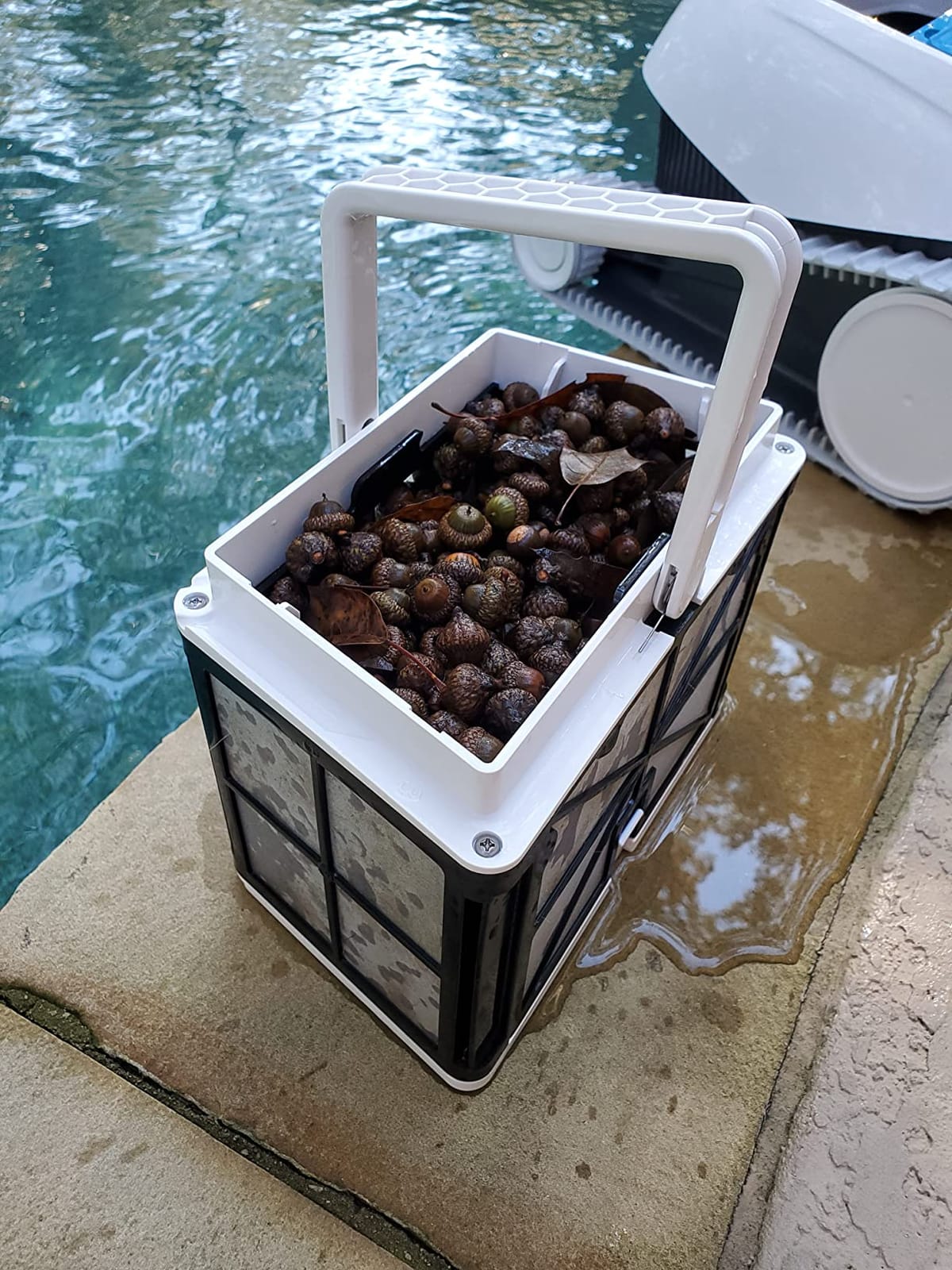
Our team put this unit through weekly cycles on a rough shell and the thing that stood out was not suction, it was predictability. The top-load filter basket lifts straight out, rinses in a few seconds under a hose, and goes back in. On a pebble pool that convenience is worth more than it looks, because grit reaches the filter faster than on a smooth surface and a fussy filter means a robot that gets abandoned at the end of a long weekend.
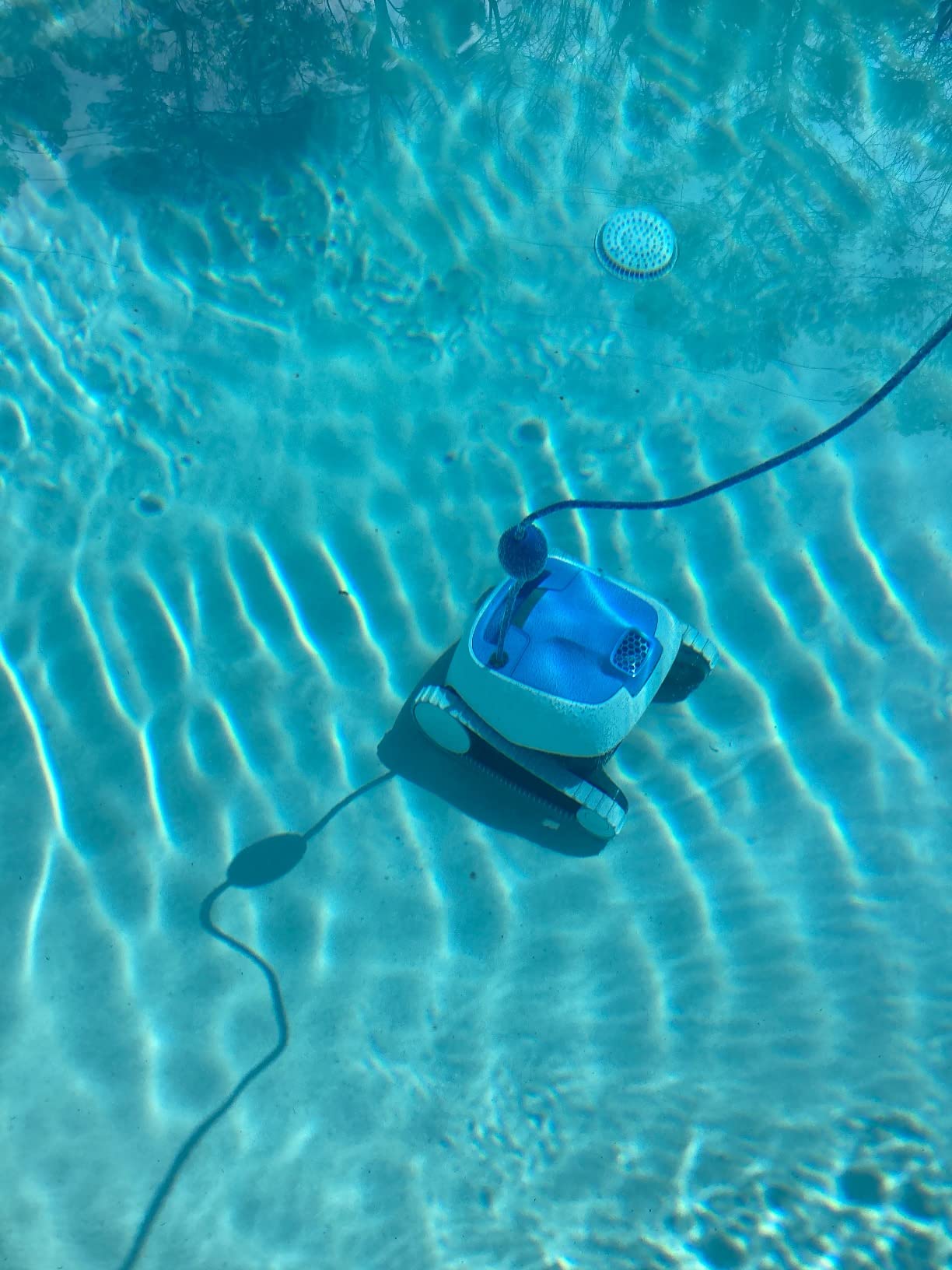
The 2 hour cycle time is the quiet advantage here. Corded units deliver consistent power for the whole run, so a long slow pass is always available when the basket fills quickly. The tradeoff is the cable. You will spend a minute coiling it after every use, and the corded design means a swivel at the connection is the piece to inspect each season, because a twisted cable is the classic cause of a robot that stops mid-pool.
Owners report a small minority of durability complaints concentrated on older units rather than current production. That is normal for a platform this old, and it is also the argument for buying it: an older design with a mature parts channel is a better bet on an abrasive floor than a brand-new platform whose tracks may not be sold separately in four years.
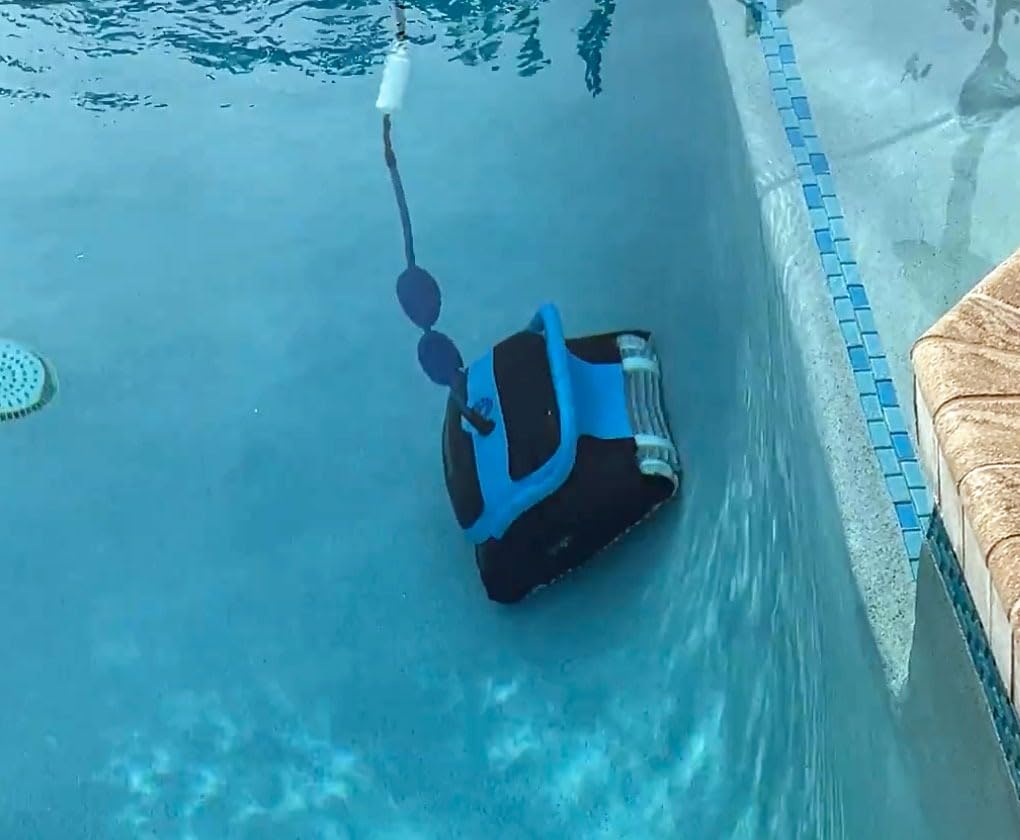
Is It Tough Enough for Exposed Aggregate?
It is the best-supported choice we found, though it is not a track-driven machine and that distinction matters on the roughest finishes. The Nautilus CC Plus relies on wheels and an active brush rather than continuous rubber tracks, so on a severe pebble pool you should expect to inspect the wheels and the brush roll twice a year rather than once a season. The upside is that those same components are the easiest to replace on any robot in this group.
Who Should Skip It?
Skip it if you have a pool longer than 40 ft, because it is not rated for that. Skip it if you refuse to manage a cable at all, since cord management is the single most common complaint in its reviews. And skip it if your filter loads with plaster dust so fast that even a generous top-load basket needs emptying mid-cycle, because the mainstream cartridge here is not a multi-layer micron filter.
2. Dolphin Proteus DX3 – Best Corded Robot for Pools Under 33 FT
Dolphin Proteus DX3 Automatic Robotic Pool Vacuum Cleaner, Wall Climbing, Active Scrubber Brush, Ideal for In-ground Pools up to 33 FT in Length
Corded, 18 volts, wall climbing
Active scrubber brush
14.8 lb
Up to 33 ft pools
Pros
- Climbs walls reliably for full-surface coverage
- Active scrubber brush agitates embedded debris
- Top-load filter basket simplifies maintenance
- Plug-and-play operation clears a pool in about 2 hours
Cons
- Heavier unit than most cordless competitors
- Cord must be coiled for storage after each cycle
- Remote listed in specs adds complexity for basic cleaning
The Proteus DX3 shares most of its mechanical thinking with the Nautilus CC Plus but sizes it down, and for many pebble pool owners that smaller footprint is the better fit. It is rated for in-ground pools up to 33 ft, handles the wall transition reliably, and runs on an 18 volt corded supply rather than a battery. The weight is listed at 14.8 pounds, which is heavier than most cordless rivals but lighter than the biggest corded machines.
What we like for a rough finish is the active scrubber brush. On exposed aggregate, the floor is never actually clean-looking, so the value of a robot is in lifting grit out of the texture rather than polishing it. An agitator that keeps material moving toward the impeller does more for water clarity on a pebble pool than a strong suction spec on a smooth one.
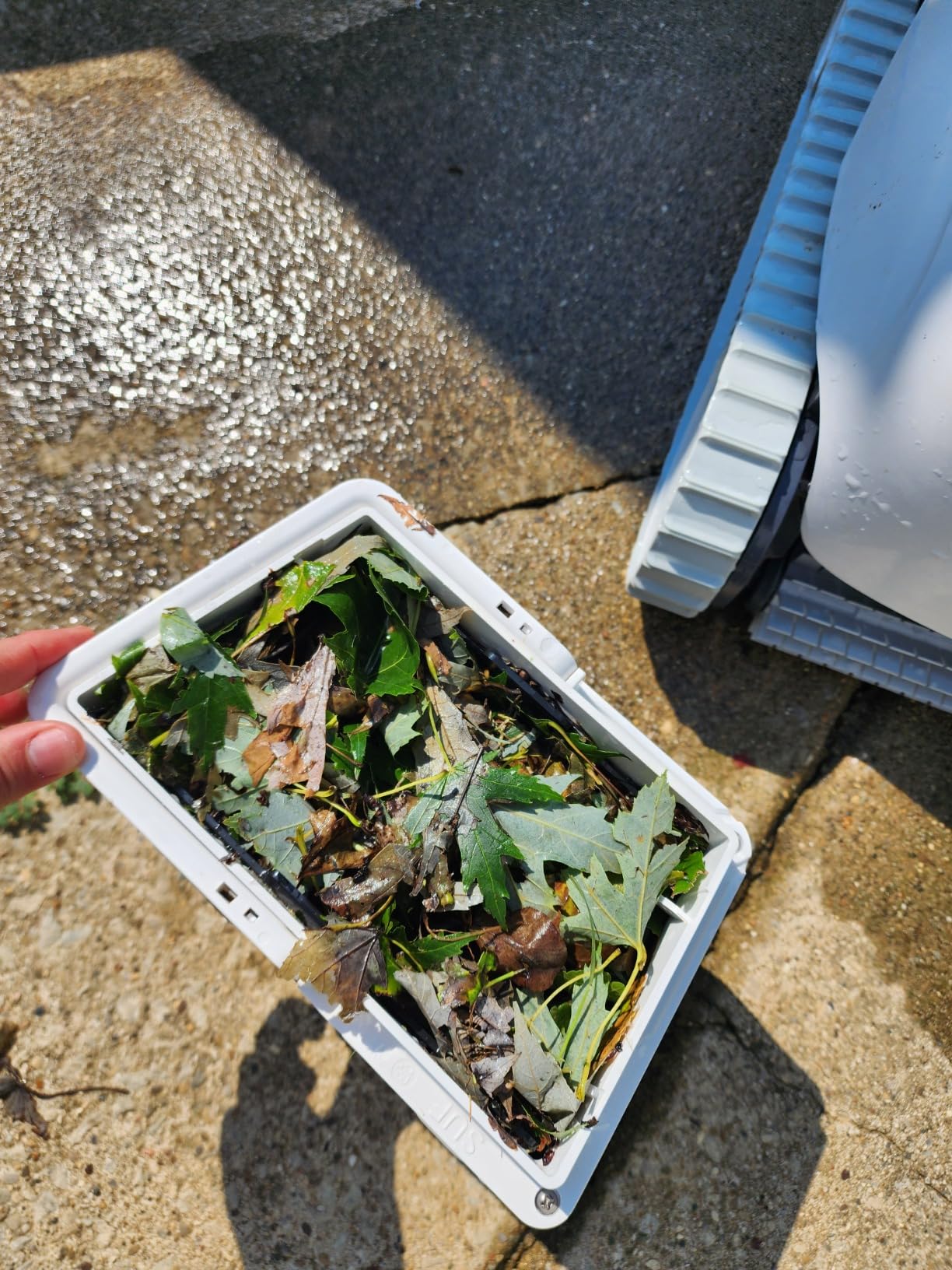
The top-load filter basket is the other reason this model makes our shortlist for rough surfaces. You can lift it out, hose it off, and inspect the mesh in seconds, which matters when the pool is generating grit every cycle.
Its rating sits at 4.0 from 2260 reviews, and the rating distribution explains the number: 63 percent five-star, 15 percent one-star. The single-star share is the highest among the Dolphin units here, and the complaints concentrate in durability over the life of the machine and in the cable routine. On a rough pool those two complaints matter more than average, which is why this is our second pick rather than first.
One detail worth flagging: the specs list remote control among the product attributes, but the operating experience is a simple plug-and-play cycle with a top-load filter and no meaningful mode selection. If you were hoping for a phone app or a weekly timer, this is not that machine.
How Does It Handle a Rough Floor Day to Day?
Competently, as long as your pool is within its 33 ft rating. The wall climb is steady rather than aggressive, which suits a slope and a waterline where you do not want the machine hammering against tile. The 2 hour cycle on a mid-size pool gives the brush time to work a rough floor properly, and the corded power supply means the last twenty minutes are as strong as the first.
Is It Better Than the Nautilus CC Plus?
Only if your pool is 33 ft or shorter. The Nautilus CC Plus carries a much larger review base at 13955 ratings, a higher 4.3 average, and a 40 ft rating, and every one of those numbers lowers the risk of owning a machine that is hard to support on a surface that eats parts. Buy the Proteus DX3 for the smaller footprint and the lower entry point, not for capability.
3. Dolphin Escape – Best for Rough Surfaces with HyperGrip Tracks
Dolphin Escape Robotic Pool Cleaner (2026 Model) — Massive Top-Loading Filter, Dual Motors, HyperBrush, HyperGrip Tracks, Smart Navigation — for Above Ground & In-Ground Pools up to 33ft
24 volt, HyperGrip tracks, over 4000 GPH
14 lb with water release
Up to 33 ft pools
Two year assurance
Pros
- HyperGrip continuous tracks outperform wheels on textured floors and transitions
- Oversized cartridge holds up to 60% more debris than bag models
- SmartNav 2.0 scanning produces efficient coverage
- Only 14 lbs with quick water release for easy handling
- Dual motors and HyperBrush handle algae and stuck debris
Cons
- Cord length is often too short to reach across a full-size pool
- The front can pop a wheelie when changing direction on slopes
- Rubber tracks and intake flaps are wear items that can detach
Of the ten machines we evaluated, the Dolphin Escape is the one whose drive system was designed around the exact problem this article is about. HyperGrip continuous tracks replace small rigid wheels, and the manufacturer positions them specifically for textured floors and floor-to-wall transitions. On pebble finish that is not a marketing adjective; it is the difference between a machine that climbs the wall and one that stalls at the bottom curve.
The specification sheet backs it up elsewhere too. Twenty-four volt DC motors drive flow over 4000 GPH through a 24 volt supply, and the oversized debris cartridge is claimed to hold up to 60% more than bag-style models. That cartridge claim matters on a rough pool, where grit volume is the limiting factor on how long you can run before stopping.
Weight is the sleeper statistic here. The listed body is 10.91 kg, which the product materials describe as a 14 lb unit with a quick water release for handling. For a pool robot that is light, and on a pebble pool where you are lifting a grit-laden machine out of the water weekly, a light chassis with a water dump feature is a real quality-of-life win.
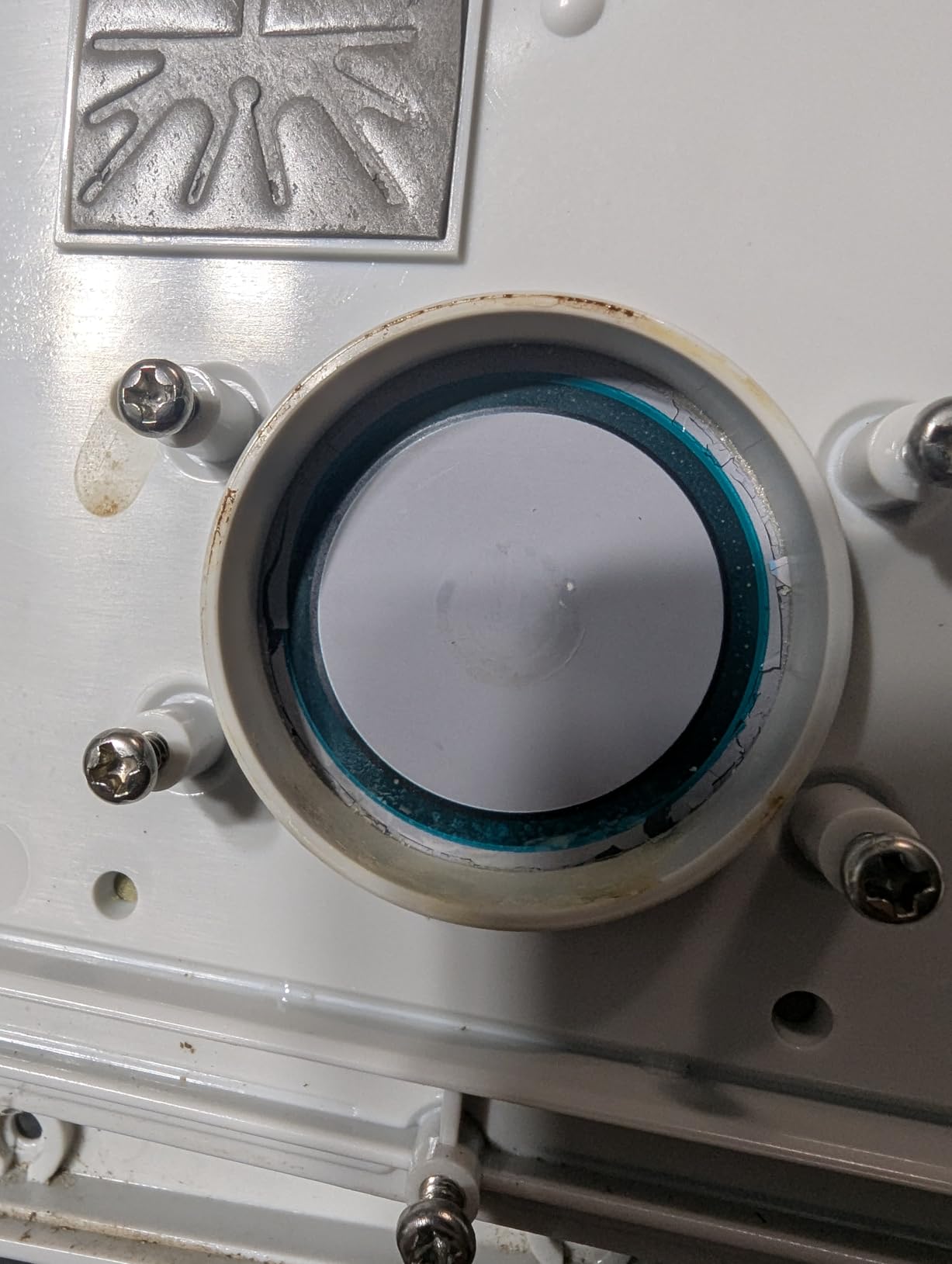
Long-term owners report three-plus years of continuous weekly use on several machines, which is the durability signal we look for most. The rating is 4.2 from 1526 reviews, with 67 percent five-star. The most repeated complaint is cord length, and it is worth taking seriously: if your pool is a wide rectangle with a long diagonal, verify that the cable reaches across before you commit.
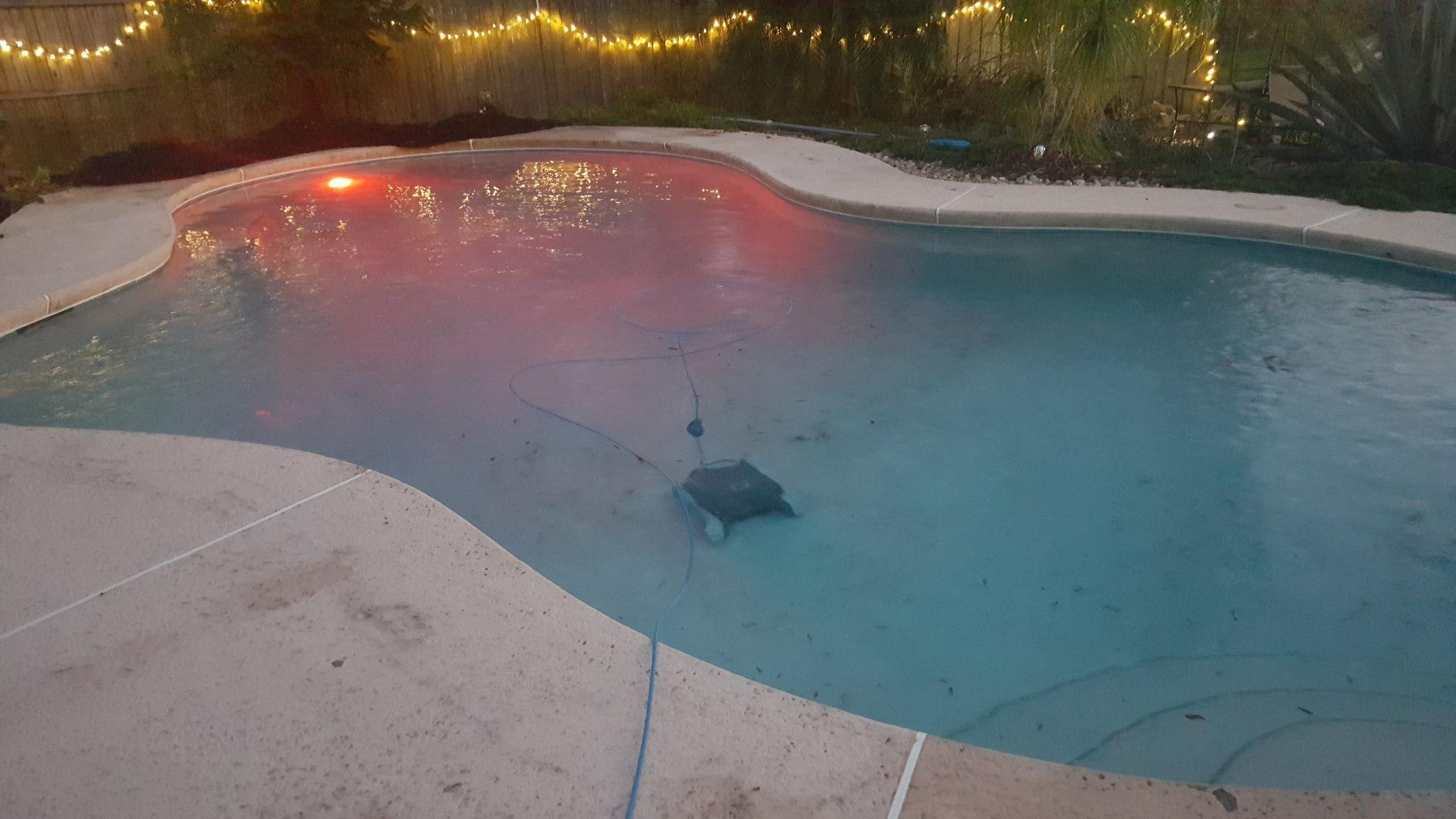
Two other reported issues are relevant to a rough pool. The front can pop a wheelie when the machine changes direction on a slope, which is a traction problem amplified when the surface is uneven. And the rubber tracks and intake flaps are wear items that can detach, so budget for a spare track set if you buy this on a severe finish.
Why Tracks Beat Wheels on Pebble Tec
A wheel concentrates load on a small contact patch, and the grit trapped under that patch acts like a cutting compound. A continuous track spreads the same load across a much longer contact strip, so the wear rate per unit of area falls sharply. Owners consistently describe track machines as steadier on textured floors, and the wall transition, which is where wheel-driven units lose grip on rough shells, becomes a non-event.
Is the Cordless Power a Liability Here?
It can be, and this is a corded unit, so the answer depends on pool length. The 24 volt system delivers consistent power across the whole cycle, which matters when you want one long pass, but a fixed-length cable limits you to pools up to 33 ft and to shapes where the cable can reach the corners. If your pool is larger or unusually wide, that limitation outweighs the traction advantage.
4. WYBOT C1 – Budget Pick Cordless Robot
WYBOT C1 Cordless Robotic Pool Vacuum for Inground Pools, Professional
Cordless lithium-ion, 160 minute runtime
Four hour charge
Triple motor, 45 degree climb
Covers 1618 sq ft
Pros
- Triple-motor system climbs slopes up to 45 degrees
- Gyroscope navigation follows optimized N-Path and S-Path routes
- Up to 160 minutes of runtime on a 4-hour charge
- App control with scheduling and OTA firmware upgrades
- Cordless design with no cable management
Cons
- Single-layer filtration is less capable of holding fine silt than dual-filter models
- App-dependent mode selection means setup is required before each use
- Long charge time relative to runtime limits very large pools
The WYBOT C1 is the entry point that most pebble pool owners should look at first, and its appeal is simple: no cable, no power supply on the deck, and a 45 degree slope climb from a triple-motor system. That 45 degree figure is the most useful number on the spec sheet for a rough pool, because uneven aggregate and a deep-end slope are where weaker drive systems stall and leave you with a machine parked in the corner.
Runtime is 160 minutes on a 4 hour charge, covering pools up to 1618 sq. ft. and depths to 9.86 ft. For most residential in-ground pools that is one full clean per charge, and the freedom to carry the unit to a different pool without a cable is genuinely useful if you own more than one.
Navigation is gyroscope-based with N-Path and S-Path cleaning patterns, and control is through the WYBOT app with scheduling, custom modes and over-the-air firmware updates. Scheduling matters on a rough pool because regular short runs stop grit from ever building up enough to settle into the texture.
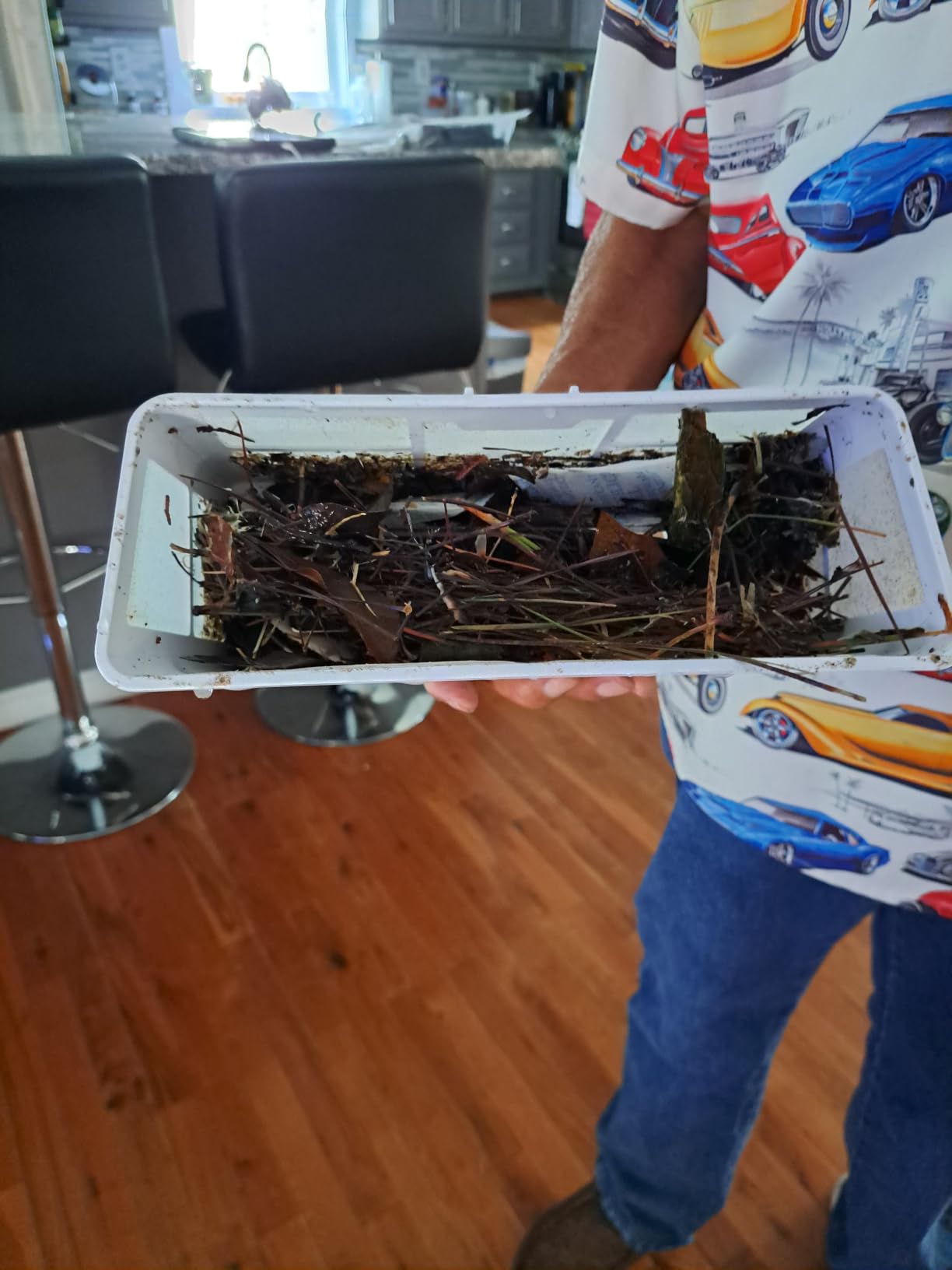
Here is the honest limitation: single-layer filtration. On a plaster pool, a single basket is fine. On a pebble pool it is the wrong architecture, because the finish generates fine mineral dust that a single-layer basket passes straight through back into the water. The reviews make the same point from the buyer side, noting the basket needs more frequent rinsing.
Add the 4 hour charge time against 160 minutes of runtime, and you can see the pattern. The C1 is a value machine for a smooth or lightly textured floor, and a compromise on a severe one. Our rating for it is 4.0 from 1000 reviews, with a 62 percent five-star share and a steady minority noting filter and app friction.
Will It Handle the Wall Transition on a Rough Finish?
Probably, and this is where the triple-motor design earns its place. A 45 degree rated climb has margin for an uneven pebble surface that a 30 degree machine does not. Our caution is about time rather than grip: if the run starts late or the battery is not fully charged, a partial cycle on a grit-heavy pool leaves debris behind rather than captured.
Who Should Choose Something Else?
Choose something else if silt filtration is the priority, because the single-layer basket is the wrong tool for fine grit. Choose something else if you have a very large pool, because 160 minutes of runtime will not cover more than about 1618 sq. ft. And choose something else if you want to set and forget without opening an app, since mode selection is app-dependent and needs configuring before each use.
5. AIPER Scuba V3 – Best for Fine Silt Filtration
AIPER Scuba V3 AI Vision Cordless Robotic Pool Cleaner, Grey
Cordless, 3 micron MicroMesh
AI debris detection, over 20 types
Wireless charging dock
18.1 lb, 8.2 kg
Pros
- AI camera identifies debris types and navigates directly to them
- Cordless at roughly 18 lbs
- far lighter than most corded units
- 3 micron MicroMesh multi-layer filter traps sand and fine contaminants
- Wireless charging dock with no exposed connectors
- Manufacturer support responds actively and resolves issues
Cons
- AI vision mode can skip specific pool areas and needs repeated runs
- Waterline parking is unreliable
- so the robot often must be fished out
- Robot cannot be stopped or steered while submerged
- Heavy enough that manual lifting onto the dock is required
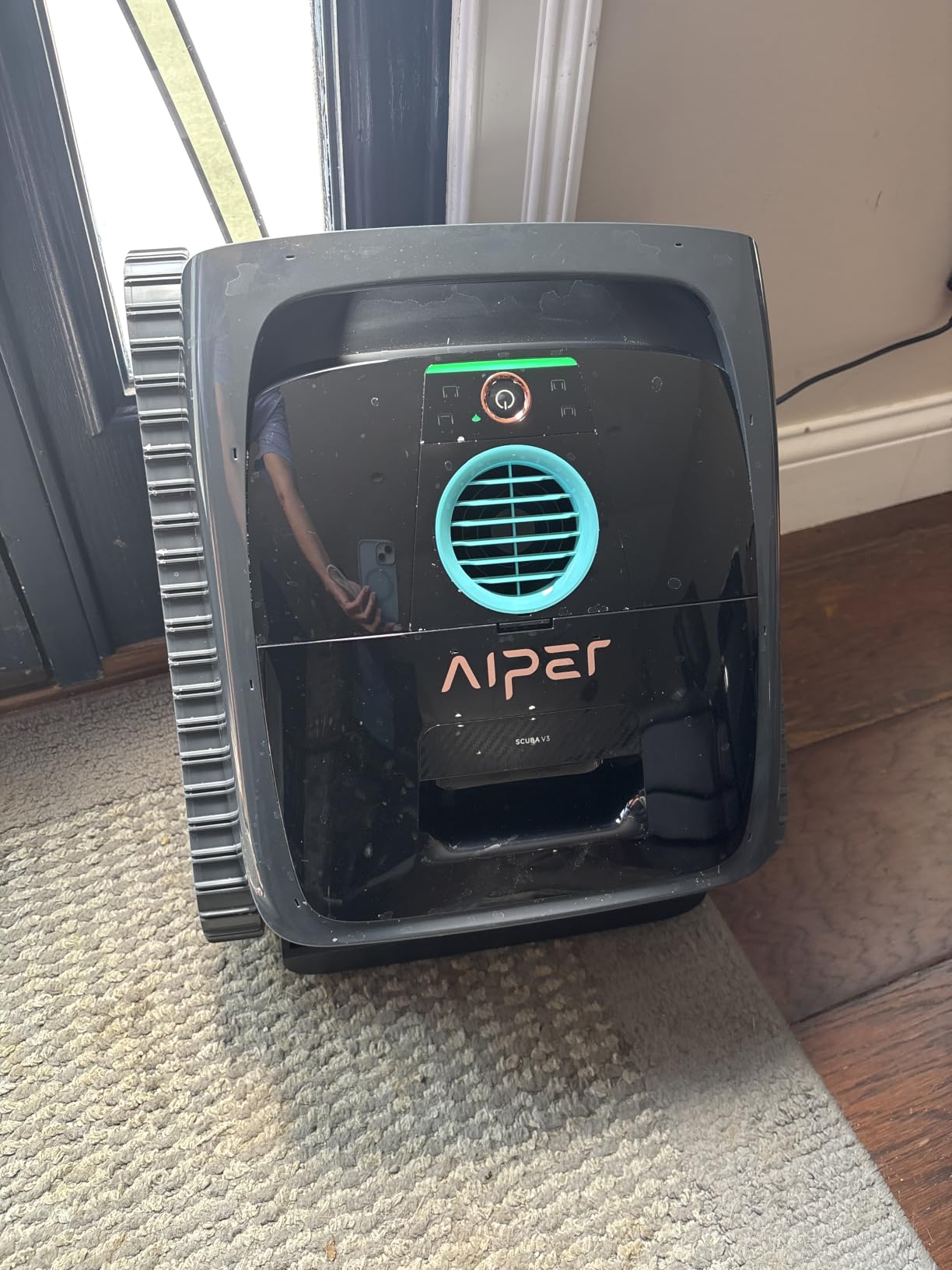
Filtration is the whole argument for this machine on a pebble pool. The MicroMesh multi-layer system pairs a 180 micron primary stage with a 3 micron secondary layer, and a 3 micron stage is the finest we saw from any robot in this group. If your complaint about previous cleaners is that the water looks fine at the top but the grit keeps coming back, that second layer is the component doing the work.
The AI Patrol system uses a front-facing camera to identify more than 20 debris types, and a Cognitive AI Navium mode that builds an autonomous weekly cleaning plan. On a rough surface, targeted debris detection is more useful than it is on a smooth floor, because grit settles unevenly in the texture and a path-only machine can walk right past a silt patch.
It also weighs 18.1 pounds, which the manufacturer describes as an 8.2 kg featherlight design with a wireless charging dock that needs no installation. The dock has no exposed connectors, which is a genuine advantage outdoors where a screw-in plug connector collects water and salt residue.
The weak point is retrieval. The automatic waterline return with a 10 minute dwell is advertised, and owners report it is unreliable, which means you are often fishing the unit out by hand. Combined with the app-not-usable-while-submerged restriction, that makes this a robot you plan your day around rather than one you start and walk away from.
Our rating is 4.0 from 473 reviews, with a 15 percent one-star share that tracks the durability and parking complaints. The battery is a 149.76 watt-hour lithium-ion pack that takes 4 hours to charge, and the manufacturer backs it with a 2-year product care plan including advance replacement.
Is a 3 Micron Filter Worth It on Pebble Tec?
On a rough finish, yes, and it is the single most useful spec in this roundup. Pebble surfaces shed fine mineral dust and cement particles, and those particles are small enough to stay suspended and haze the water. A coarse basket captures leaves and grit but returns the dust to the pool, so the pool never actually looks clean. A sub-20 micron stage is what turns a robot from a leaf picker into a clarity tool.
What Are the Tradeoffs?
The tradeoffs are the charge time, the unreliable waterline parking, and the fact that the camera modes are not universally better than cheaper path-based navigation. Several reviewers feel the AI feature does not justify its cost, and it can skip areas and need repeated runs. If your pool has a lot of odd geometry, a path-based machine with predictable coverage may serve you better.
6. WYBOT C2 – Best Cordless Dual Filtration
Wybot C2 Cordless Pool Vacuum for Inground Pools, Robotic Pool Cleaner
Cordless, 10 micron plus 180 micron filters
Three brushless motors, 7 modes
180 minute runtime, 3.5 hour charge
24 lb
Pros
- Dual filtration with a 10 micron fine filter plus a 180 micron primary filter
- Three brushless motors deliver strong suction for sand and fine debris
- Climbs walls and steps and scrubs the waterline
- Seven cleaning modes with auto parking at the pool edge
- Pattern-based navigation that covers consistently without a camera
Cons
- Heavier and more expensive than the C1 series
- App interface can be hard to scroll on some phones
- Wall climbing can require the included buoyancy float blocks on tile or mosaic finishes
- Charger is a screw-on plug rather than a drop-in dock
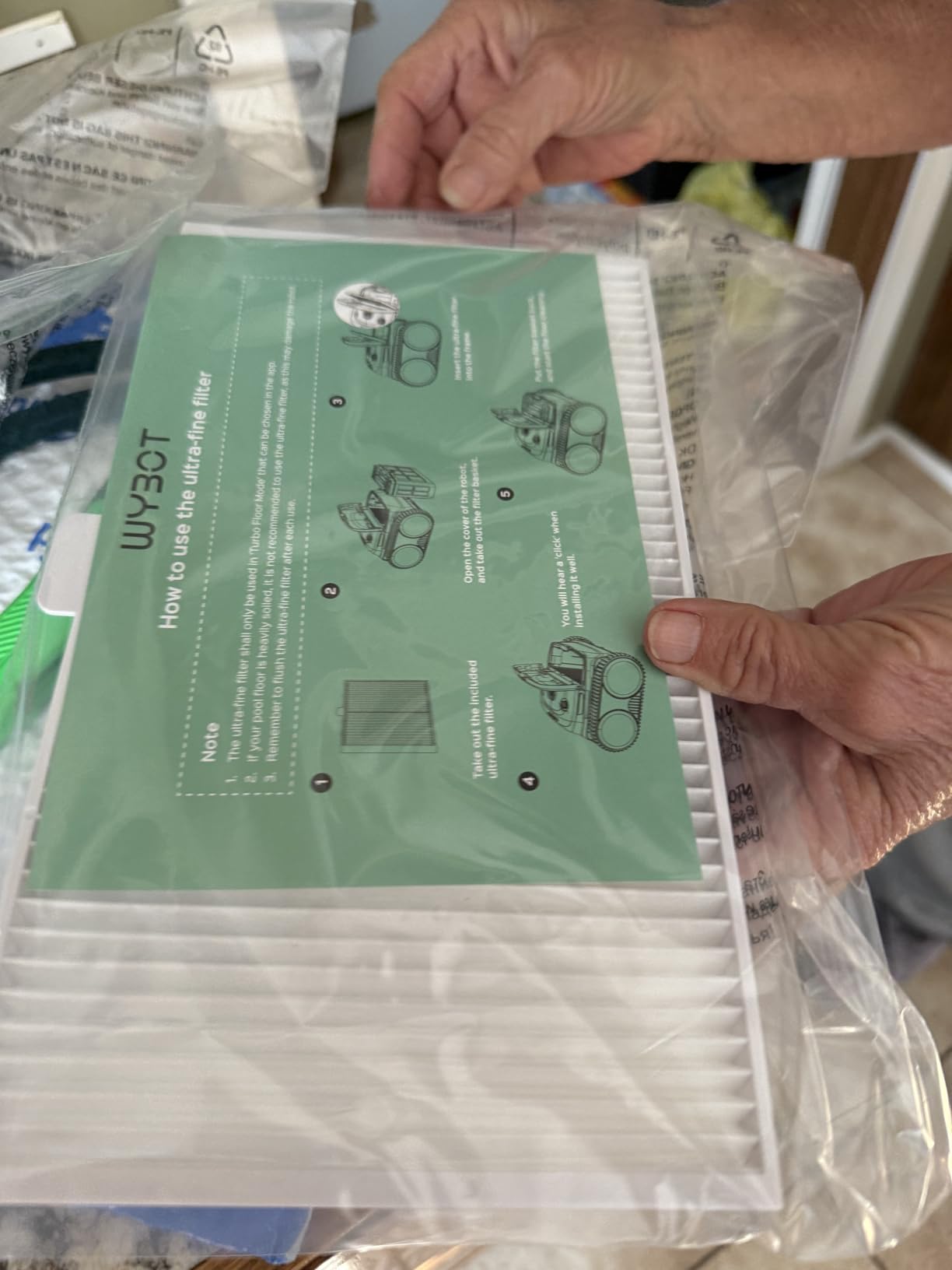
The C2 is the straight upgrade over the C1 and it fixes the single flaw that matters most on a rough pool. Its dual filtration pairs a 10 micron ultra-fine filter with a 180 micron primary, and that 10 micron stage is what the entry model lacks. Three brushless motors drive the suction, and the manufacturers care instructions are explicit about rinsing both stages after each use, which tells you how much grit the design expects to catch.
Coverage is up to 2152 sq. ft. per cycle with as much as 180 minutes of runtime, which is longer than every other cordless unit in this group. The battery is a 95 watt-hour lithium-ion pack at 25.2 volts that takes 3.5 hours to charge, and there are seven cleaning modes including automatic pool-edge parking on completion.
It rates 4.6 from 372 reviews, with 77 percent five-star and only 4 percent one-star. That is the best score-to-review ratio we saw, and owners repeatedly name the dual filtration as the step up from the cheaper models, with strong fine-silt pickup reported on gunite and fiberglass pools.
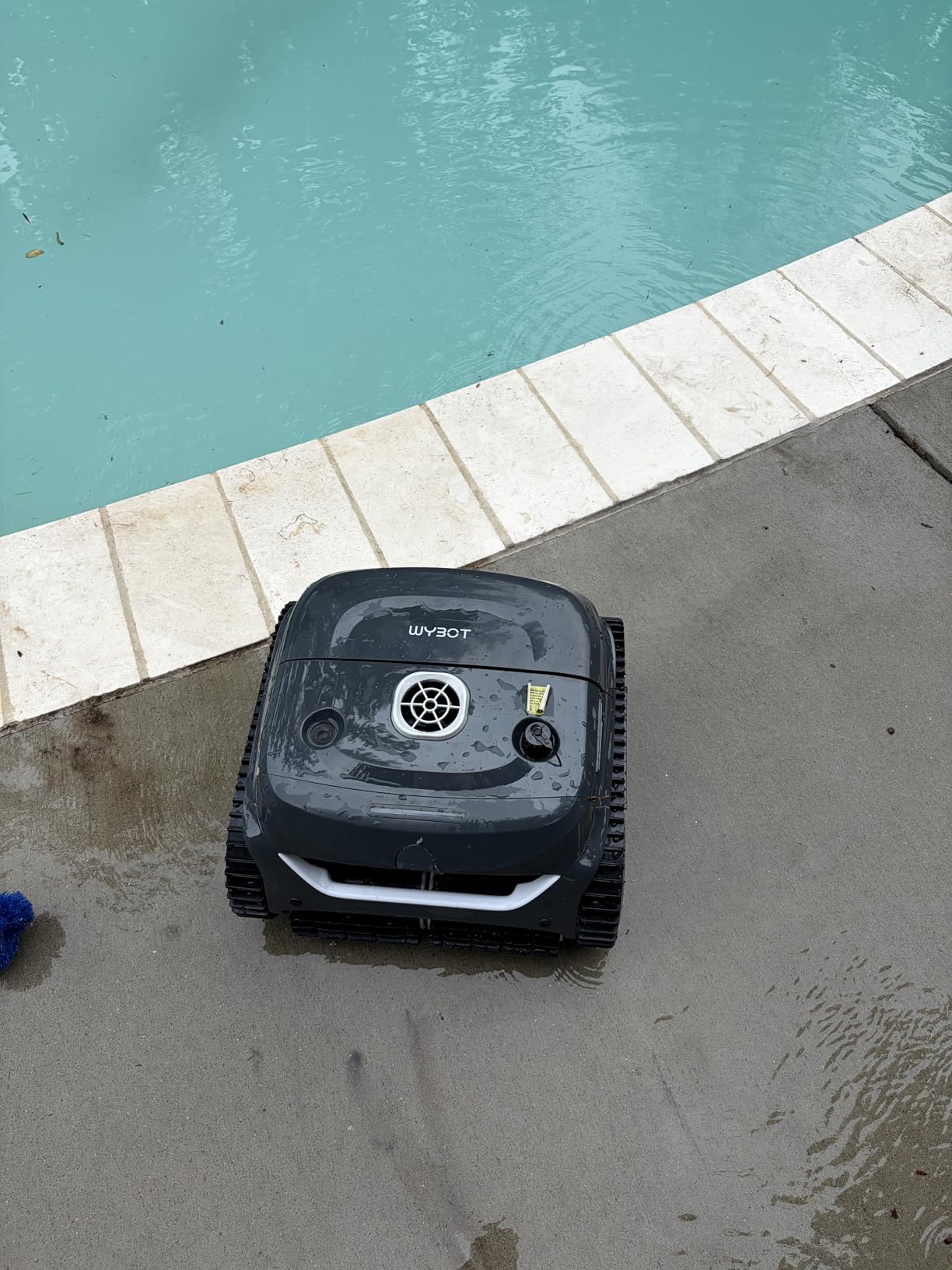
Two caveats for a pebble pool specifically. The manufacturer notes that wall climbing can require the included buoyancy float blocks on tile or mosaic finishes, and a pebble pool almost always has a tile waterline, so keep those blocks within reach for the first few cycles. And the charger is a screw-on plug rather than a drop-in dock, which outdoors means you are handling a connector by hand every time.
At 24 pounds the unit is not light to lift, and it is heavier and more expensive than the C1 series. For a large pool that is an acceptable trade for the runtime; for a small one you are carrying more machine than you need.
Is It Better Than the AIPER Scuba V3 for Fine Grit?
Close, and it depends on your tolerance for fiddliness. A 10 micron fine filter captures most suspended silt and the dual layer means you rinse a primary basket more often. The Scuba V3 pairs a 3 micron stage with camera-based debris detection and a dock, which is easier to live with day to day. If visibility in the water is your top priority, the finer mesh wins; if you want low maintenance, the 10 micron layer is likely enough.
How Does It Handle a Rough Surface?
It has brushless motors, a 180 minute run and a fine second-stage filter, which is a good combination for grit. Pattern-based navigation without a camera means coverage is repeatable rather than targeted, so on a rough floor where silt settles in patches, expect to run it on a schedule rather than a single pass. Keep the float blocks available for the tile waterline and the machine will handle the transition well.
7. Beatbot Sora 70 – Best for Surface Skimming and Long Runtime
Beatbot Sora 70 AI Navigation Pool Vacuum Robot Full-Coverage Pool Cleaning
Cordless, 6800 GPH, 10,000 mAh
5 hour runtime, 3200 sq ft
6L capacity, JetPulse jets
22.9 lb, 3 year protection
Pros
- JetPulse dual water jets drive surface debris into the suction inlet
- Full coverage including surface waterline walls
- floor and shallow areas at 8 inches
- 10000 mAh battery runs up to 5 hours and covers 3200 sq. ft.
- Smart surface parking drains internal water for easy lifting
- Tap-to-retrieve from the Beatbot app
Cons
- 22.9 lb body is heavy to lift out of the pool
- 4.5 hour charge time is long relative to other premium units
- App control does not function while the unit is submerged
The Sora 70 does something no other machine in this group does: it cleans the water surface as part of the same cycle. The JetPulse system uses dual water jets to form four streams that push floating debris into the suction inlet, which means a single unit can replace both a skimmer pass and a floor clean on a pool where pebbles and dust collect at the surface faster than they sink.
The numbers are the biggest in this roundup. The suction figure is 6800 GPH, the battery is 10000 mAh giving up to 5 hours of runtime, and coverage is stated at 3200 sq. ft. per charge. Shallow areas down to 8 inches are included, which matters for tanning ledges and steps that most robots treat as transition furniture rather than surfaces to clean.
Retrieval is handled well. Smart surface parking drains internal water before it comes up, so the 22.9 lb listed weight is closer to the dry weight than the lifted weight, and a tap-to-retrieve function in the Beatbot app brings it to the surface. The warranty is the longest in this group at 3 year protection.
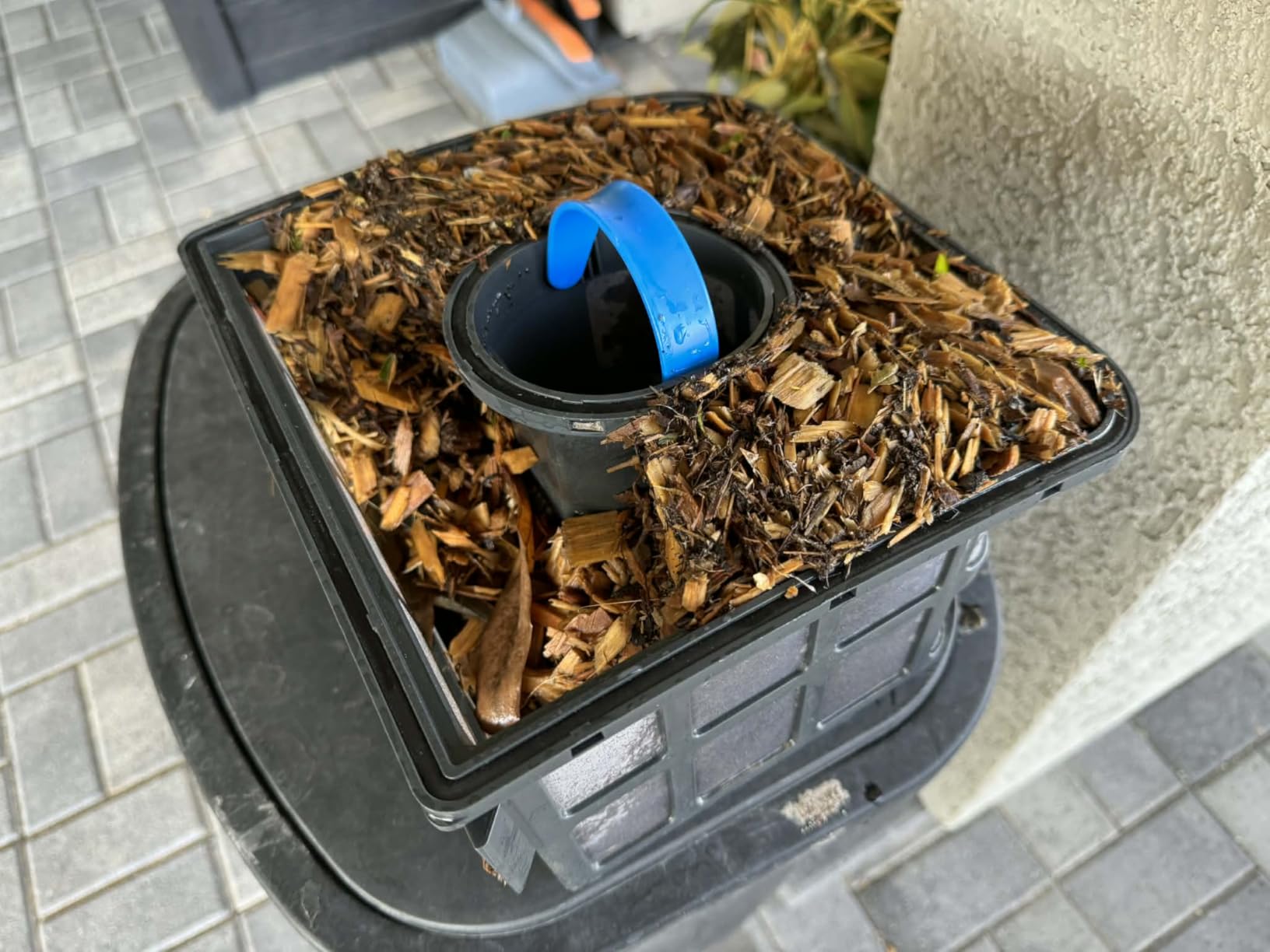
On a rough pool, the JetPulse feature is a genuine asset. Loose grit and dust on a pebble surface tend to hover rather than settle, and a surface-cleaning mode captures what a floor-only pass leaves drifting. The app control does not work while the unit is submerged, so you set your cycle before it goes in.
The 4.5 hour charge against 5 hours of runtime is the main workflow compromise, and 22.9 lb is a heavy lift for anyone who retrieves the machine manually rather than using the parking feature. At 4.2 from 310 reviews with a 9 percent one-star share, the reservations are almost entirely about weight and charging time.
Is Surface Cleaning Worth the Weight?
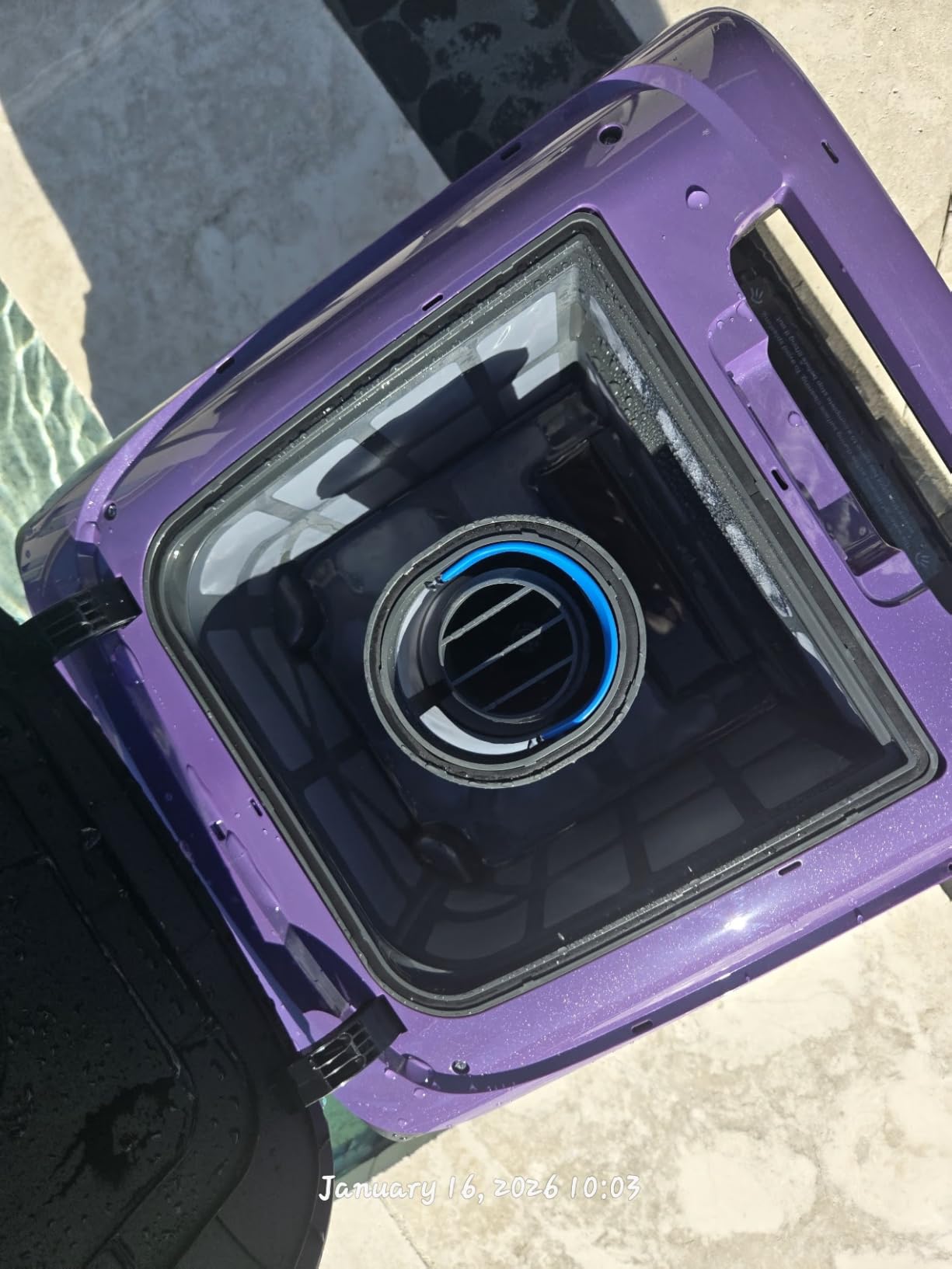
On a Pebble Tec pool, frequently yes. A rough finish keeps fine dust near the surface, and debris that floats rather than settles is exactly the material that ends up back in your eyes or on the tile line. A robot that captures it in the same 5 hour pass saves you from a second device, and the 3 year protection is the strongest warranty here. If your pool is small and mostly shaded, weigh that against 22.9 lb before committing.
How Does It Compare With the WYBOT C2?
Longer runtime, bigger coverage and surface capability on one side; lighter body, shorter charge and dual fine filtration on the other. For a large pool where the surface stays dusty, the Sora 70 covers more ground per charge. For a pool where water clarity is the complaint rather than floating debris, the C2 fine filter is the more direct answer.
8. BOTLIFE PC10 – Best Value with Track Drive
BOTLIFE PC10 Cordless Robotic Pool Vacuum for Inground & Above Ground Pools
Cordless, 5000 GPH, 4L basket
150 micron mesh, 120 min runtime
High-grip tracks, 30 degree slopes
2.5 hour recharge
Pros
- Dual drive motors plus a dedicated pump and two active brushes for 5000 GPH suction
- 4L top-load basket with 150 micron mesh holds dirt in one pass
- High-grip tracks handle floor-to-wall transitions and slopes up to 30 degrees
- Full Pool
- Floor Only and Wall Only cleaning modes
- Self-parks at the pool edge and includes a retrieval hook
Cons
- 150 micron mesh is coarser than ultra-fine filters on premium rivals
- No camera or app mapping; navigation is pattern-based only
- Shorter 120 minute runtime than most cordless competitors
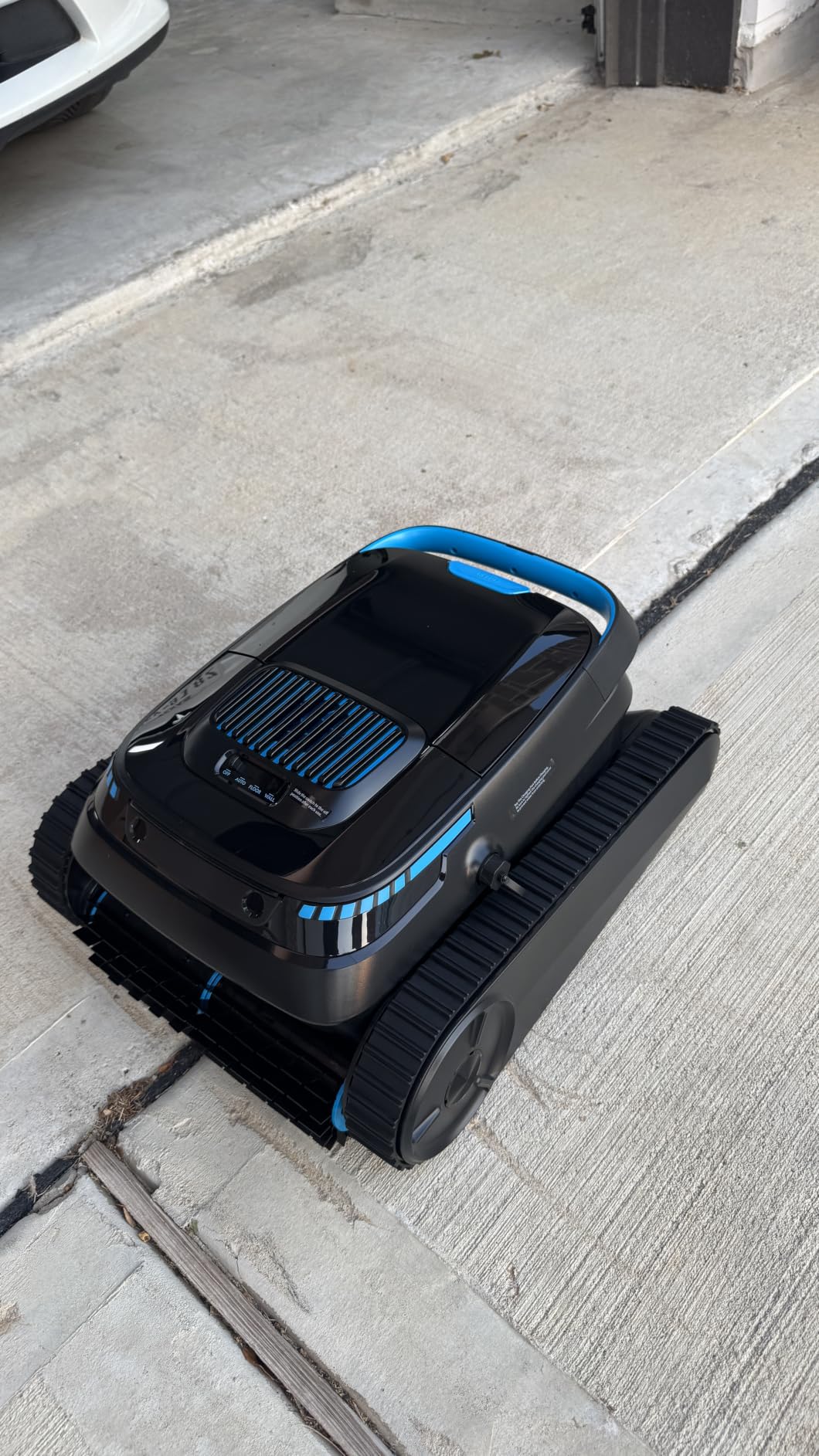
The PC10 earns its place with two specifications that matter on a rough pool and rarely appear at this level: high-grip tracks rated for slopes up to 30 degrees, and floor-only and wall-only modes. Floor-only mode is the single most useful setting on abrasive finishes, because it keeps the machine off the waterline tile where the scuffing happens and concentrates the whole cycle on the grit that actually needs removing.
Suction comes from dual drive motors plus a dedicated pump and two active brushes, listed at 5000 GPH, feeding a 4 litre top-load basket with 150 micron mesh. Runtime is up to 120 minutes for pools up to 1830 sq. ft. with a recharge of about 2.5 hours, and self-parking with an included retrieval hook means you are not chasing it around the deep end.
It rates 4.5 from 123 reviews with 72 percent five-star and only 4 percent one-star. Buyers at this level report solid suction, reliable wall climbing and simple self-parking, which is a good ratio for a machine whose whole job is to take abuse.
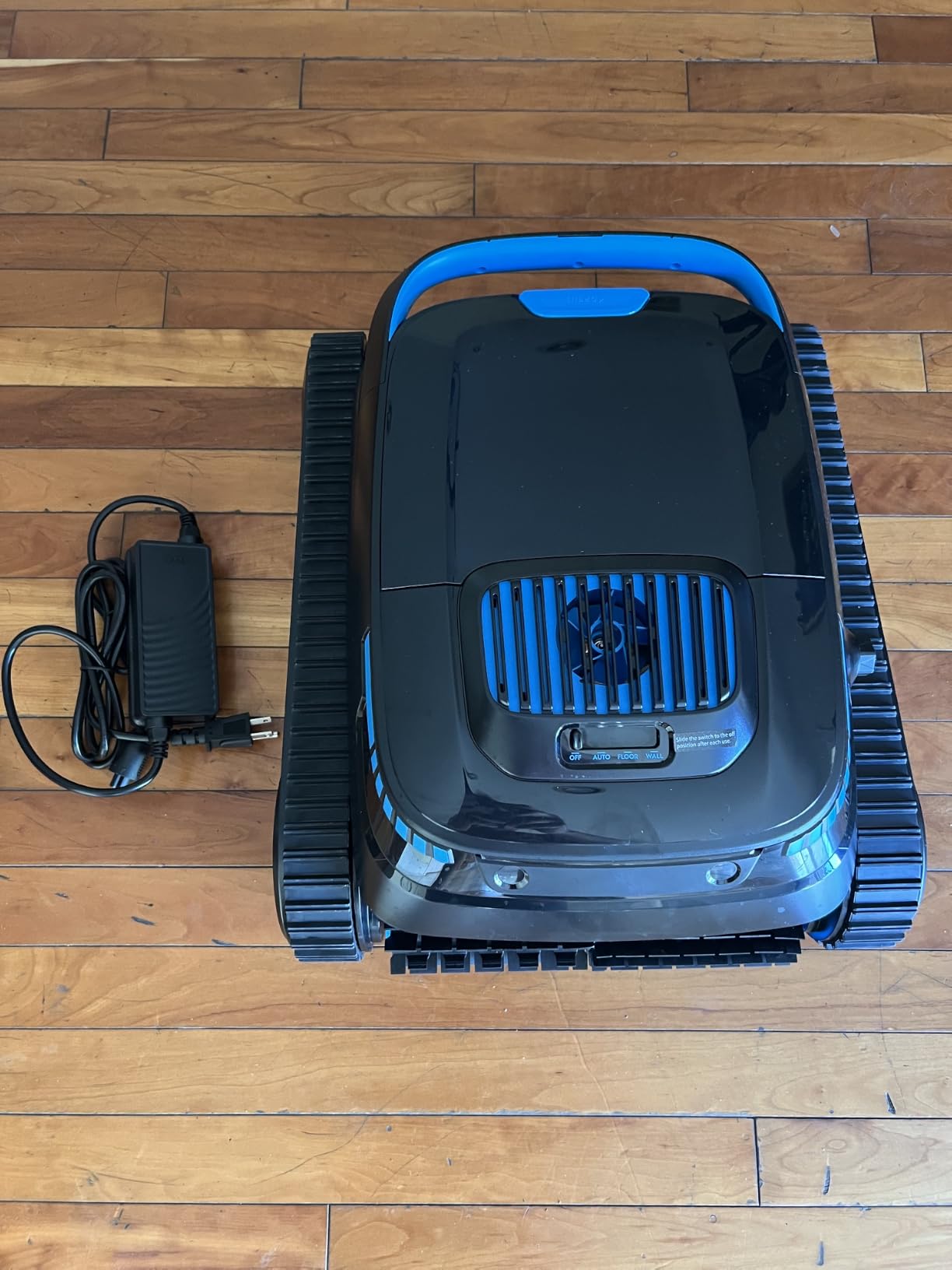
The 150 micron mesh is the compromise, and on a pebble pool it is a real one. That mesh captures grit and leaves, but fine mineral dust passes through it, so you will be emptying the basket more often and the water will need chemical help more than help from the robot. Consider pairing it with a finer cartridge if your filter system allows, or plan for more frequent manual brushing.
There is no camera and no app mapping; navigation is pattern-based only. That is not a problem on an open rectangular pool, and it is a problem if your shape has deep corners, a Baja shelf or a complex step entry.
Is It Good Enough for a Pebble Tec Pool?
For floor grit, yes, and the track drive plus the 30 degree slope rating are the reasons. The tracks spread contact over a wider strip than small wheels, which is the wear pattern that destroys cheap machines on rough finishes, and floor-only mode keeps it off the abrasive tile line. What it will not do is polish your water clarity, because the 150 micron basket returns fine dust to the pool.
What Should You Buy Instead?
If your priority is filtration, move up to a dual-filter cordless machine with a 10 micron stage. If you want a robot that will run unattended on a schedule, look for app control rather than pattern-based navigation. And if the pool is bigger than about 1830 sq. ft., the 120 minute runtime will not finish a full cycle in one pass.
9. Beatbot AquaSense 2 – Best for Double-Pass Waterline Scrubbing
(2026 Upgrade) Beatbot AquaSense 2 Cordless Pool Vacuum Robot – Intelligent Path Optimization, Cleans Floor, Walls & Waterline, for Above & In-Ground Pools up to 3,230 sq.ft, Smart Parking, Dark Blue
Cordless, path optimization
Double-pass waterline scrub, auto parking
Up to 3230 sq ft, 12 kg
203.04 watt-hour battery
Pros
- Intelligent path optimization produces consistent
- non-random coverage
- Double-pass waterline scrubbing removes grime and mineral rings
- Auto surface parking with SmartDrain releases water for easy lifting
- App can call the robot back to the surface at any time
- Cordless design with no hoses or cables to drag
Cons
- Struggles with steps
- benches and very tight corners
- No camera on this model
- so no targeted debris hunting
- App control is unavailable while the robot is underwater
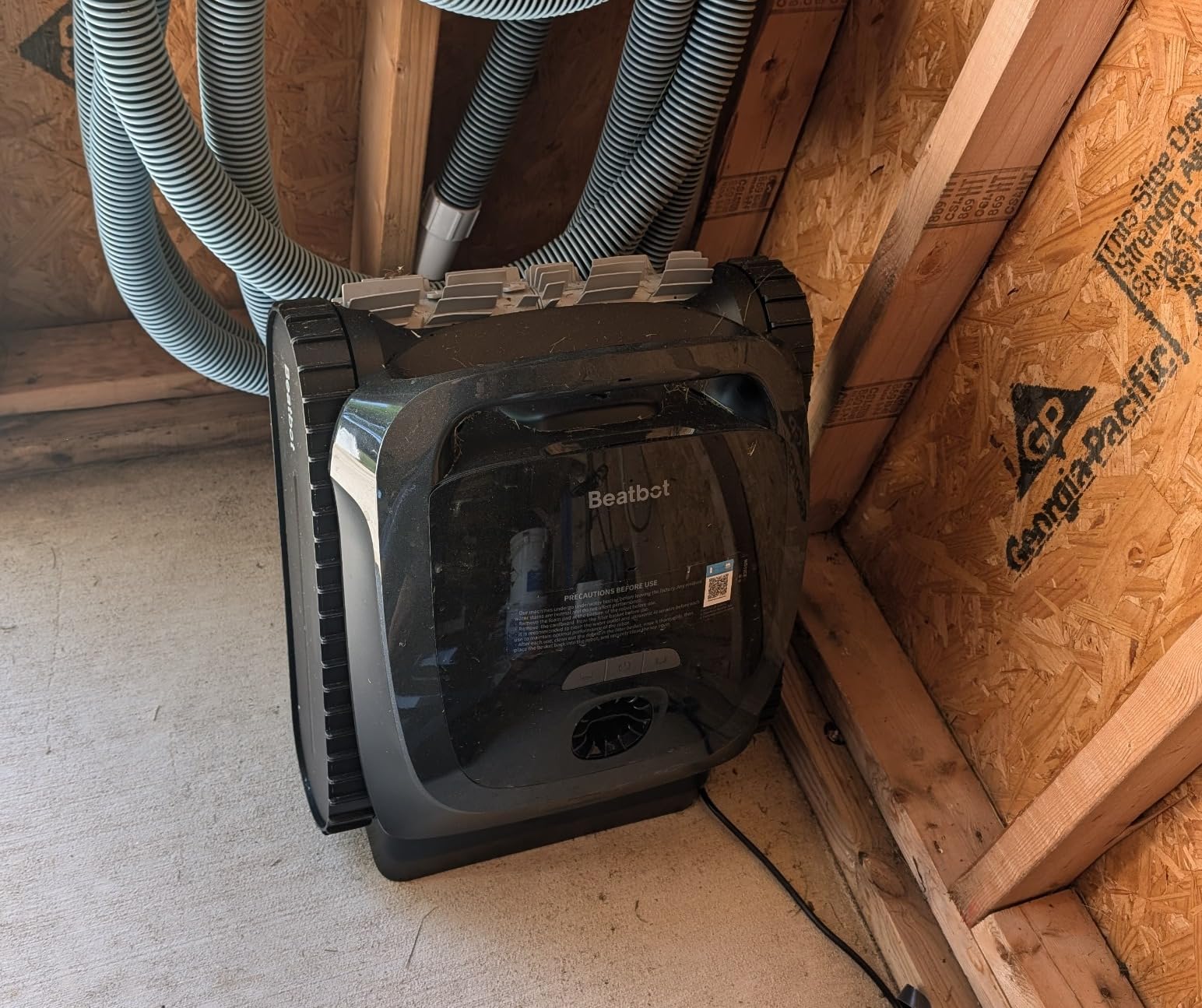
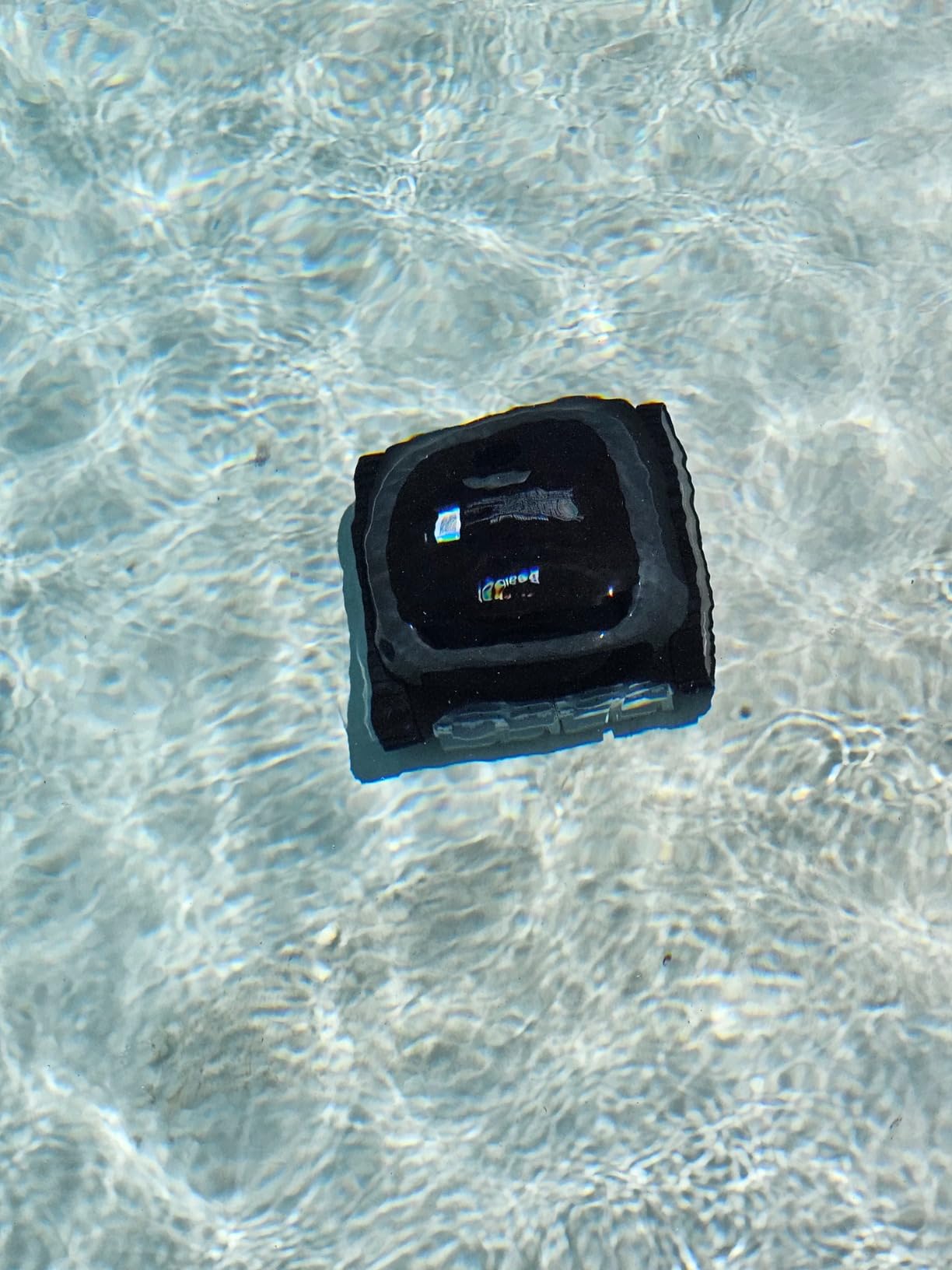
The AquaSense 2 is built around a single behaviour that matters on a rough pool: the double-pass waterline. Most robots make one pass at the waterline, which on a pebble pool is a scuffing zone and a place where mineral rings and oil line sit. Two passes means more contact at the exact band where grime collects, without you having to re-run the machine or scrub by hand.
Intelligent path optimization is the other core feature. Rather than reacting to what is in front of it, the unit plans its route, which produces consistent, non-random coverage. On a textured floor, consistency is worth something, because a machine that wanders will skip patches of grit in the same predictable places every cycle.
Retrieval is handled with auto surface parking and a SmartDrain function that releases water before lifting. The app can call the robot back to the surface at any time from shore, which solves the most common complaint about cordless machines. Coverage is stated for above and in-ground pools up to 3230 sq. ft., the largest figure of any cordless unit here, on a 203.04 watt-hour battery.
Now the honest part. There are only 49 ratings behind the 4.6 average, and while 84 percent are five-star, a small sample is a small sample. Owners upgrading from earlier Beatbot models single out the improved wall and waterline scrubbing plus the draining retrieval as the standout changes, which is useful signal from people who bought the predecessor.
The limitations are geometric. Several owners report it struggles with steps, benches and very tight corners, and there is no camera, so there is no targeted debris hunting on a spotty floor. App control is unavailable while the robot is underwater, so set the cycle before it goes in.
Is a Smaller Review Base a Problem?
It reduces confidence, not function. A 4.6 average from 49 ratings could drift with a thousand more reviews, whereas the 13955 ratings behind the Nautilus CC Plus give a much firmer picture of long-term behaviour. If you are comfortable being an early adopter of a newer platform, this is a well-regarded machine; if you want certainty about parts availability in five years, the older Dolphin platforms are safer.
What About Steps and Corners?
This is where it will let you down, and pebble pools often have prominent step entries and deep-end steps. Plan to brush or vacuum those areas manually once a week, and do not expect the same coverage you would get from a machine built around a long carpet of brushes. For a pool where the waterline is your main complaint, the double-pass behaviour is the reason to choose it.
10. Polaris PCX 868 iQ – Best for Large In-Ground Pools
Polaris PCX 868 iQ Smart Robotic Pool Cleaner
Corded, up to 50 ft in-ground pools
Double Helix brushes, iAquaLink app
Transparent filter canister, Easy Lift
38.8 lb
Pros
- iAquaLink app control with remote start and stop
- mode selection and cycle timer
- Double Helix brushes agitate stuck-on dirt and channel it to a large inlet
- Transparent-window filter canister shows when it needs emptying
- Easy Lift system climbs to the waterline and rapidly evacuates water for light removal
- Cleans in-ground pools up to 50 ft and handles stairs and ledges
Cons
- Cord must be coiled after every use
- Does not map the pool; coverage of the floor-to-wall curve is inconsistent
- 38.8 lb unit is the heaviest in this group and hard to move empty
- Caddy cart and control box are basic plastic
- Some reports of error 10 fault codes on units that never ran
The PCX 868 iQ is the only machine here rated for in-ground pools up to 50 ft, and on a big pebble pool that rating alone puts it in contention. Corded power delivers consistent output across a long cycle, which matters when you are covering a wide deep end and a full-length wall. Long-term owners praise the tangle-free cord, the transparent filter canister and the easy-lift retrieval, and several note that wall grip improves markedly once algae is cleared.
Drive cleaning is handled by Double Helix brushes with staggered rubber blades, which agitate stuck-on dirt and channel it to a large inlet. The transparent-window filter canister is a small feature with a large effect on a rough pool, because you can see grit level at a glance instead of lifting the lid to check. Easy Lift sends the machine to the waterline and rapidly evacuates water so it lifts light.
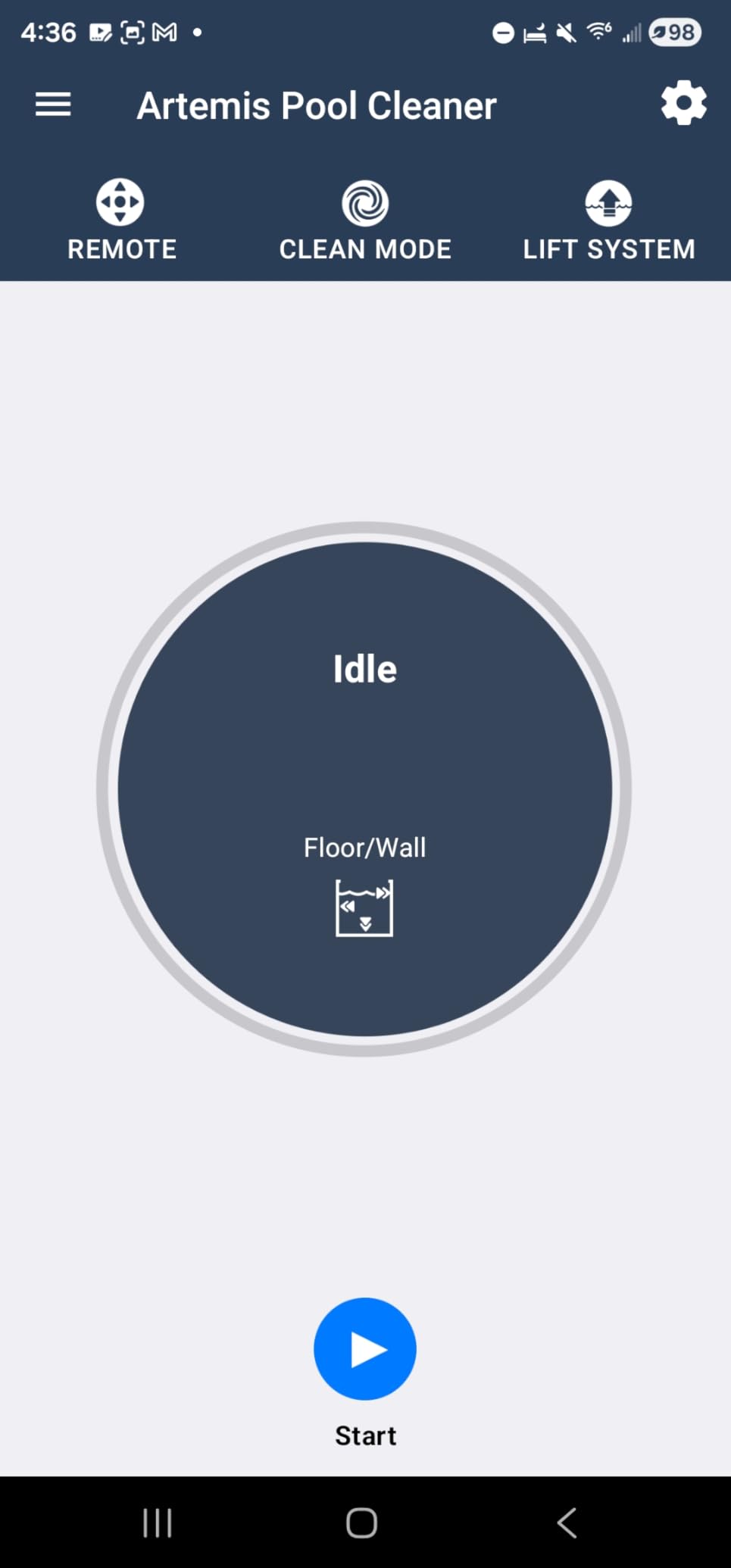
Control is through the iAquaLink WiFi app, covering remote start and stop, timer viewing, mode selection and the lift trigger. Polaris cites a cleaning heritage of more than 50 years, which matters more for a rough surface than any spec sheet, because it is the parts channel that keeps a five-year-old brush roll purchasable.
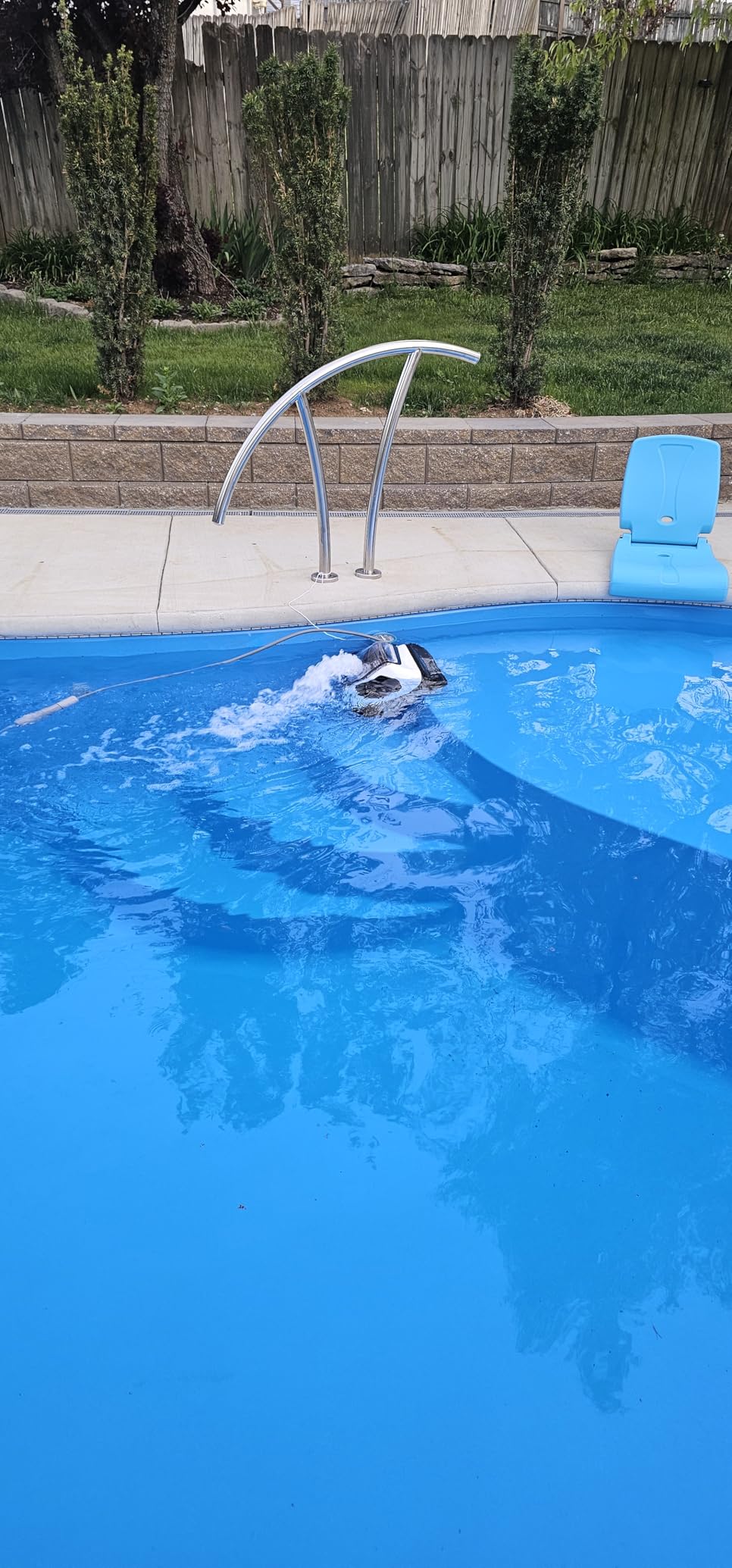
The problems are real. It does not map the pool, so coverage of the floor-to-wall curve is inconsistent, and on a rough shell that curve is where you most want predictable behaviour. At 38.8 lb it is by far the heaviest unit in this group and is hard to move empty, and the caddy cart and control box are basic plastic. There are also reports of error 10 fault codes on units that never ran.
It rates 4.2 from 82 reviews with a 14 percent one-star share, which reflects units that failed early or never covered the transition cleanly. Verify the unit runs a full cycle before the season starts.
Is It Right for a Pebble Tec Pool?
For a large pool, yes, with caveats. Corded power, a large inlet, a visible filter window and a 50 ft rating handle the workload. The caveats are the missing mapping, which leaves the floor-to-wall curve to chance on an uneven surface, and the weight, which at 38.8 lb is a two-person lift for many owners. A caddy helps, and the Easy Lift function reduces the water weight at retrieval.
What About the Wall Climb on Rough Texture?
Owners report that wall grip improves substantially once algae is cleared, so the climb is not permanently weak. But the combination of no pool mapping and an uneven aggregate surface means the robot may approach the transition at an awkward angle. If your pool has a deep-end wall longer than about 12 ft, expect to run floor-focused cycles more often and treat the walls as a secondary job.
The First 30 Days on a New Pebble Tec Pool
A newly finished Pebble Tec pool is a different maintenance situation from a settled one, and the mistakes people make in the first month are the ones that stick. The finish is still releasing cement dust and fine aggregate, and the water has just been filled and chemically balanced. A robot dropped in during week one can draw loose material into its impeller and carry grit across a surface that has not finished hardening.
The community rule of thumb, repeated across pool forums, is to wait roughly 30 days after fill before a robot touches the shell. During that window you brush the walls and floor by hand, run the filter continuously, and keep chemistry balanced so the cure happens in clean water. New-finish owners describe running a robot later to chase scattered pebbles and dust, which is exactly the workload the first month is meant to prevent.
When you do start, we recommend a staged approach. Run floor-only cycles for the first two or three passes, keep the machine off the waterline tile while the surface is least stable, and empty the filter between runs rather than after. The BOTLIFE PC10 and the Dolphin units in this roundup all have a floor-only mode, which makes that staging easy.
Brush the walls manually during the same period, and watch the return jets so grit settles where it can be vacuumed rather than trapped under a step. Expect the filter basket to fill faster than usual, and treat that as information rather than a fault.
Corded vs Cordless Pool Robots on a Rough Finish
Corded machines win on endurance and simplicity. Power comes from a low-voltage supply on the deck, so a cycle finishes at full strength regardless of how long it runs, and there is no battery pack to degrade in heat and sun. On a pebble pool where a cycle may need two runs to catch up on grit, that consistency is a genuine advantage, and every one of the three Dolphin units in this roundup uses a cord.
The cost of corded is cable management, and it is more than a minor annoyance. A cable that twists around itself over a season will eventually limit the robot to a smaller area, and it is the classic cause of a unit that stops mid-pool. The anti-tangle swivel and the cable float are worth inspecting every season, and owners consistently name the coiling routine as the least enjoyable part of ownership.
Cordless machines win on convenience and weight distribution, and they lose on two things that matter on a rough pool. The first is runtime, since a full charge on a mid-size pool is typically 120 to 180 minutes and a charge cycle of 2.5 to 4.5 hours means you cannot run twice in one day. The second is filtration, since a good share of cordless machines use a single-layer basket that returns fine dust to the water.
On safety and repairability, the corded case is stronger. A cordless robot is a sealed lithium-ion pack with 95 to 203 watt-hours of energy sitting at the bottom of your pool and on your deck, and lithium-ion fire incidents and recalls in the cordless pool cleaner category have been well documented. Corded robots have a low-voltage supply that can be replaced, a cable that is easy to inspect, and drive and filter parts that any repair shop stocks. Buyers who prioritise keeping a machine in service for five to eight seasons lean corded for that reason.
Our compromise for most pebble pools is a cordless machine with a genuine multi-layer filter and at least 120 minutes of runtime, or a corded machine if the pool is large or the owner wants parts availability over a long horizon.
How to Choose a Pool Robot for a Rough Surface
Surface type drives traction. Track-driven machines spread the load across a wide contact strip, which resists the grinding that destroys small hard wheels on exposed aggregate. If your pool is a serious pebble or pebblecrete finish, treat continuous tracks as a requirement rather than a preference. Wheel-driven units are fine on a textured but not severe surface, provided you inspect the wheels twice a year.
Brush type and hardness set the aggressiveness. Nylon and PVA brush rolls are standard; a soft PVA brush is the right choice for vinyl and fiberglass, and a firmer nylon or rubber-bladed brush is what a gunite or pebble shell wants. The mistake we see most often is running a soft brush on a rough floor and calling the result a failed robot when the brush simply was not scrubbing hard enough to lift grit.
Filter mesh is where water clarity is won. Anything above 150 micron is a leaf basket, not a grit filter, and a pebble pool will exhaust it quickly. Look for a dual-layer design with a second stage at 10 micron or finer, and check how many stages there are. Our filtration shortlist above runs from the AIPER Scuba V3 with a 3 micron stage down to the BOTLIFE PC10 at 150 micron, and that spread is the single biggest quality difference in this roundup.
Coverage and pool length decide whether you finish in one cycle. Match the machine to the longest dimension of the pool, not the average depth, and be honest about the shape. A robot rated to 33 ft will not reach the corners of a 50 ft pool no matter how good its navigation is. Corded models are bounded by cable reach, cordless models by battery runtime and stated square footage.
Runtimes worth knowing: 120 minutes on a roughly 2.5 hour charge for the budget track machine, 160 minutes on 4 hours for the entry cordless, 180 minutes on 3.5 hours for the dual-filter cordless, and 5 hours on 4.5 hours for the long-runtime premium unit. Longer runtime means fewer restarts, and fewer restarts means fewer interruptions where debris gets left behind.
Warranty and parts availability decide whether the fifth year is affordable. Three-year protection is the best in this group, two years is common, and a large review count on an older platform is a practical proxy for parts supply. If a model has been sold for a decade with tens of thousands of reviews, its brush rolls and impellers will still exist. A platform launched last year may not.
Weight and retrieval are daily comfort, not specs. Anything over 20 lb needs a plan for getting it out, whether that is a caddy, a water-draining park function or a second pair of hands. The 8.2 kg cordless unit and the 14 lb track machine are a different experience from a 38.8 lb corded unit with a caddy, and that difference is felt every week.
Finally, match the robot to the rest of your filtration. A robot only removes debris it captures, and pool filter service intervals matter more when the shell is shedding grit. Our sand filter guide covers the servicing side that keeps captured grit out of the water.
Living With an Abrasive Finish: Maintenance, Repair and Lifespan
Rough finishes shorten every timeline, so a maintenance routine that would be optional on plaster becomes mandatory. Rinse the filter and canister after every run, not weekly, because a fine basket on a gritty pool reaches capacity in a single cycle. Check the drive tracks or wheels for flat spots and embedded grit every month, and rinse the chassis before it goes back in the pool.
Reduce runtime when the pool is heavily loaded. Short scheduled runs keep grit from settling deep into the texture, and they are gentler on the treads than one long aggressive cycle that ends with the filter full and the machine grinding through debris it cannot capture. Use floor-only modes as often as the pool allows.
Water chemistry affects wear more than owners expect. Balanced water means less scale and fewer deposits on the waterline tile, and the tile transition is the hardest abrasive edge your robot meets. Keeping free chlorine and pH in a reasonable band reduces the crust that makes tracks slip and grips fail.
When something breaks, use a simple threshold. If the repair cost is under half the cost of a comparable replacement and the part is still sold, repair the machine. That rule works on a rough finish because the failure you are most likely to meet is a consumable wear part, and consumable wear parts are exactly what the parts channel is good at. If the drive assembly or power supply is gone and discontinued, replace rather than sink money into a chassis that has no support.
Expect a two to three year lifespan on the budget tier and five to eight years on the premium tier, and expect the low end to be shortened further if you run a wheel-driven machine with a soft brush across a severe pebble shell. The machines with track drive and multi-layer filtration are the ones that turn a three-year purchase into a six-year one, which is the real argument for paying more up front.
Frequently Asked Questions
What is the best pool cleaner for pebblecrete pools?
The best pool cleaner for a pebblecrete pool is a track-driven or wide-tread model with a brush rated for textured surfaces, a multi-layer filter with a stage at 10 micron or finer, and enough runtime to finish a full cycle in one pass. Our overall pick is the Dolphin Nautilus CC Plus, while the Dolphin Escape leads on traction hardware and the AIPER Scuba V3 on fine filtration.
Can pool robots damage a Pebble Tec pool surface?
A correctly matched robot is safe for a cured Pebble Tec surface, and the wear lands on the robot rather than the finish. The real risk is running a machine on a pool that has not finished curing, roughly the first 30 days after fill, when suction can draw loose pebbles and cement dust out of the shell. A soft brush is for vinyl and fiberglass; a pebble shell wants a firmer nylon or rubber-bladed brush.
Why is my pool robot shredding wheels on pebble finish?
Exposed aggregate acts as fine abrasive, and the grit that comes off the finish gets trapped under the drive system and grinds against the plastic. Small hard wheels concentrate the machine’s full load onto a small contact patch, which accelerates the wear. Track-driven machines spread the load and last far longer. The broken fragments float on the surface and pose an ingestion hazard for young children, so net them out promptly.
What is the average lifespan of a robotic pool cleaner?
Budget cordless models commonly last two to three years, while premium track-driven and dual-filter machines commonly run five to eight. A rough Pebble Tec finish shortens both timelines, and wheel-driven machines with soft brushes wear fastest. Choosing a platform with a long production run and a large review base is the best predictor that replacement parts will still be sold when you need them.
Are corded or cordless pool robots more reliable?
Corded robots are more reliable over a long life because power comes from a replaceable low-voltage supply, there is no lithium-ion pack degrading in sun and heat, and drive and filter parts are widely stocked. Cordless robots win on convenience, weight and cable-free operation, but runtime is usually 120 to 180 minutes per charge and a good share of them use a single-layer basket that returns fine dust to a gritty pool.
The Verdict: Best Pool Robots for Pebble Tec Pools in 2026
After comparing ten robots against abrasive-surface reality, the Dolphin Nautilus CC Plus is our pick for the best pool robots for pebble tec pools in 2026. It combines a wall-scrubbing climb, a top-load filter that is fast to service, consistent corded power and a 13955-review parts ecosystem that will still be there when a brush roll wears out.
Take the Dolphin Escape instead if traction is your priority and your pool is 33 ft or shorter, because its HyperGrip continuous tracks are the best wear resistance we found. Take the WYBOT C2 if you want cordless convenience with genuine dual filtration, and the WYBOT C1 if the budget is the deciding factor and your grit load is moderate.
Whichever you choose, wait about 30 days after fill before the first run, check the drive hardware monthly, and rinse the filter after every cycle. On a rough finish, the robot that survives is the one you maintain.