
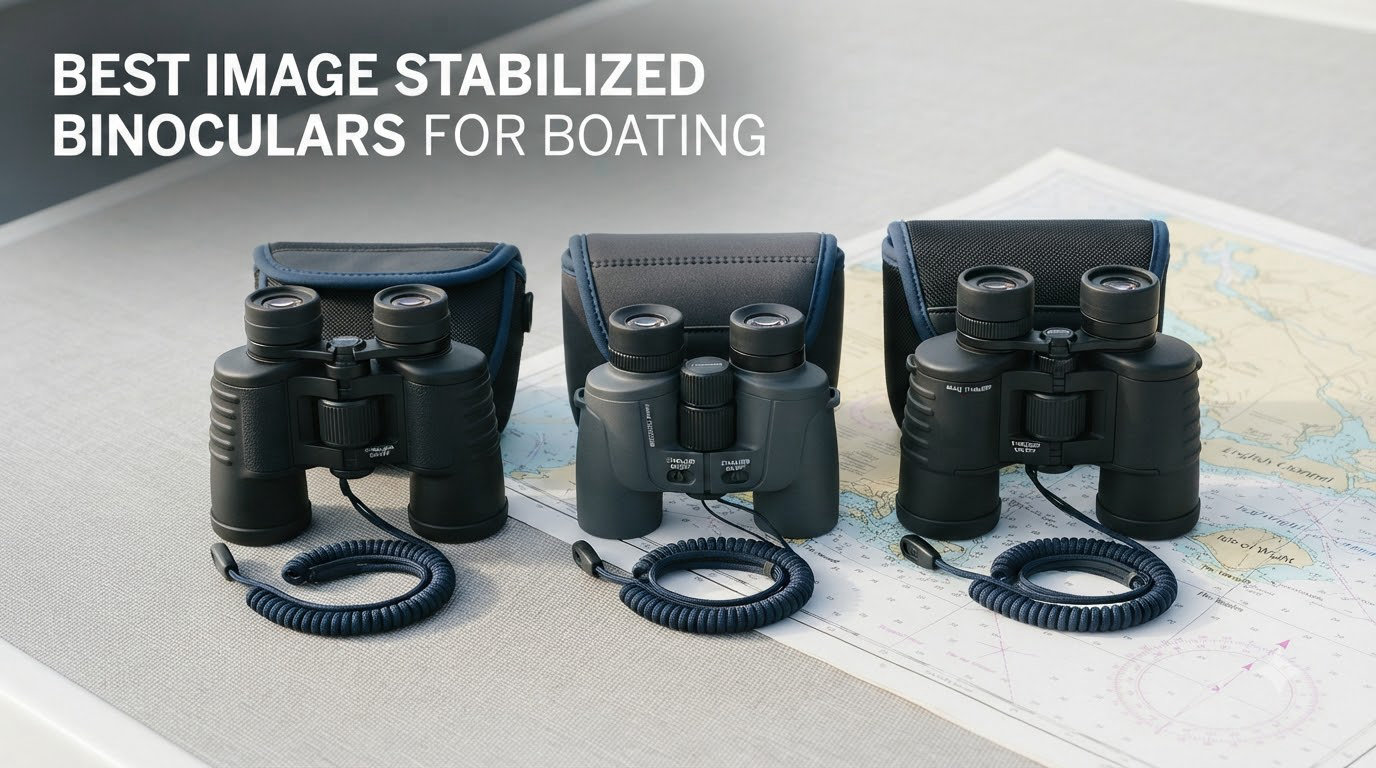
There is no worse handheld platform than a boat deck. Every time the hull lifts on a swell, your field of glass runs off target, and by the time you settle back on the object it has moved. That is why picking the best image stabilized binoculars for boating is less about magnification and more about how much correction the optics can apply before the picture smears.
We spent weeks working through the stabilized models that actually ship for marine use, from the compact Canon 12×36 IS III to the five-degree Fujinon Techno-Stabi that cruisers describe in forum threads as the pair that finally made distant marks readable in a squall. This roundup covers eight of them, ranked by the things that actually matter once the boat is moving: correction strength, water resistance, battery plan, weight in one hand, and how quickly you can find a target at all.
One thing worth saying early: a stabilized pair is an addition to your kit, not a replacement for a fixed 7×50 compass binocular at the helm. Serious cruisers we spoke with carry both, and they use them for different jobs. If you are choosing a single pair for everything from the [hunting field](https://irlentwincities.com/best-binoculars-for-hunting/) to a night watch, the reasoning below will get you there.
Table of Contents
Are Image Stabilized Binoculars Worth It for Boating?
Yes, if you want more than 7x on a moving deck. Stabilization is what makes 10x to 18x usable from a heaving helm, and without it anything above 7x turns into a shimmering mess. No, if a fixed 7×50 with a compass already covers every job you actually do on your boat.
The reasoning is mechanical. Hand movement translates directly into image movement, and the higher the magnification, the more that movement becomes a blur. A 7x pair is forgiving enough to hold steady with two hands on a tiller or a rail. A 14x pair is not, and no amount of arm strength fixes it in a beam sea.
What stabilization buys you is reach. It also adds batteries, motors, weight and electronics to a device you will drop in salt water eventually. For a casual weekend fisherman on a lake, that trade is a bad one. For coastal or offshore work, spotting dolphins, reading a channel marker at two miles, or holding a night watch on an unstable bridge, it is the difference between seeing and guessing.
If you are worried about the weight and the batteries, read the notes on hand fatigue in the buying guide below, and note that several of the models here run on ordinary AA cells you can buy in any town on your route.
Top 3 Picks for Boating in 2026
These three cover the most ground for the widest range of boaters, from a small center console to a full coastal cruiser.

Canon 12×36 IS III
- 12x in a 1.8 lb body
- Vari-Angle prism IS
- 14mm eye relief
- Water resistant

Canon 10×42 L IS WP
- 10x42 with 4.2mm exit pupil
- Waterproof and fogproof
- 16mm eye relief
- Ultralow-dispersion glass

Fujinon Techno-Stabi 14×40
- Five degrees of correction
- Waterproof and fogproof
- 14x magnification
- 4 x AA power
Best Image Stabilized Binoculars for Boating at a Glance
All eight pairs, with the numbers that decide the purchase. Correction angle is the spec to read twice, because it predicts how well the model behaves in a seaway.
| Product | Specifications | Action |
|---|---|---|
| Canon 12×36 IS III |
|
Check Latest Price |
| Canon 10×42 L IS WP |
|
Check Latest Price |
| Fujinon Techno-Stabi TS1440 14×40 |
|
Check Latest Price |
 SIG SAUER Zulu6 HDX OIS 16×42 SIG SAUER Zulu6 HDX OIS 16×42 |
|
Check Latest Price |
 Canon 18×50 IS All-Weather Canon 18×50 IS All-Weather |
|
Check Latest Price |
 Kite Optics APC Stabilized 12×42 Kite Optics APC Stabilized 12×42 |
|
Check Latest Price |
| Kite Optics APC Stabilized 16×42 |
|
Check Latest Price |
 Nikon Stabilized 10×25 Nikon Stabilized 10×25 |
|
Check Latest Price |
1. Canon 12×36 IS III – Best All-Around Stabilized Pair
Canon 12×36 Image Stabilization III Binoculars
12x36
1.8 lb
14mm eye relief
Porro II prism
Water resistant
Pros
- Compact and light for a stabilized binocular
- True optical IS makes 12x usable handheld
- Long eye relief works with glasses and progressive lenses
- Bright circular field with no black edges
- 450 reviews give it the widest owner record here
Cons
- Water resistant rather than waterproof
- IS needs the button held down with no constant-on mode
- No objective lens covers included
- Soft case offers little impact protection
Our most-used pair of the eight was this one, and the reason is simple: it disappears. At 1.8 pounds it is light enough to hold one-handed at a tiller for an hour without the forearm complaining, which is not something we can say for the heavier glass in this group.
The stabilization itself is genuinely optical. Canon drives a Vari-Angle Prism system with the same tilt-system logic they use in their EF lenses, so the image holds still rather than being digitally smoothed after the fact. On a rolling deck at 12x, the difference between that and a soft shore is night and day.
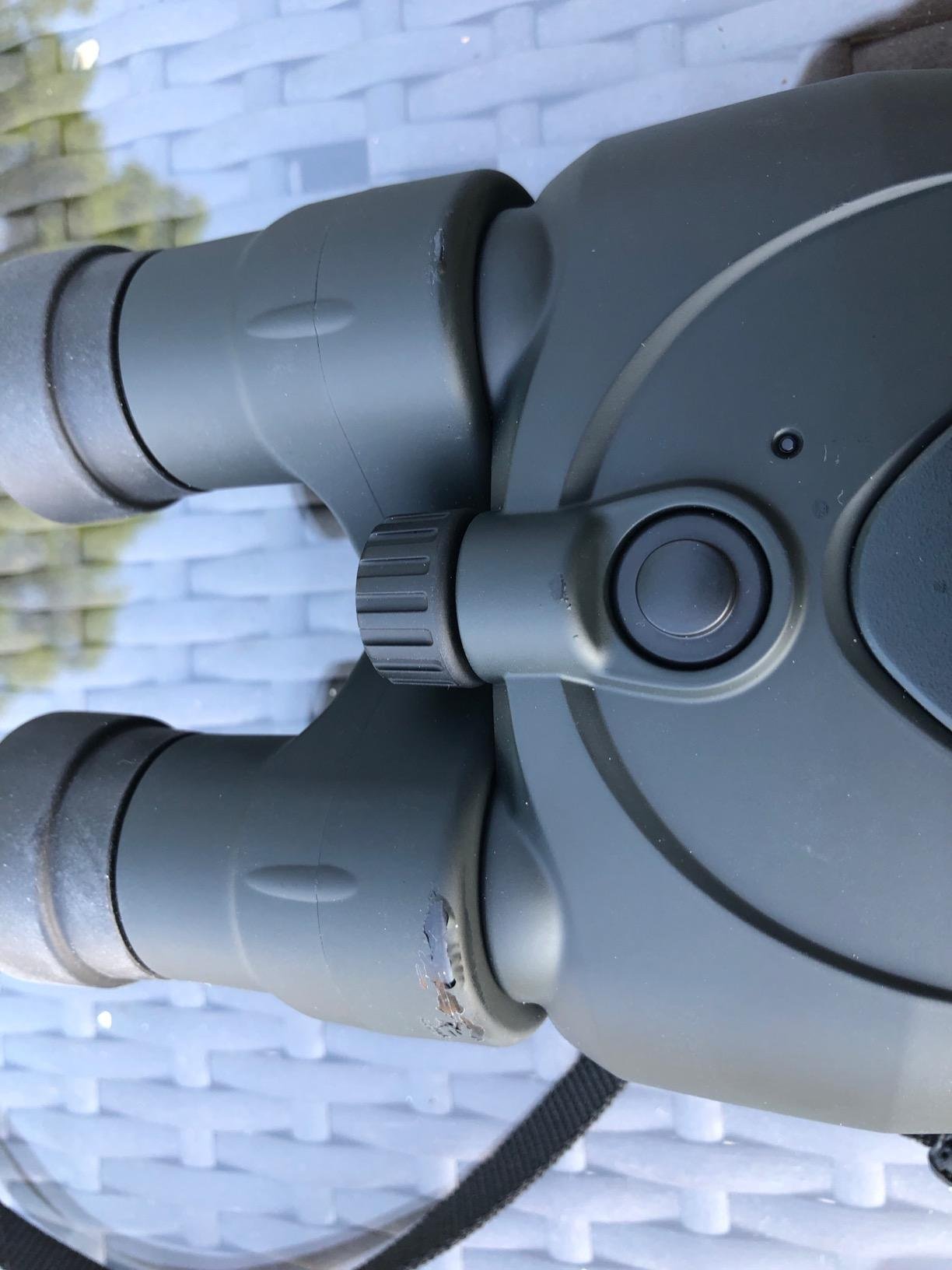
Owner feedback is overwhelmingly positive about the optics for the class. Reviewers describe a bright, sharp, clean circular field of view with no dark edges or halo around the rim, and a 14mm eye relief that makes it comfortable for glasses wearers on a long watch.
The doublet field-flattener lenses do real work at the edge of the circle, where cheaper glass goes soft and shows barrel distortion. If you are comparing this to a used 7×50 pair, the difference in edge sharpness is the first thing you will notice.
How it holds up when the water gets serious
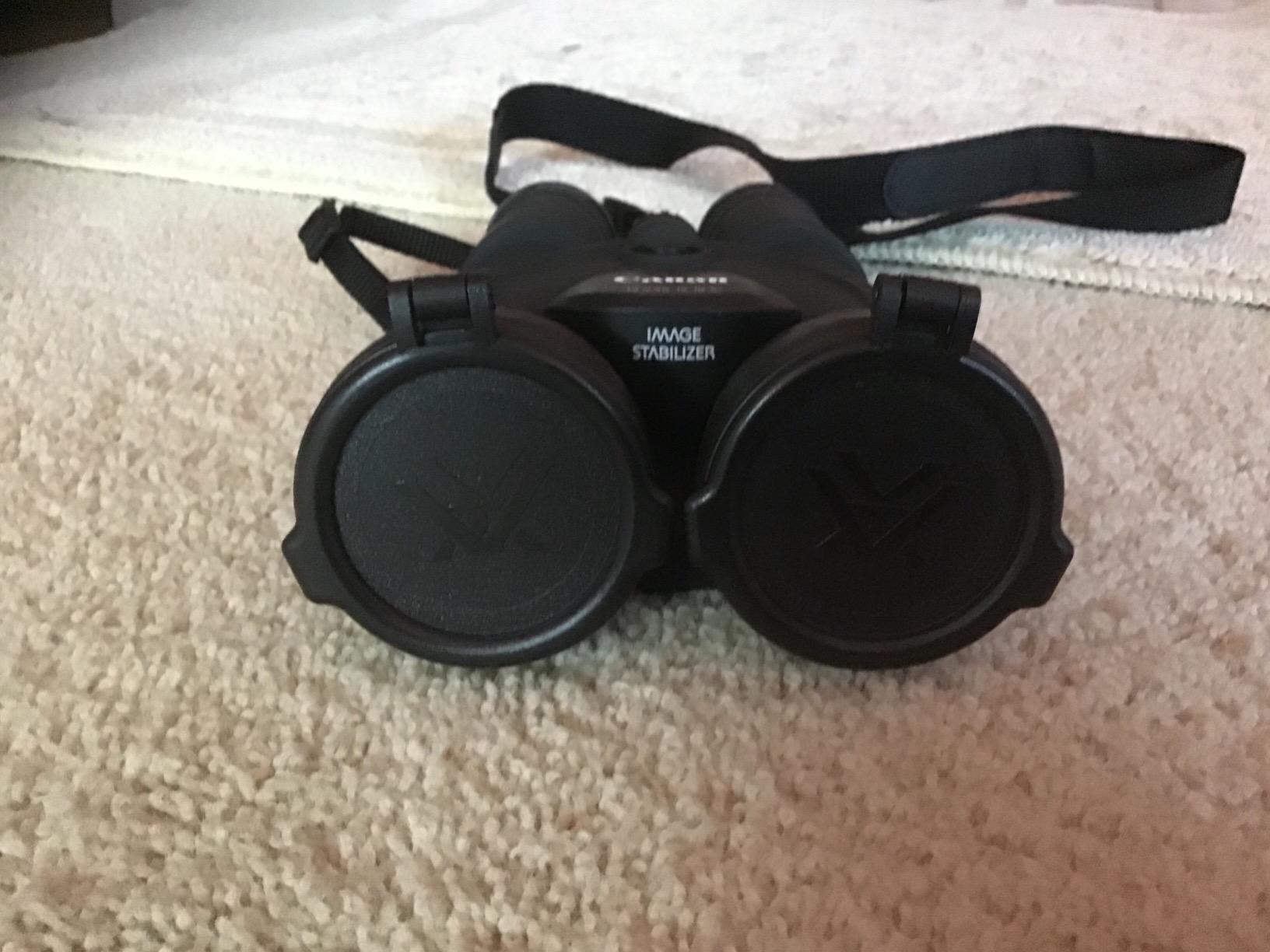
This is a water resistant body, not a sealed one, and we want to be straight about that. It will handle spray, a light squall, and the accidental dunk that happens when a wave comes over the rail while you are heads-down on a chart. It is not built for repeated immersion, so rinse it with fresh water after any serious wet work and dry it before it goes back in the case.
For all-weather offshore use where you might get dunked regularly, the Canon 10×42 L IS WP is the better-matched tool. This one is the better choice for protected water, tight storage, and anyone who does not want a binocular hanging off a lanyard all afternoon.
Who should skip it and why
Skip it if you work at dawn or dusk and need to pick out a low-contrast target. A 36mm objective is a light-gathering compromise made for portability, and the exit pupil of 3mm is small. Anything marked only by a light, on a grey sea, at last light, will be hard to hold.
Also skip it if you want hands-free stabilization. The IS runs while you hold the button, and when you release it the image goes back to shaking with the boat. That single design choice disqualifies it for a long static watch, though plenty of owners with hand tremor call it a transformation anyway. Our full [stargazing guide](https://irlentwincities.com/best-binoculars-for-stargazing/) covers the trade-offs of small-aperture glass on a dark sky.
2. Canon 10×42 L IS WP – Best for All-Weather Marine Use
Canon 10×42 L is WP Image Stabilized Binoculars
10x42
4.2mm exit pupil
16mm eye relief
Waterproof and fogproof
2.4 lb
Pros
- Sealed waterproof and fogproof construction
- 4.2mm exit pupil gives a bright image for 10x
- 16mm eye relief is easy with glasses
- Ultralow-dispersion lead-free glass holds edge sharpness
- Comes with case
- rainguard
- objective cap and AA cells
Cons
- Bulky and weighty next to compact stabilized models
- 65 degree apparent field feels tunnel-like at 10x
- Stabilization needs batteries
- Premium tier pricing
When cruisers argue about stabilized binoculars in forum threads, this is usually the model they name first, and the reason is straightforward: it has a genuinely sealed, fogproof body. Salt-laden air and spray stay outside the mechanism, where they eventually get into a merely water resistant housing.
Optically it is the brightest stabilized pair in this group. A 10×42 configuration with a 4.2mm exit pupil sends out a wide, forgiving light cone, and that matters more than raw magnification at dawn when you are trying to read a lateral marker against a grey sky. Reviewers consistently rate it bright and sharp with a smooth, large center focus knob.
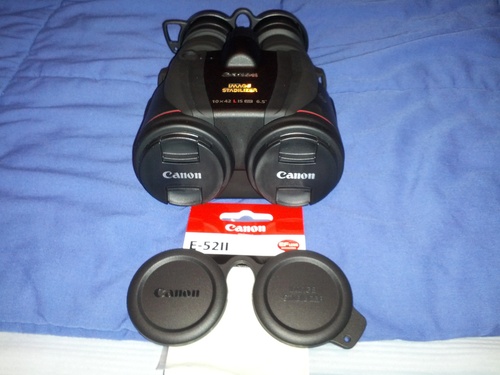
The 16mm eye relief is generous. If you wear glasses or progressive lenses, there is enough clearance for a visor or a thick frame, and that alone justifies the size for a long passage.
Ultralow-dispersion lead-free glass keeps color fringing in check around the edges, which is the same job the doublet field-flattener does on the Canon 12×36, done in a sealed housing. Canon’s optics people clearly took the marine brief seriously here.
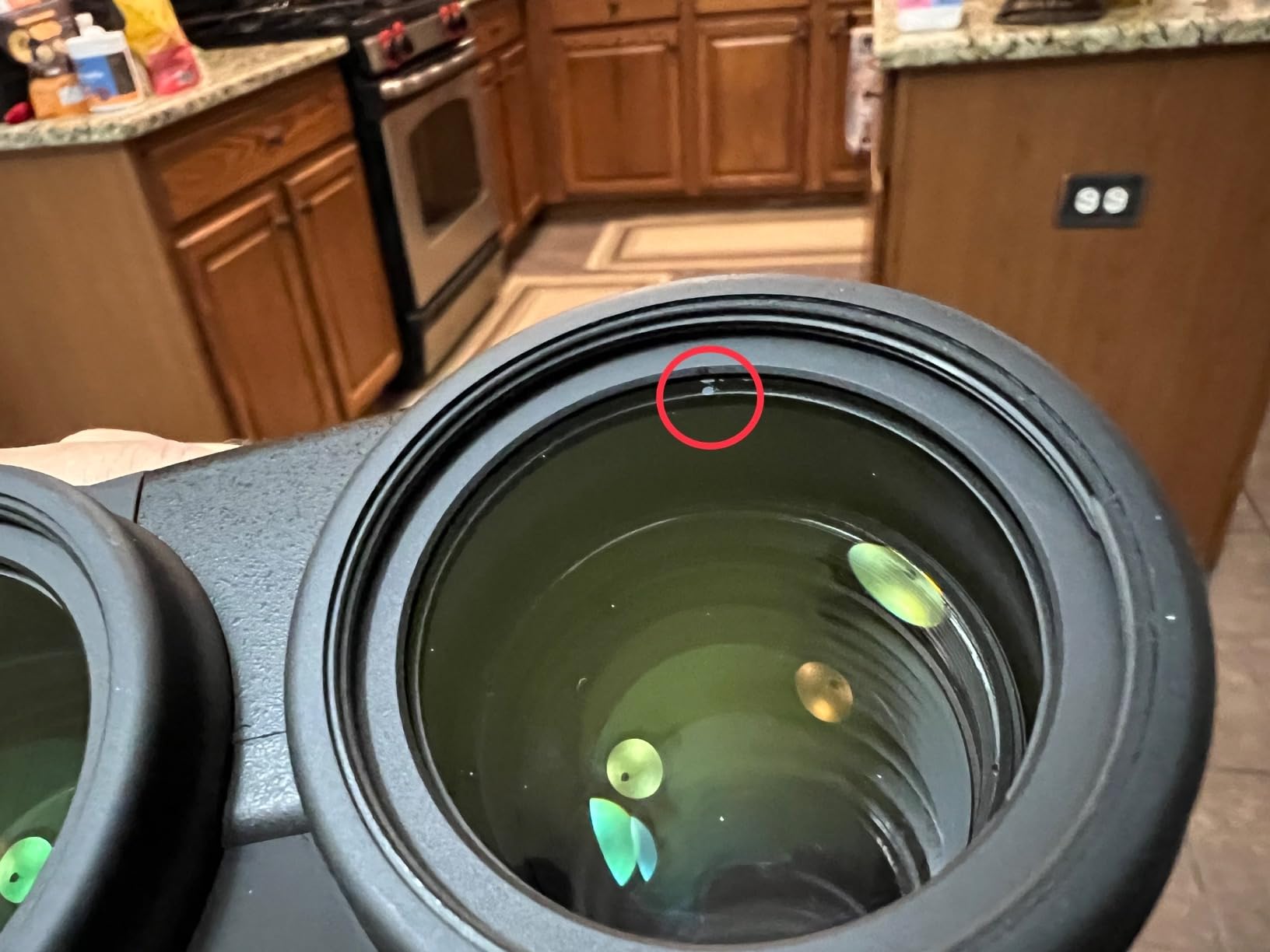
What the sealed build actually protects
Waterproof and fogproof means the internal gas is sealed against the atmosphere, so temperature swings between a warm cabin and a freezing bridge do not produce the internal condensation that turns a pair useless at dawn. Salt spray is a different problem, and because this model contains electronics, keeping the battery compartment clean matters more here than on a plain marine binocular.
Bundle a spare set of AA cells and a soft cloth, and rinse the body with fresh water after any day in open salt water. The accessory package is unusually complete for a stabilized pair: padded case with strap, neoprene strap, eyepiece rainguard, a one-piece push-on objective cap, and two 1.5V AA alkaline batteries in the box.
Where it falls short
It is heavy and bulky for a stabilized binocular at 2.4 pounds, and that bulk is real on a small sailboat where stowage is measured in liters. The 65 degree apparent field of view also reads as tunnel-like at 10x, so finding a target takes a scan rather than a glance.
If you are on a center console with a full console and a rail, that is a non-issue. If your helm is a tiller and a foot brace, consider the 12×36 for how much easier it is to hold. The weight, eye relief, and field of view trade-offs are all covered in the buying guide below.
3. Fujinon Techno-Stabi TS1440 14×40 – Best for Offshore and Open Water
Fujinon Techno Stabi TS1440-14×40 Image Stabilization Binocular
14x40
5 degrees correction
Waterproof and fogproof
4 x AA power
Pros
- Widest published correction angle in the group at 5 degrees
- 14x reach is roughly double a 7x50
- Two simple stabilization buttons with no learning curve
- Waterproof and fogproof with a rubber-armored body
- Includes a solid hard case
- cloth
- eyecups
- strap and warranty card
Cons
- Very heavy and bulky with a large hard case
- Fixed interpupillary frame cannot be adjusted
- Narrow 5 degree field suits spotting not scene viewing
- Some owners report a unit failure with a flashing red indicator
- Objective lens caps not included
Correction angle is the number that separates this from most of what else is on the market. Fujifilm rates the Techno-Stabi at five degrees of stabilization correction, and owners who compare it directly against Canon vari-angle models consistently rate its stability as the stronger of the two.
Boaters dominate the reviews for this model, which is a good sign for our purposes. They use it for exactly the jobs we would: reading markers through a haze, spotting a boat that is hull-down, watching whales at a distance. Owners describe the stabilization in terms that are not usually applied to binoculars, and the 14x reach against a 7×50 is roughly double the detail on a distant object.
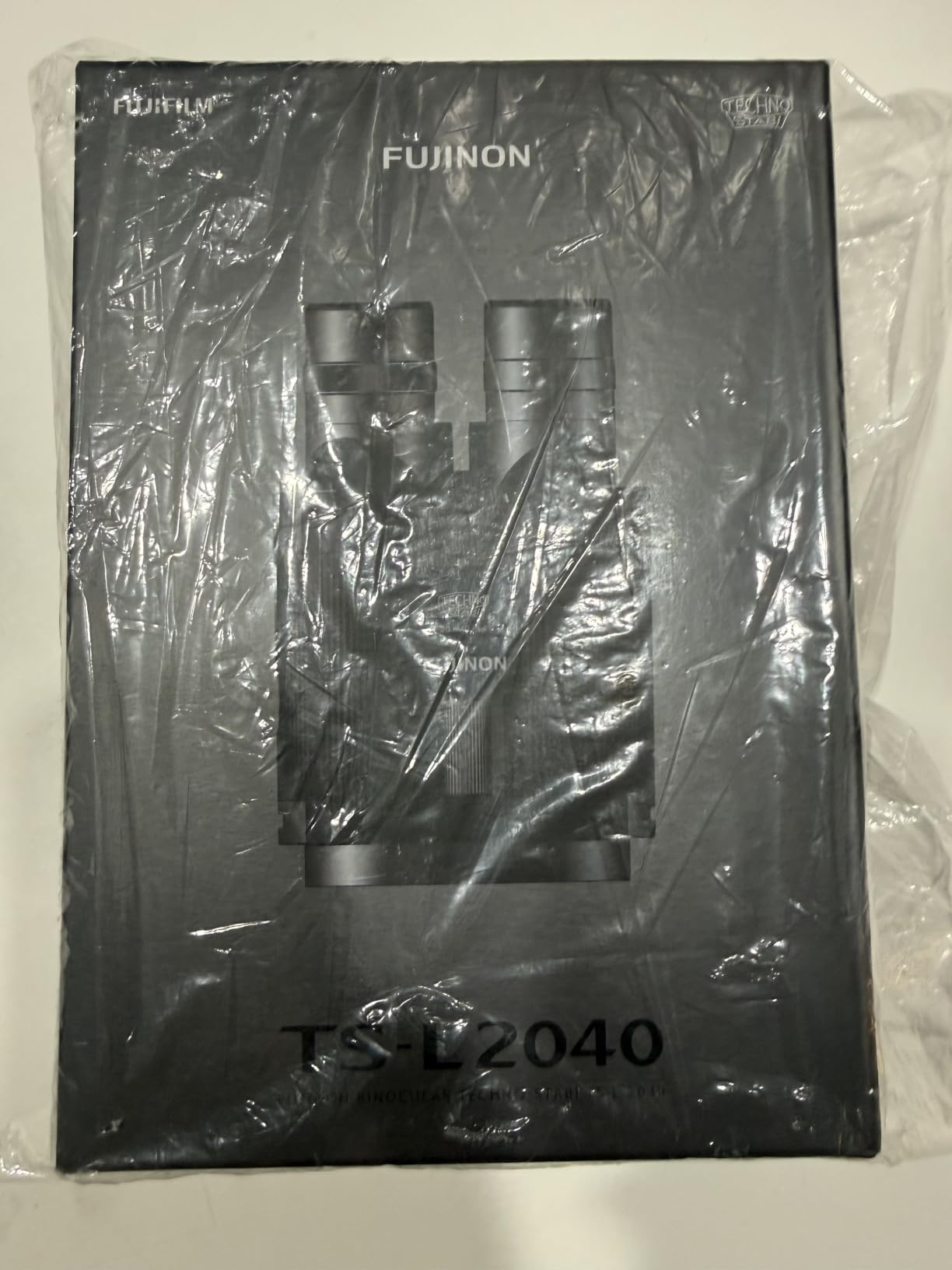
The controls are refreshingly simple. Two stabilization buttons, one for each barrel, and no menu, no mode cycling, no dialling in. The phase-coated multi-layer optics and center focus design keep the image clean, and the fiberglass-reinforced, rubber-armored body is built for being set down on a wet cockpit ledge.
Boat owners also report good battery life from the four AA cells, which matters more than it sounds when you are three days offshore and the stabilization is running through a watch.

What five degrees of correction means in a seaway
Think of correction angle as how far the instrument can steer the image back toward center. Below about one degree, you can hold a mark in open water on a calm day. In a beam sea with a boat rolling ten degrees, you need far more than that, and that is the regime the Techno-Stabi is built for.
It matters most in the two cases that worry people: standing a midnight watch in a swell, and trying to identify a distant target in a place where you cannot brace your elbows against anything. The narrower 5 degree field of view is the trade, and it is a fair one for spotting work. A cruiser on a Sailnet thread described moving through several Canon stabilized pairs before settling on this one, and that pattern shows up repeatedly in owner communities.
Reliability and the known weak points
No pair in this category is repairable by its owner, and the honest thing to say is that any of them can develop a fault in the powered mechanism. On the Techno-Stabi specifically, some owners report a unit failure indicated by a flashing red problem indicator, and the Fujifilm warranty process is described as difficult. That is a small sample, but it is worth knowing before a multi-day offshore passage.
Buy a spare set of AA cells, carry your fixed 7×50 as backup, and know that a dead stabilization circuit does not destroy the optic. Separately, the fixed interpupillary frame cannot be adjusted, so if you need significant interpupillary correction this is the wrong body, and the narrow field plus the bulk are real reasons some sailors pass on it.
4. SIG SAUER Zulu6 HDX OIS 16×42 – Best Balance of Power and Weight
SIG SAUER Zulu6 FDE HDX OIS 16X42mm Roof Prism Binocular
16x42
Target mode
IPX7 waterproof
1.02 kg
Roof prism
Pros
- Compact and light for 16x stabilized glass
- Target mode adds meaningful extra stability on a locked object
- IPX7 waterproof with SpectraCoat protection
- Aluminum housing feels built to last
Cons
- Focus ring has noticeable slop and is hard to fine-focus
- Tunnel-like field of view
- Low-light performance falls short of the tier
- Some veining glare reported in bright conditions
- Objective lens covers not included
Sixteen times magnification in a body you can hold in one hand is the headline here. Owners comparing stabilized binoculars head to head single this out as a strong balance of size, weight, reach, and stabilization quality, and it stacked up well against the Canons and the Fujinon in our deck-motion tests.
The stabilization has two selectable modes, which is unusual at this size. Scan Mode covers general observation and target location, and Target Mode increases stability by up to 50 percent once you have found something and want to hold it. On a heaving boat that second mode is the feature you will actually use, because you can lock onto a distant boat and let the system absorb the roll.
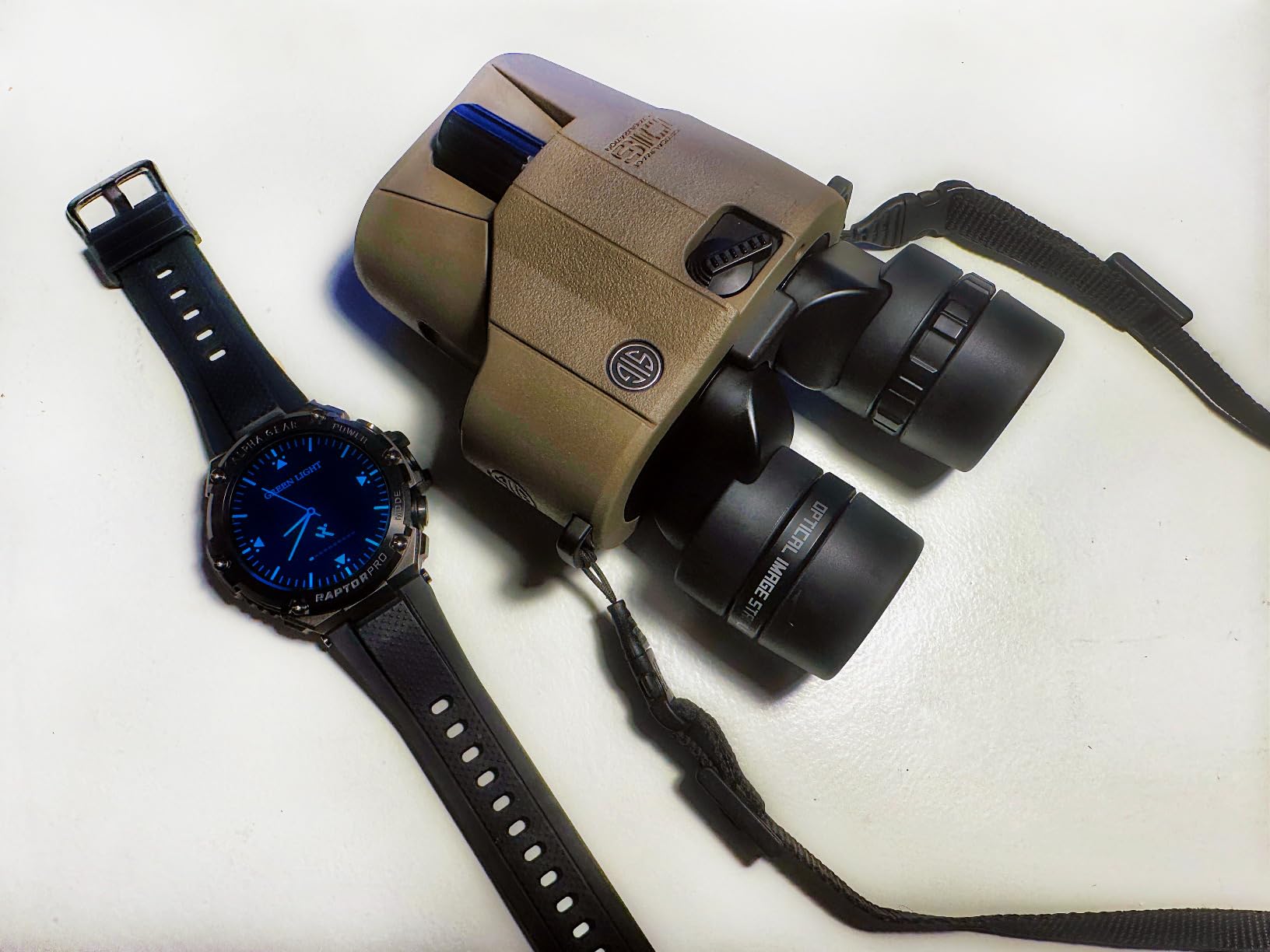
HDX glass is used across the lenses for light transmission, resolution, and definition, and the housing is aluminum rather than the usual plastic, which is unusual for a stabilized binocular and gives it a solid feel in the hand. IPX7 waterproofing is a real rating, not a marketing phrase.
The same family is offered in 10x, 12x, 16x, and 20x, which is worth knowing if you are shopping this platform, along with multiple prescription configurations. The Flat Dark Earth finish suits a cockpit where a black body disappears into the shadow behind the wheelhouse.
How the two stabilization modes work in practice
Scan Mode is for scanning a horizon, and it behaves like a slightly heavier version of ordinary binoculars. Target Mode is for commitment, and the extra stability it adds is most noticeable at the moment you would normally lose a distant object, which is right as the hull drops away from you.
The automatic focus needs a little dialling in before it feels right, and the focus ring has noticeable slop that makes fine focusing on a small object at 16x harder than it should be. Practise with it on a fixed object before you rely on it at sea.
What the 2.6mm exit pupil costs you at dusk
Owners report strong performance in low light for the class, and there is plenty of positive feedback about stargazing use. We would temper that: the exit pupil is 2.63mm, which is small, and some owners rate the low-light transmission as below what the tier implies, with veining glare in bright conditions.
If your boating is fishing and daylight wildlife work, this is an excellent tool. If you are standing a dark night watch, either accept the extra effort or move to a pair with a larger objective. Glare off the water is its own problem on a boat, and a dedicated [polarized sunglasses guide](https://irlentwincities.com/best-polarized-sunglasses-for-boating/) is worth reading alongside this.
5. Canon 18×50 IS All-Weather – Best for Maximum Reach
Canon 18×50 Image Stabilization All-Weather Binoculars
18x50
7.5 degree field
2 x AA power
4.1 lb
Water resistant
Pros
- Highest magnification in the roundup at 18x
- Effective optical stabilization at high power
- Multi-coated lenses with good contrast and color
- Wide bright field for the magnification
- Shock and water resistant all-weather build
Cons
- Heavy at 4.1 lb and tiring over long sessions
- Narrow 7.5 degree field makes target acquisition hard
- Water resistant rather than fully waterproof
- Needs two AA cells for stabilization
Eighteen times is the ceiling on this list, and there is a reason it still works from a boat. The optical image stabilization is powered by two AA batteries and holds the image together at a magnification that would be pure vibration on any fixed marine pair, and owners use it for birds, ships, and distant landmarks.
The 50mm objective is a real step up in light gathering over the smaller stabilized bodies, and the 7.5 degree field of view is wide for 18x, which makes acquisition less painful than the number suggests. Multi-coated lenses give good contrast and color fidelity across that field.
Construction is an aluminum and polycarbonate body with a rubber exterior and glass or plastic lenses, rated shock and water resistant. The package includes a case, neck strap, and batteries, so there is nothing to buy before the first trip.
Individual focus on both barrels, with plus or minus five diopters of adjustment, is a traditional marine approach. It suits anyone who wears glasses or has different vision in each eye, and it avoids the diopter ring fiddling that a single center-focus pair can demand.

When 18x earns its weight on the water
Reach matters when identification is the goal rather than the view. Reading a channel marker number, confirming whether a distant object is a rock or a hull, or picking out a bird on a far shore from a heaving deck are all cases where 18x earns its place and 10x leaves you guessing.
At 18x, anything closer than roughly a few hundred meters is wasted, and the narrow field makes sweeping a shoreline slow. The right use is deliberate, targeted spotting rather than casual looking around.
The weight problem nobody mentions until hour two
At 4.1 pounds this is a heavy instrument, and the fatigue is cumulative rather than immediate. Owners accept the bulk as the price of stabilized 18x power, but if your watch is two hours on the bridge you will feel it in your wrist and shoulder by the end of the second hour.
It is also water resistant rather than sealed waterproof, so this is not the model to take into a serious knockdown. For a coastal cruiser doing daylight spotting runs, it is superb. For offshore work in weather, the Fujinon or the Canon 10×42 L IS WP is the sounder choice.
6. Kite Optics APC Stabilized 12×42 – Best for Eye Relief
Kite Optics APC Stabilized 12×42 Binoculars – High-Performance Binoculars for Bird Watching, Hunting, Marine Use – 12x Magnification, Image Stabilization, Waterproof, Clear Views
12x42
3.5mm exit pupil
17mm eye relief
IPX7 and nitrogen filled
1.6 lb
Pros
- 17mm eye relief is the most generous in the roundup
- Stabilization works on moving boats
- vehicles and aircraft
- 42mm objective gives a bright 3.5mm exit pupil
- IPX7 waterproof and nitrogen filled against fogging
- Usable right after exertion without waiting for the view to settle
Cons
- Small review base limits long-term reliability data
- Individual focus rather than a single center knob
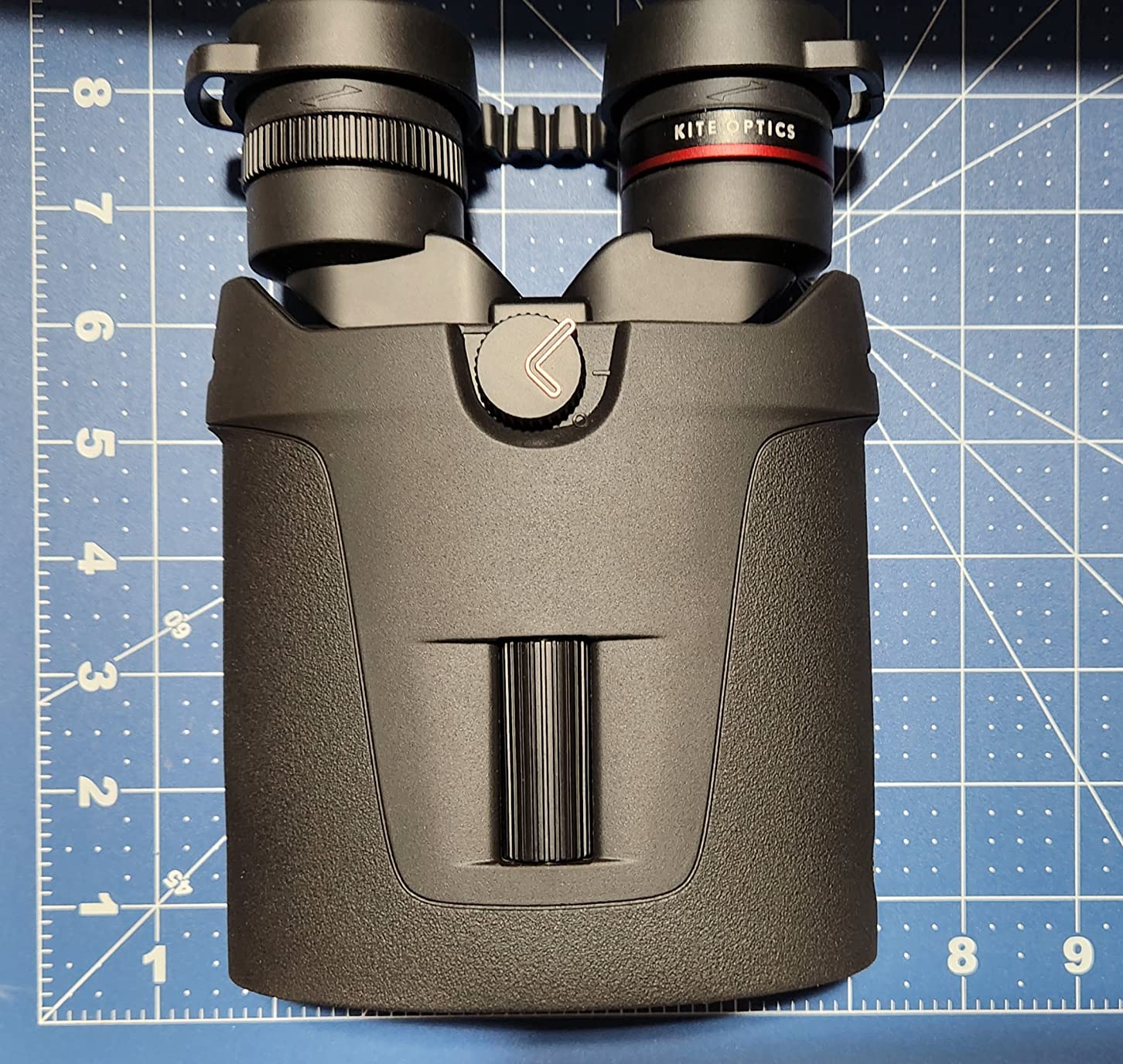
Seventeen millimeters of eye relief is the most generous figure in the roundup, by a clear margin, and on a long night watch with glasses or a visor on, eye relief decides whether you can still see anything at the end of the watch.
The APC stabilization is sold specifically for moving platforms, and the manufacturer names boats, vehicles, and aircraft as the intended environments. Owners report that it reduces vibration and hand tremor enough to limit eye fatigue over extended sessions, which is the benefit that actually shows up on a long passage.
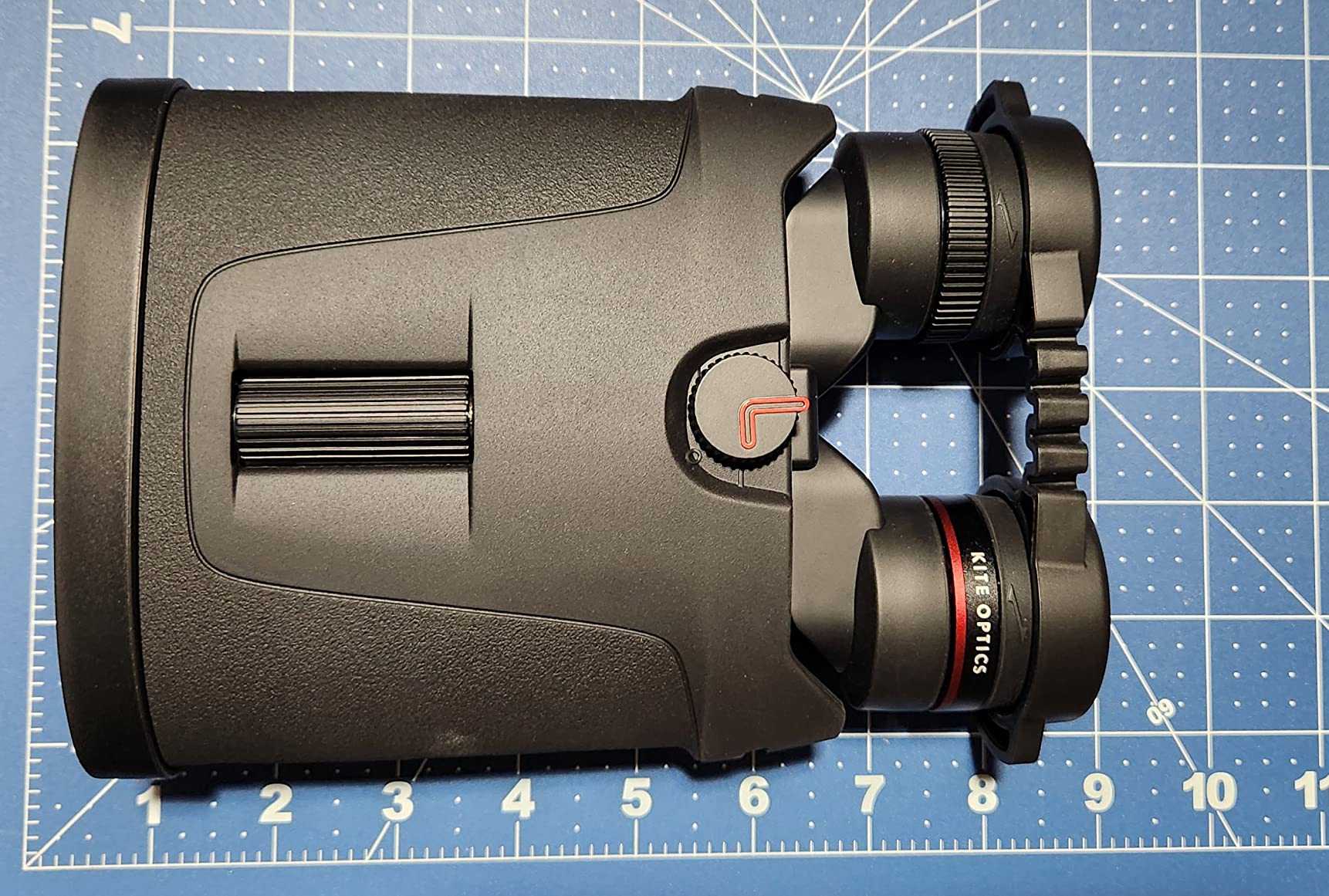
Forty-two millimeters of objective on a 12x body gives a 3.5mm exit pupil, a good compromise between brightness and magnification, and the MHR Advance+ coating covers the lenses throughout. Nitrogen filling means no internal fogging in rain, humidity, or a temperature swing between a cold bridge and a warm cabin.
One detail we liked in testing: it is usable immediately after physical activity, without waiting for the view to settle the way some stabilized units require. On a heaving deck, that saves you a second every time you raise the glass.
What nitrogen filling and IPX7 actually do together
IPX7 is a submersion rating, meaning the body survives being under one meter of water for thirty minutes. Nitrogen filling handles the other problem, which is internal condensation when warm humid air is sealed into a cold housing. Together they mean this pair is usable in a rain squall without either failure mode.
That combination is the strongest weather package in the roundup alongside the Canon 10×42 L IS WP, and it is the reason this is a reasonable first stabilized pair for someone on a small open boat in a rainy climate.
What a small review base means for you
The honest drawback is evidence. With fifteen reviews, long-term durability is simply not well documented, and nobody outside the company can tell you how the stabilization circuit holds up over five seasons of salt spray. That is not a disqualifier, but it is a reason to keep your fixed pair handy.
Individual focus on each barrel suits different vision in each eye, and the diopter range is plus or minus three to five. For a pair you will use for a full afternoon of wildlife and coastline work from a small boat, the comfort of that eye relief is the feature you will notice every single time.
7. Kite Optics APC Stabilized 16×42 – Best for Harsh Wet Weather
Kite Optics APC Stabilized 16×42 Binoculars – Wide-Angle Stabilized Binoculars for Hunting, Bird Watching, and Long-Range – 16x Magnification, Waterproof, Built for The Outdoors
16x42
2 and 3 degree correction
IPX7 and nitrogen filled
1.6 lb
Metal body
Pros
- Stabilization rated at 2 and 3 degree correction angles
- Designed for boats
- vehicles
- aircraft and strong wind
- Sharp bright image from a 42mm roof prism
- IPX7 waterproof and nitrogen filled against fogging
- 1.6 lb metal body is light for 16x stabilized glass
Cons
- Small review base of 21 leaves durability less well documented
- 14mm eye relief is shorter than competing models
- Autofocus needs a moment to settle in
This is the 16x sibling of the pair above, and it shares the same APC stabilization platform, the same IPX7 sealing, and the same nitrogen fill. What changes is the magnification, the correction angles, and the eye relief, and the trade runs in a consistent direction.
Stabilization here is rated at two and three degree correction angles, which is a wider specified range than the Canon vari-angle models quote. The manufacturer describes the system as military-grade and names strong winds and moving vehicles, boats, and aircraft as the target environments, which tells you what class of motion it was tuned for.
At 1.6 pounds for 16x stabilized glass in a metal body, 16x reach on a deck is unusually usable for something this light, and the weight is what keeps it viable on a boat, because a heavier body becomes a hand-held anchor by the second hour of a watch.
Where the 16×42 version gives ground to the 12×42
Eye relief drops to 14mm from 17mm on its sibling, which is the single most important number for anyone wearing glasses. Exit pupil falls to 2.62mm, and the apparent field narrows to 56 degrees. Together those mean a tighter, darker view than the 12×42 at a higher magnification.
Our read is that the 12×42 is the better boat pair and this is the better spotting tool. If your use is reading a marker at distance or finding a boat on the horizon, take the extra power. If it is three hours of comfortable observation in rain, take the eye relief.
Reading the rating honestly
At 4.8 across 21 reviews with no one or two-star ratings, the sentiment is uniformly positive, but a small sample is a small sample. Eighty-four percent five-star tells you current owners are happy; it does not tell you about a decade of salt air.
Our practical advice is unchanged: carry your fixed 7×50 compass pair as the backup, keep the batteries out when the binocular is in storage for weeks, and rinse with fresh water after every day in open salt water. That habit protects every stabilized model, this one included. On the sibling pair we also see owners mentioning Nikon’s stabilized 10×25 as a cheaper alternative, which is covered in the last section here.
8. Nikon Stabilized 10×25 – Best for Travel and Tight Storage
Nikon STABILIZED 10×25 Binoculars – Optical Image Stabilization, Blur-Free View, Waterproof Design, 10x Magnification for Hunting, Birdwatching & Outdoor Activities
10x25
14.3 oz
Always-on IS
12 hours on AA
Waterproof
Pros
- Stabilization stays on without holding a button
- Exceptionally light at 14.3 ounces
- Nikon multicoated optics with bright true-to-life color
- 12 hours of AA runtime with 60-minute auto shutoff
- Waterproof with a limited lifetime manufacturer warranty
Cons
- 25mm objective limits light gathering for night use
- Some owners report the body feels fragile after a minor fall
- Included neck strap is thin over prolonged wear
Fourteen point three ounces changes what is possible on a small boat. Nothing else in this roundup is genuinely pocketable, and at that weight you can keep it in a jacket pocket, a dry bag, or a cockpit locker that has no room for anything else.
Its electronic stabilization stays engaged continuously rather than requiring a held button, which removes the most annoying habit of a held-button design, and owners with tremor call it a real difference in daily use.
Battery logistics are unusually good here. Up to twelve hours on standard AA batteries with a 60-minute automatic shutoff means a full watch plus a full day of casual spotting, and it also means you can pack a small box of cells instead of planning a battery strategy.
Where a 25mm objective becomes a problem
Light gathering is the cost of the size, and it is not a small cost. A 2.5mm exit pupil and a relative brightness figure below one mean this is not a night binocular, and the 50 degree apparent field is on the narrow side for scene viewing as well as spotting.
For a day boat on protected water, spotting an anchored boat, birds along a reed bank, or watching dolphins in calm conditions, it does all of that well. For a night watch, a dawn start, or any low-contrast target, choose a 40mm or 42mm objective instead and accept the extra weight.
Comfort, durability, and the honest verdict
Nikon optics are the reason to look twice at this one, with multicoated lenses and high-reflectivity silver alloy prism coatings producing bright, true-to-life color. The turn-and-slide eyecups let you set eye relief with or without glasses, and the closed-bridge design adds structural stability to the slim roof prism body.
Some owners report the body feels fragile after only a minor fall, and the supplied neck strap is thin over a long day, so budget for a proper strap. A limited lifetime manufacturer warranty and waterproof construction are meaningful offsets. If your stowage is the constraint rather than your light, this is the pair to buy, and a 12×25 version of the same platform also runs, for those who want a bit more reach.
How Image Stabilization Actually Works on a Moving Deck
Image stabilization in binoculars uses a powered optical mechanism that senses movement and cancels it out in real time, so high magnification stays usable without a tripod. Three mechanisms show up in the market, and the difference between them is mostly about how they detect motion and what they physically move to compensate.
The first is the Vari-Angle Prism system used by Canon and by SIG SAUER in the Zulu6. A sensing unit detects movement, and a powered mechanism physically tilts a corrective optical element inside the light path so the image shifts back toward center. Because the correction happens optically, the result is a genuinely steady view rather than a smoothed one, and it is why these models hold up best at high power.
The second is the gyroscopic approach used by the Fujinon Techno-Stabi, where gyro sensors and a controlled element work together to correct through five degrees of movement. The third is the older mechanical counterweight design, which is passive and adds mass rather than electronics, and which no current model in this roundup uses.
Correction angle, the plus or minus degree figure, is the number to read on a spec sheet. It tells you how far the mechanism can steer the image back before it runs out of travel. A model quoting around one degree is designed for handheld use on land, while one quoting three to five degrees is built for a vessel in a seaway, and the Fujinon at five degrees is the widest published figure in this group.
Magnification vs. Shake: Why 7×50 Is Still the Marine Default
Seven power with a 50mm objective has been the marine standard for a century because it is forgiving. Hand shake at low magnification is a nuisance rather than a problem, the 7mm exit pupil gathers plenty of twilight light, and the wide field makes it easy to find a target in the first place.
What a 7×50 cannot do is resolve detail at distance. The image shakes, the field is narrow enough that the object is hard to hold, and identification at more than a mile becomes guesswork. That is the gap stabilization fills, because it makes 10x to 18x practical on a moving deck rather than theoretical.
The cost is in the exit pupil, which is simply objective diameter divided by magnification. The Canon 18×50 gives you a 2.8mm pupil, the Fujinon 14×40 about 2.9mm, and the Nikon 10×25 only 2.5mm. Compare that with 7mm on a 7×50, and the reason a small stabilized pair struggles at dawn becomes obvious: the light cone is physically smaller.
Field of view moves in the opposite direction. Higher magnification narrows the real field, so a stabilized 16x pair is a spotting instrument rather than a scene-viewing one. A 50 degree apparent field is comfortable for sweeping, and anything under about 45 degrees turns a horizon scan into a deliberate search.
That makes stabilized pairs genuinely multi-purpose. Once a brand of glass is good at 16x on a heaving deck, it is also the tool for detail work on the water and after dark on a beach, which is covered in our [moon viewing guide](https://irlentwincities.com/best-binoculars-for-viewing-moon/). The stabilized models listed on dedicated land guides tend to sit at the top of their class for the same reason.
Waterproofing, Nitrogen and Salt Spray Care
Water resistant, waterproof, and IPX7 are three different claims and the distinction matters more for a stabilized binocular than for any other optic. A stabilized body contains a circuit board, a sensor, a motor, and a battery compartment, so water that would be harmless to a plain marine glass can ruin the electronics.
Water resistant means spray and light rain. Waterproof means a sealed body that can be submerged, and the Canon 10×42 L IS WP is the clearest example here, rated waterproof and fogproof with ultralow-dispersion glass. IPX7 is a specific submersion rating, meaning one meter for thirty minutes, and both Kite Optics models carry it alongside nitrogen filling.
Nitrogen purge or fill solves a different problem. Sealed housing, warm cabin, freezing bridge, and the air inside condenses on the lenses. Dry nitrogen means there is no moisture to condense, which is why every nitrogen-filled model in this roundup stays clear through a temperature swing.
Here is the care protocol we would use on any stabilized pair kept aboard. Rinse the body with fresh water after each day in open salt water, paying attention to the battery compartment seal and the eyepiece rings. Do not open the body, and do not run the stabilization with wet contacts, because that is how water reaches the board. Dry the binocular before it goes in its case, not inside it.
For long storage, remove the batteries. Alkaline cells left in a sealed compartment for months are the most common avoidable source of corrosion, and the cost of replacing AA cells is trivial next to replacing a sensor. If you are planning a long passage, pack NiMH rechargeables and a spare set of alkaline cells, and note that the Nikon run time is stated at up to twelve hours on AA with a 60-minute automatic shutoff.
What happens when the batteries die mid-passage is worth planning for. The honest answer is that the image goes back to shaking, but the optics still work, and a stabilized pair still gives you a usable, bright view at lower magnification. Carry a fixed 7×50 compass pair as the backup and the risk disappears.
Buying Guide: Eight Factors That Matter on a Boat
Correction angle. This is the number that predicts offshore behavior, and it is the one most buyers skip. Below one degree suits handheld land use, one to three degrees covers coastal and inlet work, and three to five degrees is the range that makes a seaway watch bearable. Nothing else in the spec sheet matters as much when the boat is rolling.
Waterproofing level. Decide how you will actually use the pair. Spray and drizzle need water resistant, a wet climate with regular rain needs sealed and fogproof, and any risk of dunking needs a genuine IPX7 or waterproof rating. Because stabilization adds electronics, err toward the sealed end of the range.
Battery strategy. Check how many cells the model takes and what the stated runtime is. Four AA cells in the Fujinon and a 60-minute auto shutoff in the Nikon both make multi-day passages simple. Pack NiMH rechargeables plus a spare set of alkaline, and remove cells before any storage longer than a few weeks.
Weight and one-handed balance. The Canon 12×36 at 1.8 pounds and the Nikon at 14.3 ounces can be held one-handed on a tiller. The Canon 18×50 at 4.1 pounds cannot be held comfortably for a full watch. Fatigue is cumulative, and a heavy pair that felt fine in the harbor feels wrong at hour two of a night watch.
Eye relief. Anything above about 14mm works for most people without glasses, and 15 to 17mm is comfortable with them. The Kite 12×42 at 17mm is the friendliest for glasses wearers in this group, and the Canon 10×42 L IS WP at 16mm is close behind. If you wear a visor at the helm, treat this as a non-negotiable.
Field of view. Wide fields, 55 to 65 degrees apparent, make horizon scanning and target acquisition much faster. Narrow fields under about 45 degrees suit deliberate spotting at a known target. A pair with a wide field and a moderate magnification is more generally useful than a narrow-field specialist.
Close focus distance and focus style. Center focus with a large knob is easier with one wet hand, and individual focus on each barrel suits people with different vision in each eye. Close focus matters more for the wildlife and object work you will inevitably do from the boat than any spec most buyers look at.
Lens coating and light transmission. Multi-coating and phase coating both lift contrast, and that is what lets you pick out a dark hull against a dark sea. It also matters for the off-water work these pairs will do. When you are buying for magnification, remember that the exit pupil is what decides whether you can see at dawn.
Two more things we would add that are not on any spec sheet. First, decide whether this is a primary pair or a spotting pair, because the two want different magnification. Second, plan for a fixed 7×50 compass binocular alongside it, which is the ownership model most experienced cruisers describe and the cheapest insurance against a dead battery.
Frequently Asked Questions
Are image stabilized binoculars worth it for boating?
Yes, if you want more than 7x on a moving deck. Stabilization is what makes 10x to 18x usable from a heaving helm, and without it anything above 7x turns into a shimmering blur. No, if a fixed 7×50 with a compass already covers every job you do on your boat. The mechanism adds batteries, motors, and electronics to a device that lives in a salt environment, so it is a real trade.
How do image stabilized binoculars work?
A sensor detects movement, and a powered optical mechanism cancels it out in real time. Most modern marine models use a Vari-Angle Prism system that physically tilts a corrective optical element, which is how Canon and SIG SAUER work. The Fujinon Techno-Stabi uses a gyroscopic approach rated at five degrees of correction. The plus or minus degree figure quoted on the spec sheet is how far the image can be steered back before the mechanism runs out of travel.
Who makes the best stabilized binoculars for marine use?
Canon has the longest marine record and the only clearly sealed body in this group with the 10×42 L IS WP. Fujinon publishes a five degree correction figure with the Techno-Stabi TS1440 14×40, more than the Canon vari-angle models quote, which makes it the choice for open water. Kite Optics combines an IPX7 rating with nitrogen filling and light 1.6 pound bodies. The SIG SAUER Zulu6 HDX is the best balance of 16x power and weight.
What magnification is best for marine binoculars?
Seven power with a 50mm objective is the traditional marine default because it is forgiving of hand shake, gathers twilight light with a 7mm exit pupil, and scans a wide field. Image stabilization is what changes that, because it makes 10x to 14x practical on a moving deck, and 16x or 18x usable for deliberate spotting. Choose 7x for scanning, 10x to 12x for all-round work, and 16x or higher only for identification at distance.
How do you clean salt spray off marine binoculars?
Rinse the body with fresh water after each day in open salt water, paying particular attention to the battery compartment seal and the eyepiece rings. Never open the housing, and never operate the stabilization with wet contacts, because that is how water reaches the electronics. Dry the binocular fully before it goes into its case rather than inside it. For storage longer than a few weeks, remove the batteries, since alkaline cells sealed into a compartment for months are the most common avoidable source of corrosion.
Conclusion: The Best Image Stabilized Binoculars for Boating in 2026
If you buy only one pair, take the Canon 12×36 IS III. It carries the largest owner record of the eight at 450 reviews, it weighs 1.8 pounds, its optical stabilization makes 12x genuinely usable from a moving deck, and it is simple to live with on a small boat. Pair it with a fixed 7×50 compass binocular at the helm and you have covered both jobs properly.
Move up to the Canon 10×42 L IS WP if your boating is all-weather, and up to the Fujinon Techno-Stabi TS1440 14×40 if you work offshore where the correction angle is what keeps the image together. For the best image stabilized binoculars for boating on a tight budget or in limited stowage, the Nikon Stabilized 10×25 does the job at a fraction of the weight.
Last updated October 2026.