
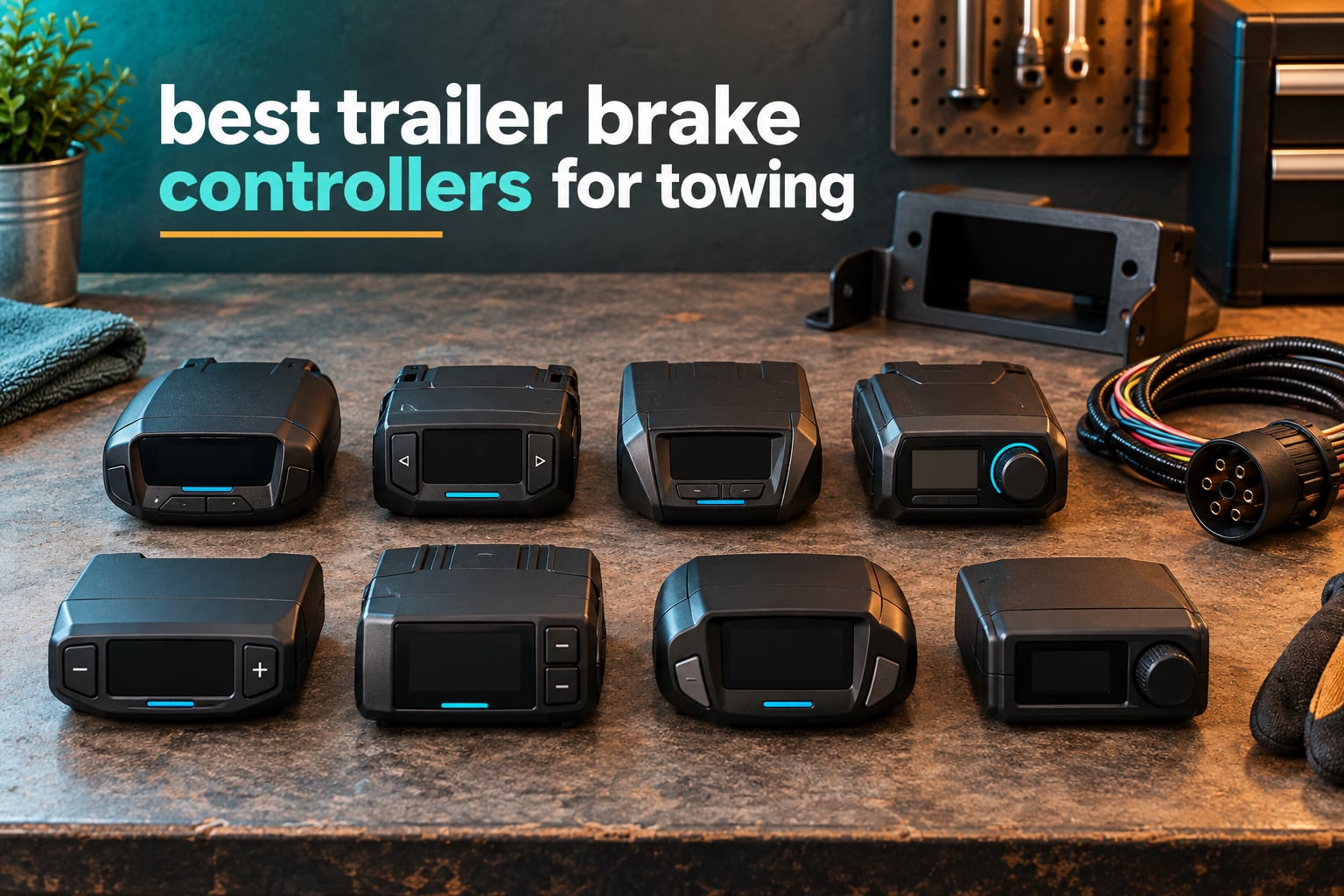
If you tow anything with electric brakes above roughly 3,000 lb GVWR, the best trailer brake controllers for towing are the Tekonsha Primus IQ 90160 for most people, the CURT Echo Mobile 51180 if you want wireless control with no dash wiring, and the REDARC Tow-Pro Liberty when knee clearance matters more than raw braking power. All three are proportional controllers, and that is the key decision before brand.
A proportional controller ramps trailer braking in step with how hard you press the pedal, so the trailer pushes back against your foot exactly when the truck does. A time-delay controller ignores pedal pressure and simply applies a preset amount of braking after a pause. Nearly every serious tow setup has moved to proportional, and all eight picks below are proportional.
We compared eight of the highest-rated controllers currently on the market, reading the specification sheets, the customer image galleries, and the long-form owner complaints attached to each one. The picks are organised by duty cycle rather than brand, because the same controller that works for a weekend camper tow is a poor match for someone hauling a fifth wheel every day.
Before you read further, note that the controller is only half the system. Your trailer also needs brake assemblies on every axle, a breakaway switch, and correct 7-pin wiring at the truck. If you are still shopping for the towing hardware itself, start with our guide to the best trailer hitches so the hitch rating and brake controller match.
Table of Contents
Top 3 Trailer Brake Controller Picks in 2026

Tekonsha Primus IQ 90160
- Proportional inertia control
- 1-3 axles and 2-6 brakes
- Plug-and-play dash mount
- 3-level boost

CURT Echo Mobile 51180
- Bluetooth app control
- Zero-tool inline install
- 1-2 axles and 2-4 brakes
- Multiple vehicle profiles

Best Trailer Brake Controllers for Towing in 2026
Here is the full shortlist at a glance. The Key Features column is drawn from each manufacturer’s own feature list, and the order below matches the individual reviews that follow.
| Product | Specifications | Action |
|---|---|---|
| Tekonsha Primus IQ 90160 |
|
Check Latest Price |
| CURT Echo Mobile 51180 |
|
Check Latest Price |
| REDARC Tow-Pro Liberty |
|
Check Latest Price |
 CURT Spectrum 51170 CURT Spectrum 51170 |
|
Check Latest Price |
 REDARC Tow-Pro Elite REDARC Tow-Pro Elite |
|
Check Latest Price |
 Timilge 8508211 Proportional Controller Timilge 8508211 Proportional Controller |
|
Check Latest Price |
 Tekonsha Prodigy iD 90920 Tekonsha Prodigy iD 90920 |
|
Check Latest Price |
 CURT TriFlex NEXT 51146 CURT TriFlex NEXT 51146 |
|
Check Latest Price |
1. Tekonsha Primus IQ 90160 – Best Overall Proportional Controller
Tekonsha 90160 Primus IQ, Proportional Brake Controller for Trailers with 1-3 Axles, compatible with Ford, GM, Chevy, Dodge, RAM, Toyota, Jeep. Wiring Harness Sold Separately.
Proportional inertia control
1-3 axles, 2-6 brakes
4.5 x 2.5 x 8.5 in
1 lb
Pros
- Smooth proportional braking from an internal inertia sensor
- Plug-and-play snap-in dash mount with a removable connector
- Readable LED display with real-time diagnostics
- Three-level boost for heavy loads
- Installs in about 5 to 7 minutes on a pre-wired truck
Cons
- Wiring harness sold separately
- Can be sensitive out of the box until gain is lowered
- Flat-head mounting screws frustrate some owners
The Primus IQ has been on the market since 2007 and has collected 7,714 ratings, which makes it by a wide margin the most-proven controller in this roundup. At 1 pound and 4.5 x 2.5 x 8.5 inches it is a genuinely small box, and the snap-in dash clip means it disappears into the dash rather than sitting on top of it.
Braking is the reason to buy it. The internal inertia sensor reads the deceleration of the tow vehicle and reproduces that force at the trailer, so a firm stop and a light stop feel genuinely different. That predictability is what you feel when a loaded fifth wheel starts to push, and it is why owner groups have recommended the Tekonsha name consistently for well over a decade, including in recent threads.
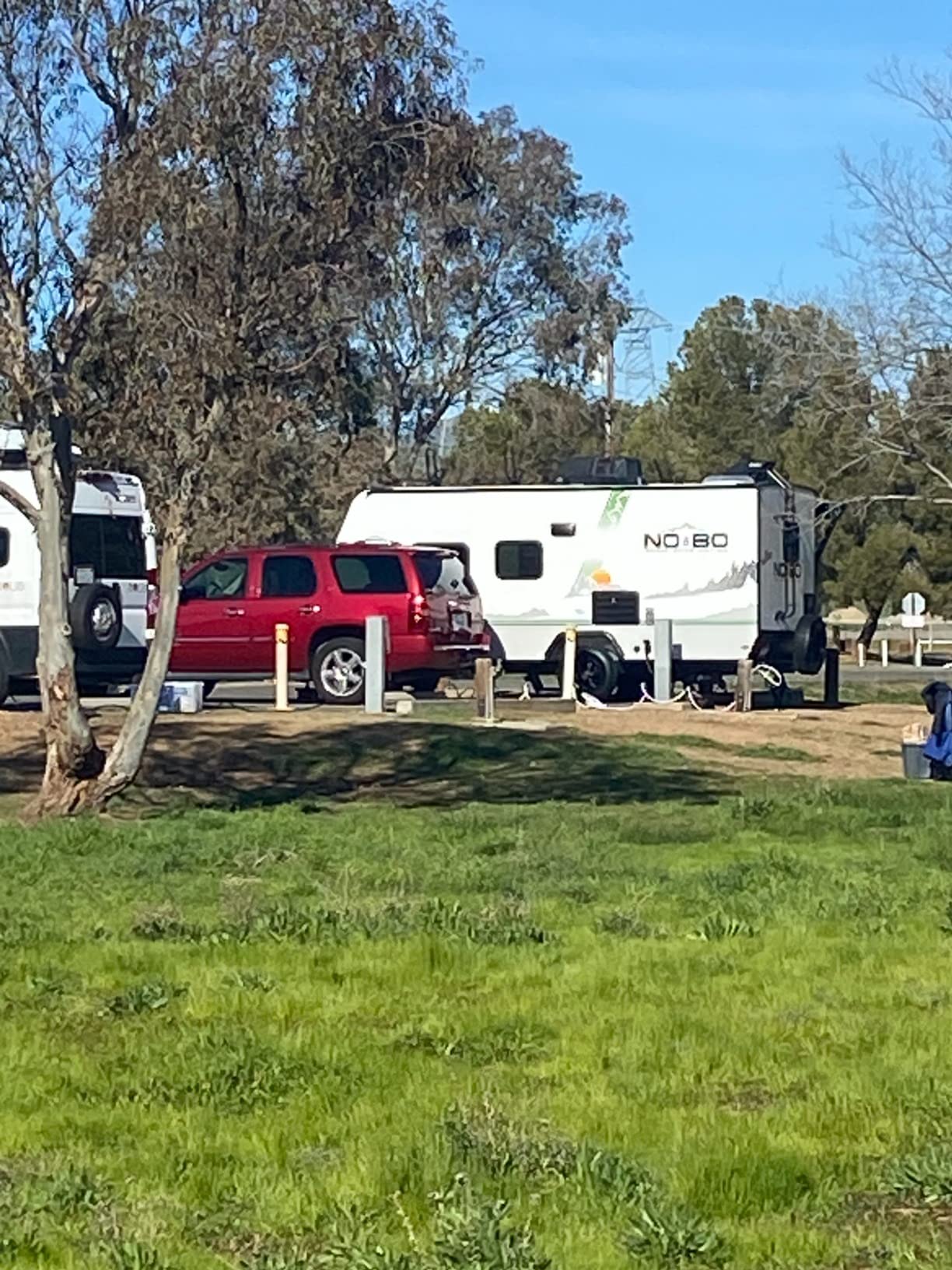
Owners praise the LED readout in particular because it doubles as a diagnostic tool. It shows the current setting, alerts you when trailer connection is lost, and surfaces fault codes rather than leaving you guessing. The three-level boost is a genuine asset on a downgrade with a heavy trailer: one press adds stopping power without the full panic of full manual application.
The honest caveat is the out-of-box sensitivity. A fair number of owners report that the first drive feels grabby until the gain is turned down a few notches. That is a five-minute adjustment, not a defect, but it is worth knowing before your first tow.
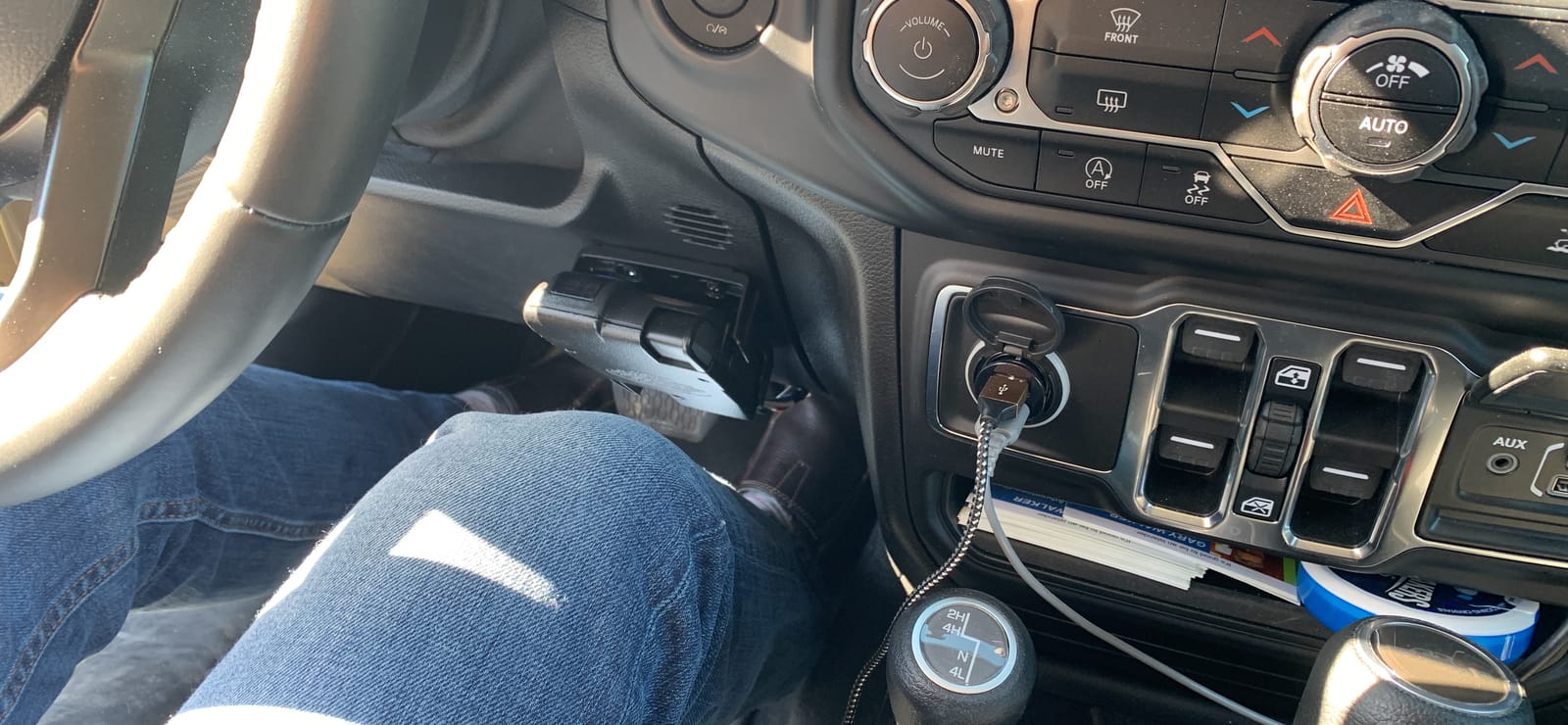
What the Primus IQ handles well
It covers 1 to 3 axles and 2 to 6 brake assemblies, which is the range of most travel trailers, fifth wheels under about 10,000 lb, and camper trailers. Compatibility is broad: Ford, GM, Chevrolet, Dodge, RAM, Toyota, and Jeep, as long as you buy the right plug adapter for your vehicle.
Because the harness is sold separately, budget for the right adapter for your truck. Owners who arrive without a factory brake controller port and without a tow package need the wiring kit as well, which is the single most common reason a plug-and-play controller takes an afternoon instead of ten minutes.
Where it falls short
On 2021 and later F-150s, including the Lightning, the truck is pre-wired for a factory controller regardless of trim, so the install is easy. On an older or base-trim truck, the same unit can mean running brake-switch and power wires, and that is where a first-timer can go wrong.
The second limitation is mounting hardware. The included flat-head screws are a small irritation, and the unit does apply some output to the trailer brakes even when you are stopped, which a few owners notice in a driveway. Neither is a reason to skip it, but both are worth knowing.
2. CURT Echo Mobile 51180 – Best Wireless Controller With No Dash Wiring
CURT 51180 Echo Mobile Bluetooth Trailer Brake Controller, 7-Way, 1-2 Axles
Bluetooth app control
1-2 axles, 2-4 brakes
6.63 x 1.63 x 2.88 in
8.8 oz
Pros
- Zero-tool install between the vehicle and trailer 7-way plugs
- Stores multiple vehicle and trailer profiles
- Accelerometer keeps braking proportional if Bluetooth drops
- Reclaims under-dash space and legroom
- Potted circuit board resists weather
Cons
- Requires a compatible smartphone and the Smart Control app
- Included rubber retention strap is ineffective
- Long inline body can work loose on rough roads
- Fit to some 7-way plugs is tight
The Echo Mobile takes a completely different approach. Instead of a control head screwed into your dash, the hardware is a slim inline module that plugs between your truck’s 7-way outlet and your trailer’s 7-way plug, and you set the braking with your phone. At 6.63 inches long and 8.8 ounces it is light, and the entire install is done with no tools and no permanent wiring.
That makes it the answer to a specific problem: compact trucks where the factory controller position is awkward, or vehicles where the OEM integrated unit is poorly located. It is also the easiest controller to move between vehicles, because you simply carry the module with you and select the right stored profile in the app.
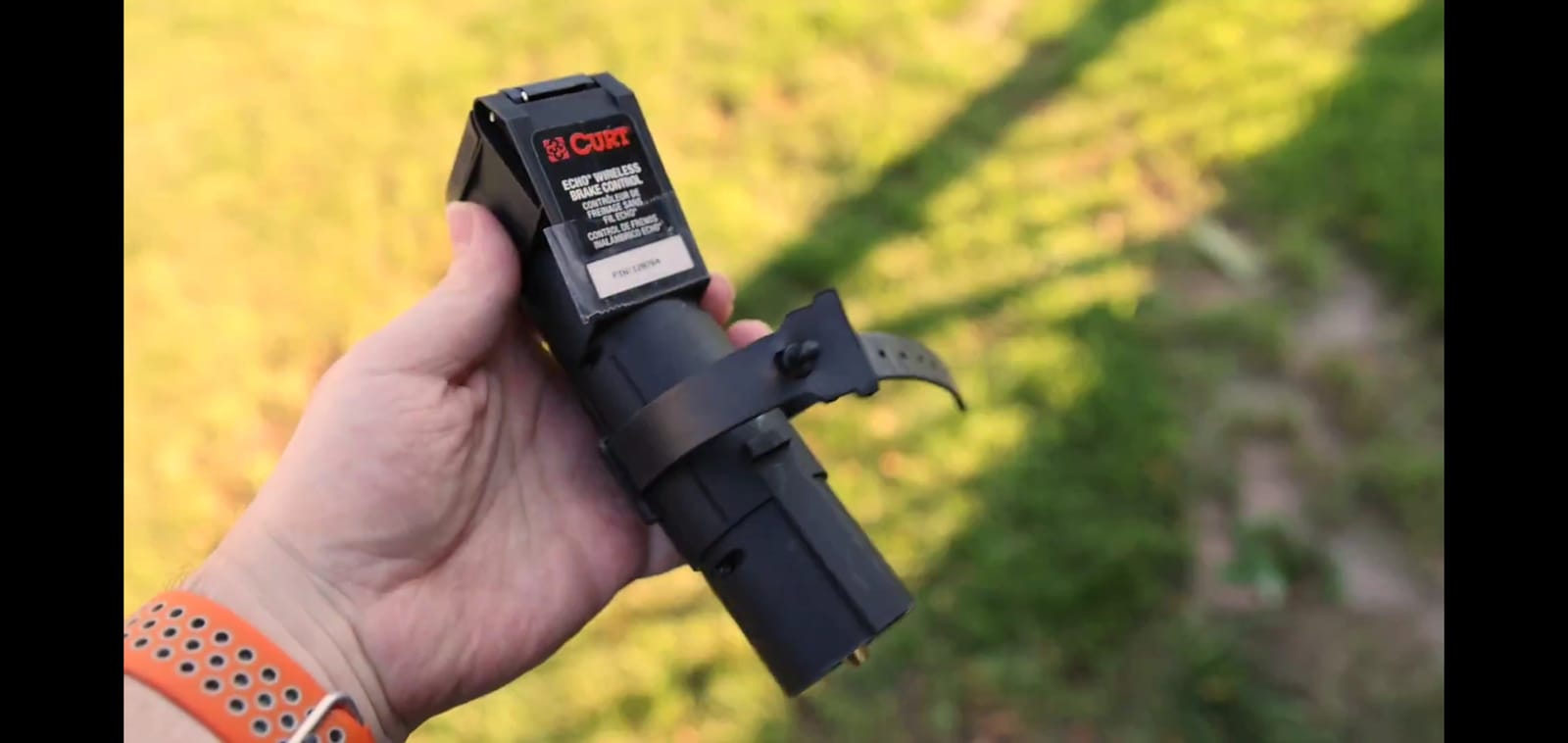
The triple-axis accelerometer is the detail that separates this from a cheap phone-based gimmick. Even if the screen locks or the Bluetooth connection drops mid-drive, the module keeps reading vehicle motion and maintains proportional braking on its own. That is a real safety argument, not a marketing line, and it is why the rating holds up despite the complaints below.
Reviewers also appreciate that braking settings can be dialled in from the cab and then left alone. The Smart Control app lets you tune power and sensitivity while parked, so on-road and off-road setups can both be stored and selected in seconds.

What the Echo Mobile handles well
It is built for trailers with 1 to 2 axles and 2 to 4 electric brakes, so camper trailers, small travel trailers, utility trailers, and boat trailers are all in range. It requires 7-way RV blade connections on both the vehicle and the trailer, which rules out 4-pole setups entirely.
Storage is genuinely good. Profiles for multiple vehicles and trailers mean a household with two trucks and two trailers does not need two controllers. The potted circuit board also makes it a reasonable choice for a boat trailer that lives in the rain.
Where it falls short
That 4.1 rating is not a fluke, and the complaints are consistent. The supplied rubber retention strap does not hold the module securely, so many owners substitute a bungee cord or Velcro. Because the body is long, it can work loose on rutted roads and drop low enough to scrape, and it occasionally loses the connection as a result.
Dependence on a phone app is the other real limitation. Adjustments only work while stationary, pairing problems show up on specific phone models, and the app’s availability varies by region. If you prefer adjusting a physical knob by feel in a dark truck, one of the dash-mount models is a better fit.
3. REDARC Tow-Pro Liberty – Best Compact Dash Mount for 1-2 Axle Trailers
REDARC Tow-Pro Liberty Electric Trailer Brake Controller, Universal Fit for 1 to 2 Axle Cars, Trucks, SUVs, Proportional Braking, 12V Compatible to Tow RV, Camper, Trailer, Boat
Proportional with remote head
1-2 axles
6.7 x 6.3 x 2.2 in
8.8 oz
Pros
- Compact dash dial that blends into factory trim
- Power module mounts out of sight in any orientation
- Active Calibration needs little readjustment
- Clear LED feedback during gain setting
- About 30 minutes to install for a first-timer
Cons
- Universal pig tail harness sold separately
- Knob assembly is deep so shallow dash positions need care
- Some inertia sensitivity adjustment still expected
- Instructions can confuse first-time installers
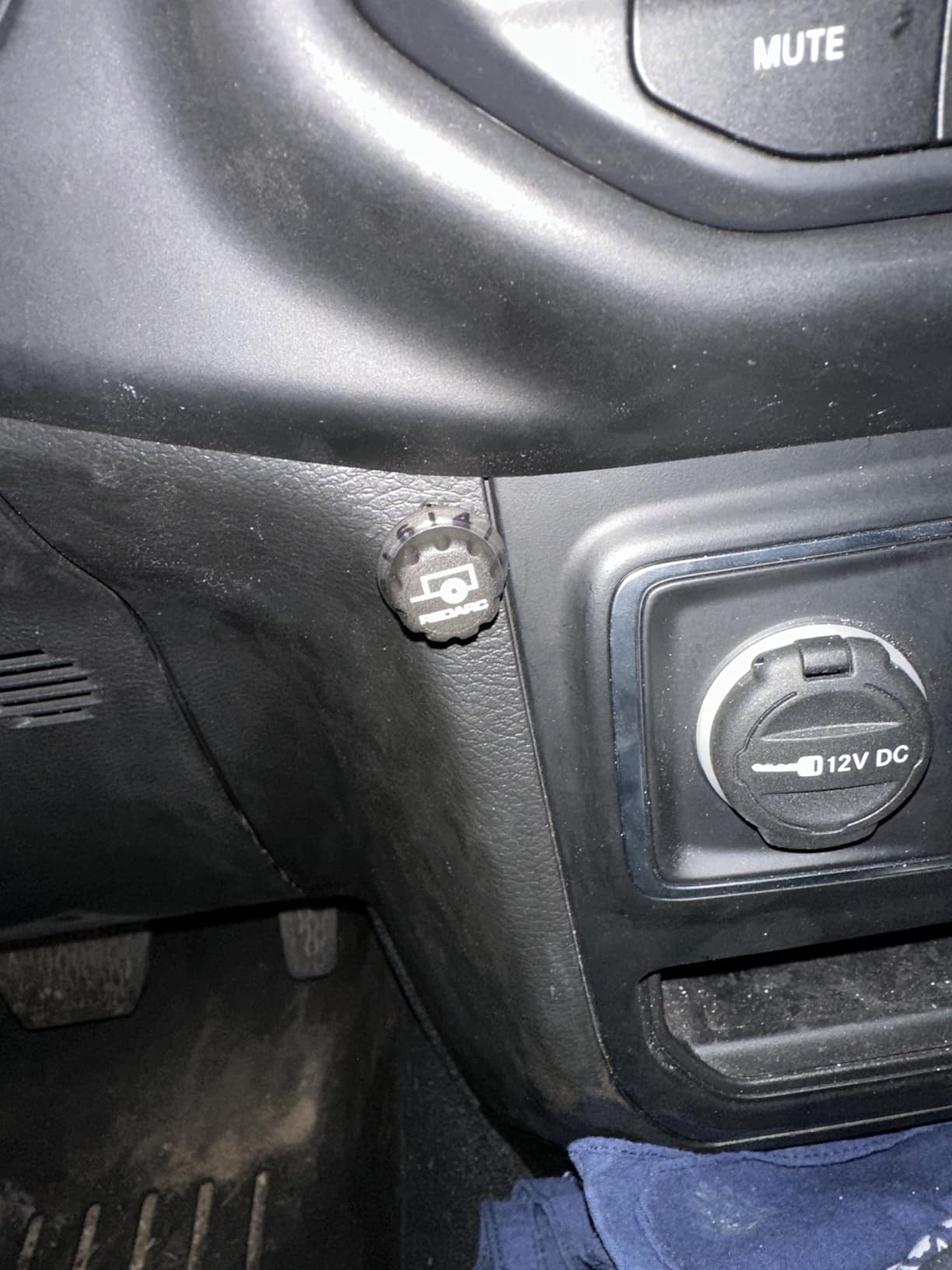
The Liberty is the smallest visible controller here. What sits in your dash is a compact dial rather than a rectangular box, and the actual electronics mount out of sight under the trim in any orientation. Owners upgrading from bulkier Tekonsha units consistently single out the difference in knee clearance as the reason they switched.
That is not a small thing in a truck. A large controller in the wrong spot gets bumped by your knee, and a bump is a sudden change in trailer braking. The Liberty removes that risk almost entirely, and it measures 6.7 x 6.3 x 2.2 inches with the head assembly.
Active Calibration is the second thing owners notice. Rather than forcing you through a lengthy manual gain routine, the controller learns the vehicle’s behaviour and settles into a smooth setting with minimal further adjustment. That is why first-time installers report a calmer first drive than they get from manually tuned rivals.
Braking itself is proportional and predictable, with clear LED feedback as you turn the gain dial. Owners in r/CherokeeXJ specifically praised this model for the remote install and the knee clearance it created in their XJ, while noting the same complaint most owners make: the wiring harness is extra.
What the Tow-Pro Liberty handles well
It supports 1 to 2 axles, which covers camper trailers, boat trailers, utility trailers, and lighter travel trailers. It is a 12-volt unit, so it suits light-duty and medium trucks without needing a 24-volt variant.
REDARC backs the unit with a 2 year limited warranty and states the product was torture-tested in the Australian Outback, which is a reasonable confidence signal for anyone who actually uses their trailer off the pavement.
Where it falls short
The universal pig tail harness is sold separately, as are vehicle-specific harnesses and switch inserts. Budget for the connector that matches your truck, otherwise the whole “easy install” reputation is misleading.
The knob and bezel assembly is fairly deep. In a truck with an unusually shallow dash, there may not be enough clearance behind the trim for the housing to sit flush, so measure before you commit. A little inertia sensitivity adjustment is still normal after setup even with Active Calibration running.
4. CURT Spectrum 51170 – Best Pick for Multi-Axle Trailers up to 8 Brakes
CURT 51170 Spectrum Proportional Trailer Brake Controller, Dash-Mount Knob
Proportional dash knob
1-4 axles, 2-8 brakes
11 x 9 x 4 in
10.4 oz
Pros
- Dash knob with 10 tri-color LEDs for an OEM-style look
- Main module mounts out of sight under the dash
- Triple-axis motion-sensing accelerometer
- Manual override at the press of a button
- Moves between vehicles with the correct adapter
Cons
- Quick-plug wiring harness sold separately
- LED ring can flash or blink with no trailer connected
- No integration with the truck's native display
- English-only instructions
The Spectrum is the one to look at if your trailer has three or four axles, because it handles 1 to 4 axles and 2 to 8 brake assemblies. That is the widest brake range of the CURT units here, and it matters on a heavy tandem or tri-axle trailer where each additional actuator draws more current.
Auto-levelling takes care of another common headache. On a trailer that is not perfectly level in your hitch ball, a controller without levelling can grab or fade on the first stop. The Spectrum’s accelerometer handles the pitch of the rig automatically, which owners report removes the need for constant gain fiddling.
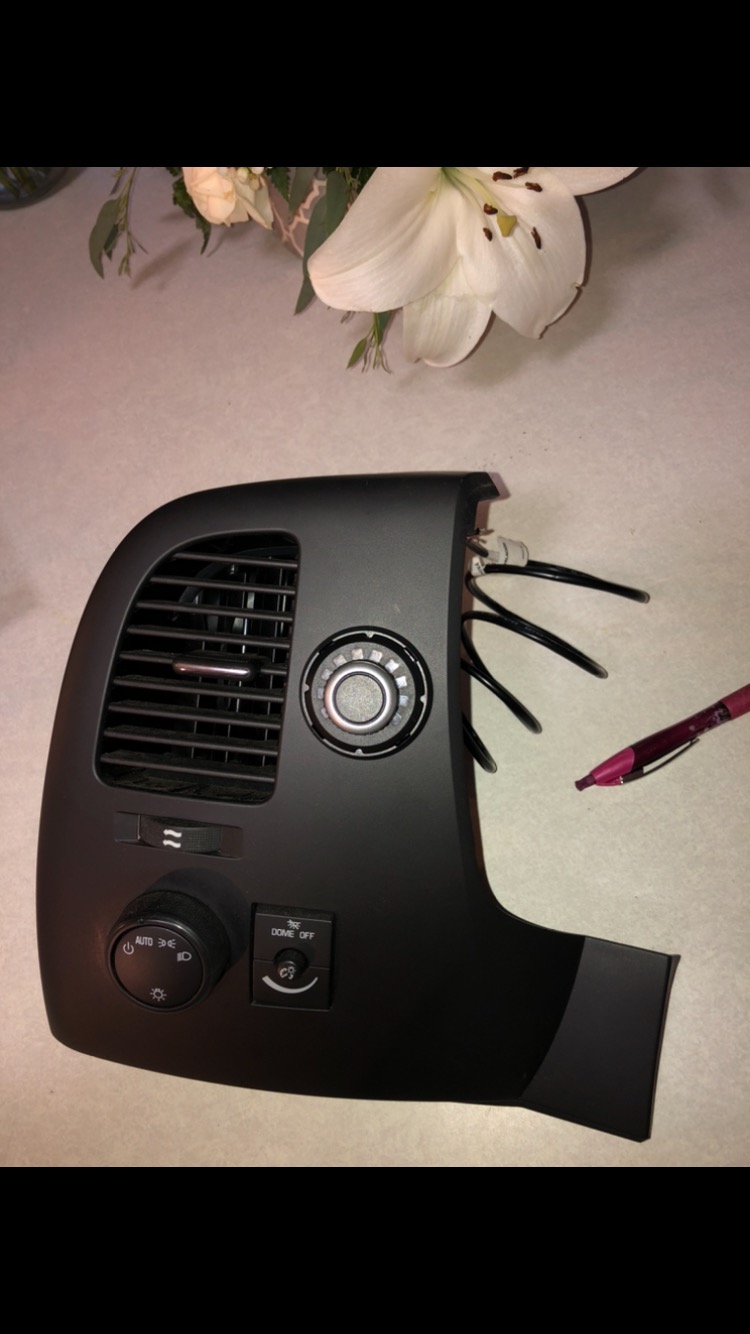
The dash presentation is genuinely good. Ten tri-colour LEDs sit behind a push-button rotary knob, and with the main module hidden under the trim it reads as a factory interface rather than an accessory. The manual override button is a single press, which is a safety feature you will appreciate if you have ever needed full trailer braking on a downgrade without taking your eyes off the road.
It weighs 10.4 ounces and the listed package dimensions are 11 x 9 x 4 inches, so it is a larger control head than the Liberty but still modest.
What the Spectrum handles well
Multi-axle capability is the headline, but the range of brake assemblies also makes it a fit for large single-axle trailers that use tandem brake assemblies on one axle. The auto-levelling and the responsive accelerometer give it smoother stops than most entry-level proportional units.
Moving it to a second vehicle is straightforward with the correct adapter, so if you tow with more than one truck, the number of installs you need drops.
Where it falls short
The LED ring is the most common irritation. Owners report it lighting up or flashing codes on its own when no trailer is connected, which looks like a fault even though nothing is wrong. If a clean dash matters to you, that behaviour is annoying.
It also does not integrate with the truck’s native centre display or vehicle bus, so it will not show on a factory screen. And while CURT backs the unit with a limited lifetime manufacturer warranty, the quick-plug harness is a separate purchase for most tow vehicles.
5. REDARC Tow-Pro Elite – Best Dual-Mode Controller for Mixed On-Road and Trail Use
REDARC Tow-Pro Elite Electric Trailer Brake Controller, Universal Fit for 1 to 3 Axle Trucks, SUVs, Dual Braking Modes, Plug and Play Install, 12V/24V Compatible to Tow RV, Camper, Trailer, Boat
Dual-mode proportional
1-3 axles
7 x 7 x 3 in
12.3 oz
12V and 24V
Pros
- Dual modes for on-road and off-road braking
- Remote module behind the dash with a very small knob
- Push-dial design adjusts while driving
- Includes a universal switch insert panel
- Clear LED feedback and solid build
Cons
- Vehicle-specific wiring harness not included
- Included universal switch insert does not fit every vehicle
- Small knob is fiddly to adjust by feel
The Elite is the Tow-Pro Liberty with a second braking mode added, and that mode is the reason to buy it. Proportional mode handles normal on-road towing, while the user-controlled setting gives you direct command of brake output for technical trail work, where you want precise control over how much the trailer pushes back.
It also steps up in capacity. Where the Liberty covers 1 to 2 axles, the Elite supports 1 to 3 axles, and it runs on both 12-volt and 24-volt systems. That makes it a rare option for a heavy diesel dually pulling a triple-axle trailer, where most of the other units here are 12-volt only.
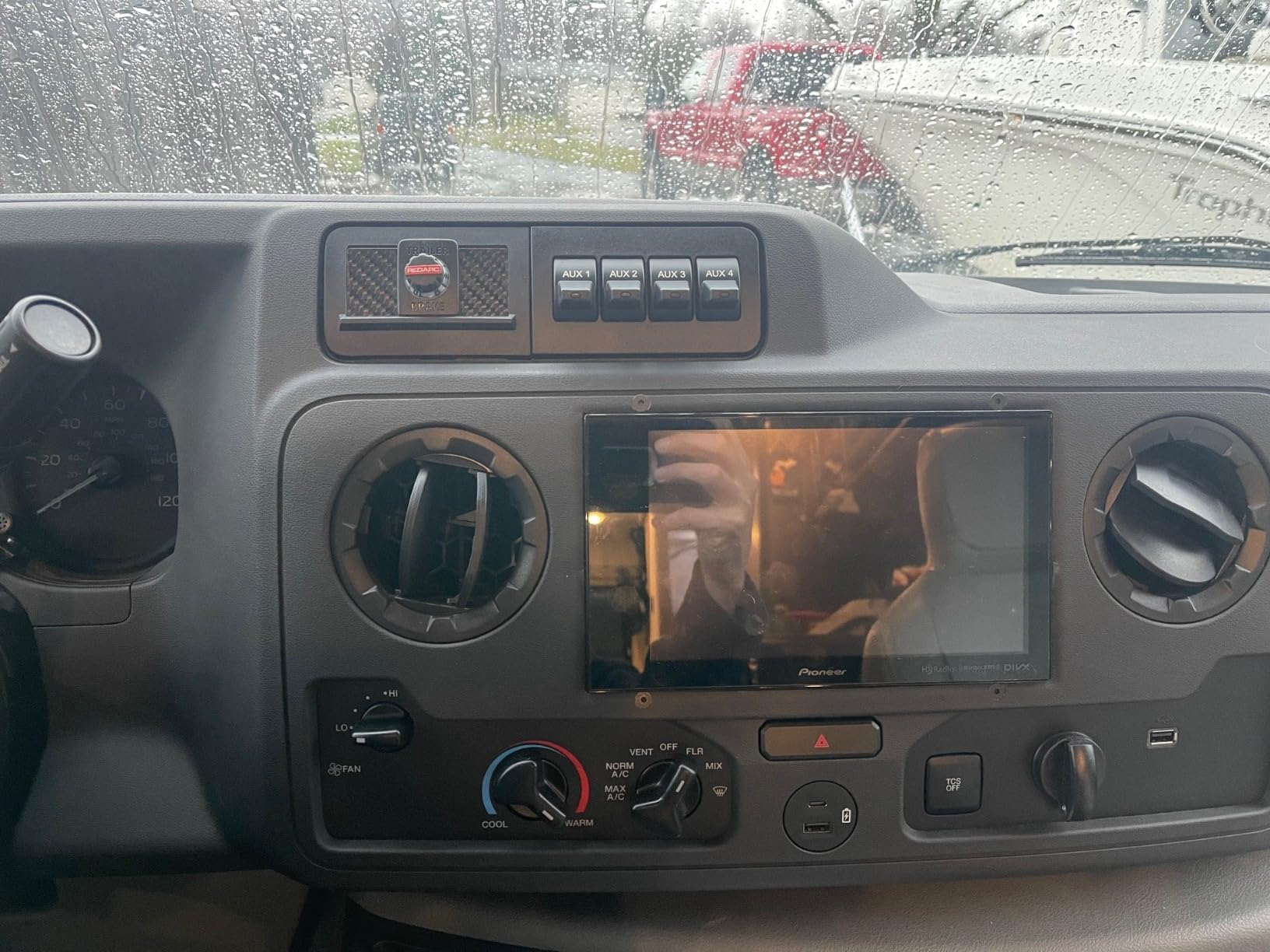
Physically it is 7 x 7 x 3 inches at 12.3 ounces, and the design pushes the electronics behind the dash so only a small knob faces you. Owners on r/CherokeeXJ called out exactly this arrangement when they praised the model for knee clearance, while flagging the cost as the main drawback.
Braking is described as consistent and smooth, and the push-dial design makes it easy to trim output on the fly. The LED feedback is clear enough that setup does not require guessing, and the component finish is noticeably better than most of the plastic boxes in this category.
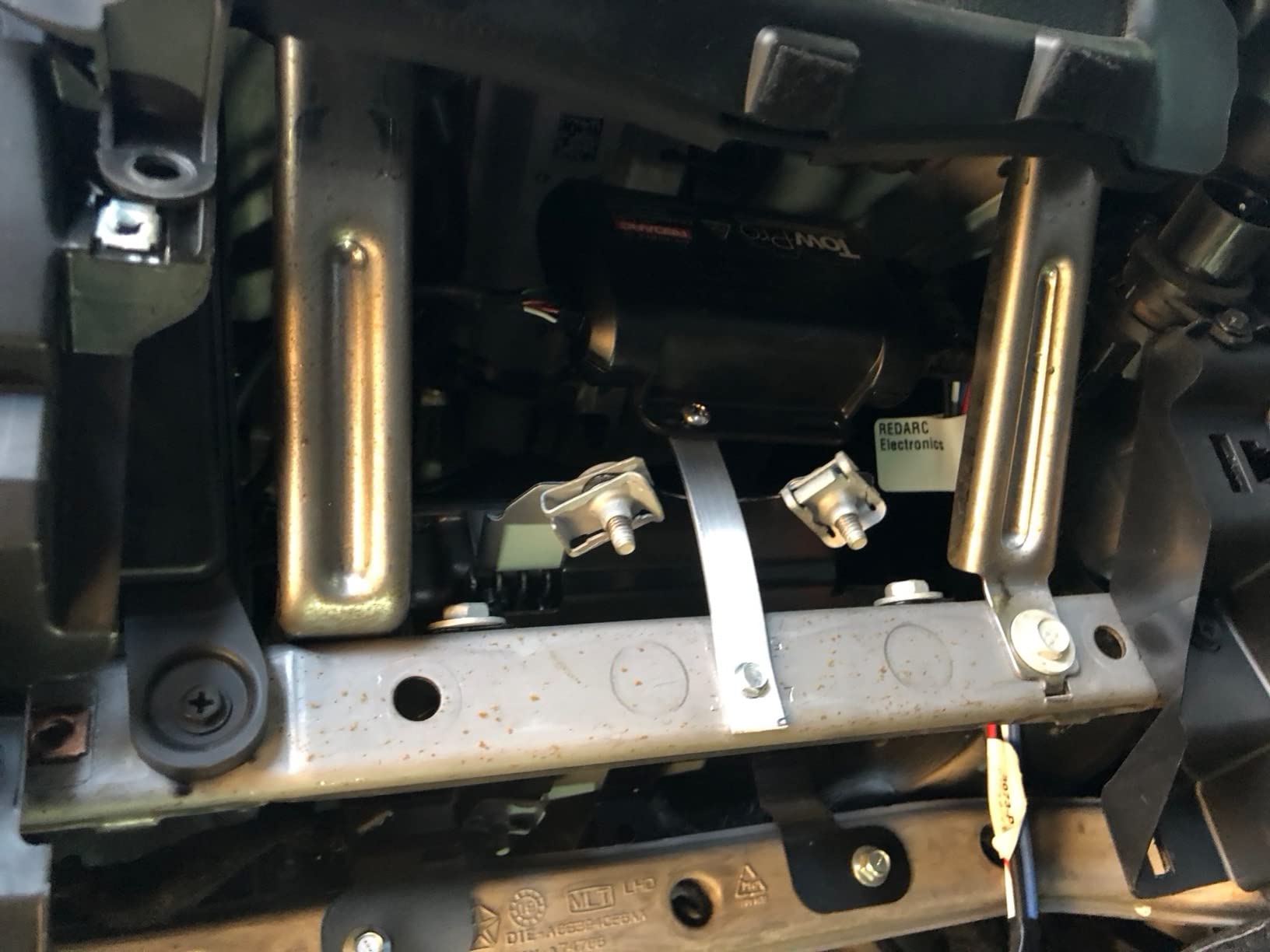
What the Tow-Pro Elite handles well
Anyone who genuinely drives on trails gets more from the second mode than they would from an identical proportional unit without it. The 3-axle ceiling and 24-volt compatibility also widen what you can tow with it, and REDARC includes the main module wires, connector, bezel, and a 3 foot 3 inch cable with a 2 year limited warranty.
It is also the pick here for a truck where the factory controller sits in an awkward dash position, since the switch insert panel and remote head let you place the interface wherever there is room.
Where it falls short
The vehicle-specific wiring harness is not included, and the universal switch insert panel that is included does not fit every vehicle, so a second plate is sometimes needed. Owners also find the very small knob hard to locate and adjust by feel in a dark cab, which is a fair trade for the space it saves.
It is also the priciest item in this roundup, and that premium is contested. A direct head-to-head on AirForums favoured the Tekonsha P3 family for smoother braking feel, which is a reminder that dual-mode capability is not automatically worth paying for if you never leave the highway.
6. Timilge 8508211 – Best Budget Proportional Controller
Proportional Trailer Brake Controller 8508211 Digital Electric LED Display
Proportional with LED readout
1-4 axles, 2-8 brakes
4.33 x 2.76 x 1.1 in
8.4 oz
Pros
- Proportional braking at a far lower cost than name-brand units
- LED display shows live voltage to the trailer brakes
- Adjustable power and sync rate with no levelling needed
- About 15 minutes to install with the right harness
- Compact enough to move between trucks and trailers
Cons
- Wire colour coding is confusing when wiring without a factory plug
- Some units arrive defective and apply brakes continuously
- A minority report brake lock-up on descents
- Gain and sensitivity take longer to dial in
Most budget brake controllers are time-delay units, which is exactly why this one stands out. Timilge 8508211 gives you true proportional braking, adjustable power and sync rate, and a claimed range of 1 to 4 axles and 2 to 8 brakes at a fraction of what the branded models cost.
It is small at 4.33 x 2.76 x 1.1 inches and weighs 8.4 ounces. The digital LED display shows the voltage being delivered to the trailer brakes in real time, which is a genuinely useful diagnostic that lets you confirm the controller is doing its job rather than guessing from feel.
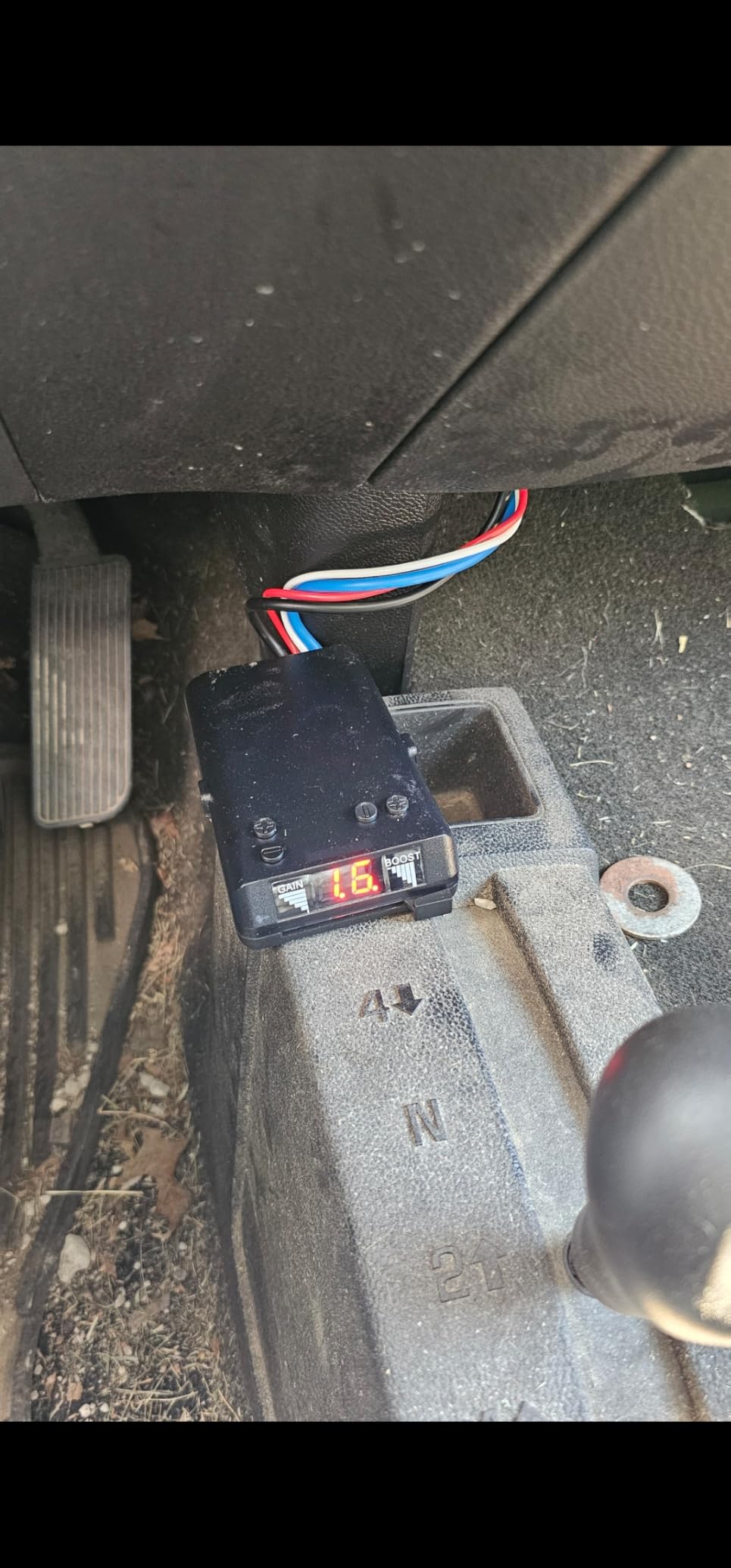
Owners mostly frame it as a step up from a time-delay unit they had outgrown, and many report moving it between an everyday truck and a work trailer. Installation is reported at around 15 minutes when the vehicle already has the right harness, which matches the experience owner groups describe for a well-prepared truck.
There is also no levelling step, which is unusual at this level. The controller handles pitch itself, so you are not chasing a gain setting every time the load changes.
What the Timilge handles well
For a first trailer, a budget-conscious build, or anyone replacing an old time-delay unit, the value here is strong. The axle range on paper covers up to four axles, and the live voltage readout makes diagnosing a wiring problem much easier than a controller with no display.
It is also compact and portable, so a single controller can serve more than one rig if you buy the appropriate harnesses.
Where it falls short
The wiring is the weak point. The colour coding runs black to vehicle power, red to the stop light, white to vehicle ground, and blue to the trailer brakes, and owners wiring directly without a factory plug find that scheme confusing. Budget time for that, or buy a vehicle-specific harness so the connections are pre-made.
Quality control is uneven. Some units arrive defective and apply the brakes continuously, a minority report units that will not power on, and a few describe brake lock-up on steep descents. Nothing in the feature set causes these failures, but they are the reason this is a budget pick rather than the recommendation for a full-time heavy hauler.
7. Tekonsha Prodigy iD 90920 – Best App-Configured Controller for 1-4 Axles
TEKONSHA 90920 Prodigy iD Smart Phone Configured Brake Controller for Trailers with 1-4 Axles, Compatible with Ford, GM, Chevy, Dodge, RAM, Toyota, Jeep (Please Verify Vehicle Compatibility
App-configured proportional
1-4 axles, 2-8 brakes
10 x 5 x 2 in
1.15 lb
Pros
- Front-facing colour LED shows settings and diagnostics
- Power output boost and braking type set from a phone via the EDGE app
- OEM-style in-dash rotary knob with module behind the dash
- Handles 1-4 axles across Ford
- GM
- Dodge
- RAM
- Toyota
- and Jeep
- Shareable support log
Cons
- Vehicle-specific Tekonsha harness sold separately
- Smartphone and the EDGE app are required for full configuration
- Vehicle compatibility must be verified before buying
The Prodigy iD takes a different route from the Echo Mobile. Rather than depending on the phone to brake, your phone is only used to configure the controller. Power output, boost level, and braking type are set through the Tekonsha EDGE app, and after that the in-dash rotary knob works entirely on its own.
That distinction matters in a real way. The Echo Mobile needs a working phone and a live Bluetooth link during every drive, while the Prodigy iD only needs one when you are adjusting settings. For someone who tows in poor-signal areas, that is a meaningful reliability difference.
The front-facing colour LED display is the other draw. It shows settings, real-time diagnostics, and alerts from a normal driving position rather than from a top-down view, and the built-in tech support lets you share a log of alerts and notifications with the manufacturer, which can save real time on a wiring fault.
Capacity is generous at 1 to 4 axles and 2 to 8 brakes, covering everything from a single-axle utility trailer up to a large tandem or tri-axle load. It weighs 1.15 pounds with listed dimensions of 10 x 5 x 2 inches, and the power module sits behind the dash behind an OEM-style knob.
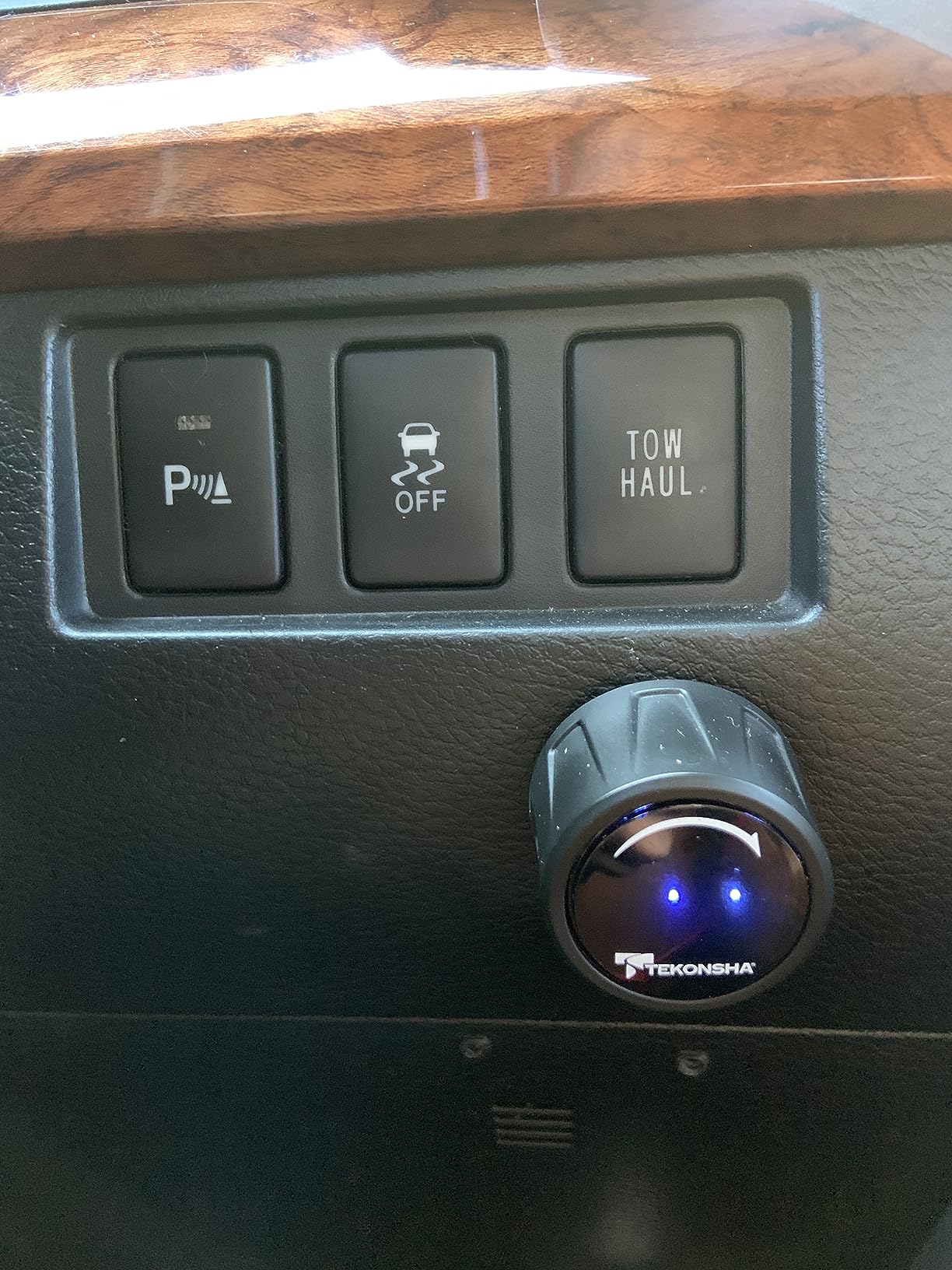
What the Prodigy iD handles well
Any rig from one to four axles, across the major manufacturers, with the caveat that you verify your exact vehicle before buying. The clean knob and colour readout make it the most refined-looking in-cab unit in this roundup, and the diagnostics are the most transparent.
For a tow vehicle where the factory controller position is poor, the in-dash rotary knob and hidden module solve the same problem the REDARC units do, and the app makes initial setup more forgiving than a manual gain routine.
Where it falls short
It carries a thinner review history than the other Tekonsha unit here, at 127 ratings, so there is less long-term ownership evidence from other people to lean on. The separately sold vehicle-specific Tekonsha harness is the other recurring complaint, and the EDGE app is needed for full configuration.
If you tow a lot but rarely change settings, the app is a nice extra rather than a reason to buy. In that case the Primus IQ covers the same trailer range with a far larger installed base and a simpler physical interface.
8. CURT TriFlex NEXT 51146 – Best Thin Low-Profile Controller for Dash Clearance
CURT 51146 TriFlex Next Proportional Inertia Electric Trailer Brake Controller, Fully Adjustable, Low Profile, 2-4 Axles, Plug-and-Play
Low-profile proportional
1-4 axles, 2-8 brakes
8.13 x 5.38 x 2.75 in
1.13 oz
Pros
- Slim housing and revised bracket free up extra dash space
- Triple-axis accelerometer for smooth responsive stops
- Third axis adjusts power dynamically on hills and grades
- Handles 1-4 axles and 2-8 brakes
- Plug-and-play with vehicle-specific CURT harnesses
Cons
- Vehicle-specific wiring harness must be purchased separately for most tow vehicles
- No integration with the truck's native centre display
The TriFlex NEXT exists for one reason: to be thin. Owners with crowded dashboards, older trucks, or a factory controller in an awkward spot consistently single out the low-profile housing and the updated bracket system as the feature that finally let them mount a modern proportional controller without interfering with anything.
The braking hardware underneath is straightforward and good. A triple-axis motion-sensing accelerometer delivers responsive, smooth stops, and the third axis makes a real difference on a rig that is climbing or descending, adjusting power dynamically rather than leaving you to reset the gain on every grade.
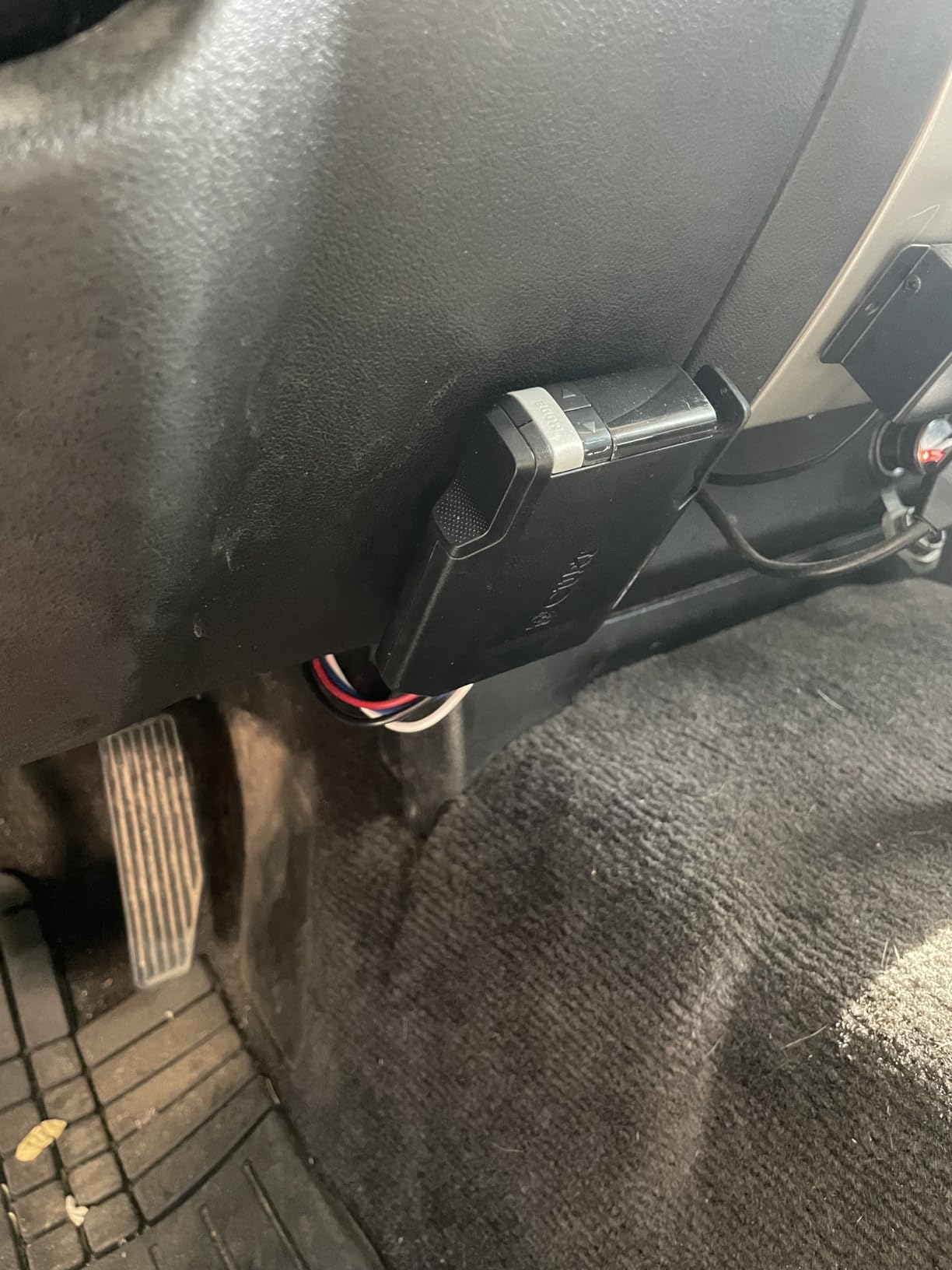
It covers 1 to 4 axles and 2 to 8 brake assemblies, which puts it in the same class as the Spectrum and above the Liberty and Echo Mobile. Listed dimensions are 8.13 x 5.38 x 2.75 inches at 1.13 ounces, so the physical package is compact even though the axle capacity is broad.
One installation story is worth repeating. In r/ToyotaTundra a TriFlex NEXT powered up correctly but displayed a SHORT fault code when the brake pedal was applied, and the owner resolved it by relocating the wiring rather than replacing the unit. That is a wiring problem, not a controller fault, and it is a useful reminder to check brake-switch connections before blaming the box.
What the TriFlex NEXT handles well
Trailers from one to four axles, and specifically any rig where dash space is the limiting factor. The three-axis sensing is a step above two-axis units, which is what makes it a good match for hilly terrain and for trailers that sit nose-up or nose-down in the hitch.
It installs plug-and-play with the correct vehicle-specific CURT harness, and the whole point of the redesign is that the finished fit looks deliberate rather than squeezed in.
Where it falls short
The wiring harness is a separate purchase for most tow vehicles, and for a pre-wired truck with an existing factory controller you may also need a switch insert panel. That is the single most cited complaint across CURT units in this roundup, and it is worth pricing before you buy the controller.
The review base is also the thinnest here at 120 ratings, so there is less long-term data on long-term durability than the older models offer. It is a well-built design, but a controller is a part you install once and keep for a decade.
Do You Actually Need a Trailer Brake Controller?
Yes, if your trailer has electric brakes and sits above roughly 3,000 lb GVWR. Below that threshold a properly loaded trailer rarely overwhelms a capable tow vehicle on its own, and a controller is optional. Above it, the trailer can push hard enough during a downgrade to swing the truck, so a controller becomes essential safety equipment rather than an accessory.
Two things define the threshold in practice. The first is trailer GVWR rather than loaded weight, because the trailer’s brakes are rated for its maximum. The second is the tow vehicle’s own brake output: a small truck towing a mid-size trailer may still benefit from a controller even where the numbers suggest otherwise.
If your trailer has no electric brakes at all, no controller will help. That is a separate decision about brake assemblies, breakaway wiring, and axle ratings that has to come first.
Proportional vs Time-Delay: Which Control Type Should You Buy?
Proportional is better, and it is now the default choice. A proportional controller measures how the tow vehicle is decelerating and mirrors that force at the trailer, so braking feels natural and stays predictable under load. A time-delay controller applies a fixed amount of braking after a preset pause, which means it either brakes too hard at low speed or too softly at high speed.
The remaining cases for time-delay are narrow: very small trailers where braking input barely changes the outcome, and situations where the lowest possible purchase cost is the only priority. Everything else, including every pick in this roundup, is proportional.
Worth noting is how time-delay units behave on a downgrade. They cannot sense pitch, so on a steep descent you still need to ride the manual lever, and with a loaded trailer the risk of that is a swinging jackknife. Proportional controllers with hill sensing adjust output automatically for exactly this reason.
Two secondary terms get mixed up constantly. Gain is the maximum power the controller will deliver, and it is the setting you tune after install. Sync is how the controller balances output across multiple axles, which matters on a tandem trailer where one axle can dominate if the trailer is out of alignment.
How to Choose a Trailer Brake Controller: Axles, Connectors, Mounting
Start with axle count, because it is the one spec you cannot change later. Count the brakes, not the axles: a two-axle trailer usually has four brake assemblies, and some trailers use tandem brake assemblies on a single axle for eight. Pick a controller rated above your actual brake count, and treat the rating as a ceiling rather than a target.
Next is connector type. Most modern trailers use a 7-pin RV blade connector, and most controllers in this roundup need one on both the vehicle and the trailer side. A 4-pole ball connector has no brake circuit at all, so any controller you buy is useless without a 7-pin to 4-pole adapter on the vehicle and a functioning brake circuit on the trailer.
Then decide between three mounting styles. A wired dash-mount control head is the simplest and most common option. A remote head, as on both REDARC models, puts the control knob on the dash and hides the power module under the trim, which frees legroom in a small truck. A wireless inline module, as on the CURT Echo Mobile, needs no dash space at all but depends on a phone during setup and carries an inline body under the vehicle.
Check whether your truck is pre-wired before you buy anything. All 2021 through 2023 Ford F-150s, including the Lightning, are pre-wired for a factory trailer brake controller regardless of trim or package, which removes the usual installation blocker for that generation. Older trucks and base trims usually need a wiring kit and possibly a brake-switch connection.
Finally, look at the tow vehicle’s brake output. A controller pushing more current than the truck’s brake circuits are rated for will cause nuisance braking that fades after a few stops. This shows up as a trailer that brakes hard on the first stop and then stops helping, and it is fixed by turning the gain down rather than by replacing anything.
One more note on factory controllers. Owners of integrated OEM units frequently report an unresponsive feel and chase programming workarounds, and all 2021 through 2023 F-150s being pre-wired makes swapping to one of the aftermarket units here straightforward. The Snap-in, plug-and-play style of the Tekonsha Primus IQ exists precisely to make that swap fast.
Installation, Gain Adjustment and Fault Codes
On a pre-wired truck, most of these units install in well under an hour. The Primus IQ is reported at around 5 to 7 minutes, the Timilge at about 15 minutes, and the Tow-Pro Liberty at around 30 minutes for a first-timer. If your vehicle needs new wiring, add a serious block of time or a professional.
Set gain in stages rather than in one pass. Hook up the trailer, drive to a flat private road, and set the gain to the middle of its range. Then raise it one step at a time until the trailer brakes firmly without the vehicle starting to pitch, and back it off one step. That gives you a repeatable baseline before you load it.
Re-check gain after you load the trailer properly. A controller tuned empty will feel soft at full weight, and a controller tuned at maximum load will be grabby when you travel light, which is a common source of nuisance braking complaints.
Fault codes deserve their own attention. A SHORT indicator on brake application, reported by a TriFlex NEXT owner in r/ToyotaTundra, almost always points to a wiring problem rather than a failed controller. Check brake-switch connections, confirm the ground is solid, and inspect the blue brake output wire for a chafe point near the mounting point before you replace anything.
On installation cost, the gap between a dealer quote and doing it yourself is the single biggest reason owners hesitate. Quotes in the region of a thousand dollars for what is a bolt-on part circulate in owner groups, while a pre-wired truck turns the same job into an afternoon with a basic wiring kit. The controller itself is rarely the expensive part of the job.
Finally, test the brakes before you load anything. Drive slowly, press the pedal, and confirm both the trailer stop lamps and the electric brakes respond. A quick unloaded test that reveals a wiring fault is far cheaper than discovering it at the ramp of a trailer park at night.
REDARC vs Tekonsha: The Head-to-Head Owners Actually Argue About
These are the two names that dominate trailer brake controller recommendations, and the disagreement is real rather than marketing-driven. The Tekonsha side argues for a proven braking feel, a large installed base, and a wide range of options from the Primus IQ up to the Prodigy family. The REDARC side argues for a cleaner dash, a genuinely hidden power module, and less knee interference.
On braking feel, a direct comparison on AirForums favoured the Tekonsha P3 for smoother, better control, which is the part of the debate that matters most. On fit and packaging, owners in r/CherokeeXJ praised the Tow-Pro Elite specifically for its remote install and knee clearance while flagging that it costs more. Both claims are consistent with what the product data shows about the two design approaches.
The practical resolution is trailer size and truck layout. If you have a large multi-axle trailer, want the widest possible option range, and already have a sensible factory controller position, the Tekonsha line is the stronger pick. If legroom, a factory-style appearance, or off-road dual-mode control matters more, the REDARC units justify the premium.
CURT sits alongside both with the broadest axle coverage in this roundup and the most options for a low-profile or app-based install. It is the natural third option, and for a first trailer it is often the most straightforward to live with.
Frequently Asked Questions
Do I need a brake controller for a 3000 lb trailer?
If your trailer has electric brakes and sits above roughly 3,000 lb GVWR, yes, you should have a brake controller. Below that weight a properly loaded trailer rarely overwhelms a capable tow vehicle, so a controller is optional. Above it, the trailer can push hard on a downgrade and swing the tow vehicle, which is exactly what a controller prevents. Check your trailer GVWR, not its empty weight, and confirm the truck has working brake output at the 7-pin connector.
Is a proportional or time delay brake controller better?
Proportional is better in almost every case, and it is the standard now. A proportional controller measures how the tow vehicle is decelerating and matches trailer braking to it, so the pedal feels natural and the trailer stays predictable under load. A time-delay controller applies a fixed amount of braking after a pause, which usually means too much force at low speed or too little at highway speed. All eight controllers recommended here are proportional.
Are wireless trailer brake controllers any good?
They are, provided the controller works without your phone during the drive. The CURT Echo Mobile is the clearest example: the inline module uses a triple-axis accelerometer so braking stays proportional even if the phone screen locks or the Bluetooth link drops, and the app is only used to adjust settings while parked. The trade-offs are the inline body hanging under the vehicle, the need for 7-way connectors on both ends, and dependence on app availability for setup.
What is the best braking system for towed vehicles?
The best system is matched electric brakes on every trailer axle, coordinated by a proportional controller, with a working breakaway switch and correct 7-pin wiring. Controller choice matters, but trailer-side maintenance matters more: worn actuators, a misadjusted breakaway, and uneven brake assemblies cause the grabby or fading stops that people wrongly blame on the controller. Match controller capacity to your actual brake assembly count, then set gain with the trailer fully loaded.
What is the best brake controller for a camper trailer?
For most camper trailers weighing under 3,000 lb GVWR with a single axle, the Tekonsha Primus IQ 90160 is the strongest overall choice because it covers one to three axles, installs in minutes on a pre-wired truck, and has the largest installed base for support. If your camper has three axles or runs 6 to 8 brake assemblies, step up to the CURT Spectrum 51170 or the CURT TriFlex NEXT 51146, both of which handle up to four axles.
Which trailer brake controller is better, Redarc or Tekonsha?
The Tekonsha Primus IQ 90160 is the safer all-round choice, with a 4.7 rating across 7,714 reviews, one to three axle coverage, and the widest service and support base. The REDARC Tow-Pro Liberty and Tow-Pro Elite win on packaging: a compact dash dial, a power module hidden under the trim, and real knee clearance, which owners in r/CherokeeXJ praised directly. If braking feel is your priority, the Tekonsha line wins the head-to-head arguments; if cab layout is, the REDARC units do.
Final Verdict: The Best Trailer Brake Controllers for Towing
The best trailer brake controllers for towing are all proportional, and the choice comes down to your trailer and your cab. The Tekonsha Primus IQ 90160 is the best overall option, the CURT Echo Mobile 51180 is the pick when you want no dash wiring at all, the REDARC Tow-Pro Liberty is the pick for a compact remote head, and the CURT Spectrum 51170 or TriFlex NEXT 51146 cover trailers with three or four axles.
Check your trailer’s brake assembly count and your connector type before you order, add the correct wiring harness to your basket, and set gain with the trailer fully loaded. Do that much and any of these eight will tow well in 2026.