
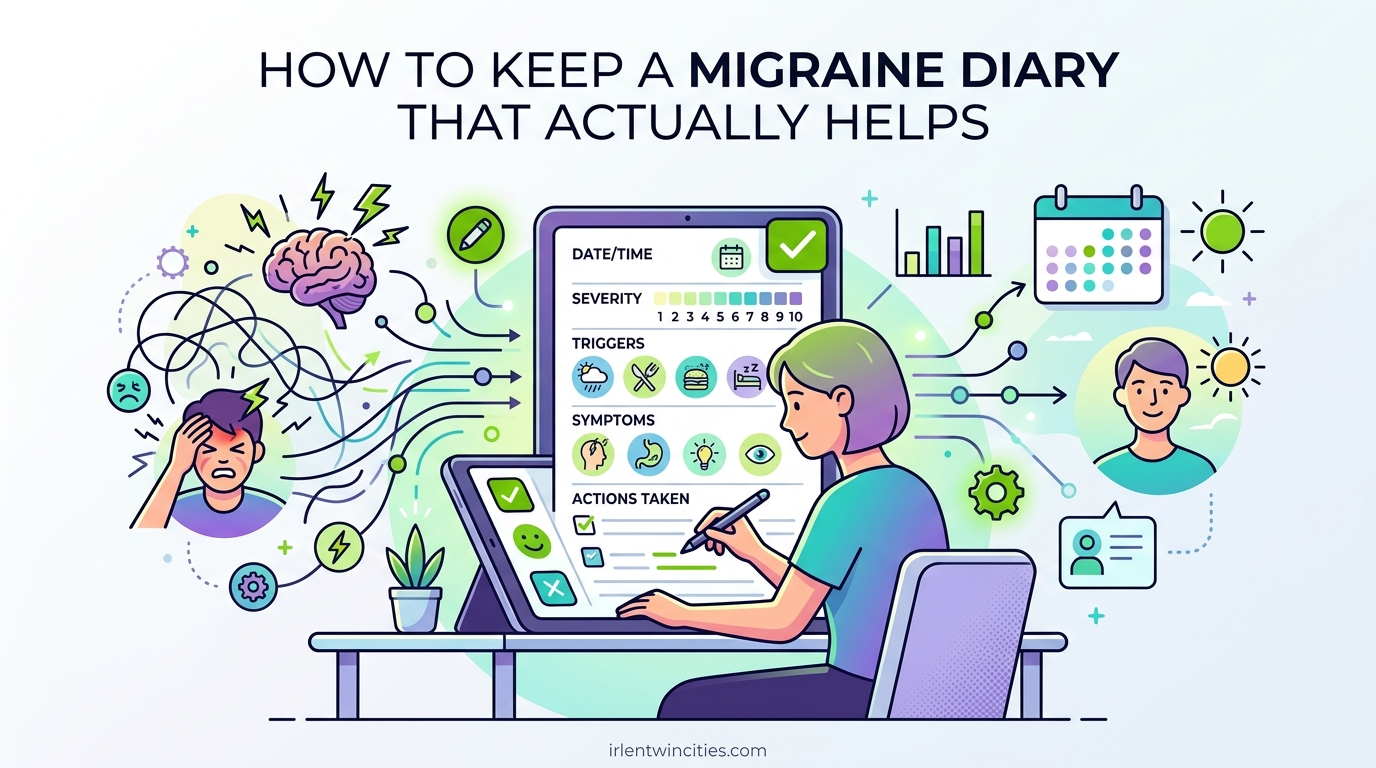
Most people who start a migraine diary abandon it within a few weeks. They try to track too much at once, forget to log details during an attack, and eventually give up because the data never seems to actually help. I have talked to dozens of people who have tried tracking their migraines, and the same patterns of frustration come up again and again. The good news is that a migraine diary actually works when you approach it the right way. This guide will show you how to keep a migraine diary that genuinely helps you identify triggers, communicate better with your doctor, and eventually reduce your attack frequency.
Table of Contents
Why Keep a Migraine Diary?
After working with the migraine community for years, I have seen how powerful consistent tracking can be. A migraine diary gives you objective data about your condition instead of relying on fuzzy memories. When you sit down with your doctor, saying “I get headaches sometimes” is far less useful than showing them a three-month record of 18 attacks, with 14 happening within 24 hours of poor sleep or skipped meals. That kind of pattern is exactly what leads to better treatment plans.
The research backs this up too. Neurologists consistently report that patients who track their symptoms get diagnosed faster and find the right medications sooner. One neurologist told a patient group that keeping a diary was “the single most impactful thing you can do between appointments.” Tracking helps you distinguish between actual triggers and prodrome symptoms. That chocolate craving you get before an attack? That is probably prodrome, not a trigger. Knowing the difference changes how you interpret your data and what you actually avoid.
A migraine diary also helps you evaluate whether your current treatment is working. If you started a new preventive medication and your attack frequency has not changed over eight weeks, that is useful information. Without tracking, you might not notice the pattern until months have passed. With data, you can have a real conversation with your doctor about what is working and what needs to change.
Start Simple: 3 Things to Track First
The biggest reason people quit tracking is overwhelm. They try to log 15 different data points for every attack, and within a week they are already behind. Do not do that. Instead, commit to tracking just three things for the first month: when the attack started, how severe it was on a scale of one to ten, and what you suspect might have triggered it. That is it. Three pieces of information take under thirty seconds to record.
Once you have done that consistently for four weeks, you can add more detail if you want. This is what works for most people: start narrow, build the habit, then expand. Forum users who have tracked for years consistently say that showing up consistently matters more than capturing perfect data. A imperfect diary kept for three months beats a detailed one abandoned after two weeks.
If you are already feeling overwhelmed at the idea of tracking during an attack, use a voice memo app on your phone. Record a quick message while you are waiting for medication to kick in, then transcribe it later. The Migraine Trust recommends this approach for people who struggle to write during attacks. Your memory of details fades fast, so capturing something is better than capturing nothing.
What to Include in Your Migraine Diary
Once you have the basic habit, here are the data points that actually matter. You do not need to track all of these from day one, but over time, try to capture as many as you can. Date and time when the attack started matters for calculating frequency and spotting time-of-day patterns. Severity rated on a zero-to-ten scale lets you track whether your attacks are getting worse or better over time. Duration tells you whether treatments are working and whether certain attack types last longer than others.
Location and type of pain matters too. Is it throbbing, pressing, or burning? Is the pain behind your eyes, on one side, or across your whole head? Describing the quality of pain helps distinguish migraine from other headache types. Associated symptoms like nausea, sensitivity to light, sensitivity to sound, vision changes, or brain fog give your doctor a fuller picture. These symptoms often respond to different treatments than the pain itself.
Medication taken is critical data. Write down what you took, how much, and when. This helps you understand whether your acute medications are working and whether you are using them too often. Track what you ate and drank in the hours before the attack. Note your sleep quality and stress levels. Weather changes, especially barometric pressure drops, are worth recording. For women, menstrual cycle timing often correlates with attacks. These details seem small individually, but over months they reveal patterns you cannot see any other way.
Sample Migraine Diary Entry
Seeing a completed entry helps more than reading descriptions. Here is what a good entry looks like:
Date: May 3, 2026
Time Started: 2:30 PM
Severity: 7/10
Duration: 4 hours
Location/Type: Right temple, throbbing
Associated Symptoms: Nausea, light sensitivity, brain fog
Medication: Ibuprofen 400mg at 2:45 PM (did not help), Rizatriptan 10mg at 4 PM (helped after 30 min)
Possible Triggers: Skipped lunch, stressful meeting at noon, weather change overnight
Notes: Had aura symptoms (zigzag lines) starting at 2:15 PM
That format captures everything you need without being overwhelming. Apps like Migraine Buddy use a similar structure with dropdown menus and quick-tap options that make logging even faster. If you prefer paper, print a template and keep it by your bed or in your bag. The easier you make it, the more consistent you will be.
How to Spot Patterns and Triggers
Logging data is only half the battle. The other half is actually reviewing it. Set a reminder to look at your entries once a month. Look for attacks that cluster together. Notice if you see the same trigger appearing before multiple attacks. The migraine community calls these “migraine days” versus regular headache days, and that distinction matters for understanding your patterns.
Common triggers show up repeatedly in community discussions. Poor sleep and irregular sleep schedules are among the most frequently reported triggers. Skipped meals or dehydration trigger attacks in many people. Stress and the letdown period after stress both cause problems. Weather changes, particularly drops in barometric pressure, affect a significant portion of people with migraine. Hormonal fluctuations, bright lights, strong smells, and certain foods also appear often. Keep in mind that one instance does not prove causation. If chocolate appears before one attack out of twenty, that is probably not a trigger. If it appears before fifteen out of twenty, you have found something worth investigating.
Some people confuse prodrome symptoms with triggers. Prodrome is the early phase of a migraine attack, which can include food cravings, mood changes, yawning, or neck stiffness. These feel like warning signs, so people often think the craving caused the attack. In reality, both the craving and the eventual headache are part of the same attack. The distinction matters because avoiding “triggers” that are actually prodrome symptoms will not reduce your attacks. A diary helps you figure out which is which over time.
Digital vs Paper: Finding What Works for You
Both approaches work. The best system is the one you will actually use. Paper advocates appreciate the simplicity and the fact that you do not need your phone during an attack. Some people in the bullet journal community have created elaborate migraine tracking spreads with monthly calendars, severity graphs, and trigger checklists. If you already bullet journal, adding a migraine page takes seconds and keeps everything in one place.
Digital apps offer convenience and analysis features that paper cannot match. Migraine Buddy is the most recommended app in online communities. It lets you track triggers, symptoms, medication, and weather with tap-based logging. The app generates reports you can share with your doctor. Migraine Monitor and N1-Headache are also well-regarded options with similar features. The American Migraine Foundation notes that one advantage of apps is the ability to track location, weather, and sleep data automatically, reducing the burden on you.
For the first month, try both if you can. Use a paper template for a week and an app for a week. See which one felt less burdensome and which one produced more useful data. Many long-term trackers switch between methods depending on their life circumstances. A busy month might mean quick app entries, while a more relaxed month might mean detailed paper logs. Neither is wrong. What matters is that you track something, consistently, for at least three months before drawing conclusions.
How to Share Your Diary with Your Doctor
Your migraine diary is only useful if your doctor actually sees it. Bring a printed summary or have the app report ready on your phone. Do not expect your doctor to flip through pages of raw entries. Instead, highlight the key patterns you have noticed. Say something like, “I have tracked for three months, and I notice that 80 percent of my attacks happen after I sleep less than six hours” or “My attacks are longer when I do not take medication within 30 minutes of onset.”
Specific observations like these give your doctor something actionable. They can adjust medications, order tests, or refer you to a specialist based on real data. The National Headache Foundation notes that patients who bring tracking data to appointments consistently get more out of those visits. Doctors appreciate not having to guess at patterns from your memory alone.
If your doctor does not seem interested in your diary, ask them directly what they would find most useful. Some neurologists prefer specific formats. Some want to see triggers, others want medication effectiveness data. Getting their preference means your tracking efforts pay off more at every appointment. Remember, this is your health data. You have every right to advocate for its use.
FAQ
What should I keep in a migraine diary?
Include the date and time your attack started, severity on a 0-10 scale, duration, pain location and type, associated symptoms like nausea or light sensitivity, medication taken and when, possible triggers such as food or sleep issues, and notes about sleep quality and stress levels.
What is the best app to track migraines?
Migraine Buddy is the most widely recommended in the migraine community. Other strong options include Migraine Monitor and N1-Headache. All let you track triggers, symptoms, and medication while generating shareable reports for doctor appointments.
What is the 20 20 20 rule for migraines?
The 20 20 20 rule helps reduce eye strain, which can trigger migraines in some people. Every 20 minutes, look at something 20 feet away for 20 seconds. This gives your eyes a break from screens and close-up work.
How long should I keep a migraine diary?
Aim for a minimum of three months to see meaningful patterns. Many experts recommend six months for more complete data, especially for attacks that vary significantly by season or hormonal cycle. The longer you track, the more accurate your trigger identification becomes.
How do I identify migraine triggers from my diary?
Look for patterns where the same factor appears before multiple attacks. Track at least 15-20 attacks before concluding. If a potential trigger appears before more than half your attacks, it is worth discussing with your doctor. Remember that correlation is not causation, and some prodrome symptoms can look like triggers.
Final Thoughts
A migraine diary works, but only if you stick with it. The people who get the most value from tracking are those who committed to three months even when it felt tedious. If you are wondering whether it is worth trying, consider this: the migraine community members who have tracked for years say it changed how they understand their condition. One person told me she finally understood why certain weekends always turned into migraine days. Another figured out that her “stress headaches” were actually migraines responding to a specific medication.
You do not need to track everything at once. Start with three data points, build the habit, and expand from there. Use paper or an app, whichever you will actually open. Review your entries once a month to look for patterns. Bring specific observations to your doctor instead of general complaints. This process takes patience, but three months from now you will have data that transforms how you manage your migraine.
If you are ready to start, pick your method and begin today. Your future self will thank you for the record.