
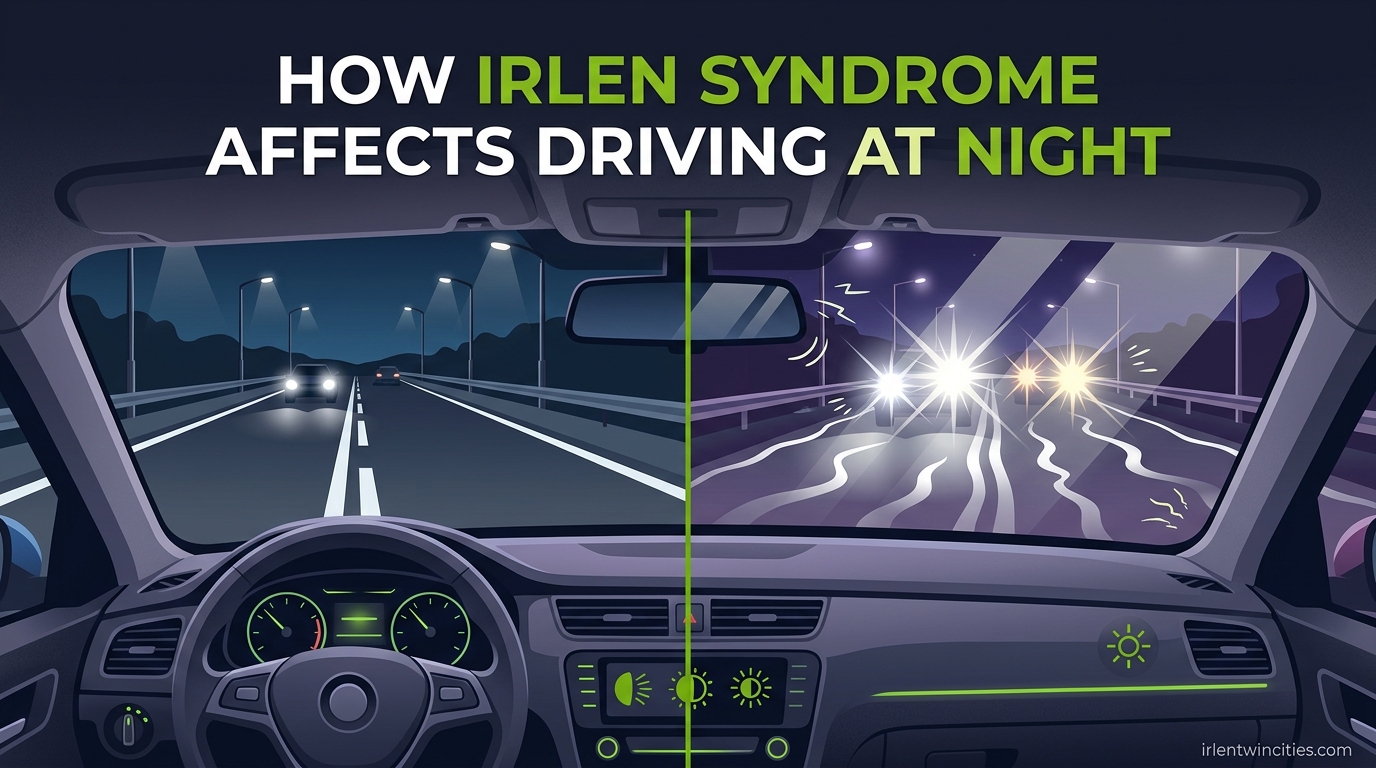
If you’ve ever felt blinded by oncoming headlights or struggled to see clearly while driving at night, you’re not alone. For people with Irlen Syndrome, these nightly challenges aren’t just occasional annoyances—they’re persistent, potentially dangerous realities that affect every drive after dark.
Irlen Syndrome is a visual processing disorder that affects how the brain interprets light and visual information. When you add night driving into the mix, this condition transforms from a reading difficulty into a serious safety concern. The combination of reduced natural light, artificial streetlights, and constant headlight glare creates a perfect storm of visual challenges for those with Irlen Syndrome.
Understanding how Irlen Syndrome affects driving at night is crucial for anyone who experiences unexplained vision difficulties behind the wheel. This condition impacts millions of people worldwide, yet many remain undiagnosed, unaware that their visual struggles have a name and potential solutions.
Table of Contents
What is Irlen Syndrome?
Irlen Syndrome is a neurological condition that affects how the brain processes visual information. Also known as Scotopic Sensitivity Syndrome or Meares-Irlen Syndrome, it’s not a problem with your eyes themselves—rather, it’s how your brain interprets what your eyes see. People with Irlen Syndrome have difficulty processing specific wavelengths of light, which can cause significant visual stress and distortion.
The condition was first identified in the 1980s by Helen Irlen, a educational psychologist who discovered that colored overlays could help some individuals read more comfortably. Since then, research has shown that Irlen Syndrome affects approximately 12-14% of the general population, with even higher rates among people with dyslexia, autism, ADHD, and other neurodivergent conditions.
What makes Irlen Syndrome particularly challenging is that it’s often invisible during standard eye exams. You can have perfect 20/20 vision yet still struggle with visual processing issues. The brain overreacts to certain light frequencies, causing symptoms that range from mild discomfort to severe visual distortion and physical pain.
Common symptoms include light sensitivity, visual stress, difficulty reading, eye strain, headaches, and problems with depth perception. However, these symptoms often become significantly worse in low-light conditions or when faced with bright lights—exactly the conditions present during night driving.
How Irlen Syndrome Affects Night Driving
Night driving presents unique challenges for anyone, but for those with Irlen Syndrome, these challenges are magnified significantly. The primary issue lies in how the condition affects your brain’s ability to process artificial light sources and manage contrast in low-light environments.
When driving at night, your eyes constantly adjust between darkness and bright light sources—streetlights, oncoming headlights, traffic signals, and illuminated signs. For most people, this adjustment happens automatically. For someone with Irlen Syndrome, each light source can cause the brain to overreact, creating visual distortions, halos, and starbursts that make it incredibly difficult to see clearly.
Headlight glare is perhaps the most dangerous aspect of night driving with Irlen Syndrome. Oncoming headlights don’t just appear bright—they can temporarily blind you or create massive halos that obscure your entire field of vision. This glare sensitivity persists even after the light source has passed, leaving you with residual visual disturbances that affect your ability to see the road ahead.
Depth perception problems also worsen at night for those with Irlen Syndrome. Judging distances becomes increasingly difficult when contrast is reduced and light sources create visual confusion. This makes it harder to gauge how close other vehicles are, when to brake, or how much space you have when changing lanes.
Perhaps most disorienting is the visual distortion caused by streetlights and other artificial light sources. What should appear as steady illumination can instead seem to pulse, streak, or create patterns that distract and confuse your brain. Some people with Irlen Syndrome report that lights appear to move or that they see trails behind moving light sources, making it nearly impossible to focus on the road.
Common Symptoms While Driving at Night
The symptoms of Irlen Syndrome while driving at night extend far beyond simple vision problems. Many people experience a combination of visual, physical, and cognitive symptoms that can make driving not just difficult, but genuinely unsafe.
Visual symptoms often include halos around lights, starburst patterns, blurring or double vision, and difficulty seeing road markings or signs in low light. Some drivers report that oncoming headlights appear as blinding streaks of light that persist even after the car has passed. Others describe seeing phantom lights or experiencing visual “snow”—a static-like disturbance across their entire field of vision.
Physical symptoms frequently accompany these visual disturbances. Headaches are common, ranging from dull pressure behind the eyes to full-blown migraines. Eye strain and fatigue can set in quickly, even during short drives. Many people with Irlen Syndrome report feeling physically exhausted after night driving, as their brains work overtime to process visual information that others handle automatically.
The cognitive impact shouldn’t be underestimated either. Disorientation is common, with drivers sometimes losing track of their position on the road or feeling confused about which lane they’re in. Anxiety levels can spike, especially on unfamiliar roads or in heavy traffic. Some people experience memory lapses or “time loss” during drives—arriving at their destination with no clear memory of the journey because their brain was so overwhelmed by visual processing demands.
Real experiences shared by those with Irlen Syndrome paint a vivid picture of these challenges. One driver described it as “like driving through a constant lightning storm” with every light source creating visual chaos. Another mentioned avoiding night driving entirely for years until discovering their condition and finding treatment that made driving possible again.
Real Experiences: What It’s Like to Drive with Irlen Syndrome
Hearing from others who share your struggles can be incredibly validating, especially with a condition like Irlen Syndrome that’s often met with skepticism from those who don’t experience it. The community of people with Irlen Syndrome has shared countless stories about their night driving experiences, creating a picture of both the challenges and the hope that treatment can bring.
One Reddit user shared: “I absolutely avoid driving when it’s dark out for this among a few reasons. My main compounded reason is astigmatism plus light sensitivity making for a blurry vision.” This combination of conditions is common, as Irlen Syndrome frequently coexists with other vision issues, compounding the difficulties of night driving.
Another user, who works as a bus driver, noted: “I don’t do well driving at night on unlit streets.” The contrast between well-lit urban areas and dark rural roads can be particularly challenging, as the brain struggles to adapt between different lighting conditions.
The relief that comes with treatment is evident in many stories. “Being outside is so much more comfortable and I rely on them [Irlen glasses] for driving, even at night,” shared one user. Another mentioned that while “the driving with Irlen is tricky, dangerous and can be disorienting,” proper treatment made a significant difference in their ability to drive safely.
Perhaps most telling is the emotional impact these experiences have. Many people report years of anxiety about driving, thinking they were simply bad drivers or that something was fundamentally wrong with them. Discovering Irlen Syndrome and finding appropriate treatment often brings not just physical relief, but emotional validation as well.
Solutions and Treatments for Night Driving
While the challenges of driving with Irlen Syndrome are significant, there are effective solutions available. The most common treatments involve using colored filters to help the brain process light more effectively, reducing the visual stress and distortions that make night driving so difficult.
Irlen overlays are transparent colored sheets that can be placed over surfaces like paper or digital screens. While they’re primarily used for reading, many people find them helpful for understanding how different colors affect their visual processing. The color that provides relief varies from person to person—some find blue tones helpful, while others need green, purple, or other hues entirely.
For driving specifically, Irlen lenses are the more practical solution. These are prescription or non-prescription glasses with colored filters specifically tuned to your individual needs. Unlike simple tinted sunglasses, Irlen lenses are precisely calibrated based on diagnostic testing to address your specific light sensitivities. Many users report that these lenses make night driving not just possible, but comfortable.
“You should be able to drive at night with them though. They affect the way your brain reacts to certain light frequencies rather than your actual vision,” explained one user who successfully uses Irlen lenses for night driving. The key is that these glasses don’t dim your vision—they help your brain process light more effectively, reducing glare and distortion without compromising your ability to see clearly.
The diagnostic process typically involves working with a certified Irlen diagnostician who will test different colors and intensities to find your optimal filter. This process can take several hours but is essential for finding the right solution. While the cost can be significant and insurance coverage varies, many people find the investment worthwhile for the safety and freedom it provides.
Safety Recommendations for Night Driving with Irlen Syndrome
If you have Irlen Syndrome or suspect you might, there are several safety strategies you can employ to make night driving safer. The most important recommendation is to listen to your body—if you’re experiencing symptoms that make driving feel unsafe, it’s best to avoid night driving until you’ve been properly diagnosed and treated.
When night driving is necessary, plan your route to avoid poorly lit areas when possible. Well-lit highways are often easier to navigate than dark rural roads because the ambient lighting reduces contrast issues. Consider adjusting your driving schedule to avoid peak darkness times, especially during winter months when nights are longer.
Keep your windshield clean, both inside and out. Even small amounts of dirt or grime can worsen glare and distortion for someone with Irlen Syndrome. Similarly, make sure your headlights are properly aligned and clean—misaligned headlights can create unnecessary visual challenges for other drivers with light sensitivity.
Discuss your symptoms with your eye doctor and healthcare provider. While Irlen Syndrome isn’t typically considered a disability that affects your legal ability to drive, severe symptoms that impact safety should be addressed professionally. Some states require disclosure of medical conditions that affect driving ability, so it’s worth checking your local regulations.
From an insurance perspective, having a diagnosed condition doesn’t necessarily affect your rates, but it’s important to be honest about any medical conditions that could affect your driving. If you’re involved in an accident and haven’t disclosed a known condition that affects your driving, it could complicate claims.
Frequently Asked Questions
Does Irlen Syndrome affect driving?
Yes, Irlen Syndrome can significantly affect driving ability, especially at night. The condition causes light sensitivity, visual distortions, and depth perception problems that make it difficult to process the constantly changing light conditions while driving. Many people with untreated Irlen Syndrome find night driving particularly challenging due to headlight glare and streetlight distortion.
How to deal with light sensitivity driving at night?
The most effective way to deal with light sensitivity while driving at night is to get properly diagnosed and treated for Irlen Syndrome. Irlen lenses or overlays with the correct color filters can dramatically reduce light sensitivity and visual distortions. Additional strategies include keeping your windshield clean, planning routes to avoid dark roads when possible, reducing dashboard brightness, and avoiding night driving until you’ve found an effective treatment solution.
Can you get disability for Irlen Syndrome?
Irlen Syndrome recognition varies by country and jurisdiction. In some places, it may be recognized as a disability that qualifies for accommodations in educational or workplace settings, but it’s not typically considered a disability that automatically affects driving privileges. However, severe symptoms that impact driving safety should be disclosed to the appropriate licensing authorities as required by your local laws. Consult with a healthcare provider and local disability resources for specific information about your area.
Does Irlen Syndrome make you tired?
Yes, Irlen Syndrome frequently causes fatigue and exhaustion. The condition requires your brain to work significantly harder to process visual information, which can lead to mental and physical tiredness. This fatigue is often worse after visually demanding tasks like night driving, reading, or working under fluorescent lights. Many people with Irlen Syndrome report feeling drained after activities that others find effortless, and proper treatment with colored filters can help reduce this fatigue.
Why am I so sensitive to light when driving at night?
Light sensitivity while driving at night can be caused by Irlen Syndrome, which affects how your brain processes specific wavelengths of light. The condition makes your brain overreact to light sources, particularly artificial lights like headlights and streetlights. This overreaction creates visual stress, glare, and distortions that can be painful and disorienting. Other possible causes include astigmatism, cataracts, or other vision conditions, so it’s important to get a comprehensive eye exam to determine the cause of your light sensitivity.
What does astigmatism look like at night driving?
Astigmatism at night can cause significant visual distortions similar to Irlen Syndrome symptoms. Lights may appear streaked, blurred, or surrounded by halos and starbursts. Oncoming headlights can create blinding glare that persists even after the car passes. Many people with both astigmatism and Irlen Syndrome report compounded difficulties with night driving, as both conditions affect how light is processed. Proper glasses correction for astigmatism combined with Irlen filters can provide significant relief.
Why am I struggling to see when driving at night?
Night driving struggles can be caused by several factors including Irlen Syndrome, astigmatism, cataracts, or age-related vision changes. Common difficulties include glare from headlights, difficulty seeing road markings, problems judging distance, and visual distortions from light sources. If you’re experiencing unexplained night vision problems, schedule a comprehensive eye exam to rule out treatable conditions. If standard vision correction doesn’t help, consider testing for Irlen Syndrome, which affects how your brain processes light rather than how clearly you see.
Why is driving at night harder as you get older?
Night driving naturally becomes more challenging with age due to several factors. Your pupils become smaller and less responsive to light changes, the lens in your eye becomes less clear, and contrast sensitivity decreases. These normal aging changes can make it harder to see in low light and recover from glare. For those with Irlen Syndrome, age-related vision changes can compound existing light sensitivity and visual processing issues, making night driving increasingly difficult over time.
Conclusion
Understanding how Irlen Syndrome affects driving at night is the first step toward finding solutions and staying safe on the road. This visual processing disorder turns routine night drives into potentially dangerous ordeals through glare sensitivity, visual distortions, depth perception problems, and physical symptoms like headaches and fatigue. But you don’t have to accept these struggles as permanent.
If you recognize these symptoms in yourself or a loved one, seeking a professional diagnosis is crucial. A certified Irlen diagnostician can determine whether Irlen Syndrome is affecting your driving and recommend appropriate treatments. For many people, Irlen lenses or overlays provide dramatic relief, transforming night driving from a source of anxiety into a manageable activity.
Remember that your safety and the safety of others on the road comes first. Until you’ve been properly diagnosed and treated, consider avoiding night driving or limiting it to essential trips. The freedom and confidence that comes with effective treatment makes the investment in diagnosis and care worthwhile.
You’re not alone in these struggles, and help is available. With the right understanding, treatment, and safety strategies, people with Irlen Syndrome can navigate night driving challenges and maintain their independence behind the wheel.