
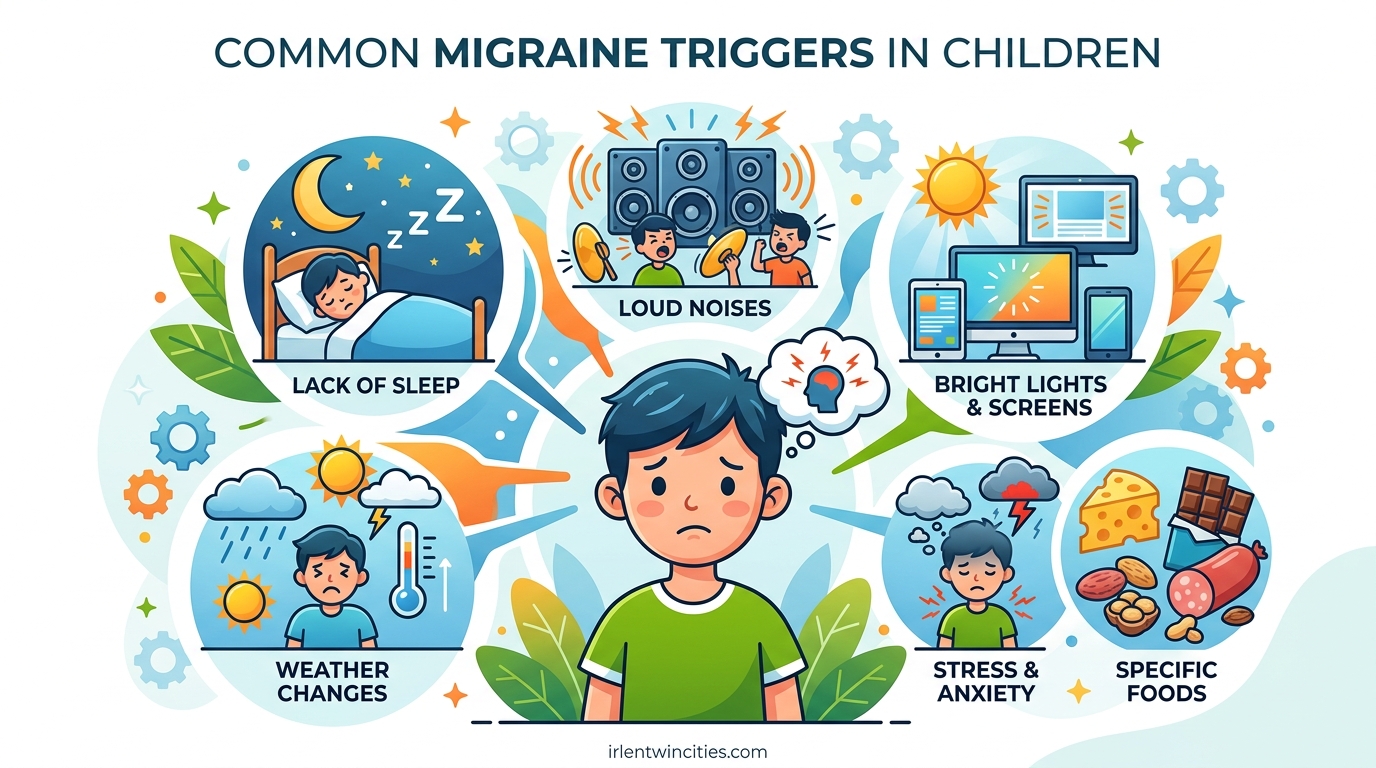
Watching your child clutch their head in pain is one of the most helpless feelings a parent can experience. If your child suffers from recurring headaches, you are not alone. Research shows that up to 10% of school-age children and nearly 28% of adolescents experience migraines. Understanding the common migraine triggers in children is the first step toward helping your child find relief and reclaim their quality of life.
Migraine is not just a bad headache. It is a complex neurological disease involving changes in neurotransmitters, blood vessels, and nerve signaling in the brain. In children, migraines often present differently than in adults. Young children may experience abdominal pain instead of head pain, and their attacks typically last shorter periods but can be just as debilitating.
The good news is that migraines are manageable, especially when you identify and address the triggers that set them off. Every child is different. What triggers one child’s migraine may not affect another at all. This guide will walk you through the most common triggers, how they vary by age, and practical strategies for identifying your child’s specific sensitivities.
Table of Contents
Common Migraine Triggers in Children: The Complete Picture
Before diving into specific triggers, it helps to understand the categories that most commonly affect children. Here are the six primary trigger categories that parents and pediatricians encounter most frequently:
- Stress and emotional factors – School pressure, anxiety, and even positive excitement
- Sleep disturbances – Both too little and too much sleep can trigger attacks
- Dietary factors – Specific foods, additives, and skipped meals
- Dehydration – Not drinking enough water, especially during activities
- Environmental factors – Bright lights, loud noises, weather changes, and strong smells
- Screen time and digital strain – Extended use of computers, tablets, and phones
These triggers rarely work alone. Most migraines result from a combination of factors stacking on top of each other. A child who is slightly dehydrated, stayed up late, and faces a stressful test is far more likely to develop a migraine than a child experiencing just one of those factors.
Stress and Emotional Factors: The Leading Trigger
Stress is the single most common migraine trigger in children, affecting kids across all age groups. What many parents do not realize is that stress does not have to be negative to trigger a migraine. Positive emotional events like birthday parties, exciting holidays, or anticipated activities can be just as triggering as anxiety about a test or bullying at school.
School-related stress deserves special attention. The academic pressure children face today is significant, and it comes from multiple sources. Tests and homework create obvious stress, but social dynamics, extracurricular activities, and even the transition between school and home can be triggers. Some children experience what doctors call “let-down migraines” – headaches that strike on Saturday morning after a stressful week of school, when their body finally relaxes.
Bullying and social anxiety are particularly potent triggers that parents may not immediately connect to headaches. Children may not volunteer information about social difficulties, so headaches that consistently occur on school days but rarely on weekends or holidays warrant a gentle conversation about what is happening at school.
The physiological mechanism behind stress-triggered migraines involves the release of stress hormones like cortisol. These hormones can cause blood vessel changes and affect serotonin levels in the brain. When the stressful situation ends and hormone levels drop, the rebound effect can trigger migraine pathways. This explains why migraines often hit after the stress rather than during it.
Emotional changes and mood swings, particularly in adolescents, can also serve as triggers. The hormonal fluctuations of puberty combined with emotional intensity create a perfect storm for migraine development. Children with underlying anxiety or depression are more likely to experience chronic migraine patterns.
Sleep Disturbances: Too Much or Too Little
Sleep and migraines have a bidirectional relationship. Poor sleep triggers migraines, and migraines disrupt sleep. This creates a cycle that can be difficult to break without consistent intervention. For children with migraines, maintaining regular sleep patterns is often more important than the exact number of hours slept.
Sleep deprivation is an obvious culprit. Children ages 6 to 12 need 9 to 12 hours of sleep per night, while teenagers require 8 to 10 hours. When children consistently get less sleep than their bodies need, their migraine threshold drops. The brain becomes more susceptible to other triggers, and attacks become more frequent.
However, oversleeping can be equally problematic. Many parents are surprised to learn that letting their child sleep in on weekends can trigger a migraine. This “weekend migraine” phenomenon occurs because irregular sleep schedules disrupt the body’s circadian rhythm. The brain expects to wake at a certain time, and when that pattern changes, neurological instability can result.
Sleep quality matters as much as quantity. Children with sleep apnea, restless leg syndrome, or other sleep disorders have higher rates of migraines. Even without diagnosed sleep disorders, poor sleep hygiene can contribute to migraine frequency. Screen use before bed, inconsistent bedtime routines, and sleeping in rooms that are too warm or too bright can all impact sleep quality.
The solution is consistency. Children with migraines benefit enormously from going to bed and waking at the same time every day, including weekends and holidays. While this may seem restrictive, many families find that the reduction in migraine frequency is worth the trade-off.
Dietary Triggers: Foods That Set Off Attacks
Food triggers are among the most discussed and most misunderstood aspects of pediatric migraine. While food triggers are real, they affect children differently, and elimination diets should be approached carefully to avoid nutritional deficiencies. Understanding the common culprits helps parents make informed decisions about their child’s diet.
Tyramine-rich foods top the list of dietary triggers. Tyramine is a naturally occurring compound that forms in aged and fermented foods. Aged cheeses like cheddar, blue cheese, and parmesan are common triggers. Processed meats containing nitrates, such as hot dogs, pepperoni, and deli meats, can also trigger migraines in sensitive children.
Monosodium glutamate (MSG), a flavor enhancer found in many processed foods and restaurant meals, is another frequent trigger. MSG can be listed on ingredient labels under various names including hydrolyzed protein, autolyzed yeast, and sodium caseinate. Children who are sensitive to MSG may experience migraines within an hour of consumption.
Chocolate contains both caffeine and phenylethylamine, compounds that can trigger migraines in some children. However, chocolate cravings are also a common prodrome symptom, meaning children may crave chocolate before a migraine starts and then mistakenly blame the chocolate for causing the attack.
Artificial sweeteners, particularly aspartame, and artificial food dyes like Red 40 and Yellow 5 have been reported as triggers by some parents. Citrus fruits, while healthy, contain compounds that can trigger migraines in sensitive individuals. Caffeine is a complicated factor – small amounts can help treat migraines, but regular consumption and subsequent withdrawal can trigger them.
The key with food triggers is individualization. Keeping a detailed food and symptom diary helps identify patterns specific to your child. Rather than eliminating all potential trigger foods at once, work with your pediatrician to test one food category at a time.
Dehydration and Skipped Meals: Easy to Fix
Dehydration and missed meals are two of the most preventable migraine triggers in children. Both affect blood sugar stability and brain hydration, which are critical for preventing migraine attacks. The frustrating part is that these triggers are completely within parental control.
Skipping meals, especially breakfast, causes blood sugar to drop. The brain is highly sensitive to glucose fluctuations, and when blood sugar falls, the body releases stress hormones that can trigger migraine pathways. Children who leave for school without eating are significantly more likely to develop morning or midday migraines.
Dehydration is equally problematic. Children’s bodies are less efficient at regulating temperature and fluid balance than adult bodies. During sports, hot weather, or even just a busy day at school, children can become dehydrated without realizing it. By the time they feel thirsty, mild dehydration may have already begun.
The solution is structural. Ensure your child eats breakfast every morning, even if it is small. Pack water bottles for school and encourage regular sipping throughout the day. For active children or those who forget to drink, setting phone reminders or using marked water bottles can help establish hydration habits.
Some parents find that maintaining steady blood sugar through regular, small meals works better than three large meals. Keeping healthy snacks available and establishing no-skipping-meals as a household rule can dramatically reduce migraine frequency for children with these triggers.
Environmental and Sensory Triggers
The environment surrounding your child can be filled with invisible migraine triggers. Sensory sensitivity is a hallmark of migraine, and children with migraines often have heightened responses to light, sound, and smell compared to their peers.
Bright lights are a classic migraine trigger. Fluorescent lighting in schools, computer screens, and sunlight glare can all provoke attacks. Photophobia, or light sensitivity, is so common in migraine that it is actually part of the diagnostic criteria. Children may not realize that their sensitivity to light is abnormal and may simply avoid bright areas without explaining why.
Loud noises and chaotic sound environments trigger migraines through similar neurological pathways. School cafeterias, gymnasiums, crowded hallways, and loud music can all be problematic. Phonophobia, or sound sensitivity, often causes children with migraines to seek quiet, dark rooms during attacks.
Weather changes, particularly barometric pressure shifts, are a frustrating trigger because they are impossible to control. Many parents notice their child’s migraines increase before storms or during seasonal transitions. The exact mechanism is not fully understood, but it likely involves pressure-sensitive nerve endings and blood vessel responses.
Strong smells, including perfume, cleaning products, gasoline, and certain foods, can trigger migraines through the olfactory system. This trigger is particularly challenging at school where exposure to scented products used by other students or cleaning staff is difficult to avoid.
Screen Time and Digital Eye Strain: A Modern Trigger
In 2026, screens are an inescapable part of childhood. From school computer labs to homework tablets to social media and gaming, children spend more time looking at screens than ever before. For migraine-prone children, this digital lifestyle presents unique challenges.
Blue light emitted by screens is the primary concern. This high-energy visible light can penetrate deep into the eye and may trigger migraine pathways. The flickering of screens, though imperceptible to most people, can also be a trigger for sensitive individuals. Screen glare, improper viewing distances, and poor posture compound the problem.
The 20-20-20 rule is a simple but effective strategy for managing screen-related triggers. Every 20 minutes, look at something 20 feet away for 20 seconds. This allows eye muscles to relax and reduces strain. Teaching children to follow this rule during homework and screen time can help prevent digital eye strain migraines.
School environments are increasingly digital, with smartboards, computer labs, and tablet-based assignments. Children who are sensitive to screens may struggle in these settings. Blue light filtering glasses, screen glare protectors, and requesting paper alternatives for certain assignments can help manage this trigger.
Video games deserve special mention. The combination of screen light, rapid visual changes, emotional excitement, and often poor posture creates a perfect storm for migraines. Children who experience migraines during or after gaming should take regular breaks and ensure proper lighting in their gaming environment.
Age-Specific Trigger Variations: Young Children vs Teens
Migraine triggers vary significantly based on your child’s age. Understanding these age-specific patterns helps parents focus their prevention efforts on the factors most likely to affect their child at their current developmental stage.
Young Children (Ages 5-10)
In younger children, sleep irregularities and weather changes are particularly prominent triggers. These children are still developing consistent sleep patterns and are highly sensitive to routine disruptions. Weekend sleep-ins and holiday schedule changes often trigger attacks in this age group.
Food triggers in young children tend to be simpler and more obvious. Basic dehydration, skipped meals, and specific foods like chocolate or aged cheese are common culprits. Young children may also experience what is called abdominal migraine, where pain is felt in the stomach rather than the head.
An interesting connection exists between infant colic and childhood migraines. Research suggests that babies who experienced severe colic are more likely to develop migraines later in childhood. This colic-migraine connection may represent an early manifestation of the same neurological sensitivity that causes migraines.
Adolescents (Ages 11-17)
Teenagers face a more complex trigger landscape. Hormonal changes, particularly in girls, introduce menstrual migraines as a significant factor. The fluctuation of estrogen levels before and during menstruation can trigger attacks that follow a predictable monthly pattern.
Academic and social stress becomes more intense during adolescence. High school coursework, college preparation, peer relationships, and extracurricular commitments create multiple stress layers. Teenagers also tend to have irregular sleep patterns due to natural circadian rhythm shifts and social activities.
Caffeine consumption often begins during adolescence, creating a new potential trigger. Many teenagers discover coffee, energy drinks, or caffeinated sodas, not realizing that caffeine dependence and withdrawal can trigger migraines. The combination of late-night studying, early school start times, and caffeine use is particularly problematic.
Screen time increases dramatically in adolescence through social media, gaming, and digital homework. Teenagers are also more likely to skip meals due to busy schedules or body image concerns. All these factors combine to make adolescence a high-risk period for migraine development and chronicity.
How to Identify Your Child’s Specific Triggers
Knowing the common triggers is only the first step. The real power comes from identifying which specific factors affect your child. This requires systematic tracking and pattern recognition over time.
A headache diary is the most effective tool for trigger identification. This can be a simple notebook, a spreadsheet, or a smartphone app. The key is consistency. For at least four to six weeks, record every headache your child experiences along with details about the 24 hours preceding it.
Essential information to track includes: date and time of the headache, severity on a scale of 1-10, location of pain, associated symptoms (nausea, light sensitivity, etc.), foods eaten that day, sleep duration the night before, stress level, weather conditions, menstrual cycle timing (for girls), and any medications taken.
Involve your child in the tracking process appropriate to their age. Young children can use simple face scales to indicate how they feel, while teenagers can maintain detailed records themselves. Making your child an active participant helps them understand their condition and take ownership of their health.
After several weeks of tracking, patterns will emerge. You may notice that headaches consistently follow late nights, or that they occur after eating certain foods, or that they cluster around weather changes. Once patterns are identified, you can test specific hypotheses by controlling one variable at a time.
Remember that triggers often work in combination. Your child might handle a single trigger without issue but develop a migraine when two or three factors combine. This cumulative effect explains why some attacks seem to come out of nowhere when multiple minor triggers stack together.
When to See a Doctor: Red Flag Symptoms
While most childhood migraines are manageable at home with trigger avoidance and over-the-counter medication, certain symptoms warrant immediate medical attention. Knowing when to seek help is crucial for your child’s safety.
Contact your pediatrician if your child experiences headaches more than once per week, if headaches are increasing in frequency or severity, or if they are interfering with school attendance or activities. These patterns suggest your child may need preventive treatment beyond simple trigger management.
Red flag symptoms that require urgent evaluation include: sudden onset of the worst headache ever, headaches accompanied by fever and stiff neck, headaches with confusion, difficulty speaking, or personality changes, headaches with weakness, numbness, or vision loss, headaches following head injury, and headaches that wake your child from sleep.
Pediatricians may use assessment tools like PedMIDAS to measure migraine-related disability. This questionnaire evaluates how much migraines affect your child’s daily functioning across school, home, and social settings. Scores help determine whether preventive medication or other interventions are appropriate.
Keep a record of your headache diary to share with the doctor. This documentation helps identify patterns and guides treatment decisions. Do not hesitate to seek a referral to a pediatric neurologist if your child’s migraines are frequent, severe, or difficult to control.
Prevention and Management Strategies That Work
Once you understand your child’s triggers, prevention becomes a matter of lifestyle management and strategic planning. While you cannot eliminate all triggers, you can significantly reduce their impact through consistent habits.
Consistency is the foundation of migraine prevention. Regular sleep schedules, consistent meal times, and steady hydration should be non-negotiable family practices. These basics provide a stable foundation that raises your child’s migraine threshold and makes them less susceptible to other triggers.
Stress management skills are essential for school-age children. Teaching relaxation techniques, deep breathing, or age-appropriate meditation can help children handle stress without triggering migraines. For children with anxiety or depression, addressing these mental health conditions often reduces migraine frequency.
School accommodations can make a significant difference. A 504 plan or IEP can provide migraine-specific accommodations such as permission to wear sunglasses in brightly lit areas, access to a quiet room during attacks, extended time for assignments during migraine episodes, and permission to carry and take medication at school.
Meal planning helps avoid dietary and skipped-meal triggers. Pack school lunches that avoid known trigger foods. Ensure breakfast happens every morning, even if it is just a banana and a glass of milk. Keep healthy snacks available for after-school activities.
Environmental modifications at home include using dimmable lights, keeping screens at appropriate distances, maintaining comfortable room temperatures, and having quiet spaces available for recovery when migraines occur. Some families invest in blue light filters for devices and glasses for sensitive children.
Medication overuse is a trigger worth mentioning. Taking pain relievers more than two to three times per week can cause rebound headaches that perpetuate the migraine cycle. Work with your doctor to establish appropriate medication limits and explore preventive options if your child needs frequent acute treatment.
Frequently Asked Questions
What can trigger migraines in kids?
Common migraine triggers in children include stress from school or social situations, sleep disturbances (too much or too little), certain foods like aged cheese and chocolate, dehydration, skipped meals, bright lights, loud noises, weather changes, and extended screen time. Each child has different sensitivities, so identifying specific triggers requires keeping a headache diary.
What are the 5 C’s of migraines?
The 5 C’s of migraines refer to common characteristics: Craniocervical dysfunction (neck and head muscle issues), Cortical spreading depression (brain wave changes), Central sensitization (heightened pain sensitivity), Comorbidities (associated conditions like anxiety), and Chronification (progression from episodic to chronic migraines). This framework helps doctors understand and treat migraine complexity.
What not to say to someone with migraines?
Avoid minimizing statements like ‘It is just a headache,’ ‘Have you tried just relaxing?’ or ‘You do not look sick.’ Do not suggest simple cures like drinking water or taking a pill unless asked. Never imply they are faking to get out of responsibilities. Instead, offer specific help like ‘Can I get you a dark quiet room?’ or ‘Do you need your medication?’
How do you treat a migraine in a 11 year old?
Treatment for an 11-year-old typically starts with rest in a dark, quiet room. Over-the-counter medications like ibuprofen or acetaminophen work best when given at the first sign of headache. Some children need prescription triptans from their doctor. Non-medication approaches include cold compresses, hydration, and sleep. Work with your pediatrician to develop a specific treatment plan for your child.
Conclusion
Understanding the common migraine triggers in children empowers you to help your child take control of their condition. While migraines can feel overwhelming, they are manageable with the right knowledge and strategies. Every child’s trigger profile is unique, but the patterns described in this guide represent the most frequent culprits parents encounter.
Start by implementing the basics: consistent sleep schedules, regular meals, proper hydration, and stress management. Keep a detailed headache diary to identify your child’s specific triggers. Work with your pediatrician when migraines are frequent or severe, and do not hesitate to request school accommodations that support your child’s health.
The goal is not to create a restrictive environment but to build a stable foundation that lets your child thrive. With trigger awareness and proactive management, most children with migraines can participate fully in school, activities, and family life. Your advocacy and understanding make all the difference in your child’s migraine journey.