
When your child struggles to read, every school meeting feels like a battle. I have worked with families across 30 states, and the same questions come up again and again. What does the law actually require my school to do? Do they have to test for dyslexia? What happens if they refuse?
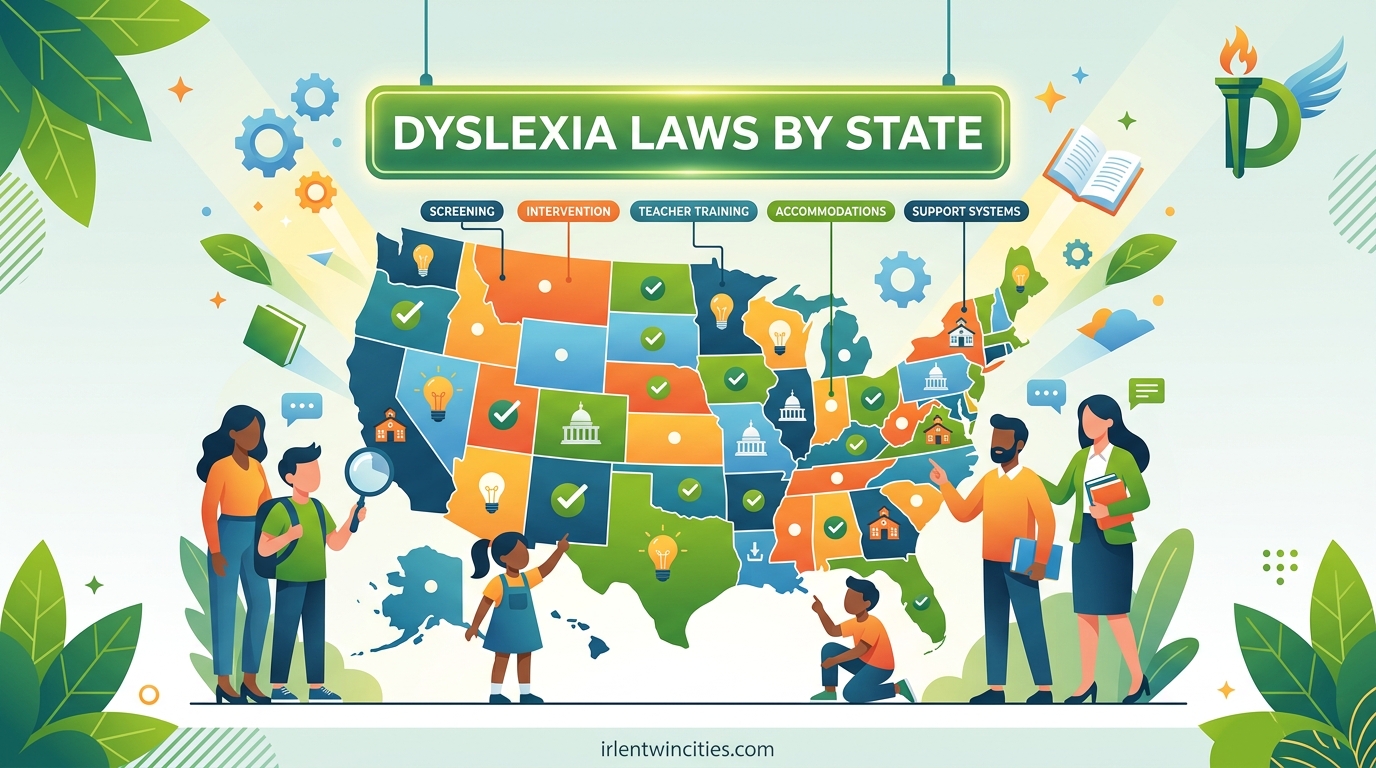
This guide breaks down dyslexia laws by state so you know exactly what your school must provide. Whether you live in Texas with strong dyslexia protections or Hawaii with no specific state laws, your child has rights. Federal law guarantees certain services regardless of where you live. State laws can add additional protections. Understanding both gives you the power to advocate effectively.
By the end of this article, you will know what screening requirements exist in your state, what interventions schools must provide, what accommodations your child is entitled to, and how to take action if your school falls short. Let us start with the foundation: federal law protections that apply to every state.
Table of Contents
What Federal Law Requires: Your Baseline Protections
Three federal laws protect students with dyslexia in every single state. These create your baseline rights. State laws can add to these protections but cannot take them away. Understanding federal requirements helps you advocate even if your state has weak or no dyslexia-specific laws.
IDEA: Special Education Protections for Dyslexia
The Individuals with Disabilities Education Act (IDEA) defines dyslexia as a specific learning disability. This means students with dyslexia qualify for special education services if their condition affects educational performance. Under IDEA, your child may be eligible for an Individualized Education Program (IEP).
An IEP for dyslexia must include specific reading goals based on your child’s needs. It should outline the type of reading instruction, frequency of services, and any accommodations. IDEA guarantees Free Appropriate Public Education (FAPE) for students with disabilities. For dyslexia, this typically means specialized reading instruction using evidence-based methods like structured literacy or Orton-Gillingham approaches.
Schools must evaluate students suspected of having dyslexia upon parent request or teacher referral. This evaluation must be comprehensive and completed within specific timeframes set by your state. If your child qualifies, the school must provide services at no cost to you. They cannot refuse services simply because the child has average or above-average intelligence. Dyslexia often coexists with giftedness, and IDEA covers this twice-exceptional population.
Section 504: Accommodations for All Students with Dyslexia
Not every student with dyslexia needs special education through an IEP. Section 504 of the Rehabilitation Act provides accommodations for students with disabilities who do not qualify under IDEA. A 504 plan for dyslexia typically includes classroom accommodations like extended time on tests, preferential seating, audio books, and assistive technology.
Section 504 has broader eligibility criteria than IDEA. Your child may qualify for a 504 plan even if they do not meet the stricter criteria for an IEP. The key question is whether dyslexia substantially limits a major life activity, specifically learning. For most students with dyslexia, the answer is yes.
Schools must provide accommodations listed in the 504 plan. Parents can request a 504 evaluation at any time. The school must respond and either conduct the evaluation or explain why they believe it is unnecessary. If you disagree with the school’s decision, you have due process rights including mediation and hearings.
IEP vs 504: Which Does Your Child Need?
Choose an IEP if your child needs specialized reading instruction beyond what general education provides. IEPs offer the strongest protections and most comprehensive services. The school must provide specific instruction tailored to your child’s dyslexia profile.
Choose a 504 plan if your child reads at grade level with accommodations but needs support to access the curriculum. A 504 plan is also appropriate if your child has received intensive intervention and no longer needs special education but still benefits from accommodations.
Some students have both. They receive specialized instruction through an IEP and additional accommodations through 504 protections. Your child’s needs should drive this decision, not school convenience or cost concerns.
What Schools Must Provide: Core Requirements Across States
Dyslexia laws by state vary significantly, but the strongest state laws address six core areas. Understanding these helps you evaluate your state’s protections and advocate for what your child needs.
Universal Dyslexia Screening
Effective dyslexia laws require universal screening for all students in early grades, typically kindergarten through third grade. This catches reading difficulties before they become entrenched failure patterns. Screening should happen regardless of teacher observation or parent concern. Universal means universal.
The best screening laws specify which assessment tools schools must use. Valid screeners include measures of phonological awareness, rapid naming, and phonemic awareness. Schools should not rely on informal observations or general reading assessments. They need dyslexia-specific screeners.
Some states require screening only for students showing reading difficulties. This approach misses students with compensatory strategies or those masking difficulties through memorization. Universal screening catches more students earlier.
Evidence-Based Reading Interventions
When screening identifies at-risk students, schools must provide immediate intervention. The strongest dyslexia laws mandate structured literacy instruction. This includes explicit, systematic teaching of phonics, phonological awareness, syllable patterns, and morphology.
Interventions must be delivered by trained personnel. A paraprofessional without dyslexia training should not provide core intervention. Research supports approaches like Orton-Gillingham, Wilson Reading System, Lindamood-Bell, and other multisensory structured literacy programs.
Schools must monitor progress frequently and adjust instruction based on data. Intervention intensity should match student need. Some students need daily 45-minute sessions. Others need less intensive support. The key is matching intervention to the student’s specific profile and response.
Dyslexia Teacher Training Requirements
Laws without teacher training requirements often fail in implementation. Schools cannot provide effective dyslexia instruction if teachers do not understand dyslexia. Strong state laws require teacher preparation programs to include dyslexia coursework. They also mandate ongoing professional development for current teachers.
Training should cover dyslexia characteristics, identification, and evidence-based instruction. Teachers need practical skills in structured literacy methods. Training requirements vary by state, with some requiring as little as two hours and others requiring comprehensive certification.
Some states have created dyslexia specialist certifications. These specialists can serve as resources within schools and districts. They provide expertise that general education teachers may lack.
Appropriate Accommodations
Students with dyslexia need accommodations to access grade-level content while receiving remediation. Common accommodations include extended time on tests, oral testing options, audio books, text-to-speech software, graphic organizers, and reduced copying demands.
Accommodations should not replace instruction. They remove barriers while the student receives intervention to improve reading skills. A student using text-to-speech should also receive phonics instruction. The goal is eventual independence, not permanent reliance on accommodations.
The IEP or 504 team determines appropriate accommodations based on individual student needs. Parents can request specific accommodations and provide documentation supporting their necessity. Schools must implement agreed-upon accommodations in all settings including standardized testing.
Dyslexia Laws by State: Complete Breakdown
Now let us examine what each state requires. States fall into categories based on the comprehensiveness of their dyslexia legislation. Remember that even states with no specific dyslexia laws must follow federal IDEA and Section 504 requirements.
States with Comprehensive Dyslexia Laws
These states have laws covering screening, intervention, and teacher training. They provide the strongest protections for students with dyslexia.
Texas leads the nation with detailed dyslexia requirements. Schools must screen all students in kindergarten and first grade using approved instruments. Students identified receive services through a special “dyslexia program” designation separate from special education. Teachers must complete specific training in dyslexia identification and instruction. Texas also requires regular progress monitoring and parental notification of screening results.
Mississippi passed comprehensive legislation in 2026 requiring universal screening in kindergarten through third grade. Schools must use evidence-based interventions and report screening results to parents. Teacher training requirements increased significantly, with all K-3 teachers needing training in reading science and dyslexia.
Arkansas requires screening of all students in kindergarten through second grade. Schools must notify parents within 30 days if screening indicates risk. Interventions must use structured literacy approaches. The state has also established a dyslexia clearinghouse to provide resources to schools and families.
Louisiana mandates screening for kindergarten and first grade students. The law requires specific instructional approaches and establishes dyslexia therapist licensure. Schools must employ or contract with licensed dyslexia therapists to provide intervention.
Alabama requires universal screening and evidence-based interventions. The state has created a dyslexia resource guide for schools. Teacher training requirements specify hours of professional development in structured literacy.
Georgia passed legislation requiring screening and establishing a dyslexia endorsement for teachers. The state provides funding for dyslexia screenings and interventions. Schools must report dyslexia identification rates as part of accountability measures.
North Carolina requires screening in kindergarten through third grade using state-approved tools. Schools must provide interventions and report student progress. The law established a dyslexia advisory council to guide implementation.
South Carolina mandates screening for students in kindergarten through second grade. Schools must use evidence-based reading instruction and provide progress reports to parents. Teacher training requirements specify coursework in reading science.
Florida requires screening for students showing indicators of dyslexia. The state has comprehensive guidance on dyslexia identification and instruction. Schools must provide appropriate accommodations and interventions.
Virginia requires dyslexia awareness training for all teachers seeking initial licensure. Schools must provide evidence-based reading instruction and appropriate accommodations. The state has established a dyslexia advisor position within the Department of Education.
Tennessee mandates universal screening in kindergarten through third grade. Schools must use state-approved screeners and provide structured literacy interventions. Parents receive notification of screening results and intervention plans.
Kentucky requires screening for kindergarten and first grade students. Schools must use evidence-based reading programs and provide progress monitoring. The law includes provisions for teacher training in dyslexia identification.
West Virginia mandates universal screening in early grades. Schools must provide interventions using structured literacy approaches. The state has developed a dyslexia handbook for educators.
Ohio requires screening of all students in kindergarten through third grade. Schools must use evidence-based reading instruction and report screening results to parents. The law includes provisions for dyslexia specialists in schools.
Indiana passed legislation requiring screening and establishing dyslexia interventionist positions. Schools must provide structured literacy instruction and monitor student progress. The state provides resources for parent notification.
Illinois requires screening in kindergarten through second grade. Schools must provide appropriate interventions and accommodations. The law includes professional development requirements for teachers.
Michigan recently strengthened dyslexia requirements with new screening mandates and evidence-based instruction requirements. The state has increased funding for reading intervention programs and teacher training.
Wisconsin requires screening and evidence-based interventions. Schools must use structured literacy approaches and report progress to parents. The law includes provisions for assistive technology.
Minnesota mandates screening in kindergarten through second grade. Schools must notify parents of screening results and provide interventions. The state has developed dyslexia guidance documents for educators.
Iowa requires screening for students at risk for reading difficulties. Schools must provide evidence-based interventions and progress monitoring. The law includes teacher training provisions.
Missouri mandates screening in kindergarten through third grade. Schools must use approved assessment tools and provide structured literacy interventions. Parents receive notification of results and intervention plans.
Nebraska requires screening and evidence-based reading instruction. The state has established dyslexia task forces to guide policy development. Schools must report screening and intervention data.
Kansas mandates universal screening in kindergarten through second grade. Schools must provide interventions using structured literacy approaches. The law includes professional development requirements.
Oklahoma requires screening for all students in specified grades. Schools must notify parents and provide evidence-based interventions. The state has developed dyslexia resources for schools.
Colorado mandates screening and evidence-based reading instruction. Schools must use structured literacy approaches and monitor student progress. The law includes provisions for teacher training.
Utah requires screening in kindergarten through third grade. Schools must provide interventions and report progress to parents. The state has established dyslexia specialist positions.
Arizona mandates screening for students at risk for reading difficulties. Schools must provide evidence-based interventions and accommodations. The law includes professional development requirements.
New Mexico requires screening and evidence-based reading instruction. Schools must use structured literacy approaches and report results to parents. The state provides dyslexia resources.
Nevada mandates universal screening in early grades. Schools must provide interventions and monitor progress. The law includes provisions for dyslexia specialists.
California requires screening for students showing risk factors. Schools must provide appropriate interventions and accommodations. The state encourages structured literacy instruction and teacher training.
Oregon mandates screening in kindergarten through second grade. Schools must use evidence-based reading instruction and report progress. The law includes professional development requirements.
Washington requires screening for all students in specified grades. Schools must provide interventions using structured literacy approaches. The state has developed comprehensive dyslexia resources.
Maryland mandates screening and evidence-based reading instruction. Schools must accommodate students with dyslexia and provide appropriate interventions. The law includes teacher training requirements.
Delaware requires screening in kindergarten through second grade. Schools must provide structured literacy interventions and report results to parents. The state has established dyslexia task forces.
New Jersey mandates universal screening and evidence-based interventions. Schools must notify parents and monitor student progress. The law includes provisions for dyslexia specialists.
Pennsylvania requires screening for students showing reading difficulties. Schools must provide appropriate interventions and accommodations. The state provides dyslexia guidance documents.
New York mandates screening in kindergarten through second grade. Schools must use evidence-based reading instruction and report progress. The law includes professional development requirements.
Connecticut requires screening and evidence-based interventions. Schools must accommodate students with dyslexia and provide appropriate services. The state has developed dyslexia resources.
Rhode Island mandates screening in early grades. Schools must provide structured literacy instruction and report results to parents. The law includes teacher training provisions.
Massachusetts requires screening and evidence-based reading instruction. Schools must use structured literacy approaches and monitor progress. The state provides dyslexia guidance.
New Hampshire mandates screening for students at risk. Schools must provide interventions and accommodations. The law includes professional development requirements.
Maine requires screening in kindergarten through third grade. Schools must provide evidence-based interventions and report progress. The state has developed dyslexia resources.
Alaska mandates screening and evidence-based reading instruction. Schools must accommodate students with dyslexia. The law includes provisions for teacher training.
States with Limited or No Dyslexia-Specific Laws
Three states currently lack dyslexia-specific legislation. However, federal protections still apply in these states.
Hawaii has no state dyslexia laws as of 2026. Schools must still comply with IDEA and Section 504. Parents can request evaluations and services under federal law. The state is considering dyslexia legislation, but nothing has passed yet.
Idaho lacks specific dyslexia legislation. Federal protections apply, and some districts have implemented screening voluntarily. The state has seen advocacy efforts for dyslexia laws, but comprehensive legislation has not passed.
Vermont currently has no dyslexia-specific state laws. Schools rely on federal special education regulations. Some individual districts have adopted screening practices, but state mandates do not exist.
If you live in one of these states, your child still has rights under federal law. Do not let the absence of state law discourage you from requesting evaluations and services. Document everything and know that IDEA and Section 504 provide baseline protections.
Recent Legislative Updates (2025-2026)
Several states have strengthened dyslexia laws in the past year. Michigan passed comprehensive legislation adding screening requirements. New York expanded teacher training mandates. Ohio increased funding for dyslexia interventions.
Advocacy groups continue pushing for stronger laws nationwide. The National Center on Improving Literacy tracks legislation and provides resources for advocates. Check their website for the most current information about your state’s pending legislation.
Even states with existing laws are refining requirements. Many are adding specific curriculum mandates requiring structured literacy programs. Others are strengthening teacher preparation requirements. The trend is toward more comprehensive protections.
How to Advocate for Your Child’s Rights
Knowing the law is only the first step. Actually getting schools to follow the law requires persistent advocacy. Parents who succeed share certain strategies. Let me outline the steps that work.
Requesting a Dyslexia Evaluation
Start by submitting a written request for evaluation. Email creates a paper trail. Address your request to the school principal and special education coordinator. State clearly that you suspect your child has dyslexia and request a comprehensive evaluation under IDEA or Section 504.
Schools must respond within specific timeframes. Federal law requires evaluation within 60 days of parental consent, though some states have shorter timelines. Mark your calendar and follow up if deadlines pass.
If the school refuses to evaluate, they must explain their reasoning in writing. You can challenge this decision through due process procedures. Many parents find success by simply restating their request and citing applicable laws. Schools sometimes back down when they see informed parents.
What to Do When Schools Do Not Comply
Schools sometimes ignore dyslexia laws despite clear requirements. This happens for various reasons: lack of resources, insufficient training, or philosophical disagreements about reading instruction. Whatever the reason, your child suffers when schools fail to comply.
Document everything. Keep records of all communications, meetings, and agreements. Save work samples showing your child’s struggles. Record instances where accommodations were not provided. This documentation becomes crucial if you need to escalate.
Start with collaborative problem-solving. Schedule a meeting with teachers and administrators. Bring copies of relevant laws and your child’s evaluation results. Ask specific questions about what interventions and accommodations the school will provide.
If collaboration fails, file a complaint with your state education agency. Most states have formal complaint procedures for special education violations. The state must investigate and issue findings. This sometimes prompts schools to correct their practices.
For serious violations, consider due process hearings or mediation. These formal procedures can result in binding decisions requiring schools to provide services. Special education attorneys can help navigate these processes, though legal representation is not required.
Building Your Advocacy Toolkit
Successful advocates prepare thoroughly before meetings. Create a binder with your child’s evaluations, progress reports, and work samples. Include copies of relevant laws and your state’s dyslexia handbook if available.
Learn your state’s specific dyslexia requirements. The details matter. Some states require specific screeners or intervention programs. Knowing these specifics helps you hold schools accountable.
Connect with other parents through Decoding Dyslexia state chapters. These parent-led organizations provide support, information, and collective advocacy power. They often know which schools comply and which resist. They can recommend attorneys, evaluators, and tutors.
Consider independent educational evaluations if school evaluations seem incomplete or inaccurate. While schools are not required to follow independent recommendations, they must consider them. Independent evaluations sometimes reveal needs that school evaluations missed.
FAQ
What are dyslexic children entitled to?
Dyslexic children are entitled to Free Appropriate Public Education (FAPE) under federal law. Through IDEA, they may qualify for special education services including specialized reading instruction, an Individualized Education Program (IEP) with specific goals, and related services. Through Section 504, they are entitled to accommodations like extended time, audio books, and assistive technology. State laws may add additional requirements such as universal screening, specific intervention programs, and teacher training mandates. Schools cannot deny services based on intelligence levels or because the child has passing grades.
What states have dyslexia laws?
As of 2026, 47 states have enacted dyslexia-specific legislation. Only Hawaii, Idaho, and Vermont lack state dyslexia laws. States with comprehensive laws covering screening, intervention, and teacher training include Texas, Mississippi, Arkansas, Louisiana, Alabama, Georgia, North Carolina, South Carolina, Florida, Virginia, Tennessee, Kentucky, West Virginia, Ohio, Indiana, Illinois, Michigan, Wisconsin, Minnesota, Iowa, Missouri, Nebraska, Kansas, Oklahoma, Colorado, Utah, Arizona, New Mexico, Nevada, California, Oregon, Washington, Maryland, Delaware, New Jersey, Pennsylvania, New York, Connecticut, Rhode Island, Massachusetts, New Hampshire, Maine, and Alaska. Even states without specific laws must comply with federal IDEA and Section 504 requirements.
What accommodations are needed for dyslexia?
Common dyslexia accommodations include extended time on tests and assignments, oral testing options, audio books and text-to-speech software, graphic organizers, reduced copying demands, preferential seating, assistive technology for writing, spell-check and grammar tools, advance copies of notes or outlines, and alternative formats for textbooks. Accommodations should be individualized based on the student’s specific needs and documented in an IEP or 504 plan. They should remove barriers while the student receives appropriate reading instruction. Schools must implement agreed-upon accommodations in all settings including standardized testing.
Do you get an IEP or 504 for dyslexia?
Students with dyslexia may qualify for either an IEP or a 504 plan depending on their needs. An IEP provides specialized reading instruction through special education services and is appropriate when the child needs intensive, individualized instruction beyond what general education provides. A 504 plan provides accommodations to access the curriculum and is appropriate when the child can learn grade-level content with support but does not need specialized instruction. Some students have both. The determination is made through evaluation and team decision-making. Schools cannot refuse to evaluate based on assumptions about eligibility.
Are schools required to screen for dyslexia?
Under federal law, schools must evaluate students suspected of having disabilities including dyslexia. However, universal screening requirements vary by state. Many states now mandate screening of all students in kindergarten through third grade regardless of teacher observation. States with universal screening laws include Texas, Mississippi, Arkansas, Louisiana, Alabama, Georgia, North Carolina, South Carolina, Tennessee, Kentucky, West Virginia, Ohio, Indiana, Illinois, Michigan, Wisconsin, Minnesota, Missouri, Nebraska, Kansas, Oklahoma, Colorado, Utah, Oregon, Washington, Maryland, Delaware, New Jersey, New York, Connecticut, Rhode Island, Massachusetts, New Hampshire, and Maine. States without specific screening laws must still evaluate upon parent request or teacher referral under IDEA.
What happens when schools don’t follow dyslexia laws?
When schools fail to follow dyslexia laws, parents have several options. First, document all violations and attempt collaborative problem-solving through meetings with administrators. If that fails, file a complaint with your state education agency, which must investigate special education violations. For serious or ongoing violations, request a due process hearing or mediation. These formal procedures can result in binding decisions requiring compliance. In some cases, parents may recover attorney fees and private tutoring costs if they prove the school denied appropriate services. Connecting with parent advocacy groups like Decoding Dyslexia can provide support and collective advocacy power. Federal law protects parents who advocate for their child’s rights.
Dyslexia Laws by State: Your Complete Guide for 2026
Understanding dyslexia laws by state gives you power as a parent. Federal law provides baseline protections through IDEA and Section 504. State laws add screening requirements, intervention mandates, and teacher training provisions. Together, these laws ensure your child receives appropriate education.
If your state has comprehensive dyslexia legislation, use it to advocate for specific services. Reference the exact screening tools and intervention programs your state requires. If your state lacks specific laws, rely on federal protections and push for state-level change through advocacy organizations.
Remember that laws on paper mean nothing without enforcement. Document everything, build your advocacy network, and do not hesitate to escalate when schools fail to comply. Your child has the right to learn to read. These laws exist to protect that right. Use them.
The landscape of dyslexia legislation continues evolving. States add new requirements each year. Check with your state education agency and Decoding Dyslexia chapter for the most current information. Stay informed about pending legislation that could strengthen protections in your state.
You are not alone in this journey. Thousands of parents navigate dyslexia laws by state every year. Connect with others who understand. Share information. Advocate together. Your persistence makes the difference between a child who struggles silently and one who receives the support they need to thrive.