
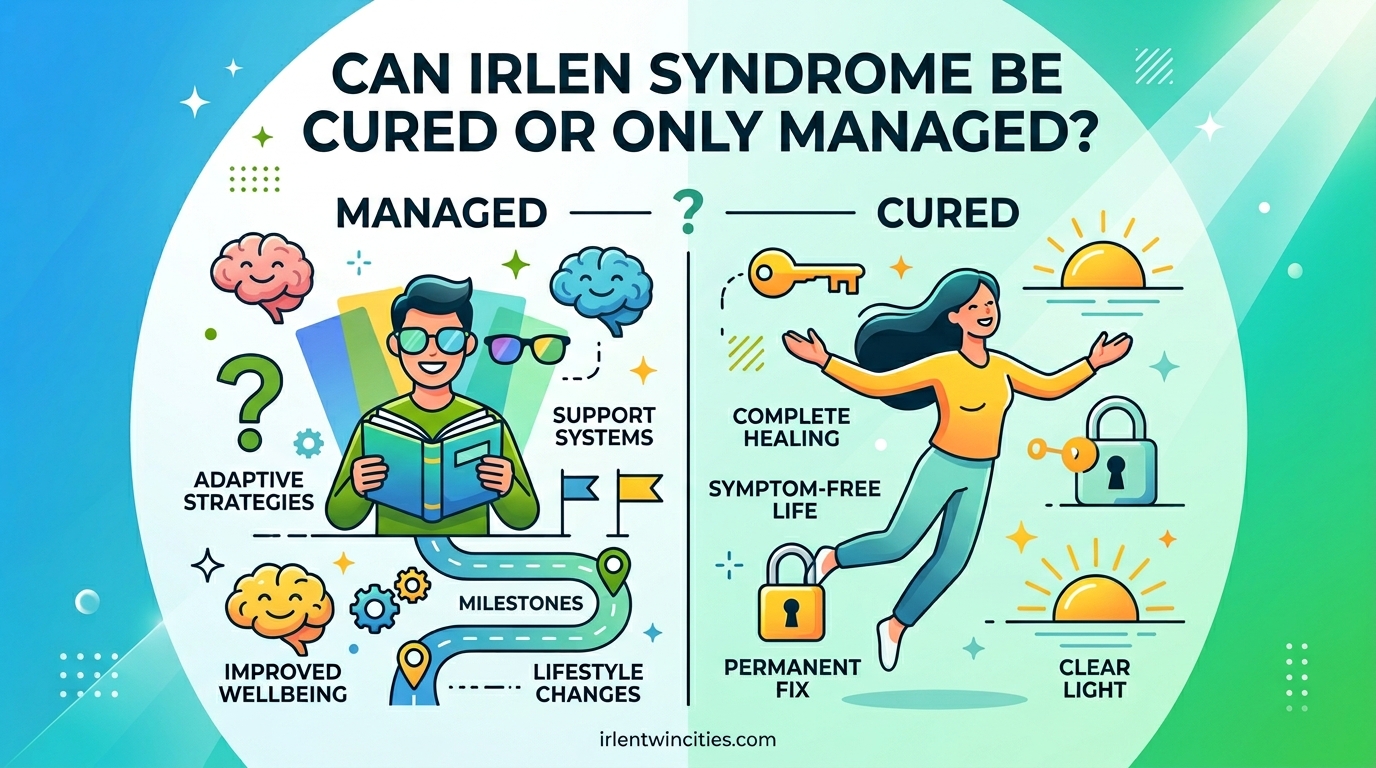
Irlen Syndrome is not curable. It is a lifelong condition that affects how the brain processes visual information, and currently no treatment can eliminate it entirely. However, with proper management strategies, individuals can experience significant relief from symptoms and lead productive lives.
If you or a loved one has been diagnosed with Irlen Syndrome, you may be wondering about treatment options and what the future looks like. This guide provides a comprehensive look at what Irlen Syndrome means for daily life, how it can be managed effectively, and what you can expect long-term. We will cover the condition itself, management strategies that work, and answer the most common questions people have about this perceptual processing disorder.
Table of Contents
What Is Irlen Syndrome?
Irlen Syndrome is a perceptual processing disorder that affects how the brain interprets visual information. Unlike vision problems that can be corrected with glasses or surgery, Irlen Syndrome originates in the brain’s processing of certain wavelengths of light. The condition was formerly known as Scotopic Sensitivity Syndrome or Meares-Irlen Syndrome.
Understanding Perceptual Processing Disorder
The brain of someone with Irlen Syndrome has difficulty processing specific wavelengths of light. This causes visual distortions, discomfort, and processing difficulties when reading or being exposed to certain lighting conditions. Unlike eye exams that check eye health and visual acuity, Irlen Syndrome requires specialized screening to detect.
Research from Amen Clinics has shown differences in brain function in individuals with Irlen Syndrome. The condition is not about seeing things incorrectly with the eyes, but rather how the brain interprets visual stimuli. This distinction is important because it explains why standard eye examinations often miss Irlen Syndrome entirely.
Signs and Symptoms
Symptoms of Irlen Syndrome vary from person to person but commonly include light sensitivity, headaches when reading, difficulty tracking text on a page, and visual distortions such as words appearing to move, blur, or double. Many individuals also experience eye strain, fatigue, and difficulty concentrating during extended reading tasks.
Beyond reading, some people with Irlen Syndrome report problems with depth perception, motion sickness, and discomfort in fluorescent lighting environments. These symptoms can significantly impact academic performance, work productivity, and daily activities. The severity of symptoms often varies depending on lighting conditions, fatigue levels, and the complexity of visual tasks being attempted.
Can Irlen Syndrome Be Cured?
The direct answer is no. Irlen Syndrome cannot be cured. The condition does not go away on its own, and there is no medical intervention, surgery, or therapy that can eliminate it entirely. This is a lifelong condition that individuals manage rather than cure.
The Reality of Living with Irlen Syndrome
Those living with Irlen Syndrome do not “grow out of” the condition. Forum discussions and real user experiences confirm that symptoms persist into adulthood. Many adults who were diagnosed later in life report that they had struggled with symptoms for years before receiving proper identification and support.
Some individuals do experience changes in symptom severity over time, particularly in response to lighting conditions and environmental factors. However, the underlying processing difference in the brain remains constant. Managing symptoms effectively requires ongoing use of interventions and accommodations.
Why Management Is the Key
Since a cure does not exist, management becomes the primary approach for dealing with Irlen Syndrome. Effective management can dramatically reduce symptoms and improve quality of life. Many people who use appropriate colored overlays or tinted lenses report immediate relief from reading difficulties and visual stress.
Our team has reviewed numerous accounts from individuals who have found meaningful symptom reduction through management strategies. While results vary, and some people experience mixed outcomes, the consensus is that proper management makes a significant difference in daily functioning. The goal is not to cure the condition but to minimize its impact on learning, work, and daily activities.
How Irlen Syndrome Is Diagnosed
Irlen Syndrome is diagnosed through specialized screening by a certified Irlen screener or diagnostician. This is not part of a standard eye exam or vision screening. The process involves assessing how an individual responds to different colors of overlays and tinted lenses.
The Screening Process
During an Irlen screening, a trained professional presents various colored overlays while the individual reads text. The screener looks for improvements in reading fluency, reduced visual distortions, and increased comfort. For more comprehensive diagnosis, a diagnostician can determine the precise colored lenses needed for custom Irlen glasses.
The screening typically takes 30 to 60 minutes. Some individuals report immediate benefits during screening, while others may need to try several color combinations before finding what works for them. It is important to understand that the color that helps one person may not help another, which is why personalized assessment is essential.
What to Expect During Assessment
A full assessment by an Irlen diagnostician involves more detailed testing to determine the precise spectral filters needed. This may include measuring brain activity or conducting more extensive reading and visual processing tests. The diagnostician will identify the exact lens tint and density required for optimal results.
Finding a certified Irlen provider can be challenging depending on location. The Irlen Institute maintains a directory of certified screeners and diagnosticians. Some optometrists and occupational therapists also offer Irlen screening services. The cost of screening and lenses varies, and insurance coverage is not always available, which many forum users have noted as a significant concern.
Who Is Affected by Irlen Syndrome?
Irlen Syndrome affects individuals of all ages and backgrounds. It is estimated to affect approximately 15 to 20 percent of the general population, though many remain undiagnosed. The condition is often identified in children who struggle with reading, but adults can also be diagnosed at any age.
Relationship to Dyslexia, ADHD, and Autism
Irlen Syndrome frequently occurs alongside other conditions. Research indicates high co-occurrence rates with dyslexia, ADHD, and autism spectrum disorders. Many individuals with these diagnoses find that their visual processing difficulties are separate from but related to their primary condition.
The relationship between Irlen Syndrome and these conditions is complex. Some symptoms overlap, which can make diagnosis challenging. For example, reading difficulties in someone with dyslexia may be compounded by underlying Irlen Syndrome. Addressing both conditions separately often produces better outcomes than focusing on one alone.
Research has not established that Irlen Syndrome causes these other conditions, nor that it is caused by them. Instead, the conditions appear to co-occur, and each requires its own assessment and management approach. This is why comprehensive evaluation is important when multiple processing difficulties are present.
Management Strategies for Irlen Syndrome
Effective management of Irlen Syndrome involves multiple approaches tailored to the individual. Since the condition affects people differently, management plans should be personalized based on screening results and individual needs. The primary strategies include colored overlays, tinted lenses, environmental modifications, and accommodations in educational and workplace settings.
Colored Overlays and Tinted Lenses
Colored overlays are plastic sheets placed over reading materials. They come in various colors and tints, and the right overlay can reduce visual distortions and reading strain. Many users report that words become clearer, stop moving, and remain stable on the page when using an appropriate overlay.
Precision-tinted lenses, commonly known as Irlen glasses, provide similar benefits in a more convenient form. These are custom-made with the specific color and density determined during assessment. Some individuals prefer overlays for reading, while others find lenses more practical for all-day use.
Results vary among users. Forum discussions reveal that some people experience immediate and dramatic improvement with colored lenses, while others find only modest benefits or no improvement at all. This variability is important to acknowledge. Not everyone responds equally to color-based interventions, and this does not mean the condition is not real for those who do not benefit.
Environmental Modifications
Environmental changes can reduce symptoms significantly. This includes adjusting lighting conditions by using full-spectrum lighting instead of fluorescent lights, positioning seating away from windows or harsh overhead lighting, and taking regular breaks during extended visual tasks.
Many individuals with Irlen Syndrome find that LED lighting and fluorescent lighting cause more discomfort than natural daylight or incandescent lighting. Workplace modifications such as desk lamp placement and screen filter usage can help reduce visual stress. These changes require ongoing attention but can make a meaningful difference in daily comfort and productivity.
Accommodations and Support
Academic and workplace accommodations can support individuals with Irlen Syndrome. These may include extended time on tests, permission to use colored overlays or lenses during exams, assistive technology such as text-to-speech software, and seating arrangements in classrooms or meeting rooms.
Documentation from a qualified Irlen diagnostician may be needed to obtain formal accommodations. In educational settings, this may fall under disability services. Adults in the workplace should discuss accommodations with their employer, though forum users have noted that workplace accommodations can be difficult to negotiate, particularly when needing to wear tinted glasses during video calls or in customer-facing roles.
Living with Irlen Syndrome
Living successfully with Irlen Syndrome means understanding your triggers and management options. Many people with the condition lead productive lives with appropriate support. The long-term outlook is positive for those who receive proper diagnosis and implement effective management strategies.
Quality of life depends largely on early identification and access to appropriate interventions. Without proper management, the condition can significantly impact academic achievement, career opportunities, and daily functioning. Many adults who were diagnosed late report years of unnecessary struggle that could have been avoided with earlier intervention.
Community support is valuable. Online forums and local support groups provide spaces to share experiences, management tips, and encouragement. Connecting with others who understand the challenges can make a significant difference in emotional well-being and practical day-to-day strategies.
Frequently Asked Questions
Does Irlen Syndrome go away?
Is Irlen Syndrome considered a disability?
Irlen Syndrome can qualify as a disability under certain circumstances, particularly when it significantly impacts academic performance, work functioning, or daily activities. In educational settings, students may be eligible for accommodations under disability services. Workplace accommodations may also be available with proper documentation.
Is Irlen Syndrome linked to autism or ADHD?
Irlen Syndrome frequently co-occurs with autism and ADHD, but the relationship is not fully understood. Research shows high rates of co-occurrence, meaning many individuals with these conditions also have Irlen Syndrome. However, Irlen Syndrome is a separate condition with its own diagnostic criteria and management approaches.
What happens if Irlen Syndrome goes untreated?
If left untreated, Irlen Syndrome can significantly impact academic achievement, career advancement, and daily functioning. Individuals may continue to struggle with reading, experience chronic headaches and eye strain, and face unnecessary difficulties in educational and workplace settings. Early identification and management lead to better long-term outcomes.
Conclusion
Irlen Syndrome cannot be cured, but it can be managed effectively. The condition is lifelong, and management strategies must be ongoing rather than temporary. With proper identification, appropriate colored overlays or tinted lenses, environmental modifications, and necessary accommodations, individuals with Irlen Syndrome can achieve significant symptom relief and lead productive lives.
The long-term outlook for those with Irlen Syndrome is positive when they have access to proper diagnosis and effective management strategies. If you suspect you or someone you know has Irlen Syndrome, seeking evaluation from a certified Irlen screener or diagnostician is an important first step. Early intervention makes a meaningful difference in academic performance, workplace success, and daily quality of life.
Understanding that Irlen Syndrome is managed rather than cured helps set realistic expectations. The goal is not perfection but continued improvement in how you or your loved one functions in daily life. With the right support and strategies, managing Irlen Syndrome becomes part of a successful, fulfilling life rather than a limitation on it.