
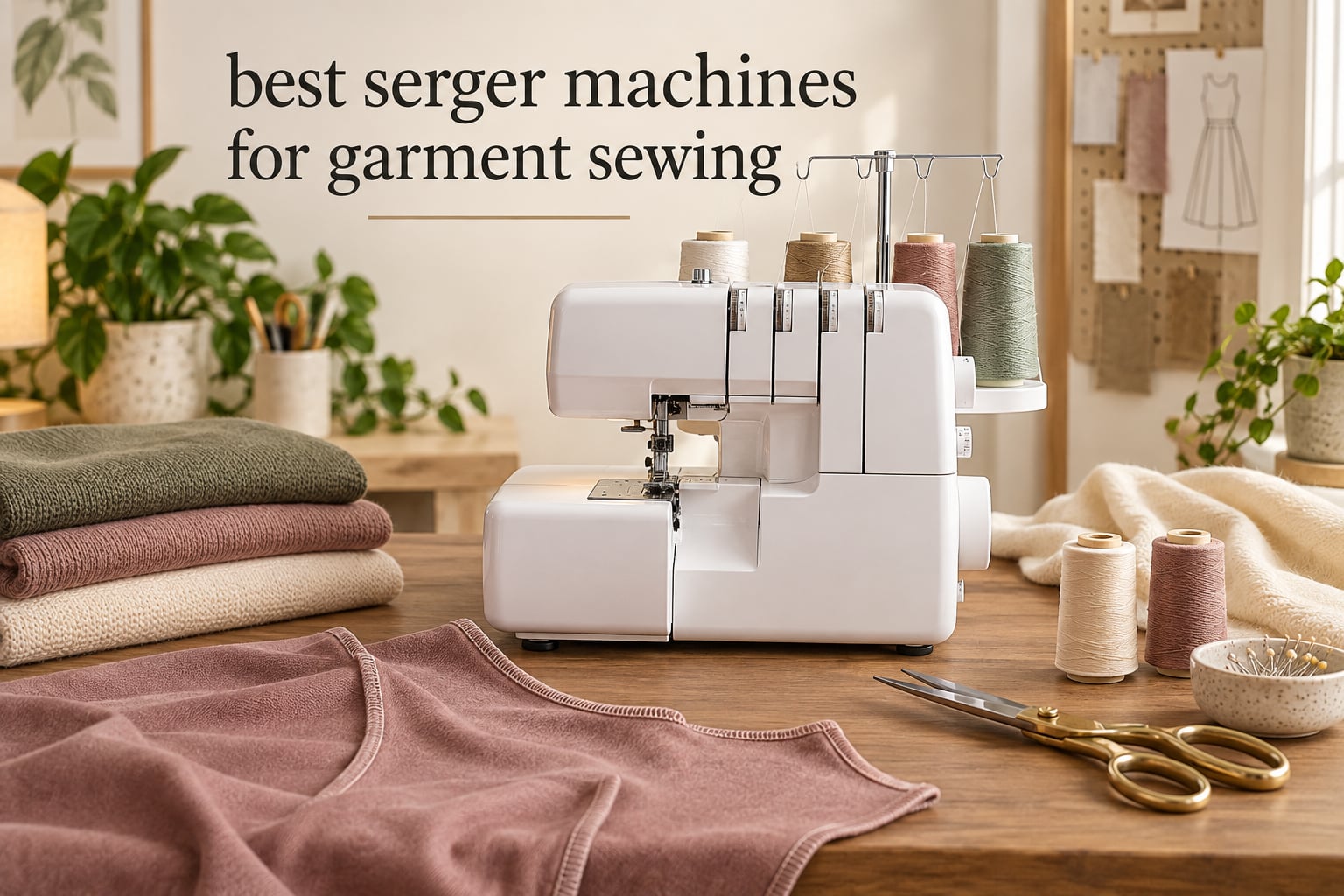
A serger is the machine that turns a raw, fraying seam allowance into a finished garment seam in a single pass. It does two jobs at once: it stitches the seam and trims the excess fabric away, which is why garment sewists call it the second machine in the studio. Our team compared ten of them on the things that decide whether a garment comes out looking homemade or looking retail, and every machine in our comparison of the best serger machines for garment sewing shares a short list of traits: a metal frame, a real differential feed, and a threading path you can learn in an afternoon.
None of these machines replaces a sewing machine. A serger cannot set a dart, insert a zipper, or topstitch a pocket. What it does is cut your seam finishing time dramatically and give knit seams the stretch they need to survive wearing. Most garment sewists I know end up running the two in a specific order, and I cover that workflow later in this guide.
If you are still building a machine collection, our guides to the best sewing machines for fashion designers and the best beginner sewing machines for jeans cover the side of the studio that handles construction. This guide covers the side that handles the seam finish.
Everything below is based on published specification data, owner review patterns, and the recurring failure points that show up again and again in sewing communities. Where a machine has a well-known rough edge, I say so plainly, because a serger that frustrates you in month one usually ends up unused in month six.
Table of Contents
Top 3 Serger Picks for Garment Sewing in 2026

Brother 1034D Serger Overlock Sewing Machine
- 1300 stitches per minute
- Metal frame
- Color-coded threading
- Three accessory feet
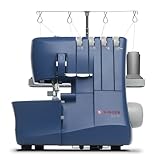
SINGER S0230 High Speed Overlock Serger
- 2/3/4 thread capability
- Free arm
- Adjustable differential feed
- 1300 stitches per minute

Brother ST4031HD Heavy Duty Serger
- Carbon steel blade
- Large extension table
- 1300 stitches per minute
- Color-coded thread guides
The Brother 1034D takes the top spot because it does the core job well for the widest range of fabrics, and because it has the deepest pool of owner feedback of anything on this list. The SINGER S0230 earns the value slot with a free arm at a tier where most machines of that shape give it up. The Brother ST4031HD is the one to buy if your garments are canvas, denim and layered knits rather than jersey and chiffon.
All Ten Sergers at a Glance in 2026
| Product | Specifications | Action |
|---|---|---|
| Brother 1034D Serger Overlock Sewing Machine |
|
Check Latest Price |
| SINGER S0230 High Speed Overlock Serger |
|
Check Latest Price |
| Brother ST4031HD Heavy Duty Serger |
|
Check Latest Price |
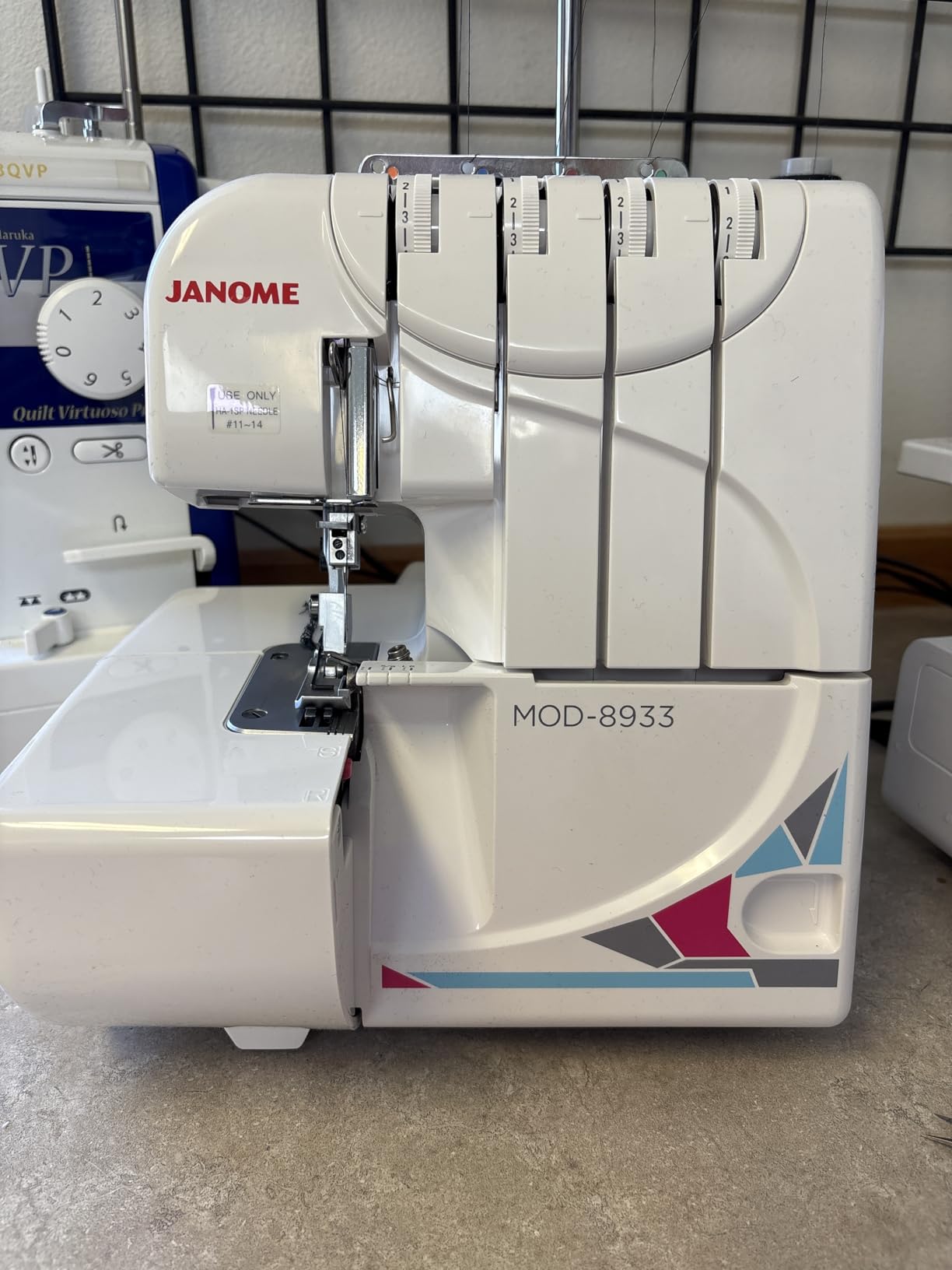
 Janome MOD-8933 Serger Janome MOD-8933 Serger |
|
Check Latest Price |
 JUKI MO-644D Portable Serger JUKI MO-644D Portable Serger |
|
Check Latest Price |
 SINGER X5004-HD Serger Overlock Machine SINGER X5004-HD Serger Overlock Machine |
|
Check Latest Price |
 SINGER S0100 High Speed Serger SINGER S0100 High Speed Serger |
|
Check Latest Price |
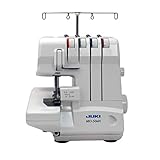 Juki MO-50E Serger Juki MO-50E Serger |
|
Check Latest Price |
 VEVOR 4-434 Serger Overlock Machine VEVOR 4-434 Serger Overlock Machine |
|
Check Latest Price |
 FEIYUE FY505 Serger Overlock Machine FEIYUE FY505 Serger Overlock Machine |
|
Check Latest Price |
1. Brother 1034D Serger Overlock Sewing Machine: The All-Rounder
Brother 1034D Serger Overlock Sewing Machine
3 and 4 thread
1300 SPM
Metal frame
8 lb
5 year limited parts warranty
Pros
- Easy color-coded threading
- Handles denim and heavy layers
- Fast 1300 stitches per minute
- Rolled hem and flatlock capability
- Differential feed handles stripes
Cons
- No coverlock or chain stitch
- Needs pre-oiling before first use
- Loud with a motor that runs hot
- Heavy with an awkward handle
This is the machine I keep coming back to for garment work because it does the unglamorous seams well. A cotton popover, a pair of elastic-waist trousers, a jersey tee with a stretchy seam allowance, all come out of it with a clean edge and no skipped threads. At 1300 stitches per minute it is fast enough to keep up with a serging-first workflow where you overlock seams as you assemble each panel.
Threading is where it wins for beginners. The color-coded upper thread guide and lower looper path mean you are following colors rather than counting guides, and the underlooper threader handles the part most people get stuck on. Sewing communities describe it the same way in forum threads: straightforward to set up, which is exactly why it has so much owner feedback behind it.
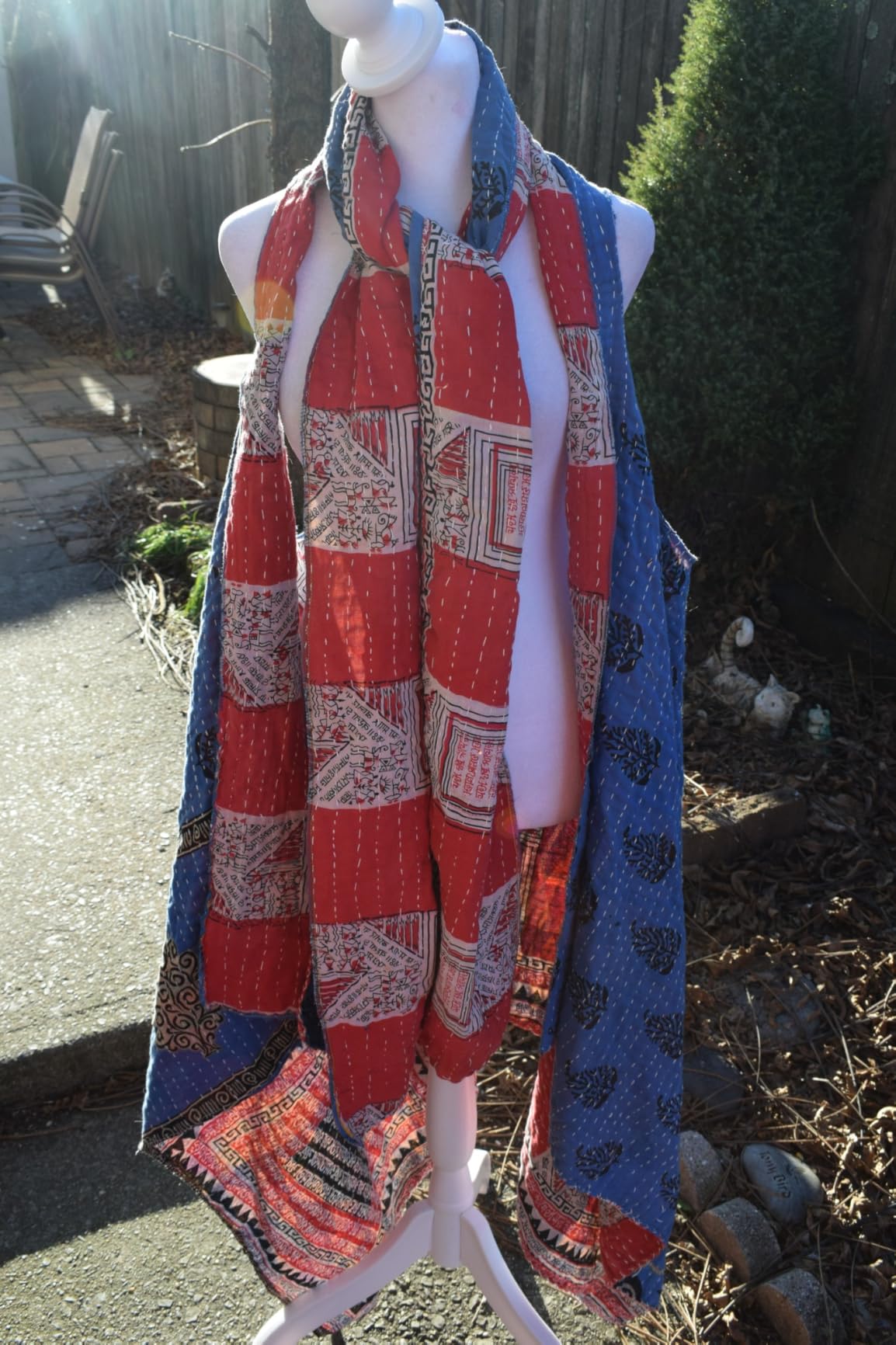
The metal frame is the part that separates it from cheap plastic bodies. Owners push it through multiple layers of denim and it stays stable instead of juddering, and the differential feed does its job on knits so you are not re-stitching every seam. The three snap-on feet cover standard work, gathering, and blind stitch, which covers most of what a garment project asks for.
Two things catch people out. The machine must be manually pre-oiled before its first use, and that instruction is buried deep in the manual rather than flagged up front. It also runs louder than the price suggests and the motor gets hot during long sessions, so it earns its spot on a sturdy table rather than a light sewing desk.
How it handles knit garment seams
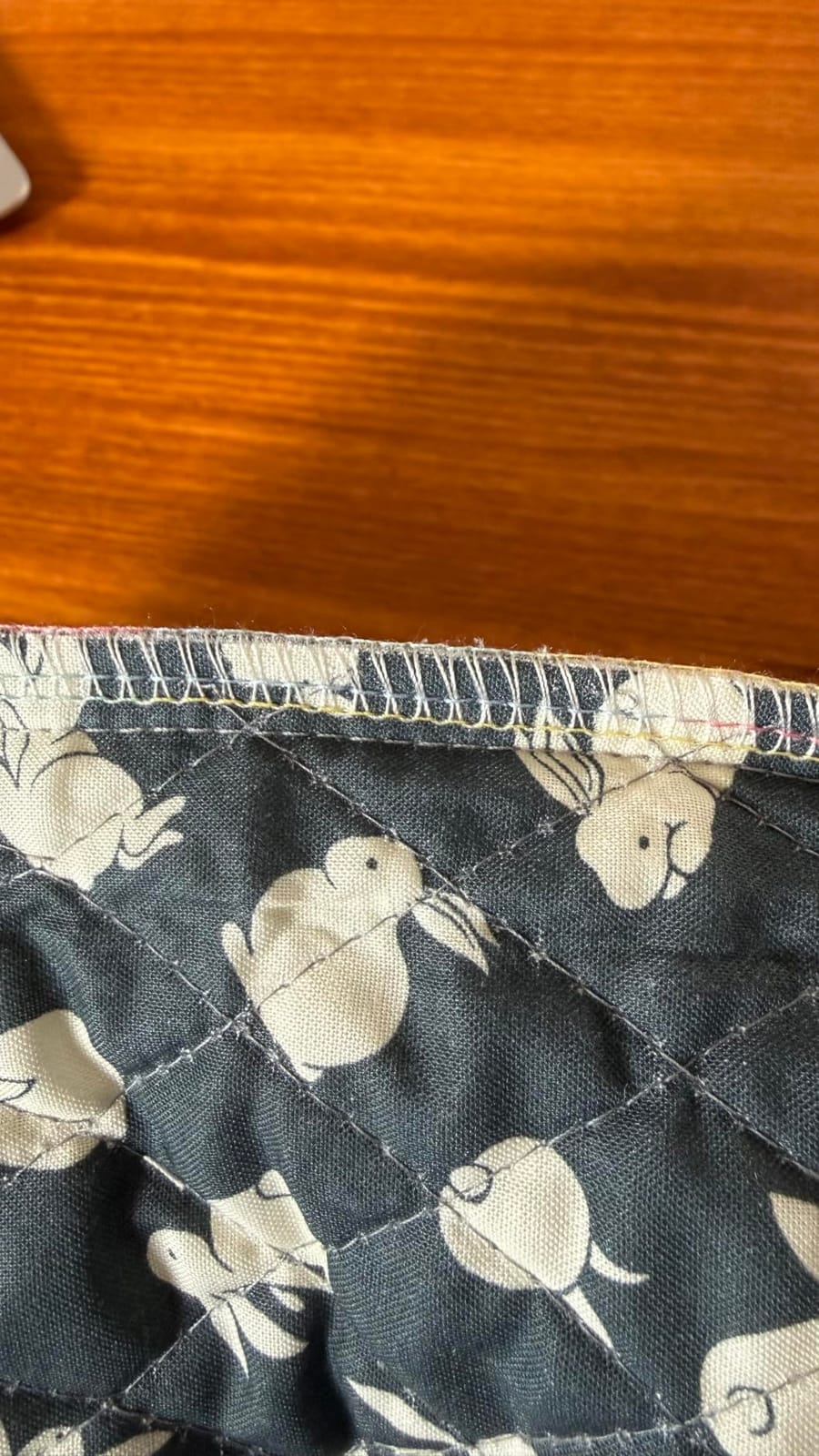
Jersey, rib knit and lightweight fleece are where the differential feed earns its keep. Because the feed dogs can be slowed independently of the needle, the fabric arrives at the needles without stretching, and you get a seam that recovers instead of a wavy one. It also handles stripes and checks without drifting, which matters when the seam is visible on the outside of a garment.
The 3 and 4 thread modes let you drop to 3 threads for knits to reduce bulk in the seam allowance, which keeps a T-shirt neckline from feeling stiff. Rolled hem and flatlock are both available, so lightweight edges can be finished without a separate machine.
Where it will frustrate you
There is no coverlock or chain stitch on this machine, so if your garment plan depends on a true safety stitch you will need something else. It weighs 8 pounds and the handle is not well designed, so moving it between a sewing table and a cutting surface is more of a lift than a carry.
The included instructional DVD is small on screen and does not show threading detail clearly, so plan on a separate video lesson the first time. Once threaded it stays threaded, which is why the long-term owners are so positive about it.
2. SINGER S0230 High Speed Overlock Serger: Best Value With a Free Arm
SINGER® S0230 Navy Blue High Speed Overlock Serger, 2-3-4 Thread Capability
2/3/4 thread
1300 SPM
Free arm
13.5 lb
Adjustable differential feed
Pros
- Free arm for sleeves and cuffs
- Color-coded setup
- Differential feed handles knits and sheers
- 1300 stitches per minute
- Accessories stored in the cloth plate
Cons
- No automatic threading
- Included thread spools are small
- Manual threading takes practice
The thing that makes this one stand out for garment work is the free arm. When you are finishing a sleeve seam or a cuff on a child’s shirt, a machine with an open arm lets you slide the tube on without fighting a flat bed. Most machines in this shape give that up, and several competitors here do.
It runs 2, 3 or 4 thread modes at 1300 stitches per minute, and the adjustable differential feed is the feature knitters will notice first. Owners report that stretch jersey and sheer voile both come out flat once it is dialled in, rather than stretching on the way to the needle or puckering behind it.
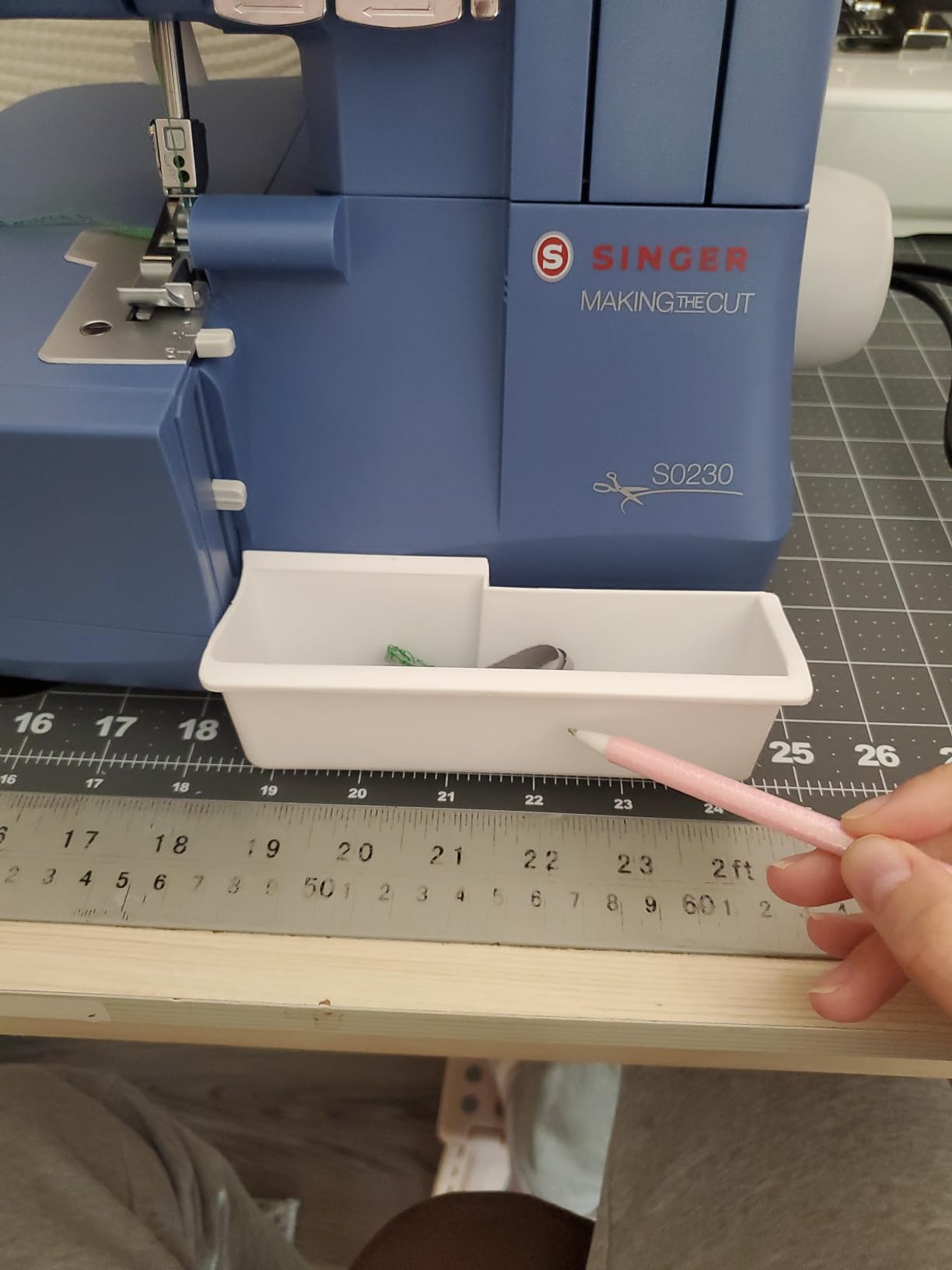
The color-coded threading system keeps setup approachable, and the tweezers, needles and screwdriver live in the cloth plate compartment so you are not hunting for tools mid-project. That is a small thing, but on a serger, where you re-thread often, having the right tweezers within reach is genuinely useful.
The honest limitation is that there is no air or automatic threading here. Every setup is manual, and if you are switching between a rolled hem and a 4 thread seam on the same garment, you will be doing it more than once. Owners who accept that report consistently clean finishes.
When the free arm actually matters
Tubular garments are the reason. Sleeves, cuffs, waistbands, and anything else that has to be turned right side out and fed through a narrow opening. Without a free arm you are working around a wide flat bed, which is slow and produces an inconsistent result on small diameters.
For kids clothing and simple jersey tops, this machine handles the whole job: overlock the seam, rolled hem the neckline, and repeat. That combination on one machine is why it takes the value slot here.
What to watch out for
Threading is entirely manual, so budget an afternoon for the first pass. The supplied thread spools are small and run out quickly, so plan to buy your own cones before starting a batch of garments.
It is also not a heavy-fabric machine. Light to medium weight wovens and knits are its range, and pushing canvas or stacked denim through it will test the motor and the knife.
3. Brother ST4031HD Heavy Duty Serger: Built for Canvas and Denim
Brother ST4031HD Serger, Strong & Tough Serger, 1,300 Stitches Per Minute, Durable Metal Frame Overlock Machine, Large Extension Table, 3 Included Accessory Feet, 12.99 x 14.37 x 17.01 in., White
3 and 4 thread
1300 SPM
Carbon steel blade
17.6 lb
Large extension table
Pros
- Handles thick towels and layered denim
- Switches fabrics without tension changes
- Quiet and smooth running
- Large extension table
- Removable deck section
Cons
- Runs faster than entry models
- Needs regular oiling to stay quiet
- Warranty terms vary by region
This is the workhorse of the group for anyone making garments out of sturdy cloth. Owners report feeding two plies of thick terry, canvas and multiple layers of denim through it, and the feedback is consistent across fabrics. It does not need a tension reset every time you switch from a knit panel to a denim seam.
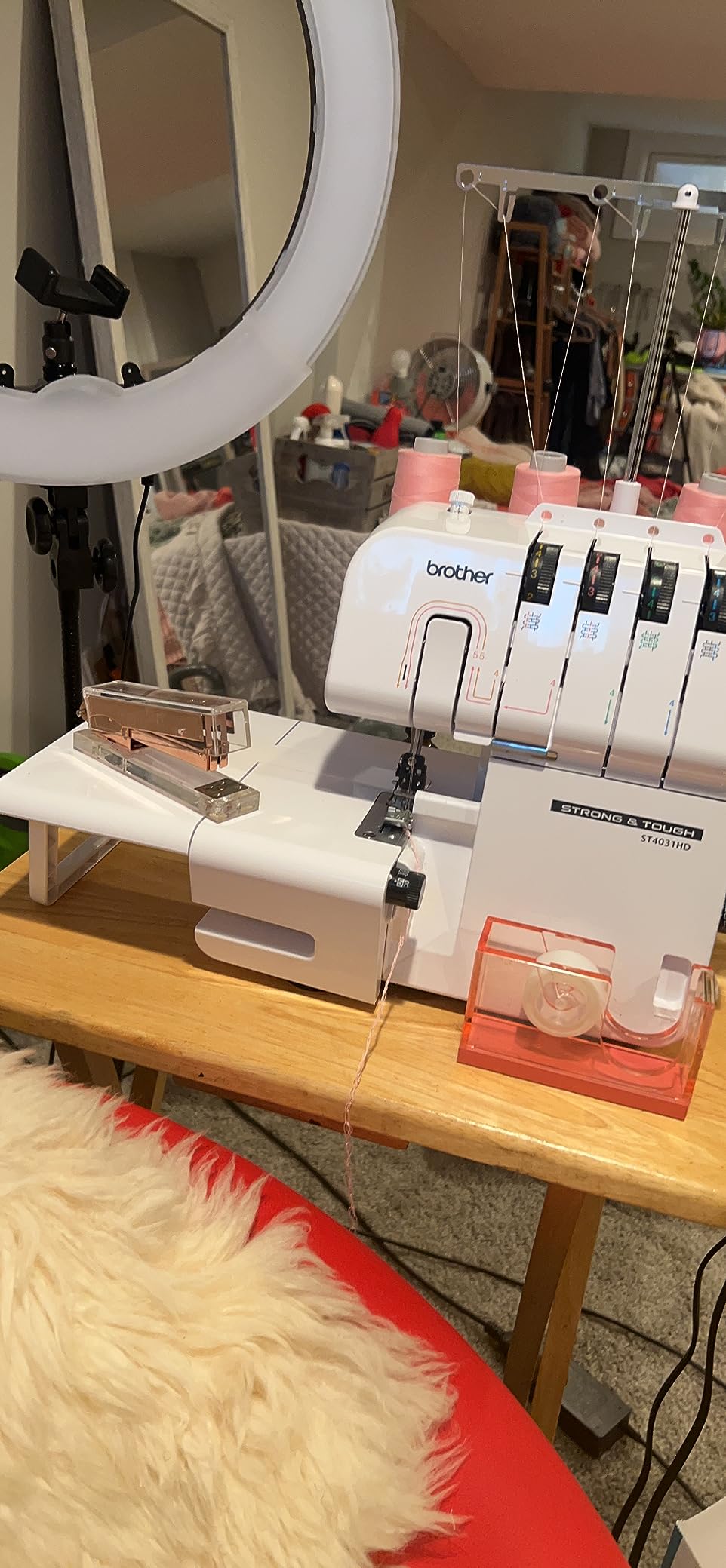
The extra hard carbon steel blade is the reason. It cuts cleanly through thick material rather than chewing the edge, and reviewers single it out when comparing it with lighter blades on entry machines. The large extension table also gets more praise than anything else on this machine, because it keeps bulky fabric flat as it feeds through.
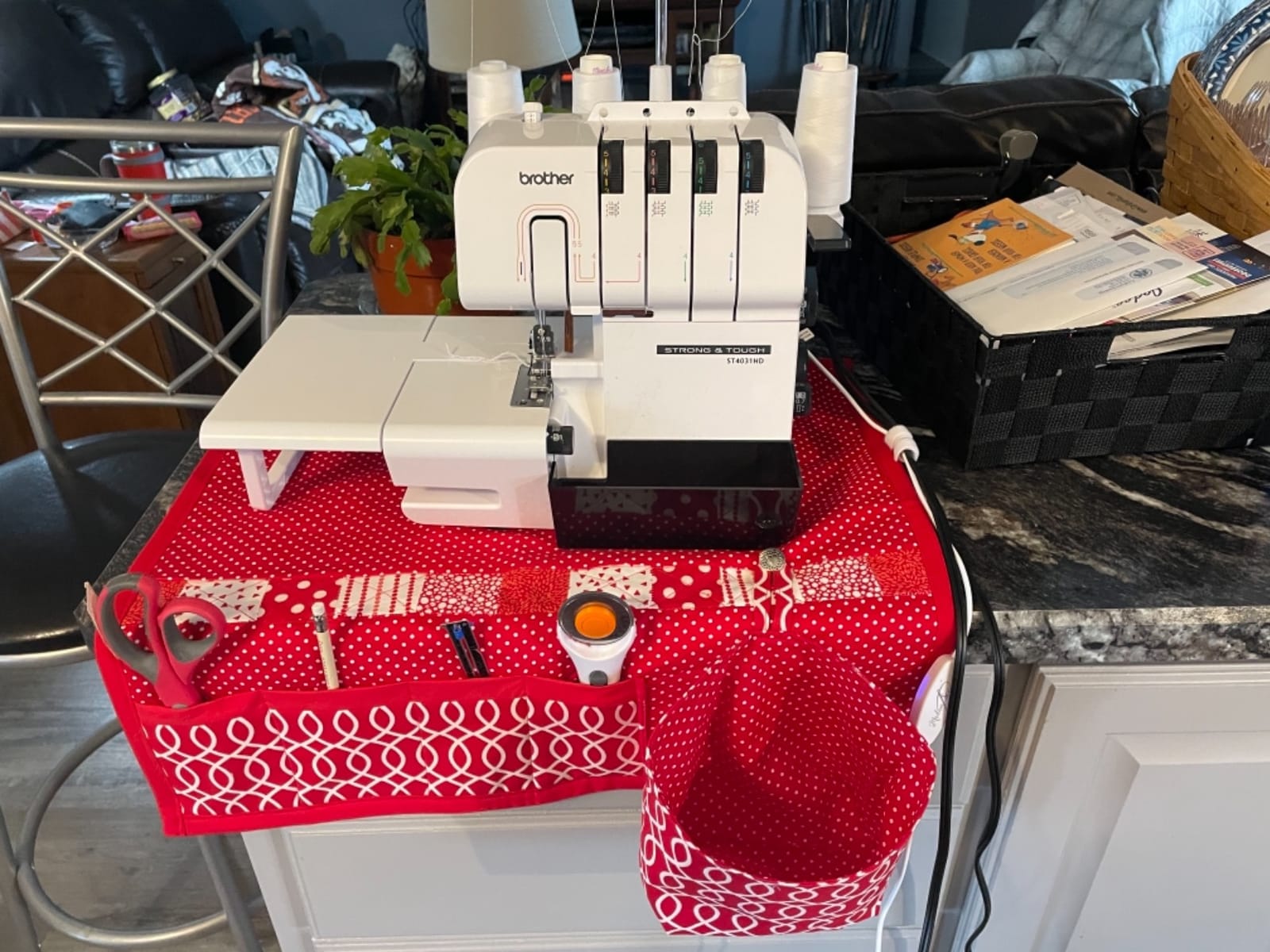
Color-coded thread guides and numbered upper and lower loopers take some of the guesswork out of setup, and the removable deck section handles small pieces. The frame is heavy at 17.6 pounds, which is the point, but it also means you are committing to one spot on the table.
One genuine caution: it runs fast, and several beginners report that 1300 stitches per minute is harder to control than the pace on lighter machines. Learning to ride the foot pedal gently is part of getting comfortable with it.
Where the heavy fabric work pays off
Utility garments, tote bags, work aprons, denim, and anything with a thick seam allowance. This is where a standard 3 and 4 thread machine starts straining and where a carbon steel blade on a metal frame keeps the edge straight. It also does a credible job on t-shirt knit, which matters if you make both.
If your garment list includes more than one heavyweight fabric, this is the machine that will not force you to change your project plans.
Where it falls short
It needs regular oiling, and owners who skip it report the noise creeping up noticeably. There is no coverlock here either, so it stays a 3 and 4 thread machine only. It is also the second heaviest machine in this roundup, so lifting it onto a cabinet is a two-hand job.
It is not a portable machine, and if you planned to take it to a class or a shared studio, look elsewhere in this list.
4. Janome MOD-8933 Serger: The Easiest Rolled Hem to Switch To
Janome MOD-8933 Serger with Lay-In Threading, 3 and 4 Thread Convertible with Differential Feed
3 and 4 thread
Quick change rolled hem
Lay-in threading
Differential feed
14.3 lb
Pros
- Quick rolled hem changeover
- Adjustable presser foot pressure
- Differential feed
- Clean stitches once tension is set
- 25 year limited warranty
Cons
- No free arm
- Manual is unclear on the lower looper path
- Upper knife knob is awkward
- Minimal accessory storage
The MOD-8933 is built around a garment-sewing habit: you finish one seam type, then switch to another. The quick change rolled hem lever does exactly that, and the adjustable presser foot pressure lets you change how the foot holds the fabric without reaching for a screwdriver. For someone making a blouse with a mix of overlocked seams and finished edges, that saves real time.
It handles 3 and 4 thread modes, and the differential feed stops stretching and puckering on knits. Once the tension is dialled in, owners report clean, accurate serge results, and long-term users say tension drift is correctable rather than permanent.
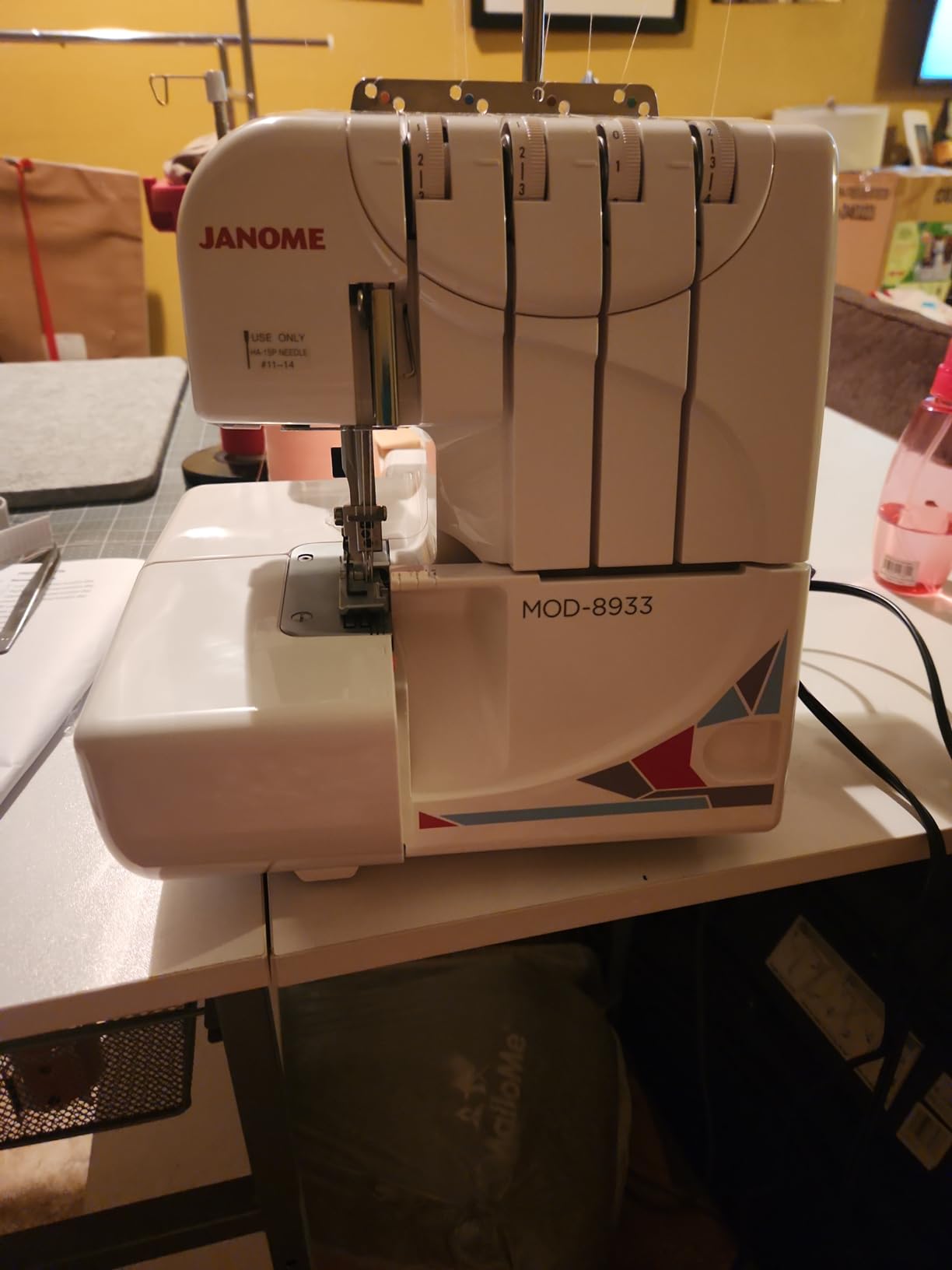
The lay-in threading with color-coded guides means you lay the threads in rather than fishing them through guides, and the lower looper has a pretension slider that helps you start from a known position. It arrives with sample spools already threaded, so you can test it before buying your own thread.
The weak point is threading the lower looper. Owners describe it as fiddly, and say the manual does not explain the path clearly. The upper knife knob is also awkward to operate, and there is no free arm, so tubular pieces will be slower on this machine.
Why rolled hem speed changes a project
A rolled hem is the finish you want on a neckline, a sleeve opening, or a lightweight woven edge. On machines where it requires moving the needle plate and rethreading, you either commit to it for a whole project or skip it. Here you can change in seconds and use both finishes in one garment.
That flexibility is what makes this a good fit for someone sewing complete garments rather than runs of identical seams.
What buyers should know before choosing
No free arm is the biggest practical loss for garment work. Cuffs and sleeve seams will take longer. The awkward upper knife knob also means any time you need to change how much is trimmed, it is a two-handed job.
It comes with a 25 year limited warranty, which is the longest coverage in this roundup and worth noting for anyone buying it to last a decade of garment making.
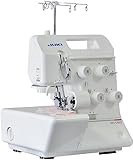
5. JUKI MO-644D Portable Serger: Fastest Top Speed Here
JUKI MO644D Portable Serger, White
2/3/4 thread
1500 SPM
Automatic rolled hem
5 year limited warranty
19 lb
Pros
- 1500 stitches per minute
- Automatic rolled hem
- Dedicated knife drive
- Breakaway looper adjustment
- Brand name reliability
Cons
- No air threading
- Heaviest machine in the roundup
- Manual setup takes practice
The MO-644D is the fastest machine in this roundup at 1500 stitches per minute, and that speed comes from a dedicated knife drive rather than a shared mechanism. If you are producing a run of identical seams, the throughput difference adds up across a project, and it is the reason experienced sewists gravitate to this model.
It runs 2, 3 or 4 thread modes and includes an automatic rolled hem. That combination is unusual at this tier, since automatic rolled hem is normally reserved for 4 thread machines. For garment finishing, it removes one of the most common reasons to own a second machine.
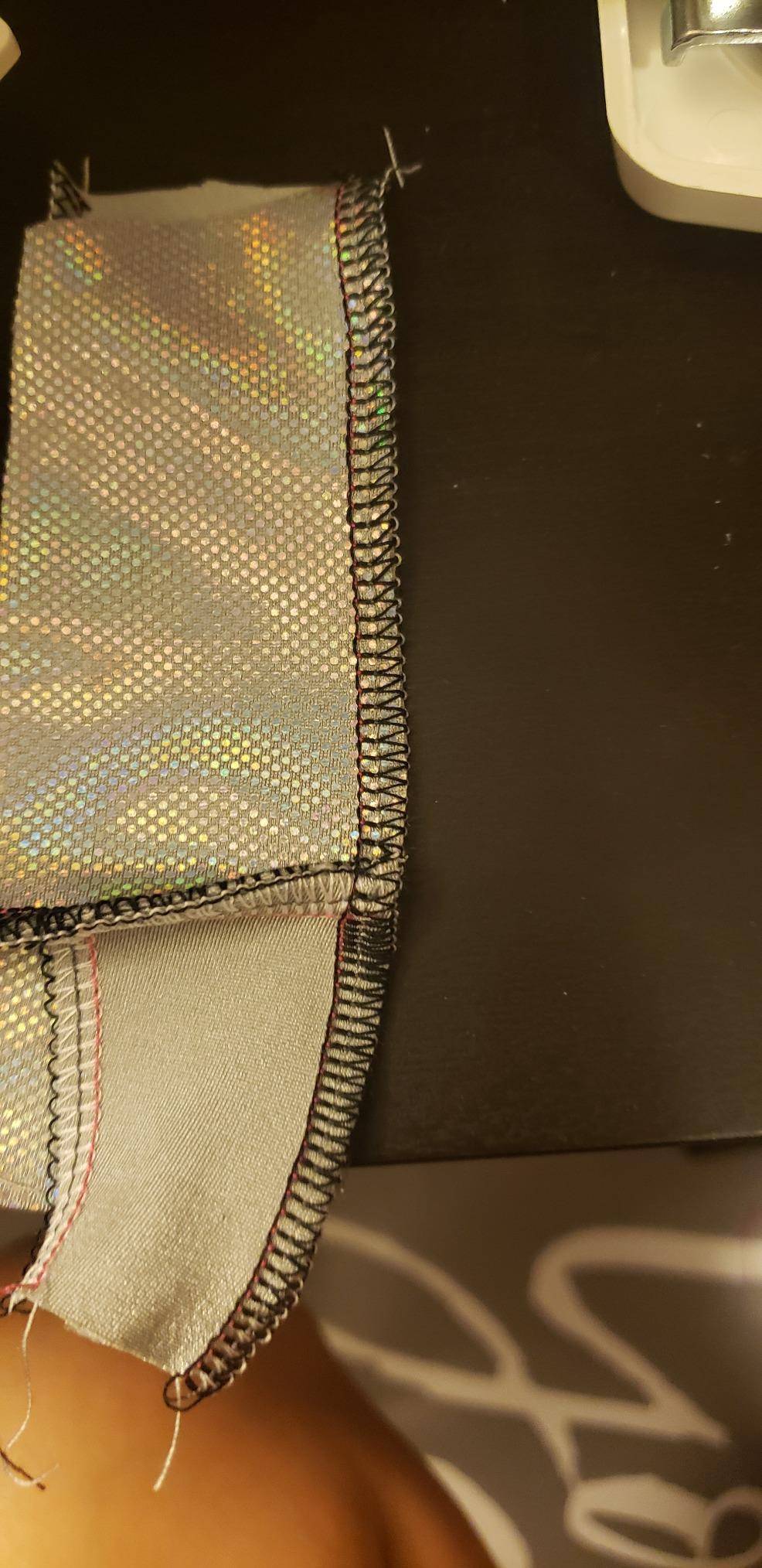
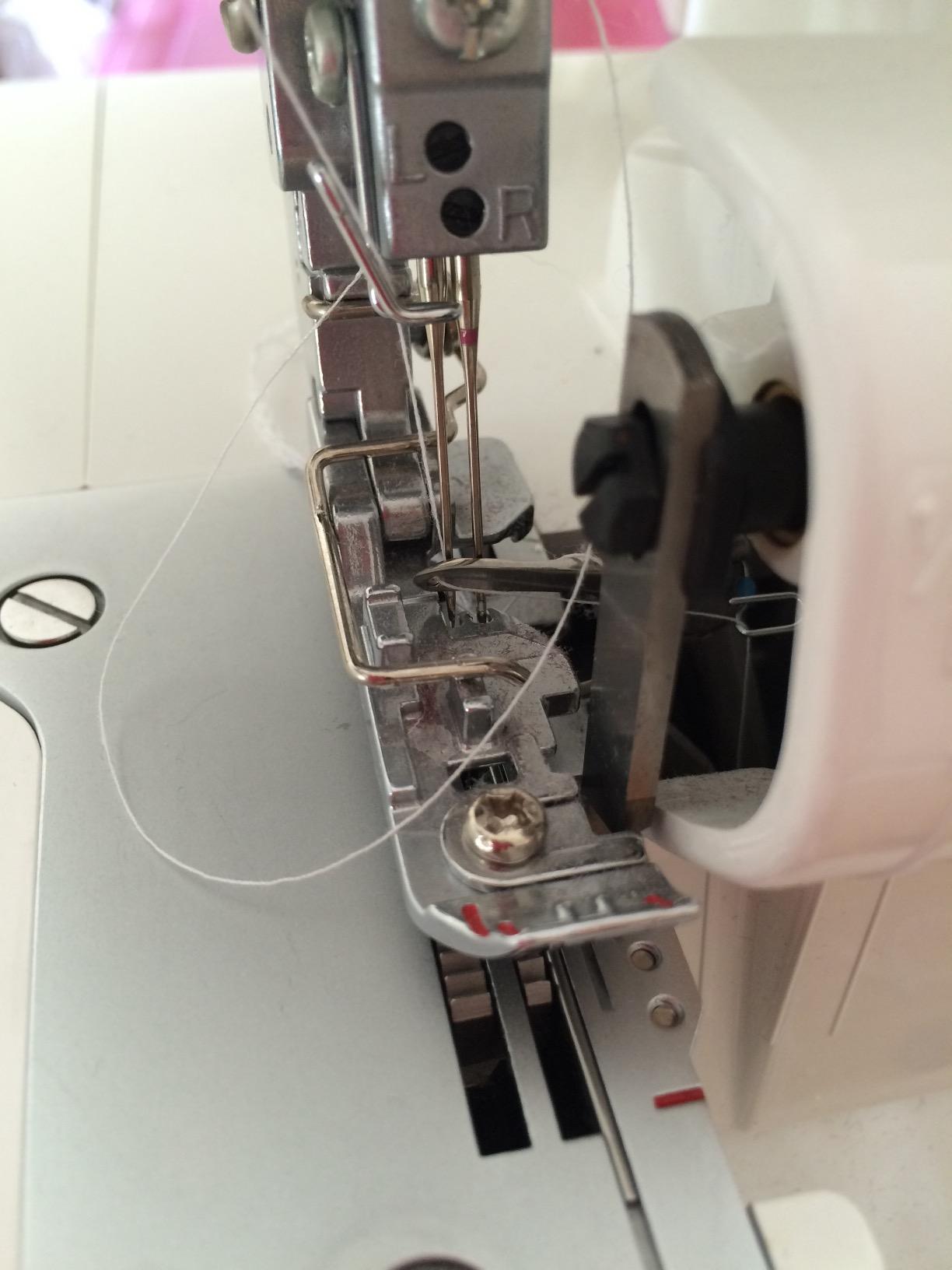
The color-coded threading and breakaway looper adjustment make stitch length and differential feed straightforward to set. It handles light to medium weight fabric cleanly, which covers wovens, dress weight knits and most apparel lining work without any special setup.
There is no air threading here, so setup is fully manual. At 19 pounds it is also the heaviest machine in this list, so despite the portable name you are setting it down where it lives rather than carrying it between rooms.
When speed changes the outcome
High volume work, batch cutting sessions, and anyone producing more than one garment at a time. At 1500 stitches per minute you keep the machine ahead of the fabric, which means less hesitation at the start of a seam and a smoother rhythm across long seam runs.
The dedicated knife drive also means the cut stays consistent at speed, which is where cheaper machines tend to lag behind the stitching and leave a ragged trimmed edge.
Where it may not suit you
If you are new to serging, manual threading plus a 19 pound machine is a lot to learn at once. It also sits at the top of the price range in this group, and the sales rank shows it is a specialist purchase rather than a default first machine.
For heavy fabric, look at the Brother ST4031HD instead. This one is built for speed on lighter cloth.
6. SINGER X5004-HD Serger: The Most Stable Frame at Speed
SINGER® X5004-HD Serger Overlock Machine, 2-3-4 Thread Capability
2/3/4 thread
Six stitch types
1300 SPM
15.5 lb
Dual LED lights
Pros
- Metal frame resists vibration
- Larger cutting knife
- Suction cups stop it walking
- Color-coded guides
- Most owners report clean finished edges
Cons
- Threading is the biggest difficulty
- Thin or missing manual
- Both needles share one screw
- Plastic housing feels less premium
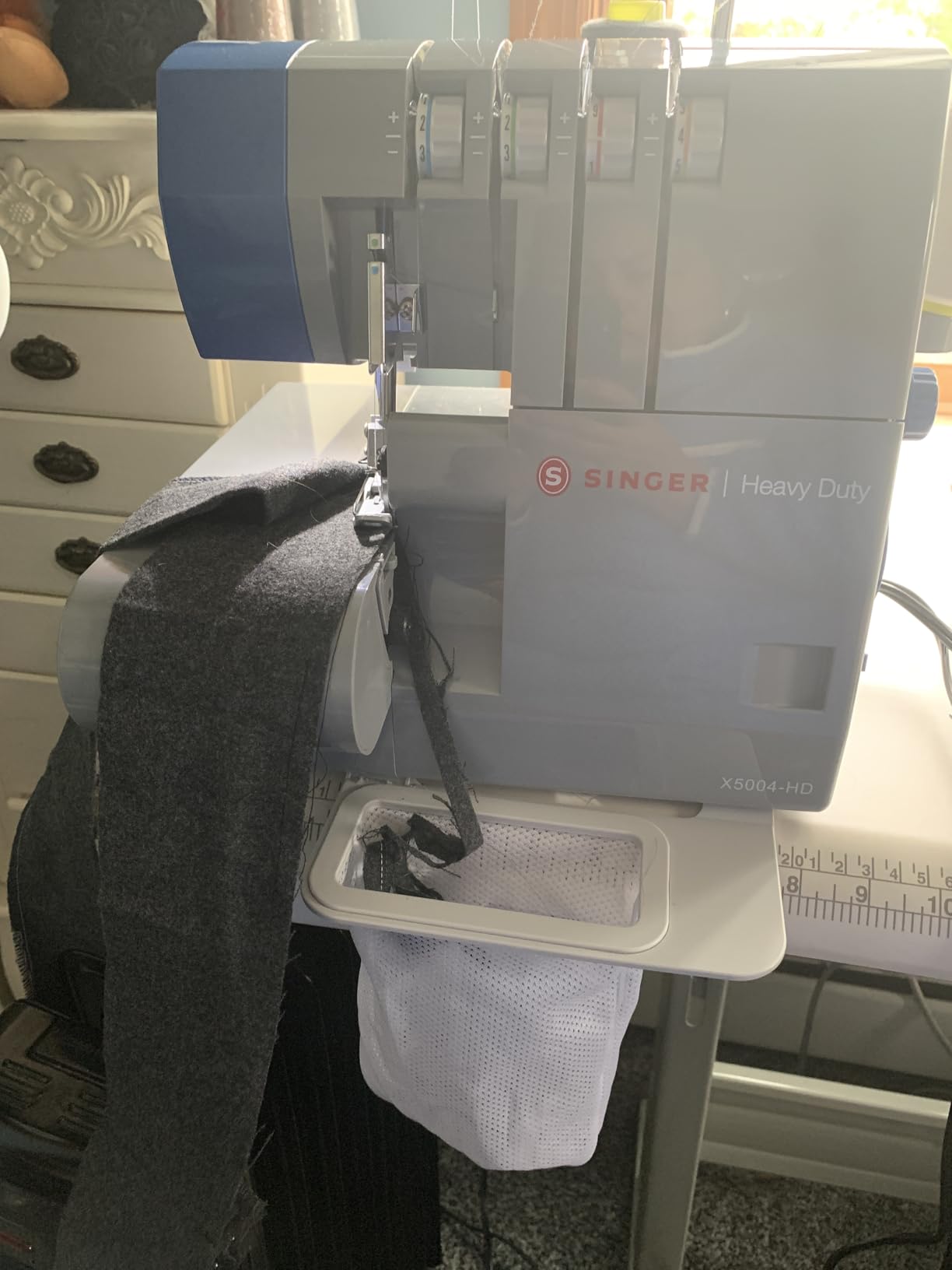
What you notice first on this machine is that it does not move. The heavy-duty metal frame and the suction cups on the base keep it planted, so at speed you get consistent skip-free stitching and the table stays quiet. For anyone who found flat-bed plastic sergers juddering across the surface, that is a real change in working conditions.
The cutting knife is 60% larger than on a standard serger, and that is why it handles thick denim and upholstery-weight material efficiently. With 2, 3 or 4 thread options and six stitch types, it also covers rolled hems and decorative edges without a second machine.
Two LED lights over the work area make threading and trimming far easier than working in shadow, which is a bigger practical benefit than it sounds. The accessory kit lives in the built-in cloth plate compartment, and the color-coded threading points keep setup manageable.
Threading is the defining weakness, and owners are blunt about it. Several describe needing a video and over an hour to get it right, and the tweezers supplied are the wrong shape for the looper path. The manual is thin or missing, and both needles share a single screw, which makes switching to 3 thread mode or a rolled hem frustrating.
Why stability changes stitch quality
Skipped stitches on a serger are usually a vibration problem before they are a tension problem. A frame that does not flex under load keeps needle and looper timing steady, and that is what this machine is built to do. If you sew thick layers or work at full speed, the difference is visible in the seam.
It is also a good fit for small workrooms where a walking machine would be a constant irritation.
What to budget your patience for
Plan a full setup session the first time. The combination of a difficult threading path, unhelpful tweezers and a thin manual is the reason several owners needed video guidance. Once it is threaded, feedback is that it runs well and produces professional-looking edges.
The presser foot barely lifts and the lever is hard to locate, so be aware of that when handling bulky fabric. The plastic outer housing also draws durability questions from some owners, even though the internal frame is metal.
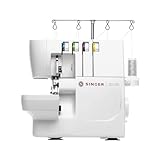
7. SINGER S0100 High Speed Serger: Small Footprint, Light Handling
SINGER® S0100 High Speed Serger Overlock Machine, 2-3-4 Thread Capability
2/3/4 thread
Six built-in stitches
1300 SPM
13.5 lb
1 year manufacturer warranty
Pros
- Lightweight and easy to handle
- Not overly loud
- Metal frame
- Good results on knits and decorative edges
- Broad stitch range
Cons
- Tight threading space
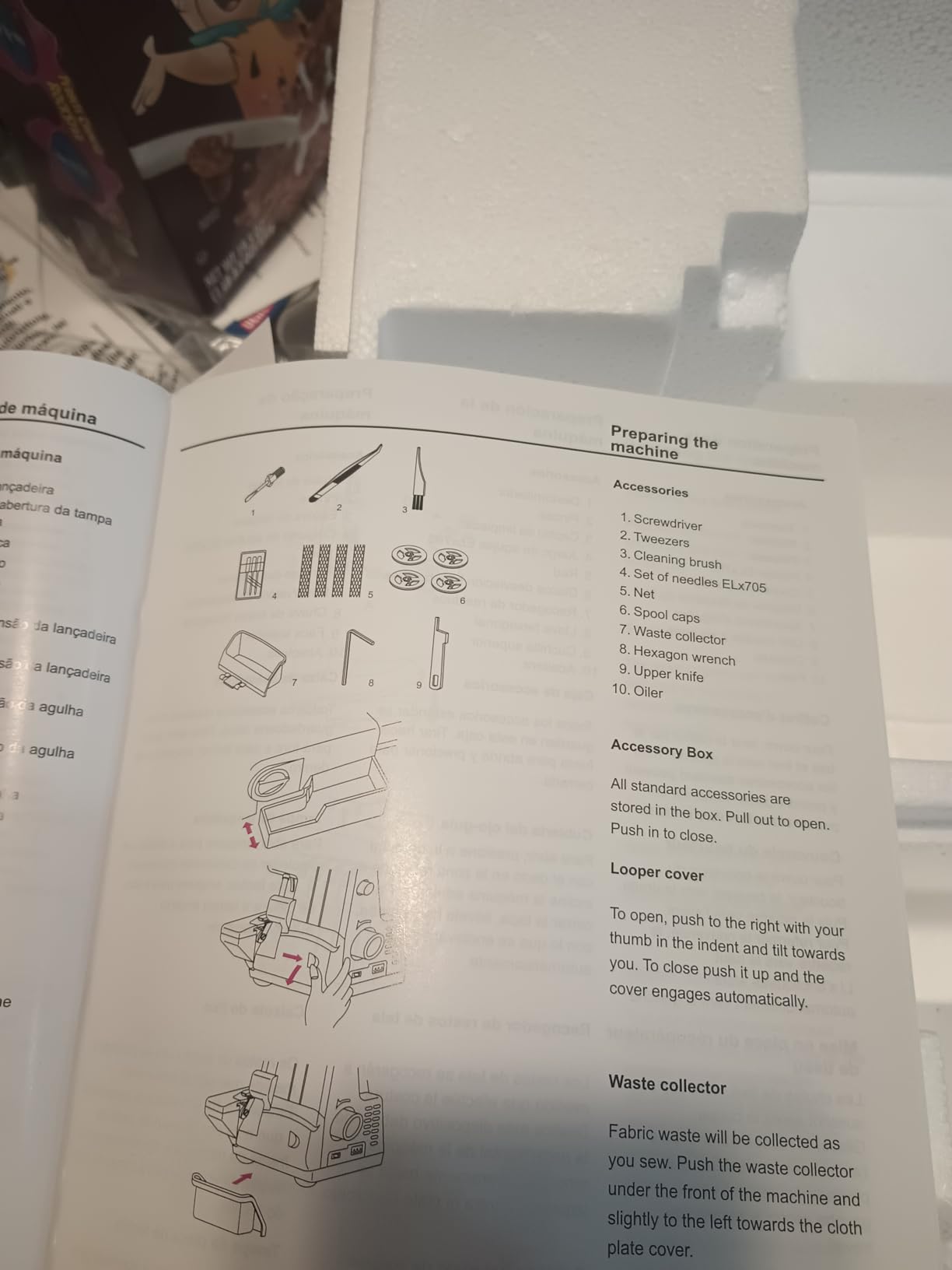
- Printed manual unclear or missing
- Tweezers reported missing
- Moves and shakes on lighter tables
The S0100 is the quiet, easy-to-move option in this list. At 13.5 pounds it is easy to carry between a cutting table and a sewing desk, and owners consistently describe it as not overly loud. If your studio is a shared corner rather than a dedicated craft room, that combination matters more than raw specifications.
It covers 2, 3 or 4 thread modes with six built-in stitches at 1300 stitches per minute, and the adjustable differential feed keeps wavy seams off stretchy fabric. Owners who get past setup report good work on knits and on decorative edges.
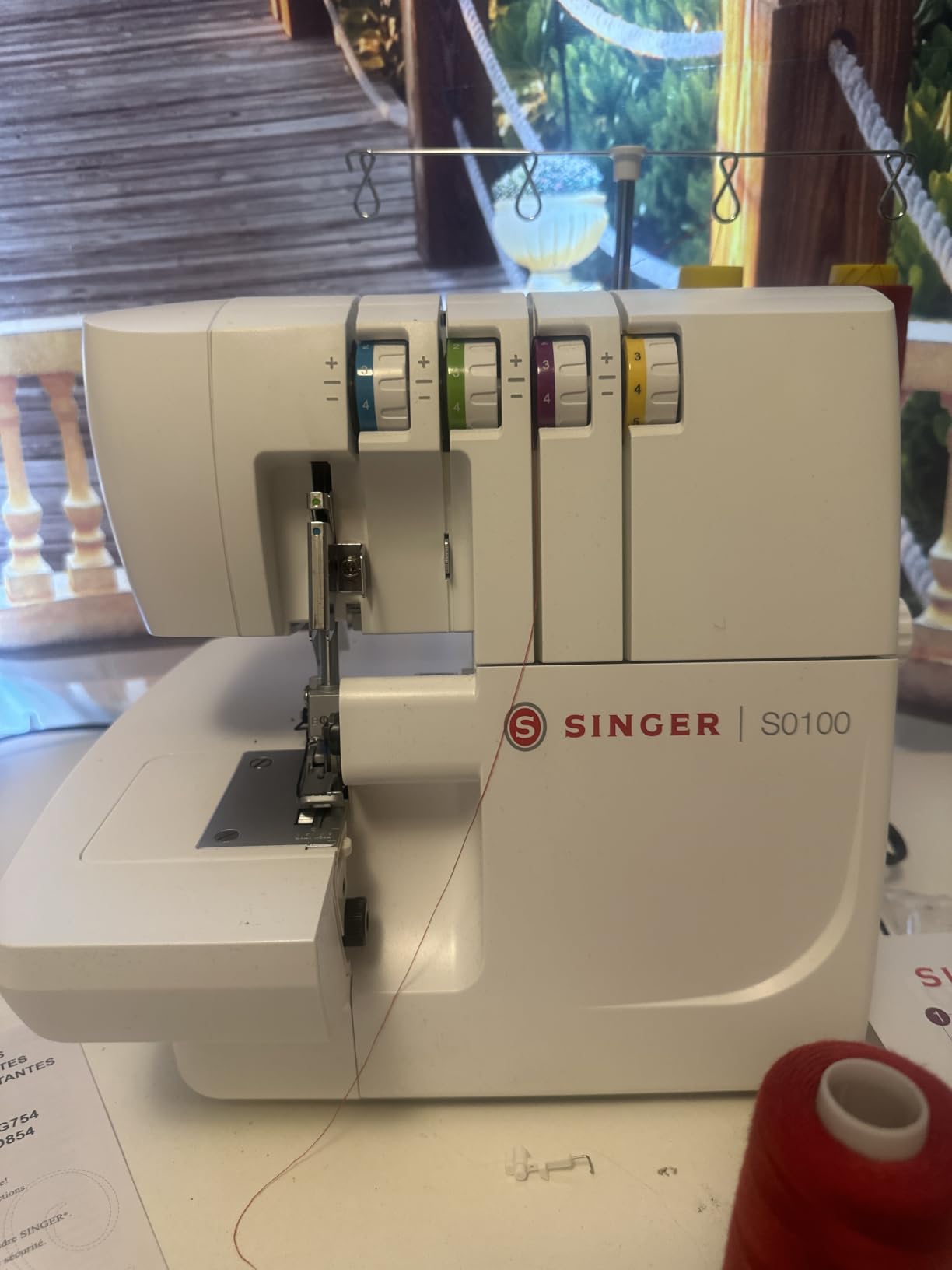
Being straight about the negatives: this machine has the highest share of one-star reviews in the roundup, and the complaints cluster around setup rather than performance. The threading space is tight and hard to reach, especially for smaller hands, and the printed manual is frequently described as missing, conflicting, or badly rendered.
Several buyers also received packages without the listed tweezers, and one described a unit that arrived unthreaded despite being sold as pre-threaded. The warranty is also the shortest here at one year manufacturer coverage.
When a smaller machine is the right call
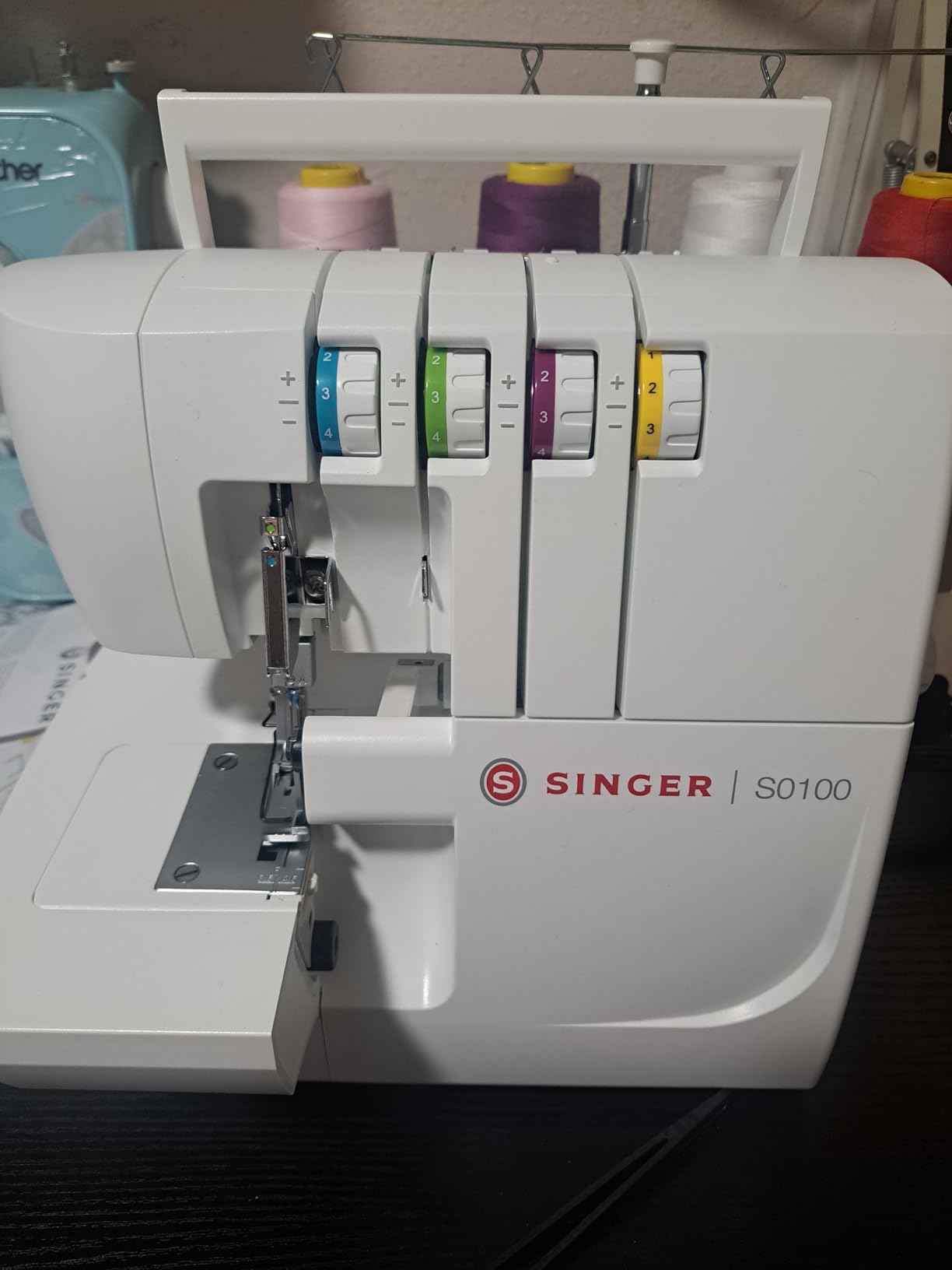
Limited storage, shared workspaces, and beginners who want something they can move without asking for help. The metal frame keeps it more stable than its weight suggests, and the differential feed does the same job as on the larger machines for knit seams.
It is a reasonable first serger for someone who mostly sews light to medium weight garments and does not plan to push heavy cloth through it.
Where it will test your patience
If you have small hands or limited dexterity, the threading path is the issue. Budget time for a video walkthrough before your first project rather than discovering the problem halfway through a seam.
It also moves noticeably on lighter tables, so a clamp or a heavier surface will give you a better result. Check the box contents on arrival and source your own tools before starting.
8. Juki MO-50E Serger: Built-In Rolled Hem With Lay-In Tension
Juki, MO-50E, 3 or 4 Thread Serger, Lay In Tensions, Adjustable Differential Feed, Built In Rolled Hem, Automatic Lower Looper Threader, Retractable Upper Knife (MO-50E/UL)
3 and 4 thread
Automatic lower looper threader
Built-in rolled hem
Caliper-adjustable knife
16 lb
Pros
- Handles thicker layers well
- Clean even stitch quality
- Quiet steady operation
- Does not bounce on the table
- Built-in rolled hem
- Seam allowances marked on the casing
Cons
- Threading is harder than a Brother 1034D
- No thread included in the package
- Loopers can unthread mid-seam
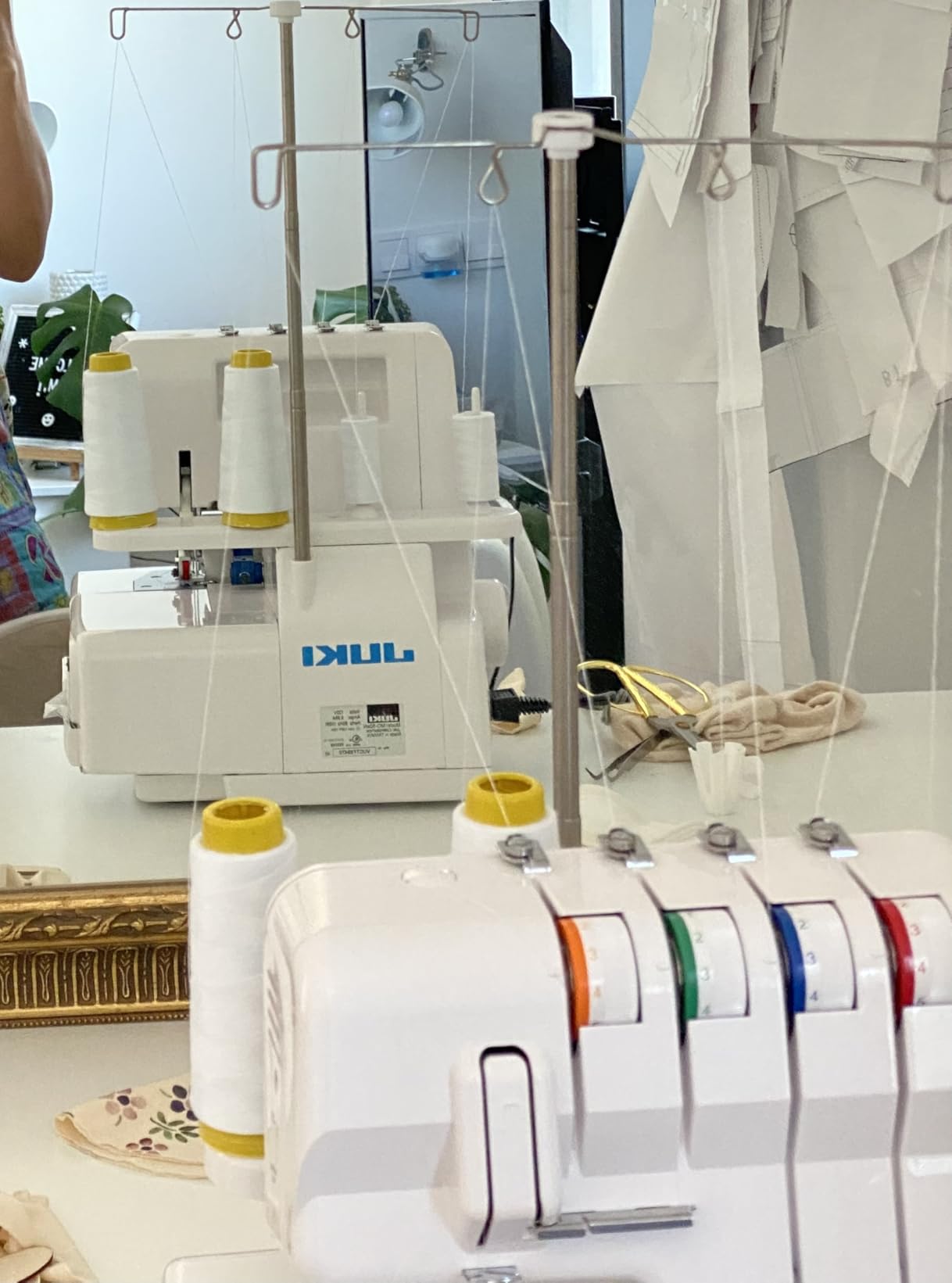
Owners who move up from a Brother single out this machine for one reason: it handles thicker fabric better and the stitching comes out cleaner. The lay-in tension dials mean the threads sit in physical tension discs rather than being threaded through posts, which makes tension changes faster and easier to reset between fabrics.
The automatic lower looper threader takes care of the step that catches most beginners, and the built-in rolled hem means edge finishes do not require a different machine. The adjustable calibrated knife with a retractable upper blade gives control over how much is trimmed, which matters when you alternate seam allowance widths across a garment.
It runs quietly and smoothly even at speed and does not bounce or shift on the table, and seam allowance measurements are marked on the front casing so you are not guessing your trim width. At 16 pounds it has the weight of a serious machine, which is part of why it stays steady.
Threading is the consistent trade-off. Owners compare it unfavourably to the Brother 1034D on that one point and recommend patience plus a video. There is no thread in the package, and a few owners report loopers unthreading mid-seam and forcing a full restart.
When lay-in tensions help your workflow
Any project where you move between fabrics. Toggling between lightweight woven, knit and a heavier seam, lay-in discs let you change tension in seconds without re-threading the whole path. On a garment with mixed fabric panels that adds up quickly, and it reduces the retensioning frustration that makes people abandon a machine.
The built-in rolled hem covers the other common garment finish, so a single machine handles both seam finishing and edge finishing.
What to know before you buy
Threading is harder than on the entry-level machines here. If you are a complete beginner, expect a slower first month, and buy thread separately since none is included.
The warranty is five years on parts and two years on electronics. It is not a coverlock machine, so plan your garment edges around 3 and 4 thread work.
9. VEVOR 4-434 Serger: A Heavy Frame at the Entry Point
VEVOR Serger Overlock Sewing Machine, 1250 Stitches Per Minute, 3 and 4 Thread Capability, with LED Light and Strong Suction Feet, Heavy-Duty Metal Frame Sewing Machine for Various Fabrics, White
3 and 4 thread
1250 SPM
112W motor
LED light
17.8 lb
Pros
- Sturdy iron-style frame
- Low vibration body
- Ships ready to sew with large thread cones
- LED work light
- Adjustable presser foot
Cons
- Arrives dry and needs oiling first
- No lower looper thread helper
- Tension gauge has no numbered scale
- Starter thread spools fray
This is the one in the roundup where the construction is the story. The iron-based body at 17.8 pounds is heavier than several machines priced well above it, and owners describe low vibration and good wear tolerance. Stitch quality is reported as good once the machine is tuned in, and the strong suction feet keep it planted.
It runs 3 and 4 thread modes at up to 1250 stitches per minute on a 112W motor, and it accepts large thread cones, which matters for anyone sewing through bulky thread or producing seams continuously rather than one garment at a time.
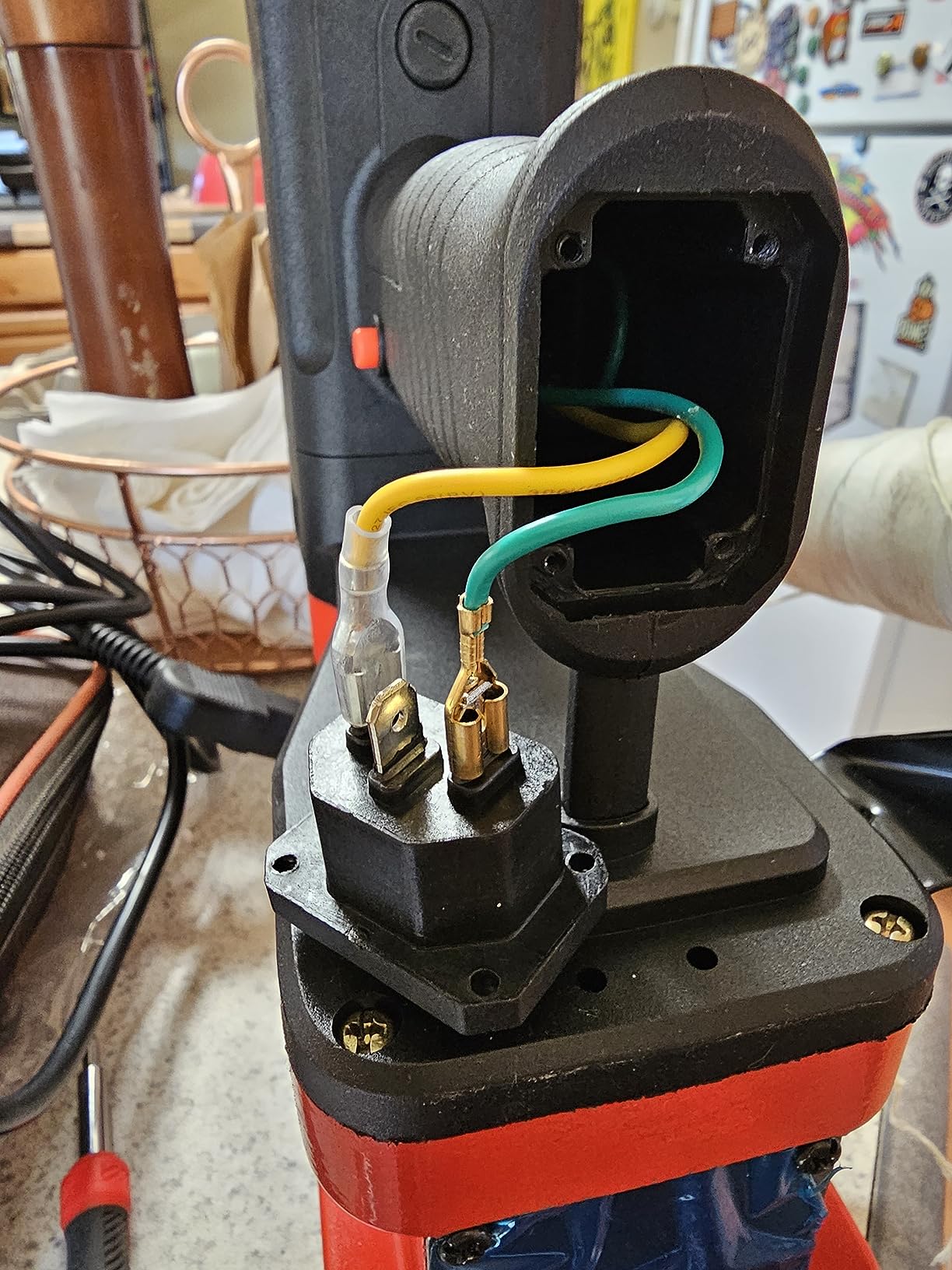
The LED light, color-coded threading and adjustable presser foot are genuinely practical, and it covers overlock, rolled hem, edging and lettuce hem stitch styles. It also arrives pre-threaded, so you can test stitches on scrap fabric before you commit to a project.
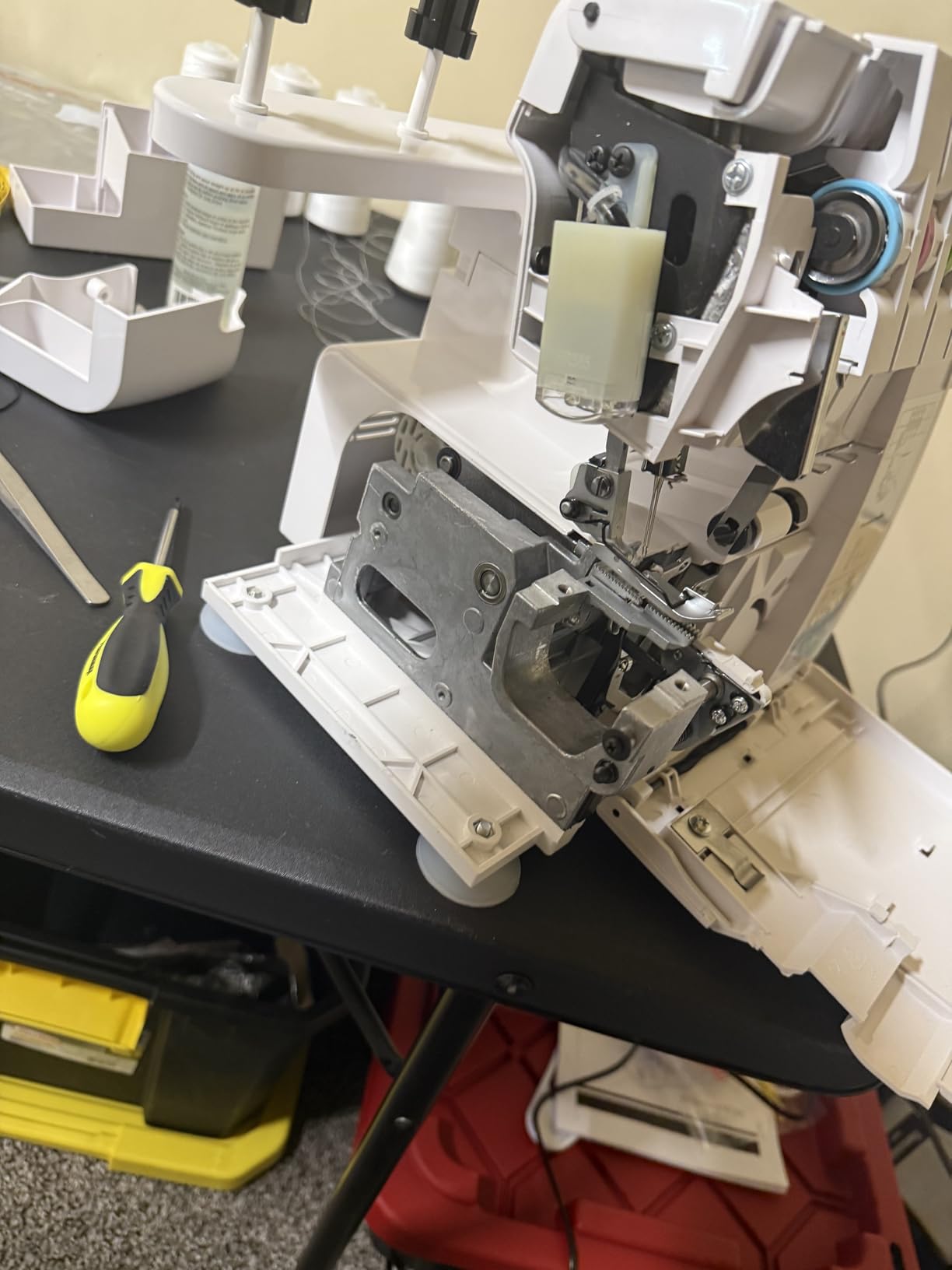
The catch is that it arrives bone dry and needs oiling before and between uses. The tension gauge has no numbered scale, so adjustment is by feel, and the lower looper threading hole is reported as very hard to reach. The supplied thread spools frayed and broke repeatedly for owners, and the manual is poorly printed with low-resolution diagrams.
When a solid frame beats a feature list
If your fabric list includes heavier material and your instinct is to buy a heavier machine, this one inverts the usual pattern. A stable iron frame is what keeps stitches consistent on thick layers, and that is the failure point on lighter plastic-bodied machines.
Large thread cone compatibility also makes it practical for long uninterrupted seam runs rather than stop-start garment work.
Where you will feel the compromise
There are no automatic assists. No lower looper thread helper, no air threading, and a tension dial you adjust by instinct. If you have never used a serger, the learning curve here is steeper than on a machine with a threader.
There is also a small but real share of owners reporting units that failed or ran away within days. Budget for the fact that you may be tuning this machine rather than using it, and buy your own thread rather than trusting the included spools.
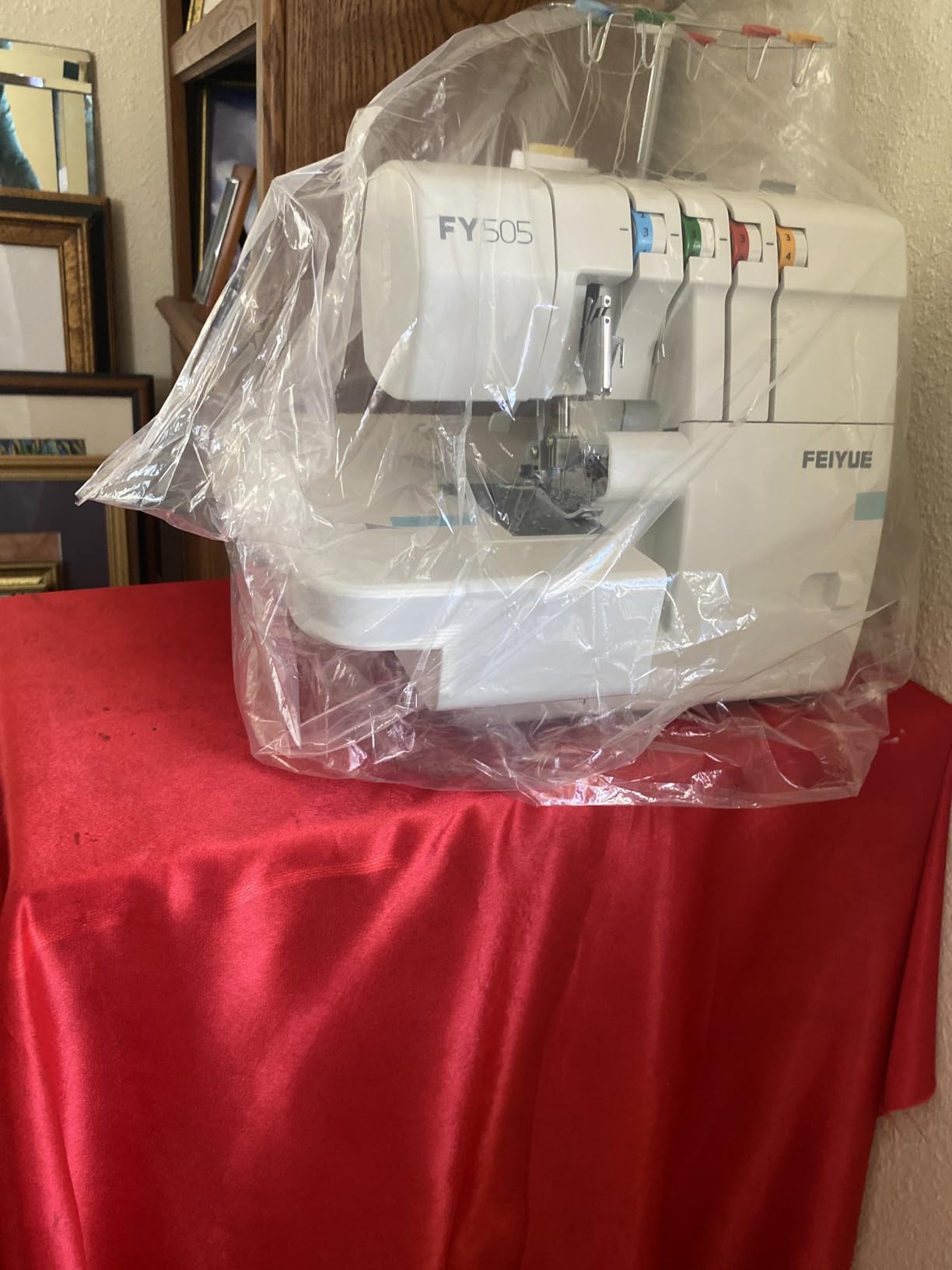
10. FEIYUE FY505 Serger: The Simplest Way Into Serging
FEIYUE FY505 Serger Overlock Machine, 2/3/4 Thread Capability
2/3/4 thread
1100 SPM
Metal frame
Carbon steel blade
13.6 lb
Pros
- Low entry cost for a full-function machine
- Metal frame and carbon steel blade
- Clear color-coded guides
- Setup video available
- Responsive customer service on setup problems
Cons
- Tight access for threading the loopers
- Not genuinely heavy duty
- Slowest top speed in the roundup
- Some units had a foot pedal that ran away
The FY505 covers 2, 3 or 4 thread modes with a durable metal frame and a carbon steel blade, and satisfied owners say it does everything they need for the money. If you are building a first machine setup and garment sewing is the goal, the combination of capability and entry cost is the reason it exists.
Threading is easier than it should be at this level, because of the clear color-coded guides and numbered upper and lower loopers. A detailed setup video is available, and customer service has resolved setup problems quickly for several buyers.
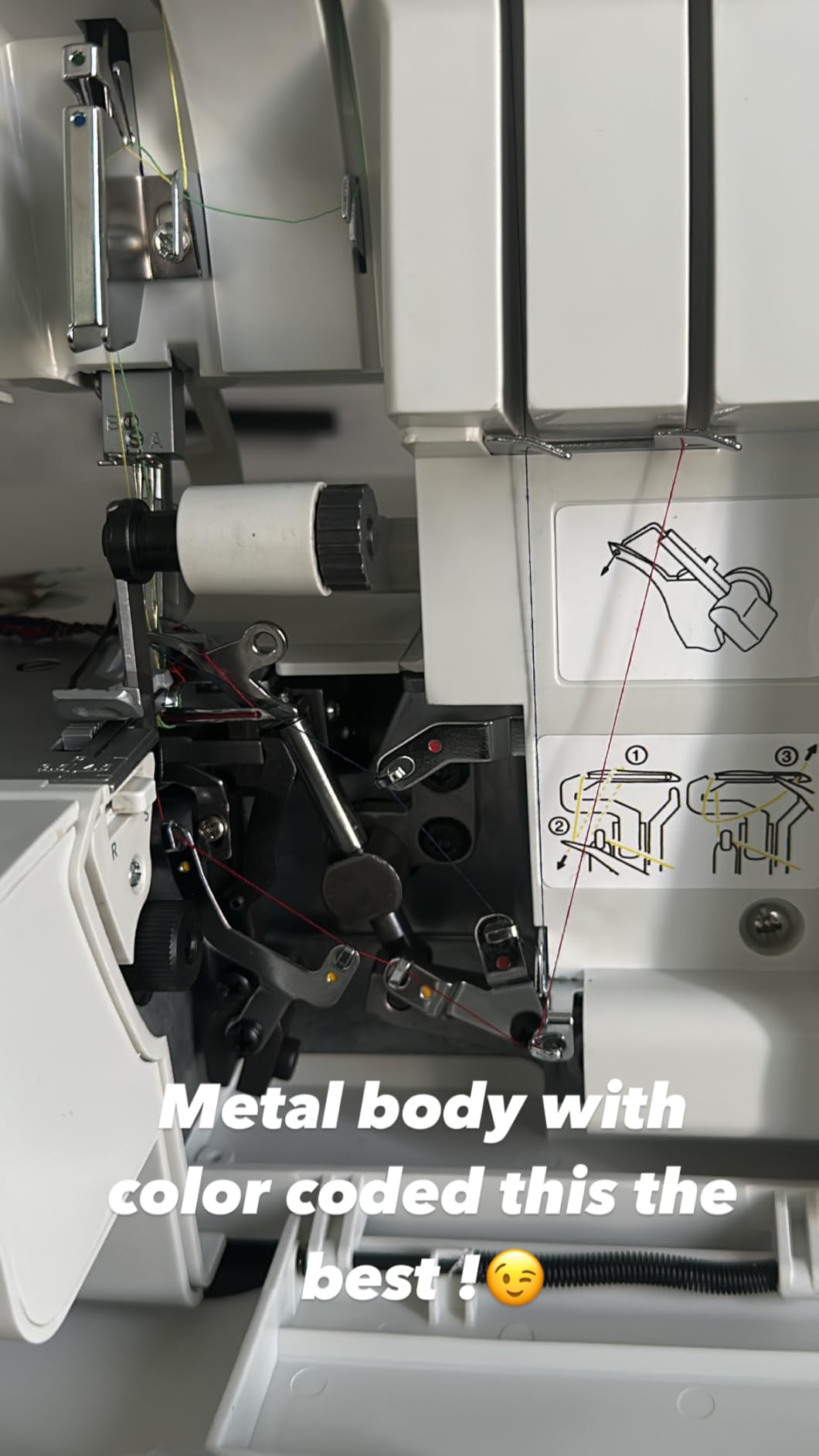
The reality is that this is the lowest rated machine in the roundup, with a notable share of one-star reviews. The complaints are about access and durability, not stitch quality: only one side opens at the front, and the gap is tight for reaching the upper and lower loopers, so it will not suit anyone with limited hand mobility.
Heavy-duty claims aside, it will not serge multiple layers as advertised. Some units arrived with the foot pedal running at full speed on power-up, and the 1100 stitches per minute ceiling is the slowest here, which is why I would not use it for production work.
Who this machine is genuinely for
Someone sewing light to medium weight garments who wants to learn edge finishing and seam overlocking without a large commitment. Watch small runs of jersey tops, simple woven tops, and practice seams on scrap knit before committing to a garment.
For those uses, the metal frame and blade produce clean, professional-looking finishes, and 2/3/4 thread modes give you a rolled hem and a decorative edge as well as a standard seam.
Where it falls short
Do not plan heavyweight projects on it, and factor in the slowest speed in the group. Thread can break, and support experiences vary widely between buyers, so check your accessories carefully on arrival.
If you are likely to outgrow it within a year, the Brother 1034D or the SINGER S0230 will cost more up front and save rework later.
How to Choose a Serger for Garment Construction
Thread count is the first filter, because it decides what finishes the machine can do. A 2 thread machine gives you a flatlock and a rolled hem. Three threads cover a narrow overlock edge. Four threads give the full seam plus trim, which is what most garment seams actually need. None of the machines here reach five-thread safety stitch, so plan on a separate coverstitch or safety stitch setup if your garments depend on it.
Differential feed is the second filter and the one most beginners underrate. It lets you control how fast fabric arrives at the needles independently of the needle speed. Without it, jersey stretches and sheers pucker. Every machine in this list has differential feed, but the range and how smoothly it is marked vary, and the SINGER S0230 and Janome MOD-8933 get the most consistent owner feedback on knits.
The free arm decides whether sleeves and cuffs are easy or annoying. A removable or open arm lets you finish a tube without a flat bed in the way. The SINGER S0230 has one clearly for this purpose, the SINGER X5004-HD and the VEVOR list a removable section, and the Janome MOD-8933 explicitly does not have one.
Threading is where beginners give up, so weigh the assists. Color-coded guides, a lay-in path, an underlooper or lower looper threader, and air threading all reduce the setup time. None of these machines has full air threading, so the practical ranking is threader-assisted first, then lay-in and color-coded, then fully manual.
Frame weight and speed are the last two. A metal frame resists vibration and keeps stitch quality up on thick fabric, and machines with a knife on a dedicated drive cut more consistently at higher speeds. If your garments are mostly jersey and voile, speed matters less. If they are denim and canvas, it matters a lot.
Two finishing details are worth checking before you commit. An automatic or quick change rolled hem saves real time on garments with finished edges, which the JUKI MO-644D and Juki MO-50E both provide and the Brother 1034D offers as a manual conversion. And an extension table makes bulky fabric far easier to control, which is the standout feature on the Brother ST4031HD. If you finish a lot of hems, our guide to the best sewing machines for hemming pants covers the other side of that job.
Where a Serger Stops and a Sewing Machine Starts
A serger can sew a seam, trim it, and finish the edge. It cannot set a dart, install a zipper, attach a facing, or topstitch. A sewing machine does all of those and leaves the seam allowance raw and fraying. That is the whole comparison, and the answer to can you sew clothes with just a serger is no.
The practical workflow is to construct the garment on the sewing machine and send every seam to the serger as you go, rather than serging everything at the end. Assembling panels as you go means each seam is overlocked while it is still flat and easy to feed through, and you find fit problems earlier while the pieces are still separate.
Order of operations matters more than most people expect. Press and set the seam allowance before you serge, because serging a seam you later have to take in means unpicking overlock stitches. Finish the garment edges with a rolled hem or flatlock, and leave seam intersections like the underarm to be reinforced after the fact. None of this is serger technique, it is construction order, and getting it right is what separates a garment that looks finished from one that looks assembled.
If your fabric is mostly knit, the serger arguably matters more than the machine that constructs it, because the overlock stitch is what lets the seam stretch without snapping. For woven garments the balance shifts, and a reliable machine doing darts and zippers matters more. Our picks for the construction side are in the best beginner sewing machines for jeans guide.
Frequently Asked Questions
What is the best home serger for my money?
For most home garment sewists the Brother 1034D is the strongest overall choice, with a metal frame, color-coded threading and enough owner feedback to trust the results. The SINGER S0230 is the better value option if you want a free arm for sleeves and cuffs, and the Brother ST4031HD is worth the step up if you mostly sew denim and canvas.
Can you use a serger to sew clothes?
You can finish garment seams with a serger, but you cannot build a whole garment with one. A serger joins seams, trims the seam allowance and finishes edges in one pass, which is what makes knit seams stretch properly. Darts, zippers, facings and topstitching still need a regular sewing machine.
What should I look for when buying a serger?
Look at thread count first, then differential feed for knits, whether there is a free arm for tubular pieces, how easy the threading path is, and whether the frame is metal. For garment sewing add a rolled hem or quick change rolled hem, and check the knife size if you plan to sew thick fabric.
Is the Brother or Singer serger better?
Brother tends to win on threading ease and metal frame construction, with the 1034D being simple to set up and the ST4031HD handling heavy fabric. SINGER tends to win on features per machine, with the S0230 offering a free arm and the X5004-HD a larger knife and stability. Pick on fabric type and thread assist, not on brand alone.
What are the common problems with serger sewing machines?
Threading difficulty is the most common complaint, followed by tension that needs adjusting when changing fabrics, noise on lighter machines, and dull knives that chew thick fabric edges. Other recurring issues are missing tweezers or manuals in the box, a foot pedal that runs away at power-up, and machines that arrive dry and need oiling immediately.
How many threads do I need for garment sewing?
Four threads is the practical answer for garment seams because it gives you a full overlock with the seam allowance trimmed. Three threads are useful for lighter knit seams where you want less bulk, and two threads are for flatlock and rolled hem decorative finishes. Five-thread safety stitch is not available on any of the ten machines in this roundup.
Our Final Verdict on the Best Sergers for Garment Sewing in 2026
The Brother 1034D is our pick for the best serger machines for garment sewing overall, because it handles the widest range of fabrics cleanly, threads without drama, and has a metal frame that stays steady through denim. It is not coverstitch, and it is louder than you might expect, but those are honest limits rather than problems.
If you want a free arm for sleeves and cuffs, take the SINGER S0230. If your garments are heavy, take the Brother ST4031HD. If you sew at volume and want the fastest top speed here with an automatic rolled hem, the JUKI MO-644D is the specialist choice.
Whichever you pick, give it an afternoon for threading and a scrap of your actual fabric before the first real project. The machines in this roundup all reward a proper setup, and that one afternoon is the difference between a garment that looks finished and one that does not.