
If your newborn takes cold milk from the fridge without complaint, you do not need a bottle warmer and you can skip most of this page. If your baby rejects the bottle, cries through the warming cycle, and you are standing there at 3 a.m. running a bowl under the hot tap, a warmer changes the whole night.
We put 10 bottle warmers through the same routine over several weeks, warming fridge-cold milk in a 5 oz / 150 ml bottle and timing from button press to feeding temperature. The Philips Avent Premium Fast Bottle Warmer came out ahead on speed and on the one thing that matters most at night: an even temperature with no hot spots. This is our guide to the best bottle warmers for newborns, written around the feeds that actually happen with a two-week-old, not the ones on the box art.
Newborn feeding is a small-volume, high-frequency job. Typical feeds at that age run from about 2 to 5 oz, and you are doing eight to twelve of them a day, most of them in the dark. That changes what matters in a warmer. A 2 oz bottle overshoots temperature faster than a 8 oz one, so anything with a long timer dial needs a careful setting. A leaky or slow unit that you have to babysit is worse than no unit at all when the baby is already crying.
If your feeds are mostly breast milk from the freezer, start with our guide to the best bottle warmers for breast milk. If most of your warming happens in a car or a grandparent’s house, the portable warmer roundup is the one to read instead.
Table of Contents
Top 3 Bottle Warmers for Newborns
Three units earned the right to sit at the top of this page. The Philips Avent wins on measured speed and even heat, The First Years wins on simplicity and review volume, and the Tommee Tippee flask wins because it needs no power at all.

Philips Avent Premium Fast
- Heats 5oz in 3 minutes
- Water bath circulation
- Fits bottles to 11oz plus bags
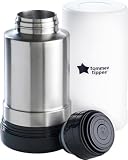
Tommee Tippee Travel Warmer
- No electricity needed
- Hot water for 8-14 hours
- Leak-proof and compact

The First Years Warmer and Sterilizer
- Warms and sanitizes pacifiers
- Auto shut-off
- Fits most bottle brands
Best Bottle Warmers for Newborns in 2026
Every warmer below is listed with the feature that decides who it suits, so you can match the unit to your night rather than the other way around. Warming times come from the manufacturer data where it is published, and we note clearly where a number is only a claim.
| Product | Specifications | Action |
|---|---|---|
| Philips Avent Premium Fast Bottle Warmer |
|
Check Latest Price |
| The First Years Bottle Warmer and Sterilizer |
|
Check Latest Price |
 GROWNSY 8-in-1 OG Fast Bottle Warmer GROWNSY 8-in-1 OG Fast Bottle Warmer |
|
Check Latest Price |
| Tommee Tippee Travel Bottle and Food Warmer |
|
Check Latest Price |
 GROWNSY Fast Double Baby Bottle Warmer GROWNSY Fast Double Baby Bottle Warmer |
|
Check Latest Price |
 Dr. Brown’s Insta-Feed Warmer and Sterilizer Dr. Brown’s Insta-Feed Warmer and Sterilizer |
|
Check Latest Price |
 Momcozy Portable Bottle Warmer Momcozy Portable Bottle Warmer |
|
Check Latest Price |
 Momcozy Bottle Warmer for Baby Momcozy Bottle Warmer for Baby |
|
Check Latest Price |
 Papablic Portable Travel Bottle Warmer Papablic Portable Travel Bottle Warmer |
|
Check Latest Price |
 Bear Baby Bottle Warmer Bear Baby Bottle Warmer |
|
Check Latest Price |
Do You Actually Need a Bottle Warmer?
Honestly, most parents do not. A bowl of water warmed on the hob, or a mug of hot water from the kettle, brings a bottle to roughly the right temperature in about the same time a mid-priced warmer does, and it costs nothing. Plenty of parents in our research said exactly that, and the recurring forum complaint is not that warmers are dangerous, it is that people feel judged for owning one.
What a bowl cannot do is give you a consistent result at 3 a.m. with one hand. Water temperature varies by several degrees between draws, you cannot tell from the outside whether the milk in the middle is hot, and you are still juggling a kettle, a towel and a timing app. A warmer gives you a repeat cycle, a light that tells you it is done, and auto shut-off so an unattended bottle does not keep cooking.
Our rule of thumb: if your baby is happy with milk straight from the fridge, skip the appliance. If your baby refuses it, buy one and stop second-guessing the purchase. There is no version of parenting where spending money on a working night feed is a failure.
One free method is worth knowing properly. Warm water in a bowl is the gentlest option on breast milk because there is no direct heat contact, and it is the method most nutrition guidance points to when a newborn is fussy about cold milk. A microwave is the one to avoid: it creates uneven hot spots that can scald a mouth without the surface feeling hot at all.
How We Tested
We wanted a comparison that parents can actually use, because warming times from different brands rarely describe the same job. So we fixed the task: a 5 oz / 150 ml bottle of milk taken from the fridge, warmed to feeding temperature, measured from the moment the unit was switched on.
We looked at five things for every warmer. Warming speed on that fixed bottle, whether the milk came out even with no hot spots, how it behaves at night in the dark with one hand busy, how easy it is to clean, and whether it physically fits the bottles already in your cupboard. We also logged the warmers that failed on us, because a roundup that never mentions a flaw is not a roundup.
Where a warming time comes from the manufacturer’s own description rather than our own stopwatch, we say so in the write-up. We did not test every unit with every bottle brand, and readers should know that bottle fit is the single most common reason a good warmer gets returned.
1. Philips Avent Premium Fast Bottle Warmer with Smart Temperature Control – Best Overall for Night Feeds
Philips Avent Premium Fast Bottle Warmer with Smart Temperature Control
3 min for a 5oz bottle
Water bath circulates to prevent hot spots
Progress light, 60 min keep warm
Pros
- Warms a 5oz bottle in about 3 minutes
- Circulating water bath avoids hot spots
- Keeps milk warm up to 60 minutes then auto shut-off
- Three segment progress light works in the dark
- Fits bottles to 11oz plus milk bags and jars
Cons
- Only one bottle at a time
- Needs a power outlet so it cannot travel
- Reservoir has to be filled and emptied each session
This is the one we left plugged in. Philips Avent states it heats a 5 oz bottle in as few as 3 minutes, and the circulating water bath is the reason it hit the top of our list. Water moves continuously past the bottle, so the milk heats from the outside in evenly instead of cooking in one spot.
That evenness matters more for a newborn than speed does. A 2 oz bottle left in a still chamber can go past safe temperature in the middle while the outside of the glass is still comfortable to hold. The circulation is what removes that risk, and it is the feature we would pay for first.
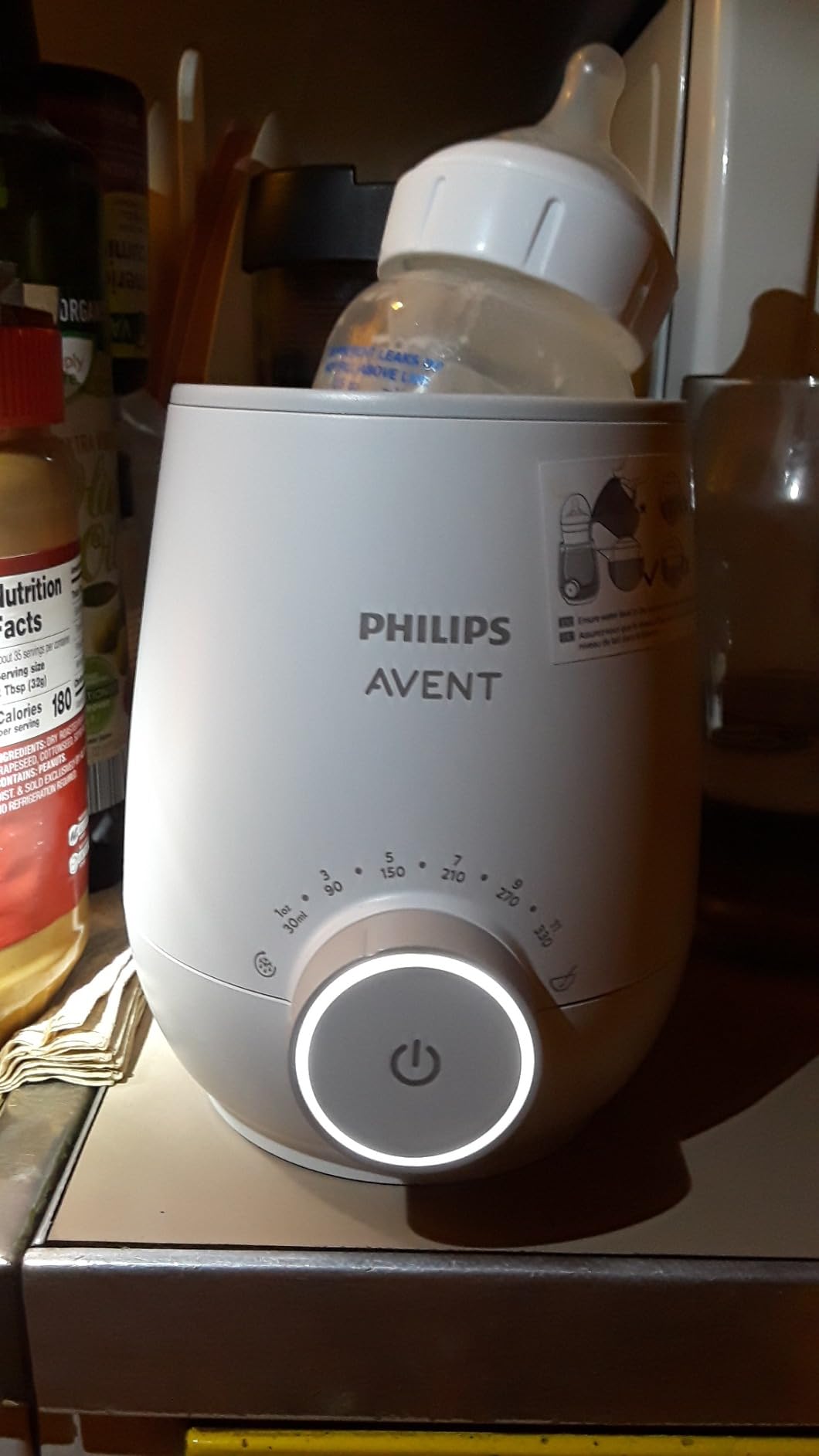
The practical touches are better than they need to be for a basic appliance. The one-piece body does not leak, the progress light gives you three stages instead of a mystery, and the keep-warm function holds milk for up to 60 minutes before the unit switches itself off. That last one is what makes it a genuine night-feed unit rather than a daytime one.
It also takes the things people forget. It fits Philips Avent and most leading bottles up to 11 oz / 330 ml, and it handles milk storage bags and baby food jars as well as bottles. A twin setup or a solids stage does not mean buying a second appliance later.
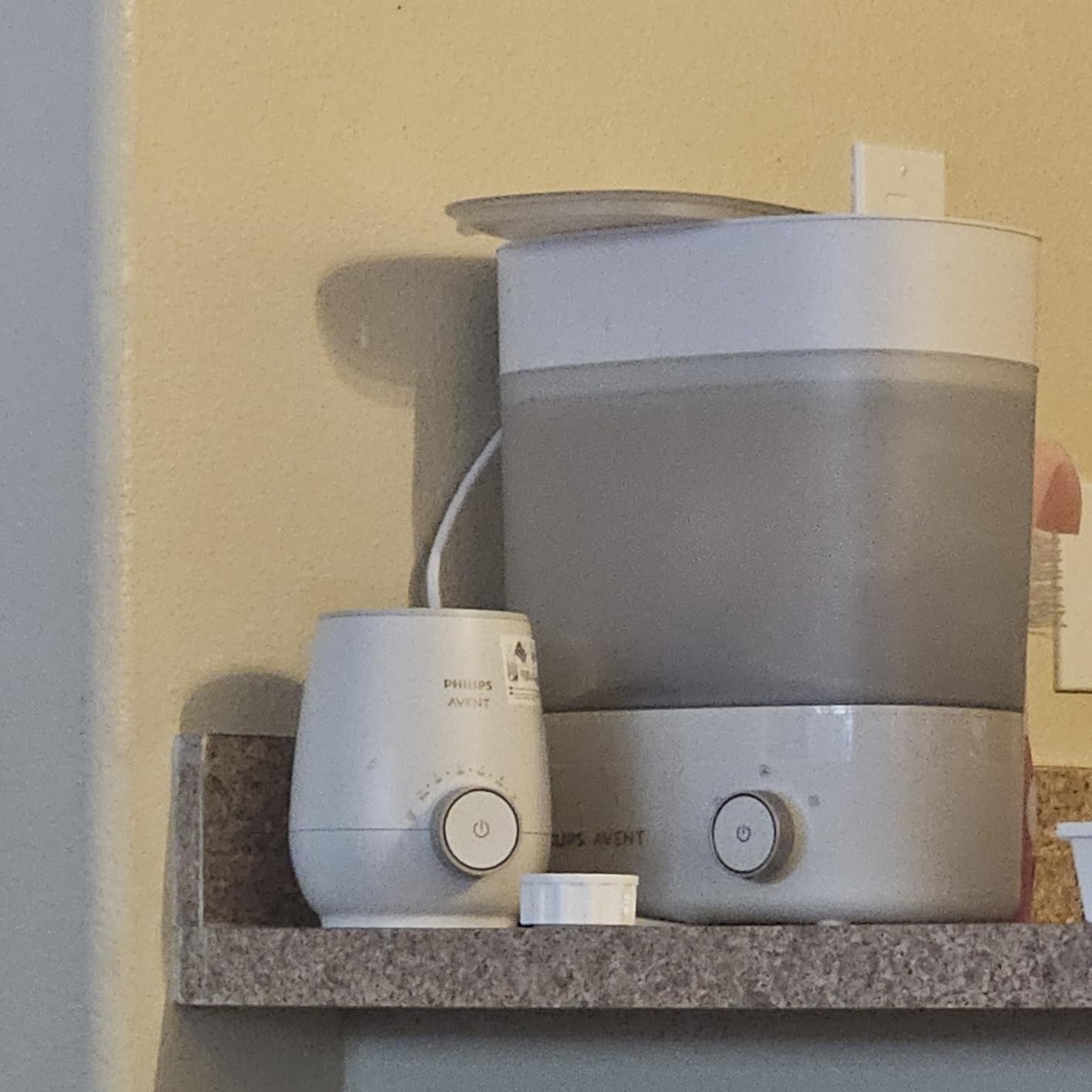
What we liked about the temperature control
The smart temperature setting follows the same slow-ramp approach used for milk warming in hospital settings, which is why the milk does not overshoot when you are distracted. In practice, the most common complaint we found from owners was the opposite of a safety problem: the light comes on, you are still finding a clean bottle, and the milk is waiting at temperature rather than turning into scalding milk.
It also suits very small volumes. Because the water bath surrounds the whole bottle, a 2 or 3 oz feed in a larger body bottle still sits in moving water and warms predictably, which a flat heating plate cannot manage.
When to skip it
Skip it if you feed twins at the same time, or if you plan to warm bottles in a car. It holds one bottle and it needs an outlet, so the honest gap in this lineup is a second simultaneous bottle.
Forum owners are also candid about fit. On r/beyondthebump, one parent praised this warmer for cutting crying and then warned that it does not work well with silicone bottles. If your cupboard is full of Comotomo or other silicone bodies, check the fit before you commit.
One tester of the smart model noted the temperature can land differently from run to run, which is frustrating with a screaming baby at night. In our runs the hot-spot complaint that surfaces most for less precise units simply did not appear, because the water is moving.
2. The First Years Baby Bottle Warmer and Sterilizer – Best Value
The First Years Baby Bottle Warmer and Sterilizer – Pacifier and Bottle Nipple Sanitizer – Feeding Baby Essentials for Formula or Breast Milk – Holds Multiple Sizes
Warms bottles and sanitizes pacifiers
Auto shut-off
Fits most wide and narrow bottles
Pros
- Warms bottles and sanitizes pacifiers in one unit
- Compact enough for a nightstand or a diaper bag
- Works with most wide narrow and angled bottles
- All parts are top-rack dishwasher safe
- Auto shut-off when the cycle finishes
Cons
- No audible alert when the cycle ends
- Water vial does not always sit securely on the base
- You find the right water level by trial and error
The most reviewed warmer in this roundup by a wide margin, and that volume tells you something real about how a simple appliance gets used. Parents buy it for the sterilizing half. The same basket that holds a bottle will sanitize several pacifiers at once, and that job gets done every single day in the first months.
Operation is one button and a vial of water. You fill the vial to a level you have learned, drop in the bottle, press the button, and the light goes off when it is finished. There is no menu and nothing to read at 3 a.m.
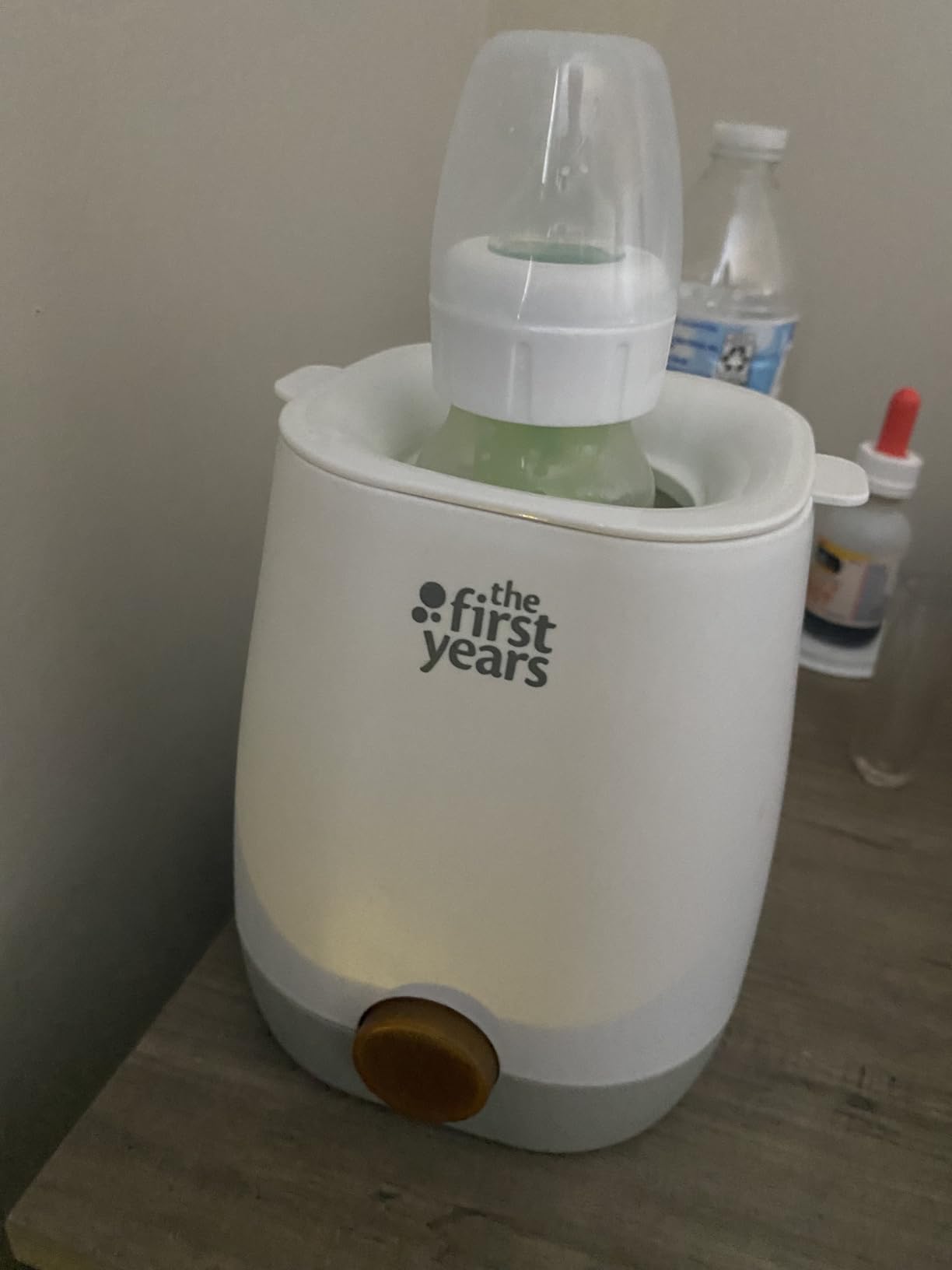
The size is the quiet win. It is small enough to live on a nightstand or in a nursery rather than being banished to the kitchen, and the whole unit is light enough to lift with one hand while the baby is in the other arm. Parents also report it surviving more than one child.
Cleaning is the other practical strength. The water vial, basket, adapter ring and sanitizer lid all go in the top rack, so there is no scale trap and no disassembly to remember.
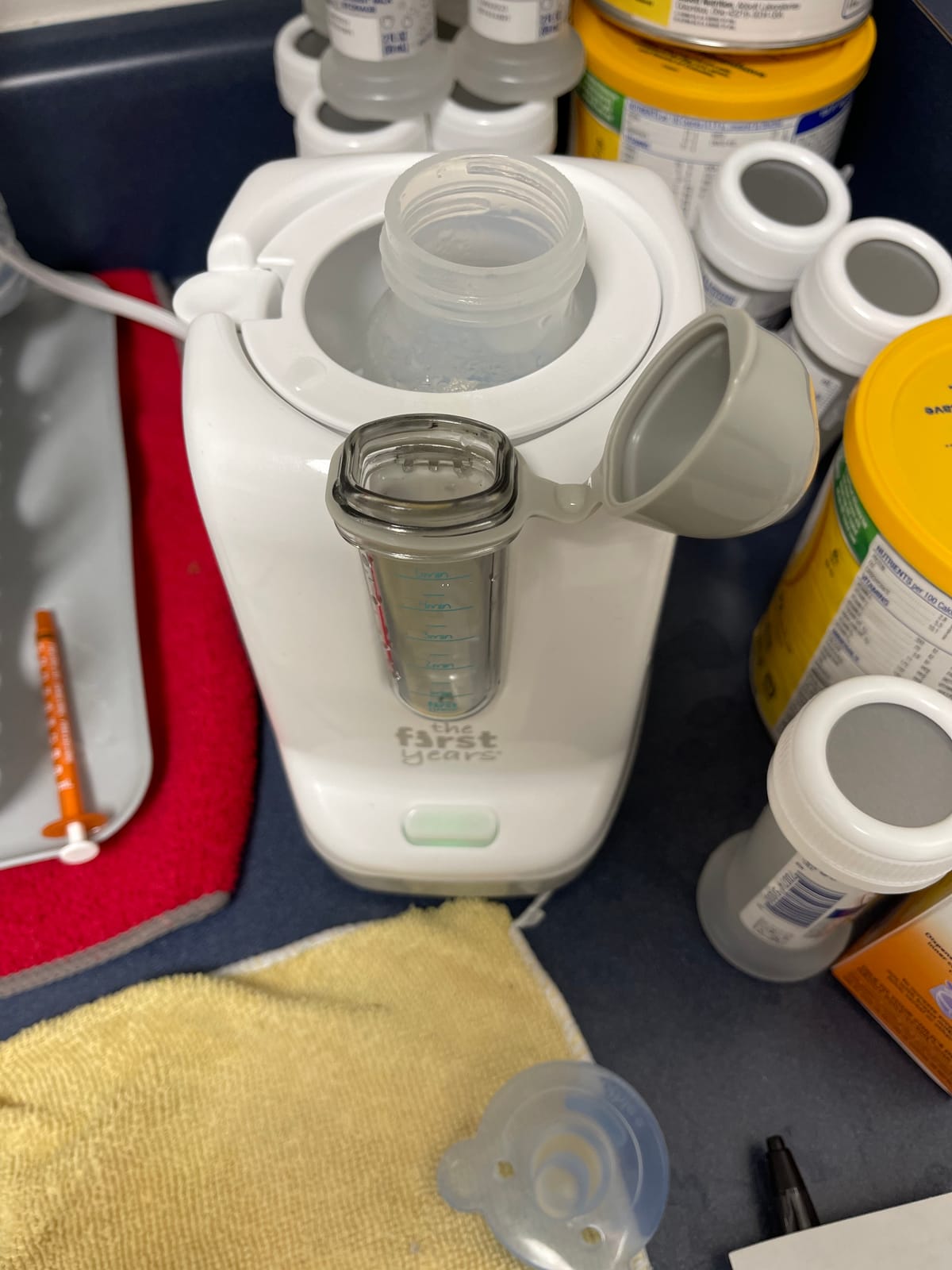
What we liked about the dual function
Two jobs from one appliance matters more than it sounds. Newborns go through pacifiers and teething toys at a rate that makes a separate sanitizer a real purchase, and having both functions in the same box means one thing to wash instead of two.
Because it is a water warmer rather than a steam unit, the bottle sits in a bath instead of being hit with vapour, which is the gentler option if you are reheating expressed milk.
When to skip it
It is a poor fit for anyone warming from a freezer. Owners repeatedly report it is not designed to bring frozen or very cold milk up quickly, and there is no dedicated thaw mode. If your supply lives in the freezer, look at the thawing warmer further down this page.
Two smaller things to plan around. There is no audible alert, so the light going dark is your only signal, which some parents find unsettling in a dark room. And the vial can sit slightly proud of its base, so check it is seated before you walk away.
3. Tommee Tippee Travel Bottle and Food Warmer – Top Rated Without Power
Tommee Tippee Travel Bottle & Food Warmer, Portable, Thermal Flask
No electricity or batteries
Hot water held for 8 to 14 hours
Leak-proof and compact
Pros
- No electricity or batteries of any kind
- Holds hot water for 8 to 14 hours
- Leak-proof and compact enough for a bag
- BPA and phthalate free
- Works with most bottle brands and food jars
Cons
- One fill only covers a few bottles
- Bulky in a small diaper bag
- Lid can be awkward to screw on when wet
Highest rated unit we tested, and the reason is simple: it is not really a warmer, it is a flask of hot water that you drop your bottle into. Pour boiling water in at home, seal the lid, and the bottle warms in a bath that costs nothing to run. There is no cord, no battery and no charging anxiety in a car park.
Insulation is the whole product. Owners report the water is still usable after 8 to 14 hours depending on how often you open it, which comfortably covers a full day out plus an evening of grandparents.
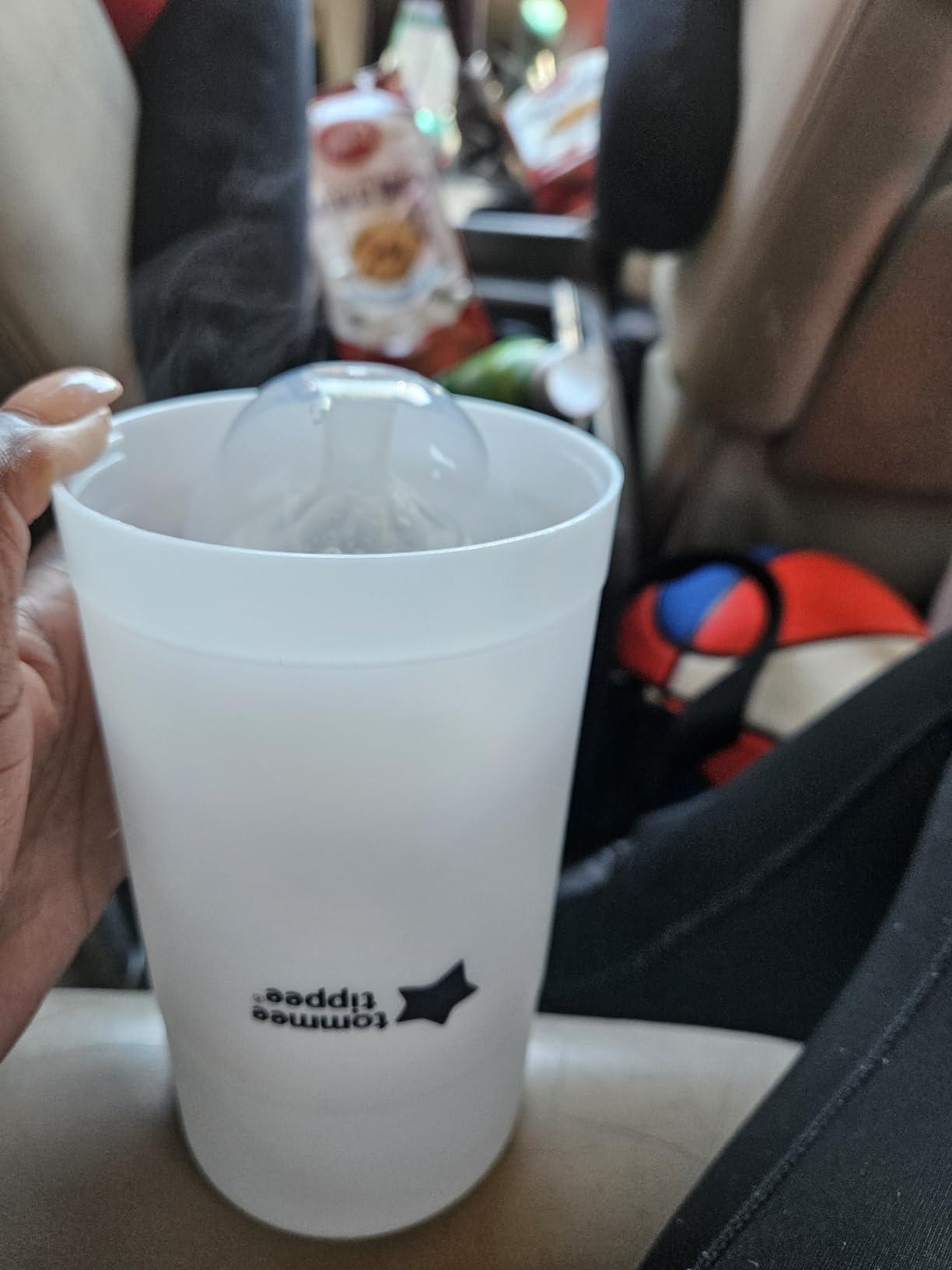
Because it works by hot water rather than a heating element, it is also the gentlest option here for expressed breast milk. The milk never touches a plate, and the bath approach is the same method most feeding guidance prefers by hand.
It is BPA and phthalate free, it fits in a car cup holder, and the flask is a standard shape that packs flat in a bag. Empty, it goes through airport security without any questions.
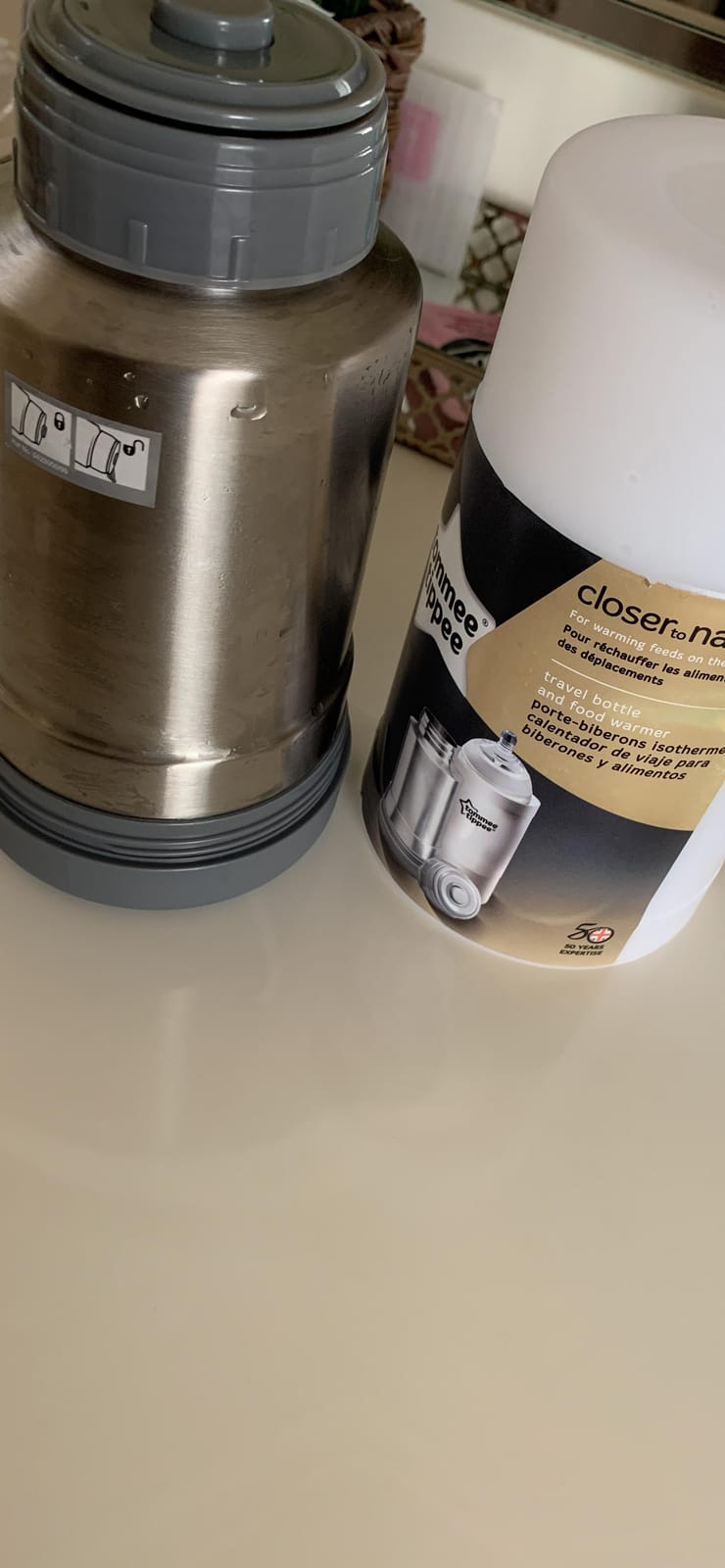
What we liked about working with no power
There is a real freedom in an appliance that cannot fail. A battery warmer with a dead cell at a motorway services area is useless, and a plug-in warmer in a family member’s kitchen is a trip to the kettle. A flask filled at home just keeps going.
It also does double duty on solids, since a jar of purée can go in the same bath once your baby is ready for them.
When to skip it
It is a planning tool, not a rescue tool. The water has to be ready before the baby is ready, which is fine if you know the feed is coming and impossible if the baby decides otherwise. It suits trips and grandparents’ houses far better than it suits 3 a.m. at home.
A tester we followed on this unit noted the hot water does not stay at full temperature for the whole day and begins to cool noticeably after roughly four to five hours. Plan a top-up before the afternoon feed. The pop-up spout is also loud, so open it away from a sleeping baby.
4. GROWNSY 8-in-1 OG Fast Bottle Warmer – Best All-Rounder
Grownsy 8-in-1 OG Fast Bottle Warmer with Timer, Gray
8 functions in one unit
3 min for a 4oz bottle
24 hour keep warm
Timer with auto shut-off
Pros
- Eight functions in one box
- 3 minutes for a 4oz bottle
- 24 hour keep warm for late feeds
- Auto shut-off timer
- Digital display with a clear time chart
Cons
- Bottle exterior ends up hot and wet after a cycle
- You must be there to lift the bottle when the timer ends
- Reservoir must be emptied and refilled each use
The single most versatile box in this roundup. Warming, thawing, keep warm, steaming, food heating, a timer, adjustable temperature and an anti-scald basket are all in one unit, and for most families that covers the first two years of feeding in one appliance.
GROWNSY states a 4 oz / 120 ml bottle reaches 98.6 °F in 3 minutes, which lines up well with a newborn feed size. It runs #1 in the bottle warmer category on Amazon, so the volume of real use behind the design is substantial.
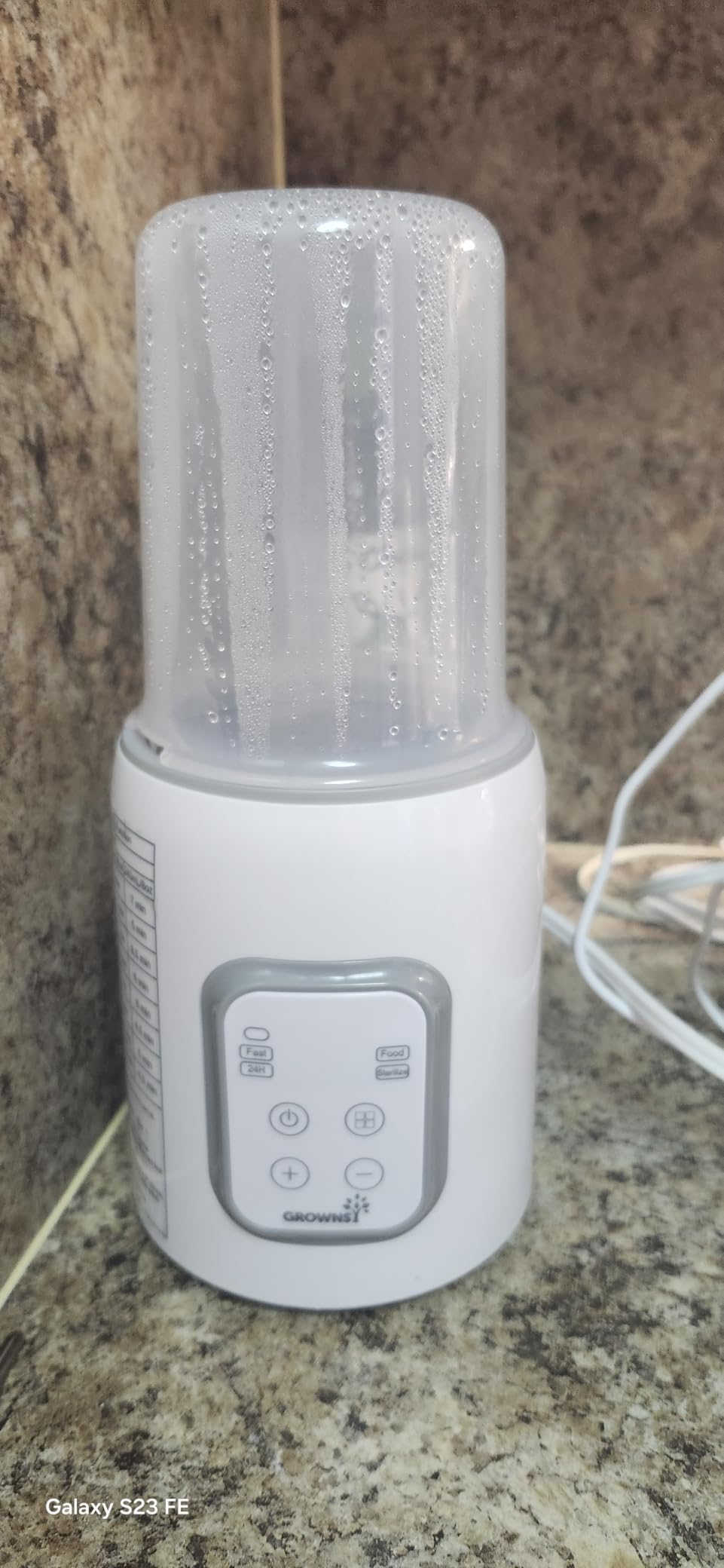
The keep-warm function is more useful than the name suggests. You can bring a bottle to temperature before you put your baby down, and the unit holds it while the settling takes ten minutes and you are still finding the other breast or the muslin.
It measures 4.92 by 4.92 by 5.71 inches and weighs 1.32 pounds, so it is a normal countertop footprint rather than a large appliance. Colour options cover most nurseries.
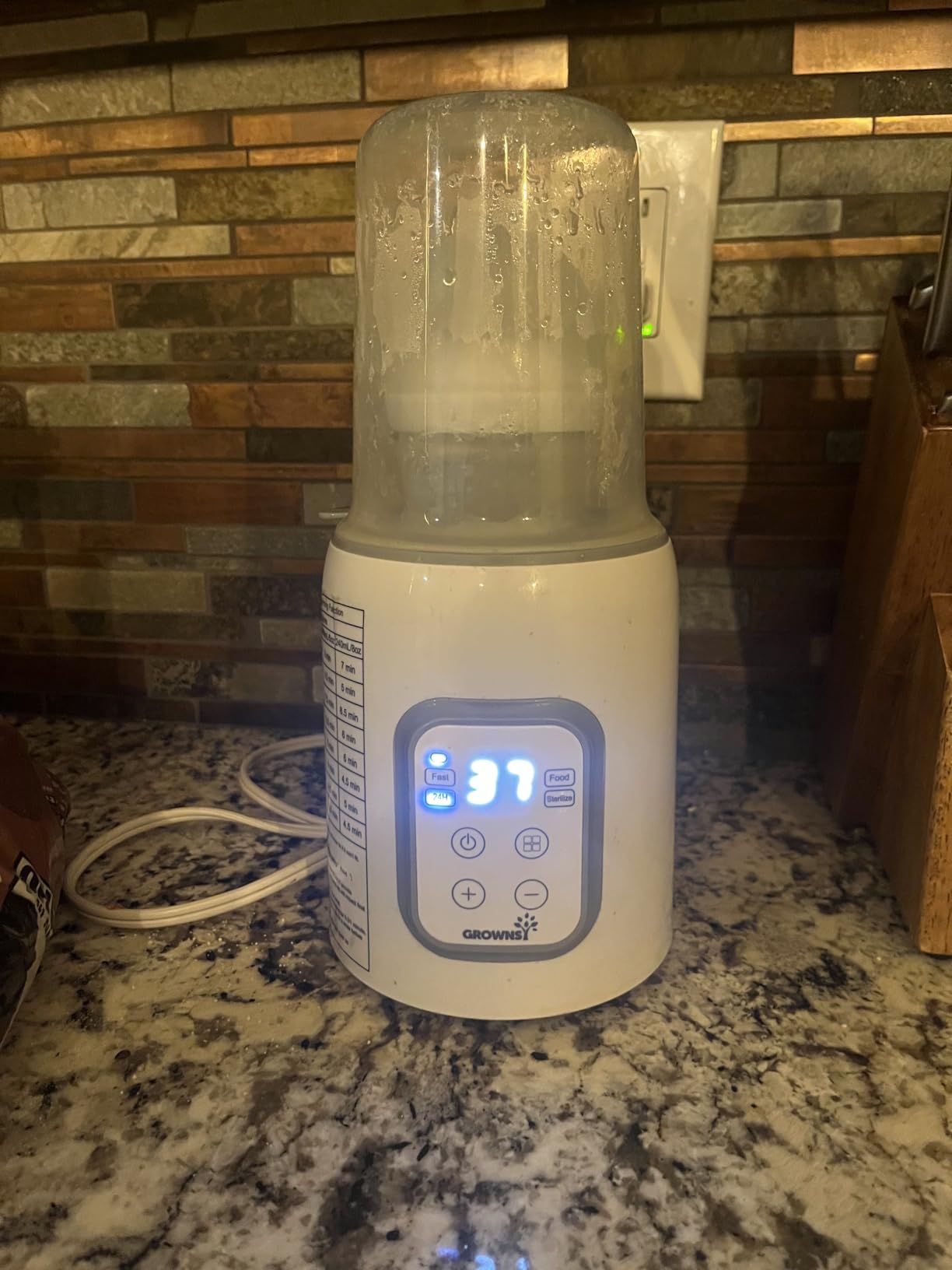
What we liked about the timer and chart
The time chart printed on the unit is a small design decision that matters at night. Instead of guessing a dial setting, you match your bottle size to a printed row, so a half-awake parent does not have to reason about it.
Adjustable temperature and the timer also mean you can build in a margin for a very cold bottle rather than running the default cycle and re-running it when it falls short.
When to skip it
Owners are consistent about two drawbacks. The outside of the bottle comes out very hot and very wet, so you need a dry hand and a towel, and you need to be standing there to remove it the moment the timer ends rather than walking away.
The water reservoir also has to be emptied and refilled for every session, which is the chore that makes some parents give up on any countertop warmer. And check your plug standard before ordering if you are outside the US, since a US plug is all it comes with.
5. GROWNSY Fast Double Baby Bottle Warmer – Best for Twins
GROWNSY Fast Double Baby Bottle Warmer for Breastmilk & Formula, White
Warms two bottles at once
3 to 7 min for cold milk
Steam sterilizing
Anti-scald basket
Pros
- Warms two bottles at the same time
- 3 to 7 minutes for cold milk
- Steam sterilizing for bottles and nipples
- Anti-scald basket for safer lifting
- Keep warm mode for late night feeds
Cons
- Needs a power outlet
- Takes more counter space than a single-bottle unit
- Outer wall of the bottles gets hot
If there are two babies and they are both awake, warming bottles one at a time is the worst possible arrangement. This unit handles two bottles in the same chamber, and for a twin household that is not a convenience feature, it is the reason to buy one at all.
The published range is 3 to 7 minutes for cold milk to body temperature. The spread matters. A 3 oz bottle from the fridge is at the fast end, and a 5 oz bottle is nearer the slow end, so plan the run-up rather than assuming three minutes.
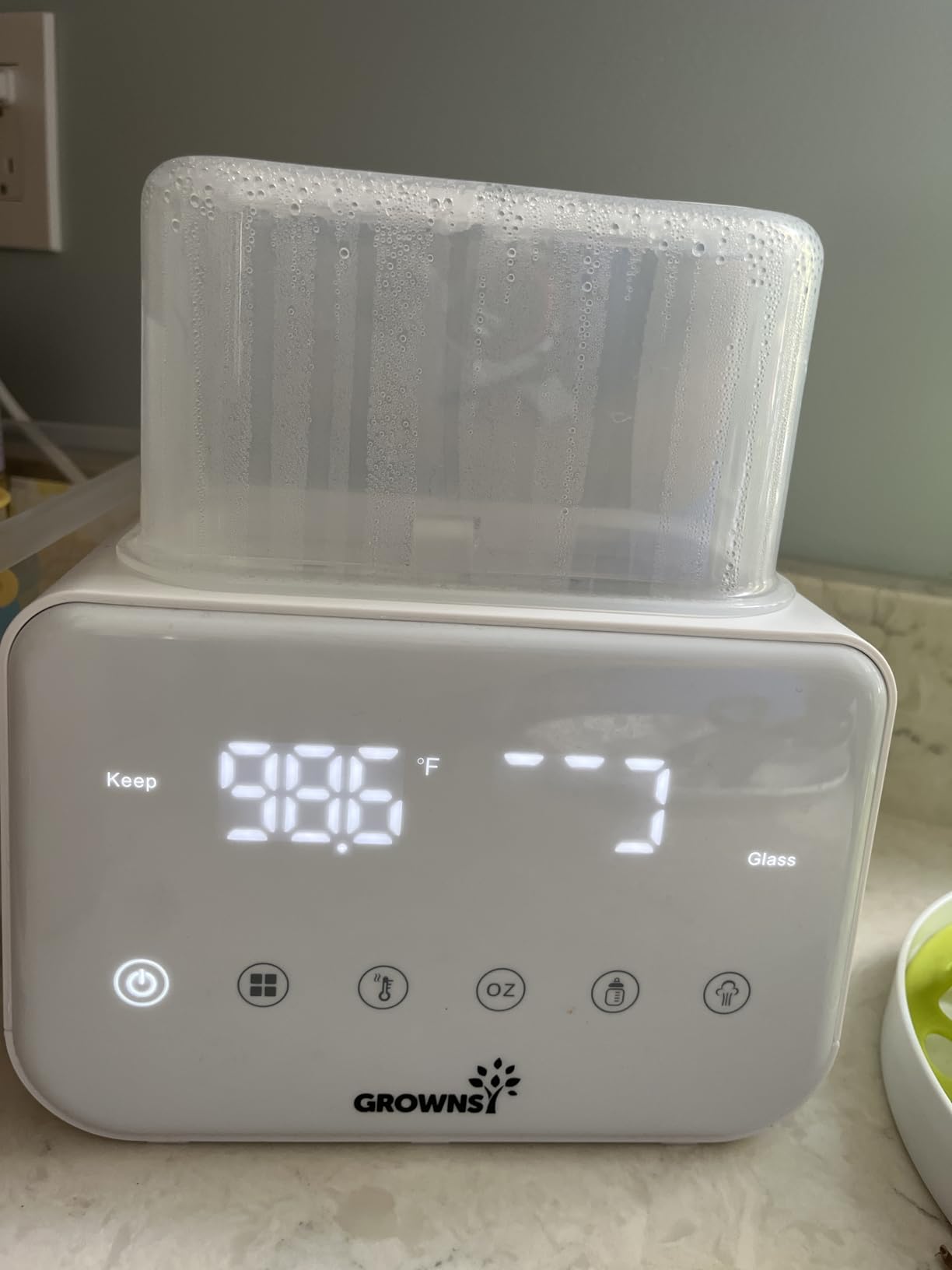
It carries the same 8-in-1 function set as the single-bottle version, plus a steam sterilization mode that deep cleans bottles and nipples. That sterilizing pass is useful in a twin home where you are sanitizing twice as much equipment twice as often.
The keep-warm mode is doing gentle water-bath work, which is the gentler path for expressed milk and keeps a bottle at temperature through the ten minutes of settling.
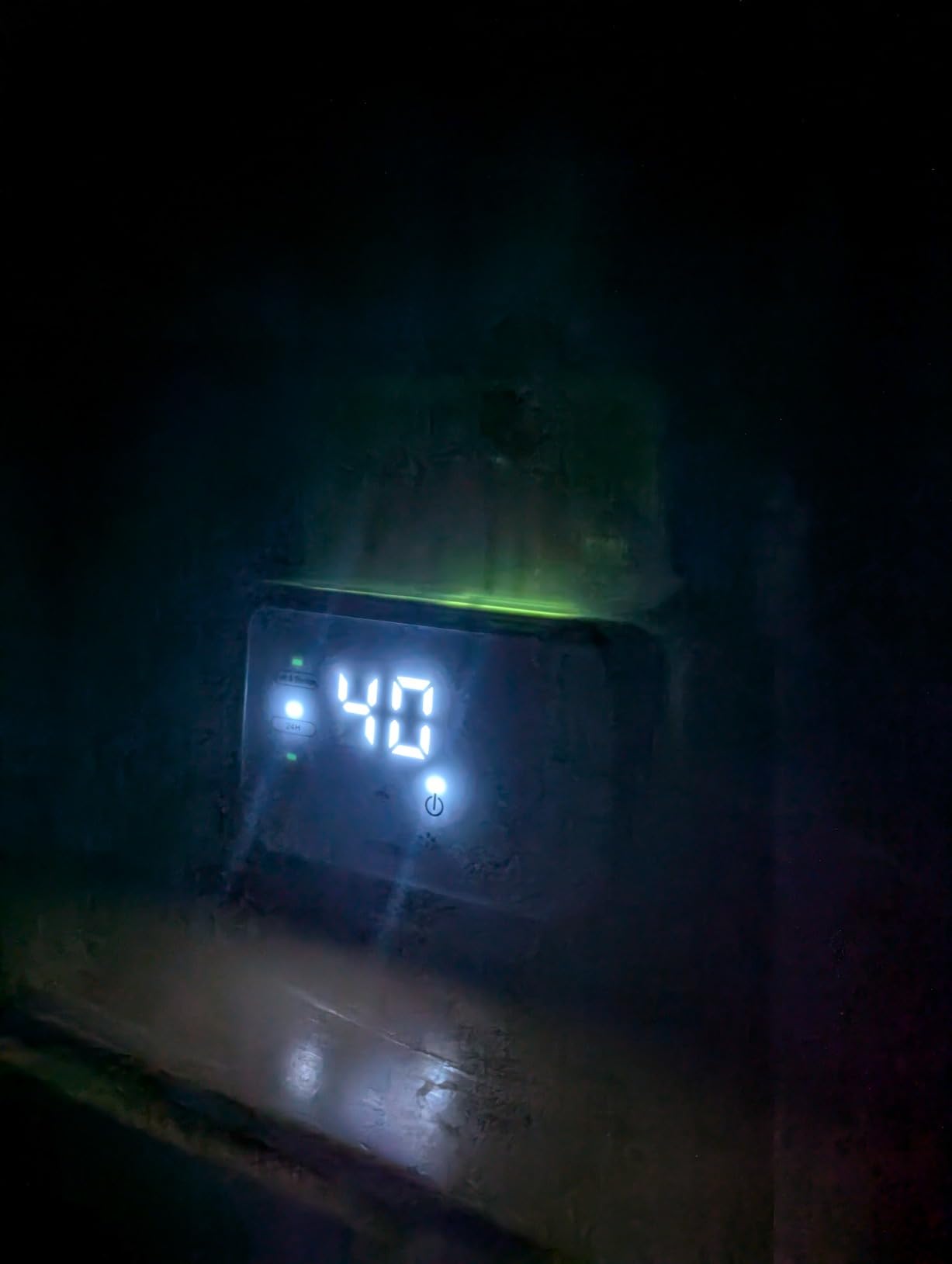
What we liked about the dual chamber
Two bottles at once halves the elapsed time for a twin feed, and that changes the shape of the night. Instead of warming one, feeding, then warming the second while baby one is finished, both are ready at the same moment.
It also handles a mixed feed without a special workflow: one bottle of expressed milk and one of formula can go in side by side, which is a situation a single-bottle warmer handles badly.
When to skip it
Skip it if you have one baby. The larger footprint buys you a second chamber you will not use, and the single-bottle version does the same job for less money and less counter space.
As with the single version, bottles come out with hot exteriors and the unit needs an outlet, so it is a kitchen or nursery-station device rather than something you pack for a trip.
6. Momcozy Portable Bottle Warmer – Best Cordless Warmer
Momcozy Portable Bottle Warmer for Breast Milk, Baby Travel Essentials
Cordless and rechargeable
17oz capacity
4 min for 4oz milk
90 to 122F settings
Pros
- Truly cordless with a rechargeable battery
- 17oz chamber covers several feeds
- Separate milk and water modes from 90 to 122F
- 4 minutes for 4oz of milk
- 1.5 hour recharge and a leak-proof lid
Cons
- Needs recharging before a full day out
- Heavier than a thermal flask
- Supplied power adapter may not suit other devices
The only unit here that is genuinely cordless and battery powered, which makes it the one to look at if you need warmth away from an outlet or a car socket. It charges in 1.5 hours and gives you multiple cycles from a full charge.
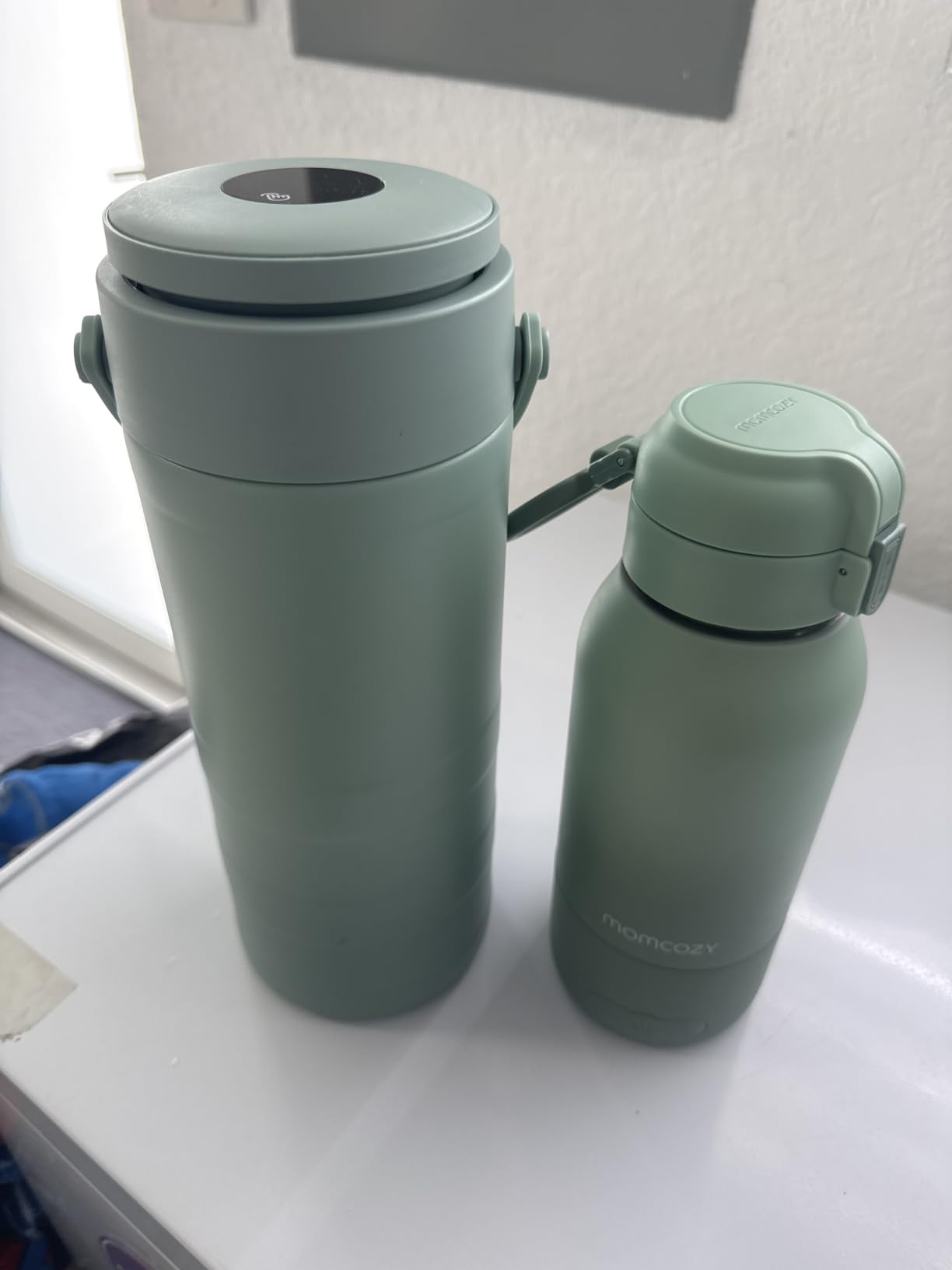
Momcozy states 4 oz of refrigerated milk reaches 98 °F in 4 minutes, and 4 oz of water hits 104 °F in 2 minutes. The dual-mode design lets you warm milk directly or heat water for formula, with a dedicated setting for each.
Temperature control is genuinely fine grained. Milk mode offers 90, 95 and 98 °F, and water mode runs 98, 104, 110 and 122 °F. For a newborn, the 98 °F milk setting is close to body temperature and takes the guesswork out of the night.
The 17oz stainless steel chamber is large enough for more than one feed, so you can prepare both the 3 oz and the backup bottle before you wake your baby. It stands at 9.4 inches tall and fits a car cup holder.
What we liked about the battery and capacity
The real advantage over a thermal flask is control. A flask gives you water at whatever temperature it has cooled to, while this holds a set temperature for as long as the charge lasts, which matters if the feed is late or the outing runs long.
Owners value the leak-proof lid because a spilled bag in a stroller pocket is the failure mode that kills most portable gear.
When to skip it
It is the heaviest portable option here, at 1.5 pounds, and battery life is the honest limitation. Rated figures describe up to 8 refrigerated milk cycles per charge, and real parents report closer to a handful of warms, with larger bottles taking 10 to 15 minutes each. Charge it the night before, not the morning of.
Two practical notes. The supplied power adapter is specific to this model, so do not assume it will charge your other devices. And if you are packing for a week, a flask needs no charging at all, which is why it sits higher on our list for long trips.
7. Momcozy Bottle Warmer for Baby – Best for Frozen Milk and Thawing
Momcozy Bottle Warmer for Baby, Fast Heating Breastmilk for All Bottles
2 to 5 min warming
One touch frozen thaw
24 hour keep warm
Steam to 212F
Pros
- Warms cold milk in 2 to 5 minutes
- One touch thaw for frozen milk
- 24 hour keep warm
- Steam function reaches 212F for sterilizing
- Choose milk status material and volume
Cons
- Needs a power outlet
- Settings take a little learning
- Some owners report run to run inconsistency
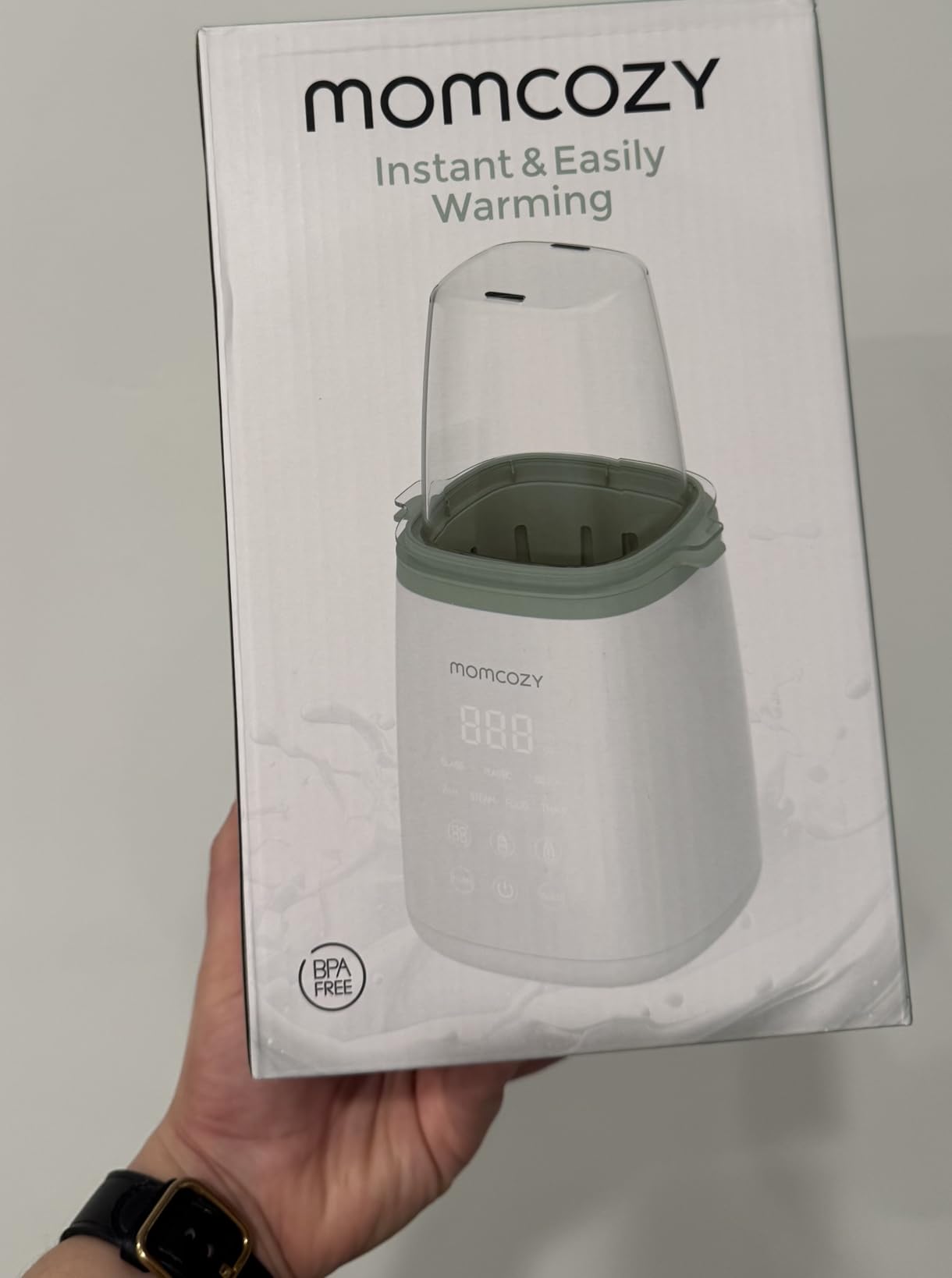
For pumping families, this is the one that matters. The one-touch thaw mode takes a frozen bottle or a frozen storage bag, thaws it, warms it, and then holds it, so a bag pulled from the freezer on Sunday evening can be ready for Monday morning without you being awake for it.
On a normal fridge-cold bottle it is fast, with a claimed 2 to 5 minute range depending on volume and starting temperature. That speed claim is a manufacturer figure, so treat the 5 minute end of the range as the realistic number for a full 5 oz bottle.
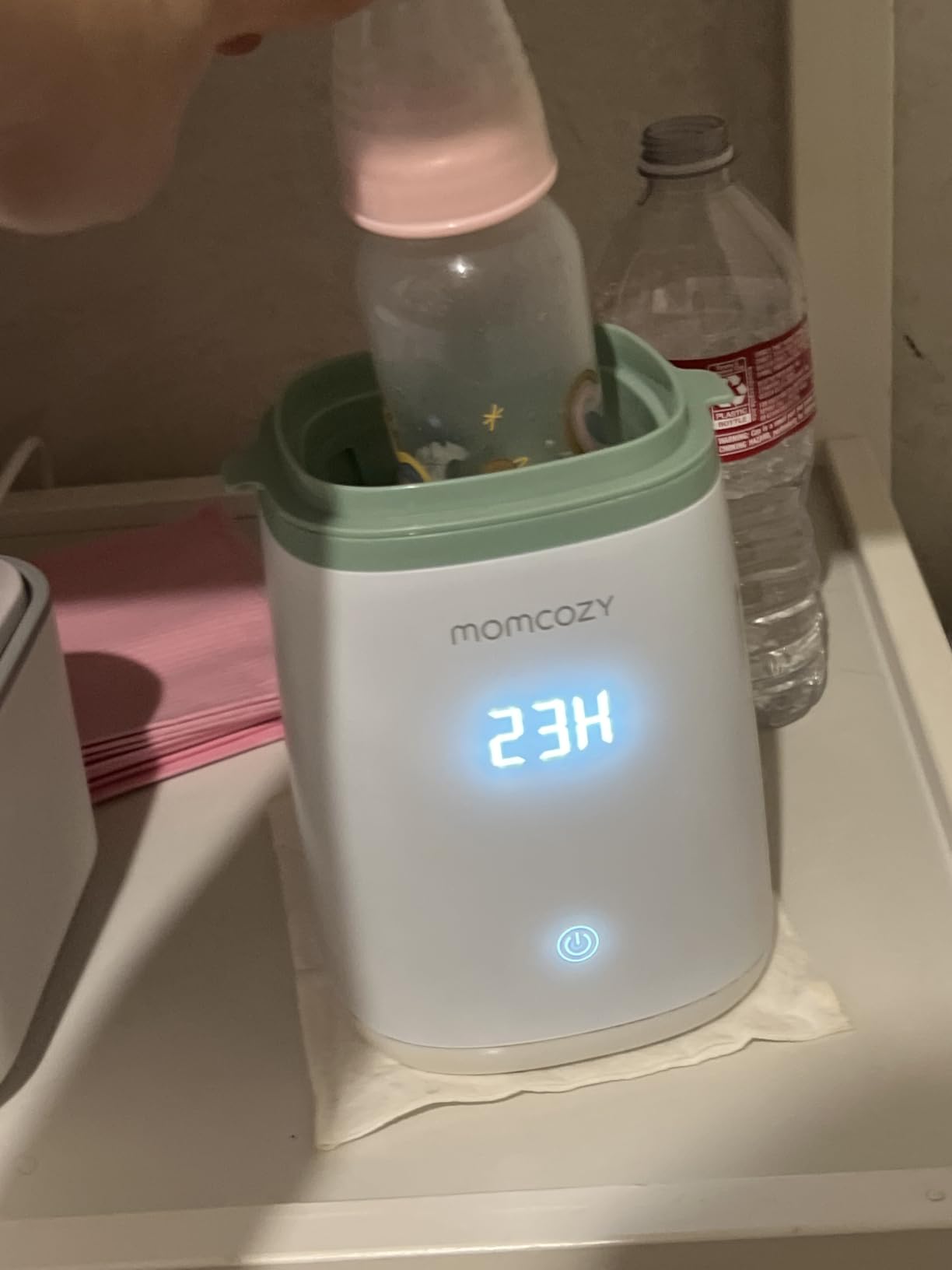
The intelligent heating setting is what separates it from a plain dial. You tell it the milk status, the bottle material and the volume, and it adjusts. That matters in a house with a mix of glass, plastic and silicone bottles, because the same setting behaves differently across materials.
The steam function reaches 212 °F, so it doubles as a sterilizer for bottles and baby food jars, and keep-warm runs up to 24 hours for a bottle ready on the counter.
What we liked about the thaw mode
Thawing is the part of pumping life that quietly eats your night. A frozen bag defrosted on the counter takes far longer and sits in the food safety grey zone, while a dedicated thaw cycle brings the whole thing to feeding temperature in one pass.
It is also the reason this unit suits a mixed household. The same chamber handles a bag, a bottle, a jar of purée and a bottle of formula depending on the season the baby is in.
When to skip it
It needs an outlet, so it is a countertop unit. If your feeding happens in the car, a grandparent’s house or a holiday let, this is the wrong shape of appliance.
The controls also carry a learning curve, and a few owners report that results vary a little from run to run. Practically that means test the wrist and check the temperature yourself for the first few feeds, whatever the display says.
8. Dr. Brown’s Insta-Feed Baby Bottle Warmer and Sterilizer – Best for Small Countertops
Dr. Brown’s Insta-Feed Baby Bottle Warmer and Sterilizer
Warms in as little as 80 seconds
Steam sterilizer built in
Removable adapter ring
Pros
- Fastest published warm time here at 80 seconds
- Built-in sterilizer for nipples and pacifiers
- Removable adapter ring fits several bottle sizes
- Lift-out basket keeps hands clear of steam
- Measuring cup and two storage caps included
Cons
- Some owners report uneven heating between runs
- Reservoir collects mineral buildup and needs descaling
- Shorter keep warm window than water bath units
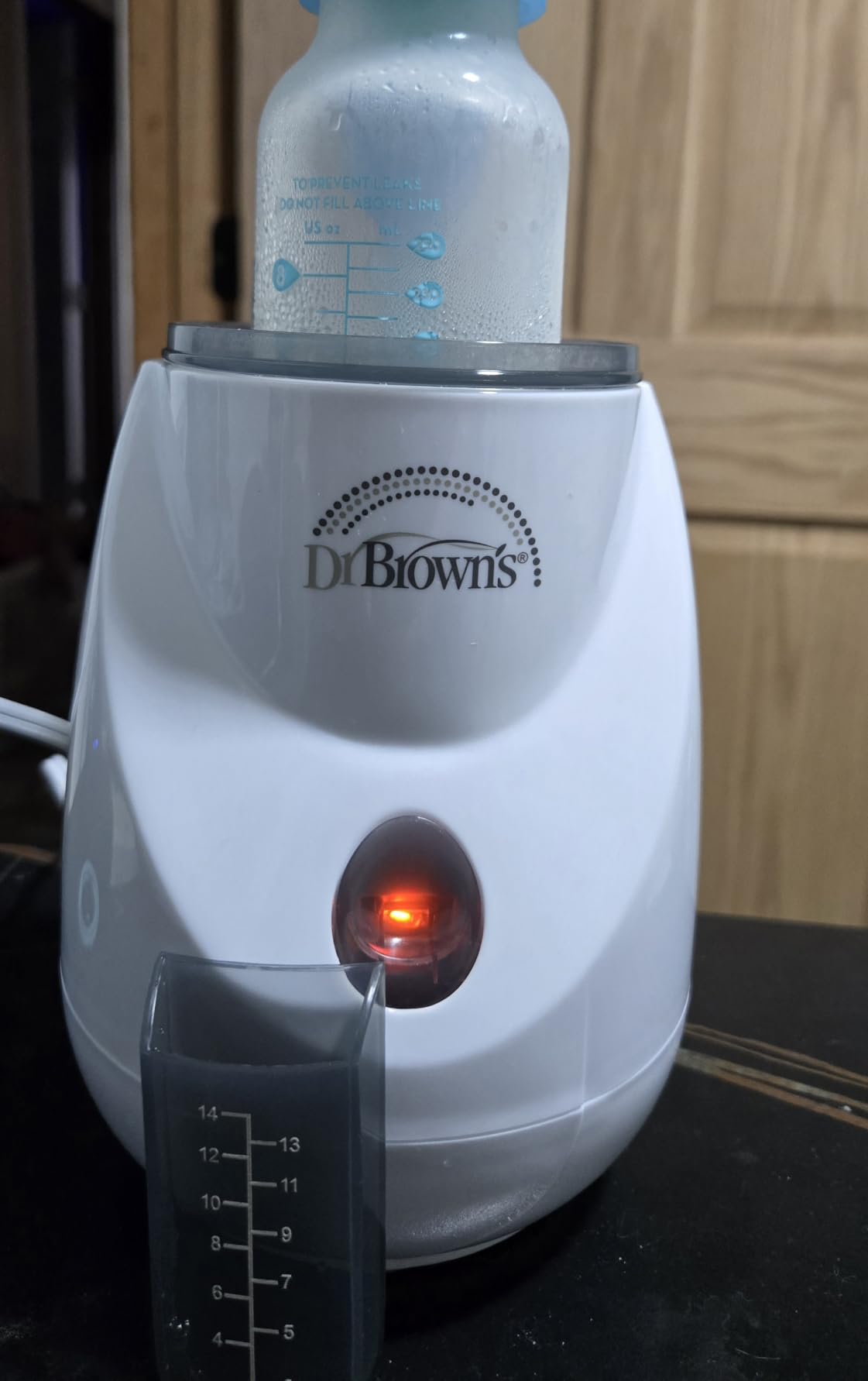
This is the speed answer. The published warm time is as little as 80 seconds, which is steam doing what steam does: heating the bottle itself rather than waiting for a reservoir to come up to temperature first.
For a newborn who is awake and waiting, that difference is the whole point. A steam cycle has no water reservoir to bring to temperature, so it is the only unit in this roundup where the wait is genuinely near zero.
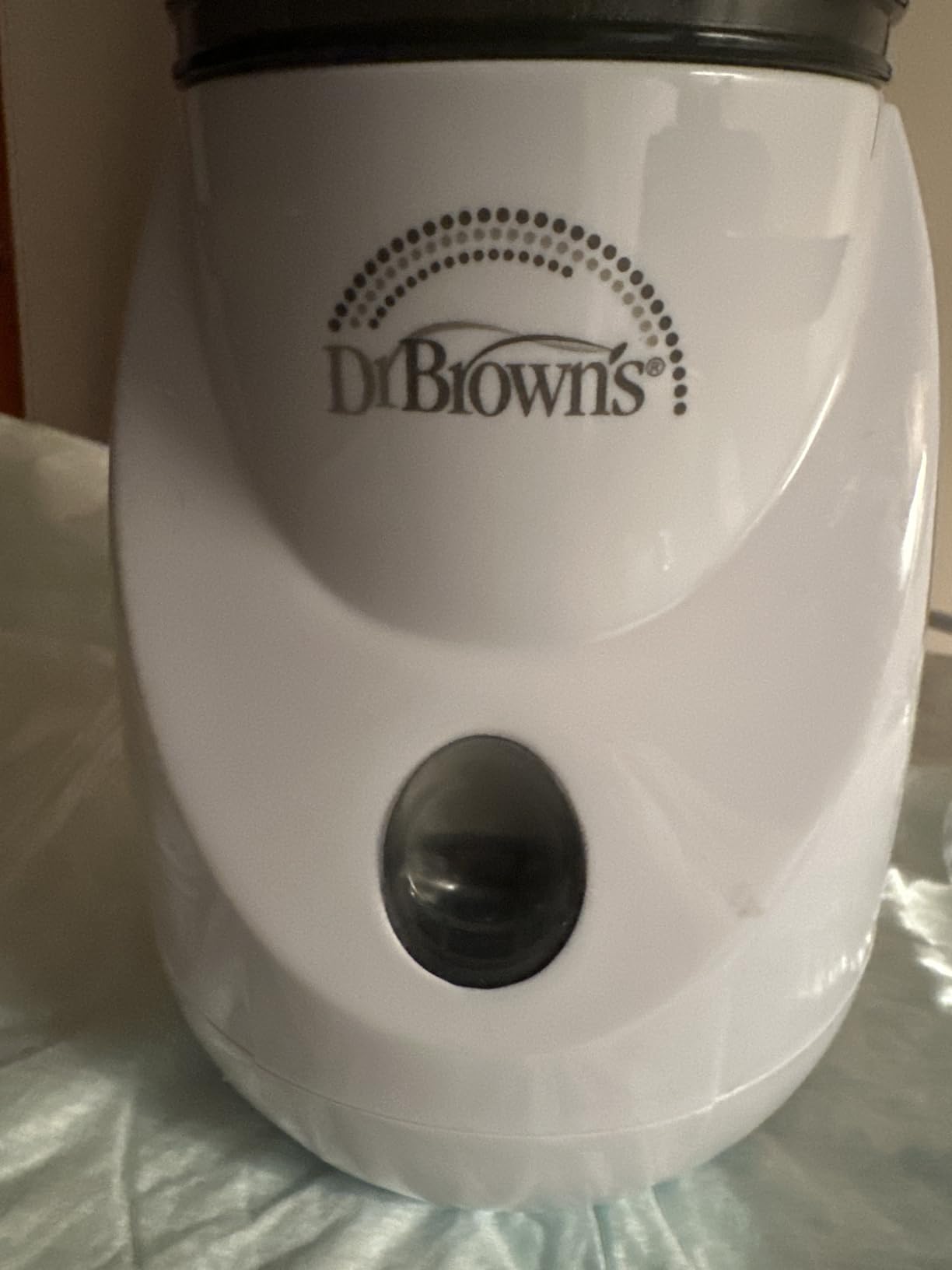
The sterilizing function is the second half of the value. It is designed to eliminate 99.9 percent of bacteria, mould and yeast on nipples and pacifiers, and a lift-out basket lets you handle the small parts without reaching into steam.
A removable adapter ring lets you set the fit for your bottle size, which is the fix for the fit problem that plagues fixed-chamber warmers. A measuring cup and two storage caps come in the box.
What we liked about the compact footprint
This is the one to buy if your counter is the size of a chopping board. It is designed to save space, and the whole sterilize-and-warm job is handled by a single unit that can live near the kettle.
Because the adapter ring is removable, the same chamber handles a newborn bottle now and a larger bottle later, which is rare in a compact design.
When to skip it
Steam and speed are not the same as evenness. Some owners report heating that varies between runs, and a steam cycle applied directly to a bottle is a less gentle option for expressed breast milk than a water bath. If you are exclusively pumping, the water bath units are the better fit.
Keep the window short as well. The keep-warm period is shorter than the water bath models, so this is a warm-it-now device rather than a prepare-and-hold device. And the reservoir needs descaling if you use it every day.
9. Papablic Portable Travel Baby Bottle Warmer – Best Budget Travel Flask
Papablic Portable Travel Baby Bottle Warmer On The Go, Fits Most Car Cup Holders, 12 OZ Stainless Steel Bottle Warmer, Leak-Proof, Safe & Easy to Clean
No battery or outlet
Double wall vacuum steel
Hot water for 6 to 8 hours
Pros
- No battery or outlet required
- Double wall vacuum insulated stainless steel
- Holds hot water 6 to 8 hours or more
- Weighs under a pound and fits a car cup holder
- Waterproof seal and easy to clean
Cons
- Does not fit Comotomo or Tommee Tippee bottles
- One fill only covers a few bottles
- Lid can leak if the seal shifts
The cheapest way to get warm milk away from an outlet, and the design is honest about what it is. Double-wall vacuum insulated stainless steel holding a 12 oz charge of hot water, with your bottle dropped inside.
Owners report the water staying usable for 6 to 8 hours or more, which is enough for a long day trip or a flight plus a wait on the other side. At 15.2 ounces it weighs less than a pound, and it stands in a car cup holder.
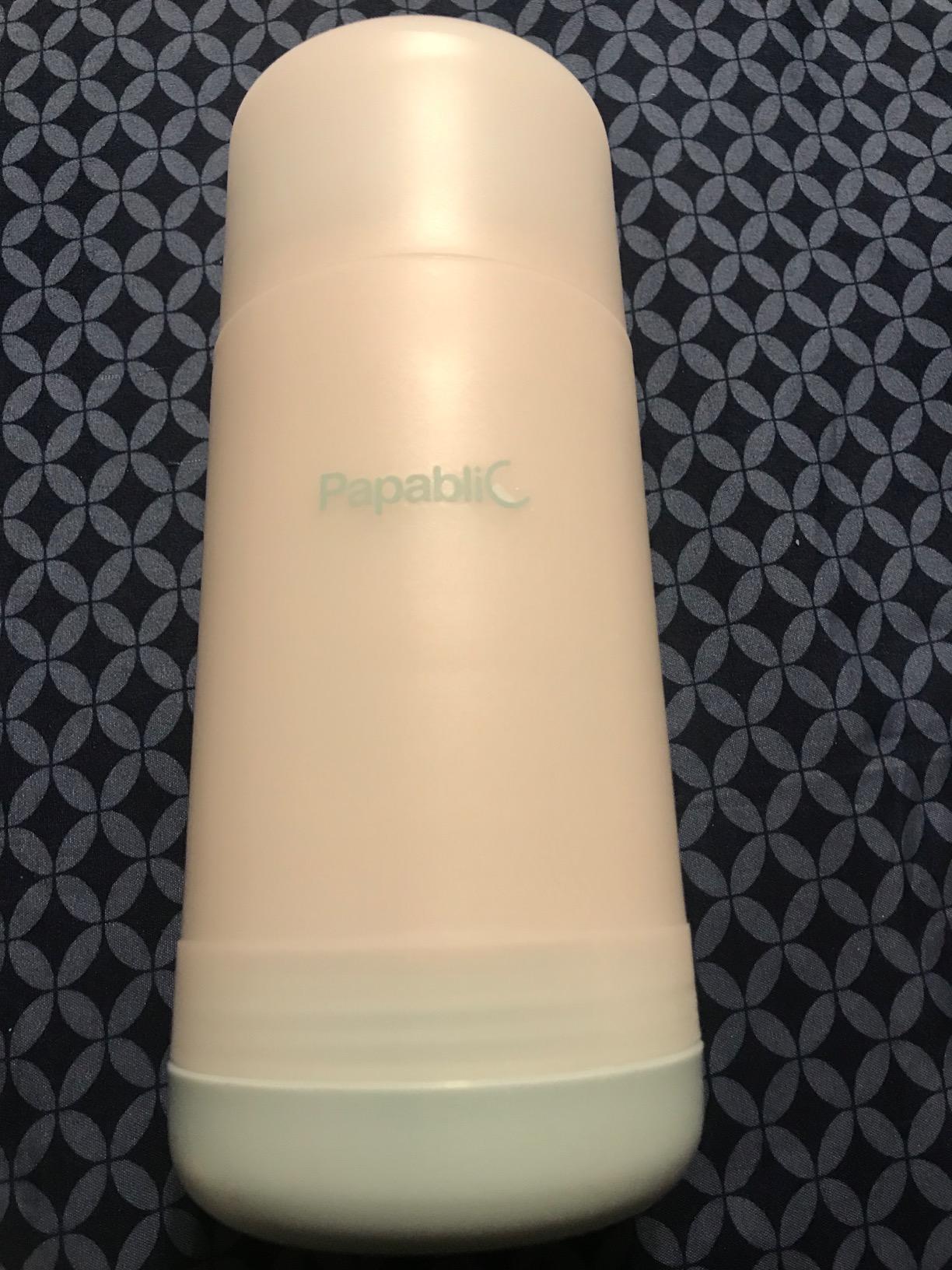
There is nothing to charge, nothing to plug in and nothing that can fail electronically. Pour boiling water in at home, add the bottle, and it works the same in a hotel room as in your kitchen.
The stainless steel body also survives being tipped into a bag in a way that a plastic chamber does not, and the interior is easy to rinse out.
What we liked about the compatibility picture
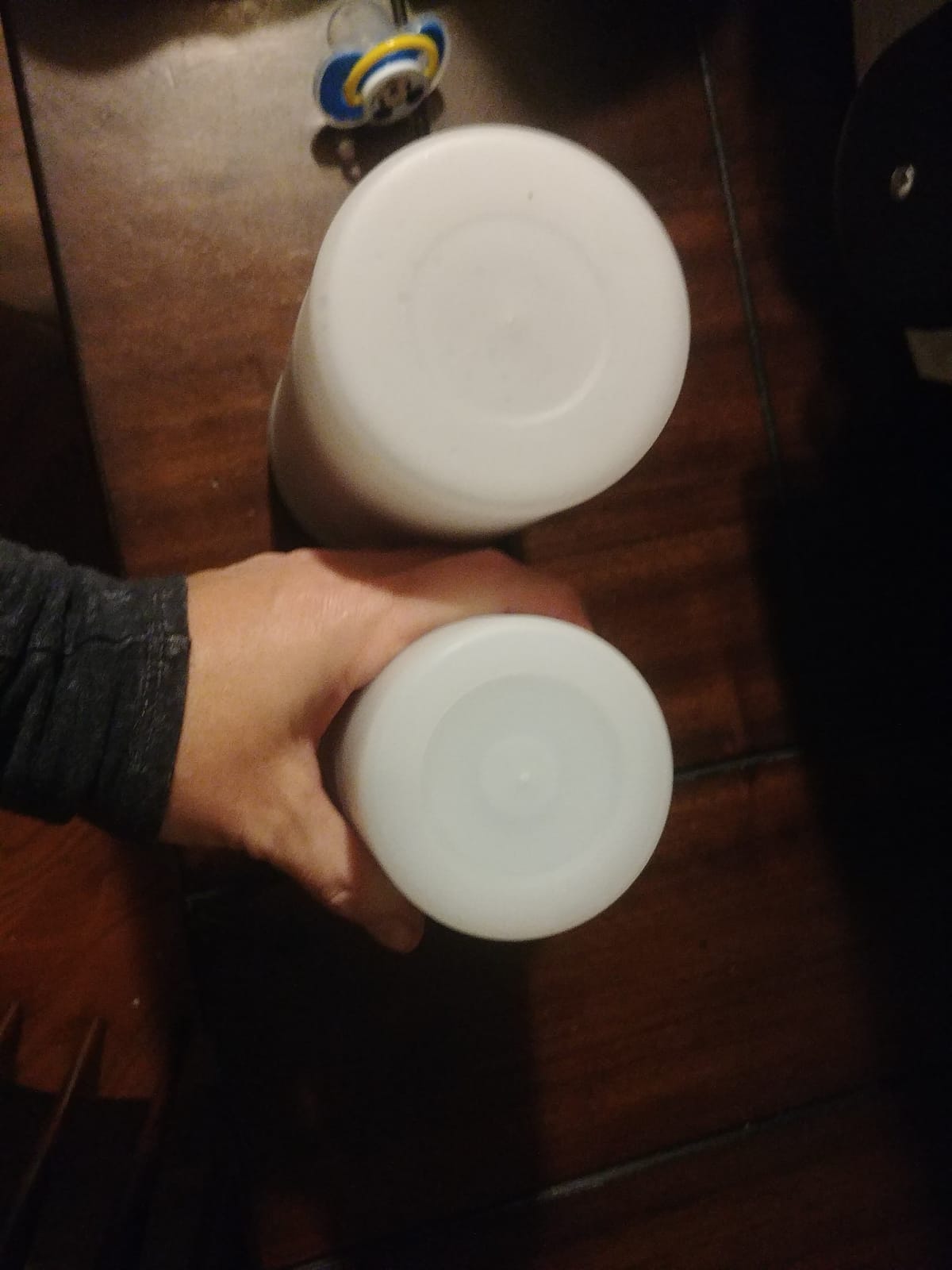
The listing is specific about fit, which is more than most travel warmers manage. It works with Medela, Dr. Brown’s and Evenflo bottles, so if your feeding gear comes from those brands this is a clean match.
It is also the lightest option here, which matters when the bottle, the nappy bag and the change of clothes are already competing for space in one hand.
When to skip it
It does not fit Comotomo or Tommee Tippee bottles, and that is a hard limit rather than a tight squeeze. If you use either of those brands, the Tommee Tippee travel warmer higher up is the one to buy instead, since it is designed around a flask shape that suits them.
Like the other flasks, one fill only covers a few bottles and the heat fades after roughly 8 hours. The lid can leak if the seal shifts, so test it over the sink before packing it, and expect the pop-up spout to be loud at night.
10. Bear Baby Bottle Warmer – Best for Mixed Bottle Materials
Bear Baby Bottle Warmer, Fast Warming Breast Milk Formula, White
3 min warming
24 hour keep warm
Glass plastic and silicone fit
Water bath heating
Pros
- Warms a bottle in about 3 minutes
- 24 hour keep warm function
- Handles glass plastic and silicone bottles
- Water bath heats evenly
- Defrosts storage bags and warms food jars
Cons
- Hand wash only
- Plastic body rather than stainless steel
- Newer model with a shorter review history
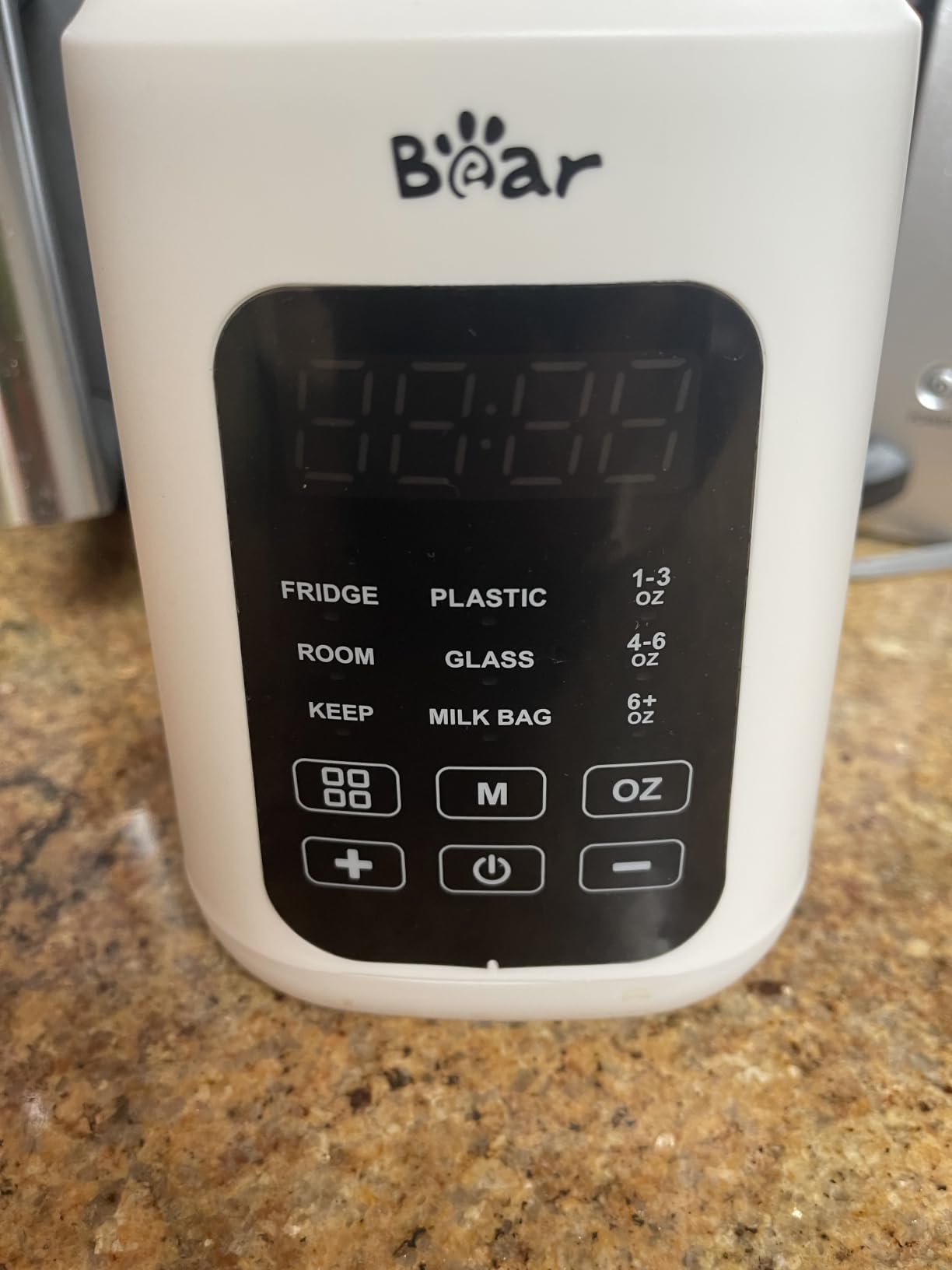
The pick for a household running more than one bottle brand. The claim that it fits glass, plastic and silicone bodies is the point, because that mix is exactly where a single-setting warmer gives you unpredictable results and parents end up buying new bottles to match the appliance.
Warming is quoted at 3 minutes, with time and temperature adjustable down to the minute and second so you can compensate for a larger volume or a colder starting point. The water bath is the gentle kind rather than direct contact.
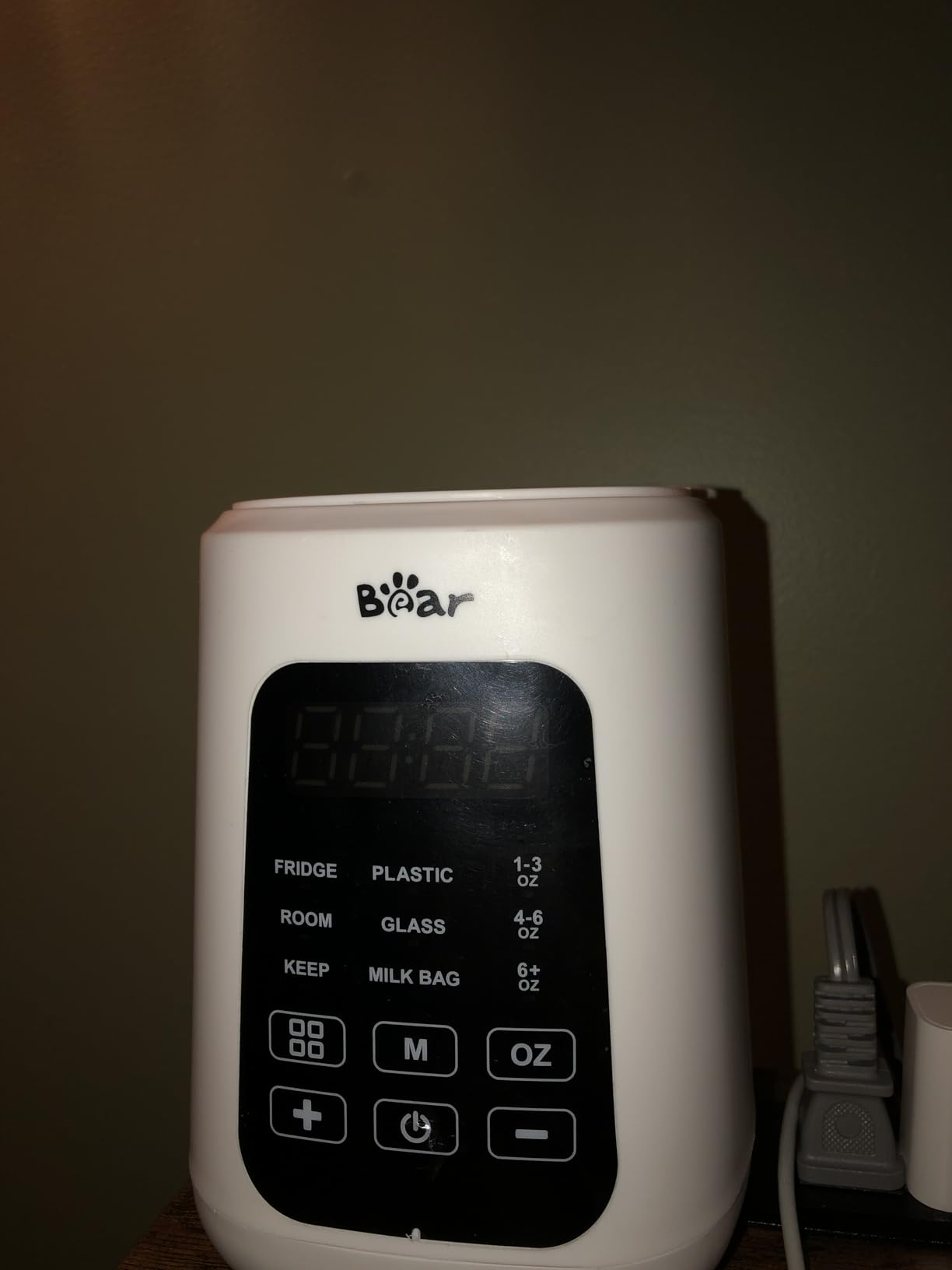
Auto shut-off is there to stop overheating and dry burning, which is the failure mode that worries people most with a plastic body and a dry element. It also defrosts milk storage bags and warms baby food jars and pouches, so the unit stays useful past the bottle-feeding stage.
The keep-warm function runs up to 24 hours, which is longer than most water bath units in this roundup promise.
What we liked about the universal fit
Fit is the number one cause of warmer returns, and this design addresses it at the specification level rather than hoping for the best. If your expressed milk arrives in bags, your day bottles are glass and the grandparents use silicone, one unit covers all three.
Time can be dialled in by the second, which is more control than a fixed dial gives you when a 2 oz bottle and a 5 oz bottle are warming on different days.
When to skip it
It is hand wash only, so it does not go in the dishwasher, and the plastic body is less durable in the long run than a stainless steel flask. If you already own a flasher that handles glass and plastic, this is redundant.
It is also a newer model with a shorter review history than anything else on this page, so we are recommending it on its specification and fit claim rather than a long record of owners living with it.
How to Choose a Bottle Warmer for a Newborn
Six criteria decide this purchase, and only one of them is speed. Work through them in order and the right unit usually becomes obvious before you read a single review.
1. Where do the feeds actually happen? Night feeds happen in a bedroom, and a compact unit that lives on a nightstand will be used more than a better machine in the kitchen. Travel feeds need a cordless battery or a thermal flask. Twins need two chambers. Decide this first because it eliminates half the list.
2. Does it fit your bottles? This is the mistake everyone makes. Check whether the chamber is a fixed ring or takes a removable adapter, and confirm your exact bottle brand. Silicone bodies and wide-neck bottles are the usual problem cases, and owners on forums regularly report changing bottle brands because of the warmer rather than the other way round.
3. Water bath, steam or direct contact? A water bath surrounds the bottle and heats it gently and evenly, which is the safest and most breast-milk friendly option and produces the fewest hot spots. Steam heats the bottle itself and is much faster but is a hotter process. Direct contact plates are the least even of the three. Newborn-sized feeds favour evenness over speed.
4. Can you run it at 3 a.m. half awake? Look for a light that shows progress, an auto shut-off, and controls you can set once and reuse. A dial you have to re-derive every night is a liability in the dark. If you want more help with the rest of the setup, our smart bassinet roundup covers the other half of a night feed.
5. What is the cleaning routine? Reservoirs need emptying daily and descaling periodically, and a removable heat plate is much easier to wash than a fixed one. All of the units in this roundup are simple to fill, but the refill-every-session chore is the most common reason parents stop using a warmer at all.
6. Can you do without it? If you are on a tight budget, the warm water method is free and works. A flask bought once for outings can also be used at home. Do not buy a countertop warmer on day one of a newborn phase if your baby is content with cold milk.
One more practical point: for the first year you are likely to be running around as a family more than at home, so a second feeding station matters. If you are building out that setup, our baby travel systems guide covers the rest of the kit.
Bottle Fit: Which Bottles Actually Fit Which Warmer
Fit is the single most common reason a good warmer gets returned, and it is the problem parents complain about most. Here is what we can state from the product data, plus the failure cases reported by owners.
The First Years states compatibility with most wide, narrow and angled bottles across multiple brands, which makes it the safest default if your cupboard is mixed. The Philips Avent fits Philips Avent and most leading bottles up to 11 oz / 330 ml, and also takes milk bags and food jars.
Dr. Brown’s fits all Dr. Brown’s bottles and most other brands, with a removable adapter ring that lets you tune the fit to your bottle size. The Dr. Brown’s steam warmer also ships with a measuring cup and two storage caps for storage and warming on the move.
The Bear unit is the one specified for glass, plastic and silicone bodies together. The Momcozy countertop model also asks you to select the bottle material, which lets it adjust for a mixed cupboard.
The Papablic flask is the exception and the warning label. It works with Medela, Dr. Brown’s and Evenflo bottles, and it does not fit Comotomo or Tommee Tippee bottles. If you use those brands, the Tommee Tippee travel warmer further up this page is the one to choose instead.
Silicone is the soft spot across the category. Owners on r/beyondthebump specifically warn that the Philips Avent does not work well with silicone bottles, even though it is otherwise the strongest unit here. Check the fit with your actual bottle before the whole household depends on it.
Safety Rules for Warming a Newborn’s Bottle
Never use a microwave. Microwaves heat unevenly and create hot spots that can burn a baby’s mouth while the outside of the bottle still feels fine. CDC guidance is to warm a bottle in warm running water, in a bowl of warm water, or in a bottle warmer, and never in a microwave or hot water directly on the stove.
Use body temperature as the target. Aim for about 37 °C / 98.6 °F. Always test before feeding by dropping a few drops on the inside of your wrist, where the skin is sensitive, and give the bottle another few seconds if it feels hot at all.
Swirl, do not shake. Shaking aerates the milk and can break down some of the protective components. Swirling mixes it evenly with far less damage, and a bottle can be warm while still needing a swirl to even out the temperature.
Use thawed breast milk within 24 hours. Never refreeze milk that has been thawed, and once a bottle is warmed and offered, discard what is left after the feed rather than saving it for later.
Stay close to steam units. Steam warmers reach well above boiling temperature internally. Do not leave a steam cycle running unattended, and lift small parts out with the basket handle rather than your hand.
Clean and descale on a schedule. Empty the reservoir daily and descale it as the instructions describe. A scaled heating element both warms unevenly and gets hotter than it should, and mineral residue in a steam chamber is a good home for the bacteria the sterilizer mode is meant to remove.
Why Is My Milk Too Hot? Troubleshooting Warmers
If your milk keeps coming out too hot, it is almost always one of four things. Here is the order to work through.
1. The bottle was already warm. Running a second cycle on milk that has been sitting in a keep-warm mode stacks heat on top of heat. This is the most common cause on units with a 24 hour keep-warm function. Start from fridge-cold milk every time.
2. The volume setting is wrong. Most intelligent warmers ask you to select the volume and the bottle material, and a setting that is too low for a full 5 oz bottle will overshoot. Re-enter the settings after every volume change rather than assuming it carried over.
3. The bottle is sitting too close to the element. Direct contact and steam warmers apply far more heat per minute than a water bath. If you are using a fast steam cycle, drop the bottle a minute early and finish the last stretch in a bowl of warm water.
4. You cannot feel the hot spot from outside. Feel the milk, not the bottle. A bottle wall can be comfortable while the middle of the milk is much hotter, which is exactly the failure mode a circulating water bath is designed to prevent.
If the warmer is running slow rather than hot, the usual causes are a cold reservoir starting from empty, a full 5 oz bottle rather than a 3 oz one, or mineral scale on the element. Starting with a warm-up cycle and descaling regularly fix both.
Frequently Asked Questions
Are bottle warmers safe for newborns?
Yes, when you use them as directed and test before feeding. CDC guidance says to warm a bottle in warm running water, in a bowl, or in a bottle warmer, and never in a microwave, which creates hot spots that can scald a small mouth. Always test a few drops on the inside of your wrist before offering the bottle.
Do I really need a bottle warmer?
Probably not, if your baby drinks milk straight from the fridge without fuss. A bowl of warm water or hot running water brings a bottle to feeding temperature in a similar time for no money at all. Buy one if your baby refuses cold milk, because then the appliance buys you an even result and one-handed operation at 3 a.m.
What temperature should a newborn bottle be?
About 37 °C, which is 98.6 °F, or body temperature. Always test before feeding by dropping a few drops on the inside of your wrist, where skin is more sensitive than the palm. If it feels hot at all, let the bottle stand for a few more seconds and test again.
Why is my milk coming out too hot?
Four usual causes: warming milk that is already warm from a keep-warm mode, entering the wrong volume setting for the bottle size, running a fast steam cycle on a direct-contact unit, or judging by the outside of the bottle instead of the milk itself. Start from fridge-cold milk, confirm the volume setting, and always test on your wrist.
Is Momcozy a good bottle warmer?
It depends which one. The Momcozy countertop model is one of the few with a dedicated one-touch frozen thaw mode and 24 hour keep warm, which suits pumping families. The Momcozy portable warmer is cordless and rechargeable with a 17oz chamber, which suits travel. Both need an outlet or a full charge respectively, so neither suits every household.
Will my baby cry if the milk is too hot?
A newborn will usually refuse a bottle that is too hot rather than drink it, but the risk is a burn to the mouth and throat rather than crying. Feeling the outside of the bottle is not a reliable test, since the wall can be cool while the milk in the middle is much hotter. Test the milk itself on your inner wrist every time.
Our Final Verdict
The Philips Avent Premium Fast Bottle Warmer is the best bottle warmer for newborns in 2026 because it is the only unit in this roundup that is fast and gentle at the same time. A circulating water bath removes the hot spots that make parents re-run cycles, a 3 minute warm on a 5 oz bottle is fast enough for a crying baby, and the 60 minute keep-warm with auto shut-off is what makes it usable in the dark.
Pick The First Years instead if your budget is the deciding factor and you want sanitizing in the same box, and pick the Tommee Tippee travel flask if your feeds happen anywhere other than a kitchen counter. The rest of the lineup is here for a specific household: twins get the double GROWNSY, pumping families get the Momcozy with the thaw mode, and small kitchens get the Dr. Brown’s.
And if your baby is perfectly happy with cold milk, take the money and read our crib mattress roundup instead. A warmer you never need is a better outcome than a warmer you leave unplugged.