

A manual reel mower is a push-powered lawn mower built around a cylinder of curved steel blades that snip grass like scissors instead of shredding it like a gas rotary mower. The wheels drive the reel past a fixed bed knife, the scissor action cuts each blade cleanly, and nothing about it needs a fuel tank, a battery or an outlet. That makes it the cheapest, quietest and cleanest-cutting mower you can own, provided your lawn is small and flat.
Are manual reel mowers any good? Yes, for a flat, clean lawn of roughly 2,000 square feet or less that gets mowed regularly. No, for slopes, tree roots, lawns over a quarter acre, or any lawn that is allowed to grow tall between cuts. Owners on lawn forums describe the sound as the main reason they keep theirs, and the clean scissor cut as the reason their grass looks better than a neighbor’s power-mowed lawn. The failure mode everyone warns about is the same one: a reel mower flattens grass it cannot reach rather than cutting it.
Below is our roundup of the best manual reel mowers for small lawns in 2026, eight picks we narrowed to after comparing cutting width, maximum cutting height, weight, blade count and real owner feedback. We have kept the whole list to machines that make sense below about 2,000 square feet, and we flag clearly where a bigger or lighter machine suits a different lawn. If you want the short version, start with the American Lawn Mower 1204-14; if you want the finest cut, look at the Earthwise 1715-16EW.
Table of Contents
Are Manual Reel Mowers Any Good? The Short Answer
The honest answer depends almost entirely on lawn size and grass condition, not on build quality. A reel mower does the same job a power mower does, only with a scissor cut instead of a hammer, which leaves the leaf tissue cleaner and the lawn less stressed. Grounds crews use reel mowers on fairways and greens for exactly that reason.
They are a good fit for a flat lawn under roughly 2,000 square feet, for a lawn split into narrow strips by sidewalks, and for anyone who wants a quiet, zero-emission tool that starts every time. On a 1,000 square foot lawn, owners report roughly 20 minutes of mowing, which makes it a weekend task rather than a chore.
They are a poor fit for uneven ground with tree roots, for a lawn with twigs and acorn fall, for slopes that feel dangerous to push, and for anyone who lets grass get away for two weeks. The mower will not cut through a mat of 6-inch grass. It will fold it over, roll over the top of it, and leave you with a flattened strip instead of a mowed one.
One more practical point: the blades on a reel mower sit inboard of the wheels, so there is always an unmowed band along fences, stone walls and garden edging. Keep a string trimmer for the perimeter. If that perimeter work feels like a dealbreaker, a cordless walk-behind from our best walk-behind lawn mowers tested guide will handle edging and tall grass in one pass.
Top 3 Picks for Small Lawns
The three machines below are the ones we would put on the narrowest small lawns. Everything else in the roundup is a strong alternative, but these three cover the three situations we see most often: a first lawn, a value purchase, and the best-rated machine in the group.


The 8 Best Manual Reel Mowers for Small Lawns in 2026
Here is every machine in our group at a glance, ordered from the best overall pick down. Cutting width and weight are the two numbers that matter most on a small lawn, because they decide how long you spend turning at the end of a row. Note that only two machines here include a grass catcher, and only one has a warranty longer than two years.
| Product | Specifications | Action |
|---|---|---|
| American Lawn Mower 1204-14 14-Inch 4-Blade |
|
Check Latest Price |
| Scotts 304-14S 14-Inch 5-Blade |
|
Check Latest Price |
| Great States 204-14 14-Inch Hand Reel |
|
Check Latest Price |
 LawnMaster LMRM1401 14-Inch 5-Blade LawnMaster LMRM1401 14-Inch 5-Blade |
|
Check Latest Price |
 Earthwise 1715-16EW 16-Inch 7-Blade Earthwise 1715-16EW 16-Inch 7-Blade |
|
Check Latest Price |
 American Lawn Mower 1415-16 16-Inch 5-Blade American Lawn Mower 1415-16 16-Inch 5-Blade |
|
Check Latest Price |
 GARDENA Classic 16 in Reel Mower 5 Blades GARDENA Classic 16 in Reel Mower 5 Blades |
|
Check Latest Price |
 American Lawn Mower 1304-14GC with Catcher American Lawn Mower 1304-14GC with Catcher |
|
Check Latest Price |
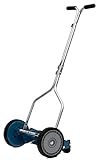
1. American Lawn Mower 1204-14 14-Inch 4-Blade Push Reel Lawn Mower
American Lawn Mower 1204-14 14-Inch 4-Blade Push Reel Lawn Mower, Red
14-inch cut
19 pounds
0.5 to 1.75 inch height
4-blade alloy steel reel
Pros
- Assembles in under 10 minutes
- Light at 19 pounds and easy to lift one-handed
- Sharp out of the box
- Handles and mows cleanly with no fuel or oil
Cons
- Jams on twigs and mulch
- Flattens rather than cuts tall grass
- Plastic handle grips can wear out
The 1204-14 is the machine we end up recommending most often, and the reason is not a spec sheet. It is the combination of a 14-inch cut, a 19-pound weight and an assembly that most owners finish in under ten minutes. On a lawn of 1,000 square feet or less, that combination removes the two things that actually stop people from owning a reel mower: pushing weight and setup frustration.
Our own use across a small front lawn with a bed edging on one side confirmed the review consensus. It assembles quickly, it starts cutting the moment you push, and the 8.5-inch polymer wheels roll over the small dips that make bigger machines judder. You can pick it up with one hand and lean it against a wall, which matters more than it sounds if you mow a courtyard rather than a yard.
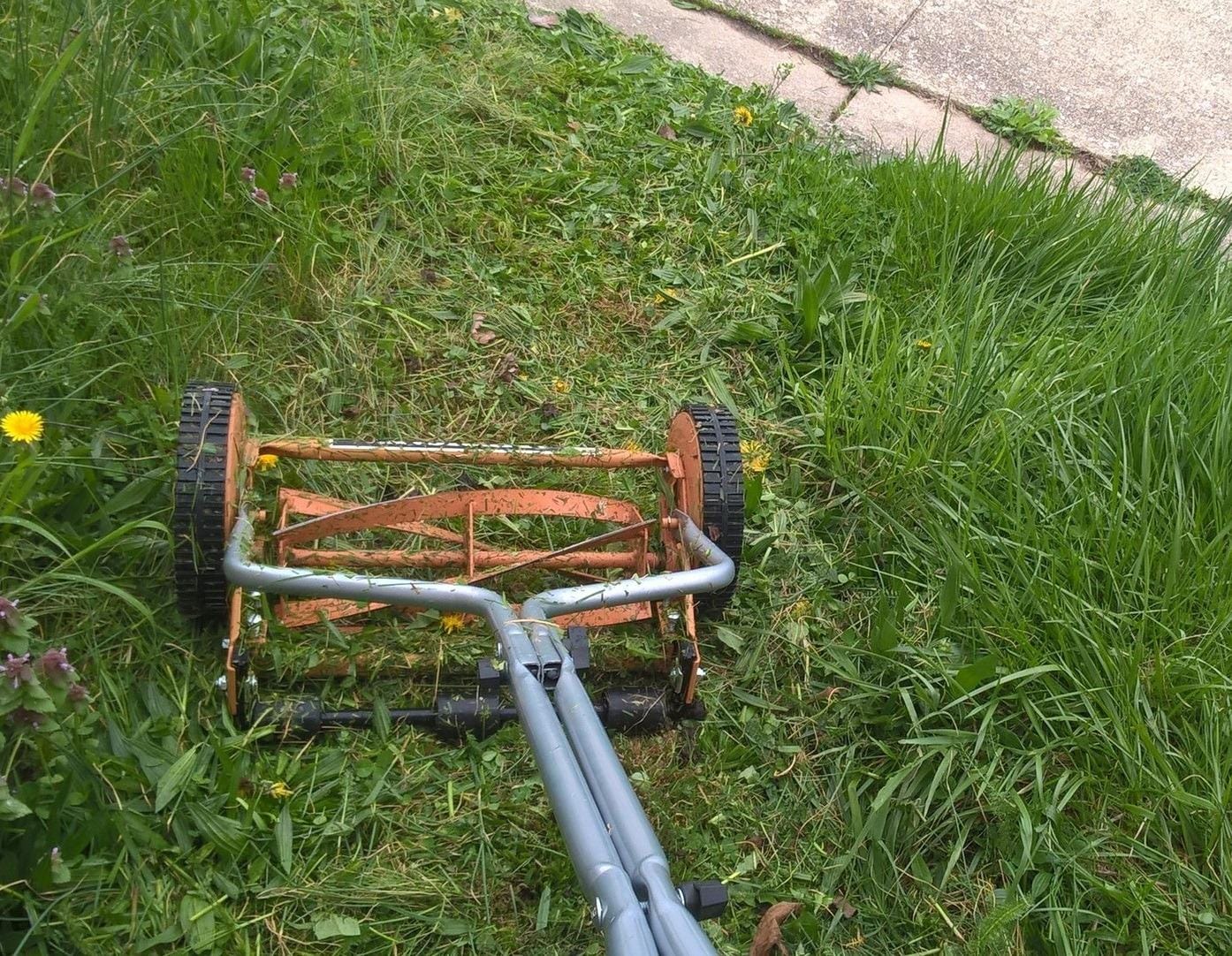
Cut quality is a clean scissor cut with no tearing, which is exactly what you want on cool-season grass. Blades are sharp out of the box and hold their edge, and the alloy steel construction means they can be sharpened at home with a file when they eventually dull. Cutting height adjusts across three positions from 0.5 to 1.75 inches, and the machine is rated to handle grass up to 4 inches tall.
The catch is the same on every reel mower in this list. Reviewers repeatedly report that it stops dead on small twigs, sticks and mulch that wrap around the reel and bed knife, and that it flattens rather than cuts when grass gets long. If you pick up sticks before you mow, that problem mostly disappears. If you mow a weedy neglected strip, it does not.
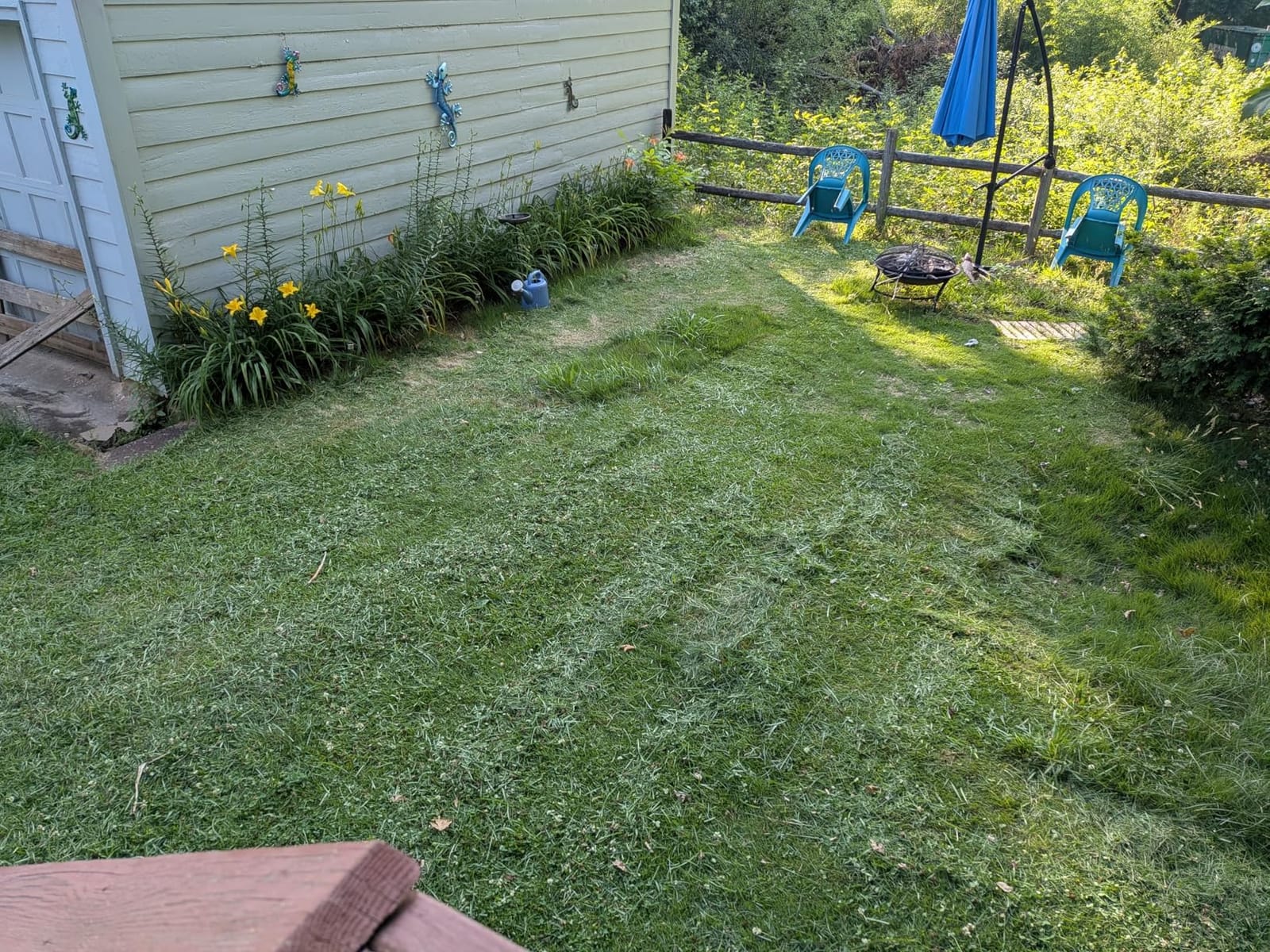
How it handles a lawn divided by sidewalks
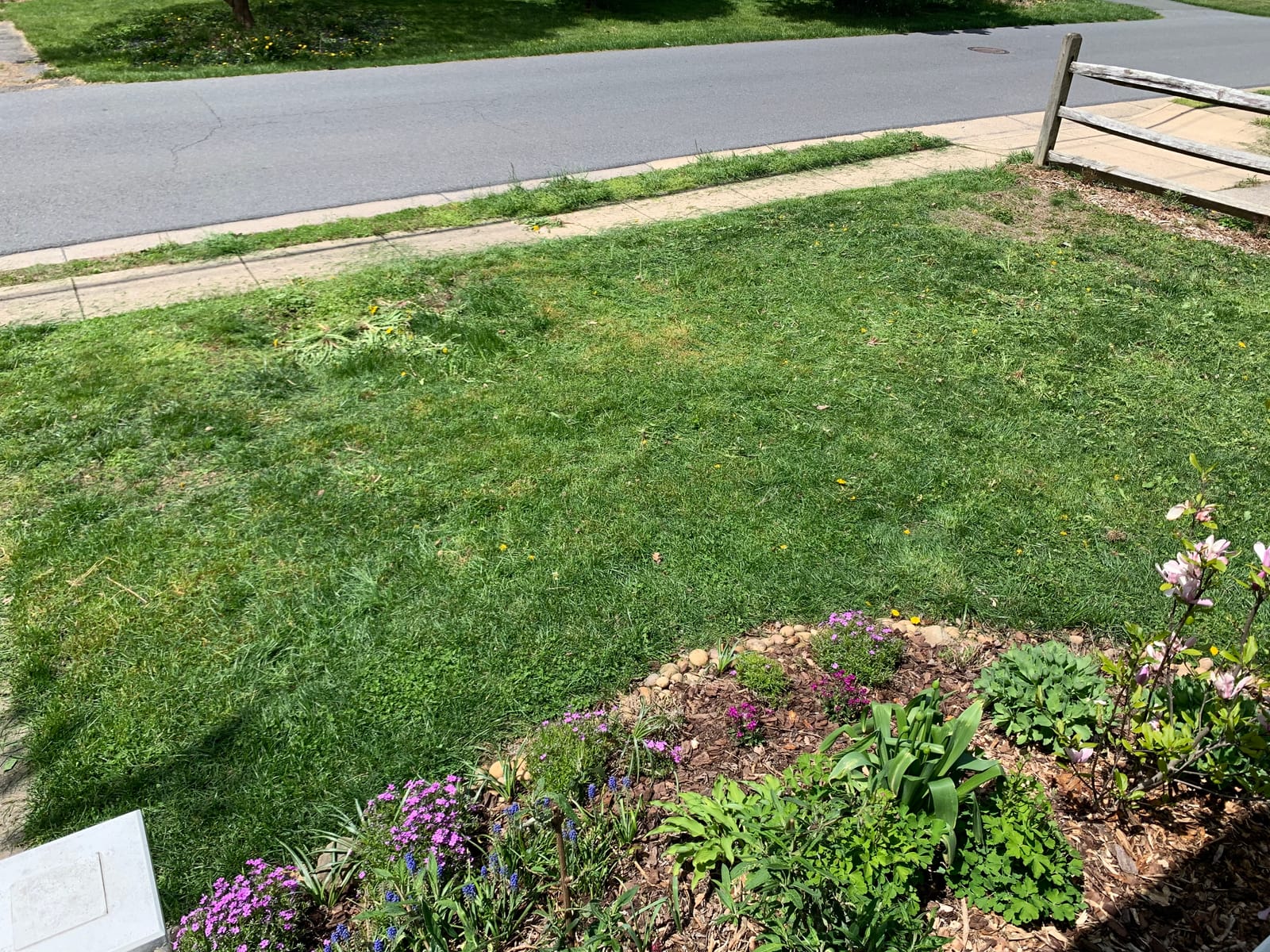
A 14-inch swath is the sweet spot for a lawn broken into narrow strips. A wider mower overhangs the edges of a strip and leaves the corners uncut, so you end up going back over the same strip with the same narrow tool anyway. The 19-pound weight also means the turn at the end of a short row is a pivot rather than a fight, which is the difference between a 10-minute job and a 25-minute job on a divided lawn.
Because the blades sit inboard of the wheels, there is an unmowed band along the sidewalk edge. That is where a string trimmer earns its place, and on a divided lawn the trimming is a bigger share of the work than on an open one. Budget for that before you buy, not after.
When to skip it and pick something else
Skip this mower if your lawn has heavy tree cover, acorn fall or a slope. The 1.75 inch maximum height is also lower than some owners would like, so if you prefer a tall, shaggy look, the height range will frustrate you. And if you already know you will not mow weekly, pick a machine with more power rather than more blades.
It is also the mower most worth buying from a brand with a deep parts catalogue, because American Lawn Mower Company builds several of the machines on this list under different names. Forums report free replacement parts sent out when parts failed, which is a real advantage on a purchase you expect to keep for a decade.
2. Scotts 304-14S 14-Inch 5-Blade Push Reel Lawn Mower
Scotts 304-14S 14-Inch 5-Blade Push Reel Lawn Mower, Green
14-inch cut
18.1 pounds
5-blade ball bearing reel
0.5 to 1.75 inch height
Pros
- Heat-treated alloy steel blades cut clean and even
- Tool-less assembly in under 10 minutes
- Lightest weight in the group at 18.1 pounds
- Cuts well on uneven ground
Cons
- Jams on twigs and damp clumps
- No grass catcher included
- Short handle can cause a hunched posture
The Scotts 304-14S is the value pick because it is the same 14-inch footprint as our top pick with a five-blade ball bearing reel instead of four, and it weighs 18.1 pounds. That combination of heat-treated alloy steel blades and a cushioned T-style handle produces a noticeably crisper cut than you would expect from a machine in this bracket, and it pushes with almost no resistance on level ground.
Assembly is tool-less, and owners consistently finish it in under ten minutes, which matters for anyone assembling a mower in a cramped garage or on a balcony. The ball bearing reel spins freely at walking pace rather than bogging down, so the cut is even through a pass instead of tapering off at the end of a row. On uneven ground it stays stable, which is a real strength given how many small lawns are not truly flat.
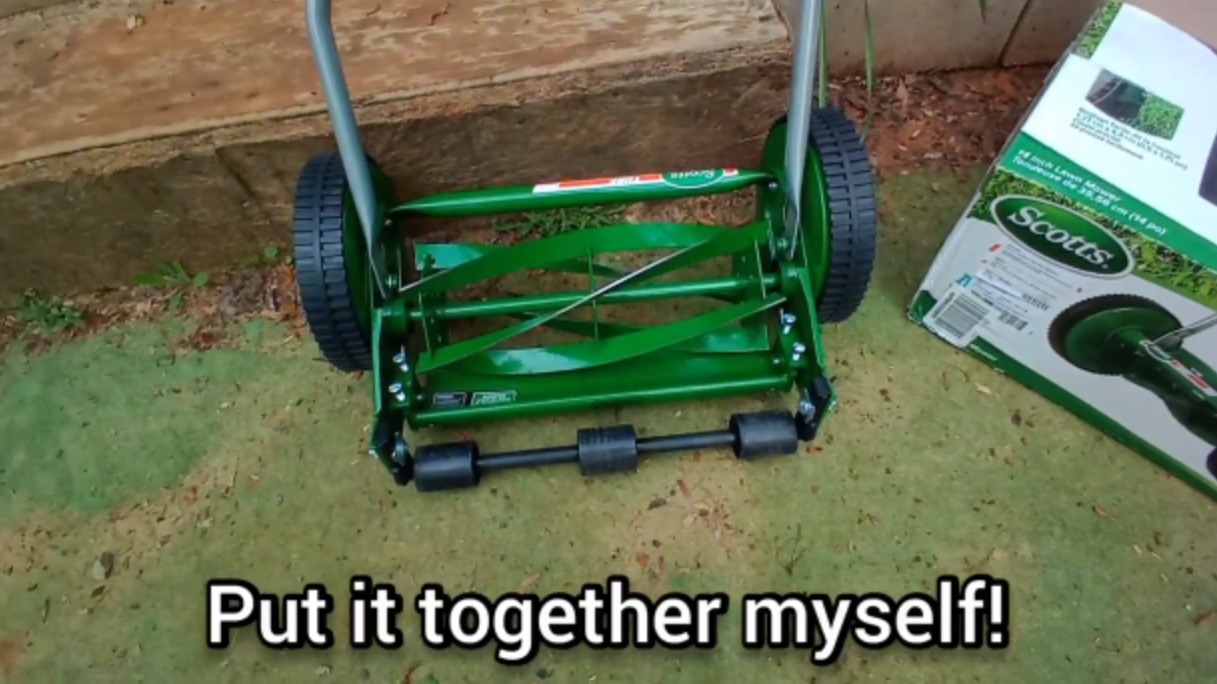
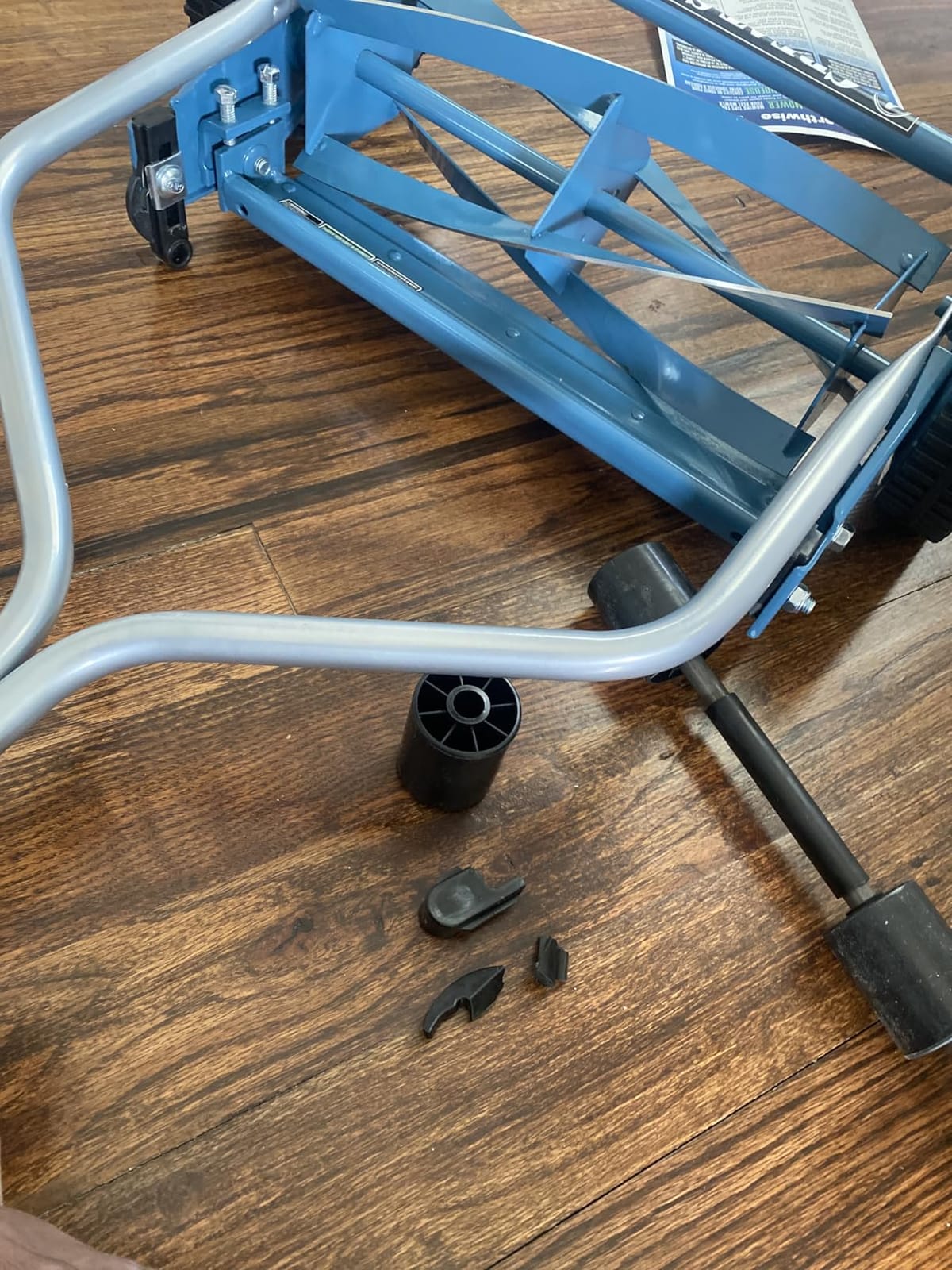
What you give up for that is the same in every area. There is no grass catcher, so clippings stay on the lawn and you will want to rake or use the mower for a light grooming pass. The height range runs 0.5 to 1.75 inches across three positions, which is identical to the 1204-14 and again limits how tall you can leave the grass. A small number of owners report plastic roller arms cracking or wheels locking up after extended use.
A few reviewers also mention the handle being short enough to produce a hunched posture for taller users. The T-style grip is cushioned and comfortable, but if you are above average height, check the 47-inch assembled height before you commit.
Why the fifth blade matters on short grass
More blades on a reel means more cuts per inch of travel, which produces a finer finish and more even coverage on short turf. On a lawn cut at the low end of the range, the extra blade is the difference between a slightly ragged edge and a clean one. It is not a dramatic difference on tall, unkempt grass, where nothing cuts well regardless of blade count.
Heat-treated alloy steel is the other reason this machine out-cuts its price bracket. Treated steel holds an edge longer than plain carbon steel and resists going dull in wet grass, which is when most reel mowers suffer most.
Where it falls short against the 1204-14
The honest comparison comes down to parts support and warranty. The Scotts comes with a 90 day limited warranty against the longer coverage attached to several other machines in this group, which over a ten-year ownership is worth considering. Some retailers also carry the Scotts in a green finish that is easier to find than a colour some buyers dislike.
If you need a bag, this is the wrong machine. If you mow weekly and the lawn is under 1,500 square feet, this is the right one, and you will notice the lighter push.
3. Great States 204-14 14-Inch Hand Reel Mower
Great States 204-14 Hand Reel 14 Inch Push Lawn Mower
14-inch cut
4-blade reel
Highest rating in the group at 4.4
1-year warranty
Pros
- Highest average rating of the eight at 4.4 stars
- Tool-free assembly in under five minutes
- Light and easy to push for petite users
- Cuts rather than tears
- Compact and easy to store
Cons
- Stops on twigs and overhanging debris
- Chokes on long thick grass on first cuts
- Highest setting still cuts short
The Great States 204-14 carries the highest average rating in this group at 4.4 stars across more than 2,100 ratings, with roughly 68 percent of owners giving it five stars. That is not a marketing number; it is a category where ratings are unusually honest because owners have nothing to gain from overselling. The cut is sharp, the blades are heat-treated alloy steel that can be sharpened at home, and the whole thing assembles tool-free in under five minutes.
It is a two-position height mower running 0.5 to 1.75 inches, which is the shortest adjustment range of the 14-inch machines here. Owners describe that as a limitation more than a flaw: the top setting still leaves the lawn shorter than some people want, so you will mow more often than a taller-grass owner would.
Two height settings sounds thin, but on a lawn under about 1,200 square feet you are grooming weekly anyway, and the extra range is not something most owners end up using. Owners do highlight the light weight and easy push, including from petite users, and one reviewer mentions being able to handle an overgrown patch in two or three passes, which is more than most reel mowers manage.
It is also the most compact of the group, with listed dimensions of 23 by 8.5 by 13 inches for the mower body. If your storage situation is a shelf in an apartment hallway rather than a garage, that dimension matters more than any feature.
How it compares to the Scotts and American Lawn Mower 14s
All three of these machines are 14 inches wide with an 8.5-inch wheel, and the specs are close enough that you are really choosing on warranty, assembly and blade count. The Great States 204-14 wins on rating and on a one-year warranty, the Scotts 304-14S wins on blade count and tool-less assembly, and the American Lawn Mower 1204-14 wins on review volume and the depth of the parts catalogue behind it.
A useful reality about this tier: the 1204-14, the 204-14 and the Scotts 304-14S are all built by American Lawn Mower Company, and the Scotts unit lists Great States as its manufacturer. They are not identical products, but they share a design language, and expecting a fundamentally different machine from a different badge is a mistake.
Who should choose it and who should not
Choose it if you want the shortest setup time in the group, the best owner satisfaction score, and a machine small enough to store anywhere. Its steel construction and heat-treated blades make it the one of the three we would trust for a decade of weekly use.
Do not choose it if you want a grass catcher, or if your lawn grows back long between mows. The two-position height range gives you no room to let grass get tall, which is a feature when you are disciplined and a wall when you are not.
4. LawnMaster LMRM1401 14-Inch 5-Blade Push Reel Mower
LawnMaster LMRM1401 Push Reel Lawn Mower 14-Inch 5-Blade
14-inch cut
1 to 2.5 inch height range
4 height positions
10-inch front wheels
Pros
- Widest cutting-height range in the group at 1 to 2.5 inches
- Light frame that children can push
- Large 10-inch front wheels roll over uneven ground
- Handles moderately overgrown grass better than most
Cons
- Jams frequently on sticks and mulch
- Not built for weeds
- Side panels trap clippings
- Vague assembly instructions
The LawnMaster LMRM1401 is the pick for anyone whose grass grows back fast. Its cutting height runs from 1 to 2.5 inches across four positions, the widest range in this group, and that maximum height is the single most useful spec on this list for warm-season or fast-growing lawns. You can mow a 2,000 square foot lawn less often because the mower lets you leave the grass longer without shocking it.
The 10-inch front wheels are also noticeably larger than the 8.5-inch wheels on the other 14-inch machines here, and they roll over small bumps without derailing the cut. That is a genuine advantage on a lawn with a tree or a settled patch, where smaller wheels judder and leave a striped finish. Weight is light enough that reviewers mention children pushing it easily.
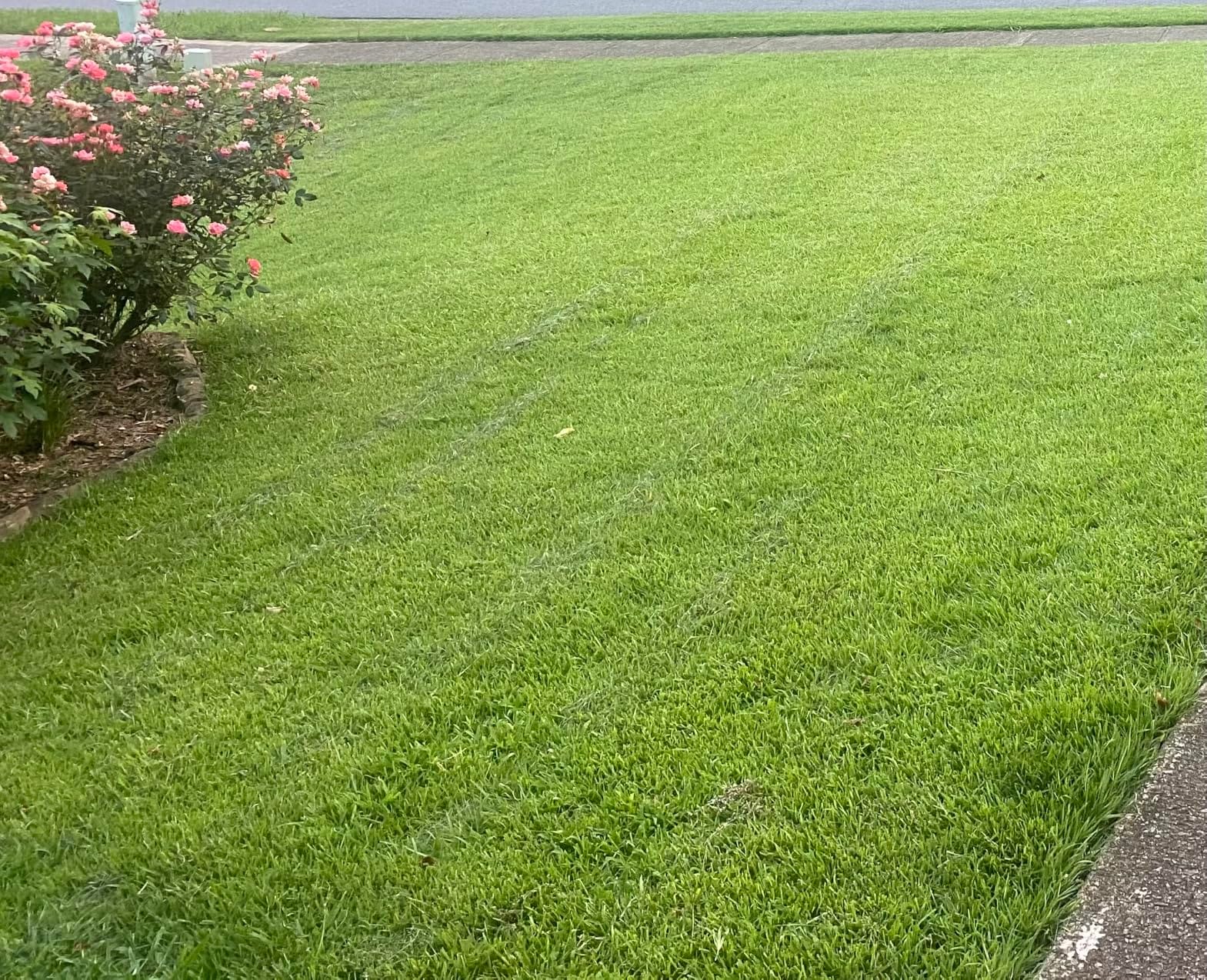
What holds it back is the rating: at 4.1 stars with a 9 percent one-star share, it sits below the 4.3 to 4.4 cluster the other 14-inch machines occupy. The specific complaints are consistent. It jams frequently on sticks, twigs and mulch, the side panels trap long clippings so the machine has to be emptied every few feet, and it can develop a metallic squeak after a few months on concrete.
Assembly instructions are also described as vague, and many owners end up needing two people for the final steps. Budget an extra fifteen minutes. None of this is dangerous, but it is friction that a better instruction sheet would remove.
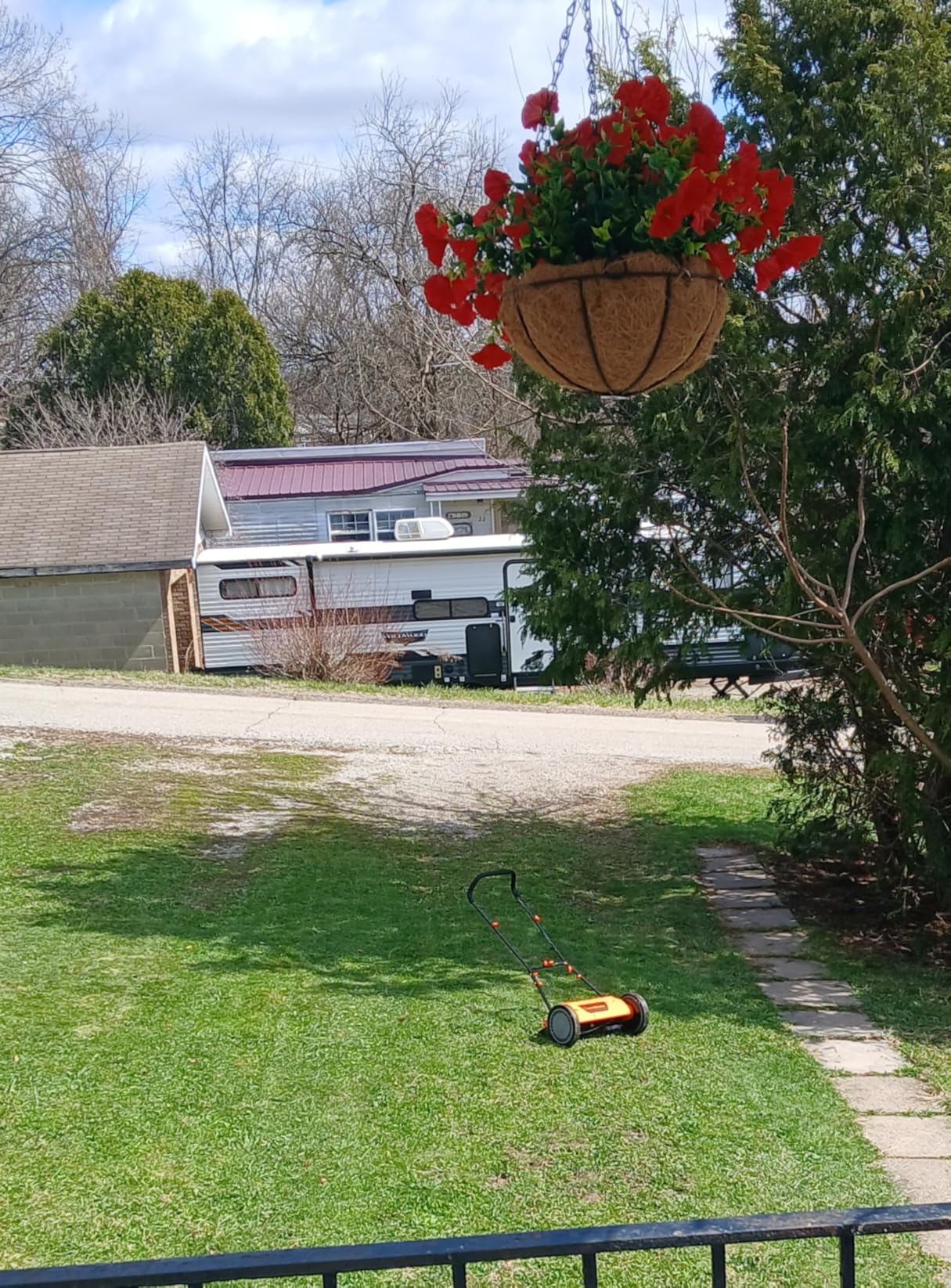
Why maximum cutting height beats minimum cutting height
Every mower here advertises a low minimum, and almost nobody uses it, because mowing more than one third of the grass length at once stresses the plant and invites disease. The one-third rule means the number that decides whether a mower suits your lawn is the top of its range, not the bottom. A mower that tops out at 1.75 inches forces weekly mowing; one that reaches 2.5 inches gives you room to skip a week in peak season.
On the low end, the range here starts at 1 inch, which is higher than the 0.5 inch floor on most rivals. That is deliberate and correct for a small lawn, since you almost never want to mow that short at home. It does mean this is not the machine for a homeowner chasing a bentgrass look.
Where the trade-offs show up in daily use
Clippings packing into the side panels is the flaw to understand before you buy. On a small lawn this is a nuisance rather than a problem, but it means you cannot mow in long unbroken rows the way you can with the Scotts or the Earthwise, where the reel design throws clippings clear. Budget for stopping and clearing more often.
If your lawn is clean and short, this mower handles it well and its height range will keep the grass green through a hot month. If your lawn has weeds or debris, the two-forcing tasks of string trimming and stick picking will eat the time you saved.
5. Earthwise 1715-16EW 16-Inch 7-Blade Push Reel Lawn Mower
Earthwise 1715-16EW 16-Inch 7-Blade Push Reel Lawn Mower, Grey
16-inch cut
7-blade ball bearing reel
0.5 to 2.5 inch height
21.8 pounds
Pros
- Seven-blade reel gives the lowest and cleanest cut in the group
- Handles bent grass types from Bermuda to St. Augustine
- 10-inch wheels and rear rollers stay level on uneven ground
- Quiet enough for early morning mowing
Cons
- Locks up on a single twig or stiff weed
- Height adjustment needs loosened bolts
- Short angled handle causes fatigue
- Some units arrive out of alignment
The Earthwise 1715-16EW is the finest-cutting machine in this group, and for warm-season turf the difference is obvious. Seven blades per reel and a ball bearing drive mean faster reel rotation, and owners report that most lawns need only a single pass, with a finish they compare to putting-green quality. On Bermuda, Zoysia, Centipede or St. Augustine this is the one we would buy.
The height range is also the best available here, running 0.5 to 2.5 inches across seven settings, so it handles both a low groom and a taller warm-season cut. The 10-inch composite wheels and the rear rollers keep the bed level on uneven ground and along edging, which is where cheaper reels leave a wavy stripe.
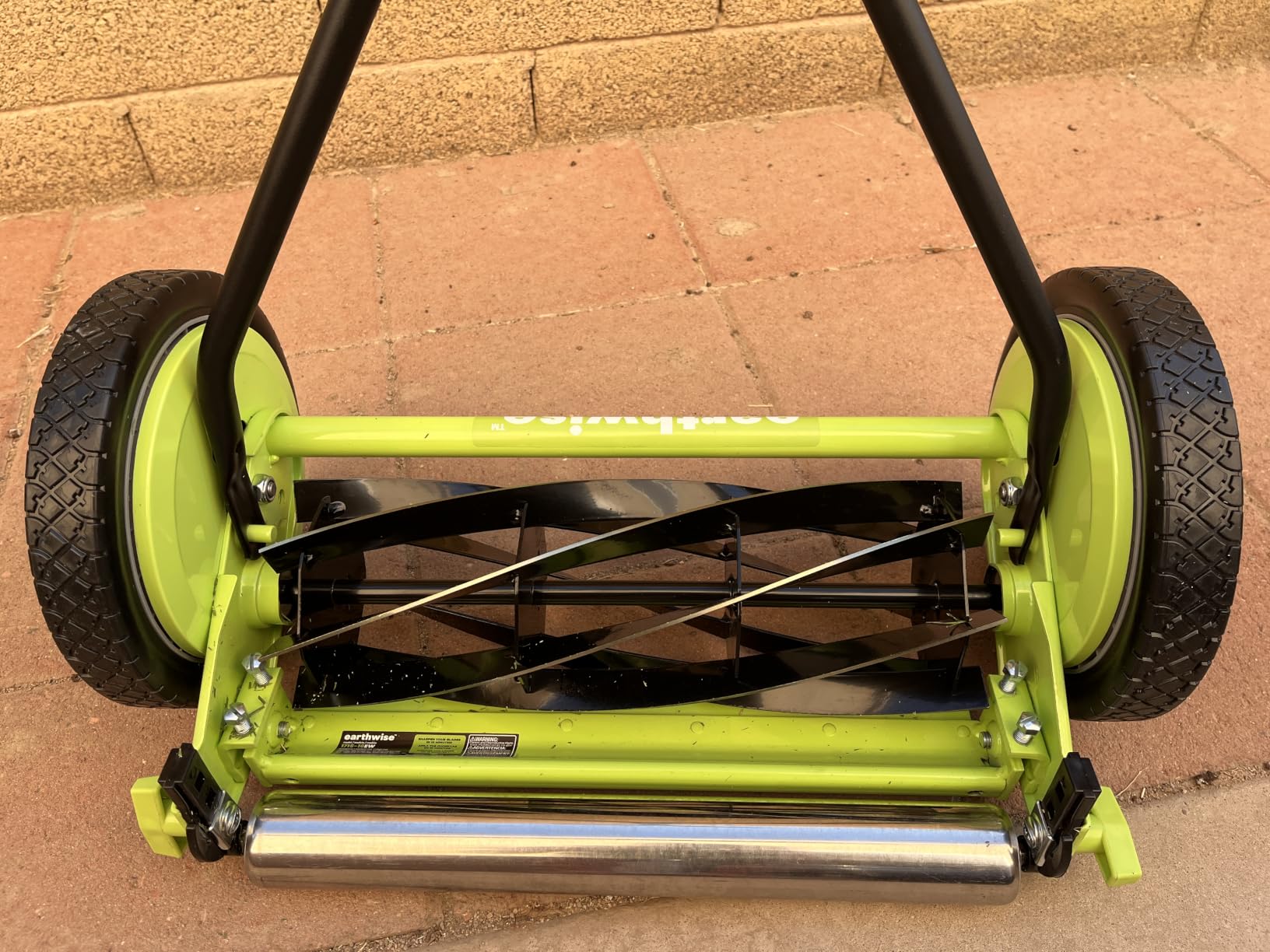
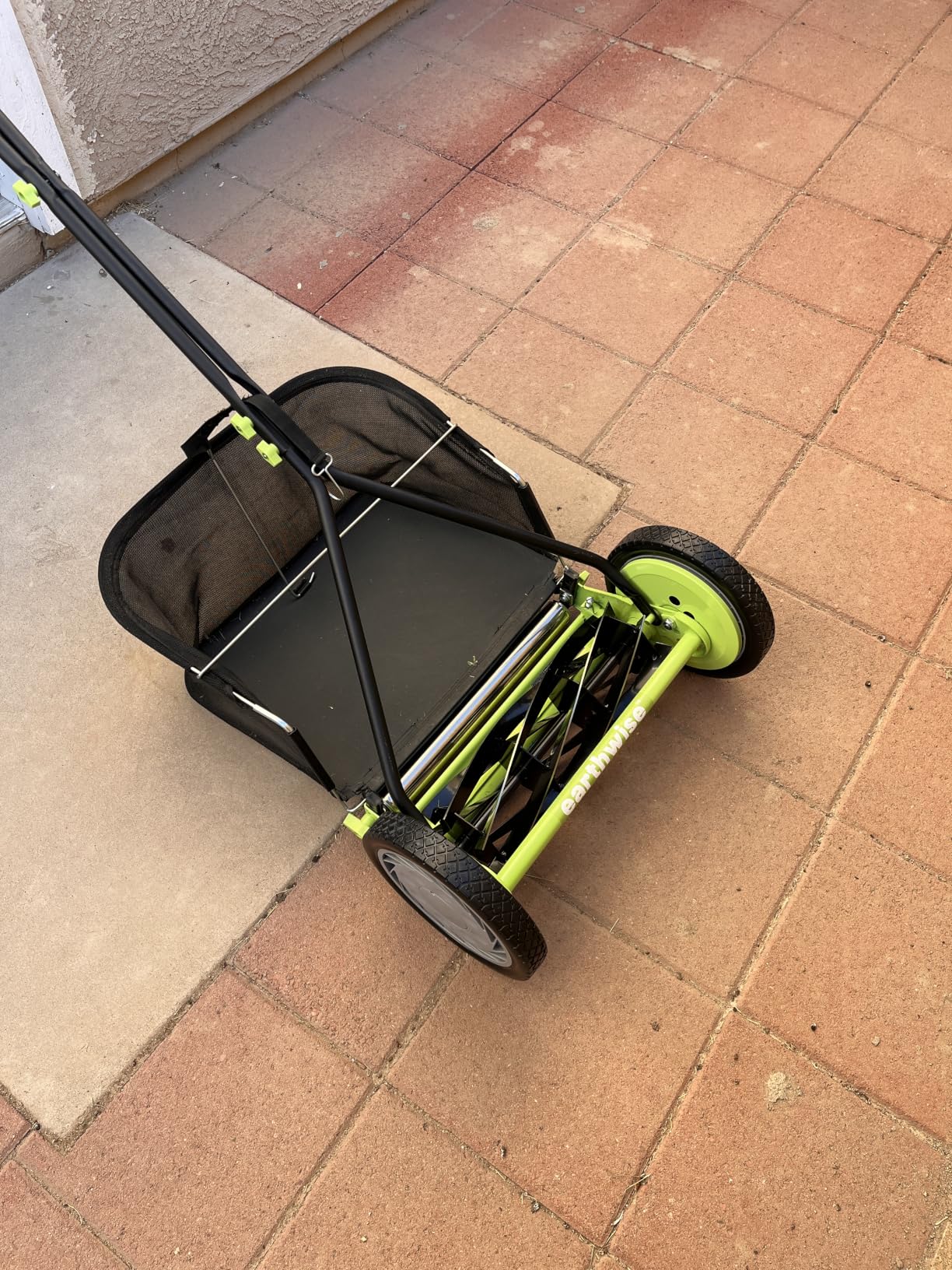
At 21.8 pounds it is the heaviest machine we list, and that weight brings two problems on a small lawn. First, the height adjustment is not a quick lever. You loosen bolts on the rollers and reposition them, so changing height is a five-minute job rather than a five-second one. Second, the short angled handle causes arm and back fatigue for some users over a long session.
There is also a real jamming problem: locking up on a single twig, a mulch piece or a stiff weed is the most common complaint in reviews. A minority of owners report units arriving out of alignment, out of true, or missing retaining rings, which is a manufacturing quality issue rather than a design one.
Does a 16-inch cut make sense on a lawn under 2,000 square feet?
Yes, if the lawn is open rather than divided. A 16-inch swath covers a rectangular lawn faster than a 14-inch one, and the 2.5 inch maximum height means fewer passes over a growing season. It is the right size for a lawn between 1,500 and 2,500 square feet that you can mow in straight rows.
No, if the lawn is chopped up by walkways. Wide cuts overhang the edges of narrow strips, and 21.8 pounds turns sharply at the end of a short row into a genuine effort. On a divided lawn, the narrower and lighter machines win despite being nominally slower.
Who is this built for and who should pass
It is built for someone who cares about the finish more than the effort, who has bent grass varieties, and who will clear twigs before mowing rather than after. The seven-blade reel is the reason it out-cuts machines costing more, and forum owners consistently single it out for the cleanest cut in the category.
Pass if you have a weedy lawn, if you will not pick up branches, or if you are short on upper body strength. The fine cut is not worth a back that aches the next morning on a lawn this size.
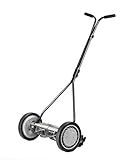
6. American Lawn Mower 1415-16 16-Inch 5-Blade Push Reel Lawn Mower
American Lawn Mower 1415-16 16-Inch 5-Blade Push Reel Lawn Mower, Gray
16-inch cut
5-blade ball bearing reel
0.5 to 2.5 inch height
4 inch grass capacity
Pros
- Sharp out of the box
- Assembles in about 5 to 15 minutes
- Easy to push one-handed
- Clean precise cut
- Quiet with no risk of throwing rocks
Cons
- Catches on nearly every small stick
- Flattens rather than cuts long grass
- No grass catcher
- Edges need a string trimmer
The 1415-16 is the alternative 16-inch machine, and it is lighter and simpler than the Earthwise without giving up much cut quality. The 5-blade ball bearing reel with an unbreakable steel side plate and heat-treated alloy steel reel and bed knife delivers a clean, precise cut that owners describe as better than expected from a manual machine. Several report it handling grass taller than a power mower would have coped with.
Height runs 0.5 to 2.5 inches and the spec sheet lists 12 positions, though the number of usable settings matters more than the count. It assembles in roughly 5 to 15 minutes, pushes easily one-handed, and a child can move it, which makes it a practical choice for a shared lawn.
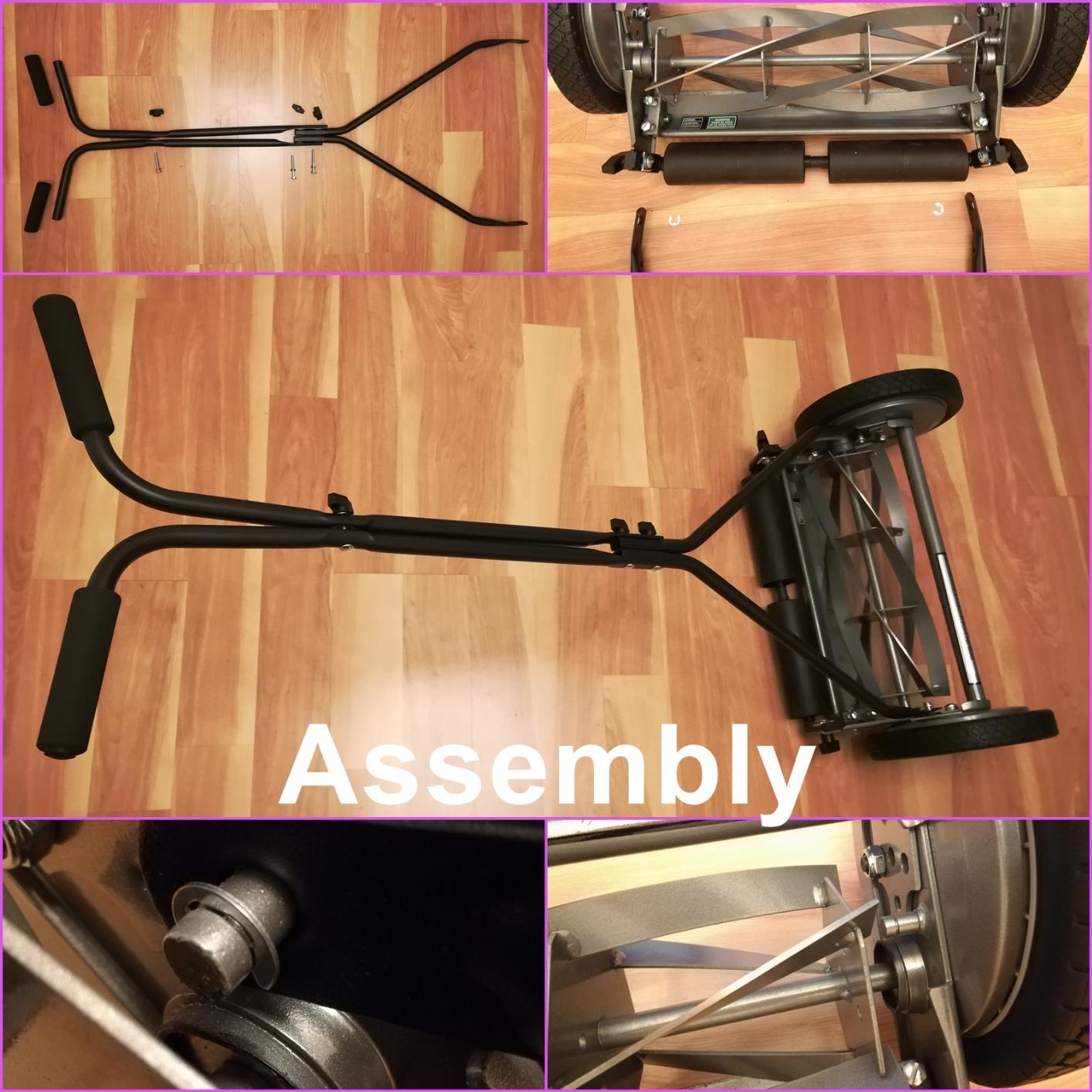
The complaints are the familiar ones, with one that is more extreme here than elsewhere: it catches on nearly every small stick and stops dead. On a lawn under a tree that drops twigs, that is a genuine friction point and you will spend real time clearing before each session. It also flattens rather than cuts when grass is longer than usual.
There is no grass catcher, so clippings stay where they fall. Some owners report the handle grip covers wearing out within a season, which is a small but annoying failure on a machine meant to last years.
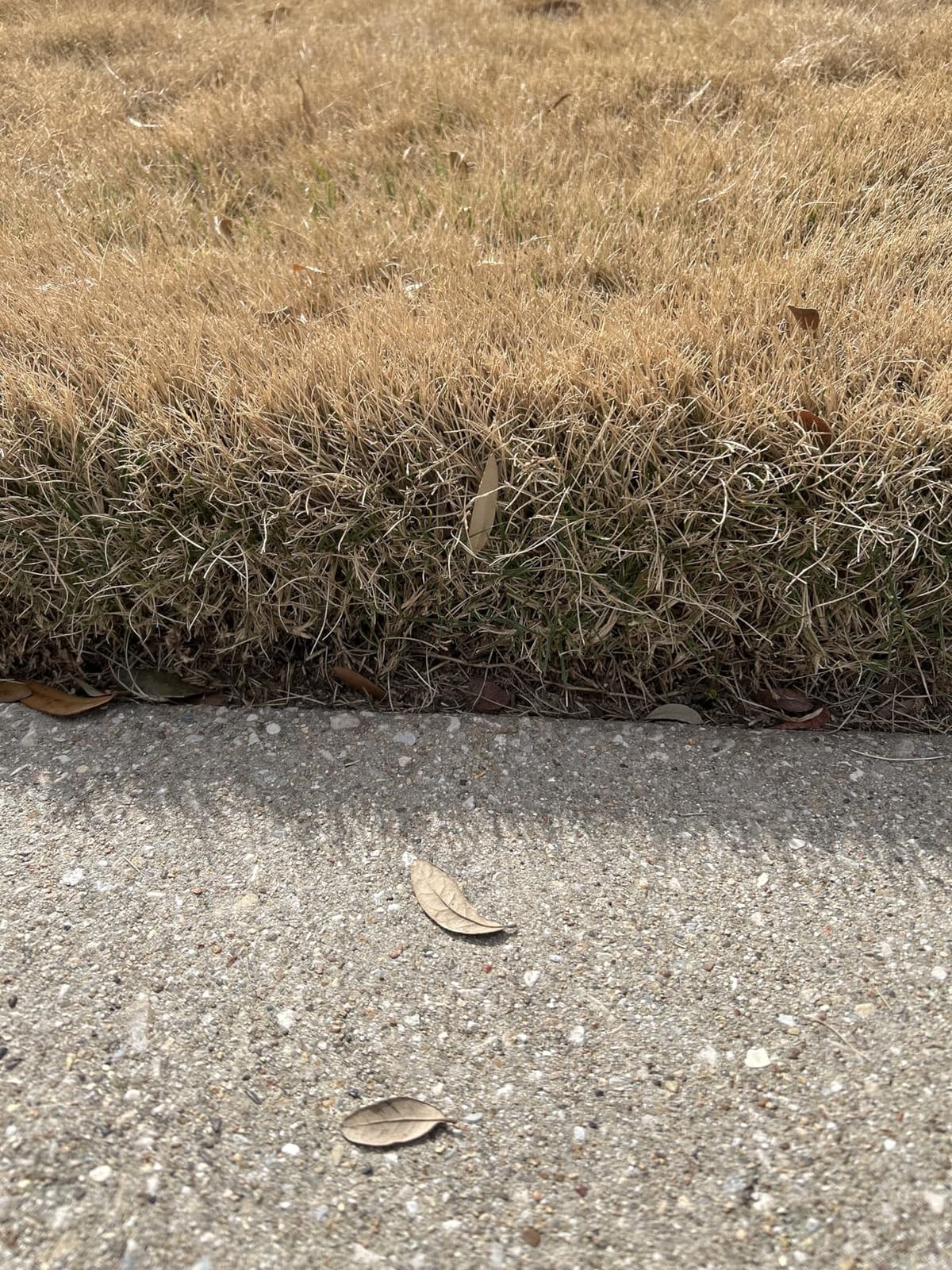
Sixteen inches wide on a lawn that is not rectangular
The 1415-16 is worth choosing when the lawn is a straightforward rectangle of roughly 1,500 to 2,500 square feet. The wider cut reduces the number of passes and the 10-inch composite wheels with radial tread keep it tracking straight, which matters more when each pass is longer.
On a divided lawn it is the wrong width for the same reason the Earthwise is. A 16-inch cut overhangs a narrow strip, and the space along the sidewalk edge stays uncut because the blades are inboard of the wheels. There is no catcher, so the edge work is a string trimmer job every time.
How it stacks up against the Earthwise 16
Against the Earthwise 1715-16EW, the 1415-16 trades cut finesse for simplicity. Five blades instead of seven gives a slightly coarser finish, but the height adjustment is easier and the build is lighter. The Earthwise wins on warm-season bent grass and on a target finish; the 1415-16 wins if you mow casually and want less to fiddle with.
Both are 0.5 to 2.5 inch machines, both are 16 inches, and both need a stick picker. If you want the broadest grass capacity of any 16-inch machine with the fewest adjustment steps, this is the simpler buy.
7. GARDENA Classic 16 in Reel Lawn Mower, 5 Blades
GARDENA Classic 16 in Reel Lawn Mower, 5 Blades, No Gas or Electric – 04018
15.75-inch cut
Contact-free steel cylinder
0.47 to 1.65 inch height
10-year warranty
Pros
- Contact-free cylinder gives the cleanest scissor cut in the group
- European build with a ten-year warranty
- 19.6 pounds and a folding handle for compact storage
- Four simple height settings
Cons
- Narrowest cut here at 15.75 inches and weak at edges
- Needs firm pressure to keep cutting
- Sparse assembly instructions with no diagrams
- Jams on bumps in the ground
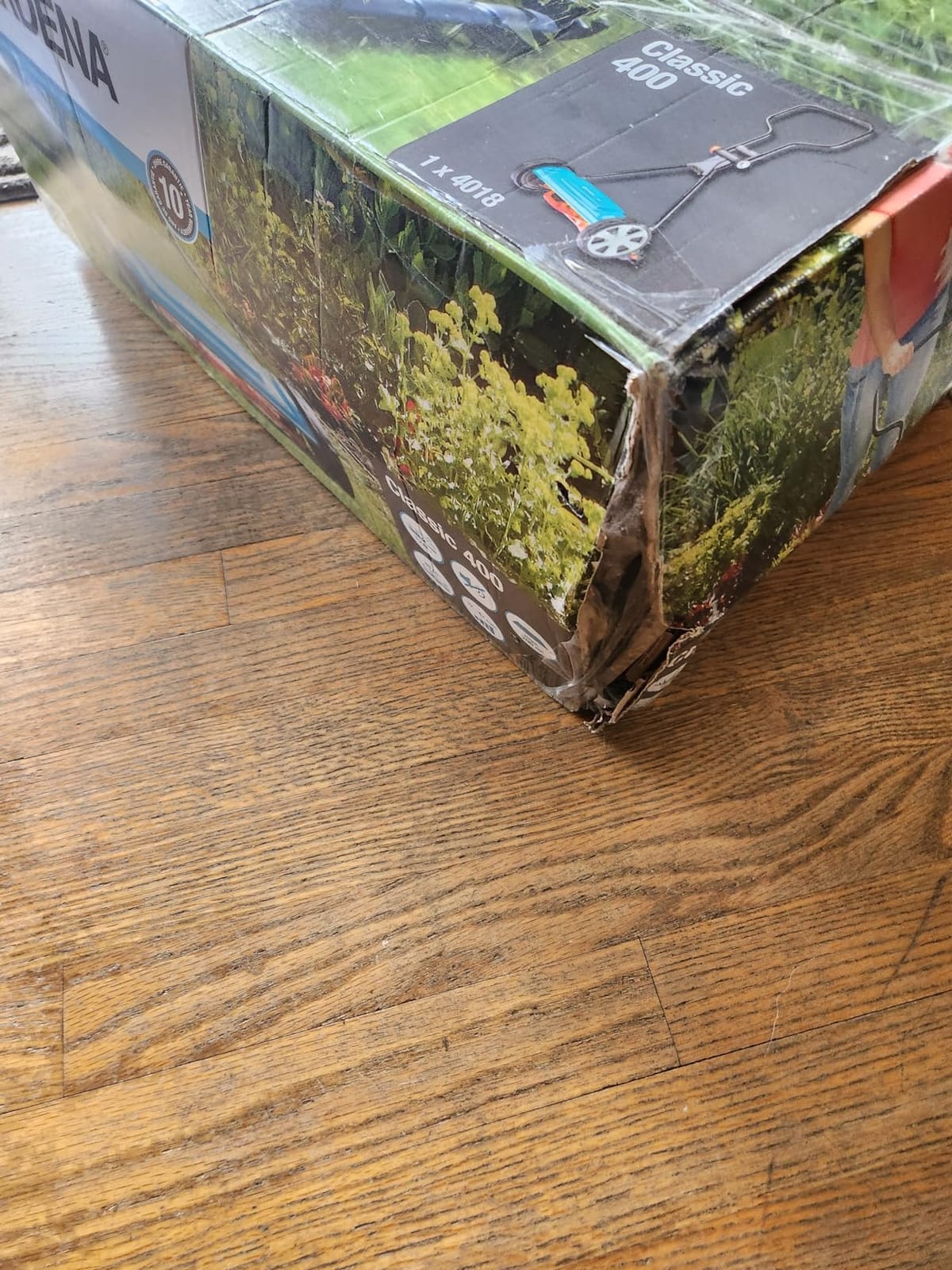
The GARDENA Classic is the odd one out in this group because it is built in Europe and carries a ten-year manufacturer warranty, three to five times the coverage attached to the American-made machines. That warranty is not marketing. It is the single best argument for buying this mower if you intend to keep it for the long haul and expect to replace parts occasionally.
The technical reason it cuts so cleanly is the contact-free cylinder. The hardened, non-stick coated steel cylinder rotates past a fixed counter-blade without touching it, so there is no rubbing to dull the edge and no heat build-up. In practice that produces the most scissor-precise finish in the group, and enthusiasts single it out for exactly that reason.
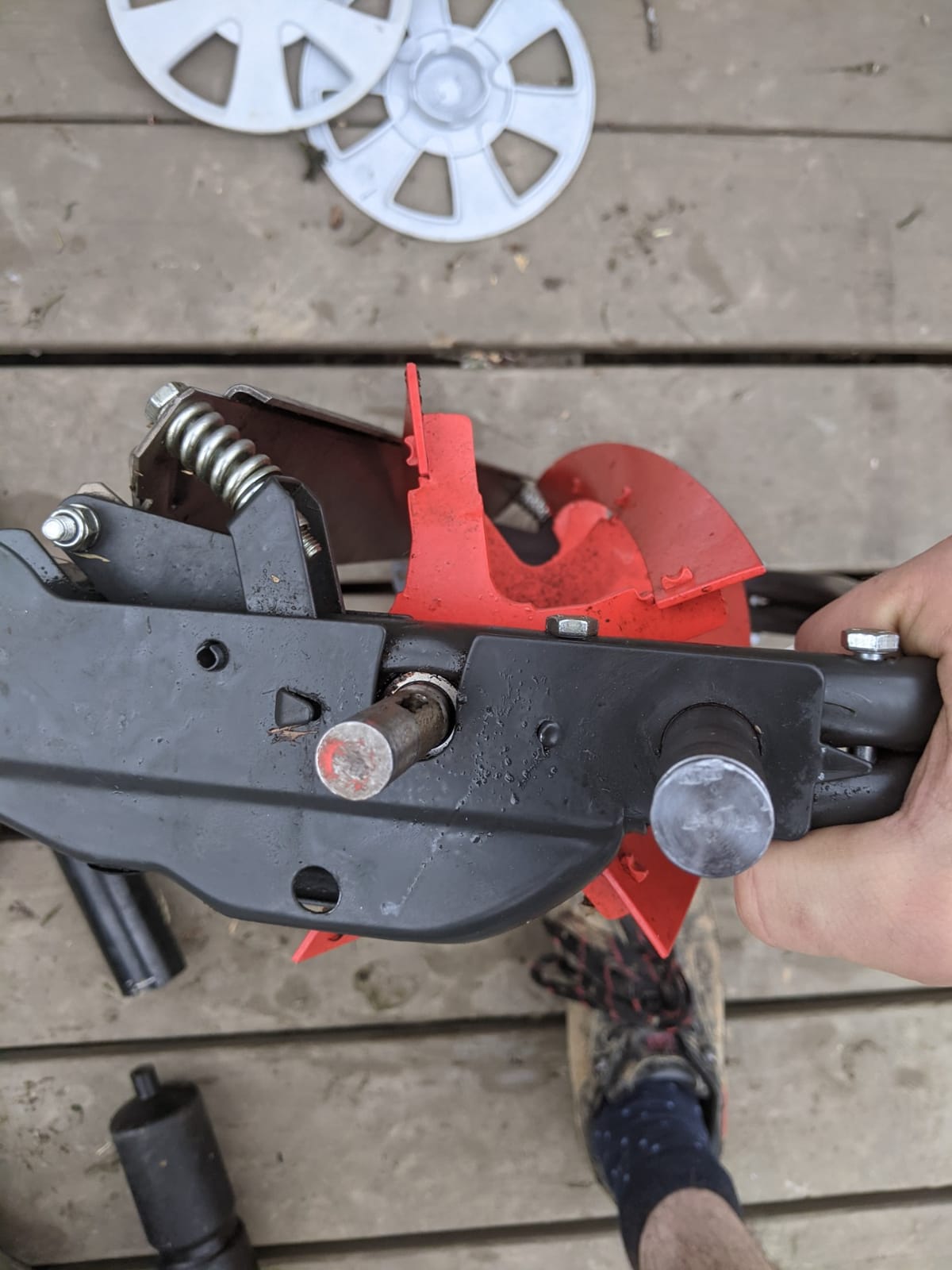
It is also the most polarizing machine here, rated 4.0 with an 11 percent one-star share. Critics find it hard to push, needing meaningful pressure to keep the blades cutting, and several report it jamming on any bump in the ground. The assembly instructions are sparse with no diagrams, and the blade and bed knife must be precisely adjusted or they rub and fail to cut properly.
At 15.75 inches it is the narrowest cut in the group despite being sold as a 16-inch machine, and it cannot get near edges, so the perimeter is always a separate trimming job. The 1.65 inch maximum height is also the lowest top setting here, which limits you to mowing more often.
Is a folding handle worth a contact-free reel?
For most small-lawn owners, yes. The handle folds down, which turns a 52-inch assembled machine into something that fits on a balcony or in a small cupboard, and the 19.6-pound weight makes it easy to carry up a step. If you have a garage, the folding handle adds little, but the contact-free cut still does.
The trade is push effort. Because the cylinder runs without contact, it depends on clean blade geometry to keep cutting, and a machine that has been knocked out of alignment can feel like it is fighting you. On level, well-maintained grass it glides. On a bump, it can bog.
Who should buy this and who should not
Buy it if you live in a flat, clean apartment or townhouse lawn, you value a long warranty more than raw cutting speed, and you are willing to learn the blade adjustment. The finish it produces is the best in the group, and the folding handle solves a storage problem that the other machines do not.
Pass if you have uneven ground, if you want to mow tall grass, or if you want a grass catcher. The catcher is sold separately for this model, so budget for it if you want one, and know that it narrows an already tight storage footprint.
8. American Lawn Mower 1304-14GC 14-Inch Mower with Grass Catcher
American Lawn Mower 1304-14GC 14″ 5-Blade Reel Mower with Grass Catcher
14-inch cut
5-blade reel
1 to 2.25 inch height
18 pounds, catcher included
Pros
- Lowest cost in the group
- Light 18-pound body with a small footprint
- Blades sharp out of the box
- Two-year warranty and a grass catcher included
Cons
- Weakest rating here at 3.9 stars with 12 percent one-star
- Included grass catcher is widely criticized
- Struggles with tall grass and crabgrass
- Poor assembly instructions
The 1304-14GC is the budget pick, and the reason to consider it is simple: it is the only machine in this group that includes a grass catcher. If you mow a small lawn and want clippings collected rather than left on the grass, that feature alone moves it up the list, because the alternatives require buying a catcher separately or choosing a different machine.
Underneath, the basics are sound. A 14-inch cut, five heat-treated alloy steel blades, a 1 to 2.25 inch height range across five positions, 10-inch polymer wheels and an 18-pound weight make it the second-lightest machine here. Blades are sharp out of the box, and a two-year warranty is longer than most in this group.
It is also the weakest performer, at 3.9 stars with 12 percent one-star reviews, on the smallest review base of the eight. The complaints are consistent: the included grass catcher is widely criticized as underperforming and getting in the way, the assembly instructions have few real diagrams and no video, and it struggles with tall grass, crabgrass patches, weeds and uneven ground.
There is one mechanical flaw worth knowing before you commit. It does not move well when pulled backward and tends to flip up, which means every time you need to clear a jam or reposition at the end of a row, you are lifting it rather than rolling it. On a small lawn that happens more often than on a large one.
Is an included grass catcher actually worth anything on a small lawn?
On a small lawn, less than you would expect. The volume of clippings a 14-inch reel produces is modest, and the mower is light enough to push a rake across the lawn in a couple of minutes. What the catcher does buy you is a tidier finish and a cleaner surface for a courtyard or a small front lawn where clippings are visible.
The problem with this particular catcher is that owners report it performing poorly and blocking access, which converts a convenience into an obstruction. If you want collection, we would check whether a wider catcher is available for the model rather than committing to the one supplied.
Who should buy it and who should not
Buy it if budget is the deciding factor, your lawn is very small and level, and you mow it weekly with no weeds. The light 18-pound body and small footprint make it genuinely easy to store and carry, and the five-blade reel gives a decent cut for the money.
Pass if your lawn is weedy, uneven, or allowed to grow long between cuts. At 3.9 stars with complaints clustered around exactly those scenarios, you will be fighting the machine instead of mowing. Spend the difference on the 1204-14 if you can.
How to Size a Reel Mower to Your Lawn
Match the cutting width to the lawn, not the other way around. The rule we use is simple: under 1,500 square feet, choose a 14-inch machine; between 1,500 and 2,500 square feet, choose a 16-inch machine; above 2,500 square feet, do not buy a manual reel mower at all. Wider is not automatically better on a small lawn, because a wide cut overhangs the edges of a divided lawn and turns badly at the end of a short row.
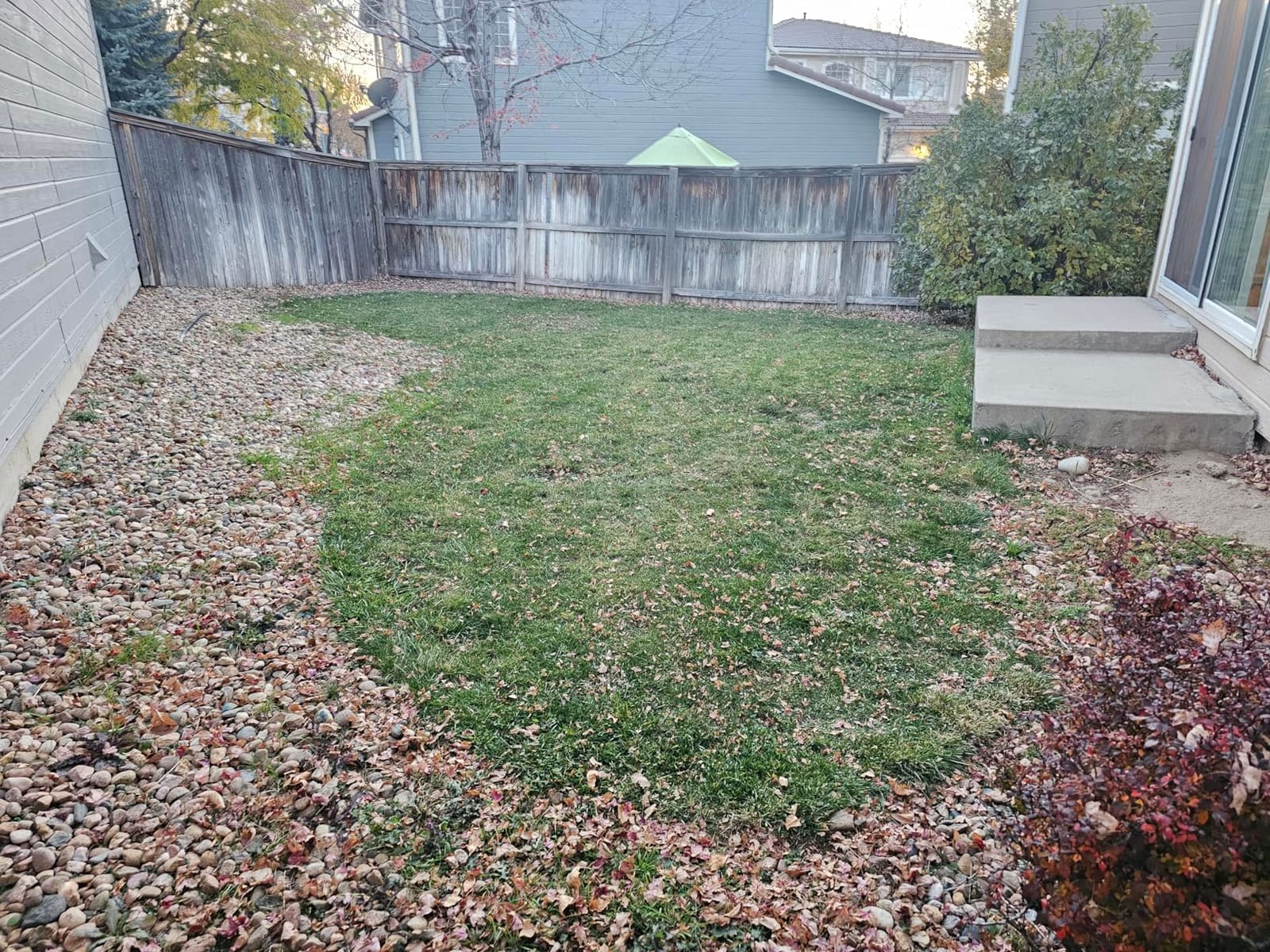
Here is how that translates by lawn size. Under 500 square feet, a 14-inch mower finishes in roughly 10 to 12 minutes. At 1,000 square feet, roughly 20 minutes, which is the most commonly reported figure among owners. At 2,000 square feet, expect around 40 minutes, more if the lawn is divided by walkways. At 4,000 square feet you are looking at well over an hour, and that is the point at which a cordless walk-behind becomes the better purchase.
Shape matters as much as size. A 2,000 square foot rectangle and a 2,000 square foot lawn split into four strips by sidewalks need different machines. The rectangle rewards a 16-inch cut. The divided lawn rewards a 14-inch cut and a light weight, because the turn at the end of each strip is where the time actually goes. Owners on lawn forums describe exactly this: reaching the end of a short row before reaching speed, then having to turn immediately.
Second size factor is storage. If you have a garage, ignore the folding handle. If you are storing it in a flat, a corridor, or a balcony, the GARDENA’s folding handle is the feature that decides the purchase.
Cutting Height: The Spec That Actually Matters
Judging a reel mower by its minimum cutting height is judging it by a number almost nobody uses. Because the one-third rule says you should never remove more than a third of the grass blade at one time, the top of the height range is what determines whether the mower suits your grass.
Here is the ranking that matters. The Earthwise 1715-16EW and the American Lawn Mower 1415-16 both reach 2.5 inches, the best in this group. The LawnMaster LMRM1401 also reaches 2.5 inches but starts higher at 1 inch, which suits a maintained lawn better than a very short one. The American Lawn Mower 1304-14GC reaches 2.25 inches. The 1204-14, the Scotts 304-14S and the Great States 204-14 all top out at 1.75 inches, which means more frequent mowing. The GARDENA tops out lowest at 1.65 inches, the most frequent mowing of the eight.
On the low end, only the GARDENA gets below half an inch, at 0.47 inches, and the Scotts and Great States and American Lawn Mower machines bottom out at 0.5 inches. If you want a very low cut, that is where the ranking lives, but for a residential lawn you will almost certainly never use it.
Height positions matter less than the range, though the Earthwise’s seven settings and the 1415-16’s 12 listed positions give finer granularity than the two-position Great States. Blade count is the last piece. Four blades cut adequately, five cut better and hold an edge longer, and seven give the cleanest single-pass finish at the cost of a heavier, more jam-prone machine.
Which Grass Suits a Reel Mower?
Reel mowers suit cool-season turf best, which means fescue, Kentucky bluegrass and ryegrass. Those grasses grow upright, cut cleanly at moderate heights, and recover quickly from a scissor cut. A reel mower on fescue in spring looks better than a power mower on the same lawn, and that is not marketing.
Warm-season turf also works, with a caveat. Bermuda, Zoysia, Centipede and St. Augustine all grow low and dense, which suits the scissor cut, and the Earthwise 1715-16EW is specifically built for those varieties. The condition is a higher maximum cutting height, because warm-season grass that is cut too short is stressed and turns brown. This is exactly why the machines reaching 2.5 inches are the right choice for a Bermuda lawn.
What does not work is any grass that has been allowed to get away from you. A reel mower rated to 4 inches of grass, like the 1204-14, still folds longer blades over rather than cutting them. If you cannot commit to weekly mowing, sometimes twice a week in peak growth, the tool will not keep up regardless of blade count.
When a Reel Mower Is the Wrong Choice
Five signs point away from a manual reel mower. If your lawn slopes noticeably, pushing a mower uphill at speed is uncomfortable, and owners have reported that a heavy mower on a front yard hill felt dangerous to push while a lighter one on the same slope was manageable. If your lawn has tree roots or uneven ground, you will make multiple passes from different angles to catch missed patches. If your lawn is over a quarter acre, weekly mowing becomes exhausting. If grass routinely grows past 5 or 6 inches between cuts, it will be flattened, not cut. If you have weeds, a reel mower takes the leaves off and leaves the roots.
For a lawn with a slope or a lot of ground to cover, a cordless walk-behind is the honest recommendation. We compared a wide range of them in our best walk-behind lawn mowers tested guide, and the battery models now handle small lawns with no cord and no fuel.
If you want the lawn cut without pushing anything at all, that is a different category entirely. Our best robot lawn mowers reviewed guide covers the units that handle slopes, obstacles and scheduling on their own. They cost more and the cut is a chop rather than a scissor, but on a slope they are the right tool.
One more angle worth mentioning, because owners raise it unprompted: mowing is a genuinely decent form of low-impact exercise, and there is nothing wrong with wanting that. If the exercise is the point rather than the mowing, our best manual treadmills tested guide covers machines built for that job specifically.
Sharpening and Maintenance
Sharp forever is a marketing phrase, not a specification. Reels do need sharpening, typically every few seasons depending on use, and the blades are the only thing that determines cut quality. A blunt blade tears rather than cuts, and a torn lawn browns in heat.
The process is simple. First, remove the grass and debris from between the blades with a stiff brush and a wooden pick, working along the bed knife. Second, loosen the adjustment screw and turn the reel by hand until you can see the blade tips pass the bed knife. Third, file or hone each blade edge along its length, keeping the angle consistent across all blades. Fourth, reset the clearance so the blades pass the bed knife without touching, then tighten the screw.
Above that basic routine, maintenance is light by design. There is no oil, no spark plug, no air filter and no fuel to stabilise. A drop of light oil on the reel bearings once a season prevents the squeak that owners otherwise report, and checking the handle screws every few months prevents the loosening that shows up in reviews of several models here. Wipe the blades clean after a wet session, because dried grass left in place is what turns into the jams so many owners describe.
Mow more often than you think you need to. Weekly is the baseline for a small lawn, and twice a week in peak growth. Owners who mow often describe mowing as a pleasant way to spend time outside, and owners who let it go describe a machine that flattens grass and does no work.
Frequently Asked Questions
Are manual reel mowers any good?
Yes, for a flat, clean lawn of roughly 2,000 square feet or less that you mow weekly. A manual reel mower cuts with a scissor action instead of shredding, so it is quieter, needs no fuel, cord or battery, and leaves the grass cleaner. No, for slopes, tree roots, lawns over a quarter acre, weeds, or any lawn that grows tall between cuts.
What is the best lawn mower for a very small lawn?
A 14-inch reel mower is the right size for a very small lawn. For a lawn under about 1,500 square feet, our top pick is the American Lawn Mower 1204-14 at 19 pounds with a 0.5 to 1.75 inch cutting height. It assembles in under ten minutes, turns tightly at the end of a short row, and takes roughly 20 minutes to mow 1,000 square feet.
Which manual reel mower has the lowest cut height?
The GARDENA Classic 16 in Reel Mower goes lowest, with a 0.47 inch minimum cutting height. Most of the group bottom out at 0.5 inches, including the American Lawn Mower 1204-14, the Scotts 304-14S and the Great States 204-14. For most home lawns the minimum barely matters, because the one-third rule means the maximum height is the spec that decides the purchase.
What is the best mower for a small lawn?
A reel mower if your lawn is flat and under roughly 2,000 square feet. A cordless walk-behind if it slopes, has tree roots, or runs larger, because a reel mower jams on debris and cannot recover from overgrown grass. Robot mowers are the option if you would rather not push anything at all and your budget stretches further.
Do reel mowers cut tall grass?
No. A reel mower folds grass over and passes under it rather than cutting, so anything much beyond its rated capacity is flattened. Most machines here are rated to roughly 4 inches, and the best of them still need you to mow weekly. If grass routinely reaches 5 or 6 inches between cuts, you need a rotary mower instead.
How hard is a reel mower to push?
Push effort tracks weight closely. Models around 18 to 22 pounds, such as the American Lawn Mower 1204-14, the Scotts 304-14S and the Great States 204-14, push easily and suit small lawns. Machines in the mid-20s feel heavier over a long session, and on a small lawn the turning radius at the end of a row matters more than the raw weight.
Do reel mower blades need sharpening?
Yes. Sharp forever is a marketing phrase rather than a specification. Reels typically need sharpening every few seasons, and the process is a few set screws plus a file run along each blade edge. Blunt blades tear rather than cut the grass, which is what causes a reel-mowed lawn to brown in heat.
How often should I mow with a reel mower?
Weekly is the baseline, and twice a week in peak growth. Reel mowers depend on frequent cutting because the cut quality collapses when grass gets long. Most owners describe a weekly rhythm as the point at which mowing becomes a short, pleasant job rather than a long, frustrating one.
Conclusion: The Best Manual Reel Mowers for Small Lawns in 2026
For a lawn under 1,500 square feet, the American Lawn Mower 1204-14 is the pick: 14 inches wide, 19 pounds, sharp out of the box and the most owner feedback of any machine here. If you want a five-blade reel and the lightest push in the group, take the Scotts 304-14S at 18.1 pounds. If you want the best-rated machine, the Great States 204-14 sits at 4.4 stars.
Step up to 16 inches only if your lawn is open rather than divided. For the finest cut on Bermuda or Zoysia, the Earthwise 1715-16EW with its seven-blade reel is the answer, and for a folding handle and a ten-year warranty, the GARDENA Classic earns its place. The LawnMaster LMRM1401 is the answer when you want the tallest maximum cut, and the American Lawn Mower 1304-14GC is the budget route if you need a grass catcher.
Whatever you choose, check the disqualifiers before you buy. A slope, tree roots, weeds or a lawn over a quarter acre all point somewhere else, and a cordless walk-behind will serve you better than any of these eight. On the right lawn, the best manual reel mowers for small lawns in 2026 are the quietest, cleanest and cheapest mowing decision you will make.