
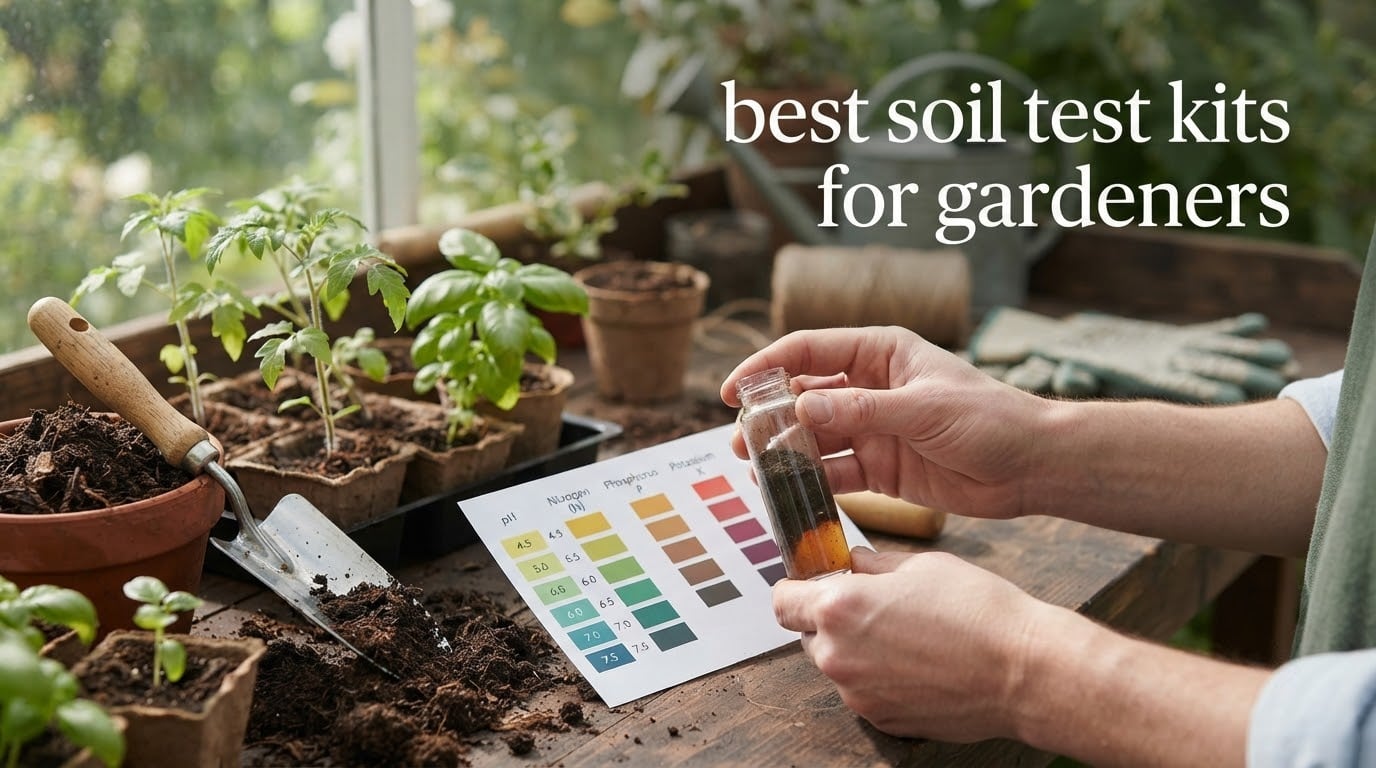
Every wasted bag of fertilizer started with a guess. You pour amendment into a bed because something looked yellow, and two seasons later the soil is worse than when you started. A soil test kit replaces the guess with a number, and the number is cheap insurance on the whole season’s growing.
We spent weeks putting eight of the best soil test kits for gardeners through their paces across mail-in lab services, colorimetric capsule kits, pH strips and digital probe meters. The overall winner is the MySoil Soil Test Kit, because it is the only one in this group that returns a real laboratory analysis with 13 plant-available nutrient readings and tells you what to do with them. The best value pick is the Luster Leaf Rapitest 1601, which has more verified owner feedback than anything else we looked at and gets pH plus N, P and K back in about ten minutes at the kitchen table.
What follows is not a list of eight boxes to buy. It is four families of test method, each with a different honest limit, plus the sampling technique that decides whether any of them are worth owning. We also cover the free route through your county extension office, which almost nobody mentions and almost everybody should.
Table of Contents
Top 3 Soil Test Kits for Gardeners in 2026

MySoil Soil Test Kit
- Lab analysis of 13 plant-available nutrients
- Custom fertilizer recommendations with amounts and timing
- Results returned in 6-8 days

Luster Leaf Rapitest 1601
- pH plus nitrogen
- phosphorus and potash
- 40 tests included
- No batteries required

Garden Tutor pH Test Kit
- 100 pH-only strips
- Web photo reader returns a digital result
- Three-pad strips built for soil
Soil Test Kit Comparison: All 8 Picks in 2026
| Product | Specifications | Action |
|---|---|---|
| MySoil Soil Test Kit |
|
Check Latest Price |
| Luster Leaf Rapitest 1601 |
|
Check Latest Price |
| Garden Tutor pH Test Kit |
|
Check Latest Price |
 Soil Savvy Soil Test Kit Soil Savvy Soil Test Kit |
|
Check Latest Price |
 Whitetail Institute Laboratory Soil Test Kit Whitetail Institute Laboratory Soil Test Kit |
|
Check Latest Price |
 HSLGOVE 7-in-1 Soil Meter HSLGOVE 7-in-1 Soil Meter |
|
Check Latest Price |
 Dewilde Trading Co 100 pH Strips Dewilde Trading Co 100 pH Strips |
|
Check Latest Price |
 Dewilde Trading Co 140 Test Kit Dewilde Trading Co 140 Test Kit |
|
Check Latest Price |
1. MySoil Soil Test Kit: Best Overall Soil Test Kit for Gardeners
MySoil Soil Test Kit, Unlock Your Lawn & Garden Potential, Complete & Accurate Nutrient and pH Analysis with Recommendations Tailored to Your Soil and Plant Needs
Lab analysis of 13 plant-available nutrients
Results in 6-8 days
Prepaid mailer included
Pros
- Real laboratory analysis across 13 plant-available nutrients
- Custom recommendations covering what to apply and how much
- Works for compost
- houseplants and hydroponics
- Prepaid envelope removes the mailing guesswork
Cons
- Mail-in wait of 6-8 days for each result
- Higher cost per test than a home capsule kit
- Single-use kit so every retest means another purchase
The MySoil kit is a sampler, not a gadget. You scoop soil, blend it, fill the tube, post it in the prepaid envelope, and roughly a week later a report lands with pH plus 13 plant-available nutrient levels and a written amendment plan. That plan is the part that separates it from every other kit here, because it names the product, the amount and the timing.
Owner feedback is the strongest in the category, and 77% of reviews are five-star across 3821 ratings. People consistently describe solving a specific mystery with the report: seeds that would not germinate, hydrangeas that would not turn blue, leaves scorching from too much nitrogen. The kit works for compost, houseplants and hydroponics, not just outdoor beds.
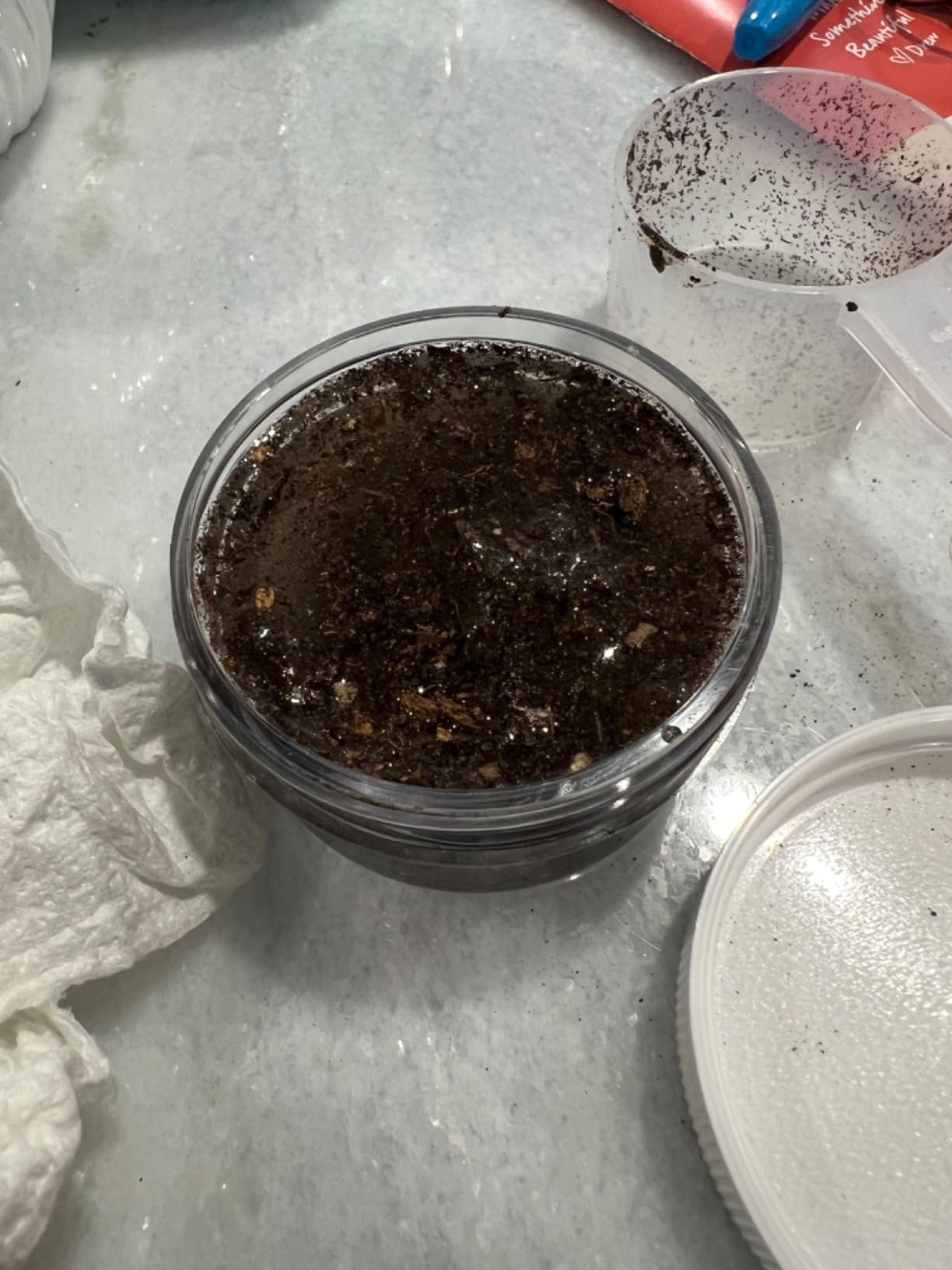
The honest caveat comes from the lawn care crowd on Reddit, where MySoil is the most frequently named lab service and the same users note it is not as complete as a full university workup. Nobody in that conversation is calling it a toy. They are saying it is a well-run private lab rather than the gold standard.
You also pay for the wait and the return trip to the post box, and every additional test is another single-use kit. If you have a large property with several distinct soil types, the cost per reading adds up fast compared with a home kit you can run twice a season.
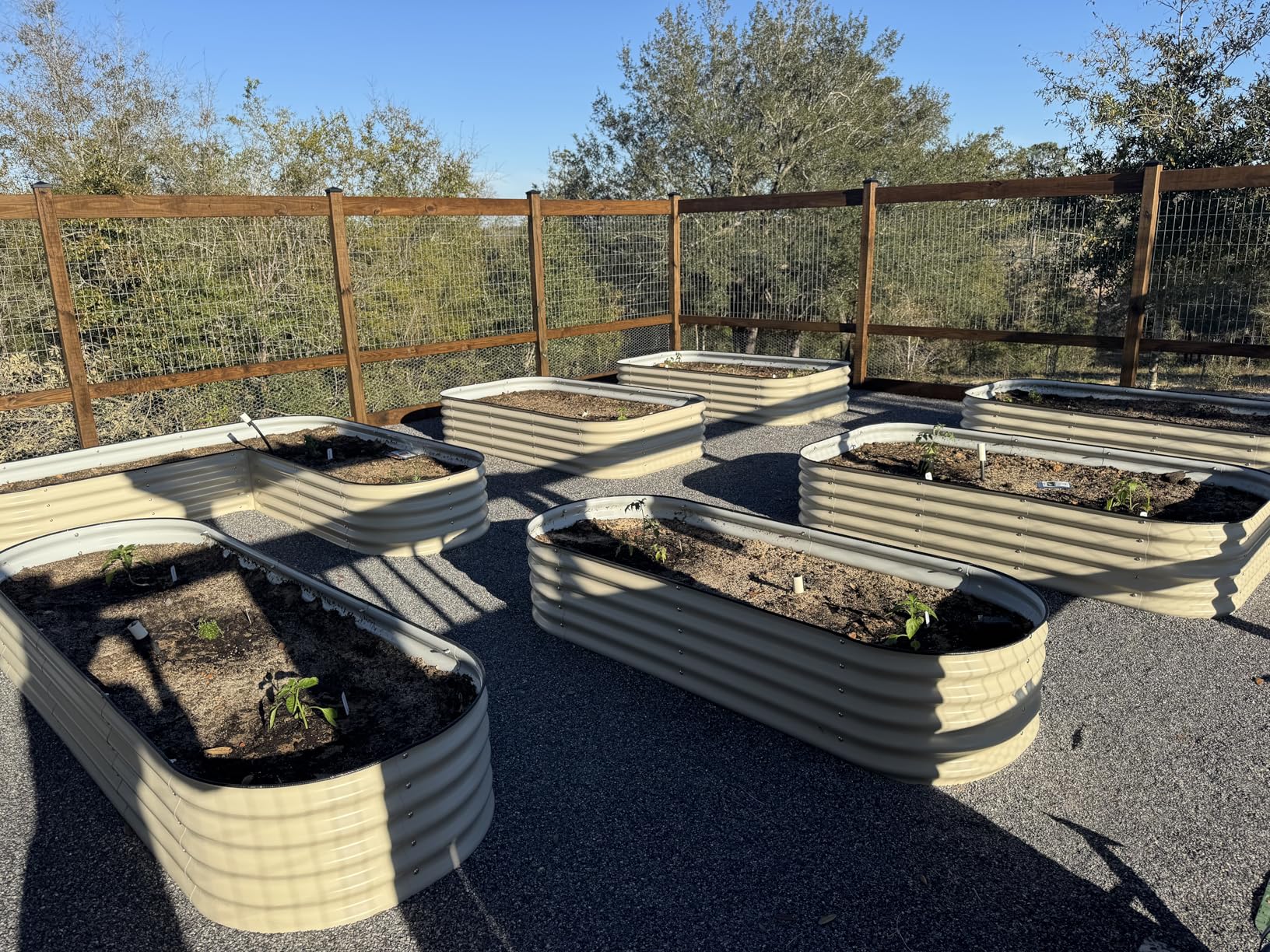
Who MySoil suits best
It suits gardeners who want a number they can act on rather than a range they can argue with. If you are starting a new bed on unknown ground, buying a home, or arguing with yourself about whether the problem is nutrients or pH, this is the kit that ends the argument.
It also suits anyone growing a mix of crops, because the recommendation is tailored to the crop and soil type you declare rather than to a generic garden average.
Who should skip MySoil
Skip it if you want a same-afternoon answer. Container growers watching pH drift weekly need a reading they can take in a minute, and a six-day turnaround cannot inform a watering decision made yesterday.
Skip it if you have easy access to a county extension office, which frequently runs soil testing at low cost or at no charge for local residents. A university lab report covers the same ground with more rigor.
2. Luster Leaf Rapitest 1601: Best Value Soil Test Kit
Rapitest Soil Test Kit for Gardens, Vegetables, Flowers and Lawns. USA designed and assembled soil tester completely, quickly and accurately measures/analyzes soil pH acidity and garden nutrients
pH plus N, P and potash
40 tests included
5 by 5.91 inches and 4 ounces
Pros
- Capsule and color comparator system needs no batteries
- Results in roughly 10 minutes at home
- Capsule chart covers pH preferences for 450+ plants
- 40 tests cover four parameters
Cons
- Tiny test containers tip easily
- Only 10 tests per parameter and refills are hard to find
- Capsules can be hard to open and may shatter
This is the kit most gardeners end up owning, and it is not close. The Rapitest 1601 has 6713 ratings behind it, more verified feedback than any other soil test kit we examined, and owners routinely compare its color-comparator readings to a professional lab analysis and find them close enough to act on.
The method is simple enough to explain in one sentence. You push soil through the scoop, add water, drop in a color-coded capsule for the parameter you want, shake, let the soil settle, and hold the tube against a printed color comparator chart.
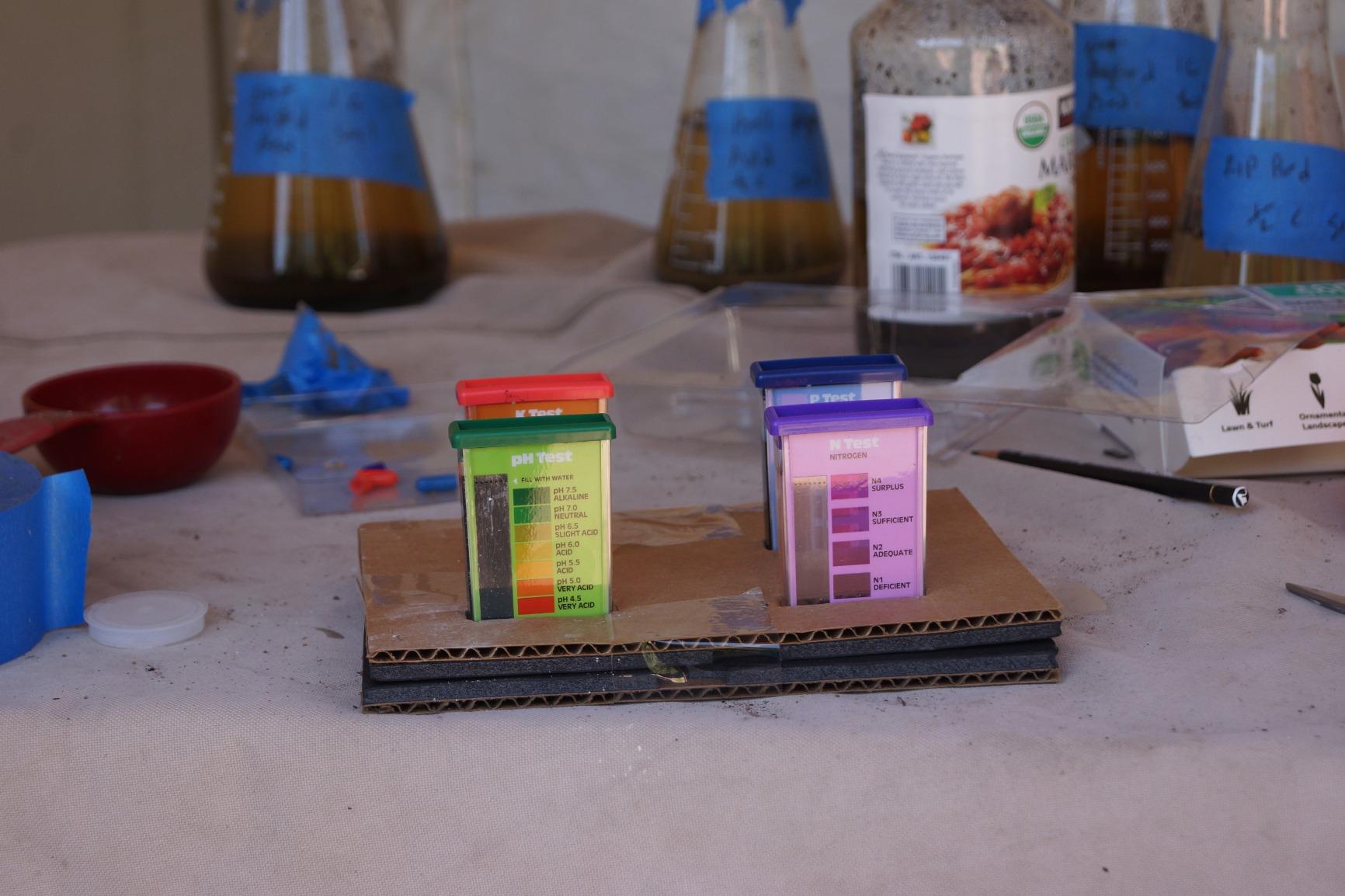
Two details make it a better buy than the generic capsule kits. The included plant pH preference chart lists target ranges for more than 450 plants, so the reading comes with a target to compare it against, and the kit needs no batteries and no power of any kind.
Packaging is small, 5 inches wide by 5.91 inches tall and 4 ounces, so it lives in a drawer rather than a shed, and the whole kit works off nothing but the soil sample in front of you.
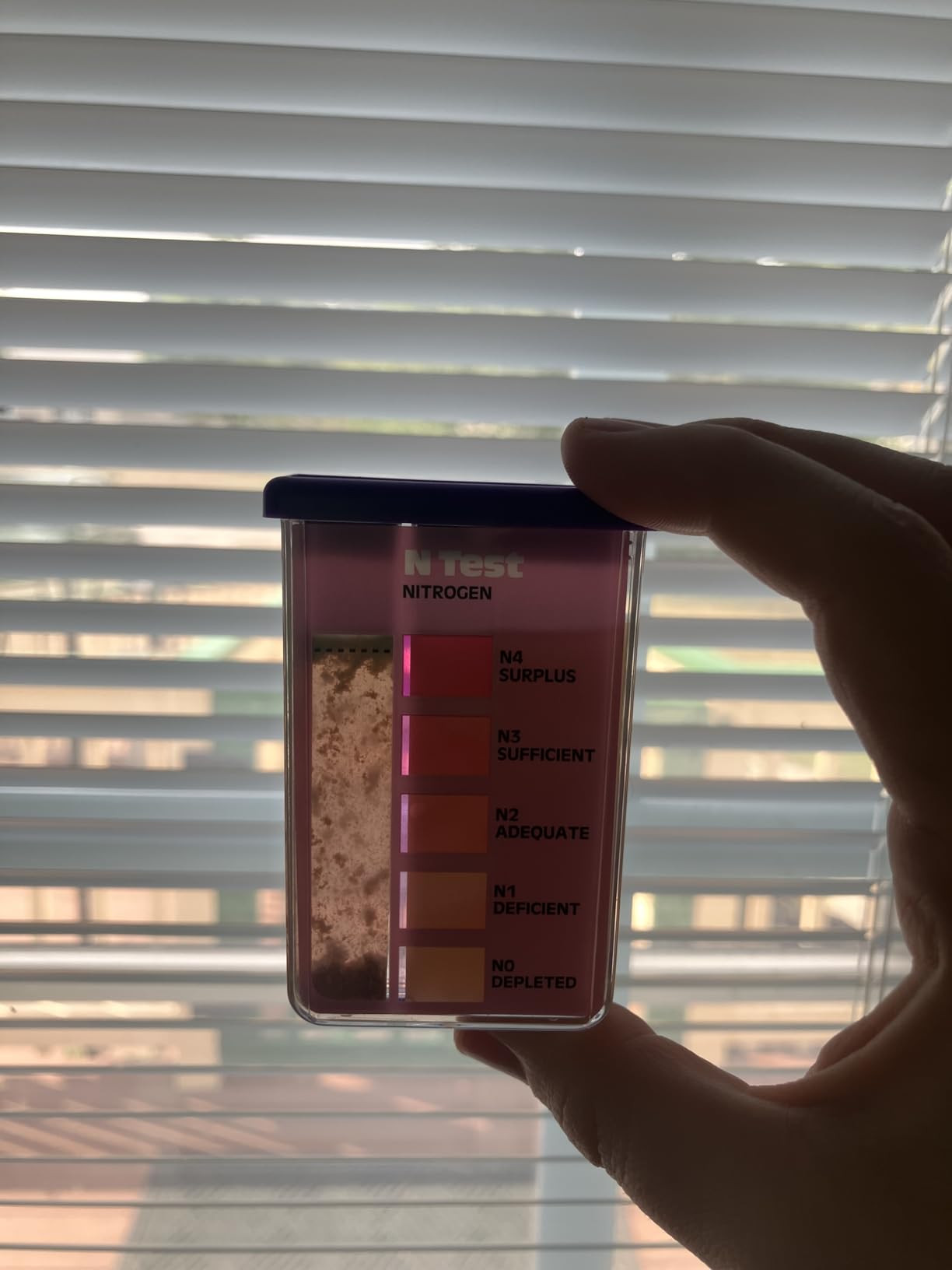
What the Rapitest 1601 gets right
It covers the two things that actually change your fertilizer decisions, which are pH and the big three nutrients. Nitrogen, phosphorus and potash in a home kit are directional, but a pH reading from a color comparator is genuinely useful and close to what a lab would tell you.
Forty tests means ten for each of pH, nitrogen, phosphorus and potash, which is ten full rounds across a season if you test the same bed. Cost per test stays low and the kit has no moving parts to fail.
Where it frustrates owners
The test tubes are small and tip easily, so many owners tape them to a surface or steady them between fingers. Capsules are also hard to open and can shatter if you force them, and losing a shattered capsule mid-test wastes a reagent.
The real limit is supply. Only 10 tests per parameter are included and replacement capsules are difficult to source, so plan your tests before you run out rather than treating it as an unlimited resource.
3. Garden Tutor pH Test Kit: Best for Fast pH Screening
Garden Tutor Soil pH Test Kit – 100 Strips with AI-Powered Web Reader – Accurate Testing for Lawn, Garden & Compost – pH 3.5–9
100 pH-only strips covering 3.5 to 9
Web photo reader included
Soil-specific three-pad strips
Pros
- 100 strips allow repeated monitoring across beds
- Web reader turns a phone photo into a pH result
- Three-pad strips designed for soil rather than liquids
- Includes an online lime and sulfur application estimator
Cons
- Measures pH only with no nutrient readings
- Color matching required without the web reader
- Results are approximate rather than laboratory grade
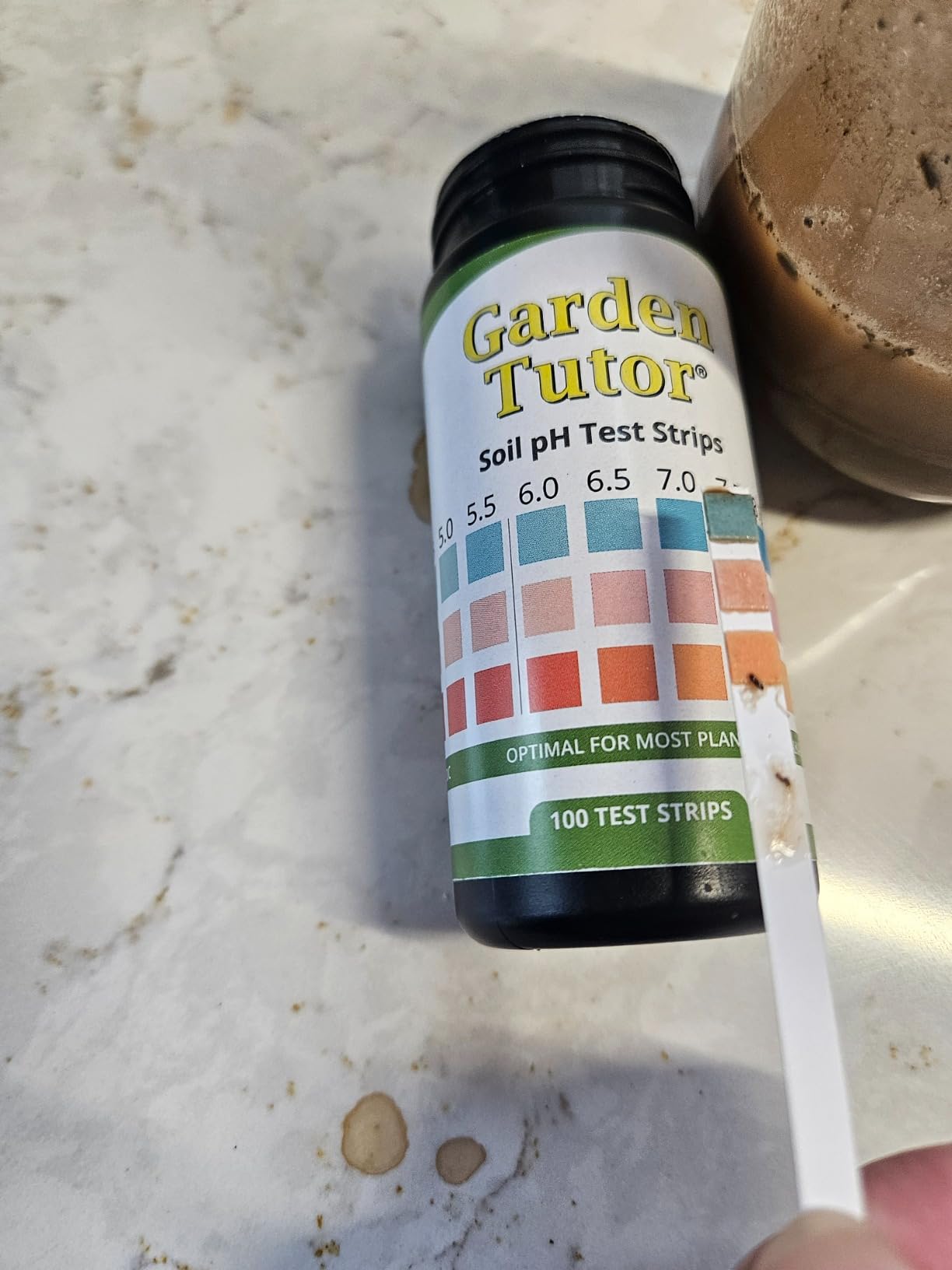
Garden Tutor does one job and does it cheaply, which is why it earns 3848 ratings at 4.2 stars. You get 100 litmus strips covering a pH range of 3.5 to 9, a full-color handbook and a template card for the web reader.
The standout feature is that web-based reader. Photograph the strip against the template, upload it, and you get a digital pH result without downloading an app or signing up for an account. That removes the subjectivity of eyeballing a color chart, which is the single biggest weakness of every other strip product here.
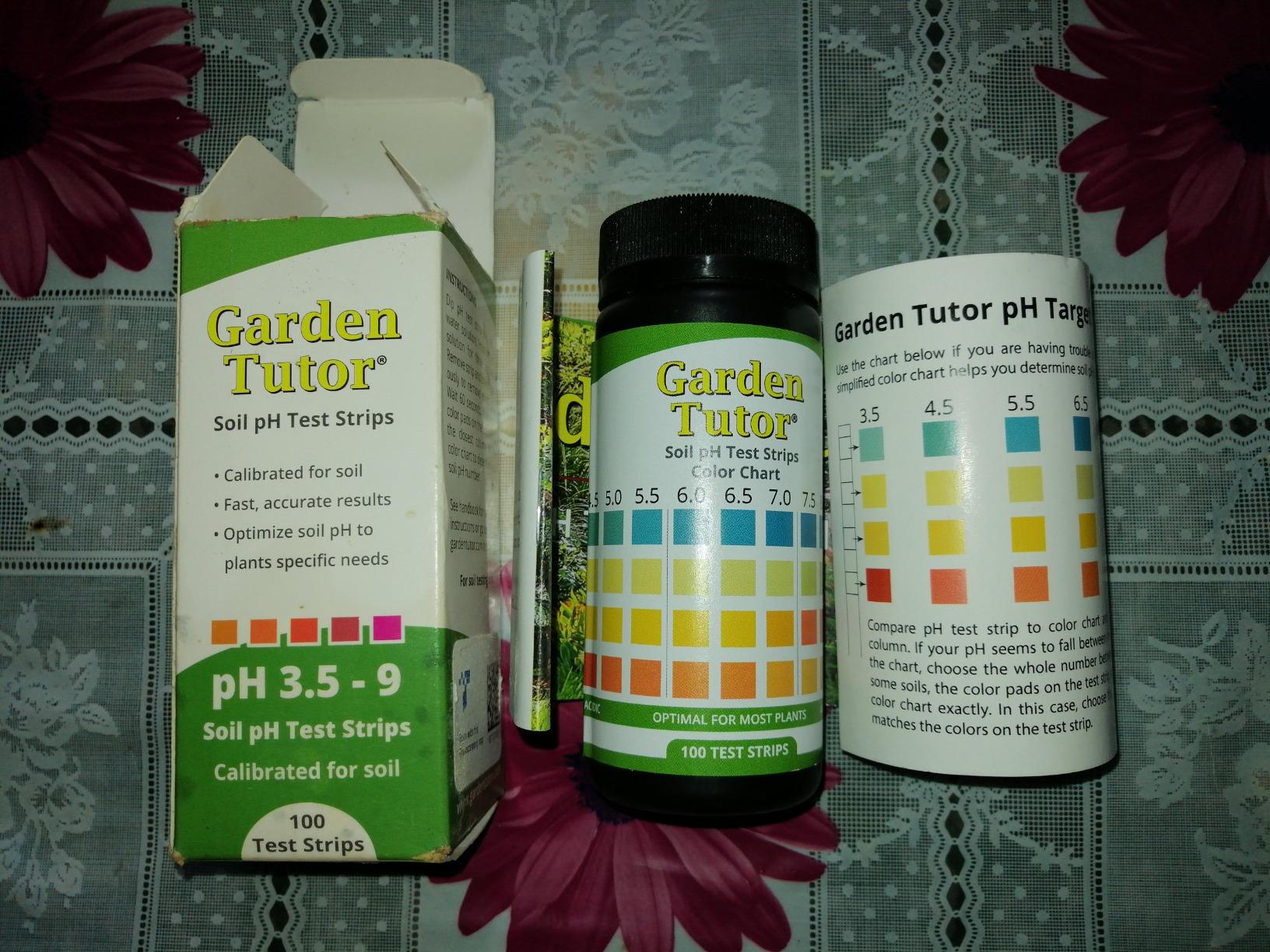
It is a third-generation three-pad design built specifically for soil rather than repurposed from liquid test strips, and results arrive in about 60 seconds once the sample is mixed. The kit also includes an online lime and sulfur application estimator, which turns a reading straight into a corrective action.
For a gardener mapping pH across a new property, one strip per corner in an afternoon is a genuinely useful baseline you could not get any other way for the money.
What Garden Tutor is good at
It is good at the one question that unblocks the most problems: is my soil acid or alkaline. Once you know that, you can decide whether to apply lime or sulfur before you spend anything on nutrients, and most nutrient problems in new beds trace back to pH.
The 100-strip count makes repeated monitoring across a lawn and several beds practical, since you are not rationing two or three tests. The included plant list also gives you a target range for whatever you are growing.
What it cannot do
It gives you no nitrogen, phosphorus or potassium data whatsoever, so it cannot tell you which fertilizer to buy. If your plants are yellowing with a correct pH, this kit will not help and you will need a nutrient test.
The readings are also approximate. A strip narrows pH to a band rather than a decimal, which is fine for screening and frustrating when you are trying to fine-tune a lime application to the tenth of a point.
4. Soil Savvy Soil Test Kit: Best Mail-In Kit for Nutrient Detail
Soil Savvy – Soil Test Kit | Understand What Your Lawn or Garden Soil Needs, Not Sure What Fertilizer to Apply | Analysis Provides Complete Nutrient Analysis & Fertilizer Recommendation On Report
pH plus 14 nutrients
Plain-language fertilizer advice
8 ounces
Pros
- Report covers pH and 14 nutrients including N
- P and K
- Recommendations written for home gardeners not agronomists
- Same testing method used by turf managers
Cons
- Only one sample kit per purchase
- Mail-in wait before you get a reading
- Lower review volume and a higher one-star share
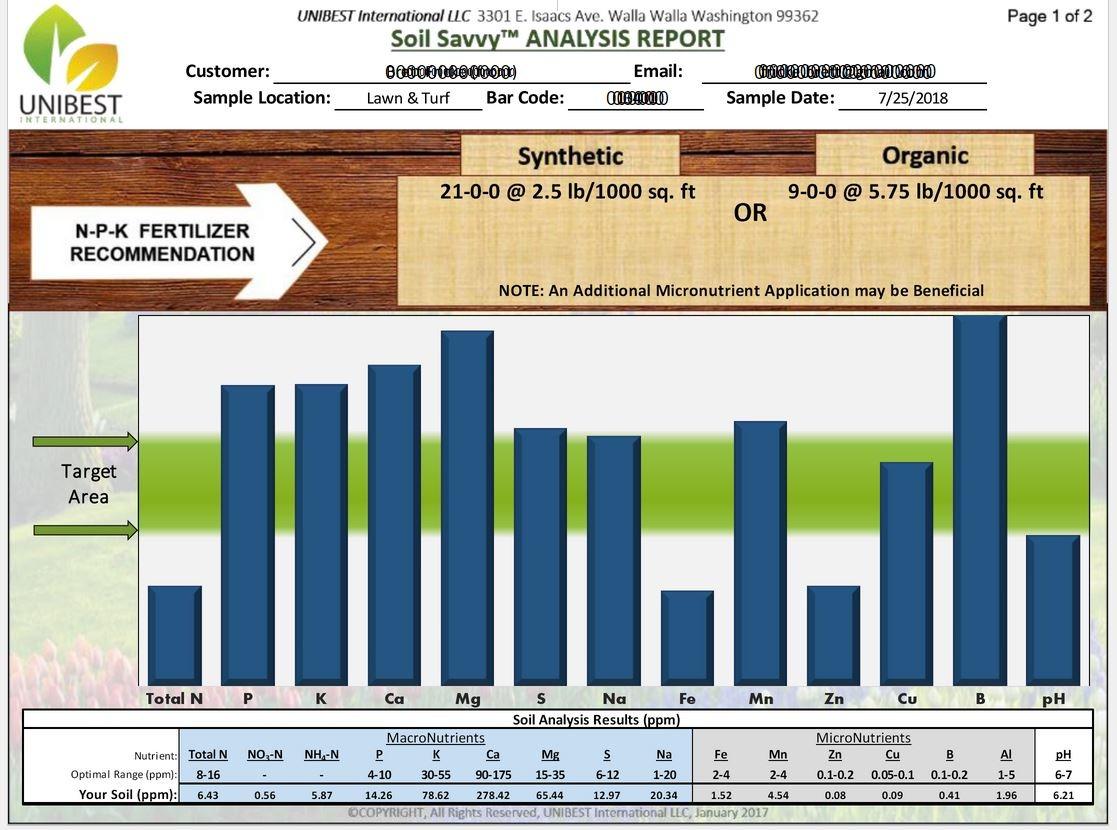
Soil Savvy widens the nutrient panel further than MySoil, reporting soil pH plus 14 nutrients including nitrogen, phosphorus and potassium. That extra breadth matters for anyone growing fruit trees, where a trace element shortfall is a different problem from a macronutrient one.
What sets it apart from raw lab output is the framing. Recommendations arrive written in plain language for a home gardener, telling you what to buy and what to skip, which is exactly the translation step most people lack when a lab report arrives.

The technology behind it is the same approach used by agricultural producers, turf managers and landscapers, which is a fair reason to expect readings that line up with professional practice. The kit ships as a cylindrical envelope with a resin capsule and instructions, weighing 8 ounces.
It is also a sustainable framing that makes sense: knowing what is already present lets you avoid applying nutrients the soil does not need, which is the real waste problem most gardeners create.
When Soil Savvy earns its place
Choose it when the question is not just what is the pH but what is the soil actually short on across a wide range. The 14-nutrient panel catches imbalances that a three-nutrient kit simply cannot see.
It is a good match for established perennial plantings and mixed landscapes where you want one thorough reading rather than a season of incremental checks.
Where it falls short
It has fewer reviews behind it than the category leaders, and a noticeably higher share of one-star feedback, so the user experience is more mixed than the ratings alone suggest. One kit per purchase means repeat testing is another order.
Like any mail-in service, it is not an answer for a problem you need to solve this weekend. If a container is failing right now, a slow report is not a result.
5. Whitetail Institute Laboratory Soil Test Kit: Best for Food Plots and New Ground
Whitetail Institute Laboratory Soil Test Kit, Ensures The Most Successful Deer Food Plot Possible, Professional Consultation Included, Receive Results Within One Week
Lab analysis with consultation
Results within one week
9 by 7 by 1 inches
Pros
- Professional consultation included with the report
- Results by mail or email within one week
- Quickest turnaround of the lab kits here
- Everything needed is included in the kit
Cons
- Framed around deer food plots not vegetables
- Mail-in turnaround is not an instant read
- One sample kit per purchase
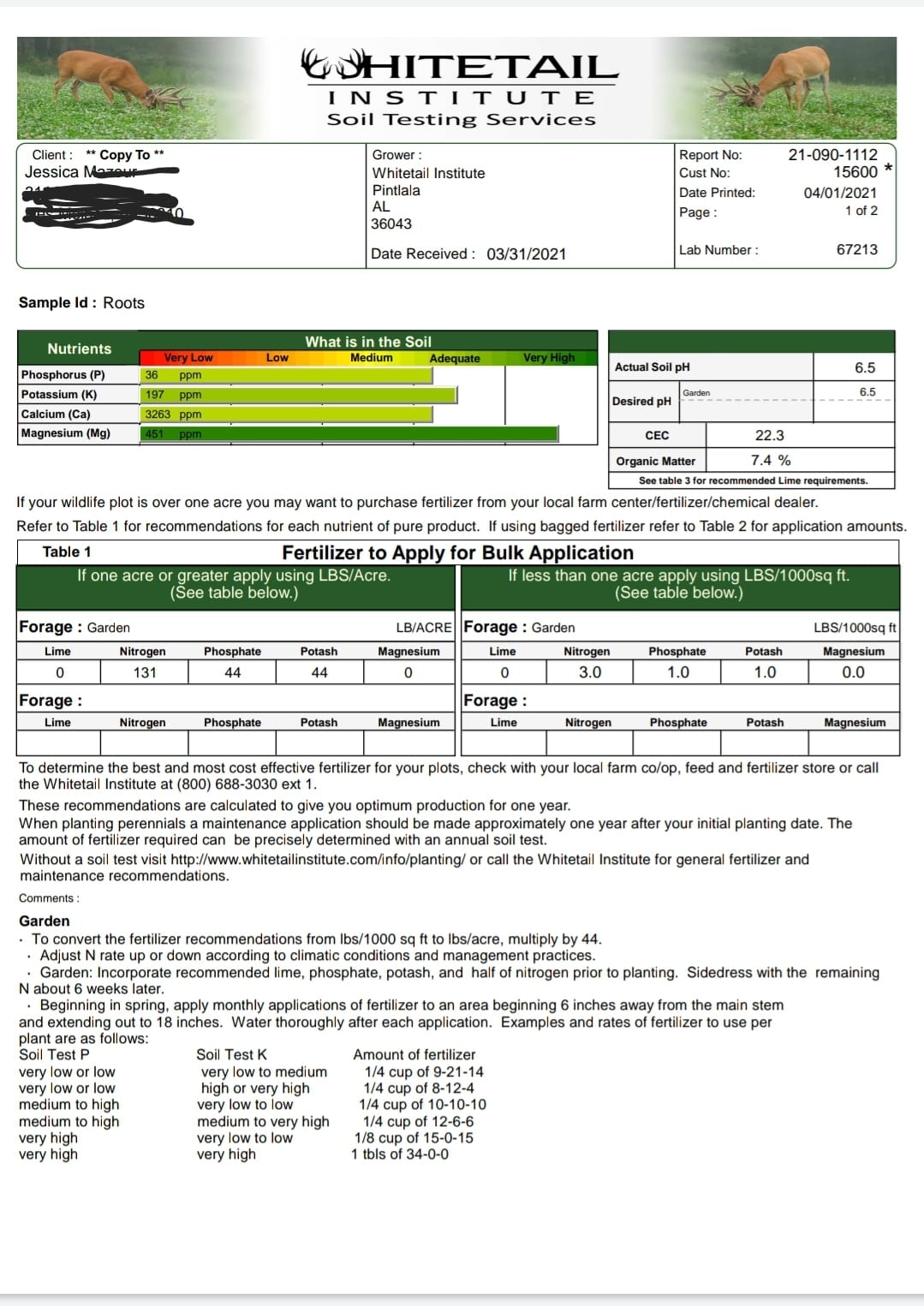
The Whitetail Institute kit is a laboratory service aimed at food plot growers, and it is a fast lab turnaround in this group, with results by mail or email within one week. Seventy-five percent of its 826 ratings are five-star, which is a strong signal for a specialized product.
What you get beyond the numbers is a professional consultation included with the results. For a new landowner establishing a plot on land that has never been sampled, having someone interpret the report is worth as much as the analysis itself.
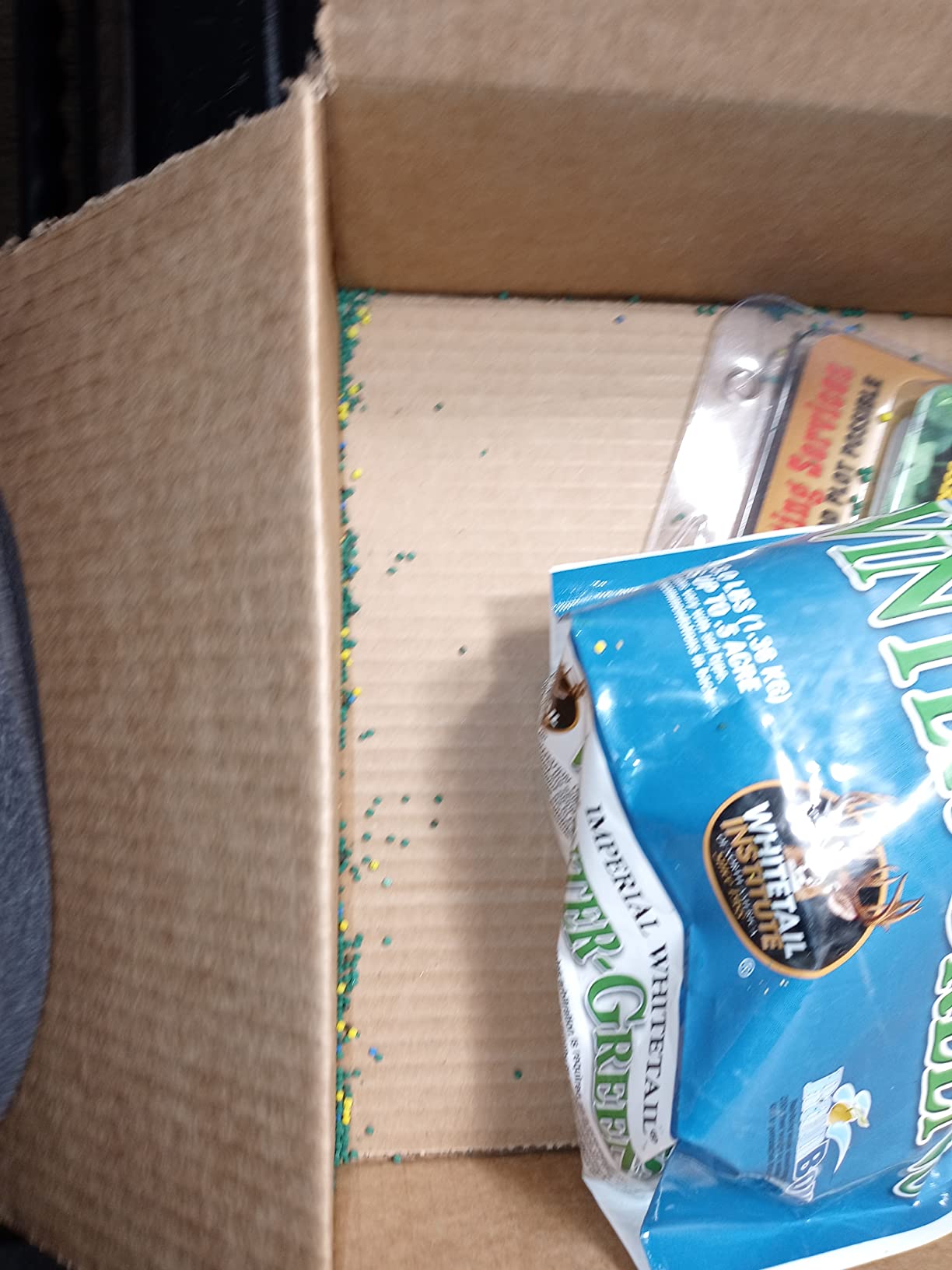
Everything you need is in the box, the kit measures 9 by 7 by 1 inches, and it carries a one-year manufacturer warranty. The stated benefit is straightforward, saving fertilizer and lime you would have applied on a guess.
For anyone planting deer food plots, clover, or a pollinator strip on rough ground, this is the most purpose-built laboratory option in the roundup.
Why food plot growers like it
The recommendations are framed around getting a plot established on poor or neglected ground, which is the exact scenario a general garden kit handles worst. Lime and fertility guidance for low-fertility ground comes with the report.
A one-week turnaround is short enough to plan a season around. You can sample in one week, get advice, and still have time to amend before the following planting window.
Why vegetable gardeners should look elsewhere
The guidance is written around wildlife food plots, so a tomato bed or an ornamental border will need you to translate the advice yourself. Nobody is going to tell you the target pH for your hydrangeas here.
One kit per purchase and a mail-in turnaround also make it a poor fit for monitoring changes across a season, when you want to see whether an amendment worked.
6. HSLGOVE 7-in-1 Soil Meter: Best Digital Soil Meter for Containers
HSLGOVE Soil Test Kit, 7-in-One Soil Moisture Meter/Soil PH Meter/Fertility, Dual Screen Soil Tester w/Digital Soil Temp/Air Temp&Humidity for Plants Gardening,Lawn,Farm Indoor&Outdoor-Lvory White
Seven readings on a dual screen
6.8 inch three-metal probe
4.8 ounces
Pros
- Moisture pH fertility light soil and air temperature
- No consumables or replacement capsules
- Single probe is less disruptive to roots
- Dual screen with one-button mode switching
Cons
- Takes three batteries and the compartment is awkward
- Readings need a few minutes to settle
- Must be cleaned between plants
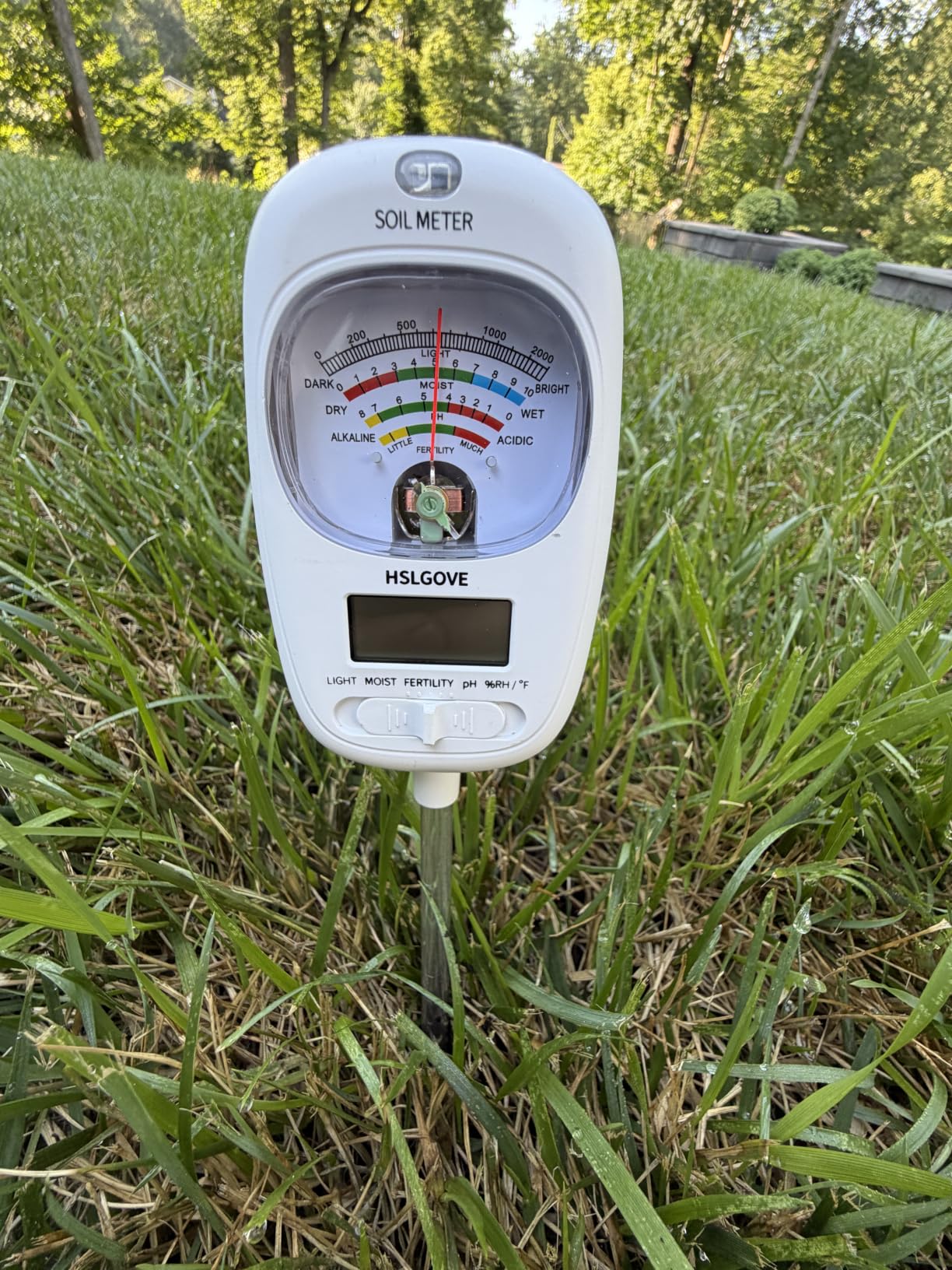
This is a different instrument, not a test kit. The HSLGOVE meter reads moisture, pH, fertility, light, soil temperature, air temperature and humidity from a single handheld unit, and it gives you an answer in three to five minutes with no capsules, reagents or strips to buy again.
For container and indoor growers that is the decisive advantage. When a pot is wilting you can take seven readings in one sitting, and a single-probe design is gentler on roots than a multi-probe meter pushed into a small pot.
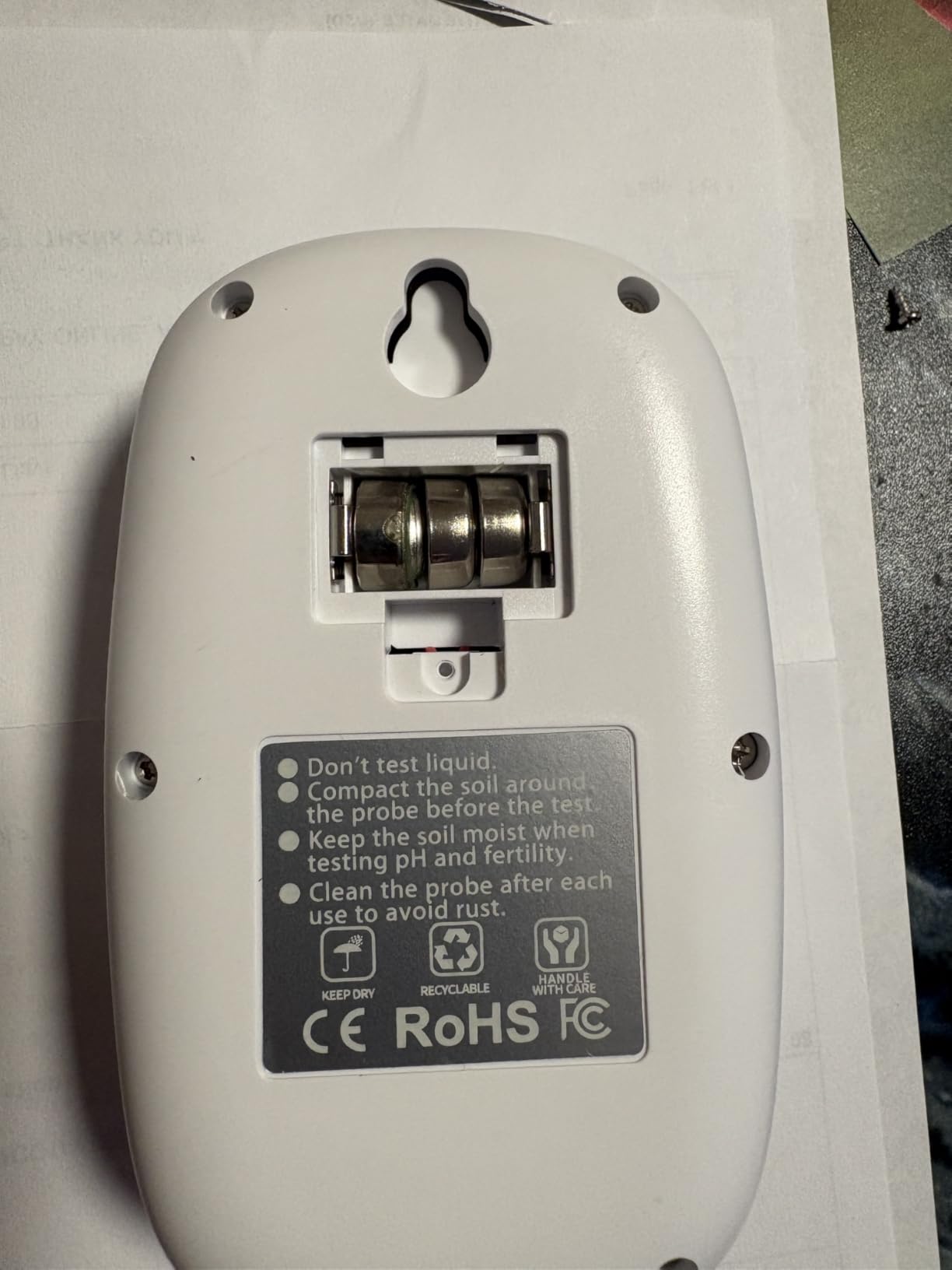
The 6.8 inch probe is built from three metals for durability and is long enough for medium to large potted plants. The unit weighs 4.8 ounces and measures 11.5 by 2.9 by 1.5 inches, and 78% of its 451 ratings are five-star across houseplant and outdoor users.
Readings are for trend, not for lab work. The meter tells you that a pot is drier than it was last week, which is usually the decision you need to make.
Where the digital meter earns its keep
It earns its keep on watering decisions, which is the daily question in a container garden. A moisture reading ends the finger test, and the light reading tells you whether a pot has drifted into shade since you moved it.
It also covers a lot of raised bed and herb patch situations where you want a number in the ground without carrying a bottle of distilled water to the bed.
What you give up for the convenience
The battery compartment is the most criticized part of the design, and the meter needs three batteries replaced each time you swap the set. Readings also need a few minutes to settle rather than appearing instantly.
You must clean the probe between plants, otherwise you carry moisture and salts from one pot into the next. And the thick probe takes real force to insert into dry soil, which is exactly when you most want to check it.
7. Dewilde Trading Co 100 pH Strips: Most Versatile for Bulk pH Checks
Soil Test Kit – 100 Soil pH Test Strips (3.5–9 Range) for Garden, Lawn & Indoor Plants – Easy At-Home Soil Testing
100 pH strips covering 3.5 to 9
Mix dip and compare
Color chart included
Pros
- 100 strips make repeated testing inexpensive
- Portable for testing many locations
- Covers a 3.5-9 range spanning most conditions
Cons
- pH only with no nutrient readings
- Solution has to sit for 30 minutes
- Color chart comparison is subjective
This is the simplest soil test kit in the roundup and the lowest-cost way to get a pH number across a large area. You get 100 strips covering a pH range of 3.5 to 9, part number DTC-00024, and 569 ratings at 4.2 stars.
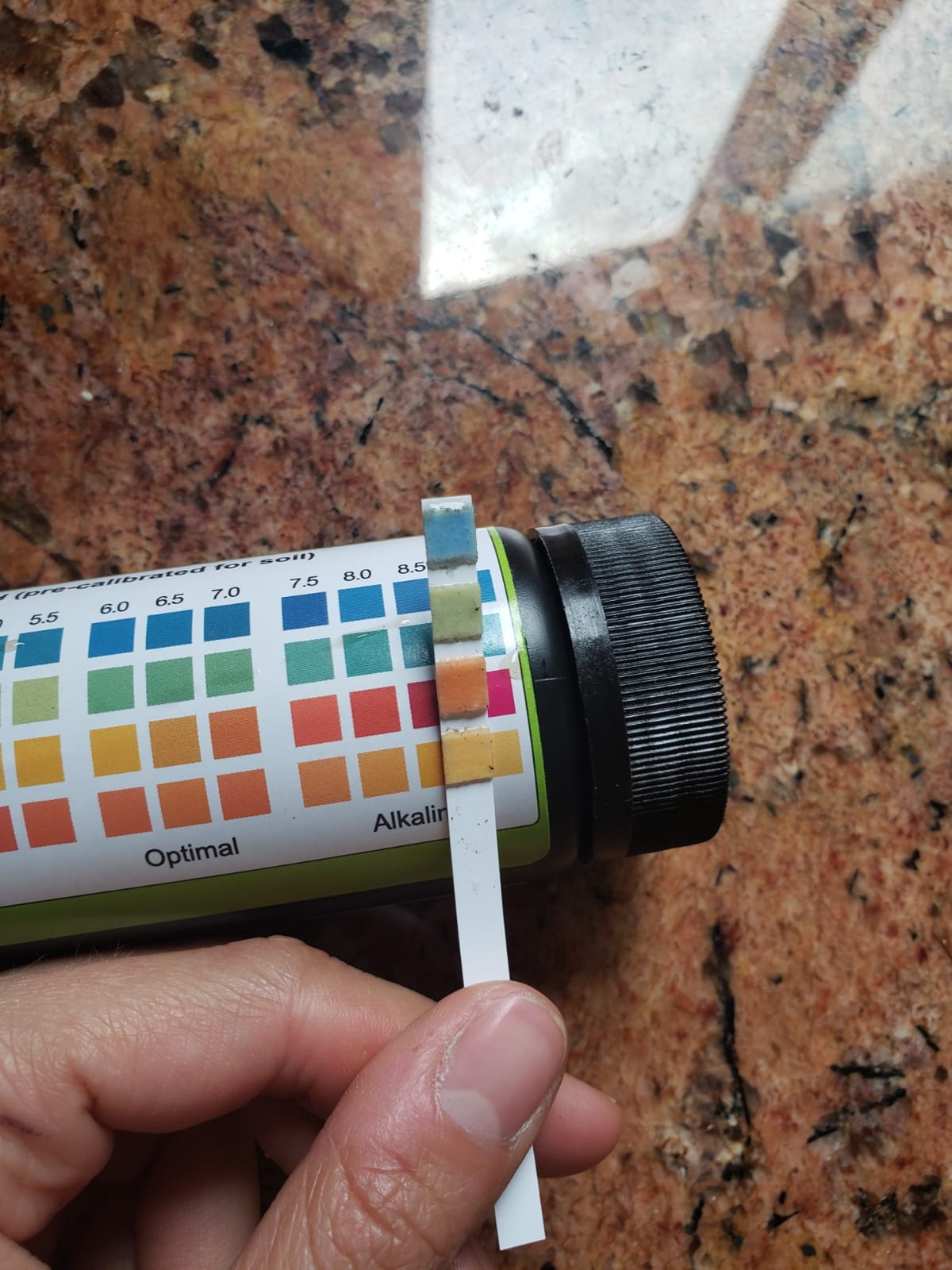
The routine is deliberately uncomplicated. Mix your soil sample with water, let the solution sit for 30 minutes, dip a strip for three seconds, hold it horizontally for 60 seconds, and compare against the color chart on the bottle.
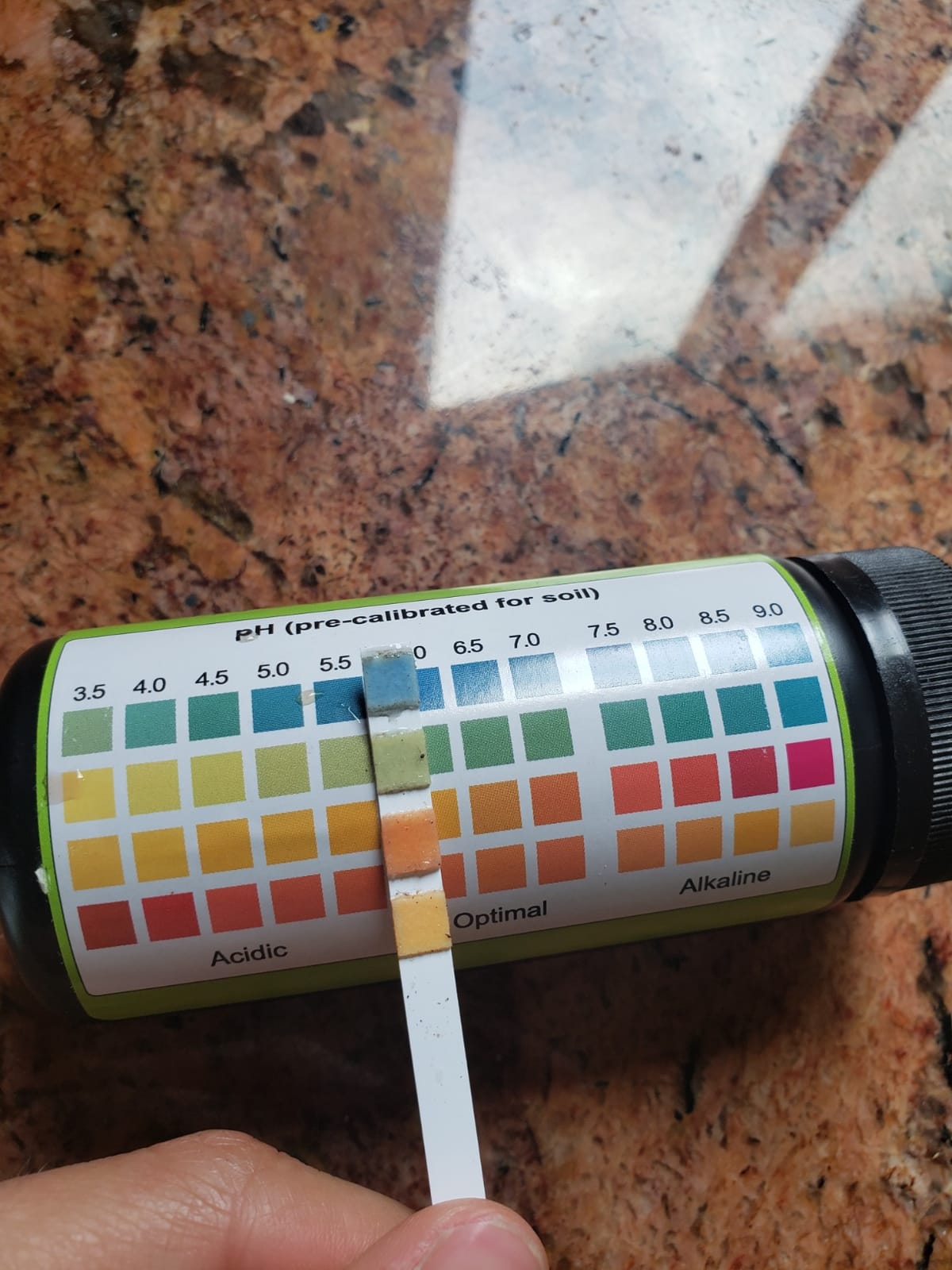
That 30-minute wait is the whole story of this product. It is a kit for mapping a lawn or a large vegetable plot, not for a Tuesday morning check on a single pot. Strip count means you can work your way across a property without rationing.
Because it is portable, you can carry samples from different beds back to one mixing station rather than testing where you dug them, which reduces the variables that skew a reading.
When a bulk strip pack makes sense
It makes sense when you need breadth, such as comparing pH in five beds you have never tested before. A hundred strips turns a mapping project into an afternoon rather than a budget line.
It also works well as a backup to a lab kit, letting you screen several locations cheaply and then send only the interesting one to a lab for nutrient analysis.
Where the bargain ends
There is no nutrient information at all, so it cannot answer a nutrient question. The 30-minute settling time also makes it useless for tracking a change you need to make now.
Most importantly, color chart comparison is subjective under any lighting, including a badly lit potting shed. Garden Tutor’s photo reader solves exactly this weakness, and if you are buying strips for pH alone we would pick that one instead.
8. Dewilde Trading Co 140 Test Kit: Most Tests Per Kit
Soil Test Kit 140 Tests (2026 Updated Instructions) – pH, Nitrogen, Phosphorus, Potassium & Ammonia – Garden, Lawn & Plant Soil Tester Kit for Accurate Fertility Analysis
pH ammonia nitrogen phosphorus potassium
About 140 tests
3.52 ounces
Pros
- Five parameters including ammonia
- About 140 tests per kit is the largest capacity here
- Results at home rather than in a mail queue
- Low cost per test suits routine monitoring
Cons
- Lowest average rating in this group
- Color comparison results are directional
- Instructions are frequently cited as confusing
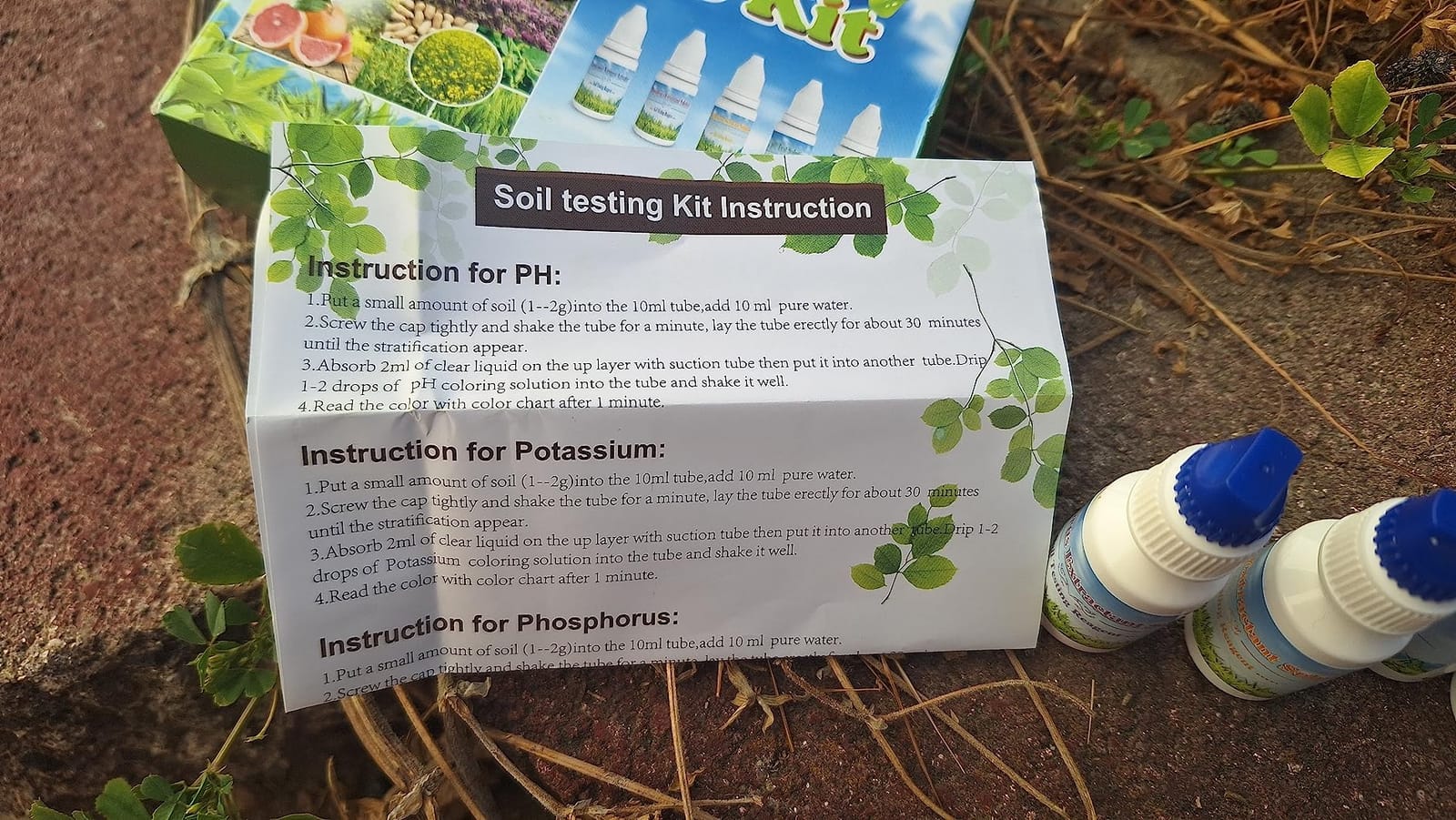
The pitch here is capacity. This liquid capsule kit covers pH, ammonia, nitrogen, phosphorus and potassium, with about 140 tests in total and roughly 40 per parameter, which works out to a very low cost per test by the time you count the number of readings.
That math matters if you are testing repeatedly. A vegetable grower tracking one bed across a season, or a community garden with multiple plots, can run dozens of parameters from a single kit without ordering refills. The kit weighs 3.52 ounces and measures 3 by 1 by 4 inches.
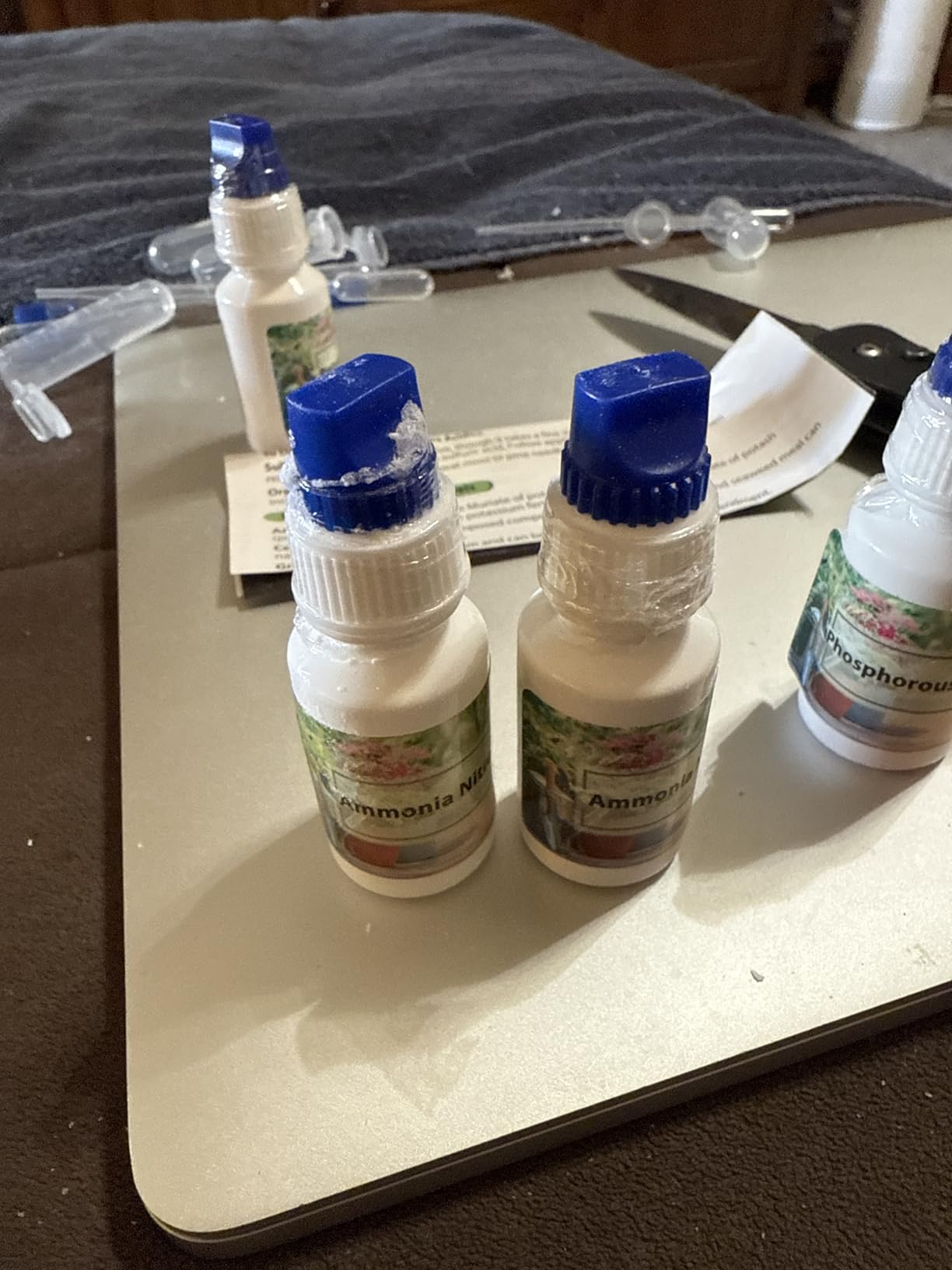
Including ammonia alongside the big three is genuinely useful, since accumulated ammonium points at a specific problem rather than a general one. And unlike a mail-in service, the answer arrives the same afternoon.
Its 551 ratings average 4.0 stars, the lowest mean in this group, and roughly 10% of reviewers gave it one star. That distribution is worth reading as a warning about expectations.
What this kit does well
It does volume well, and it does timing well. If your need is many quick directional checks rather than one authoritative report, the capacity means you can afford to test before and after an amendment instead of guessing.
Being able to run a test the same day you apply compost or lime is a real advantage over any mail-in route, where the correction arrives after the problem has moved on.
What to watch out for
Color comparison in this format is directional, so treat a reading as a trend across seasons rather than a measurement to act on precisely. Owners also cite the instructions as confusing, which is a bad combination with a five-parameter panel.
If you need a number you could put in front of an agronomist, buy the Rapitest or a mail-in analysis instead. If you need to know roughly whether nitrogen is climbing or falling, this kit does that at a fraction of the cost per reading.
Are Home Soil Test Kits Actually Accurate?
The most accurate soil tester is a laboratory, and among home options a mail-in lab service like MySoil or Soil Savvy sits closest to that standard. Published comparisons of commercial soil test kits against analytical laboratory results put accuracy anywhere from 33% to 94% depending on the product and the parameter, so the honest answer is that home kits are good at pH and weak at laboratory-grade nutrients.
That range is not a marketing failure, it is a difference in method. A color comparator shows you which band a sample falls into. A lab runs a calibrated extraction and a spectrophotometer. They are not built to deliver the same precision, and the gap widens fastest on nitrogen, which is also the number most home kits report least reliably.
Accuracy also depends on which parameter you are looking at and how the sample was taken. Even a good kit with a badly collected sample will give you a confident number about the wrong soil. That is why the sampling method below matters as much as which kit you buy.
The practical tiers break down like this. Mail-in lab analysis gives you the most reliable nutrient numbers, with the tradeoff being a wait of about a week. Colorimetric capsule kits give a usable pH reading and directional N, P and K. Litmus strips and photo readers give you a pH band in under a minute and nothing else. Digital probe meters give you a fast trend line for moisture, pH and light, and they drift without calibration.
If you only do one thing about accuracy, send one sample per distinct soil type to your county extension office or a university lab. Many counties run the test free or at a reduced rate for residents, and the report comes with an interpretation. Home kits are then a screening tool you use between lab tests, which is exactly how experienced gardeners describe using them, and the same job-first logic shows up whenever we match a tool to a task in our [airbrush kit guide](https://irlentwincities.com/best-airbrush-kits/).
How to Take a Soil Sample So Your Results Are Right
Take a soil sample the same way every time and follow five steps. A poor sample makes the most accurate kit in the world useless.
- Sample the whole area, not one spot. Take multiple cores across the bed or plot and combine them in a clean bucket. One handful from a good-looking corner tells you nothing about the rest.
- Reach root depth. Take cores from roughly 6 to 8 inches for established beds and shallower for container soil, using a clean trowel or probe each time.
- Strip the surface. Remove grass, thatch and surface litter before you core, because that organic layer skews both pH and nutrient readings.
- Break up clods and blend. Crumbly soil mixes evenly with water. Rub the sample between your fingers until there are no hard lumps.
- Use clean, dry equipment. Wash and dry tools between beds, and never use a metal container that has held fertilizer or lime. Then follow your kit’s ratio instructions exactly.
One more habit pays off: label the sample with the location, the date and what you plan to grow. A lab report without that context is a number you will not know how to act on six months later.
What to Look for When Buying a Soil Test Kit
Look for the parameter that matches your problem, not the longest feature list. Here are the seven criteria that decide whether a kit is worth your money.
- Does it measure what is blocking your growth? pH first, then nutrients. A kit that cannot answer your actual question is not a bargain.
- Colorimetric, digital or mail-in? Colorimetric is fast and cheap, digital is instant and trend-oriented, mail-in is slow and authoritative. Pick one, not all three.
- Does it report a number with a unit? Buyers on forums are blunt about this. A range with no unit is a toy reading, and anything reporting vague bands is worth skipping.
- How many tests, and are refills available? Refill capsules are easier to buy than whole new kits, and a kit you cannot refill is a kit you will stop using.
- Does it ship calibration solution? Any digital pH meter needs buffer solution to stay accurate, and a meter shipped without it is a meter you will never calibrate.
- Does it include a target range? A plant pH preference chart turns a reading into a decision. MySoil’s report and Garden Tutor’s chart both do this well.
- What happens to the result? A kit that ends in a number leaves you to interpret it. One that ends in a written recommendation saves you the research.
Set the target before you buy. Most vegetables want soil between 6.0 and 7.0, tomatoes sit happily at 6.0 to 6.8, blueberries need an acidic 4.5 to 5.5, hydrangeas shift color across roughly 5.0 to 6.5, brassicas prefer 6.0 to 7.5, lawn grass runs 6.0 to 7.0, most houseplants do well at 5.5 to 6.5, and succulents prefer 6.0 to 7.0.
Acid-loving shrubs such as azaleas and rhododendrons want the blueberry range, so a kit that cannot resolve pH below about 5 will mislead you on those beds entirely.
How Often Should You Test Your Soil?
Test based on how fast the soil changes, not on a calendar. Most gardeners fall into one of these patterns.
- New beds and new homes: test before the first planting and again the following season. Unknown ground is where a test changes the most.
- Established vegetable gardens: test once in early spring and once in late summer to see what the previous crop removed.
- Containers and houseplants: check monthly with a meter, since pot soil drifts fast and has no reserve to buffer it.
- Lawns: test in spring and early fall, and always before applying lime or fertilizer.
- Perennials, shrubs and fruit trees: test every two to three years, since these plants change the soil slowly.
After any amendment, retest the same spot on the same schedule. A single reading tells you where you were, and only a second reading tells you whether the correction worked.
Frequently Asked Questions
What is the most accurate soil tester?
A laboratory is the most accurate option, and among home tools a mail-in lab service such as MySoil or Soil Savvy comes closest because it measures 13 or more plant-available nutrients. Among at-home devices a calibrated digital pH pen or a well-run colorimetric kit gives a usable pH number. Cheap multi-function probe meters are the least accurate option in this group.
Are home soil test kits accurate?
Accurate for pH, unreliable for laboratory-grade nutrients. Published comparisons of commercial kits against analytical laboratory results range from 33% to 94% accuracy depending on the product and parameter. Colorimetric kits nail the pH band and give directional nitrogen, phosphorus and potassium; nitrogen is the least reliable figure on any home kit.
Do soil test kits really work?
Yes, as a screening tool. Use litmus strips or a photo reader for a quick pH check, a colorimetric capsule kit for pH plus directional nutrients, and a mail-in lab service when you need a real nutrient analysis you can act on. The kit type determines what the result is worth.
What is the best at-home soil test kit?
The Luster Leaf Rapitest 1601 is the best all-rounder, covering pH, nitrogen, phosphorus and potash at home in about ten minutes with 40 tests included. For pH screening alone the Garden Tutor kit adds 100 strips and a web photo reader. For nutrient accuracy the MySoil mail-in service returns a full laboratory analysis.
What is the most accurate way to test soil?
Send a properly collected sample to a laboratory, ideally through your county extension office, which often tests free or at a reduced rate for residents. Collect multiple cores from 6 to 8 inches deep, blend them in a clean bucket, and label the sample with location, date and intended crop. Use home kits to screen between lab tests.
What are people saying about the MySoil soil test kit?
Owners rate it as the most trustworthy option in this group, with a 4.6 star average across more than 3800 ratings and 77% five-star feedback. Users credit the written fertilizer recommendations with solving specific problems such as seeds that would not germinate. The common caveat is that a private lab report is less comprehensive than a full university lab workup, and results take 6 to 8 days.
Conclusion: The Soil Test Kit to Buy First
The MySoil Soil Test Kit is the best soil test kit for gardeners in 2026 because it is the only pick here that returns a real laboratory analysis of 13 plant-available nutrients and tells you what to do with them. The Luster Leaf Rapitest 1601 is the better value buy for repeat at-home checks, and the Dewilde Trading Co 100 pH strips are the cheapest way to screen pH across a whole property.
One action to take next: check whether your county extension office offers soil testing, and send one properly collected sample per distinct soil type. Then pick a home kit to screen between lab tests, the same job-first approach we use when matching equipment to a task in our [airbrush kit guide](https://irlentwincities.com/best-airbrush-kits/). Whatever you buy, collect the sample the same way every season, because a consistent number you can compare beats a better kit used carelessly.