
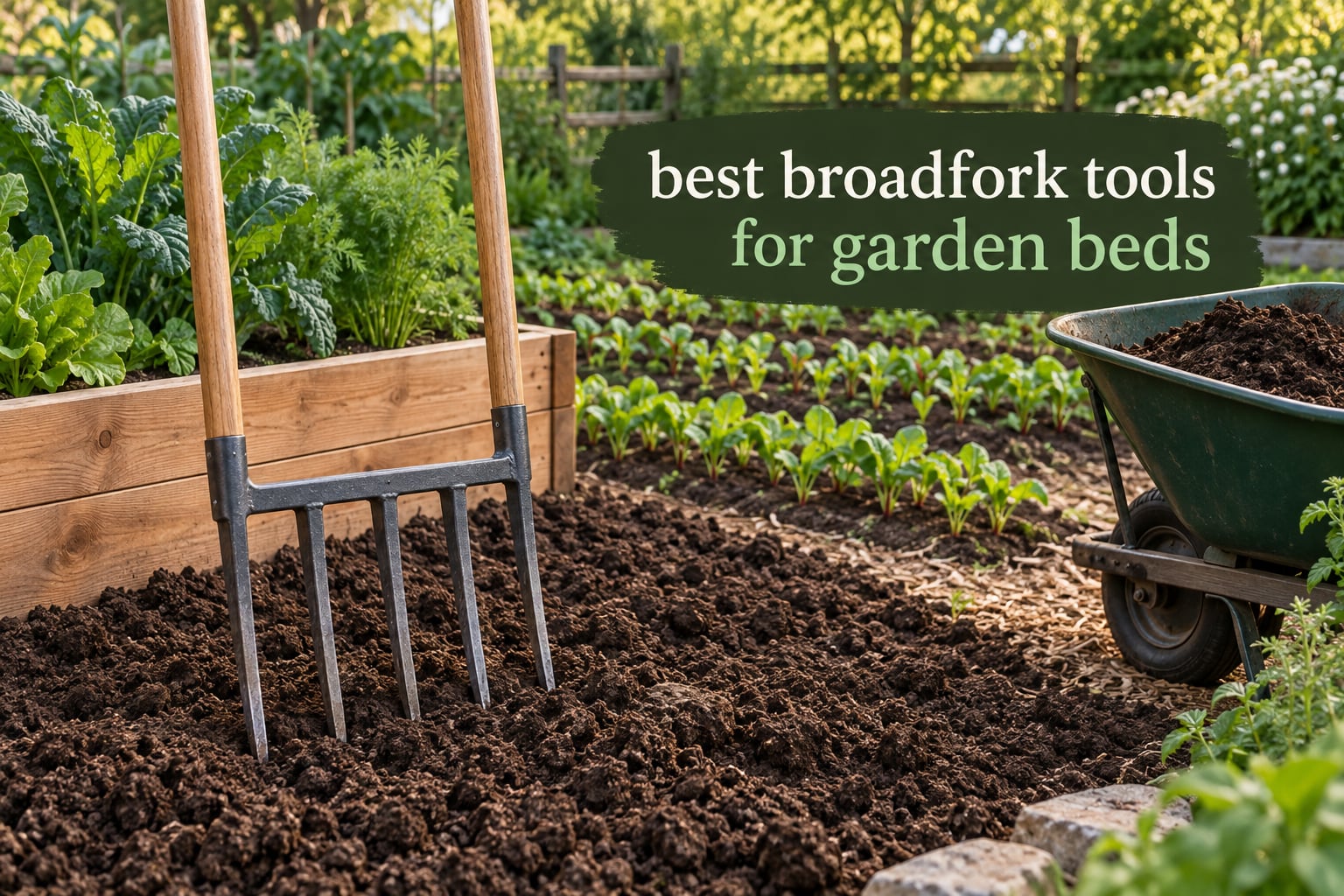
A broadfork is the fastest way I know to turn a compacted bed back into something roots can push through, and after six seasons of using one on our clay beds it has quietly replaced the rototiller we used to rent. The problem is that the category looks simple from the outside: a handle, a crossbar, some tines. In practice the difference between a broadfork that lasts a decade and one that ends up in a corner of the shed after two seasons comes down to tine count, tine length, steel gauge, handle material and how the thing is assembled.
That is what this guide is for. Twelve of the best broadfork tools for garden beds look almost identical until you read the spec sheet, and that is where the differences live. We pulled specs, ratings and owner feedback for all of them, then sorted them by what they actually do well: breaking clay, working a narrow raised bed, covering a lot of ground, or staying comfortable for a long session. You will find budget forks here alongside a lifetime-warranty all-steel model, because the right pick depends far more on your soil and your back than on any spec sheet.
Two notes on how this list was built. First, every product below is one we could verify specs, weight and review history for, and each entry carries the real star rating and review count shoppers have given it, not a rounded guess. Second, owner feedback is the tiebreaker: where reviewers consistently praise or complain about something, that shows up in the pros and cons rather than being smoothed over. If you are still choosing beds first, our guide to the best raised garden beds is worth a look before you size a tool to them.
Last updated in 2026. We revisit the ranking as ratings and ownership change, and we correct anything that does not hold up in the comments.
Table of Contents
What Is a Broadfork?
A broadfork is a two-handled garden fork with 4 to 12 long steel tines, typically 10 to 16 inches long and 14 to 21 inches wide. You step your body weight onto the crossbar to drive the tines down, then lean back with straight arms so the tines lever upward, cracking and lifting the soil a few inches before it drops back into place. It loosens compaction without flipping the soil profile the way a rototiller does.
Broadforking is the practice of using that tool to relieve compaction in a bed. Unlike tilling, it leaves soil layers, earthworms and fungal networks in the order they were already in.
Here are the terms that actually matter when you compare these tools:
Tine – one of the vertical steel prongs that goes into the ground. More tines means a wider swath per pull but less soil disturbance per tine.
Tine length – how deep the tool reaches. 10 to 12 inches suits loose beds; 14 inches and up is for hardpan and clay.
Tine shape – round tines lift and separate soil, flat or bladed tines slice and are sharper on entry but more aggressive on the soil structure.
Tool width – the span across the tines, and the width of bed you can work in one pass. Match it to your bed so you do not bang the wooden sides.
Crossbar – the horizontal bar between the handles that you stand on. Wider and better braced means more leverage and less flex under your weight.
Handle material – ash or hickory wood absorbs shock and can be replaced, all-steel is indestructible but transmits every jolt, and fiberglass will not swell or crack in weather.
Handle height – the tall-handled models reduce bending; the shorter ones are easier to control in a narrow bed.
If bending and grip strength are the limiting factor for you, the best ergonomic garden tools for arthritis covers the same problem from a wider angle.
Broadfork vs. Tiller: Which One Should You Buy?
For garden beds, a broadfork beats a tiller, because it relieves compaction by lifting and fracturing the soil instead of inverting it. A rototiller shatters the soil structure, oxidises organic matter, severs earthworms and mycorrhizal networks, and hauls dormant weed seed up into the germination zone. A broadfork opens the same channels for air and water and leaves the biology intact.
What a tiller genuinely wins on is speed over large areas, and breaking ground that has never been gardened. If you have half an acre of raw clay to open up, a machine will get there in an afternoon. It will also leave you a bed with the structure of a gravel pile, and you will be fighting that structure for years.
Where a broadfork is the wrong tool:
Saturated ground. Wet soil shears into clods instead of cracking cleanly, and the tines can get stuck.
Live crop roots and dense perennial beds. You will sever roots you meant to keep.
Rocky or boulder ground. Tines bend, and a bent tine is usually a bent tool.
Very large plots with heavy sod. A fork hoe and a pointed hoe clear sod faster, and the broadfork finishes the bed afterward.
A standard digging fork, meanwhile, is a different job. It is short, narrow and precise, good for one plant hole at a time. It is not a substitute for a broadfork across a bed.
Top 3 Broadfork Picks for Garden Beds
The three below cover the widest range of needs, and each one earned its place for a different reason: proven volume, value, and a tied-highest rating on a solid review base.


All 12 Broadforks at a Glance
Everything below sits in one table so you can match width, tine count and weight against your own beds before reading further.
| Product | Specifications | Action |
|---|---|---|
| Bully Tools 5-Tine Broadfork |
|
Check Latest Price |
 VEVOR 5-Tine Broad Fork VEVOR 5-Tine Broad Fork |
|
Check Latest Price |
 Walensee 9-Tine Broadfork Walensee 9-Tine Broadfork |
|
Check Latest Price |
| Meadow Creature All Steel BF-12 |
|
Check Latest Price |
 VASALAID 5-Tine Broadfork VASALAID 5-Tine Broadfork |
|
Check Latest Price |
 DeWit Grelinette Broadfork DeWit Grelinette Broadfork |
|
Check Latest Price |
 SILKPE 5-Cambered-Tine Broadfork SILKPE 5-Cambered-Tine Broadfork |
|
Check Latest Price |
 SENVERT 5-Tine Broadfork SENVERT 5-Tine Broadfork |
|
Check Latest Price |
 KEMETIK 5-Tine All Steel Broadfork KEMETIK 5-Tine All Steel Broadfork |
|
Check Latest Price |
 CobraHead Broadfork CobraHead Broadfork |
|
Check Latest Price |
 VIOLAPARK Adjustable Broadfork VIOLAPARK Adjustable Broadfork |
|
Check Latest Price |
 Meadow Creature Tall Broadfork BF-14 Meadow Creature Tall Broadfork BF-14 |
|
Check Latest Price |
1. Bully Tools 5-Tine Broadfork – The Most Proven Pick for Everyday Beds
Bully Tools 5-Tine Broadfork, Fiberglass Handles, 56″ 10-Gauge Steel Fork
11 inch tines
56 inch total length
11.8 pounds
10-gauge USA steel
Detachable handles
Pros
- Made in the USA from heavy 10-gauge steel
- Detachable handles for compact storage
- Rubber grips reduce hand fatigue in long sessions
- Large 11 inch tines cover good width per pull
Cons
- Fiberglass handles can flex under very heavy load in hard clay
- Needs body-weight rocking to enter compacted soil
This is the broadfork I recommend to anyone who just wants a dependable tool and is not shopping around for three weeks. It has 628 ratings behind it at 4.6 stars, and that volume of long-term use across ordinary beds is worth more to me than any single spec advantage. Roughly four out of five of those ratings are five stars.
On our own beds it is the one we reach for by reflex. The 11 inch tines are long enough to get real relief in compacted ground without feeling like a fencing weapon, and at 11.8 pounds it is light enough to swing for an hour without the arm fatigue that heavier forks bring on. The detachable handles mean it lives in two pieces against a shed wall instead of taking up a doorway.
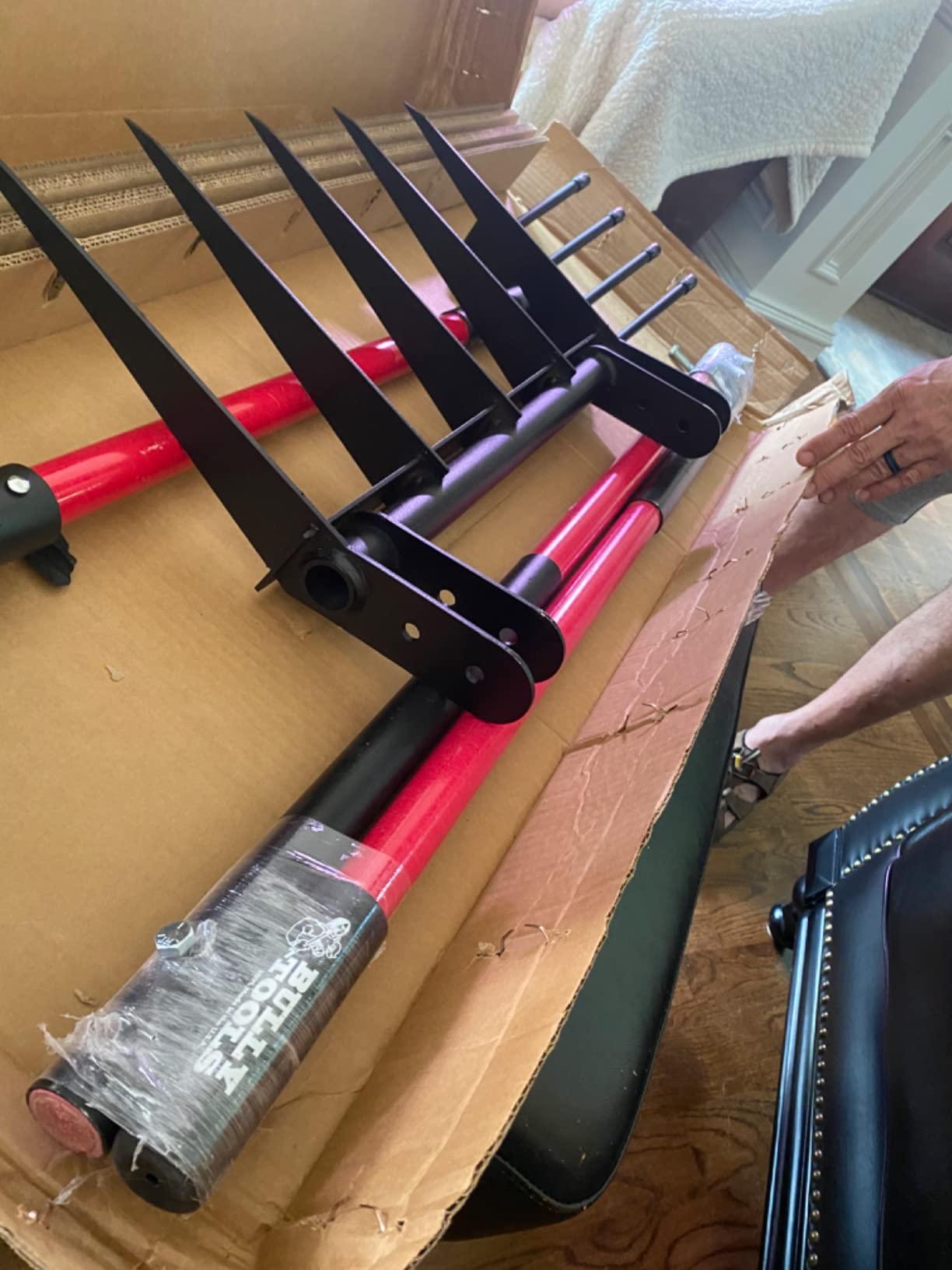
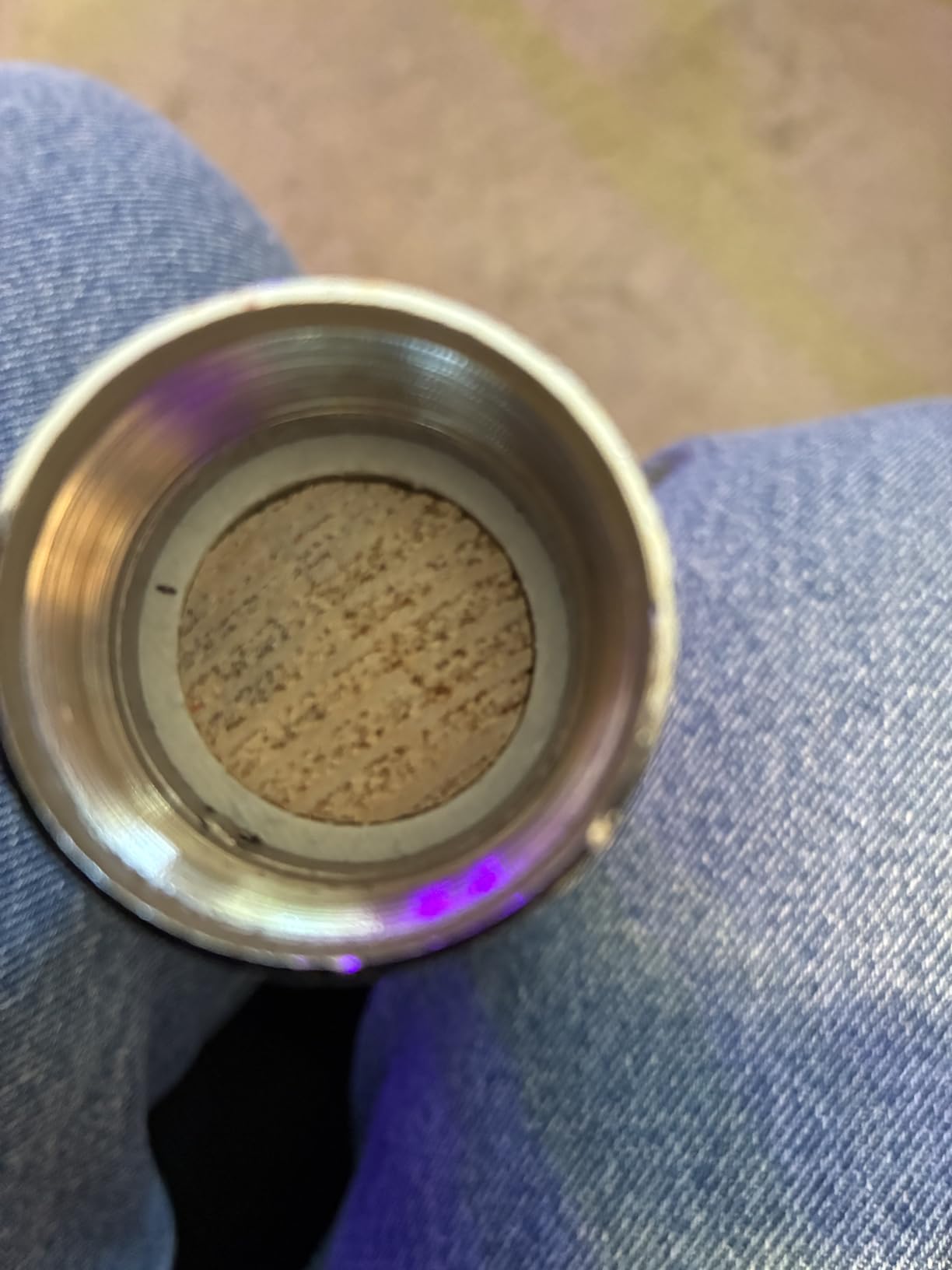
The build is straightforward 10-gauge steel made in the USA, with steel encasement around the fiberglass handles and a reinforcing wood core inside. That core is the part that matters. A fiberglass handle with nothing behind it will flex alarmingly when you put your full weight on a crossbar in September clay, and the encasement is what keeps that from feeling like a broken trampoline.
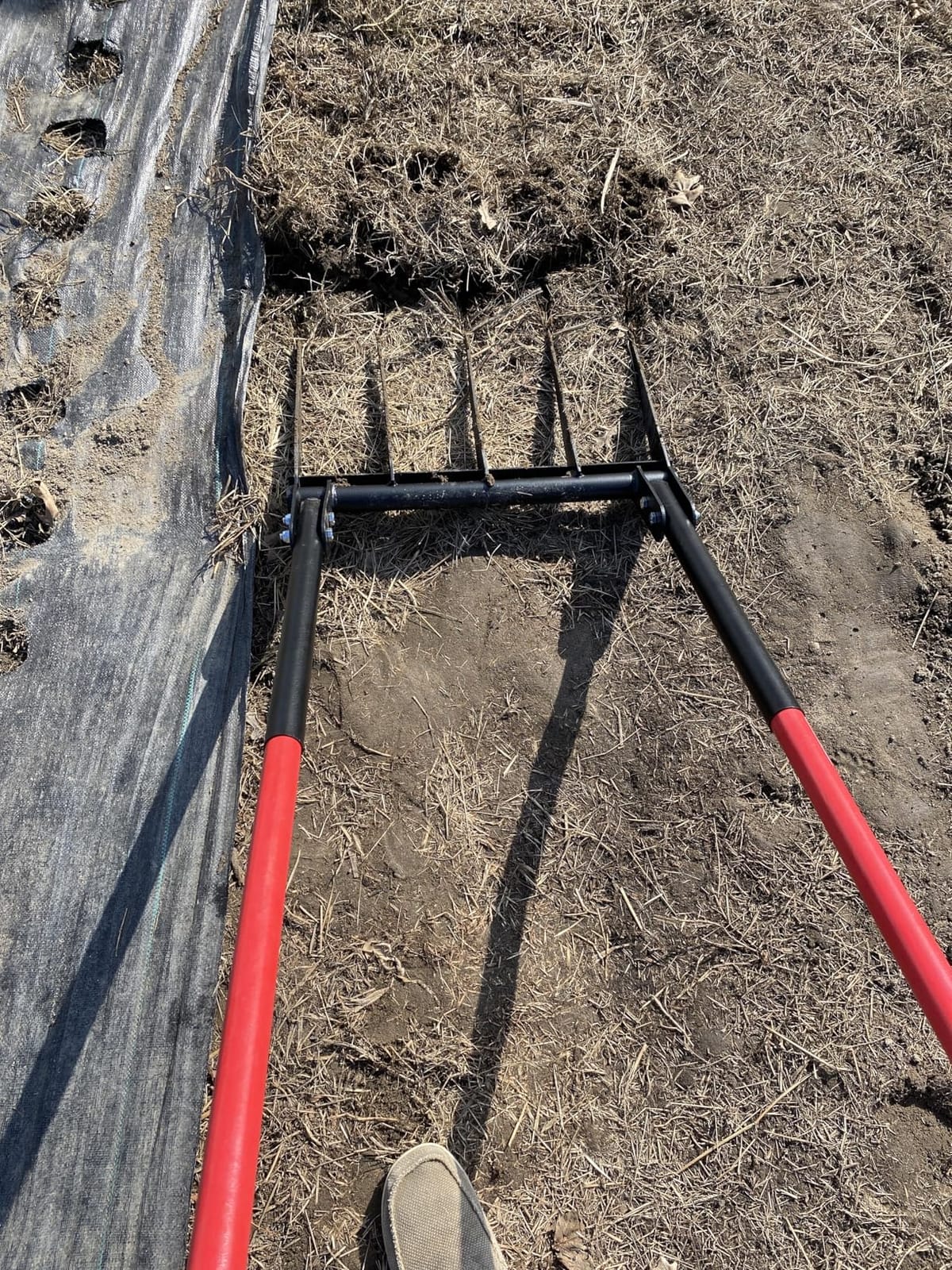
Owners call out the rubber grips most, because grip comfort is what decides whether you finish a four by eight bed or abandon it halfway. The honest limitation is that in genuinely hard ground this is a rocking motion tool. You do not simply step on and descend; you get your weight on, rock forward and back to work the tines down, then pull. That is a technique problem more than a quality problem, and the same applies to any fork in this list.
What you should know before you buy it
The 56 inch overall length and 42.5 inch handles suit a fairly tall user well. If you are much shorter, the crossbar will sit high and you will end up reaching down rather than up, and the raised bed options built for seniors use shorter frames that pair better with a compact-height tool.
Where it falls short
At five tines it covers a modest width per pull, so a large plot means a lot of walking back and forth. If your soil is rock-hard or full of old roots, this is not the fork that will save you the most time, and reviewers are candid that it takes real effort in compacted ground.
2. VEVOR 5-Tine Broad Fork – Best Value for Beds That Need Loosening Once a Year
VEVOR Broad Fork, 5-Tine Pitchfork with Dual Fiberglass Handles, Heavy Duty Garden Fork, Ergonomic U-Shaped Design Broadfork Hand Tiller, Gardening Tool for Composting Transplanting Aeration
Forged steel fork head
Fiberglass handle
54 inch length
13.67 pounds
Reinforced joint
Pros
- Forged steel head paired with a fiberglass handle
- Reinforced connection resists loosening and wobble
- 54 inch length reduces bending and strain
- Detaches for storage in a toolbox or a shelf
- Works as a potato fork and bedding fork too
Cons
- Assembly required before first use
- Fiberglass handles weigh more than all-steel alternatives
This is the value pick, and at 258 ratings with an 83 percent five-star share it is one of the most proven budget options anywhere in garden tools. It ranks second in pitchforks on the store, which tells you how many people are putting it to work.
What makes it work is the joint. The fork head is forged steel and the handle is fiberglass, and where those two meet there is a reinforced connection designed specifically not to loosen or develop wobble. That is the failure point on most assembled budget forks, and it is the reason a cheap bolt-together tool ends up rattling in month two. This one holds.
It detaches into two pieces, which is genuinely useful in a small shed or a shared potting area. The 54 inch length is a sensible middle ground: long enough to keep your back reasonably straight, short enough to control in a 24 inch bed. Owners also use it to lift potatoes and level bedding, so it earns its space beyond soil prep.
At 13.67 pounds it is not a featherweight, and the fiberglass handle carries more mass than an all-steel fork of the same size. The first session also needs assembly before the tool will do anything, so give yourself ten minutes and a clear surface.
Best fit for your setup
This suits someone with a handful of raised beds who wants one tool that handles loosening, compost mixing and light harvest. It is the fork I would suggest to a first-time broadfork owner who wants a real steel head without committing serious money to a lifetime-warranty model.
Where it falls short
Five tines and roughly 13.7 pounds is honest work, not brute force. Owners working rock-hard clay report needing the same rocking motion as any manual fork, and anyone over six feet will find 54 inches shorter than ideal for getting leverage down into a deep hardpan.
3. Walensee 9-Tine Broadfork – More Ground Per Pull in One Pass
Walensee Broadfork Garden Tool, 9 Tines Heavy Duty Broad Fork Hand Tiller, 2-in-1 Garden Pitchfork with Ergonomic U-Shaped Handle, Spading Digging Fork for Gardening, Cultivating
9 hardened tines
38.2 inch handle
15.97 pounds
All steel
U-shaped grip
Pros
- 9 hardened tines give more ground per pull
- All-steel handle resists bending
- U-shaped grip lets you work without stooping
- 9.5 inch foot space fits any shoe
Cons
- Shortest handle here at 38.2 inches
- Tines still need rocking in compacted soil
- Soil must be cleaned off tines to prevent corrosion
Eight or nine tines is where a broadfork stops being a digging tool and starts being a bed-prep tool. This one has nine hardened tines behind a U-shaped all-steel handle, and it covers noticeably more ground per pull than the five-tine designs that dominate this category.
The rating is 4.4 across 94 ratings, with 69 percent five stars. That sits below the leaders in the group, and the difference shows up mostly in fit and finish rather than build quality, and the handle length is where most of that difference shows up.
The all-steel handle is rated to take 165 pounds of pressure, and the 9.5 inch foot space is wide enough to stand on in any shoe. Penetration in loose soil is quoted at just over nine inches, which is more than enough for annual bed prep on anything that is not true hardpan.
Handle height is the thing to weigh up here. At 38.2 inches it is the shortest in the guide, which keeps the tool controllable in a narrow bed but means a tall user bends more than they would with a 56 inch model. The other recurring note is simple maintenance: soil left packed around the tines will start corroding the steel.
Best fit for your setup
If you have several beds and want to get through them in an afternoon, the tine count is the number that saves you time. Nine tines means fewer steps, fewer rocks kicked up and fewer times you have to go back over a strip you missed.
Where it falls short
Do not buy this for deep hardpan. The tines are rated for penetration in loose soil, and a shorter handle gives you less downward force, so in genuinely packed ground you will be leaning on it more than you would with a taller frame. The 4.4 rating also reflects more mixed sentiment than the leaders.
4. Meadow Creature All Steel Broadfork BF-12 – The One to Buy Once
Meadow Creature’s All Steel Broadfork: The Peoples Broadfork ,12 tines Green BF-12 BF-12
12 tines
Fully welded all steel
15 pounds
USA made
Lifetime warranty
Pros
- Fully welded construction eliminates bolt loosening and bent prongs
- Tied highest rating on a substantial review base
- Replaced an electric tiller on clay and clay-loam soil for owners
- Strong enough to lift large roots
- Lifetime warranty
Cons
- Heavy to handle over a large plot
- Needs several passes and breaks over big areas
- Not a substitute for a powered machine in rock-hard ground
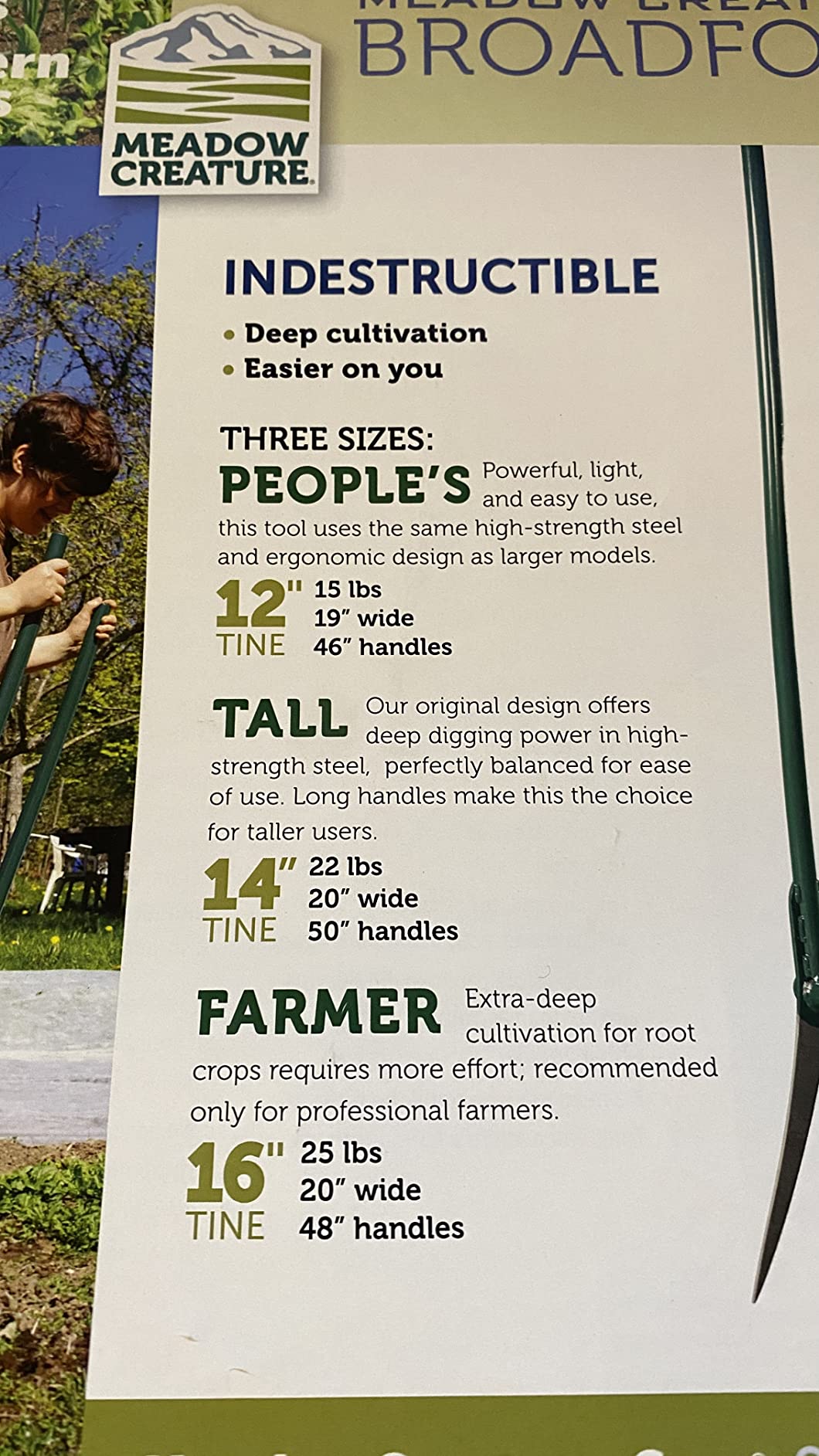
This is the one I would tell people to buy once rather than twice. It rates 4.8 across 92 ratings, tied for the highest average in the group and sitting on a review base large enough to mean something. Ninety-four percent of those ratings are five stars.
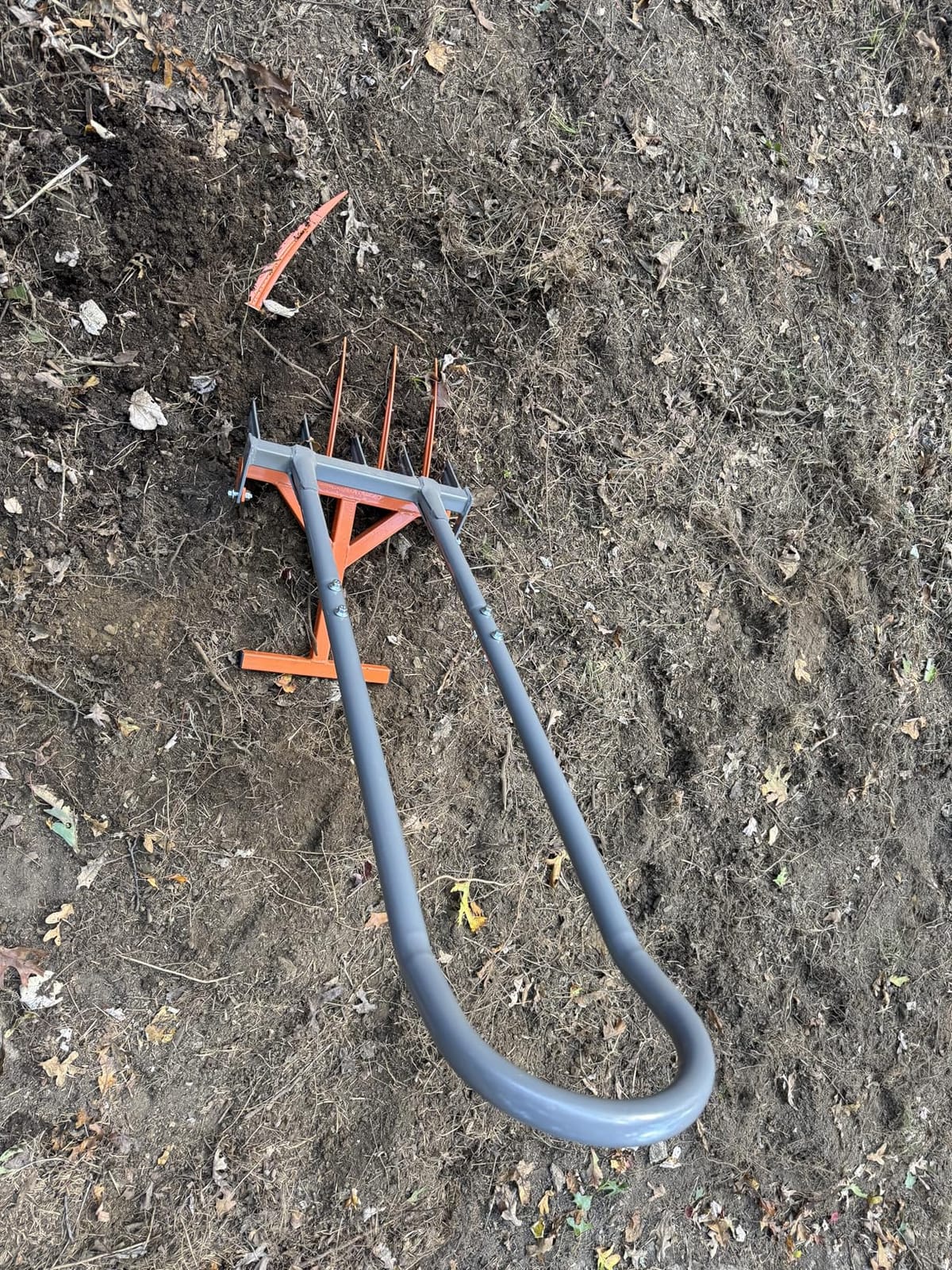
The reason is construction. It is fully welded all steel with no bolted joints anywhere, so there is no fastener to rattle loose and no joint to work apart after a season of being levered against hard ground. It comes with a lifetime warranty and is made in the USA.
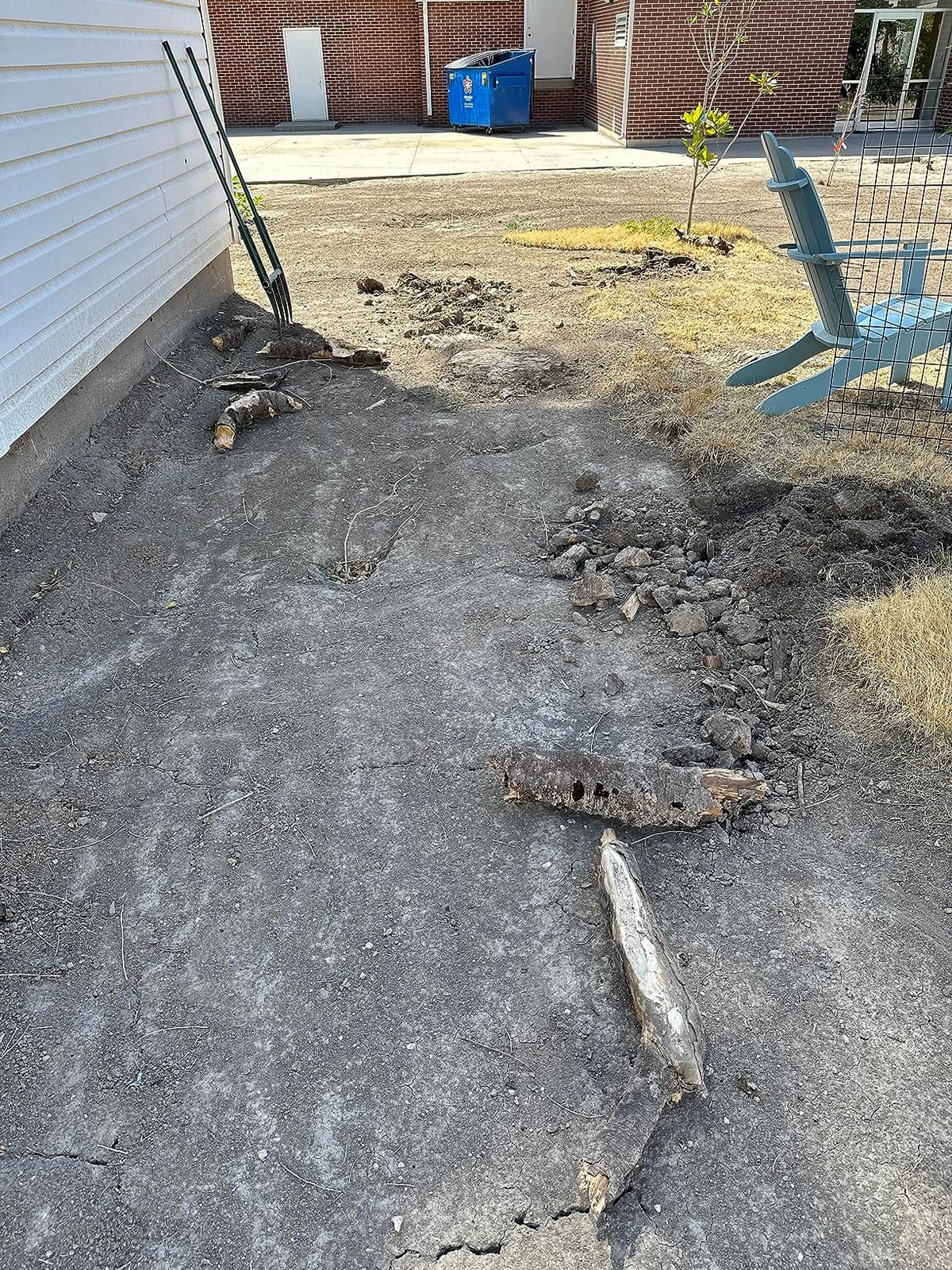
Twelve tines covers more ground per pull than any five-tine fork here. Owners describe it as replacing an electric tiller outright on clay and clay-loam, and one reported using it to lift large oak and tree roots that had no business being in a vegetable bed. If your problem is compaction rather than stone, this is the tool built for it.
The honest trade-off is weight. At 15 pounds with twelve tines, it is a real physical workout over a large area, and owners are clear that it needs several passes and a break in the middle of a big plot. It also works best in damp ground, which is good advice anyway.
Best fit for your setup
If you break new ground, fight clay, or plan to keep gardening for decades, the welded build is worth paying up for once. A reviewer who had switched away from a competing fork reported a dramatic difference in how the ground gave way, and brand-to-brand variance in this category is genuinely decisive.
Where it falls short
It is not the tool for a small plot, a raised bed frame you need to keep clear of, or anyone who wants a light job. Twelve tines at 15 pounds also means you need somewhere to swing it without hitting the bed sides.
5. VASALAID 5-Tine Broadfork – Galvanized Steel for Damp Beds
Broadfork 5-Tine Broad Fork for Gardening Ergonomic U-Shaped Design
Galvanized anti-rust coating
5 heat-treated tines
Reinforced crossbar
16.27 pounds
Removable centre pole
Pros
- Galvanized coating resists rust and soil adhesion
- Welded joints and reinforced crossbar add rigidity
- Non-slip rubber handles reduce hand fatigue
- Removable centre pole saves storage space
Cons
- Lowest average rating here at 4.2
- Sharp tines can scratch you during assembly
- Screws must go in a specific order to sit square
This is the pick if your beds stay wet and you are tired of tools that come back orange. The whole body is thickened steel with a galvanized anti-rust layer, which is exactly the coating you want on a tool that gets rinsed in cold water and put back in a damp shed.
It rates 4.2 across 61 ratings, and about 10 percent of those are one star. That is one of the lowest averages in the guide, so I want to be straightforward: the enthusiasm here is for the finish, not the whole experience.
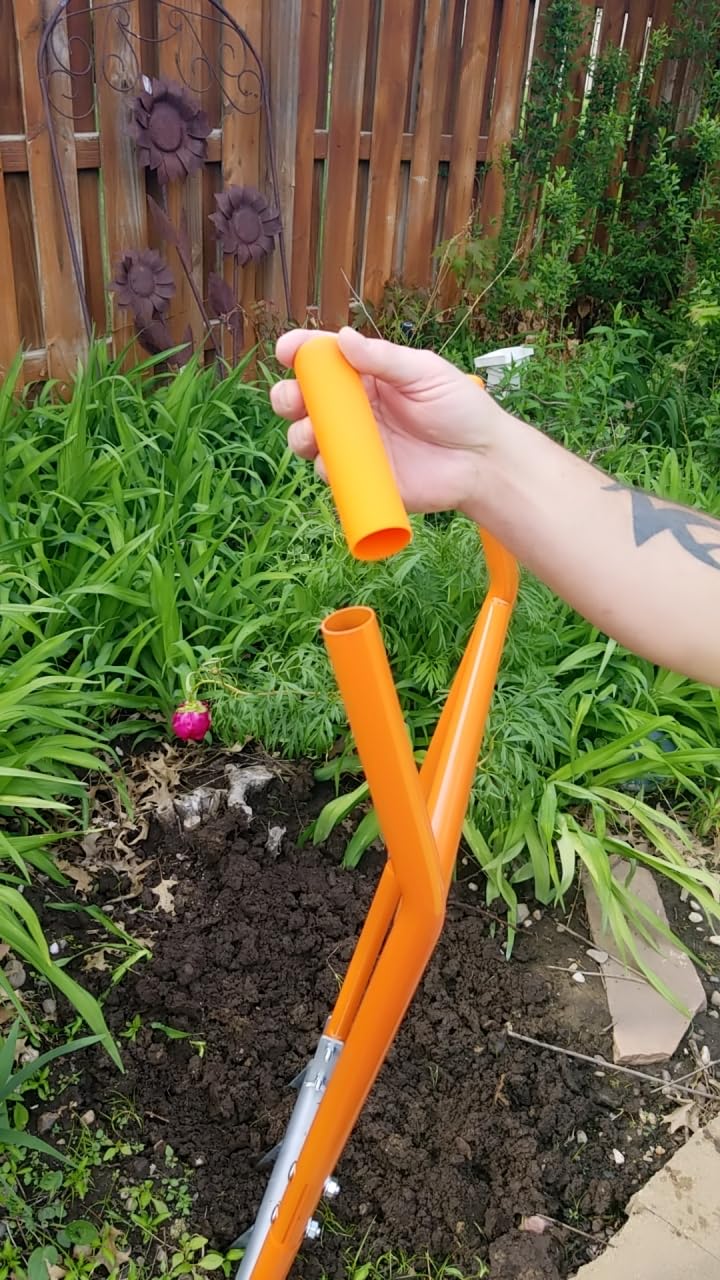
The five tines are tempered and heat-treated with a rust-resistant powder coating, welded at the head with high-frequency welds, and braced by a reinforced crossbar that gives real prying power when you step on it. Two soft non-slip rubber handles take the sting out of a long session.
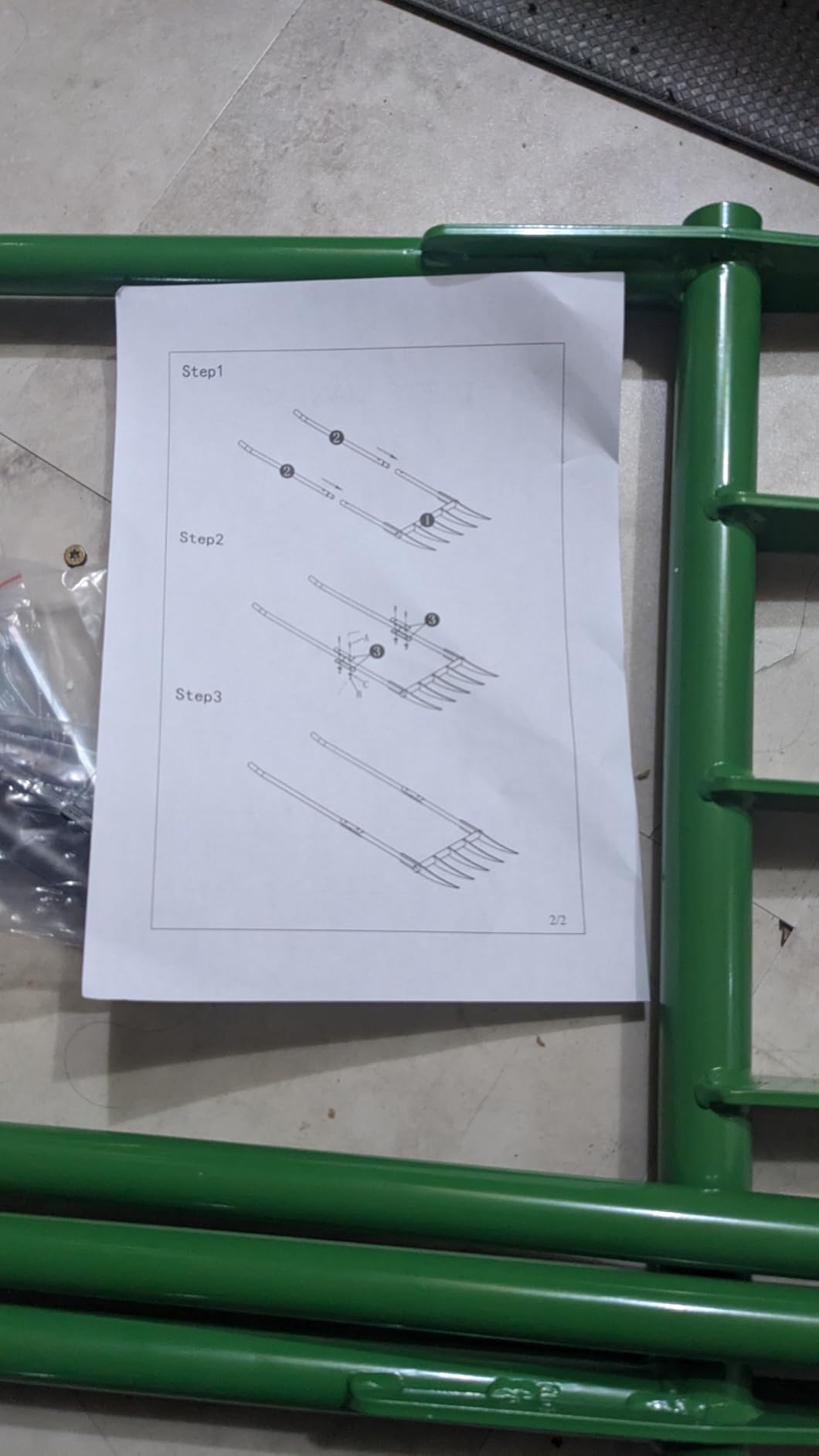
Assembly is the sticking point. The centre pole section is removable, which is great for storage, but the screws have to go in a specific order to sit square, and reviewers flag the sharp fresh tines as a real hazard during that process. Wear gloves and read the order before you start.
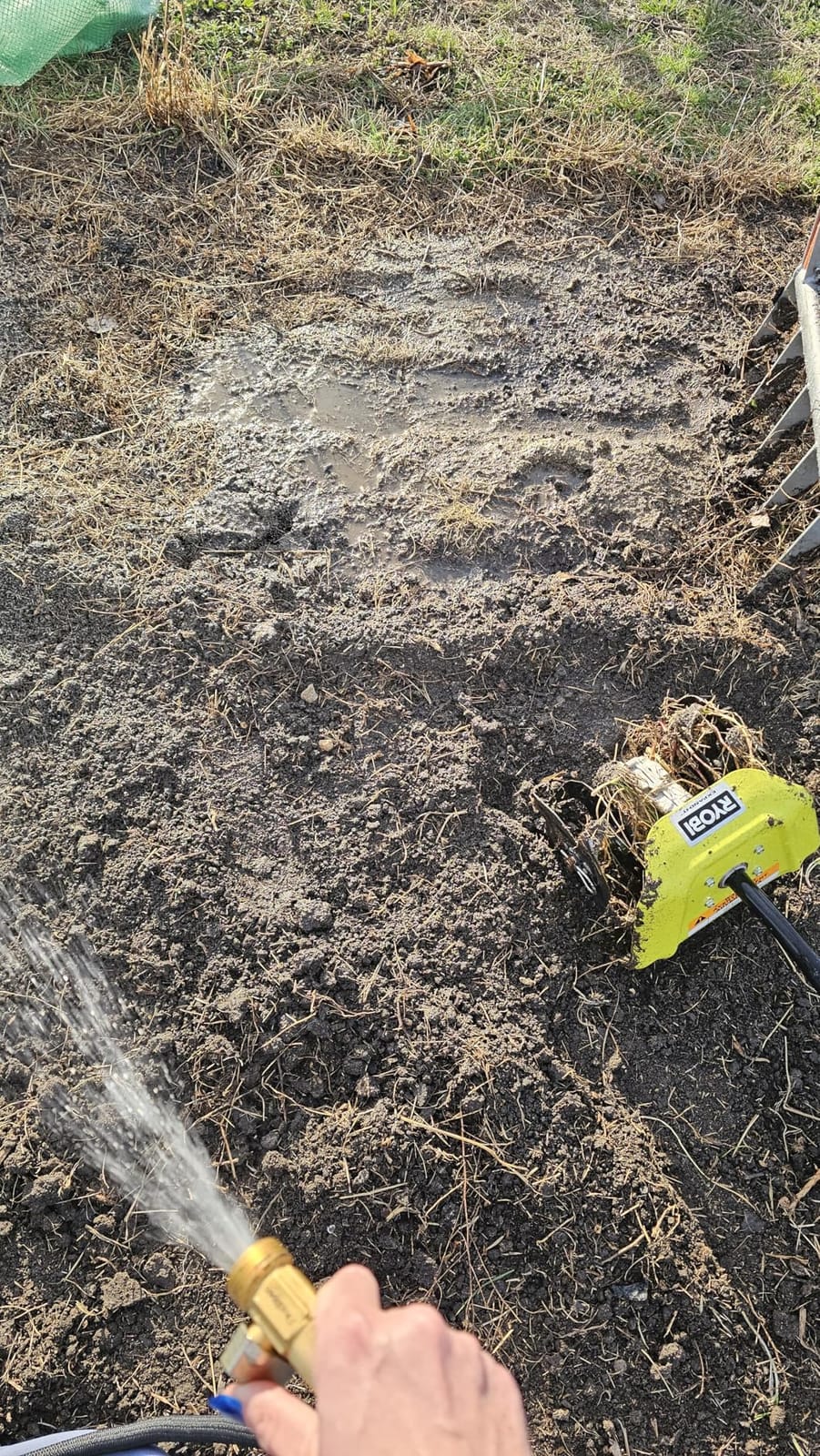
Best fit for your setup
It is explicitly not built for tree roots or rock clearing, so treat it as a bed tool. For annual aeration of damp raised beds or a coastal plot, the galvanized steel is a genuine advantage over plain carbon steel.
Where it falls short
The rating spread and the assembly complaints are the reason this sits mid-list rather than higher. If you are not willing to assemble it carefully, pick something that arrives ready to use.
6. DeWit Grelinette Broadfork – A 7-Pound Tool for Long Sessions
Dewit Broadfork Tiller – 42″ Eco-Friendly Garden Bed Prep Tool with Forged Steel Tines – Covers 12″ Swath Per Pull – Heavy-Duty Manual Cultivator for Raised Beds and Loosening Soil
Forged galvanized head
Ash wood handles
12 inch swath
40.9 inch length
About 7.3 pounds
Pros
- Lightest tool in the guide at roughly 7.3 pounds
- Forged tines for long service life and repairability
- 12 inch swath speeds up bed preparation
- Aerates soil without inverting the profile like a tiller
Cons
- Lowest rating in the set at 4.1
- Highest-priced tool in the roundup
- Ten percent of ratings are one star
The DeWit is a European-style grelinette, meaning a forged steel head on a wooden frame rather than a welded steel tube. It weighs about 7.3 pounds, which is roughly half of what the heavy all-steel models come in at, and that difference is the entire point of this tool.
If you are older, recovering from an injury, or simply planning a long afternoon, weight is the specification that decides whether you finish. Nobody gets tired holding seven pounds. Everybody gets tired holding seventeen.
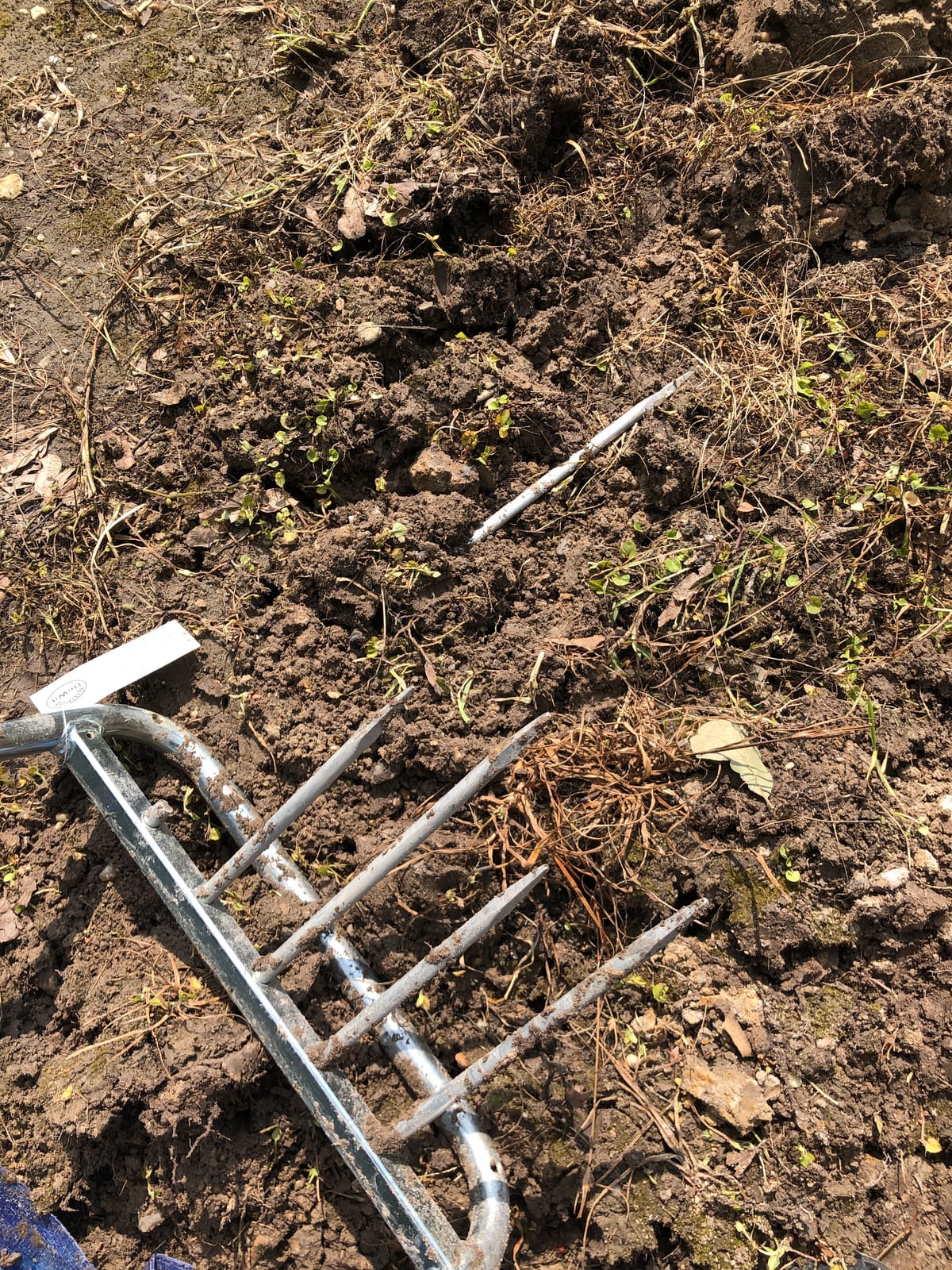
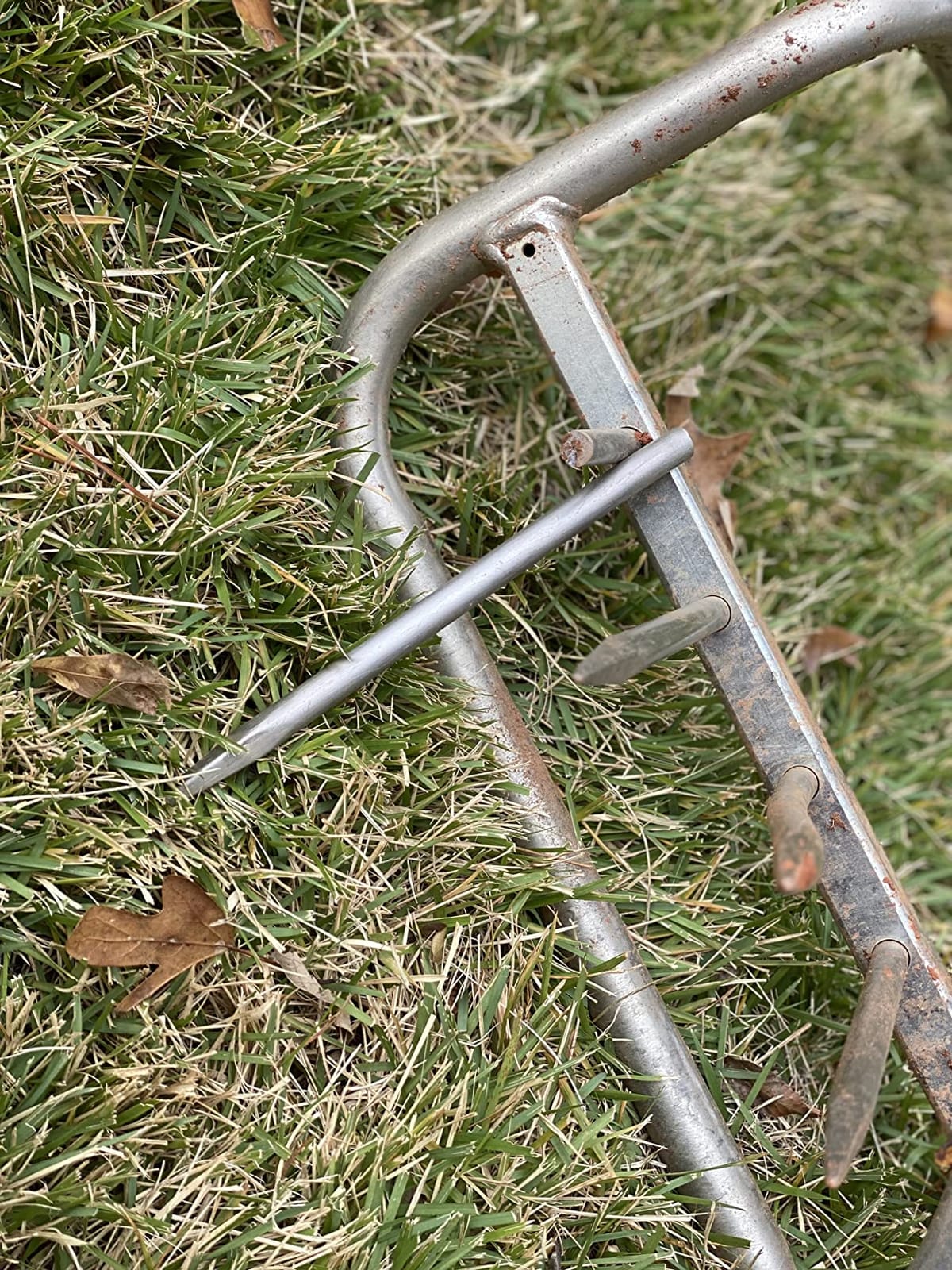
The head measures about 14.2 inches wide and 9.4 inches long on a 40.9 inch total frame, giving roughly a one-foot swath per pull. The tines are forged and galvanized, a construction that is both long-lasting and repairable, from a family maker with a long forging history.
What you trade for that lightness is coverage and consistency. The rating is 4.1 across 57 ratings, the lowest in the guide, with a steady minority reporting tine or handle durability concerns. The listing also does not spell out tine count or handle length clearly, so confirm those before you commit to it for a specific job.
Best fit for your setup
Small raised beds and flower borders are where this shines, because a narrow, light tool is easy to place accurately and easy to lift out again. Like the CobraHead, it pairs a steel head with ash wood handles, which absorb shock better than steel and can be replaced.
Where it falls short
It is not a tool for a market garden or a hardpan-breaking job, and a 4.1 rating is a signal to buy it understanding that. A steady minority of reviews flag durability rather than performance, so treat it as a comfortable tool rather than a guaranteed heirloom.
7. SILKPE 5-Cambered-Tine Broadfork – Heavy Section Tines for Hard Clay
SILKPE 56” Heavy Duty Broadfork for All the Soils, Detachable Design Pitchfork, 5 Sharp and Cambered 11” Tines Bord Fork Garden Tool, Ergonomic Handles, Good Package, Easy Assembly, Blue.
5 cambered 11 inch tines
56 inch length
17.56 pounds
Thick carbon steel
Protective cover
Pros
- Tines cut 30 to 50 percent thicker than competing products
- 56 inch length suits taller users
- Inward-folded handle ends add pulling leverage
- Includes wrenches and a protective cover for storage
Cons
- About 17.6 pounds
- among the heaviest tools here
- Ten percent of ratings are one star
- Requires screw tightening before use
Buyers of this one consistently say the same thing: it breaks up hard clay. The five cambered 11 inch tines are cut 30 to 50 percent thicker than competing products and welded around drilled cross and vertical pipes, so the tines are not just long, they are heavy section steel that resists bending when it meets resistance.
At 4.3 across 47 ratings it is not the best-rated tool here, but the reports of clay performance are consistent enough to be worth taking seriously. The intent is obvious: this is built to be heavier than the competition on purpose, to add downward force.
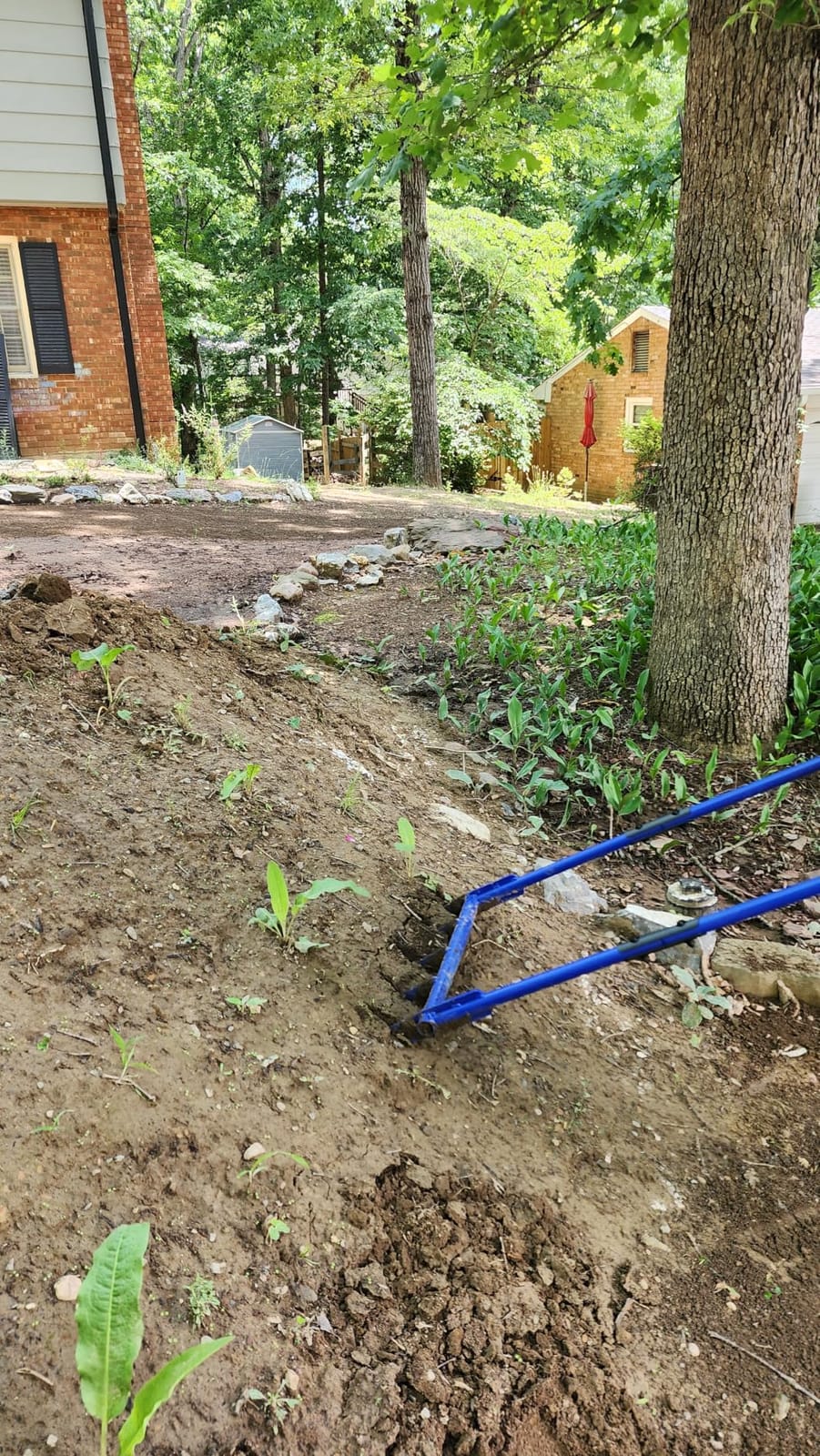
That is 17.56 pounds, and it cuts both ways. Owners treat the mass as an advantage for penetration in compacted soil and as the reason they cannot work a large plot for hours. The 56 inch length and inward-folded handle ends lengthen the pull and suit a taller user.
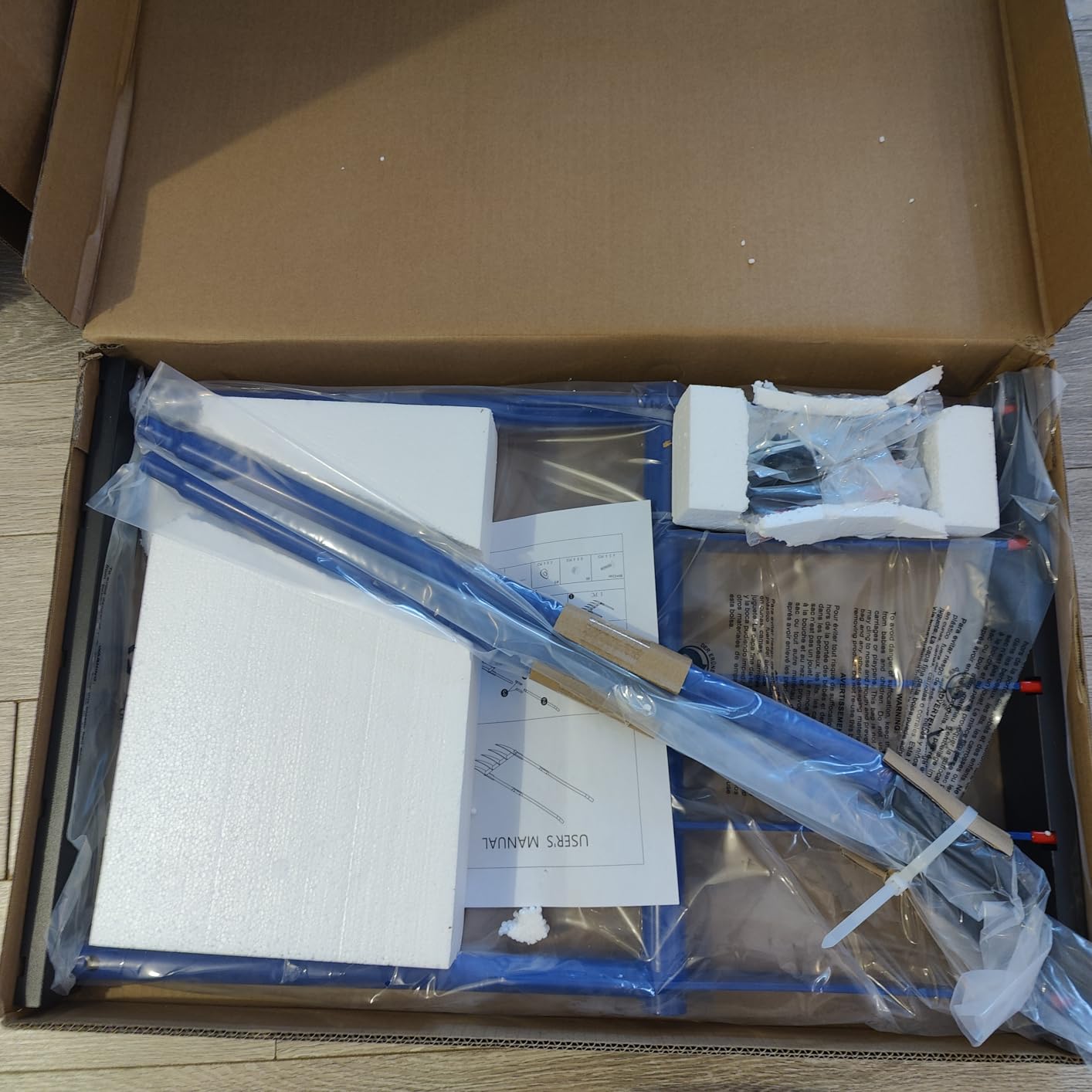
It arrives with wrenches and a protective cover, which is better than most get. The cover matters more than it sounds, because those tines are sharp enough to find you and a fabric sleeve is better than nothing between sessions.
Best fit for your setup
Undisturbed clay, hardpan under a former lawn, or a new-build plot nobody has ever gardened. This is the pick when the words that matter in your situation are force and thickness rather than comfort.
Where it falls short
Seventeen and a half pounds is genuinely heavy, and one in ten ratings is a one star, mostly around handling. It also needs four screws tightened before the first use, and the marketing intent is power, not finesse. Do not buy it for a small raised bed.
8. SENVERT 5-Tine Broadfork – Most Economical Way Into Bed Prep
Senvert BroadFork Garden Tool, Heavy Duty 5-Tine Broad Fork Hand Tiller, Garden Pitchfork with Ergonomic U-Shaped Handle, Digging Fork for Gardening, Cultivating
5 heat-treated ribbed tines
U-shaped handle
19.5 inch working width
54 inch height
Iron construction
Pros
- Reinforcing ribs on the heat-treated tines resist bending
- Welded dual-row tine connection adds strength
- Good for no-till prep and raised bed loosening
Cons
- Not recommended for compacted or hard ground
- Tines need guards fitted after use
- Handle screws may need pliers rather than the included wrench
The SENVERT is the most economical way into bed prep, and at 4.4 across 45 ratings it holds a better average than several heavier forks in the same bracket. Owners consistently use it for raised bed loosening and levelling lawn ruts, which tells you the honest limits of it.
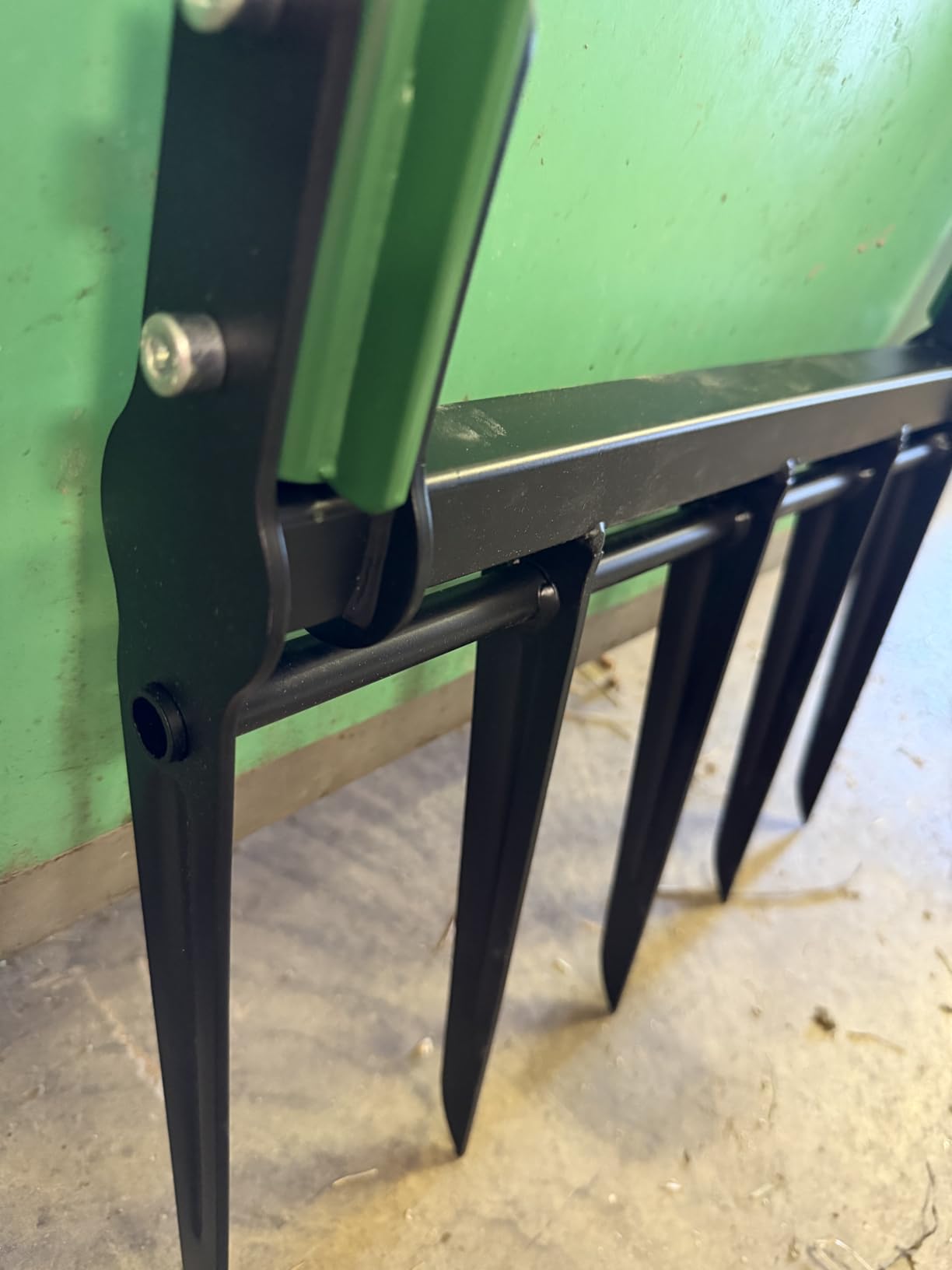
The five tines are heat-treated with reinforcing ribs specifically added against bending, and they connect to the handle with a welded dual-row joint plus a structural rib at the base. That is more attention to the failure point than most assembled tools get.
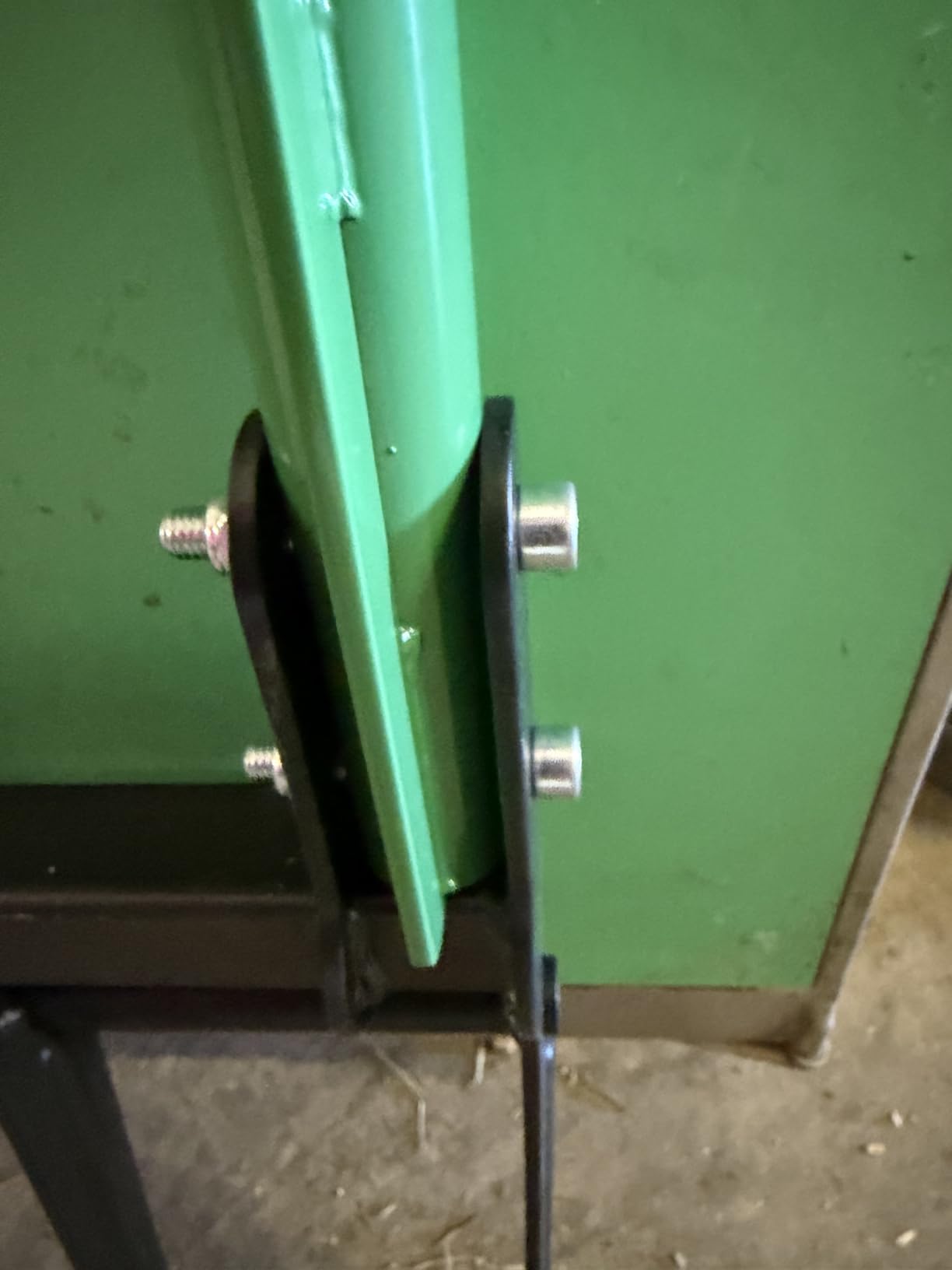
The 19.5 inch overall working width is one of the wider spans here for a five-tine fork, and the forward-angled upper handle section guides your hands forward as you pull. That angle is a small detail that does reduce wrist strain across a long session.
The limitation is soil condition. Owner reports are direct that it is not for compacted or hard ground, and reviewers estimate the weight at considerably more than the listed figure, in the low twenties. It also needs tine guards fitted after use, and the handle screws can need pliers.
Best fit for your setup
Already-worked soil that has simply gone tight over a season, and no more than that. If you are loosening beds that were in vegetables last year, this handles the job and the cost of entry is very low.
Where it falls short
Breaking new ground, splitting clay or cutting into a compacted plot is not this tool, and owners say so. If you already know your beds are hard, skip down to the heavier options rather than discovering it mid-afternoon.
9. KEMETIK 5-Tine All Steel Broadfork – Built Like Earth-Moving Equipment
KEMETIK 5 Tines All Steel Broadfork, 56″ Broad Fork Garden Tool Heavy-Duty Digging Pitchfork, Non-Slip Grips & Detachable Design for Gardening, Farm Cultivation, and Soil Loosenin
5 curved high-carbon tines
Arc clip lock
17.71 pounds
56 inch length
Splits into two parts
Pros
- Curved high-carbon tines stayed straight on rocky and clay soil
- Arc clip lock keeps the head rigid with no wobble
- Includes wrench spare screws and floor protectors
- Detaches into two parts for storage
- Users report tilling an entire yard in a day
Cons
- Very heavy so it is uncomfortable for long sessions
- One reviewer reports all tines bent on first use
- Overkill for small garden jobs
This is the one to consider if your ground has stones in it. The five tines are thick, curved, high-carbon steel, welded into a load-bearing steel pipe frame, and multiple owners report the tines still going in on rocky and clay soil where lighter forks bent.
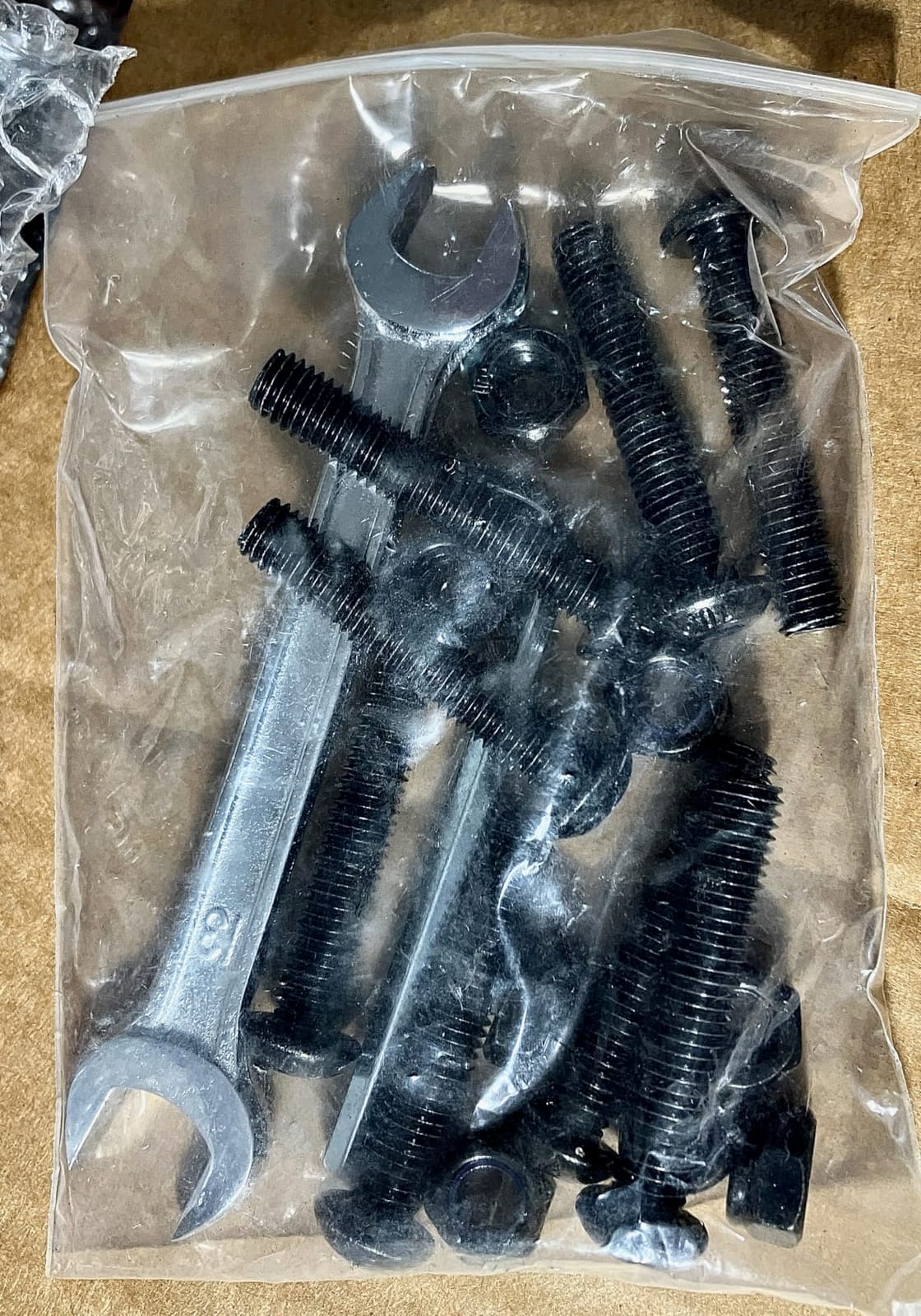
It rates 4.5 across 34 ratings, and the accessory kit is unusually complete: a thickened wrench, spare screws, rubber tine and floor protectors, and an arc clip lock connection that eliminates wobble at the joint.
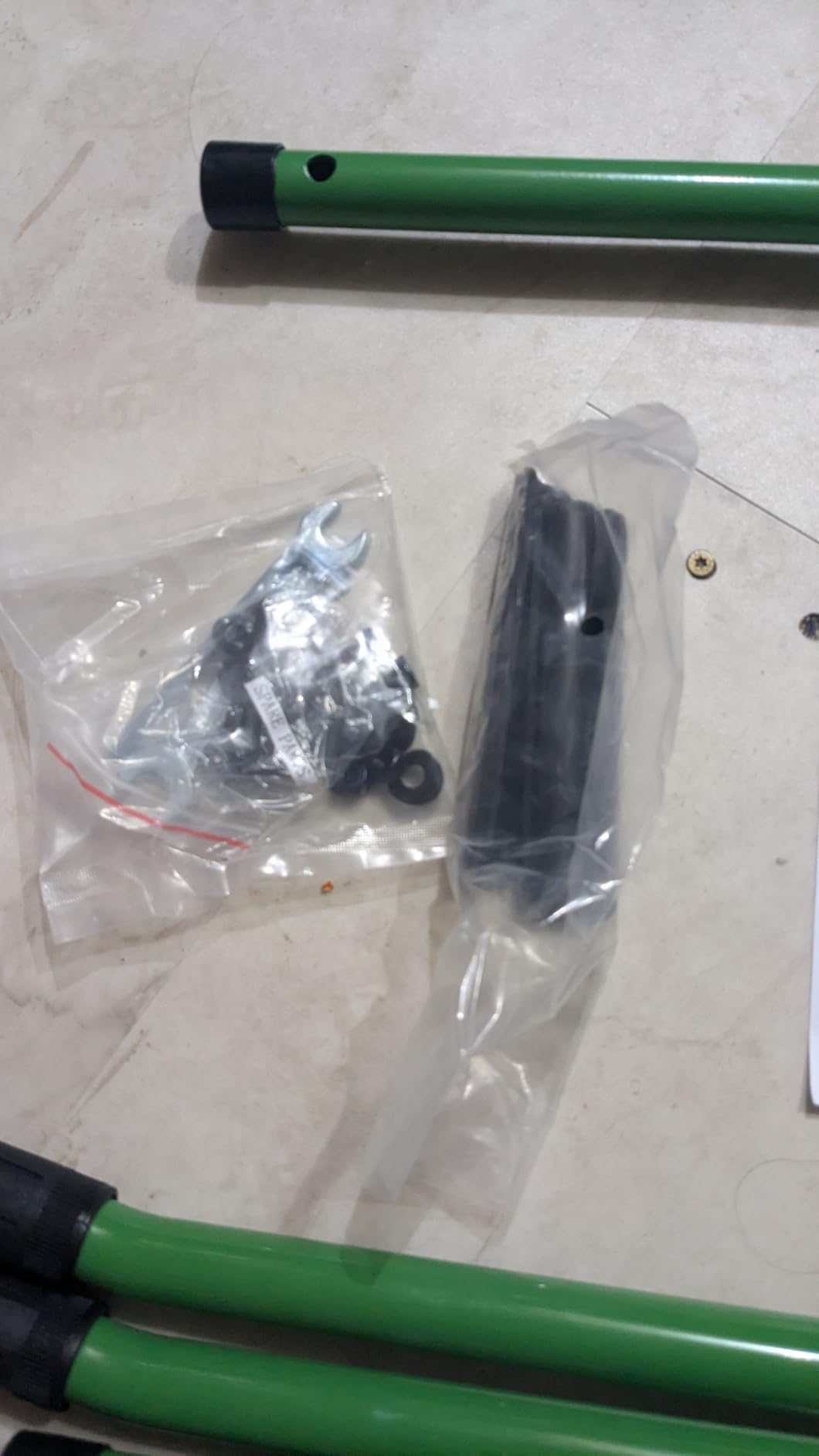
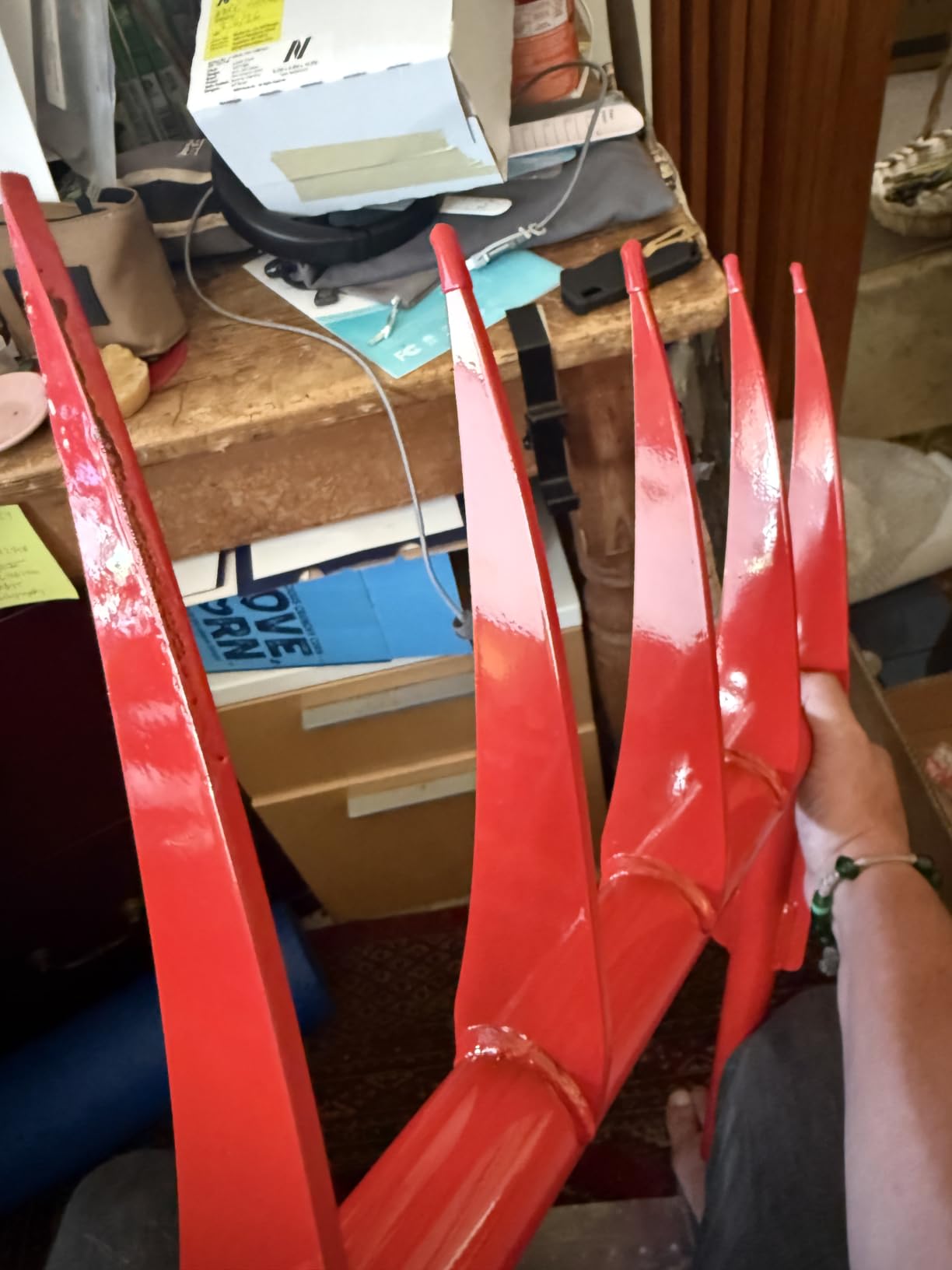
The curved tines are a deliberate choice. A curve lets the point track around an obstruction and pull upward rather than stopping dead against it, which is the difference between working around a stone and snapping. The non-slip grips fold inward at the ends to reduce hand and waist fatigue on the pull.
At 17.71 pounds it is one of the heaviest in the guide, and owners are consistent that this is not comfortable over long sessions. There is also a report of all tines bending on first use, so treat it as demanding equipment that rewards correct technique rather than brute force.
Best fit for your setup
Rocky ground, stony old pasture, or anywhere a straight tine would meet a stone and stop. The thick curved section is the reason to choose it over a lighter five-tine fork that shares the same general shape.
Where it falls short
Small plots. Splitting it into two pieces helps storage, not handling, and the weight is the same whether the job takes ten minutes or two hours. Overkill is the word most owners reach for.
10. CobraHead Broadfork – Ergonomic Round-Tine Design for Comfort
CobraHead® Broadfork – Heavy Duty Ergonomic Garden Hand Tool – USA Made
1045 carbon steel round tines
Ash wood handles
14 pounds
21 inch wide
57 inch tall
Pros
- Round tines lift rather than slice the soil
- Ash handles flex slightly and are replaceable
- Handles clay and wet spring beds where a tiller would spoil structure
- Quiet manual operation with no fuel or battery
- Owners report a near-indestructible tool
Cons
- Handle durability has drawn complaints about thin ash
- Customer support reported slow on replacement handle requests
The CobraHead is the design that most strongly divides broadfork opinions, and the reason is the tine shape. These are round tines mounted through the crossbar in a traditional European U-shaped layout, and round tines lift and separate soil rather than slicing it. Bladed tines are sharper on entry and far more aggressive on structure; this is the gentler end of the spectrum.
It rates 4.5 across 28 ratings, with 70 percent five stars. At 14 pounds and 57 inches tall it is among the tallest frames in this guide, and that is not a spec-sheet quirk: it exists to keep a tall user from bending.
It is 21 inches wide, a wide span that covers a lot of ground without the ballasting weight of a twelve-tine steel fork. The slightly flexible ash handles absorb the shock of the pull rather than transmitting it into your wrists. They are also replaceable, which is the right answer to a wooden handle and the wrong answer is a broken tool.
The consistent complaint is handle thickness on some units, and reports of slow support when replacement handles were requested. It works well in clay and wet spring beds where a tiller would destroy structure, and it runs quiet with no fuel or battery to carry.
Best fit for your setup
Tall gardeners, anyone who wants to stay upright through a long session, and clay or wet spring conditions where preserving structure matters more than raw cutting power. It is made in the USA and needs no fuel, battery or cord.
Where it falls short
It is the least forgiving option on hard, dry ground, because round tines need rocking motion to enter and do not punch the way a chisel point does. If your problem is rock-hard dry soil rather than wet clay, look at a heavier bladed tine design instead.
11. VIOLAPARK Adjustable Broadfork – Two Handle Heights in One Tool
VIOLAPARK Broadfork, 48/60 in Adjustable 5-Tine Garden Fork for Aeration
5 tines
Manganese steel frame
48 or 60 inch height
15.97 pounds
Assembly tools included
Pros
- Manganese steel frame resists bending under pressure
- Adjustable 48 and 60 inch heights suit different users
- Long handles reduce back strain versus a digging fork
- Assembly hardware and basic tools included in the box
Cons
- Heavy to carry any distance
- Rubber tine tip sleeves arrive split or unusable
- Multi-section bolted handle can feel slightly wobbly
The VIOLAPARK carries 4.8 stars across 22 ratings, with 86 percent five stars, and it solves a problem most people do not realise they have: one household can want two different tool heights. This one configures at either 48 or 60 inches.
That is genuinely useful when two people share a bed, or when you want a short, controllable setup inside a raised bed and a tall setup with more leverage out in the open plot. The 48 inch configuration is the one to use between timber sides.
Construction is a reinforced manganese steel frame with five sharp tines and a long dual-handle design with a crossbar for stepping. The long handles are the point: using body weight on the crossbar while keeping your back straight is what reduces strain compared with a standard digging fork.
Two flaws are worth naming. The rubber tine tip sleeves are thin and frequently arrive split or pop off, making them close to useless, and the multi-section bolted handle can feel slightly wobbly. The assembly hardware, an Allen wrench and a spanner all come in the box.
The unresolved question is depth. The listing does not state a tine length, and reviewers are candid that penetration in severely compacted clay is where it falls short, so treat the specification as unresolved and buy it for beds that have been worked before. One practical warning that applies to any long-tined fork: if you have not marked where irrigation lines or cables run, find out first.
Best fit for your setup
Shared tools, mixed-height households, or anyone who moves between narrow raised beds and open beds. It is also a reasonable choice for loosening compost and maintaining previously worked soil rather than breaking virgin ground.
Where it falls short
At 15.97 pounds it is a long carry, and reviewers are clear it can struggle in severely compacted clay. It is also a good reminder that deep tines will find buried irrigation tubing, cables and pipes if nobody marked where they went.
12. Meadow Creature Tall Broadfork BF-14 – Same Welded Build, Taller Frame
Meadow Creature’s All Steel Broadfork: The Tall Broadfork – 14″
All welded steel
14 inch tine span
Tall handles
Built for tall users
USA made
Pros
- Very solid welded steel construction built to last
- Excellent at loosening compacted soil and lifting buried roots
- 14 inch span prepares a growing area per pass
- Rocking motion works around rocks and obstructions
- Tall handle height suits taller users
Cons
- Heavy and demanding to lift and reposition
- 14 inch width is narrower than a standard 4 foot bed
- Rock and clay filled soil takes real time and effort
This is the same welded all-steel approach as the BF-12, built around a 14 inch tine span and a taller handle height. It rates 4.8 across 19 ratings, and owners call it a once-in-a-lifetime purchase rather than a tool they expect to replace.
If you are tall, the handle height is the differentiator. A 14 inch span is narrower than a full four foot bed, so you will make two or three passes side by side, and a taller frame is what stops that from wrecking your back over a morning.
Owners report it transforming bed preparation on compacted new-build ground, and the rocking motion they describe is how you get the tines around rocks rather than into them. The welded construction is what allows that without the joints loosening.
Weight is the dominant trade-off, and the source does not state a figure, so treat it as comparable to the other heavy all-steel models. The single most common regret in reviews is the 14 inch width, with owners wishing for something that covers a four foot bed in one pass.
Best fit for your setup
Tall gardeners working new-build or compacted ground who want a welded tool that outlives them. If you already own a welded all-steel broadfork, this is the variant to consider rather than a second one.
Where it falls short
Small beds, narrow frames and long days. The narrower span means more passes, and rock and clay filled soil demands considerably more time and effort than the marketing implies. It is a serious tool for serious ground.
How to Choose a Broadfork for Your Beds
Work through these in order. The first two decisions eliminate most of the list immediately.
1. Match the width to your bed. An 18 to 24 inch bed works with a 19 to 21 inch tool, but you must control the swing so the tines do not hit the timber sides and split them. A four foot bed needs a wide tool or several narrow passes, and owners of the 14 inch models specifically wish they had known that before buying.
2. Be honest about your soil. Already-worked beds that have gone tight need five tines and nothing more. Heavy clay, hardpan under old turf and new-build ground need a chisel or cambered point, more weight, and the willingness to rock the tool down rather than step on it once. Owners working clay with the welded all-steel models replaced an electric tiller outright, which is the clearest signal in the whole category.
3. Pick tine length for depth. Ten to twelve inches is annual bed prep. Fourteen inches and up is for breaking a pan layer or working deep compost in. Watch for buried irrigation lines and cables before using anything long in a bed that has never been dug.
4. Choose the handle material. Wood handles are the second option alongside all-steel, and they absorb shock better than steel and can be replaced. All-steel will not crack or swell but transmits every jolt. Fiberglass will not rot or splinter and will not swell in wet weather, but it is the heaviest per unit of strength and can flex under a full-body load in hard clay.
5. Weigh the tool against yourself. This is the decision most buyers skip and most regret. Reviews from growers in their seventies show the tool is genuinely usable into older age, but only when it is light enough to keep moving. A 7 pound fork and a 17 pound fork are not the same tool for the same person.
6. Check the joint. Fully welded construction has no fastener to fail. Bolted and clipped designs are fine, but they need periodic tightening, and loosened joints are the most common cause of a tine wobbling out of line.
Failure modes to avoid
Bent tines – almost always rocks or dense roots. A tine that has been levered sideways once rarely recovers its alignment.
Cracked wood handles – untreated ash and hickory split at the ferrule. Oil them once a year and replace them rather than pushing through.
Loose crossbar bolts – the crossbar carries your entire body weight every stroke. Check it at the start of each season.
Thin step plates – a narrow plate that flexes under your foot makes the tool dangerous rather than merely uncomfortable.
Thin tine tip covers – some arrive split and provide no protection. Fit proper guards or file the tips back after use.
How to Use a Broadfork in Four Steps
Time this properly and most of the frustration people report disappears. The commonest beginner mistake is pulling with bent elbows like rowing a boat, which loads the lower back instead of the legs.
1. Set your stance and place the tines. Stand at the end of the bed with the tines in the soil, back straight, feet parallel and shoulder-width. The crossbar should be high enough that you step onto it with a flat foot rather than angling down.
2. Step on and rock. Put one foot on the crossbar, then the second if the ground is hard, and rock your body weight forward and back to walk the tines down. In hard ground this rocking motion is the technique, not a workaround.
3. Pull with straight arms. This is the move that matters. Keep your elbows locked and lean back from the hips, letting the tines lever upward. The soil cracks and lifts a few inches and drops back into place, and that crack is the air and water channel you came for.
4. Slide and repeat. Step forward one tine spacing and go again, working in lines down the bed. Then cross the bed at a right angle for a second pass. A third pass after compost goes on top is what a grower with heavy hard clay did successfully across a five by fifty foot bed.
Timing matters as much as technique. Work soil that is wrung-out damp, like a sponge you have squeezed dry. Too wet and the tines pull up clods instead of cracking cleanly, and too dry the job is exhausting for no gain.
Maintenance and Storage for a Tool You Keep for Decades
None of this takes more than ten minutes, and it is the difference between a tool that lasts and one that ends up rusted in a corner.
Rinse the tines after every session. Packed soil holds moisture against steel, and that is how corrosion starts. Pay attention to the junction between tine and crossbar.
Dry fully before storing. Wipe the steel down, particularly any galvanized coating, and let it air out rather than putting a wet tool straight into a shed.
Oil wooden handles once a year. Linseed oil on ash and hickory keeps the grain from splitting at the ferrule and is the cheapest durability insurance you can buy.
Tighten every bolt and check the crossbar. Do this at the start of the season. A crossbar carrying your body weight every stroke is the one joint worth checking properly.
Store dry, off the ground and tines covered. A ventilated shelf beats a floor, and a real guard or a file to blunt the tips keeps the tool and your shins safe.
Frequently Asked Questions
Is a broadfork better than a tiller?
For garden beds, yes. A broadfork relieves compaction by lifting and fracturing the soil rather than inverting it, so earthworms, fungal networks and soil structure survive. A rototiller is faster over half an acre of raw ground, but it pulverises the structure you spent years building.
What is the difference between a garden fork and a broadfork?
A garden fork is short, narrow and precise, built for one planting hole at a time. A broadfork is wide, with 4 to 12 long tines, and is built to cover a whole bed in repeated passes. They are not substitutes: a garden fork will not do bed-scale aeration.
Is broadforking good for soil?
Yes. It opens macropores for air and water, improves infiltration and reduces runoff, preserves earthworms and mycorrhizal networks, and relieves compaction without destroying soil structure. It also buries weed seed shallowly instead of dragging it to the surface to germinate.
Why are people against tilling?
A rototiller inverts soil layers, oxidises organic matter into CO2, severs earthworms and fungal networks, pulverises the structure that lets soil hold water, and hauls dormant weed seed up into the germination zone. Broadforking achieves the same loosening without any of that damage.
What length tines should a broadfork have?
Ten to twelve inches is right for annual bed preparation on soil that has been worked before. Fourteen inches and up is for breaking hardpan, working heavy clay or incorporating deep compost. Check for buried irrigation lines and cables before using long tines in a never-dug bed.
Which Broadfork Should You Buy?
Feature two below beats the rest on this list for a first-time owner. Buy the Bully Tools 5-Tine. It has the largest body of real use behind it, an 11.8 pound weight that will not exhaust you, 11 inch tines, and detachable handles that solve the storage problem nobody warns you about. It is the pick we reach for first and it is the safest recommendation we can make.
Then match it to your hardest condition. Broken clay and hardpan call for the SILKPE with its thicker cambered tines, or the Meadow Creature BF-12 if you want a fully welded build with a lifetime warranty. Stony ground calls for the KEMETIK and its curved high-carbon tines. Tall gardeners and long sessions call for the CobraHead, and anyone who wants to keep the effort light should look at the DeWit grelinette at about 7.3 pounds.
That is the honest shape of this category in 2026. The best broadfork tools for garden beds are not one winner but a set of tools for different soils and different bodies, and the two questions worth asking before you spend anything are how hard your ground is and how long you intend to be out there. Answer those two and the right tool is obvious.
Pick one, size the handles to your height, and give it three minutes of maintenance each season. That is a small price for a tool that can be handed to somebody else.