
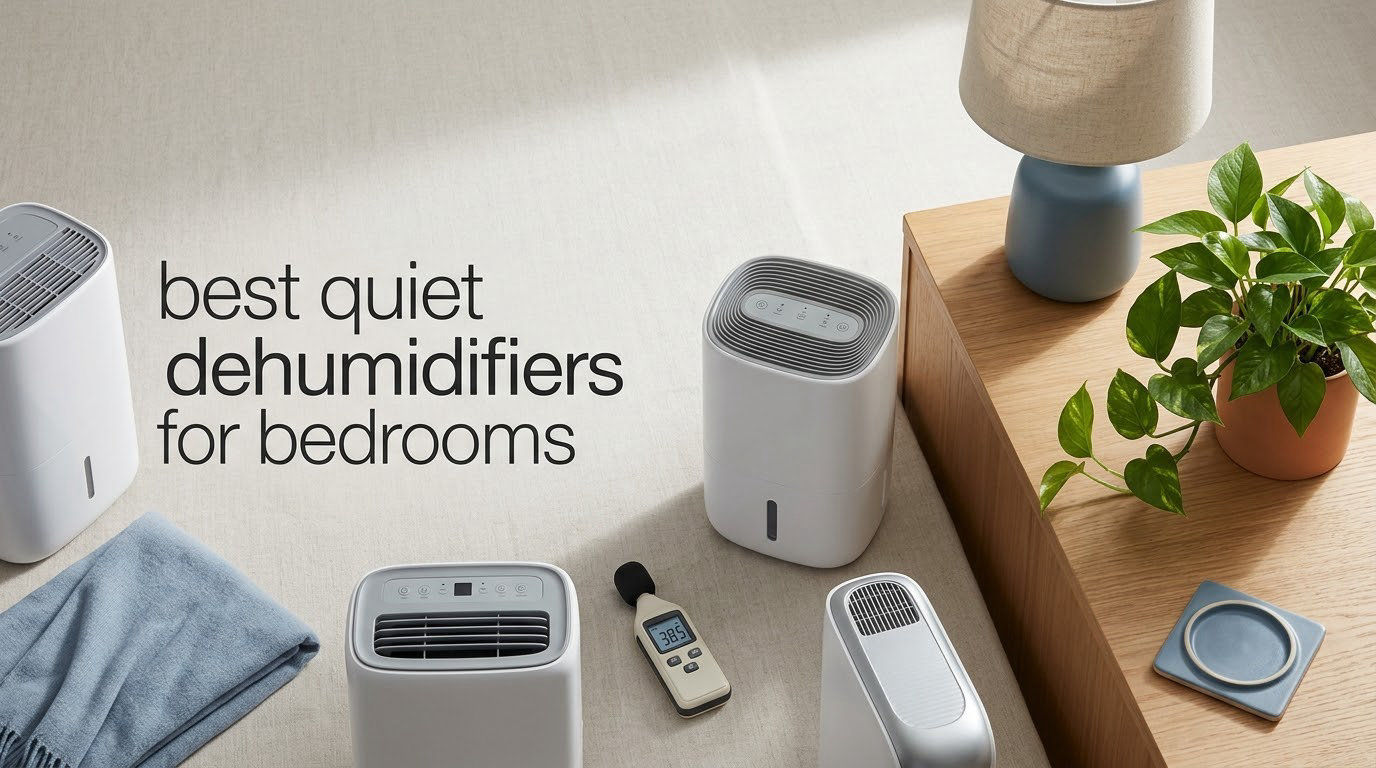
The short answer: the best quiet dehumidifiers for bedrooms in this group are the avylo 25oz unit for a near-silent bedside footprint, the Tenergy Sorbi 1000ml if you also want HEPA filtration, and the ToLife TZ-C2 if you want the quietest sleep mode backed by the largest review base.
Humidity above 60% is where a bedroom starts to work against you. Musty bedding, a closet that never quite dries out, and dust mites multiplying in sheets all trace back to the same number on the hygrometer. A dehumidifier fixes it, but the wrong one fixes it loudly, and loud is the one thing a bedroom cannot tolerate.
That is why noise, not capacity, decides most of these purchases. We compared 12 compact dehumidifiers built for rooms rather than basements, weighing sleep mode decibels, real extraction rates, tank size, drainage options and the honest complaints in buyer reviews. Every unit below is small enough to live in a bedroom, and every one has a night mode worth talking about.
You can also read our broader picks in the 8 best dehumidifiers for bedrooms guide, and if your humidity problem spans a whole floor rather than one room, our picks for large rooms make more sense. The short version of what follows: if noise is your problem, the technology matters as much as the model.
Table of Contents
Top 3 Quiet Dehumidifiers for Bedrooms in 2026

How We Picked and Compared These 12 Dehumidifiers
We built this list around bedroom conditions, not basement conditions. A bedroom has no furnace cycling, a low ceiling, and a person about eight feet from the machine trying to sleep, so noise and light control matter more than raw pint capacity.
For every dehumidifier here we cross-checked the manufacturer noise claim against the buyer review consensus, because published figures are measured under ideal lab conditions and rarely match a real bedroom. Sleep mode decibels matter more than peak figures, since that is the setting the machine spends most of the night in.
We also tracked how much water each model actually collects per day at its rated temperature and humidity, how long the tank lasts between emptyings, and whether a drain hose is included. Two details got extra weight: whether sleep mode kills every light, and whether the unit can run unattended on a timer.
Finally, we read the long-term complaints. A quiet dehumidifier that fails in eight months is a worse bedroom companion than a slightly louder one that keeps going for years, so reliability reports carried real weight in the ranking. If noise sensitivity is part of your situation, sound-sensitivity communities like r/misophonia come up constantly in these discussions, and their advice lines up with ours: move the machine out of the room rather than trying to sleep through it.
12 Quiet Bedroom Dehumidifiers Compared in 2026
| Product | Specifications | Action |
|---|---|---|
| avylo 25oz Dehumidifier |
|
Check Latest Price |
 Tenergy Sorbi 1000ml Tenergy Sorbi 1000ml |
|
Check Latest Price |
 ToLife TZ-C2 ToLife TZ-C2 |
|
Check Latest Price |
 Spacekey QIG-D02 Spacekey QIG-D02 |
|
Check Latest Price |
 Windangel DH-D2 Windangel DH-D2 |
|
Check Latest Price |
 CLEVAST EF8895 CLEVAST EF8895 |
|
Check Latest Price |
 BREEZOME MCS008 BREEZOME MCS008 |
|
Check Latest Price |
 CLEVAST EF8974 CLEVAST EF8974 |
|
Check Latest Price |
 Newo E2-DH-WHITE Newo E2-DH-WHITE |
|
Check Latest Price |
 WoEleLigt CT9 WoEleLigt CT9 |
|
Check Latest Price |
 Spacekey QIG-D04 Spacekey QIG-D04 |
|
Check Latest Price |
 Deyagoo DY501 Deyagoo DY501 |
|
Check Latest Price |
1. avylo 25oz Dehumidifier – Smallest Footprint for a Nightstand
avylo 25oz Dehumidifier for Bedroom with Auto Shut Off, Ultra Quiet, White
Capacity: 25 oz tank
Extraction: 16 oz per day
Noise: under 35 dB
Power: 23 W
Pros
- Under 35 dB operation suits bedside placement
- 5 inch square footprint fits a nightstand or wardrobe
- Auto shut-off with red indicator at full tank
- Draws only 23 watts at about 0.96 kWh per day
Cons
- 25 oz tank needs frequent emptying in humid air
- 16 oz per day suits small rooms and closets only
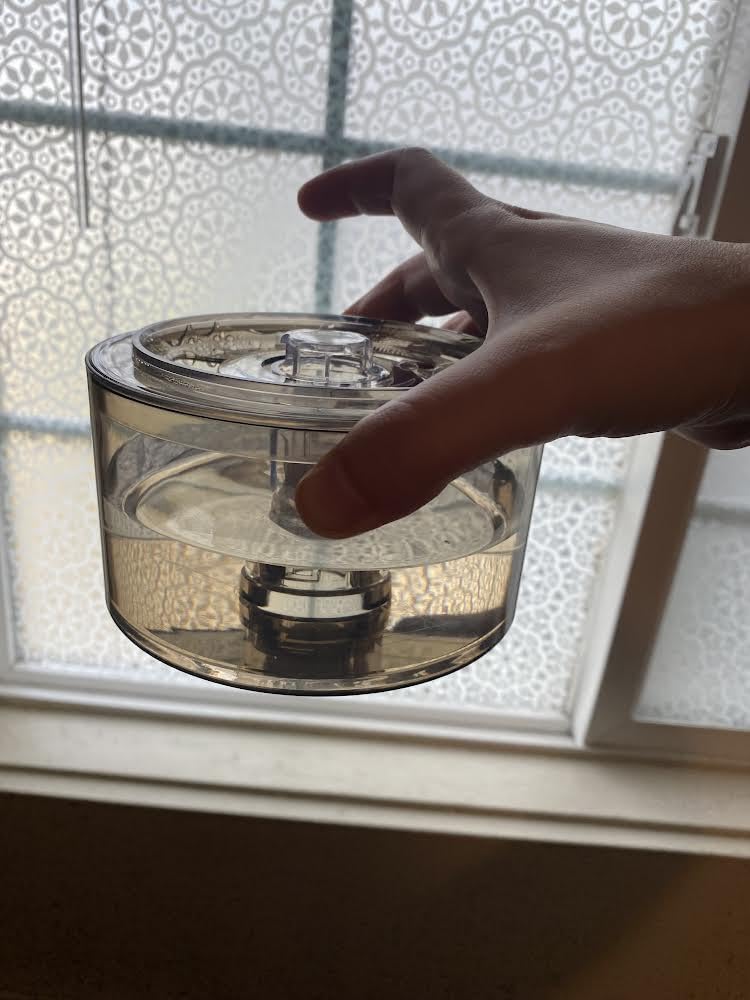
This is the one I put on my own nightstand first. The body is 5.03 inches square and 8.38 inches tall, which is small enough to disappear next to a lamp, and at 2.2 pounds it is easy to move between the bedroom and a closet when the humidity shifts.
It uses thermo-electric Peltier semiconductors rather than a compressor, and that single design choice is the reason it can run under 35 dB. There is no compressor thrum to rumble through the night, just a small fan pushing air across cold fins.
Buyers consistently call out the low noise and the footprint as the reasons they bought it, with 67% five-star ratings in the listing. The 23-watt draw and roughly 0.96 kWh per day of continuous running are genuinely small numbers if you plan to leave it on overnight.
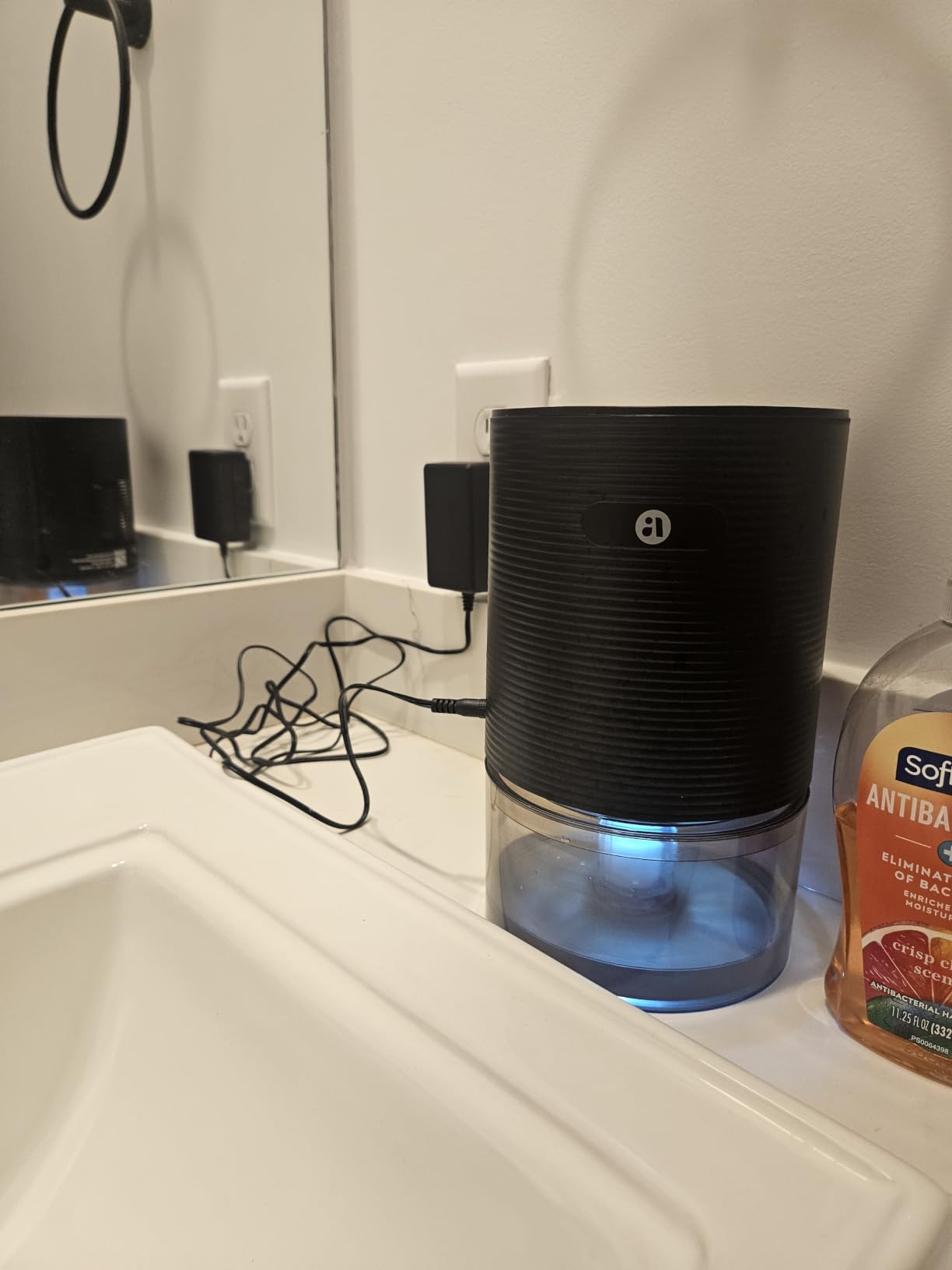
The trade-off is extraction rate and tank size. It pulls up to 16 oz, or 450 ml, per day at 86°F and 80% relative humidity, and the 25 oz reservoir means a night of heavy moisture can fill it before morning.
Coverage is listed at 320 square feet, and in practice it works best in a smaller, closed space. Auto shut-off stops the machine with a red light when the tank fills, so an overflow is unlikely, but the sound of that shutdown in the middle of the night is a real consideration if you are a light sleeper.
My advice is to treat this as a nightstand or wardrobe unit rather than a whole-room solution. Run it overnight with the door closed, empty it in the morning, and it will do its job quietly. The nightlight is a nice touch, though it does glow, so it is not a lights-out machine.
Where the avylo 25oz works best
Small bedrooms, walk-in wardrobes, RVs and dorm rooms where floor space is tight. It is also the easiest unit here to run overnight on a modest electricity budget, which matters if you are keeping it on every night for months.
It is less convincing as a primary bedroom dehumidifier for a larger room. The extraction rate simply is not there to pull a 400 square foot space down from 70% humidity quickly.
Where the avylo 25oz falls short
Durability is the recurring concern in the reviews. A portion of owners report units that stopped performing or working well after extended use, which is common for small thermo-electric designs rather than a flaw unique to this one.
There is also no drain hose, so continuous unattended operation is not possible. If your bedroom stays above 60% humidity for long stretches, you will be emptying this tank more often than you would like.
2. Tenergy Sorbi 1000ml – the Only HEPA Filter in the Group
Tenergy Sorbi 1000ml Air Dehumidifier w/Purifying Function, True HEPA Filter, Auto Shutoff, Touch Control Adjustable Air Speed, Ultra-Quiet, Ideal for Closets & Bathrooms
Noise: 35-42 dB
Extraction: 750 ml per day
Tank: 1000 ml
HEPA filter
Pros
- Only unit here with true HEPA filtration for airborne particles
- 35-42 dB suits small rooms and closets
- 1 liter tank cuts emptying frequency
- ETL and CARB certified with a 2 year warranty option
Cons
- Heaviest small model here at 6 pounds
- Coverage limited to about 200 sq ft
- Best results depend on Tenergy branded replacement filters
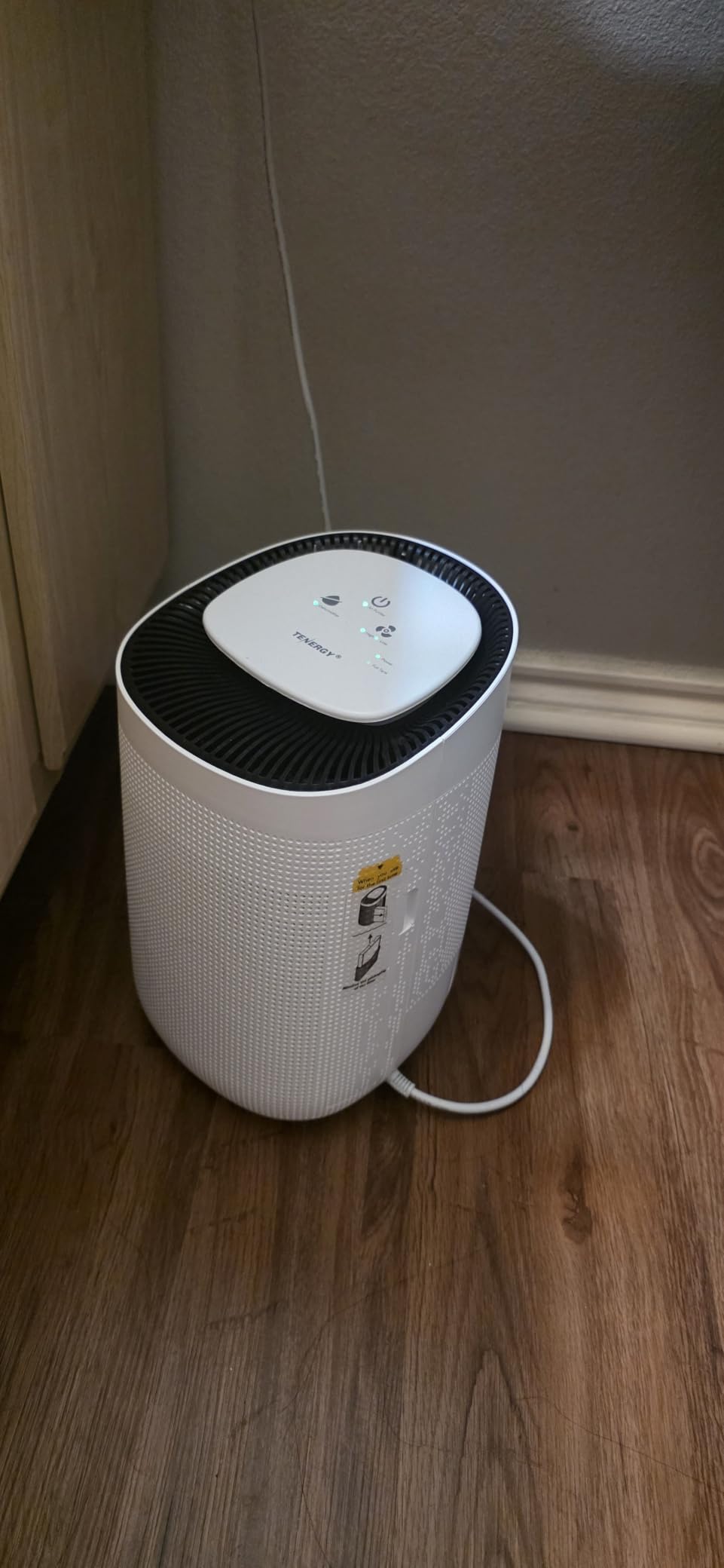
Most compact dehumidifiers do one job. This one dries the air and filters it, with a true HEPA filter rated to capture 99.97% of airborne particles, which matters in a bedroom where dust and pollen are as much of a problem as humidity.
It is also the most substantial object in this group at 6 pounds and 7.7 by 8.5 by 12 inches. That weight is not a defect, it is a sign of the metal chassis and larger fan, and it means the unit does not slide around the room if you bump it.
Noise is listed at 35-42 dB, which puts it slightly above the semiconductor units but still well inside acceptable bedroom range. The 1000 ml tank is the second largest of the compact models here, and it removes up to 750 ml per day at 80% humidity and 86°F.
Buyers highlight the combination most often. With 72% five-star ratings, the dual function and the low noise come up again and again, and the ETL and CARB certification gives you something concrete to check when comparing safety claims across listings.
Warranty coverage is one year, extendable to two years when you register the unit with Tenergy Life. In a category where two-year failures are common, that doubled window is a real advantage.
The constraint is coverage, listed at about 200 square feet. That is a small bedroom, a walk-in closet or a bathroom, not a master suite. If you need more square footage, look at one of the 1000 sq ft models further down this list.
Where the Tenergy Sorbi works best
Allergy and asthma households, and anyone who wants dust and moisture handled by one machine. It is the only pick in this roundup with real particle filtration, so it serves double duty in a nursery or a room shared with a pet.
It also suits closets and small windowless rooms where 200 square feet of coverage is genuinely enough. The larger tank means fewer wake-ups to empty it.
Where the Tenergy Sorbi falls short
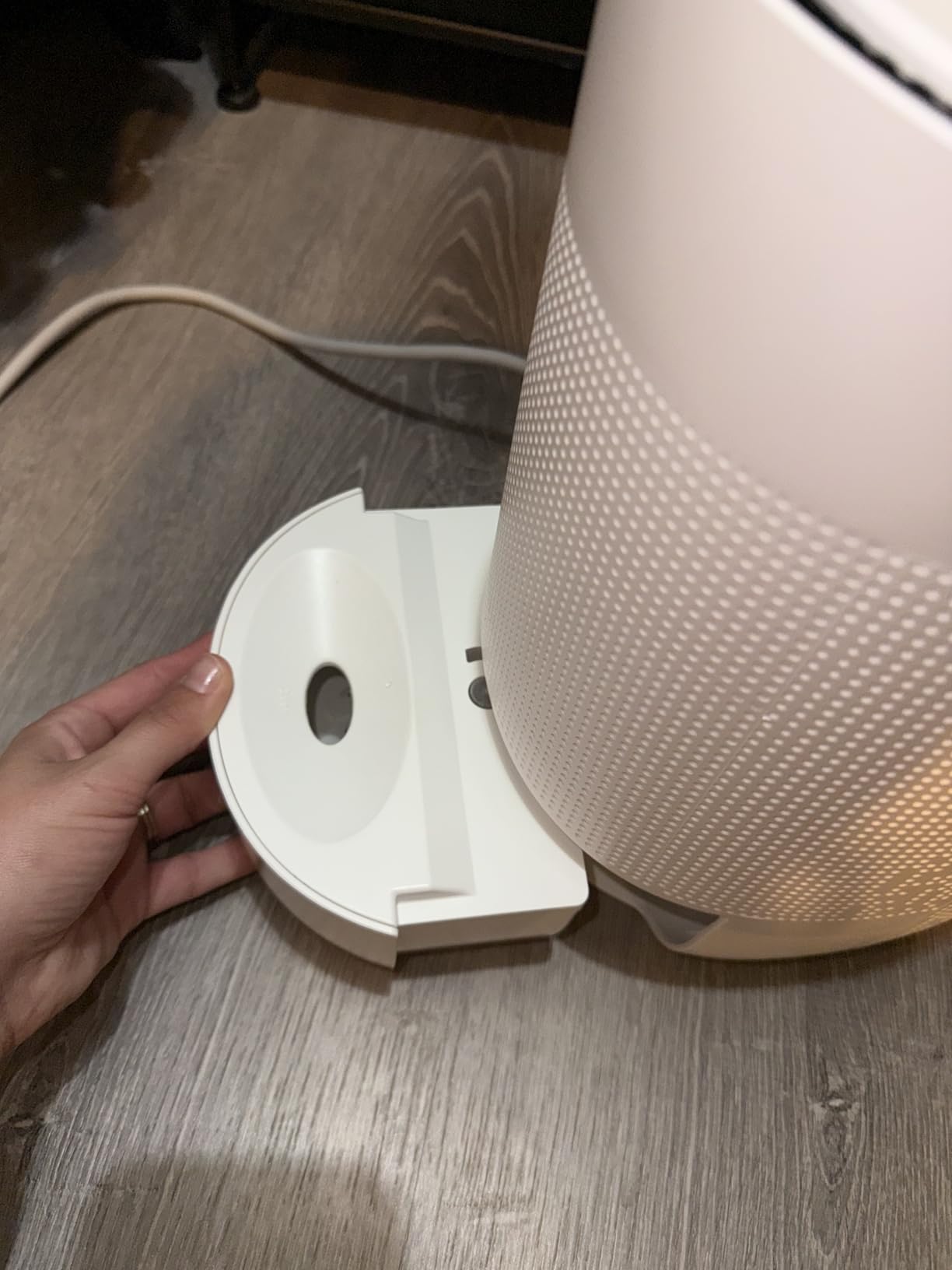
Performance depends on filter condition, and the brand recommends its own replacement filters for best results. That is an ongoing cost nobody mentions in the listing photos, and it makes the machine less attractive as a set-and-forget purchase.
At 35-42 dB it is also the loudest of the small semiconductor units here. If you are extremely noise sensitive, one of the sub-30 dB sleep mode models will serve you better.
3. ToLife TZ-C2 – the Most Reviewed Sleep-Mode Unit
ToLife Dehumidifier for Home Bedroom 1000 sq.ft with Auto Shut-Off, White
Sleep mode: under 30 dB
Tank: 95 oz
Coverage: 1000 sq ft
93 W
Pros
- Sleep mode under 30 dB reads as a faint hum or nothing at all
- Most reviewed unit here with over 6000 ratings
- 95 oz tank with automatic shut-off
- Lockable 7 color LED doubles as a soft night light
Cons
- Coverage claim of 1000 sq ft is optimistic in real rooms
- Takes several days to reach full effect in persistently humid rooms
- Highest one-star share of the heavily reviewed models at 13%
When a listing has 6,101 reviews, the review pattern is more trustworthy than a spec sheet, and the pattern here is consistent. Sleep mode under 30 dB is the headline, and owners describe it as a faint hum or no sound at all once you are lying down.
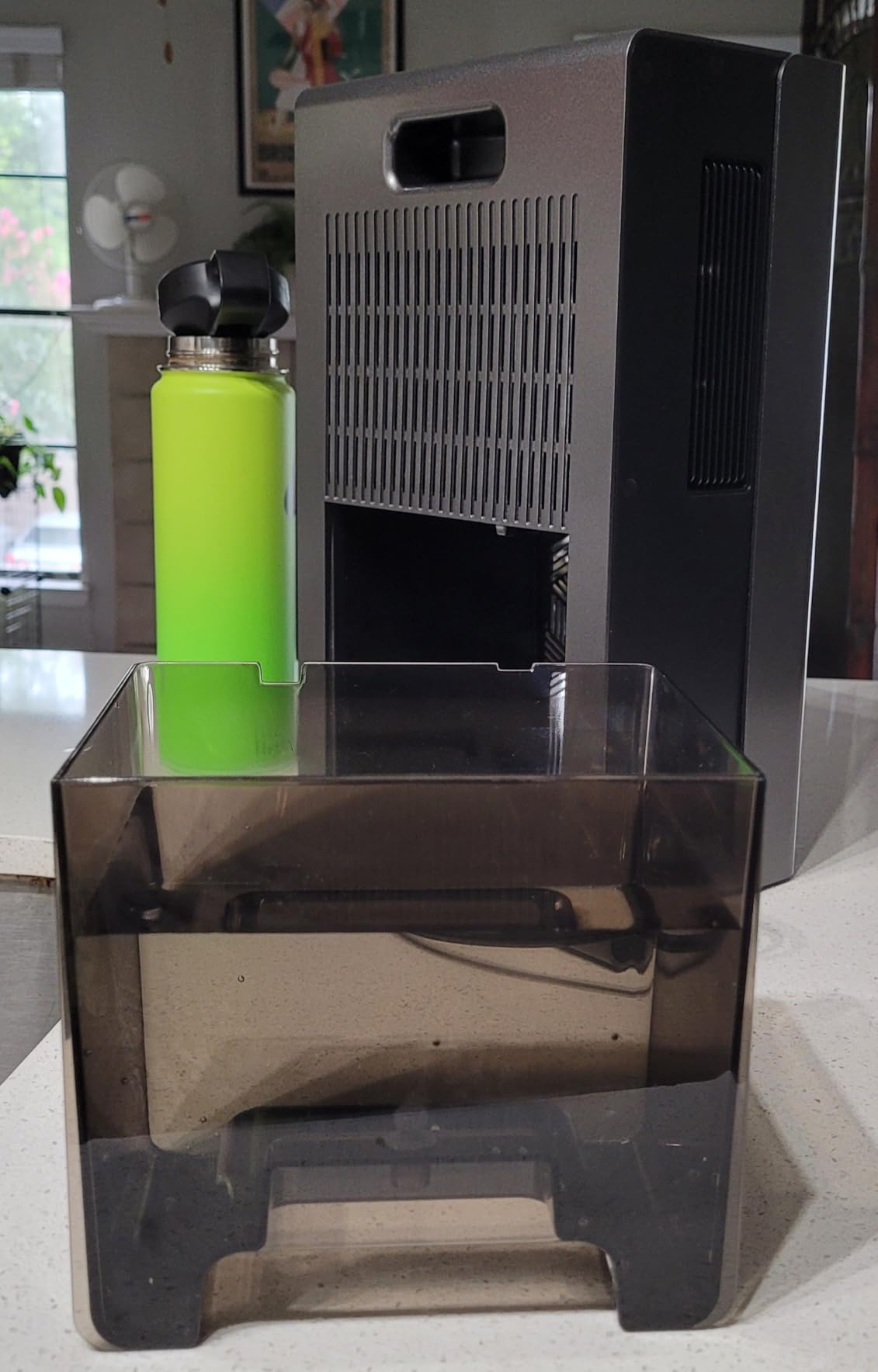
The body is 14 by 6 by 9 inches with a built-in carry handle, and it holds a 95 oz tank. That is a real bedroom-sized reservoir, which means you are not waking up to a full tank two or three times a week in humid weather.
It runs two modes, a powerful dehumidification mode and the low-speed sleep mode, using semi-conductor condensation technology to hold humidity below 45%. At 93 watts it is the highest draw in this compact group, though still well within a normal household appliance footprint.
Users report noticeable humidity drops in bedrooms, basements and closets, and several mention buying more than one for different rooms. The 7-color LED can be locked on a single color or cycled, which is a nicer touch than the usual blinking-red full-tank warning.
The honest weakness, repeated across reviews, is the 1000 square foot coverage figure being optimistic. Reviewers consistently place real-world performance at somewhere around 300 to 400 square feet in a closed room.
There is also a durability note. At 13% one-star ratings it carries the largest one-star share among the heavily reviewed models here, so expect some variation between units, particularly on long-term extraction consistency.
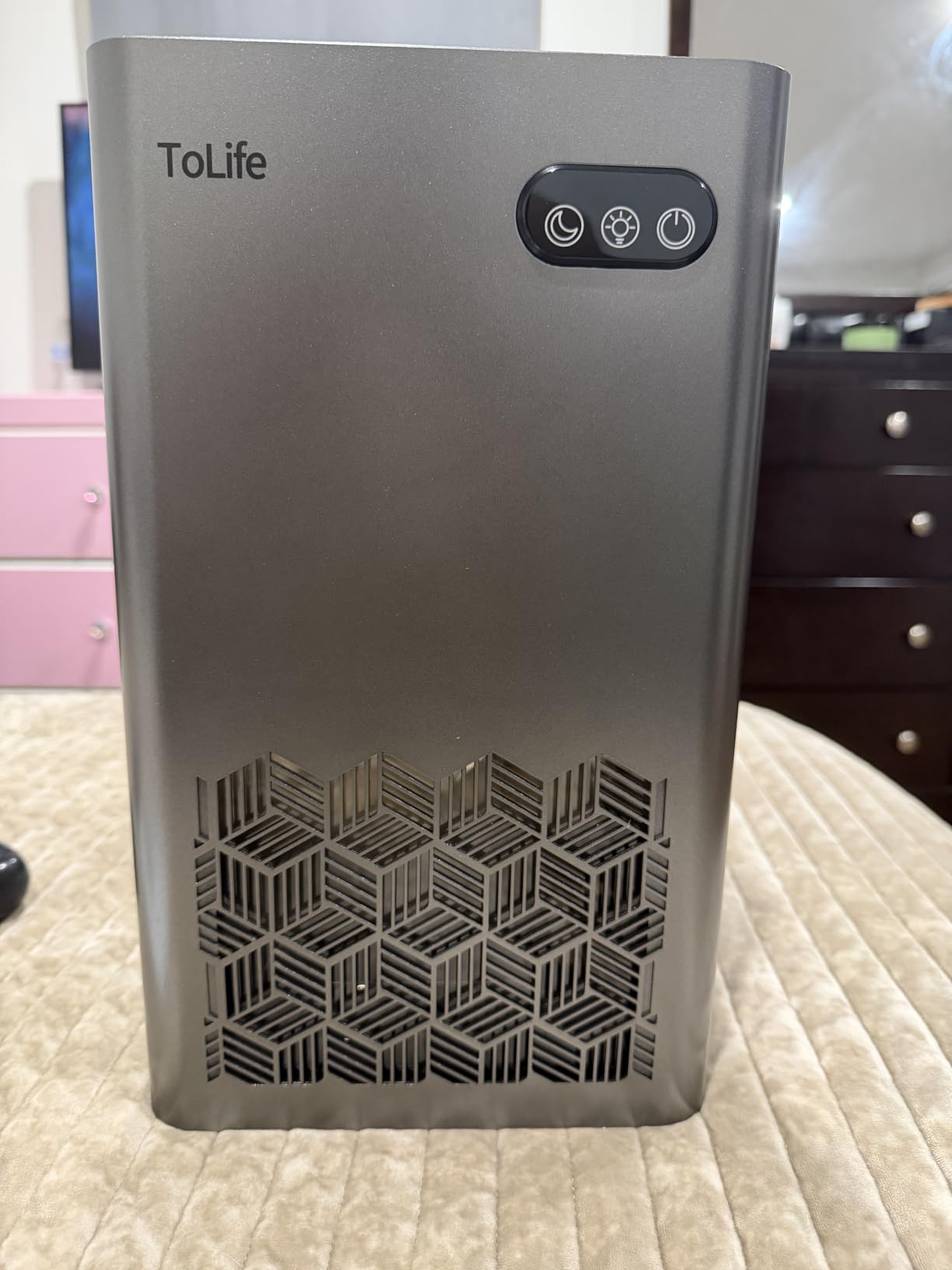
Where the ToLife TZ-C2 works best
A standard bedroom you want running quietly every night without weekly attention. The combination of sub-30 dB sleep mode and a 95 oz tank is the best balance in this roundup between silence and low maintenance.
It is also the safest pick for a first-time buyer, because the volume of owner feedback means problems show up early rather than years later. Two years of EU spare part availability are listed as well.
Where the ToLife TZ-C2 falls short
Large, open-plan bedrooms. If your space is much beyond 400 square feet, budget for two of them in separate rooms or pick a larger unit from the buying guide below.
It needs several days of continuous running to reach full effect in a persistently humid room, so it is not a fast fix for a one-off damp spell. And at 93 watts it uses more power per day than the 23 to 30 watt models here.
4. Spacekey QIG-D02 – 20 dB Night Mode for Walk-In Closets
Dehumidifier, 95 OZ Water Tank Dehumidifiers for Home with Auto Shut Off, 1000 sq. ft. Dehumidifier for Bedroom Bathroom Basement Rv with 7 Color Light, Quiet Dehumidifiers with Sleep Mode, White
Night mode: 20 dB
Powerful mode: 30-40 dB
Tank: 95 oz
Extraction: 40 oz per day
Pros
- 20 dB night mode is among the lowest figures in the group
- 95 oz reservoir means infrequent emptying
- Auto shut-off with flashing red light at full
- Splash guard and carry handle included in the box
Cons
- Real coverage is well below the advertised 1000 sq ft
- Sealed housing makes the filter effectively inaccessible
- Minority of owners report motor or noise faults after months
The 20 dB night mode is the reason this model stands out. In a walk-in closet or a small bedroom, that is close to the threshold where a running appliance stops registering as a sound at all.
It uses dual semiconductor technology to remove up to 40 oz of water per day at 86°F and 80% relative humidity, which is a strong extraction rate for a unit this quiet. The 95 oz tank and included splash guard make it practical for a room you are not in every day.
Two modes are offered: a powerful mode at 30-40 dB for faster initial work, and the 20 dB night mode once you are down for the night. At 88 watts in powerful mode it sits in the middle of this group on power draw.
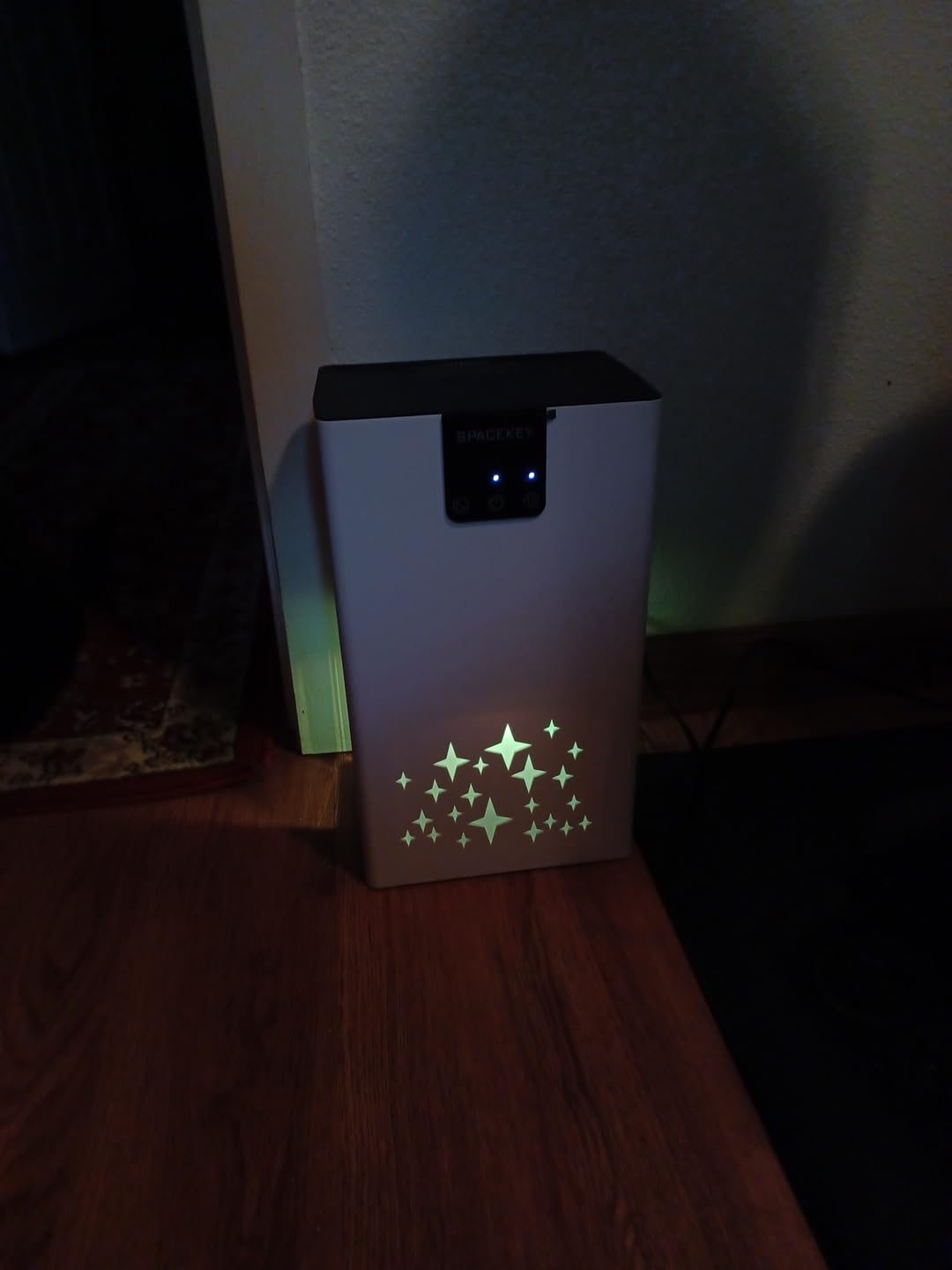
Owners like the starry front panel and 7-color LED, and several buy multiple units for different rooms. At 4.3 stars across 695 ratings it holds a solid middle ground between the heavily reviewed models and the very new listings.
The most common complaint is the coverage claim. Reviewers consistently say the real useful area is a single closed room, not 1000 square feet, so treat the number as a maximum rather than a promise.
A smaller group report a motor or noise fault developing after months of use. And because the housing is sealed, the internal filter is effectively inaccessible for cleaning, which will affect performance over a long ownership period.
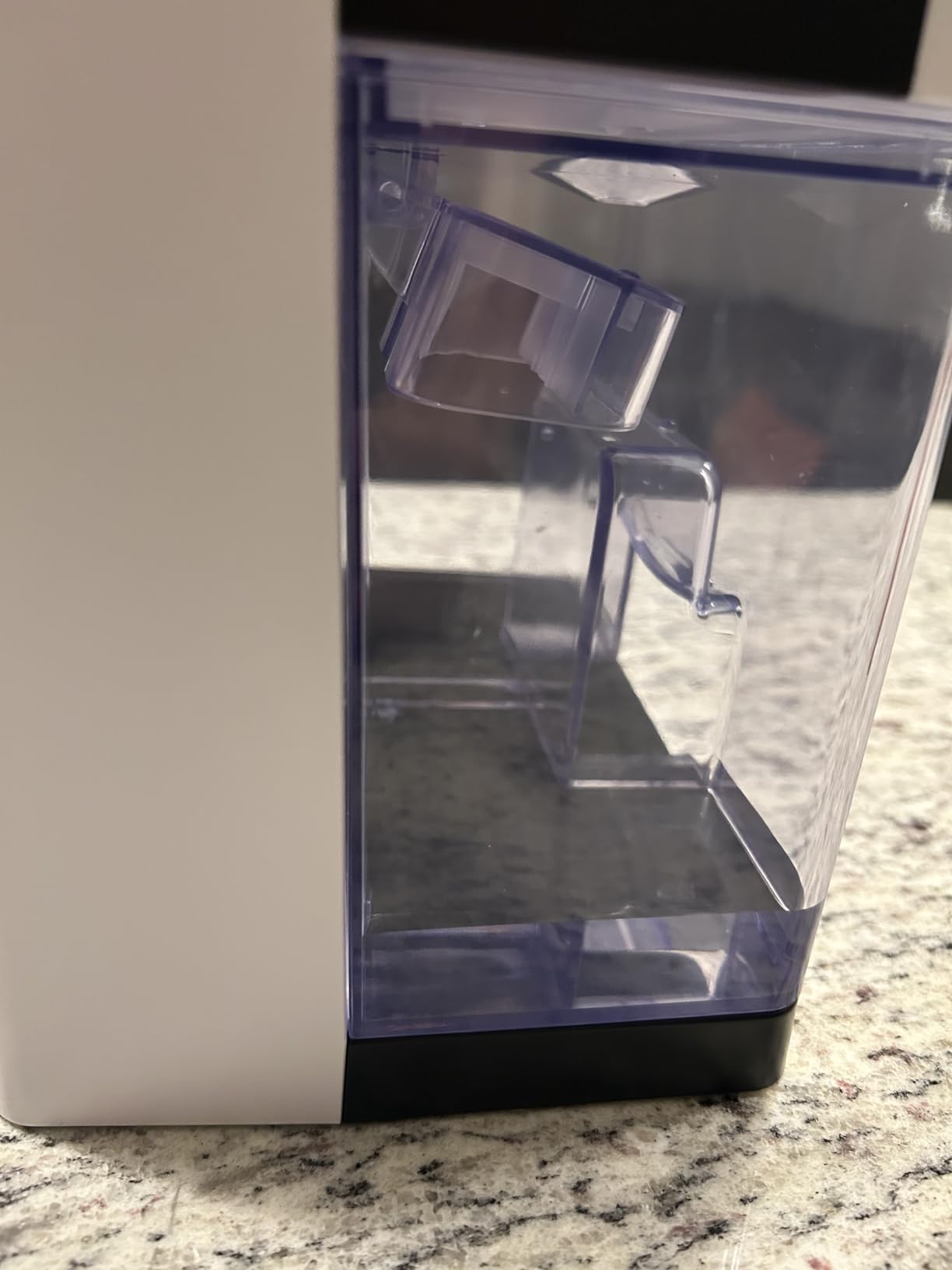
Where the Spacekey QIG-D02 works best
Walk-in closets, small bedrooms and any enclosed space where the 20 dB night mode is the deciding factor. The 95 oz tank is large enough that you can run it for days without touching it.
It is also a good fit for a guest room or a room that needs an initial burst of drying followed by quiet overnight running. Use the powerful mode on arrival, then drop to night mode overnight.
Where the Spacekey QIG-D02 falls short
It is not a whole-bedroom solution despite the coverage figure, and buyers who expected 1000 square feet report disappointment. Judge it as a one-room machine.
The sealed filter design is a genuine long-term concern, and the small pool of motor fault reports is worth weighing if you want a unit that lasts a decade rather than a few seasons.
5. Windangel DH-D2 – Lowest Wattage With Three Modes
Windangel 44oz(1.3L) Small Dehumidifier for Home Auto-Off Quiet Portable Dehumidifier with 3 Modes 10 Color Lights 4 Timer Settings for Bedroom Bathroom Closet (215 sq.ft)
Power: 24 W
Extraction: 11.8 oz per day
Tank: 44 oz
Three modes
Pros
- Lowest 24 watt power draw in this group
- Three modes including a dedicated sleep mode
- Auto defrost allows cold season operation
- Ten light colours with three brightness levels or off
Cons
- Smallest daily extraction here at about 11.8 oz
- Rated coverage limited to 215 sq ft
At 24 watts, this draws less power than almost anything else on a bedroom shelf, which is exactly what you want if the dehumidifier runs on a battery pack or in an RV on a limited electrical budget.
It offers three modes, sleep, normal and performance, plus four timer settings and a continuous run option. Extraction is up to 11.8 oz, or 349 ml, per 24 hours at 86°F and 80% relative humidity, and it holds humidity in the 45% to 55% band.
Automatic defrost is included, which matters more than it sounds. Bedroom temperatures often dip at night, and without defrost protection the cold semiconductor element can frost over and lose capacity through the winter.
The lighting is unusually flexible: ten colours across three brightness levels, or switched off entirely. For a bedroom where a glowing panel ruins the effect, being able to kill the light completely is a real feature.
Where the Windangel DH-D2 works best
Dorm rooms, RVs, small offices and closets. The 2.6 pound, 5.91 inch square body is genuinely portable, and the timer settings let you run it only during the hours you know humidity peaks.
It is a strong pick for anyone running on solar power or a strict electricity budget, since 24 watts is the lowest sustained draw in this comparison.
Where the Windangel DH-D2 falls short
Extraction is the limit. At about 11.8 oz per day this is the smallest daily collection in the group, and it simply cannot keep pace with a persistently damp room.
Coverage is rated at 215 square feet, so it is a small-space machine by any honest reading. In a bedroom larger than that, expect it to run continuously and still struggle to hold a target humidity.
6. CLEVAST EF8895 – 24 dB Sleep Mode for Nurseries
CLEVAST Small Dehumidifier for Bathroom, Bedroom, Quiet Operation, Portable
Sleep mode: 24 dB at 1 meter
Energy: 0.55 kWh per day
Tank: 30 oz
27 W
Pros
- 24 dB sleep mode is well suited to nurseries and light sleepers
- 0.55 kWh per day is among the lowest energy use here
- Auto shut-off with a blinking orange indicator at full tank
- One button operation between efficient and quiet modes
Cons
- 30 oz tank needs daily emptying in humid conditions
- Some buyers find the fan louder than expected on low
- A small number of units stopped working within weeks
The 24 dB sleep mode is the headline here, measured at one meter. In a nursery or a room with a light sleeper, that figure is low enough to sit under most ambient room noise.
It draws 27 watts and uses about 0.55 kWh per day, and it collects up to 10 oz, or 295 ml, in 24 hours at 86°F and 85% relative humidity. Coverage is listed at 285 square feet, and overheat protection is built in.
Control is refreshingly simple: long press to power on, short press to move between the powerful and quiet modes. There is no app, no WiFi and no menu to learn, which is a feature in a bedroom device.
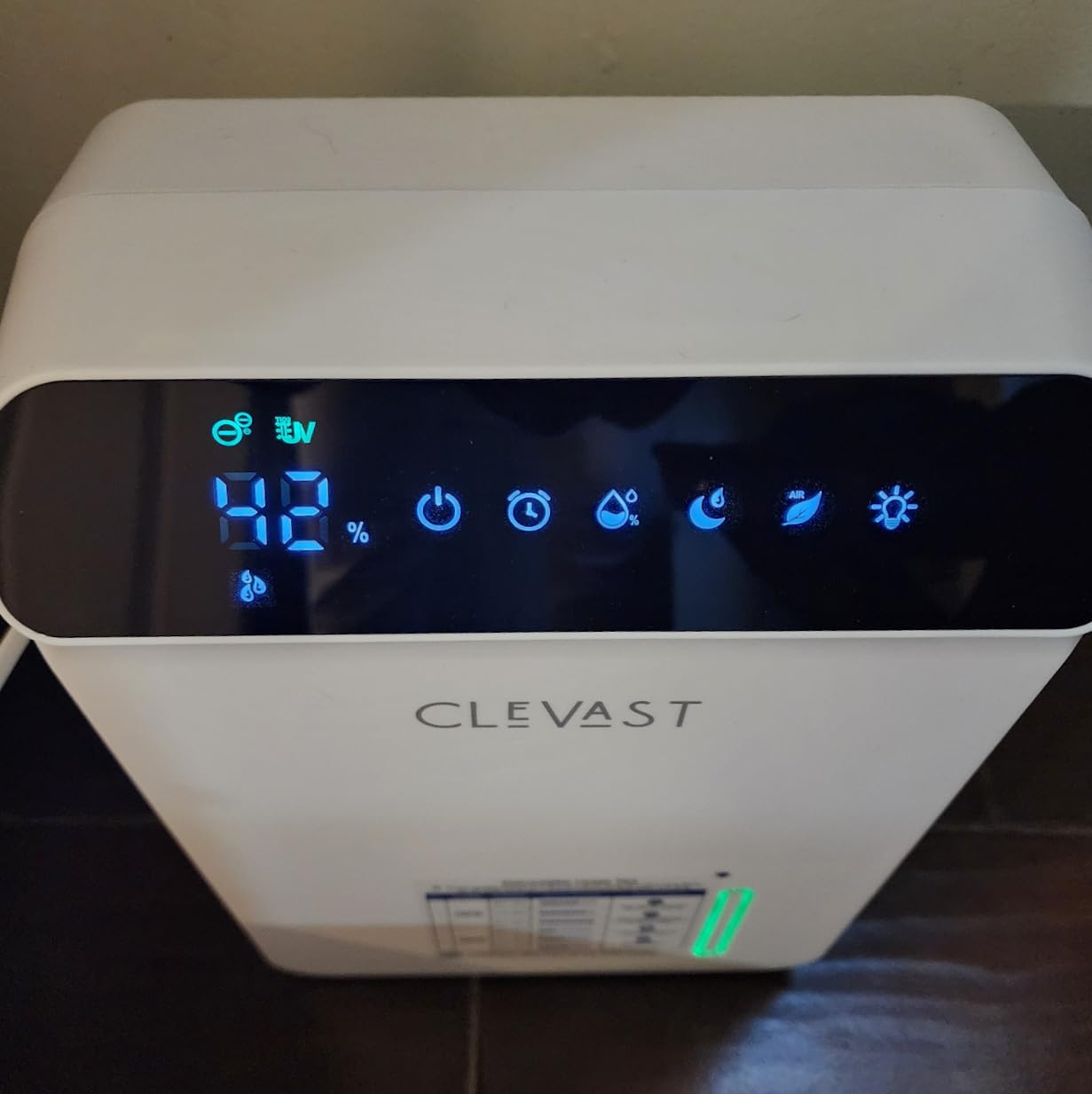
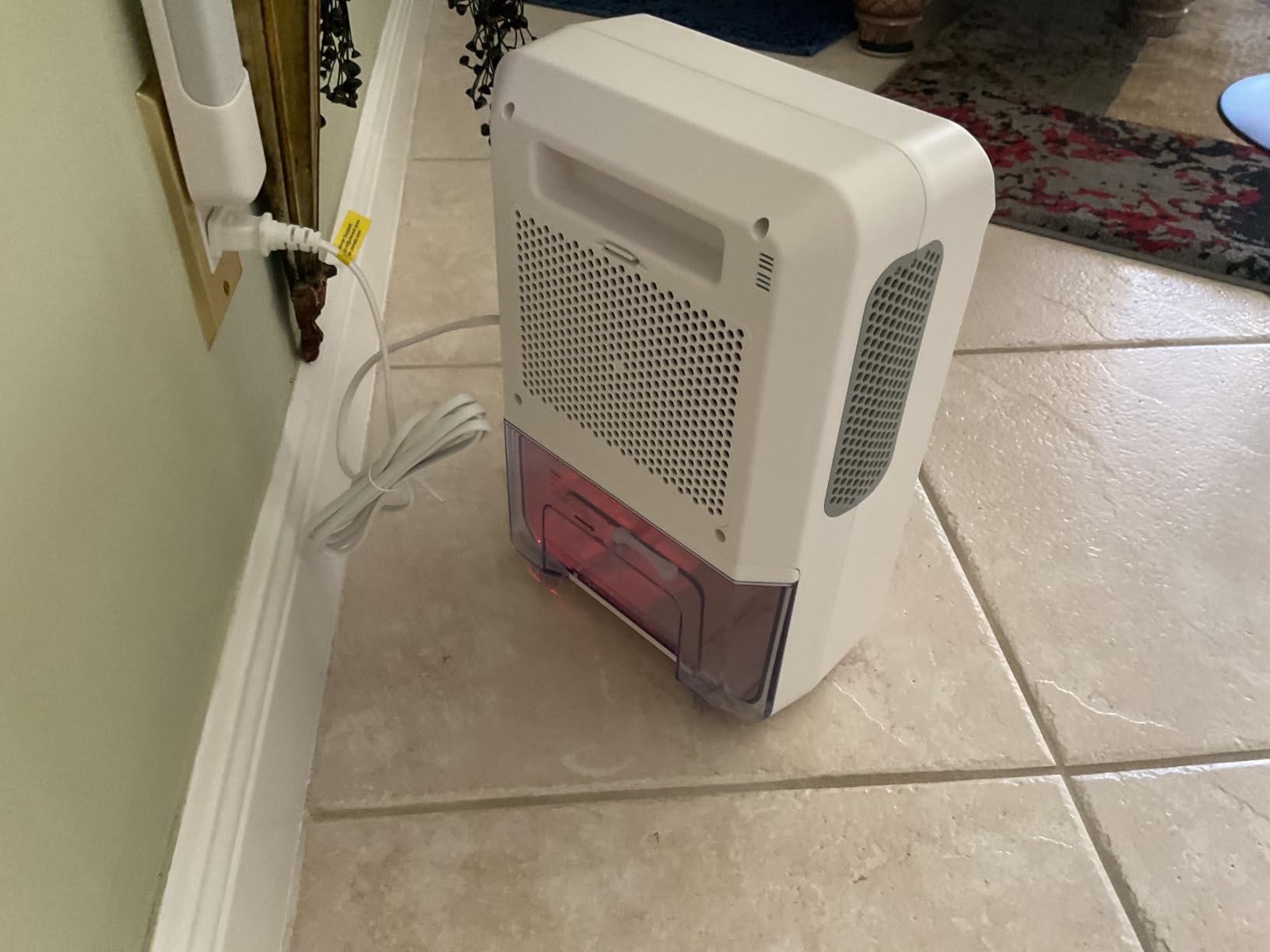
Reviewers describe it as quiet and effective for windowless bathrooms, laundry rooms and small bedrooms, and the auto shut-off with an orange indicator is singled out as the feature that makes it safe to forget about overnight.
Several owners mention buying more than one, using them in different small rooms around the house. The 2.1 pound body and built-in carry handle make that easy.
The durability note is the thing to keep in mind. A small number of owners report units that stopped functioning within weeks, though these reports sit alongside positive mentions of responsive customer service, which usually means a replacement rather than a dead end.
Where the CLEVAST EF8895 works best
Nurseries, small bedrooms and windowless rooms where the priority is silence and low energy use rather than fast extraction. At 0.55 kWh per day it is cheap to run indefinitely.
It also suits anyone who wants zero setup. No app pairing, no account, no network. Plug it in, choose a mode and leave it.
Where the CLEVAST EF8895 falls short
The 30 oz tank is small. In genuinely humid air it can fill overnight, and the auto shut-off means the machine simply stops until you empty it, so humidity climbs again.
A handful of buyers also find the fan louder than expected even on the quiet setting. If you are highly noise sensitive, test a sub-30 dB sleep mode model with a lights-out design instead.
7. BREEZOME MCS008 – Dual Semiconductor With a 60 oz Tank
60 OZ Dehumidifiers for Home, Dual-Semiconductor Quiet Dehumidifier with Timer Sleep Mode Auto-Off 7 Colors Light Portable Small Dehumidifiers for Bathroom, Cloakroom, RV
Sleep mode: 35 dB
Extraction: 700 ml per day
Tank: 60 oz
Timer: 12-48 hours
Pros
- 35 dB sleep mode reads as soft white noise rather than a hum
- 60 oz tank fills roughly every 4 to 7 days in typical use
- Clear tank is visible from three of four sides
- Top mounted light can be switched off for sleeping
Cons
- Several owners report failure after one to two years
- Weak extraction reported in very small closed rooms
- Moisture removal varies between units
This one covers 350 square feet, and it does so with a 60 oz tank that fills roughly every four to seven days in typical use.
Dual semiconductor condensers extract up to 700 ml per day at 86°F and 80% relative humidity. Sleep mode is rated at 35 dB, which owners more often describe as soft white noise than as a hum, a distinction that matters more than the number suggests.
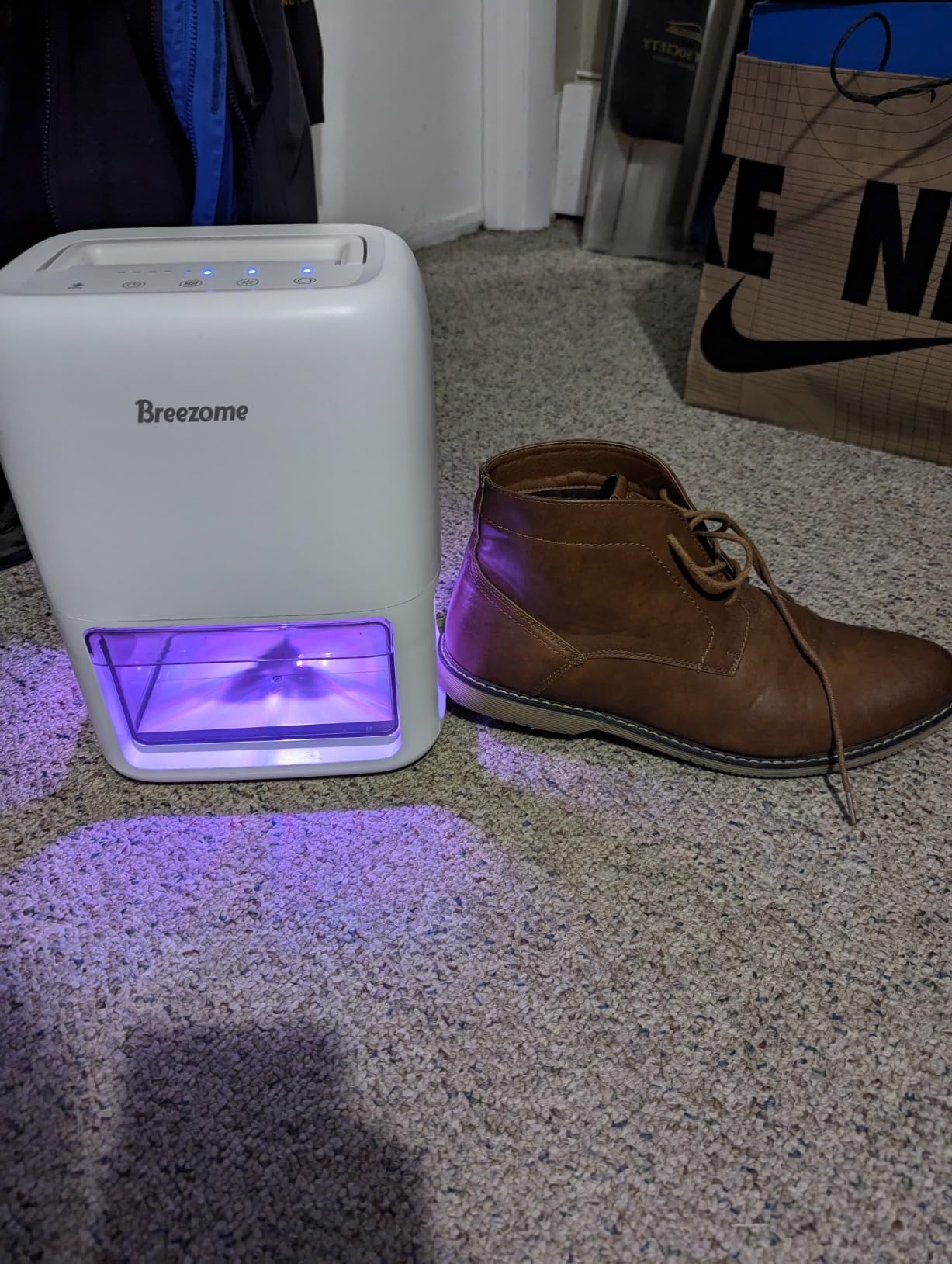
The timer is the sleeper feature. Four settings, 12, 24, 36 and 48 hours, let you run it overnight on a schedule and stop it before you wake, which avoids that mid-morning auto shut-off noise.
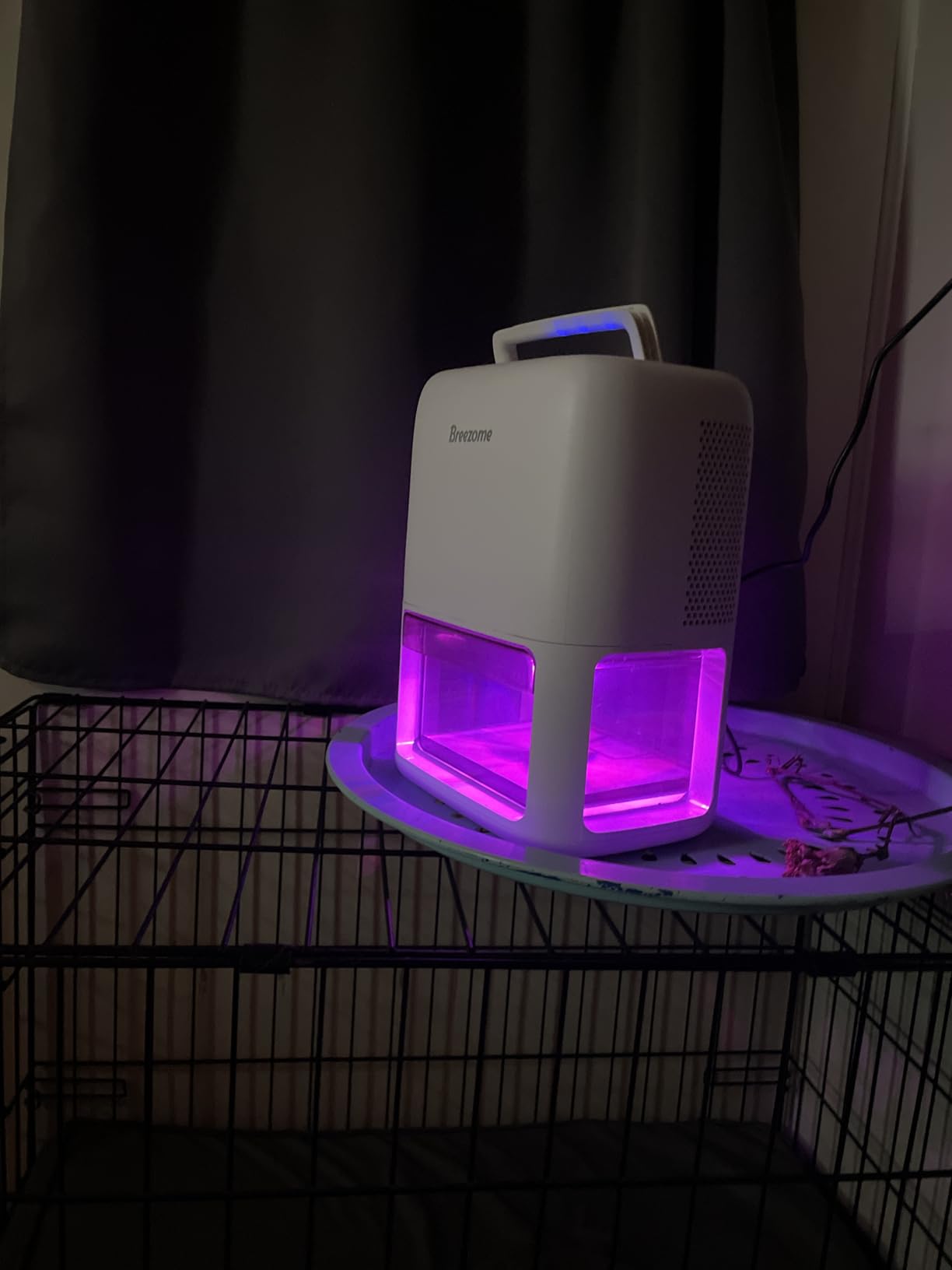
Owners frequently describe it as quiet, compact and effective for closets, walk-in closets and studio apartments, and several mention watching their thermostat humidity reading drop after a few days of running.
The clear tank is visible from three of four sides, which is a small design decision that removes a real annoyance. You can see the water level from across the room.
Longevity is the dominant negative theme. Multiple long-term owners report the unit dying at around the two-year mark and needing a replacement, so budget mentally for a service life measured in seasons rather than a decade.
Where the BREEZOME MCS008 works best
Studio apartments, walk-in closets and small-to-medium bedrooms where you want scheduled operation. The 48 hour timer is the longest useful overnight setting in this group apart from the dedicated long-timer model below.
The 60 oz tank and visible water level also suit rooms where you do not want to think about the machine more than once or twice a week.
Where the BREEZOME MCS008 falls short
Two-year longevity reports are the biggest warning sign, and inconsistent extraction between individual units is mentioned often enough to plan for it.
It also performs weakly in very small enclosed rooms, according to some reviews, where the intake can pull already-dry air. For a tight closet, a smaller dedicated unit is a better shape.
8. CLEVAST EF8974 – Humidity Display and Included Drain Hose
Dehumidifier for Bedroom, Bathroom, with Drain Hose, Quiet, Up to 500 Sq.ft
Sleep mode: under 30 dB
Humidity set: 40-90% RH
Tank: 68 oz
Drain hose included
Pros
- Sleep mode under 30 dB and switches off all lights for rest
- Real-time humidity display with an adjustable set point
- Includes a 3.3 ft drain hose for continuous unattended running
- Brushless DC motor for quieter and more efficient operation
Cons
- Higher cost than most compact models in this group
- Displayed humidity can vary by about 5% RH depending on placement
This is the only model in the group that solves the tank problem properly, and in a bedroom that runs overnight seven nights a week, the tank problem is the real problem. A 3.3 ft drain hose is included, so the unit can empty itself continuously into a sink, bucket or standpipe.
It also has the only built-in humidity display in this comparison, with an adjustable set point from 40% to 90% relative humidity. For anyone trying to hit a specific target rather than guessing, that readout is worth more than any extra extraction rate.
Sleep mode runs under 30 dB and switches off all lights, which is the closest thing to a true lights-out mode anywhere in this roundup. A brushless DC motor handles the fan, running quieter and more efficiently than a conventional brushed motor.
Extraction is up to 23 oz, or 700 ml, per day at 86°F and 85% relative humidity, with coverage listed at 500 square feet. A washable filter, UV-C light and negative ion functions round out the package.
Where the CLEVAST EF8974 works best
Bedrooms that need to run continuously without anyone remembering to empty a tank. Hook up the hose once and the machine is effectively set and forget.
It also suits anyone who wants precise humidity control, since the display and adjustable set point remove the guesswork. The under-30 dB sleep mode with lights off makes it a strong nursery option too.
Where the CLEVAST EF8974 falls short
It costs more than most compact units in this comparison, and the 315-review base is smaller than the established listings, which means less long-term performance data.
The humidity readout itself has limits. Owners report variation of roughly 5% relative humidity depending on airflow and sensor position, so place the unit in open air rather than against a wall if accuracy matters to you.
9. Newo 44oz Small Quiet Dehumidifier – Below 28 dB With Five Timers
Small Dehumidifier for Home 44OZ Quiet with Auto Off & Defrost 5 Timers 3 modes 10 Color Lights 3 Brightness 260 Sq.ft Portable Dehumidifiers for Basement Bedroom Bathroom RV Closet
Sleep mode: below 28 dB
Tank: 44 oz
Timer: 24-96 hours
30 W
Pros
- Below 28 dB sleep mode for genuinely quiet overnight running
- Five timer settings including a continuous run option
- Automatic defrost protects the element in cold conditions
- Ten colours with three brightness levels for nurseries
Cons
- 44 oz tank is small relative to daily extraction
- Highest one-star share in this group at 13%
The quietest sleep mode in this comparison sits at below 28 dB, and that is where the Newo lands. In a small bedroom it is the difference between an appliance you stop hearing and one you keep listening for.
It runs three modes, sleep, normal and performance, at 30 watts, with a 44 oz tank. Coverage is listed at 260 square feet, and automatic defrost handles cold-room conditions without you doing anything.
Timers are the distinguishing feature: 24, 48, 72 and 96 hour settings, or continuous. Nothing else in this group gives you four days of unattended scheduling, which works well if you are away at work midweek.
The lighting system offers ten colours across three brightness levels, and the unit carries FCC, CE, UKCA and RoHS approvals. The body measures 6.56 by 4.94 by 9.29 inches and weighs 3.1 pounds.
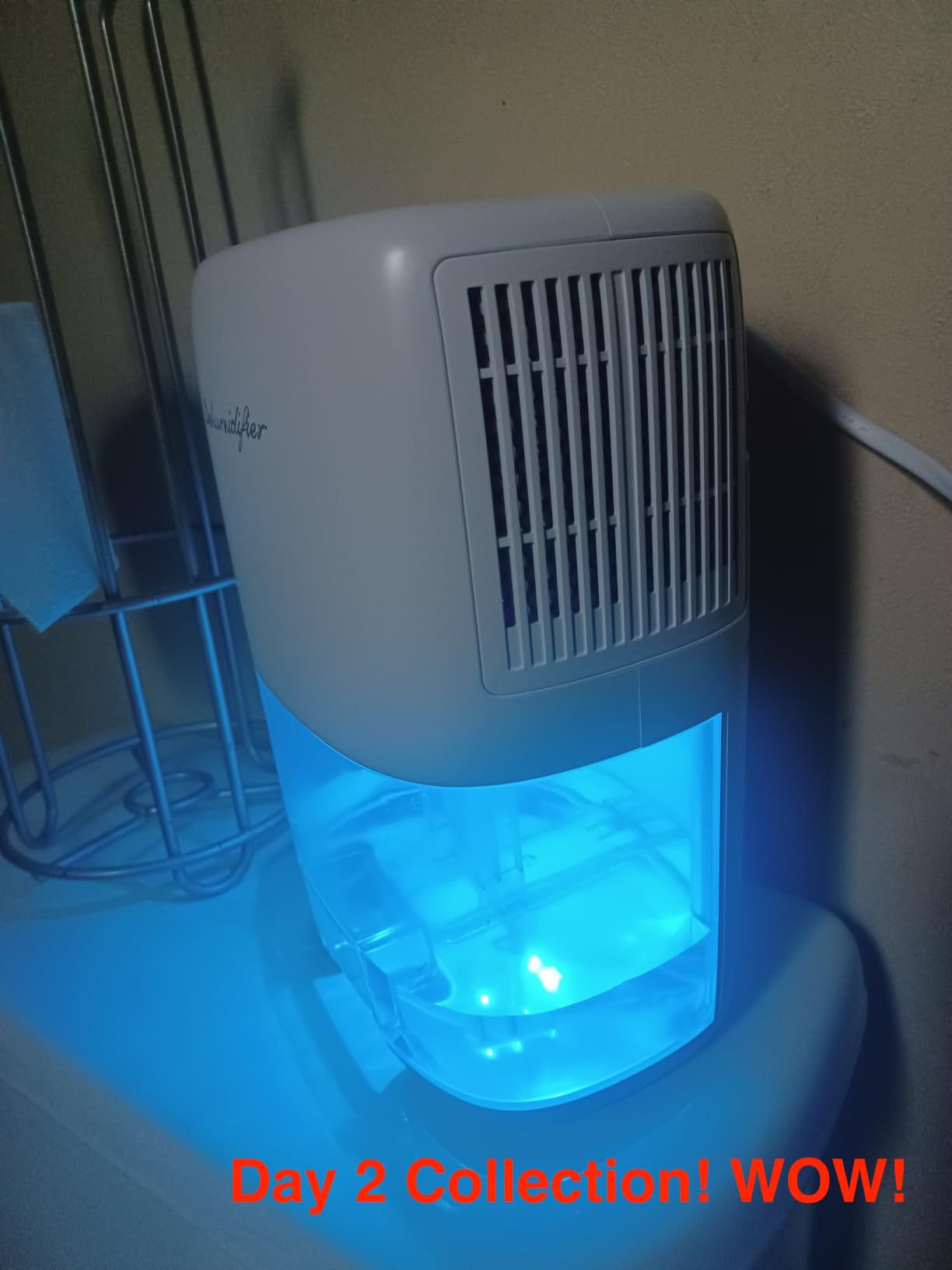
Reviewers with 70% five-star ratings point to the quiet sleep mode, the range of timers and the light settings for nurseries and meditation spaces as the reasons they keep it running.
Durability is the caveat. At 13% one-star ratings this carries the largest one-star share in the group, and while the volume is modest at 251 ratings, the complaints are worth reading before committing.
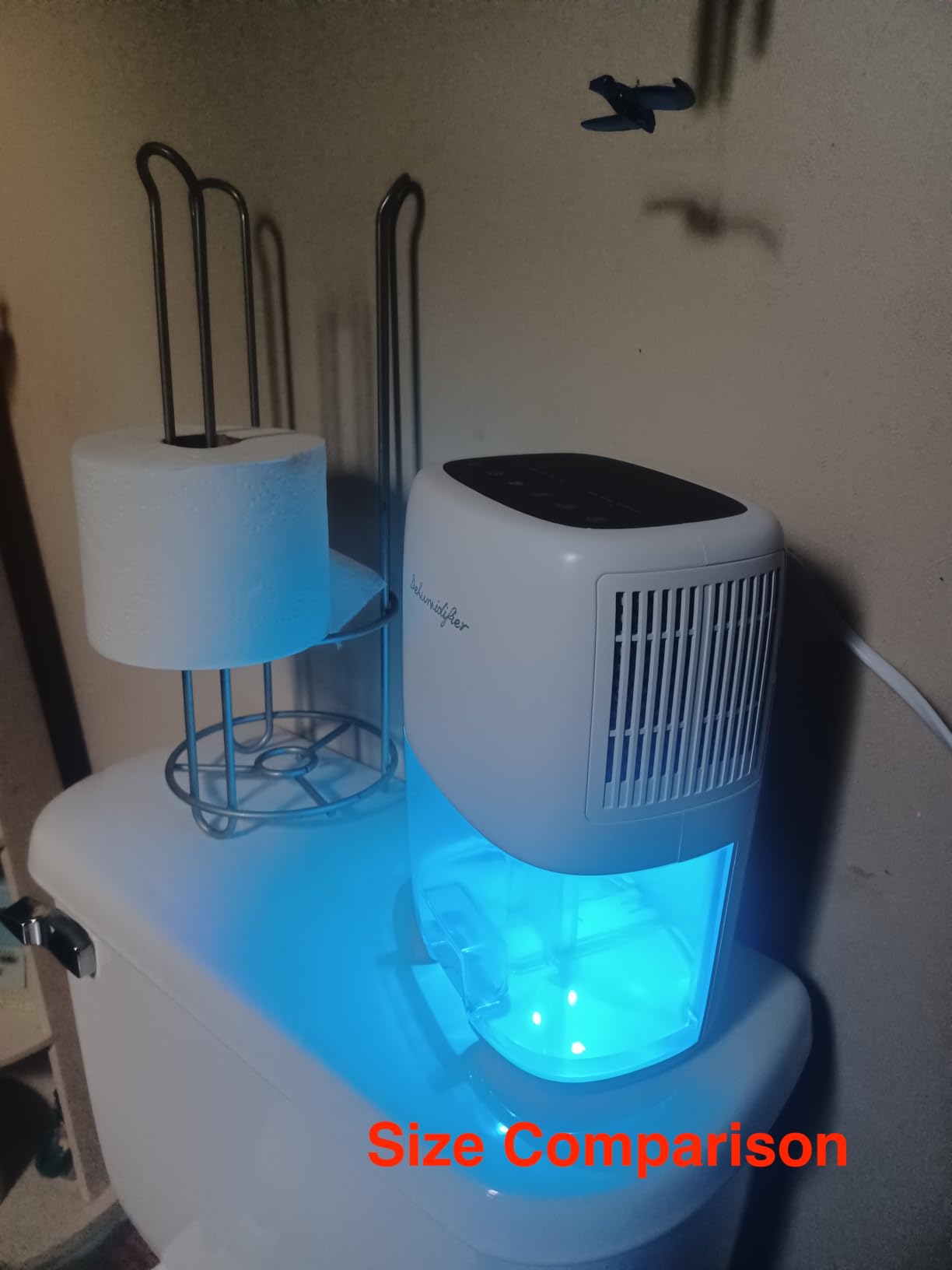
Where the Newo 44oz unit works best
Small bedrooms and nurseries where the lowest possible sleep-mode noise is the deciding factor, and households that want multi-day scheduling without a drain hose.
The 96 hour timer is uniquely useful for people who travel for work or run a home office on a fixed weekly rhythm, since you can set it once per week.
Where the Newo 44oz unit falls short
A 44 oz tank against a stated 260 square feet of coverage is a tight ratio. Expect more frequent emptying than the 60 to 98 oz models elsewhere in this list.
The 13% one-star share suggests more unit-to-unit inconsistency than the better-reviewed models. If you want a set-and-forget machine for a decade, this is not the one I would pick.
10. WoEleLigt 98 oz Quiet Small Dehumidifier for Home 1000 Sq Ft
98 OZ Small Dehumidifier for Home 1000 Sq Ft, Quiet Dehumidifier with Drain Hose, Auto Shut-Off, Sleep Mode, 7-Color Light for Basement, Bedroom, Bathroom, Closet, RV (White Grey)
Tank: 98 oz
Extraction: 1 liter per day
Sleep mode: under 30 dB
Coverage: 1000 sq ft
Pros
- Highest rated model here at 4.8 stars with 93% five-star ratings
- Largest tank in the group at 98 oz plus an included drain hose
- Sleep mode under 30 dB suits bedrooms and nurseries
- Auto shut-off triggers when the tank is full or misaligned
Cons
- Performs best only in closed rooms
- Smaller review base at 245 ratings than the established listings
This is the highest rated listing in the group at 4.8 stars, with 93% five-star ratings and no ratings below two stars. For a newer product with a smaller review base, that consistency is unusual.
It is also the best equipped for a large bedroom. The 98 oz, or 2.5 liter, tank is the largest here, and a drain hose is included for continuous drainage, so you can stop thinking about the machine entirely.
Upgraded dual-core semiconductor technology removes up to 1 liter per day, with coverage listed at 1000 square feet in closed rooms. Sleep mode runs under 30 dB with one-touch switching, and a 7-color ambient light can be locked, cycled or switched off.
At 5.5 pounds and 8.3 by 5.7 by 14 inches it is still a bedroom-appropriate size, and the ergonomic handle, water level indicator and auto shut-off with red warning light cover the basics properly.
Where the WoEleLigt 98 oz unit works best
Master bedrooms, and any bedroom where you want large capacity and a big tank without moving to a compressor unit. The included drain hose makes overnight running genuinely hands-off.
It is a strong nursery choice as well, since the under-30 dB sleep mode and switchable light both work in a room where a light sleeper is trying to rest.
Where the WoEleLigt 98 oz unit falls short
The manufacturer is explicit that it performs best in closed rooms. In a bedroom with a frequently open door, humidity will keep entering faster than a compact semiconductor can pull it out.
At 245 ratings the long-term record is still thin. High scores are encouraging, but a two-year failure would not yet show up in the review data.
11. Spacekey 95 oz Water Tank Quiet Dehumidifier for Home 1000 Sq Ft
Dehumidifiers for Home, 95 OZ Water Tank Dehumidifier with Drain Hose, 1000 Sq.Ft Quiet Dehumidifiers for Bathroom Bedroom Basement RV, Timer, Auto Shut-Off, 7 Color Light, Aromatherapy, Grey & White
Sleep mode: 20 dB
Extraction: 1.2 L per day
Tank: 95 oz
Drain hose included
Pros
- Ties for the quietest sleep mode here at 20 dB
- Strongest extraction among the 95 oz units at 1.2 L per day
- 95 oz tank plus an included heavy-duty drain hose
- Aroma box for essential oils and a 7-colour night light
Cons
- Smallest review base in the group at 116 ratings
- Higher cost than most compact semiconductor units
The aroma box is the feature that separates this from every other unit here, letting you add essential oils to the airflow. Reviewers single it out as the reason to choose this model over a comparable 95 oz unit.
Underneath that, the numbers are strong. Dual Peltier semiconductor condensers collect up to 1.2 liters, or 40 oz, per day at 86°F and 80% relative humidity, which is the top extraction figure among the 95 oz units in this comparison.
Sleep mode runs at 20 dB, tying for the quietest figure here, with 2, 4, 6 or 8 hour timer settings for overnight scheduling. The 95 oz tank works out to 2.8 liters, and a heavy-duty drain hose is included.
Auto shut-off gives a red indicator and a beep, which is more noticeable than a silent light but impossible to miss if the unit is in another room. At 76% five-star ratings and only 4% one-star, the response is very positive.
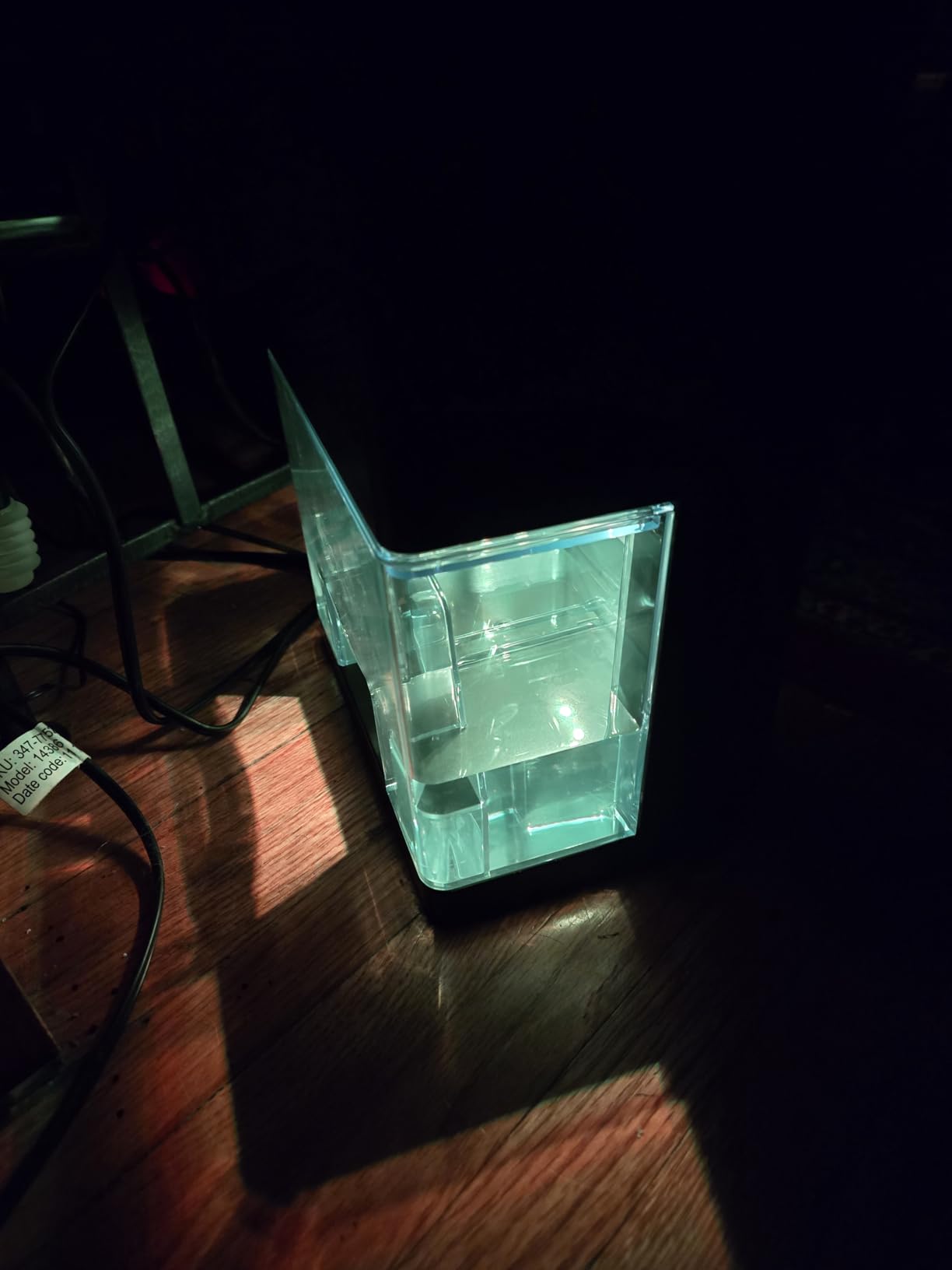
Watch the beeping shut-off if you are noise sensitive, since it is the one unit here that adds an audible alert. The body is slim at 5.51 by 9.06 by 12.99 inches with a hidden handle.
Support terms are worth noting given the profile: a 30-day refund window, two-year replacement coverage and lifetime customer care, which is a better written commitment than most listings in this category offer.
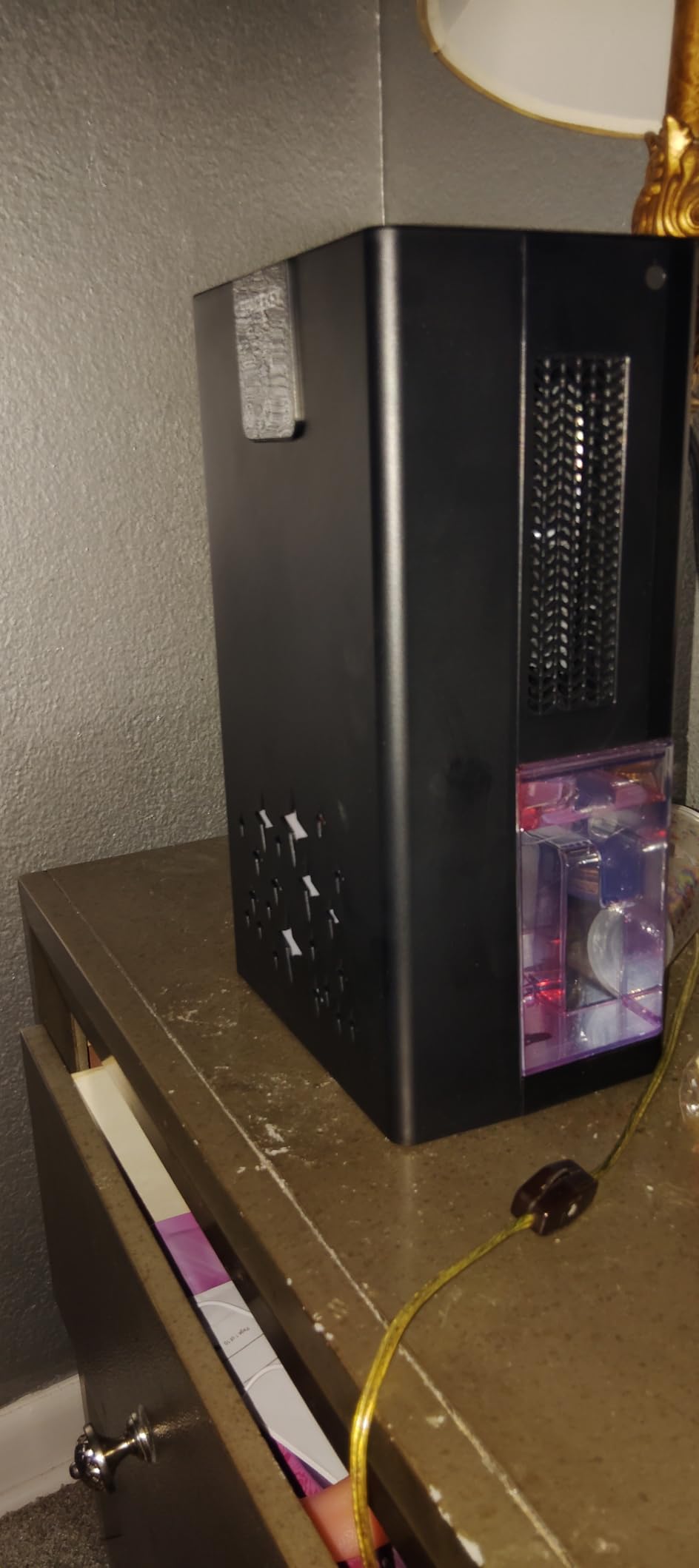
Where the Spacekey QIG-D04 works best
Bedrooms where you want the quietest sleep mode, the strongest extraction in the 95 oz class and no tank emptying at all. The included drain hose handles that permanently.
It is also the pick for anyone who likes a subtle scent in the room, though note that aromatherapy output is a preference, not a humidity feature.
Where the Spacekey QIG-D04 falls short
At 116 ratings it has the smallest review base in the comparison, so you have the least long-term evidence to lean on. That matters more than usual for a category with a two-year failure pattern.
The beeping full-tank alert and the aromatherapy feature also make it slightly less suited to a purist setup, and it costs more than most compact semiconductor units of similar size.
12. Deyagoo 50oz Small-Space Dehumidifier for Bedroom, RV and Closet
50OZ Dehumidifier, Small-Space Dehumidifier for Bedroom RV Closet 200 Sq.Ft
Noise: 30 dB
Extraction: 400 ml per day
Tank: 1500 ml
28 W
Pros
- 30 dB operation is suitable for a bedroom
- Transparent 1500 ml tank shows the water volume in real time
- Grooved base makes the tank easy to grip and pour
- Separate light button controls the 7-colour atmosphere lighting
Cons
- Smallest rated coverage in the group at 200 sq ft
- Modest 400 ml daily extraction
The transparent 1500 ml tank is the detail that makes this one pleasant to live with. You can see exactly how much water has collected from across the room, so you empty it when it needs emptying rather than on a guessed schedule.
At 30 dB it sits in the middle of the quiet group, low enough for bedroom use but not in the sub-28 dB tier. It draws 28 watts, which keeps running costs very low, and collects up to 400 ml per day at 86°F and 80% relative humidity.
The grooved base design is a genuine usability improvement. The tank is easier to grip and lift out than a smooth-sided reservoir, and auto shut-off triggers between 1300 and 1500 ml with a flashing red light.
Lighting is controlled by its own separate button, so you can set a 7-color atmosphere and then turn it off independently of the dehumidifier functions. The body measures 5.91 by 4.72 by 9.84 inches.
Where the Deyagoo 50oz unit works best
Small bedrooms, closets and offices where a 200 square foot room is an honest description of the space. It is also a good choice if you dislike walking into a room and being surprised by a full tank.
The 28 watt draw and roughly one kWh per day keep the running cost low, which suits a bedroom on an independent circuit or an extension setup.
Where the Deyagoo 50oz unit falls short
Coverage is the smallest in this comparison at 200 square feet, and 400 ml per day is modest extraction. In a room that stays damp, it will run continuously without catching up.
There is no sleep mode, no timer and no drain hose, so it is a simple on-and-off machine. If you want scheduled or unattended operation, one of the timer-equipped models fits better.
Compressor vs Semiconductor vs Desiccant for Bedrooms
Every quiet dehumidifier on this list is a semiconductor unit, and that is not a coincidence. The technology choice explains the noise floor more than any single model does.
Compressor units use a refrigerant loop with a rotary compressor pulling moisture from chilled evaporator fins. They remove far more water per day, cover larger areas, and cost less per pint of moisture removed, but the compressor thrum and fan noise typically land between 40 and 50 dB. That is audible in a quiet bedroom at night.
Semiconductor units, including the thermo-electric and Peltier designs here, cool a small plate with electricity and condense moisture onto it. There is no compressor, so the noise floor is 20 to 35 dB, and the power draw is far lower. The trade is extraction rate and price per pint.
Desiccant units use a rotating wheel of desiccant material that absorbs moisture and regenerates with heat. They work in conditions below 65°F where compressor units need frequent defrost cycles, and they run quietly, but they are slow and best suited to closets and small enclosed volumes.
The decision rule is simple. For a bedroom where sleep quality is the priority, choose semiconductor and accept a smaller tank. For a large basement bedroom where you need real capacity, choose a compressor and place it in a hallway with the door open, or in the adjacent room.
What Decibel Ratings Mean for Sleep
Decibels are logarithmic, so a 10 dB increase is roughly perceived as twice as loud. That is why the difference between a 30 dB unit and a 48 dB unit is not a small difference in the bedroom, it is a different room.
Here is the reference scale that matters for sleep:
- 20-25 dB – roughly a whisper or a quiet night. The Spacekey QIG-D02, the Spacekey QIG-D04 and the CLEVAST EF8895 sit here in their lowest sleep mode settings.
- 28-30 dB – a very quiet room, close to the background of a quiet home. The ToLife, the Newo, the CLEVAST EF8974, the WoEleLigt and the Deyagoo operate in this band.
- 30-35 dB – comparable to a quiet office. Noticeable if the room is otherwise silent, but most people sleep through it.
- 35-42 dB – a quiet library at the upper end, and roughly where the BREEZOME and the Tenergy Sorbi sit.
- 45 dB and above – refrigerator territory. This is the level at which bedroom use starts generating complaints.
Two caveats. Manufacturer figures are usually measured at a fixed distance in a lab with the unit on a hard surface, and real bedrooms with soft carpet, curtains and furniture reflect and absorb sound unpredictably. And the sleep mode figure is the one that matters, not the maximum fan figure.
Pint Capacity vs Coverage Area: A Reality Check
Coverage claims in this category are marketing, not measurement. Several listings in this roundup claim 1000 square feet while reviewers report real-world performance at a third of that.
The number that actually predicts performance is extraction per day, and the rule of thumb is simple. A standard bedroom of 100 to 200 square feet is comfortable with a 10 to 20 pint per day unit. Between 200 and 300 square feet, look for 20 to 25 pints per day. Above 300 square feet in persistently humid conditions, you are in compressor territory.
All twelve models here are semiconductor units, and their extraction figures are stated in ounces or milliliters rather than pints. Spacekey QIG-D04 leads at 1.2 liters, or 40 oz, per day. The Windangel sits at the bottom with 11.8 oz per day.
The second reality check is tank size, because it determines how often you wake up. Anything under 30 oz in a humid bedroom means a daily trip to empty it. The 95 to 98 oz tanks in this group last several nights, and the three models that include a drain hose can be forgotten entirely.
If your bedroom is over 400 square feet, the honest answer is that a compact semiconductor unit will run continuously and still not keep up. In that case, place a compressor unit in a hallway and leave the bedroom door open, or size up to a unit rated for your actual square footage. If the opposite problem shows up, where winter air pushes a bedroom below 30% RH, our picks for the best humidifiers for bedrooms cover the dry-air side of the balance.
Where NOT to Put a Dehumidifier in a Bedroom
Placement matters as much as the model, and most noise complaints come from putting the machine in the wrong spot. The first rule is distance: do not put it on a nightstand. Even a 30 dB unit is louder at two feet than at eight, and reviewers frequently report moving the machine to a hallway or closet with the door open to solve exactly this.
Do not put it directly beside the head of the bed. The fan moves air across the room, and the sound arrives before you have fallen asleep.
Do not put it on soft carpet. A hard surface reduces vibration transmitted through the floor, which matters enormously in an apartment where the person downstairs is trying to sleep.
Do not tuck it into a corner or against an exterior wall. It needs clearance on all sides to pull air through the fins, and a blocked intake will both reduce extraction and change the noise character.
Finally, do not aim the outlet louvers at your pillow. Set the target humidity, close the door, and place the machine on the far wall in open air. If you have a humidistat-equipped unit, cross-check its reading against a cheap hygrometer placed away from walls.
How to Make Any Dehumidifier Quieter at Night
Even a compressor unit becomes bedroom-acceptable with the right setup. Start with the sleep or low mode, because a fan running at minimum speed is dramatically quieter than one at full speed.
Next, set a target humidity rather than leaving it on continuous. A unit cycling off once it reaches 45% is silent for most of the night, and a humidistat does this automatically.
Place the machine on a hard surface with at least eight inches of clearance, and put something beneath it to absorb vibration if the floor transmits sound. Thick rugs help with airborne noise but hurt with structural vibration, so a thin pad under hard feet is the better choice.
Finally, increase distance. Every extra foot of separation between the machine and your head cuts perceived loudness meaningfully. If the unit has a light and you are bothered by it, check for a lights-out mode; only the CLEVAST EF8974 in this roundup switches all lights off automatically in sleep mode, while the others need you to press a button.
Running your bedroom ceiling fan on a low setting also helps, because moving air makes the brain discount steady background noise. It is the cheapest acoustic upgrade available in the room.
Frequently Asked Questions
What is the quietest dehumidifier for a bedroom?
The quietest sleep-mode ratings in this group are 20 dB, shared by the Spacekey QIG-D02 and the Spacekey QIG-D04, with the CLEVAST EF8895 close behind at 24 dB and the ToLife TZ-C2 under 30 dB. All of these are semiconductor units, which have no compressor and therefore no compressor thrum. For most sleepers anything under 35 dB is acceptable overnight.
Which dehumidifier is best for a bedroom?
For a standard bedroom, the ToLife TZ-C2 offers the strongest balance of a sub-30 dB sleep mode, a 95 oz tank and the largest review base in the comparison. The avylo 25oz is quieter and smaller if your space is tight, and the CLEVAST EF8974 is better if you want continuous drainage and a humidity display. Match the model to the room size and to how much maintenance you want.
What is the typical noise level of a dehumidifier?
Compressor dehumidifiers typically run between 40 and 50 dB, which is about refrigerator volume. Compact semiconductor units for bedrooms run between 20 and 35 dB, and desiccant units fall in a similar low range. Manufacturer figures are measured at a fixed distance on a hard surface, so real bedroom levels can run a few decibels higher.
Where not to put a dehumidifier in a bedroom?
Do not place one on a nightstand, directly beside the head of your bed, on soft carpet, or tucked into a corner or against an exterior wall. Keep clearance on all sides so air can move through the fins, set it on a hard surface to limit vibration, and place it as far from your head as the room allows. A hallway with the door open is often the quietest option.
How many pints do I need for a bedroom?
A 100 to 200 square foot bedroom is comfortable with a 10 to 20 pint per day unit, and 200 to 300 square feet calls for 20 to 25 pints per day. In ounces per day, 20 pints is roughly 320 oz. The semiconductor units in this roundup range from about 11.8 oz to 40 oz per day, so match the figure to the actual size of your room rather than the coverage number on the box.
Is 70% humidity in a bedroom bad?
Yes. Sustained relative humidity above 60% encourages mold and mildew growth and supports dust mites, and 70% is firmly in the problem range. Aim for 40 to 60% in a bedroom. Below 30% can dry out airways and aggravate allergies, so set a humidistat target rather than running the machine continuously at full power.
Is there a way to make a dehumidifier quieter?
Use sleep or low mode, set a target humidity so the fan cycles off once the room is dry, place the unit on a hard surface with vibration padding, and increase the distance between the machine and your head. Running a ceiling fan on low also helps, because moving air makes steady background noise easier to ignore. Moving the unit to an adjacent room with the door open is the single most effective change.
What happens when you dehumidify a room too much?
Running air below about 30% relative humidity can dry out your nasal passages and throat, worsen dry eye and irritate existing asthma. Wood floors, furniture and some fabrics can also shrink or crack. Set the humidistat target to 40 to 60% and let the machine cycle rather than running it continuously with the door shut.
Final Verdict
After working through all twelve, the best quiet dehumidifiers for bedrooms divide cleanly by room size and how much attention you want to give the machine.
The avylo 25oz takes the top spot for anyone who wants the least intrusive presence: under 35 dB, a 23 watt draw and a body small enough to sit on a nightstand, backed by 3,678 ratings. The Tenergy Sorbi 1000ml is the pick when you also want HEPA filtration, and the ToLife TZ-C2 is the safest all-round choice for a normal bedroom given its sub-30 dB sleep mode and 95 oz tank.
For the quietest possible floor, look at the 20 dB sleep modes on the Spacekey QIG-D02 and QIG-D04. For zero maintenance, the CLEVAST EF8974 and the WoEleLigt CT9 both include a drain hose, and only the CLEVAST switches all its lights off in sleep mode.
Whichever you pick, place it on a hard surface, as far from your head as the room allows, and set a target between 40 and 60% rather than running it flat out. If you are still short on square footage, our guide to the best dehumidifiers for large rooms covers the compressor units these compact models are not built for.