
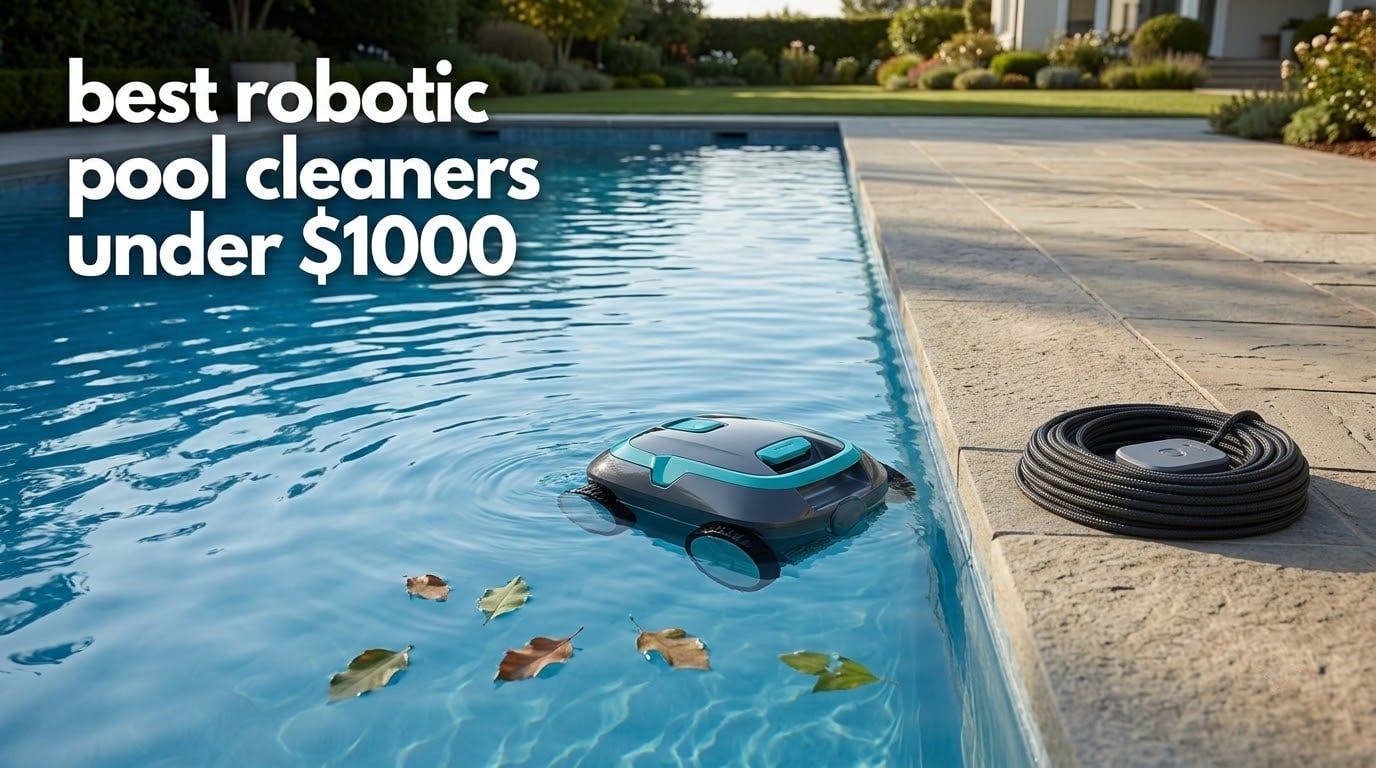
A robotic pool cleaner sounds like the easiest upgrade in pool ownership. You drop a sealed plastic machine into the water, press one button, and it drives itself around the floor while you go inside. The catch is that the flagship models from Maytronics and Polaris routinely land well past a thousand dollars, and buyers with a firm cap get left guessing what that cap actually buys them.
We spent weeks going through the specification sheets, warranty terms and owner feedback on every robotic pool cleaner that fits under 1,000 dollars, so you do not have to. That includes three corded Dolphin machines, four cordless models from WYBOT and Aiper, one track-driven Seauto unit and the Beatbot Sora 30. The spread in quality inside this budget is enormous: some robots barely rinse the floor, and others scrub the waterline and park themselves at the surface.
If you want the wider picture beyond this price cap, our guide to the best robot pool cleaners tested and compared covers the premium tier too. For everything below a thousand dollars, this is the honest ranking.
Table of Contents
What Is the Best Robotic Pool Cleaner Under a Thousand Dollars?
The Dolphin Nautilus CC Plus is the best robotic pool cleaner under a thousand dollars. It climbs and scrubs pool walls, its top-load filter basket rinses clean in seconds, and roughly 14,000 owner ratings back it up. Cordless rivals add scheduling and app control, but you give up raw suction and proven long-term reliability.
Two caveats on that verdict. The CC Plus is corded, which means an outlet near the pool and cable management every run. And if your pool is an above-ground frame set, the floor-only Dolphin Nautilus AG is the lighter, cheaper machine that suits it better.
Top 3 Picks for Robotic Pool Cleaners Under a Thousand Dollars
These three cover the three genuinely different ways to spend this budget: proven corded hardware, cordless value with app control, and high-capacity cordless for leaf-heavy pools.

Dolphin Nautilus CC Plus
- Climbs and scrubs pool walls
- Active scrubbing brush
- Top-load filter basket
- About 2 hours per cycle
WYBOT C2
- Dual 10 and 180 micron filters
- Three brushless motors
- 180 min runtime
- Seven cleaning modes
Beatbot Sora 30
- 6800 GPH suction
- 5L debris capacity
- Up to 300 min of cleaning
- Surface parking and self-drain
All 10 Robotic Pool Cleaners Compared in 2026
Every robot below sits under 1,000 dollars at the time of writing. Prices on these models move often, so use the table to compare specifications and use the buttons to see the current figure before you commit.
| Product | Specifications | Action |
|---|---|---|
| Dolphin Nautilus CC Plus |
|
Check Latest Price |
 Dolphin Nautilus AG Dolphin Nautilus AG |
|
Check Latest Price |
 Dolphin Escape Dolphin Escape |
|
Check Latest Price |
 WYBOT C1 WYBOT C1 |
|
Check Latest Price |
 Aiper Scuba S1 2026 Aiper Scuba S1 2026 |
|
Check Latest Price |
 Seauto Cordless Track Robot Seauto Cordless Track Robot |
|
Check Latest Price |
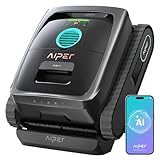 Aiper Scuba V3 AI Vision Aiper Scuba V3 AI Vision |
|
Check Latest Price |
| WYBOT C2 |
|
Check Latest Price |
 Aiper Seagull Pro Aiper Seagull Pro |
|
Check Latest Price |
| Beatbot Sora 30 |
|
Check Latest Price |
1. Dolphin Nautilus CC Plus Is the Best Overall Pick Under a Thousand Dollars
Dolphin Automatic Robotic Pool Vacuum Cleaner, Wall Climbing Scrubber Brush, Smart Navigation, Ideal for In-Ground Pools up to 40FT in Length – Nautilus CC Plus
Corded, 9.45 kg, for pools up to 40 ft
Cleans a pool in about 2 hours
Top-load filter basket
Pros
- Climbs and scrubs pool walls
- Active scrubbing brush shifts stubborn debris
- Top-load filter basket is easy to rinse
- Plug-and-play with no app or programming
- Cleans pools up to 40 ft
Cons
- Corded design needs a nearby outlet
- Older filter design can trap larger debris
- Can stall on steep transitions and steps
The Nautilus CC Plus is the machine I trust first for a reason: owner history. Close to 14,000 ratings at a 4.3 average tells you more about a five-year-old design than any spec sheet does, and the pattern in those reviews is unusually consistent. Owners praise the wall climbing, the active scrubbing brush and the filter that lifts straight out of the top of the unit.
It is built for in-ground pools up to 40 ft, which makes it the only machine in this roundup with real headroom above the common 33 ft class size. A cycle takes about two hours, and because it is plug-and-play there is no app to pair, no firmware to update and no mode to select. You press a button and walk away.
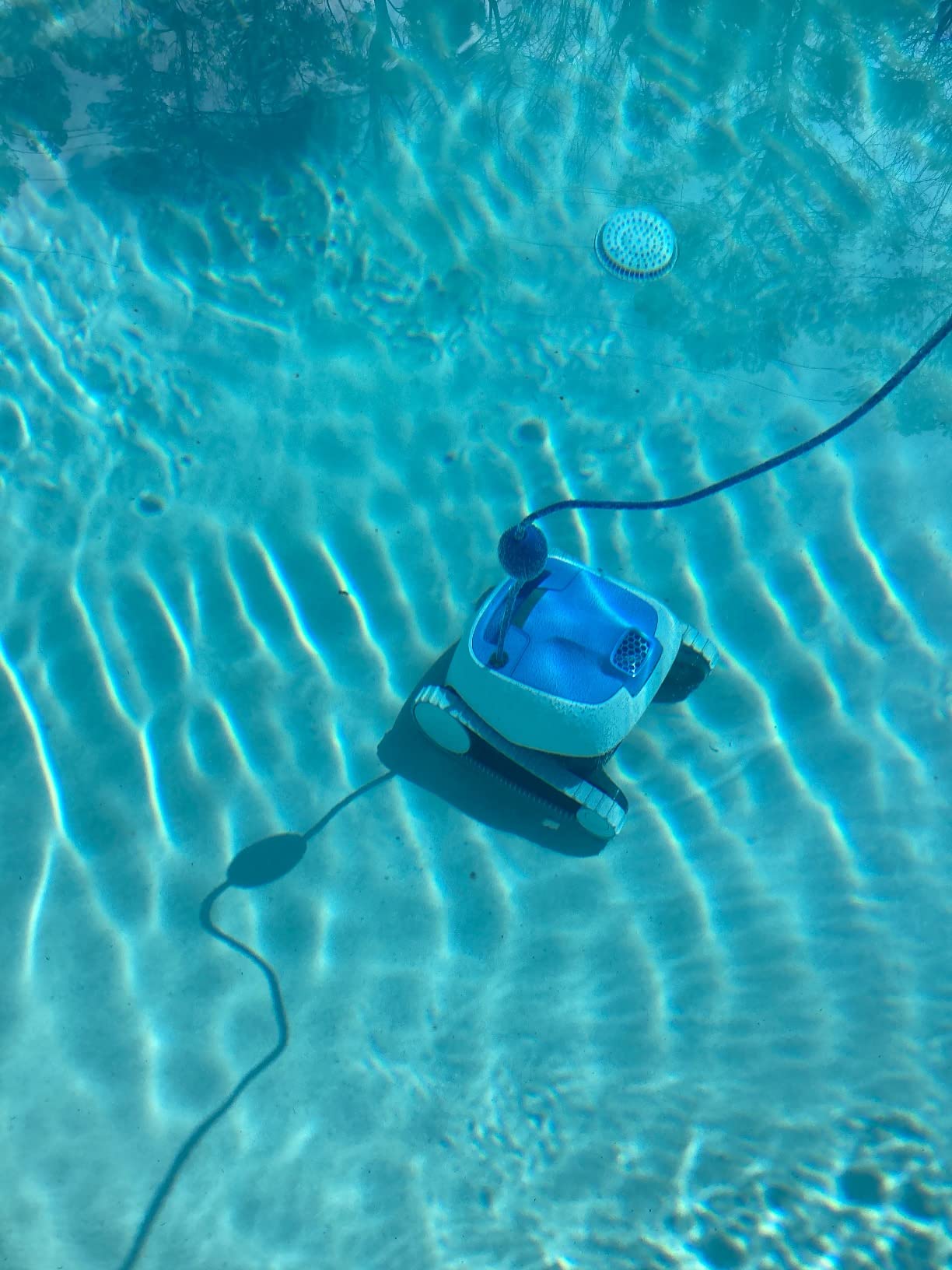
The active scrubbing brush is the differentiator against cheaper robots. Passive vacuums rely on suction alone and tend to push light debris around; a rotating brush physically shifts material into the intake path, which is why this unit does a convincing job on settled sand and algae film rather than just chasing leaves.
Where it struggles is geometry. Owners report it stalling on steep pool transitions, steps and the deep-end wall change, and the cord has to be positioned deliberately so the unit does not wrap itself around a ladder or handrail. If your pool has a deep end with a hard transition, expect to rescue it once in a while.
What you get at this price that cheaper robots lack
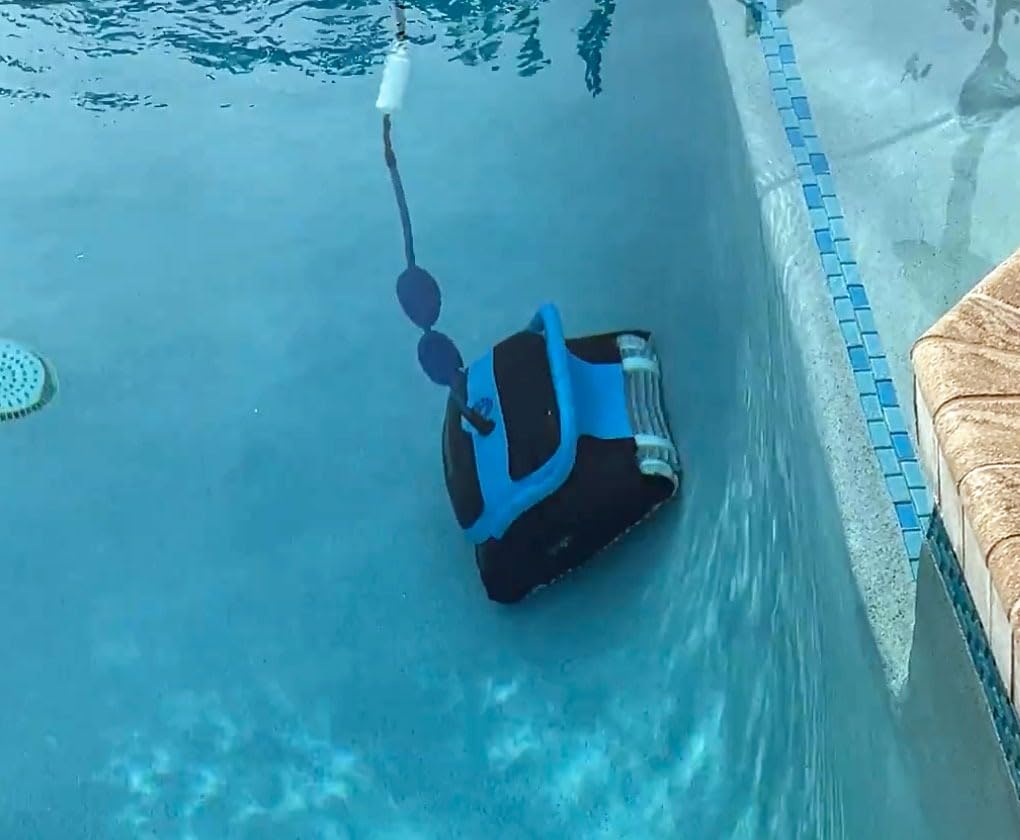
Wall climbing is the feature that separates this from every sub-400 dollar machine we looked at, including the corded competitors. The suction port rides up the wall and scrubs the waterline band, which is the dirtiest strip in any pool and the part a floor-only robot leaves untouched.
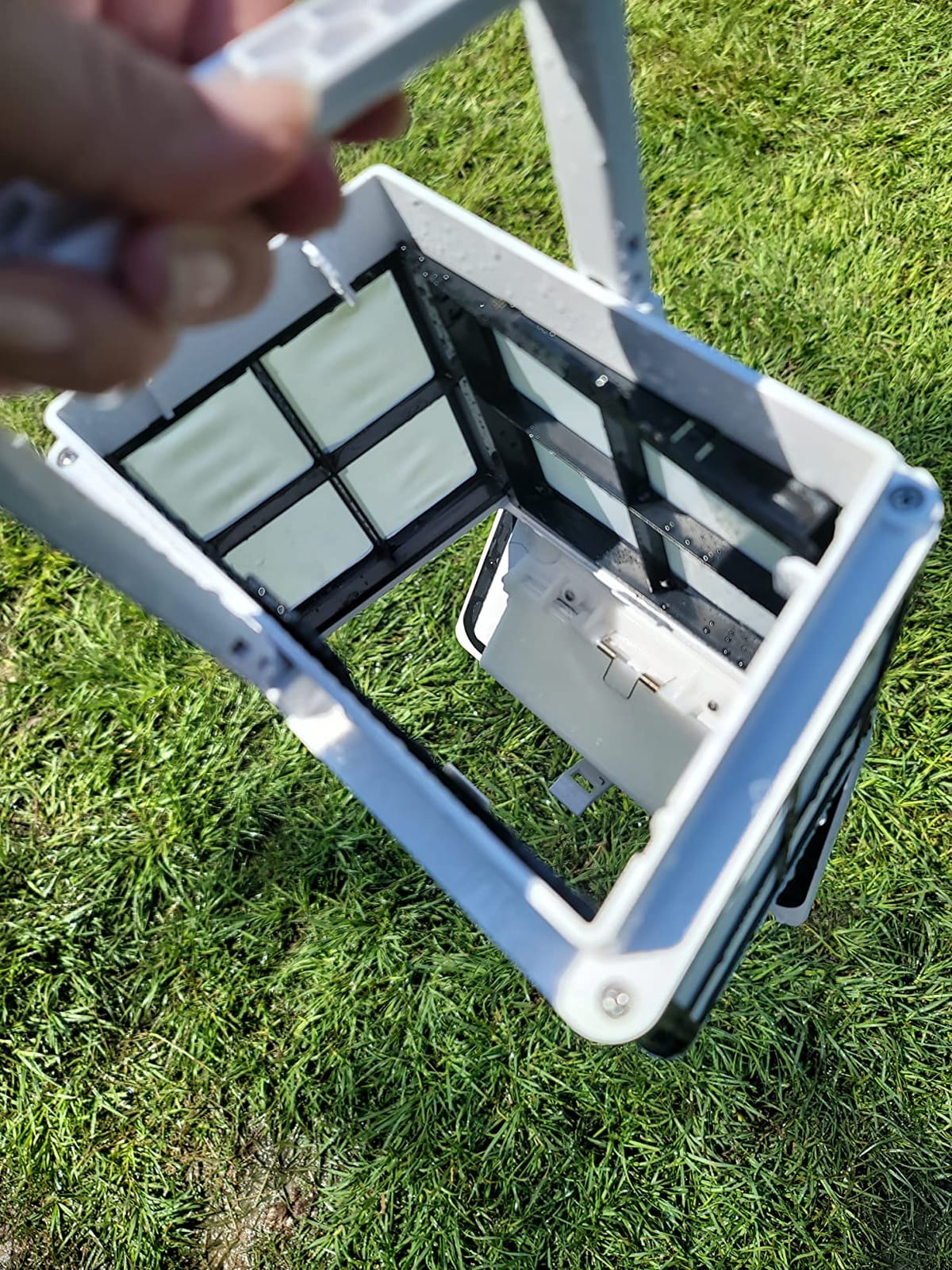
The top-load filter basket is the second reason. It lifts out without turning the robot over, so you can rinse debris in seconds between cycles instead of dealing with a sealed impeller. That single design decision saves more time across a season than any app feature.
Who should skip it
Skip this if you have no electrical outlet within cord reach of the pool, or if you want a machine that runs on a schedule without you. It is also the heaviest corded option here at 9.45 kg, so lifting it out is a two-handed job once the basket is full.
If you want walls but not the cable, the Aiper Scuba S1 gives you wall and waterline cleaning with a cordless footprint and a much finer filter. If you want the cheapest path to clean floors in an above-ground pool, the Dolphin Nautilus AG is lighter and simpler.
2. Dolphin Nautilus AG Is the Best Corded Pick for Above-Ground Pools
Dolphin (2026 Model) Nautilus AG Automatic Robotic Pool Vacuum Cleaner, Active Scrubber Brush, Top Load Filters Access, Ideal for Above-Ground Pools up to 33 FT in Length
Corded, 6.6 kg, for pools up to 33 ft
About 90 minutes per clean
Floor only, no wall climbing
Pros
- Floor-only design keeps weight and cost down
- Top-load filter basket rinses in seconds
- Smart Navigation scans the pool
- Lightweight at 6.6 kg
- Cleans a typical pool in about 90 minutes
Cons
- Does not clean walls or the waterline
- Cord needs a reachable outlet
- Smaller debris basket than larger robots
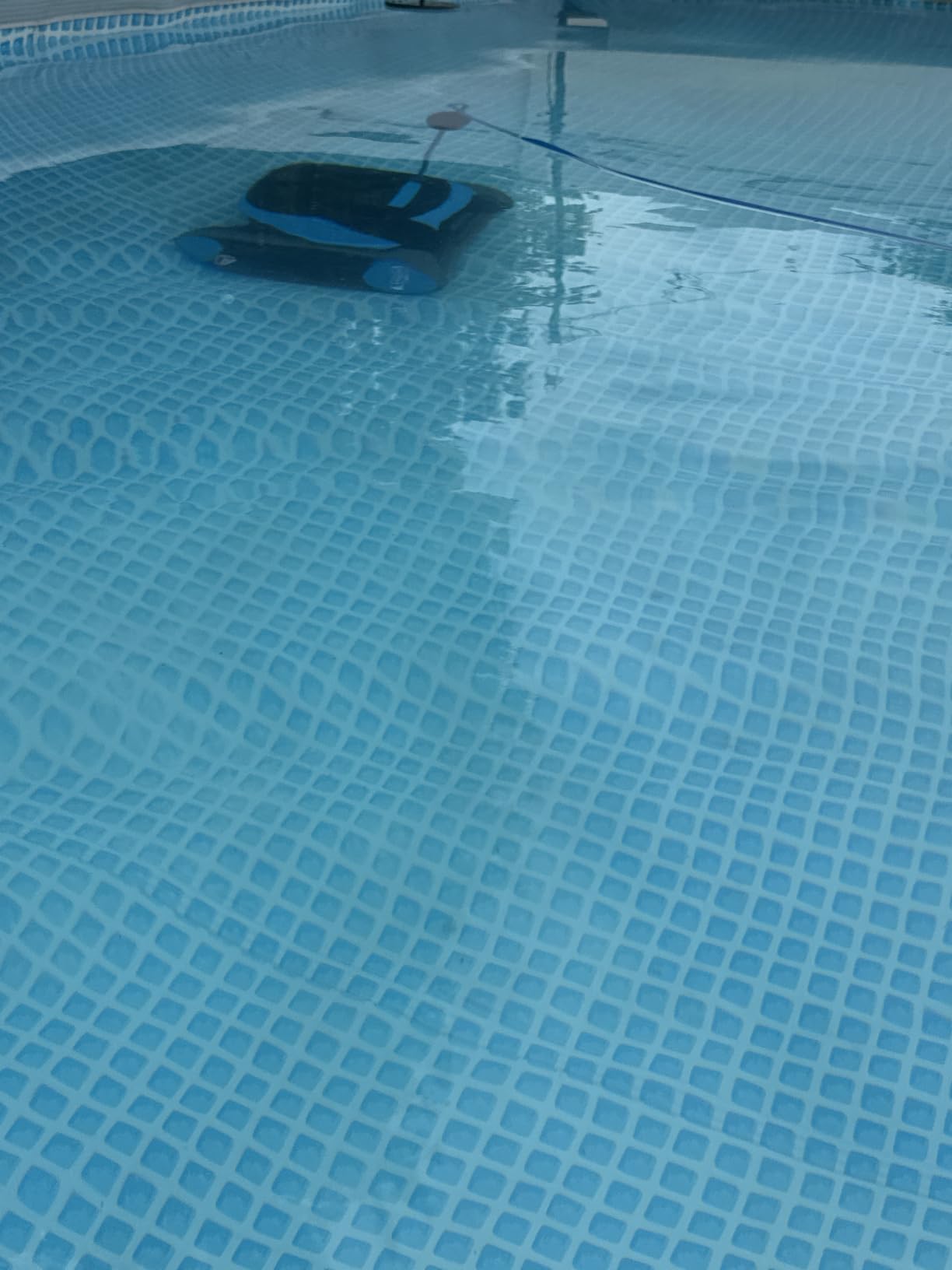
The Nautilus AG is the robot we would put in a rectangular above-ground pool without hesitation. At 6.6 kg it is the easiest machine in this roundup to lift out one-handed, and its floor cycle finishes in about 90 minutes, which is faster than anything else here.
Reviewers describe it consistently as the sensible middle of the Dolphin line. It scrubs actively, it navigates rather than wanders randomly, and it does it all without asking you to download anything. A 4.4 average across more than 6,000 ratings reflects a design that has been refined over many seasons rather than reinvented.
Smart Navigation scans the pool and plans a route before it starts, which on a simple rectangular shape is close to an optimal path. In a freeform pool with curves and a deep end, the same logic still holds up reasonably well on the floor, which is the only surface it touches.
The real limitation is written into the design: it does not climb. Walls, steps and the waterline band stay as they were. That is fine for a flat-bottomed above-ground pool where most debris settles on the floor, and it is a genuine loss in a tiled in-ground pool where the waterline collects oil and sunscreen film.
Why above-ground owners keep choosing it
Weight matters more than most spec sheets suggest. Lifting a wet 9 kg machine out of a pool onto a deck is unpleasant, and it is the single most common reason owners return robots. At 6.6 kg the Nautilus AG is the machine you can grab with one hand and set on the coping without thinking about it.
The short cycle time is the other quiet advantage. Ninety minutes means you can run it before work and be back to a finished pool, rather than scheduling an afternoon around a two-hour cycle.
Where it falls short
If you have a vinyl liner in-ground pool with a waterline you care about, this robot will not touch the part of the surface that shows most. You would be back to a manual sponge for the waterline every week, which is exactly the chore you bought a robot to avoid.
The debris basket is also smaller than the cartridge on the Dolphin Escape, so leaf-heavy pools need an extra mid-cycle rinse. For flat-bottomed pools that is a fair trade for the weight difference.
3. Dolphin Escape Handles the Heaviest Debris Loads on Tracks
Dolphin Escape Robotic Pool Cleaner (2026 Model) — Massive Top-Loading Filter, Dual Motors, HyperBrush, HyperGrip Tracks, Smart Navigation — for Above Ground & In-Ground Pools up to 33ft
Corded, 10.91 kg, for pools up to 33 ft
Over 4000 GPH filtration
Two-year quality assurance
Pros
- Cartridge holds 60% more debris than bag units
- Works without a booster pump or equipment hookup
- HyperGrip tracks grip steps and corners
- Dual 24V motors filter over 4000 GPH
- Backed by two-year quality assurance
Cons
- Power cord is short for larger pools
- Rubber flaps and tracks can loosen over time
- Cord can deteriorate after a few seasons
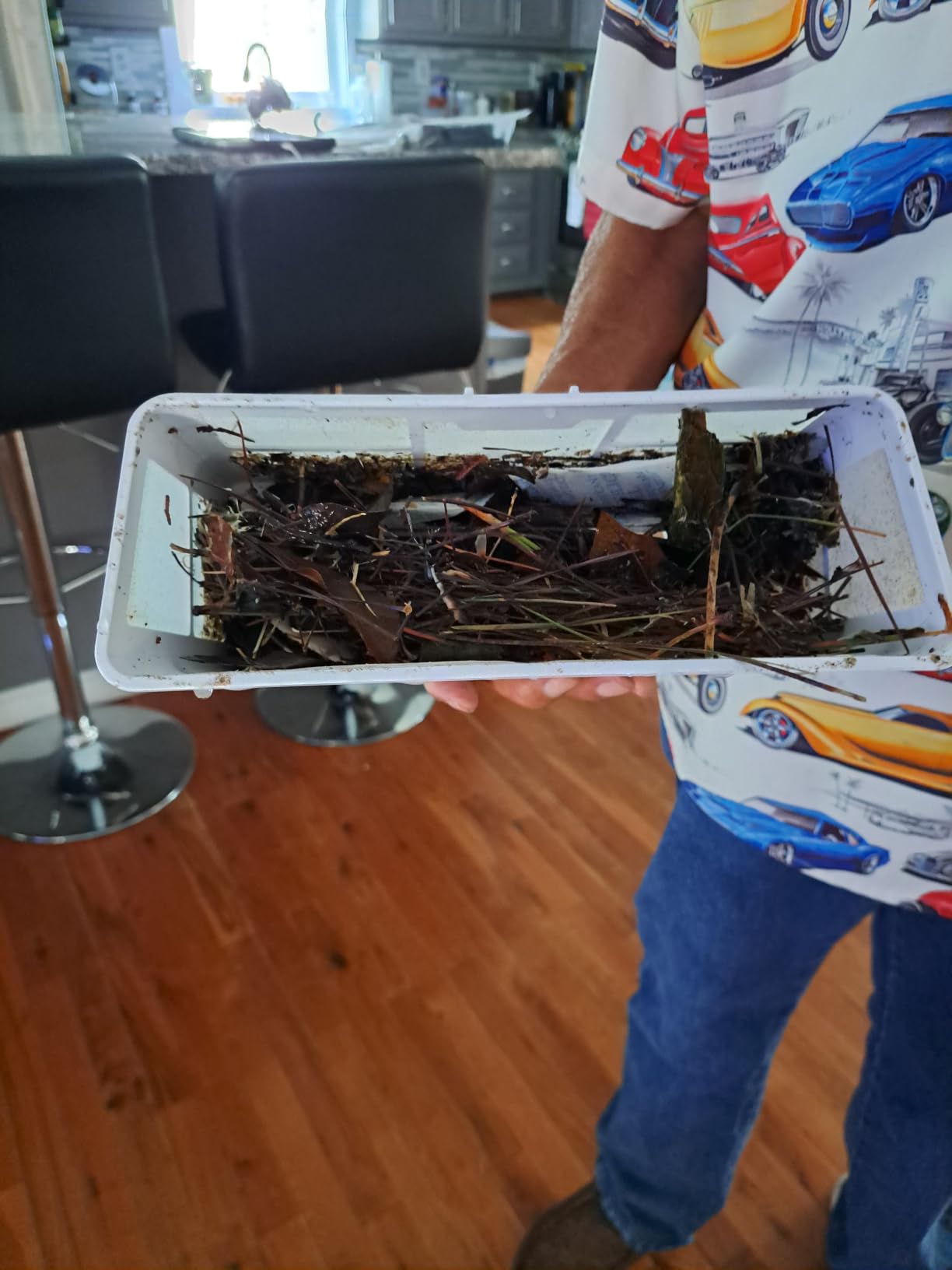
The Escape is the odd Dolphin in this group, and that is what makes it interesting. Instead of the tall body and bag or basket arrangement on the Nautilus models, it uses a low-profile chassis with an oversized top-loading cartridge that the manufacturer says holds up to 60% more debris than a bag-style unit.
In practice that means fewer mid-cycle cleanouts in autumn, which is the single biggest quality-of-life difference for anyone with trees near the pool. Combined with filter flow above 4000 GPH, it moves a lot of water and a lot of debris through that cartridge.
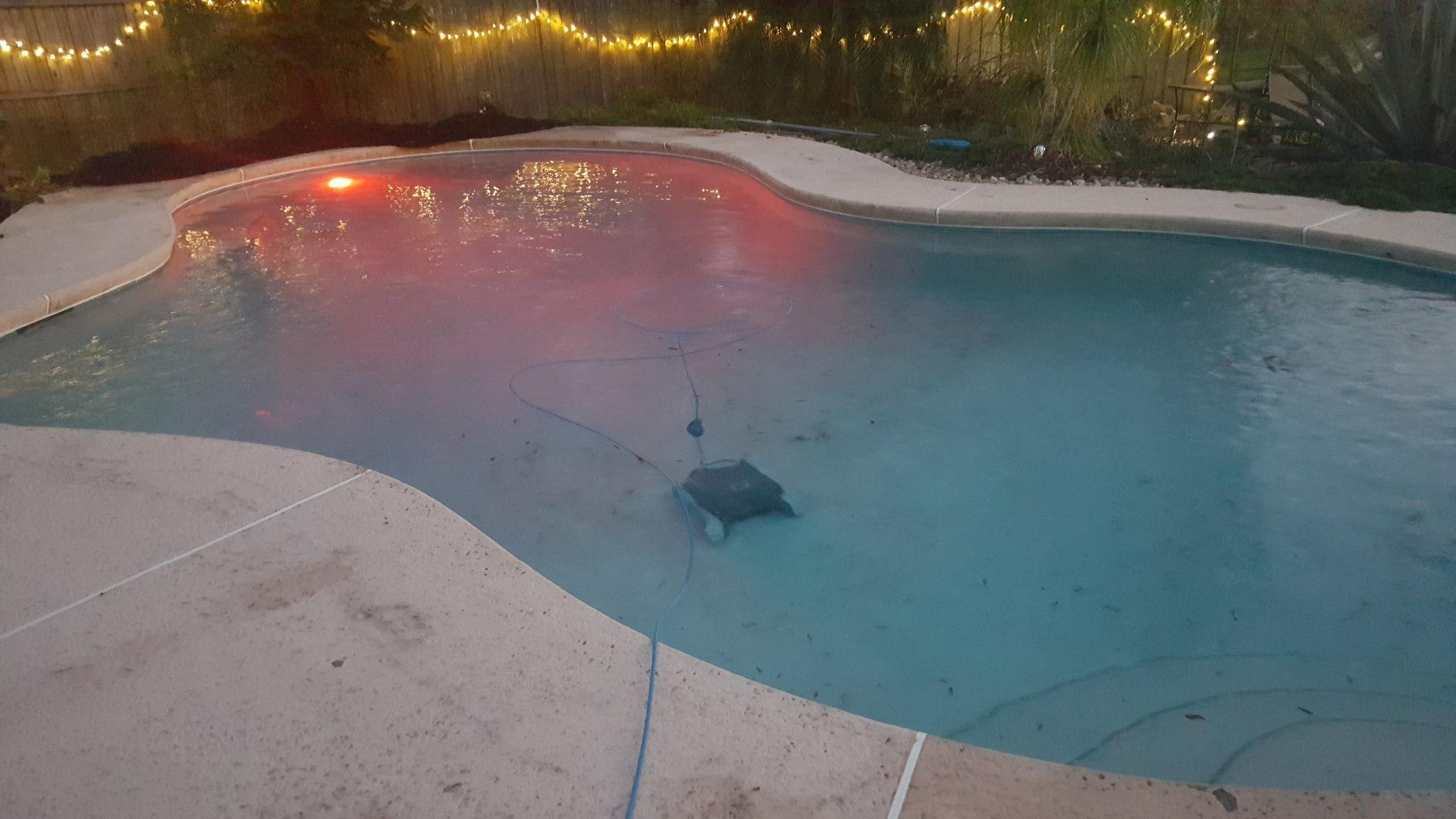
The HyperGrip continuous tracks are the other story. Wheels slip on wet steps and vinyl liner transitions; tracks do not. Owners specifically call out the absence of the wheelie problem that plagues cheaper tracked competitors, and the dual 24V motors give it enough torque to climb out of a shallow shelf without stalling.
It works independently of your pool equipment, so there is no booster pump hookup and no second timer to program. You can also use it on above-ground pools, vinyl, fiberglass or gunite surfaces, which makes it the most surface-flexible corded option here.
What the track drive actually changes
Track drive is not a marketing flourish on a pool robot. Traction determines whether a machine can climb from the deep end into the shallow end, cross a step without reversing forever, or hold position on a curved wall while the brush turns. The Escape does all three more reliably than the wheeled Dolphin models above it.
It also carries a two-year quality assurance, which is longer than the coverage on the Nautilus units and closer to the benchmark pool owners treat as a proxy for build quality.
What gives us pause
The most common complaint is cord length. On anything longer than a small rectangular pool, you will be repositioning the cable to make sure the robot reaches the far end, and the cord must be laid out with enough slack to avoid tangling at the return fitting.
Owners also report the rubber intake flaps and track components loosening or detaching after a couple of seasons, and the cord itself deteriorating with age. The 4.2 average reflects a machine that performs well but asks for more parts attention than the Nautilus CC Plus does.
4. WYBOT C1 Climbs 45-Degree Slopes With App Scheduling
WYBOT C1 Cordless Robotic Pool Vacuum for Inground Pools, Professional
Cordless, 160 min runtime, 4-in-1 cleaning
Pools up to 1,618 sq ft and 9.86 ft deep
160 min charge, two-year warranty
Pros
- Triple-motor system climbs slopes up to 45 degrees
- Covers floor walls waterline and steps
- 160 minutes on a roughly 4-hour charge
- Gyroscope N-Path and S-Path navigation
- App control with scheduling and OTA updates
Cons
- Entry-level build quality
- Rating history of about 1000 reviews is short
- App-dependent features add setup friction
The WYBOT C1 is the cheapest way in this roundup to get all four cleaning zones in one machine: floor, walls, waterline and steps. That combination normally costs considerably more, and having steps handled automatically removes a chore most robots leave entirely to you.
Its triple-motor system is specified to climb slopes up to 45 degrees, which covers the transition walls in most in-ground pools. Gyroscope-based N-Path and S-Path patterns are a step above the random wander used by entry-level machines, so it wastes less of its 160-minute cycle retracing the same lane.
The app is the reason to pick this model specifically. You can set a schedule, switch modes remotely and receive over-the-air firmware updates, which is how the manufacturer improves navigation and climbing behaviour after purchase. For an owner who does not want a robot that becomes another weekly job, scheduling is the feature that changes the ownership experience.
Rated for pools up to 1,618 sq ft with depths to 9.86 ft, it covers most residential in-ground installations. A 99 watt-hour battery with six lithium-ion cells charges in about 160 minutes, and the two-year limited warranty is competitive for the segment.
Why 4-in-1 coverage matters more than raw power
Most budget robots sell suction figures that are hard to compare across brands. Coverage zones are concrete: if a machine climbs the wall and scrubs the waterline, your visible cleaning problem shrinks whether or not it quotes 150 or 200 watts. The C1 is one of only three machines here that handles steps as well as the four main zones.
For pools with a deep-end step or a raised sun shelf, that difference is the gap between a robot that needs a weekly manual brush and one that does not.
Where the compromises show up
The 4.0 average is the lowest in this group, and the reason is finish quality rather than cleaning performance. A roughly 12% share of one-star ratings points to plastics, trim and feature execution that trail the Dolphin machines, even though the cleaning results are competitive.
Second, the rating history is short. About 1,000 reviews tells you a lot about the last few model years and nothing about how the plastic and the battery age over five. If you are buying for a pool you expect to own for a decade, that is a real consideration.
5. Aiper Scuba S1 Balances a 3-Micron Filter With Long Eco Runtime
Aiper Scuba S1 2026 Robotic Pool Cleaner,Floor/Wall/Waterline/Shallow Area Cleaning, Double Filtration, Adaptive Navigation, High-Precision Sensors, App Support-Teal
Cordless, Eco mode up to 270 minutes
3-micron plus 180-micron filtration
WavePath navigation, two-year warranty
Pros
- Cleans floor walls waterline and shallow zones
- 11 high-precision sensors with WavePath pattern
- Replaceable 3-micron filter alongside a 180-micron filter
- Up to 270 minutes in Eco mode
- Two-year warranty with responsive support
Cons
- Vision and app features add setup complexity
- Occasionally snags on steps and tight corners
- Heavier in the hand when the basket is full
The Scuba S1 is the filtration answer in this roundup. It ships with two filter layers, a replaceable 3-micron ultra-fine filter and a 180-micron standard filter, and the fine layer is the kind of specification usually reserved for machines well above this budget.
That matters in ways that are easy to miss. A 3-micron filter captures fine sand and dust that a coarse mesh basket lets straight back into the pool, which is why owners describe the water looking visibly clearer after a cycle rather than merely less littered. The fine filter is a consumable, so budget for replacement sets.
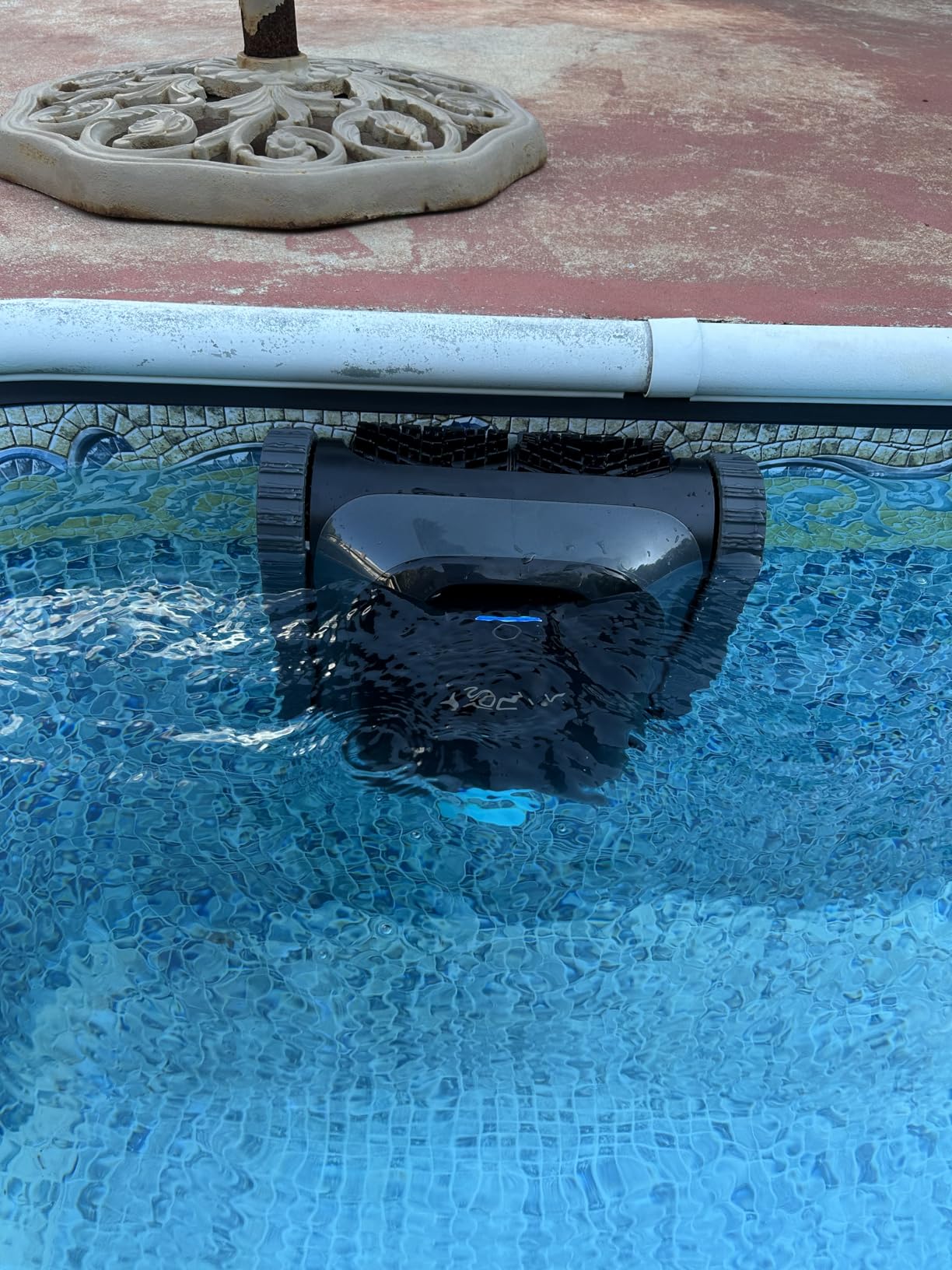
Runtime is the other headline. Eco mode runs up to 270 minutes on a single charge, and Auto, Floor, Wall and Scheduled modes run up to 180 minutes. On a large pool that means one charge covers a full pass with time to spare, which few machines in this price range can claim.
Coverage spans floor, walls, waterline and shallow areas above 12 inches, and 11 high-precision sensors drive a WavePath back-and-forth pattern that owners describe as visibly methodical rather than random. Caterpillar treads handle the traction work on steps and transitions.
How much does filtration quality change daily use?
More than most buyers expect. Pool owners cleaning after windstorms care about leaf capacity, but owners cleaning weekly care about fine particles, and the fine filter is what keeps sand and powder from returning to the floor. One rinse of a coarse basket leaves a cloudy film; a 3-micron layer removes it.
The practical trade-off is maintenance. Two filter layers mean more to rinse, and the fine element needs replacing rather than just washing. On a pool with heavy weekly use, that is a worthwhile cost. On a small pool cleaned twice a season, it is overkill.
What to watch before buying
The 4.4 rating is excellent, but it comes from 87 ratings. That is a thin evidence base compared with the Dolphin models, and it means the long-term picture for this specific unit is still forming. Buyers who prioritise proven support over specifications should read the two-year warranty carefully.
Some owners report the unit snagging on steps and tight corners that still need a manual brush, and the vision and app features add setup complexity for anyone who simply wants to press one button. At 735 g for the battery, it is also heavier in the hand than lighter cordless rivals when the basket is full.
6. Seauto Cordless Robot Is the Cheapest Way to Get Wall Climbing
Cordless Robotic Pool Vacuum, Pool Cleaner with Track Drive & Sonar Navigation, 180W Brushless Motor, Wall & Waterline Climbing, 150-Min Runtime, for Inground & Above-Ground Pools up to 2150 Sq. Ft.
Cordless, 150 min runtime, pools up to 2,150 sq ft
Dual 180W brushless motors, 3-hour charge
One-touch start, no app
Pros
- Lowest price in this roundup
- Industrial-grade tracks grip drains steps and corners
- Sonar navigation scans and maps the pool
- Dual 180W brushless motors with IP68 sealing
- True one-touch activation with no setup
Cons
- Push-button only with no app or scheduling
- 19.8 lb makes lift-out a two-handed job
- Less brand track record than Dolphin or WYBOT
The Seauto is the value pick, full stop. It is the least expensive machine in this group, and it still climbs walls, scrubs the waterline and maps the pool before it starts. Most robots at this level either give up wall climbing entirely or wander randomly across the floor.
Sonar navigation is the feature that separates it from other budget units. It scans and maps the pool rather than following a fixed pattern, so it wastes less time on already-clean lanes and is more likely to reach the far corner where debris collects behind a ladder.
Dual 180W brushless motors with IP68-grade internal sealing give it genuine suction authority, and the industrial-grade track drive keeps it moving over drains, steps and uneven surfaces without the wheelie problem. Three modes cover Floor, Wall and Full Coverage, with up to 150 minutes of runtime for pools up to 2,150 sq ft.
There is no app, no account and no firmware. You press one button on the unit and it runs. For anyone who does not want another app on their phone, that simplicity is a genuine feature rather than a compromise.
What you give up at this price
You give up scheduling. A robot with no timer is a robot you have to remember, and owners on pool forums consistently rank a weekly timer among the features that make automation feel like automation. Budget for remembering to launch it.
You also give up brand depth. Replacement parts, filter media and long-term support are harder to source for a lesser-known brand, and a Best Sellers Rank in the tens of thousands reflects a smaller installed base. Own the machine well and it will outlast your patience; if you like to tinker, buy a brand with a service network.
Is the weight a problem?
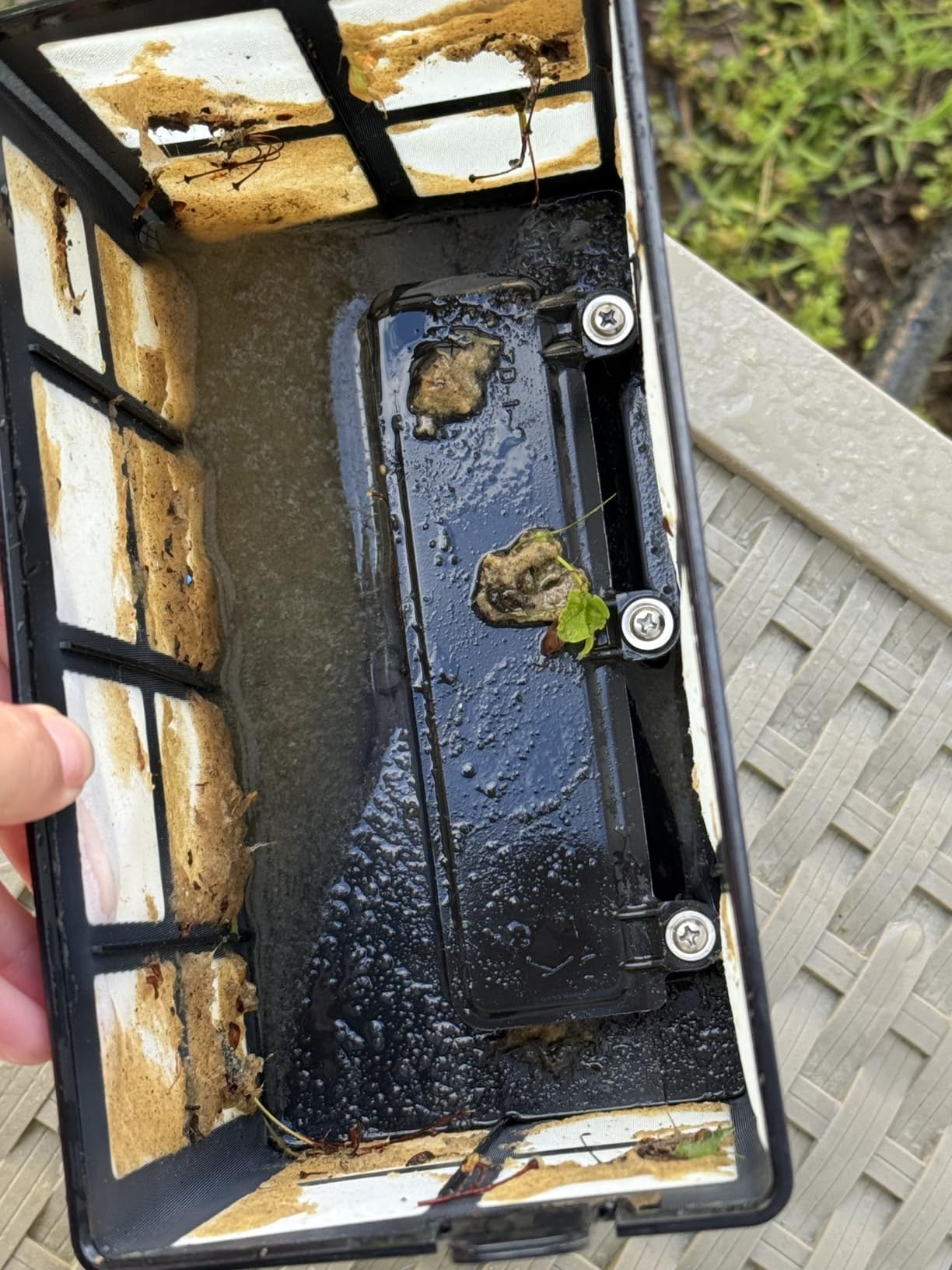
At 19.8 lb this is one of the heavier machines here relative to its size, and pulling it out of the pool takes two hands and a bit of balance. That is the most common complaint in the reviews, and it is worth weighing against how often you will have to do it.
Everything else about the package is unusually strong for the money: mapped navigation, tracks, brushless motors and wall and waterline climbing. If your pool is under about 2,150 sq ft and you will start it yourself, the trade is a good one.
7. Aiper Scuba V3 Adds AI Vision and a Wireless Charging Dock
AIPER Scuba V3 AI Vision Cordless Robotic Pool Cleaner, Grey
Cordless, AI vision camera and auto-park
Wireless charging dock, 4-hour charge
MicroMesh 180 and 3 micron filtration
Pros
- Front camera detects over 20 debris types
- Navium mode builds autonomous weekly plans
- Parks at the waterline and alerts the app
- Wireless dock needs no exposed connector
- MicroMesh multi-layer filtration
Cons
- Vision mode sometimes skips zones where debris collects
- App is required to enable the camera
- MicroMesh filter is a consumable
The Scuba V3 is the most technically ambitious machine under a thousand dollars, and the only one here with a vision system. A front-facing camera classifies more than 20 debris types and steers the robot directly toward what it sees rather than sweeping an area blindly.
In theory that is the right architecture for leaf cleanup: aim at the debris rather than at the pool. In practice, owners report the vision mode succeeding most of the time and occasionally skipping a specific zone where debris has collected, which is a fair description of every camera-based cleaner on the market.
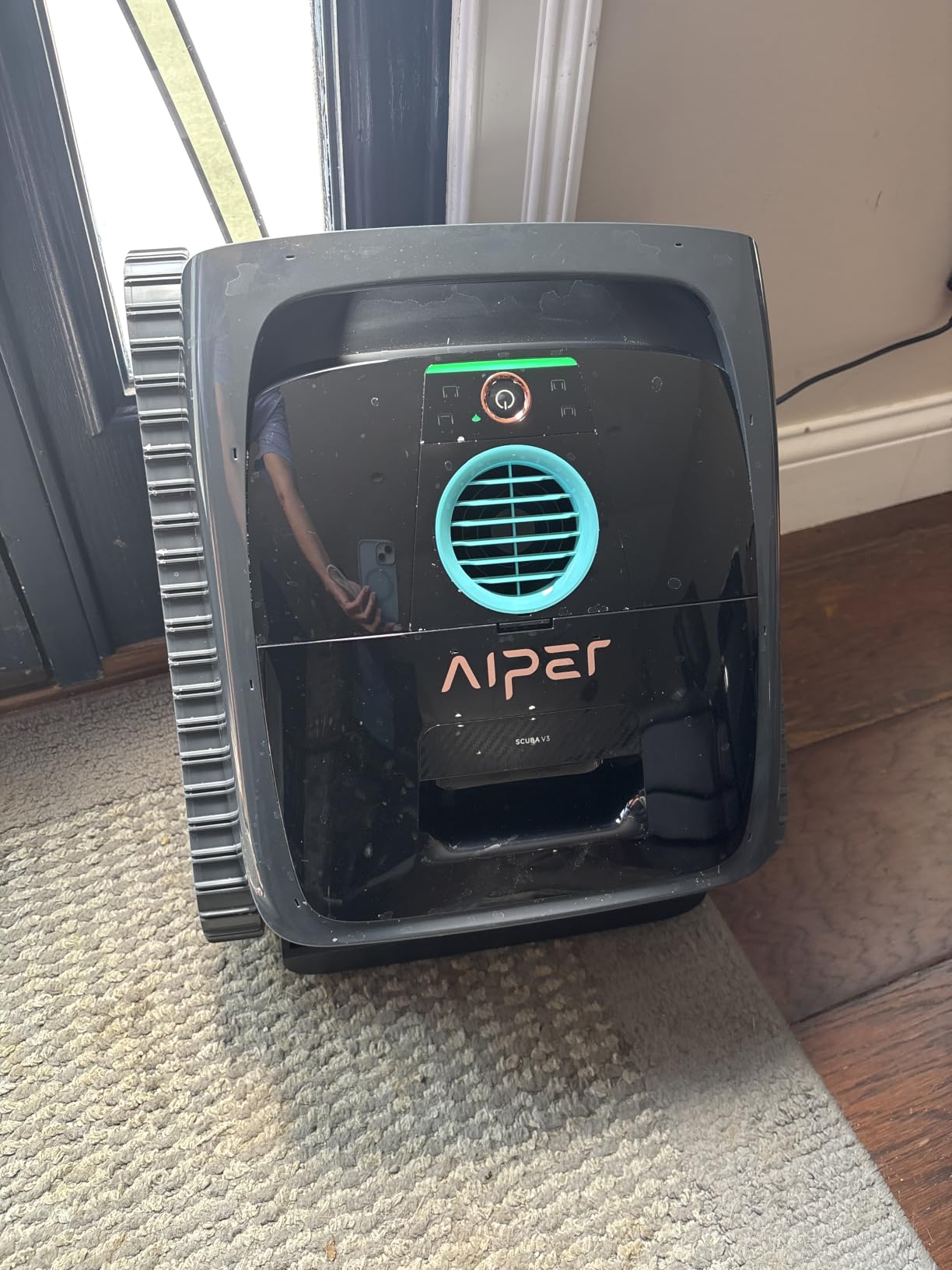
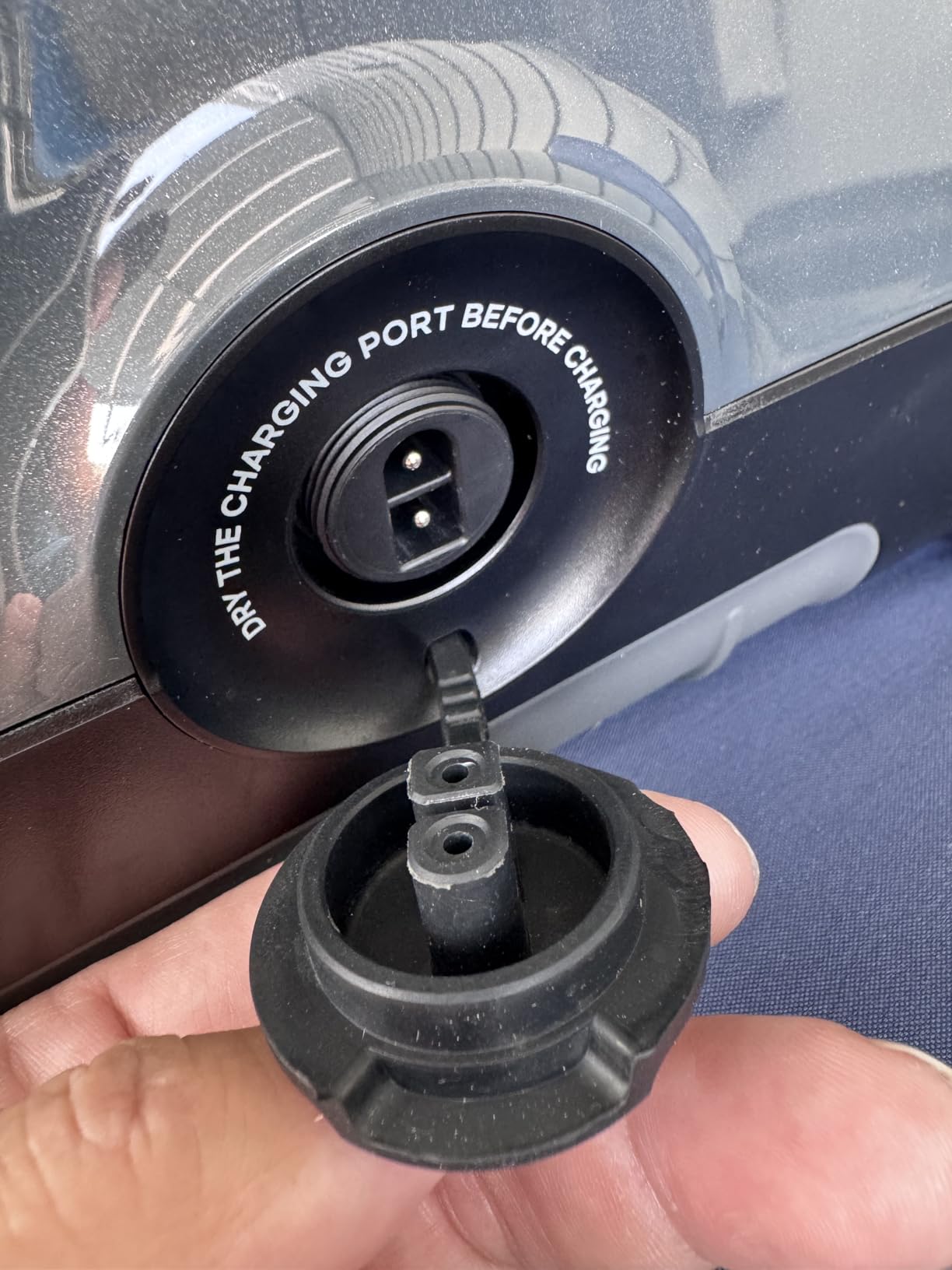
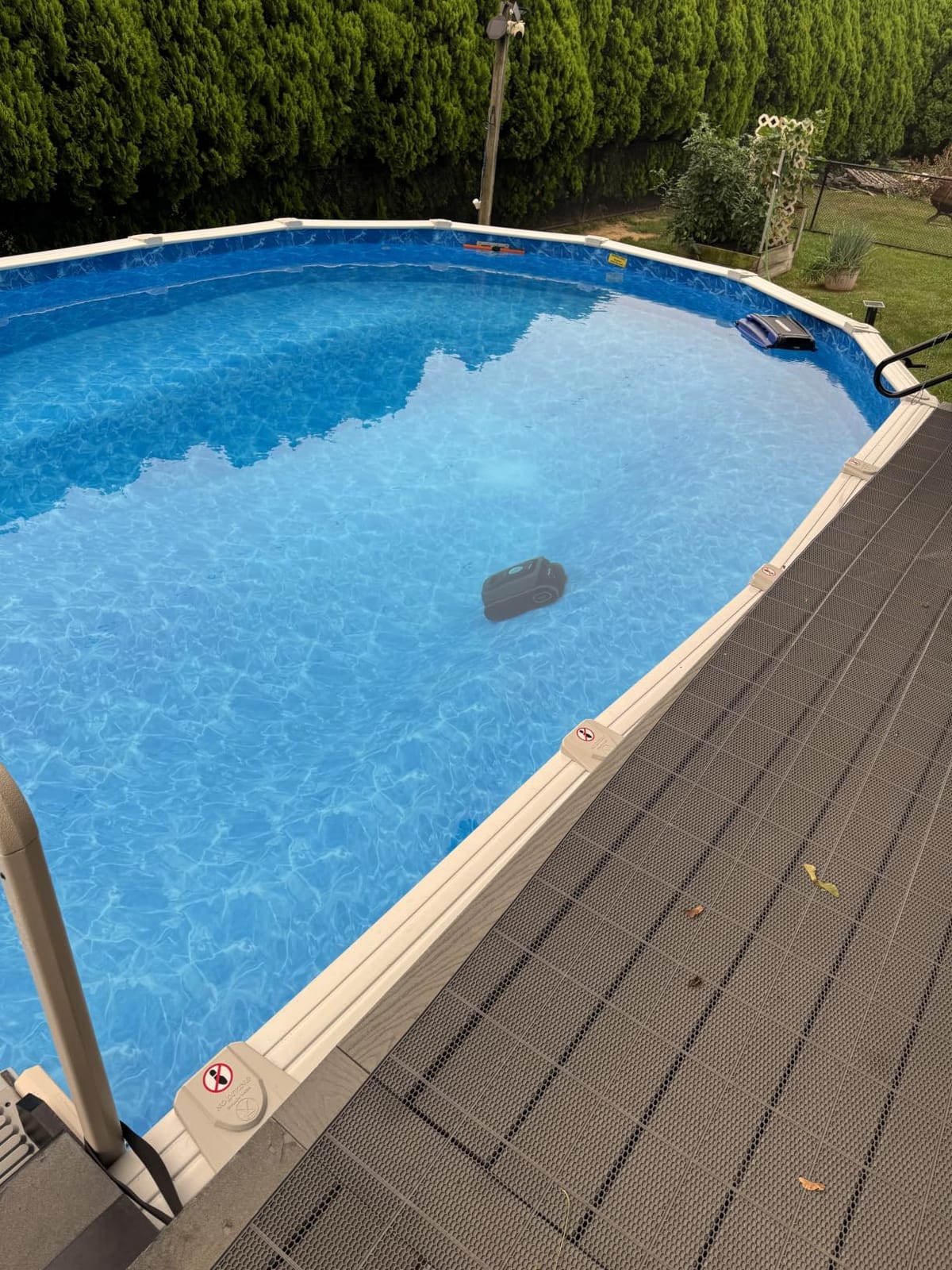
The two features that genuinely change daily use are the automatic waterline return and the wireless charging dock. The robot rises to the waterline, parks and notifies you in the app, so retrieval is no longer a matter of hunting for it with a pole. The dock needs no exposed connector, which removes the fiddly step that annoys owners of other cordless machines.
Cognitive AI Navium mode builds cleaning plans and runs them weekly on its own, and MicroMesh multi-layer filtration pairs a 180-micron layer with a 3-micron layer. Data processing stays on the device and carries TUV certification, which is unusual attention to detail for this category.
Is AI vision worth paying more for?
Sometimes, and it depends on your pool. In a pool with a fixed rectangular shape and no unusual features, a sensor-and-pattern machine like the WYBOT C2 covers the same area in the same time with far less to go wrong. The camera earns its premium in freeform pools, in leaf-heavy yards and in pools with steps and shallow shelves that pattern-based robots tend to miss.
It is also worth weighing the support angle. Several owners upgraded their ratings after firmware updates and Aiper support resolved specific problems, which tells you both that the machine improves after purchase and that the company is responsive when it does not.
What holds it back
The 4.0 average is tied for lowest here, and the reason is a 15% share of one-star ratings, the largest in this group. Those reviews cluster on detection reliability, waterline parking that does not always trigger, and durability or repair snags.
Two practical constraints matter. You cannot stop or recall the robot once it is in the water, and the vision camera has to be enabled through the app, with no on-device button. The 4-hour charge and roughly 18 lb lift-out weight are also at the demanding end of the cordless group.
8. WYBOT C2 Is the Best Cordless Value in the Group
Wybot C2 Cordless Pool Vacuum for Inground Pools, Robotic Pool Cleaner
Cordless, up to 180 min runtime and 2,152 sq ft
10-micron plus 180-micron dual filters
Seven cleaning modes, 3.5-hour charge
Pros
- Highest average rating in this roundup at 4.6
- Three brushless motors for suction and climbing
- Dual 10-micron and 180-micron filtration
- Seven cleaning modes with app scheduling
- Auto-parking at the pool edge with hook included
Cons
- Does not park at the waterline
- Battery plug must be unscrewed and re-secured each use
- 24 lb makes the included hook effectively required
The WYBOT C2 carries the highest average rating in this entire roundup, at 4.6 from 372 ratings, with 77% five-star and only 4% one-star. For a first cordless purchase in this price range, the ratings distribution matters as much as the number, and this is the cleanest one available.
The specification sheet backs up the rating. Three brushless motors deliver strong suction and reliable wall and step climbing, dual filtration pairs a 10-micron ultra-fine filter with a 180-micron primary, and a single charge covers up to 180 minutes or about 2,152 sq ft.
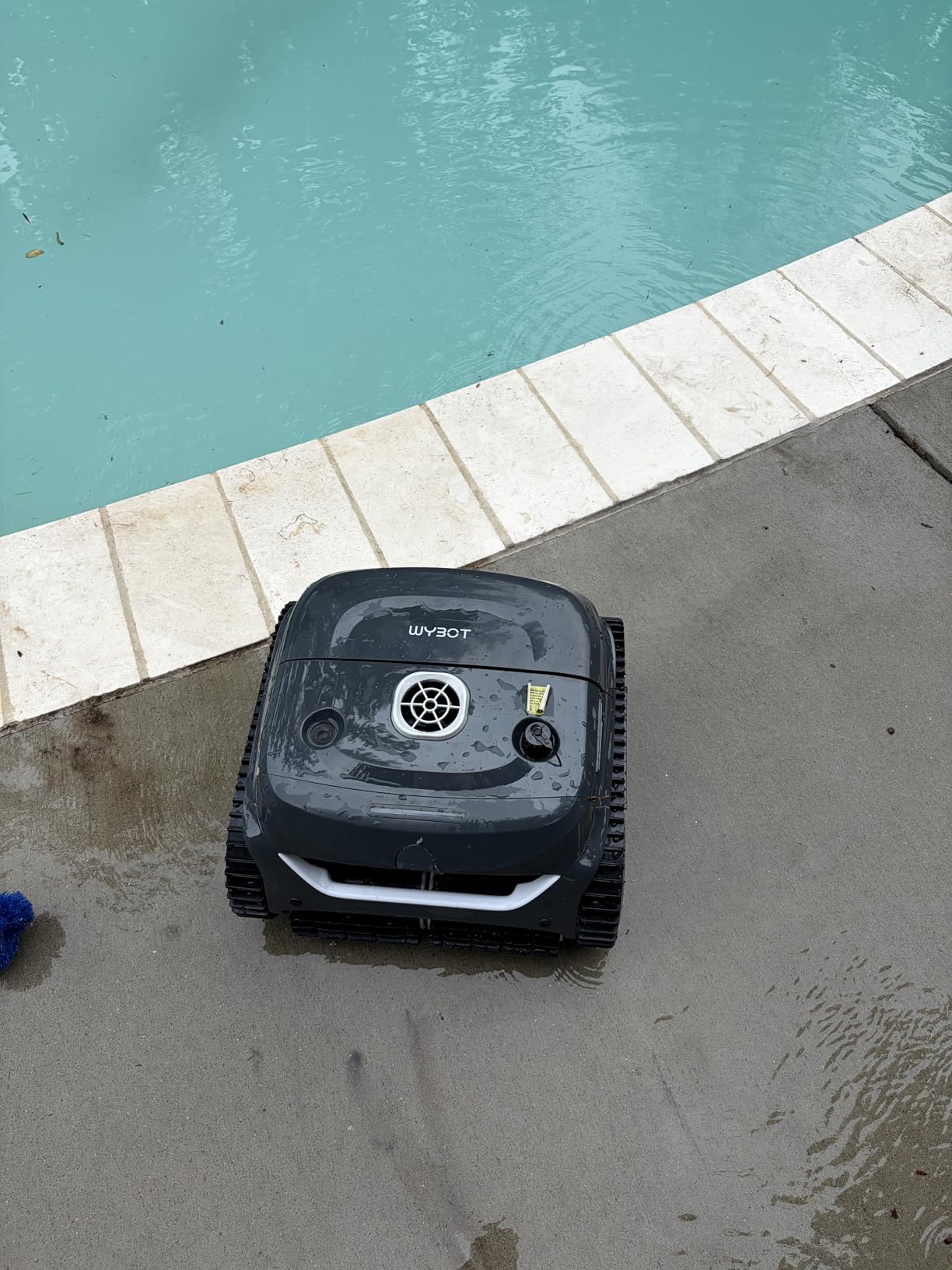
Seven cleaning modes with scheduling through the app give you genuine control over how it behaves, and a built-in gyroscope with intelligent navigation reduces missed areas compared with random-pattern machines. The 3-litre canister is generous for a machine of this size, so mid-cycle emptying is rarely necessary.
Auto-parking at the pool edge when the cycle finishes saves you from dragging a net around the perimeter looking for it. It parks at the edge rather than climbing to the waterline, which is a small difference that matters on shallow steps.
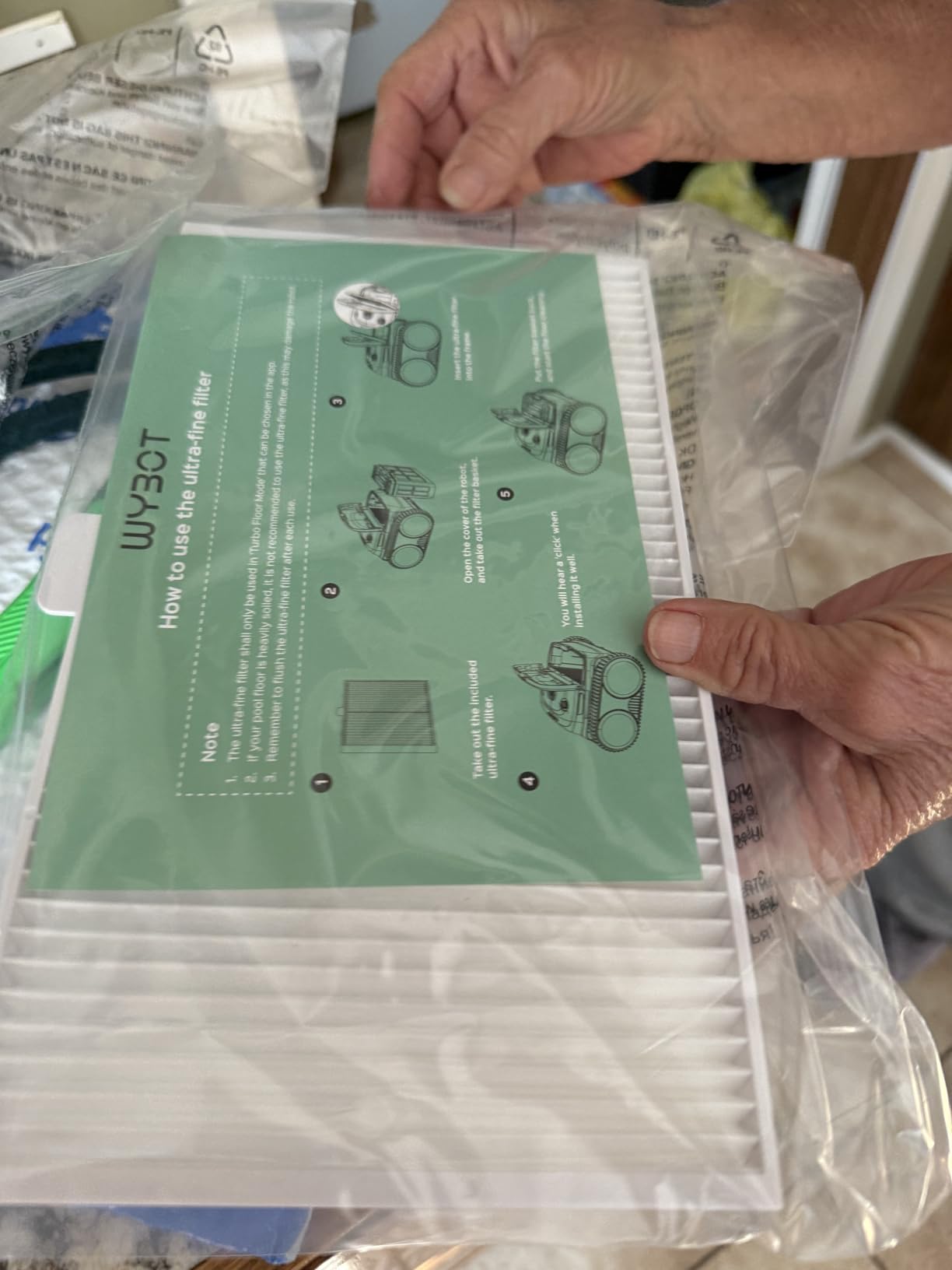
Why the filter pairing is worth knowing
Dual filtration solves a problem single-basket machines create. The 180-micron primary layer catches leaves and twigs, protecting the much finer 10-micron layer from clogging. Without that staging, fine dust jams the only filter and the machine loses suction mid-cycle.
For most residential pools the 10-micron layer is the more useful of the two, because it is what takes sand and pollen out of the water rather than merely trapping the obvious debris. Owners consistently single out suction and the fine filter as the reasons for their ratings.
What you need to live with
It is the heaviest machine in this roundup at 24 lb, so the included retrieval hook stops being a convenience and becomes a requirement. If you dislike using a pole, weigh this against the 7.5 lb Aiper Seagull Pro before ordering.
The battery plug has to be unscrewed and re-secured before every use, which is a small friction point that owners mention often, and the app interface can be awkward to scroll on smaller phone screens. Neither is a dealbreaker, and neither is unusual in this category.
9. Aiper Seagull Pro Is the Easiest Cordless Unit to Lift Out
AIPER Seagull Pro Cordless Robotic Pool Cleaner with Hook, WavePath Navigation, Wall-Climbing, Quad-Motor, 150 mins Runtime for Inground Pools up to 1,600 sq.ft, ZT6002
Cordless, 150 min runtime, only 7.5 lb
Quad motors up to 196W, 80 GPM filtration
3-4 hour recharge, two-year protection
Pros
- Lightest cordless machine here at 7.5 lb
- Four-wheel drive climbs walls and scrubs the waterline
- Quad motors up to 196W filtering 80 GPM
- 7800mAh battery with up to 150 min runtime
- Retrieval hook included
Cons
- Only three cleaning modes
- No app control or scheduling
- Filter mesh is a consumable needing replacement
Weight is the unglamorous spec that decides who enjoys a cordless robot, and the Seagull Pro wins it comfortably. At 7.5 lb it is the lightest cordless machine in this roundup by a wide margin, and every one of the heavier competitors runs to 18 lb or beyond once loaded.
Owners consistently note that being able to grab it with one hand and drop it in the water changes the daily habit entirely. A robot you dread lifting is a robot you stop running, and that is how most automation quietly fails.
Suction is not the trade-off you might expect. The quad-motor system is specified at up to 196W filtering roughly 80 gallons per minute, the four-wheel-drive chassis climbs walls and scrubs the waterline, and WavePath navigation covers floor, walls and waterline in one pass with low energy draw.
A 7,800mAh battery gives up to 150 minutes of runtime for pools up to 1,600 sq ft, with a three-to-four-hour recharge. Two years of product protection and a supplied retrieval hook round out an unusually complete package.
What you give up for that weight
Feature depth. There are three cleaning modes, Floor, Wall and Auto, against seven on the WYBOT C2, and there is no app, no scheduling and no remote control. This is a machine you start by pressing a button on the robot itself, which is a virtue for some people and a limitation for others.
The filter mesh is a consumable that needs periodic replacement, so ongoing costs are real. Budget for a spare set each season if you run it weekly, and factor that against the cost of the machines that ship with no filter consumable at all.
Who should buy this one
Buy it if weight is your main concern, if your pool has a deep end where retrieving a heavy machine is genuinely awkward, or if you want wall and waterline cleaning without dealing with an app. It is the rare budget cordless robot that does the four main zones and stays light.
Skip it if you want the machine to run on a schedule while you are at work. Nothing in this design compensates for the missing timer, and that is the feature most often cited as the difference between a robot and a chore.
10. Beatbot Sora 30 Suits Leaf-Heavy Pools With 6800 GPH Suction
Beatbot Sora 30 Pool Vacuum, Floor & Wall & Waterline & Platform Cleaning, 6800GPH Power, Smart Parking, 300Min Runtime, 5L Capacity, for Above & In-Ground Pools 3229 sq.ft, Deep Blue
Cordless, 6800 GPH suction, 5L basket
Up to 300 min floor cleaning on 10,000mAh
Pools up to 3,229 sq ft, two-year warranty
Pros
- Largest debris capacity in this roundup at 5L
- Parks at the water surface and drains itself
- 6800 GPH suction captures heavy leaf debris
- Ultrasonic sensing of ledges and shallow areas to 8 inches
- Up to 300 minutes of floor cleaning
Cons
- Longest charging time in this group at 4.5 hours
- App required for one-touch retrieval
- 10.5 kg weight even with surface parking
The Sora 30 is built around one problem: autumn. It has the largest debris capacity here at 5 litres, the highest quoted suction at 6800 GPH, and the longest stated floor-cleaning runtime at up to 300 minutes on a 10,000mAh battery. If your yard drops leaves, that combination is worth more than any app feature.
The HydroBalance structure is engineered to resist clogging while pulling heavy leaf debris through in a single pass, which is the failure mode that stops cheaper machines halfway through a windy week.
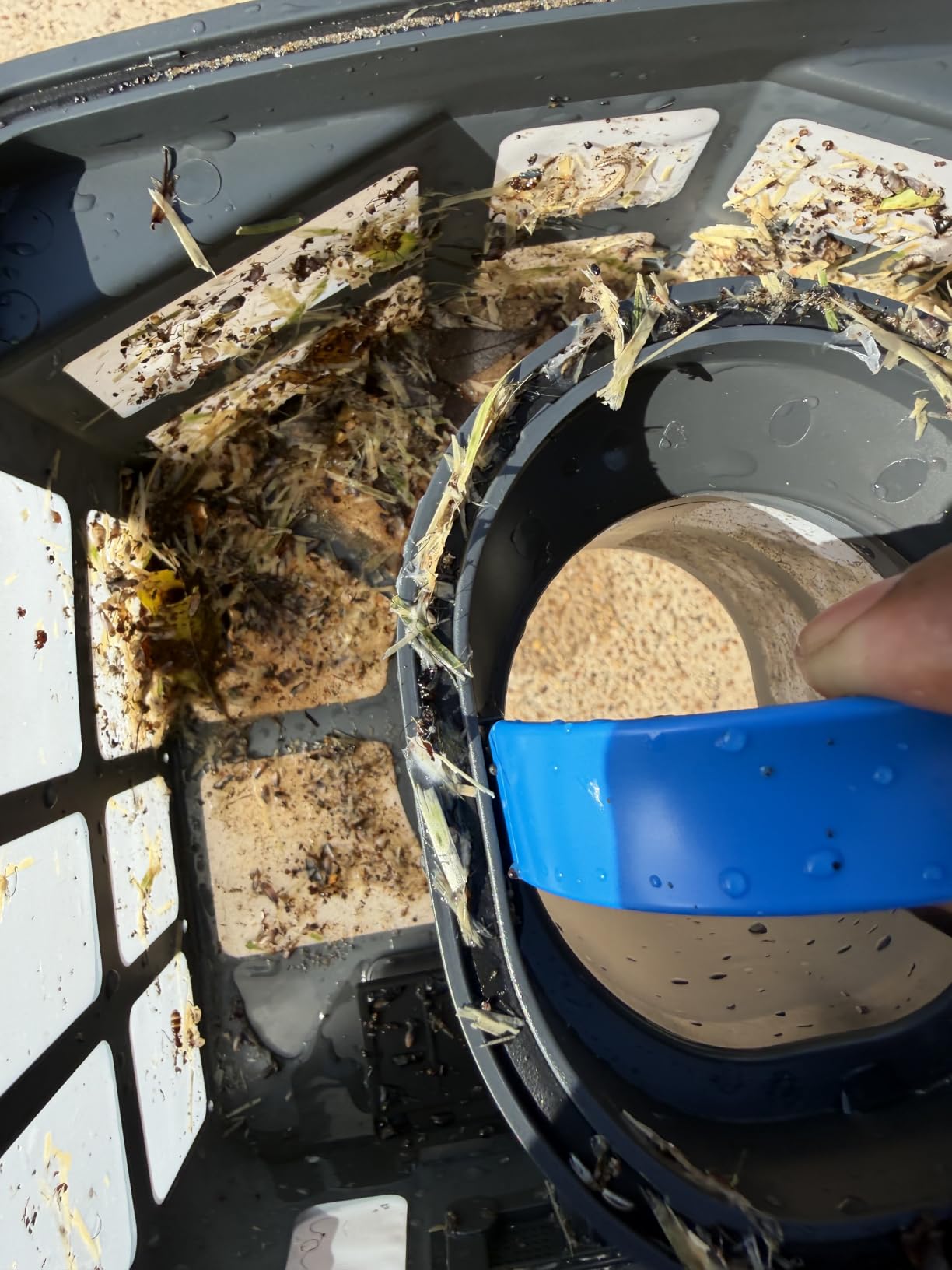
Retrieval is the feature we did not expect to like this much. The robot rises to the water surface, parks at the edge and releases its internal water automatically, so you are not hauling a waterlogged 10.5 kg machine over the coping. It drains itself so it is light enough to lift one-handed once parked.
Ultrasonic sensors detect ledges, platforms and shallow areas down to 8 inches, and the four-zone program covers floor, waterline, walls and platform. Pools up to 3,229 sq ft are covered on a single charge, which is the largest capacity claim in this group.
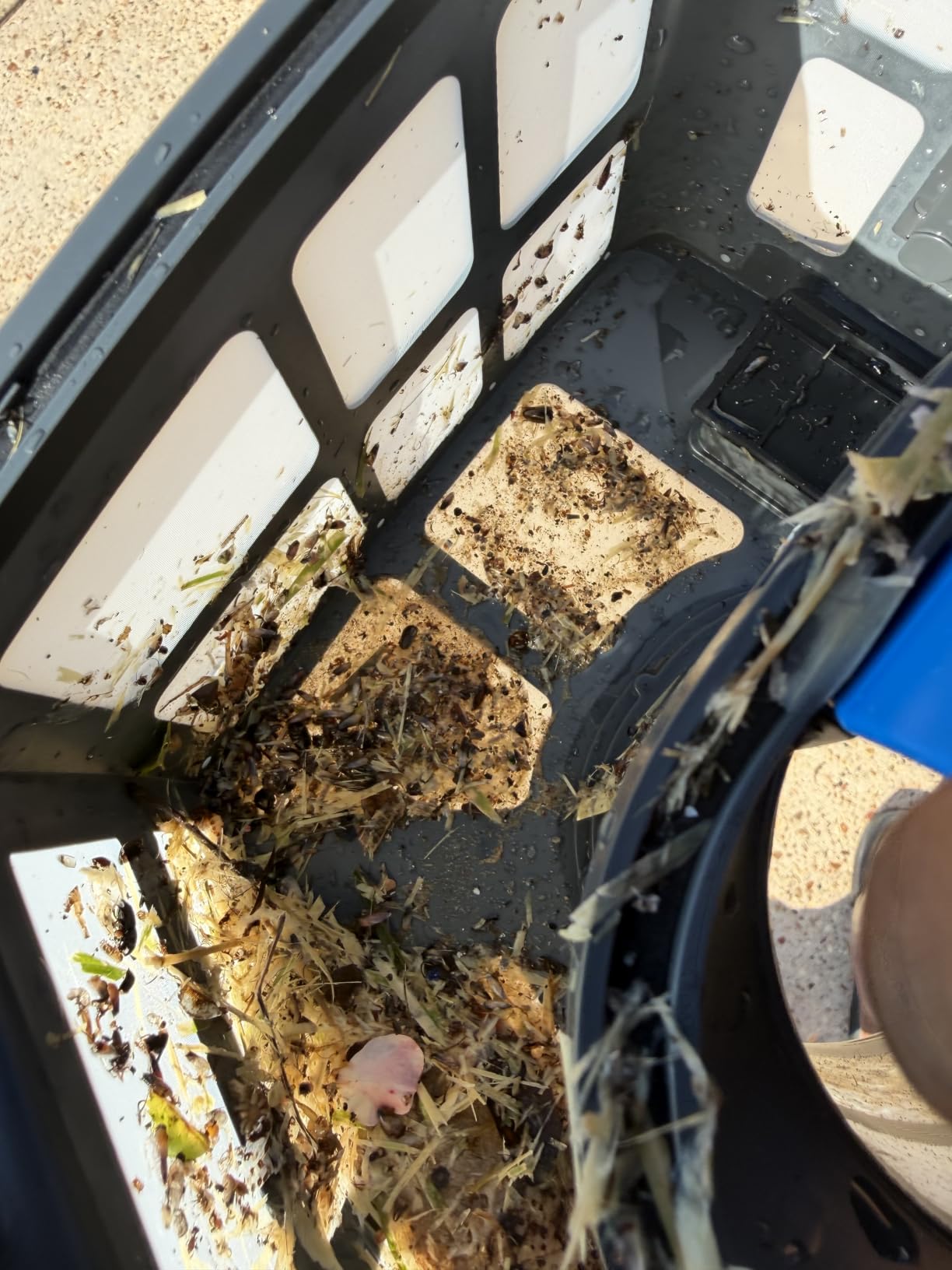
How much capacity do you actually need?
More than most buyers think, and it depends on tree cover rather than pool size. A small pool under two large deciduous trees fills a 3-litre canister in one run. A large pool with no trees over it can run a small basket for weeks without a cleanout.
So match the basket to your yard, not your pool. If you are clearing a single storm rather than managing weekly leaf fall, any of the machines in this roundup will do the job given a second pass.
Where the compromises are
The 4.5-hour charge is the longest here, and it is hard to ignore when you also have the longest runtime. Plan your cycle around an evening or an overnight charge rather than a mid-afternoon top-up, or accept that a long clean and a long recharge are part of the same package.
One-touch retrieval depends on the app, and the app is required for the automatic surface park, which weakens the very feature this machine is built around. At 10.5 kg it is still a heavy lift despite the draining behaviour. The two-year warranty is solid, and the 4.4 average from 253 ratings reflects a machine owners are happy with.
Corded vs Cordless Robotic Pool Cleaners: Where the Budget Goes
Corded machines have been the pool owner’s default for thirty years, and for good reason. They run a full cycle at full suction without watching a battery gauge, they skip the lithium-ion pack entirely, and parts and filters have been manufactured for them since the 1990s. The Dolphin Nautilus CC Plus is the clearest example: nearly 14,000 ratings of evidence that a simple corded design still works.
Cordless machines spend their budget on hardware that a corded one does not need: a battery, a charger or dock, a controller board and often an app. That is where the money goes inside this budget, and it is why the cordless machines here top out at lower suction figures or shorter runtimes than the corded leaders.
Both our top corded and top cordless picks have real limitations. The CC Plus needs an outlet and cable management. The WYBOT C2 weighs 24 lb and has an unscrewable battery plug. Neither is a clean win, which is why we rank them for different pool types rather than declaring an overall winner on technology.
For a complete look at how the categories differ, the broader robot pool cleaner comparison covers premium models where the trade-offs shift again.
Which one should you buy?
Buy corded if you have a nearby outlet, a straightforward pool and no interest in app control. You get proven reliability, no battery degradation and no firmware to think about.
Buy cordless if you have no outlet, a freeform pool, steps that need scrubbing, or you want the machine to run on a schedule. You also take on battery ageing and a shorter list of long-term failure parts.
What about battery safety?
Lithium-ion cells deserve a moment’s thought, because a pool robot is a sealed battery that sits unattended near water. We are not going to claim any specific model in this roundup is subject to a recall, and if you are buying a cordless unit, check the manufacturer’s safety notices for your exact model number before you charge it unattended.
Two habits cover most of the risk. Charge on a non-combustible surface away from water rather than on a pool deck, and store the unit dry and out of direct sun between seasons. Both are in the product care instructions for the cordless models here.
What 300, 500, 700 and 1,000 Dollars Actually Buy You
The clearest way to shop inside a price cap is to know what each band changes. Here is the honest ladder, using only the machines in this roundup.
At the 300 tier. You get cordless convenience and wall climbing without the name-brand premium. The Seauto is the example: sonar mapping, track drive, dual brushless motors and three cleaning modes, with no app and a two-handed lift-out. You give up scheduling, brand depth and parts availability.
In the 400 to 500 range. You get the two things most buyers actually want: fine filtration and app scheduling. The WYBOT C1 adds four-zone cleaning with steps, and the Aiper Scuba S1 adds a replaceable 3-micron filter with Eco runtime up to 270 minutes. This is the sweet spot for most in-ground pools.
In the 600 to 700 range. You get capacity and corded robustness. The Dolphin Escape brings a 60% larger cartridge and track drive, and the Beatbot Sora 30 brings a 5-litre basket, 6800 GPH suction and surface parking. This band is for pools that collect real debris.
Near the 1,000 mark. You get the features that used to require a step up: vision-based detection, a wireless charging dock, on-device data processing certification and two-year support programmes, as on the Aiper Scuba V3. The premium buys automation polish rather than raw cleaning power.
The mistake we see most often is spending 200 dollars more for wall climbing on a machine that then needs manual help with steps. Check the zone list before you check the price.
How to Match a Pool Robot to Your Pool Shape, Surface and Size
Start with coverage, not power. Decide whether you need floor only, floor plus walls, or floor plus walls plus waterline. Floor-only robots such as the Nautilus AG are honest, well-made machines, but they will never clean the band of waterline scum that you see most clearly from inside the pool.
Then check pool length against the rating. Most of these machines are rated to 33 ft, which covers most above-ground and small in-ground pools. The Dolphin Nautilus CC Plus goes to 40 ft, which is why it is our overall pick for larger in-ground installations.
Next, match the filter to the debris. Coarse mesh handles leaves and is cheap to rinse. Pleated or nano-rated cartridges handle fine sand, dust and pollen but cost more to replace. If your pool sits under trees, prioritise basket volume; if it sits beside a lawn or road, prioritise micron rating.
Finally, look at warranty length as a proxy for build quality rather than a promise. Two years of coverage appears on the Dolphin Escape, the Aiper Scuba S1, the Aiper Seagull Pro and the Beatbot Sora 30. One-year and unstated terms on the cheapest units tell you something real about expected service life.
What owners get wrong most often
They buy a robot rated for a much larger pool than they own, then spend the difference for features they never use. A machine sized for 3,000 sq ft in a 1,200 sq ft pool is simply over-specified.
They also ignore the cord. On any corded model, measure from your outlet to the far end of the pool before you buy, and leave slack so the cable can swing without wrapping the return fitting. Cord length was the most common complaint on the Dolphin Escape.
Finally, they skip the weekly timer question. If you do not run the robot on a schedule, you have not bought automation, you have bought another appliance on your weekend list. Choose a model with app scheduling or accept the habit.
Is Polaris or Dolphin Better Under This Budget?
At this budget Dolphin wins, and not by a small margin. Three of the ten robots in this roundup are Dolphins, and the category-leading machine by rating history is a Dolphin. The reasons are replacement parts availability, a filter and accessory ecosystem that fits any pool, and a service network that other brands at this price have not built.
Polaris is a respected name in pool equipment, and its robots have their own strong fan base, but none reached this roundup under a thousand dollars with the rating history to compete directly. If you are set on Polaris, you are likely looking above this cap.
The more useful comparison under a thousand dollars is Dolphin against the cordless specialists. Dolphin wins on proven suction, parts and build. WYBOT, Aiper, Beatbot and Seauto win on scheduling, fine filtration, auto-parking and price. Most buyers end up choosing between those two philosophies rather than between two brands.
One forum pattern is worth repeating: across pool-owner discussions, Dolphin, Aiper and WYBOT are the three names recommended most often, with warranty length and long-term reliability treated as the deciding factors. That matches what the rating data shows here.
Frequently Asked Questions
What is the best robotic pool cleaner on a 1,000 dollar budget?
The Dolphin Nautilus CC Plus is the best overall pick under this cap. It climbs and scrubs pool walls, has a top-load filter basket that rinses in seconds, and is rated for in-ground pools up to 40 ft. It is corded, so you need an outlet near the pool and cable management on every run.
What is the best robotic pool cleaner for the money?
The WYBOT C2 offers the best balance of rating, features and effort. It has the highest average rating in this group at 4.6 from 372 ratings, dual 10-micron and 180-micron filtration, three brushless motors, seven app-scheduled cleaning modes and up to 180 minutes of runtime. The main drawback is its 24 lb weight.
What is the best budget robotic cleaner?
On a tight budget the Seauto cordless robot is the strongest option. It is the least expensive machine in this roundup yet still maps the pool with sonar, climbs walls and waterlines, and uses dual 180W brushless motors with a track drive. It has no app or scheduling and weighs 19.8 lb.
Are cordless robotic pool cleaners worth it?
Yes, if you have no outlet near the pool, a freeform shape or steps that need scrubbing. Cordless models add scheduling, app control and auto-parking. The trade-off is battery ageing, heavier units for lift-out and generally lower peak suction than corded machines of the same price.
Do robotic pool cleaners clean walls and the waterline?
Some do and some do not. The Dolphin Nautilus CC Plus, WYBOT C1, WYBOT C2, Aiper Scuba S1, Aiper Seagull Pro, Aiper Scuba V3 and Beatbot Sora 30 all climb walls and scrub the waterline. The Dolphin Nautilus AG is floor-only by design, and the Dolphin Escape cleans the floor without wall coverage.
What size pool robot do I need?
Most of the machines in this roundup are rated for pools up to 33 ft in length or roughly 1,600 to 2,150 sq ft. The Dolphin Nautilus CC Plus is rated to 40 ft. Above-ground frame pools need a floor-focused model such as the Nautilus AG or the Dolphin Escape.
How long do robotic pool cleaners last?
It depends far more on maintenance than on brand. Rinse the filter basket after every run, empty debris before it compacts, store the unit dry out of direct sun and clean the brushes and tracks regularly. A well-maintained corded machine commonly runs for many seasons, while cordless units are limited more by battery cell ageing.
The Bottom Line on the Best Robotic Pool Cleaners Under a Thousand Dollars
The Dolphin Nautilus CC Plus is our pick for the best robotic pool cleaners under a thousand dollars, because wall climbing, an easy-rinse top-load filter and close to 14,000 owner ratings add up to hardware that simply works. Buy it if you have an outlet and an in-ground pool up to 40 ft.
Buy the WYBOT C2 instead if you want app scheduling and the highest rating in the group, the Dolphin Nautilus AG if your pool is above-ground and you want the lightest machine, or the Beatbot Sora 30 if leaves are your main problem. Whichever you choose, match the coverage zones to your pool before you match the budget.