
The garage is the hardest room in most houses to heat. It has a concrete slab, a thin steel door, and often no insulation at all in the walls, so the temperature inside drops below freezing within hours of closing it for the night. That is the gap the best propane garage heaters were built to close, and picking the right one comes down to a single question: do you want to warm one spot for a few hours, or do you want the whole room usable all winter?
Those two jobs want different hardware. Spot heating is a radiant job. You want a small emitter or cabinet heater that throws heat at your workbench, your car, or the spot you are standing in, and you do not care that the far corner stays cold. Whole-room heating is a forced-air or permanently mounted job. You want a blower moving air through the space, or a vented furnace drawing outside air in and exhausting combustion gases out. The most common purchase mistake we see is buying a radiant spot heater and expecting it to heat a 24×24 garage to a comfortable temperature.
We spent the last several weeks working through the current lineup of portable propane garage heaters, reading specifications, digging into owner reports, and comparing how each one actually behaves in a cold space. The picks below are the ten units we would consider, ordered so you can stop reading as soon as you find your situation. We also cover sizing math, tank runtime, placement, and the safety rules that matter specifically in a garage. If you want the wider picture of heating options first, our guide to the best garage heaters overall covers electric and gas options side by side.
Before you dig further, three things narrow the list almost immediately. How big is the garage, and how tall are the ceilings. How well insulated is it. And are you running off 20 lb cylinders you carry out to the driveway, or do you have a 100 lb tank with a regulator. Get those three answers and the right category is obvious.
Table of Contents
Top 3 Propane Garage Heater Picks in 2026
Our top three represent the three situations that come up most often: a small garage that needs safe indoor-rated spot heat, a large bay that needs serious output from a tank-top unit, and a mid-size space where a fan-assisted radiant unit is the best compromise. The full list of ten follows underneath.
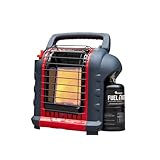
Mr. Heater Portable Buddy 9,000 BTU
- Radiant heat at 4000 or 9000 BTU
- Indoor and outdoor rated
- About 225 sq ft of coverage
- Low oxygen depletion safety system
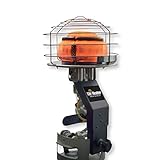
Mr. Heater 540T 45,000 BTU
- Radiant output to 45000 BTU
- Covers about 1125 sq ft
- Three adjustable output levels
- Mounts to a 20 lb tank

Mr. Heater Big Buddy PRO 18,000 BTU
- Radiant plus convection fan
- Three settings to 18000 BTU
- Covers about 450 sq ft
- Up to 216 hrs on two tanks
All 10 Propane Garage Heaters Compared in 2026
This table covers every unit in the roundup, with the same fields for each one so you can scan it in a single pass. Read the coverage figure as the manufacturer’s claim, and then match it against the square footage of your own bay rather than taking it at face value.
| Product | Specifications | Action |
|---|---|---|
| Mr. Heater Portable Buddy 9,000 BTU |
|
Check Latest Price |
| Mr. Heater 540T 45,000 BTU Tank Top |
|
Check Latest Price |
| Mr. Heater Big Buddy PRO 18,000 BTU |
|
Check Latest Price |
 Dura Heat TT-360 40,000 BTU Tank Top Dura Heat TT-360 40,000 BTU Tank Top |
|
Check Latest Price |
 GASLAND Flame Jet 125,000 BTU Forced Air GASLAND Flame Jet 125,000 BTU Forced Air |
|
Check Latest Price |
 Remington 60,000 BTU Forced Air Remington 60,000 BTU Forced Air |
|
Check Latest Price |
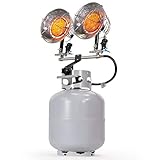 XtremepowerUS 30,000 BTU Dual Burner XtremepowerUS 30,000 BTU Dual Burner |
|
Check Latest Price |
 Flame King 60,000 BTU Forced Air Flame King 60,000 BTU Forced Air |
|
Check Latest Price |
 CAMPLUX 18,000 BTU Cabinet Heater CAMPLUX 18,000 BTU Cabinet Heater |
|
Check Latest Price |
 Avenger 18,000 BTU Cabinet Heater Avenger 18,000 BTU Cabinet Heater |
|
Check Latest Price |
1. Mr. Heater Portable Buddy 9,000 BTU – Best Indoor-Rated Radiant Pick
Mr. Heater 9,000 BTU Portable Buddy Radiant Propane Heater
Heat output: 9000 BTU
Coverage: about 225 square feet
Heating method: Radiant
Fuel: Propane
Pros
- Dual 4000 and 9000 BTU radiant settings
- Approved for both indoor and outdoor use
- Low oxygen depletion safety system
- Only 7.1 pounds so it moves easily
- Runs 5.4 hours on low with a 1 lb cylinder
Cons
- Only covers about 225 square feet
- Run time on a 1 lb cylinder is a few hours on high
This is the reference point for the whole category. It carries a 4.7 rating across 29212 reviews, and it is the unit most people mean when they say portable propane garage heater. At 7.1 pounds, with a carry handle and a 1 lb cylinder socket on the back, it moves from the bench to the driveway in one hand.
The heating is purely radiant. The emitter glows and pushes infrared heat in a cone in front of it, which is exactly what you want when you are crouched over a motorcycle engine or welding a frame. The cone is fairly narrow, so aiming matters more than placement for overall comfort.
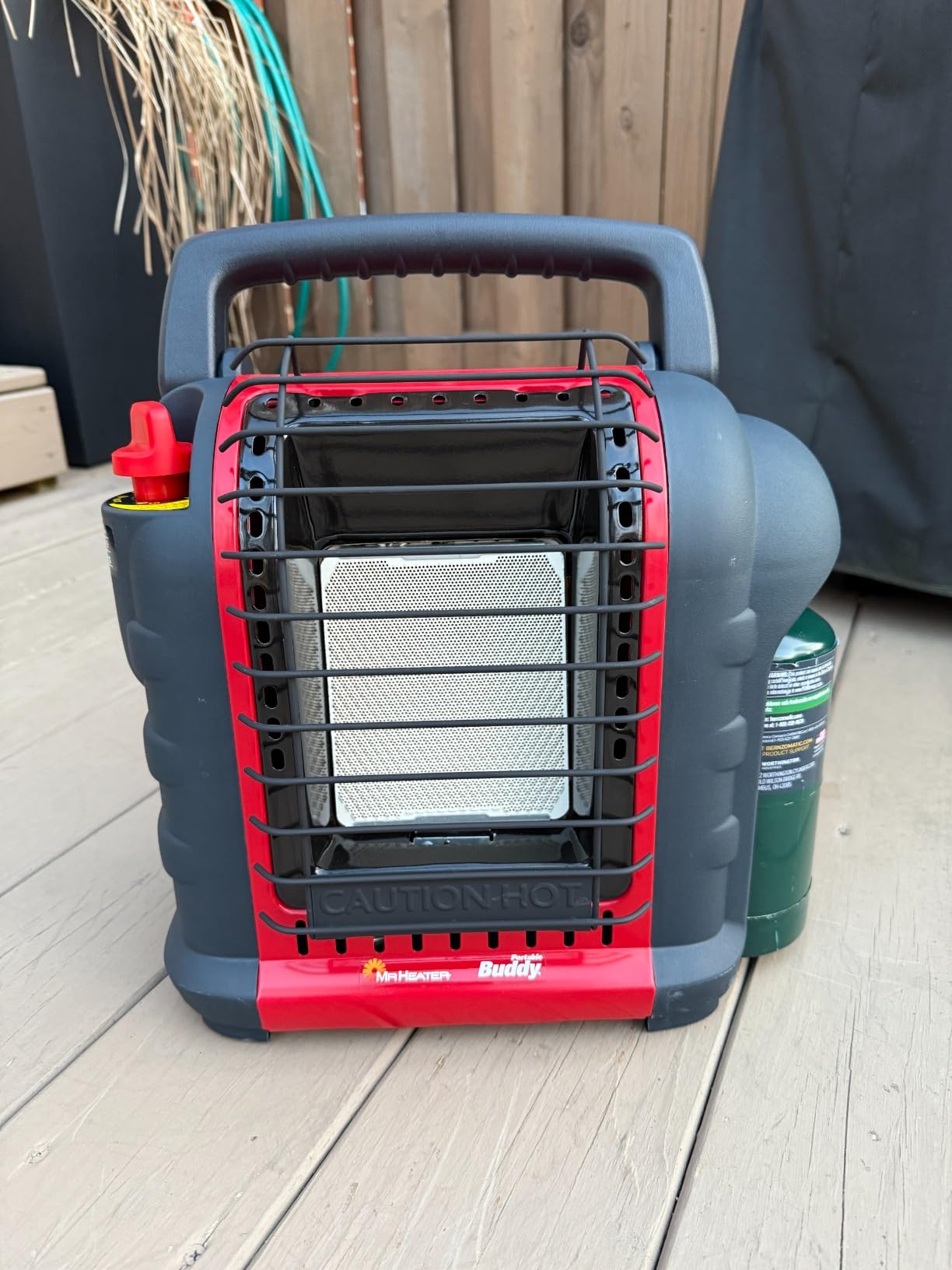
Two settings are the real feature here. Low is 4000 BTU and high is 9000 BTU, and the difference matters in a way that surprises people. Low is genuinely usable for an entire evening of intermittent work in a one-car bay. High is for twenty minutes of warm-up before you walk out to the car in January.
On the safety side, this is one of the few units in the roundup listed for both indoor and outdoor use, and it carries a low oxygen depletion sensor that cuts the gas if the surrounding air thins out. That combination is why it shows up constantly in garage gym threads on r/GarageGym, where owners are weighing heat output against carbon monoxide worries, and why a widely-upvoted thread on r/hvacadvice pairs a larger Mr. Heater garage heater with a 100 lb tank run on its lowest setting.
Who the Portable Buddy suits
A one-car garage, a half-bay of a two-car space, a detached shed, a garage gym corner, or an emergency heat source when the power goes out. If you need more than about 225 square feet warmed, this is the wrong tool and no amount of enthusiasm will change the physics of a radiant emitter.
It is also the unit we recommend to anyone nervous about running gas indoors, because the indoor rating and the oxygen depletion sensor are both stated in the product data rather than inferred.
Where the Portable Buddy falls short
Runtime on a 1 lb cylinder is the practical limit. Manufacturer figures put low at 5.4 hours and high at 2.4 hours, which is fine for a weekend of Saturday projects and wrong for a week of daily work. Plan on moving to a 20 lb cylinder and a hose if you are using it daily.
It also cannot reach across a wide bay. Nobody’s fault, just a radiant heater pointed at a wall doing its job, but it is worth knowing before you set it up.
2. Mr. Heater 540T 45,000 BTU – Tank Top Radiant With Three Output Levels
Mr. Heater Original 540-Degree 45,000 BTU Tank Top Radiant Propane Heater
Heat output: 45000 BTU
Coverage: about 1125 square feet
Heating method: Radiant
Pros
- Adjustable 30000/36000/45000 BTU output
- About 9.5 hours on high from a 20 lb tank
- Tip-over shutoff and 360 degree tilt head
- Only 5.6 pounds to carry
- Mounts straight to a standard 20 lb tank
Cons
- Outdoor use only
- Heat projects upward unless you tilt the head
- First lighting takes practice
This is a different animal from the Buddy. It is a 45000 BTU unit that screws straight onto the collar of a 20 lb propane cylinder, weighs 5.6 pounds, and has a 360-degree adjustable tilt head. It rates 4.7 across 5016 reviews, with 85 percent five-star.
Three output levels matter more than the headline number. Running the regulator at 30000 BTU instead of 45000 stretches your tank roughly in half for very similar comfort once the space has warmed up. Owners in long-running workshop threads consistently describe running big heaters on their lowest setting as the sensible approach, and this unit gives you three detents to do it with.
The manufacturer runtime figure is about 9.5 hours on high from a 20 lb tank, which lines up closely with what the fuel actually contains. Treat that as the realistic number rather than an optimistic one.
What the 540T does better than the rest
Nothing else in this roundup pairs this much radiant output with this little mass. Five and a half pounds and 1125 square feet of claimed coverage means one person can move it from the far wall to the car without a dolly, which matters enormously in a one-car bay with a bicycle and a lawnmower already in it.
The tilt head is a small detail that pays off. Radiant tank-top heaters are notorious for throwing most of their heat at the ceiling, and being able to angle the emitter down the length of the bay solves most of that complaint.
Where the 540T is the wrong choice
It is listed for outdoor use only, which makes it a poor fit for a sealed residential garage with a running engine, a hot-dust workshop, or anything you plan to leave on overnight. It also has no fan, so nothing mixes the air and the far end of the garage will lag well behind the end you are facing.
First lighting takes practice, because you hold the gas button until the emitter glows. It is a two-minute learning curve, but people have returned units over it.
3. Mr. Heater Big Buddy PRO 18,000 BTU – Radiant Plus Convection Fan
Mr. Heater 18,000 BTU Big Buddy PRO Series Heater
Heat output: 18000 BTU
Coverage: about 450 square feet
Heating method: Radiant and convection
Pros
- Radiant warmth plus a built-in convection fan
- Three settings at 4000/9000/18000 BTU
- Up to 216 hours on two 20 lb tanks on low
- Rated for both indoor and outdoor use
- Low-oxygen and tip-over shutoff
Cons
- Heaviest portable unit here at 14.1 pounds
- Large footprint for a tight garage
- Costs more than smaller radiant heaters
The Big Buddy PRO is the rare heater that does two things properly. A radiant emitter warms you directly while a built-in fan pulls the warmed air across the room. In a 450 square foot space that hybrid approach beats pure convection and pure radiant by a wide margin, and it explains the 4.6 rating across 3607 reviews.
Three settings of 4000, 9000, and 18000 BTU give you a real dial. The low setting is the one people actually live on. The stated runtime of up to 216 hours on two 20 lb propane tanks at low is a genuine multi-week figure for intermittent use, and it is the longest run time of any unit here.
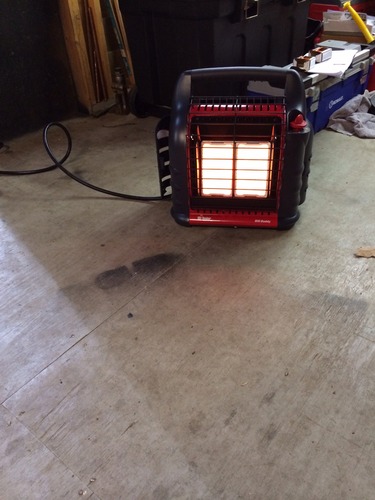
It is also indoor and outdoor rated with low-oxygen and tip-over shutoff, which keeps it in the running for garages that get used in every season.
Why this is our best value pick
If your garage is roughly 400 to 500 square feet and you want one heater to handle both a workbench session and a cold Saturday of car work, this is the compromise that gets closest without a permanently mounted unit. The fan mixes the air, so you stop fighting the cold spot three feet past the emitter.
It also works without electricity, which matters more than it sounds. After an ice storm knocks out power, a fan-assisted radiant heater is still running from a cylinder while every torpedo heater on your shortlist is dead.
Where the Big Buddy PRO disappoints
At 14.1 pounds this is the heaviest portable unit we tested, and the housing is a wide 18 inch by 18 inch footprint. In a one-car bay that already holds a car, the space you give up is real.
It is also more expensive than the small radiant heaters, and if all you need is a warm corner for a garage gym, you are buying fan and chassis you will not use.
4. Dura Heat TT-360 40,000 BTU – 360 Degree Tank Top Emitter
Dura Heat TT-360 Propane(LP) 360 Degree Tank Top Heater, Length: 8.9in, Width: 8.9in, Height: 20.24in,Silver
Heat output: 40000 BTU
Coverage: about 1000 square feet
Heating method: Radiant and infrared
Pros
- 360 degree emitter throws heat in all directions
- Stainless steel reflector and chrome emitter guard
- Quick connect fitting for standard 20 lb tanks
- Only 5.5 pounds
- Tip-over shutoff
Cons
- Much of the heat rises straight up
- Tip-over switch can latch until you reset it
- Outdoor and construction use only
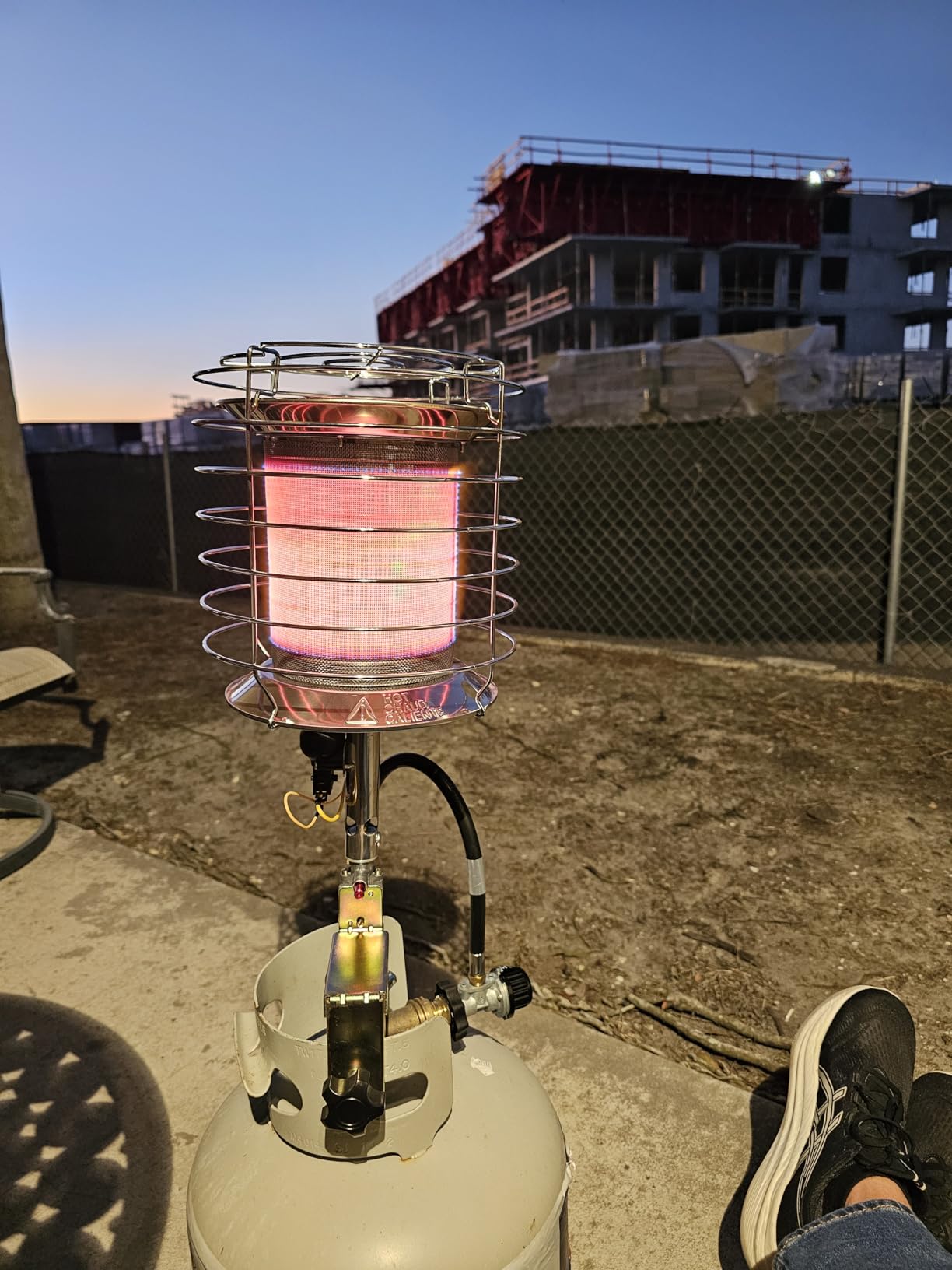
The Dura Heat TT-360 competes directly with the 540T and wins on a different axis. Its emitter is a 360-degree radius design with a stainless steel heat reflector behind it, so it throws warmth in all directions from the tank rather than needing to be aimed. Rated 4.5 across 2000 reviews.
Claimed coverage is about 1000 square feet, and the three output levels cover the middle ground between spot heating and a room-heating unit. At 5.5 pounds it is tied for the lightest heater in the roundup, and the quick-connect fitting takes a standard 20 lb cylinder without an extra adapter.
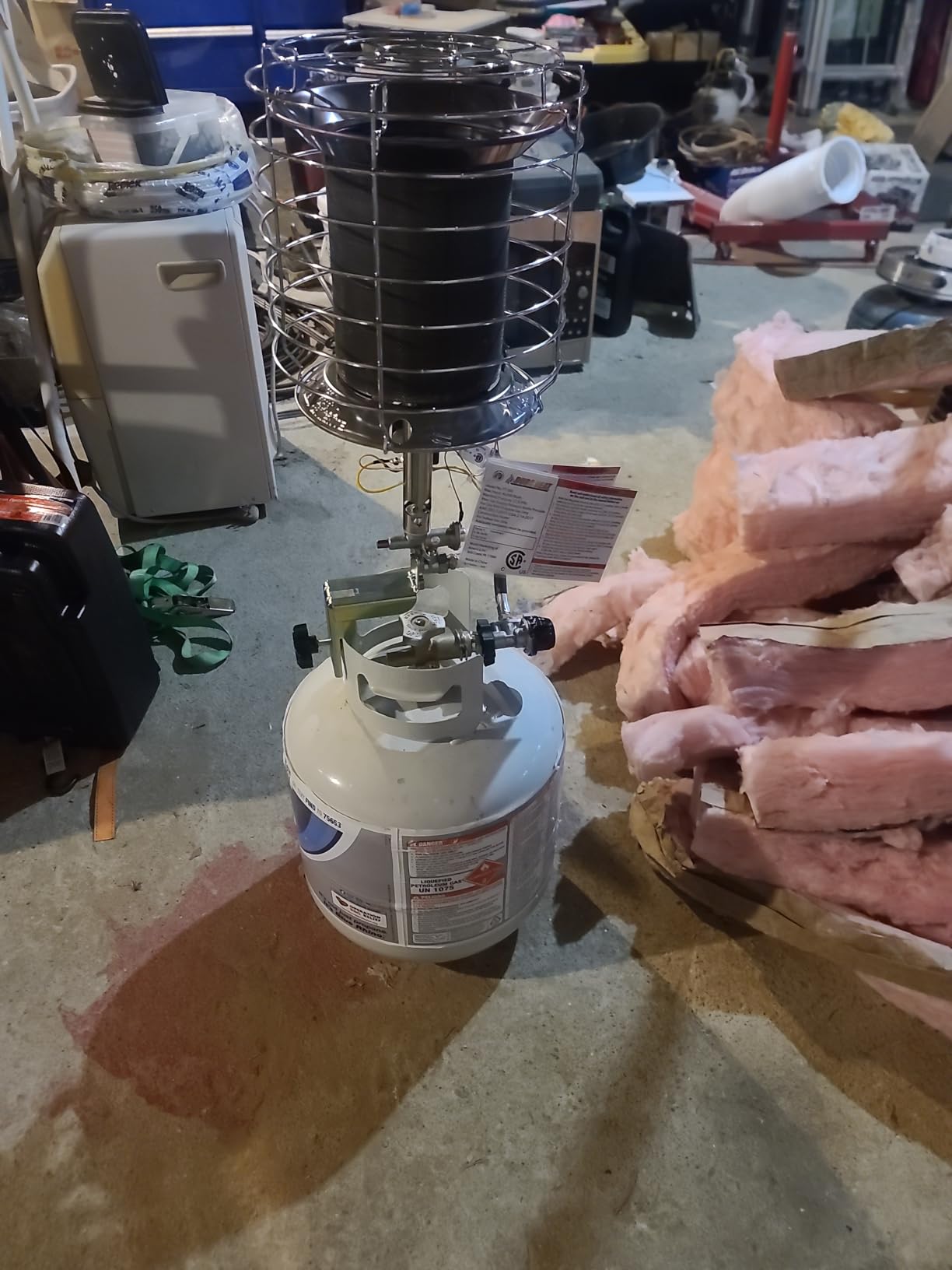
The build details are better than the price suggests. A rust-resistant chrome emitter guard and a stainless steel reflector are the parts that usually corrode first on this category of heater, and both are specified here.
Where the TT-360 earns its place
It is a good answer for a semi-enclosed workspace, an open-sided carport, a pole barn, or the bay of a shop where you work on a car from all sides. Owners doing weekend-only work in an uninsulated garage with a garage door permanently open report it pulling a work area to comfortable within a short session.
Because it is light and needs only a cylinder on top, it also travels well to job sites and outdoor work areas where there is no power at all.
Where the TT-360 disappoints
The upward heat throw is the honest drawback. Even a 360-degree emitter loses a meaningful share of its output to the ceiling, and owners report needing to tilt or reposition it once the space is warm. It heats the volume around the heater far better than it heats a wall across the bay.
It is listed for outdoor and construction use only, and the tip-over switch can latch after the unit is bumped, which means lifting it upright again before it will light. Neither is serious, but both annoy.
5. GASLAND Flame Jet 125,000 BTU – Forced Air for Large Shops
GASLAND 125,000 BTU Propane Force Air Heater for Garage, Heat Up 3100 Sq.Ft
Heat output: up to 125000 BTU
Coverage: up to 3100 square feet
Heating method: Forced air
Pros
- Highest output in this roundup
- Adjustable from 75000 to 125000 BTU
- CSA certified with overheat detection
- Includes a 10 foot hose and regulator
- Steel body built for barns and warehouses
Cons
- Forced air needs good airflow to work safely and effectively
- 13 pounds of bulk
- Output range is oversized for a small garage
This is the big-space answer. The Flame Jet puts out up to 125000 BTU through a forced-air duct and is listed for spaces up to 3100 square feet. It rates 4.5 across 1505 reviews, and for a 30×40 shop or a three-car bay it is the only unit here that gets the job done in one pass.
Output is adjustable from 75000 to 125000 BTU and the heat angle tilts, which matters more than it sounds in a space with high ceilings and cold corners. Owners of large shops in northern climates describe it as the difference between a workable winter morning and a delayed start.
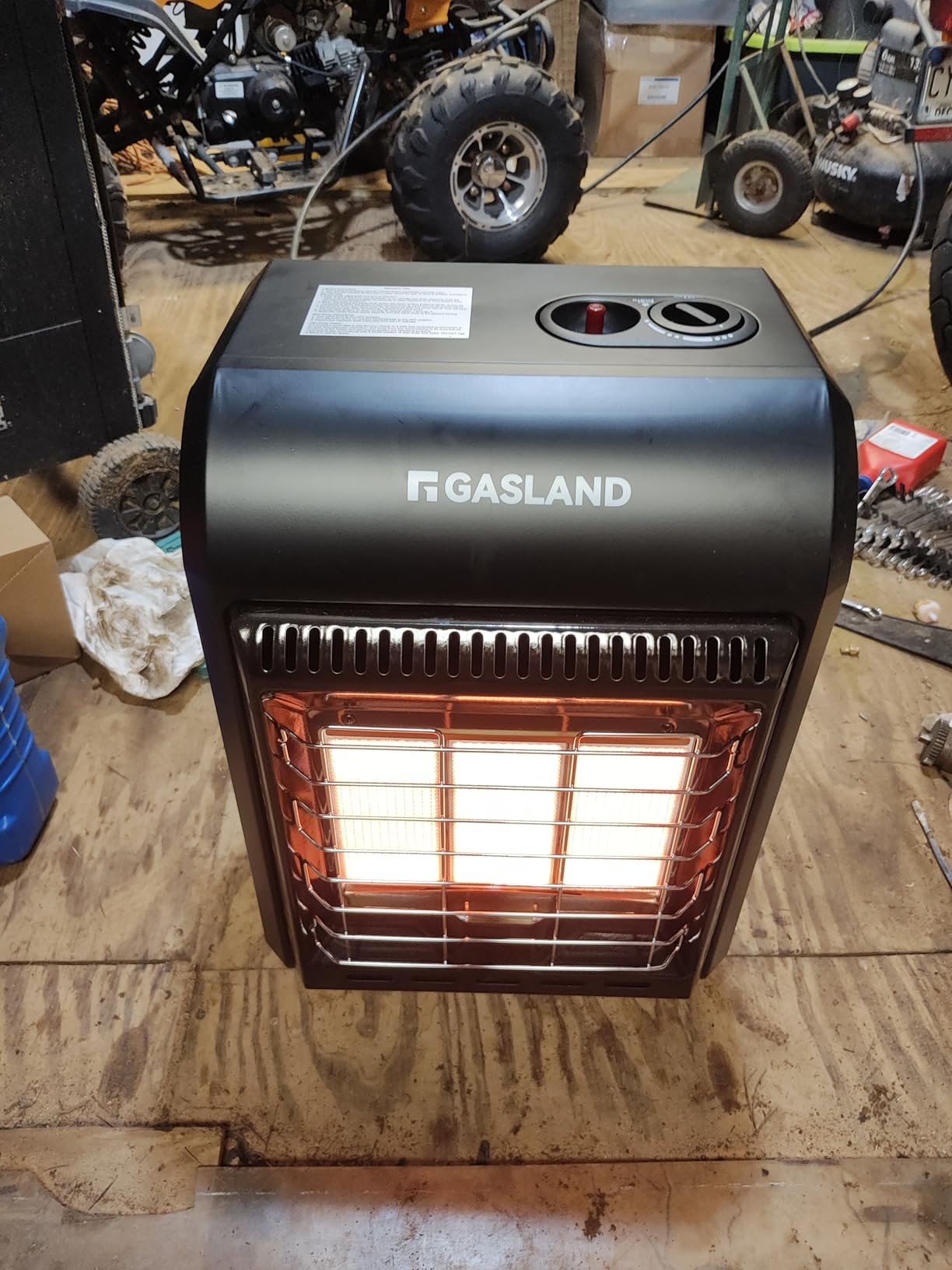
Safety hardware is specified in plain terms: CSA certification, continuous electronic ignition, an overheat detection system, and a thermo-electric safety valve. A 10 foot propane hose and regulator come in the box, and the stated low-setting runtime on a 20 lb cylinder is about 5 hours.
Who should buy the Flame Jet
Anyone with a 30×40 or larger workspace, high ceilings, or three-plus vehicles. It is also the right unit for barns, warehouses, and construction sites, which is where the steel body and the adjustable output genuinely pay off. If you have been fighting a large shop with a radiant heater and giving up, this is the change of category you need.
It draws about 2 amps on a 115 volt cord, so an ordinary outlet handles it fine.
Where the Flame Jet disappoints
Forced air is only as good as the airflow around it. In a tight enclosed residential garage this unit is oversized, loud, and stirs more dust than you would like. Owner feedback consistently centres on needing ventilation for it to work as advertised, which is exactly the arrangement the manufacturer describes.
It is also 13 pounds of sheet steel, and at 125000 BTU it is the second most expensive unit here. Buying it for a one-car garage is buying capability you will never use.
6. Remington 60,000 BTU – Rugged Forced Air for Two-Car Garages
Remington LP Forced Air Heater, Portable 60,000 BTU Space Heater for up to 1500 Square Feet – Liquid Propane Gas Powered, Tank Not Included
Heat output: 60000 BTU
Coverage: up to 1500 square feet
Heating method: Forced air
Pros
- 60000 BTU warms spaces up to 1500 square feet
- Only 11 pounds of steel construction
- Variable settings and adjustable height
- Thermocouple and flame-out fuel cutoff
- Includes a 10 foot hose and regulator
Cons
- Fan noise is loud enough that it is unsuitable where quiet matters
- Power cord is very short at under 1 foot
- LP connection takes extra force to screw onto a standard grill-type tank
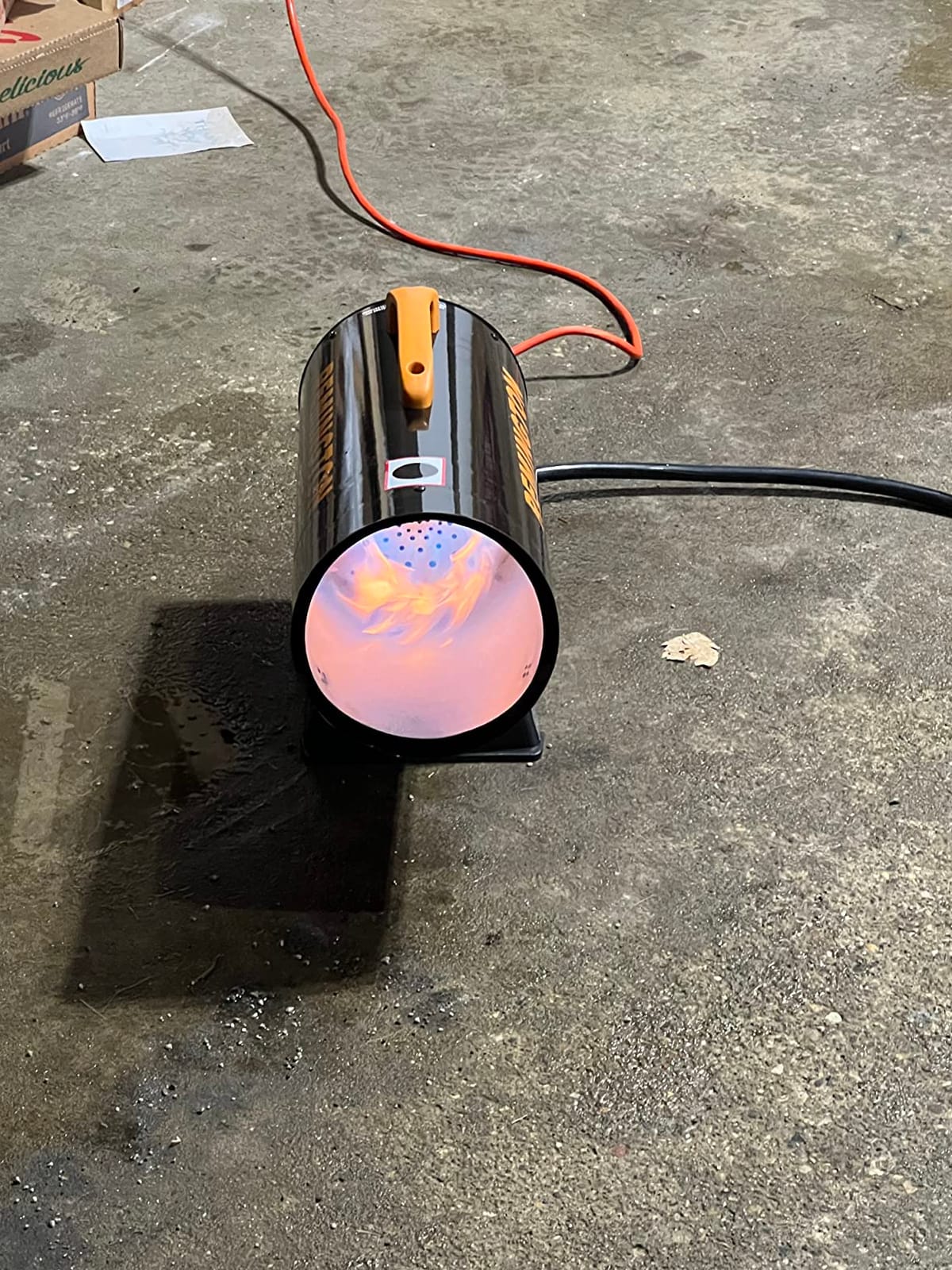
The Remington sits in the middle of this roundup where most two-car garages actually sit. 60000 BTU of forced air, claimed coverage up to 1500 square feet, and a 4.5 rating across 736 reviews. Owners report a garage going from cold to comfortable in 10 to 20 minutes, which is the speed you actually feel on a cold morning.
It is built like job-site equipment, which is the appeal. Heavy-duty steel at only 11 pounds means one person can carry it out to the driveway, reposition it, and bring it back. Variable heat settings and an adjustable height let you aim the output where you are working rather than across the whole floor.
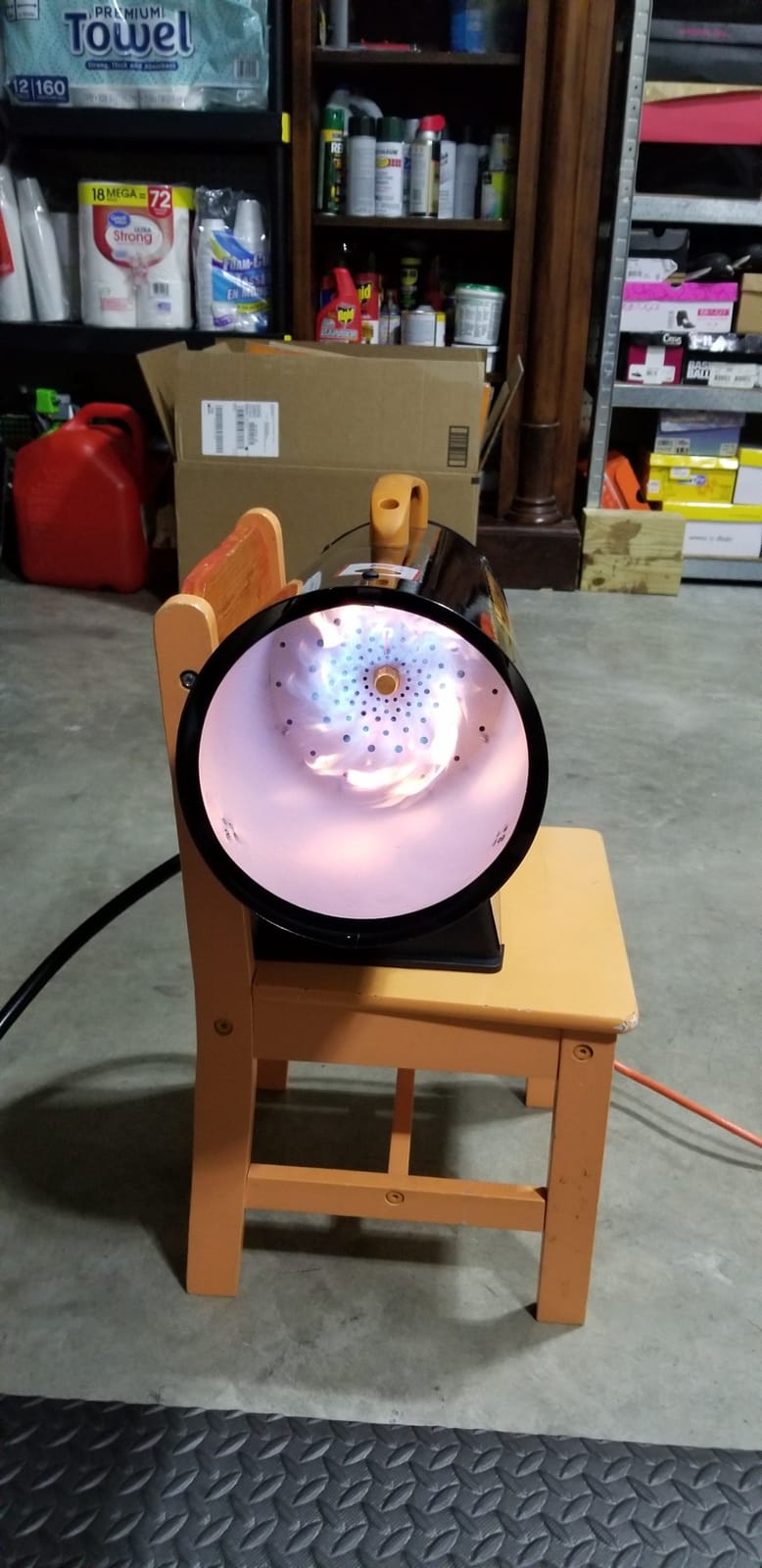
The protection package is thorough for this price tier: a thermocouple, high-temperature limit shutoff, flame-out fuel cut-off, and continuous electronic ignition. A 10 foot LP cylinder hose and regulator are included, so the only extra purchase is a cylinder.
What the Remington does well
It moves air. That is the whole value proposition, and in a two-car bay with a vehicle in it and a workbench at the back, forced air is the difference between warming the space and warming a five-foot circle. It is also the setup most owners on long-running forums converge on when they need the whole garage workable rather than a corner warm.
Warm-up speed is the underrated feature here. Ten to twenty minutes to a comfortable room means you can run it while you grab coffee and get to work instead of sitting in a coat.
Where the Remington is weak
Noise is the dominant complaint and it is not a minor one. The blower is loud enough that owners rule it out of garage gyms and shared workspaces, and long threads on Grassroots Motorsports split cleanly along exactly this line: torpedo-style output is powerful and loud, radiant is quiet but heats the zone instead of the room.
The power cord is listed at under 1 foot, so you will almost certainly need an extension, and the LP fitting onto a grill-style tank takes more force than most people expect on first attempt.
7. XtremepowerUS 30,000 BTU – Dual Burner Spot Heater
XtremepowerUS 30,000 BTU Propane Tanktop Heater Infrared Dual Burner Safety Shut-Off Valve, Tip-Over Switch for Garage, Camping, Hunting Double Burner
Heat output: 30000 BTU
Coverage: about 750 square feet
Heating method: Dual burner radiant
Pros
- Dual burners aim a concentrated wall of heat at one spot
- Three heat levels to 30000 BTU
- Tip-over switch cuts gas flow
- No assembly needed
- Chrome emitter guard and focusing dish
Cons
- Some shipments arrive without the required mounting screws
- Primarily an outdoor and patio unit rather than a whole-garage heater
- Manual lighting with matches rather than automatic ignition
This one does something none of the others do. A dual burner design concentrates heat into a narrow, intense wall aimed at a single target, which makes it the most precise spot heater in the group. It holds a 4.6 rating across 397 reviews with 80 percent five-star.
Claimed coverage is about 750 square feet, but treat that number as the footprint it influences rather than the room it conditions. What it really does is let you warm a chair, a work position, or a bench seat directly, with nothing wasted on the empty air around it.
Three heat levels reach 30000 BTU. The tip-over switch shuts off gas flow if the unit is knocked, which is the right feature to have on a cylinder-mounted appliance sitting on a driveway.
Where the dual burner design wins
It is the pick for a garage gym, a waiting area, an outdoor seating space, or any job where you stay in one place for a long stretch. A long-running thread on Grassroots Motorsports makes the point well: radiant heat is quieter and hits the zone, and a unit that concentrates on one zone is the logical version of that idea.
It also needs no assembly at all. It mounts directly to a 20 lb cylinder, and the steel frame with a rustproof chrome emitter guard and a heat-focusing metal dish resists the kind of damage that shows up on a driveway.
Where the XtremepowerUS falls short
It is listed for outdoor use, so it does not belong in a sealed garage with combustion risk concerns. It also lights with a match through a side ignition hole rather than automatically, which is the least convenient ignition method among the picks here.
The most common complaint is simple and annoying: some shipments arrive without the mounting screws. Check the box before you leave the driveway, because the unit is otherwise simple to set up.
8. Flame King 60,000 BTU – Forced Air With Long Tank Runtime
Flame King 60,000 BTU Portable Propane Forced Air Heater Outdoor Great for Jobsite, Construction, Garage, Patio, Stainless Steel
Heat output: 60000 BTU
Coverage: up to 1500 square feet
Heating method: Forced air
Pros
- Covers garages up to 1500 square feet
- Up to 8 hours on a single 20 lb bottle
- Hose and regulator assembly included
- Built-in auto piezo ignition
- Auto tip-over shutoff and fire detection
Cons
- Takes roughly 20 to 30 minutes to bring a space up to temperature rather than heating instantly
- Piezo igniter can be finicky and fail to light reliably
- Included hose may not include the adapter needed to fit a standard 20 lb propane tank
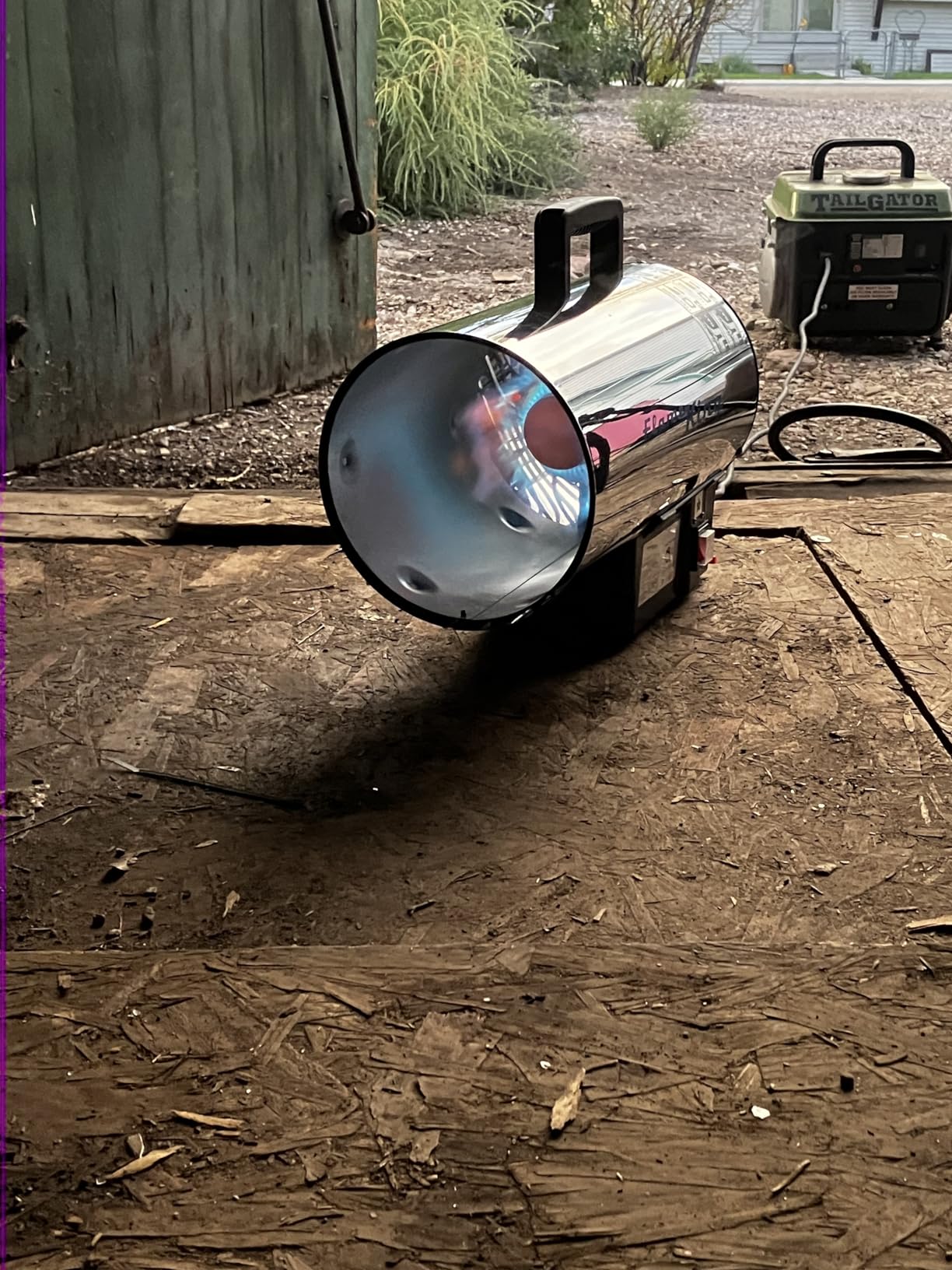
The Flame King covers the same 1500 square feet as the Remington at the same 60000 BTU, but the package is more complete. The hose with built-in regulator, auto piezo ignition, and a 120 volt wall plug are all built in, so unboxing and connecting a cylinder is the entire setup.
It rates 4.2 across 293 reviews, the lowest score in this roundup, and it is worth being straightforward about why. The stated runtime of up to 8 hours on a single 20 lb bottle is the longest of the 60000 BTU units here, and the safety set includes a fuel shutoff, a fire detection system, and a safety tilt shutoff.
Customer service is a quiet strength. Owners report Flame King sending replacements after warranty expiry, which is not something we can say about every brand in this category.
What the Flame King does better than the Remington
Quietness, and it is not marginal. Owners repeatedly describe it as noticeably quieter than typical forced-air propane heaters, which puts it in a different conversation when the space is a shared workshop or an office-adjacent gym. The 8-hour run time on one bottle means fewer cylinder swaps during a long session.
It is also the simplest of the two 60000 BTU units to get running, since the regulator is built into the hose rather than a separate part.
Where the Flame King is weak
Warm-up is slow. Owners put it at 20 to 30 minutes to bring a space up to temperature rather than the near-instant response of a radiant unit, which is the tradeoff you make for quiet blower operation.
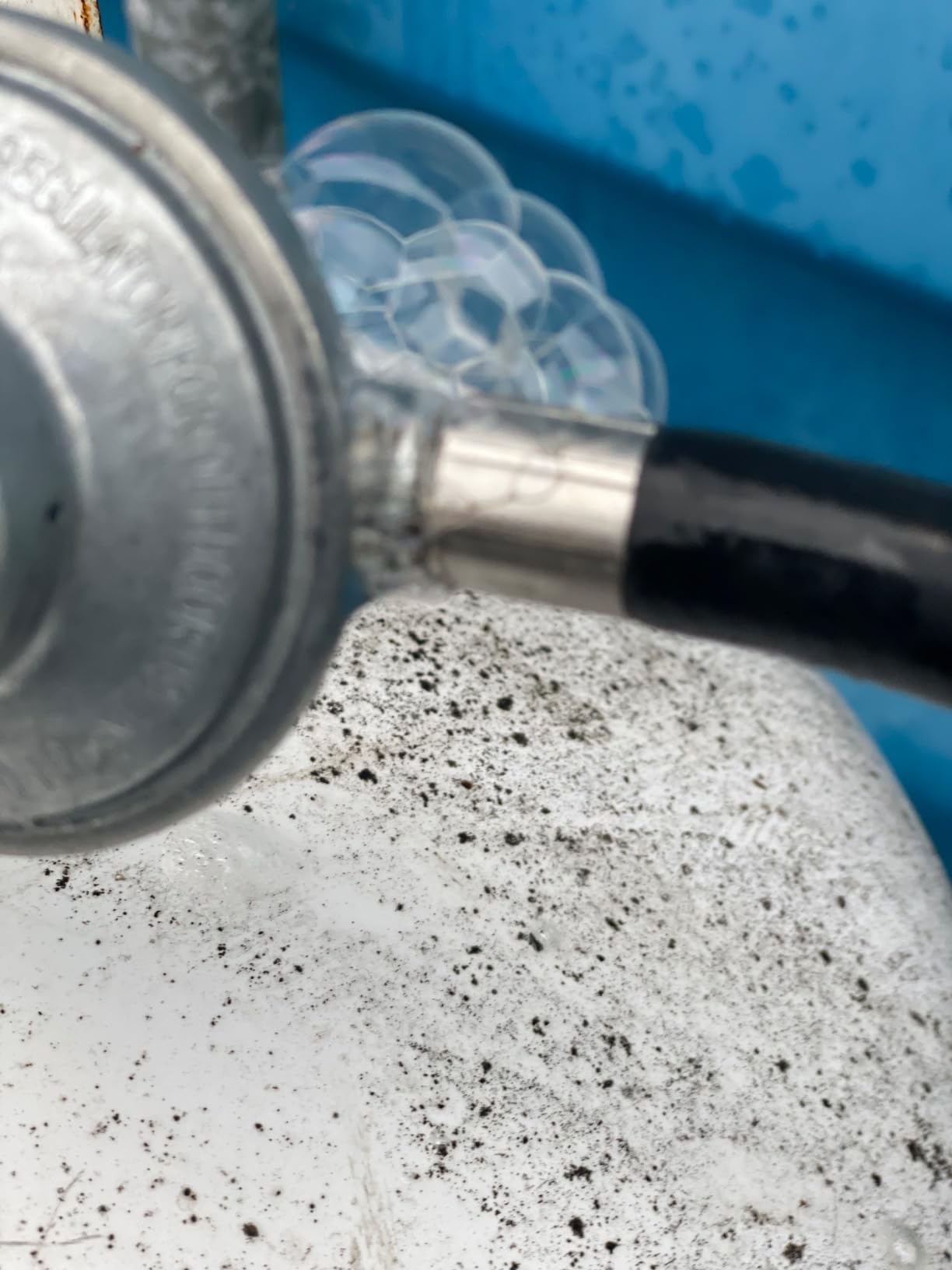
The piezo igniter is reported as finicky and occasionally fails to light reliably, and the included hose may not carry the adapter needed for a standard 20 lb propane tank, so verify your connector before you plan a weekend project. A smaller share of owners report units shutting off unexpectedly unless the gas button is held down.
9. CAMPLUX 18,000 BTU – Quiet Cabinet Heater With Casters
CAMPLUX 18,000 BTU Propane Heater with ODS & Tip-over Protection, 3-Setting LP Gas Cabinet Heater with Regulator & Hose, Adjustable Radiant Heat, CSA Certified, Black
Heat output: 18000 BTU
Coverage: about 450 square feet
Heating method: Radiant
Pros
- Runs up to 69 hours on the 6000 BTU setting
- No electricity or battery needed
- Five caster wheels with brakes
- Back flap and brace hold the tank
- Quiet operation below 30dB
Cons
- Some units sputter and shut down in cold garages
- Ignition can be hard in very cold weather
- 14.6 pounds even with casters
This is the quiet pick, and the number behind it is specific: owner feedback puts operation below 30dB. If you plan to work, lift, or exercise in the same space, that is the difference between a usable heater and a reason to put headphones on.
It is also completely independent of electricity. Piezo ignition, no battery, no cord, so it keeps running through a power outage. That combination of quiet and no-power is genuinely rare.
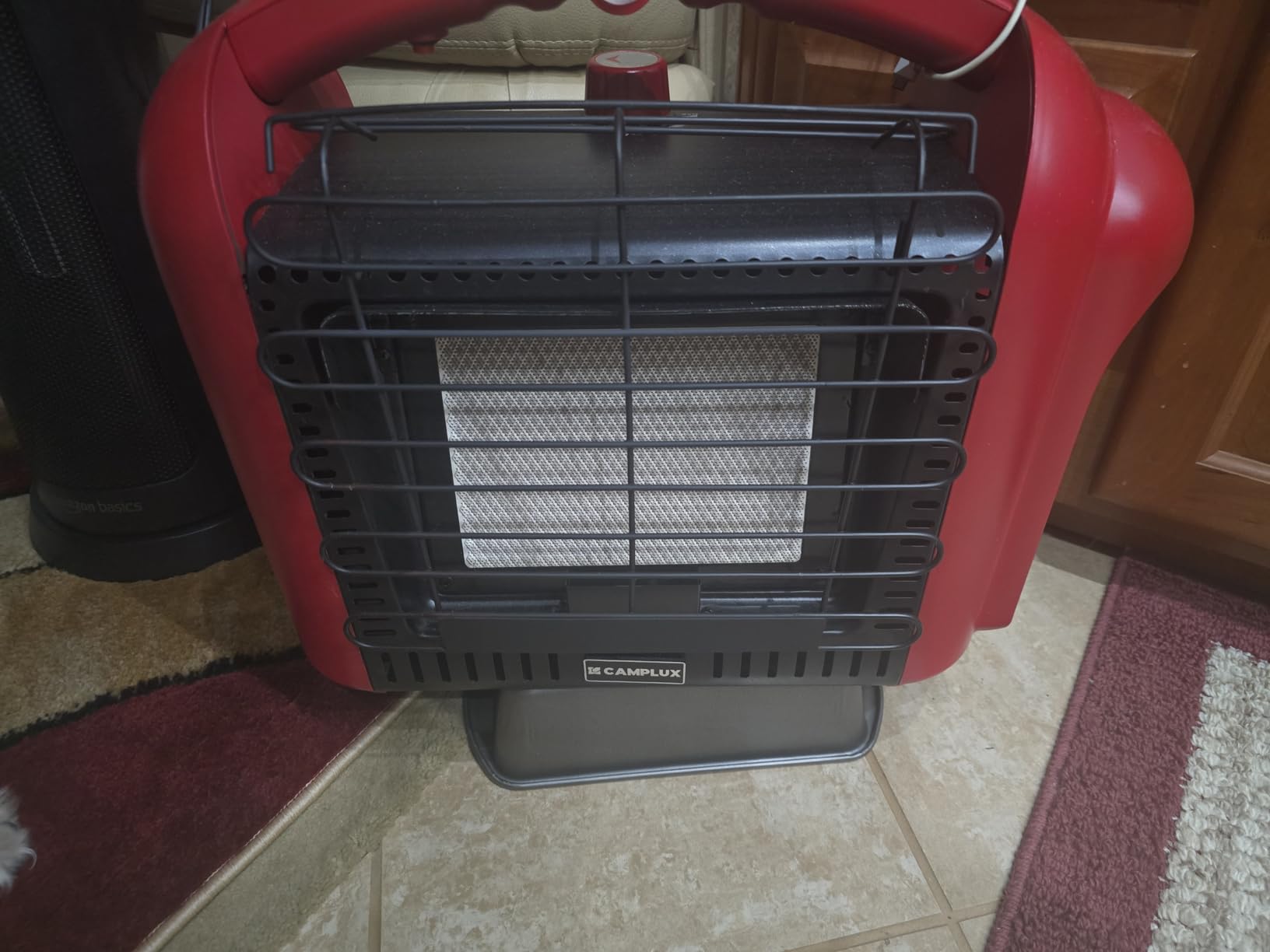
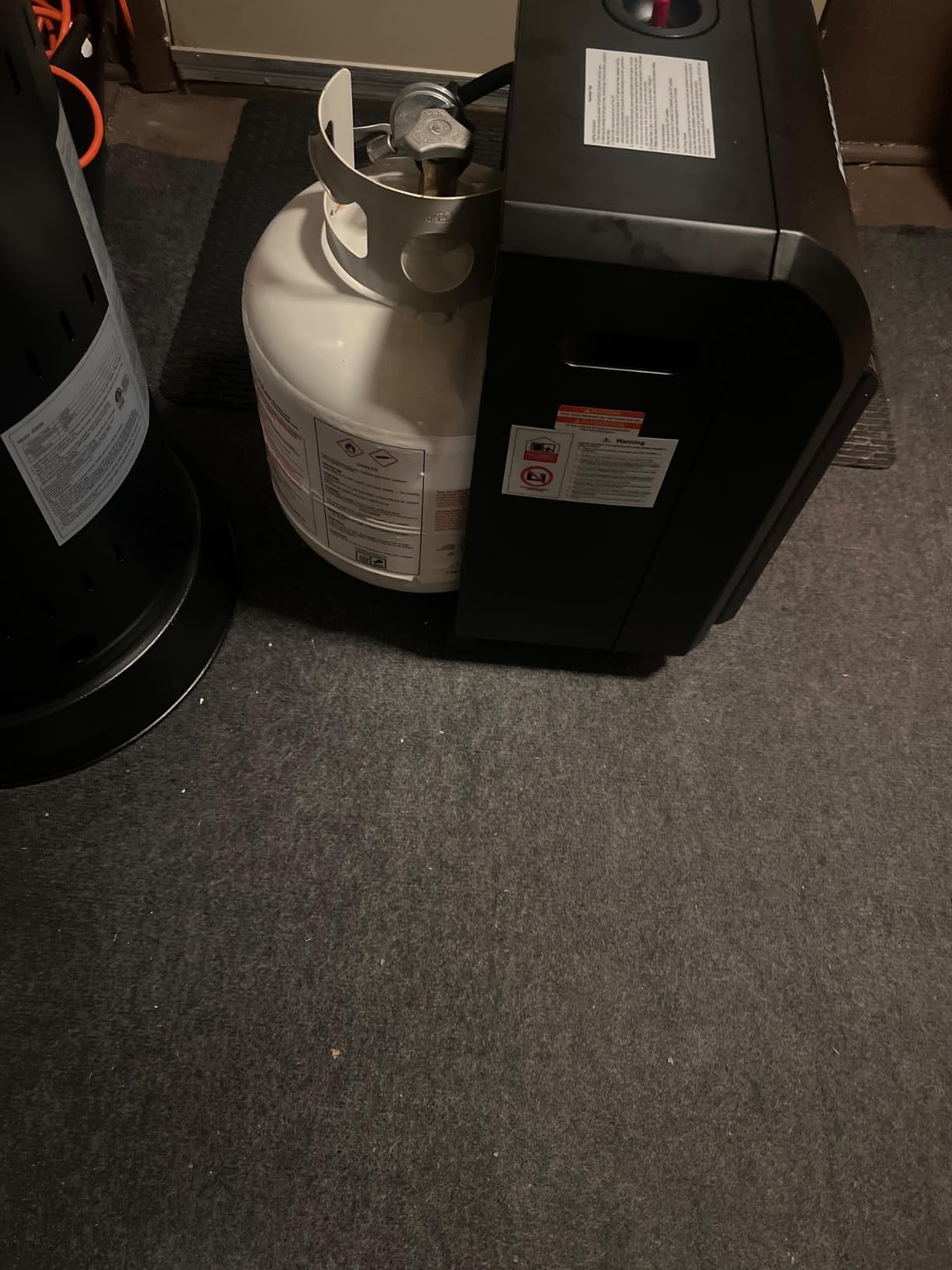
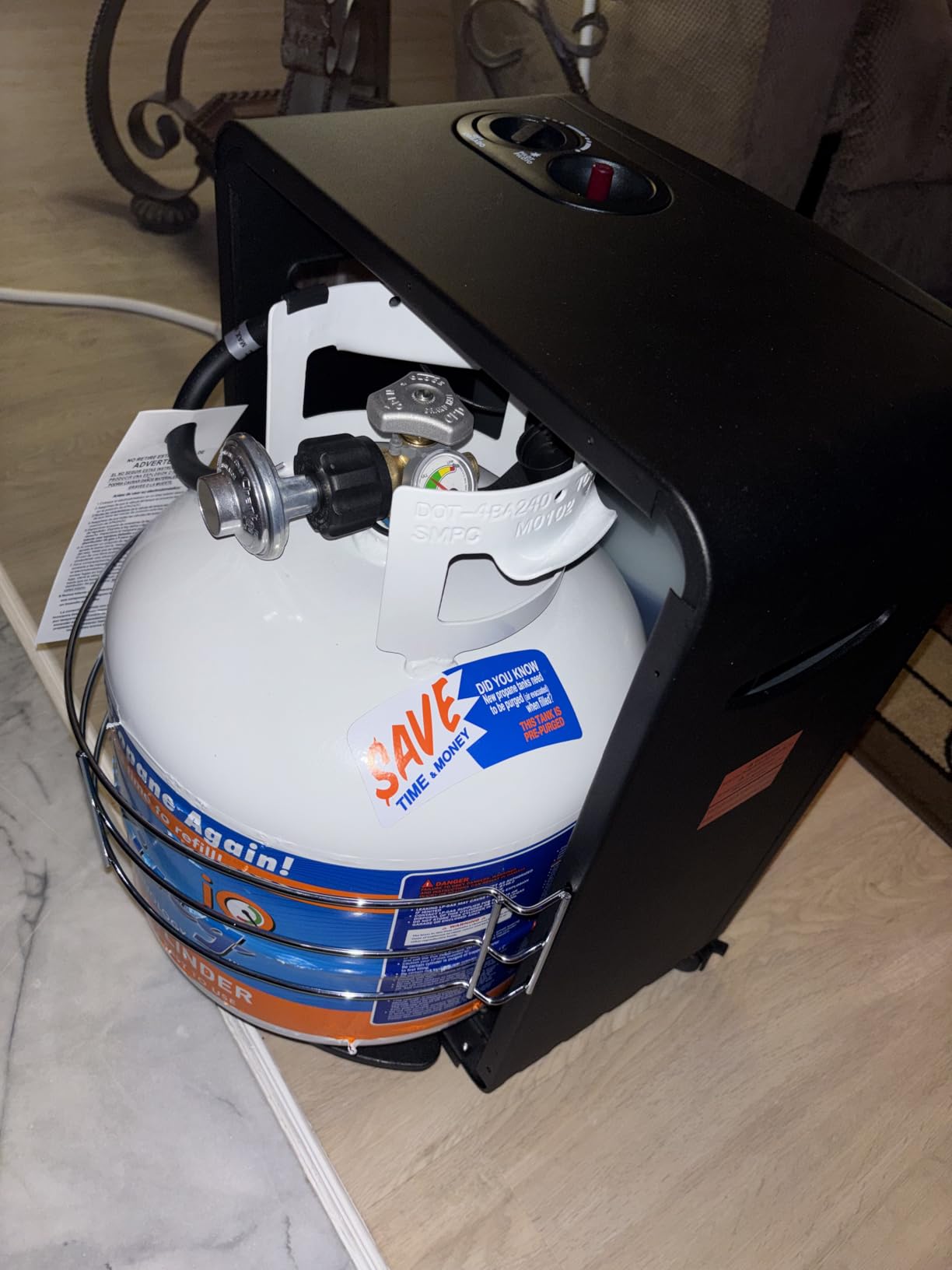
Runtime is the headline number here: up to 69 hours on the 6000 BTU setting from a 20 lb propane tank, with three total settings of 6000, 12000, and 18000 BTU covering about 450 square feet. The cabinet design adds a rear flap and a removable brace that hold the cylinder, so the heater and tank move as one unit.
Why the cabinet design is worth it
Five caster wheels with brakes means you can roll it to whichever corner you are working in and lock it there. With a tank-top unit you are swapping cylinders and carrying hot metal; with this you roll the whole assembly. In a working garage that is the difference between a heater you use and one you leave unplugged.
It is also a good outage heater for a finished room, a basement workshop, or a garage gym where noise rules out a blower.
Where the CAMPLUX runs into trouble
Cold weather is its weak spot, and it is the same weak spot the other unpowered radiant units have. Some owners report units sputtering and shutting down even in a ventilated garage, and lighting becomes difficult below freezing when the gas is at its coldest and densest. Test it on a mild day before you depend on it for a January project.
It is also 14.6 pounds despite the wheels, and a small number of owners report degradation of the plastic handle and the hose and regulator over time.
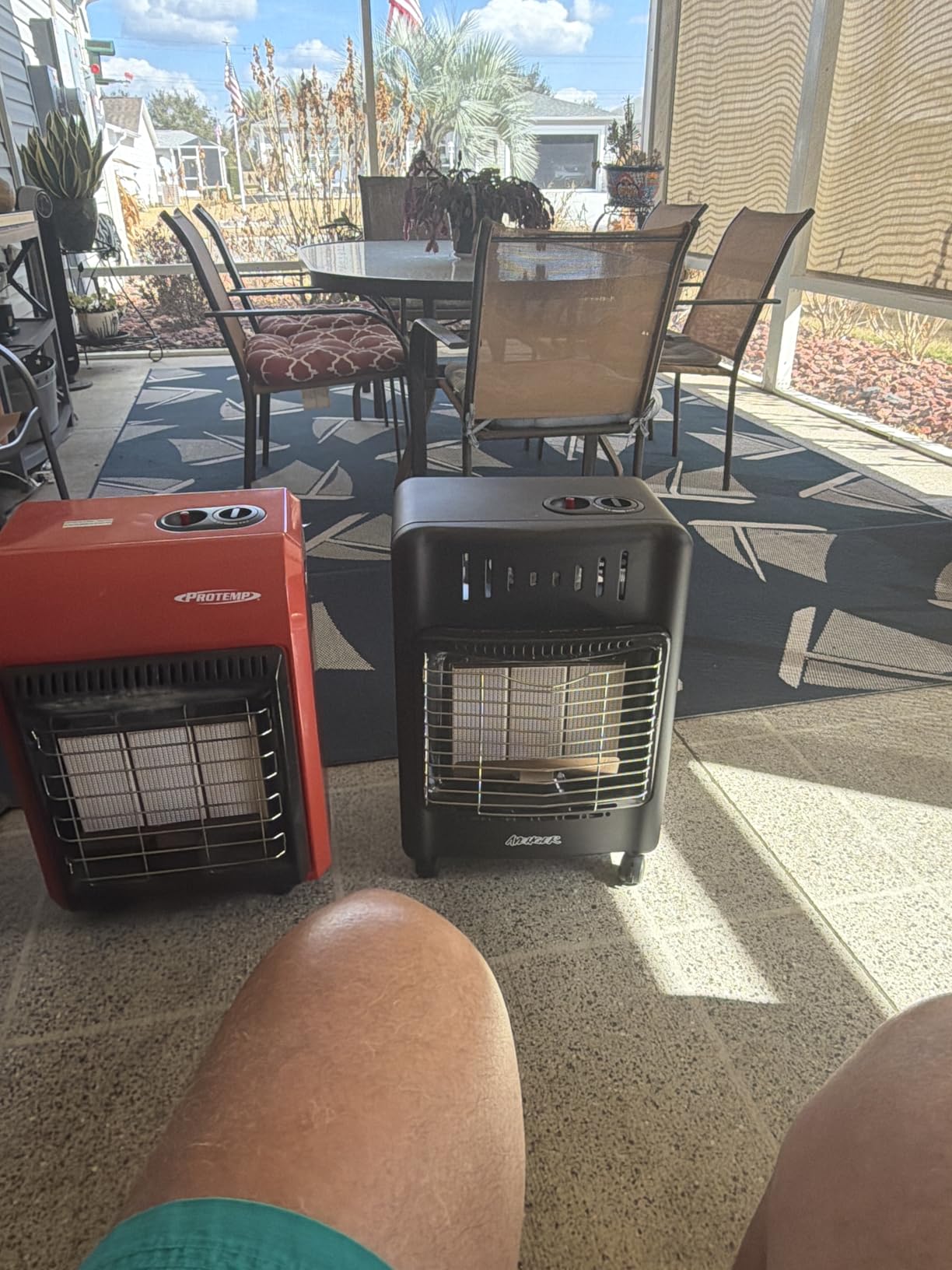
10. Avenger 18,000 BTU – Dual Shutoff Cabinet Heater
Avenger Portable Outdoor Propane Cabinet Heater – 18,000 BTU Radiant Gas Heater with Tip-Over & ODS Safety Shut-Off – Model # 22BF-A00
Heat output: 18000 BTU
Coverage: about 450 square feet
Safety: ODS and tip-over shutoff
Pros
- Three settings at 6000/12000/18000 BTU
- Oxygen depletion sensor and tip-over shutoff
- Up to 72 hours on low from a 20 lb tank
- Piezo ignition with no electricity needed
- Steel cabinet on smooth-rolling casters
Cons
- Newer listing with a smaller review base
- Output tops out below the forced air heaters
- Warms the area in front rather than the whole room
The Avenger does the same core job as the CAMPLUX, in a steel cabinet, with a slightly longer stated low-setting runtime of up to 72 hours from a 20 lb tank. It holds a 4.6 rating, but across 143 reviews, so treat that number as encouraging rather than settled.
Two shutoffs is the spec that matters. An oxygen depletion sensor and an automatic tip-over shutoff, together with push-and-turn piezo ignition that needs no electricity, gives you the same power-independence and indoor-adjacent safety profile as the best-rated unit in the roundup.
Three settings of 6000, 12000, and 18000 BTU cover about 450 square feet, and smooth-rolling casters let you move it around a working bay.
Where the Avenger fits
It is a strong choice for a one-car or small two-car bay where quiet, safe indoor operation without power matters more than raw output. A garage gym, a home workshop, or a space you want to heat on the lowest setting for hours at a time are all good fits for the 72-hour low-setting runtime.
If you are nervous about gas indoors, the dual shutoff specification is the thing to look for, and it is stated clearly here rather than implied.
Where the Avenger is the weaker option
The review base is small. At 143 reviews, the 4.6 rating has far less behind it than the 4.7 on a 29212-review unit, and long-run reliability data simply does not exist yet for this listing.
At 18000 BTU it also tops out well below the forced-air units, and being radiant it warms the area in front of the cabinet rather than circulating air through a large garage.
How Many BTUs Does Your Garage Need in 2026?
BTU is a measure of heat energy per hour, and every propane heater on this list is quoted by its input rating. The number you want is the one that matches your floor area and how leaky the room is. Start by multiplying floor area by ceiling height to get volume, then apply an insulation factor, then by the temperature rise you want divided by 1.6. An uninsulated concrete garage typically needs a factor of 1.0, a garage with insulated walls and a rated door sits closer to 0.5, and a well-built workshop with high ceilings can land between 3 and 5.
The quicker version is square footage. These are the numbers most garages land on with a standard garage door, standard ceiling height, and a target of roughly a 40 degree temperature rise.
- One-car garage, about 180 to 200 square feet: 20,000 to 30,000 BTU. This is the Buddy and the smaller cabinet radiant units.
- 20×20 garage, 400 square feet: 30,000 to 40,000 BTU. This is where the XtremepowerUS and the 18000 BTU radiant cabinets sit at the top of their range.
- Standard two-car garage, about 480 square feet: 40,000 to 60,000 BTU. The Remington and Flame King 60000 BTU units land here, and the 45000 BTU tank-top heater is close behind.
- 24×24 garage, 576 square feet: 60,000 BTU as a starting point, higher if the ceiling is above 9 feet or the space is uninsulated.
- 30×40 shop, 1200 square feet: 100,000 to 125,000 BTU. Only the GASLAND Flame Jet covers this range in portable form, which is exactly why it is in the roundup.
A 50000 BTU heater is a common middle-ground answer, and a useful rule of thumb is that it comfortably conditions roughly 1000 to 1200 square feet in a typical two-car garage with normal ceiling height. The same 50000 BTU in a 2400 square foot shop with 12 foot ceilings will feel like a space heater, which is the exact scenario owners in 30×40 threads on r/garageporn describe when they ask whether to go propane or natural gas.
Two smaller heaters versus one large one of the same total output is a genuine argument with no clean winner. A Pelican Forums thread debating one 35000 BTU 700 CFM unit against two 17000 BTU 350 CFM units with identical total output captures it: two units give you two warm zones and better distribution across a wide bay, while one unit costs less, uses one cylinder, and heats faster in one spot. If your garage has a workbench at one end and a vehicle at the other, two units usually win. If you work in one place, one wins.
How Long a Propane Tank Lasts in a Garage in 2026
Propane contains about 91500 BTU per pound, and a 20 lb cylinder gives up roughly 5 lb of usable fuel to the burner once you account for what stays trapped in the regulator and lines. That works out to around 450,000 BTU of usable heat. A 100 lb tank gives roughly five times that. Divide by the heater’s input rating and you get a realistic runtime.
- 9000 BTU heater on a 20 lb cylinder: about 50 hours. On a 100 lb tank: roughly 250 hours.
- 18000 BTU heater on low at 6000 BTU: the manufacturer figures of 69 and 72 hours from a 20 lb cylinder line up almost exactly with the math. On a 100 lb tank, roughly 350 hours.
- 30000 BTU heater: about 15 hours from a 20 lb cylinder, and around 75 hours from a 100 lb tank.
- 40000 to 45000 BTU heater: about 10 hours from a 20 lb cylinder, which matches the stated 9.5 hours on high for the 45000 BTU unit. On a 100 lb tank, roughly 50 hours.
- 60000 BTU heater: about 7.5 hours from a 20 lb cylinder, matching the Flame King figure of up to 8 hours. On a 100 lb tank, roughly 37 hours.
- 125000 BTU heater: about 3.5 hours from a 20 lb cylinder, or roughly 18 hours from a 100 lb tank.
The practical takeaway is that if you are running a high-output forced-air unit daily, a 100 lb tank is not optional. Owners on r/propane describe the shift to a 100 lb tank with a regulator as the moment their garage heating stopped being annoying, because refilling a 20 lb cylinder in January is the part of the job everyone hates. For a low-output radiant unit on its lowest setting, a 20 lb cylinder is genuinely fine for a whole season.
Run the numbers against your own winter rather than the maximum setting. If you are using a 45000 BTU tank-top heater at its 30000 BTU level for two hours an evening, a 20 lb cylinder lasts weeks. At full output for eight hours a day, it is gone before the week ends.
How to Choose a Propane Garage Heater in 2026
Start with the type of heat you actually want. Radiant units warm objects and people in a cone in front of the emitter, run quietly, and use no electricity. Forced-air units push warm air through the room, heat the whole volume, and run a loud blower that needs a 115 or 120 volt outlet. Convection radiant, which is the Big Buddy PRO approach, splits the difference. If you work at a bench in one spot, radiant wins. If you want the whole garage usable, forced air wins and the noise is part of the price.
Next, sort out the venting question. Non-vented units are the portable category in this roundup. They dissipate combustion gases indoors, which means you must provide ventilation, and that requirement is not optional in a garage with a vehicle in it. Gravity vented units, power vented units, and separated combustion furnaces are the permanently mounted category, and they exhaust outdoors. Separated combustion, where the burner and fan are sealed in one cabinet and only clean air crosses the room boundary, is the safest of the three and the right answer for a shop you heat all winter with the door closed.
Electricity dependency is worth a clear look. The GASLAND, Remington, and Flame King units all need an outlet for their blowers. The Buddy, the 540T, the Big Buddy PRO, the CAMPLUX, and the Avenger run entirely on propane with piezo ignition, which is a real advantage during a power outage. A 240 volt requirement is one of the deal breakers owners on forums call out for residential garages, and none of the picks here needs one.
Noise is the factor almost no roundup quantifies, so here is the honest summary from what we saw. Radiant units without fans are quiet, and the CAMPLUX is specified by owners at below 30dB. Tank-top radiant units are also quiet but emit a hiss and a tick from the burner. Forced-air units are loud, and the Remington is the loudest of the three. The Flame King is reported as noticeably quieter than typical forced-air propane heaters, which makes it the compromise if you need air movement and a quiet space. If you are choosing for a garage gym or a shared office-adjacent workshop, noise should move you toward radiant.
Placement matters as much as the unit. Put it away from the garage door if the door is a draft magnet, because a cold incoming air column will fight the warm air you are trying to build. Aim radiant units at the work zone, not at the ceiling. Forced-air units want clear space around the intake and discharge, and they work far better pointed into the open volume than into a corner. For freeze-prone garages, protect the vulnerable corner with a small radiant unit while a forced-air unit handles the general temperature, which is also the two-small-heaters argument in practice.
Finally, consider whether propane is even the right fuel. A widely-read thread on The Garage Journal argues that for a tightly sealed, well-insulated workshop used long term, a permanently vented unit or an electric mini-split is often the better long-term choice, largely because unvented propane adds humidity and combustion moisture to an already damp building. If your shop is sealed, well insulated, and used year round as a workspace rather than a vehicle bay, that is a real argument. For seasonal heating of an uninsulated garage, propane still wins on cost per BTU and on not caring about the power bill. We have covered the electric side in more detail in our roundup of the best oil filled radiator heaters if you are comparing small electric options.
Where propane is heating a covered outdoor area rather than a garage, the best propane fire pits and best propane smokers roundups cover the same fuel and the same clearance rules from a different angle. For the rest of the garage setup, our picks on the best garage refrigerators cover cold storage if you are running both appliances on the same circuit.
Propane Garage Heater Safety Rules Owners Ask About
The first question on every garage heater forum, without exception, is whether propane is safe indoors. It is, conditionally. The unit must be listed for indoor use, it must have an oxygen depletion sensor, and you must provide ventilation. Six of the ten units in this roundup are listed for outdoor use only, which means a construction site or an open bay and not a residential garage with a car in it. We have flagged that in each review rather than burying it.
Buy a carbon monoxide detector and mount it inside the garage, at breathing height, near the door but not directly beside the heater. The oxygen depletion sensor on a heater is a backup layer, not a substitute. Owners weighing high-output units in r/GarageGym threads raise this exact point, and the right answer is that the sensor handles a failure while the detector handles everything else.
Clearance to a parked vehicle is the garage-specific question that owners ask most and that roundups rarely answer. Treat your vehicle as a flammable object. Do not park a car under a radiant emitter, do not run a radiant heater within reach of a plastic fuel container or a spray can shelf, and do not point a 360-degree tank-top unit at a car with the engine off and the garage door closed. Pull the vehicle out before you light up.
Clearance to storage is the same rule applied to your shop. Solvent, thinner, paint, adhesives, aerosol cans, and paper all go in a closed metal cabinet, ideally on the opposite side of the garage from the heater. Radiant heat does not care what is between it and your workbench, and a 360-degree emitter warms the entire circle around it.
Ventilation is the requirement that catches people out. Open the garage door, or a window on the opposite wall, or both. Cracking a window on one side of a small room barely moves air. And never run any combustion heater in a garage with a vehicle engine running, because the two exhaust streams stack.
Two more practical rules. Keep heaters away from the vehicle and storage as described, and on tip-over units, reset them upright before relighting, because a latched switch will not relight and owners force the issue. In very cold weather, test your ignition before you need the heat, because piezo igniters and cold propane are a known poor combination. A cold-weather start is easier when the unit is stored indoors rather than on an exterior wall.
Frequently Asked Questions
What is the most efficient propane heater for a garage?
Efficiency in a propane garage heater comes down to matching output to space and running the lowest setting that keeps you comfortable. Radiant units waste nothing on air you are not feeling directly, so they are efficient for spot heating, while forced-air units are efficient for whole-room heating because they move air rather than heating only a cone. Vented or separated combustion units are the most efficient overall because combustion gases leave the building instead of adding moisture to it. Running a large heater on its lowest setting is the single biggest efficiency gain available, since a 45000 BTU unit at 30000 BTU uses a third less fuel for almost the same comfort.
How many BTUs do I need to heat a 20×20 garage?
A 20×20 garage is about 400 square feet, and 30000 to 40000 BTU is the range most owners settle on with a standard ceiling height and a standard garage door. At the low end, a 30000 BTU radiant or dual-burner unit will warm a work zone effectively. At the high end, a 40000 to 45000 BTU tank-top heater conditions the whole space. Add roughly 25 percent more if the walls are uninsulated, the ceiling is above 9 feet, or you want a fast full-room warm-up rather than zone heating.
Are propane heaters ok to use in a garage?
Yes, but only with the right unit and the right habits. The heater must be listed for indoor use, which the Mr. Heater Portable Buddy, the Mr. Heater Big Buddy PRO, and the Avenger cabinet heater are, while several tank-top and forced-air units in this roundup are outdoor rated only. Use a heater with an oxygen depletion sensor, mount a carbon monoxide detector in the garage, keep the parked vehicle and any flammable storage well clear of the heater, and provide ventilation by opening the garage door or a window on the opposite wall.
How long will a 100 lb propane tank last for heating a garage?
Propane contains about 91500 BTU per pound and a 100 lb tank gives up roughly 90 lb of usable fuel, or around 8.2 million BTU. That works out to about 250 hours on a 9000 BTU heater, 35 hours on a 60000 BTU forced-air unit, and about 18 hours on a 125000 BTU shop heater. A radiant cabinet running on its 6000 BTU low setting goes far longer, since the low setting is what most owners use day to day. Running on a lower output setting stretches a tank substantially compared with full output.
How many square feet will a 50,000 BTU garage heater heat?
A 50000 BTU propane garage heater comfortably conditions roughly 1000 to 1200 square feet in a typical two-car garage with a standard ceiling height of 8 to 9 feet. In that range, a 50000 BTU unit warms the whole room rather than a single work zone, which is what separates it from a radiant heater with a similar number. The same 50000 BTU output in a 30×40 shop with 12 foot ceilings will feel undersized, because the air volume is roughly three times larger, which is the case for a 100000 to 125000 BTU unit.
Final Verdict for 2026
The best propane garage heater for most people is the Mr. Heater Portable Buddy. It is indoor rated, it has a low oxygen depletion sensor, it weighs 7.1 pounds, and its 4.7 rating across 29212 reviews is the most proven combination in the category. For a one-car bay or a garage gym, nothing else we looked at is as easy to live with.
For tank-top output in a large or open bay, the Mr. Heater 540T at 45000 BTU is the one to beat, and its three output levels let you run it gently and cheaply. For a two-car garage where you want the whole room workable, the Remington 60,000 BTU is the pick, accepting the blower noise as part of the deal. For a 30×40 shop or anything with high ceilings, the GASLAND Flame Jet at 125000 BTU is the only unit here with the output to do it. And for the quietest operation without needing power at all, the CAMPLUX 18,000 BTU cabinet heater is the answer.
Whichever one you choose, check the indoor or outdoor rating on the label before the first fire, and give it the ventilation the manual asks for.