
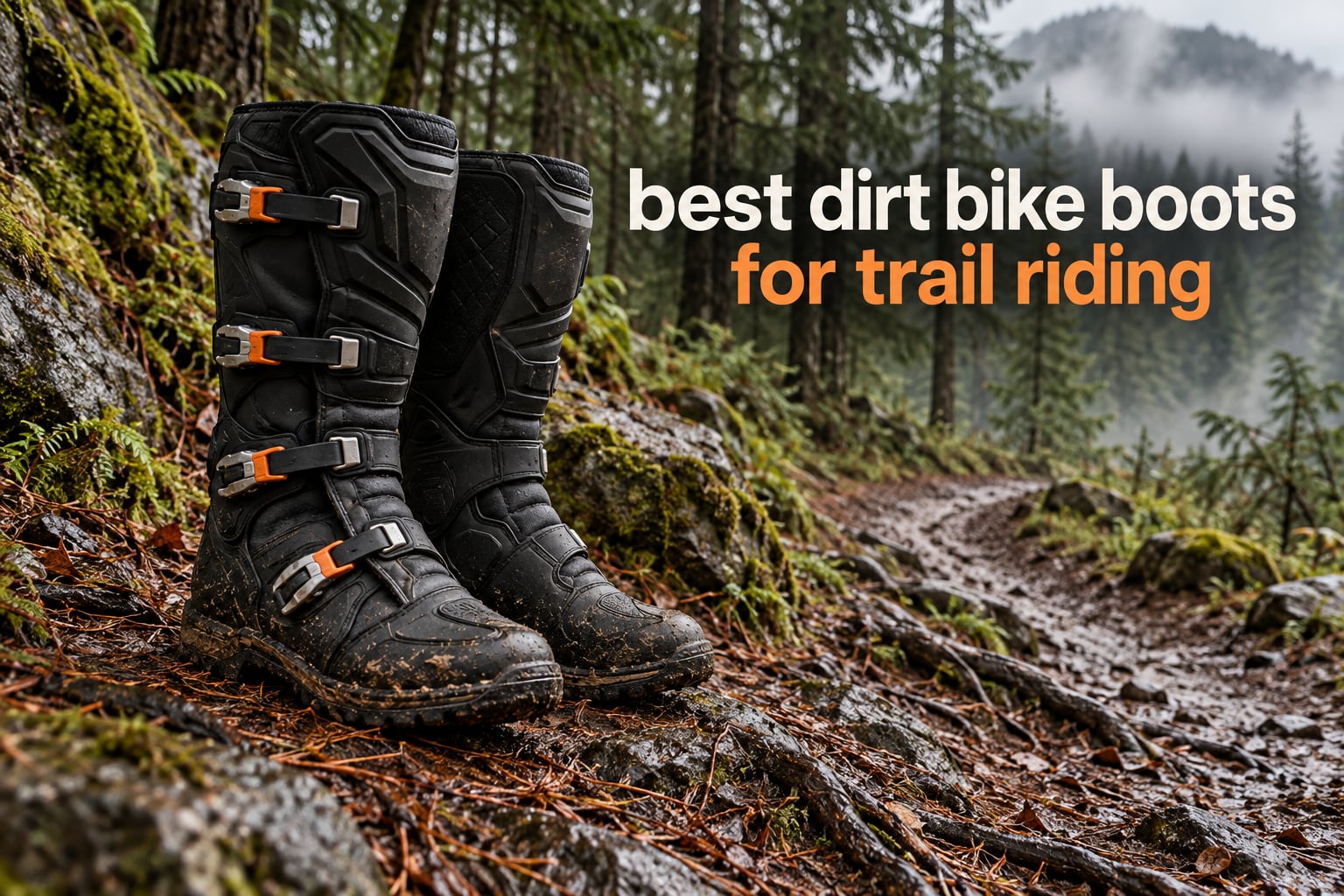
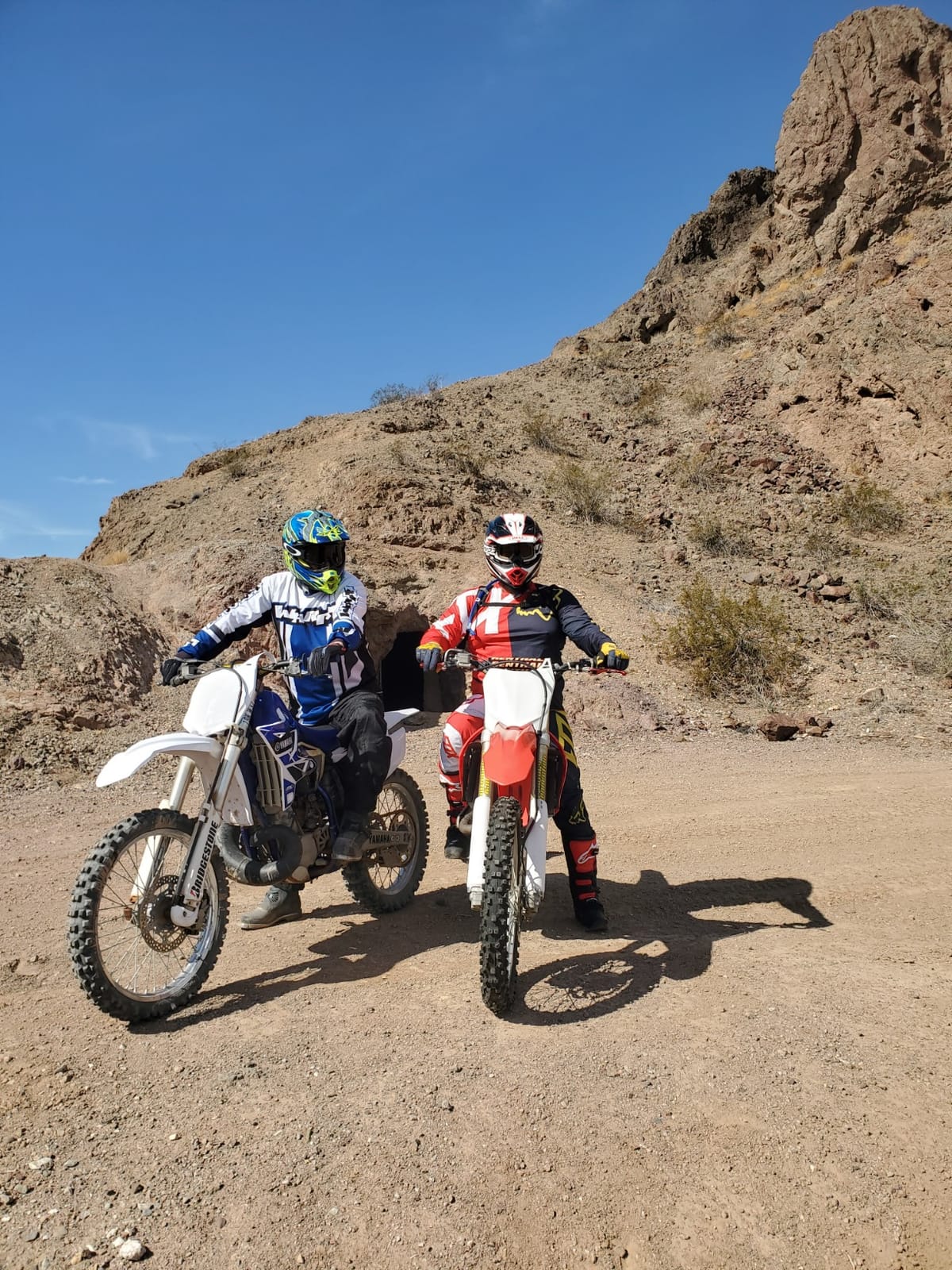
Most boot roundups on this topic are written for motocross track riders, and that is exactly why they mislead trail riders. A track boot is built to survive landings and roost, while a trail boot has to do something a track boot never does: let you walk three miles of rough singletrack to reach the truck, ford a creek at walking pace, and keep your foot planted when the peg drops away underneath you on a wet off-camber root.
Those three demands change what matters. Walking comfort rules out the bulkiest, stiffest options. Rock strike and ankle rollover protection rule out anything soft. And if your season includes rain, snow or mud, a waterproof membrane stops being a nice-to-have.
We compared 12 of the strongest dirt bike boots for trail riding currently on sale, weighing the protection hardware, closure system, sole design, liner breathability and waterproofing of each against what actually happens out on a trail. Ratings and review counts come straight from buyer feedback, so you can see how large a sample sits behind each pick.
One note before the list: if you are still building a kit from scratch, a solid trail helmet matters as much as the boot. We covered our current favourites in the best mountain bike helmets for trail riding guide, and if your rides run past daylight, the bike lights we rated are worth reading too.
Table of Contents
Quick Answer: What Boots Are Best for Trail Riding?
The best dirt bike boots for trail riding are the Alpinestars Tech 3 for all-round protection and low weight, the Fox Racing Comp for riders who want a resoleable outsole and half sizes, and the Leatt Moto 5.5 FlexLock Enduro for aggressive technical terrain. All three have rigid shin plates, ankle protection and grippy replaceable soles, but only the Leatt seals the top of the boot against debris.
What separates a trail boot from a pure MX boot is the walking, not the riding. On the bike, protection dominates. Off the bike, flexibility, sole grip and weight decide whether a hike-out is a two-minute stroll or a sufferfest.
Top 3 Dirt Bike Boots for Trail Riding
Our three headliners cover the three most common trail-riding profiles. The Tech 3 is the default answer for most riders because it balances a TPU shin plate and heel counter against a shell light enough for long days. The Comp is the ownership pick, with a resoleable rubber outsole and half sizes that solve two problems at once. The Leatt is the one to buy if your trails are steep, rooty and wet, because its SlideLock closure and layered TPU coverage are built for exactly that.

Alpinestars Tech 3
- CE-certified TPU shin plate and heel counter
- Three-buckle memory lock closure
- Lightweight injection-molded TPU shell
- Microfiber debris gaiter

Fox Racing Comp
- Resoleable rubber outsole
- Positac grip compound
- Four-buckle composite closure
- Size range 8-14 with half sizes

Leatt Moto 5.5 FlexLock Enduro
- SlideLock one-way sealing closure
- Forged aluminum over-lock buckles
- Impact-reinforced TPU shin plate
- Reinforced TPU heel counter
All 12 Boots at a Glance
Every boot below made the cut for a trail-riding reason, not a track-riding reason. The table lists the hardware that changes how a boot behaves on rough ground, so you can rule out options quickly before reading the full reviews.
| Product | Specifications | Action |
|---|---|---|
| Alpinestars Tech 3 |
|
Check Latest Price |
| Fox Racing Comp |
|
Check Latest Price |
| Leatt Moto 5.5 FlexLock Enduro |
|
Check Latest Price |
 MSR M3X MSR M3X |
|
Check Latest Price |
 FLY Racing Maverik LT FLY Racing Maverik LT |
|
Check Latest Price |
 O’NEAL Logo Rider O’NEAL Logo Rider |
|
Check Latest Price |
 Alpinestars Tech 5 Alpinestars Tech 5 |
|
Check Latest Price |
 MSR Adventure Boots MSR Adventure Boots |
|
Check Latest Price |
 Fox Racing Motion Fox Racing Motion |
|
Check Latest Price |
 Tourmaster Trailblazer Tourmaster Trailblazer |
|
Check Latest Price |
 O’Neal Element O’Neal Element |
|
Check Latest Price |
 O’Neal Womens Rider O’Neal Womens Rider |
|
Check Latest Price |
1. Alpinestars Tech 3: The Best All-Round Dirt Bike Boot for Trail Riding
Alpinestars Tech 3 Motocross Boots, Durable & Lightweight, CE-Certified For Off-Road Powersports, 11, Black
TPU shin plate and heel counter
Three-buckle memory lock
Microfiber gaiter
Pros
- CE-certified impact protection
- Lightweight injection-molded TPU shell
- Memory lock holds fit over riding pants
- Padded liner and microfiber gaiter
Cons
- Not water resistant so creek water and mud soak through
- Stiff out of the box before shifting feel normal
The Tech 3 is the pick we keep coming back to because it does not have an obvious weak spot for trail work. It carries a TPU shin plate, calf protection, a heel counter and an ankle support structure, all CE-certified, and 85 percent of the roughly 1490 reviews are five-star scores. That combination of protection level and review volume is the strongest on this list.
For trail riding specifically, the three-buckle memory lock matters more than it would on a track. You set the buckle positions once over your pants, and they hold that tension for the whole ride instead of ratcheting looser every time you stand on the pegs over rough ground. The padded microfiber liner and integrated gaiter also do quiet, important work by keeping grit out of the buckles.
Buyers consistently single out the balance between protection and weight. The shell is injection-molded TPU rather than heavy composite laminate, which is why the boot stays comfortable on a long day that includes a lot of standing and walking around the loop.
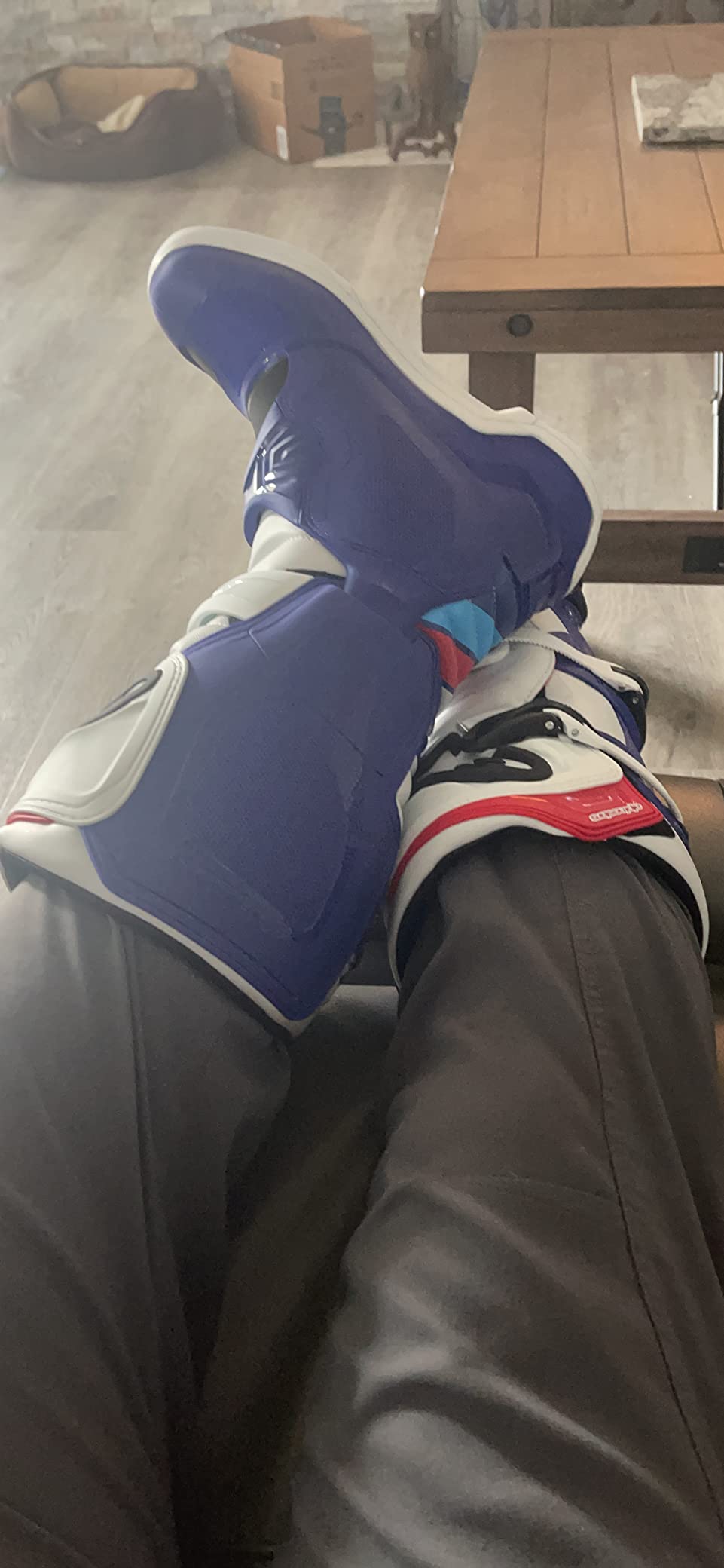
The honest drawback is waterproofing. The listing lists water resistance as not water resistant, and reviewers confirm it: a creek crossing means wet socks for the rest of the ride. The second drawback is stiffness. New Tech 3s need real break-in time before the boot flexes at the instep and your foot reads the shifter properly.
Neither issue is a dealbreaker for most trail riders, because most trail riding happens between spring and autumn in reasonably dry conditions. If you ride in winter rain or regularly cross water, look at the waterproof options further down this list instead.
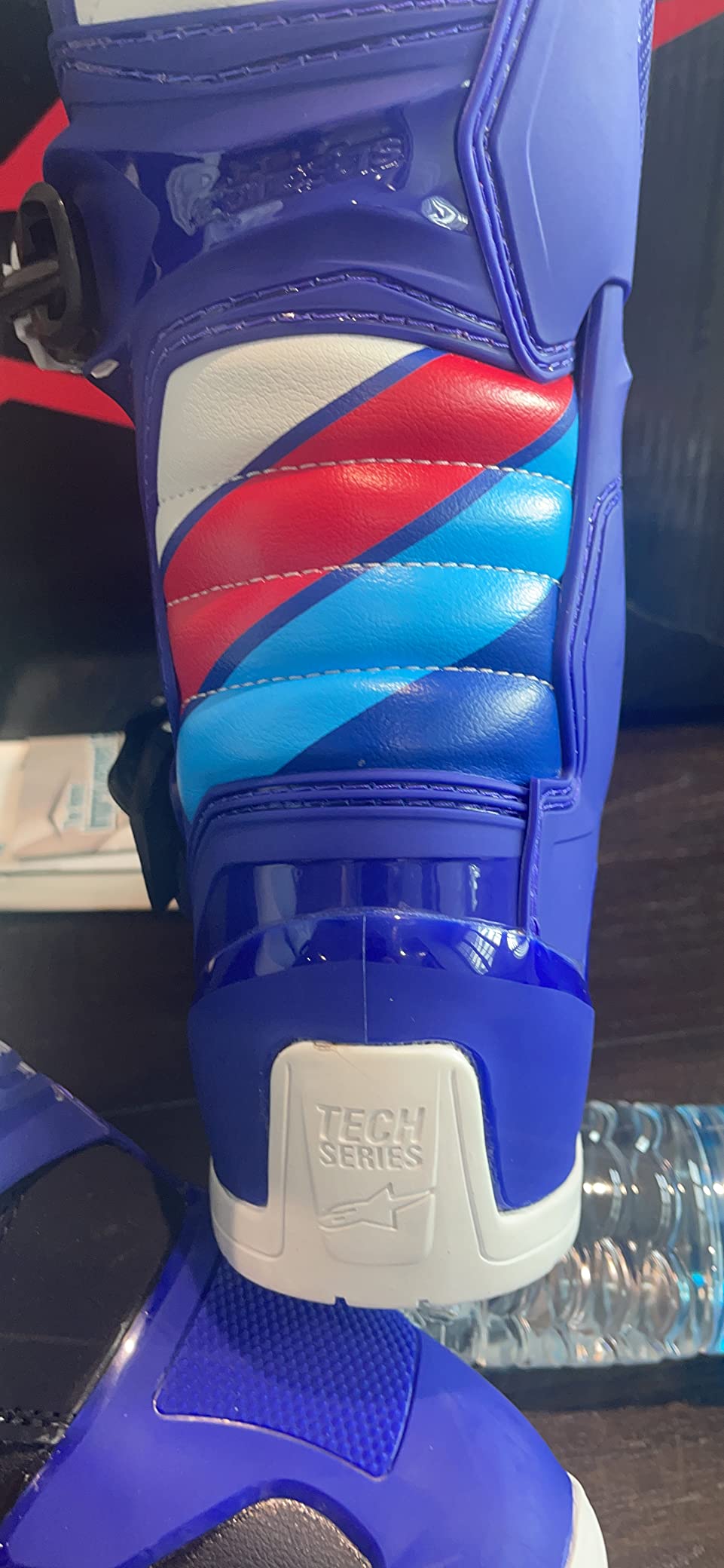
Who the Tech 3 suits best
This is the boot for a rider who wants one pair that handles singletrack, fire roads and the occasional track day without thinking about it. It works for beginners because the protection is forgiving and the weight is manageable, and it works for experienced riders because the memory lock closure and contoured sole keep the fit locked in over long days.
Who should skip it
Skip it if your season is built around deep water, snow or sustained wet mud, because nothing here keeps water out. Riders who want maximum ankle control from a mechanical hinge system rather than a fixed structure should also look further, though most trail riders will never miss the difference.
2. Fox Racing Comp: Best for Long Trail Days and Replaceable Soles
Fox Racing Men’s Comp Motocross Dirt Bike Boots, Black, 10
Resoleable rubber outsole
Positac grip compound
Composite four-buckle closure
Half sizes 9-14
Pros
- Resoleable outsole extends boot life
- Half sizes 9.5 10.5 and 11.5 available
- Keeps feet warm and dry in cold rain and crossings
- Runs true to size
Cons
- Very stiff during the break-in period
- Thick sole dulls rear brake sensitivity
- Air mesh liner is less breathable than mesh alternatives
The Comp stands out on the detail that costs the least attention day to day and the most money over a few seasons: the outsole is resoleable. Once the lug pattern wears through, the sole is replaced rather than the boot. For a rider putting 1000 miles a year through singletrack, that is the difference between one purchase and two.
Sizing is the other quiet strength. The boot runs across sizes 8 to 14 and includes half sizes at 9.5, 10.5 and 11.5, which most brands in this roundup skip. Riders report the fit is accurate, and a 4.6 rating across 309 reviews suggests the sizing is not a lottery.
Long-distance off-road riders specifically like how the boot handles weather. Multiple owners describe using it through cold rain and water crossings with feet staying warm and dry, which is a stronger claim than most boots in this class can make given the non-membrane construction.
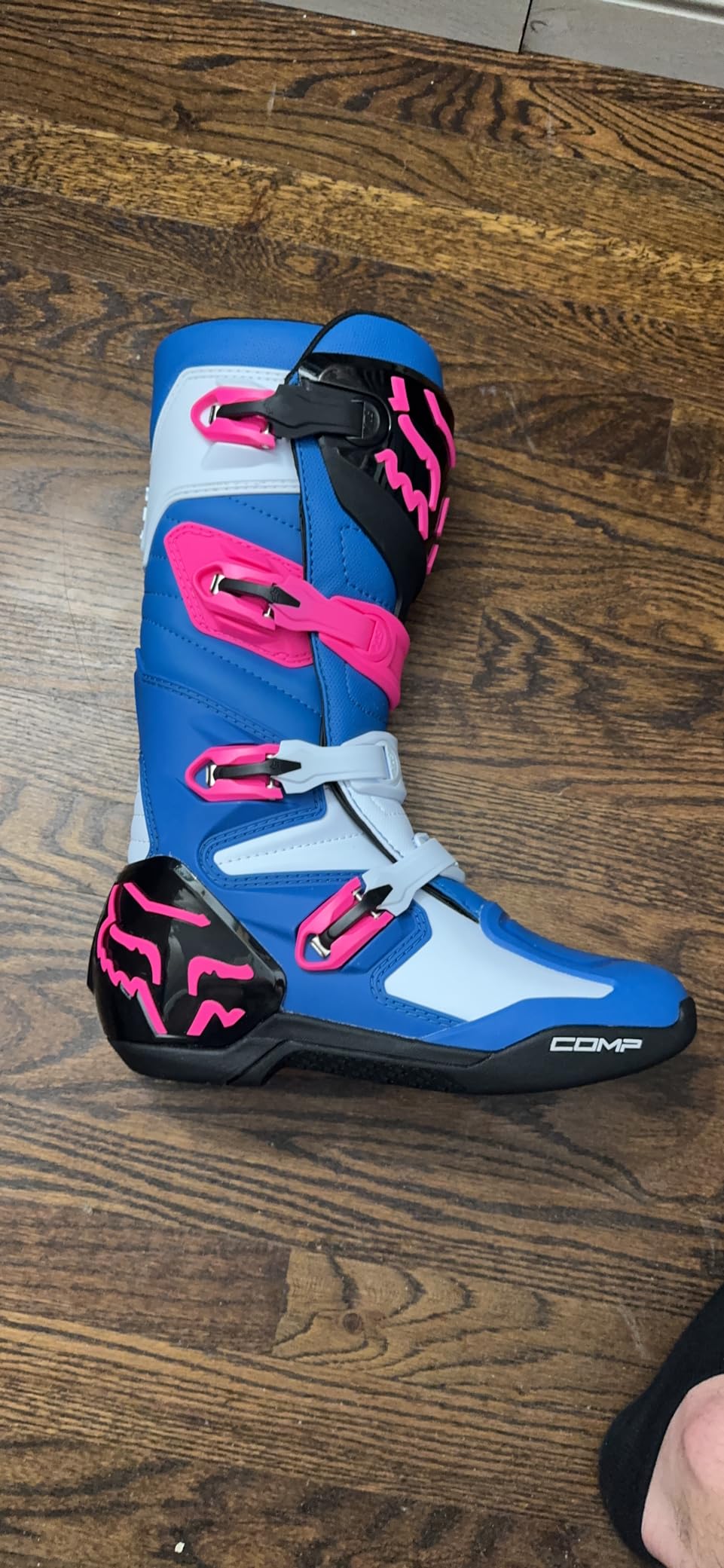
The compromise is stiffness during break-in, which owners report resolves after a few rides. The thicker sole also dulls rear brake sensitivity, and while the air mesh liner is described as breathable, several riders still find it warmer than mesh-lined alternatives on hot days. None of that stops the Comp from being an excellent long-day boot.
Owners also mention a scattering of one-star service or colour-mismatch complaints that have nothing to do with the boot itself. That is worth remembering as a general warning about any online footwear purchase, and another reason to try a pair on locally before committing.
Who the Comp suits best
Riders who put real mileage on their boots, ride in variable weather, and keep resizing between half sizes. If you are between sizes in other brands, the half-size options here can end the trial-and-error cycle on its own.
Who should skip it
Skip it if you ride hot, dry trails and prioritise brake modulation over boot longevity, because the thick sole is a real trade. Riders who want a fast, forgiving break-in should also look elsewhere, since this boot is notably stiff when new.
3. Leatt Moto 5.5 FlexLock Enduro: Best for Technical Terrain and Debris Sealing
Leatt Boot 5.5 FlexLock Enduro
SlideLock one-way closure
Forged aluminum buckles
TPU shin plate with padding
TPU heel counter
Pros
- SlideLock seals the top of the boot against debris
- Layered TPU coverage over shin ankle and inner calf
- Forged aluminum buckles with over-lock system
- Internal padding wraps ankle and foot
Cons
- Heavy build compared with lighter trail and MX boots
- Stiff construction that needs a break-in period
The Moto 5.5 FlexLock is the only genuinely enduro-specific boot in this group, and that shows up in the closure. The SlideLock system is an auto-locking one-way sliding closure that creates a tight seal at the top of the boot, which is the exact feature that keeps roost, mud and water from pouring down your leg on a technical descent.
Protection is layered rather than single-shell. There is an impact-reinforced TPU shin plate with internal padding, sculpted TPU coverage over the ankle and lower boot on the inner side, a rubber panel over the inner calf, and a reinforced TPU heel counter for ride support. That inner-side coverage is what protects the ankle when a lever or rock ends up on the wrong side of the bike.
Soft internal padding wraps the ankle and foot underneath all of it, which is how a boot this protective stays wearable. Owners consistently credit the combination of layered TPU and padding as the reason they feel safe on technical terrain.
The trade-offs are weight and stiffness. The listed weight is heavier than most trail and MX boots in this roundup, and the construction needs a break-in period before it flexes. If your trail days involve long walk-ins, that weight is real, and it is the main reason this boot is not our number one.
Who the Leatt 5.5 suits best
Riders on steep, rooty, loose or wet enduro terrain who hit the inside of the bike more than they would like. The SlideLock seal and the inner calf panel are worth their weight for anyone whose crashes usually involve a knee and a shin meeting a rock face.
Who should skip it
Skip it if walking comfort is your top priority, or if you ride mostly on maintained forest road where the extra structure is dead weight. With 66 reviews behind it, the feedback pool is also the thinnest here, so buy with a return option rather than a leap of faith.
4. MSR M3X: Best for Walkability and a Fast Break-In
MSR M3X Motocross Boots – Black, Men’s Size 8 – Rugged Micro‑Fiber Build, Steel Shank Support, Injection‑Molded Protection, Adjustable Buckles & Dirt‑Blocking Gaiter
Micro-fiber upper with molded overlays
Reinforced steel shank
Four positive-lock buckles
Pros
- Breaks in within a ride or two
- Low thin toe gives strong shifter and brake feel
- Fourth buckle adds useful calf support
- Light and easy to walk in
Cons
- Straps can catch on footpegs and snag a foot
- Some riders find it too stiff
- Synthetic and plastic construction rather than leather
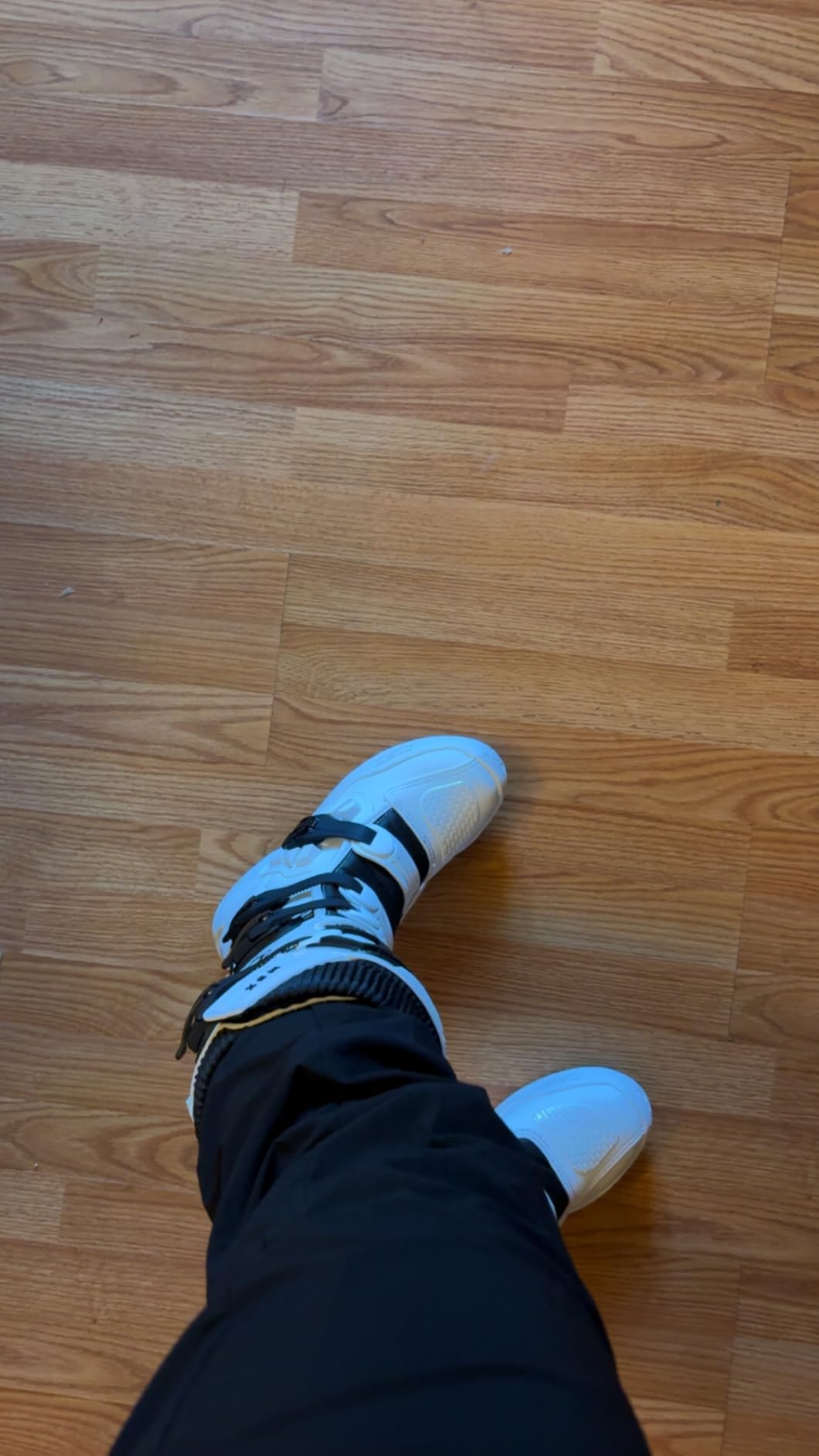
The M3X solves the problem almost no other boot in this roundup solves: a genuinely fast break-in. Owners report the boots becoming wearable within a ride or two, a sharp contrast with the two-to-three-day working process other riders describe on stiffer boots. If the idea of limping around for a week puts you off new gear, that alone justifies a look.
The low, thin toe area is the trail-riding hero here. Braking and shifting on a bike are foot tasks, and a lower profile toe gives noticeably better feedback through the lever and the shift paddle. Flex panels and a padded ankle section keep natural movement while the molded overlays handle abrasion.
Four positive-lock buckles work with gloves on, which sounds minor until you are trying to adjust a boot in the rain with numb fingers, and the reinforced steel shank holds the boot shape and arch support across uneven ground. The elastic gaiter keeps debris out of the closure.
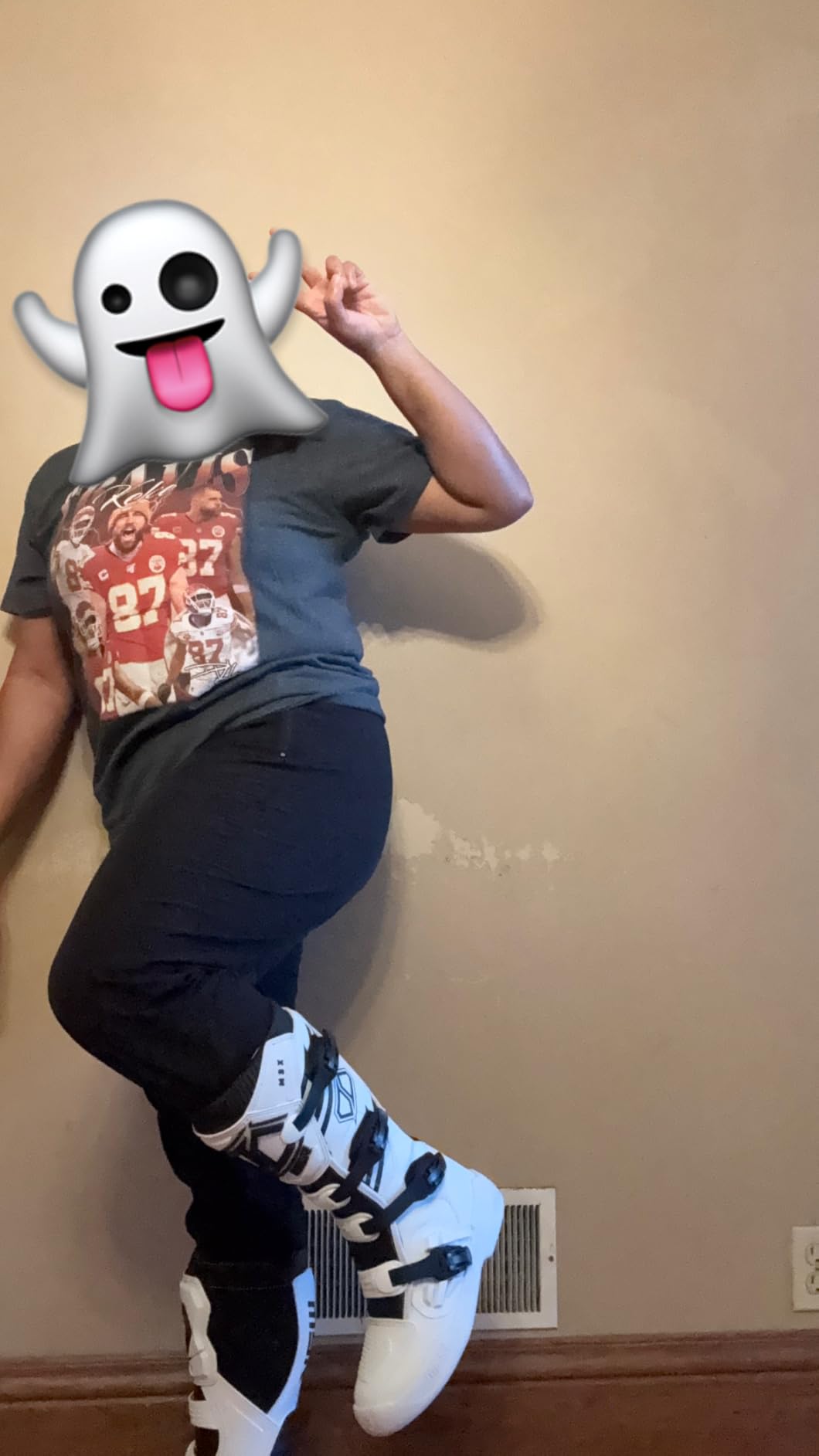
The most consistent complaint is the strap snag. One reviewer reports the straps catching on the footpegs and causing several dropped bikes, which is a specific and avoidable hazard if you are aware of it. A smaller group finds the boot too stiff for their preference, and one buyer expected leather and got synthetic and hard plastic instead.
At 4.4 stars across 364 reviews, the reaction is genuinely split: riders who value fast break-in and control feel rate it well, and riders who want a softer, more flexible trail boot find it too rigid.
Who the M3X suits best
New riders who refuse to suffer through a long break-in, and anyone whose trail days involve real walk-ins from a trailhead. The thin toe also makes it a strong choice for riders who spend their time on the rear brake through technical descents.
Who should skip it
Skip it if you have had strap snagging problems before, or if you want a genuinely supple boot for hiking out of remote terrain. Riders who prefer leather durability over low weight and fast break-in should step up a tier.
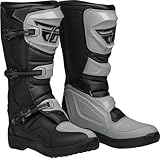
5. FLY Racing Maverik LT: Best for First-Time Trail Riders
Fly Racing Maverik LT Riding Boots (Black/Grey LT, 11)
Molded lugged outsole
Rubber heat shield
Gaiter seals the calf opening
Injected fish tail midsole
Pros
- Comfortable ankle flex for walking
- Durable buckles with replaceable hardware
- Treaded outsole grips loose terrain
- Solid value for a first or budget boot
Cons
- Not waterproof so dew and puddles dampen socks
- Softens noticeably after several hundred miles
- Runs slightly small in some colorways
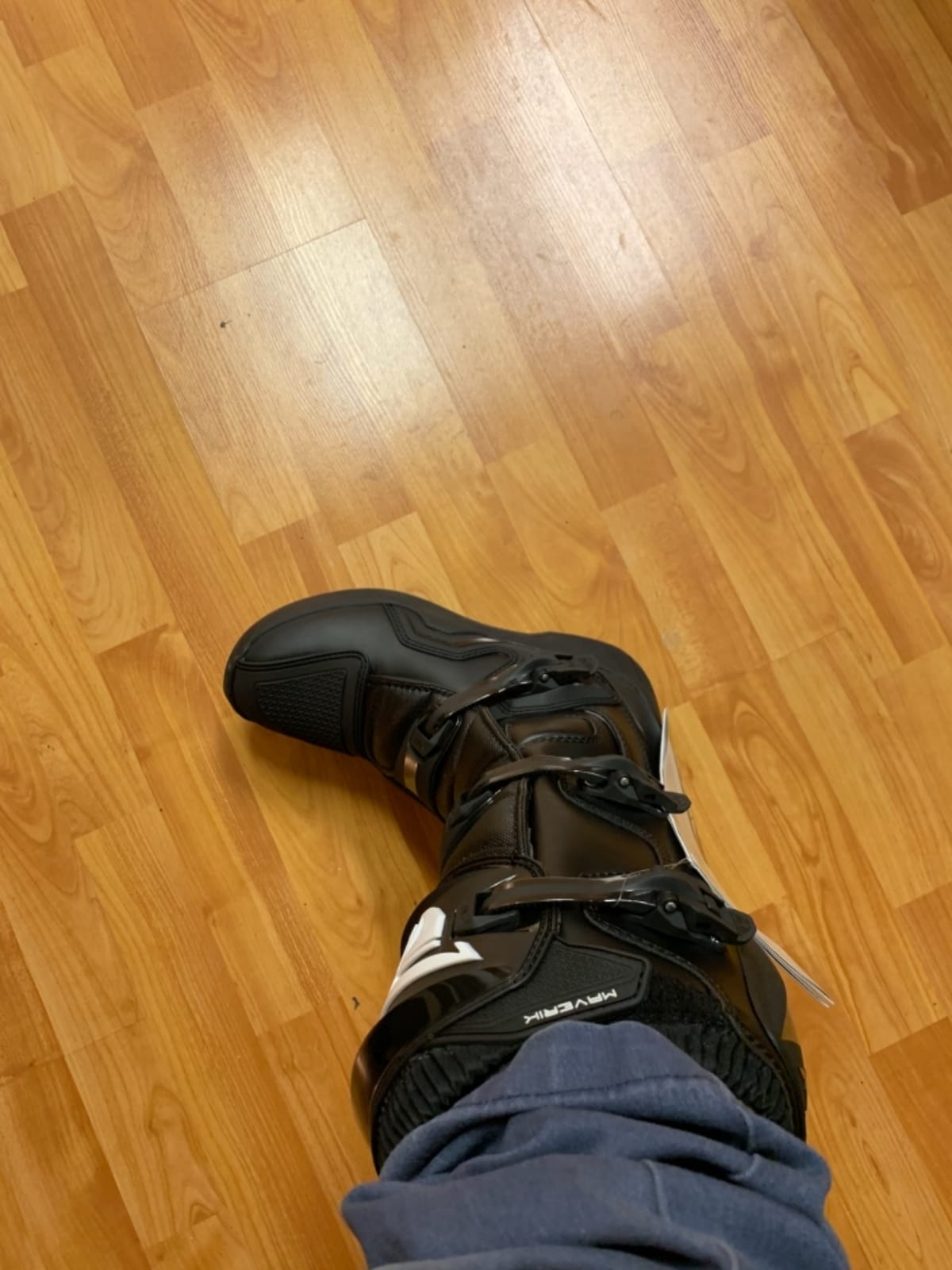
The Maverik LT is the boot we would put on a first-year trail rider without hesitation. It is comfortable and true to size, and the ankle flex is good enough that walking to a trailhead or hike-out does not feel like punishment. Buyers treat it as a solid first pair and many keep it as a daily trail boot long after they upgrade.
The molded outsole has an aggressive lug pattern that gives real traction on loose terrain, which matters more on a trail than on a groomed track where the bike is always moving. The rubber heat shield is described as long lasting, resistant to melting, and grippy enough to stand on the peg with a hot exhaust nearby.
The gaiter seals the calf opening against debris, and the tall shaft pairs well with shin guards and knee braces, which is common on enduro-style trails. Buckle hardware is replaceable, which is a small detail that extends the boot’s usable life.
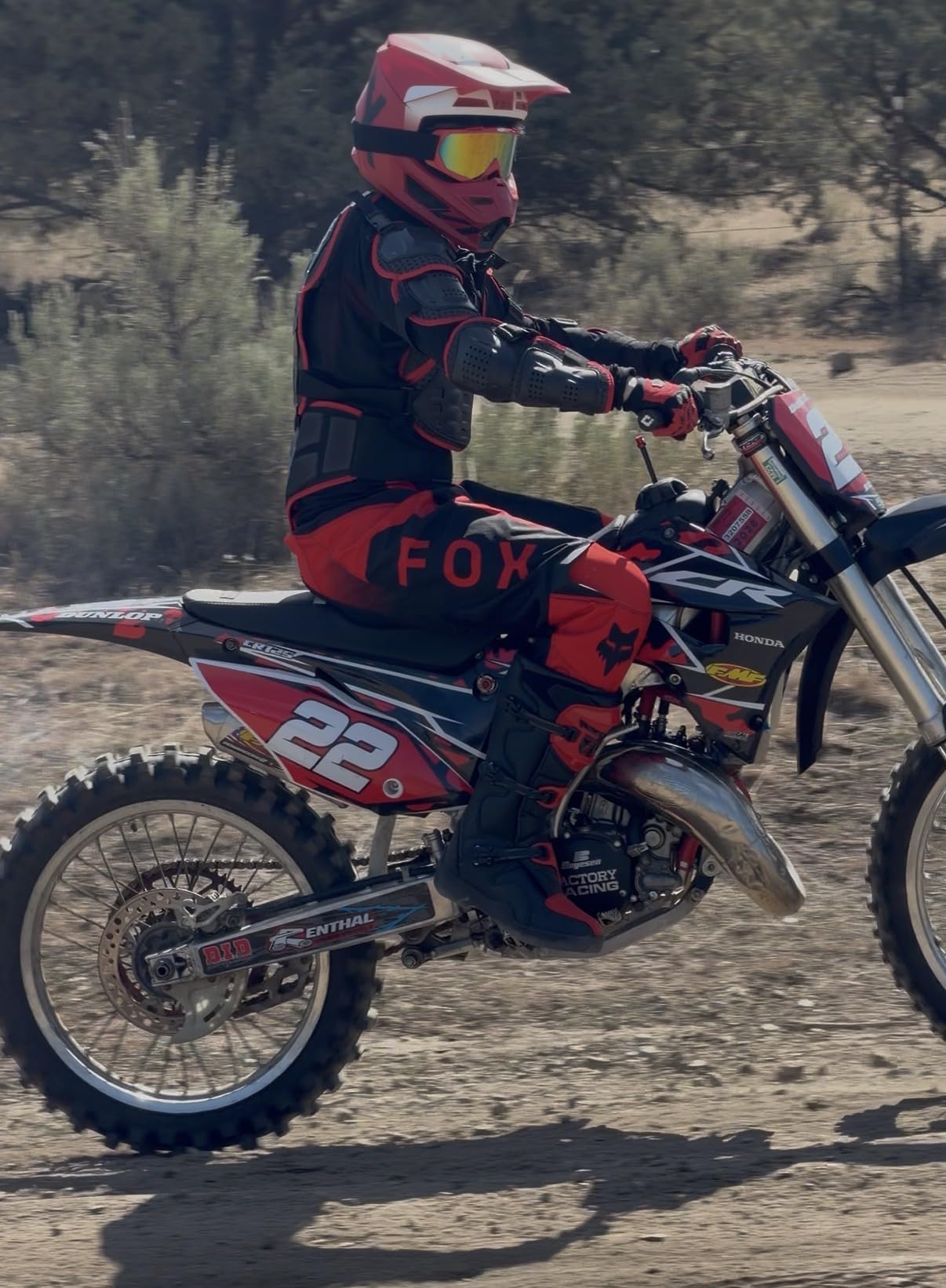
The two repeated drawbacks are waterproofing and softening. There is no membrane, so dew and puddles leave your socks damp. More importantly, several riders note the boot losing noticeable rigidity after roughly 600 miles, which trades some crash protection for a more comfortable ride once the break-in is done.
Sizing also runs a touch small in some colourways, so if you are between sizes, order up and check. At 4.5 stars across 2085 reviews, the feedback volume is large enough that the pattern is consistent rather than anecdotal.
Who the Maverik LT suits best
First-season riders, riders on a strict gear budget who want more than a plastic ankle brace, and anyone who wants one boot for both singletrack and weekend fire roads. The gaiter and lugged sole make it a good all-weather choice as long as you pack a dry pair of socks.
Who should skip it
Skip it if you ride hard enduro or hard-charging single track, because the loss of rigidity after several hundred miles is a real protection compromise. Riders in genuinely wet climates should pick a membrane boot instead.
6. O’NEAL Logo Rider: Best Value Boot That Fits Wide Feet
O’NEAL 0325-111 Men’s New Logo Rider Boot (Black, Size 11)
Injection molded plastic plates
Metal shank insert
Snap-lock four buckle closure
Air mesh interior
Pros
- Runs true to size and fits wide feet
- Four-buckle closure adjusts well after break-in
- Strong shin ankle and calf impact protection
- Air mesh interior with cushioned insole
Cons
- Very stiff out of the box with a multi-day break-in
- Adds height and can reduce feel on shifter and rear brake
- Toe buckles are fiddly before they settle
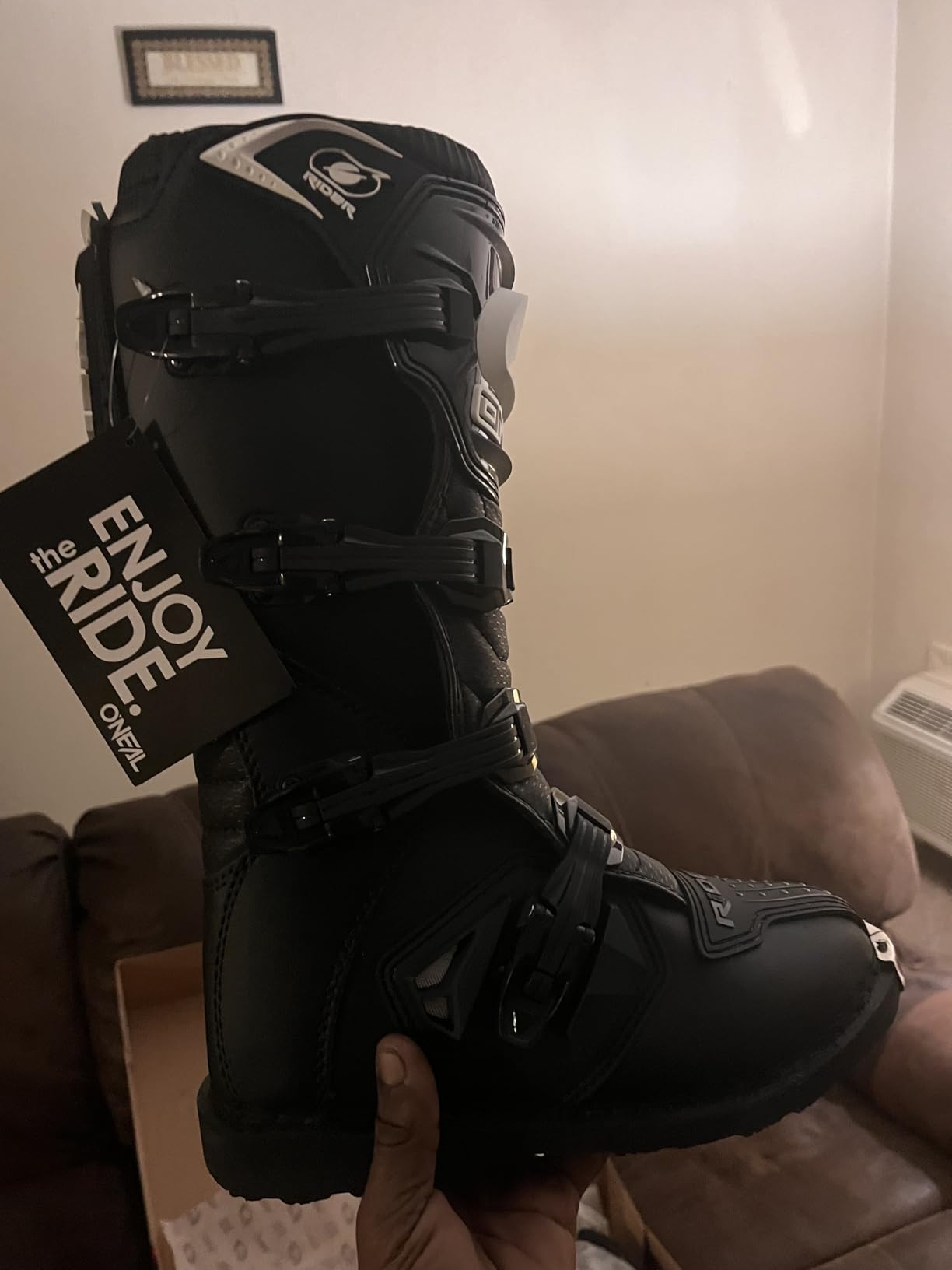
The Logo Rider is the most-reviewed boot in this roundup by a wide margin, with more than 6000 buyer ratings, and the consensus is clear: it delivers more protection than most people expect at this tier. Injection-moulded plastic plates cover the shin, ankle and calf, and a metal shank insert reinforces the boot shape and adds real support underfoot.
The detail that matters for our trail-riding focus is the fit. Owners repeatedly call out that it runs true to size and accommodates wide feet, which is one of the most common complaints about dirt bike boots on forums. The air mesh interior and cushioned insole also get positive mentions for comfort once broken in.
The snap-lock four-buckle closure is easy to operate with gloves and, once set, holds a consistent tension. The synthetic leather heat shield prevents heat damage to the upper, and several owners explicitly note these are trail and track boots rather than street footwear, which matters if you were expecting to commute in them.
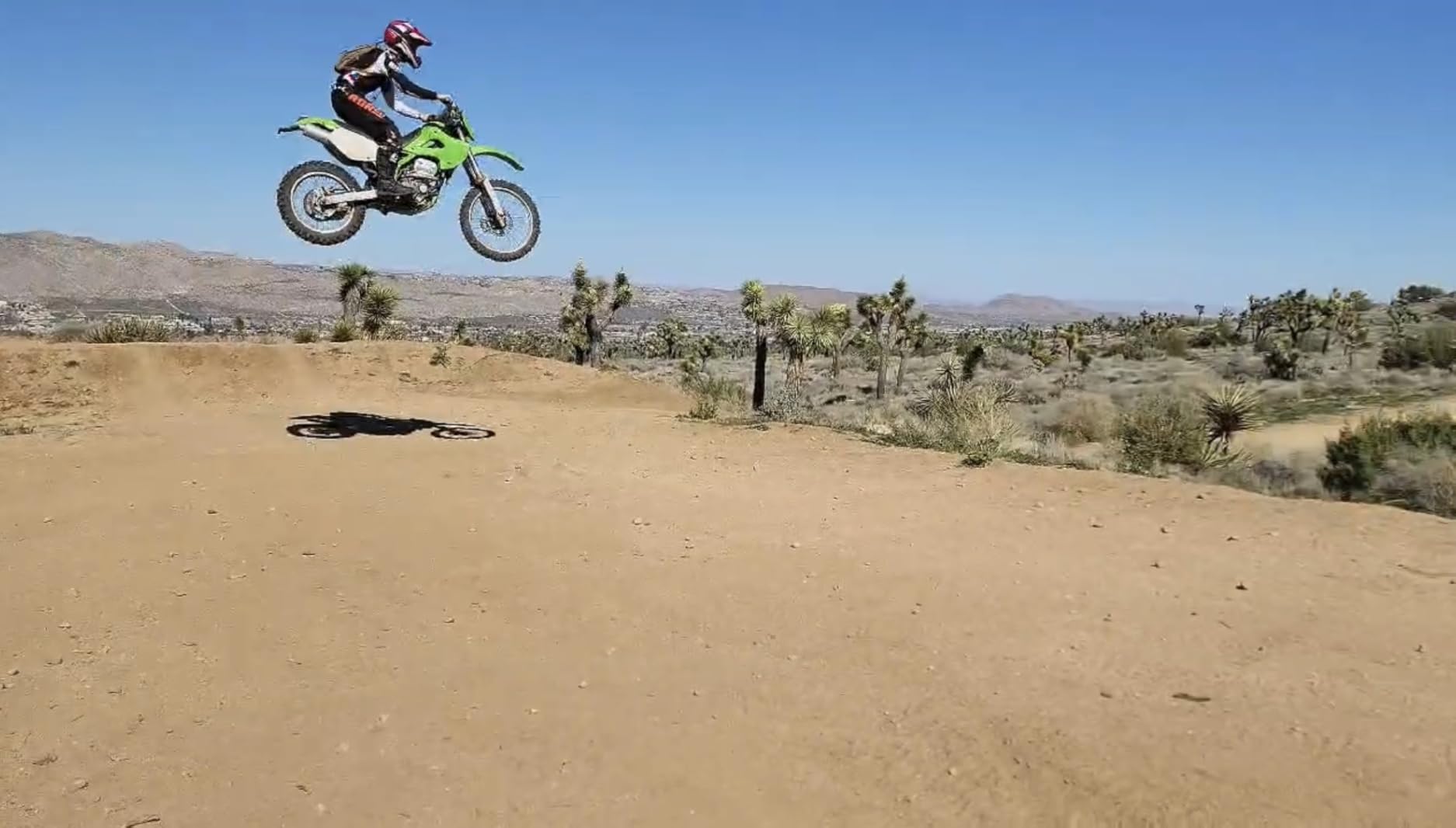
The break-in is the story here. It is very stiff out of the box, and riders describe spending two to three days working the boots with heat and stretching before shifting and braking feel normal. The toe buckles are fiddly during that period, and some reports mention an ankle strap breaking after limited wear.
The boot also adds roughly three inches of height, which some riders feel as reduced sensitivity on the shifter and rear brake. That is an adjustment issue rather than a safety issue, but it is worth knowing before your first ride.
Who the Logo Rider suits best
Riders with wide feet who keep running small in other brands, and anyone who wants proven long-term durability at the entry tier. The 4.5 rating across thousands of reviews is the most reliable signal in this group that the boot holds up.
Who should skip it
Skip it if you want to ride the day you buy. The multi-day stiff break-in is the single most-reported experience with this boot, and riders sensitive to shifter and brake feedback should be aware of the extra height.
7. Alpinestars Tech 5: Best for Long-Term Ownership and a Replaceable Sole
Alpinestars 2015015-13-9 Unisex-Adult Tech 5 Boots Black/Red Sz 09 (Multi, one_size)
Medial pivot with accordion zones
Fully replaceable outsole
Aluminum bridge buckles
Pros
- Fully replaceable outsole extends boot life
- Medial pivot keeps protection without limiting movement
- Aluminum bridge buckles with memory settings
- CE certified with profiled shin protection
Cons
- Stiffer than lighter trail-oriented boots
- Sizing runs narrow in some colourways
The Tech 5 is the boot to buy if you intend to keep riding in the same pair for years. The fully replaceable dual-compound outsole on a multi-density base means that when the grip wears down, you change the sole rather than the boot. The dual-compound design also gives a harder section where you need peg feel and a softer section for walking.
The medial pivot system and the flexible accordion zones at the instep and Achilles are the reason this boot feels less restrictive than its protection level suggests. You get CE-certified, anatomically profiled shin protection, a rear gaiter and a reinforced heel patch while still being able to crouch, dab and shift normally.
Closure is the advanced buckle system with polymer and fiberglass arms, high-impact aluminum bridges, memory settings and quick-release locks. In practice this means the fit you dial in on ride one is the fit you get on ride fifty, which is exactly what you want when a buckle could loosen over a technical descent.
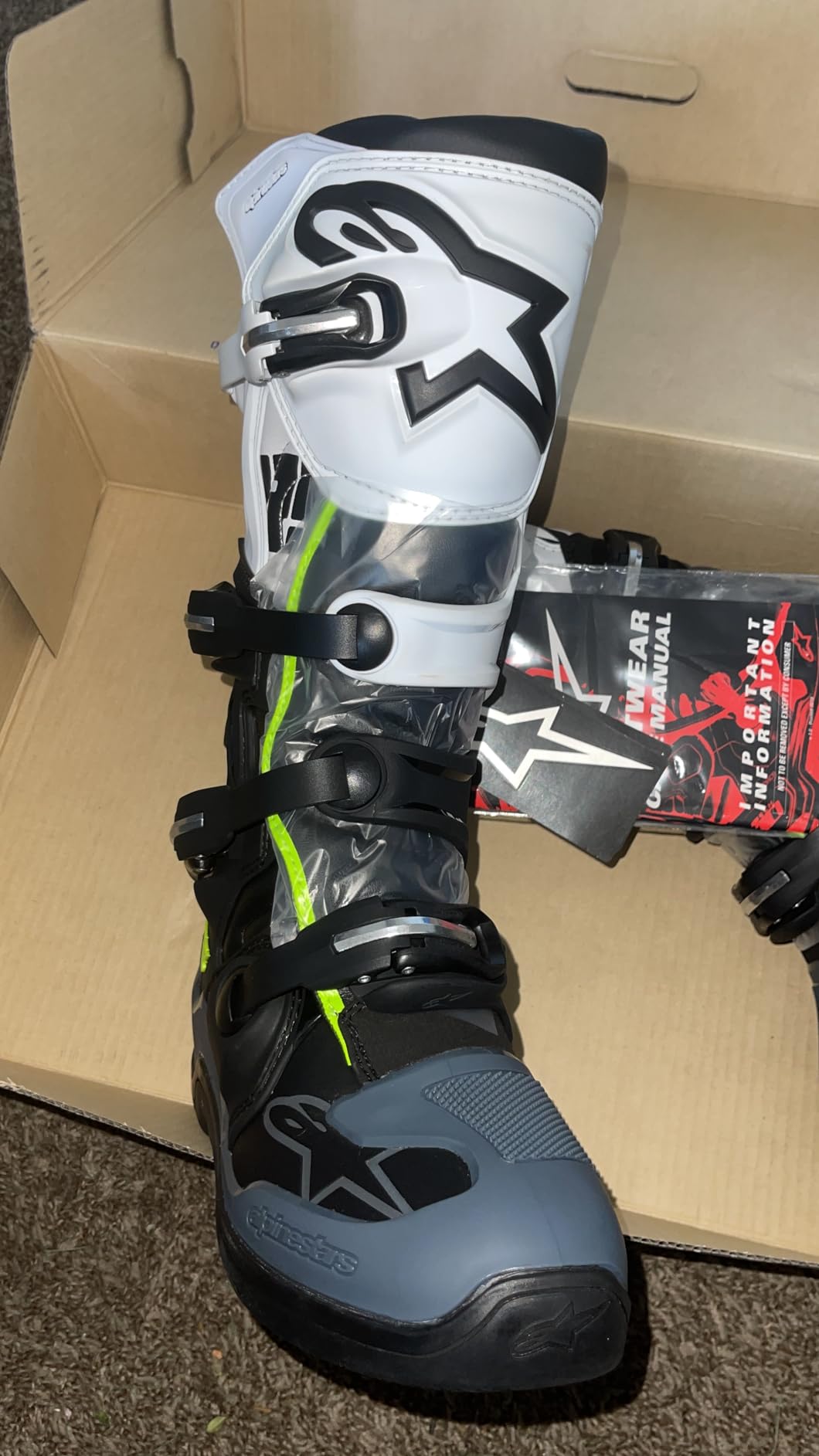
The drawbacks are the same two that follow most stiff MX platforms: it feels heavier and stiffer than lighter trail-oriented boots during break-in, and a few buyers report sizing running narrow in certain colourways. Check the size chart carefully rather than trusting your usual brand size.
At 4.7 stars across 166 ratings, the protection rating is among the best in this roundup, and the replaceable sole is what separates it from the Tech 3 for owners rather than occasional riders.
Who the Tech 5 suits best
Riders who keep boots for multiple seasons and would rather replace a sole than replace a boot. It is also a strong choice for anyone riding with knee braces, because the tall shaft and adjustable buckle spacing handle extra bulk well.
Who should skip it
Skip it if you are new to off-road riding and want the softest possible first boot, or if you walk long distances on foot. The stiffness that makes it protective on the bike is exactly what makes it tiring on a hike-out.
8. MSR Adventure Boots: Best for Wet, Muddy and Cold Trail Riding
MSR Waterproof Adventure Motorcycle Boots – Men’s Brown Full-Grain Leather Riding Boots with Te-Por Waterproof Membrane, Injection-Molded Protection, Steel Shank & Anti-Slip Rubber Sole – Size 12 Medium
Te-Por waterproof membrane
Full-grain leather upper
Steel shank and arch support
Pros
- Te-Por membrane keeps feet dry in wet trail conditions
- Full-grain leather with steel shank for durability
- Anti-slip sole grips wet and loose ground
- Cushioned liner and footbed for long days
Cons
- Bulkier and less articulated than dedicated MX boots
- Thin review pool at 115 ratings
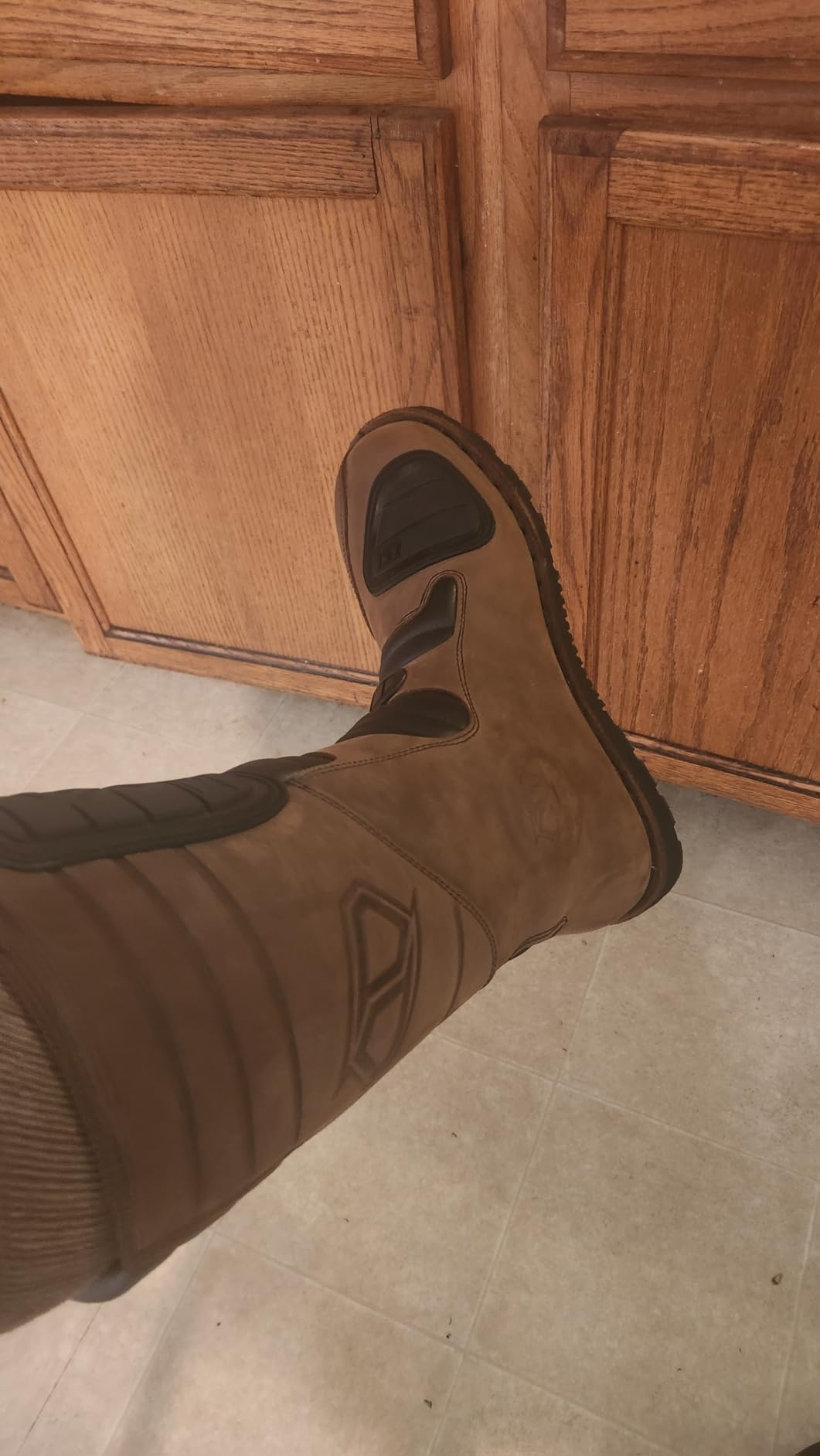
If your trails are wet, the MSR Adventure Boots solve the problem that every non-membrane boot in this roundup leaves open. The Te-Por waterproof membrane is the most-cited strength in buyer feedback, and it is the feature that lets you cross a creek or ride a soaked trail in confidence that your feet will stay dry.
The construction is genuinely different from MX boots. A full-grain leather upper with a steel shank and arch support is a durable, long-wearing package, and the cushioned liner and contoured footbed are described as comfortable for long days. The aggressive anti-slip rubber sole provides stable traction across mixed terrain.
Protection comes from injection-moulded shin, toe and heel plates, which covers the three most common impact points on a trail bike. The dual-density ankle support in the upper region means the boot resists both crush and rollover loads.
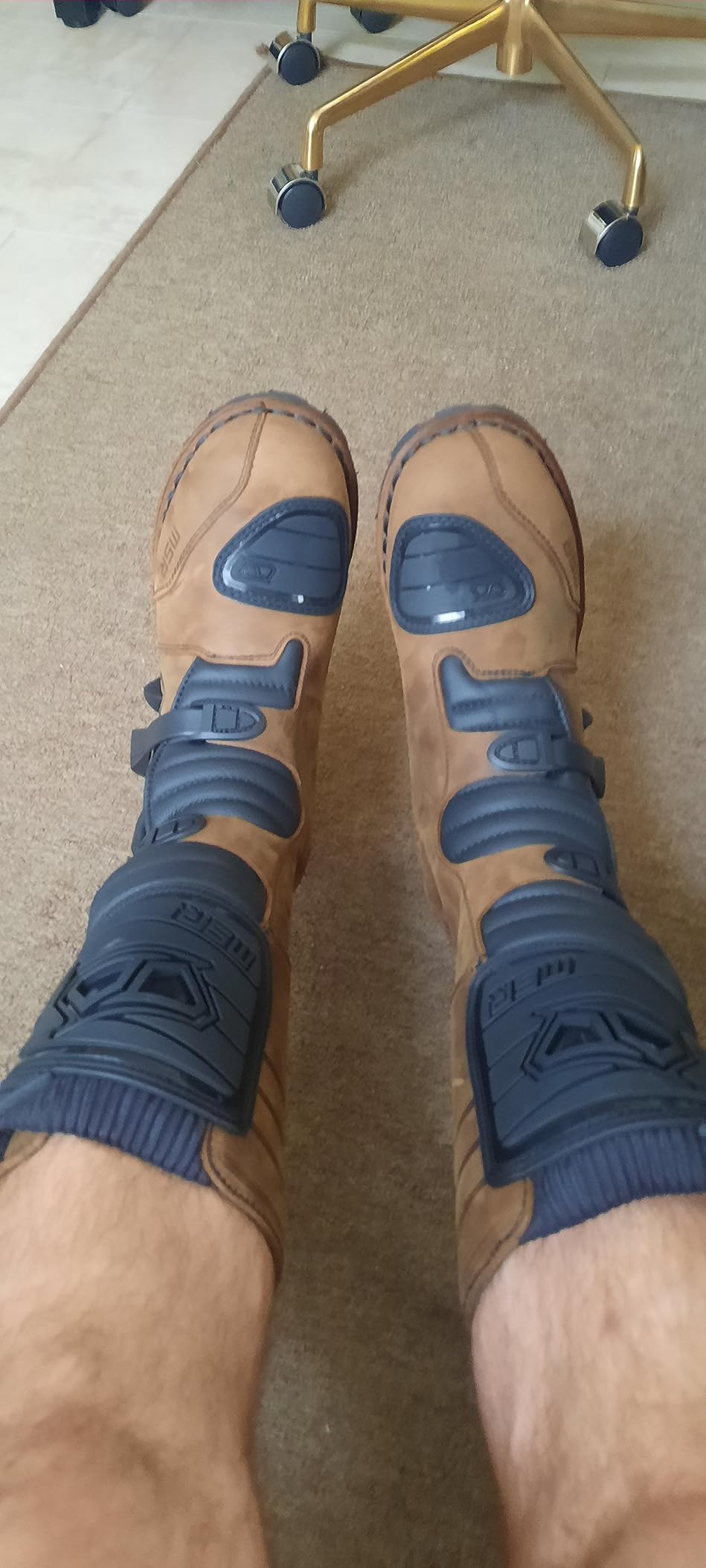
The trade-off is articulation. Owners consistently note the adventure boot profile is bulkier and less articulated than a dedicated MX boot, which makes it a better match for trail and dual-sport riding than for aggressive track or enduro use. Flexible ankles matter when you are picking your way over a technical rock face.
Be aware of the sample size too. With 115 ratings at a 4.6 average, the feedback is positive but thinner than the rest of this list, so treat the waterproofing claim as well supported and the long-term durability as less well documented.
Who the MSR Adventure suits best
Riders who ride through water, ride in winter, or live somewhere with a genuinely wet climate. It also suits dual-sport riders splitting time between pavement and gravel, where the leather upper and waterproofing are advantages rather than dead weight.
Who should skip it
Skip it if technical single track is your main use case and you need a supple boot that can articulate through rock gardens. Riders who prioritise low weight over weather protection should also look elsewhere.
9. Fox Racing Motion: Best for Ankle Protection and Hyperextension Control
Fox Racing Men’s Motion Motocross Dirt Bike Boots, Black, 14
Hinge Lockout hyperextension control
Forged metal buckles
Composite insole board
Pros
- Hinge Lockout stops the ankle before hyperextension
- Forged metal buckles with patented four-buckle layout
- Composite insole board with anti-shock heel pad
- Half sizes 9.5 10.5 and 11.5 available
Cons
- Premium price tier for weekend trail riders
- Synthetic leather and EVA sole rather than full leather
- Smallest review pool among the high-rated boots
The Motion is the most mechanically interesting boot here, because the Hinge Lockout is a real mechanism rather than a shell. It stops ankle motion before hyperextension while still allowing forward and back movement and lateral support, which is the specific injury trail riders worry about when a foot catches on a root and the leg keeps going.
With 89 percent of 129 ratings at five stars, the 4.7 average is tied for the highest in the roundup. Owners single out the forged metal buckles as noticeably more durable than plastic ones, and the composite nylon-fiberglass insole board with an anti-shock heel pad is credited with giving solid peg feel and stability.
Size range runs 8 to 14 with half sizes at 9.5, 10.5 and 11.5, the same advantage as the Fox Comp. The Duratac grip compound is a Fox proprietary blend designed for a balance of grip and durability on the peg and on the ground.
The materials are 60 percent synthetic leather, 30 percent TPU and 10 percent rubber, over an EVA sole. That is a modern performance construction rather than a traditional leather boot, and buyers who expected leather report noticing the difference.
Who the Motion suits best
Riders who have already had an ankle injury, or who ride terrain where foot entrapment is a genuine risk. If your trails are steep, off-camber or root-heavy, the mechanical hyperextension control is a meaningful upgrade over a fixed-structure boot.
Who should skip it
Skip it if you ride a handful of days a year. The protection hardware is excellent, but the premium tier is hard to justify for occasional trail riders, and the synthetic and EVA construction will not satisfy anyone who wants a leather boot they can resoled for a decade.
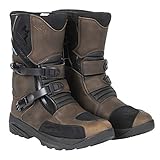
10. Tourmaster Trailblazer: Best for Dual-Sport and All-Weather Riding
Tourmaster Men’s Trailblazer Motorcycle Boots
HiPora 3-layer waterproof membrane
Wide last with flex panels
Dual MX buckles
Pros
- HiPora membrane holds up in sustained heavy rain
- Wide last and flex panels make it very walkable
- Dual buckles and hook and loop top hold the boot secure
- Lugged sole gives traction on dirt and mud
Cons
- Thick rounded toe box dulls clutch and shifter feel
- Less stiff than dedicated MX boots against lever strikes
- Some owners report the membrane leaking after about a year
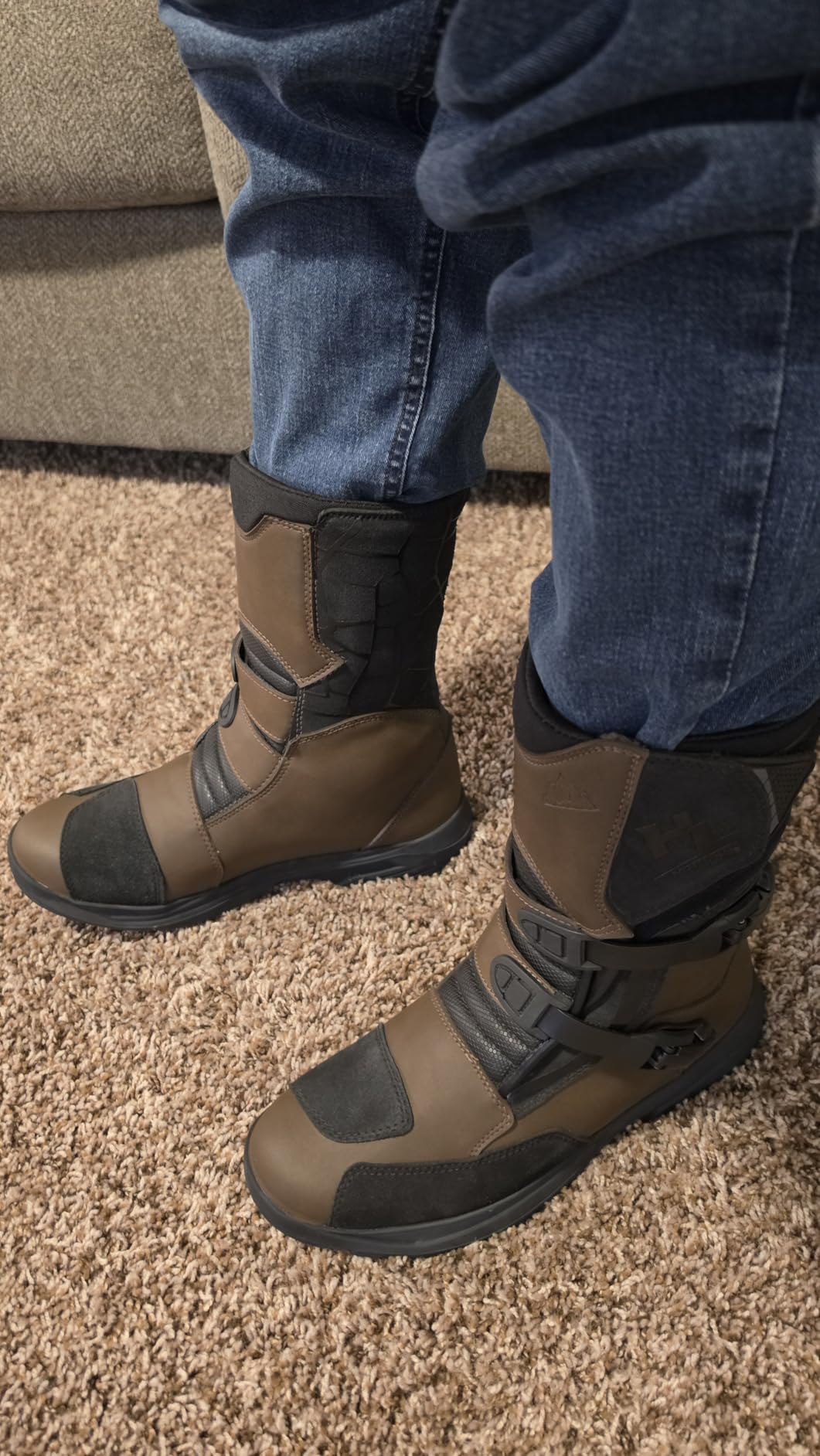
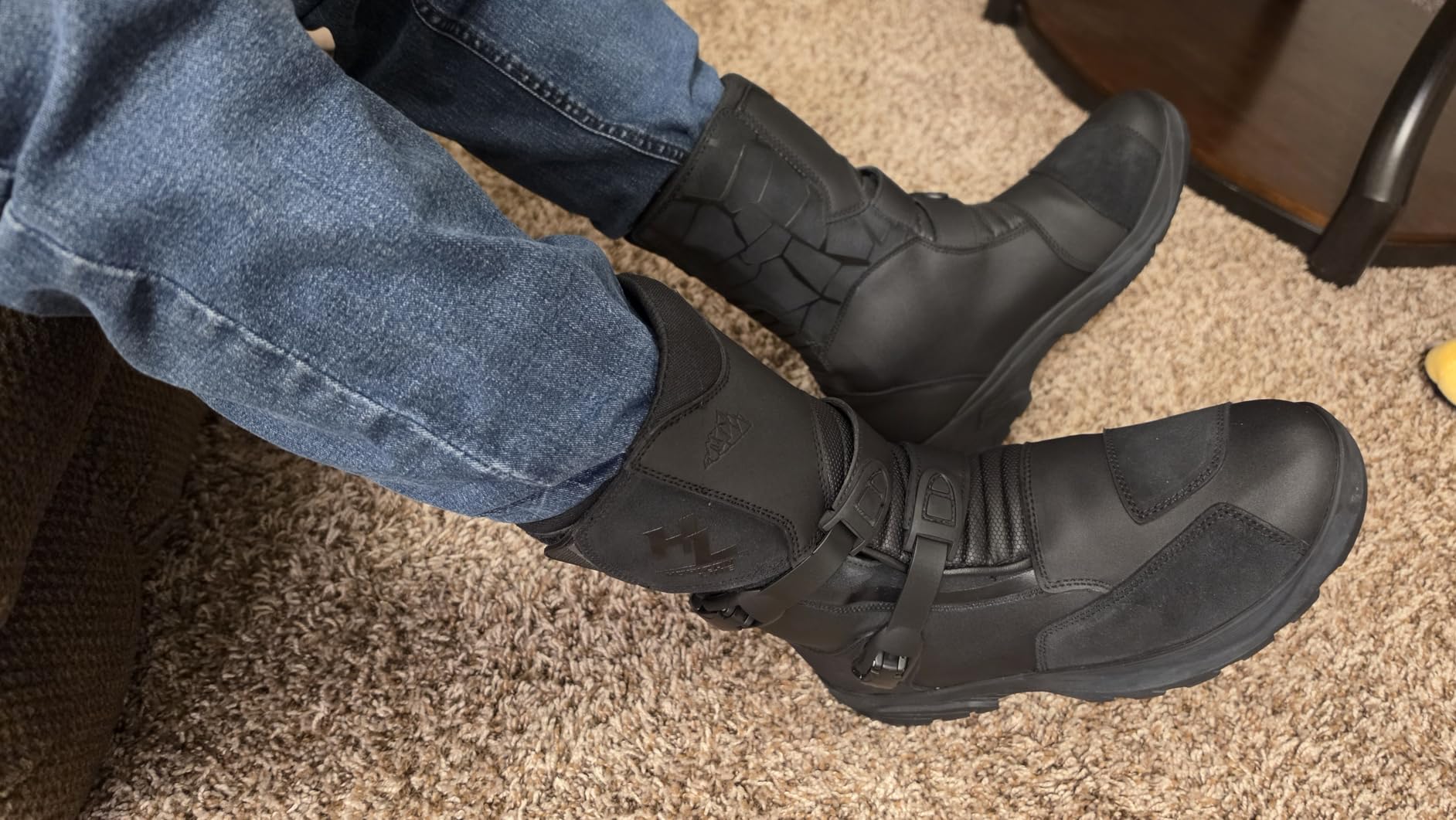
The Trailblazer is the most walkable boot in this roundup, and that is not a marketing claim. The wide last and billowed flex panels make it easy to move in off the bike, which suits riders who hike in from camp, load a bike onto a rack, or explore a fire road on foot. Riders using it through sustained heavy rain report the HiPora membrane performing well.
Closure is a hybrid: two adjustable MX-style buckles plus a hook and loop top closure, which allows a range of calf sizes. The Italian microfiber and suede upper has reinforced toe and shifter guards, and TechnoGI thermoplastic heel cups and toe caps sit over dual-density ankle protectors.
The uni-directional anti-twist moulded nylon midsole and heavy-duty anti-slip lugged outsole are worth noting for trail use. A lugged outsole gives much better grip walking on mud and loose dirt than a smooth motocross sole, which is a genuine advantage when you are walking a muddy access road.
At 4.2 stars across 193 ratings, this is the most divided reaction in the roundup, and the reasons are clear. The thick, rounded toe box is the most repeated complaint, making clutch and shifter control imprecise, and several riders find the boot not stiff enough for serious enduro work against a lever strike.
A small number of owners also report the waterproof membrane beginning to leak after roughly a year of use, which is a realistic service life expectation for a membrane in this class. The break-in is long and stiff, and unlike the wider boots here, the fit is not a strength for everyone.
Who the Trailblazer suits best
Dual-sport and adventure riders who split time between pavement and gravel, and anyone whose riding involves a lot of walking in poor conditions. The wide last also helps riders with broader feet who feel cramped in narrower MX lasts.
Who should skip it
Skip it if you need precise clutch and shifter control, which is a daily requirement for track and technical enduro riders. If you ride hard enduro, the lack of stiffness is the wrong trade, and the leaky-membrane reports are worth weighing if you plan to keep it for many seasons.
11. O’Neal Element: Best for a Tight First-Boots Budget
O’NEAL Element Dirt Bike Boot Black 10
Injection-molded plastic plates
Metal shank insert
Entry-level racing build
Pros
- Racing-boot construction at an entry-level tier
- Impact plates and metal shank give solid protection
- Wide range of whole sizes and colourways
- 4.6 rating across 3444 reviews
Cons
- Break-in needed before shifting and walking feel normal
- Less protective than plated mid and premium boots
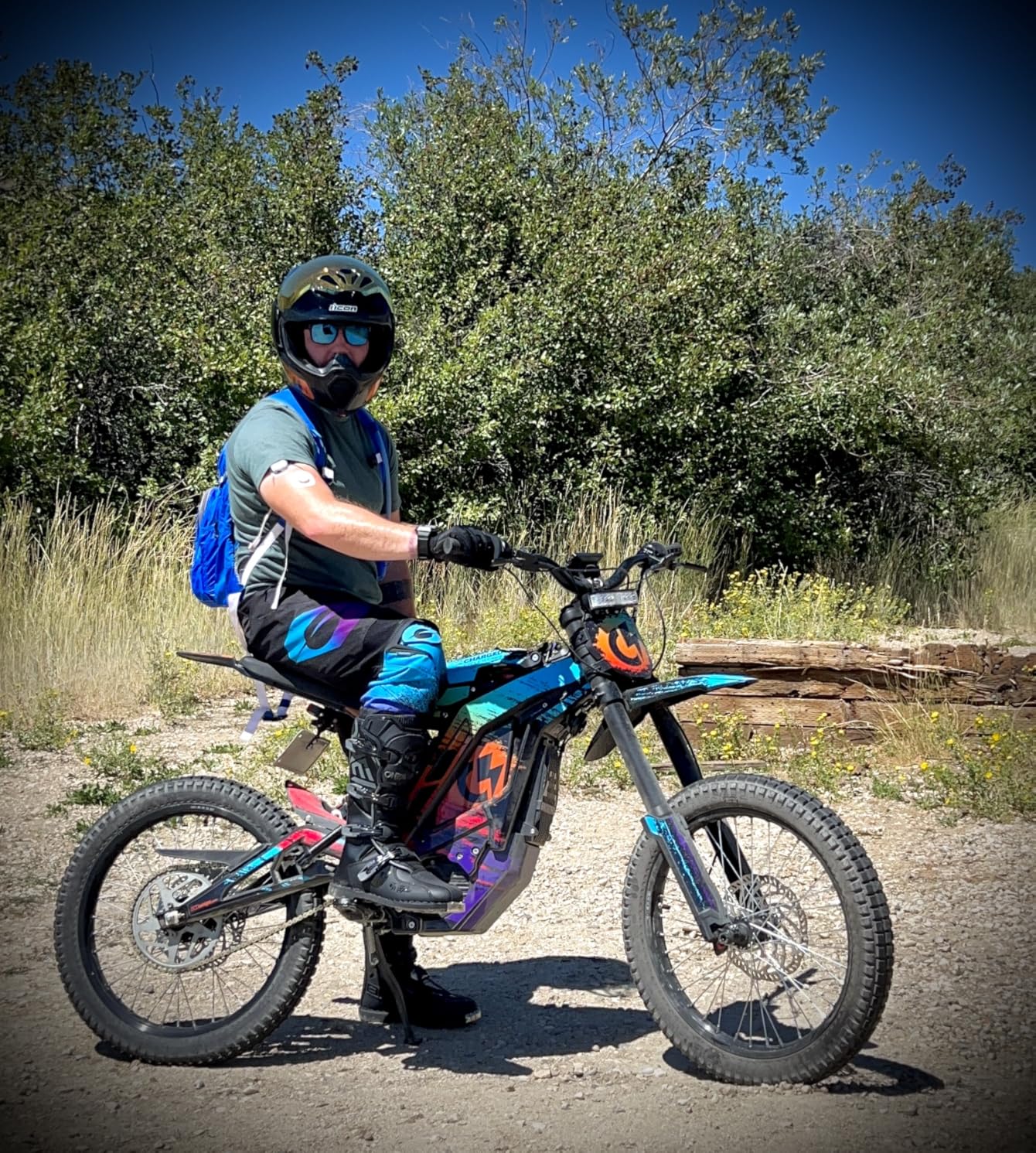
The Element is the simplest value argument on this list. Buyers describe it as a first-class racing boot construction sold at an entry-level price, and the hardware reflects that: injection-moulded plastic plates protect against impacts and a metal shank insert reinforces the boot shape.
The rating is the impressive part. At 4.6 stars across 3444 ratings, it has the second-largest review pool in the roundup and 78 percent five-star scores, which is a strong signal that the boot performs consistently rather than occasionally. Sizing spans a broad set of whole sizes and multiple colourways, which is frequently cited as a plus.
For a first-year trail rider, that combination of proven protection, wide availability and a modest entry price is exactly what you want. You are not paying for a pivot system or a replaceable sole that you will not use until you are riding harder terrain years from now.
The break-in is the price of admission, as with nearly every boot here. Boot stiffness means a period before shifting and walking feel normal, and a handful of riders find the protection level modest compared with plated mid-tier and premium models.
Who the Element suits best
New riders on a budget who want genuine impact plates rather than a soft ankle brace, and anyone replacing a first pair that has been destroyed by a season of wet trail riding. The size range and colour choice also make it a safe recommendation for a gift.
Who should skip it
Skip it if you ride hard enduro, do a lot of long walk-ins, or want replaceable parts for long-term ownership. If you can stretch to a mid-tier boot with a resoleable outsole, you will get more miles out of the purchase.
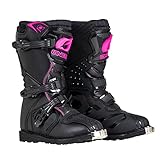
12. O’Neal Womens Rider: Best for a True Women’s Last
O’NEAL 0325-707 Womens New Logo Rider Boot (Black/Pink, Size 7)
Women's last with lower shaft
Injection molded plastic plates
Metal shank insert
Pros
- Women's last fits calves better than a men's boot
- Shaft sits lower and follows the natural knee bend
- Good lower-leg and ankle protection on forest roads
- Firm sole reduces foot fatigue
Cons
- Sizing is unusual so stay true or size down
- Narrow through the foot in the lower sizes
- Buckles can seize and need cleaning and lubrication
This is one of the few genuinely women’s-cut motocross boots on the market, and that distinction does real work. The shaft sits lower and closer to the natural knee bend than a men’s boot, and the women’s last accommodates larger calves without the boot riding up your leg, which is the single biggest fit complaint women report about men’s boots.
Protection is the same core package as the men’s Logo Rider: injection-moulded plastic plates for the shin and ankle, a metal shank insert for support and shape, a snap-lock four-buckle closure, an air mesh interior with a cushioned insole, and a synthetic leather heat shield.
Owners report that the firm sole means their feet do not fatigue the way they do in work boots, which is a meaningful comment on long trail days. The buckle tension also stays comfortable after break-in rather than digging in.
Sizing is the part to research before ordering. Several buyers advise staying true to size or even sizing down, because ordering up yields a boot that feels a full size larger, and a few report a narrow fit in the lower sizes. Break-in is commonly cited at roughly 50 miles.
Who the Womens Rider suits best
Women who have repeatedly found men’s boots riding up their calves or pinching across the foot. It is a genuinely better last, not a smaller men’s boot, and that difference shows up immediately on the bike and on a long walk-out.
Who should skip it
Skip it if you are between sizes and cannot order in person, because the sizing is unusual enough to need a careful read of the size chart. Riders who want a fast break-in should also know to expect a stiff first few rides.
How to Choose Dirt Bike Boots for Trail Riding
Trail-specific criteria differ from track criteria in a way that matters more than any spec sheet. Here is what to weigh, in the order that actually changes your day on the bike and off it.
1. Protection that covers the ankle, not just the shin
Trail crashes are low-speed, awkward and usually involve the inside of the bike or a foot caught under a peg. What protects you is a structure that resists ankle rollover and crush loads. Look for CE-certified protection, a heel counter, and TPU or plastic coverage on the inner ankle and lower boot, not only across the shin.
2. Walkability, weight and sole grip
Ask how much walking you do. If the trailhead is a five-minute stroll, any boot works. If you are hiking out from a remote trail, a boot with a lower shaft, flex panels and a lugged outsole will save you hours across a season. Soles with directional lugs grip loose dirt and mud far better than smooth MX soles when you are walking.
3. Closure system and how it holds over rough ground
Buckle quality varies more than most buyers expect. Aluminum or forged metal buckles survive knocks and corrosion better than plastic. Memory settings and quick-release locks keep tension consistent, which matters on washboard singletrack where a loose buckle is a distraction. A hybrid buckle plus hook and loop closure adds calf accommodation for wide or narrow legs.
4. Waterproofing and seasonal riding
Only two boots in this roundup have a proper membrane: the MSR Adventure Boots with a Te-Por membrane and the Tourmaster Trailblazer with HiPora. Everything else is a non-membrane boot, which is fine from spring to autumn and miserable in a creek. Membrane boots trade breathability for dryness, so hot dry summer riding is where they disappoint.
5. Shin plate design and adjustability
An adjustable or impact-reinforced shin plate matters if you ride with knee braces, because the braces add bulk that a fixed shin plate fights against. Look for padding behind the plate, since an unpadded plate against a bent knee over rough ground is uncomfortable even when the protection is excellent.
6. Heat shield and exhaust protection
On a trail boot, exhaust burns are a real injury category, especially for riders with low exhausts or long boots. A synthetic leather or rubber heat shield over the inner calf prevents the upper from degrading and stops the hot pipe from burning your leg when you move your boot off the peg to clear a root.
7. Soles that can be replaced
Resoleable outsoles extend the life of an otherwise excellent boot. The Fox Comp and Alpinestars Tech 5 both offer this, and for high-mileage riders it is the difference between one purchase and a repeat purchase three years later. Non-resoleable boots are not bad, they just have a defined end date.
8. Liner and debris control
A padded microfiber liner improves comfort, and a gaiter, whether elastic or microfibre, seals the calf opening so mud does not pour in on a wet descent. Debris in a buckle is a common cause of a boot that suddenly will not tighten, and it happens mid-ride more often than you would like.
9. Sizing, and trying them on if you can
Brands do not share a sizing standard, and the same shoe size can feel very different between two of these models. Buy where you can, and if you must buy blind, read the buyer comments on sizing rather than the manufacturer chart. Forum riders overwhelmingly recommend trying boots on at a local dealer before committing to unfamiliar terrain.
Dirt Bike Boots vs Motocross Boots: What Trail Riders Actually Need
Motocross boots are engineered for a specific problem: surviving high-speed landings, roost and repeated peg contact at race pace. They are exceptionally stiff through the shin, tall through the calf, and built with rigid exoskeletons that hold the ankle in a fixed, protected position. On a track, that is exactly what you want.
Enduro and trail boots are built for a different problem. You need to walk, you need to grip ground that is not a footpeg, and you need to control a bike at low speed over uneven ground. That favours a lower-profile toe for shifter and brake feel, some ankle articulation, and a sole that grips dirt when you put your foot down.
The practical difference shows up in the first ten minutes. On a track boot, walking feels like wearing a plaster cast. On a trail-oriented boot, you can hike to a mechanical problem, carry a tool, and dig out a buried peg without fighting your own gear. That capability matters enormously on remote single track and almost not at all on a closed circuit.
What you give up going trail-oriented is some hard-impact absorption at the shin, and you accept a little less ankle rigidity. For most trail riders that is the right trade, which is why the Leatt 5.5 FlexLock is the only boot here that has to work hard to justify its weight.
Sizing and Fit: Wide Feet, Wide Calves, and Knee Braces
If you have wide feet or wide calves, this is the section that will save you the most money, because it is the question riders most often get wrong. Sizing is not standardised across these brands, and the same nominal size can be meaningfully wider or narrower between two models. Forum advice consistently points toward trying boots on in person at a local dealer for exactly this reason.
For wide feet, the O’NEAL Logo Rider is the safest starting point in this roundup, with repeated buyer confirmation that it runs true to size and fits wide feet well. The Tourmaster Trailblazer also gets called out for its wide last. The Alpinestars Tech 3 and Tech 5 draw the opposite feedback, with a few buyers reporting narrow fits, particularly in certain colourways.
For wide calves, the flex-panel and hook-and-loop designs win. The Trailblazer’s dual buckles plus hook and loop top closure accommodate a wider range of calf sizes than a fixed four-buckle layout, and the Tech 3’s three-buckle memory lock is easier to fine-tune for a larger calf than a four-buckle system with fixed strap positions.
One important correction to a common assumption: sizing up is not always the fix. On the O’Neal Womens Rider, several buyers advise staying true to size or even sizing down, because ordering up produces a boot that feels a full size larger. A boot that is too large in the foot is a lost day of shifter and brake feel.
Knee braces change the equation. Braces add bulk through the shin and calf, so you want a tall boot with a replaceable or adjustable closure, generous flex panels and enough shaft height to seat under the brace cuff. The Alpinestars Tech 5 and the MSR M3X, both with four buckles, handle extra bulk better than a three-buckle boot.
If you ride with braces, also plan the order of operations. Boots go on first, then braces, and the brace cuff should sit over the boot shaft. If your boot is a snug fit, the braces will fight it and the first ten minutes of every ride will be adjustment.
Break-In: What to Expect in Your First 20 Rides
Break-in is the biggest source of buyer disappointment in this category, and the honest truth is that nearly all of these boots need it. Owners describe two to three days of working stiff boots with heat and stretching before shifting and braking feel normal. The good news is that the process is shorter and less painful than some forum accounts suggest.
Ride one to five: your heel and instep will be the sore points, and the ankle may feel like it is being held in a slightly wrong position. Wear thin liner socks, keep rides short, and stop after 30 minutes rather than pushing through pain. Do not ride technical terrain in this window.
Ride six to ten: flex the boot off the bike as much as you can. Walking, stairs, and gentle ankle circles at home get the accordion panels and the pivot moving faster than riding alone will. If you can get the boot to flex easily by hand, the foot will flex easily in the boot.
Ride eleven to twenty: this is where shifters and the rear brake start to feel like they belong to you. Most of the riding-specific complaints in reviews, from reduced brake sensitivity to a clunky shifter, resolve around this point. The MSR M3X is the exception, with owners reporting it usable within a ride or two.
If the boots are still painful past 20 rides, the problem is fit, not break-in. That is a sizing or last mismatch, and the fix is a return rather than more suffering. Persistent heel pain specifically is the most common signal that the boot is wrong for your foot.
One maintenance note that pays off: clean mud out of the buckles and strap hardware after every wet ride, and lubricate the buckle pins periodically. Stiffened or seized buckles are among the most common long-term complaints across the products here, and it is a fifteen-minute job that prevents the problem entirely.
Frequently Asked Questions
What boots are best for trail riding?
The Alpinestars Tech 3 is our overall pick for trail riding because it balances CE-certified TPU protection against a light shell and holds its fit with a three-buckle memory lock. For long-distance riders the Fox Racing Comp adds a resoleable outsole and half sizes, and for steep, rooty, wet terrain the Leatt Moto 5.5 FlexLock Enduro wins with its debris-sealing SlideLock closure and layered TPU coverage.
Are dirt bike boots waterproof?
Most dirt bike boots are not waterproof, and ten of the twelve boots in this roundup have no membrane at all. Creek crossings and wet mud will soak through non-membrane boots. The two exceptions here are the MSR Adventure Boots with a Te-Por membrane and the Tourmaster Trailblazer with HiPora. Membranes keep water out but reduce airflow, so they are quieter in heat.
What are the best dirt bike boots for people with wide feet?
The O’NEAL Logo Rider is the safest wide-fit recommendation in this roundup, with repeated buyer feedback that it runs true to size and fits wide feet. The Tourmaster Trailblazer also gets called out for its wide last and flex panels. Alpinestars models draw some narrow-fit complaints, so check the size chart carefully. Buying locally to try them on beats guessing.
What are the best dirt bike boots for enduro riding?
For enduro, the Leatt Moto 5.5 FlexLock leads this list, with a SlideLock one-way closure that seals the top of the boot, TPU coverage over the inner ankle and lower boot, and a reinforced heel counter. The Fox Racing Motion is the pick for pure ankle protection thanks to its Hinge Lockout mechanism, which stops hyperextension while allowing normal movement.
How long does it take to break in dirt bike boots?
Expect two to three days of stiffness on most boots, and roughly 20 rides before shifting and braking feel completely normal. Owners of the O’NEAL Logo Rider describe working the boots with heat and stretching for two to three days. The MSR M3X is the exception, breaking in within a ride or two. Persistent heel pain past 20 rides points to a fit problem, not break-in.
What should you wear while riding a dirt bike?
A full-face or peak helmet, goggles, gloves, jersey and pants, knee and elbow protection, and tall off-road boots are the core kit. Boots matter as much as the helmet because trail riding puts your ankles and shins in the impact zone. Add a neck brace for enduro and aggressive riding, and chest protection if you ride technical rock. Plan for mud by choosing a waterproof boot.
Final Verdict: Which Trail Boots to Buy
Start with the Alpinestars Tech 3 if you want one boot that handles singletrack, fire roads and the occasional track day without thinking about it. Move to the Fox Racing Comp if you put on serious mileage and want a resoleable outsole, and to the Leatt Moto 5.5 FlexLock if your trails are steep, technical and wet.
Below those, the MSR M3X wins on fast break-in and control feel, the FLY Maverik LT and O’NEAL Element cover first-season riders on a budget, and the two membrane options, MSR Adventure and Tourmaster Trailblazer, solve the wet-weather problem the rest of the list cannot. Whatever you choose, buy where you can try them on, and if you are buying for a younger rider, our beginner dirt bike guide covers sizing the rest of the kit.