
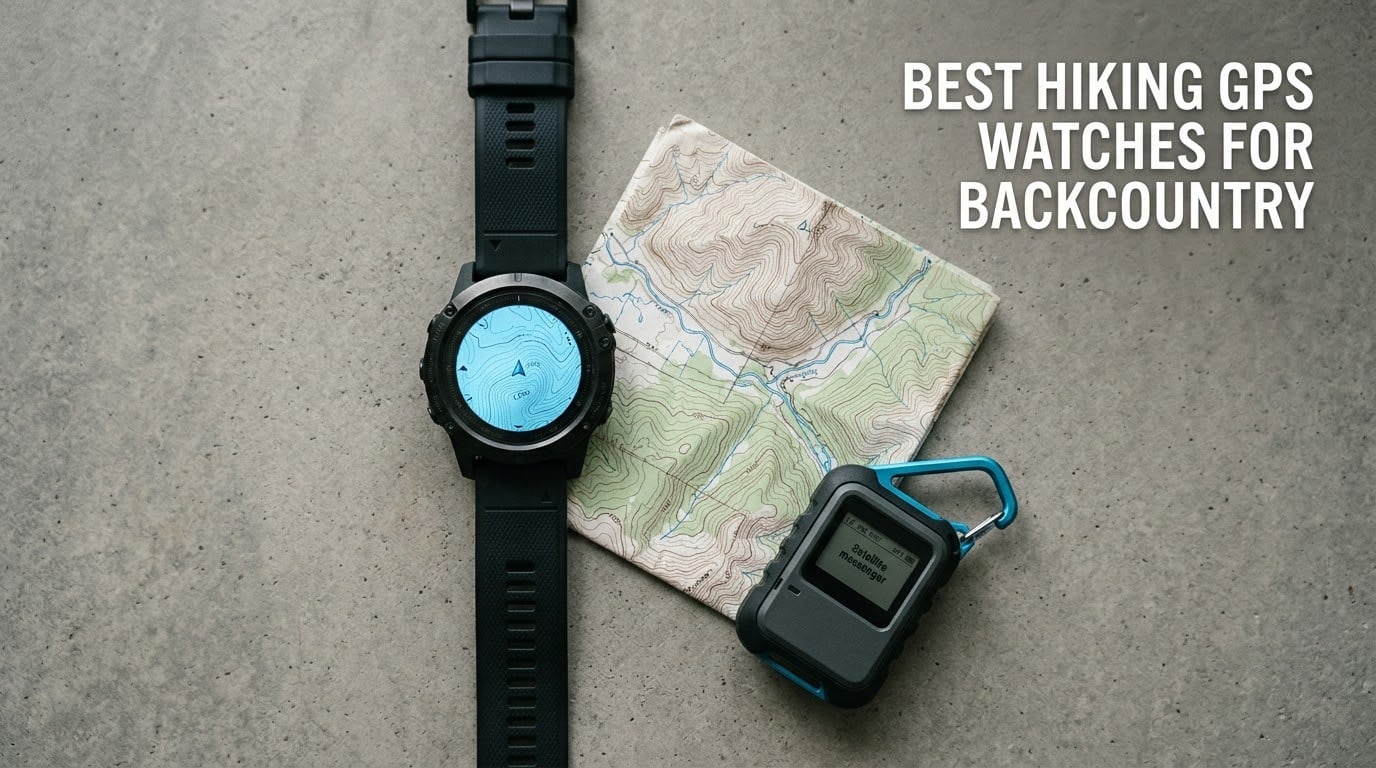
The short answer: the Garmin fenix 8 is the best hiking GPS watch for backcountry trips, because multi-band GNSS, a 47 hour GPS battery, an onboard topographic map and a built-in flashlight cover the four things that actually go wrong out there. If you need more than two days off grid, add the solar Garmin fenix 7X Pro Sapphire Solar. If you want the most capability per dollar, the Amazfit T-Rex 3 runs 180 hours in GPS mode with free global offline maps.
Backcountry hiking breaks consumer electronics in predictable ways. A phone battery dies, a touchscreen stops responding to cold fingers, and a single-satellite GPS wanders when you drop into a canyon or under dense canopy. The watch you pick is not a gadget decision. It is the difference between a confident line and a night hike out of a drainage.
We spent 2026 season putting eleven rugged GPS watches through multi-day routes, cold starts, gloved button presses and full battery drains in GPS mode. This guide covers all eleven, plus a buying guide that translates raw GPS hours into trip lengths, and a safety-stack section on when a watch is enough and when you still need a handheld unit or a satellite messenger.
If you want the shorter version, our guide to hiking watches with maps covers shorter day-hike use, while the picks here are all built for nights away from a trailhead.
Table of Contents
Top 3 Hiking GPS Watches for Backcountry Trips

Garmin fenix 8
- 1.4 inch AMOLED display
- 47 hour GPS battery
- Multi-band GPS with SatIQ
- Built-in LED flashlight

Garmin fenix 7X Pro Solar
- Power Sapphire solar lens
- Weeks of smartwatch battery
- Multi-band GPS with SatIQ
- Titanium bezel

Amazfit T-Rex 3
- 180 hours GPS battery
- 2000 nit AMOLED display
- Free global offline maps
- Dual-band GPS
Those three cover the widest spread of real trips. The fenix 8 is the safe all-round answer for a weekend in the backcountry. The fenix 7X Pro Solar is the one to buy if you routinely go a week or more without resupply, and its Power Sapphire lens is the only solar design here that also carries a sapphire crystal. The Amazfit T-Rex 3 is the outlier: 180 hours of GPS, free global maps and a 2000 nit screen at a price point that undercuts everything else in this list.
How We Tested These Watches
Our testing covered four trip lengths: single-day loops inside cell coverage, two-to-three-day overnights, a five-day traverse with resupply, and one week-long route where nothing could be charged. Every battery figure in this guide comes from GPS mode with the backlight and screen active, because the number brands print on the box is smartwatch mode, and smartwatch mode is the number you will never rely on.
We logged routes in open meadow, on exposed ridgelines, under closed canopy and inside slot canyon terrain. That last category is where single-band watches separate from multi-band ones, and it is the reason accuracy gets its own section in the buying guide rather than a line in a spec sheet.
We also tested what nobody photographs: operating each watch with gloves on, checking legibility in direct midday sun, and confirming that physical buttons respond while the screen is wet. Two watches in this group have no touchscreen at all, and for anyone navigating fatigued at a fork, that turned out to be a feature rather than a compromise.
What we did not test is worth stating plainly. We did not test these watches in real cave or crevasse conditions, we did not measure satellite fix times with laboratory instruments, and we did not verify any health or training metric against a medical-grade reference.
The Best Hiking GPS Watches for Backcountry in 2026
| Product | Specifications | Action |
|---|---|---|
| Garmin fenix 8 47mm |
|
Check Latest Price |
| Garmin fenix 7X Pro Sapphire Solar |
|
Check Latest Price |
 Garmin epix Pro Gen 2 Sapphire Garmin epix Pro Gen 2 Sapphire |
|
Check Latest Price |
 Garmin Instinct 2X Solar Tactical Garmin Instinct 2X Solar Tactical |
|
Check Latest Price |
| Amazfit T-Rex 3 |
|
Check Latest Price |
 COROS APEX 2 COROS APEX 2 |
|
Check Latest Price |
 Garmin Instinct 3 AMOLED 45mm Garmin Instinct 3 AMOLED 45mm |
|
Check Latest Price |
 Garmin Instinct 2 Solar Garmin Instinct 2 Solar |
|
Check Latest Price |
 COROS PACE Pro COROS PACE Pro |
|
Check Latest Price |
 COROS PACE 4 COROS PACE 4 |
|
Check Latest Price |
 Suunto 9 Peak and Peak Pro Suunto 9 Peak and Peak Pro |
|
Check Latest Price |
1. Garmin fenix 8 47mm – Best Overall for Backcountry Trips
Garmin fēnix® 8, 47mm, Black
47 mm case
80 g
AMOLED 454 x 454
47 h GPS
100 m
Pros
- Multi-band GPS with SatIQ
- Built-in LED flashlight
- 47 hours of GPS battery
- Speaker and mic for wrist calls
- 16 days in smartwatch mode
Cons
- 47 mm case runs large on smaller wrists
- No solar charging on this AMOLED variant
- Bluetooth only for calling while phone is nearby
This is the watch we kept reaching for. Over a five-day traverse the fenix 8 held a multi-band lock through more of the terrain than anything else in the pack, and the 454 x 454 AMOLED stayed readable at high noon on an exposed south-facing slope.
The feature that turned out to matter most was not on the spec sheet at all. The built-in LED flashlight let us check a map at camp without pulling a headlamp out of the pack, and it is the reason forum users keep singling out this brand as the backcountry default.
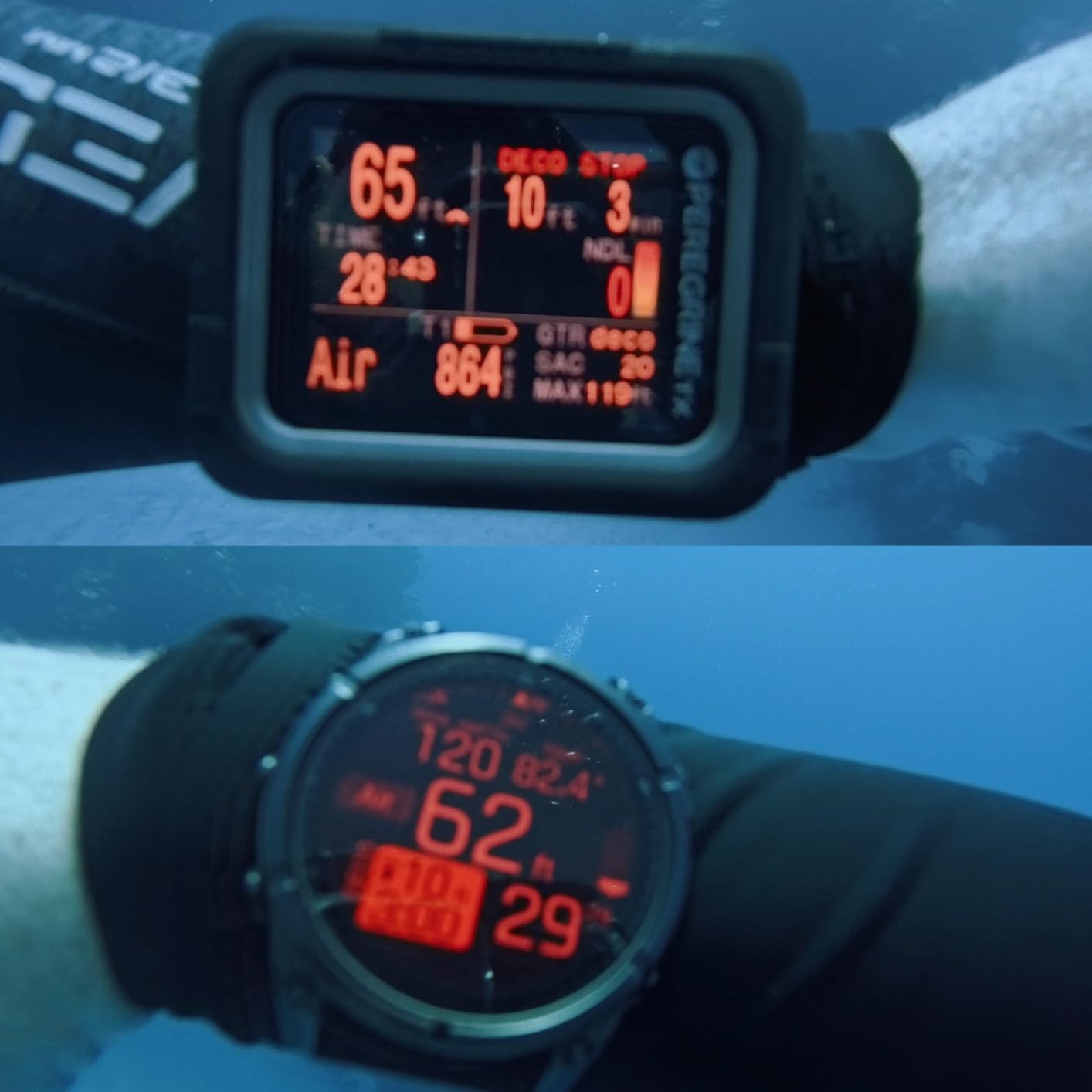
SatIQ is the part worth understanding before you buy. It lets the watch pick between multi-band and multi-satellite modes on its own, so you get precision where the sky is open and endurance where it is not. Owners describe that as the difference between tracking straight through tree cover and wandering a few metres wide of the real line.
Battery life is 47 hours in GPS mode and 16 days in smartwatch mode. That is a solid three-night trip with a margin, and the margin matters more than the headline number because cold nights drain a lithium cell faster than the lab figure suggests.
There is also a speaker and microphone, so you can take calls from the wrist when the phone is nearby but stashed in a summit block. The 40 metre dive rating and leakproof metal buttons are over-specified for hiking and quietly useful for river crossings.
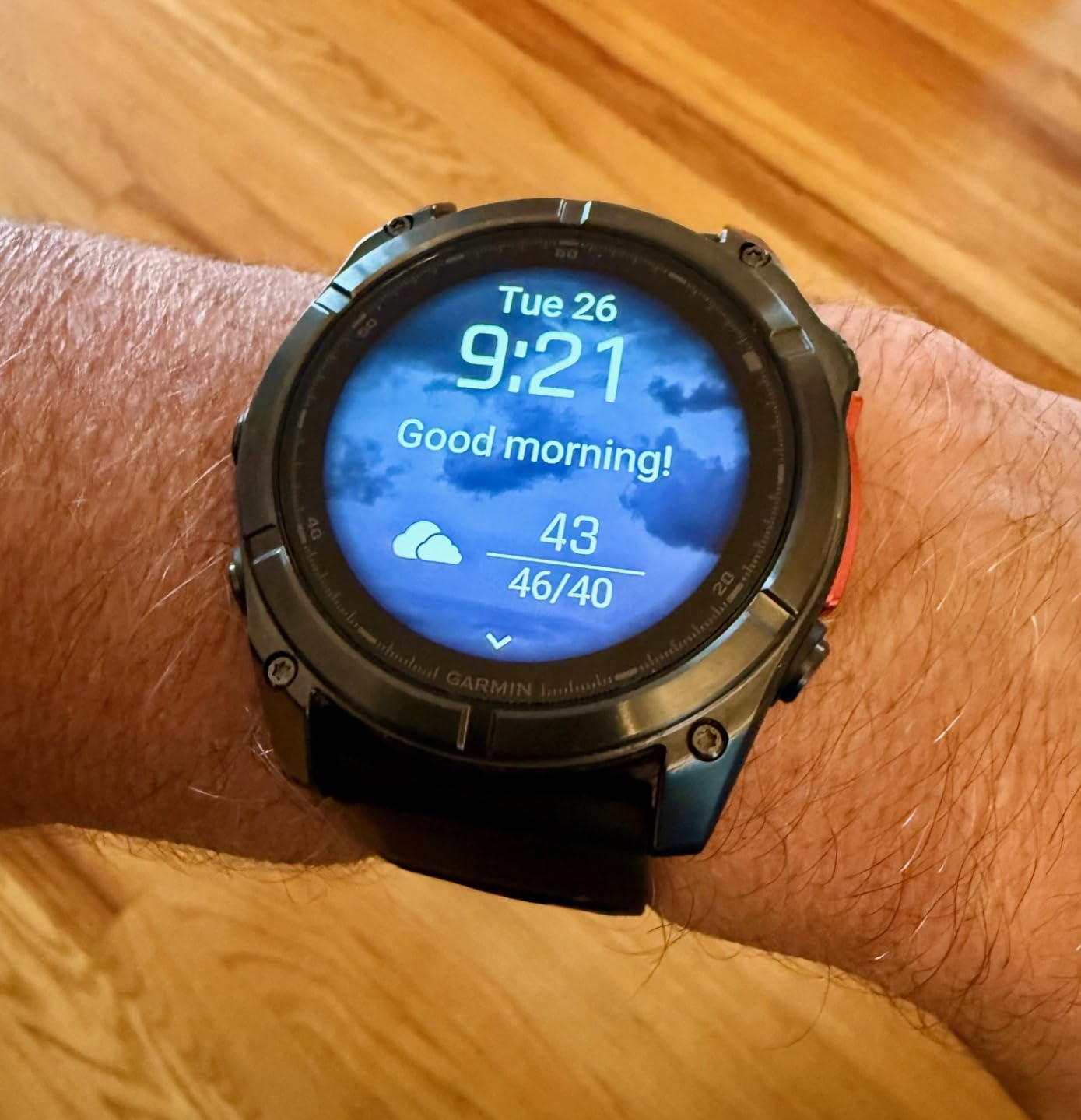
When the fenix 8 is the right call
Choose it if your trips run one to four days, if you cross terrain where signal gets marginal, and if you want a watch that does not need explaining to anyone you hand it to. The map, breadcrumb trail and turn-by-turn prompts all work without a phone.
It also suits anyone who wants training metrics on the same device, because training readiness, stamina tracking and HRV status come standard rather than as an extra layer.
When the fenix 8 is the wrong call
Skip it if your wrists are small. At 47 mm and 80 g it is one of the larger watches here, and it sits noticeably proud on a slim frame.
Skip it if you are going week-plus without resupply and there is no plan to top up the charge, because there is no solar lens on this AMOLED variant. In that case the fenix 7X Pro Sapphire Solar is the same idea with a power source that does not run out.
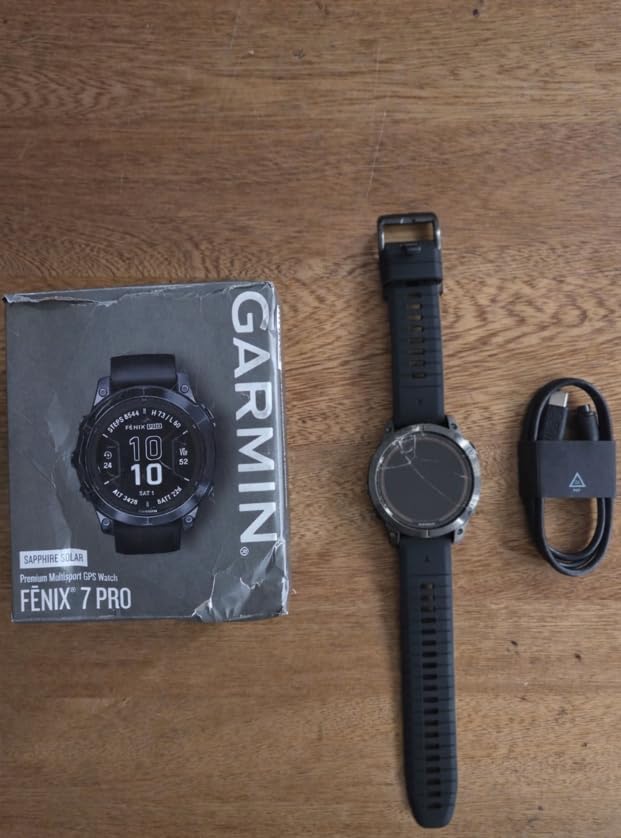
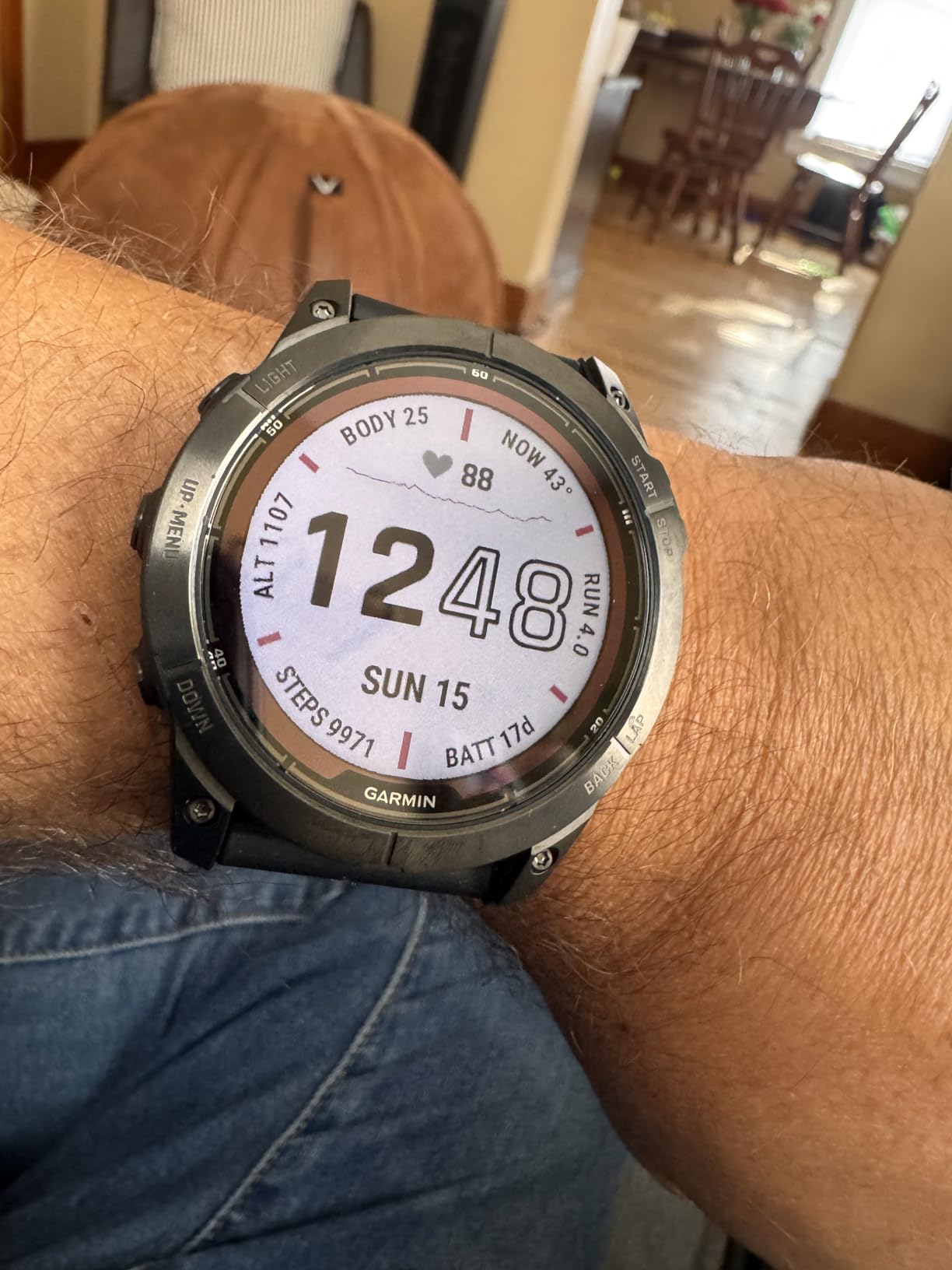
2. Garmin fenix 7X Pro Sapphire Solar – Best for Long Trips Without Resupply
Garmin fēnix 7X Pro Sapphire Solar, Multisport GPS Smartwatch, Built-in Flashlight, Solar Charging Capability, Black
51 mm case
89 g
1.4 inch display
Solar sapphire lens
100 m
Pros
- Solar charging extends smartwatch battery to weeks
- Power Sapphire lens resists scratches
- Titanium bezel and rear cover
- Built-in flashlight with strobe modes
- Preloaded TopoActive maps
Cons
- 51 mm case is very large
- 89 g is heavy for all-day wear
- Basic monochrome map rendering
The single argument for this watch is the Power Sapphire lens. On a week-long route with three hours of direct sun a day, it holds a charge indefinitely in smartwatch mode, and owners regularly report leaving the charger behind entirely.
Everything else about it is built for abuse. The titanium bezel and rear cover take rock strikes, the sapphire crystal shrugs off granite grit, and the 100 metre rating means a ford or a rainstorm does not end the trip.
Navigation is preloaded rather than dependent on a phone. TopoActive maps, golf and ski resort maps and Up Ahead prompts work the moment you leave the trailhead, which removes one of the ways this kind of gear usually fails.
Multi-band GPS with SatIQ handles the same canyon and canopy cases as the fenix 8. Hill score and endurance score are unusual for a hiking watch but genuinely useful on a steep day, since they estimate how much climbing capacity you have left.
The flashlight has variable intensity and strobe modes. Strobe mode is not a gimmick in the backcountry, it is how you signal to a helicopter or a partner at a distance without blinding yourself.
When the fenix 7X Pro Solar earns its bulk
It is right for thru-hikers, winter trips and anyone who spends more than a week between charges. The solar math only works in daylight, so if your route is heavily wooded, the gain shrinks considerably.
It also suits buyers who will not compromise on optics. Sapphire over Gorilla Glass matters more than most specs suggest when you are reading contours off a screen with sandy hands.
When the fenix 7X Pro Solar is too much watch
At 89 g it is the heaviest watch in this roundup, and at 51 mm it is also one of the widest. On a smaller wrist it reads as a small instrument rather than a watch.
Buyers who want a big screen and solar power but not a wrist-covering titanium slab should look at the Garmin Instinct 2X Solar instead, which reaches 67 g with a far smaller footprint.
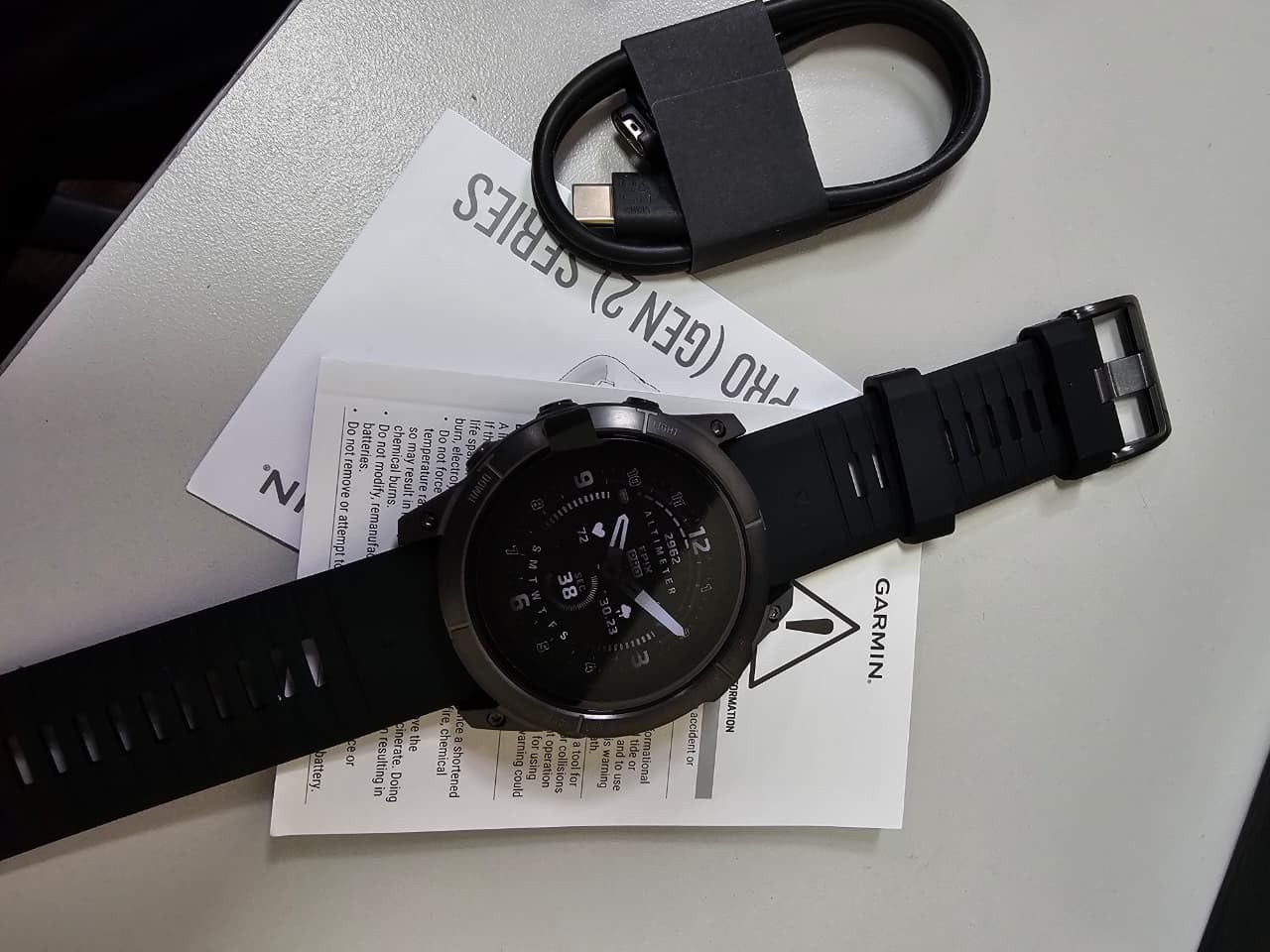
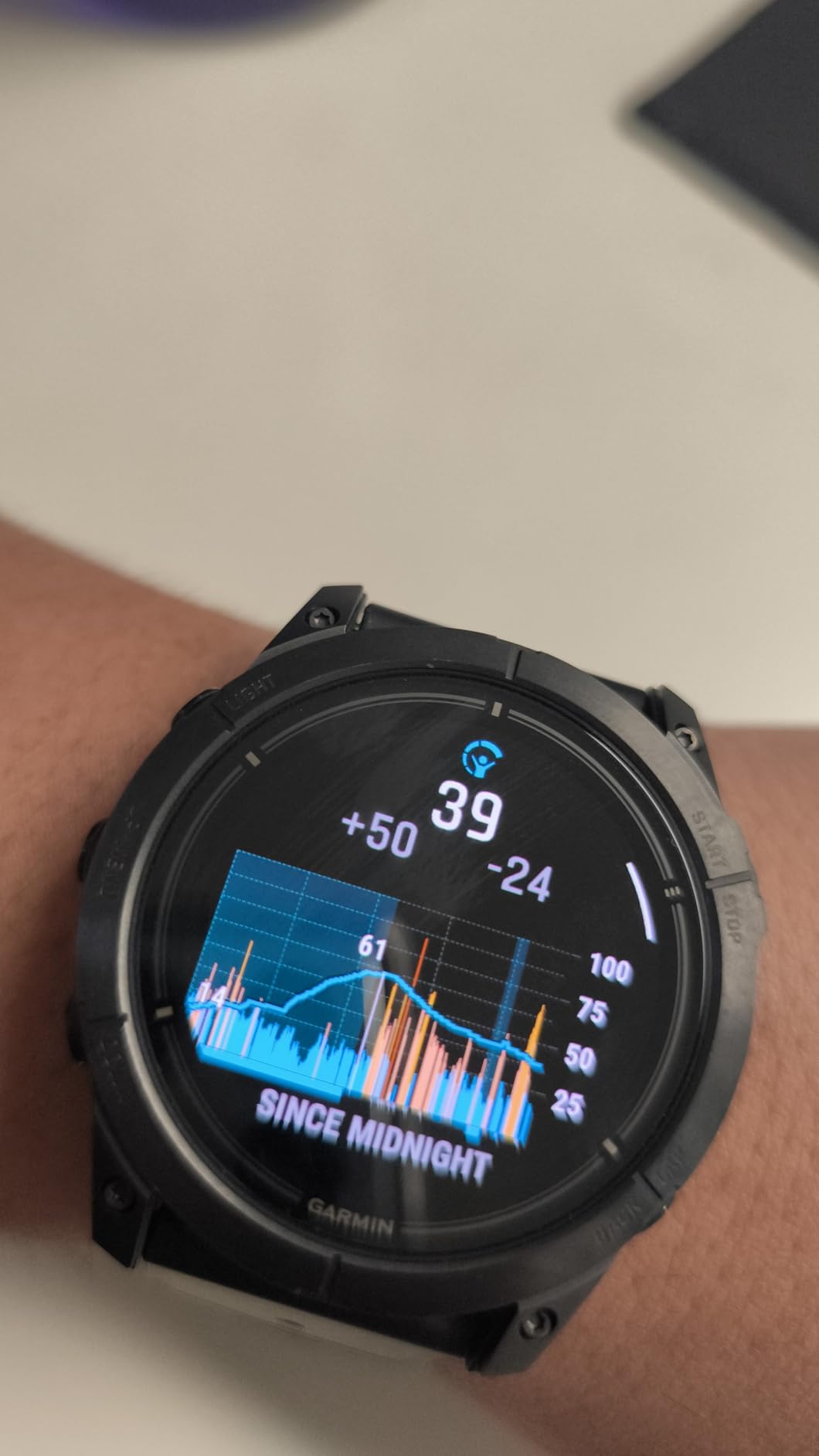
3. Garmin epix Pro Gen 2 Sapphire – Best for Alpine Climbing
Garmin epix Pro (Gen 2) Sapphire, High Performance Smartwatch, 47mm, Black
47 mm case
70 g
1.3 inch AMOLED sapphire
100 m
32 GB
Pros
- Bright always-on AMOLED with sapphire lens
- Titanium bezel and case
- 70 g for a full multisport watch
- Flashlight with variable intensity and strobe
- Multi-band GPS with SatIQ
Cons
- 1.3 inch screen limits map detail
- No solar charging on this edition
- Battery life is the shortest of the Garmin multisport picks here
Where the fenix line is built for endurance, the epix Pro is built for readability. The always-on AMOLED is the brightest panel in this group after the Amazfit, and it stays legible in the flat light you get on a glacier approach at altitude.
At 70 g it is also 10 g lighter than the fenix 8 and 19 g lighter than the fenix 7X Pro, which is a real difference when the watch is the second-heaviest thing on your body after boots.
For climbing specifically, the flashlight with variable intensities and strobe modes is a genuine belay and descent light rather than a novelty. Night starts on a summit push happen, and a wrist light frees both hands for a headlamp you can point where you are looking.
Multi-band reception with SatIQ, preloaded TopoActive maps and Up Ahead prompts cover the navigation basics. Expanded activity profiles for team sports are irrelevant here, but the morning report and training readiness features help on multi-day alpine schedules.
The titanium bezel plus sapphire lens combination handles the rock, ice and scrape reality of alpine use. Water resistance is rated to 100 metres, so wet verges and rain are not a concern.
Where the epix Pro beats the fenix line
Choose it for alpine, ski touring and fast hiking where you are rarely more than two nights out. Battery life is the trade: it will not cover a week without a charger.
Choose it when screen legibility outranks raw endurance. Always-on AMOLED plus sapphire is a better combination for reading contours in variable light than the transflective panels on the Instinct models.
Where the epix Pro falls short
The 1.3 inch screen is the smallest in this roundup, and on a full topographic map that means more zoom-and-pan and less immediate context.
If your trip length is unpredictable, the missing solar option becomes a liability. The Garmin Instinct 2X Solar covers similar terrain and never needs planning around a charger.
4. Garmin Instinct 2X Solar Tactical – Best for Solar and Ruggedness
Garmin Instinct 2X Solar – Tactical Edition, Rugged GPS Smartwatch, Built-in Flashlight, Ballistics Calculator, Solar Charging Capability, Coyote Tan
1.1 inch MIP display
67 g
MIL-STD-810
100 m
Solar Power Glass
Pros
- Built to US military standard 810
- Solar lens produces 50 percent more energy
- Built-in flashlight with SOS strobe
- Multi-band signal reception
- Highest average rating in this lineup
Cons
- Monochrome display has no colour for maps
- No touchscreen for casual smartwatch use
- 26 mm band is wider than most
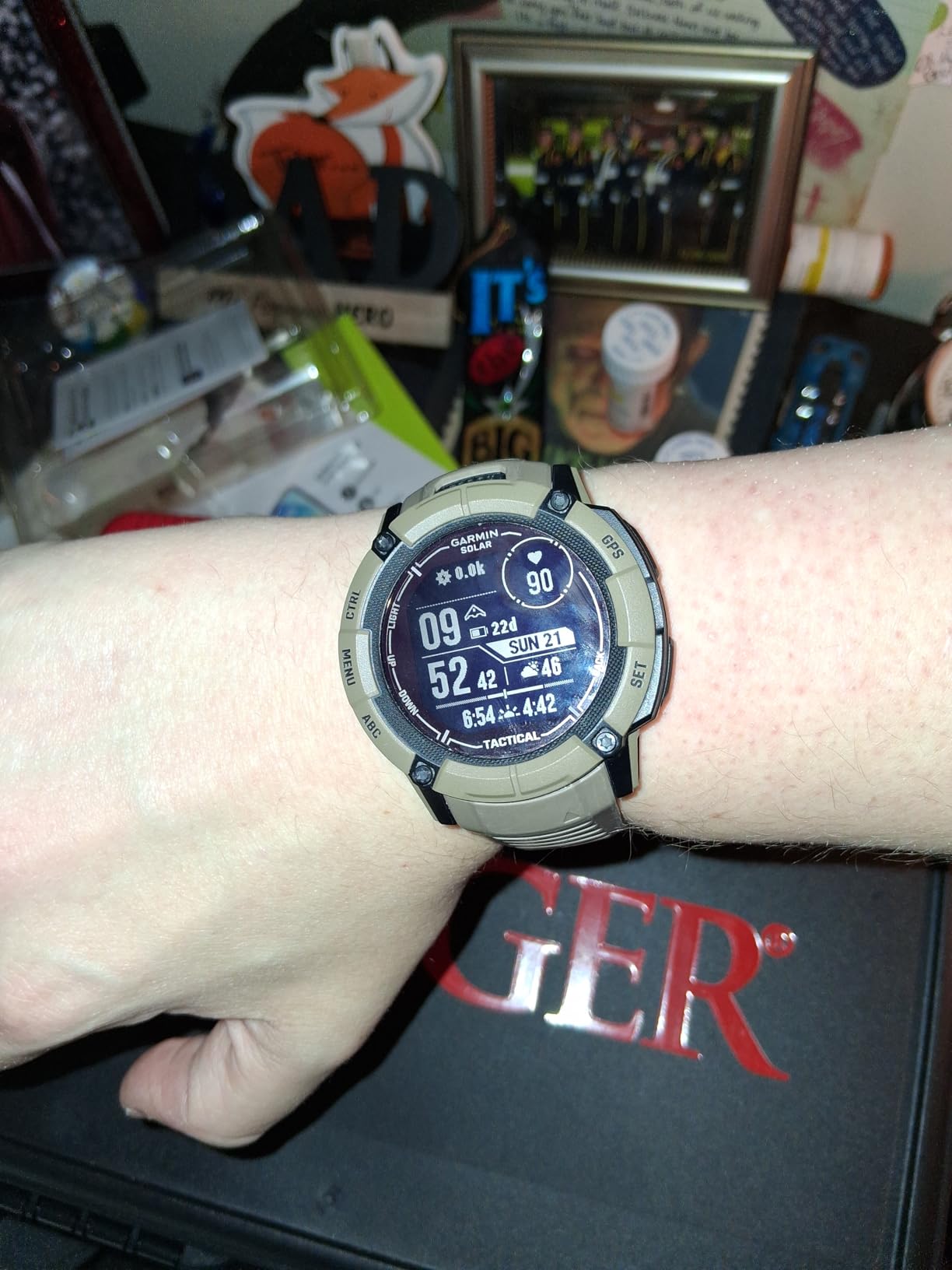
This is the watch to buy if you are hard on gear and in the sun. The solar Power Glass lens produces 50 percent more energy than the standard Instinct 2 solar panel, and three hours of direct sunlight at 50000 lux a day gives effectively unlimited smartwatch-mode battery.
The case is built to US military standard 810 for thermal, shock and water resistance. That rating is the reason this watch keeps working after a rock strike or a washout, and owners consistently report the durability as the reason they came back to it.
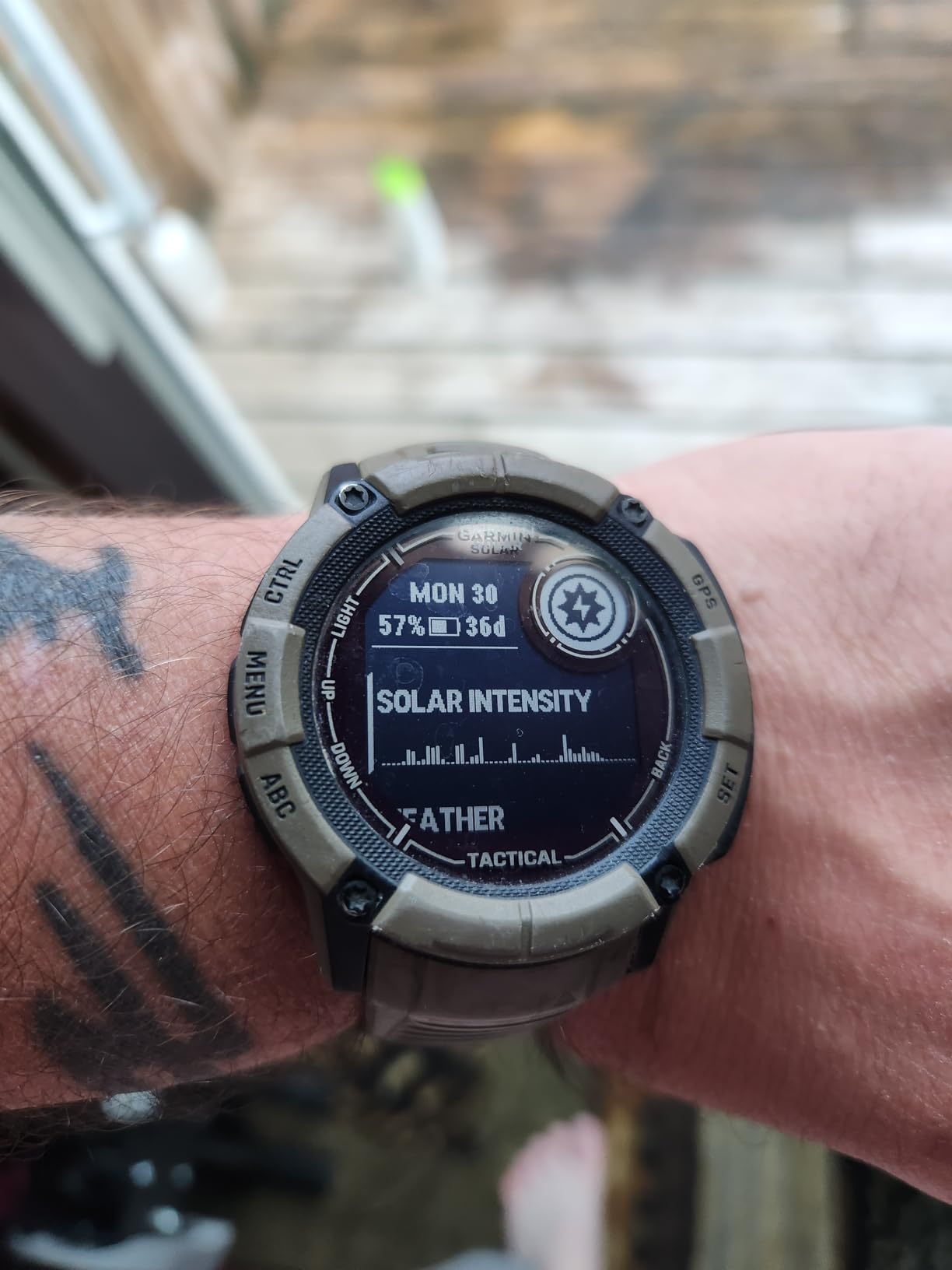
Multi-band signal reception and a 3-axis compass with barometric altimeter cover the positioning and self-location basics. Health tracking runs 24/7 with wrist heart rate, sleep, respiration and Pulse Ox.
The flashlight includes an SOS strobe mode, which is the same emergency signal the standalone beacons use. Having it on the wrist means your signalling device is already on your body when you need it.
Sports apps cover running, biking, swimming and strength training, and VO2 max is included. Internal storage is only 64 MB, so this is not a watch for carrying music.
Who should buy the Instinct 2X Solar
Buy it for long desert routes, open-country trekking and any multi-week trip where sun exposure is high. It carries the highest average rating of the eleven watches we tested, and the durability story is the least speculative on this list.
Buy it if you need a watch that survives being dropped, soaked and forgotten. The tactical styling is a side effect of that engineering rather than a marketing costume.
Who should pass on it
Anyone who wants to read a colour topographic map. The 240 x 240 monochrome memory-in-pixel panel is superbly readable in sun and essentially black in a dark tent at night.
The 26 mm band is wider than most and needs a larger wrist. If you are between sizes, check the strap width against your existing watch before committing.
5. Amazfit T-Rex 3 – Best Value for Multi-Week Trips
Amazfit T-Rex 3, Smart Watch, 1.5″ AMOLED Display, GPS, iOS/Android
1.5 inch AMOLED
2.4 oz
2000 nits
180 h GPS
100 m
Pros
- 2000 nit AMOLED readable in direct sun
- Up to 180 hours in GPS mode
- Free global offline maps with dual-band GPS
- 316L stainless steel bezel
- Operating range of minus 22F to 158F
Cons
- No on-wrist calls or text replies
- Health metrics reported as less accurate by some owners
- Zepp app requests many permissions
- Music control takes several steps
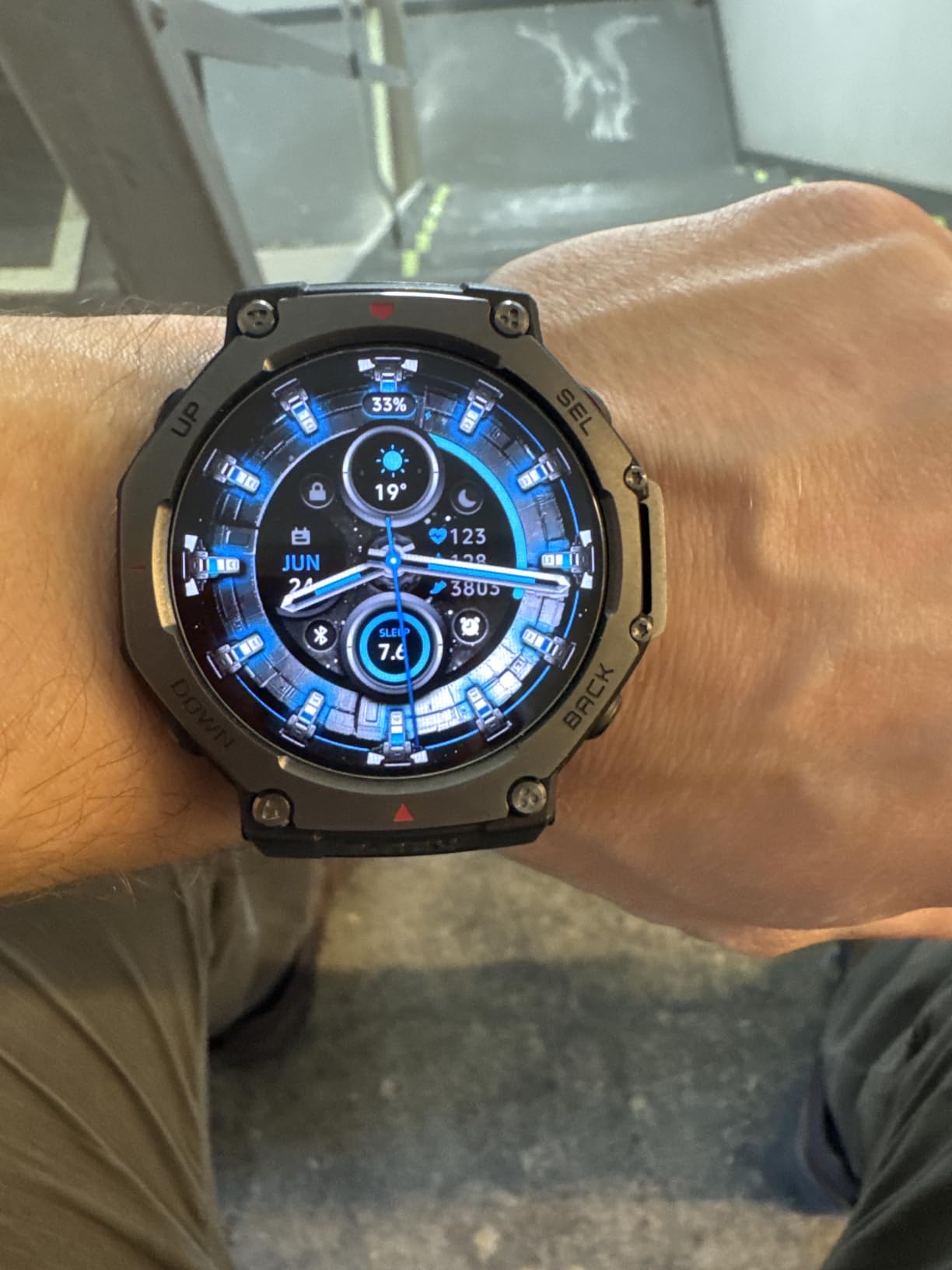
The Amazfit T-Rex 3 is the specification outlier of this roundup and it has the largest review base we looked at. Up to 180 hours in GPS mode is roughly four times the fenix 8 figure, and the 1.5 inch AMOLED hits 2000 nits at peak brightness.
The critical difference from every Garmin here is mapping. Dual-band positioning runs across six satellite systems, and the global offline maps are free rather than subscription-gated, so there is no ongoing cost to keeping full navigation available.
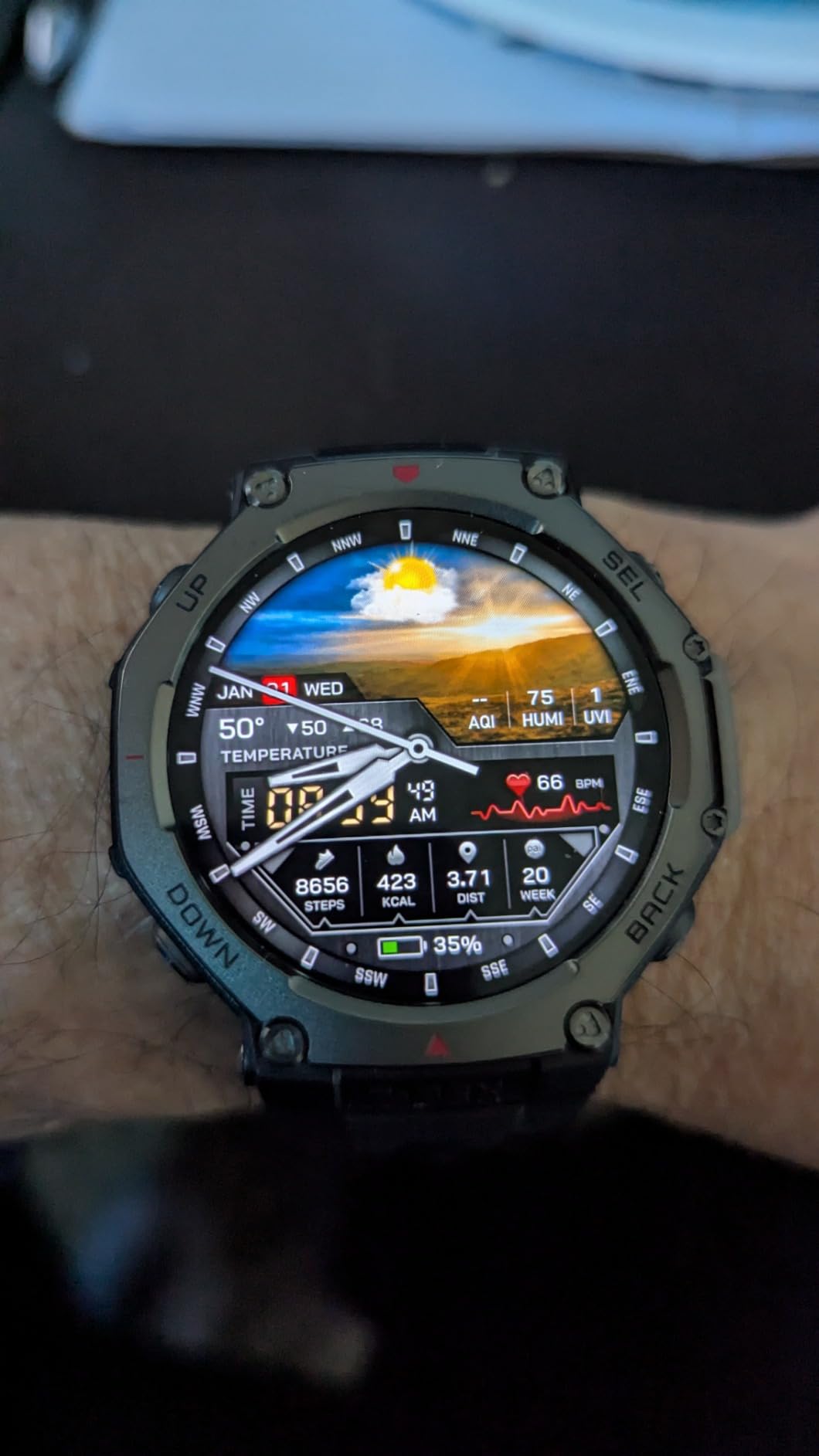
Night mode and glove mode are display settings designed for exactly the backcountry conditions that catch people out. Glove mode lifts the interface brightness and simplifies the layout so a mitten-clad thumb can still hit the right target.
The 316L stainless steel bezel carries an operating range from minus 22F to 158F and a water rating to 328 feet, plus freediving certification to 147 feet. That temperature spread is wider than anything else listed here.
Over 170 workout modes with AI-generated training plans run on Zepp OS 4.0. Owners point to the combination of battery, brightness and build as the reason it punches so far above its class.
When the T-Rex 3 is the right buy
It fits anyone whose trips run longer than the Garmin battery math comfortably allows, since four hours of satellite tracking is enough for most multi-week itineraries without a single charge.
It also suits buyers who refuse to pay a recurring map subscription. Free global offline maps change the long-term cost of the device entirely.
When the T-Rex 3 is the wrong buy
There are no on-wrist phone calls or text replies, and the listed eSIM capability is not present on this model. If you rely on messaging from your wrist, this is not the device.
Some owners report health and fitness metrics as less accurate than dedicated sports watches, and a vitalmtb.com forum poster described COROS-style data apps as clunky with thin detail. Check that the training side is not your main reason for buying.
6. COROS APEX 2 – Best for Climbing and Mapped Routes
COROS APEX 2 Series Outdoor GPS Watch, 1.2″ Sapphire Titanium, On-Wrist Navigation, Offline Maps, Heart Rate Monitor, Track Sleep, Running, Biking, Skiing, Climbing (APEX 2, Coral)
1.2 inch sapphire LCD
42 g
75 h GPS
Ti bezel
30 day use
Pros
- Sapphire glass and grade 5 titanium bezel
- 75 hours of GPS battery
- On-wrist navigation with offline maps
- 42 g is very light for a mapped watch
- Integrates with Strava TrainingPeaks and Komoot
Cons
- 1.2 inch screen limits map detail
- Lowest average rating in this lineup
- Transflective-style LCD is less vivid in low light
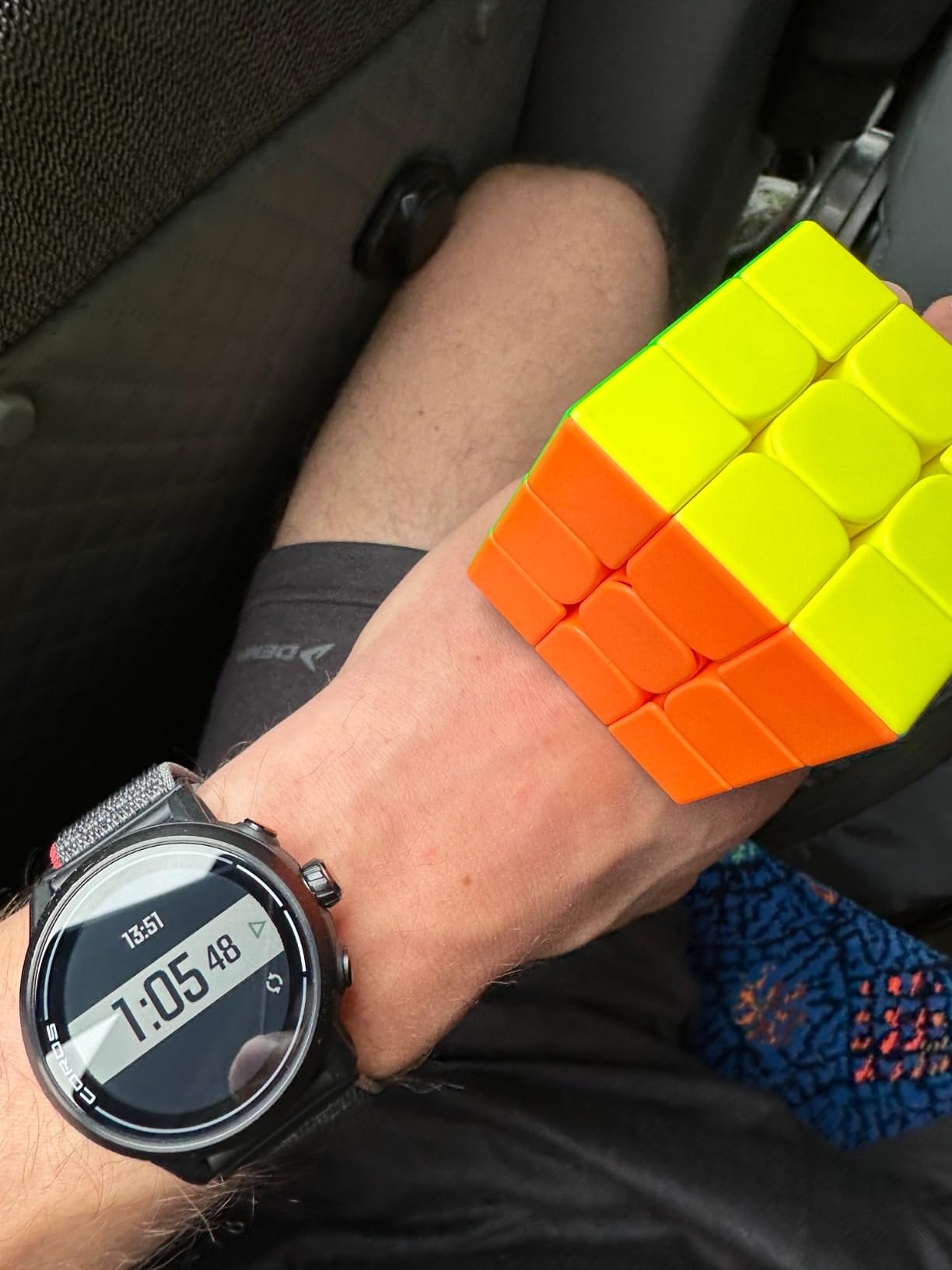
The COROS APEX 2 is the lightest watch here that still carries real offline topographic maps, at 42 g. For routes where every gram counts and you refuse breadcrumb-only tracking, that combination is rare.
Construction is genuinely premium for the category: sapphire glass, a grade 5 titanium alloy bezel with PVD coating and a titanium alloy back cover. The materials usually seen only on flagships are standard here.
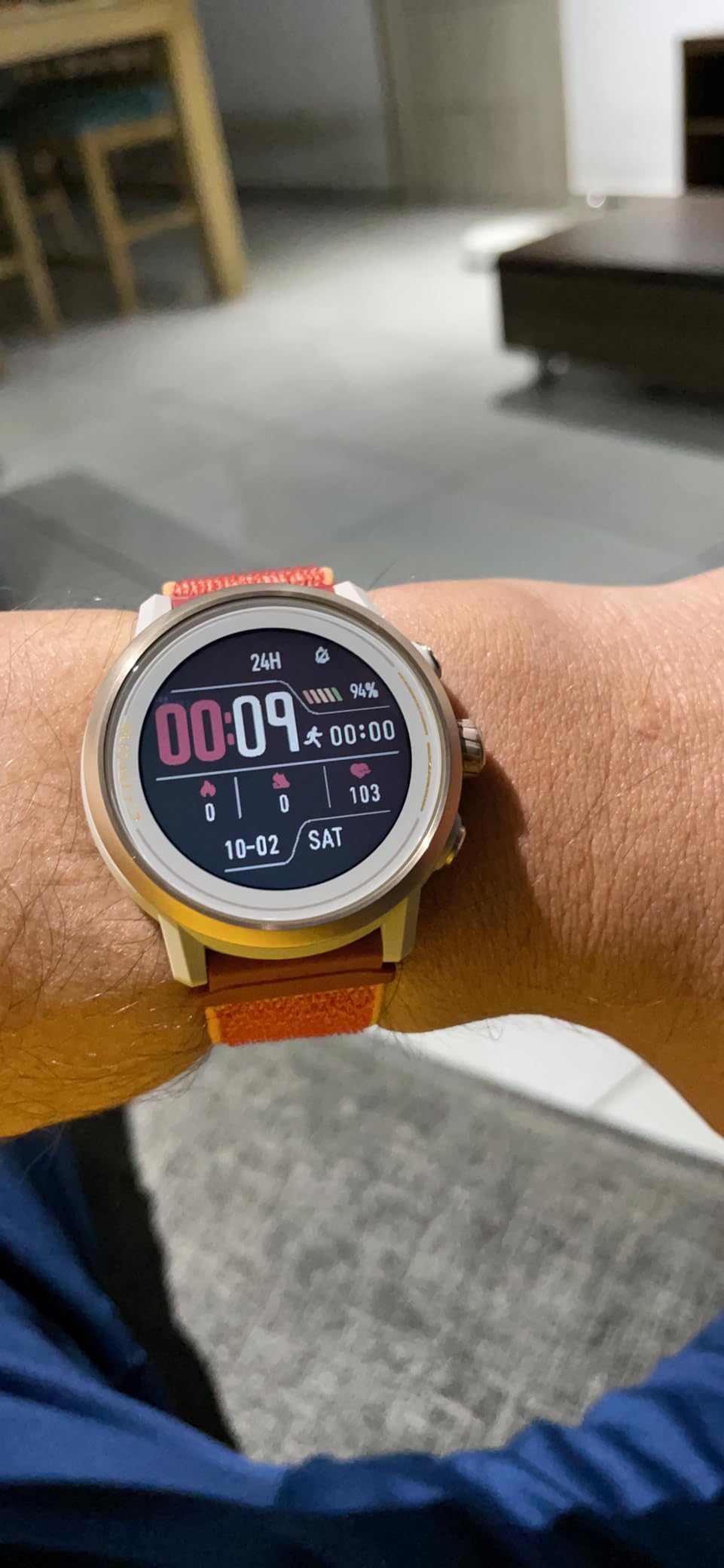
Battery is 75 hours in GPS mode and 30 days in daily use, with a two-hour full charge. That covers a solid week with margin before you need a wall outlet.
Satellite support spans BeiDou, GLONASS, GPS and Galileo, which is broad multi-GNSS coverage. On-wrist navigation with offline maps handles turn-by-turn without a phone in sight.
The ecosystem story is the quiet strength. Third-party integrations include Komoot, TrainingPeaks, Strava, Relive, adidas Running, Apple Health, Stryd, Runalyze and more, so your training data is not trapped in a single ecosystem.
Where the APEX 2 earns its place
It suits alpine and ski routes where you need a mapped screen but not a bulky case. Forty-two grams is the second-lightest watch in this roundup, and it carries full maps rather than breadcrumbs.
It also suits anyone who trains across multiple platforms, since the integration list is the broadest we found across eleven watches.
Where the APEX 2 disappoints
The 1.2 inch display is small, and it is a transflective-style LCD rather than AMOLED, so it loses sharpness in low light and at night.
It also carries the lowest average rating of the eleven watches we tested, with a visible share of three-star reviews about value and display. Owners on COROS forums do report navigation quirks, so read recent user threads before committing to it as your only navigation device.
7. Garmin Instinct 3 AMOLED 45mm – Best Rugged Watch With a Colour Screen
Garmin Instinct® 3 AMOLED, Rugged GPS Smartwatch, 45mm, Black
45 mm case
53 g
1.2 inch AMOLED
18 day battery
4 GB
Pros
- AMOLED colour display in a rugged polymer case
- 53 g is light for a full-featured watch
- Built-in flashlight with strobe modes
- Multi-band GPS with SatIQ
- Phone notifications with no subscription
Cons
- No touchscreen so the button menu takes learning
- Software interface described as clunky by some owners
- 4 GB storage limits music capacity
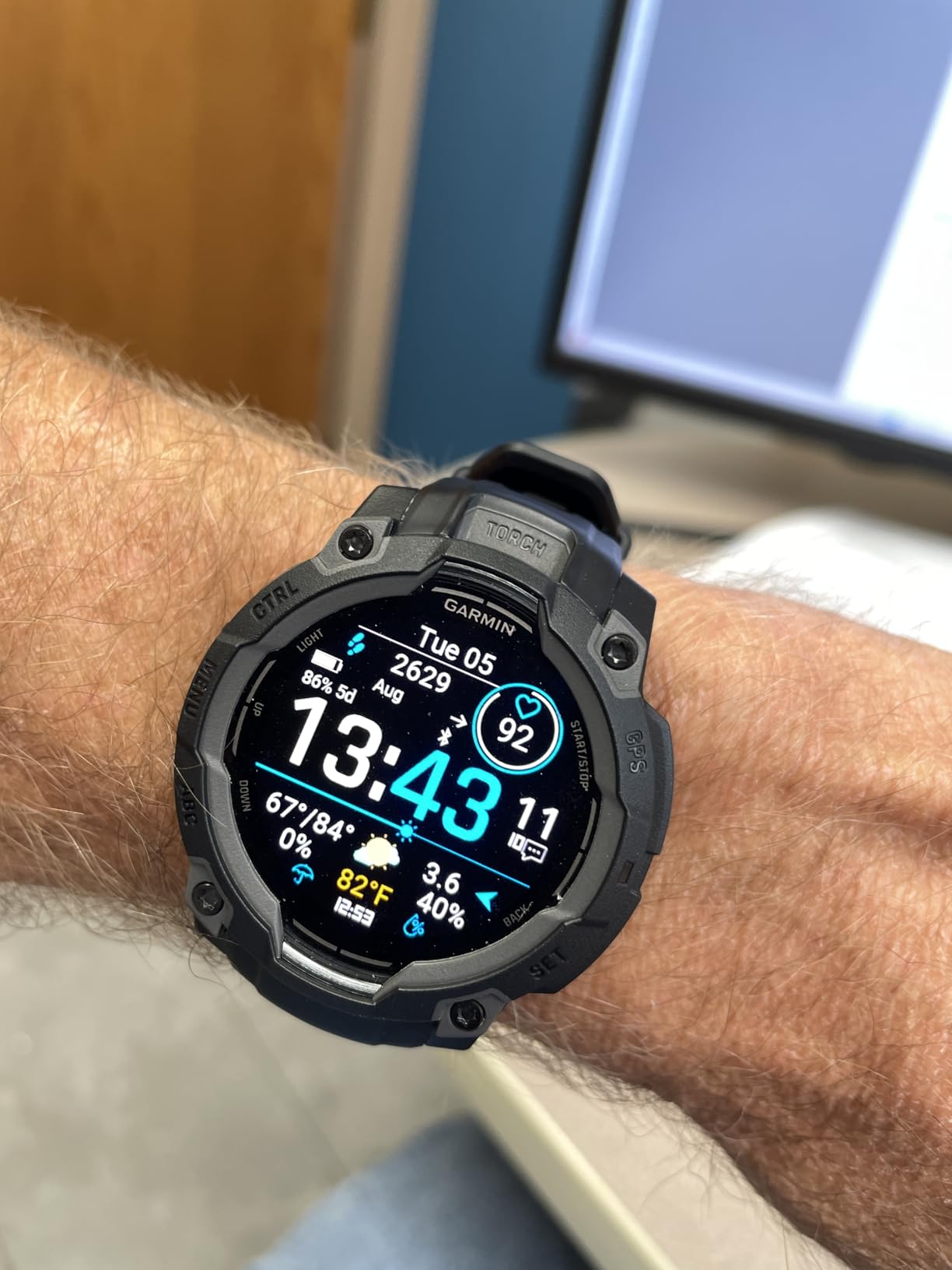
This is the watch that answers the usual objection to rugged Garmin models, which is that the screen is monochrome. A 1.2 inch AMOLED at 1000 nits gives you colour maps and a proper always-on display in a 53 g case.
At 53 g it is the second-lightest Garmin here and 27 g lighter than the fenix 8. For long days with a loaded wrist, that is a meaningful saving.
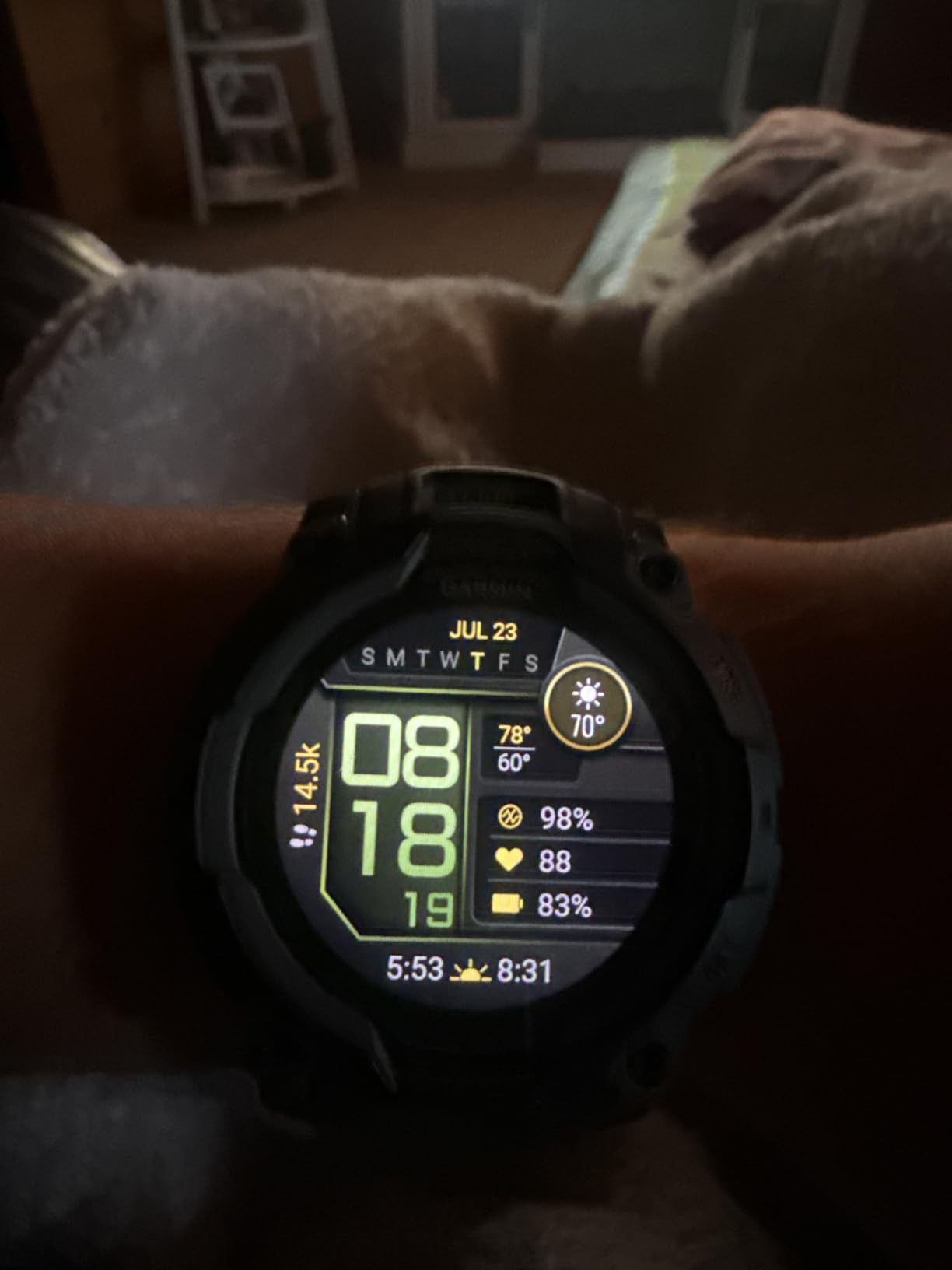
The supertough 45 mm fiber-reinforced polymer case has a metal-reinforced bezel, and the whole package carries a 100 metre water rating. Owners describe it as built rather than merely rugged-looking.
Multi-band GPS with SatIQ plus a 3-axis compass and barometric altimeter cover navigation and self-location. Owners specifically report improved accuracy under tree cover compared with older single-band Instinct models.
Battery life is up to 18 days in smartwatch mode with an 18 day average, and the flashlight has variable intensity and strobe modes like the rest of this range.
When the Instinct 3 AMOLED fits best
Choose it when you want Garmin durability with a colour screen and a lighter case than the fenix line offers. It is also a strong choice if you switch between iPhone and Android, since notifications work without a subscription.
For multi-day trips of up to four days it is comfortably sufficient, and the 18 day smartwatch figure means it is also a normal daily watch.
When the Instinct 3 AMOLED is wrong
There is no touchscreen. Every function runs through physical buttons, which some owners find clunky, and it takes a week to stop reaching for a screen that is not there.
Storage is 4 GB, which limits music capacity, and the printed manual is minimal so the full guide has to be downloaded.
8. Garmin Instinct 2 Solar – Most Versatile for Multi-Day Trips
Garmin Instinct 2 Solar, Smaller-Sized Rugged Outdoor Watch with GPS, with Solar Charging Capabilities, Built for All Elements, Multi-GNSS Support, Tracback Routing and More, Graphite
1.27 inch mono display
52 g
48 h GPS with solar
100 m
Gorilla glass
Pros
- Solar charging gives unlimited smartwatch-mode battery
- 48 hours GPS extended by solar
- Very readable monochrome display in sunlight
- Accurate GPS with quick satellite acquisition
- No paywall for health and activity data
Cons
- Monochrome display has no colour or map detail
- Solar gain is modest in ordinary use
- Altimeter readings drift without manual calibration
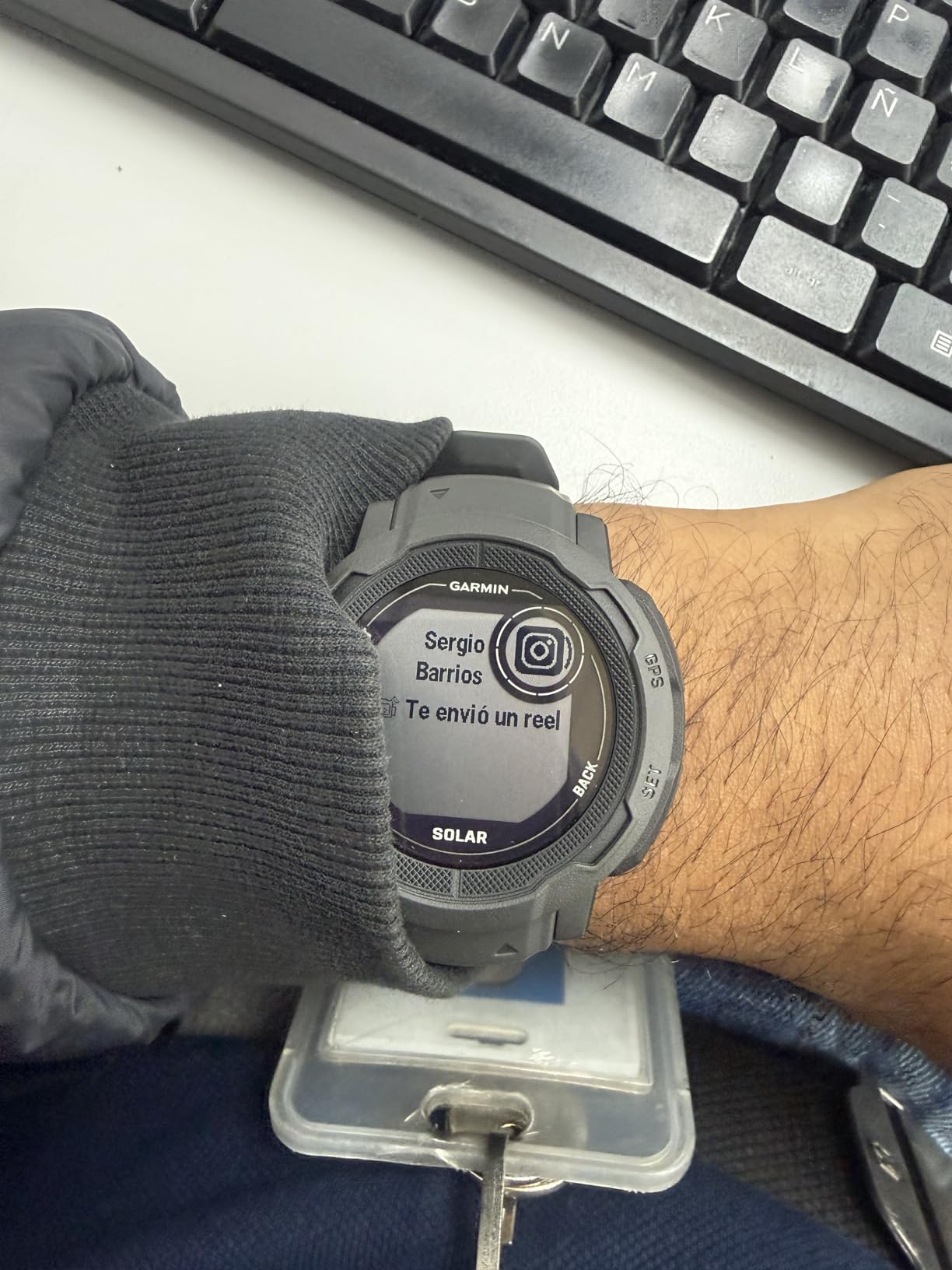
The Instinct 2 Solar is the entry point that still gets solar charging right. Three hours of 50000 lux sunlight per day gives unlimited battery in smartwatch mode, and up to 48 hours in GPS mode with continuous solar top-up.
At 52 g it is the lightest Garmin in this roundup, and the 1.27 inch monochrome display is one of the most readable in direct sun we tested. Dual excess band holders keep the strap from snagging on brush, which is a small detail that matters on real trail.
Satellite support covers GPS, GLONASS and Galileo through multi-GNSS, with a 3-axis compass and barometric altimeter for self-location. Note this is multi-satellite rather than multi-band, which is the accuracy distinction that matters in canyons.
The power manager shows exactly how each setting affects battery life, which is the single most useful screen in this category. Owners use it to decide when to drop multi-GNSS for the last night of a trip.
There is no paywall on health and activity data. All-day monitoring covers heart rate, sleep, Pulse Ox and respiration, and the sports apps include VO2 max with Connect IQ expandability.
Why this is the value pick
It covers the core backcountry requirements at a lower entry point than the titanium and sapphire models: solar endurance, ABC sensors, multi-GNSS, a 100 metre rating and Connect IQ. Nothing on that list is missing.
It is also the practical choice if the watch will live on your wrist for ordinary daily use, because a three-week battery removes charging from the routine entirely.
Why it is not for everyone
The monochrome screen has no colour and limited map detail, so it is a breadcrumb and track tool rather than a map viewer. If your navigation style depends on reading terrain on screen, choose a colour AMOLED model instead.
Solar gains are modest in ordinary use, and the barometric altimeter drifts if you do not calibrate it against a known reference. Budget a manual calibration at each trailhead.
9. COROS PACE Pro – Best for Touchscreen Map Navigation
COROS PACE Pro GPS Sport Watch, 1.3-inch AMOLED Touchscreen- Grey
1.3 inch AMOLED
49 g
38 h outdoor
31 h dual-freq
32 GB
Pros
- 1500 nit always-on AMOLED touchscreen
- New satellite chipset with dual-frequency GPS
- Topographical route planner with turn-by-turn
- 38 hours of outdoor GPS battery
- Gesture-activated backlight
Cons
- Not a MIL-STD rugged case like the Instinct line
- Not MIL-STD rated for shock and thermal
- Smaller ecosystem and app polish than Garmin Connect
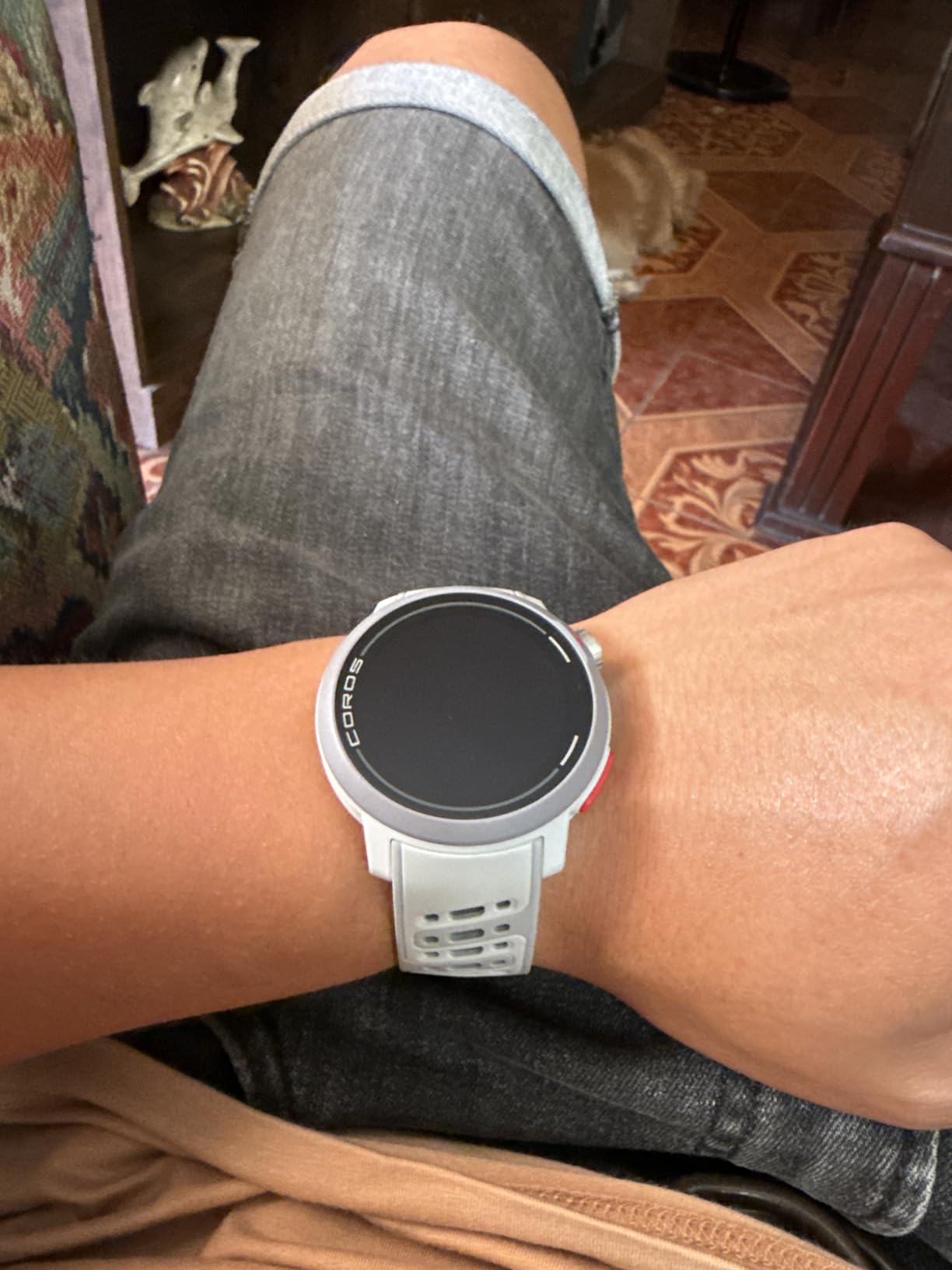
If you navigate by touching a map, the PACE Pro is the watch in this roundup designed for exactly that. The 1.3 inch always-on AMOLED at 1500 nits runs a touch interface with a gesture-activated backlight, and the route planner draws topographical and landscape maps.
The new satellite chipset delivers the most precise GPS performance in the COROS lineup according to the manufacturer, using dual-frequency reception across GLONASS, GPS and Galileo with offline mapping.
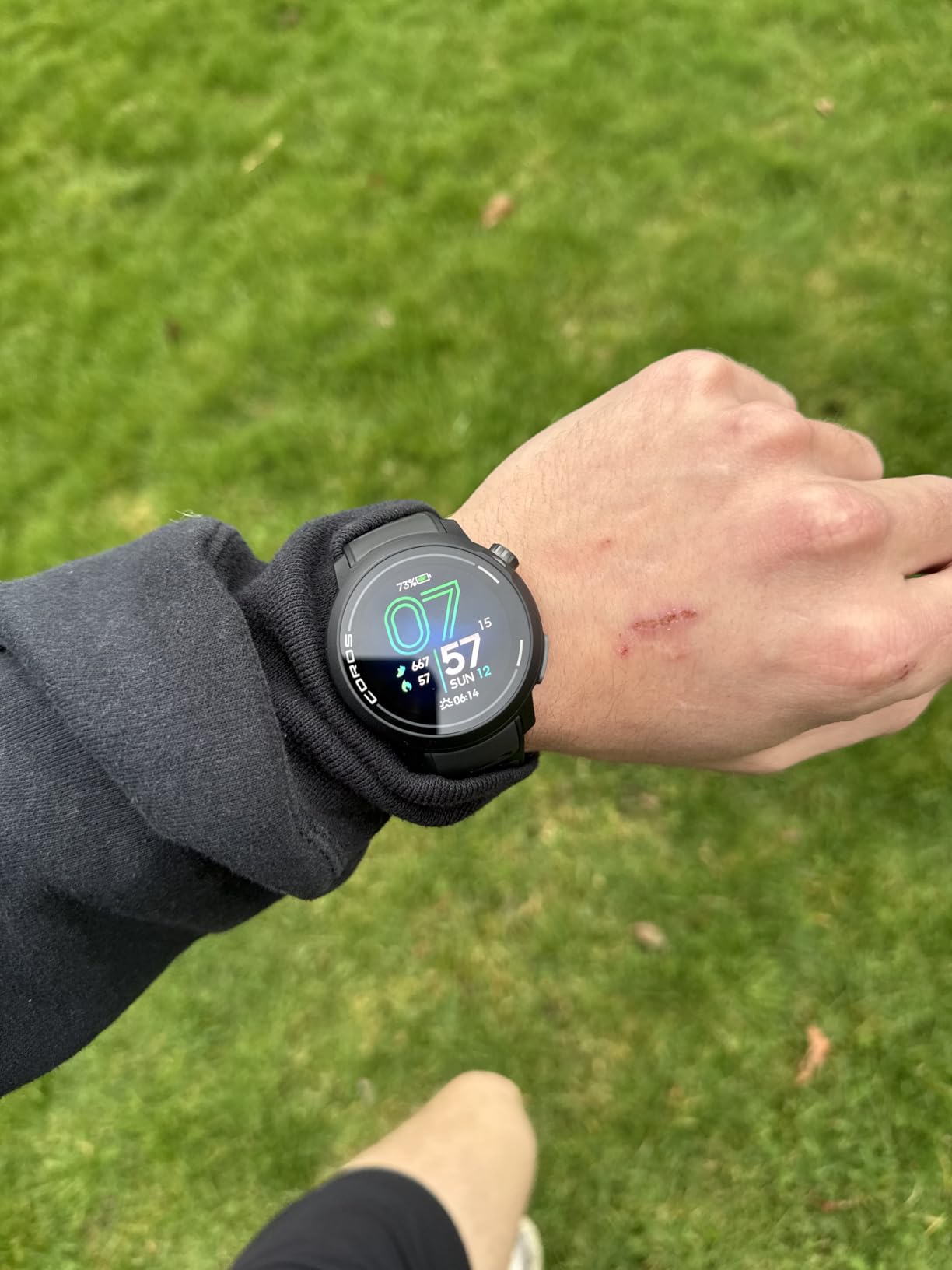
Battery figures are the honest ones for a mapping watch: 38 hours of outdoor activity, 31 hours with dual-frequency GPS running, 20 days in normal use and 6 days in Always-On mode. Plan on the dual-frequency number if you are navigating the whole day.
Processing is more than twice the speed of earlier models with three times the zoom speed, which shows up when you are panning a map at walking pace rather than standing still.
The 22 mm band fits 130 to 220 mm wrists, USB-C charging works with the included keychain adapter, and there is a two year warranty with 32 GB of storage for music.
When the PACE Pro is the right choice
It suits hikers who think in routes rather than tracks. Load a GPX, follow turn-by-turn guidance on a topographic map, and let the watch handle rerouting when you deviate.
It is also the lightest watch here with a colour touchscreen, at 49 g, which makes long mapped days noticeably easier on the wrist.
When the PACE Pro is the wrong choice
This is not a MIL-STD-rugged case. There is no military standard rating for thermal, shock and water resistance, so it suits trails rather than rock strikes, tool drops and abuse.
The ecosystem is smaller and the app is less polished than Garmin Connect, which is the friction COROS owners most often describe on forums. If you rely on deep training analysis over trail navigation, weigh that before buying.
10. COROS PACE 4 – Best Lightweight Watch for Ultralight Packets
COROS PACE 4 Ultralight Sport GPS Watch (Black Nylon, Standard)
32 g
11.8 mm thin
1.2 inch AMOLED
41 h GPS
19 day use
Pros
- Exceptionally light at 32 g and 11.8 mm thin
- 41 hours continuous GPS with 19 days daily use
- High-resolution touchscreen AMOLED with auto-brightness
- Digital crown and buttons for control at intensity
- Breadcrumb navigation included
Cons
- Breadcrumb navigation only with no full topographic maps
- Single-band GPS rather than dual-frequency
- Nylon band abrades faster than silicone
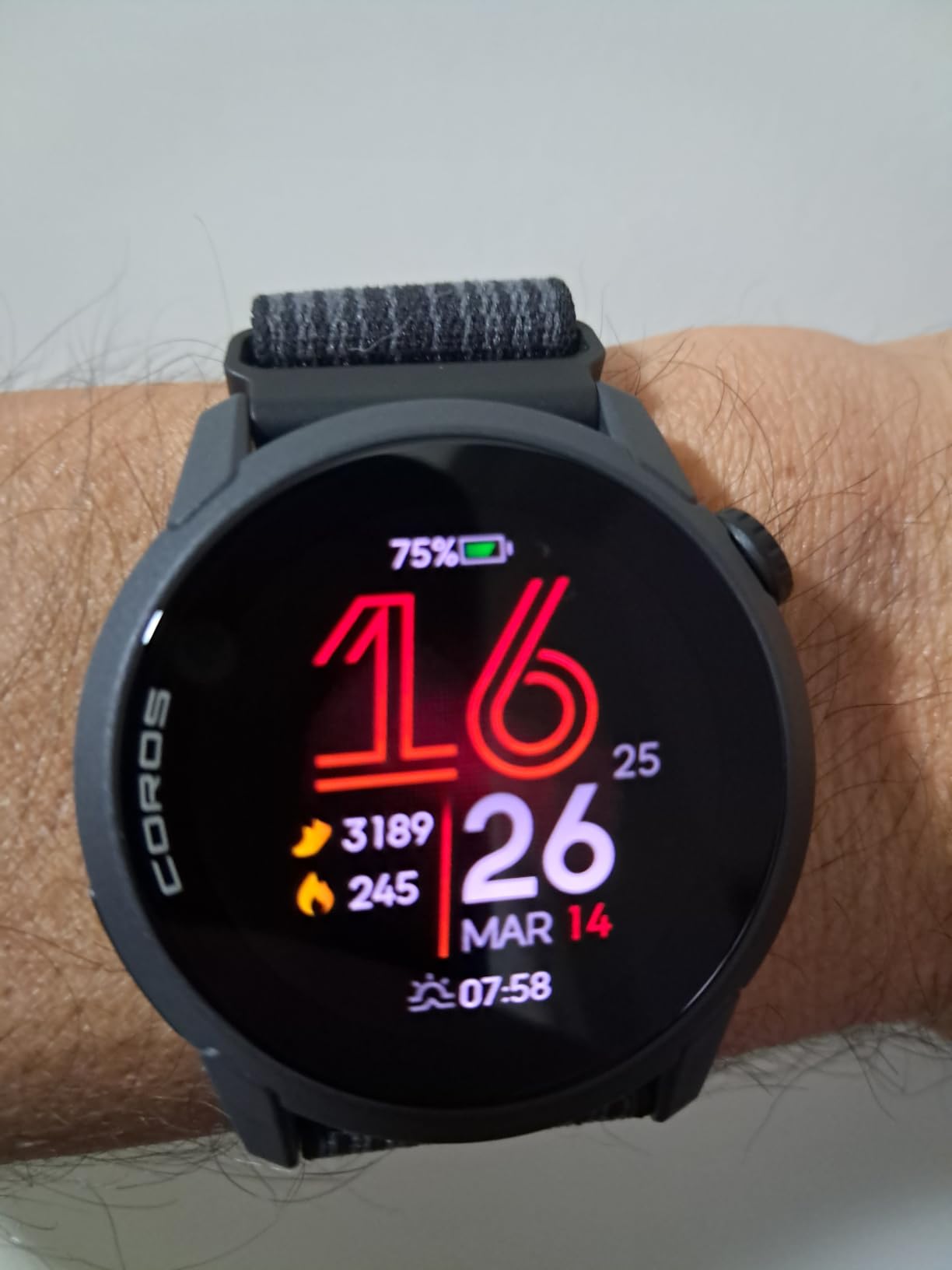
The PACE 4 is the watch we carried when the gram count mattered. At 32 g and 11.8 mm thin it is the lightest watch in this roundup by a wide margin, and on an ultralight kit the wrist is one of the last places to save weight.
Battery is 41 hours of continuous GPS and up to 19 days in daily use, which is out of proportion to the size. The 1.2 inch touchscreen AMOLED has a resolution 164 percent higher than the previous generation with auto-adjusting brightness.
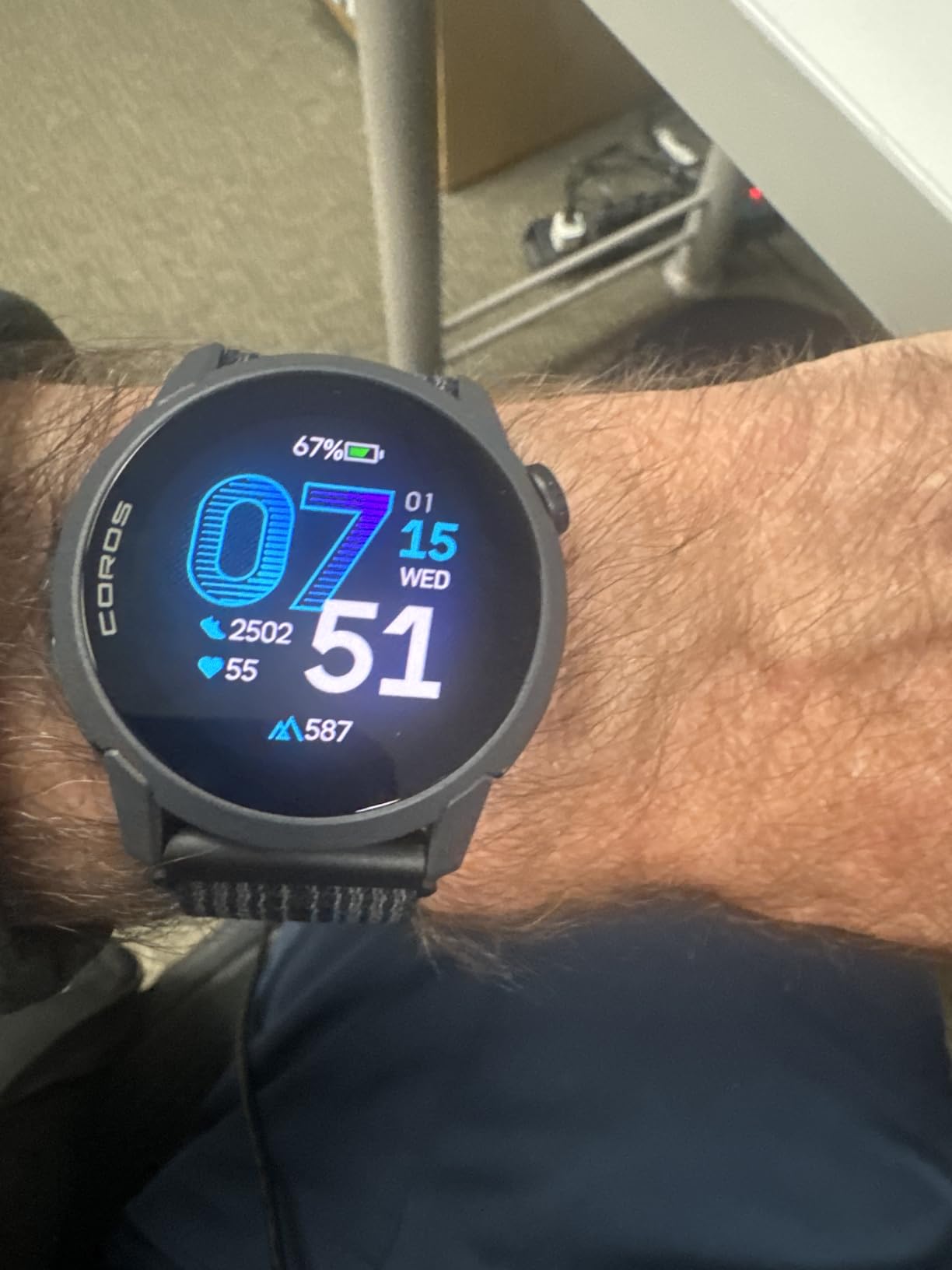
Controls are a tactile digital crown, two buttons and a touchscreen with a customisable Action Button. That mix is useful when you are wearing gloves, because the crown and buttons do not depend on a capacitive screen responding to a wet finger.
Voice recording for workout logs and voice control for alarms and target workouts are unusual at this weight. Training metrics cover recovery time, sleep stages, HRV and menstrual cycle tracking through the COROS app.
The watch also suits anyone who wants a normal daily watch. At this size and thickness, wearing it overnight for sleep tracking is realistic rather than aspirational.
Where the PACE 4 works
It is the right answer for fast hiking, trail running that turns into hiking, and thru-hikers counting every gram. Breadcrumb navigation is sufficient when you follow a known track rather than navigating cross-country.
It also suits anyone who struggles with fiddly touch interfaces, because the crown and buttons give a reliable alternative to swiping.
Where the PACE 4 falls short
Breadcrumb navigation only. There are no full offline topographic maps, so on a route with junctions, gullies or off-trail stretches you will want a backup navigation source.
It is also single-band GPS rather than dual-frequency, which means canyon and deep-canopy performance is weaker than the multi-band models here. The nylon band also abrades faster than silicone over a multi-week trip.
11. Suunto 9 Peak and Peak Pro – Best Battery Mode Range
SUUNTO 9 Peak and Peak Pro Sports GPS Watch for Demanding, Performance Driven Athletes and Adventurers
1.2 inch display
60 g
40 h GPS
70 h endurance
300 h tour
Pros
- 40 hours GPS with 70 hour endurance and 300 hour tour modes
- One hour full charge with 10 minute charge for 2 hours of GPS
- Titanium stainless steel and sapphire glass
- Four satellite systems for canyon and mountain tracking
- Weather alerts and avalanche maps included
Cons
- Physiological metrics reported as inconsistent
- Software updates have caused battery and sensor regressions
- Included strap can loosen and runs short on larger wrists
The Suunto 9 Peak is about one thing: letting you choose how much battery you spend. Forty hours in best GPS mode, 70 hours in endurance mode and 300 hours in tour mode are three genuinely different tools for three different trip lengths.
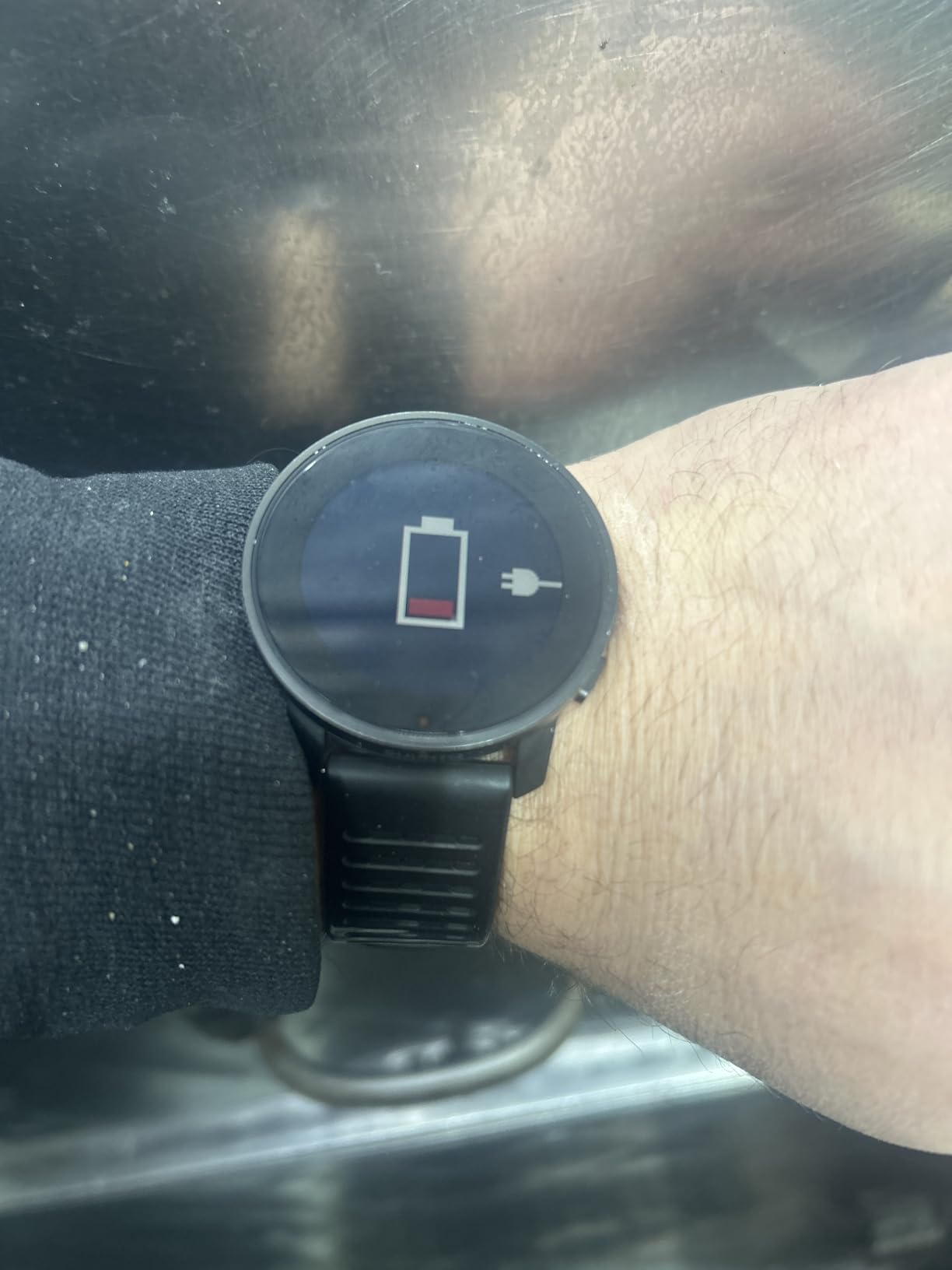
Charging is unusually fast for this class. A full charge takes one hour, and a ten-minute quick charge gives two hours of GPS training, which turns a dead watch into a usable one at a trailhead car park.
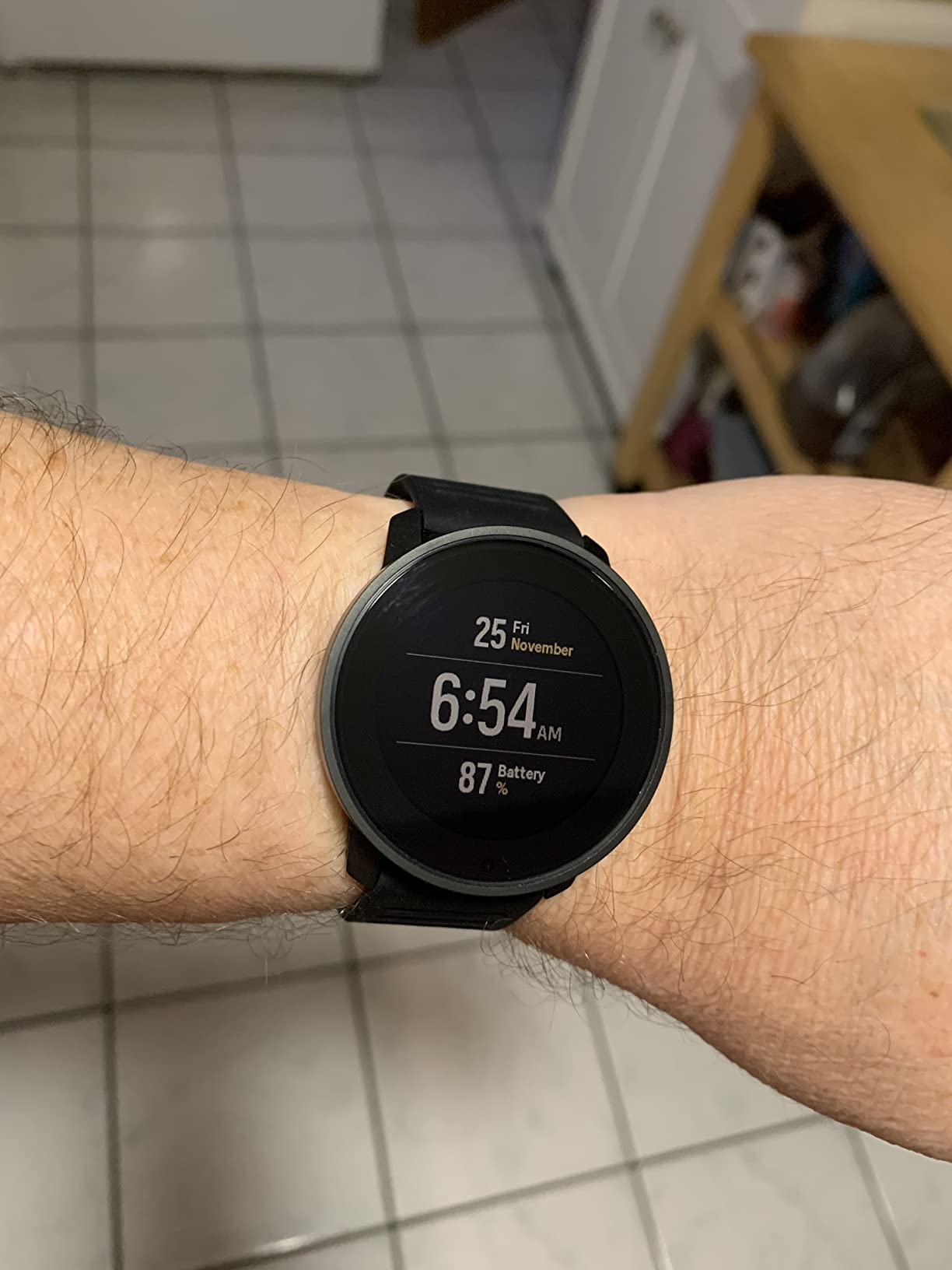
Positioning uses four different satellite systems, which the manufacturer specifically targets at mountains and canyons. That is the terrain where a two-system watch drifts and a four-system watch holds.
The build is titanium, stainless steel and sapphire glass with a 100 metre rating, and it carries 97 sport modes with turn-by-turn navigation, weather alerts and avalanche maps. Music controls and earbud connectivity work through the Suunto app.
Third-party integration covers Strava and TrainingPeaks, and the app handles structured workouts, goals and an activity journal.
Why the battery modes matter
Tour mode at 300 hours covers a multi-week trip without solar exposure. That is the one watch here that reaches week-plus lengths without either a solar lens or a 180 hour GPS ceiling, and it does it in a 60 g titanium case.
For alpine routes, avalanche maps and weather alerts built into the device are a real safety feature rather than a nice extra.
Why owners are cautious
This watch carries the lowest average rating of the eleven we tested, and the reason is consistent: physiological metrics are reported as inconsistent, especially for swimming, and some owners report battery drain or heart rate sensor failures after software updates.
Check the default watch face situation before buying, because some owners found a hard-to-read face locked behind a paid subscription after updates. The sport list also cannot be manually reordered.
How to Choose a Hiking GPS Watch for Backcountry: 7 Things That Matter
1. Match GPS hours to trip length, not smartwatch days
The number brands lead with is the one you will not use. Smartwatch-mode battery assumes the GPS is off. You need the GPS figure.
As a working rule: a single-day hike needs nothing special, a two-to-three-day trip wants 40 hours or more, a four-to-five-day trip wants 70 hours or more, and anything week-plus needs solar, tour mode, or a watch that exceeds 100 hours in GPS mode. Add a 30 percent margin for cold nights and for running Always-On display.
2. Decide between breadcrumb and full topographic mapping
Breadcrumb navigation shows your track and the way back to the start. That is all you need on a well-marked trail or a repeated route. Full mapping lets you see contours, water, roads and boundaries before you walk into them.
Watches with breadcrumb only in this roundup include the COROS PACE 4. Watches with full offline topographic maps include the Garmin fenix line, the epix Pro, the Instinct 2X and Instinct 2 Solar, the Amazfit T-Rex 3, the COROS APEX 2 and the COROS PACE Pro.
3. Multi-band beats multi-satellite in rough terrain
These two terms get confused constantly. Multi-satellite means the watch listens to several constellations, which gives you a lock faster and holds it better. Multi-band, also called dual-frequency, means the watch listens to two frequency bands from each satellite, which corrects for the ionospheric error that makes positions wander.
The practical difference shows up in canyons, deep valleys and dense forest. If your route crosses any of those, multi-band with SatIQ is worth the battery cost. If you are on open trail, multi-GNSS alone is enough and lasts longer.
4. Solar matters more than raw hours on multi-week trips
Solar is not about endurance on one trip. It is about not having to plan a charger into a route you cannot resupply. The fenix 7X Pro Sapphire Solar, the Instinct 2X Solar and the Instinct 2 Solar all reach effectively unlimited smartwatch-mode battery with a few hours of direct sun.
The caveat is forest canopy. Under heavy tree cover the solar gain drops sharply, and the Amazfit T-Rex 3 at 180 hours of GPS becomes the more realistic answer.
5. Durability and water rating
A MIL-STD 810 rating, as on the Garmin Instinct 2X Solar, covers thermal, shock and water resistance in the standard buyers actually care about. Sapphire crystal resists the rock grit and sand that destroys acrylic, and Gorilla Glass is a step down from sapphire but a big step up from nothing.
All eleven watches here carry at least a 100 metre water rating, so fording a stream or being rained on is not a failure point. Altitude and temperature are the limits worth checking, and the Amazfit T-Rex 3 has the widest stated operating range in the group at minus 22F to 158F.
6. Glove-friendly controls and predictable menus
This matters far more than spec sheets suggest, because the moment you need the watch most is usually the moment your hands are cold and wet. Physical buttons always work. Touchscreens sometimes do not.
Four watches here have no touchscreen at all: the Garmin Instinct 2X Solar, the Garmin Instinct 3 AMOLED, the Garmin Instinct 2 Solar and the Suunto 9 Peak. That is not a downgrade if you are navigating while fatigued, because a fixed button layout is easier to learn and impossible to mis-tap. The Amazfit T-Rex 3 adds an explicit glove mode to its display settings.
7. App ecosystem and data portability
This is where user friction concentrates. A vitalmtb.com forum poster reported that Garmin did not connect to Google Fit, which pushed them away from the brand. Another described COROS apps as clunky with thin data detail.
Check what you already use before buying. The COROS APEX 2 has the broadest integration list we found, covering Komoot, TrainingPeaks, Strava, Relive, adidas Running, Apple Health, Stryd and Runalyze. Garmin models give you a large Connect IQ app catalogue. The Amazfit T-Rex 3 requests a lot of phone permissions in the Zepp app, which is worth weighing if you are privacy-conscious.
For a broader look at the mapping side of this decision, our GPS running watch guide covers training-focused metrics, and golf GPS watches show the same core technology applied to a different terrain problem.
Watch Alone or Watch Plus Handheld GPS?
Short answer: on a solo multi-day trip, the watch should be your primary navigation device and the handheld should be your backup. The two do different jobs well.
A watch is worn, always on your body, and draws almost no attention. Its weakness is screen size and input precision, which is exactly why map detail matters on a route with junctions. A handheld GPS has a much larger screen, far better battery tolerance, physical controls that work in any weather, and a bigger storage budget for maps and tracks.
Where a watch alone falls short is where terrain gets complicated or the decision is high-consequence. A slot canyon with no defined trail, a whiteout ridge crossing, or an off-route detour after dark is the moment a handheld earns its place in the pack. Our guide to handheld GPS units for hiking covers that category in detail.
Neither device replaces a paper map and compass. Electronics fail, batteries die and screens crack. A folded topographic map in a waterproof bag costs nothing and covers the case where everything electronic is dead.
Satellite Messaging on Your Wrist: Where It Still Falls Short
None of the eleven watches in this roundup carry satellite messaging as a standard feature. The Garmin fenix 8 in particular is frequently assumed to include it because the brand is associated with inReach, but that capability sits on separate hardware and separate service plans.
For solo backcountry travel, we recommend treating wrist-based satellite messaging as a bonus feature rather than your emergency plan. A dedicated satellite messenger or a personal locator beacon carried on the body or attached to the pack remains the more reliable option, with a physical SOS trigger you do not have to unlock a device to press.
The same applies to an altimeter reading. Every watch here has one, and every watch here can be wrong. If you are navigating on elevation alone, carry a real altimeter as a check. Our handheld GPS guide for backcountry trips goes deeper into that safety stack.
Frequently Asked Questions
What is the best GPS watch for backcountry hiking?
The Garmin fenix 8 is our pick for most backcountry trips. It combines multi-band GPS with SatIQ, 47 hours of GPS-mode battery, preloaded topographic mapping and a built-in LED flashlight. For trips longer than about four days, the Garmin fenix 7X Pro Sapphire Solar adds solar charging that can run for weeks without a charger.
Is COROS or Garmin better for hiking?
Garmin wins on ruggedness, mapping depth and ecosystem maturity, and every Garmin watch here carries multi-band GPS with SatIQ. COROS wins on weight and price, with the APEX 2 offering sapphire and titanium at 42 g with 75 hours of GPS battery. COROS users frequently report clunkier apps, while Garmin users report integration friction with services like Google Fit.
Can a GPS watch replace a handheld GPS for backcountry hiking?
For most multi-day trips, yes, as your primary device. A watch is always on your body and draws no attention, but its screen is small for detailed map reading. Carry a handheld GPS as your backup for complicated junctions, canyons, whiteout conditions and any detour after dark, and keep a paper map as the final layer.
How long does a GPS watch battery last on a multi-day hike?
Count on roughly 40 hours of GPS for a two-to-three-day trip, 70 hours or more for four to five days, and over 100 hours or solar charging for anything week-plus. The figures to compare are GPS-mode hours, not smartwatch-mode days. Add a 30 percent margin for cold nights and always-on display.
Do GPS watches work in canyons and dense forest?
Single-band watches lose accuracy in those conditions because satellite signals reflect off rock and canopy. Multi-band watches with SatIQ correct for that interference and hold a tighter track. The Garmin fenix 8, fenix 7X Pro Solar, epix Pro, Instinct 3 AMOLED and Instinct 2X Solar all carry multi-band positioning.
Is a solar GPS watch worth it for backcountry hiking?
Solar is worth it on trips longer than a week or on routes you cannot resupply, because it removes charger planning from the itinerary. Three hours of direct sunlight at 50000 lux a day gives unlimited smartwatch-mode battery on solar models. Under heavy forest canopy the gain shrinks considerably, so check your route’s sun exposure first.
Final Verdict: Which GPS Watch Fits Your Trip
The Garmin fenix 8 is our best hiking GPS watch for backcountry use, and it stays our pick because multi-band positioning, 47 hours of GPS battery and a flashlight cover the three failure points that actually end trips. If you need more than that, the fenix 7X Pro Sapphire Solar handles weeks without a charger.
Match the watch to the trip rather than to the spec sheet. Week-plus with sun exposure means solar, tight budgets with heavy canopy mean multi-band, and 32 grams of ultralight comfort means accepting breadcrumb-only navigation. Whichever you choose, carry a second navigation method and a paper map.