
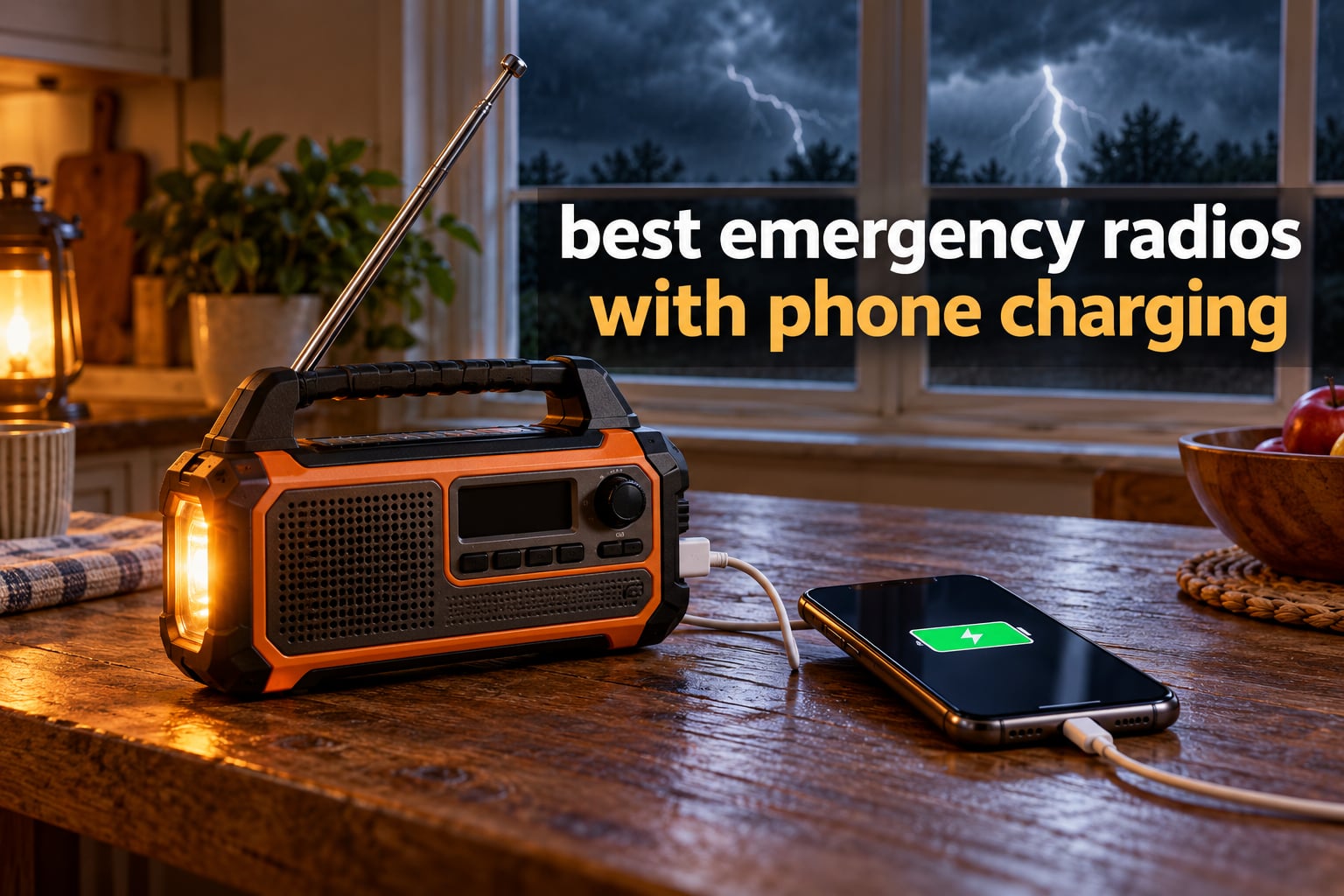
Quick answer: the best emergency radios with phone charging are the Raynic CR1009Pro for most households, the Kaito KA500 for anyone who needs rugged build and shortwave, and the FosPower A3 for USB-C charging at a lower tier. The catch nobody tells you: the USB port on almost all of them is a slow emergency trickle, not a real charger.
We spent weeks working through 12 of the most-reviewed emergency radios that can charge a phone, comparing published battery capacity in both mAh and watt-hours, port types and output, radio band coverage, alert support, weight and water resistance. What we found is that almost every listing in this category advertises phone charging, and almost none of them tell you how slowly it happens.
- The Raynic CR1009Pro is the best overall pick: 18500mWh, six charging paths, and the most reviewed radio in the group.
- The Kaito KA500 wins on build quality and shortwave sensitivity thanks to a 14.5 inch telescopic antenna.
- The FosPower A3 is the best value pick, with USB-C charging and a limited lifetime warranty.
- The Semmorn SE001 is the only one here with 20W USB-C plus 15W wireless charging.
- Hand crank and solar panels are supplemental. Charge the internal battery before you need it.
One thing worth settling early: every radio on this list is a receiver. It hears NOAA weather broadcasts and AM/FM stations. It cannot transmit, and it cannot talk to anyone. If you need two-way communication, you need an FRS/GMRS or amateur handheld instead, and we cover that further down.
If your priority is a unit that sits in the corner of the bedroom and wakes you up at 3am for a tornado warning, our guide to the best emergency weather radios for home covers that category in more depth. This list is the portable, grab-and-go side of the shelf.
Table of Contents
Top 3 Emergency Radios With Phone Charging
The Raynic takes the top slot because it is the only radio here combining a genuinely large 18500mWh pack with six separate ways to refill that pack, and it does it with more than 20000 reviews behind it. The Kaito earns its place on antenna and housing rather than charging speed. The FosPower is the one to buy if USB-C matters to you and you would rather have a warranty that does not expire.
All 12 Radios at a Glance in 2026
| Product | Specifications | Action |
|---|---|---|
 Raynic CR1009Pro Emergency Radio Raynic CR1009Pro Emergency Radio |
|
Check Latest Price |
 Kaito KA500 5-Way Powered Solar Radio Kaito KA500 5-Way Powered Solar Radio |
|
Check Latest Price |
 FosPower A3 NOAA Emergency Radio FosPower A3 NOAA Emergency Radio |
|
Check Latest Price |
 C. Crane CCRadio Solar C. Crane CCRadio Solar |
|
Check Latest Price |
 Kaito Voyager Pro KA600 Kaito Voyager Pro KA600 |
|
Check Latest Price |
 Eton FRX3 Red Cross Edition Eton FRX3 Red Cross Edition |
|
Check Latest Price |
 Tenergy T101 Hand Crank Radio Tenergy T101 Hand Crank Radio |
|
Check Latest Price |
 UYEIKMLOP 12000mAh Radio UYEIKMLOP 12000mAh Radio |
|
Check Latest Price |
 Eton FRX2 Hand Turbine Radio Eton FRX2 Hand Turbine Radio |
|
Check Latest Price |
 Rychi MD-107 10000mAh Radio Rychi MD-107 10000mAh Radio |
|
Check Latest Price |
 RunningSnail 091G Radio RunningSnail 091G Radio |
|
Check Latest Price |
 Semmorn SE001 2-in-1 Radio Semmorn SE001 2-in-1 Radio |
|
Check Latest Price |
Two columns in that table deserve a note. Watt-hours (mWh) is the honest measure of capacity, because it accounts for cell voltage, while mAh alone is frequently inflated on unbranded listings. And only one product here publishes a wireless charging figure, which is why the Semmorn sits near the bottom of our ranking despite the most advanced charging hardware.
1. Raynic CR1009Pro – Best Overall Emergency Radio With Phone Charging
Raynic Emergency Radio, 5000mAh/18500mWh Weather Radio, Solar Hand Crank Radio with AM/FM/SW/NOAA Alert, Cell Phone Charger, Headphone Jack, Flashlight and SOS Siren
18500mWh/5000mAh
AM/FM/SW/NOAA
USB phone output
3W flashlight
Pros
- Six charging paths for real redundancy
- Bright 3W flashlight and 2.5W reading lamp
- Good AM/FM/NOAA reception on the small antenna
- Light at 16 ounces for hiking and go-bags
- SOS siren and red flasher work as described
Cons
- Only IPX3 splash resistance
- solar panel tops up rather than recharges
- Hand crank is very slow
- Short 15.3 inch antenna with no external option
- No SAME county-code filtering
The Raynic is the radio I keep coming back to, because it answers the phone-charging question better than anything else at mainstream pricing without giving up reception. Its 18500mWh pack sits in the middle of this group, well above the 2000mAh and 3400mAh units, and the USB output is genuinely usable for topping up a phone rather than merely lighting the charge indicator.
Six ways to power it is the part that separates it from the pack: internal lithium-polymer battery, AC adapter, DC 5V USB input, hand crank, solar panel, and three AAA batteries as a fallback. In a real outage that last one matters, because it is the only option that works with no sun, no cable and no arm strength. The batteries are not included, which is the single most common complaint we see.
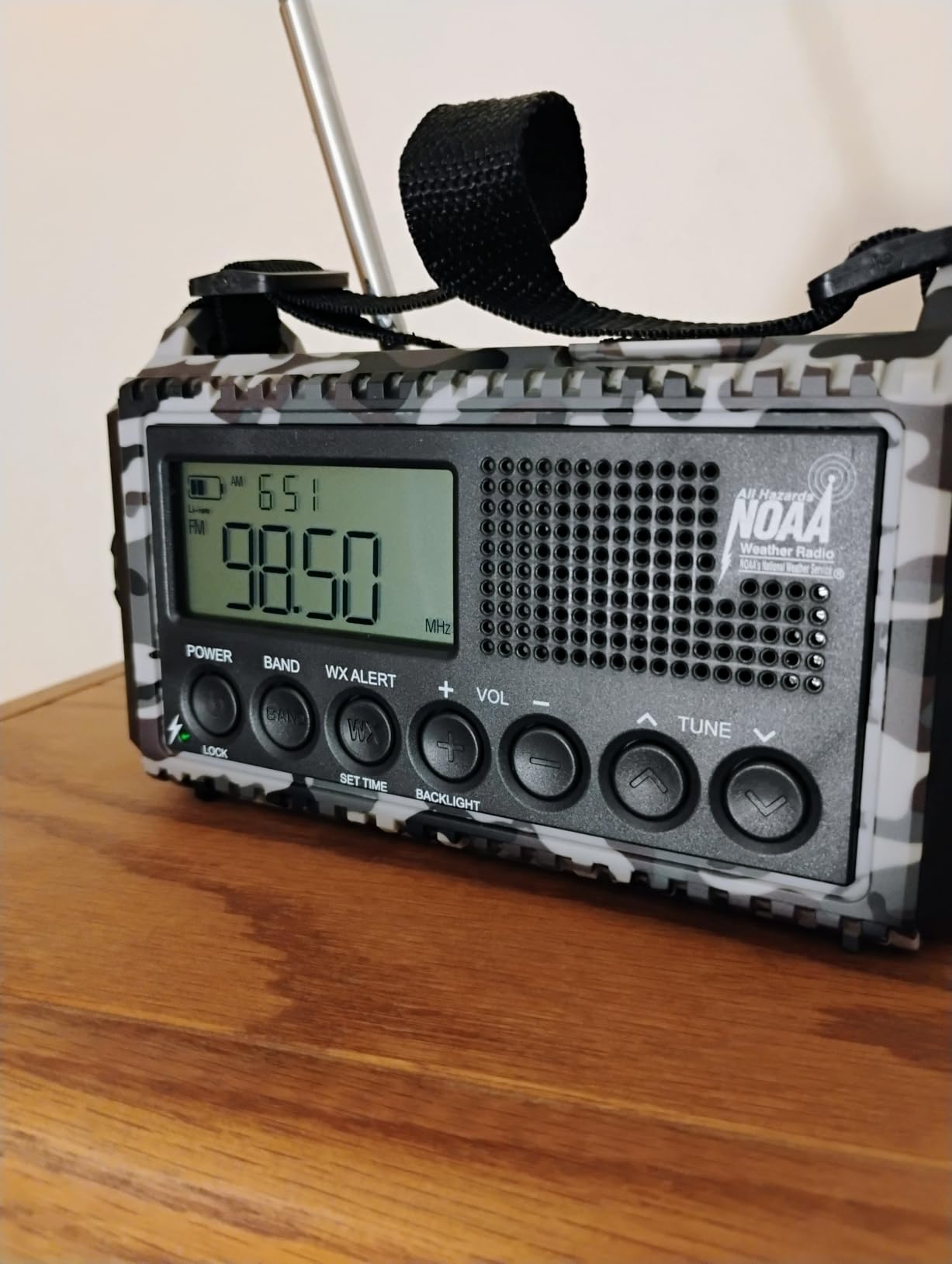
Reception is good on AM, FM and NOAA for a unit with a 15.3 inch telescopic antenna built into a 6.8 by 3.7 inch body. Shortwave is the exception. It is there on the spec sheet, but the tuning interface is slow and reception is inconsistent depending on where you are, so treat the SW band as a curiosity rather than a feature you will rely on.
The 3W flashlight and 2.5W reading lamp are bright without being the reason the battery dies in an evening. Press the SOS button and the siren sounds with a flashing red light, which is a genuinely useful way to make noise in a collapsed structure where shouting does not carry.
What to check before you rely on the phone charging
Treat the USB port as a top-up, not a charger. It is there to keep a phone alive for emergency calls, not to refill a drained battery in an hour. Test it on your own phone before storm season, because some handsets simply will not negotiate with the radio’s output.
Where it falls short
Water resistance is IPX3, which means splashes and drizzle only. It has no SAME county-code programming, so you will hear alerts meant for counties hundreds of miles away and have to decide for yourself whether they apply to you. That is a real cognitive load at 4am, and it is the main reason we would not put this in a bedroom.
The solar panel on this unit maintains a charge. It will not recover a battery that has already gone flat, and the hand crank takes a genuinely long time to produce anything useful. Plan to top it up from a wall adapter every couple of months and consider the crank a last resort.
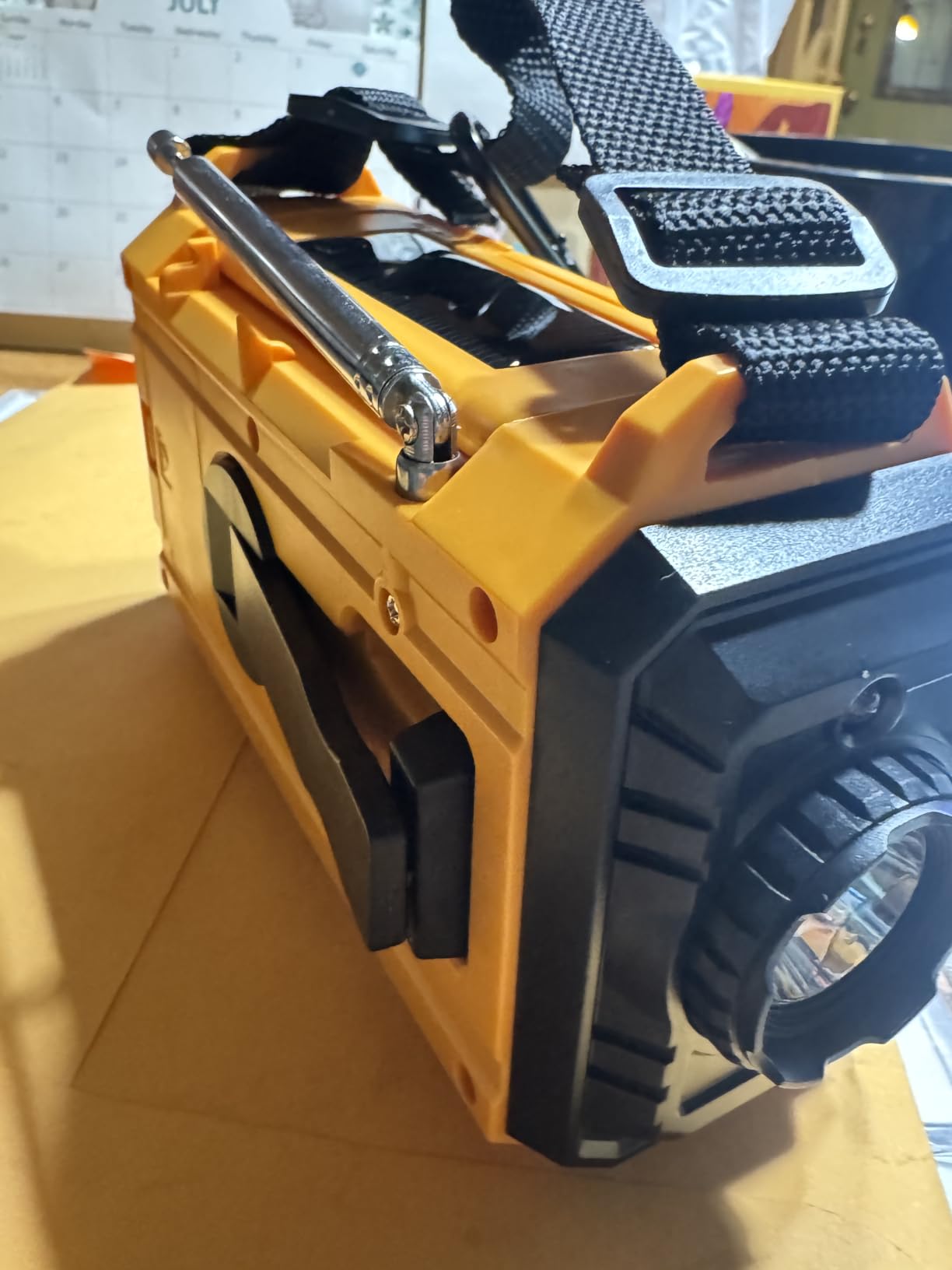
2. Kaito KA500 – Best Rugged Multi-Power Radio
Kaito KA500 5-way Powered Solar Power,Dynamo Crank, Wind Up Emergency AM/FM/SW/NOAA Weather Alert Radio with Flashlight,Reading Lamp and Cellphone Charger, Yellow
AM/FM/2-band SW/7 NOAA
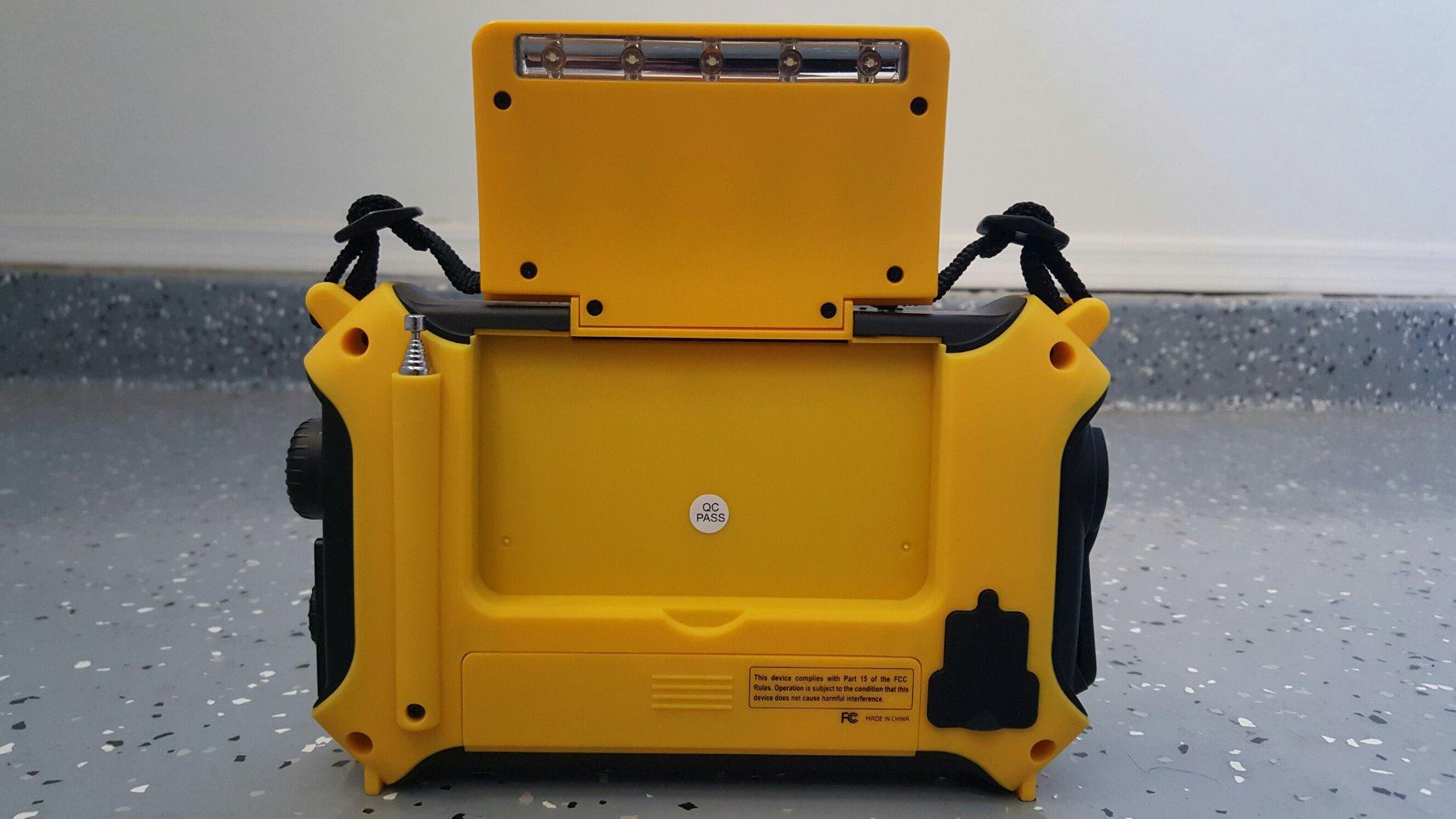
14.5 inch antenna
USB phone output
Rugged ABS
Pros
- Long-established design with a large installed base
- 14.5 inch antenna gives strong shortwave and AM sensitivity
- Impact-resistant and water-resistant ABS housing
- User-replaceable NiMH pack
- Loud speaker with signal strength indicator
Cons
- NOAA coverage limited to the USA and Canada
- Older analog tuning with no digital display or presets
- AC wall adapter sold separately
The Kaito KA500 is the oldest design in this roundup and the one most people end up owning, and that is not an accident. It has been sold for years, which means the fixes are already in and the failure modes are known. More than 13400 reviews averaging 4.5 stars is not nostalgia, it is a long production run.
Its 14.5 inch telescopic antenna is the reason shortwave listeners keep recommending it. The LED signal strength indicator on the front is not a gimmick either: on an analog dial it is the difference between finding a station in thirty seconds and hunting for five minutes.
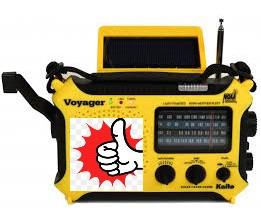
Power comes from six directions, including a replaceable NiMH battery pack. That replaceability is the detail most competitors cannot match. When the internal pack eventually dies, you replace the pack rather than the radio, and the unit stays in service indefinitely. AA batteries are supported through the compartment as well.
The speaker is loud and clean for its class, which matters when the alert tone fires at night or when you are trying to hear a local station over wind and rain.
Why antenna length still matters
Reception on a compact radio is almost entirely a story about antenna length and position. The KA500 extends further than anything else in this list, and that shows up most clearly on AM and the two shortwave bands, where longer elements pull in stations that a stub antenna simply misses.
What you give up
Tuning is fully analog. There is no digital display, no presets and no battery level readout, so you are turning a dial in the dark by feel. If you have never tuned an analog radio before, budget ten minutes of practice before the first real event.
Two other limitations. NOAA coverage is limited to the United States and Canada, which matters if you travel. And the AC wall adapter is sold separately, so budget for that alongside the radio itself.
3. FosPower A3 – Top Rated With USB-C Charging
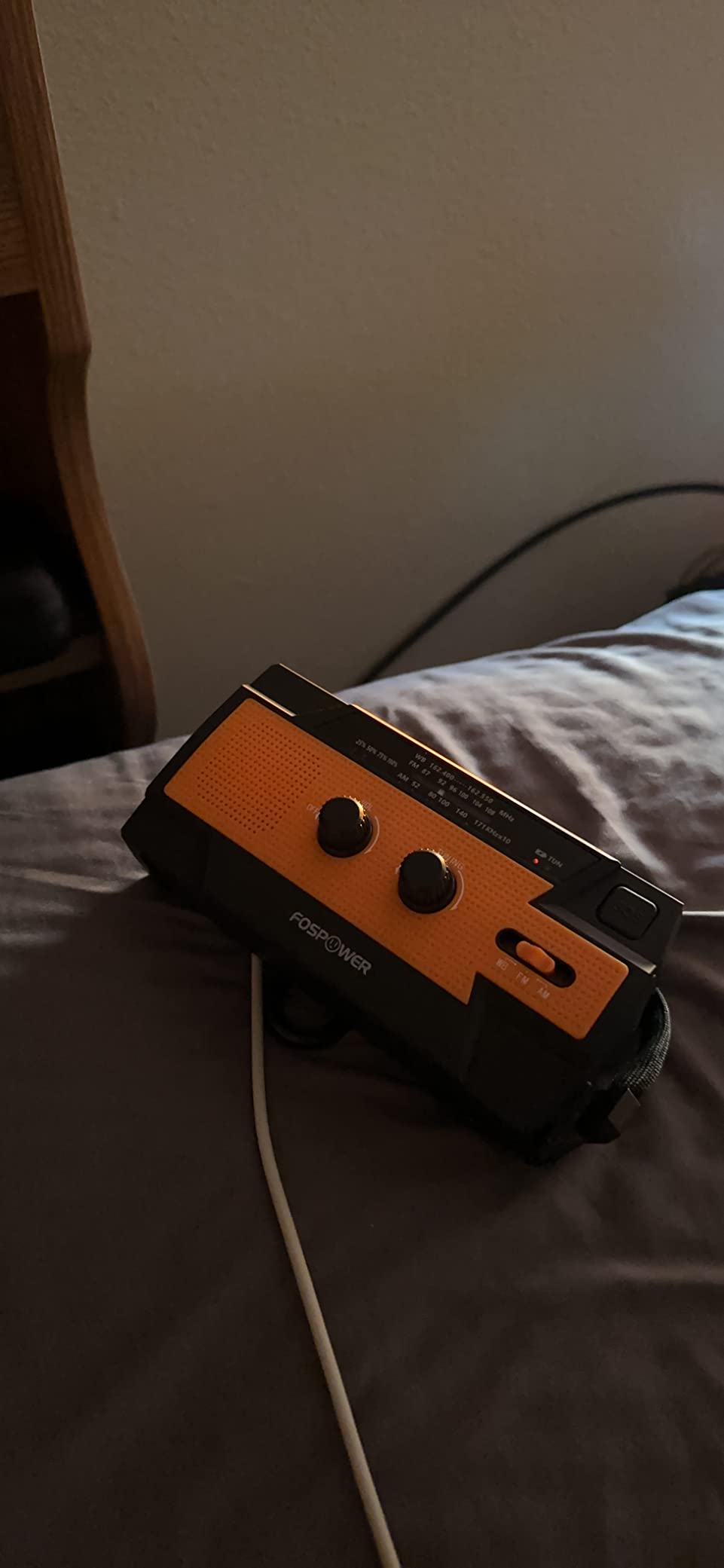
FosPower NOAA Emergency Weather Radio A3 14800mWh Portable Power Bank, AM/FM, USB/Solar/Hand Crank Charging, SOS Alarm & Flashlight for Indoor/Outdoor Emergency – Orange
14800mWh/4000mAh
USB-C/hand crank/solar
AM/FM/NOAA
SOS alarm
Pros
- Tied for the highest average rating in the group at 4.6
- 4000mAh power bank meaningfully extends phone life
- Three reliable charging paths including USB-C
- Limited lifetime warranty with US-based support
- Motion-sensor reading light is a distinctive touch
Cons
- 4000mAh is small against 10000mAh rivals
- AM and FM only with no shortwave band
- No AAA battery backup compartment listed
The FosPower A3 is the one we recommend when someone wants modern charging behaviour without paying a premium. It is one of only a handful of radios here that takes a USB-C cable, and it ranks at the top of the Amazon weather radio category, which tells you something about how the retail algorithm is scoring it.
Its 14800mWh pack is honest and modest. That is roughly the size of a small phone battery, so expect a partial top-up on a modern handset rather than a full charge. For emergency calls and map access, that is genuinely enough.
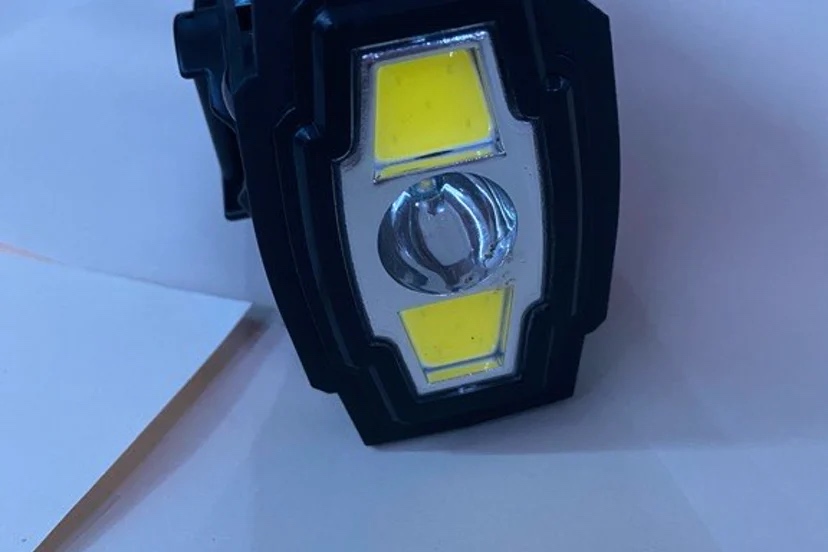
The motion-sensor reading light is the feature we did not expect to like. It switches the reading lamp on when you wave a hand near it and off again, so the light is not draining the battery all night in a tent or a darkened room. The 10 watt speaker is also punchier than the wattage number suggests.
Charging comes from three directions: hand crank, solar panel and USB-C. The USB-C path is the one you will actually use, and having it on the charging input rather than only as an output is a design decision a lot of newer budget radios have not caught up to.
Why the lifetime warranty changes the maths
Because this radio carries a limited lifetime warranty with US-based support, the cost of owning it amortises over years in a way a disposable generic unit does not. That is the real value argument here. If you are buying a radio that will sit in a go-bag for a decade, a warranty that does not expire matters more than raw milliamp hours.
What to know before buying
There is no shortwave band. AM, FM and NOAA only, which is fine for almost every buyer and a genuine loss if you were hoping to listen to international broadcasts as part of a higher-stakes scenario.
Also note the smaller 4000mAh capacity against rivals that quote 10000mAh or more. The FosPower is not the pick for a multi-day outage, but it is a well-built unit for keeping a phone alive overnight, which is the actual job most people are buying it for.
4. C. Crane CCRadio Solar – Best Premium Build
C. Crane CCRadio Solar with Bluetooth Receiving, Emergency Crank NOAA Weather AM/FM– Multi Powered Radio – Built in LED Flashlight and Cellphone Charger
Bluetooth receiving
400mA crank
3400mAh replaceable battery
35-50 hour runtime
Pros
- Only model here with Bluetooth receiving and phone remote control
- Considerably larger solar panel and a 400mA crank
- Replaceable lithium-ion battery so the unit is not disposable
- Five presets per band with clock and alarm
- UV-resistant rubber perimeter and stable concave base
Cons
- Not water resistant
- Heaviest unit in the group at 1.1 pounds
- AC wall adapter not included
- AM
- FM and NOAA only with no shortwave
The C. Crane is the only radio in this roundup that you would unashamedly use as an ordinary kitchen radio, and that is a genuine advantage in a preparation context. Five presets per band, a sleep timer, an alarm and a clock mean it stays plugged in and working instead of sitting in a drawer from one hurricane to the next.
Bluetooth receiving is the feature no rival has. Your phone can stream audio into it, and the phone doubles as a remote control, so the radio can sit across the room while you control it from the sofa. Owners also note cleaner voice-focused audio than most emergency radios produce.
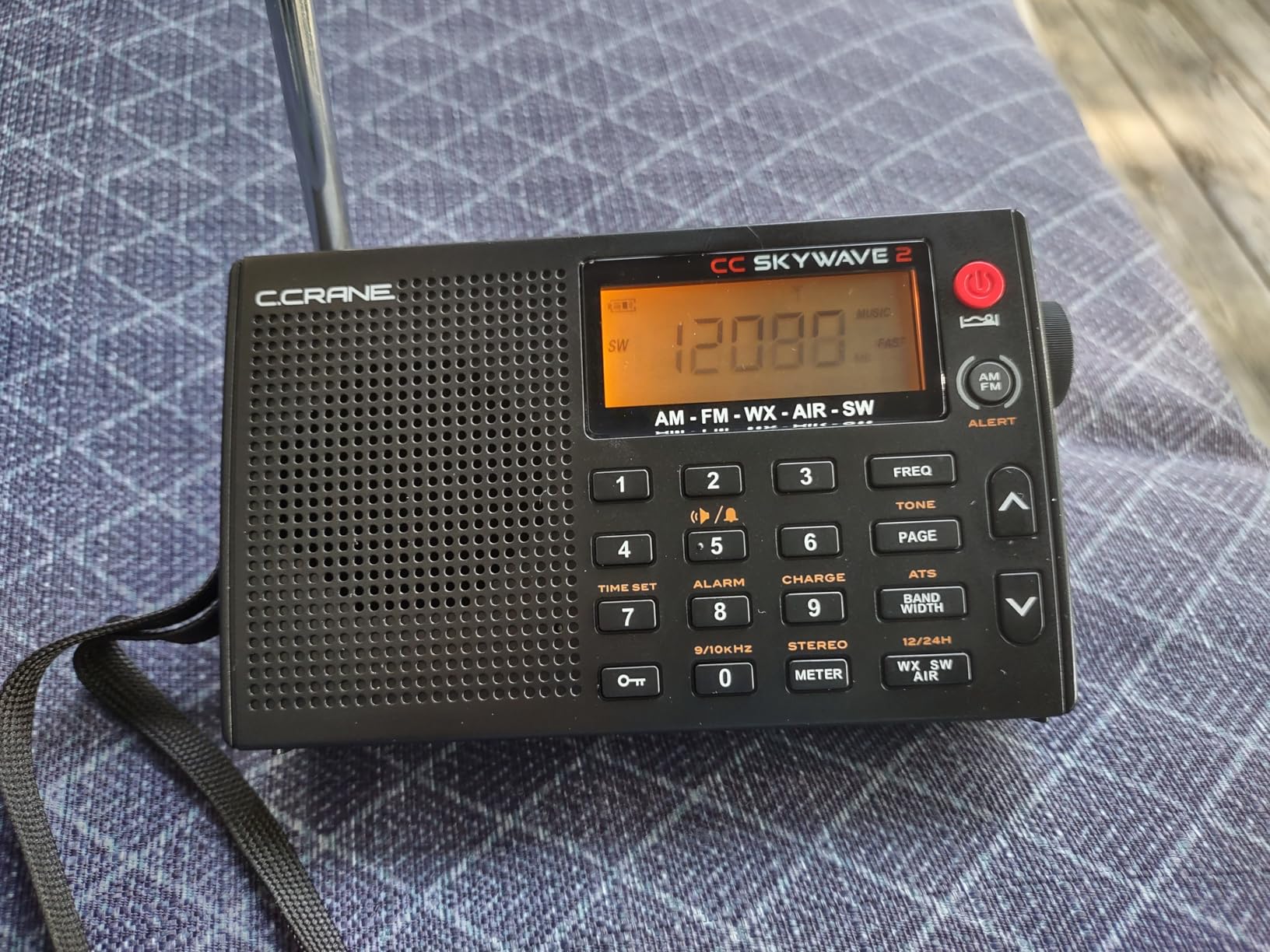
The power hardware is unusually capable. A 400mA hand crank generator is several times the output of a typical compact crank, and the solar panel is visibly oversized compared with the pocket-sized panels on the budget units. The replaceable 3400mAh lithium-ion battery is rated for 35 to 50 hours of runtime on a full charge.
It is also the only radio here with US-based technical support and a one-year parts and labour warranty, which for a device expected to sit in storage for years is worth more than it first appears.
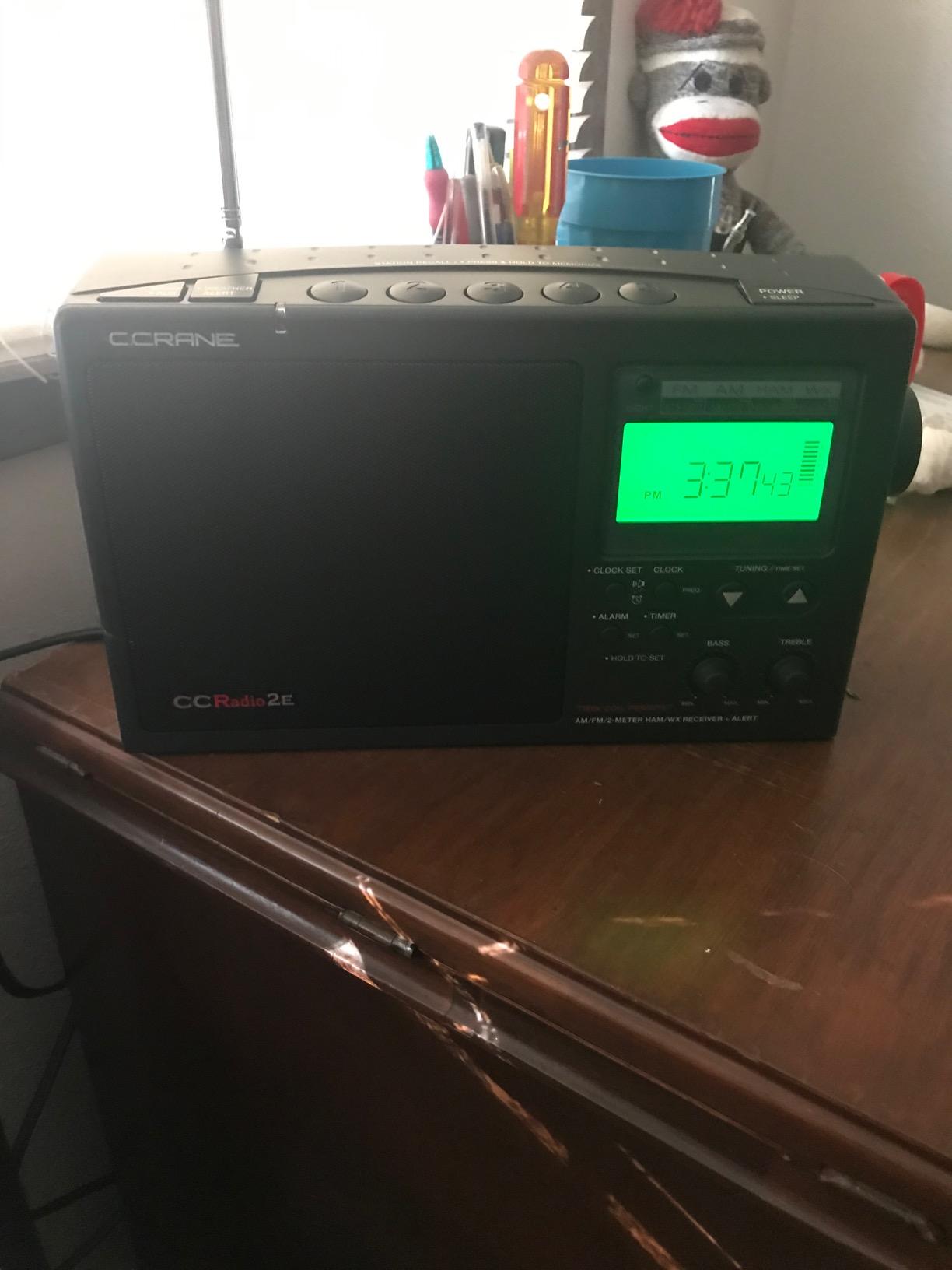
Where the 400mA crank actually helps
Crank output is measured in milliamps, and a higher number means less arm for the same result. A 400mA generator can bring the battery up to a usable listening state in a couple of minutes of hard cranking, where a low-output unit needs ten times that. It is still not a phone charger, but it is a real difference in a scenario where you have no wall power.
Reasons to skip it
It is the heaviest unit here at 1.1 pounds, and it is not water resistant at all. If your plan involves a wet evacuation, a boat, or a radio that lives in a car boot through a hurricane, the weight and the lack of sealing both work against you.
The AC adapter is not included, and there is no shortwave coverage. This is a well-built three-band radio, not a worldband receiver.
5. Kaito Voyager Pro KA600 – Best for Shortwave Reception
Kaito Voyager Pro KA600 Digital Solar Dynamo Hand Crank AM/FM/LW/SW & NOAA Weather Emergency Radio with Flashlight, Reading Lamp,Smart Phone Charger & RDS and Real-Time Alert, with AC Adapter, Black
7-band AM/FM/LW/SW/NOAA
Digital signal display
USB phone charging
AC adapter included
Pros
- Widest band coverage here including longwave and shortwave
- Digital display with battery and signal strength readouts
- AC power adapter included in the box
- RDS and real-time severe weather alerting
- Water-resistant housing
Cons
- Lowest average rating in the group at 4.2
- Digital LCD draws more power in a long outage
- Bulkier than the compact crank radios
- Around 7.5 percent of buyers report early failures
The Voyager Pro is the only radio here that covers seven bands, including longwave, which is the band international shortwave broadcasters and shipping traffic traditionally used. If you want to hear what is happening beyond your own national weather service, this is the pick in the list.
The digital tuning screen shows frequency, battery level and signal strength, and RDS decoding improves reception of local stations by rejecting competing signals on the same frequency. Real-time severe weather alerting is handled through the same digital front end. The AC adapter is in the box, which is rare at this level.
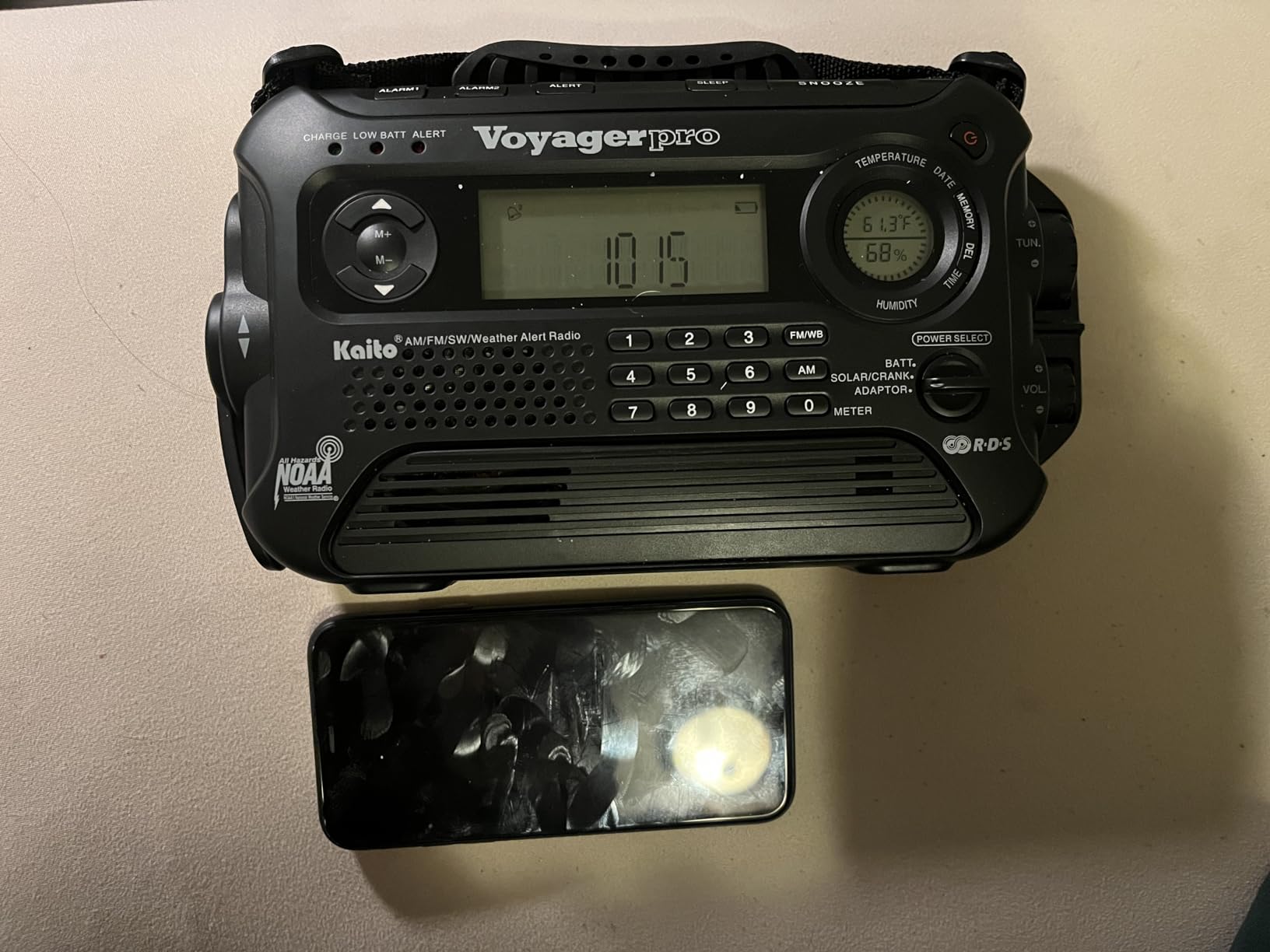
It also charges a phone over USB, and the adjustable reading lamp is one of the better ones we have seen for long evening reading on battery. At 16 ounces it is still portable, though the 9.5 by 2.5 by 5.5 inch body is bulkier than the pocket units.
This is where we have to be straight with you: the 4.2 star average is the lowest in the roundup, and the review spread explains why. Around 8 percent one-star and 10 percent three-star ratings point to durability complaints, with some owners reporting early unit failures.
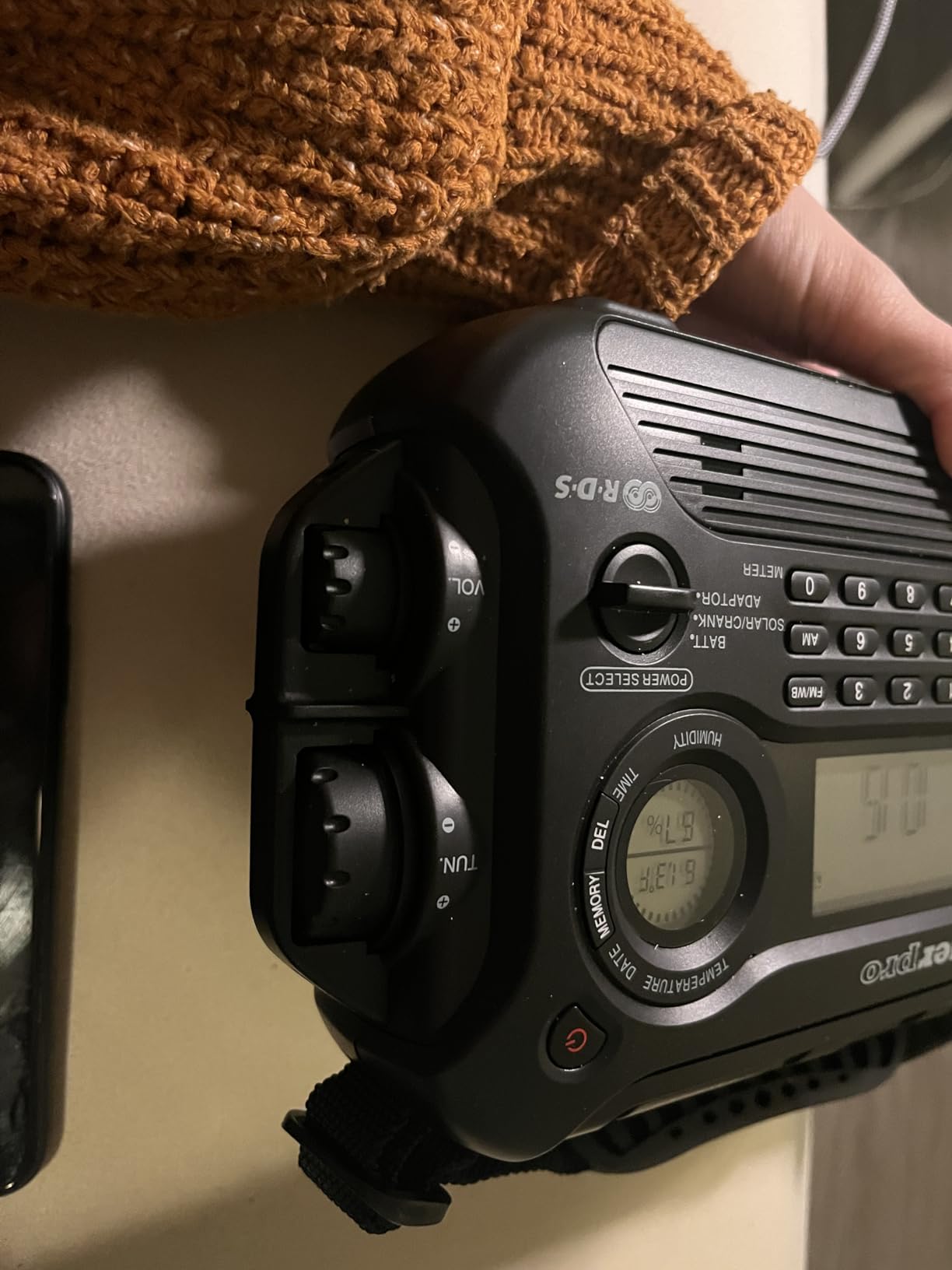
When longwave and shortwave earn their place
In a scenario where local infrastructure is degraded, AM shortwave and longwave are the bands most likely to still have a voice on them. A single shortwave receiver is a two-way information stream that does not depend on a cell tower or a satellite link, which is the argument shortwave enthusiasts make and it is not a bad one.
The reliability caveat
Be clear-eyed about two things. First, the digital LCD is a single point of failure in a long outage: a dead backlight can make a working radio feel broken. Second, with roughly 7.5 percent of buyers reporting early failures, this is not the radio to depend on as your only unit.
Our advice is to run it as a second radio alongside a simpler crank model. It adds band coverage the others lack, and the redundancy costs less than you would think.
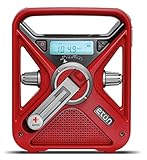
6. Eton FRX3 Red Cross Edition – Best for Overnight Home Alerts
Eton The American Red Cross Frx3 Emergency Weather Radio With Smartphone Charger Arcfrx3wxr, 14.9 Oz
All 7 NOAA bands
Glow-in-the-dark ring
USB dump charging
Five power options
Pros
- Full NOAA spectrum with clear speech for alerts
- Five ways to power it including solar and crank
- Dump-charges a phone over USB from the internal battery
- Glow-in-the-dark ring stays visible for hours
- Owners report a decade of reliable service
Cons
- Small NiMH pack cannot fast-charge a modern phone
- Undersized solar panel takes one to two full days of sun
- Alert mode blocks other functions and cannot be fully turned off
- No SAME region filtering so distant county alerts fire
- Buttons sit under the crank handle
- Port flaps keep out dust but not water
This design has been available since 2009, and long-term owners genuinely report that it still works. Eton built it for the American Red Cross, and the attention to detail shows: clear voice reproduction on all seven NOAA bands, a clock with an alarm, and a glow-in-the-dark ring around the tuning dial that stays visible for hours after light exposure.
That glow ring is the reason this is the overnight home pick. In a dark bedroom you can read the dial without switching on a lamp, find the right station, and go back to sleep until the next alert.
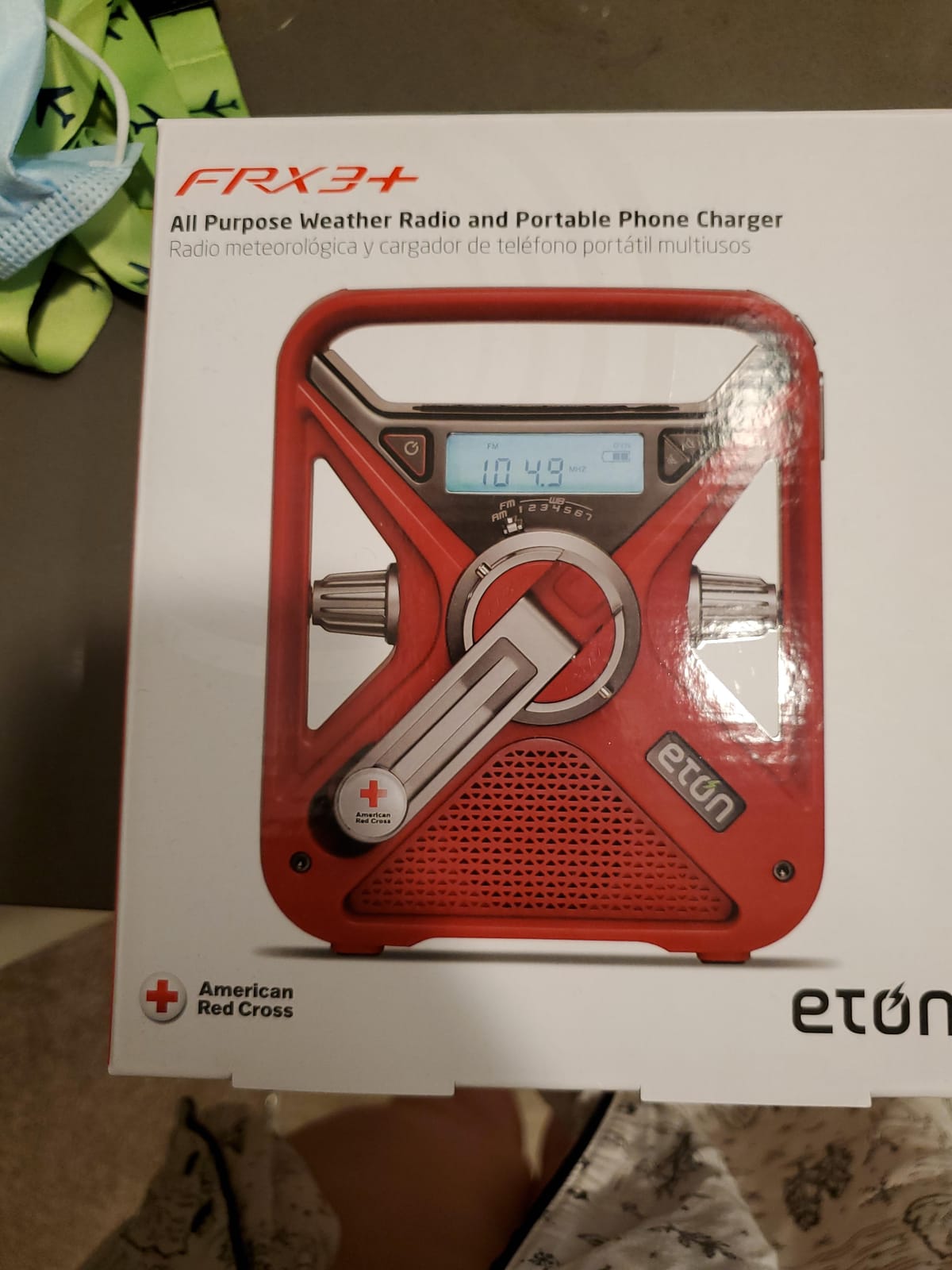
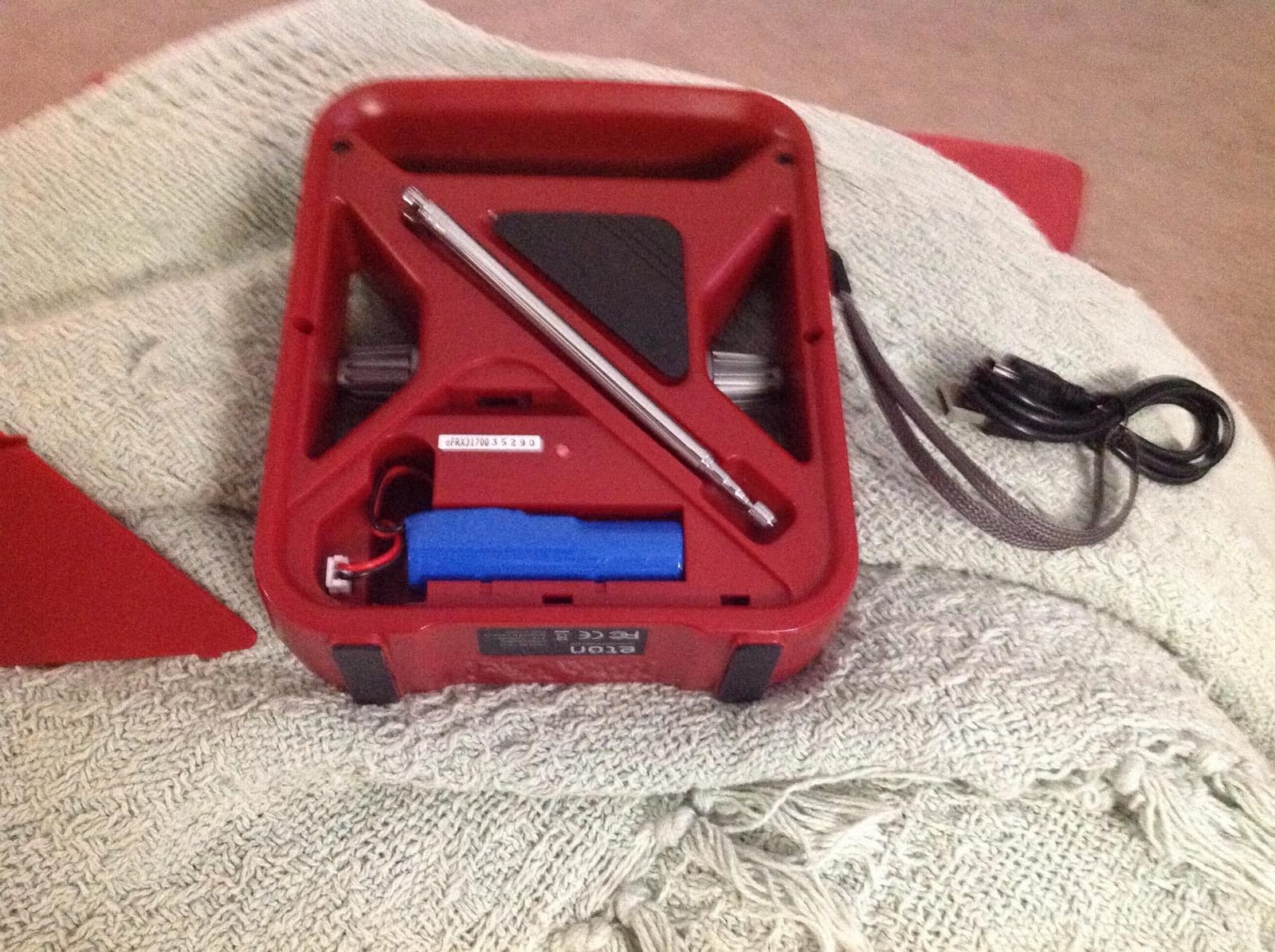
Power options are the broadest here: solar, hand crank, the internal NiMH pack, three AAA batteries and DC input. The auxiliary audio input is also useful, letting the radio work as a speaker for a phone or MP3 player during an outage.
And it will charge a phone, but read the caveat below before you plan around that. The internal pack is small, on the order of 600 to 800mAh, and phone charging from it is a slow dump rather than a top-up.
Why the glow-in-the-dark ring matters more than it sounds
Most people who buy an overnight alert receiver have never set one up. A glowing dial removes the single biggest barrier: fumbling with buttons in the dark and knocking the unit off a bedside table. It is a small engineering detail with an outsized effect on whether the radio actually gets used at 3am.
The phone charging reality check
With a 600 to 800mAh NiMH pack, charging a phone is genuinely slow. Expect it to take a very large share of the pack to add a modest amount of charge, and expect the crank math to be worse. The solar panel is also undersized, and recovery takes one to two full days of good sun.
Two more things to know. The alert mode blocks the other radio functions and cannot be fully powered down, which drains the battery. And with no SAME filtering, you will get alerts for counties far from you, which is a poor fit for a bedroom unless you live in a low-alert-density region. Several owners also find the buttons sit where the crank handle swings.
7. Tenergy T101 – Best for Light Output
Tenergy Emergency Hand Crank Weather Radio, AM FM NOAA Solar Cell Charger
2000mAh battery
Dual 120 lumen lights
4 charging methods
SOS siren
Pros
- Dual 120 lumen flashlights bright enough to read and work
- Build quality and reception run ahead of the price
- Four charging paths plus included spare batteries
- Foam-lined carrying case included
- CE
- PSE and RoHS certified
Cons
- Only charges over USB-C cables without power delivery
- Bright green tuned indicator disturbs sleep
- 2000mAh will not last a full day of use
- Analog tuning dial is fiddly
- Not water resistant
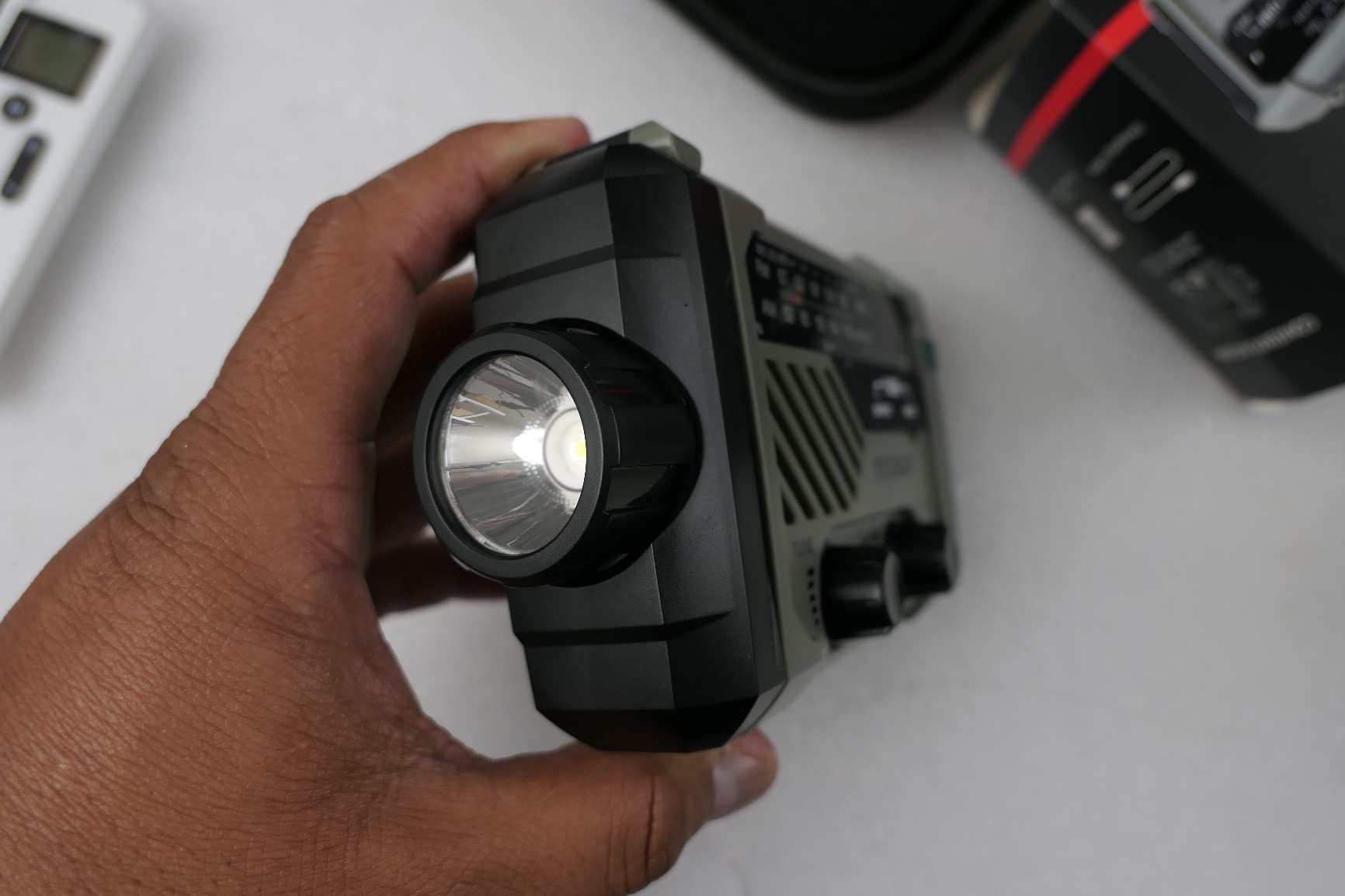
The Tenergy is the lighting specialist in this group. Two 120 lumen LED flashlights rather than one is a decision you notice immediately in a power cut: one aimed where you are working, one lighting the room, and enough output to read a printed page or find a dropped key.
Reception also punches above its weight. Owners report picking up stations from 50 miles away, which is a function of the tuner more than the antenna, and reviewers consistently describe the build quality and sound as outrunning the price class.
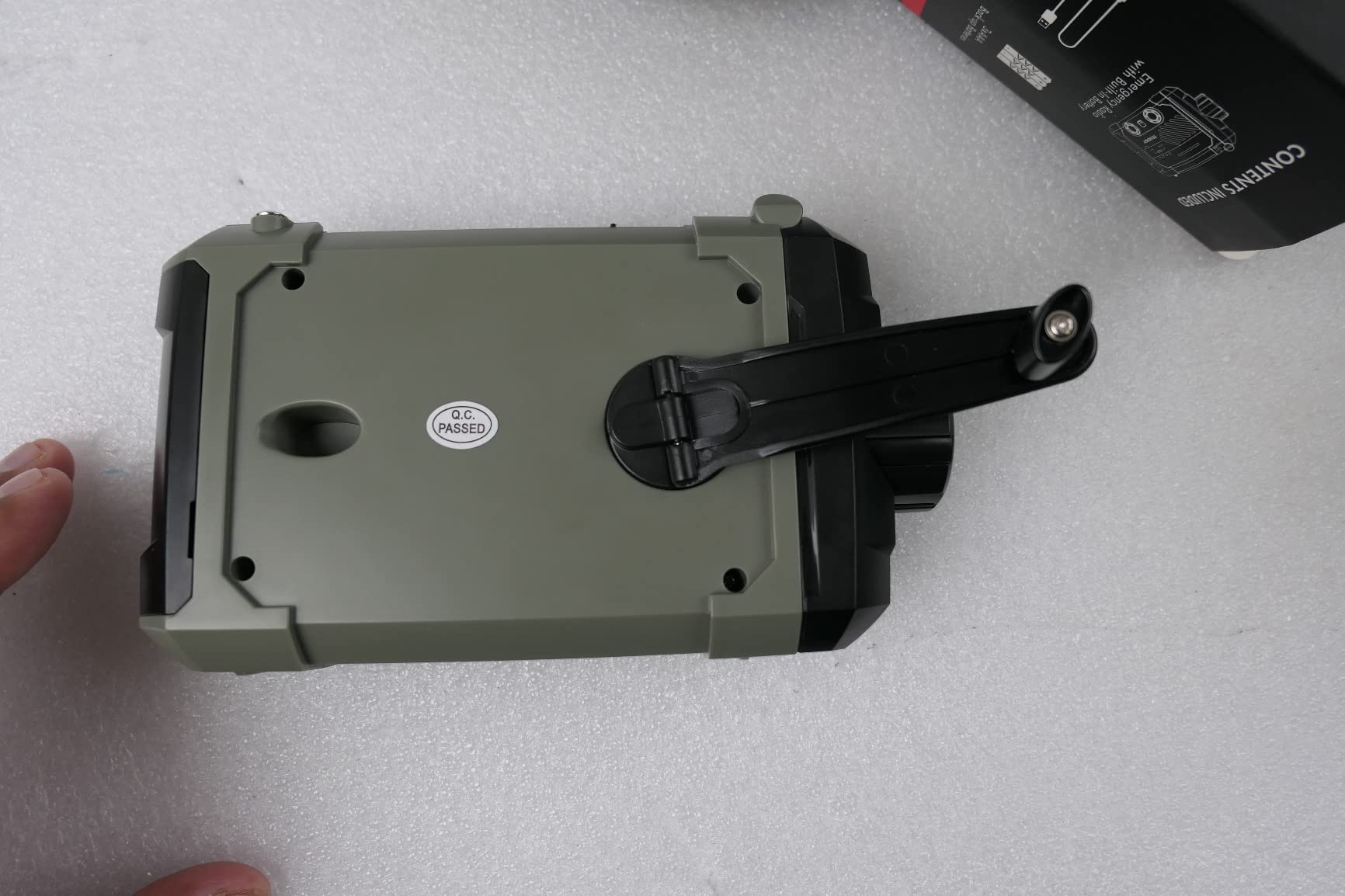
Four charging methods cover crank, solar, micro-USB and an AAA battery compartment, and spare batteries come in the box. The foam-lined carrying case is a nice touch for a radio meant to live in a vehicle or a pack. CE, PSE and RoHS certification is stated on the listing.
The SOS siren is genuinely loud, and it pairs with a flashing Morse code light, so the unit can signal position visually as well as audibly.
Why lumen output changes the plan
For most households the flashlight matters more than the radio. A radio gives you information once, while light is what you use every hour of a multi-day outage. At 120 lumens per emitter these lights will light a room and a work surface, which puts this radio in a different category from the single-LED units in the same bracket.
Why it is not our top pick
The 2000mAh internal battery is the smallest serious capacity here, and reviewers are candid that it will not last a full day of normal use. If the plan is to run lights and charge a phone for days, this is the wrong unit.
Two smaller annoyances. The green tuned indicator is bright enough to be annoying in a dark bedroom, and the radio only charges over USB-C cables that do not support power delivery, which means not every cable you own will work. There is also no water resistance, and the analog dial takes practice.
8. UYEIKMLOP 12000mAh – Best for Battery Capacity
44400mWh/12000mAh Emergency Weather Radio, Hand Crank Radio Solar Radio Portable AM/FM/NOAA Radio with 2 Solar Panels 3 Charging Methods SOS Alarm 3 Mode Flashlight Phone Charger Compass Reading Lamp
44400mWh/12000mAh
Dual solar panels
Auto frequency search
3-mode flashlight
Pros
- Largest published watt-hour capacity at 44400mWh
- Dual solar panels
- the only radio here with two
- Automatic frequency search saves manual tuning
- Owners report powering through a multi-day outage
- Three-mode flashlight and reading lamp
Cons
- AM band reported as non-functional by some buyers
- Several reports of units losing all functions after a few months
- Included compass reads roughly 90 degrees off
- 9 percent one-star rating
- the highest 1-star share here
- Customer service reportedly unresponsive
On paper this is the most capable power source in the roundup. A 44400mWh pack is more than double the Raynic and more than three times the FosPower, and at roughly 1.33 pounds it is still portable. Multiple owners describe running it through a multi-day outage with near-constant use, including one account of four days without grid power that ended with a successfully charged phone.
It is also the only radio here with two solar panels, which roughly doubles the surface area collecting light. Dual panels do not turn a compact radio into a portable power station, but they meaningfully slow the drain when the unit sits in daylight.
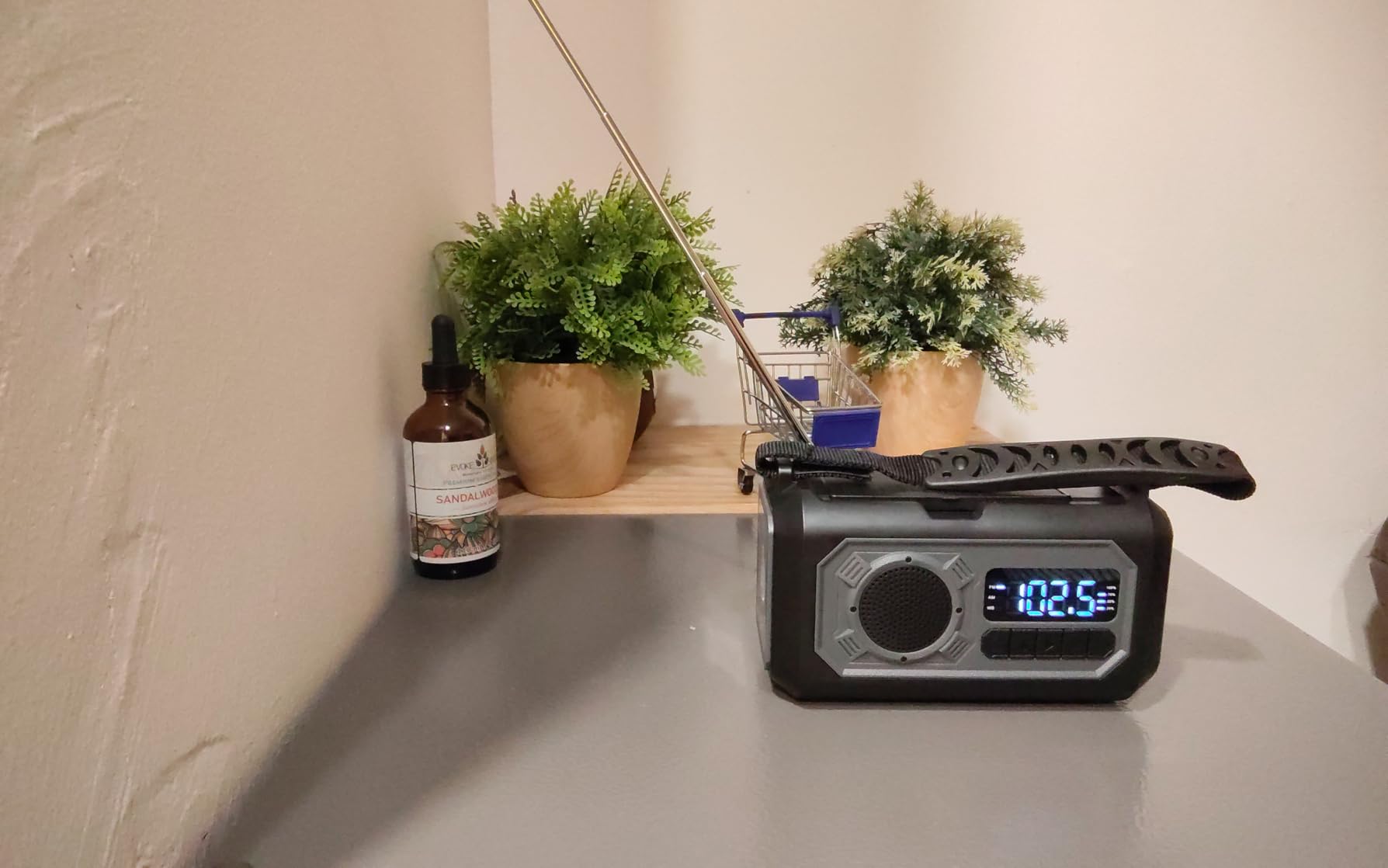
The automatic frequency search is a genuine time-saver. Hold the FM or AM button for two seconds and it scans and tunes the strongest signal, which removes the single most tedious part of operating an analog radio. The 15.3 inch telescopic antenna is the longest in the group, and the LCD shows channel and battery level.
Then there is the durability picture, which is the problem. Around 9 percent one-star ratings is the highest share in the roundup, with several buyers reporting that the radio, the lights and the charging methods all stopped working within a few months.
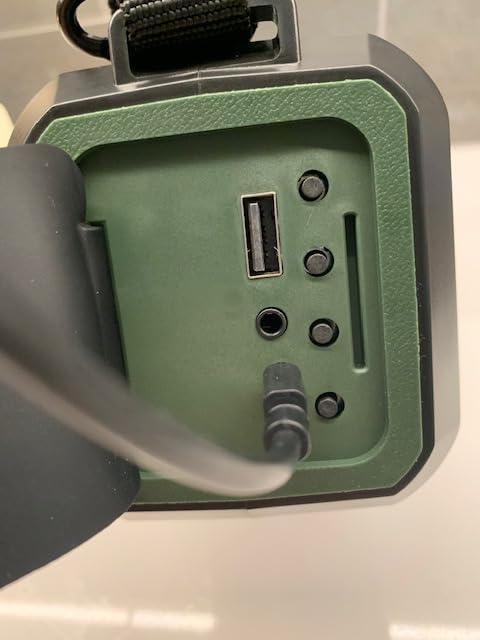
How to read the capacity claim honestly
When a listing quotes both mWh and mAh, check whether the numbers are consistent. At a nominal 3.7 volts, 12000mAh works out to roughly 44400mWh, so this one is arithmetically sound. Many generic listings that quote a headline capacity alone cannot be checked this way, and that is exactly where inflation tends to hide.
The risks you are accepting
Some buyers report a completely non-functional AM band, so do not rely on AM reception from this unit without testing it yourself in the first week. The included compass reads roughly 90 degrees off, which makes it a decoration rather than a navigation tool.
The failure reports are the bigger concern. A radio that dies before the event is exactly the failure mode you are paying to avoid, and customer service is reported as unresponsive in some cases. We would buy this for a second unit or a testing kit, not as the sole radio in the house.
9. Eton FRX2 – Best Compact Go-Bag Radio
Eton American Red Cross FRX2 Hand Turbine AM/FM/NOAA Weather Radio with USB Smartphone Charger and LED Flashlight
Hand turbine crank
AM/FM/NOAA
USB smartphone charger
LED flashlight
Pros
- Simplest and most compact option from an established preparedness brand
- Hand turbine
- flashlight and USB phone charger in one unit
- Digital tuner delivers clean alert and news audio
- American Red Cross partner product
Cons
- Hand turbine only with no solar panel
- AM
- FM and NOAA only
- 4.3 average with a 6 percent one-star share
The FRX2 answers a question most roundups skip: what if you want the smallest thing that genuinely works? Eton built this one around a hand turbine crank, an LED flashlight and USB phone charging, in a body sized to disappear into a safety kit or a backpack without anyone noticing the weight.
The digital tuner is the reason it sounds better than its simplicity suggests. News, talk and alert audio all come through clean, and there is no fiddly analog dial to fight in a dark shelter.
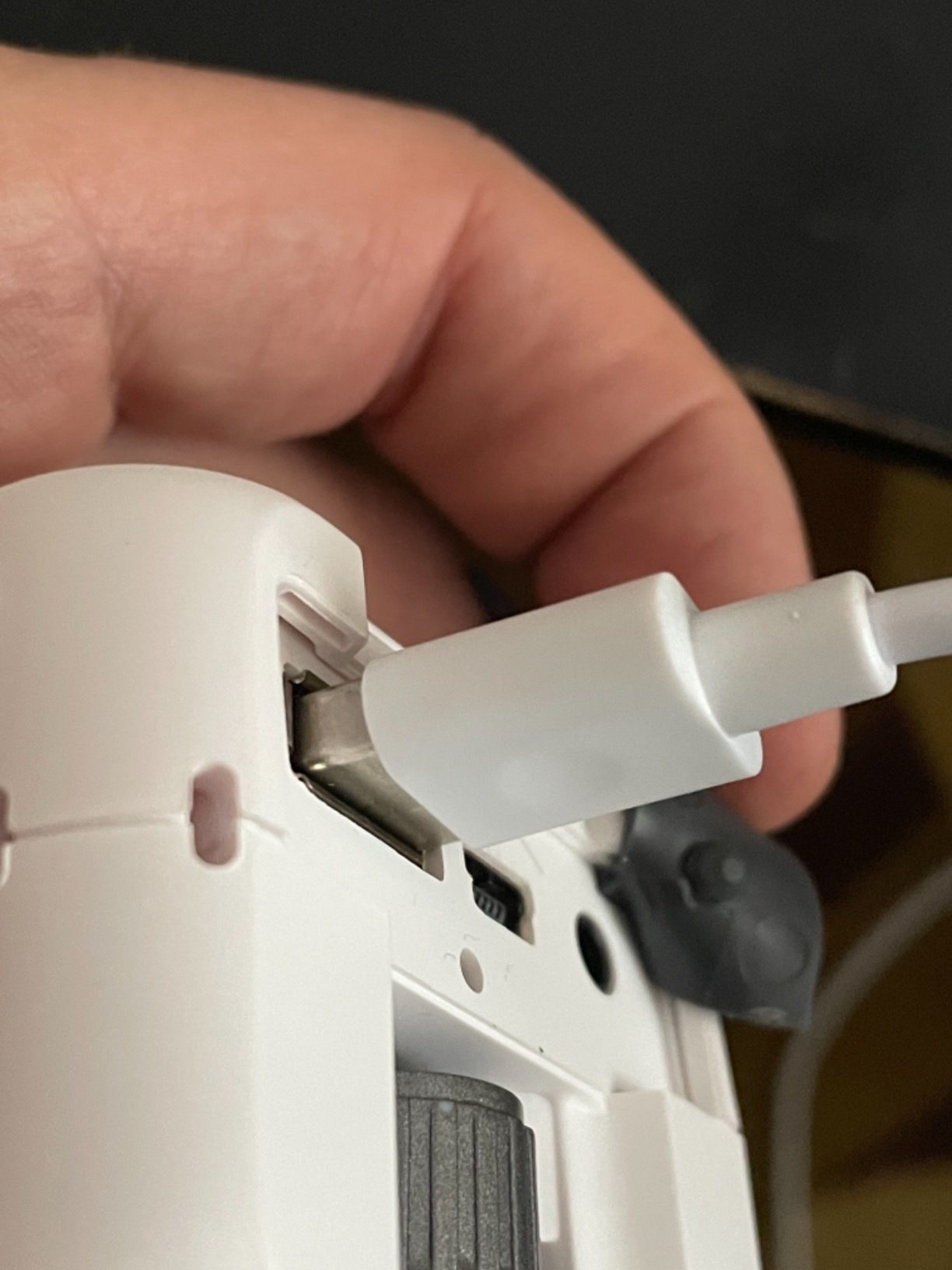
Eton built it as a Red Cross partner product, which is not a certification but does mean the design has been pressure-tested by people who think about this professionally. The manual and charging cable are included, which is more than several radios in this list manage.
It is also the radio we would hand to someone who has never used a radio before and is mildly intimidated by the category. Three bands, one crank, one button for the flashlight. There is very little to get wrong.
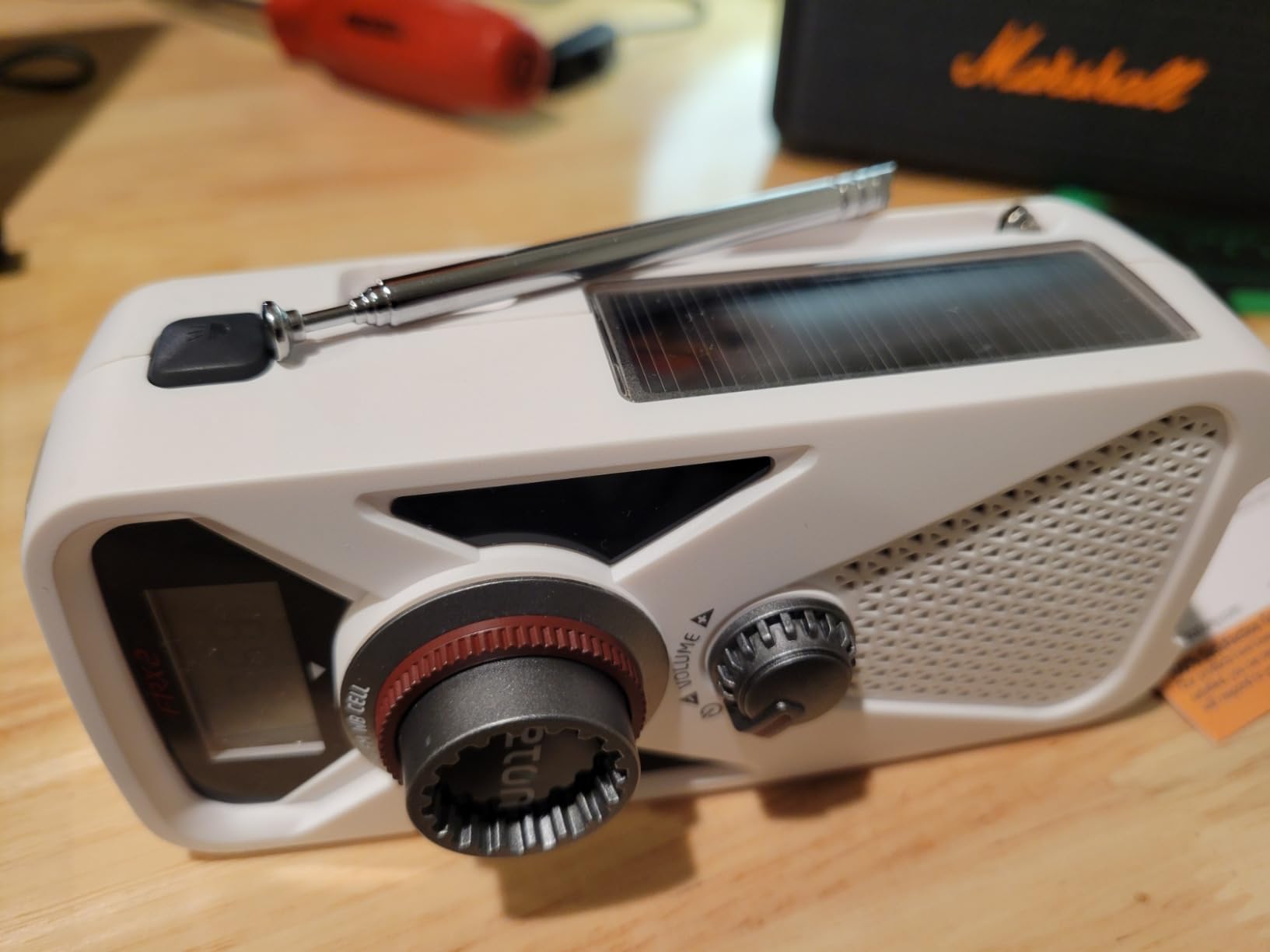
When less really is more
Every extra feature on an emergency radio is something that can be broken, drained or mis-set in a stressful moment. In a go-bag that gets grabbed in the dark, a unit with fewer controls and one unambiguous power source is often the safer choice than a feature-packed one.
The trade-offs
There is no solar panel on this model. That is not a small loss, because solar is the only power source that replenishes itself indefinitely, even if slowly. With a hand turbine alone you will be cranking, and cranking is tiring.
Coverage is also limited to AM, FM and NOAA, and the 4.3 average with a 6 percent one-star share reflects some durability complaints. For what it covers, though, it is a clean and honest little device.
10. Rychi MD-107 – Best for Long Runtime
10000mAh/37000mWh Emergency Radio, Solar Radio, Hand Crank Radio, NOAA AM FM Weather Radio, 4 Charging Methods, Polymer Battery, Flashlight & Reading Lamp, SOS Alarm, Phone Charger for Emergency
37000mWh/10000mAh
40 hours of flashlight
4 charging modes
18-month warranty
Pros
- 10000mAh capacity at a low price with published runtime figures
- Four charging methods including USB-C
- Clear sound quality for the size
- Solar and crank both reported to work and hold charge
- Compact enough for a child to carry
- 18-month warranty with 24/7 support
Cons
- Frequency lock and scan button reported as loose
- AAA batteries not included for that fourth power option
Most manufacturers publish no runtime figures at all. The Rychi publishes three, and that transparency is why it earns a place here: up to 25 hours of radio playback at medium volume, 30 hours of reading lamp, and 40 hours of flashlight per full charge.
Those numbers matter because runtime per charge is the only metric that tells you how long an outage you can survive without a wall outlet. Forty hours of flashlight is a real weekend of light, and a 10000mAh pack is a substantial top-up source for a phone.
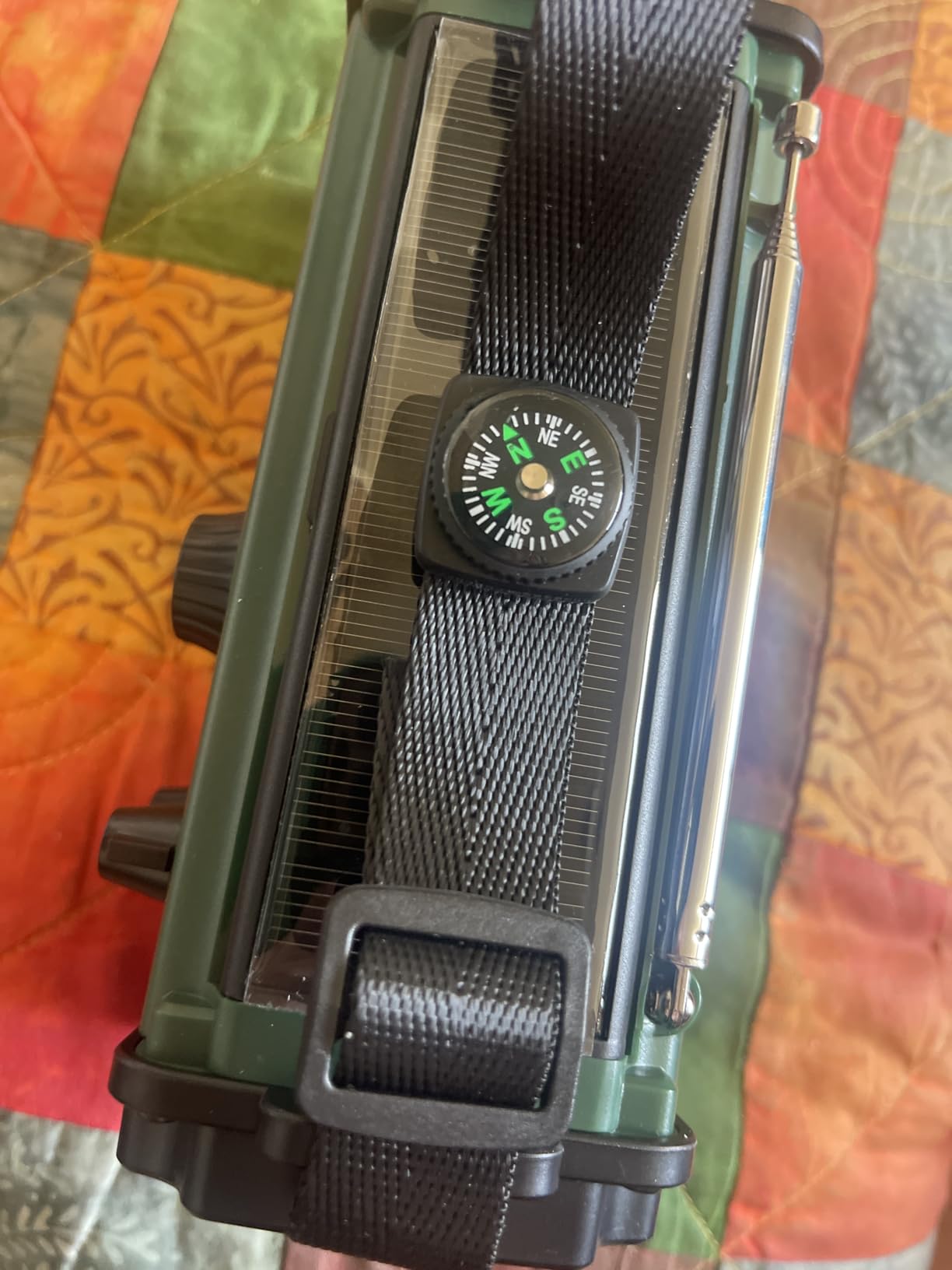
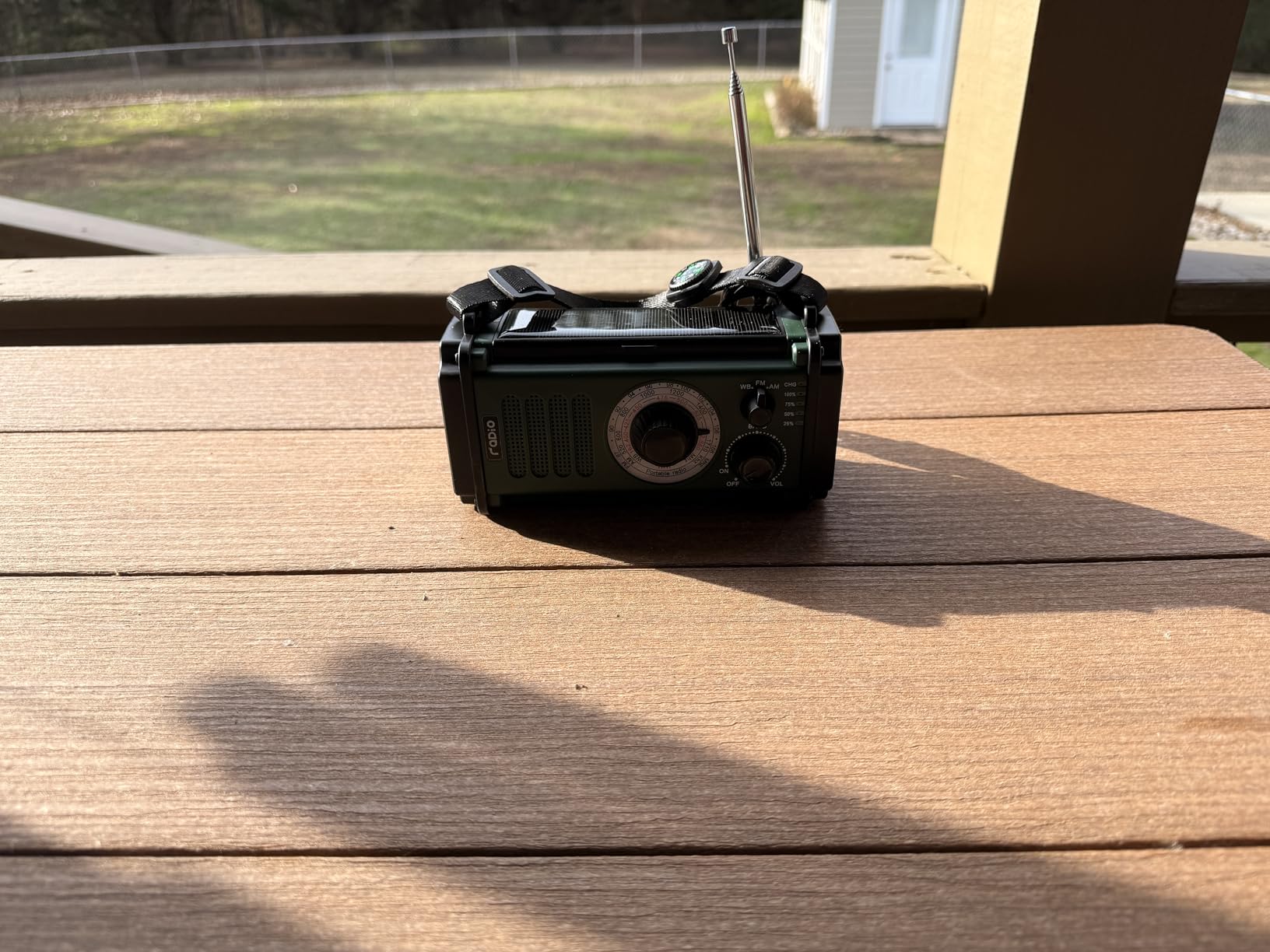
It also charges over USB-C, hand crank, solar panel and AAA batteries, giving four paths. Reviewers say the solar panel and the crank both work and that the unit holds its charge well between uses, which is unusual for a budget radio and counters the scepticism most people bring to small panels.
Sound quality is repeatedly praised as clear for the size, and the extended seven-section antenna improves reception over shorter stub designs. It is frequently bought as a gift for older family members, which is exactly the use case we would put it to.
Why published runtime changes the comparison
A 10000mAh rating on a listing is a claim you cannot verify. A stated 40 hours of flashlight at a known brightness is a claim you can plan around. When two radios carry similar capacity numbers, the one that tells you what it gets out of that capacity is the safer purchase.
What to watch
The most common specific complaint is the frequency lock and scan button feeling loose and fragile. That is a small part doing a disproportionate amount of work, since it is how you find a station, so it is worth testing immediately on arrival and keeping the unit away from damp storage.
Also note that AAA batteries, needed for the fourth power option, are not included. At 1.2 pounds it is portable but not pocket-sized.
11. RunningSnail 091G – Best for Charging Two Devices at Once
22200mWh Emergency Weather Radio with Dual USB Output for Power Outage
22200mWh/6000mAh
Dual USB output
Upgraded DSP reception
Type-C charging
Pros
- Dual USB output is unique in this roundup
- 22200mWh keeps devices alive for days rather than hours
- Upgraded DSP chip and extended antenna for weak-signal areas
- Tied for the highest average rating here
- 18-month warranty and rugged ABS body
Cons
- Laptop charging is possible but capacity falls far short
- for sustained use
- Solar and crank serve as emergency top-ups only
The dual USB output is the reason this radio is in the list. Every other unit here has one port, which means one phone at a time while everyone else in the house watches their battery indicator fall. Two outputs let a couple top up together, or let you keep a phone and a GPS or handheld radio charged from the same pack.
The 22200mWh capacity is the second largest here, and the 4.6 average ties for the highest rating in the roundup. Reviewers respond well to the upgraded DSP chip, which sharpens reception on weak signals, and to the extended telescopic antenna for locking onto NOAA and AM/FM in poor-signal areas.
Type-C charging is the fastest everyday recharge path, alongside the solar panel and hand crank. The 3-mode flashlight, SOS siren, wrist strap and compass round out a genuinely complete feature set, and the ABS body is described as surviving impacts and drops.
Why the output rating is a fair comparison
The listings that most impress on paper are often the least honest, so we look for numbers that can be checked. This one quotes 22200mWh alongside 6000mAh, which is arithmetically consistent at a nominal 3.7 volts. When both numbers agree, the claim is at least internally coherent.
Where the limits are
The listing is compatible with laptops, and we would steer you away from that expectation. You can get a laptop to charge from it, but 6000mAh falls far short of sustaining one, and doing so will empty the pack in a short window.
Solar and crank here are emergency top-ups only, and that is the honest framing to hold for every radio in this category. The 18-month warranty is a modest but real advantage over units with no stated cover.
12. Semmorn SE001 – Best for Fastest Phone Charging
2-in-1 Emergency NOAA Weather Radio,22000mAh Solar Hand Crank Power Bank
22000mAh power bank
20W USB-C output
15W wireless charging
Bluetooth speaker
Pros
- Only unit here with wireless charging at up to 15W
- 20W USB-C fast charging is the highest output in the group
- Bluetooth speaker mode gives it everyday utility
- Combines a weather radio and a 22000mAh power bank
Cons
- No AM band
- with FM and NOAA only
- Smallest review base here at 190 reviews
- Solar and crank are top-ups with output varying by light
- 7 percent one-star share
Every other radio in this roundup charges a phone at a slow trickle over USB-A. The Semmorn does not. Its 20W USB-C output is fast-charge territory, and it is the only one here that also offers 15W wireless charging for compatible handsets, which is why it made the list despite ranking eleventh on review volume.
It also works as a Bluetooth speaker, so it is not purely an emergency device. That matters for a different reason than it seems: a radio that gets used every week is a radio that will be charged, tested and known to work when the day arrives.
Bluetooth is listed among the compatible devices alongside headphones and the SOS flashlight, and the hanging hook lets it go on a tent pole or a bag strap.
Why fast charging matters more than capacity
A big battery that delivers its charge slowly is worse than a smaller one that delivers it quickly, because fast charging means the phone is usable again in minutes rather than hours. In a scenario where a phone is your map, your camera and your only route to help, refill speed is worth more than milliamp hours.
Why we ranked it twelfth
Track record, mainly. At 190 reviews this is the smallest sample in the roundup, and a 4.4 average with a 7 percent one-star share gives us little long-term evidence about durability. We would not want you to discover a failure two days into an outage.
There is also no AM band. FM and NOAA only. And the manufacturer is explicit that solar and crank are for emergency top-ups, with output varying by light and use, which is the honest description of those features on any compact radio.
What Phone Charging Actually Looks Like in Practice
Start with watt-hours, not mAh. Milliamp hours tell you charge count only if you also know the cell voltage, and listings that quote one without the other are the ones worth distrusting. Where both appear, check them against each other: 12000mAh at 3.7 volts is about 44400mWh, and both numbers agreeing is a small signal of an honest listing.
The range across this roundup is enormous. The Tenergy carries 2000mAh, the C. Crane a replaceable 3400mAh, the FosPower 4000mAh, the RunningSnail 6000mAh, the Raynic 5000mAh at 18500mWh, the Rychi 10000mAh at 37000mWh, and the UYEIKMLOP 12000mAh at 44400mWh. The Semmorn claims 22000mAh with no watt-hour figure published, which is the pattern we would check most carefully.
Port type matters more than most buyers expect. A USB-A output is typically a slow trickle, enough to hold a phone alive rather than to charge it. A 20W USB-C output on the Semmorn will refill a modern handset in a fraction of the time, and 15W wireless charging is faster still for compatible phones. If fast phone charging is your priority, that single feature should drive your choice more than the capacity headline.
Then be realistic about the crank. A hand crank is a generator producing current from arm movement, and on a compact unit the output is small. It is genuinely useful for bringing a radio from flat to listening so you can hear an alert, and it is not a phone charger. A stronger generator changes the math, which is why the C. Crane’s 400mA crank is a meaningful specification rather than a marketing line, but even that is minutes of hard cranking for a small gain.
Solar panels on compact radios are usually 2 to 5 watts, and the honest role of that panel is to slow the drain, not to recover a dead battery. Units with larger panels, and the one here with two of them, do a better job. Treat all solar charging in this category as maintenance rather than rescue.
Two devices at once changes the maths entirely, and only the RunningSnail offers dual USB output. For a household where two people need to keep a phone alive rather than one, that is a bigger deal than another 2000mAh on the pack.
When a Power Station Beats an All-in-One Radio
This is the most common objection we saw from real users, and it deserves a straight answer. In preparedness forums, the recurring advice is to skip the all-in-one radio entirely and buy a small portable power station with a matching solar panel instead, on the grounds that it is far more usable. For a multi-day outage, they are not wrong.
A radio’s internal battery is measured in the low thousands of milliamp hours. A portable power station is measured in watt-hours and will run a radio, a lamp and several phone charges for days. If your scenario is a week without grid power and you need to keep more than one device alive, the radio is a small part of the load and the power station is doing the real work.
That is exactly why the hybrid answer is the right one. A radio is unbeatable for immediate alert reception because NOAA and AM/FM stations broadcast on backup power and a radio needs nothing but its own battery to hear them. Pair it with a separate power bank or a power station, and the power station recharges both the radio and the phones over a long outage.
The other thing forums correctly insist on is that a weather radio is a receiver only. It hears NOAA weather broadcasts, it cannot transmit, and it cannot talk to your neighbour. For two-way communication you need an FRS/GMRS handheld or an amateur radio set, and serious users steer toward those rather than toward weather radios. If your plan assumes neighbours will coordinate on handheld transceivers, budget for those separately.
For anyone still comparing portable charging hardware rather than radios, our picks for the best wireless charging stands and for emergency kits for cars cover the rest of the kit. A radio that lives in a car with no charging cable is a radio that will be flat when you need it.
How to Choose the Right Emergency Radio
If you want one radio for a home and a go-bag, buy two different radios. A plug-in home unit with strong overnight alerts and a portable crank unit for leaving the house are two different jobs. Our home picks are the Eton FRX3 for its glow-in-the-dark dial and full NOAA coverage, and the C. Crane for its presets, clock and Bluetooth. Our portable pick is the Raynic, because it carries the largest reviewed capacity at a mainstream tier.
If you want the phone to survive, prioritise output over capacity. The Semmorn charges fastest at 20W over USB-C. The RunningSnail charges two devices at once. Everything else is a slow top-up, and you should buy that expectation rather than the one in the listing photo.
If you are buying for a vehicle, weight and water resistance decide it. The Eton FRX2 is the most compact unit here. The C. Crane is the heaviest at 1.1 pounds and has no water resistance at all, so it is a home radio. The Raynic at 16 ounces with IPX3 splash resistance is a reasonable compromise.
If your scenario involves listening rather than weather, go wideband. The Kaito Voyager Pro is the only seven-band radio in the list, covering longwave and shortwave alongside NOAA. It is a specialist choice with the lowest average rating here, so run it alongside a simpler model rather than instead of one.
If you are on a tight budget, the FosPower A3 is the one. It holds the highest average rating in the roundup, charges over USB-C and carries a limited lifetime warranty. You give up raw capacity and the shortwave band, which is a fair trade for most households.
If you are buying for someone older, pick controls over features. The C. Crane has presets and a sleep timer. The Eton FRX3 has a glow-in-the-dark dial and a clock. The Tenergy is disqualified by its bright green tuned indicator, which is genuinely unpleasant in a dark bedroom. Our guide to the best digital radios for seniors goes further on usable controls.
If you want one alert and nothing else, set your county code. A radio with SAME, or Specific Area Message Encoding, can be locked to your 6-digit FIPS code so it only sounds for your county. Without it, you get every storm within a wide radius and have to judge relevance yourself at 3am. The Raynic, the Kaito and the Eton FRX3 all lack county filtering entirely, which is a real limitation for overnight use.
To program it: find your county on the NOAA or county FIPS lookup, enter the six digits into the radio’s SAME menu, select the event types you want to hear, and store your primary and backup counties. Then test it with the radio’s test alert function before you need it, and confirm you can hear the county seat station, since terrain and metal building materials can block the signal.
On inflated capacity claims, use this rule. Be sceptical of any listing quoting 20000mAh or more with no watt-hour figure and no brand of note. Check whether mAh and mWh are quoted together and whether they agree. Look for a warranty, and look for a review count long enough to judge durability. Every radio in this list that quotes both figures has them consistent, and that is not a coincidence.
Finally, buy one radio per family member rather than one for the house. A single radio in a home where four people need the alert at 5am is a bottleneck. Compact units like the Eton FRX2 exist for exactly this reason, and the extra cost of multiple radios is small against the value of everyone hearing the warning.
Monthly Test and Battery Care Routine
Test the radio once a month, not once a year. The habit that matters is short: switch it on, tune to your local NOAA station, confirm you hear the broadcast clearly, check the battery indicator, and note the date. Five minutes a month is the entire cost of knowing the unit still works.
Run the same test before any season you care about. Hurricane season, tornado season, wildfire season, or the week your family travels, all of them earn a fifteen-minute check that includes the flashlight, the SOS alarm and a phone charge attempt.
Recharge the internal lithium battery every two to three months even if you are not using the radio. Lithium-ion cells slowly lose charge in storage, and a pack that has sat at zero for a year may not recover the way it used to. Plugging it in for an hour on a schedule costs almost nothing and protects the unit’s most failure-prone part.
Do the same for the AA batteries in the fallback compartment, and replace them annually. Alkaline cells stored for months can leak, and electrolyte from a leaking cell inside a sealed radio housing causes damage that no warranty covers.
Keep one spare cable and a small power bank with the radio rather than beside it. The most common emergency scenario that a radio cannot solve is a phone at 2 percent, and a separate power bank in the same drawer removes that problem entirely.
Frequently Asked Questions
Can an emergency radio actually charge my phone?
Yes, but treat it as a top-up rather than a charger. Nearly every radio on our list has a USB output that will keep a phone alive or add a partial charge overnight. Only the Semmorn SE001 offers genuinely fast output, at 20W over USB-C plus 15W wireless charging. For a full refill, a separate power bank or portable power station is the better tool.
Which rechargeable portable radio is considered the best?
The Raynic CR1009Pro is our overall pick, holding the most reviews in the group with a 18500mWh battery, six ways to power it and AM, FM, shortwave and NOAA reception. For a lower-cost option with modern charging, the FosPower A3 carries the highest average rating here and takes a USB-C cable.
What is the best hand crank radio for emergencies?
The Kaito KA500 is the most proven crank radio, with more than 13000 reviews and a replaceable NiMH battery pack. The Raynic CR1009Pro offers more power sources and a larger capacity, while the C. Crane CCRadio Solar has a 400mA generator, several times the output of a typical compact crank.
What is the best radio to use during nuclear war?
No weather radio is designed for that scenario, and claiming otherwise would be dishonest. What matters is independent information and power. The Kaito Voyager Pro offers the widest coverage in our list at seven bands including longwave and shortwave, and the C. Crane adds Bluetooth so you can pull in outside sources. Pair either with a separate power station.
What is the highest rated emergency radio?
Two products tie for the highest average rating in our roundup at 4.6 stars. The FosPower A3 carries that rating across more than 2000 reviews and backs it with a limited lifetime warranty. The RunningSnail 091G matches the rating on a smaller review base and is the only unit here with dual USB output for charging two devices at once.
How often should I test my emergency radio?
Once a month for five minutes is enough: switch it on, tune your local NOAA station, confirm the audio is clear and check the battery indicator. Recharge the internal lithium battery every two to three months even when unused, and replace any stored AA cells annually, because batteries left in a compartment can leak and damage the housing.
Our Verdict
For most households in 2026, the Raynic CR1009Pro is the best emergency radio with phone charging: the largest reviewed capacity at a mainstream tier, six ways to power it, and reception good enough on AM, FM and NOAA for real weather events. Buy the Kaito KA500 if antenna length and shortwave matter to you, and the FosPower A3 if USB-C charging and a lifetime warranty matter more than raw capacity.
Then buy a second, smaller radio for the car or the go-bag, add a real power bank alongside it, and spend ten minutes a month confirming both still work. That combination will handle nearly any outage scenario better than any single radio on this list.