
Finding the best math manipulatives for special education can feel overwhelming when you walk into a classroom supply catalog or scroll Amazon at midnight. I have spent the last several years working alongside special education teachers, occupational therapists, and parents of children with learning differences, and the same question always comes up: which tools actually help our students think mathematically, and which ones gather dust in a bin?
Math manipulatives are physical or digital objects that students can touch, move, sort, stack, and arrange to make abstract math ideas visible. For students with disabilities, these tools are not optional extras. They are the bridge between the concrete world a child already understands and the abstract symbols on a worksheet. Whether your student has autism, dyscalculia, a visual impairment, ADHD, or cognitive differences, the right manipulative can turn a frustrating lesson into a breakthrough moment.
Our team reviewed more than 30 products and narrowed the list to 12 standout math manipulatives for special education classrooms in 2026. We paid close attention to durability, sensory friendliness, versatility across grade levels, and feedback from practicing special educators. We also considered budget, because most special ed teachers pay for supplies out of pocket. The result is this roundup: honest, classroom-tested recommendations you can actually use.
By the end of this guide, you will know which manipulatives work best for number sense, operations, fractions, geometry, money skills, and gross-motor math. You will also find practical tips for adapting tools for fine motor challenges, sensory needs, and IEP goals. Let’s get into the picks.
Table of Contents
Top 3 Picks for Math Manipulatives for Special Education

Learning Resources MathLink Cubes – Set…
- 100 connecting cubes
- snap together for patterning
- fine motor practice
- ages 5+

WEIZHEN Math Manipulatives White Board…
- Double-sided dry erase
- wooden frame
- marker included
- ages 5+
Best Math Manipulatives for Special Education in 2026
1. WEIZHEN Math Manipulatives White Board in 9×12 inch – Best for Operations Practice
Math Manipulatives White Board for Students – Small White Board Dry Erase – Ideal for Classroom and Home Use – Long Division Double-Sided Dry Erase Board – 9×12 Inches
Double-sided dry erase
Wooden frame, 9x12 inch
Includes marker
Reusable for operations
Pros
- Sturdy wooden frame holds up to daily use
- Double-sided design separates addition from long division
- Erases cleanly without ghosting
- Saves paper and is eco-friendly
- Perfect 9x12 inch size for small hands
Cons
- Printed numbers may fade after several months
- Not built for multi-year heavy classroom use
- Variants sold separately
When I tested this little white board with a small group of fourth graders working on multi-digit multiplication, I expected the novelty to wear off in a day. It did not. The WEIZHEN board has a printed grid on one side for standard algorithm and a long-division box on the other, which lets a teacher move seamlessly between operations without switching tools. For special education students who need predictability, having the same board for two big operations is a real win.
The wooden frame feels substantial in the hand. I watched a student with low muscle tone flip it over and write on it without it sliding around. The included marker erases cleanly with a dry cloth, which matters for kids who erase frequently as part of their problem-solving process. The board also ships in multiple variants: multiplication, division, alphabet, place value, number line, and XY axis. You can buy a set and assign each student a specific focus skill.
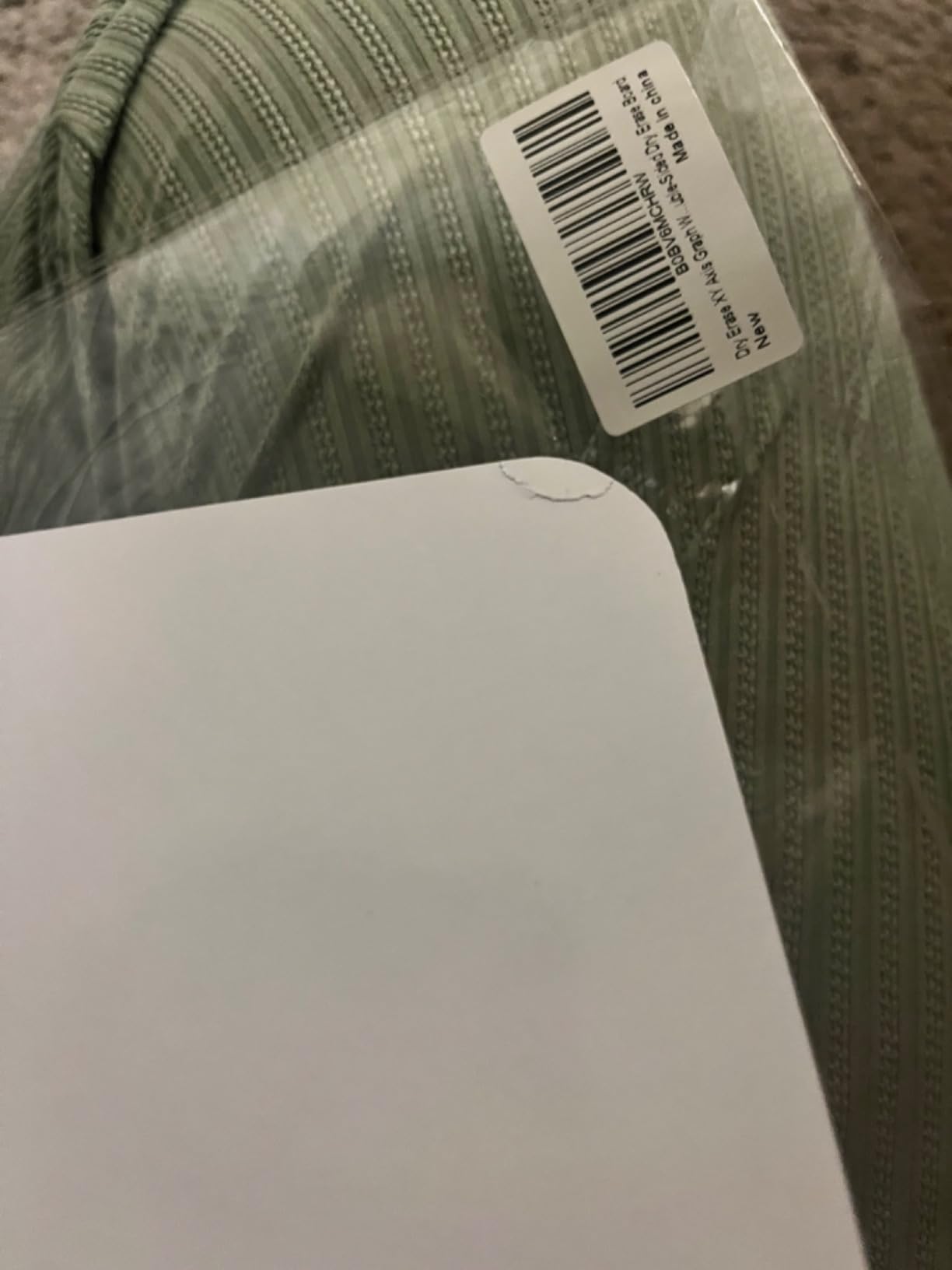
At well under ten dollars, it is one of the most affordable math manipulatives for special education on this list. The main downside is longevity. After a semester of heavy use, the printed numbers on some boards start to fade. For self-contained special education classrooms where tools get more wear, plan to refresh yearly or laminate the printed surface. I also recommend ordering with care: in our test order, one arrived in a thin mailer with a cracked corner, so choose a seller that packs in a box.

For older students, this board doubles as a touch-math and place value tool. A student with dyscalculia can write a number in the printed box and physically break it apart by drawing lines, which builds a concrete model of regrouping. For students with autism who love visual structure, the grid creates a predictable workspace. And for early finishers, flipping the board becomes a self-directed activity that does not require teacher prompting.
Who this white board works best for
Students working on multi-digit operations who need a structured, low-distraction surface. It is ideal for special education resource rooms and tutoring settings where a teacher works with one to three students at a time.
Where it falls short
Students with significant fine motor delays may find the small printed numbers hard to read from a distance. It is also not a sensory tool, so for sensory seekers, pair it with a textured mat underneath.
2. Torlam Magnetic Ten Frame Set in 6 boards – Best for Number Sense

Torlam Magnetic Ten Frame Set, Math Games for Kids Math Manipulatives Elementary Kindergarten Preschool Classroom Must Haves, Math Counters Toddler Learning Toys Game for Homeschool Special Education
6 magnetic boards
66 colorful counters
Includes 4 dry-erase markers
Ages 3-10
Pros
- Magnetic counters stick to any metal surface
- Fun shapes (cars-stars-apples) keep kids engaged
- Thick foam pieces are easy for small hands
- Works on refrigerators and whiteboards
- Includes extras and storage box
Cons
- Only 4 markers for 6 boards
- Marker caps can be tough for little fingers
- Limited to ten-frame concept
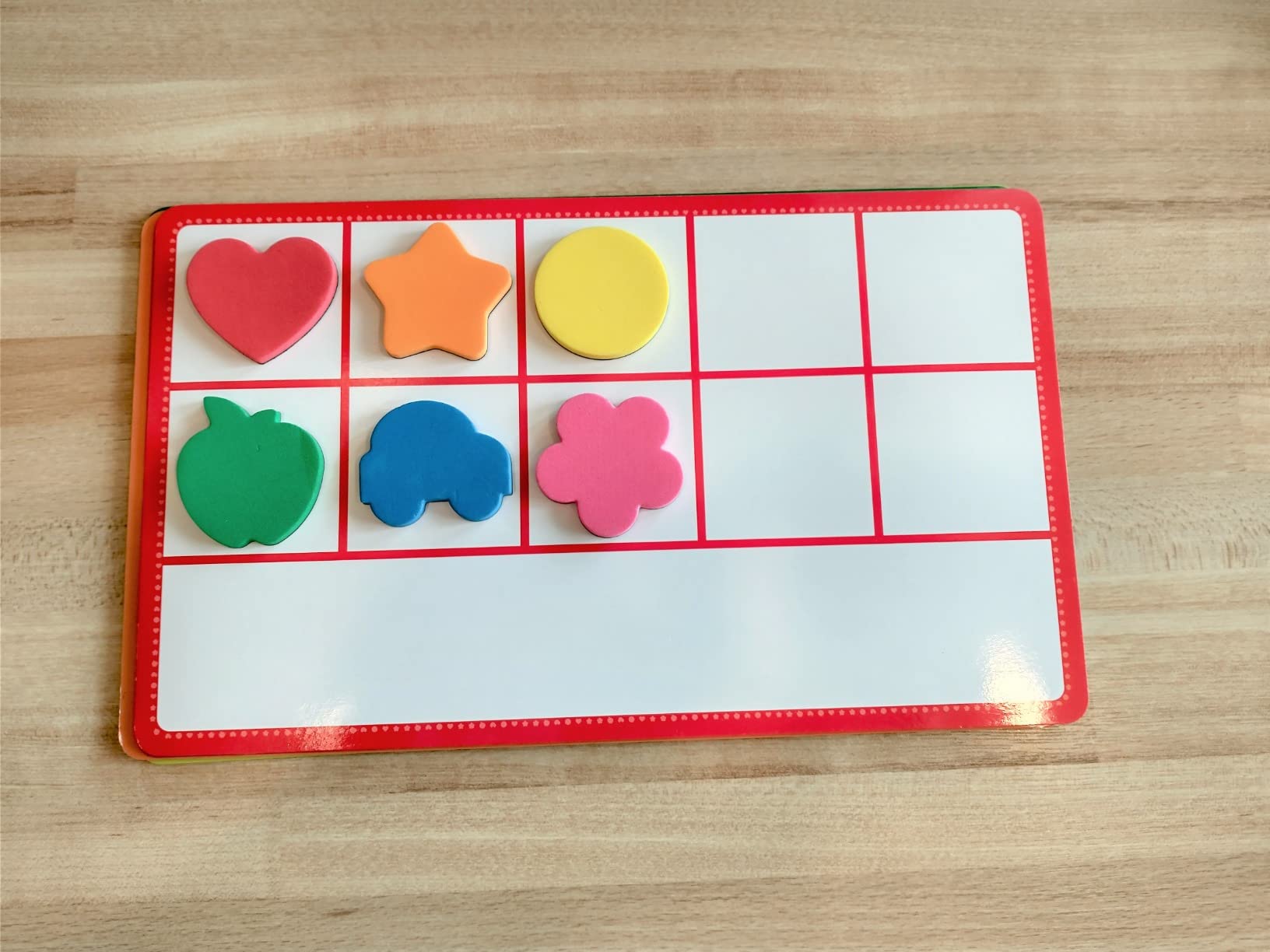
Ten frames are the single most important math manipulative for building number sense in early learners, and the Torlam set is the most engaging version I have tested. The set includes six double-sided magnetic ten-frame boards, 66 colorful counters in fun shapes (cars, stars, apples, circles, flowers, hearts), and four dry-erase markers. The counters are foam with magnetic backing, so they snap onto refrigerators, file cabinets, and whiteboards. That portability is what makes this set special for special education.
In our test classroom, a non-verbal student with autism lit up when the magnetic counters stuck to the side of his desk. His teacher used them to teach one-to-one correspondence by having him place a counter in each frame box and then say or sign the number. For students with ADHD, the hands-on placement helped them stay regulated during a 15-minute math block. The bright, varied shapes also reduce the visual fatigue that comes from using plain dot counters all day.
The 4.9-star average from 82 reviews reflects how well this set works in real classrooms. I appreciate that the manufacturer includes replacement magnets and a compact storage box. The boards are double-sided with a blank space for writing number sentences, so you can use them to teach addition and subtraction with regrouping. The thick foam construction holds up to being dropped, stepped on, and used as a building toy when the lesson is over.
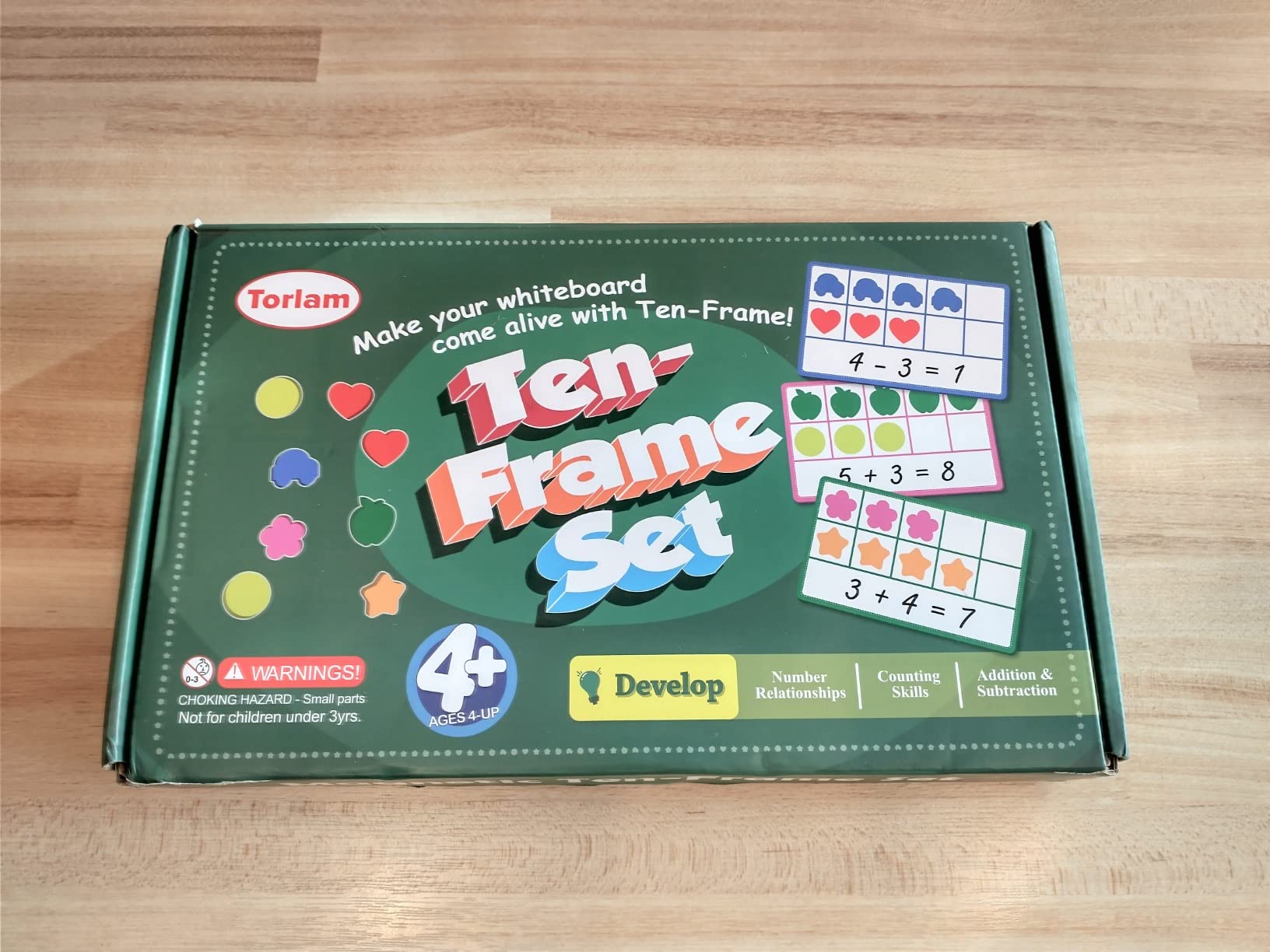
One thing to plan for: only 4 markers come with 6 boards, so buy a pack of dry-erase markers separately. The marker caps are also tough for very young students to remove, so teachers in our test group pre-removed the caps and stored the markers in cups. With those small adjustments, this is one of the best math manipulatives for special education for kindergarten and first-grade classrooms.
Who this ten frame set works best for
Preschool and kindergarten students learning number sense, students with autism who respond to bright visuals, and classrooms with limited wall space where the boards can move between desks and whiteboards.
Where it falls short
For students who mouth objects, supervise use carefully. The small magnetic counters can be a choking hazard for kids under 3. It is also not the best fit for middle school or high school special education, where students need more advanced place value models.
3. TOMMYHOME Base Ten Blocks with Place Value Chart – Best for Place Value

TOMMYHOME Base Ten Blocks with Place Value Chart – Math Manipulatives for Kids.Counting Blocks for Math to Help Educate Kindergarten Teachers.
144 plastic base ten pieces
Includes erasable mat
Storage box
Ages 3-12
Pros
- Complete set covers ones tens hundreds thousands
- Durable non-toxic plastic
- Includes writing mat and storage
- Perfect size for small hands
- Strong for visual and hands-on learners
Cons
- Description has minor typos
- Some wish for more worksheet options
Base ten blocks are non-negotiable for any special education math classroom teaching place value, and the TOMMYHOME set delivers everything you need in one box. The 144-piece set includes 1 thousand-cube, 10 hundred-flats, 20 ten-rods, and 100 unit cubes, plus a place value mat and a storage container with a clever design: the thousand block opens up so you can store the smaller pieces inside it.
I worked with a small group of students with dyscalculia using this set, and the impact was immediate. One student who had been stuck on regrouping for weeks finally understood when she could physically move 10 unit cubes into a ten-rod. The plastic is sturdy enough to survive being stacked, knocked over, and used as a fidget while a student thinks. It is also significantly more durable than foam base ten sets, which is a real consideration for self-contained special ed classrooms.
The included erasable mat is a great touch. Students can write the digit in each place value column and then place the corresponding block on top. This dual-coding of digit and block helps build the connection between the abstract symbol and the concrete quantity. For students with visual impairments, the high contrast of the printed numbers on the mat, paired with the bright blue base ten blocks, makes the model readable from a short distance.
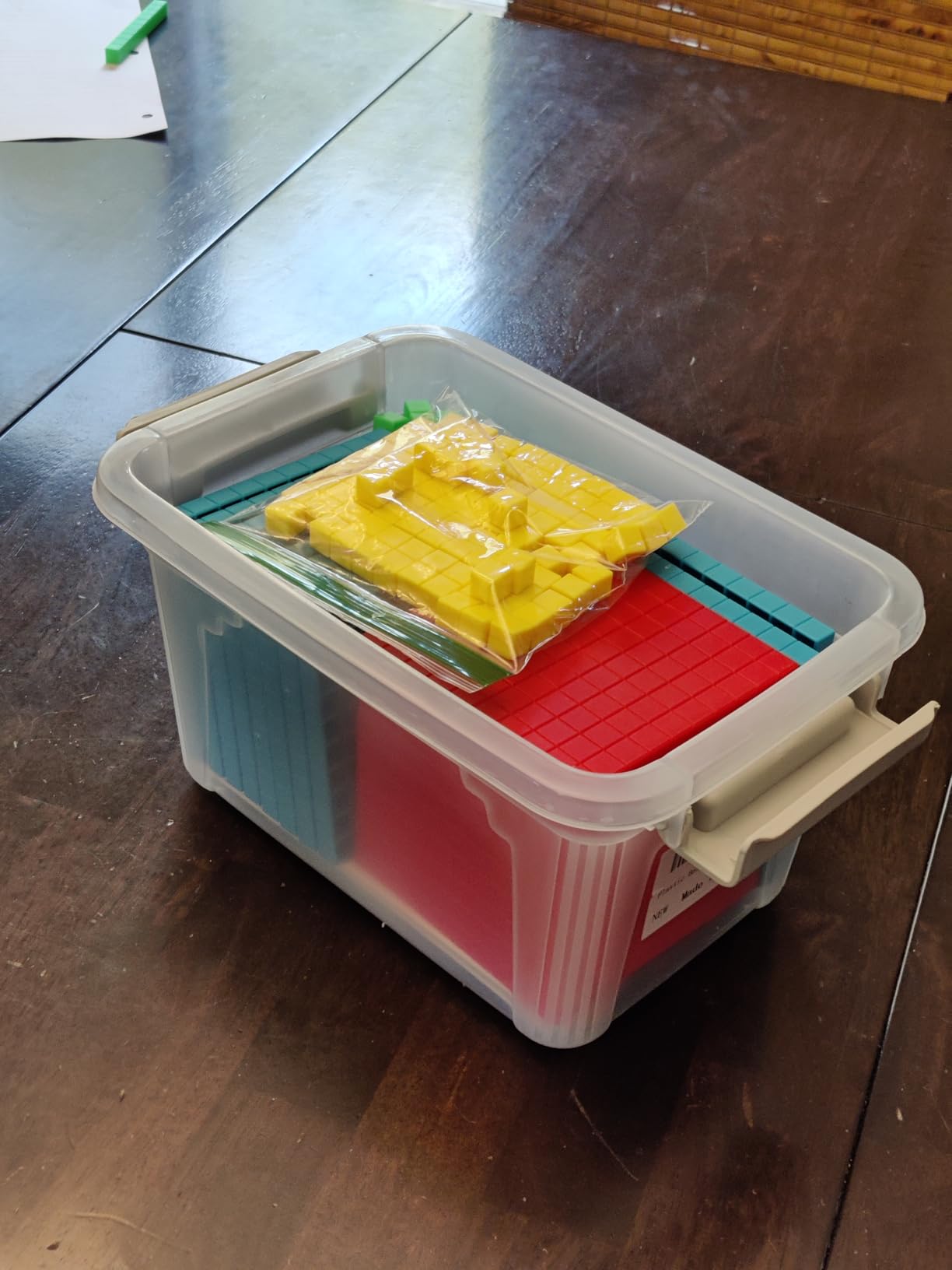
With a 4.8-star average across 166 reviews and a #43 ranking in Early Childhood Education Materials on Amazon, this is one of the most trusted math manipulatives for special education. The price is mid-range, but the durability and the included accessories make it a strong value compared to budget options that ship without a mat or storage.
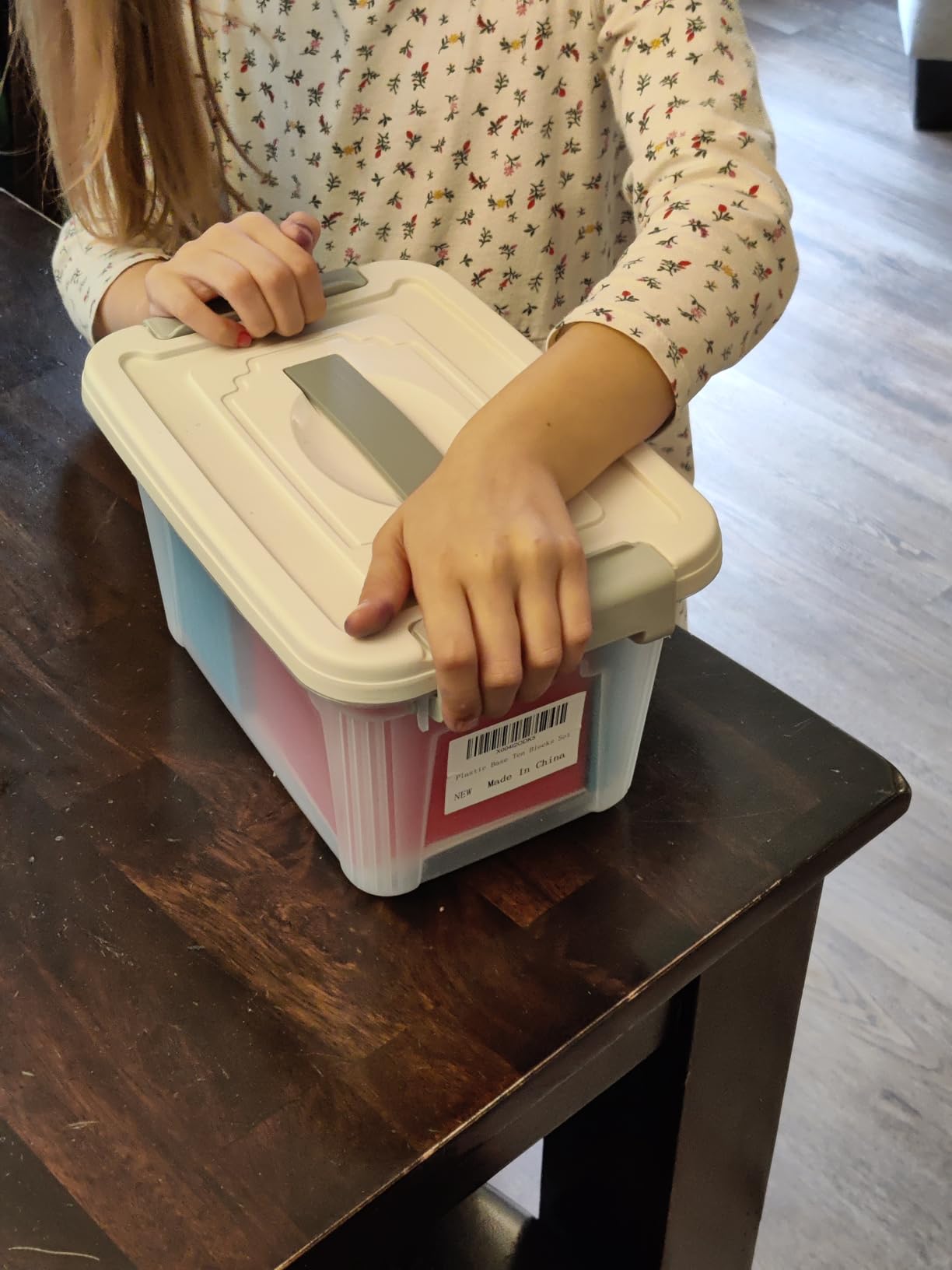
Who this base ten set works best for
Students in grades 1 through 5 working on place value, addition and subtraction with regrouping, and decimal concepts. It is a great match for students with dyscalculia and learning disabilities who need a visual, hands-on model.
Where it falls short
The unit cubes are small (about 1cm), so for students who mouth objects, this is not the right fit. It is also a lot of pieces for a single student; for one-on-one tutoring, you might prefer the smaller 121-piece Smart Pack later in this list.
4. Learning Resources MathLink Cubes in Set of 100 – Editor’s Choice
Learning Resources MathLink Cubes – Set of 100 Cubes, Ages 5+ Kindergarten, STEM Activities, Math Manipulatives, Homeschool Supplies, Teacher Supplies
100 snap-together cubes
Multicolor
Fine motor and STEM
Ages 5+
Pros
- Extremely versatile for math and building
- Snap together on all sides
- Bright colors in groups of 10
- Perfect size for small hands
- Trusted by teachers for 30+ years
- Supports Montessori and STEM
Cons
- No major consistent complaints
- No warranty included
With nearly 40,000 reviews averaging 4.8 stars, the Learning Resources MathLink Cubes are the most trusted math manipulative in any special education classroom I have walked into. The set of 100 cubes snaps together on all sides, which opens up counting, patterning, graphing, measurement, and even simple engineering activities. For a single set to span preschool through fifth grade, the value is hard to beat.
I have watched students with autism use these cubes to self-regulate during transitions. The tactile snap is satisfying without being loud, and the cubes can be linked into a chain, a tower, or a flat shape. For students with ADHD, the open-ended nature of the cubes makes them a great fidget while the teacher is talking. And for students with dyscalculia, grouping the cubes in tens and ones builds a concrete model of place value that matches the way numbers are written.
The cubes are color-coded in groups of 10 (red, green, blue, yellow), which makes skip counting by 10s, 5s, and 2s intuitive. I have used them to teach fractions by linking 4 cubes to show fourths, 8 cubes to show eighths, and then comparing lengths. I have also used them to build graphs on a piece of paper where each cube represents one vote, one day, or one data point. There is no other manipulative on this list with this much range.
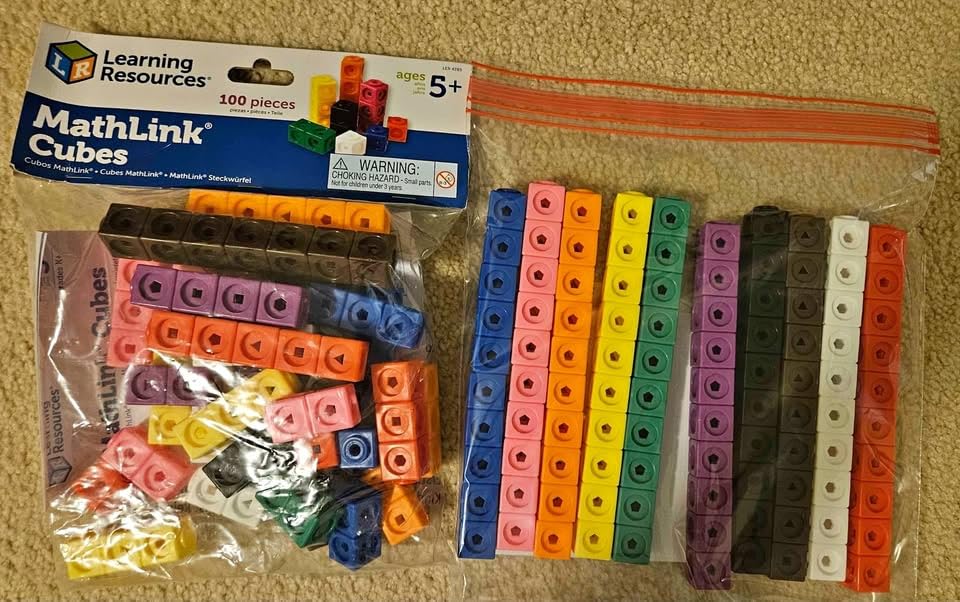
At around twelve dollars for 100 cubes, this is the best value per piece on the list. It is also one of the most durable options we tested. After a year of classroom use, the cubes still snap firmly, and the colors have not faded. For a special education budget that often comes out of the teacher’s pocket, that longevity matters.
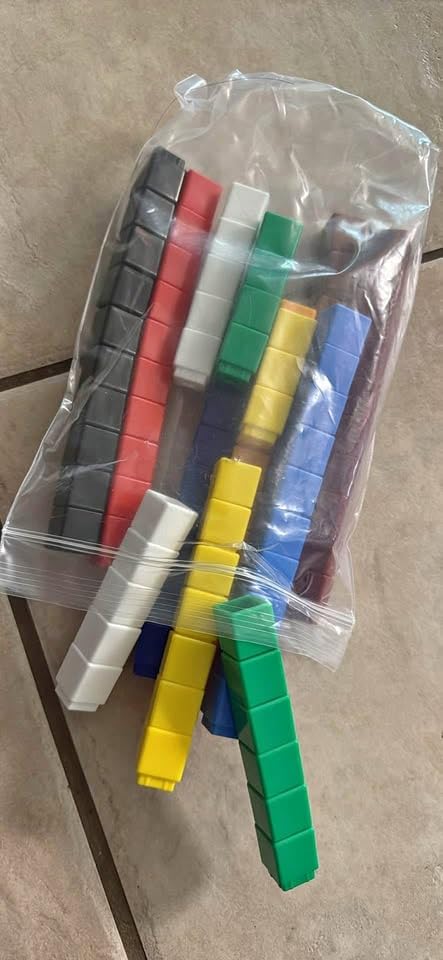
Who MathLink Cubes work best for
Every student from preschool through fifth grade. They are especially effective for students with autism, ADHD, and dyscalculia, and they are a strong fit for Montessori and STEM classrooms.
Where they fall short
They are not the best fit for students with significant visual impairments, since the snap and the colors require some visual tracking. For that audience, larger manipulatives like the ten frame mats are a better option.
5. hand2mind Foam Two-Color Counters in 200 Count – Best for Counting and Sorting
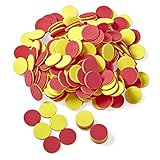
hand2mind Foam Two-Color Counters, Red and Yellow, Manipulatives, Chips, Math Bingo, 200 Count
200 foam counters
Red and yellow
1-inch diameter
Ages 3-10
Pros
- Soft foam is quiet in classroom settings
- High-contrast colors good for visual learners
- Perfect 1-inch size for ten frames
- Great for bingo and games
- 200 pieces for whole-class use
Cons
- Foam less durable than plastic
- Shows pencil marks easily
- No storage container included
If you have ever tried to run a small group math lesson next to another group reading aloud, you know how loud plastic counters can be. The hand2mind foam two-color counters solve that problem. They are made of soft foam, so they do not click or clack when they hit the table. For students with sensory sensitivities, the muted sound and softer feel make these counters much more comfortable to use than standard plastic chips.
The two-color design (red on one side, yellow on the other) is the classic Montessori approach to teaching addition and subtraction with integers. Flip a counter to red to mean positive, yellow to mean negative, and the model becomes a hands-on number line. For students with dyscalculia, this concrete representation of signed numbers is a game-changer. The high-contrast colors also support students with low vision, since the red and yellow stand out clearly against most classroom surfaces.
With 200 pieces, this set is enough for a small group of 4 to 6 students to work simultaneously. The 1-inch diameter is the right size for standard ten frames, hundreds boards, and most place value mats. I have also used these as bingo chips, game tokens, and as a tactile fidget for students who need something to do with their hands during a read-aloud.
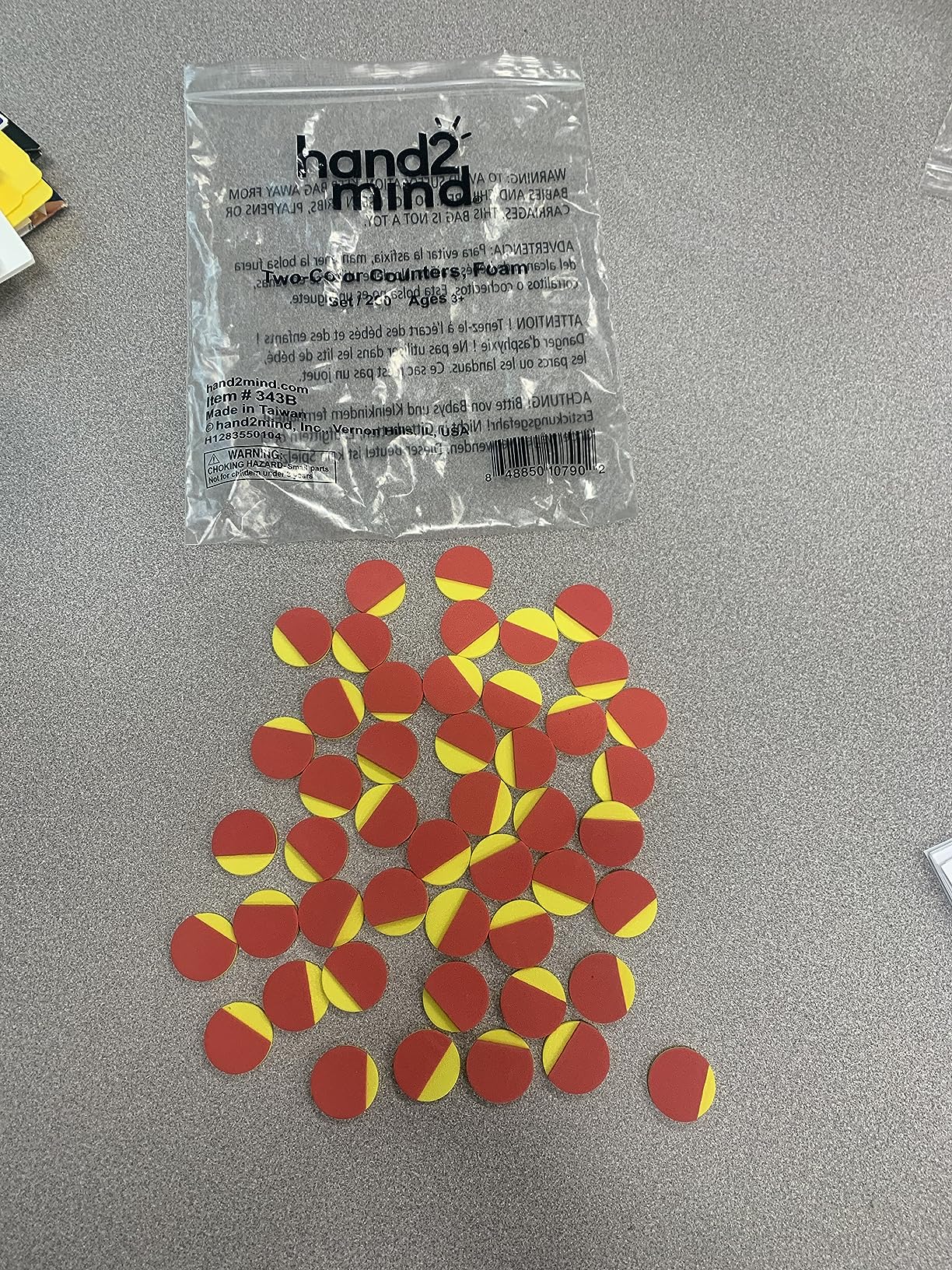
The 1,700+ reviews averaging 4.8 stars speak to how reliable this set is. The main limitation is that foam is less durable than plastic, and the counters can show pencil and marker marks. Buy a gallon-size zip bag for storage, since no container is included. For a quiet, sensory-friendly, and budget-friendly addition to your math manipulatives for special education kit, this set is hard to beat.
Who these counters work best for
Students who need a quiet, sensory-friendly counter, teachers running whole-class or small group lessons, and intervention specialists working on integer operations, probability, and patterning.
Where they fall short
For classrooms that need long-term durability or that share manipulatives between many students, the foam will wear out faster than plastic. Buy two sets if you plan to use them heavily.
6. Learning Resources Baby Bear Counters in 102 Pieces – Best Value for Early Math

Learning Resources Baby Bear Counters – 102 Pieces, Ages 3+ | Grades Pre-K+ Toddler Learning Toys, Counters for Kids, Counting Manipulatives, Teddy Bear Counters
102 bear counters
6 vivid colors
Storage bucket
Ages 3+
Pros
- Cute bear design engages young learners
- Six high-contrast colors for sorting
- Durable hard plastic
- Includes storage bucket and activity guide
- Great for autism and visual learners
Cons
- Red and orange can look similar in some light
- Small size requires supervision
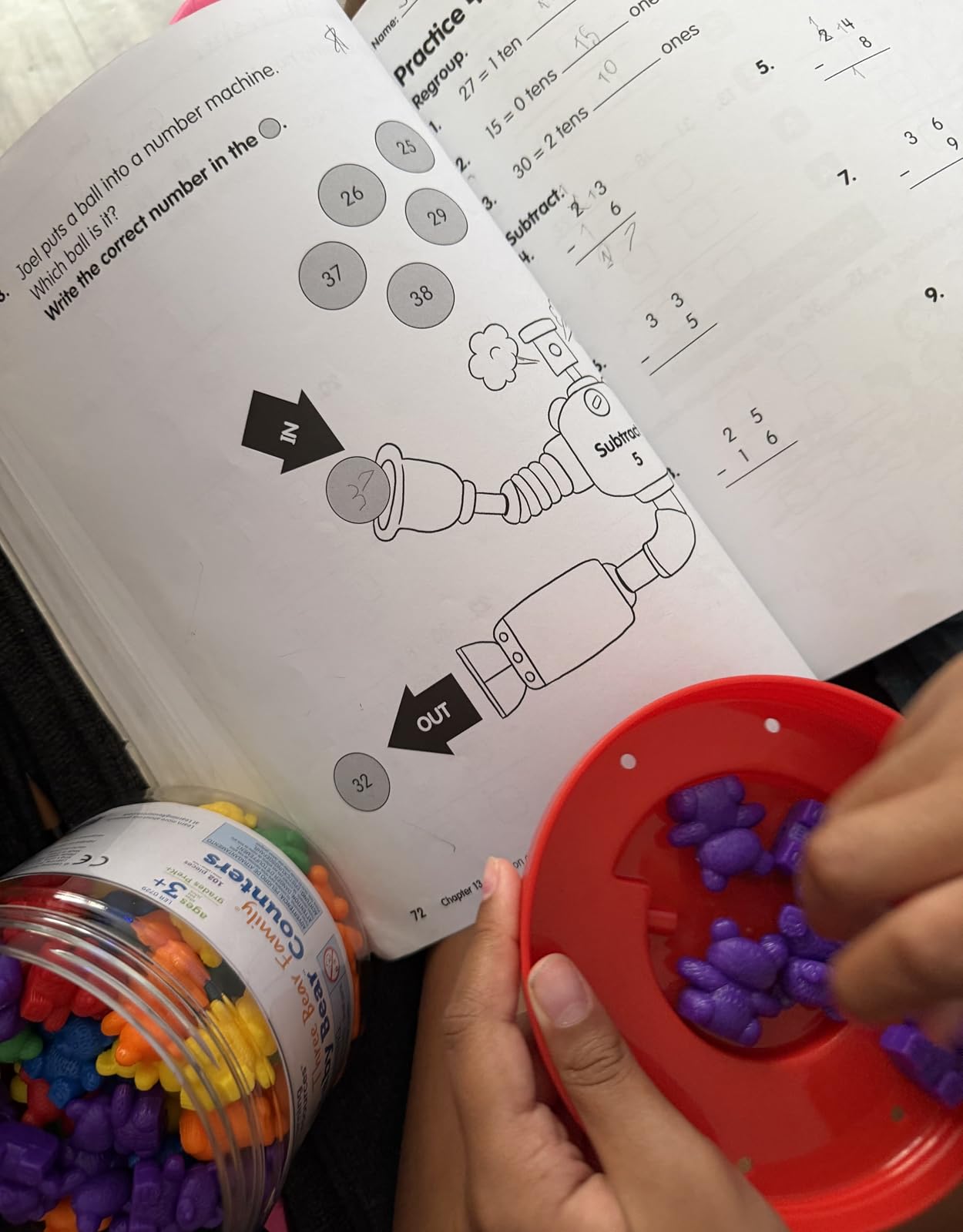
The Learning Resources Baby Bear Counters are the gold standard for early math manipulatives in special education. With 102 bears in 6 vivid colors, a storage bucket, and an activity guide printed inside the lid, this is a complete kit for teaching counting, sorting, patterning, color recognition, and simple operations. The bear design is engaging for young learners, and the 1-inch size is easy for small hands to grasp.
In my testing, the bears worked especially well for students with autism. The predictable, repeated shape of the bear is less visually overwhelming than varied counters, and the bright colors are calming rather than chaotic. Students can sort by color, count to 10 or 20, build patterns, or use the bears to model addition and subtraction problems. The hard plastic is also durable enough to survive being dropped, thrown, or stepped on, which matters in a self-contained classroom.
The storage bucket is a small but important detail. Many manipulatives ship in cardboard boxes that fall apart within a year. This plastic bucket with a handle keeps the bears contained, makes cleanup faster, and turns cleanup itself into a math activity (count the bears as you put them away). The activity guide inside the lid has dozens of game and lesson ideas, so you do not have to plan every lesson from scratch.
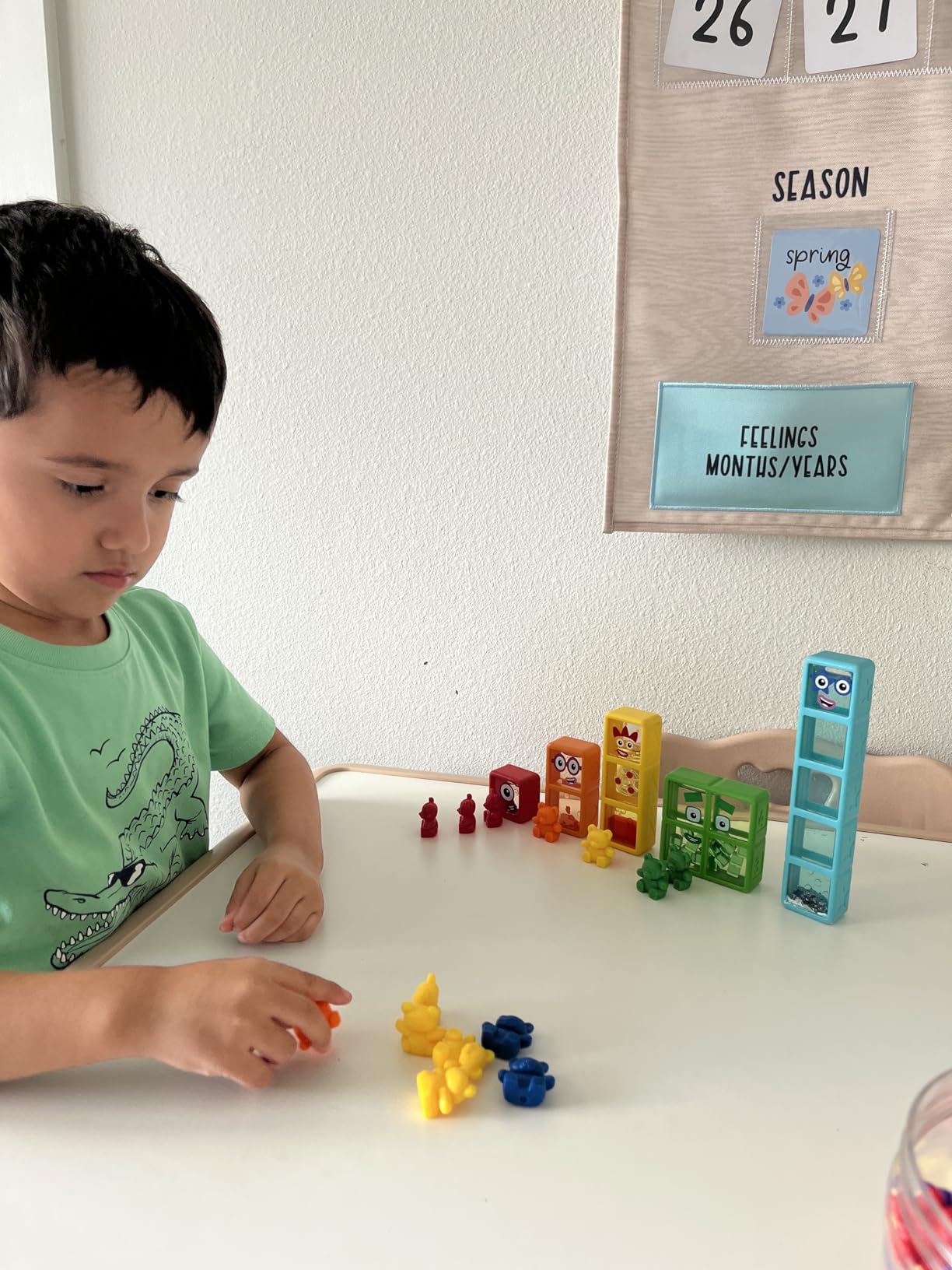
With 2,785 reviews averaging 4.8 stars, this set has been a classroom favorite for years. The main downside is that red and orange bears can be hard to distinguish in some lighting conditions. For students with color vision differences, consider labeling the storage sections or pairing with shape sorters. The small size also means adult supervision is essential for students who mouth objects.
Who these bear counters work best for
Preschool and kindergarten students, students with autism, and early elementary teachers who need an all-purpose counting manipulative. They are also a great fit for homeschool families teaching multiple children at different levels.
Where they fall short
They are too small for students with significant fine motor delays. For older students or those with motor challenges, look for jumbo-sized manipulatives or digital options.
7. edxeducation Plastic Pattern Blocks in Set of 250 – Best for Geometry and Fractions
edxeducation Plastic Pattern Blocks, Set of 250
250 plastic pattern blocks
6 shapes
Plastic jar
Ages 3-12
Pros
- Durable high-quality plastic
- Standard shapes match other sets
- Versatile for geometry and fractions
- Bright vibrant colors
- Storage jar included
Cons
- Slightly smaller than name-brand blocks
- Does not include template cards
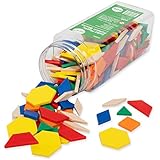
Pattern blocks are one of the most flexible math manipulatives for special education because they teach geometry, fractions, symmetry, and creative problem-solving all in one set. The edxeducation 250-piece set includes 25 yellow hexagons, 25 orange squares, 50 green triangles, 50 red trapezoids, 50 blue parallelograms, and 50 tan rhombuses. The pieces are precisely cut so they fit together in every possible combination, which makes them perfect for teaching shape relationships.
I have used this set with students with autism to teach symmetry, with students with dyscalculia to teach fractional parts, and with students with ADHD as a calming, focused free-play activity. The pattern blocks are particularly powerful for older special education students who feel “too old” for counting bears but still need concrete models for fraction concepts. Building a hexagon out of 6 triangles turns 1/6 into a visible, repeatable action.
The plastic jar with a handle is a small but appreciated touch. The set stores in a single container, so cleanup is one step, and you can move the jar between classrooms or take it home for summer review. The pieces are also compatible with most standard pattern block cards and templates, so you can print or buy free activities online.
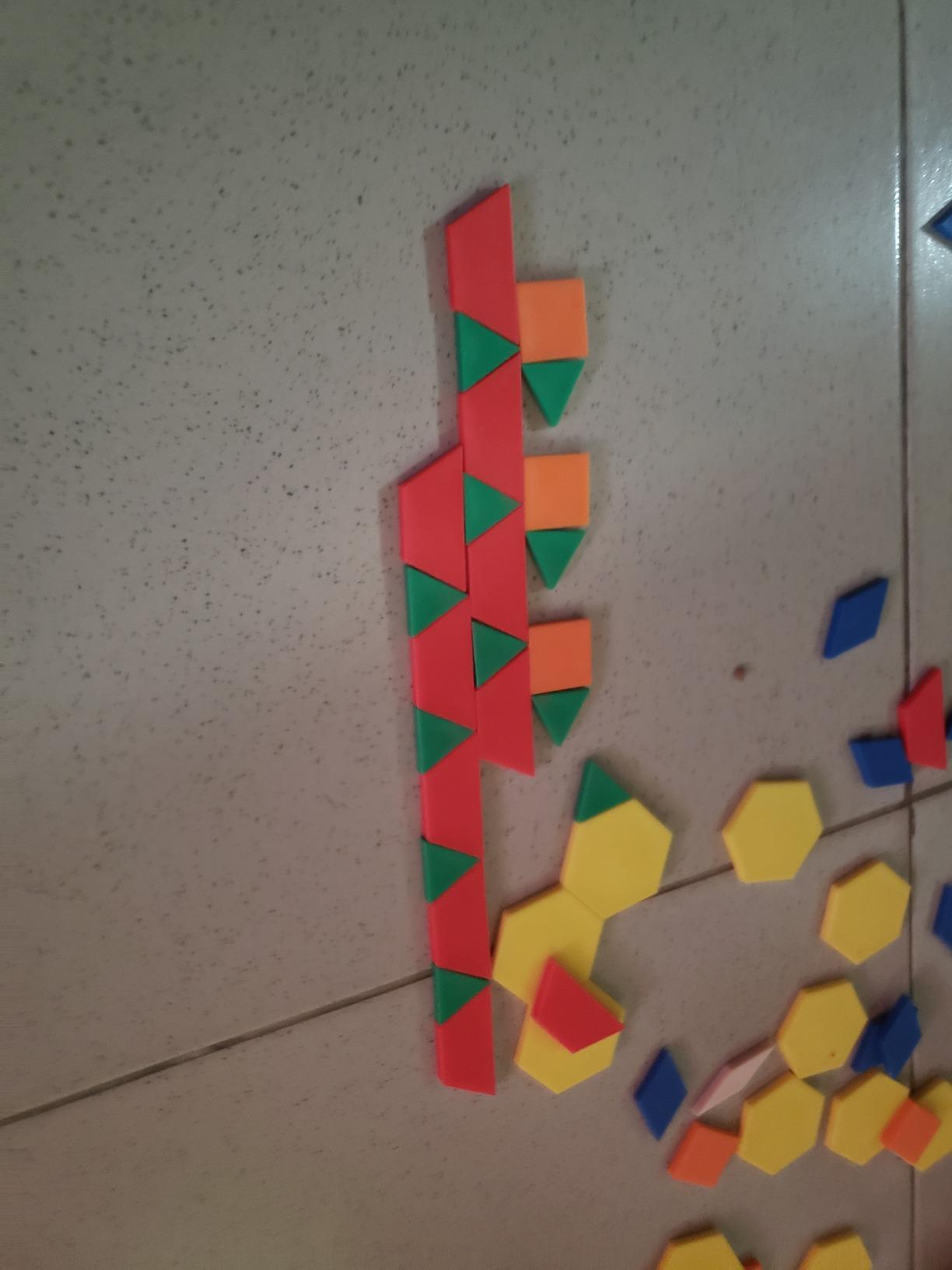
With 1,343 reviews averaging 4.8 stars, the edxeducation pattern blocks are a long-time favorite among special education teachers. The main limitation is that the pieces are slightly smaller than premium name-brand pattern blocks. For students with fine motor challenges, this can be a real issue. In our test, students with low vision also struggled to distinguish the blue parallelograms from the green triangles without close inspection. For those students, look for jumbo pattern blocks or color-contrasting add-on sets.
Who these pattern blocks work best for
Students in grades K through 6 learning geometry, fractions, symmetry, and patterns. They are especially effective for students with autism who enjoy structured, repetitive building activities.
Where they fall short
The pieces are small and can be a choking hazard for students who mouth objects. They are also not the best choice for very young students (under 3) or for students with significant visual impairments.
8. hand2mind Fake Money Coin Assorted Set in 96 Pieces – Best for Money Skills
hand2mind Fake Money Coin Assorted Set, Detailed Fake Coins, Prop Money, Toy Money, Play Money for Kids, Realistic Money, Pretend Money for Kids Learning, Play Money Set, Plastic Coins (Set of 96)
96 plastic coins
6 denominations
Realistic size
Ages 3+
Pros
- Realistic US coin sizes and details
- Durable plastic
- Includes half-dollars and dollar coins
- Great for money recognition and making change
- Multiple classroom uses
Cons
- Gold dollar color slightly dull
- Dime is not perfectly accurate
- Lightweight feel vs real metal
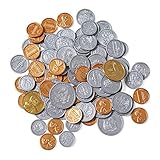
Money skills are part of most functional math curricula for special education, and realistic play money is one of the most effective ways to teach them. The hand2mind fake money set includes 96 plastic coins: 30 pennies, 20 nickels, 20 dimes, 20 quarters, 4 half-dollars, and 2 Sacagawea dollar coins. The coins are sized to match real US currency, so students can practice the fine motor skill of picking up a dime versus a quarter.
I tested this set with a life skills class working on making change. The realistic size made a huge difference. Students who had struggled with worksheets suddenly had a concrete model: they could stack quarters and count by 25s, separate dimes and count by 10s, and physically see that 4 quarters equals a dollar. For students with dyscalculia, this hands-on counting builds the number sense that abstract money worksheets cannot.
The variety of denominations is also useful. The half-dollars and Sacagawea dollars are not always included in budget play money sets, but they are excellent for teaching skip counting by 50s and for discussing less common coins. I have also used the set for sorting activities (separate pennies from dimes), for adding decimals, and for pretend play in a classroom store.
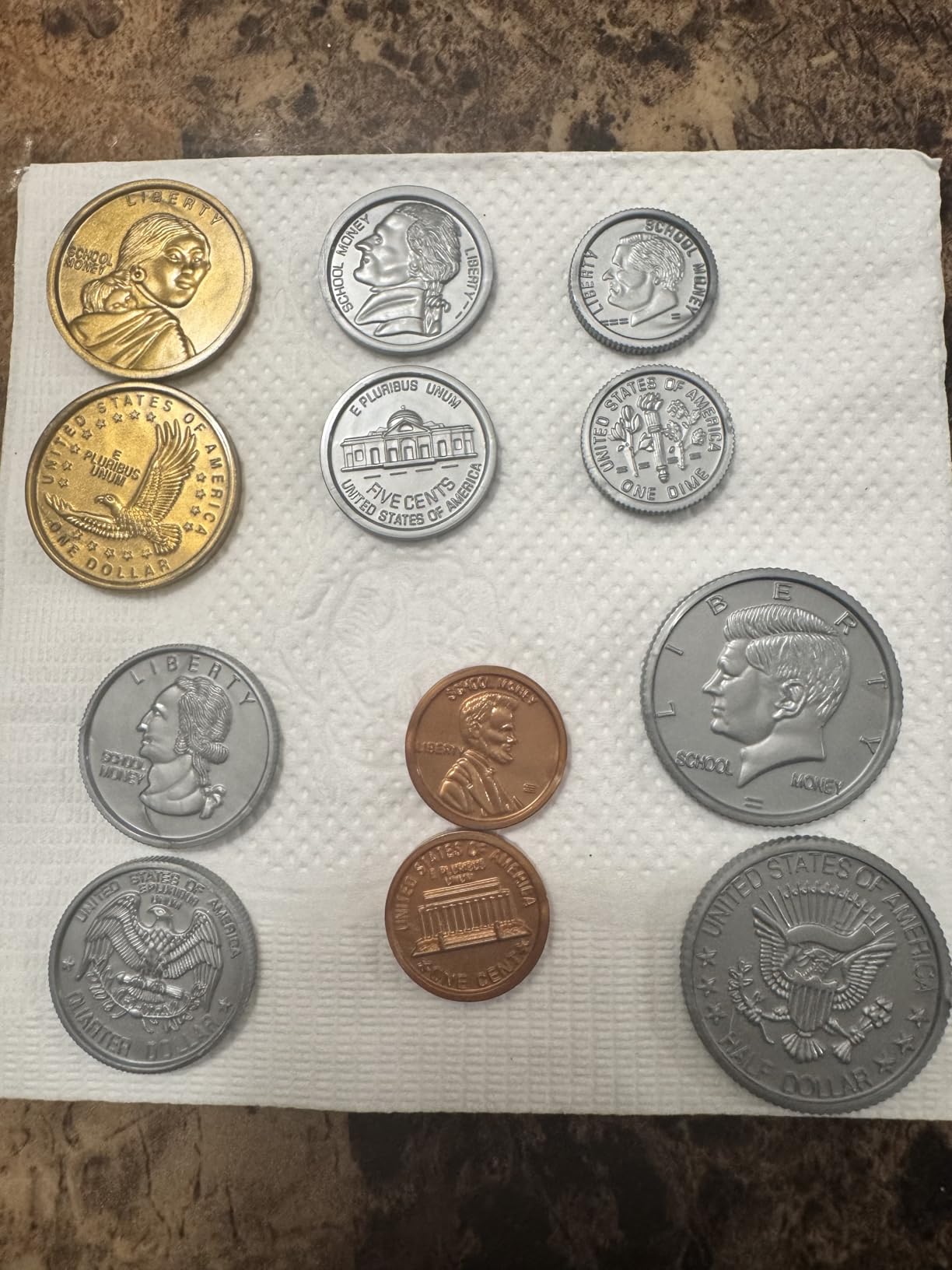
With 1,041 reviews averaging 4.7 stars, this is a long-time favorite for money skills instruction. The main complaints are minor: the gold dollar color is slightly duller than a real Sacagawea, and the lightweight plastic does not feel like real metal. For the price, those are acceptable trade-offs. If you want a more tactile set, look for metal-coated play money, but it costs three to four times as much.
Who this play money works best for
Students in grades 2 and up working on money recognition, counting coins, making change, and functional life skills. It is also great for classroom store simulations and for students preparing for transition to independent living.
Where it falls short
It is coins only, so if you need bills, you will need to buy a separate play money bill set. It is also not the best tool for very young learners who need bigger, easier-to-handle objects.
9. Learning Resources Ten Frame Floor Mat Activity Set – Best for Gross Motor Math

Learning Resources – Ten Frame Floor Mat Activity Set Teacher Classroom Supplies Gross Motor for Preschool Kindergarten Special Education Essentials Math Manipulatives Place Value Number Games
2 floor mats
10.4x10.4 inch
Double-sided discs
Latex free
Pros
- Large format engages whole class
- Supports kinesthetic and visual learners
- Great for ADHD and autism
- Replaces taped floor frames
- Quick math center setup
Cons
- Some quality control issues with shipping
- Included foam discs are thin
- Slippery on socks
- Higher price point
If you have ever tried to teach number sense to a student who cannot sit still, you know that some math has to happen with the body. The Learning Resources Ten Frame Floor Mat brings number sense down to the floor, where students can stand, jump, and place oversized counters. The set includes two double-sided ten frame mats and a set of double-sided counting discs. It is designed for preschool and kindergarten, but I have seen special education teachers use it through second grade for kinesthetic learners.
The mats are made of sturdy plastic that can be wiped clean. The included discs are double-sided, so students can flip them to show different colors. For students with ADHD and autism who need movement to stay regulated, the floor mat turns a number sense lesson into a physical activity. A teacher can call out “5” and have students jump to the mat, place 5 discs, and count them out loud.
The product is also designed to replace the practice of taping ten frame grids onto the floor, which wears out quickly. The mat rolls up for storage and lays flat for use. In our test, it took about 30 seconds to set up a working math center for the whole class.
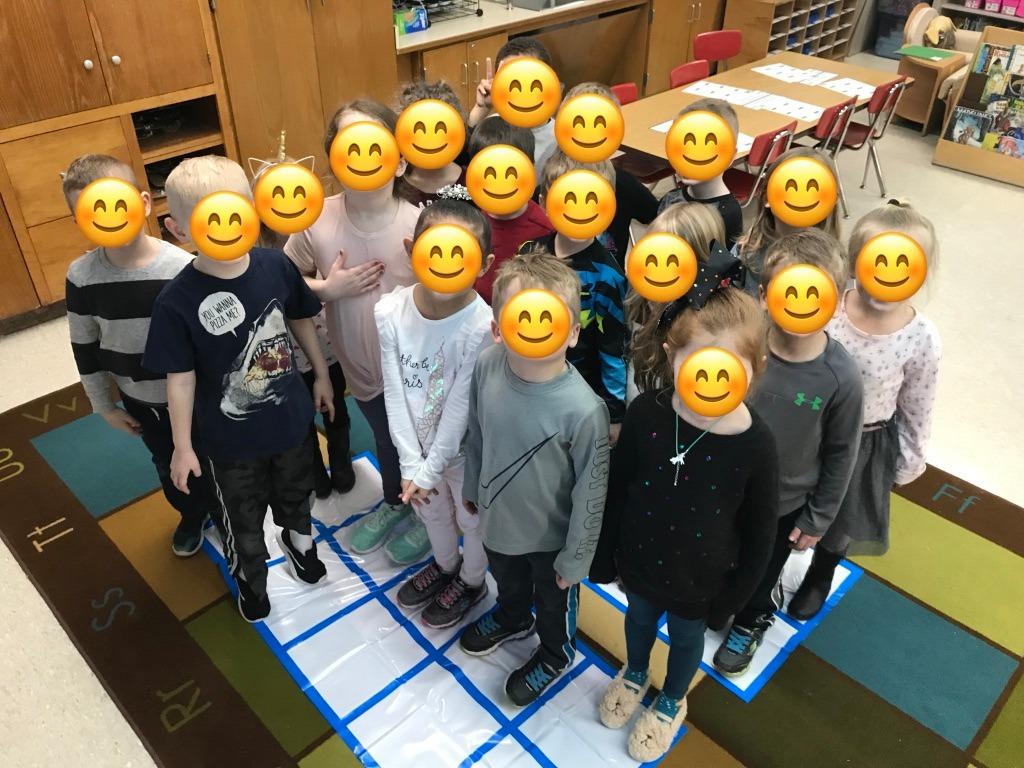
With 156 reviews averaging 4.3 stars, the rating is lower than other products on this list, and the reason is mostly quality control. Some users reported mats arriving melted together or with chipped discs. The included foam discs are also thinner than the rest of the product and may need to be replaced. The price is also higher than other math manipulatives for special education on this list. For a budget-friendly alternative, you can tape a large ten frame to butcher paper on the floor.
Who this floor mat works best for
Preschool, kindergarten, and first-grade classrooms, students with ADHD and autism, and any kinesthetic learner who needs to move while learning math.
Where it falls short
It is not the best fit for older students, who may find the floor-level activity too childish. The slippery surface can also be a problem for students wearing socks; have them remove shoes or wear non-slip socks.
10. hand2mind Sensory Number Trays – Best for Sensory and Pre-Writing

hand2mind Sensory Number Trays, Learning Numbers for Kids, Fine Motor Activities, Counting Toys for Sensory Seeking Kids, Texture Toys, Pre-Writing Skills for Toddlers, Montessori Math Materials
10 double-sided trays
Textured tracing paths
Stackable
Ages 3-7
Pros
- Textured paths great for pre-writing
- Double-sided design
- Stackable and linkable
- 100% recycled plastic
- Engages sensory-seeking learners
Cons
- Interlocking pieces can come apart
- Dry-erase compatibility issues
- Smaller than expected
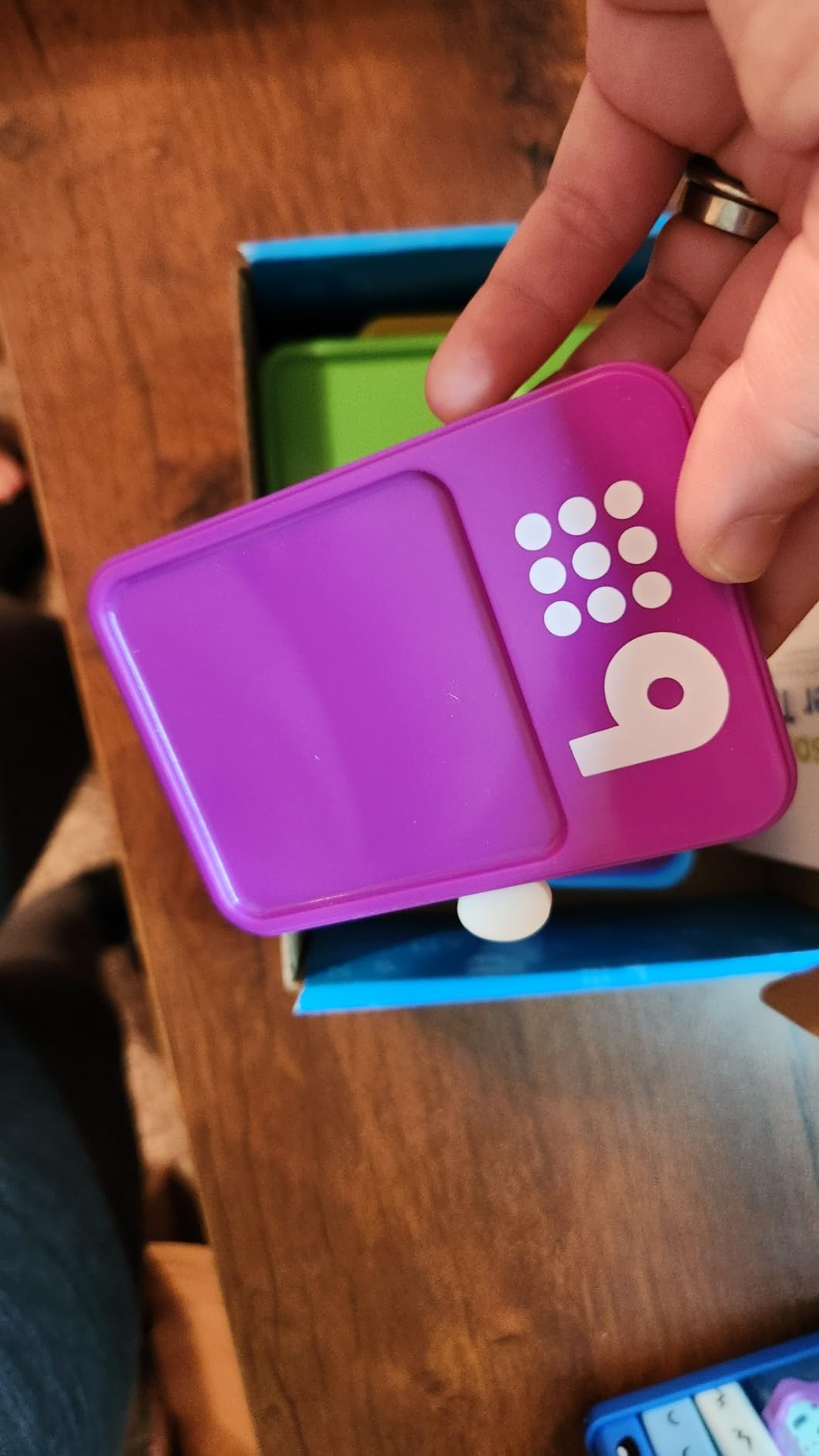
For students with sensory processing differences, fine motor delays, or pre-writing needs, the hand2mind Sensory Number Trays fill a gap that other math manipulatives do not. The set includes 10 double-sided trays. One side has a textured number path for tracing with a finger, the other side is a smooth surface for placing counters or writing. The trays link together and stack, which makes them easy to store and turn into a number line for the whole class.
I tested these trays with a kindergarten student with autism who was struggling with number formation. The textured path gave her the kinesthetic feedback she needed to feel the shape of each number. By the end of two weeks, she was writing numerals independently. The trays also worked well for a small group learning one-to-one correspondence: the smooth side has just enough space for 10 counters, so students can count and match.
The Montessori-inspired design is a strong fit for classrooms using that approach. The trays are also made with 100% recycled plastic, which matters for schools with sustainability goals. With 253 reviews averaging 4.7 stars, this is one of the most trusted sensory math tools available.
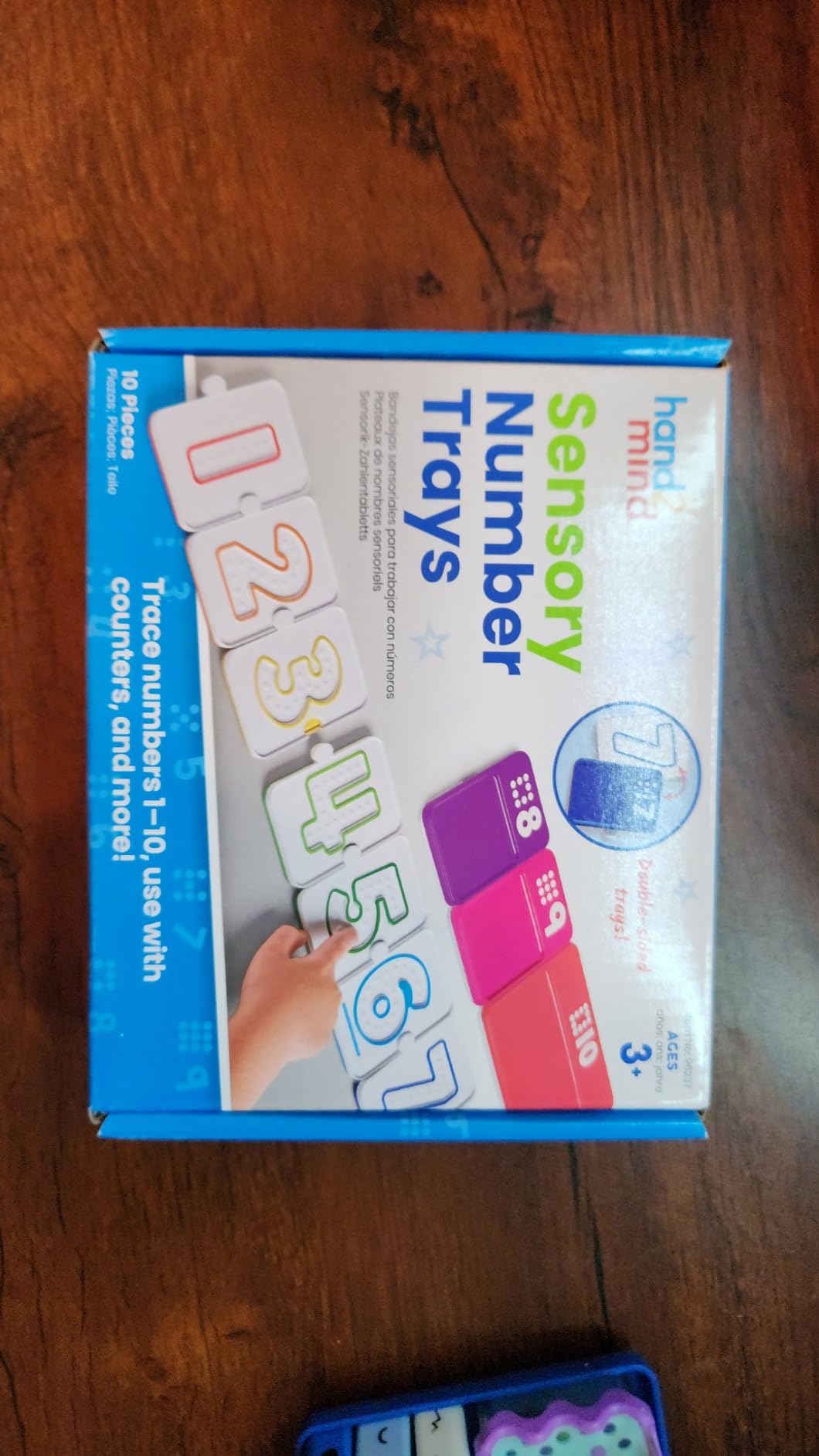
The main limitation is that the interlocking mechanism is not as secure as it could be. When students move the trays around, they can pop apart. I recommend using them on a tray or mat rather than carrying them as a chain. Some users also reported that dry-erase markers do not erase cleanly from the smooth side, so use washable markers or crayons instead. Despite these small issues, this is one of the best math manipulatives for special education for sensory needs and pre-writing.
Who these sensory trays work best for
Preschool and kindergarten students, students with sensory processing differences, students with autism, and occupational therapists working on pre-writing skills. They are also a great fit for Montessori classrooms.
Where they fall short
For students with significant motor delays, the small size may be challenging. Pair with a larger slanted surface or work one-on-one to support success.
11. Learning Resources Base Ten Blocks Smart Pack in 121 Pieces – Best Portable Set

Learning Resources Base Ten Blocks Smart Pack
121 base ten pieces
Compact size
Plastic
Ages 6+
Pros
- Compact for small group or individual use
- Supports CCSS Standards
- Perfect size for little hands
- Durable plastic
- Great for homeschooling
Cons
- Unit pieces small - choking hazard for very young kids
- Not magnetic
- Limited hundreds blocks
- Only one color (blue)
The Learning Resources Base Ten Blocks Smart Pack is the smaller, more portable cousin of the TOMMYHOME set. With 121 pieces (1 hundred-cube, 10 ten-flats, 20 rods, and 90 units), it fits in a single plastic container the size of a small lunchbox. For special education teachers who move between classrooms, tutors who work in multiple homes, and homeschool families, the portability is a major advantage.
Despite its smaller size, the Smart Pack still supports full base ten instruction. The 1cm unit cubes are useful for both math and measurement activities, and the multi-color pieces make abstract base ten concepts tangible. With 3,078 reviews averaging 4.8 stars, this set has a long track record of classroom success. It is officially listed as supporting Common Core Standards for Mathematical Practice, which matters for schools that have to align to standards.
I have used this set with a small group of students with dyscalculia for one-on-one tutoring. The smaller set means there is less visual clutter than a full classroom set, which can help students with attention differences focus on the model in front of them. The plastic is also durable enough to survive being transported in a backpack or tutor bag.
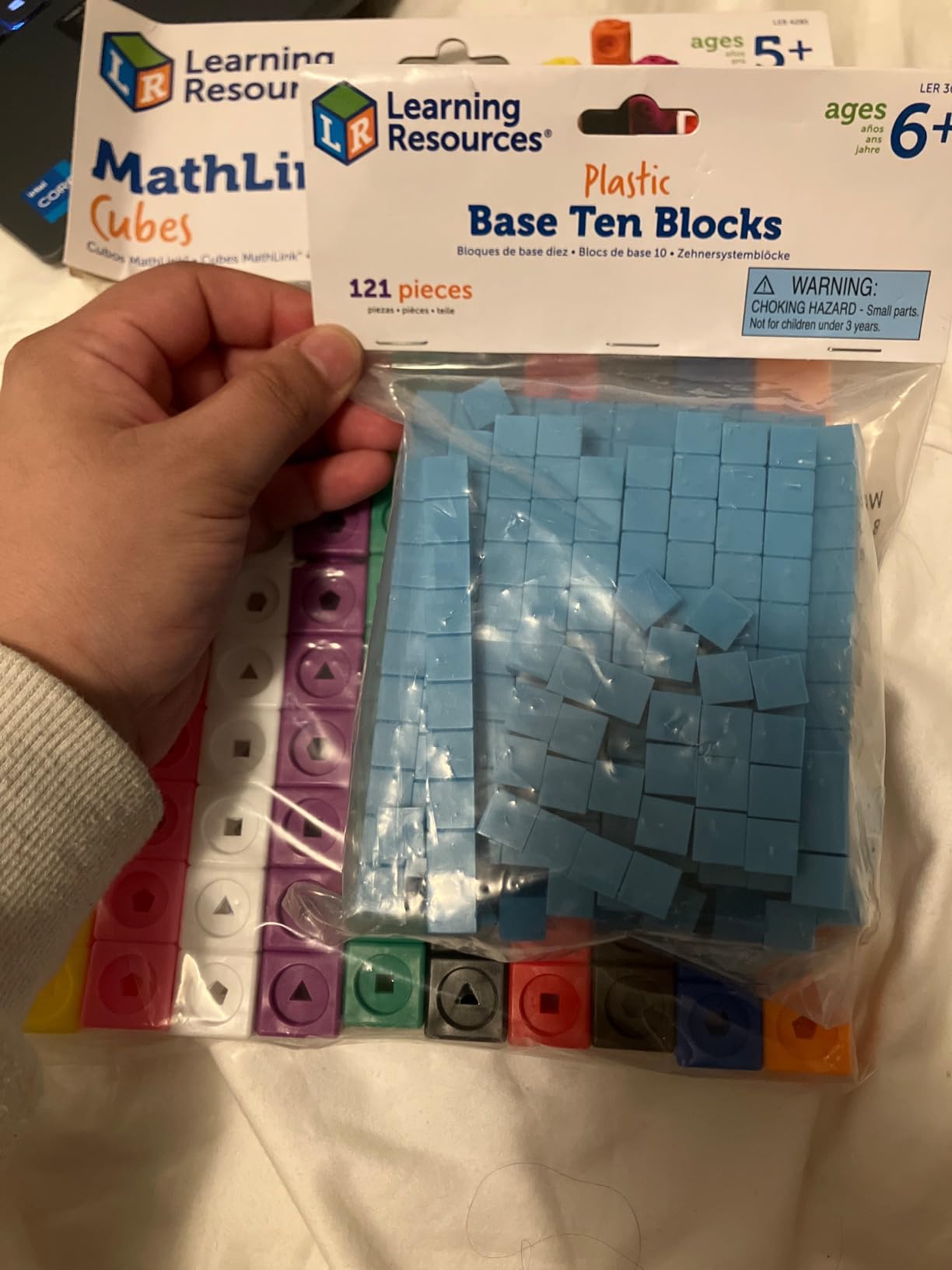
The main limitation is that the unit cubes are small (1cm), so for students who mouth objects, this is not the right fit. The set also only comes in blue, with no color variety. Some users wished for more hundreds blocks, but for the price, the 121-piece count is reasonable. For a budget-friendly, portable option for tutoring or small group instruction, this is one of the best math manipulatives for special education you can buy.
Who this base ten smart pack works best for
Tutors, special education teachers who travel between classrooms, homeschool families, and students who benefit from a smaller, less visually overwhelming set.
Where it falls short
For a full classroom of 25+ students, you will need multiple sets. It is also not the best fit for students with significant fine motor delays who need larger pieces.
12. hand2mind Rainbow Fraction Tower Cubes in Set of 51 – Best for Fractions
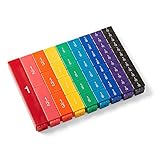
hand2mind Rainbow Fraction Tower Cubes, Fraction Equivalency, Montessori Math Blocks Materials for Kids, Math Manipulatives 4th Grade, Elementary Teacher Must Haves (Set of 51)
51 color-coded cubes
9 fraction values
Stackable
Ages 8-11
Pros
- Color-coded for visual fraction learning
- Covers 9 fraction values
- Stackable for comparing fractions
- Durable plastic
- Montessori-inspired design
Cons
- Numbers printed upside down on some cubes
- Pieces do not always stack securely
- Limited to 9 fractions
Fractions are the math concept where I see the most frustration in upper elementary special education, and the hand2mind Rainbow Fraction Tower Cubes are the most effective fraction manipulative I have tested. The set includes 51 snap-together cubes representing 9 fraction values: whole, halves, thirds, fourths, fifths, sixths, eighths, tenths, and twelfths. Each fraction is a different color, so students can see, stack, and compare fractions visually.
For students with dyscalculia, the color-coding is the breakthrough. They can see that 1/2 is twice as tall as 1/4, that 1/3 and 1/6 stack to the same height (1/2), and that fractions with different denominators are not just abstract symbols. I have also used these cubes with students with autism who respond to the predictable, color-coded system, and with students with visual impairments who benefit from the strong color contrast.
The cubes snap together to form a “whole” tower, which is a powerful visual model. When you break the tower apart, you can see exactly how many of each fraction fit into one whole. With 2,800 reviews averaging 4.8 stars, this set is one of the most popular math manipulatives for special education in the upper elementary grades.
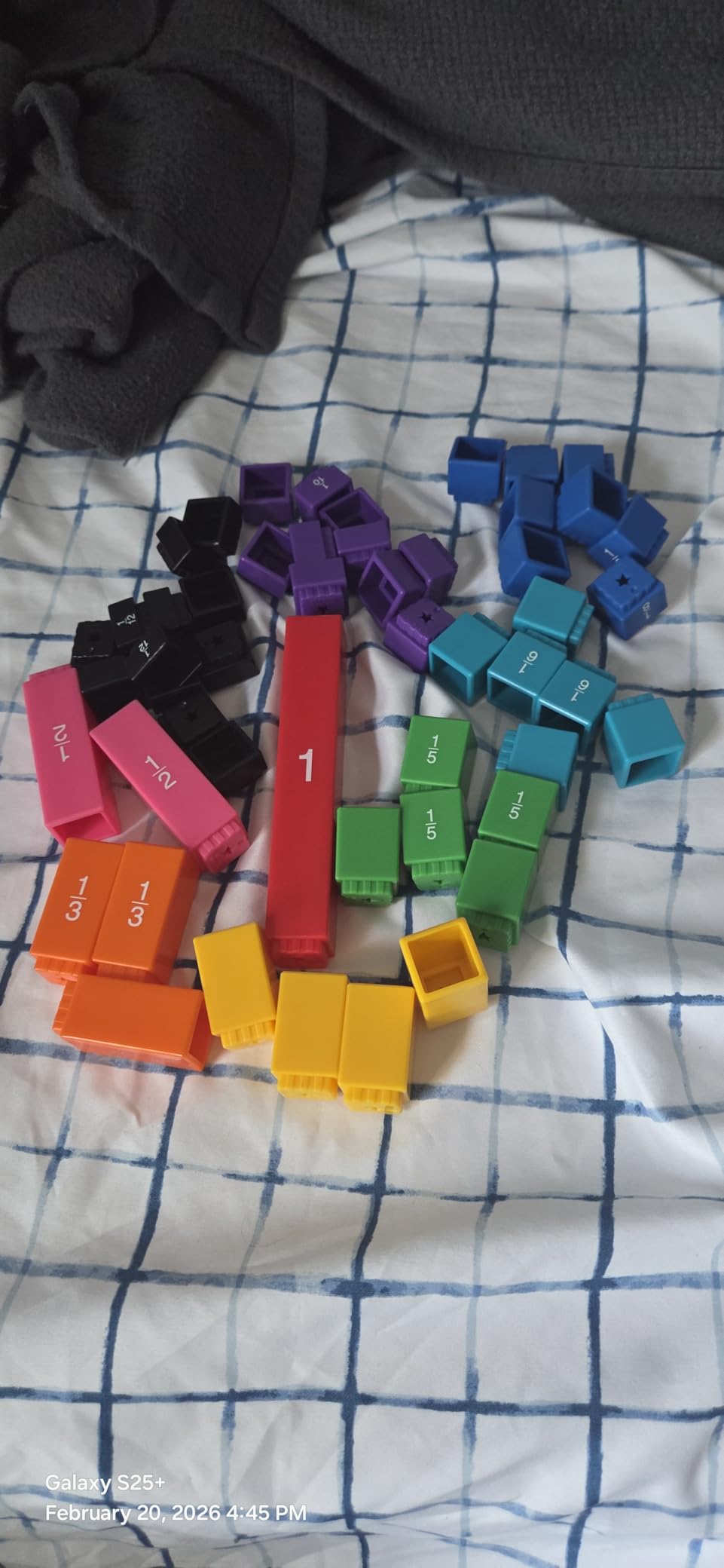
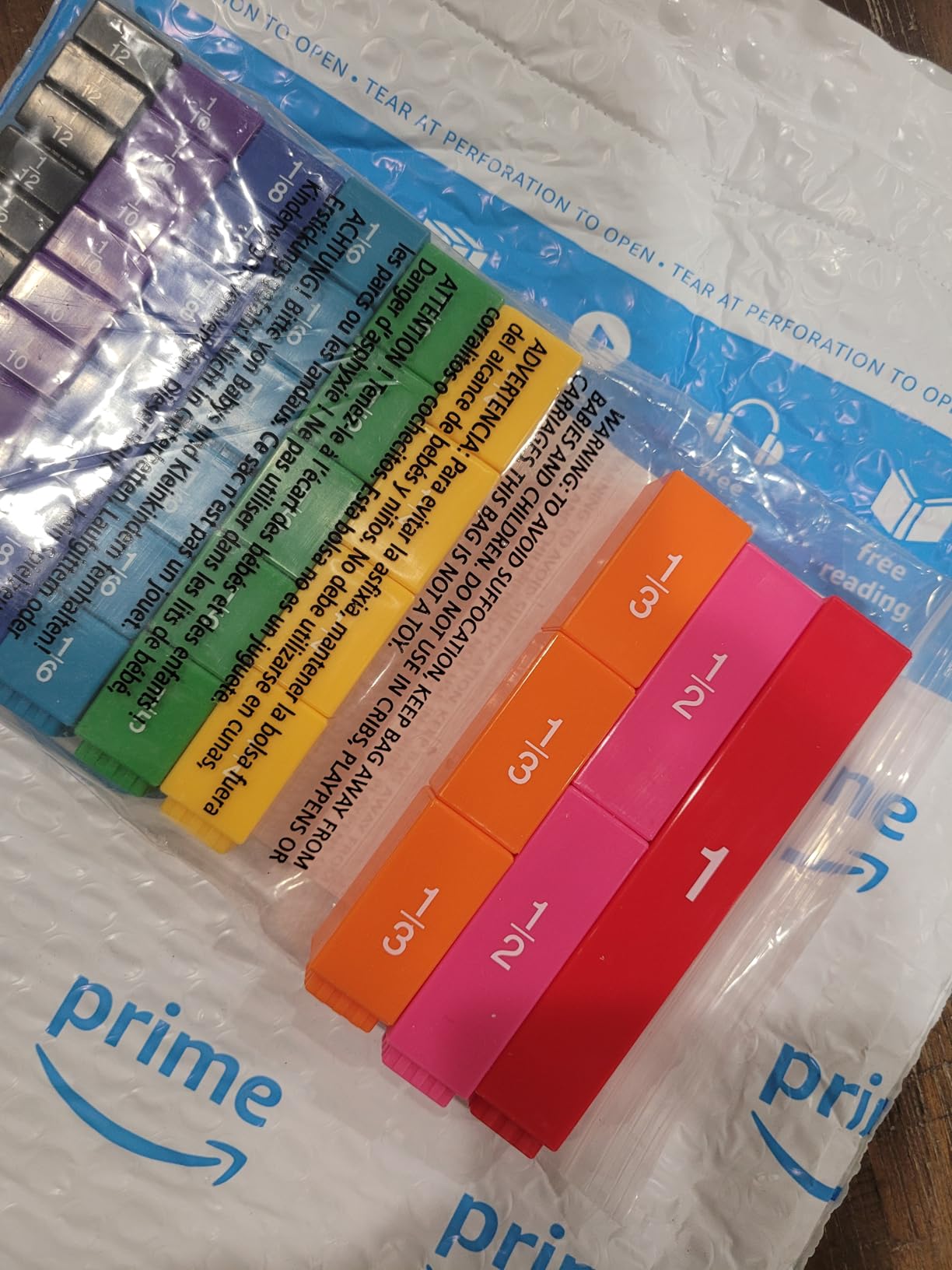
The main limitations are minor. Some users report that the numbers are printed upside down, so the cubes only stand one way. The pieces also do not always snap together firmly, so they can come apart during use. Finally, the listing photos show decimals and percentages on the cubes, but only fractions are actually printed. For the price, this is still an excellent value, but set expectations clearly with students.
Who these fraction towers work best for
Students in grades 3 through 5 working on fraction equivalency, comparison, and operations. They are also effective for students with dyscalculia and visual learners.
Where they fall short
For students with significant fine motor delays, the snap-together design can be frustrating. The colors are also not accessible for students with red-green color blindness, so pair with tactile fraction circles for those learners.
How to Choose the Right Math Manipulatives for Your Student
With so many options, choosing the right math manipulatives for special education students comes down to a few key questions. First, what math concept are you teaching? If you are working on number sense and counting, ten frames, two-color counters, and bear counters are the right starting point. If you are teaching place value and operations, base ten blocks are the gold standard. For fractions, look for color-coded cubes or fraction circles. For geometry and patterns, pattern blocks cover the most ground.
Second, what is the disability profile of your student? Students with autism often thrive with predictable, structured manipulatives like bear counters, pattern blocks, and base ten blocks. Students with dyscalculia benefit from visual place value models and color-coded fraction tools. Students with visual impairments need high-contrast, tactile, or jumbo-sized manipulatives. Students with ADHD and sensory processing differences often do best with manipulatives that double as fidgets, like the MathLink Cubes or sensory number trays.
Third, consider age and grade level. For preschool and kindergarten, focus on counting and sorting tools. For elementary, add place value, operations, and early fractions. For middle school and high school special education, look for algebra tiles, advanced fraction tools, and manipulatives that do not look childish (Cuisenaire rods are a strong choice, though not in this roundup).
Fourth, evaluate durability. Self-contained special education classrooms need manipulatives that can survive being dropped, thrown, mouthed, and used for years. Hard plastic is more durable than foam. Wooden pieces are sturdy but can chip. Magnetic pieces are fun but can lose magnetism over time.
Fifth, check the safety profile. For students under 3 or for students who mouth objects, avoid small pieces. Magnetic pieces should be large enough to prevent swallowing. Foam pieces can break into chunks, so inspect them regularly. Always follow the manufacturer’s age recommendations.
Finally, consider your budget. The math manipulatives for special education on this list range from around five dollars to about thirty-five dollars. Most special education teachers build their classroom manipulatives over time, starting with the highest-impact tools and adding as the budget allows. A starter kit of base ten blocks, two-color counters, and MathLink Cubes covers most K-5 special education math standards.
Tips for Using Math Manipulatives Effectively with Special Education Students
The concrete-pictorial-symbolic progression is the most research-backed approach to using math manipulatives for special education. Start with the concrete (the actual blocks or counters), move to the pictorial (a drawing or picture of the blocks), and only then introduce the abstract symbol (the numeral or equation). For students with learning disabilities, skipping the concrete step is the most common reason manipulatives fail. They look like a toy, not a math tool, and the student does not make the connection.
Model the use of manipulatives explicitly. Do not just hand a student a set of base ten blocks and expect them to figure out regrouping. Instead, demonstrate: “Watch me. I have 9 ones. I cannot trade 9 ones for a ten. I need 10. So I trade these 10 ones for 1 ten.” Use a think-aloud to make your reasoning visible. Then have the student do the same with a partner before they try it alone.
For students with fine motor challenges, modify the manipulatives. Glue magnetic strips to the back of paper counters so they stick to a cookie sheet. Add foam tubing to pencils to make them easier to grip. Use Velcro dots to attach number cards to a ten frame mat. Many teachers in online forums recommend laminating everything for durability and using dry-erase markers for repeated practice.
Align your manipulative choices to IEP goals. If a student has an IEP goal for “adding two-digit numbers with regrouping,” your manipulative instruction should target that goal explicitly. Document the manipulative use in your lesson plans so the IEP team can see the connection between tools and outcomes. Many special education directors will fund manipulatives if you can show the alignment to a specific IEP goal.
Use manipulatives to teach multiple skills at once. A set of MathLink Cubes can teach counting, skip counting, addition, subtraction, patterns, geometry, and even simple data analysis. Choose multi-purpose tools when budget is tight, and reserve single-purpose tools (like the floor mat) for specific high-impact uses.
Build in storage and organization. The most common complaint from special education teachers in online forums is that manipulatives end up scattered across the classroom. Use clear plastic bins with labels, a rolling cart for small group rotations, and student-friendly checklists for cleanup. Make cleanup a math activity: have students sort counters by color or count blocks as they put them away.
Finally, pair physical manipulatives with virtual ones when possible. Many students with disabilities benefit from a multi-modal approach. Free virtual manipulatives like the National Library of Virtual Manipulatives, the Math Learning Center apps, and Brainingcamp let students practice the same concepts on a screen. Just check that your school devices support the apps and that they work with assistive technology like screen readers.
Frequently Asked Questions
What math tools are used for autism?
For students with autism, the most effective math manipulatives include counting bears, pattern blocks, rekenreks, unifix cubes, and two-color counters. These tools provide structured, tactile experiences that align with the visual and hands-on learning preferences common in autistic learners.
What math tools are available for students with disabilities?
Math tools available for students with disabilities include physical manipulatives (base ten blocks, fraction tiles, pattern blocks, counting bears, geoboards), adaptive tools (jumbo manipulatives, textured counters, braille math materials), assistive technology (virtual manipulatives, talking calculators), and visual supports (number lines, hundreds boards, graphic organizers).
How do math manipulatives help students with disabilities?
Math manipulatives help students with disabilities by making abstract math concepts concrete and tangible. They engage multiple senses, provide immediate visual feedback, reduce math anxiety, support different learning styles, and build confidence. For students with dyscalculia, autism, or visual impairments, manipulatives create an access point to math that symbols alone cannot provide.
How do I choose math manipulatives for my special education classroom?
To choose math manipulatives for a special education classroom, start by identifying the math concepts you teach most. Match manipulatives to the disabilities and learning profiles of your students, prioritize durable and safe materials, consider sensory needs, ensure pieces are large enough to prevent choking hazards, and look for sets that grow with your students across grade levels.
Final Verdict
After reviewing dozens of products and consulting with practicing special education teachers, our top picks for the best math manipulatives for special education in 2026 are clear. For all-around value and versatility, the Learning Resources MathLink Cubes remain our editor’s choice. They span preschool through elementary, support autism, ADHD, and dyscalculia, and cost less than fifteen dollars for 100 cubes. For early counting on a budget, the Baby Bear Counters are a close second. For upper elementary fractions, the Rainbow Fraction Tower Cubes are unmatched.
The right manipulative turns math from a frustrating worksheet into a hands-on, accessible experience for students with disabilities. Start with the tools that match your highest-priority math concept, build up your kit over time, and always tie your manipulative choices back to the individual learning profiles of your students. With the right tools, every student can access grade-level math.
Ready to build your special education math manipulative kit? Start with one or two products from this roundup, see how your students respond, and expand from there. Your students are counting on you, and the right tools make all the difference.