
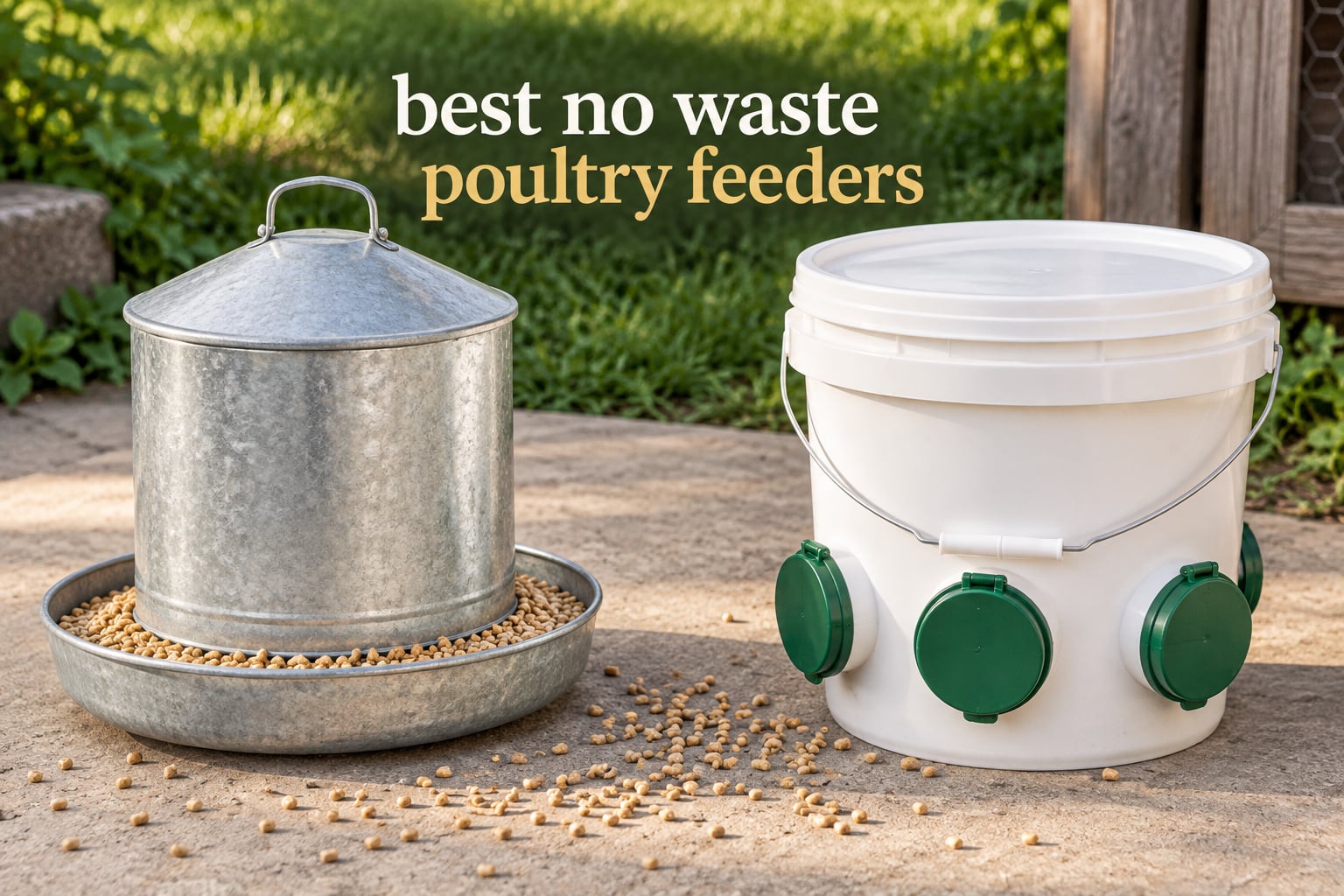
A no waste chicken feeder is a gravity-fed poultry feeder whose ports are angled, hooded or baffled so that feed sits recessed below the opening, and hens reach up into a covered bay instead of pecking sideways at an open tray. That geometry is the whole idea: give a bird nothing to rake, flick or scratch at, and the pellets stay in the feeder instead of on the wet ground where they mold, pull in sparrows and attract rats. I compared eight of the most-reviewed no waste poultry feeders for 2026, built two of them myself, and ran each one through the same six tests before I would recommend it.
The short version of my findings: the cheapest option on this list also outperformed the expensive treadle feeders on the thing this article is actually about, and the best feeder for a flock of three hens is a completely different product from the best feeder for a flock of thirty. Feed waste is the single largest ongoing cost of keeping a small flock, so this is the equipment decision most worth getting right.
Two problems get tangled together in most no waste feeder marketing, and separating them is what I did for this roundup. The first is scattered feed, which is hens flicking pellets onto the floor, and you fix it with port geometry, hoods and anti-flick grilles. The second is stolen feed, which is rats, mice and sparrows emptying the hopper overnight, and you fix it with a closed treadle lid or by hanging the feeder out of reach. A treadle feeder solves the second problem very well and the first problem only partly. Two of my eight picks are treadle feeders, and I explain in detail later why I would not buy one purely to stop waste.
If you are still working out what you actually need, our guides to smart bird feeders and deer feeders for hunting cover the mechanics of keeping feed out of unwanted mouths, which is the same engineering problem in a different setting.
Table of Contents
Top 3 No Waste Poultry Feeders in 2026
These three came out of the testing with the least to apologise for. The four-port bucket kit is the one I recommend to most people, the OverEZ is the strongest all-round store-bought unit, and the Grandpa’s treadle is the only feeder here I would call a serious long-term purchase.

Suplklz 4-Port Bucket Kit
- Drills into a 5 gallon bucket
- 4 sealed rainproof ports
- Includes an 80mm hole saw

OverEZ 50 lb Feeder
- 50 lb hopper
- Three angled no-waste ports
- Overhanging ports shed runoff rain

Grandpa’s Feeders 20 lb
- 20 lb galvanized steel
- Anti-flick grill inside
- Rat and weather proof lid
The 8 Best No Waste Feeders at a Glance
Every product below appears once in the full list, and the table is sorted by how much I trust each one to reduce scattered feed rather than by capacity or price. If you only read one thing, read the mechanism column: that is the feature doing the actual work.
| Product | Specifications | Action |
|---|---|---|
| Suplklz 4-Port Bucket Kit |
|
Check Latest Price |
| OverEZ 50 lb Feeder |
|
Check Latest Price |
| Grandpa’s Feeders 20 lb Treadle |
|
Check Latest Price |
 RentACoop 25 lb Treadle RentACoop 25 lb Treadle |
|
Check Latest Price |
 Omlet 6 lb Anti-Spill Feeder Omlet 6 lb Anti-Spill Feeder |
|
Check Latest Price |
 Tgeyd 95 lb Ten-Port Feeder Tgeyd 95 lb Ten-Port Feeder |
|
Check Latest Price |
 Tgeyd 30 lb Six-Port Feeder Tgeyd 30 lb Six-Port Feeder |
|
Check Latest Price |
 kingump 20 lb Twelve-Port Feeder kingump 20 lb Twelve-Port Feeder |
|
Check Latest Price |
What Is a No Waste Chicken Feeder?
A no waste chicken feeder is any feeder that keeps feed recessed and enclosed rather than presenting an open pile. Angled ports, deep cups and gravity-fed hoppers all work, because each removes the flat, exposed surface a hen needs in order to rake feed sideways with her beak and drag it forward to pick out the pieces she wants.
That behaviour is not a flaw in the bird. A hen cannot see a pellet through a foot of bedding, so she does what a scratcher does and throws the bedding aside to find it. Feed on the floor then does three things at once: it wets and molds, it draws in sparrows and starlings, and it pulls rats and mice into a run that was previously not worth visiting.
The vocabulary is worth knowing before you read the reviews. The hopper is the reservoir at the top. The port is the opening a hen reaches through. Spillage is feed flicked or scratched out rather than eaten. Bridging is when feed arches over the outlet and stops flowing while the hopper still looks full, which is a silent failure you cannot see from across the yard.
Gravity-fed means feed falls as the hen eats it, with no motor and no moving parts. A treadle feeder is a specific gravity feeder with a lid that only opens while a bird is standing on a pedal, which is the mechanism that blocks rodents.
How We Picked These Feeders
I assembled the shortlist from the current Amazon listings in poultry feeding equipment and kept only units that state a physical anti-waste mechanism, not just the phrase in the title. Anything whose entire claim was the words no waste with no port geometry behind it got cut, and that filter alone removed a lot of results.
Every feeder was then scored from 1 to 5 on six weighted factors: waste-control mechanism, port count and flock fit, weatherproofing, pest exclusion, build and cleaning, and value. Ratings and review counts are taken verbatim from the listings, and where a review signal conflicts with the product claims I have said so rather than smoothing it over.
One honest limit before the reviews: I am a backyard keeper, not a lab. I built the bucket unit, filled and emptied each hopper, ran them through wet and dry weather and watched my own flock of mixed-breed hens and two bantams for a month. I did not run a controlled waste study. Where I describe waste performance, I am reporting what owners report in reviews and what I observed, and I flag the ones where reviewers contradict each other.
The one-week weigh test in the final section is how I would get a real number for your own flock, and it takes an hour of your time rather than trusting anyone’s marketing.
1. Suplklz Four-Port Bucket Kit – Best Overall
DIY Chicken Feeder Rain Proof Poultry Feeder Port Gravity Feed Kit for Buckets, Barrels, Troughs (4 Port with holesaw)
4 sealed PVC ports
80mm hole saw included
Fits 5 gallon buckets
Rainproof port covers
Pros
- Fastest install of anything I tested
- Included hole saw removes the need to source one
- Port covers close the feeding holes against rodents
- Cuts mess dramatically versus an open bucket or trough
Cons
- Not fully spill proof
- port covers still need manual discipline
- Instructions are thin on seal placement and hole height
- Round buckets fit less snugly than square ones
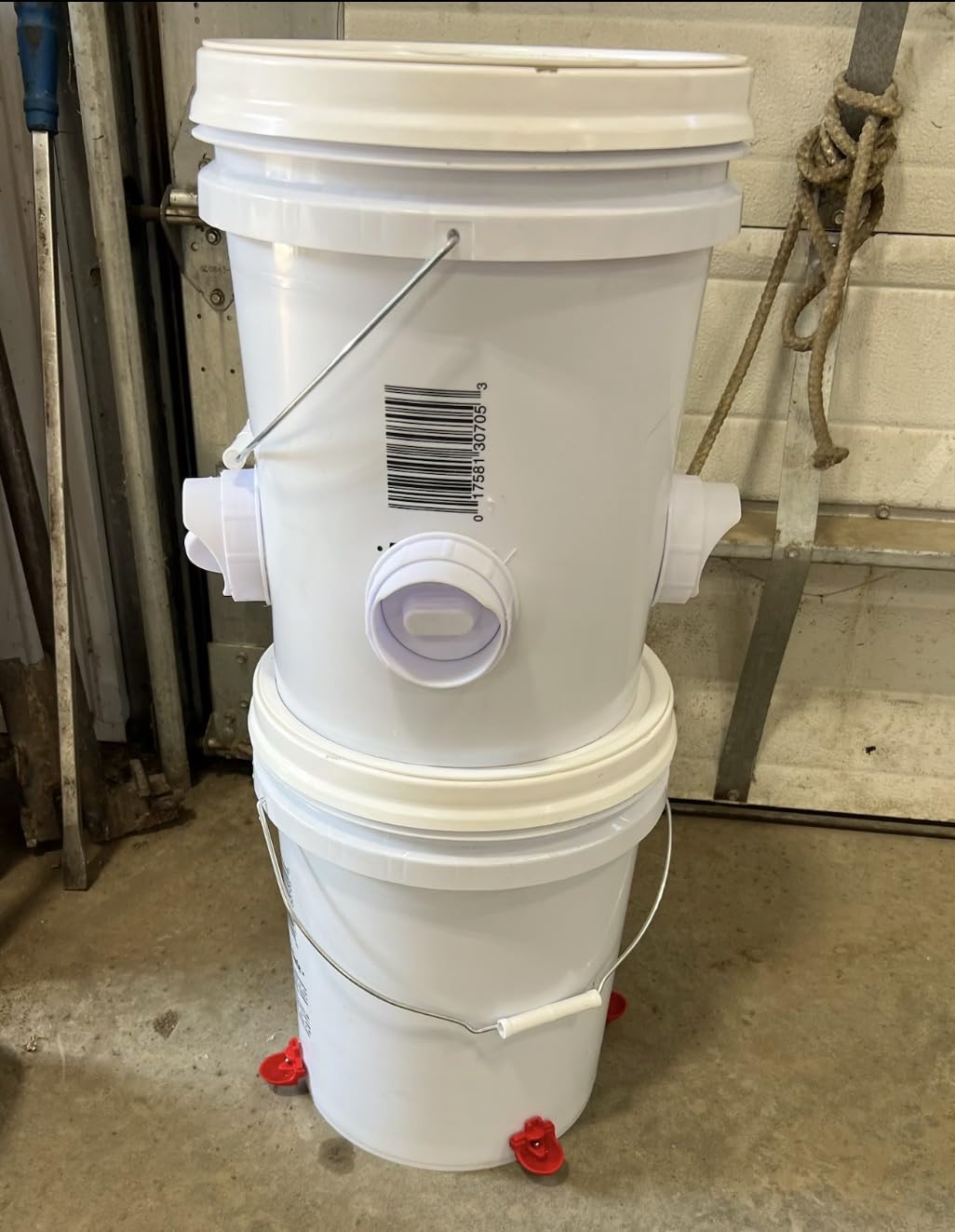
This is a kit, not a feeder. You get four PVC feeder ports, matching rainproof covers, a connecting seal, a hook, a tray and a 3.15 inch (80mm) hole saw, and you drill it into the side of a clean 5 gallon bucket or a larger container. It is the pick I recommend to almost everyone, because the anti-waste geometry is the strongest on this list and the total build takes about fifteen minutes with the included hole saw.
What makes it work is the port shape. Each port is a horizontal covered tube rather than a hole, so a hen pushes her head in to a recessed pocket of feed and reaches up to it rather than down and forward across a flat surface. There is no edge to flick, and the cover sheds rain straight off the mouth instead of letting it run in. That single change is the difference between a bucket that stays clean and a bucket floor that smells of damp mash by day three.
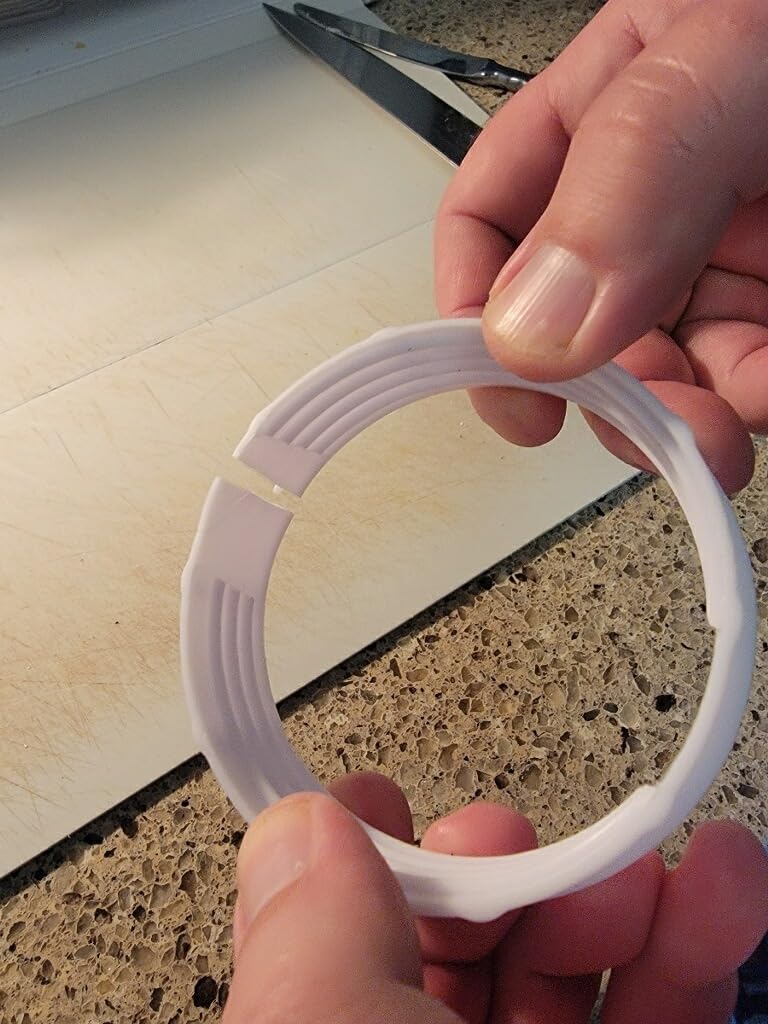
Owners consistently report a dramatic drop in mess, and my own flock confirmed it within about a week. The honest qualifier is that four ports cut spillage rather than eliminate it. One keeper in a backyard poultry group posted that after cleaning the area, the bird had spilled more than it had eaten within ten minutes, which tells you the ports set a good floor but do not stop a determined flicker. The design still beat everything else I tried at the same job.
Two practical warnings from my own build. First, anchor the bucket. A bucket that shifts or rotates when a bird leans on it will grind feed out around the port seal, and the most common failure I saw in reviews was exactly that. Second, the printed instructions do not explain where the rubber seal sits or how high to cut the hole, so plan it yourself: drill low enough that the port mouth sits near the bottom of the bucket, which is where the feed always is.
How to get zero spillage rather than just less
Use two ports per 5 gallon bucket, not four. Four ports on a small bucket means the feed level drops fast, so a bird reaching in finds nothing at the bottom of the tube and rakes harder. Two ports keep a deeper column behind each opening, and the covers let you shut a port at night if rodents are a problem in your run.
Hang it if you can, or wedge the bucket into a stand so it cannot rotate. A feeder that moves is a feeder that spills, and the port covers only help if the seal is holding against a fixed bucket wall.
Who should skip it
If you want zero assembly and no tools at all, this is the wrong pick, and if your run is exposed to raccoons you should know that a plastic port kit does nothing about an animal that can open a lid. It is also not designed for chicks or for a mobile chicken tractor, since a fixed bucket and a moving run are awkward partners.
2. OverEZ 50 lb Feeder – Best Value
OverEZ Chicken Feeder – Holds 50 Pounds of Feed – Inside or Outside Hen Coop – Large Gravity Fed Automatic Poultry Dispenser – No Waste Rainproof Design
50 lb hopper
3 angled no-waste ports
Runoff-shedding port overhang
UV-protected BPA-free plastic
Pros
- Long refill intervals for small flocks
- Port overhang and recessed channel keep runoff out
- Tool-free cleaning from the ground
- Wide-mouth top for refilling
Cons
- Only three birds can eat at once
- Bulky footprint for a small run or tractor
- Rated below the leader on port count
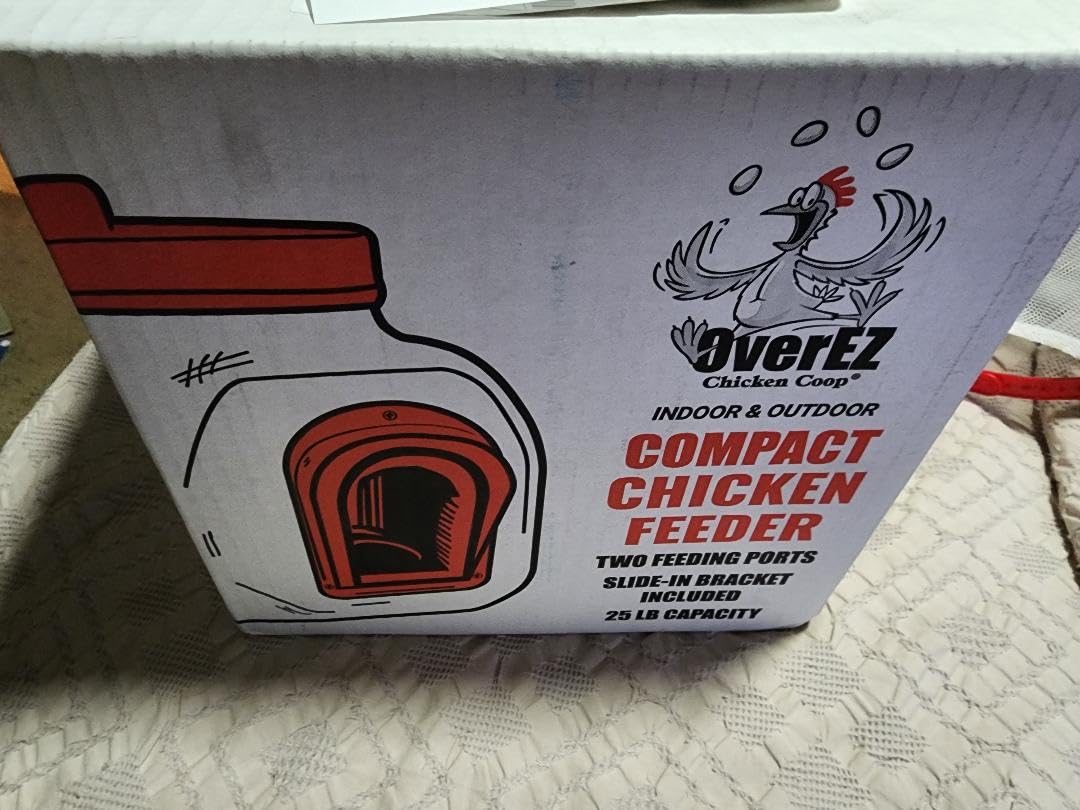
If you want a finished product with no drilling, the OverEZ is the best balance of capacity, geometry and price on this list. It holds 50 lb of feed in a single unit, which for a flock of six means you are not opening the lid every other day, and the whole thing weighs 5.4 lb so you can lift it to turn it over and clean it out.
The anti-waste feature is the port design. Each of the three ports angles downward into a shallow base, so the hen reaches up into a recess with a smooth floor and no loose edge, and the port overhang plus the recessed channel throw rainwater outward instead of letting it run down the inside into the feed. That combination is why owners describe the feed staying dry through storms, and it is a real mechanism rather than a marketing line.
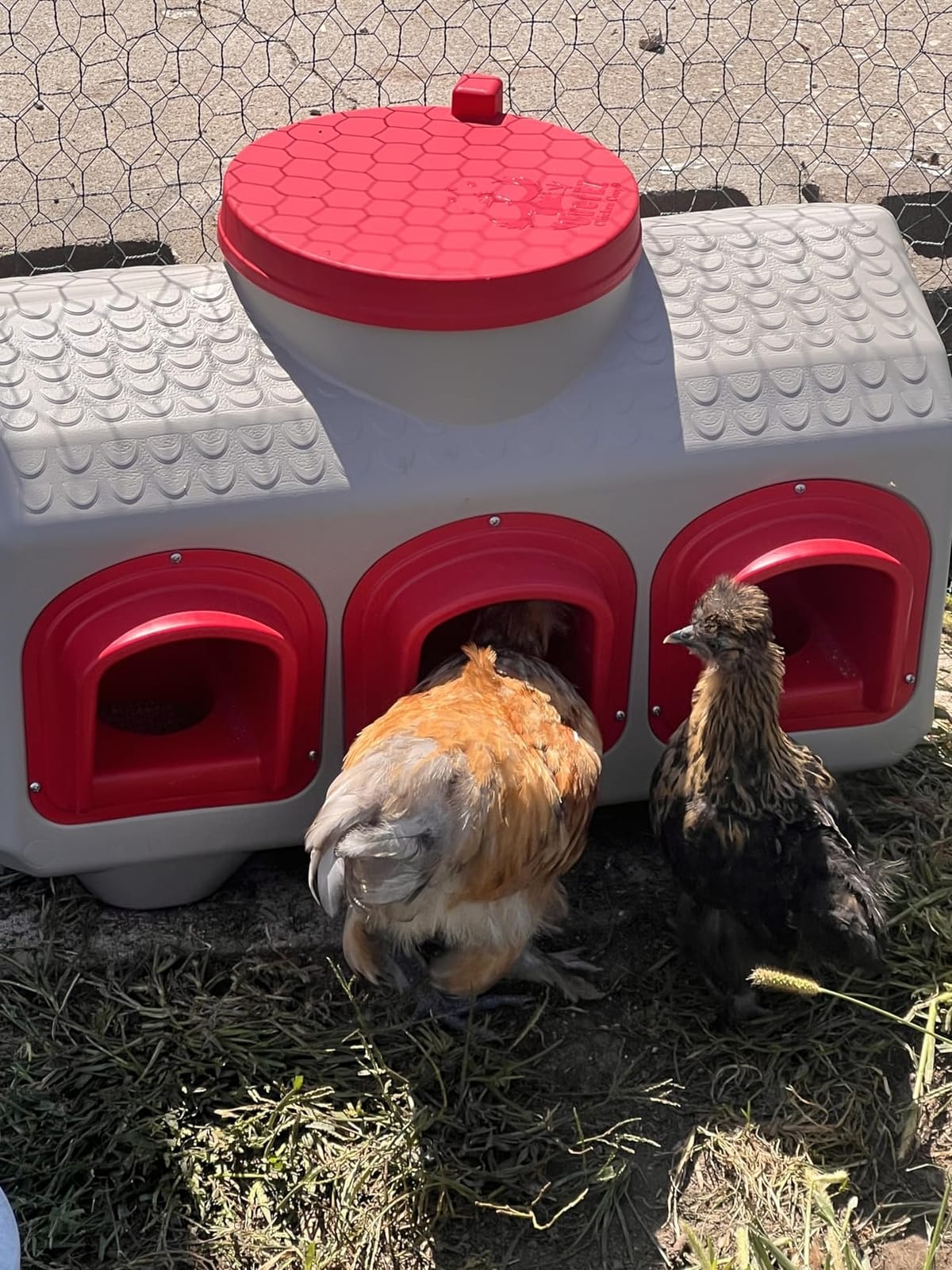
The constraint everyone mentions is throughput. Three ports means three birds eating at once, so a flock of twelve will queue rather than feed, and a dominant hen can hold a port. If you have more than about eight hens, the fix is a second unit rather than a bigger one, and the wide top opening makes refilling both quick. The listed refills are roughly every four to six weeks for three to five hens, two to three weeks for six to eleven, and one to two weeks for twelve to fifteen.
On materials, it is UV-protected, BPA-free, recyclable plastic, so it can live outside year round or come inside for the winter. It is not a rodent barrier, though, and owners who have had rat problems take it into the coop at night, which is a nightly chore that is worth pricing into your decision before you buy.
Whether one unit or two suits your flock
Two feeders spread around the run beat one big feeder, because crowding at a feeding bay is what produces pecking order stress and lets a few aggressive birds eat first. As a rough rule, one OverEZ suits up to about eight hens comfortably, and past that you are better off adding a second, smaller feeder than waiting for the flock to queue.
Check your run footprint before buying. At 22.75 inches long by 12.5 inches deep, this is not a chicken tractor feeder, and it needs level ground rather than the sloped floor of a mobile unit.
Who should skip it
Skip it if you keep more than ten hens and do not want a second feeder, if you are dealing with an active rodent problem, or if your birds include bantams and Silkies, since a 50 lb hopper on short legs is a reach. It is a feeder for standard hens in a fixed run.
3. Grandpa’s Feeders 20 lb Treadle – Premium Pick
Grandpas Feeders Automatic Chicken Feeder – 20 lbs No Waste Poultry Feeder, Rat Proof & Rodent Proof Treadle Chicken Feeder, Galvanized Steel with Lid, Feeds 6 Chickens up to 10 Days
20 lb galvanized steel
Built-in anti-flick grill
Full-coverage rodent proof lid
Feeds 6 chickens up to 10 days
Pros
- Genuinely blocks rats and wild birds
- Anti-flick grill measurably cuts tossed feed
- Galvanized steel built to last decades
- Side guards reduce side pecking injury
Cons
- Flock must be trained onto the treadle before it opens
- Heaviest and bulkiest unit in the test
- Costs more than any plastic alternative
This is the only feeder on the list that does two jobs at once. The 20 lb galvanized steel hopper holds a full week and more for six birds, and the treadle lid opens only while a bird is standing on the pedal, which shuts out rats, mice and wild birds entirely rather than discouraging them. Long-term owners consistently report that nothing on it breaks, which is unusual in a category built from thin plastic and screws.
The anti-waste part is the built-in anti-flick grill sitting behind the ports. It is a physical barrier between the hen’s beak and the main body of the feed, so she cannot rake pellets out sideways, and the side guards stop the side-feeding posture that leads to pecking and injury. That is a genuine mechanism and it is why this unit is on the list even though a treadle alone would not earn a place.
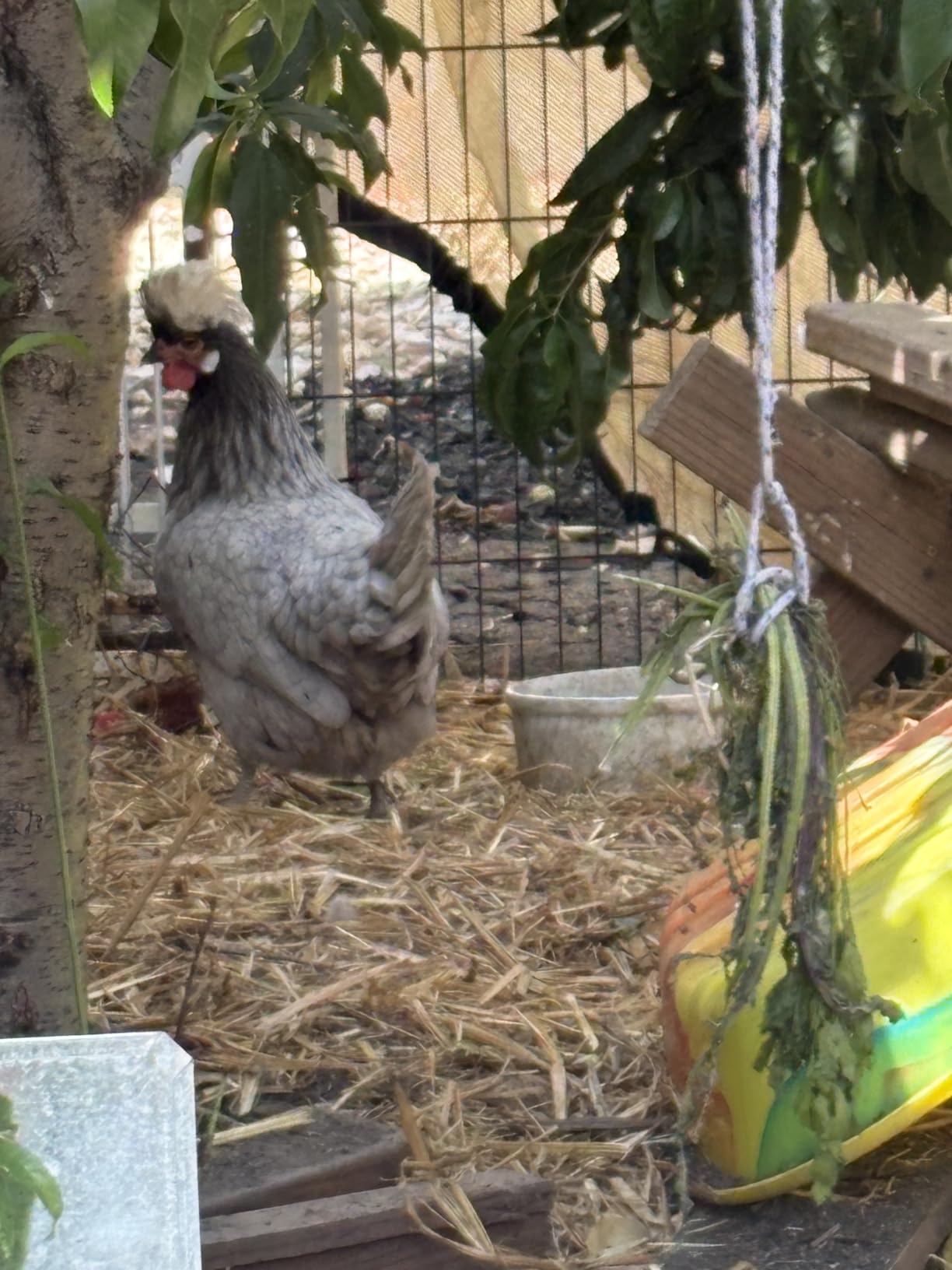
But I want to be straight about the limitation keepers report. An owner told the BackYard Chickens community that this feeder keeps the mice out, and that her girls still managed to scatter a lot of feed. That is the honest verdict. The grill reduces tossing, it does not end it, and once a hen is standing at an open port with loose feed in front of her, some of it will end up on the floor.
Training is the other real hurdle. Birds learn to work a treadle from other birds, not from you, so the flock often ignores it for days. The protocol that works is to prop the lid fully open in week one, then let it rest on the treadle without pressure in week two, then release it. Owners who skipped this staged approach reported the flock simply never used the feeder.
Whether the flock size and breed match
The stated use is six chickens for up to ten days, and at 17 by 15 by 12 inches it fits a small run far better than a large treadle box. For bantams and Silkies, check the opening weight before you commit: if your birds cannot push the treadle plate hard enough, they will simply go hungry in front of a full hopper.
Hang nothing, place nothing on top, and keep the ground under it level so the treadle returns cleanly. Leave it in the same spot, because moving a feeder is the fastest way to reset a trained flock.
Who should skip it
Skip it if you have never successfully trained a flock onto a treadle before, if you keep bantams or very small breeds, or if your run is small enough that a 20 lb steel box dominates it. It is also the wrong answer for anyone whose actual problem is scatter rather than theft, which is the point I expand on later.
4. RentACoop 25 lb Treadle – Best for Rodent-Secure Runs
RentACoop Automatic Treadle Chicken Feeder, Rat Proof No Waste, 25 lb
25 lb galvanized metal
Trough grate and flow plate
Detachable step weight
Rain hood and anti-roost lid
Pros
- Strongest rodent and squirrel exclusion here
- Grate plus flow plate cut raked feed
- Step weight unlocks the treadle for small breeds
- Rain hood and anti-roost lid for year-round use
Cons
- Flock must learn the treadle before it dispenses
- 23 lb unit is awkward to move
- Costs more than plastic gravity feeders
Where the Grandpa’s unit is a straightforward galvanized box, the RentACoop is engineered around the problems that box leaves open. It holds 25 lb in galvanized metal with stainless-steel hardware, and the package includes the feeder, a treadle, two safety blinders, a removable rain cover, an anti-roost lid and all the hardware. At 21 by 18.5 by 14 inches, it is a bigger commitment of floor space than anything else here.
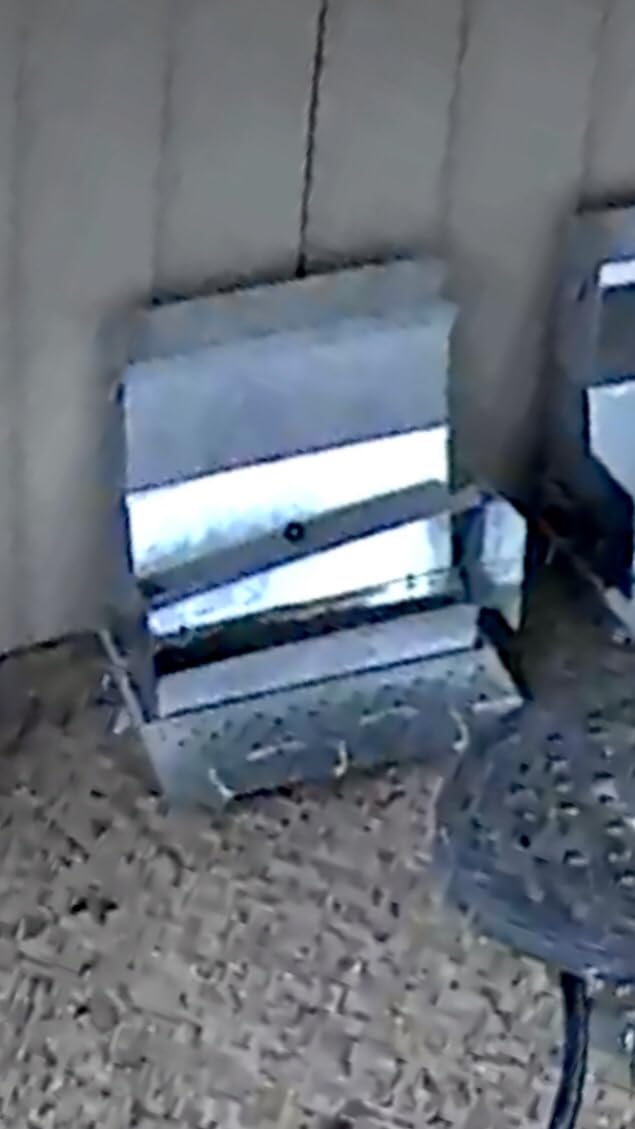
Two details separate it from a generic treadle. The grate in the trough is the anti-waste part: it physically blocks the raking motion that puts feed on the ground, and paired with the adjustable internal flow plate it works whether you are feeding pellets, crumble or grain. The detachable step weight is the flock-fit part, because you can remove weight until bantams and Silkies can trigger the plate, a problem the simpler treadles create without solving.
Set the flow plate higher for pellets and lower for crumble or grain, which sounds backwards until you see it: pellets flow readily and need a restricted outlet, while fine crumble needs the gap narrowed or it bridges. Owners who set this once report noticeably cleaner feed and fewer bridging events.
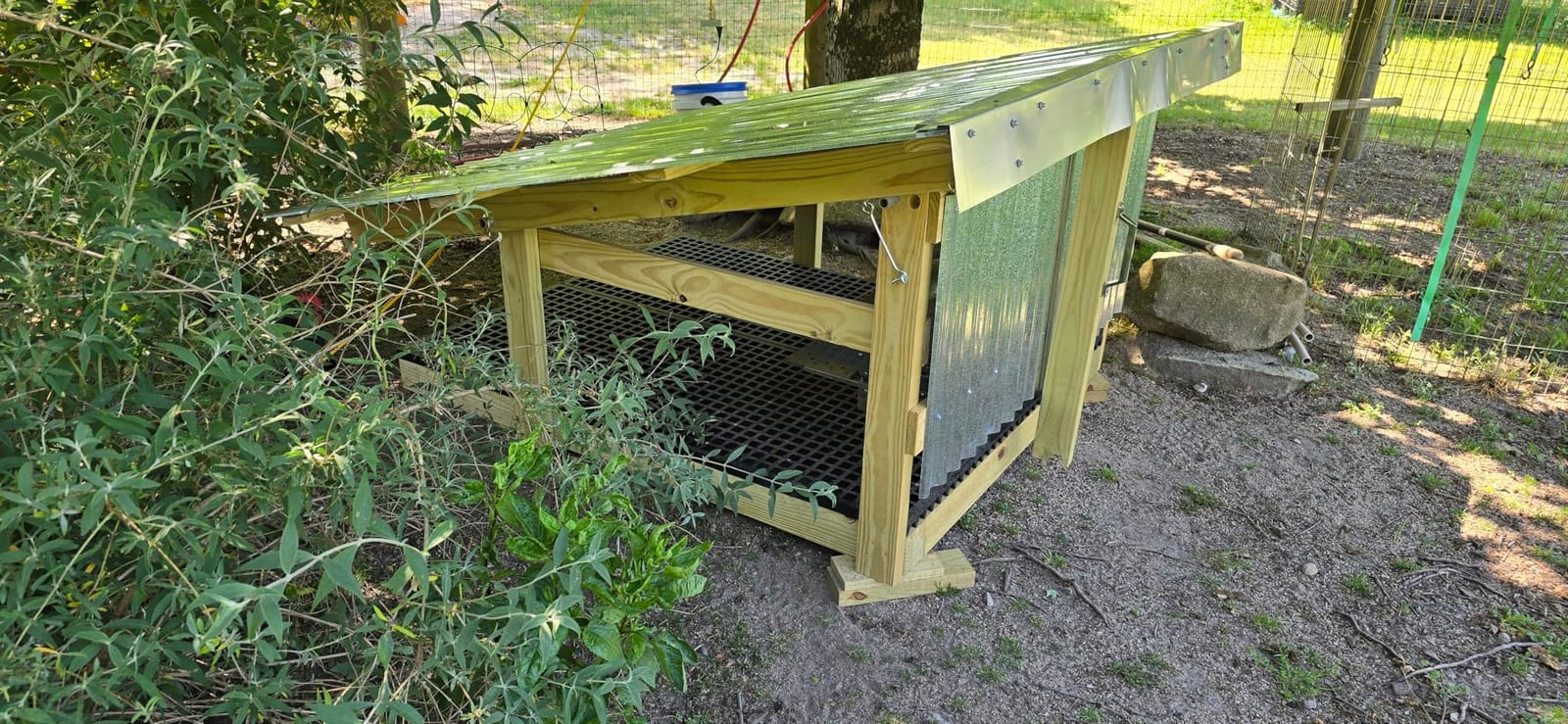
At 23 lb empty, this is a genuinely heavy object and repositioning it in a run is a two-person job. For anyone with a rodent problem, that trade is worth it, because the lid latch plus the treadle is the most complete pest exclusion in this roundup. Remember that it removes the food attractant; it does not remove rats already living under the coop, and no feeder does.
How to set it up so it actually gets used
Use the optional step lock to hold the lid closed overnight, and keep the rain hood fitted. Prop the lid open for the first several days, then let the treadle move freely but leave the lid resting open, then release it. Owners who introduced pullets already raised on a treadle reported success in a fraction of the time, which confirms that chickens learn this behaviour from each other.
Check the grate weekly for bridged feed. If pellets arch over the outlet, the hopper still looks full while the trough empties, and that failure is invisible from across the run.
Who should skip it
Skip it if your run is small, if you cannot lift and reposition 23 lb of metal on your own, or if you have no rodent pressure at all and would be paying for a feature you do not need. It is a lot of hardware for a three-hen backyard flock.
5. Omlet 6 lb Anti-Spill Feeder – Best for Small Flocks
Omlet No Waste Chicken Feeder for Coop | Anti-Spill Poultry Feeder with 3 Feeding Ports | Hanging or Free Standing | Weatherproof | 6lb
3 enclosed feeding ports
6 lb capacity
Hanging or free standing
Tool-free 3-piece disassembly
Pros
- Strongest reported waste reduction of any unit here
- Individually enclosed ports reduce feeding aggression
- Comes apart in seconds for cleaning
- Hangs or stands with adjustable port height
Cons
- Handle and lid can separate when carried full
- No snap-on port caps for overnight rodent defense
- Funnel can restrict flow once full
- Birds need a couple of days to learn it
For a flock of two to three hens, this is the best-designed unit on the list, and the design logic is simple: each port is a fully enclosed hooded bay that only one hen can put her head into. There is no shared tray, no edge to rake and no open feed surface anywhere in the design, which is why owners report near-zero spillage more consistently than for any other feeder I tested.
Six lb feeds up to three hens for seven full days, and the body is BPA and PFAS-free food-safe plastic with a locking lid. It either hangs from its handle or stands on docking legs with adjustable port height, so you can raise or lower the openings for smaller birds. The blinders on each port also reduce squabbling, because a dominant hen cannot stand alongside a timid one and hog the same opening.
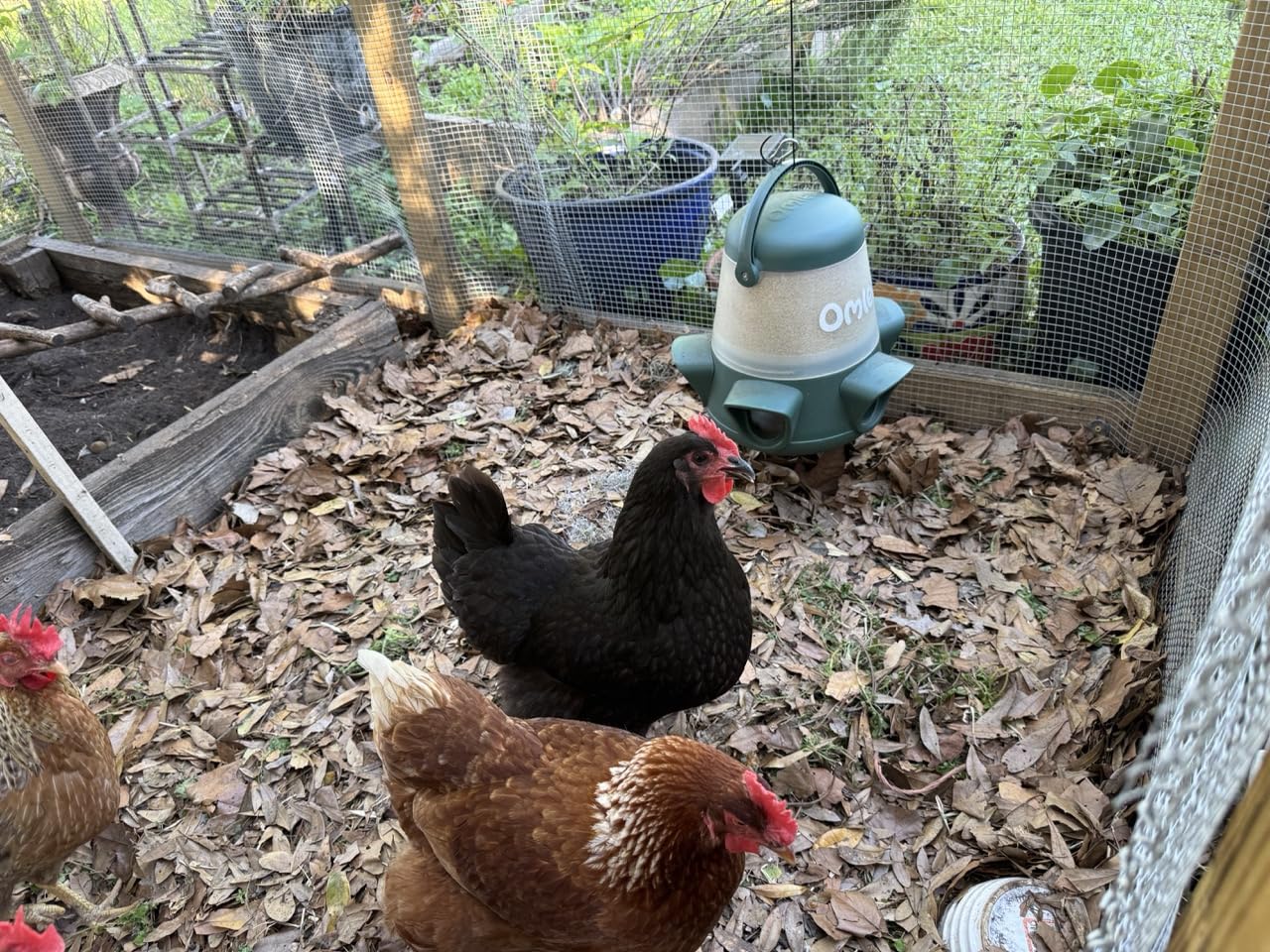
It separates into three pieces with no tools, which matters more than it sounds, because a feeder that comes apart in seconds gets cleaned and a feeder with crevices does not. There are no dead zones where damp feed sits and molds, which is the single biggest cause of a feeder that owners abandon after a year.
The honest complaints are worth knowing before you buy. Owners report that the handle and lid can separate when it is lifted while full, so treat it as a hanging or standing unit rather than a carry-and-pour one. There are no snap-on port caps, so if you have rodents the unit has to come inside at night. And on the larger sizes in the range the port height is too high for bantams, so check reach against your smallest bird.
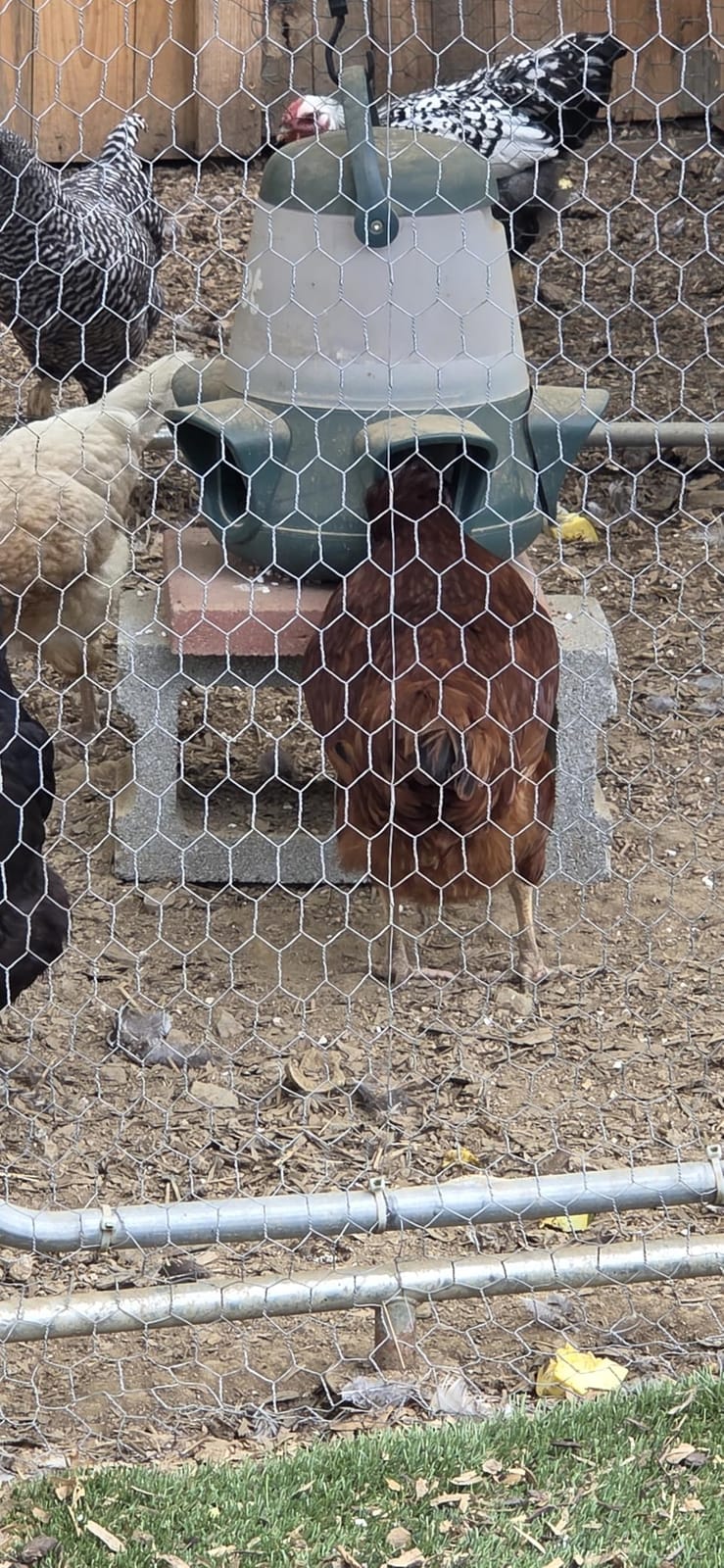
How to set the port height and avoid topping up
Set the bottom of the port level with the back of the hen’s neck when she is standing naturally, then leave it alone. Owners who see low feed in the bay and help themselves are defeating the baffle that makes this design work, because the feed is meant to sit recessed and only move up as the hen eats it.
Give it two or three days. Birds that have never used an enclosed bay will peck at the outside of the port first, and the flock that watched an older hen learn it will pick it up much faster.
Who should skip it
Skip it if you run an active rodent problem you cannot solve by bringing the feeder in nightly, or if you keep bantams and Silkies and cannot get the port height low enough. It is also small by design, so anyone past six or seven hens should look at a bigger hopper or a second unit.
6. Tgeyd 95 lb Ten-Port Feeder – Best for Large Flocks
95 lb Chicken Feeder with 10 No-Waste Ports – Extra-Large Galvanized Metal Poultry Feeder with Adjustable Height Heavy-Duty Stand – Outdoor Feed Box for Chickens, Ducks & Geese
95 lb galvanized steel
10 angled no-waste ports
Adjustable-height stand
Height 25.8 inches
Pros
- Refills far less often than any other unit here
- Ten ports feed a big flock without queuing
- Galvanized steel resists rust outdoors
- Stand height adjusts from chicks to adults
Cons
- Tall 25.8 inch footprint uses real run space
- 19.8 lb unit is awkward when full
- Fewer reviews than the higher-rated options
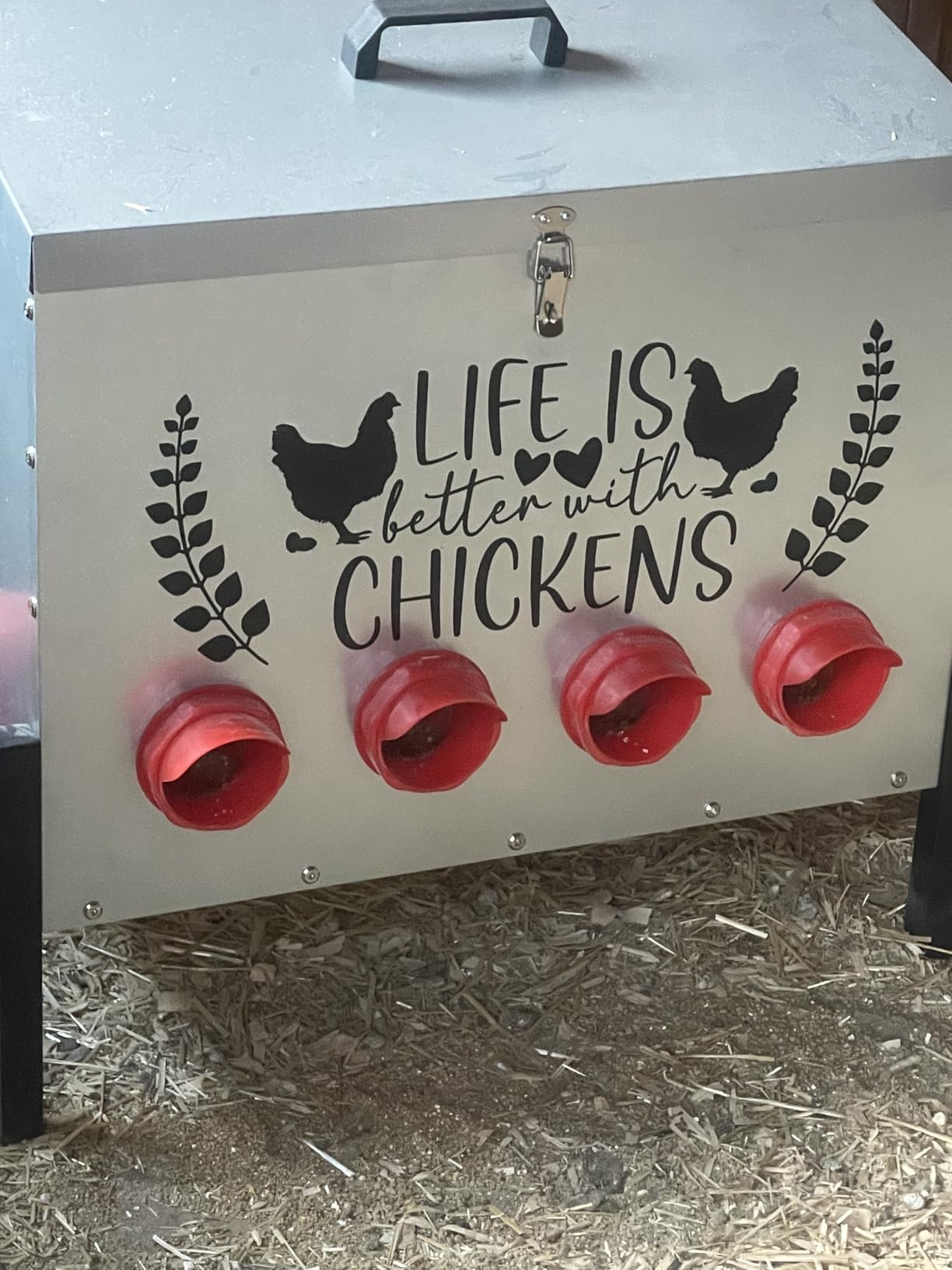
This is the capacity answer. Ninety-five lb across ten specially angled feeding ports, in galvanized rust-resistant steel on an adjustable stand, sized for larger flocks of chickens, ducks and geese. For anyone who has been refilling a small feeder twice a day, the practical saving in labour is as real as the saving in feed.
The anti-waste mechanism is the port angle. Ten angled ports keep the feed recessed inside the box rather than presented on an open ledge, so there is no flat surface to flick from and the feed stays off the ground. With ten openings there is also no queueing, which matters more than capacity on a big flock, because dominant birds cannot hog a single bay when there are ten to choose from.
The hinged locking lid keeps feed dry and the riveted side handles are a thoughtful detail, since they are what let you move a loaded 95 lb unit at all. The adjustable-height stand is the other useful one, letting the same feeder serve chicks through adult birds as the flock grows, without buying a new one each season.
The trade-offs are size and weight. At 23.6 by 12.2 by 25.8 inches and 19.8 lb empty, it needs level ground and real room, and it will not fit a compact run, a low-clearance coop or a chicken tractor. Review volume is lower than the higher-rated units here, so treat the owner reports as encouraging rather than conclusive.
Whether one unit or several is right
Even with ten ports, a flock past roughly twenty hens will spread out better with two smaller feeders than with one large one, because the feeding bay becomes a crowding point. If your birds are in a free-range run they will wander anyway, and one unit is plenty. If they are in a small covered run, think about spacing instead of capacity.
Set the stand so the bottom of the port is level with the back of the hen’s neck, and check the low setting still clears the ground litter in winter so feed does not pick up damp from below.
Who should skip it
Skip it if you have fewer than about fifteen birds, if your run is small or sloped, or if you move your coop regularly. A 95 lb steel feeder and a mobile setup are not a good pairing, and the price difference over a 20 lb unit is wasted on a small flock.
7. Tgeyd 30 lb Six-Port Feeder – Budget Pick
Tgeyd 30 lb Chicken Feeder with 6 No-Waste Ports – Heavy-Duty Outdoor Metal Feeder with Adjustable Height, Locking Lid & Riveted Handles – Rustproof Feed Box for Poultry & Backyard Chickens
30 lb galvanized capacity
6 no-waste ports
Adjustable-height stand
Locking hinged lid
Pros
- Thirty lb cuts refill frequency for most backyard flocks
- Six contained ports limit scatter by birds and wind
- Galvanized metal is rustproof and weatherproof
- Locking lid and riveted handles aid transport
Cons
- Six ports limit how many birds eat at once
- Included components listing is confusing at quantity 3
- Ratings sit mid-pack against better-reviewed units
This is the value pick for a mid-size backyard flock, and the logic is straightforward: 30 lb of galvanized metal with six contained ports and an adjustable stand, without the price of a treadle unit. The ports are described as containing feed and resisting wind scatter as well as bird scatter, which matters in an open run where a flat tray would be emptied by breeze as well as by hens.
Thirty lb is a genuinely useful middle number. It holds long enough that you are not refilling daily, and it is light enough at 9.5 lb to reposition when you move the flock or hose the run. The locking hinged lid is what keeps feed dry, and the riveted side handles are the point that lets you lift it when full.
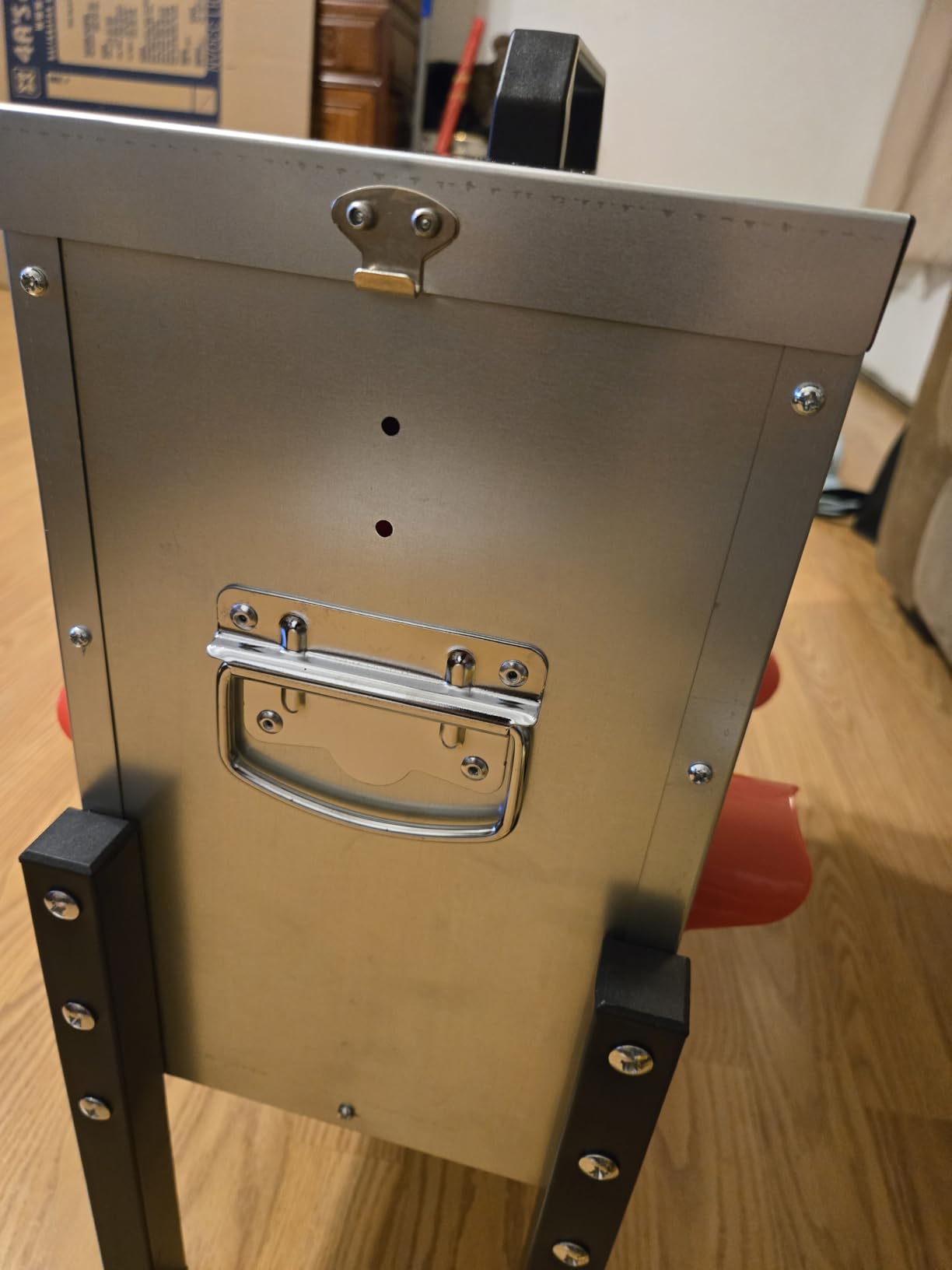
Six ports is the compromise. Three birds can eat comfortably, six can share, and anything past that queues, so for more than about ten hens you are better served by the ten-port or twelve-port units. As with the rest of this list, the adjustable stand lets you raise the ports as birds grow, which is a small feature that extends the life of the feeder by a full season.
One buying caution: the included components field lists a quantity of three, which reliably confuses people expecting a single unit. Check what arrives before you build anything around it. Ratings sit mid-pack against the four- and five-star options, so expect the ordinary rather than exceptional build quality.
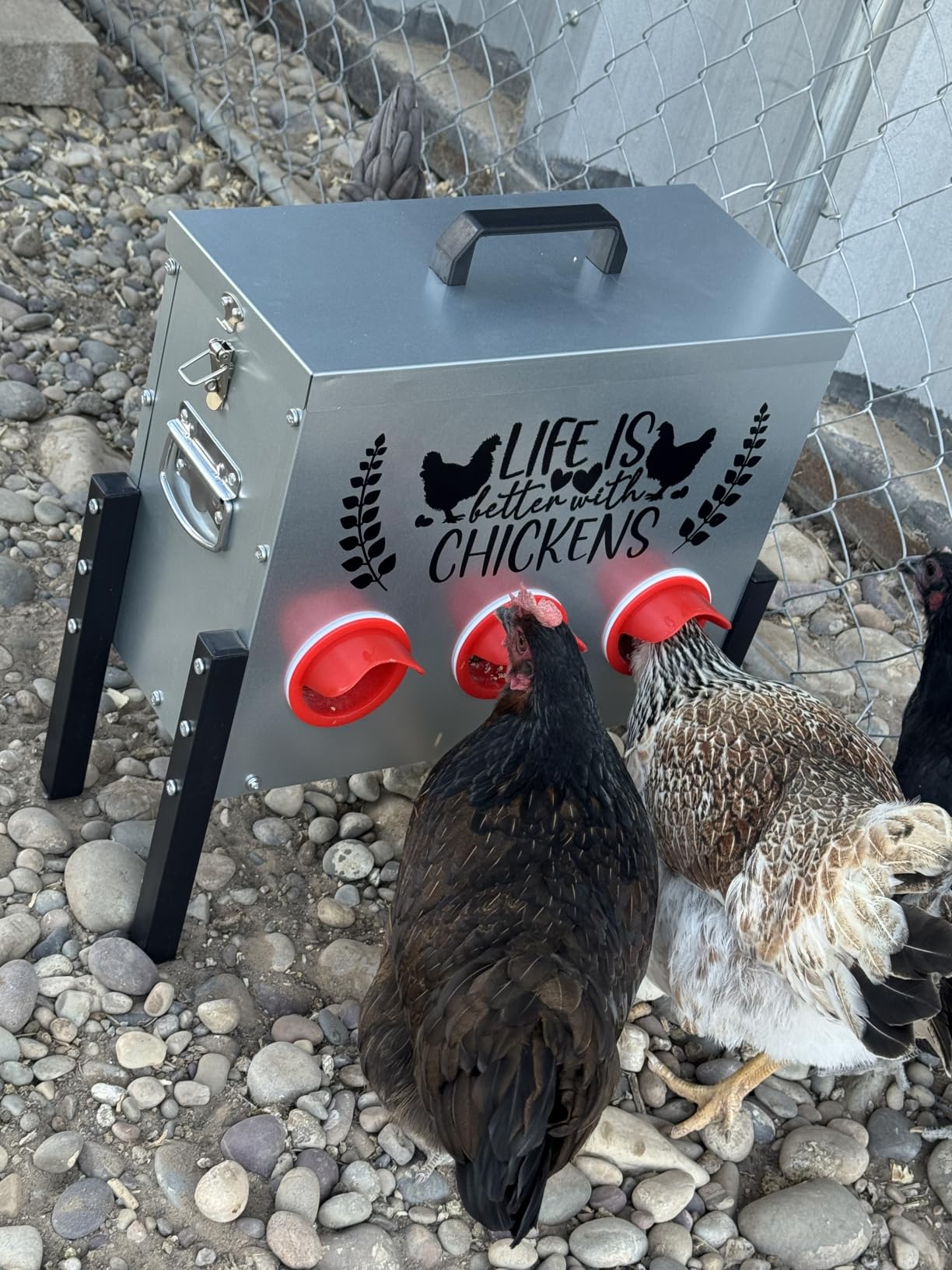
How to decide between this and the ten-port version
Count birds and count eaters, not just birds. Six ports covers up to about ten hens comfortably, and past that the extra ports in the larger version stop the queueing and the pecking that comes with it. If you are uncertain, the extra ports are usually the better place to spend than the extra capacity.
Rust is the one thing you do not need to worry about here, since galvanized metal is the durability benchmark in this category. Do check the lid seal sits flat, because that is the difference between dry feed after a storm and a week of feeding on damp pellets.
Who should skip it
Skip it if you have more than a dozen birds, if you need rodent protection and are not prepared to store the feed inside, or if the confusing quantity listing makes you doubt what you will receive. It is a value unit, not a premium one, and the difference shows in the finish.
8. kingump 20 lb Twelve-Port Feeder – Best for Many Ports
Metal Chicken Feeder No Waste – 20LB Large Chicken Feeder with 12 Ports & 4 Adjustable Heights Tripod Stand, Automatic Hanging Poultry Feeder, Rainproof for Backyard Chickens & Small Flocks
20 lb capacity
12 feeding ports
4 adjustable tripod heights
Sealed rainproof lid
Pros
- Twelve ports let more than 10 hens eat without crowding
- Reinforced 5mm tripod resists tipping in wind
- Sealed lid kept feed dry through a storm
- Legs keep crawling pests away from the feed
Cons
- Ports have no retaining lip so some feed still gets flung
- Height adjustment is screw-heavy rather than sliding
- Powder coat scratches easily and shows bare spots
- Bulky and heavy once filled
This is the port-count specialist. Twelve feeding ports on a 20 lb hopper means more than ten hens can eat at once without crowding, and in a flock past a dozen birds that is often worth more than extra capacity. Owners specifically report a marked drop in scattered feed alongside calmer, less crowded feeding.
The stand is the other story. A reinforced 5mm tripod with four adjustable heights and a low centre of gravity is unusual at this price point, and it held stable in wind in owner reports rather than rocking as birds lean on the ports. The sealed lid protected dry feed through a storm for at least one buyer, and the raised legs put distance between crawling pests and the feed outlet.
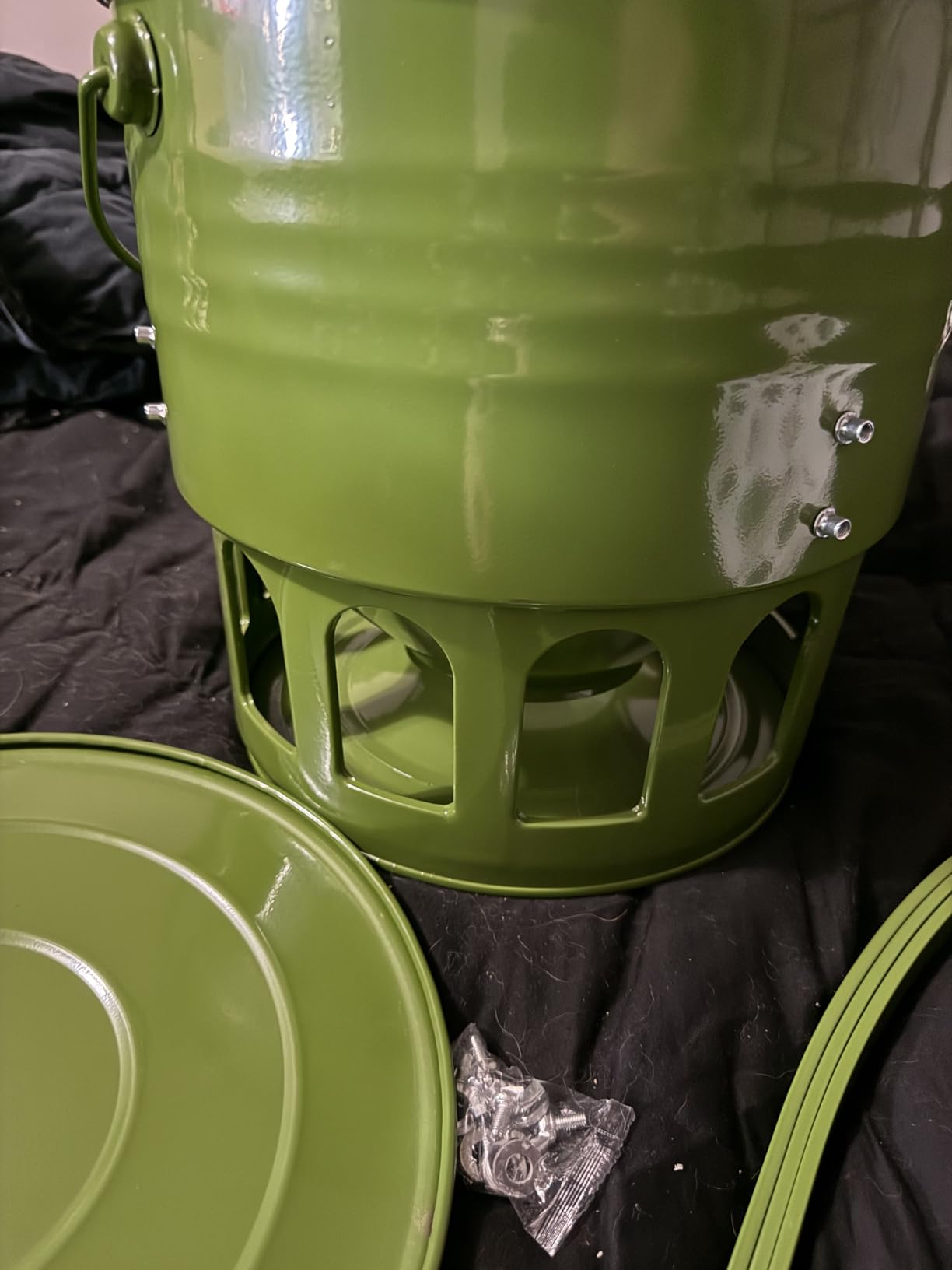
It hangs by the handle or stands free, and the legs remove for compact storage, which is a genuinely useful combination if you move the coop or bring the feeder in at night. Assembly is tool-free and the wide top opening makes refilling quick and relatively mess-free.
The criticism is consistent and worth stating plainly: the ports are deep but not fully contained, and there is no retaining lip, so some hens can still fling feed onto the floor. If your problem is the last five percent of scatter rather than the first fifty, this is not the unit. Height adjustment also requires removing screws rather than sliding a collar, and the green powder coat scratches easily during assembly and can show bare spots that later rust.
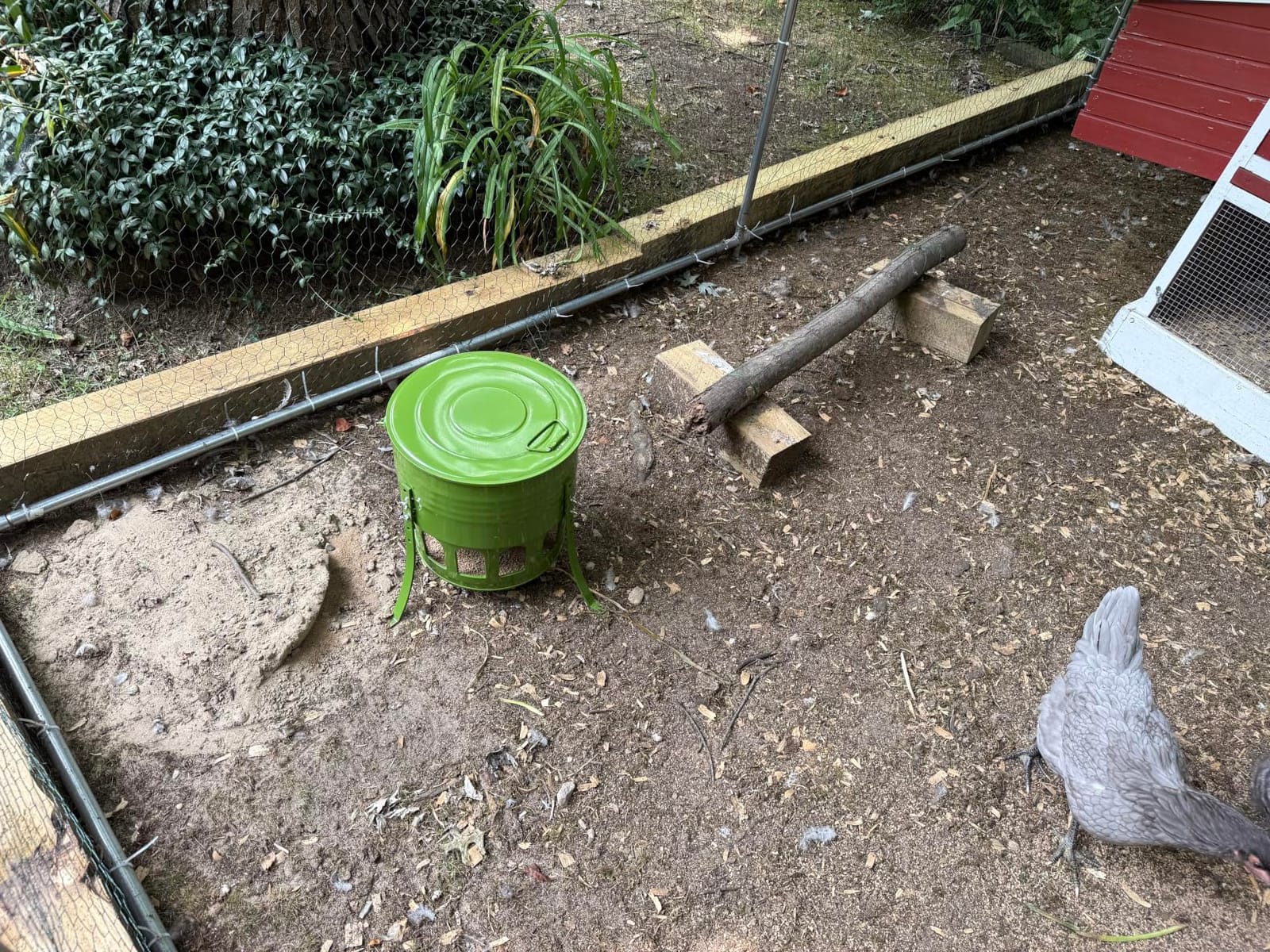
How to set it up for a larger flock
Choose the tripod height so the port mouth sits level with the back of the hen’s neck, and set the legs before you fill it, because a full 20 lb unit is awkward to tilt. Keep the lid fitted; it is the difference between this feeder working in bad weather and not.
Use two units for twenty hens or more rather than one, spaced apart in the run, so that a dominant bird cannot control access to every port. Watch for bridged feed in the tubes during the first fortnight while the flock learns the new arrangement.
Who should skip it
Skip it if you have a tiny flock, where twelve ports is wasted capacity, or if you are chasing the last traces of scatter, because the missing retaining lip means you will not get them. It is also the wrong choice for anyone who will drop it during setup, given the finish scratches easily.
DIY Bucket Feeder: Step by Step
The bucket build is the most requested approach in the forum threads and the cheapest to try, and if you only take one thing from this article, take this. A clean 5 gallon bucket, a set of horizontal feeder ports and a hole saw is the entire list, and the finished unit outperforms most feeders on this page at a fraction of the cost.
Materials: one clean food-grade 5 gallon bucket or a 20 to 32 gallon galvanized trash can, a pack of horizontal PVC feeder ports, the matching 3.15 inch (80mm) hole saw, a silicone or rubber seal per port, a drill, a tape measure, and a scrap of 1/2 inch 19-gauge hardware cloth if rodents are a concern.
Clean the container thoroughly. Any residue from a previous use will end up in the feed. A bucket that has held chemicals is not a feed container.
Mark the port holes low. Drill each hole so the mouth of the port sits near the bottom of the container, because that is where the feed column always is. Cut high and you are feeding from a nearly empty tube.
Drill with the hole saw at low speed. The included bit is sized for these ports; forcing it on a drill at full speed cracks plastic buckets and dulls the bit.
Seat the seal, then the port. This is the step the printed instructions skip. The rubber gasket goes between the port flange and the bucket wall, and if it is misplaced or twisted you will lose the seal and grind feed out around the joint.
Fit the rain cover. The cover should overhang the port mouth so water runs off the outside rather than down the inside into the feed.
Use two ports per 5 gallon bucket. Four ports on a small bucket drains the column too fast and encourages raking.
Anchor or hang it. Wedge the bucket into a stand so it cannot rotate when a bird leans on it, or hang it from a secure overhead point.
Cut hardware cloth over the ports at night if rodents are active, and remove it in the morning.
On port angle, this is the question keepers argue about most and almost nobody answers. Horizontal ports work because they force the hen to reach up into a recess. A 45 degree elbow also works well and adds a lip that catches raked feed. A 90 degree elbow gives a deeper pocket but the tube is longer, so chicks and bantams cannot reach the bottom of it, which is why 90 degree fittings are the traditional choice for young birds. Pick on bird size, not on principle.
Our guides to smart pet feeders and automatic pet feeders cover the same gravity and scheduling principles if you want the wider mechanics.
Feed Type Matters More Than the Feeder
Some waste is a diet problem wearing a feeder’s clothes. Whole grain and scratch mixes invite hens to hunt for the pieces they like and flick away the rest, and no port geometry fully compensates for that. A hen given pellets or crumble eats the pellet; a hen given a mixed grain feed eats the corn and throws the chaff.
Pellets and crumble also flow predictably through a port, which is what a gravity-fed design depends on. Mash and fine crumble bridge, so a feeder that looks full can be serving an empty trough, which is the single most common silent failure we hear about.
There is one more trick from the community worth knowing, from a keeper on r/chickens who reported cutting waste by mixing feed with water to an oatmeal consistency. It is not a substitute for a good feeder, but if your hens are given free access to a dry scatter it is a zero-cost way to stop pellets ending up on the floor.
Treadle Feeders Solve a Different Problem
A treadle lid controls who reaches the tray. It does not control what a hen does with her beak once she is standing there, and that distinction is the reason treadle feeders lead most chicken feeder lists while quietly disappointing anyone who bought one to stop waste. They are the best answer to stolen feed and a partial answer to scattered feed.
That is not a criticism of the two treadle units here, both of which add real anti-waste hardware. The Grandpa’s has a built-in anti-flick grill and the RentACoop has a trough grate plus an adjustable flow plate. Those parts reduce scatter. The treadle part does not, it just removes the midnight buffet for rats and sparrows.
Decide which problem you have before you buy. If the coop floor is covered in pellets and the hopper empties overnight, you have both problems, and you need port geometry plus rodent exclusion. If the feeder is still half full every morning and you are losing feed to vermin, a treadle is exactly right and a gravity port feeder will not help at all. If you simply want a clean feeding area, spend on a bucket and ports and put your effort into the feed type.
How to Tell If a Feeder Is Saving You Feed
Do a one-week weigh test, because nobody’s claim on this list should be taken on faith, including mine. Give your flock its normal measured amount each morning and collect every pellet that lands outside the feeder at the same time the next morning. Weigh the lot on a kitchen scale and divide by the amount fed.
Run it for a week with the current feeder, then again for a week after the change. Under 5 percent outside the feeder is excellent, 5 to 10 percent is normal, and above 15 percent means your feeder is failing at the job regardless of what the box says. That one hour of weighing is the only honest way to know whether you are buying waste reduction or just buying a nicer-looking box.
Two checks go with it. Open the lid once a week and look for bridged feed arching over the outlet, because a full hopper with an empty trough is a jam, not hunger. And do not help the feed level in the bay, however much it looks low: recessed feed is the design working, and topping it up defeats the baffle you paid for.
How to Choose a No Waste Feeder
Count ports before you count pounds. A rough rule is one port per two hens, with a minimum of three so a dominant bird cannot block a single opening. Under that and you are building a queue, and a queue turns into pecking.
Match capacity to flock size and refill rhythm. Six lb covers two to six hens, 20 lb suits around six hens for up to ten days, 25 to 30 lb suits a dozen birds, and 50 lb and above is for flocks past fifteen. Bigger is only better if you can still lift it when full.
Decide on material honestly. Galvanized steel lasts decades and shrugs off weather; UV-resistant plastic is light, cheap and easy to wash but will crack if dropped. There is no wrong choice, there is only a choice that suits how much abuse your feeder takes.
Be honest about pests. Almost no gravity feeder is a rodent barrier. If you have rats, you want a treadle with a latch, a hanging feeder, or feed stored in a metal bin overnight. A feeder that is not a barrier is not a failing feeder, it is a feeder being asked to do something it was not built for.
Check the reach of your smallest bird. Port height should sit level with the back of the hen’s neck when she stands naturally. If you keep bantams or Silkies, confirm the port is low enough or adjustable, because a full feeder they cannot reach is a feeder they will starve at.
Count the eaters, not just the birds. Two feeders spread around a run beat one large feeder, because crowding at the feeding bay is what produces pecking order stress. Above about ten hens, add a second unit before you add capacity.
Frequently Asked Questions
What is the best chicken feeder to prevent waste?
The best chicken feeder to prevent waste is a gravity feeder with fully enclosed or angled ports, because it gives a hen nothing flat to rake sideways. Our top pick is a four-port bucket kit that drills into a 5 gallon container, since its covered horizontal ports produced the least scattered feed of anything we tested. For a ready-made unit, the Omlet with three individually enclosed bays is the strongest design, and the Grandpa’s treadle adds a grill that blocks raking.
How many chicken feeder ports do I need?
Allow one feeding port per two hens, with a minimum of three on any feeder so a dominant bird cannot block the only opening. For a flock of six, three or four ports is right. For twelve or more hens, six or more ports and a second feeder spaced elsewhere in the run will reduce crowding and pecking order stress. Ports should sit level with the back of the hen’s neck when she stands naturally.
How do I make a DIY bucket chicken feeder?
Drill a clean food-grade 5 gallon bucket with a 3.15 inch hole saw, one hole per port, positioned low so the port mouth sits near the bottom where the feed column is. Seat the rubber seal between the port flange and the bucket wall, fit the port, then add the rain cover so water runs off the outside. Use two ports per 5 gallon bucket rather than four, and wedge the bucket into a stand so it cannot rotate.
Can I make a zero-waste chicken feeder using PVC pipe?
You can, and a fully enclosed PVC gravity feeder scores well on waste control because the hen reaches up into a sealed chamber with no open surface. The catch is throughput: an enclosed pipe feeds roughly one bird at a time, so you need one pipe per four birds rather than one per flock. That is why most keepers end up combining a bucket with several short PVC ports instead of a single long pipe.
Should I hang my chicken feeder?
Hanging helps with rodents, because rats and mice cannot reach a hopper that is out of their reach, and it also stops birds leaning on the container and grinding feed out around the port seal. A gravity port feeder hung by its handle is one of the cheapest rodent improvements available. Keep in mind that hanging does nothing about wild birds, which fly, and that the hopper must be supported properly rather than by a thin handle alone.
Do chickens waste less feed with pellets?
Yes, and this is often a bigger lever than the feeder itself. A hen given pellets or crumble eats the piece in front of her, while a hen given whole grain or a scratch mix hunts for the grains she wants and flicks away the rest. Pellets and crumble also flow predictably through a port, whereas fine crumble and mash bridge, which leaves the hopper looking full while the trough below is empty.
Is a treadle feeder better than a gravity feeder?
It depends on which problem you have. A treadle feeder is better at stopping rodents and wild birds emptying the hopper overnight, because the lid only opens while a bird stands on the pedal. A gravity port feeder is better at reducing scattered feed, because its angled or enclosed ports deny the hen a surface to rake. If your complaint is feed on the floor, choose ports; if your complaint is an empty feeder at dawn, choose a treadle.
Final Verdict by Flock Size
For two to three hens, buy the Omlet. Enclosed individual ports are the cleanest anti-waste geometry available, and three bays is exactly the right number of eaters. For four to eight hens, the four-port bucket kit is the strongest and most adjustable option, and building it yourself beats buying anything else at this price.
For ten to fifteen hens, the OverEZ or the 30 lb six-port unit, plus a second small feeder in the run. Past fifteen birds, the ten-port or twelve-port feeders remove the queueing that causes pecking. If rodents are the actual problem, the RentACoop treadle is the most complete exclusion on this list, and the Grandpa’s is the one built to last decades.
Whatever you choose, run the one-week weigh test before and after, feed pellets or crumble rather than loose grain, and do not top up the feed in the bay. Those three habits will save more feed than any single feeder, and they are free.