
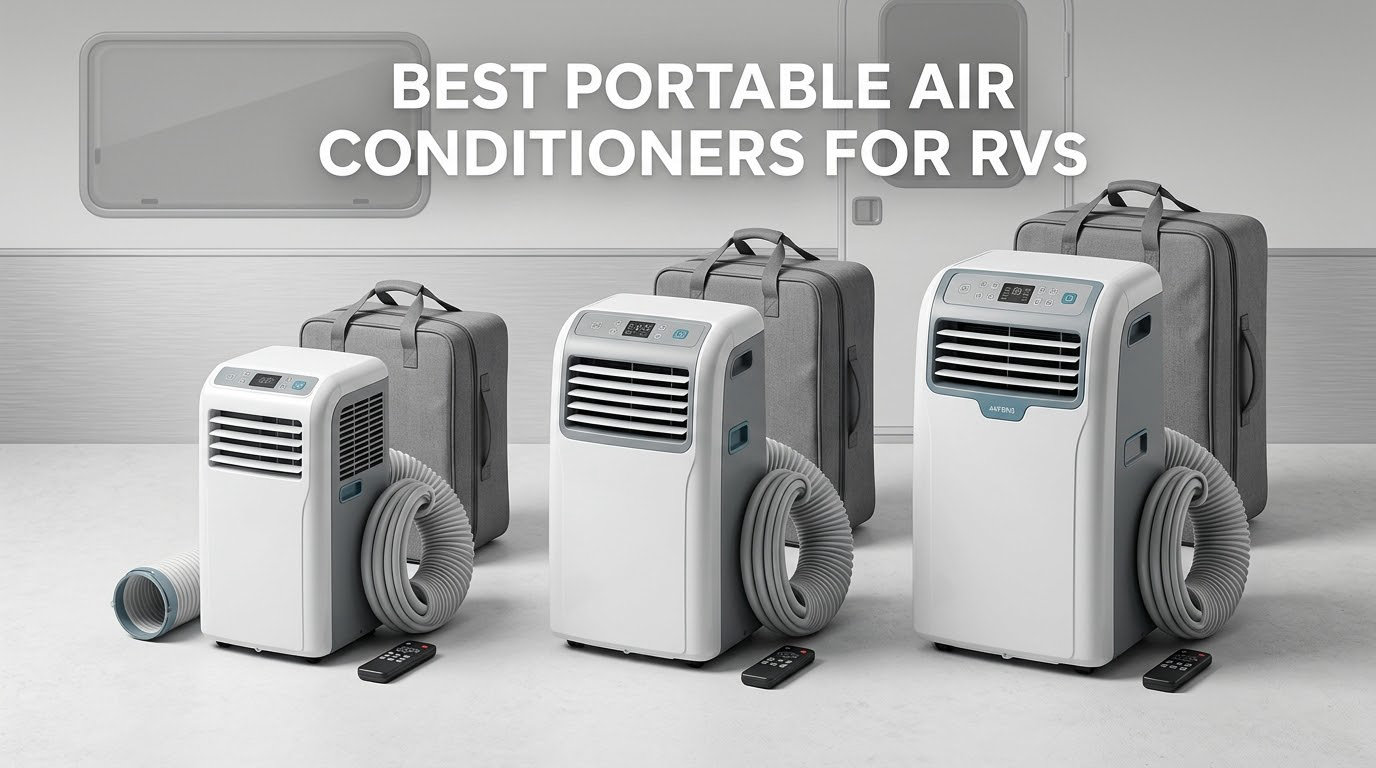
Choosing a portable air conditioner for an RV comes down to three hard constraints: a tiny metal enclosure that heats up faster than a house, a venting path that is usually a single slider window or a 14-inch roof opening, and an electrical supply that is often 12V DC rather than a household outlet. Match a cooling system to those three constraints and most of the buying mistakes disappear. Get it wrong, and you can end up with a machine that runs all afternoon and never drops the cabin below the temperature outside.
We spent 2026 season reading spec sheets, owner reports and forum threads on this category and compared all ten systems below side by side. The single biggest thing we learned is that the marketing number on the box matters far less than how the system draws air and where it gets its power. A 10,000 BTU rooftop running on 12V DC inverter power and a 10,000 BTU household portable on 120V AC may share a headline number and behave nothing alike once the sun hits a fiberglass roof at two in the afternoon.
One more honest note before we start. The phrase “portable air conditioner” covers several very different machines. Some are rooftop boxes you drill into the roof once and forget about. Some are carry-in portable units with an exhaust hose through a window. A few are window mounts or through-the-wall splits for truck sleeper cabs. All of them are in this roundup, because the right answer depends entirely on your rig and how you camp. Last reviewed and updated for 2026.
Table of Contents
Key Selection Factors for an RV Air Conditioner in 2026
Hosing and how air moves. A single-hose portable pulls hot outside air in to cool its condenser, which leaves the cabin under negative pressure and lets heat leak back in through every seam. Reddit’s r/RVLiving threads treat dual-hose venting as close to mandatory for a camper. In a large room a single-hose system can limp along, which is the nuance raised on the iRV2 forums.
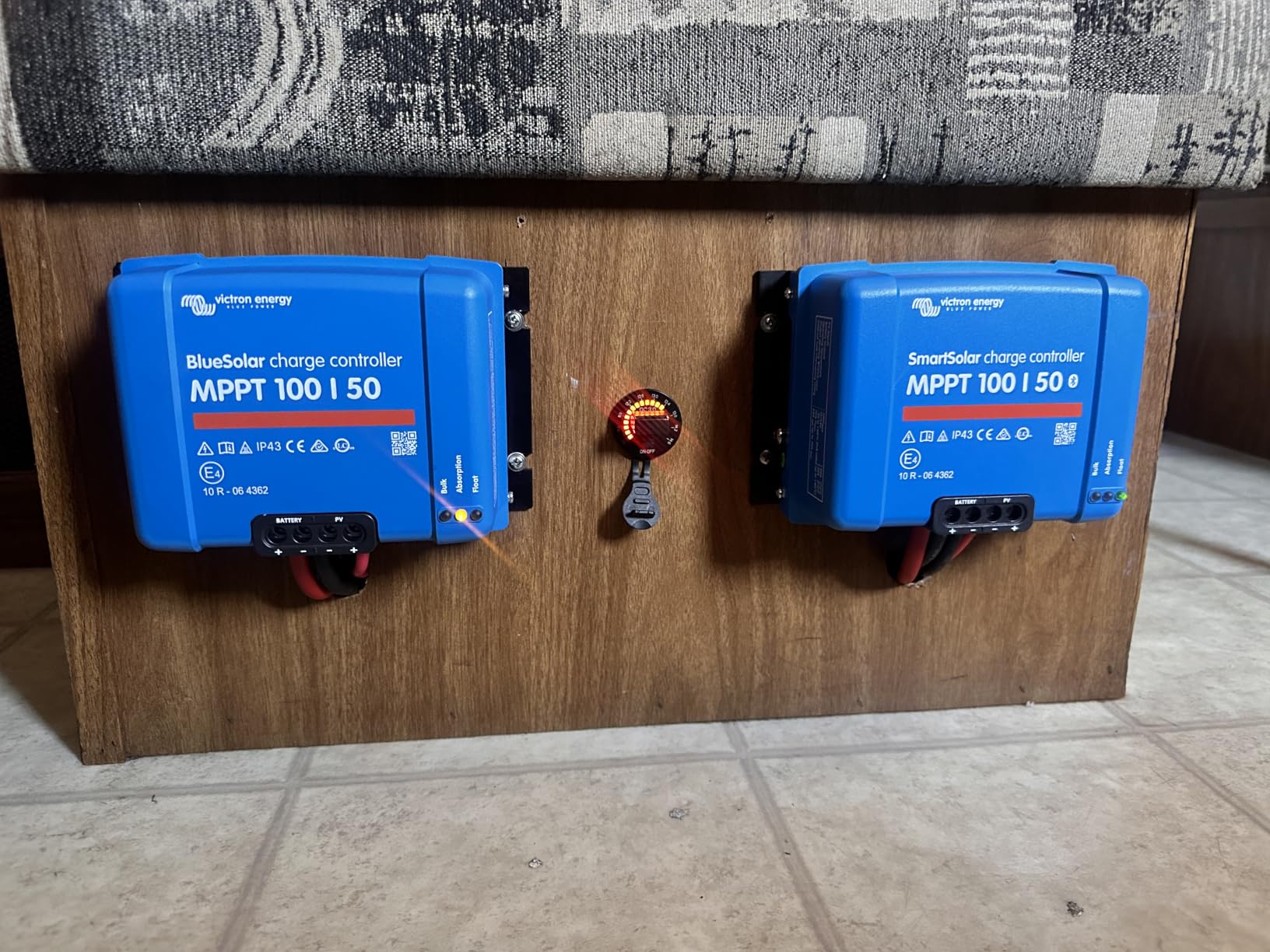
Power and amperage. Traditional portable systems pull roughly 500W to 1,200W or more, which is why the consensus on the Forest River Forums is to run them from a separate 15 or 20 amp campground pedestal circuit rather than off the RV’s own 30 amp service. 12V DC rooftop systems avoid the problem entirely at the cost of lower capacity.
BTU capacity against RV class. 5,000 to 6,000 BTU handles pop-ups, van interiors and spot cooling. It cannot chill a 30-foot motorhome in high heat, and community sizing guides say so plainly.
Roof opening fit. Five of the ten systems below need a roof opening close to 14 inches square. Measure before you buy, and check your roof thickness against the included hardware.
Noise floor. Anything under 50 dB matters because your head is three feet from the machine. Advertised figures are measured at the unit, not at the pillow, so treat them as a floor rather than a promise.
Top 3 Picks for Best Portable Air Conditioners for RVs in 2026

OutEquip Summit 2 12V Rooftop
- 10000 BTU 12V DC rooftop
- 4500 BTU PTC heater
- 45 lb at 6.3 in tall
- 40 dB brushless fans

countrymod 10000 BTU Inverter Rooftop
- 300-900W variable inverter draw
- About 0.3 kWh per hour
- 44 dB sleep mode
- Fits 14x14 in roof vent

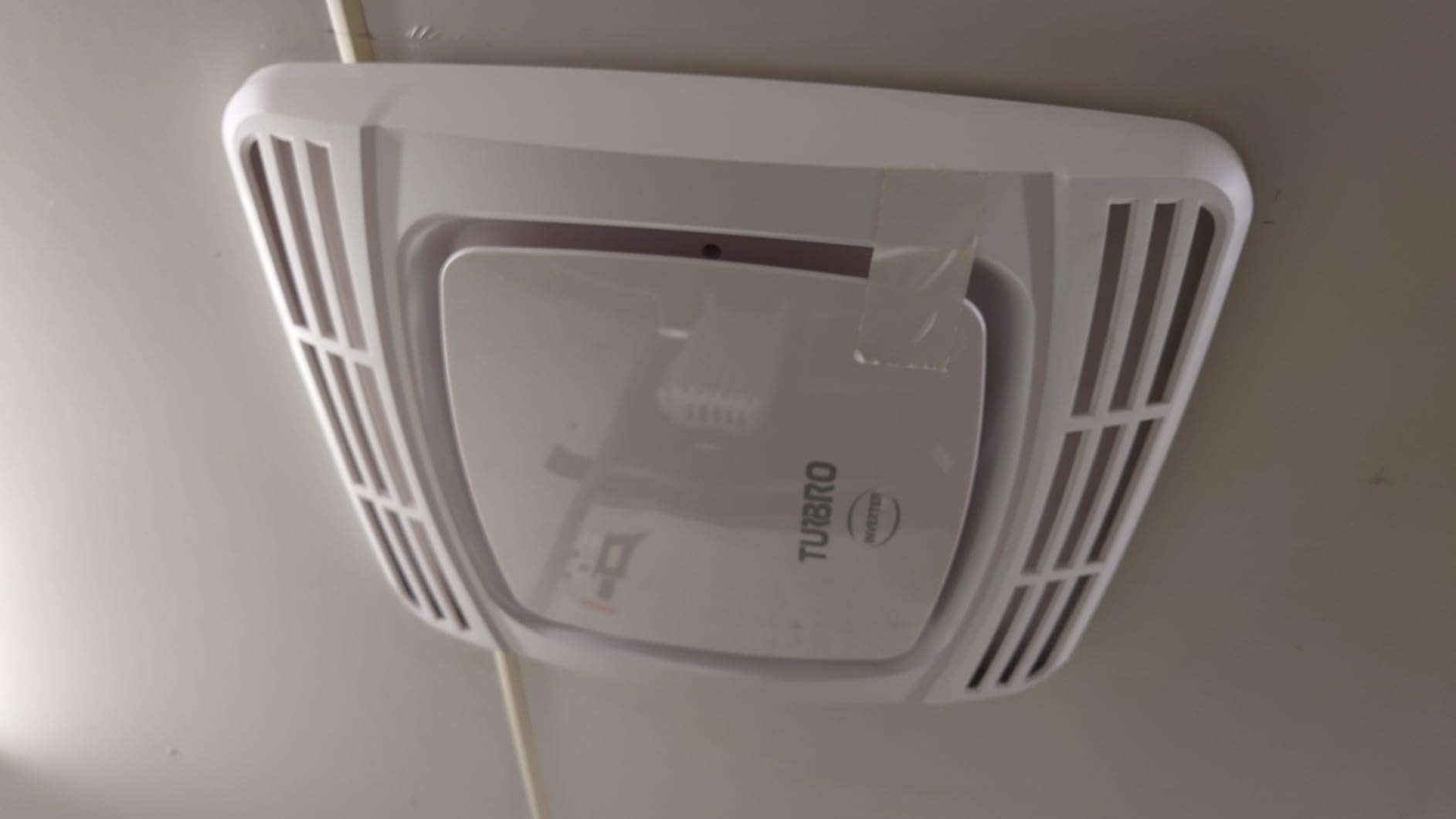
TURBRO GL14V 13.5K Heat Pump
- 13500 BTU cooling and heat pump
- Inverter compressor with soft start
- 10 in slim rooftop body
- R-32 refrigerant
Quick Overview of All 10 Picks
| Product | Specifications | Action |
|---|---|---|
| OutEquip Summit 2 12V Rooftop |
|
Check Latest Price |
| countrymod 10000 BTU Inverter Rooftop |
|
Check Latest Price |
 Gidrox RX55 12V Rooftop Gidrox RX55 12V Rooftop |
|
Check Latest Price |
| TURBRO GL14V 13.5K Heat Pump |
|
Check Latest Price |
 Cybertake S2 Pro Portable Cybertake S2 Pro Portable |
|
Check Latest Price |
 Aspligo 10500 BTU Truck Rooftop Aspligo 10500 BTU Truck Rooftop |
|
Check Latest Price |
 ICECOSMOS CH-12V PRO ICECOSMOS CH-12V PRO |
|
Check Latest Price |
 UAHKPA 9000 BTU 12V Split UAHKPA 9000 BTU 12V Split |
|
Check Latest Price |
 Somokg 11000 BTU Rooftop Somokg 11000 BTU Rooftop |
|
Check Latest Price |
 COSTWAY 6500 BTU RV Window AC COSTWAY 6500 BTU RV Window AC |
|
Check Latest Price |
Dual-Hose vs Single-Hose: Why It Matters Most in an RV
Yes, dual-hose systems work better in a camper, and the mechanism is worth understanding before you spend anything. A single-hose portable blows warm cabin air out through one exhaust hose while drawing fresh air in through the same hose to feed its condenser. Because the air going out exceeds the air coming back, the cabin sits at negative pressure. Every gap becomes an inlet, and a camper is built from dozens of gaps: slide-out seals, the slider window frame, the plumbing vent, the roof edge.
The practical result, repeatedly described on r/RVLiving, is that a single-hose portable in a small RV ends up fighting the leak it just created. That is also why one popular r/AirConditioners thread asks whether dual-hose still helps when the inside is hotter than the outside. It does, because the dual-hose configuration draws a separate stream of outside air for the condenser and exhausts a second stream, so the sealed cabin neither pressurizes nor depressurizes.
There is a documented failure case worth knowing. A ProMaster Forum owner fitted an 8,000 BTU single-hose portable and watched the van temperature climb rather than fall, then tried a 12,000 BTU single-hose with similar results before moving to a roof-mounted system. If your only experience with a portable has been a unit like that, the problem may be the hosing and the sizing rather than the machine itself.
The iRV2 forums offer the fair counterpoint: a single-hose system has more internal air volume to work with in a large space, so it can hold up better there. The rule of thumb we use is simple. Small van, pop-up, truck sleeper, Class C under about 25 feet means dual-hose or a rooftop box. A large trailer with real internal volume gives you more room to compromise, and in that case capacity becomes the limiting factor instead.
One of the ten systems below, the Cybertake S2 Pro, is a genuine carry-in portable, and the rest are rooftop, window, or split designs. That is not a gap in the research. It is a deliberate call, and the reason is the section above.
1. OutEquip Summit 2 12V Rooftop – Best Overall for RVs
RV Air Conditioner, 12V 10000 BTU Rooftop Air Conditioner for RVs, Trucks, Vans, Campers, Tractor, Low Profile Quiet AC Unit(w/heater)
10000 BTU rooftop 12V DC
4500 BTU PTC heater
45 lb at 6.3 in tall
40 dB brushless fans
Pros
- 45 pounds is a genuine one-person roof lift
- Runs on 12V DC with no inverter
- 40 dB once the compressor ramps
- Remote with eco sleep and turbo modes
Cons
- Newer circuit board overshoots set temperature by about 18F
- Button beep is loud in a small cabin
- Wiring routes externally by default
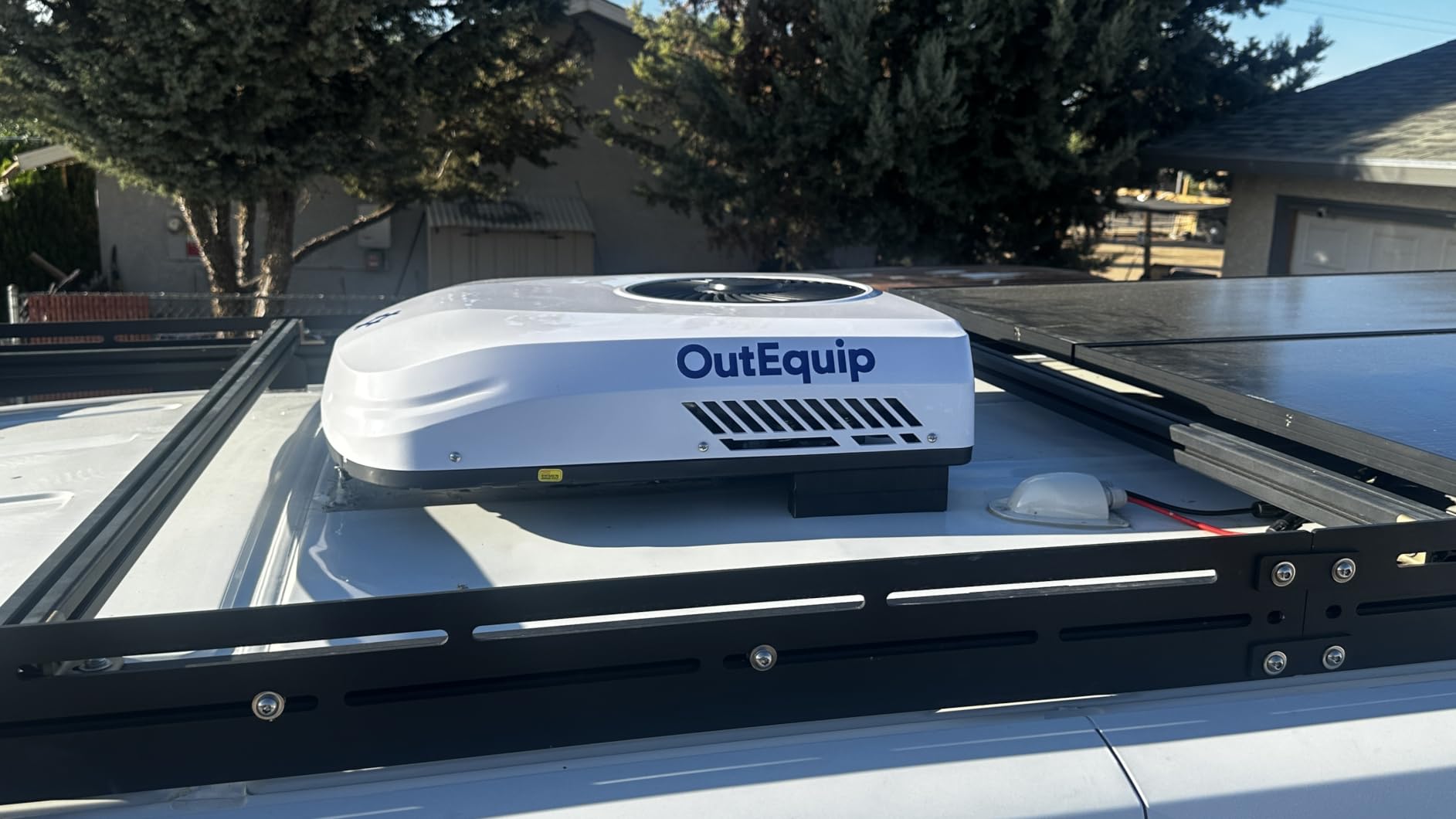
The Summit 2 is the rooftop we would put on our own rig, and the reason is simple physics rather than a spec sheet race. It runs directly on 12V DC, so there is no inverter to size, no generator to carry and no shore power dependency. Owners report cooling a camper van quickly even on an install day around 90 degrees, and the 6.3 inch body at 45 pounds is genuinely liftable by one person onto a roof, which matters more than it sounds when you are alone at a campground.
The build quality details are the right ones. UV-stabilized ABS, an EPDM foam gasket and a zinc-coated condenser are what actually decide whether a rooftop box survives five seasons of sun and rain. Brushless copper motor fans cut noise, and spring-supported mounts take vibration out of the drivetrain feel.
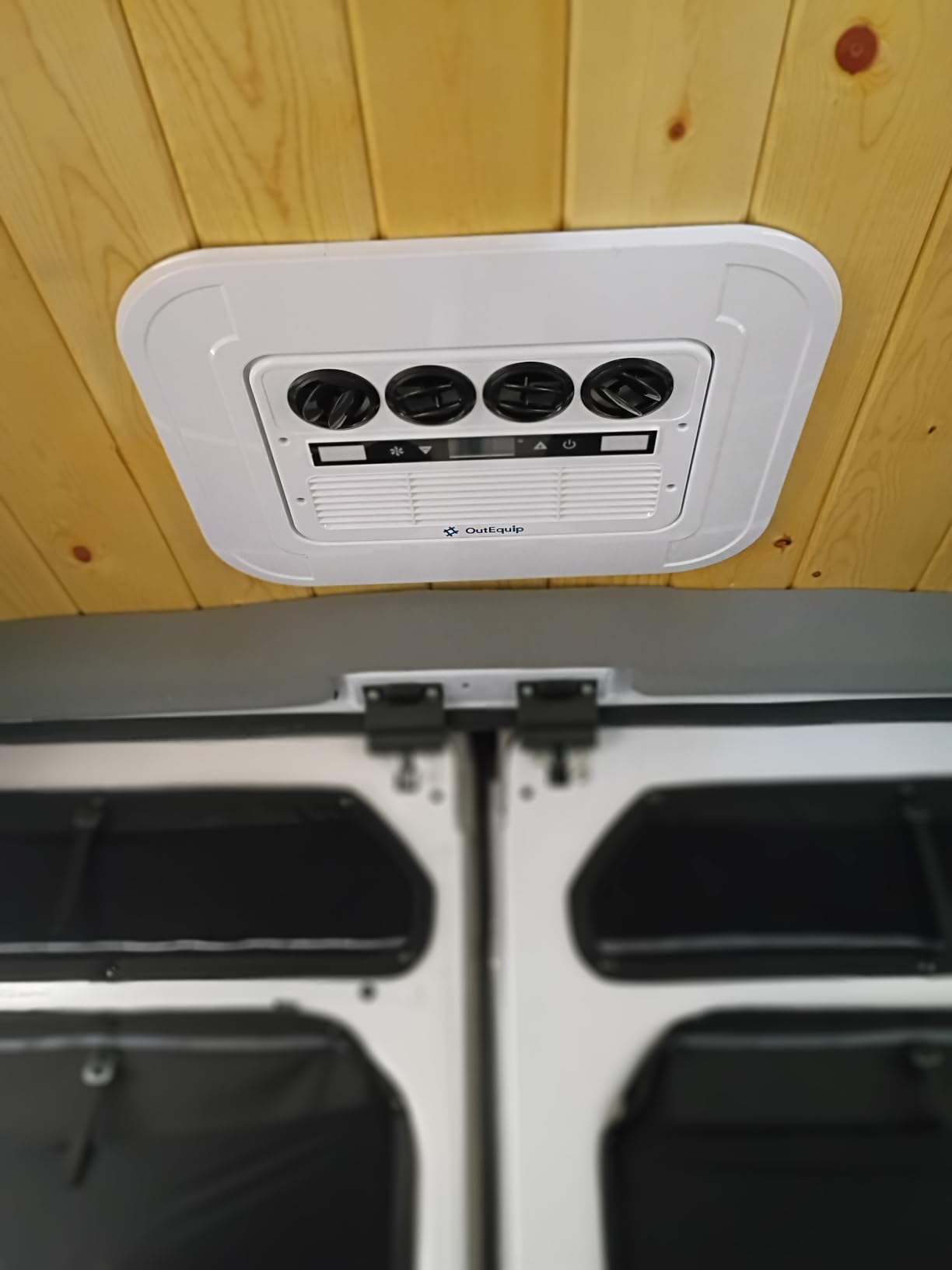
The one serious complaint runs through owner reports: a newer circuit board revision overshoots the set temperature by roughly 18 degrees Fahrenheit, which stretches out run cycles in a small camper. The good news is that several owners report the manufacturer shipping the earlier board free of charge. Two smaller frictions also come up. The button-press beep is loud in a tight cabin and can be silenced with tape over the speaker, and the wiring routes externally by default, so re-route it through the air intake for a clean install.
Spec-wise, the panel lists 10,000 BTU of cooling, a rotary scroll compressor, a 4,500 BTU PTC heating element, 40 dB noise and remote control with eco, sleep and turbo modes. The heater is worth understanding honestly: it is a comfort supplement for cool mornings, not a cold-weather heat source.
Why it works in an RV
The 12V DC electrical path is the whole argument. On a 30 amp or 50 amp RV service you can also power an induction burner, a microwave and a water heater, and this system does not compete with any of them. On a boondock battery bank with solar, it keeps running with the engine off.
The low 6.3 inch profile also solves a real build problem. Many conversions run out of roof clearance above the bed or over a garage area, and a low box is the difference between installing and not installing.
Where it falls short
Temperature control accuracy on the current board revision is the weak point, and in a small cabin that means longer compressor runs than the numbers suggest. If you are replacing an older rooftop and want the same unit to be a heater in shoulder season, the 4,500 BTU PTC element is underwhelming.
Installation is not plug and play. Plan the wire run and the roof cutout before you start, because the default routing will not match most conversion builds.
2. countrymod 10,000 BTU Inverter Rooftop – Best Value
Countrymod 12V DC RV Air Conditioner 10000 BTU RV AC Unit Low Power Consumption Rooftop RV Air Conditioners with APP Remote for RVs, Camper, Van, Battery Powered
10000 BTU rooftop 12V DC
300-900W inverter draw
0.3 kWh per hour
Sleep mode near 44 dB
Pros
- About one fifth the draw of a 120V rooftop
- Fits the standard 14x14 in roof vent
- 44 dB sleep mode
- Two year manufacturer warranty
Cons
- Mounting bolts too short for roofs over 4 in
- Duct sleeve can run 5/8 in short
- Printed installation directions are thin
This is the pick we point people at when they are replacing a Dometic Penguin II or a GE 15,000 BTU rooftop and are coming from 150 amp compressor draw. Owners replacing those systems consistently report the biggest change is amperage rather than temperature, and the inverter compressor here is rated at a 300W to 900W variable range with roughly 0.3 kWh per hour. That is roughly a fifth of what a comparable 120V rooftop pulls.
The horizontal compressor design with a low center of gravity is a thoughtful touch for a roof-mounted box that has to survive road vibration. Owners also praise steady temperature control with none of the hot-to-cold short cycling that older thermostats produce.
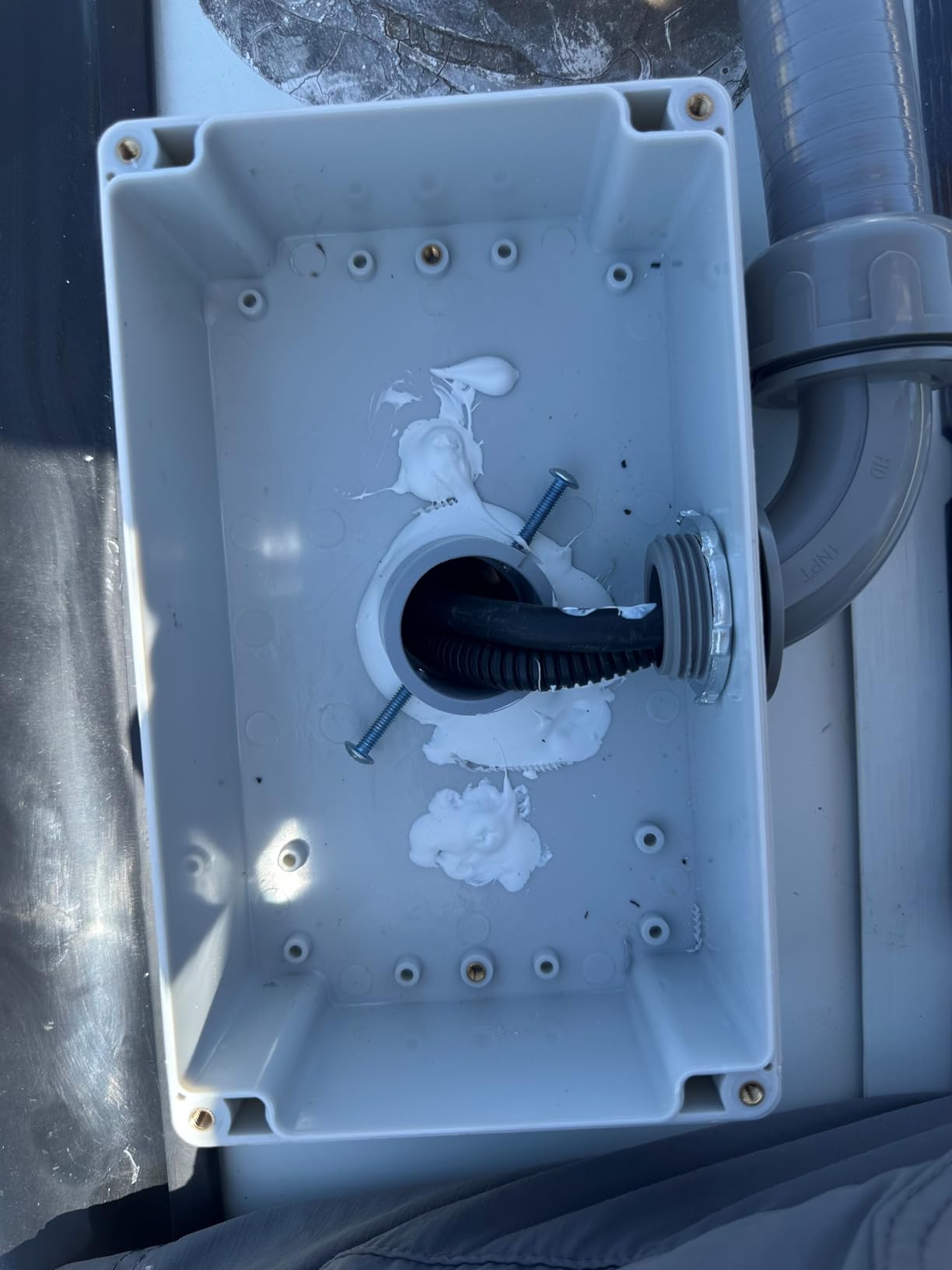
Fit is the deciding factor here. This system drops into a standard 14-inch by 14-inch roof vent, which on many RVs means very little cutting. Two hardware problems recur in owner reports: the factory mounting bolts are too short for roofs thicker than about 4 inches, and the transition sleeve between the duct and the interior cover plate can arrive up to 5/8 inch short. Both are ten-minute fixes with threaded rod, but buy the rod before you are on the roof.
The written directions are described as subpar. There is a QR code that links to video instructions, and customer support gets consistent praise, including a named representative who handles troubleshooting and replacement parts.
Why it works in an RV
The 0.3 kWh per hour figure is the number that changes trip planning. On a 300Ah lithium bank at 12V, you have roughly 3,840 watt hours before you touch anything else, which turns an all-night run from a fantasy into arithmetic.
It also handles the RV duct opening without a rebuild, so there is little cutting on rigs that already carry a standard vent.
Where it falls short
10,000 BTU is honest capacity for a Class C or a small Class A bedroom, and owner reports are clear that it falls short of cooling a large travel trailer in high ambient temperatures. If you are replacing a 15,000 BTU rooftop, you are stepping down in raw output.
On roofs thicker than 4 inches, plan to source longer threaded rod and a longer duct sleeve before the install day, not during it.
3. Gidrox RX55 12V Rooftop – Best for Small Builds
Gidrox 10000 BTU 12V DC RV Air Conditioner – Battery Powered, Low Power Consumption, Ultra Quiet & Fast Cooling Upgraded Rooftop AC Unit with APP Remote for Camper Van and Truck (Cooling Only)
10000 BTU 12V DC rooftop
250W dehumidify to 700W turbo
40 dB sleep mode
59 lb
Pros
- 250W dehumidify and 350W eco draw
- One owner ran a week on 800W solar
- Works as a second bedroom-only system
- Fits a 14x14 in cutout with cable included
Cons
- Eco set point fixed at 79F
- Cycles on and off outside eco mode
- 10000 BTU is light for a 30 ft camper
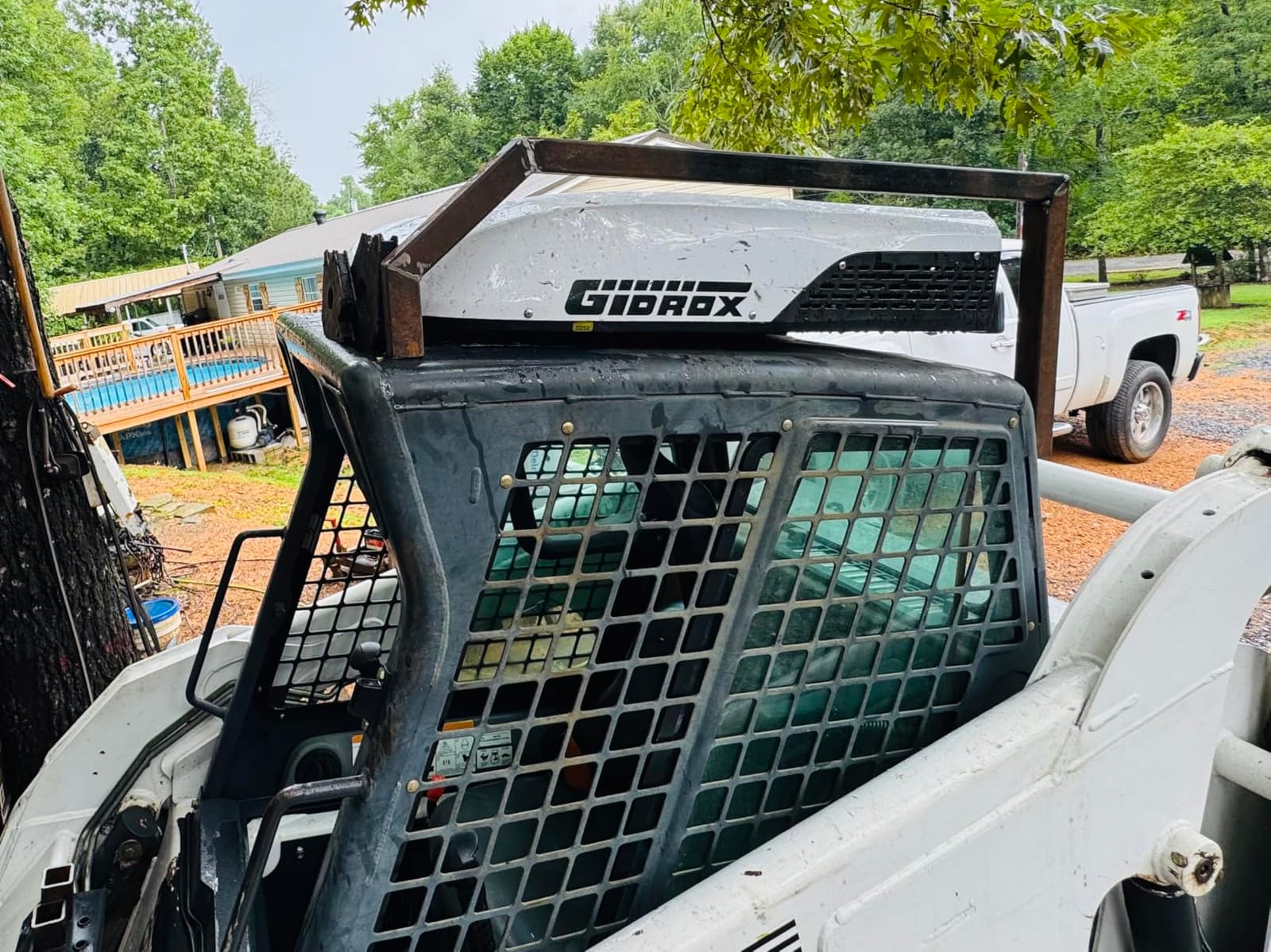
The RX55 publishes power figures broken down by mode, which is rare in this category, and they read more like measurements than marketing: roughly 250W in dehumidify, 350W in eco, 420W in cooling and 650W to 700W in turbo. One owner ran it for a week straight on 800W of portable solar with a 600Ah bank. That is the sort of data you can actually plan a boondocking trip around.
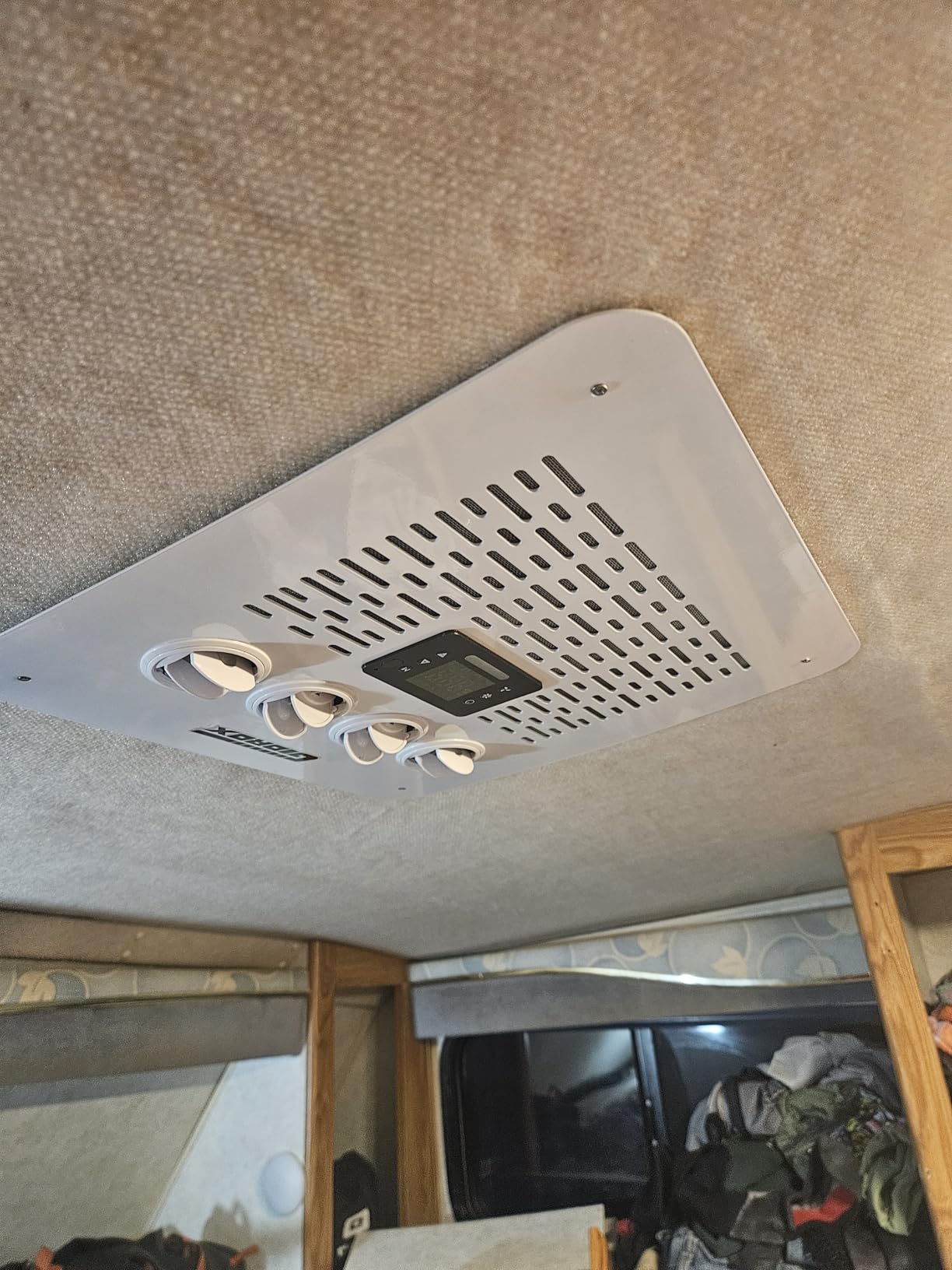
Control options are generous for a rooftop box: Bluetooth app, infrared remote and a physical panel, with timers and a C to F toggle. The 40 dB sleep mode with a brushless fan and sound insulation is among the quietest figures here, and the installation kit includes a 19.7 foot power cable and all mounting hardware.
The weakness is the interface, not the cooling. The eco mode uses a fixed 79 degree set point with no adjustable low-voltage cutoff, and outside eco the system cycles on and off rather than ramping. On a large camper that cycling is visible; on a van or truck camper with a smaller thermal load it settles down quickly.
Fit is limited to a 14-inch by 14-inch cutout for roof thickness between 1.5 and 3.5 inches. One owner had a mounting bolt insert pull out of the roof mount during installation, and the manual is vague on wiring and all-thread mounting, so have a second pair of hands and a printed plan.
Why it works in an RV
The measured draw makes this one of the most boondocking-friendly rooftops here. If your battery bank is 400Ah or more and you carry 400W to 800W of solar, the runtime math stops being theoretical.
It also works well as a second system for a rear bedroom in a larger camper, which is a smarter use of 10,000 BTU than trying to condition the whole coach from one box.
Where it falls short
10,000 BTU is genuinely weak for a 30-foot camper, and several buyers on record say they would need two systems rather than one. The fixed eco set point also means you cannot tune the low end for a sleeping occupant in a small cabin.
Roof thickness above 3.5 inches needs a different plan. This is a van and truck camper install, not a full-depth Class A roof.
4. TURBRO GL14V 13,500 BTU Heat Pump – Premium Pick
TURBRO Inverter 13.5K BTU RV Air Conditioner with Cooling and Heat Pump
13500 BTU cooling and heat pump
115V AC at 1440W
52 dB
10 in slim rooftop body
Pros
- Holds 74F inside during 107F outdoors
- Drop-in for 13500 and 15000 BTU rooftops
- Soft start runs on a small inverter generator
- Inverter control removes hot and cold spikes
Cons
- Blower runs continuously with no fan-off setting
- Onboard thermostat sits beside the cold outlet
- Included foam covers 3.9 in of a 5 in roof
If your coach is large enough that 10,000 BTU is a compromise, this is where the compromises end. 13,500 BTU of cooling and the same figure in heat pump mode, on 115V AC at 1,440W, with an operating range from 19.4 to 109.4 degrees. One owner reports holding 74 degrees inside while it was 107 degrees outside, and that is the kind of result that decides the question in a large motorhome.
The inverter compressor is rated up to 30 percent more efficient than a non-inverter system, with automatic speed adjustment and soft start. Several owners run it from solar and battery banks, and the soft start is what allows it to run on a small inverter generator in eco mode.
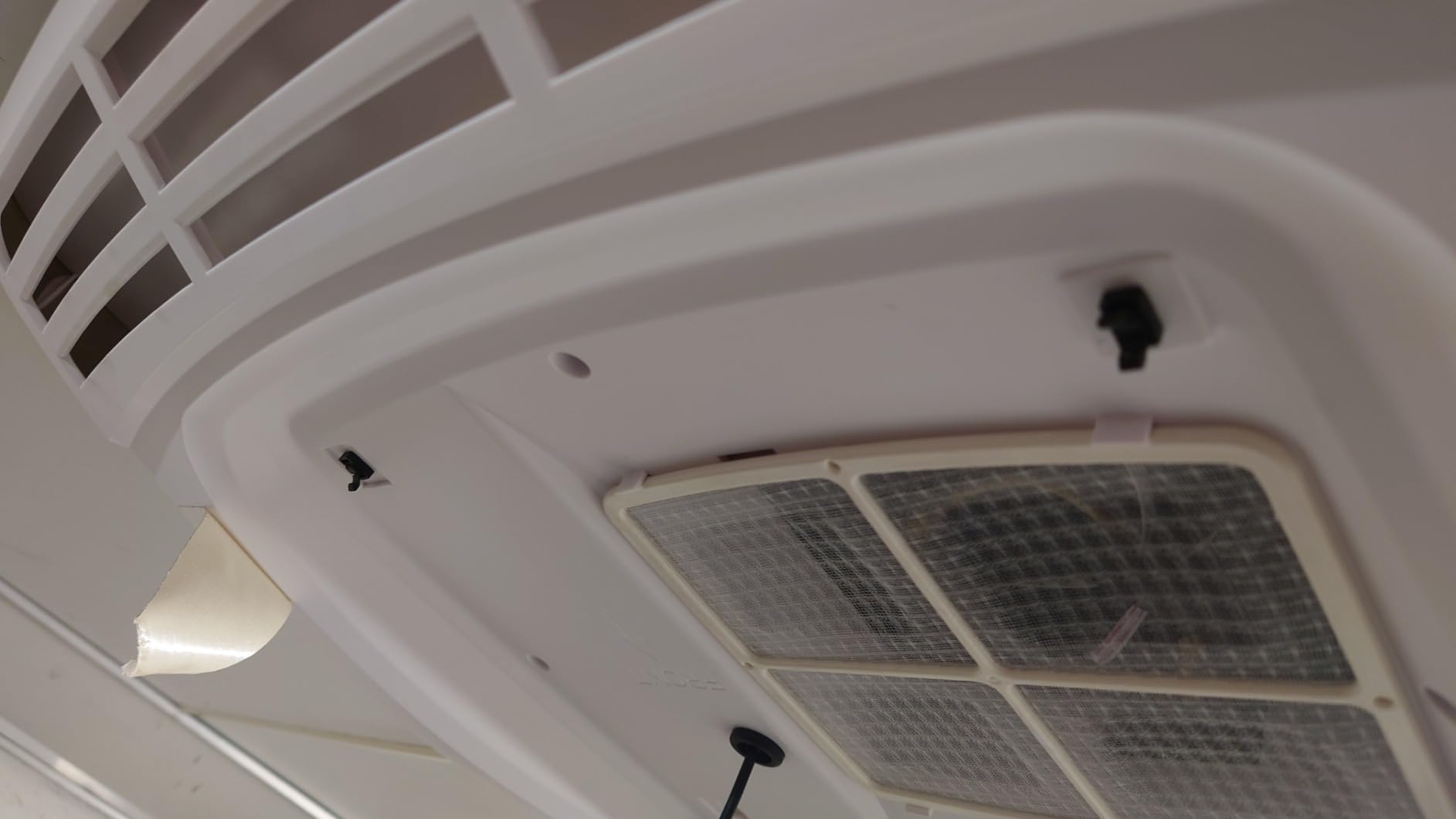
It is also close to a genuine drop-in replacement for common 13,500 and 15,000 BTU rooftops, with installs reported at around an hour, and the 10 inch body is up to 35 percent thinner than competing products. That matters for aerodynamic drag on a tall Class A.
Three real defects show up in owner reports. The internal blower runs continuously once the set temperature is reached, with no fan-off setting. The on-board thermostat sensor sits next to the cold air outlet and reads well below actual room temperature, which keeps the compressor from ramping down. And the included duct sponge covers only up to 3.9 inches of roof thickness, short of the 5 inches typical of RV roofs, with extra foam sold separately.
Why it works in an RV
It is the only system here with matching 13,500 BTU heating and cooling figures, and for shoulder-season desert travel that is a genuine second season of use. The soft start also means it will not trip a shore power breaker the way a fixed-speed compressor can.
The 14.25 inch roof opening with modular ducting covers most Class A and travel trailer standard vents, and the 10 inch profile preserves clearance over a bed or garage.
Where it falls short
At 1,440W on 115V AC, this is a shore power and generator machine, not a battery machine. Plan a dedicated circuit rather than sharing with a microwave or water heater.
The blower-never-stops behavior and the mispositioned thermostat are worth fixing before a long trip. Buy the extra duct foam in advance, because 3.9 inches will not seal a typical RV roof.
5. Cybertake S2 Pro Portable – Best Carry-In Option
Cybertake S2 Pro Portable Camping Air Conditioner, Tent AC with 5100 BTU Cooling and 6100 BTU Heating, 8 Hours on 1kWh, 3-Way Power(48V DC, 12-24V Vehicle, 100V-240V Wall), Ideal for Tent, Camping, RV
5100 BTU cool and 6100 BTU heat
48V DC and 12-24V and wall
Eco+ 1kWh per 8 hours
Pros
- Runs off standard portable power stations
- Blows genuinely cold air for a portable
- Quiet in eco mode
- Sets up in about 30 seconds
Cons
- 8 hour claim is optimistic outside eco
- App is unreliable and off the standard stores
- Coils are nearly impossible to clean
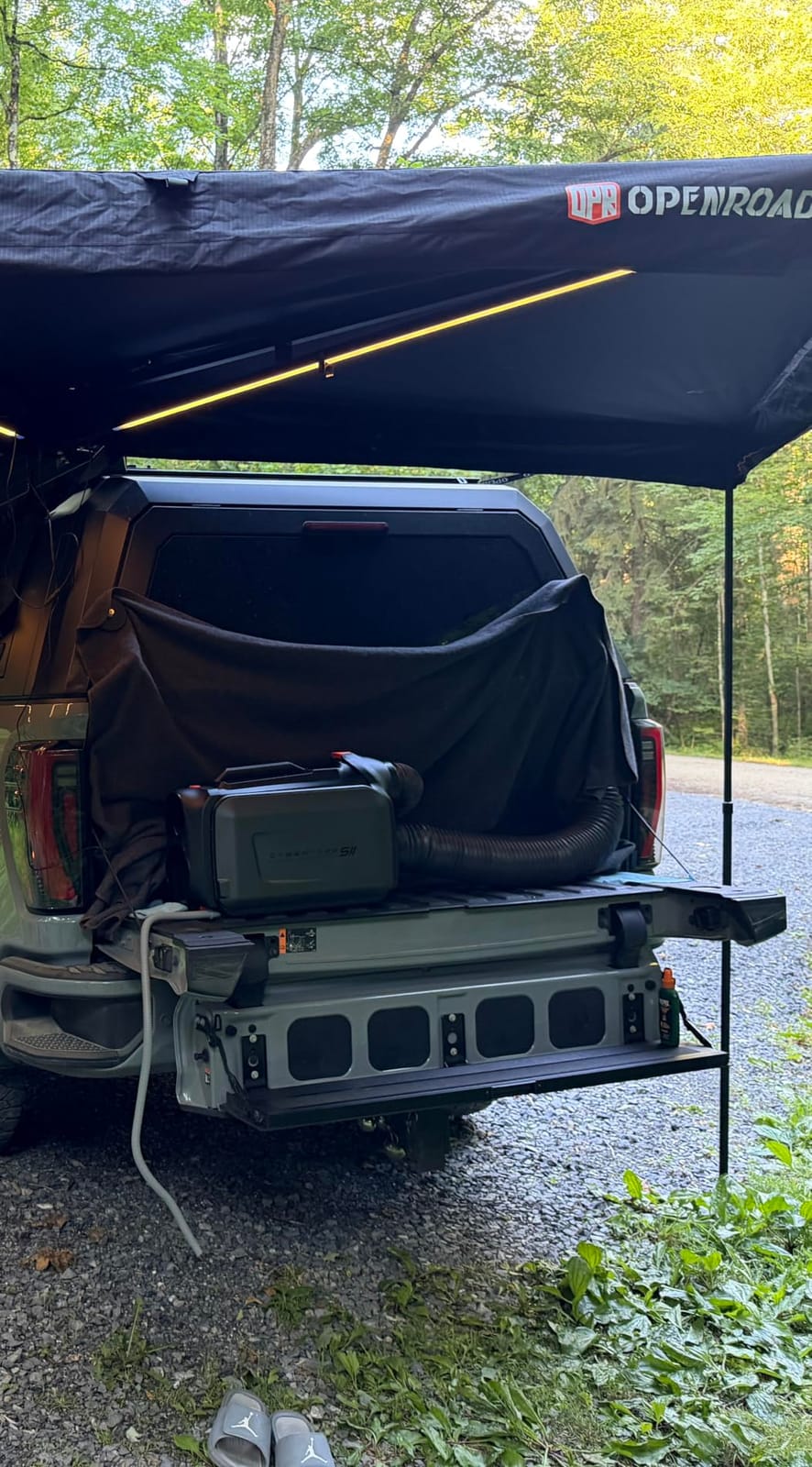
This is the one true carry-in portable in the roundup, and it earns its place on a specific basis: three-way power. It runs on a 100-240V wall outlet, on 12V or 24V from a vehicle or RV, or on 48V DC from a portable power station, with a boost converter sold separately. It works with off-the-shelf power stations rather than a proprietary battery ecosystem, which is the detail that matters for boondockers.
Capacity is 5,100 BTU cooling and 6,100 BTU heating for spaces up to 130 square feet, from 60 to 90 degrees, across a 41 to 113 degree ambient range. Four modes, three fan speeds, a 0 to 12 hour timer, and a 40 dB whisper level with an IPX4 water-resistant shell. Setup with the included hoses and adapters takes about 30 seconds.
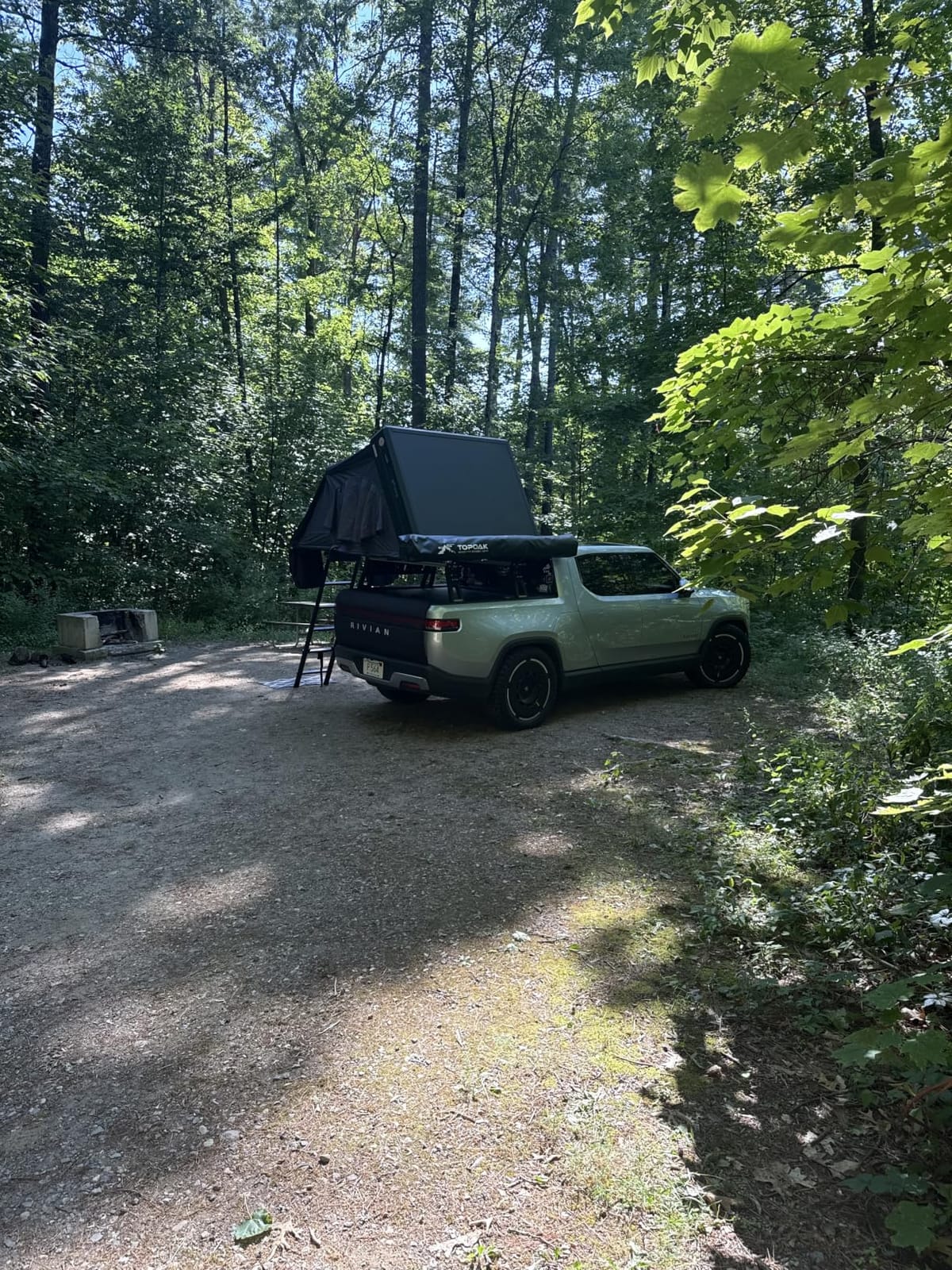
The rating is the lowest in this group at 3.5 across 58 reviews, and the split in those reviews is informative. Enthusiasm clusters around portability, cold-air output and eco-mode efficiency. Frustration clusters around power draw, app connectivity and durability, including reports of compressor or screen failures within days alongside slow vendor response.
The 8 hours per 1kWh figure is eco-mode only, and owners say it is optimistic outside eco. Several also note the rear of the system runs hot, so it works best ducted from outside rather than sitting inside a small vehicle, and the coils are close to impossible to clean, which shows up as reduced performance in coastal heat above roughly 90 degrees.
Why it works in an RV
It is genuinely the only system here you can move between a tent, a truck bed and a van without a roof cutout. For a mid-bunk spot cool or a pet area, the 130 square foot rating is a reasonable match.
The 12V and 24V vehicle input means it will run from an RV house battery with a pure DC connection, which sidesteps the inverter question entirely on smaller banks.
Where it falls short
This is the negative-pressure problem in its purest form, and at 5,100 BTU in a small cabin the effect is hard to ignore. Treat it as a spot cooler or a tent and van solution, not as the primary cooling for a camper.
The remote and the 12V-to-48V boost controller are separate purchases, the app is unreliable, and reliability reports are mixed enough that we would not build a trip plan around it as the only cooling you have.
6. Aspligo 10,500 BTU Truck Rooftop – Best for Sleeper Cabs
12V DC Air Conditioner Truck Air Conditioner for Rvs, Trucks, Construction Vehicles etc, Electric Split Parking A/C Silent Air Outlet Fast Cooling 10500BTU
10500 BTU 12V DC rooftop
About 400W at full setting
Low voltage protection
40 dB evaporator
Pros
- One owner logged 11 hours of cooling in Arizona heat
- About 400W draw at maximum on 12V
- Removes the need to idle the engine
- Simple remote with LED display
Cons
- Indoor and outdoor sections are boxed separately
- Auto shop needed to charge the R-134A
- Manual is in Chinese
This one is built for a working truck rather than a weekend camper, and the owner reports read like a long-haul log. The most striking number: 11 hours of cooling logged across a 34-hour Arizona rest stop at 100 degrees average. Several drivers describe it as the change that removed idling from their fuel bill, and multiple multi-month users report zero cooling complaints.
Low voltage protection is a real feature here, since it prevents excessive draw and allows start-without-pressure startup in low power conditions. The silent brushless evaporator is rated at 40 dB, and the remote is a single battery with a clear LED display.
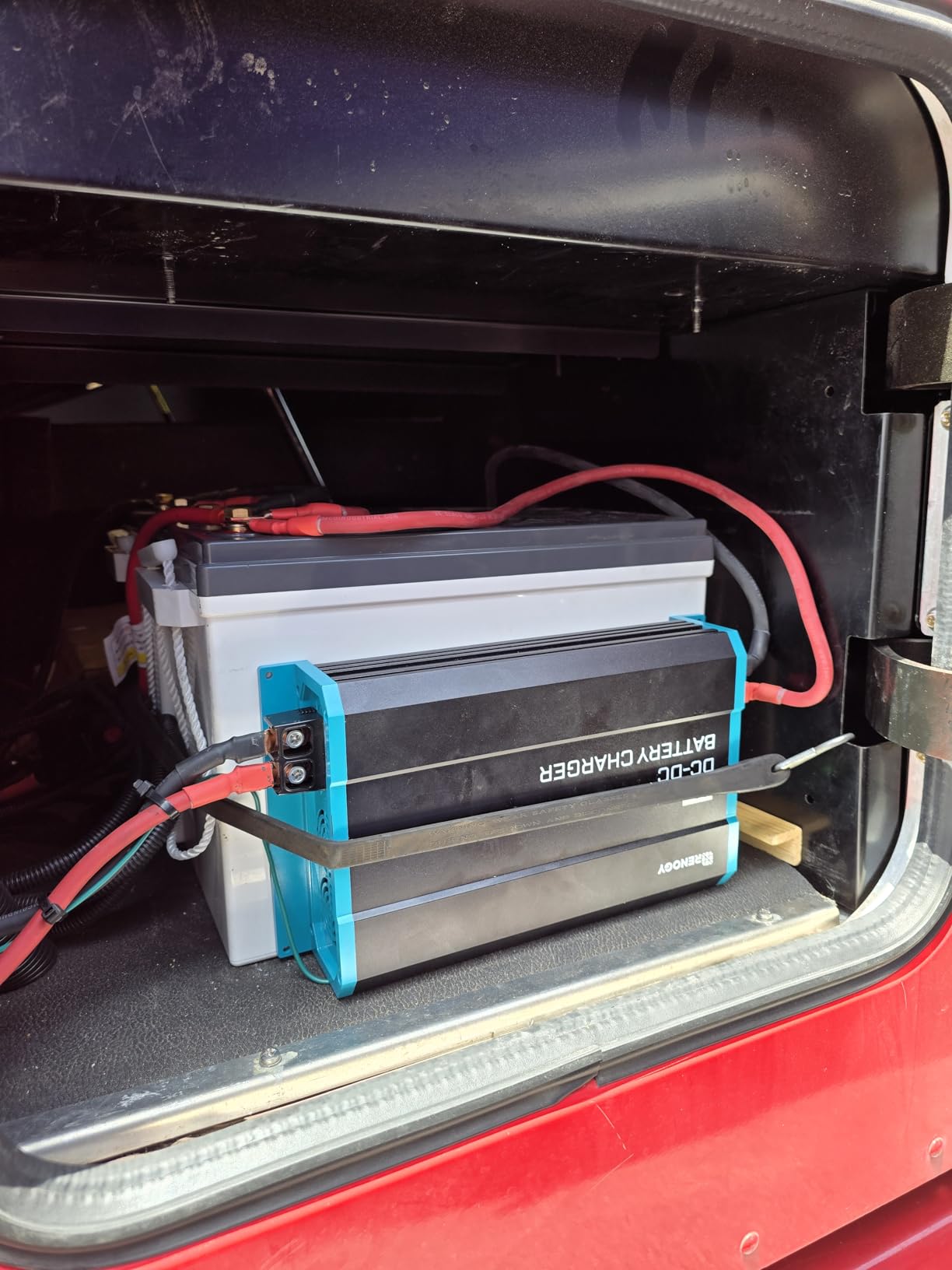
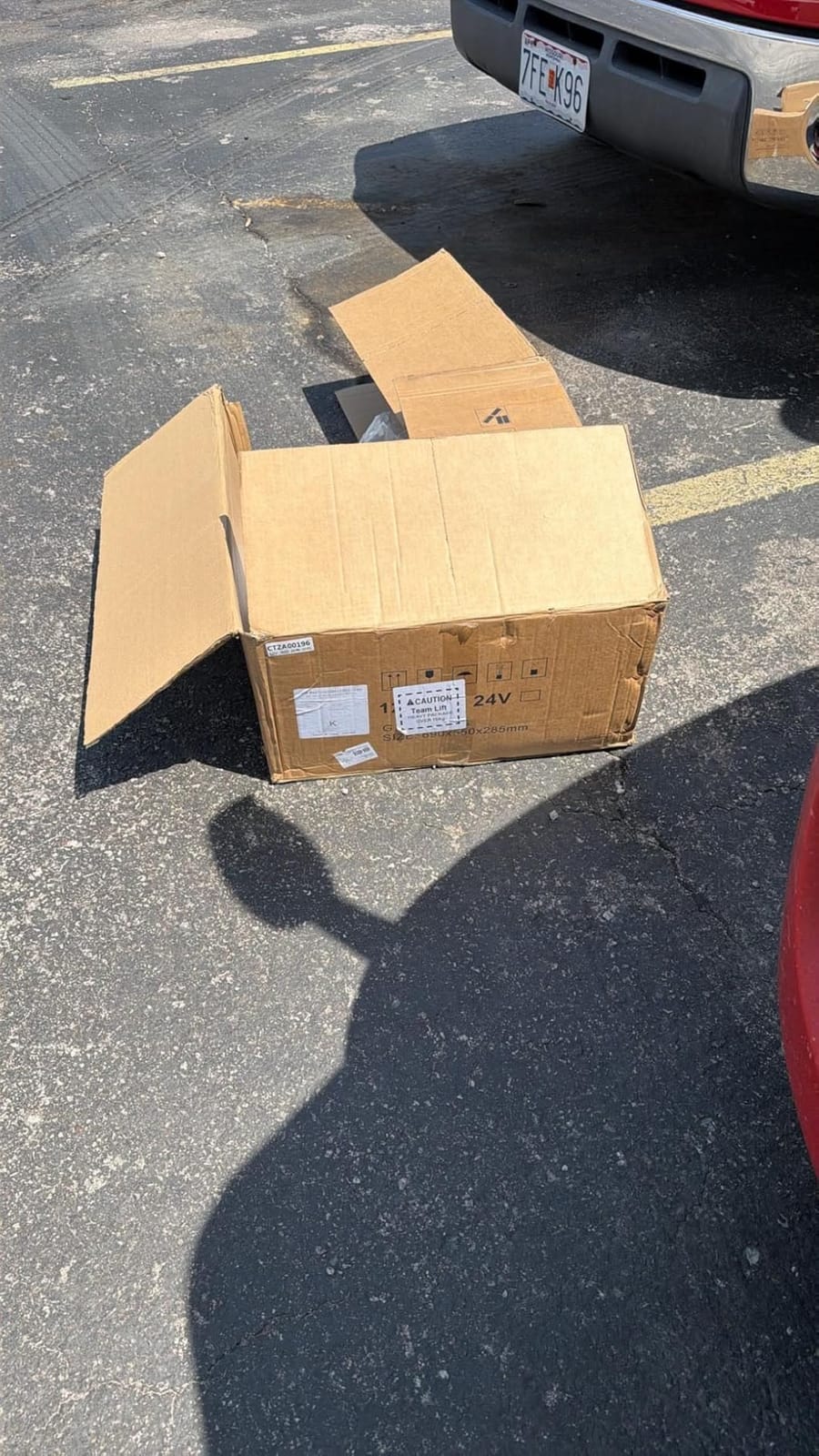
The recurring problems are logistics and hardware, not cooling. Because it is a split system, the indoor and outdoor sections are boxed separately and the set can arrive incomplete. Installation typically requires an auto shop to vacuum test and charge the R-134A system, which is a scheduled appointment, not a weekend project. The manual is in Chinese, and some units have arrived with an incorrect electrical connector between condenser and evaporator.
One reviewer reported a metal shell variant with a mounting screw long enough to drill into the high pressure tube, plus exposed weather-open terminals, so inspect the housing before you mount anything. Another reported a unit eventually blowing only warm air.
Why it works in an RV
At roughly 400W on 12V, this is efficient enough that a well-sized battery bank supports an overnight rest stop without a generator. That is the single most valuable trait for a truck sleeper or a motorhome that boondocks in the Southwest.
It also runs with the vehicle switched off, so you are not burning fuel to stay comfortable while parked.
Where it falls short
You need a shop. If the set arrives incomplete or with the wrong connector, the project stops until parts arrive, and a professional refrigerant charge is part of the job rather than an optional extra.
At 60 pounds this is a two-person roof job, and for a Class C or a camper van it is far more hardware than the space can use well.
7. ICECOSMOS CH-12V PRO – Best Low-Profile Build
ICECOSMOS Ultra-Slim Low-Profile 12V RV Air Conditioner with PTC Heating
10000 BTU 12V DC rooftop
4500 BTU PTC heating
700W inverter draw
5.5 in slim body
Pros
- Under 500W in eco mode and around 800W at full power
- Solo rooftop install at 46 pounds
- Over 12 hours in eco on a 400Ah bank
- Keeps 80 percent output above 113F
Cons
- Only 12 reviews to judge it by
- Roof opening needs filing and notching
- Supplied cable is short for a long battery run
Be careful with this one: a 5.0 rating from 12 reviews is a small sample, and we would treat it accordingly. What the sample does say is consistent. Owners report under 500W in eco mode and around 700W to 800W at full power, against roughly 1,700W for a comparable 120V Coleman rooftop. The claim of over 12 hours of eco running on a 400Ah lithium bank fits that number.
The 5.5 inch body with a reinforced ABS shell reduces wind resistance, which is a genuine benefit on a van conversion with tight roof clearance, and at 46 pounds it is still a one-person install. The IPX6 waterproof fan design and a 39 dB eco mode put it among the quietest figures here, and the PTC heating element is useful on cool mornings.
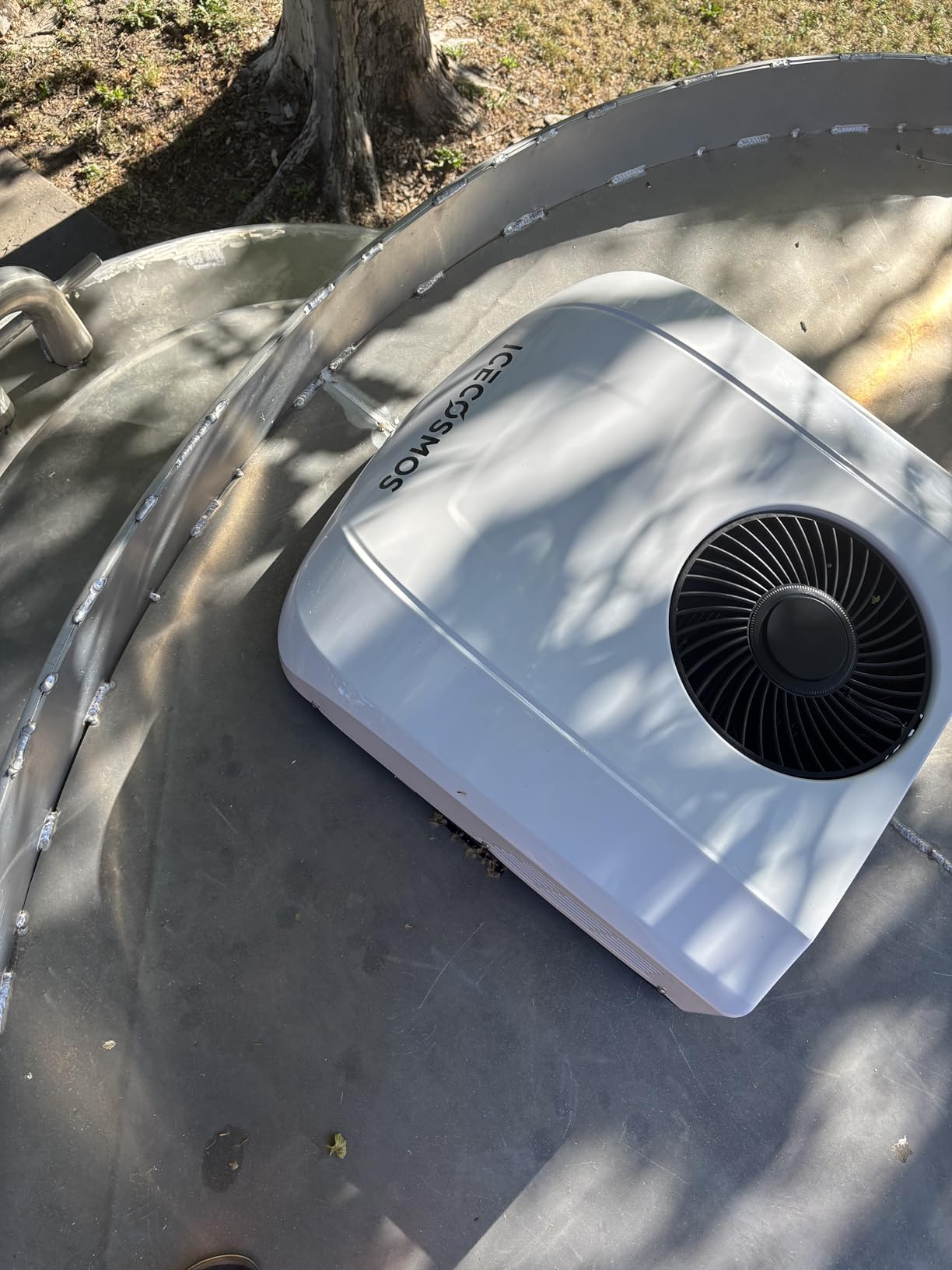
Output is the interesting specification: the manufacturer claims about 15 percent more power than standard models and 80 percent performance retention above 113 degrees, and owners running it 12V-only on a boat or trailer report cold air for days.
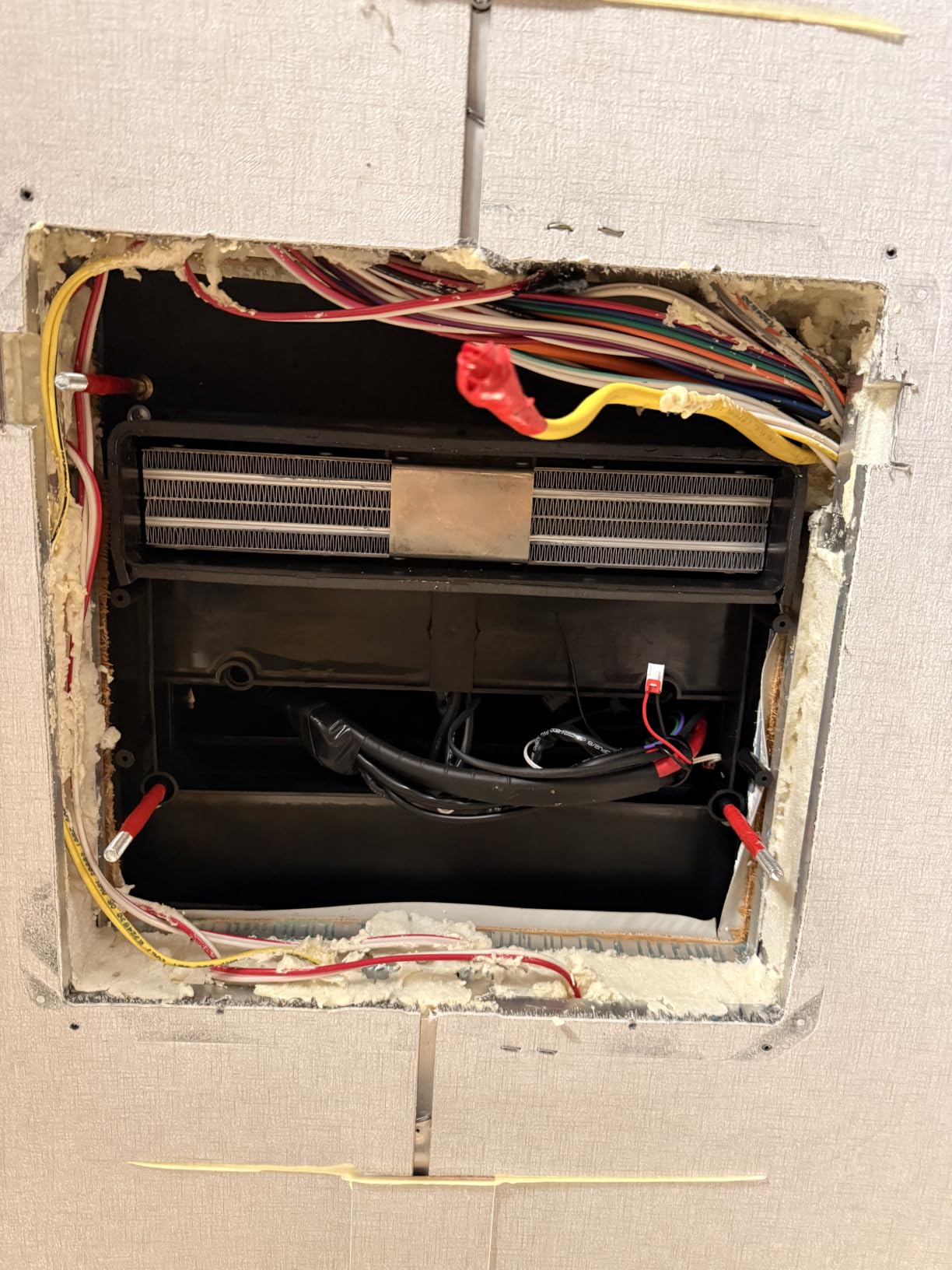
The friction is installation. The 14 by 14 inch roof opening may need filing and notching of the interior ceiling trim before the bolts will ratchet tight, and on a curved or thick roof the sealing cushion has to be trimmed to sit flat. The supplied power cable may be shorter than a full run to a battery bank, so measure first.
Why it works in an RV
The ultra-slim profile solves the clearance problem that stops rooftop installs on van conversions, and the inverter compressor needs no inverter box, which removes a whole failure point from a boondocking build.
Owners on 12V-only setups report running it for days without shore power, and the IPX6 fan design suits exposed rooftop mounting.
Where it falls short
Twelve reviews is a thin record, and 5.0 from a small sample tells you the early owners were happy rather than that it is proven across four seasons. Warranty coverage is one year, the shortest of the 12V group with any meaningful term.
Plan the roof opening work before the install day. Filing interior ceiling trim is the kind of job that turns a one-hour install into a two-hour one.
8. UAHKPA 9,000 BTU 12V Split – Budget Pick
UAHKPA 12V RV air conditioner,split type 9000btu truck air conditioner, suitable for camping vehicles, trucks, RVs, trailers, excavators, vans and other 12V DC AC (12, Volts (DC))
9000 BTU 12V DC split
800W with 75A startup
50 dB
R-134A 600g charge
Pros
- 9000 BTU of 12V DC cooling from a modest 800W
- 800W draw with more than 6 hours of runtime
- Split design frees floor and cabinet space
- Remote panel and app control
Cons
- Warranty is only 60 days
- 75A startup stresses smaller banks
- 50 dB is loud for a sleeping space
- Fixed speed with no inverter compressor
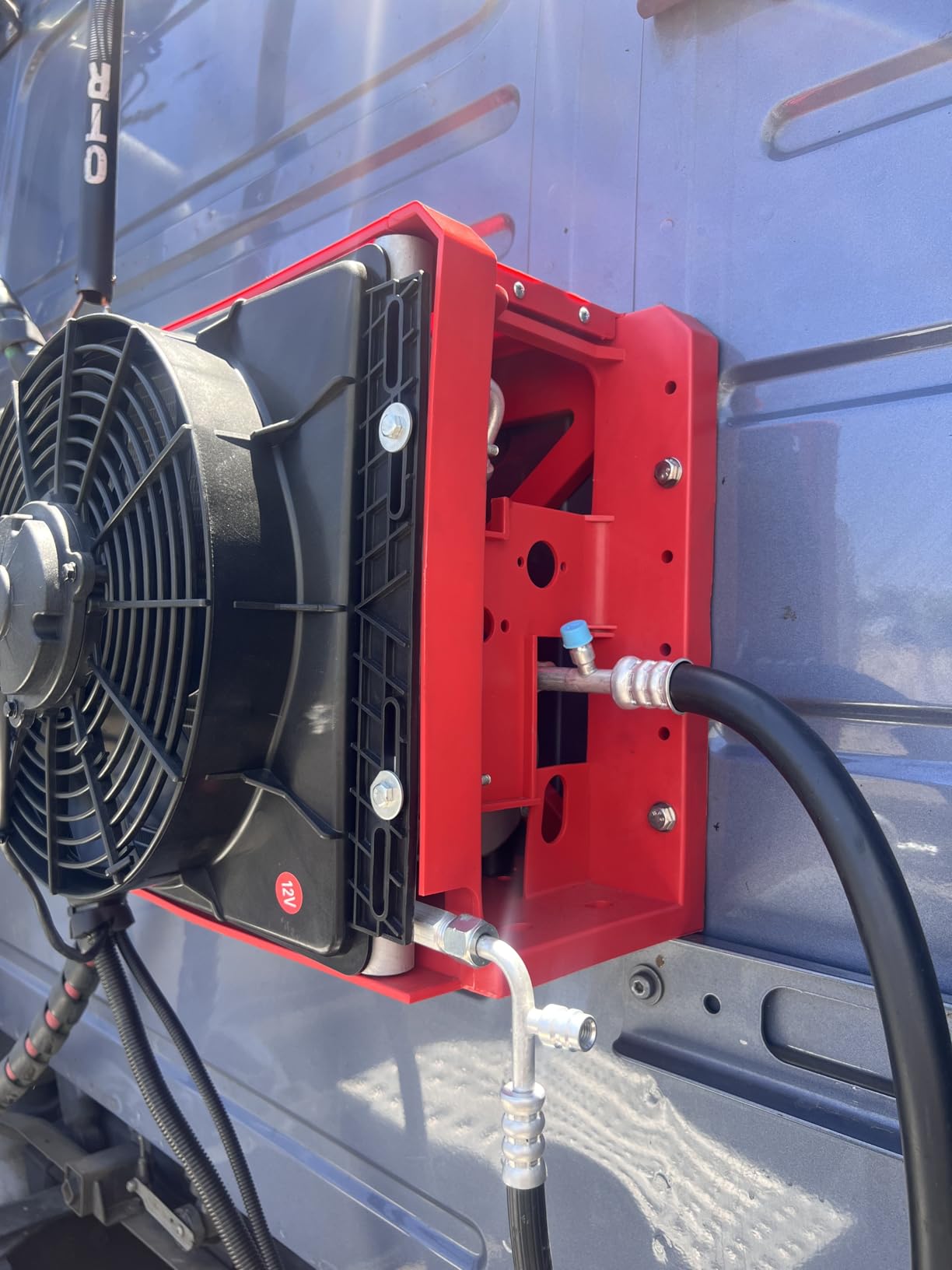
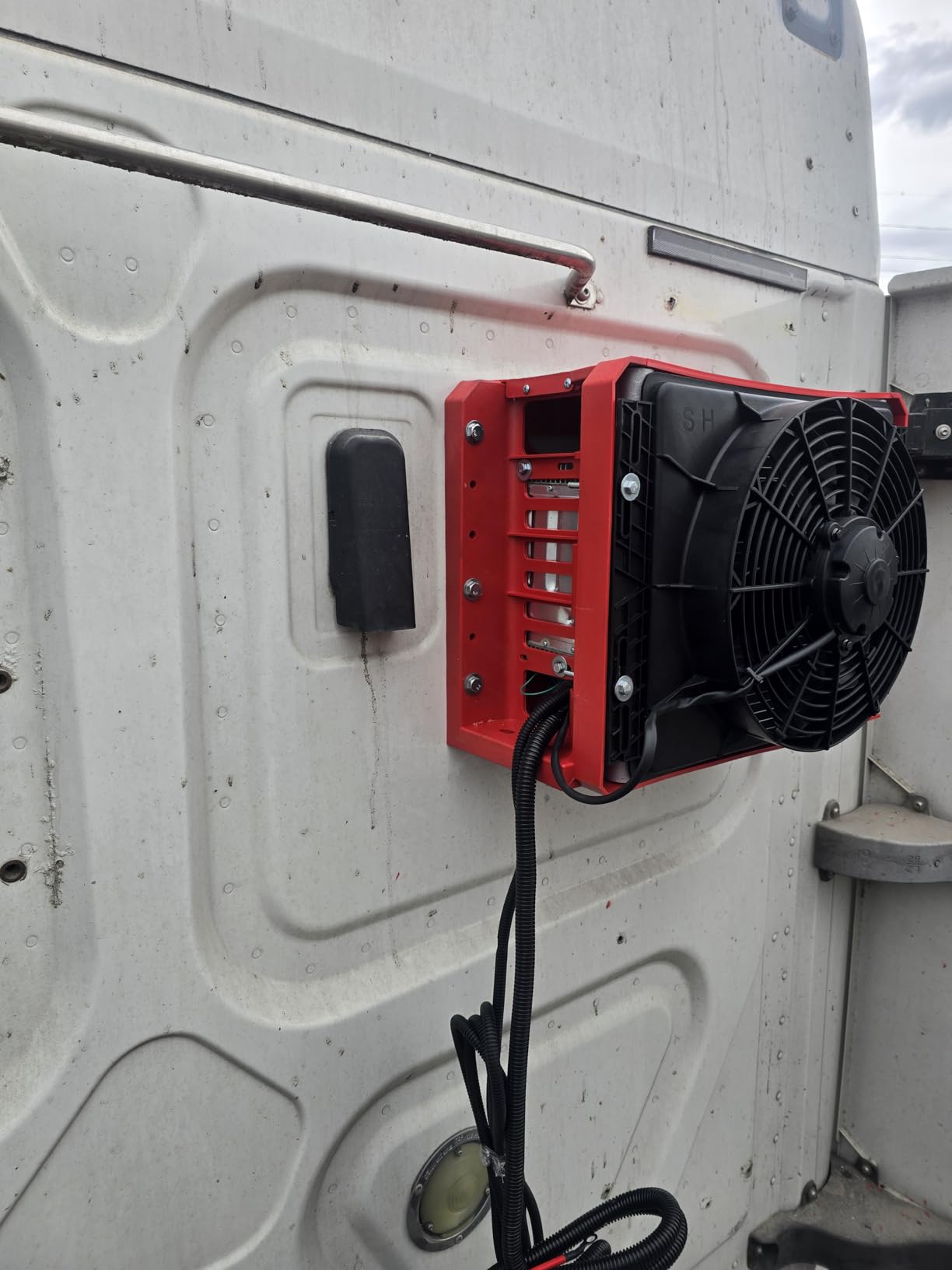
This is an unusually well-equipped way to put real 12V DC cooling into a vehicle, and the spec sheet is thorough for the segment. The listed specifications are 12V, 800W, 9,000 BTU of cooling, an R-134a charge of 600g, 75A starting current and 450 cubic meters per hour of airflow, with five fan speeds, remote and panel control, and a digital display.
The included components list is long and useful: indoor and outdoor units, power cord, high and low voltage pipes, an aluminum joint, adhesive tape, screw accessories and the remote. The thickened hardened shell is built to resist deformation and rust, with hollow side and back vents for heat dissipation.
The rating distribution here is the most polarized in the group, with roughly half of reviews at five stars and about one in five at one star. What the five-star reviewers value is straightforward value and function. What the one-star reviewers focus on is the 60 day warranty, the shortest of anything we reviewed, and the absence of a variable-speed compressor.
The 75A starting current is the practical concern. It is demanding for a smaller battery bank, so this is a two-battery or generator-backed solution rather than a weekend one. The 50 dB rating is on the loud side of this roundup, which matters because you sleep three feet from the system.
Why it works in an RV
The split system design is genuinely useful in a van or a truck cab, where the condenser section can sit outside and the evaporator inside without a roof cutout. That avoids the single largest installation cost in this category.
At 800W with more than six hours of runtime on a sufficiently large battery, it is a workable budget cooling plan for a Class C or a work van.
Where it falls short
A 60 day warranty is the honest reason to hesitate. If the fixed-speed compressor or the refrigerant circuit fails in month three, you are arguing with a seller over a part that most policies in this category cover for years.
Plan your battery bank around the 75A startup current, and expect a quieter solution to be worth the difference if anyone is sleeping nearby.
9. Somokg 11,000 BTU Rooftop – Quietest in the Group
12V RV Air Conditioner | 11000 BTU with Heating | Ultra-Low Power Draw | 43LBS Mini 1-Person DIY Install | Quiet 12 Volt DC Battery Powered Camper AC Unit for Off-Grid Camping, Vans, Trucks, Trailers
11000 BTU cool and 4500 BTU heat
12V DC with soft start
35 dB operation
43 lb
Pros
- Quietest figure in the group at 35 dB
- One person can mount 43 pounds solo
- About 25A on low and 40A on high
- Two year warranty
Cons
- Documentation is very limited
- Compressor may not start below 300Ah
- Vent motor failed on one unit
- Duct extension needed on thicker roofs
If noise is the deciding factor, this is the one. The stable scroll compressor with 360 degree adjustable vents runs at a listed 35 dB, which is the lowest figure across all ten systems here, and the soft non-direct airflow matters as much as the number in a small sleeping area. Measured draw lands around 25 amps on low and 40 amps on high, and the integrated soft start cuts startup surge by 70 percent.
It is also the lightest rooftop in this group by weight. At 6.1 inches tall and 43 pounds it is described by owners as a genuine one-person job, and the hardware kit covers roof thickness from 1.5 to 3.9 inches in a standard 14-inch opening.
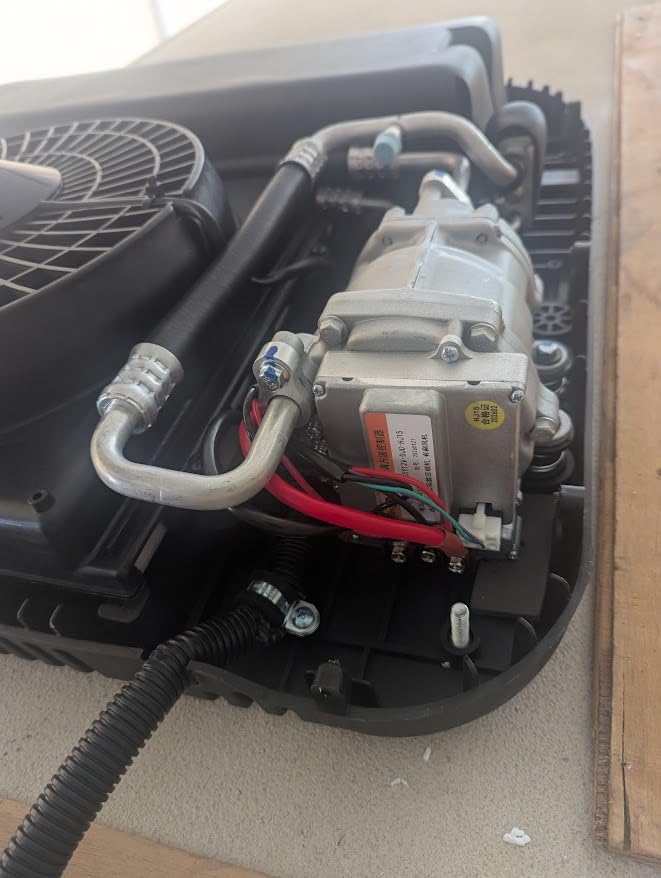
Two owners use it as a second system in a 25 foot Airstream or on a 32 foot sailboat, which is a good indication of how well it fits a small space rather than conditioning a whole coach. The 11,000 BTU of cooling with 4,500 BTU of supplemental heating and six fan speeds make it flexible for a bunk or a cabin.
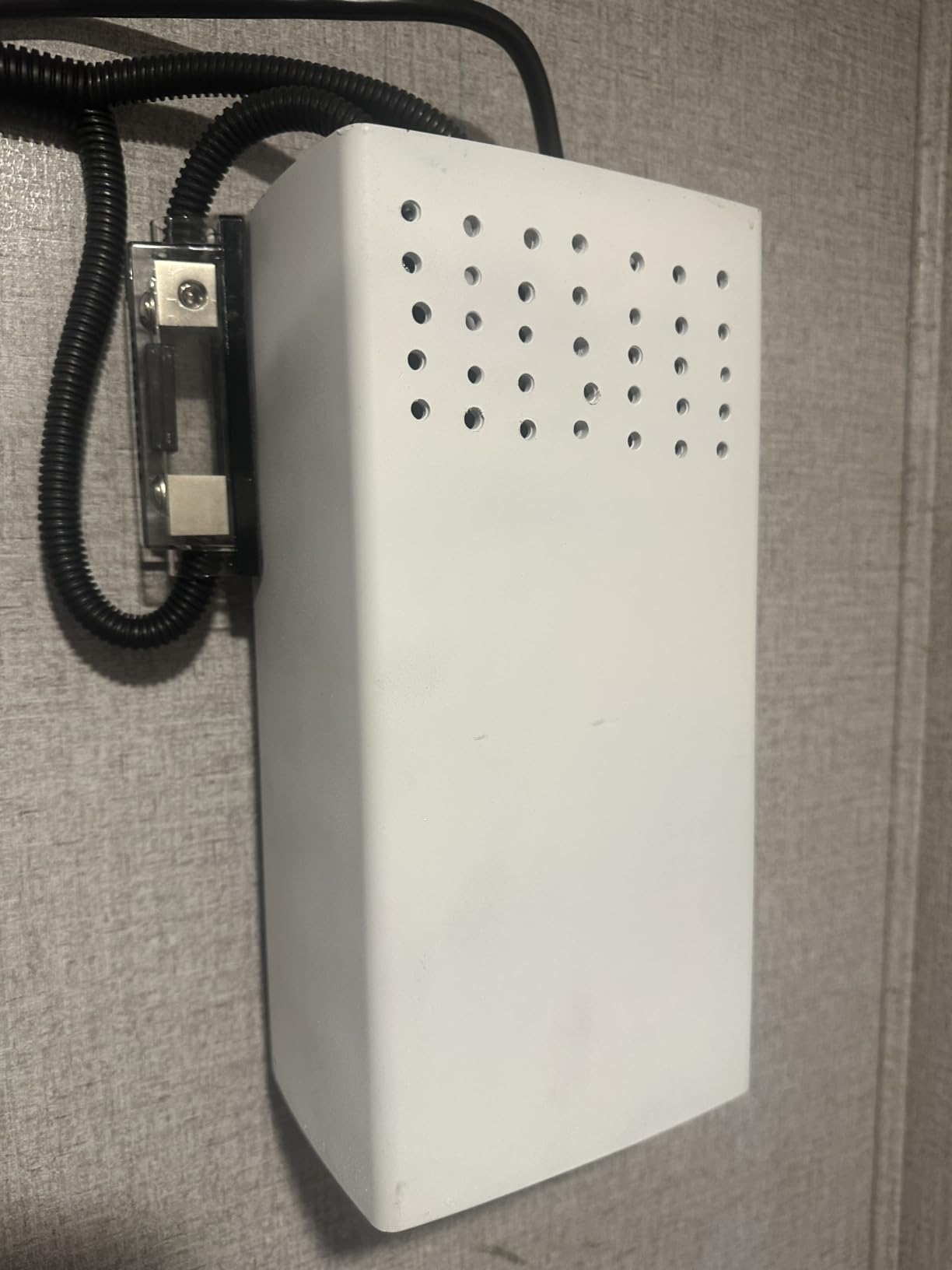
Documentation is the weak point, with no troubleshooting guide and no mention of a locking nut on the leveling studs. There is also a battery capacity problem: the compressor may not start below roughly 300Ah even though the manual states 200Ah. One owner’s oscillating vent motor fell apart shortly after installation and was not repairable, and some roofs thicker than the included plenum require a fabricated duct extension.
Why it works in an RV
Thirty-five decibels is close to a small fan once you are lying down, and that is the difference between sleeping and not sleeping in a parked coach at midnight. The 70 percent surge reduction also protects a smaller inverter or generator.
At 43 pounds with a full hardware kit, it is the system we would hand to a single owner with no roof experience.
Where it falls short
The 300Ah starting reality contradicts the printed 200Ah figure, so size your bank up rather than to the manual. On a smaller bank, expect it to lock out on a low-voltage morning start.
Thin documentation means a failed vent motor or a leveling problem is harder to sort out, and the 4,500 BTU heating element is a supplement rather than a cold-weather system.
10. COSTWAY 6,500 BTU RV Window AC – Best Sliding-Window Mount
COSTWAY RV Window Air Conditioner, 6500 BTU Window AC Unit w/WiFi APP Voice Control, 24H Timer & Quiet Operation, 4-in-1 Cooling Fan Dehumidifier Sleep Mode for Caravan & Motorhome
6500 BTU and 118 CFM airflow
115V AC at 650W
50 dB
120 sq ft coverage
Pros
- 650W is the lowest 120V draw in the group
- Brackets fit windows 1 to 5.7 in thick
- WiFi plus Alexa and Google Home voice control
- 24 hour timer with 60-80F range
Cons
- 6500 BTU covers only 120 square feet
- 115V only so it needs shore power or a generator
- Louder than the 12V rooftop options
- 53 pounds for a window mount
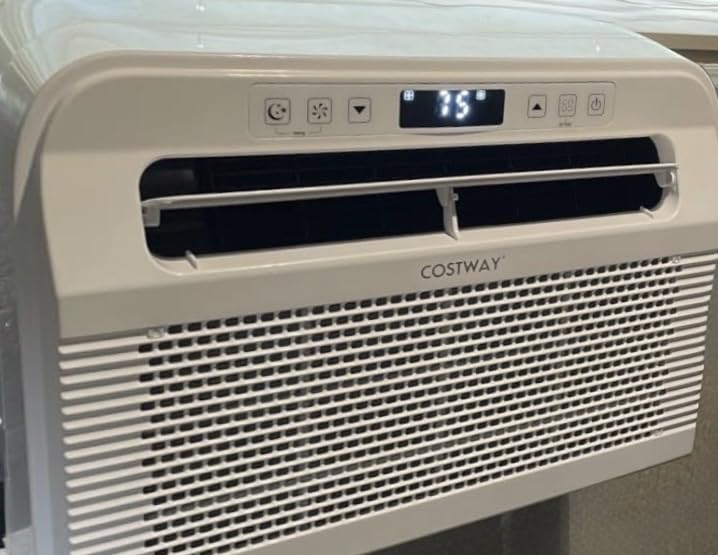
The reason to consider a window mount is simple: it costs nothing to install and nothing to remove. No roof cutout, no duct work, no warranty on your fiberglass. This is a 6,500 BTU, 118 CFM, ETL-certified compressor covering up to 120 square feet, and the adjustable bracket set with three bracket types and five mounting positions fits window frames from 1 to 5.7 inches thick. That range covers most RV slider windows.
It also draws the least power of anything on 115V AC in this group at 650W, which is a real advantage for a smaller generator or pedestal circuit. Control options are the most modern we saw: a WiFi app, voice control through Alexa and Google Home, an LED control panel, a 24-hour timer and a 60 to 80 degree range across cooling, fan, dehumidification and sleep modes.
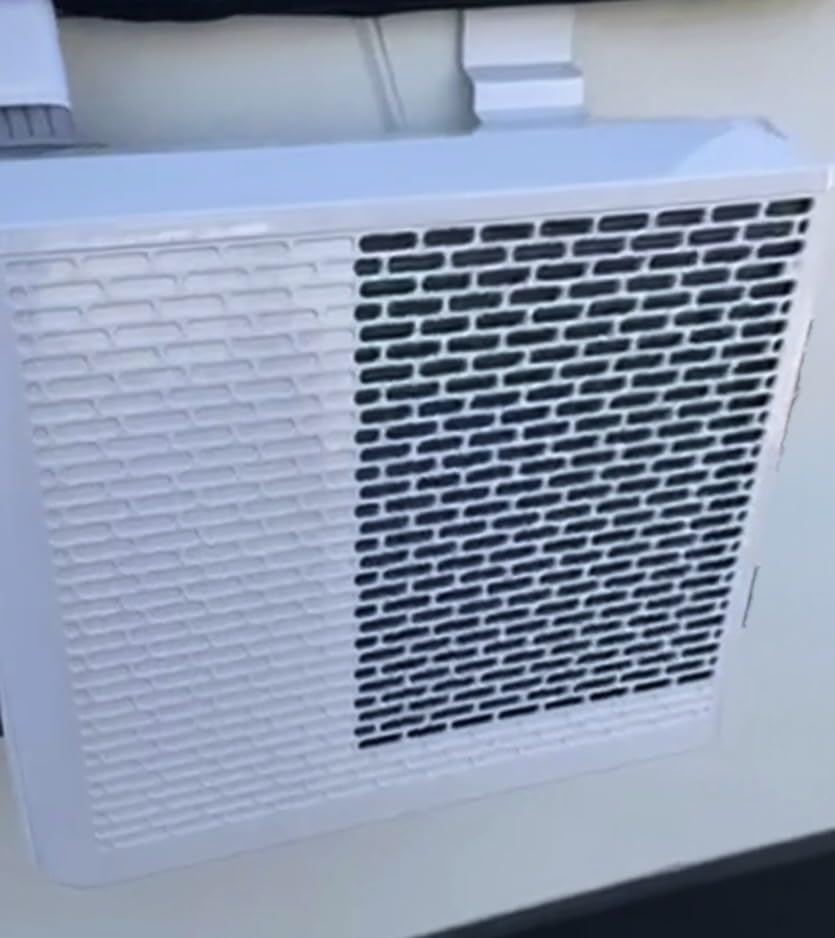
The limits are structural. 6,500 BTU is the smallest capacity here and it is aimed at spaces up to 120 square feet, so it is a bedroom or a small Class B rather than a whole coach. It is 115V AC only, which means it needs shore power, a generator or an inverter, and never runs directly from a 12V battery bank.
It is also 53 pounds as a two-piece system and rated at around 50 dB, louder than any of the 12V rooftop options in this roundup. Reviewers tend to favor the smart controls and the flexible mounting hardware, while the limited power source and modest capacity keep it to smaller rigs and short-term use.
Why it works in an RV
For a Class B van, a pop-up or a truck camper, a window mount is a genuinely sensible answer. There is no permanent modification, and 650W on a standard pedestal circuit is easy to supply.
The flexible brackets mean it will fit an unusual window thickness, which is where most RV window mounts fail. The included drain hose handles condensate, which matters in a sealed cabin.
Where it falls short
Six and a half thousand BTU will not condition a 30-foot trailer, and anyone expecting a rooftop result from a window mount will be disappointed by July.
Fifty decibels in a sleeping area, a 115V-only supply, and 53 pounds of hardware to remove every time you close up camp make this a secondary or seasonal system rather than a primary one.
Electrical Planning: 15/20-Amp Pedestals vs 30 and 50-Amp RV Service
This is where most portable cooling plans fail, and the failure is a burned wire rather than a warm cabin. Traditional portable systems draw roughly 500W to 1,200W or more. On 120V that is about 4 to 10 amps, which sounds manageable until you add the microwave, the water heater and the battery charger to the same 30 amp RV service.
The consensus on the Forest River Forums is to avoid that arrangement entirely: run a separate extension cord to a 15 or 20 amp campground pedestal outlet so the portable has its own circuit. That single habit is the cheapest electrical insurance available to an RV owner, and it is worth planning the cord length and the pedestal location before you arrive rather than improvising on site.
12V DC rooftop systems sidestep the question, which is the strongest argument for them. Instead of amperage on a pedestal, you are planning watt hours against a bank. A common bank size of 400Ah at 12V gives you about 4,800 watt hours, and inverter systems in this roundup publish draws from around 250W in eco to 900W at full cooling. That is the arithmetic that decides whether you can run all night.
Two failure modes to plan around. Some budget rooftop systems specify a 75A starting current, which will not play nicely with a small bank. And the UAHKPA in this roundup carries a 60 day warranty, so a low-voltage lockout becomes a support conversation rather than a warranty claim. Check the startup current before you check the price.
BTU Sizing by RV Class
Match the number to the space, and be honest about the space. A rough rule from the community sizing guides: 5,000 to 6,000 BTU for pop-ups, van interiors and localized cooling, and not enough for a large motorhome in high heat.
For a pop-up or a Class B van, 6,000 to 9,000 BTU is the working range. The COSTWAY window mount at 6,500 BTU and 120 square feet sits here, as does the Cybertake S2 Pro at 5,100 BTU for spot cooling rather than whole-cabin cooling.
For a Class C trailer or a small Class A under 25 feet, 9,000 to 11,000 BTU is the range. That covers the UAHKPA at 9,000 BTU, the OutEquip Summit 2, the Gidrox RX55 and the ICECOSMOS at 10,000 BTU, and the Somokg at 11,000 BTU.
For a 25 to 30 foot motorhome, treat 10,000 BTU as a bedroom or partial system rather than a whole-coach solution, and consider running two. The Gidrox owners who use it as a second bedroom-only system are describing exactly this approach.
For a large Class A, 13,500 BTU and up is the realistic entry point, which is where the TURBRO GL14V sits. Its owners report holding 74 degrees inside during 107 degrees outside, which is the kind of result a 10,000 BTU rooftop does not produce in the same rig.
Reduce the Heat Load Before You Buy
No rooftop box overcomes a heat-soaked fiberglass box, and the cheapest cooling is heat you never let in. Four steps consistently show up in experienced van dweller advice.
First, reflective window covers. Users on the SportsMobile forum independently report that reflective insulation in the windows, especially the windshield, makes a large difference. On a Class B or a van, this is usually the highest-impact ten dollars per window you can spend.
Second, shade before you park. A windshield cover or an awning positioned before the sun reaches the glass beats any system running at half capacity. Third, pre-cool before you load in. Run the system for 20 minutes before occupants or pets are inside, not after.
Fourth, add air movement. A 12V ceiling fan costs a few watts and makes a cabin feel dramatically better by moving air across skin, because the evaporator is already cooling the space. A fan does not lower the temperature, but it changes how the temperature is experienced.
Lastly, consider where the evaporator output lands. On a split system, keeping the indoor section outside a small vehicle improves results noticeably, and one of the issues reported with the Cybertake S2 Pro is the heat its rear section dumps back into the cabin.
Portable vs Window Unit vs Rooftop vs Mini Split
Four approaches reach the same goal with very different amounts of work. A portable unit needs a window, a hose and a place to store it. A window mount needs brackets and a window. A rooftop needs a hole in your roof. A mini split needs a hole in your wall or floor and a line set.
On cost, the DIY Solar Forum community broadly regards conventional rooftop RV air conditioners as poor value next to modern inverter window units and mini splits, and the Sailnet forum notes rooftop cooling runs at least twice the cost of a portable, while a 5,000 BTU window unit can be mounted at under 40 pounds including the plywood. The tradeoff is permanence and convenience.
On power, mini splits and inverter window units pull the least, rooftop 12V DC systems sit in the middle, and 115V AC rooftop boxes pull the most. On the r/RVLiving forums, the repeated mini split recommendation comes down to efficiency: owners praise them for using less power in a camper.
Aesthetics matter more than most buyers expect. Van Living Forum users weighing rooftop against window unit find window mounts visually out of place in a finished conversion, which is a real reason to drill a roof and never regret it.
How to Choose the Right RV Air Conditioner
Start with the roof opening, because it is the constraint you cannot negotiate with later. Measure the existing vent cutout and the roof thickness before you compare anything. A 14-inch by 14-inch opening with 1.5 to 3.9 inches of roof thickness is the common case here, and thicker or arched roofs need longer threaded rod, extra duct foam and possibly a trimmed seal cushion.
Next, decide how you will power it. If you camp on shore power with a 30 or 50 amp service, 115V AC rooftops give you the most cooling per dollar. If you boondock, 12V DC with an inverter compressor is the only sensible family, and you should compare published wattage in eco mode rather than peak wattage.
Then read the noise figure as a floor. Anything above 50 dB is a problem in a sleeping space, and the number on the box is measured at the unit rather than at your pillow.
Check the warranty next. The range in this roundup runs from 60 days on the UAHKPA to two years on the countrymod and Somokg, and a rooftop box is a sealed refrigerant system that can fail without warning. A short warranty is a signal about parts availability as much as about confidence.
Finally, plan for condensate and maintenance. A self-evaporating system reduces but does not remove drainage responsibility, and r/RVLiving users recommend replacing heated exhaust hoses outright once biofilm builds up. In a sealed cabin, a drain route to outside beats a bucket, and a washable filter you can reach matters more than any app.
One last comparison worth making before you buy: our guide to the best portable air conditioners for small rooms covers the household units we deliberately left out of this roundup. They are sized for rooms with real insulation, and several of them use the single-hose configuration that works against you in a metal box.
Frequently Asked Questions
Can you use a portable AC in a RV?
Yes, and most RVs can be adapted for one, but a household portable needs a window or wall penetration for its exhaust hose, a dedicated 15 or 20 amp circuit, and enough BTU for the interior volume. In a small metal camper a single-hose unit can draw hot outside air back in and leave the cabin warmer, so a dual-hose portable or a 12V DC rooftop is the more reliable choice.
Do dual hose portable air conditioners work better?
In a camper, almost always. A dual-hose system draws a separate stream of outside air for the condenser and exhausts a second stream, so the cabin stays sealed instead of sitting under negative pressure and pulling heat in through every gap. In a large space with plenty of internal air volume a single-hose unit can still hold up, which is the nuance owners raise on the iRV2 forums.
How much power does an RV portable air conditioner draw?
Traditional 120V portable systems draw roughly 500W to 1,200W or more, which is about 4 to 10 amps on 120V. Because of that, the community advice is to run them from a separate 15 or 20 amp campground pedestal circuit rather than off the RV’s own 30 amp service. 12V DC rooftop systems with inverter compressors report far lower draws, from around 250W in eco mode upward.
Are 12V RV air conditioners good?
They are good on power efficiency and weak on raw capacity relative to 120V systems, and expectations should be set accordingly. Inverter models in this roundup report 250W to 900W draws and 40 dB sleep modes, but 10,000 BTU is a modest number that some owners find light for a 30 foot camper. A Ford Transit USA Forum owner removed a 12V rooftop system after a year because it would not cool the van in Texas heat.
How much BTU do I need for my RV?
Roughly 5,000 to 6,000 BTU for a pop-up, van interior or spot cooling, 9,000 to 11,000 BTU for a Class C or a Class A under 25 feet, and 13,500 BTU or more for a large Class A. The critical caveat is that 5,000 to 6,000 BTU cannot chill a large motorhome in high heat, and a single system near the lower end usually serves one zone well rather than the whole coach.
How long can a portable air conditioner run on RV batteries?
Divide your battery bank’s usable watt hours by the unit’s running draw. A 400Ah lithium bank at 12V holds about 4,800 watt hours, so an inverter rooftop drawing 350W in eco mode can run roughly 13 hours before inverter losses, while one drawing 800W manages about 6 hours. Budget 10 to 15 percent for inverter inefficiency, and remember the vehicle alternator is not running when you are parked.
Final Verdict for 2026
The OutEquip Summit 2 is our pick for the best portable air conditioner for RVs in 2026, because direct 12V DC operation, a 45 pound installable body and the highest review count in this group combine into the fewest ways for a trip to go wrong. If your electrical setup is shore power and you need more capacity, the countrymod inverter rooftop is the smarter buy, and the TURBRO GL14V is the answer when 13,500 BTU and heat pump heating are the requirement.
Two rules will improve any purchase more than the model choice itself. Run portable cooling from its own pedestal circuit rather than the RV’s 30 amp service, and insulate the windows before you spend on a bigger box. Check the roof opening and the roof thickness first, because that decision eliminates more options than any other. If you want another read on household portables for smaller interior spaces, our window air conditioner guide covers the fixed-mount alternative.