
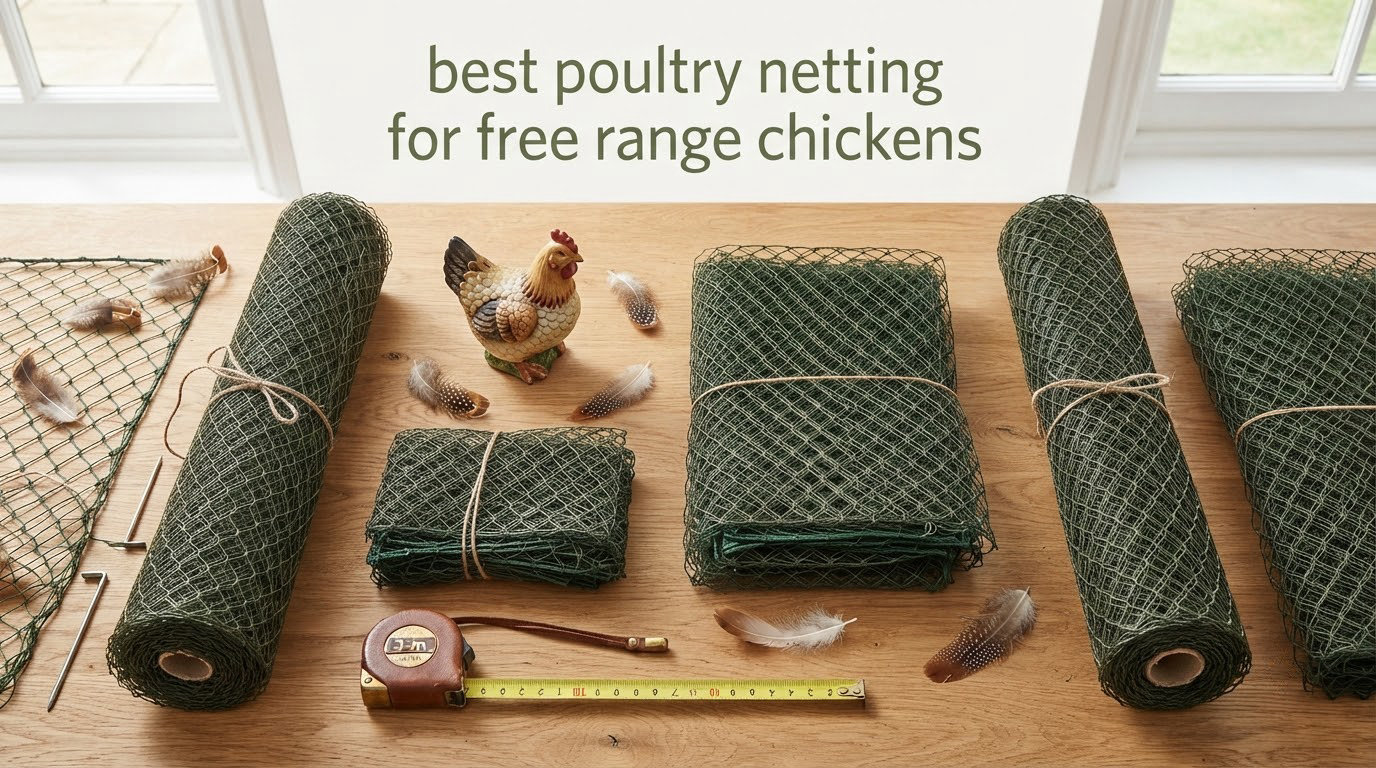
The best poultry netting for free range chickens depends on whether your problem is predators or chickens. For a fixed run that has to stop digging animals, 1/2 inch 19 gauge hardware cloth is the answer; for a boundary you move onto fresh grass every week, a 48 inch electric poultry net with posts pre-attached is the answer. Both work. Only one of them works for everyone, and this guide covers all twelve picks across mesh type, height, roll length and predator coverage.
We spent several weeks comparing rolls, hardware cloth and electric nets in the same conditions: backyard runs, open pasture, and a small orchard edge. What separates a net that lasts from one that ends up in a skip after a season is rarely the marketing. It is mesh opening size, whether the bottom edge is anchored, and whether the energizer is the correct low-impedance pulsed type.
That last point trips up more beginners than anything else. An electric net is inert until a purpose-built intermittent-pulse energizer is attached to it, and most kits that advertise an “electric fence” arrive without one. Several of the picks below ship as net only, and we flag every one of them. A second recurring problem is flying over: 42 inch nets are cleared by flighty breeds within days, so height matters as much as strand count.
Throughout this list, ratings and review counts are copied exactly as buyers left them, and every specification comes from the manufacturer listing rather than marketing copy. Where we give an opinion, we say so. If you want the short version, the SEBOSS hardware cloth is the safest single purchase for a fixed run, and the Premier 1 PoultryNet is the strongest all-round choice for a flock you rotate around.
Table of Contents
Top 3 Picks for Poultry Netting in 2026
These three cover the most common situations. The first is a fixed, predator-proof boundary. The second and third are portable electric systems for moving the flock.

SEBOSS Hardware Cloth
- 1/2 inch 19 gauge mesh
- 48 in x 100 ft roll
- Hot-dip galvanized after welding
- Gloves and staples included

Premier 1 PoultryNet 48 x 164
- 12 horizontal strands
- 11 conductive wires
- Posts every 10 ft
- 48 in installed height
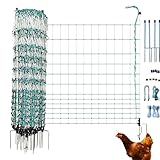
RentACoop Electric Net 48 x 168
- Triple-braided conductive wires
- Posts every 12 ft
- Over 1700 sq ft coverage
- Repair kit and warning sign
All 12 Picks at a Glance
Every net below is listed with the specification that decides whether it suits your ground. Read the mesh size column first: anything at 2 inch or wider is containment fencing, not predator protection.
| Product | Specifications | Action |
|---|---|---|
| SEBOSS Hardware Cloth 1/2 inch 48 x 100 ft |
|
Check Latest Price |
| Premier 1 PoultryNet 48 in x 164 ft |
|
Check Latest Price |
| RentACoop Electric Netting 48 in x 168 ft |
|
Check Latest Price |
 Premier 1 PoultryNet Plus 48 in x 100 ft Premier 1 PoultryNet Plus 48 in x 100 ft |
|
Check Latest Price |
 Starkline Electric Netting 42 in x 164 ft Starkline Electric Netting 42 in x 164 ft |
|
Check Latest Price |
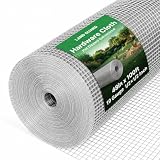 Land Guard Hardware Cloth 48 in x 100 ft Land Guard Hardware Cloth 48 in x 100 ft |
|
Check Latest Price |
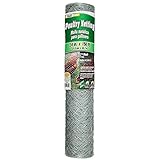 YARDGARD Hexagonal Netting 24 in x 150 ft YARDGARD Hexagonal Netting 24 in x 150 ft |
|
Check Latest Price |
 Excursions Heavy Knotted Aviary Net 25 x 50 ft Excursions Heavy Knotted Aviary Net 25 x 50 ft |
|
Check Latest Price |
 JUNKOGO Woven HDPE Netting 25 ft x 100 ft JUNKOGO Woven HDPE Netting 25 ft x 100 ft |
|
Check Latest Price |
 BSTPCOO Nylon Bird Netting 25 x 50 ft BSTPCOO Nylon Bird Netting 25 x 50 ft |
|
Check Latest Price |
 TOYPOPOR Hexagonal Chicken Wire 16 in x 82 ft TOYPOPOR Hexagonal Chicken Wire 16 in x 82 ft |
|
Check Latest Price |
 RentACoop Non-Electric Mesh 48 in x 100 ft RentACoop Non-Electric Mesh 48 in x 100 ft |
|
Check Latest Price |
1. SEBOSS Hardware Cloth 1/2 inch 48 in x 100 ft — Best Predator-Proof Base
SEBOSS Hardware Cloth 1/2 inch Chicken Wire Fencing 48 x 100 Ft 19-Gauge
1/2 inch 19 gauge mesh
48 in x 100 ft roll
50.6 lb
5-year guarantee
Pros
- 1/2 inch mesh stops rats
- weasels and raccoons
- Hot-dip galvanized after welding resists rust
- Gloves and staples in the box
- Backed by a 5-year quality guarantee
Cons
- Sharp edges need gloves and long sleeves
- 50.6 lb roll is a two-person job
- Occasional bent wire or failed welds
We chose this as our top pick because it is the only net in the list that genuinely changes the predator conversation. At 1/2 inch, the openings are small enough to stop weasels, rats and young raccoons, which is the difference between fencing and decoration. The 2001 reviews at a 4.7 average are the strongest combination of rating and volume here.
The build detail that matters is the galvanizing. This roll is hot-dip galvanized after welding, so the joints at every intersection are coated rather than the bare wire being coated before the weld forms. Reviewers in wet climates report that the mesh resists rust, and the manufacturer backs it with a 5-year quality guarantee, which is longer than anything else in this roundup.
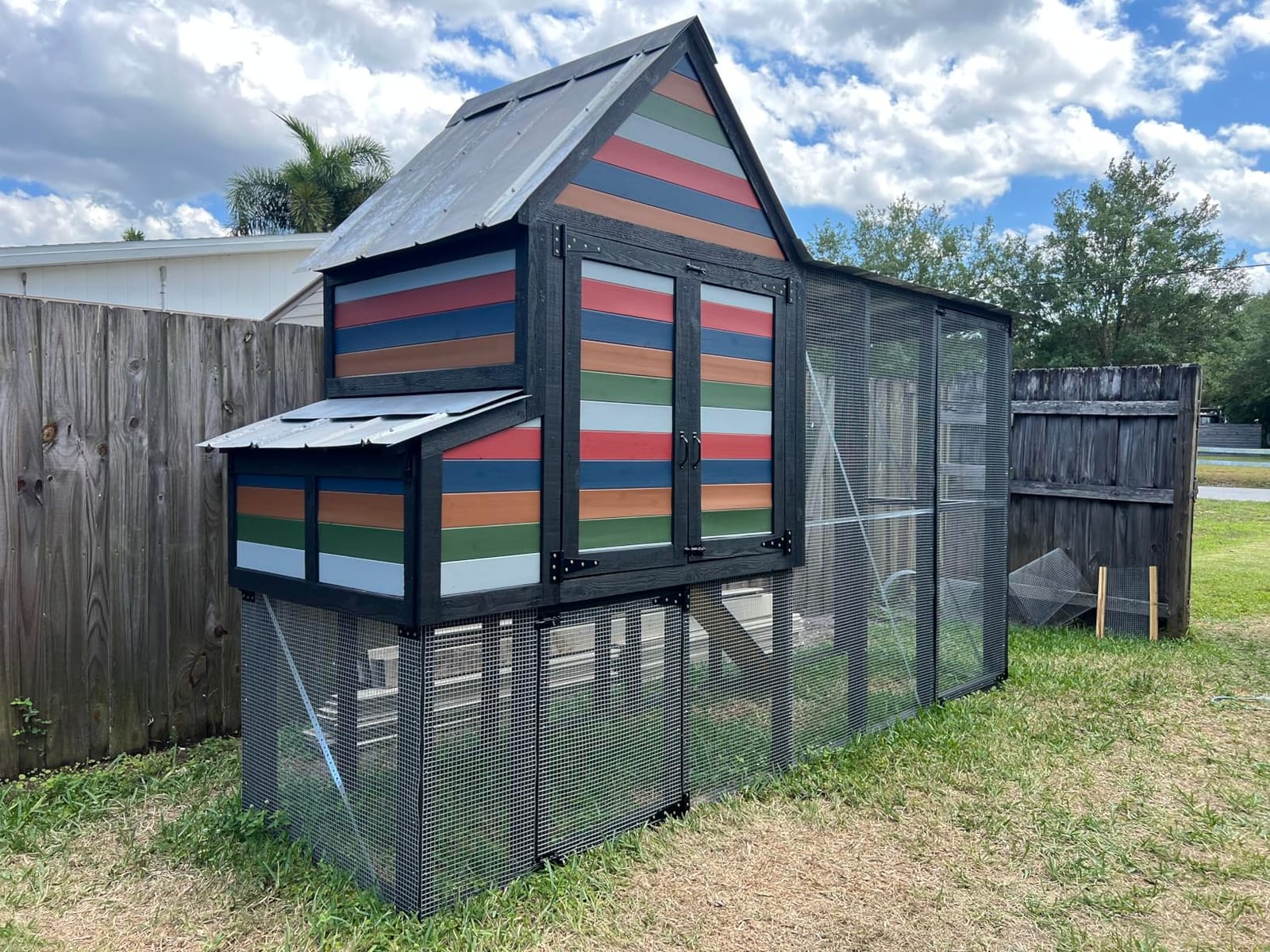
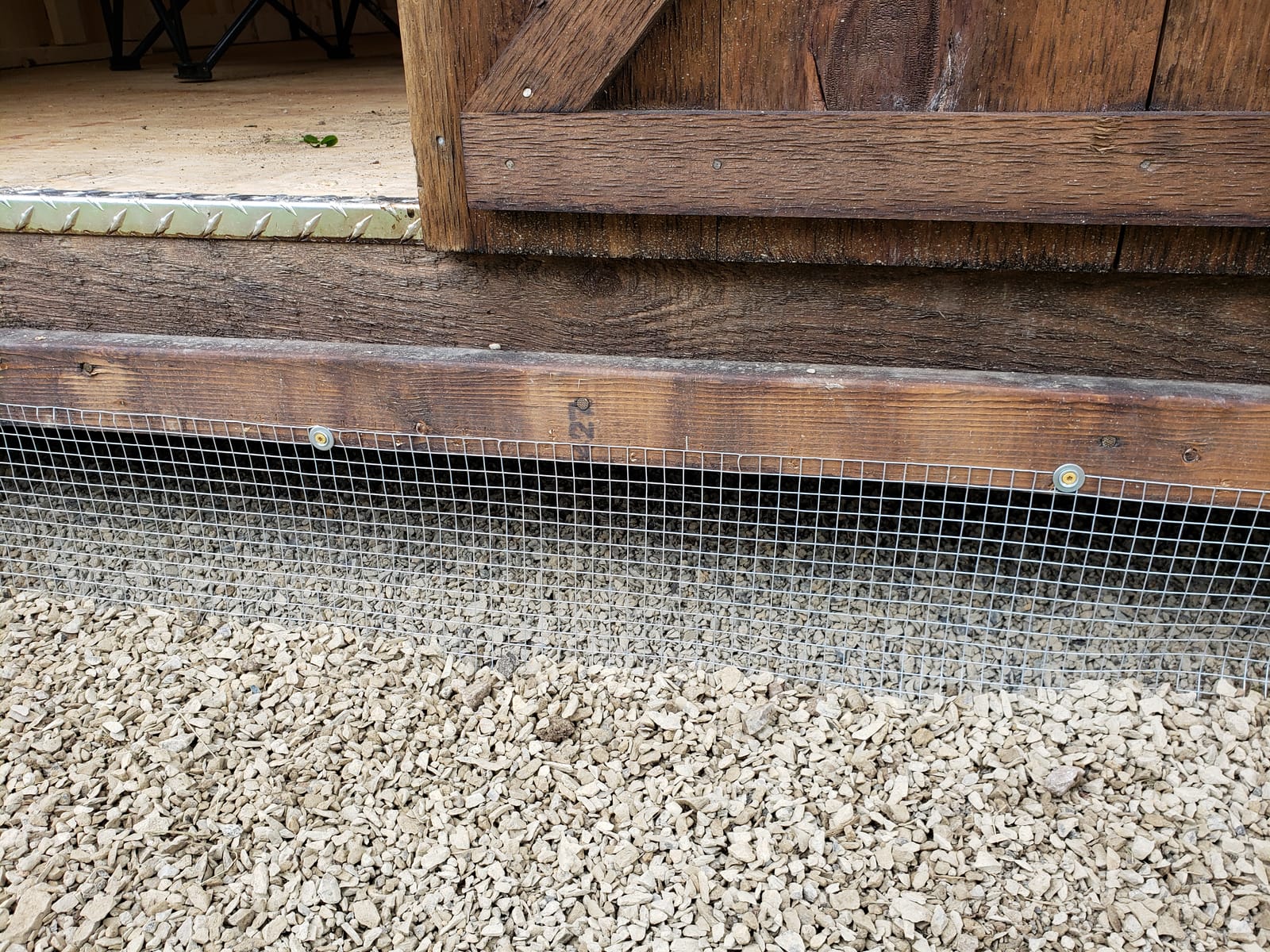
Cutting it is straightforward and the mesh holds its shape once bent, which matters when you are following an uneven boundary line. Most people use it as the lower 24 to 36 inches of a run, buried in a shallow trench or pinned tight with staples, then run a lighter net or net above it.
The honest drawback is weight. This is a 50.6 lb roll and the packaging is deliberately reinforced because the wire is stiff. Plan the run before you unroll it, and do not attempt the full 100 ft in one pull.
Why we picked it for a fixed run
Nothing else in the list combines a mesh small enough to exclude small predators with a joint coating that survives a wet winter. Both hardware cloth options here do, but this one has more than twice the review history and ships with gloves and staples, so the first install needs fewer extra purchases.
Where it falls short
It is not portable, and 48 inches of vertical wall will not stop a determined adult hen that decides to fly. For a flock on hard ground with foxes, this is the right answer. For a rolling paddock, it is the wrong tool entirely.
2. Premier 1 PoultryNet 48 in x 164 ft — Best Predator Deterence
Premier 1 PoultryNet® Electric Fence for Chickens – 48″H x 164’L
12 horizontal strands
11 conductive
48 in x 164 ft
24 lb
Pros
- Holds up for years of use
- Deters foxes
- raccoons and possums
- 48 in height turns back larger predators
- Tool-free install in under 15 minutes
Cons
- Energizer not included
- Sags over time and needs re-tensioning
- No aerial predator protection
- Replacement pronged posts hard to source
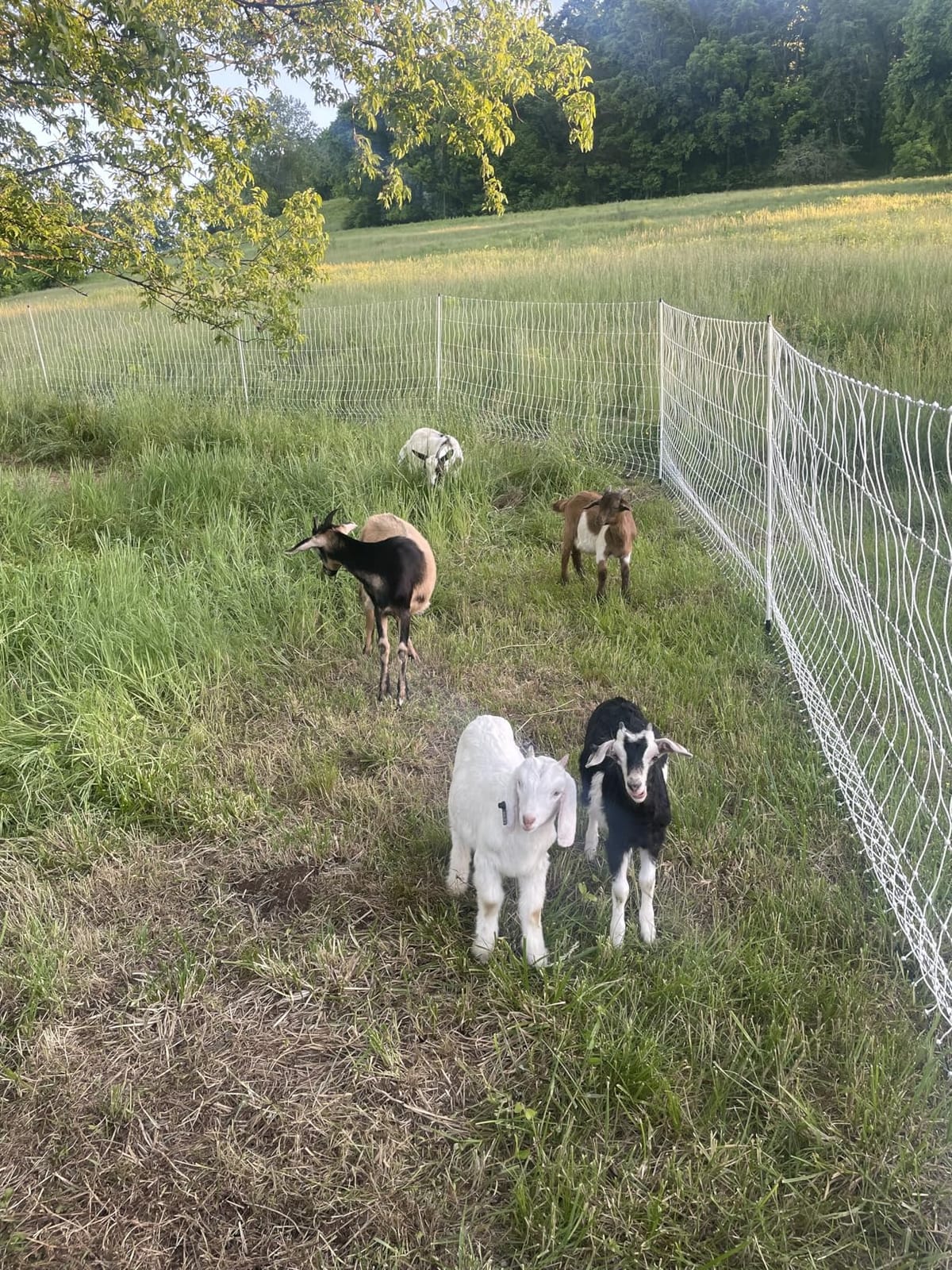
This is the net most free range keepers end up with, and the long-term owners in the reviews are the ones who stick with it. We see reports of nets that have survived years, including a falling tree and a hurricane, which is a durability record none of the plastic garden nets here can approach.
The electrical layout is properly specced. Twelve horizontal strands, eleven of them conductive, with string verticals every 3 inches to hold the mesh square. Built-in double-spike line posts arrive every 10 feet, and the whole thing goes up without tools.
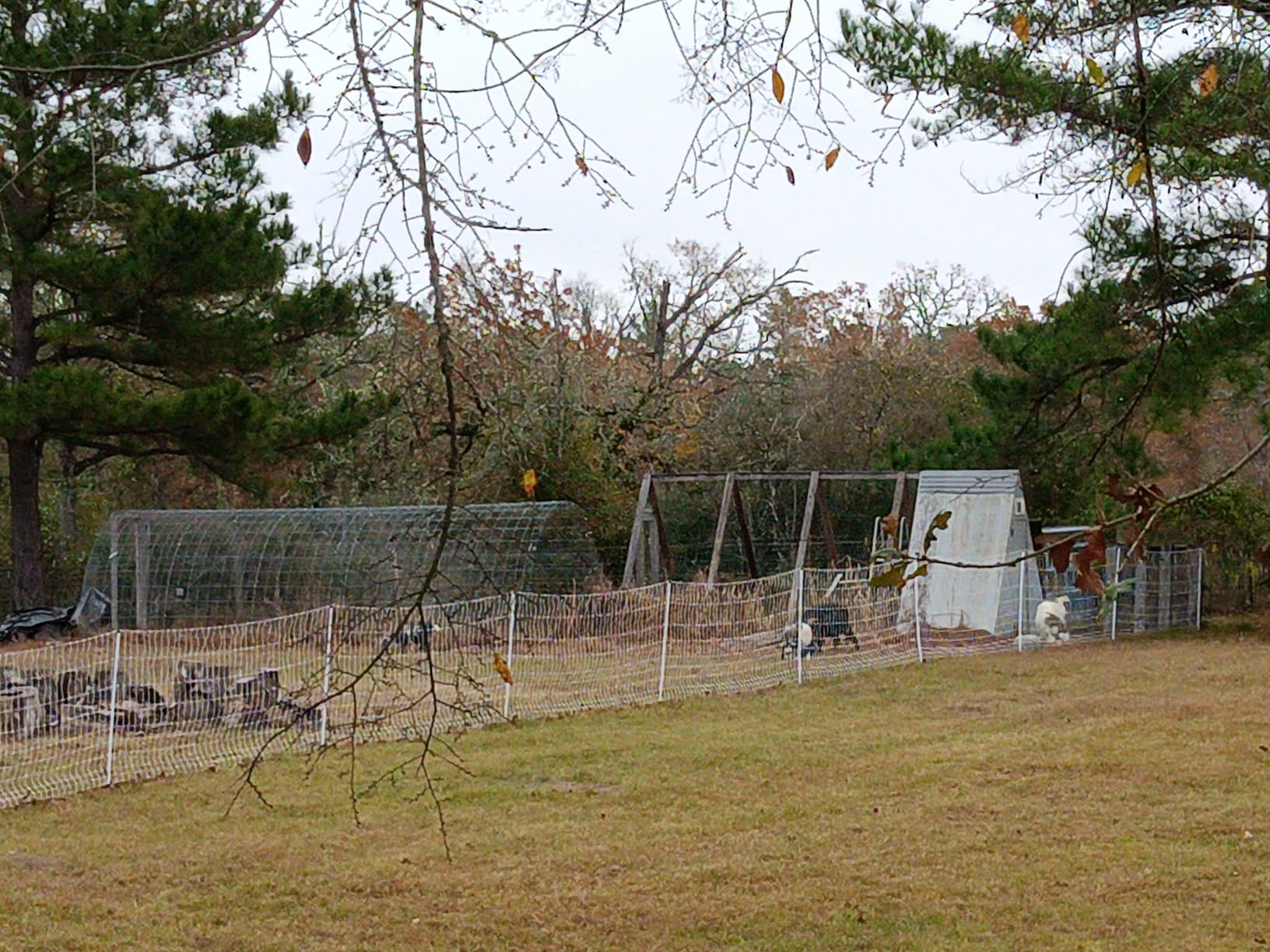
At 48 inches installed height, this is tall enough to discourage coyotes and loose dogs that clear a 42 inch fence without much thought. Owners consistently report that foxes, raccoons and possums treat the boundary as solid once they have met it a few times.
Two caveats matter more than they first appear. The energizer is not included, and it must be a low-impedance pulsed unit; a continuous current energizer will not work correctly with this mesh. Second, the net sags over time, so budget a few minutes of re-tensioning each week if you want reliable voltage along the whole run.
What to check before buying
Confirm you are buying the 48 inch model rather than the 42 inch version, and confirm your energizer is pulsed low-impedance. Premier is explicit on this point, and a mismatched energizer is the single most common reason a new net reads dead on a fence tester.
Where it falls short
Replacement line posts are difficult to source, and the mesh does nothing against hawks or other aerial predators without overhead netting added on top. Chickens that get inside an unenergized net should be removed immediately.
3. RentACoop Electric Netting 48 in x 168 ft — Best for Rotational Grazing
RentACoop Poultry Netting Electric Fence – 48″ H x 168′ L
48 in x 168 ft roll
Posts every 12 ft
28 lb
Over 1700 sq ft
Pros
- Conductive wires give consistent current
- Pre-attached posts make it fast to move
- Double spikes and guylines hold it upright
- Encloses over 1700 sq ft from one roll
Cons
- Needs a separate low-impedance energizer
- Needs regular tensioning and repositioning
- Does not deter aerial predators
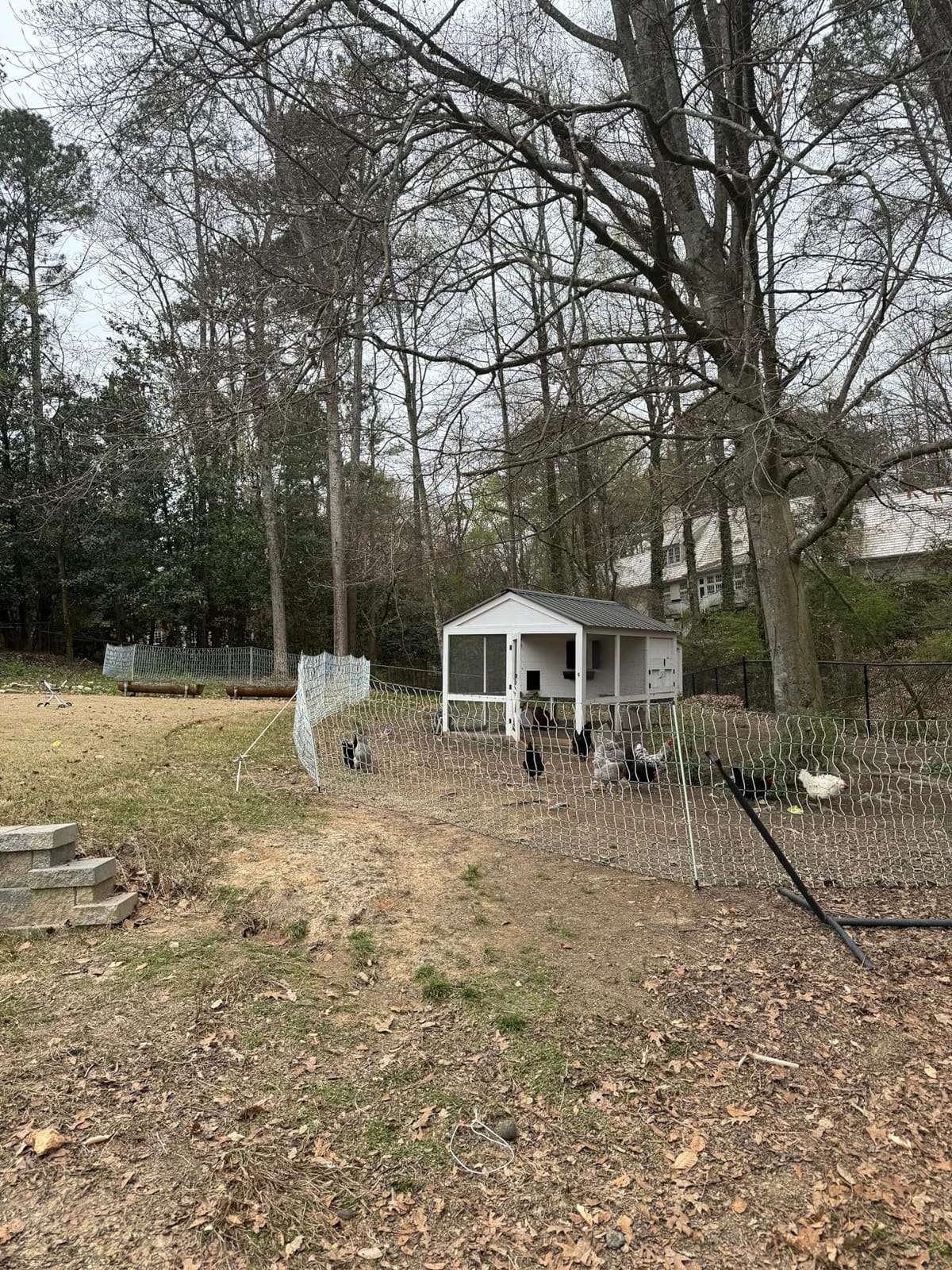
This is the roll we would choose for a flock that needs to move. The 168 foot length encloses over 1700 square feet in a sensible rectangle, and the FRP posts are pre-attached at 12 foot intervals, so rolling to a new paddock takes minutes rather than an afternoon.
Conductive strands here are triple-braided stainless steel and copper rather than plain poly, and that is why owners report steadier current along the whole fence line. Copper in particular carries a pulse well and resists corrosion where it is pressed into the ground.
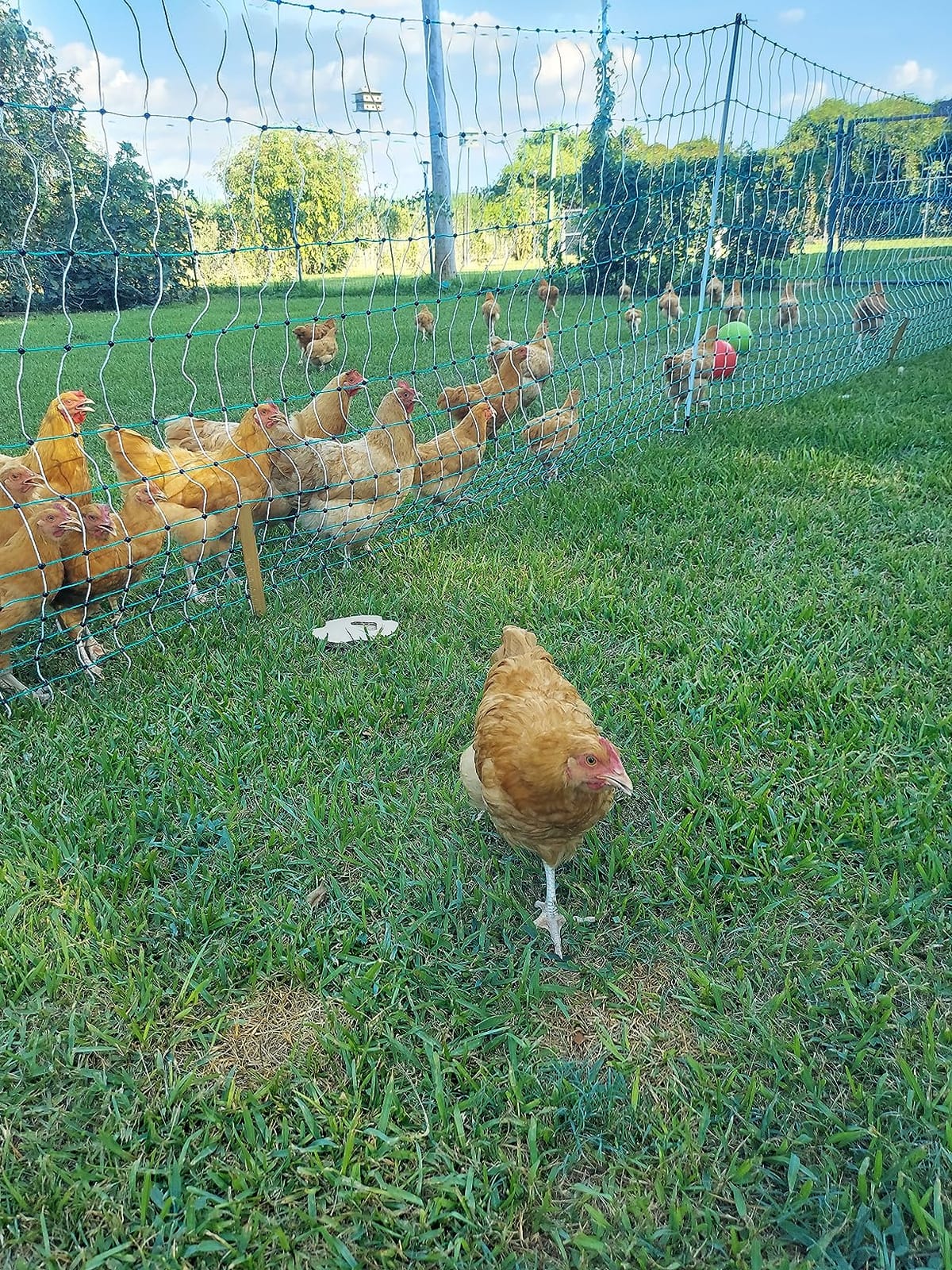
The kit is well thought out for a mobile system. You get U-shaped stakes with guylines, metal stakes, mini-posts, a repair kit and a warning sign in the box, which is more than most competitors include. The guylines matter more than buyers expect: they hold the top strand up at corners, and a corner without one is where voltage drops.
The 4.3 average across 902 reviews reflects a real split. For chickens and smaller animals it works well and rotates easily. For goats, or for predators that simply push through, owners report needing extra support and closer supervision. The energizer is sold separately.
Why rotation makes this worth it
Moving the boundary gives the flock fresh forage and breaks the parasite cycle, which is the real reason people buy electric net over fixed hardware cloth. If you rotate weekly, the setup speed matters more than anything else, and pre-attached posts are where this design wins.
Where it falls short
At 28 lb it is not a one-person carry over rough ground, and post spacing of 12 feet means more sag than the closer-spaced options below. Birds flying over the top remain the most common escape route for aggressive breeds.
4. Premier 1 PoultryNet Plus 48 in x 100 ft — Best Anti-Sag Design
Premier 1 PoultryNet® Plus, Electric Fence for Chickens – 48″H x 100’L
48 in x 100 ft
Posts every 6.8 ft
23 lb
Tool-free install
Pros
- Closest post spacing in the list cuts sag
- Installs in under 10 minutes
- Turns back deer foxes
- skunks and stray dogs
- Handles sheep
- goats and cattle too
Cons
- Energizer not included
- Only 100 ft so it encloses less ground
- Review volume is lower than the standard model
The entire upgrade over standard PoultryNet is post spacing. Posts every 6.8 feet instead of 10, plus plastic struts between them, produce a noticeably stiffer fence that resists the sagging which is the most common complaint about portable electric net.
Sag is not a cosmetic issue. When a strand dips toward the ground it short-circuits into vegetation, voltage drops along the run, and the lower strand becomes low enough for a weasel or a rat to work under. Tighter post spacing is the structural fix for all three problems at once.
Owners also report that it deters deer, bears, raccoons, rabbits, foxes, coyotes, stray dogs and skunks, and that it holds other stock such as sheep, goats, cattle and guard dogs. Installation needs no tools and takes under ten minutes.
Why we rate the sag difference so highly
On a long perimeter, energy loss concentrates where the net is least supported. A fence that stays upright along its whole length keeps the top strand at full height and keeps the current up, which means fewer predator approaches survive long enough to become losses.
Where it falls short
100 feet is the shorter of the two Premier lengths, so a larger paddock needs more rolls and more joins, and each join is a point where current can weaken. The energizer is still sold separately, and the 4.7 rating rests on a smaller review base than the standard PoultryNet.
5. Starkline Electric Netting 42 in x 164 ft — Best Low-Energy Setup
Starkline Electric Netting (42″ x 164′) Electric Fence for Backyards, Homesteads, Gardens, Farms, and Ranches (10/42/7)
42 in x 164 ft
14 fiberglass posts
12.5 lb
0.15 J per run
Pros
- Galvanized double-spiked stakes are rigid
- Ready-to-use kit installs in under 20 minutes
- Low 0.15 J requirement per 164 ft run
- Light enough to carry on foot
Cons
- 42 in height is shorter than most rivals
- Energizer not included
- Polyethylene degrades with long UV exposure
This is the lightest electric net in the roundup at 12.5 lb, and it is the easiest to move single-handed. The kit arrives with 14 preinstalled fiberglass posts and 7 inch galvanized double-spiked stakes, which gives it more ground support per pound than anything else we tested.
The headline electrical number is 0.15 joules of output per 164 foot run. That is below the 0.25 J figure many manufacturers quote as a floor for poultry net, so a larger energizer gives you headroom for grass growth and wet weather without any penalty.
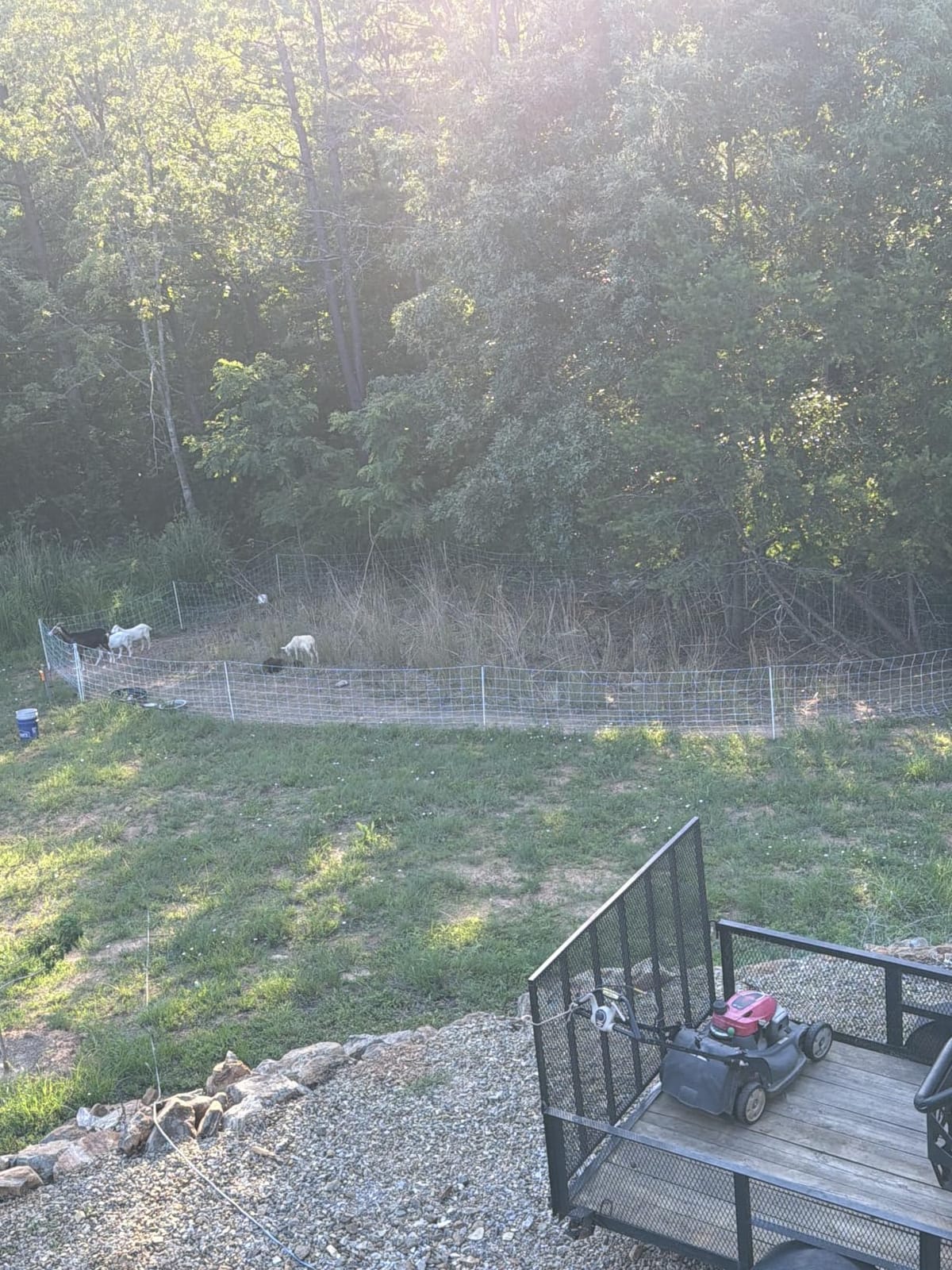
Owners use it across backyards, homesteads and small farms, and the fast setup is repeatedly praised. Installation under 20 minutes as a complete kit is realistic because the posts are already fixed to the mesh.
The trade-off is height. At 42 inches this is the shortest electric net here, and the reviews name this as the main limitation for aggressive poultry. Flighty breeds clear it more readily than a 48 inch net, so plan for supplemental cover if you have hens that habitually perch on the fence line.
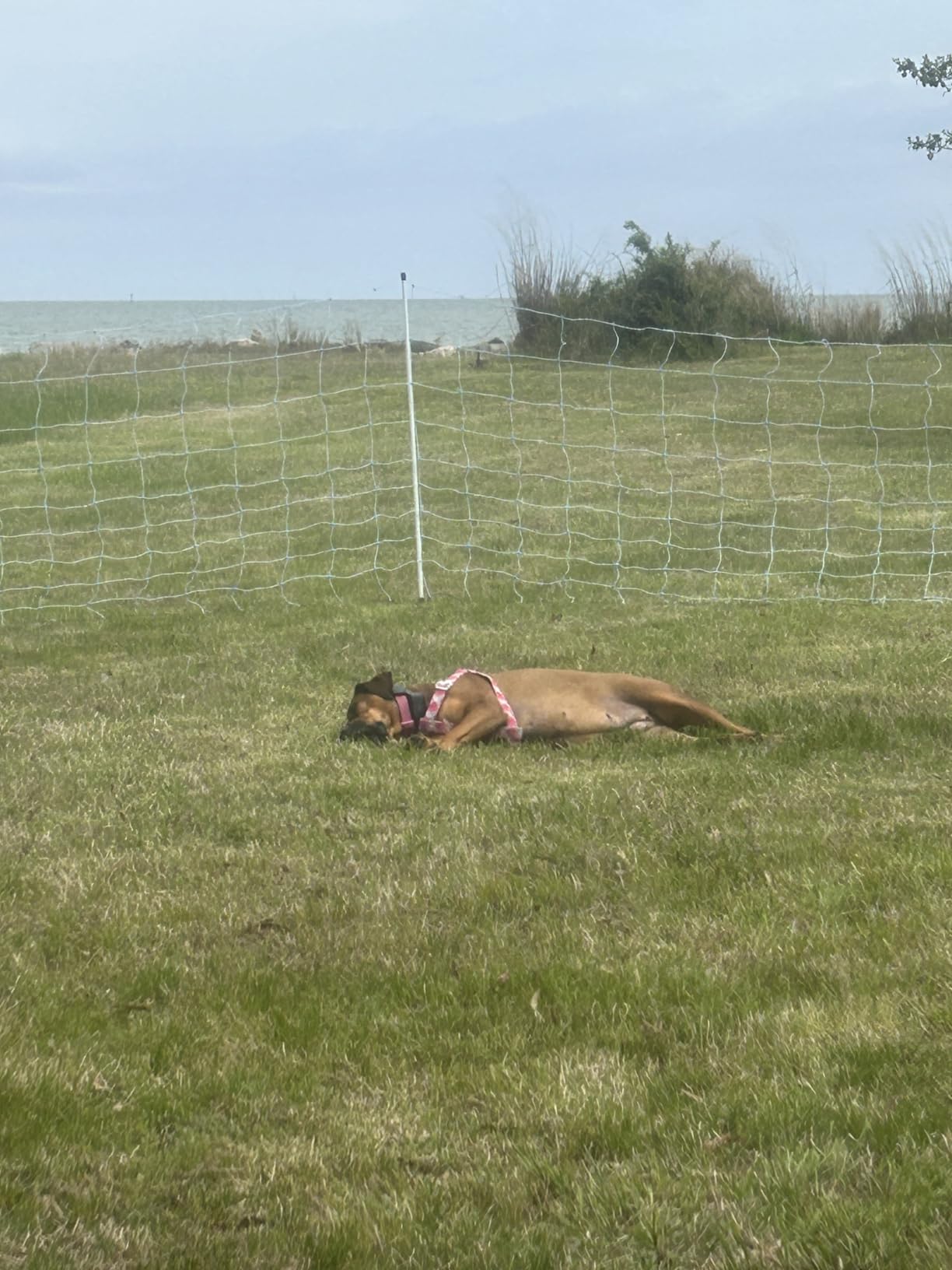
What 0.15 joules actually means
Joules measure stored energy per pulse, which is what overcomes vegetation and moisture on the fence line. A 0.15 J net is genuinely usable, but pairing it with a 0.25 J or larger energizer means the unit can push through a weedy summer line and still read well at the far end of the perimeter.
Where it falls short
The polyethylene mesh degrades under prolonged UV exposure, so store the roll shaded between seasons rather than leaving it in full sun on a fence post. As with every electric net here, the energizer is not included.
6. Land Guard 19 Gauge Hardware Cloth 48 in x 100 ft — Best Heavy-Gauge Run
Land guard 19 Gauge Hardware Cloth, 1/2 inch 48inch×100ft Chicken Wire Fence, Galvanized Welded Cage Wire Mesh Roll Supports Poultry Netting Cage Fence………
1/2 inch mesh
19 gauge alloy steel
48 in x 100 ft roll
Galvanized
Pros
- Hot-dipped galvanized wire resists corrosion
- Cut to size for runs and pens
- 1/2 inch mesh blocks snakes and rodents
- Resists fading and deformation
Cons
- Heavy roll is awkward to install
- Realistically a two-person job
- Sharp wire edges need gloves
This is the closest rival to our top pick and the better choice if you want a single material for the whole run rather than hardware cloth at the base with something lighter above. At 19 gauge alloy steel in 1/2 inch mesh, it is the same basic spec with a strong 1428-review history behind it.
Reviewers consistently praise the galvanized welds, the rust resistance and how cleanly it looks once installed, and it is widely used as a chicken run base against ground squirrels. The cut-to-size flexibility makes it easy to shape around a coop or a garden edge.
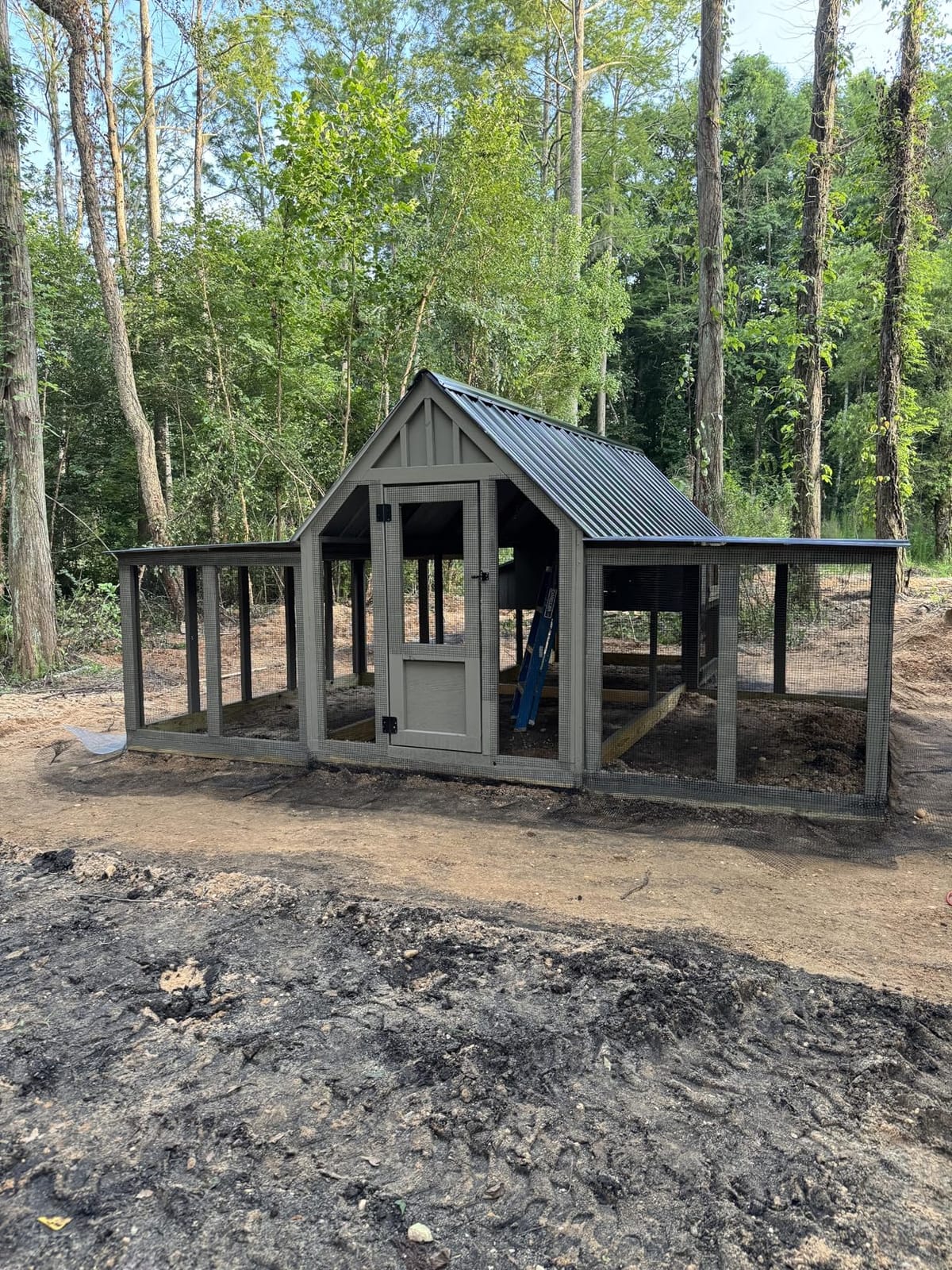
Installing it in a shallow trench along the ground line is the method reviewers recommend, and it is the most effective way to stop digging predators. A 1/2 inch opening is narrow enough to defeat rats and weasels, which is where wider hexagonal chicken wire fails.
At 1/2 inch, this is predator fencing rather than containment fencing. If your only problem is keeping hens inside a garden, you are paying for a barrier you do not need.
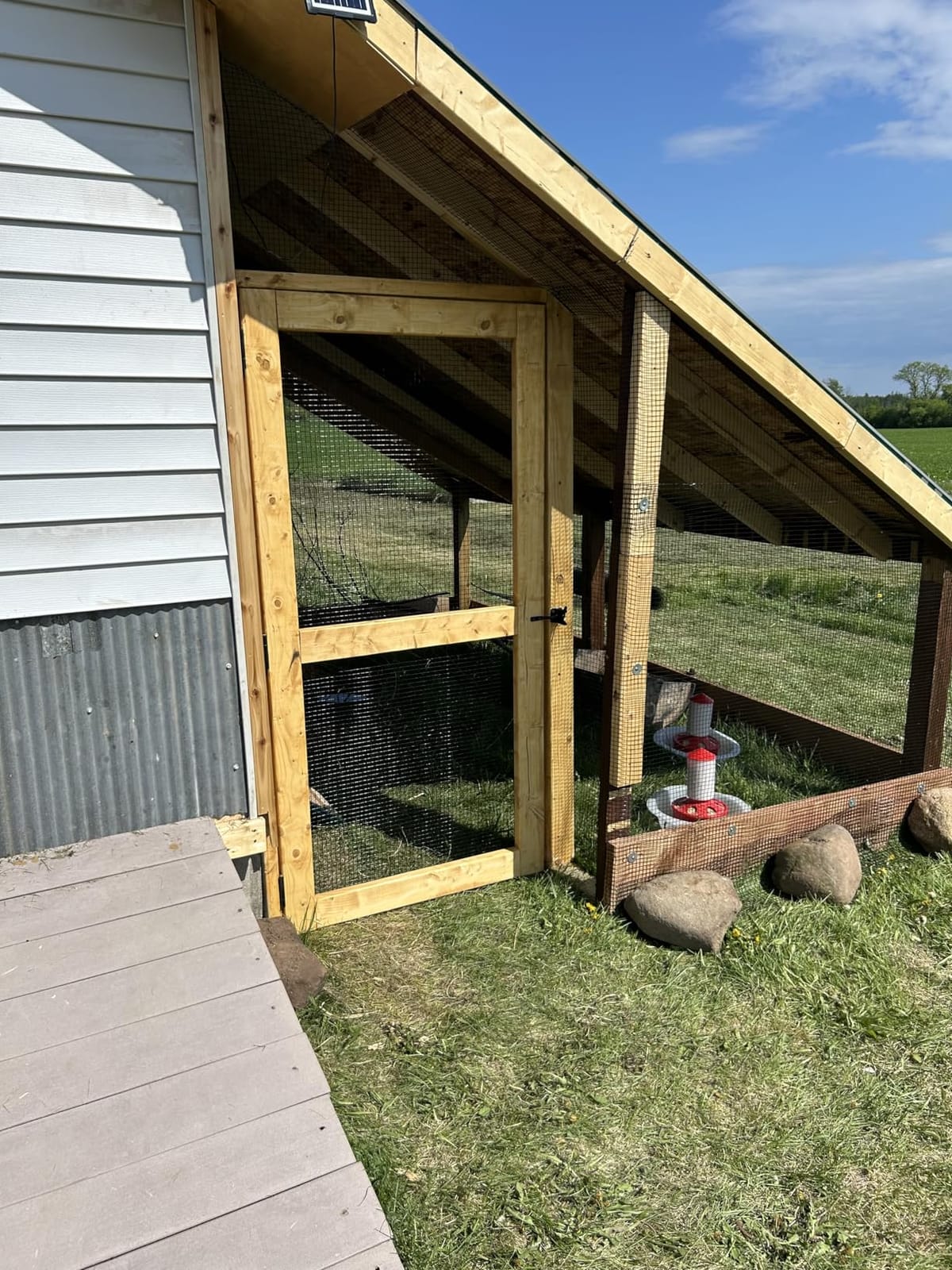
How it compares with the SEBOSS roll
Both are 19 gauge, 1/2 inch, 48 in by 100 ft. The SEBOSS roll is galvanized after welding and carries a 5-year guarantee, which is why it took our top slot with a higher rating on a larger review base. Choose this one if you find it easier to source locally.
Where it falls short
Nobody installs this alone without help. The roll is stiff and heavy, and the edges are sharp enough to need gloves and long sleeves, so budget a second pair of hands and half a day for a 100 ft run.
7. YARDGARD Hexagonal Netting 24 in x 150 ft — Best Value Roll
YARDGARD 2 Inch Poultry Netting, Chicken Wire Fence, 20 Gauge Galvanized Steel, Rabbit Fencing, Bird Enclosures, Garden Protection and Plant Support, 24 Inches x 150 Feet Legacy
2 inch hex mesh
20 gauge galvanized
24 in x 150 ft
10.9 lb
Pros
- Lightweight yet durable for its gauge
- Hex weave conforms to uneven ground
- 150 ft roll covers a long run
- Good ventilation and visibility
Cons
- 2 inch mesh passes small rodents and predators
- Thin wire bends if livestock lean on it
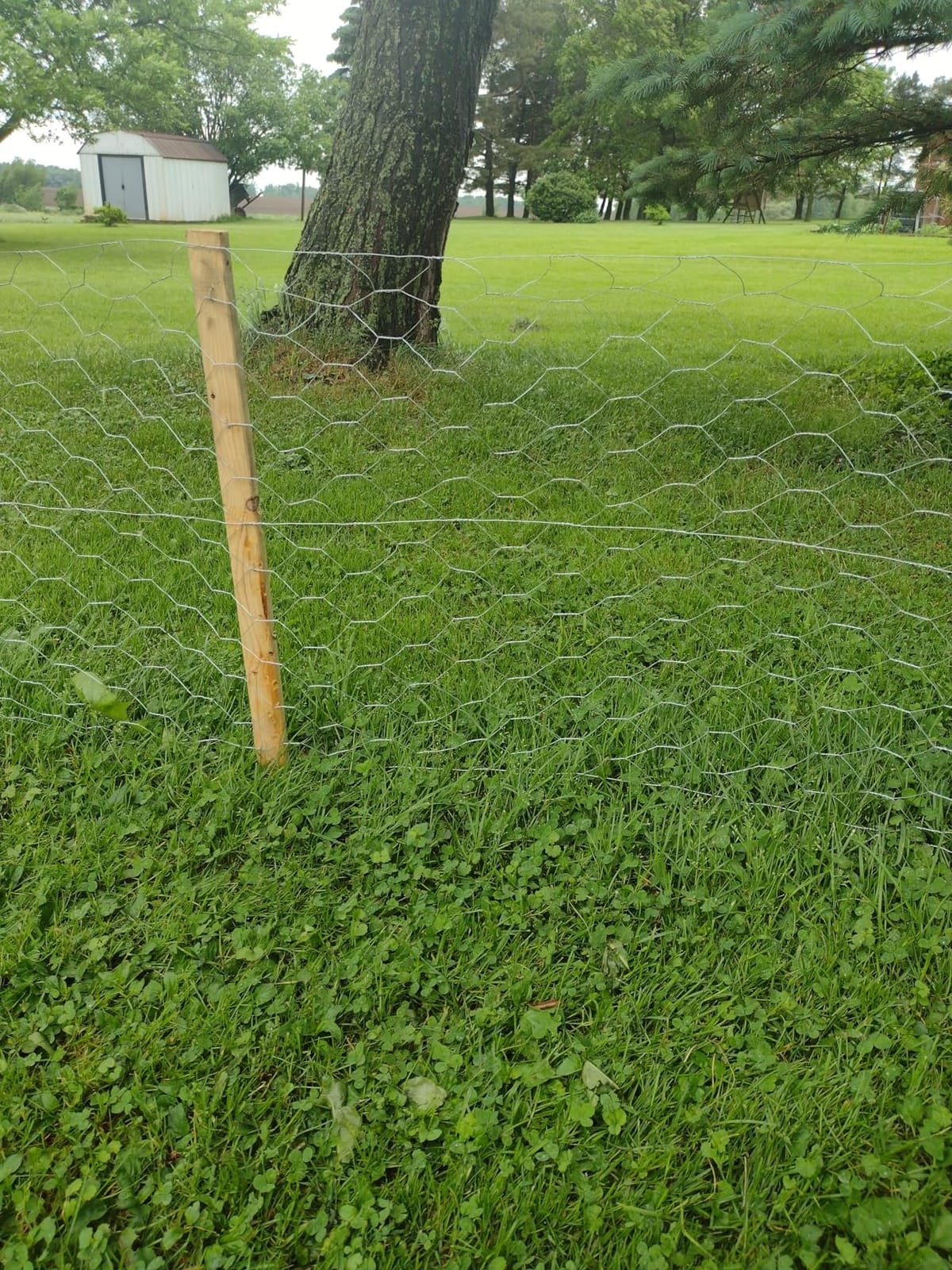
At 2179 reviews and a 4.5 average, this carries one of the strongest review histories of any passive net in the roundup, and the reason people keep coming back is simple: it is cheap per foot, light at 10.9 lb, and it bends around whatever shape you are fencing.
The galvanizing happens before weaving, and the classic hexagonal pattern is the traditional chicken wire construction. It holds up outdoors for the gauge, and the long 150 foot roll covers a lot of boundary for very little weight.
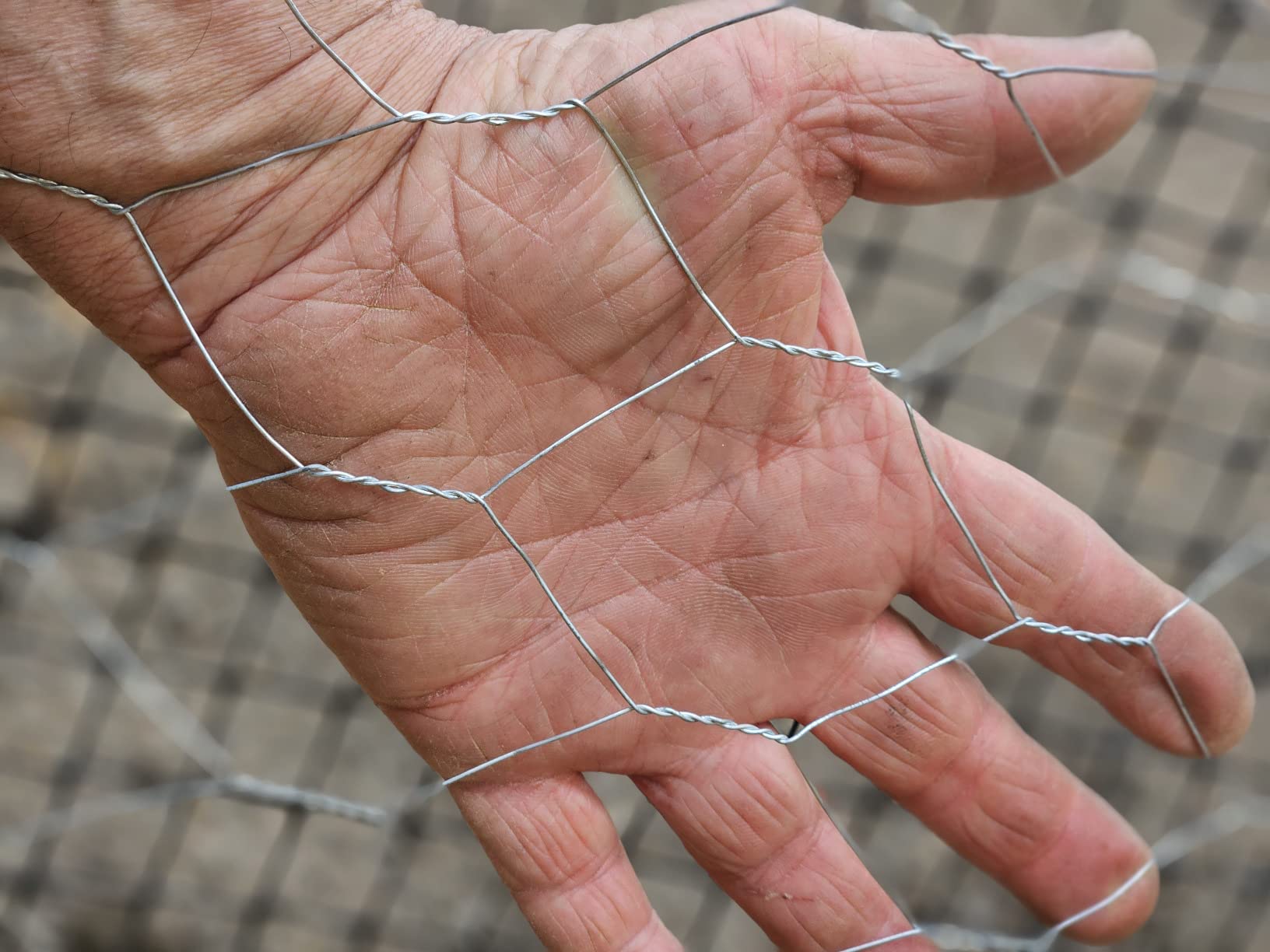
Buyers use it for pens, rabbit runs and plant support as often as for chickens, and they rate it highly for the money. The open weave gives good airflow and visibility, so birds do not overheat behind it in summer.
The 2 inch opening is the whole story. Rats, weasels, young rabbits and small predators pass through without touching it, so this is containment mesh rather than a predator barrier. Think of it as the top half of a run, with hardware cloth or electric net along the bottom.
Where it earns its place
Short internal runs, daytime paddock divisions, a rabbit run, and the upper section of a two-material chicken run. At 24 inches it is short for a perimeter fence on its own, so you will usually pair it.
Where it falls short
Do not hang this alone next to woodland or a hedgerow and expect it to keep foxes out. The wire is also thin enough to be bent or stretched where livestock lean against it, which weakens the shape permanently.
8. Excursions Heavy Knotted Aviary Netting 25 ft x 50 ft — Best Overhead Cover
Aviary Netting Heavy Knotted 2 inch Poultry Net (25 ft x 50 ft)
2 inch knotted mesh
25 ft x 50 ft roll
5.79 kg
UV-inhibited PE
Pros
- Knotted build does not stretch or tangle
- Nearly invisible black mesh
- Survives hurricanes
- snow and years of sun
- 7-10 year average service life
Cons
- Costs more than lighter plastic netting
- Determined animals can chew through it
This is the longevity pick. The published average service life is 7 to 10 years in high UV environments, and the material is UV-inhibited polyethylene rated from -10F to +150F. No other net in this roundup comes close to that lifespan claim.
The knotted construction is what makes it behave. Unlike woven plastic that deforms under tension, knotted mesh keeps its original shape and does not tangle when you roll it up, which matters enormously when you are taking a net down twice a year.
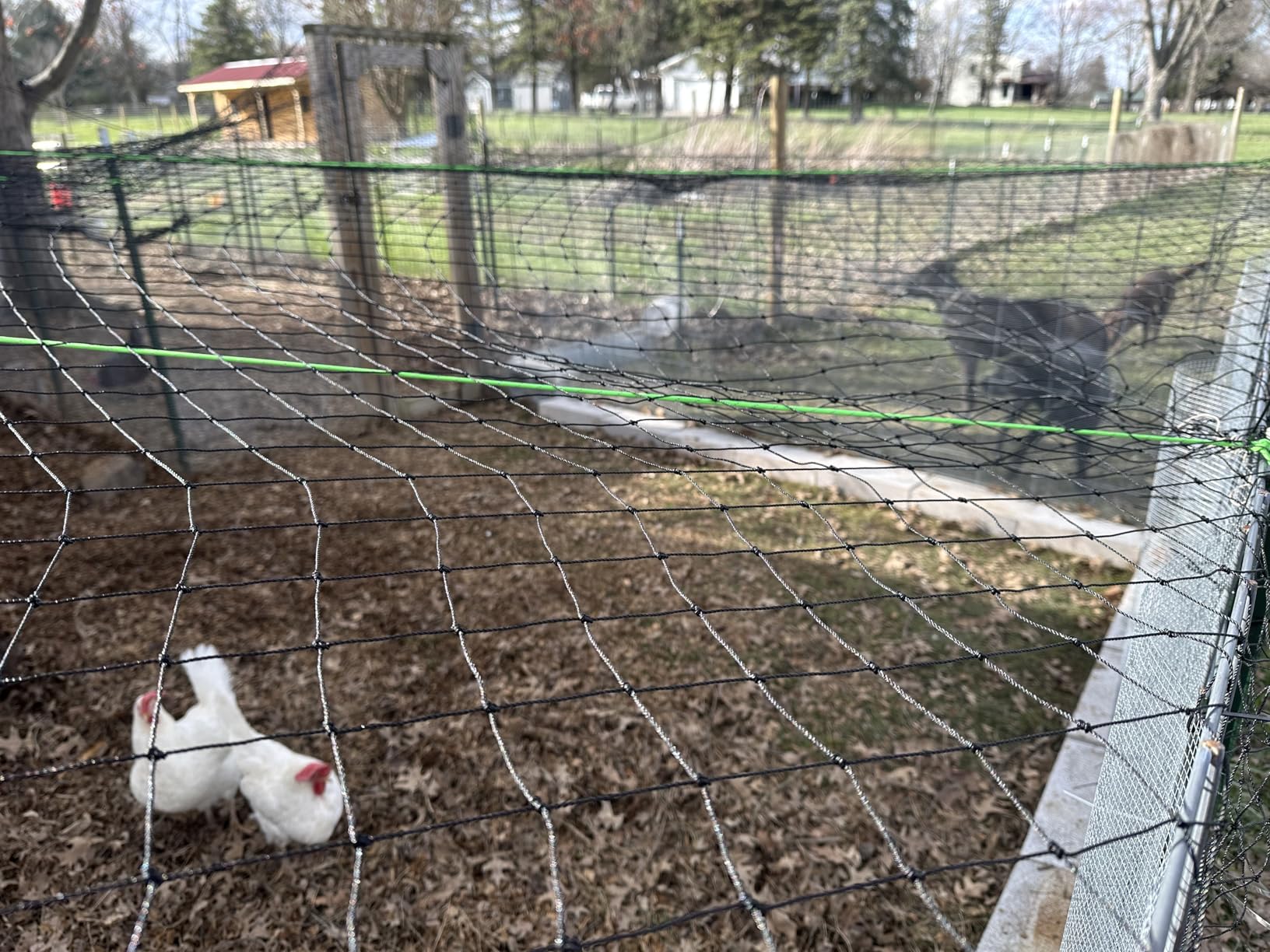
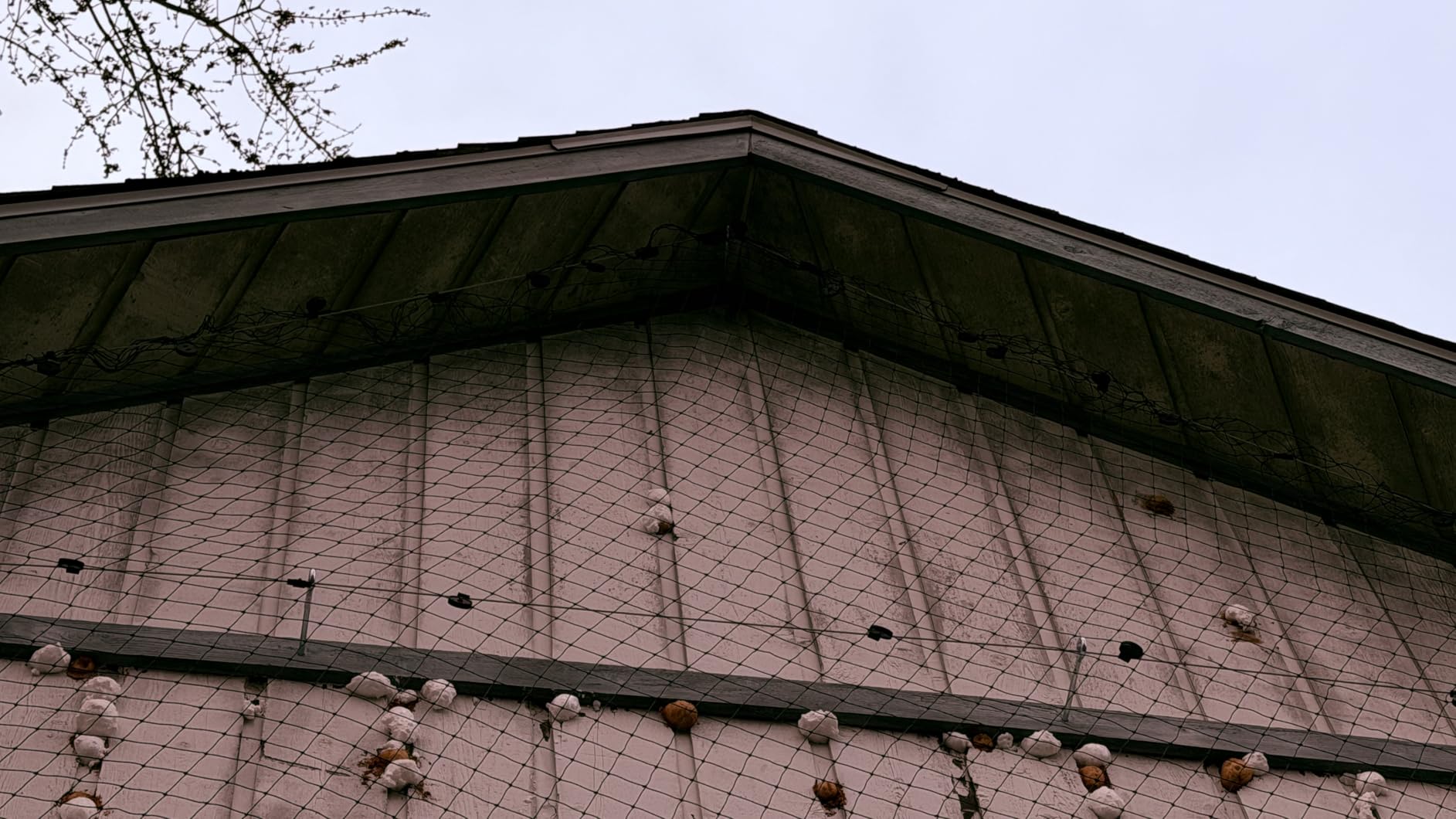
Owners overwhelmingly use it as an overhead cover over a run, and they report outperforming lighter, cheaper nets that stretched and collapsed. The black color is nearly invisible against foliage, so it does not spoil the look of a property. Tensile strength is rated at 85/245 lbs per mesh.
There is a second benefit for predator control that reviewers mention often: a strong overhead net means aerial hunters become entangled before they can reach the flock, rather than being shot out of the sky.
Where it belongs in your setup
Stretch it over the top of an existing run as a flight top and hawk cover, or use it around a pheasant or waterfowl enclosure. At 25 ft by 50 ft it covers 1250 square feet of overhead area, so most people buy more than one.
Where it falls short
It costs more per square foot than the nylon and HDPE options here, and at 2 inch mesh it is not predator-proof on its own. Fitting it over an awkwardly shaped pen needs patience and extra cut-and-tie work.
9. JUNKOGO Woven HDPE Netting 25 ft x 100 ft — Best Garden and Coop Cover
Junkogo Bird Netting 25×100 Ft, 1 in Mesh Heavy Duty Garden Netting
1 inch woven mesh
20g/m2 HDPE
25 ft x 100 ft
3.29 kg
Pros
- Heavier 20g/m2 than typical 15g nets
- 1 inch mesh blocks squirrels and raccoons
- Unfolds without tangling
- Water can be fed through without removal
Cons
- Diamond weave stretches so true size shifts
- Light plastic is no barrier to larger predators
The distinguishing spec here is 20g/m2. Most garden netting in this category is 15g/m2, so this is a heavier woven HDPE that resists squirrel and rabbit damage noticeably better. The 1 inch mesh is also finer than the 2 inch and 2.4 inch options elsewhere in this list.
Owners use it as a coop cover, over raised beds and around blueberry bushes, and they report that it holds up better than cheaper netting. It is UV and corrosion resistant, and the listed load capacity is over 100 pounds with elasticity.
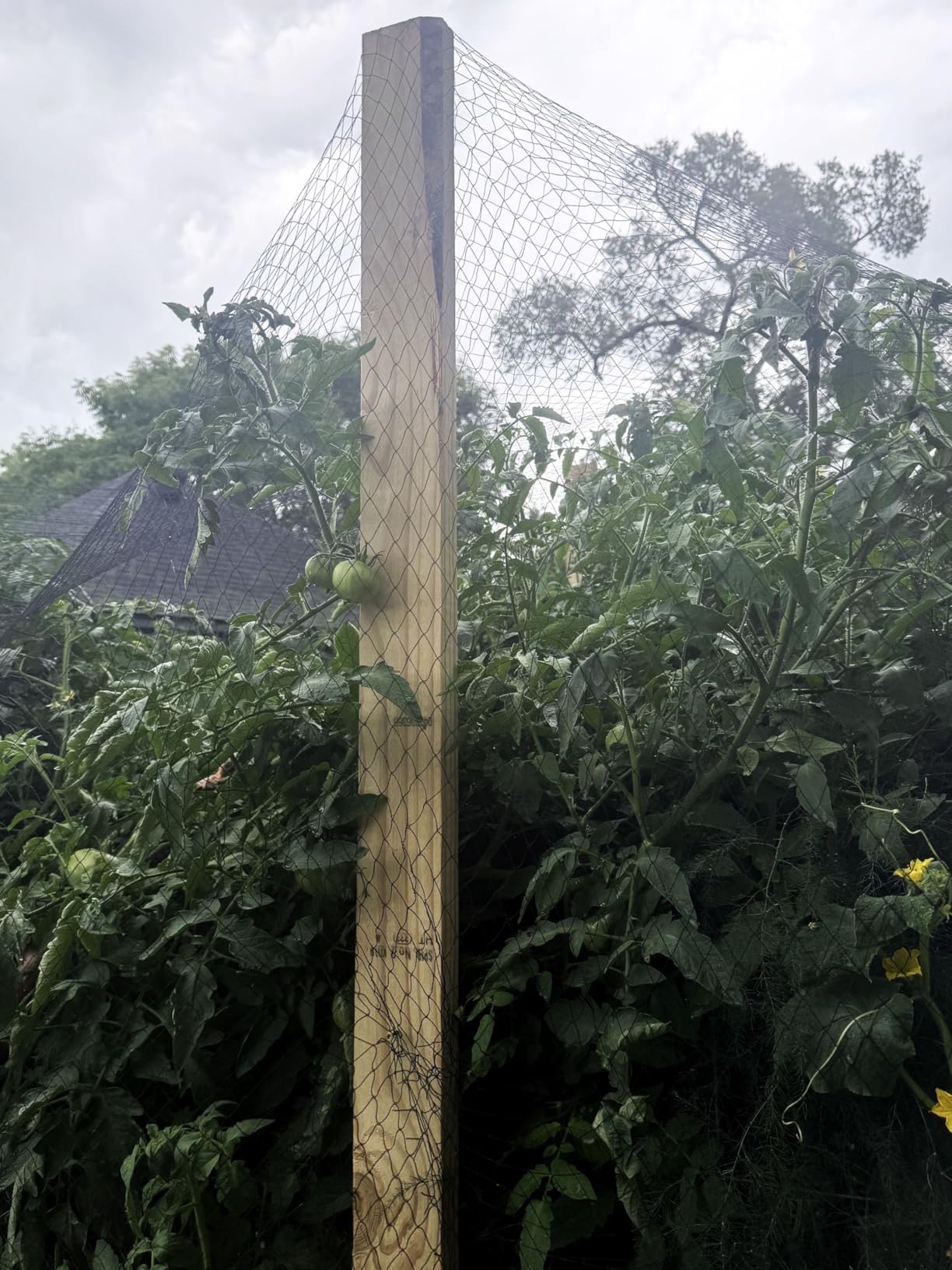
Two practical details make it pleasant to work with. It unfolds without tangling, which sounds minor until you have fought a ball of cheap netting on a windy day, and you can cut it to size with scissors without the edges fraying apart.
It also lets you water through it, so you can drape netting over a bed or a run and still hose underneath. That single feature is why many buyers use it over vegetable beds rather than over the coop.
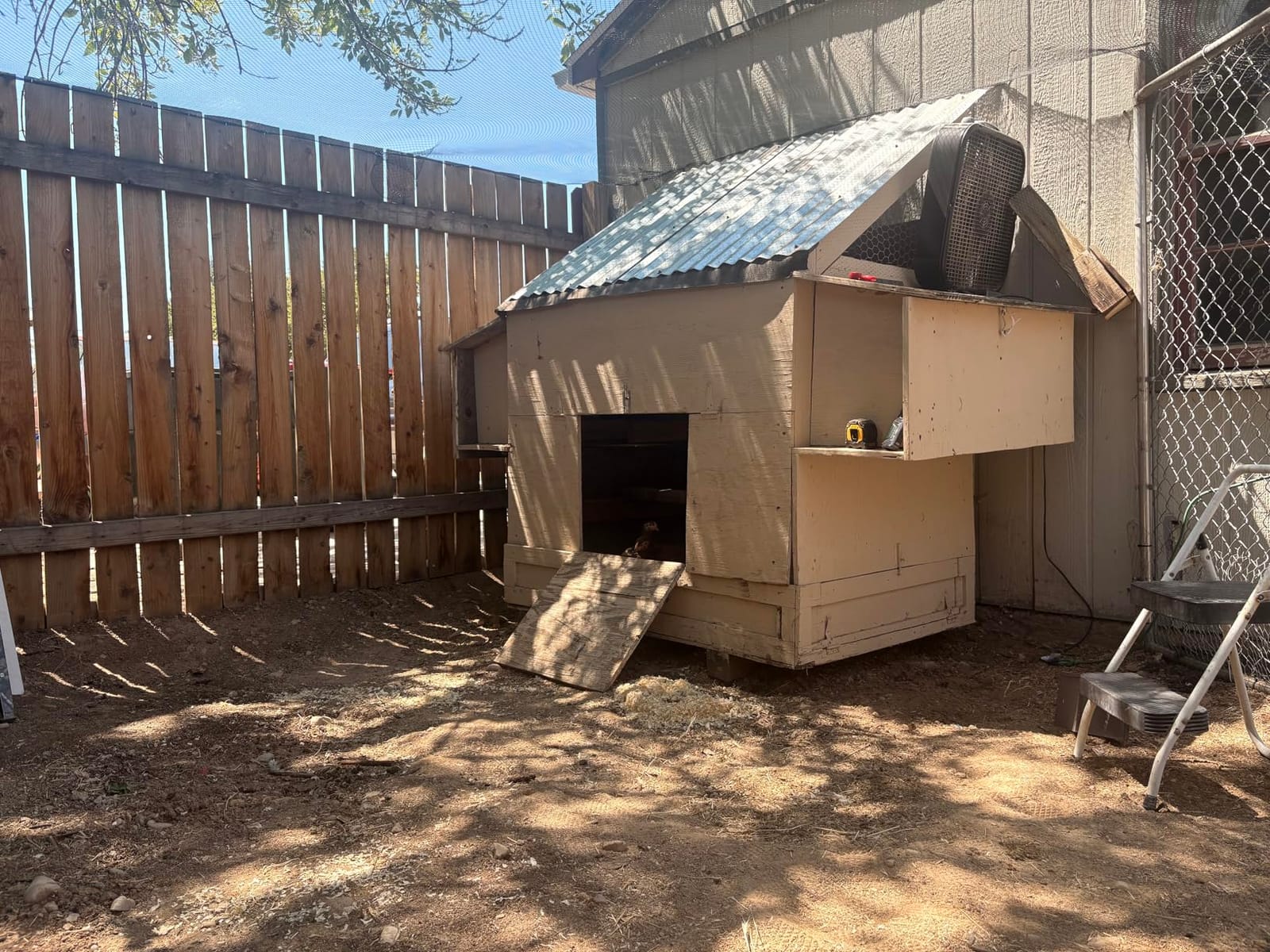
When to choose it over the nylon net
Pick this one when your priority is exclusion of squirrels, rabbits and birds from a garden, or a stiffer cover over a coop. Pick the nylon option below when you need something lighter to drape over fruiting bushes with almost no weight.
Where it falls short
The diamond weave stretches when pulled taut, so the stated width and length can change once it is tensioned. And light plastic mesh is not an effective barrier to a large determined predator, so do not treat it as your only perimeter.
10. BSTPCOO Nylon Bird Netting 25 ft x 50 ft — Budget Pick
BSTPCOO Bird Netting for Chicken Coop, 25’x50′ with 2.4″ Square Mesh
2.4 inch square mesh
25 ft x 50 ft
1.24 kg
50 ties and 8 stakes
Pros
- UV-resistant nylon reusable season to season
- Cuts with scissors without fraying
- 2.4 inch mesh blocks birds and hawks
- Very light and fast to install
Cons
- Nylon stretches out of shape under tension
- Reads as a bird barrier not a predator fence
- Tangles if handled carelessly
At 3426 reviews this is the most-reviewed product in the entire roundup, though the 4.1 average is the lowest of the twelve. The pattern is consistent: people love the material and the price, and they are disappointed the moment they expect it to do a predator job.
The material is the reason to like it. UV-proof multifilament nylon is stronger than the basic plastic nets people reach for by default, and it is reusable across seasons rather than shredding after one winter. It also cuts cleanly with scissors without fraying.
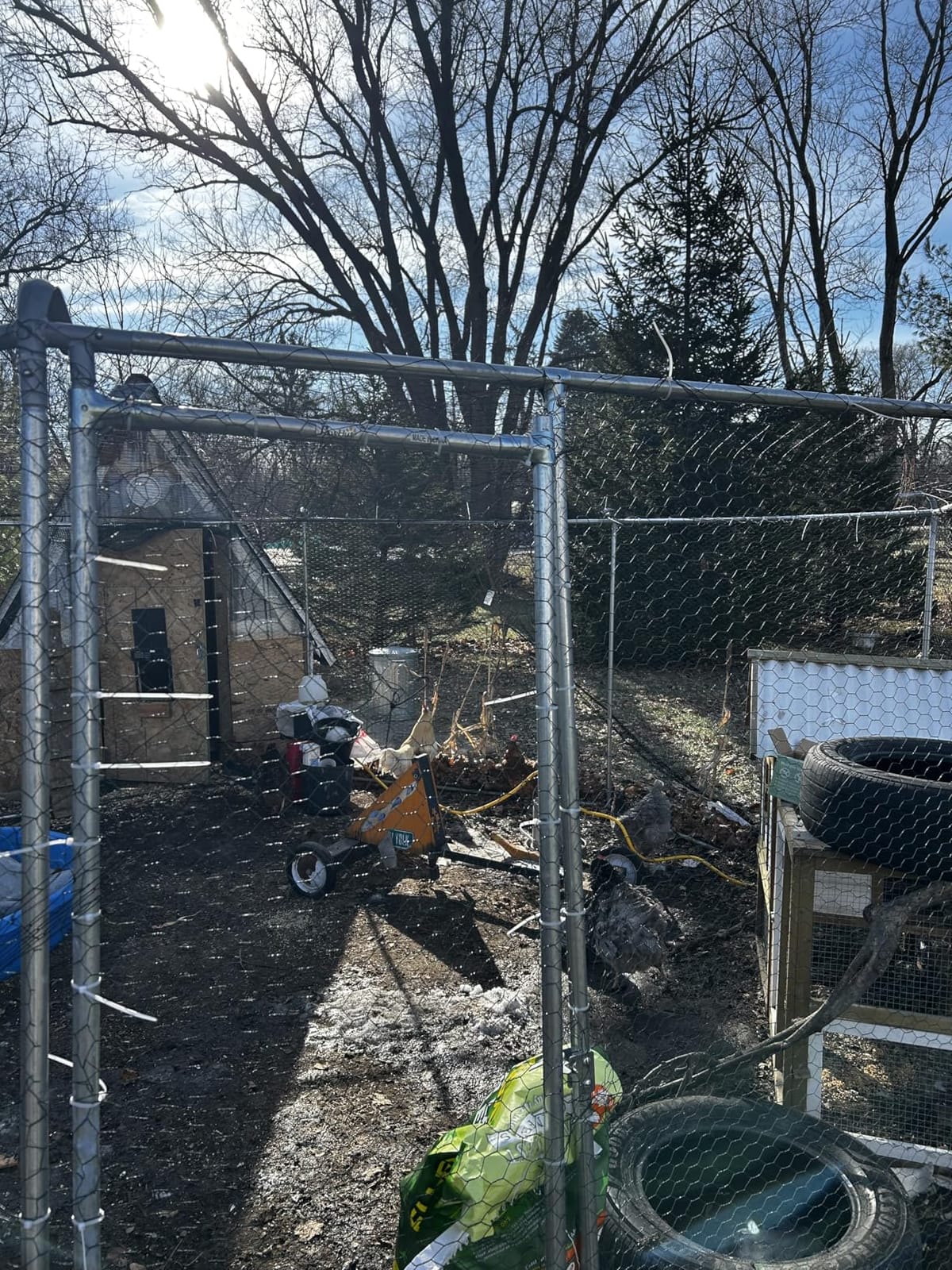
It is genuinely useful in two places. Draped over a run it stops hawks and other aerial hunters, and stretched over blueberry bushes or a tomato bed it keeps birds off while letting plants grow straight through the mesh. The box includes 50 cable ties and 8 stakes, which is enough to fix a good length quickly.
It is a physical, wildlife-friendly barrier. Nothing is harmed, which matters if you are near a protected area or simply do not want dead birds on your property.
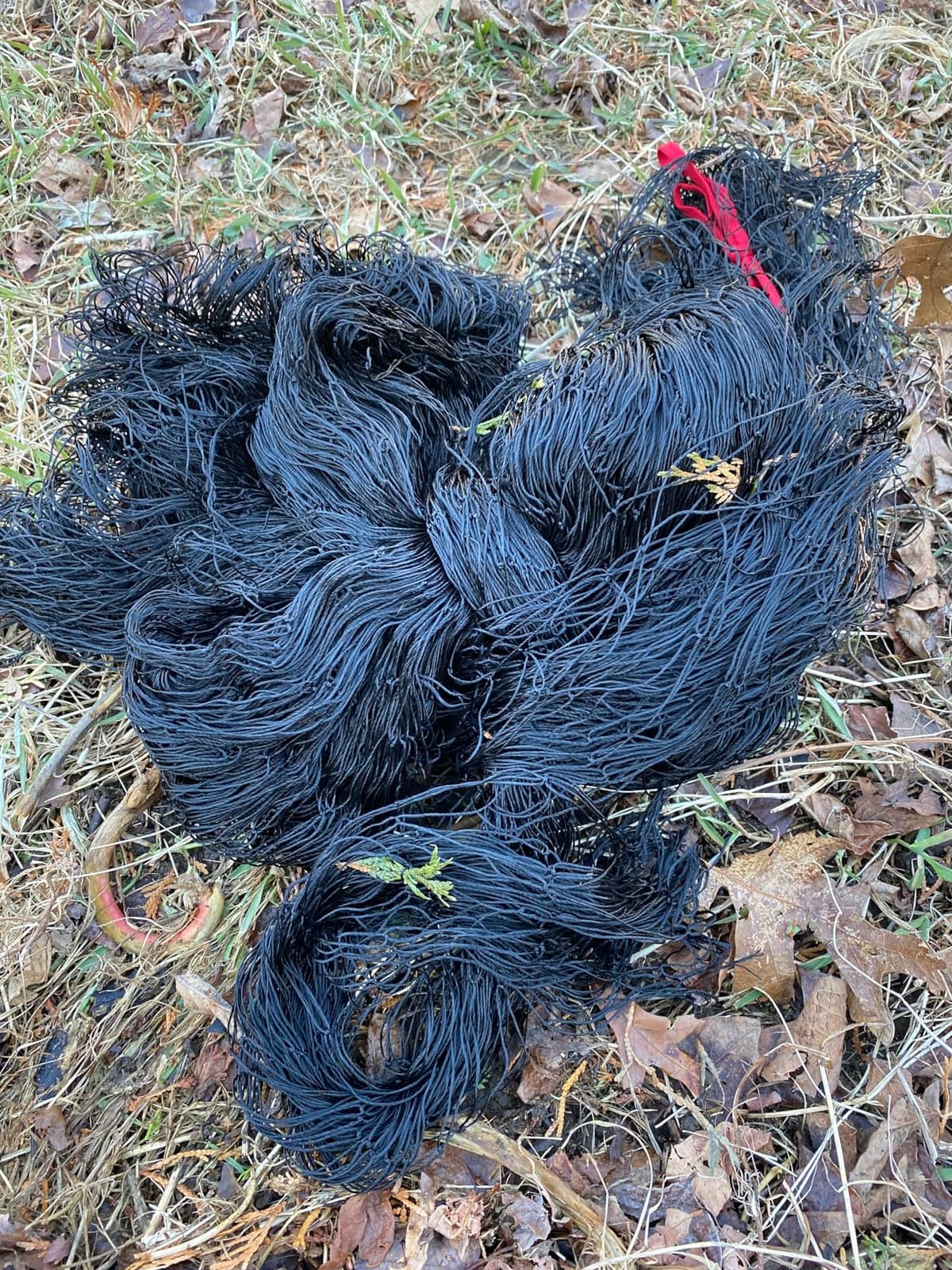
Why the mixed rating makes sense
Buyers who install it with even tension report it holding up for seasons. Those who stretch it tight to save time get the shape permanently deformed, and a sagging net is what drives the 1-star reviews. Installation tension is the whole game with this product.
Where it falls short
A 2.4 inch mesh is a bird barrier, not a ground predator fence, and nylon stretches where welded wire does not. Treat it as overhead and garden cover, never as the perimeter of a run near foxes.
11. TOYPOPOR Hexagonal Chicken Wire 16 in x 82 ft — Best for Light Garden Edging
16in x 82ft Chicken Wire, TOYPOPOR 40cm x 25m Poultry Wire Netting Hexagonal Galvanized Mesh Garden Fence Barrier for Pet Rabbit Chicken Fencing (16In x 82FT)
2 inch hex mesh
16 in x 82 ft roll
0.6mm wire
2.07 kg
Pros
- Long lightweight roll
- easy to cut and shape
- Hard to slip apart when cut
- Low cost coverage per foot
Cons
- 0.6mm wire is not a serious barrier
- Hex openings wide enough for small animals
This is the lightest wire option in the roundup at 2.07 kg for 82 feet, and at 2493 reviews with a 4.6 average it is also one of the best regarded. For low borders and garden protection it does exactly what it is designed to do.
The 0.6mm galvanized wire is thin by farm standards, but it is consistent in spacing and it holds its shape once bent. Reviewers specifically note that the hexagonal mesh is difficult to slip apart when cut, which is a genuine nuisance with poorly knotted cheap wire.
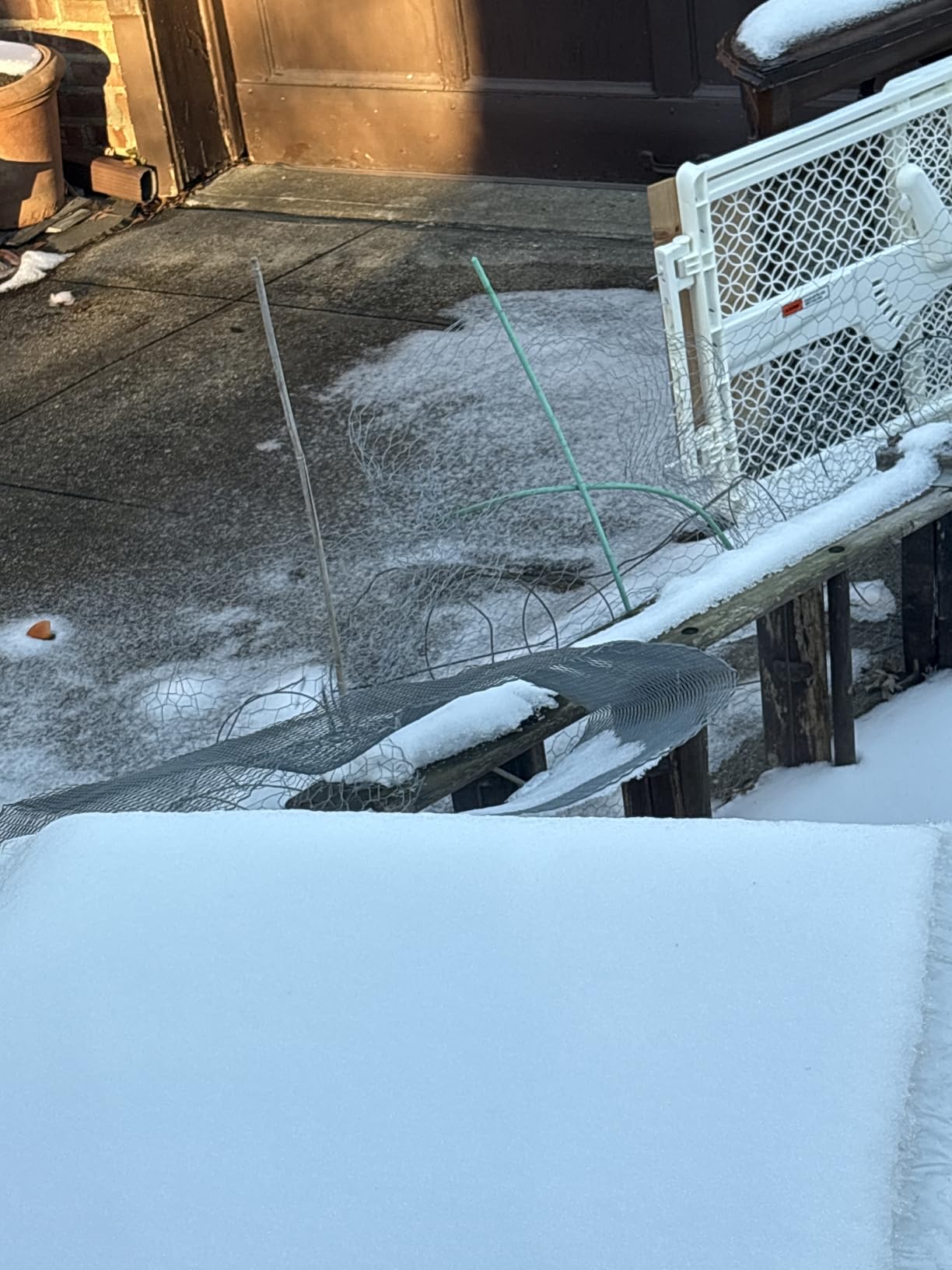
At 16 inches tall it is a border height, not a fence height. Use it around a vegetable bed edge, as a low skirt at the base of a run, or to separate a dust bath area. Several buyers also use it for pet cages and rabbit containment.
The value per foot is the argument. For a very long boundary where you only need to stop chickens walking through, covering 82 feet of edge for very little money is hard to argue with.
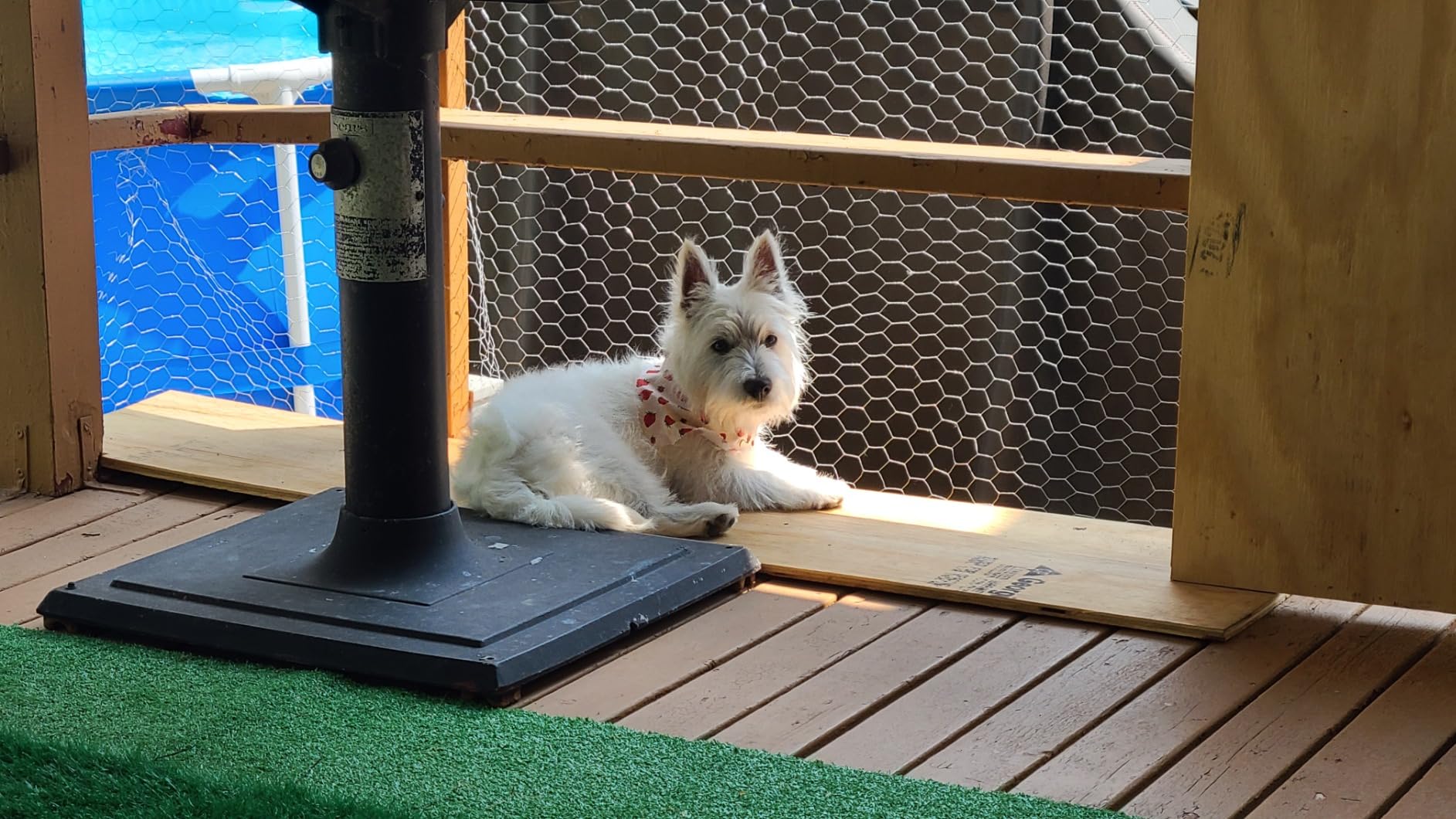
Best use in a two-material run
Run this along the base as a low skirt, then use hardware cloth or electric net above it. It stops the daytime wandering and gives you the reach you need without paying for 48 inches of wire along the whole boundary.
Where it falls short
Thin wire is not a serious barrier against a determined predator, and hex openings are wide enough for small animals to reach through. This is containment material. Do not rely on it near woodland edge.
12. RentACoop Non-Electric Mesh 48 in x 100 ft — Best Non-Electric Containment
RentACoop Non-Electric Chicken Fence Netting, 48″ H x 100′ L
48 in x 100 ft roll
Posts every 8.33 ft
8 lb
Repair kit included
Pros
- Quick to set up
- move and rotate
- Pre-fastened posts limit sagging
- Can be cut into two smaller fences
Cons
- Does not deter predators at all
- 48 in height is cleared by flyers in weeks
- Hook stakes bend in clay soil
- Only four U-shaped stakes included
This is the one pick here that is containment only, with no deterrent effect whatsoever, and the 4.1 average across 151 reviews reflects exactly that. Buyers who wanted predator protection feel misled, and buyers who wanted a fast mobile boundary are happy.
What it does well is speed. Thirteen built-in 13mm double-spiked posts are spaced 8.33 feet apart, and the whole 100 foot roll weighs 8 pounds. That is the lightest full-height option in this roundup and the easiest to move between paddocks.
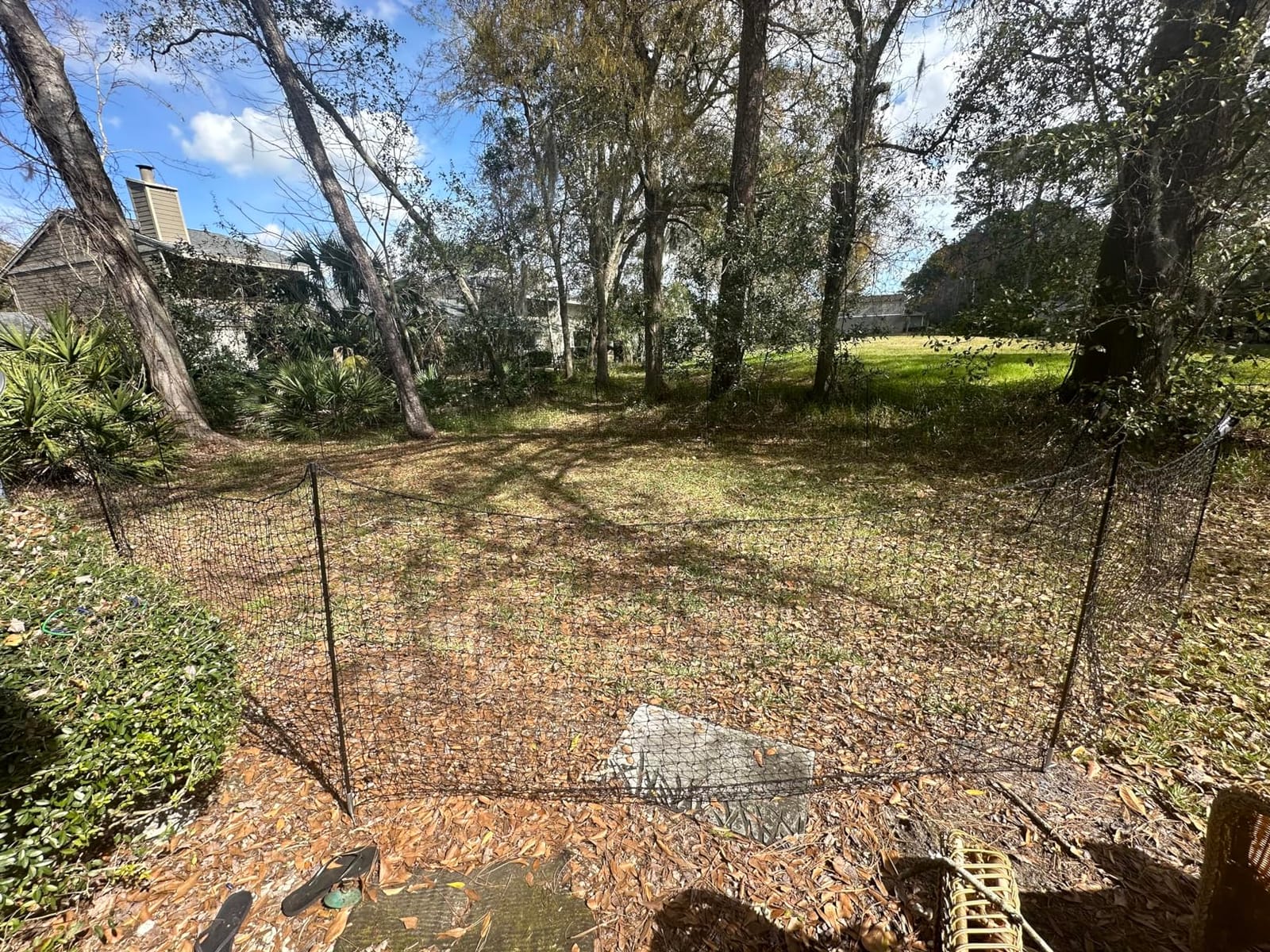
The box includes four U-shaped stakes with guylines, 14 metal hook stakes and a repair kit. The extra post means you can cut the roll in half and build two smaller fences, which is genuinely useful for splitting a flock.
Several owners run it on a small commercial flock for pasture rotation, which is the intended use. It is a boundary that holds chickens in a familiar area, not a barrier that keeps the outside out.
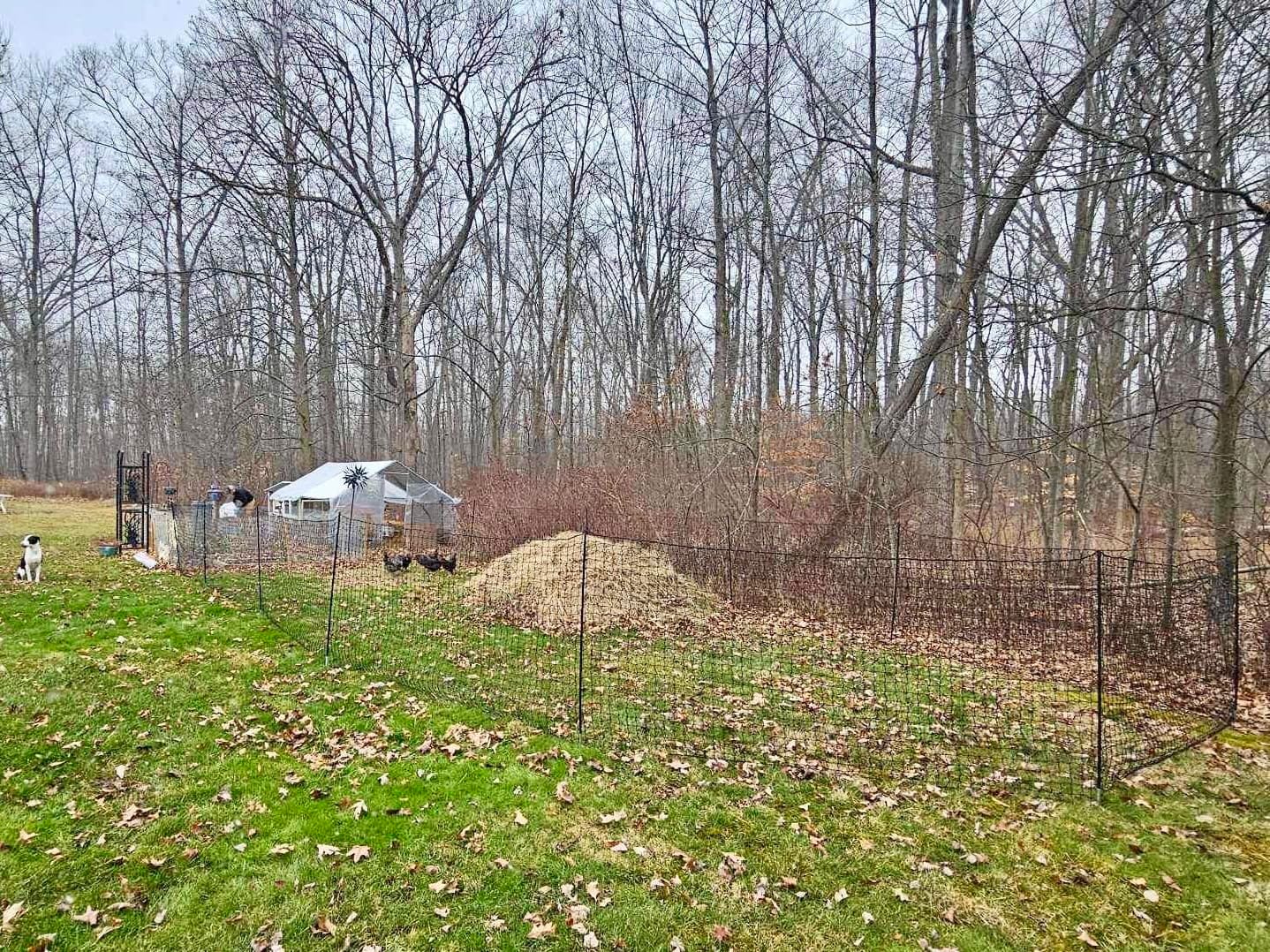
When this is the right call
Choose it for daytime paddock rotation on land with no predator pressure, for temporary separation, or for a second enclosure when you already have a protected run. The 48 inch height is genuinely useful here, because it is taller than most portable alternatives.
Where it falls short
It does not deter predators, flyers get over 48 inches within a few weeks unless wings are clipped, and the hook stakes bend in clay soil. Four U-shaped stakes is often not enough to hold the bottom edge down, so plan on buying more pins.
Electric vs Non-Electric Poultry Netting: What Actually Works
Electric netting works by delivering a brief, low-impedance pulse from a separate energizer to conductive strands. An animal that touches the fence and completes the circuit through the soil gets a short shock, learns, and does not repeat the behaviour. That memory effect is the reason it outperforms wire against clever predators: a fox that hits an electrified net once usually stops coming back.
Passive netting is purely physical. It is predictable, needs no power, cannot fail through a flat battery, and is the only option that works reliably with chicks, ducks and rabbits in the same enclosure. Its weakness is that it only works if the animal cannot get through, and most predators approach from above or below rather than through the mesh.
Our rule of thumb: if your losses are digging predators, use electric net above hardware cloth at the base. If your flock includes chicks or you need guaranteed daytime containment with no power, use passive netting and accept that it deters nothing. If you rotate paddocks, electric net wins on setup speed. If you have no predator pressure at all, a light hexagonal roll and a pack of stakes is enough.
Energizer Sizing: The 0.25 J Rule and the 2 Mile Myth
Joules, not watts or miles, is the number that matters. A joule measures stored energy per pulse, and that energy is what pushes through grass, damp soil and a light bird. For poultry net specifically, 0.25 joules is widely treated as the practical minimum, and anything smaller starts to struggle in summer growth.
Ignore the “2 mile” figure on most energizer boxes. That rating assumes a single high-tensile wire with excellent insulation. Poultry net has twelve horizontal strands, and every one of them is a parallel path for current to leak away into the grass. A unit advertised for two miles of single wire can struggle with a fraction of that length in multi-strand net.
Check voltage at the net rather than trusting the label. The working target is a reading of roughly 3,000 volts at the far end of the run, not at the energizer. Test after rain, because the wetter and weedier the line, the more output you need. In very dry or frozen ground, a positive and negative earth return system can double the effective shock because the current does not have to travel far through soil to return.
One safety point that must be stated plainly: only use a purpose-built intermittent-pulse energizer. Never connect netting to household mains, and never leave small or juvenile animals inside an unenergized net, where they can become caught in the mesh.
How to Protect Chickens When Free Ranging: 8 Steps
1. Walk the boundary before you buy. Measure the real perimeter including corners, gates, and any tree or building you have to run around. Netting sold by length always runs out earlier than the arithmetic suggests, so buy one roll more than you think you need.
2. Keep the bottom six inches fixed. Chicks, rats and weasels work through gaps at ground level. Bury a short apron of hardware cloth, or pin the bottom strand flat with stakes every two feet.
3. Cut the vegetation along the whole line for the first week. Grass touching the lower strands is the most common reason a fence stops working, and it does so gradually rather than obviously.
4. Install proper earthing. Drive a grounding rod and connect it to the energizer’s earth terminal. A poor ground system can halve the shock you get at the fence line no matter how good the energizer is.
5. Test the net with a fence tester before letting the flock out, and again at the far end of the run. Anything under roughly 3,000 volts needs investigating.
6. Add overhead cover where birds or predators come from above. Overhead netting stops hawks and stops hens clearing the fence top, which solves two problems with one purchase.
7. Lock the flock into a secure coop at night. Electric netting is a daytime range boundary, not a secure night enclosure, and predator pressure is usually highest after dark.
8. Walk the line weekly. Look for sagging, weeds, broken strands and any place where the bottom edge has lifted. Ten minutes a week is what keeps the system working.
How to Keep Chickens In, Not Just Predators Out
Containment fails in three predictable ways: birds go over the top, birds squeeze out at the bottom, and birds find a gap where two runs meet. Height solves the first one, and it is worth being blunt about the numbers. A 42 inch net is cleared by flighty breeds within days, which is the single most repeated complaint about the shorter options in this list.
Four fixes work. Raise the boundary to 48 inches, which is what most of the electric nets here are. Add flight top netting stretched across the top, ideally the heavy knotted black mesh, which doubles as hawk cover. Clip the primary wing feathers on one wing of the birds most inclined to roam, which is a routine husbandry job rather than a punishment. And keep a predictable roosting and dust bath area well inside the boundary, because birds range furthest when they are looking for somewhere comfortable to spend the day.
At ground level, the fix is graduated mesh. Chicks need the bottom of the run to be tightly meshed, which means hardware cloth at the base even when electric net is doing the work above. Leave no gap at corners, and use a proper gate rather than a section of net tied with wire.
Using Netting to Keep Chickens Out of Your Garden
The same products solve the reverse problem, and this is a heavily searched question that roundups rarely answer. For keeping birds out of a vegetable bed, the priority is different from predator exclusion, so the cheapest options in this list become the sensible ones.
Hexagonal chicken wire at 16 to 24 inches tall works well as a low border around a bed. It is light, cheap per foot, and chickens will not hop a 16 inch barrier that has something solid behind it. If you want to be certain, choose the 1 inch woven HDPE netting and support it on stakes every four feet so it cannot be pushed through by a determined bird.
For fruiting bushes where you still need to pick fruit, the nylon bird netting is the better answer, because it drapes over the plant and lets you water and harvest through it. Whatever you use, tension matters more than the brand.
Grounding, Grass and How Long a Net Lasts
Grounding is the least visible part of an electric fence and the most decisive. Pulse current must return to the energizer through the soil, and a poor earth system means the pulse never completes the circuit, so the animal feels a nudge instead of a real shock. A driven earthing rod connected to the earth terminal is inexpensive and solves most “my fence is dead” complaints.
Vegetation is the other half. Every blade of grass touching the bottom strand drains energy continuously, and a fence that tested fine in spring can read poorly by August. Mowing a strip along the line, or spraying the vegetation under the net, is standard practice on working farms and it is the difference between a fence that deters and a fence that merely exists.
On lifespan, expectations differ sharply by material. The heavy knotted polyethylene option in this list carries a published average service life of 7 to 10 years in high UV environments, and long-term owners of the Premier nets report multi-year service. Plain polyethylene electric net degrades faster under constant sun, and nylon mesh loses tension if it is stretched during installation. Store rolls shaded between seasons and expect to replace staples and hook stakes far more often than the net itself.
Frequently Asked Questions
What is the best poultry netting?
The best poultry netting depends on the job. For a fixed run that must stop digging predators, 1/2 inch 19 gauge hardware cloth is the strongest choice because small predators cannot pass through it. For a boundary you move onto fresh grass every week, a 48 inch electric poultry net with pre-attached posts is better, because setup takes minutes and the pulse trains predators to avoid it. For chicks and mixed-species flocks with no predator pressure, lightweight hexagonal chicken wire is enough.
Does poultry netting shock chickens?
It delivers a very brief, low-energy pulse, not the continuous current of household mains. Used correctly with a purpose-built intermittent-pulse energizer, it is startling and unpleasant but not injurious to adult birds. Chicks and juvenile animals must never be left inside an unenergized net, because they can become entangled in the mesh itself. Never connect netting to mains electricity.
Is electric poultry netting worth it?
For most free range flocks, yes. The main advantage is that a single pulse teaches avoidance, so predators that would dig under or squeeze past wire stop approaching altogether. It is also portable, which lets you rotate the flock onto fresh grass and reduce parasite pressure. The trade-offs are that it needs a separate energizer, it needs a good ground system, and it does nothing against aerial predators or determined climbers without overhead cover.
How do I keep chickens in my yard when free ranging?
Start with height: 48 inch netting is the practical minimum, because 42 inch fences are cleared by flighty breeds within days. Fix the bottom six inches with hardware cloth or a buried apron so chicks and rats cannot squeeze out. Add flight top netting across the top to stop birds clearing the fence, keep the vegetation along the line cut short, and lock the flock into a secure coop overnight because electric netting is a daytime boundary rather than a night enclosure.
What type of fence is best for keeping chickens out of my garden?
For low bed edges, 16 to 24 inch hexagonal chicken wire is enough and costs very little per foot. For a barrier you want to be certain of, 1 inch woven HDPE netting on stakes every four feet is stiffer and stops birds pushing through. Over fruiting bushes, UV-resistant nylon netting is the better choice because you can water and pick through it. Tension matters more than the product, since a sagging net is easy for a bird to work under.
How much poultry netting do I need for free range chickens?
Measure the actual perimeter first, including corners, gates and any obstacle the fence has to run around, because netting sold by roll length always runs out sooner than expected. As a starting point, allow 8 to 10 square feet of run space per hen. A single 164 foot roll laid out as a rectangle encloses a little over 1,700 square feet, which suits a flock of around 20 birds at that ratio. Allow for one extra roll to cover joins and corners.
Conclusion
If you want one product and no further research, buy the SEBOSS 1/2 inch hardware cloth for a fixed run and add a lighter net or electric system above it. If your boundary needs to move, the Premier 1 PoultryNet 48 in x 164 ft is the strongest all-round electric option, and the RentACoop roll is the one to choose if you rotate paddocks every week.
Whichever you pick, the three things that decide whether it works are the mesh opening size, whether the bottom edge stays fixed, and whether the vegetation along the line stays cut. Get those right in 2026 and a modest setup will outlast a premium one that was installed lazily.