
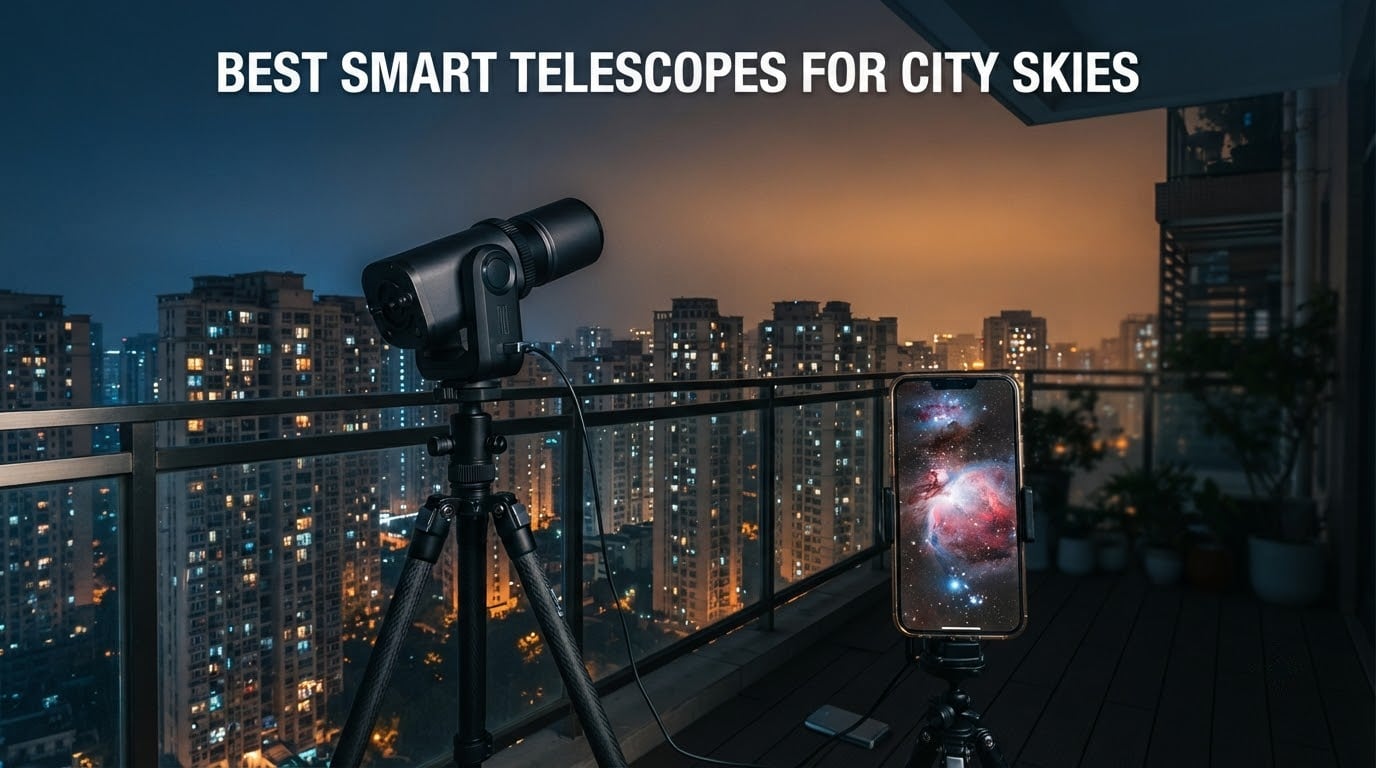
If you live under city glow, the question is not whether a telescope works there. It is which one still shows you something worth looking at. After weeks of comparing specs, owner notes and app behaviour, the best smart telescopes for city skies right now split into two very different groups, and the right answer depends on whether you want to look through an eyepiece or bring back a photo.
App-controlled imaging scopes such as the DWARFLAB Dwarf Mini and the ZWO Seestar S30 Pro fight light pollution with built-in filters and live stacking. App-guided telescopes such as the Celestron StarSense range fight it with raw aperture, pulling down more faint photons with a bigger mirror. Neither approach wins everywhere, so this roundup covers both and tells you which fits your specific sky.
The Bortle scale is the quick way to describe your sky. Bortle 1 is a genuinely dark wilderness, and Bortle 9 is the middle of a bright city with the lights on. Most city observers sit somewhere between 7 and 9, and that gap changes what any instrument can deliver. If you are still building a first setup, our guide to the best telescopes under 1000 covers the entry-level ground this roundup builds on.
Table of Contents
Top 3 Picks for City Skies in 2026

DWARFLAB Dwarf Mini
- 1.85 lb backpackable body
- Auto GOTO with 360 degree pivot
- EQ mode up to 90 second exposures
- Built-in light pollution filters
Celestron StarSense DX 130AZ
- 130mm aperture and 5.1 inch mirror
- StarSense app sky recognition
- 25mm and 10mm eyepieces
- 18 lb all-in weight
Celestron StarSense LT 80AZ
- 80mm fully coated refractor
- Smartphone sky tour with arrows
- 2x Barlow and two eyepieces
- Preassembled tripod and mount
Every Scope in This Roundup, Side by Side in 2026
| Product | Specifications | Action |
|---|---|---|
| DWARFLAB Dwarf Mini Smart Telescope |
|
Check Latest Price |
 ZWO Seestar S30 Pro Smart Telescope ZWO Seestar S30 Pro Smart Telescope |
|
Check Latest Price |
 DWARFLAB Dwarf 3 Smart Telescope DWARFLAB Dwarf 3 Smart Telescope |
|
Check Latest Price |
| Celestron StarSense DX 130AZ |
|
Check Latest Price |
| Celestron StarSense LT 80AZ |
|
Check Latest Price |
 Celestron StarSense 10 Inch Dobsonian Celestron StarSense 10 Inch Dobsonian |
|
Check Latest Price |
What Smart Telescope Means When You Live Under City Glow
A smart telescope is an all-in-one instrument that finds, tracks and processes targets for you, usually through a phone app. Two versions of that idea show up in this roundup, and the difference matters more than any other single spec.
The imaging version is a camera with a small lens attached to a motorized mount. There is no eyepiece. You pick a target in the app, the scope plate-solves against the star field to work out where it is pointing, slews over, and then stacks hundreds of short exposures in real time. The stack builds signal-to-noise ratio, meaning faint detail that a single exposure drowns in noise becomes visible in the finished image. That is what the Dwarf Mini, the S30 Pro and the Dwarf 3 do.
The guided version keeps an eyepiece. The app does not take your pictures. It tells you where to point, using star recognition on a docked phone, and then you look. What you gain is real light grasp and real resolution, because a 130mm or 254mm mirror gathers far more than a 30mm to 35mm camera lens. That is what the three Celestron StarSense telescopes do.
Now the part most guides skip. Light pollution raises the background brightness of every single frame you capture. On a narrowband or light-pollution filtered scope, the filter blocks the wide glow from sodium and LED street lighting while passing the specific wavelengths that emission nebulae emit. On an unfiltered reflector, your only tool is aperture. More aperture means more total light, which means a better signal-to-noise ratio even when the sky background is high.
So do telescopes work in cities? Yes, with the right expectation. Emission nebulae such as the Orion Nebula, the Rosette and the Veil respond very well to filtering and stacking, and they are the most reliable targets from a Bortle 8 or 9 backyard. Galaxies are far harder. Low surface brightness objects like the Andromeda Galaxy or the Leo Triplet need a genuinely dark sky, and no filter in this roundup substitutes for one. If someone tells you a filtered smart scope will show you a faint spiral from a city centre, be sceptical.
None of this needs a physics degree to get started, which is worth saying plainly in a category built around jargon. If you are weighing one of these against a traditional optical telescope, our guide to the best telescopes under 1000 covers the entry-level ground. The same simple rule applies to observing gear as it does to any other city purchase: the best setup is the one you will actually carry outside, not the one with the longest spec sheet.
1. DWARFLAB Dwarf Mini for Backpackable City Imaging
DWARFLAB Dwarf Mini Smart Telescope – 1.85lb Portable Astronomy Telescope
Sony IMX662 1/2.8 inch sensor
150mm focal length
2.45 degree field of view
EQ mode to 90 second exposures
1.85 lb
Pros
- Exceptionally small and light at 1.85 lb
- fits a backpack for grab-and-go use
- Plate-solving alignment identifies targets automatically with no manual star hopping
- EQ mode with up to 90-second exposures produces good deep-sky results under city glow
- App handles stacking noise reduction and processing
- Reports strong results from bright Bortle 9 urban skies
Cons
- Low-resolution sensor is not suitable for large photographic prints or fine planetary detail
- Small deep-sky objects look tiny and do not enlarge well
- Initial Wi-Fi connection to the scope can be finicky
The Dwarf Mini is the scope I keep recommending to people who want astrophotography from a balcony with no table, no car and no patience for a long setup. At 1.85 pounds it is the lightest thing in this roundup by a wide margin, and every one of those pounds is what makes a rooftop session realistic rather than theoretical.
What surprised me was how little the small aperture costs you in practice. The 30mm objective and 150mm focal length give a 2.45 degree field, which is tight enough that many targets need mosaic tiling, but the Sony IMX662 sensor with 2.9 micron pixels is a genuinely modern chip. Live stacking in the app does the rest.
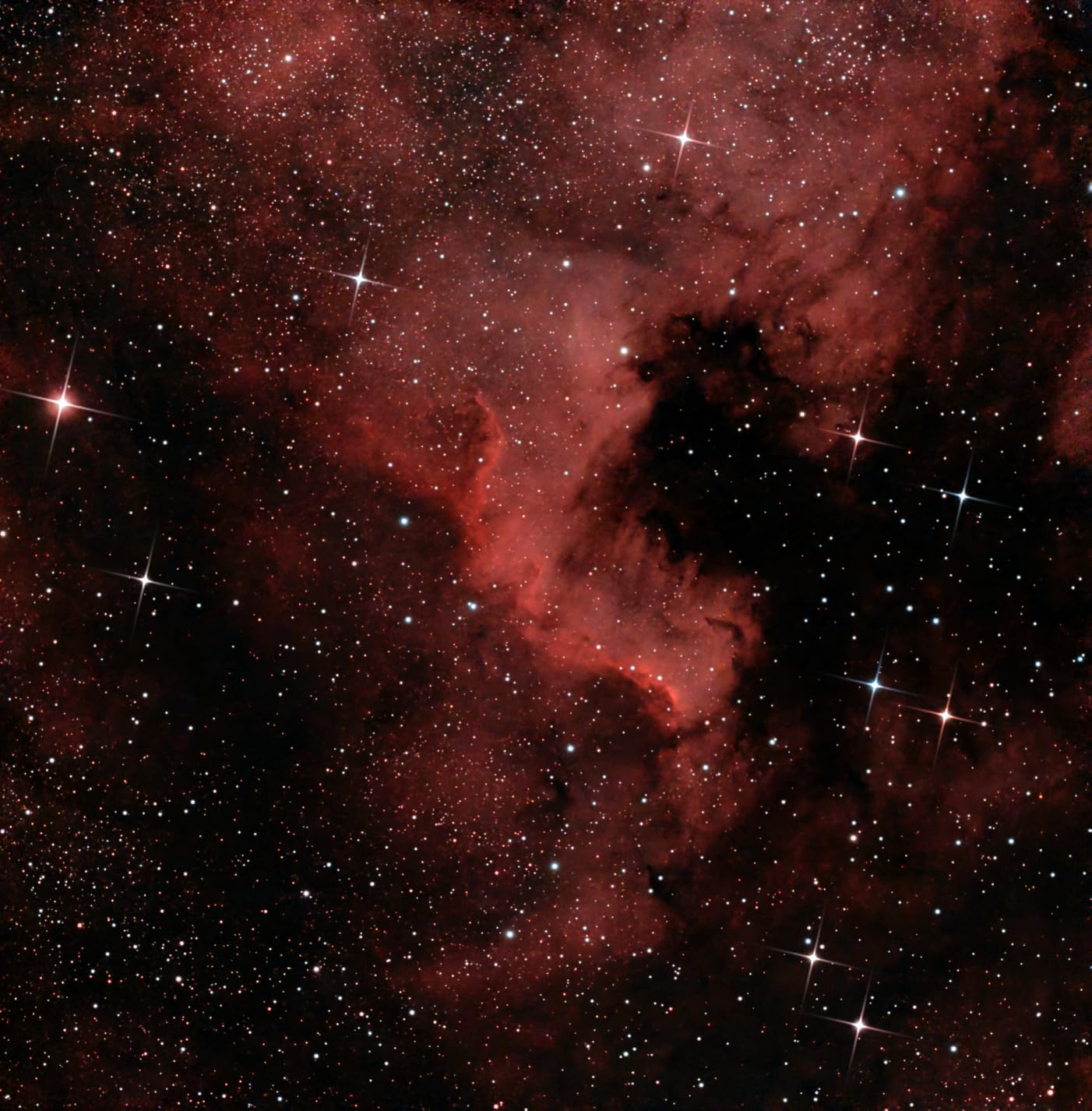
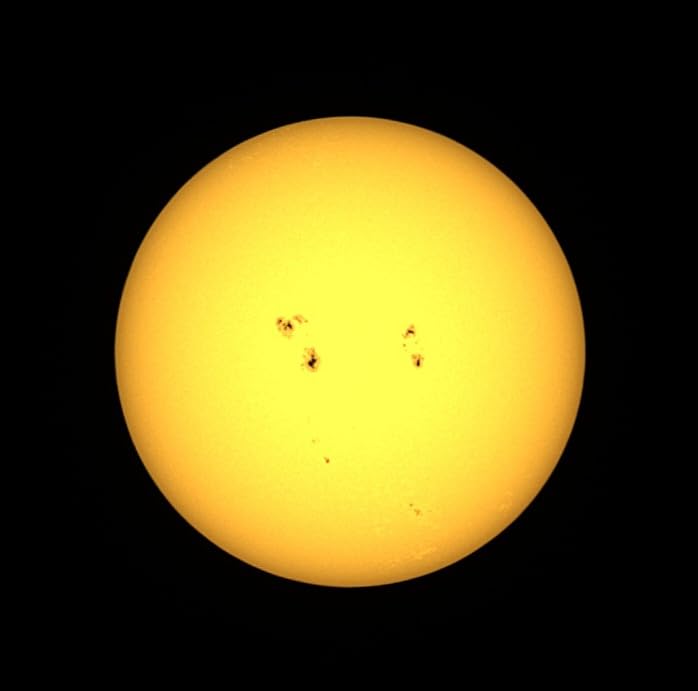
Equatorial mode is the reason this scope earns the top spot for a light-polluted site. It handles single-frame exposures up to 90 seconds, which is long enough to pull emission nebula detail out of a bright sky without a tracking error wrecking the stack. A magnetic solar filter is included, so daytime sunspot work needs no extra purchase.
The processing side is unusually complete for something this small. Stellar Studio handles cloud stacking and processing, and an internal shutter captures automatic dark frames, which cuts out the grey background that usually ruins city-sky images. 2×2 mosaic tiling and multi-session mega stacking are both supported for targets wider than 2.45 degrees.
Where the Dwarf Mini wins on a city balcony
It wins because the constraints disappear. No tripod is strictly required for short altazimuth sessions, though a fluid head and a power bank help if you want to push EQ mode to its 90 second limit. Pack it in a backpack, carry it up six flights of stairs, set it on a railing, and you are imaging within minutes.
It also wins for anyone who wants the Sun and the Moon in the same kit. The included solar filter and the 360 degree pivot freedom make daytime and nighttime use straightforward without extra hardware.
Where the Dwarf Mini falls short
The sensor is the honest limit. A 1/2.8 inch chip will not support large prints or fine planetary detail, and small deep-sky objects look tiny in the finished frame. If your goal is a gallery print of a globular cluster, this is the wrong tool.
Two smaller annoyances: the initial Wi-Fi connection to the scope can be finicky, and the app is the only interface, so a dead phone ends the session. Reviewers also report a minority finding dust inside the lens that they could not clean.
2. ZWO Seestar S30 Pro for Light-Polluted Backyards
ZWO Seestar S30 Pro Smart Telescope, App-Controlled Astrophotography
Dual-camera 4K imaging system
160mm focal length
4.6 degree field of view
Fully multi-coated apochromatic optics
3.6 lb
Pros
- Dual-camera 4K imaging delivers sharper detail than single-camera smart telescopes
- Built-in light pollution filters and apochromatic optics suit bright city skies
- One-tap capture and AI processing remove virtually all setup and editing work
- Bundled tripod and compact 3.64 lb body make it easy to travel with
- Anti-dew protection and long-session imaging support
Cons
- Not designed for planetary observation
- Device must stay stationary during deep-sky imaging
- Occasional connection hiccups between the app and the scope
The S30 Pro is the most forgiving smart telescope to point at a nebula from a suburban backyard. It is designed for deep-sky imaging, explicitly not for planets, which means every menu decision it makes is aimed at the thing a city observer actually wants to capture.
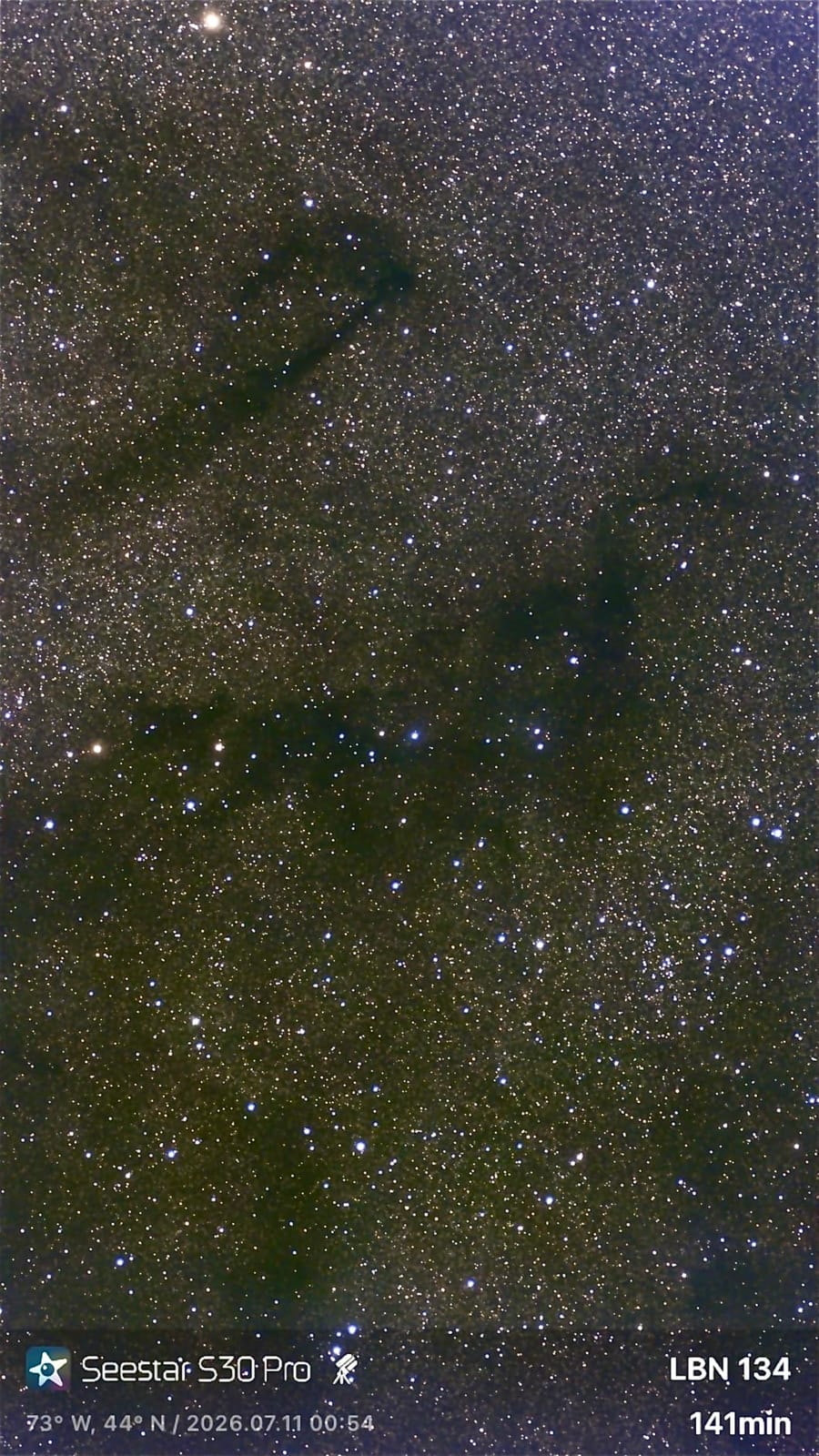
The 4.6 degree field of view is the standout number here. That is wide enough to fit the Orion Nebula in a single frame instead of stitching panels, which removes the most tedious step in narrow-field city astrophotography. The dual-camera system produces 4K-quality imaging, and the fully multi-coated apochromatic optics keep colour fringing off emission nebula gradients.
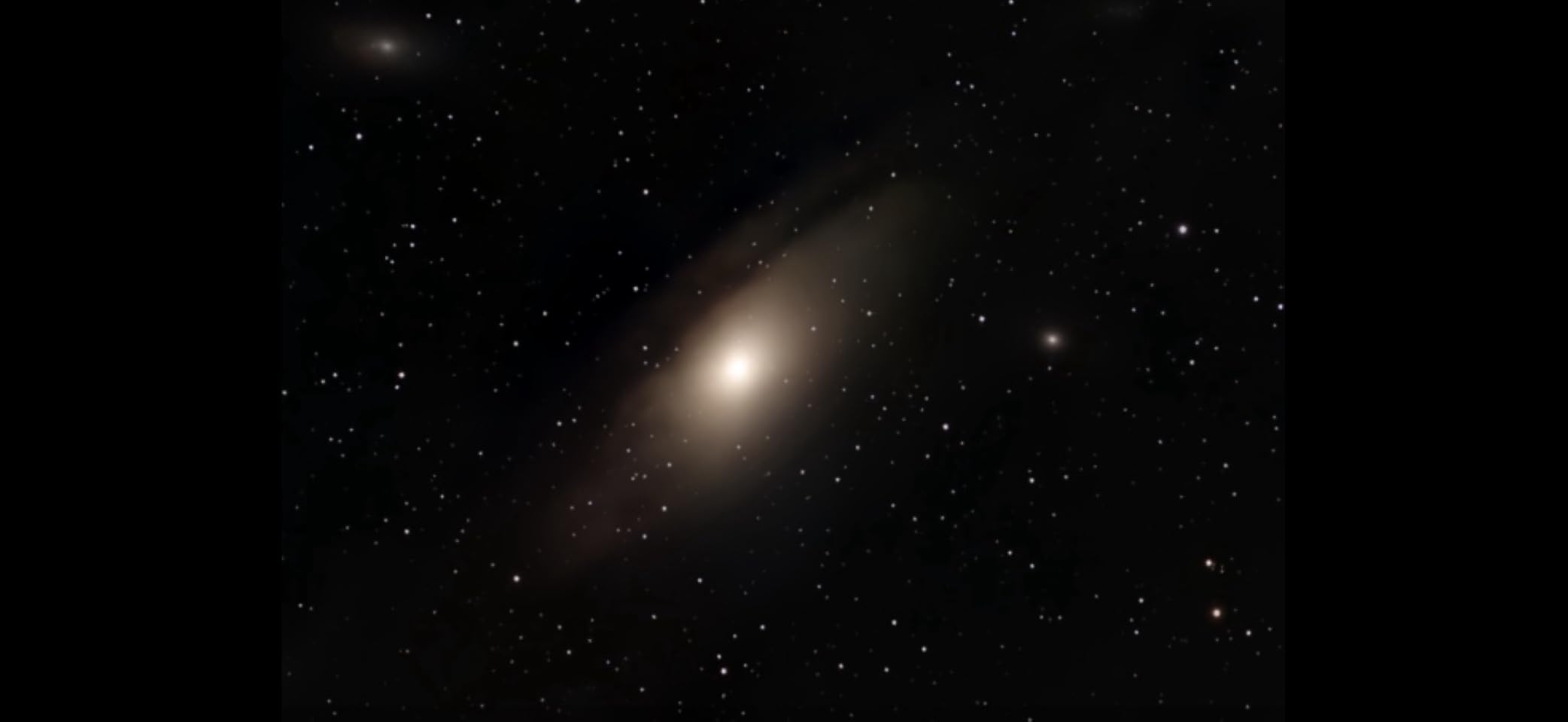
Built-in light pollution filters are the other reason it performs under city glow. One-tap capture modes cover the Milky Way, star trails, nebulae, galaxies, Moon and Sun, and automatic mosaic stitching is there when a target still exceeds the field. AI noise reduction and sky/foreground separation handle the rest of the light-pollution problem in software.
At 3.6 pounds with a bundled tripod, it is portable enough for a weekend trip to a darker site if you want to escape the city entirely. Anti-dew protection and long-session imaging support make an all-night run realistic, which matters more in cool months when dew forms fast.
Why the S30 Pro handles city glow better than anything else here
It combines three things: a wide field, a dedicated dual-camera sensor, and hardware filtering. Most competitors give you one or two. That combination is why it is the pick for emission nebulae, because those targets respond to both a wide field and to filtering, and they are the only deep-sky class that reliably photographs from a Bortle 8 backyard.
Plan mode and equatorial mode support are also there for when you want to go longer than an altazimuth session allows. The altazimuth mount does support equatorial mode, though the app and mount behaviour are worth checking against your own sky before a long night.
What the S30 Pro will not do
Planets are out of scope by design. Reviewers are consistent that this is a deep-sky instrument and that expecting Jupiter’s bands from it is a mistake. It also has to stay stationary during imaging, so a passing car or a nudged table ruins a long session.
One workflow note: the deep-sky settings are buried in menus and reviewers frequently mention consulting the manual. Connection hiccups between the app and the scope also get mentioned, so expect the occasional reconnect.
3. DWARFLAB Dwarf 3 for Travel and Daytime Work
DWARFLAB Dwarf 3 Smart Telescope, App-Controlled Astrophotography Camera
35mm objective aperture
Dual telephoto and wide-angle lenses
4K auto-tracking
Altazimuth mount with EQ mode
3 lb
Pros
- Lightest option at 3 lb with a carrying bag that fits a standard backpack
- Dual-lens system covers both deep-space telephoto and wide-angle Milky Way framing
- 4K auto-tracking keeps stars sharp
- One-touch cloud processing means no PC or complex software is needed
- Works for daytime wildlife and outdoor scene shooting
Cons
- Fixed altazimuth mount limits long-exposure capability
- Not aimed at planetary imaging
- Sensor resolution is modest for heavily magnified targets
The Dwarf 3 is the most versatile instrument in this roundup, and not only for astronomy. The dual imaging system pairs a telephoto lens for deep-space and wildlife targets with a wide-angle lens for Milky Way framing and target location, which means one device covers an entire evening outdoors and the following morning.
Where the Dwarf Mini wins on pure lightness, the Dwarf 3 wins on capability. The 35mm objective is a step up in light gathering, and 4K auto-tracking keeps stars and moving subjects sharp during a session. Cloud-computing processing through the DWARFLAB app finishes an image in minutes with no computer involved.
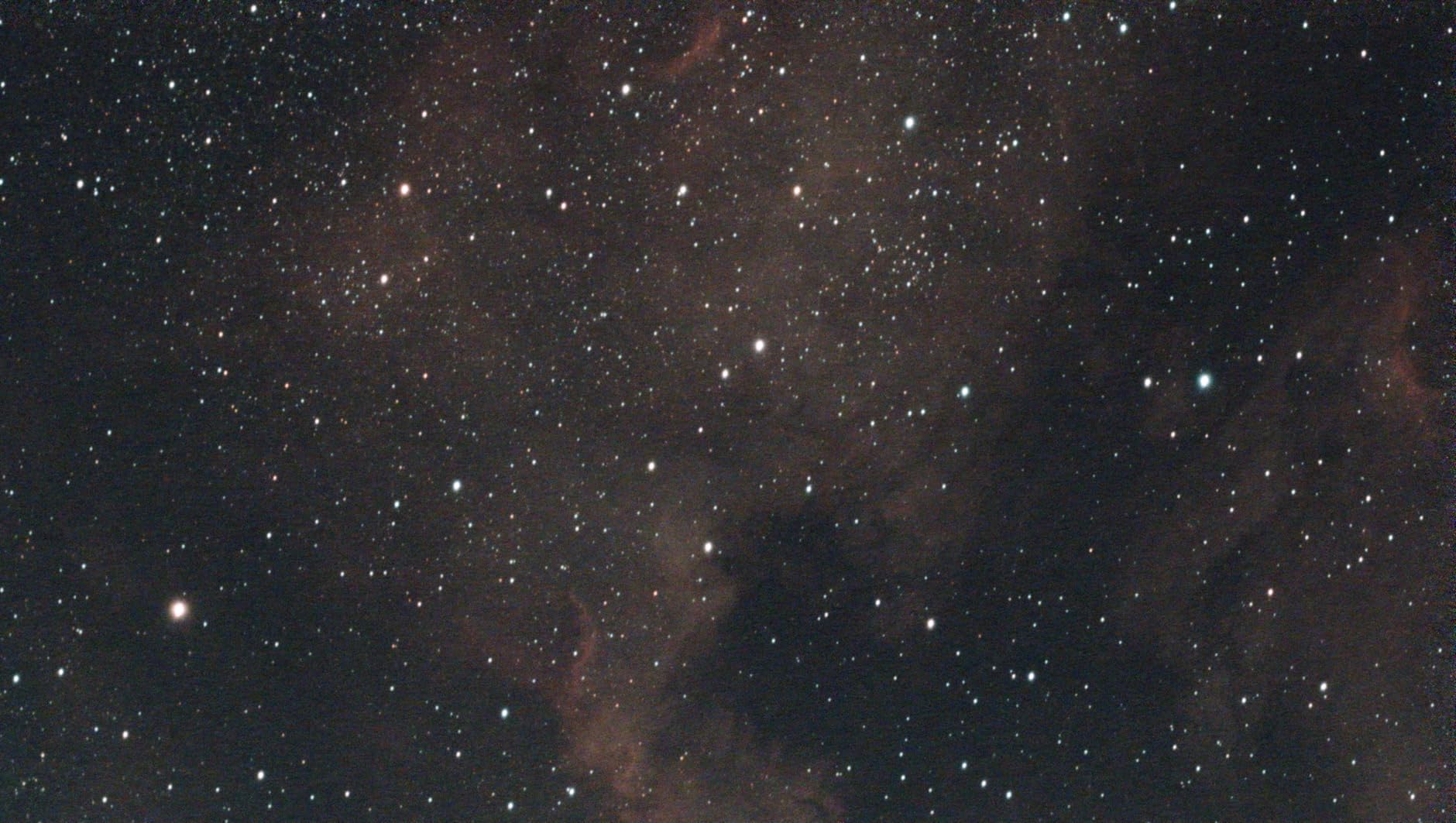
It is also the one scope here with a stated two-minute setup, rated for ages 6 to 98, which tells you something real about how forgiving the interface is. Magnetic filters, a filter pouch, a wipe cloth, a USB-C cable and a carrying bag all ship in the box, so there is nothing else to buy before a first session.
Automatic GOTO and both altazimuth and EQ mount modes mean it can point at a target and then track it without your help. For a city observer, the wide-angle lens makes Milky Way panoramas possible from a location you would normally write off entirely.
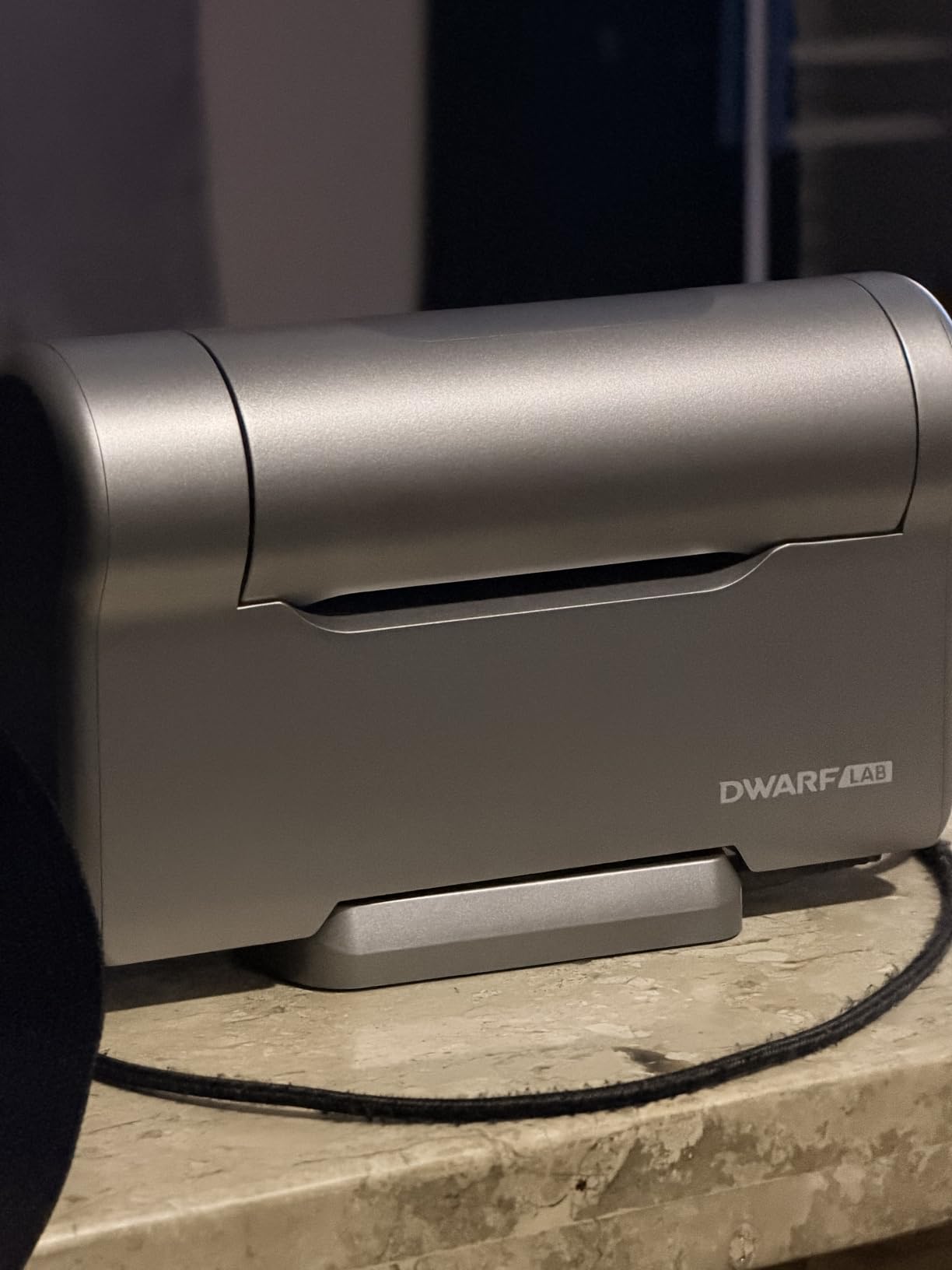
Where the Dwarf 3 earns its place on a city trip
It is the only one here that pulls double duty. The same telephoto lens that images a nebula at night frames a bird or an outdoor scene in daylight, which meaningfully extends the value of a purchase you would otherwise use for a few hours a month.
For travellers, the included carrying bag that fits a standard backpack is a genuine advantage over the 3.6 pound S30 Pro. If your observing site is a hotel balcony or a campsite rather than a garden, that matters more than any sensor spec.
Why the Dwarf 3 frustrates advanced imagers
The fixed altazimuth mount is the main limitation. It limits long-exposure capability compared with a properly polar-aligned equatorial rig, so if you already know what a tracking error looks like, you will notice the difference on faint targets.
Sensor resolution is modest for heavily magnified work, and the app dependence is total. There is no eyepiece and no physical fallback, so if the phone app is having a bad night, the scope sits idle.
4. Celestron StarSense DX 130AZ for Visual Deep-Sky in the City
Celestron StarSense Explorer DX 130AZ Smartphone Guided Newtonian Telescope
130mm objective aperture
650mm focal length
2 degree field of view
18 lb total weight
25mm and 10mm eyepieces
Pros
- StarSense app pointing accuracy matches or beats expensive computerized GoTo mounts
- 5 inch aperture shows numerous deep-sky objects even from heavily light-polluted yards
- Assembles in about 30 minutes with clear instructions
- Dual-axis slow-motion controls make it easy to keep objects centred
- Portable enough to carry out for sidewalk outreach
Cons
- Tripod and mount are flimsy and shake from the slightest bump
- Accessory tray and plastic phone-cradle neck are awkward in light wind
- Tube clearance limits viewing to roughly 65-70 degrees altitude
The DX 130 is the case for aperture beating filters. A 130mm reflector gathers vastly more total light than any of the camera scopes here, and experienced observers reviewing it describe Dobsonian-class light grasp. Under heavy city glow that raw light grasp is what shows you fuzzy galaxies and bright clusters at all.
The StarSense app is the reason it belongs in a smart telescope roundup at all. It uses sky recognition to determine the telescope position, then walks a beginner to a target with on-screen arrow guidance. Reviewers repeatedly say the pointing accuracy matches or beats far more expensive computerized GoTo mounts, which is remarkable for a manual design.
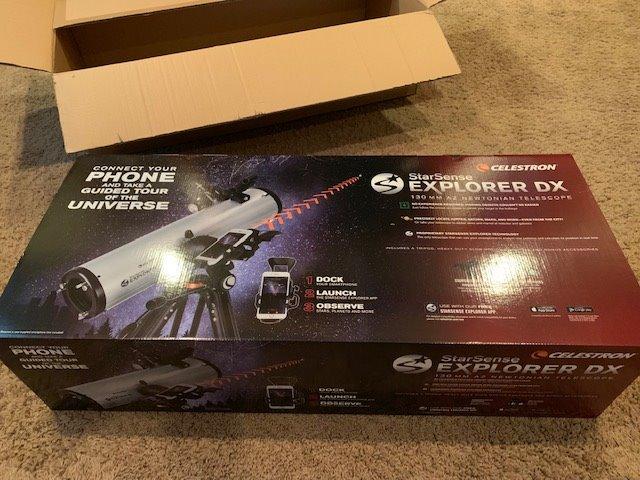
Everything else about it is conventional and well proven. A 130mm mirror on a 650mm focal length, aluminium and SiO2 coated glass, a 0.89 arc second Dawes limit, dual-axis slow-motion controls, and both a 25mm eyepiece at 26x and a 10mm at 65x. Assembly takes about 30 minutes with clear instructions.
It weighs 18 pounds, which is heavy for a balcony but manageable by one person, and light enough to carry out for sidewalk astronomy outreach. The optical tube is the same as Celestron’s 130 SLT, so it doubles as a visual instrument you grow into rather than out of.
Where a 130mm aperture beats a filtered camera
Aperture wins on surface brightness. When the sky background is high, a bigger mirror raises the target signal and the background together, but the ratio of your object to the background is what your eye actually reads. That is why a 5 inch reflector can show you a galaxy from a city that a filtered 30mm camera lens renders as grey mush.
It also wins on flexibility. Two eyepieces, a manual focuser, and a Newtonian optical tube means you can change what you look at, not just what the app lists. A camera scope gives you one output format. This one gives you a hobby.
Where the DX 130 frustrates city observers
Build quality is the repeated complaint. The tripod and mount are flimsy and shake from the slightest bump or passing car, and the leg-tightening knobs are reported as snapping. The accessory tray and plastic phone-cradle neck vibrate in light wind, which matters when you are trying to align under a StarPointer finder.
Two real limits: the tube clearance on the tripod restricts viewing to roughly 65-70 degrees altitude, so very high targets are awkward, and the mirrors need periodic collimation. Astrophotography through the eyepiece is impractical, so this is a looker, not a camera.
5. Celestron StarSense LT 80AZ for Guided Tours on a Budget
Celestron StarSense Explorer LT 80AZ Smartphone Guided Refractor Telescope
80mm objective aperture
400mm focal length
90 degree field of view
9.2 lb total weight
2x Barlow included
Pros
- Cheapest way to get a guided tour of the night sky from a smartphone
- Sharp vivid views of the Moon with visible craters and mountains
- Light and easy to assemble and simple to carry for travel
- Pleiades and other open clusters look beautiful through it
- Includes 25mm and 10mm eyepieces plus a 2x Barlow
Cons
- Phone must stay docked during alignment or the process must be repeated
- StarSense app can be finicky and does not always sync reliably
- Narrow field of view makes planets drift out of view quickly
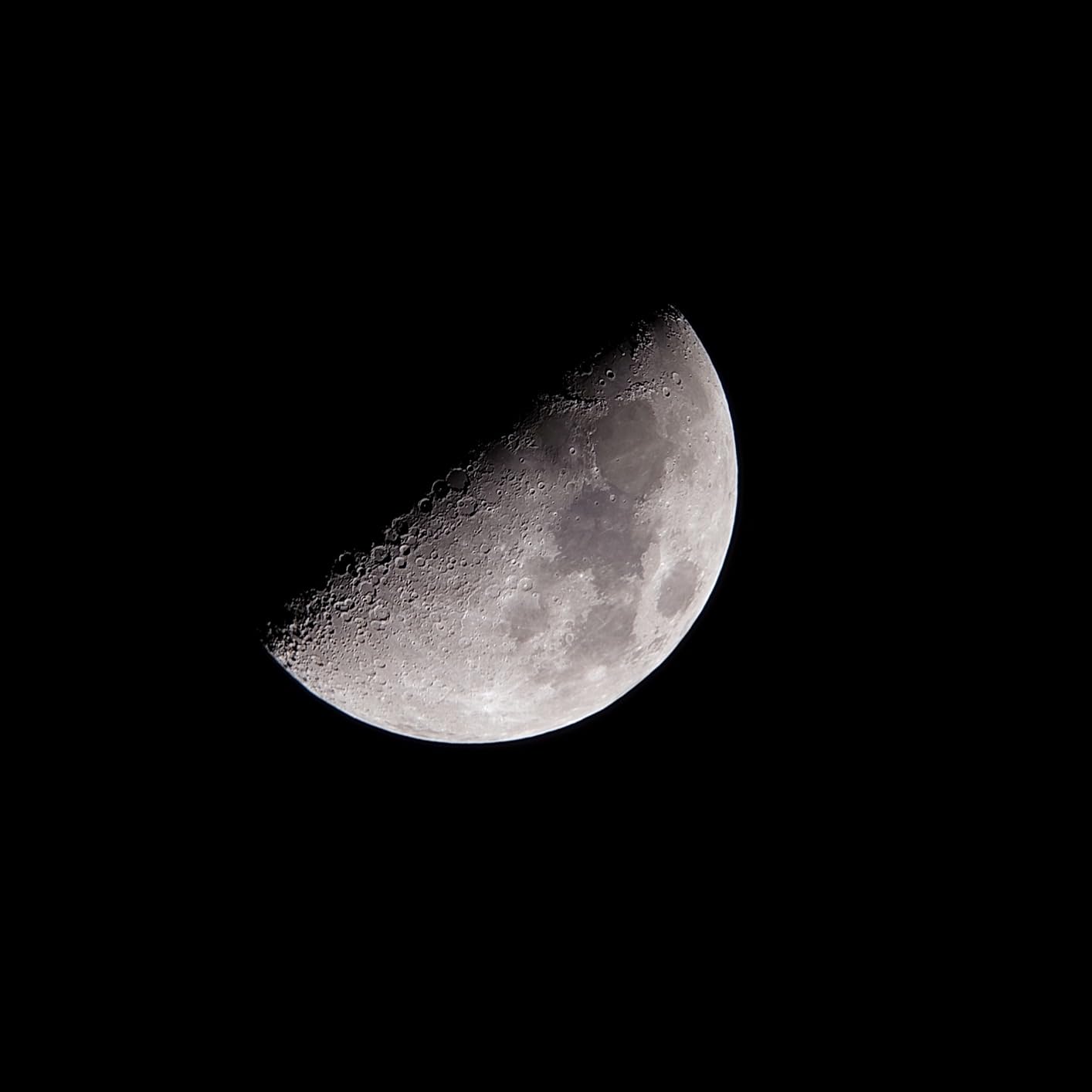
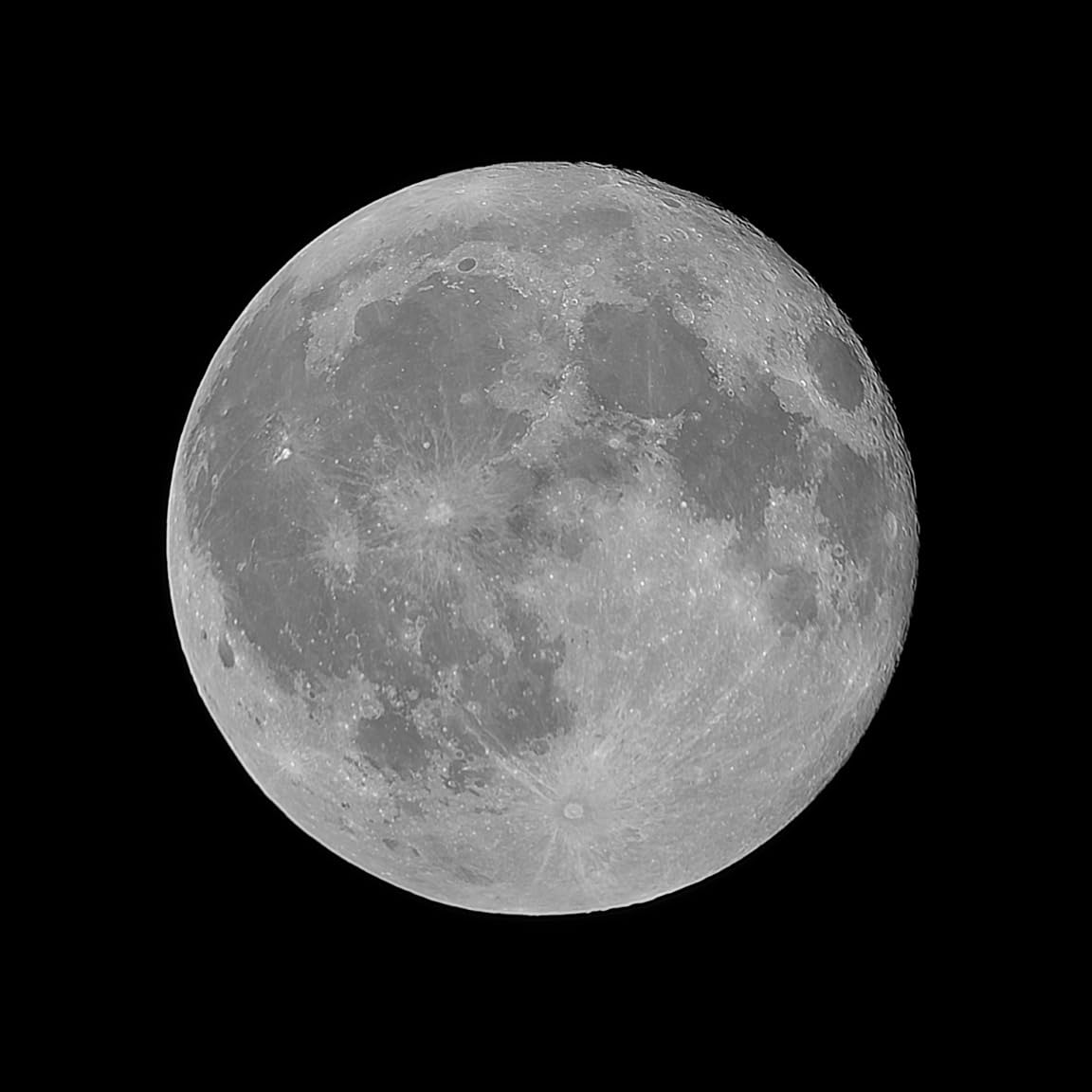
The LT 80 is the entry point. It is the cheapest way in this roundup to get an app-guided tour of the night sky, and for a complete beginner in a bright city it does something none of the camera scopes do: it shows you the Moon, and the Moon never hides from light pollution.
The 80mm fully coated refractor with a 400mm focal length gives a 90 degree field of view, which is genuinely wide. That wide field is why the Pleiades and other open clusters look so good through it, and why a beginner can fill the view with something on their first night. A 2x Barlow, an erect image diagonal, an accessory tray and both eyepieces are included.
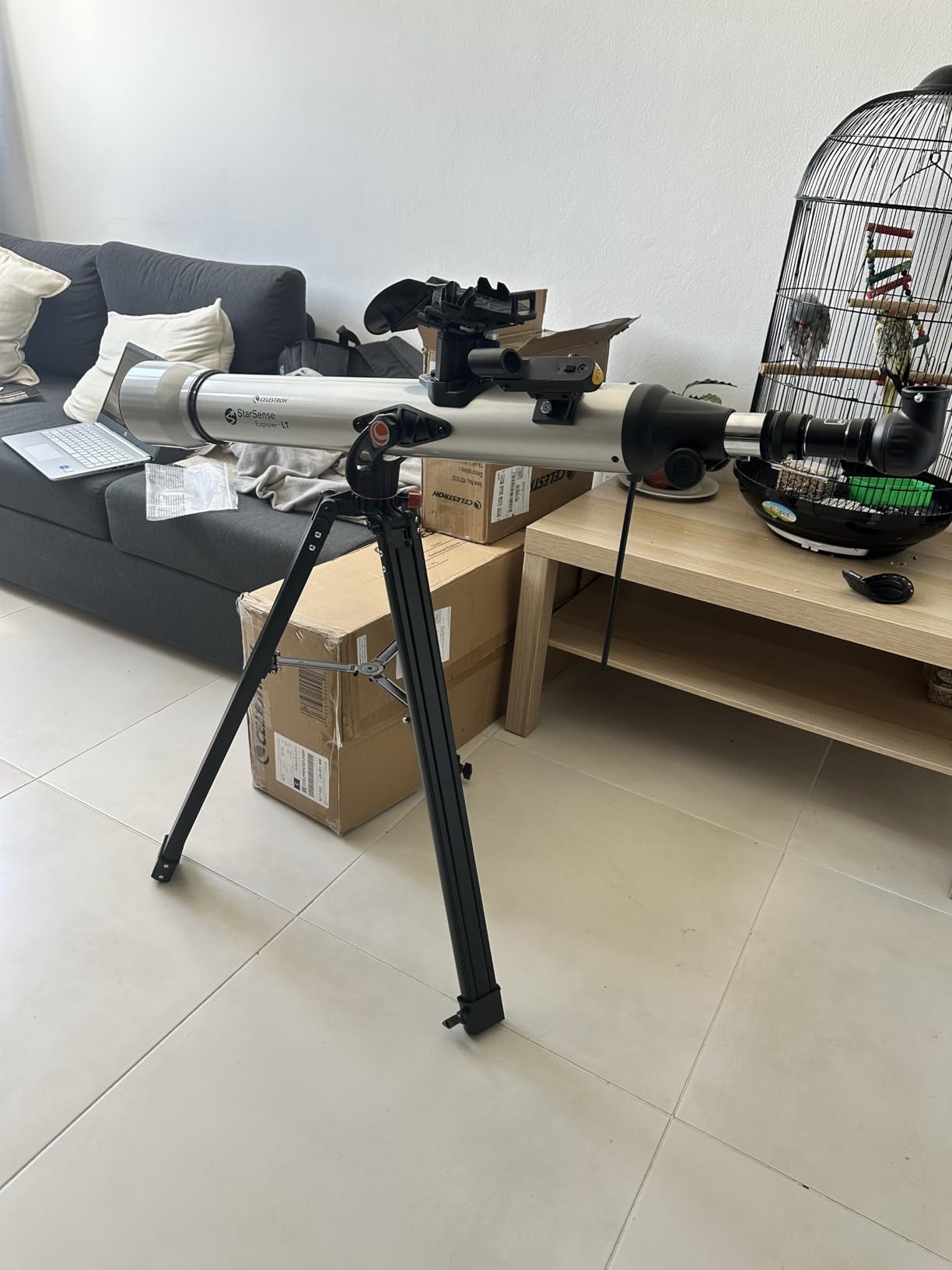
Reviewers consistently call out sharp, vivid lunar views with visible craters and mountains, and the tripod and mount arrive preassembled. At 9.2 pounds it is simple to carry, and it needs no external power source at all, which removes a failure point that battery-powered gear introduces in cold weather.
The app provides a curated list of tonight’s best targets based on time and location, plus on-screen arrow guidance toward each one. For someone who has never found Orion, that is worth more than aperture.
Where the LT 80 makes sense for city beginners
It makes sense when your goal is learning the sky, not imaging it. Open clusters, the Moon, and a handful of brighter deep-sky objects all reward a wide field, and the guided pointing removes the single biggest beginner barrier, which is knowing where to look.
It also makes sense as a travel scope. No battery, no charging, no app pairing ritual beyond a phone dock, and a weight you can carry a long distance. For a weekend trip away from the city, that simplicity is a real advantage.
Where the LT 80 disappoints
The app workflow is the dominant complaint. The phone must stay docked during alignment or the whole process has to be repeated, and several owners found syncing unreliable, especially after dark. Budget for a few retries the first time you set it up.
Optically, 80mm is small. The field of view is narrow in practice at higher magnification, so planets drift out of view quickly, and Jupiter’s bands and Saturn’s detail are hard to resolve at the included magnifications. Tripod and mount hardware also draw quality complaints.
6. Celestron StarSense 10-Inch Dobsonian for Planet Detail
Celestron StarSense Explorer 10″ App-Enabled Dobsonian Telescope
254mm objective aperture
650mm focal length
0.46 arcsec Dawes limit
54.8 lb total weight
2 inch Crayford focuser
Pros
- 10 inch aperture delivers standout light grasp and deep-sky detail
- Dobsonian base is very stable for a manual mount
- StarSense phone dock adds guided pointing to an otherwise unguided design
- StarBright XLT coatings produce sharp vivid views of planets and nebulae
- 2 inch Crayford focuser accepts upgraded eyepieces easily
Cons
- At 54.8 lb the unit is not portable and needs two people to move
- Manual mount means targets drift and must be re-centred frequently
- Large optical tube makes collimation checks more involved
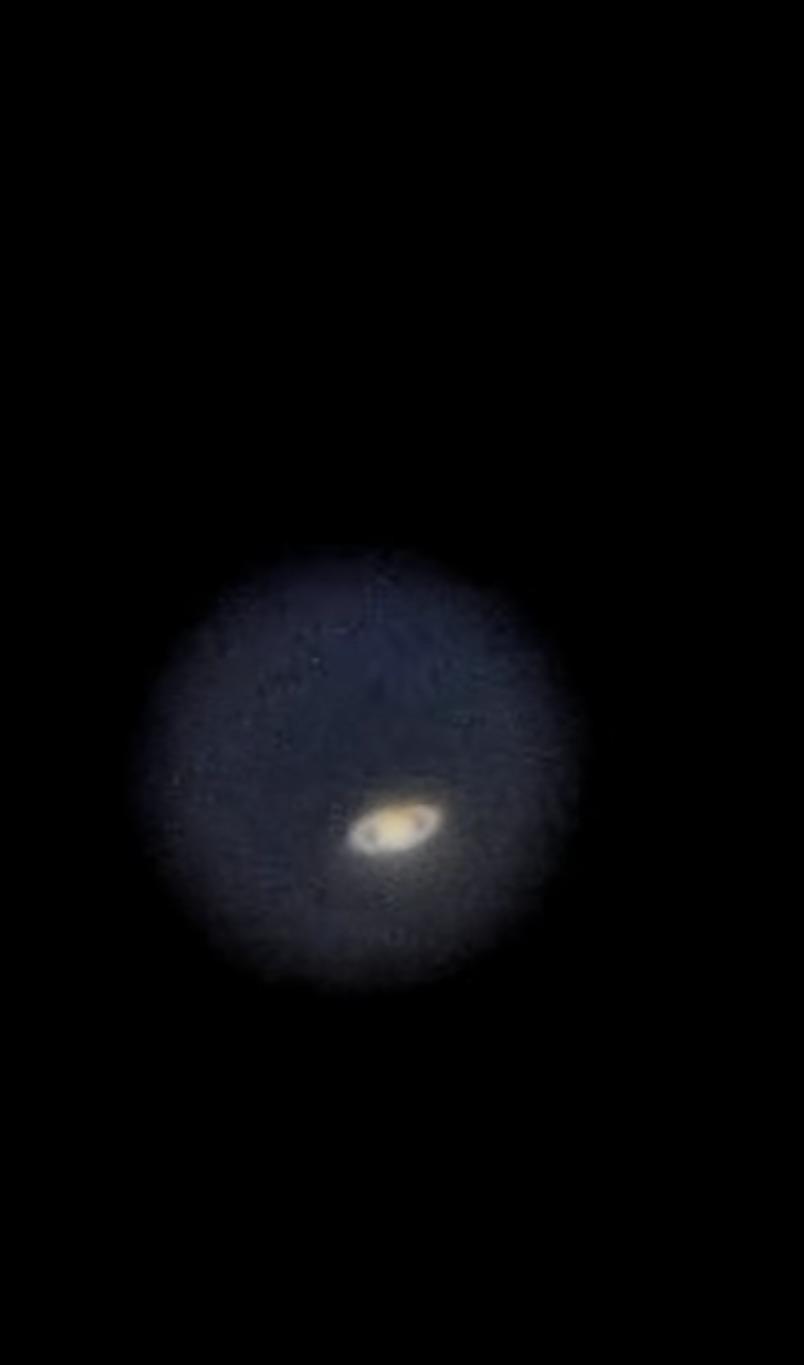
The 10-inch Dobsonian is the outlier in this list, and deliberately so. It is the only instrument here that meaningfully resolves planetary detail, which is the one thing all of the filtered camera scopes cannot do. If Saturn’s rings are on your list, this is the only scope in the roundup that will show them well from a city.
The 254mm aperture with StarBright XLT coatings and a 0.46 arc second Dawes limit is serious optical specification. The ultra-stable Dobsonian base is what makes a manual mount pleasant to use, because the friction is tuned just right for slow fine movement rather than fighting you.
StarSense guidance is included as well, with a phone dock and unlock code, so this is a guided telescope rather than a bare Dob. That matters for beginners, and it is why the scope sits in a smart telescope roundup despite being a visual instrument. A 2 inch Crayford focuser with eyepiece rack and a 32mm eyepiece are included, and Celestron Starry Night software ships with it.
Reviewers treat it as a serious visual instrument and credit the aperture and XLT coatings with resolving both planetary and nebula detail. It is also available in 8 inch and 12 inch variants if you want to size up or down.
Where the 10-inch Dob earns its floor space
It earns it through aperture, and aperture is still the strongest light pollution tool that exists. A 254mm mirror from a Bortle 8 sky will show you galaxy detail that no filtered 30mm camera in this roundup can match visually, because you are looking at real light rather than a processed stack.
The stable Dobsonian base also means it is the most relaxing instrument here to use over a long evening. Manual observing with a well-balanced friction drive is a genuinely different experience from tapping targets in an app.
Where the 10-inch Dob frustrates
Weight is the headline problem. At 54.8 pounds it is not a portable instrument, and reviewers note it needs two people to move. If your only observing site is an apartment balcony, this is simply not a candidate regardless of how good the optics are.
Manual mount means targets drift and must be re-centred frequently, the large optical tube makes collimation checks more involved, and the smartphone must be docked for app-guided pointing. It is a commitment of space, not money, that is the real barrier.
How to Choose: Five Steps for a Light-Polluted Backyard
Work through these in order. The order matters, because each step eliminates options that the next one would have wasted your time on.
Step 1: Decide imaging or visual. If you want photographs you can share, your choice is one of the three app-controlled scopes. If you want to look through an eyepiece, your choice is one of the three Celestron StarSense telescopes. There is no model in this roundup that does both, and pretending otherwise is how people end up disappointed.
Step 2: Match the tool to your targets. Emission nebulae from a bright sky need filtering and stacking, so the ZWO Seestar S30 Pro with its 4.6 degree field and built-in light pollution filters is the fit. Galaxies and clusters need aperture, so the Celestron DX 130 or 10-inch Dob is the fit. Planets need aperture and a long focal length, so the 10-inch Dob wins outright.
Step 3: Check portability against your actual site. Be honest about where the scope will live. A railing, a balcony corner and a hotel room call for the 1.85 pound Dwarf Mini or the 3 pound Dwarf 3. A garden or a field at home opens up the 18 pound DX 130. The 54.8 pound 10-inch Dob only works if you have a spare room and a clear route.
Step 4: Read your Bortle class honestly. A Bortle 7 suburban sky is comfortable with almost anything here. A Bortle 9 inner-city sky narrows your realistic target list to the Moon, the planets, open clusters and the brightest emission nebulae. If galaxies are the reason you want a telescope, plan a dark-site trip rather than expecting any of these to substitute.
Step 5: Budget for what is not in the box. The hidden costs are predictable. Camera scopes benefit from a stable tripod with a fluid head and a power bank for long EQ-mode sessions. Manual reflectors need eyepiece upgrades eventually, and any reflector needs a collimation tool. The app-controlled scopes also need a phone, which is a real cost if yours is due for replacement.
Our guide to the best telescopes under 1000 breaks down the entry-level options in more detail if you are still narrowing the field, and our city walking picks tested guide covers the other half of an urban observing night, which is getting to the spot and standing still in it.
What You Can and Cannot See by Bortle Class
This is the section most buying guides leave out, and it is the one that prevents returns. A Bortle class describes how much artificial light your sky receives, and it sets a hard ceiling on what any instrument can show you.
Bortle 7, suburban or bright urban edge. This is where the camera scopes get comfortable. The Dwarf Mini with its built-in light pollution filters and 90 second EQ mode exposures, and the S30 Pro with its wide 4.6 degree field and dual-camera 4K sensor, both produce finished images here. Emission nebulae, globular clusters, the Moon and planets are all realistic. Faint galaxies are still a stretch.
Bortle 8, inner suburb or heavy city glow. Filtering becomes essential rather than helpful, and stacking time goes up. The S30 Pro is the pick here, because its combination of wide field and hardware filtering is what the sky allows. The Dwarf Mini works but needs longer integrations. Open clusters and bright nebulae are the reliable targets. Broadband galaxies are largely out of reach through a camera.
Bortle 9, city centre with the lights on. What you can rely on: the Moon in detail, the planets through a larger aperture, open clusters, and the brightest emission nebulae with a filtered scope and a long stack. What you cannot rely on: any low surface brightness galaxy, any large nebula without a filter, and any expectation of a finished image in a short session.
Aperture-based scopes sit in a different place on this scale, and it is worth being clear why. The Celestron DX 130 and the 10-inch Dob will show you objects that no camera in this roundup can render visually, because more mirror means more light to your eye. The 80mm refractor is the most constrained of the visual scopes, working best on the Moon and open clusters from any class.
The honest summary is that light pollution does not make a city sky useless. It makes your target list shorter. Choose the instrument that matches the targets you actually want, and you will be far happier than someone who bought the most expensive option and aimed it at a spiral galaxy from a rooftop.
Frequently Asked Questions
What is the best telescope for city viewing?
For city viewing the answer depends on your targets. An app-controlled imaging scope such as the ZWO Seestar S30 Pro or DWARFLAB Dwarf Mini is best for photographing emission nebulae under light pollution, because built-in filters block sky glow while stacking pulls out signal. An app-guided reflector such as the Celestron StarSense DX 130 or 10-inch Dobsonian is best if you want to look through an eyepiece, because aperture gathers enough light to show galaxies and clusters that a filtered camera cannot render visually.
What is considered the best smart telescope?
The best smart telescope is the DWARFLAB Dwarf Mini in our testing, because it combines a 1.85 pound body with equatorial mode exposures up to 90 seconds, built-in light pollution filters and a Sony IMX662 sensor, which is an unusual combination at its size. The strongest alternative is the ZWO Seestar S30 Pro, which wins on field of view at 4.6 degrees and dual-camera 4K imaging if you have a tripod and a garden rather than a balcony.
Do telescopes work in cities?
Yes, with realistic targets. A city sky raises the background brightness of every image, so emission nebulae filtered with narrowband or light pollution filters and the Moon and planets through an aperture-based scope are the reliable targets. Low surface brightness galaxies need a genuinely dark sky, and no filter in this roundup replaces one. The Bortle scale describes your sky from 1, wilderness, to 9, city centre, and most city observers sit between 7 and 9.
Can a smart telescope see galaxies from the city?
Partly. Bright galaxies and globular clusters can be seen visually through an aperture-based scope such as the Celestron StarSense DX 130 or 10-inch Dobsonian even under heavy glow. For faint spiral galaxies such as the Andromeda Galaxy or the Leo Triplet, a camera-based smart telescope will usually return mostly grey, because these targets have low surface brightness and no filter compensates for that. Driving to a darker site remains the honest answer for galaxy imaging.
How much does a smart telescope cost in total?
The scope is rarely the whole cost. App-controlled scopes need a stable tripod with a fluid head, a power bank for long equatorial sessions, and a smartphone. Manual reflectors need periodic collimation tools and eventually higher-quality eyepieces. Budget for those accessories before you budget for the scope itself, because the gap between a bare scope and a working setup is the most common surprise new buyers report.
Which smart telescope is easiest to set up?
The DWARFLAB Dwarf 3 is the easiest, with a stated two-minute setup and a rating for ages 6 to 98, plus a carrying bag in the box. The DWARFLAB Dwarf Mini is close behind at 1.85 pounds with automatic GOTO. The Celestron StarSense DX 130 takes roughly 30 minutes to assemble but then needs no alignment beyond docking a phone, so it is simple in a different way. App-guided models all require the phone to stay docked during alignment.
Is a smart telescope better than driving to a dark site?
They solve different problems. A smart telescope lets you observe from home on a weeknight without travel, which is what keeps a hobby alive. A dark site gives you galaxies and large nebulae that no filter can fake. If your realistic city target list already includes the objects you want, stay home. If galaxies are the goal, the drive is still the answer, and a portable scope such as the Dwarf Mini or Dwarf 3 is worth taking with you.
Which smart telescope has the best light pollution filter?
Among the app-controlled scopes, the ZWO Seestar S30 Pro has the most complete light pollution setup, pairing built-in light pollution filters with a fully multi-coated apochromatic optical system, AI noise reduction, sky and foreground separation, and a 4.6 degree field that keeps large nebulae in a single frame. The DWARFLAB Dwarf Mini also has built-in astro and dual band filters and adds automatic dark frame capture, but its 2.45 degree field is tighter.
The Verdict for City Skies in 2026
After comparing all six, the best smart telescopes for city skies split cleanly by what you want to do with them. The DWARFLAB Dwarf Mini is the one we would buy first, because 1.85 pounds, 90 second equatorial exposures and built-in light pollution filters mean a real imaging session from a balcony rather than a hypothetical one.
Take the ZWO Seestar S30 Pro if you have a garden and want emission nebulae with the least fuss, and take the Celestron StarSense DX 130 if you would rather look through an eyepiece at real galaxies than chase a processed stack. The LT 80 is the cheapest honest way to learn the sky, the Dwarf 3 is the one that also photographs birds in daylight, and the 10-inch Dobsonian is the only instrument here that resolves Saturn properly.
Whichever you pick, check your Bortle class first and set your target list to match. A city sky does not end the hobby. It just means the smart telescope you choose has to earn its keep differently than it would under a dark sky. Pick the one that fits your ceiling, your balcony and your patience, then take it outside.