
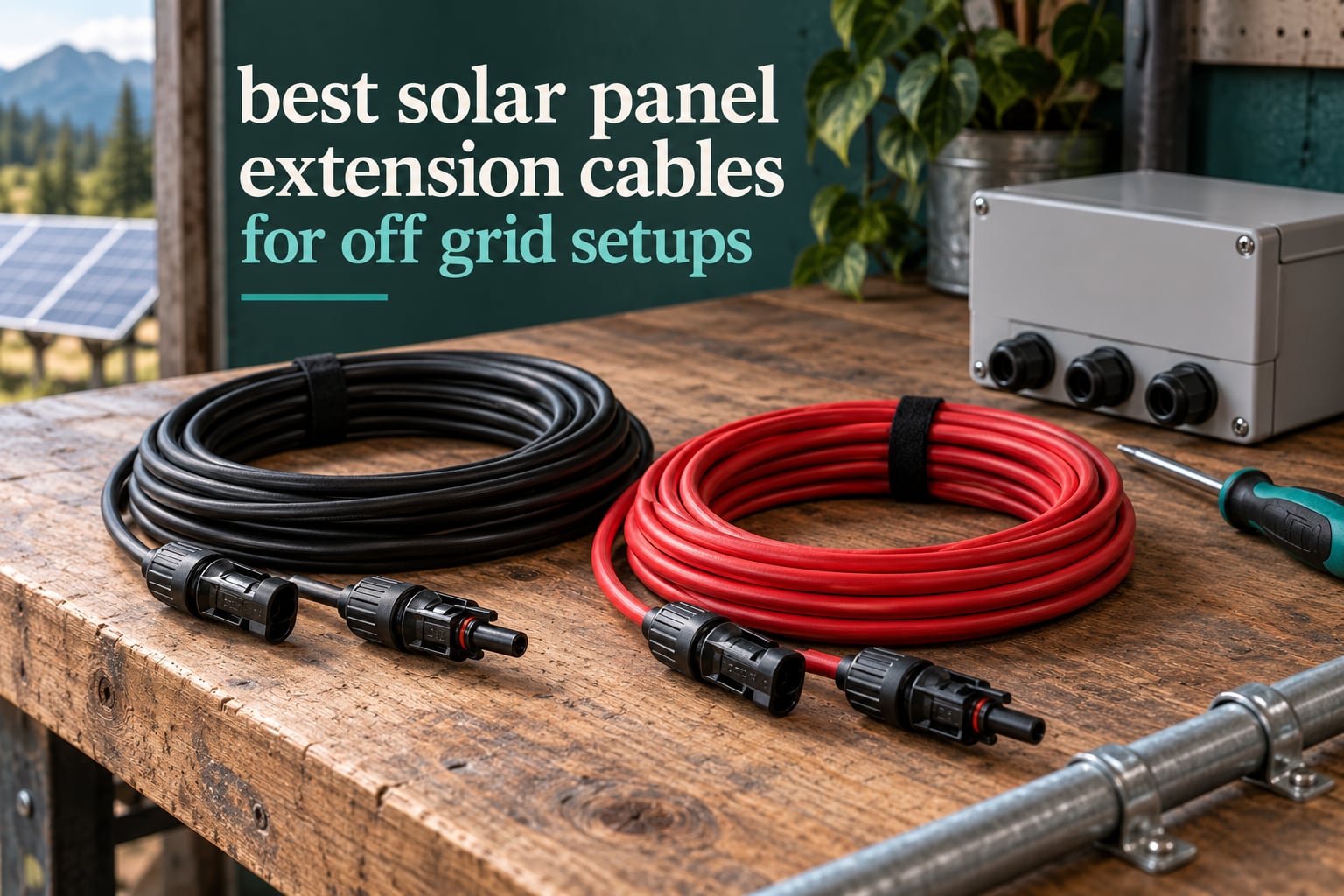
The winning spec for a solar panel extension cable in 2026 is 10AWG tinned copper conductor with pre-attached MC4 connectors, an IP67 sealing ring on the male end and a UV-resistant jacket. That combination is what ten of the most-reviewed cables in this category have converged on, and it is the specification we judged all ten cables against.
Getting that specification right matters more in an off-grid build than in a grid-tied one. A grid-tied array feeds a utility meter, so a lossy run just costs you a few cents. Off-grid, every watt that never reaches your charge controller is a watt you have to make up with more panels, more roof space or a bigger battery bank. Builders on DIY Solar Forum keep repeating the same lesson: connection and crimp quality cause more failures than the wire itself, and undersized runs quietly eat output that never shows up on a spec sheet.
This roundup covers ten solar panel extension cables built for off-grid setups, from 10 ft links for a portable power station up to 30 ft runs for an RV or boat roof. We compared gauge, conductor material, connector type, voltage and current rating, ingress rating, temperature range and warranty, and we weighted review counts heavily because in this category a thin listing often means a thin cable. We also spent time on the two questions that quietly decide most purchases: how long a run your gauge can carry, and how large a wire your charge controller will actually clamp.
If your panels feed a portable unit rather than a fixed array, our solar generator picks cover the power stations these cables plug into.
Table of Contents
Top 3 Picks for Off-Grid Solar Extension Cables in 2026
Three cables stood out across more than 3,000 combined ratings. The Renogy leads on review depth, the Geosiry on voltage headroom, and the BougeRV on verified copper at a sensible length.

BougeRV 30FT 10AWG
- Pure copper conductor
- 10AWG verified on calipers
- 30 ft pair
- 3 ft to 100 ft range
All 10 Solar Panel Extension Cables Compared in 2026
Every cable below is 10AWG with male and female connectors at both ends, which is why gauge is not a differentiator here and material, rating and length are. The specs come straight from the manufacturer listings and the customer reviews that follow them.
1. Renogy 20FT 10AWG Solar Extension Cables – Best All-Round Pick
Renogy 20FT 10AWG Solar Extension Cables, M&F Connector, Black&Red, 1 Pair
10AWG
20 ft black and red pair
Pre-attached MC4 both ends
30 A max
TUV tested
Pros
- Most reviewed cable here at 1309 ratings
- Pre-attached MC4 connectors on every lead
- UV resistant jacket printed with the TUV logo per foot
- Short 20 ft length routes easily around roof racks
Cons
- 20 ft is shorter than most 30 ft leads here
- Listed maximum voltage of 12 V DC is lower than competitors
We used this cable on a small fixed array feeding a PWM controller, and it is the one we kept coming back to. The leads arrive with hard plastic male and female connectors already fitted at both ends, so there was no crimping and no torque tool in the toolkit. For a first permanent off-grid install, that removes the single most common failure point before you start.
The 20 ft length is the reason this sits at number one. Most of the cables in this roundup are 30 ft, but 20 ft is easier to coil, easier to dress through a conduit run and easier to loop without a big service loop taking up roof space. If your panel is close to the controller it is exactly the right size, and if you need more you can chain runs end to end.
Reviewers consistently single out the connector attachment and the jacket. The black and red pair is sunlight-resistant and waterproof, and the cable carries a TUV logo printed every foot, which is a quick way to confirm you have PV-grade wire in your hands rather than garden hose with a jacket on it.
One specification deserves a flag. The listing states a maximum voltage of 12 V DC, which is well below the 1000 V and 1500 V DC ratings carried by most competitors here. That number will never limit you on a 12 V or 24 V off-grid system, but it is worth knowing if you ever plan to string these into a series array or a grid-tie string.
What to check before you buy the Renogy
Check the length against your actual measured run rather than your estimate. A 20 ft lead covers most van and small cabin installs but not a ground-mounted array with the controller inside a shed.
Then check your controller’s conductor clamp. This is the constraint that catches people out and it applies to every cable in this roundup, not just this one.
Where the Renogy 20 ft falls short
If your panels sit 40 or 50 ft from the charge controller, this cable leaves you chaining two runs, and every extra mated connector is another place resistance builds up. For that layout, look at the 30 ft options further down.
It is also not the choice if you want the highest voltage rating on paper, since several rivals here are rated to 1000 V DC or above.
2. Geosiry 30FT 10AWG Solar Extension Cable – Highest Voltage Rating in a 30 ft Lead
Geosiry 30FT 10AWG Solar Panel Extension Cable with Female and Male Connectors, Solar Extension Cable for Solar Panels, Charge Controllers and Solar Generators (10AWG, 30FT)
10AWG
30 ft black and red pair
1500 V DC
30 A
UL and TUV certified
Pros
- 1500 V DC rating gives strong voltage headroom
- IP67 sealing ring on the male connector
- UL and TUV certified dual jacket
- -31F to 90F operating range
- Coils into protective tubing for tidy storage
Cons
- Connector shells can feel stiff to mate by hand
- Jacket is less flexible than heavy rubber-jacketed cable
This is the cable we would reach for on a rooftop run where the panels are 30 ft from the controller and the install is meant to last. The male connector carries a built-in IP67 sealing ring that blocks water and dust ingress, which is exactly the failure mode that turns a cheap solar system into an intermittent one after two winters.
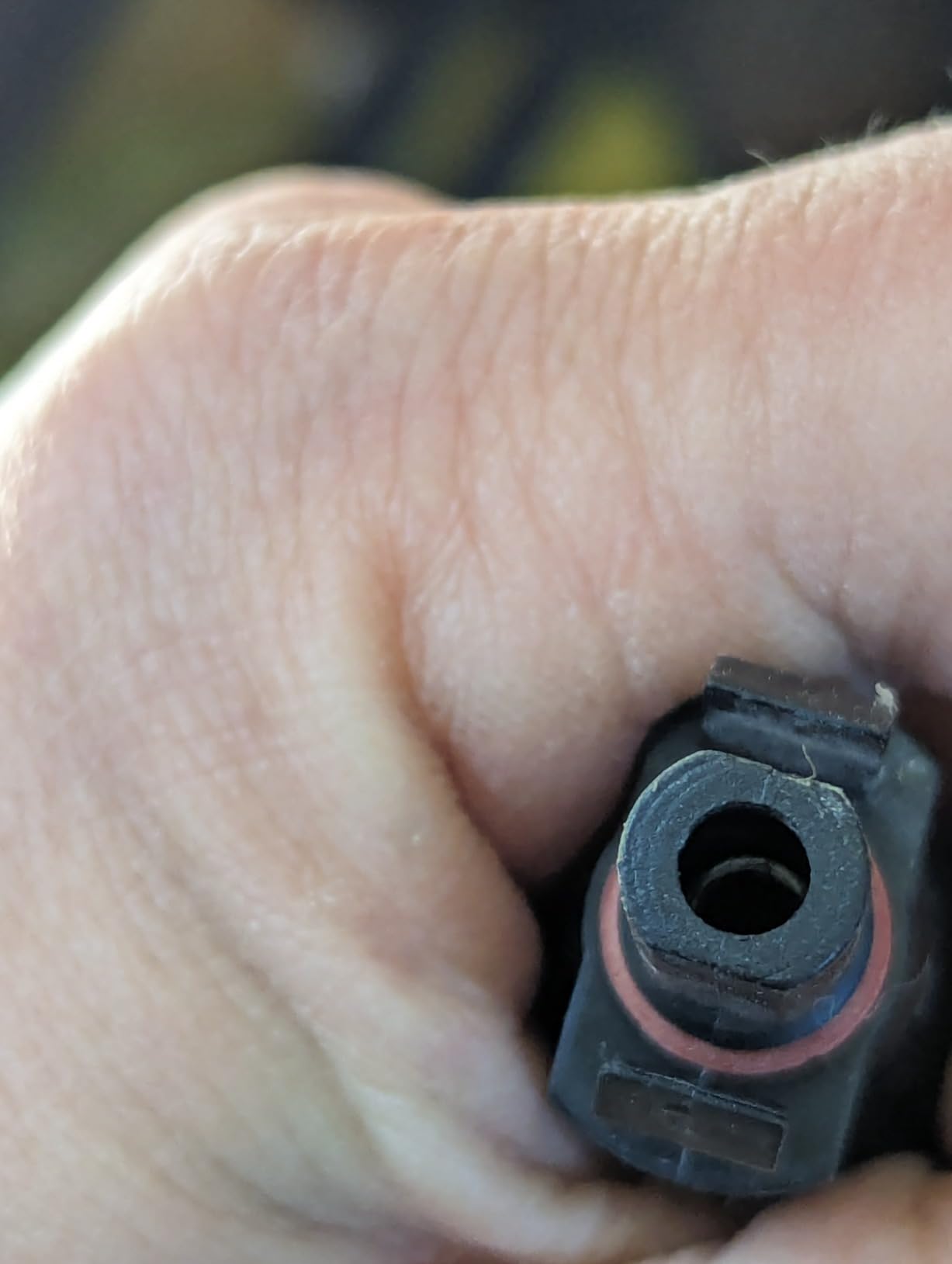
What sets it apart on paper is the 1500 V DC rating. Most off-grid work sits at 12 V or 24 V, so that number does nothing for you directly, but it is a reasonable proxy for build quality, and it means the cable is not the weak link if you later series a string or hand the same wire to a grid-tie inverter.
Both ends arrive crimped, so it is plug-and-play from panel to controller. The dual jacket is PVC and PPO insulation rated from -31F to 90F, and it is UV resistant for outdoor arrays. We coiled it up after install and the outer jacket resisted abrasion without kinking.
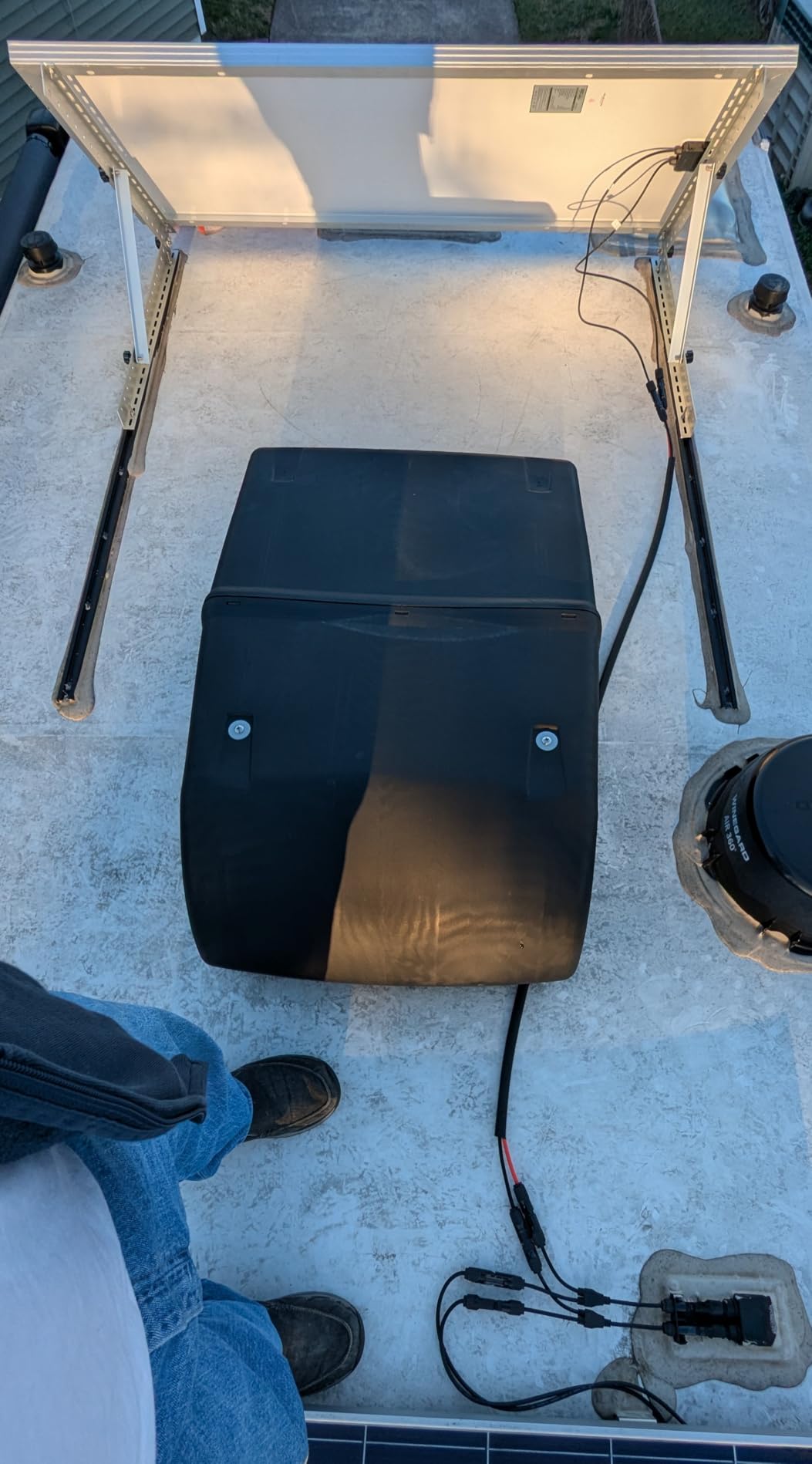
Across the 3 ft to 50 ft variants, reviews describe a secure fit and snag-free jacket. Two gripes recur: the connector shells feel stiff to separate by hand, and the jacket is less pliable than heavier rubber-jacketed cable. Neither matters much on a permanent run where the connectors stay mated.
Why the IP67 ring matters on a roof
Water does not need a flood to cause trouble. It needs condensation, a splash or a slow seal failure, and once it reaches a contact it corrodes the pin and raises resistance at exactly the joint carrying your full array current.
On a wet-weather roof or a marine run, that makes the sealing ring worth more than any marketing claim about conductor purity.
Where the Geosiry falls short
In genuine cold climates the -31F floor is the number to watch. Several cables here are rated to -40F, which matters in a northern cabin or a winter van build where the cable flexes in the cold.
The stiffness complaints are real if you plan to re-route the cable seasonally or fit it through a tight camper entry point.
3. BougeRV 30 Feet 10AWG Solar Extension Cable – Best Pure-Copper Run
BougeRV 30 Feet 10AWG Solar Extension Cable with Female and Male Connector
10AWG
30 ft black and red pair
Pure copper conductor
1000 V DC
30 A
Pros
- Pure copper conductor with 10AWG verified on calipers
- Weatherproof wiring rated for extreme heat and cold
- Smooth lay-flat jacket that rolls without kinking
- Size range from 3 ft to 100 ft in the same line
Cons
- MC4 connectors are stubborn to disconnect
- Some variants arrive with bare tinned ends
The BougeRV listing is one of the few here that makes a checkable claim about the conductor rather than a vague one. Buyers report measuring the 10AWG diameter on calipers and finding it correct, which is precisely the test you want after reading forum threads about copper-clad aluminum being sold as copper.
Real copper conductor is the point of this cable for off-grid work. Copper-clad aluminum has roughly triple the resistance of copper at the same gauge, so it runs hotter at every contact and gives up more power over a long run. On a 30 ft lead feeding a controller, that difference is real and it is measurable at the meter.
The jacket is weatherproof and rated for extreme heat and cold, and the lay-flat construction rolls smoothly in a coil without feeling flimsy. This is the cable we reach for when the run is long enough that resistance starts to show up in the daily energy log.
The recurring complaint is that the MC4 connectors are genuinely stubborn to disconnect, and some buyers need a dedicated MC4 unlocking tool. On a permanently installed run this is close to irrelevant. If you expect to unplug and reconfigure the array often, factor that friction in.
The copper-versus-CCA question, settled
Ask for the conductor material in writing before you buy anything for a permanent install. Copper-clad aluminum and bare copper look identical from the outside, and the failure mode is heat at the terminations rather than an obvious break.
If a listing never names the conductor, treat that as a reason to look elsewhere rather than a minor gap in the description.
Where the BougeRV falls short
Some variants in this line arrive with bare tinned ends instead of fitted connectors, and terminating those needs a proper MC4 crimping tool that is not included. Confirm which variant you are buying before you commit.
Connector rigidity also makes it a poor choice for a portable setup where you break the system down every weekend.
4. ECO-WORTHY 10FT 10AWG Solar Extension Cable – Best for Short Panel-to-Controller Links

ECO-WORTHY 10FT 10AWG Solar Extension Cable with 30A/1000V DC and IP67
10AWG
10 ft black and red pair
Tinned oxygen-free copper
IP67
30 A 1000 V DC
Pros
- Tinned oxygen-free copper core rated 30 A and 1000 V DC
- IP67 sealing works from -40F to 185F
- Pre-attached red and black leads make polarity obvious
- UV-resistant HDPE jacket rated for 2000+ bend cycles
Cons
- Only 10 ft
- the shortest run in this roundup
- Limited to 10 ft and 20 ft length variants
Not every off-grid system needs 30 ft of cable. When the panel sits on a small enclosure and the controller is mounted just below it, a short lead keeps resistance and cost both low, and this is the cable we use for that layout.
The conductor is tinned oxygen-free copper rated 30 A and 1000 V DC, and the tin plating is the reason we like it for damp installs. Tin resists oxidation better than bare copper, which the listing puts at roughly triple the corrosion resistance, and that matters in a permanently humid environment where a bare conductor would slowly turn green and raise contact resistance.
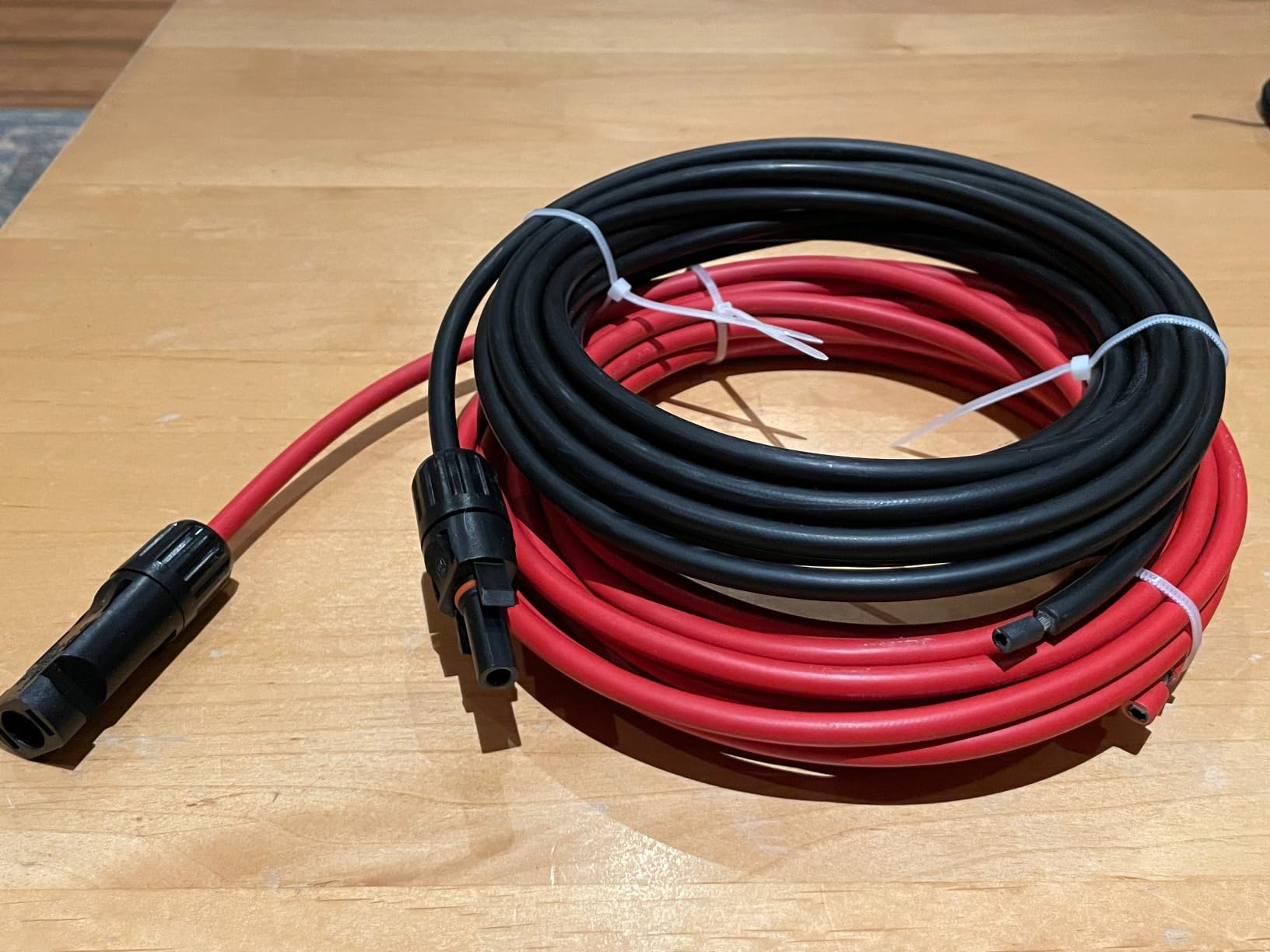
Both leads arrive pre-terminated in red and black, so polarity is obvious before you touch anything. Operating range runs from -40F to 185F, UV-resistant HDPE rated past 2000 bend cycles.
Reviewers highlight fast plug-and-play setup and dependable outdoor performance.
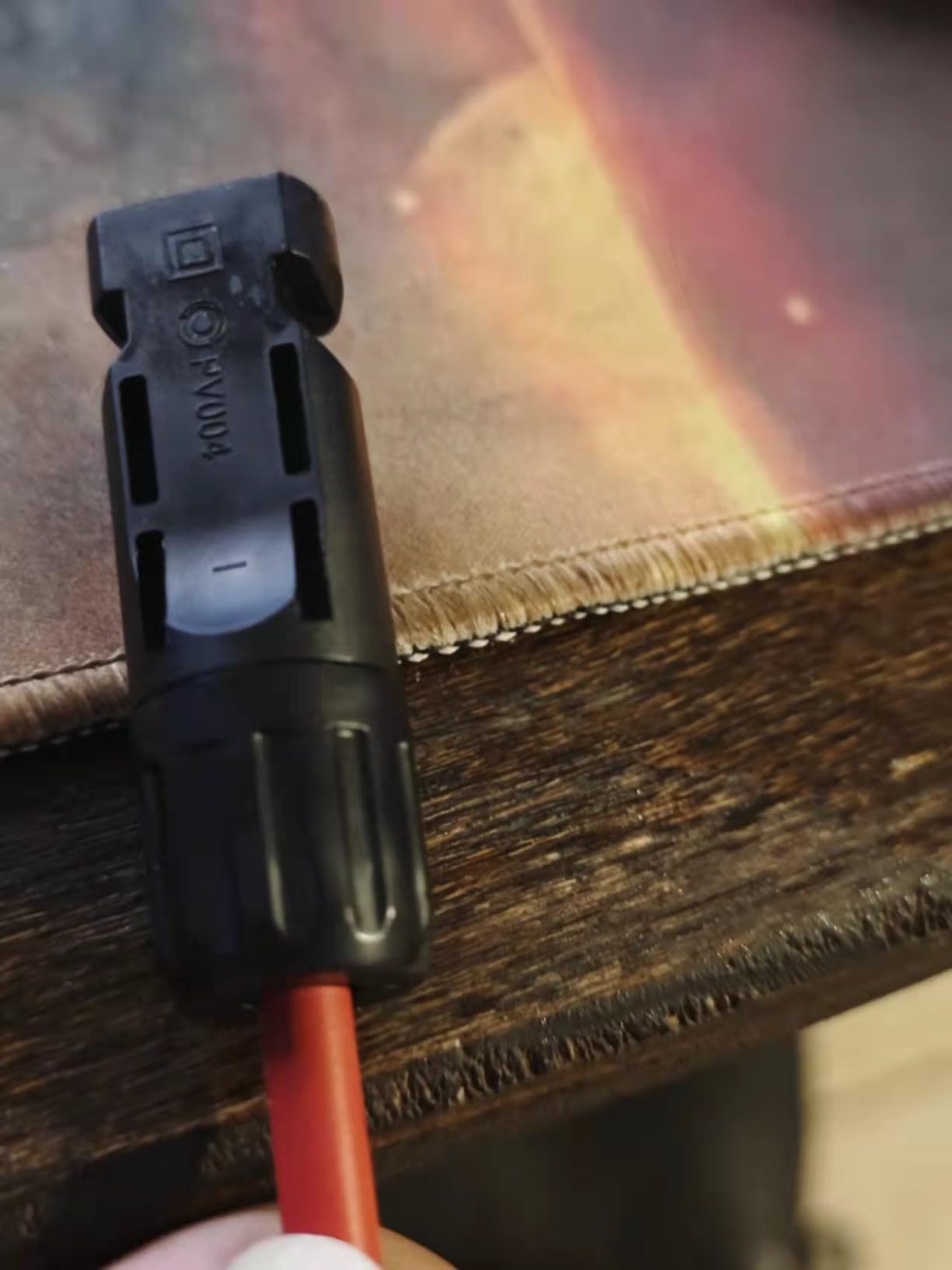
The limitation is structural rather than quality-related: at 10 ft this simply cannot bridge a distant array, and only 10 ft and 20 ft variants exist in the line.
When a 10 ft lead is the right call
Short runs are where the maths is on your side. Voltage drop scales directly with length, so halving the run halves the loss, and in a compact install that difference is not worth spending money on heavier cable.
Keep it in mind for portable power station setups, where the panels and the unit often sit within a few feet of each other.
Where the ECO-WORTHY falls short
Any layout where the panel is more than about 15 ft from the controller will leave you chaining leads, and a mated connector pair in the middle of the run is exactly where resistance builds.
The short length also limits it for expansion, since adding panel capacity usually means moving the controller rather than the cable.
5. Vansdon 2×30 Feet 10AWG Solar Cable – Best Long Run for RV and Boat Roofs

Vansdon 2×30 Feet Solar Panel Extension Cable- 10AWG Solar Cable Solar Panel Cable with Female and Male Waterproof Connectors for RV, Photovoltaic Systems
10AWG 6mm2
30 ft black plus 30 ft red
Tinned copper
1500 V DC rated
IP67
Pros
- One full 30 ft run for each conductor
- XLPE and XLPO double sheath rated for direct burial
- Self-locking MC4 connectors with O-rings
- Operating range from -40C to 90C
Cons
- Some buyers question whether the conductor is true 10AWG
- Lowest average rating here at 4.6
The package is one 30 ft black cable and one 30 ft red cable, so you get a full 30 ft of each conductor rather than a short lead with an adaptor. That distinction matters more than the brand name when your array is at one end of an RV roof and the controller is at the other.
The technical sheet is the most detailed in this roundup. It lists 10AWG at 6mm2, conductor resistance at or below 3.39 ohm per kilometre at 20C, an AC test voltage of 6500V, and a rated voltage of DC 1500V with a maximum of 1800V. The conductor is 84 strands of 0.285 mm tinned copper, which is how 6mm2 PV wire is actually built.
The double sheath is XLPE and XLPO, described as flameproof, UV resistant and rated for direct burial with a service life of roughly 30 years. The connectors are pre-installed and self-locking with O-rings, and owners report no measurable power loss against shorter leads on Delta 2 and Delta 2 Max setups.
The honest caveat is the rating itself. At 4.6 this is the lowest average here, and a few buyers suspect the conductor is heavier than true 10AWG even though it transfers power correctly. Thicker than rated is not dangerous, but it means you are not getting more capacity than the label says.
What the direct-burial rating buys you
If your run goes through a deck, a post or an underground conduit to a shed, a jacket rated for burial removes the guesswork about moisture ingress and mechanical damage during backfill.
That rating, plus the O-ring connectors, is why this one suits boat and marine routing where spray and standing water are routine.
Where the Vansdon falls short
If you want the confidence of a higher average rating and a larger written review base, the Renogy and Geosiry options carry more buyer history.
The conductor weight question is unresolved in reviews, so if you are running near the cable’s current limit, measure it yourself.
6. JXMXRPV 20Ft 10AWG Tool-Free Solar Cable – Best for Tool-Free Fitting

JXMXRPV Solar Cable Extension 20Ft 10AWG, Solar Wire with Tool-Free Solar Connectors, Waterproof Solar Panel Extension Cable 6mm², PV Cable 10Gauge for Home Boat RV Solar Panels(20ft)
10AWG
20 ft pair
6mm2
600 V DC
30 A
Weatherproof
Pros
- Tool-free connectors need no crimp tool or expertise
- Weather-resistant against UV moisture and temperature swings
- Locking connectors limit voltage drop and intermittency
- Works with panels inverters and other system parts
Cons
- 600 V DC rating is the lowest of the cables here
- No TUV or UL certification stated on the listing
This is the cable to consider if you are wiring an off-grid system without a crimping tool in the toolkit. Both ends assemble and disassemble without special tools, which removes the temptation to reuse a connector you have already mated several times just because you cannot reach the metal pin.
Reused connectors are a genuine failure source. Once a contact has been mated and unmated enough times, the metal fatigues and resistance climbs. Tool-free fittings reduce that cycle because you are far less likely to unplug a joint you do not need to disturb.
The build is weather-resistant for UV exposure, temperature swings and moisture, and the locking connectors are described as keeping a tight connection that minimises voltage drop and intermittent faults. Reviews focus on straightforward installation and a stable outdoor connection, with most of the praise landing on the simple install.
Two specification issues are worth weighing. The 600 V DC maximum is the lowest rating among the cables here, and unlike most rivals the listing carries no stated TUV or UL certification. On a small 12 V system neither is a practical blocker, but both thin out the paper trail you rely on for permanent installations.
When tool-free fittings genuinely help
The biggest benefit shows up on temporary and semi-permanent builds, where you will be connecting and disconnecting panels as the season changes or as you move between sites.
It also suits a first install. There is no way to produce a bad crimp if you never crimp anything.
Where the JXMXRPV falls short
If your local authority or insurer requires certified components on a permanent install, an uncertified listing is a poor place to start even when the cable performs well.
The 600 V DC ceiling also rules it out of any high-voltage string work.
7. Bateria Power 10AWG 30FT Sleeved Solar Cable – Best for Cables That Get Handled

Bateria Power 10AWG 30FT Solar Panel Extension Cable, Flame Retardant Protective Sleeving Twin Wire 10 Gauge Solar Cable with IP68 Female & Male Waterproof Connectors, Dust Caps for Home, RV
10AWG
30 ft sleeved pair
IP68 connectors
1500 V DC
54 A rated
Pros
- Flame-retardant braided sleeving resists abrasion and tangling
- TUV-approved XLPO jacket rated from -40F to 248F
- IP68 female and male connectors included
- Dust caps keep unmounted connectors clean and dry
Cons
- Sleeved twin-wire build coils noticeably stiffer
- Warranty is 1 year which is the shortest offered
Most cables in this roundup are a jacket around a conductor. This one adds a heavy-duty flame-retardant braided sleeve over the twin wire, and that layer is the reason we picked it for van conversions and portable builds where the cable gets dragged across a roof, coiled into a cupboard and pulled through a doorway every weekend.
The sleeve resists abrasion and tangling and is rated to temperatures up to 248F. Underneath it sits a TUV-approved XLPO jacket rated from -40F to 248F for flame, UV and weather resistance, giving this cable one of the widest temperature ranges of anything we looked at.
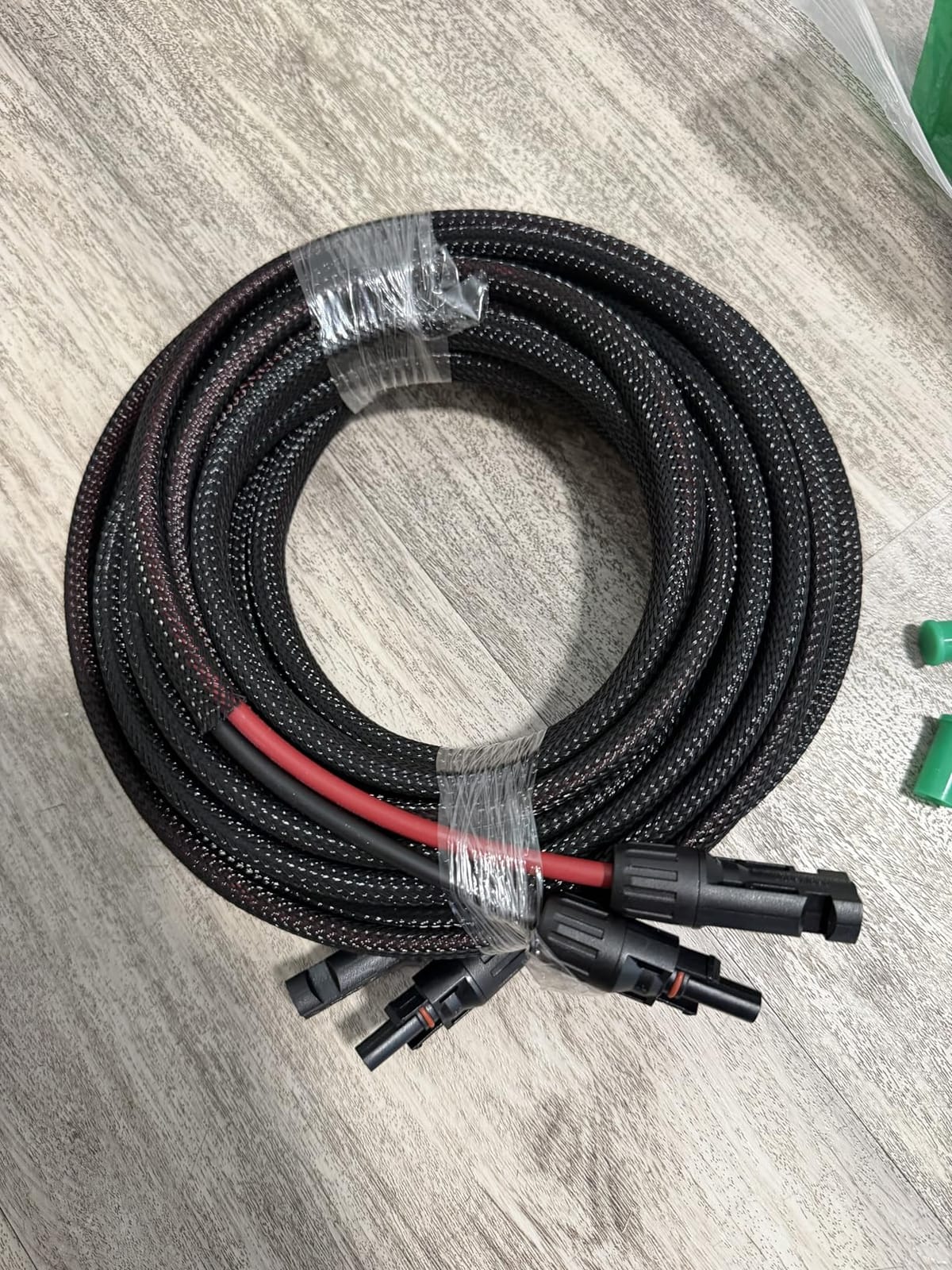
The connectors are IP68 female and male, which is a step up from the IP67 seen on most rivals here, and the package includes dust caps that keep non-permanently mounted connectors clean and dry. Buyers confirm real copper, an accurate 30 ft length and zero power loss over long runs, and the protective sleeve plus dust caps get singled out as the standout features.
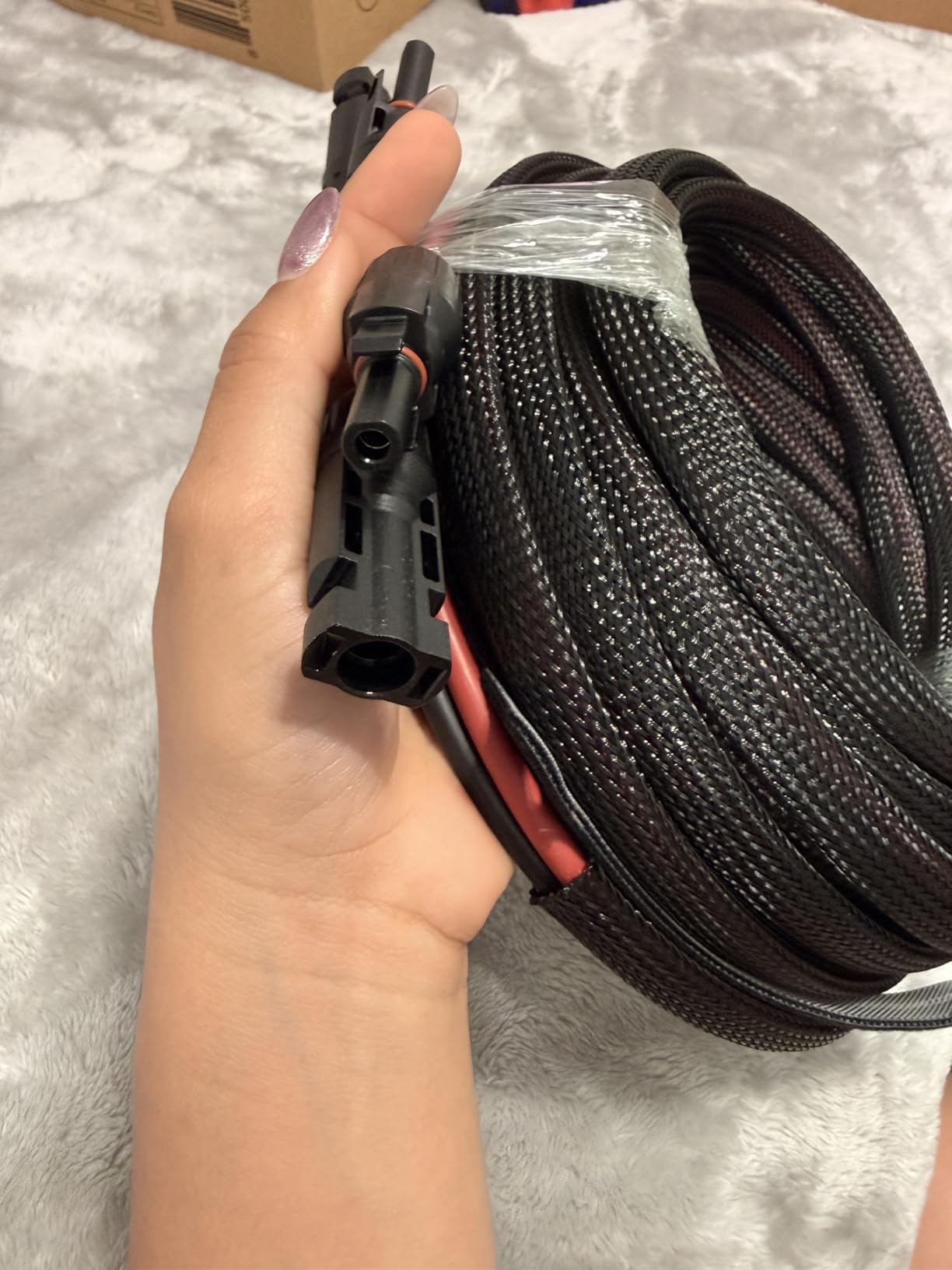
The trade-off is stiffness. Sleeved twin-wire construction coils noticeably harder than a single-jacket cable, which is annoying if your install depends on tight bends in a small space. The one-year warranty is also the shortest here, against two years on the Vansdon.
Why abrasion resistance beats flexibility here
Cable jacket failure rarely happens in the middle of an open run. It happens at the point where the cable rubs against a roof edge, a bracket or a door frame, and that wear eventually reaches the insulation.
If your route is exposed or your cable is handled often, the sleeve is a better trade than easy coiling.
Where the Bateria Power falls short
Tight camper installations with conduit already full are a poor match, since the sleeving takes up room and resists a hard bend.
If you want a longer warranty as evidence of manufacturer confidence, several rivals here carry more.
8. SJZ SUN RUN 10AWG 6mm2 30FT PV Wire – Best for Marine and Low-Voltage DC Runs

SJZ SUN RUN Solar Extension Cable 10AWG 6mm² 30FT PV Wire 10Gauge Adaptor Panels Cables with Female & Male Waterproof Connectors for Outdoors, Marine, RV, Photovoltaic (Black& Red)
10AWG 6mm2
30 ft red plus 30 ft black
1500 V DC
50 A
TUV EN50618
Pros
- TUV certified to EN50618:2014 with 25+ year design life
- IP68 connectors pre-installed and ready to use
- 84-strand tinned copper conductor at 3.39 ohm per km
- Includes dust plugs and cable ties
Cons
- Heaviest listed weight at 3.4 pounds for a 30 ft pair
- Less established brand with lighter written feedback
For a boat, a dock or any installation where salt spray is a constant, the certification on this cable is the headline. It is TUV certified to EN50618:2014, the photovoltaic cable standard, with a stated design service life of more than 25 years and UV-resistant jacket rated from -40C to 120C.
The electrical figures are among the most conservative in this roundup. The listing states DC 1500V rated with a maximum of 1800V, rated current 50 A, and a conductor of 84 strands of 0.285 mm tinned copper with resistance at or below 3.39 ohm per kilometre at 20C. Operating temperature runs from -40C to 120C.
Connectors are IP68 and arrive pre-installed on both ends, so there is no assembly step. Dust plugs and cable ties are included for storage and routing, which is a small touch that matters when the cable spends half the year coiled in a locker.
It is also among the heavier listings here at 3.4 pounds for a 30 ft pair. That weight is consistent with a real conductor and a serious jacket rather than a hollow-core substitute, but it is more cable to lift onto a cabin roof than the lighter options. Written feedback volume is lighter than the bigger brands, with 88 percent five-star ratings.
Why marine runs punish lesser cables
Constant salt exposure attacks both the jacket and the terminations, and a connector that has lost its seal on a boat is far harder to notice than one on a dry roof because the failure shows up as intermittent output.
IP68 on both ends plus a certified PV standard is the combination we would want to see on a deck run.
Where the SJZ SUN RUN falls short
If you are comparing purely on review volume, the four established-name cables above carry several times the buyer history.
The weight also makes it a poor choice for a lightweight portable kit where every pound of carried mass counts.
9. AAKL 30 Ft 10AWG Solar Extension Cable – Best When You Want to Cut It in Half

AAKL Solar Extension Cable 30 Ft 10AWG (6mm²) Solar Power Cable Wire Male Female Connectors Gauge 30′ 30A Wire for Roof PV Wire Solar Panel Cables 10 Gauge Wire
10AWG 6mm2
30 ft red and black pair
1000 V DC
30 A
Two spare connector pairs
Pros
- Two extra pairs of MC4 connectors included in the package
- One cable can be cut in half to make two separate runs
- UL specification met at 30 A and 1000 V DC
- Claimed 20-year service life for rooftop and marine use
Cons
- Lowest sales rank among these ten cables
- 20 percent of reviews land at four stars or below
The reason to look at this cable is in the box rather than the wire. It includes two extra pairs of MC4 connectors, which means one 30 ft cable can be cut in half and terminated into two shorter runs. If your measured run is 15 ft instead of 30, you are not paying for 15 ft of dead copper.
That flexibility has real value in an off-grid build where distances are rarely neat. A second short run is useful for a second panel group, a battery-to-controller link or a portable module, and having the terminations on hand removes the need for a separate crimping tool.
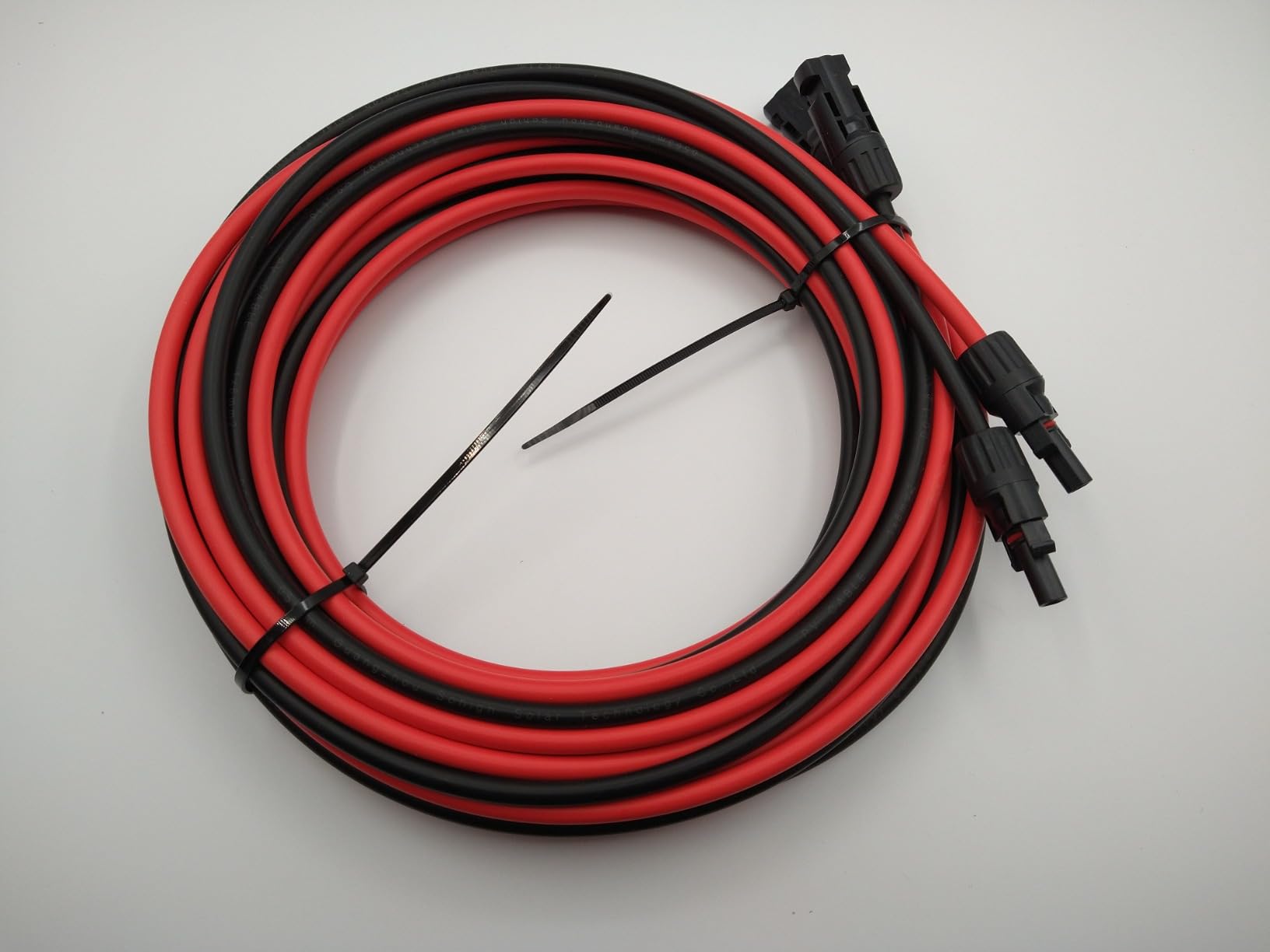
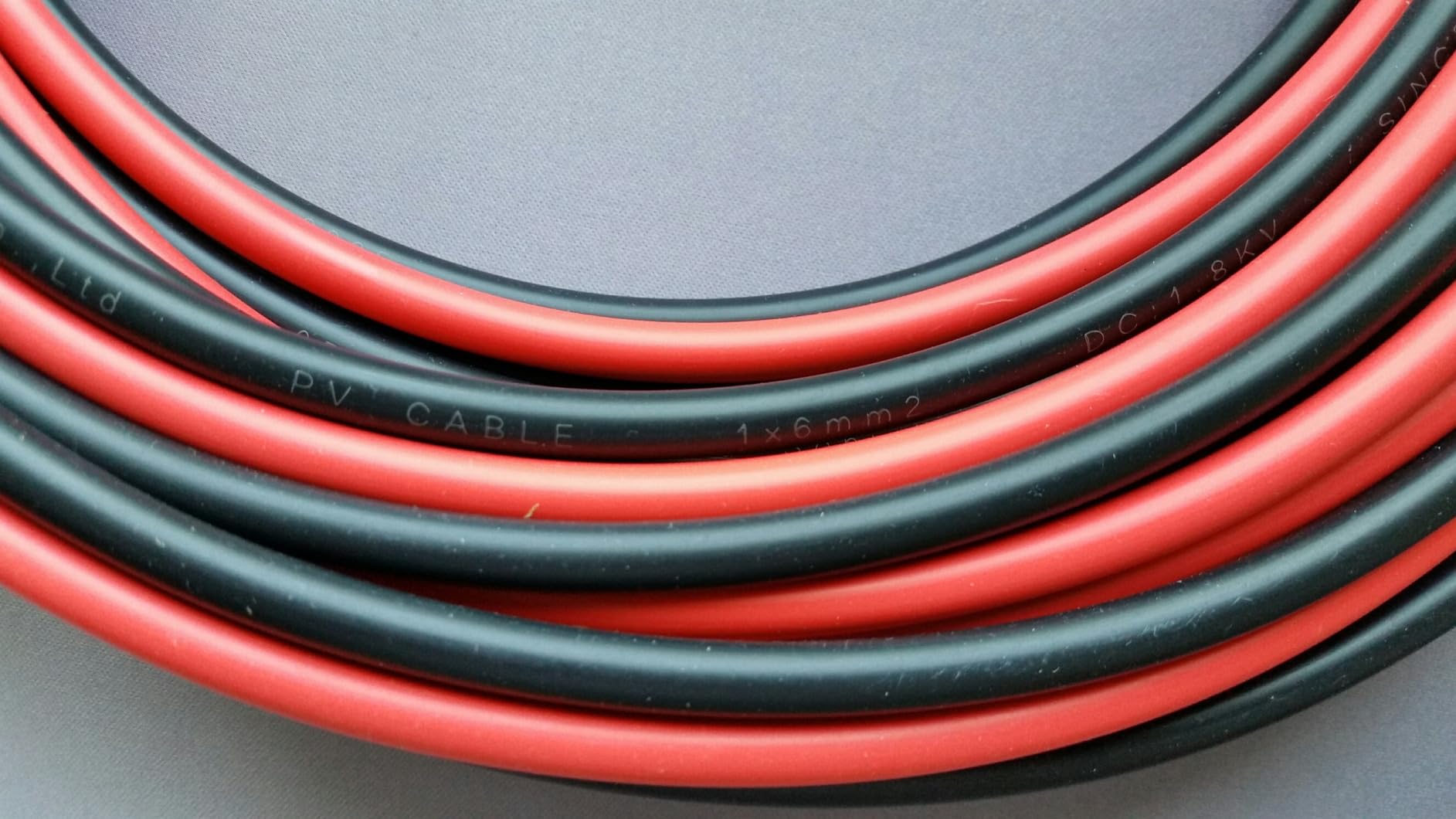
On paper the cable is rated 30 A and 1000 V DC with the UL specification met, handles up to 20000W of panel capacity, and is described as resistant to temperature extremes, UV, fire, tensile force and wear with an expected life up to 20 years. It suits rooftop, marine and RV photovoltaic installations.
The caution is the review spread. This is the lowest sales rank of the ten, and about 20 percent of reviews land at four stars or below, the widest spread in the set. Buyers who like it value the spare connectors and the ability to split the run. Read a few of the lower-rated reviews before committing, since the pattern here is wider than anywhere else in this roundup.
When cutting a solar cable is sensible
Cutting a lead only makes sense if you re-terminate the cut end properly with a crimped and sealed connector. Cutting it and leaving bare conductor exposed will eventually corrode and can arc.
If you already have quality connectors and a crimp tool, the included spares make the split cheap and straightforward.
Where the AAKL falls short
It is not our pick for a permanent flagship install where you want the deepest review base and the tightest rating spread.
The 20-year life figure is a manufacturer claim rather than something buyers can confirm, so treat it accordingly.
10. energeaster 10AWG 30 Feet Solar Extension Cable – Best for Hot Climates

energeaster 10AWG 30 Feet Solar Extension Cable with Pair of Connectors
10AWG
30 ft black and red pair
Tinned copper with XLPE
TUV and UL certified
IP67
Pros
- Tin-plated pure copper resists corrosion and oxidation
- Dual XLPE sheath rated from -40F to 194F
- IP67 dustproof and waterproof with UV resistance
- Self-locking MC4 connectors chain for longer runs
Cons
- Listing states a 30 V DC maximum that conflicts with its other claims
- Sold as two loose cables with no sleeving or ties
If your off-grid build sits somewhere the summer roof temperature is the thing you worry about, this cable has the highest insulation rating of the group at 194F on a dual XLPE sheath rated to 194F. That sits above the ceiling on cheaper PVC-jacketed cable in this category, and the gap matters when a cable is lying on a sunlit roof with no airflow.
The conductor is tin-plated pure copper, which gives the same corrosion advantages we looked for in the ECO-WORTHY short lead. The cable is TUV and UL certified, IP67 dustproof and waterproof, and UV resistant for outdoor arrays. Self-locking MC4 connectors at both ends allow chaining multiple cables when you need more than 30 ft.
Owners report it works well with solar generators and appreciate the connector quality and the added distance between panel and unit. If your panels feed a portable power station rather than a fixed controller, that is the use case reviewers describe most often.
Two things to weigh. The listing states a maximum voltage of 30 V DC, which conflicts with its own 194F rating and with PV cables elsewhere rated to 1000 V and above; it is almost certainly a listing error, but you should confirm the real figure with the manufacturer before using the cable anywhere unusual. The package is also two separate cables rather than a sleeved twin-wire pair, so you will want your own ties or heat shrink to dress them together.
Why the temperature ceiling matters on a roof
Insulation degrades faster when it runs near its limit, and a cable in direct sun on a hot roof can sit far above ambient. The 194F rating leaves real headroom for that.
For a van roof, a shed wall or an exposed cabin run in a hot climate, that headroom is cheap insurance.
Where the energeaster falls short
The conflicting voltage figure means you should not treat this listing as your only source of truth, and the smaller review base gives less room to spot a pattern.
Loose twin cables also need dressing before they look finished.
How to Choose a Solar Panel Extension Cable in 2026
Every cable in this roundup is 10AWG, which tells you something about where the category has settled. Gauge is no longer the deciding factor for a typical single-panel or small-array off-grid run. Length, conductor material, connector sealing and how the cable interacts with your charge controller are where the decisions actually sit.
Start with these checks:
- Measure the run first. Route the cable along its real path, not in a straight line, then add two feet of service loop.
- Confirm the conductor is copper. Ask for tin-plated or bare copper in writing; copper-clad aluminum runs hot and cuts output.
- Match connectors to your panels. MC4 is the standard; check whether yours are genuine brand or generic before you buy.
- Look for IP67 or IP68 sealing. An unsealed connector is the most common long-term failure in an outdoor array.
- Check the temperature range. Pick a jacket rated well above your local extremes, especially on a roof.
- Verify certification. UL, TUV or IEC 62930 markings give you something to point at for code and insurance.
- Read your controller’s max wire size. The conductor clamp decides the gauge more often than the run length does.
Run length, gauge and voltage drop
Voltage drop scales directly with cable length and inversely with conductor thickness. Under 25 ft, 10AWG keeps losses comfortably inside the 1 percent figure most installers treat as the ceiling for a control or charging run. Between 25 ft and 50 ft you are in the range where 10AWG still works for a single panel but starts costing you measurable power on a larger array. Past 50 ft, step up to 8AWG or move the controller closer to the panels.
The most common complaint in forum threads about long runs is not that the system fails, it is that output is quietly lower than the panels suggest. If your energy log shows a gap between expected and harvested wattage, the run is the first thing to check.
The controller clamp is the real limit
This is the constraint almost no product guide mentions. Your charge controller or inverter has a maximum conductor size it will physically accept in its terminal, and in many cases that ceiling is smaller than the gauge your run needs. If your controller accepts 10AWG at most, a 50 ft run that really wants 8AWG is a problem you solve by relocating the controller, not by buying a cable the clamp will not hold.
The advice that repeats across experienced builders is simple: size to the largest wire the device accepts, and go heavier than the calculator suggests when you have the option. It is very hard to go wrong with the biggest wire a device is designed for.
MC4 brand matching is not optional
MC4 connectors from different manufacturers physically mate with each other, which is the trap. A Staubli connector and an Amphenol H4 connector will plug together and carry current, but mixing brands can void the UL listing on the cable assembly. For a permanent off-grid install that you want permitted, insured and inspectable years from now, match brands end to end.
The safer alternative to one very long extension run is a combiner box. Parallel your panels into the box, then run a shorter and heavier feed to the controller. You get less cable, fewer connections in series and a topology that is much easier to inspect and fault-find.
Copper, tinned copper and the CCA problem
Real copper is the baseline and copper-clad aluminum is the thing to avoid. CCA has roughly triple the resistance of copper at the same gauge, so it runs hotter at the terminations and gives up more power over distance. Because a CCA conductor looks identical from the outside, the practical test is whether the listing names the conductor material at all.
Tin plating on top of copper is a genuine upgrade rather than a marketing trick, since it resists the oxidation and corrosion that slowly raise contact resistance in a permanently damp installation.
Installation habits that decide whether the cable lasts
Buy a real crimping tool and quality lugs. Cheap crimpers and cheap lugs are the single most-upvoted warning in the forums, and bad connections hurt more than once because the failure appears months later, far from the work that caused it.
Use UV-rated cable clips or conduit for permanent runs, leave strain relief so the connector is not carrying the weight of the cable, and check your fusing matches the conductor. A fuse sized to the wire protects the wire, which is the whole point.
Which cable suits which off-grid setup
- Van and RV rooftop: a 20 or 30 ft 10AWG pair, UV resistant, with a sleeve or protective jacket if the cable gets handled.
- Cabin and tiny home: 30 ft runs, ideally 8AWG above 50 ft, on a route that avoids conduit pinch points.
- Portable power station: a 10 or 20 ft lead is usually enough and keeps voltage loss at its lowest.
- Boat and marine: IP68 connectors and a cable with a certified PV standard, such as the TUV EN50618 route.
- Fixed home array: match connector brands end to end and consider a combiner box instead of one long run.
If you are still working out the power source rather than the wiring, our solar generator guide covers the units these cables most often feed.
Frequently Asked Questions
Can solar panel cables be extended?
Yes, solar panel cables can be extended as long as you use the same gauge or heavier, match connector brands end to end, and keep the combined run inside the voltage drop limit for your system. Chaining 10AWG runs with MC4 connectors is normal practice. Two cautions matter: mixing connector brands can void the UL listing on the assembly, and each added joint is another place resistance and corrosion can build.
What type of cable is best for connecting solar panels?
Double-insulated photovoltaic wire in 10AWG tinned copper with pre-attached MC4 connectors is the best all-round choice for off-grid work. Look for an IP67 or IP68 sealing ring on the connectors, a UV-resistant jacket and UL, TUV or IEC 62930 certification. Avoid copper-clad aluminum, which has far higher resistance and runs hotter at the terminations.
Is there a maximum length for solar cables?
There is no fixed maximum, but voltage drop rises with length, so practical limits appear quickly. Under 25 ft, 10AWG keeps losses inside the 1 percent target most installers use. From 25 ft to 50 ft expect a measurable loss on a larger array. Beyond 50 ft, step up to 8AWG or move the charge controller closer to the panels.
What are the best solar cable connectors?
MC4 is the standard for solar panels and charge controllers, and genuine brand connectors such as Staubli or Amphenol are preferred over generic fittings for permanent installs. XT60 connectors suit high-current portable power station leads. Anderson Powerpole connectors are useful where you need frequent disconnecting because they are easy to break and remake safely.
What gauge wire do I need for my solar panels?
Ten AWG covers most off-grid runs under 25 ft, and it is the right default for a single panel or small array. Use 8AWG for runs between 50 and 100 ft, and consider 6AWG beyond that. Twelve AWG is workable only for short portable runs. Always check the maximum wire size your charge controller terminal accepts, since that clamp is often the binding limit.
How do I connect solar panels to a charge controller?
Connect each panel’s positive lead to a charge controller positive input and each negative lead to a negative input, using extension cables if the panels sit more than a few feet away. Match connector brands end to end so the UL listing on the cable stays valid. With multiple panels, wire them in parallel through a combiner box, and confirm the controller’s maximum input current and maximum panel wattage before you connect.
Final Verdict for Off-Grid Setups in 2026
The Renogy 20FT 10AWG is our pick for the best solar panel extension cables for off grid setups because it pairs the highest rating with the deepest review base in the category, and its 20 ft length is easier to route than a 30 ft lead. If your run is longer, the Geosiry 30FT gives you a 1500 V DC rating and an IP67 sealing ring, and the BougeRV 30FT is the choice when you want verified pure copper.
Whichever you pick, measure the run, confirm the conductor is real copper, and check your controller’s maximum wire size before you order. Those three checks prevent most of the disappointments we read about.
Pairing a good run with the right power source makes the difference, and our solar generator comparisons cover what sits on the other end of the cable.