
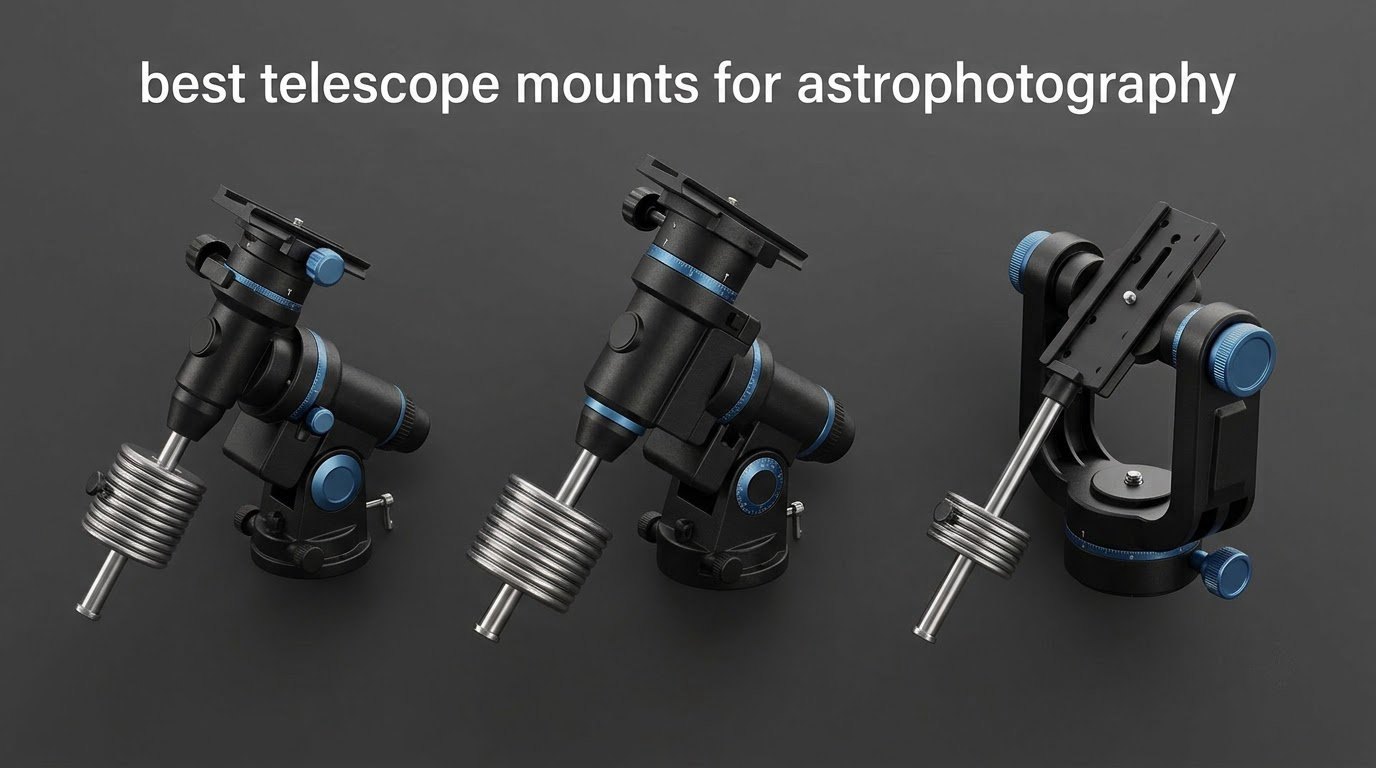
A mediocre telescope on a solid mount will always beat a beautiful telescope on a shaky one. The mount is the part that decides whether stars render as clean points or smudged streaks, and once the exposure passes about 30 seconds, that decision belongs entirely to your tracking accuracy rather than your optics.
Our team spent the last few months working through the current crop of mounts that show up in real astrophotography kits, from tiny travel trackers to full-size German equatorial platforms. We read the owner reviews closely, noted the recurring complaints, and sorted the results by what they actually do under a camera at night. The result is our list of the best telescope mounts for astrophotography in 2026.
What follows covers the whole category, not just one corner of it. You will find bare star tracker heads for Milky Way panoramas, complete GoTo packages, and heavyweight German equatorial mounts built for multi-hour guided sessions. If you only read one section, make it the buying guide near the end, because the mount that looks best on paper is often the wrong one for your payload.
Last updated October 2026. We may earn a commission on qualifying purchases made through the links on this page.
Table of Contents
What Mount Do I Need for Astrophotography?
You need a motorized tracking mount that holds your optical tube steady while the shutter is open. For wide-field Milky Way work with a camera lens, a portable star tracker is enough. For deep-sky nebulae and galaxies through a telescope, you want a motorized equatorial mount with an autoguider port and a payload rating at least double the weight of your imaging train.
Field rotation is the reason mount type matters. When an alt-azimuth mount tracks a target, it has to rotate the camera around two axes at once to follow the star across the sky. Because the camera is being turned during the exposure, the field of view slowly spins, and star shapes at the edges of the frame stretch into short trails. An equatorial mount aligns one axis with Earth’s rotational axis and only turns that single axis, so the frame stays fixed and stars hold their shape for the whole exposure.
Payload capacity is the second term you need to know. It is the total weight the mount is rated to hold, including the telescope, camera, guide scope, rings, dovetail plate and any counterweights. Rated capacity is a ceiling, not a working target, and experienced imagers aim to stay at or below half of it so that guiding stays smooth and the motors never stall.
One more practical note before the list. Every mount in this roundup needs a tripod rated for it, and that tripod is not always included. Several owners of the lighter trackers found that a flimsy camera tripod undermined tracking quality far more than the mount head itself.
Top 3 Picks for Astrophotography in 2026
These three cover the most common starting points: a WiFi tracker with a built-in polar scope for the widest range of setups, the strongest all-metal value tracker for travel, and the first mount in this group that also handles a telescope and visual observing.

Sky-Watcher Star Adventurer 2i Pro Pack
- Built-in illuminated polar scope
- WiFi app control
- Autoguider port
- Around 40 hours of AA tracking

iOptron SkyGuider Pro
- All-metal body
- 11 lb payload
- Integrated AccuAlign polar scope
- Up to 20 hours internal battery

Celestron Advanced VX
- 30 lb payload
- 2 inch steel tripod legs
- All-Star Polar Alignment and PPEC
- NexStar+ hand control
All Seven Mounts at a Glance in 2026
Use this table to narrow the field before you read the full reviews. The best telescope mounts for astrophotography fall into two camps, and the right question is whether you are carrying a camera or a telescope.
| Product | Specifications | Action |
|---|---|---|
| Sky-Watcher Star Adventurer 2i Pro Pack |
|
Check Latest Price |
| iOptron SkyGuider Pro |
|
Check Latest Price |
| Celestron Advanced VX |
|
Check Latest Price |
 Sky-Watcher EQ6-R Pro Sky-Watcher EQ6-R Pro |
|
Check Latest Price |
 Sky-Watcher Star Adventurer GTi Sky-Watcher Star Adventurer GTi |
|
Check Latest Price |
 iOptron SkyTracker Pro iOptron SkyTracker Pro |
|
Check Latest Price |
 Vixen POLARIE U Vixen POLARIE U |
|
Check Latest Price |
Star Trackers, German Equatorial Mounts and Harmonic Mounts Explained
The single biggest reason people get confused when comparing the best telescope mounts for astrophotography is that three different designs get sold under similar names. Knowing which one you are looking at saves you from buying twice.
A star tracker is a small single-axis head with one motor. It rotates right ascension only, which is all a fixed camera needs once it is polar aligned, and it keeps the same sky orientation all night. Because there is only one axis, there is no field rotation to fight, and most of the trackers in this roundup can produce clean two and three-minute subexposures with lenses up to roughly 300mm to 400mm.
A German equatorial mount, or GEM, is a full two-axis platform with a counterweight bar. One motor handles right ascension and one handles declination, and once the polar axis is aimed at the celestial pole, the mount can follow a star on a single axis indefinitely. That architecture is why a GEM handles an 8-inch imaging telescope and a 300mm lens with the same underlying principle, and why it needs a heavy tripod and real balancing to stay smooth.
A center-balanced equatorial mount, usually called a CEM by the brands that sell them, drops the counterweight bar. The payload sits directly over the polar axis, which removes the imbalance problem and cuts the total weight to carry, at the cost of a smaller payload ceiling. A harmonic drive mount is a third idea: it replaces the large worm gear with a small harmonic reducer driven by a stepper motor, giving very low periodic error, near-silent slewing and no backlash in a much smaller package. None of the seven mounts here is a dedicated harmonic drive mount, so if your priority is a compact long-focal-length rig, look at that design separately.
For tracking, every mount turns its right ascension axis at the sidereal rate, which is one rotation every 23 hours, 56 minutes and 4 seconds. That is slightly slower than the 24 hours most people assume, and the difference is what keeps a star pinned to the same pixels for the length of an exposure.
1. Sky-Watcher Star Adventurer 2i Pro Pack – Best Overall for Wide-Field Imaging
Sky-Watcher Star Adventurer 2i Pro Pack (S20512)
7 lb complete weight
Built-in polar scope
WiFi app control
Lenses to about 400mm
Pros
- Polar scope makes alignment quick in the field
- Autoguider port for external guiding
- Roughly 40 hours of tracking per set of AA batteries
- Handles lenses to about 400mm focal length
- Works with a standard sturdy tripod
Cons
- Plastic body feels light compared with metal trackers
- Flimsy battery door and an easy-to-hit mode switch
- Polar illuminator will not fit with a camera mounted
- SAM Console app is basic
This is the mount I recommend to almost anyone starting out, and the reason is not raw performance. It is the number of reviews behind it. With 609 ratings averaging 4.4 stars, this is the most heavily reviewed tracker in the group, which means almost every early quirk has already been reported, documented and worked around by somebody.
Out in the field the workflow is genuinely short. The equatorial base has a built-in polar scope with illumination, so you set the tripod roughly north, level the base, and rotate the head until Polaris sits in the reticle. Several owners report completing the whole alignment in about five minutes from unpacking.
Once aligned, it tracks well. Owners report solid, sharp results at three-minute exposures around the 300mm focal length mark, and the WiFi connection to the free SAM Console app means you can start and stop sequences from a phone rather than fumbling with cables. There is also an autoguider port, so if you want to stretch subexposures for a specific target you are not locked out.
The weakness here is physical rather than electronic. The body is largely plastic, and reviewers describe it as feeling flimsy next to an all-metal tracker. That is a fair criticism of build feel, but it has not stopped anyone from producing good images, because a light head on a solid tripod still tracks.
Battery life is the surprise strength. Multiple owners report roughly 40 hours of tracking from one set of AA batteries, which comfortably covers several all-night sessions without a power bank. The trade-off is the battery door itself, which is described as flimsy, and the on/off mode switch, which is easy to bump while carrying the rig and can drain cells in a bag.
Who this mount suits
This suits the person who wants one mount that covers both a camera and a small telescope without committing to a full German equatorial platform. The counterweight-free design means it is quick to set up and easy to carry, and the autoguider port means you are not locked into a single style of imaging later.
It is also the safest recommendation for a first rig because the accessory ecosystem around it is mature. Nearly every beginner guide, forum thread and tutorial you will find assumes a tracker of this general class, so troubleshooting advice is easy to find.
Who should skip it
Skip it if you need to carry a long telephoto zoom or anything past roughly 400mm of focal length, and skip it if you dislike plastic in a piece of gear you will handle every clear night. The polar scope illuminator is a separate small part that will not fit once a camera is mounted, which is an easy first-night annoyance to plan around.
If you want computerized pointing rather than manual target hunting, the next entry is the better fit.
2. iOptron SkyGuider Pro – Best Value All-Metal Travel Tracker
iOptron SkyGuider Pro Camera Mount Full Package
11 lb payload when balanced
All-metal body, 2.2 lb head
Integrated AccuAlign polar scope
Up to 20 hours on internal battery
Pros
- All-metal machining keeps vibration low
- Smooth brass worm drive with belt transmission
- 20 hours from the internal rechargeable cell
- Reports of 2-3 minute subexposures from 20mm to 500mm
- Counterweight and wedge support DSLR plus telephoto setups
Cons
- No GoTo
- so targets are found manually
- 8 inch counterweight bar is short and extensions are often delayed
- Polar scope can arrive out of collimation and needs adjusting
- Only a 2mm hex key is included
The SkyGuider Pro is the one I would buy for myself. At 4.5 stars across 196 ratings it holds the highest average in this group, and the reason is that the machining is genuinely good rather than merely adequate. The body is all metal with a brass worm drive and a rubber belt transmission, and owners consistently describe tracking as smooth and accurate.
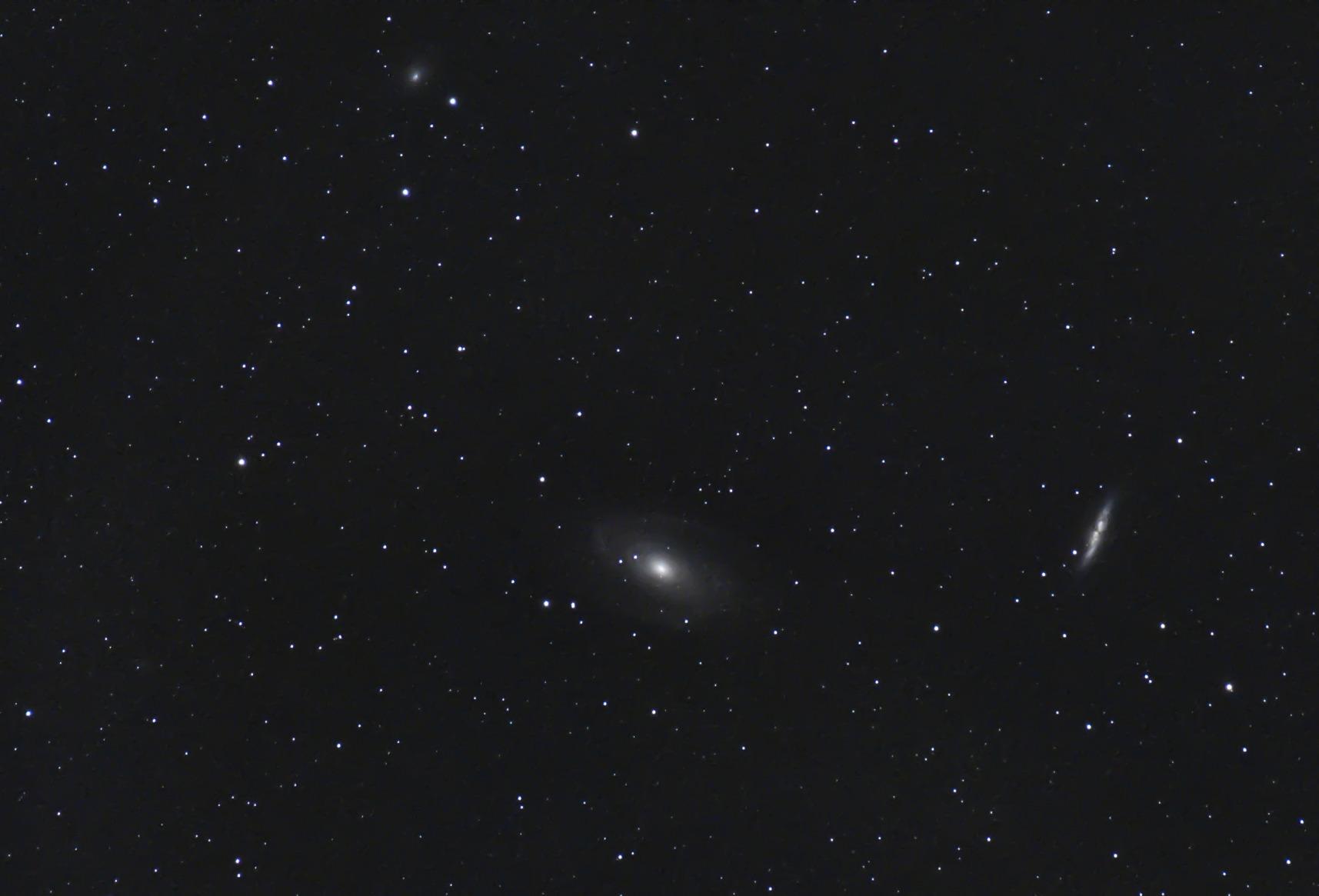
Performance data from owners lines up closely with our own expectations. Multiple reviewers report 2 to 3 minute subexposures with pinpoint stars using lenses from 20mm up to 500mm, which puts it in the same working range as the Star Adventurer 2i but with a noticeably more refined mechanism underneath.
Alignment is fast because the AccuAlign dark field illuminated polar scope is integrated into the body rather than added on. The latitude adjustment covers minus 30 to 65 degrees and azimuth gives plus or minus 5 degrees, so it works across most latitudes and most back gardens.
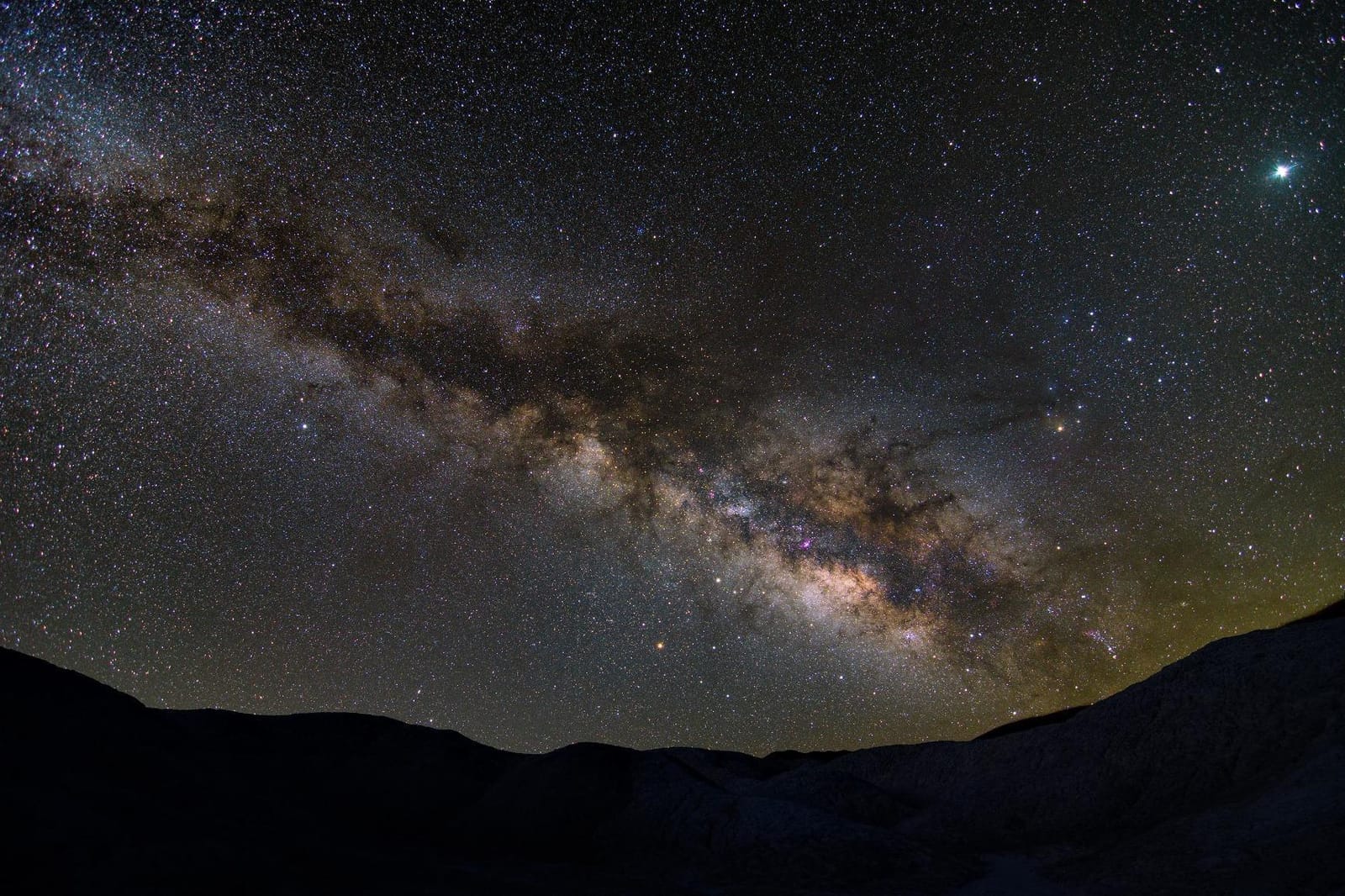
One thing to plan for is collimation. A fair number of owners report that the polar scope arrives out of collimation with the right ascension axis and needs adjusting on day one. The fix is routine, but it takes a few minutes and the supplied tool set is incomplete, since only a 2mm hex key is included and 1.5mm is also needed.
Power is handled internally. The rechargeable cell runs up to 20 hours at 20C, which covers a full night, and the folded body is small enough to sit in a camera bag rather than a separate case.
The counterweight bar is the accessory that catches people out. The included 8 inch bar is short for heavier DSLR and telephoto combinations, and owners report that extension bars are frequently delayed, so it is worth checking what is available before you build a heavy rig around it.
Who this mount suits
This suits anyone who values build quality and vibration control more than computerized pointing, and who travels to dark sites rather than only shooting from home. The compact all-metal head and internal battery make it the easiest of the trackers here to pack into a single bag.
It is also the best choice if you want to grow toward longer exposures. The ST4 autoguide port means a guided session is possible once you are ready to add a guide scope, which a bare non-guided tracker like the POLARIE U only partly offers.
Who should skip it
Skip it if you want GoTo. This mount tracks on one axis only, so you locate targets yourself, either by star hopping or by plate-solving with software. If hunting for targets by hand sounds tedious, go to the Star Adventurer GTi instead.
The polar eyepiece fit is also reported as loose, which can shift the reticle and requires a workaround. It is a minor irritation rather than a defect, but it is the kind of thing you notice at midnight in a field.
3. Celestron Advanced VX – Best German Equatorial Mount for Deep-Sky and Visual Work
Celestron Advanced VX Computerized German Equatorial Mount – 30lb Payload
30 lb payload
2 inch stainless steel tripod legs
7 to 77 degree latitude range
47 lb total kit weight
Pros
- Rigid 2 inch stainless steel tripod legs cut vibration
- 30 lb payload covers most imaging trains
- Latin-wide latitude adjustment of 7 to 77 degrees
- NexStar+ hand control with 40000+ object database
- PPEC and advanced tracking modes
Cons
- Kit weight of roughly 47 lb is a lot to carry
- External DC power supply is required and not included
- Hand controller workflow is fiddly for imaging setups
- Slower slews than lighter harmonic drive mounts
This is the first mount in the list that is a genuine German equatorial platform rather than a camera tracker, and it is where most deep-sky imagers land. The Advanced VX has been in production long enough that its strengths and its one real drawback are both well understood.
The strength is rigidity. The tripod uses 2 inch stainless steel legs rather than the 1.5 inch legs typical of portable kits, and that difference is felt immediately in guiding results. Combined with a 30 lb payload rating, it holds anything from a small refractor to a mid-size Schmidt-Cassegrain with imaging accessories attached.
Alignment is handled by three separate routines, including All-Star Polar Alignment, which is one of the better electronic methods available on a hand-controlled mount because it works out the pole position from multiple star positions instead of requiring you to see Polaris.
The tradeoff is weight, and it is not small. The total kit weight is listed at 47 lbs, and reviewers describe the mount and tripod together as close to that figure. For a backyard setup or a permanent pier, that is irrelevant. For a remote dark site, it changes the entire session plan.
Power is the other thing to sort before the first night. The mount runs on an external DC supply that is not included, and it also needs a genuine power source rather than a thin USB brick if you plan to run a long imaging sequence.
For guidance, the NexStar+ hand controller carries a database of more than 40,000 objects and supports several alignment procedures, and Permanent Periodic Error Correction can be trained and then stored on the mount. That stored correction is a real advantage over mounts that forget their model every power cycle.
Who this mount suits
This suits the person who wants one mount for two jobs. It is a serious visual platform as well as an imaging one, and the dual saddle plate accepts CG-5, CGE-style and Vixen format dovetails, which is exactly the answer to the most common question we saw asked about swapping between a visual scope and an imaging train.
It is also the right pick for a specific focal length band. An 80mm refractor, a 6 inch or 8 inch Schmidt-Cassegrain, or a moderate imaging Newtonian all sit comfortably inside a 30 lb rating with room to spare for rings and a guide scope.
Who should skip it
Skip it if you image from different locations, or if you have to carry your gear up stairs or across a car park regularly. Forty-seven pounds is a two-person job in the field, and that is the reason we would reach for a lighter class of mount instead.
It is also not the right choice if you want to be driven entirely from a computer with no hand controller. The workflow through the hand box is described as fiddly once you are running long imaging sequences, and the mount is happiest when a computer takes over control.
4. Sky-Watcher EQ6-R Pro – Best for Long Guided Exposures and Heavy Payloads
Sky-Watcher EQ6-R – Fully Computerized GoTo German Equatorial Telescope Mount – Belt-driven, Motorized, Computerized Hand Controller with 42,900+ Celestial Object Database
44 lb payload
Belt-driven stepper motors
Encoders with PPEC upload
12V supply at 4A minimum
Pros
- All-metal construction that is rock solid once sited
- Sub-arcsecond guided results reported by owners
- 44 lb payload handles 8 inch imaging tubes
- Encoders remember periodic error correction between sessions
- Computable through EQMOD
- ASCOM drivers and planetarium software
Cons
- About 75 lb assembled with tripod and counterweights
- Factory grease causes stiction until the bearings are re-tuned
- Needs a 12V supply of at least 4 amps or GoTo slews stall
- Alt-azimuth adjustment screws are awkward to use
The EQ6-R Pro is the enthusiast-grade option here and the only one in this list with a payload rating that comfortably clears a large imaging Newtonian. The 44 lb capacity is more than most imagers will ever use, and that is exactly the point.
Tracking is where the belt-driven stepper motors pay off. Owners report guided results comfortably under one arcsecond with PHD Guiding, and the mount is widely used in the deep-sky community as a workhorse rather than a occasional option. The absence of backlash in the belt drive also means there is nothing to train out after a nudge, which saves a lot of time over a long session.
Encoders on both axes are the feature experienced users care about most. Combined with Permanent Periodic Error Correction, the mount learns its own error profile and stores it, then applies it after every restart. In practice that means the periodic error you trained once keeps working the next night without you retraining anything.
Now the difficult part. The mount head is listed at 44 lb and rises to roughly 75 lb assembled with tripod and two 11 lb counterweights, and those counterweights alone add 22 lb. This is a system that wants a garden, a garage or a permanent pier, not a car boot at midnight.
Factory lubricant is the second well-known issue. Owners commonly report that the thick grease shipped in the box makes balancing feel rough until the bearings and worm drives are cleaned and re-lubricated. Budget an evening for that job the first time you set it up.
Power needs attention too. The specification calls for 12V with at least 4 amps, and owners report that an undersized supply causes the mount to stall partway through a GoTo slew. A proper 12V supply with enough current is not an optional accessory here.
Who this mount suits
This suits the imagers who have already outgrown a mid-range mount and want sub-arcsecond guiding on long focal lengths. A fast 8 inch Newtonian or a long refractor sits comfortably inside the payload rating, and there is headroom left for a guide scope, rings and a heavy camera.
It is also the best choice for multi-night remote runs. Once a mount is sited and tuned, the encoders and stored periodic error correction mean the second night behaves like the first, which is what makes unattended imaging over several nights realistic.
Who should skip it
Skip it if you have to move the mount between sites regularly, or if you are still deciding whether astrophotography is for you. The weight, the two-box delivery and the setup work make it a commitment to a location rather than a purchase you experiment with.
One more quirk to know: the alt-azimuth adjustment screws at the base are reported as awkward and not very smooth, and the polar finder reticle pattern needs the right ascension axis rotated to sit vertically. Both are solvable, but neither is intuitive on a first session.
5. Sky-Watcher Star Adventurer GTi – Best Complete Portable GoTo Package
Sky Watcher Sky-Watcher Star Adventurer GTI Mount Kit with Counterweight, CW bar, Tripod, and Pier Extension – Full GoTo EQ Tracking Mount for Portable and Lightweight Astrophotography
GoTo equatorial head
Tripod and pier extension included
5 lb counterweight included
26 lb full kit, two-year warranty
Pros
- GoTo pointing removes manual target hunting
- Illuminated polar scope included
- Ball head
- counterweight bar and 5 lb weight in the box
- Two-year warranty is longer than most rivals
- Only kit here that includes tripod and pier extension together
Cons
- 26 lb is noticeably heavier than bare camera trackers
- GoTo depends on reliable app and location setup
- 1.5 inch legs are less stiff than 2 inch equatorial legs
- App experience is less refined than the mechanics
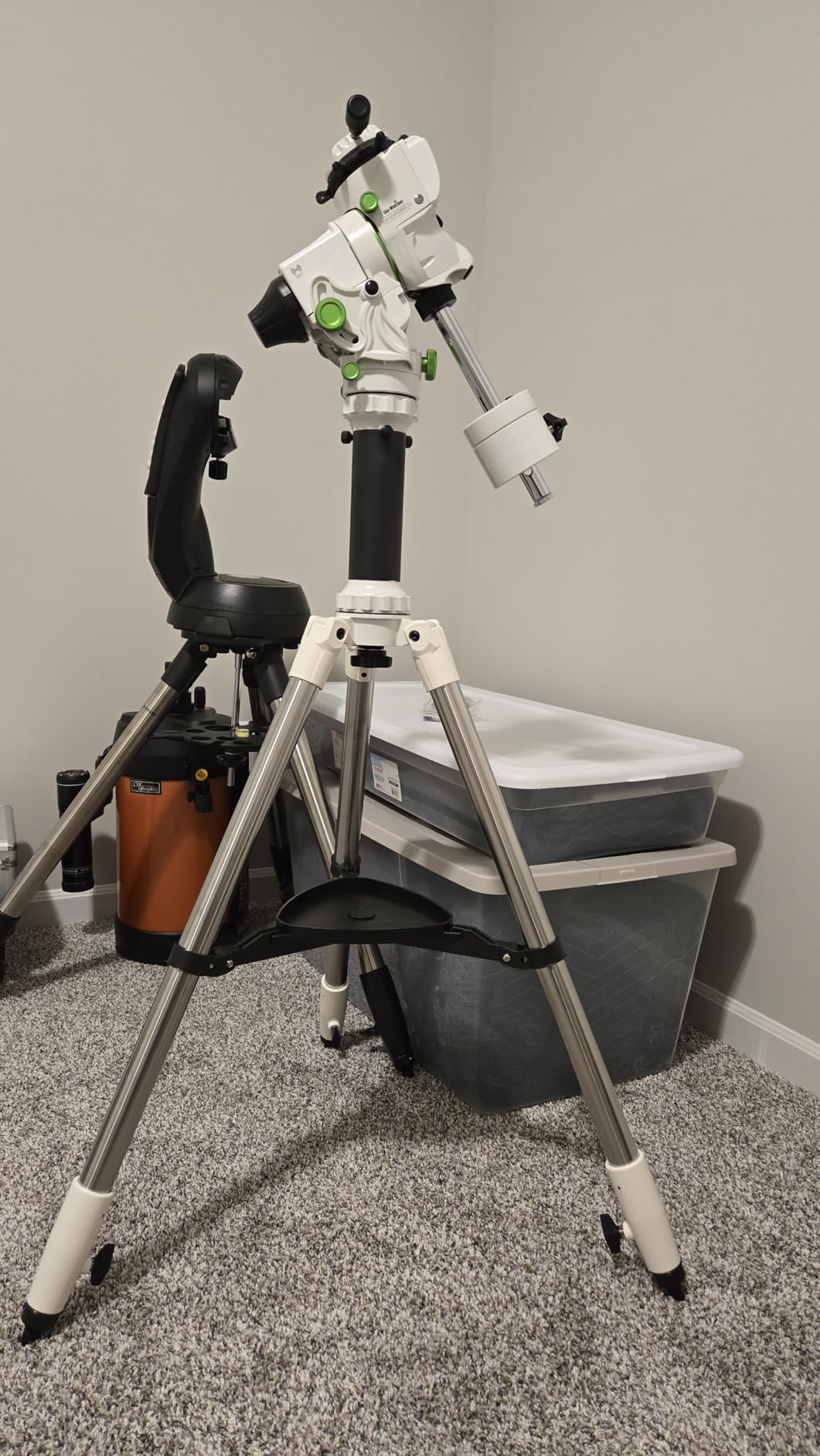
The Star Adventurer GTi solves the two problems that stop most people buying a tracker: you have to find the target yourself, and you have to source a tripod separately. This kit arrives with the mount head, a tripod, a pier extension, a ball head, a counterweight bar and a 5 lb counterweight, ready to shoot.
At 4.5 stars across 111 ratings it ties for the second-highest average in this group, and the value proposition is easy to see. Nothing else on this list bundles a stable tripod with the mount in the same box.
GoTo pointing is the reason to pay for this version over a bare head. Built-in WiFi connects to a phone app that will find and slew to a named target, which means a whole session no longer depends on star hopping with a red torch. The built-in illuminated polar scope handles the other half of the setup problem.
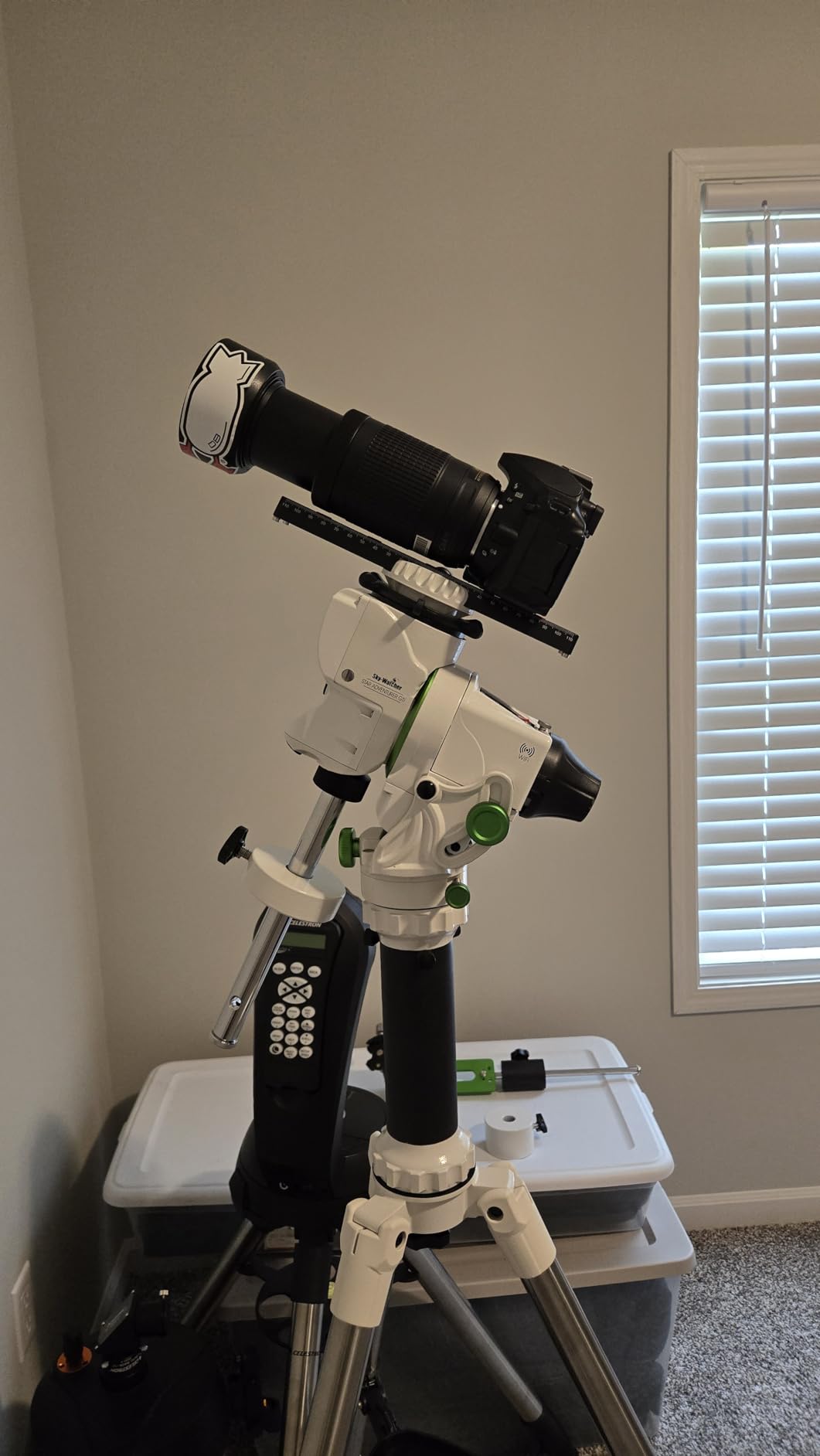
The counterweight bar and 5 lb weight extend what you can carry compared with a bare camera tracker. That matters if you want to add a DSLR or a small refractor rather than staying with a mirrorless body and a short lens.
Weight is the price of the bundle. The full kit is listed at 26 lb, which is a real step up from the sub-7-pound bare trackers, though still far lighter than a full German equatorial package. The 1.5 inch tripod legs are also less stiff than the 2 inch legs on the Advanced VX, so treat this as a stable platform for reasonable payloads rather than a heavy one.
The other honest note is that field workflow runs through the app. Reviewers consistently rate the mechanics above the software, and several point out that GoTo depends on getting location services and the app set up correctly before you leave home.
Who this mount suits
This suits anyone who wants one box to open and a mount that can point itself at targets. It is also a strong choice for family or group use, where several people taking turns at the eyepiece makes computerized pointing far easier than passing a finder scope around.
Because it takes a counterweight, it bridges the gap between a camera tracker and a small telescope setup without crossing into the weight class of a full equatorial mount.
Who should skip it
Skip it if your priority is the lowest weight you can manage, or if you already own a decent tripod. In that case the money is better spent on a better mount head than on a kit that duplicates hardware you have.
It is also the wrong pick for a fixed installation, where the pier extension is not something you need and a rigid fixed tripod would serve better. The bundle is built for taking the rig outside.
6. iOptron SkyTracker Pro – Best Budget Tracker for Short and Wide Lenses
iOptron SkyTracker Pro Camera Mount with Polar Scope, Only
6.6 lb payload
3.3 lb total weight
Internal rechargeable battery
DC servo drive, 600 second worm period
Pros
- Very compact at 3.3 lb and easy to carry
- Almost completely silent tracking
- Rechargeable internal battery
- Owners report trail-free results at 60 seconds to several minutes
- Four tracking speeds including solar and lunar
Cons
- 3 kg rating is exceeded by 70-200mm and 200-500mm zooms
- Swivel head rubber cushion slips under heavier loads
- Supplied dovetail base is not Arca-Swiss compatible
- Ball head and alignment app are extra purchases
The SkyTracker Pro is the entry point that proves the concept. It is the lightest full tracker in the group at 3.3 lb, it needs no separate battery pack, and owners report trail-free exposures at 60 seconds, several minutes and up to about five minutes with short and wide lenses.
The drive is a DC servo motor with a 600 second worm period running on four bearings, and reviewers describe the tracking as almost completely silent. The dimmable scope LED and the forward and reverse jog button make night setup far easier than fiddling with a separate light source.
Four tracking rates cover celestial 1X, half celestial, solar and lunar, so the same head can be used for nightscapes, solar work and lunar sessions without reconfiguration. Charging is via micro USB, reaching 80 percent in about five hours.

The 3 kg payload is the hard boundary. Owners with a 70-200mm or 200-500mm zoom find the kit exceeds the rating, and the fix is the separate counterweight package. If your lens is anything beyond a short wide-to-normal prime, plan for that extra purchase from the start.
There are also mechanical complaints worth knowing. The rubber cushion at the swivel head slips under heavier loads, which makes clamping a heavy camera or lens awkward, and a small lip around the swivel head limits the contact area with a camera base or ball head.
The supplied dovetail tripod base is not Arca-Swiss compatible, and owners report it can be unstable. The flat bottom also will not fit a tripod that carries a fixed index mark for polar north, since the azimuth screws only move the attached base. A ball head is not included and the alignment app is a separate purchase.
Who this mount suits
This suits a beginner who wants to learn tracked photography without a large commitment, and anyone shooting a wide or normal prime lens on a nightscape walk. At 3.3 lb it is the easiest mount here to carry on foot to a dark site.
It is also a good second mount. Because it is small, you can keep it permanently on a lightweight travel tripod while a larger rig stays at home, which is how a lot of imagers end up doing multi-night sessions.
Who should skip it
Skip it if you already own telephoto glass, because the payload rating will be the first thing to bite you. It is also the wrong head for anyone who wants to attach an autoguider, since no guiding port is listed on this model.
Polar alignment through the built-in scope is reported as difficult without a clear line of sight to Polaris, which is a real issue at lower latitudes or under trees. Plan on a clear horizon toward the pole if you choose this one.
7. Vixen POLARIE U – Lightest Tracking Head for Day-Bag Imaging
Vixen POLARIE U Star Tracker
0.58 kg tracking head
Five selectable tracking speeds
ST4 autoguiding port, RA only
4 AA or USB Type-C power
Pros
- Exceptionally small at 0.58 kg for day-bag travel
- Five tracking speeds for stills and time-lapse
- ST4 port allows guided sessions
- Smartphone shutter release removes the intervalometer cable
- Clean Japanese construction with two-year mechanical warranty
Cons
- No GoTo
- so targets are found manually
- Autoguiding corrections apply to the RA axis only
- Tripod
- ball head and counterweight are separate purchases
- Only 36 ratings to judge from
The POLARIE U is the smallest thing in this roundup at 0.58 kg, and it is the one to consider if the definition of portable is a day bag rather than a car. It ships with a finder, a 0.1 inch Allen wrench and a manual, which tells you how little else you get.
What it does offer is unusual flexibility for its size. Five selectable tracking speeds give finer control over the tracking rate than most small trackers, covering both still photography and time-lapse work in one head.
The smartphone-controlled shutter release is a quietly useful feature. Instead of running a cable to an intervalometer, you trigger captures from your phone, which cuts the number of small cables that can go missing in a bag.
Owner ratings are unusually uniform, with 63 percent five-star and 24 percent four-star and no one-star reviews at all. That pattern usually means a product that does exactly what it claims without ever surprising anyone.
Who this mount suits
This suits travel imaging where every gram counts, and time-lapse work where adjustable tracking speed matters. If you fly to a dark site or hike to one, the POLARIE U is the least tiring option here to carry.
It is also a sensible head for a rig you already own, since the ST4 port opens the door to guided work later without replacing the mount.
Who should skip it
Skip it if you want one purchase to be a complete system. The tripod, the ball head and any counterweight are all extra, and budget for them alongside the head rather than after it.
There is no GoTo, so targets are found manually, and the autoguiding port corrects right ascension only, which means any guiding you do will not address the declination axis. The thinner rating base, at 36 reviews, is also worth weighing if you prefer to see a long history of owner reports.
Equatorial vs Alt-Azimuth Mounts for Astrophotography
Yes, you need an equatorial mount for deep-sky astrophotography. An alt-azimuth mount tracks well and can produce sharp results for short exposures, but over longer exposures the rotating field frame turns star edges into trails, and no amount of stacking fully repairs it.
There are two main types of telescope mount. A German equatorial mount is aligned so one axis points at the celestial pole, then turns only that axis at sidereal rate. An alt-azimuth mount tracks the same star by turning in both altitude and height simultaneously, which keeps the target centred but rotates the camera while the shutter is open.
That rotation is called field rotation, and it is the single reason alt-azimuth mounts are not used for deep-sky imaging. Stars at the centre of the frame suffer least, while corners stretch first, so a wide field sensor shows the problem immediately.
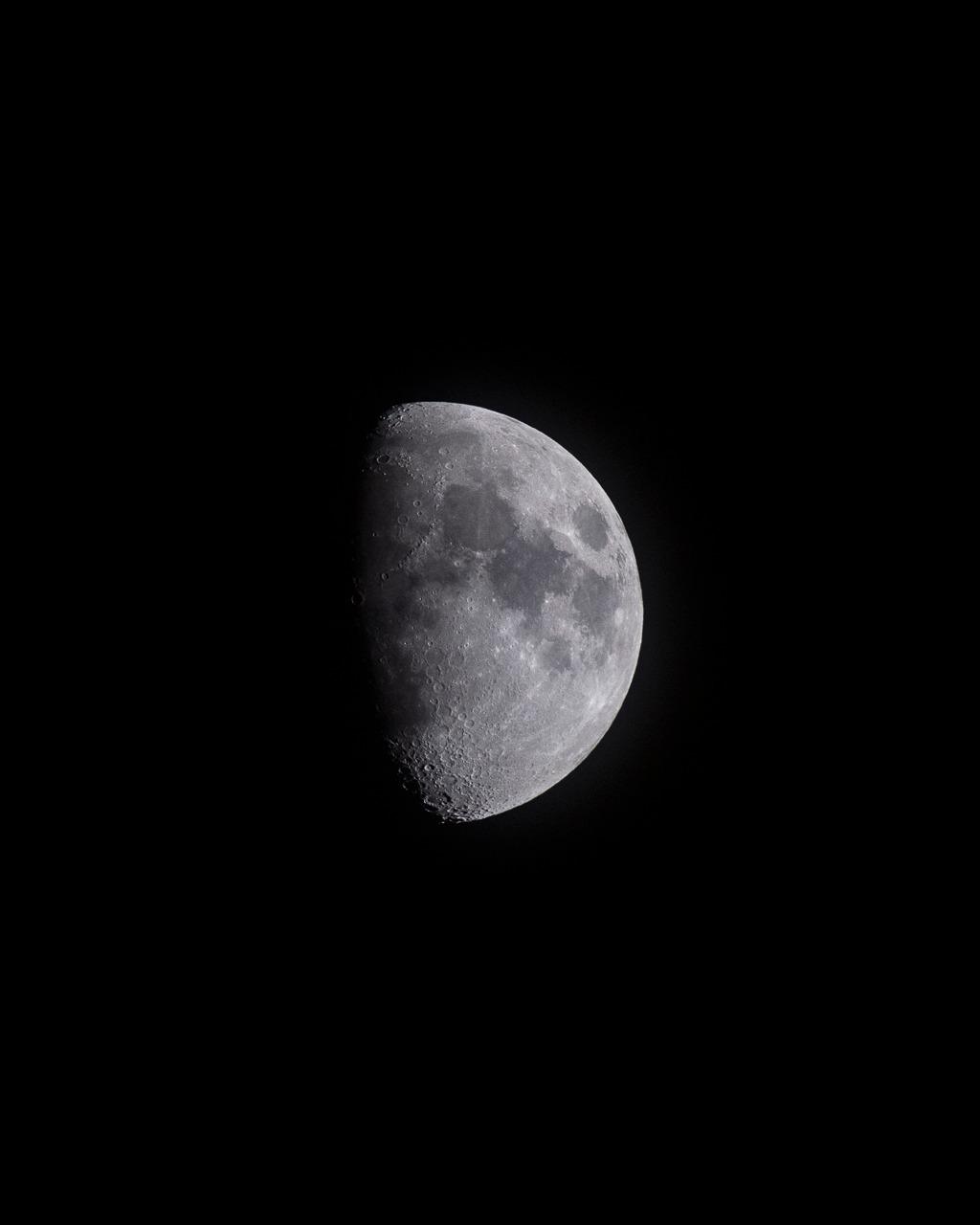
Where alt-azimuth does hold up is the Moon and the planets. Both are bright enough for short exposures of a fraction of a second to a couple of seconds, well inside the range where field rotation becomes visible, and a planet does not drift as Earth rotates. A sturdy alt-azimuth platform is a genuinely good tool for planetary and lunar imaging, and it also handles visual observing without any polar alignment at all.
Short exposure deep-sky work is the grey zone. A field rotator or derotator can correct the rotation on an alt-azimuth mount, but that is an added cost and an added complication, and it is rarely the cheaper route compared with just using an equatorial head.
How to Choose a Telescope Mount for Astrophotography
Start with the payload math, because it eliminates most options fastest. Add up the optical tube, the camera, the guide scope, the rings, the dovetail plate and every counterweight, then halve the total and treat that number as the minimum payload rating you should consider.
A worked example. An 80mm refractor with a cooled camera, a guide scope, rings and a dovetail plate comes to around 24 lb. A 5 lb counterweight is needed to balance it, so the running total is close to 29 lb. Halve that and you are looking at a mount rated for 58 lb or more, which is more than the Advanced VX in this list handles comfortably and the reason the EQ6-R Pro exists.
If your rig is lighter, say a short refractor and a mirrorless body without a guide scope, the total may be 12 lb and the halved figure drops to 6 lb, which puts any of the trackers on this list in range. This is where the 50 percent rule earns its keep, because staying well under the rating keeps guiding smooth and the motors out of stall conditions.
Polar alignment accuracy sets your exposure ceiling. A rough alignment leaving the pole about 5 degrees off will show field rotation within a minute or two. Tightening it to about 10 arcminutes of the pole extends that to several minutes per subexposure, and around 1 arcminute is enough for most single-session targets. A built-in illuminated polar scope gets you most of the way there, and an electronic routine such as All-Star Polar Alignment closes the rest without any guesswork.
Decide whether you will guide. Unguided subexposures are limited by periodic error, which is the repeating error in the right ascension gear caused by imperfections in the worm and gear teeth. An autoguider measures the drift in real time and sends corrections back to the mount, which is what allows sub-arcsecond results. Every mount in this roundup except the smallest trackers is a sensible candidate for guiding, and even the SkyGuider Pro and the POLARIE U offer an ST4 port.
Factor in power. Battery trackers are limited by cell capacity, and a single set of AA batteries or an internal rechargeable cell is measured in tens of hours. A German equatorial mount needs a 12V supply with enough current that GoTo slews do not stall, and the EQ6-R Pro in particular calls for at least 4 amps. Check what the mount expects before you plan a night, and factor a power station into the budget if you plan to image far from a car.
Think about whether one mount has to do two jobs. If you want to alternate between a visual scope and an imaging train, a dual saddle that accepts both Vixen and Losmandy style dovetails saves you from owning two mounts. The Advanced VX in this list takes CG-5, CGE-style and Vixen dovetails, which covers most of the popular formats.
And buy the tripod seriously. A mount head performs only as well as the support beneath it, and the 1.5 inch legs on portable kits are not the same as the 2 inch stainless steel legs on a full equatorial mount. If your existing tripod is light and has a small head plate, upgrade it before you blame the mount for soft stars.
Finally, plan for upgrades rather than trying to buy everything at once. Adding autoguiding later, training periodic error correction, improving the polar scope, or replacing a cheap tripod will each get you more than buying a larger telescope would. The community advice we see repeated most often is that nobody has ever regretted having too much mount, unless portability is the priority.
Frequently Asked Questions
What mount do I need for astrophotography?
A motorized tracking mount. For wide-field Milky Way work with a camera lens, a portable star tracker such as the Sky-Watcher Star Adventurer 2i or the iOptron SkyGuider Pro is enough. For deep-sky imaging through a telescope, choose a motorized equatorial mount with an autoguider port and a payload rating at least double the weight of your imaging train.
Do you need an equatorial mount for astrophotography?
Yes, for deep-sky work. An equatorial mount aligns one axis with Earth’s rotational axis and turns only that axis, so the camera frame does not rotate during the exposure. An alt-azimuth mount rotates the camera as it tracks, producing field rotation that stretches stars at the edges of the frame. Alt-azimuth is still well suited to lunar and planetary imaging at short exposures.
What are the two types of telescope mounts?
The two main types are the German equatorial mount and the alt-azimuth mount. A German equatorial mount points one axis at the celestial pole and turns only that axis at sidereal rate, which keeps the field of view fixed. An alt-azimuth mount turns in two axes at once to follow a target, which keeps it centred but rotates the frame during longer exposures.
Can I use a camera tripod for astrophotography?
Yes for short exposures of around 20 to 30 seconds, where tracking is not yet necessary. For anything longer you need a tracking head, and it must sit on a tripod rated for the combined weight. Reviewers of the lightweight trackers in this roundup repeatedly warn that a flimsy camera tripod undermines tracking quality far more than the mount head does.
How much payload should I load my telescope mount?
Aim to stay at or below half the rated capacity. Add the optical tube, camera, guide scope, rings, dovetail plate and all counterweights together, then halve that figure. Staying under half keeps guiding smooth, reduces vibration and stops the motors stalling during slews. A mount loaded near its limit will still work, but guiding results and reliability both suffer.
How important is polar alignment for my mount?
Very important, because it sets the length of usable subexposure. An alignment error of about 5 degrees of the pole produces visible field rotation within a minute or two. Tightening it to roughly 10 arcminutes extends subexposures to several minutes, and around 1 arcminute is enough for most targets. A built-in illuminated polar scope covers most of the work, with electronic alignment routines refining it.
The Best Telescope Mounts for Astrophotography in 2026: Final Verdict
Our pick of the best telescope mounts for astrophotography in 2026 is the Sky-Watcher Star Adventurer 2i Pro Pack. It is the most heavily reviewed mount in the group, it aligns in minutes thanks to its built-in illuminated polar scope, it carries a 40-hour battery runtime on AA cells, and its autoguider port means you are not locked out of guided work later.
Pick by use case rather than by rank. The iOptron SkyGuider Pro is the better all-metal tracker if build quality matters to you. The Celestron Advanced VX is the first mount here that handles a telescope properly and doubles as a visual platform. The Sky-Watcher Star Adventurer GTi is the pick if you want GoTo pointing and a complete package in one box. The Sky-Watcher EQ6-R Pro takes over once you are running sub-arcsecond guiding on heavy payloads. The iOptron SkyTracker Pro and the Vixen POLARIE U cover the light end, where a short lens and a small bag are the priorities.
Whichever you choose, do the payload sum before you buy, buy a tripod that can carry it properly, and expect the first few sessions to be about learning the workflow rather than about the hardware.