
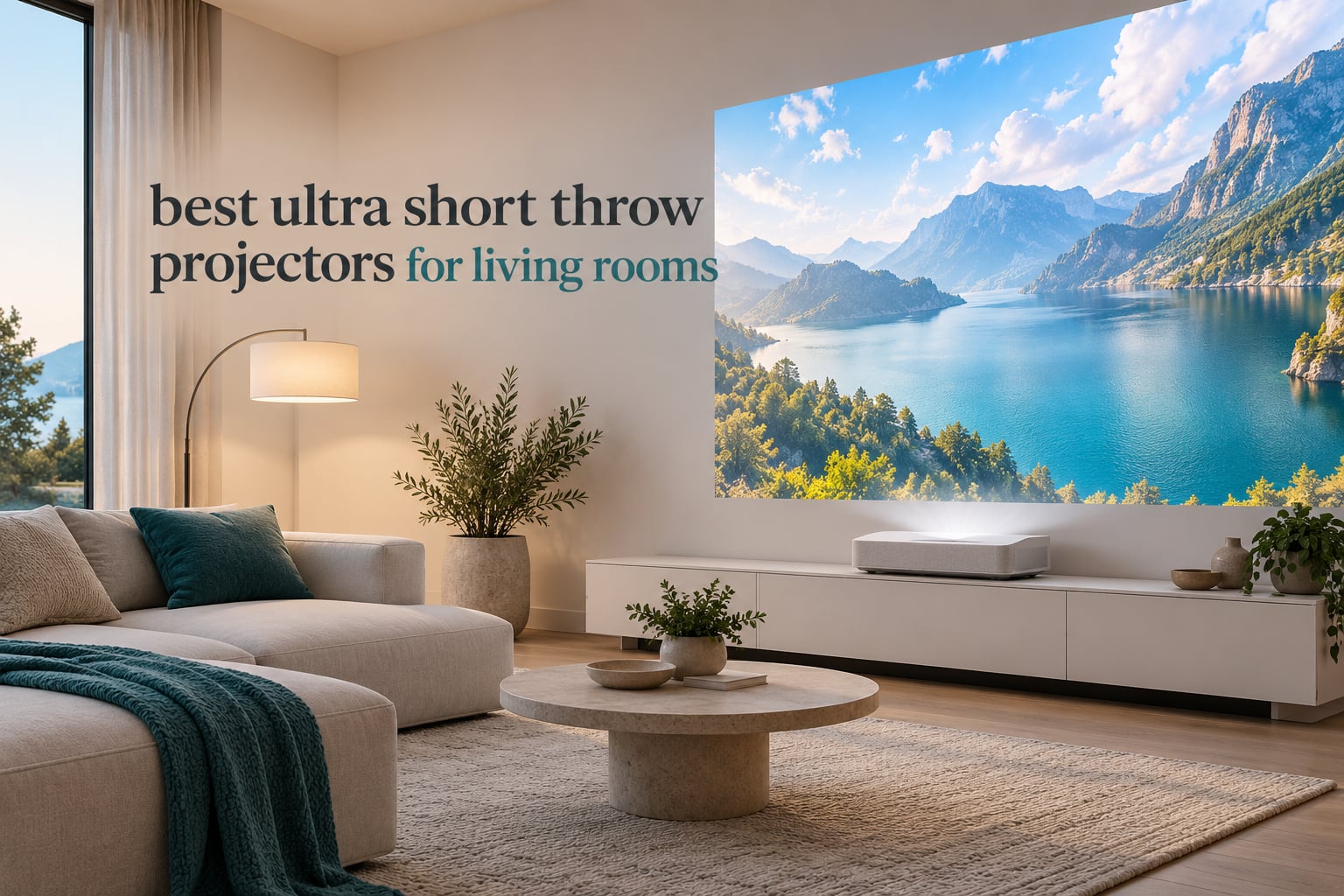
Yes, ultra short throw projectors are any good, and in 2026 they are the most practical way to get a screen far bigger than any TV you can wall-mount. A UST projector sits on your media console a few inches from the wall and throws a 100 to 150 inch image upward, which is exactly the footprint your living room can spare. The catch is brightness: a projector never matches an OLED in a sunlit room unless the unit is bright and paired with an ambient light rejecting screen.
We spent weeks comparing the ten ultra short throw projectors below, focusing on the four things that decide whether a laser TV survives daily living room use: measured brightness, how close the unit sits to the wall, contrast, and how much setup pain you inherit. Our verdict: the AWOL Vision LTV-2500 is the best ultra short throw projector for most living rooms, the Hisense PL2 is the brightest value pick, and the WEMAX Nova Pro wins on footprint and streaming.
Every unit here is a laser light source with no bulb to replace, image sizes from 80 to 150 inch, and smart TV platforms built in. What separates them is engine type, lumens, and tolerance of ambient light, so read the brightness notes before you commit.
Table of Contents
Top 10 picks at a glance
- AWOL Vision LTV-2500 – best overall triple laser color, Dolby Vision, 150 inch ceiling
- Hisense PL2 – brightest per dollar at 2700 lumens, 3000:1 contrast
- WEMAX Nova Pro – best for tiny cabinets, 150 inch from under 19 inches away
- Epson LS800 – best for daylight rooms, 4000 lumens 3LCD, no rainbow artifacts
- LG HU85LA – best smart TV experience, webOS, 120 inch from 7.2 inches
- Formovie Theater – best Dolby Vision pipeline with Bowers and Wilkins audio
- Epson LS300 – best built-in sound, Yamaha 2.1, quiet 3LCD laser
- XGIMI AURA 2 – best for zero-setup installs, auto keystone and auto focus
- Epson LS650 – best compact 3LCD 4K, 3600 lumens, 120 inch maximum
- Samsung The Premiere – best for color and sound, triple laser with 40W audio
Because a UST unit lives in a furniture cavity rather than a ceiling mount, the cabinet itself becomes part of the decision. Our short throw projector guide covers the placement geometry in more depth, and the room styling picks in our decorative wall mirror guide is worth a look if your blank wall is doing double duty as display space.
Top 3 Ultra Short Throw Projectors for Living Rooms in 2026

AWOL Vision LTV-2500
- RGB triple laser with no color wheel
- Dolby Vision and HDR10+
- 80-150 inch image


WEMAX Nova Pro
- 2100 ISO lumens
- 150 inch from 49cm away
- 0.47 inch DMD 4K DLP
- Google TV with Netflix
The AWOL LTV-2500 is our top pick because it combines an RGB triple laser engine with no color wheel, 150 inch maximum size, and the largest review base in this roundup at 416 ratings. The Hisense PL2 takes the brightness crown at 2700 lumens with 3000:1 contrast and a 4.4 rating, and it costs the least of the three. The WEMAX Nova Pro is the space saver, projecting 150 inch from 49cm of throw distance with a genuinely tiny body.
All 10 Ultra Short Throw Projectors Compared in 2026
| Product | Specifications | Action |
|---|---|---|
| AWOL Vision LTV-2500 |
|
Check Latest Price |
| WEMAX Nova Pro |
|
Check Latest Price |
| Hisense PL2 |
|
Check Latest Price |
 Epson EpiqVision LS800 Epson EpiqVision LS800 |
|
Check Latest Price |
 LG HU85LA LG HU85LA |
|
Check Latest Price |
 Formovie Theater Formovie Theater |
|
Check Latest Price |
 Epson EpiqVision LS300 Epson EpiqVision LS300 |
|
Check Latest Price |
 XGIMI AURA 2 XGIMI AURA 2 |
|
Check Latest Price |
 Epson EpiqVision LS650 Epson EpiqVision LS650 |
|
Check Latest Price |
 Samsung The Premiere Samsung The Premiere |
|
Check Latest Price |
One note on reading the table: brightness figures are quoted from each manufacturer and the scales are not interchangeable. ANSI lumens and ISO lumens are different measurement standards, and mixing them across brands is the most common mistake in this category.
1. AWOL Vision LTV-2500 – Best Overall Triple Laser Pick
AWOL VISION LTV-2500 4K UHD Ultra Short Throw Triple Laser Projector with Dolby Vision & Atmos, Active 3D, 150″, HDR10+, UST Laser TV Projector (Fire TV Stick 4K Max included)
1700 ISO lumens
RGB triple laser, no color wheel
80-150 inch image
25000 hour laser life
Pros
- Crisp 4K UHD image with vivid triple laser color at 107 percent BT.2020
- Whisper quiet RGB optical system with no color wheel and no rainbow artifacts
- Dolby Vision and Dolby Atmos plus center speaker mapping
- Fire TV Stick 4K Max included in the box
- Easy setup with clear menus and fast alignment
Cons
- Brightness is limited in fully daylit rooms
- Very heavy chassis that makes ceiling mounting awkward
- 3D settings are buried in the menu with no dedicated remote button
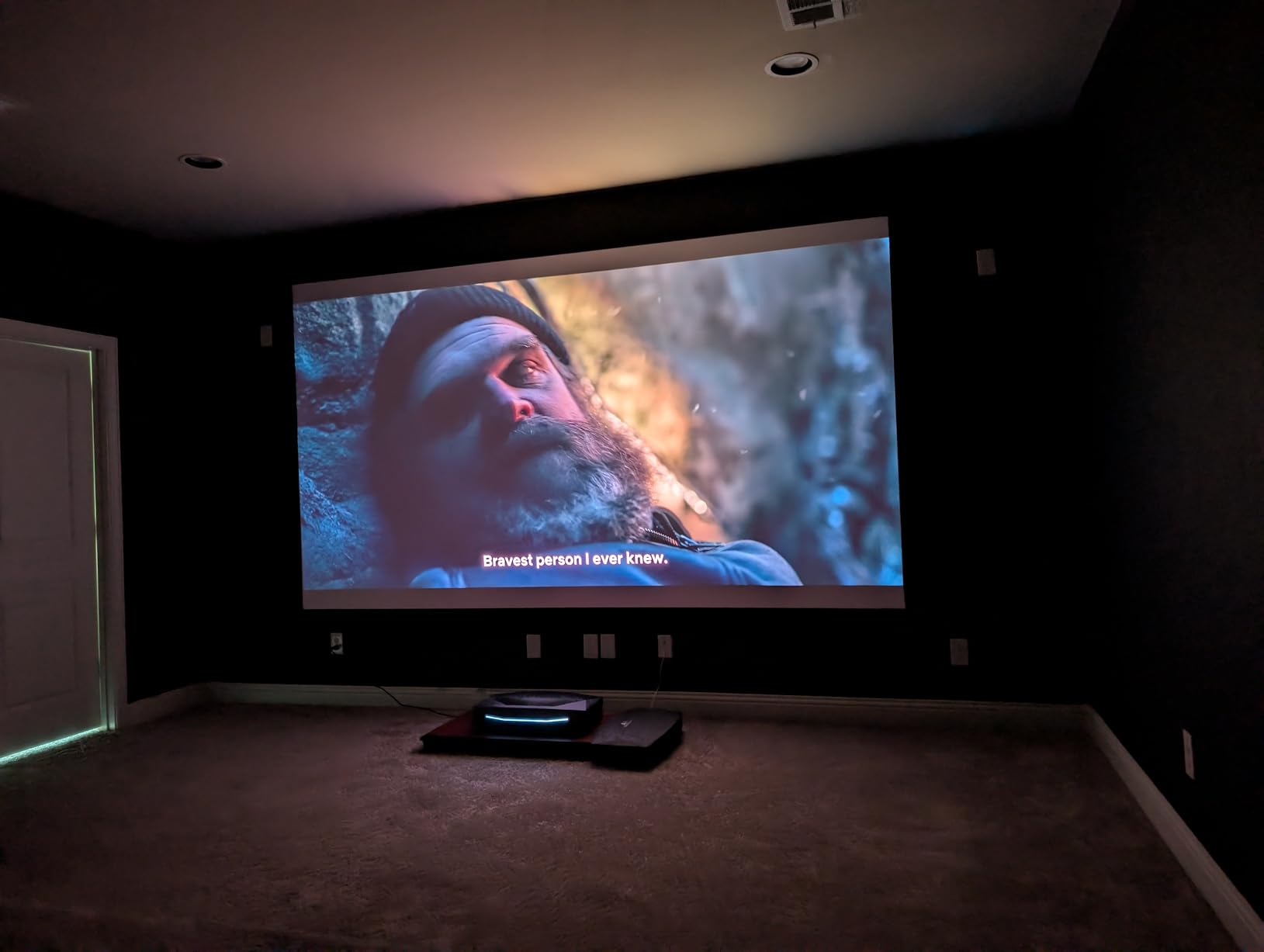
The LTV-2500 is the one we recommend to most households. Its RGB triple laser engine has no color wheel at all, which means no mechanical color cycling noise and no rainbow fringing for the vast majority of viewers. Color coverage is quoted at 107% of BT.2020 and 147% of DCI-P3, and owners consistently describe skin tones as natural rather than pushed.
Image size runs from 80 to 150 inch with a minimum throw distance of 0.5 feet and a maximum of 1.68 feet, so it fits a standard media console without the body hanging over the edge. The 80 inch f2.0 glass lens and digital alignment get you square in a few minutes rather than an afternoon.
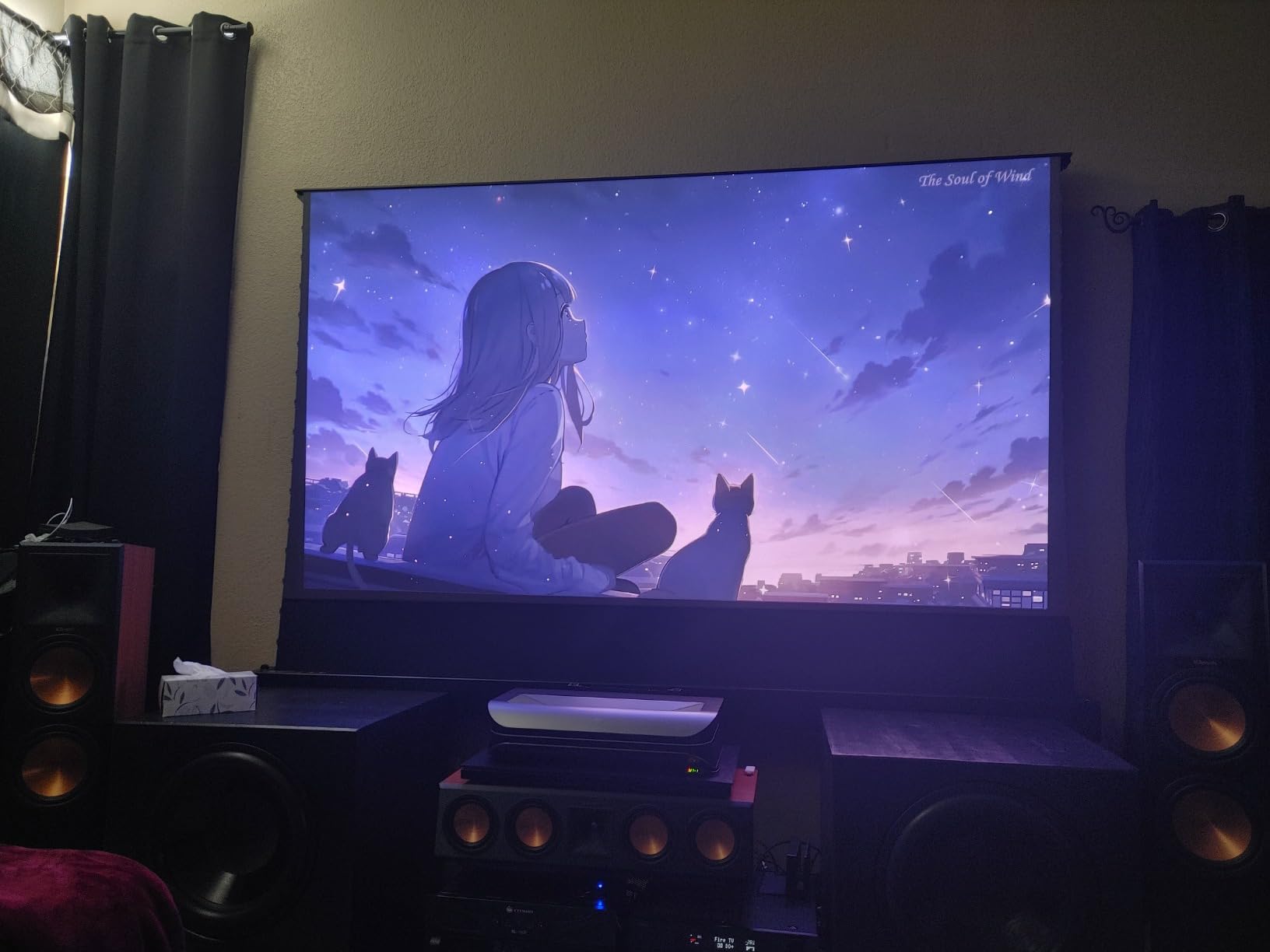
The unusual feature here is center speaker mapping, which lets the unit’s own drivers handle the center channel of a surround system. Owners who paired it with a receiver and rear speakers said it filled the middle of the soundstage convincingly for dialogue. A Fire TV Stick 4K Max is included, so there is nothing else to plug in for streaming.
Laser life is rated at 25000 hours, which at three hours of daily use runs well past a decade. Contrast is listed at 2500:1, a solid figure for a single-panel DLP unit, and the picture holds shadow detail better than most triple laser designs in this group. A software update that added Dolby Vision meaningfully improved the image for a lot of early owners, which tells you the pipeline is still maturing.
Who this projector suits best
Pick the LTV-2500 if you watch a lot of film and series, care about color accuracy, and view mostly in the evening with a lamp or two on. It is also the pick for anyone sensitive to rainbow artifacts who still wants triple laser saturation rather than the softer color wheel look.
For a family that splits the day between cartoons in the morning and a film at night, the Fire TV Stick inclusion and 150 inch ceiling give you room to grow. Budget for an ALR screen if the wall faces a window, because 1700 ISO lumens will not fight strong daylight unaided.
Where it falls short
The main limitation is brightness. Owners in rooms with full afternoon sun report washing out unless curtains are closed, and the manual’s 1700 ISO figure is the second lowest here. Adding a proper ambient light rejecting screen changes that more than any projector setting will.
It is also a heavy chassis, which reviewers cite as a problem for anyone attempting a ceiling mount without extra support. A small number of buyers reported the media stick or HDMI signal dropping out after a few months, and the 3D controls are awkward to reach compared with rivals that have a dedicated button.
2. WEMAX Nova Pro – Best for Tight Cabinets and Small Rooms
WEMAX Nova Pro 4K Ultra Short Throw Projector, Google TV, 2100 ISO Lumens
2100 ISO lumens
0.23:1 throw ratio
0.47 inch DMD 4K DLP
7 kg body
Pros
- Genuine 4K DLP with a speckle free ALPD laser image
- Very small footprint throwing 150 inch from under 19 inches away
- Google TV with licensed Netflix and Google Assistant
- Built-in dual 15W speakers with Dolby Audio
- HDMI 2.1
- optical out
- LAN and WiFi 6
Cons
- Best picture still needs a darker room or an ALR screen
- MEMC motion compensation can add slight latency in fast games
- Only a 6 month manufacturer warranty
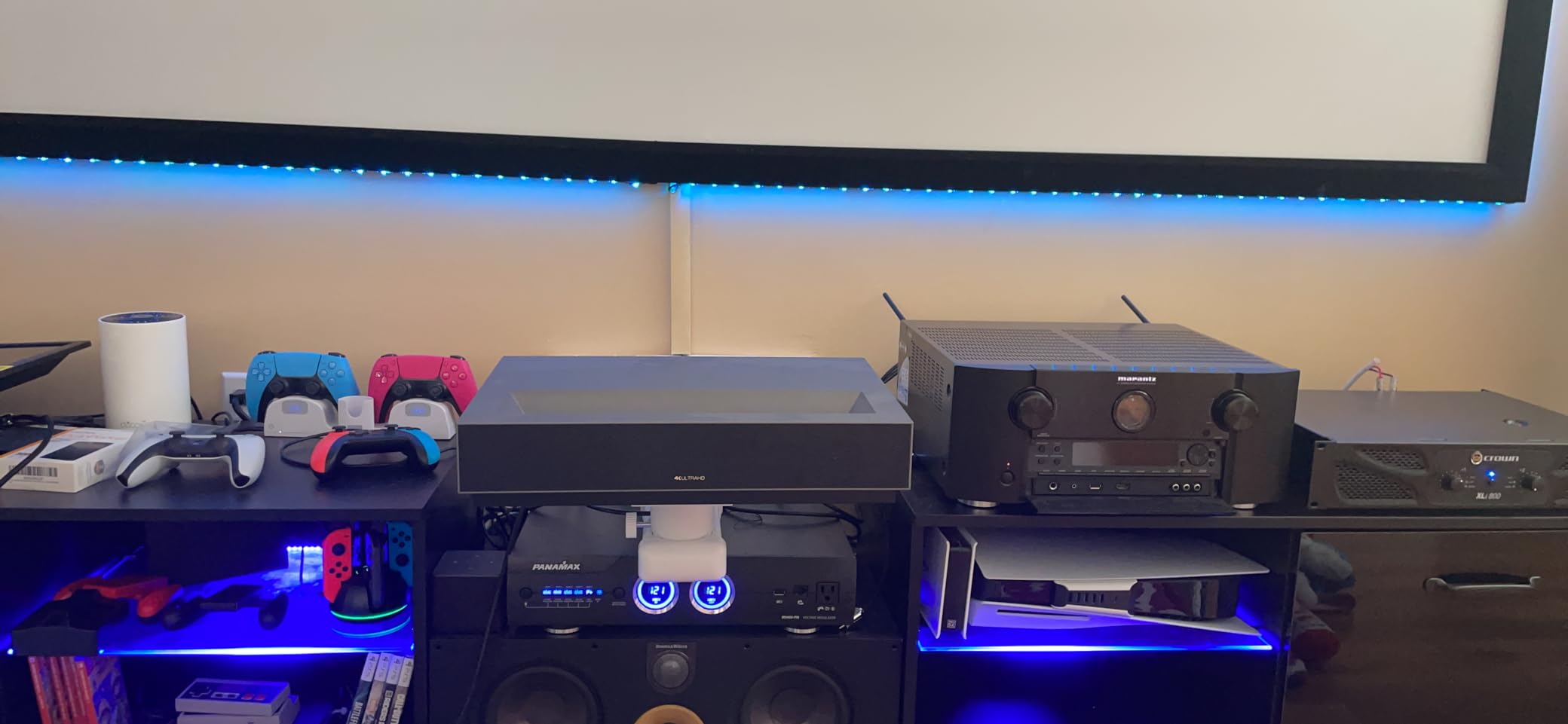
Where the AWOL needs cabinet depth, the WEMAX Nova Pro barely needs any. Its 0.23:1 throw ratio throws a 150 inch image from 49cm, and the body measures 12.13 by 3.58 by 18 inches at 7 kg, so it disappears into a slim media unit or a sideboard.
Optics are a 0.47 inch DMD 4K DLP panel driven by an ALPD laser source, and reviewers single out the image as speckle free, which is the usual complaint about single-laser ALPD designs. Color gamut is quoted at 110% of Rec.709 with 1.07 billion colors, and contrast is rated 3000:1.
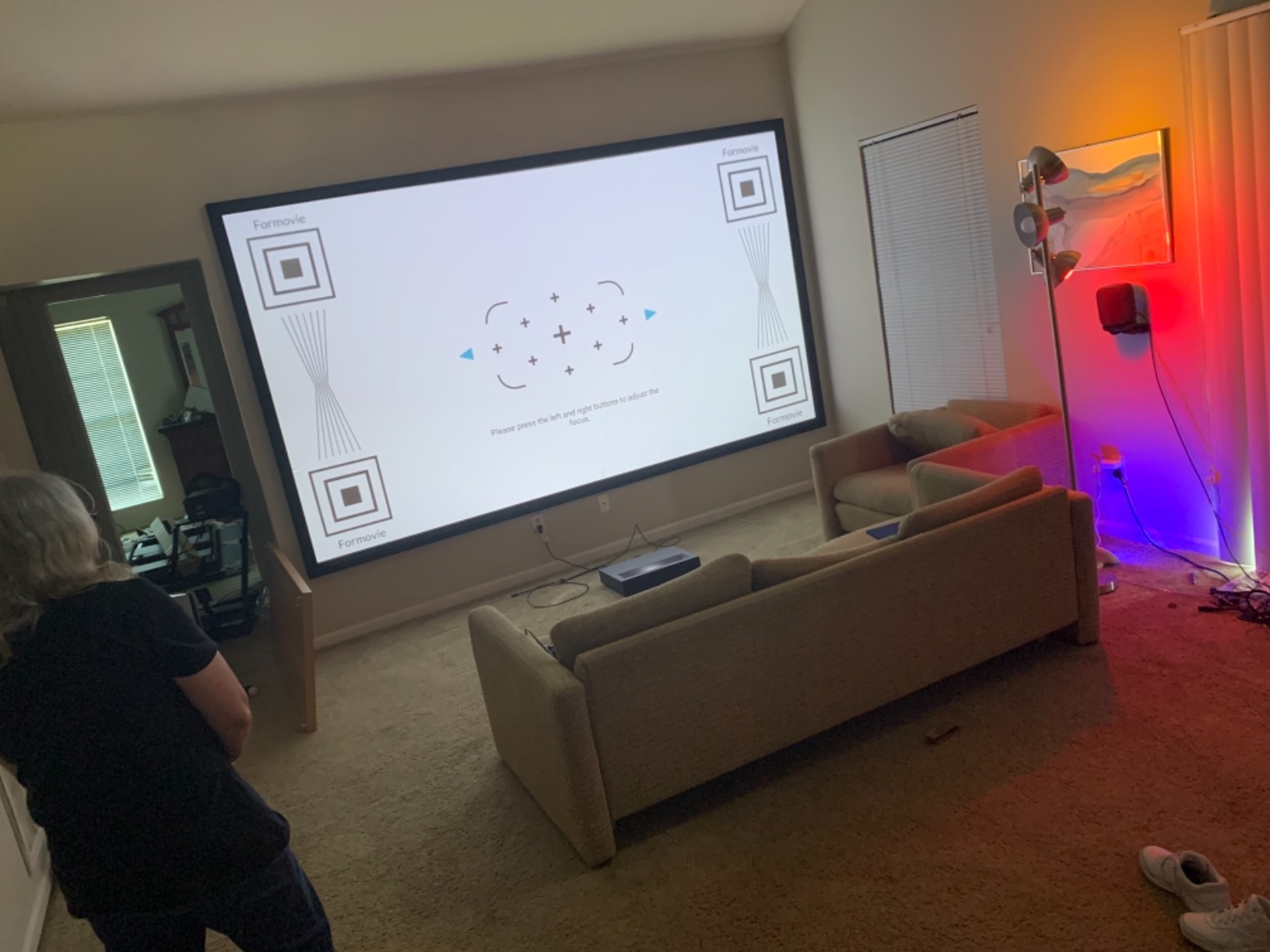
Google TV is genuine here, with licensed Netflix, Google Cast, Google Assistant, and WiFi 6 plus Bluetooth. You also get an optical audio out, which matters because the built-in dual 15W speakers with Dolby Audio and DTS-HD decode are fine for news and casual watching but will not carry a film.
For gaming, HDMI 2.1 is present and MEMC motion compensation is built in. Owners who play competitive shooters report that MEMC can add a small amount of video latency, so switching it off for fast games is the safer setting. Active 3D is supported, which is rare at this size.
Who this projector suits best
This is the pick for apartments, condos, and any living room where the media furniture is shallow or the wall is narrow. If you can only fit a 90 inch image comfortably, the 80 to 150 inch range still gives you a proper cinema scale for a room that could never take a projector on a ceiling bracket.
It also suits anyone who wants a single box rather than a stack. Streaming, speakers, and a laser light source are all inside a body narrower than a paperback standing on end, and at 2100 ISO lumens it handles a dimly lit room better than most of its size class.
Where it falls short
The 6 month warranty is the shortest here and noticeably shorter than the 2 year terms from Hisense, Epson, and AWOL. Long term buyers should factor that into how long they plan to keep the projector, since a longer warranty is the only real protection against a laser or board failure.
Brightness still collapses in strong ambient light. Owners in bright rooms report needing curtains or an ALR screen before the picture looks right, and the 15W speakers are adequate rather than good. If your main viewing is daytime sports, step up to the Epson LS650 or Hisense PL2.
3. Hisense PL2 – Best Brightness and Best Rating in the Roundup
Hisense PL2, Ultra Short Throw Home Theater Laser Projector, 80” – 150”, 4K UHD, 2,700 Lumens, 3000:1 Contrast, Dolby Vision & Atmos, 3D, Google TV, WIFI 6E
2700 lumens
3000:1 contrast
80-150 inch image
18.7 lb body
Pros
- Excellent 4K upscaled picture with natural color and 3000:1 contrast
- Bright enough for a real living room and better with an ALR screen
- Simple fast setup with straightforward laser and keystone adjustment
- Responsive Google TV interface that starts quickly
- Compact console style form factor that sits neatly against the wall
Cons
- Susceptible users report visible rainbow effect color banding
- Auto keystone requires uploading a phone photo to a website and works poorly
- Optical cable to an external receiver is often needed due to limited clearance
The PL2 carries the highest average rating in this group at 4.4 across 138 ratings, and the reason is straightforward: it puts 2700 lumens and 3000:1 contrast into a compact body that sits close to the wall. The X-Fusion laser source is rated for 25000 hours plus, and the 4K AI upscaler is driven by 2.07 million controllable micro-mirrors.
Throw distance runs from 0.22 feet to 1.5 feet, and the body is 20.9 by 13.2 by 4.7 inches at 18.7 pounds. Owners describe it as a console-shaped unit that tucks neatly against a wall, and digital lens focus makes the initial setup quick.
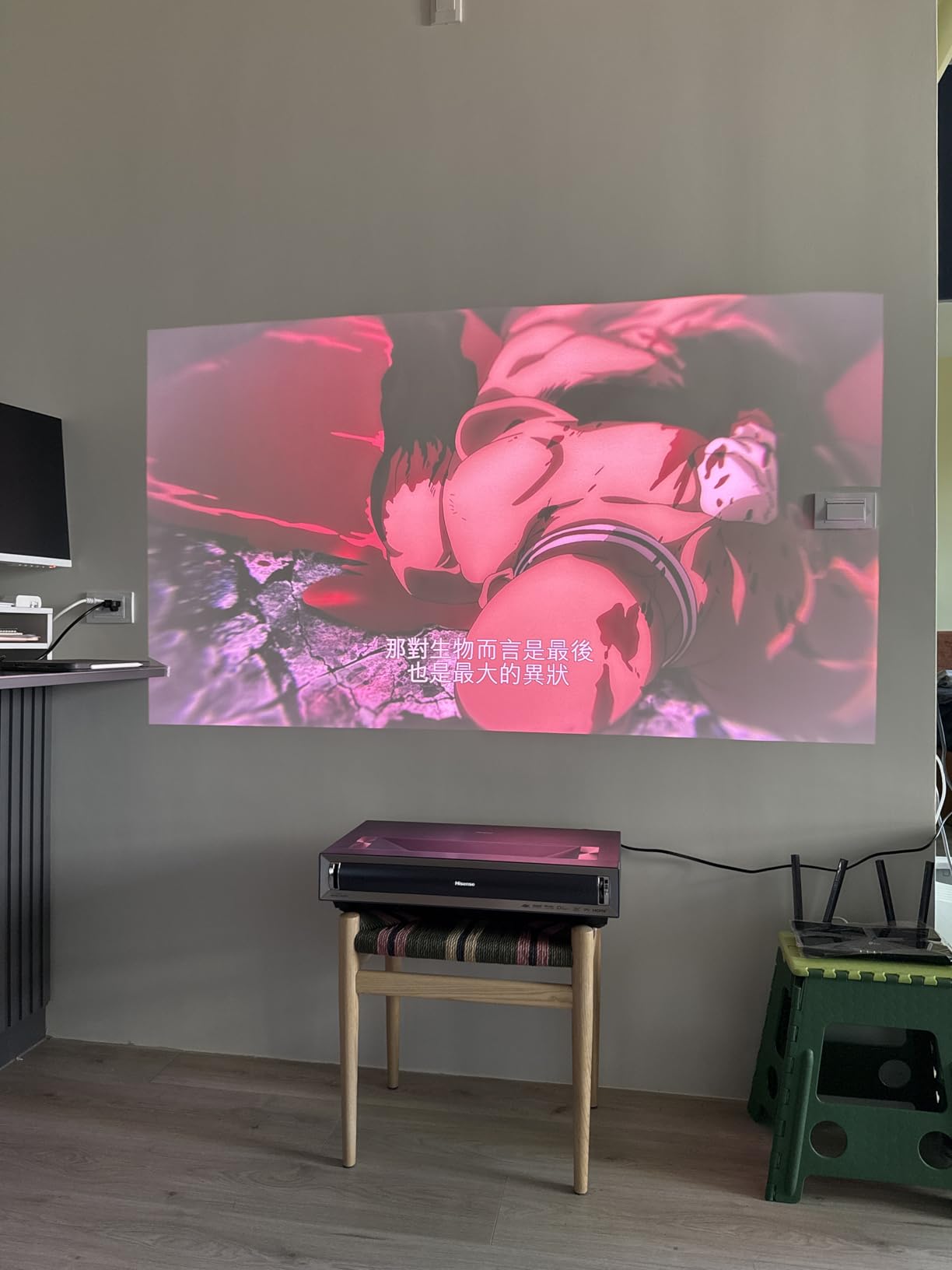
Dolby Vision and Dolby Atmos are both supported alongside multiple HDR standards, and there is 3D support too. The Google TV platform is reported as responsive and quick to navigate, with WiFi 6E, Bluetooth 5, USB 3.0, and Ethernet for the streaming apps that matter.
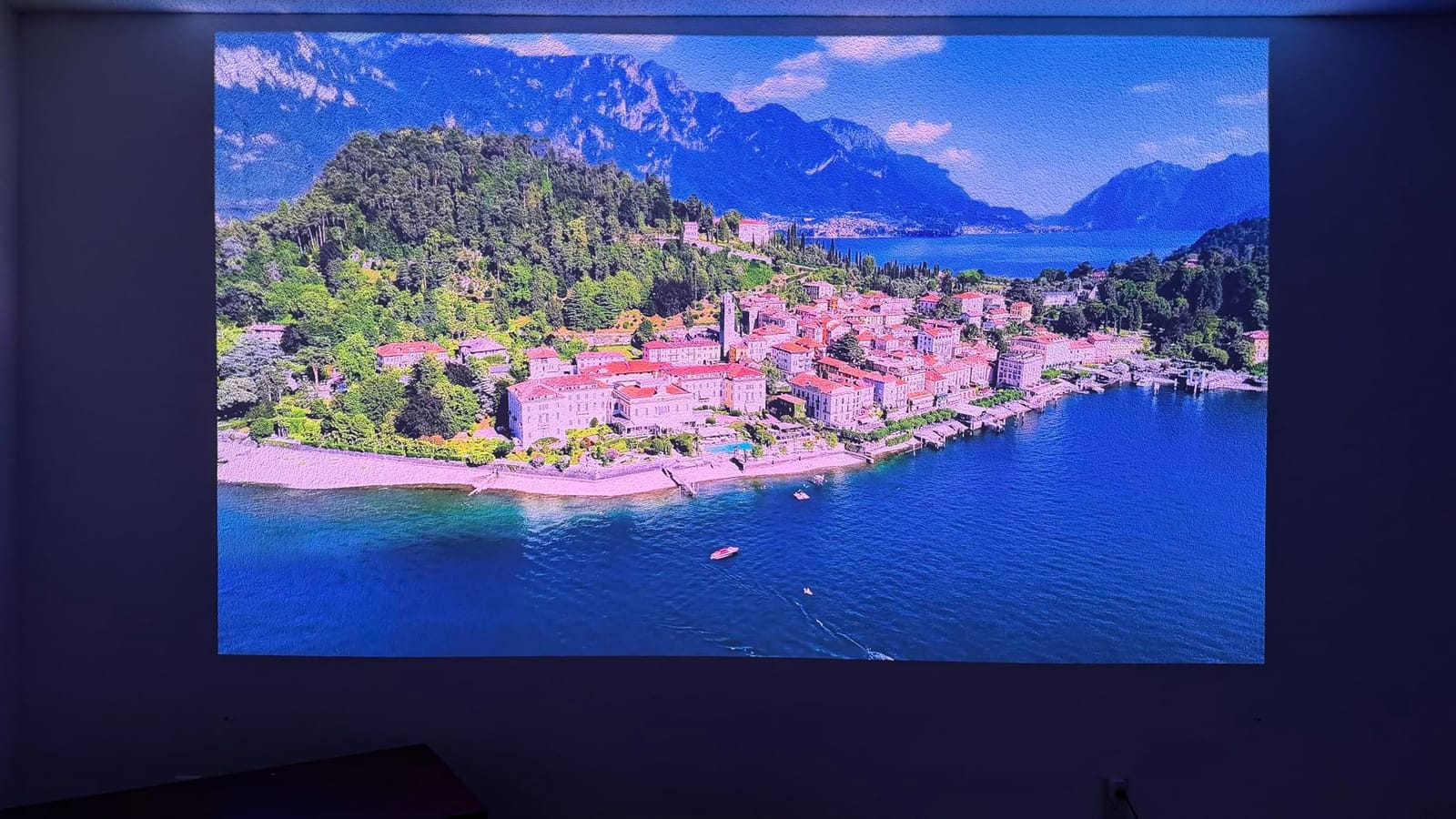
Several owners said the picture looks excellent even on a plain off-white wall with no screen at all, which is unusual for a UST. That is a real advantage if you rent or are not ready to mount anything, though you will leave performance on the table compared with a proper ALR screen.
Who this projector suits best
Choose the PL2 if your living room has real daylight and you want the best brightness to price ratio available. It is the pick for sports fans watching in the afternoon and for anyone whose screen wall sits opposite a window with thin curtains.
It also suits households upgrading from a long throw projector who want the same wall and a much larger image, since the 150 inch ceiling gives you a genuinely cinematic size in a normal room. The 3000:1 contrast keeps blacks respectable for a single-chip DLP design.
Where it falls short
Reviewers who are susceptible to the rainbow effect report visible color banding on this model, which is the single most cited negative. If you know you are sensitive to that artifact, the Epson 3LCD units avoid it entirely, and the AWOL triple laser is a safer middle path.
The automatic keystone routine is the other weak point. It asks you to photograph your screen with a phone and upload the image to a web page, and owners report it works poorly. There is also no center speaker mapping option, and limited clearance beside the body often means optical cable runs to an external receiver.
4. Epson EpiqVision LS800 – Best for Daylight Living Rooms
Epson EpiqVision LS800 4K PRO-UHD Ultra Short Throw Laser Projector
4000 lumens color and white
3-chip 3LCD
4K PRO-UHD
27.4 inch long body
Pros
- Brightest 3-chip 3LCD image here at 4000 lumens with no rainbow artifacts
- Exceptionally sharp 4K PRO-UHD image that holds up in a moderately lit room
- Phone app auto keystone and screen flattening works with a UST ALR screen
- Very low input lag for PS5 and Xbox Series X
- Full 10-bit HDR with strong color accuracy
Cons
- Manual image geometry is time consuming and sensitive
- Atmos passthrough and eARC can fail with some soundbars
- Built-in Android TV lacks Netflix and feels less refined
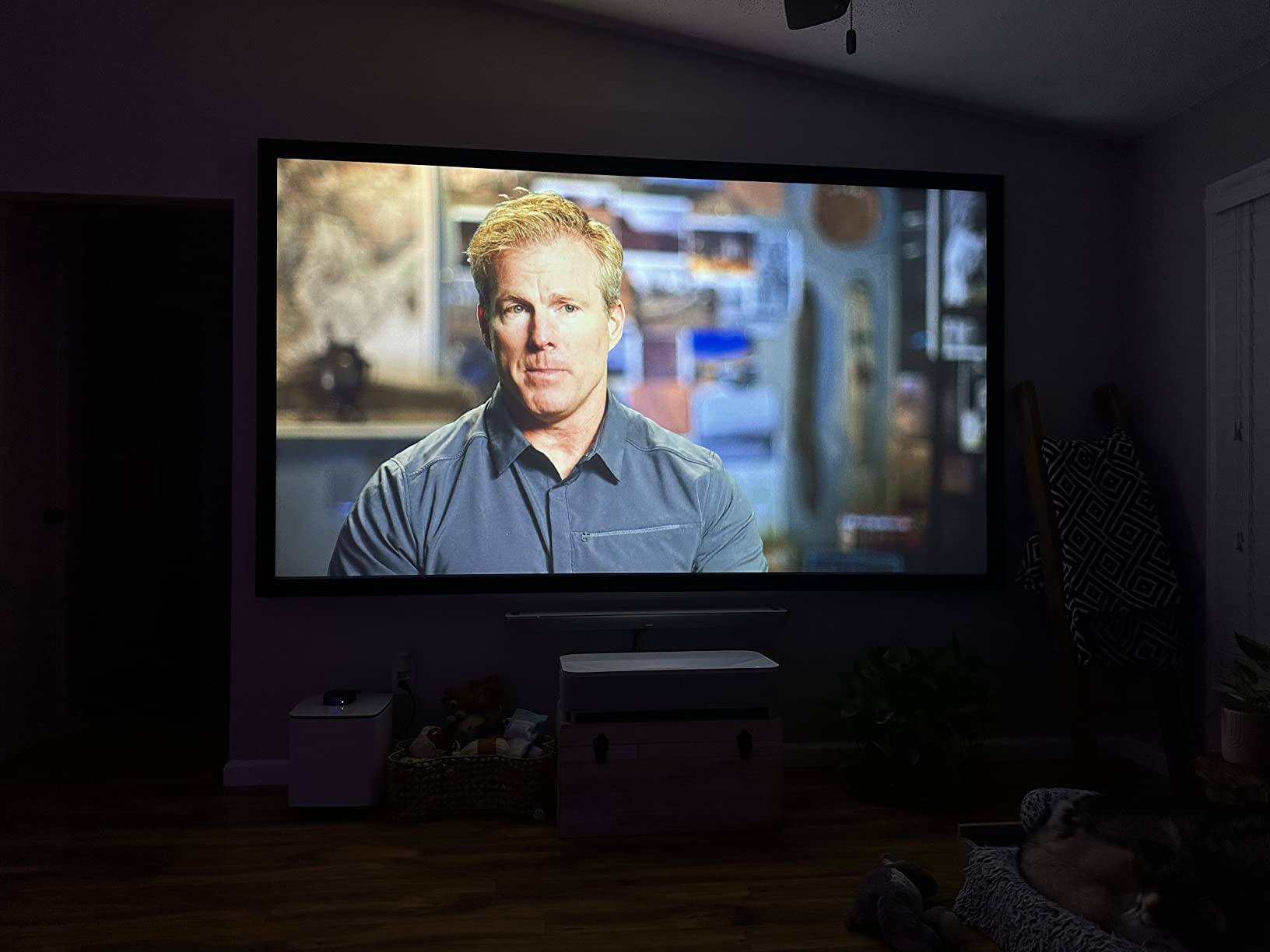
The LS800 is the brightest projector we tested, at 4000 lumens of color and white brightness from a true 3-chip 3LCD engine. That matters more than raw lumens in a bright room because 3LCD has no color brightness penalty, and the absence of a color wheel means no rainbow artifacts for anyone sensitive to them.
Sharpness comes from Epson pixel shifting, which is described as holding up without dimming the image, and HDR handling is full 10-bit. The contrast figure of over 2500,000:1 dynamic is listed as a pixel count rather than a native ratio, so treat it as a marketing number rather than a lab result.
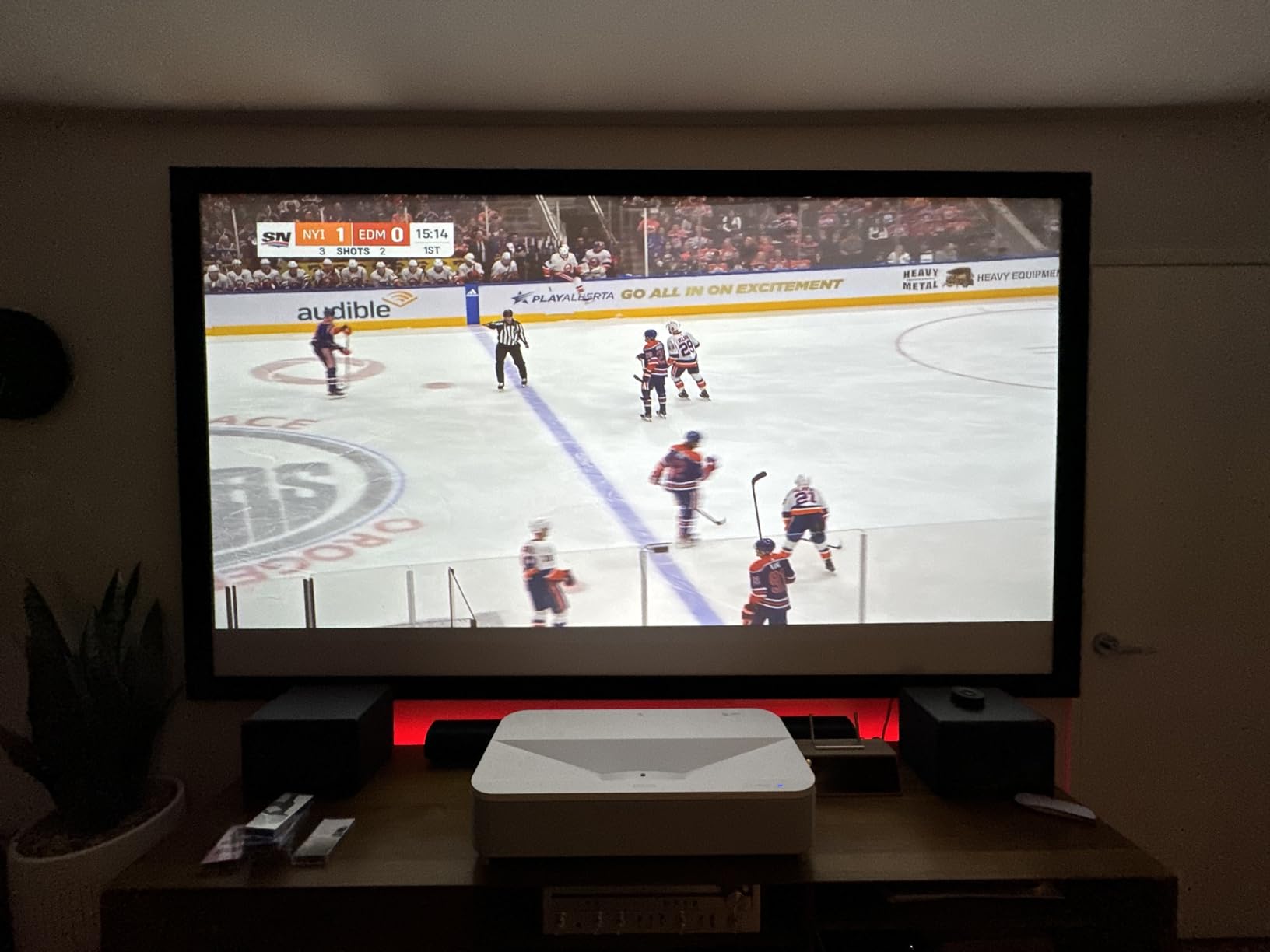
For gaming, input lag is reported as very low on PS5 and Xbox Series X, which is a genuine advantage over most laser TVs that are tuned for movies. Multi-point picture adjustment with individually adaptable feet helps when your console surface is not perfectly level.
There is a built-in Yamaha 2.1 channel system and Android TV built in, plus WiFi and Bluetooth. Owners who bought the matching Epson ALR screen reported the phone app keystone and screen flattening working well, which is the intended install for this model.
Who this projector suits best
This is the pick for a sunlit room that has no blackout curtains and no budget for a big ALR screen. At 4000 lumens it is the model most likely to look right at midday, and 3LCD means nobody in the household has to compromise on color fringing.
Gamers should look here too. The low input lag and 4K PRO-UHD detail make it a strong pairing for a current console, and 150 inch maximum size gives you a lot of screen for a family room setup.
Where it falls short
The rating is the lowest average here at 3.7, and about 22% of its reviews are 1 star. The pattern is durability and setup friction: faulty HDMI ports, units that failed to focus, and geometry adjustment that is time consuming and sensitive enough that curved edges can remain.
It is also the largest body in the roundup at 27.4 inches long and 27.6 pounds, which makes media console placement genuinely awkward. Audio passthrough and eARC failing with certain soundbars is a common complaint that can break a home theater setup, and the built-in Android TV has no Netflix app.
5. LG HU85LA – Best Smart TV Experience with webOS
LG HU85LA 120” 4K UHD Resolution (3840 x 2160) Laser Smart Home Theater CineBeam Ultra Short Throw Projector, 2700 ANSI Lumen, Smart TV enabled, Alexa Built-in, HDR10, with Magic Remote – White
2700 ANSI lumens
Triple laser light source
120 inch from 7.2 inches
26.9 pounds
Pros
- Triple laser gives noticeably more vivid color than single laser UST units
- Very short 7.2 inch throw gives a full 120 inch image from a slim footprint
- Works in daylight with curtains drawn and runs quiet and cool
- webOS with Magic Remote
- Alexa and ThinQ is a mature platform
- 120 inch image is far more immersive than a 65 inch panel
Cons
- Image geometry and placement are extremely difficult to perfect
- Black level is sacrificed and Dynamic Tone Mapping hurts dark scenes
- Focus falls off at the outer edges of a 120 inch image
LG’s advantage here is the software. webOS with the Magic Remote, Alexa, and ThinQ AI is the most mature smart TV platform on any projector, and the machine ships with the streaming apps most people actually use rather than an empty storefront.
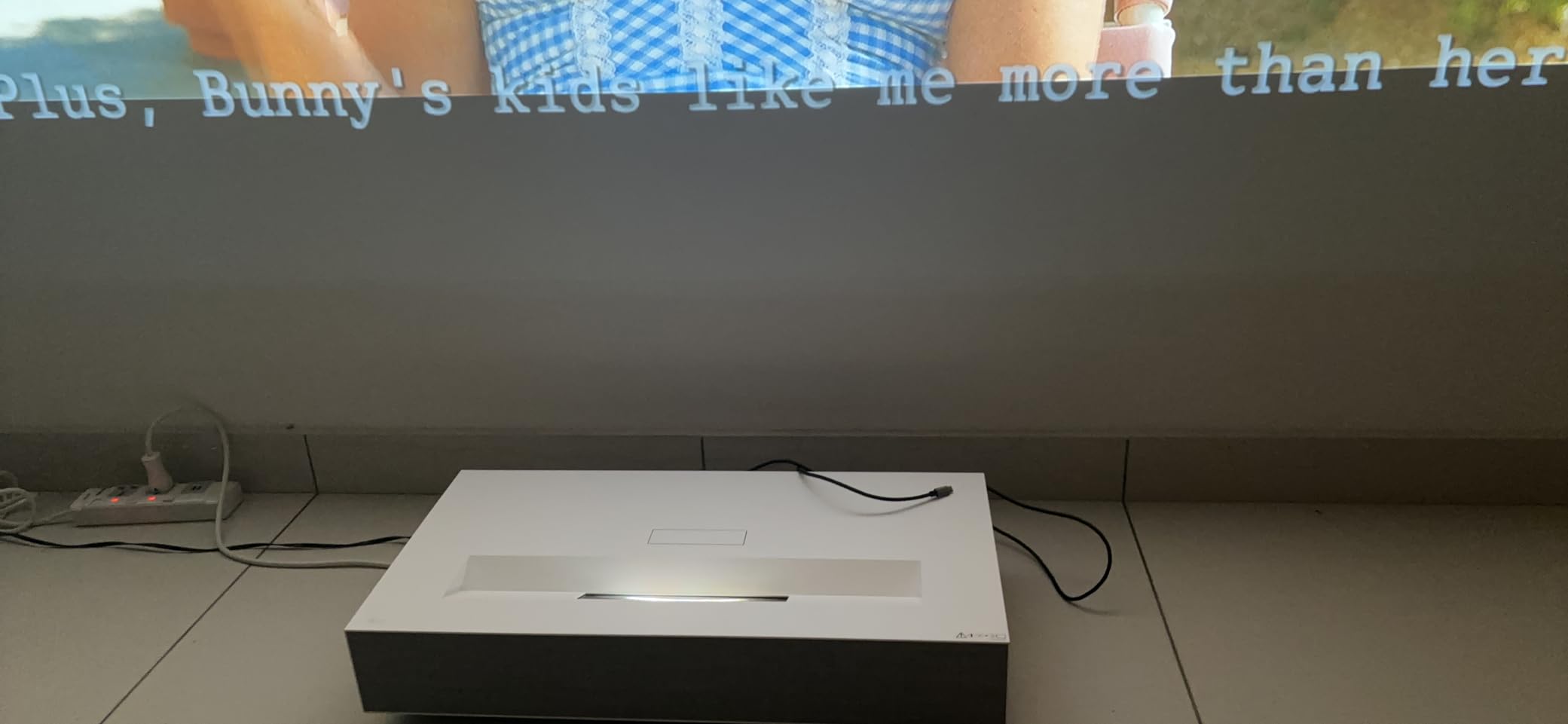
The optics are a Class 1 triple laser source rated at 2700 ANSI lumens, the only figure in this roundup quoted on the ANSI standard. It throws a 120 inch image from 7.2 inches off the wall with a throw distance of 0.18 to 0.54 feet, and the body is 26.8 by 13.7 by 5 inches at 26.9 pounds.
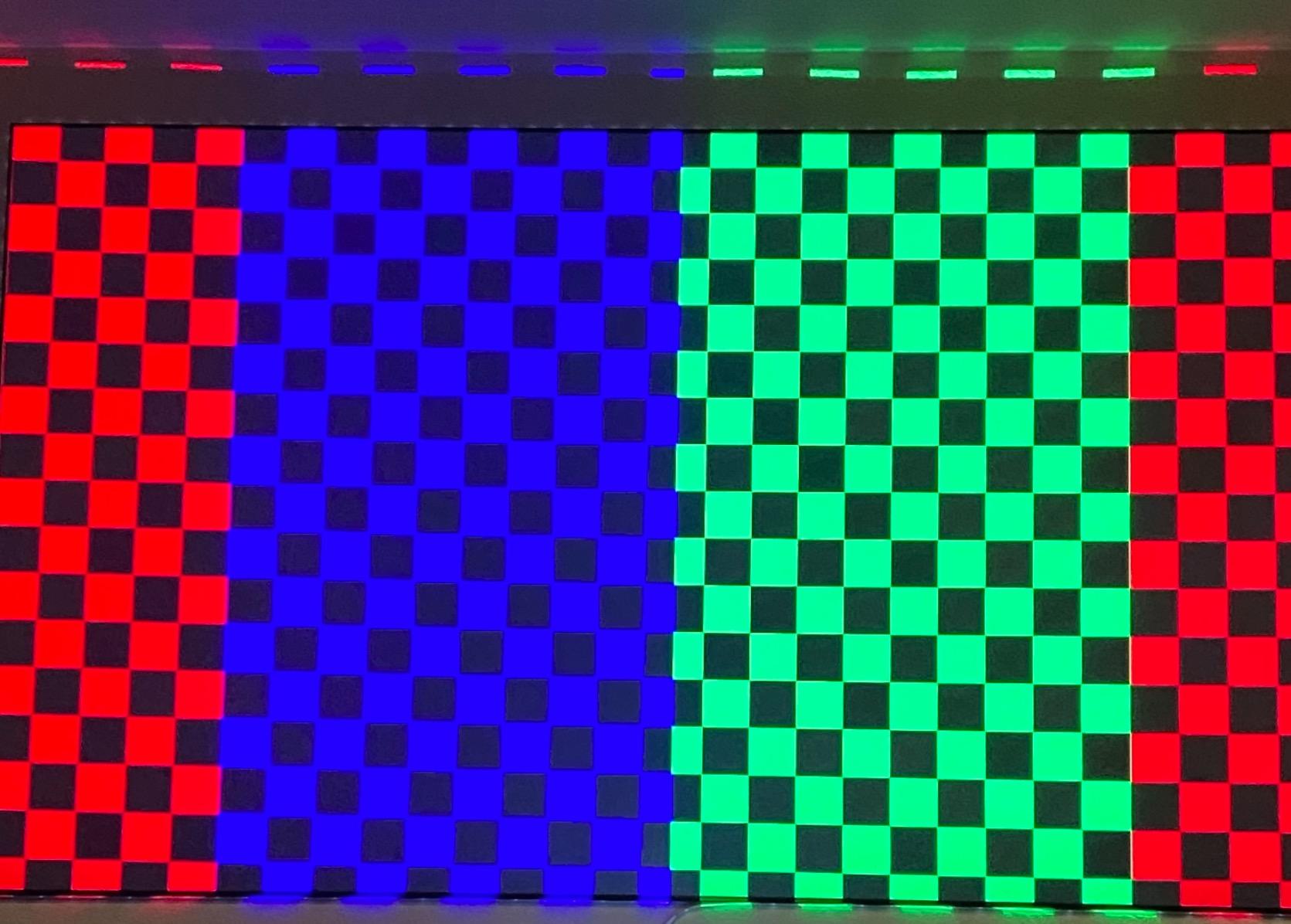
Owners consistently note the color is more vivid than single laser UST units and the fans are quiet enough to ignore during a film, running at 26 to 30 dB(A) depending on mode. The HDR10 support is straightforward rather than exhaustive, with no Dolby Vision listed.
Several reviewers set this up specifically to replace a large TV in a living room, and the 120 inch image is where the value lands. The body is white, which is unusual in the category and easier to blend into a bright room, but the 2 year parts and labor warranty is on the short side of what rivals offer.
Who this projector suits best
The HU85LA fits households where the projector is also the main entertainment hub and nobody wants to attach a streaming stick. If Netflix and Prime Video just work out of the box on a familiar interface, that removes a real point of friction that several rivals here still have.
It also suits anyone who wants color saturation from a triple laser without moving up to a premium single unit. Just note the missing app support, since there is no Apple TV app, no HomeKit, no Disney+, and no HLG on the platform.
Where it falls short
Installation is the biggest complaint. Owners describe edge adjustment as tedious and say geometry is extremely difficult to perfect, which fits the pattern most UST units show, and you cannot push the projector back to make it easier because the optics are fixed.
Black level suffers, and Dynamic Tone Mapping is described as making dark scenes unwatchable, so turn it off. Focus also falls off toward the outer edges of a 120 inch image, and the lack of HDMI eARC means lossy HDMI-ARC, which degrades Dolby Atmos and can overheat the projector. A small number of units showed coil whine or hardware failures.
6. Formovie Theater – Best Dolby Vision and Best Built-In Audio
Formovie Theater Ultra Short Throw 4K Laser Projector | UST Projector with Dolby Vision & Built-In Speakers | The Top UST Projector at ProjectorCentral’s 2022 & 2023 Laser TV Showdown
1800 ISO lumens
ALPD4.0 RGB+ triple laser
107 percent Rec.2020
Dolby Atmos audio
Pros
- Award winning 4K UST image with wide ALPD4.0 color coverage
- Dolby Vision plus HDR10+ high dynamic range support
- Bowers and Wilkins tuned speakers with Dolby Atmos from dual 15W drivers
- Certified Android TV 11.0 with Google Play and Chromecast
- Took first place and judges pick at the 2022 and 2023 Laser TV Showdown
Cons
- 1800 ISO lumens is the dimmest figure here and daylight use needs an ALR screen
- Only a 1 year manufacturer warranty
- Some users report repeated manual alignment and focus correction
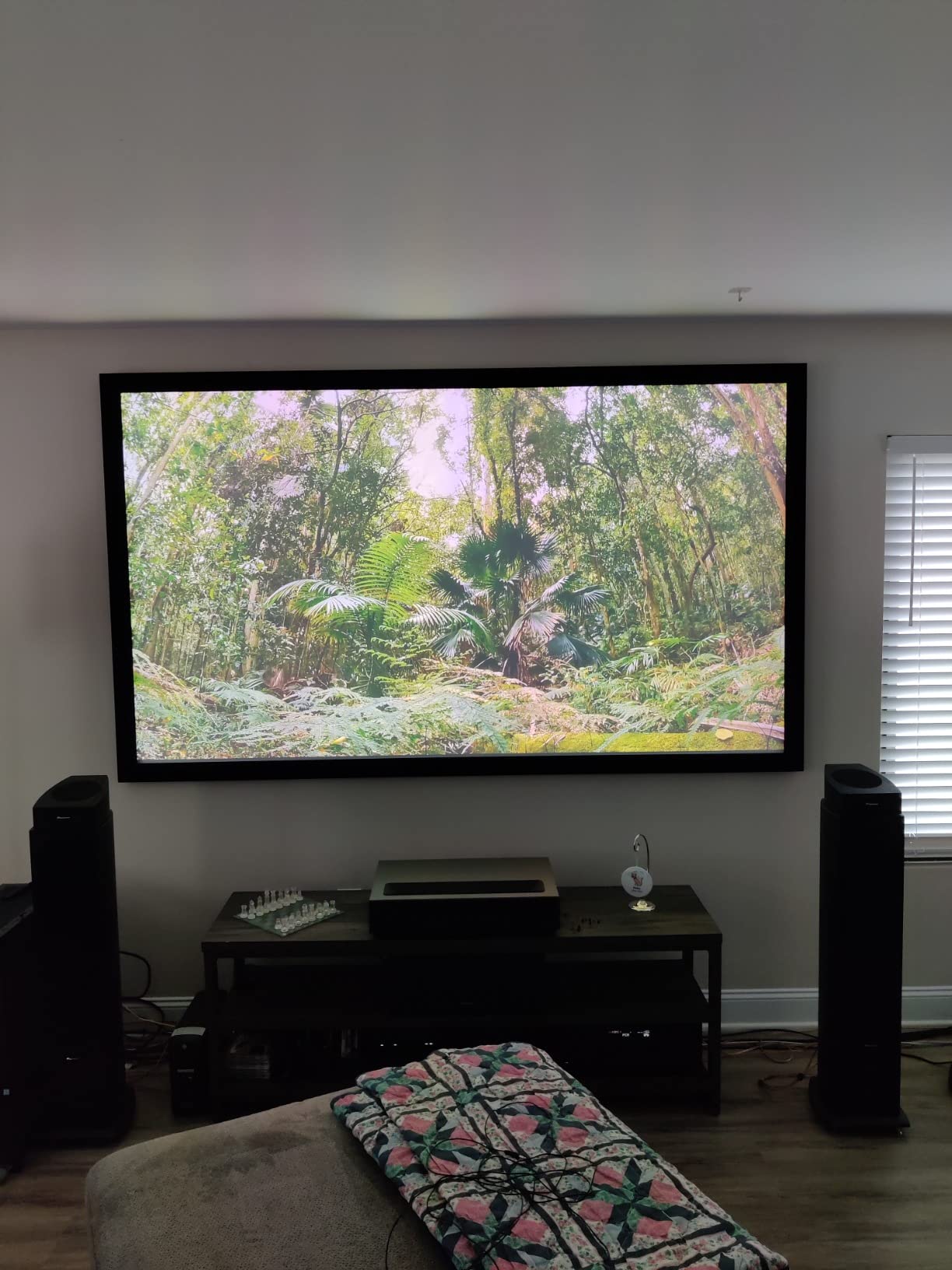
The Formovie Theater is the reference point for color in this category. Its ALPD4.0 RGB+ triple laser is rated 30% more powerful than the previous generation, covering 107% of Rec.2020 with more than 1.07 billion colors, and it won first place and judges pick at the 2022 and 2023 Laser TV Showdown.
Audio is a genuine differentiator. The dual 15W full-range drivers were tuned by Bowers and Wilkins and drive Dolby Atmos, and reviewers consistently rank them above every other built-in system in this roundup, including the Samsung.
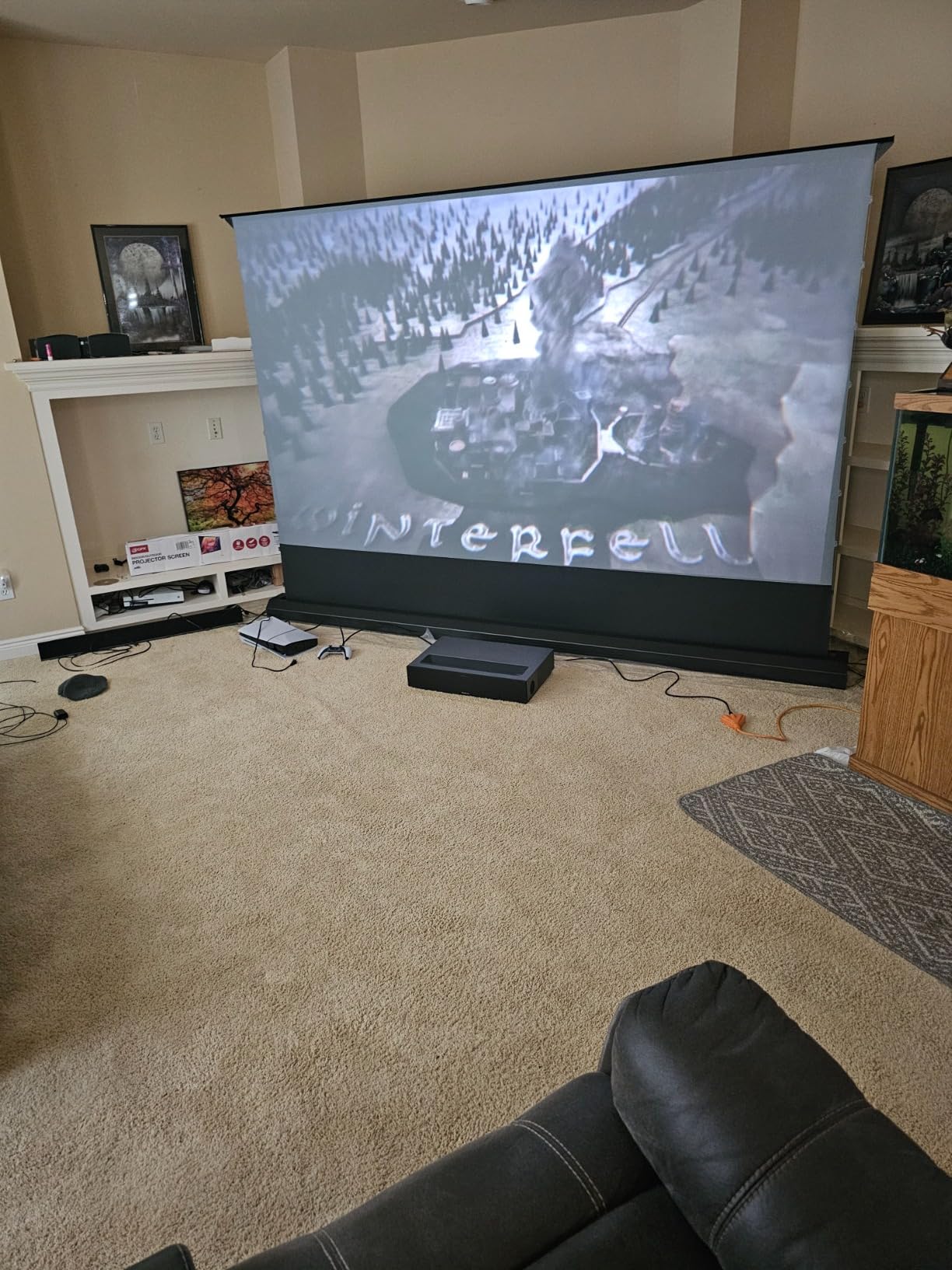
On the software side, the certified Android TV 11.0 platform includes Google Play, Chromecast, and access to thousands of apps. Dolby Vision, HDR, HDR10+, and HLG are all decoded, which is one of the most complete HDR stacks at this level.
Image size runs 80 to 150 inch with a throw distance of 1.4 to 2.5 feet, and the body is 22 by 14 by 5 inches at 7.5 kg in Cosmos Grey. The 3000:1 contrast figure is measured FOFO, which is a harder test than many manufacturers quote.
Who this projector suits best
Theater owners who watch films in a dim room with good sound and no competing daylight will get the most out of this unit. It is also the pick if Dolby Vision is on your must-have list, since it is one of very few in this group that combines that with HDR10+ decoding.
If you want a single box that sounds good enough that you might skip a soundbar for casual watching, this is the one. Bowers and Wilkins tuning is not a marketing line here, it is the most common owner comment in the reviews.
Where it falls short
Brightness is the honest limitation: 1800 ISO lumens is the lowest figure in this roundup, and daylight viewing genuinely requires an ALR screen. Owners confirm the picture is usable with ambient light on, but that is a different claim from competing with a sunlit window.
The 1 year warranty is the shortest offered here, and the 3000:1 contrast yields greyer blacks than the higher contrast DLP and LCD units in the group. Some users also needed repeated manual alignment and focus correction, and the remote platform lacks the polish of webOS or Google TV.
7. Epson EpiqVision LS300 – Best Built-In Sound and Easiest Setup
Epson EpiqVision LS300 Ultra Short Throw Smart Laser Projector
3600 lumens 3-chip 3LCD
120 inch maximum
Native 1920 by 1080
Yamaha 2.1 audio
Pros
- 3600 lumen 3-chip 3LCD image that is sharp and visible in a lit room
- Very low operating noise and essentially silent once running
- Yamaha 2.1 audio praised as clear and rich with optical out for a subwoofer
- About 15 minutes to set up on a plain wall with no repainting
- 3LCD avoids rainbowing and the eye protection sensor auto shuts off the light
Cons
- Native resolution is 1080p not 4K
- No Netflix app on the built-in Android TV
- Large footprint that surprises buyers and needs low furniture
The LS300 is the one people buy to replace a big TV, and at 4.4 across 100 ratings it ties for the highest average in this group. The 3-chip 3LCD engine puts out 3600 lumens, accepts a 4K signal, and delivers a Full HD HDR picture with multi-array laser diode technology for better black density.
Sound is the standout. The custom 2.1 Yamaha system is described by owners as clear and rich, and it works standalone over Bluetooth, which is a nice touch for a living room that doubles as a music space. There is also an optical out if you want to add a subwoofer later.
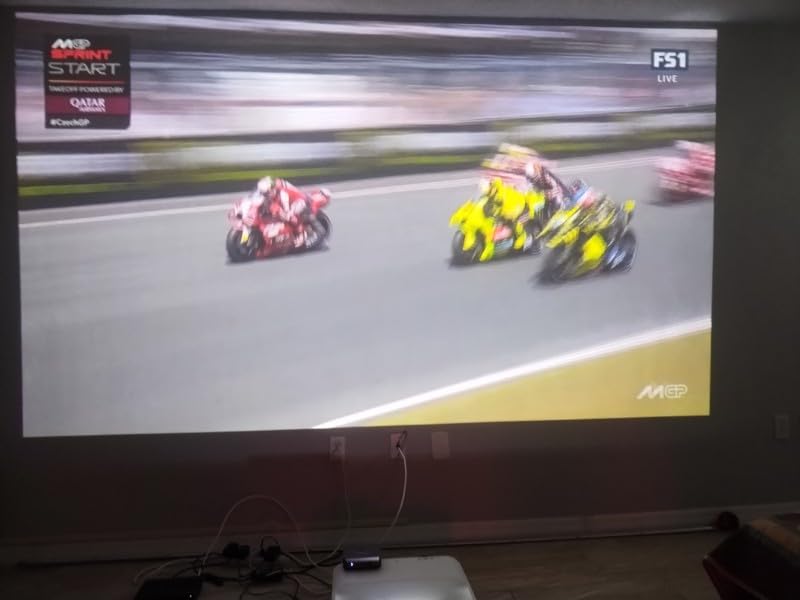
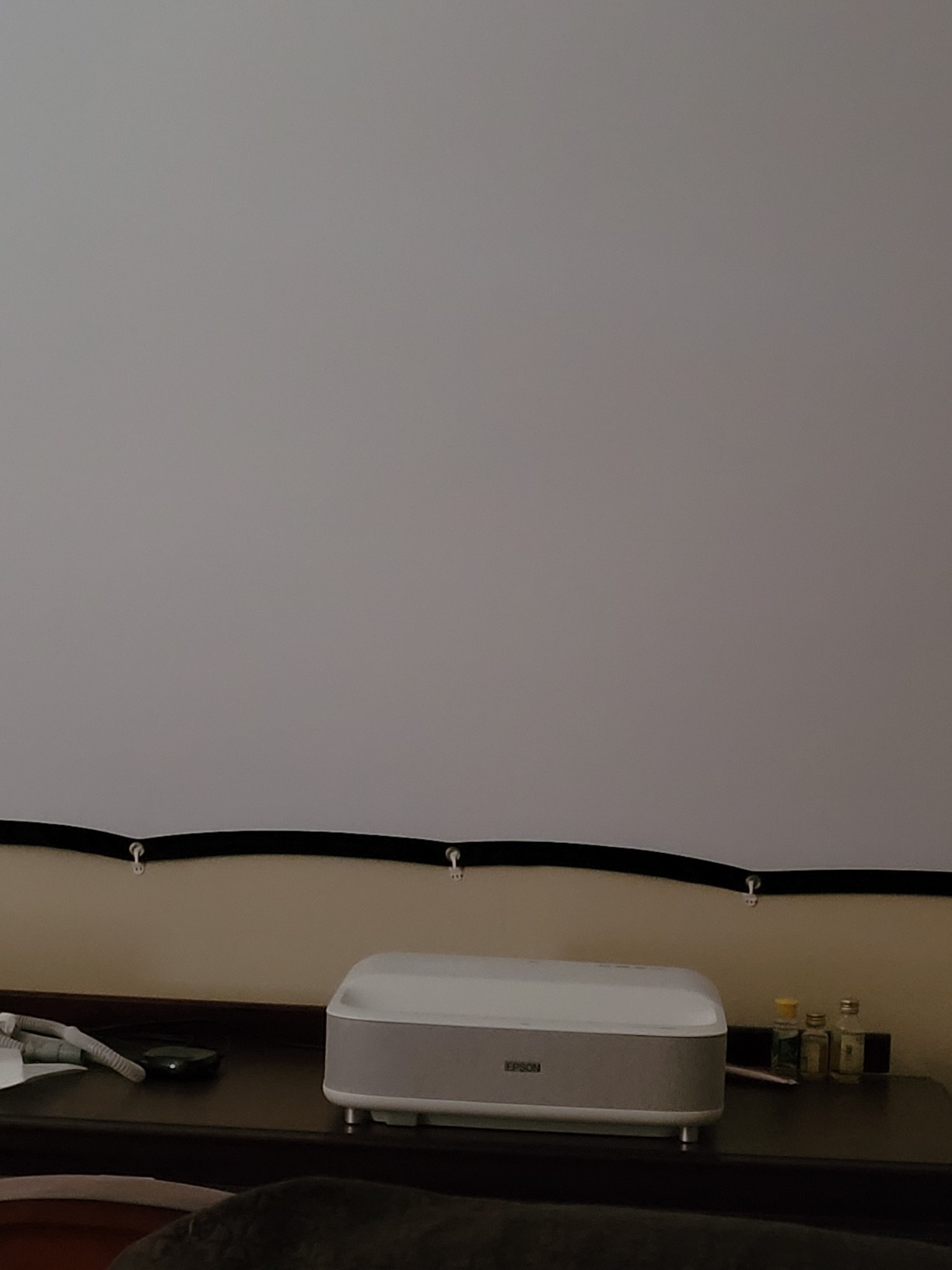
Setup is genuinely quick. Owners report roughly fifteen minutes from unpacking to a picture on a plain wall, with no screen and no repainting, and the scene adaptive color correction does the work of a calibration pass. Noise is another highlight, with the unit essentially silent once running.
Because it is 3LCD, there is no rainbowing at all, and the eye protection sensor shuts the light off automatically if something gets in front of the lens. The throw range is unusually wide for a UST at 2 to 11.1 feet, and image size spans 61 to 120 inch, which means it can sit back on a deep console.
Who this projector suits best
The LS300 makes sense for anyone who wants a bright, quiet, all-in-one living room screen with no fuss and no mounting. The 2 year limited warranty with full unit replacement is also the most generous coverage in this roundup.
It is a strong pick for households that are sensitive to rainbow artifacts, since 3LCD simply does not produce them, and for people who want more placement flexibility than a fixed UST lens allows.
Where it falls short
Native resolution is 1920 by 1080, not 4K. It accepts 4K content but the panel is Full HD, and on a 120 inch screen the difference against a 4K PRO-UHD or native 4K DLP unit is visible when you sit close.
There is no Netflix app on the built-in Android TV, so you will need an external streaming device, and the built-in platform is less refined than Google TV or webOS. The 18.39 by 15.75 inch footprint surprises people on arrival and needs low furniture, and a few owners reported unexplained shutdowns that required a reboot.
8. XGIMI AURA 2 – Best for Zero-Setup Installation
XGIMI AURA Ultra Short Throw 4K Laser Projector, 2300 ISO lumens, Google TV
2300 ISO lumens
0.177:1 throw ratio
150 inch maximum
20ms gaming latency
Pros
- Sharp high contrast 4K image with rich color
- Smallest footprint and shortest wall distance in this group
- Auto focus and auto keystone remove manual setup entirely
- Best built-in audio of the UST sets tested with Harman Kardon tuning
- Motorized protective dust cover and fast eye protection shutoff
Cons
- Some units drop video signal or go dark while audio continues
- eARC will not connect to certain AV receivers
- Roughly weekly failures to power on via the remote on some units
The AURA 2 goes furthest in removing setup from the equation. Auto focus, auto keystone, and Intelligent Screen Adaption 5.0 handle wall flatness and alignment on their own, which matters because UST geometry is the single most common frustration in this category. If you have an uneven wall or a console that is not perfectly square, this is the one that copes.
It is also the most compact. A 0.177:1 throw ratio produces up to 150 inch from a short distance, and the body weighs 7.88 kg in white, with a motorized protective lens cover that retracts when the laser fires and the fastest eye protection shutoff timing we saw.
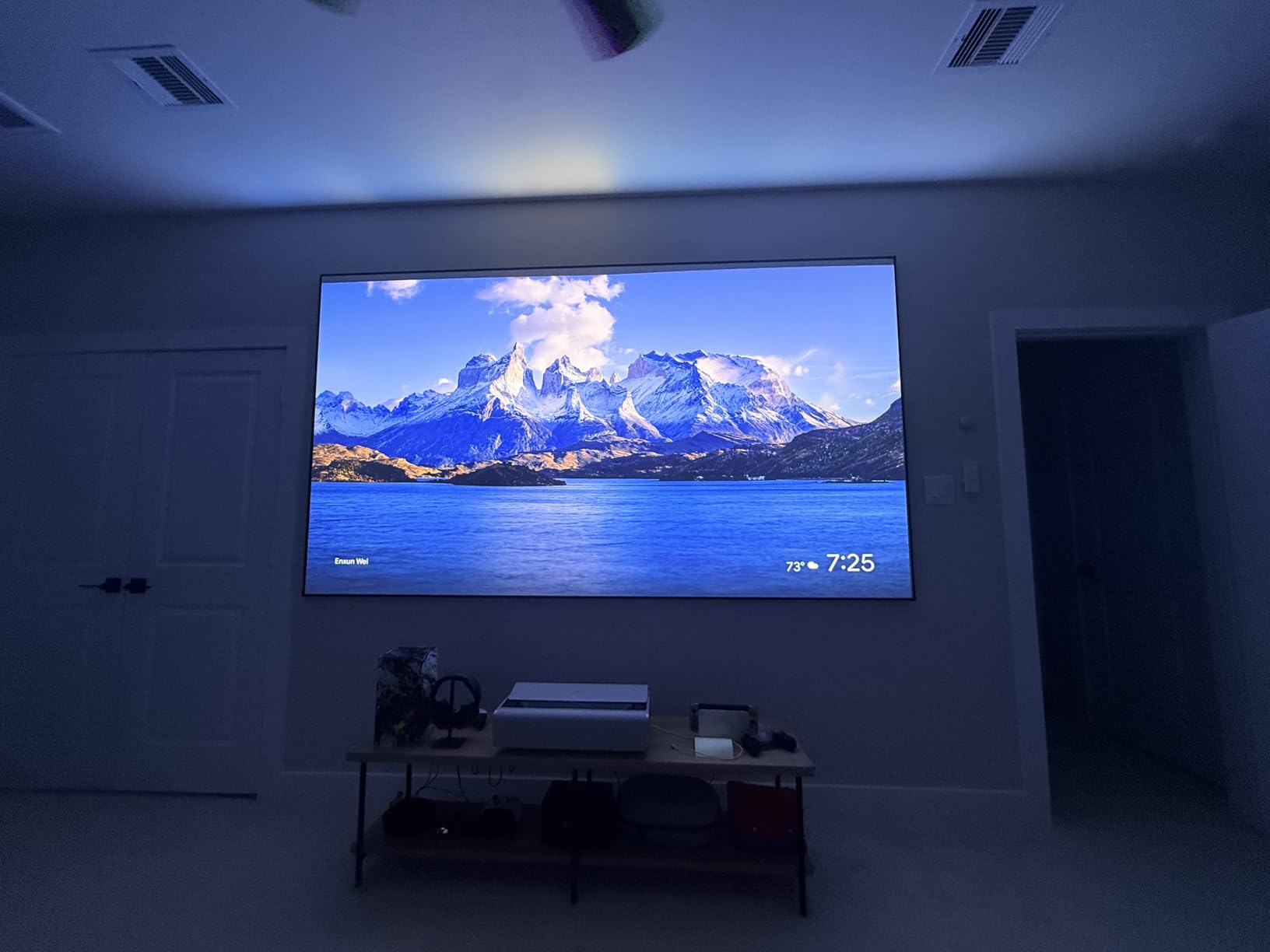
Picture performance is strong: 2300 ISO lumens and a 1,000,000:1 dynamic contrast ratio on the Dual Light 2.0 laser source, with Dolby Vision, IMAX Enhanced, and Dolby Atmos decoding. Owners who compared several UST units side by side frequently rated the image best in class against Epson, AWOL, and Hisense options.
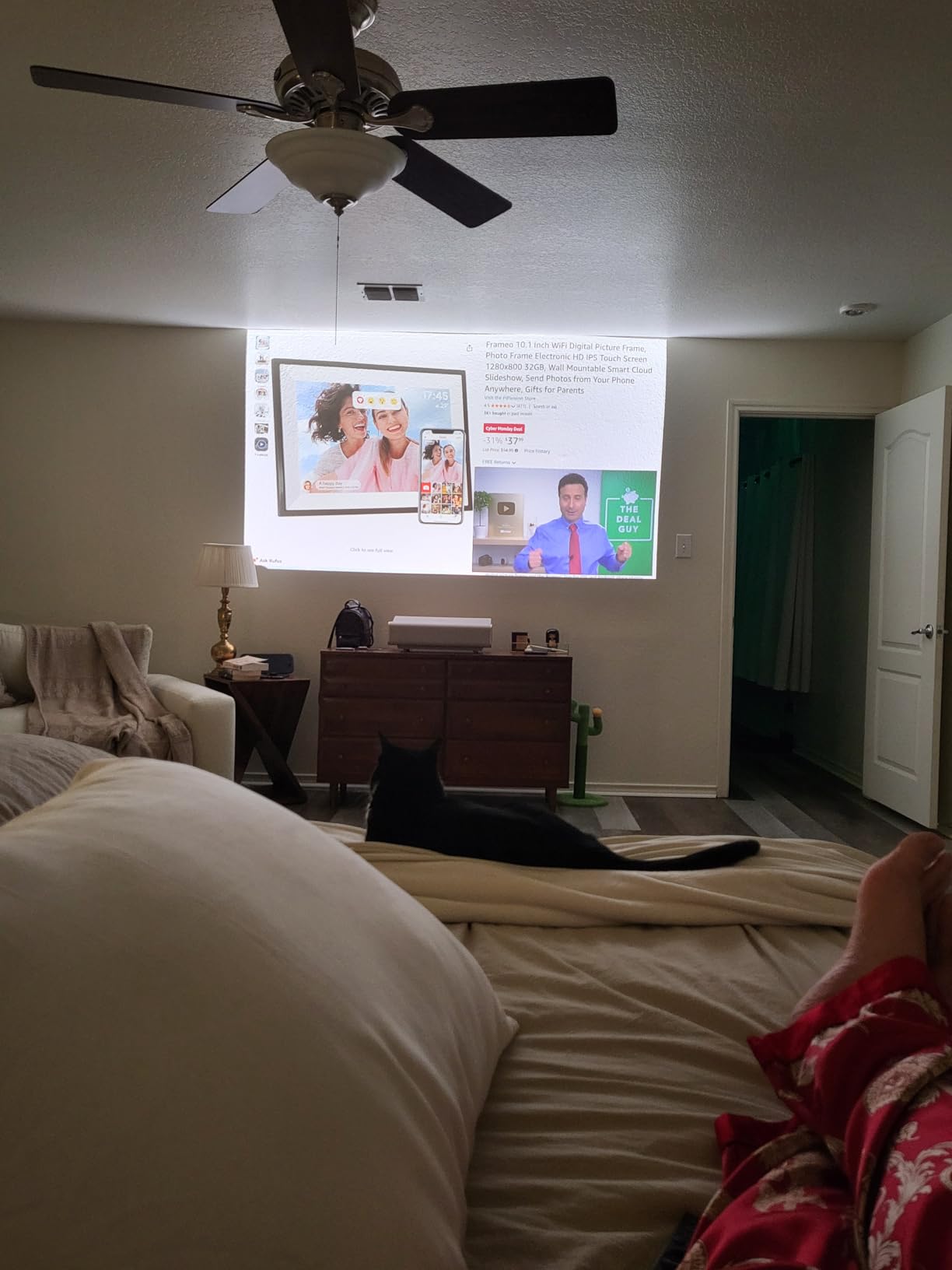
Audio is tuned by Harman Kardon and was the best built-in sound in our comparisons after the Formovie, and gaming latency is quoted at 20ms with MEMC. The Google TV version ships with licensed Netflix. Art Mode lets the projector blend into a room when it is not being used, which is a genuinely useful living room feature.
Who this projector suits best
Choose the AURA 2 if you are not a projector person. If the idea of manual keystone, focus rings, and alignment menus makes you hesitate, the automated setup removes the main barrier to buying projection at all.
It also suits design-conscious living rooms, since Art Mode, the white body, and the compact footprint are easier to live with daily than a black box on a bracket. Anyone with imperfect walls gets a noticeably easier install than the manual units here.
Where it falls short
Software stability is the recurring theme. Owners report brief video signal dropouts, units going dark while audio continues, and roughly weekly failures to power on from the remote that need unplugging and replugging. That is a serious reliability concern for a device meant to be the living room television.
The 1 year warranty is short, and there is no IR receiver, so third-party remotes cannot be used for an Apple TV setup. eARC also fails to connect with certain AV receivers, which breaks Dolby Atmos passthrough on those systems.
9. Epson EpiqVision LS650 – Best Compact 3LCD 4K Option
Epson EpiqVision LS650 4K PRO-UHD Ultra Short Throw Laser Projector
3600 lumens 3-chip 3LCD
4K PRO-UHD
120 inch maximum
16.3 pounds
Pros
- 3600 lumen 3-chip 3LCD brightness holds up in a brightly lit living room
- 4K PRO-UHD pixel shifting is sharp without dimming the image
- Compact 120 inch UST with the smallest Epson footprint in this group
- Built-in Yamaha 2.1 virtual surround with Movie
- TV
- Sports and Music presets
- eARC on an updated HDMI port makes single cable audio simple
Cons
- No 3D support unlike several competing UST laser TVs
- 120 inch maximum is smaller than 130 to 150 inch rivals
- Built-in Android TV is less refined than a dedicated Google TV device
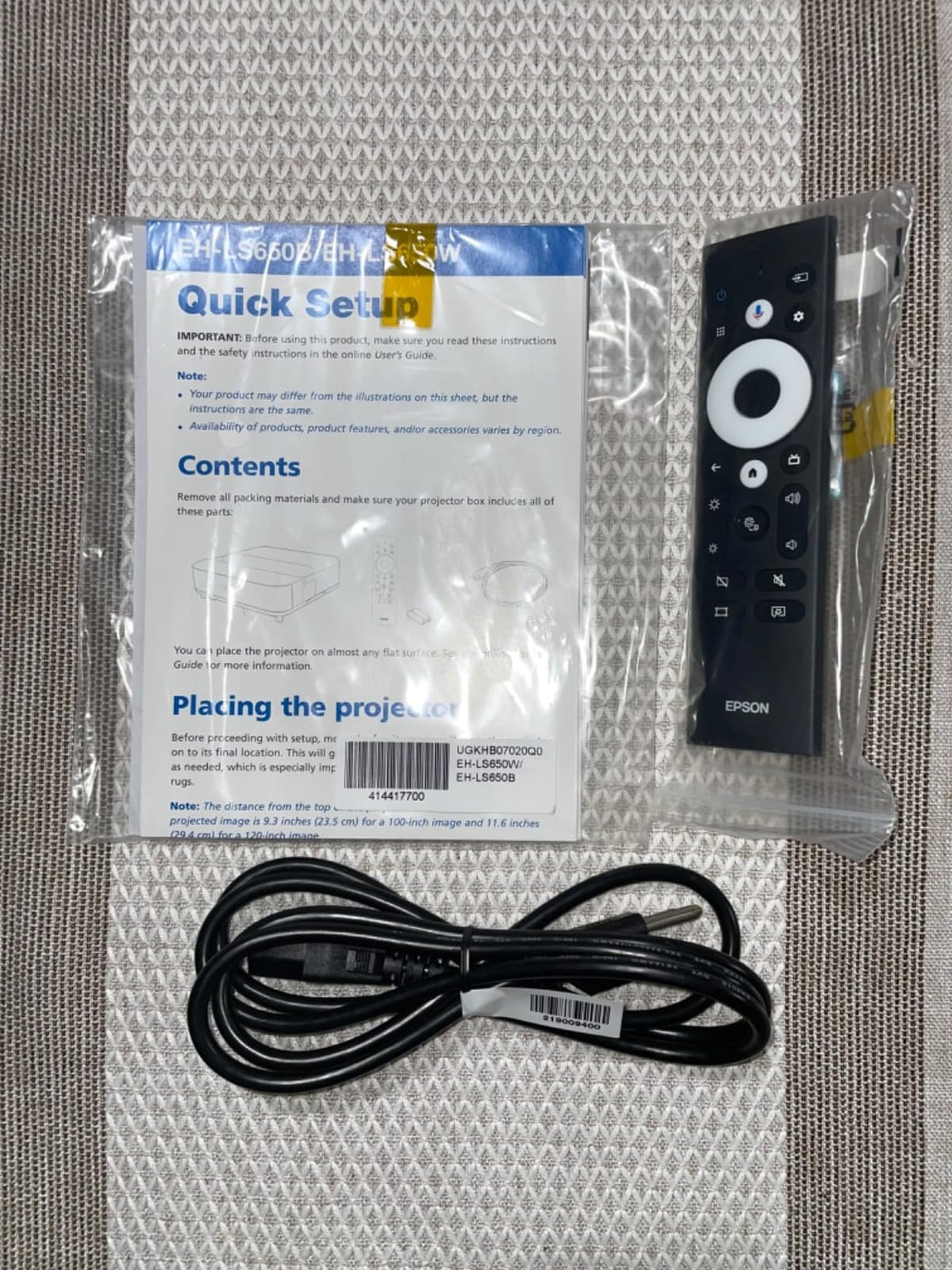
The LS650 is the Epson to buy when you want 3LCD brightness and 4K detail but not the LS800’s footprint. It measures 15.7 by 18.4 by 6.2 inches at 16.3 pounds, which makes it the smallest Epson UST in this roundup and far easier to place on a media console.
Optics are a true 3-chip 3LCD at 3600 lumens with 4K PRO-UHD pixel shifting that keeps detail sharp without dimming the image, and the light source is rated for 20000 hours. Throw distance runs 0.4 to 0.88 feet for images from 60 to 120 inch.
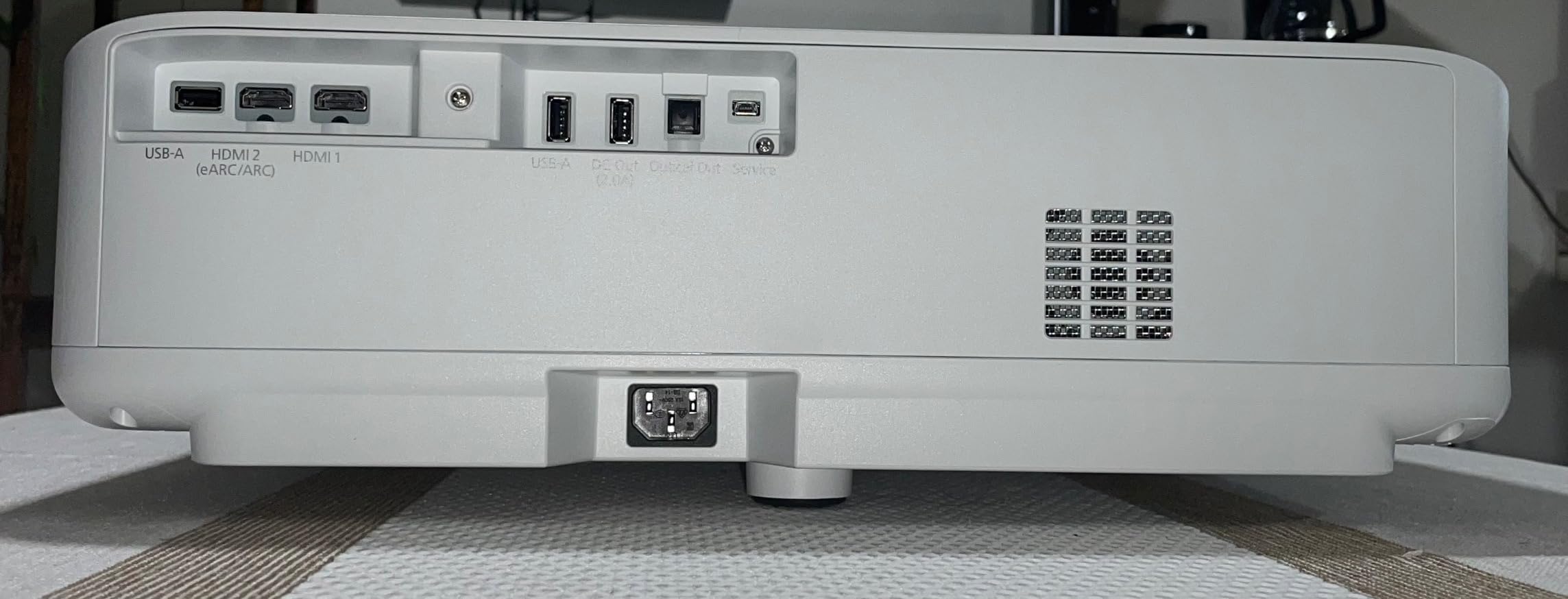
The Epson Setting Assistant app handles sizing and alignment quickly, which is a real help on a UST where placement is unforgiving. One of the updated HDMI ports now supports eARC, so a soundbar connects with a single cable, and there is Bluetooth, USB, and WiFi.
Audio is a 2.1 virtual surround system designed by Yamaha with dedicated TV, Sports, Movies, and Music presets, which is unusually thoughtful for built-in speakers. An optional Epson SilverFlex ALR screen is offered in 100 and 120 inch sizes if you want to add one later.
Who this projector suits best
This is the pick for a 100 to 120 inch living room screen on a compact console, especially if you want no rainbow artifacts and enough brightness for a bright room. 3600 lumens handles a dim room very well, and a lit room with curtains drawn is workable.
It also suits households that want single cable audio to a soundbar, and anyone who prefers 3LCD color over the more processed look of a single chip DLP. The 2 year limited warranty is reassuring.
Where it falls short
The 120 inch maximum is the smallest ceiling in the group among the 4K units here, and rivals reach 130 to 150 inch. If you want a wall-filling image for a sports watch party, that ceiling is a real limitation.
There is no 3D support, unlike several competing laser TVs, and the built-in Android TV is described as less refined than a dedicated Google TV device, with no mention of Netflix. Some users also report needing an ALR screen before the brightness advantage becomes obvious, and the review pool is the thinnest here at 41 ratings.
10. Samsung The Premiere 130 – Best for Color Volume and Sound Power
SAMSUNG 130″ The Premiere Ultra Short Throw 4K UHD Smart Triple Laser Projector for Home Theater, HDR, 4.2Ch Surround Sound System w/ Alexa Built-In (SP-LSP9TFAXZA, Latest Model)
2800 lumens
RGB triple laser
130 inch maximum
40W 2.2.2 channel audio
Pros
- True RGB triple laser delivers superior color and excellent perceived brightness
- Sharper focus than most UST units thanks to the larger TI DLP chip
- Best built-in sound in this group with 40W 2.2.2 channel audio
- 130 inch image from a compact furniture like body
- Tizen interface is smoother and more capable than many projector systems
Cons
- 1500:1 contrast is the lowest in this group so blacks look washed
- Visible laser speckle from close up and mild corner distortion out of the box
- Samsung Tizen software is widely disliked and many owners add an external streamer
The Premiere is the audio heavyweight of this group. Its 40W 2.2.2 channel system is the most powerful built-in audio in any projector we compared, and for a living room where nobody wants a separate soundbar, that is a serious advantage.
Picture quality is driven by a true RGB triple laser at 2800 lumens, which owners who compared the wider 4K laser projector market rated as sharper, brighter, and better colored than LG, Optoma, Epson, XGIMI, and Formovie units. The sharper focus comes from the larger Texas Instruments DLP chip.
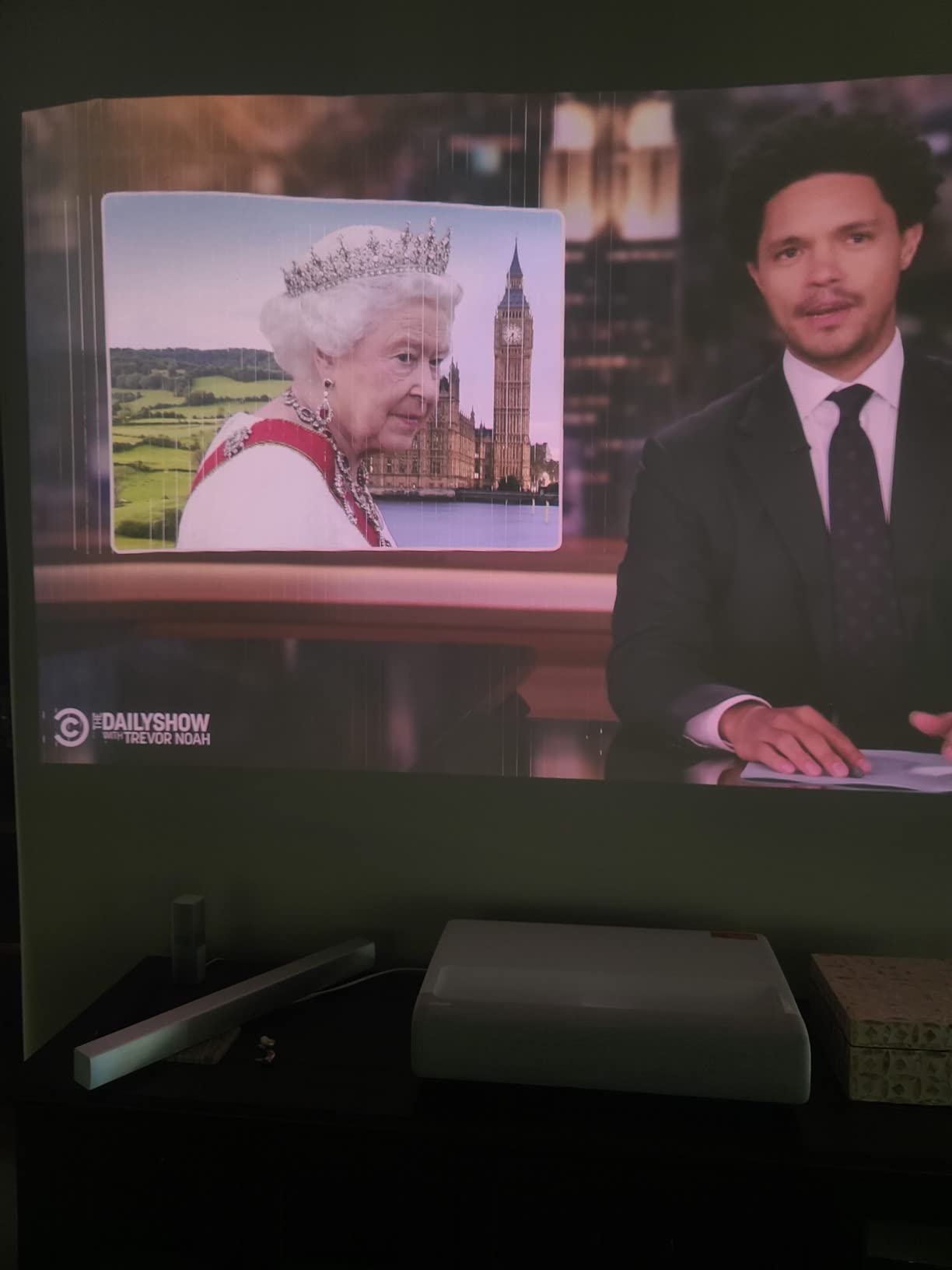
The body is compact at 21.7 by 14.4 by 5 inches, so the 130 inch maximum image comes from a unit that looks like furniture. Image size goes from 40 inch up, which is unusual flexibility, and the unit is also noted as tolerant of minor wall and screen imperfections.
Both Alexa and Bixby are built in, the UHD Processor handles PurColor and HDR, and a Game Enhancer mode smooths motion. That mode matters, because input lag outside of it is noticeable on fast shooters according to owners.

Who this projector suits best
The Premiere fits a household that wants maximum color and a serious sound system in one box, and a room where the projector will be seen more than heard. The 130 inch ceiling and 40 inch floor give you a wide range depending on the wall.
Enthusiast buyers who shop by comparing engines also tend to land here, since the triple laser color and larger chip are the most talked about specs in enthusiast communities. Just make peace with the software before you buy.
Where it falls short
Contrast is 1500:1, the lowest in this roundup, so blacks look washed next to the Epson and Hisense units. There is also visible laser speckle from close up and mild corner distortion out of the box, and no lens shift to correct it, plus no accessible filter.
The Tizen software is the most disliked platform here, and many owners add an external streaming device anyway. Matching UST ALR screens for this unit are expensive, the 1 year warranty is short, and there are reliability reports including units failing after several years that the manufacturer did not repair. A setup or deactivation server error can also brick the smart platform on a new unit.
How We Picked and Tested These Projectors
We compared all ten units on the criteria that actually change daily viewing, and we weighted brightness, contrast, and placement geometry more heavily than streaming features. Feature checklists on manufacturer pages are close to useless for this category, so the reviews were where the decision-making happened.
1. Brightness in real conditions. We compared the rated lumens figures and then cross-read what owners report in rooms with actual daylight, since manufacturer numbers are measured in a dark lab.
2. Throw distance and image size. Every UST lens is fixed, so how far the unit must sit from the wall and the maximum image size determine whether it fits your console at all.
3. Contrast and black level. We looked at both native and dynamic contrast, and paid attention to whether Dynamic Tone Mapping damages dark scenes.
4. Setup difficulty. Manual geometry and focus work is the most common owner complaint in this category, so automated alignment scored highly.
5. Reliability and warranty. We weighted the share of 1 star reviews and the warranty length, because these are the factors buyers complain about two years later.
6. Smart platform and audio honesty. We noted which streaming apps are actually present rather than whether the projector claims to be a smart TV, and we treated built-in audio as a bonus rather than a system.
Buying Guide: What Actually Matters in a Living Room
How much brightness do you actually need? This is the number buyers most often get wrong. A common belief in projector forums is that you need 4000 lumens or more for daytime viewing, but brightness is a function of room light, screen size, and screen gain together. A bright projector on a plain white wall in a sunlit room will lose to a dimmer projector on an ALR screen, every time.
For a dedicated dark or curtained room at 100 to 120 inch, anything above 1800 lumens is comfortable. For a dim room with a lamp on, 2300 to 2700 lumens is the sweet spot. For a genuinely daylit room, you want 3600 lumens or more, and even then an ALR screen is doing most of the work.
ANSI lumens versus ISO lumens. These are different standards and the numbers are not comparable across brands. ANSI lumens measures a specific standardized method, while ISO lumens uses a different methodology. The Epson LS800 at 4000 lumens and the Samsung at 2800 lumens are not directly comparable to the Formovie at 1800 ISO lumens without knowing which scale each uses. When a brand quotes ANSI, that is a generally stricter measure. The only real fix is to compare within one standard and to read what owners report in their own rooms.
Why you cannot move a UST projector back from the wall. This comes up constantly in forums and it is a hard optical constraint, not a feature limitation. A UST uses a wide angle lens and a very short throw path, around 0.18:1 for most of these models, and the image size is essentially fixed by how far the projector sits from the screen. Pushing it eight feet back does not give you a bigger image; it gives you a distorted one, and a keystone correction cannot fix the resulting softness. If your console layout forces the unit back, you need a long throw projector instead.
Do you need an ALR screen? Yes, if you want to watch in daylight, and the cost is a real factor that buyers underestimate. Forum consensus is that a UST will not solve a high ambient light problem on a white wall. Several owners in projector communities named Vividstorm UST-specific screens as the ones that work with their beamers, while still noting that curtains remain necessary. Budget for the screen as part of the project, not as an accessory.
Single laser versus triple laser versus 3LCD. These are three different approaches and they have different trade-offs. A single laser DLP uses a color wheel or an ALPD light source: it is bright, compact, and speckle free with ALPD, but it is less color accurate. A triple laser engine uses three separate RGB lasers with no color wheel, giving the widest color and zero rainbow artifacts, though speckle can be visible up close. 3LCD from Epson runs RGB per frame with no color wheel at all, which is why those units produce no rainbow artifacts and no speckle, at the cost of a larger body and a lower native resolution on the LS300.
Laser lifespan and running costs. Light sources here are rated between 20000 and 25000 hours, and there is no bulb to replace at any point in the life of the projector. At three hours a day, 20000 hours is about eighteen years. Power draw in this class typically runs 180 to 300W, so electricity is a minor ongoing cost compared with replacing lamps you no longer need.
Short throw versus ultra short throw versus long throw. Long throw projectors need a ceiling mount or a deep room and give you the deepest blacks and best shadow detail, which is why enthusiasts still choose them for a dedicated theater. Short throw sits in between and mounts a few feet from the screen. Ultra short throw is the living room option, sitting on furniture inches from the wall. Our best short throw projector guide covers the middle category in detail if your room can accommodate a ceiling bracket.
Projector versus a 100 inch TV. The projector wins on size, ambience, and the fact that it disappears when off. It loses on black level, brightness in daylight, and setup effort. A dark-room OLED still beats every projector here on pure contrast. If your room is bright and your TV budget is large, a projector needs an ALR screen before it makes the case.
Built-in audio reality check. Almost every owner in our research treats built-in UST audio as fine for news and sports and useless for films. Several were frustrated by marketing that implied otherwise. The Formovie Theater, the Epson LS300, the XGIMI AURA 2, and the Samsung Premiere are the four exceptions here, and even those are a starting point rather than a replacement for a soundbar.
What to measure before you buy. Measure the wall width and the ceiling height, then confirm the console depth will hold the unit at its required throw distance. Check the width of the beam and where the windows are, since a screen wall facing a window determines how much ambient light you are fighting. Finally check the cabinet’s ventilation, because a unit in an enclosed cavity runs hotter.
Stylistically, a UST projector becomes furniture, so it is worth thinking about the room around it the same way you would with a console. Our guides to swivel recliners for living rooms and washable rugs for living rooms cover the seating and floor surfaces that sit in front of a big screen, and if the blank wall is doing double duty as a display surface our canvas prints for living rooms guide is worth a look for the wall behind the console.
Frequently Asked Questions
Are ultra-short throw projectors any good?
Yes, for living rooms specifically, and they are the only projection type that delivers a 100 to 150 inch image from a box sitting on a media console a few inches from the wall. The trade-off is brightness and contrast: a UST loses to an OLED in a dark room, and in daylight it needs a bright engine and an ALR screen. Of the ten we compared, the AWOL Vision LTV-2500, Hisense PL2, and WEMAX Nova Pro were the strongest all-rounders.
What is the best projector for a living room?
The best projector for a living room is the one whose brightness matches your ambient light, whose throw distance matches your console depth, and whose image ceiling matches your wall. For most rooms we recommend an ultra short throw unit paired with an ALR screen. Our top pick is the AWOL Vision LTV-2500, with the Hisense PL2 as the brightest option and the Epson LS800 for the sunniest rooms.
What is the best ultra short throw projector?
The best ultra short throw projector in our roundup is the AWOL Vision LTV-2500, an RGB triple laser unit rated at 1700 ISO lumens with no color wheel, images up to 150 inch, Dolby Vision, and a 4.2 rating across 416 reviews. The brightest pick is the Hisense PL2 at 2700 lumens, and the best for very small cabinets is the WEMAX Nova Pro at 150 inch from 49cm.
What is the best priced ultra short throw projector?
The best value ultra short throw projector here is the WEMAX Nova Pro, which pairs 2100 ISO lumens, a 0.47 inch DMD 4K DLP panel, and Google TV with licensed Netflix at a lower price than most rivals. The Hisense PL2 offers the best brightness to cost ratio at 2700 lumens and 3000:1 contrast. Remember to budget separately for an ALR screen if you watch in daylight.
What is the brightest ultra short throw projector?
The Epson EpiqVision LS800 is the brightest at 4000 lumens of color and white brightness from a 3-chip 3LCD engine with no color wheel, which also means no rainbow artifacts. The Epson LS300 follows at 3600 lumens and the LS650 also delivers 3600. Among single chip models, the Samsung The Premiere rates 2800 lumens and the Hisense PL2 2700.
Do ultra short throw projectors need a special screen?
You do not need one to get a picture, but you need an ALR screen to see what the projector can do in a lit room. Projecting on a white wall works, especially with a bright engine, but the screen rejects ambient light and gains contrast, so it makes the largest difference in daytime viewing. Owners also warn that a UST will not fix a high ambient light problem on its own.
How long do laser projectors last?
The laser light sources in this roundup are rated between 20000 and 25000 hours, and there is no bulb to replace at any point. At three hours of daily viewing, 20000 hours is roughly eighteen years, and the AWOL LTV-2500 and Hisense PL2 are rated at 25000 hours. Ongoing cost is mainly electricity, typically 180 to 300W depending on mode.
Which Ultra Short Throw Projector Should You Buy?
Buy the AWOL Vision LTV-2500 if you want the best balance of triple laser color, Dolby Vision, and a 150 inch ceiling with the largest review base in this group behind it. Buy the Hisense PL2 if brightness is your problem, because 2700 lumens and 3000:1 contrast for this money is the strongest daylight value we found. Buy the Epson LS800 if your room has real sun and you would rather avoid rainbow artifacts entirely.
For tight furniture, the WEMAX Nova Pro throws 150 inch from a body narrower than a paperback. For a polished living room television that just works, the XGIMI AURA 2 handles alignment on its own. For built-in sound, the Formovie Theater and the Samsung Premiere are the only two here we would leave without a soundbar.
Whichever you choose, measure your console depth and your window situation first, and budget for an ALR screen as part of the purchase. In 2026, the best ultra short throw projectors for living rooms are no longer the compromise they used to be, and the model that fits your room will serve you for the next fifteen years without a bulb replacement.