
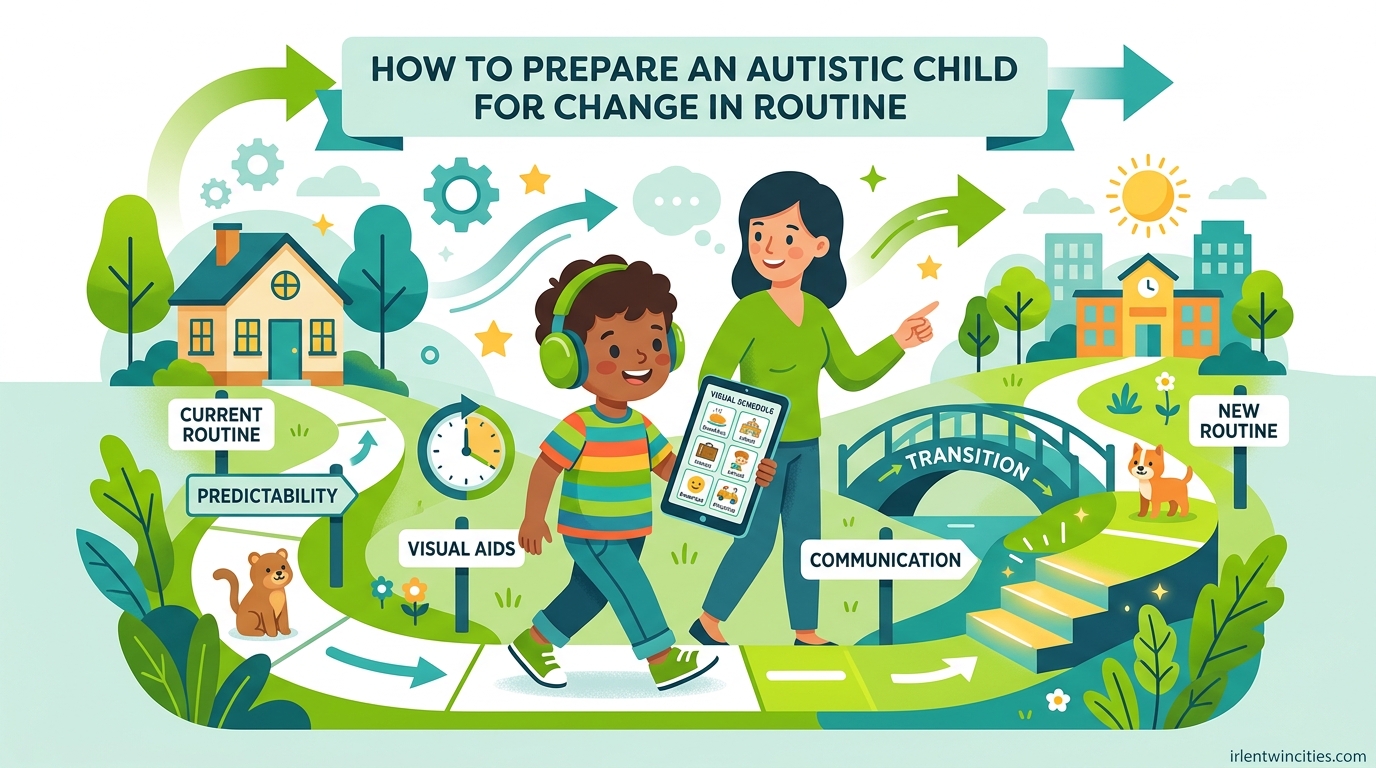
Preparing an autistic child for routine changes requires visual supports like schedules and timers, clear communication about what comes next, and consistent advance warnings. Visual schedules show exactly what will happen, while countdown timers provide time to adjust. These tools reduce anxiety by making transitions predictable rather than sudden.
Routine changes can be one of the most challenging aspects of parenting an autistic child. Many parents find themselves walking a tightrope between maintaining necessary structure and helping their child develop flexibility for real-world demands. This guide shares practical, evidence-based strategies that help autistic children navigate transitions with less stress and fewer meltdowns.
You will learn how to prepare your child for planned changes, handle unexpected transitions, and build flexibility gradually without causing distress. These techniques come from applied behavior analysis (ABA) therapy principles and real experiences from parents who have faced the same challenges.
Table of Contents
Why Routine Changes Are Difficult for Autistic Children
Autistic children often rely heavily on routines to create a sense of safety and predictability in a world that can feel overwhelming. When something changes without warning, it disrupts their expectations and can trigger intense anxiety or meltdowns.
The challenge lies in how autistic brains process information. Many autistic individuals experience differences in executive function, which makes switching between activities or adjusting to new situations more demanding. They may need more processing time and explicit communication about what will happen next.
What Is Tunneling in Autism?
Tunneling refers to intense focus on a specific activity, thought, or sensory experience to the exclusion of everything else. When an autistic child is “tunneling,” they are deeply absorbed in what they are doing. Interrupting this state for a transition can feel jarring and distressing.
Understanding tunneling helps parents approach transitions with more empathy. Instead of seeing resistance as defiance, recognize that your child may need more support to shift their attention. This is why countdown timers and transition warnings are so effective. They give the brain time to exit the tunnel gradually.
The Role of Sensory Processing in Transitions
Many autistic children also experience sensory processing differences. A transition might mean moving from a quiet, comfortable space to a noisy, bright environment. Or it could involve changing clothes, which brings different textures against the skin.
These sensory shifts add another layer of difficulty to routine changes. Preparing your child means not just telling them what will happen, but also helping them anticipate and manage sensory differences between activities.
How to Prepare an Autistic Child for Change in Routine
Preparation is the foundation of successful transitions. The goal is to make the unknown feel known before it happens. When children can anticipate what comes next, they feel more in control and less anxious.
Visual Schedules and Supports
Visual schedules are among the most effective tools for helping autistic children understand routine changes. These schedules use pictures, symbols, or words to show the sequence of activities throughout the day.
Create a visual schedule by breaking the day into clear steps. For younger children, use picture cards showing each activity. For older children, a written list may work better. Place the schedule where your child can easily see it and refer to it often.
When a routine change is coming, update the visual schedule in advance. Show your child the new activity or order of events. This gives them time to process the change visually before experiencing it in real life.
What Is the 6 Second Rule in Autism?
The 6 second rule is a communication technique that helps autistic children process instructions and requests. It involves speaking clearly and then waiting a full six seconds before expecting a response or repeating yourself.
This pause allows time for processing. Autistic children often need extra seconds to understand spoken language, formulate a response, and initiate action. Rushing this process creates stress and increases the chance of resistance or shutdown.
Apply the 6 second rule during transitions by giving a clear instruction like “In five minutes, we will clean up toys and get ready for dinner.” Then wait. Count slowly to six before adding any additional information or repeating yourself.
Timers and Countdown Techniques
Timers transform abstract time concepts into concrete, visual information. When a child can see time passing, transitions become less sudden and more predictable.
Use visual timers that show time disappearing, such as sand timers or digital countdown apps with color zones. Set the timer before a transition and reference it regularly. “Look, the timer shows we have three minutes left with the blocks.”
For younger children, use a countdown from ten to zero. Hold up fingers or use a countdown strip with removable numbers. The ritual of counting down creates a familiar bridge between activities.
Social Stories and Priming
Social stories are short, simple narratives that describe a situation, skill, or concept in terms your child can understand. They help prepare children for upcoming changes by walking through what will happen step by step.
Write a social story for an upcoming routine change using first-person language. “Sometimes our schedule changes. On Saturday, we will visit grandma instead of going to the park. First, we will eat breakfast. Then we will get in the car. Last, we will see grandma. I can bring my favorite toy to help me feel comfortable.”
Priming works similarly but involves talking through the upcoming event closer to when it will happen. The night before or the morning of, review what will happen using the same words and sequence you used in the social story.
First-Then Boards
First-then boards are simple visual tools that show two activities in sequence. They communicate that one activity must happen before another can occur. This helps children understand that the current activity will end and a preferred activity follows.
Create a first-then board by dividing a card or paper into two sections. Write or draw the non-preferred activity in the “first” section and the preferred activity in the “then” section. Show this to your child when introducing a transition they typically resist.
Age-Specific Strategies for Routine Changes
What works for a toddler may not work for a teenager. Understanding developmental stages helps you choose the right tools and set realistic expectations for your child’s ability to handle routine changes.
Toddlers (Ages 2-4)
Young autistic children need the most concrete, visual support. At this age, picture schedules work better than written lists. Use simple photos or icons that clearly represent each activity.
Transitions at this age should include physical prompts and transition objects. A small toy or comfort item can provide security during changes. Keep routines as consistent as possible while gradually introducing small variations to build tolerance.
Toddlers also benefit from songs and rhymes that signal transitions. A cleanup song or a goodbye ritual creates a predictable pattern that makes changing activities feel safer.
School-Age Children (Ages 5-12)
At this stage, children can understand more complex schedules and handle longer advance warnings. Written schedules become more effective, and children can begin participating in creating their own visual supports.
School-age children can use checklists and task analysis charts that break activities into smaller steps. They may also benefit from understanding the reason behind schedule changes. Simple explanations like “We need to leave early today because the doctor has an earlier appointment” provide context.
This age group can also begin using technology tools. Timer apps, digital schedules, and visual schedule apps designed for autistic children can increase independence.
Teenagers (Ages 13-18)
Teenagers can handle more abstract planning and may prefer less visible supports. Digital calendars, phone reminders, and written plans in a notebook often work better than picture schedules at this age.
Teens need preparation for life changes that affect routine, such as transitioning between schools, starting jobs, or managing their own schedules. Involve them in planning and problem-solving around routine changes.
Respect their growing need for independence while providing the structure they still need. Collaborate on solutions rather than dictating them.
What Is the Hardest Age for an Autistic Child?
Many parents and professionals find that ages 2-4 and the early teenage years present the most significant challenges with routine changes. During toddlerhood, communication limitations make it harder for children to express their needs or understand explanations.
The early teen years bring hormonal changes, increased social demands, and the struggle for independence. These factors can make routine changes feel more threatening as teens navigate new identity questions alongside their need for predictability.
However, every child develops differently. Some children struggle most during periods of growth, sensory changes, or life stress regardless of age. The key is recognizing when your child needs extra support and adjusting your approach accordingly.
Step-by-Step Implementation Guide
Putting strategies into practice requires consistency and patience. Here is a five-step process you can follow every time you need to help your child through a routine change.
Step 1: Give Advance Warning
Begin preparing your child for a transition as early as possible. For major routine changes, start days or weeks ahead. For daily transitions, provide warnings at intervals. Ten minutes, five minutes, and one minute warnings help children prepare mentally and emotionally.
Use consistent language each time. “In ten minutes, we will be leaving the park. In five minutes, we will pack up. In one minute, it will be time to go.” This predictable pattern becomes familiar and reassuring.
Step 2: Use Visual Supports Consistently
Choose the visual tools that work best for your child and use them every time. Whether it is a full-day schedule, a first-then board, or a simple countdown, consistency helps the tool become a trusted signal.
Update visual supports whenever plans change. If you originally scheduled the park but rain forces a change, update the schedule immediately and walk through the new plan with your child.
Step 3: Provide Transition Objects
Transition objects are items that provide comfort and consistency across different settings. A favorite toy, a small fidget, or even a photo of a loved one can help a child feel grounded during changes.
Keep transition objects accessible and allow your child to carry them during difficult transitions. The familiar object provides a point of stability when everything else is changing.
Step 4: Offer Choices and Control
When possible, give your child choices within the transition. “Do you want to walk to the car or hop like a bunny?” “Should we clean up the red blocks or the blue blocks first?” These small choices give children a sense of control.
Even limited choices help reduce resistance. The child still transitions, but they get to influence how it happens. This balance between necessary structure and personal agency reduces anxiety.
Step 5: Reinforce Success with Praise
When your child successfully navigates a routine change, offer specific, enthusiastic praise. “You did a great job cleaning up when the timer went off!” Recognition reinforces that they can handle transitions.
Some children also benefit from token systems or small rewards for particularly difficult transitions. A sticker chart that leads to a preferred activity can motivate children to cooperate with challenging routine changes.
Handling Unexpected Changes
Not all routine changes can be planned. Emergencies happen, appointments get moved, and life brings surprises. Having a plan for unexpected changes reduces panic for both you and your child.
Creating a Change Toolkit
Build a portable toolkit that helps your child manage unexpected transitions. Include items like a small visual schedule card showing generic steps, a favorite fidget toy, noise-canceling headphones, and a social story about handling surprises.
Keep this kit accessible for emergencies. When an unexpected change occurs, having familiar tools ready helps you respond calmly and gives your child immediate support.
Calm-Down Strategies for Sudden Changes
When an unexpected change triggers distress, have a consistent response ready. Deep breathing techniques, a designated quiet space, or a specific comfort item can help your child regulate.
Use the same calm-down strategy each time so it becomes a familiar routine itself. Even in chaos, the predictability of your response provides security.
Managing Your Own Stress as a Parent
Parents often feel guilty about maintaining routines or worry they are being too rigid. Others pressure you to be more flexible or suggest you are enabling dependence by honoring your child’s need for predictability.
Remember that respecting your child’s neurodivergent needs is not coddling. It is providing necessary support that helps them function and eventually build their own coping skills. Trust your knowledge of your child over others’ opinions.
Take care of your own emotional needs too. Managing transitions is exhausting. Build in breaks, ask for help when possible, and celebrate small victories. Your wellbeing matters.
When to Seek Professional Help
Consider consulting a board certified behavior analyst (BCBA) or occupational therapist if your child experiences severe meltdowns during routine changes, becomes aggressive during transitions, or if transitions are significantly impacting family functioning.
Professional support can provide individualized strategies based on your child’s specific needs and learning style. ABA therapy specifically addresses transition skills through systematic teaching and reinforcement.
Building Flexibility Gradually
A common concern among parents is whether maintaining strict routines prevents their child from developing flexibility. The good news is that you can build flexibility without causing distress by approaching it strategically.
Gradual vs. Sudden Change Approaches
Research and parent experience suggest that gradual introduction of changes works better than sudden exposure. Start with tiny variations in familiar routines. Change the order of morning activities slightly or use a different cup at dinner.
As your child tolerates small changes, gradually increase the variation. Over months and years, this builds a history of successful navigation through change. The child learns they can handle unpredictability and still be okay.
Balancing Routine Needs with Flexibility
You do not need to choose between strict routine and complete flexibility. Most autistic children benefit from a core structure with designated flexible zones. Keep essential routines consistent while allowing variation in less critical activities.
Communicate clearly about which parts of the day are flexible and which are fixed. This helps children know what to expect and reduces anxiety about potential changes in important routines.
Teaching Coping Skills Over Time
Ultimately, the goal is to teach your child coping skills they can use independently. Visualize success, use self-calming techniques, and problem-solve when plans change. These skills develop gradually with practice and support.
Celebrate progress, however small. A child who once melted down over a changed TV show but now handles it with a deep breath has made significant growth. Flexibility is a skill built over years, not days.
Frequently Asked Questions
How to help an autistic child with change in routine?
Use visual schedules to show what will happen, provide countdown timers for warnings, communicate clearly about upcoming changes, and maintain consistency in your approach. Advance preparation, visual supports, and patient communication reduce anxiety and make transitions smoother.
What is the 6 second rule in autism?
The 6 second rule is a communication technique where you speak clearly and then wait a full six seconds before expecting a response. This pause gives autistic children time to process language, formulate responses, and initiate action without feeling rushed.
What is tunneling in autism?
Tunneling refers to intense focus on a specific activity or thought to the exclusion of everything else. When an autistic child is tunneling, they are deeply absorbed. Interrupting this state requires gentle transition warnings and extra processing time.
What is the hardest age for an autistic child?
Ages 2-4 and early teenage years often present the most challenges with routine changes. Toddlers struggle with limited communication, while teens face hormonal changes, social pressures, and identity questions alongside their need for predictability.
Conclusion
Learning how to prepare an autistic child for change in routine takes patience, consistency, and the right tools. Visual schedules, countdown timers, advance warnings, and clear communication form the foundation of successful transitions.
Remember that every autistic child is different. What works for one may not work for another. Start with one or two strategies, implement them consistently, and adjust based on your child’s response. Progress happens gradually, and small improvements deserve celebration.
You are not alone in this journey. Parents across the autism community face the same challenges and have found that with the right support, children can develop the skills to handle routine changes. Your child can build flexibility while still honoring their need for predictability. The strategies in this guide provide a starting point for making transitions easier for your whole family.