
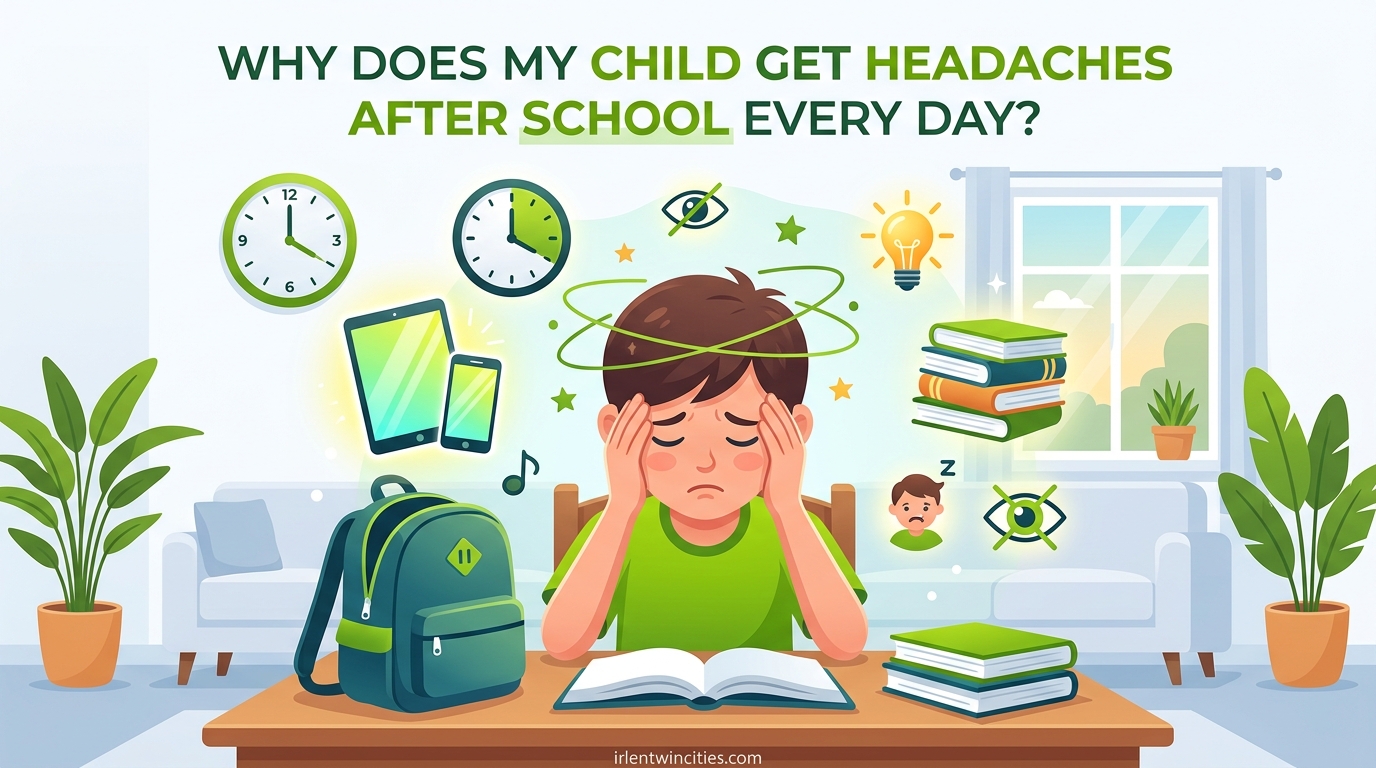
It’s 3:30 p.m. Your child climbs into the car after school, rubs their temples, and says, “My head hurts.” If this sounds familiar, you are not alone. Post-school headaches are one of the most common complaints parents bring to pediatricians and school nurses. The good news? In the vast majority of cases, the cause is manageable and nothing to lose sleep over. This guide walks you through every major cause, a practical checklist to use at home, clear warning signs that deserve a doctor’s attention, and concrete steps you can take starting today.
Table of Contents
Understanding Post-School Headaches: The Big Picture
Headaches in children are remarkably common. Research suggests that up to 75% of children will experience at least one headache by age 15, and recurrent headaches specifically after school affect a significant portion of school-age kids. The school day places genuine physical and cognitive demands on a child’s developing brain and body, and headaches are sometimes simply the result of those demands stacking up.
What makes post-school headaches particularly common is the timing. The school day combines multiple potential headache triggers: sustained near-work (reading, writing, computer use), physical inactivity, potential dehydration or skipped meals, social pressures, academic stress, and sensory environments (bright fluorescent lights, classroom noise). By the time the final bell rings, these factors can converge to produce a headache that feels inevitable in hindsight.
Importantly, most post-school headaches are what medical professionals call “primary headaches” — meaning the headache itself is the problem, not a symptom of something more serious. Tension-type headaches and migraines account for the overwhelming majority of childhood headaches that occur after school. Understanding which type your child is experiencing is the first step toward helping them feel better.
The 8 Most Common Causes of Post-School Headaches in Children
1. Tension-Type Headaches from Academic and Social Stress
Tension-type headaches are the single most common headache diagnosis in children, and school is a significant trigger. When children feel pressure to perform academically, worry about tests, navigate social dynamics with peers, or meet teacher expectations, the muscles in their neck, shoulders, and scalp can tighten. This muscle tension restricts blood flow and produces the dull, pressing pain typical of a tension headache.
These headaches often develop gradually throughout the school day, peaking in the afternoon when stress has accumulated. Children may describe the pain as a “band” around their head or pressure at the front or back of the skull. The pain is typically mild to moderate and does not usually involve nausea or extreme light sensitivity, though some children may prefer a quiet, dark room.
2. Dehydration During the School Day
Children are particularly susceptible to dehydration, and many do not drink enough water during the school day. School schedules often do not allow frequent water breaks, water fountains may be unappealing or inconveniently located, and younger children may not yet have the autonomy or awareness to drink water without prompting. Between physical activity during recess, gym class, and the general metabolic demands of a growing body, fluid loss adds up quickly.
Dehydration headaches occur because insufficient water intake causes the brain to temporarily contract from the skull, pulling away from the bone and causing pain receptors to fire. These headaches typically feel like a dull, generalized ache and are often accompanied by other signs like dry lips, dark urine, fatigue, or dizziness. The cure is often remarkably simple: rehydration.
3. Skipped or Inadequate Meals
A child who skips breakfast, eats a nutritionally poor lunch, or goes too long between meals may experience a headache simply because their blood glucose has dropped too low. The brain depends on a steady supply of glucose to function, and when it does not get enough, headache is one of the most common early warning signs.
School schedules can make regular eating difficult. Lunch periods may be too early or too late, recess may overlap with appetite, and some children (particularly picky eaters or those with anxiety) may not eat enough of what is provided. For parents, establishing consistent meal routines at home and sending nutritious, protein-rich snacks to school can substantially reduce these “hunger headaches.”
4. Eye Strain and Near-Work Fatigue
Modern schooling involves enormous amounts of close-up visual work: reading textbooks, writing notes, working on computers or tablets, and focusing on whiteboards or smartboards. All of this sustained near-work exercises the focusing muscles inside the eye, and in children whose visual systems are still developing, this can lead to eye strain headaches.
Children with undiagnosed or uncorrected vision problems (nearsightedness, farsightedness, astigmatism, or convergence insufficiency) are especially vulnerable. A child may not realize they have a vision problem because they have never seen clearly — they simply think everyone sees the way they do. If your child frequently squints, tilts their head, rubs their eyes, or complains of headaches specifically after reading or screen work, an eye examination with a pediatric optometrist or ophthalmologist is warranted.
5. Screen Fatigue from Digital Devices
Beyond classroom screens, many children spend significant time on phones, tablets, and computers before and after school. Extended screen time causes digital eye strain, also called computer vision syndrome. The eyes work harder to focus on pixels, blink less frequently (leading to dry eyes), and may develop soreness and referred pain to the head.
Blue light emitted by screens may also play a role, though research on blue light’s direct contribution to headaches remains ongoing. The most well-established factor is simply the duration and intensity of near-work involved in screen use. The 20-20-20 rule (every 20 minutes, look at something 20 feet away for 20 seconds) is a practical habit that can help, though enforcing it with children requires creative parental strategies.
6. Inadequate or Poor-Quality Sleep
Sleep and headache are tightly connected in children. Children who do not get enough sleep, who have irregular sleep schedules, or whose sleep is frequently disrupted are significantly more likely to experience headaches. The relationship is bidirectional: headaches can interfere with sleep, and poor sleep can trigger headaches.
School-age children (ages 6-12) generally need 9 to 12 hours of sleep per night, while teenagers (ages 13-18) need 8 to 10 hours. However, early school start times, homework demands, extracurricular activities, and screen use before bed frequently prevent children from getting the sleep their developing brains require. A child who stays up late completing assignments and then wakes at 6 a.m. for school is operating with a sleep deficit that may manifest as an afternoon headache.
7. Migraine Episodes
Migraine is not just an adult condition. Approximately 8% of children experience migraines, and many have their first episode before age 15. Childhood migraines often differ from adult migraines — they may be shorter in duration, present with stomach pain instead of nausea (abdominal migraine), or manifest as recurrent episodes of dizziness or mood disturbance alongside head pain.
Migraines in children are often triggered by the same factors that trigger tension headaches (stress, dehydration, skipped meals, insufficient sleep), but the underlying mechanism is different. Migraines involve complex neurological events including changes in brain chemistry, blood vessel dilation, and inflammatory responses. They typically produce more intense pain than tension headaches and are often accompanied by nausea, vomiting, sensitivity to light and sound, and an inability to continue normal activities.
If your child has recurrent headaches that are clearly disabling (they cannot continue with activities, they need to lie down in a dark room, they vomit), it is worth seeking evaluation from a pediatric neurologist or headache specialist. Effective treatments exist, and early intervention can significantly improve quality of life.
8. Anxiety and Emotional Distress
Childhood anxiety is increasingly recognized as a major contributor to headaches, and school is a common trigger. Separation anxiety in younger children, social anxiety about making friends or being judged by peers, test anxiety, and generalized worry can all manifest as physical symptoms, including headaches.
Children may not have the vocabulary to articulate that they feel anxious, so the headache becomes the visible expression of an emotional problem. A child who consistently feels unwell at school or develops a headache at the thought of going to school may be experiencing anxiety that needs attention. Consultation with the school counselor, your pediatrician, or a child psychologist can help uncover and address the underlying emotional triggers.
When to Worry: Red Flag Symptoms That Need Medical Attention
While the vast majority of post-school headaches are benign and manageable at home, certain symptoms warrant prompt medical evaluation. These “red flag” signs suggest that the headache may be a symptom of an underlying condition that needs diagnosis and treatment rather than simply reassurance and comfort measures.
Seek medical attention if your child experiences any of the following:
- Headache upon waking — Headaches that occur first thing in the morning or that wake a child from sleep are less typical of tension or migraine headaches and deserve evaluation. Morning headaches can be a sign of sleep apnea, elevated intracranial pressure, or other neurological issues.
- Headache with fever and stiff neck — This combination may suggest meningitis or another infection and requires immediate emergency evaluation.
- Headaches that are progressively worsening — If the headaches are becoming more frequent, more severe, or longer-lasting over weeks or months, this pattern needs medical investigation.
- Headache following head trauma — Even minor head injuries can cause concussions or other complications. If headaches develop or worsen after a fall, collision, or blow to the head, seek evaluation.
- Headaches with neurological symptoms — Weakness on one side of the body, difficulty with speech, double vision, confusion, or balance problems alongside a headache require immediate evaluation.
- New and severe “worst headache of my life” — A sudden, severe headache that is dramatically different from previous headaches warrants emergency evaluation.
- Headaches in a child younger than 5 — Very young children with recurrent headaches need evaluation to rule out serious causes.
- Headaches disrupting daily life — If headaches are causing your child to miss school, avoid activities, or significantly impair their mood and functioning, a medical workup is appropriate.
These situations are not meant to alarm you. They are meant to help you recognize when it is time to move beyond home management and consult a professional. In the absence of red flag symptoms, post-school headaches are overwhelmingly likely to respond to the strategies outlined in the next section.
At-Home Evaluation Checklist for Parents
Before concluding that your child’s post-school headaches are stress or lifestyle-related, work through this practical checklist to identify contributing factors. You may discover patterns that point directly to solvable causes.
Hydration Assessment
- Does your child drink water consistently throughout the day at home?
- Do they carry a water bottle to school, or do they rely on school water fountains?
- Are their lips and mouth visibly hydrated? Is their urine light yellow (not dark)?
- Are they drinking caffeinated beverages, which can contribute to dehydration?
Nutrition Assessment
- Does your child eat breakfast every morning before school?
- What does their lunch and any afternoon snack consist of? Is there adequate protein and fiber?
- Has their appetite changed? Are they eating noticeably less than usual?
- Are they skipping meals due to time pressure, pickiness, or stress?
Sleep Assessment
- What time does your child go to bed on school nights? What time do they wake up?
- Are they getting the recommended hours of sleep for their age group?
- Do they use screens (phone, tablet, TV) in the hour before bed?
- Do they snore, breathe through their mouth during sleep, or appear unrefreshed in the morning?
Vision and Physical Comfort Assessment
- Does your child squint, tilt their head, or rub their eyes while reading or doing homework?
- Have they ever had a comprehensive eye exam with a pediatric eye care provider?
- Does your child complain about the brightness of classroom lights or glare from screens?
- Do they have a proper ergonomic setup for homework (appropriate desk and chair height, paper at a comfortable angle)?
Stress and Emotional Wellbeing Assessment
- Has your child mentioned feeling stressed about school, friendships, or academic performance?
- Has there been a recent change (new school, move, family change, loss) that could be contributing to anxiety?
- Does your child express reluctance to go to school or have difficulty separating from you in the morning?
- Has their mood, energy level, or interest in activities changed alongside the headaches?
Screen Time Assessment
- How many hours of recreational screen time does your child accumulate on weekdays? On weekends?
- Do they use screens immediately after school before any other activity?
- Have they mentioned eye discomfort, dryness, or visual fatigue alongside headaches?
Reviewing this checklist may reveal one or two clear factors that you can address immediately. Even modest improvements in hydration, sleep, and screen habits can produce significant reductions in headache frequency and severity.
School Communication Tips: Building a Supportive Partnership
Because your child spends the majority of their waking hours at school, coordinating with school staff is often essential to managing post-school headaches. Here are practical strategies for communicating effectively with your child’s school.
Establish Communication with the School Nurse
The school nurse is your most valuable ally in managing headaches at school. Request a meeting or phone call to discuss your child’s headaches, share any relevant medical information, and develop a plan for how the nurse can support your child during the school day. This might include allowing your child to rest in the nurse’s office when a headache develops, administering over-the-counter pain relief if you provide it with signed authorization, or monitoring and logging headache episodes to help identify patterns.
Request Classroom Accommodations
If your child has a diagnosed headache condition (migraine, tension-type headaches), you may be able to request formal classroom accommodations under a 504 Plan or through your school’s special education process. Accommodations might include preferential seating (away from bright lights or air vents), permission to drink water throughout the day, extended time on tests or assignments during headache episodes, or access to a quiet room when headaches strike.
Identify a Point Person for Daily Management
Work with your child’s teacher to identify a trusted adult in the building your child can go to when a headache starts. This reduces the barrier to getting help and ensures your child is not sitting in discomfort waiting for the nurse or a parent to arrive. Children who feel supported at school experience less anxiety, which itself can reduce headache severity and frequency.
Coordinate with Teachers on Homework and Testing
If headaches are affecting your child’s ability to complete homework or perform on tests, proactive communication with teachers can prevent the situation from spiraling. Explain that your child experiences headaches after school and ask whether homework deadlines can be flexible on headache days, or whether alternative arrangements for assessments can be made when headaches are particularly severe. Most teachers are willing to accommodate genuine health concerns when they understand the situation.
Document Patterns for Medical Appointments
Keep a simple headache diary for your child: record the date, time headaches start and end, potential triggers (skipped meal, intense school day, screen time before headache, difficult night of sleep), and how the headache responded to any interventions. This documentation is invaluable for medical appointments because it helps clinicians identify patterns and triggers that might otherwise be missed. Even a few weeks of records can reveal a clear connection between, for example, pizza lunch on Fridays and headaches on Friday afternoons.
Frequently Asked Questions About Childhood Headaches After School
Is it normal for my child to get headaches every day after school?
While daily post-school headaches are common and usually not serious, headaches occurring every single day do warrant attention. The most common explanation is that your child’s daily routine (diet, hydration, sleep, screen time, stress levels) contains multiple manageable triggers that you can work to reduce. However, if headaches are truly daily and severe, a medical evaluation is appropriate to confirm the diagnosis and rule out any condition requiring specific treatment.
Can too much screen time after school cause headaches?
Yes, screen time is a well-documented contributor to childhood headaches. After a full school day of near-work, adding recreational screen time (phones, tablets, gaming, TV) extends the demands placed on the visual system and often occurs while the child is also dehydrated and fatigued from the school day. The combination creates a perfect conditions for a headache. Consider establishing screen-free wind-down time after school, encouraging outdoor play or physical activity instead of screens, and using the 20-20-20 rule during any screen use.
Does my child need a brain scan if they have frequent headaches?
In the overwhelming majority of childhood headaches, imaging is not necessary. A careful medical history and physical examination by a pediatrician is typically sufficient to distinguish between benign primary headaches (tension-type headaches and migraines, which account for more than 95% of childhood headaches) and concerning secondary headaches that might require imaging. Brain scans are recommended when red flag symptoms are present, not simply because headaches are frequent. Unnecessary imaging exposes children to radiation and can create anxiety without providing useful information.
Could my child be faking headaches to avoid school?
This question reflects a common parental concern, and the answer requires nuance. It is important to take your child’s headaches seriously and not dismiss them as manipulation, because doing so can damage trust and cause a child to hide genuine pain. That said, some children with anxiety about school may experience real, physically painful headaches that are triggered by the stress of attending — not faked or imagined, but genuinely caused by anxiety. The solution is not to force a child into a distressing situation without support, but rather to address the underlying anxiety with the help of school counselors, therapists, or your pediatrician. Open, non-judgmental communication is essential.
Conclusion: Taking Action to Help Your Child Feel Better
Watching your child experience headaches after school every day can be distressing, but the outlook is genuinely positive. With a few targeted adjustments to hydration, nutrition, sleep, screen habits, and stress management, most children experience meaningful improvement in headache frequency and severity. The key is systematic attention to potential triggers and a willingness to make sustainable changes.
Start with the basics: ensure your child drinks water consistently throughout the day, eats regular balanced meals, gets the recommended amount of sleep, and has limited screen time. These foundational habits address the most common causes of post-school headaches and cost nothing to implement. Keep a simple headache diary for two to three weeks — the patterns you discover may surprise you. Share your findings with your pediatrician at your next visit.
If your child has red flag symptoms as described earlier in this article, do not delay in seeking medical evaluation. But for the vast majority of children, post-school headaches are a manageable health concern that responds well to practical lifestyle interventions and a supportive home and school environment. You are not powerless. The steps you take today — from ensuring your child eats breakfast to communicating with the school nurse to scheduling that overdue eye exam — can make a real difference in how your child feels tomorrow and in the weeks ahead.
Every child deserves to finish the school day feeling well enough to enjoy their afternoon, complete their homework, play with friends, and sleep soundly. With the information in this guide and a proactive approach, you can help make that a reality for your child.
This article is for informational purposes only and does not constitute medical advice. Always consult your child’s pediatrician or a qualified healthcare provider for diagnosis and treatment of any medical condition.