
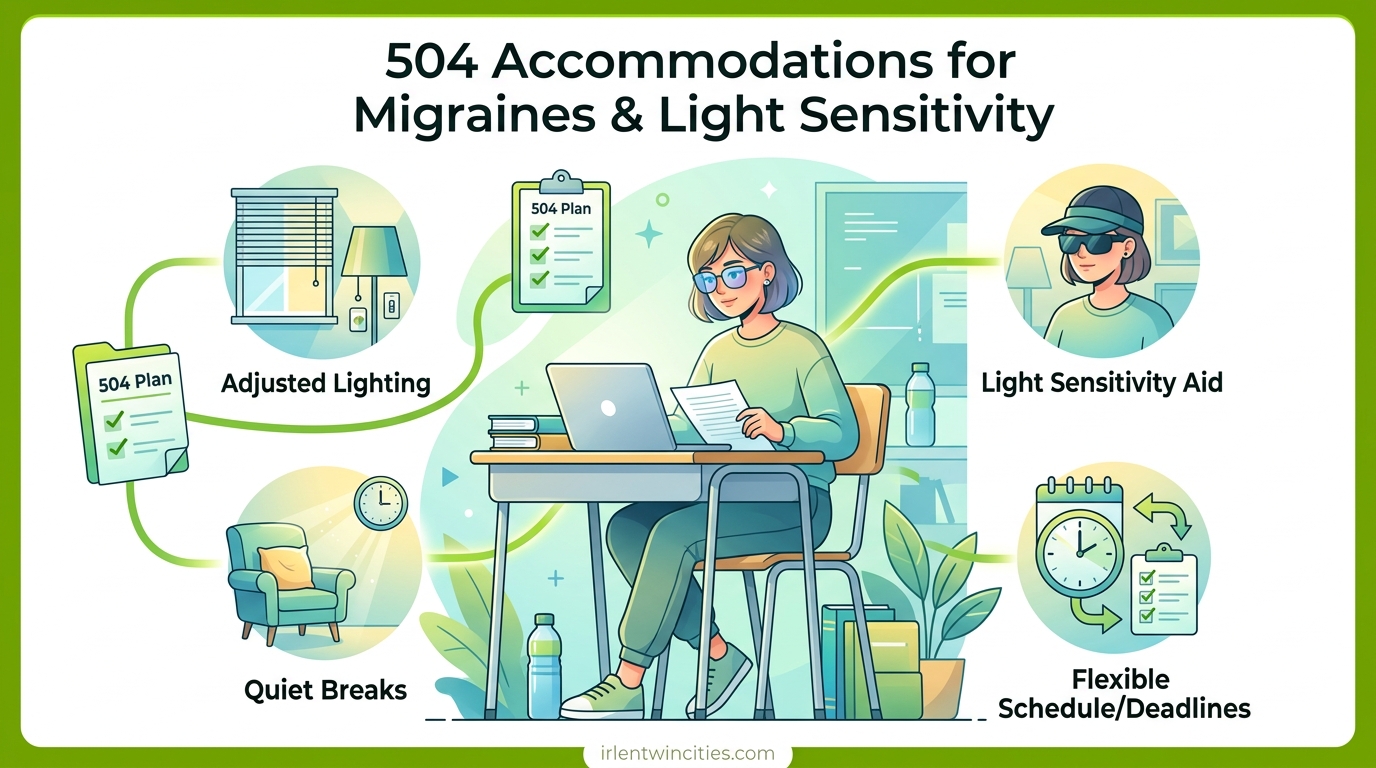
Living with migraines as a student feels like walking through a minefield every single day. One wrong trigger—a flickering fluorescent light, a loud bell, or a stressful test—and your entire academic week unravels. I have spent years working with families navigating the 504 plan process, and I have seen how the right accommodations can transform a struggling student into a thriving one.
This guide covers everything you need to know about 504 accommodations for migraines and light sensitivity. You will learn how migraines qualify as disabilities, what specific accommodations help with photophobia, and exactly how to request these protections for yourself or your child. Whether you are dealing with chronic migraines or episodic attacks, this information will help you secure the educational support you deserve.
Table of Contents
Understanding 504 Plans and Migraine as a Disability
A Section 504 plan is a legal document that provides accommodations and modifications to students with disabilities, ensuring equal access to education. Section 504 of the Rehabilitation Act of 1973 prohibits discrimination against individuals with disabilities in programs that receive federal funding, which includes all public schools and most private schools. Migraines absolutely qualify as a disability under this law when they substantially limit one or more major life activities, including learning.
The Americans with Disabilities Act (ADA) reinforces these protections and specifically recognizes chronic migraines and episodic migraine disorders as potential disabilities. Your child does not need to have daily migraines to qualify. Even students with migraines several times per month may be eligible if the attacks significantly impact their ability to participate in school activities, complete assignments, or maintain regular attendance.
I have worked with students whose schools initially dismissed their migraine concerns as “just headaches.” That attitude is not only wrong—it is illegal. A proper 504 plan creates a binding agreement that forces schools to take these neurological conditions seriously and provide concrete support.
What the Law Requires
Schools must provide reasonable accommodations that remove barriers to learning without fundamentally altering the educational program. The 504 coordinator at your school is responsible for ensuring compliance with federal law. This person serves as your primary contact throughout the process, from initial request through implementation and monitoring.
Reasonable accommodations for migraines might include environmental modifications like lighting changes, academic adjustments like extended time, or attendance policies that account for unpredictable symptoms. The key is that these accommodations must be individualized based on the student’s specific needs and documented limitations.
Light Sensitivity Accommodations for Students with Migraines
Photophobia, or extreme sensitivity to light, affects approximately 80% of people with migraines and can be completely debilitating during attacks. Many students report that fluorescent lighting—a staple in virtually every school building—triggers migraines within minutes of exposure. The good news is that specific 504 accommodations can address light sensitivity in comprehensive ways.
Classroom Lighting Modifications
Your 504 plan can request specific lighting changes that make the learning environment tolerable. Many families have successfully negotiated removal of overhead fluorescent bulbs in favor of natural light or alternative lighting options. Desk lamps with warm-toned LED bulbs often provide adequate illumination without the harsh flicker that triggers migraines.
Some students benefit from light filters or covers that diffuse harsh classroom lighting. These inexpensive modifications attach to existing fixtures and can reduce glare significantly. Window seating with adjustable blinds allows students to control natural light exposure throughout the day, which helps when morning light differs from afternoon brightness.
Visible Accommodations: Sunglasses and Hats
One of the most common questions I hear from parents is whether their child can wear sunglasses or hats in class. The answer is yes—these are reasonable accommodations when documented in a 504 plan. FL-41 tinted lenses specifically filter the wavelengths of light most likely to trigger migraines and have helped countless students remain in classrooms that would otherwise be unbearable.
Hats, hoodies, and visors provide another layer of protection by blocking overhead light from reaching the eyes. Many students feel self-conscious about these visible accommodations at first. I always recommend having the 504 plan explicitly state that these items are medical accommodations, which helps reduce stigma and prevents teachers from questioning their use.
Technology and Screen Accommodations
Digital screens present unique challenges for students with light sensitivity. Blue light filters, screen dimming software, and anti-glare screen protectors can all be written into 504 plans. Some students need permission to use paper copies of digital assignments or extended time on computer-based tests to accommodate necessary screen breaks.
Permission to adjust device brightness settings or switch to dark mode should be explicitly stated in the accommodation plan. What seems like a small detail can make the difference between a student completing an assignment or developing a migraine that ruins their entire day.
Comprehensive List of 504 Accommodations for Migraines
Beyond lighting modifications, comprehensive 504 accommodations for migraines address every aspect of school life. I have organized these into categories based on what families tell me works best in practice.
Environmental Accommodations
These modifications address physical triggers beyond just lighting. Temperature control accommodations allow students to remove layers or access cooler spaces when overheating triggers migraines. Many students also benefit from noise-reduction options like permission to wear noise-canceling headphones or access to quiet spaces during lunch or breaks.
Odor sensitivity accommodations address another common trigger. Students may request seating away from specific classmates, exemptions from science labs with strong chemical smells, or alternative locations during art classes using solvent-based materials. Water bottle access at all times helps with hydration, which many neurologists emphasize for migraine management.
Testing and Academic Accommodations
Extended time on tests and assignments provides crucial flexibility when migraines strike unexpectedly. I typically recommend requesting time-and-a-half or double time, depending on severity. Quiet testing spaces eliminate the environmental distractions that can trigger or worsen migraines during already stressful exams.
Note-takers and recorded lectures help students who miss classes or cannot focus during presentations due to symptoms. Some students benefit from reduced homework loads during migraine episodes or alternative assignment formats that accommodate limited screen time. Flexible due dates without grade penalties prevent the stress of late work from triggering additional migraines.
Attendance and Absence Policy Accommodations
This category addresses one of the biggest challenges migraine students face. No-penalty absence policies excuse migraine-related absences without affecting grades or requiring excessive make-up work. I have worked with students whose schools initially counted every migraine absence against them, even with doctor’s notes.
Flexible arrival and departure times accommodate morning migraines or the need to leave when symptoms develop. Some students negotiate the ability to complete work at home during recovery days rather than making everything up upon return. Others arrange for alternative assignments that do not require physical presence for completion.
Physical Activity and Movement Accommodations
Modified physical education requirements acknowledge that exercise can both help and hurt migraines depending on the student. Some need exemption from high-intensity activities while benefiting from gentle movement options. Others require access to rest periods during PE or alternative assignments during outdoor activities in bright sunlight.
Permission to leave class when symptoms develop prevents the embarrassment of vomiting or severe pain in front of peers. Hallway passes that allow students to avoid crowded, noisy transitions help many students I have worked with. These small accommodations preserve dignity while managing symptoms.
504 Plan vs IEP: What’s the Difference for Migraine Students?
Parents often ask whether their child needs a 504 plan or an Individualized Education Program (IEP). Understanding the distinction helps you request the right support from the start.
| Feature | 504 Plan | IEP |
|---|---|---|
| Legal Basis | Rehabilitation Act Section 504 | Individuals with Disabilities Education Act (IDEA) |
| Primary Purpose | Remove barriers to learning | Provide specialized instruction |
| Services Provided | Accommodations and modifications | Special education services and accommodations |
| Eligibility | Any disability impacting major life activity | Specific disability categories with educational impact |
| Meeting Frequency | Annually or as needed | Annual review plus progress monitoring |
| Team Members | Parents, teachers, 504 coordinator | Parents, teachers, special education staff, administrators |
| Written Plan Detail | Flexible format, accommodations list | Highly detailed with present levels, goals, services |
| Progress Monitoring | Informal, teacher observation | Formal data collection and reporting |
For most students with migraines, a 504 plan provides everything they need. The accommodations we have discussed—lighting changes, extended time, attendance flexibility—fit perfectly within the 504 framework. An IEP becomes necessary only if the student requires specialized instruction, such as when migraines cause significant learning gaps requiring remedial teaching.
I recommend starting with a 504 plan for migraine students unless there are additional learning disabilities present. The process is typically faster and less complicated than obtaining an IEP, and you can always request an evaluation for special education services later if the 504 accommodations prove insufficient.
How to Request 504 Accommodations for Migraines and Light Sensitivity
Requesting 504 accommodations follows a specific process that, while straightforward, requires preparation and persistence. I have guided hundreds of families through these steps, and the ones who succeed are those who come prepared with documentation and clear requests.
Step 1: Document the Need
Before making any requests, gather comprehensive documentation of your child’s migraine condition. This includes diagnosis letters from neurologists or primary care physicians, records of frequency and severity, and documentation of how migraines impact school attendance and performance. A migraine diary tracking episodes, triggers, and school absences provides powerful evidence.
Photographs of classroom lighting conditions can support requests for environmental modifications. Teacher communications about missed assignments or classroom difficulties demonstrate the educational impact. The stronger your documentation, the harder it is for schools to deny reasonable requests.
Step 2: Submit a Written Request
Contact your school’s 504 coordinator in writing to request an evaluation for accommodations. Email works well because it creates a paper trail. State clearly that your child has migraines that substantially limit their ability to learn and that you are requesting a 504 plan to address these needs.
Include specific accommodations you believe would help, organized by category. While the school makes final decisions about what to include, coming with prepared suggestions speeds the process and ensures important accommodations are not overlooked. Sample language might include: “We request accommodations for photophobia including permission to wear tinted glasses in class and alternative seating away from fluorescent lighting.”
Step 3: Participate in the Evaluation
The school will conduct an evaluation to determine eligibility, which typically includes reviewing medical documentation and assessing educational impact. You have the right to provide additional information and to be present at any meetings. Do not let the school rush this process—thorough evaluation leads to better accommodation plans.
Be prepared to explain how specific symptoms affect learning. Many educators do not understand that migraines involve more than head pain. Describe cognitive fog during attacks, the impact of light sensitivity on reading, or how nausea prevents concentration. The more clearly you connect symptoms to educational barriers, the better your chances of getting comprehensive accommodations.
Step 4: Develop and Review the Plan
Once eligibility is established, the 504 team drafts the accommodation plan. Review every detail carefully before signing. Ensure accommodations are specific rather than vague—”access to quiet testing space” is better than “testing accommodations.” The plan should name who is responsible for implementing each accommodation.
I always recommend requesting a trial period with the option to reconvene if accommodations are not working. Migraine needs can change, and the 504 plan should be a living document that evolves with your child’s condition. Annual reviews are required, but you can request meetings sooner if problems arise.
Step 5: Monitor and Advocate
Implementation is where many 504 plans fail. Teachers may not read the plan, may forget accommodations, or may refuse to follow specific provisions. Establish regular check-ins with your child about how accommodations are working. Follow up with teachers and the 504 coordinator at the first sign of non-compliance.
Document every accommodation that is not provided. If teachers consistently fail to allow extended time or refuse to excuse migraine-related absences, that documentation supports your case for enforcement or appeal. Schools must follow 504 plans—it is not optional.
What to Do If Your 504 Request Is Denied
Unfortunately, some schools initially deny 504 plans for migraine students, claiming the condition does not substantially limit learning or that accommodations are unnecessary. You have rights and options when this happens.
Understand Common Denial Reasons
Schools sometimes argue that migraines are episodic rather than chronic, suggesting the limitation is not substantial enough. Others claim that good grades prove the student does not need accommodations. Both arguments misunderstand disability law. Episodic conditions qualify when active, and academic success does not negate the presence of a disability.
Some schools lack experience with invisible disabilities like migraines and default to skepticism. Others fear setting precedents or believe accommodations give unfair advantages. Understanding these underlying concerns helps you craft more persuasive appeals.
Strengthen Your Documentation
Most denials result from insufficient documentation of educational impact. Gather additional medical records showing diagnosis and treatment. Collect teacher statements about classroom difficulties. Provide detailed attendance records showing patterns of migraine-related absences. The more concrete evidence you provide, the harder denial becomes to justify.
Consider obtaining a letter from your child’s neurologist specifically addressing educational limitations. Physicians who write that migraines “may cause some school absences” are less helpful than those who state that “this patient’s migraines substantially limit their ability to attend school regularly, complete assignments on time, and participate in classroom activities requiring visual concentration.”
Appeal the Decision
If your initial request is denied, request a due process hearing through your school district. This formal review brings in an impartial hearing officer who examines the evidence and makes a binding decision. Many families find that simply requesting due process prompts schools to reconsider, as hearings are time-consuming and costly for districts.
You may also file a complaint with the Office for Civil Rights (OCR) at the U.S. Department of Education. OCR investigates discrimination claims and can force schools to comply with Section 504. This option works best when denial appears discriminatory rather than merely mistaken.
Seek Support
Contact your state Parent Training and Information Center for free advocacy support. These organizations understand disability law and can advise on appeal strategies. Some families hire educational advocates or attorneys for complex cases, though this represents a significant expense.
I have seen families succeed through persistence. One mother I worked with had her son’s 504 request denied three times before finally prevailing on appeal with stronger medical documentation. Her son now thrives with accommodations including tinted glasses, flexible attendance, and extended testing time.
FAQ
Do migraines qualify for a 504 plan?
Yes, migraines qualify for a 504 plan when they substantially limit one or more major life activities, including learning. Both chronic and episodic migraines can qualify if they significantly impact school attendance, assignment completion, or classroom participation. The key is demonstrating that the condition creates barriers to educational access.
What accommodations are available for students with migraines?
Common 504 accommodations for migraines include: environmental modifications like lighting changes and permission to wear sunglasses; testing accommodations such as extended time and quiet spaces; attendance flexibility including excused absences without penalty; academic supports like note-takers and recorded lectures; and physical activity modifications for PE classes.
Are migraine headaches a disability under ADA?
Yes, migraine headaches can be a disability under the Americans with Disabilities Act when they substantially limit major life activities. The ADA Amendments Act of 2008 broadened the definition of disability, making it easier for individuals with episodic conditions like migraines to qualify for protections.
What are the 5 C’s of migraines?
The 5 C’s of migraines refer to common symptom categories: Cephalgia (head pain), Cutaneous allodynia (sensitivity to touch), Cognitive dysfunction (brain fog), Cranial autonomic symptoms (tearing, nasal congestion), and Cortical spreading depression (visual aura). Understanding these symptoms helps in requesting comprehensive accommodations.
What are examples of reasonable accommodations for migraines?
Reasonable accommodations include: permission to wear tinted glasses or hats in class; alternative seating away from fluorescent lights; extended time for tests and assignments; flexible due dates without grade penalties; access to a quiet space for rest or testing; excused absences for migraine episodes; and modified physical education requirements.
How do I get a 504 plan for migraines?
To get a 504 plan, submit a written request to your school’s 504 coordinator with documentation from your child’s physician showing diagnosis and educational impact. Participate in the evaluation meeting, suggest specific accommodations, and review the final plan carefully before signing. Annual reviews ensure accommodations remain appropriate.
Conclusion
Navigating 504 accommodations for migraines and light sensitivity requires persistence, documentation, and knowledge of your rights. The accommodations we have covered—from lighting modifications to attendance flexibility—can transform a student’s educational experience from one of struggle to one of success. Federal law protects students with migraines, and schools must comply with properly developed 504 plans.
If you are just starting this journey, begin by documenting your child’s condition and reaching out to your school’s 504 coordinator. If you are fighting a denial, remember that appeal options exist and many families ultimately prevail. Every student with migraines deserves an education free from unnecessary barriers, and the right 504 plan makes that possible.