
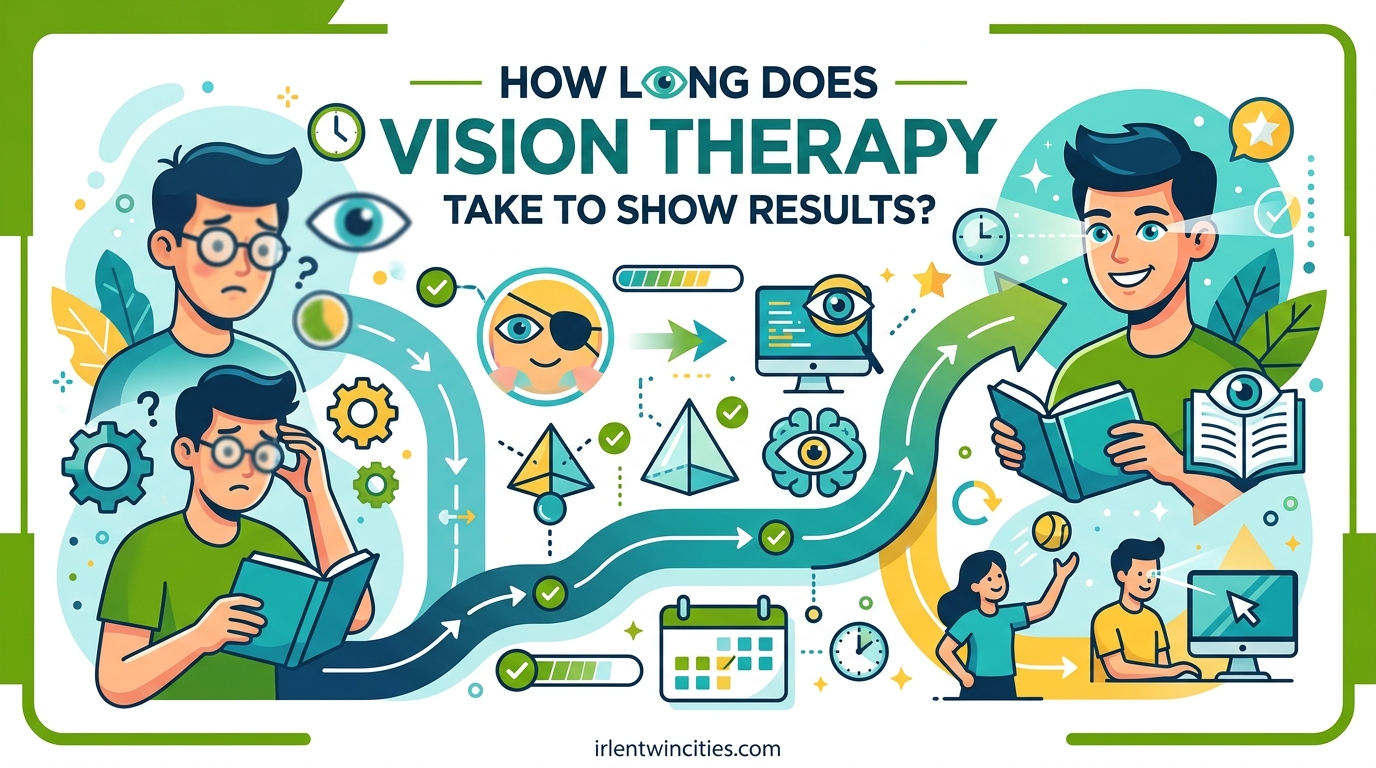
Starting vision therapy is an exciting step toward better visual function, but one question looms large for most patients: when will I actually notice a difference? Whether you are a parent researching options for your child or an adult considering treatment yourself, understanding the timeline helps set realistic expectations and keeps motivation high during the early weeks.
In this guide, I will share exactly how long vision therapy takes to show results based on clinical data, patient experiences, and feedback from thousands of people who have completed programs. You will learn what to expect week by week, why some people progress faster than others, and how to recognize the subtle signs that your visual system is changing.
Table of Contents
Quick Answer
Most patients begin noticing improvements from vision therapy within 6 to 10 weeks of starting treatment. A full program typically lasts 3 to 6 months for common conditions, though complex cases may extend to 12 months or longer. Initial changes are often subtle, such as reduced eye strain or easier reading, before more dramatic visual skill improvements become apparent.
What Is Vision Therapy?
Vision therapy is a personalized program of visual exercises designed to improve the connection between your eyes and brain. Think of it as physical therapy for your visual system. Unlike glasses that simply compensate for refractive errors, vision therapy actually trains your brain to use your eyes more effectively.
The treatment addresses functional vision problems like eye teaming (how well your eyes work together), tracking (following moving objects), focusing (shifting between near and far), and visual processing (how your brain interprets what you see). These skills are essential for reading, learning, sports performance, and daily activities.
The science behind vision therapy is neuroplasticity, your brain’s remarkable ability to form new neural connections throughout life. By repeatedly practicing specific visual tasks, you strengthen the pathways between your eyes and brain, leading to lasting improvements in how you see and process visual information.
How Long Does Vision Therapy Take to Show Results?
The timeline for vision therapy results varies based on several factors, but most patients follow a predictable pattern of progress. Understanding this pattern helps you stay committed during the early phases when changes may not be immediately obvious.
For children with straightforward conditions like convergence insufficiency, many parents report noticing differences within the first 6 to 8 weeks. Adults typically require a bit longer, often seeing initial improvements around the 8 to 12 week mark. This difference relates to neuroplasticity being more active in developing brains, though adults absolutely can and do achieve excellent results.
A complete vision therapy program generally consists of 20 to 40 sessions scheduled weekly or biweekly. Complex conditions like strabismus or severe amblyopia may require extended treatment programs lasting 6 to 12 months. Your developmental optometrist will assess your progress periodically and adjust your program as needed.
Week-by-Week: What to Expect During Vision Therapy
Based on patient reports from forums and clinical feedback, here is a realistic week-by-week breakdown of what most people experience during vision therapy.
Weeks 1-2: Foundation and Assessment
Your first sessions focus on comprehensive assessments and introducing basic exercises. You may feel some eye strain or fatigue as your visual system adapts to new demands. This is completely normal and actually indicates your brain is working hard to build new pathways.
Some patients report feeling slightly worse during these initial weeks, experiencing headaches or difficulty concentrating. Do not let this discourage you. This temporary discomfort typically resolves as your visual system adjusts to the training.
Weeks 3-4: Early Adaptations
By week three, many patients notice reduced symptoms of eye strain, particularly after reading or computer work. Your eyes are beginning to work together more efficiently, though you may not consciously perceive these changes yet.
Home exercises become more comfortable, and you may find yourself completing them with less effort. Track any subtle changes in a journal, such as being able to read for five minutes longer before fatigue sets in.
Weeks 6-10: First Noticeable Improvements
This is when most patients and parents report the first obvious signs of progress. Children may show improved reading comprehension or reduced frustration with homework. Adults often notice less headaches after screen time or easier depth perception when driving.
One parent on Reddit shared that their child showed “big improvements within 3-4 sessions” during this phase, while another noted “after two months, reading speed increased by three grade levels.” These early wins provide crucial motivation to continue.
Weeks 12+: Significant Progress and Consolidation
By three months, substantial improvements in visual skills are typically well established. The brain has built stronger neural connections, and the new visual habits are becoming automatic rather than requiring conscious effort.
Some patients experience what feels like a plateau around month four or five, followed by sudden noticeable gains. As one forum member described: “First 4 months showed very little quantifiable improvement, month 5 saw noticeable changes.” Trust the process during these periods.
Vision Therapy Timelines by Condition
Different visual conditions require different treatment durations. The severity of your condition also significantly impacts how quickly you will see results.
| Condition | Typical Duration | First Results | Notes |
|---|---|---|---|
| Convergence Insufficiency | 12-16 weeks | 4-6 weeks | Most responsive to therapy; highest success rates |
| Amblyopia (Lazy Eye) | 3-6 months | 8-12 weeks | Earlier treatment yields faster results |
| Strabismus | 6-12 months | 3-4 months | Complex cases may require longer treatment |
| Visual Processing Disorder | 4-6 months | 6-10 weeks | Often overlaps with learning difficulties |
| Accommodative Insufficiency | 8-12 weeks | 4-6 weeks | Focusing issues typically respond quickly |
| Eye Tracking Problems | 12-20 weeks | 6-8 weeks | Impacts reading fluency significantly |
Factors That Affect Your Vision Therapy Timeline
Several variables influence how quickly you will see results from vision therapy. While some factors are outside your control, others offer opportunities to accelerate your progress.
Age and Neuroplasticity
Children generally progress faster than adults because their brains are in active development phases with heightened neuroplasticity. However, adults absolutely can achieve excellent results. The brain maintains plasticity throughout life, and research consistently shows that adults in their 60s and 70s can develop new visual skills through therapy.
Condition Severity
Mild convergence insufficiency may resolve in 8-12 weeks, while severe strabismus could require a year or more. Your developmental optometrist will provide a personalized timeline estimate based on your initial comprehensive examination.
Consistency With Home Exercises
This is the factor you control completely. Patients who complete prescribed home exercises daily typically progress 30-40% faster than those who rely solely on in-office sessions. The brain needs consistent stimulation to build lasting neural pathways.
Previous Treatment History
If you have had previous vision therapy or patching treatment for amblyopia, your timeline may differ. Some patients build on existing neural foundations, while others need to overcome ingrained compensation habits.
Overall Health and Lifestyle
Sleep quality, nutrition, stress levels, and general health all impact neuroplasticity. Patients who prioritize rest and manage stress often report faster progress and fewer periods of feeling worse before feeling better.
Children vs Adults: Different Timelines, Same Potential
A common misconception is that vision therapy only works for children. This is absolutely false. While children typically see results faster due to developmental neuroplasticity, adults can and do achieve significant, lasting improvements.
Children: Faster Results, Critical Window
Most children notice improvements within 6 to 10 weeks of starting therapy. Their developing brains readily form new connections, and they have fewer years of compensatory habits to unlearn. Early treatment for conditions like amblyopia or convergence insufficiency prevents academic and social impacts.
Parents should watch for signs like improved reading stamina, fewer homework battles, better sports performance, and reduced complaints of headaches or tired eyes.
Adults: Sustained Neuroplasticity
Adults often require 8 to 16 weeks before noticing significant changes, but the results are equally permanent. Your brain continues adapting throughout life. One Reddit member reported graduating from vision therapy after 6 months with “HUGE difference, chronic dizziness resolved.” Another noted significant improvement in device tolerance after half a year of treatment.
Adults bring advantages too: better ability to communicate symptoms, stronger motivation, and consistent compliance with home exercises. Do not let age deter you from pursuing treatment.
Signs Your Vision Therapy Is Working
Recognizing progress keeps motivation high, especially during the early weeks when changes are subtle. Watch for these positive indicators that your visual system is adapting.
Reading improvements: You can read for longer periods without fatigue, lose your place less often, or notice words no longer appear to move on the page.
Reduced physical symptoms: Headaches, eye strain, and dizziness decrease in frequency or intensity. Some patients report these symptoms briefly increase before decreasing, which is part of the adaptation process.
Better depth perception: You may notice improved ability to judge distances when driving, catching balls, or navigating stairs. Parking becomes easier, and spatial awareness feels more natural.
Enhanced concentration: Tasks requiring sustained visual attention, like computer work or detailed crafts, become less mentally exhausting. You may find yourself completing work faster with fewer breaks.
Academic or work performance gains: Children may show improved grades or reduced homework time. Adults often report increased productivity and fewer errors in detail-oriented tasks.
Tips for Faster Vision Therapy Results
While your timeline depends partly on your specific condition, these strategies can help maximize your progress and potentially accelerate results.
Complete home exercises consistently. Daily practice reinforces the in-office training and builds neural pathways faster. Missing exercises extends your timeline. Set reminders and integrate exercises into your routine.
Communicate openly with your therapist. Report all symptoms, even seemingly unrelated ones like headaches or fatigue. Your developmental optometrist can adjust your program based on feedback, preventing unnecessary plateaus.
Keep a progress journal. Document daily activities, symptoms, and any changes you notice. This helps you recognize gradual improvements you might otherwise miss and provides valuable information for your therapist.
Prioritize sleep and nutrition. Your brain builds neural connections during rest. Aim for 7-9 hours of quality sleep. Stay hydrated and eat foods supporting brain health, including omega-3 fatty acids and antioxidants.
Stay patient through plateaus. Progress is rarely linear. Some weeks show dramatic gains; others feel stagnant. Trust the process and maintain consistency even when visible progress slows.
When to Consult Your Eye Doctor
While vision therapy follows predictable patterns, certain situations warrant additional consultation with your developmental optometrist.
Contact your doctor if you experience severe or persistent headaches, double vision that does not resolve, or significant dizziness lasting more than a few days. These symptoms may indicate a need to adjust your exercise intensity.
Also schedule a check-in if you reach the 12-week mark without noticing any improvements whatsoever. While this is uncommon, your therapist may need to reassess your diagnosis or modify your treatment approach.
Finally, discuss any concerns about treatment duration or costs openly. Your eye care team wants you to succeed and can often suggest strategies to optimize both outcomes and affordability.
Frequently Asked Questions
How quickly does vision therapy work?
Most patients begin noticing improvements within 6 to 10 weeks of starting vision therapy. Initial changes are often subtle, such as reduced eye strain or easier reading, with more significant visual skill improvements becoming apparent around the 3-month mark.
What is the success rate of vision therapy?
Vision therapy has high success rates when patients complete their prescribed programs. For convergence insufficiency, studies show success rates of 70-90%. Overall, approximately 80% of patients achieve significant functional improvement, with results generally being long-lasting due to neuroplasticity-based neural pathway changes.
How to tell if vision therapy is working?
Signs that vision therapy is working include easier reading for longer periods, reduced headaches or eye strain, improved depth perception, better concentration during visual tasks, and improved academic or work performance. Small improvements typically appear before dramatic changes.
How long does it take to see results from vision therapy?
Initial results from vision therapy typically appear within 6 to 10 weeks for most conditions. Full programs usually last 3 to 6 months. Complex cases like severe strabismus may require 6 to 12 months. Children often see results faster than adults due to increased neuroplasticity.
Is vision therapy permanent?
Yes, vision therapy results are generally permanent because they create lasting changes in neural pathways through neuroplasticity. The brain forms new, stable connections that persist after treatment ends. Some patients benefit from occasional maintenance exercises, particularly for complex conditions.
Can adults benefit from vision therapy?
Absolutely. Adults can benefit significantly from vision therapy due to lifelong neuroplasticity. While adults may progress somewhat slower than children, they achieve equally permanent results. Many adults in their 60s and 70s successfully complete vision therapy and experience substantial improvements in visual function.
Understanding how long vision therapy takes to show results helps you approach treatment with realistic expectations and sustained motivation. While most patients see initial improvements within 6 to 10 weeks, remember that every visual system is unique. Your timeline may differ based on your specific condition, age, and commitment to home exercises.
The key is consistency. The brain builds lasting neural pathways through repeated practice, and the results you achieve will serve you for years to come. If you are considering vision therapy or currently in treatment and wondering about your progress, consult with a developmental optometrist who can assess your specific situation and provide personalized guidance for your visual journey.