
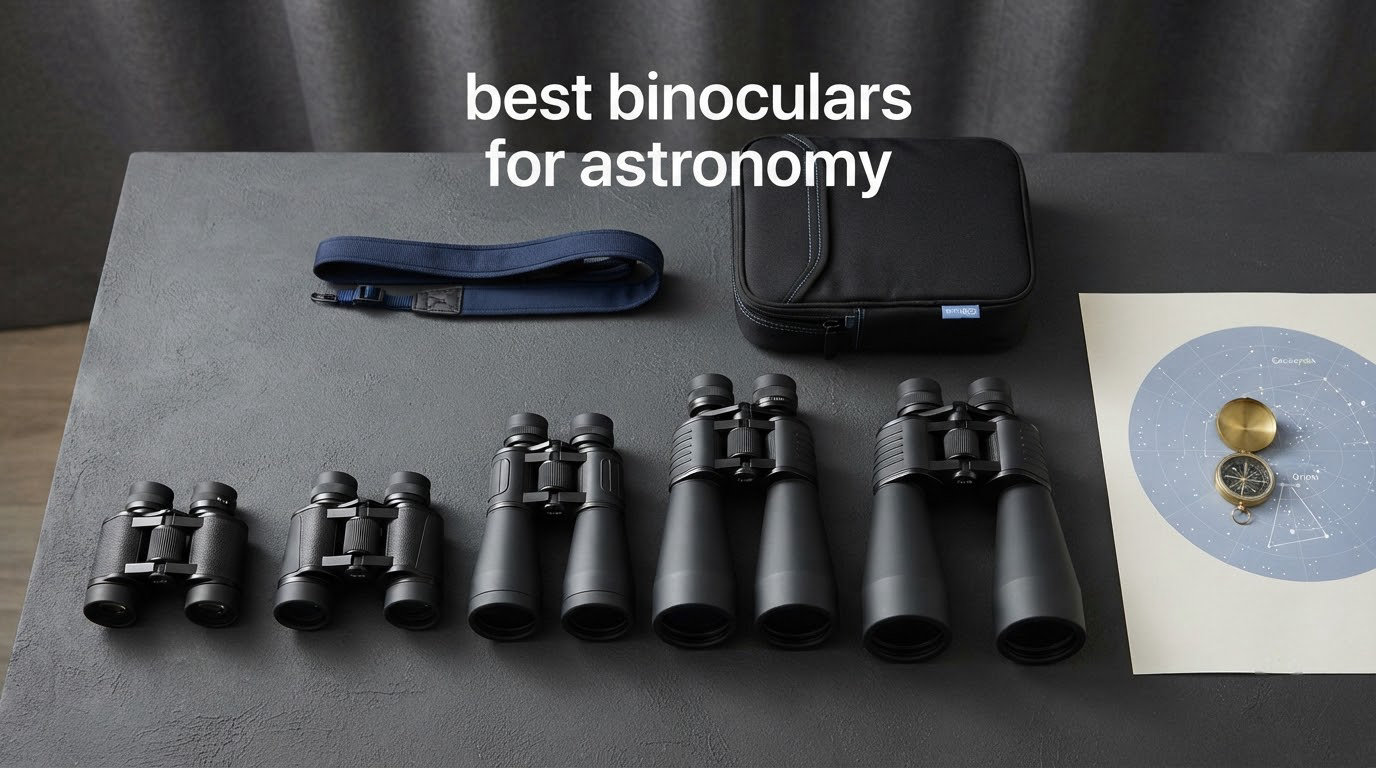
Binoculars are the fastest way into astronomy, and most people who buy a telescope wish they had started here. There is no assembly, no polar alignment, no finder to collimate, and no setup that takes longer than putting on a coat. You point, you focus, you see.
What binoculars give you that a telescope cannot is context. A 10x pair frames a wide swathe of sky at once, so Orion looks like Orion and not a random scatter of points. Star hopping, learning constellations and sweeping the Milky Way are all natural with glass in both hands, and the whole instrument fits in a jacket pocket.
This guide covers the best binoculars for astronomy in 2026, from a light 1.4-pound pair to an 8.8-pound tripod-mounted giant. We sorted the field using real specifications from the manufacturers, then compared them against what observers actually report on r/telescopes, r/Binoculars and CloudyNights. We may earn a commission on qualifying purchases, and that never changes what we recommend.
One rule runs through everything below, and it is the rule the forums keep repeating: 10x is the practical handheld ceiling. Anything above roughly 12x needs a tripod, a monopod or image stabilization. Buy the big glass you want, but buy a mount with it.
Table of Contents
Top 3 Picks for Binoculars for Astronomy in 2026
Before the full list, here is the short version. The Celestron SkyMaster 25×70 leads because it combines the highest-volume user base of any astronomy-specific model here with an aperture that actually gathers light at high power. The Celestron SkyMaster 15×70 is the value pick most beginners end up buying, and the Vortex Diamondback HD 10×50 is the sharpest handheld 10x we covered.

Celestron SkyMaster 25×70
- 25x magnification
- 70mm objectives
- BaK-4 porro prisms
- built-in tripod adapter

Celestron SkyMaster 15×70
- 15x magnification
- 70mm objectives
- 4.4 degree true field
- rubber-armored body

Vortex Diamondback HD 10×50
- 10x50
- fully multi-coated and dielectric coatings
- argon purged
- 1.9 pounds
All 9 Astronomy Binoculars Side by Side
Every model below, with the numbers that actually decide astronomy performance. Magnification above 12x assumes a tripod or monopod, and weights are as listed by each manufacturer. Retail prices move daily, so the Check Latest Price buttons are the only place to confirm them.
| Product | Specifications | Action |
|---|---|---|
| Celestron SkyMaster 25×70 |
|
Check Latest Price |
| Celestron SkyMaster 15×70 |
|
Check Latest Price |
 Vortex Triumph HD 10×42 Vortex Triumph HD 10×42 |
|
Check Latest Price |
 Bushnell Falcon 10×50 Bushnell Falcon 10×50 |
|
Check Latest Price |
| Vortex Diamondback HD 10×50 |
|
Check Latest Price |
 Celestron SkyMaster 25×100 Celestron SkyMaster 25×100 |
|
Check Latest Price |
 Nikon Monarch M5 10×42 Nikon Monarch M5 10×42 |
|
Check Latest Price |
 Sogries 25×100 Sogries 25×100 |
|
Check Latest Price |
 Pentax Jupiter 10×50 Pentax Jupiter 10×50 |
|
Check Latest Price |
1. Celestron SkyMaster 25×70 – The Astronomy-Specific All-Rounder With the Biggest Following
Celestron SkyMaster 25×70 Binoculars for Astronomy, Long-Range & Wildlife
25x70 porro
70mm objective
2.8mm exit pupil
2.7 degree field
1474 g
Pros
- Strong long-range detail at 25x
- BaK-4 prisms stay bright in dim conditions
- Rubber-armored water-resistant housing
- Built-in 1/4-20 tripod adapter
- Limited lifetime warranty
Cons
- Image shake is noticeable hand-holding
- Focus wheel is touchy and the diopter can drift
- Factory collimation faults reported on arrival
The SkyMaster 25×70 is the model most astronomy buyers in the United States end up owning at some point, and the 9171 reviews backing its 4.3 rating reflect that. It is one of very few binoculars on this list designed from the start for astronomical work rather than adapted from a birding or sporting design.
The optical layout is a straight 25×70 porro prism with 70mm objective lenses and a 2.8mm exit pupil. That exit pupil is the trade-off you have to understand before you buy. A dark-adapted human pupil is around 7mm across, so a 2.8mm beam uses a fraction of the light your eye could physically accept. It looks dark and contrasty, but the brightness advantage of a big objective at high magnification is partly thrown away by the small exit pupil.
Field of view is a narrow 2.7 degrees, with a listed apparent angle of 61 degrees. That narrow cone is why the 25×70 feels like a telescope for two people rather than a wide-field sweep instrument. Finding anything means deliberate scanning, and panning is slow.
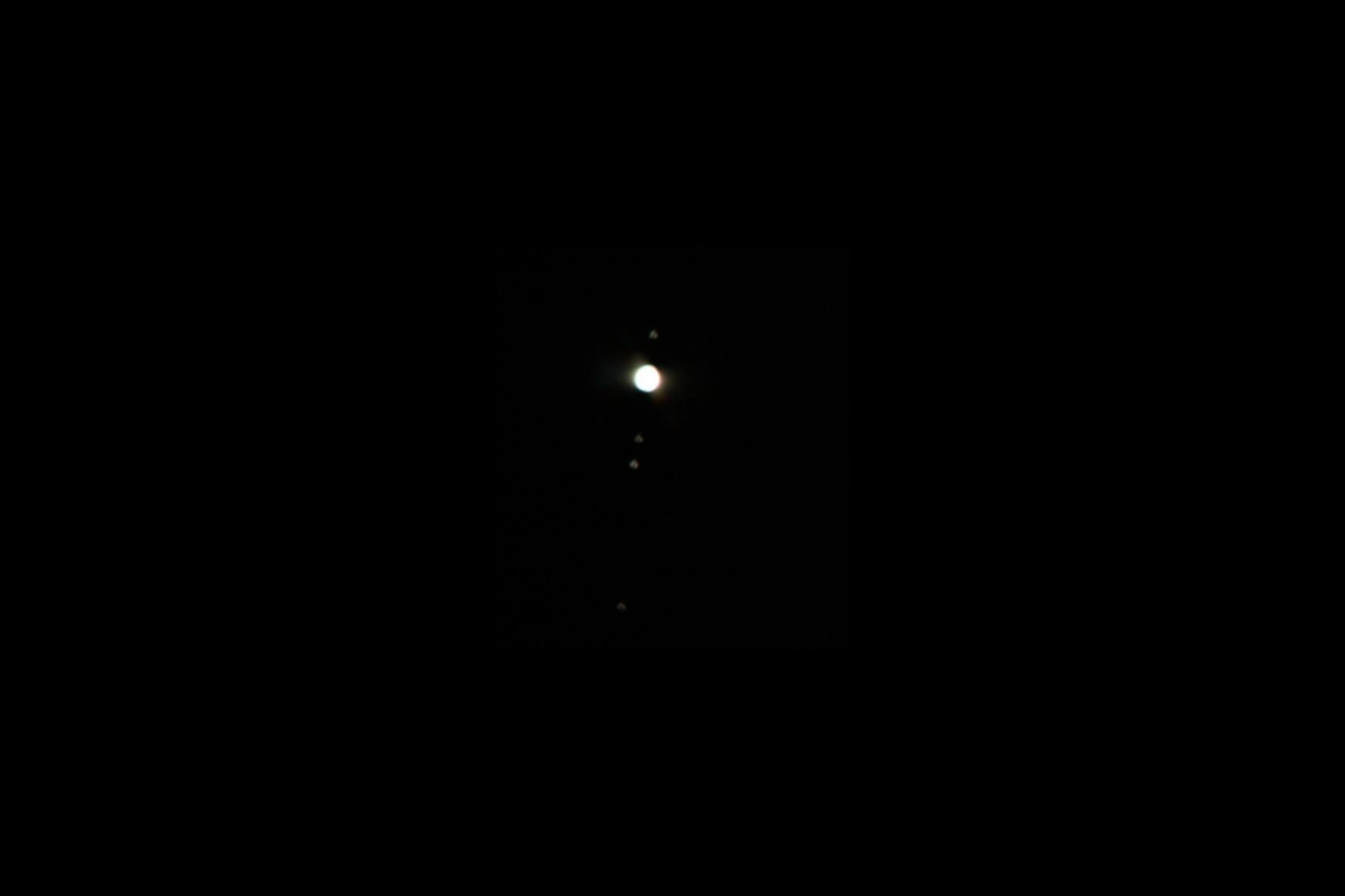
Owners consistently report bright, usable views and good lunar detail, and many specifically name the Orion Nebula, Andromeda, Jupiter’s moons and globular clusters as targets they can resolve. The BaK-4 prisms keep the image from going flat in low light, and the rubber-armored shell has survived years of being carried around in a car.
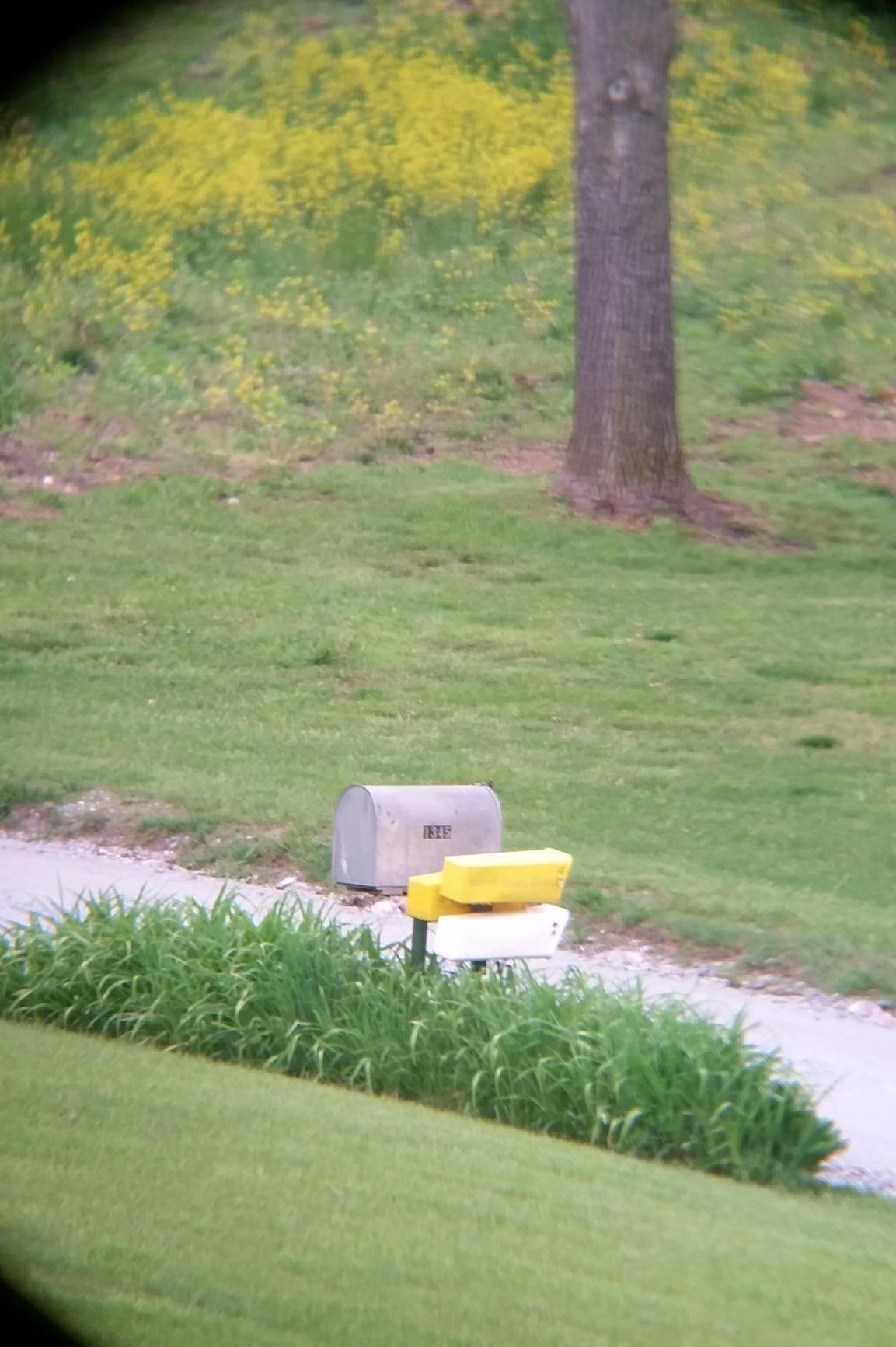
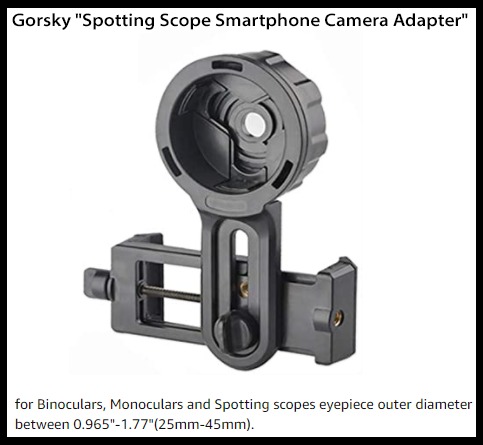
Reviewers treat a tripod as effectively mandatory at 25x rather than optional. The built-in 1/4-20 thread is genuinely useful here, because the body mounts to a standard photo tripod in seconds, but the supplied plastic adapter is the weak point. Owners report it wobbling for several seconds after it is disturbed before it settles.
Why the 25×70 earns the top spot
The reason this model leads is combination, not any single spec. It is a genuine astronomy binocular, it has the largest installed user base of any product here, and it delivers a brightness that 10x50s simply cannot at high power on small targets.
If your priority is lunar craters, double stars, Jupiter’s moons and a handful of bright deep-sky objects, the extra magnification is worth it. Mount it, and the shaking objection disappears.
Where the 25×70 falls short
It is not a wide-field instrument. At 2.7 degrees you will not fit a large constellation in one view, and a 2.8mm exit pupil wastes light your eyes could have used. For sweeping the Milky Way and learning the sky, a 10×50 is a better tool.
Collimation faults on arrival are reported often enough to plan for. Check the barrels on a distant straight edge within a few minutes of delivery, and keep the packaging until you are certain the pair is aligned.
2. Celestron SkyMaster 15×70 – Best Value for a First Serious Pair
Celestron SkyMaster 15×70 Astronomy Binoculars for Stargazing and Deep-Sky
15x70 porro
4.7mm exit pupil
4.4 degree true field
3.3 pounds
Rubber armored
Pros
- Wide 59.9 degree apparent field makes panning and star hopping easy
- 70mm objectives show the Moon and Jupiter moons
- Bright views from BaK-4 prisms
- Easy focus and diopter adjustment
- Included carry case and strap
Cons
- Shakes badly at 15x without support
- Supplied plastic tripod adapter is flimsy
- Collimation can be off on arrival
The 15×70 is the pair that appears most often as a first recommendation on astronomy forums, and 8570 reviews at 4.4 stars is the strongest rating-plus-volume pairing in this roundup. It is the same porro prism design as the 25×70 above, with one number changed and everything else rebalanced.
That changed number matters. Dropping from 25x to 15x widens the exit pupil to a healthier 4.7mm, opens the true field of view to 4.4 degrees, and cuts the shake to a level that survives a monopod or a fence post. Reviewers consistently describe it as far less demanding to aim than a 25x model, which is exactly the advantage you want when you are still learning the sky.
Users report the Moon, Jupiter and its four moons, Saturn, the Pleiades and M31 as reliably visible. A 59.9 degree apparent field is wide enough to sweep rather than hunt, and the 70mm objectives are generous for the money.
First-time buyers single out the focus and diopter adjustment as the easiest part of the whole experience. The center focus wheel is large, the eye cups are forgiving, and the rubber-armored water-resistant body includes a carry case, strap and objective caps in the box.
The weight is listed at 3.3 pounds. That is light for 70mm glass and fine for a monopod, but it is a step up from the 1.4-pound and 1.9-pound models here, and it is the reason for the most repeated warning in the reviews.
Why the 15×70 is the value pick
The exit pupil and field of view combination is the sweet spot. A 4.7mm exit pupil fits comfortably inside a dark-adapted pupil, so far more of the light the 70mm objectives collect actually reaches your retina than on the 25×70.
It also teaches you the sky properly. At 4.4 degrees you can frame Cassiopeia or the Big Dipper, match what you see to a chart, and build the mental map that makes a telescope useful later.
Where the 15×70 falls short
Nothing in the review pool suggests it beats much cheaper 10×42 models for fine terrestrial detail at distance. These are astronomy glasses, and they are honest about it.
The prism housings and objective carriers are plastic, which leaves long-term durability uncertain, and the factory collimation service is described as costly. Inspect the pair on arrival. The plastic tripod adapter that comes in the box is also widely criticised as flimsy, so budget for a metal one.
3. Vortex Triumph HD 10×42 – Best for Travelling Light and Daylight Versatility
Vortex Triumph HD 10×42 Binoculars
10x42 roof prism
Fully multi-coated
4.2mm exit pupil
17mm eye relief
2.3 pounds
Pros
- Highest rated in the group at 4.7 stars with 85 percent five-star reviews
- HD optical system holds edge-to-edge sharpness
- Nitrogen purged and waterproof with full rubber armor
- Includes a GlassPak harness for hands-free carry
- Transferable lifetime warranty
Cons
- 42mm objectives gather less light than astronomy-specific models
- Narrow field needs deliberate scanning
- Heavier than compact 10x28 options
The Triumph HD 10×42 is the best-selling binocular in this roundup by category rank, and at 4.7 stars with 2357 reviews it carries more owner satisfaction per review than anything else here. It is also not an astronomy binocular, and pretending otherwise would be the first lie in this guide.
What it is, is a very good all-purpose binocular that also works at night. The HD optical system and fully multi-coated lenses cut chromatic aberration and hold sharpness across the field, and the nitrogen-purged waterproof chassis with a shockproof polycarbonate body and rubber armor handles weather without complaint.
The limitation is arithmetic. A 42mm objective produces a 4.2mm exit pupil at 10x and gathers roughly 70 percent of the light a 50mm objective does. The Moon, Orion’s Belt, the Pleiades and any constellation will be obvious. Faint galaxies and nebulae will not be.
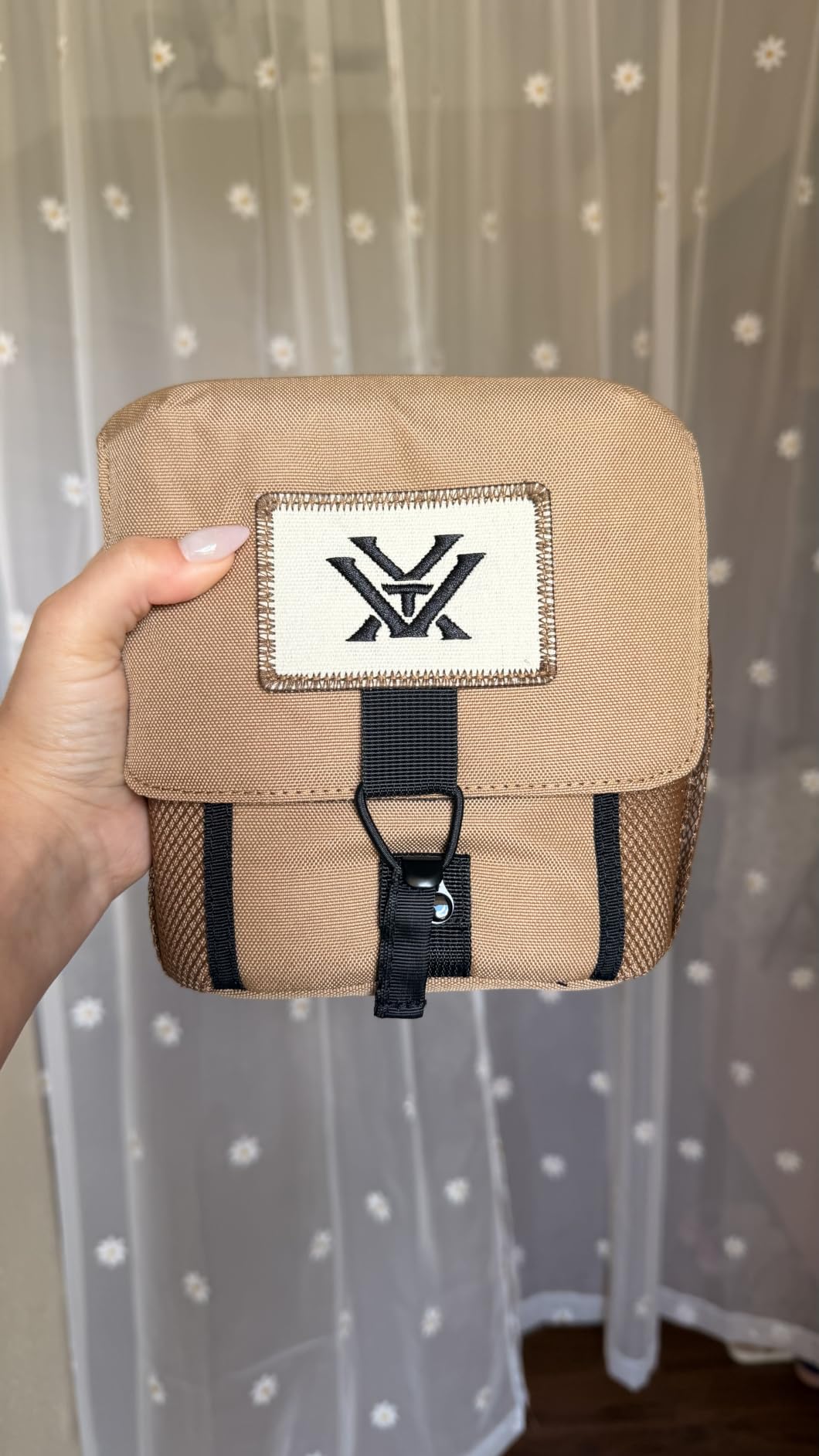
Where it shines is in the details owners mention most. Adjustable rubber eyecups and a diopter adjustment of plus or minus 5 help if your eyes differ, and the 17mm eye relief keeps the view clear with glasses on. The GlassPak harness in the box lets it ride on your chest instead of in your hands.
Reviewers describe the optics as exceptional for clarity and colour fidelity, with a grippy, weather-sealed chassis that has held up over years. The Vortex lifetime warranty is transferable, which matters if you pass the glass on.
Why the 10×42 suits some people perfectly
If you want one pair of binoculars for birds in the morning, ships at noon and the Moon at night, this is the honest answer. A 10×42 is also the easiest binocular to hold steady, and 2.3 pounds is a comfortable all-night weight.
Owners who came from larger glass say the 10x view is more restful, because you scan the sky instead of chasing single targets through a narrow cone.
Where the 10×42 falls short
Owners are direct about the optical ceiling. At 42mm the light budget is thin, and reviewers consistently point out that this model suits daylight terrestrial and sporting use better than deep-sky observing.
The narrow field also means locating anything is a deliberate scan rather than a glance. If your goal is faint nebulae from a dark site, you need 70mm or 100mm objectives instead.
4. Bushnell Falcon 10×50 – Best Budget Entry Into Stargazing
Bushnell Falcon 10×50 Wide-Angle Binoculars
10x50 porro prism
Fully coated optics
5mm exit pupil
60 degree apparent field
830 g
Pros
- Insta-Focus lever focuses fast on moving targets
- 50mm objectives show the Moon and track satellites
- Low cost with fully coated porro optics
- All-weather non-slip grip with waterproof construction
- Long-standing design owners keep for years
Cons
- Insta-Focus lever feels flimsy and can crunch
- Eyepiece caps are too loose and fall off
- Short 9mm eye relief is tight for glasses wearers
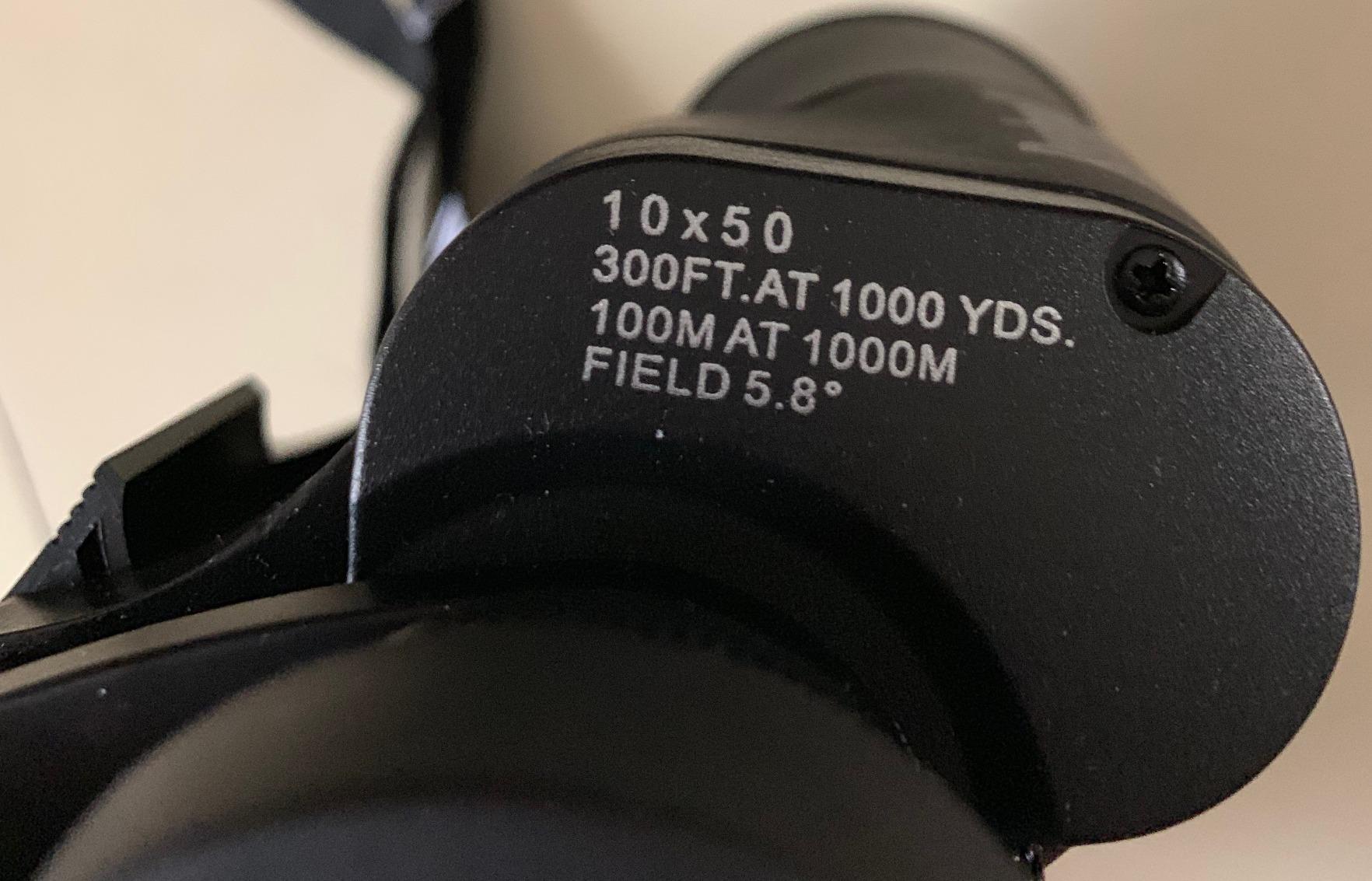
The Bushnell Falcon 10×50 is the cheapest way onto this list and one of the most reviewed, with 6541 ratings at 4.5. It is not an astronomy design, but a 50mm objective at 10x is the exact optical layout the forums keep calling the handheld sweet spot.
The 5mm exit pupil is the number that matters. It sits inside a dark-adapted pupil of about 7mm, so the light the 50mm objective collects can actually be used. That is why a 10×50 shows more than a 10×42 in exactly the conditions you care about.
Owners treat it as a dependable budget binocular that does the basic job well. The 60 degree apparent field is generous, the porro prism with fully coated optics gives a clean adjustable image, and the reported sweet spot is basic stargazing, satellite tracking and the Moon.
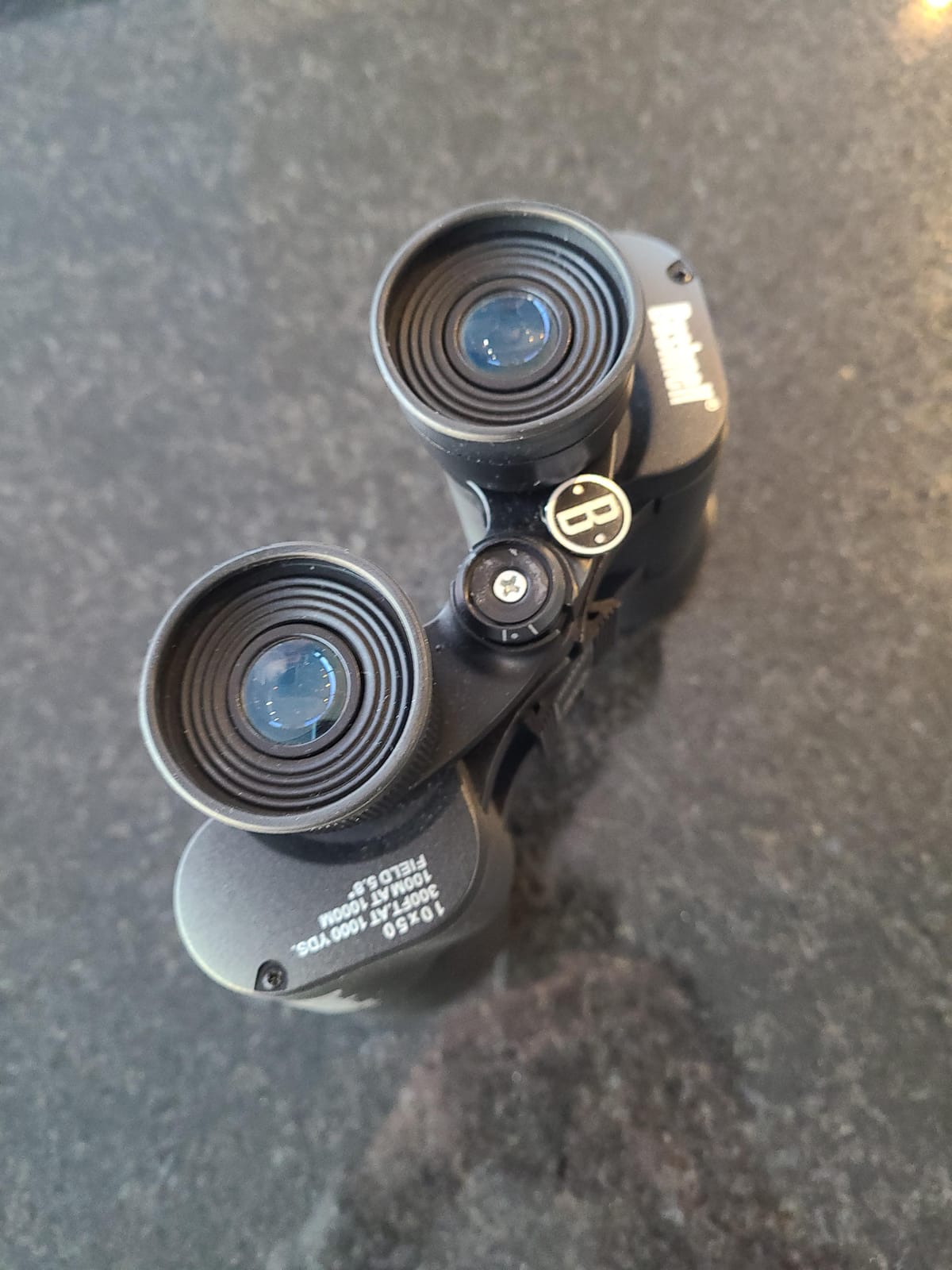
The Insta-Focus lever is the mechanical signature. It lets you focus with one movement and adjust each eyepiece separately for different eye prescriptions, which is a genuine advantage for casual astronomy sessions.
At 830 grams this is the second-lightest glass in the roundup, and the rubber grip pads plus waterproof construction mean it shrugs off a wet morning without complaint. A carrying case and neck strap are included.
Why the Falcon 10×50 is worth starting with
It teaches you the same fundamentals a premium 10×50 would, at a fraction of the commitment. Constellations, the Moon’s phases, open clusters and the brightest satellites are all within reach, and the exit pupil is properly sized for dark-adapted eyes.
It is also the easiest pair here to hand to a child or a visiting friend, which matters more than it sounds when you are trying to share the sky.
Where the Falcon falls short
Sharpness and colour fall short of higher-priced glass at the same magnification, and that is the trade you accept. The 9mm eye relief is tight for eyeglass wearers, so turn the eyecups down or try them with glasses on before committing.
Two mechanical complaints repeat: the Insta-Focus lever feels plasticky and can be heard crunching in one direction, and the eyepiece caps sit too loosely and fall off. This generation is also bulkier and heavier than older Falcon variants, which can be tiring for small hands.
5. Vortex Diamondback HD 10×50 – Sharpest Handheld 10×50 in the Roundup
Vortex Diamondback HD 10×50 Binoculars
10x50 with fully multi-coated lenses
5mm exit pupil
17mm eye relief
1.9 pounds
Aluminum chassis
Pros
- Highest average rating here at 4.8 stars
- Fully multi-coated with dielectric and Armortek treatments
- Argon purged and fogproof after years of rain
- 17mm eye relief works with or without glasses
- Aluminum chassis with GlassPak harness included
Cons
- Heavier than 10x42 models for long hikes
- Sharpness strongest in the center rather than edge to edge
- Case straps and eyecup covers can loosen
The Diamondback HD 10×50 is the strongest optical performer in this group by owner rating, at 4.8 stars with 86 percent five-star feedback. For a handheld 10x that you will use for years on end, that rating is the reason it earns a place despite a smaller review base than the Celestrons.
The optical package is a select HD glass element set with fully multi-coated, dielectric-coated and Armortek-treated lenses. Owners describe bright, colour-accurate images with excellent centre sharpness and very low visible noise in dim light, which is the language of someone who uses the glass after dark.
The 5mm exit pupil is the right size for a dark-adapted eye, and the listed field of view at 1000 yards is 315 feet, which translates to a comfortable sky sweep for a 10x. The aluminum chassis is a step up in material from the plastic-bodied budget pairs.

Weather sealing is the detail reviewers return to. Argon purging with o-ring seals has kept fogging out even after years of rain use, according to owner reports, and the long 17mm eye relief with adjustable eyecups keeps the view comfortable for glasses wearers.
The GlassPak harness in the box is singled out for hands-free carry, and Vortex’s unconditional lifetime warranty is described as easy to invoke, with repairs handled and paid shipping included.

Why the Diamondback rewards higher budgets
Everything that limits a budget pair is addressed here. Coatings are real and multi-layered, the body is metal, the sealing is gas-purged rather than claimed, and the centre focus wheel is smooth enough for the fine focus that deep-sky observing needs.
At 1.9 pounds it stays comfortable for long sessions on a tripod or a wall, and its lifetime warranty removes most of the risk of buying a premium pair secondhand.
Where the Diamondback falls short
Owners are candid that truly edge-to-edge sharpness and chromatic aberration control still demand a step up in price. The centre is excellent; the corners are good rather than great.
At 1.9 pounds it is heavier than compact 10×42 options, so it is best suited to stationary viewing than long walks, and tracking fast-moving birds at 10x is genuinely difficult. The case straps and eyecup covers also loosen with repeated use.
6. Celestron SkyMaster 25×100 – Best Tripod-Mounted Deep-Sky Aperture
Celestron SkyMaster 25×100 Giant Astronomy Binoculars for Deep Sky Views
25x100 porro
4mm exit pupil
3 degree field
8.6 pounds
Rubber armored
Pros
- Largest aperture here at 100mm per objective
- BaK-4 prisms maximize light throughput
- Built-in 1/4-20 adapter fits a standard photo tripod
- Rubber-armored water-resistant housing
- Limited lifetime warranty
Cons
- 8.6 pounds is impractical to hand-hold
- Very narrow 3 degree field slows target acquisition
- Individual fixed focus slows re-acquisition
The 25×100 is Celestron’s largest binocular and the biggest aperture in this roundup. Light gathering scales with the square of aperture, so 100mm objectives collect more than three times what a 50mm objective does, and that difference is the entire reason to own a pair this heavy.
The result is the brightest, most detailed deep-sky image available here. Reviewers frame the value around aperture precisely because of this: nothing else at this level of magnification collects as much light.
The 4mm exit pupil at 25x is small but more usable than the 2.8mm on the 25×70, and BaK-4 prisms keep the throughput high. Eye relief is 15mm, which is comfortable for most wearers.
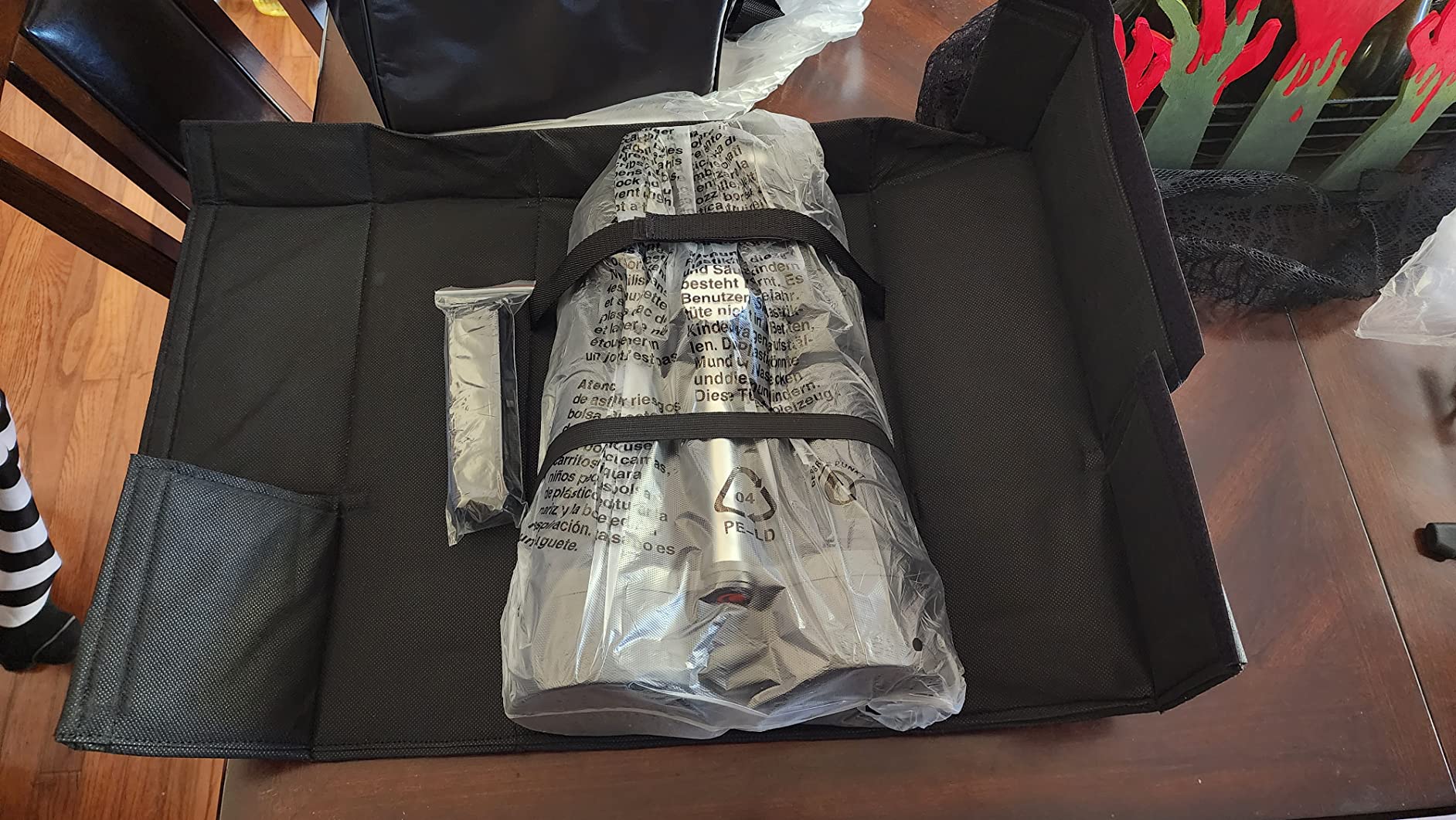
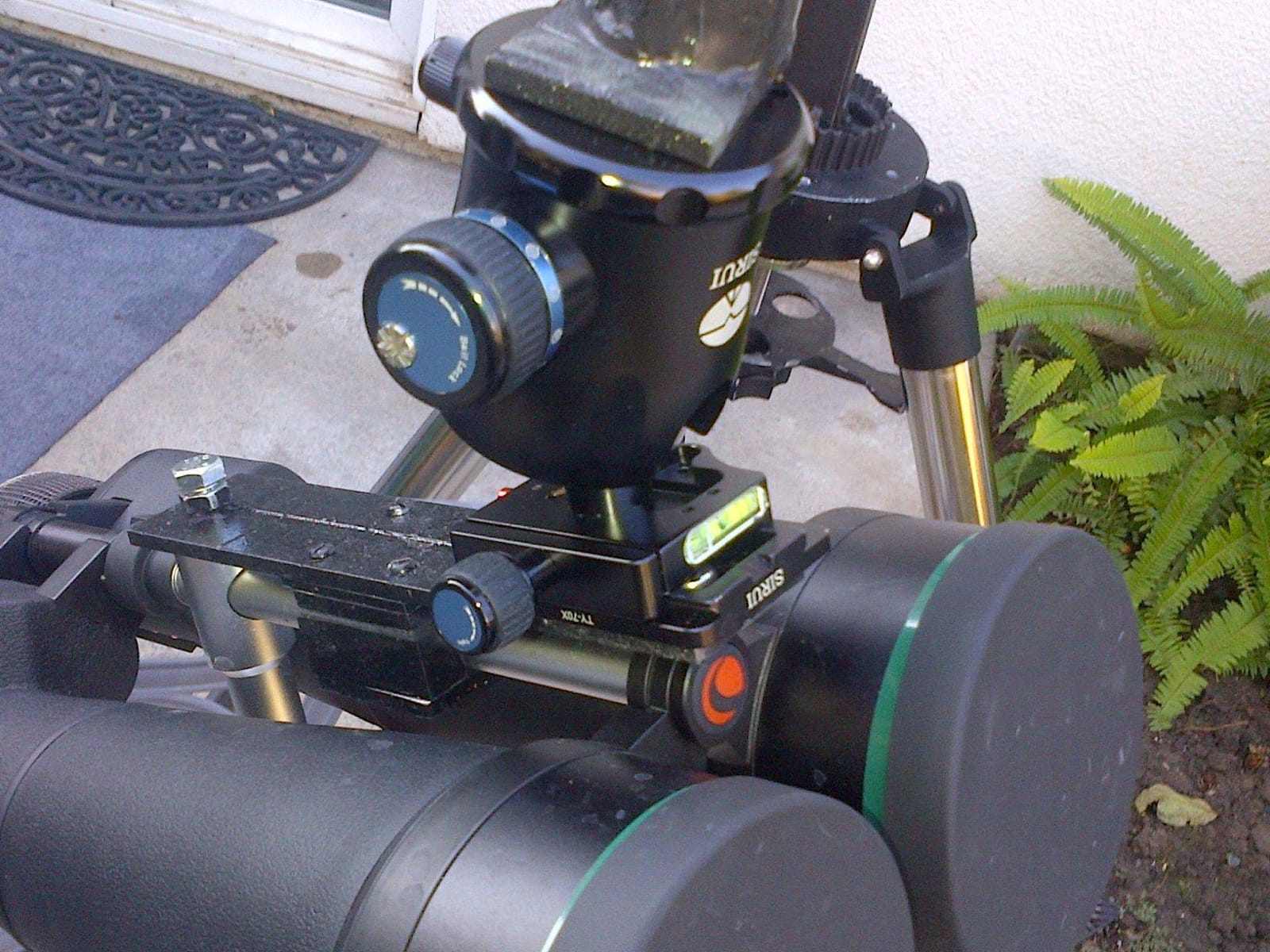
The costs are physical. At 8.6 pounds and measuring over 15 inches tall, this is a two-person carry, and a solid tripod is not optional. Reviewers describe a sturdy mount as mandatory and target acquisition as requiring patience.
A 3 degree true field is the narrowest cone in the roundup, and the fixed individual focus means there is no single-turn centre wheel for quick re-acquisition. Both are accepted costs in exchange for the aperture.
Why aperture is worth this much weight
From a genuinely dark site, a 100mm objective resolves low-surface-brightness objects that a 70mm simply does not show. Faint galaxies, the fainter members of large clusters and the outer arms of the Milky Way are all reachable.
BaK-4 prisms and a multi-coated design keep the image bright enough to make that effort worthwhile rather than frustrating.
Where the 25×100 falls short
This is the lowest-rated product here at 4.2 stars, with a 9 percent one-star share, the highest in the group. Buyers are weighing a premium price against uneven quality control, and factory collimation is a recurring theme.
It also carries the lowest review count of the Celestron line, so consensus is thinner. The included carrying case and accessories are basic relative to the size and weight of the instrument, and the individual fixed focus design frustrates people who expect a centre focus wheel.
7. Nikon Monarch M5 10×42 – Best for Comfort, Colour and Long Walks
NIKON Monarch M5 Binoculars | Waterproof Fogproof ED Glass Optics with Dielectric Prism Coating | Bright High-Resolution Outdoor Binoculars for Birdwatching, Hiking & Wildlife, 10×42
10x42 roof prism
ED glass elements
18.4mm eye relief
1.4 pounds
Nitrogen purged
Pros
- Extra-low dispersion glass reduces color fringing
- Dielectric prism coatings give bright natural color
- 18.4mm eye relief works well with glasses
- Lightest body here at 1.4 pounds
- Nitrogen-purged waterproof and fogproof housing
Cons
- Tripod mount not supplied despite being tripod adaptable
- Limited adjustment options and a fairly narrow field
- Less magnification than the astronomy models here
The Monarch M5 is the most refined instrument here, and the least astronomy-specific. At 1.4 pounds it is the lightest glass in the roundup, with extra-low dispersion glass elements and phase-corrected dielectric prism coatings.
What ED glass actually does in the field is remove colour fringing. Owners consistently characterise the image as crisp, bright and colour-accurate, which matters for anyone who has used cheap glass and noticed purple halos around high-contrast objects.
The 18.4mm eye relief is the longest figure in this guide after the Celestron 15×70, and combined with the twist-up click-stop eyecups it stays comfortable with glasses on. A 4.2mm exit pupil and a 52.1 degree apparent field give a relaxed, wide-ish view.
Owners praise the light body for hikes, safaris and boat trips, where a heavier binocular becomes a nuisance, and report the build feels solid enough to last years. Close focus to 8.2 feet covers short-range detail on the ground.
The 268-review base is the second thinnest here, so treat the consensus as thinner than for the Celestron and Vortex models. Still, the complaint pattern is narrow and consistent.
Why comfort matters more than specs at 10x
At 10x you will be looking for an hour, not a minute. A 1.4-pound body, 18.4mm eye relief and a large centre focus knob are the difference between an instrument you reach for and one that stays in a cupboard.
Roof prism construction also keeps the body narrow and close to your eye, which helps with the wide-field constellation work that 10x binoculars are good at.
Where the Monarch M5 falls short
The most common specific complaint is that the tripod mount is not supplied despite the tripod-adaptable specification. Several reviewers say including it would move their rating from about four and a half to five.
With 42mm objectives the light budget is the same one that limits the Triumph HD, and at 10x it simply cannot match a 10×50 on faint deep-sky targets. Adjustment options are also limited compared with sport-oriented models.
8. Sogries 25×100 – Best for Bright Views from a Suburban Backyard
Sogries 25×100 Astronomy Binoculars for Stargazing High Powered Long Range
25x100 porro
BaK-4 fully multi-coated
4mm exit pupil
Nitrogen filled
8.8 pounds
Pros
- 100mm objectives show Jupiter moons and the Orion Nebula
- BaK-4 prisms with fully multi-coated optics across 6 elements in 4 groups
- Rubber-armored metal housing resists shock
- Nitrogen filled and fogproof in heavy rain and fog
- Includes a backpack and strap
Cons
- 8.8 pounds needs a sturdy tripod and is cumbersome to carry
- Individual focus instead of a center focus
- Narrow 2.8 degree field makes acquisition demanding
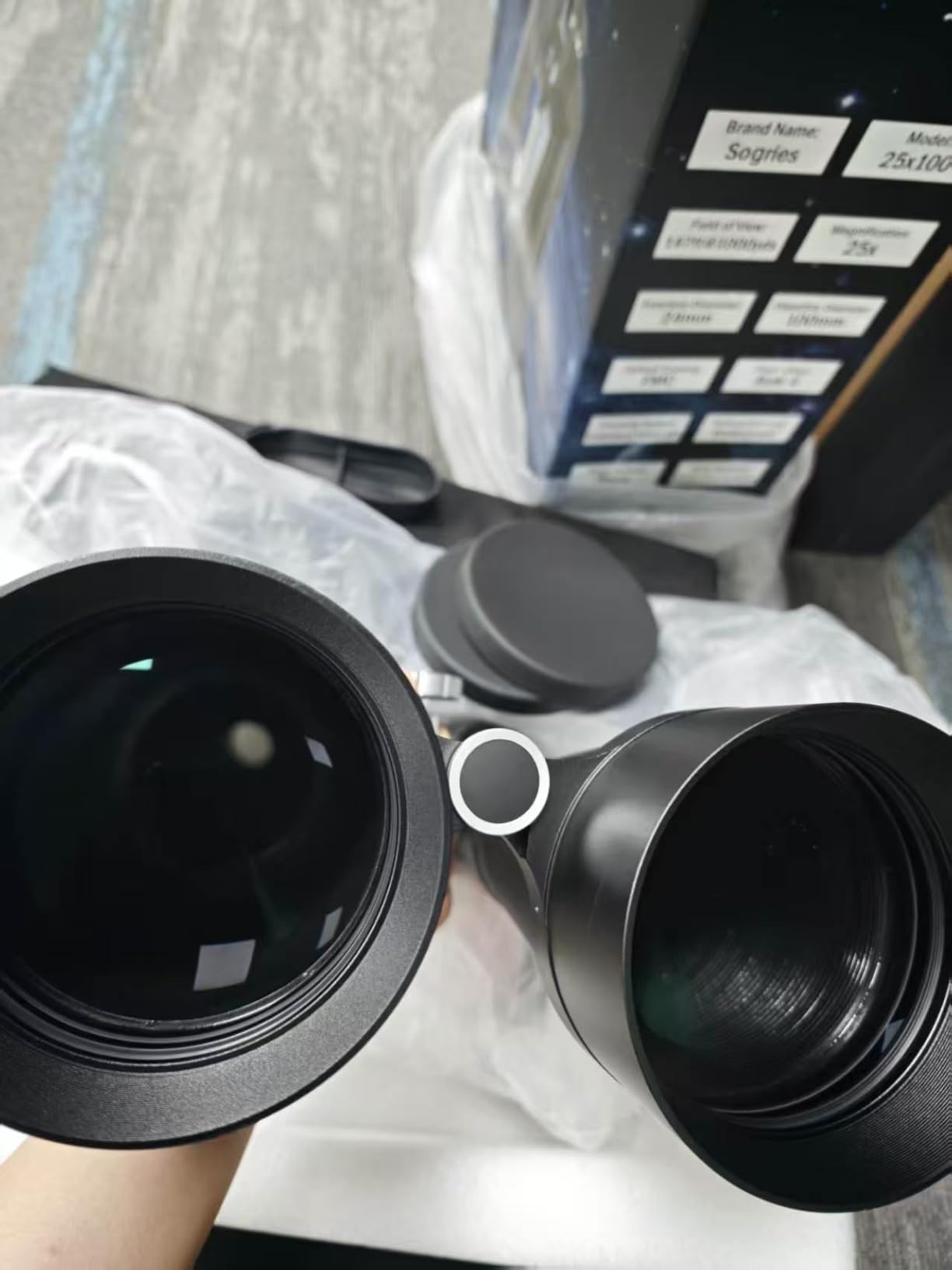
The Sogries 25×100 is the pick for people whose observing site is a suburban backyard rather than a dark site. At 100mm per objective with BaK-4 prisms and fully multi-coated optics across 6 elements in 4 groups, it collects enough light to hold up under moderate sky glow.
Owners report visible Jupiter moons and the Orion Nebula from suburban conditions, which is a real and frequently repeated claim rather than a marketing line. The 4mm exit pupil is matched to the magnification, and the 15.5mm eye relief is comfortable.
Build quality gets specific praise. The rubber-armored metal housing is described as shock resistant with a secure non-slip grip, and the nitrogen filling handles heavy rain, fog and humidity.
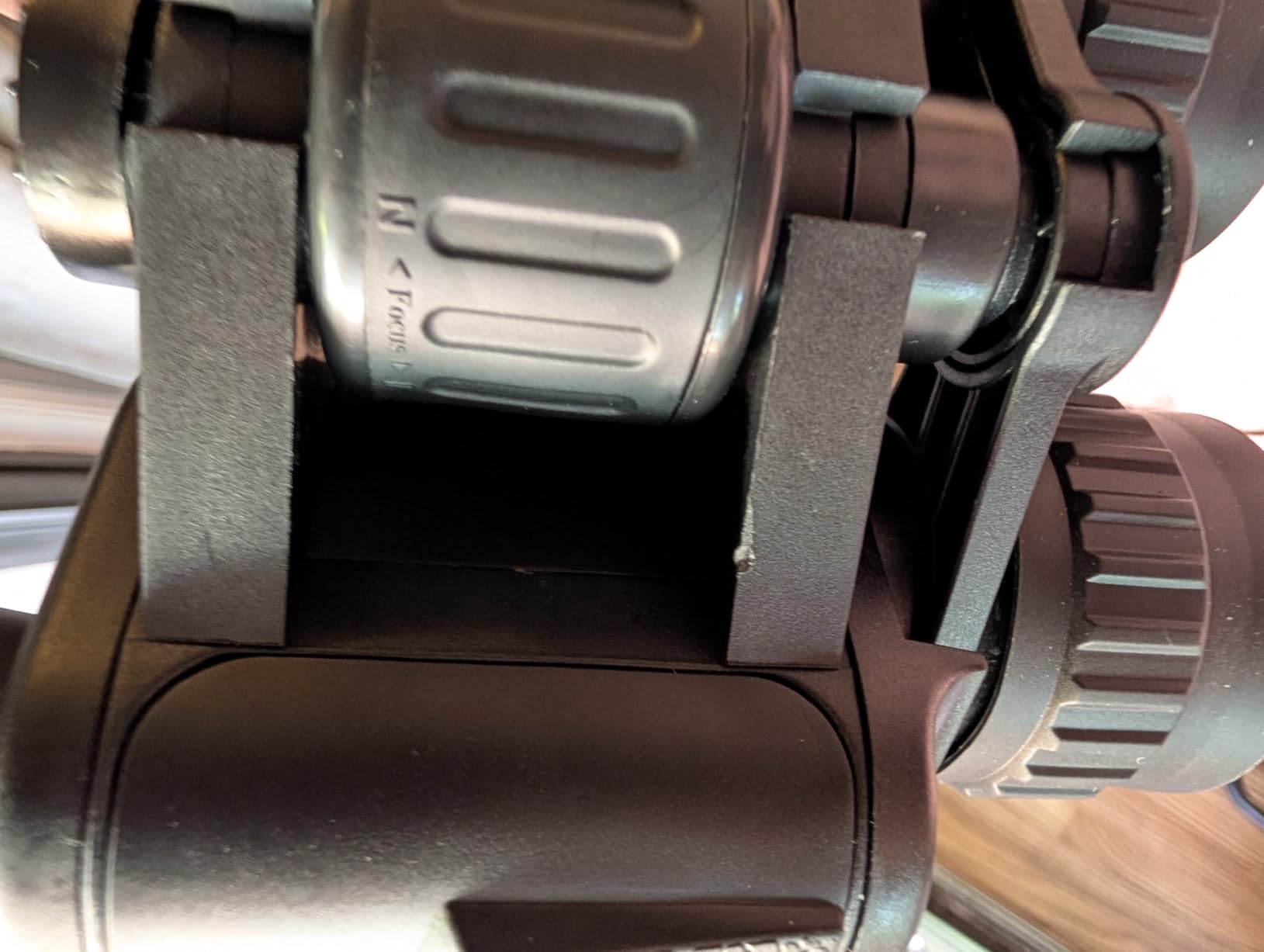
Reviewers also credit the packaging. A backpack, cleaning cloth and comfortable strap are included, which is generous for an instrument of this size, and the build is generally called solid.
The physical trade-offs mirror the Celestron 25×100. At 8.8 pounds and 16 inches tall, transport is a genuine chore, and the individual focus design means no single-turn centre wheel for fast re-acquisition.
Why aperture helps under light pollution
Light pollution raises the background brightness of the whole sky. A larger objective does not remove that glow, but it raises the contrast between a faint object and the background, which is what actually determines whether you see it.
That is the honest argument for 100mm glass in a suburban setting. The observers who get the most from it are the ones who also control the sky brightness at home, with shielding and no white light nearby.
Where the Sogries falls short
The narrow 2.8 degree apparent field is the tightest in the roundup, and owners describe target acquisition as demanding. Combined with 8.8 pounds, the instrument rewards patience and punishes spontaneous observing.
There is also a real share of examples arriving out of collimation with a doubled image, and at least one owner reports customer service responsiveness being a problem with a collimation fault. Check the barrels immediately and document any fault with photographs on arrival.
9. Pentax Jupiter 10×50 – Best Lightweight 10×50 for Naked-Eye Brightness
Pentax Juipter 10×50 Easy Viewing Large Aperture porro Prism Binocular, Black, 65912
10x50 porro
5mm exit pupil
50 degree apparent field
1.9 pounds
Not water resistant
Pros
- Highest relative brightness figure in the group at 25
- Multi-coated elements minimize unwanted reflection
- Center focus with easy access to the focus ring
- Rubber coating gives a firm non-slip hold
- 1.9 pounds with a 25-year limited warranty
Cons
- Not water resistant for rain fog or marine use
- 13mm eye relief is short for glasses wearers
- Narrow 50 degree apparent field
- Tripod adapter sold separately as TP-3
The Pentax Jupiter 10×50 is the oldest design in this roundup and still competitive. Its 4.6 rating comes from 128 reviews, so the sample is thin and you should read the consensus accordingly.
What stands out optically is the relative brightness figure of 25, the highest in the group, produced by 50mm objectives with anti-reflective coatings. At 10x that gives a 5mm exit pupil, the ideal size for a dark-adapted pupil, so the light the glass collects is light you can actually see.
At 1.9 pounds it is light enough for a long session handheld or resting on a wall, and the centre focus design puts the focus ring right under your fingers. The rubber-coated body gives a firm hold in cold hands.
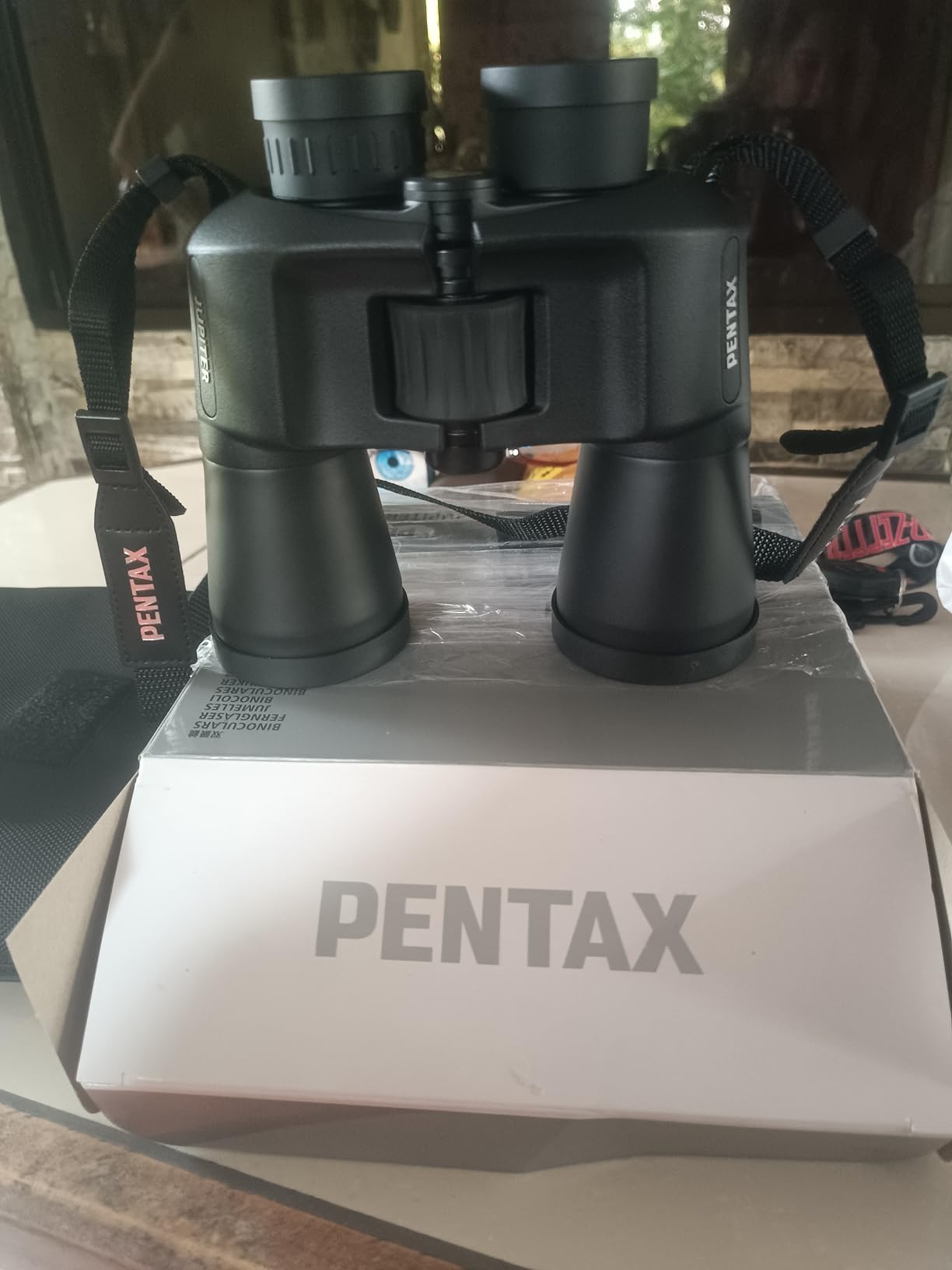
Owners highlight bright, clear images from the large objectives, multi-coated glass that keeps reflections down, and a light body that stays comfortable in the hand. The build feels like a product that was designed to last rather than discounted.
The 25-year limited warranty is the longest in this roundup, which is meaningful for a design with a long track record.
Why a 50 degree field is a fair trade
Compared with the 60 degree field of the Bushnell Falcon 10×50, the Jupiter frames slightly less sky at once. What it gains is the anti-reflective coating on a larger objective, and in practice that is the more valuable of the two.
A 50 degree apparent field still holds most of a typical constellation group comfortably, which is what wide-field astronomy actually requires.
Where the Jupiter falls short
It is not water resistant, which rules it out for wet conditions and for use on a boat. The 13mm eye relief is short for eyeglass wearers, so test it with glasses before committing.
The tripod adapter is an optional TP-3 accessory rather than an included one, and 10x is less magnification than the astronomy-focused models here. Owners also note it feels slightly heavy for its size over long carries.
Buying Guide: How to Choose Binoculars for the Night Sky
The specifications that decide astronomy performance are only four numbers, and every recommendation above follows from them. Once you can read a specification sheet the way we do below, the marketing stops mattering.
What 10×50 actually means
The first number is magnification, the second is the objective lens diameter in millimetres. So 10×50 means ten times magnification through 50mm lenses. The objective is the light collector, and light gathering power scales with the square of its diameter, which is why a 70mm objective gathers roughly twice what a 50mm does and a 100mm gathers about four times.
That square law is the single most useful fact in this guide. Aperture is the light-gathering lever, and no amount of extra magnification replaces it.
Magnification and the 10x handheld rule
Seven to ten times is the handheld range, and 10x is the practical ceiling. Above roughly 12x, hand shake becomes the limiting factor and the image never fully settles, no matter how good the glass is. r/telescopes consensus repeats this without much argument.
Anything at 15x or 25x should be treated as a tripod instrument. A monopod, a railing or a fence post counts as a tripod in practical terms, and that single support transforms the 15×70 from frustrating to excellent.
Aperture and light gathering
For a beginner, 50mm is the practical floor and 70mm is the comfortable target. Below 50mm you are holding it against a dark sky with too little light for faint objects. Above 70mm you are carrying real weight and needing support.
For the Milky Way from a dark site, reviewers generally treat 70mm as workable and 100mm as the point where faint structure starts to appear. From a suburban backyard, aperture matters more because contrast, not raw brightness, is the limiting factor.
Exit pupil and dark adaptation
The exit pupil is the objective diameter divided by the magnification. It is the diameter of the light beam leaving the eyepiece, and it must fit inside your dark-adapted pupil, which is about 7mm across after twenty minutes in the dark.
This is the constraint no competitor in this space explains clearly. A 25×70 produces a 2.8mm exit pupil, and a 10×50 produces 5mm. The 10×50 uses far more of the light it collects, which is why a bright 10×50 can beat a much larger pair seen at high power.
Porro prism versus roof prism
Porro prisms offset the barrels, which puts the eyepieces further apart, usually gives a wider apparent field, costs less, and is more tolerant of a knock. Most astronomy favourites here, including every Celestron, the Bushnell Falcon, the Sogries and the Pentax Jupiter, use porro prisms with BaK-4 glass.
Roof prisms keep the barrels straight, which is better for compactness and close focus, but cost more and are harder to align. The two Vortex models and the Nikon Monarch M5 use roof prisms, and both Vortex pairs use fully multi-coated lenses with dielectric treatments.
Coatings, and the ruby trap
A multi-coated lens has a coating on at least one surface. A fully multi-coated lens has one on every surface, and it transmits noticeably more light. Phase-correction coatings on a prism go further and improve contrast, which is why they show up on premium glass like the Nikon’s.
Avoid anything with ruby or red coatings. Those are daytime optics for bright-light use, they deliberately cut transmission so you can spot a bird against a bright sky, and they destroy your dark adaptation. Forum complaints about cheap daytime glass being marketed as astronomy binoculars almost always come back to this.
Field of view and eye relief
Field of view is quoted in two ways. Apparent field of view is the angular size the eyepiece shows you, and true field of view is how much sky actually fits in that cone, which equals the apparent field divided by the magnification. Sky sweeping needs a wide true field, roughly 7 degrees or more.
Eye relief is the distance from the last lens surface to your eye, and 15mm or more is the comfortable threshold for eyeglass wearers. The Pentax Jupiter at 13mm and the Bushnell Falcon at 9mm will both bother glasses wearers. The Nikon Monarch M5 at 18.4mm is the most forgiving.
Tripod, monopod or none
Below 10x, no support is needed and that is the entire appeal of a 10×50. Above 12x, a support is not a luxury. Every product here at 15x or 25x in this guide has a tripod adaptor or tripod-mount specification, except the Pentax Jupiter, which needs the optional TP-3.
Plan the mount into the purchase. The lightweight plastic adaptors included with the Celestron SkyMaster pairs are widely criticised as flimsy, and a metal adaptor costs very little by comparison.
Planets need a telescope
Binoculars show Jupiter as a disc with its four moons moving across it, Venus and Mars as small discs, and craters along the lunar terminator. They do not show Saturn’s rings resolved, Jupiter’s belts, or the surface of Mars. Forum consensus is consistent on this, and it is worth saying plainly before you buy.
If planetary detail is the goal, buy a telescope. Binoculars are the correct instrument for learning the sky, sweeping the Milky Way and finding your deep-sky targets.
What to avoid in astronomy listings
Be sceptical of vague coating claims. A listing that says “ED glass” or “fully multi-coated” without naming a manufacturer is a marketing claim rather than a specification, and the near-identical unbranded listings that dominate marketplace search results are frequently exactly that.
Also be cautious with very high review counts on very new listings, and with pairs sold as astronomy binoculars whose objective lenses show an orange or red tint. Both are recurring complaints across the binocular forums.
Checking a new pair on arrival
Three checks take ten minutes and catch almost every early problem. First, collimation: focus on a distant straight edge or a bright light at night, and if the barrels at infinity do not merge into a single circle, the pair is out of alignment. Second, focus behaviour: turn the centre wheel through its full range and check for stiffness, wobble or a diopter that drifts back. Third, coatings: look at the objective lenses under a light source and confirm a faint green or purple sheen rather than a solid orange or red tint.
Do all three before the packaging goes back. Reviewers across these products report factory collimation faults often enough that it is a realistic risk rather than an exception.
What You Can Actually See With Binoculars
What follows is the part most guides leave out: a target list. These are realistic expectations, not marketing claims, based on what owners of the models above report seeing.
The Moon. Any model here will show craters along the terminator, where the low-angle light makes relief obvious. The bigger apertures and higher magnifications on the 15×70, 25×70 and both 25x100s show noticeably more of that relief, and the 20×100-class aperture is where large craters start to break up.
Jupiter and its four moons. Visible in every model here, including the budget 10x50s. The Galilean moons shift position over an evening, which makes them the easiest demonstration that the sky is moving. Jupiter’s disc becomes a disc rather than a point, and the 25×70 and the 25x100s show more.
The Pleiades and other open clusters. The Pleiades resolve into individual stars in a 10×50 and above, and the wider fields of the 15×70 and 25×70 hold the whole Hyades group. Open clusters are the most forgiving deep-sky category for beginners.
Orion’s Belt and the Orion Nebula. The Belt is naked-eye and appears in every model listed. The Nebula itself is reported visible in the 70mm and 100mm pairs, including from suburban yards according to owner reports, while a 10×42 will not reliably show it.
Andromeda and bright galaxies. Andromeda is a fuzzy patch in a 10×50 and a broad oval glow at 15x, and the 100mm objectives show it with more contrast against a dark sky. Very faint galaxies need a dark site regardless of aperture.
Double stars. The 15×70 and 25×70 are the practical tools here, and 25x is roughly the magnification where wider doubles begin to split. Longer separations need a tripod-mounted pair like the 25x100s.
Constellations and the Milky Way. This is the wide-field category, and it is the strongest argument for a 10x pair. Seeing Cassiopeia, Cygnus or Scorpius whole in one view is the experience that makes a night sky legible, and 8×42 or 10×50 models are designed for it.
Star hopping for a telescope. Binoculars are how you find things. A wide-field 10x is the standard tool for matching a chart to the sky and identifying the area around a target before you point a telescope at it. Every experienced observer on the forums does this routinely.
Frequently Asked Questions
What are the best binoculars for astronomy and stargazing?
For handheld use, a 10×50 with a 5mm exit pupil is the most efficient layout, because a dark-adapted pupil is around 7mm. The Celestron SkyMaster 15×70 is the value pick for a bigger view, the Celestron SkyMaster 25×70 leads our list for high-power astronomy, and the Vortex Diamondback HD 10×50 is the sharpest handheld option. Anything above 12x needs a tripod, a monopod or a railing.
What are the best binoculars for viewing planets?
Binoculars show Jupiter as a small disc with its four moons moving across it, Venus and Mars as discs, and craters along the lunar terminator. They do not resolve Saturn’s rings, Jupiter’s belts or the surface of Mars. If planetary detail is what you want, binoculars are the wrong instrument and a small tabletop telescope will serve you better.
What binocular magnification is best for stargazing?
Seven to ten times is the handheld range and 10x is the practical ceiling, because hand shake becomes the limiting factor above roughly 12x. A 10×50 pairs that magnification with a 5mm exit pupil, which matches a dark-adapted pupil of about 7mm. Higher powers such as 15x and 25x are worth having, but only with a tripod, a monopod or image stabilization.
Can you see stars with 10X42 binoculars?
Yes. A 42mm objective gathers roughly 70 percent of the light of a 50mm, and a 4.2mm exit pupil still fits inside a dark-adapted pupil, so constellations, the Pleiades, Orion’s Belt, Jupiter’s moons and lunar craters are all clearly visible. What you will miss compared with a 10×50 is faint deep-sky objects such as the Orion Nebula under suburban skies.
Do I need a tripod for 15×70 binoculars?
Practically, yes. At 15x the image shakes continuously in the hand, and forum consensus treats 10x as the handheld limit. A monopod, a railing or a fence post counts as a tripod in practical terms and transforms the experience. The Celestron SkyMaster 15×70 includes a built-in 1/4-20 thread, though owners widely recommend replacing the supplied plastic adapter with a metal one.
Are cheap binoculars good for astronomy?
A budget 10×50 is genuinely usable for the Moon, the planets, open clusters and constellation sweeping, and many beginners start there without regret. What budget glass cannot do is show faint deep-sky objects, because light gathering scales with the square of the objective diameter. Avoid pairs with ruby or red coatings, which are daytime optics, and be sceptical of unbranded listings claiming ED glass or fully multi-coated optics without naming a maker.
Conclusion: The Best Binoculars for Astronomy in 2026
If you want one recommendation, take the Celestron SkyMaster 25×70. It is a real astronomy binocular with a large following, it holds a 4.3 rating across 9171 reviews, and mounted on a tripod it shows the most for the effort.
If you want the least amount of gear, the Celestron SkyMaster 15×70 is the value pick and the pair we would hand to a beginner. If you want the sharpest handheld view and one pair for the whole day, the Vortex Diamondback HD 10×50 or the lighter Nikon Monarch M5 both serve well. If you want the faintest objects, the Celestron SkyMaster 25×100 and the Sogries 25×100 collect the most light here, and both are tripod instruments you plan around rather than carry.
Whatever you choose, check collimation on arrival and remember the exit pupil rule: divide the objective by the magnification, and if the result is well under 7mm, you are wasting light your eyes could have used. We have covered the options in our guide to the best binoculars for stargazing, the best binoculars for viewing the Moon, and our picks for bird watching, hunting and kids.