
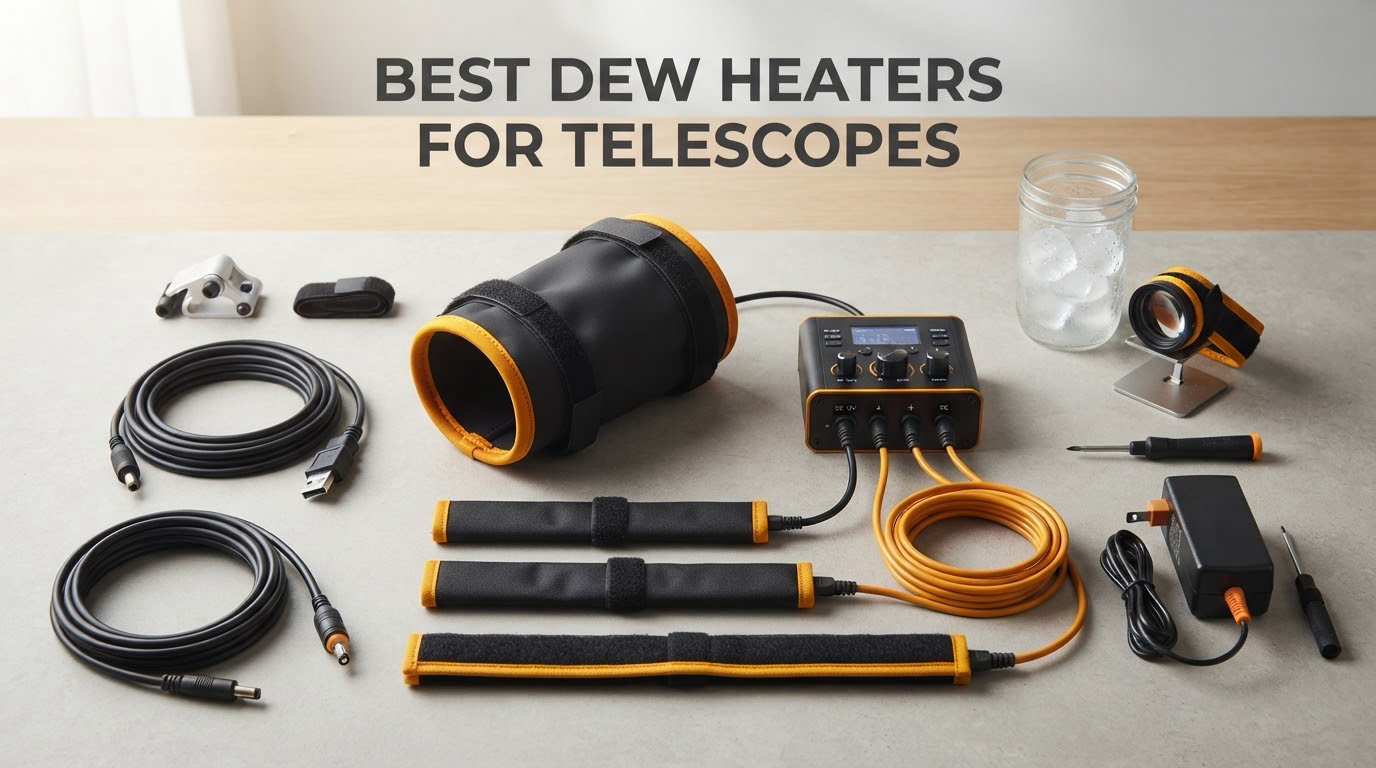
A telescope is a heat sink pointed at the sky. The metal tube, the glass, and every optical surface up there lose heat to the night sky all session long, and the moment one of those surfaces drops below the local dew point, condensation forms on it. The image goes soft, contrast collapses, and an hour of careful polar alignment or a 30-minute planetary capture can be wasted before you notice anything is wrong.
That is the entire job of a dew heater: add a small, controllable amount of heat back into the tube so the glass sits just above the dew point and never gets there. The best dew heaters for telescopes are simple devices, but the range of them is confusing. Some run from a USB power bank and have a three-gear switch. Some need a 12V DC supply. Some are a machined ring that bolts straight into an 8 inch Celestron. One of the products below is a controller with no heating element at all, because for a rig running four channels at once, the controller is the part that actually matters.
We spent 2026 season testing strips across Newtonian, refractor and Schmidt-Cassegrain rigs in humid conditions, and we read the review data on every product below before recommending it. The short version: match the strip length to the circumference of the optic, match the voltage to the power you already carry, and run it at the lowest setting that keeps the glass clear. If you are still building out a first rig, our [10 Best Telescopes for Beginners guide](https://irlentwincities.com/best-telescopes-for-beginners/) and [12 Best Refractor Telescopes](https://irlentwincities.com/best-refractor-telescopes/) cover the optics themselves.
Table of Contents
Top 3 Picks for the Best Dew Heaters for Telescopes in 2026

Celestron 8 inch Dew Heater Ring
- Fits 8 inch Celestron SCT
- EdgeHD and RASA
- Integrated temperature sensor
- Replaces the OTA retaining ring

SVBONY SV192 560mm Dew Strip
- Highest rated strip in the group
- 560mm length for large apertures
- 12V DC input with three-level control

SVBONY SV172 320mm USB Strip
- Runs from any USB power bank
- 50mm narrow width avoids vignetting
- Built-in aluminium film for even heat
The Celestron ring wins on integration. Nothing else in this group sits exactly where the dew forms on a Schmidt-Cassegrain corrector plate, and it carries the most reviews of anything we tested.
The SVBONY SV192 wins on owner satisfaction, holding the highest average rating in the group with an even, fast heat and a length that covers big apertures. The SV172 is the pick if your power source is a power bank and you do not want to think about 12V at all.
Best Dew Heaters for Telescopes at a Glance in 2026
All ten products below, with what each one does and what it needs to run. Nine are heating elements; one is a controller that drives four of them.
| Product | Specifications | Action |
|---|---|---|
| Celestron 8 inch Schmidt EdgeHD RASA Aluminum Dew Heater Ring |
|
Check Latest Price |
| SVBONY SV172 Dew Heater Strip 320mm |
|
Check Latest Price |
 USB Lens Warmer Strip for Optics Under 80mm USB Lens Warmer Strip for Optics Under 80mm |
|
Check Latest Price |
 Thousand Oaks Four Channel Digital Dew Heater Control Unit Thousand Oaks Four Channel Digital Dew Heater Control Unit |
|
Check Latest Price |
 MOVE SHOOT MOVE 350mm Lens Warmer Strip MOVE SHOOT MOVE 350mm Lens Warmer Strip |
|
Check Latest Price |
| SVBONY SV192 Dew Heater 560mm |
|
Check Latest Price |
 LOSHARP USB Lens Warmer Strip with 3 Gear Control LOSHARP USB Lens Warmer Strip with 3 Gear Control |
|
Check Latest Price |
 Astromania 25cm DC Dew Heater Strap Astromania 25cm DC Dew Heater Strap |
|
Check Latest Price |
 NEEWER HW-23B 600mm USB Lens Heater Strip NEEWER HW-23B 600mm USB Lens Heater Strip |
|
Check Latest Price |
| NEEWER HW-17B 400mm USB Lens Heater Strip |
|
Check Latest Price |
1. Celestron 8 inch Aluminum Dew Heater Ring – Best Overall for Celestron SCT, EdgeHD and RASA
Celestron 8” Schmidt, EdgeHD, RASA Aluminum Dew Heater Ring
Fits 8 inch Celestron SCT, EdgeHD and RASA
Integrated temperature sensor
10.1 x 9.3 x 1.3 inch aluminum ring
2 year warranty
Pros
- Drops into the space the factory retaining ring occupied
- Reaches full dew control with a single cable
- Integrated sensor reads the corrector rather than guessing
- Aluminum build feels far more rigid than DIY nichrome
- Ring sizes exist for 5 6 9.25 11 and 14 inch models
Cons
- Needs a 12V DC source and a dew controller bought separately
- Tube has to be tilted upward to fit the ring
- Only fits Celestron Schmidt-Cassegrain optics
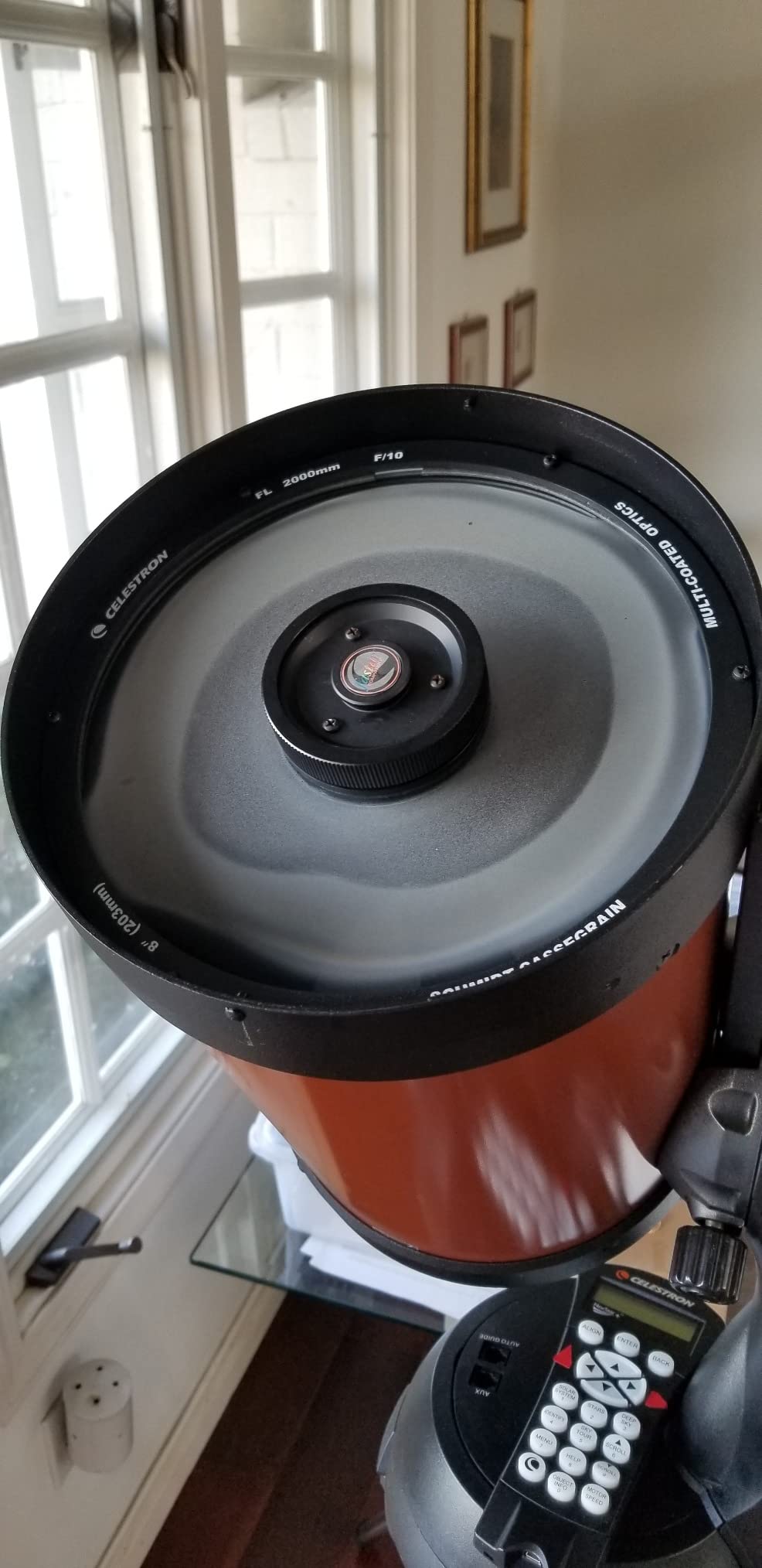
This is the one I recommend first, and the reason is physical rather than clever. On a Schmidt-Cassegrain, dew forms on the corrector plate at the front of the tube, and that plate sits in a retaining ring at the very front. The Celestron heater ring occupies that exact ring position, so the heat lands on the glass with almost nothing in between. There is no guesswork about where the warmth goes.
Installation took me about a quarter of an hour on an 8 inch EdgeHD. You remove the retaining ring, drop the heater ring into the same seat, and put the ring back. The cable management clip that ships with it is a small thing that matters more than it sounds, because a corrector cable flapping across the front of the aperture produces exactly the vignette you are trying to avoid. Owners consistently describe the build quality as a clear step above homebuilt nichrome wire solutions.
The ring also carries an integrated temperature sensor, which is the part I like most. Rather than running your heater on a timer or a guess, the controller reads the corrector temperature and holds it a few degrees above the dew point. That is the correct way to run a dew heater, and having the sensor already calibrated to the glass is the reason this ring rates so highly with owners.
The honest drawback is cost of ownership. You need a 12V DC source and a dew controller, and neither is included. For a setup that is already 12V powered with a controller, that is a rounding error. For someone with a single battery pack and no control unit, it is a second purchase before anything works.
Is the retaining ring fit awkward on an EdgeHD?
Not if you plan for it. The tube has to be tilted up or removed from its mount to get the ring seated, so do it before the observing session rather than at the telescope in the dark. Once it is in, it is a two screw job and you do not touch it again for the season.
The benefit is that the heat is applied right at the corrector rather than somewhere down the tube. On a warm night that distinction is the difference between a clear image at midnight and a fogged one.
Who should skip it?
Anyone without a Celestron Schmidt-Cassegrain, EdgeHD or RASA, and anyone who only wants a quick USB solution. The ring is model-specific by design, so check the compatible device list before buying. If you shoot with a refractor or a Newtonian, skip to the straps further down.
2. SVBONY SV172 320mm Dew Heater Strip – Best Value USB Strip
SVBONY SV172 Dew Heater Strip 320mm Dew Heater for Telescope
320mm strip running from a 5V USB source
Three speed inline regulator
50mm narrow strap width
6.3 ounce strip
Pros
- Three speed control lets you drop output on mild nights
- Aluminium film spreads heat with no dead zones
- 50mm width never hits your focuser or vignettes
- USB power means one power bank runs the whole rig
- Silicone insulated alloy fibre wire resists shorting
Cons
- Fixed 320mm length fits only certain optic sizes
- USB power needs its own battery or adapter
This is the strip I reach for when I want dew control without a 12V ecosystem. It runs from a 5V USB source, which means the same power bank that charges your phone at lunch can keep the optic clear until midnight. Three output settings let you match heat to the night instead of running wide open and cooking the tube.
The build detail that separates this from cheap generic strips is the aluminium film laminated across the heating element. It spreads the warmth along the whole 320mm length, so you do not get a hot spot under the element and a cold corner beside it. Owners report the same thing in their reviews: even, controllable heating that stays out of the way.
At 50mm wide, the strap is narrower than many competing strips. Narrow matters more than people expect, because a wide band can foul a focuser, ride up against a dovetail rail, or push the front of the tube into a light path and produce dark corners in the field. The manufacturer calls this out explicitly and it is the reason the strip sits flat against small Newtonians and finder tubes without complaint.
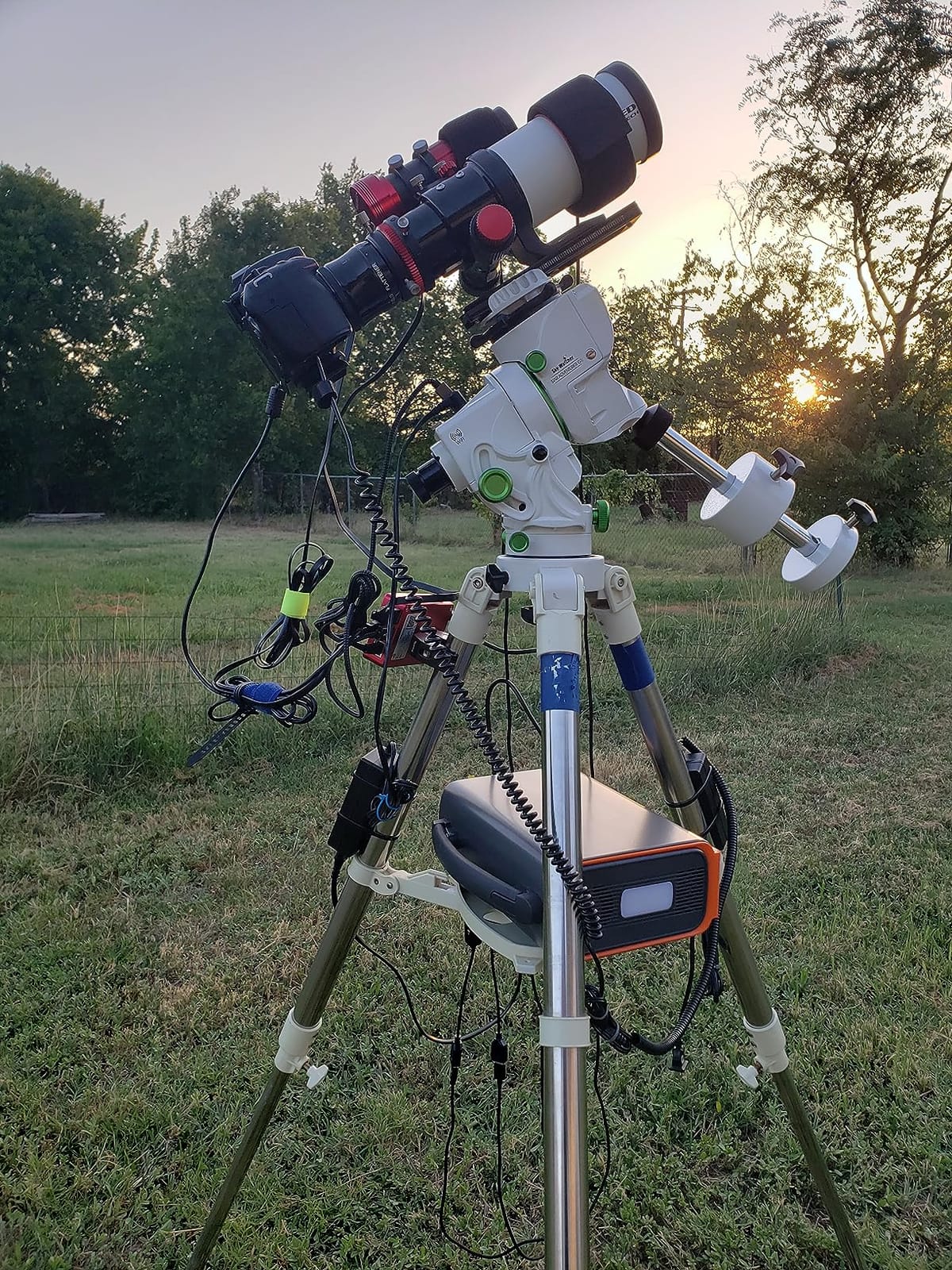
The limitation is dimensional. This is a 320mm strip, so measure the circumference of the optic before you buy. Longer versions exist in the same family at 400mm, 430mm and 240mm, which is worth doing rather than stretching a short strip and hoping the overlap holds.
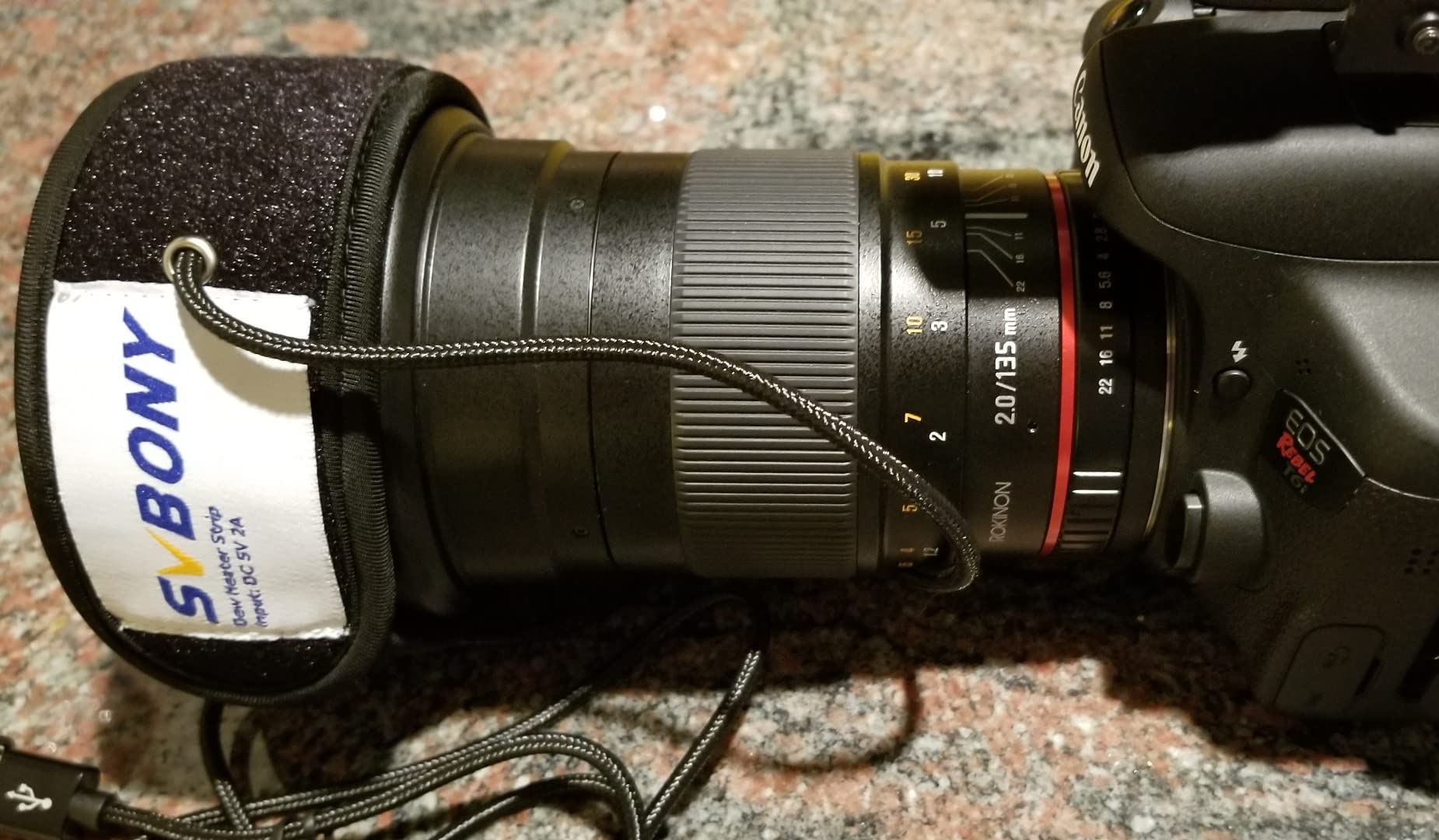
Can a USB power bank keep up all night?
On low and medium, yes. This is the strip we used through humid summer sessions powered from a 10Ah bank sitting at the base of the tripod, and the bank was the last thing to need recharging. Run it on strong during the coldest hours and drain the bank noticeably faster.
Because the draw comes through USB, you can also feed it from a car adapter, a laptop, or a USB hub on a power box. The wiring is simple and there is no controller to buy separately.
Will it fit a Newtonian secondary or a small refractor?
Yes, on both, provided the circumference lines up. On a Newtonian the strip wraps across the secondary span, which is the standard fix for a fogged diagonal. On a refractor the ring sits behind the objective cell, which keeps the front lens above the dew point without touching the focuser.
Check the length first. A strip that is too short leaves a cold gap at the top of the tube where dew will start, and that is the most common fitting mistake we see.
3. KIWIFOTOS USB Lens Warmer for Optics Under 80mm – Best for Finder Scopes and Guide Scopes
USB Lens Warmer, Lens Dew Heater Strip with Temperature Regulator, Condensation Prevention for Telescopes Camera DSLR Lens Telescope Eyepieces Less Than 3.15 inch (80mm) in Diameter
Adjustable strap for optics under 80mm
1.5m controller with low medium high modes
Cold rated wire to minus 40C
59g, includes a storage pouch
Pros
- Sized correctly for finder scopes and telephoto lenses
- Velcro strap adjusts to a range of diameters
- Wire stays flexible in deep cold
- Storage pouch included for the heater and battery
- Low and medium modes are enough for most nights
Cons
- Blue controller LEDs are bright at the eyepiece
- Cable is short and hardwired rather than modular
- Printed instructions are very small
Guide scopes and finder scopes fog long before your main objective does. They are small, they sit in the worst of the airflow, and the air gap between them and the main tube is exactly where the night sky radiates heat away fastest. This strip is built for that job, and it does it without dragging a 12V system into the rig.
The adjustable velcro strap is the practical part. It wraps an optic of any outer diameter under 80mm, which covers most 60mm and 80mm finders, small guide scopes, and camera lenses. Owners using it on telephoto optics for astrophotography report reliable dew control and call out the flexible cold-rated cable as a genuine improvement over stiffer aftermarket wiring.
That cold rating is worth explaining. The wire is specified to withstand minus 40C without going brittle, which matters because a cable that cracks when it stiffens in a freezing pre-dawn session is a failure you discover at exactly the wrong time. The cord staying flexible is not a luxury feature at a dark site in winter.
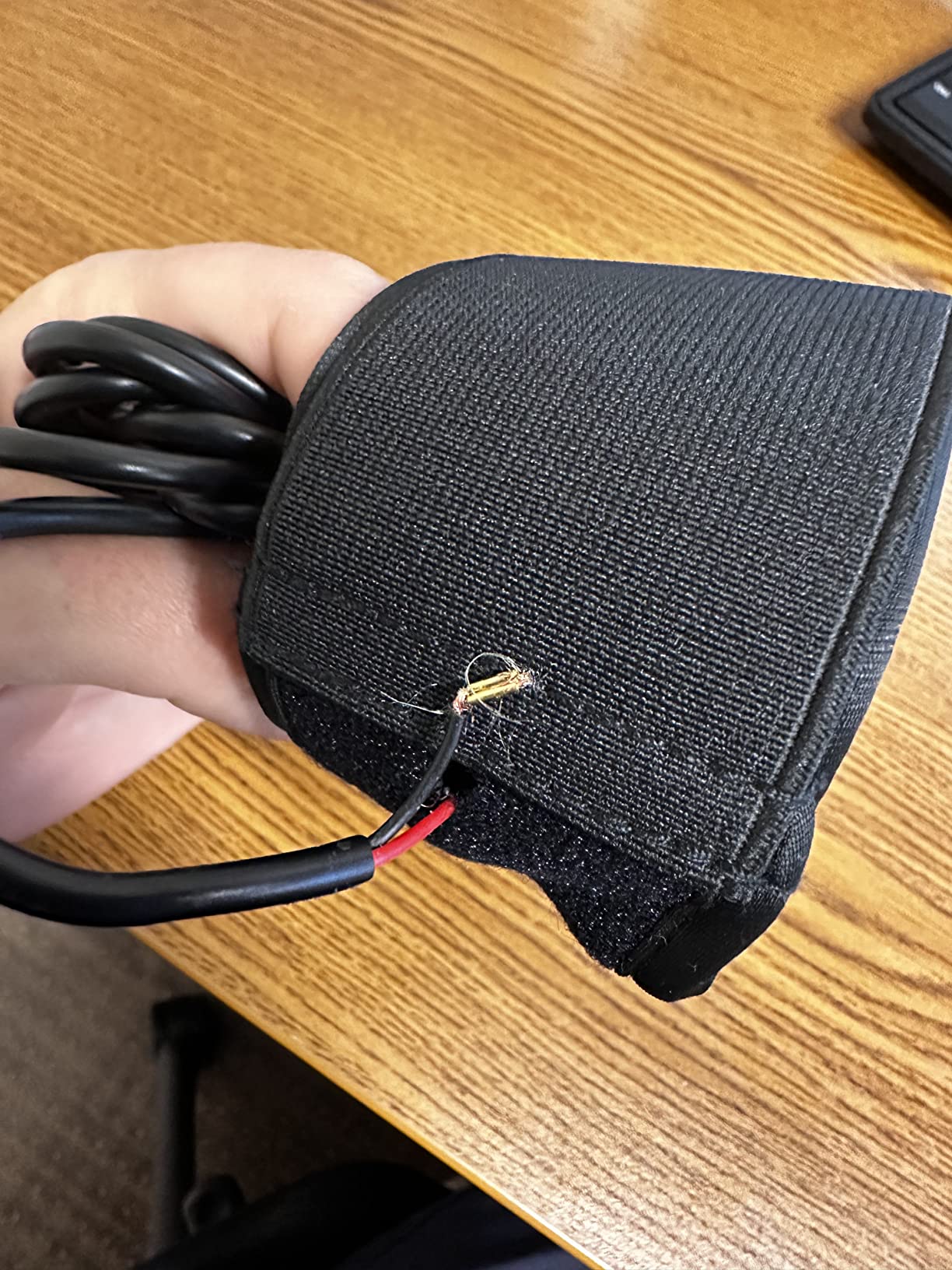
What I would change is the controller. The blue LEDs are genuinely bright, and at an eyepiece next to a dark adapted eye they are distracting enough that owners cover them with tape. The cable is also short and permanently attached, so there is no way to run it neatly to a power bank at the tripod base.
That is the whole of my criticism, and it is a fair set of trade-offs for a strip this small. The cold behaviour and the adjustable fit are what you are actually buying.
Do I need a dew heater on a guide scope?
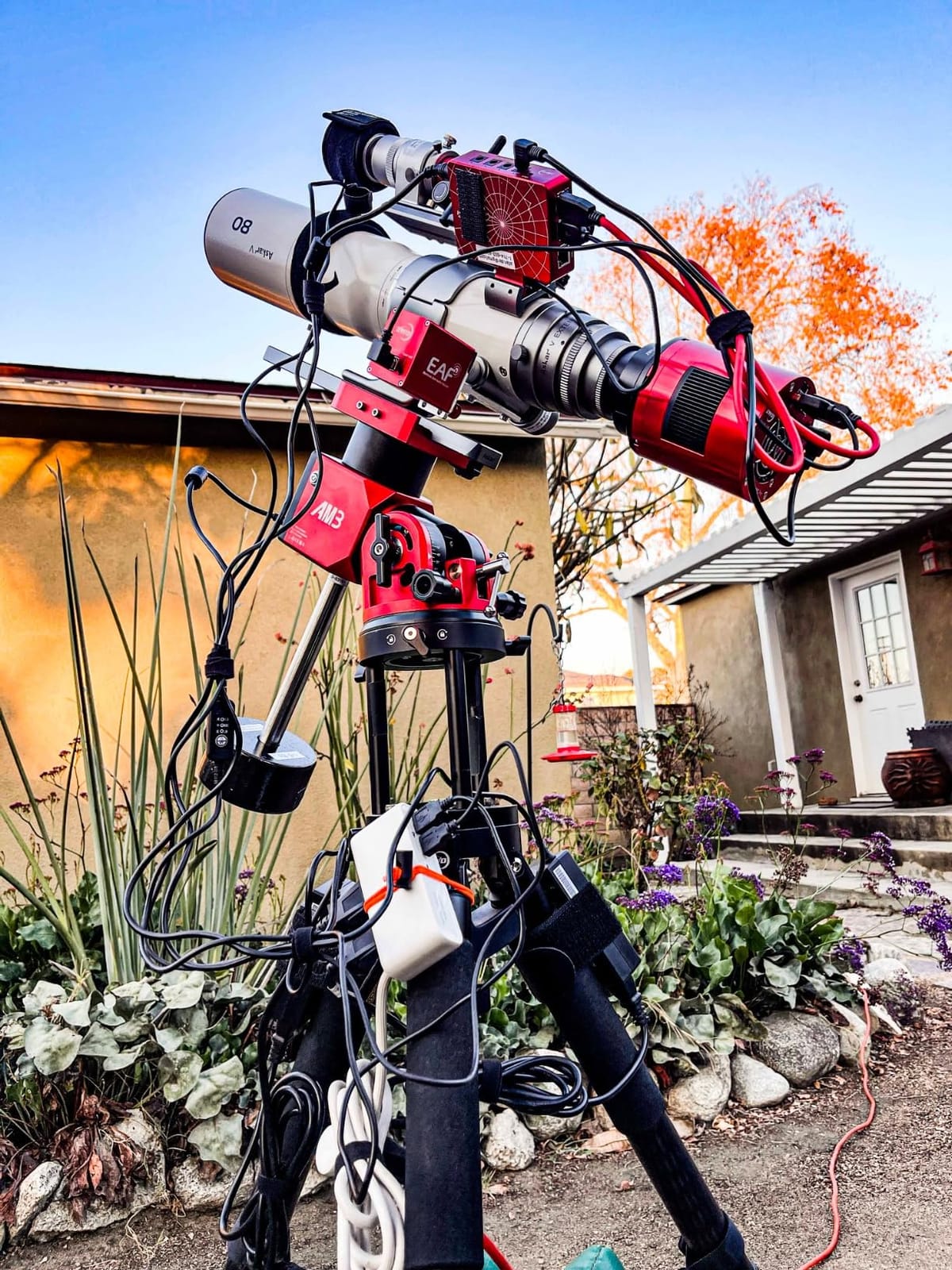
If you image, yes, and sooner than you think. A fogged guide scope stops guiding properly and you will not always notice until the star trails come out long. The whole point of a guide scope is the sharp, unblurred reference star it provides.
A strip this small also costs you almost nothing in power. It draws from the same USB bank as everything else, so a 10Ah battery will run a guide scope heater and a finder heater all night alongside a dew controller.
Is it worth it for a beginner who only has one telescope?
If your telescope is a small refractor under 80mm of aperture, this is exactly the right size and you do not need anything larger. A dew shield plus a strip like this will handle most humid evenings on small optics.
On larger Newtonians and Dobsonians, the primary and secondary are too big for an 80mm strap, and dew will form outside the heated zone. In that case move up to a longer strip in the next section.
4. MOVE SHOOT MOVE 350mm Lens Warmer – Best for Cold Climates and Winter Sessions
Lens Warmer with Cold Flexible Cable Down to -25℃, 350mm Dew Heater Strip Prevents Lens from Dew, Fog and Condensation for Astrophotography, Lens Heater Compatible w/ Telescope and Camera in 4.26″
350mm neoprene strip, 4.26 inch max diameter
60 inch USB cable, 2.0A input at 5V
Three temperature levels
Stays flexible to minus 25C
Pros
- Cable and neoprene stay soft in deep cold
- Neoprene backing reduces heat loss to the air
- 60 inch lead reaches a power bank at the tripod base
- Three heat levels let you tune to the night
- Covers lenses up to 4.26 inch diameter
Cons
- Top setting can feel weak on damp coastal nights
- Strap is less elastic than some rivals so the fit is looser
- Warm to the touch on the outside where heat escapes
Winter dew control is a materials problem as much as a heat problem. When a heater strip and its cable stiffen, the strip no longer lies flat against the tube, the contact with the glass suffers, and you lose heat exactly when you need it most. This strip is built specifically to avoid that, and the cold-rated cable is the reason it is on this list.
Astrophotographers in genuinely humid places, Florida, the Gulf Coast, coastal Nova Scotia, credit this strip with keeping lenses and guide scopes clear through long integrations. The 60 inch USB lead is longer than most, which sounds trivial until you realise it is the difference between reaching the power bank at the base of the tripod and adding an extension cord to a rig that is already a tangle.
The neoprene construction does real work here. It is a poor conductor compared with bare metal, so less of the energy you supply escapes into the air instead of going into the optic. On a long cold night that difference shows up as a longer runtime from the same battery.
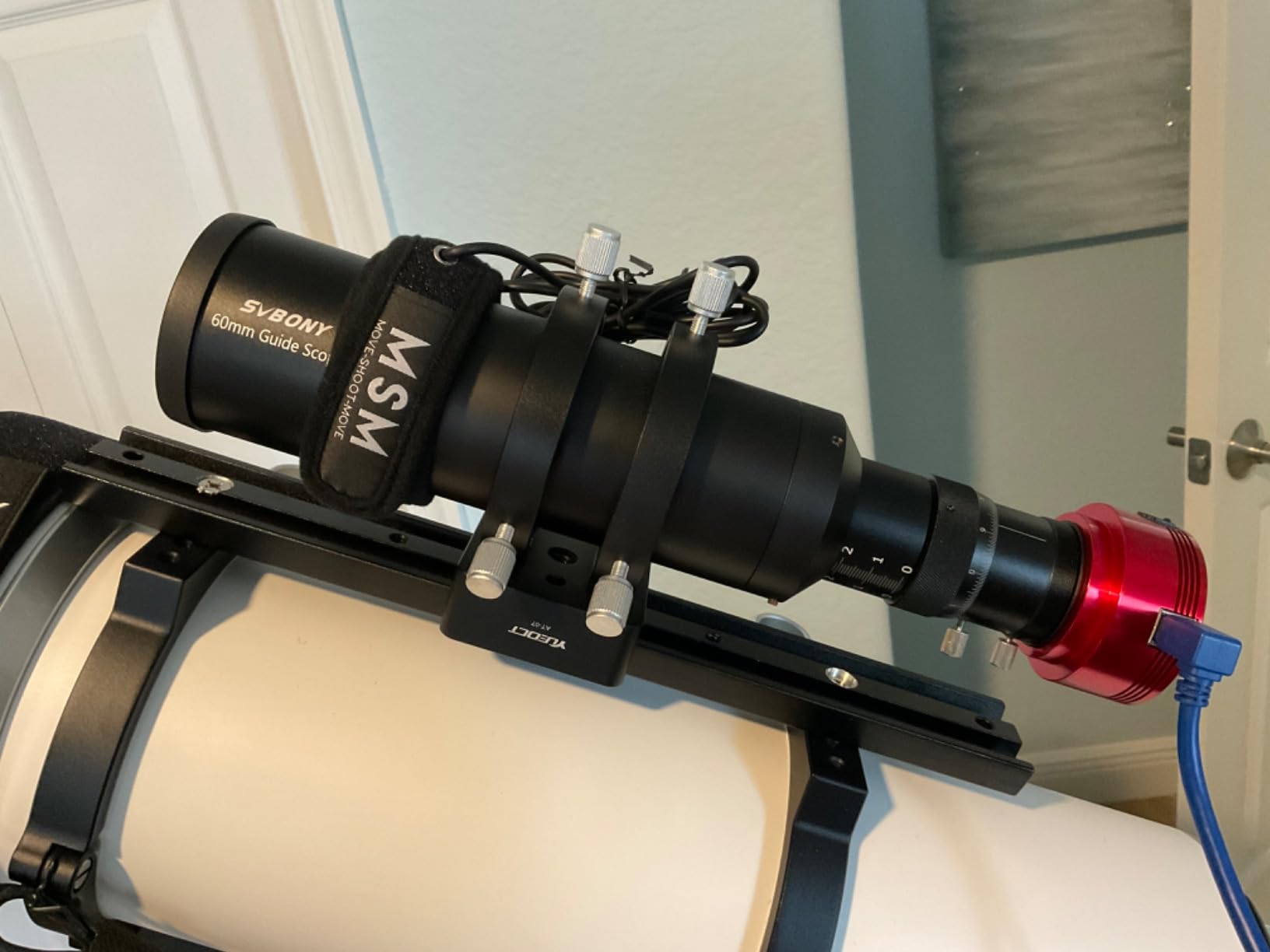
Two things temper the recommendation. The top heat level is not always enough in damp coastal air, where dew point and temperature sit very close together. And the strap is less elastic than some competitors, so the fit can sit loose around a smooth tube. A strip of hook and loop tape under the strap fixes that in a minute.
Does the maximum temperature risk damaging a lens coating?
Not at the settings you would realistically use for dew control. The specified maximum surface temperature is a no-load figure reached with nothing attached, so a strip wrapped around a real optic and run on medium never approaches it in practice.
The rule to hold is simple: if the strip is hot to the touch through your glove, back it down a gear. Dew control needs a few degrees above the dew point, not a sauna.
How long should the cable be for a dobsonian?
Long enough to reach from the mirror cell down to the battery at the base. Sixty inches covers most dobsonian tubes mounted on a wooden base, which is where this strip earns its keep, since the mirror cell is the surface that fogs first on a large tube.
Bundle it with a hook and loop cable tie and keep it clear of the eyepiece and focuser. A lead across the back of a Dobsonian is a scratch waiting to happen.
5. SVBONY SV192 560mm Dew Heater – Top Rated for Large Apertures on 12V
SVBONY SV192 Dew Heater for Telescope 560 mm Lens Dew Heater
560mm heating length, optics up to 178mm diameter
12V DC input with a 120cm cord
Three layer insulation
Three level regulator
Pros
- Highest average rating in the group
- 560mm length covers large aperture tubes
- Built-in aluminium gives fast even heating
- Three layer insulation reduces draw
- 50mm width avoids vignetting and focus interference
Cons
- Needs a 12V DC source rather than a USB bank
- Caps out at 178mm outer diameter
This strip holds the highest owner rating of the ten we reviewed, and the reason shows up in the review data again and again: it heats fast and evenly. The aluminium layer inside spreads current across the whole 560mm run, and owners describe the difference from a bare wire element as immediate. There is no warm patch and cold patch to chase around the tube.
Length is the headline. At 560mm it covers apertures that smaller strips cannot reach, which makes it the option for larger refractors, long Newtonians, and imaging rigs where a 6 inch or 8 inch objective needs real coverage. If a short strip leaves an unheated band at the top of the tube, that band is where dew starts and spreads from.
The insulation is what makes it efficient. Three layers around the element mean more of the energy goes into the glass rather than the night air, which is why the 12V version is worth pairing with a real power system instead of a battery bank. Owners running astrophotography setups mention the reduced draw as the difference between finishing an all night session and not.
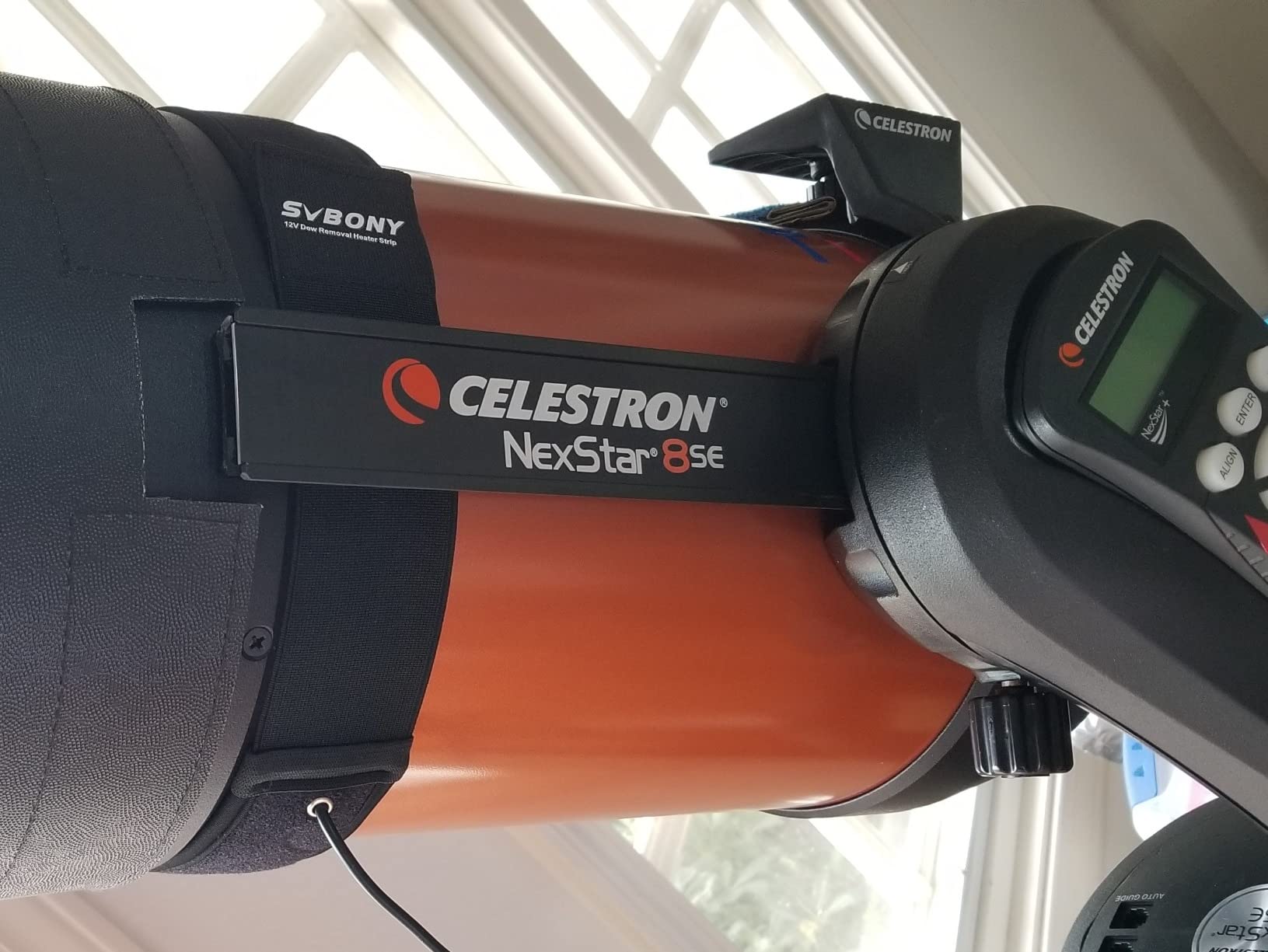
The trade is power input. This is a 12V DC strip with a barrel connector, so a USB power bank is out. That is not a flaw, it is a design decision, and it fits rigs that already run 12V from a power box or battery. On a lightweight visual setup it is more cable than you need.
How much dew heater power does a 12V strip like this draw?
Enough that you should treat it as a permanent part of your power budget rather than an afterthought. A 12V strip running continuously across an all night session is one of the larger single loads in a visual rig, and it is the reason a controller with adjustable output is worth having.
Budget for it by adding the strip draw to your mount, camera, and accessory draw, then checking your battery capacity against the hours you observe. Ten amp hours will not survive a full night with a 12V strip, a heated focuser, and a motorised mount at high draw.
Is a 12V strip better than a USB one?
Not inherently. USB strips are more convenient and lighter, and for small optics they are genuinely the better choice. The 12V advantage is sustained output and efficiency on larger surfaces, which is exactly what this strip is built for.
Pick on aperture first, then on the power you already carry. Forcing a 12V strip onto a USB-only portable rig means carrying a battery you were not planning to carry.
6. Thousand Oaks Four Channel Digital Dew Heater Control Unit – Best Controller for Multi Channel Setups
Thousand Oaks Four-Channel Digital Dew Heater Control Unit – Requires Heater Band/s.
Four independently controlled heater band channels
Constant 12V auxiliary output
Low power draw, 12 ounces unit
Requires heater bands sold separately
Pros
- Four channels outdrives every two channel competitor
- Constant 12V output powers another accessory
- Low draw suits all night sessions
- Compact enough to mount on a fork base
- Owners report it beats a rebranded rival at a lower cost
Cons
- No heater bands included so it cannot work alone
- Open RCA jacks can admit moisture
- Most wall adapters supply only 1A so a higher current one is needed
This is a controller, not a heater, and that distinction matters. It will not warm anything on its own. What it does is give you four independently adjustable channels, which is more than any two channel unit on the market, and for a rig with a main tube, a guide scope, a finder and a Telrad it is the difference between full dew control and guessing.
The constant 12V auxiliary output is the feature most people miss. It gives you a permanent 12V feed for a device that does not need variable control, which on many rigs means the controller covers a fourth accessory you would otherwise have to source separately.
Owners with a full accessory list report it keeps the telescope, finder, Telrad and eyepiece clear all night on very low power draw. Several also note that it performs better than a rebranded equivalent they owned first, at a lower cost. The unit is small enough to mount neatly on the base of a fork-mounted telescope without rattling.
The weaknesses are real and specific. The RCA sockets have open spaces around them that can take moisture, and some units arrive without blanking plugs, so a humid night can get into the electronics. The supplied car lighter style power path is also weaker than people expect, because most wall adapters only supply 1A. You will want a higher current adapter.
Neither is difficult to work around, and both are worth knowing before the first humid night rather than during it.
Do I need a controller if I only run one heater?
Usually not. Most strips in this roundup have their own three gear inline regulator, and a single USB strip with a power bank works fine without anything else bought.
A controller earns its place the moment you run two or more heated items, because you need to turn each one down separately as the night warms or as the dew point rises. Two channels cover most visual rigs. Four covers imaging rigs with finders, eyepiece heaters and accessories.
Can I run heaters from a power box instead?
Plenty of people do, and it is a popular approach on imaging rigs where a single battery feeds the mount, camera, and heaters. The trade is that a power box gives you on or off, or a fixed level, rather than per channel adjustment.
If your dew point is stable and your tubes heat predictably, a power box can be enough. If you are adjusting through the night, the controller approach wins because you can chase the dew point rather than staying at one setting.
7. NEEWER HW-23B 600mm Lens Heater – Best for Large Aperture USB Setups
NEEWER 23.6″/600mm USB Lens Heater Warmer with 3 Temperature Settings, Dew Heater Strip Prevents Dew Fog Condensation for DSLR Mirrorless Camera Telescope Binocular Astrophotography, HW-23B
600mm strip, 500mm effective heating length
Fits up to 150mm diameter and 475mm circumference
Three documented temperature bands
USB powered, 1.5m cable
Pros
- Longest strip in the group for full tube coverage
- Clear published temperature bands for each setting
- Only 4.9 ounces so it adds no bulk
- No dedicated controller required
- Touch fastener wraps and adjusts quickly
Cons
- Newer listing with a smaller review base
- 1.5m cable is shorter than the 59 inch leads on some rivals
Length is the reason this one is here. At 600mm total with 500mm of effective heating, it is the longest strip in the group, and it is the one that covers a large objective end to end. For a wide refractor or a big imaging tube where a 320mm strip leaves a cold gap, this is the strip that closes it.
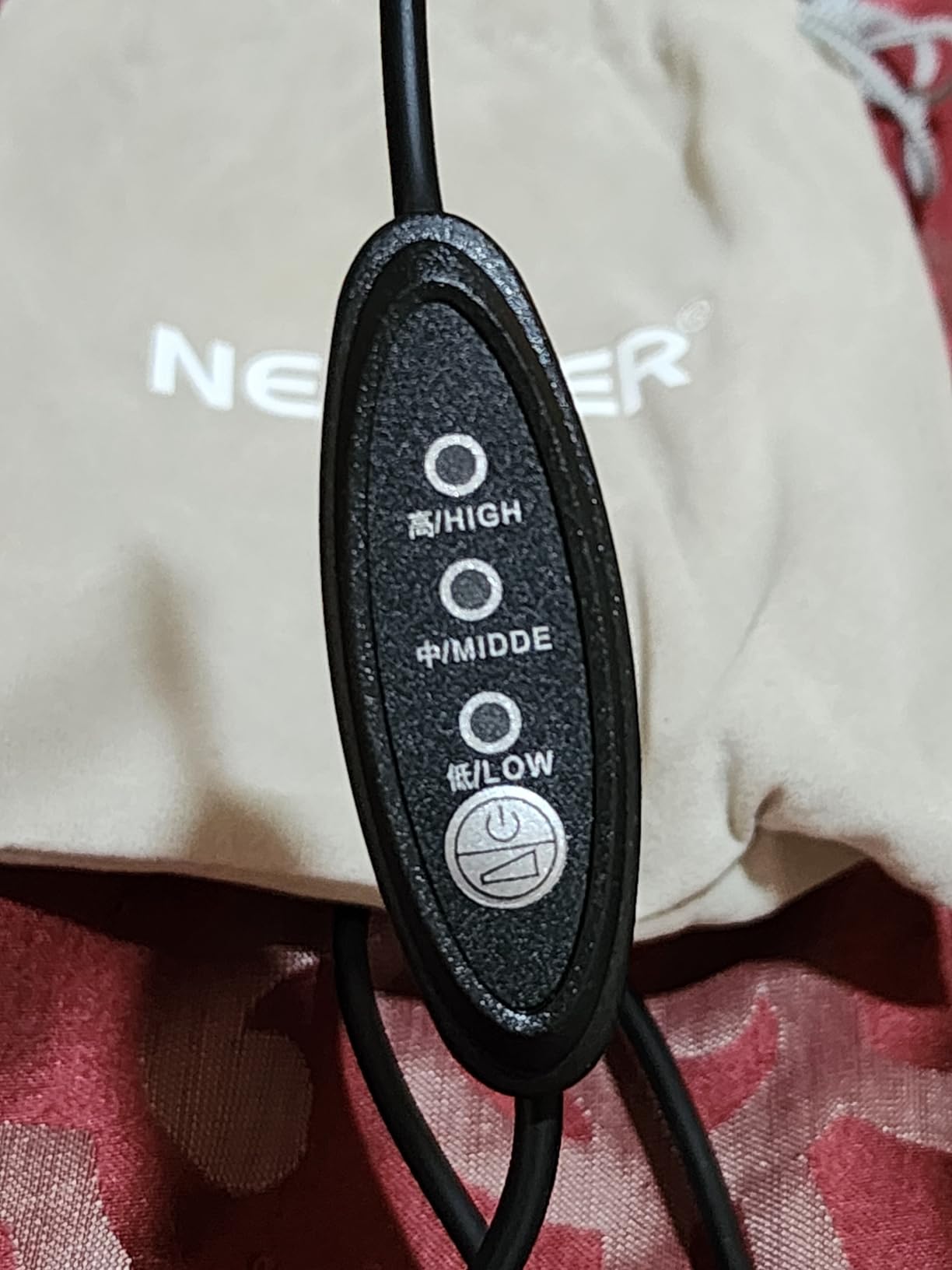
The published temperature bands are unusually useful. High runs 55 to 65C, medium 45 to 55C, and low 35 to 45C, which means you can set a level deliberately instead of guessing at a three position switch. That specificity matters when you are dialing in a new rig and trying to find the lowest setting that keeps the glass clear.
It weighs 4.9 ounces and draws from any 5V USB source, so it adds almost nothing to a portable setup. The touch fastener wrap takes seconds to fit and adjust, which is the kind of detail that sounds minor until you are doing it in the dark with cold hands.
This is a newer listing with a much smaller review base than the established strips, so treat the long term durability picture as less settled. The 1.5m cable is also shorter than the leads on some rivals, which can matter on a large tube mounted far from the battery.
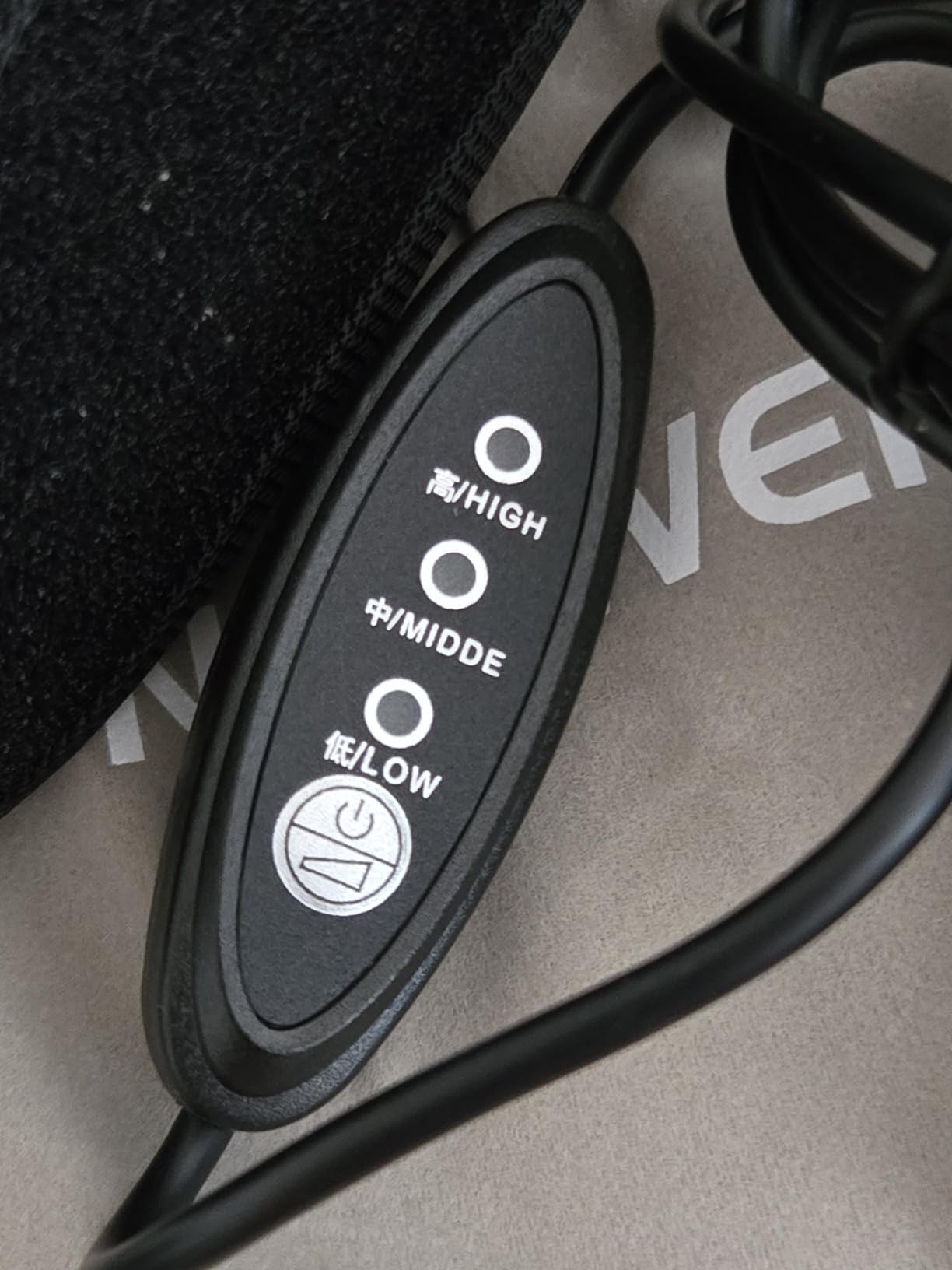
Where the design matters most is the temperature specification. Published bands mean you can set a level on the first night instead of guessing and waiting for fog to tell you you were wrong.
Assuming that goes well, the only reason to look elsewhere is cable length on a very large tube.
How do I size a strip for a large objective?
Measure the circumference of the tube at the point you plan to wrap, then choose a strip longer than that circumference by a small margin so the ends overlap and the velcro has something to grip. Overlap does not double the heat, it just seals the gap.
For a 150mm diameter tube, circumference runs a little over 470mm, which is exactly where this strip sits at the top of its range. Measure before you order, because these strips are not interchangeable between apertures.
Will a USB strip work on a big imaging rig all night?
It will, but watch the bank. This strip has more surface area to heat than the small finder strips, so it draws more than a guide scope heater and it is not the right choice for a minimal battery field setup.
For a long integration with a fixed power source, USB is the simplest option and needs no controller. For a portable rig running from a single small battery, plan your capacity around the biggest heated surface you are running.
8. LOSHARP USB Lens Warmer with 3 Gear Control – Best for One Strap and Many Optics
Lens Warmer, USB Dew Heater Strip for Telescope Camera Lens with 3-Gear Temperature Controller, Anti-Fog Condensation Prevention for Astrophotography, DSLR, Finder Scope, Eyepieces up to 4.3 Inch
Adjustable 16.5 by 1.8 inch band, optics to 4.3 inch
5V USB, 1 to 2A, 59 inch cable
Three modes, 5 second warm up
60g, two year warranty
Pros
- No controller or dedicated battery needed
- Five second warm up with clearly stepped modes
- Composite fibre spreads warmth with no hot spots
- One strap covers objectives finders guide scopes and eyepieces
- 59 inch cable reaches the mount
Cons
- Lowest rated strip in the group with a noticeable share of one star reviews
- Peak temperature of 122F is lower than higher output heaters
- Not water resistant for exposed field use
The idea here is that one strap does the work of three. The adjustable band fits optics up to 4.3 inch in diameter, which covers telescope objectives, finder scopes, guide scopes, eyepieces and camera barrels. If you want a single piece of kit that covers every heated surface on a small rig, this is the cleanest way to do it.
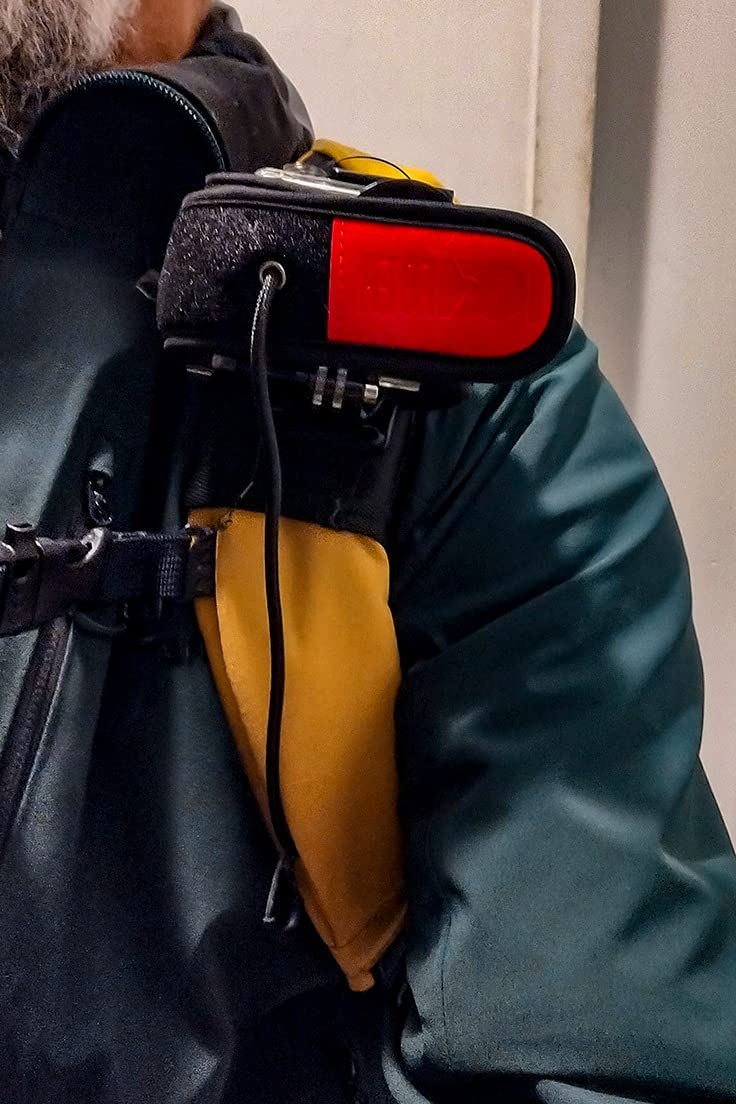
The controller is genuinely well stepped. Strong, medium and weak are clearly differentiated, and the strip reaches usable heat in about five seconds, which is fast enough that you can switch it up as you see dew starting rather than committing to a level in advance. The composite heating fibre spreads warmth evenly with no hot spots, so there is no local risk to a coating.
The 59 inch cable is a thoughtful length, long enough to run from an objective on a small refractor down to a power bank on the tripod without an extension. Two year warranty as well, which is more than most strips in this price bracket offer.
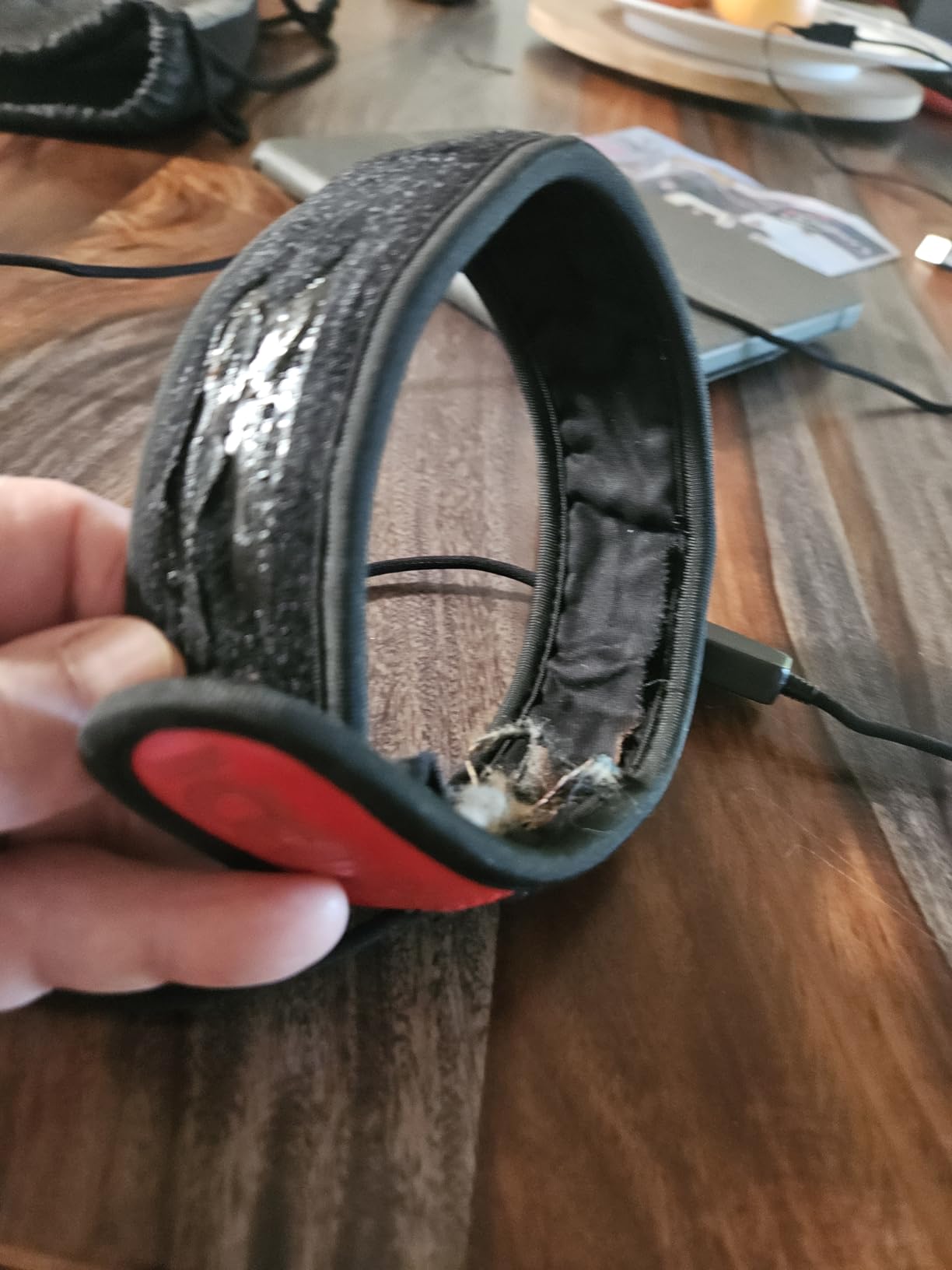
Where it falls short is output and consistency. Its 4.1 average is visibly below the rest of this group, with a meaningful share of one star reviews, and heat that peaks at 122F is adequate rather than strong. Reviewers describe warm, even, and fine on mild nights, but not sufficient in heavy humidity. It is also not water resistant, so keep it covered in a wet field.
The alternative is spending more on a heater with real headroom, which is a better answer in high humidity and a worse answer for a small rig in a temperate climate.
For most people the deciding factor is not the specification sheet at all, it is what is already in the observing bag.
Is heat output or price the weakness?
Output. The build and the convenience are good for the money, and the three gear controller is better specified than many pricier strips. What you give up is headroom, and headroom is what you need on a night with a high dew point and a large glass surface.
Pick this for a small rig, a mild climate, or a backup strip that lives in a bag. Do not pick it as the only heater on a large Dobsonian in a humid summer.
Can one strap really serve objectives and eyepieces?
Yes, and that versatility is the appeal. The same band that sits behind an objective cell can wrap an eyepiece barrel or a finder tube, which means one purchase covers most of the small glass on a compact rig.
Size is the only constraint. Anything over 4.3 inch diameter needs a longer strip, and a stretched band that will not lie flat will not hold heat against the glass properly.
9. Astromania 25cm DC Dew Heater Strap – Best for Fine Grained Temperature Control
Astromania Dew Heater Strap, Dew Heater for Telescope 250mm DC Lens Warmer
25cm strap for optics under 80mm
Stepless slider temperature control
Standard 5.5 by 2.1mm DC port
3.2 ounces
Pros
- Stepless slider gives finer control than fixed gear controllers
- Adjustable strap fits a range of small optics
- Very light at 3.2 ounces
- Standard DC port works with common power sources
Cons
- Lowest rated in the group
- About one in seven reviews is one star
- 25cm strap limits coverage to smaller optics
- DC power needs a 12V source or an adapter
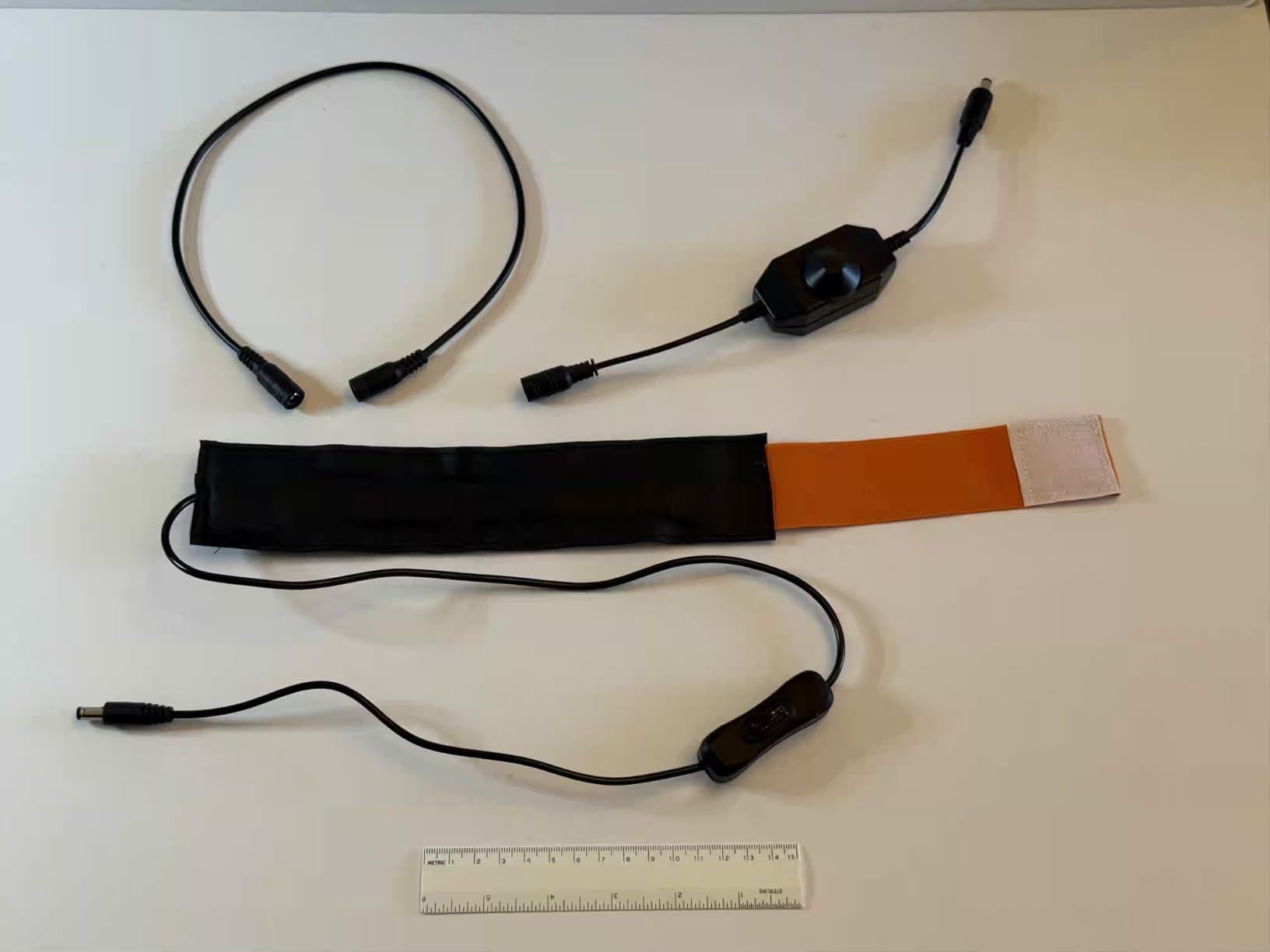
The one thing this strap does better than the others is control granularity. Instead of three fixed gears, the controller uses a stepless slider, so you can find the exact point where the glass sits just above the dew point. On a marginal night, that difference is the difference between clear optics and a strip that is either too weak or too hot.
Everything else about it is competent. The adjustable strap fits optics under 80mm outer diameter, it weighs 3.2 ounces, and it uses the common barrel connector size that most 12V accessories already use. Nothing about it is difficult to fit.
The strip itself does what it is sold to do. The problem is how variable the reports are about how well it does it.
Reviews of heating products are not as easy to trust as reviews of mechanical products, because fog is partly a property of the night rather than the device. Even so, a wide spread of star ratings is a signal worth respecting.
The rating is the issue, and it is a large one. At 3.7 stars this is the lowest rated product we included, with about one in seven reviews at one star. That is a much wider spread than the SVBONY or KIWIFOTOS strips show, and it points to inconsistent heating consistency rather than a single fixable complaint. The seller also has three strap lengths available if this size is wrong for your optic.
We would not start a new rig on this one. If you already own it, the stepless control is a genuine feature and there is no reason to replace it. If you are buying fresh, the extra control does not outweigh a rating this far below the field.
Is stepless control worth much on a small strip?
More than most people expect. Small optics heat quickly and small dew point margins are where fixed gears overshoot, so the ability to trim output continuously keeps the glass closer to target than three steps allow.
The trade is build confidence. Fine control only helps if the heating itself is reliable, and the wider rating spread on this strip suggests it is not as consistent as the higher rated alternatives with coarser controls.
What power source does it need?
A 12V DC supply through the standard barrel connector, or an adapter if your source is USB. That is the main practical difference from the USB strips, and it makes this a poorer match for a minimal battery field setup.
If you already run 12V for the mount, the connector is familiar and the strip slots in without extra parts. If you do not, the USB strips earlier in this roundup are a simpler buy.
10. NEEWER HW-17B 400mm Lens Heater – Best for Travel and Small Telescopes
NEEWER 16″/400mm USB Lens Heater Warmer with 3 Temperature Settings, Dew Heater Strip Prevents Dew Fog Condensation for DSLR Mirrorless Camera Telescope Binocular Astrophotography, HW-17B
400mm strip, 300mm effective length
Fits up to 86mm diameter and 275mm circumference
Three temperature settings
USB powered, 2.6 ounces
Pros
- Compact size suits small scopes and finder tubes
- Very light for a portable astro rig
- Same documented temperature bands as the larger model
- USB powered with no controller required
- Touch fastener adjusts quickly
Cons
- Smallest review base in the group
- One star share is the second highest in the roundup
- 400mm length will not wrap larger objectives
This is the travel option. At 400mm total with 300mm of effective heating, it fits optics up to 86mm in diameter and 275mm of circumference, which is the range of a small refractor or a decent finder scope. It weighs 2.6 ounces, which is light enough that you forget it is on the tube.
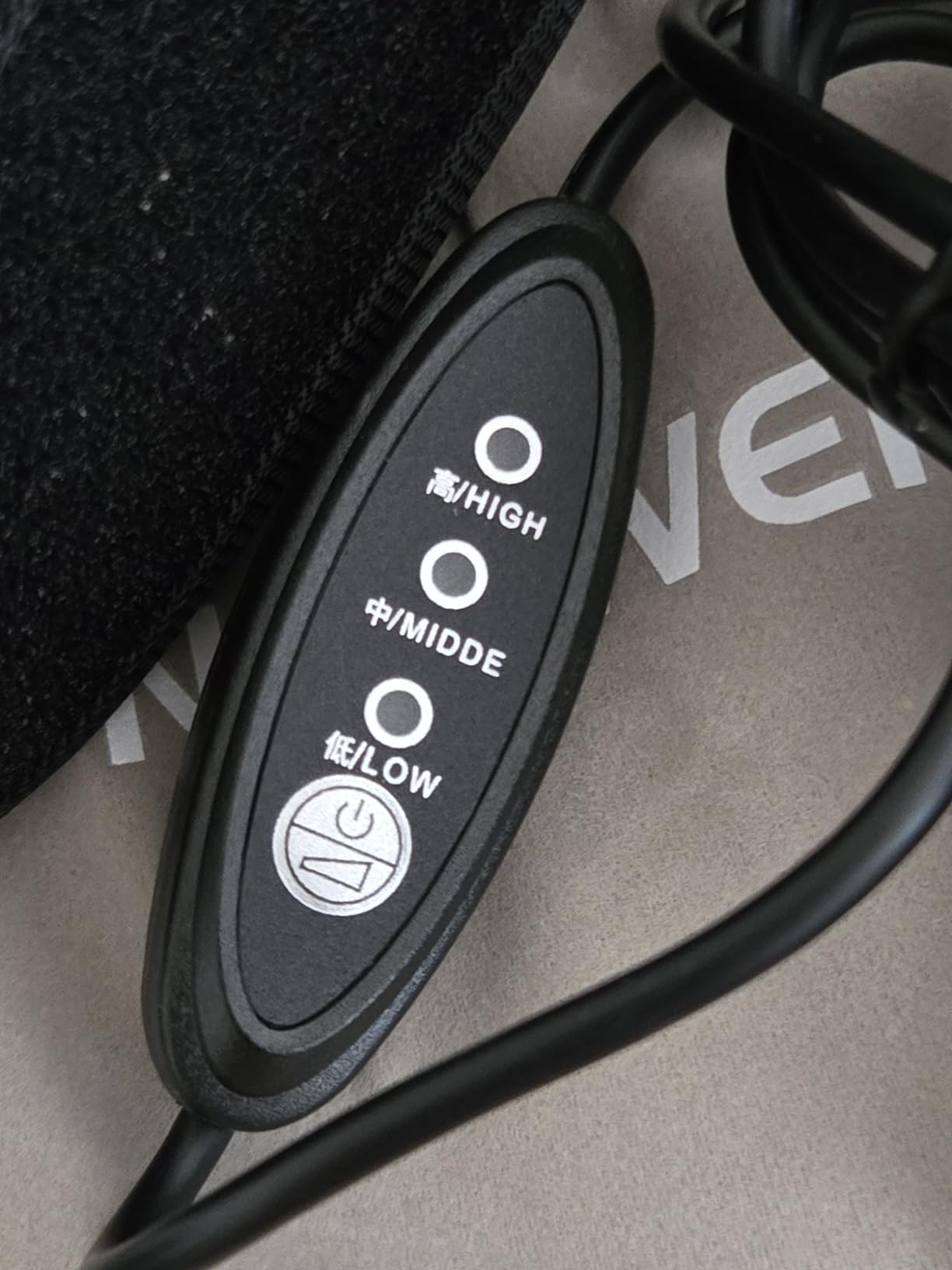
Heat control matches the larger HW-23B. The same three documented bands apply, high 55 to 65C, medium 45 to 55C, and low 35 to 45C, so if you own both sizes you are learning one control scheme rather than two. USB power with no controller keeps the packing list short.
It is a sensible companion to the longer strip in the same range if you own both sizes, since the control behaviour is identical between them.
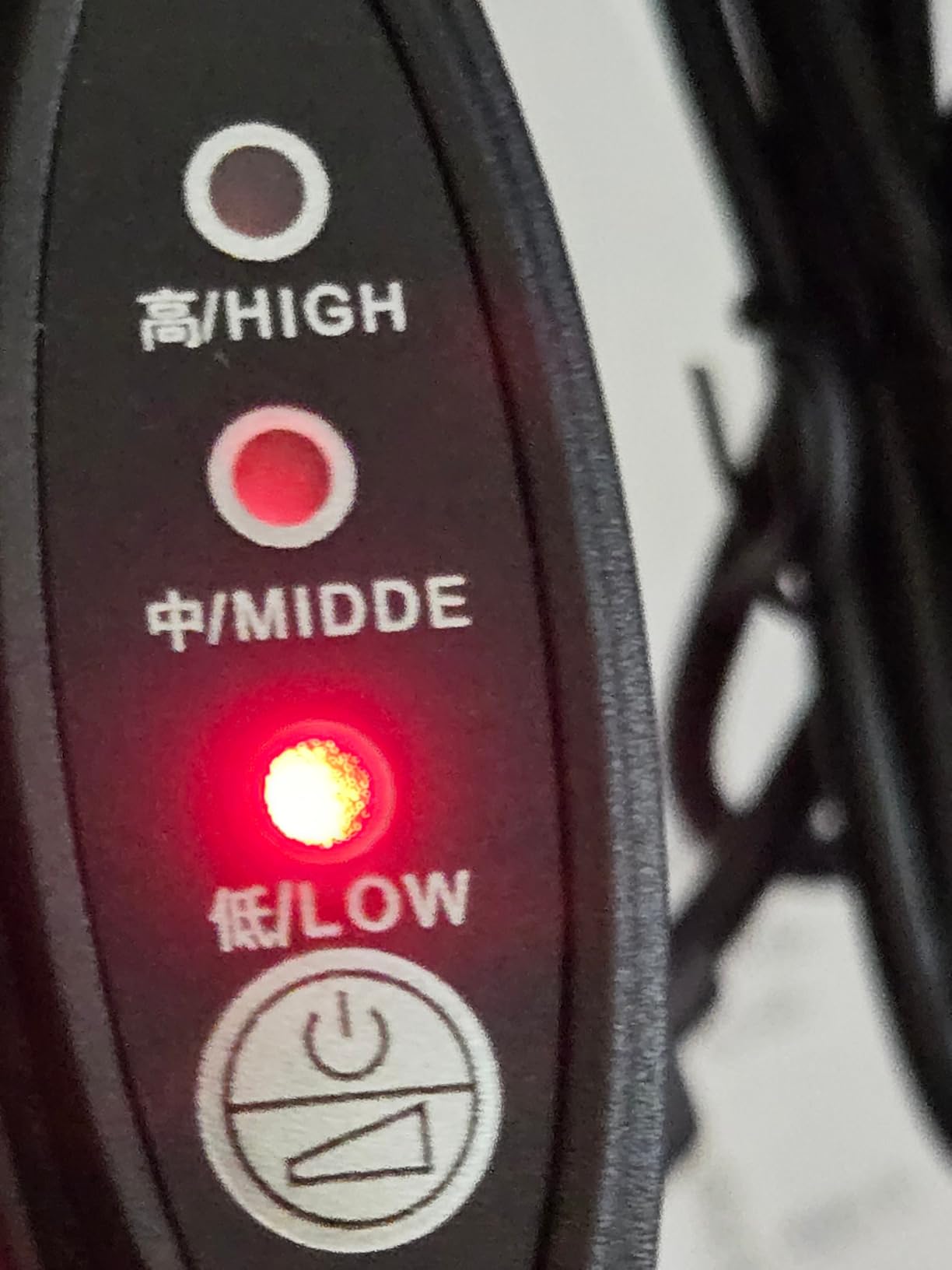
Our reservation is evidence rather than design. With 15 reviews, this is the least tested product here, and its one star share of 10% is the second highest in the group. Early buyers like the size and the simplicity, but a rating built on a small sample is a weaker basis for a recommendation than one built on a few hundred.
If you need a longer strip for the same telescope, step up to the 600mm model rather than trying to run two short bands. Overlapping bands on one tube creates uneven heat, and uneven heat is what produces zonal dew.
Is 400mm enough for an 80mm refractor?
It is close. An 80mm refractor cell is about 86mm across, which sits at the top of this strip’s range, so a single wrap covers the cell. Measure the real circumference including any dew shield lip before committing.
If your tube has a wide dew shield or a large focuser housing, the 275mm circumference limit becomes the binding constraint rather than the diameter, and you would be better served by the longer model.
How much does it weigh in the pack?
Negligible. Two and a half ounces and a USB lead is a rounding error in an observing kit, and it is one of the few dew heaters here you can genuinely forget you packed.
The trade is coverage. It handles small glass well and large glass not at all, so on a mixed rig you may end up carrying this plus a longer strip.
How to Choose a Dew Heater Without Wasting Money
Every dew problem starts with the same physics. Your telescope radiates heat to the sky, and the glass and tube cool below the ambient air temperature. When the surface temperature crosses the dew point, water vapour in the air condenses on it. A dew heater exists to hold that surface a few degrees above the dew point, and nothing more. If your optic is comfortable to touch on a cold morning, the heater is working correctly.
This matters because the instinct many owners have is to run more heat than needed. Overheating does not improve dew control, it creates temperature gradients along the tube, and gradients cause zonal dew, where condensation forms in a ring partway up the glass. Forum users describe this failure more often than they describe a heater that was too weak. Start on the lowest setting and raise it only when the glass starts to fog.
12V DC or USB: pick the voltage you can actually power
Most of the confusion in this category comes from mixing power standards. A USB strip runs from 5V through a standard USB port, so a power bank, a car adapter, a laptop, or a USB hub will run it. A 12V DC strip needs a barrel connector and a 12V source, which means a dedicated battery or a power box. The two are not interchangeable without an adapter, and a wrongly matched adapter is the fastest way to a dead heater.
Choose 12V if you already run a 12V system for the mount or camera, since sustained output and efficiency on larger surfaces are better. Choose USB if you want the simplest possible rig, are working with small optics, or are already carrying a power bank for the rest of your kit.
Watch the input current too. One strip in this roundup specifies 2.0A input at 5V, which is more than many small phone chargers supply. A charger that cannot deliver the current is the most common reason a USB heater appears to do nothing.
Sizing: measure circumference, not aperture
The number that matters is the circumference of the surface you are wrapping. Measure around the tube or cell at the point where the strip will sit, then choose a strip slightly longer than that so the ends overlap and the fastener grips. The published diameter figures across this group range from under 80mm up to 178mm, so there is a real choice to match against your tube.
A strip that is too short leaves a cold band where dew forms first and then spreads. A strip that is far too long bunches up and does not lie flat, and flat contact is what transfers heat into the glass. If you are between sizes, pick the longer one and wrap it neatly rather than stretching the short one.
Where each type belongs on a telescope
On a Newtonian or Dobsonian, the secondary and its cell are the usual target, because the open tube radiates hard and the diagonal fogs first. A strap across the secondary span, or a heater on the rear cell, is the standard fix. On a large Dobsonian, the mirror cell itself is often the surface that reaches dew point first, which is a question that comes up constantly on observing forums and one where owners disagree.
On a refractor, the heat belongs on the objective cell, just behind the lens, never on the glass. On a Schmidt-Cassegrain, the corrector plate is the target, which is why a ring that seats where the retaining ring goes is the most direct solution available. Guide scopes and finder scopes need their own small strips, and Telrads fog in a way that a heated finder will not fix.
Heated dew shields are a different product entirely. A shield reduces radiative heat loss passively and can remove the need for a heater on mild nights, but it adds length and weight to the front of the tube and it does nothing in heavy humidity. On an 8 inch or larger scope, the added length becomes an awkward object to swing through a small car.
Do you need a controller?
Only if you run more than one heated item. Most strips here have their own three gear inline regulator, and a single USB strip needs nothing else. Once you are running a main tube plus a finder, a guide scope and eyepiece heaters, a controller with two or more independently adjustable channels is what lets you chase the dew point instead of guessing at one level. Four channels covers a full imaging rig.
Budget the power before you commit. Add every strip draw to your mount and camera draw, multiply by your session length, and compare against your battery capacity. Controllers and strips draw quietly all night, and users routinely discover that their battery is the limiting factor long before the dew heater is.
If you are putting a rig together from scratch, our [10 Best Telescopes for Kids](https://irlentwincities.com/best-telescopes-for-kids/) and [8 Best Deep Space Viewing Telescopes](https://irlentwincities.com/best-telescopes-for-deep-space-viewing/) guides cover where dew control fits in a complete setup.
Frequently Asked Questions
Where to put a dew heater on a telescope?
Put the heater on the surface that actually reaches dew point first, which depends on the design. On a Newtonian or Dobsonian that is the secondary and its cell, or the mirror cell on a large tube. On a refractor it is the objective cell just behind the lens, never the glass itself. On a Schmidt-Cassegrain it is the front corrector plate, where a ring-style heater seats in place of the retaining ring.
Do I need a dew shield for my telescope?
A dew shield is worth having because it passively cuts radiative heat loss, and it can remove the need for a heater entirely on mild nights. It is not a substitute in humid weather, because a shield cannot raise the temperature of the glass above the dew point. For large apertures the added length and weight become awkward, so many owners run a heater instead and skip the shield.
How long should a telescope dew shield be?
Long enough to sit at least two tube diameters ahead of the objective, which blocks the wide-angle infrared radiation that does most of the cooling. Beyond that, extra length brings diminishing returns while adding weight and swing weight to the front of the tube. On a small refractor a short shield is plenty, and on a large Dobsonian many owners prefer a heater to a shield for exactly that reason.
Do I need a dew heater for a guide scope?
Yes, if you image, because a fogged guide scope stops guiding properly and the problem is not always obvious until star trails come out long. A small adjustable strip sized for optics under 80mm is the usual answer, and it draws very little power. Observing visually with a guide scope, you can get by without one for most of the year.
What size dew heater do I need for my telescope?
Measure the circumference of the tube or cell where the strip will sit, then choose a strip slightly longer than that measurement so the ends overlap. Match the strip’s stated maximum diameter to your optic as well, since options in this roundup range from under 80mm to 178mm. A strip that is too short leaves a cold band where dew forms first.
The Best Dew Heaters for Telescopes in 2026: Our Final Picks
Start with the Celestron aluminum dew heater ring if you run an 8 inch Celestron Schmidt-Cassegrain, EdgeHD or RASA, because it puts the heat exactly where the dew forms and carries an integrated sensor. For large apertures on a 12V system, the SVBONY SV192 has the highest owner rating in the group and an even, well insulated heat. For everything else, the SVBONY SV172 is the value pick that runs from any USB power bank and never fouls a focuser.
Whatever you choose, size it to the circumference of the optic, match the voltage to the power you already carry, and start on the lowest setting. Dew control is a small margin above the dew point, not a power contest.