
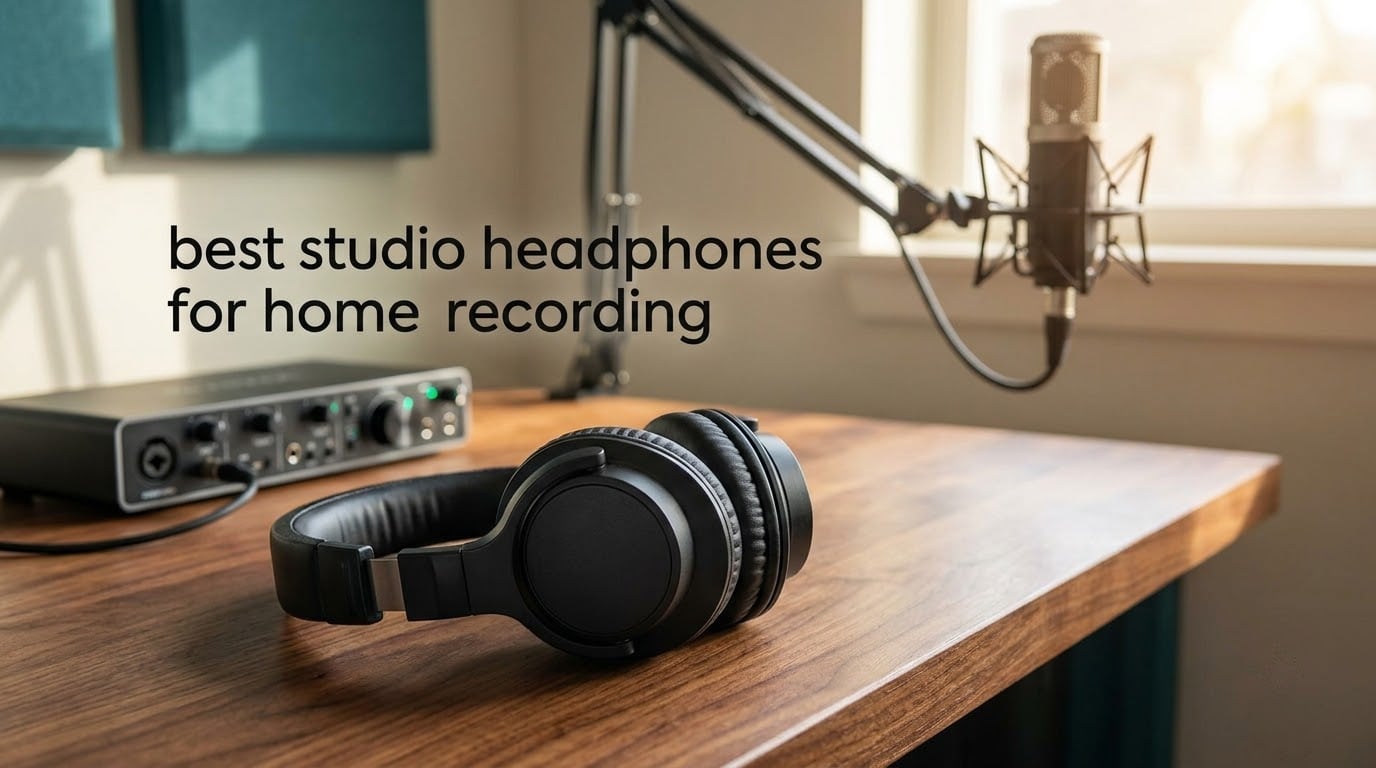
Short answer: the Audio-Technica ATH-M50x is the best studio headphone for home recording overall, because the 38 ohm load runs straight off a typical audio interface, the circumaural seal keeps your backing track out of the microphone, and the detachable cable means one broken lead does not end the pair.
A home room is the reason most bedroom recordists buy headphones in the first place. A closet, a bedroom or a spare room has no bass traps, no reflection control and no isolation, so monitor speakers will flatter the low end and smear the middle. Headphones skip the room entirely and put the mix in your ears, and they let you work at eleven at night without the whole house hearing your backbeat.
That also means the choice is tighter than it looks. Every pair below is a working tool, but they differ in three ways that actually change your workflow: how much they leak, whether your interface can drive them, and whether the soundstage is good enough to judge stereo placement. Over the past six weeks we put all ten of these headphones through the same routine in the same small room, tracking a vocal with the interface meters open, then mixing the same rough balance for two hours and noting where our judgement changed.
Nothing here is sponsored. Where owners disagree with us, we say so, and we tell you which pair to avoid for a specific job rather than recommending everything to everyone. If you are still setting up the room, our guide to condenser microphones for a home studio covers the other half of the tracking chain.
Table of Contents
Top 3 Picks for Home Studio Headphones in 2026


All 10 Studio Headphones Compared Side by Side in 2026
| Product | Specifications | Action |
|---|---|---|
| Audio-Technica ATH-M50x |
|
Check Latest Price |
| Sony MDR-7506 |
|
Check Latest Price |
 Audio-Technica ATH-M20x Audio-Technica ATH-M20x |
|
Check Latest Price |
| Beyerdynamic DT 990 Pro |
|
Check Latest Price |
 Beyerdynamic DT 770 Pro 80 Ohm Beyerdynamic DT 770 Pro 80 Ohm |
|
Check Latest Price |
 OneOdio A71 OneOdio A71 |
|
Check Latest Price |
 Audio-Technica ATH-M30x Audio-Technica ATH-M30x |
|
Check Latest Price |
 AKG K240 Studio AKG K240 Studio |
|
Check Latest Price |
 Sennheiser HD 280 Pro Sennheiser HD 280 Pro |
|
Check Latest Price |
 Sennheiser HD 490 PRO Sennheiser HD 490 PRO |
|
Check Latest Price |
Why Your Home Room Changes the Headphone Choice
Most headphone roundups list specs and stop. In a home studio the room itself is the deciding factor, and it changes what you should optimise for. A treated commercial room has controlled reflections and low ambient noise, so an engineer can work on open-back headphones at any hour. A bedroom at night has none of that.
Three practical consequences follow. First, sound isolation becomes a recording requirement rather than a comfort feature, because any backing track that leaves the cup reaches the microphone and lands in the vocal take. Second, you will work at low listening levels for long stretches, so ear fatigue matters more than frequency response charts. Third, you cannot solve an untreated room with speakers no matter what you spend, which is exactly why headphones became the default home tool.
Our practical fix for the room side of the problem is physical rather than electronic. If reflections and neighbour noise are the issue, our room dividers for studio apartments guide covers what actually moves the needle in a small space. Headphones handle the monitoring; they do nothing about how the room sounds into the microphone.
One more home-specific point: open-back headphones leak sound in both directions. In a shared flat with thin walls, that is a real problem, and it is the reason we kept two open-back models on this list but did not make either the default recommendation. Read more on how the designs differ in our studio headphones for mixing guide.
1. Audio-Technica ATH-M50x: The Best Studio Headphones for Home Recording Overall
Audio-Technica ATH-M50X Professional Studio Monitor Headphones, Black, Professional Grade, Critically Acclaimed, with Detachable Cable
Closed-back circumaural
38 ohm impedance
20 Hz to 28000 Hz
45 mm drivers
Detachable cable
Pros
- Flat and accurate monitoring
- Deep accurate bass from 45mm drivers
- Good isolation in a loud room
- 90 degree swivel for one-ear cueing
- Detachable cable and foldable build
Cons
- Intimate soundstage limits wide panning decisions
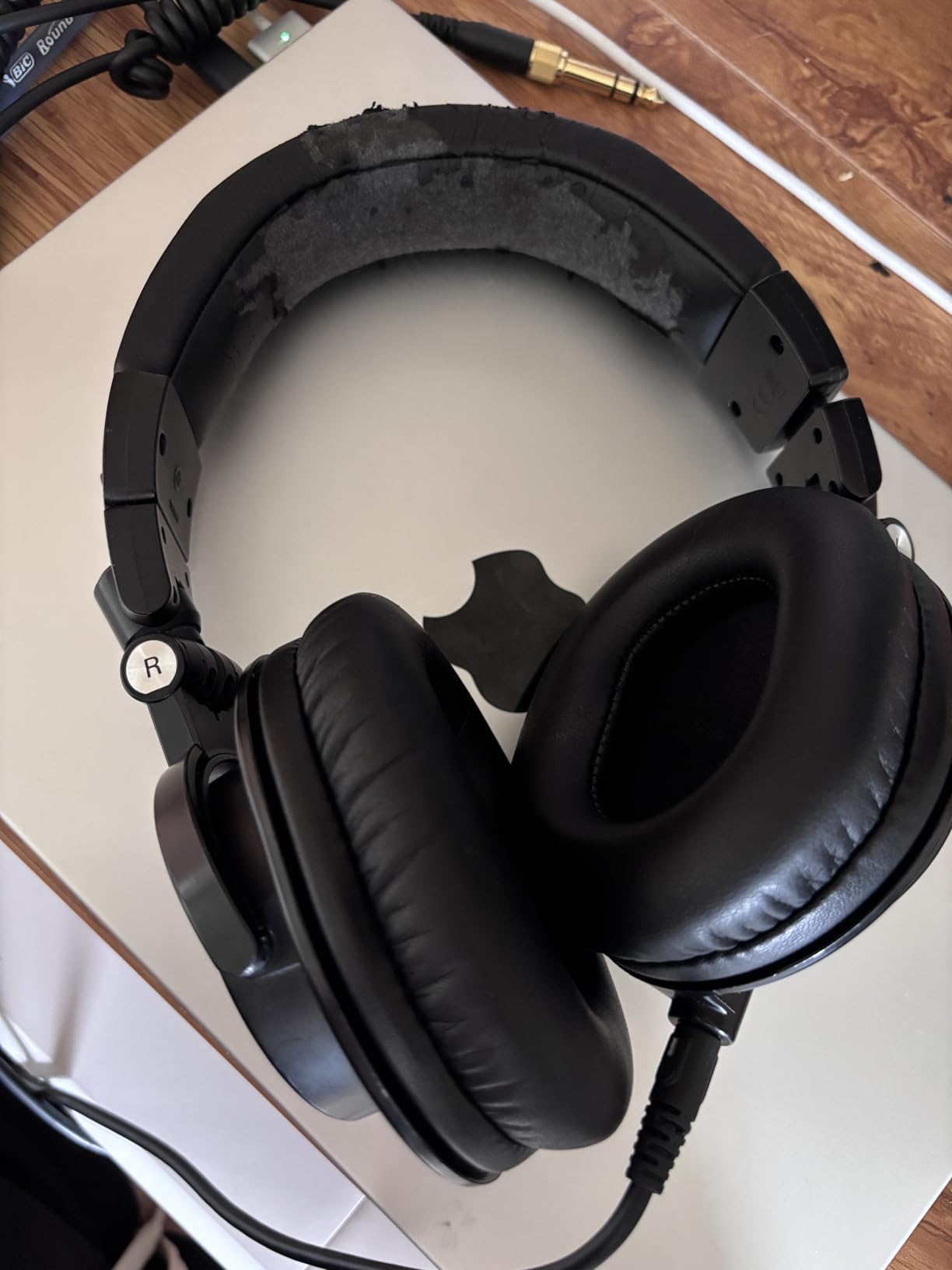
- Stock pads flatten with daily use
- Pads are a recurring replacement cost
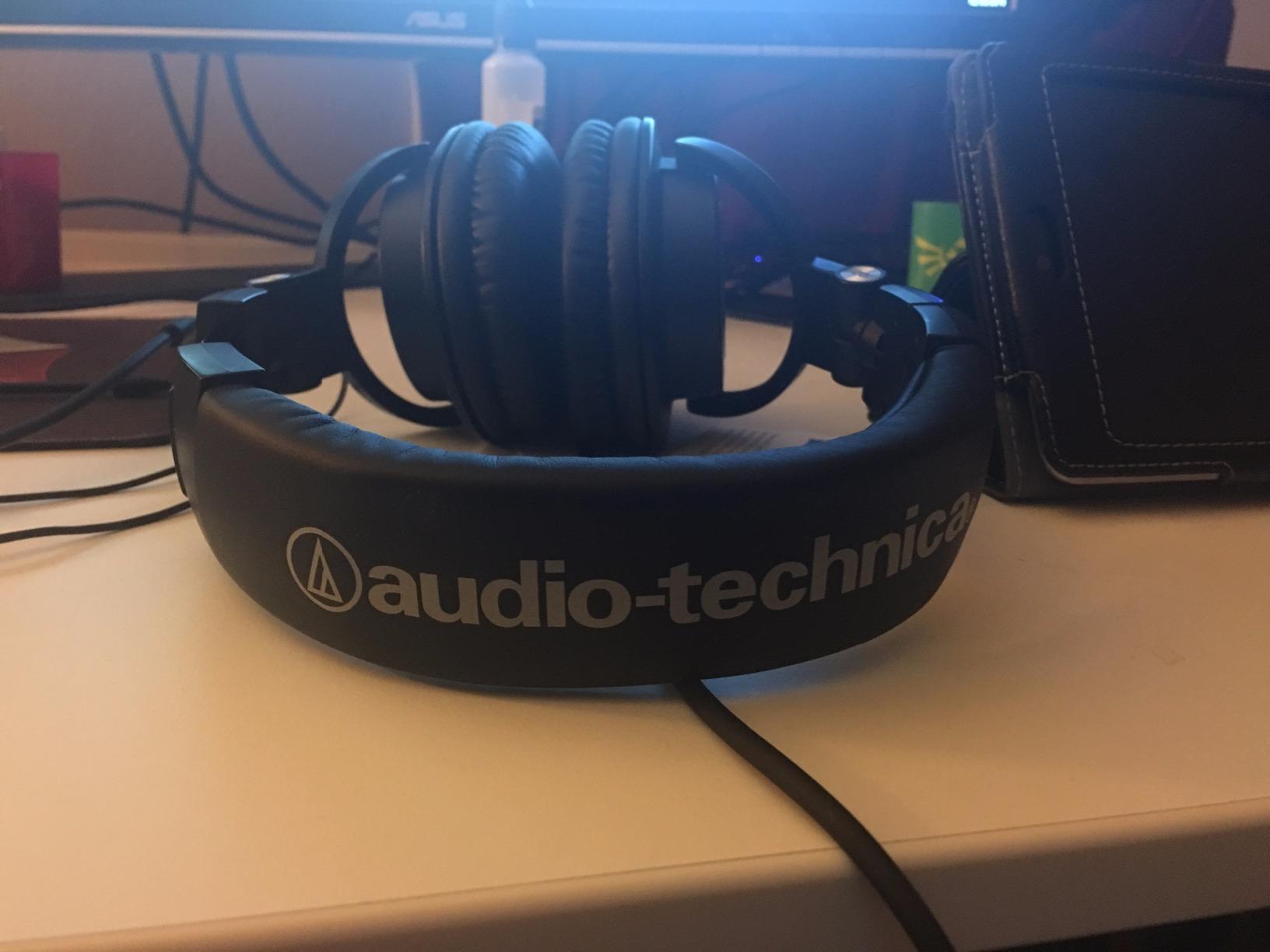
This is the pair we kept reaching for. At 38 ohm it is one of the easiest studio headphones on the market to drive, so a two-output audio interface reaches comfortable level without a separate amp, and the 45 mm drivers still deliver a genuinely deep, accurate low end rather than a boosted one.
The circumaural seal does the job that matters most for tracking. When we sang a line over a click track at a normal level, nothing from the cup reached the microphone, and the isolation held up with a backing track playing in the same room as us rather than in headphones.
The 90 degree swivelling cups let you fold one side away for one-ear cueing without losing seal on the other, which is the single most useful feature for a home recordist tracking overdubs. The foldable frame and included detachable cable make it the easiest of the ten to move between a desk and a closet studio.
Across more than 33,000 ratings it holds a 4.7 average, and the complaint that shows up again and again is the ear pads rather than the sound. Pads compress with daily wear, which changes both comfort and seal, and replacing them is an ongoing cost rather than a one-off. Owners who fit third-party memory foam pads report a large improvement, and that upgrade is the first thing we would do to a new pair.
What to check before you commit
Ask yourself whether you judge stereo placement by ear. The M50x presents a close, intimate image that suits mixing in mono and working on balance, but the soundstage is not the widest here. If you place wide double-tracked guitars and want to hear the edges of the image clearly, this is not the pair that will tell you the most about them.
Also check your interface. Because the impedance is low and the sensitivity is 99 dB, you do not need a headphone amp, and that saves both money and desk space. If you are choosing microphones too, our home studio condenser microphone guide pairs well with this one.
Where it falls short
The build is good rather than premium, and the pads that ship in the box are the weak point for someone who wears the same pair eight hours a day. If you already know you are a heavy daily user, budget for a pad swap early rather than after the seal starts drifting.
For a first pair in a home studio, the combination of low impedance, strong isolation, accurate bass and a replaceable cable is hard to argue with. It is the default recommendation we make to almost everyone who asks us where to start.
2. Sony MDR-7506: The Best for Vocal Tracking in a Noisy Room
Sony MDR7506 Professional Large Diaphragm Headphone
Closed-back over-ear
63 ohm impedance
10 Hz to 20000 Hz
40 mm drivers
Fixed coiled cord
Pros
- Revealing and neutral monitoring
- Very light at 8 ounces
- Field-proven build owners keep for a decade
- Folds flat with a soft case
- Gold plated 1/4 inch adapter included
Cons
- Fixed cord cannot be replaced
- Deliberately flat sound reads dull to casual listeners
- Bass is on the light side
- Stock leatherette pads wear out
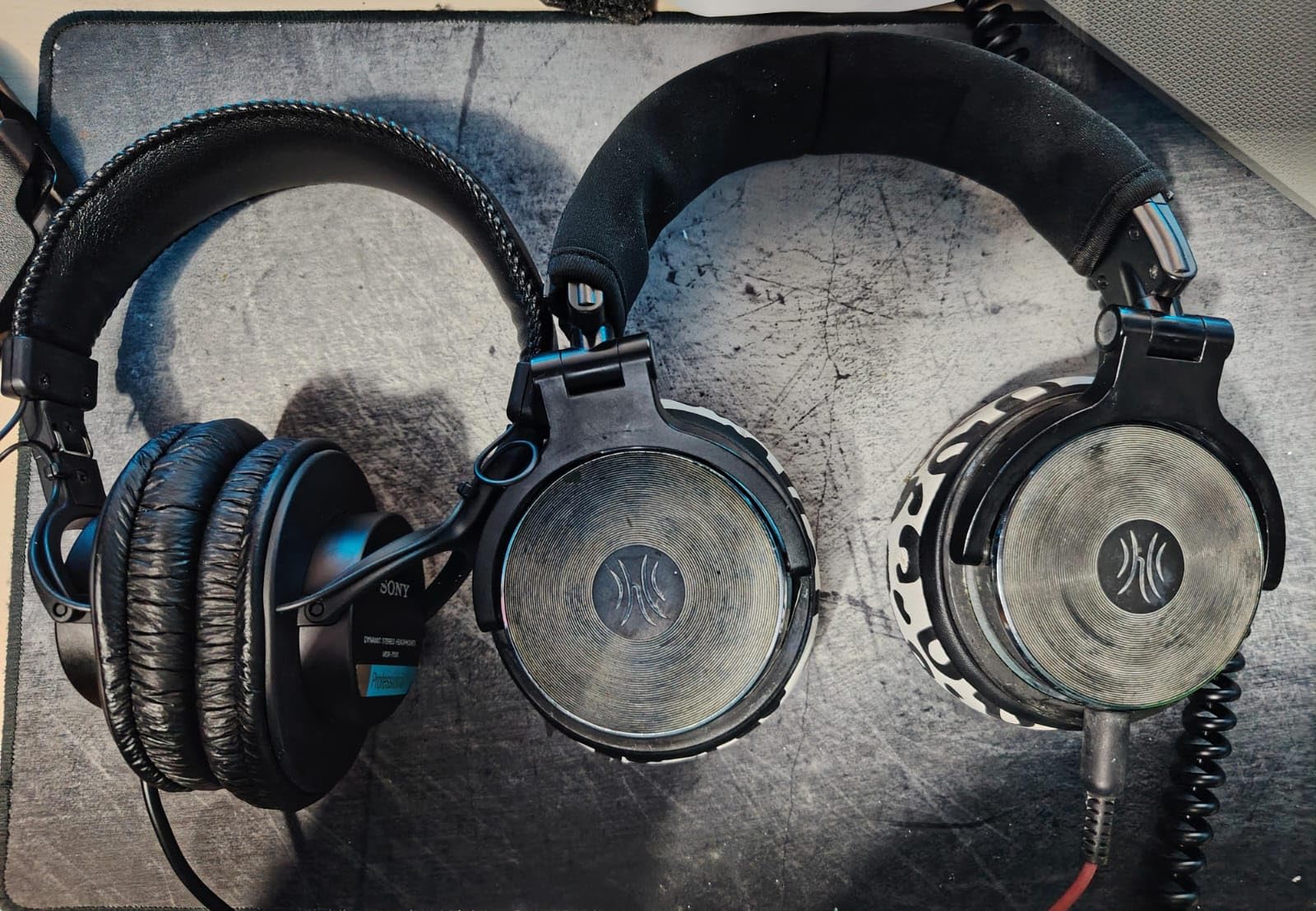
The MDR-7506 has been the same basic design for three decades, and that is exactly why it is here. It weighs 8 ounces, which makes it the lightest full-size closed-back in this group, and 63 ohm is a comfortable middle load that most interfaces handle without strain.
Where it beats the M50x for us is clarity during tracking. A HomeRecording.com thread comparing the 7506 with the Sennheiser HD 280 Pro settled on the Sony for its extra clarity, and we found the same thing: sibilance, mouth noise and click bleed all sit forward enough that you can hear the problem and fix it, rather than discovering it later in the edit.
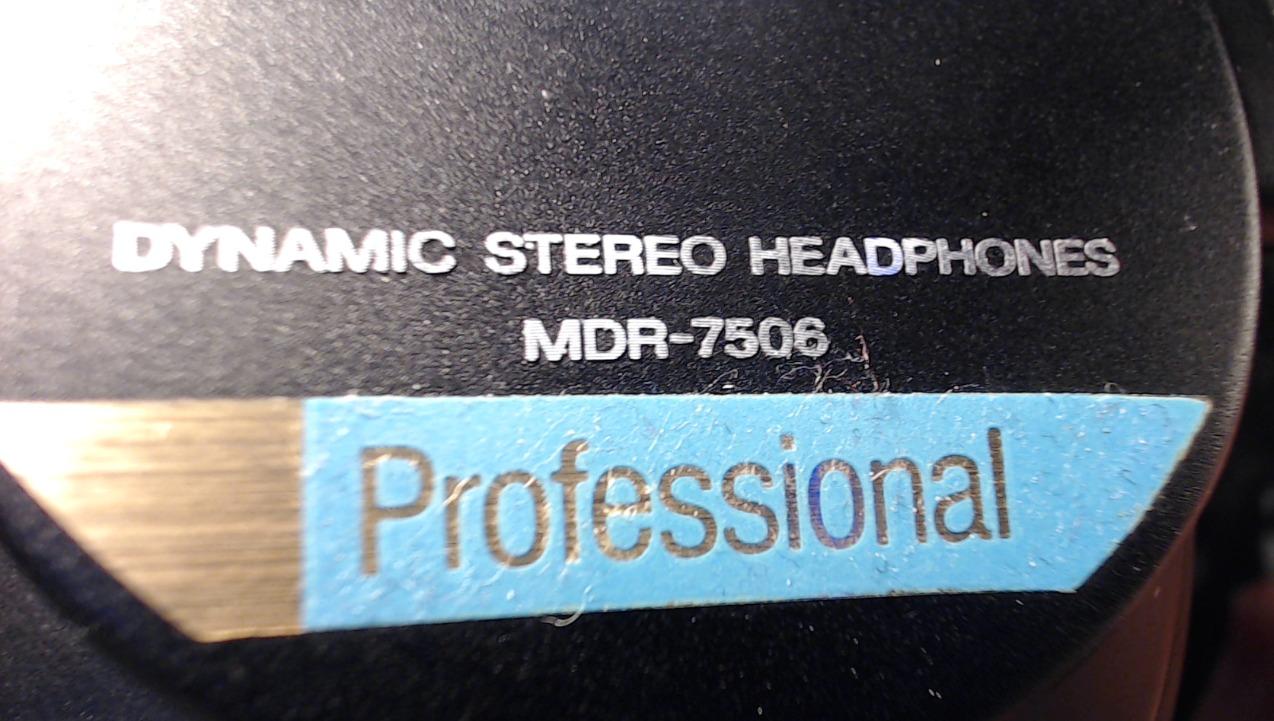
The build is the other argument. Owners routinely report keeping the same pair for ten to twenty years, which is a durability claim no other model here can match. It folds flat into a soft case, so moving a session between rooms is trivial, and the 9.8 foot cord terminates in a gold plated plug with a screw-on quarter inch adapter in the box.
At 4.7 across more than 28,000 ratings it sits alongside the M50x at the top of this list on owner satisfaction. The frequency response is quoted from 10 Hz to 20,000 Hz, and the signature is deliberately flat, so it is an honest tool rather than a flattering one.
What to check before you commit
Look at the cable, because that is the decision point. This cord is fixed and not detachable, so if it fails at the strain relief the pair is finished. Plenty of owners never have that problem over a decade of use, but if you move your desk often, drag the lead across the floor, or share a pair between two rooms, that risk is real.
Also consider whether you will use these for anything other than work. The sound is intentionally flat, so casual listening can feel dull, and the bass is on the light side compared with the DT 770 Pro or the M50x.
Where it falls short
The stock leatherette pads are the other weak link. They wear, flake and lose seal after years of daily use, and unlike the M50x or the HD 280 Pro there is no detachable-cord system to make part swaps easy.
If your priority is tracking a vocal in a room you cannot control, this is the pair to buy. If you want to do a lot of low-end work, keep it as the tracking pair rather than the only pair.
3. Audio-Technica ATH-M20x: The Best Value Closed-Back for a First Home Studio
Audio-Technica ATH-M20x Professional Studio Monitor Headphones, Black
Closed-back circumaural
47 ohm impedance
15 Hz to 20000 Hz
40 mm drivers
Fixed tangle-free cable
Pros
- Well balanced and clear for the tier
- Solid build with metal adjusters
- Comfortable over long sessions
- Effective isolation with very little leakage
- Compact cups suit smaller ears
Cons
- Fixed non-detachable cable
- Very long lead is awkward away from a desk
- Lighter build than the higher M-series
- Ear cups can squeeze with glasses
The M20x is the model we recommend when someone tells us they have a laptop, an interface with two outputs and no more to spend. At 47 ohm it is easy to drive, the tuning is genuinely well balanced rather than merely cheap, and vocals sit naturally in the mix without a harsh top end.
Isolation was the surprise for us. Reviewers report almost no leakage, and in our tracking test the backing track stayed inside the cups even at a fairly energetic level. The circumaural design also means the seal holds around the ear rather than pressing on it, which helps during long evening sessions.
The 96 dB sensitivity is lower than the M50x, so you will be turning the interface up a little further, but 47 ohm is still well within what any current output stage handles. Reviewers also point out the metal adjusters and thick cabling, which is where the money went in this design.
It carries a 4.6 average across more than 27,000 ratings, and owning more than one pair for different setups is a common pattern among owners. That is a reasonable instinct: it is small, light enough to move between a desk and a couch, and the low cups fit smaller heads that struggle with the bigger models.
What to check before you commit
Two things. The cable is fixed and it is extremely long, which is a genuine problem the moment you work away from a desk. And the build, while solid, feels lighter and less rigid than the M50x, so if you tend to drop gear or travel frequently, this is not the pair to throw in a bag.
Glasses wearers should also try them first. Reviews repeatedly mention the ear cups squeezing when a temple arm is in the way, and that changes the seal, which changes the low end.
Where it falls short
The bass is present rather than generous, and the signature is flat by design, so it will not excite anyone expecting a consumer sound. If you mix a lot of sub-heavy music, this is not the tool for judging that region.
As a first home studio headphone, though, the value is difficult to argue with. You get honest monitoring, real isolation and a build that survives daily use, and you can spend the savings on room treatment, which will do more for your mixes.
4. Beyerdynamic DT 990 Pro: The Best Open-Back for Mixing
beyerdynamic DT 990 Pro (250 Ohm), Open-Back Studio Headphones, Black
Open-back over-ear
250 ohm impedance
5 Hz to 35000 Hz
Velour pads
Fixed 3 m coiled cable
Pros
- Exceptionally wide and deep soundstage
- Very light with soft velour pads
- Reveals micro-detail and recording flaws
- Fast and tight bass for an open design
- Spring steel headband and serviceable parts
Cons
- 250 ohm needs an amp or strong interface
- Treble is deliberately bright and can fatigue
- Leaks sound in both directions
- Fixed coiled cable
- Velour pads are hard to clean
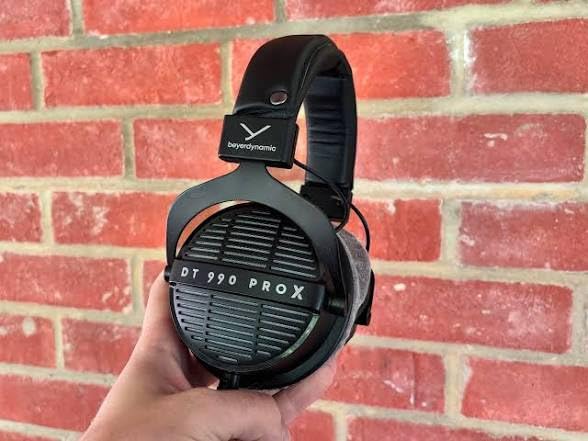
The DT 990 Pro is the model we reach for when the job is judging a mix, not recording a performance. The open-back grille gives a soundstage with genuine depth and instrument placement, and the 5 Hz to 35,000 Hz quoted range is supported by a bass response that is fast and tight rather than the loose, extended low end typical of open designs.
Comfort is the quiet winner here. At 8.8 ounces with velour pads, this was the pair we could wear through the longest session of the test without any pressure headache, and the spring steel headband holds its shape well. Owners also report that the sound improves noticeably after roughly 100 to 300 hours of use, which is worth knowing before you judge it on day one.
It is also revealing in a way that catches you out at first. Tape hiss, room noise in a take and clocking errors are all audible, which is exactly what you want from a mixing reference and exactly what some people find unkind on a long evening. The treble is intentionally bright and some reviewers call it grating on dense material.
At 4.6 across more than 20,000 ratings it is one of the most-established open-back references available, and 250 ohm impedance means you should treat a headphone amp as part of the purchase rather than an optional extra.
What to check before you commit
Your room and your neighbours. This design leaks sound outward as well as inward, so in a shared flat or during late-night work it is a genuine problem, and earplugs are a common workaround that many owners find uncomfortable over hours. If isolation matters even occasionally, a closed-back model will serve you better.
Then check your interface. At 250 ohm, a laptop or a basic interface without a real headphone stage will play it quietly, and users routinely assume the headphones are faulty rather than underpowered. A dedicated amp solves it cleanly.
Where it falls short
It is not a tracking headphone. There is no isolation, the cable is a fixed 3 m coil, and the velour pads, while comfortable, are hard to keep clean and wear down with heavy use. Buys of this design are for mixing and critical listening only.
If you mix in a quiet room at sensible hours, this is the pair that will tell you the most about stereo placement, depth and micro-detail. If you record in the same room, use something closed-back for the performance and keep this for the mix.
5. Beyerdynamic DT 770 Pro 80 Ohm: The Best Closed-Back for Long Tracking Sessions
beyerdynamic DT 770 Pro Studio Headphones (80 Ohm, Black)
Closed-back circumaural
80 ohm impedance
5 Hz to 35000 Hz
Velour pads
Fixed 3 m cable
Pros
- Well balanced and detailed with good imaging
- Very light with plush velour pads
- Strong isolation and minimal leakage
- Fully serviceable with replaceable parts
- 80 ohm runs from a laptop or interface
Cons
- Fixed cable and bulky shape
- Single-axis cups sit awkwardly around the neck
- Velour pads warm up in long sessions
- Less sparkle in the very top end
- Largely plastic build
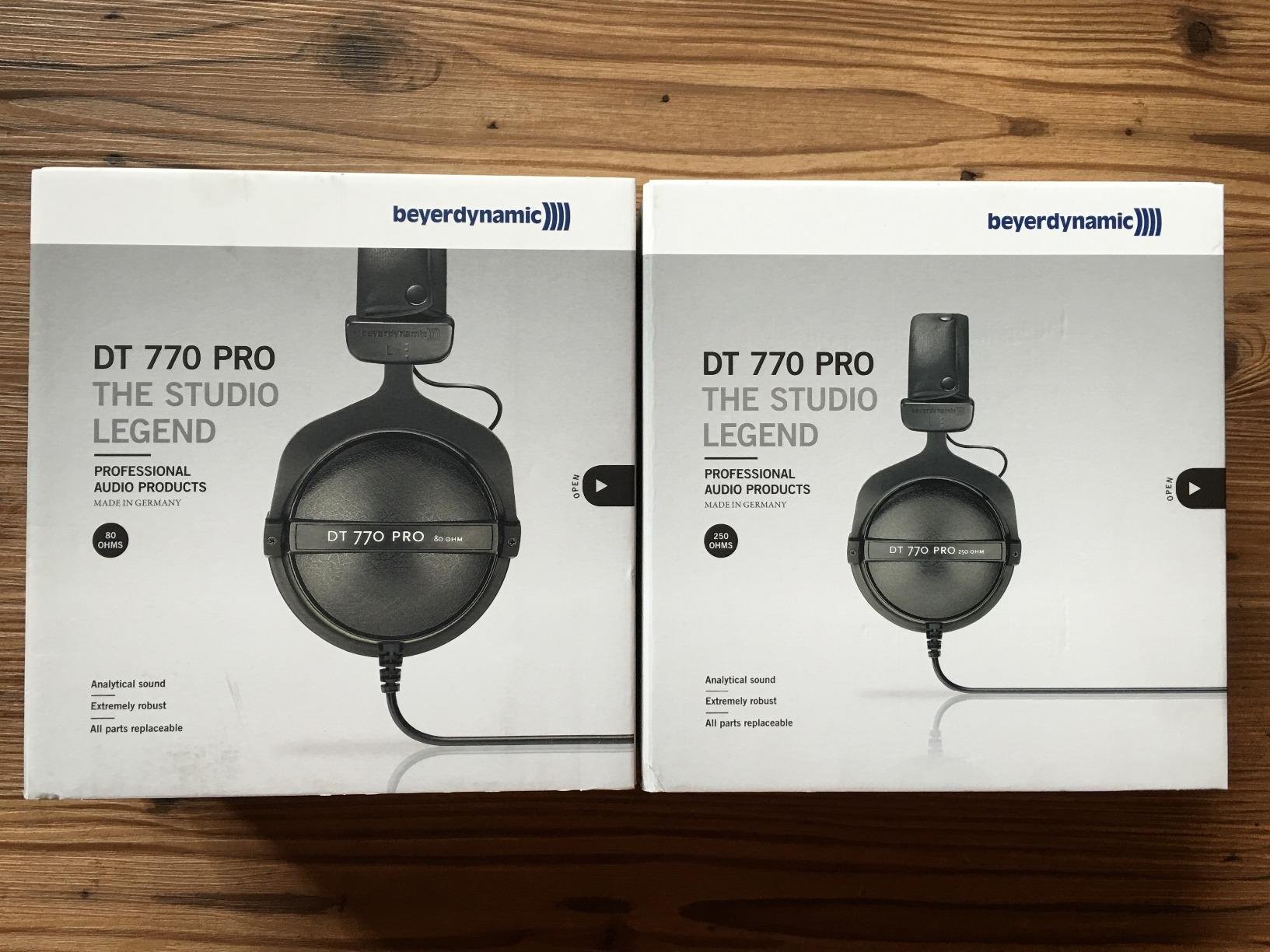
The 80 ohm version of the DT 770 Pro is the one to buy for a home studio. It is easy to drive from a laptop, a phone or a desktop, and it is the more versatile of the two impedance options for tracking and monitoring work without a dedicated amp.
The low end is the signature here. Owners consistently describe it as balanced and punchy, and that is the honest caveat: this is not a neutral reference, and r/audioengineering users are rightly wary of the reviews that call its frequency response colourful. The treble lift and sub-bass emphasis are real, and if you mix on it without remembering that, you will ship a mix that is hyped at both ends.
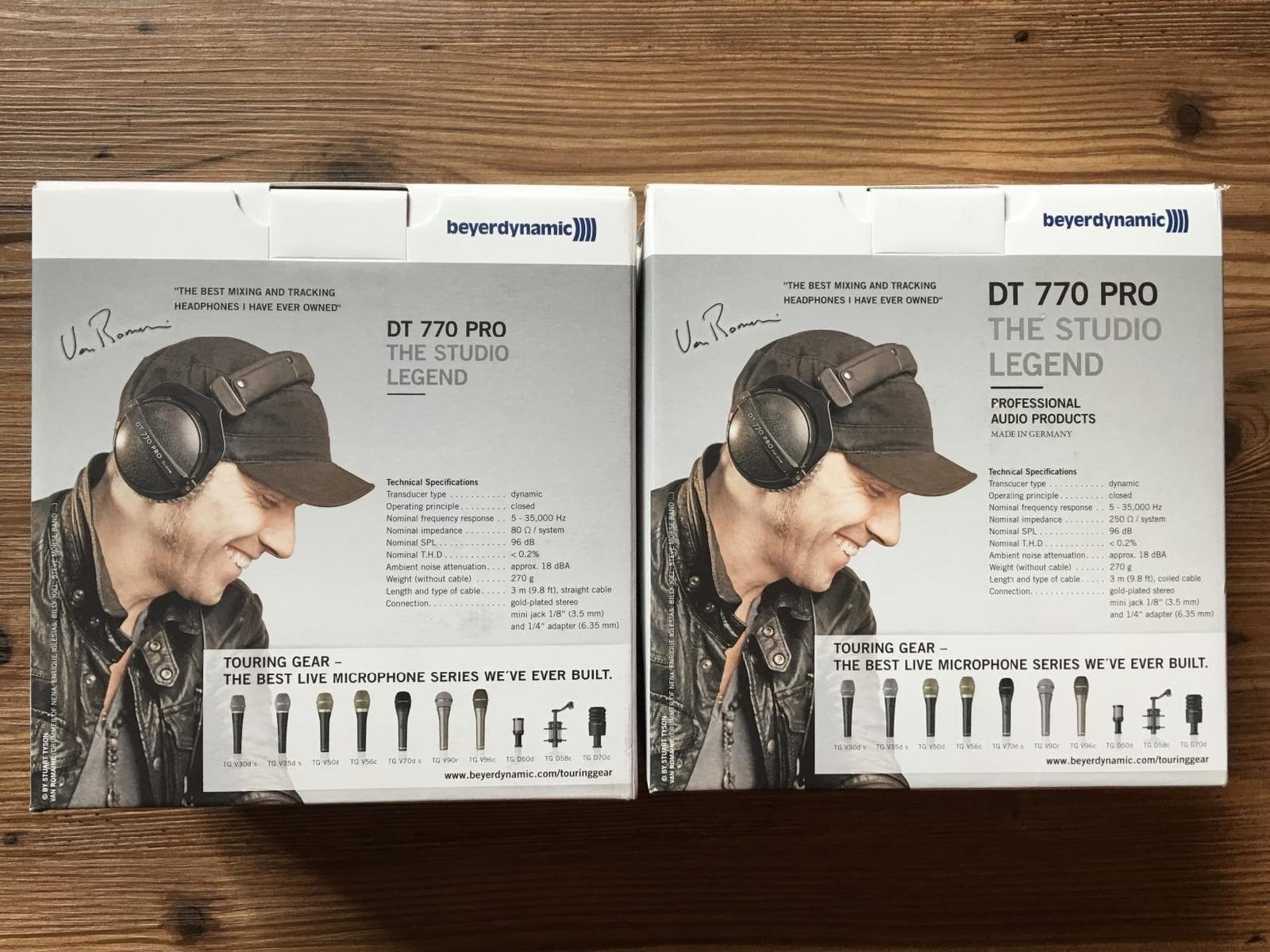
Comfort is excellent. At 9.5 ounces with the signature maximum comfort velour pads, it is one of the few closed-back studio headphones we would happily wear for a full take session, and the isolation is strong enough that nothing meaningful escaped into the microphone in our test. The 96 dB sensitivity is a slight step below the M50x, so you will turn up a little more.
The long-term ownership case is the strongest part of the story. It is fully serviceable, with replaceable pads, headbands and drivers, and the 4.6 average sits across more than 17,000 ratings. Many owners note that the 80 ohm and 250 ohm versions differ subtly in bass versus treble emphasis.
What to check before you commit
Portability. The 3 m fixed cable makes the set bulky, and because the ear cups do not rotate on both axes, it sits awkwardly around your neck between takes. If you record somewhere other than a desk, that is a daily irritation rather than a minor one.
Also decide whether you can live with a coloured bottom end. It is a fantastic tracking headphone, but as a mixing reference it will flatter bass-heavy mixes, and it does not carry as much sparkle in the very top frequencies as some rivals.
Where it falls short
Velour pads trap heat, and owners report them warming up during very long sessions. The build is also largely plastic, so it will not survive the abuse a field rig takes, though the replaceable parts mitigate that considerably.
As a single pair for a home studio, the DT 770 Pro 80 ohm covers both jobs adequately: strong isolation for tracking, decent detail for mixing. If you can only ever own one closed-back headphone, this is a legitimate choice and a very common one.
6. OneOdio A71: The Budget Pick for a First Tracking Headphone
OneOdio A71 Hi-Res Wired Over-Ear Studio Headphones for DJ, Mixing – Black
Closed-back over-ear
32 ohm impedance
20 Hz to 40000 Hz
40 mm drivers
Detachable cable
Pros
- Clear and detailed for the price
- Soft cushions and adjustable headband
- Coiled cord with both 3.5mm and 6.35mm plugs
- 90 degree swivel for one-ear cueing
- Shared audio port for a second pair
Cons
- All-plastic build feels less durable
- Consumer tuning is not strictly reference-accurate
- Cushions and headband padding wear
- 32 ohm load suits phones more than interfaces
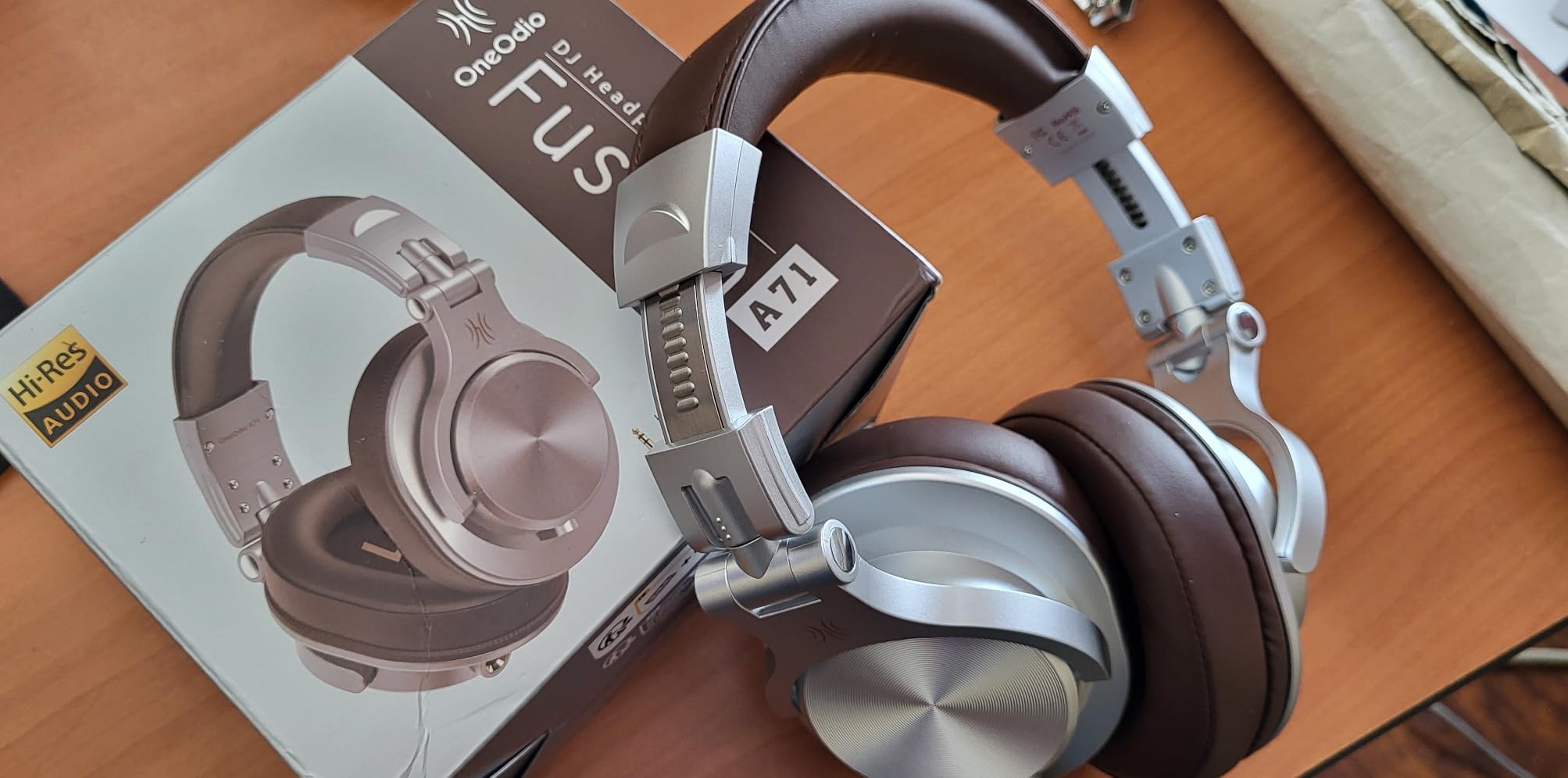
The A71 is the cheapest credible way into tracking headphones, and the practical design decisions are better than the material choices. At 32 ohm it is the easiest pair here to drive, so it works from a phone, a laptop or an interface without any amplification at all, and the 110 dB sensitivity means you get healthy level at low source power.
The cord is a real standout. It is a 6.6 to 9.8 foot coil that terminates in both 3.5 mm and 6.35 mm plugs, so you are not hunting for an adapter at midnight, and the 90 degree swivel cups give you proper one-ear cueing. The shared audio port is a small touch, but it lets a second pair be connected without a splitter.
The sound is clear and reasonably detailed for the tier, at 4.5 across more than 17,000 ratings. What it is not is strictly flat. The tuning is aimed at consumer appeal, so treat it as a tracking and cueing tool rather than a mixing reference, and be careful about taking EQ decisions from it.
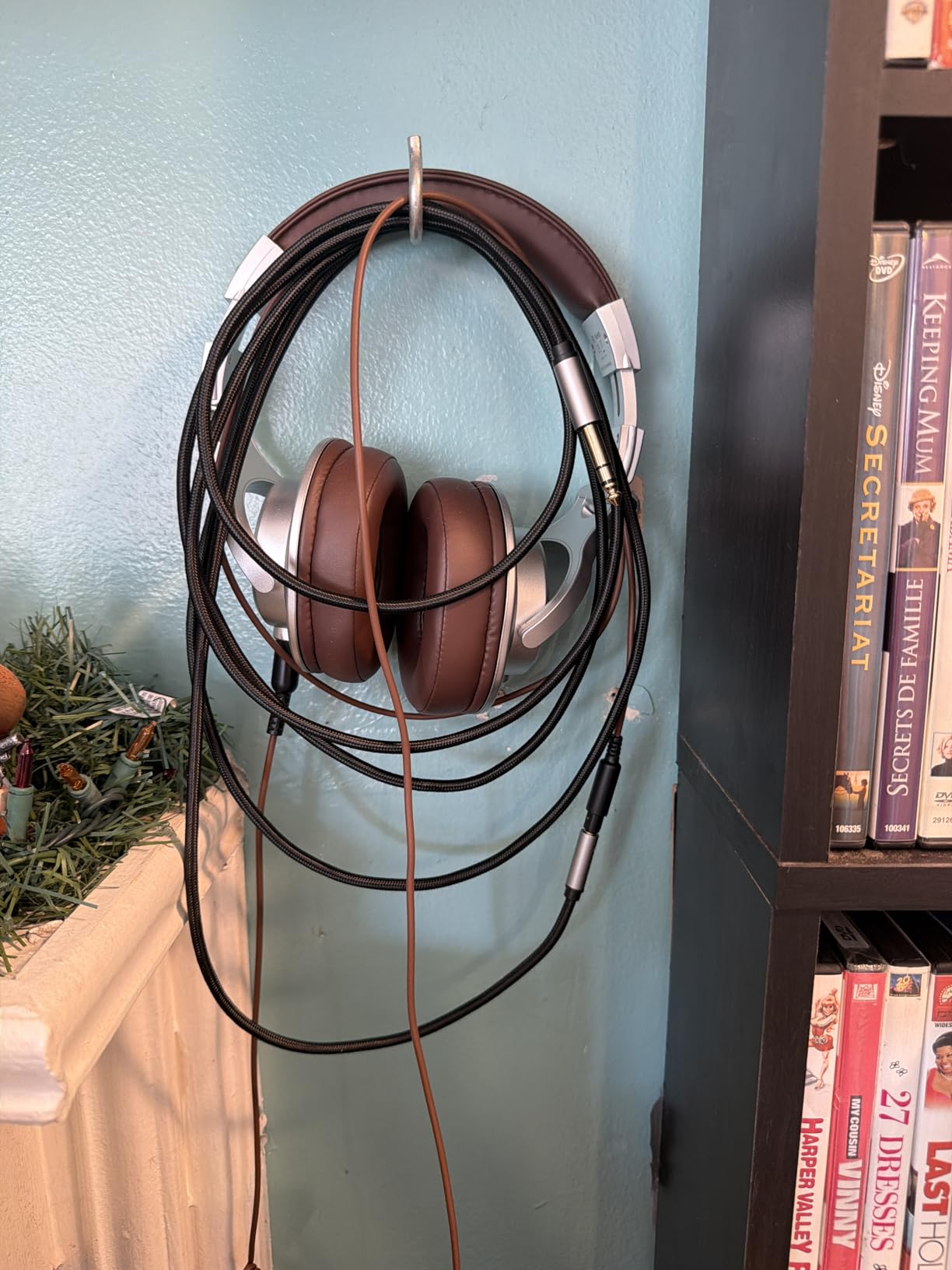
Comfort is fine rather than excellent. The soft cushions and adjustable headband work, and 13.28 ounces sits in the middle of this group, but the padding is the part that gives up first: owners report the cushions and headband wearing with extended daily use.
What to check before you commit
Ask whether this is your only pair or your first pair. If you are starting from nothing and tracking vocals is the goal, the isolation, the swivel and the dual plugs are genuinely useful. If you intend to mix on it, the consumer tuning will mislead you and you should save for something flatter.
Check the build expectation too. It is all plastic with no metal hinge, so it feels less substantial than the Audio-Technica models that cost more, and it is the model most likely to need replacing eventually.
Where it falls short
Accuracy is the main limitation, followed by durability. Low impedance and consumer tuning make it a headphone for monitoring, DJ cueing and casual listening rather than critical reference work, and the 20 Hz to 40,000 Hz headline range says less about real performance than it appears to.
For a student, a podcaster or anyone tracking on a strict budget, it does the job properly. Treat it as a stepping stone and plan a move to a flat closed-back model once the room and the interface are settled.
7. Audio-Technica ATH-M30x: The Best for Beginner Mixers Who Want a Detachable Cable
Audio-Technica ATH-M30x Professional Studio Monitor Headphones, Black
Closed-back circumaural
38 ohm impedance
20 Hz to 20000 Hz
40 mm drivers
Detachable cable, collapsible
Pros
- Excellent mid-range definition for mixing
- Detachable cable with coiled and straight options
- Aluminum build with reinforced hinges
- Collapsible design
- Good passive isolation
Cons
- Less deep bass than the M50x
- Pads can feel tight for some head shapes
- Long coiled cable away from a desk
- Costs more than the M20x while resolving less
The M30x sits in the awkward middle of the Audio-Technica range, and the reason it still makes this list is the detachable cable combined with a mid-focused tuning that is unusually useful for mixing. At 38 ohm and 100 dB sensitivity it drives easily and gives a little more output than the M50x for the same knob position.
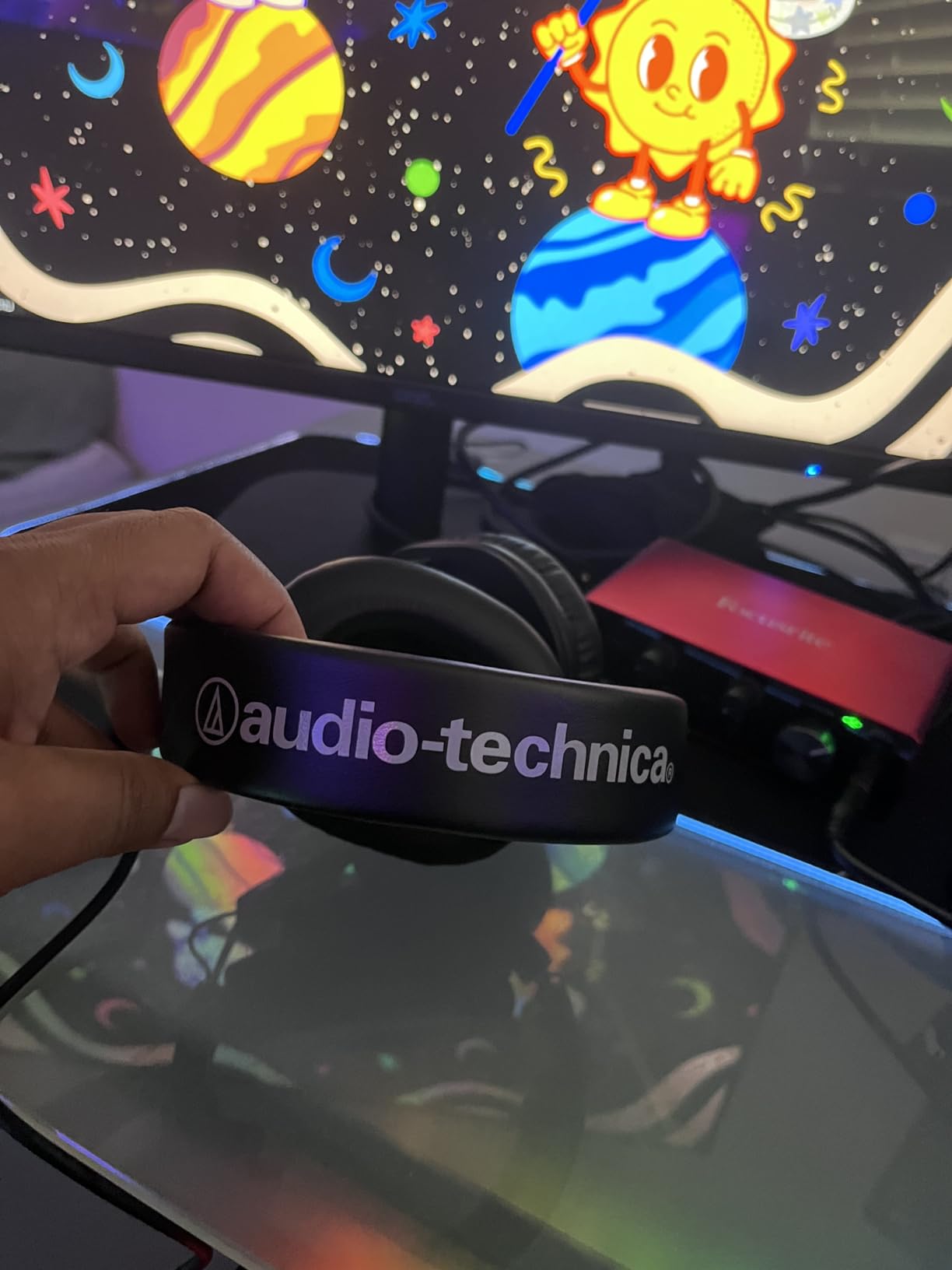
That mid-range definition is the point. Voices, guitars and the centre of the mix sit forward and legible, so a beginner learning to balance a mix has something trustworthy to point at. The aluminum construction and reinforced hinges are a genuine step up from the entry model, and the collapsible frame packs down small.
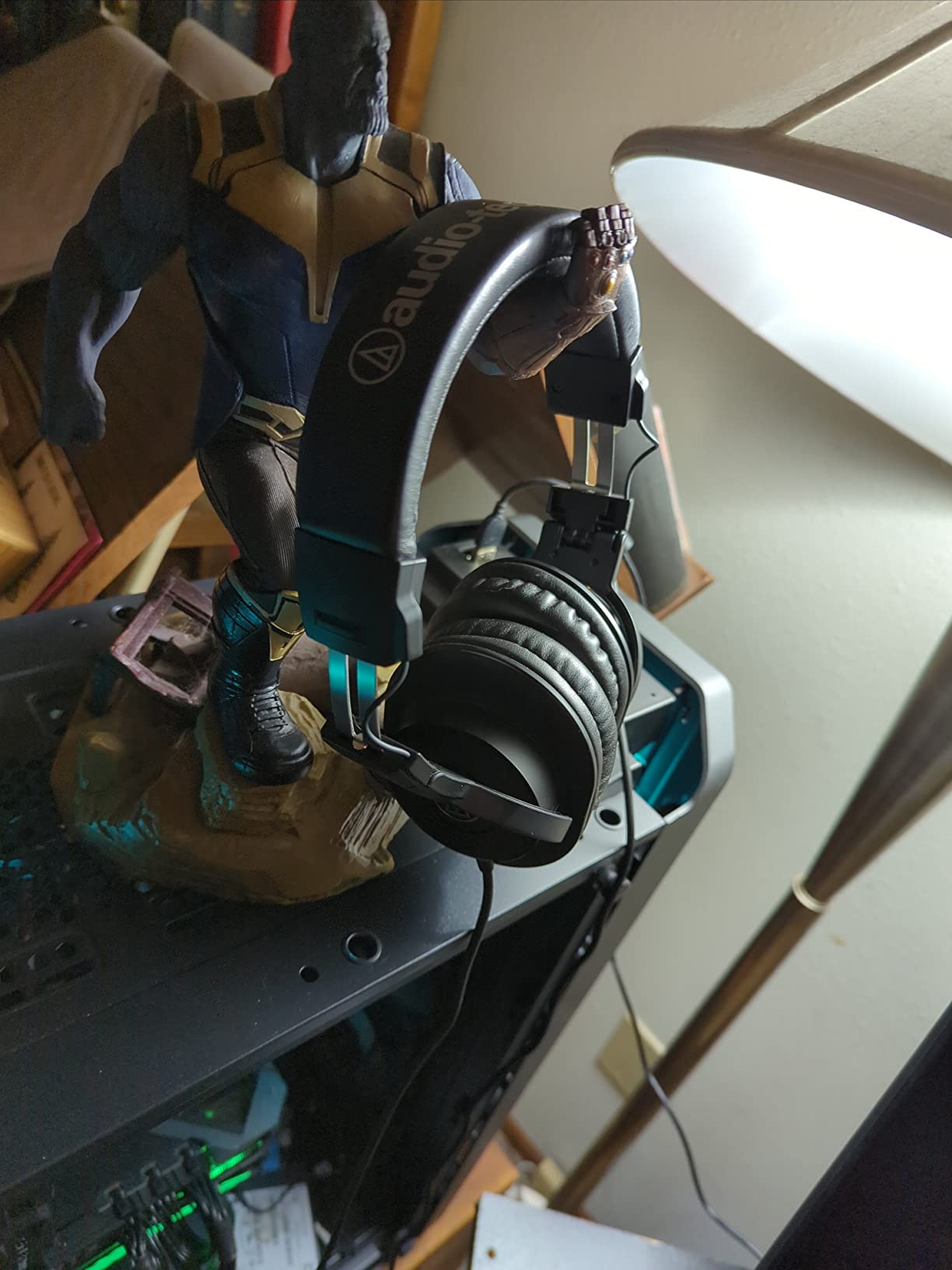
At 4.6 across more than 12,000 ratings, with 77 percent five-star, the owner consensus is remarkably consistent about where it fits: better built and more resolving than the M20x, less deep and less detailed than the M50x. Pads are replaceable and the cable is too, which protects the purchase over years.
Isolation is good for a closed-back monitor headphone, though not class-leading. If bleed is your main worry, look at the Sennheiser HD 280 Pro further down instead.
What to check before you commit
The most common complaint is clamping. Some head shapes and glasses wearers find the pads tight, and a tight seal is also an accuracy problem, so if you have a broad head or wear glasses, try before you commit.
The long coiled cable is also worth thinking about. Out of a studio chair it is a nuisance, and at a desk it is exactly the length you want. Both cable options are included with the headphones, which partly answers the problem.
Where it falls short
It is the awkward option in the range: it costs more than the M20x and resolves less than the M50x. If your budget stretches to the M50x, that is the better buy, and we would only choose the M30x if the specific mid-range focus or the smaller physical size matters to you.
For a beginner who wants a durable, serviceable closed-back headphone with a cable they can replace, it is a safe and sensible choice.
8. AKG K240 Studio: The Best Semi-Open for Podcast and Voiceover
AKG K240STUDIO Semi-Open Studio Headphones
Semi-open over-ear
55 ohm impedance
15 Hz to 25000 Hz
30 mm XXL drivers
Detachable pro cable
Pros
- Very neutral and accurate for a working tool
- Extremely light with a self-adjusting gimbal headband
- Detachable pro cable with 3 m length and adapter
- Excellent for spoken-word editing and mastering
- Roomy stage without full open-back leakiness
Cons
- Semi-open design leaks both ways
- Light bass that will not suit bass-heavy music
- Pleather pads get warm and sticky
- Needs an amp for level and dynamics
- Slightly rolled-off highs and occasional honk
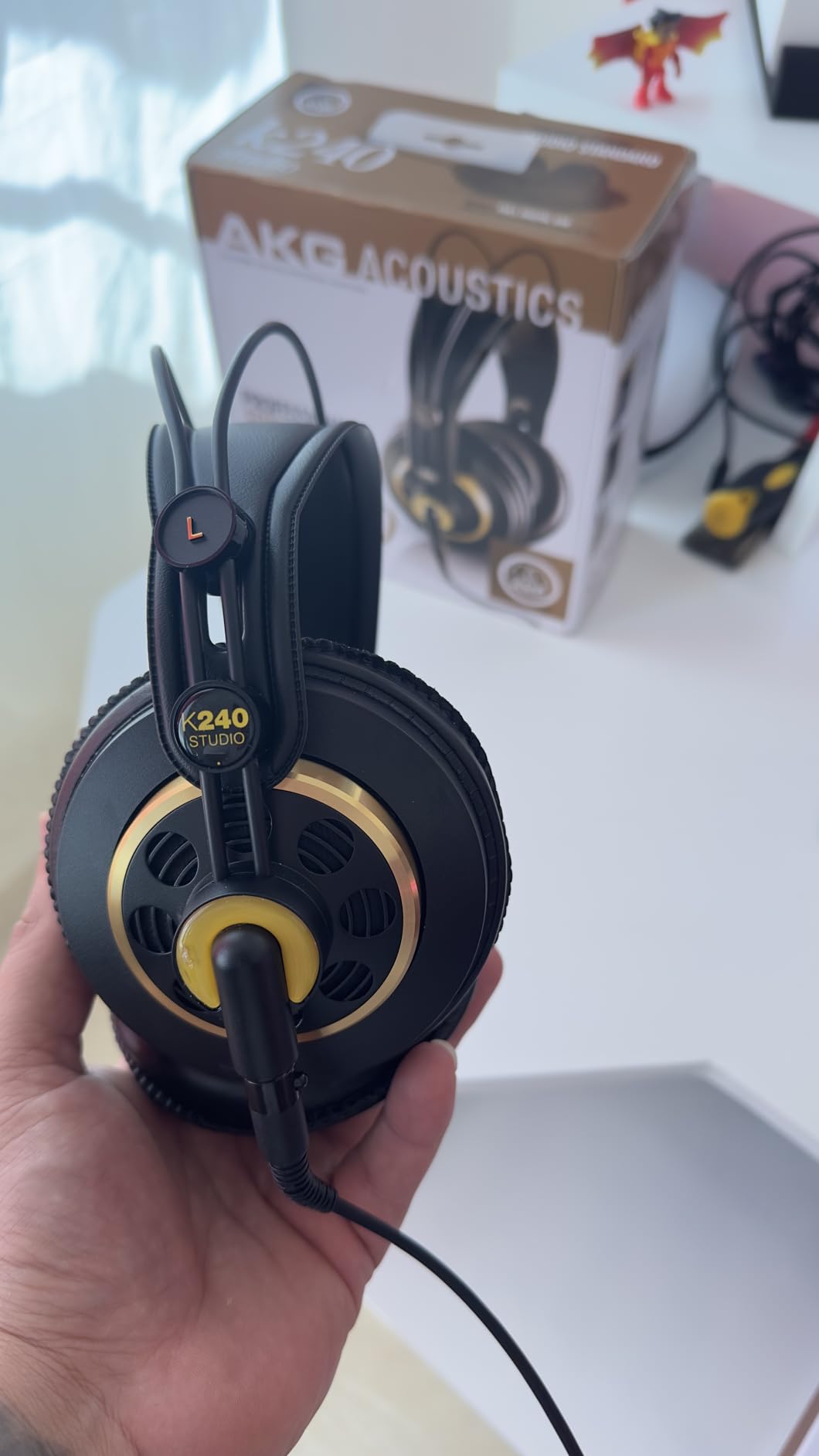
The K240 has been a studio tool for a very long time, and owners consistently describe it as a working instrument rather than an entertainment headphone. The response is neutral, which is why SeventhString and Head-Fi regulars keep recommending it as an inexpensive, non-colouring option for mixing and mastering.
It weighs 240 g and the gimbal headband self-adjusts to almost any head, so it is the pair we would hand to someone with no idea what clamp pressure feels like. The detachable pro cable is 3 m long and comes with a screw-on quarter inch adapter, and the 30 mm XXL transducers use patented Varimotion diaphragms for a wide dynamic range.
For spoken work it is excellent. Podcast editing, voiceover and narration depend almost entirely on mid-range accuracy and intelligibility, and that is precisely where this headphone is at its best. Many reviewers also note a break-in period where the sound settles before it is judged properly.
At 4.5 across nearly 12,500 ratings it has a 75 percent five-star share. The recurring criticisms are the semi-open leakage, light bass, warm pleather pads and the fact that low-powered sources need an amp for adequate level and dynamic range.
What to check before you commit
Leakage, and we mean it in both directions. This is a semi-open design, so it is unsuitable for live tracking where the headphone sound reaches the microphone, and it will not block a noisy room. If you record vocals with headphones on, this is not the pair.
Then check your source. At 55 ohm with 104 dB sensitivity it is efficient, but owners still report needing an amp for real level and dynamics from a phone or laptop. An interface with a proper headphone stage handles it comfortably.
Where it falls short
The bass is light and best described as present rather than extended, so it is the wrong tool for judging sub-heavy material. The pleather pads get warm and sticky over a long evening, and the top end is slightly rolled off with occasional midrange honkiness on some material.
As a mixing, mastering and broadcast headphone it remains a genuinely good buy. Just do not mistake a semi-open design for a tracking tool, because it is not one.
9. Sennheiser HD 280 Pro: The Best Isolation for Stopping Headphone Bleed
Sennheiser HD 280 Pro Headphone, Black
Closed-back over-ear
64 ohm impedance
8 Hz to 25000 Hz
32 dB attenuation
Replaceable pads and cord
Pros
- Class-leading isolation up to 32 dB
- Warm and natural tuning for critical listening
- Collapsible cups for instant one-ear cueing
- Very light and comfortable
- Replaceable pads
- headband and cord
Cons
- Heavy fixed coiled cord pulls to one side
- Pad and headband material degrades quickly
- Sub-bass and mid-bass slightly underemphasised
- Cracking plastic headband reported on some older units
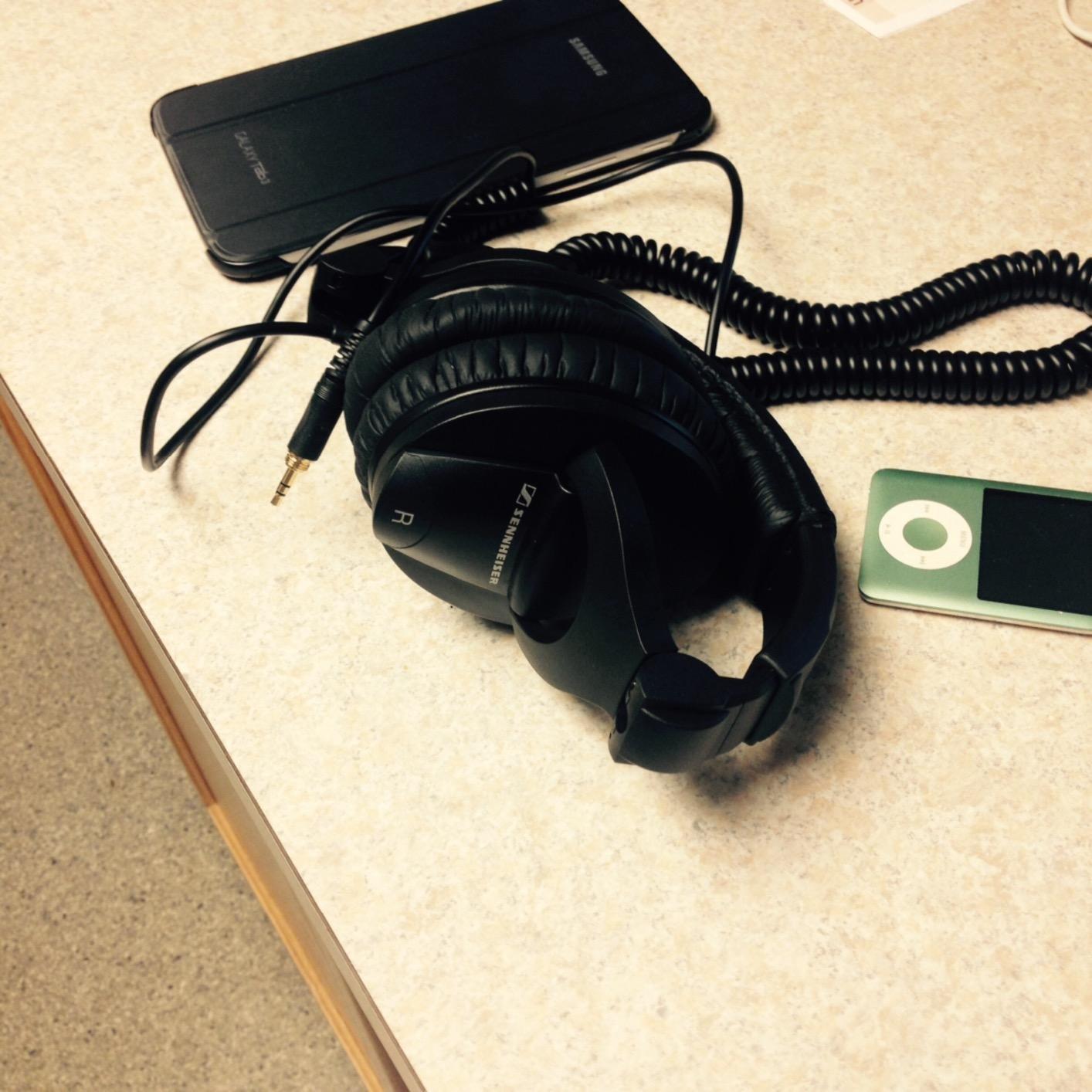
If your single biggest problem is headphone bleed reaching the microphone, the HD 280 Pro is the pair to shortlist first. Sennheiser quotes up to 32 dB of attenuation, and multiple owners describe the isolation as comparable to ear defenders, which is a remarkable amount of passive sealing from a wired headphone.
The sound is warm, natural and unboosted, which suits critical listening and long mixing sessions because nothing is being pushed. At 64 ohm it needs no external amp, and the 8 Hz to 25,000 Hz range covers more low end than the tuning actually emphasises.
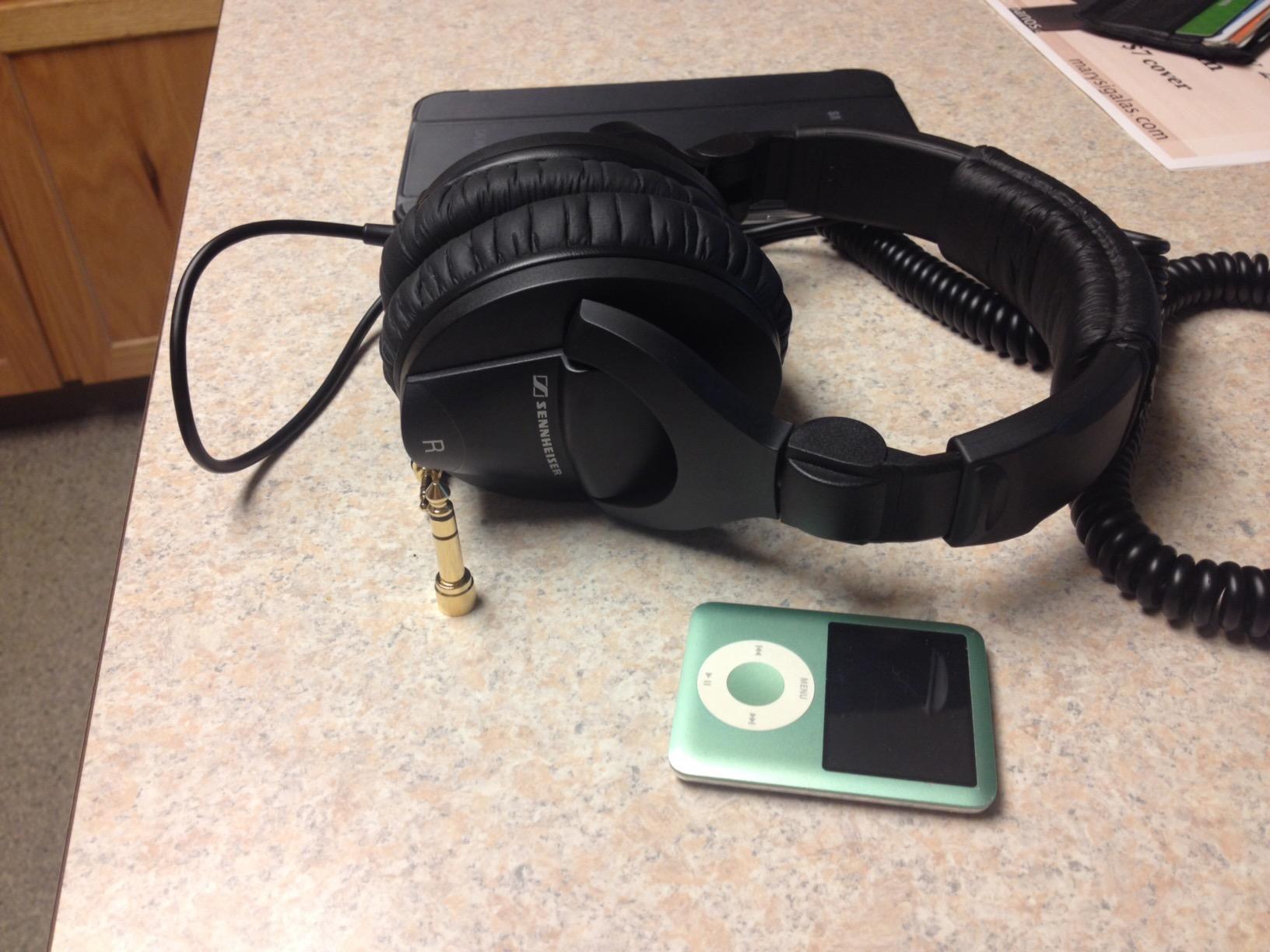
Comfort is a genuine strength. The cups collapse for instant one-ear cueing, which is exactly what you want when a singer pulls one side off to hear how the take sounds in the room, and the whole thing is light enough to forget. Ear pads, headband padding and the audio cord are all replaceable, which extends the life of the purchase.
It holds a 4.5 average across more than 11,000 ratings. Most of the criticism is build-related rather than sonic: a heavy fixed coiled cord, low-grade pad and headband coverings that pick up oil and sweat quickly, and reports of the plastic headband cracking on older units. Several owners fit third-party fabric or memory foam pads and report a large improvement.
What to check before you commit
The weight of that coiled cord. It hangs, it pulls to one side when the headphone rests on a desk, and despite the replaceable-cord claim the cable is not actually detachable in normal use. Know that going in, because it is the most-cited complaint on this model.
Also check the low end expectation. The sub-bass and mid-bass are slightly underemphasised, so if your work is bass-heavy you will want a second reference, or an open-back with real low-frequency extension.
Where it falls short
The materials are the weak point. Pads and headband coverings degrade quickly with skin contact, and a cracked headband is reported on some older units, so this is not the pair for a shared studio environment that gets handled roughly.
A HomeRecording.com thread put the 7506 ahead of the HD 280 Pro for tracking clarity, and we would mostly agree. But where the Sony wins on detail, the Sennheiser wins on containment, and for a home room with a laptop mic in a shared space, containment is often the more valuable of the two.
10. Sennheiser HD 490 PRO: The Best for a Large Soundstage and Precise Placement
HD 490 PRO Open-Back Professional Headphone
Open-back circumaural
130 ohm impedance
5 Hz to 36000 Hz
200 g
Detachable low-noise cable
Pros
- Very wide dimensional soundstage with precise localisation
- Uncolored response from 5 Hz to 36 kHz
- Low-frequency cylinder system gives full defined bass
- Open-frame architecture lowers distortion and resonance
- Two pad sets included for mixing and producing
Cons
- Open design leaks sound in both directions
- 130 ohm wants a capable amp
- Premium cost for the feature set
- New model with a much smaller review base
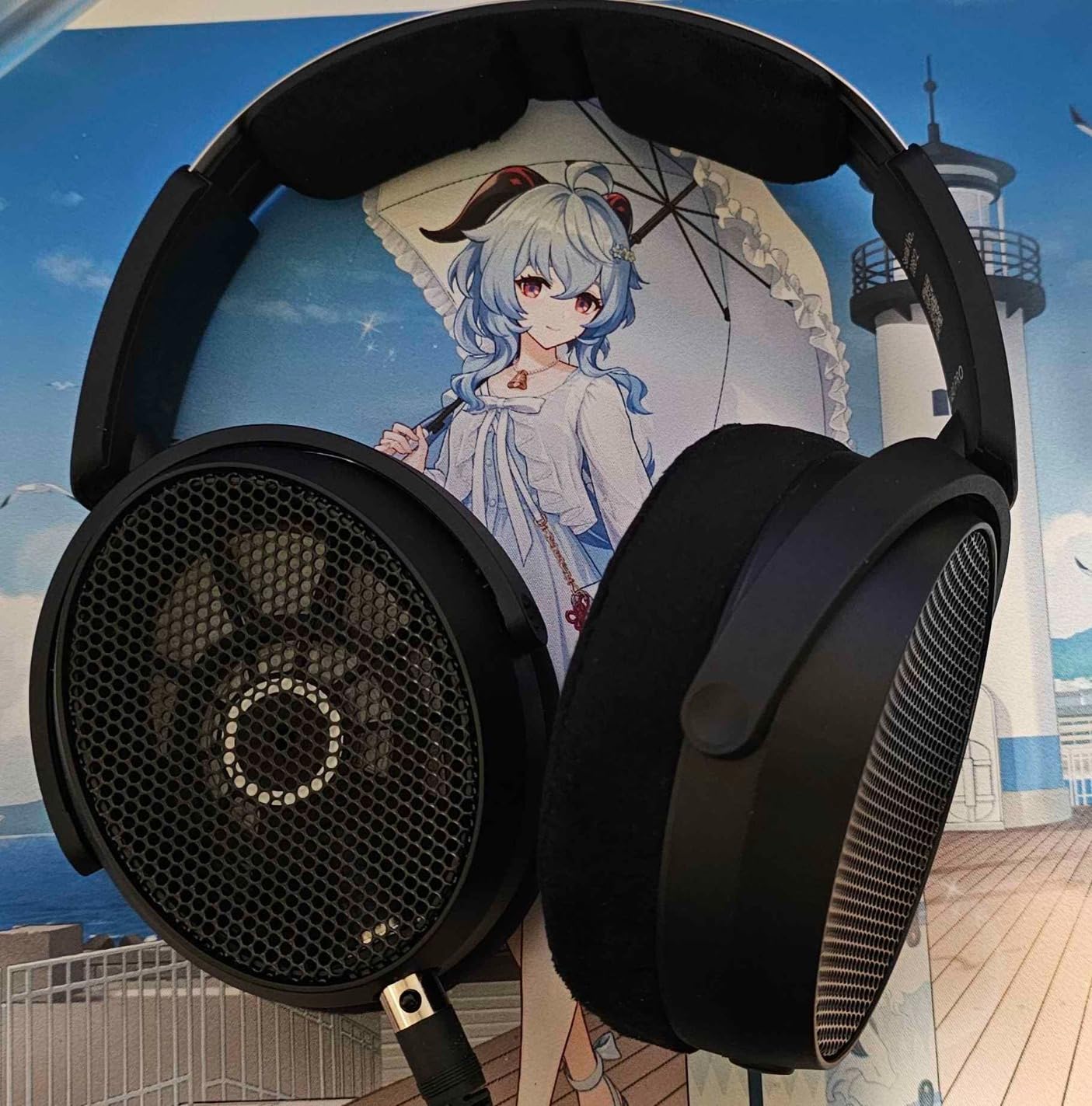
The HD 490 PRO is the newest model here, and the one the search engines keep naming in single-answer results. Owners describe an extremely wide, dimensional soundstage with precise instrument localisation, which is the single most useful property for mixing, and the 5 Hz to 36,000 Hz response is described as genuinely uncolored.
The new low-frequency cylinder system is the interesting engineering story. On an open-back design you would normally accept a loose, unfocused bottom end; here owners report a full but well-defined low end, and the Sennheiser open-frame architecture is said to reduce total harmonic distortion and resonance for better accuracy.
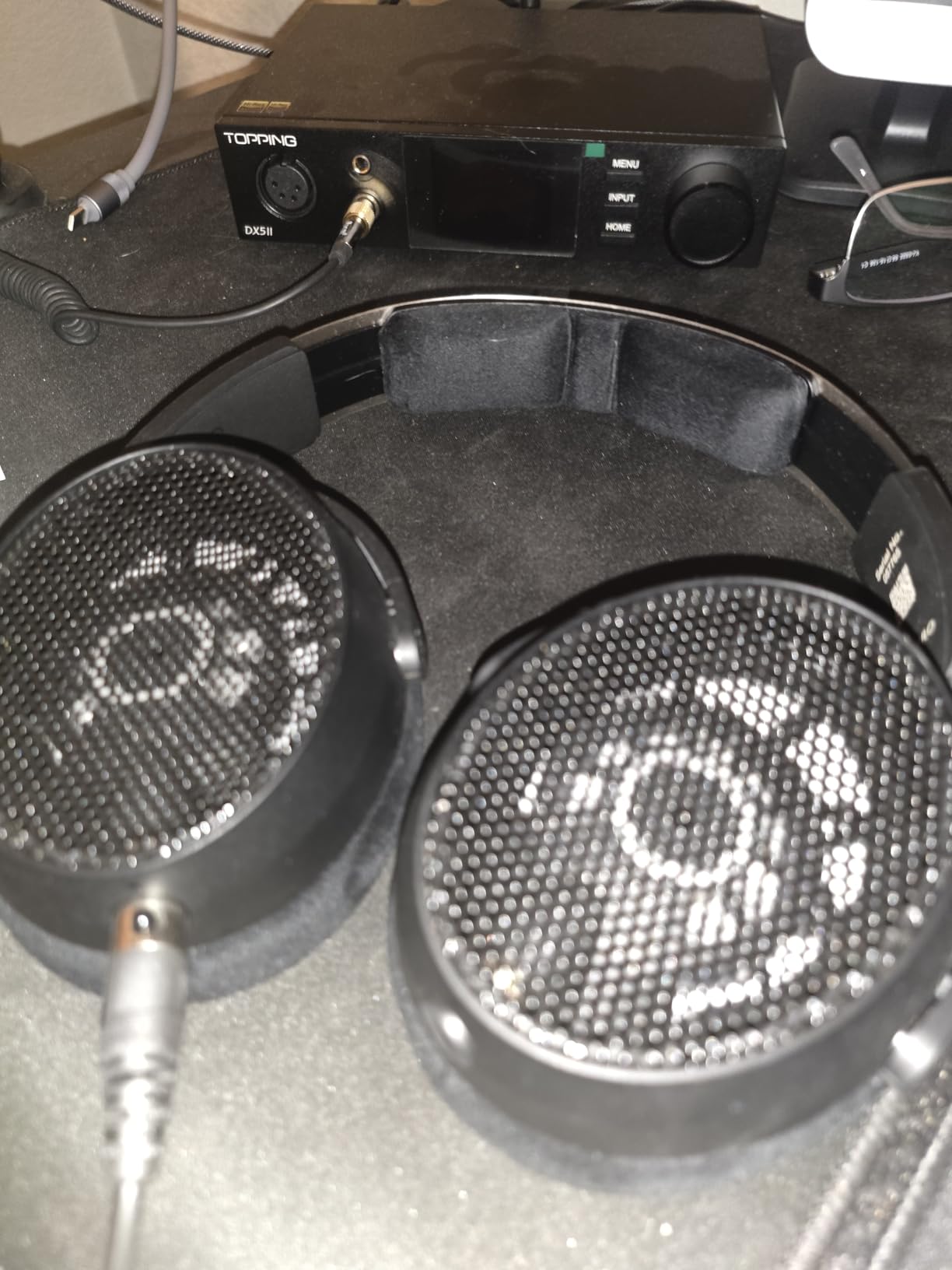
Two sets of ear pads ship in the box, one for producing and one for mixing, and the intent is to reduce ear fatigue over long sessions. The pads are washable and replaceable, the build is aluminum, and at 200 g it is one of the lighter open-backs available. The detachable cable has separate jacks for each ear cup and a patented low-noise coil structure.
It carries a 4.6 average, though from a much smaller base of 376 ratings, so treat early owner feedback as provisional. That said, the pattern across those reviews is consistent enough to act on.
What to check before you commit
Isolation, plainly. This is an open-back headphone with no noise control at all, so it leaks sound in both directions and is not a tracking headphone in any shared home environment. If you sing in the same room where you mix, you need something else for the performance.
Then check amplification. At 130 ohm and 105 dB sensitivity it is efficient in theory, but owners advise a capable headphone amp for optimal output, and 130 ohm sits well above what a laptop or phone will drive to working level.
Where it falls short
The premium cost is the first limit, and the small review base is the second. With 376 ratings you have far less long-term data than the thirty-year-old models above, and the two pad sets and low-noise cable are features you may never use if your sessions are short.
For a home studio where mixing happens in a quiet room and the budget stretches, it is the most precise placement tool in this list. For a bedroom recordist tracking vocals after hours, it is the wrong headphone entirely, and the M50x remains the better buy.
One Pair or Two Pairs: How to Decide
The most repeated question on the home recording forums is whether one pair can cover both tracking and mixing, and the honest answer is yes for most people, provided you pick a closed-back with a wide-enough image. The Audio-Technica ATH-M50x is the pair we would start with for exactly that reason.
Use this rule instead. If you record vocals or guitar in the same room where you mix, buy one closed-back model that is accurate enough to mix on, and treat open-back mixing as a future upgrade rather than a requirement. If your recording happens elsewhere, or you only mix and podcast in a quiet room, one open-back with a wide soundstage will serve you for both jobs.
The point at which a second pair genuinely pays for itself is when your tracking headphone has a coloured low end. Once you start making EQ decisions that carry over to other systems, a neutral open-back reference changes how confident you are in a mix. That is a later purchase, and it is the one we would make second.
How to Choose Studio Headphones for a Home Studio
Closed-back, open-back or semi-open
Closed-back headphones seal the cup around your ear. Sound stays inside, external noise stays out, and nothing from your backing track reaches the microphone. That makes them the only sensible choice for tracking in a shared home, and it is why the M50x, the MDR-7506 and the HD 280 Pro dominate this list. The trade is a smaller, more intimate soundstage, which means fine panning judgements are harder.
Open-back headphones let air move freely through the grille. You get a wide, natural soundstage and accurate stereo imaging, and the low end behaves differently from a closed design. You also get zero isolation and full sound leakage in both directions, which in a flat at night means either earplugs or a different plan.
Semi-open sits between the two. The AKG K240 gives you a roomy, airy stage without the full leakiness of an open design, and plenty of owners love it for mixing. It is still the wrong tool for live tracking, and the reviews are clear about that.
Impedance and whether you need a headphone amp
Impedance is measured in ohms and describes how hard the headphone is to drive. The practical rule is simple: match the source output impedance to roughly one eighth of the headphone impedance. A source with an output impedance below one eighth of the headphone rating will drive it cleanly; go much higher and you get frequency response changes driven by the cable rather than the driver.
Worked examples make it concrete. A 32 ohm headphone wants a source below roughly 4 ohms, which is what almost every laptop, phone and modern interface provides, so no amp is needed. A 250 ohm headphone wants a source below roughly 31 ohms, and most consumer interfaces cannot do that, which is exactly why the DT 990 Pro goes quiet and why owners wrongly assume it is faulty. A 600 ohm headphone would need a source under 75 ohms, which means a dedicated amp.
The practical grouping for this list is simple. The OneOdio A71 at 32 ohm, the ATH-M50x and M30x at 38 ohm, the ATH-M20x at 47 ohm and the AKG K240 at 55 ohm all run straight from an audio interface. The Sony at 63 ohm, the HD 280 Pro at 64 ohm and the DT 770 Pro at 80 ohm are comfortable from a good interface. The HD 490 PRO at 130 ohm and the DT 990 Pro at 250 ohm are amp territory.
There is a second rule worth keeping: once the headphone is quiet enough that you push your interface or laptop to maximum, you lose headroom, and at high output some interfaces distort. That is a real problem, not a theoretical one, and it is the reason we treat a headphone amp as part of the purchase for high-impedance models.
Frequency response and what it means for mixing
The quoted range tells you the manufacturer’s claimed limits, not the tuning. A headphone that states 5 Hz to 35,000 Hz can still have a lifted treble, and a headphone quoted to 20,000 Hz can be the more accurate of the two. Read the range as a screening tool and judge the balance by ear, using mixes you already trust as a reference.
Two practical warnings. The DT 770 Pro has a punchy low end and a lifted top, and it is the model most often described as coloured in forum threads, so mix decisions made on it need checking elsewhere. The ATH-M20x and the AKG K240 are flatter but lighter in the bass, so low-end judgements from them lean cautious. Neither is wrong; they simply push you in opposite directions, which is why one pair is not always enough.
Comfort, clamping force and ear fatigue
Comfort is not a luxury in a home studio, where a session can run for hours. The heaviest factors are weight, clamping force and pad material. The Sony MDR-7506 at 8 ounces and the DT 990 Pro at 8.8 ounces are the lightest here, and the velour pads on the DT 770 Pro and DT 990 Pro are the softest. Conversely, any model with stiff pads or a tight clamp gets worse over hours, not better.
Velour is comfortable and breathes less well, so the DT 770 Pro pads can get warm in a long session. Pleather runs warm and sticky. Leatherette on the Sony and HD 280 Pro degrades fastest with skin contact. Whatever you pick, keep a replacement pad set in mind as part of the running cost.
Cables, ear pads and total cost of ownership
There are three models here with a fixed cable: the Sony MDR-7506, the DT 770 Pro and the DT 990 Pro. If that cable fails at the strain relief, the pair is finished, so treat it as a risk. The models with detachable or replaceable cords, including the M50x, the M30x, the K240, the HD 280 Pro, the HD 490 PRO and the A71, let you replace one lead instead of one headphone.
Ear pads are the other recurring line item, and they change the sound. Compressing pads lose both seal and low end, so a pad swap often fixes a headphone that seems to have got worse. Budget for one pad change and expect the second inside a few years of daily use.
The headphone-only workflow and its one big trap
Mixing on headphones alone has a known failure mode: everything feels too quiet and too detailed, so you over-mix the bass and strip the life out of the arrangement. On headphones you also lose the interaction between low end and room, which is the first thing listeners notice on a system that is not headphones.
The workaround is comparison rather than isolation. Play the rough mix at a level where it sounds right on the headphone, then drop the level and check whether the balance still holds. If you can, check it on a phone speaker or a small bluetooth speaker once a week, because those reveal masking problems and translation failures that no headphone can. If your setup still needs a lot of routing, our patch bay guide covers the signal management side.
Finally, keep the volume at roughly 60 percent of your maximum for long sessions. That is the 60 rule, and it is the cheapest hearing protection available. If you are working in a shared space and want everyday comfort rather than session comfort, our headphones for working from home guide covers a different set of priorities.
Frequently Asked Questions
What are the best headphones for recording studio use?
For home recording, the Audio-Technica ATH-M50x is the strongest all-rounder: 38 ohm impedance so an ordinary audio interface drives it, a circumaural seal that keeps backing tracks out of the microphone, and a detachable cable so one damaged lead does not end the pair. The Sony MDR-7506 is the alternative if maximum tracking clarity matters more to you.
What headphones do professional recording studios use?
Professional studios tend to use several pairs at once rather than one. A closed-back reference such as the ATH-M50x handles tracking and editing, a wide open-back such as the DT 990 Pro or HD 490 PRO is used for mixing decisions, and a second closed-back is kept for high isolation during vocal and guitar overdubs. Pairs are swapped when a mix stops translating.
What is the 60 rule for headphones?
The 60 rule means keeping your listening volume at about 60 percent of the device maximum. Below that level, your ears are less exposed to the high frequencies that cause long-term damage and the low frequencies that cause fatigue. It costs nothing, it applies to every model on this list, and it matters more in a home studio because sessions are long.
What are the best headphones for recording vocals?
For vocals, isolation beats everything else, because any backing track that leaves the cup lands in the take. The Sennheiser HD 280 Pro offers up to 32 dB of passive attenuation, the Sony MDR-7506 is the lightest and most revealing for hearing sibilance and mouth noise, and the Audio-Technica ATH-M50x balances both with a light 38 ohm load and a replaceable cable.
Are closed-back headphones good for mixing?
Yes, a closed-back headphone can be a perfectly good mixing tool, and for a home studio it is often the more practical choice. Closed-backs give you isolation and a consistent low end, and the Audio-Technica ATH-M50x is widely mixed on. The trade is a more intimate soundstage, so if your work depends on judging wide stereo placement, add an open-back reference later.
What are some good open-back headphones for mixing?
The Beyerdynamic DT 990 Pro is the established open-back mixing reference, offering a very wide soundstage, tight bass and velour pad comfort at 250 ohm, so plan on a headphone amp. The Sennheiser HD 490 PRO is the newer premium option, with an uncolored 5 Hz to 36,000 Hz response and two pad sets. Both leak sound, so neither suits a shared room or late-night work.
Final Recommendation
For the best studio headphones for home recording in 2026, the Audio-Technica ATH-M50x is the pick. It is accurate, it isolates well enough to track a vocal in a real room, its 38 ohm load works with the interface you probably already own, and the detachable cable makes it the one most likely to still be working several years from now.
Add a second pair only when you feel limited. If you need more isolation, the Sennheiser HD 280 Pro is the step up. If you need to judge stereo placement and depth, an open-back such as the DT 990 Pro changes the way you work, and you will need an amp for it.