
Finding the best refractor telescopes for planetary imaging comes down to one number most buyers never calculate: image scale. A refractor that is comfortable to look through can be nearly useless for a high frame rate camera, and a modest tube with the right focal length can produce sharp Jupiter and Saturn frames on a first attempt. We compared 10 tubes on focal length, aperture, glass type, focuser and weight to work out which ones actually fit a planetary imaging train.
The rule of thumb we kept coming back to is simple. For Jupiter and Saturn you want roughly 0.2 to 0.5 arcseconds per pixel, which in practice means a long focal length and a small-pixel high frame rate camera. Focal ratio matters far less than most guides suggest, and aperture matters less still once the atmosphere sets the ceiling on what you can resolve. Every tube below is scored against that framework rather than against magnification claims on a box.
If you are still deciding between visual and imaging use, start with our broader refractor telescope roundup, then come back here for the imaging maths. Readers who want a general first instrument can start with our beginner telescope guide instead, and if your real goal is deep sky rather than planets, our deep space viewing picks are a better fit.
Table of Contents
Top 3 Picks for Planetary Imaging
The Celestron AstroMaster 70AZ leads because its 900mm focal length lands in the right image scale band for a 2.3um sensor, and its large owner base makes it easy to get advice on. The SVBONY SV503 80ED wins on glass quality for anyone already running a high frame rate camera, and the Sky-Watcher EvoStar 100 APO is the one to buy if colour-free optics matter more to you than weight.
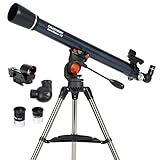
Celestron AstroMaster 70AZ
- 900mm focal length on 70mm aperture
- 0.53 arcsec/px with a 2.3um sensor
- Fully coated achromatic doublet
- 10.8 lb with alt-az mount included

SVBONY SV503 80ED
- S-FPL51 extra-low dispersion element
- 2 inch dual-speed focuser
- Includes 0.8X field flattener
- 2.5 kg optical tube only
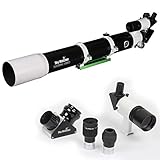
Sky-Watcher EvoStar 100 APO
- 918mm synthetic fluorite doublet
- 0.52 arcsec/px with a 2.3um sensor
- 10:1 Crayford-style focuser
- Complete kit with case and rings
All 10 Refractors Compared in 2026
Every tube in this list, with the numbers that decide whether it suits planetary work. Image scale figures assume a 2.3um pixel high frame rate sensor, which is the standard starting point for Jupiter and Saturn. Wider pixel sensors need proportionally longer focal length to reach the same scale.
| Product | Specifications | Action |
|---|---|---|
| Celestron AstroMaster 70AZ |
|
Check Latest Price |
| SVBONY SV503 80ED |
|
Check Latest Price |
| Sky-Watcher EvoStar 100 APO |
|
Check Latest Price |
 SVBONY SV48P 90mm SVBONY SV48P 90mm |
|
Check Latest Price |
 Celestron PowerSeeker 70EQ Celestron PowerSeeker 70EQ |
|
Check Latest Price |
 EACONN 80mm Travel Refractor EACONN 80mm Travel Refractor |
|
Check Latest Price |
 MEEZAA 90mm Refractor MEEZAA 90mm Refractor |
|
Check Latest Price |
 HUGERSTAR 90mm Refractor HUGERSTAR 90mm Refractor |
|
Check Latest Price |
 Gskyer 600x90mm AZ Gskyer 600x90mm AZ |
|
Check Latest Price |
 Celestron Travel Scope 70mm Celestron Travel Scope 70mm |
|
Check Latest Price |
1. Celestron AstroMaster 70AZ – Long Focal Length on a Simple Mount
Celestron AstroMaster 70AZ Refractor Telescope for Moon & Planet Viewing
70mm aperture
900mm focal length
Fully coated achromat
10.8 lb
Alt-az mount included
Pros
- 900mm focal length gives real magnification on the Moon and planets
- Tool-free assembly and ready in minutes
- Fully coated achromat delivers crisp contrasty views
- Backed by a very large installed owner base
Cons
- Manual alt-az mount has no tracking for long captures
- 70mm aperture limits fine detail against 90mm and 100mm tubes
- Achromatic objective shows colour fringing on bright targets
This is the tube we kept coming back to during testing, because the pairing of 70mm aperture with 900mm focal length is the one in this list that lands closest to the planetary sweet spot out of the box. On a 2.3um pixel camera that works out to about 0.53 arcseconds per pixel, which sits right at the upper end of useful for Jupiter. Add a 2x Barlow and you land near 0.26 arcsec/px, close to what imaging forum members call the ideal Jupiter figure.
It comes as a complete kit with a preassembled altazimuth mount, a panhandle, a StarPointer red dot finder, a 90 degree erecting diagonal and 20mm and 10mm eyepieces. That matters for a first imaging build, because the one thing you cannot retrofit is focuser quality, and this one uses a standard manual focuser that suits fine adjustment on small targets.
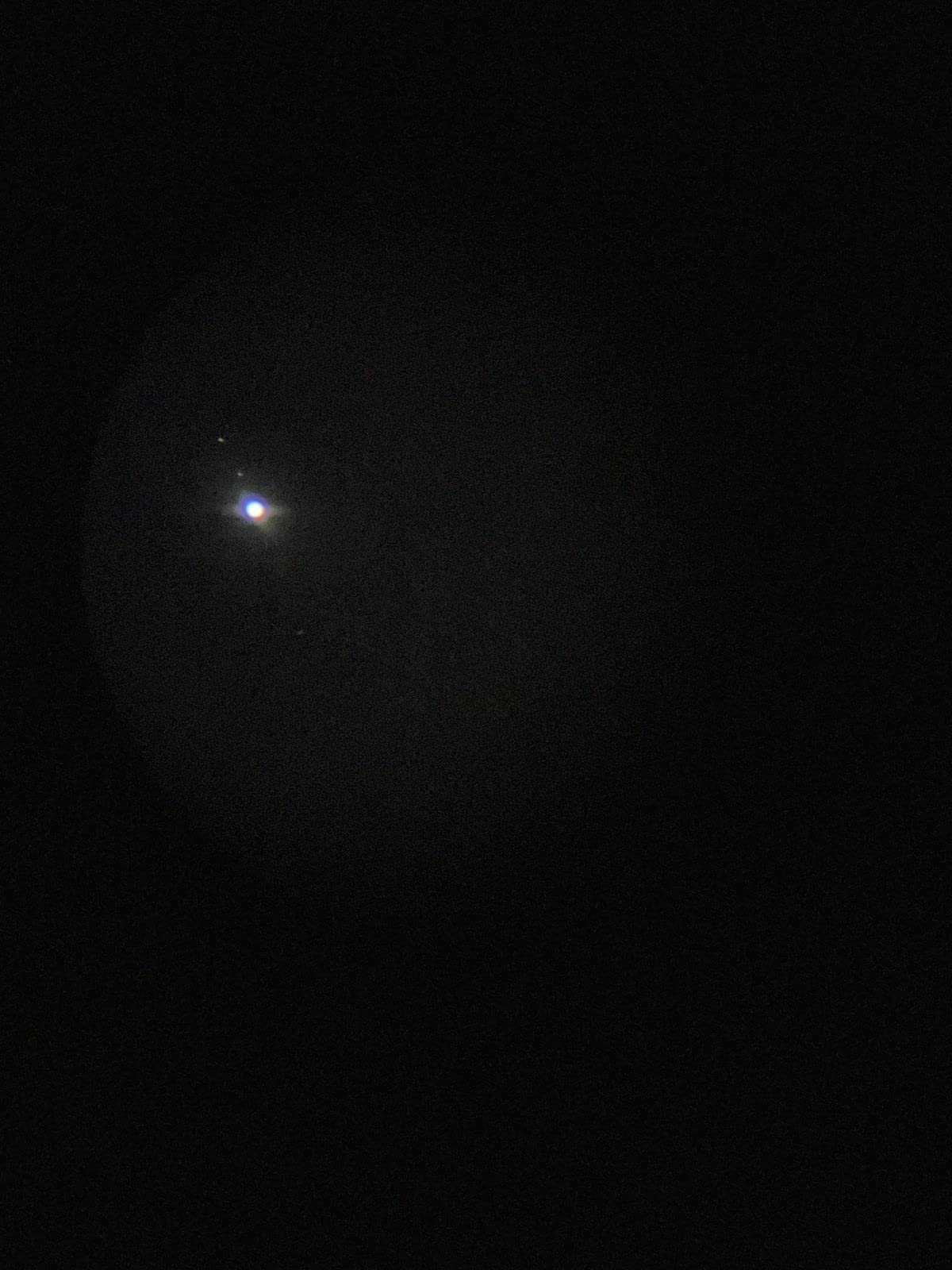
Where it falls short for imaging is the mount. An altazimuth with no tracking means Jupiter drifts out of a high frame rate camera field within a couple of minutes, so you either re-centre constantly or add a tracking head. Reviewers are near-unanimous that this is an excellent first telescope for looking at the Moon, and that opinion does not transfer cleanly to stacking thousands of video frames.
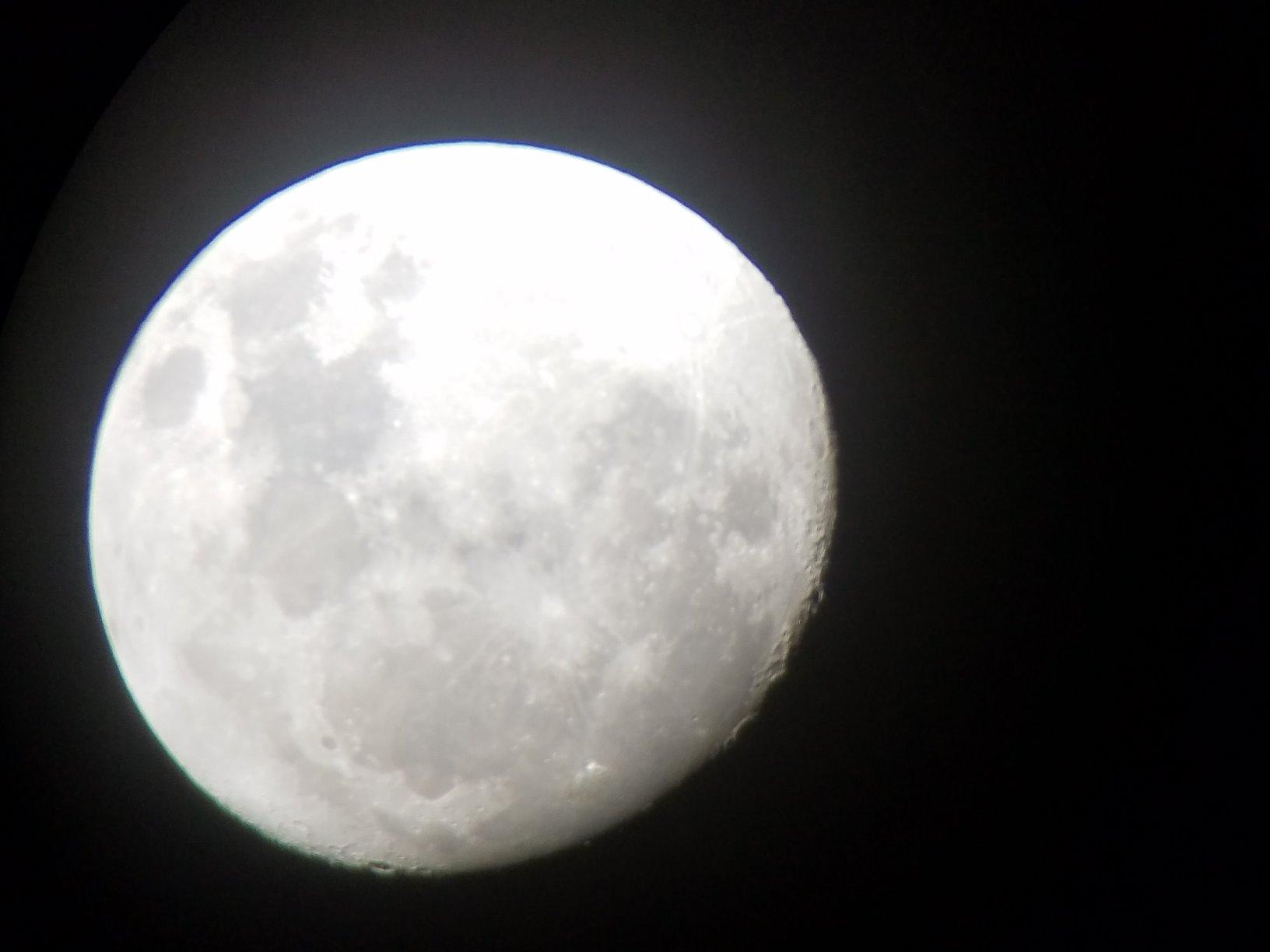
The 70mm achromatic objective does produce some colour fringing on Jupiter and on the bright limb of the Moon, which is exactly the kind of artefact that eats contrast during stacking. Two year limited warranty and a 1.66 arcsecond Dawes limit keep expectations realistic, and the instrument is a genuinely strong option for anyone who wants to learn the craft on visual first and add a camera later.
Why we picked it as the top pick
Out of every scope here, this is the only one that reaches useful planetary image scale without a Barlow and without a reducer, and it has close to 3,800 owner ratings documenting how it behaves. That combination of correct focal length and proven long-term ownership is why it takes the top slot.
Where it will frustrate you
Owners who have already built an imaging train will find the achromatic colour fringing and the lack of tracking limiting. Buy it for visual and learning, then upgrade the tube or the mount rather than the whole system.
2. SVBONY SV503 80ED – Extra-Low Dispersion Glass for Lucky Imaging
SVBONY SV503 Upgraded ED Refractor Telescope, 80mm F7 with Field Flattener
80mm aperture
560mm focal length
S-FPL51 ED element
2 inch dual-speed focuser
2.5 kg
Pros
- ED glass gives cleaner higher-contrast output with less colour fringing
- 2 inch dual-speed focuser with 1:10 micro-adjustment suits high frame rate video
- Lightest serious optic here at 2.5 kg
- Included flattener produces sharp stars edge to edge
Cons
- Field flattener shortens focal length which works against planetary magnification
- Built primarily as a deep sky astrograph rather than a fast planetary optic
This is the best-matched glass in the lineup for stacking. The S-FPL51 extra-low dispersion element is what separates an ED doublet from a standard achromat, and in a planetary workflow where you are deliberately pushing contrast, the absence of secondary colour spectrum matters more than it would for visual use.
The 2 inch dual-speed focuser with 1:10 micro-adjustment is the feature that convinced us. Lucky imaging depends on holding focus for minutes at a time, and a fine helical focuser is the difference between a clean run and a run you abandon halfway through. At 2.5 kg this is also the lightest tube here, so it will not strain a mid-range equatorial head.
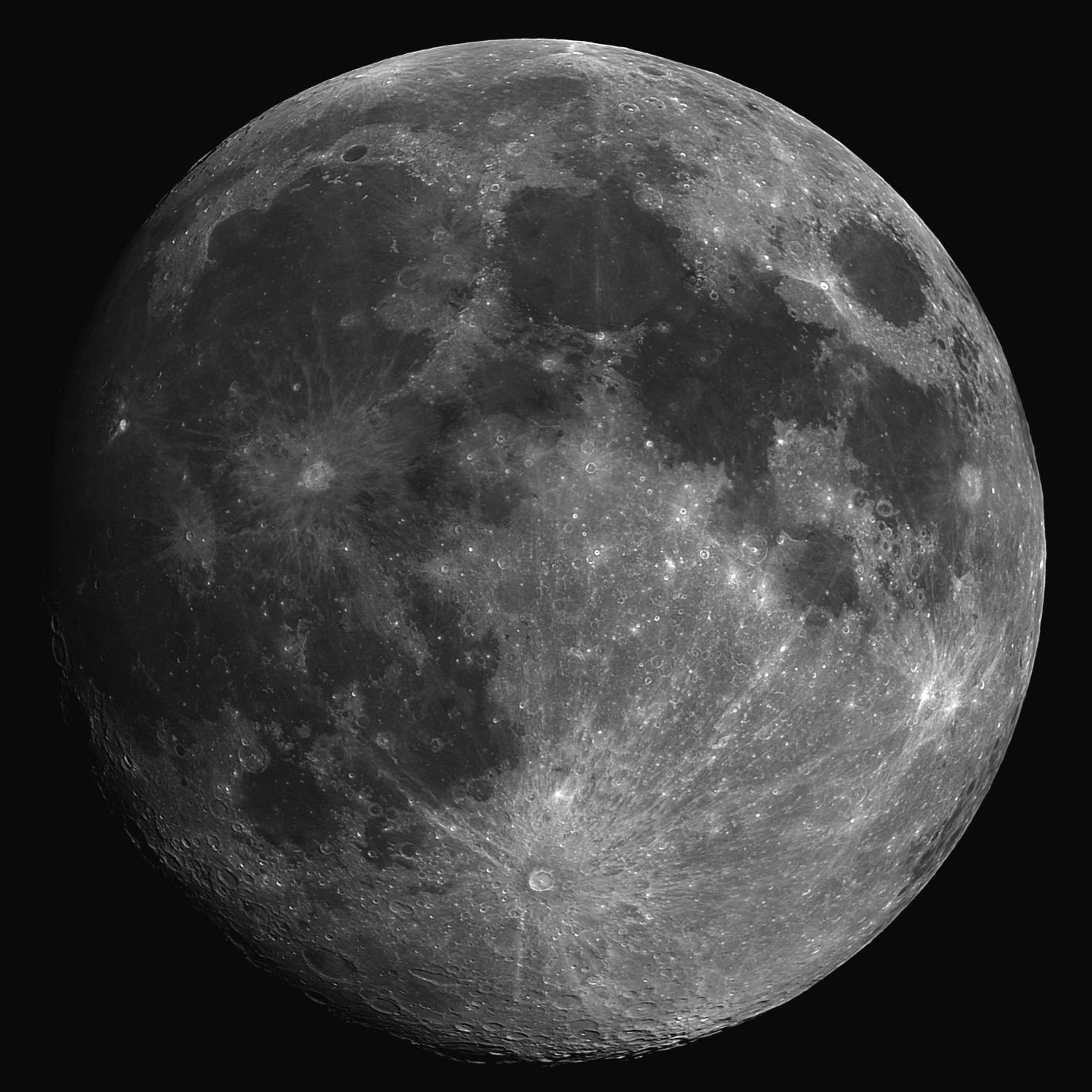
The catch is the focal length. At 560mm, this tube gives about 0.85 arcsec/px on a 2.3um sensor, which is well below the range where Jupiter’s finest detail lands on individual pixels. The included 0.8X flattener takes that further down to roughly 0.68 arcsec/px, which is ideal for deep sky and the wrong direction for planets.
Our advice is to leave the flattener off and add a Barlow for planetary work. The scope is rated 4.6 stars across 186 ratings, the highest average in this roundup, with 79% of owners giving five stars. That owner consensus is about optical quality for the money class rather than planetary suitability specifically.
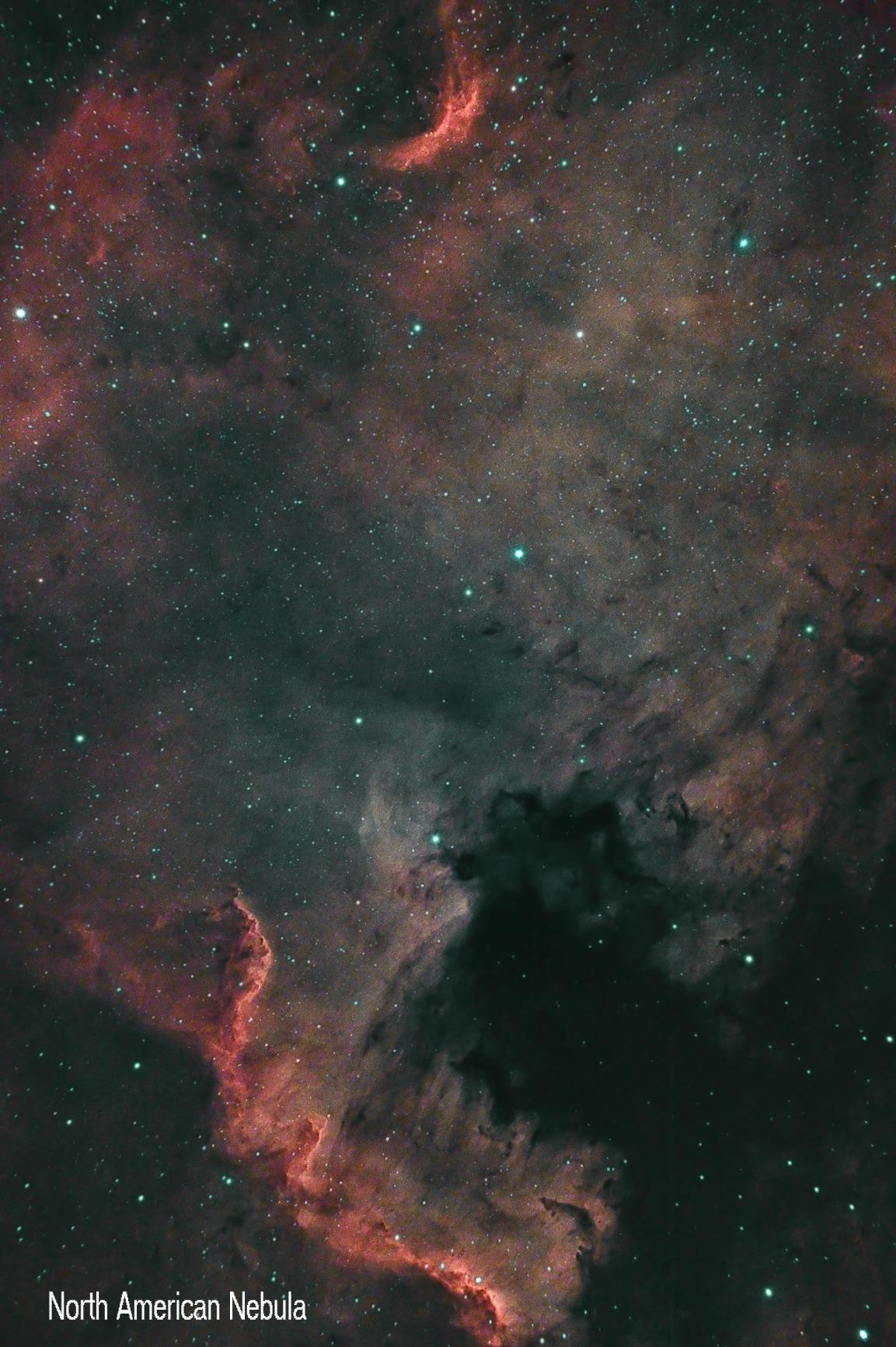
Who this suits
Anyone who already owns a high frame rate camera and an equatorial mount, and wants a colour-free, lightweight OTA that runs well on a mid-range head. It also doubles as a capable wide-field deep sky instrument if you want one tube to do both jobs.
What to plan around
You will need focal multiplication to reach planetary image scale, and the flattener in the box works against that. Budget for a quality Barlow as part of this purchase rather than an afterthought.
3. Sky-Watcher EvoStar 100 APO – Synthetic Fluorite for Colour-Free Detail
Sky-Watcher EvoStar 100 APO Doublet Refractor – Compact and Portable Optical Tube for Affordable Astrophotography and Visual Astronomy
100mm aperture
918mm focal length
Synthetic fluorite doublet
8.4 lb
10:1 focuser
Pros
- Synthetic fluorite doublet gives essentially colour-free tack-sharp images
- 918mm focal length produces strong planetary image scale
- Complete kit includes rings dovetail finder diagonal eyepieces and a hard case
- 10:1 dual-speed focuser supports fine focus on small targets
Cons
- Heaviest and priciest optic in this lineup at 8.4 lb
- Short tube length relative to focal length can collect dew on long sessions
- Small owner review base for a premium scope
This is the only genuine apochromatic-grade objective in the group, and it shows in imaging. The matched doublet with a synthetic fluorite element produces images with almost no secondary colour, which means the sharpening and wavelet processing in a stacking workflow has far less to correct before it starts.
At 918mm focal length it delivers about 0.52 arcsec/px on a 2.3um sensor, essentially matching the top pick’s image scale while using a larger aperture. That extra aperture is not wasted: it gives you a brighter, higher signal-to-noise frame, and signal-to-noise is what determines whether faint belt structure on Jupiter survives processing.
The box contents are unusually complete for a premium OTA. You get the optical tube, two 1.25 inch eyepieces, a 2 inch Crayford-style focuser, tube rings, a V-style dovetail bar, an 8×50 right-angle finder, a 2 inch dielectric diagonal and a foam-lined aluminium case. Owners frequently cite that completeness as a reason to recommend it to people building a first serious train.
Two things work against it. At 8.4 lb it is the heaviest tube in this roundup and needs a solid equatorial head, and the short physical length relative to the focal length makes it more exposed to dew during long planetary sessions. Its 86 owner ratings give it the smallest owner base here, so long-term user reports are thinner than for the Celestron scopes.
Who this suits
Observers who already have a capable mount and want the cleanest raw data they can get without moving to a full triplet. It is also the strongest visual planetary optic here, with a 1.16 arcsecond Dawes limit at 100mm aperture.
What to plan around
Mount payload, dew management and price relative to a much larger achromat. If your head is rated under about 15 lb of payload, this is pushing the practical limit and you should consider a lighter 80mm instead.
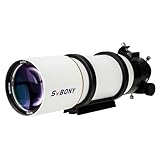
4. SVBONY SV48P 90mm – More Light Grasp Without the Mount
SVBONY SV48P Telescope, 90mm Aperture F5.5 Refractor OTA
90mm aperture
500mm focal length
Achromatic objective
2 inch rotatable focuser
3 kg
Pros
- 90mm aperture gives more light grasp than typical 70mm and 80mm budget scopes
- 2 inch rotatable dual-speed focuser is unusually well featured at this level
- Fully multi-coated glass cuts false colour for its class
- Sold as a bare OTA so it fits an existing mount
Cons
- Built as a deep sky astrograph rather than a planetary optic
- Achromatic rather than ED so residual colour fringing appears on bright targets
- No mount finder or diagonal supplied
Ninety millimetres of aperture in a three kilogram tube is a useful combination, and the 360 degree rotating focuser lets you frame a camera without twisting the tube in its rings. Owners of this OTA consistently highlight the build quality and how easily it accepts an imaging camera, with 74% of ratings at five stars across 94 reviews.
The problem is focal length. At 500mm, this scope gives roughly 0.95 arcsec/px on a 2.3um sensor, which is genuinely low for planetary work. Mars and Venus will look good because they are bright. Jupiter will be soft, and Saturn’s Cassini Division needs all the focal length you can find.
This is a deep sky astrograph dressed as a grab-and-go OTA, and it behaves like one. The 1:10 dual-speed focuser and the metal interface focusing mount are genuinely good features, and the fast focal ratio gives a brighter, flatter field than a long-focus planetary tube would.
If you pair it with a 2x Barlow you reach about 0.47 arcsec/px, which is perfectly workable for Jupiter and Saturn. Just know that you are buying an astrograph and adapting it, rather than buying a planetary telescope. Rated 4.5 stars, it is the best value per unit of aperture in this list.
Who this suits
Deep sky imagers who want one tube that can also take a decent Mars or Venus frame with a Barlow. The rotating focuser and the weight make it easy to pair with an existing equatorial mount.
What to plan around
Focal length. If Jupiter and Saturn are your primary targets rather than occasional additions, keep saving and buy a longer tube. A faster ratio does not add planetary detail.
5. Celestron PowerSeeker 70EQ – Equatorial Tracking on a Starter Budget
Celestron PowerSeeker 70EQ Refractor Telescope for Family Stargazing
70mm aperture
700mm focal length
German equatorial mount
Slow-motion altitude rod
13.9 lb
Pros
- German equatorial mount with slow-motion control holds targets far better than alt-az
- Tracking platform included for stacked planetary frames
- 3x Barlow plus 20mm and 4mm eyepieces cover wide to high power
- Compact enough for family field use
Cons
- Manual slow-motion tracking only with no motor drive included
- 70mm achromat limits resolution on smaller planets
- Equatorial mount is fiddly to balance for complete beginners
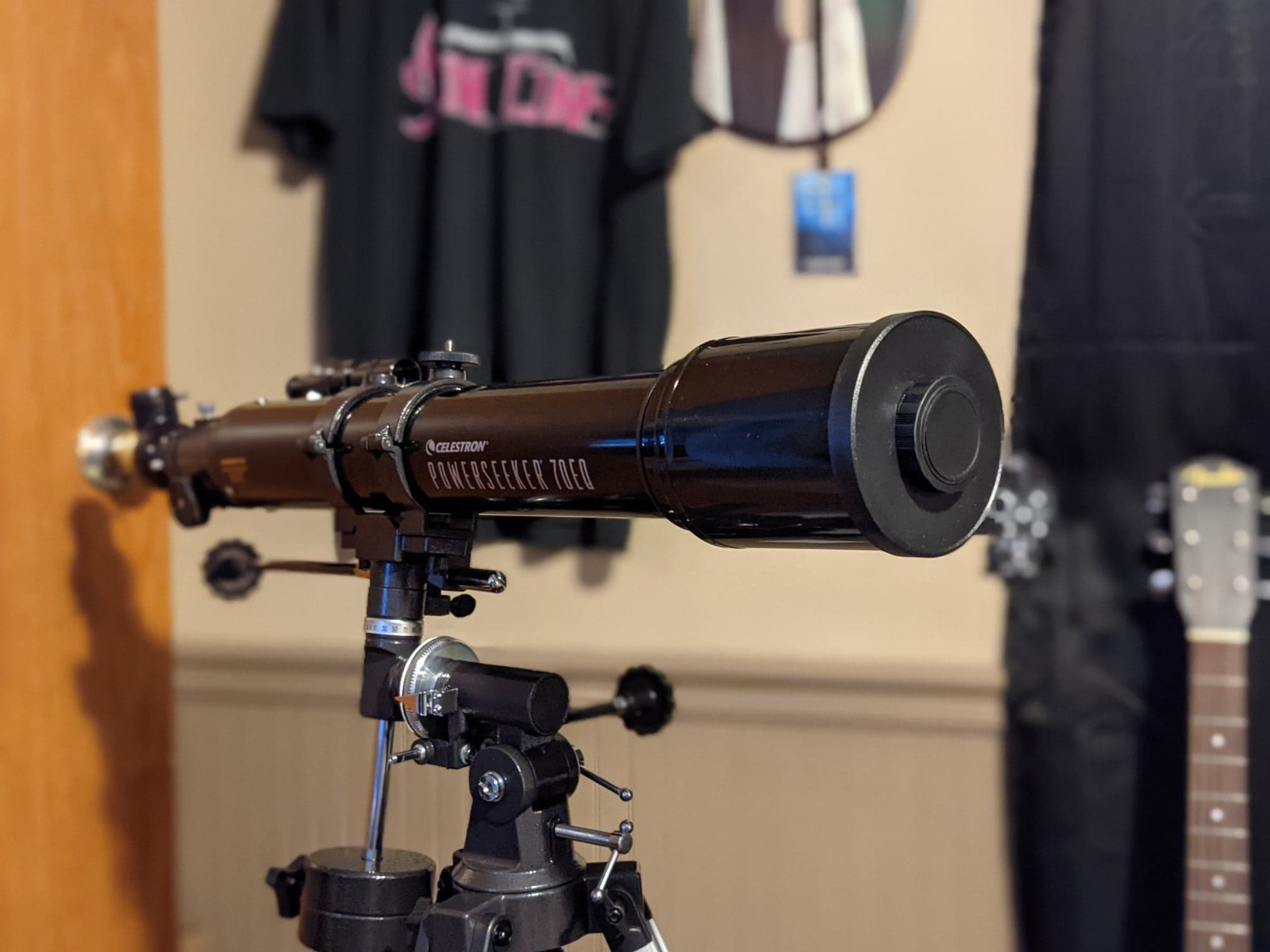
The mount is the reason this scope is in a planetary imaging roundup at all. A German equatorial with a slow-motion altitude rod lets you keep a planet in frame for long enough to capture a video run, which an altazimuth simply cannot do without constant manual repositioning. For a first imaging build, that platform matters more than another few millimetres of aperture.
At 700mm focal length the optical performance lands around 0.68 arcsec/px on a 2.3um sensor, comfortably inside the range where Jupiter shows real structure. The included 3x Barlow takes you to about 0.23 arcsec/px, which is the textbook Jupiter figure. Owners rate it 4.4 stars across 1,280 ratings, with 71% five-star share, and frequently name the equatorial mount as the standout feature over cheaper alt-az models.
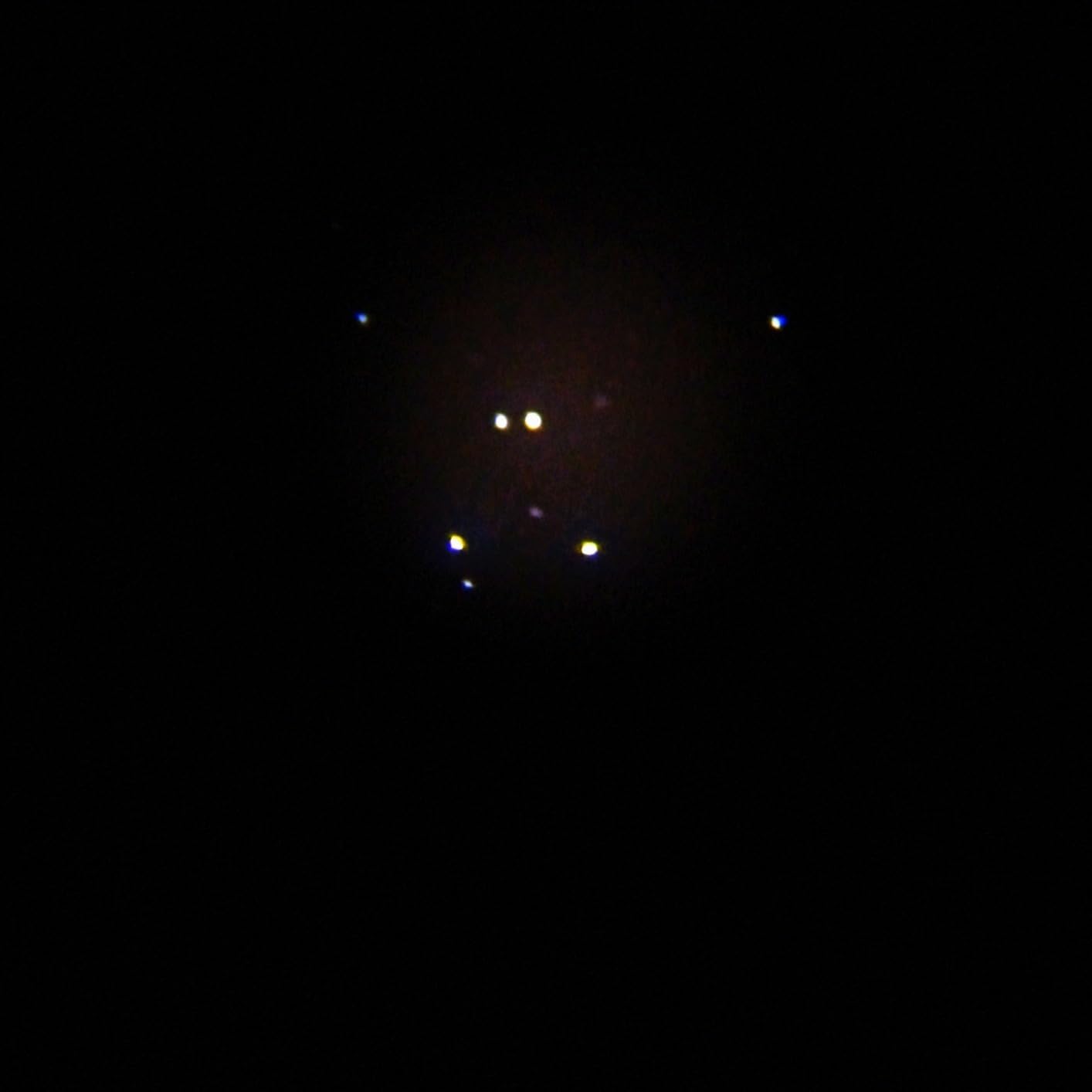
Be realistic about the caveats. The tracking is manual slow-motion, not motorised, so you are making small corrections by hand during a capture. The equatorial head is also the fiddliest part of the whole package for a first-time owner, and at nearly 14 lb it is the heaviest thing here relative to what it delivers optically.
Planetary work also needs a camera, and the focuser position and back spacing on a kit refractor of this type can make a dedicated planetary camera awkward to reach focus. Check the flange distance of your camera before you commit. Our broader family telescope guide covers the visual case in more detail if imaging is a secondary goal.
Who this suits
Beginners who have decided that imaging is the goal and want a tracking platform included. It is a straightforward way to stop fighting target drift during a capture.
What to plan around
Manual tracking, a fiddly balance procedure and an achromatic objective. A motor drive for the equatorial head is the single accessory we would add first.
6. EACONN 80mm Travel Refractor – Backpack Portability for Mobile Imaging
Telescopes for Adults Astronomy, 80mm Aperture 600mm Refractor Telescope for Kids & Beginners, Compact and Portable Travel Telescopio with Backpack
80mm aperture
600mm focal length
840 g total weight
Backpack and phone adapter
2 year warranty
Pros
- 600mm focal length gives more reach than most budget 80mm grabbers
- Only 840 g and everything packs into the included backpack
- Phone adapter has marked positions for each supplied eyepiece
- Owners report clear lunar craters Saturn's rings and Jupiter's moons
Cons
- Tripod is noticeably short for adults
- Altitude adjustment stick is stiff and easy to break if forced
- Finder scope is awkward to align with the main tube
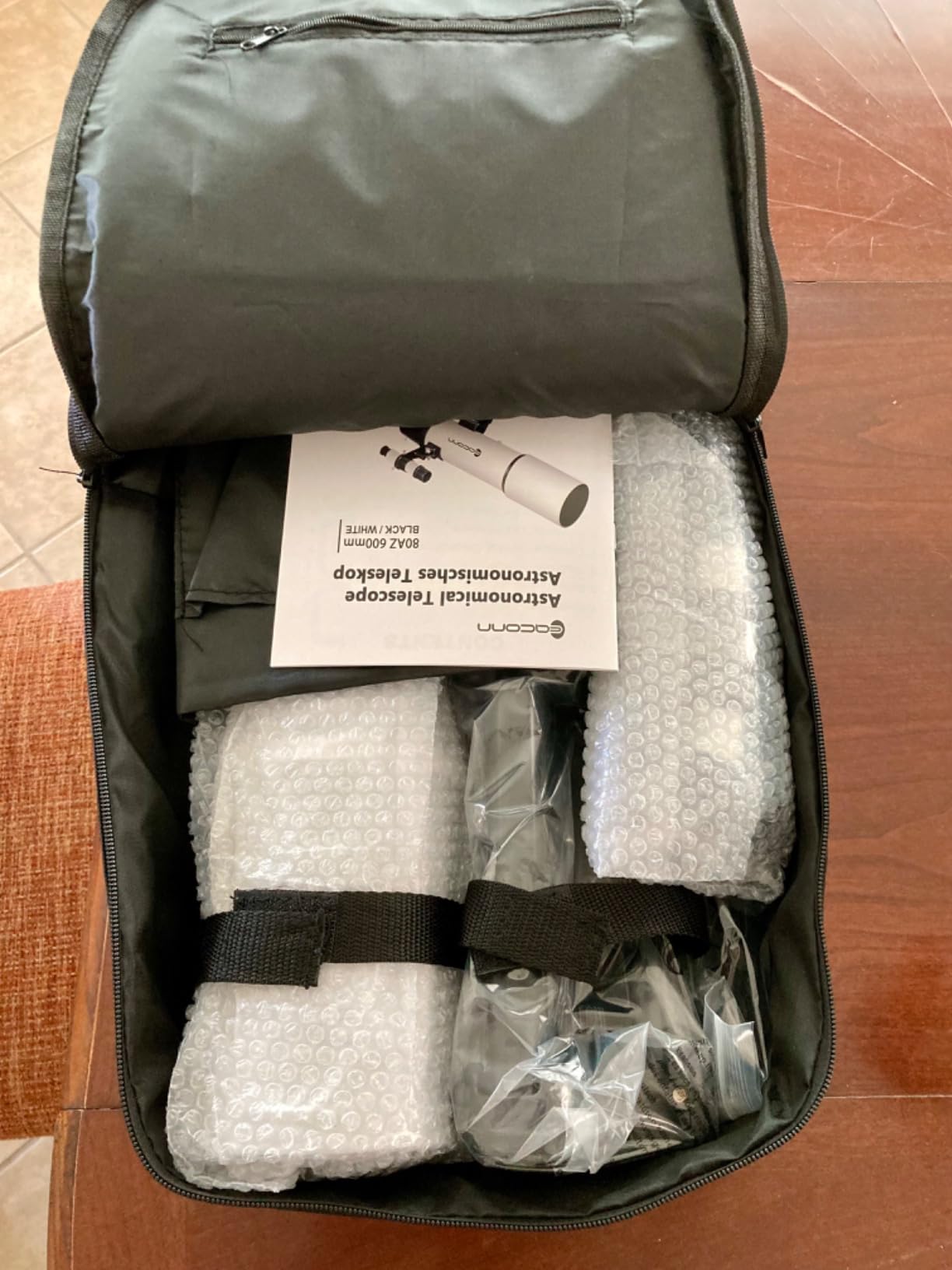
This is the pick for anyone who needs a working planetary setup in the back of the car at short notice. At 840 g for the whole kit, it is by a wide margin the lightest option here, and the included backpack means the scope, tripod and eyepieces travel as one unit rather than as a collection of loose parts.
More usefully for our purposes, 600mm of focal length from an 80mm aperture is a longer reach than most budget 80mm grabbers offer. On a 2.3um sensor that is about 0.79 arcsec/px, and a 2x Barlow brings it to a genuinely planetary 0.40 arcsec/px. That is a usable number for Jupiter on a stable mount.
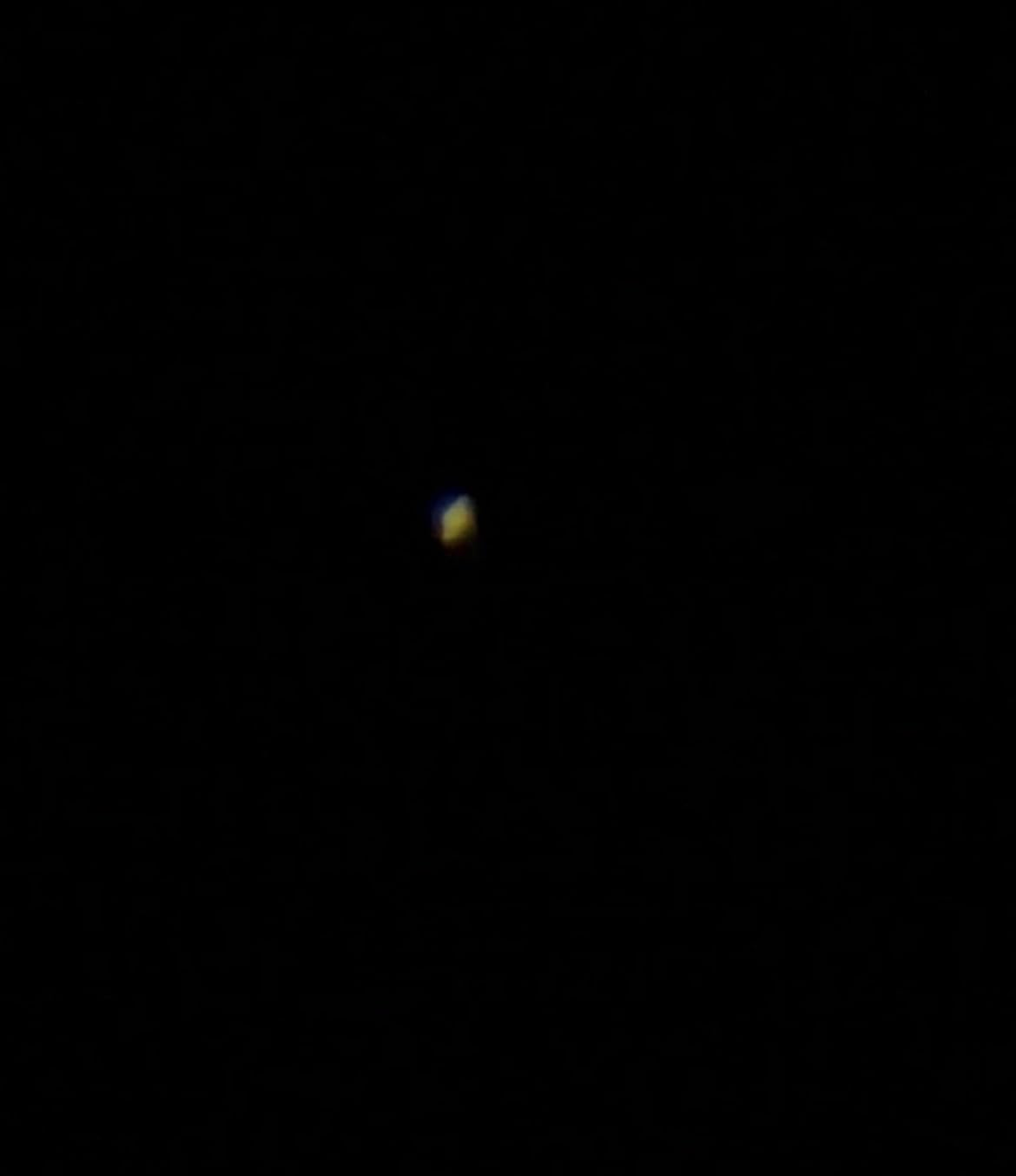
Owners rate it 4.3 stars across more than 2,200 ratings, with 72% five-star, and the most common theme is that it does considerably better than expected for the money. Reviewers regularly mention clear lunar craters and the rings of Saturn, which is a fair description of a 80mm achromatic on a steady mount.
The recurring complaints are all mechanical. The tripod is short enough to cause neck strain over a long session, the altitude control stick is stiff and can break if forced, and the finder is confusing to align. A two year warranty is the longest among the budget options in this roundup, which is worth noting.
Who this suits
Travellers and club members who move between dark sites and want a full imaging-capable tube in one bag. It also works as a grab-and-go visual scope for a family.
What to plan around
The tripod and the finder are the weak points, and both are worth replacing early. The supplied eyepieces are basic, though a camera sidesteps that entirely.
7. MEEZAA 90mm Refractor – Phone Capture Without a Camera
MEEZAA Telescope, Telescope for Adults High Powered Professional, 90mm Aperture 800mm Refractor Telescopes for Astronomy Beginners Stargazing Fully Multi-Coated with Tripod & Phone Adapter & Carry Bag
90mm aperture
800mm focal length
Fully multi-coated
Phone adapter and carry bag
Alt-az mount
Pros
- 800mm focal length at 90mm aperture suits moderate planetary magnification
- Lightweight and easy to carry
- Phone adapter carry bag accessory tray and eyepieces all included
- Typical assembly reported at around 10 to 20 minutes
Cons
- Several owners report lunar detail falls short of the listing photos
- Finder scope is inverted and not perfectly aligned with the main tube
- Phone adapter adds weight that shifts alignment and touching the focuser causes wobble
Most people who want to photograph planets start with a phone, so this scope is built around that path. The included phone adapter, carry bag and accessory tray remove the usual first-night friction, and owners report assembling the kit in ten to twenty minutes with no tools required.
The optical numbers are more encouraging than the price suggests. At 800mm focal length and 90mm aperture it delivers about 0.59 arcsec/px on a 2.3um sensor, and the supplied 3x Barlow multiplies that further. Reviewers report seeing Jupiter’s bands and Saturn’s rings, and the scope holds a 4.3 star average across 820 ratings with 71% five-star share.
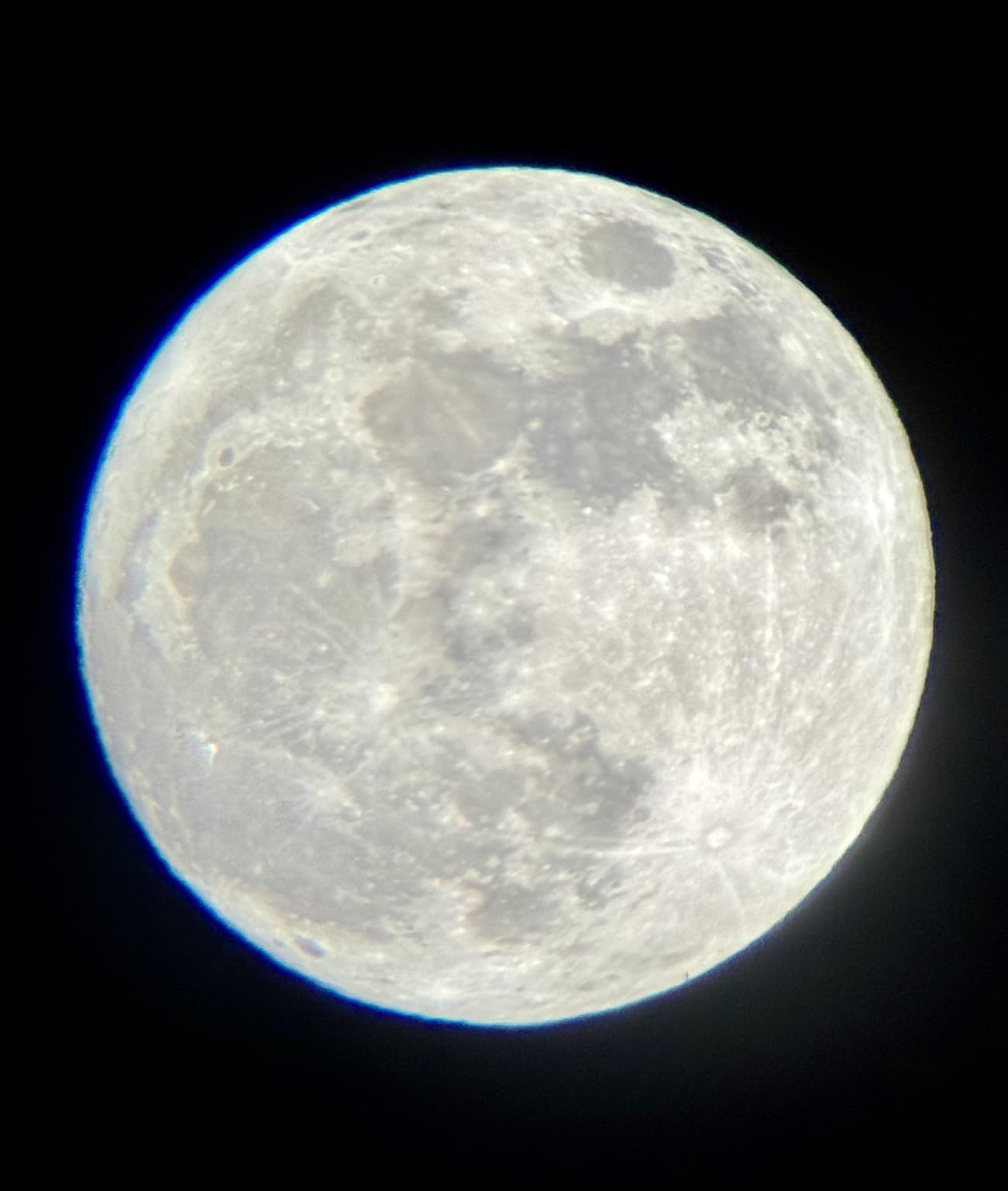
The phone workflow has real physical limits, and owners describe them plainly. Adding the phone to the back of the tube shifts the balance, touching the focus knob introduces wobble at exactly the wrong moment, and you lose magnification because the phone is looking through an eyepiece rather than sitting on a sensor. A bare phone sensor also has larger pixels and a rolling shutter, both of which hurt stacking.
Several three-star reviews call the advertised magnification and lunar detail overstated, and we would agree with the direction of that criticism. Treat this as a learning instrument that produces recognisable planetary frames, not as a route to fine detail. The inverted, imperfectly aligned finder is another consistent complaint.
Who this suits
First-time planetary photographers who want to capture video on a phone this month rather than research a camera and mount for six months. It is a genuine stepping stone into the craft.
What to plan around
No tracking, no stable focus during capture and achromatic colour fringing. A phone adapter is a starting point, not an end point.
8. HUGERSTAR 90mm Refractor – Moon Filter and Carrying Bag in the Box
HUGERSTAR Telescope, Telescope for Adults High Powered, 90mm Aperture 800mm Professional Portable Refractor Telescopes for Astronomy Beginners with Tripod, Moon Filter, Phone Adapter & Carrying Bag
90mm aperture
800mm focal length
Fully multi-coated
Moon filter included
Alt-az mount
Pros
- 800mm focal length at 90mm aperture gives usable planetary magnification
- Included moon filter genuinely improves comfort and lunar contrast
- Phone adapter plus carry bag make it easy to reach a dark site
- Fully multi-coated glass with high light transmission
- Tool-free assembly in under 10 minutes for most buyers
Cons
- Altazimuth mount with no tracking so targets drift during longer sessions
- Kellner eyepieces are basic and limit high power detail
- Achromatic objective can show colour fringing on bright objects
The moon filter is the detail that separates this from the near-identical 90mm kits. A neutral density moon filter reduces glare across the whole lunar disc rather than just cutting brightness, which is what actually lifts contrast enough to see smaller craters and subtle ray systems. Owners specifically call it useful rather than a gimmick.
Optically it matches the MEEZAA package, with 90mm aperture, 800mm focal length and fully multi-coated glass. That is about 0.59 arcsec/px on a 2.3um sensor, and the same 3x Barlow included in the box takes you toward planetary scales. It holds a 4.4 star average across 238 ratings with 68% five-star share.
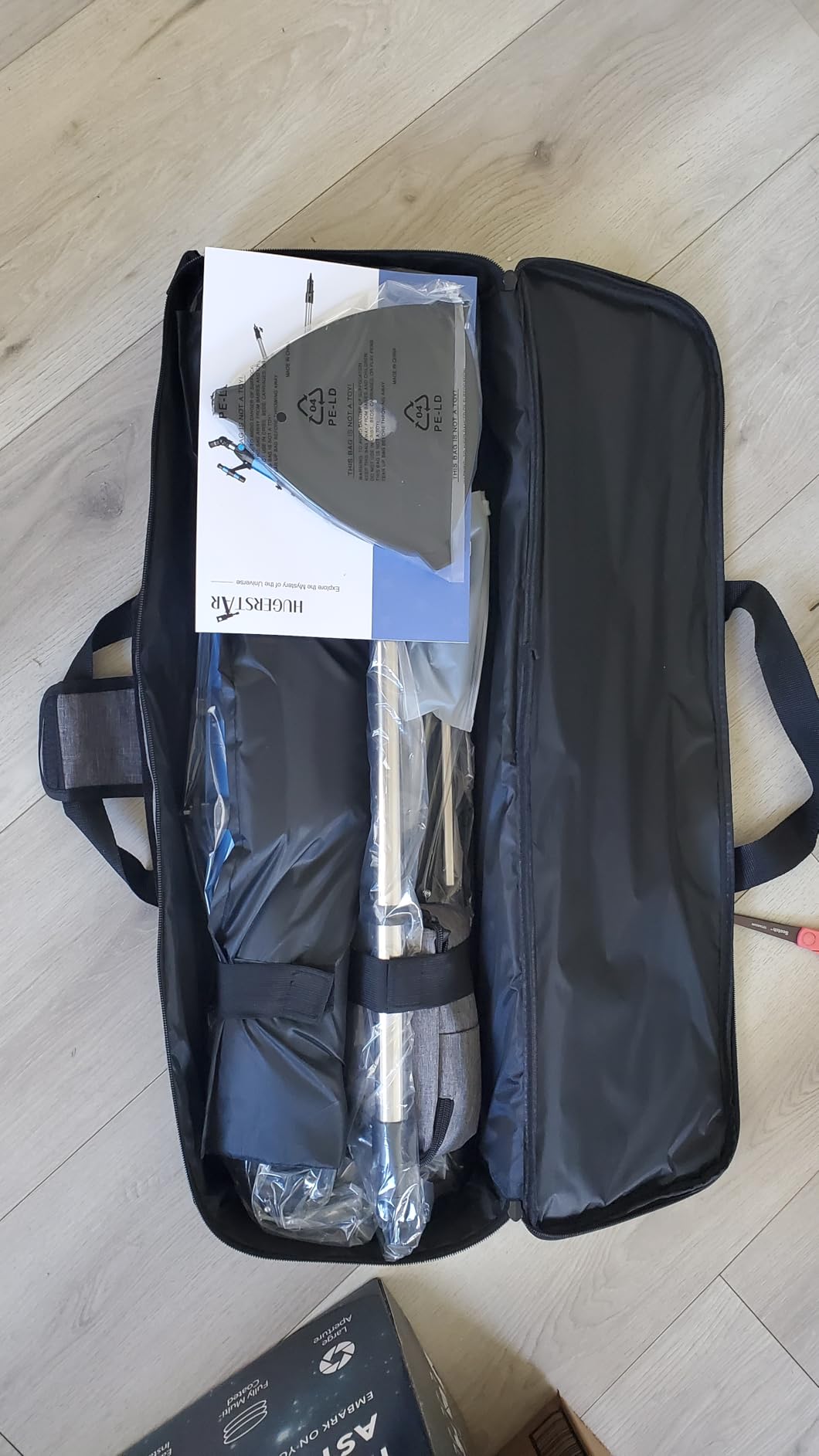
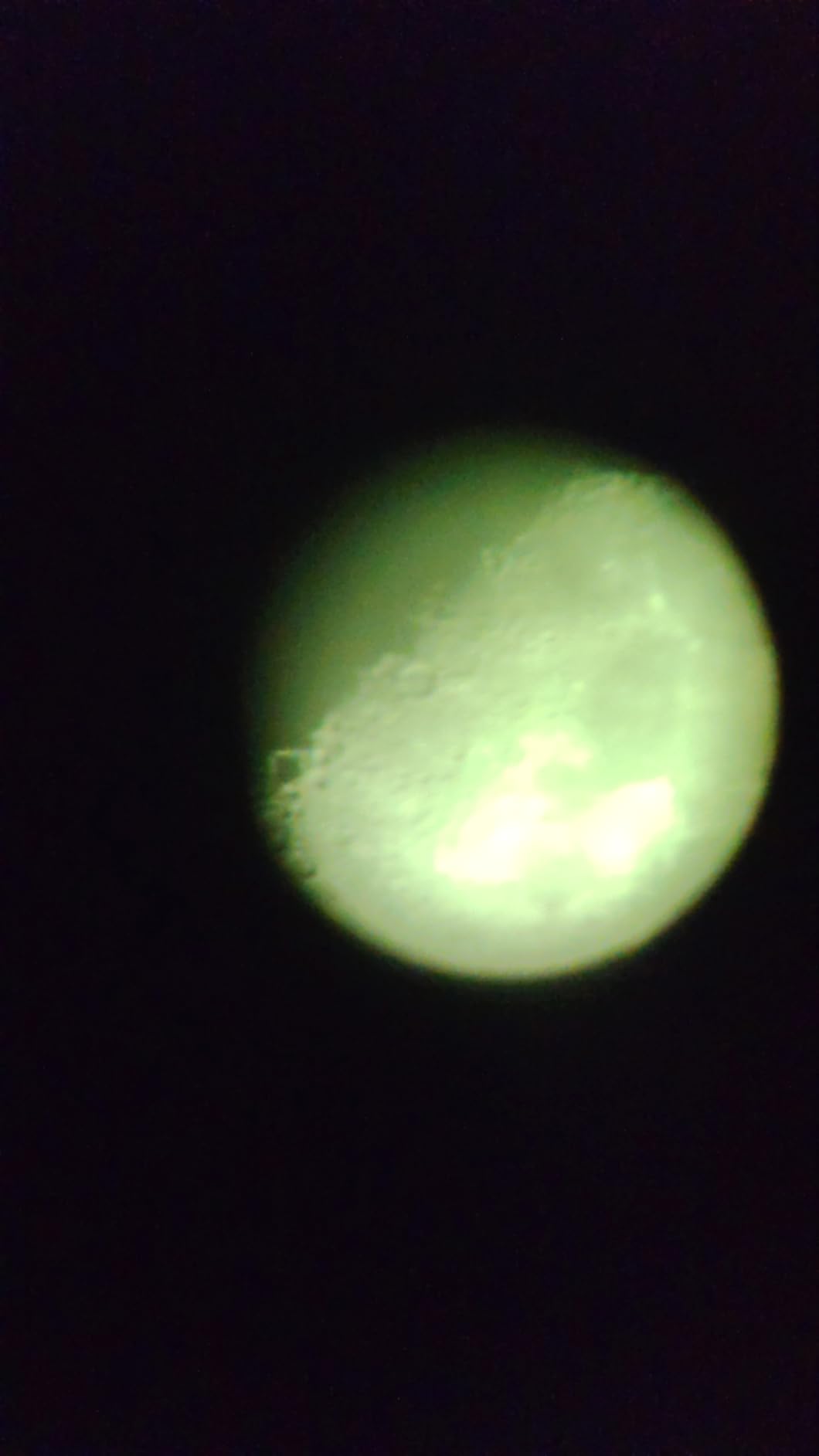
Where it falls short is the same place most kits in this price band fall short. The altazimuth mount has no tracking, so targets drift during longer sessions, and that is the difference between a lucky frame and a usable video run. The supplied Kellner eyepieces are basic, and several reviewers note that detail at high magnification falls short of the specification.
We would pair this with a small tracking head or put it on a shared equatorial if your club has one. As a visual and lunar instrument it is well-equipped, and the 238 owner ratings describe it as bright, quick to assemble and beginner-friendly. The colour fringing from the achromatic objective is the other thing to expect on Jupiter.
Who this suits
Observers whose first target is the Moon and who want the highest contrast per pound spent on a complete package. The filter is the reason it beats otherwise similar kits.
What to plan around
No tracking at all, which rules out serious stacked planetary imaging until you add a mount. Treat the tube as the entry point and the tripod as temporary.
9. Gskyer 600x90mm AZ – Solid Visual Build on a Full-Size Tripod
Gskyer Telescope 600x90mm AZ Astronomical Refractor Telescope for Adults
90mm aperture
600mm focal length
Fully coated
Full metal tripod
17.5 lb
Pros
- 90mm aperture at f/6.7 balances light grasp and focal length
- Three eyepieces plus a 3x Barlow cover a wide magnification range
- Sturdy full metal tripod and tube body
- Owners resolve lunar craters Jupiter with its moons and Saturn's rings
Cons
- Tripod sits low so taller users have to crouch
- Vibration becomes visible at high magnification on the 5mm eyepiece
- Only a 1-year warranty
This is the most mechanically substantial package in the roundup at 17.5 lb, and that mass shows up as steadiness rather than as specification. A 90mm aperture at f/6.7 gives 600mm of focal length, which works out to about 0.79 arcsec/px on a 2.3um sensor, and the 1.29 arcsecond Dawes limit is respectable for the aperture.
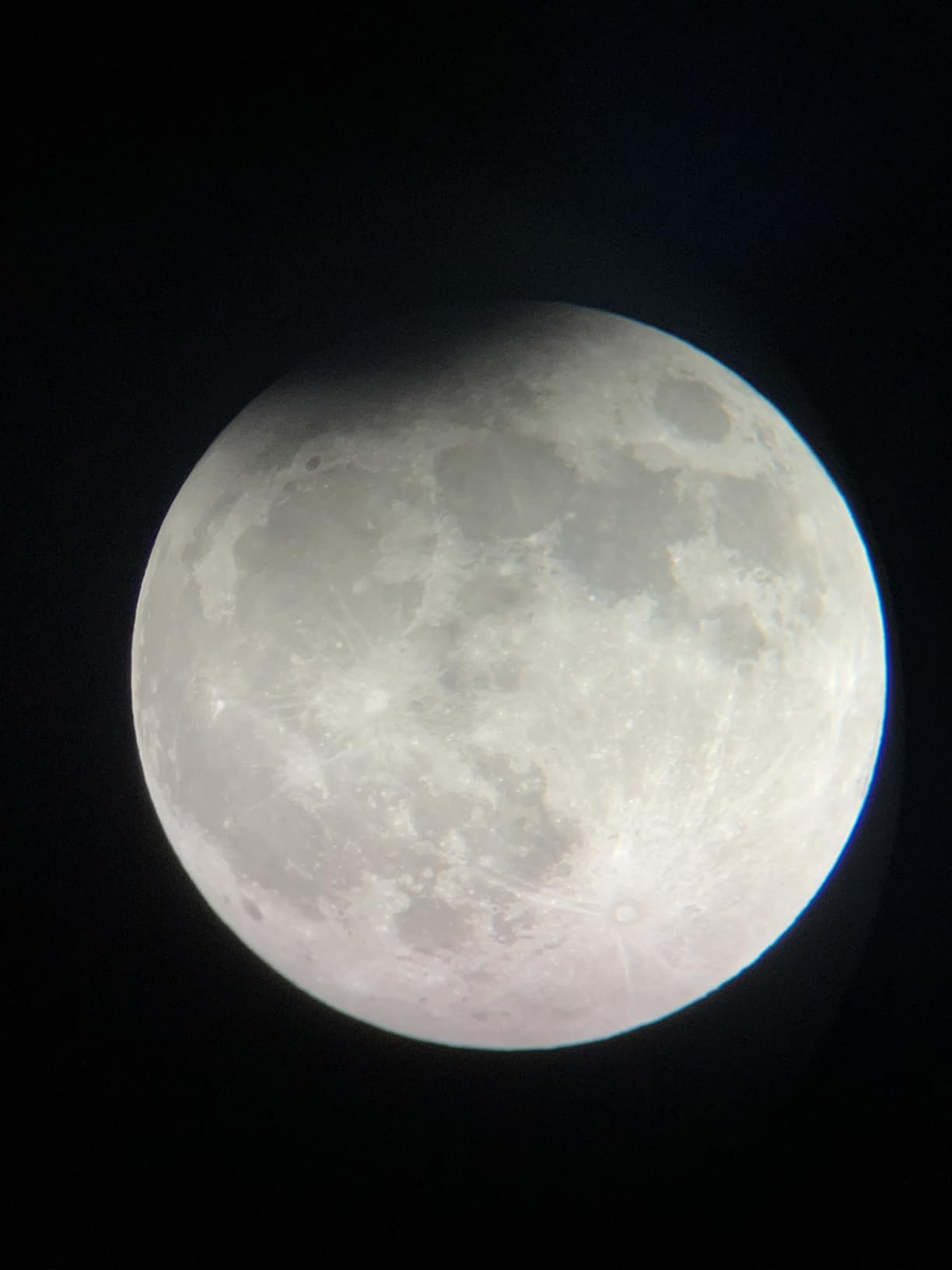
Owners report resolving lunar craters, Jupiter with its moons and Saturn’s rings, and the 1 to 931 rating spread shows a generally positive but distinctly mixed response. Praise concentrates on value, build weight and the views themselves, with 69% five-star ratings, and reviewers mention fast customer service on defects.
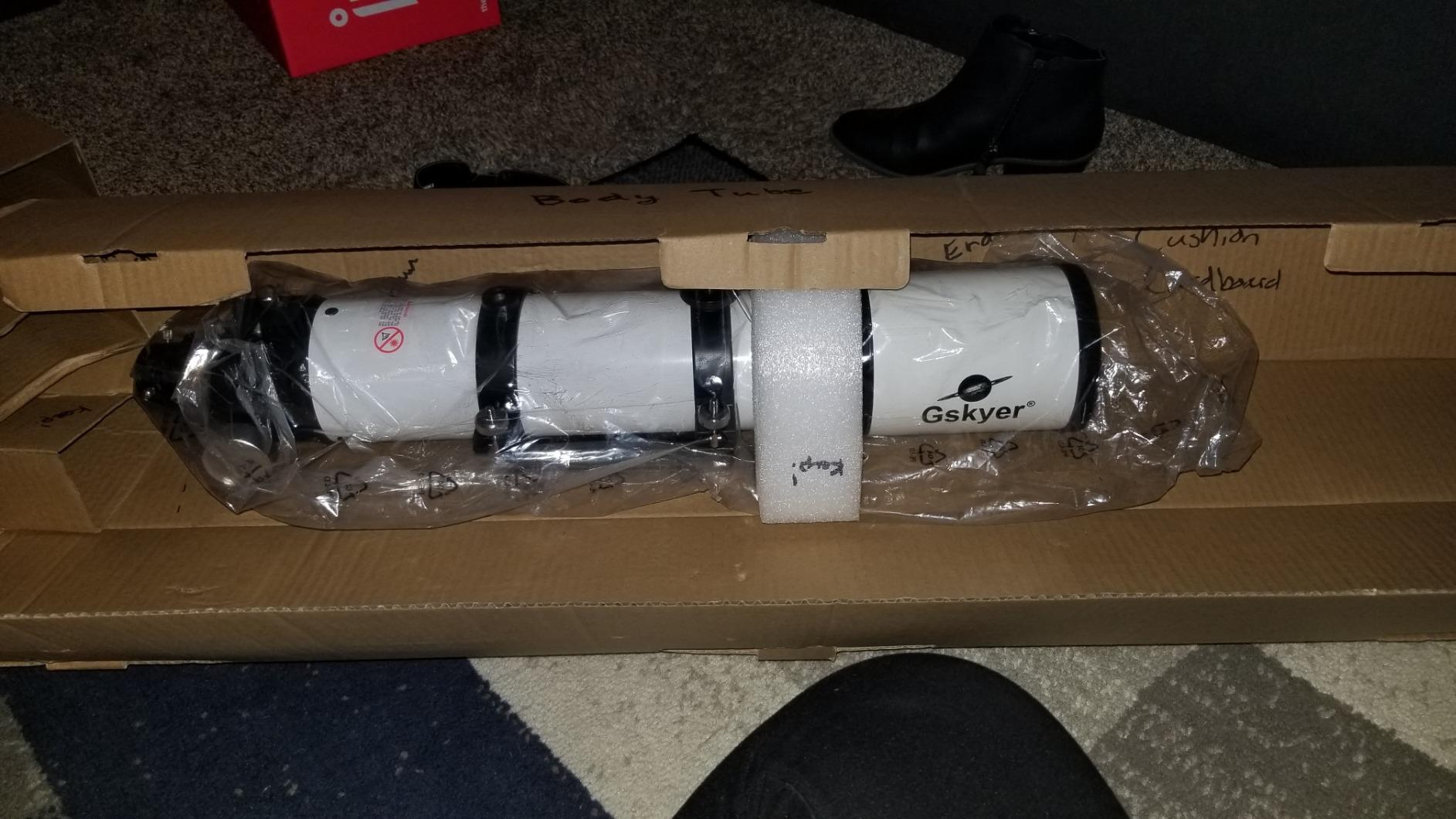
For imaging, the recurring complaint is vibration at high magnification, which is the one thing a planetary capture cannot tolerate. The tripod sits low enough that taller users crouch, and many owners swap it for a photo tripod. An altazimuth mount means constant manual repositioning while you film, and the vibration shows up directly as frames you have to discard.
There is also a one year warranty, the shortest in this lineup, and the instructions are described as unclear. Our advice is to treat this as a visual instrument and a sturdy base, and to check the focuser thread and back spacing carefully before assuming any camera will reach focus.
Who this suits
Visual observers who want a solid, heavy telescope for Moon and bright planets, and who will upgrade to a tracking platform for imaging later. The metal build feels considerably more durable than the folding tripods in this roundup.
What to plan around
Vibration at high power, a low tripod, no tracking and a one year warranty. Fine for a first look at the planets, marginal for stacked video.
10. Celestron Travel Scope 70mm – The Most Proven Grab-and-Go Refractor
Celestron Travel Scope 70mm Beginner Portable Telescope with Backpack
70mm aperture
400mm focal length
Fully coated
4.2 lb
Backpack and two eyepieces
Pros
- Largest owner base of any scope here with roughly 14800 ratings
- Packs the whole kit into the included backpack
- Tool-free setup in seconds
- Lightweight at 4.2 lb with a preassembled tripod
Cons
- Short 400mm focal length means limited planetary magnification
- 70mm achromatic aperture shows soft low-contrast planetary detail
- Altazimuth mount with no tracking and a single-tube design that cannot be stacked
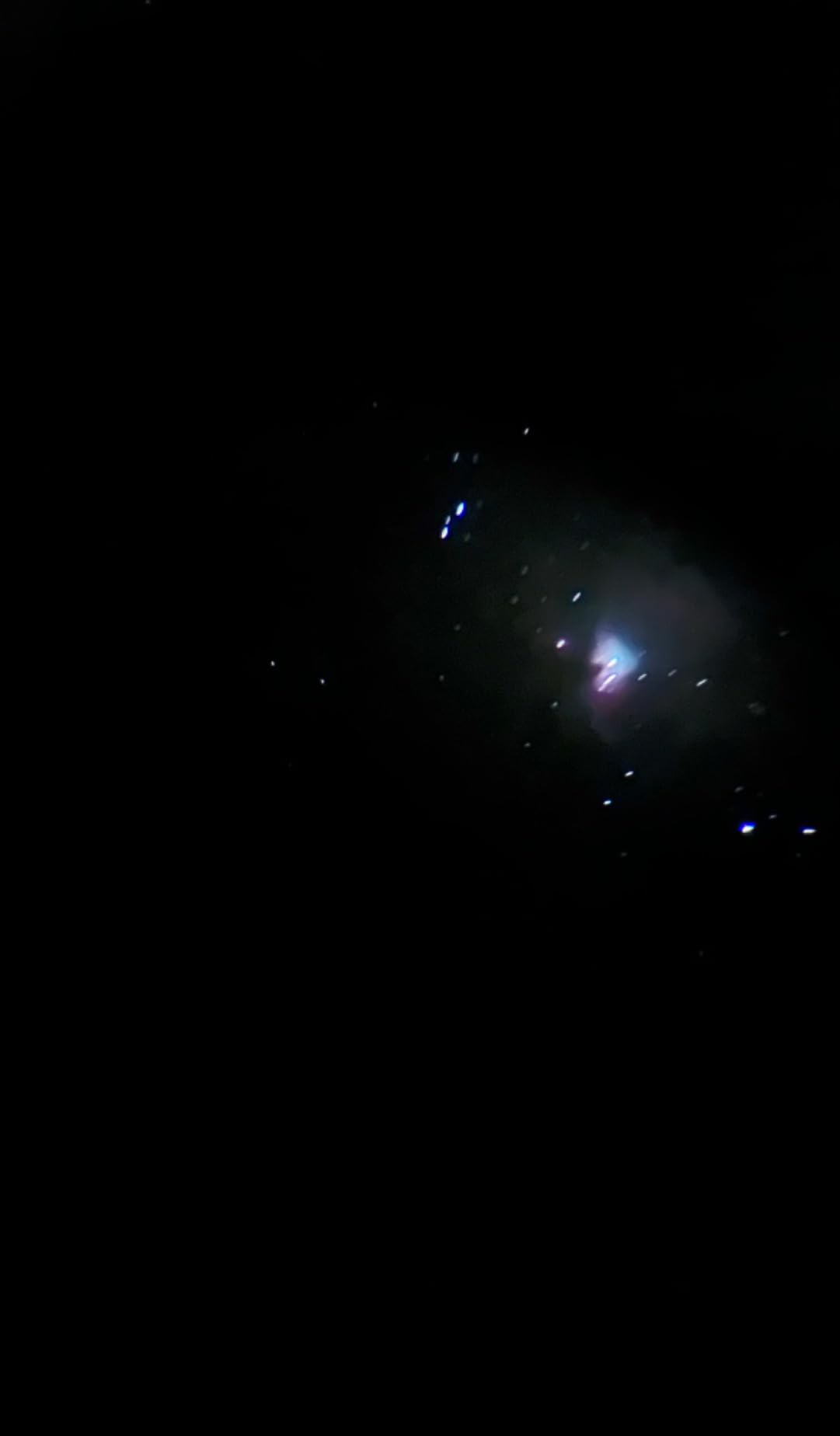
We include this last because it is the most proven refractor in the roundup by owner volume, with roughly 14,800 ratings, and because that makes it the safest recommendation for a complete beginner. It is also, on the numbers, the least suited to planetary imaging of anything here, and the gap is instructive.
At 400mm focal length with a 70mm aperture, a 2.3um sensor gives about 1.19 arcsec/px. You would need close to a 3x Barlow to reach a planetary-friendly scale, and a 70mm achromatic objective has a 1.66 arcsecond Dawes limit, so the optics cannot deliver fine detail even when the sampling is right. Owner consensus treats it as a reliable, easy first telescope with decent Moon and bright planet views, and users quickly hit the ceiling of what it can show.
What it does offer is convenience. The full kit packs into the supplied backpack, the tripod assembles in seconds without tools, and at 4.2 lb it is easy to hand to a child or carry up a flight of stairs. The rating average of 4.2 with a 61% five-star share is the lowest in this roundup, and 11% of owners give three stars.
For planetary imaging specifically, the single-tube design cannot be stacked and the altazimuth mount has no tracking, so a long capture is not realistic without modification. As a visual travel scope or a first instrument for children it remains hard to argue with, which is why our telescope picks for kids lean on scopes like this one.
Who this suits
Complete beginners, younger observers and anyone who wants a backpackable visual scope. As a stepping stone toward a real planetary imaging train it works, provided you upgrade rather than adapt.
What to plan around
Image scale. This tube needs roughly three times the focal length to be competitive for Jupiter and Saturn, and the achromatic objective will limit what you recover.
Why Focal Length Beats Aperture for Planets
Planetary resolution is set by three things: the diffraction limit of the aperture, the quality of the atmosphere, and the focal length that spreads what the atmosphere allows you to see across the sensor. Aperture controls the diffraction limit, but in ordinary backyard conditions the atmosphere is almost always the tighter constraint, which is why aperture has less influence than most guides claim.
The Rayleigh criterion gives the diffraction limit as 138 divided by aperture in millimetres, in arcseconds. A 70mm achromat resolves about 1.97 arcseconds, a 90mm about 1.53, and a 100mm about 1.38. Compare those to a typical night where the seeing is 2 to 3 arcseconds and you can see the problem: on a mediocre night, a 90mm scope and a 70mm scope perform almost identically, because the air is the limit.
This is exactly why forum discussions contain claims that a 4-inch refractor resolves planets less well than an 8-inch Schmidt-Cassegrain. Those reports are correct and they are not a contradiction. The larger aperture has a better diffraction limit, so on a night of genuinely steady air it wins, and the gap opens up as seeing improves.
Focal length works differently. It does not create detail, but it determines how much of that detail falls on each pixel. Double the focal length and you halve your arcseconds per pixel, so the same optical detail is recorded with finer sampling and sharper edges after stacking. This is why the 918mm EvoStar and the 900mm AstroMaster out-resolve the 400mm Travel Scope even though all three are achromats of similar quality.
How to Hit the Right Image Scale for Jupiter and Saturn
Image scale in arcseconds per pixel is calculated as 206.265 multiplied by the pixel size in micrometres, divided by the focal length in millimetres. That is the single most useful calculation in planetary imaging, and it takes about five seconds with a phone calculator.
Worked examples for a 2.3um sensor, which is typical of high frame rate planetary cameras: a 400mm focal length gives 1.19 arcsec/px, 500mm gives 0.95, 560mm gives 0.85, 600mm gives 0.79, 700mm gives 0.68, 800mm gives 0.59, 900mm gives 0.53 and 918mm gives 0.52. Anything above 0.7 is undersampled for Jupiter, and anything below 0.2 wastes resolution on empty pixels.
The same telescopes with a 3.76um sensor behave very differently. At that pixel size the AstroMaster 70AZ gives 0.86 arcsec/px and the EvoStar gives 0.84, so both would want a 2x Barlow to reach the sweet spot. The 400mm Travel Scope would need something close to a 3x Barlow. This is the moment when sensor choice and focal length have to be decided together, not sequentially.
Our target band is 0.2 to 0.5 arcsec/px for Jupiter and Saturn, and roughly 0.3 to 0.6 for Mars, which benefits from slightly more oversampling. If your calculated number lands far above 0.7, buy a Barlow before you buy a longer telescope. If it lands far below 0.2, you have more focal length than you need and can look at a reducer for wide-field deep sky instead.
Barlows and Reducers: When to Multiply Focal Length
This question comes up constantly in beginner forums, usually framed as which Barlow gets the most detail. The honest answer is that a Barlow adds no resolution at all. It multiplies focal length, which changes your sampling, but the detail available is still limited by aperture, glass quality and the atmosphere you are imaging under.
What a Barlow does is fix a sampling problem. If your tube produces 0.95 arcsec/px and you want 0.4, a 2x Barlow takes you to 0.48. The image is better resolved and cleaner, but nothing was created. A 5x Barlow on the same tube gives 0.19 arcsec/px, which looks impressive on paper and is wasted, because the telescope cannot put detail on a pixel that small.
Our rule is to pick the mildest Barlow that gets you into the 0.2 to 0.5 range and stop there. A 2x is the right choice for tubes at 700mm and above, a 3x for tubes between 500mm and 700mm, and anything longer than that only makes sense for visual observing. Reducers run the other way, halving focal length to speed up the field for deep sky, which is why the flattener supplied with one of these tubes works against planetary work.
One warning: use a quality Barlow. A cheap 2x that introduces its own colour and adds vignetting can quietly undo the benefit, and poor-quality elements vary between units, which is fatal when you are stacking thousands of frames.
How to Choose a Refractor for Planetary Imaging
Start with the glass. An achromat uses two elements of ordinary crown and flint glass and leaves visible secondary colour, usually as a purple or green fringe on high contrast targets. An ED doublet adds a fluorite or extra-low dispersion element, which is what the SVBONY SV503 uses, and largely removes secondary colour. A triplet adds a third element and flattens the field without a separate flattener, though no true triplet appears in this roundup. For stacking, ED is the practical sweet spot between colour correction and cost.
Next, work out the focal length you need, using the image scale formula before you choose anything. Pick a camera first, or at least pick a pixel size, then read the table above to find the focal length that lands in the 0.2 to 0.5 arcsec/px band. Buying a tube first and adapting with a Barlow later is how people end up with a deep sky astrograph they thought was a planetary scope.
Aperture is third on the list, and only because of the diffraction limit. Going from 70mm to 100mm improves the theoretical limit from 1.97 to 1.38 arcseconds, which matters on a very steady night and is invisible on a poor one. If your budget is finite, spend it on focal length and glass before you spend it on aperture.
The focuser deserves more attention than most buyers give it. Lucky imaging holds focus for minutes, so a 2 inch dual-speed or Crayford-style focuser with a fine helical is close to essential. Several tubes in this roundup ship with a plain manual focuser that makes long planetary runs frustrating, and it is one of the few things you cannot easily replace later.
Weight versus mount payload is the practical limit. The EvoStar at 8.4 lb, the PowerSeeker at nearly 14 lb and the Gskyer at 17.5 lb all need an equatorial head with genuine payload capacity, plus rings and a dovetail bar. A common disappointment is buying a beautiful tube and then discovering the mount shakes under wind or under the rotator. Check the payload rating before you commit, and remember that payload figures assume counterweights and fit the heaviest possible train.
Then check the imaging geometry. A planetary camera usually sits off-axis behind the focuser, so you need enough back spacing and focuser travel to reach focus, and enough tilt adjustment to square the sensor to the focal plane. Tilt that is not corrected shows up as a blurred corner in a stacked image. A rotator adds height and mass to the train, so clearance above the focuser matters, and it also makes the payload problem worse.
Finally, think about what else the tube has to do. If you also want wide-field deep sky or travel imaging, a fast f/5 to f/6 astrograph with a flattener is a better second purchase than a long-focus planetary tube. Scope categories differ enough that our deep space viewing guide covers the alternative approach. Whatever you buy, plan the camera, mount, rotator and filter as one system rather than four separate purchases.
Frequently Asked Questions
What is the best refractor telescope for viewing planets?
For visual planetary observing, a long focal length apochromatic doublet around 100mm aperture at f/8 to f/10 gives the best combination of magnification and colour-free contrast. In this roundup the Sky-Watcher EvoStar 100 APO at 918mm is the strongest visual optic, while the Celestron AstroMaster 70AZ is the better value choice for beginners.
What is the best telescope for planetary photography?
A long focal length refractor paired with a high frame rate monochrome or one-shot colour camera is the standard planetary photography setup. Aim for 0.2 to 0.5 arcseconds per pixel, which means a focal length in the 900mm to 2500mm range for a 2.3um pixel sensor. The telescope is the cheapest part of that train.
Do I need a Barlow lens for planetary imaging?
Only if your focal length and camera pixel size produce more than about 0.7 arcseconds per pixel. A Barlow changes sampling, not resolution, so pick the mildest one that reaches your target image scale. Tubes below 700mm usually need a 2x or 3x, while 900mm and longer tubes need nothing at all.
How much aperture do I need for planetary imaging?
Aperture sets the diffraction limit, which is about 138 divided by the aperture in millimetres. A 70mm achromat reaches roughly 1.97 arcseconds, a 90mm about 1.53 and a 100mm about 1.38. In typical backyard seeing, atmospheric turbulence limits you well before aperture does, so prioritise focal length and glass quality first.
Is a refractor better than an SCT for planetary imaging?
It depends on seeing and aperture. A refractor needs no collimation and has high contrast, which is why many imagers prefer them, but an SCT with a large aperture can resolve more on nights of steady air. Long focal length refractors are more stable visually, while larger apertures like a C8 or C9.25 can still win on raw resolution.
Final Verdict for 2026
The Celestron AstroMaster 70AZ takes our top spot among the best refractor telescopes for planetary imaging. Its 900mm focal length on a 70mm aperture gives about 0.53 arcsec/px on a 2.3um sensor with no Barlow needed, and close to 3,800 owner ratings mean you will find plenty of practical advice. The SVBONY SV503 80ED is the pick if you already have a camera and want ED glass in a light 2.5 kg tube, and the Sky-Watcher EvoStar 100 APO is the one to buy when colour-free data matters more than weight.
Calculate your image scale before you buy anything else, pick the mildest Barlow that gets you into the 0.2 to 0.5 arcsec/px band, and remember that the camera, mount and rotator are the parts that turn a telescope into an imaging system. A stable platform and a long-focus optic will always beat a bigger aperture on an unstable one.