
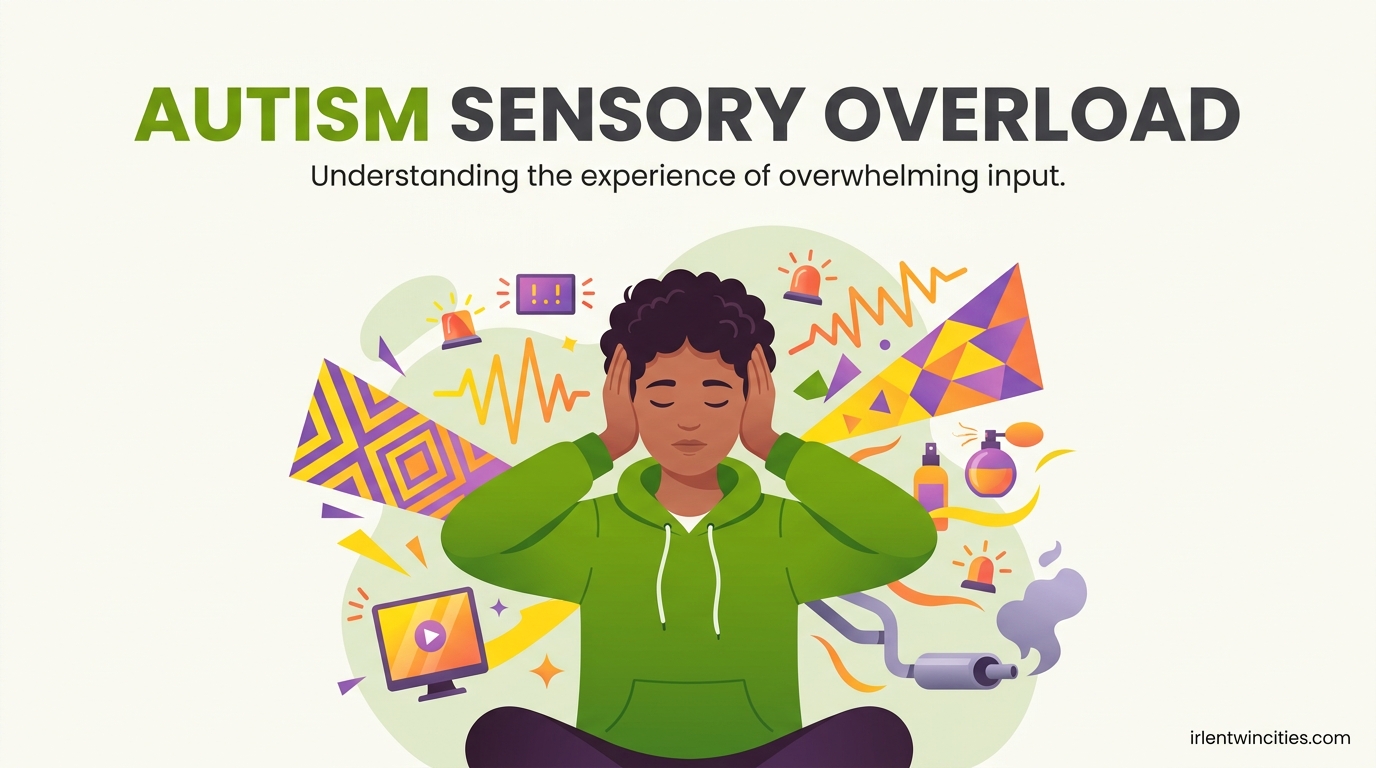
When my son was seven, he once sat in a corner of his classroom for twenty minutes, hands pressed over his ears, unable to respond when his teacher called his name. She thought he was ignoring her. What he was actually experiencing was sensory overload, and that moment of disconnect could have been prevented if someone had recognized the warning signs sooner.
If you are a parent, caregiver, educator, or autistic adult yourself, understanding sensory overload is not just helpful knowledge. It can transform how you support someone through moments that might otherwise feel confusing or isolating. This guide covers exactly what autism sensory overload looks like, how to recognize it before it escalates, and what actually helps in those critical moments.
Table of Contents
What Is Sensory Overload in Autism?
Sensory overload happens when the brain receives more sensory input than it can process. For autistic individuals, this threshold is often lower than for neurotypical people, not because something is broken, but because their neurological wiring processes information differently.
Research suggests that approximately 90% of autistic individuals also experience sensory processing differences. This is not a separate condition but a fundamental part of how many autistic brains work. The brain’s sensory filtering system, which typically automatically prioritizes important stimuli and filters out background noise, may function differently.
One adult described it this way: sensory overload feels like having a hangover all the time, without any alcohol involved. Everything becomes too much to the point where you cannot think of anything else. The sounds, lights, textures, and movements that others barely notice can become completely overwhelming.
Importantly, sensory overload is not the same as simply feeling stressed or overwhelmed. It is a neurological response where the brain’s capacity to process sensory information becomes genuinely exceeded. This can affect communication, behavior, and emotional regulation in ways that are not voluntary.
Recognizing Sensory Overload: Signs and Symptoms
Knowing the early warning signs can make a significant difference. Sensory overload rarely appears suddenly. It typically builds up, and recognizing the stages can help you intervene before a full episode occurs.
Behavioral Warning Signs
Before a person reaches full overload, you may notice increased irritability or agitation. A child might become snappy or withdrawn. An adult might start pacing or fidgeting more than usual. Repetitive movements like rocking, hand flapping, or finger tapping often increase as the nervous system tries to self-regulate.
Some individuals start avoiding eye contact or become less responsive to their name being called. This is not stubbornness or选择性 listening. It is the brain already prioritizing sensory management over social engagement.
Other behaviors include covering ears or eyes, retreating to corners or quiet spaces, or asking repeatedly for things to stop. In classrooms or offices, you might notice someone withdrawing from group activities or struggling to follow conversations that seemed manageable earlier in the day.
Physical Symptoms
Sensory overload frequently causes real physical discomfort. Headaches are common, particularly after exposure to loud environments or bright lights. Nausea, muscle tension, and fatigue also frequently accompany overload episodes.
Some people describe feeling dizzy or disoriented, as if the world is moving too fast around them. Others report a feeling of pressure in their head or ears. These are not psychosomatic symptoms. They reflect genuine neurological stress responses.
After the overload episode passes, physical symptoms often persist. Many autistic individuals report experiencing headaches, exhaustion, or body aches for hours or even days afterward. This is why preventing overload when possible is so important.
How Signs Differ Between Children and Adults
Children may not have the vocabulary to explain what they are experiencing. You might see increased meltdowns, crying, or tantrums that seem disproportionate to their trigger. A child might say things like “everything is too loud” or “my skin feels weird.”
Adults often develop coping strategies that can mask the underlying struggle. An adult might seem fine until they suddenly cannot function. Some adults report becoming quieter, needing to retreat, or experiencing what feels like a system shutdown. Others become increasingly irritable or short-tempered as their threshold approaches.
Autistic adults frequently report that warning signs include becoming snappy or irritable, needing to wear ear protection at work to prevent headaches, and having difficulty processing multiple conversations or sounds simultaneously. Understanding these adult-specific patterns can help colleagues and family members provide appropriate support.
Understanding the 8 Sensory Systems
To fully understand sensory overload, it helps to know that there are eight sensory systems in the body, not just the five most commonly known. Each can contribute to overload, and each person has different sensitivities across these systems.
The Eight Sensory Systems
The five familiar senses are sight, sound, touch, taste, and smell. But there are also three less commonly discussed sensory systems that play crucial roles in how we process the world around us.
The vestibular system controls our sense of balance and spatial orientation. It tells us whether we are moving or still, and helps coordinate our head and eye movements. For some autistic individuals, vestibular input can be overwhelming or under-stimulating, affecting their coordination and comfort in moving through space.
The proprioceptive system provides awareness of where our body parts are in space. It helps us understand how much force to use when lifting objects or moving through doorways. Some autistic individuals seek deep pressure input to help regulate this system, which explains the popularity of weighted blankets and compression garments.
The interoceptive system relates to internal physical sensations like hunger, thirst, heartbeat, and digestion. Differences in interoception can mean some autistic individuals have difficulty recognizing when they are hungry, need the bathroom, or are becoming unwell. This can contribute to overload because physical needs that others would naturally address may go unnoticed until they become critical.
Hypersensitivity vs Hyposensitivity
Autistic individuals can experience either hypersensitivity (over-reacting to sensory input), hyposensitivity (under-reacting and seeking more input), or a combination of both across different sensory systems.
Someone with hypersensitivity to sound might become distressed at sudden loud noises or struggle in environments with background chatter. A person with hyposensitivity might not respond to their name being called or might seek out intense sensory experiences like spinning or crashing into things.
Both hypersensitivity and hyposensitivity can lead to sensory overload, just through different mechanisms. A hypersensitive person might become overwhelmed by too much input. A hyposensitive person might seek intense input until their system becomes overstimulated.
Understanding which sensory systems an individual is sensitive to is one of the most effective ways to prevent overload. Observation and asking the person directly when they are calm can reveal patterns that allow for proactive accommodation.
How to Help: Practical Management Strategies
When someone is experiencing sensory overload, your response matters. What you do in those first moments can either help the person regulate more quickly or accidentally make the experience more overwhelming.
Immediate Response Techniques
The first and most important step is to reduce sensory input. This does not mean pushing the person to talk about what happened or asking them to calm down. It means quietly removing some of the stimulation around them.
If possible, move the person to a quieter space. Reduce lighting if you can. Speak in a calm, low voice, using fewer words than usual. Do not touch the person without warning, as unexpected touch can add to the sensory burden.
One technique that many autistic individuals find helpful is called the 6 second rule. The idea is that when someone is starting to feel overwhelmed, taking six deep breaths can help activate the parasympathetic nervous system and begin the calming process. This is not a cure for sensory overload, but it can help interrupt the escalation pattern when caught early enough.
During the episode itself, focus on safety and reducing input. Do not try to reason with someone who is in full overload. Their capacity for logical processing is compromised. Wait until they begin to regulate before attempting conversation or problem-solving.
Environmental Modifications
Prevention is always easier than intervention. Making environmental changes can significantly reduce how often overload occurs and how severe episodes become.
For noise, this might mean using noise-canceling headphones, ear defenders, or earplugs in loud environments. Creating quiet zones at home or work where the person can retreat helps provide recovery spaces. In offices, allowing remote work or flexible schedules can reduce cumulative sensory strain.
For visual input, reducing fluorescent lighting, using natural light when possible, wearing sunglasses indoors, and minimizing clutter can all help. Some individuals benefit from screen filters that reduce blue light and glare.
Tactile considerations include providing comfortable clothing without tags or rough seams, allowing breaks from required touch like hugs or handshakes, and having soft textures available for comfort.
Communication During Overload
When someone is overloaded, their ability to process language decreases significantly. Shorter sentences work better. Use calm, neutral language. Avoid questions that require extensive thought or decision-making.
Some autistic individuals can nod or shake their head but cannot speak during overload. Others cannot communicate verbally at all. Having pre-established signals or communication methods for when someone is overwhelmed helps reduce the additional stress of trying to make yourself understood.
After the episode passes, checking in helps. Ask if they need anything, but do not pressure them to talk about what happened if they are not ready. Some people need time alone to recover. Others benefit from gentle acknowledgment that it was hard and that they did their best.
Creating Sensory-Friendly Environments
Long-term environmental adaptations can reduce the frequency and intensity of sensory overload episodes. These modifications benefit not just autistic individuals but often improve comfort for everyone in the space.
Home Modifications
Creating a sensory-friendly home does not require expensive renovations. Simple changes make a significant difference. Designate one room or corner as a low-stimulation recovery space. This area should have soft lighting, minimal clutter, and access to any sensory tools the individual finds helpful.
Consider noise levels from appliances, HVAC systems, and household sounds. Some individuals benefit from white noise machines or sound machines that provide consistent background noise rather than unpredictable sounds. Soft textures, weighted items, and comfortable seating support self-regulation.
Allow the person control over their environment where possible. Giving someone the ability to adjust lighting, temperature, sound, and other factors reduces the sense of helplessness that can accompany sensory sensitivity.
Workplace and School Accommodations
Autistic adults often need workplace accommodations to manage sensory environments. This might include flexible seating options, permission to use noise-canceling headphones, adjusted lighting, or the ability to work from home part or full time.
Under the Americans with Disabilities Act in the United States, employers are required to provide reasonable accommodations. But many autistic individuals find that requesting specific accommodations is easier when they can articulate exactly what helps. Documentation from a healthcare provider may be helpful, but self-knowledge about what reduces sensory strain is equally valid.
In schools, sensory accommodations might include access to quiet spaces, permission to use sensory tools like fidget objects or noise-dampening headphones, extended time on tests, or reduced sensory environments during high-demand periods. An Individualized Education Program (IEP) or 504 plan can formalize these accommodations.
Planning Ahead for Known Triggers
Many autistic individuals have predictable triggers. Knowing what these are allows for proactive planning rather than reactive crisis management.
Common triggers include crowded spaces, unexpected loud sounds, strong smells, sustained social interaction without breaks, and multi-sensory environments like malls or amusement parks. If an event with known triggers is coming up, planning sensory breaks, having escape routes identified, and bringing preferred tools can reduce the likelihood of overload.
Some families find that visual schedules help children anticipate what is coming. Others use social stories to prepare for potentially overwhelming situations. For adults, simply knowing the layout of a new environment or having a plan for when to leave can reduce anxiety and sensory strain.
Recovery Time: What to Expect
One of the most important things to understand about sensory overload is that recovery takes time. It is not something you can simply shake off once the immediate trigger passes.
Forum discussions among autistic adults consistently highlight that recovery from a sensory overload episode can take anywhere from several hours to several days. This varies based on the severity of the overload, how quickly the person was removed from the triggering environment, and individual differences in neurology.
During recovery, the person may be more sensitive than usual. Sounds or lights that would normally be manageable might feel overwhelming. Mood regulation may be more difficult. Physical symptoms like headaches or exhaustion can persist.
Support during recovery looks like patience, reduced demands, and low-stimulation environments. Do not expect the person to immediately return to normal functioning. They are rebuilding their sensory reserves, and that process cannot be rushed.
Many parents report that their autistic children need significant downtime after overwhelming experiences. Adults describe needing to isolate themselves, lie down in dark rooms, and avoid any additional sensory or social demands for hours or days following a particularly intense episode.
Understanding that recovery is not instant helps prevent unrealistic expectations and reduces frustration on both sides. It also highlights why prevention and early intervention are so important. Each episode avoided or shortened preserves resources for the person experiencing sensory challenges.
FAQ
How to calm sensory overload in autism?
Start by reducing sensory input immediately. Move to a quieter, dimmer space if possible. Speak in calm, low tones and avoid asking complex questions. Consider the 6 second rule: taking six deep breaths can help activate the parasympathetic nervous system. Have sensory tools ready like noise-canceling headphones, sunglasses, or weighted items. Wait for the person to begin regulating before attempting conversation.
What is the 6 second rule in autism?
The 6 second rule is a calming technique where taking six deep breaths helps activate the parasympathetic nervous system, which can interrupt the escalation pattern when sensory overload is starting. It is not a cure for full sensory overload, but it can be helpful when noticed early.
How to improve sensory issues in autism?
Improvement strategies include identifying specific sensory sensitivities through observation and self-report, making environmental modifications to reduce triggers, using sensory tools like noise-canceling headphones or weighted blankets, planning ahead for known triggers, allowing recovery time after episodes, and working with an occupational therapist who specializes in sensory integration.
How to calm down from overstimulation?
To calm from overstimulation, remove yourself or the person from the triggering environment if possible. Reduce all sensory input: dim lights, lower sounds, minimize movement and touch. Practice the 6 second rule by taking six deep breaths. Use preferred sensory tools like headphones, sunglasses, or deep pressure items. Allow time for the nervous system to regulate, which can take minutes to hours depending on severity.
Conclusion
Autism sensory overload is a real neurological experience, not a behavioral problem or a lack of coping skills. Understanding this shifts how we approach support from managing behavior to accommodating neurology.
Recognizing early warning signs, knowing how to reduce input quickly, and understanding that recovery takes time are the three pillars of effective support. Whether you are supporting a child, a partner, a student, or yourself, these principles apply universally.
The strategies in this guide are not about fixing autistic people. They are about reducing unnecessary suffering and supporting the natural variation in how human nervous systems process their environments. When we accommodate sensory needs, we create space for autistic individuals to thrive rather than just survive.