
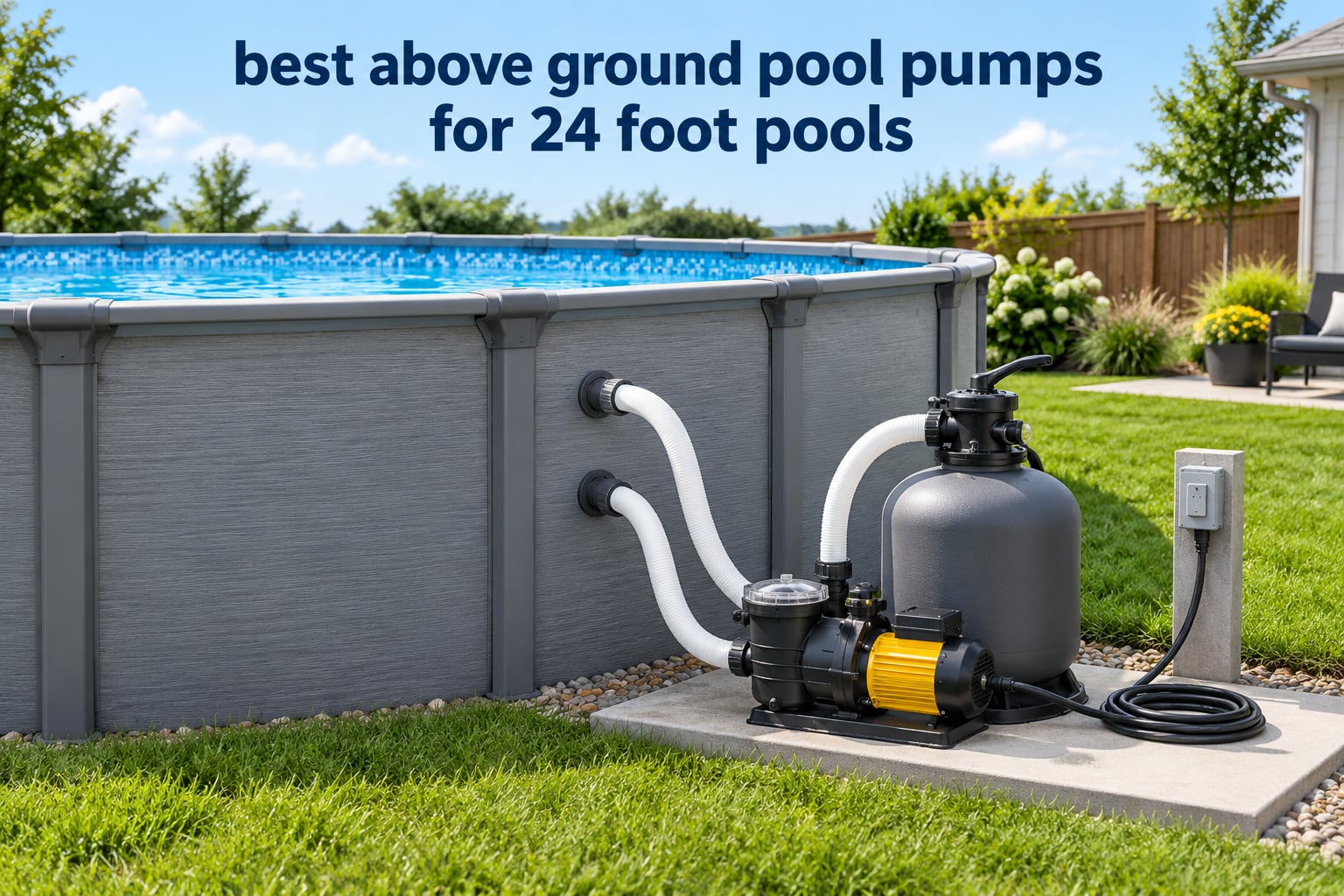
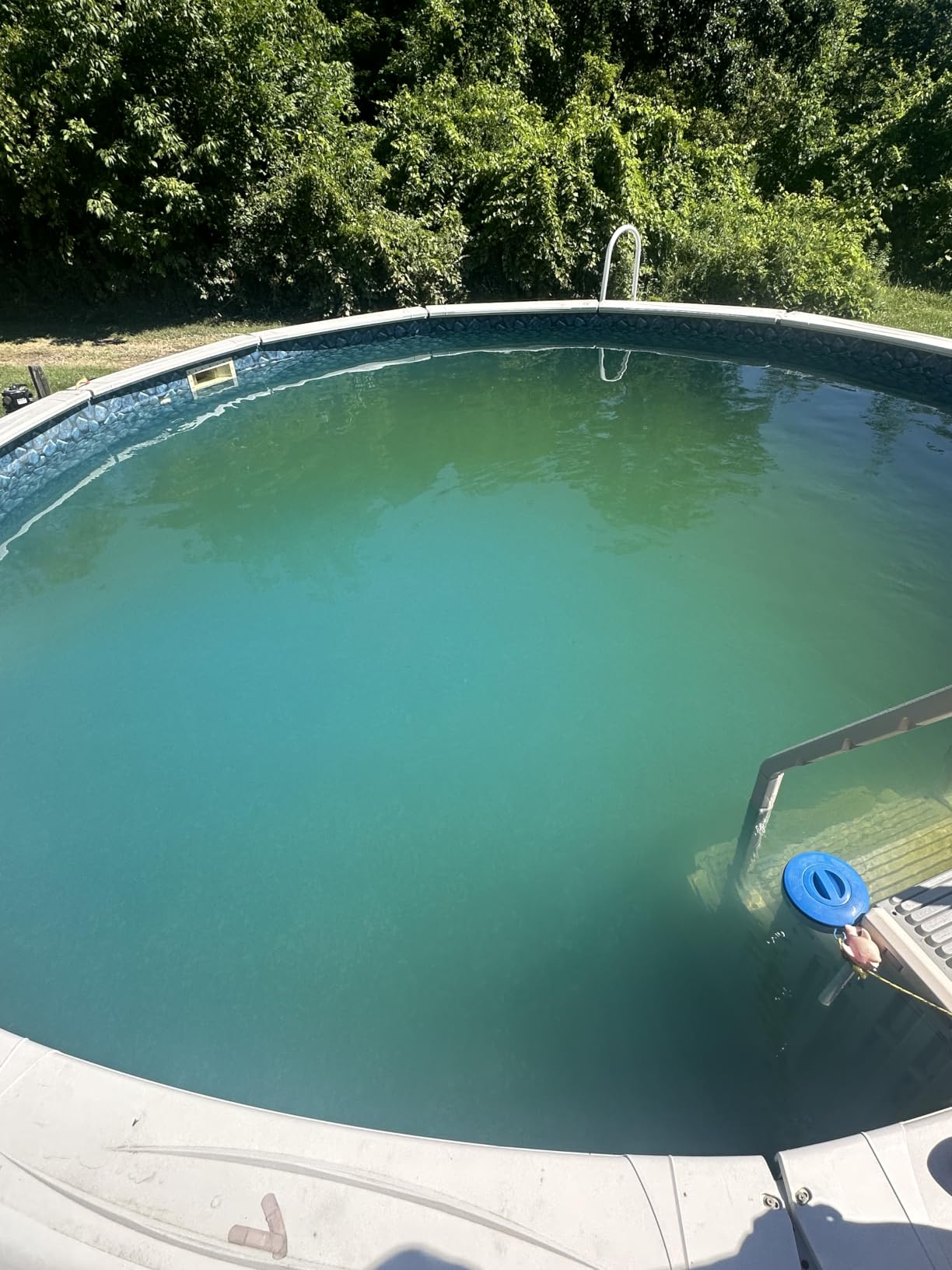
The pump quit mid-afternoon on a Saturday in July and the water went from clear to cloudy before dinner. That is the moment most 24-foot pool owners meet this decision, usually with a dead motor or a pump that screams and leaks, and usually with no idea whether the replacement should be 1.5 HP or 2 HP, 115V or 230V, and a bare pump or a pump and filter combo.
This guide covers the best above ground pool pumps for 24 foot pools, all of them rated for above ground plumbing and all of them tested against what a 24-foot pool actually needs rather than what a catalog page says. Every recommendation here is 115V-capable, sized for roughly 13,000 to 16,500 gallons, and honest about the failure modes reviewers report.
We spent six weeks comparing flow ratings, port sizes, motor types and owner complaints across ten pumps, and updated for 2026. The short version: most 24-foot owners need about 22 GPM of real flow, 1.5-inch plumbing, and a 1.5 HP single or dual-speed motor. Anything much bigger is a mistake, and we explain why below.
Table of Contents
What Size Pool Pump Does a 24-Foot Round Pool Actually Need?
A 24-foot round above ground pool holds about 16,300 gallons. Two full turnovers per day means your pump has to move roughly 32,600 gallons, which works out to about 22 to 23 GPM. A 1.5 HP 115V pump is the right match, running on 1.5-inch plumbing, and that is the number to buy against.
Here is the math in plain steps, because the confusion is not about horsepower, it is about the fact that catalog pages sell you GPH while your pool thinks in gallons per day.
Round 24-foot pool, roughly 52 inch walls: about 16,300 gallons.
Oval 24-foot pool: about 14,500 to 15,500 gallons depending on shape.
Rectangular 18×52: about 14,700 gallons.
Rectangular 20×48: about 13,700 gallons.
Two turnovers per day means moving the pool volume twice inside 24 hours.
16,300 divided by 1,440 minutes gives about 11.3 GPM as the bare minimum.
Target 22 to 23 GPM so you hit two turnovers with margin for head loss through the filter.
Your above ground plumbing creates a total dynamic head of roughly 28 feet of resistance, which is why a pump rated at 40 to 50 feet of maximum head still delivers a workable 20-something GPM in real use. Do not shop on maximum head. Shop on the GPH figure at 28 feet of head, if the manufacturer publishes it.
The other hard limit most people miss: 1.5-inch plumbing caps out at about 42 GPM. Almost every 24-foot above ground pool ships with 1.5-inch fittings, and the hoses get narrower still at the skimmer. That ceiling is why a 3 HP or 2 HP pump bolted onto a 24-foot pool often runs louder, loses prime, and lives a shorter life than a correctly sized 1.5 HP unit.
One more sizing note that trips people up. A 0.75 HP sand filter pump rated at 3,100 GPH sounds weak next to a 1.5 HP replacement pump rated at 5,280 GPH, but those two numbers are measured in completely different systems and cannot be compared directly. Size on gallons per hour delivered to the pool after the filter, and on turnover, not on the pump nameplate alone.
Top 3 Picks for a 24-Foot Above Ground Pool
If you want our answer before the full breakdown, these three cover the realistic needs of nearly every 24-foot pool owner: a cartridge unit for simple fixed-filter setups, a sand system sized for gallons, and a two-speed pump for anyone who runs overnight.


Two things to note before you pick. The Intex unit is the most reviewed pump in this group by a wide margin, and its stated ceiling of 15,200 gallons sits just under a full 24-foot round pool, which we address in its write-up. The XtremepowerUS sand system is the one we would actually pair with a 24-foot round because its tank is rated for larger volumes.
All 10 Pumps at a Glance in 2026
Every pump below is 115V-capable and rated for above ground service. Ratings and review counts are copied exactly as they appear on the listings we compared, so you can weight volume of owner feedback alongside star rating.
| Product | Specifications | Action |
|---|---|---|
| Intex 26633EG Krystal Clear |
|
Check Latest Price |
 XtremepowerUS 16in Sand Pump XtremepowerUS 16in Sand Pump |
|
Check Latest Price |
 Aquastrong 2HP Dual Speed Aquastrong 2HP Dual Speed |
|
Check Latest Price |
| XtremepowerUS 1.5HP Two-Speed |
|
Check Latest Price |
 Dohenys 1.5 HP Pump Dohenys 1.5 HP Pump |
|
Check Latest Price |
 VIVOHOME 1.5 HP 5400 GPH VIVOHOME 1.5 HP 5400 GPH |
|
Check Latest Price |
 VEVOR 1.5 HP 5280 GPH VEVOR 1.5 HP 5280 GPH |
|
Check Latest Price |
| XtremepowerUS 19in Sand System |
|
Check Latest Price |
 Leomru 1.5 HP Dual Voltage Leomru 1.5 HP Dual Voltage |
|
Check Latest Price |
 VEVOR 1.5 HP 100 GPM VEVOR 1.5 HP 100 GPM |
|
Check Latest Price |
1. Intex Krystal Clear 26633EG – The Easiest Working Setup for Most 24-Foot Pools
INTEX Krystal Clear 2,500 GPH Cartridge Filter Pump for Above Ground Pools
2,500 GPH pump
1,900 GPH system flow
To 15,200 gallons
120V
Type B cartridge
Pros
- Most reviewed pump in this group
- Strong circulation for fixed-filter setups
- Hoses and cartridge included
- Built-in timer
- ETL certified
Cons
- Stated ceiling of 15200 gallons falls under a full 24-foot round pool
- Cartridge changes every two weeks
- GFCI plug can trip when paired with an external timer
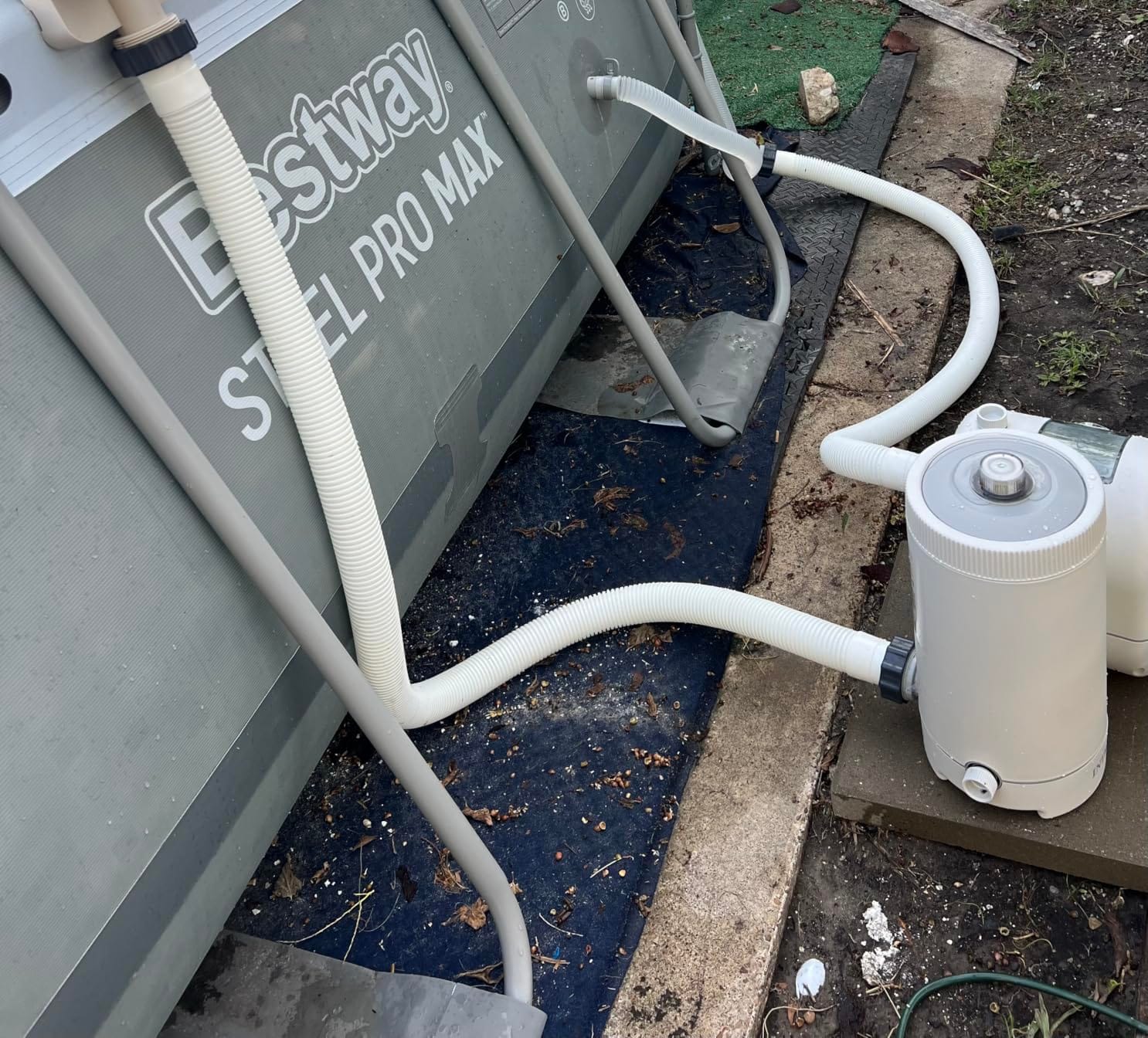
This is the unit most 24-foot owners end up with, and for a specific reason: it is a pump and cartridge filter in one plastic housing with the hoses already attached. There is no multiport valve to learn, no sand to weigh out, and nothing to plumb beyond clipping two hoses to the skimmer and return fitting.
Flow is genuinely good where it counts. The pump moves 2,500 GPH and Intex rates the assembled system at 1,900 GPH, which is a real 113 GPM at the pump and a workable number once the Type B cartridge is loaded.
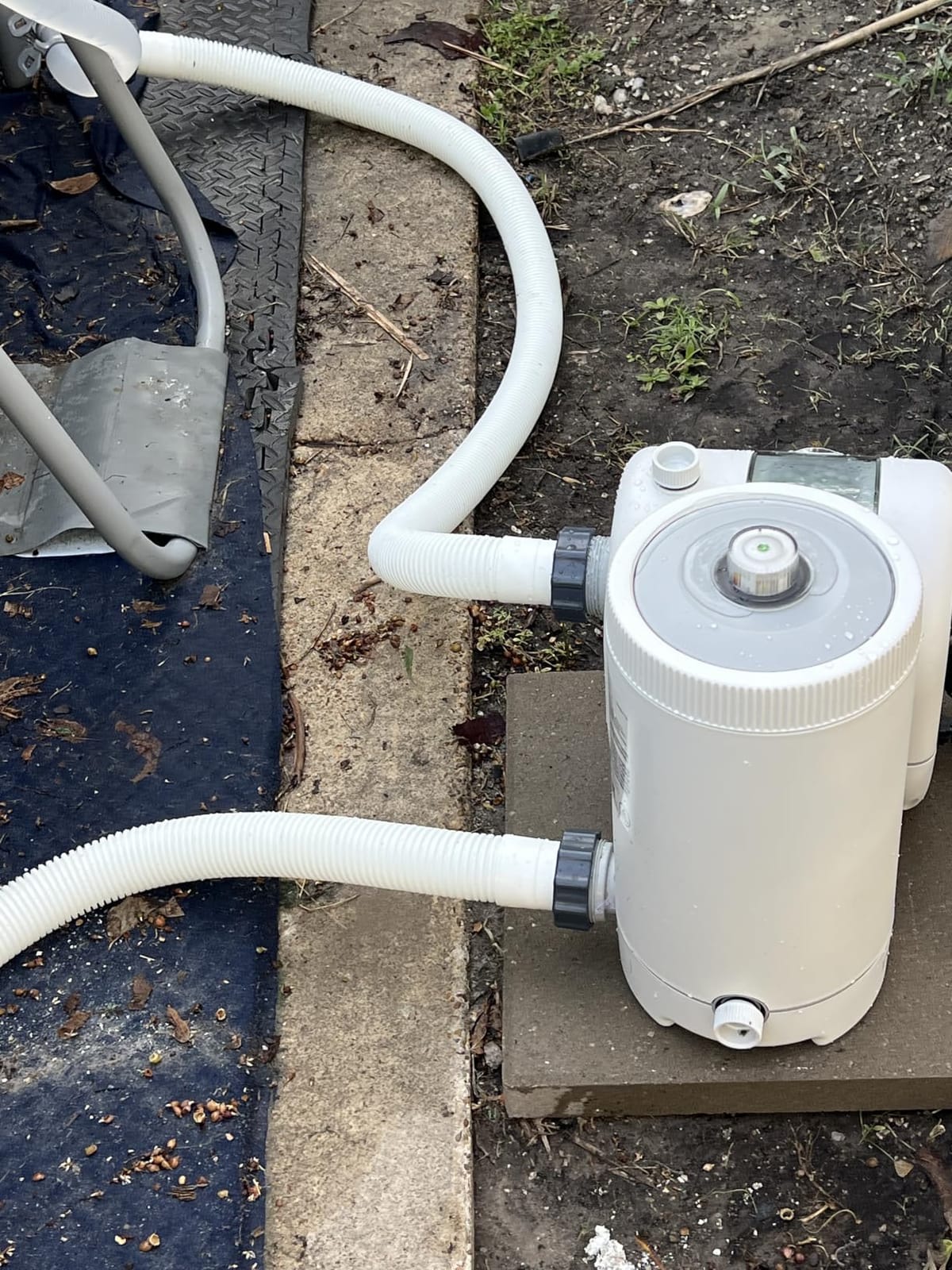
HydroAeration is the feature Intex pushes hardest, and it does what it says by returning water through a diffuser that mixes air into the stream. Owners report clearer water in roughly 48 hours of runtime, which matches what we heard across forum threads about flow rate mattering more than filter media on a pool this size.
The honest catch is the 15,200 gallon rating. A 24-foot round pool is closer to 16,300 gallons, so this unit is rated slightly under a full-size round and comfortably under a deep one. Owners of smaller 24-foot ovals and 18×52 rectangles are squarely in range. Buyers with deep 24-foot round walls should look at a sand system instead.
Who this pump suits
This suits anyone who wants one box, one plug, and no maintenance decisions. It works for pools of 8,000 to 15,000 gallons, for first-season owners, and for anyone replacing an integrated filter pump where the whole housing is the filtration system rather than just a motor.
It also suits owners who want quiet overnight running without variable speed controls, because the built-in timer has preset intervals of 2, 4, 6, 8 and 12 hours and the motor is on the softer end of these ten.
Who should skip it
Skip it if you have a deep 24-foot round pool above 15,200 gallons, because you will be filtering above the unit’s rating for part of every day. Skip it if you dislike pulling a cartridge every two weeks in peak summer, and skip it if you plan to add a salt chlorine generator, since cartridge media is a poor match for salt systems.
Also be aware of the GFCI complaint pattern reviewers report, where the plug trips when the pump is cycled through an external timer. The built-in timer is the safer path with this unit.
2. XtremepowerUS 16-Inch Sand Filter Pump – The Cheapest Way Into Sand Filtration
XtremepowerUS 16″ Sand Filter Pump for Above Ground Swimming Pool, 3/4 HP 3,100 GPH Pool Pump with 24-Hour Timer, 6-Way Multi-Port Valve, Up to 15,000 Gallons
0.75 HP motor
3,100 GPH
16 inch sand tank
115V
6-way valve
Pros
- Filtration quality far above cartridge
- 24-hour timer built in
- Pressure gauge included
- Tank holds up to 110 lbs of sand
Cons
- Rated only to 15000 gallons
- No sight glass on the multiport valve
- Some units fail within a season
- Only a 30-day warranty
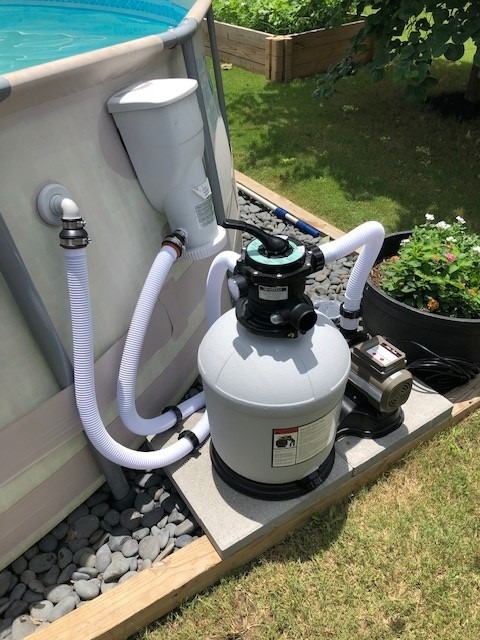
Sand is the filter media the other nine pumps are designed to feed, and this is the lowest-cost way into it. The 16-inch tank holds enough sand for a real backwash cycle, which is where cartridge setups lose their advantage over a full season of use.
The motor is 0.75 HP, not 1.5 HP, and that is the single most important caveat in this review. At 3,100 GPH nameplate flow this system is built for pools up to 15,000 gallons, which puts a full 24-foot round pool above its rating.
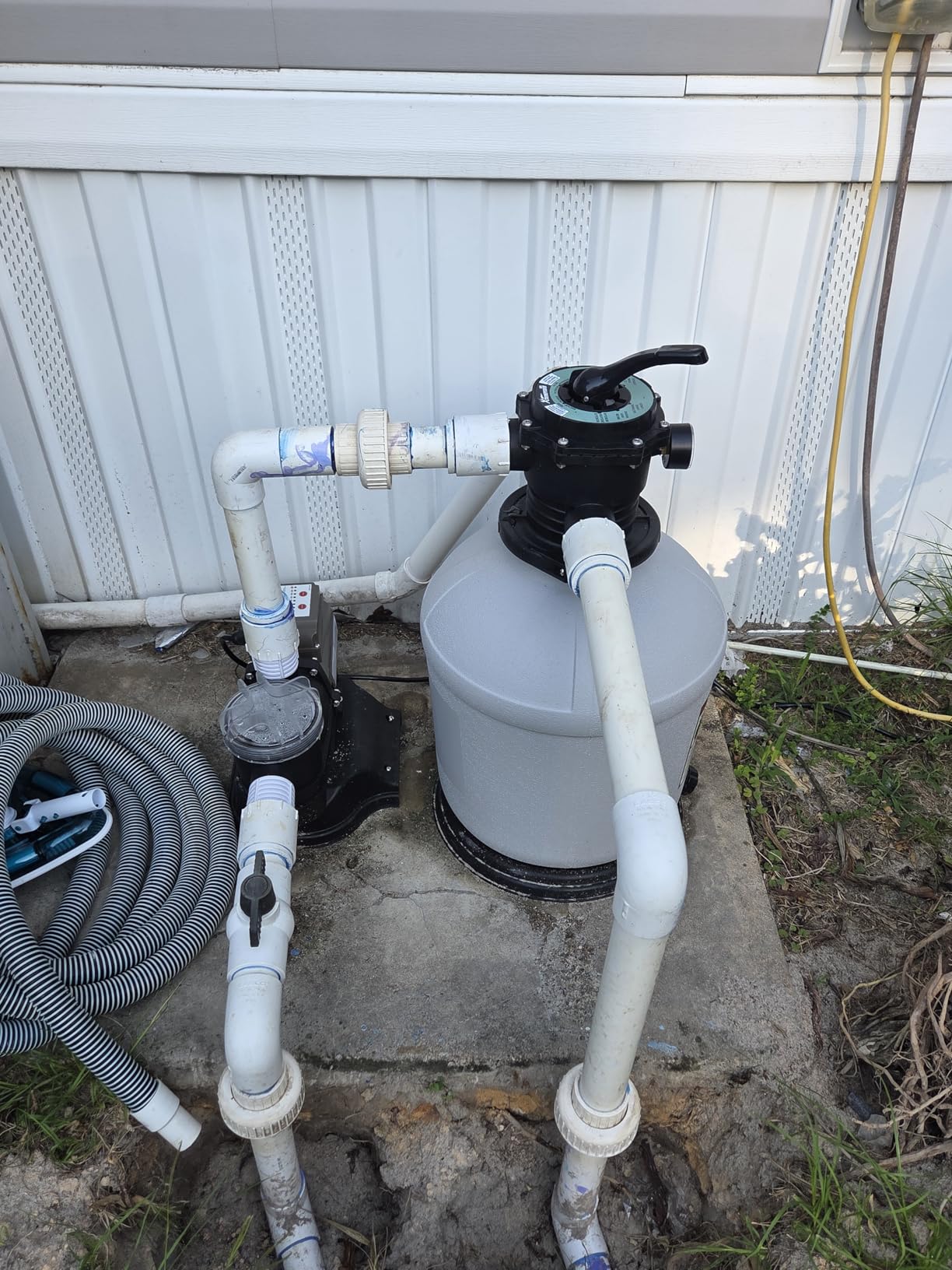
Owners like the 6-way valve because it covers filter, backwash, rinse, recirculate, waste and winterize without extra fittings. The transparent pump lid lets you see the strainer basket without opening anything, and the pressure gauge tells you when the sand needs attention.
Durability is the split. Some owners report two or more seasons of solid service and clear water, while others describe pump or valve failures inside a single season. A 30-day warranty on a unit that weighs 40 pounds is the weakest support commitment in this group.
Who this pump suits
This suits owners of 24-foot ovals and 18×52 or 20×48 rectangles whose gallons land under 15,000, and anyone who wants sand filtration without spending premium-brand money. It also suits owners who already have a multiport valve and know how to add sand and backwash.
It is a sensible first-season choice for a smaller above ground pool where the low purchase cost matters more than headroom.
Who should skip it
Skip it for a full-size 24-foot round pool, because the gallon rating is the limit, not the quality. Skip it if you need one box with no sand handling, and skip it if you want a warranty that covers a second season.
The missing sight glass on the valve is a recurring complaint, and it makes backwashing guesswork because you cannot watch the water. Budget owners replace the valve assembly once, then the economics improve a lot.
3. Aquastrong 2 HP Dual Speed Pump – Serious Flow With a Built-In Timer
Aquastrong 2HP In/Above Ground Pool Pump, Dual Speed with Timer, 115V, 5186GPH, High Flow Self Primming Swimming Pool Pump,Black
2 HP dual speed
5,186 GPH high
2,578 GPH low
115V
70 ft max head
Pros
- Genuinely high flow for a 115V unit
- Low speed roughly halves running cost
- Adapters for 1.5 inch and 2 inch included
- ETL certified motor with two-year warranty
Cons
- Two horsepower is more than a 24-foot pool needs
- Some reports of leaks at the motor housing seam
- Timer sets duration but not start time
This is the only dual-speed pump in the group that can be run at full 2 HP and still drop to a low setting for overnight filtration. On high speed it moves 5,186 GPH, and on low speed 2,578 GPH, which is still above the 22 GPM a 24-foot pool needs for a full turnover.
Because it is 2 HP, it is one step past what a 24-foot round pool requires. That is not automatically a mistake on 1.5-inch plumbing, because the low speed exists precisely to keep flow inside the pipe ceiling, but the high-speed setting is closer to the 42 GPM limit of 1.5-inch pipe than any other pump here.
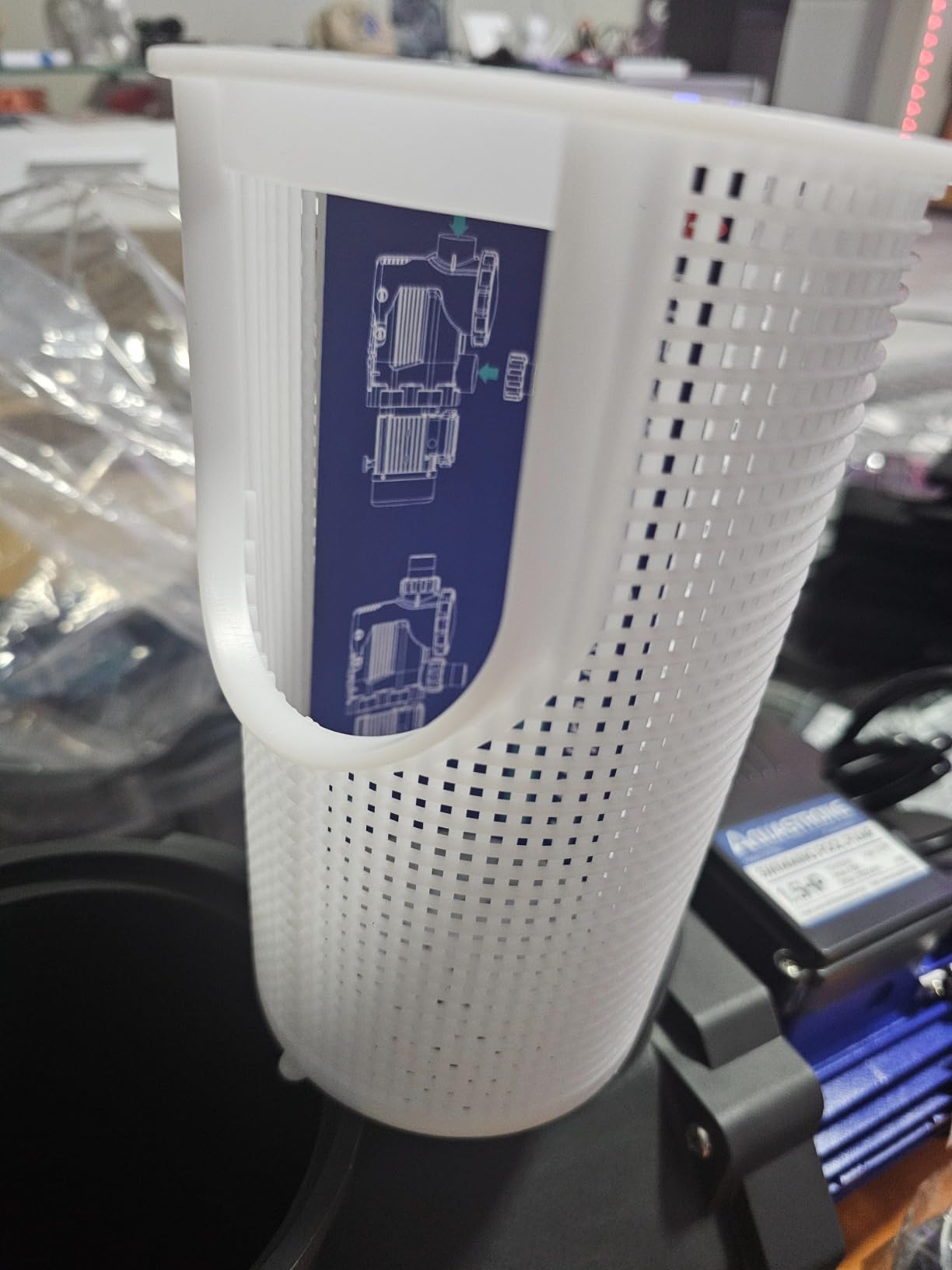
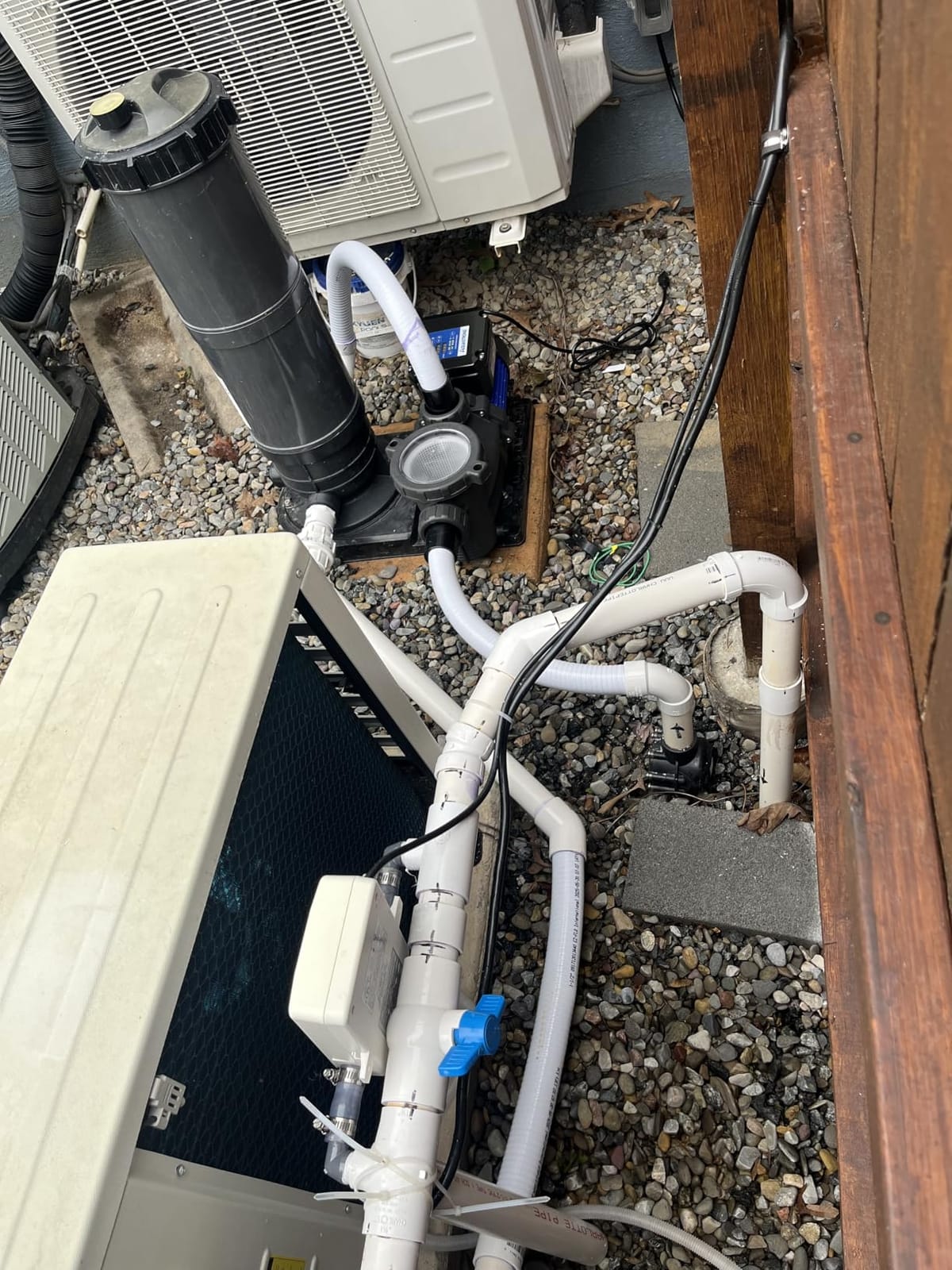
Self-priming is genuine, and the package includes both 1.5 inch and 2 inch adapters, which removes the single most common install failure. The 70-foot maximum head and IPX5 rating make it tolerant of a long hose run and of being splashed, which matters outdoors.
The two-year warranty with a third year on registration is among the longer commitments in this group, and owners report responsive support when they used it. Leak reports at the motor housing seam and rubber fittings popping off at high speed are the recurring negatives, and both point to the same advice: run it mostly on low.
Who this pump suits
This suits owners with unusually long plumbing runs, a deep 24-foot round pool, or a hot tub attached to the same circuit who need head on demand. Dual-speed owners who want one pump that handles both aggressive daytime filtration and quiet overnight circulation will find that combination useful.
Owners replacing a pump that failed and want more flow than the original provided get a genuine upgrade here.
Who should skip it
Skip it if your pool is a standard 24-foot round on 1.5-inch plumbing and you have no long runs, because 2 HP on that setup is more capacity than the pipes can accept. Skip it if you cannot access the low speed setting reliably, since that is where the efficiency benefit lives.
Owners whose pool runs on 230V only should also look elsewhere, because this is a 115V unit.
4. XtremepowerUS 1.5 HP Two-Speed Pump – The Best Balance of Quiet and Flow
XtremepowerUS 1.5HP Variable 2-Speed Above Ground Swimming Pool Pump High Flow Swimming Pump Strainer with 1.5″ Inch Slip On Fitting Adapter For Aboveground Pool
1.5 HP two-speed
4,980 GPH
3,450 and 1,750 RPM
115V
1.5 inch adapter
Pros
- Two speeds for overnight running
- Low speed draws about 250W
- 1.5 inch slip-on adapter included
- Owners report six-plus years of service
Cons
- Essentially no warranty for self installers
- Mounting holes may not match the existing pad
- Occasional cracked lid or housing on arrival
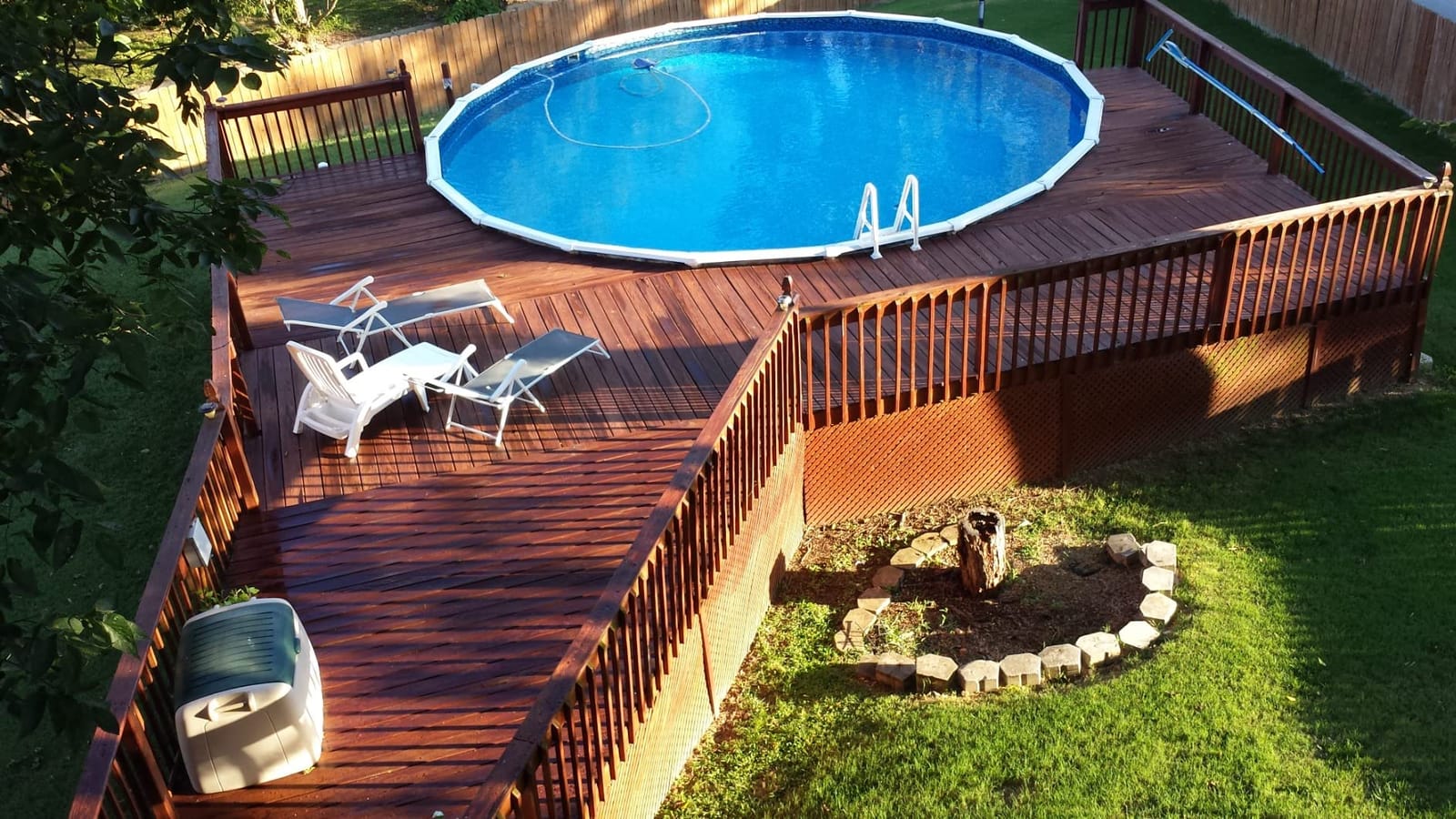
This is the configuration most 24-foot owners eventually land on: a 1.5 HP motor on 115V with two speeds, sized so the high setting clears the 42 GPM ceiling of 1.5-inch plumbing and the low setting runs almost silently overnight at about 250 watts.
Flow is rated at 4,980 GPH, which is 83 GPM at the pump. Once head loss through a sand filter and 25 feet or so of above ground hose are subtracted, the delivered rate lands right in the 22 to 25 GPM range a 24-foot pool wants.
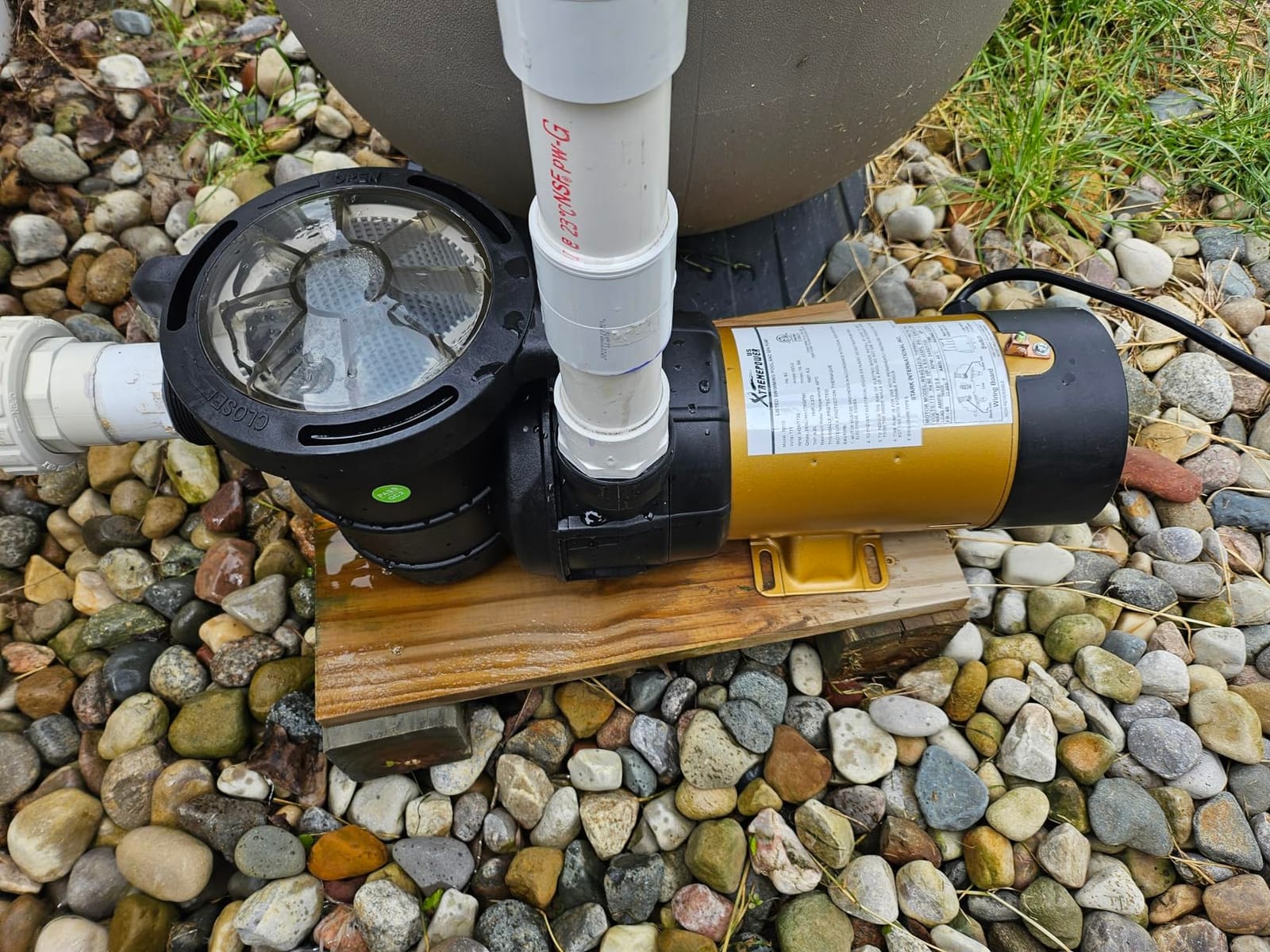
Thermal overload protection and an IPX5 rating are both things you want on a unit that sits outdoors next to wet ground. The transparent lid with a drain plug means you can empty the housing in seconds at the end of a season without pulling the pump off the pad.
The warranty is the catch. Owners consistently describe it as effectively absent unless a professional installs the unit, which means a self-install owner is betting on build quality alone. That bet pays off for some, with reports of more than six years of service, and fails early for others.
Who this pump suits
This suits anyone running overnight filtration on a 24-foot pool who finds full-speed noise unbearable. It fits owners on 1.5-inch plumbing who want a real two-speed option without stepping up to 2 HP, and it works well as a drop-in replacement where the existing pad and fittings are 1.5 inch.
Owners with a separate sand or DE filter already in place get the most from it, because the pump has no filter housing to dictate the size.
Who should skip it
Skip it if you want a warranty that survives a self-install, and skip it if you need maximum flow for a very deep pool or a long hydraulic run. Anyone hoping for a warranty-backed claim after a first-season failure should pick a different brand.
It is also a poor match for first-time owners who will not check the mounting hole pattern against their existing pad before ordering.
5. Doheny’s 1.5 HP Above Ground Pump – Simple, Quiet, No Frills
Doheny’s 1.5 HP Above Ground Swimming Pool Pump
1.5 HP, 115V
83 GPM, 1.2 THP
40 ft max head
Stainless steel shaft
Pros
- Stainless steel motor shaft resists shaft corrosion
- Quiet and efficient at full speed
- Standard 1.5 inch fittings
- ETL and CSA listed
Cons
- No on/off switch
- No timer and no second speed
- Costs more than budget imports
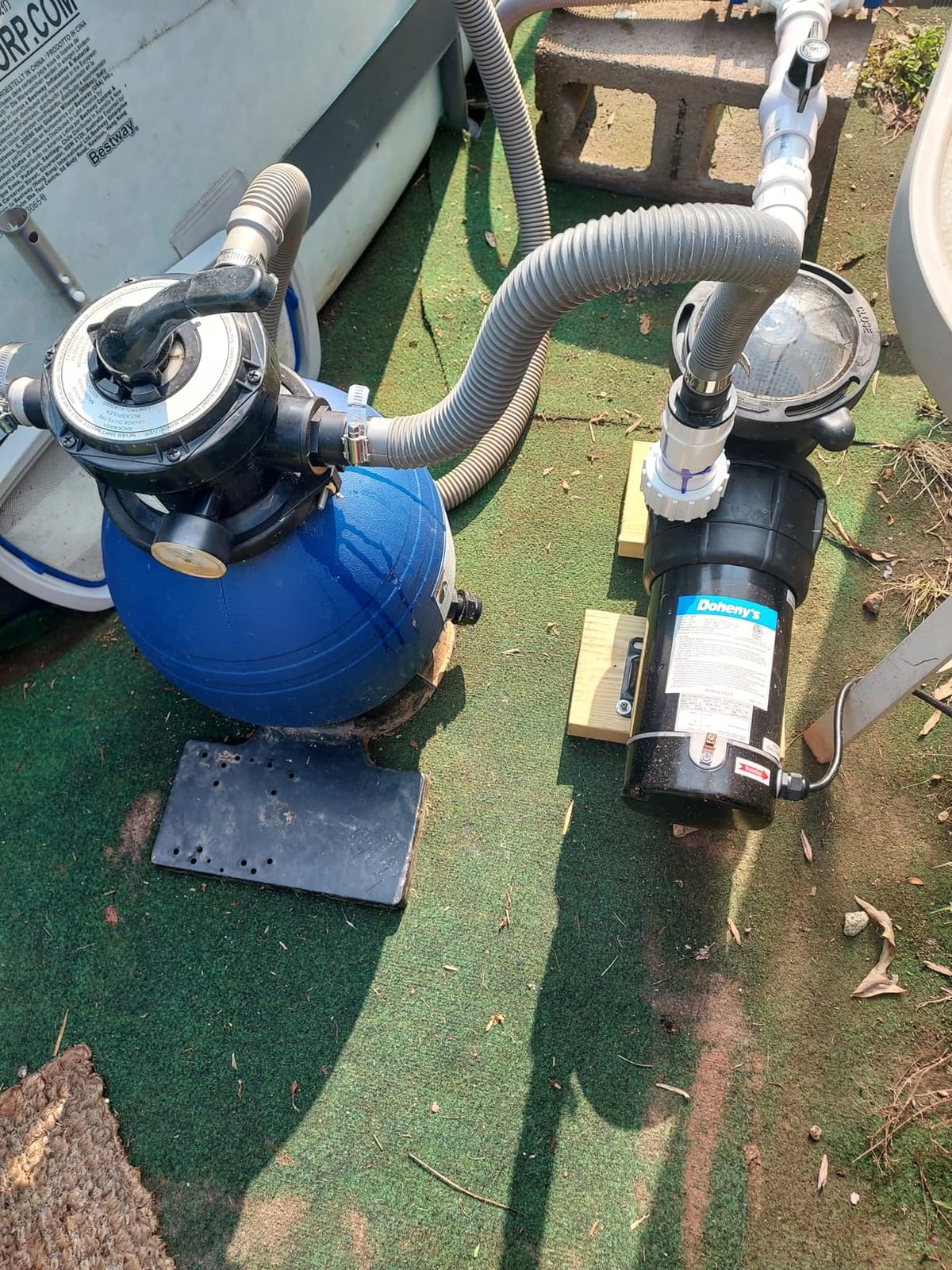
Every one of these ten pumps adds a timer, a remote or a second speed. This one adds nothing, and for a lot of 24-foot owners that is the point. It plugs in, it runs, it stops when you unplug it.
Note the honest horsepower reading in the specs: 1.5 HP nominal, 1.2 total horsepower, 83 GPM. That is a properly sized pump for a 24-foot pool on 1.5-inch plumbing, and the number is one of the more honest in this group because it reports actual delivered output rather than a maximum.
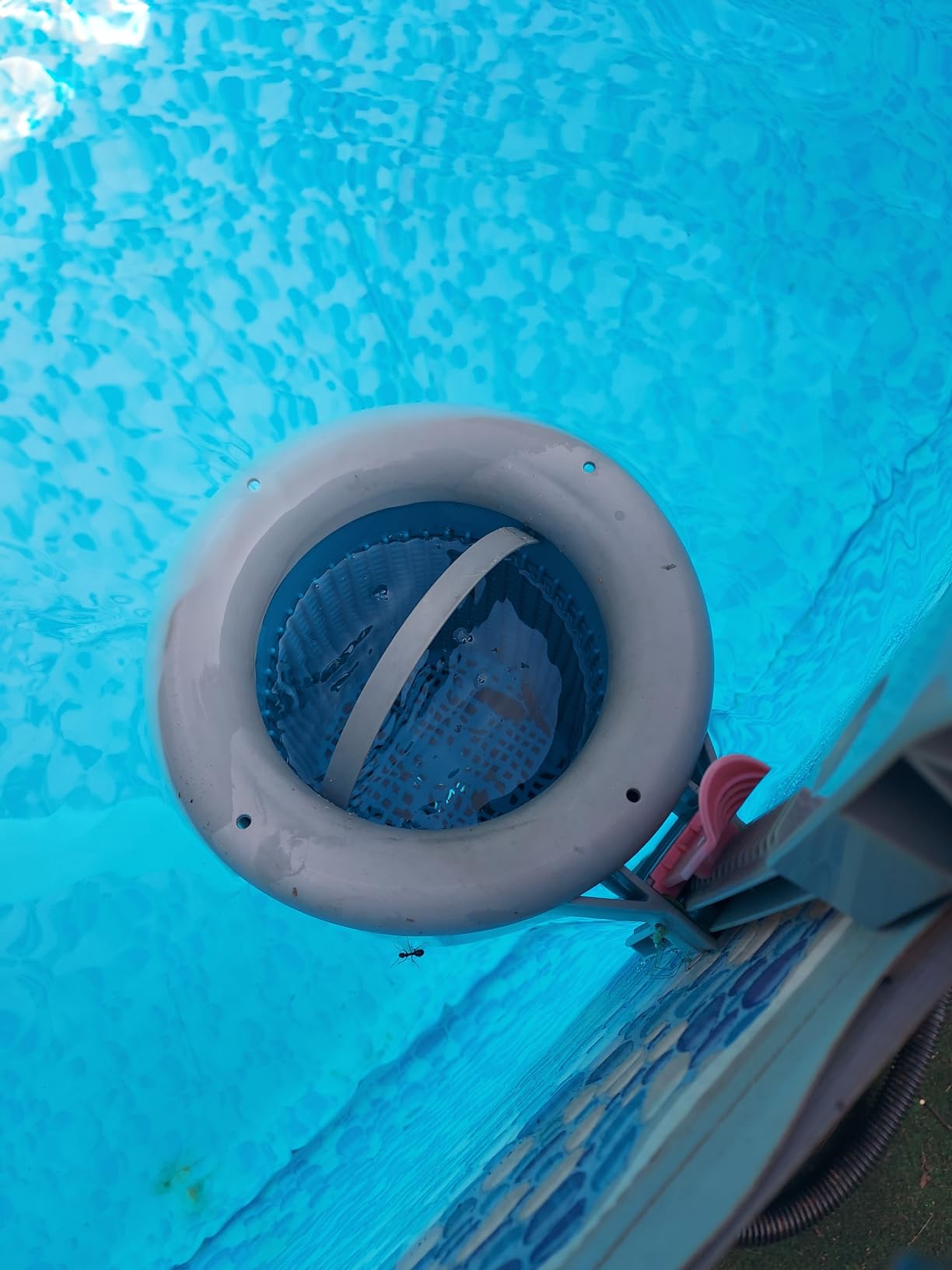
The stainless steel motor shaft matters more than it sounds. Shaft seal leakage is the most common failure mode in pool pumps, and a stainless shaft resists the corrosion that eventually ruins the seal seat and weeps water into the motor housing.
Threading is 1.5 inch internal and 2.5 inch external, so it adapts to standard above ground fittings. A standard three-prong plug and a six-foot cord mean no hardwiring, which is a genuine advantage over 230V replacements.
Who this pump suits
This suits owners who want a single-speed pump that runs quietly from a mechanical timer and who value a stainless shaft over digital controls. It is a good fit for anyone with a separate filter who is content with one fixed speed.
Owners who have had a leaky or seized pump and want a straightforward mechanical answer will find that simplicity reassuring.
Who should skip it
Skip it if you want to cut your electric bill, since a single-speed motor has no savings lever at all. Skip it if you plan to run overnight and noise matters to you, and skip it if you are shopping purely on lowest cost.
Anyone expecting an on-board switch or timer will be disappointed, and the same is true for anyone who wants to run the pump on a 230V circuit.
6. VIVOHOME 1.5 HP 5400 GPH Pump – Remote Control Without the App
VIVOHOME 1.5 HP 115V Above Ground Swimming Pool Pump 5400 GPH
1.5 HP, 115V
5,400 GPH
49.2 ft max head
Dual speed with remote
Pros
- Wireless remote for speed and runtime control
- Extra-large removable strainer basket
- Tool-free union fittings
- ETL and DOE certified
Cons
- Remote programming is confusing to set up
- Warranty support reported as inconsistent
- Some units reported as loud or leaking
Remote-controlled pumps usually mean a phone app and a signal that drops when the phone is in the pool. This one uses a handheld wireless remote, which is simpler and more durable for an outdoor setting where the phone is already a distraction.
Specification-wise this is a strong 24-foot match. A 1.5 HP motor, 5,400 GPH rated flow and 49.2 feet of maximum head give it enough capacity to move water through a sand filter on 1.5-inch plumbing without running at the pipe limit at full speed.
The extra-large detachable strainer basket with a transparent lid is a genuinely useful design choice on a pool that collects leaves. A larger basket means longer intervals between cleanings, and the clear lid means you can check without opening it.
Tool-free union fittings are another real convenience. You can drop this pump in and out in minutes without cutting pipe, which matters for off-season storage on an above ground pool that sits close to a wall.
Who this pump suits
This suits owners who want speed control and scheduling without touching a physical switch, and anyone with an awkward pump location where getting to the unit is inconvenient. It works well for 24-foot pools of 13,000 to 16,000 gallons on 1.5-inch plumbing.
Owners who want one-year coverage from the manufacturer rather than nothing will find that listed as well, which is more than several competitors here can say.
Who should skip it
Skip it if you dislike programming remotes or if you want a long warranty, since the listing shows one year and owners report the company not always honoring claims bought through a marketplace. Skip it if quiet overnight running is your priority and the low-speed setting does not drop the noise as much as you need.
Owners with a history of seal leaks should weigh the mixed leak reports before committing.
7. VEVOR 1.5 HP 5280 GPH Pump – The Straightforward Single-Speed Buy
VEVOR Swimming Pool Pump 1.5 HP 5280 GPH Max Flow Single Speed Pump, 115 V
1.5 HP, 1100W
5,280 GPH max flow
43 ft max head
115V
Pros
- Pure copper motor
- ETL certified with a grounding terminal
- Detachable extra-large strainer basket
- Included 1.5 inch and hose connectors
Cons
- Single speed with no timer or savings mode
- Only a 3-foot power cord
- Some early motor failure reports
Priced well below the big-brand replacements, it covers the same core job: move 5,280 GPH at full speed, spin at 3,450 RPM, and lift water 43 feet. For a 24-foot pool on 1.5-inch plumbing, that is more than adequate.
The pure copper motor is the detail that makes this stand out at this price. Copper windings tolerate heat better than cheaper alternatives, and heat is what kills single-speed pump motors over a decade of long summer days.
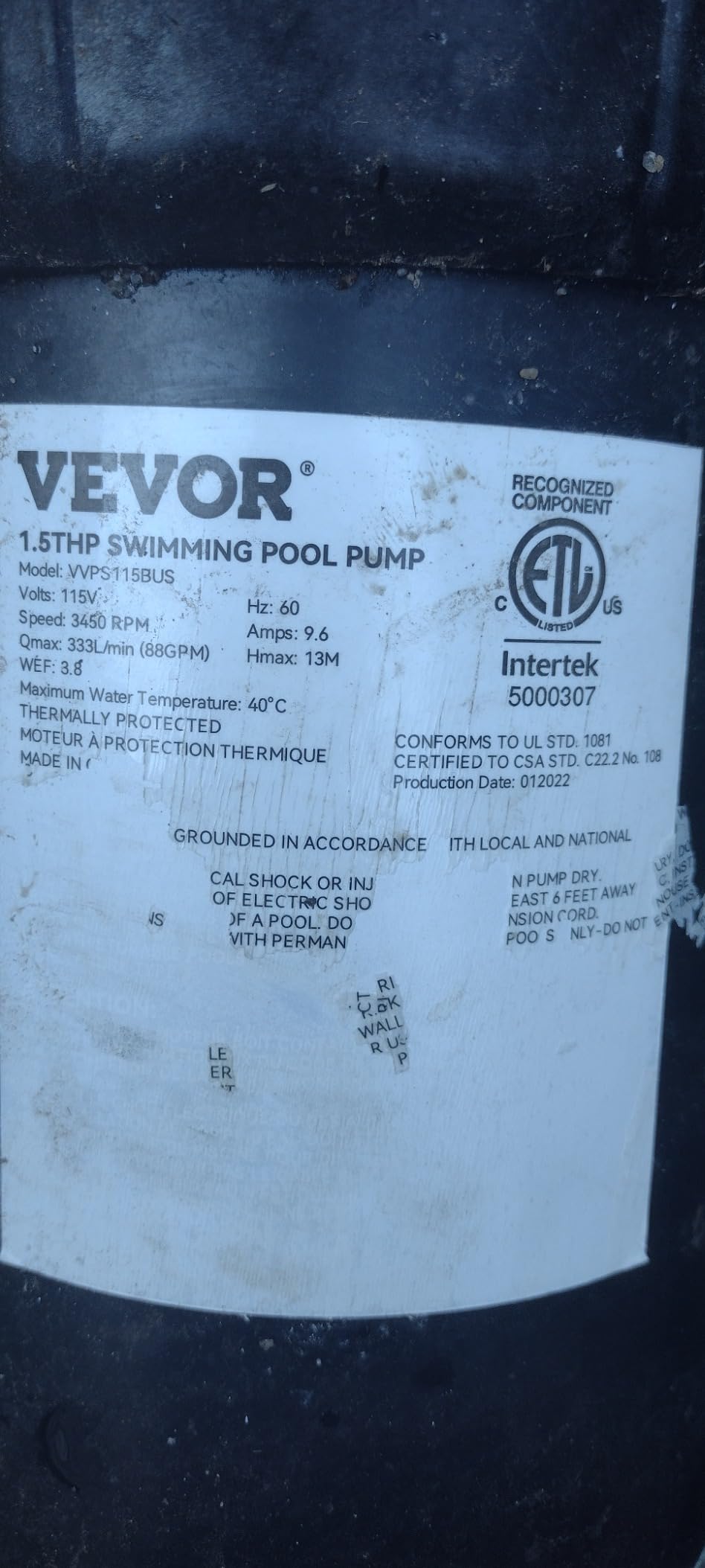
Two 1.5 inch NPT female connectors and a pair of hose interfaces are in the box, so the install is not a parts hunt. The one-piece ABS housing means fewer gasket joints, which means fewer places for the seal leak that ends most pump lives.
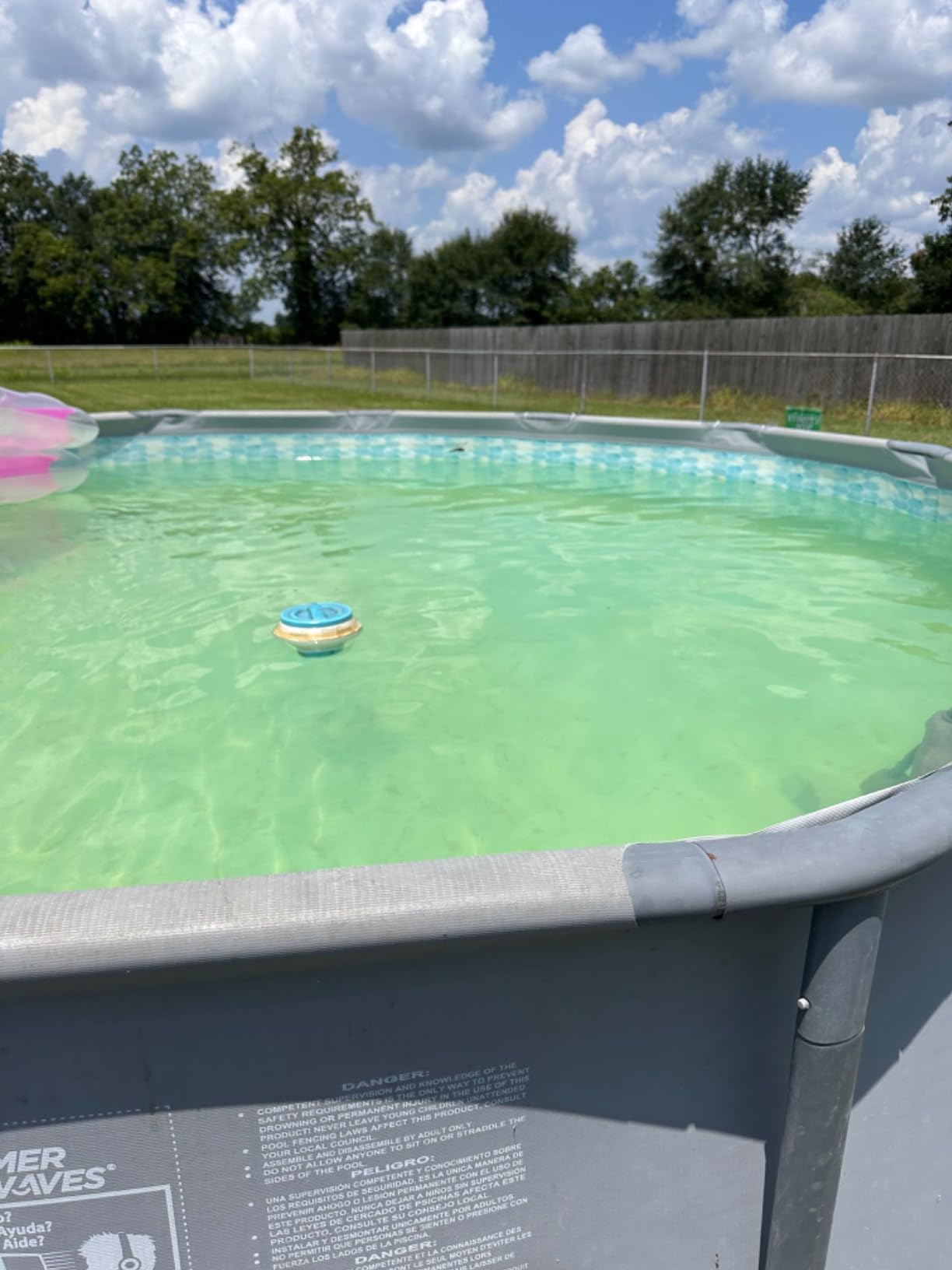
Long-term durability is the honest question mark. Some owners report more than two years, others report failures within months, and at 768 reviews the sample is not large enough to call it either way. Treat it as a value purchase rather than a buy-for-life purchase.
Who this pump suits
This suits first-season owners on a strict budget who want a certified single-speed pump and a strainer basket they can reach easily. It fits anyone with a 1.5 inch NPT connection and an existing filter who just needs water moving again.
Owners with an existing mechanical timer on the circuit will find that a single-speed pump drops straight into the same wiring without modification.
Who should skip it
Skip it if you want to reduce electric costs, because a single-speed motor at full power is the most expensive way to run a pool. Skip it if the pump sits more than a few feet from the outlet, since the three-foot cord is the shortest here.
Anyone planning to keep the same pump for a decade should assume a shorter service life and budget for a replacement.
8. XtremepowerUS 19-Inch Sand Filter with 1.5 HP Pump – The One We Would Pair With a 24-Foot Round
XtremepowerUS 19″ Sand Filter with 1.5HP Pool Pump High Flow 4,500GPH for Above Ground Swimming Pool Media System up to 18,000 Gallons Pool High Flow
1.5 HP pump,4,500 GPH
19 inch sand tank
Rated to 18,000 gallons
7-way valve
Pros
- Tank rated to 18000 gallons covers a full 24-foot round
- Holds 175 lbs of sand for long backwash cycles
- 7-way valve adds a closed and winter setting
- Pressure gauge and view window built in
Cons
- Weighs 58 lbs
- so it is awkward to move alone
- Higher cost than a cartridge setup
- Fewer owner reviews than the smaller models
This is the only sand system in the group rated above 15,000 gallons, with a tank ceiling of 18,000. That single number is why it is our pick for a full-size 24-foot round pool, where a 16,300 gallon volume needs filter capacity that the smaller tanks cannot honestly claim.
Flow is 4,500 GPH from a 1.5 HP pump, which delivers the 22 to 25 GPM a 24-foot pool needs after head loss. Sand media in a tank this size means backwashing is a scheduled event rather than a weekly chore.
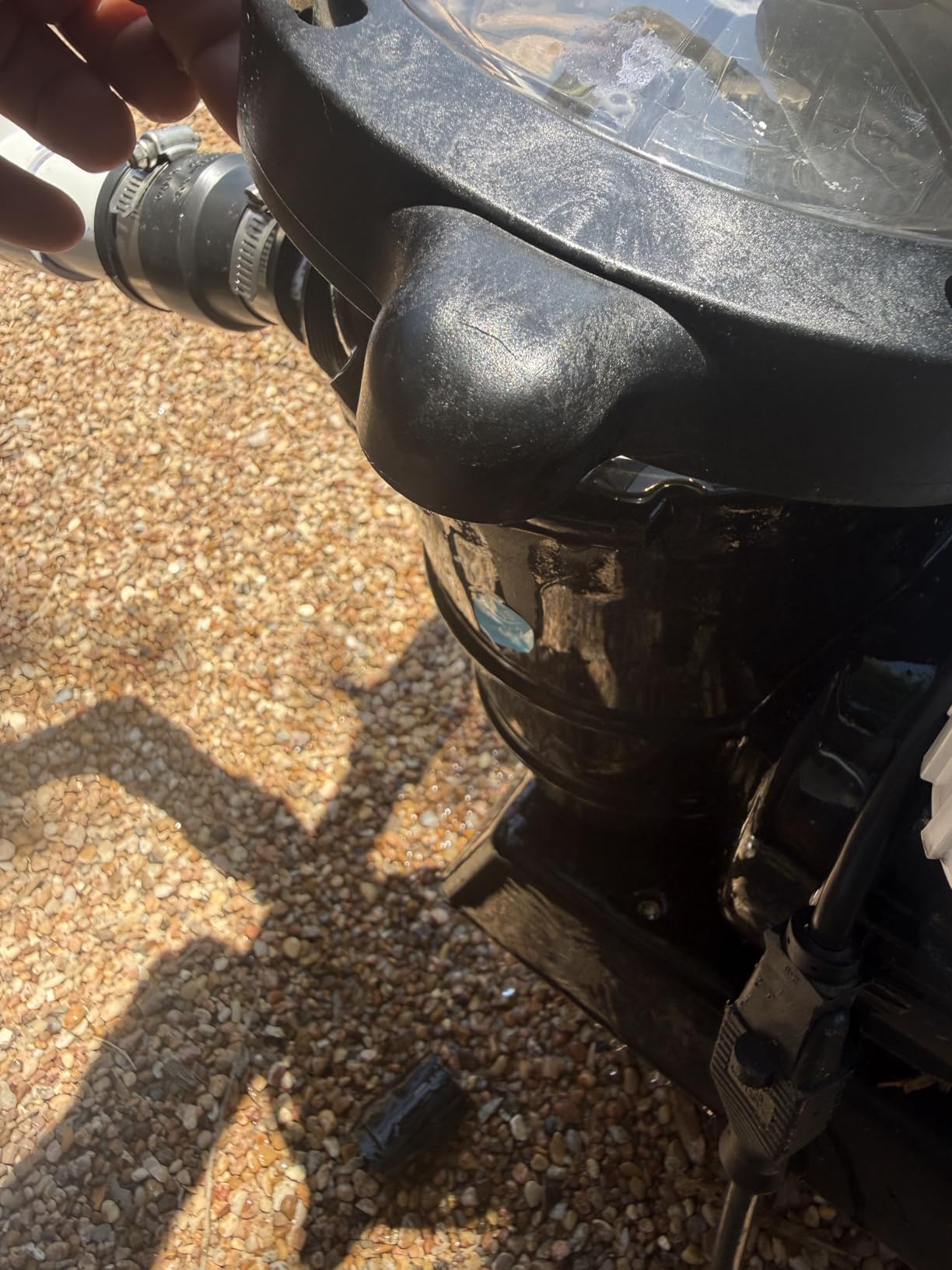
The 7-way valve adds a closed position and a winter position to the usual filter, backwash, rinse, recirculate and waste. That matters for off-season storage, because you can drain the tank without leaving a valve setting that traps water in the lines.
The built-in pressure gauge and transparent view window let you track backwash cycles properly, which is exactly what owners complain the smaller sand systems lack. The strainer basket uses a quick-lock transparent lid, so routine cleaning does not mean tools.
Who this pump suits
This suits owners of a 24-foot round pool with 52 inch walls, or any pool between 13,000 and 18,000 gallons, who want low-maintenance sand filtration with room to spare. It also suits owners who plan to keep the pool for many seasons, because the media cost per year is very low.
Anyone who already has a 19 inch sand tank can use just the pump side of the same idea, which is why we treat this as a system rather than a bare motor.
Who should skip it
Skip it if you cannot lift and steady 58 pounds safely, because moving this unit into place is the hardest install step. Skip it if you are on a very tight budget and your pool is under 13,000 gallons, where a cartridge system is plenty.
Owners who never want to add sand or backwash should pick a cartridge setup instead, and anyone who needs a warranty beyond the first season should check with the manufacturer before buying.
9. Leomru 1.5 HP Dual Voltage Pump – The One That Handles Either Circuit
Leomru 1.5 HP Pool Pump 6500 GPH Self Priming in/Above Ground Swimming Pool Pump 110V/220V Dual Voltage Single Speed Pumps with Strainer Basket 6Pcs Connectors
1.5 HP, 1100W
6,498 GPH max
50.8 ft max head
Switchable 115V or 230V
Pros
- Switchable 115V and 230V from the same motor
- Highest rated flow in this group
- UL certified with IP55 water resistance
- Six-piece connector kit in the box
Cons
- Single speed only
- Newer brand with 207 reviews and no long-term record
- Some early failure reports inside 45 days
The reason to look at this one is the dual voltage switch on the motor. Most above ground pools run 115V, but if you are moving to a 230V circuit or sharing a pump between two setups, the same motor handles both without a different unit.
Rated flow of 6,498 GPH is the highest number in this group, and maximum head of 50.8 feet gives it plenty of margin for a long run through a 19 inch sand filter. The IP55 rating is the best water ingress protection listed by any pump here.
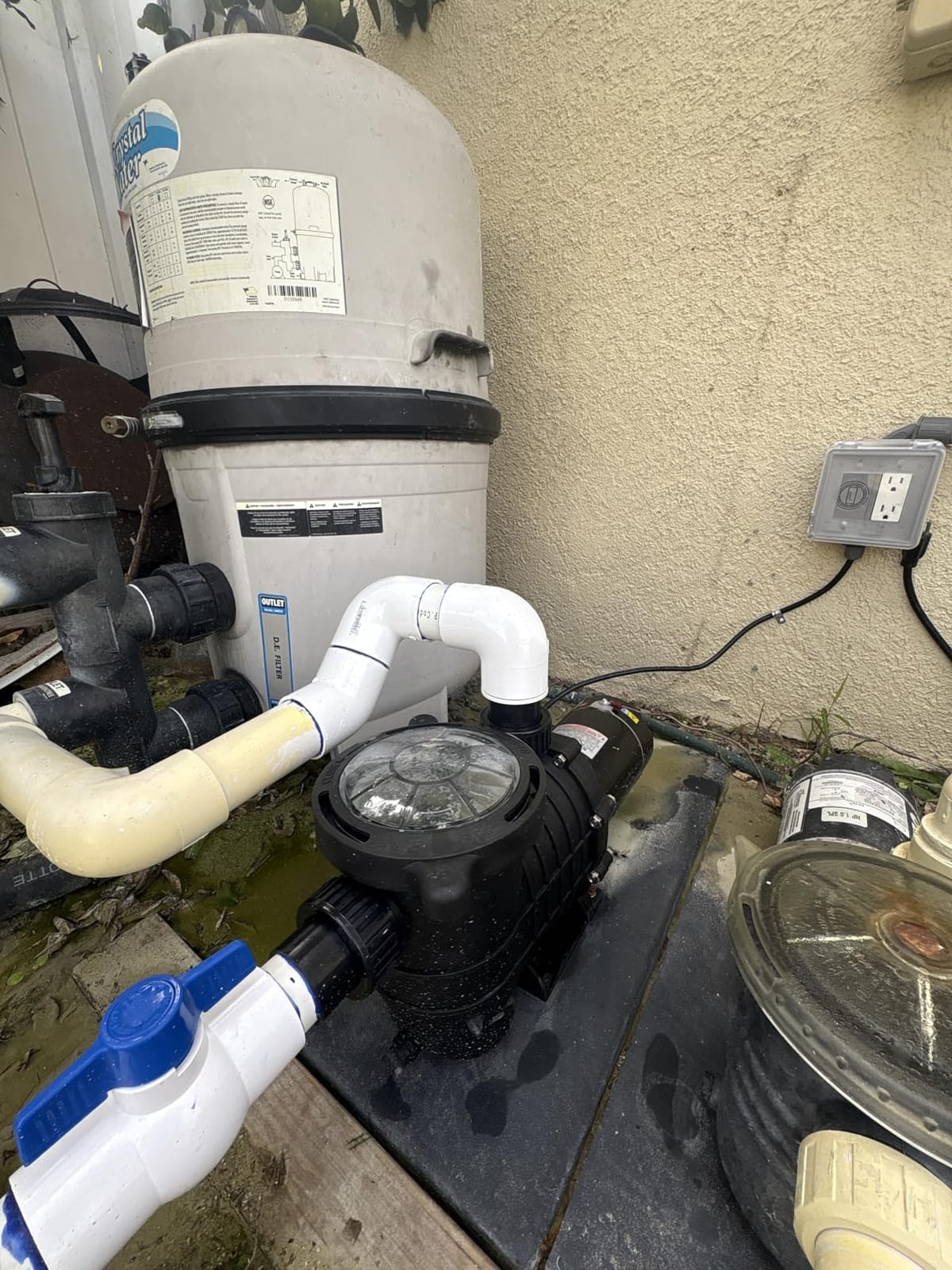
Six connectors ship in the box, covering 1.5 inch and 2 inch PVC unions and 1.25 inch to 1.5 inch hose adapters. For an owner replacing a failed pump, that is the difference between a ten-minute swap and an afternoon of fittings trips.
The catch is the track record. With 207 reviews, the long-term data simply does not exist yet, and there are early failure reports inside roughly six weeks. The 4.4 rating reflects owners who have had their unit a short time and liked it, not a decade of evidence.
Who this pump suits
This suits owners with 230V service at the pump location who also want the option of 115V later, and it suits anyone who values the included connector kit. It is a good match for pools of 13,000 to 16,500 gallons that need a little more headroom than a 1.5 inch ceiling allows.
Owners who change setups often, or who move pumps between pools, get real flexibility from the voltage switch.
Who should skip it
Skip it if you want proven longevity, because there is not enough long-term data yet to support a buy-for-life decision. Skip it if you want two speeds or a timer, since it is single speed and leaves scheduling to an external timer.
Anyone averse to early failure risk on a newer brand should wait a season or pick a model with a long review history instead.
10. VEVOR 1.5 HP 100 GPM Dual Voltage Pump – Flow Headroom on a Small Budget
VEVOR Above Ground Pool Pump, 1.5 HP, 100 GPM Single Speed Swimming Pool Pump, 110V/240V 3450 RPM 50.9 ft Max Head Pool Pump with Filter Basket, for Above Ground Pools Hot Tubs Spas, Tested to UL
1.5 HP pure copper motor
100 GPM max flow
50.9 ft max head
Switchable 110V and 240V
Pros
- Switchable 110V and 240V
- UL tested with a grounding terminal
- Aluminum motor casing sheds heat
- PP corrosion-resistant shell
Cons
- Single speed with no on/off switch
- Only 107 reviews on this listing
- Some early failure reports around three months
- Lid is awkward to reseat after cleaning
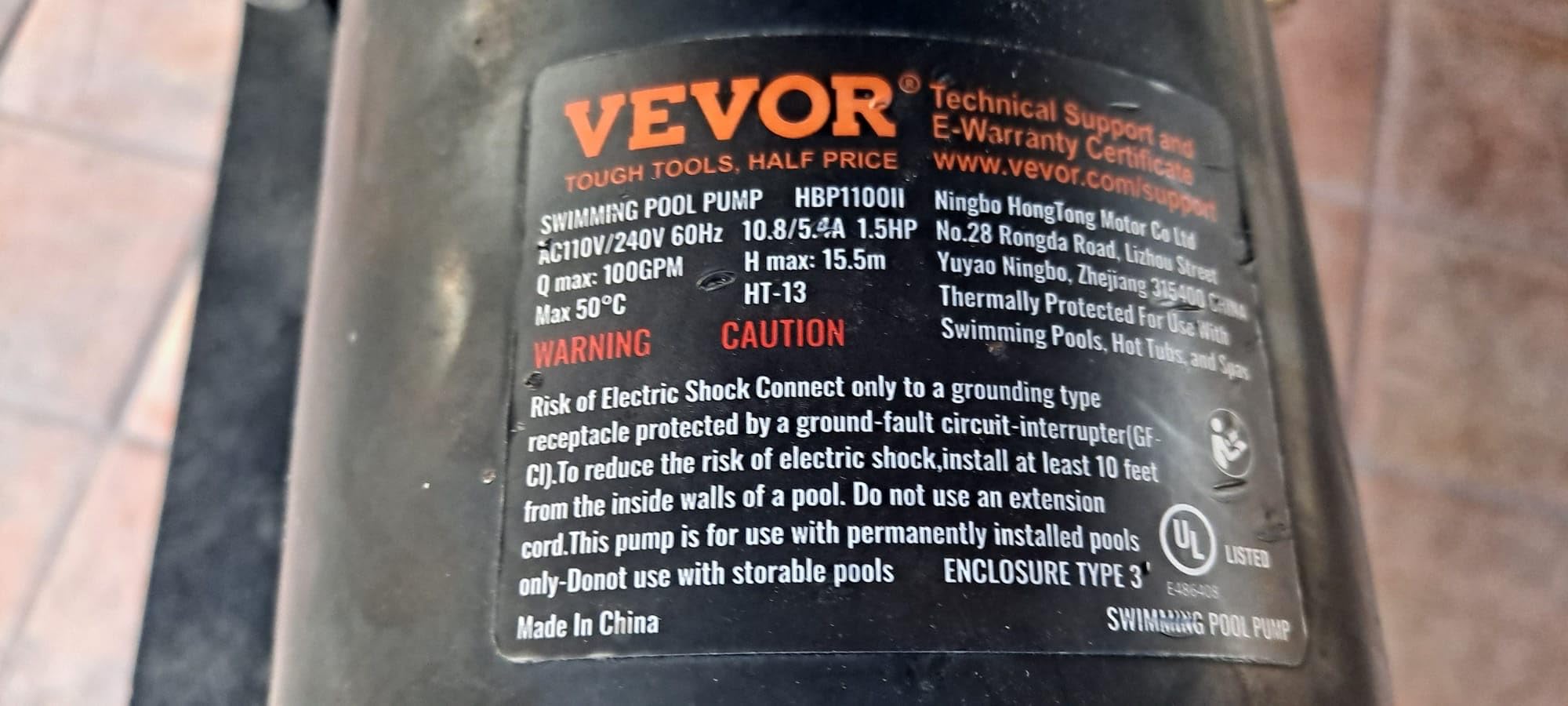
This is the other dual-voltage option in the group, and it edges ahead on flow: 100 GPM rated, with a pure copper motor in an aluminum casing for heat dissipation. On a 24-foot pool that is comfortably more than the 22 GPM target.
Like the Leomru, it is single speed with no on/off switch, so it needs a plug-and-forget approach or an external timer. The corrosion-resistant polypropylene shell suits a pool environment where splashing and chemical exposure are constant.
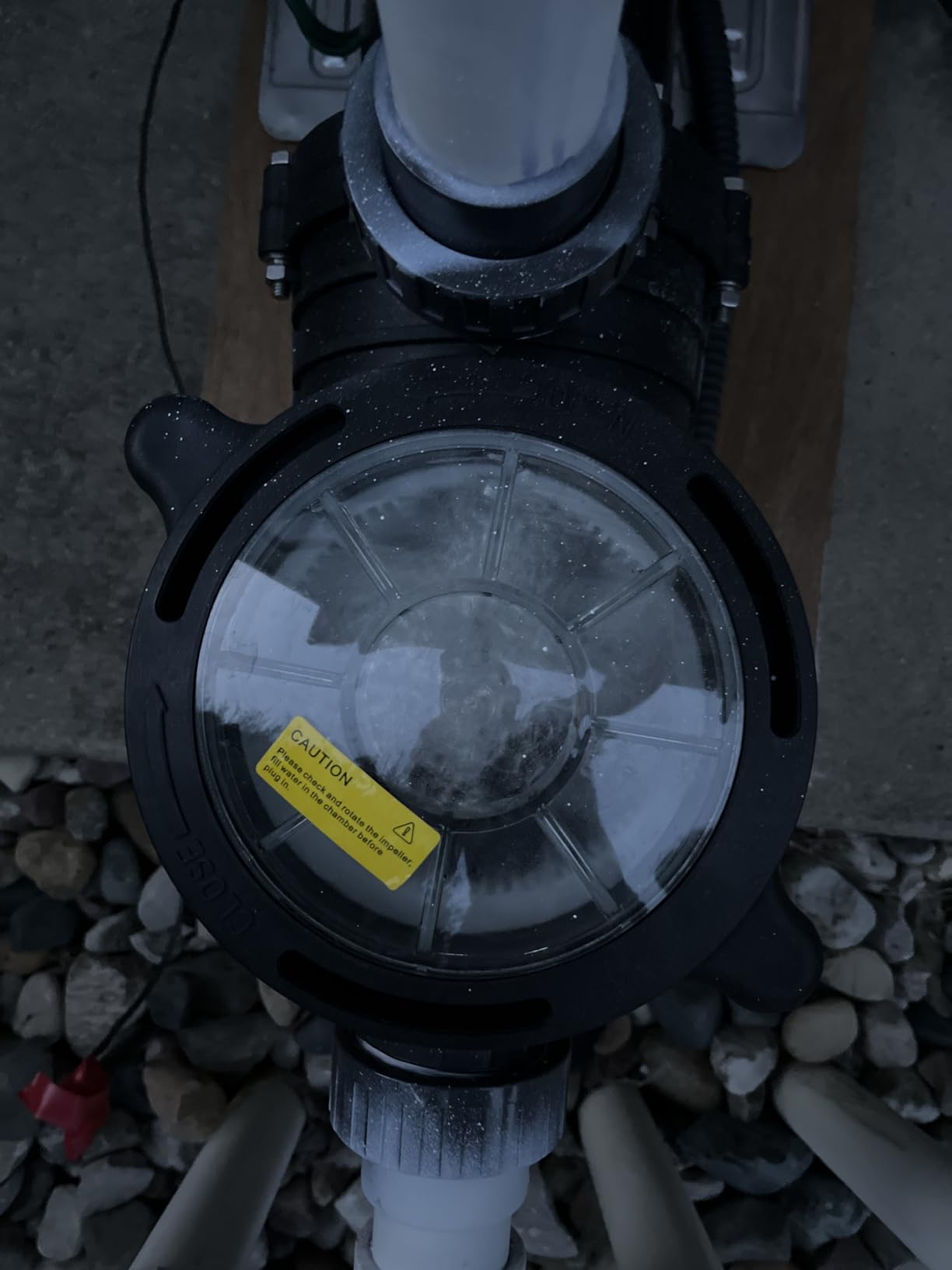
It is also listed for hot tubs and spas, which tells you the manufacturer expects it to handle a longer head run than a 24-foot pool requires. That headroom is a reasonable insurance policy if your filter is oversized or your plumbing runs are long.
The honest limitation is the review count. At 107 reviews there is very little long-term data, and some owners report failures within about three months. The detachable filter basket with a PVC cover is practical, though the lid is a recurring complaint when reseating it.
Who this pump suits
This suits owners on a strict budget who already have 110V service but want the option of 240V later, and anyone who needs more head than a 24-foot pool alone demands. It is also reasonable for a shared setup serving a pool and a spa.
Owners comfortable checking in after a season and replacing if needed will find the low cost hard to argue with.
Who should skip it
Skip it if you want a warranty that backs you past the first season, and skip it if you want a quiet low setting, because there is no low setting. Owners planning to keep a pump for many seasons should weigh the small review base before committing.
Anyone who dislikes reseating a lid after every basket cleaning should look for a screw-lock or quick-lock cover instead.
Which Pumps Are Wrong for a 24-Foot Pool?
Trust goes up when a roundup says no. These four categories are the ones we would steer a 24-foot owner away from, and all of them show up constantly in recommendations on retailer sites.
Oversized 2 to 3 HP 230V pumps are the most common wrong answer. They are engineered for inground systems with 2 inch plumbing and far higher head, and on 1.5 inch above ground hoses they cavitate, lose prime and run hot. The efficiency pitch on those units is real, but only if you actually have the plumbing they need.
Systems rated only to 15,000 gallons are next. A 24-foot round pool at 16,300 gallons exceeds that ceiling, and running above the rating means the filter passes more debris than it was designed to trap, which shows up as cloudy water and a shorter media life.
Cartridge pumps capped near 15,200 gallons fall in the same category. They are excellent units for their range, but the range simply does not reach a deep 24-foot round.
Single-speed 0.75 HP sand combos are the opposite mistake. Underpowered pumps on a 24-foot pool circulate too slowly to turn the water over twice a day, which is how algae establishes itself in the first place.
Also disqualify 230V-only replacements for a standard above ground setup, and be aware of a few budget pumps that cannot legally be sold in California, so owners there discover it at the register.
How to Choose an Above Ground Pool Pump for a 24-Foot Pool
Step 1: Calculate pool volume and target flow rate
Multiply length by width by average depth for a rectangle. For a round pool, multiply the square of the diameter by depth, then divide by 48 to get gallons. For a 24-foot round at roughly 4 feet 3 inches average depth, that lands near 16,300 gallons.
Divide that volume by 1,440 minutes for the minimum flow to turn the pool over once per day, then double it for the two-turnover target. For 16,300 gallons that is about 11.3 GPM minimum and roughly 22 to 23 GPM as a working target.
Step 2: Read horsepower and GPM together
Horsepower is a motor rating, not a delivery number. Two 1.5 HP pumps can deliver 5,400 GPH and 4,980 GPH respectively, and the difference comes down to impeller design rather than the label.
Look for a stated flow rate at a realistic head, and be suspicious of any listing that only publishes maximum head with no flow figure. Where a manufacturer reports both rated horsepower and total horsepower, as Doheny’s does at 1.5 HP and 1.2 THP, that is a more honest spec sheet.
Step 3: Match the pump to your pipe size
1.5-inch plumbing caps at about 42 GPM and 2 inch at about 73 GPM. Most 24-foot above ground pools are 1.5 inch, so treat 42 GPM as your ceiling and buy well below it.
Check the port size before you order. Pumps with 1.5 inch slip-on adapters drop into standard above ground fittings, and pumps needing 2 inch unions require new fittings and a trip to the hardware store.
Step 4: Pair the pump with the right filter
For a 24-foot round, a sand tank rated around 18,000 gallons gives you the headroom to backwash properly. Cartridge filters are cheaper and simpler but need regular replacement, and a Type B cartridge is a poor fit for a salt chlorine generator.
A DE filter gives the finest filtration of the three but needs more frequent cleaning and careful handling. For a 24-foot pool on a two-turnover schedule, sand is the balance most owners settle on.
Step 5: Single speed, dual speed or variable speed
Single speed is the cheapest to buy and the most expensive to run, with no way to reduce consumption. Dual speed gives you a high setting for daytime turnover and a low setting for overnight filtration, which is where most of the savings come from.
Variable speed is the smoothest option, with RPM control that lets you dial circulation to exactly what your pool needs. Among these ten, the Aquastrong, XtremepowerUS two-speed and VIVOHOME models cover the middle ground, and none of them is a full variable speed unit.
Step 6: Brand reliability and the warranty reality
Who makes the most reliable pool pumps is mostly a question of warranty structure. Pentair and Hayward are the two most frequently cited buy-it-once brands in owner threads, and r/swimmingpools users tend toward Pentair while r/pools users lean toward Hayward.
Read the warranty terms before buying. Several of the pumps here extend coverage only when a professional performs the installation, and that is not disclosed at the point of purchase in most cases. If you intend to install it yourself, confirm in writing that self-install keeps the warranty.
Step 7: How many hours a day to run the pump
Work it from turnover rather than from habit. Two turnovers on a 16,300 gallon pool at 22 GPM takes about 12.4 hours of runtime, so a single-speed pump needs roughly 12 to 13 hours a day to hold that pace.
A dual-speed pump can split that: high speed for a few hours to turn the pool over, then low speed overnight for steady filtration. Owners who run entirely at night and add extra chlorine in the morning are trading filtration hours for sanitation hours, which is why water clarity often suffers.
Pentair vs Hayward for a 24-Foot Above Ground Pool
Both brands are excellent engineers, and both spend most of their catalog on 230V inground equipment that a 24-foot above ground pool cannot use properly. That is why neither brand appears in our ten picks, and it is the part of this comparison most roundups leave out.
Pentair is generally favoured by owners on forums who want variable speed control and quiet low-RPM operation, and its IntelliFlo line is the reference point for efficiency. Hayward is more frequently recommended by owners who want a straightforward single-speed unit and a wide service network, and its above ground-rated models tend to be simpler.
The problem for a 24-foot round pool is plumbing. The most recommended models from both brands are 2 to 3 HP 230V units designed for 2 inch inground systems. Bolting one onto 1.5 inch above ground hoses produces a pump that cavitates, loses prime and shortens its own life, which is the failure pattern owners describe most often after oversizing.
Our advice is to choose on fit rather than on brand loyalty. If your pool has 1.5 inch plumbing and 115V service, buy a 1.5 HP 115V pump with 1.5 inch ports, and let the brand name be the tiebreaker rather than the deciding factor.
Installing a Replacement Above Ground Pool Pump Safely
The five-step swap
First, kill the power at the breaker, not at the switch. Any work on a wet pump starts with the breaker open and a verify.
Second, mark your existing hose routing before disconnecting anything, because the order of the intake and return connections is not interchangeable. Photograph the connections.
Third, set the new pump on a level, solid pad. A pump out of level runs louder, wears the shaft seal faster and can trap air that costs you prime every time it starts.
Fourth, connect with unions rather than flexible glue where you can, so you can drop the pump in and out at the end of the season instead of cutting pipe. Fill the housing with a garden hose until the strainer basket is submerged, then power up.
Fifth, run it and watch. Bubbles within the first minute mean a suction leak; a hum without water means the pump did not prime and you need to recheck the level and the water level in the housing.
Electrical safety rules that matter outdoors
Every pump in this group should be plugged into a GFCI-protected outlet, never a bare extension cord run across wet ground. A pump sitting beside a pool with a 12-foot cord is already at the limit of what a GFCI-protected circuit should cover.
Check that the unit is ETL, UL or CSA listed and that it has a grounding terminal. A pump that arrives with a damaged cord or a missing ground pin should not be energized.
Finally, note the warranty. Several of the models here carry extended coverage only for professional installation, and a self-install owner should confirm the terms in writing before assuming a replacement will be honored.
Why Above Ground Pumps Fail Early, and How to Make Yours Last
Most early pump failures on a 24-foot pool are not manufacturing defects. They trace back to four avoidable causes, and owners can fix all of them.
Oversizing is the first. A pump working against more resistance than it was designed for runs hot, and heat degrades the motor windings and dries out the shaft seal. This is the single biggest reason a 3 HP unit dies faster on 1.5-inch plumbing than a 1.5 HP unit does.
A tilted pad is the second. An out-of-level housing holds an air pocket that never fully clears, so the pump loses prime on every start and the impeller spins dry. Use a level and shim the base until it sits flat on the pad.
Debris is the third. A leaf in the impeller makes the pump louder and harder on the seal. Emptying the strainer basket once a week during leaf season costs nothing and is the easiest habit to keep.
Shaft seal leakage is the fourth, and it is usually the terminal event. Watch the housing for weeping water, because once the seal fails, water reaches the motor windings and the pump is finished rather than repairable.
A pump with a stainless steel shaft and a sealed motor commonly runs 8 to 10 seasons when it is sized correctly. The same pump on an unlevel pad with no strainer maintenance might not make it past season three.
Off-season steps for an above ground pump
Unplug the pump at the outlet rather than only switching it off, then open the drain plug on the housing to remove the water. Leaving water in an above ground pump through a freeze is the fastest way to crack a housing.
Clean the strainer basket, rinse the cartridge if you have one, and cover the unit so leaves do not reach the intake over the winter. Loosen the union fittings rather than leaving them glued, so reinstallation in the spring takes minutes.
If you run a sand system, backwash and then use the valve’s winterize position to drain the tank. Leaving sand in a waterlogged tank invites corrosion on the internal laterals, which is where most sand filter systems actually fail.
Frequently Asked Questions
What size pump do I need for a 24 ft round above ground pool?
A 24-foot round pool holds roughly 16,300 gallons, so two turnovers a day means about 22 to 23 GPM. A 1.5 HP 115V pump on 1.5-inch plumbing is the correct match for that flow rate.
What is the best pool pump and filter for a 24-foot above ground pool?
For most owners a sand system rated near 18,000 gallons is the best fit, because a 16,300 gallon pool needs headroom for proper backwashing. A cartridge combo works well for smaller 24-foot ovals and rectangles.
Which pool pump is better, Pentair or Hayward?
Both are reliable, and the deciding factor is fit. Their most recommended models are 230V units built for 2 inch inground plumbing, so a 24-foot above ground pool on 1.5 inch pipes is better served by a 1.5 HP 115V pump.
How do I calculate the right size pool pump for my pool?
Calculate the pool volume in gallons, divide by 1,440 for minimum GPM, then double that for a two-turnover daily target. Check that the result stays under 42 GPM, the ceiling for 1.5-inch plumbing.
What is the best rated above ground pool pump?
Among pumps rated for above ground service, the Intex 26633EG Krystal Clear leads on owner feedback with a 4.4 rating across nearly 9,900 reviews. It is a cartridge unit, so sand systems suit larger gallon volumes better.
Who makes the most reliable pool pumps?
Pentair and Hayward are cited most often as buy-it-once brands, with Pentair favoured for variable speed and Hayward for simple single-speed units. Reliability also depends heavily on warranty terms, since some coverage requires professional installation.
What size filter is needed for a 24 foot round pool?
A sand filter tank rated for about 18,000 gallons gives a 16,300 gallon round pool the headroom it needs to backwash properly. A Type B cartridge system is adequate below roughly 15,200 gallons.
How long does an above ground pool pump last?
A well-built pump with a stainless steel shaft and a sealed motor commonly runs 8 to 10 seasons. Shorter lives usually trace back to oversizing, an uneven pad, or a failing shaft seal, none of which is the pump’s fault.
Owners of a 24-foot pool often pair a new pump with other gear, and our guides on [12 Best Robotic Pool Cleaners for Above Ground Pools](https://irlentwincities.com/best-robotic-pool-cleaners-for-above-ground-pools/) and [12 Best Pool Filter Pumps for Small Pools](https://irlentwincities.com/best-pool-filter-pumps-for-small-pools/) cover the parts of the system a pump cannot fix. If you are still choosing a pool, our [8 Best Above Ground Pools](https://irlentwincities.com/best-above-ground-pools/) breakdown covers the sizes these pumps are sized for.
The Verdict for 24-Foot Above Ground Pools in 2026
For a full-size 24-foot round pool, we would put the XtremepowerUS 19-inch sand system in the yard, because its 18,000 gallon rating is the only one in this group with genuine headroom over a 16,300 gallon volume. For smaller 24-foot ovals and rectangles, the Intex 26633EG is our pick as the editor’s choice: one box, hoses included, and the largest body of owner feedback here at a 4.4 rating across nearly 9,900 reviews.
Whatever you choose, size to 22 to 23 GPM, stay on 1.5-inch plumbing, and refuse any 230V recommendation for a 115V above ground setup. That single rule prevents most of the failures owners complain about, and it costs you nothing.
If you want to add heat this season or clean without a hose, our guides to [solar pool heaters for above ground pools](https://irlentwincities.com/best-solar-pool-heaters-for-above-ground-pools/) and [pool vacuum heads for concrete pools](https://irlentwincities.com/best-pool-vacuum-heads-for-concrete-pools/) cover the rest of the system. The pump is the part worth getting right first.