

A tilted surface changes how you draw. When paper lies flat, your neck bends forward over the sheet for hours and graphite picks up smudge from the back. Lift that surface to 30 or 40 degrees and you look straight down onto your work, the paper stays put, and your posture recovers between sessions. That is the argument for the best drafting tables for artists, and it is why we spent weeks with twelve of them rather than trusting spec sheets.
The category has split into two families. One is the solid wood vintage table, built like furniture, heavy, fixed in height, and made to last decades. The other is the modern steel-and-glass craft station that rolls on casters, adjusts in height, and doubles as a computer desk. Buyers on r/Drafting ask which they need constantly, and the honest answer is that tilt matters far more than the brand on the frame.
We built this around what artists ask: how big is the usable drawing area, can the top take water without warping, does it fit an apartment, and does the stool survive an adult. We also weighed the hybrid desks, since a lot of artists now keep a tablet or pen display nearby. If that is your setup, our pen display guide covers the other half of the desk.
Table of Contents
What Is a Drafting Table?
A drafting table is a desk with a tilting work surface, usually adjustable from flat to 60 degrees or more, built so you can view and work on large sheets of paper without leaning over them or smudging the drawing. Most add a pencil ledge at the lower edge, height adjustment, and storage for supplies.
Key features to look for:
Tilt range — 45 degrees suits seated sketching, 60 to 90 degrees lets the table work like an easel for painting or vertical work.
Usable drawing area — the quoted size often includes the pencil ledge, so the sheet that actually fits is smaller than the number suggests.
Height adjustment — a wider range lets one table serve a child, a seated adult, and standing work.
Surface material — tempered glass wipes clean and works as a light table, solid wood takes pencil beautifully, melamine and particle board stain and swell with water.
Pencil ledge — a groove or rail that stops pens, brushes, and paper sliding when the top is angled.
Mobility and storage — locking casters, drawers, side trays, and a slide-out extension decide whether a table survives a small studio.
How We Picked and Tested
We ranked all twelve tables against six criteria drawn from what owners complain about most: real tilt range rather than the advertised maximum, usable surface area after subtracting the ledge, height range, wobble under pressure, storage that fits real supplies, and how the surface handles water. We pushed on every tilted top, ran a wet brush across each surface, and timed how long it took to move one across a studio floor.
We also read the full owner review history on each product, because forum and retailer reviews surface problems spec pages never mention: tilt mechanisms loosening, boards warping at the corners, stools arriving warped, and surface sizes that quietly include the pencil ledge. Where a marketing claim and owner reports disagreed, we went with the owners.
Top 3 Picks for Artists in 2026
These three cover the most common ways artists use a drafting table: a full starter set, a feature-loaded workstation, and the strongest value pick.

Yaheetech Adjustable Art Desk
- 0-60 degree tilt
- 27.5-36.5 inch height range
- retractable 15 x 23.6 inch side surface
- two drawers and shelf

Yaheetech Tilting Desk
- 0-40 degree tilt with 10 locks
- 10 height positions
- three fabric drawers
- matching stool included

ZENY Drafting Table
- 0-60 degree tilt
- 28-35.8 inch height
- slide-out side board
- 30 liter storage and stool
All 12 Drafting Tables at a Glance
Every table below appears in the same order as the reviews that follow, with the specs that change the buying decision.
| Product | Specifications | Action |
|---|---|---|
| Yaheetech Adjustable Drafting Table |
|
Check Latest Price |
| ZENY Drafting Table with Stool |
|
Check Latest Price |
 Yaheetech Glass Drafting Table Yaheetech Glass Drafting Table |
|
Check Latest Price |
 Studio Designs Vintage Drafting Table Studio Designs Vintage Drafting Table |
|
Check Latest Price |
 MEEDEN Wood Adjustable Drafting Table MEEDEN Wood Adjustable Drafting Table |
|
Check Latest Price |
 Stand Up Desk Store Drafting Table Stand Up Desk Store Drafting Table |
|
Check Latest Price |
 BBBuy Drafting Table with Stool BBBuy Drafting Table with Stool |
|
Check Latest Price |
 JupiterForce Glass Drafting Table JupiterForce Glass Drafting Table |
|
Check Latest Price |
 X-cosrack Adjustable Drafting Desk X-cosrack Adjustable Drafting Desk |
|
Check Latest Price |
 Tribesigns Drafting Workstation Tribesigns Drafting Workstation |
|
Check Latest Price |
| Yaheetech Tilting Drafting Table |
|
Check Latest Price |
 MEEDEN Vintage Wooden Drafting Table MEEDEN Vintage Wooden Drafting Table |
|
Check Latest Price |
1. Yaheetech Adjustable Drafting Table – Best All-Round Pick
Yaheetech Adjustable Drafting Table Art Desk,Storage Drawers & Stool,Black
0-60 degree tilt
Height 27.5-36.5 inch
Retractable 15 x 23.6 inch side surface
220.5 lb capacity
Pros
- Sturdy metal frame with wide leveling feet
- Tilts 0-60 degrees and adjusts height for seated or standing work
- Retractable auxiliary surface and two mesh drawers
- Stool included in matching finish
Cons
- Auxiliary surface does not fully slide under the top
- Mesh drawers slide tightly under the work surface
- Auxiliary shelf sits on one side which is awkward for right-handed users
- Included stool can arrive warped
This is the table I keep coming back to. The top tilts smoothly through 0 to 60 degrees and the whole unit raises from 27.5 to 36.5 inches, so it works for a child at the low end and an adult standing at the high end. I drew at 35 degrees with the top raised, the sweet spot for pencil and ink.
Wide leveling feet hold it flat on uneven floors, and pressing hard in the middle of the tilted surface produced no flex. The working diagonal of 53.7 inches is among the larger areas in this group, and the retractable auxiliary surface adds 15 by 23.6 inches when you need to spread out.
Assembly took about an hour with a Phillips screwdriver, and the two mesh drawers and an open shelf hold paper, pencils, and a palette without crowding the surface. Weight is listed at 51.8 pounds, which is honest and still manageable for two people. The included stool is the weak point, and the auxiliary shelf is fixed to one side, which matters if you draw right-handed.
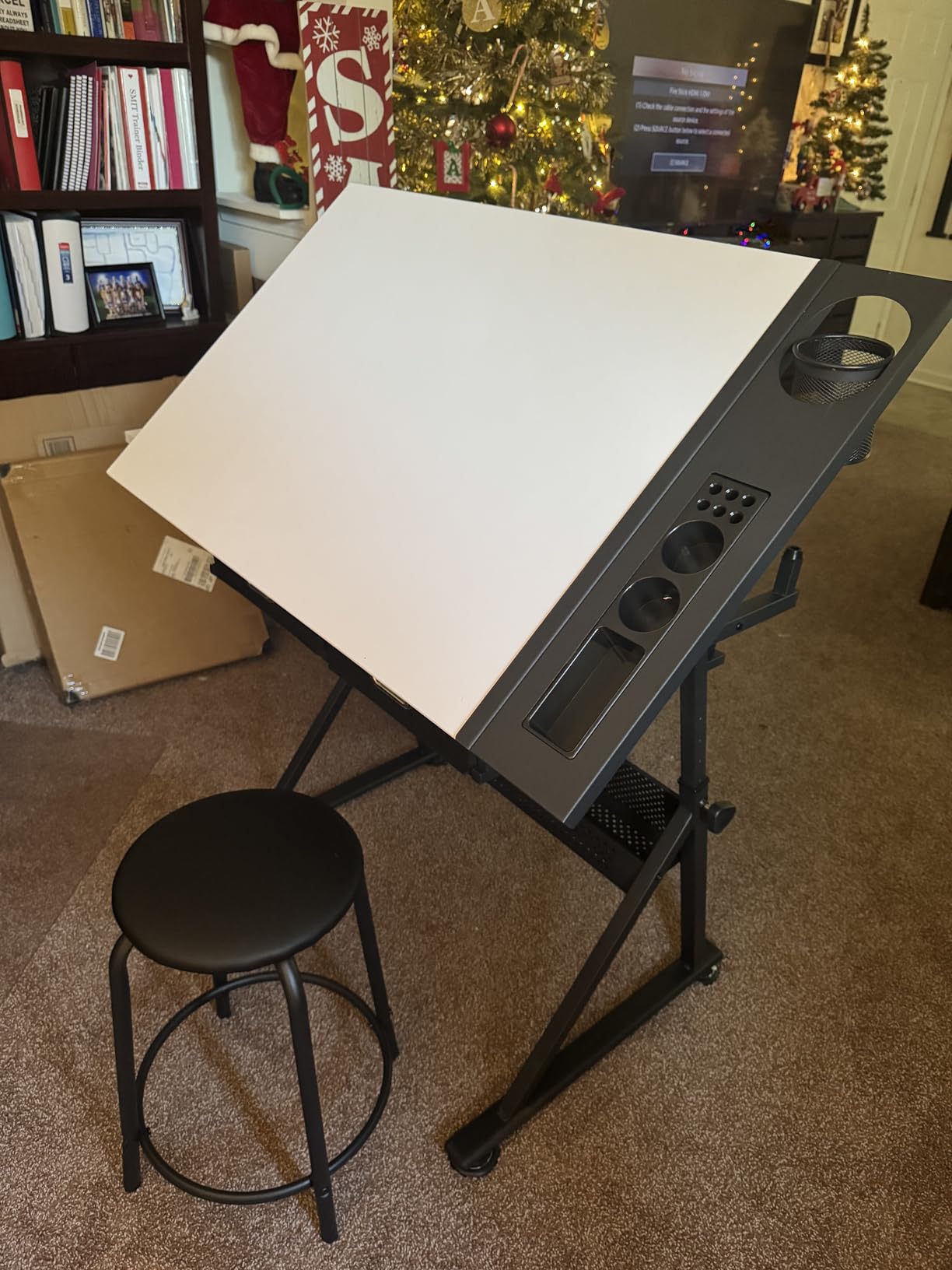
Check the real drawing area before you buy
The quoted 47.4 by 23.6 inch footprint is the whole top, not the clear space between the pencil ledge and the far edge. A 36 by 24 inch sheet fits comfortably, while a 30 by 42 inch sheet needs the auxiliary surface pulled out, and that extension does not tuck fully away when you finish.
Not ideal if you work wet or need easy mobility
The engineered wood top suits graphite, charcoal, and light ink, but heavy watercolour work belongs on a glass top. The mesh drawers bind when loaded, and at 51.8 pounds with no casters, moving it takes two people.
2. ZENY Drafting Table – Best Value Starter Set
ZENY Drafting Table Art Desk Drawing Table Height Adjustable Artist Table with Tilted Tabletop, Drafting Stool and Storage Drawer for Reading, Writing, Crafting, Painting Art
0-60 degree tilt
Height 28-35.8 inch
34 x 23.6 inch main top
Slide-out 15 x 23.6 inch board
Pros
- Height adjusts quickly while the top stays supported
- Pencil ledge and tilt keep paper and pens from sliding
- Slide-out side board extends the work area
- Two drawers shelf and a wire mesh cup use the space well
Cons
- Molded plastic feet have rigid edges that can scratch flooring
- Side table retaining screws are not covered in the instructions
- Angle lever sits at the back and is awkward to reach
- Tool trays are shallow
- Included stool is firm and can wobble
For a first drafting table, this packs in more features than buyers expect at this level. The main top is 34 by 23.6 inches, enough for a 24 by 18 inch sheet plus a reference board, and the 15 by 23.6 inch side board slides out for wider layouts.
Height runs 28 to 35.8 inches on the leg knobs, and the design keeps the top supported while you loosen them, so one person can change it. The tilt runs flat to 60 degrees with a pencil ledge along the working edge that does its job at 45 degrees, where most sketching happens.
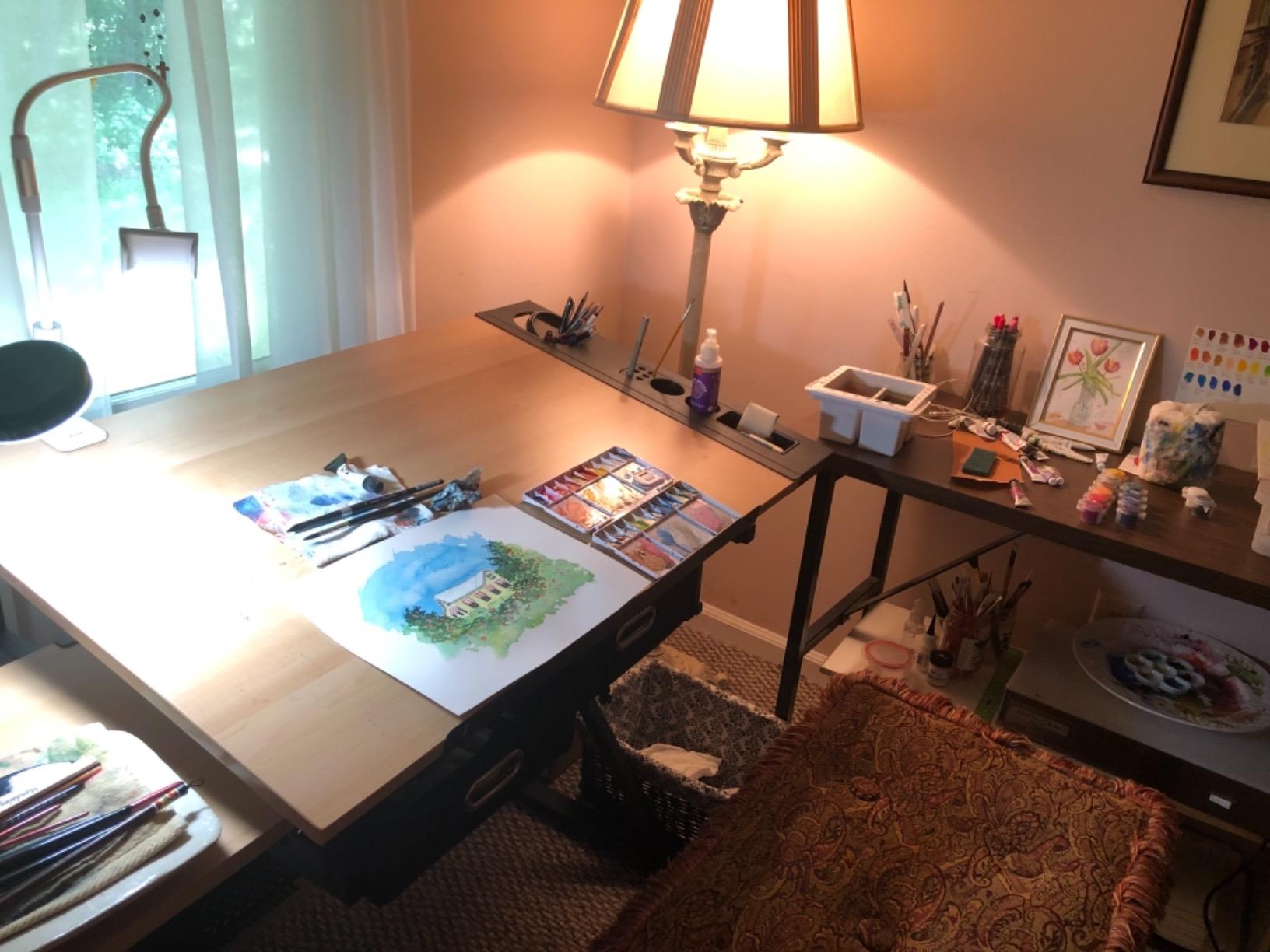
Two slide-out drawers, an under-table shelf, and a pivoting wire mesh cup add up to 30 liters of storage, which is the quiet strength here. The frame is powder-coated iron with protective rubber feet. Owners regularly swap the included 20 inch stool for their own chair, a fair trade if you have one.
Weighing it yourself is worthwhile: buyers report 23.5 kilograms, and the hard plastic feet can mark wood or vinyl flooring unless you add felt pads.
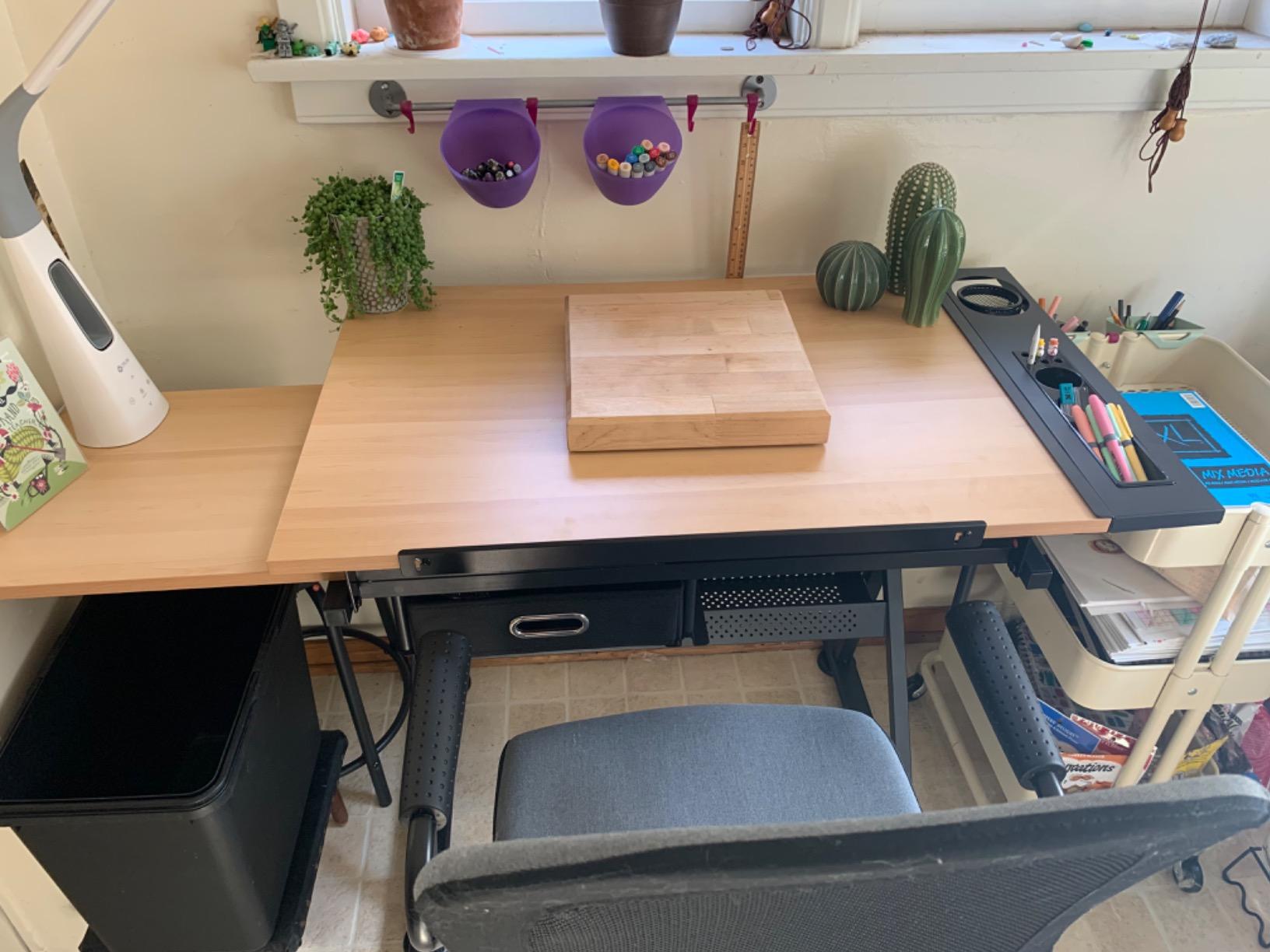
Good for beginners still switching media
A sketchbook, a watercolour palette, and a laptop all fit without fighting for space, which suits someone still deciding which medium they love. The side board is what students mention most, because a full sheet of cartridge paper plus a scale ruler is a lot of width to find on a normal desk.
Watch the floor and the assembly
The screws retaining the side table are not in the printed instructions, so some owners had to work that out themselves, and the edge trays hold little more than a ruler. Allow one to two hours for assembly, longer if the instructions leave you guessing.
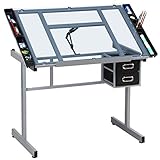
3. Yaheetech Glass Drafting Table – Best for Tracing and Wet Media
Yaheetech Glass Drafting Table with Storage, Adjustable Art Drawing Desk
Tempered glass top
0-60 degree tilt
Flat feet or locking casters
300 lb load capacity
Pros
- Glass top wipes clean and doubles as a light table
- Pencil ledge holds paper at any angle
- Two sets of feet let you choose stability or mobility
- Four embedded trays and two fabric drawers
Cons
- Fabric drawers are light duty
- Glass shows dust and smudges and needs care near the edges
- Drawer glide and tray depth limit what fits
- Height range is narrower than some competing desks
This is the table I reach for when the medium is wet. The tempered glass wipes clean after a wash session, takes ink without absorbing it, and with a light underneath works as a tracing surface, which is how illustrators transfer rough drawings. Filleted edges and rounded corners take the sharp-edge worry out of a glass surface in a shared studio.
Tilt runs 0 to 60 degrees with a bottom pencil ledge, and the 300 pound rating is the highest in this group. The clever touch is the two sets of feet: screw-in flat feet for maximum stability, or 360 degree swivel casters with brakes for moving the whole table. Swapping them took me about ten minutes with a screwdriver.
Storage comes as four embedded stationery trays with honeycomb pen holes and slots, plus two layers of non-woven cloth drawers. The honeycomb holes stop brushes and markers from rolling off a tilted surface, and at 38.6 pounds this is lighter than most wood tables here. It is also the surface that needs the most care, since glass shows dust, fingerprints, and paint specks.
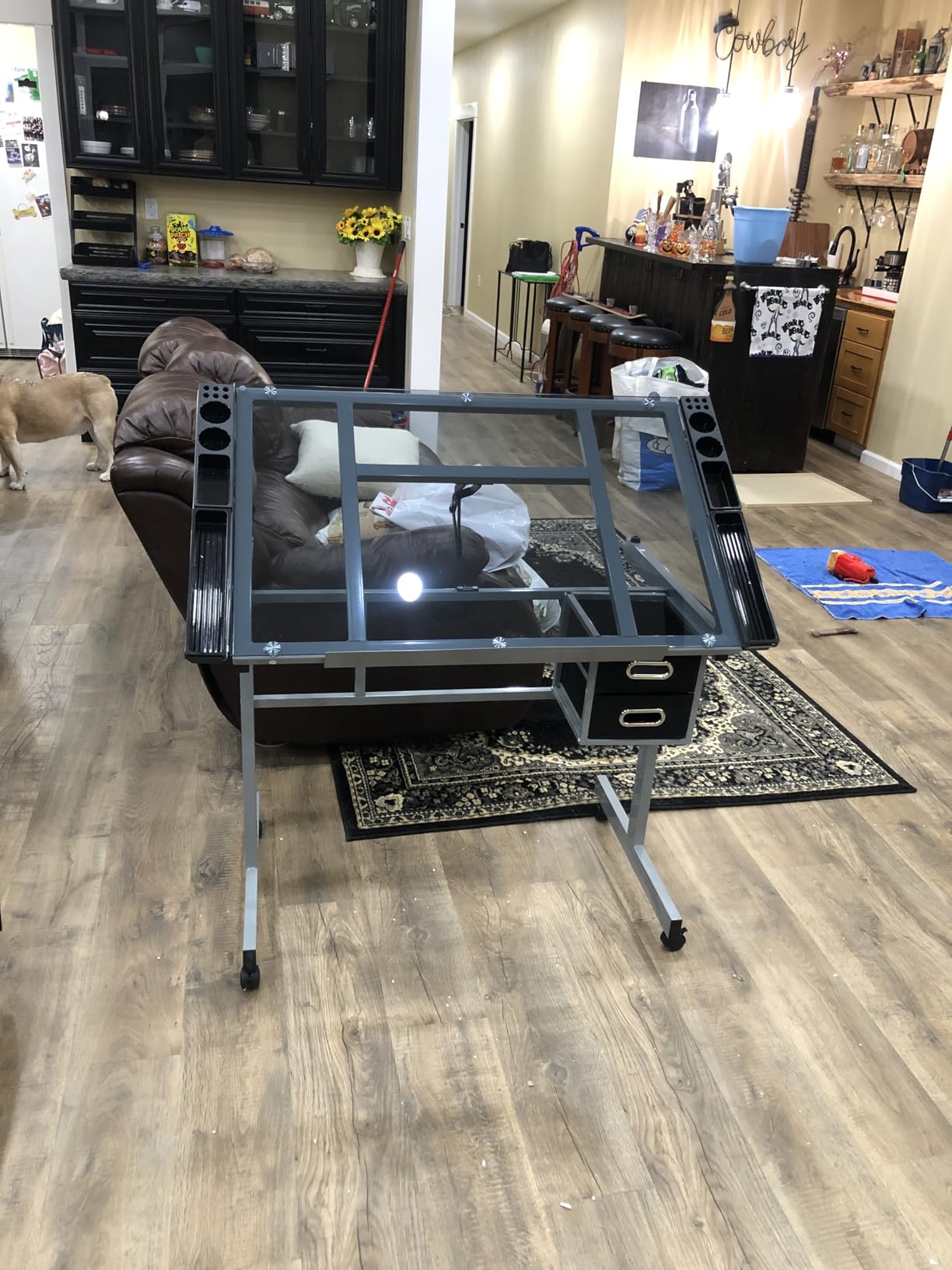
Decide between glass comfort and glass upkeep
Owners who love it point to the smooth surface and the light table capability for tracing and comic work. Nobody minded the 38.6 pound weight, because the casters solve moving it. For an illustrator who traces constantly, that single feature can justify the table on its own.
Less suitable for heavy graphite work and large storage loads
The non-woven drawers are light duty and the trays have limited depth, so this is not the table for hauling stacks of board or a full watercolour collection. The height range is also narrower than some metal competitors, so check your seating before committing.
4. Studio Designs Vintage Drafting Table – Best for Large Paper
Studio Designs Vintage Drafting Table – Antique Design Solid Wood Drafting Table with Built-In Pencil Groove and Pencil Ledge – Angle Adjustable Work Surface
42 x 30 inch solid wood surface
Detents at 23, 46, 70 and 90 degrees
24 inch pencil groove
10 year warranty
Pros
- Solid wood frame with mortise and tenon joinery
- Generous 42 x 30 inch surface with a real built-in pencil groove
- Four detent angles from flat to vertical
- Vintage distressed oak finish suits a home studio
Cons
- Stand height is not adjustable
- Full assembly required and power tools not recommended
- Heavier and bulkier than metal frame tables
- No drawers included
Nothing else here feels like furniture the way this does. The frame is solid wood with mortise-and-tenon joinery, and the 4.5 inch thick top has the mass to stay put when you push a ruler across it. The 42 by 30 inch surface is one of the largest in this guide, and it holds full-size sheets without buckling.
The tilt system is traditional: four detent positions at flat, 23, 46, 70, and 90 degrees. At 70 and 90 it works as a wall-leaning easel for painting. The 24 inch pencil groove is cut into the surface rather than bolted on, which is the detail that stops pencils rolling at steep angles.
Four floor levelers handle uneven floors, and the 10 year manufacturer warranty is rare in this category. There are no drawers, so a storage cart or wall shelving is part of the cost of this setup. I would put it in a home studio where the table stays in one spot for years.
Right for large sheets and heavy media
Watercolour, gouache, and large-scale drawing all suit this. Wood takes pigment without warping, and the 50 pound weight recommendation is generous for supplies. The distressed oak finish hides the marks a working studio produces, and it reads as vintage without being fragile.
Not adjustable, not stocked, not quick to assemble
The fixed stand height is the deal-breaker for many buyers and the reason it is not our top pick. Everyone in the household works at one height, and a shorter artist will find the surface a steep reach. Assembly is full and power tools are advised against, so plan an afternoon or a second pair of hands.
5. MEEDEN Wood Adjustable Drafting Table – Best for Technical Drafting
MEEDEN Wood Adjustable Drafting Table: 35.5″ x 23.5″ Art Drawing Desk
35.5 x 23.5 inch top
Tilt to 60 degrees
Height 29.7-38.4 inch
24 inch T-square included
Pros
- Solid beechwood legs with cross bracing stay wobble free
- Height and tilt both adjust for kids through adults
- 25 inch pencil ledge holds stationery at any angle
- Hardware is bagged and labelled with a tool included
- Bonus 24 inch T-square for technical drawing
Cons
- Two people needed to assemble and to raise the top
- Smaller surface than many competitors
- No drawers or shelves for supplies
- Recommended load is only 44 pounds
This is the one to buy if your work is measured rather than expressive. It includes a 24 inch T-square carrying both inch and metric calibrations, which saves you the single most useful tool for technical drawing and the frustration of a plastic ruler that will not hold a line.
The frame is solid beechwood with cross support and two side braces, and that bracing is the story. I pushed on the tilted surface with the T-square resting on it and got no wobble at all, which matters more than it sounds when you are drawing a straight line. Height runs 29.7 to 38.4 inches.
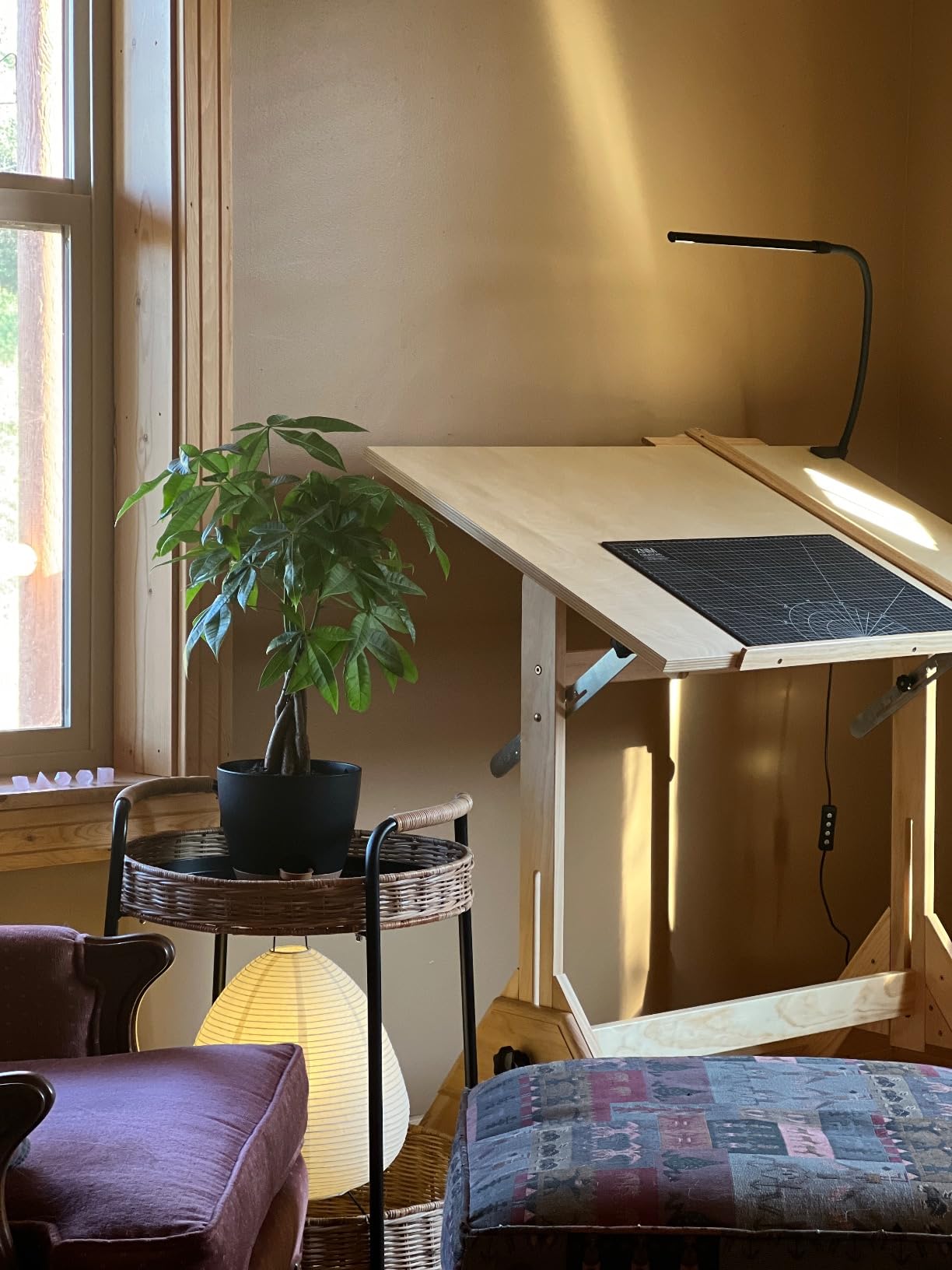
The top is 35.5 by 23.5 inches with a 25 inch pencil ledge and tilts from flat to 60 degrees. Hardware arrives bagged and labelled with an assembly tool included, which is more organised than most competitors manage, and at 13.5 kilograms it is also one of the more portable wooden models here. For fine art sketchers the surface is on the small side, but for measured work most technical sheets fit within it.
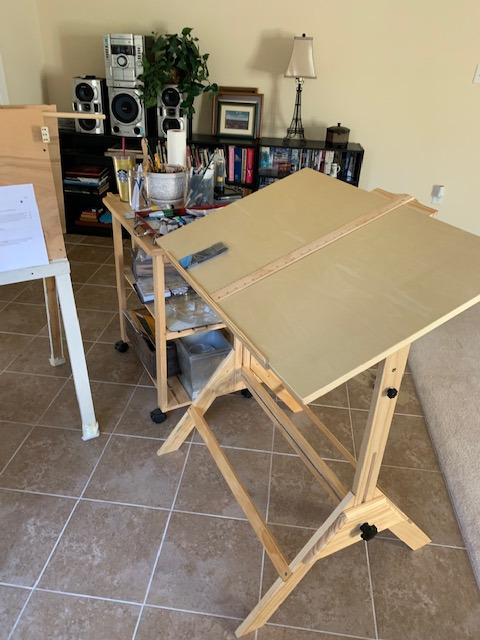
A good fit for architecture and drafting students
The included T-square turns this into a working setup on day one rather than a platform you still need to equip. The beech legs also age better than the MDF frames on cheaper models, which matters if you are a student who expects to keep one table through a whole degree.
Two people are genuinely required
Owners are consistent on this: you need a second person both to assemble it and to raise the top, because the frame does not support the full weight alone while you adjust. There is also no storage at all, and the recommended load of 44 pounds will not take a stack of mounted board.
6. Stand Up Desk Store Drafting Table – Best for Sitting and Standing
Stand Up Desk Store Adjustable Height and Angle Drafting Table Drawing Desk with Large Surface (Silver Frame/Birch Top, 40″ W X 26″ D)
Tool-free height 26.5-38.5 inch
11 angle settings to 45 degrees
40 x 26 inch birch top
Limited lifetime warranty
Pros
- Tool-free height adjustment in 2 inch steps
- Eleven notched angle settings give a dependable detent
- Large 40 x 26 inch birch top with a full-length pencil tray
- BIFMA certified with a limited lifetime warranty
Cons
- Among the heavier units here at 53 pounds
- Maximum tilt limited to 45 degrees
- Only a pencil tray for storage
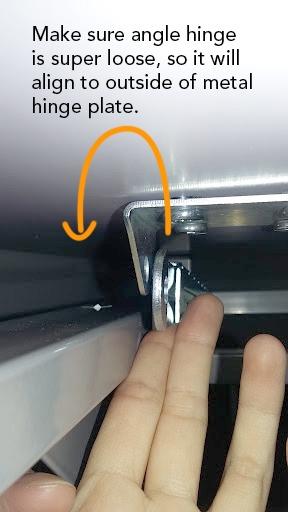
- Crank and angle mechanisms need periodic tightening
Buy this if you split your day between sitting and standing. Height runs 26.5 to 38.5 inches in 2 inch increments with no tools at all, so moving from a seated drafting position to standing takes seconds rather than an assembly. For anyone managing back discomfort from long sessions, that range is the point.
The top is 40 by 26 inches of birch on a powder-coated alloy steel frame with oversized rubber feet. A 36 by 24 inch sheet fits with workspace to spare. Tilt uses 11 notched settings from flat to 45 degrees, and a notched detent holds position without creeping mid-line.
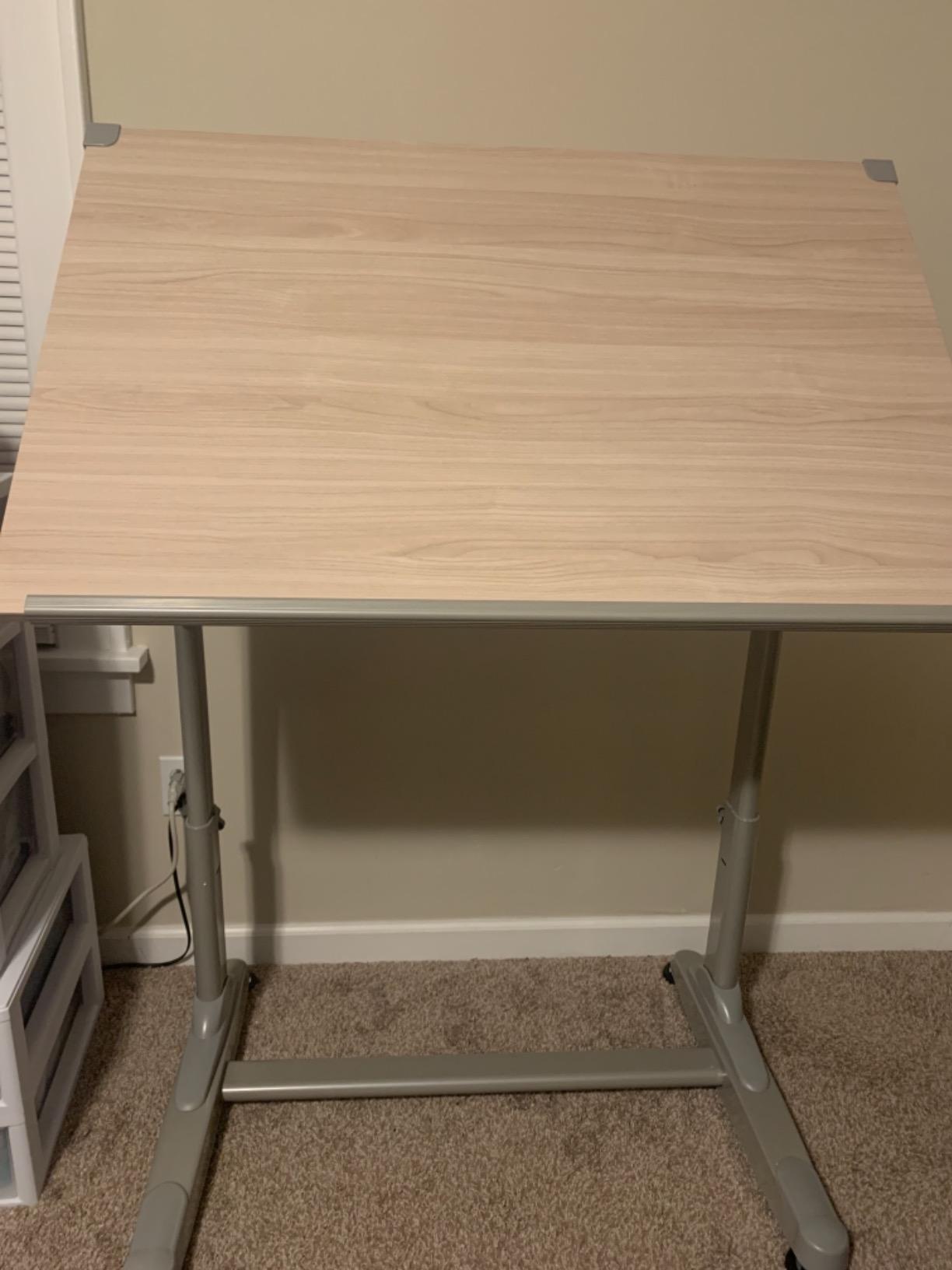
It is BIFMA certified and carries a limited lifetime warranty, unusual in this category. The full-length pencil tray runs the width of the surface and holds rulers, triangles, and a T-square, which is the only storage included. Owners also note that the crank and angle mechanisms need occasional tightening, which is normal wear rather than a fault.
Check the tilt limit against your medium
Forty-five degrees is enough for seated drafting, sketching, and technical work. It is not enough for easel-style painting, where you need 60 to 90 degrees to work on a vertical surface, and buyers who expected an easel report that as the main disappointment.
A heavy frame and a pencil tray are the trade-offs
At 53 pounds this is difficult to move alone, which conflicts with the flexibility that made it appealing. If your studio is on one floor, that is a fair trade.
7. BBBuy Drafting Table with Stool – Best for Kids and Beginners
BBBuy Drafting Table Drawing Desk Art&Craft Work Station Height Adjustable Tilting Tabletop Craft Table Desk w/Stool and 2 Storage Drawers for Home Office Study Room, Natural
One-hand tilt to 45 degrees
Height 28-35.8 inch
23.6 x 15 inch extended surface
Stool included
Pros
- Sturdier than buyers expect from this category
- Ratcheting one-hand tilt changes the drawing angle quickly
- Drawers and shelf organise a child's artwork
- Non-slip foot pads protect wood floors
- Stool and tools included
Cons
- Height changes need a second person to support the top
- Instructions are complicated and parts can arrive missing or warped
- Drawers can be tight and rub the legs
- Included stool sits high
- 45 degree tilt limit is shallower than most
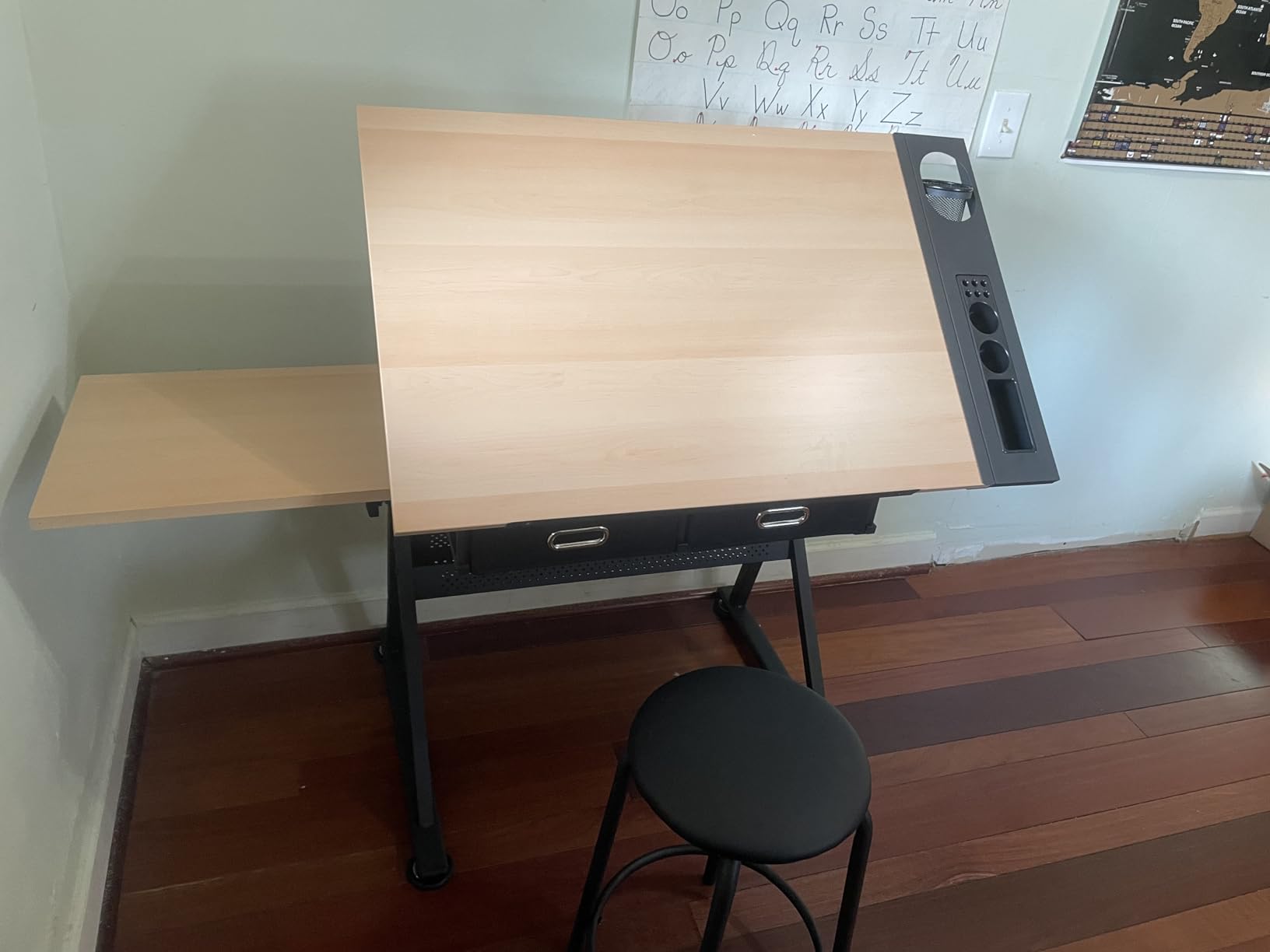
This is the table families buy when a child is moving from scribbling to real sketching. The ratcheting one-hand tilt means a small user can raise the surface without asking for help, which matters more in practice than it sounds. Tilt runs to 45 degrees and height runs 28 to 35.8 inches.
The top is MDF with a PVC finish on a powder-coated steel frame, and a 23.6 inch slide-up pencil ledge holds paper in place. A sheet stopper on the lip keeps paper from sliding as the angle increases, and PP non-slip foot pads protect wood flooring in a bedroom or playroom.
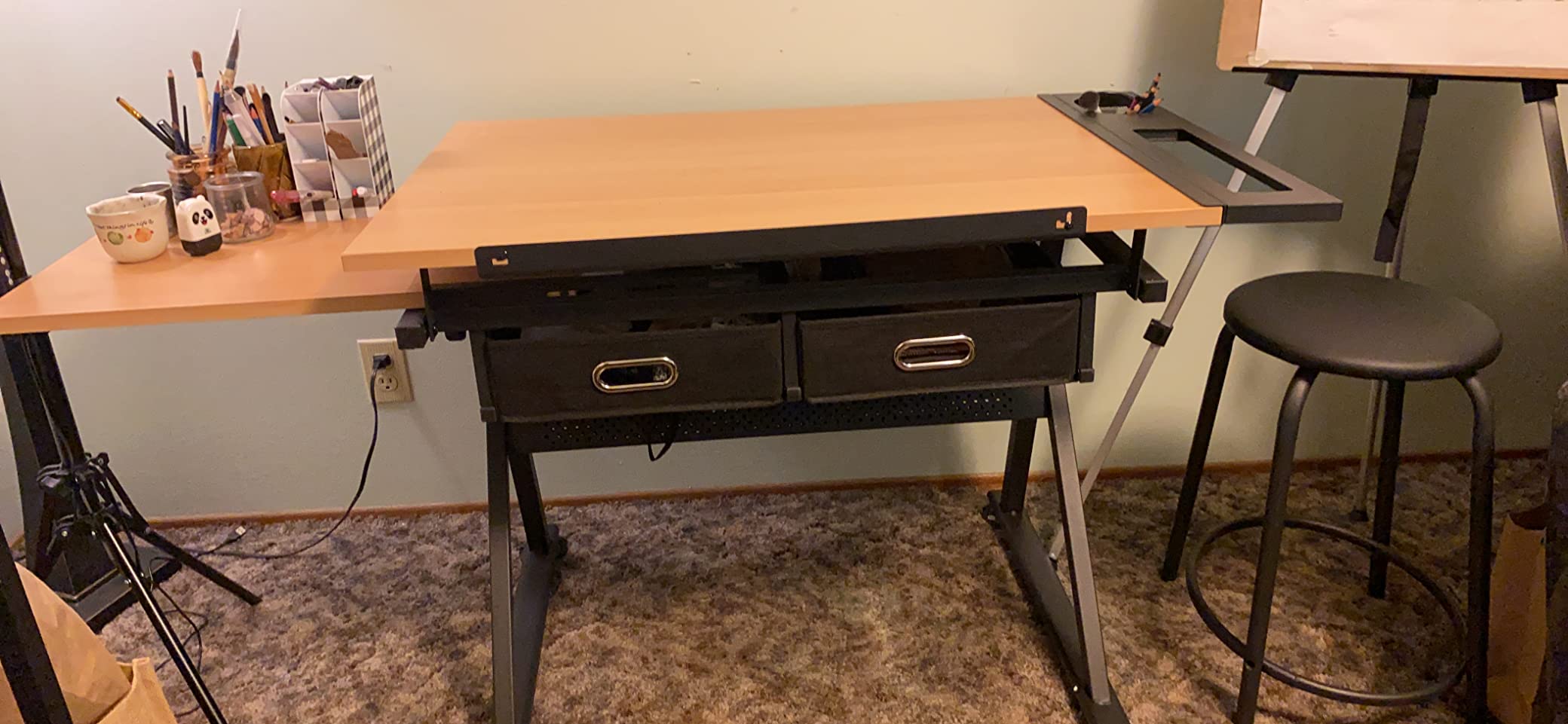
Two non-woven fabric drawers and a lower shelf keep a child’s artwork and supplies organised, and a matching stool is included. At 51.7 pounds it is light enough for an older child to reposition alone, according to owners.
A 23.6 by 15 inch extended work surface gives room for a full sheet, which is what makes this a genuine drafting table rather than a desk with a lip.
A sensible first drafting table for a young artist
Drawers that hold finished drawings matter more here than technical specs, and this has them. The tilt action is smooth enough for a beginner, and it doubles as a homework station, so a single piece of furniture covers both jobs.
Instructions and assembly are the weak point
Owners report complicated instructions and occasional missing or warped parts, so check the box against the parts list before you start. Changing height also needs a second person, and the stool sits high enough that many buyers substitute their own chair.
8. JupiterForce Glass Drafting Table – Best Rolling Studio Setup
JupiterForce Adjustable Drafting Table Art Desk Drawing Table Versatile Art Craft Work Station Glass Tabletop w/2 Slide Drawers and Wheels for Reading, Writing, Painting Home Office
0-60 degree tilt
Height 31.5-49.5 inch, the widest range here
Four swivel casters with two brakes
130 lb rating
Pros
- Toughened glass top is sturdy
- easy to clean and visually light
- Wide 0-60 degree tilt lets the table double as an easel
- Wheels with two brakes make it easy to move and lock
- Two sliding drawers and four removable trays
Cons
- Side pockets and trays too shallow for pens or brushes at a tilt
- Included plastic caster wheels bent during assembly
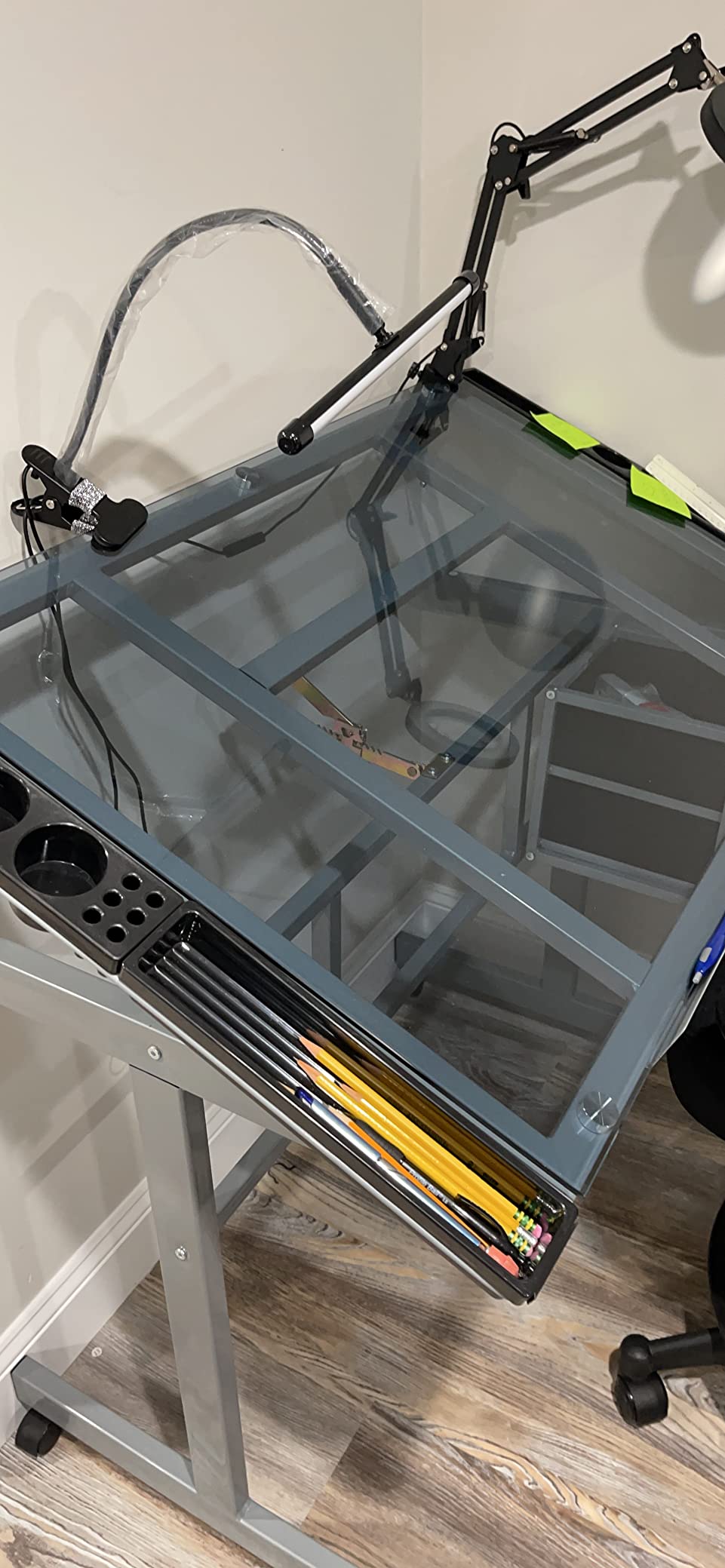
- Hinge flanges can arrive misaligned leaving a skewed top
- Drawers lack a cover so contents show through the glass
- At 99 pounds this is a heavy two-person move
The height range is the headline: 31.5 to 49.5 inches spans more than any other table in this group, so it serves a seated beginner and a standing painter from the same unit. Combined with a 0 to 60 degree glass tilt, it doubles as an easel for painting rather than only for drawing.
Four 360 degree swivel casters with two lockable brakes mean you can roll it to a window, lock it, and work. The glass wipes clean, which is what makes it a wet media table, and the welded alloy steel frame is rated to 130 pounds. The 41.25 by 24 inch footprint is narrow for a corner that has to double as something else.
Two sliding drawers measuring up to 7.8 by 9 by 3.5 inches and four removable single-slot supply trays give you somewhere to put things, though without a cover you can see the drawer contents through the glass. Support has also been responsive when buyers report a problem, which matters on a unit this size.
Works when one room has to be studio, desk, and storage
The casters and 49.5 inch maximum height make this the most flexible table in the set for a small flat. Roll it against a wall when you are not drawing, pull it out for a session, and lock the brakes. For a painter who works wet, the glass that shows every speck is the same surface that survives a splash.
Do not judge it by the wheels in the box
Owners report the included plastic caster wheels bending during assembly and recommend using the flat feet instead, so budget for a better set if you want the mobility. Hinge flanges have also arrived out of alignment, leaving the desktop skewed, so check the top is level before clamping anything to it.
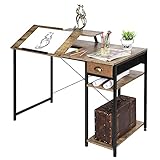
9. X-cosrack Adjustable Drafting Desk – Best Hybrid Desk
X-cosrack Adjustable Drafting Table with Storage Drawer & Monitor Stand
Tilts from flat to 45 degrees
Removable 4.3 inch monitor riser
43.3 x 21.6 inch top
Drawer and two tier side shelf
Pros
- Dual-purpose desk that works flat for a computer and tilted for drawing
- Removable monitor riser is useful for reference images or a second screen
- Open shelves and a drawer give more storage than most drafting tables
- Cross-braced metal frame resists wobble
- Slim footprint suits small rooms
Cons
- Instructions are hard to read and the three surfaces need careful alignment
- Drawers are lightweight fabric bins with a faux leather front
- Shelf rail attaches loosely and is not ideal for a monitor
- Rustic brown particle board finish is not real hardwood
- Occasional missing predrilled holes
If your studio corner also has to be your computer desk, this is the honest compromise. The top sits flat for screen work and tilts to 45 degrees for drawing, and the removable 4.3 inch riser holds a monitor or tablet at a better viewing height while you keep reference images on screen.
Storage is the differentiator. A drawer plus a two tier side shelf gives more room for a tablet, a watercolour set, and paper than most dedicated drafting tables, and a 1 inch thick top with a cross-structure metal frame and adjustable feet holds steady when you press on it.
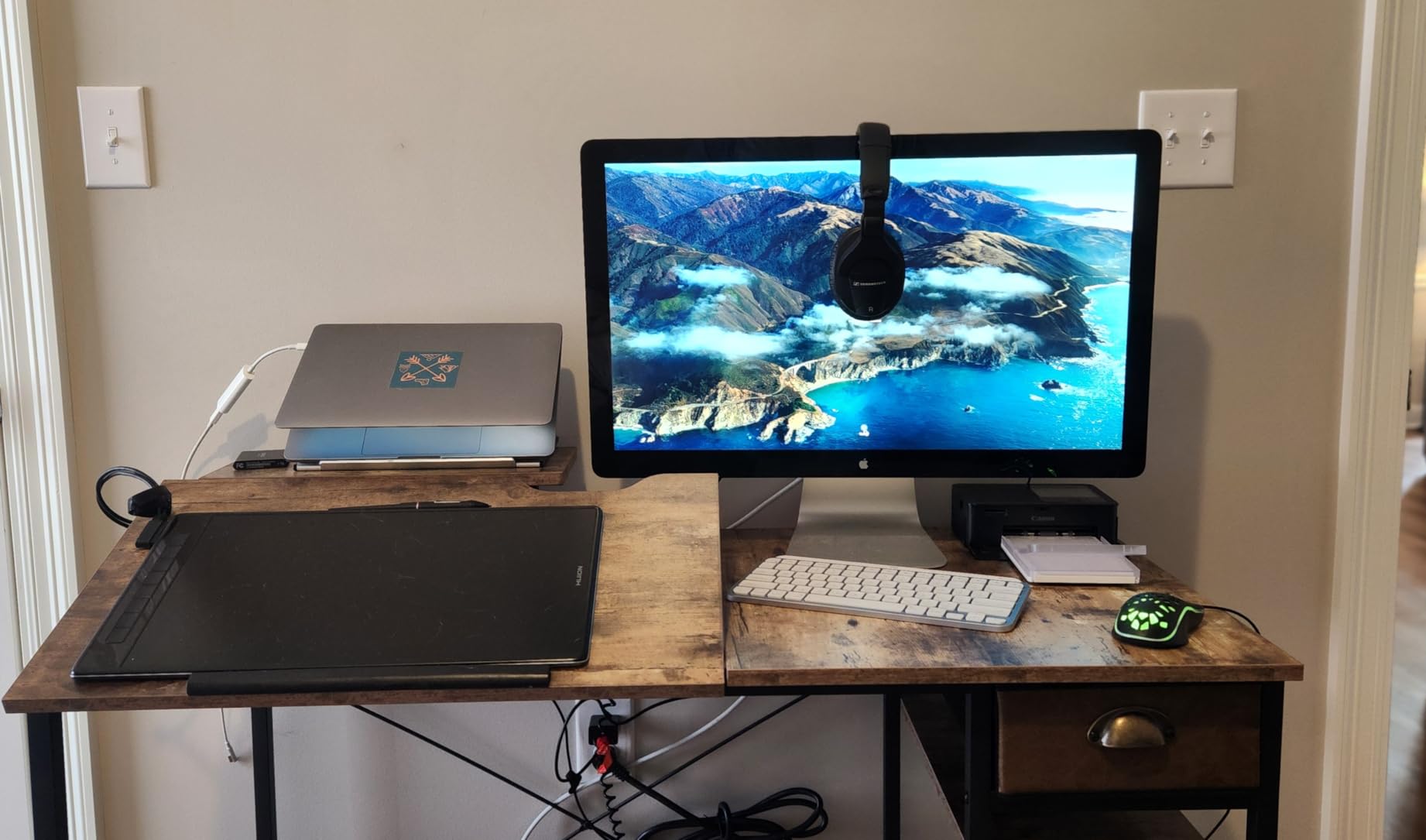
Overall size is 43.3 by 21.6 by 30.7 inches, one of the slimmer footprints here, which is why it suits a small room. It holds the lowest average rating in this group, and the reviews explain why: assembly clarity rather than the product itself. The narrow 21.6 inch width is a limitation for large sheets, so this suits A3 and smaller work.
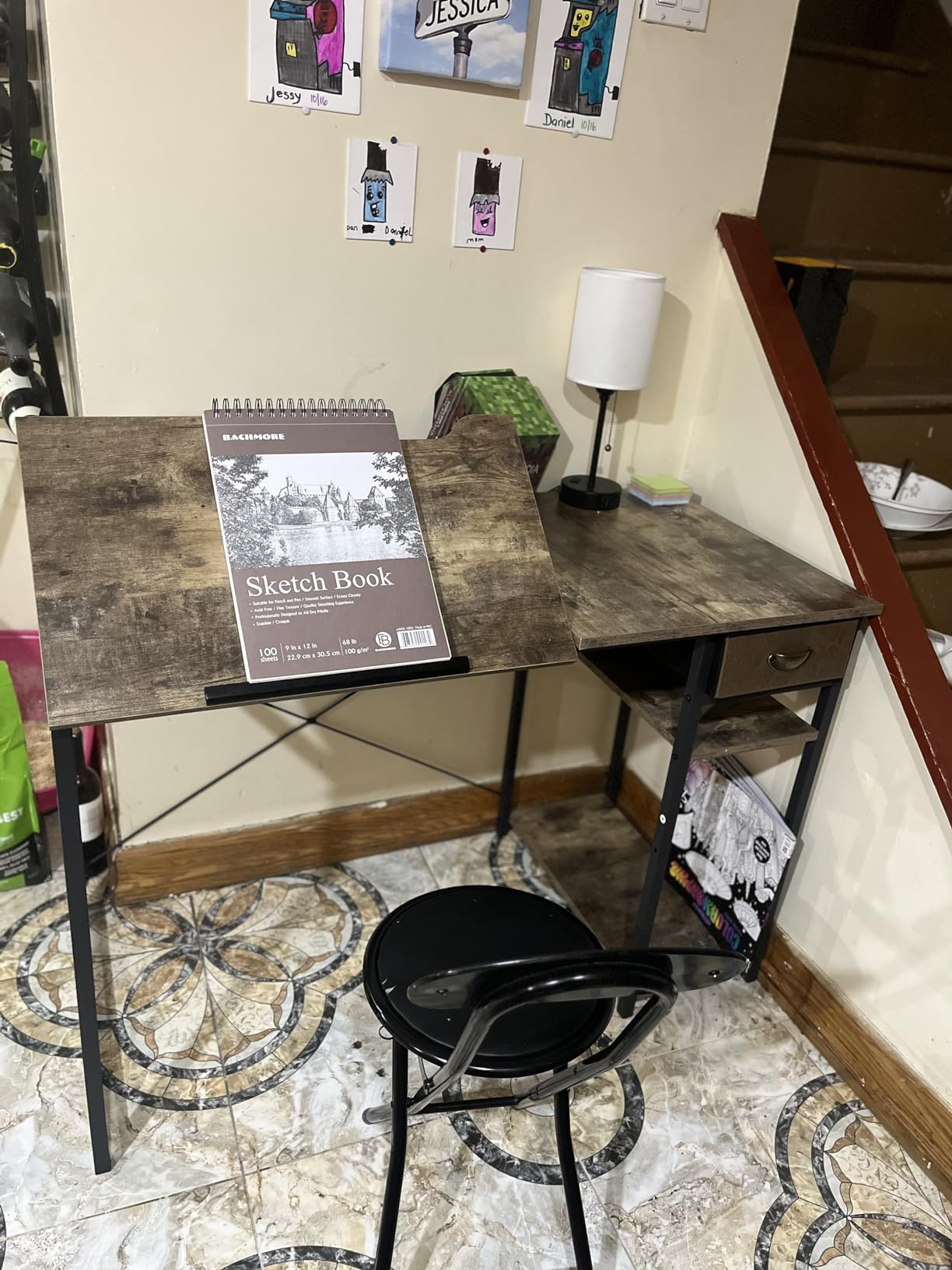
The right pick when one surface has to do two jobs
Hybrid desks are increasingly the practical answer for people who split time between digital and paper work. Tilt to 45 degrees covers sketching and layout, and the flat position handles a full workday of typing, with shelves for a laptop and a drawing tablet and no separate trolley needed.
Plan the assembly carefully
Three surfaces have to align, the instructions are not clear, and some units arrive with missing predrilled holes or an undersized shelf bracket. Set aside a calm hour. The drawer is a fabric bin, and the shelf rail attaches loosely, so use the riser for the monitor instead of the rail.
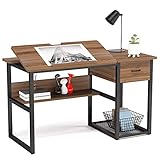
10. Tribesigns Drafting Workstation – Best for the Widest Surface
Tribesigns Drafting Table with Storage Drawers, Drawing Computer Desk Artist Craft Table Painting Desk Workstation with Shelves and Tiltable Tabletop for Students, Home Office
0-80 degree tilt across 12 detents, the widest range here
47.2 inch wide top, 23.6 inch deep
250 lb capacity
139.74 liter storage
Pros
- Widest tilt range among the steel and particle board models at 0-80 degrees
- good for easel-style painting
- 47.2 inch wide desktop leaves room for drawings and books side by side
- 250 pound capacity on a 0.6 inch top
- Open shelf box drawer and bottom shelf
- Every part labeled with hardware and tools included
Cons
- No height adjustment so the working height is fixed
- At 57 pounds it is heavy and difficult to reposition
- Particle board and metal build is less refined than solid wood
- Only one drawer so most storage is on open shelves
The tilt reaches 80 degrees across 12 detent settings, further than any steel-frame table in this guide and close to the two solid wood models that go to 90. That puts the surface near vertical, which is what turns a drafting table into a painting station for canvas work and large studies without needing a separate easel.
Width is the other headline. At 47.2 inches across and 23.6 inches deep it fits two drawings, a sketchbook, and a reference pile side by side, and the 0.6 inch particle board top carries a 250 pound rating, so you can lean on it hard. Storage totals 139.74 liters across an open shelf, one box drawer, and a bottom shelf.
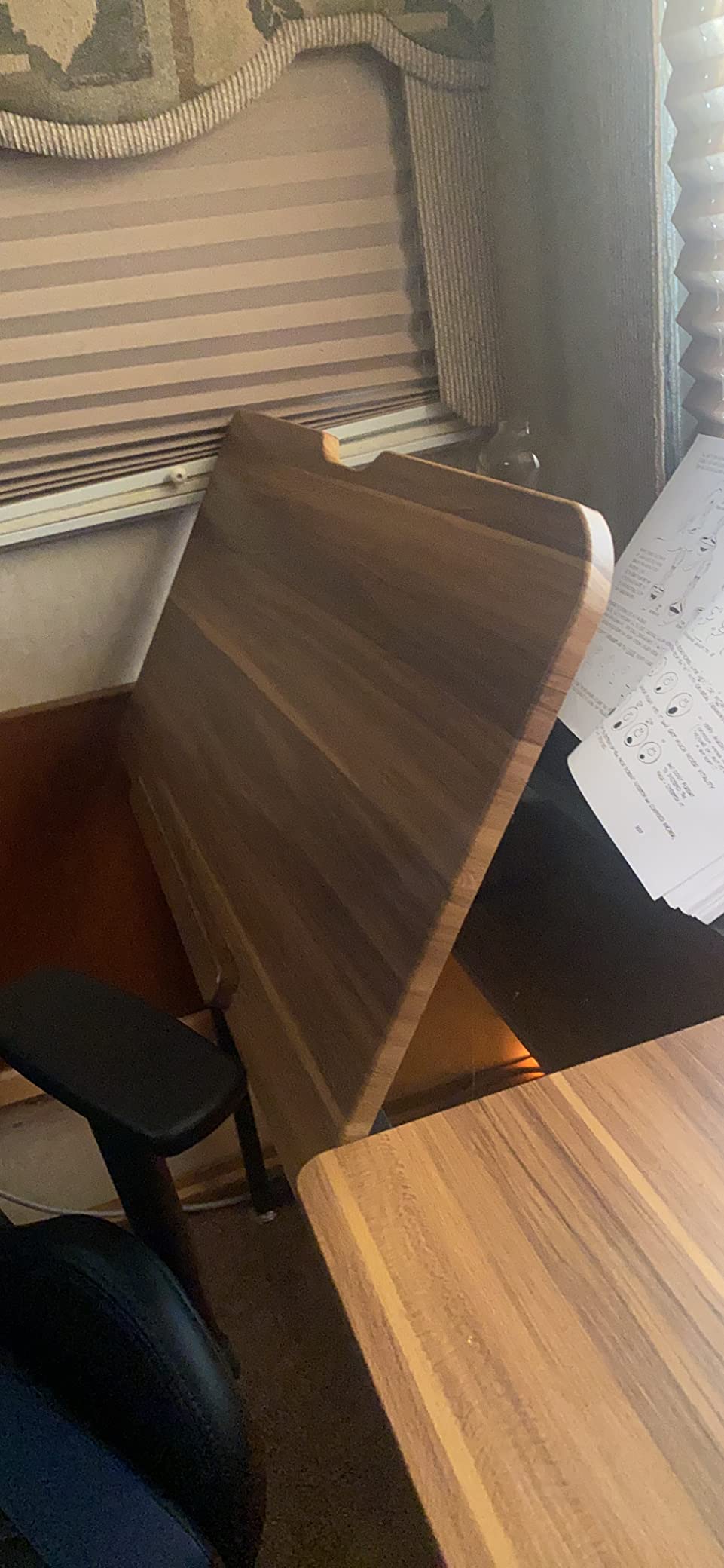
It works as a drafting table, craft station, computer desk, or study desk, and every piece arrives labelled with hardware and tools included. For a teen doing schoolwork and art in the same place, the tilting section is only part of the top. Plan lidded containers if you keep loose pigment or charcoal, since most of the storage sits on open shelves.
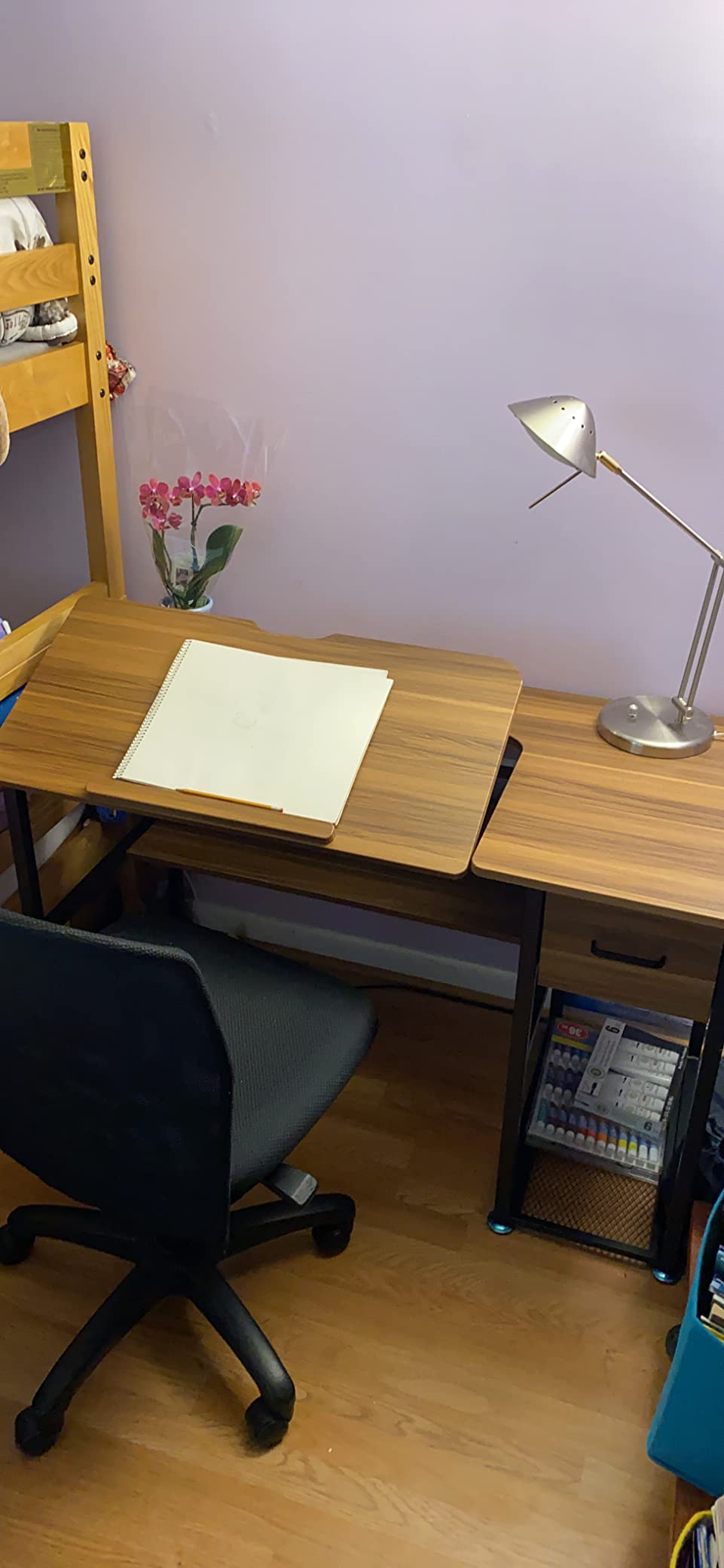
Pick this if you work wide and need an easel angle
A 47.2 inch desktop fits two drawings, a sketchbook, and a reference pile at the same time, which is rare at this weight class. For painters on a 16 by 20 inch panel, the 80 degree tilt is the feature that justifies the size.
Fixed height and a heavy frame are the trade-offs
There is no height adjustment, so every user in the household works at one level, which is a real limitation in a mixed-age home or for anyone alternating sitting and standing. At 57 pounds the frame is difficult to move alone, and particle board and metal will not age like solid wood.
11. Yaheetech Tilting Drafting Table – Top Rated in the Round-Up
Yaheetech Tilting Drafting Table Art Craft Desk with Stool, Drawers, Black
0-40 degree tilt with 10 lock positions
Height 29.7-43.7 inch across 10 positions
35.4 x 23.6 inch top
Three fabric drawers and a stool
Pros
- Ten lock positions across a 0-40 degree tilt
- Height range of 29.7-43.7 inch across ten positions
- Three fabric drawers plus a long shelf
- Removable pencil ledge locked by L-shaped slots
- Stool included
- protective foot pads
Cons
- Assembly required and tools are not included
- PVC-coated MDF top is less durable than solid wood
- Fabric drawers have limited weight capacity
This carries the highest average rating of the twelve, and after spending time with it the rating makes sense. Ten height positions from 29.7 to 43.7 inches give the widest seated-to-standing range of any wood-topped table here, and the tilt locks into ten positions between 0 and 40 degrees so your setup does not drift.
The top is 35.4 by 23.6 inches of PVC-coated MDF rated to 158.7 pounds, with a removable pencil ledge held by L-shaped slots so you can shift it for a large sheet. A 42.56 inch working diagonal gives a generous triangular area, and a 15.7 by 14.2 inch counter surface extends the layout when needed.
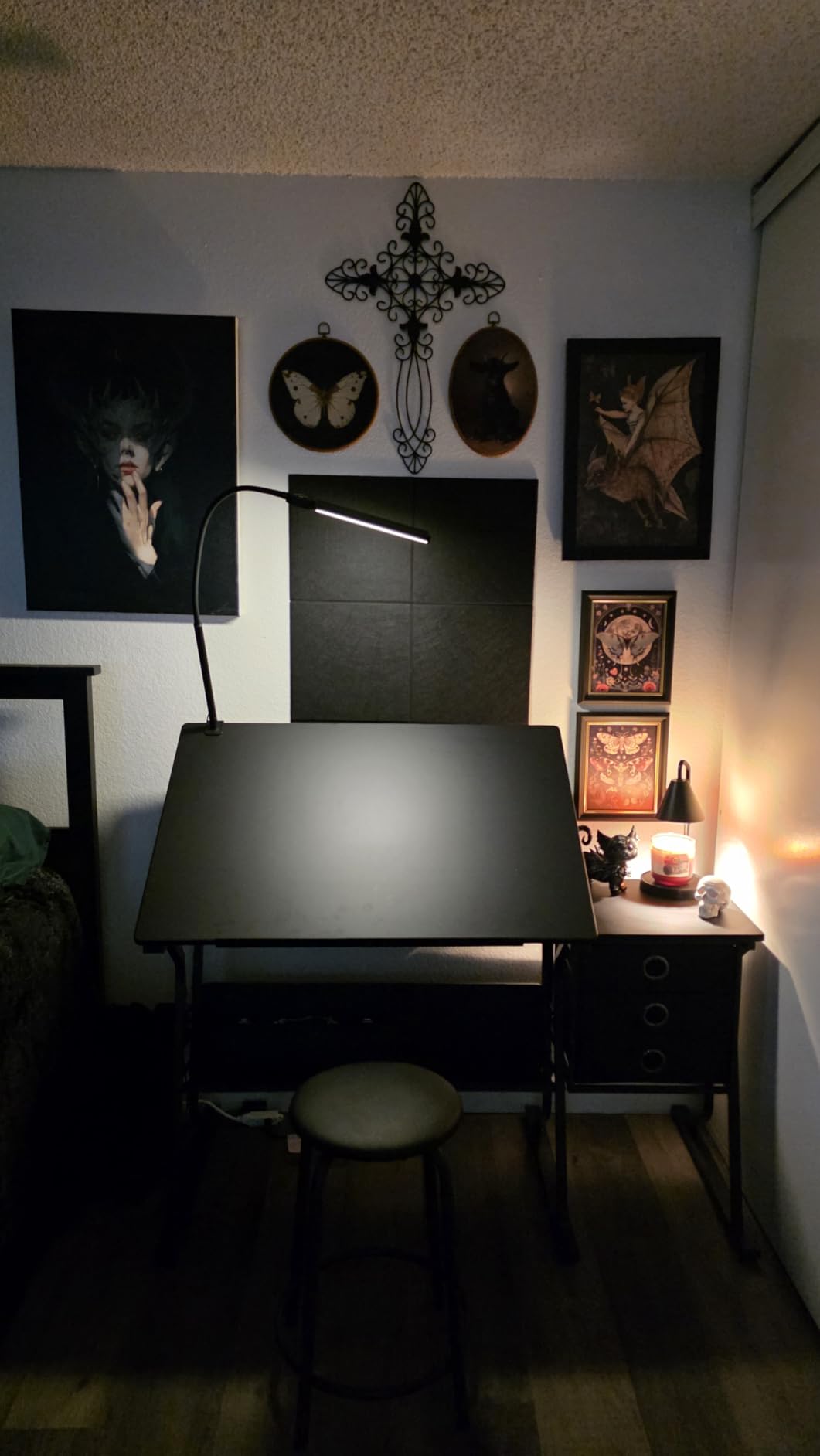
Storage runs to three fabric drawers on a glide mechanism plus a long shelf beneath the top. The stool is included at 16.3 by 16.3 by 21 inches, rated to 265 pounds, and six protective foot pads keep the frame off a hard floor. At 49.4 pounds this is a two-person move, and assembly needs a screwdriver that is not included.
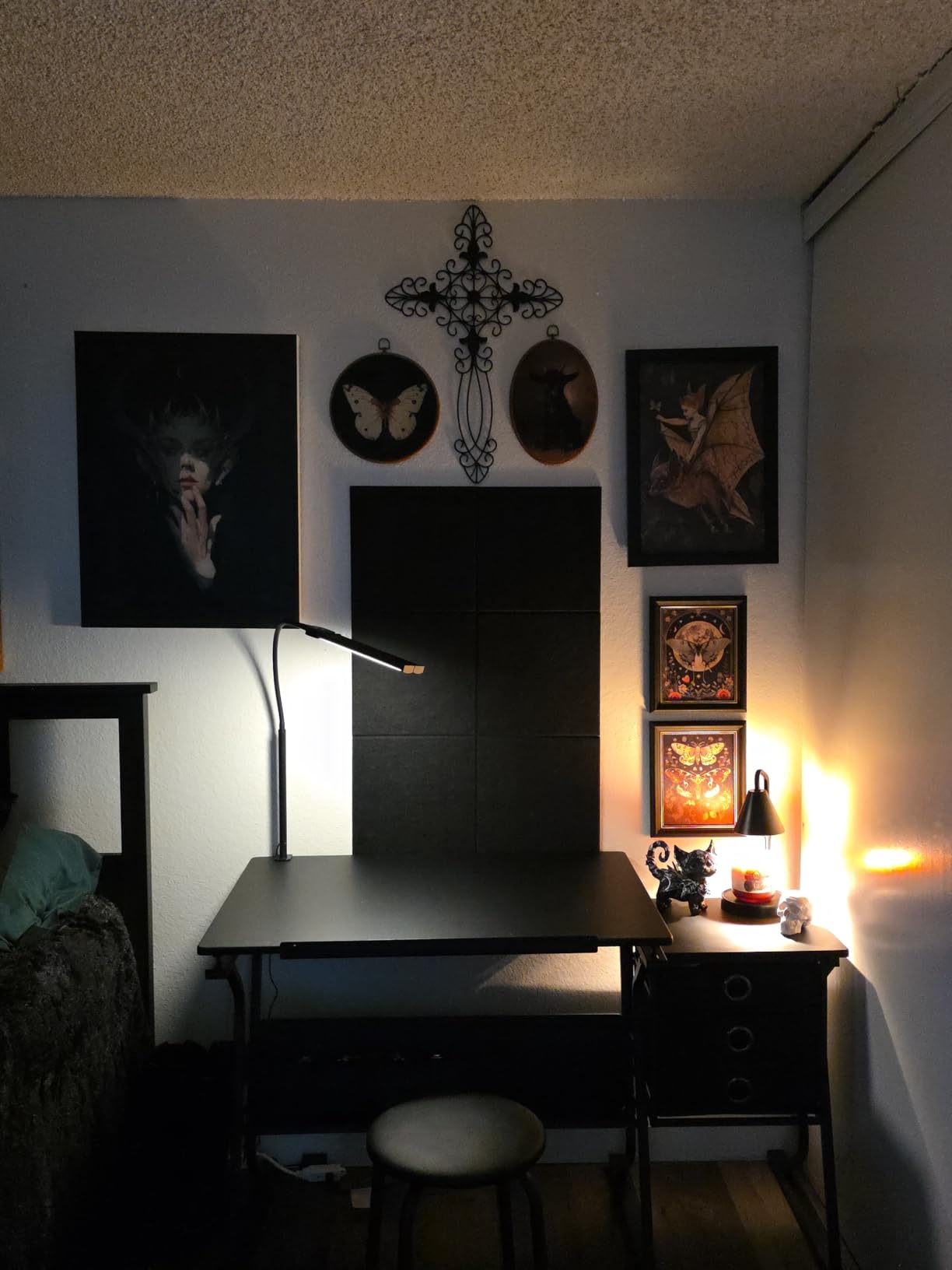
The best balance of height range, storage, and rating
This is the pick for a household sharing one table between an adult working seated, a teenager doing homework, and a standing sketching session. Ten lock positions matter more than headline numbers, because a repeatable angle is what keeps a session consistent.
The tilt range and the top material set limits
Forty degrees is a drafting and sketching angle, not a painting angle, so if you work on canvas this is not your table. The MDF top is coated rather than solid wood, so treat it as a dry media surface and put a sheet down for watercolour.
12. MEEDEN Vintage Wooden Drafting Table – Best Vintage Look
MEEDEN Vintage Wooden Drafting Table: 35.5″ x 23.5″ Artist Drawing Table
Tilts from flat to 90 degrees across 7 settings
Height 32.7-38 inch in 6 positions
Beechwood H-frame
Single drawer and 24 inch T-square
Pros
- Vintage walnut finish with beechwood H-frame construction
- Height adjustable 32.7-38 inch across six positions
- Tilts from flat to 90 degrees across seven angle settings
- Includes a 24 inch T-square with metric and imperial scales
- Stable on carpet and hard floors
Cons
- Height and angle changes need bolts loosened on both sides
- T-square can arrive loose or bowed
- Particle board top is less durable than solid wood
- Some cosmetic scratches and dings reported on arrival
- Two people recommended for assembly
The walnut finish and beechwood H-frame give this the look of a studio classic without the gamble of buying vintage. The frame uses mortise and tenon joints, which is why owners describe it as stable on both carpet and hard floors. At 13.5 kilograms it is also one of the more portable wooden tables here.
The tilt runs from flat to 90 degrees across seven angle settings, and height adjusts from 32.7 to 38 inches in six positions at roughly 1.2 inches per step. A 1 inch thick top measuring 35.5 by 23.5 inches gives a 43.01 inch working diagonal, with a built-in pencil ledge and a single drawer on wood glides.
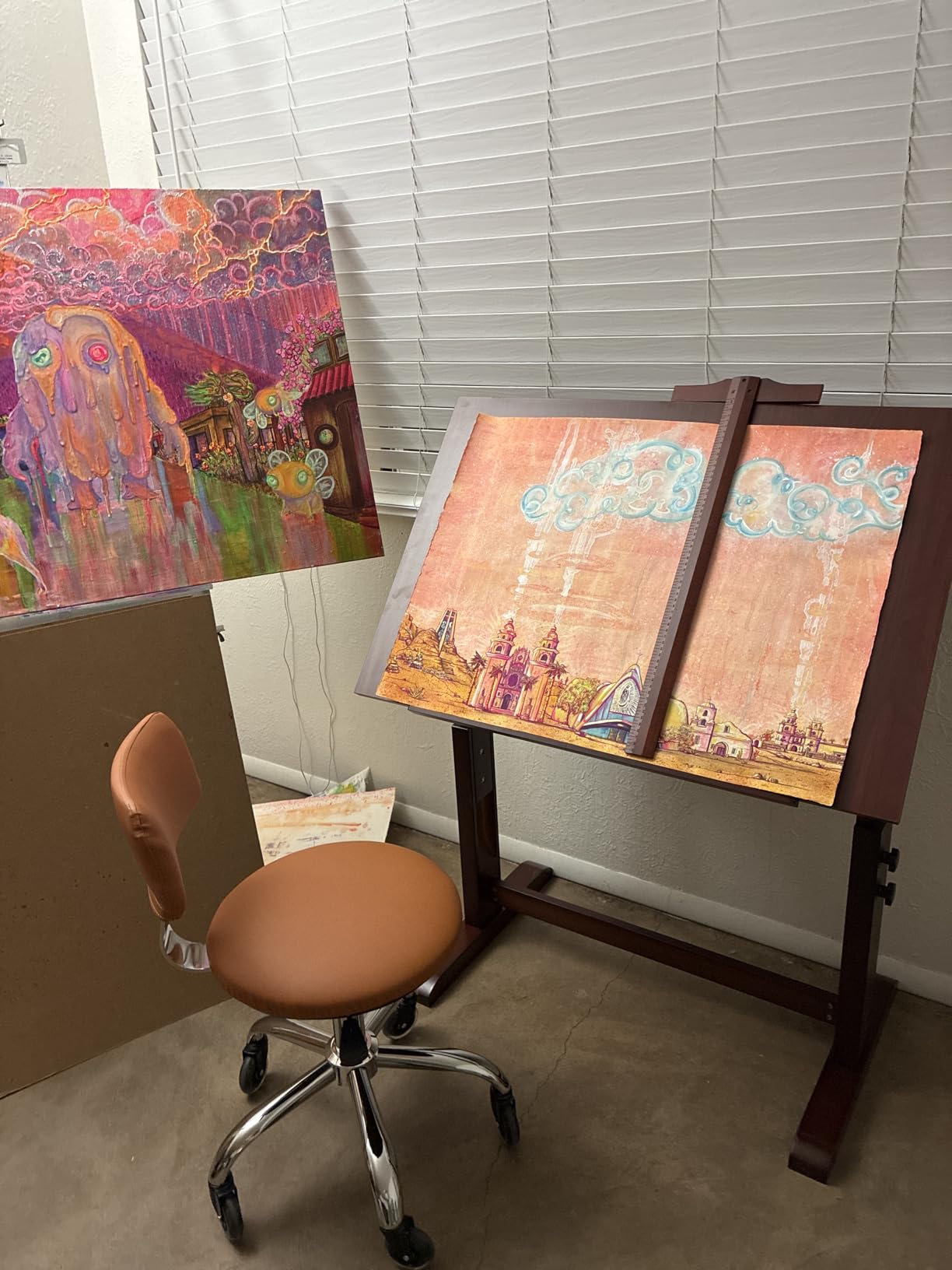
It includes a 24 inch T-square with inch and metric calibrations plus assembly tools, and a threaded hole design in the top is intended to reduce shaking, which owners confirm. The finish reads as furniture in a living space, so it does not need hiding away when you are not drawing, though you should inspect the top on arrival since a few owners reported scratches and dings.
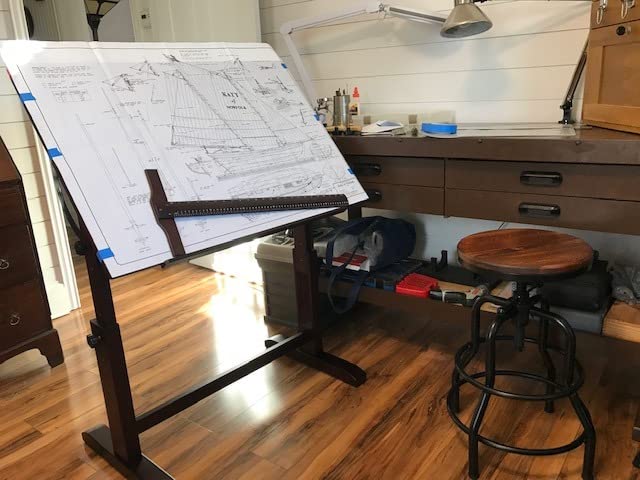
Good for sketchers who want the vintage studio look
A top reaching 90 degrees is unusual at this weight and lets the table serve portrait work in a near-vertical position, a genuine advantage over most tables in this guide. For a beginner who wants a traditional feel and a T-square in the box, the value is strong.
Adjustments are bolt-operated, not quick-release
Changing height or angle means loosening bolts on both sides, then tightening them again, which is fine if you set up once and annoying if you want to move between sitting and standing daily. The included T-square has drawn reports of arriving loose or bowed, and assembly wants two people.
What to Look for in a Drafting Table
Tilt range that matches your medium. Forty-five degrees is enough for seated sketching and technical work. Sixty adds brush and pen work at an angle. Eighty to ninety turns the table into an easel. Marketing often lists a maximum, so check whether that angle is locked at detents or continuous.
Usable area, not quoted area. The published size frequently includes the pencil ledge. Subtract the ledge and the frame before deciding whether a 30 by 42 inch sheet actually fits. This is the most common disappointment owners report.
Height range and who uses it. A single fixed height suits one person, while a 28 to 43 inch range covers a child, a seated adult, and standing work. If more than one person uses the table, treat quick height adjustment as a requirement, because a bolt-operated mechanism is a daily annoyance in a shared studio.
Surface material for wet media. Tempered glass wipes clean, resists ink, and can serve as a light table. Solid wood takes pencil and pigment with a pleasant tooth. Melamine, MDF, and particle board stain and can swell if a watercolour cup is knocked over, so choose glass or commit to protecting the surface with a mat.
Weight and casters. The wood-topped models here run from about 30 to 57 pounds and do not move easily on their own. If your studio is a corner of an apartment, casters with brakes are worth more to you than extra storage, and swapping flat feet for casters is a common feature on glass models.
Storage that fits real supplies. Mesh and non-woven fabric drawers are fine for pencils, erasers, and paper, but not for watercolour tubes, charcoal, or a stack of board. Count your actual supplies before trusting the product page.
Pencil ledge and stool honesty. A shallow ledge lets pencils roll off at 45 degrees, while a groove cut into the surface, as on the solid wood vintage tables, holds tools reliably. The stool included with a drafting set is usually the first thing buyers replace, so treat it as a bonus. Anything comfortable enough for long sessions helps, whether that is a well-fitted seat or a drafting stool at the right height.
Drafting Table vs Easel vs Standing Desk vs Regular Desk
These four get confused constantly, and the fix is what angle and posture your work needs.
A drafting table is for work viewed from above at a shallow angle, mostly while seated, with paper flat against the surface. Graphite, ink, and technical line work fit here, and the tilt keeps your neck aligned.
An easel holds a surface near vertical for painting with brushes, palette work, and large canvases. Only the 80 and 90 degree models in this roundup reach close to that, and even they feel different from a real easel with a vertical rail.
A standing desk raises a flat surface to standing height and is about posture, not angle. Use one for digital work, and consider a drafting table only if you also draw on paper by hand. A regular desk works when sessions are short and paper is small. The honest test is neck and wrist: if you finish a two hour session rubbing the back of your neck, a tilt of 30 to 45 degrees is the cheapest fix available. Our guide to narrow console tables is worth a look if reducing a studio footprint is part of the problem.
Frequently Asked Questions
What is the purpose of a drafting table?
A drafting table provides a tilting work surface so you can view paper straight on instead of looking down at it, which keeps your neck aligned and stops graphite smudging against the back of the sheet. The tilt also holds large sheets flat and supported, and a pencil ledge keeps tools from sliding.
Do people still use drafting tables?
Yes. Architects still use them for hand drafting and presentation work, and artists use them for sketching, ink, and technical illustration. Most artists use one for part of their practice and a flat desk or easel for the rest, rather than trying to make one table do everything.
What is the best drafting table for architecture students?
For architecture students, a table with measured-work features wins: a wide surface, a lockable tilt, height adjustment, and ideally a T-square included. Among the tables we tested, the MEEDEN wood model includes a 24 inch T-square carrying inch and metric scales, and the Stand Up Desk Store model offers 11 notched angle positions for consistent line work.
What type of surface is best for an artist drafting table?
It depends on your medium. Tempered glass wipes clean, resists ink, and can double as a light table for tracing, but it shows dust and pencil does not grip it. Solid wood takes graphite and pigment well. Melamine, MDF, and particle board are the least forgiving for watercolour, so protect them with a mat or a sheet of paper.
What is the best tabletop drafting board for beginners?
A desktop board is a reasonable start for short sessions and small paper, but most beginners soon want a full table because height and tilt cannot be adjusted on a small board. If you want one piece of furniture, choose a table with height adjustment so a child and an adult can both use it as they grow.
Can I make my own drafting table?
Yes, and hobby forums such as r/Drafting regularly feature ceiling-mounted and wall-mounted DIY builds. The core requirements are a flat panel, a way to hold a chosen angle, a support arm, and a ledge at the lower edge. The most common mistake is leaving out a stop so the panel slides when loaded. A DIY build suits a fixed height, a dedicated table suits a shared studio.
The Best Drafting Table for Artists in 2026
After working through all twelve, the Yaheetech Adjustable Drafting Table with the retractable side surface is our pick of the best drafting tables for artists. It tilts smoothly through 0 to 60 degrees, raises from 27.5 to 36.5 inches, stays flat when you lean on it, and holds a large working area, which is the combination that matters most for daily sketching, ink work, and drafting.
If you work wet, switch to the glass model with swappable flat feet and casters. If you paint, choose the 80 degree tilt. If you share the table with a child, pick the model that reaches 43.7 inches. And if you are still deciding, spend an afternoon on paper from an art supply shop with a pencil and a straightedge before you commit to any of them.