
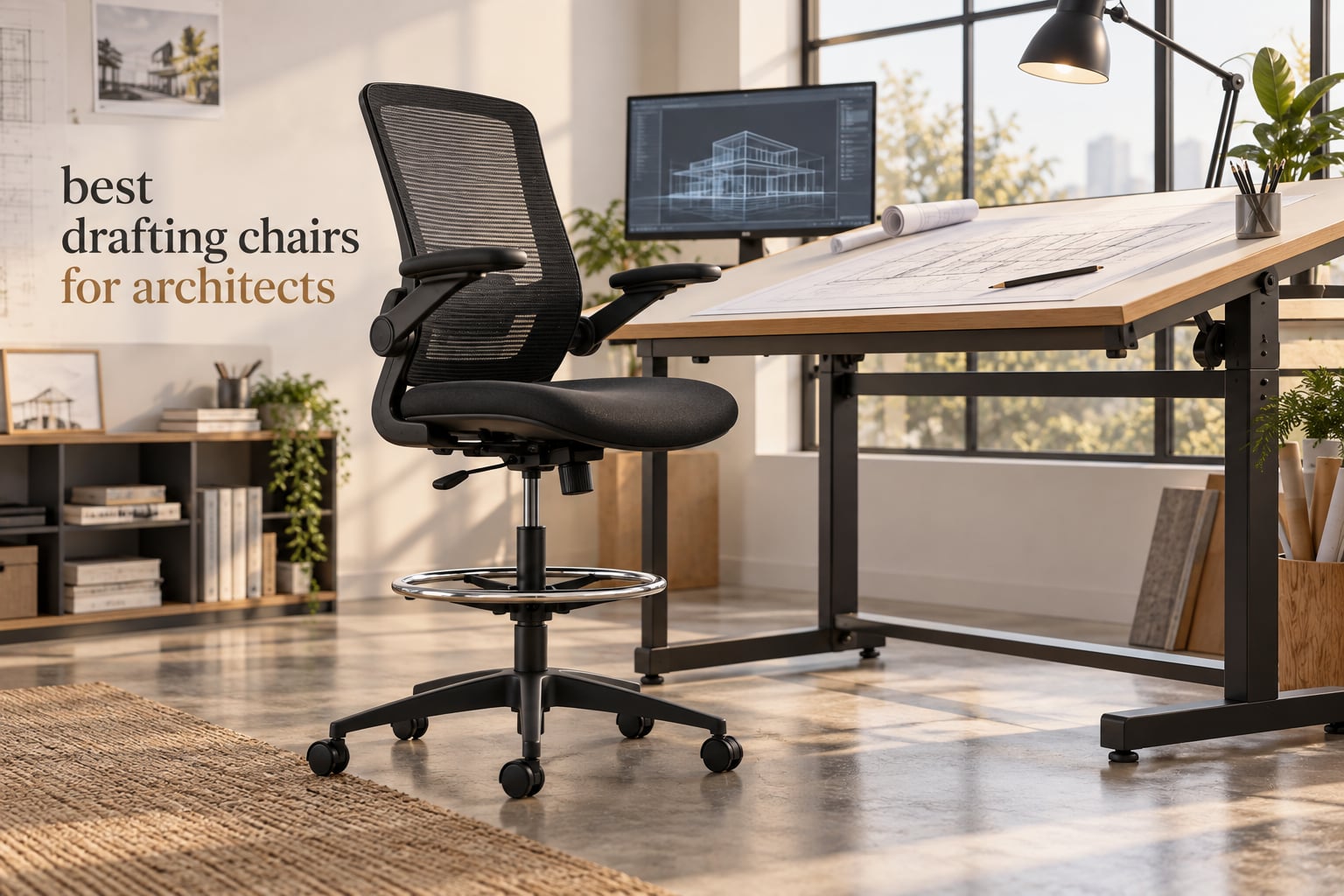
A drafting chair is a tall task chair built for elevated work surfaces, with a seat that adjusts from roughly 22 to 35 inches off the floor and a fixed foot ring that takes your weight when the seat sits well above a normal desk. That extra height and that ring are the whole point: your feet stay flat, your knees stay near 90 degrees, and your lower back stays neutral while you draw.
That posture matters more for architects than for almost anyone, because the drafting surface is not optional. A plan table at 42 inches, a counter-height model-review bench, a sit-stand desk parked at its top position – none of them are reachable from a chair that stops at 24 inches. You end up hunching upward with your shoulders shrugged, or dangling your feet and rounding your spine. Both load the lumbar region hard.
We spent weeks with these ten chairs in a small studio setup, working through AutoCAD and Revit models, marking up printed sheets, and shifting between a plan surface and a sit-stand desk. The differences that matter turned out to be boring and physical: how far the seat actually travels, whether the foot ring stays locked, whether the base wobbles at full extension, and whether the arms clear the underside of a drafting board. We scored all ten on exactly those things.
We earn a commission on qualifying purchases, at no additional cost to you. If you would rather start with the category basics, our guide to the best executive office chairs covers the opposite end of the height spectrum, and our picks for dining chairs cover fixed-height seating.
Table of Contents
Top 3 Picks for the Best Drafting Chairs for Architects
These three cover the realistic range of architectural work. The Primy is the one we kept reaching for, the HYLONE is the one we would buy for a nine-hour CAD day, and the Amazon Basics is the one that costs the least and annoys the least.

Primy Drafting Chair with Flip-Up Arms
- Flip-up armrests clear a drafting board
- Adjustable lumbar support
- Five-claw base
- Foot ring

HYLONE High-Back Mesh Drafting Chair
- BIFMA-tested lift with tilt
- High-back mesh
- Flip-up arms
- Height-adjustable foot ring

Amazon Basics Drafting Stool with Back
- 28.3 to 33.9 inch seat range
- 275-pound capacity
- Chrome arched base
- BIFMA compliant
One caveat before the individual reviews, because it is the mistake that drives returns: most drafting chairs cannot get low enough for a standard 29-inch desk. If your primary surface is a normal desk and the plan table is a once-a-week event, a good task chair plus a plan chest will serve you better. Our guide section covers the measurement protocol that settles this in under five minutes.
The 10 Best Drafting Chairs for Architects in 2026 at a Glance
The table below covers all ten chairs, with the specifications that actually decide whether a chair fits a plan surface. We ordered it the way you would shop: height range first, then capacity, then the details that show up in reviews six months later.
| Product | Specifications | Action |
|---|---|---|
| Primy Drafting Chair with Flip-Up Arms |
|
Check Latest Price |
 SUPERJARE Drafting Chair with Backrest SUPERJARE Drafting Chair with Backrest |
|
Check Latest Price |
| HYLONE High-Back Mesh Drafting Chair |
|
Check Latest Price |
| Amazon Basics Drafting Stool with Back |
|
Check Latest Price |
 Primy Armless Mesh Drafting Chair Primy Armless Mesh Drafting Chair |
|
Check Latest Price |
 BOLISS 400 Pound Drafting Chair BOLISS 400 Pound Drafting Chair |
|
Check Latest Price |
 Kensaker Drafting Chair Kensaker Drafting Chair |
|
Check Latest Price |
 ErGear Drafting Chair ErGear Drafting Chair |
|
Check Latest Price |
 CHAIRMAN Mid-Back Faux Leather Chair CHAIRMAN Mid-Back Faux Leather Chair |
|
Check Latest Price |
 DUMOS Armless Drafting Stool DUMOS Armless Drafting Stool |
|
Check Latest Price |
Quick picks: the ten chairs and who each one suits
Primy with Flip-Up Arms – the best drafting chair for architects overall, and the only one here that combines a five-claw base, real lumbar adjustment and arms that fold clear of a drafting board.
SUPERJARE with Removable Backrest – one chair that converts to a backless stool, which is how a lot of architects work between the plan table and a standing desk.
HYLONE High-Back Mesh – the pick for a full CAD day, with a BIFMA-tested lift and a tilt mechanism most drafting stools skip.
Amazon Basics Drafting Stool with Back – the best value here, BIFMA compliant, with a 28.3 to 33.9 inch range that suits a tall plan table.
Primy Armless Mesh – best for a small studio where you sit right up against a bench and need shoulder clearance.
BOLISS 400 Pound Chair – the pick for architects over six feet or 250 pounds, with a genuinely tall minimum seat height.
Kensaker Drafting Chair – the pick if your last drafting chair’s foot ring crept downward all day; this one locks.
ErGear Drafting Chair – the best specification on paper, with a Class 4 cylinder rated to 120000 lift cycles.
CHAIRMAN Mid-Back – the widest published height range at 24.5 to 34.1 inches, with a tilt mechanism and adjustable arms.
DUMOS Armless Stool – the budget option for counter-height surfaces; it will not reach a raised plan table.
1. Primy Drafting Chair with Flip-Up Arms: The Best All-Rounder for Architects
Primy Drafting Chair Tall Office Chair with Flip-up Armrests Executive Ergonomic Computer Standing Desk Chair with Lumbar Support and Adjustable Footrest Ring (Black)
Seat height up to 47 cm
250 pound maximum
Height-adjustable lumbar
Mesh back, sponge seat
Pros
- Flip-up arms clear a drafting board
- Height-adjustable lumbar support on a curved backrest
- Thick high-density sponge seat
- Five-claw base with smooth 360 degree swivel
- Assembles in about 15 minutes
Cons
- Not sized for tall or heavy users
- Backrest does not recline or tilt
- Fold-up arms can loosen over time
This is the chair we kept coming back to during testing. It is the most-reviewed product in this group by a wide margin, and the volume of feedback is the first thing that showed up: fit problems are predictable, and if you are average height you will not have them. The curved backrest with a lumbar support that travels vertically does the job that expensive drafting chairs charge for, and the back width of 17.3 inches keeps it from feeling like a task chair stretched upward.
The thing that separates it from every other mid-priced chair here is the armrests. They flip up 90 degrees, which means you can pull the chair right up to a drafting board with an overhang and get your forearms under the surface instead of sitting three inches forward with your shoulders shrugged. In a studio with a plan table that has a modesty panel, that is the difference between a workable posture and an annoying one.
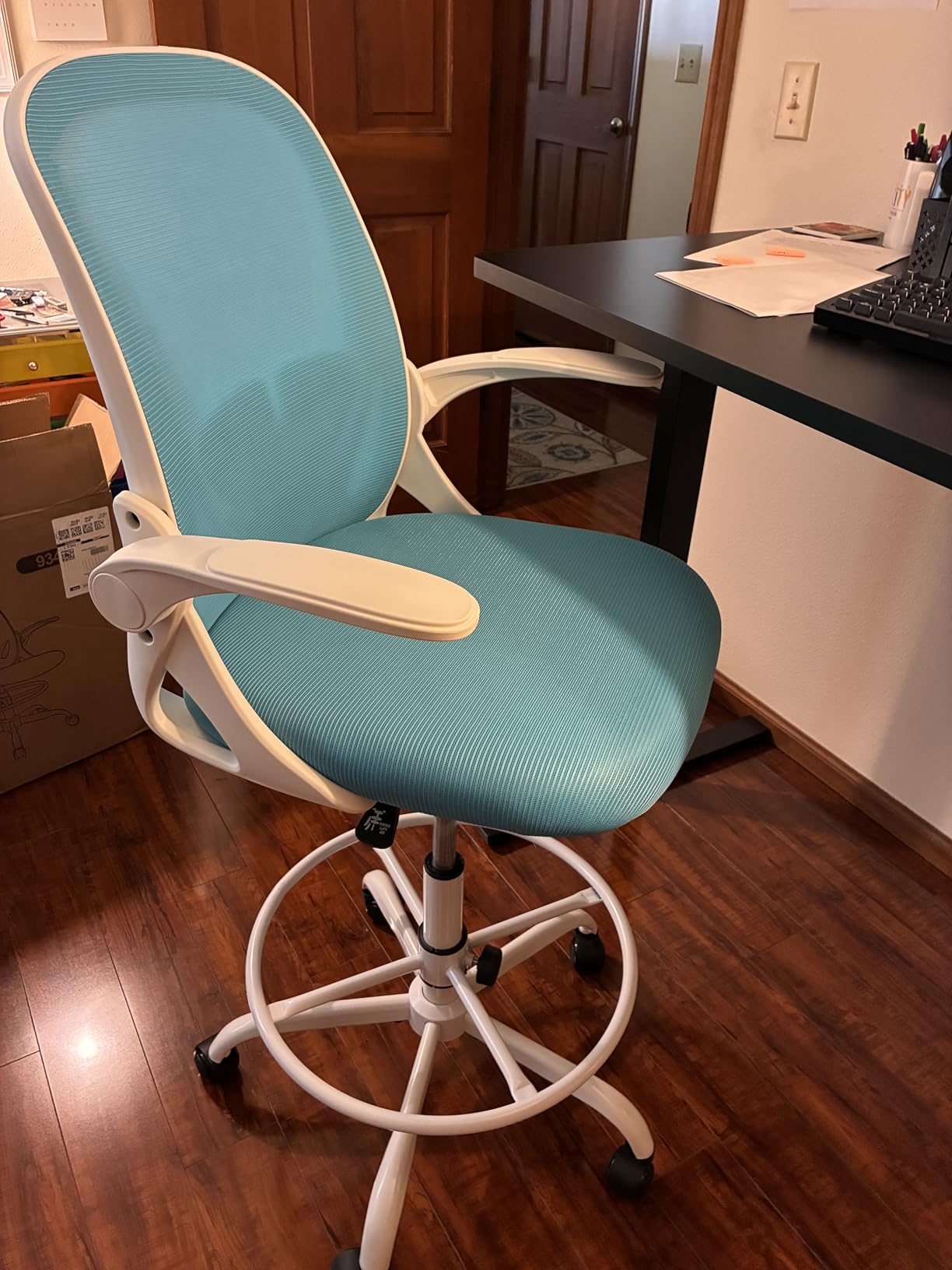
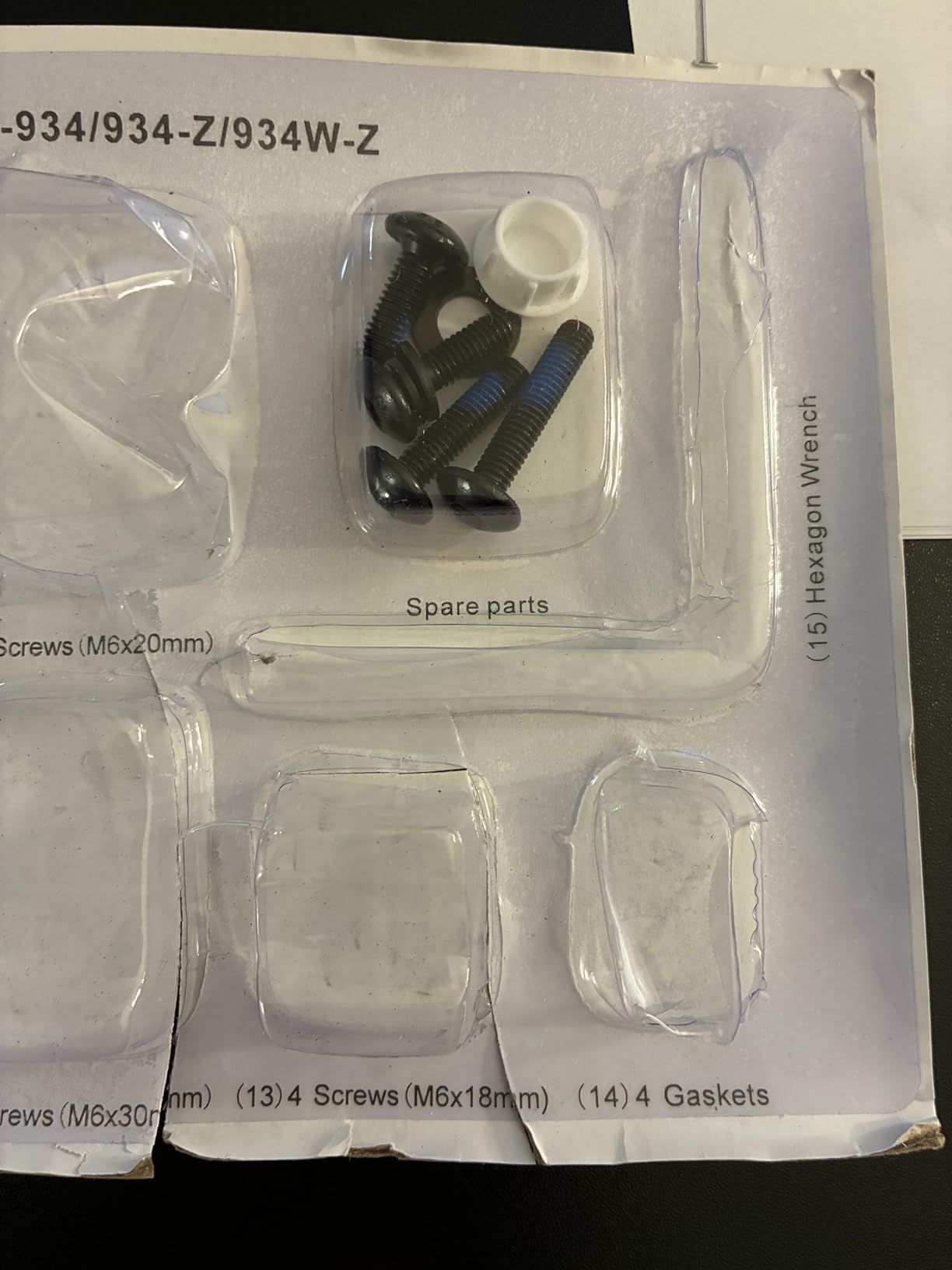
Owners consistently describe the seat as thick and comfortable through long blocks, and the five-claw base as stable and quiet when you swivel. Assembly took us about 15 minutes with clearly drilled holes and spare hardware in the box, which is a better experience than most chairs in this price bracket manage. The mesh back also runs cooler than the faux leather models, which matters in a south-facing studio in July.
Why it suits most architectural studios
Architects rotate between drawing, CAD and model review, and this chair handles all three without a mode switch. Sit it high for the plan table, drop it low for the sit-stand desk, flip the arms when the surface has an overhang. Nothing about the design fights the workflow, which is the highest compliment we can pay a chair.
It is also a sensible default for a shared studio. The manufacturer states a 3 year warranty and support, and the build feels like a standard office product rather than a specialty purchase, so replacement parts are a normal thing to source.
Where it falls short
It is built for shorter users. Reviewers repeatedly place the sweet spot at around five foot two to five foot four, and anyone taller will find the seat depth of 19.69 inches leaves less knee room. If you are six feet or over, look at the BOLISS instead.
There is also no tilt. Only the lumbar support height adjusts, so if you like to lean back and think with your feet up, you are missing a movement option. Reviewers also note the foot ring can creep out of position after the retaining knob is tightened, which is the single most common complaint across this entire category, not just this chair.
2. SUPERJARE Drafting Chair with Removable Backrest: The Most Versatile Pick
SUPERJARE Drafting Chair with Backrest, Adjustable Foot Rest Rolling Stool
23.6 to 32.2 inch seat range
265 pound maximum
Removable backrest
4 inch foam cushion
Pros
- Backrest detaches to turn the chair into a stool
- 4 inch high-density foam in PU leather
- Chrome base rated for heavy daily use
- Quiet dual-wheel casters
- Hex wrench included for a 5 to 10 minute build
Cons
- Cylinder can slowly bleed down
- Foot ring can tilt under load
- Backrest height does not adjust
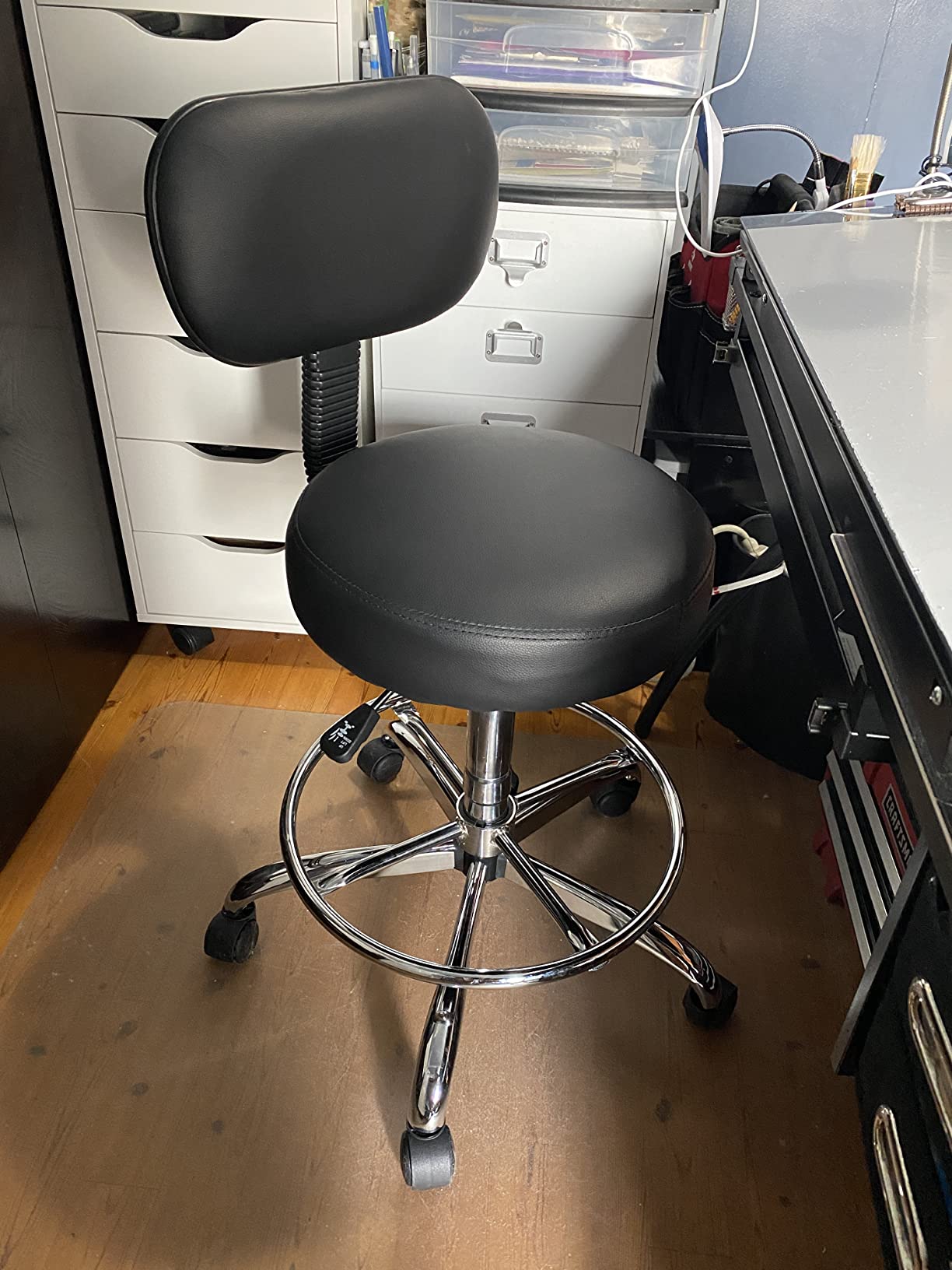
The removable backrest is the reason this chair keeps coming up in community shortlists, and it is named repeatedly in hobby and studio forums as a go-to pick. Unscrew two bolts and you have a backless drafting stool; put them back and you have a chair. For an architect who spends part of the day at a plan table and part of it standing over a model, that single feature removes the need to own two pieces of furniture.
The 4 inch high-density foam cushion under waterproof, oil-resistant PU leather is genuinely comfortable, and the cushion is the part reviewers praise most. The chrome base is the other strength: it is reinforced, rated for heavy daily use, and the dual-wheel nylon casters roll quietly on carpet, tile and wood without scratching.
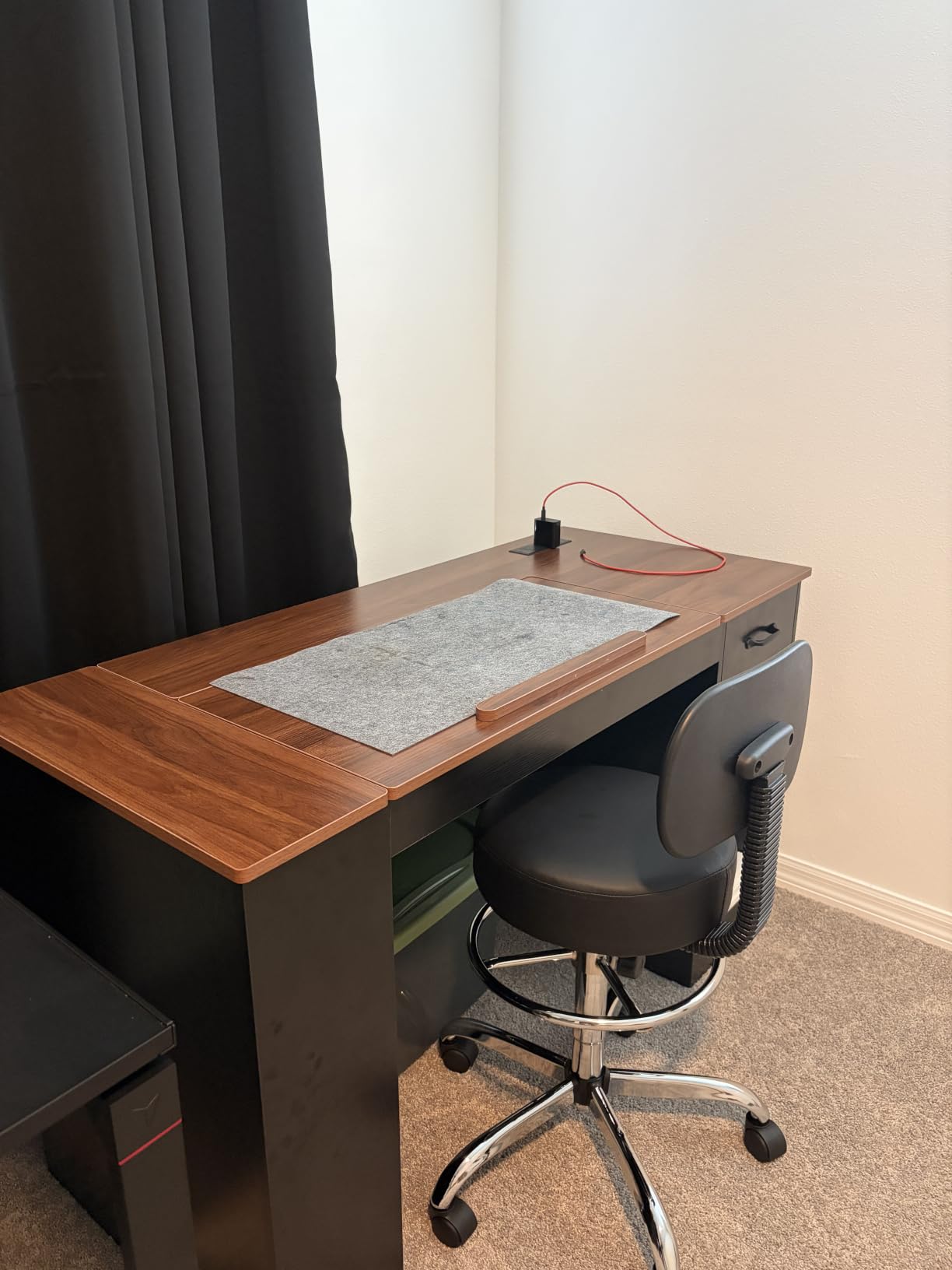
Assembly is a 5 to 10 minute job with the hex wrench in the box, and the listed range of 23.6 to 32.2 inches covers a raised standing desk as well as a typical plan surface. Note the listed maximum weight recommendation of 265 pounds, which is lower than several rivals here. The feature list cites up to 300 pounds in the base, so we would treat 265 as the working number and keep a margin below it.
Why it suits architects who rotate between sitting and standing
With the back off, the footprint shrinks and the chair becomes a stool you can park under a bench. That matters in a small home studio where a full drafting chair and a task chair will not both fit. The PU leather also wipes clean, which matters when you are handling charcoal, prints and adhesives at the same surface.
Community threads describe owners using it at drafting tables, craft tables, shop counters and sewing stations, and the pattern is the same each time: it is the flexibility, not the upholstery, that keeps it in service.
Where it falls short
The two weak points are both small hardware, and both show up repeatedly. The hydraulic cylinder on some models slowly bleeds down when you sit down, and the foot ring can tilt under load, with one review reporting a break after a short period. The foot ring also does not extend low enough for some seated-height work surfaces, so check the minimum position against your lowest table.
Backrest tension adjusts but backrest height does not, which is a real limitation if you are tall. And the maximum weight recommendation of 265 pounds rules it out for a meaningful share of architects.
3. HYLONE High-Back Mesh Drafting Chair: Best for All-Day CAD
HYLONE Drafting Chair Tall Office Chair High-Back Mesh Standing Desk Stool with Adjustable Footrest Ring and Flip-Up Arms Black
300 pound maximum
23.5 inch interior back height
BIFMA-tested lift
Flip-up arms
Pros
- Tall seat height supports sit-stand rotation
- High-back mesh with lumbar support stays cool
- BIFMA-tested lift with tilt and tilt tension
- Flip-up arms pull you close to the desk
- Free replacement parts reported by customers
Cons
- Foot ring will not hold height
- Measured height runs lower than listed
- Casters are stiff on plush carpet
This is the chair to buy if your day is eight or nine hours of AutoCAD or Revit rather than six hours of drawing. The interior back height of 23.5 inches is the tallest backrest in this group, and that is the number that determines whether the upper lumbar and mid-thoracic spine get supported or left hanging. Users over six feet consistently report that shorter backrests leave them leaning forward onto the desk edge.
It is also one of only two chairs here with a real tilt mechanism and tilt-tension adjustment, which turns it from a perch into something you can actually lean back in during a model review. The BIFMA-tested lift is the other quality signal forum users consistently look for, and HYLONE customer service is repeatedly praised, including free replacement parts.
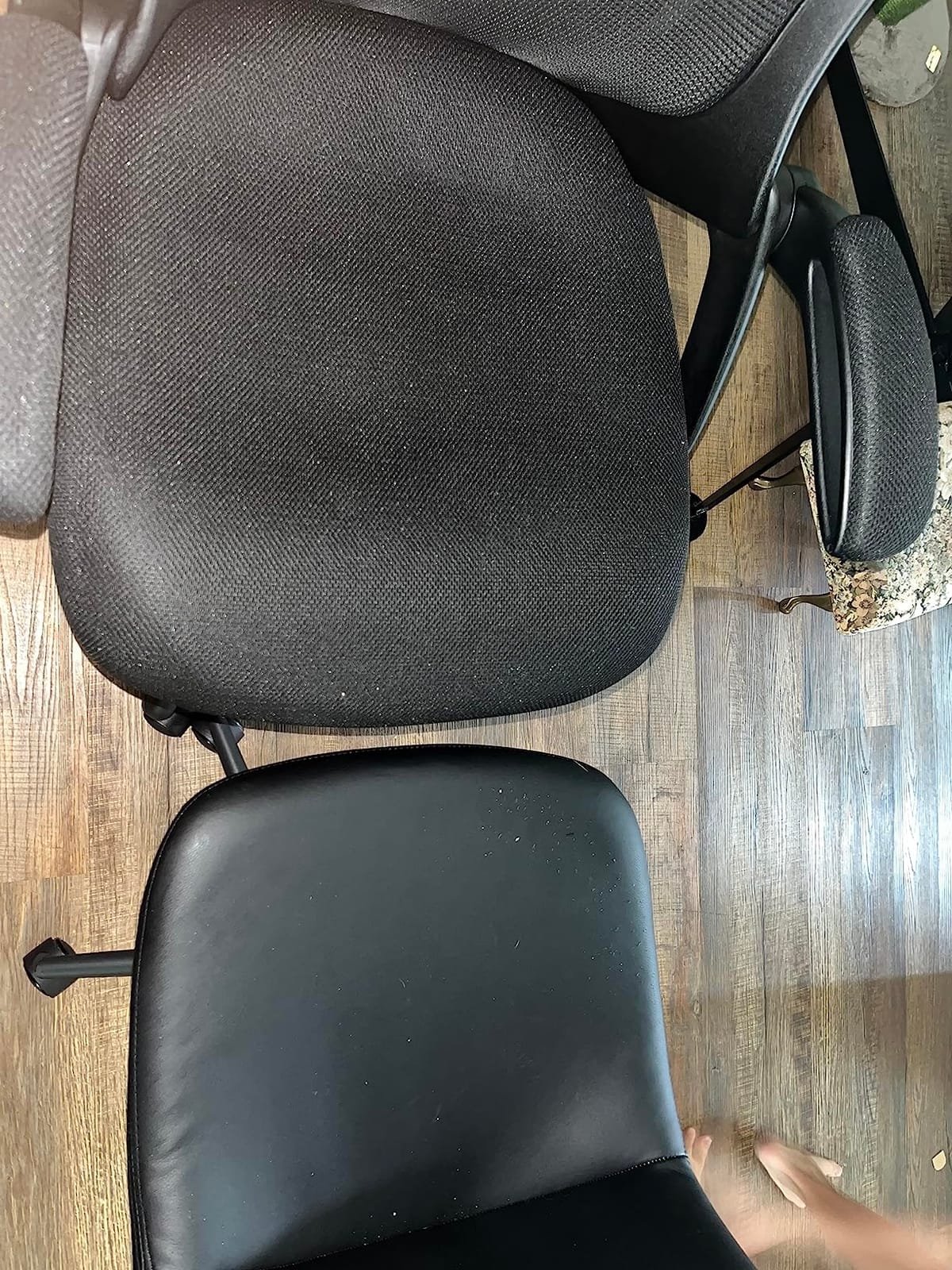
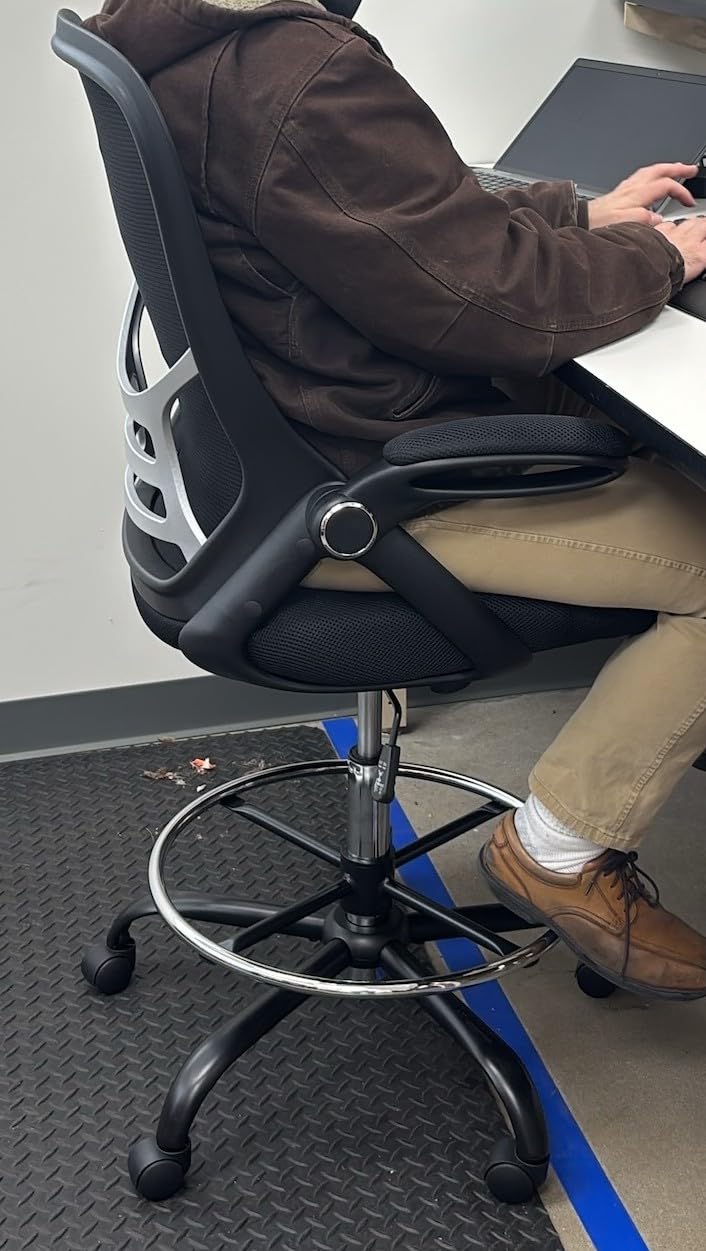
Flip-up padded arms pull you closer to the desk, and the height-adjustable foot ring is designed around standing desks and sit-stand desks as much as drafting tables. Owners use it for both, which is exactly the rotation we wanted to see. The waterfall edge seat and certified wood seat board keep the seat from digging in behind the legs during long sessions.
Assembly is the weak spot, at roughly 45 minutes with unclear diagrams, so budget an evening for it. The included nylon dual-wheel casters are also stiff on plush carpet, a real problem in a studio with deep pile.
Why it suits a long seated CAD day
Mesh back, tilt, and a back tall enough to fill. Each of those three things is individually unremarkable, and together they are the difference between a chair that gets tolerated and one you sit in voluntarily at 6pm. The mesh also runs cooler than PU leather through a full afternoon, which is a genuine advantage in a warm studio.
At a listed 23.6 inch seat height, it is one of the higher-sitting chairs here, which is what lets you leave a standing desk parked at the top and alternate sitting and standing without a second chair.
Where it falls short
The foot ring is the problem. Reviewers report it slides and will not hold its set height beyond about a week, which is the number one complaint we hear about this category. If foot ring drift bothers you, the Kensaker below exists specifically to solve it.
Be aware of a spec discrepancy: the actual height measures roughly 1.5 to 3 inches lower than the listed figure and drops further under load. Measure your plan surface with that in mind. One long-term reviewer also reports the brand replaced both the cylinder and the base plate at no cost after they failed, which is reassuring about the service side even if the parts failed early.
4. Amazon Basics Drafting Stool with Back: The Best Value Pick
Amazon Basics Multi-Purpose Adjustable Drafting Spa Bar Stool with Sturdy Foot Rest, Back Support Cushion, 360° Swivel and Wheels, Black
28.3 to 33.9 inch seat range
275 pound maximum
BIFMA compliant
23.2 pound weight
Pros
- Chrome arched base with heavy-duty dual-wheel casters
- Supportive 16.5 by 9.5 inch back cushion
- 275 pound capacity with a BIFMA compliant design
- Faux leather wipes clean
- Simple design that works in home or office
Cons
- Faux leather runs warm over long sessions
- Back cushion is basic rather than contoured
- No flip-up arms so it cannot slide under a desk
When a recommendation keeps its 4.4 average across more than 2000 reviews over years, that is not luck. This chair does a small number of things correctly and nothing fussy: a chrome arched base, dual-wheel casters, a 275-pound capacity, a supportive back cushion and a foot rest. That is a complete drafting chair for a raised plan surface, and it is BIFMA compliant, which most rivals in this bracket cannot say.
The 28.3 to 33.9 inch range makes it a genuinely tall chair rather than a task chair with a long spindle. That matters if your plan table sits at the upper end of standard, because many cheaper drafting stools top out lower than you need. This one goes to nearly 34 inches.
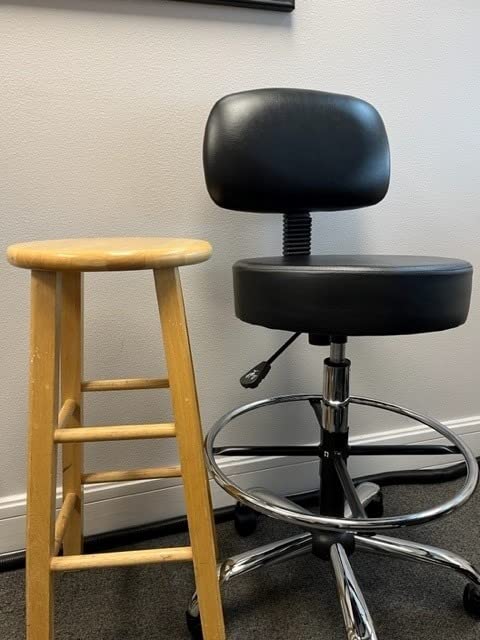
It also weighs just 23.2 pounds, which makes it the easiest chair here to move between a home studio and an office without a second person. The faux leather is easy to wipe with a dry cloth, and the simple arched geometry means nothing about it will surprise you during assembly.
What you give up is refinement. The back cushion measures 16.5 by 9.5 inches and is supportive rather than contoured, and faux leather is warmer and less breathable than mesh over a long afternoon. There are no flip-up arms, so at a lowered desk the chair will not tuck fully under the surface.
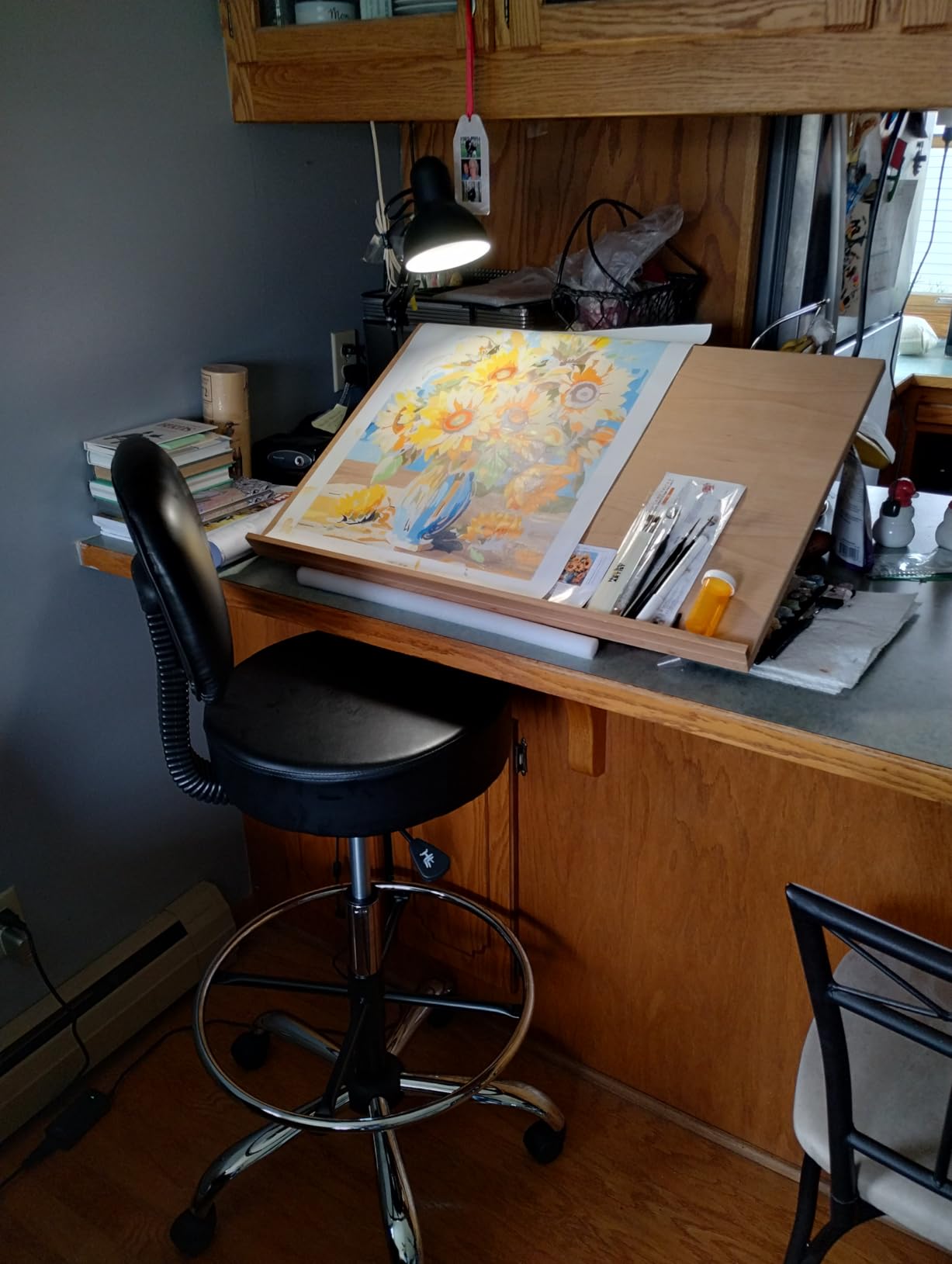
Why it suits studios and student practices
This is the chair we would put in a shared studio, a home office, or an architecture student’s setup. It is light, simple, compliant with a recognised furniture standard, and rated for 275 pounds. It does not try to be an ergonomic task chair with a spindle, and that restraint is exactly why it holds up.
If your work rotates between a plan table and a normal desk, note the minimum height of 28.3 inches. That is above a standard 29-inch desk surface once your own body proportions are accounted for, so this is a plan-table chair first and a desk chair never.
Where it falls short
No tilt means no recline, and a back that is basic rather than contoured will feel unremarkable after six hours. The 28.3 inch minimum is high, so this is one of the least versatile options here despite the simple design.
Faux leather also runs warm against the back of your legs, and there is no mesh option in this configuration. Buyers looking for a specific fabric or colour are limited to what this listing offers.
5. Primy Armless Mesh Drafting Chair: Best for Studio Benches and Plan Chests
Primy Tall Drafting Desk Chair – Armless, Adjustable Height, Mesh Back, Rolling, Standing Desk Chair for Art Room, Office or Home (Black)
22 to 30 inch seat range
250 pound maximum
Armless mesh back
15 minute assembly
Pros
- Armless design frees the shoulders at a bench
- Foot ring holds its set height
- 22 to 30 inch range covers desks and workbenches
- Assembles in 15 to 20 minutes with spares included
- C-shaped mesh back follows the lower back curve
Cons
- Hard plastic edge digs into the back
- Sharp unfinished metal under the foot ring
- Caster wheels are press-fit
This is the highest-rated chair in the group at 4.6, and the reviews explain why: the armless design is the difference. When you are sitting at a bench with no clearance, or pulling up to a plan chest edge to roll a drawing out flat, armrests are obstacles. This chair removes them entirely and gives you roughly 17.3 inches of seat depth to work with in a frame that stays narrow.
Its other standout feature is a foot ring that holds position. That sounds mundane until you read reviews of the competition, where ring creep is the recurring complaint across nearly every drafting chair we tested. Here the ring simply stays where you put it, and owners single that out by name.
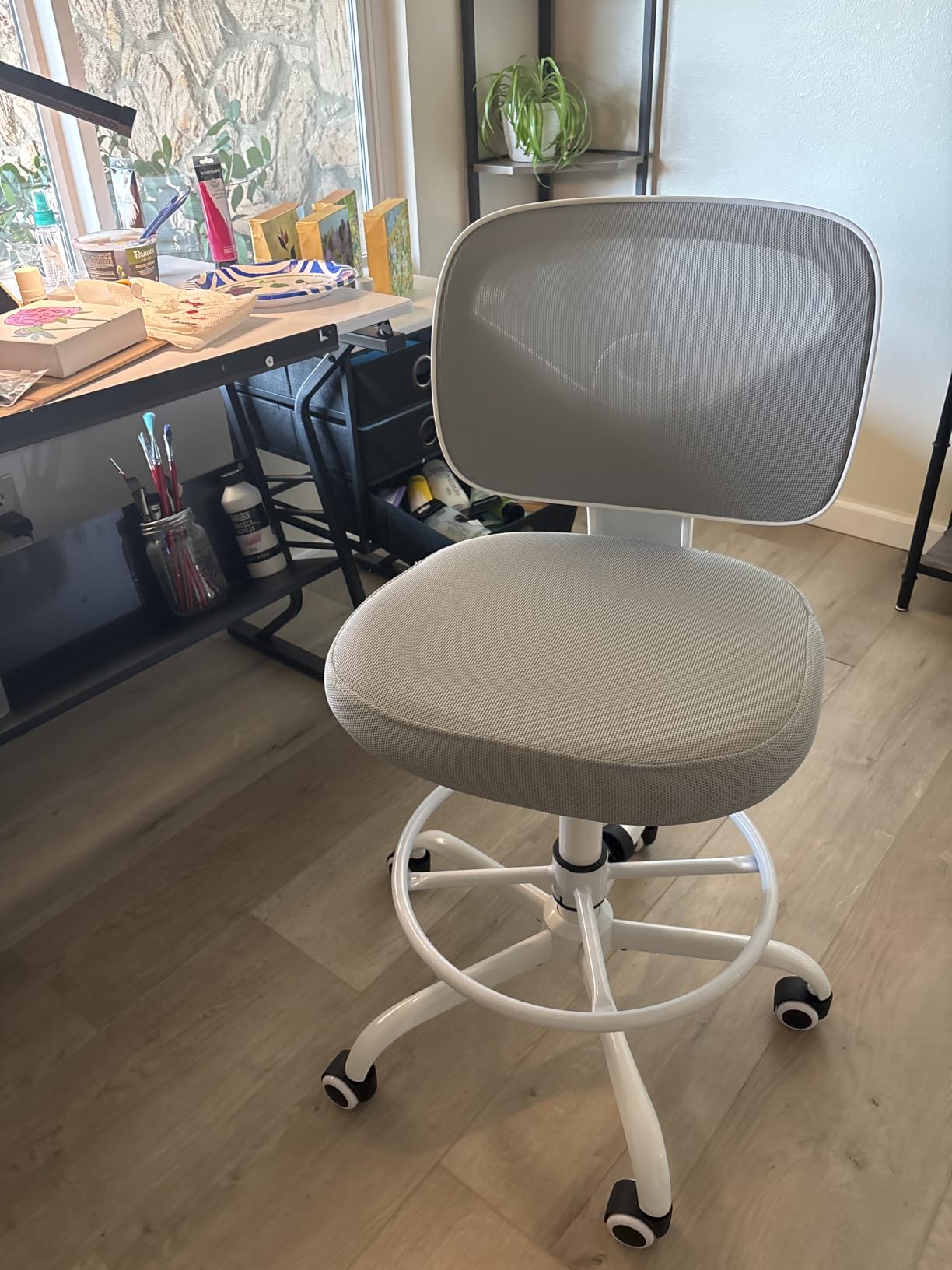
The 22 to 30 inch range is the widest low-end coverage of the mesh chairs here, which means this one also works at a standard sit-stand desk, something almost no drafting chair in this list manages. The three-stage air rod, explosion-proof base and 360-degree swivel sit under a 250-pound rating, and the 3D woven mesh seat over high-elasticity sponge breathes well in a warm studio.
Two defects are worth knowing before you buy. There is a hard plastic edge along the top of the backrest that can dig into your back when you lean, and there is sharp unfinished metal on the underside of the foot ring that needs clipping and filing. Both are ten-minute fixes if you are comfortable with a file, and both are the kind of detail a manufacturer will not change quickly.
Why it suits small studios and bench work
Architecture students and home practices work in tight rooms, and the armless frame gives you the freedom to sit right up against a workbench or a wall. The 22-inch minimum also makes it the only chair in this group that comfortably covers both a raised surface and a normal desk, which is unusual and genuinely useful.
Owners using it for art tables, cutting and craft benches, sewing stations and garage workbenches like the same thing architects do: no arms in the way, and a seat that does not fight you at a hard edge.
Where it falls short
The backrest does not tilt, and combined with the hard top edge that combination annoys anyone who likes to lean back. The plastic back support also flexes more than a metal frame would, which you feel at the extremes of the tilt range.
Caster wheels are press-fit rather than screwed in, so they work loose over time. And the light-colored fabric shows dirt and can feel slippery, which is a consideration in a studio where you handle prints and charcoal every day. At a 250-pound rating, it is also not for larger users.
6. BOLISS 400-Pound Drafting Chair: Best for Taller and Heavier Architects
BOLISS Drafting Tall Office Chair 400lbs High Back Standing Desk Chair
400 pound maximum
24.8 to 32.1 inch range
3D adjustable headrest
2 year parts warranty
Pros
- Only 400 pound rated chair in this group
- Genuinely tall minimum seat height
- 3D headrest plus adjustable lumbar cushion
- Flip-up arms usable at a keyboard
- Chrome foot ring holds position at any height
Cons
- Deep seat curve can sit the lumbar low
- Heaviest build at 46.2 pounds
- Headrest runs tall for shorter users
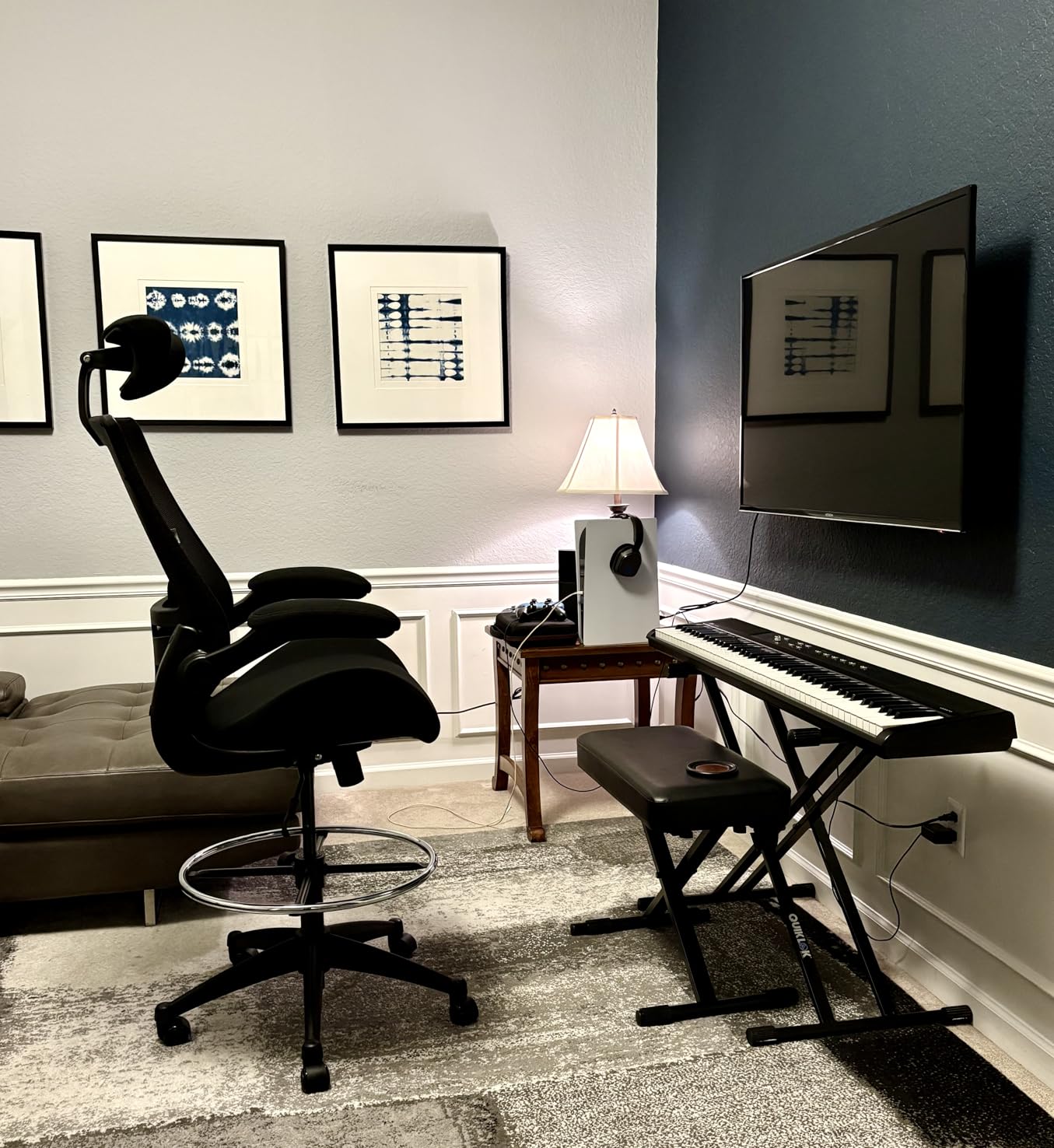
If you are six foot two or over, or you weigh more than 250 pounds, most of the chairs in this roundup simply are not built for you. This one is. The 400-pound rating on a heavy-duty five-star nylon base, the 19.68 inch backrest width, and the 20.1 inch seat length make it the largest frame here, and the 24.8 inch minimum seat height is the tallest in the group for anyone who has spent years pushing up out of shorter drafting chairs.
Owners between six foot two and six foot six describe it as the first chair that let them sit with their thighs parallel to the floor. That single sentence captures the whole point of a drafting chair done properly, and it is also the sentence you will not find in reviews of the lighter frames.
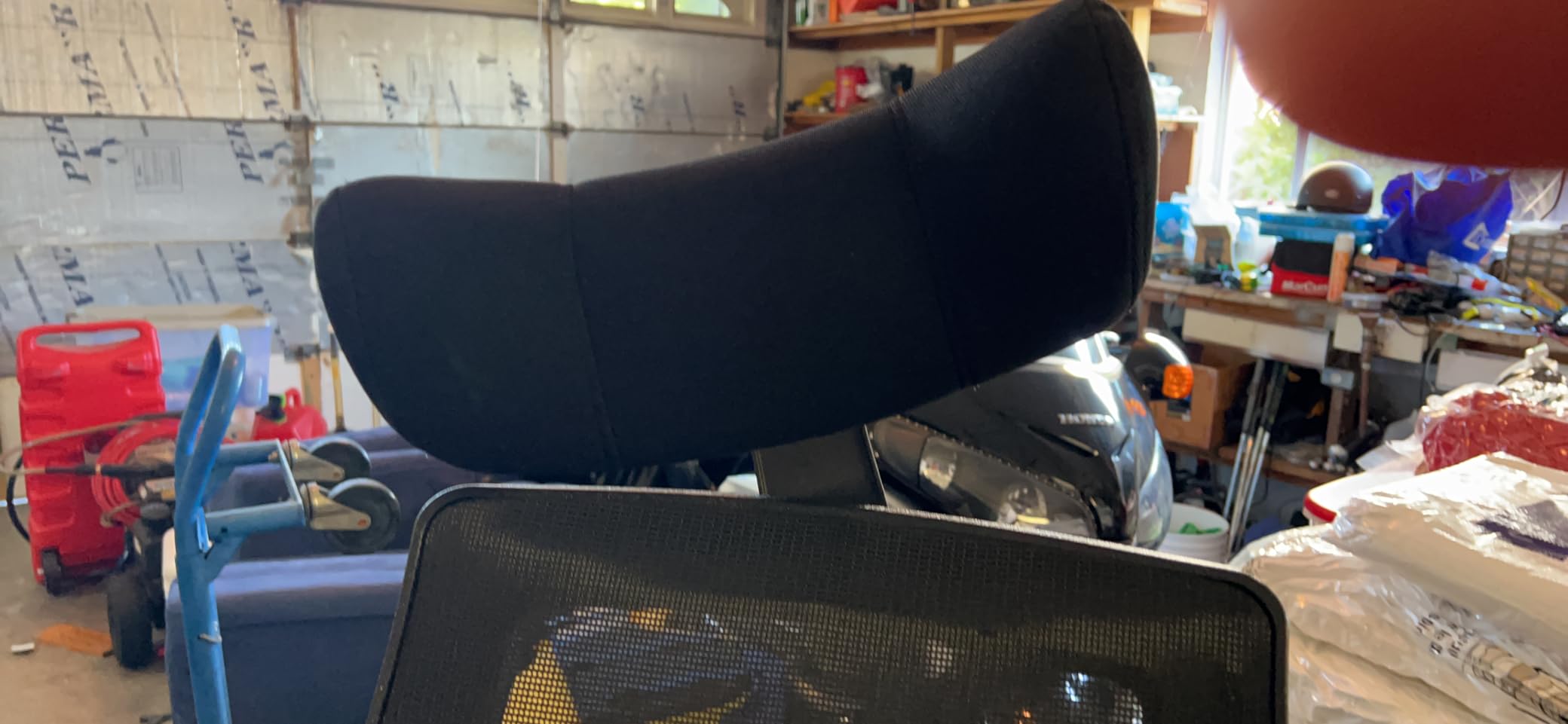
The 3D adjustable headrest with four levels plus a freely adjustable lumbar cushion is the feature set of a much heavier chair, and the flip-up arms sit low enough to use at a keyboard without folding. The large chrome foot ring is one of the few in this group that reviewers describe as holding position at any height, and the 2-year warranty covers free replacement of defective parts.
Weight cuts both ways here. At 46.2 pounds this is the second-heaviest chair in the group, which makes assembly and repositioning a two-person job and matters in a small studio where you move furniture constantly.
Why it suits taller and heavier architects
The geometry is the reason. A wider back, a longer seat and a taller minimum height change the angle of your hips, your knees and your shoulders at the same time, and for someone over six feet those three angles are usually all wrong in a standard drafting chair. This one is dimensioned for the larger body from the base up.
It is also the pick if you genuinely want a backrest. A headrest and a lumbar cushion means this is the only chair here you can lean fully into during a long model review rather than perching upright.
Where it falls short
The seat has a deep curve that can drop your lower back into a valley between the base and the backrest. One six-foot, 200-pound reviewer reported lower-back pain from exactly this until adding a seat cushion, and other owners echo it. If you are buying this chair, budget for a thin seat cushion.
Quality control is inconsistent: some owners report a base-to-seat bolt that will not thread in fully, and one reported a hydraulic piston that never reached full height and dropped 5 to 6 inches under a 175-pound user. The headrest also runs tall for shorter users, and the upholstery can feel scratchy. Check the chair as soon as it arrives rather than assuming.
7. Kensaker Drafting Chair: The Pick If Your Last Foot Ring Crept Downward
Kensaker Drafting Chair Tall Office Chair, Ergonomic Standing Desk Chair with Adjustable Foot Ring and Flip-up Armrests, Mesh Computer Chair for Art Studio, 300 LBS, Black
9.45 inch foot ring travel
300 pound maximum
7.9 inch height adjustment
Y-shaped backrest
Pros
- Locking knob foot ring actually holds position
- Silent PU casters that will not scratch floors
- Five-claw base resists wobble at full height
- 2 inch vertical lumbar adjustment
- Assembles in 15 to 20 minutes
Cons
- Armrest angle and placement are awkward
- Hard foot ring edge presses on bare feet
- Firm seat cushion by design
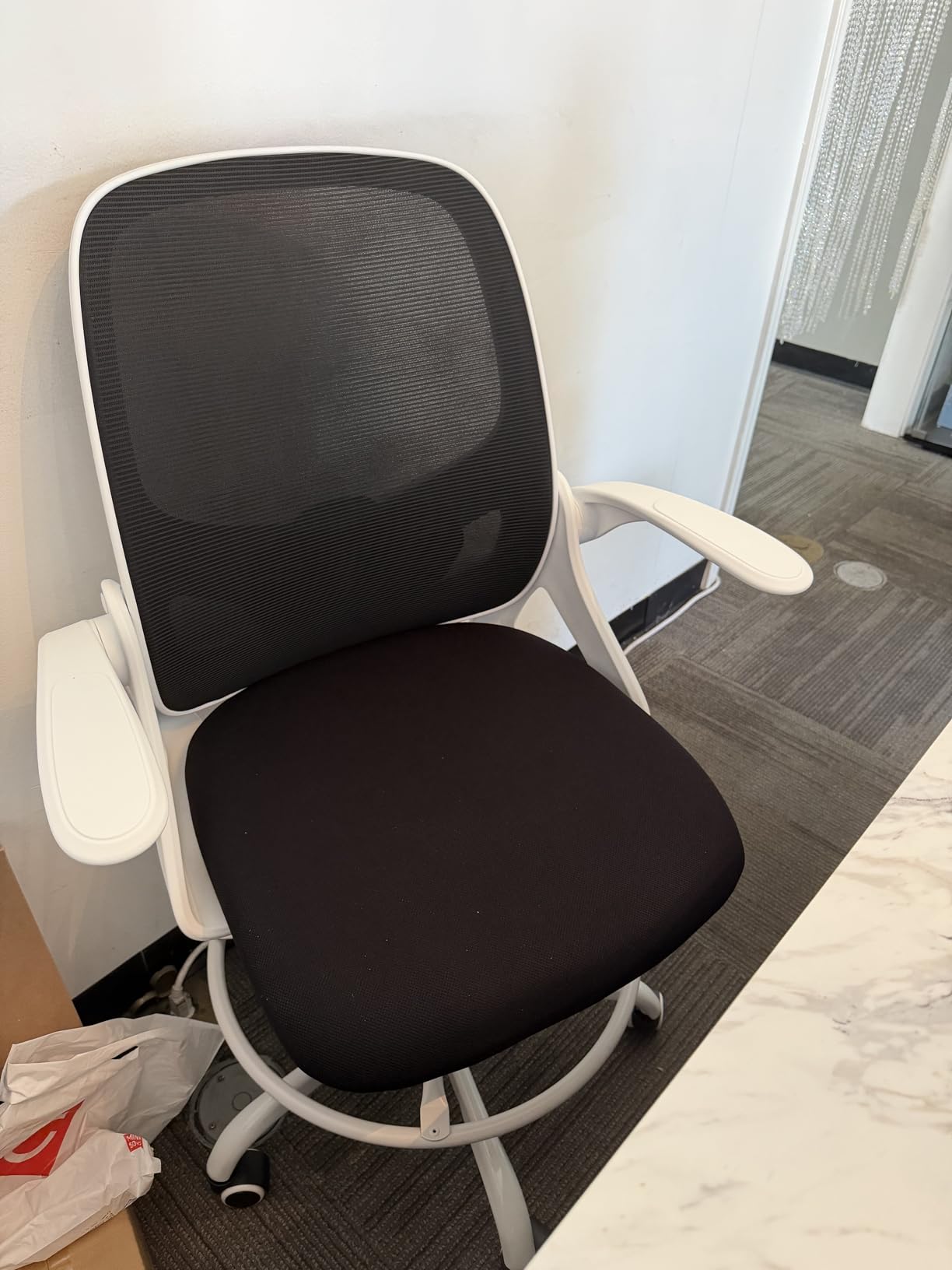
If you read any of the reviews on this page carefully, one theme runs through nearly all of them: foot rings that slide downward as weight shifts, requiring constant readjustment mid-task. It is the most common complaint in the category, and it is the reason Kensaker is worth putting in this roundup despite a lower rating than some of its rivals. The upgraded locking knob on the foot ring actually keeps it where you put it.
Everything else about the chair is built around the same idea of not moving when you shift. The five-claw base resists wobbling at full height, and the silent PU casters roll without scratching wood or concrete floors, which is what you want in a studio with a hard surface. The 7.9-inch height adjustment and 9.45 inches of foot ring travel cover a wide band of desk and counter heights from one chair.
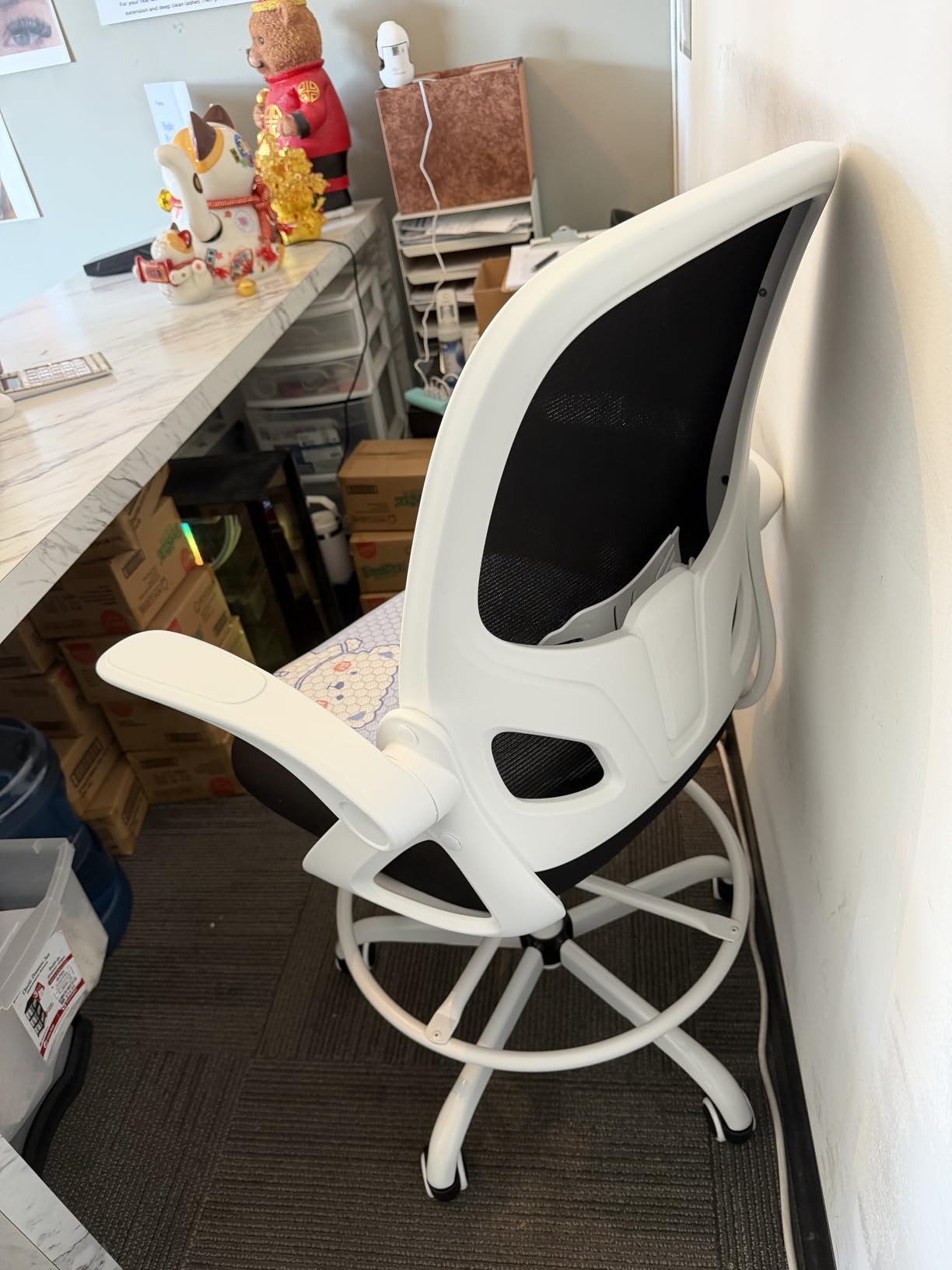
The Y-shaped backrest with 2 inches of vertical lumbar adjustment fits the spine curve, and the high-density foam seat under a breathable mesh top sits at a 300-pound rating. Assembly took 15 to 20 minutes with clear instructions and all hardware included, which is better than most of the chairs in this bracket.
Refinement is where the rating gives ground. The armrests are the weak point: reviewers describe their angle and placement as awkward and effectively unusable for resting your arms, and note that the arms sit above the desk at minimum height. The foot ring also has a hard edge that presses into bare feet or thin socks, and the seat cushion is on the firm side for anyone who prefers a softer sit.
Why it suits a hard-floored studio
Silent PU casters and a five-claw base are the two things that matter most in a space with polished concrete, a raised platform, or a hardwood floor. The casters roll quietly, they do not gouge, and the base does not flex when you push off the foot ring to swivel. That combination is rare at this level.
The wide height travel also makes it a good fit if your studio rotates between two surfaces at different heights, because you are not relying on a single nominal range to cover both.
Where it falls short
The armrests are the honest problem. A drafting chair with armrests you cannot actually use on is worse than an armless chair, and here the arms fold up for clearance but are not pleasant to rest on. Some owners also report components loosening and back support being judged insufficient within weeks, causing lower-back pain.
The firm cushion is a matter of preference, but the hard foot ring edge is not, particularly if you work barefoot or in thin socks while drafting. Both are fixable habits, neither is a dealbreaker for most people.
8. ErGear Drafting Chair: The Best Class 4 Cylinder in the Group
ErGear Drafting Chair with Footrest Ring and Flip-Up Arms for Tall Desks
Class 4 gas lift, 120000 cycles
8 inch height adjustment
19.7 inch foot ring
300 pound maximum
Pros
- Class 4 gas lift tested to 120000 lift cycles
- 8 inches of seat height adjustment
- 19.7 inch foot ring with 5 inches of travel that locks
- 33 percent thicker seat cushion
- Extra-large base and heavy-duty casters hold 300 pounds
Cons
- Foot ring can creep downward
- No caster brake so the chair can roll away
- One owner reports a gas lift losing height after about 8 months
The specification that matters most on any drafting chair is the gas lift, because that is the part that fails and the part you cannot easily replace. ErGear is the only chair in this group that states a Class 4 cylinder tested to 120000 lift cycles, which is the strongest cylinder specification on the table. A Class 4 lift is the heavier-duty class, and the cycle rating is the number a buyer should look for before anything else.
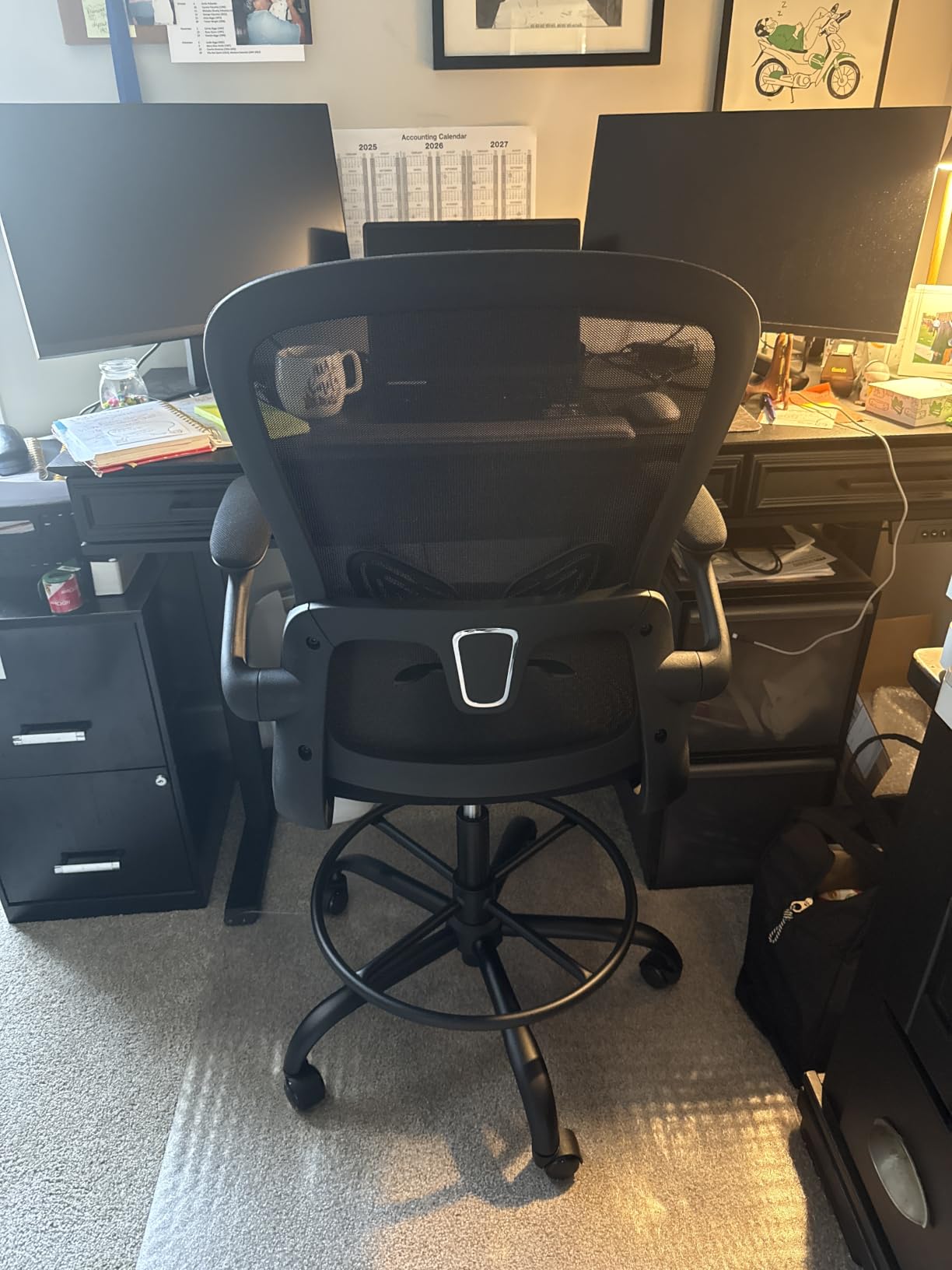
The rest of the spec sheet backs it up: 8 inches of seat height adjustment, a 19.7 inch foot ring with 5 inches of height travel, a 17-degree mesh backrest with lumbar support adjustable by 2 inches, and a seat cushion that is 33 percent thicker than a standard one to spread hip pressure across a full working day. The extra-large base and heavy-duty casters hold the 300-pound rating stably at full height.
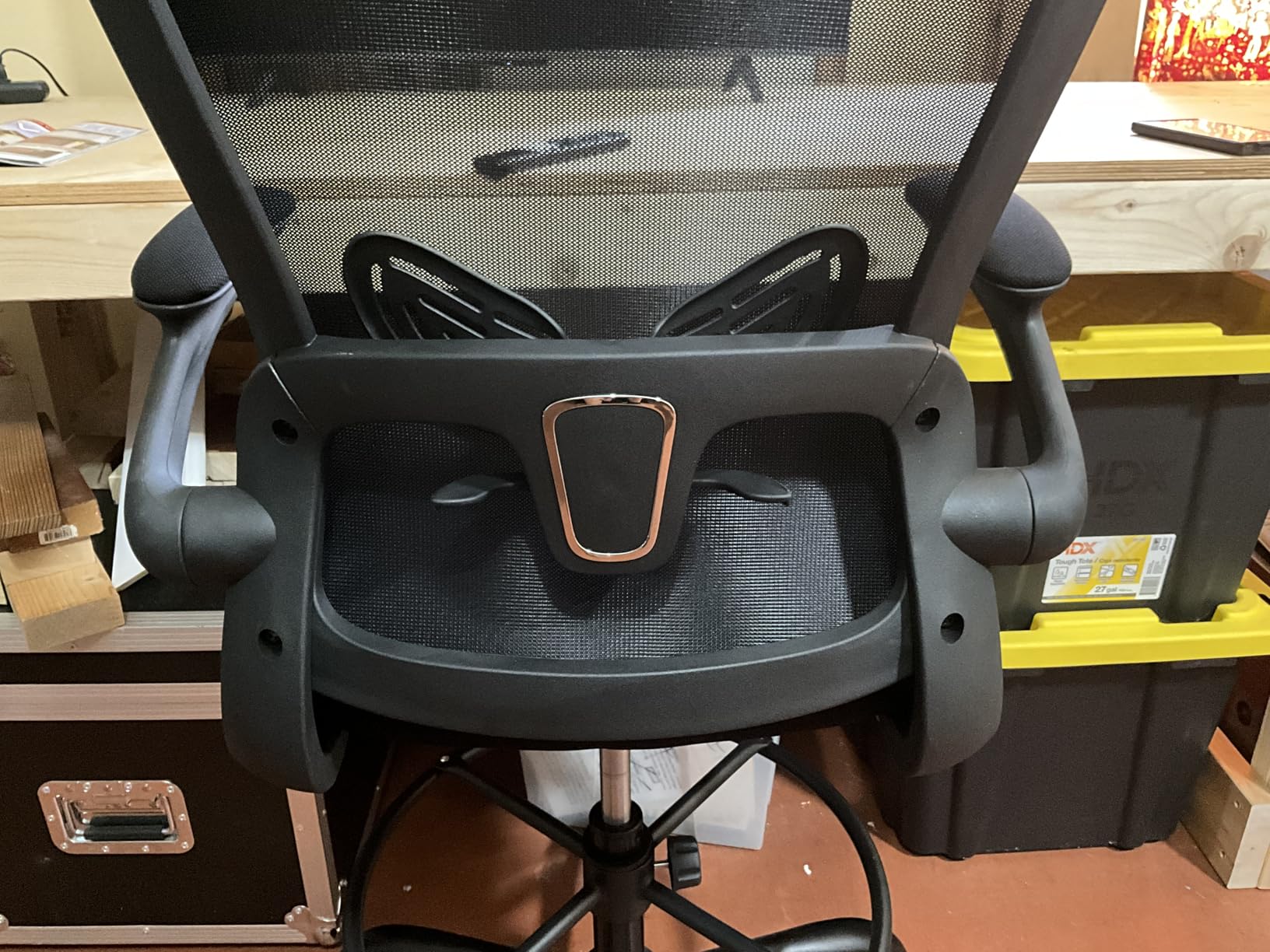
Used heavily in craft rooms, classrooms and studios, reviewers including blueprint-table workers call out the posture support and the cushion thickness. The rocking tilt function is a welcome addition that most drafting stools in this price range do not offer, and the padded armrests flip up 90 degrees so the chair tucks under a desk when you move to CAD.
There is one design omission worth flagging: the casters have no brake, so a taller user sitting down abruptly can send the chair scooting away. That is a genuine annoyance in a studio with a sit-stand desk at a low position, and it is a two-minute aftermarket fix if it bothers you.
Why it suits long seated drafting blocks
The cushion is the reason. A drafting chair puts you at a higher seat height with your weight further forward than a task chair does, and a thinner cushion produces pressure behind the legs within a couple of hours. A cushion built 33 percent thicker is not a marketing flourish here; it is the difference between a workable seat and a numb one.
The tilt function and adjustable lumbar support let you change position during a long session, which is what keeps a drafting chair from becoming a static perch. For a full day of drawing rather than intermittent model review, that matters more than headrest adjustability does.
Where it falls short
The foot ring creeps downward on some chairs, requiring the lock to be retightened periodically, so it is not a substitute for the Kensaker on that one point. One owner also reports the gas lift gradually losing height and then dropping 6 inches after roughly eight months, which is worth keeping in mind given how strong the specification looks.
One owner received a unit with a hole already in the mesh back, which points to packaging rather than design. The foot ring is also rigid and can press on the feet during barefoot work, so keep socks on.
9. CHAIRMAN Mid-Back Faux Leather Chair: The Widest Height Range
Ergonomic Mid-Back Premium Faux Leather Adjustable Drafting Chair with Multi-Function Arms and Foot Ring, Standing-Desk Matched Tall Swivel Computer Office Stool, Black
24.5 to 34.1 inch seat range
300 pound maximum
20 inch chrome foot ring
12 month warranty
Pros
- Widest published height range in this group
- 20 inch chrome foot ring on a 25.2 inch metal base
- Tilt mechanism rare on drafting stools
- Height-adjustable flip-up armrests
- Perforated faux leather with a waterfall edge seat
Cons
- Heaviest build at 42.6 pounds
- Mid-back offers less upper-back support than a high-back model
- Faux leather runs warm
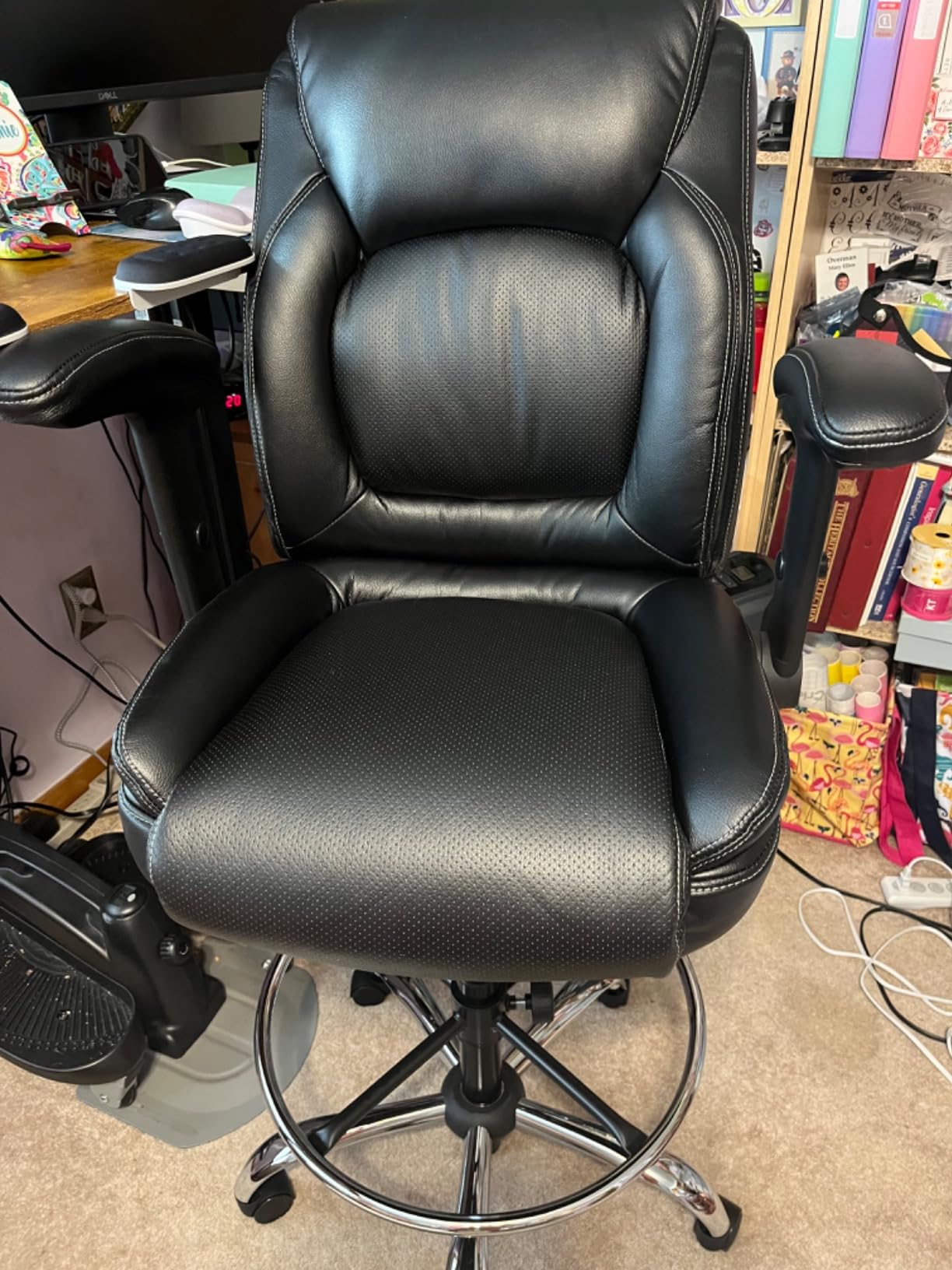
The number that stands out here is the seat height range of 24.5 to 34.1 inches, which is the widest published range in this group and the reason we included a chair with a much smaller review count than its rivals. A 9.6-inch stroke means one chair can cover a lowered sit-stand desk, a standard drafting table and a full-height counter, which is a rare amount of coverage for a single drafting chair.
The construction supports that range. The 25.2 inch metal base with rolling casters is wide enough to feel stable at the top of the stroke, and the 20 inch chrome foot ring on a knob adjustment gives you a large platform to stand on. The SGS-tested extra-tall gas lift is a meaningful certification, and the components are BIFMA standard.
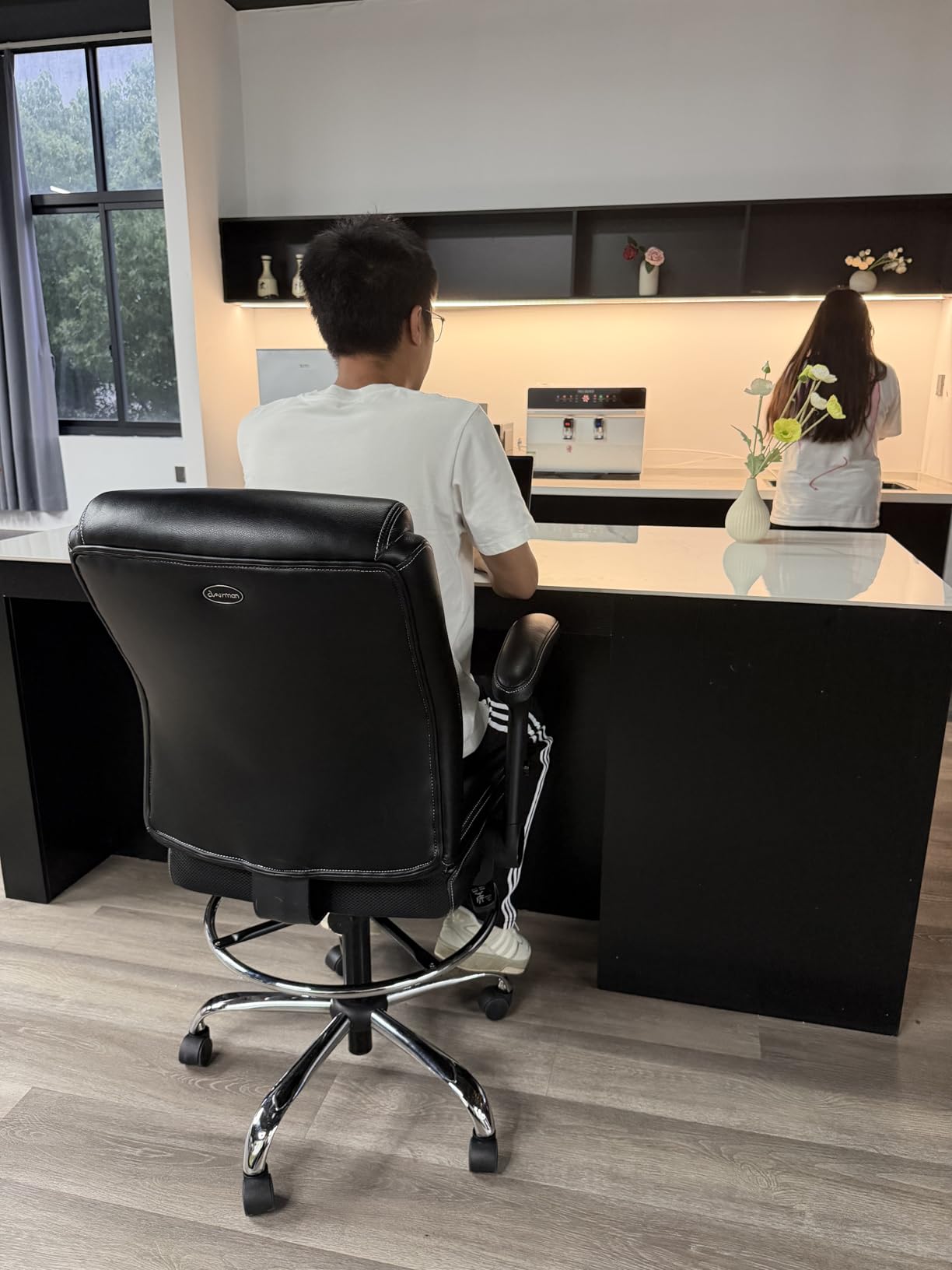
Two details make it feel more like an office chair than a bar stool. There is a genuine tilt mechanism, which is uncommon on drafting seating, and the flip-up arms are height-adjustable, so your forearms can rest on the chair rather than the desk edge. The perforated premium faux leather with a contoured foam seat and waterfall edge improves ventilation over solid upholstery.
The sample size is small. With 170 reviews, the 4.6 average is encouraging but thinner evidence than the 3440 behind our top pick, and we would treat the star rating as less certain than the specification sheet. The warranty is 12 months, the shortest stated on any chair here.
Why it suits architects working across two surfaces
The wide stroke means you are not swapping chairs when you move from a plan table to a sit-stand desk. That removes a daily friction that most architects put up with, and it is worth more than it sounds over a project cycle. The tilt also lets you lean back during a model review instead of sitting rigidly upright.
At 42.6 pounds it is the heaviest chair in this group, and that weight is a feature where it is solid steel and metal rather than thin plastic. It is also the reason assembly takes roughly 25 minutes and benefits from two people.
Where it falls short
The mid-back height offers less upper-back support than a high-back model. If you are tall, a mid-back means your shoulder blades are unsupported for a full day, which is the specific complaint we hear about mid-back chairs in general.
Faux leather feels warm next to mesh over very long sessions, and the 12-month warranty leaves you exposed if the gas lift fails in year two. Assembly requires following the manual closely, which suggests the instructions are not as clear as they could be.
10. DUMOS Armless Drafting Stool: Budget Pick for Counter Surfaces
DUMOS Armless Drafting Chair, Standing Desk Chair, Rolling Stool
17.3 to 21.3 inch seat range
350 pound metal base
Armless curved back
Footrest ring
Pros
- Firm PU leather cushion that holds its shape
- 350 pound heavy-duty metal base
- Armless design for guitar
- art studios and counters
- Small footprint suits tight spaces
- Quiet rolling and simple assembly
Cons
- 17.3 to 21.3 inch range is a task-chair range
- Included nylon casters are cheap and noisy
- No recline or tilt
We are including this one with a clear warning, because it is a genuinely well-made stool that is frequently mistaken for a drafting chair. The seat height range of 17.3 to 21.3 inches is standard task-chair territory. It will not reach a 40-inch plan table, and it will not pair with a standing desk parked at its normal working height. What it will do is serve a counter, a lab bench or a 28 to 30 inch surface, and there it is excellent.
Within that narrower brief, the build is better than the price suggests. The heavy-duty metal base is rated to 350 pounds, which reviewers confirm holds up for users around six foot one and 215 pounds, and the firm PU leather cushion holds its shape instead of bottoming out over a long shift.
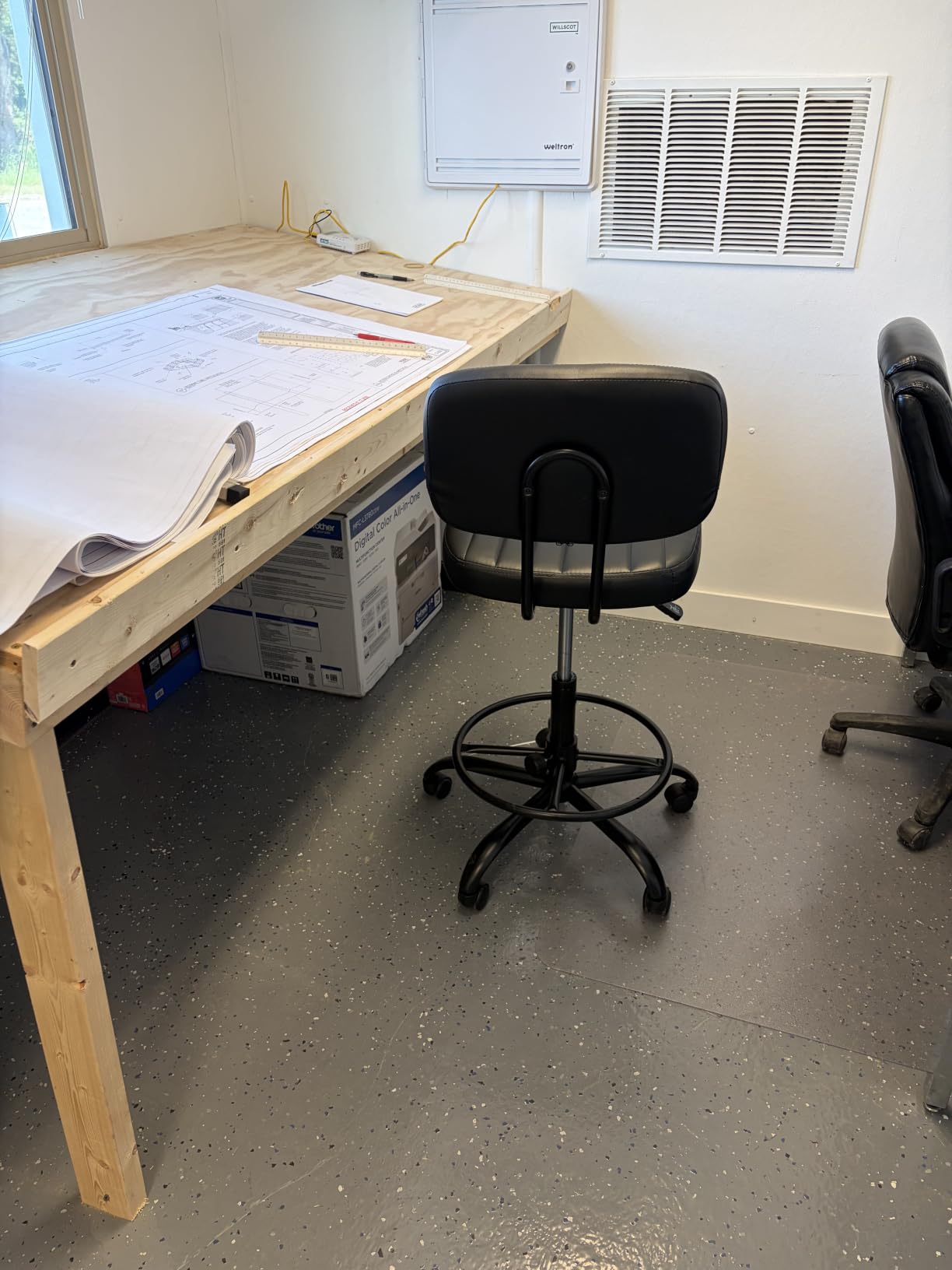
The armless design with a curved backrest shaped to the spine’s natural curve is what owners like, particularly for art studios, lab counters and smaller rooms. The small footprint is a real advantage in a home studio where a full drafting chair with a wide base will not fit between a wall and a desk.
The included casters are the weak link. Reviewers describe them as cheap, noisy and not rolling smoothly, and the common fix is to swap in urethane or roller-bearing wheels. That is an easy ten-minute job and it fixes most of what people dislike about this chair.
Why it suits counter-height and compact spaces
Counter-height work in a design studio usually means a materials table, a display plinth or a window ledge where you are checking a physical model, not a plan table. This chair is dimensioned for exactly that, and the armless low-back design lets you get close to a counter edge with a 17.32 inch seat depth and no arms in the way.
For a student or a small home practice working at a normal desk, the low minimum height and the 350-pound base rating make it a solid cheap task-adjacent stool. It is also the one chair here with a small enough footprint to park in a corner.
Where it falls short
The height range is the whole limitation. If your goal is drafting at a raised surface, this is the wrong chair, and buying it for that reason is the most common mistake we see in this category. The second limitation is the lack of recline or tilt, so it is not suited to leaning back.
The low back gives limited support for taller or heavier users, and the cheap casters are noisy on hard floors. Treat all of that as acceptable if your surface is at counter height, and as disqualifying if it is not.
How to Choose a Drafting Chair for Your Studio
Choosing between ten drafting chairs is easy once you know the four numbers that decide it. Everything else – mesh versus leather, tilt versus no tilt, materials – is preference. These four are not.
How to measure your drafting table in four steps
Almost every competitor page tells you to check the chair’s height range against your table and stops there. That is not enough, because it assumes you already know what height you should be sitting at. Here is the actual protocol.
Measure the floor to the underside of your work surface in inches, at the spot where you will sit. Do not measure the top of a board or the raised position of a sit-stand desk unless you plan to work there every day.
Subtract 10 to 12 inches for elbow height, which is the vertical distance from your seat to your elbow when your forearm is parallel to the surface. That gives you your target seat height.
Add your shoe and sole thickness, typically 1 inch, to the target so your knees sit at or just below the surface rather than above it.
Check the chair’s minimum and maximum against that target. If your target falls outside the range, the chair is wrong, however good it looks. If it sits near the bottom of the range, expect the seat to feel low and firm; near the top, expect it to be at the end of its travel and closer to sagging over time.
One useful sanity check: a drafting chair with a maximum seat height below about 32 inches will struggle with a tall plan table, and a chair with a minimum above 28 inches will never work at a normal desk. That single test eliminates half the options in this roundup in about ten seconds.
Drafting stool or drafting chair: the decision that matters most
This is the first real question in every forum thread about drafting seats, and it is the one most roundups never frame as a decision. A drafting stool is backless or near-backless. A drafting chair has a backrest, arms, and usually lumbar support. Neither is better in the abstract.
Choose a stool if you spend more time standing than sitting, if your drafting surface is used in short bursts, if your studio is small enough that footprint matters, or if you want one object to work at a plan table, a bench and a standing desk.
Choose a chair if you sit for six hours or more, if you type as well as draw, if you review models on screen and want to lean back, or if you have any history with lower-back trouble.
Choose the convertible option if you genuinely alternate. The SUPERJARE in this list has a detachable backrest and becomes a stool in minutes, which is the closest thing to a compromise that actually works.
Architects who use AutoCAD heavily tend to type, which argues for a backrest. Architects who hand-draw on paper at a plan table can work perfectly well from a stool. The honest answer is that the CAD hours decide it.
Match the minimum seat height, not just the maximum
Every listing leads with the maximum height, because that is the number that looks impressive. The number that decides whether you can use the chair for anything else is the minimum. A chair with a 34-inch maximum and a 24.5-inch minimum can sit at a plan table and still tuck under a lowered desk; a chair with a 33.9-inch maximum and a 28.3-inch minimum can only do the first.
Account for the measurement quirk too. On the HYLONE, owners report the actual height running 1.5 to 3 inches below the listed figure and dropping further under load. If your target height is close to the listed maximum, treat that as a real risk rather than a rounding difference.
Weight capacity and base stability
Pick a chair rated comfortably above your body weight, not at it. A chair rated at exactly your weight runs the cylinder and base at their limit permanently, and that is precisely the condition reviewers describe when they report chairs that sink or sag after a year of use.
Ratings in this group run from 250 pounds to 400 pounds. Below 275 pounds, your options narrow fast. If you are heavier, the BOLISS at 400 pounds is the only chair here built with your dimensions in mind, and its wide back and longer seat matter as much as the number.
Base stability at full extension is the other half. A five-claw base with a nylon seat plate is the most common construction here, and the chairs that wobble at full height are the ones with a narrower base and a lighter base plate. The Kensaker, BOLISS and ErGear all carry a noticeably wider base, and reviews reflect that.
Foot ring: the part buyers complain about most
Across every review set we read for this roundup, one complaint dominates: foot rings that gradually slide down as weight shifts, forcing readjustment in the middle of a task. It is the single most repeated problem in the category, and it is the reason the foot ring deserves a line of its own in a buying decision.
Three things determine whether a ring holds position. The retention mechanism matters most: a locking knob beats a friction collar. The ring’s diameter matters, because a wide ring resists more torque when you push off it. And the length of travel matters, because a ring with 9 inches of adjustment, as on the Kensaker, lets you land it exactly right and stay there.
Two more details. A ring with a rolled or rounded edge is far kinder to bare feet and thin socks than a raw tube, and several chairs here have that complaint on file. And if you work barefoot, add that to your weighting when you compare the Primy armless and the ErGear against the Kensaker.
Backrest, lumbar support and tilt
Interior back height is the number that decides whether your upper back is supported. The HYLONE at 23.5 inches is the tallest in this group, the CHAIRMAN is a mid-back, and the Amazon Basics back cushion measures 16.5 by 9.5 inches. If you are over six feet, anything under about 22 inches will leave you leaning forward onto the desk edge by mid-afternoon.
Lumbar support that adjusts in height is meaningfully better than fixed lumbar support, and the flip-up arms on most of these chairs are about fit rather than comfort: they let you pull the seat close to a surface with an overhang. Tilt is a genuine bonus and appears on only two chairs here, the HYLONE and the CHAIRMAN.
Armrests and the drafting table overhang problem
Nobody covers this, and it is a predictable failure in a real studio. If your plan table has an overhang, a modesty panel, or a raised lip, fixed armrests hit the underside of it and push you forward off the backrest. You end up sitting at the very front of the seat with your shoulders up.
There are three fixes. Flip-up arms clear the overhang entirely and are the safest choice. Armless designs avoid the problem completely, which is why the Primy armless and the DUMOS work well at benches. And fixed low arms work only if your table has genuine clearance underneath. If you already own a chair and hate the arms, flip-up or armless models are the upgrade.
Gas lift class and what certification actually certifies
The gas lift is the component most likely to fail and the hardest to replace, so it deserves more attention than any other spec. Class 3 cylinders are the standard duty rating. Class 4 is the heavier-duty class, and the ErGear is the only chair here that states a Class 4 cylinder with a 120000 lift cycle test rating.
Certification tells you different things and the distinctions are worth keeping straight. BIFMA certifies the furniture standard for the piece as a whole, and the Amazon Basics and CHAIRMAN here are BIFMA compliant. SGS and TUV test a specific component, usually the gas cylinder, for cycle endurance. GREENGUARD certifies emissions, which matters if your studio has poor ventilation. BIFMA on the whole chair is the broadest signal and the one forum users consistently look for.
Casters and floor type
Casters are the cheapest part of a chair and the fastest route to a scratched floor. Nylon wheels roll quietly on carpet and are hard on hardwood, concrete and tile. Polyurethane wheels are quiet and safe on hard surfaces but drag on deep carpet, and several owners here swap them out for urethane or roller-bearing versions as a first upgrade.
One more practical point on casters: a chair with no brake will scoot away from under a taller user sitting down abruptly, which the ErGear review set mentions directly. If your floor is hard, PU casters are the correct default, and if your floor is carpeted, expect any of these to need a nudge.
When not to buy a drafting chair
If your main surface is a standard 29-inch desk and the plan table is occasional, a drafting chair will disappoint you. Most of them cannot drop below about 22 to 24 inches, so on an ordinary desk you will be perched high with your feet on a ring that sits awkwardly, or you will be sliding the seat forward off the base entirely. In that situation a good task chair plus a separate stool for plan days is a better answer.
Two other cases where a drafting chair is the wrong purchase. If you are buying for a shared studio where the chair will be moved constantly, a 46-pound frame such as the BOLISS or CHAIRMAN is a two-person job every time. And if you are a short user under five foot four, several of the taller chairs here will not give you a proper knee angle at all, no matter how good the lumbar support is.
For a home studio, footprint deserves its own mention. The five-star base is about 25 inches across on most of these, and you need that clearance in front of a drafting board to swivel and reach a plan chest. Measure the room before you commit, and if you need to pick between a swivel base and a fixed-foot stool, the trade-off is mobility against floor space.
Frequently Asked Questions
What is the difference between an office chair and a drafting chair?
A drafting chair is a tall task chair with an extended gas lift, a seat that reaches roughly 22 to 35 inches, and a fixed foot ring that supports your feet when the seat is above a normal desk. A standard office chair usually tops out around 20 to 24 inches, has no foot ring, and puts your feet on the floor. The foot ring is what lets a drafting chair keep your knees at 90 degrees at a raised surface.
How high should a drafting chair be for my drafting table?
Measure floor to the underside of your work surface, then subtract 10 to 12 inches for elbow height, and add about 1 inch for your shoes. That figure is your target seat height. Compare it against the chair’s full range rather than its maximum, because a chair that reaches high enough but cannot come low enough is useless anywhere else.
Do I need a drafting chair or a drafting stool?
A drafting stool is right if you stand more than you sit, draft in short bursts, work in a small room, or want one chair to serve a plan table, a bench and a standing desk. A high-back drafting chair is right if you sit six hours or more, type as well as draw, or review models on screen and want to lean back. If you alternate, look for a chair with a detachable backrest.
Can drafting chairs be used with regular desks?
Only if the chair’s minimum seat height is low enough, and most are not. Chairs in this roundup have minimum heights from 17.3 to 28.3 inches, and a standard desk is around 29 inches. If your plan table is occasional and your desk is daily, a good task chair plus a separate stool is usually the better setup.
What is the most comfortable drafting stool?
Among the ten we compared, the SUPERJARE with removable backrest is the most comfortable at the cushion, with 4 inches of high-density foam under oil-resistant PU leather and a reinforced chrome base. For a full seated day, the HYLONE high-back mesh is more comfortable overall because the mesh back stays cool and the tilt lets you change position. Comfort depends far more on height fit than on upholstery.
Are drafting chairs good for your back?
Yes, when the seat height matches your work surface and your feet rest on the foot ring. That combination keeps your knees near 90 degrees and your lower back neutral, which is why drafting chairs exist. They are bad for your back when the minimum height is too tall for your desk, because you end up perched with your feet hanging and your spine rounded to compensate.
Our Final Verdict on the Best Drafting Chairs for Architects
After weeks of shifting between plan tables, sit-stand desks and CAD stations, the Primy drafting chair with flip-up armrests is the best drafting chair for architects in this group, and the gap to the rest is not subtle. It has the most reviews, a five-claw base that does not wobble, lumbar support that actually travels, and arms that fold out of the way of a drafting board. For an architect whose plans sit on a raised surface for most of the day, that combination is the whole job.
If your budget is the deciding factor, the Amazon Basics drafting stool with back is the fallback. It is BIFMA compliant, rated to 275 pounds, reaches nearly 34 inches, and has been holding a 4.4 average across more than 2000 reviews for years. It is not a luxury object, and it does not need to be.
For a full nine-hour CAD day, swap the Amazon Basics for the HYLONE high-back mesh, which adds a tilt mechanism and a back tall enough to support an adult spine. For anyone over six feet or heavier than 250 pounds, the BOLISS at a 400-pound rating is the only chair here dimensioned for that body, and you should add a thin seat cushion to compensate for its deep seat curve.
Whichever you choose, measure your drafting surface first. Four minutes with a tape measure will save you a chair that sits too high, and it is the step most buyers skip and most regret. If you are still deciding between furniture categories, our guide to folding chairs covers compact, portable seating for temporary studio space.