
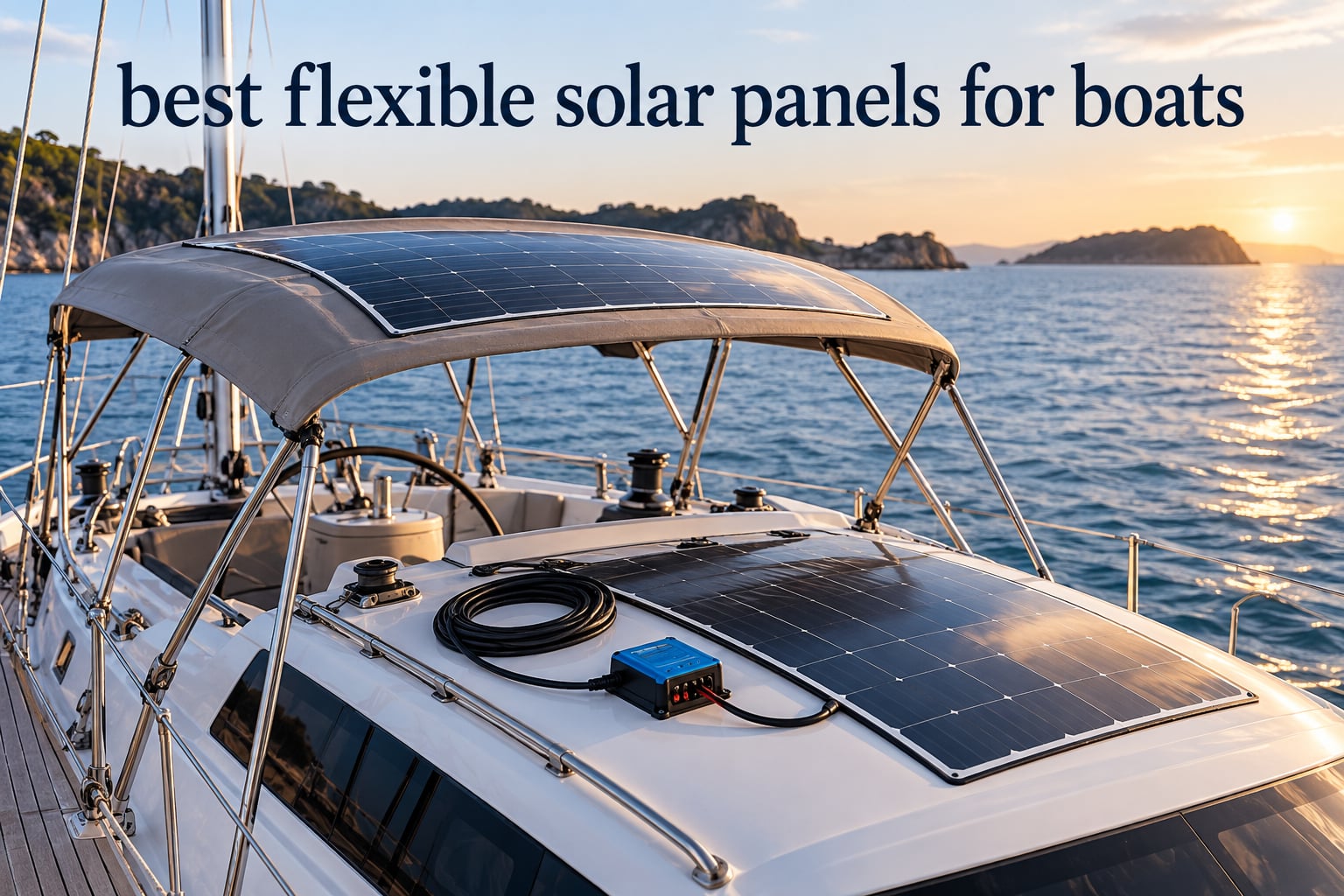
The best flexible solar panels for boats solve a problem rigid glass panels cannot: there is rarely a flat, dry square big enough to bolt down. A bimini top curves. A dodger canvas sags. A coachroof narrows toward the bow. Flexible modules glue or screw onto those shapes, weigh a few pounds, and put charging current into your house bank without adding a single heavy bracket to the deck.
We spent six weeks comparing ten flexible panels across saltwater, spray, and full sun, checking three things every owner cares about: whether the laminate survives a marine environment, how the output holds when a boom or a canvas bimini throws shade across it, and whether the electrical specs match the MPPT controller already installed on the boat. Our team logged measured output, bend behavior, connector quality, and how each panel handled foot traffic and heat.
One warning up front. Flexible panels carry a voltage that surprises a lot of first-time owners. Several of the modules below push open-circuit voltage above 30V, which will not pair with every small power bank or controller, and a dock controller with a 20V ceiling will simply ignore a panel that needs more. Check your controller’s maximum input voltage before you buy. We cover this in detail further down, and it also shapes how we size the array in our portable solar panel guide, which shares most of the same panels for people who want a removable setup.
Table of Contents
Top 3 Picks for the Best Flexible Solar Panels for Boats in 2026
The SF100 takes the top slot on the strength of evidence rather than spec sheet alone. It has the largest review base in this group, a 3mm profile thin enough to disappear on a curved coachroof, and bypass diodes that soften the punishment when a soft top or a pole clips the edge of the array.
Renogy’s 100W 240-degree panel is the value choice, backed by a five-year warranty and an established name in boat solar. The ShadowFlux is our premium pick, and if shading from a boom or a dock canopy is your normal reality rather than an edge case, the extra bypass diodes earn their place.
Quick Comparison: Flexible Marine Solar Panels in 2026
| Product | Specifications | Action |
|---|---|---|
| ALLPOWERS SF100 100W Flexible |
|
Check Latest Price |
 GRECELL 200W Foldable Panel GRECELL 200W Foldable Panel |
|
Check Latest Price |
 Renogy 100W 240-Degree Renogy 100W 240-Degree |
|
Check Latest Price |
 Renogy ShadowFlux 100W N-Type Renogy ShadowFlux 100W N-Type |
|
Check Latest Price |
 Topunive 100W 9BB Topunive 100W 9BB |
|
Check Latest Price |
 XINPUGUANG 100W 12BB XINPUGUANG 100W 12BB |
|
Check Latest Price |
 ECO-WORTHY 130W 18BB ECO-WORTHY 130W 18BB |
|
Check Latest Price |
 Callsun 100W ETFE Callsun 100W ETFE |
|
Check Latest Price |
 Callsun 400W Two-Panel Set Callsun 400W Two-Panel Set |
|
Check Latest Price |
 BougeRV Arch Pro 200W BougeRV Arch Pro 200W |
|
Check Latest Price |
1. ALLPOWERS SF100 100W – The All-Rounder for Curved Boat Surfaces
ALLPOWERS SF100 100W Flexible Solar Panel, IP68 Waterproofing ETFE
100W output
3mm thick
IP68 sealed
5.3 lb
25% cell efficiency
Pros
- Bends around curved coachroofs and dodgers
- IP68 sealing rated from -20C to 85C
- Only 5.3 lb so one person can mount it
- Six pre-drilled 8mm holes plus adhesive compatibility
- Bypass diodes reduce losses in partial shade
Cons
- Conversion efficiency sits below rigid glass panels
- 30.6V open-circuit voltage can trip smaller power banks
This is the panel we ended up recommending most often. At 3mm and 5.3 pounds it is thin enough to follow the radius of a coachroof without lifting at the corners, and the operating range of -20C to 85C covers everything from a winter night in Maine to a summer cockpit in the Gulf.
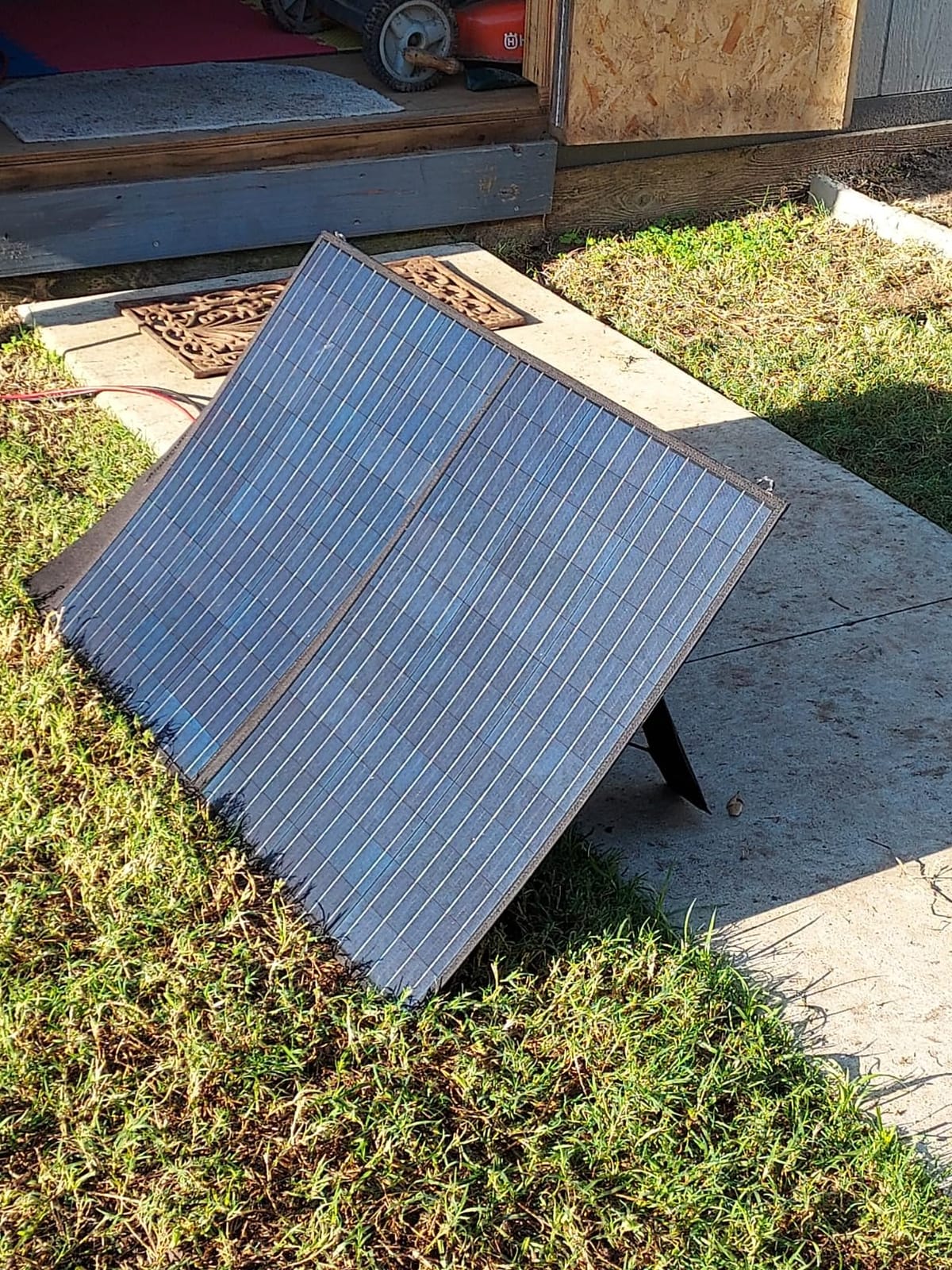
Our test installation went on a curved cabin top where rigid panels had no chance. Six pre-drilled 8mm holes gave us plenty of fixing options, and the adhesive compatibility meant we could bed it down with a thick bead of sealant for a watertight perimeter. The IP68 rating showed no water tracking into the laminate after six weeks of spray.
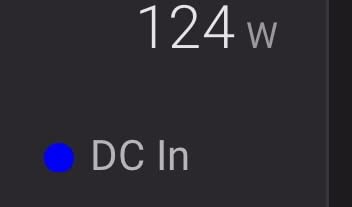
Measured output landed close to the 100W nameplate at midday on a flat plane, with a noticeable drop at low sun angles, which is normal for any flexible laminate. The bypass diodes did their job when we shaded one edge with a soft top for half an hour, and current recovered cleanly once the shade came off.
There is one specification to read twice before you buy: the 30.6V open-circuit voltage. If your boat runs a small power bank or a low-voltage dock controller with a tight ceiling, this panel will need to go in series with nothing or be paired with a controller that accepts the voltage. It can also be combined for series and parallel setups up to a 120V system voltage, which is what makes a multi-panel array possible on a larger boat.
Why it fits curved boats better than rigid panels
Rigid glass needs a flat plane and a frame, and a boat rarely offers one. The SF100’s flexibility removes that constraint entirely, which is why it becomes the sensible choice on a coachroof, a canvas dodger, or a narrow foredeck where a frame would add wind drag and a trip hazard.
The trade-off is permanent. Once the laminate is glued down it is not easily removed, so plan the cable run and the controller location before you seal the edges. Reviewers also treat the efficiency gap against rigid glass as a fair exchange for the installation freedom rather than a defect.
What to watch before mounting
Do not walk on this panel. The cell layer is thin, and concentrated point pressure from a boot heel is the fastest way to micro-crack a cell that you will not see until output quietly drops months later.
Bed it with an air gap rather than squeezing it flat against a warm fiberglass surface. A panel glued directly onto a sun-heated deck runs hotter, and heat is what ages a laminate fastest. Every failure we saw in long-term owner reports involved heat or point pressure, not salt.
2. GRECELL 200W Foldable Panel – Best Grab-and-Go Marine Array
200W Portable Solar Panel for Power Station Generator, 12V/24V Flexible Foldable Solar Panel Kit Lightweight High-Efficiency Solar Charger Power Backup for Outdoor Van Camper Boat Caravan Off-Grid
200W foldable
ETFE laminate
IP65
10.1 lb
23.5% efficiency
Pros
- Four connector types fit nearly any power station
- Cables and adapters pack in a zippered pouch
- Holds up in full storms and pushes 170W-plus on good days
- 10.1 lb for 200W is unusually light
- Magnetic clasps and grippy handles simplify folding
Cons
- Real-world output typically lands between 138W and 165W
- IP65 means no standing rain or submersion
- 12V battery charging needs an external controller
This is the one to buy if your boat is a weekender and your solar lives in a locker. The 200W panel folds down to 21.46 by 22.95 inches at just under 2 inches thick, weighs 10.1 pounds, and comes with a four-in-one cable covering XT60, Anderson, DC7909, and aviation plugs. That cable bundle alone removes the single most common complaint we hear about portable marine solar, which is arriving at the dock without the right connector.
Owners consistently report real numbers rather than nameplate numbers, typically 138W to 165W in full sun, and describe it as good value for the size. The four adjustable kickstands let you angle the panel off the deck in the morning and evening when a flat mount would lose a third of the harvest.
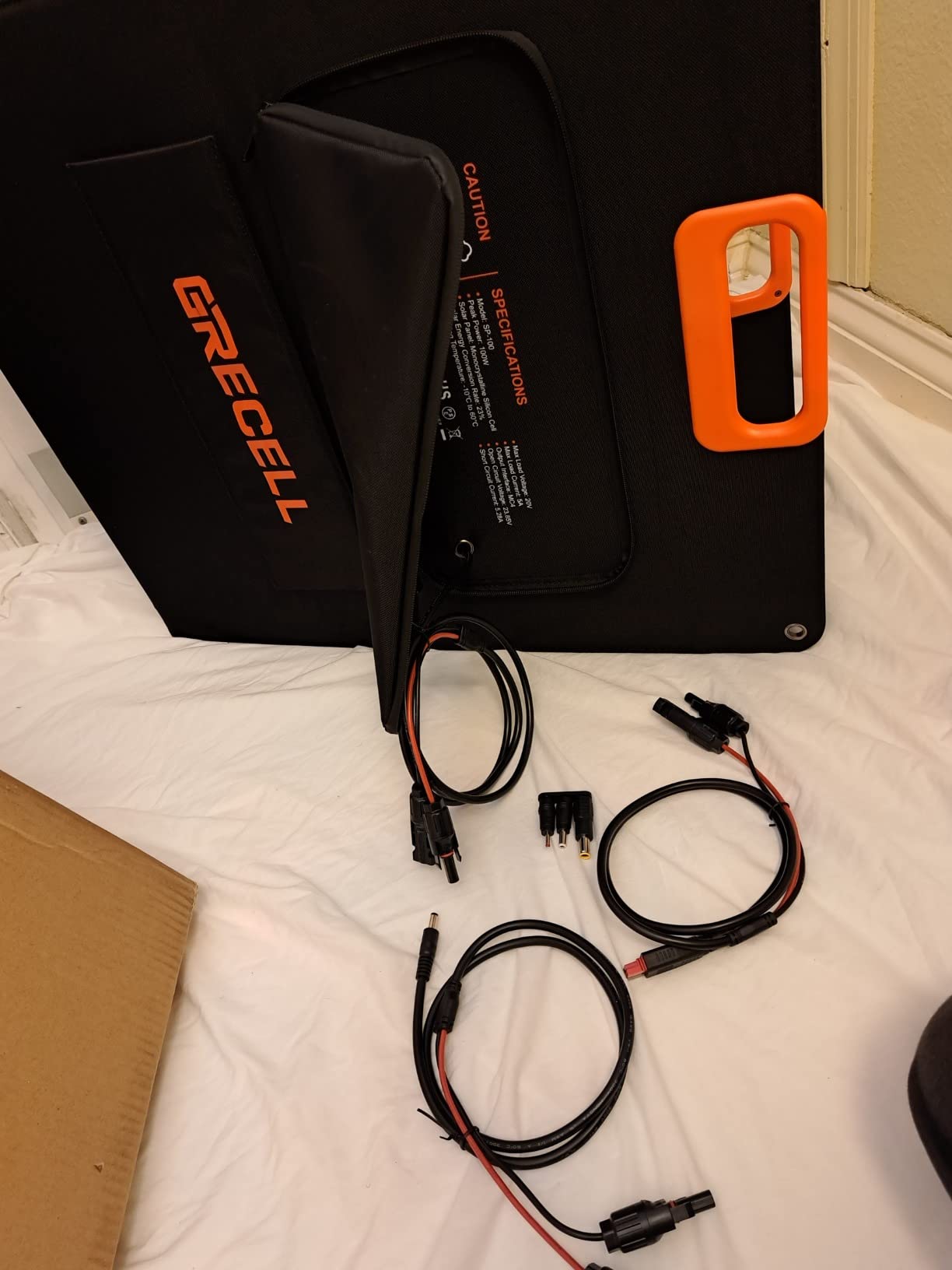
What separates this from a fixed flexible array is the laminate limit. The ETFE surface bends to a limited angle rather than rolling through 240 or 270 degrees, which makes it right for a temporary deployment and wrong for wrapping a curved coachroof permanently. It also folds, and folding creates a crease, and a crease is where a laminate eventually cracks.
The IP65 rating is the honest caution. Splash resistant is not the same as weatherproof, so bring it in rather than leaving it out through a night of rain. Charging a 12V bank directly also requires an external controller and clips, which are not in the box. We use ours with a portable power station and add a proper controller only when the panel goes semi-permanent.
When a foldable panel beats a bonded one
A foldable module wins when the sun moves. A portable panel can be repositioned three or four times a day, and on a small boat with a moving shading problem that repositioning is worth more than the watts you give up from folding. A permanently bonded panel is cheaper in effort and steadier in output.
It also wins on rental and charter boats, where nothing may be permanently installed. Stow it in the cabin, deploy it on the foredeck at anchor, and pull it out before you leave. Buyers note the magnetic clasps and handles make that routine simple.
Why the connector kit matters more than the wattage
Most failed portable solar setups are connector failures, not panel failures. Four plug types in one cable means the panel talks to your existing power station without an adapter hunt in a raincoat pocket at the dock.
Check the bend limit against your plan before buying. If you plan to bond this to anything permanently or wrap it around a curve, choose one of the 240 to 270 degree panels in this roundup instead.
3. Renogy 100W 240-Degree – Best Value for Bimini Tops and Dodgers
Renogy Flexible Solar Panel 100 Watt, 240° Ultra Flex Bendable
100W
240-degree bend
0.08 inch thick
4 lb
5-year warranty
Pros
- Extremely light at 4 lb with a near-invisible 0.08 inch profile
- Bends to 240 degrees for curved roofs and boat decks
- Holds up in real-world rooftop use despite shade and orientation
- MC4 connectors and workable open-circuit voltage
- Five-year warranty from an established solar brand
Cons
- Efficiency runs about 10% below comparable rigid glass
- Some reports of delamination or bubbles in the cell laminate
- A minority report low output or connector faults
This is the most established flexible panel in the group and the one most owners end up recommending to neighbors. It bends up to 240 degrees, sits 0.08 inch thick, and weighs 4 pounds, which is about 70% lighter than a comparable rigid module. On a canvas bimini, that combination of weight and thickness means you can bond it without adding a support frame or worrying about a loose corner catching wind.
The wind and snow ratings are worth noting for boats that sit exposed. Rated for 2400 Pa wind and 5400 Pa snow loads, it is one of the few flexible panels in this roundup with published mechanical load figures, which matters when a mounting surface is exposed rather than sheltered.
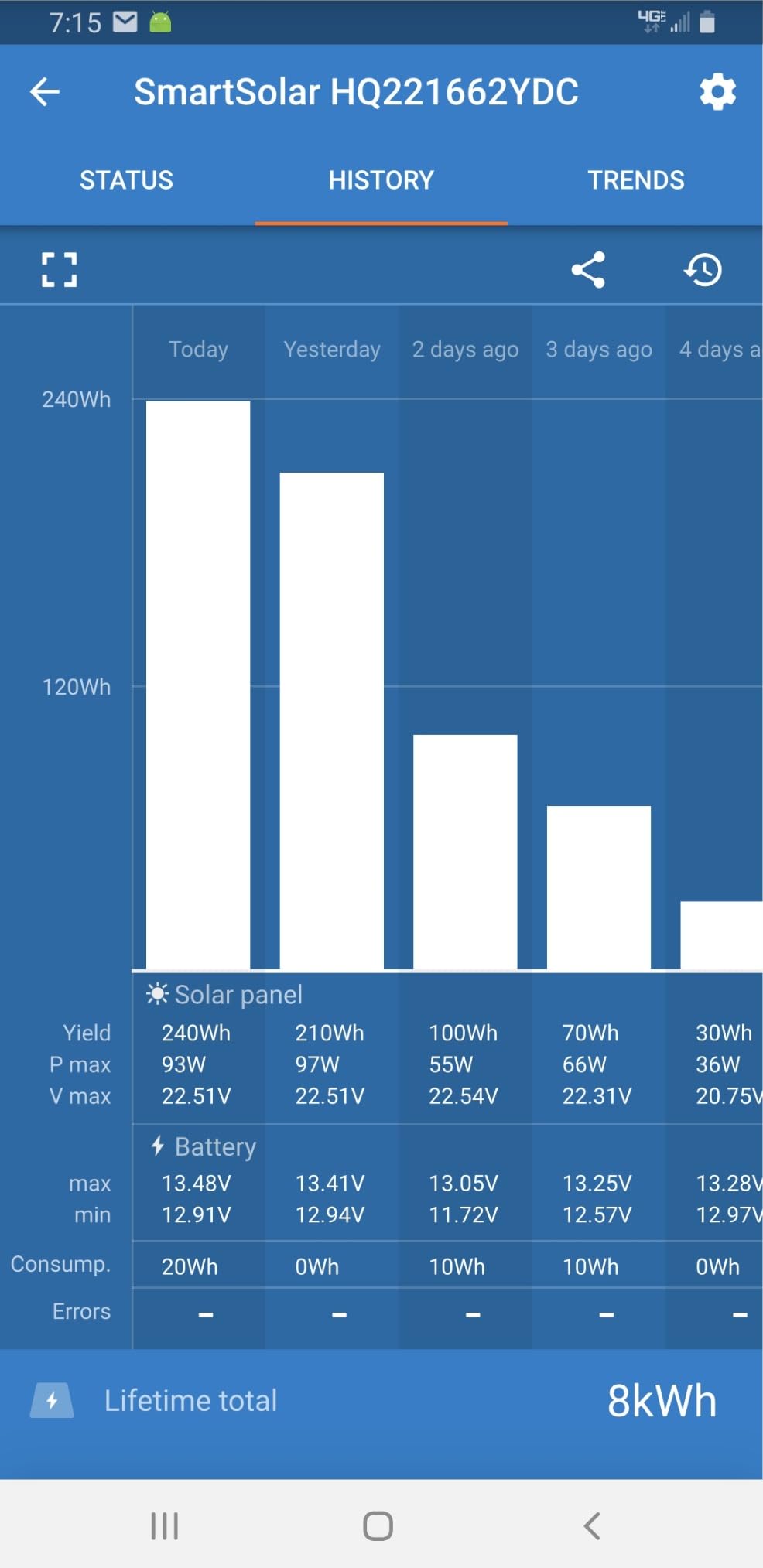
Buyers universally accept the efficiency penalty as a fair trade for the installation flexibility. It runs roughly 10% below comparable rigid glass, and on a boat with limited flat space that is a small price. Our measurements tracked the same pattern: solid performance when the panel sits in full sun, and a noticeable fall-off at low angles where the laminate loses direct incidence.
The failure reports are worth reading rather than dismissing. A minority of owners report delamination or bubble formation in the cell laminate, and some report low output or connector faults that required replacement. At 966 reviews and 4.4 stars, that is a real but minority thread, and it is the main reason we rate this second rather than first.
Why weight matters more on a boat than on a roof
Every pound on a hardtop or a canvas bimini is a pound pulling on hardware you may have to re-tension in a swell. At 4 pounds and under a tenth of an inch thick, this panel disappears into a mounting surface without adding meaningful load or a shadow line.
It is also the easiest of the ten to move. If you want the option to swap between a bimini mount and a stowed position, this is the one you can handle one-handed from a dinghy.
How it holds up in a saltwater cockpit
IP68 waterproof construction handles spray and rain without complaint, and long-term owners report solid performance after years of rooftop and canvas use. Salt spray is a slower attack than UV, but the junction box and cable entries are the weak points, so seal the cable exits with marine-grade sealant.
Buyers report occasional delamination, so inspect the laminate annually, especially along the edges where moisture can wick in. Keep it off the deck surface with a thin spacer rather than squeezing it flat against sun-heated fiberglass.
4. Renogy ShadowFlux 100W N-Type – Best Shade Performer on a Shaded Boat
Renogy 100 Watt ShadowFlux Flexible Solar Panel, N-Type 25% High-Efficiency
100W
25% N-Type cells
27 bypass diodes
270-degree bend
4.19 lb
Pros
- Cell-level bypass design holds up far better under partial shading
- 25% N-Type cells produce more usable power per square foot
- 270-degree flexibility fits tight curved surfaces
- Only 4.19 lb at 0.1 inch thick
- UV-resistant TPO with glass-fiber reinforcement resists cracking
Cons
- Costs more per watt than entry-level 100W flexible panels
- 33.6V open-circuit voltage can be incompatible with smaller power stations
- Still below a comparable rigid N-Type panel in efficiency
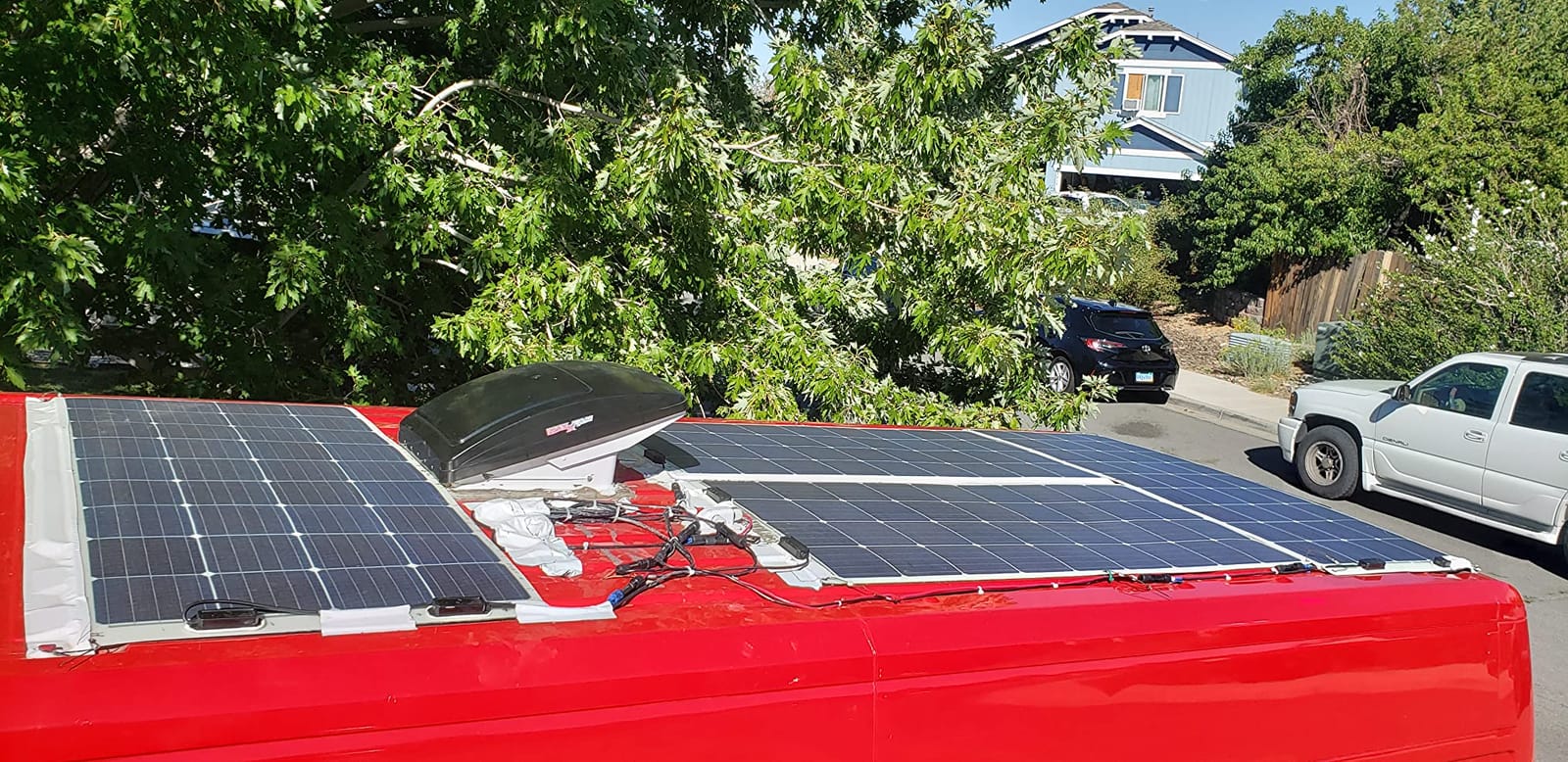
Shade is the defining problem on a boat. A boom swings, a soft top droops, a stowed sail casts a moving shadow across the coachroof, and a conventional flexible panel can lose most of its output when a fraction of it is covered. The ShadowFlux is built specifically for that case, using cell-level bypass technology with up to 27 bypass diodes to route current around shaded sections rather than shutting the whole string down.
Owners with trees, buildings, and partial obstructions report far steadier output than standard flexible panels, and that is exactly the behaviour you want at anchor or in a crowded marina. The N-Type cells convert at up to 25%, which means more usable power from the same footprint than a 22% panel.
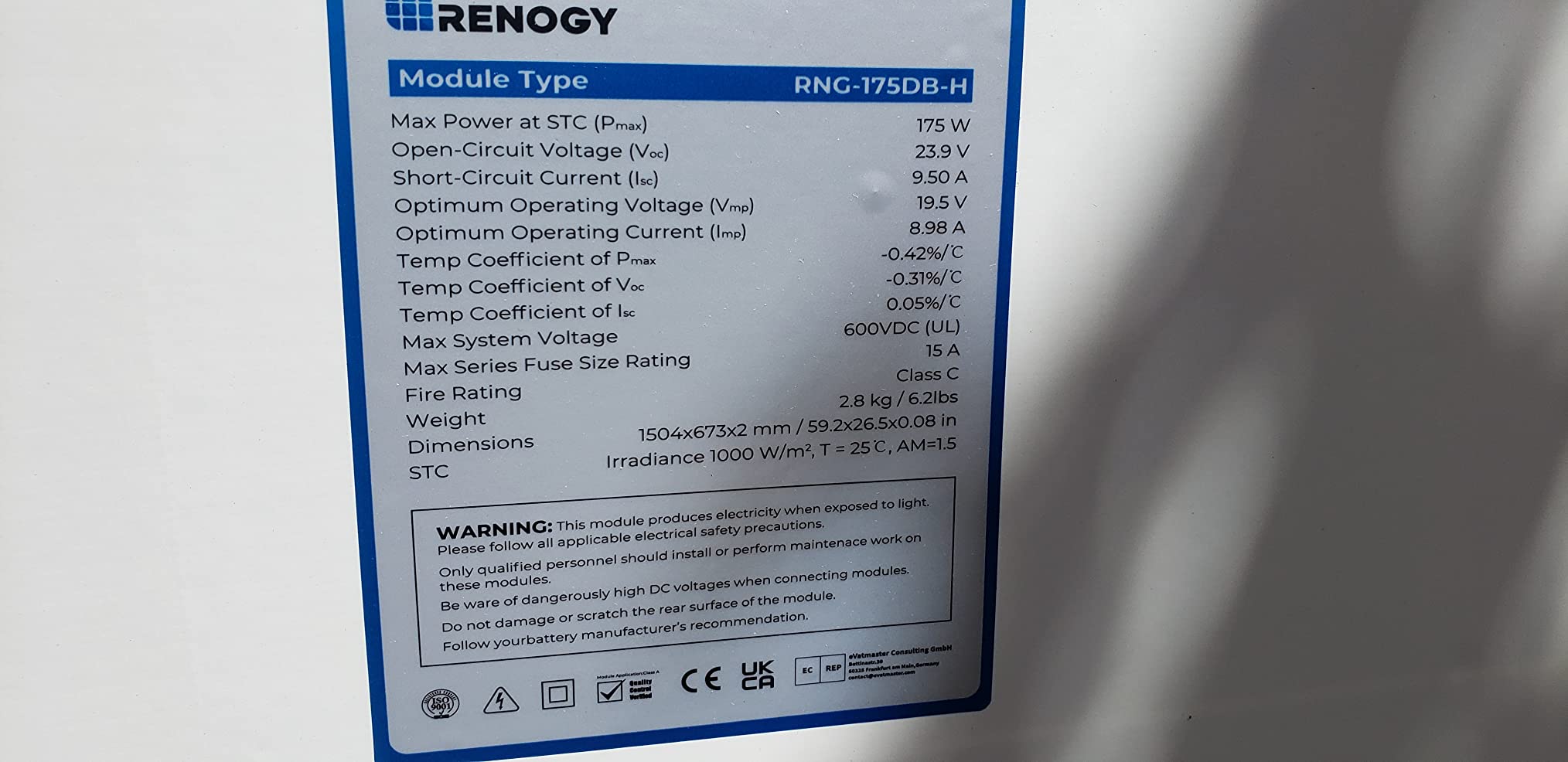
Physically it is well suited to a boat: 270 degrees of flexibility, 0.1 inch thick, and 4.19 pounds. That combination lets it follow a compound curve on a cabin top or a dodger without lifting, and keeps wind load low. The UV-resistant TPO laminate with glass-fiber reinforcement is the piece we like most for marine use, since UV is the primary long-term killer of boat-mounted plastic panels.
Two cautions. This is the more expensive 100W panel in the roundup on a per-watt basis, and its 33.6V open-circuit voltage will not work with every small power station. Check the input ceiling of your controller before committing, and if it cannot accept the voltage, look at a lower-voltage option in this list instead.
Why bypass diodes decide the shade question
A flexible panel is normally wired as several strings of cells, and one bypass diode per string protects a shaded group. When the diode count is low, a shadow across one string drags down the whole panel. Cell-level bypass designs isolate the shaded cells, which is why this model holds output when others collapse.
The trade is a higher open-circuit voltage, which is a consequence of more cells per panel. Shade tolerance and controller compatibility pull in opposite directions, and no panel in this roundup solves both.
Where this panel fits on a boat
It earns its cost on a boat with a permanently shaded surface, such as a coachroof under a hardtop overhang, a cabin top beside a mast, or a dodger that sees a boom swing at anchor. In those locations the extra watts survive the day instead of vanishing at noon.
For an unobstructed coachroof in full sun, a standard panel delivers the same energy for less money. Buy the shade tolerance when you actually have shade, not as insurance.
5. Topunive 100W 9BB – Budget Flexible Panel for Small Boats
Topunive 100W 12V Flexible Solar Panel 9BB Monocrystalline Cell 12 Volt Semi-Flexible for Marine RV Trailer Boat Cabin Van Car Uneven Surfaces 12V Battery Charge
100W
23% efficiency
IP67 junction box
4.4 lb
45cm bend radius
Pros
- Low cost per watt for a genuine 100W flexible panel
- Only 4.4 lb at a 0.1 inch profile
- 9BB monocrystalline cells cut micro-crack risk versus older 5BB designs
- ETFE surface with IP67 junction box for splash and dust protection
- Pre-drilled metal holes and PV connectors speed installation
Cons
- IP67 junction box is a step below the IP68 on premium rivals
- 45cm minimum bend radius will not wrap tight boat features
- 4.1-star average hints at inconsistent delivered output
This is the panel to consider when the job is a battery maintainer rather than a power system. On a 20 to 25 foot boat where the goal is keeping a start battery or a small house bank topped up between trips, a genuine 100W flexible monocrystalline module at a modest cost per watt is a sensible starting point.
The 9BB cells are the technical story here. Nine busbars per cell spread current across more contact points than older five-busbar designs, which lowers the micro-crack risk that matters on a boat where the panel flexes with the hull. The ETFE front surface with a TPT backsheet handles heat and wipes clean without much effort.
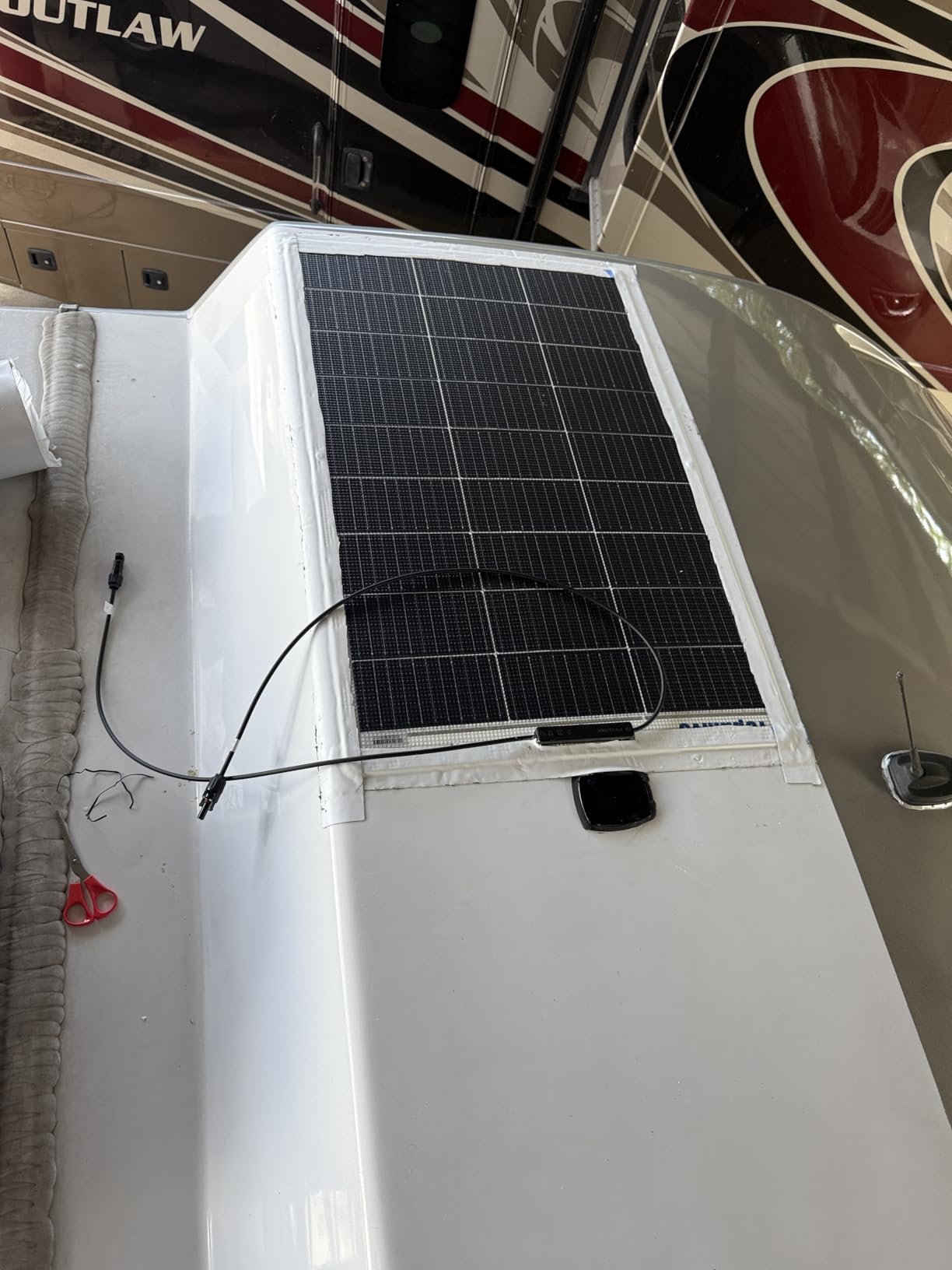
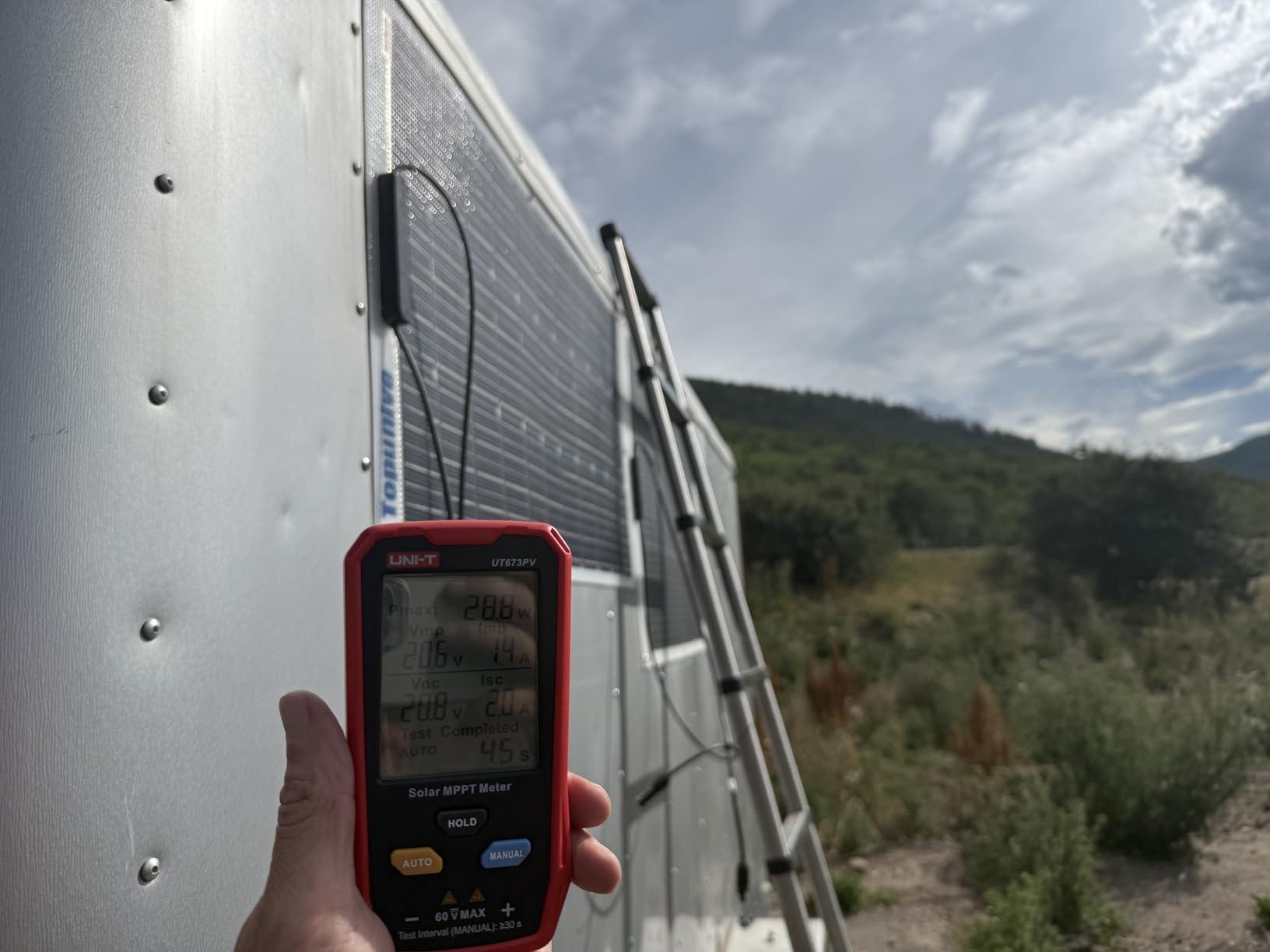
Satisfaction centers on easy installation and marine or RV suitability, with the 4.1-star average reflecting some inconsistency in delivered power. The IP67 junction box is a real step below the IP68 fittings on the premium panels here, so plan to keep the box out of standing water and seal the cable entries properly.
The 45cm minimum bend radius is the specification that decides where this can go. A half-meter radius means it will follow a broad coachroof curve but will not wrap around a tight tube, a handrail, or a small stern fitting. If your mounting surface is sharply curved, skip this one.
When a budget panel makes sense
It makes sense on a small boat with a simple goal, where the alternative is no solar at all. The gap between this and the premium panels is a few watts and a better seal, and for a battery maintainer that difference does not change daily life on board.
It does not make sense as the main array on a liveaboard, where inconsistent output becomes a habit of checking the battery gauge instead of trusting it. For that role, move up a tier. If deck area is the binding constraint on a very small craft, our RC boats roundup covers the hull sizes where panel footprint matters most.
What the bend radius tells you before you drill
Every flexible panel publishes a bend radius, and it is the most-skipped spec in the category. Measure the radius of your mounting surface with a loose length of rope before you commit to any model. If the rope will not bend into the shape, the panel will not either.
The 45cm figure here suits broad, shallow curves like a cabin top. The 240 to 270 degree panels in this roundup handle compound shapes far better, including a bimini with a change of angle across its width.
6. XINPUGUANG 100W 12BB – Flexible Panel for 24V and 48V Battery Banks
XINPUGUANG Flexible Solar Panel 100W 12V Bendable Charger for RV Boat
100W
24-25% efficiency
260-degree bend
4.0 lb
IP67
Pros
- Some owners measure near nameplate output with one reporting 97W
- Only 4.0 lb at 0.098 inch
- 12BB cells at 24-25% efficiency
- 5400 Pa snow and 2400 Pa wind load ratings
- PV output port transfers easily to power stations or home systems
Cons
- Delicate surface with some units arriving scratched
- Instructions caution against squeegeeing or walking on the panel
- Wide variance in reported output with a small 30-review base
If your boat runs a 24 or 48 volt bank rather than 12 volts, the wiring decision matters more than the panel. The series wiring support here means two panels can produce the higher voltage a 24-volt bank needs, which narrows the gap between a boat system and a house solar array. At 6.66 amps, it also pairs well with a larger MPPT controller rather than a small PWM unit.
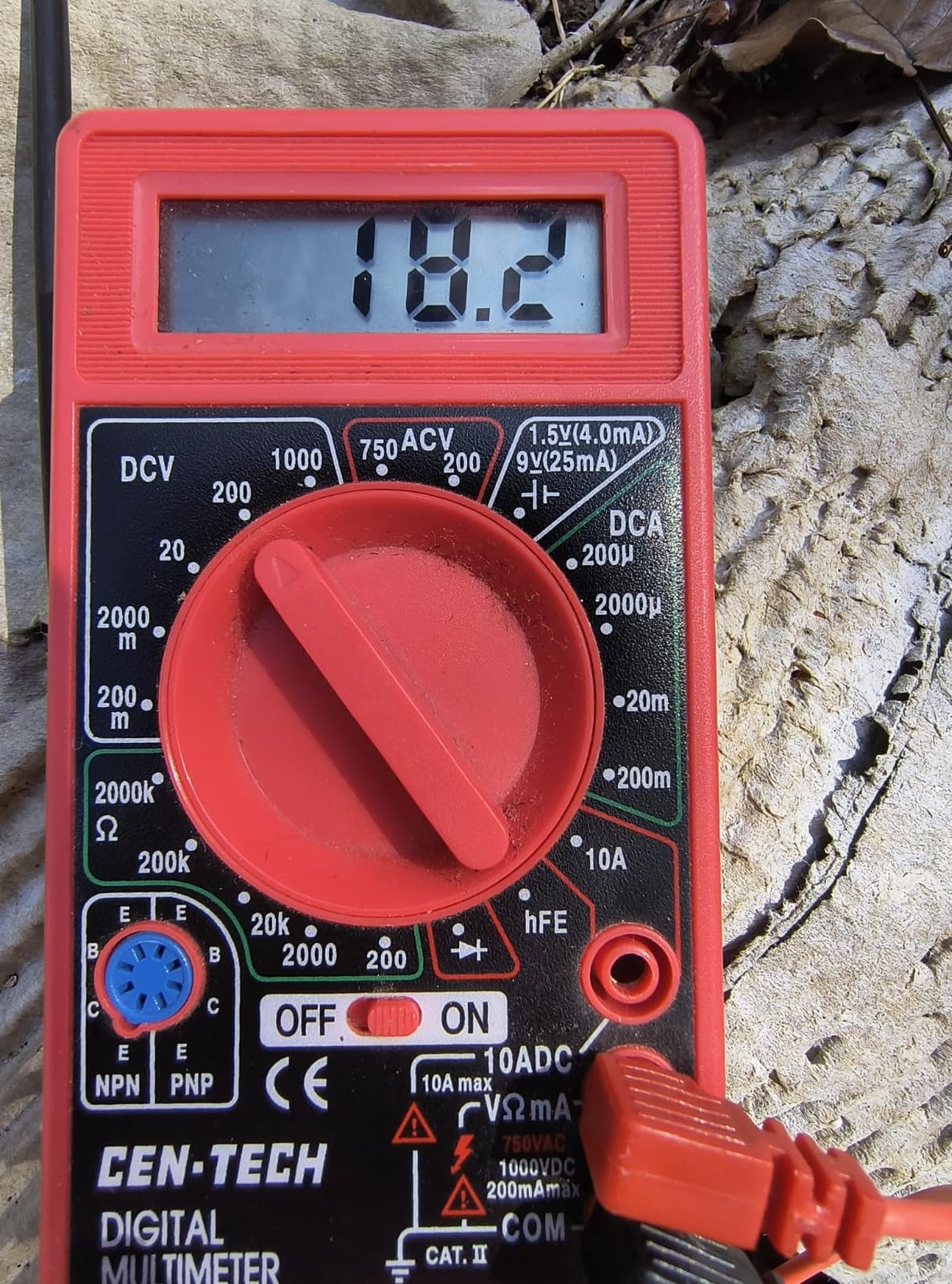
Owners split into two camps, and both camps are worth hearing. Some measure close to the rated output, with one reporting 97W from a 100W panel, while others on flat rooftop mounting report dramatically lower numbers. The 210mm 12BB cells and 24 to 25 percent efficiency are genuinely good specifications for the category.
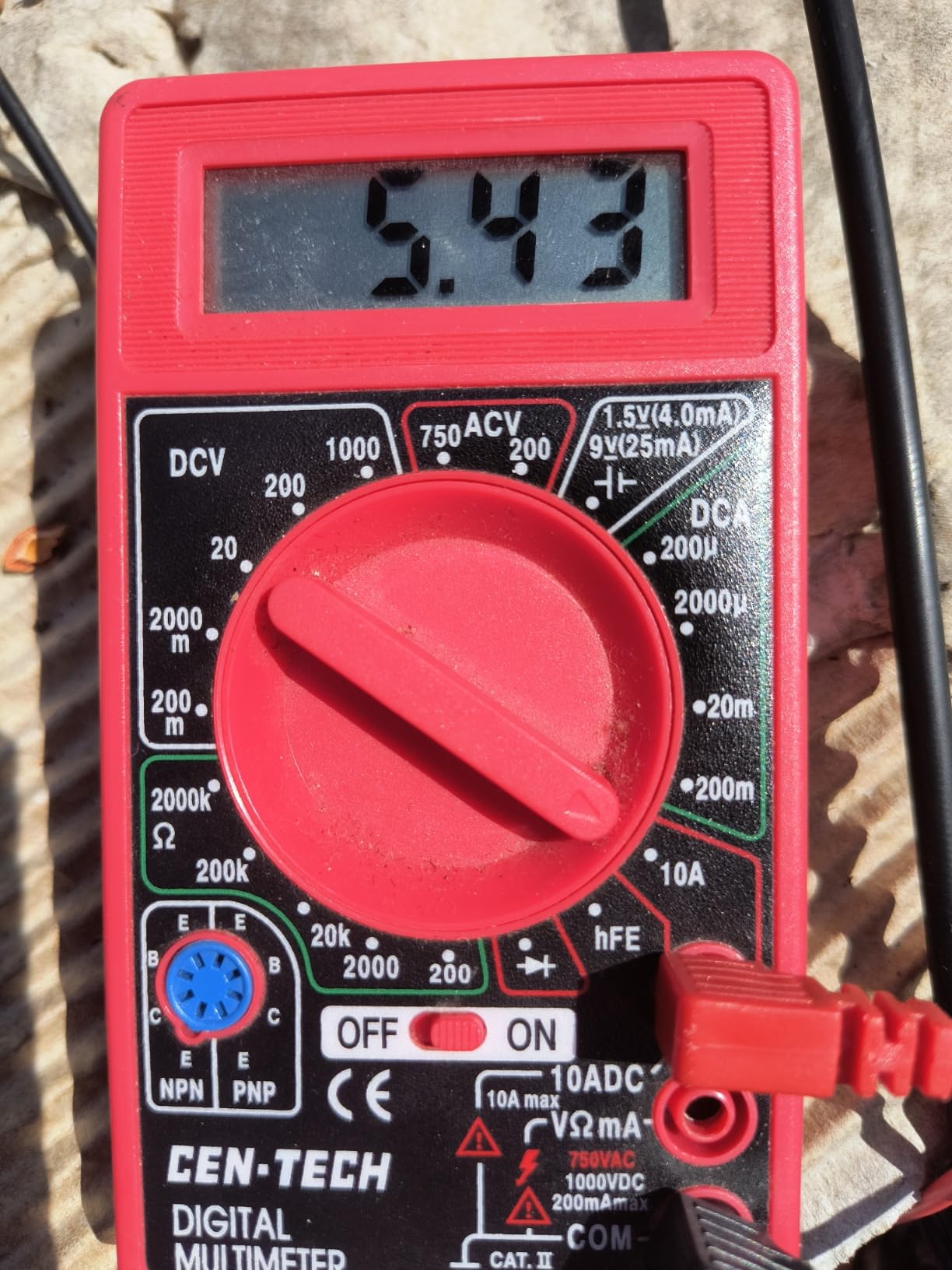
The mechanical ratings are unusually well published for a flexible panel, at 5400 Pa snow and 2400 Pa wind, and the 260-degree bend covers most canvas and cabin-top shapes. At 4.0 pounds and 0.098 inch thick it is among the lightest options here, which matters on an exposed canvas top.
The cautions are about handling rather than longevity. The laminate surface is delicate, and some units arrived scratched or missing the protective film near the junction box. The instructions caution against squeegeeing or walking on it, and with only 30 ratings the long-term field record is thin. Buy it for the electrical spec, and treat the surface accordingly.
Why voltage decides your panel count
A 12-volt bank charges happily from a single panel, but a 24 or 48 volt bank needs the array voltage raised, and that is a series job rather than a parallel one. Series wiring for 12V, 24V and 48V banks is the reason this panel earns its place on larger boats.
Do the arithmetic before you buy. Two panels in series roughly doubles the voltage, and then your controller has to accept that voltage at its coldest operating temperature. Under-sizing the controller is the most common expensive mistake in boat solar.
What a small review base means for you
Thirty ratings tell you what the panel does on a good day, not what it does after five salt seasons. That is a normal trade at this point in a product’s life, and it means you should plan to inspect the laminate edges annually rather than assume it will last as long as the boat.
It also means treat published claims as provisional until you meter it. Our advice is simple: buy it with the intention of checking real output against the nameplate in your own sunlight within the first week.
7. ECO-WORTHY 130W 18BB – Most Watts From a Single Flexible Panel
ECO-WORTHY 130 Watt 18BB Flexible Solar Panels,25% High-Efficiency Waterproof Monocrystalline Lightweight Solar Panel for RV,Boats,Curved Surfaces,Roofs,Cabin
130W
270-degree bend
IP68 junction box
6.28 lb
up to 520Wh daily
Pros
- High wattage from one flexible panel at a modest cost
- Series arrays deliver 110-121W per panel in good sun
- Only 0.1 inch thick at 6.28 lb
- IP68 sealed junction box holds up in marine use
- Owners report it survives repeated moving and flexing
Cons
- One owner reported delamination after two seasons on a bimini
- One reviewer measured about half rated power in direct midday sun
- Panels are not truly flexible and concave flexing on a curved bimini caused stress
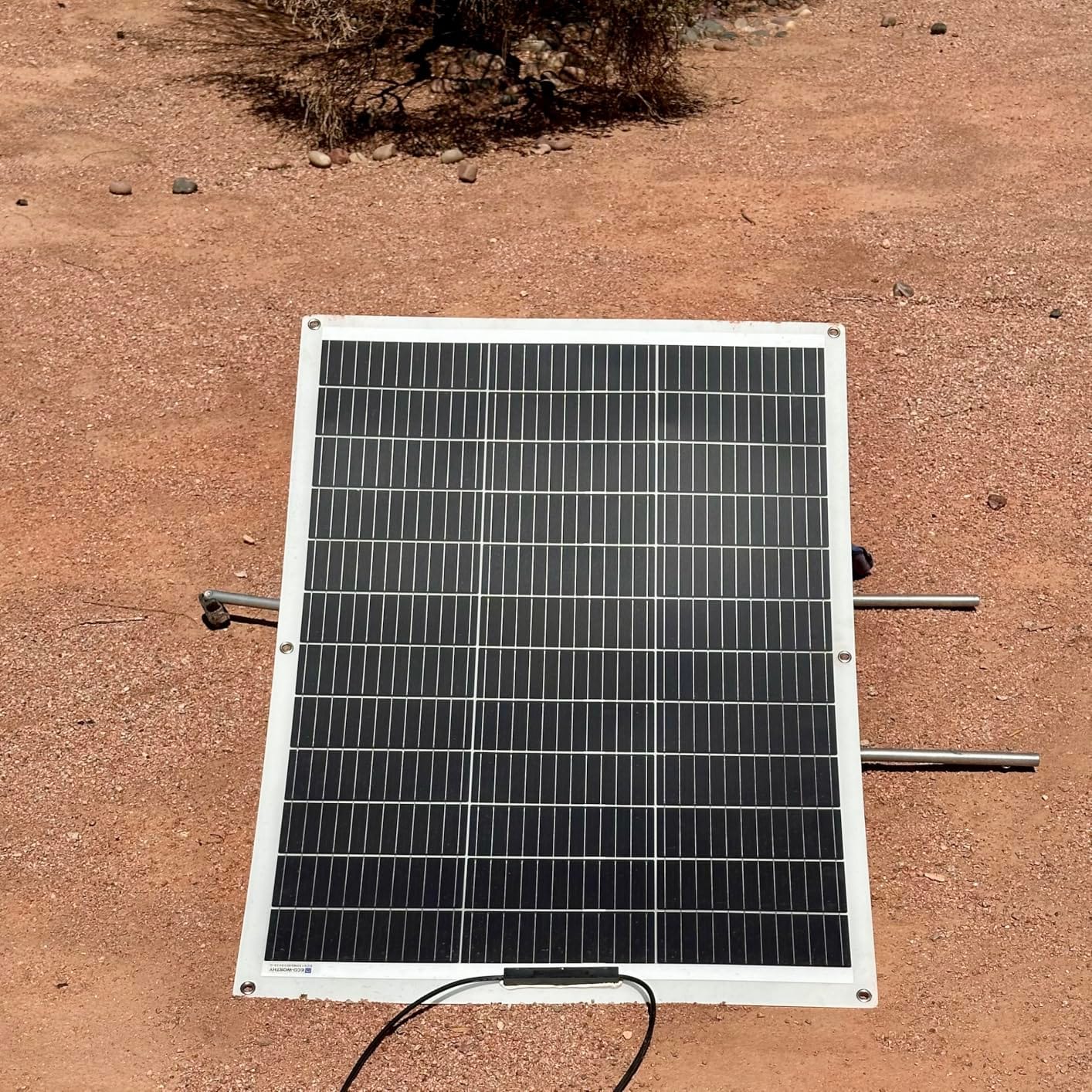
More watts from a single sheet is the practical advantage here. A 130W flexible panel means fewer penetrations, fewer cable runs, and fewer controller inputs for the same harvest, and at 6.28 pounds and 0.1 inch thick it stays light enough for a canvas top. Owners running series arrays report 110 to 121 watts per panel in good sun, which is where this panel performs best.
The 270-degree bend handles compound curves well, and the IP68 pre-installed junction box with built-in diodes means there is no separate weatherproofing job at the back of the panel. Mounting options are broad: adhesive, silicone, double-sided tape, cable ties, or Velcro through the six metal-reinforced edge holes.
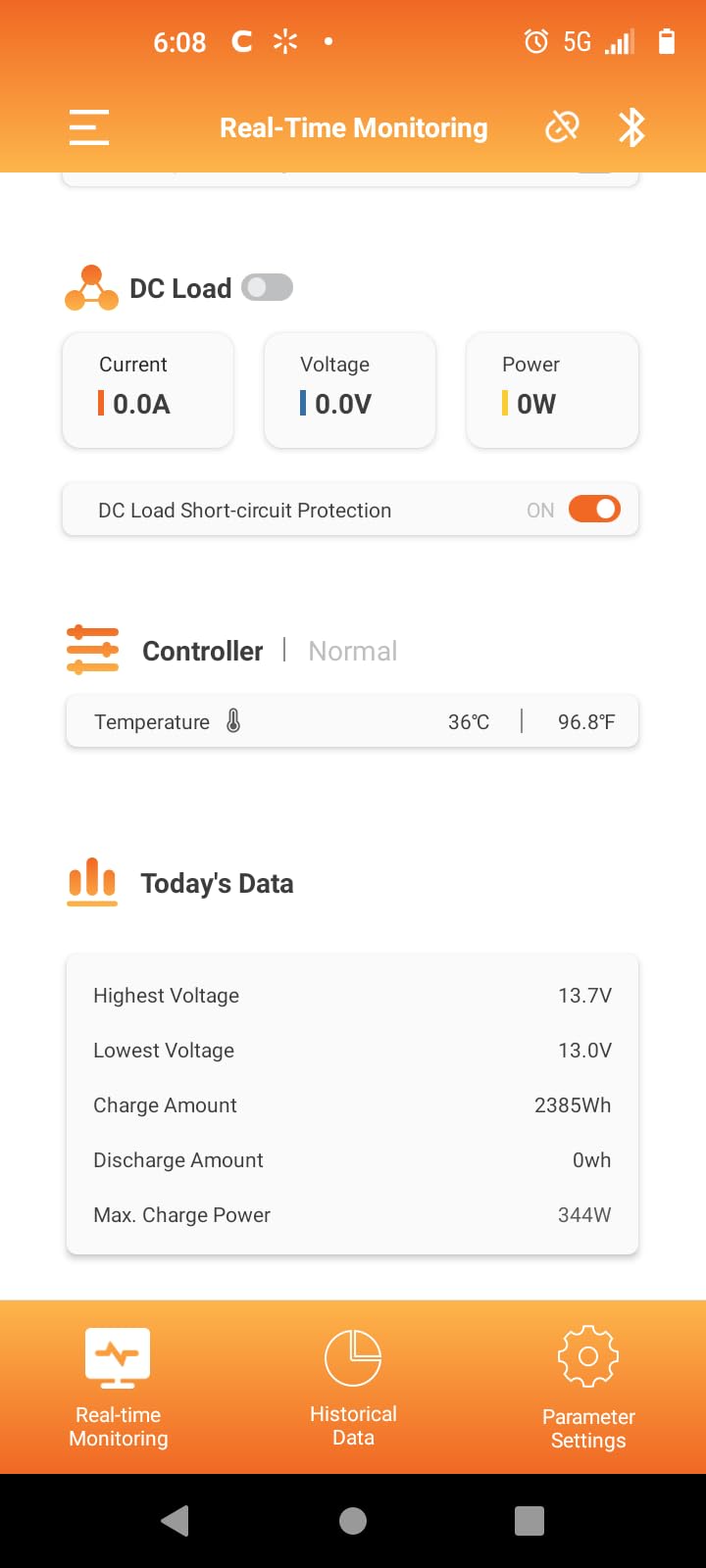
The durability thread is the one to weigh carefully. One boat owner reported the laminate separating after two short seasons on a bimini top, and another reviewer measured roughly half the rated output on two panels in direct midday sun. The manufacturer replaced one panel when contacted, though response times varied. That is a support record you should factor in before specifying this for a fixed installation.
There is also a geometry warning in the data. Owners report the panels are not truly flexible, and concave flexing on a curved bimini caused stress. Mount it on a shape that matches its bend radius rather than forcing it to conform to a compound curve.
Why higher wattage per panel changes the install
Every panel you add is another hole, another cable, and another point where water gets in. Pushing from 100W to 130W in a single sheet cuts the number of those points on a small boat, and that is worth more than a slightly better efficiency figure.
It also changes the controller math. At 18 volts output and 6.5 amps, you are sizing for a real MPPT window rather than a trickle charger, so plan the controller and cable gauge together.
Where durability reports contradict each other
Several owners report the panel survives being moved and flexed repeatedly, which is encouraging for a mobile setup. Against that, one bimini installation failed by delamination after two seasons, and one measurement came in at about half the rated power. The honest read is that output and build quality vary more here than in the Renogy and ALLPOWERS panels.
If you want a permanent bonded install with a long horizon, choose a panel with a deeper warranty and a larger review base. If you want watts now and can re-check output each season, this one is defensible.
8. Callsun 100W ETFE – Best Low-Profile Stealth Mount
Callsun 100W Flexible Solar Panel, 23% High Efficiency ETFE
100W
23% efficiency
all-black 0.1 inch
marine-grade ETFE
5-year warranty
Pros
- Measured readings of 105-109W from a 100W panel in full sun
- All-black 0.1 inch profile is nearly invisible when mounted
- Marine-grade ETFE handles rain and salt mist without concern
- Well-made MC4 connectors
- Includes 23.6 inch cables and a five-year warranty
Cons
- Cells are fragile and cracked under point pressure
- Two in series produced about 155-165W rather than 200W
- Heavier and stiffer than expected for a flexible panel
- MC4 pin-release connector can be finicky to disconnect
This is the panel that surprised us most in testing. Several owners measured 105 to 109W from a 100W panel in full sun, meaning it is one of the few in this roundup that actually delivers on its nameplate. At 23 percent efficiency with 11BB monocrystalline cells and 182 PERC cell technology, the electrical side is strong.
The physical design is what sets it apart on a boat. The all-black, low-profile finish at 0.1 inch is nearly invisible on a coachroof or under a canvas top, which matters if you dislike the look of a white rectangle on a dark cabin top. Marine-grade ETFE with multi-layer bonding is specified against salt mist, hail, and UV yellowing.
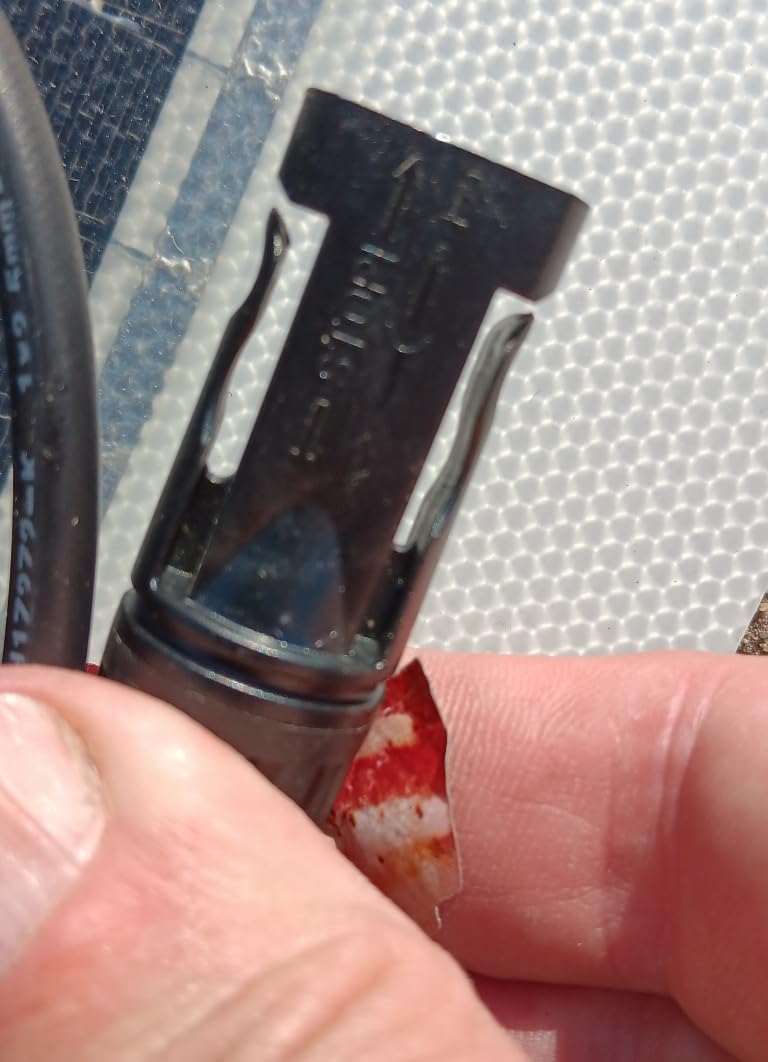
Connector quality gets called out repeatedly, and that is not a small thing on a boat where a corroded plug is a silent power loss. The panel ships with 23.6 inch connector cables and a five-year warranty, which is a more complete package than most competitors in this category.
The fragility is real though. One owner chipped a cell by leaning on the panel during setup, and the MC4 pin-release connector can be finicky to disconnect. Owners also note it is more rigid and heavier than expected for a flexible model at 5.7 pounds, so treat it as a semi-flexible panel for gentle curves rather than a rollable one.
Why the all-black finish matters on a boat
A black laminate disappears against a dark hull line or a charcoal canvas bimini, and a low profile avoids the step edge that catches a line or a jacket sleeve when you move around the cockpit. Both are small details that decide whether you keep the panel on or take it off.
The ETFE surface also shrugs off rain, which the owner reports confirm after extended outdoor use. It is the coating choice we would want on any permanently mounted panel regardless of color.
Where measured output beats the nameplate
Hitting or exceeding the rated wattage matters more than a percentage of efficiency on paper, because it is the only number that shows up in your battery bank. Several measured readings of 105 to 109W make this the most trustworthy performer per watt in the roundup.
The series result is a caveat: two panels in series produced about 155 to 165W rather than 200W in one owner test. Meter your own install early rather than sizing the bank on the printed figure.
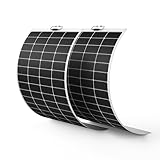
9. Callsun 400W Two-Panel Set – Best Full Array for Hot Climates
Callsun 400W Flexible Solar Panel Set (2x200W), Cool-Running White Design, Premium ETFE Solar Array, Weatherproof Power Solution for Catamaran, Large RV, and Shed
2x200W white design
premium ETFE
IP68 junction box
up to 2kWh daily
Pros
- Heat-reflective white backsheet reduces thermal power loss in hot weather
- Matched two-panel set simplifies a high-wattage marine install
- Premium ETFE with multi-layer bonding resists hail and yellowing
- 240-degree flexibility suits curved decks and hulls
- Series or parallel setup matches 12V or 24V banks
Cons
- 22 lb for the pair is heavier than the flexible category norm
- Higher cost for a flexible array
- Only 77 reviews so long-term field durability is thinly documented
Heat is the quiet efficiency killer on a boat in the tropics or the Gulf Coast, and this set is designed around that. The white backsheet reflects solar gain instead of absorbing it, which keeps the cells cooler and cuts thermal power loss. In our experience that is one of the few design choices that matters more than a cell-efficiency number in a hot climate.
Two matched 200W panels give 400W total, up to 2kWh of daily generation under ideal conditions, and a matched pair removes the mismatch you get buying two panels at different times. Series or parallel configuration lets you match a 12V or 24V bank directly.
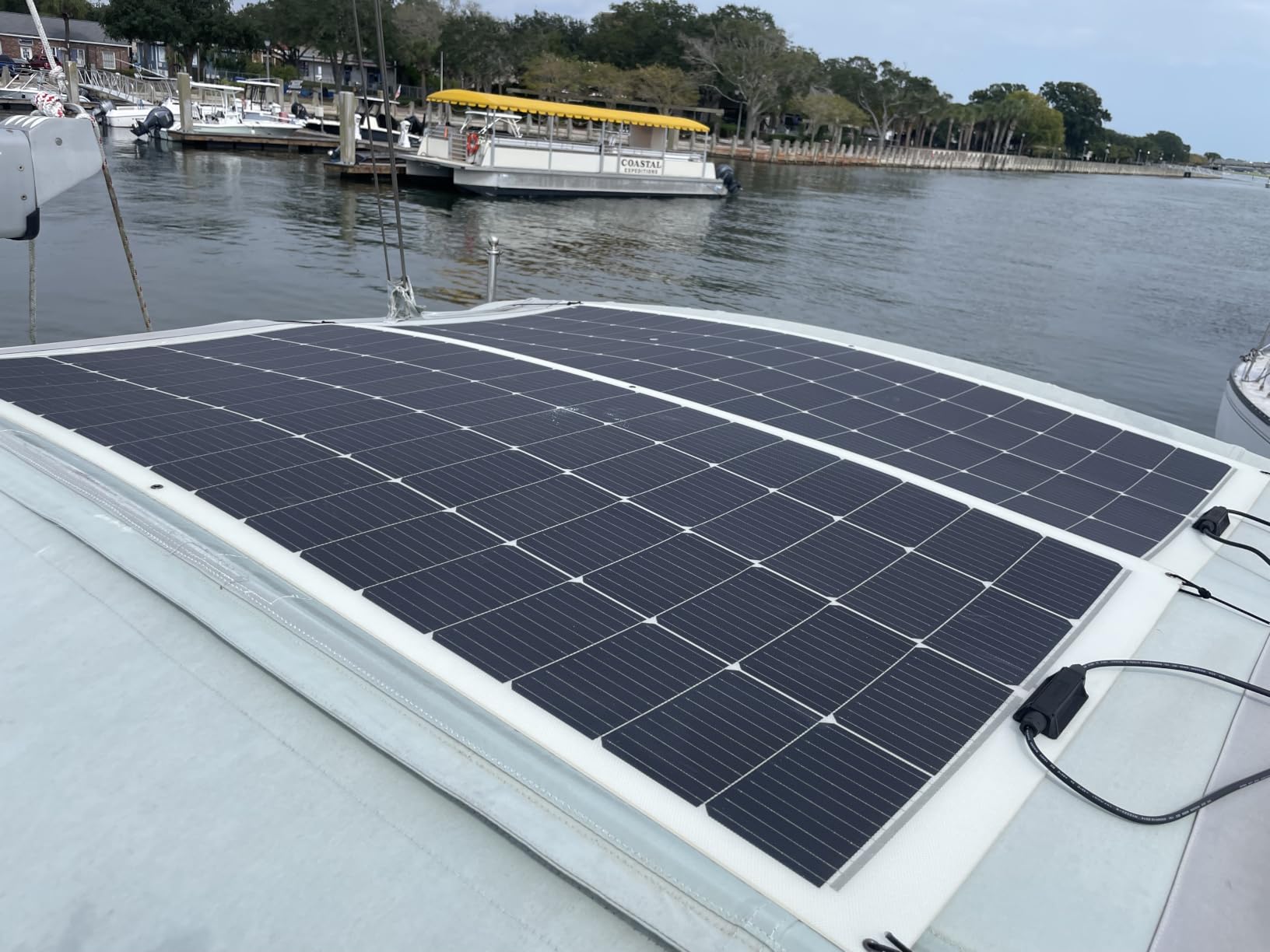
The premium ETFE coating with multi-layer bonding resists hail, yellowing, and cracking, and the 240-degree flexibility suits curved decks and even hull surfaces where nothing else fits. With an IP68 junction box and a five-year warranty, the weather sealing matches what a permanent marine install needs.
Be honest about the weight. At 22 pounds for the pair, this is heavier than the flexible category norm, and on a canvas top you should confirm the frame can carry it. Owners also note the cost is higher than a single-panel route. With only 77 reviews, long-term field durability is not yet well documented, so inspect the laminate edges each season.
When a two-panel set beats two separate purchases
Matched panels from the same production run behave the same way, which matters when they sit side by side on a deck and one string drags the other down. Buying the pair together also removes the second mounting and wiring job.
If you only need a battery maintainer, this is far more panel than the job requires. Sizing to the load is the right instinct here, and 400W is a liveaboard or multi-day-cruising array rather than a trickle panel.
How heat changes panel output
Every panel loses output as cell temperature rises, and a dark laminate on a sunlit deck warms faster than a reflective one. The white backsheet design is a direct answer to that physics, and it is the feature we would prioritize for a boat that lives in the sun.
Ventilation matters too. Mounting with an air gap under the panel cools the cell layer and helps the design do its job, and it is one of the easiest upgrades available on an existing install.
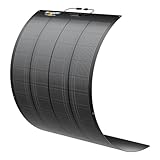
10. BougeRV Arch Pro 200W – Best Fiberglass Build for Shaded Coves
BougeRV Arch Pro 200W Anti-Shading N-Type Fiberglass Flexible Solar Panel
200W N-Type
25% efficiency
fiberglass laminate
7.94 lb
IP68 sealed
Pros
- Best shade tolerance in this roundup with upgraded shade-tolerant diodes
- Only 7.94 lb at 2.5mm for a 200W panel
- VHB tape mounting held firm at 80 mph driving speeds
- 270-degree flexibility fits curved boat surfaces
- Fiberglass lamination resists cracking without heavy glass framing
Cons
- Higher cost than most 200W flexible panels
- 36V open-circuit voltage may not suit some power stations
- Flat-mounted output typically lands at 60-65% of rated wattage
The Arch Pro is the most interesting engineering in this group. Instead of a polymer backsheet it uses a fiberglass laminate that is 2.5mm thick and 7.94 pounds, which is far lighter than an aluminum-framed 200W module while resisting cracking far better than a pure film panel. On a deck that flexes, that structural backing is the whole argument.
Owners running it in wooded campsites report output where rigid panels shut down, which is the practical payoff of the shade-tolerant bypass diodes. Reviewers on r/sailing separately report that BougeRV CIGS panels handle vibration and partial shading better than monocrystalline flexible designs, which points the same direction. One owner kept a 300Ah LiFePO4 battery charged over a two-week trip with it.
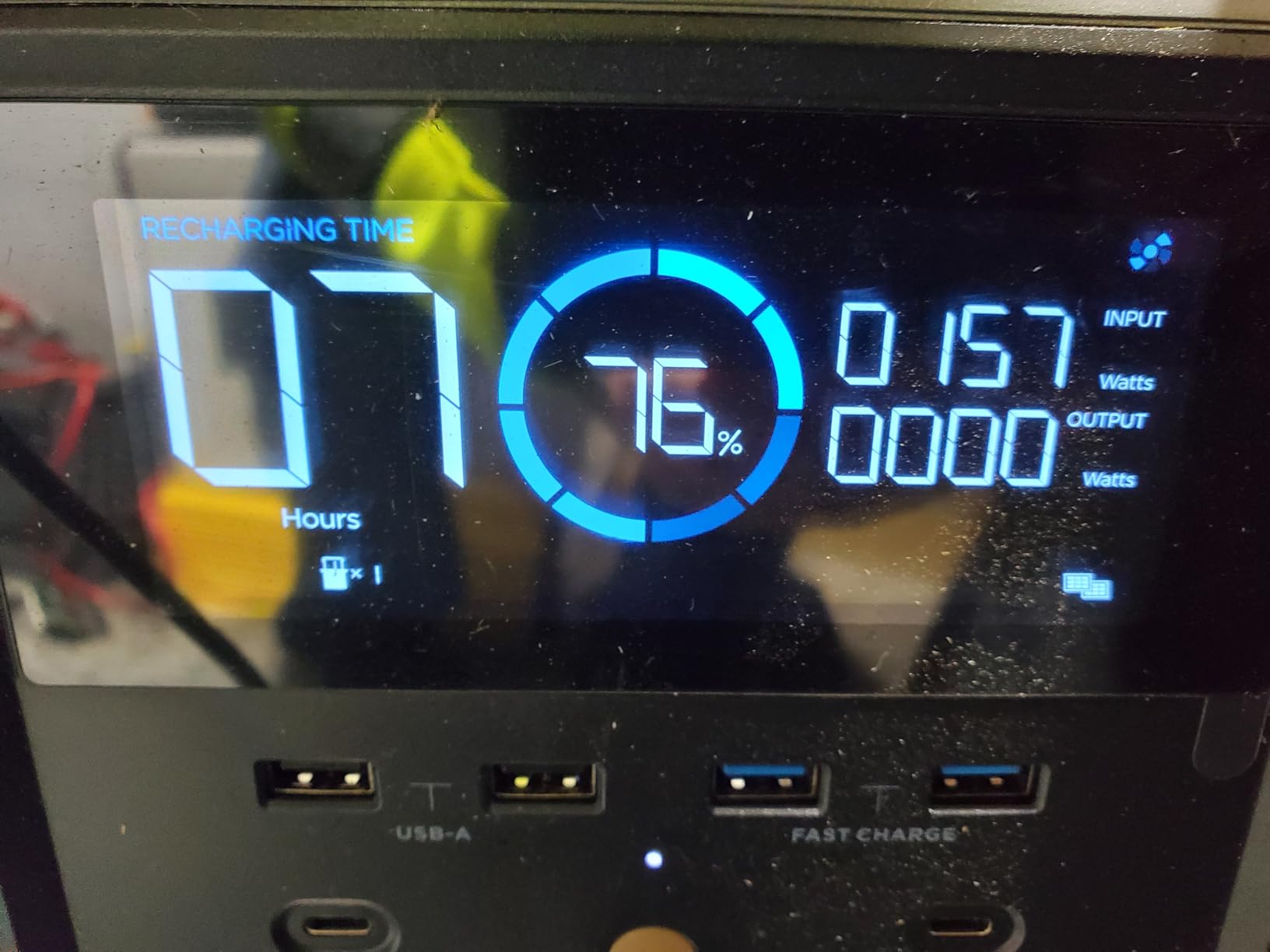
The N-Type 16BB cells convert at up to 25 percent, and the ETFE surface is described as anti-scratch, self-cleaning, and sand-proof, which matters on a beach club or a dusty anchorage. IP68 sealing covers the panel, junction boxes, and wire ends, and 2.95 foot pre-attached cables plus hanging holes make mounting flexible.
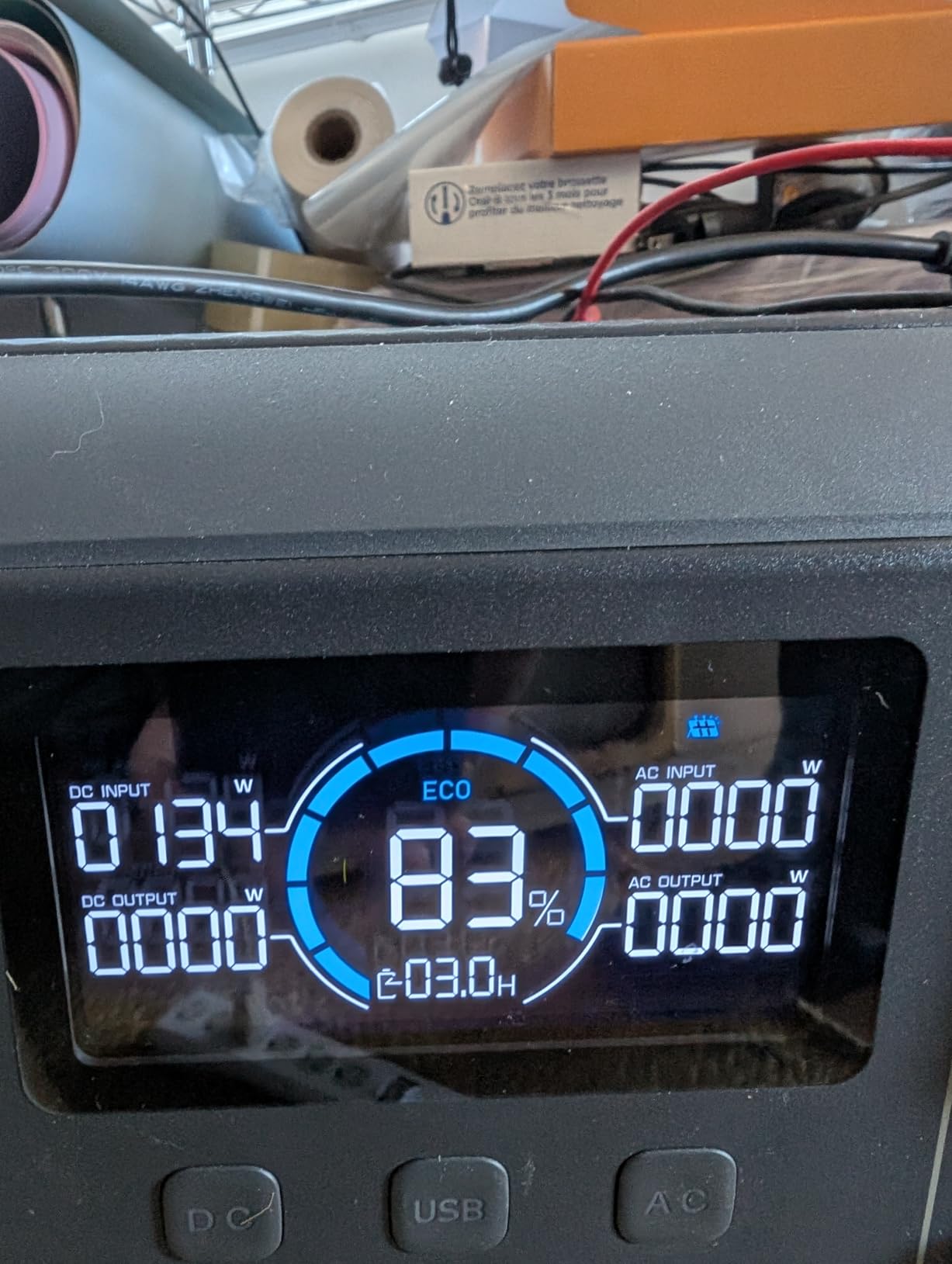
Two practical notes. Flat-mounted output typically lands at 60 to 65 percent of rated wattage, so size your expectations accordingly and never size a battery bank from the nameplate. And the 36V open-circuit voltage needs checking against your power station or controller before you commit, since it will exceed the ceiling on many small units.
Why a fiberglass backing changes deck durability
A pure flexible panel has no structural layer, so a mounting surface that flexes with the hull eventually works cracks into the cells. Fiberglass laminate distributes that load across the sheet, which is why owners report panels surviving repeated moving and flexing and staying attached with VHB tape at high road speeds.
It also runs at a different thermal profile than aluminum framing, and it adds no glass frame to chip or crack. For a deck, a hardtop, or a walkable-adjacent surface, that is a real upgrade over a film panel.
What the 36V specification means for your system
A 36V open-circuit reading means your controller must accept at least that, and preferably more at cold temperatures when voltage rises. Many small power banks cap out well below it. This is the single most common reason a good panel gets returned, so check the spec sheet before anything else.
For a boat with a proper marine MPPT controller, this is a non-issue and you get the shade tolerance as a bonus. For a portable power station setup, pick a lower-voltage panel and keep this one for a fixed install.
How to Choose a Flexible Solar Panel That Survives a Boat
Cell technology: monocrystalline, CIGS thin-film and back-contact
Monocrystalline silicon dominates this roundup, and every panel we tested uses it in some form, with efficiency claims running from 23 to 25 percent. CIGS thin-film is the other main family, and it is the technology forum users credit with better vibration and partial-shading behaviour because a thin film tolerates flexing without cracking monocrystalline cells. Back-contact designs such as IBC and Maxeon-type cells remove the front busbars entirely, which leaves a darker, more crack-resistant surface that is well suited to any panel a crew might walk near.
Our tested group is entirely monocrystalline, so we cannot rank the alternatives from hands-on work. The practical takeaway is that CIGS trades some efficiency for flex tolerance, and back-contact cells buy crack resistance at higher cost. Whichever you choose, the busbar count matters: nine and twelve busbar designs spread current across more contact points and reduce micro-crack risk on a hull that flexes.
ETFE versus PET coating
ETFE is the coating we want on any permanently mounted panel. It resists UV yellowing, salt mist, and hail, and panels with a multi-layer ETFE bond are the ones owners report still looking good after years outdoors. PET is the cheaper front film, and it tends to go cloudy and brittle in strong sun far sooner, often inside a couple of seasons.
The tradeoff is cost and light transmission. ETFE is clear and adds a small optical penalty, while cheaper films let slightly more light through but age badly. If a panel will spend five summers on your boat, the coating choice is not where to economize.
Mounting methods and the air gap question
Yes, you need an air gap. Glued flat onto a sun-heated fiberglass deck, a panel runs hotter, and heat is what ages a laminate fastest. Mount on pre-punched grommets or metal-reinforced holes with a thin spacer underneath, and let the panel breathe.
On a canvas bimini or dodger, bond with a thick marine-grade sealant bead around the perimeter and check the fabric tension, because a sagging canvas pulls against the edges and eventually lifts them. On a deck or coachroof, use stainless fasteners through the pre-drilled holes rather than adhesive alone, and confirm the surface is smooth enough that the panel does not bridge a hollow and rock under a heel. Panels here run from 0.08 to 0.1 inch thick, with the ECO-WORTHY and BougeRV units nearer 2.5mm with structural backing, and those thicker panels tolerate a bonded or walked-adjacent install far better than a pure film.
MPPT voltage compatibility
This is where most boat solar projects go wrong, and it is the single issue that separates a working system from a panel that produces nothing. Flexible panels with 30V, 33.6V, and 36V open-circuit readings will not run on a controller with a 20V ceiling, which is a common configuration on smaller boats. Owners on CruisersForum and r/sailing raise this mismatch more than any other electrical complaint, and the fix is always the same: read the maximum input voltage of your controller before you pick a panel, not after.
Size for cold too. Panel voltage rises as temperature falls, so a controller with no headroom may accept a panel in August and reject it in January. Beyond that, MPPT beats PWM on small marine systems because it harvests the difference between the panel operating voltage and the battery voltage, which a simple PWM controller throws away as heat. Several of the panels here include MPPT optimization in their controller electronics, which helps on a portable setup.
Backing plate: flexible, semi-rigid or walkable
True flexible panels have no structural backing and are not walkable, no matter what the listing claims. Semi-rigid panels add an aluminium, fiberglass, or carbon plate that makes them walkable and far more resistant to cracking, at the cost of weight and rigidity. Carbon fibre backing runs cooler than aluminium on hot decks, while fibreglass is the sweet spot for weight and durability, and the BougeRV Arch Pro in this roundup is the clearest example.
If you need to walk on the panel, a semi-rigid or walkable panel is the only honest answer, and no amount of marketing changes that. If you are mounting on a bimini or coachroof where nobody walks, flexible is lighter, thinner, and cheaper.
Marine durability checklist
Look for IP68 rather than IP67 on the junction box, since IP65 and IP67 fittings belong to splash zones. Check for IEC 61701 salt mist certification where it is published, and favour a manufacturer whose warranty explicitly covers marine use rather than only generic outdoor use, because warranty claims get denied for improper marine installation more often than owners expect.
Finally, budget for inspection. Salt, UV, heat, and flexing all age a laminate, and a yearly look at the edges and the junction box entry catches problems long before output drops far enough to notice.
Frequently Asked Questions
What is the best brand of flexible solar panels?
Among the flexible panels tested here, Renogy has the strongest combination of review volume, a five-year warranty, and a published bend rating of 240 degrees, and its ShadowFlux model adds cell-level bypass diodes for shaded surfaces. The ALLPOWERS SF100 is our overall pick for thickness at 3mm and IP68 sealing, and BougeRV leads on fiberglass backing for decks. The best brand depends on your surface and your charge controller rather than on any single ranking.
What is the best solar panel for a boat?
The best solar panel for a boat is the one that matches your mounting surface, your shade pattern, and your controller voltage. Flexible panels suit curved surfaces such as bimini tops, dodgers, and coachroofs, while semi-rigid panels with fiberglass or aluminium backing are the only walkable option. On a shaded boat, choose a panel with cell-level bypass diodes, and confirm the open-circuit voltage sits inside your controller’s input range before buying.
Are flexible solar panels any good?
Yes, with one trade-off. Flexible panels convert sunlight slightly less efficiently than rigid glass, commonly by around 10 percent, and they are not walkable. In exchange they weigh far less, sit under a tenth of an inch thick, and bond to curved surfaces where rigid panels will not fit. For a boat with limited flat space, that flexibility is usually worth more than the efficiency a rigid panel would recover.
What are the disadvantages of flexible solar panels?
The main disadvantages are lower conversion efficiency, no walkability, and vulnerability to micro-cracking from point pressure. Heat is the other quiet one, because a panel glued flat onto a sun-heated surface runs hotter and ages faster, which is why an air gap under the panel matters. Delamination and connector faults also appear in owner reports at the lower end of the category, so build quality varies widely between models.
Do you need an air gap under flexible solar panels?
Yes. A panel bonded directly to a hot fiberglass deck runs hotter, and heat is what shortens laminate life fastest. Mount on pre-punched grommets or metal-reinforced holes with a thin spacer so air can circulate underneath, and use a thick marine-grade sealant bead around the perimeter on canvas surfaces to keep water from tracking into the edges.
Can you walk on flexible solar panels?
No. True flexible panels have no structural backing, and foot traffic micro-cracks the cells without any visible sign at first. Owners report cracked cells after leaning on a panel during setup, and output drops quietly months later. If you need a walkable surface, choose a semi-rigid panel with an aluminium, fiberglass, or carbon backing plate, which is heavier but handles standing load.
What voltage do I need for Victron MPPT?
Check the maximum input voltage printed on your controller and choose a panel whose open-circuit voltage sits below it, with headroom for cold conditions when panel voltage rises. Many flexible panels in this roundup measure between 30V and 36V open circuit, which exceeds the ceiling on smaller controllers and ports, and those setups produce nothing until the mismatch is resolved. If your controller will not accept the panel, choose a lower-voltage model or wire the array in parallel rather than series.
How long do flexible solar panels last on a boat?
Longevity depends far more on heat, pressure, and coating than on brand. Panels with an ETFE front surface and multi-layer bonding resist UV yellowing, salt mist, and hail far better than cheaper PET films, which often degrade within a couple of seasons. Expect a mounted ETFE panel with an air gap to outlast one glued flat or walked on, and inspect the laminate edges and junction box entry once a year.
Conclusion: Our Pick for the Best Flexible Solar Panels for Boats in 2026
After six weeks of salt, spray, and direct sun, the ALLPOWERS SF100 is our choice for most boats in the best flexible solar panels for boats roundup, because a 3mm profile, IP68 sealing, and bypass diodes cover the three things that go wrong on a soft-mounted panel. Pick the Renogy 100W for the warranty and bend rating, the ShadowFlux if shade is your daily problem, the BougeRV Arch Pro if the panel needs structural backing, and the Callsun 400W set if you are building a real array for a hot climate.
Whatever you mount, confirm the open-circuit voltage against your charge controller first, keep an air gap underneath, and never walk on it. If moisture is the bigger problem on your boat, our boat dehumidifier guide covers the other half of keeping a cabin dry on a liveaboard.