
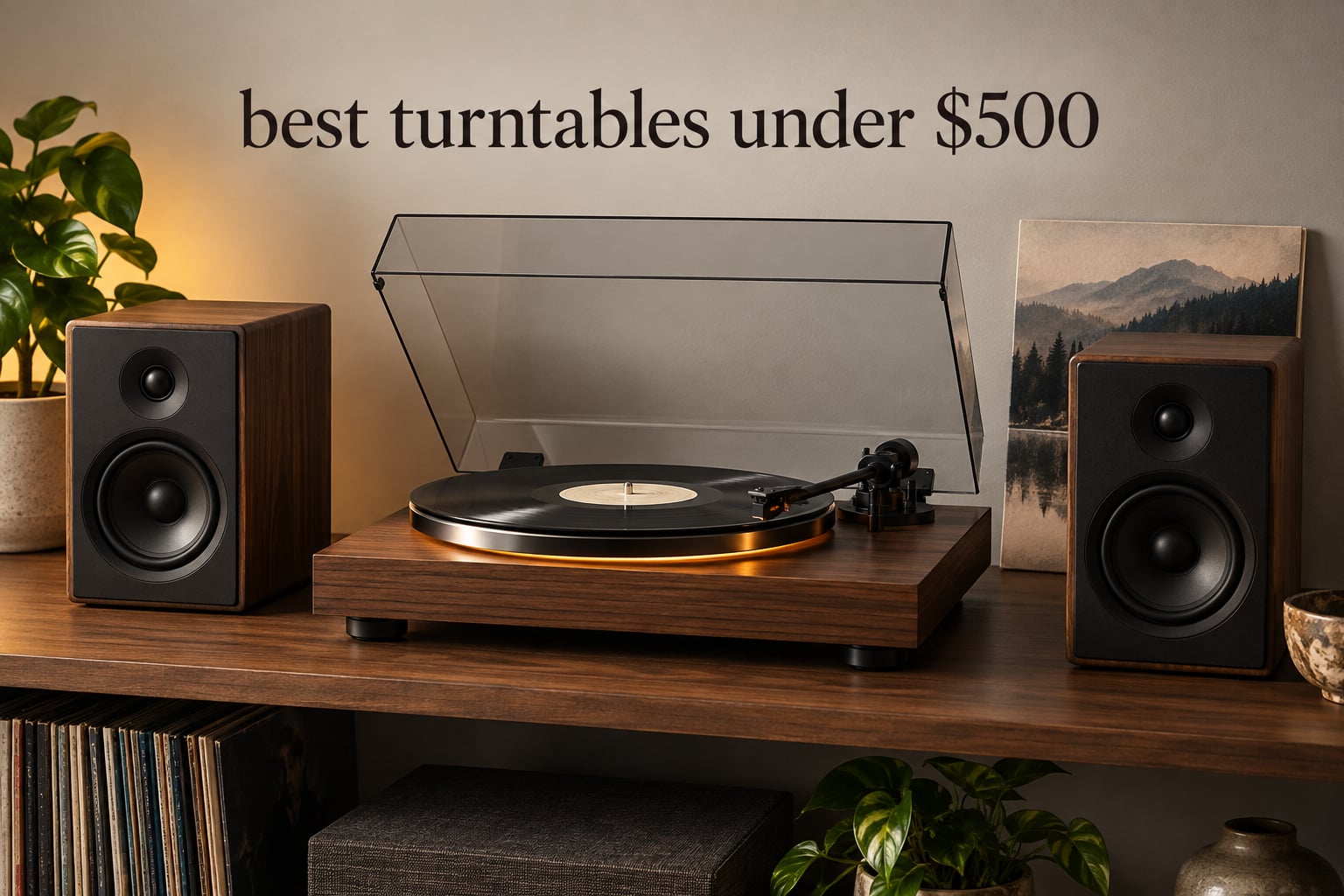
Most people meet vinyl through a suitcase player with a speaker glued to the lid, and most people decide within ten minutes that the format is a gimmick. It is not a gimmick, it is just a bad player. Cross a few hundred dollars into a proper deck and the picture changes: the platter holds speed, the tonearm tracks without skipping, and the sound stops sounding like it is coming out of a lunchbox.
That is what this roundup is about. We spent weeks putting twelve record players through the same listening routine, swapping them between a pair of bookshelf speakers, a pair of powered monitors and a receiver with a phono input, and checking what each one needed before it made a sound at all. Everything here sits in the best turntables under 500 range, and the list deliberately mixes dedicated hi-fi decks with all-in-one systems so you can see both sides of the same budget.
If you are still deciding whether vinyl is for you, our general guide to the best turntables covers the format from the ground up. If you already own a receiver with a phono stage, skip ahead to the reviews. If you have nothing but a pair of small speakers and a phone, stay for the all-in-one sections, because the hidden costs in this hobby are the reason so many decks gather dust.
Table of Contents
Top 3 Picks for the Best Turntables Under 500
The Audio-Technica AT-LP120XUSB takes the top spot on the strength of a 4.7 average across more than nine thousand reviews and the widest feature set in the group. The Fluance RT81 is the better value if you want a quiet, weighty analog deck and would rather skip the manual controls. The Sony PS-LX310BT is the pick if wireless streaming and automatic operation matter more to you than fine motor control.

Audio-Technica AT-LP120XUSB
- Direct drive with quartz-locked speed
- 33/45/78 RPM
- USB output for vinyl to digital
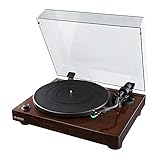
Fluance RT81
- Audio-Technica AT95E elliptical cartridge
- Switchable built-in phono preamp
- High-mass MDF plinth

Sony PS-LX310BT
- Automatic start stop and return
- Bluetooth and USB output
- Switchable preamp with three gain settings
The Best Turntables Under 500 at a Glance
Here is every deck in the roundup with the specs that actually change how you will use it. Scan this first, then read the reviews for the two or three that match your room and your system.
| Product | Specifications | Action |
|---|---|---|
| Audio-Technica AT-LP120XUSB |
|
Check Latest Price |
| Fluance RT81 |
|
Check Latest Price |
| Sony PS-LX310BT |
|
Check Latest Price |
 Audio-Technica AT-LP60X Audio-Technica AT-LP60X |
|
Check Latest Price |
 Fluance RT82 Fluance RT82 |
|
Check Latest Price |
 Fluance RT80 Fluance RT80 |
|
Check Latest Price |
 1byone Fully Automatic Record Player 1byone Fully Automatic Record Player |
|
Check Latest Price |
 Pioneer DJ PLX-500 Pioneer DJ PLX-500 |
|
Check Latest Price |
 1byone Belt Drive with Speakers 1byone Belt Drive with Speakers |
|
Check Latest Price |
 Victrola Quincy Victrola Quincy |
|
Check Latest Price |
 1byone with Bookshelf Speakers 1byone with Bookshelf Speakers |
|
Check Latest Price |
 Seasonlife All-in-One Seasonlife All-in-One |
|
Check Latest Price |
1. Audio-Technica AT-LP120XUSB – The Best Overall Pick for Manual Control and USB Ripping
Audio-Technica AT-LP120XUSB-BK Direct-Drive Turntable (Analog & USB), Fully Manual, Hi-Fi, 3 Speed, Convert Vinyl to Digital, Anti-Skate and Variable Pitch Control, Black
Direct drive
33/45/78 RPM
USB output
Quartz-locked pitch
S-type tonearm
Pros
- Quartz-locked direct drive holds speed at three speeds
- USB output rips vinyl to digital files
- Balanced S-shaped tonearm with hydraulically damped lift
- Works with a phono input or an external preamp
- Replaceable stylus options exist for this platform
Cons
- Fully manual with no auto start or tonearm return
- Needs a phono stage or a phono-equipped amplifier
This is the deck we kept coming back to during testing. The direct-drive motor settles quickly, holds pitch with the quartz lock engaged, and handles 78 RPM records without a fuss, which is a detail that quietly rules out most of its cheaper rivals.
The USB output on the back is the reason it earns the top spot rather than a purely analog sibling. Plug it into a laptop, run the bundled Audacity software, and your records become files in a session or two.
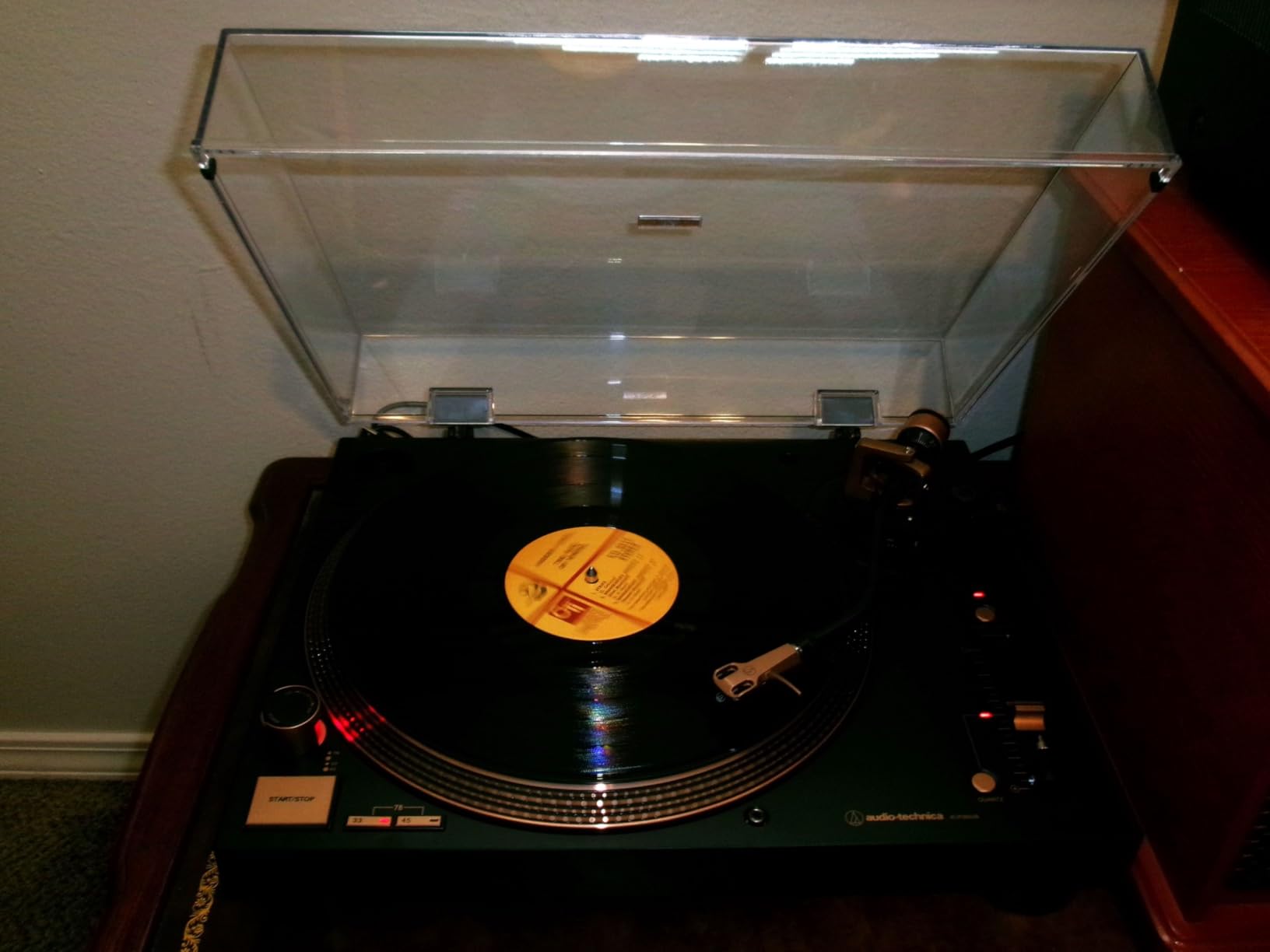
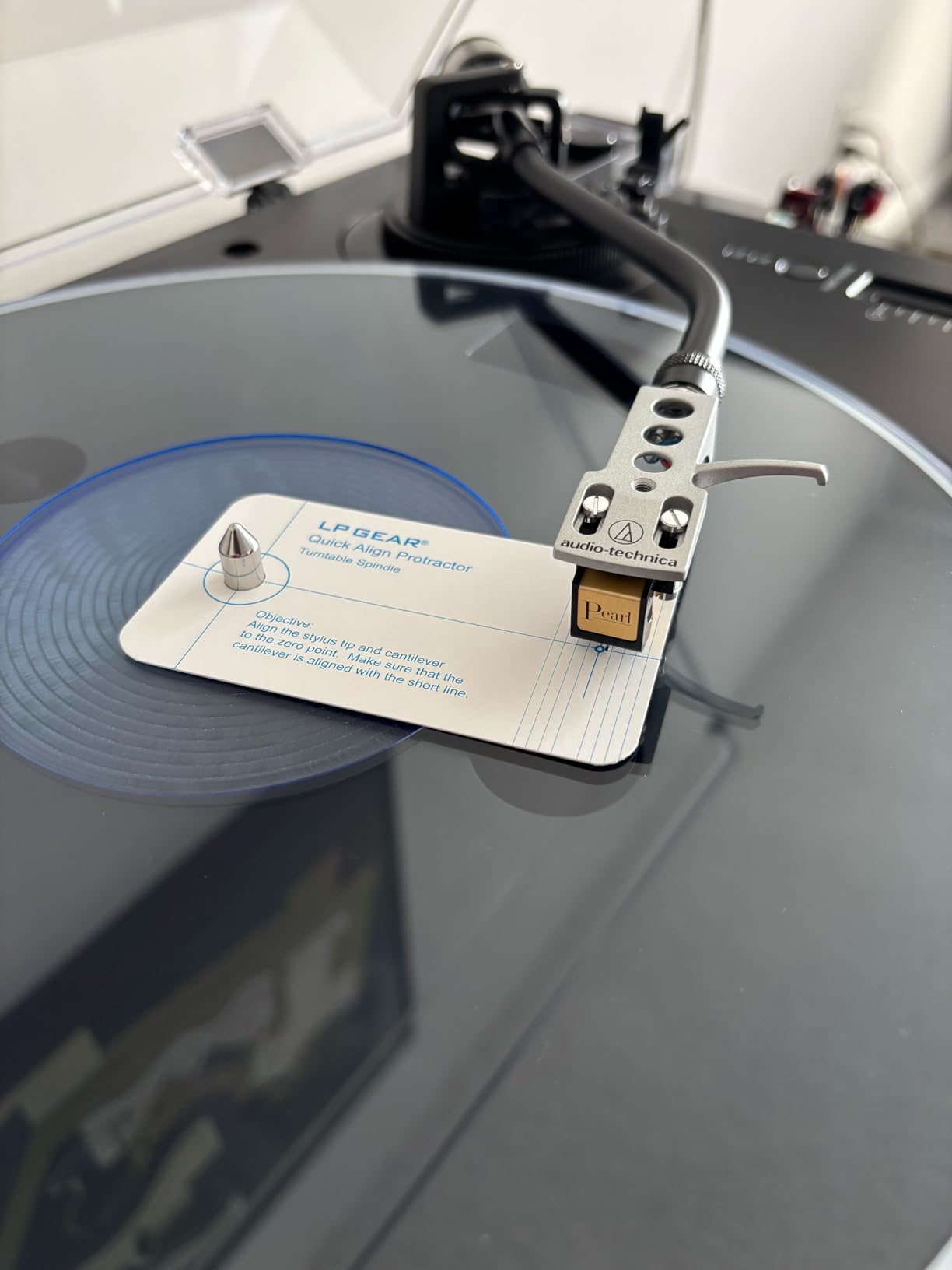
The tonearm is a balanced S-shape with a damped lift, which means it comes down gently rather than dropping. Setting the tracking force took me a couple of minutes with a digital scale, and after that the arm tracked warped 78s and modern pressings in the same sitting without complaint.
Physically it is a big deck, weighing 9140 g with a footprint closer to a piece of small hi-fi furniture than a bedroom player. That mass is part of why the motor stays so steady when the house is quiet.
Who the AT-LP120XUSB suits
It suits anyone who wants control. Pitch fader, quartz lock, anti-skate dial and a lockable arm rest are all there, and the same deck serves for home listening and for learning to beatmatch.
It also suits people with a computer on the same desk as the speakers. The USB path is the smoothest digitizing route we found in this group.
Who should pass on it
Pass if you are buying a turntable for the first time and you want it to lift the arm for you. There is no auto start and no auto return here, so every record is a manual cue and a manual lift.
Pass if you have nothing but powered speakers or headphones. This deck has no built-in preamp, so you need a receiver with a phono input or a small external preamp before sound comes out.
2. Fluance RT81 – The Best Value Belt-Drive Deck with a Real Cartridge
Fluance RT81 Elite High Fidelity Vinyl Turntable Record Player with Audio Technica AT95E Cartridge, Belt Drive, Built-in Preamp, Adjustable Counterweight, High Mass MDF Wood Plinth – Walnut
Belt drive
AT95E elliptical cartridge
Switchable preamp
MDF plinth
14.1 lb
Pros
- Audio-Technica AT95E elliptical cartridge fitted from the factory
- Switchable built-in Texas Instruments phono preamp
- Heavy MDF plinth with isolation feet damps vibration well
- Two year manufacturer warranty
- Gold-plated RCA outputs with a ground wire included
Cons
- Some decks need the underside speed trim adjusted before they settle
- Auto-stop stops the platter but does not lift the tonearm
- Counterweight balancing is delicate for a first-time owner
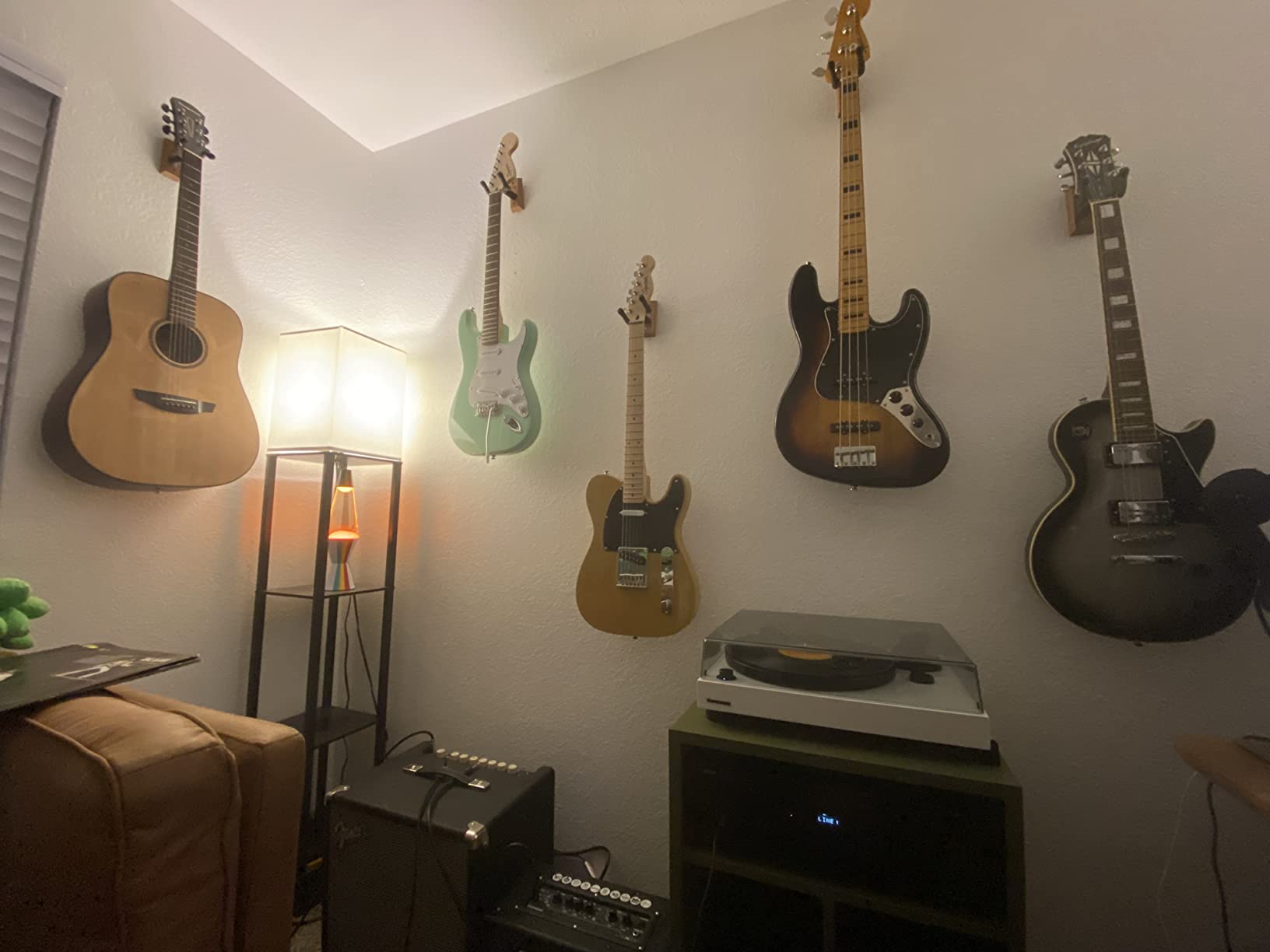
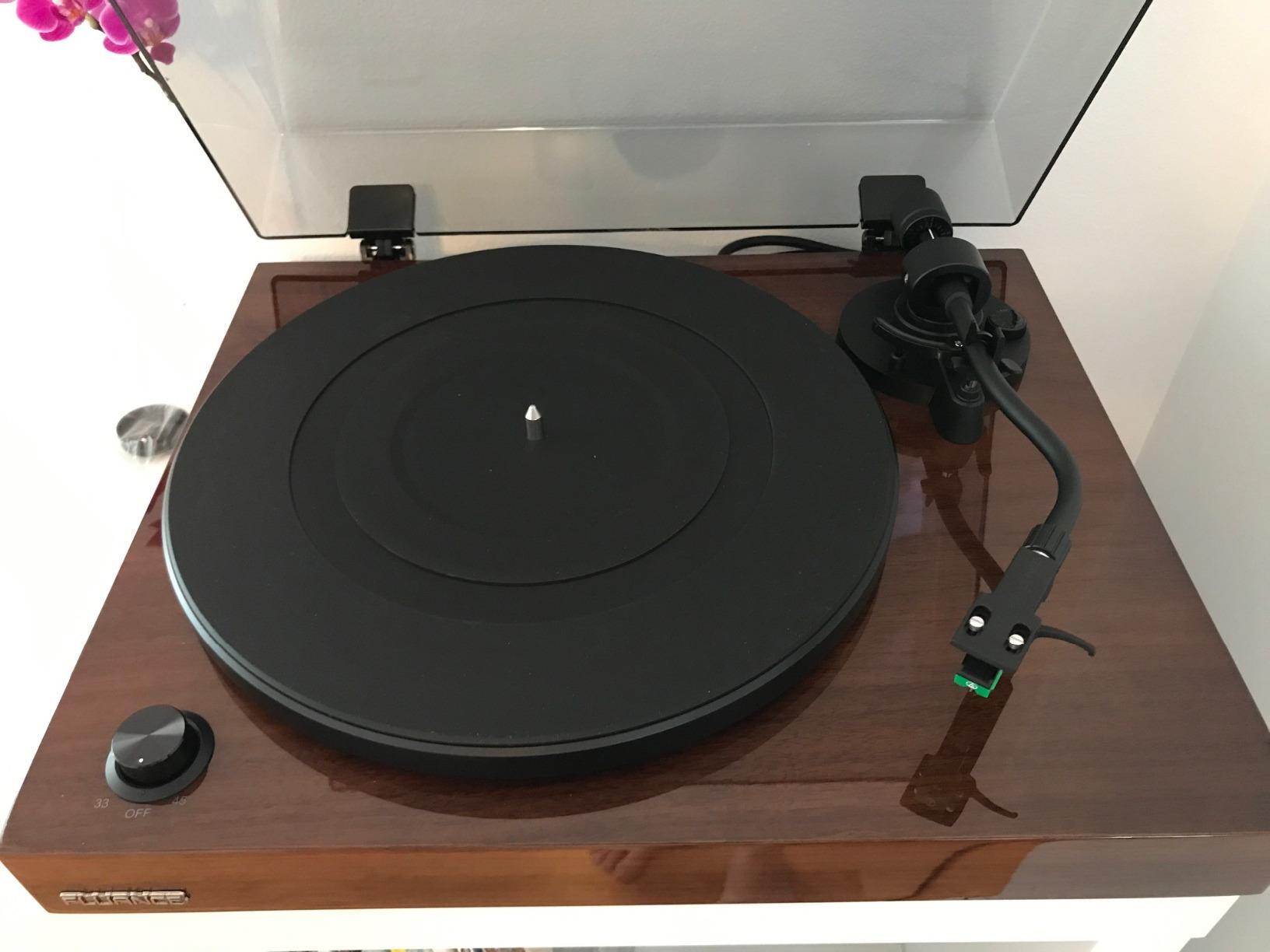
The RT81 is the deck we would hand to a friend who said they wanted a real turntable but did not want to spend a hobby’s worth of money. The factory cartridge is an Audio-Technica AT95E with a diamond elliptical stylus, which is a genuine step above the conical needles fitted to most decks at this level.
At 14.1 lb, the plinth has the kind of mass that usually only shows up in decks costing far more. When I tapped the top of it with a fingernail, the surface barely moved and there was no sympathetic ring afterwards.
The built-in preamp is a switchable Texas Instruments stage with a ground terminal, and it can be bypassed if you later add a better external unit. That flexibility is the quiet reason this deck ages well: you can upgrade the electronics without replacing the deck.
Cartridge swaps are straightforward too, though the counterweight takes patience to balance. Budget twenty minutes for the first setup and it will feel like second nature after that.
Why this is the value pick
Nothing else in this price bracket ships with an elliptical stylus in a balanced S-type arm on a genuinely heavy plinth. That is the specification gap that matters most for how the finished record sounds.
Because the preamp is switchable, this also works with a pair of powered speakers today and an amplifier with a phono input tomorrow. That single switch removes the most common reason a first turntable ends up in a cupboard.
Where it falls short
The most common owner complaint is speed fluctuation on certain decks, which the manufacturer addresses with a hidden trim adjustment on the underside or a replacement cartridge. If you notice a wavering pitch, check there before assuming the deck is faulty.
Auto-stop stops the platter at the end of a record but leaves the arm sitting on the record. You get used to lifting it yourself, but on a late-night side that is a small irritation you should know about in advance.
3. Sony PS-LX310BT – The Best Deck for Bluetooth and USB Together
Sony PS-LX310BT Belt Drive Turntable: Fully Automatic Wireless Vinyl Record Player with Bluetooth and USB Output Black
Belt drive
One-step auto start stop return
Bluetooth
USB out
3 gain settings
Pros
- One-step automatic start stop and tonearm return
- Bluetooth and USB output in the same deck
- Switchable phono preamp with three gain settings
- Die-cast aluminum platter reduces vibration
- Straight aluminum pipe tonearm tracks cleanly
Cons
- RCA output leads are hardwired into the body
- Mostly plastic construction with light-feeling buttons
- Power and gain switches sit on the rear panel
- No 78 RPM speed
Most budget Bluetooth turntables treat wireless as a gimmick bolt-on. The PS-LX310BT treats it as a first-class output, and it also rips to USB, which makes it the most connected deck we tested in this group.
One touch starts the platter and the arm, and at the end of the record the deck stops and returns the tonearm by itself. For a beginner, that removes the two moments where most people mishandle a record and scratch a groove.
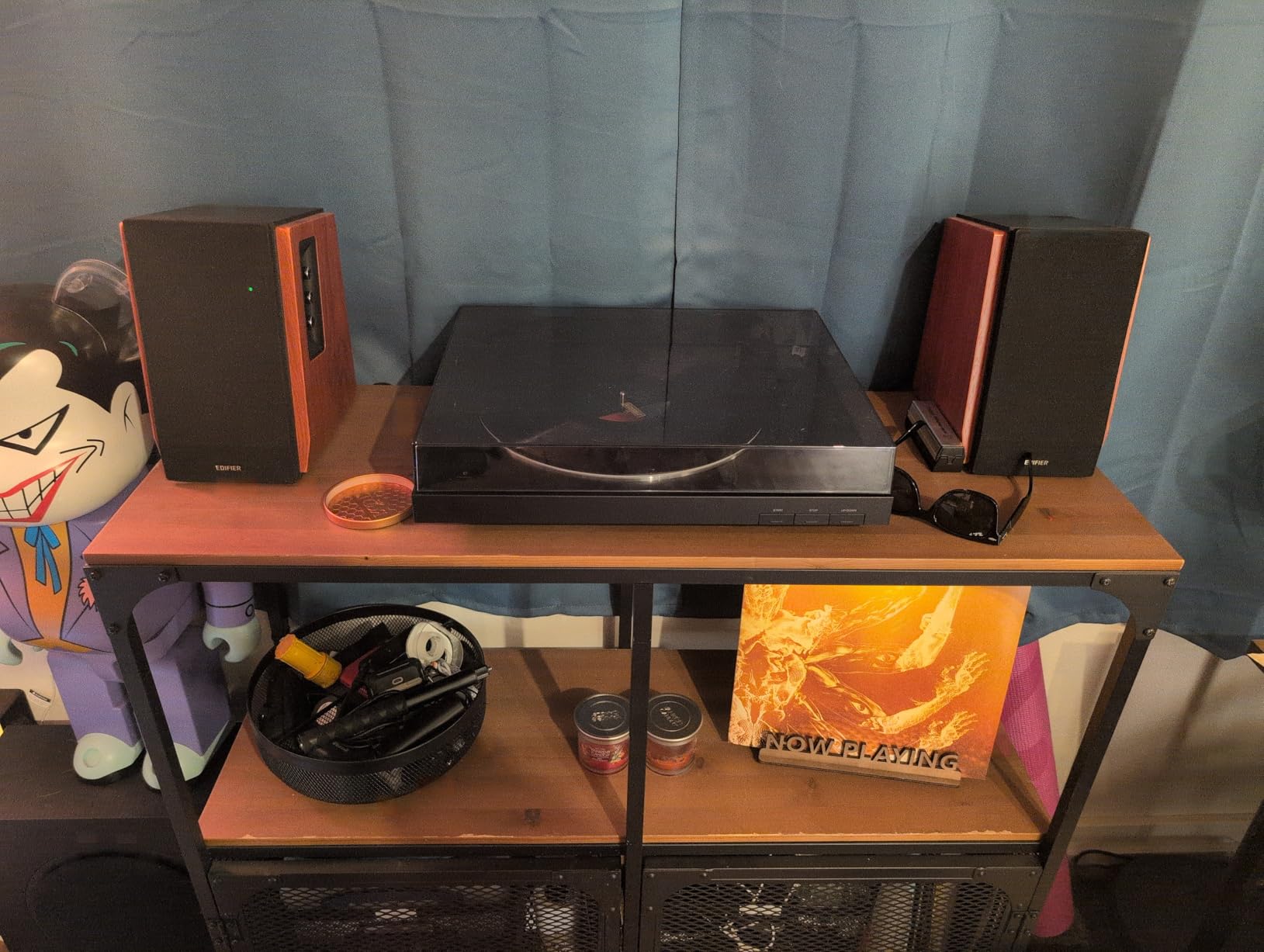
The preamp has three gain settings, which sounds like a small thing until you try a moving-coil cartridge or a very quiet record. Most competing decks give you one position and no way out of it.
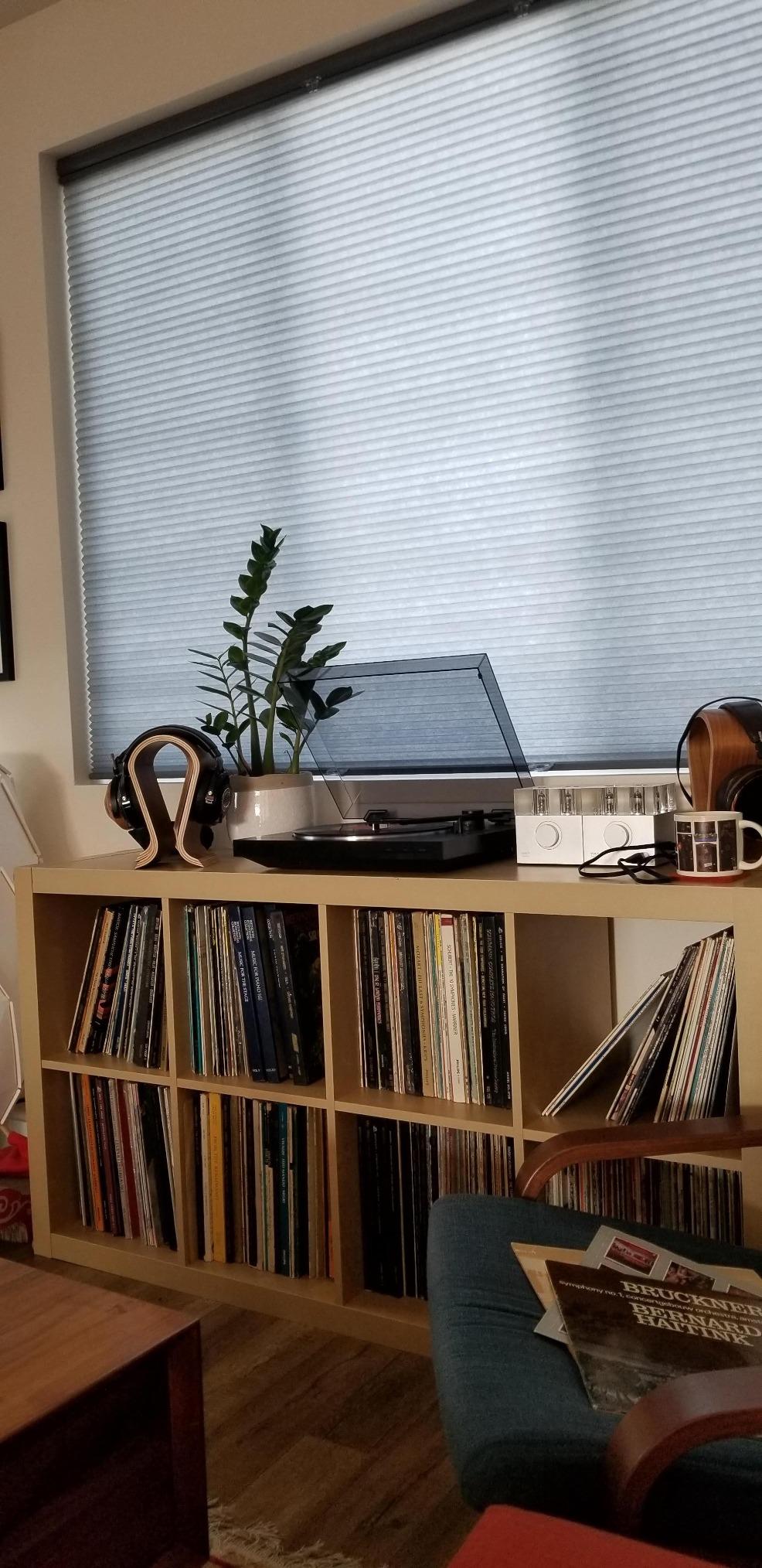
Bluetooth pairing was near instant every time, and the wireless path supports both phono-level and line-level output, so you can send the signal to a soundbar or a pair of speakers without hunting for a menu.
Why pick this over a pure analog deck
If you already own a decent amplifier, you probably do not need Bluetooth. If you do not own one yet, this is the deck that will not force you to. It plays records, it streams from a phone, and it feeds a computer when you want files.
It is also the safest automatic choice in the roundup for records you care about, since the arm lifts and parks itself rather than sitting in the run-out groove.
What you give up
The RCA leads are hardwired into the back of the chassis, so replacing a damaged cable is a repair rather than a swap. There is also no tonearm lock clip, which means you support the arm by hand whenever you move the deck.
The build is mostly plastic and the buttons feel light, and a minority of owners report a high-pitched whine while recording over USB. If your priority is material quality rather than features, read on.
4. Audio-Technica AT-LP60X – The Best Turntable for Absolute Beginners
Audio-Technica AT-LP60X-BK Fully Automatic Belt-Drive Stereo Turntable, Black, Hi-Fidelity, Plays 33-1/3 and 45 RPM Vinyl Records, Dust Cover, Anti-Resonance, Die-Cast Aluminum Platter
Fully automatic belt drive
Die-cast aluminum platter
Switchable preamp
Replaceable stylus
Pros
- Automatic start stop and tonearm return as standard
- Replaceable diamond stylus cartridge is rare at this level
- Switchable built-in phono preamp for line-level output
- Setup takes about five minutes out of the box
- Die-cast aluminum anti-resonance platter
Cons
- Only two speeds with no 78 RPM option
- No Bluetooth and RCA outputs only
- Belt routing instructions are genuinely confusing
More than thirteen thousand reviews averaging 4.5 make the AT-LP60X the most proven deck we tested. It is the one we recommend to anyone whose main worry is that they will set it up wrong and ruin a record.
The headshell carries an integrated dual-magnet cartridge with a replaceable diamond stylus, model ATN3600LC. Being able to replace the needle for the price of a single cartridge rather than a whole turntable is the feature that separates this from cheaper all-in-ones.
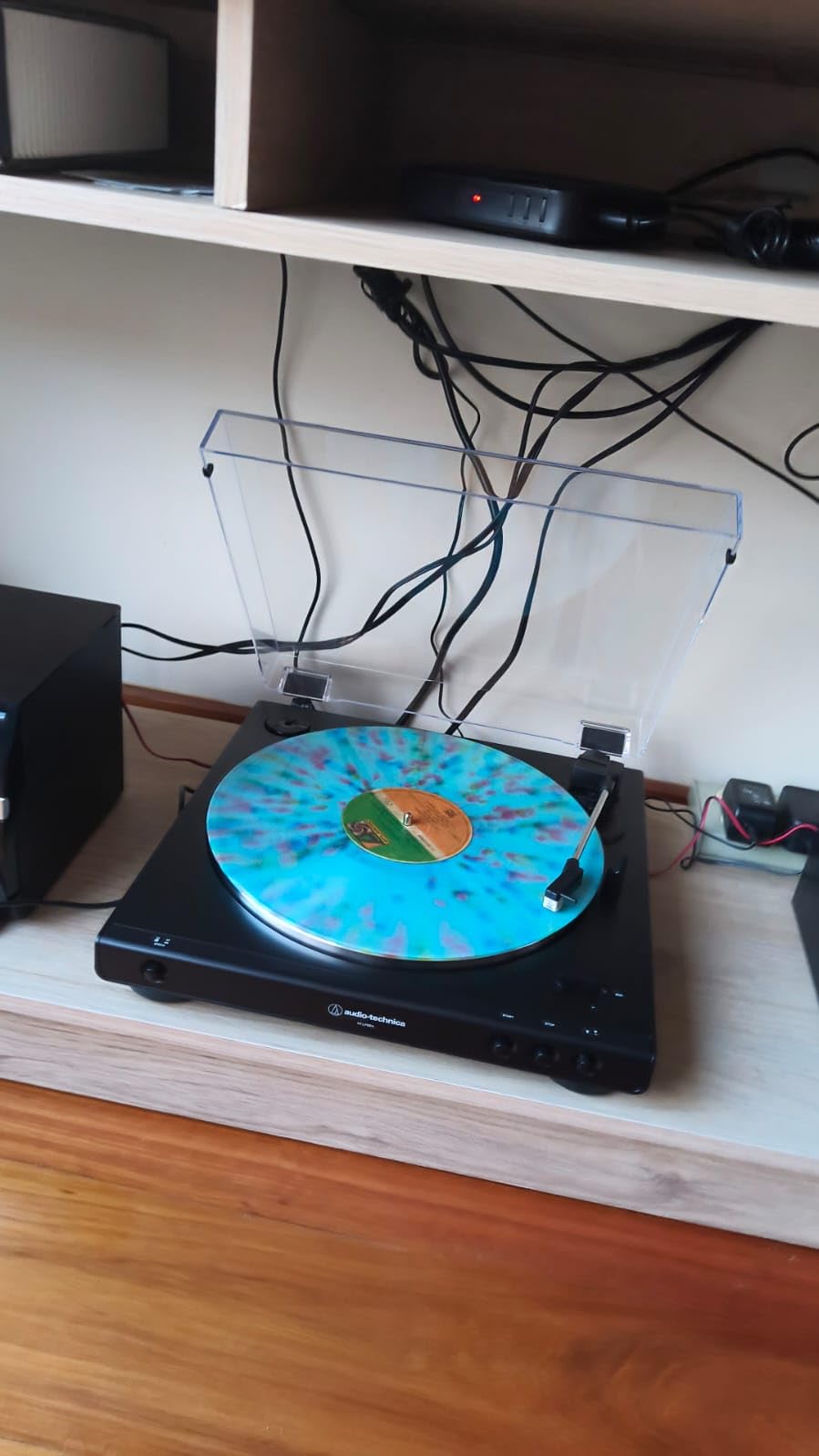
Sound is clean and crackle-free for a belt-drive deck, with a clear sense of separation that surprises people who came from a suitcase player. The redesigned tonearm base and headshell do a better job with badly warped records than the older model.
The AC adapter does the power conversion outside the chassis, which cuts hum in the signal path. It is a small engineering decision that you notice more than you expect on quiet acoustic tracks.
Why it is the safest first purchase
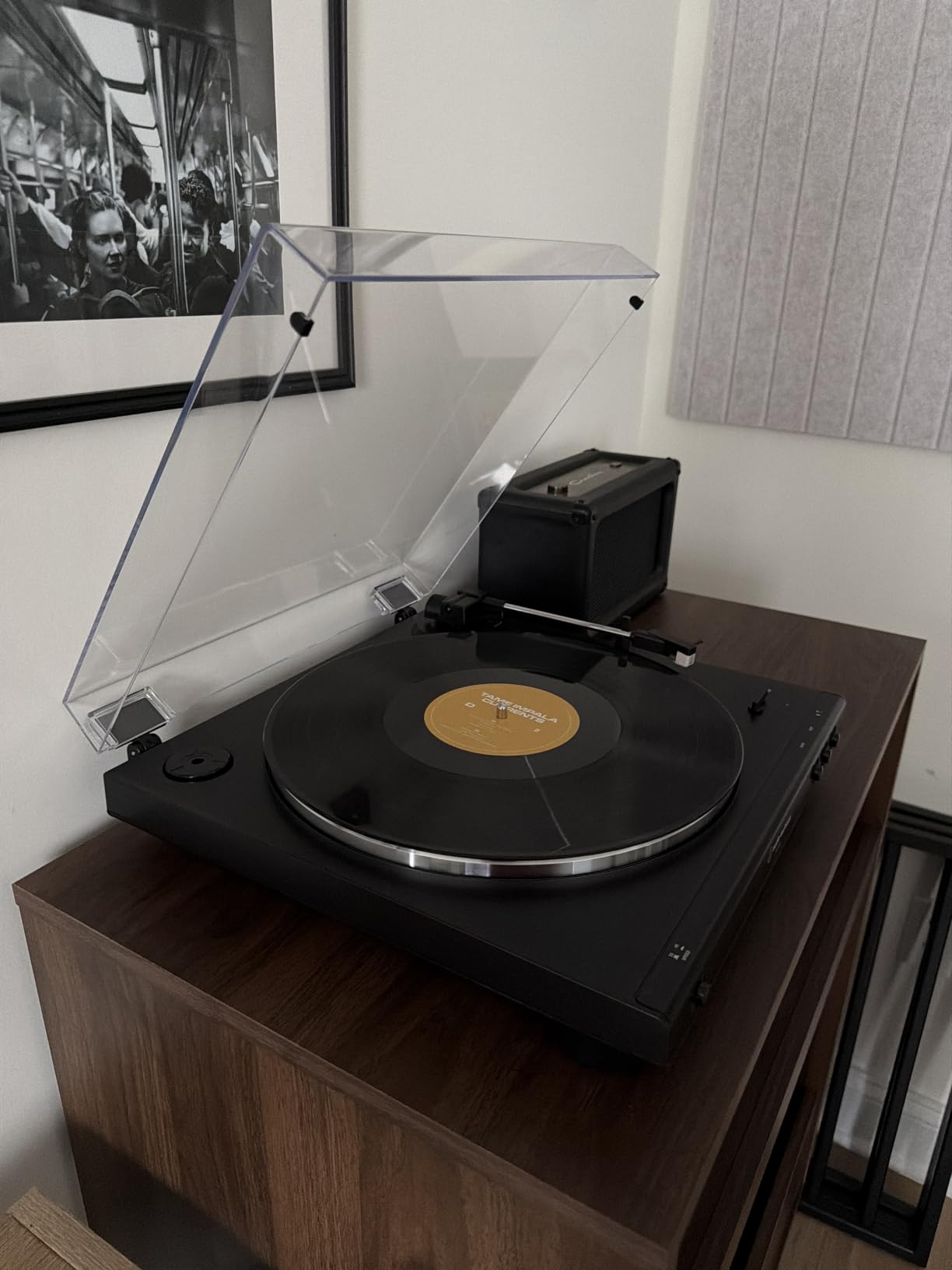
There is almost nothing to calibrate. The counterweight is a preset anti-skate and tracking force, so there is no balancing exercise and no stylus to align. You set it down, plug it in, and play.
The switchable preamp means it also feeds powered speakers and active monitors directly, which covers the most common first-system arrangement.
What it will not do
It has no pitch control, so you cannot nudge the speed when a record is slightly off. It also plays only 33 and 45 RPM, so shellac 78s from the thirties are out.
If you want Bluetooth, USB ripping or a turntable you can tinker with, keep reading. This one is a very good first record player and a fairly final one.
5. Fluance RT82 – The Best Sound Quality in the Roundup
Fluance RT82 Reference High Fidelity Vinyl Turntable Record Player with Ortofon OM10 Cartridge, Speed Control Motor, High Mass MDF Wood Plinth, Vibration Isolation Feet – Piano Black
Belt drive
Ortofon OM10 cartridge
0.07% wow and flutter
No built-in preamp
Pros
- Highest average rating in this roundup at 4.8
- Ortofon OM10 elliptical cartridge fitted from the factory
- Isolated motor rated at 0.07% wow and flutter
- Adjustable resonance damping feet plus a bubble level for setup
- Two year parts and labor warranty
Cons
- No phono preamp included so an external stage is required
- Fully manual operation with no auto stop
- No tonearm height adjustment for cartridge alignment
Only one deck in this roundup publishes a wow and flutter figure, and that deck is the Fluance RT82 at 0.07%. On r/turntables the RT82 comes up repeatedly as the best value new belt-drive option, and the specification explains why: the motor is isolated and speed-controlled rather than simply driven by a belt.
The cartridge is an Ortofon OM10, an elliptical moving-magnet unit with better linearity and channel separation than the Audio-Technica cartridges fitted to the decks around it. The difference shows most clearly on dense orchestration and on vocals, where the stereo image stays where the mix put it.
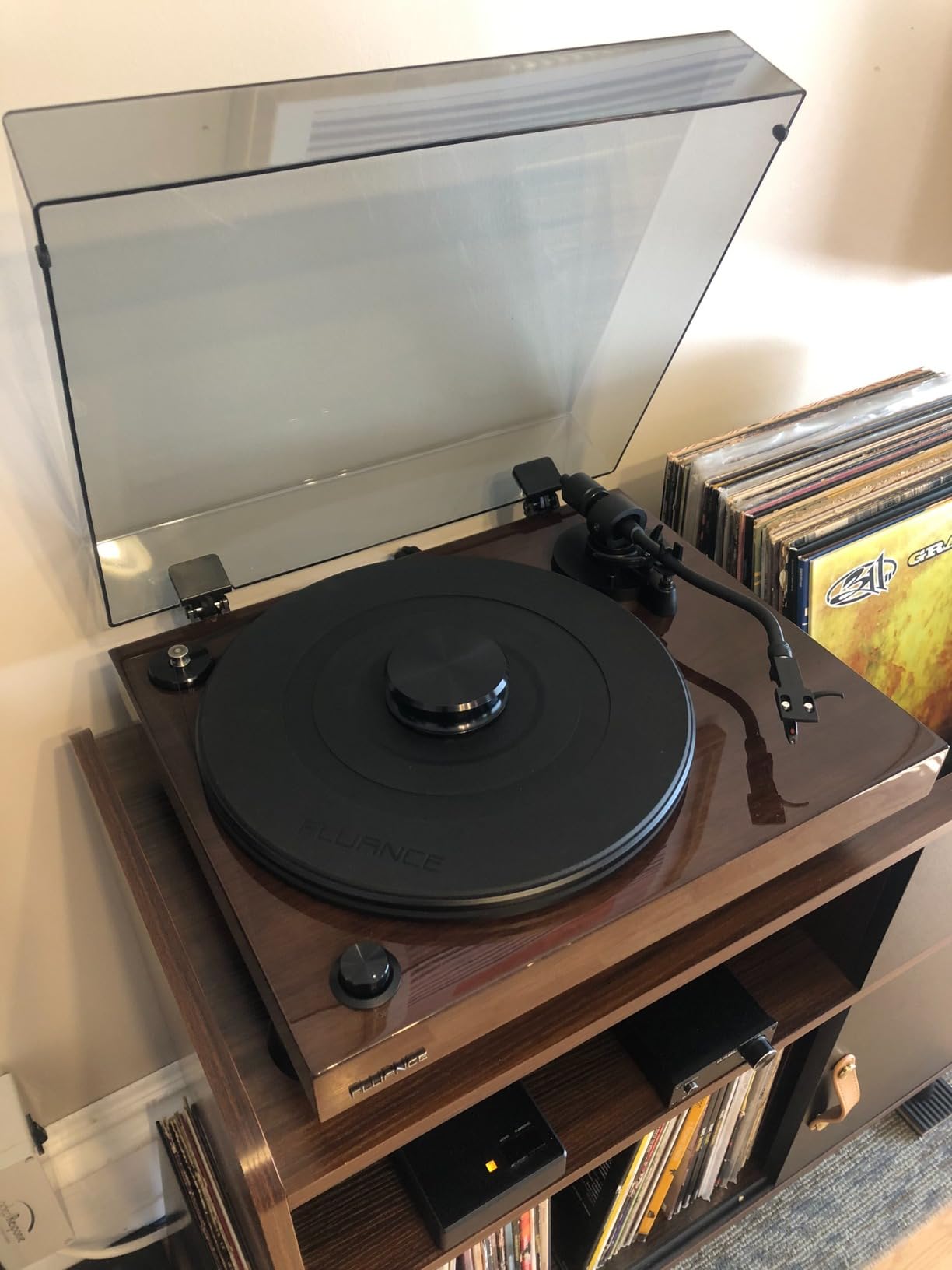
The plinth is high-mass MDF on adjustable damping feet, and a bubble level is included so you can get the plinth flat before the first record. It is a fifteen-pound deck and it stays put when you nudge it.
There is no electronics anywhere in the signal path, which is why the sound is as uncolored as it is. Nothing stands between the cartridge and your amplifier.
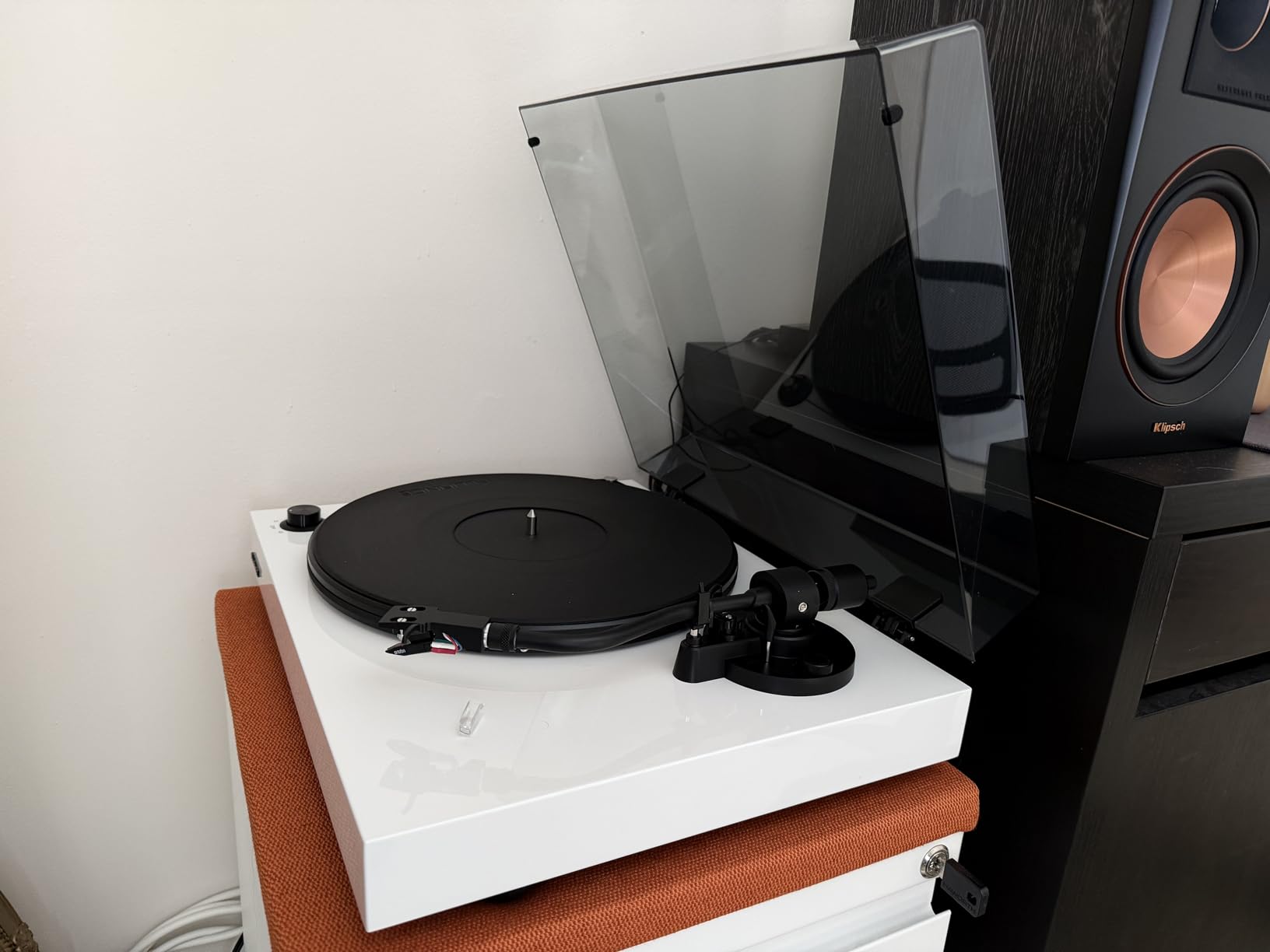
Why it tops the sound ranking
Published speed accuracy, a better cartridge and a heavier plinth are three things you cannot add later without replacing the deck. Everything else on this list, you can upgrade with money and an afternoon.
If your amplifier already has a phono input, this is simply the most accurate turntable you can start with at this level, and the feet let you tune isolation for your particular shelf or cabinet.
What you need to know first
There is no phono preamp in the box. If your amplifier has a phono stage, plug in and play. If not, you need a small external preamp before this deck makes any sound at all, which adds a box and a step.
Operation is fully manual with no auto stop, and there is no tonearm height adjustment. That is fine for an experienced setup and frustrating for a nervous beginner.
6. Fluance RT80 – The Best Simple Analog Deck with a Switchable Preamp
Fluance RT80 Classic High Fidelity Vinyl Turntable Record Player with Audio Technica AT91 Cartridge, Belt Drive, Built-in Preamp, Adjustable Counterweight, Solid Wood Plinth – Piano Black
Belt drive
AT91 cartridge
S-type tonearm
Switchable preamp
MDF plinth
Pros
- Balanced aluminum S-type tonearm with adjustable counterweight
- Switchable built-in preamp works with modern receivers
- Gold-plated RCA outputs with a ground wire included
- MDF plinth with isolation feet
- Two year parts and labor warranty
Cons
- No automatic start or tonearm return
- No USB or Bluetooth output
- Thin felt platter mat rather than a rubber one
The RT80 is the plainest deck on this list and that is exactly its appeal. A belt drive, an aluminum S-type tonearm, an Audio-Technica AT91 cartridge and a switchable preamp, with no automation and no wireless to learn.
It suits the person who wants a record player and not a gadget. Setup is the standard Fluance routine of balancing the counterweight, setting the anti-skate and checking the cueing height, and the whole thing rewards a careful first afternoon.
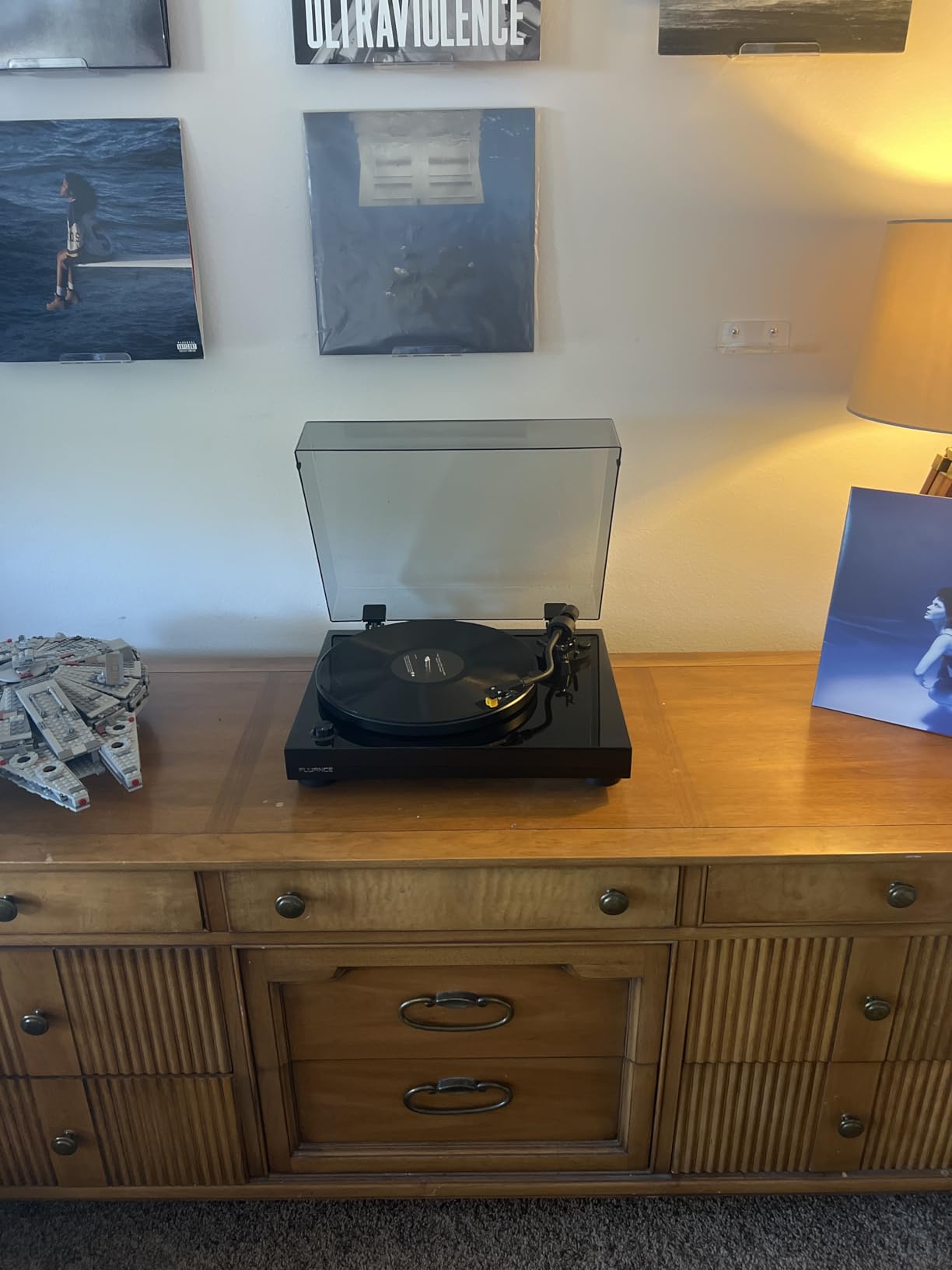
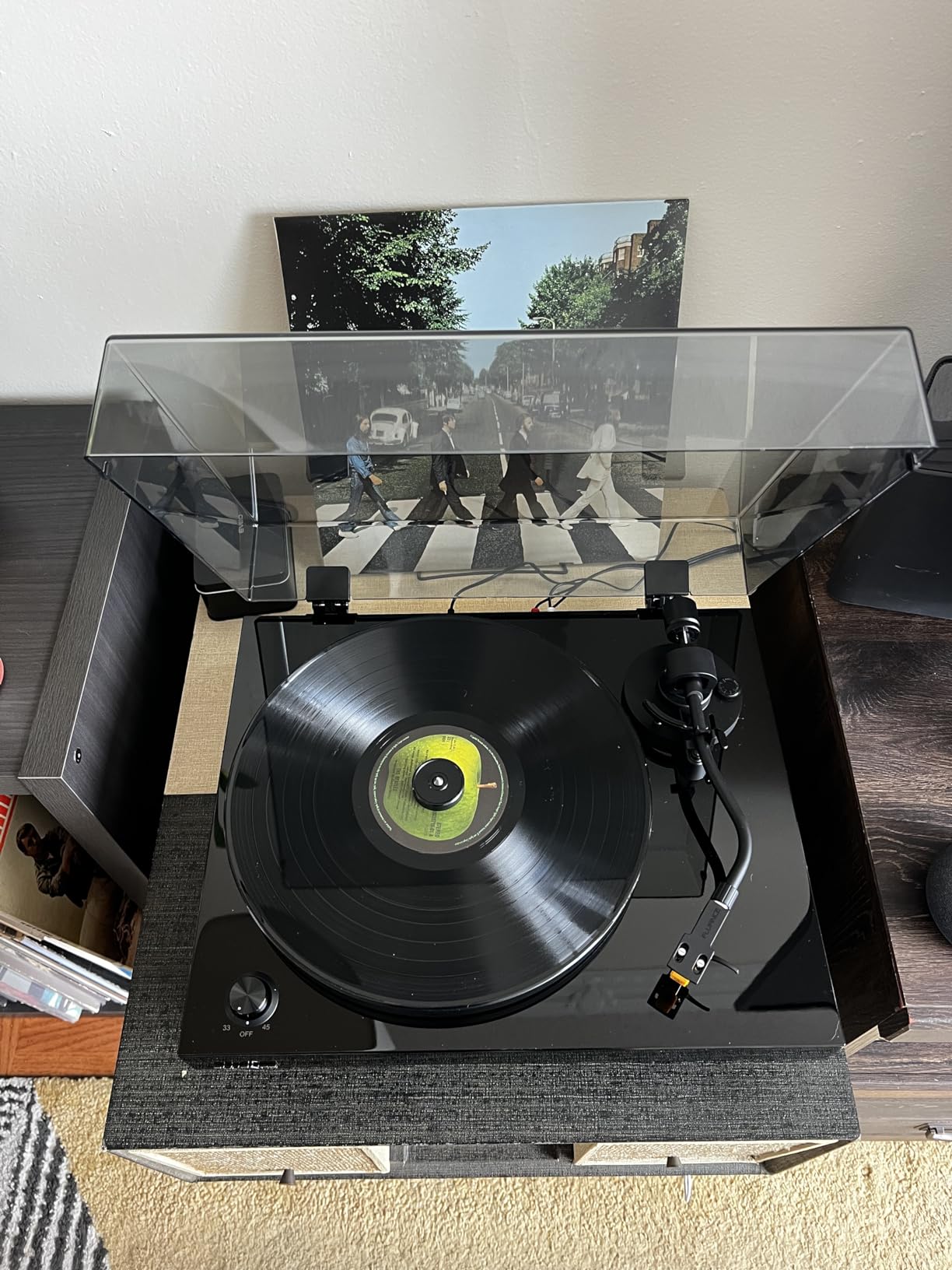
Sound is warm and even, and at 9.9 lb the plinth is lighter than the RT81, so it is more sensitive to a wobbly shelf. Put it on something flat and firm and the difference is immediate.
The piano black finish suits a minimal setup, and the switchable preamp means the same deck works with an amplifier that has a phono input and with one that does not.
Why it is worth considering over the RT81
If you already own an amplifier with a phono input, the RT80 gives you an honest analog path with fewer compromises for less money. The cartridge is one step down from the AT95E, and in a quiet room that gap is genuinely small.
It is also the simplest deck here to live with. No firmware thinking, no gain menus, no pairing. You press a button and music starts.
Where it is the weaker option
It has no auto stop, so the platter keeps turning after the last track, and it will not lift the arm for you. Anyone who plays records while doing other things will find that irritating quickly.
The felt platter mat is thinner than the rubber mat used on the sibling models. It works, but the thicker mat gives the stylus a more consistent grip on older, glossier records.
7. 1byone Fully Automatic Record Player – The Best Fully Automatic Turntable with a Remote
1 BY ONE Fully Automatic Record Player, All-in-One Vinyl Turntable
Fully automatic start and return
Remote control
Quad speakers with DSP
33 and 45 RPM
Pros
- One-touch start plus automatic tonearm return and a repeat function
- Remote control with memory for last volume and mode
- Quad-speaker system with DSP tuning fills a modest room
- Automatic muting softens the needle landing pop
- Three year manufacturer warranty
Cons
- Fixed tonearm design means the cartridge cannot be upgraded
- No bass or treble controls with EQ fixed in the DSP
- Built-in phono stage cannot be bypassed for a phono input
Most automatic turntables need a counterweight balanced and a tracking force set. This one asks for neither. You set it down, plug it in, and press one button, which makes it the most approachable deck in the roundup for someone who has never owned a record player.
It also comes with a remote control, and the memory function restores your last volume and playback mode after the power is cut. Small touches like that are what make an all-in-one pleasant to live with.
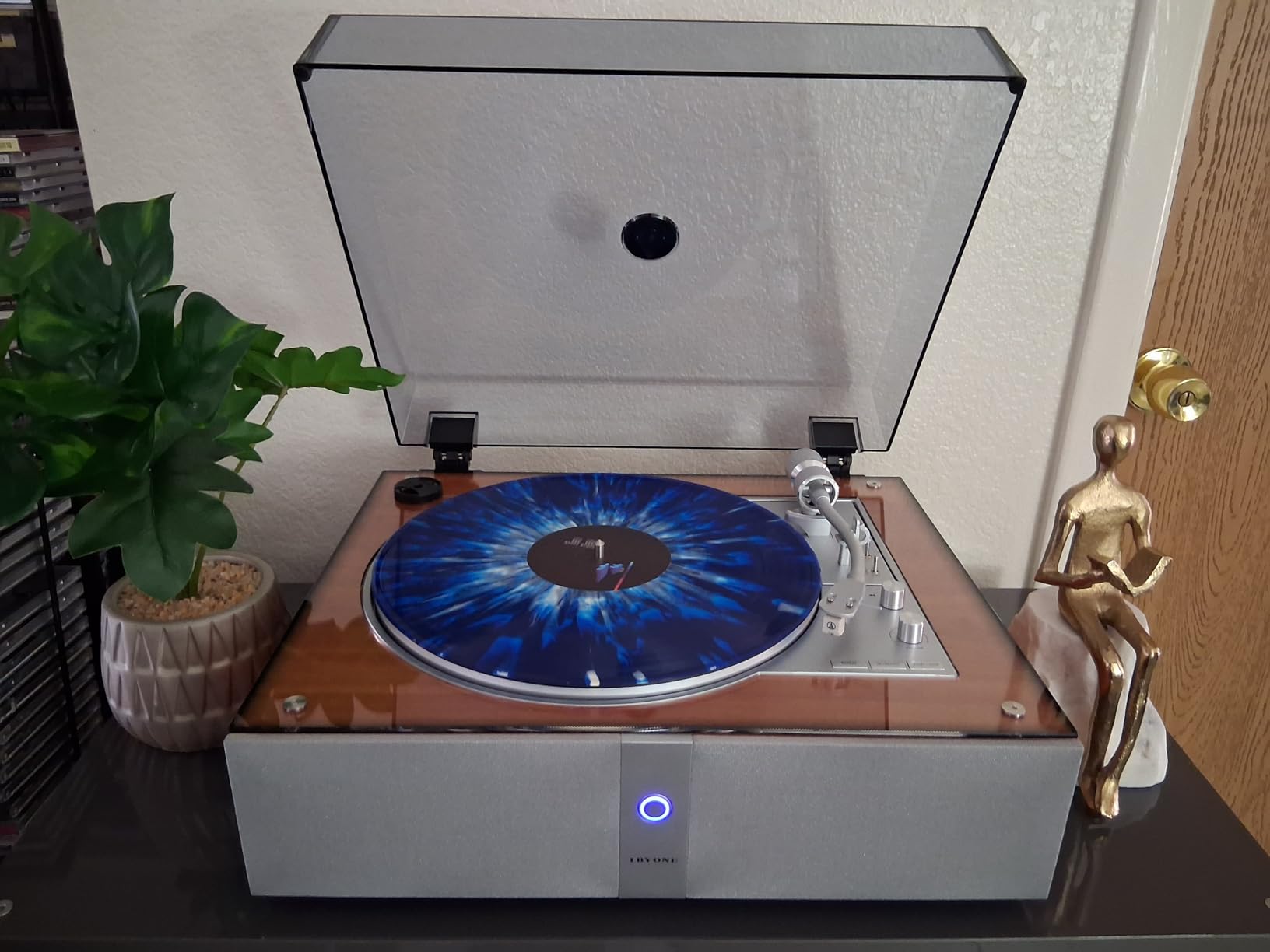
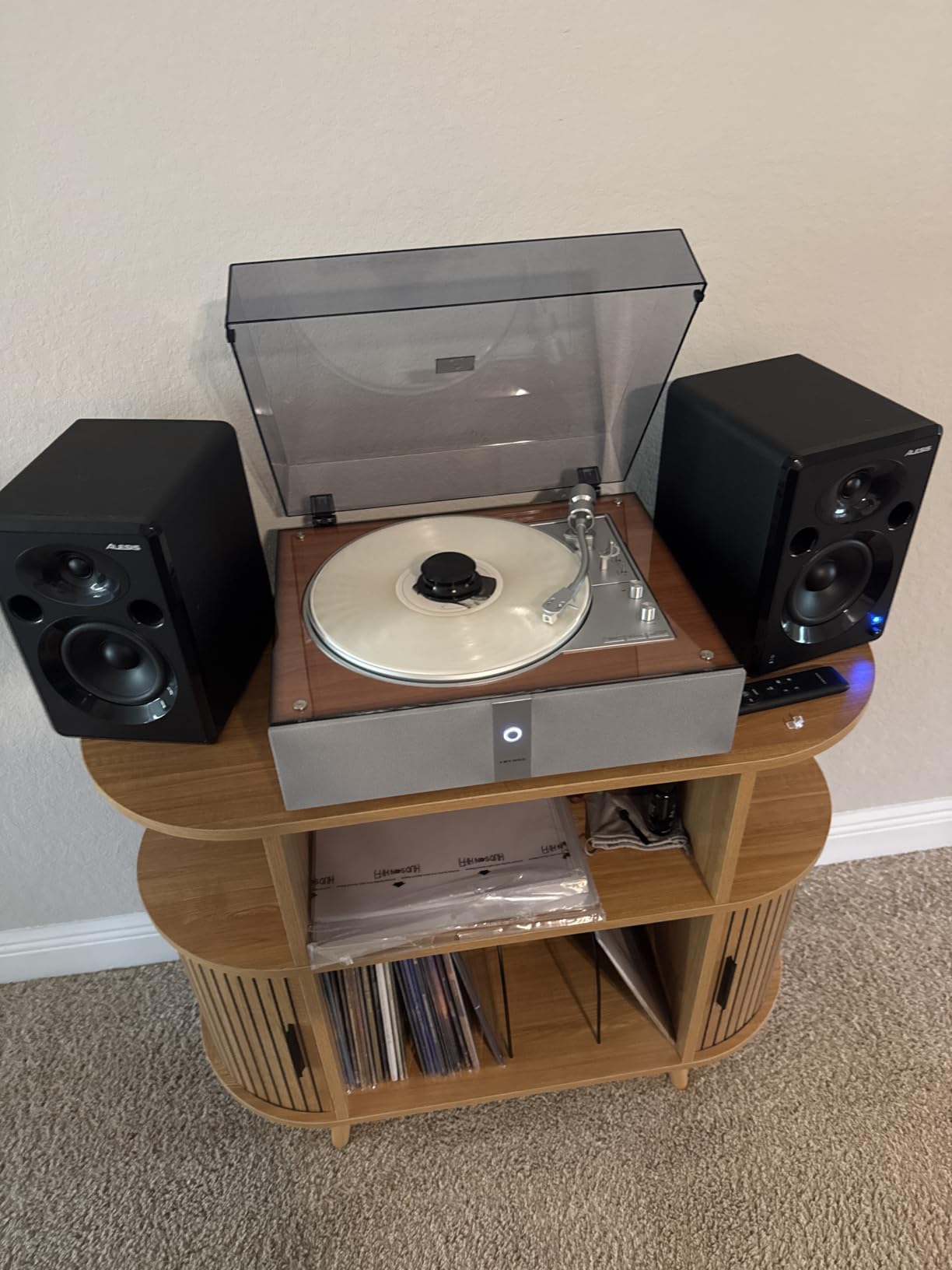
The speaker array is two 15 W woofers and two 10 W tweeters with DSP tuning, and it is loud enough for a small apartment without turning into a buzz at low volume. The 3.5 mm headphone output is a genuine bonus for late listening.
Automatic muting on needle landing removes the pop that usually punctuates the first fraction of a second, which is a detail most decks at twice the price do not bother with.
Why this suits a first-time listener
There is nothing to set up and nothing to get wrong. It plays 33 and 45 RPM with an AT-3600L stylus, returns the arm at the end of a record, and repeats a side if you want to hear it again.
Our beginner turntable guide covers why the calibration-free approach suits a first setup, and this deck is the extreme example of it.
What you cannot do with it
The tonearm is fixed, which means the cartridge cannot be upgraded. When the stylus wears out you are looking at a service visit rather than a swap, and that is the single biggest limitation here.
It also runs slightly fast out of the box, there is no visible pitch adjustment, and because the built-in phono stage cannot be defeated, this deck must never be connected to a phono input on an amplifier.
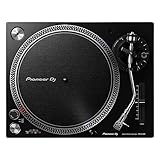
8. Pioneer DJ PLX-500 – The Best Direct-Drive Deck for Learning to DJ
Pioneer DJ PLX-500 Direct Drive Turntable
Direct drive
USB recording
DJ control layout
Phono and line out
Adjustable feet
Pros
- Direct drive spins up and slows down faster and more smoothly than belt rivals
- DJ-style control layout builds transferable habits
- Tonearm height adjustment for cartridge alignment
- Built-in preamp sounds clearer than cheaper direct-drive decks
- Adjustable feet for correct levelling
Cons
- Output cable is permanently attached and short with no ground post
- Included conical stylus is average and most owners upgrade
- Light tonearm can feel unstable
- Does not return the tonearm at the end of a record
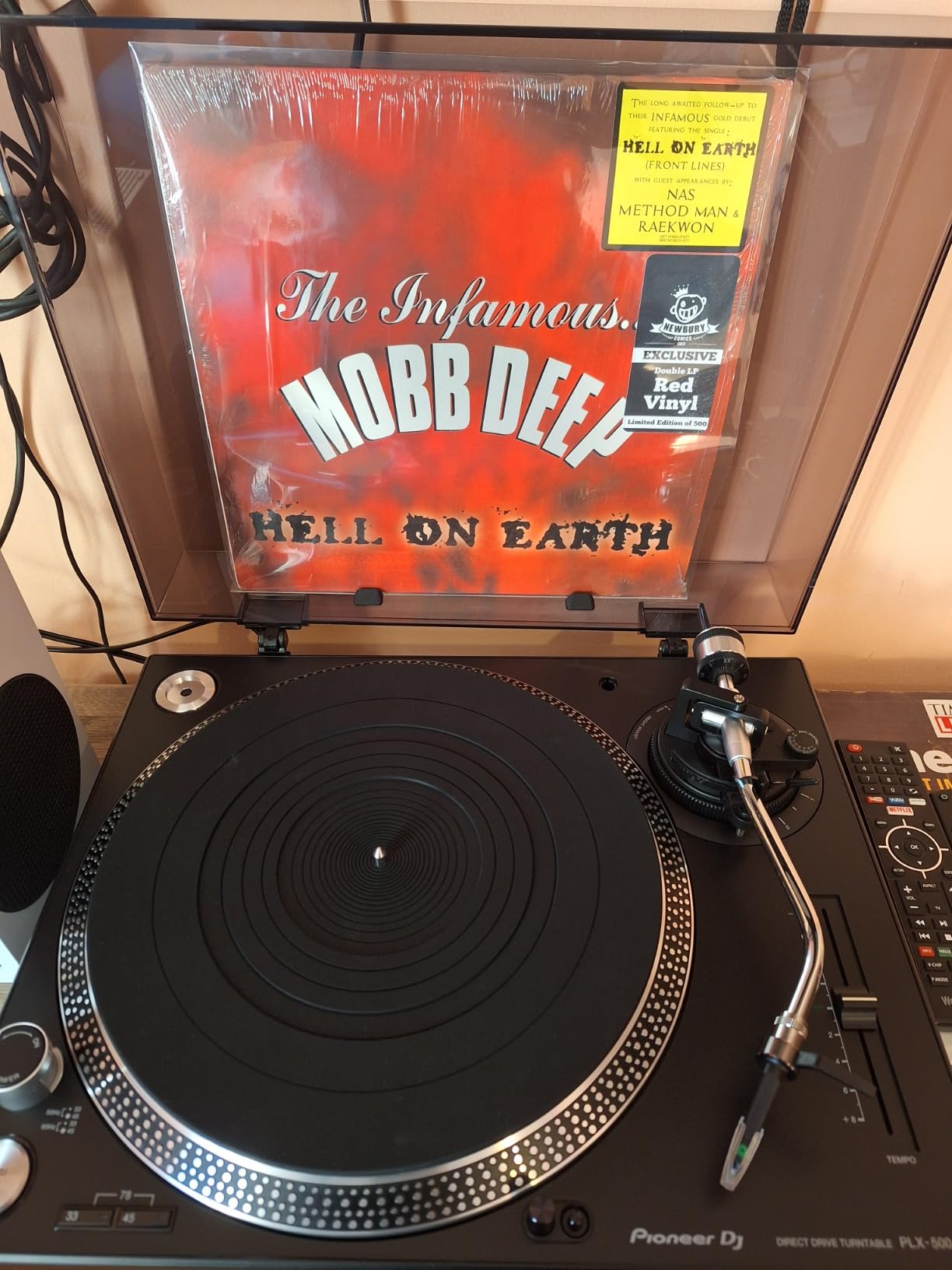
The PLX-500 is the only club-derived deck here, and if you think you might ever want to try mixing, it removes the guesswork. The layout, the platter size and the arm geometry match the professional decks, so the habits transfer directly.
The direct-drive motor settles faster than any belt-drive rival in this roundup, which is exactly what you want when you cue a track by ear. Spinning up and stopping happens in a moment rather than a slow drift.
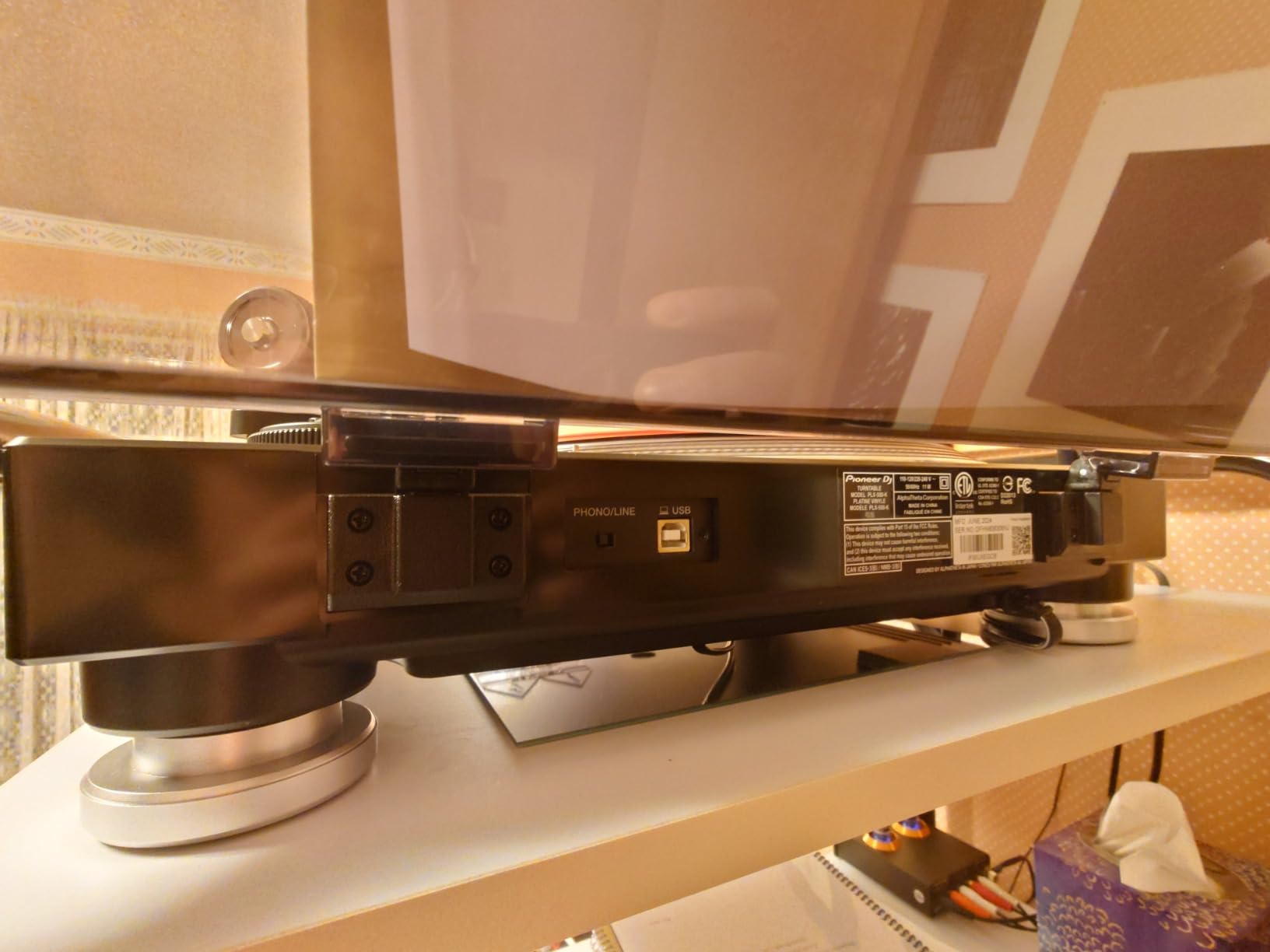
The tonearm has height adjustment, something most decks at this level omit, so you can align a replacement cartridge properly once you upgrade it. The included dust-cover sleeve stand doubles as a rest for records while you flip them.
USB output records straight to a computer, and the phono and line outputs cover both connection types through a switch.
Why it is more than a DJ toy
For plain listening it is excellent. The direct-drive motor is accurate, the build is solid at 12.7 kg, and the feet have long travel so you can level it on a shelf that is not perfectly flat.
If your goal is a first serious turntable with a long life, the adjustable arm and the direct drive both age well. The included stylus is the weak point, not the deck.
What to know before you buy
The output cable is permanently attached and short, and the turntable has no ground post, which rules out a direct connection to a turntable-specific phono stage with a ground wire.
There is no bundled recording software, and the deck will not return the arm at the end of a record, so it needs more attention than the automatic models here.
9. 1byone Belt Drive with Built-in Speakers – The Best Warm-Sounding Starter System
1 BY ONE High Fidelity Belt Drive Turntable with Built-in Speakers
Belt drive
Built-in stereo speakers
Bluetooth
Audio-Technica stylus
Counterweight
Pros
- Warm full sound from the built-in stereo speakers
- Audio-Technica diamond-tipped stylus cartridge
- Wood and metal cabinet looks far more expensive than it is
- Setup takes roughly thirty minutes including counterweight balance
- Bluetooth streaming and aux-in add flexibility
Cons
- No automatic tonearm return at the end of a record
- Volume knob is hidden under the dust cover
- Bluetooth range limited to about ten to fifteen feet
- Counterweight calibration is fiddly and needs patience
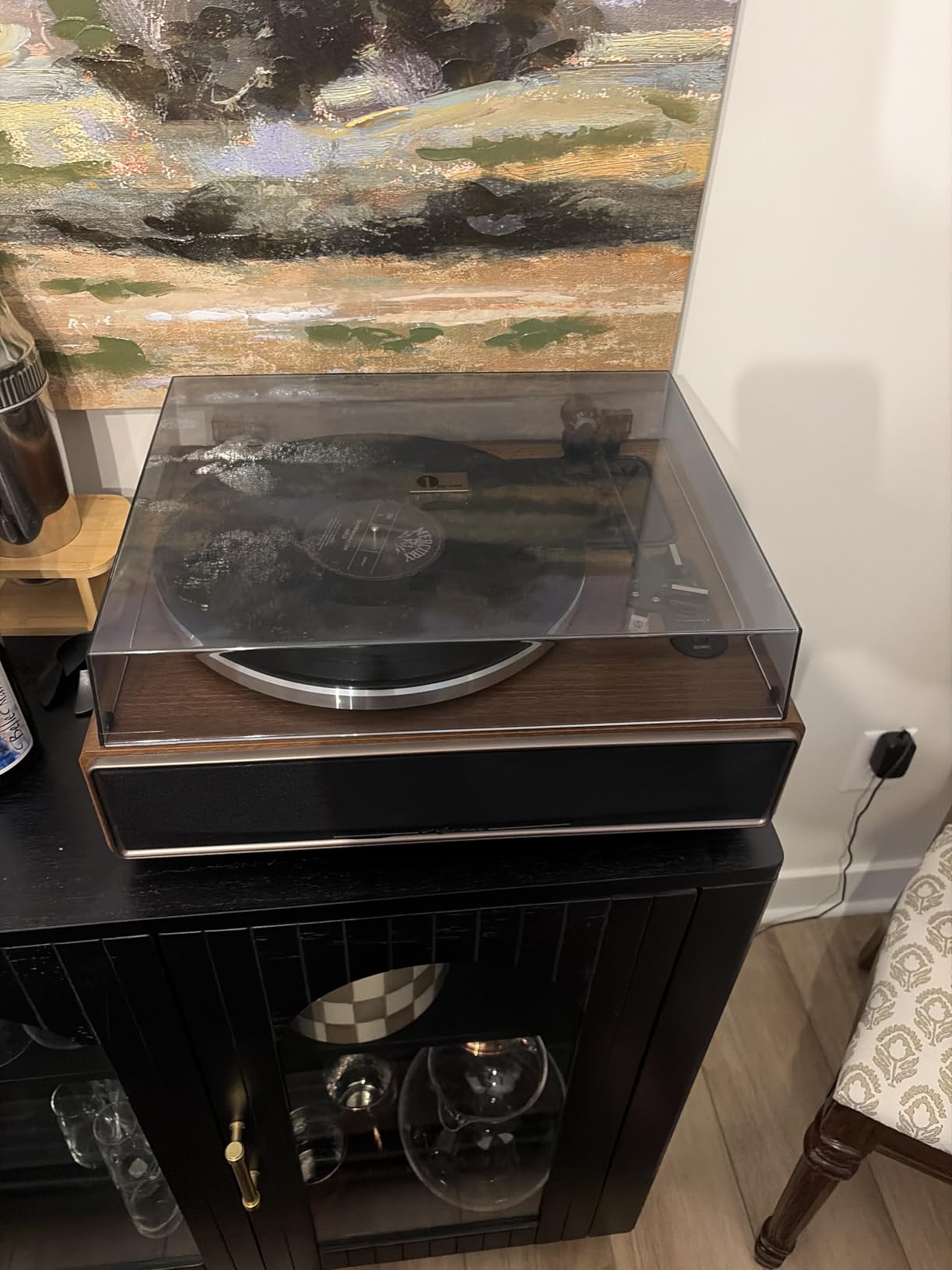
This is the sweet spot between a novelty suitcase player and a system that needs an amplifier. The speakers are built in, the cabinet is wood and metal, and there is nothing else to buy before your first record.
It has a real counterweight and a real Audio-Technica diamond stylus, so the mechanism is a step up from the fixed-arm toys. Sound is warm and full for a built-in pair, and it fills a small room without strain.
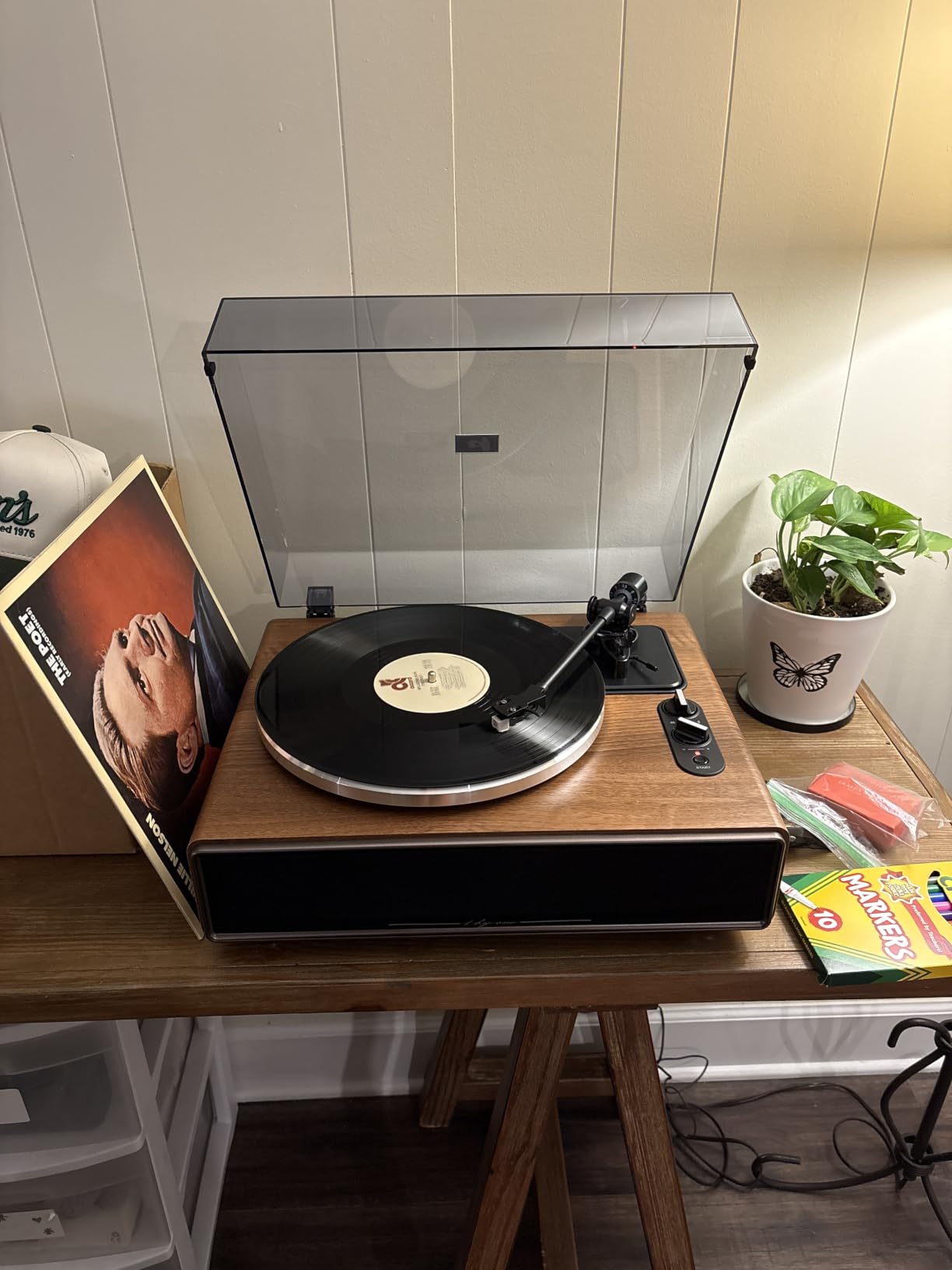
It also has a built-in amplifier for external powered speakers, so when you outgrow the internal drivers you can add a better pair without replacing the deck. Bluetooth and an aux input cover the phone and laptop sources.
At 13.3 lb it is heavy enough to stay put, and the detachable dust cover protects the record between sessions.
Why it makes a good first system
It removes the two biggest costs that catch beginners out, which are speakers and an amplifier. Our guide to turntables with built-in speakers covers the trade-offs in more depth.
Because the turntable part is a genuine belt-drive mechanism with a counterweight and a replaceable stylus, upgrading later means adding speakers, not starting the whole hobby again.
Where the compromises are
There is no automatic tonearm return, so the arm stays where you left it when the record ends. The volume control also hides under the dust cover, which is an odd design decision you will think about every time.
Bluetooth range is around ten to fifteen feet, and the counterweight calibration takes real patience. Budget half an hour for the first setup and treat it as practice.
10. Victrola Quincy – The Best Multi-Format Player with the Biggest Owner Base
Victrola Quincy – 6-in-1 Bluetooth Record Player – Mahogany
Vinyl CD cassette and radio
Bluetooth and aux
RCA line out
Retro wood cabinet
Pros
- Six formats in one wooden cabinet
- Bluetooth pairing is fast and stable with phones
- RCA line outputs let you use better external speakers
- Warm full sound owners describe as a big upgrade from suitcase players
- Works with no extra equipment required
Cons
- Built-in speakers are not hi-fi quality
- Dust cover does not open fully and stays partly ajar
- Cassette controls are limited to eject play and fast forward
- Some decks arrive with a weak or broken phono cartridge
With close to twenty-seven thousand reviews, the Victrola Quincy is the most proven record player in this roundup by a wide margin. That matters if you are nervous: a design with this much history has very few surprises left in it.
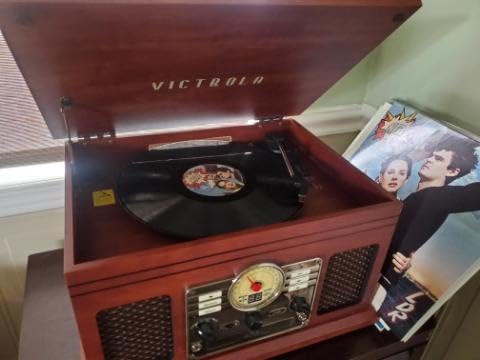
It plays vinyl at 33, 45 and 78 RPM, plus CDs, cassettes, and AM and FM radio, and it streams over Bluetooth or through the aux and headphone jacks. If you inherited a box of cassettes, this deck will play them too.
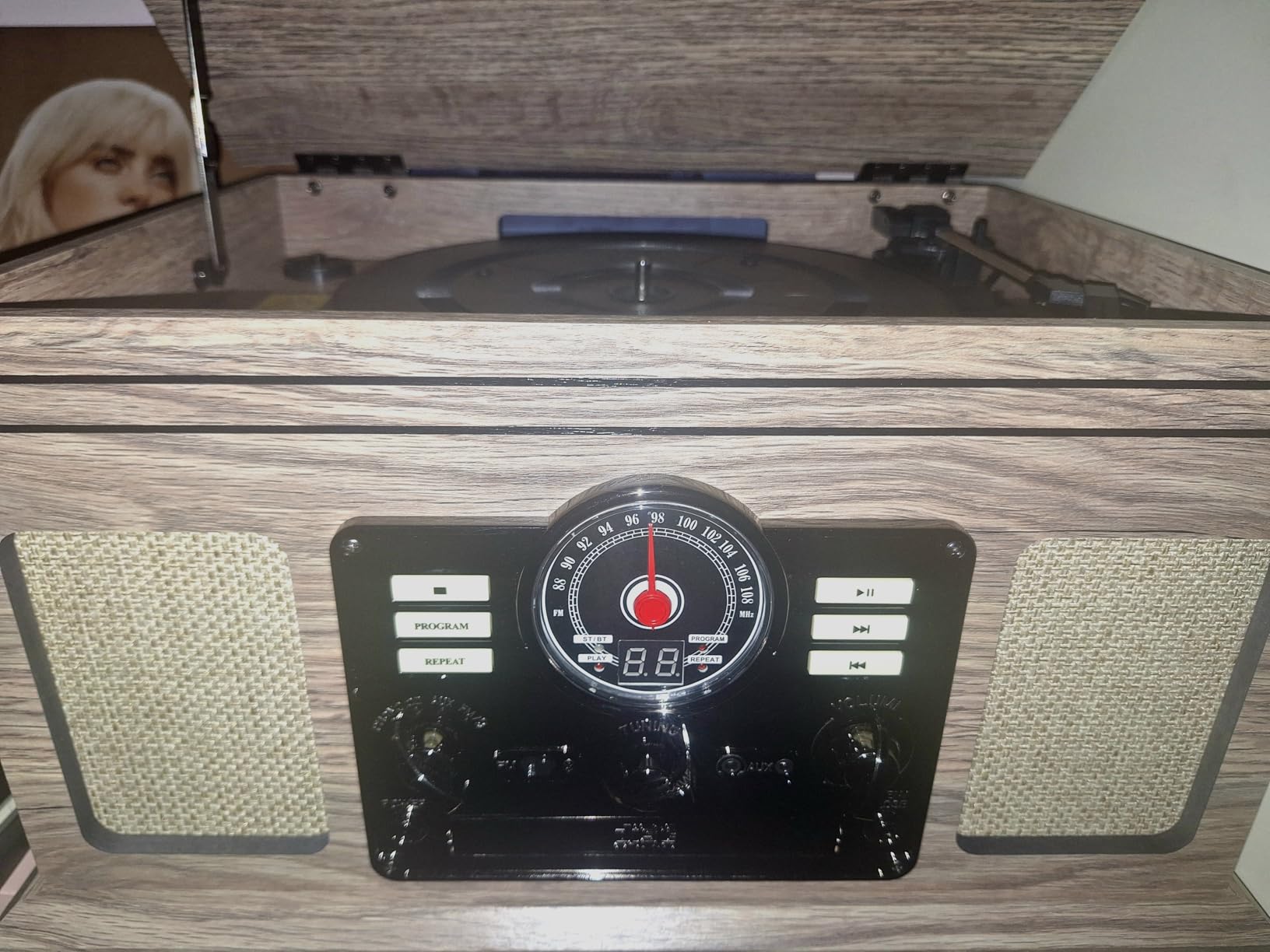
The RCA line outputs are the feature to remember. The built-in speakers are more boombox than hi-fi, but the moment you connect a real pair, the deck becomes a perfectly respectable source component.
Owners describe the sound as warm and full, and consistently better than what they came from in portable players. Bluetooth pairing with phones is fast and stays stable.
Who this record player is for
It is for people whose music collection spans formats, or who want one box in a kitchen or bedroom that does everything without a switch. The retro mahogany cabinet is designed to be looked at rather than hidden.
It is also a good low-risk way to find out whether you like vinyl, because the entry point is low and the RCA outs mean nothing you buy now is wasted later.
What to keep in mind
The built-in speakers are not hi-fi and should not be judged as such. A small pair of bookshelf speakers changes the picture completely, and you can drive them from the RCA outputs.
The dust cover does not open fully, the cassette transport is limited to eject, play and fast forward, and a minority of decks arrive with a weak cartridge. Check the stylus early.
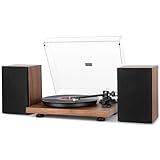
11. 1byone Bluetooth System with Bookshelf Speakers – The Best Turntable and Speaker Bundle
1 BY ONE Bluetooth Turntable HiFi System with 36 Watt Bookshelf Speakers
Iron platter
Included 36 watt speakers
Bluetooth
USB MP3
Switchable preamp
Pros
- Separate bookshelf speakers outperform any built-in driver pair
- Solid iron platter with high inertial mass for stable rotation
- Audio-Technica AT3600L cartridge on standard mounts and upgradable
- Switchable phono and line output for adding gear later
- Bluetooth streaming and USB MP3 recording included
Cons
- Counterweight calibration only reads to two grams so an offset is needed
- Anti-skate weight attaches on fragile nylon line
- Speakers have no RCA inputs of their own
- Bluetooth playback is noticeably quieter than wired
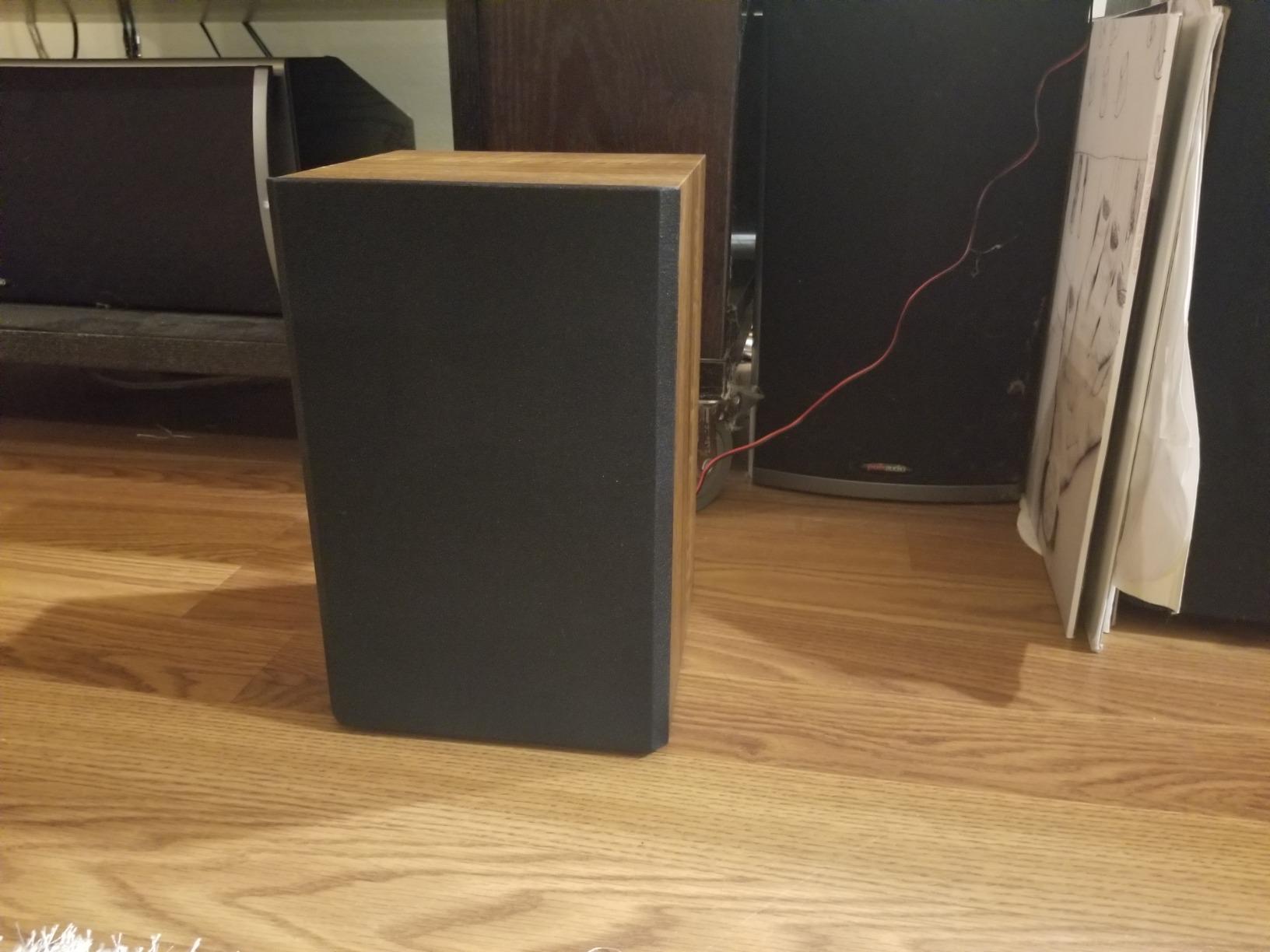
The two-box design is what makes this one stand out. Instead of hiding the drivers in a cabinet, you get small bookshelf speakers on stands or a desk, and they are the part of the system that actually makes the difference in how records sound.
The platter is solid cast iron rather than aluminum, which gives it a lot of inertial mass for the price. When a passing truck shakes the shelf, the stylus stays in the groove instead of jumping.
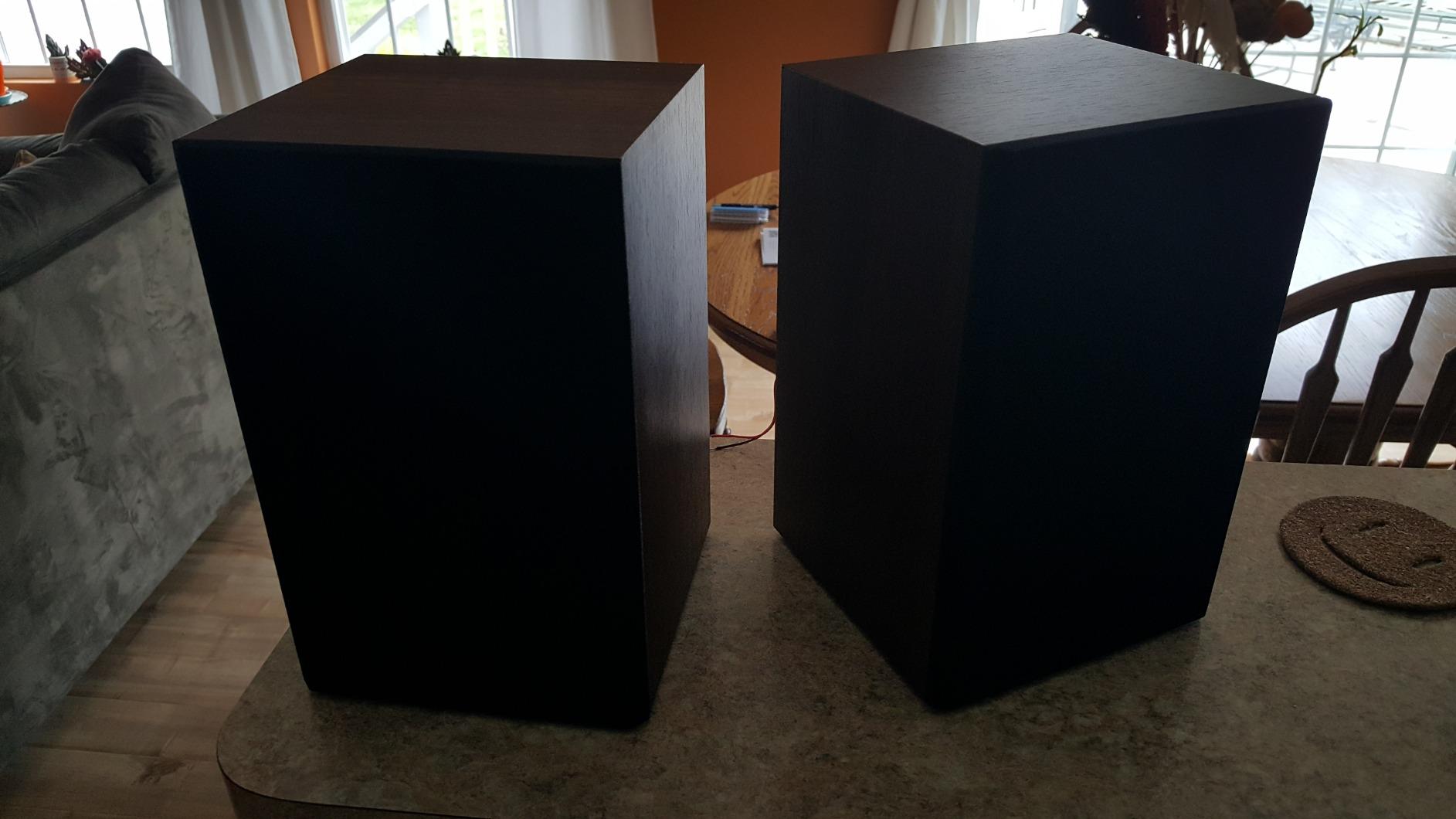
The cartridge is an Audio-Technica AT3600L moving magnet on standard headshell mounts, so it can be swapped for something better later without replacing anything else. That is unusual at this budget and it matters for longevity.
USB recording encodes to MP3 on a PC, and Bluetooth streaming works reliably from phones and tablets, though at a lower level than the wired output.
Why the speakers change the equation
Twelve decibels of headroom and actual stereo placement do more for your listening than an expensive turntable ever will. If you can only spend a fixed amount, spend a meaningful share of it outside the deck.
It is the setup we would build for a small apartment, a bedroom, or a desk setup where the turntable and the speakers both need to be compact.
What the assembly involves
Assembly is where the friction is. The counterweight scale only reads to two grams, so setting tracking force needs an offset calculation, and the anti-skate weight mounts on a fragile nylon line that is easy to break.
The included speakers have no RCA inputs of their own, so adding a CD player later means extra cabling. Budget an evening for the first build rather than an afternoon.
12. Seasonlife All-in-One with Four Speakers – The Best Four-Speaker All-in-One
Seasonlife® All-in-One Record Player with 4 Speakers & Bluetooth, Brown
All-in-one
Four built-in speakers
Bluetooth
PH and line out
Auto-stop
Pros
- Rich sound from a four-speaker array at an entry price
- Audio-Technica AT3600 cartridge with adjustable counterweight
- Vintage wood cabinet doubles as a piece of decor
- Auto-stop works reliably at the end of a record
- Storage compartment keeps the 45 RPM adaptor from being lost
Cons
- Occasional slight wow noticed during playback
- Power switch is hidden at the back of the cabinet
- Stylus arrives at a heavy 3 g tracking force that wears records faster
- Replacement parts support is email only
The Seasonlife all-in-one takes a different approach from the other systems here. Instead of two drivers, it fits two high-pitched and two low-pitched units into a wooden cabinet that is designed to sit out in the room rather than be hidden away.
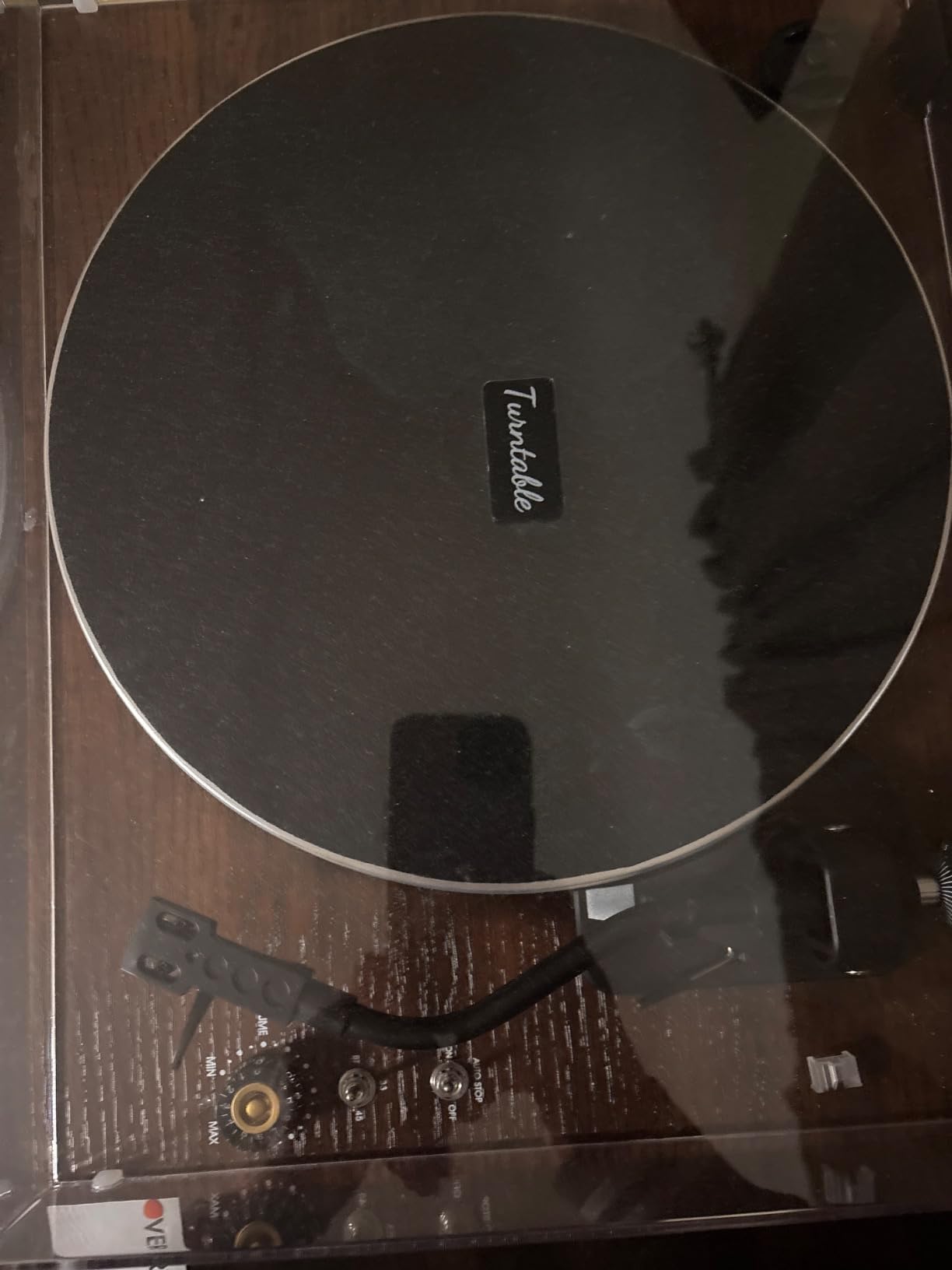
Underneath the styling it is a real turntable, with an aluminum platter, an S-shape tonearm and an adjustable counterweight. That is more than most competing all-in-ones at this price can claim.
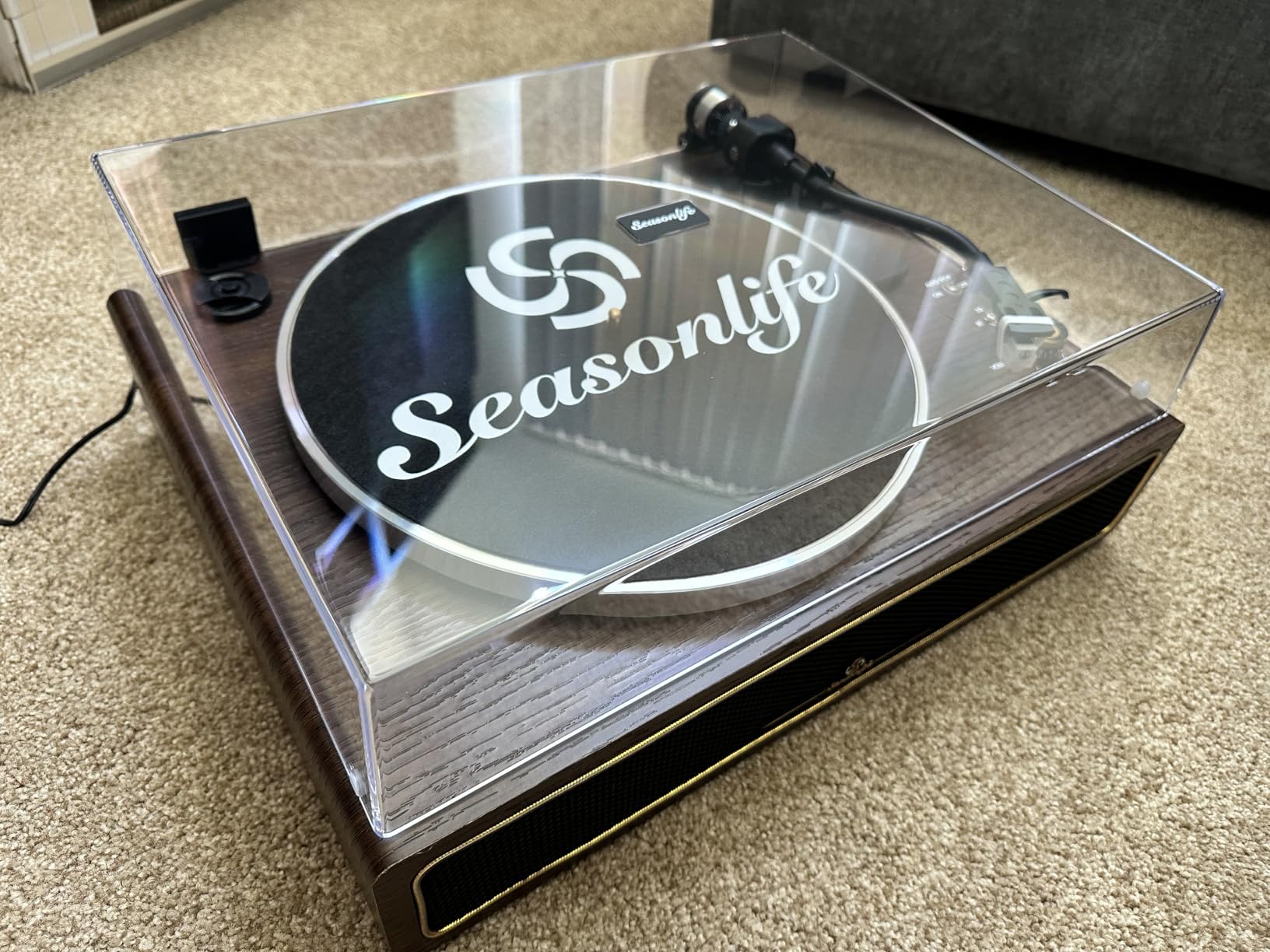
The Audio-Technica AT3600 cartridge tracks without skipping, which matters because the heavy tracking force it arrives with needs a stable arm to work properly. The switch between PH and line out lets you use passive speakers or active ones.
Auto-stop works reliably, and the little storage compartment for the 45 RPM adaptor is the sort of practical detail that saves you searching the box later.
Why it is worth a look
The four-driver layout gives it more low end and more volume than a two-driver cabinet of the same size, and at an entry price it is a lot of sound for very little. It also works with external speakers through both passive and active connections.
If you want something that looks like furniture and needs no amplifier, this is a strong option that most roundups skip over entirely.
What to watch out for
The stylus arrives at a heavy 3 g tracking force, which is more than most cartridges are designed for and which wears records faster than it needs to. If you keep this one, ask a dealer to adjust it.
Owners also report occasional slight wow, and the power switch is hidden at the back of the cabinet. Support for replacement parts is by email only, with no parts website, so check the stylus situation before you buy.
How to Choose a Turntable Under 500
The right question is not which turntable is best, it is which turntable suits the system you already own. Everything below comes back to that: the deck, the preamp, the speakers and how you actually listen.
Belt drive or direct drive?
Belt drive is the traditional approach. A rubber belt passes motor torque to the platter, which means the motor itself is decoupled from the platter and you hear less of it. Almost every dedicated hi-fi deck in this roundup uses a belt, including all three Fluance models and the Sony. Our guide to belt drive turntables covers the mechanical differences in more detail.
Direct drive spins the platter from the motor itself, which gives you instant start and stop, tighter speed control and pitch adjustment on a fader. That is why the Audio-Technica AT-LP120XUSB and the Pioneer DJ PLX-500 use it, and why those two are the picks for anyone who might want to DJ.
For pure home listening the difference is smaller than the specification sheets suggest. Choose a belt drive for acoustic warmth and motor isolation, or a direct drive for control and future flexibility.
Moving magnet or moving coil cartridges?
Almost every cartridge at this price is a moving magnet, or MM. It is robust, forgiving of alignment error and produces enough signal to drive a preamp without exotic gear. Every deck we tested comes with one, including the Audio-Technica AT3600L, AT91, AT95E and the Ortofon OM10 on the Fluance RT82.
Moving coil, or MC, cartridges produce a lower signal that needs a more capable preamp and careful alignment. They are a step you make later and on a different deck, not something to chase at this budget.
Our guide to audiophile turntables covers the next step up if you decide the hobby is for you.
Do you need a phono preamp?
A phono preamp takes the tiny signal from the cartridge and boosts it to line level. Without one, a turntable produces sound that is very quiet and badly EQ-ed, and in some cases nothing you would want to listen to.
Check your amplifier first. Anything described as having a phono input already includes the stage, and you should plug straight into that. If it does not, you need either a turntable with a switchable built-in preamp or a small external box.
Most of the decks here have a built-in preamp, and most let you switch it out, which is the ideal arrangement. The two exceptions to be careful with are the Fluance RT82, which has no preamp at all, and the 1byone automatic deck, whose built-in stage cannot be defeated and must never be connected to a phono input.
What else you need besides the turntable
Speakers and an amplifier, unless you buy an all-in-one. Powered speakers or active monitors are the cheapest path, because they have amplification built in and many models include a phono input, which removes the need for a preamp as well.
Budget for a decent pair of bookshelf speakers rather than a cheap pair of powered ones, because speakers influence the sound more than any single turntable component. A stylus cleaning kit and a proper record brush are worth adding in the first month.
Should you buy new or used?
Within this budget, new wins. A used deck offers no warranty, an unknown stylus and an unknown tonearm condition, and the secondhand market is full of decks sold for parts. If you do look used, check the speed at both settings, look for a worn stylus, and confirm the arm tracks without skipping.
That said, enthusiasts on forums like r/turntables and r/BudgetAudiophile do recommend hunting down older direct-drive decks from major Japanese brands, which can outperform newer budget models. The catch is service: many of those decks need belts, lubrication and new styli before they play, and you need to know what you are doing.
Setting up without damaging your records
Put the turntable on a firm, level surface away from speakers. Check it does not wobble, because a wobbling deck causes skipping that people blame on the record.
Fit the mat and belt, balance the counterweight, set the tracking force with a scale, set anti-skate to match, and cue the arm by hand rather than dropping it. That is the entire process, and it takes twenty minutes the first time.
Keep the tracking force sensible. A stylus pressed too hard into a groove does more damage in a year than a decade of careful play at a proper weight, which is why several decks in this roundup carry a warning about their factory settings.
What ownership really costs
The turntable is the smallest part of the ongoing spend. A replacement stylus runs a fraction of the cost of a new deck and can be fitted in minutes on any model here with a standard headshell.
Beyond that you are buying records, a cleaning kit, and eventually better speakers. That is why the all-in-one systems in this roundup remain popular: they turn a three-part purchase into one, and they make the hobby affordable to try before you commit.
Frequently Asked Questions
What is the best turntable for the money?
For most people, the Audio-Technica AT-LP120XUSB is the strongest all-round choice in this budget, with a 4.7 average rating across more than nine thousand reviews, three speeds including 78 RPM and a USB output for converting records to digital files. The Fluance RT81 is the better value pick if you want a quieter, belt-drive analog deck with an elliptical stylus cartridge.
What turntable has the best sound quality?
The Fluance RT82 has the highest average rating in this roundup at 4.8, and it is the only deck here with a published speed figure at 0.07% wow and flutter. It comes with an Ortofon OM10 elliptical cartridge and an isolated motor, and it has no electronics in the signal path. It does require an amplifier with a phono input or an external preamp.
Do I need a phono preamp for my turntable?
You need a phono stage unless your amplifier already has a phono input. Most decks in this roundup have a switchable built-in preamp, so you can feed either a phono input or a line-level input. The Audio-Technica AT-LP120XUSB and Pioneer DJ PLX-500 have no built-in preamp, and the Fluance RT82 also requires an external one.
Is belt drive better than direct drive?
For home listening the difference is small, and belt drive is slightly better at isolating motor noise. Direct drive wins on instant start, pitch control and DJ use. Choose belt drive for a traditional analog feel, as with the Fluance RT81 and RT82, or direct drive for control, as with the Audio-Technica AT-LP120XUSB and Pioneer DJ PLX-500.
Should I buy a new or used turntable?
Within this budget, new is the safer choice because you get a warranty, a known stylus condition and reliable speed. Used decks from major Japanese brands can be excellent value, but they often need belts, lubrication and a new stylus before they play properly, and you carry all the risk of the unknown condition.
Conclusion
After twelve decks and several weeks of swapping records, the Audio-Technica AT-LP120XUSB remains our pick for the best turntables under 500, because its 4.7 rating, three speeds and USB output cover more use cases than anything else here. Buy the Fluance RT81 if you would rather have a quiet belt-drive analog deck with a factory elliptical stylus, the Fluance RT82 if your amplifier already has a phono input and you want the cleanest signal path, and the Sony PS-LX310BT if Bluetooth and automatic operation decide it for you.
Pick the system that matches what you already own, set the tracking force properly, and give it a shelf that does not wobble. The best turntables under 500 in 2026 will not fix a bad setup, but they will make a good one sound very good.