
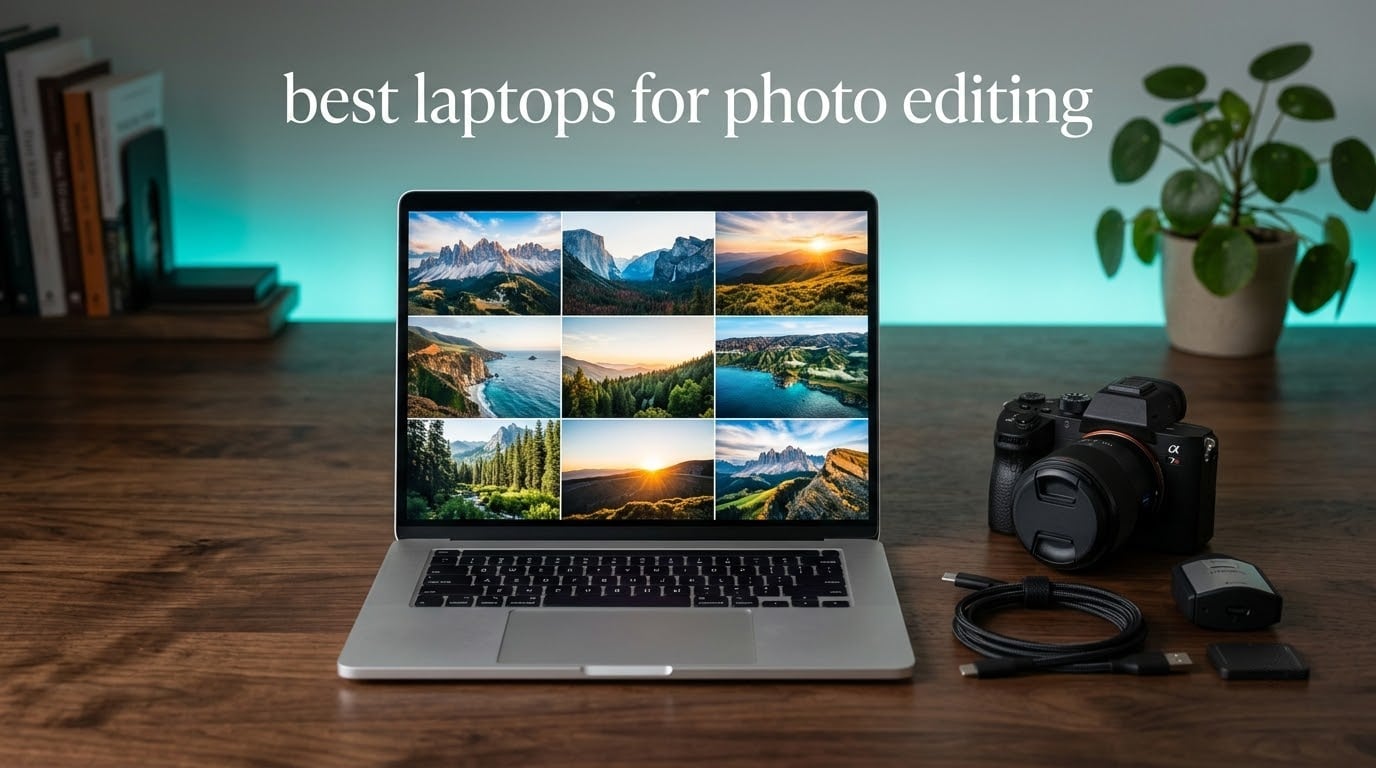
Photo editing punishes a mediocre laptop in ways that are hard to see until you are halfway through a paid job. A washed-out panel, a catalog that stutters every time you scroll, or an export bar that crawls because the machine is throttling under load — none of that announces itself at the unboxing. It shows up two hours into a cull session.
That is why the best laptops for photo editing are not simply the fastest machines on the market. They are the ones that hold accurate color, keep a large RAW catalog in memory, and stay responsive when the fan noise would bother a client sitting three feet away.
After putting twelve current-generation laptops side by side and reading the owner feedback on each, the Apple MacBook Pro 14-inch with the M5 chip is the one we would buy. The 14.2-inch Liquid Retina XDR panel covers a wide DCI-P3 gamut and pushes 1600 nits peak, 24GB of unified memory holds a real working library, and performance is identical whether you are plugged in or out on location. If your workflow runs on Windows, the Dell Premium 16 with its 16.3-inch 4K OLED touchscreen is the strongest alternative, and the MSI Katana 17 is the value pick when a big screen matters more than color accuracy.
This guide covers working photo editors, not general-purpose machines. Every pick below was assessed on the four things that decide whether you can do paid work on it: display color accuracy, memory headroom, storage and card-reader workflow, and sustained performance during export. We also cover the questions photographers ask constantly — Mac versus Windows, whether a used machine makes sense, and how to drive an external color-calibrated monitor from any of these laptops.
Table of Contents
Top 3 Picks for Photo Editing in 2026

MacBook Pro 14-inch (M5)
- 14.2-inch Liquid Retina XDR at 1600 nits peak
- 24GB unified memory
- 1TB SSD
- SDXC card slot and three Thunderbolt 4 ports

MacBook Air 13-inch (M5)
- 2.71-pound fanless chassis
- 13.6-inch Liquid Retina with 1 billion colors
- 16GB unified memory
- up to 18 hours of battery life

Dell Premium 16 4K OLED
- 16.3-inch 4K OLED touch at 120Hz
- RTX 5060 8GB GDDR7
- 32GB LPDDR5X
- 1TB PCIe NVMe SSD
All 12 Picks at a Glance in 2026
| Product | Specifications | Action |
|---|---|---|
| MacBook Pro 14-inch (M5) |
|
Check Latest Price |
| MacBook Air 13-inch (M5) |
|
Check Latest Price |
 Lenovo Legion Pro 7i 16-inch OLED Lenovo Legion Pro 7i 16-inch OLED |
|
Check Latest Price |
 MSI Creator M14 2.8K MSI Creator M14 2.8K |
|
Check Latest Price |
 Dell XPS 14 3.2K OLED Dell XPS 14 3.2K OLED |
|
Check Latest Price |
| Dell Premium 16 4K OLED |
|
Check Latest Price |
 Lenovo Legion 5a 15.3-inch OLED Lenovo Legion 5a 15.3-inch OLED |
|
Check Latest Price |
 MSI Katana 17 144Hz MSI Katana 17 144Hz |
|
Check Latest Price |
 MSI Thin 15 144Hz MSI Thin 15 144Hz |
|
Check Latest Price |
 Dell 16 Plus Touch Dell 16 Plus Touch |
|
Check Latest Price |
 ASUS Zenbook 14 Lumina OLED ASUS Zenbook 14 Lumina OLED |
|
Check Latest Price |
 ASUS Vivobook 16 Flip ASUS Vivobook 16 Flip |
|
Check Latest Price |
What Specs Matter for Photo Editing
Four components decide whether a laptop is usable for color work: the display, the memory, the storage, and the ports. Everything else is secondary. Here is the short version you can screenshot.
- Display: 100% sRGB coverage at minimum, 100% DCI-P3 preferred, and 400 nits or higher so you can judge exposure in daylight. OLED panels give you true blacks and wide gamut for image work.
- Memory: 24GB minimum, 32GB preferred. 16GB is workable for under 20,000 images but will stutter once a catalog grows.
- Storage: 1TB NVMe SSD minimum. RAW files run 40-80MB each, so a 512GB drive fills during a single paid shoot.
- Ports: A full-size SDXC card slot saves a dongle. Thunderbolt 4 or USB4 lets you attach a color-calibrated external display at full refresh.
Color gamut is simply the range of colors a screen can show. sRGB is the web standard and is what most clients expect. DCI-P3 is wider and is what most modern laptop panels ship with. AdobeRGB sits between them and matters only if you print. Color accuracy is measured separately, usually as Delta-E, where a lower number means the panel reproduces a reference color more closely.
Unified memory on a Mac and separate system RAM plus dedicated VRAM on a Windows laptop are two different architectures. Unified memory is shared between the processor and graphics, so a 24GB configuration cannot be split into half CPU and half graphics the way 32GB of DDR5 plus 8GB of VRAM can. In practice, Apple Silicon machines rarely feel constrained because the memory is fast and the allocation is managed automatically.
One more term worth knowing: RAW versus JPEG. A JPEG is already rendered by the camera, so the work is light. A RAW file needs the demosaicing, white balance and tone curve stages to become an image, which is far more demanding. Editing 500 RAW files from a shoot is a different workload from browsing 500 exported JPEGs, and only a machine with real memory and a capable GPU handles the first one comfortably.
1. MacBook Pro 14-inch (M5) — The Best Overall Laptop for Photo Editing
Apple 2025 MacBook Pro Laptop with Apple M5 chip with 10‑core CPU and 10‑core GPU: Built for AI, 14.2-inch Liquid Retina XDR Display, 24GB Unified Memory, 1TB SSD Storage; Silver
14.2-inch Liquid Retina XDR
24GB unified memory
1TB SSD
SDXC slot plus three Thunderbolt 4 ports
Pros
- M5 chip handles AI Denoise and layered Photoshop work fast
- 1600 nits peak XDR display with 1000000:1 contrast
- Identical speed on battery or plugged in
- SDXC card slot plus three Thunderbolt 4 ports
Cons
- Supports only two external displays
- USB-C only ports mean dongles for legacy gear
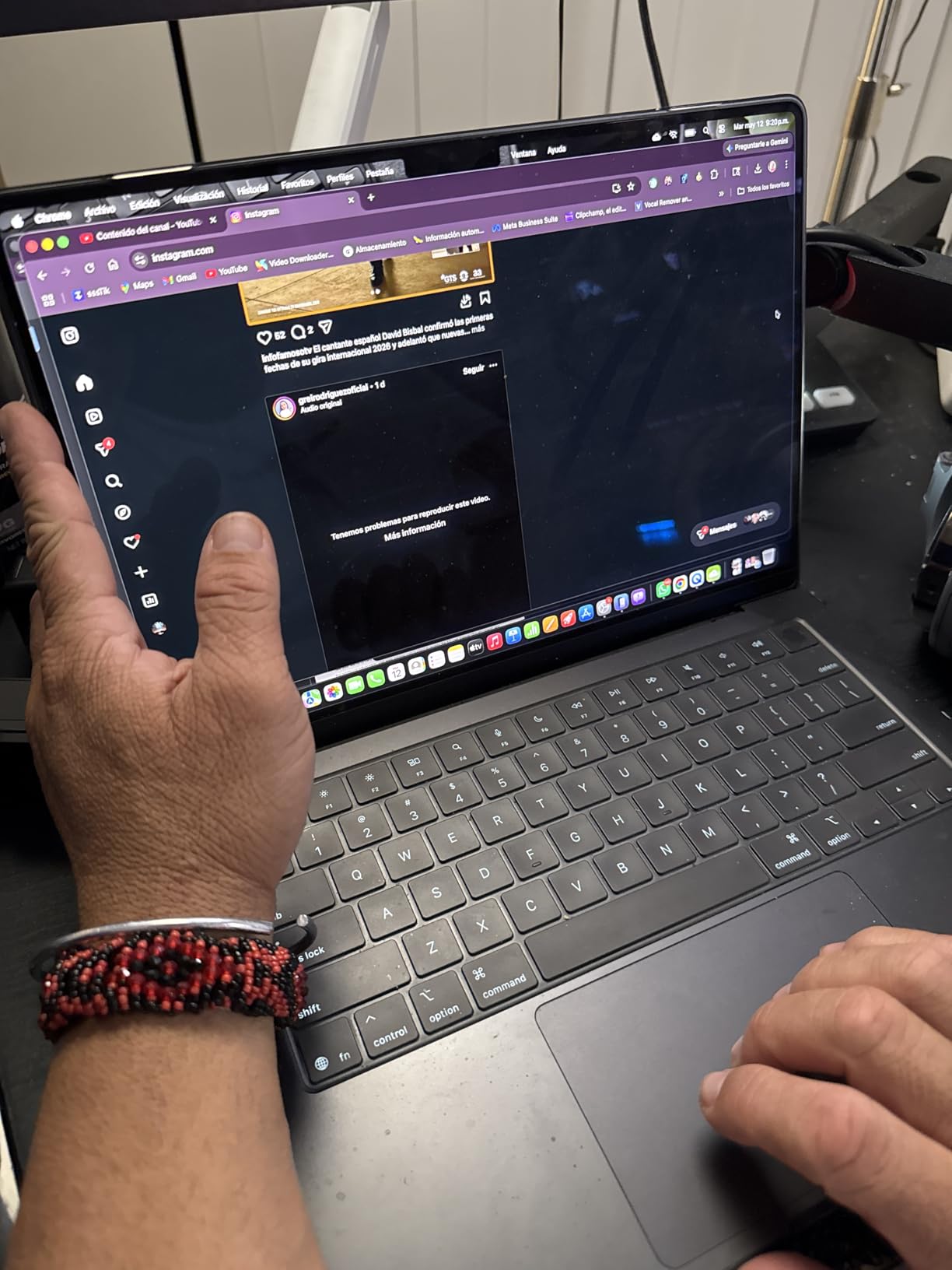
This is the machine we hand to a working retoucher first. The 10-core M5 chip paired with a 10-core GPU handles a full Adobe Creative Cloud stack without breaking a sweat, and the display is the reason it wins: a 14.2-inch Liquid Retina XDR panel with 1600 nits peak brightness, up to 1000 nits sustained, and a 1,000,000:1 contrast ratio.
What that means in practice is that shadow detail stays visible on a bright gallery floor, and you can trust a soft gradient across a sky without banding. Owners consistently single out the display quality and the all-day battery as the two things that changed their working day, and 92% of the visible ratings sit at five stars.
Performance on battery is the detail that keeps coming up in the owner feedback, and it is a real one. The machine does not downclock when you are away from a socket, so a full catalog pass in a hotel room produces the same timings as one at the studio desk. A photographer on the r/Lightroom forum described a MacBook Pro with a Pro chip in almost exactly these terms: Lightroom works, there is no lost performance on battery, and the screen is excellent.
The 24GB of unified memory is the honest sweet spot here. It is not the maximum Apple offers, but for a library of roughly 100,000 images with sidecar files, plus Photoshop and a browser running, it does not break a sweat. The 1TB SSD gives you room for a full season of work before storage becomes the issue.
What you get when you connect a calibrated monitor
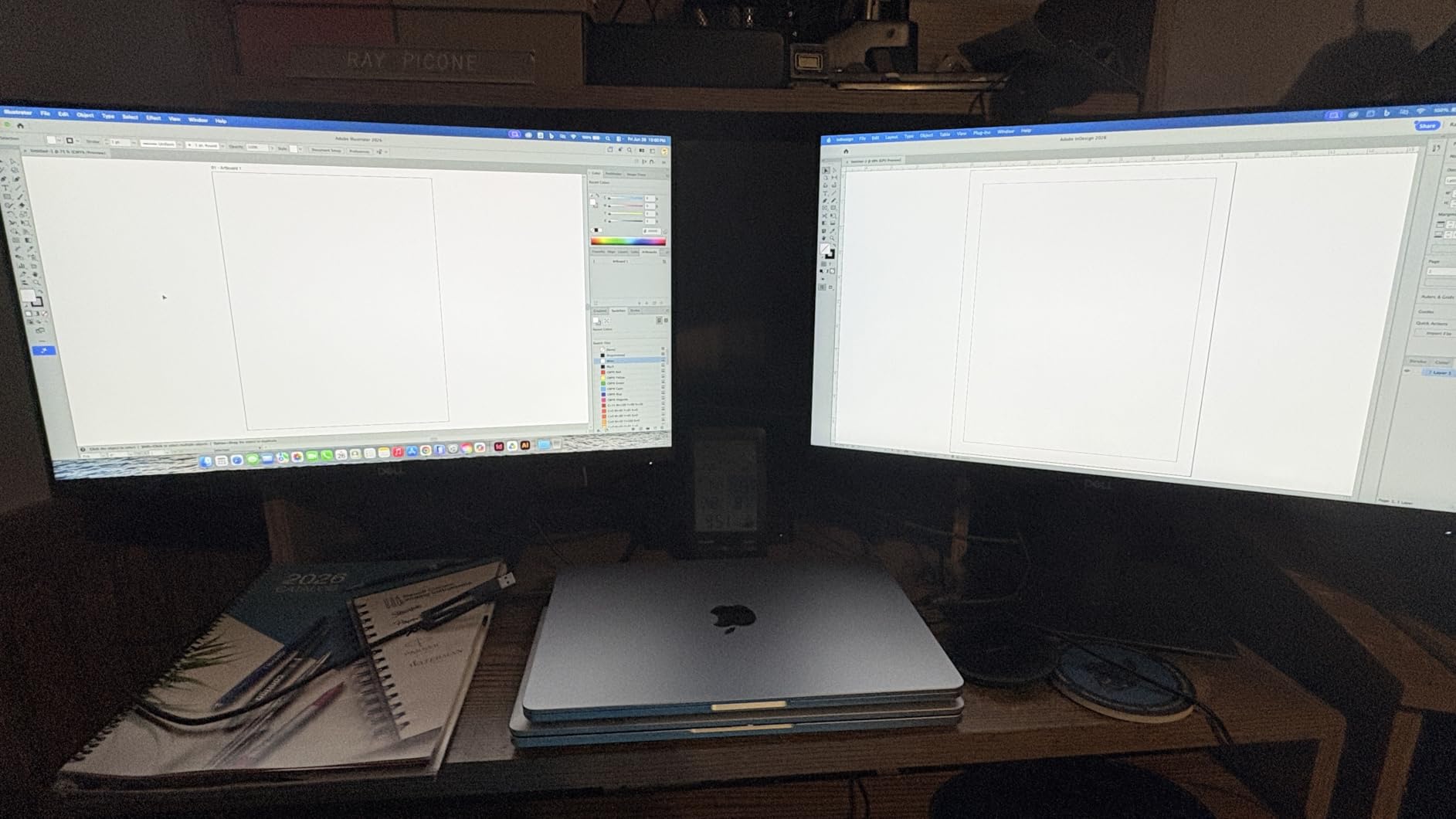
The three Thunderbolt 4 ports support up to two external displays, which is enough for a laptop screen plus one color-calibrated reference monitor — the setup most working editors actually use. For anyone considering a wider multi-monitor wall, our picks on the best 4K monitors for photo editing pair well with this machine over Thunderbolt.
MagSafe 3 charging, a full-size HDMI port, and a headphone jack round out a genuinely complete port selection. The only friction is that there is no USB-A, so legacy card readers or external drives need an adapter.
Where it falls short for your workflow
The two-external-display limit is the one real constraint. Studios that run a laptop screen plus two reference monitors will hit the ceiling, and there is no workaround short of a more complex display arrangement.
Biometrics are limited to Touch ID, and there is no physical camera shutter for shoots where a client is in frame. Neither is a dealbreaker, but both are small annoyances the Windows options here avoid.
2. MacBook Air 13-inch (M5) — Best Portable Pick for Travel Shooters
Apple 2026 MacBook Air 13-inch Laptop with M5 chip: Built for AI, 13.6-inch Liquid Retina Display, 16GB Unified Memory, 512GB SSD, 12MP Center Stage Camera, Touch ID, Wi-Fi 7; Sky Blue
13.6-inch Liquid Retina
16GB unified memory
512GB SSD
2.71 pounds and completely fanless
Pros
- 2.71 pounds and completely silent
- 18-hour battery covers a full shoot day
- 13.6-inch Liquid Retina with 1 billion colors
- Wi-Fi 7 for fast offsite transfers
Cons
- 16GB base memory limits very large catalogs
- 512GB fills fast with RAW files
- Fanless design slows sustained batch exports
The Air is the laptop we would put in a camera bag. At 2.71 pounds with no moving parts at all, it is the lightest full-featured option in this list and the one you will actually take on a location day. The M5 chip inside is the same silicon family as the Pro, just with fewer cores.
The 13.6-inch Liquid Retina display supports 1 billion colors and is sharp enough to judge focus and cropping accurately, which is what you need on a review edit. It is not an XDR-class panel, so HDR grading previews are not the strength here — sRGB delivery work absolutely is.
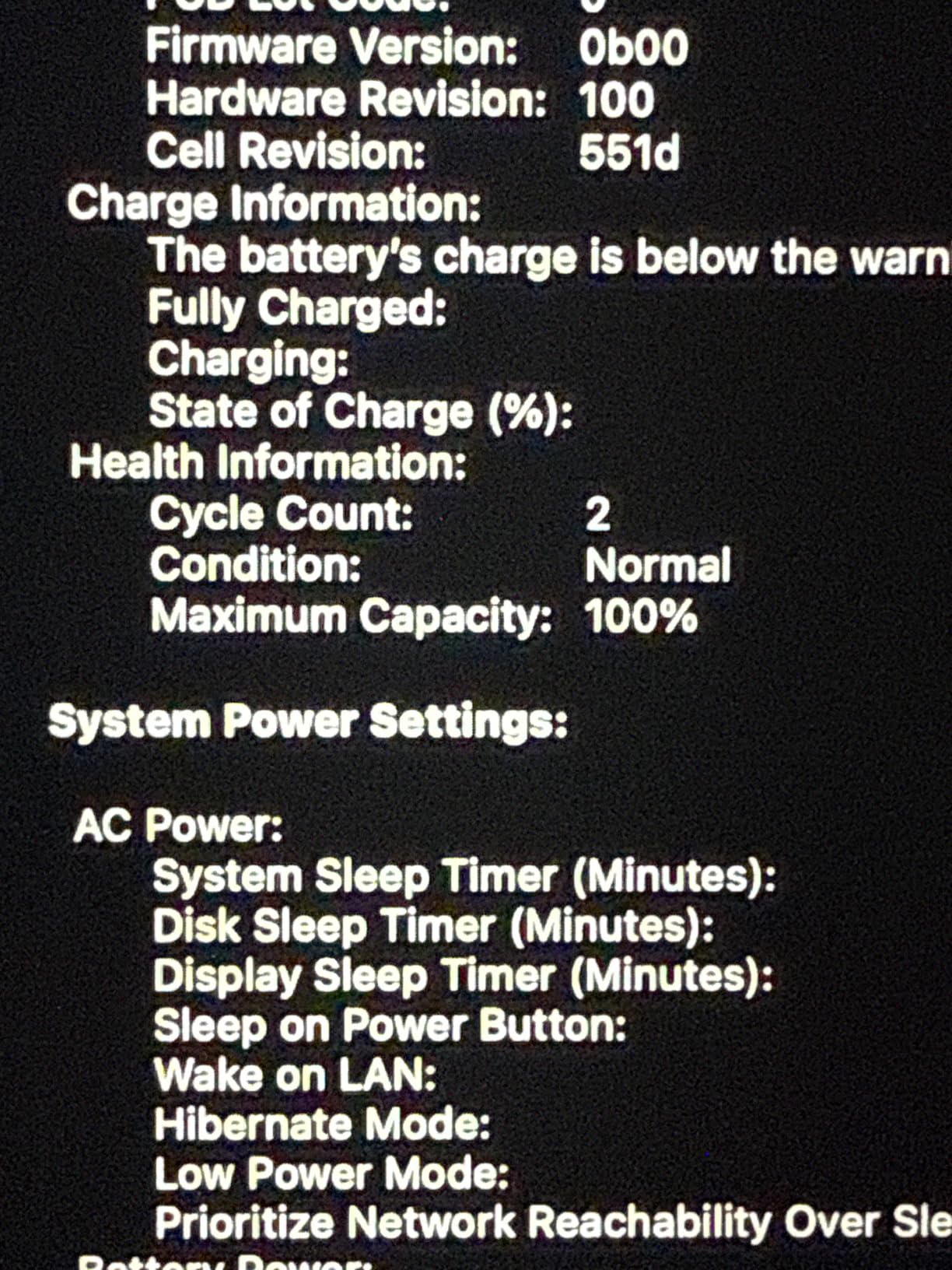
Battery life is the headline. The listed figure is up to 18 hours, and the 90% five-star share in the reviews repeatedly mentions covering a full working day on one charge. For a photographer editing on the road, that removes the charger from the equation entirely on most trips.
Wi-Fi 7 with the Apple N1 chip is a quiet upgrade that matters more than it sounds: transferring a card’s worth of files at a hotel or a venue before dinner is noticeably faster than on the previous generation.
When this is the right choice
If you edit in short bursts — a review session, a client proof set, a social crop — the Air is genuinely the best laptop for photo editing on the move. Silent operation means it will not distract in a quiet room, and the keyboard and trackpad hold up for long sessions.
A photographer in the dpreview forum forums made a related point about field reliability after losing a machine to humidity. Fewer moving parts and a sealed fanless chassis are a real advantage in hostile environments.
Where the compromises bite
16GB of unified memory is the base configuration and cannot be upgraded. Once a catalog passes roughly 20,000 images with sidecars, Lightroom will start paging to the SSD and scrolling will stop feeling instant. Forum advice from working editors is consistent on this: do not go cheap on memory.
512GB of storage is the other soft spot. It fills faster than most people expect, and the fanless design will slow under a sustained batch export — quiet, but slower.
3. Lenovo Legion Pro 7i 16-inch OLED — Best for GPU-Heavy Editing
Lenovo Legion Pro 7i Gen 10 16″ Gaming Laptop (2025 Model) Intel Core Ultra 9 275HX 24C, NVIDIA GeForce RTX 5080 16GB, 64GB RAM, 2TB (1TB+1TB) NVMe SSD, 16.0″ WQXGA OLED 500 nits 240Hz, Windows 11 Pro
16-inch 2560x1600 OLED at 500 nits
64GB DDR5-6400
2TB NVMe
RTX 5080 16GB GDDR7
Pros
- RTX 5080 16GB GDDR7 with 1334 AI TOPS
- 16-inch OLED at 100% DCI-P3 and 500 nits
- 64GB DDR5-6400 upgradeable to 96GB
- 2TB NVMe across two M.2 slots
Cons
- 4.92 kg is impractical for travel
- 400W power adapter adds desk bulk
- About 6.5 hours of listed battery life
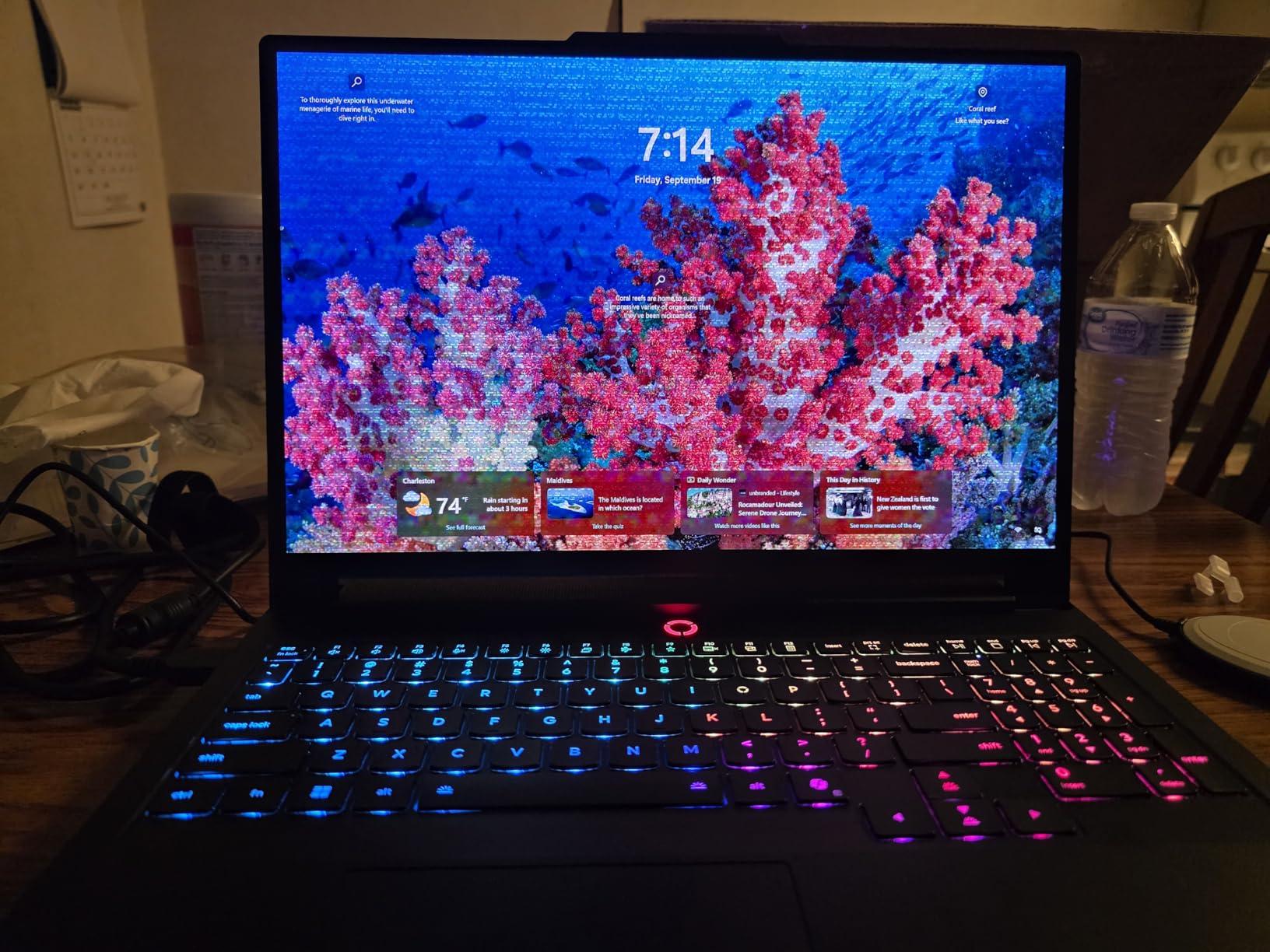
When a workflow includes neural noise reduction, heavy masking, or any AI Denoise step on hundreds of files, the RTX 5080 in this machine is the reason to look at it. Sixteen gigabytes of GDDR7 at 175W with 1334 AI TOPS is roughly an order of magnitude more parallel compute than integrated graphics, and it is the single largest performance jump available in a laptop.
The display matches the ambition: a 16-inch 2560×1600 OLED at 500 nits, glossy, with 100% DCI-P3 coverage, DisplayHDR True Black 1000, Dolby Vision and G-SYNC. That is a color-critical panel, not a gaming screen with wide gamut.
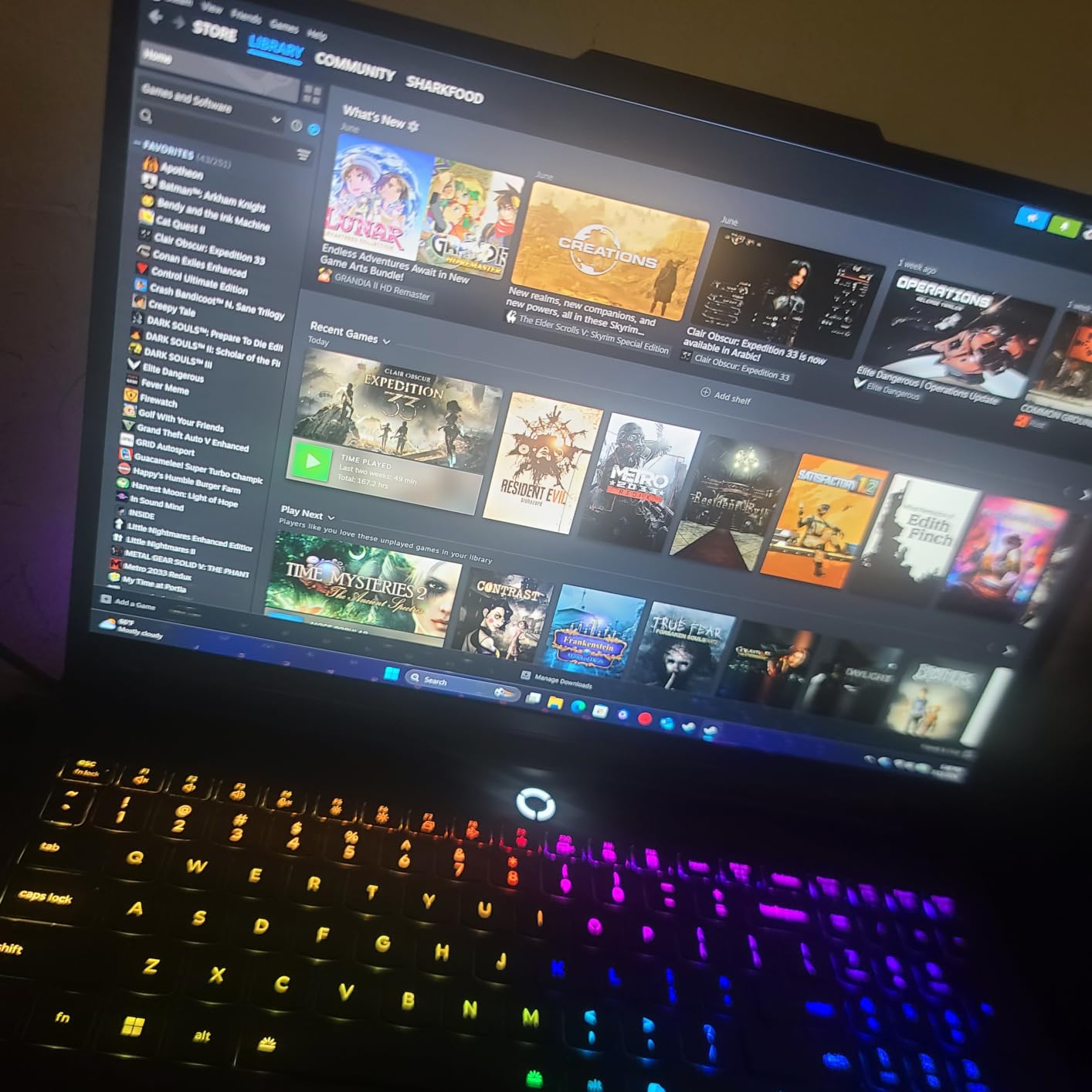
Memory is where this machine stops being a normal purchase. 64GB of DDR5-6400 CSODIMM across two slots, upgradeable to 96GB, plus 2TB of NVMe storage spread over two M.2 slots. You can hold an entire multi-year catalog on the internal drive and still have expansion room.
The 24-core Intel Ultra 9 275HX handles the multi-threaded side — renders, exports, batch processes — while the GPU handles the model work.
Who should buy this
Commercial retouchers running AI Denoise across a full shoot, or anyone who works in video and stills on the same machine, will feel the difference immediately. One forum user weighing a Studiobook with an RTX 4070 configuration was solving the same problem from the other direction: a dedicated card for GPU-bound work.
It is also the machine to consider if you ever expect to grow into more demanding software in three years, because 64GB and 96GB of upgrade headroom are rare.
Where it is the wrong tool
At 4.92 kg this is not a travel laptop by any definition. It is a machine that lives on a desk, and the 400W power adapter reinforces that — it is the size of a small brick.
Listed battery life of about 6.5 hours means a working day away from a desk is off the table. The glossy OLED also shows fingerprints and picks up reflections in bright rooms, which can make judging a dark image harder than it should be.
4. MSI Creator M14 2.8K — Best Balanced Pick for Students
MSI Creator M14 A13V A13VF-081US 14″ 2.8K Laptop, Intel Core i7-13620H 2.4GHz, 32GB RAM, 2TB SSD, NVIDIA GeForce RTX 4060 8GB, Windows 11 Home, Lunar Gray
14-inch 2880x1800 at 120Hz
32GB DDR5
2TB NVMe
RTX 4060 8GB VRAM
Pros
- RTX 4060 8GB plus 32GB RAM and 2TB SSD
- 2.8K 120Hz panel in a 6.2-pound chassis
- sRGB AdobeRGB and DCI-P3 profiles onboard
- Eight ports including Ethernet and an SD reader
Cons
- 53.5Wh battery is small for long Adobe sessions
- Only four customer reviews so far
- Non-touch LCD lacks the contrast of an OLED panel
The Creator M14 is the configuration we would hand a photography student who wants to be taken seriously. A dedicated RTX 4060 with 8GB of GDDR5 VRAM, 32GB of DDR5 running at 5200 MHz (expandable to 64GB), and a 2TB NVMe drive covers essentially every requirement on the spec checklist without forcing a choice.
The 14-inch 2880×1800 panel at 120Hz is sharp enough to inspect pixel-level detail on a crop, and owners confirm the machine ships with sRGB, Adobe RGB, DCI-P3 and a Bluelight filter profile available. Having AdobeRGB selectable on a laptop is uncommon and useful for anyone preparing print-ready files.
At 6.2 pounds it travels better than most creator laptops of this class, and eight ports including Ethernet, HDMI, four USB and an SD card reader mean you are not carrying dongles to a class or a lab.
Where the money went
For a student or a photographer assembling a first serious machine, this is the best-value configuration in the list. The 13th Gen Core i7-13620H boosts to 4.9GHz, which is not a flagship processor, but paired with the RTX 4060 it is not the bottleneck for photo work.
Owners upgrading from older ultraportables report a noticeable jump in responsiveness, which is the honest measure of whether it will feel fast to you.
Two things to know before buying
The 53.5Wh battery is small for a machine running Adobe applications, and reviewers recommend keeping it near a charger during long editing sessions. If you need all-day untethered work, look at the MacBook Air above.
There are only four customer reviews on this listing, so long-term reliability data is thin. The listing also mentions Windows Hello support without providing an IR camera or fingerprint reader — a small accuracy problem worth knowing about.
5. Dell XPS 14 3.2K OLED — Best OLED in a Thin Windows Chassis
Dell XPS 14 Premium Laptop DA14250-14.5-inch Touch 3.2K OLED 48-120Hz Display, Intel Core Ultra 7 255H, Intel Arc Graphics, 32GB Memory, 1TB SSD, Backlit English Keyboard with Fingerprint Reader
14.5-inch 3.2K OLED touch
32GB LPDDR5
1TB SSD
2x Thunderbolt 4 and microSDXC
Pros
- 3.2K OLED touch with 48-120Hz variable refresh
- 32GB LPDDR5 and 1TB SSD
- Machined aluminum with Gorilla Glass 3
- Fingerprint reader and Wi-Fi 7
Cons
- Redesigned flat keyboard frustrates touch typists
- No physical function keys
- Intel Arc integrated graphics only
The 14.5-inch 3.2K OLED touch panel at 3200×2000 is the best display in a Windows machine this thin. A matte finish at 400 nits is a deliberate choice — it kills reflections in a bright room, which matters more for judging an image than raw brightness does.
Variable refresh from 48Hz to 120Hz means the panel idles down when you are reading a histogram or scrolling a contact sheet, which helps battery life on static work without hurting responsiveness while you scrub an image.
Inside is an Intel Core Ultra 7 255H with an AI acceleration engine, 32GB of LPDDR5 at 6400 MHz, and a 1TB SSD. For Lightroom and Photoshop that is more than sufficient, and the machined aluminum chassis with Gorilla Glass 3 feels appropriately solid for a machine you carry daily.
What the display means for color work
True blacks mean shadow detail stays separated, and the 3200×2000 resolution gives you a lot of working canvas for a two-panel layout — culling on one side, a full image on the other. Touch is a small but real advantage when you are checking focus points at 200%.
At 400 nits it is not the brightest panel here, but for indoor editing accuracy it is closer to the right answer than raw brightness alone would suggest.
Where the compromises bite
The keyboard redesign is the most substantive complaint. Several touch typists say the flat layout and tiny function-row indicators hurt their accuracy, and there are no physical function keys, so Home, Delete and Escape are hard to locate by touch. If you type a lot of captions and metadata, test it first.
Graphics are Intel Arc integrated only. That is fine for stills, but there is no dedicated GPU for GPU-accelerated rendering, so anyone on the fence about “do I need a dedicated GPU” should read the guide section below.
6. Dell Premium 16 4K OLED — Best Large Canvas for Retouching
Dell Premium 16 (Previously XPS 16) High Performance Laptop, 16.3″ 4K OLED Touchscreen 15th Gen (Intel Ultra 7-255H, 32GB LPDDR5X, 1TB M.2 SSD, GeForce RTX 5050, Fingerprint, Backlit KB, Win 11 Pro)
16.3-inch 4K OLED touch at 120Hz
32GB LPDDR5X
1TB NVMe
GeForce RTX 5060 8GB GDDR7
Pros
- 16.3-inch 4K OLED touchscreen at 120Hz
- RTX 5060 8GB GDDR7 dedicated graphics
- 32GB LPDDR5X and 1TB NVMe
- 99Wh battery with three Thunderbolt 4 ports
Cons
- Onboard memory cannot be upgraded
- Only six customer reviews so far
- 4K OLED at 120Hz drains the battery quickly
This is the pick for a photographer who retouches rather than culls. A 16.3-inch 4K OLED touchscreen at 3840×2400 and 120Hz gives you a working canvas where a full-resolution image sits beside a layer stack without either being squeezed.
The GeForce RTX 5060 with 8GB of GDDR7 alongside integrated graphics gives you real GPU acceleration for AI tools, denoising, and rendering, which the integrated-only machines in this list cannot do. The 15th Gen Core Ultra 9-285H has 16 cores and boosts to 5.4GHz, so batch processing is well handled.
Ports are a genuine strength: three Thunderbolt 4 ports, a full-size SD card reader, and a 99Wh six-cell battery with a 130W power supply. That SD slot matters for tethered shooting, where culling directly off a card saves a step.
Why the screen size matters
A larger panel changes the work, not just the comfort. Event and wedding photographers culling thousands of frames benefit from the extra thumbnail rows, and a retoucher working on a portrait can keep the histogram, the layer panel, and the image at a usable size at the same time.
Every pixel here is individually dimmable, so a night-time edit does not blast you with a backlit haze over the whole image.
Before you commit
The 32GB of LPDDR5X is soldered to the board and cannot be upgraded. That is fine at 32GB today, but it removes the single most common upgrade path in this list.
A 4K OLED panel running at 120Hz is demanding on battery life, so expect to work near a charger. The review base is also thin at six ratings, so treat the specifications as the deciding factor rather than owner feedback.
7. Lenovo Legion 5a 15.3-inch OLED — Best Upgradeable Windows Pick
Lenovo Legion 5a Gaming Laptop, AMD Ryzen 7 250, GeForce RTX 5060, 15.3″ WQXGA (2560×1600) 165Hz OLED Display, 32GB DDR5 RAM, 1TB SSD, Wi-Fi 7, RGB Backlit, Win 11, Black, w/Portable 500GB Drive
15.3-inch 2560x1600 OLED at 165Hz
32GB DDR5
1TB SSD
RTX 5060 8GB GDDR7
Pros
- 15.3-inch 2560x1600 OLED at 165Hz with 100% DCI-P3
- 32GB DDR5 configurable to 64GB
- User upgrade paths for both RAM and storage
- Ten ports including USB4 and Ethernet
Cons
- Modest battery life that varies by workload
- Panel brightness is not class-leading
- Plastic build needs a padded case
The Legion 5a is the pick we recommend for anyone who wants to buy once and keep. Memory is configurable up to 64GB and the 1TB SSD upgrades to 2TB PCIe M.2, so unlike the soldered options in this list, the two components that matter most for longevity are yours to change later.
That matters because the storage pain point is the one that catches new photographers out. Importing a shoot straight onto the internal drive is the default behavior in Lightroom, and a 1TB drive fills faster than people plan for.
The 15.3-inch 2560×1600 OLED at 165Hz covers 100% DCI-P3 with G-SYNC and DisplayHDR True Black 1000, driven by an RTX 5060 with 8GB of GDDR7 at up to 115W TGP. The Ryzen 7 250 has 8 cores and 16 threads with up to 5.1GHz and a Ryzen AI NPU rated up to 16 TOPS.
Why the upgrade paths are worth so much
Photographers buy laptops on a long timeline. A machine that can take 64GB of memory in four years, rather than being locked at 16GB, protects the original investment in a way no spec sheet at purchase time can tell you.
It also ships with a portable 500GB external drive, which is a sensible place to move finished catalogs off the internal drive.
The honest drawbacks
Battery life is modest and varies by workload, and the panel brightness is not comparable to the 500-nit OLEDs elsewhere in this list. The build is primarily plastic, so a padded case is advisable if you travel with it.
Only a one-year seller warranty applies rather than a full manufacturer plan, and all nine visible ratings are five stars, which means the review base is too small to draw strong conclusions from.
8. MSI Katana 17 144Hz — Best 17-Inch Value Pick
msi Katana 17 Gaming Laptop: 13th Gen Intel Core i7, GeForce RTX 4060, 17.3″ 144Hz FHD Display, 32GB DDR5, 1TB NVMe SSD, USB-Type C, Cooler Boost 5, Win11 Home: Black B13VFK-835US
17.3-inch 144Hz FHD IPS
32GB DDR5 across four slots
1TB NVMe
RTX 4060 8GB GDDR6
Pros
- 17.3-inch 144Hz display is large and smooth
- 32GB DDR5 across four slots up to 64GB
- Seven ports including Ethernet and DisplayPort
- Cooler Boost 5 keeps noise down
Cons
- Roughly 2-3 hours of real battery use
- 1080p on a 17.3-inch panel is low resolution
- FHD LCD is a poor choice for color-critical judgement
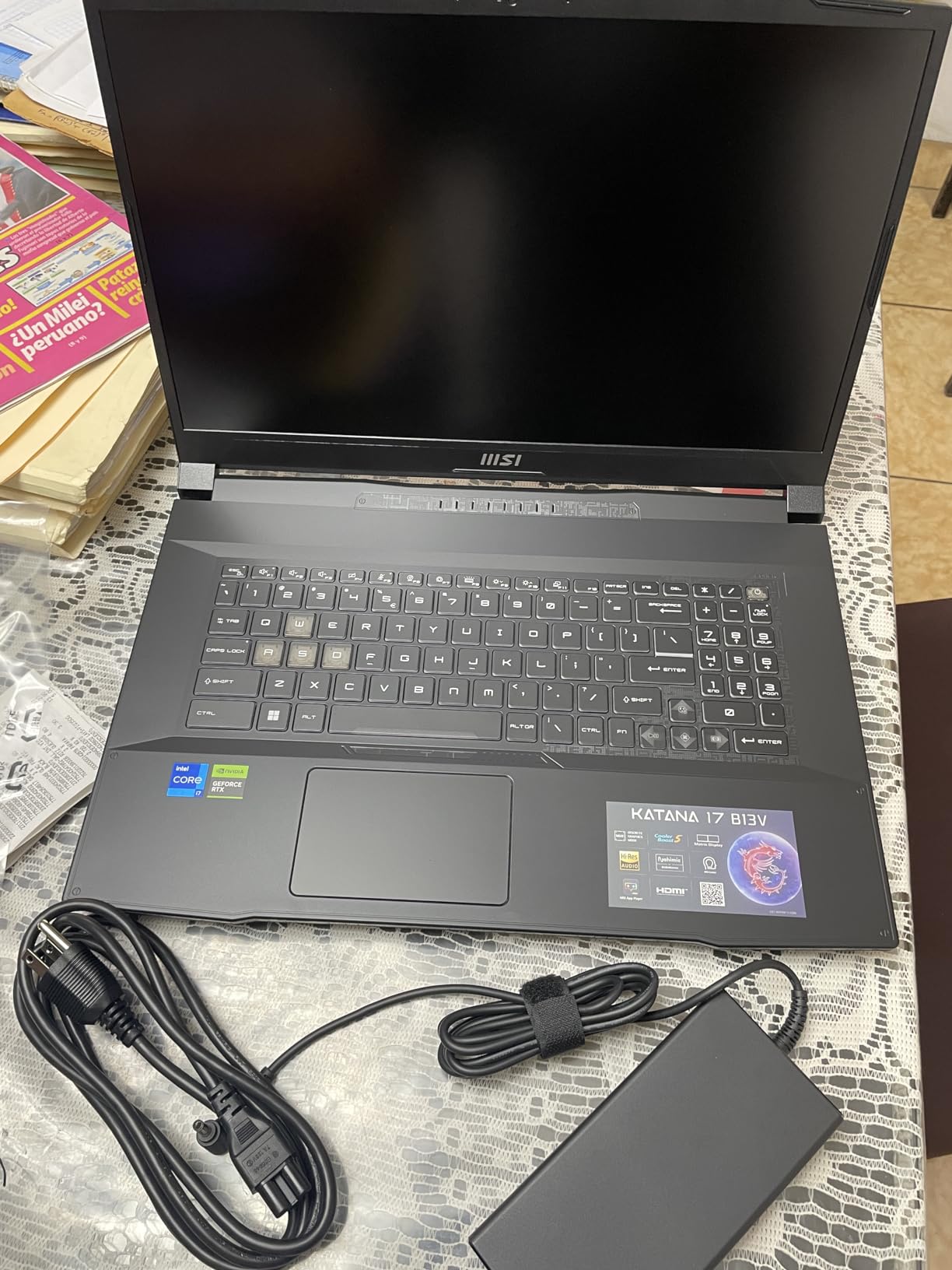
With 350 reviews averaging 4.4 stars, the Katana 17 has by far the largest owner feedback base of the creator-capable machines here, and the pattern is consistent: people like it for value, screen size, and cooling, and they dislike the battery.
32GB of DDR5 across four slots, expandable to 64GB, plus a 1TB NVMe drive and an RTX 4060 with 8GB of GDDR6 is a genuinely capable creative configuration. Seven ports including Ethernet, DisplayPort, HDMI and USB-C is unusual at this level.
Multiple owners report that Cooler Boost 5 keeps thermals and fan noise well controlled, which is exactly what you want during a long export. That is a real advantage over thinner, fanless designs that throttle under sustained load.
The 77% five-star share reflects a machine that does not try to be anything other than a good tool at a sensible outlay.
When the big screen is the point
For culling, a 17.3-inch panel means more thumbnails visible at once, and 144Hz makes scrubbing through a sequence feel immediate. If your editing is more selection than retouching, the screen real estate is the argument.
The four memory slots also mean you can add capacity later without replacing the machine, which keeps this option viable for a student who will outgrow a base configuration.
Where the screen costs you
This is the one machine in the list we would not use to judge final color. A 1080p IPS LCD at 17.3 inches is a low pixel density, and IPS gamma behavior makes dark tones and skin tones less reliable than an OLED or a good wide-gamut IPS panel.
Battery life is around 2-3 hours of real use with performance dropping when unplugged. Owners also flag a cheap-feeling keyboard, bundled Windows software, and a single M.2 slot limiting storage expansion.
9. MSI Thin 15 144Hz — Budget Pick for a Photography Student
msi Thin GF63 15.6″ 144Hz Gaming Laptop: 12th Gen Intel Core i7, NVIDIA GeForce RTX 4050, 16GB DDR4, 512GB NVMe SSD, Type-C, Cooler Boost 5, Win11 Home: Black 12VE-066US
15.6-inch 144Hz FHD matte
16GB DDR4
512GB NVMe
RTX 4050 6GB with Ethernet
Pros
- Entry configuration with an RTX 4050 6GB
- 144Hz matte 1080p display
- Ethernet HDMI and USB included
- Easy to carry at this size
Cons
- 16GB DDR4 is the maximum
- 512GB storage is small for RAW libraries
- Roughly 2-4 hours of battery with slowdowns unplugged
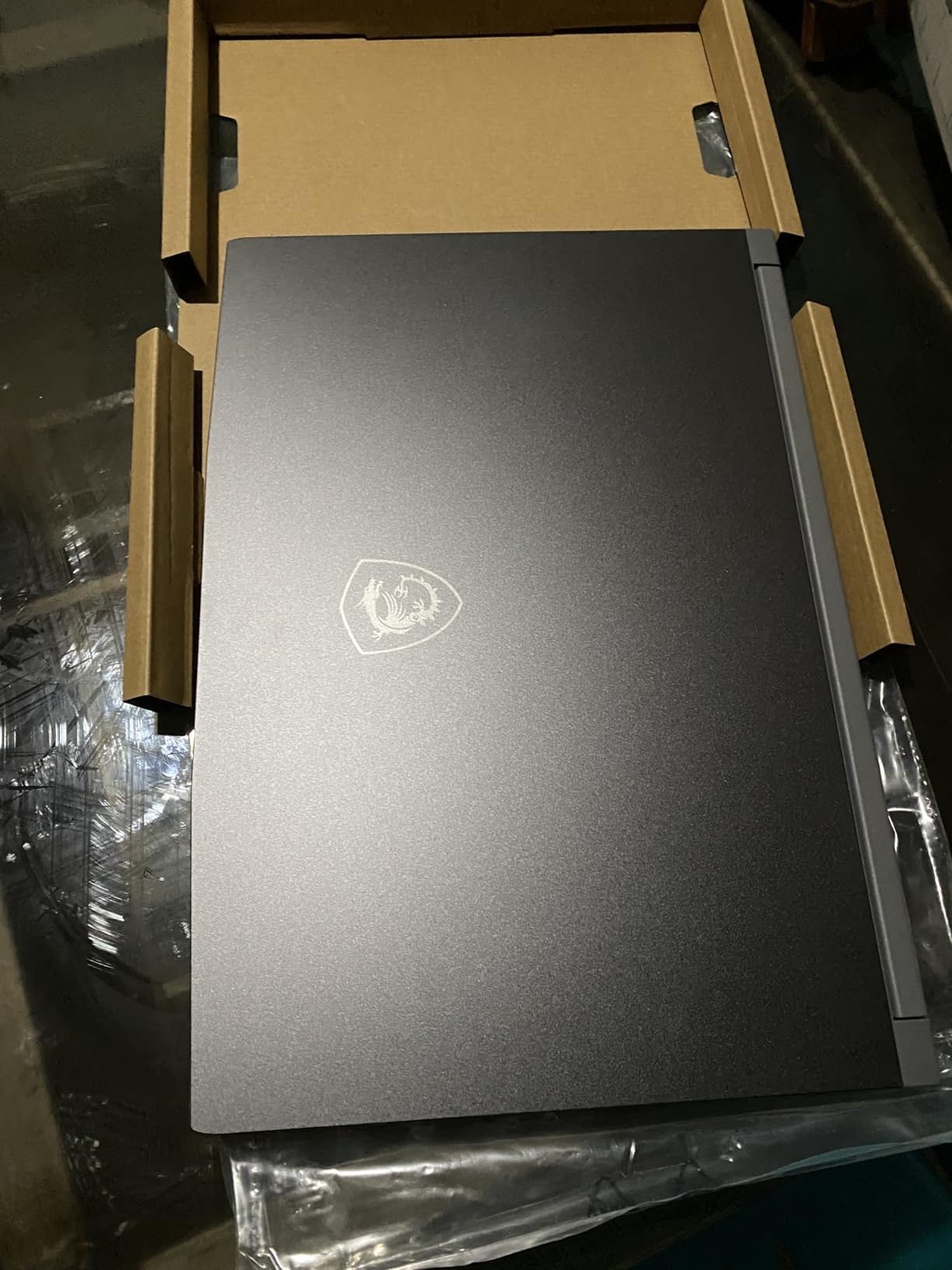
If your ceiling is tight, this is the machine that gets you editing real files instead of saving for another year. The 13th Gen Core i7-13620H with an RTX 4050 and 6GB of GDDR6 will run Lightroom and Photoshop on a student assignment, and the 15.6-inch 144Hz matte display is easy on the eyes during long sessions.
A matte panel is a genuine advantage here, since it does not produce the mirror-like reflections that make an FHD gloss screen frustrating in a lit room. Fast boot times and snappy day-to-day responsiveness are the most common owner comments.
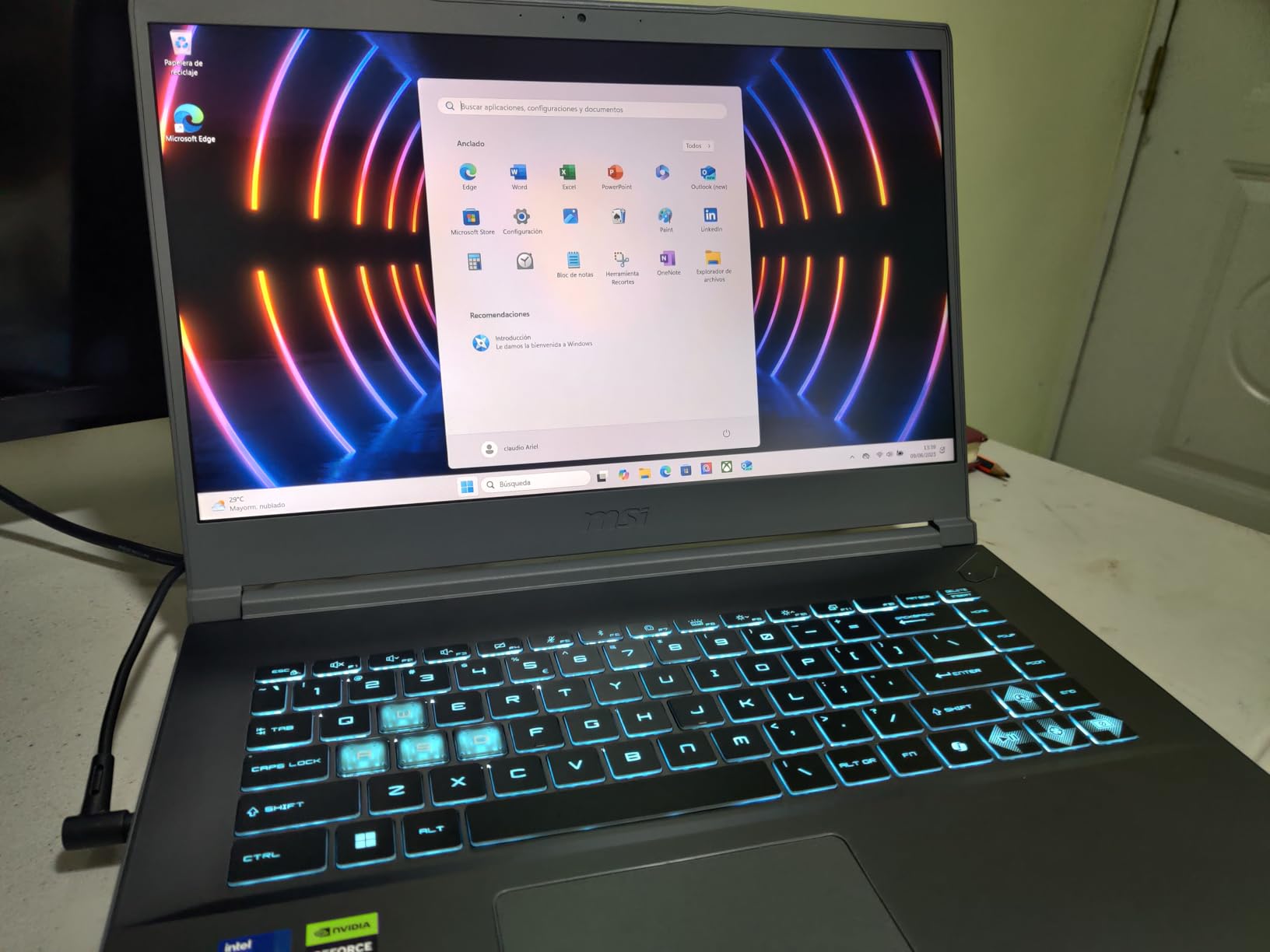
With 177 reviews at 4.4 stars and a 73% five-star share, this is a well-documented machine rather than an untested one, which matters when you are spending a limited budget.
Ethernet, HDMI and multiple USB ports mean it can connect to a studio network for tethered workflow without an adapter.
What you can realistically do on it
Catalog browsing, RAW developing, web deliverables, and moderate Photoshop layer work are all comfortable. A 1000-image wedding shoot will import and process without trouble, provided you manage storage carefully.
If you later add a color-calibrated external monitor, the picture improves enormously — and our guide to the best 4K monitors for photo editing covers how to choose one.
Know the limits before you commit
16GB of DDR4 is the maximum this configuration supports, which puts it below the 24GB floor we would otherwise set. 512GB of storage holds a couple of projects and no more, and a photography student on the r/computers forum described exactly this class of machine freezing when a catalog grew — this is why you would need an external drive from day one.
Battery life is roughly 2-4 hours, the plastic chassis has edges some owners do not trust for frequent transport, and the machine runs warm even on light work.
10. Dell 16 Plus Touch — Best Big-Screen Productivity Pick
Dell 16 Plus Touchscreen Laptop, Intel Core Ultra 9, 32GB LPDDR5X, 1TB SSD | 16″ Business Laptop, Copilot+ PC with on-Device AI, Wi-Fi 7, Backlit KB, Win 11 Home, Premium
16-inch 16:10 FHD+ touchscreen
32GB LPDDR5X
1TB NVMe
Thunderbolt 4 with DisplayPort 2.1
Pros
- 32GB LPDDR5X and 1TB NVMe for large catalogs
- 16-inch 16:10 FHD+ touchscreen
- Thunderbolt 4 with DisplayPort 2.1
- 4.3 pounds with a quiet keyboard
Cons
- 300 nits is dim for color judgement
- Only three USB ports
- One owner reported a drive failure after the return window
Owner feedback on this machine is unusually direct about its purpose: multiple reviewers specifically praise photo processing performance with Photoshop and Topaz, along with the 32GB of memory for multitasking. The Intel Core Ultra 9 288V with a 12-core count, a 47 TOPS-class NPU and Intel Arc 140V graphics is a modern efficient platform, and the 75Wh-class battery keeps it usable away from a desk.
The 16-inch 16:10 FHD+ touchscreen is larger than a typical 14-inch panel without the bulk of a 17-inch machine, and the 4.3-pound aluminum chassis makes it one of the more portable large-screen options here.

Where it fits in the workflow
The Thunderbolt 4 port with DisplayPort 2.1 and Power Delivery is the important one. It means a color-calibrated external display runs at full refresh, and an external SSD or card reader hangs off the same cable.
For someone who edits in the browser, on a client proofing platform, and in Lightroom at the same time, 32GB of LPDDR5X at 8533 MT/s is a real advantage.
Set expectations on the display
At 300 nits this is the dimmest panel in the group, and that is the specification to weigh most carefully. It is a pleasant screen for general work and a workable one for editing, but it is not where you make final color decisions. Pair it with a calibrated display for that.
There are only three USB ports, and one owner reported a hard drive failure shortly after the return window closed — a single report, but worth factoring into a purchase decision.
11. ASUS Zenbook 14 Lumina OLED — Best Color-Accurate OLED for the Money
ASUS Zenbook 14 Creator Laptop 14″ WUXGA Lumina OLED Touch (100% DCI-P3, 500nits HDR) Intel 16-core Ultra 7 255H (Up to 13 Tops) 16GB RAM 512GB SSD for Business Professional Win11 ICP Acc
14-inch WUXGA Lumina OLED touch
16GB DDR5
512GB SSD
2x Thunderbolt 4 and HDMI 2.1
Pros
- 14-inch Lumina OLED touch at 100% DCI-P3 and 500 nits
- 2.7 pounds is the lightest pick here
- Two Thunderbolt 4 ports plus HDMI 2.1
- USB-C hub included in the box
Cons
- 16GB RAM cannot be upgraded
- 512GB storage is minimal
- Only three customer reviews so far
The 14-inch Lumina OLED touch display is the reason to look at this machine. It is specified at 100% DCI-P3 coverage with 500 nits HDR brightness and DisplayHDR True Black 500 certification, which puts it alongside the better color panels in this list at a much lower tier.
Owners consistently point to the display first: 100% DCI-P3 and 500 nits makes it genuinely usable for color-critical creative work, and reviewers describe the color accuracy as excellent.
At 2.7 pounds it is tied for the lightest machine here, and the Intel 16-core Ultra 7 255H with an Intel Arc 140T GPU is a capable platform for Photoshop and Lightroom work. Two Thunderbolt 4 ports, a USB-A 3.2 port and HDMI 2.1 give a solid connection set, and an Auth USB-C hub is included in the box.
When 16GB is genuinely enough
For a student, a hobbyist, or a working photographer whose library stays in the low tens of thousands of images, 16GB handles the workload. The four Thunderbolt-class and HDMI connections also make it easy to add a calibrated monitor later.
Wi-Fi 7 and an FHD IR privacy camera round out a portable package that suits working away from a desk.
Where it runs out of road
16GB is fixed and cannot be upgraded, and 512GB of storage is the minimum we would consider borderline for RAW work. There is a full-size SD slot missing, so card ingestion means a dongle.
Only three customer reviews exist, all five stars, which is too small a sample to rely on for long-term reliability. The glossy OLED also picks up reflections in bright rooms.
12. ASUS Vivobook 16 Flip — Best 2-in-1 Convertible
ASUS Vivobook 16 Flip, 16″ 2-in-1 Laptop, Ultra 7 258V, 32GB DDR5, 1TB SSD
16-inch WUXGA OLED touch at 95% DCI-P3
32GB LPDDR5X
1TB SSD
360-degree flip
Pros
- 16-inch OLED touch covering 95% DCI-P3
- 32GB LPDDR5X and 1TB SSD
- 2-in-1 360-degree convertible design
- 75Wh battery and MIL-STD-810H durability
Cons
- 300 nits brightness
- Third-party resealed unit
- Mixed reliability feedback at 4.2 stars
The Vivobook 16 Flip is the only convertible in this group, and for a specific kind of photographer that is genuinely useful. A 360-degree hinge means you can show a client a full-resolution image on-screen at arm’s length, hand the device over for approval, or work in tablet mode with a stylus for masking touch-ups.
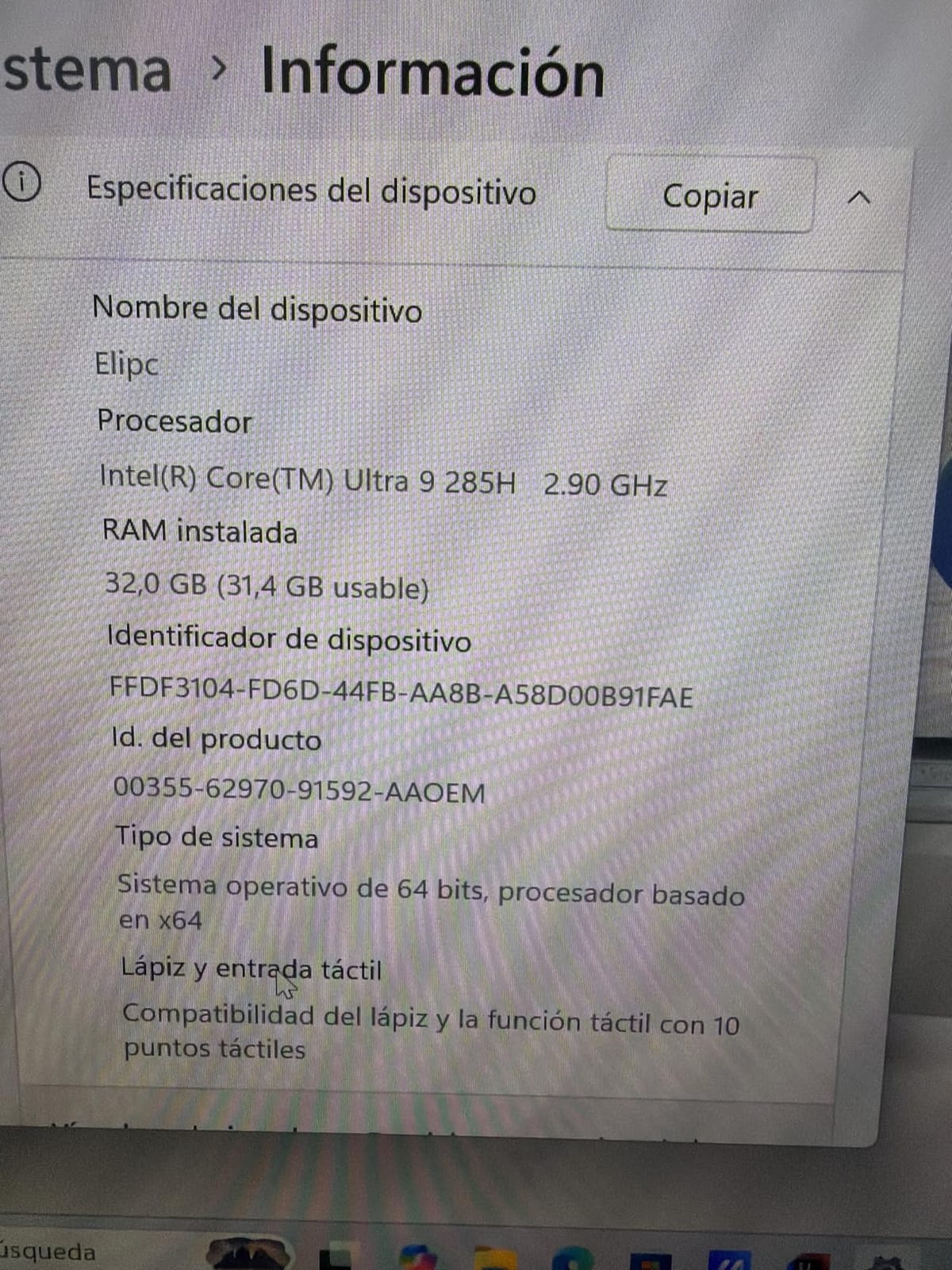
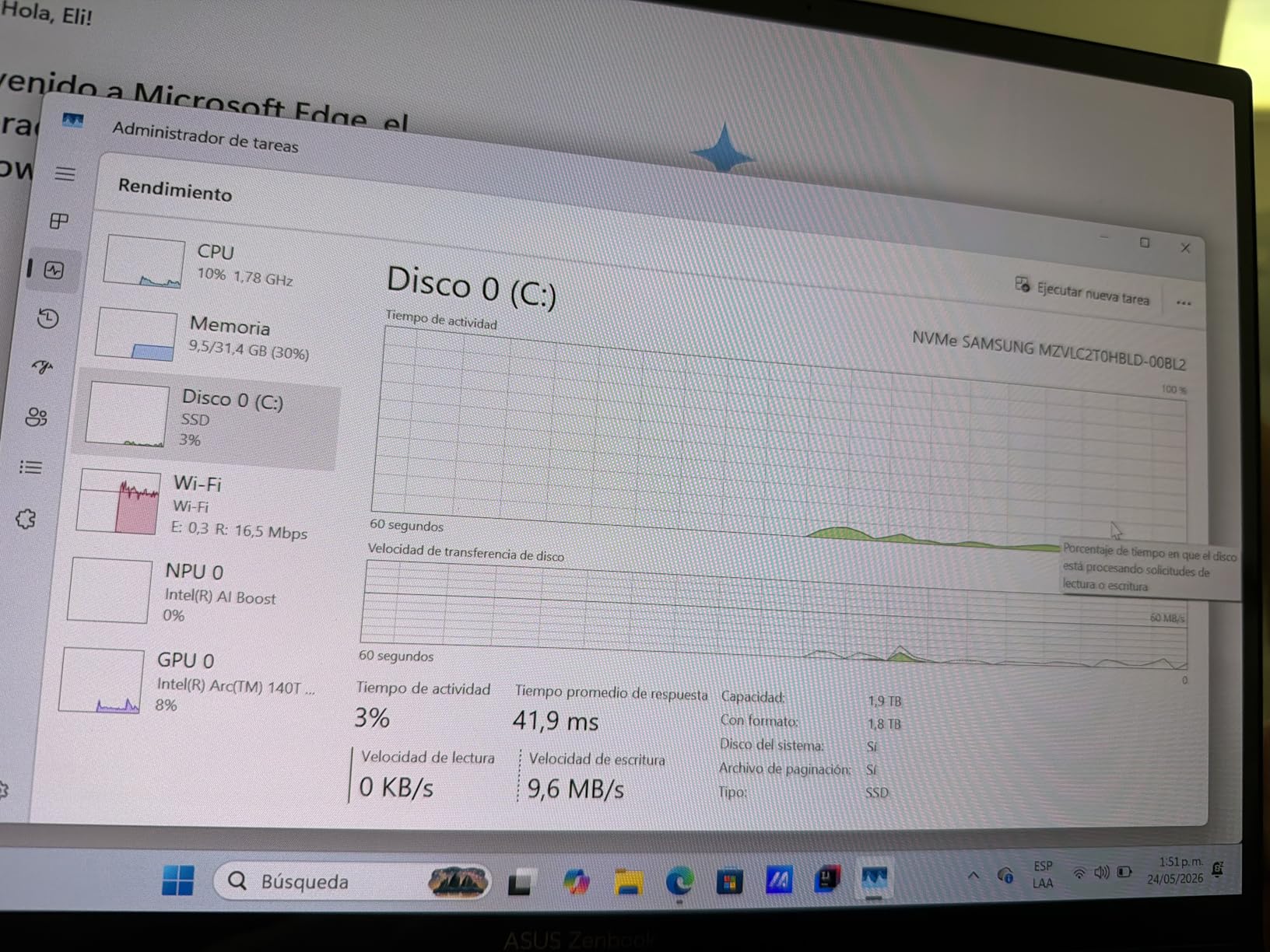
Under the hood the specification is solid: 32GB of LPDDR5X, a 1TB PCIe SSD, and an Intel Core Ultra 7 258V with a 47 TOPS NPU. The 16-inch WUXGA OLED touch display covers 95% DCI-P3, which is close to full wide-gamut coverage.
Reviewers rate it at 4.2 stars from 26 ratings, with 76% five-star. The positives cluster around display quality, the 32GB of memory, and the Thunderbolt 4 port for external devices.
MIL-STD-810H durability testing is worth noting for a travel shooter, and the 75Wh battery is one of the larger cells in a 16-inch convertible.
Where a convertible earns its keep
Client proofing is the strongest case. A photographer reviewing selects can sit next to someone and hand over the device instead of angling a laptop screen across a table. Tablet mode also works well for spot masking on a retouched image.
The 32GB of memory and 1TB of storage mean it can hold a working library without the compromises that usually come with a convertible at this level.
The trade-offs are real
Display brightness is rated at 300 nits, which is dim for judging final images. The unit is resealed by a third party, meaning the warranty and its condition are not what a factory-sealed machine would give you.
Reliability feedback is mixed — 18% of ratings sit at one or two stars — and the 4.2-pound weight is on the heavy side for a 2-in-1. Memory is fixed at 32GB and there is a single Thunderbolt 4 port.
Mac vs Windows for Photo Editing: An Honest Answer
Do photographers prefer Mac or PC? The honest answer is that most working professionals use both, and the choice turns on your software and your existing equipment rather than on image quality.
On the Apple side, macOS runs Lightroom and Photoshop natively on Apple Silicon, and the hardware acceleration path is mature. Ports are simpler and more consistent, and the displays are calibrated tightly out of the box. The trade-off is that memory and storage on most current models cannot be upgraded, and Thunderbolt-only ports mean dongles.
On the Windows side, you get more choice on memory and storage, more port variety including full-size SD card readers on several models here, and dedicated NVIDIA graphics in thin-and-light machines. Capture One, Affinity Photo, GIMP and Luminar all run natively, and if your studio is Windows-based or you need tethered software from a specific vendor, there is no substitute.
One correction to the usual folklore: most Adobe applications and Capture One are available on both platforms, so the OS rarely limits your software. The decision is really about upgradeability, ports, and the display you prefer to judge color on.
Our video editing laptop guide covers the heavier workloads, where the GPU difference between platforms becomes the deciding factor.
How to Choose a Laptop for Photo Editing in 2026
Here is the method we use, in seven steps. Follow it in order and you will end up with a machine that fits your actual work rather than a spec sheet.
1. Set the display requirement before anything else
Color work starts with the screen. A minimum of 100% sRGB coverage is non-negotiable. 100% DCI-P3 is the better target and covers most delivery work plus a video workflow. For print preparation you want AdobeRGB coverage, which is rarer on laptops and usually means a larger machine; our picks on the best photo printers for crafts cover the output side of that workflow.
Brightness matters less than accuracy for indoor work. Between 300 and 500 nits is a workable range; above 500 is a bonus for judging bright scenes. Matte finishes reduce reflections that otherwise make dark images harder to assess.
Our picks on the best 4K monitors for photo editing are the right next step if your laptop screen will not cut it as your primary reference.
2. Buy 24GB of memory as a floor, 32GB as a target
Lightroom loads the full-size preview of every image in a catalog, and Photoshop holds every layer in RAM. 16GB works for a library under about 20,000 images; beyond that, scrolling stutters and applying a global correction pauses while memory pages to the SSD.
The forum consensus is unanimous on this point. Working editors in r/Lightroom and r/AskPhotography all describe memory as the one thing not to compromise on, with 32GB commonly described as the point where Lightroom Classic “has never been faster and snappier.”
3. Get 1TB of SSD storage, and manage it deliberately
RAW files run roughly 40-80MB each, so a 20,000-image shoot can consume well over a terabyte before you export anything. Two habits prevent the storage pain almost everyone hits:
- Set Lightroom’s default catalog location to an external SSD rather than the internal drive from day one.
- Keep one internal partition for the system and applications, and point the catalog elsewhere entirely.
Our guides on hard drive enclosures and photo scanners cover the surrounding archival workflow if you are building a full production setup.
4. Decide whether you need a dedicated GPU
Do photographers need a dedicated graphics card if they only shoot stills? The short answer is: no for most, yes in specific cases.
You can run Lightroom and Photoshop on integrated graphics, including the Intel Arc chips in several picks here. You want a dedicated GPU if you use AI Denoise or Generative Remove on full-resolution files, if you do heavy masking or content-aware work, if you edit video alongside stills, or if you run 3D or rendering software.
Most working stills photographers in forum discussions land on the same conclusion: a dedicated card becomes necessary the moment you move beyond basic correction.
5. Check on-battery performance before you trust portability
Does editing performance drop when you work on battery? On some laptops it drops sharply. The MSI Katana 17 and MSI Thin 15 both see reduced performance when unplugged, according to owner feedback, and their battery endurance is short regardless.
Apple Silicon machines do not downclock on battery, which is consistently cited as a reason photographers choose them for location work. On gaming-class Windows laptops, sustained heavy work also risks thermal throttling in a thin chassis, though the actively cooled models in this list handle it far better than fanless designs.
6. Plan for an external color-calibrated monitor
Almost every serious photographer ends up grading on something better than a laptop panel. The requirements are modest: a Thunderbolt 4 or USB4 port, and a display wide enough to profile.
The workflow is simple. Connect the display over Thunderbolt or DisplayPort, run a hardware calibrator to create a custom profile, then set Lightroom’s Develop module to that profile and turn Soft Proofing on. The laptop screen becomes a reference and control surface while the calibrated panel shows the image you will actually deliver.
Two picks here have both Thunderbolt 4 ports and a full-size card reader, which makes the setup cleanest: the MacBook Pro 14-inch and the Dell Premium 16.
7. Consider used and refurbished for real savings
What is the best used laptop for photo editing? The answer is usually a recent MacBook Pro or a business-class Windows machine with a good display, and the reason is that the panel and the memory matter more than the processor generation.
When buying used, check the display first: verify uniform brightness, look for a dead pixel cluster, and confirm the panel still covers the gamut you need. Then confirm the memory is 32GB or upgradeable, and that the battery holds a working day. A machine with a tired battery is often better bought with a fresh cell than replaced outright.
For students and hobbyists this is the realistic route to 32GB of memory on a limited budget, and it is why we would rather see you buy a two-year-old machine with 32GB than a new one with 16GB.
Software compatibility by platform
Lightroom Classic and Photoshop run natively on both macOS and Windows. Capture One is Windows-only, which makes it a genuine reason to choose a PC if your studio standardizes on it. Affinity Photo, GIMP, and Luminar are cross-platform.
Hardware acceleration for AI features in Adobe apps is best supported on Apple Silicon and on NVIDIA GPUs, so if your workflow leans on AI Denoise, that narrows the field to specific machines in this list.
Frequently Asked Questions
What specs should I look for in a laptop for photo editing?
Look for four things: a display with at least 100% sRGB coverage (100% DCI-P3 preferred), 24GB of memory as a floor and 32GB as a target, a 1TB NVMe SSD for RAW files, and a full-size SDXC card slot or Thunderbolt 4 ports. A dedicated GPU is optional for stills work but necessary for AI Denoise, heavy masking, and video.
Do photographers prefer Mac or PC for photo editing?
Most working professionals use both. MacBook models are preferred for consistent out-of-box color accuracy, simple ports, and identical performance on battery. Windows machines are preferred for upgradeable memory and storage, more port variety including SD card readers, and for Capture One, which is Windows-only. Image quality is not the deciding factor on either platform.
What is the best used laptop for photo editing?
A recent MacBook Pro with 32GB of memory is the most common recommendation, because the display quality and consistent battery performance hold up well with age. On Windows, look for a business-class machine with a wide-gamut panel and 32GB of RAM. Always check the display for dead pixels, verify the battery health, and confirm the memory can be upgraded before buying.
How much RAM do I need for Lightroom and Photoshop?
24GB is the practical minimum and 32GB is the better target. Lightroom holds a full-size preview for every image in a catalog, and Photoshop holds every layer open, so memory scales with library size rather than file count. Below about 20,000 images, 16GB is workable. Above that, scrolling stutters as memory pages to the SSD.
Do I need a dedicated GPU for photo editing?
No, if you shoot stills and work in Lightroom and Photoshop. Integrated graphics handle RAW development and layer work. You do want a dedicated GPU for AI Denoise and Generative Remove at full resolution, heavy masking and content-aware fill, video editing alongside stills, and any 3D or rendering work.
Which Laptop for Photo Editing Should You Actually Buy?
The best laptops for photo editing in 2026 come down to one question: what is the most demanding thing you do on it? If the answer is judging color and delivering accurate work from a client session or on location, buy the MacBook Pro 14-inch with the M5 chip — the XDR display, the 24GB of unified memory, and identical performance on battery handle that workload without compromise.
Working primarily in Windows? The Dell Premium 16 gives you a 16.3-inch 4K OLED canvas, dedicated RTX 5060 graphics, 32GB of memory and a full-size SD card reader. Retouching large multi-layer files and culling at speed? The Lenovo Legion Pro 7i has the GPU and the memory headroom, on a desk rather than in a bag. Needing 32GB and a dedicated GPU without stretching past a student budget? The MSI Creator M14 is the balanced answer.
Traveling light, the MacBook Air 13-inch is the machine we pack, accepting 16GB and 512GB as the compromises. Building a machine to last, the Lenovo Legion 5a is the only pick in the list where memory and storage both have upgrade paths. And working to a hard ceiling, the MSI Thin 15 gets you editing real files today, with the caveat that 16GB and 512GB will need an external drive from the first shoot.
Whichever you choose, calibrate. A colorimeter and fifteen minutes of profiling will improve your output more than any spec upgrade, and it is the one step almost nobody takes.