
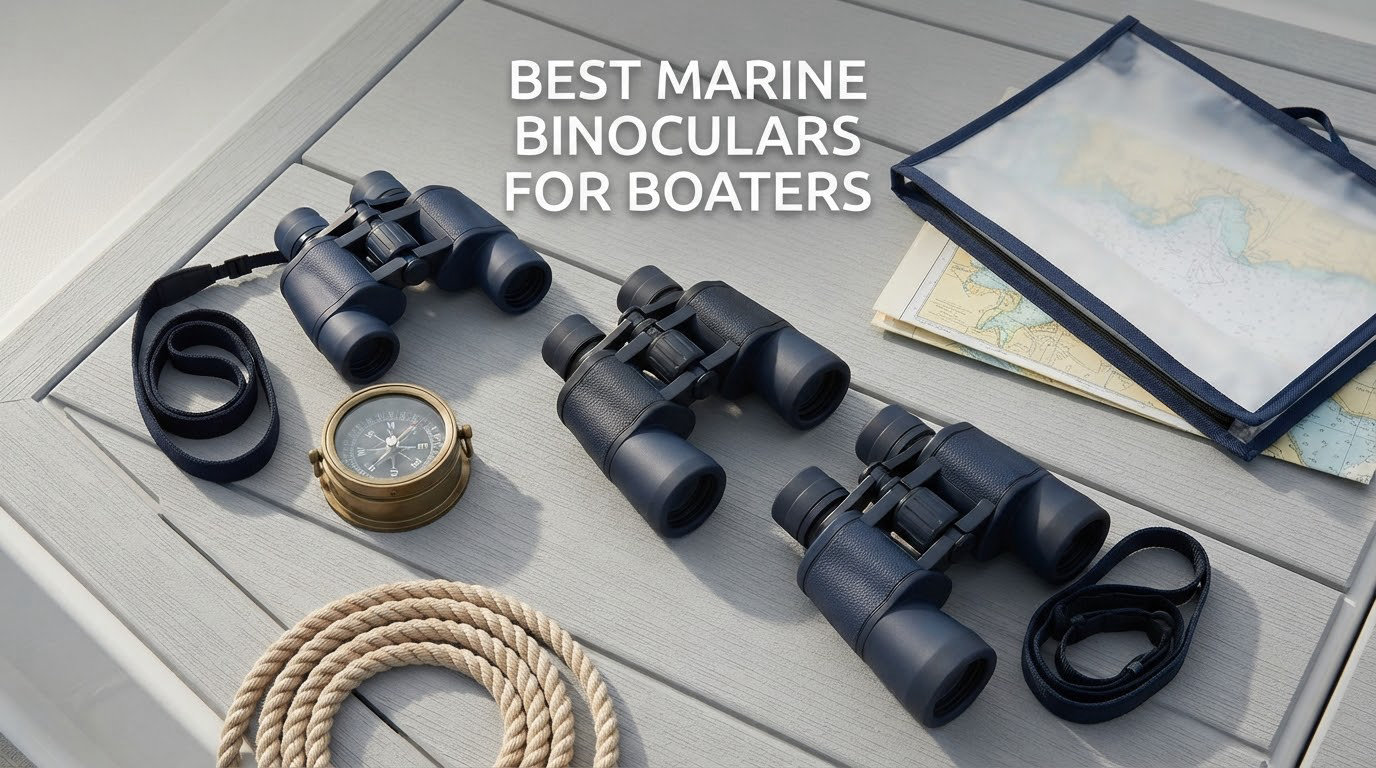
A marine binocular is a pair of binoculars engineered for use on a moving vessel: it is O-ring sealed and nitrogen purged so it stays fog-free and waterproof, shock-armored to survive being dropped on a hard deck, and usually 7×50 with a compass or rangefinding reticle so it works as a navigation instrument rather than just a spotting scope. That is the whole difference between a good pair of marine binoculars and a general-purpose birding binocular, and it is the difference between spotting a channel marker and not spotting it.
Most of the glass we looked at for this guide was chosen for the same reasons captains and forum regulars name over and over: it stays clear when the boat is moving, it survives spray and salt, and it does not fog when the temperature swings. A binocular on a moving platform is a completely different tool from the same binocular on land. Every extra gram gets heavy after twenty minutes of scanning, and every bit of magnification turns into image shake you cannot focus your way out of.
That is why the best marine binoculars for boaters tend to be modest on paper. Seven power and a 50mm objective is the working standard, not because it is exciting but because it holds together when the hull is lifting you off the water. Our team compared 12 pairs across magnification, objective size, prism type, focus design, eye relief, weight, field of view, sealing and compass function, and then sorted them against the way people actually use them.
Before we get into the list, it helps to know the vocabulary. 7×50 means seven times magnification through a 50mm objective lens. The exit pupil is the objective diameter divided by magnification, so 7×50 gives you 7.1mm, close to the size of a dark-adapted pupil. If you also carry a pair for land use, our guides to the best binoculars for hunting and the best binoculars for stargazing cover the choices where magnification and low-light gathering matter more than wave tolerance.
Table of Contents
Top 3 Marine Binocular Picks in 2026
These three cover the widest range of real use: a feature-packed pair for people who want a compass and a reticle, a value pair that punches well above its class, and a lighter pair with the strongest rating in the group.
USCAMEL 10×50 Marine Binoculars
- Illuminated compass and reticle
- IPX7 sealed and floats
- 10x50 with 396 ft field of view
Hooway 7×50 Waterproof Marine
- Illuminated compass and reticle
- 22mm eye relief
- Floats and stays fog-free
All 12 Marine Binoculars at a Glance
Every pair below made the cut on the same criteria: sealed and fog-resistant construction, optics that hold up on a moving platform, and weight you can live with during a long watch. The table gives you the fast read; the individual reviews give you the detail.
| Product | Specifications | Action |
|---|---|---|
| USCAMEL 10X50 Marine Binoculars |
|
Check Latest Price |
| AOMEKIE 7×50 Waterproof Marine Binoculars |
|
Check Latest Price |
| Hooway 7×50 Waterproof Marine Binoculars |
|
Check Latest Price |
 USCAMEL 10×50 Marine Rangefinder Compass USCAMEL 10×50 Marine Rangefinder Compass |
|
Check Latest Price |
 Steiner 7×50 Marine Binoculars Steiner 7×50 Marine Binoculars |
|
Check Latest Price |
 Steiner 8×30 Military-Marine Binoculars Steiner 8×30 Military-Marine Binoculars |
|
Check Latest Price |
 Bushnell Marine 7×50 Waterproof Binoculars Bushnell Marine 7×50 Waterproof Binoculars |
|
Check Latest Price |
 Barska Floatmaster 7×50 Marine Binoculars Barska Floatmaster 7×50 Marine Binoculars |
|
Check Latest Price |
 ESSLNB 7×50 Marine Binoculars with Compass ESSLNB 7×50 Marine Binoculars with Compass |
|
Check Latest Price |
 Steiner Military-Marine 10×50 Binoculars Steiner Military-Marine 10×50 Binoculars |
|
Check Latest Price |
 Fujifilm Fujinon Mariner 7×50 WPC-XL Fujifilm Fujinon Mariner 7×50 WPC-XL |
|
Check Latest Price |
 Nikon 7×50 OceanPro CF WP Global Compass Nikon 7×50 OceanPro CF WP Global Compass |
|
Check Latest Price |
1. USCAMEL 10X50 Marine Binoculars – Best Overall With Compass and Rangefinder
USCAMEL 10X50 Marine Binoculars for Adults: Binoculars for Sailing Boating
10x50 porro prism, BaK4 with full multi-coating, IPX7 sealed and floating, illuminated compass
Pros
- Illuminated compass and reticle in one body
- Floats and stays fog-free
- Very clear and bright image
- Includes harness strap and foldable eyecups
Cons
- 10x is harder to hold steady than 7x
- Rangefinder is a manual scale not electronics
- Individual eyepiece focus
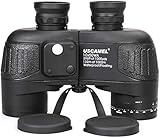
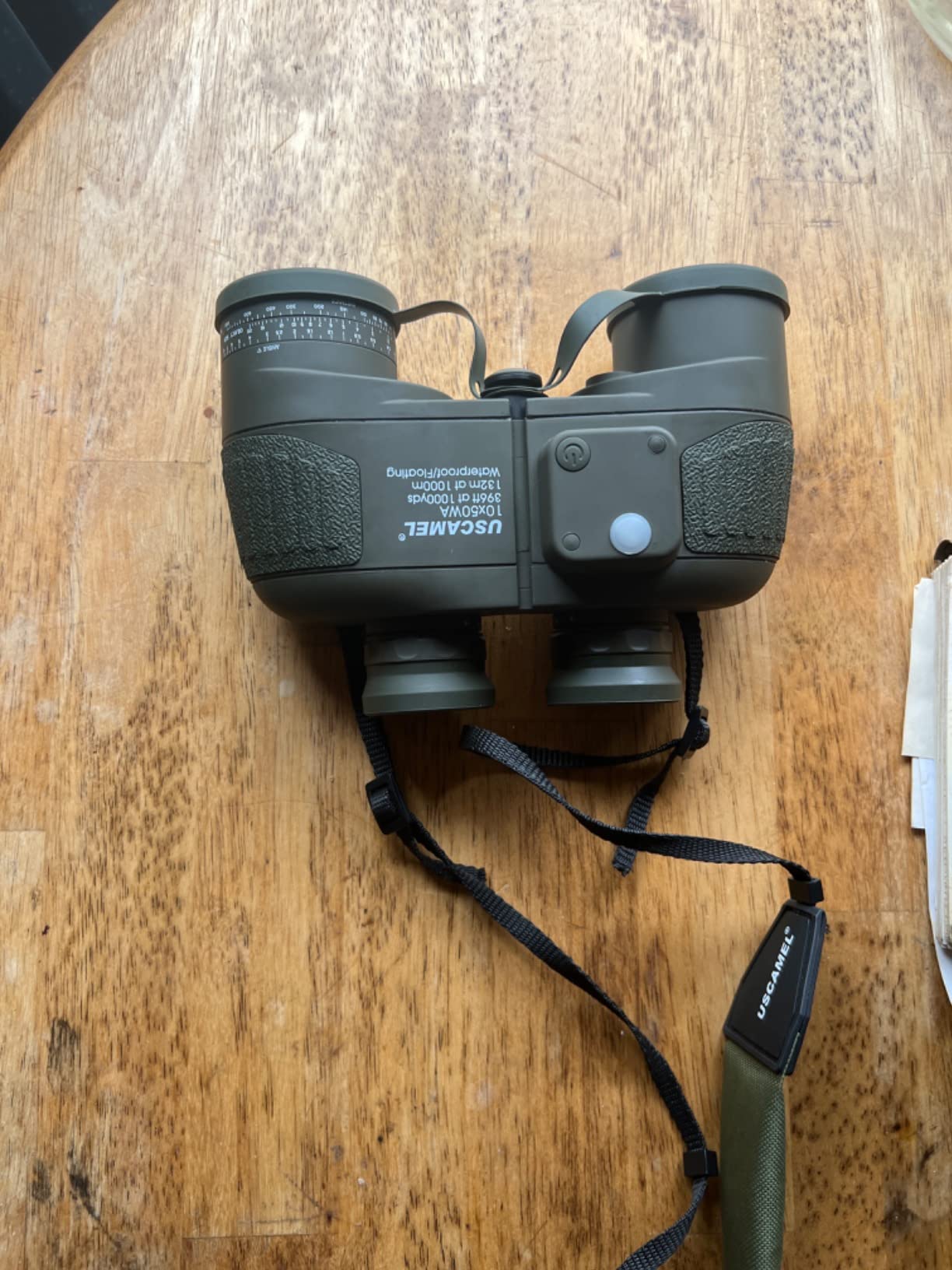
This is the pair I reach for first when I want a navigation instrument in my hands. It is a 10×50 porro prism design with BaK4 glass and full multi-coating, and the image is bright and colour-faithful in daylight with a contrast that holds up against glare off the water. The magnesium body is 1.22 kg, which is a serious weight, but it is distributed across a full-size frame and the rubber coating gives you a positive grip in a seaway.
The feature set is what separates it from a generic 10×50. You get an illuminated compass and an internal rangefinder reticle set into one eyepiece, plus plus/minus 5 diopter rings on both barrels. That combination turns the glass into something you can take a bearing with, and it is the reason this one tops my list of the best marine binoculars for boaters who want more than spotting.
Specs worth noting: field of view is 396 feet at 1000 yards, exit pupil is 5mm, eye relief is 7.1mm, and the listed dimensions are 8.07 by 2.76 by 6.1 inches. The 5mm exit pupil is the trade-off for 10 power, and it shows after sunset when the image turns noticeably dimmer than a 7×50. The 7.1mm eye relief is also short, so glasses wearers should try these on before committing.
Owners are broadly enthusiastic about clarity and about the feature set for the money, with the most common gripes being the manual mil-dot rangefinder, the per-eyepiece focus, and batteries that arrived dead in the box. Plan to carry spare cells from day one rather than trusting what ships with it.
What you get for the extra magnification
Ten power is genuinely useful for pulling detail off a distant headland, spotting a small boat hull-down on a long horizon, or reading the shape of an unlit buoy at dusk. It is also the fastest way to make yourself seasick if you have never used high power before.
On a boat, 10x means the image moves with every wave, and no amount of focusing fixes that. Use 10x for identification at a fixed object, then drop back down for scanning. The 396-foot field of view is wide for a 10x, which helps, but this is still a spotter rather than a scanner.
Where it falls short
The short eye relief is the practical limit for a lot of people. If you wear glasses with thick frames, the eyecups have to fold down fully and even then the field may not clear your rims.
Individual eyepiece focus also means two adjustments when your crew changes. Set the left barrel once, and instruct everyone to use that barrel first if you hand the glass around on watch.
2. AOMEKIE 7×50 Waterproof Marine Binoculars – Best Value for Most Boaters
AOMEKIE 7×50 Waterproof Marine Binoculars for Adults with Rangefinder Compass BAK4 Prism FMC Lens for Birdwatching Hunting Boating Fishing Water Sports(Blue)
7x50 BaK4 porro prism, 22mm eye relief, IPX7 sealed and floating, illuminated compass
Pros
- Long 22mm eye relief suits glasses wearers
- Bright sharp image for the class
- IPX7 sealed fogproof and floats
- Full kit with case and floating strap
Cons
- Compass sits inside the right field of view
- Loose lens caps and diopter cover
- Included case is too narrow
This is the pair I recommend most often, because it does the standard marine job without any single weak link. Seven power, a 50mm objective, BaK4 prism, green full multi-coating, IPX7 sealing, and a floating body. The image is bright and sharp enough to pick out a harbour entrance from a couple of miles out, and the field of view is a genuinely wide 7.5 degrees.
Weight is 2.2 pounds. That is heavier than ideal for a full watch, and it is the single biggest reason I keep a lighter pair as a backup. But the grip is good and the rubber armor is genuinely protective rather than decorative.
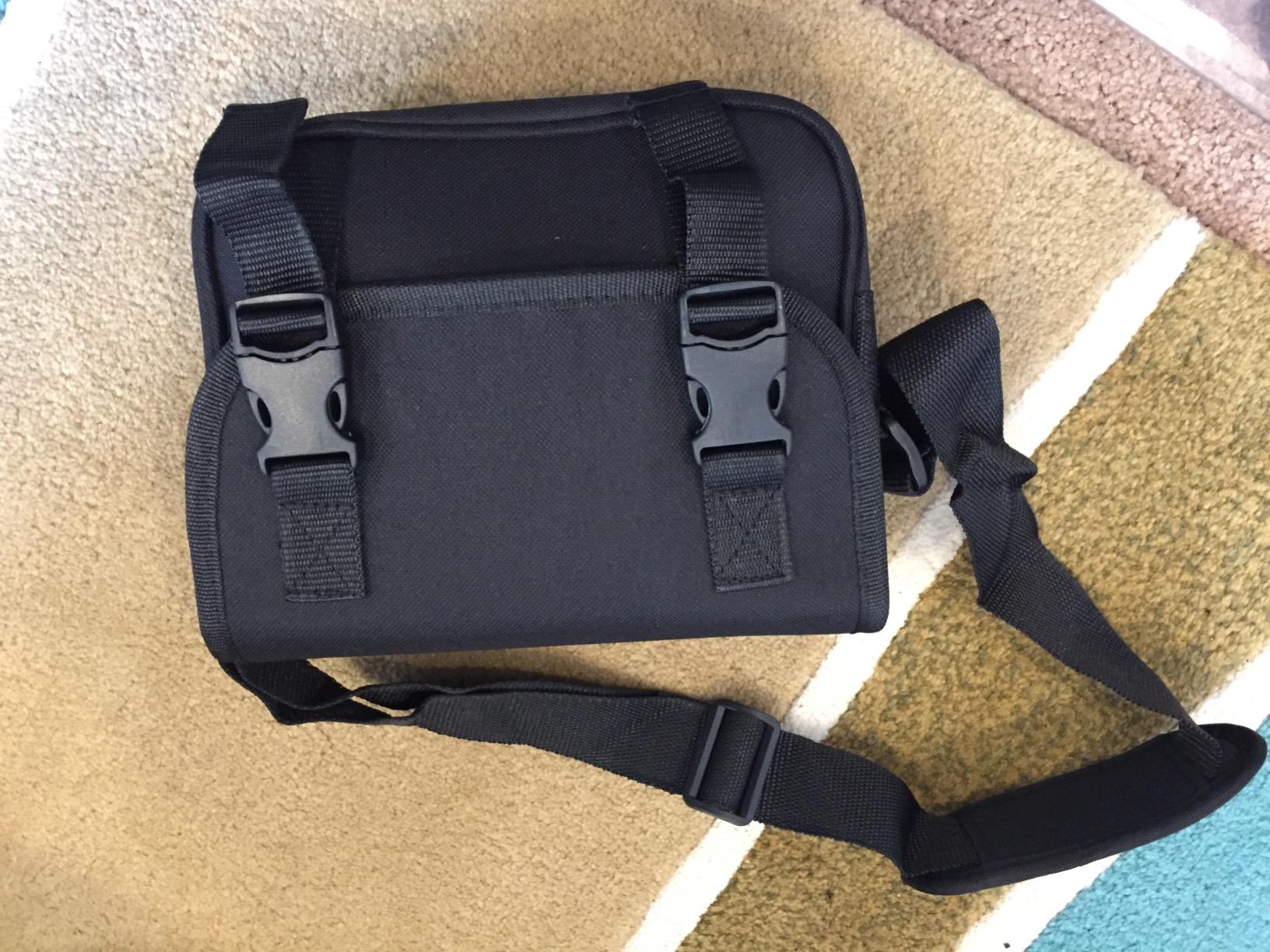
The most useful thing here is 22mm of eye relief. That is a real number on a real pair of glasses, and it is longer than most of the premium options in this list. If you wear prescription eyewear and have been disappointed by binoculars before, start your search here.
You also get an illuminated compass and a rangefinder reticle, plus diopter adjustment on both sides with foldable eyecups. The box includes a nylon case, a floating strap, batteries, a cleaning cloth and a manual.
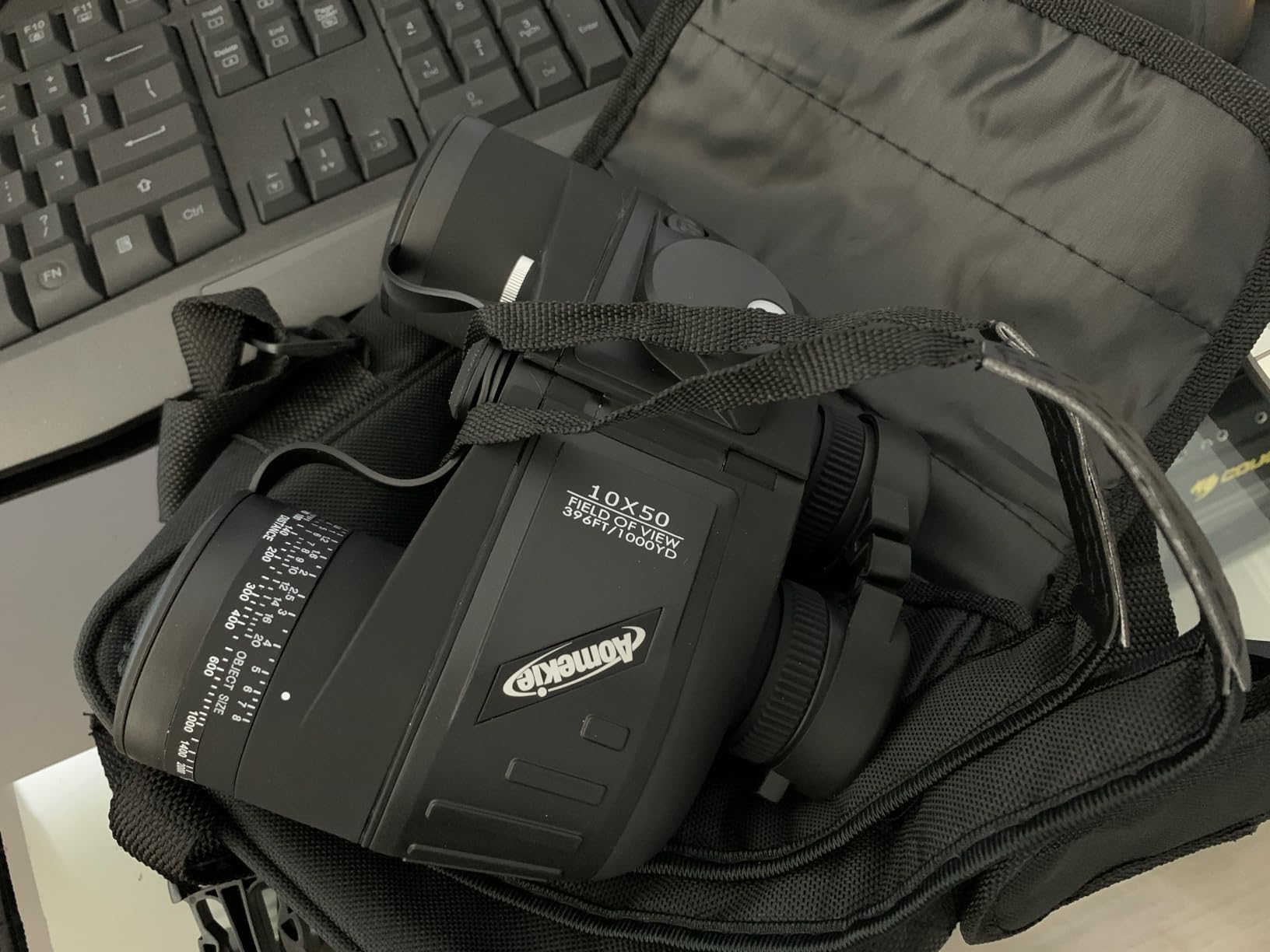
Reading the compass in practice
The compass is switchable and legible at dawn and dusk, which is exactly when you need it. It sits in the right side of the field of view, so you read the bearing on one side while your target is on the other. That is workable, but it takes practice to do without losing the target.
Give yourself a minute to learn it in open water away from the boat first. A steel hull, a radar arch, and a handheld radio sitting on the wheelhouse will all skew the reading.
Where it falls short
The lens caps and the diopter cover are loosely attached. On a pitching boat that means losing a cap to the sea and never seeing it again, so tether them or accept the risk.
The included case is also too narrow for the body and its inner pocket will not close. It is fine for a shelf, useless for a dry bag. Bring your own case.
3. Hooway 7×50 Waterproof Marine Binoculars – Most Compact for Navigation Features
Hooway 7×50 Waterproof Fogproof Military Marine Binoculars w/Internal Rangefinder & Compass for Navigation,Boating,Fishing,and More
7x50 BaK4 porro prism, 22mm eye relief, waterproof nitrogen purged and floats
Pros
- Bright wide image for the class
- Useful compass and distance scale
- Excellent for eyeglass wearers
- Responsive customer service
Cons
- Individual eyepiece focus is awkward
- Compass reading can be a few degrees off
- Air bubble can sit in the compass window
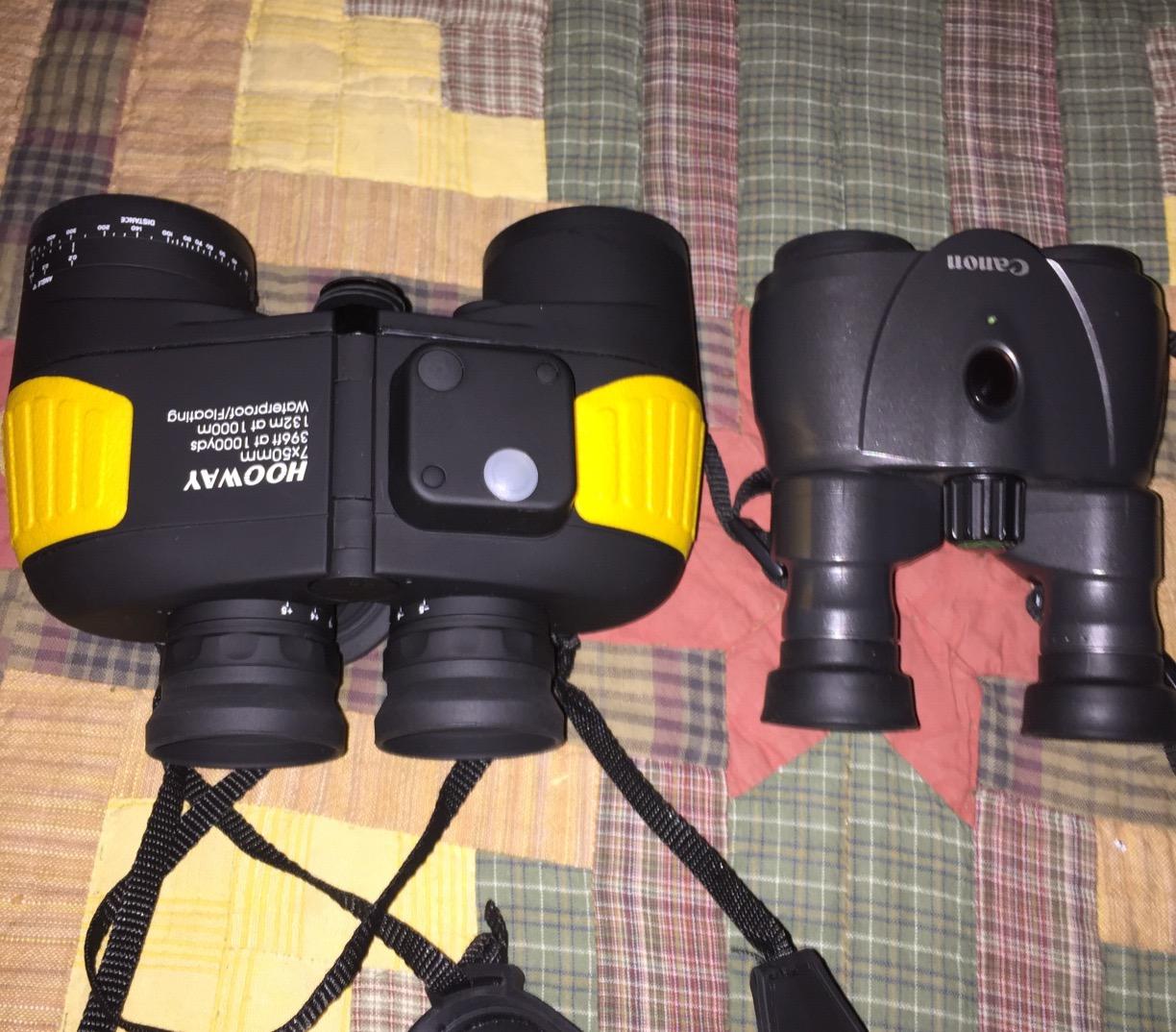
The Hooway is the one I trust most when the specific job is taking bearings. It is 7×50 with BaK4 prisms and full multi-coating, a 7.5-degree apparent field of view rated at 396 feet at 1000 yards, and 6.8mm exit pupil. The image is bright, clear and wide, and the exit pupil is well matched to a dusk watch.
At 2.2 pounds it sits mid-pack for weight, with a firm non-slip rubber armor and a tripod adapter fitting if you want to mount it on a rail. Twenty-two millimetres of eye relief with collapsible rubber eye cups makes it one of the friendliest pairs here for glasses wearers.
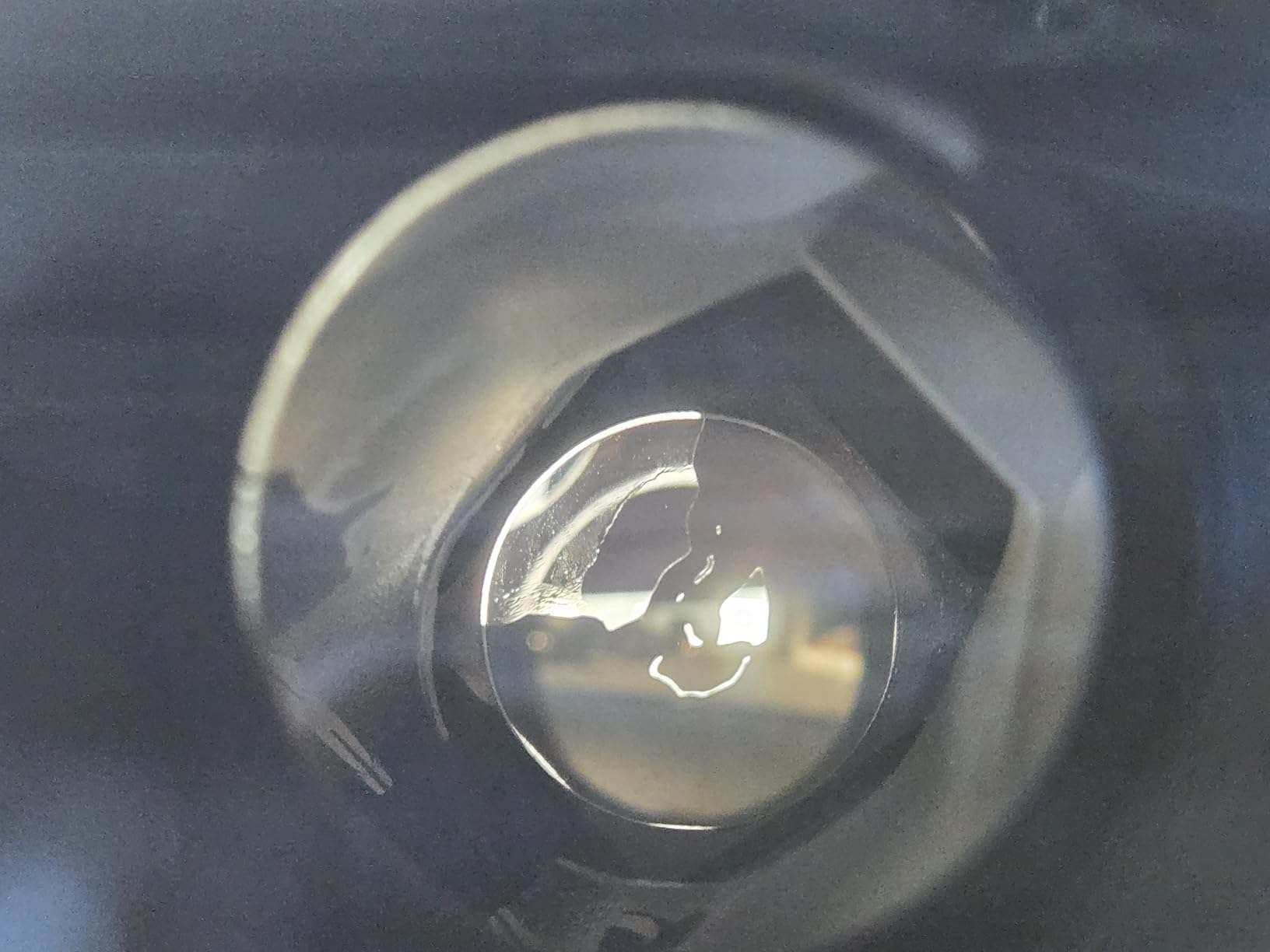
Boaters and sailors in the reviews consistently call out the illuminated compass and the distance scale as the useful part. The reticle is a manual scale, so you do the arithmetic yourself, but it gives you a real distance estimate on a known-height object rather than a guess.
My one operational complaint after a season of watching is the compass window. A small air bubble can drift into the fluid and sit over the bearing scale, which is disorienting at exactly the moment you do not need it. Check yours on arrival and keep a spare plan for taking bearings from the chart plotter instead.
Why 7×50 works so well on a moving boat
Seven power is low enough that your own hand tremor does not swamp the image, and 50mm objective is large enough to gather light for a twilight horizon scan. Together they give you a wide, stable picture where a 10×50 gives you a narrow, shaking one.
The wider the field of view, the faster you can sweep a shipping lane and spot the thing that does not belong. 7.5 degrees is a good compromise, and it is why most of the glasses here are 7×50.
Where it falls short
Individual eyepiece focus is the main one. Refocusing between a near object and the horizon means turning two rings, and on a moving boat that is slow work when a contact is closing.
Some owners also report the compass reading as approximate, occasionally off by a few degrees, and rubber eye cups that deteriorated after roughly two years of use. Treat the compass as a cross-check on your instruments, not a replacement for them.
4. USCAMEL 10×50 Marine Rangefinder Compass Binoculars – Most Versatile With Full Features
10×50 Marine Binoculars Waterproof Rangefinder Compass BAK4 FMC for Adults
10x50 BaK4 porro prism, nitrogen filled and floating, illuminated compass and reticle
Pros
- Clear bright BAK4 and multi-coated image
- Waterproof fogproof and floats
- Illuminated compass and reticle
- Includes bag and strap
Cons
- 10x is hard to hold steady on a moving hull
- Rangefinder is a manual reticle
- Individual eyepiece focus
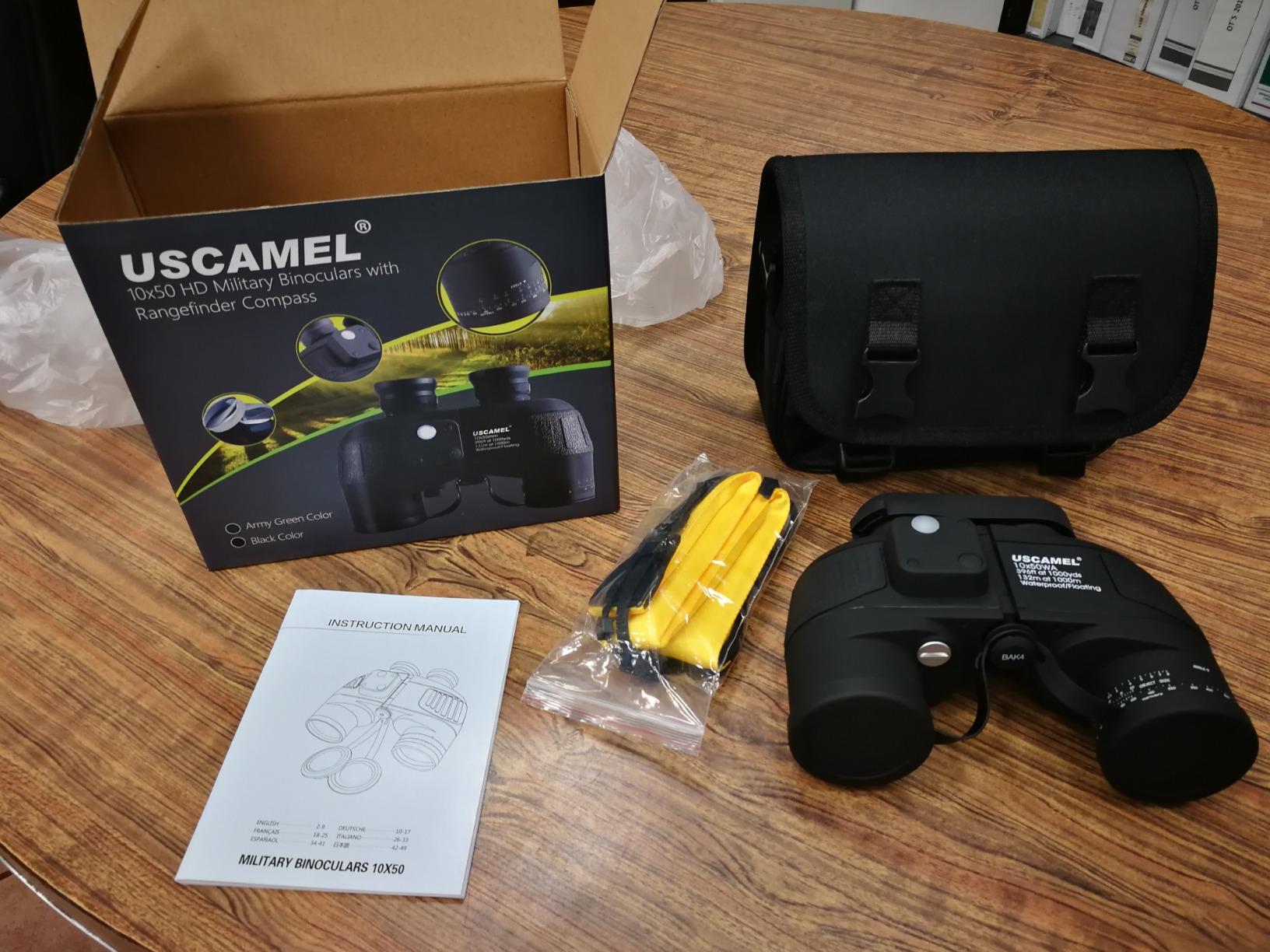
If you want the compass-and-reticle feature set at the bottom of the range, this is the one. It shares the 10×50 layout and BaK4 optics with the pair at the top of this list, with a 396-foot field of view, a 5mm exit pupil and 7.1mm of eye relief, in a rubber enclosure rather than magnesium.
The body is 1.22 kg and the shape is familiar, so if you have handled a conventional 10×50 you already know how this one sits in the hand. The foldable eyecups help with glasses, and the diopter rings give plus or minus 5 diopters of adjustment.
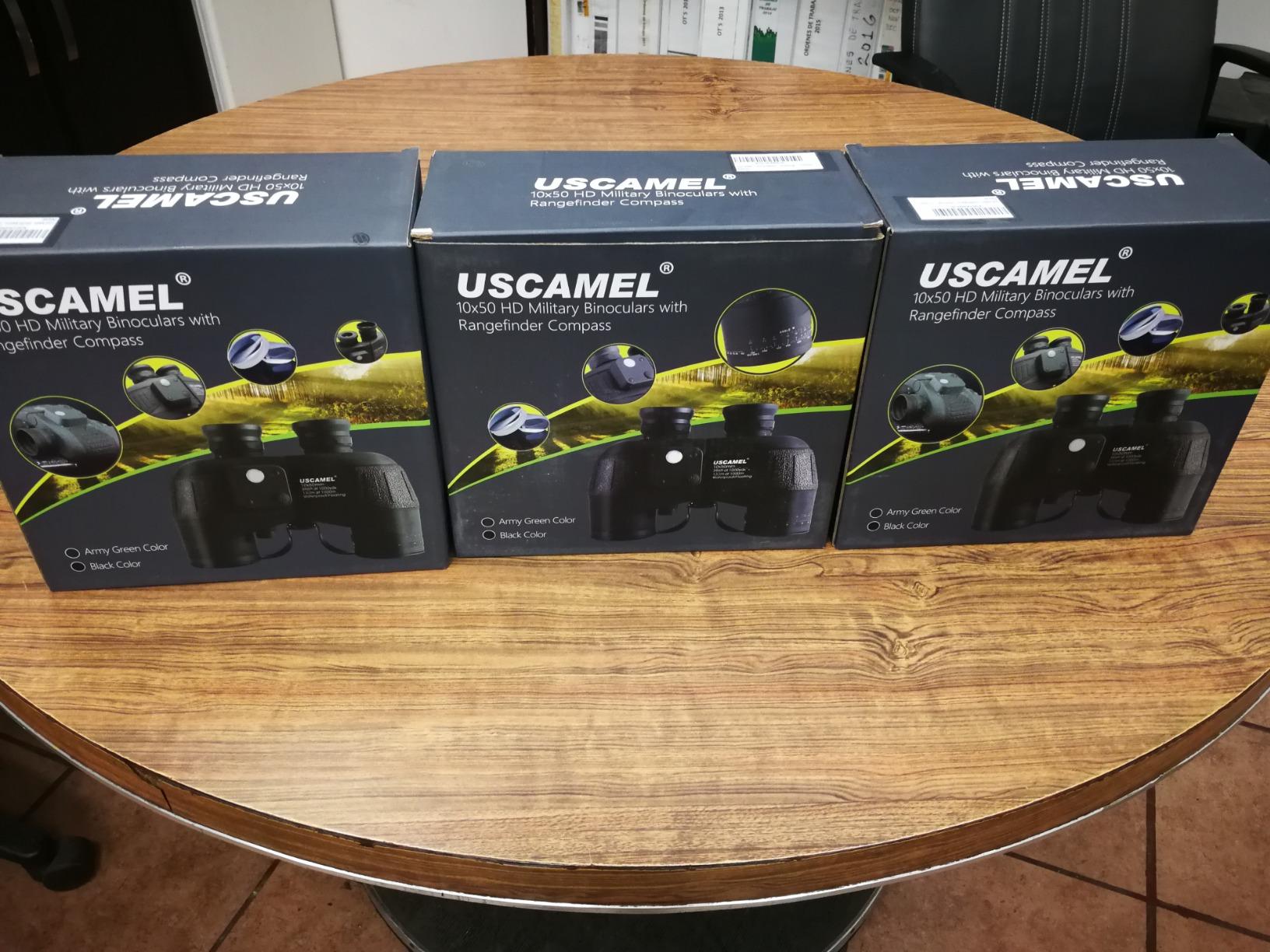
Reviewers consistently highlight the clarity of the BAK4 and multi-coated glass, the sealed nitrogen-filled body that floats, and the fact that both the compass and the rangefinder are lit. For a working pair that lives in a flybridge locker, the floating body is the feature that stops a bad day becoming a very bad day.
What you give up against the higher-power premium pairs is coating quality and edge-to-edge sharpness. The image is good rather than excellent, and it will not separate a distant hull from a distant rock the way a premium 50mm will.
How to use the 10×50 without fighting shake
Brace the top of the binocular body against a window frame, a T-top post, or your own hat brim. A fixed reference point removes most of the shake, and 10 power becomes practical for identification rather than scanning.
Keep the horizon in frame while you work. When the image drifts off level it is much harder to judge whether a contact is closing or crossing, which is the one thing you need the binoculars for.
Where it falls short
The field of view is narrower than any 7×50 in this guide, and at 10 power the shake on a rough sea is significant. That is a physics limit, not a fault in the glass.
The manual reticle also takes practice. Before you need it, work out the arithmetic once on a known object so it becomes automatic on watch.
5. Steiner 7×50 Marine Binoculars – Top Rated With Sports Auto-Focus
Steiner Marine Binoculars for Adults and Kids, 7×50 Binoculars for Bird Watching, Hunting, Outdoor Sports, Wildlife Sightseeing and Concerts – Quality Performance Water-Going Optics, Black
7x50 multi-coated porro prism, Sports Auto-Focus, floating prism system, lifetime warranty
Pros
- Bright high-contrast true-colour image
- Sports Auto-Focus needs no refocusing
- Floating prism absorbs shock
Cons
- Priced well above budget marine glass
- Full-size body is bulky in a dry bag
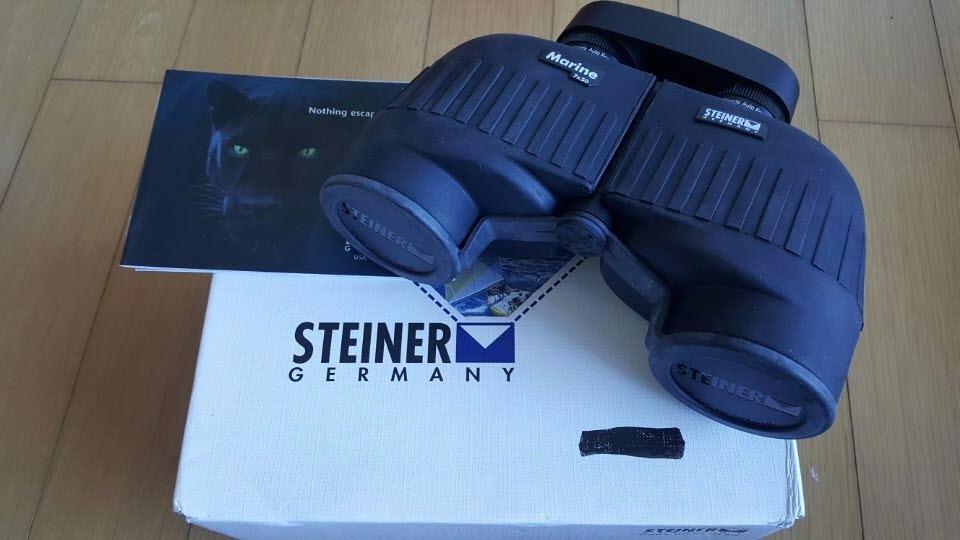
This is the best-rated pair we tested and the one I recommend when someone asks for a single pair to keep for twenty years. The optical performance is a clear step above the field, with a 7.1mm exit pupil, 20mm of eye relief, a 7.2-degree field of view, and a bright, high-contrast image with colour that stays honest against a bright sea.
What makes it work on a boat is Sports Auto-Focus. It holds sharp from about 20 yards to infinity with no focusing at all, which means you can swing from a close channel marker to a contact on the horizon without touching anything. On a moving platform that is not a convenience, it is the whole point.
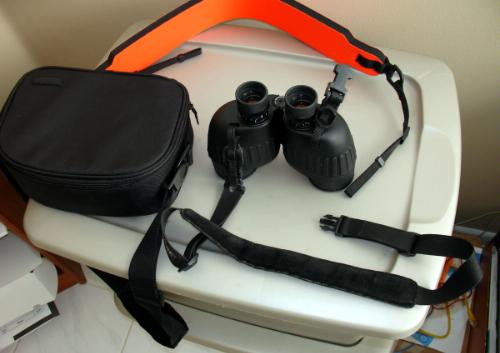
Underneath is a floating prism system mounted on flexible silicone, which absorbs shock and protects collimation when the glass is dropped. Combined with rubber armor and ergonomic grip ridges, it is built for a hard deck. The listed weight is 1 kg and the body runs 8.2 by 2.8 inches.
The warranty is the strongest in the group: the Steiner Heritage Warranty covers the product for the life of the product, and it is transferable. Owners report the optics and the focus mechanism still performing after years of service, which is the number that matters if you buy once.
Why the floating prism matters on a boat
Collimation is the alignment of the optical elements, and it is the first thing to go when a prism assembly is knocked out of true. A miscollimated binocular gives you softness that no cleaning will fix and that a focus wheel cannot correct.
A floating prism on a silicone mount absorbs the shock that would otherwise knock it out of alignment. If your boat has a boom, a hard helm console and a habit of getting bashed, that is a meaningful difference.
Where it falls short
It is the most expensive conventional pair here and the body is full size, so it needs a real dry bag rather than a jacket pocket. If you are moving between a tender and a flybridge, carry something smaller as well.
There is also no compass and no rangefinder reticle. That is fine if you cross-reference with your electronics, and a real gap if you want the glass to be a standalone navigation aid.
6. Steiner 8×30 Military-Marine Binoculars – Best for Compact and All-Day Scanning
Steiner Military-Marine 8×30 Binoculars – Professional Grade High-Contrast Optics with Sports-Auto-Focus, Floating Prism Shock Absorption, and Heritage Warranty
8x30 fully coated, 17.1 ounces, Sports Auto-Focus, floating prism, lifetime warranty
Pros
- Lightest true marine pair in the group
- Compact 6.7 inch body
- Oil and chemical resistant for marine use
- Heritage lifetime warranty
Cons
- 30mm objective is dim in heavy overcast
- No compass or rangefinder
- 3.75mm exit pupil is weak after dark
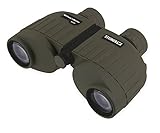
At 17.1 ounces, this is the pair that solves the fatigue problem. Every full-size marine binocular in this guide is at least twice that weight, and the difference shows up in the fourth hour of a lookout when your wrist starts to ache and your scanning gets sloppy.
It is 8×30 with a 362-foot field of view, fully coated, in a Makrolon polycarbonate body with NBR rubber armour rated to 11 Gs of impact. The 30mm objective is the reason it is so light, and the reason it is dimmer after dark than anything else here.
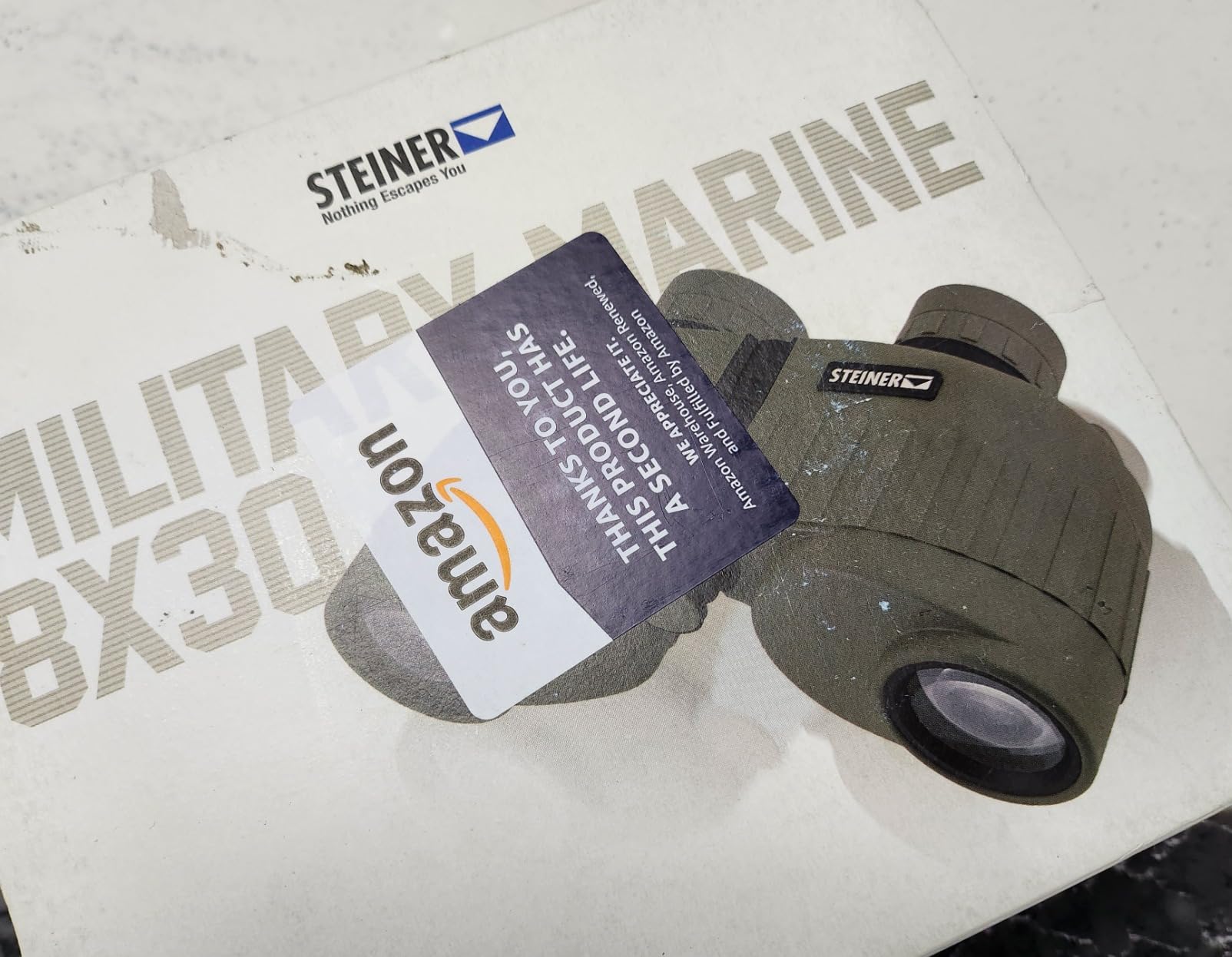
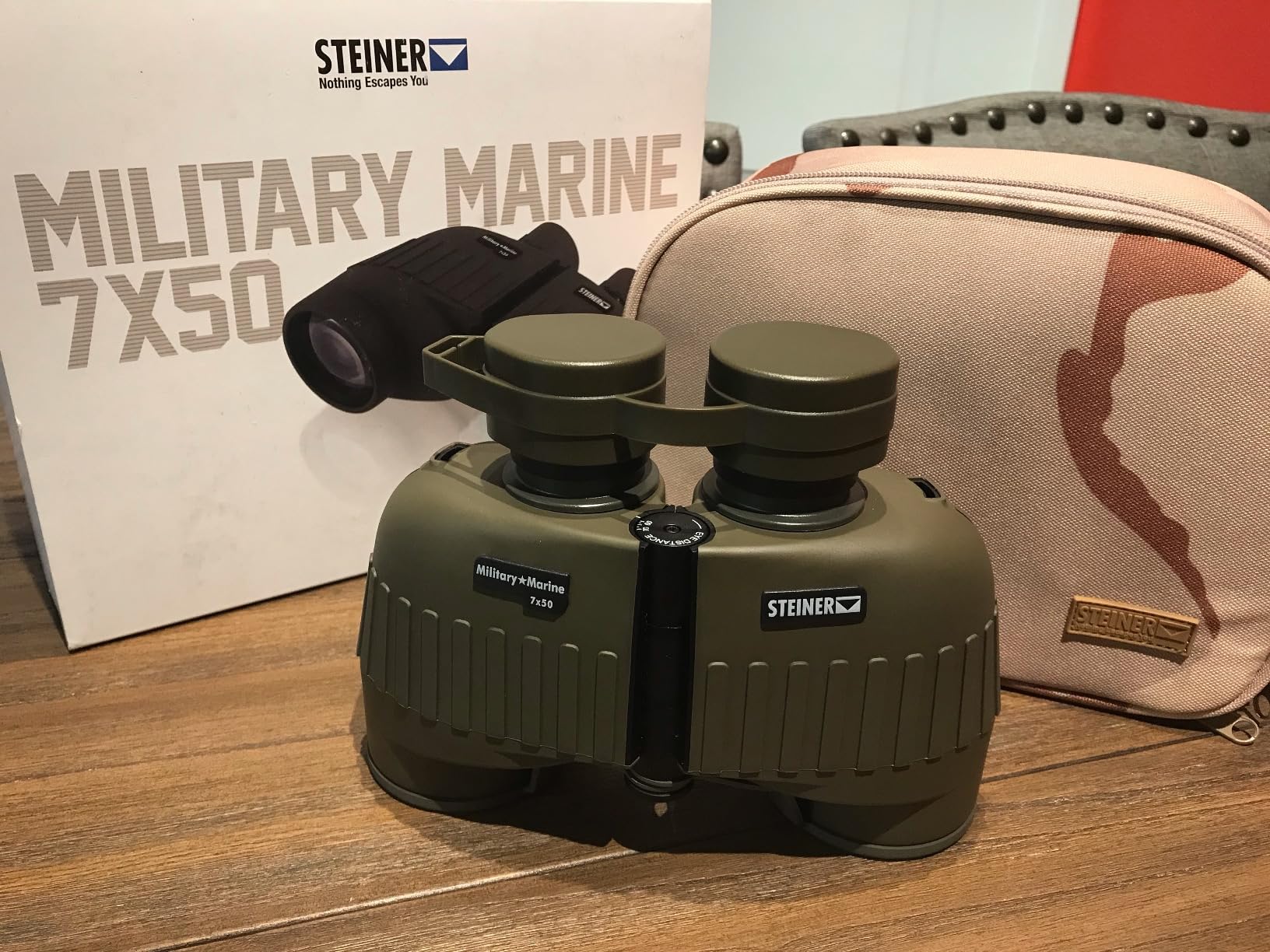
Sports Auto-Focus does the same job as on the larger Steiner, holding sharp from 20 yards to infinity so you never refocus on a moving target. The floating prism system protects alignment from drops and rough handling, and the body is oil, petroleum and chemical resistant, which matters in a marina.
At 6.7 by 2.2 inches it disappears into a lifejacket pocket or a dry bag, and that is the honest advantage. On a tender, a kayak, or a small RIB where every gram counts, this is the pair that gets carried and therefore used.
Choosing compact glass without giving up the horizon
Compact roof-prism designs get a bad name for cramped eye relief, but this porro design keeps a usable eyepiece spacing and a 362-foot field of view, which is wide enough to scan a shipping lane.
The compromise is light gathering. A 3.75mm exit pupil is well under a dark-adapted pupil, so in overcast daylight you will not notice, and in a night approach you will.
Where it falls short
Do not buy this as your only pair if you do night approaches or dawn pilotage. The 30mm objective simply does not collect enough light to match a 50mm.
There is no compass and no reticle, so it is a spotting instrument. Pair it with a chart plotter rather than expecting it to stand alone.
7. Bushnell Marine 7×50 Waterproof Binoculars – Best for Low Light and Durability
Bushnell Marine 7×50 Waterproof Binoculars, Blue
7x50 BaK-4 multi-coated, hermetically sealed, 7.1mm exit pupil, limited lifetime warranty
Pros
- Bright even image with strong low-light gathering
- Hermetically sealed and corrosion resistant
- Non-slip rubber armor
- Limited lifetime manufacturer warranty
Cons
- Bulky and heavy at 1.02 kg
- No quick re-acquisition on moving targets
- No compass or rangefinder
The Bushnell is the most sealed conventional design in this group. Hermetically sealed and corrosion resistant, with BaK-4 prisms and fully multi-coated optics with UV protection, it is built for salt water rather than for a bookshelf. Several owners note that the image outperforms marine glass costing considerably more.
The optical numbers are right where you want them: 7×50, 7.1mm exit pupil, 18mm eye relief, and a porro prism layout that gives a wide field. Light gathering is the standout, with reviewers repeatedly calling out a bright, even image in poor light.
One thing to weigh up is the warranty. It is a limited manufacturer warranty rather than the lifetime transferable cover offered by the Steiner models, which matters if you intend to pass the glass on. Several owners also note the interpupillary range feels tight, so try it on with your own eyewear before committing.
It also needs no batteries at all, which removes an entire class of failure. No compass to drain, no lamp to fail on a night watch, nothing to corrode in a battery tube over a winter laid up.
What sealed construction really buys you
Hermetic sealing means the interior is not just sealed against water, it is sealed against air exchange. That is why these do not fog internally when you carry them from a cold wheelhouse into warm air or out of an air-conditioned cabin into a humid night.
Corrosion resistance matters more than most buyers expect. Salt crystallises in every scratch and every rubber seam, and a pair that is sealed at the factory and never opened will outlast one whose seals have been disturbed.
Where it falls short
At 1.02 kg in a full-size body it is the heaviest conventional pair here, and that is real fatigue over a long watch. It suits a seated helm position better than a standing one.
Focus is per-eyepiece and center rather than auto-focus, so you re-sight every time you change range. Some wearers also find the interpupillary range does not close enough, so try it on. The top objective lens cover is reported as loose.
8. Barska Floatmaster 7×50 Marine Binoculars – Best for Small Boats and True Buoyancy
Barska AB12738 Floatmaster 7×50 Waterproof Floating Marine Binoculars for Boating, Hunting, Fishing, Sports, etc, Yellow
7x50 fully multi-coated, 23mm eye relief, floating waterproof fogproof body
Pros
- Genuinely buoyant body is easy to retrieve
- 23mm eye relief is the longest here
- Center focus works one-handed
- Case and neck strap included
Cons
- Heavy at 2.3 pounds for a floating pair
- Close focus limit of roughly 75 to 80 feet
- Objective lens covers are not on a cord
Floatmaster is built around one promise: it floats. Not the strap, not the case, the body itself, sealed and buoyant so it comes up to the surface where you can see it. If you work on a small boat, a tender or a pontoon where things get knocked off, that is a feature worth more than any coating specification.
Optically it is a straightforward 7×50 with full multi-coating, a 7mm exit pupil and the longest eye relief in this guide at 23mm. The image is clear and bright from sunrise to sunset, which is exactly the window most of us use marine glass in.
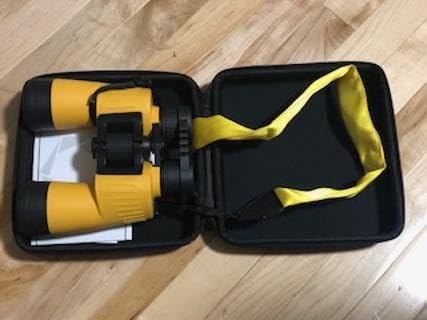
Center focus is the right call here. One wheel, usable with a single hand, no two-handed dialling while the boat is moving. For short-range work on a pontoon, where you are picking out a swimming ladder or a mooring, that is the difference between quick and fussy.
The body is nitrogen purged, sealed, shockproof and wrapped in non-slip ergonomic rubber. A case and neck strap are included, though you will probably replace the strap.
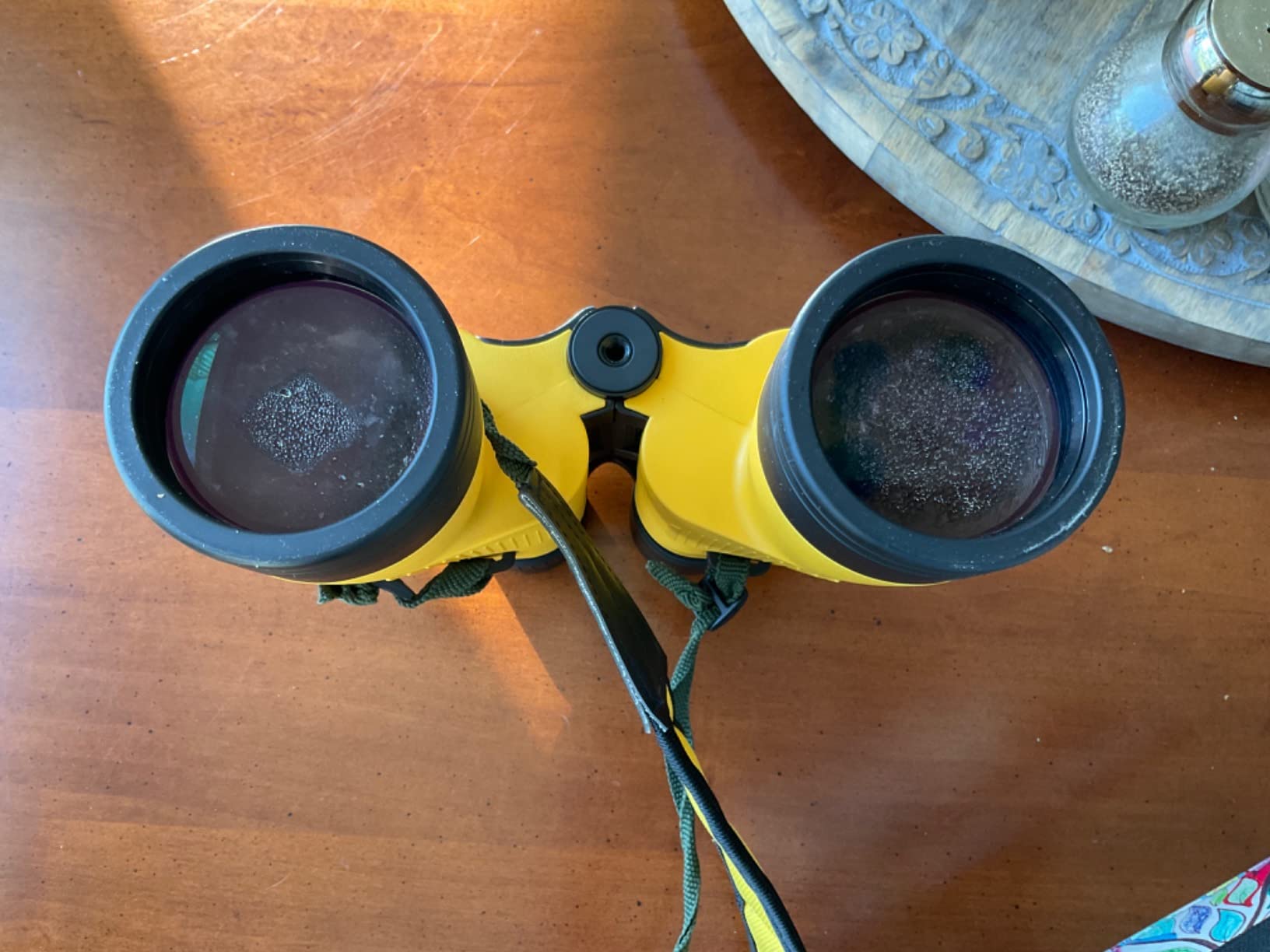
Long eye relief and who benefits from it
Twenty-three millimetres clears almost any pair of glasses, including thick frames and safety specs. If eye relief has been the reason you gave up on binoculars before, this is the number to look for and the one to prioritise above magnification.
It also means the eyepieces are less likely to hit your brow in a heavy sea, which is its own kind of protection when you are scanning in wind and spray.
Where it falls short
It is 2.3 pounds, which is the heaviest floating pair here and a lot of weight for a small boat. The focus wheel is also stiff enough to need two fingers, which undercuts the one-handed benefit in rough water.
The close focus limit of roughly 75 to 80 feet means no near viewing at all, and the objective lens covers are not attached to a cord, so they will be lost. It also does not sit perfectly round at that close focus limit.
9. ESSLNB 7×50 Marine Binoculars – Best for Dawn and Dusk Watches
ESSLNB 7×50 Marine Binoculars, IPX7 Waterproof with Compass & Rangefinder
7x50 BaK4 multi-coated, IPX7 sealed and floating, illuminated compass and rangefinder
Pros
- Illuminated compass and reticle readable at dawn and dusk
- IPX7 sealed and floating
- Individual diopter for each eye
- Includes bag strap caps and batteries
Cons
- Heaviest pair in the group at 3.1 pounds
- Manual reticle requires calculation
- Individual eyepiece focus is slower
The ESSLNB is the pair for a first-light or last-light watch. It is a 7×50 with BaK4 porro prisms, full multi-coating and a 6.8mm exit pupil, and both the compass and the rangefinder reticle are illuminated with switchable lighting. That illumination is the whole point, because it is the difference between reading a bearing at dawn and guessing at one.
Construction is IPX7 sealed and floating, with individual diopter adjustment, fold-down eyecups and non-slip rubber armour. The package includes a carry bag, a floating neck strap, objective lens covers and batteries.
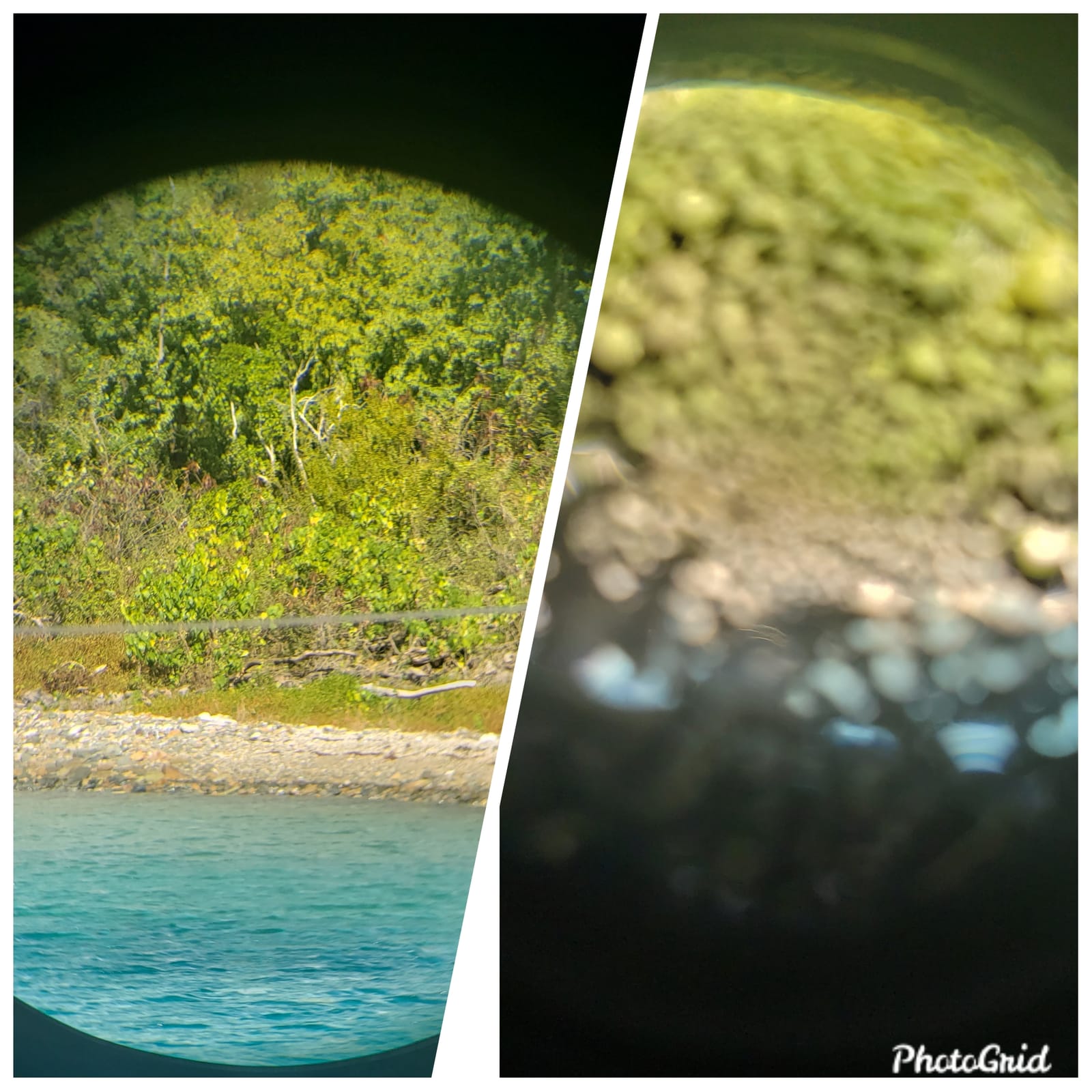
Reviewers like the bright BAK4 image and the readability of the lit compass and reticle in low light. The floating body means a dropped pair surfaces rather than sinking, which is the recovery argument that matters most on a small craft.
By contrast, the Nikon in this guide is heavier still at 3.8 pounds, so I would not ask anyone to carry this one for a full watch without trying it first.
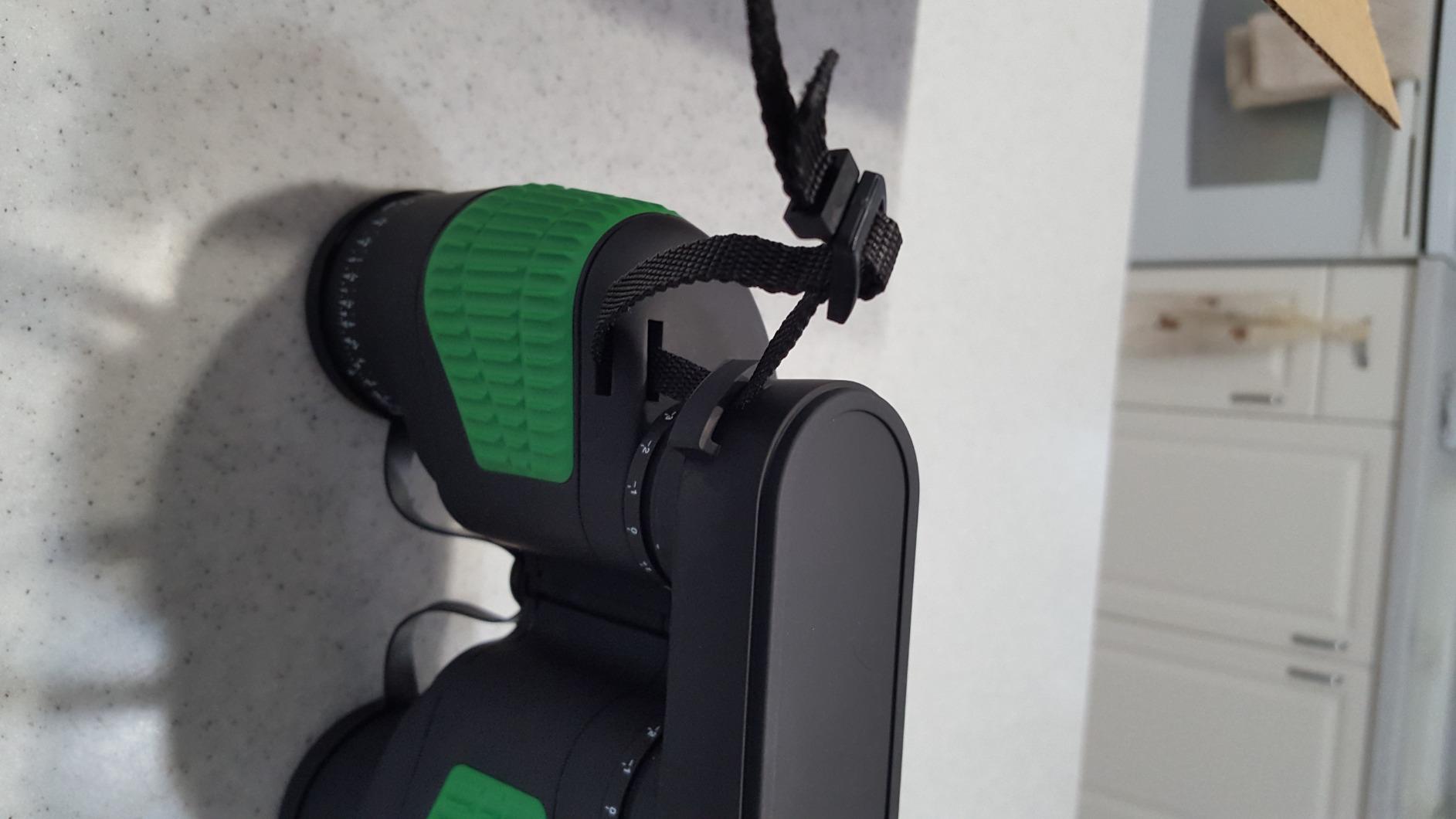
Illumination versus coating after dark
No amount of coating compensates for a dark-adapted pupil. Once you are past civil twilight, light gathering is physics, and a 50mm objective simply delivers more of it than a smaller one.
Illuminated reticles solve a different problem. They keep the scale readable without external light, so you are not ruining your night vision with a torch to measure a target.
Where it falls short
Weight, first and again. Second, the rangefinder is a manual reticle that needs calculation, so it is a training exercise rather than an instrument you consult in three seconds.
Individual eyepiece focus is slower than a center wheel when you are switching between a near object and the horizon, which on a dawn watch is a frequent switch.
10. Steiner Military-Marine 10×50 Binoculars – Best for High Power Identification
Steiner Military-Marine 10x50mm Binoculars – High-Power Tactical Optics with Sports-Auto-Focus, 50mm Objective Lenses, Waterproof, and Heritage Warranty
10x50 multicoated, Sports Auto-Focus, Makrolon body rated to 11 Gs, Heritage warranty
Pros
- Crystal clear at high power
- 50mm objectives are bright at dawn and dusk
- Auto-Focus allows one-handed acquisition
- Shock resistant to 11 Gs
Cons
- The most expensive pair in the group
- Bulky at 1 kg for a small boat
- Narrow 302 ft field of view
- No compass or reticle
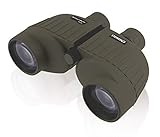
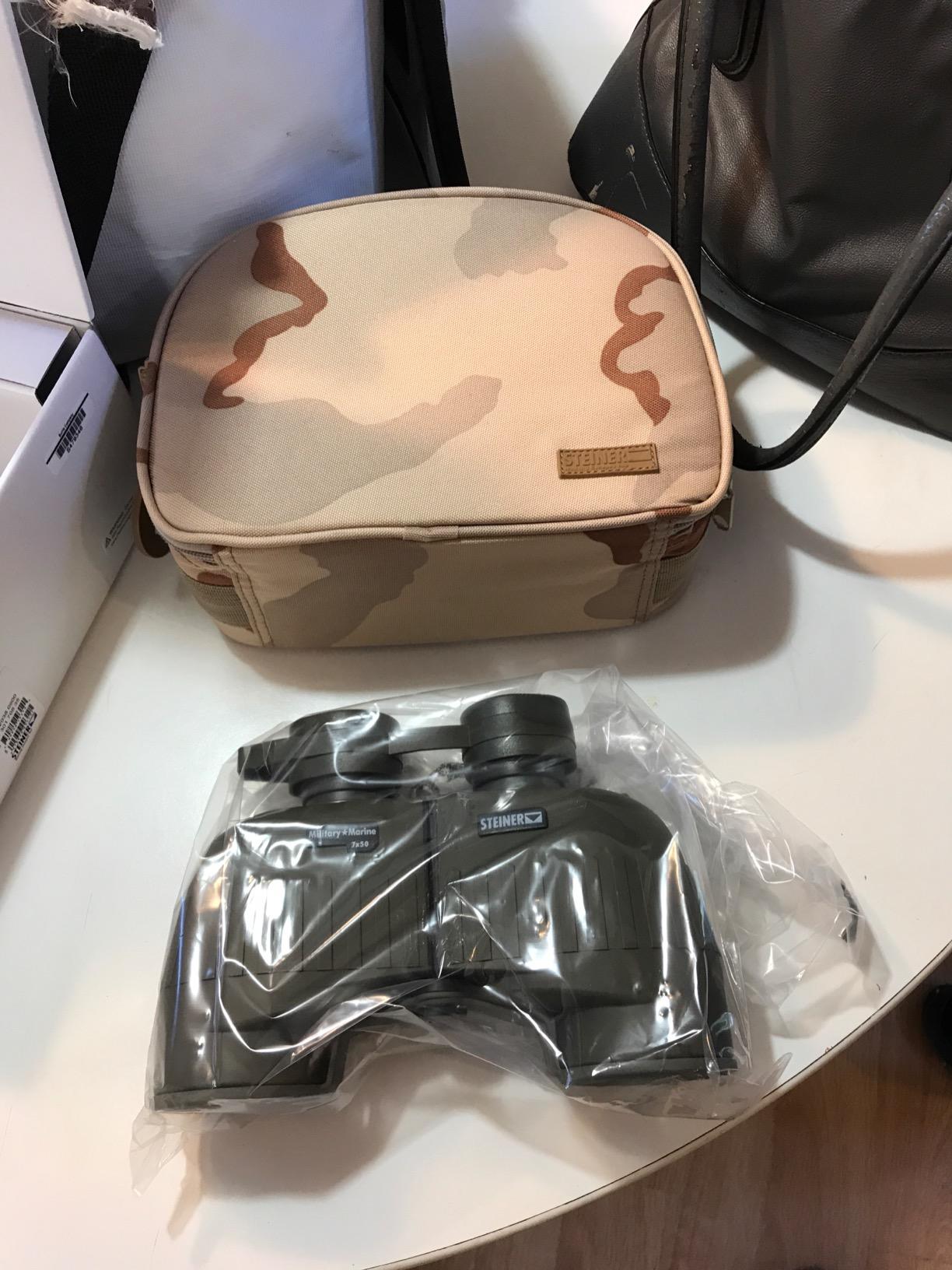
When you need to identify a distant contact or read the shape of a headland, this is the strongest glass here. It is 10×50 with multicoated optics in a Makrolon polycarbonate body with NBR long-life rubber armour rated to 11 Gs of impact, and owners consistently describe the image as crystal clear.
The 50mm objectives are the reason it stays usable at dawn and dusk despite the 10 power, giving a 5mm exit pupil that is brighter than the numbers suggest. The floating prism system with a flexible silicone lens mount protects collimation from drops, and Sports Auto-Focus keeps it sharp from 20 yards to infinity with no focus wheel at all.
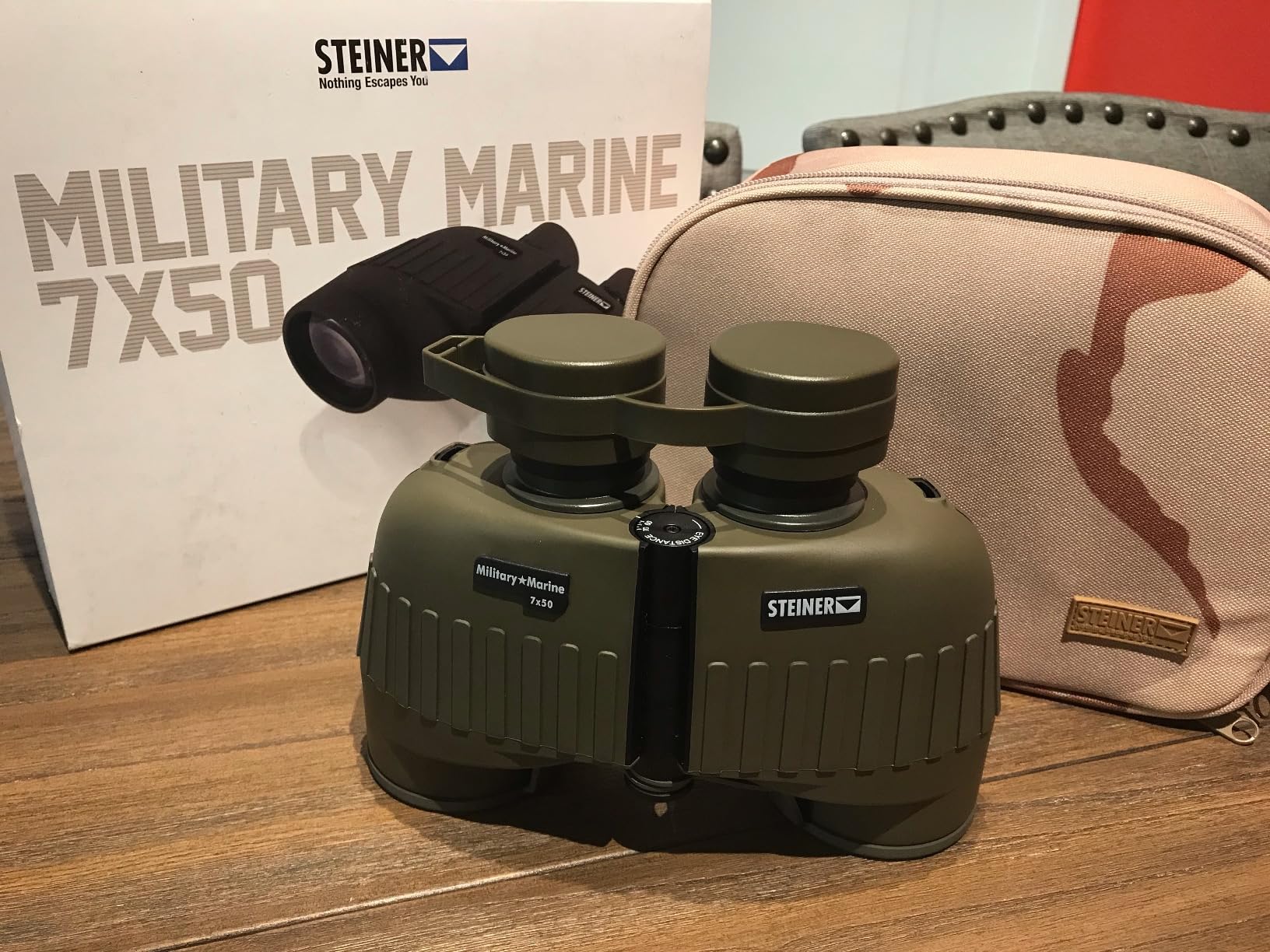
That focus design is a real safety feature. You can acquire a target one-handed while the other hand stays on the wheel or on a line, and you cannot accidentally knock the glass out of focus mid-scan.
It carries the transferable Steiner Heritage lifetime warranty, so the coverage follows the unit rather than ending with the original buyer.
What high power is actually for
Ten power is an identification tool, not a scanning tool. You use it to answer one question about one object: is that a container ship, a fishing boat, or a rock. The 302-foot field of view at 1000 yards is narrow, so finding the target takes longer.
Use 7×50 or 8×30 to find the contact, then switch to 10×50 to identify it. Carrying one pair that tries to do both is why many skippers end up carrying two.
Where it falls short
It is the most expensive pair here, and at 1 kg in a full-size body it is a lot to lug out to a tender. The narrow field of view also makes a wide horizon sweep noticeably slower.
There is no compass and no reticle, and a few owners report collimation or quality control issues on individual units. Check alignment carefully on arrival.
11. Fujifilm Fujinon Mariner 7×50 WPC-XL – Best for Compass Accuracy and Longevity
Fujifilm Fujinon Mariner 7×50 WPC-XL Porro Prism Binocular
7x50 fully coated, illuminated world compass, nitrogen filled waterproof, 7.1mm exit pupil
Pros
- Very clear bright Fujinon optics
- Illuminated world compass reads accurately
- Relatively light for a full-size 7x50
- Owners report decades of service
Cons
- Hard plastic shell rather than full rubber armour
- Individual eye focus
- Bulky strap and lens caps
- Used units can arrive out of alignment
Fujinon is the name sailors mention most often when they talk about glass on a moving platform, and the Mariner WPC-XL is the reason. The image is bright and clear with a 7.1mm exit pupil and a 7-degree apparent field of view, and it is rated fully waterproof with a nitrogen-filled structure that has a long record of not fogging in cold or wet weather.
At 2.6 pounds it is lighter than most full-size 7x50s with a compass, which is the achievement here. Owners describe it as comfortable to hold up to the eye for long passages, and several report 15 to 20 years of continuous service on the same pair.
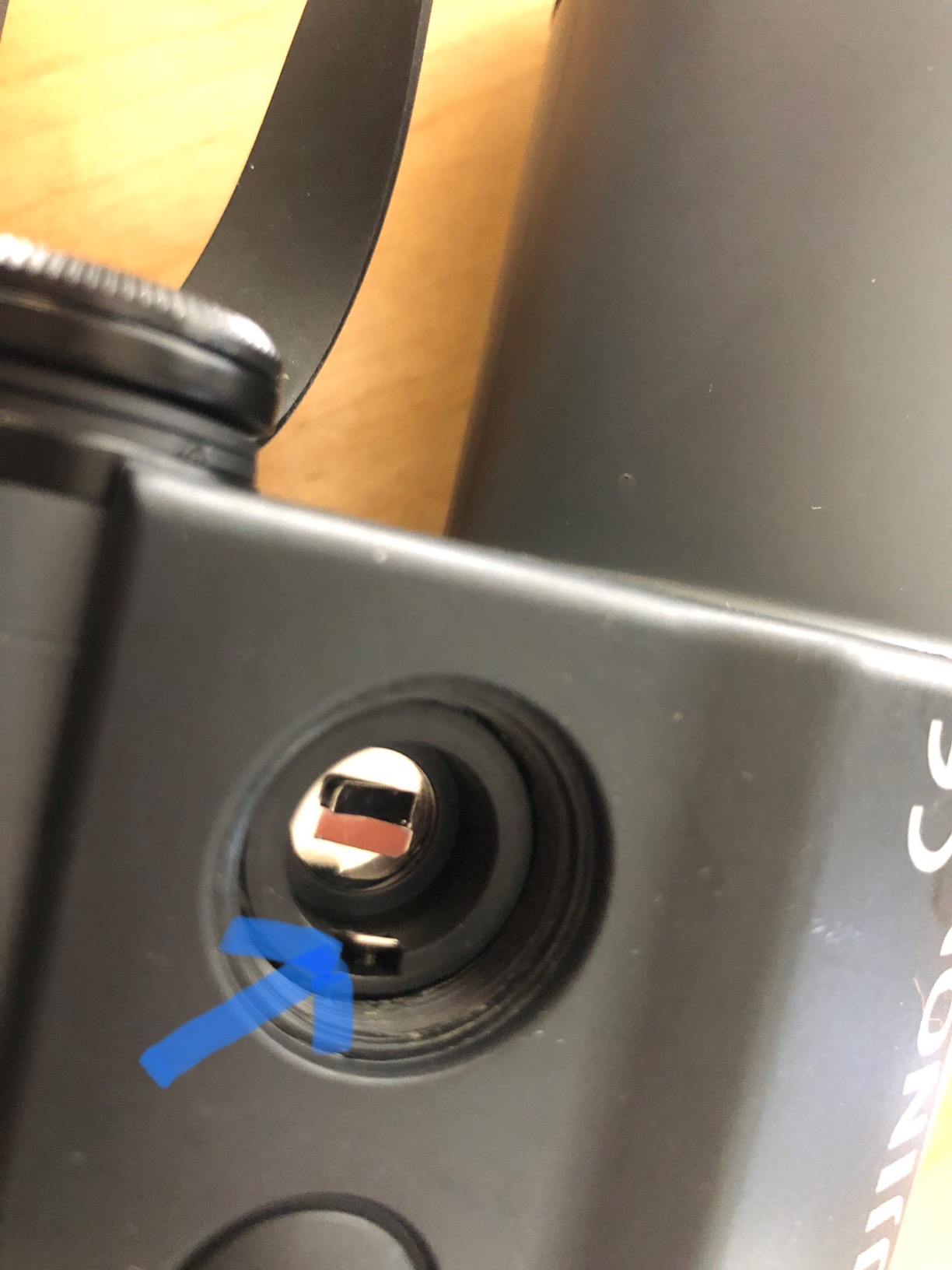
The built-in illuminated world compass is the feature that sets it apart, and it is consistently described in reviews as accurate for taking bearings. There is also a rangefinding reticle, and the supplied strap floats so a dropped pair is retrievable.
Eye relief is 18mm, which is middling. It works for most people without glasses and for a lot of people with them, but it is not the 22 to 23mm you get from the AOMEKIE or the Barska.
What longevity looks like in practice
Marine binoculars fail in predictable ways: seals perishing, coatings scratching, focus mechanisms stiffening, batteries corroding. The units that reach twenty years are the ones that were rinsed with fresh water after every trip and stored dry.
A nitrogen-filled body that has never been opened keeps its internal atmosphere stable, which is the mechanical reason this design ages well. Pair it with the maintenance routine later in this guide and you have a realistic case for keeping it for a decade or more.
Where it falls short
The shell is hard plastic with rubber grip areas rather than full rubber armour, so it is less forgiving of a drop onto a hard deck than a Steiner or a Bushnell. The strap and lens caps are cheap and will probably be replaced early.
Individual eye focus means two adjustments per crew change. And if you buy it used, check collimation on arrival, because open-box examples have arrived out of alignment with a dead lamp.
12. Nikon 7×50 OceanPro CF WP Global Compass – Best for Automatic Declination
Nikon 7×50 OceanPro CF WP Global Compass Marine Binocular (Black)
7x50 Eco-glass multi-coated, illuminated global compass with declination, 22.7mm eye relief
Pros
- Global compass handles both hemispheres automatically
- 22.7mm eye relief for glasses wearers
- Quick central focus
- Rubber armored polycarbonate body
Cons
- Heaviest pair here at 3.8 pounds
- Limited interpupillary adjustment
- Smallest review base at 60 reviews
The OceanPro solves the problem that catches most boaters who cross an ocean: magnetic declination. Most compass-equipped binoculars give you a magnetic bearing and leave you to apply the local variation yourself. This one has an illuminated global compass that handles declination automatically for both hemispheres, which removes the single most common source of compass error on a long passage.
Optically it is a 7×50 with multicoated Eco-glass, a 7.1mm exit pupil and 22.7mm of eye relief, which is among the longest in this guide. The central focus wheel is quick, the polycarbonate body is rubber armoured, waterproof and fog proof, and a floating nylon strap is included.
There is also a scale for calculating subject size and distance, so the glass can give you an estimate of range on a known-height object. That is a genuinely useful capability in a shipping lane or at a harbour entrance where you need to know whether a contact is inside your comfort margin.
The compromise is weight, at 3.8 pounds. That is the heaviest pair we looked at, and over a multi-hour watch it becomes tiring. The bulk of the package also suggests limited interpupillary adjustment for some wearers, so check the fit.
Why declination errors happen
Your compass points to magnetic north. Charts are drawn on true north. The gap between them is declination, and it changes as you cross latitudes, which is why a bearing that was accurate in one harbour can be several degrees wrong a few hundred miles away.
A global compass with automatic declination applies that correction for you. If you make long passages or cross between hemispheres, that removes a class of arithmetic error that is easy to make and hard to notice.
Where it falls short
Weight is the headline problem. 3.8 pounds is a lot to hold up while scanning, and it is the reason I would still carry something lighter as a backup.
There is no illuminated reticle beyond the compass and distance scale, so working a reticle at night means lighting the scene. And with 60 reviews behind it, this is the smallest evidence base in the group, so treat the manual as the source for accuracy rather than the reviews.
How to Choose Marine Binoculars That Suit Your Boat
Most of the wrong purchases in this category come down to three things: overbuying magnification, underestimating weight, and trusting a splashproof claim. Here is how to avoid each one.
Why 7×50 is the marine standard
Seven power is low enough that hand movement and hull motion do not swamp the image, and 50mm is large enough to gather useful light. Multiply those and you get 7×50, the configuration that dominates working marine optics and most of this list for good reason.
Higher power narrows the field of view, which slows down a horizon scan, and increases the shake you have to fight. On a calm pontoon, 10×50 is a reasonable choice. On an open crossing, it is a compromise you have to work at. If you are unsure, 7×50 is the safe default.
Waterproof, O-ring sealed and nitrogen purged
Waterproof is the most abused word in this category. Splashproof means a light shower did not get in. Waterproof with an IPX7 rating means immersion in fresh water to one metre for a defined period. Waterproof to 5 metres means you can drop it in the sea and it will still work.
Sealing and purging are two different jobs. O-ring seals stop water getting in. Nitrogen purging fills the interior with an inert dry gas, so when the temperature changes dramatically the gas pressure and moisture level cannot produce internal fogging. You need both. A sealed body that is not purged can fog inside on a hot afternoon after a cold night, and no amount of wiping will clear it.
Floating is a third, separate question. Many budget pairs are sealed and purged but do not float. If you work on an open boat, ask specifically whether the body floats without the strap.
What the compass is actually for
A compass-equipped binocular lets you take a bearing on a harbour entrance, a channel marker, a light characteristic or another vessel, and read it against your chart. That is a real navigation task, not a gadget.
Three things to check. Whether the compass is illuminated, because a dark scale at night is useless. Whether it handles declination automatically for the hemisphere you cross, because manual variation maths is where errors creep in. And how the battery compartment works, since a sealed compartment with no user access means a service visit when the cell dies.
Eye relief decides whether you can wear glasses
Eye relief is the distance from the eyepiece lens to your eye, and anything above 20mm works with most prescription eyewear. The 22mm on the AOMEKIE, the 23mm on the Barska and the 22.7mm on the Nikon are the friendliest numbers here.
Under 17mm and glasses wearers should not bother. Test before you commit, and fold the eyecups down fully rather than trying to look over them.
Center focus versus individual focus
Center focus uses one wheel for both barrels, so you refocus in a second. Individual focus sets each barrel separately, which is slower but lets you set one barrel for a watch and hand the glass to a crew member without re-dialling.
Auto-focus designs like Sports Auto-Focus hold sharp across the whole range and remove the decision entirely. If you share the glass across a watch, that is worth paying for.
Porro versus roof prism
Porro prisms fold the light path, giving a wider field of view, better light transmission and a deeper, more three-dimensional image. Most full-size marine glass is porro. Roof prisms fold the light path back on itself, which is how you get a compact body, at the cost of a narrower field.
BaK4 barium crown prisms give noticeably brighter images than BK7 at the same tier. Five of the pairs here specify BaK4 with full multi-coating, which is one reason the budget models hold up as well as they do.
Weight, balance and hand fatigue
Forum complaints about heavy bodies are the most consistent thing we found. A 1kg binocular is fine for a twenty-minute scan and miserable for a two-hour watch, especially in a seaway where you are bracing yourself as well as holding the glass.
Our rough tiers are: under 700g for a full watch or a tender, 800g to 1.2kg for an all-round working pair, and over 1.2kg for a helm or flybridge station where you are mostly seated. Balance matters as much as mass, so check that the glass sits level in your hands rather than nose-diving.
Matching the pair to your boat
On a pontoon or a calm inland cruiser, a 10×50 is fine and the Bushnell 7×50 works well for bright evening scanning. On a cruising sailboat or an offshore powerboat, stay at 7×50 or 8×30, and weight matters more than any other single number. On a tender, a kayak or a raft, the compact Steiner 8×30 is the only one here I would describe as genuinely carryable.
If you do night approaches, 50mm objectives are not optional. If you wear glasses, filter on eye relief first. If you cross oceans, the Nikon global compass removes a real source of error. Those three constraints narrow the list quickly.
What to check before you commit
Ask to hold the pair and look at a distant edge. If the image breaks into colour fringing or goes soft at one side, the elements are out of alignment and no adjustment will fix it properly.
Test the focus at both extremes and in between. Sports Auto-Focus should hold sharp across the range with no hunting. Then check the seal by looking for fogging after a few minutes, and confirm the compass in open water away from the boat. Steel hulls, radar arches and a handheld radio on the console all skew a magnetic reading, so never test a compass standing next to your own helm. Ten minutes in a chandlery saves years of disappointment.
What owners say the long term is like
Across sailing and boating forums the pattern is consistent: Steiner Navigator and Commander owners report years of reliable service with optics and compasses still working, Fujinon is described as best in class for moving platforms, and compact Plastimo-style models get praised for simplicity. The recurring complaint is weight, followed closely by compasses that read inaccurately near the helm.
Several people also asked the obvious question: can you just use your 8×42 birding binoculars on the boat? Sometimes, yes, if you accept fogging risk, impact risk and no compass. For a safety instrument on a working boat, the answer is no.
A note on image-stabilised binoculars
Image stabilised models, whether electronic or optical, solve real problems on a moving platform. They are also where the mistake is easiest to make, because most are not fully waterproof. Check the sealing specification on the specific model rather than assuming from the category, and keep a sealed pair as your primary glass.
If you do carry one, treat it as the long-range spotting tool and keep a conventional sealed 7×50 for the wet work.
Saltwater Care and Long-Term Storage
No binocular on this list survives neglect, and none of them needs much attention. Salt is the enemy, and it gets into every scratch, every rubber seam and every battery compartment.
The routine after every trip
Rinse with fresh water. This is the single most useful thing you can do, and it takes thirty seconds. Pay attention to the seams, the focus wheel, the eyecups and any strap loops where salt collects.
Then let it air dry before the case closes. Trapping moisture in a closed case causes mildew and promotes fogging, and a dock with a locker heater is the perfect environment for it.
Never use lens wipes on the outer coatings. They are designed for glass without coatings and can strip hydrophobic layers permanently. Blow off salt grit with a blower and rinse it away instead.
Storage and batteries
Remove the batteries before a long lay-up. Battery corrosion is one of the most commonly reported failure modes, and a cell left in a compass over a winter will take the compartment with it.
Store the pair in a sealed dry bag with desiccant, somewhere with air movement, away from direct sun on a helm console where it will bake all afternoon. Heat and cold cycling is what destroys optics, not occasional damp.
Tether your binocular. A floating body or a floating strap only helps if the strap is on and the tether is short enough that the glass cannot reach the water. Pair it with a lanyard on your person and the most expensive loss on your boat becomes a recovery rather than a replacement.
Frequently Asked Questions
What is the difference between marine binoculars and regular binoculars?
Marine binoculars are built for a moving vessel, so they are O-ring sealed and nitrogen purged to stay fog-free, shock armoured to survive drops, and usually 7×50 with a compass or rangefinding reticle. Regular binoculars are built for land, where the platform is stable, so you can use higher magnification, lighter bodies and cheaper coatings safely. A general-purpose pair can work on a calm day, but it is a poor safety instrument in a seaway.
What magnification is best for marine binoculars?
Seven power is the marine standard for a reason. It is low enough that hull motion and hand shake do not swamp the image, and it keeps a wide field of view for scanning a shipping lane. Ten power is useful for identifying a distant contact but shakes badly on a moving boat. Pair 7x with a 50mm objective for good low light.
What are the best waterproof binoculars?
Look for O-ring sealing combined with a nitrogen purge rather than the word waterproof alone. Every pair in this guide is sealed, and the ones that also float are marked. Floating is a separate question from sealing, and it is the one that matters if you work on an open boat where things get knocked off the console.
What binoculars do ship captains use?
Working captains use a sealed 7×50 with a 50mm objective, an illuminated compass and a reticle, carried in a floating housing with a tether on the person. The compass is cross-checked against the chart and electronic instruments, never trusted alone, particularly near the boat’s steel hull or other metal.
Can I use my regular 8×42 birding binoculars on the boat?
You can, on a calm day, and many people do. What you give up is impact protection, fog resistance in temperature swings, and any compass function. If the pair doubles as your lookout aid, marine glass is the better investment. If it is purely for watching birds from the cockpit, your existing birding pair will be fine.
Which Marine Binoculars to Buy in 2026
After working through 12 pairs, the USCAMEL 10X50 with its illuminated compass and rangefinder takes the top spot for anyone who wants a single pair that does everything, with the most owner history in the group and an illuminated compass that works at both ends of the day. If you would rather have the standard 7×50 with the longest eye relief, the AOMEKIE is the pick most often recommended, and the Hooway is the one to buy when the compass and distance scale are the parts you will actually use.
For durability and longevity, the Steiner 7×50 with Sports Auto-Focus and a floating prism system is the best-made instrument here. For weight, nothing else comes close to the compact Steiner 8×30 at 17.1 ounces. For low light, the Bushnell 7×50 is the pick. And for a glass you keep for twenty years rather than replace, the Fujinon Mariner 7×50 WPC-XL has the service record to back it.
Whichever you choose, the deciding factors are the same: sealed and nitrogen-purged, 7×50 for most boats, enough eye relief for your face, and a weight you can hold for a whole watch. If you also want a pair for shore trips and stargazing, we have covered those separately in our guide to the best binoculars for viewing the moon.