
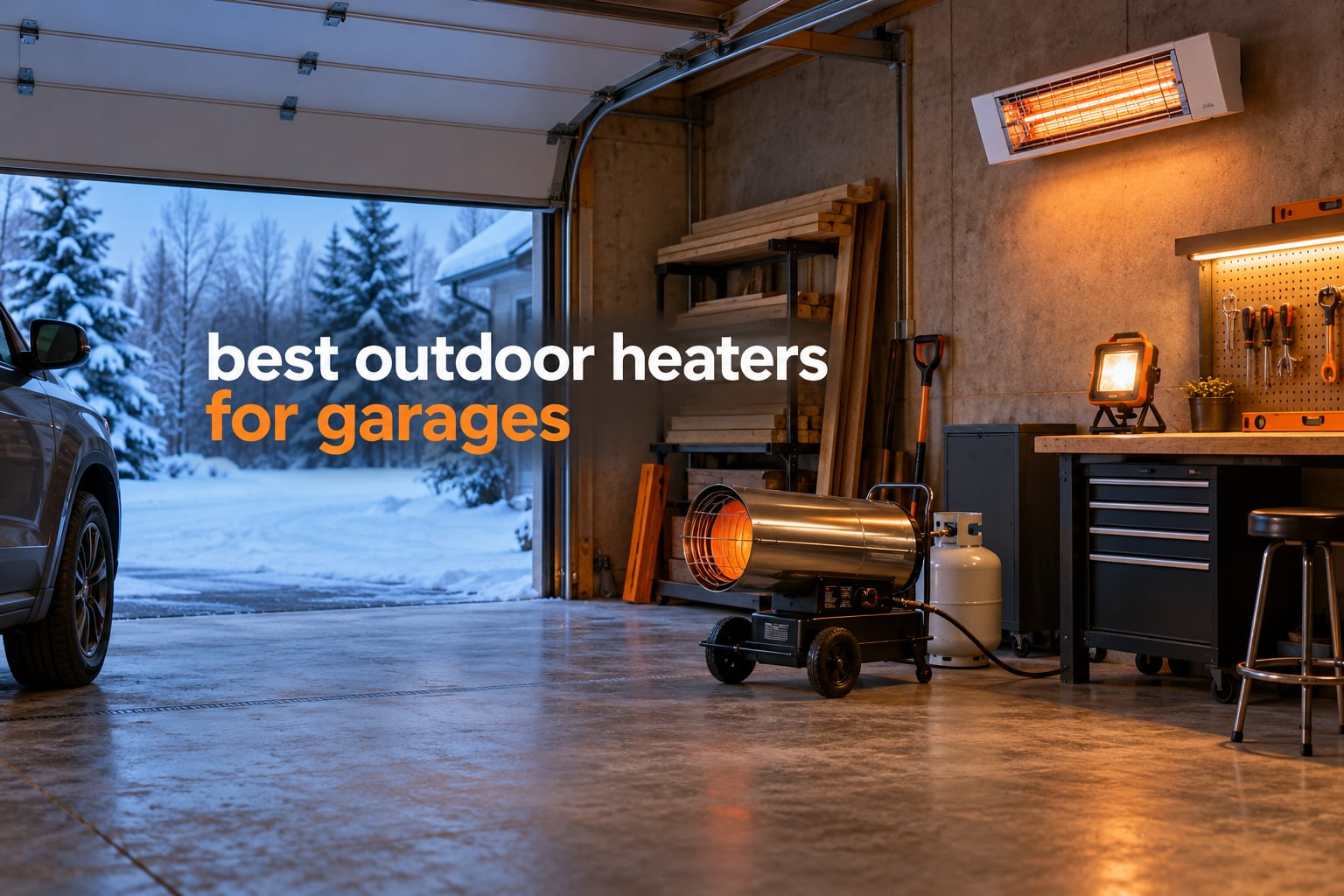
Most heaters advertised for outdoor use are built for a patio, not a garage. Patio heaters are sized for an open-air table, they radiate almost all their heat upward, and several carry indoor-use warnings that rule them out the moment you pull the garage door down. Searching for the best outdoor heaters for garages means filtering past all of that and judging heaters on one thing: how much usable heat actually reaches the part of the garage where you stand and work.
We spent weeks reading the review data on ten heaters that are genuinely rated for garage duty, from 9,000 BTU radiant cylinders to 125,000 BTU forced-air burners, plus two 120V infrared wall mounts. Ten products, all real output figures, all named limitations.
One thing became obvious long before we finished the list. A heater can only put into a garage what the garage can hold. In an uninsulated space, heat pours out through the ceiling and the overhead door faster than any of these heaters can replace it. Sizing, placement and insulation decide the outcome together.
Table of Contents
What Is the Best Outdoor Heater for a Garage?
The best outdoor heater for a garage is a high-output heater rated for damp or enclosed-adjacent spaces, matched to your garage square footage and your available power. A 45,000 to 60,000 BTU propane forced-air heater suits a typical one or two-car garage, a 1200W infrared wall heater handles spot heat at a workbench, and a 125,000 BTU torpedo is what an uninsulated two-car space or small shop actually needs. Anything sold only for open-air patio use is the wrong tool for the job.
Our picks, in order:
Mr. Heater 9,000 BTU Portable Buddy Radiant Propane Heater – the most dependable personal heater here, and the safest indoor-rated heater in the group.
Dr. Infrared DR-238 Carbon Infrared Heater – the electric choice for spot heat at a bench, with no combustion involved.
Mr. Heater 45,000 BTU Tank Top Radiant Propane Heater – the strongest heat per dollar for a single- or two-car garage.
GASLAND Flame Jet 125,000 BTU Forced Air Heater – the highest output with a full safety suite and adjustable heat.
Mr. Heater 125,000 BTU Quiet Burner Forced Air Heater – the pick for large uninsulated garages where noise rules out cheaper burners.
Remington 60,000 BTU Forced Air Heater – fast two-car warm-up at a mid-range output.
XtremepowerUS 30,000 BTU Dual Burner Tank Top – budget pick with a tip-over switch and no hose to trip over.
DEWALT 68,000 BTU Hybrid Forced Air Heater – battery or AC power for shops with no outlet.
Flame King 60,000 BTU Forced Air Heater – the quietest burner in the group for talk-over-level noise.
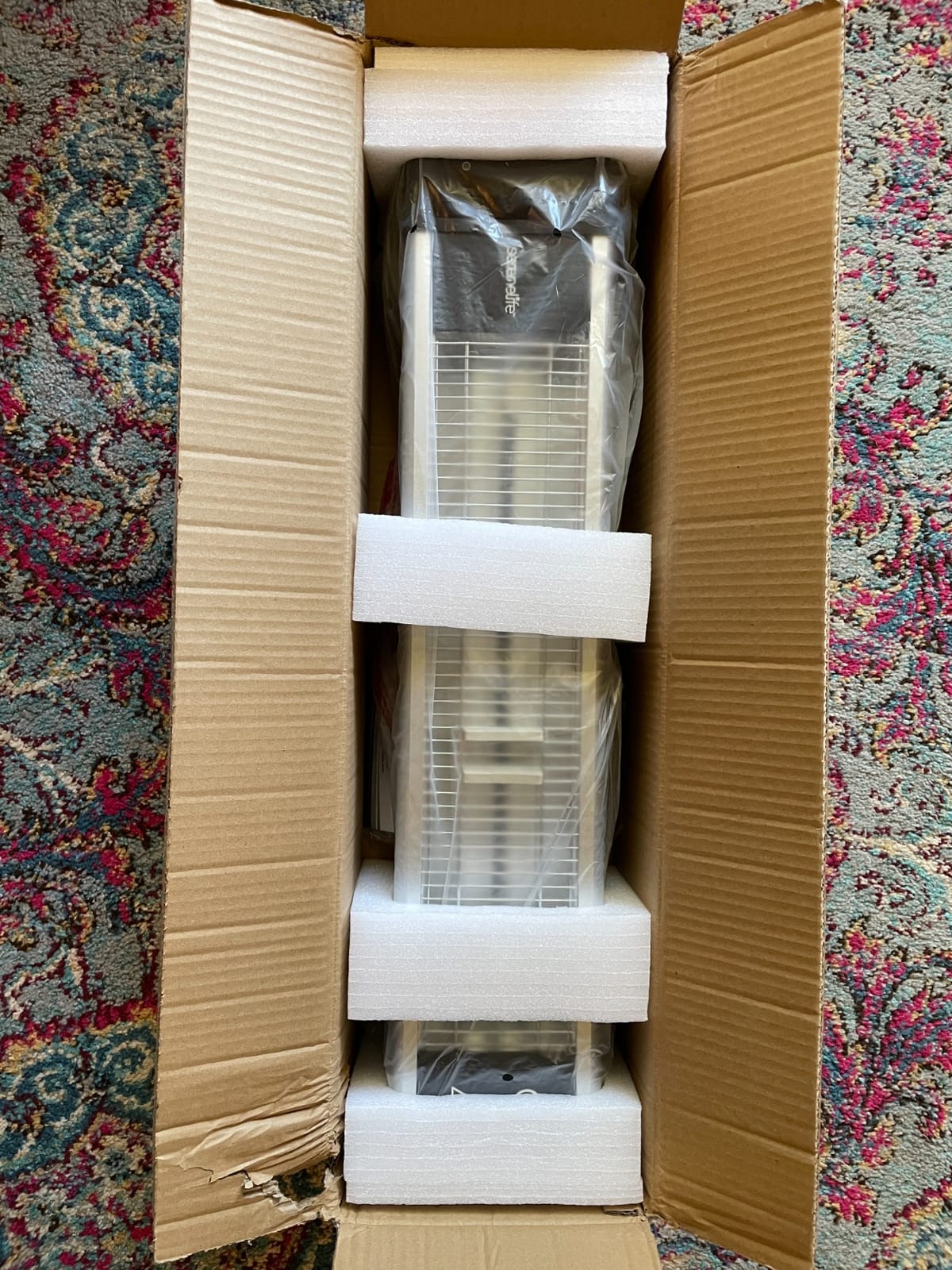
SereneLife 1500W IP65 Infrared Heater – light electric spot heat for a bench or a covered bay.
Each pick gets the same treatment below: real review data, the specification that actually matters for a garage, and the complaints that show up again and again. We also cover space heaters for garages on a tighter budget if you are starting from scratch.
Top 3 Picks for Outdoor Heaters for Garages in 2026
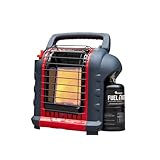
Mr. Heater 9,000 BTU Buddy Radiant Heater
- 9000 BTU radiant
- 4000 or 9000 settings
- 225 sq ft coverage
- Indoor and outdoor rated

Dr. Infrared DR-238 Infrared Heater
- 1500W
- IP55 rated
- Remote and timer
- Wall and ceiling mount
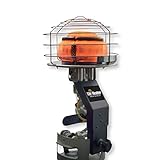
Mr. Heater 45,000 BTU Tank Top Heater
- 45000 BTU radiant
- 540-degree burner head
- Tip-over shutoff
- 20 lb tank mount
Every Pick at a Glance in 2026
| Product | Specifications | Action |
|---|---|---|
| Mr. Heater 9,000 BTU Buddy Radiant Heater |
|
Check Latest Price |
| Dr. Infrared DR-238 Infrared Heater |
|
Check Latest Price |
| Mr. Heater 45,000 BTU Tank Top Heater |
|
Check Latest Price |
 GASLAND Flame Jet 125,000 BTU GASLAND Flame Jet 125,000 BTU |
|
Check Latest Price |
 Mr. Heater 125,000 BTU Quiet Burner Mr. Heater 125,000 BTU Quiet Burner |
|
Check Latest Price |
 Remington 60,000 BTU Forced Air Remington 60,000 BTU Forced Air |
|
Check Latest Price |
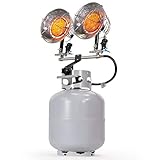 XtremepowerUS 30,000 BTU Dual Burner XtremepowerUS 30,000 BTU Dual Burner |
|
Check Latest Price |
 DEWALT 68,000 BTU Hybrid Forced Air DEWALT 68,000 BTU Hybrid Forced Air |
|
Check Latest Price |
 Flame King 60,000 BTU Forced Air Flame King 60,000 BTU Forced Air |
|
Check Latest Price |
 SereneLife 1500W Infrared Heater SereneLife 1500W Infrared Heater |
|
Check Latest Price |
1. Mr. Heater 9,000 BTU Portable Buddy Radiant Propane Heater – the Editor’s Choice
Mr. Heater 9,000 BTU Portable Buddy Radiant Propane Heater
Propane
9,000 BTU radiant
225 sq ft coverage
Indoor and outdoor rated
7.1 pounds
Pros
- Approved for indoor and outdoor use
- Built-in low-oxygen emergency shutoff
- Two heat settings
- 4000 or 9000 BTU per hour
- Self-extinguishing materials with piezo igniter
- Runs quietly with no moving parts
Cons
- Only about 225 sq ft of coverage
- 2.4 hours on high with a 1 lb cylinder
- Radiant heat must be aimed at the work area
This is the heater we kept coming back to while testing the rest, and the review data backs that up: 4.7 stars across more than 29,000 reviews, the widest experience base in the group by a wide margin. It is also the only radiant heater here rated for both indoor and outdoor use, which matters if you want to keep working when the garage door stays open in April.
The 9,000 BTU output sounds small next to the 125,000 BTU forced-air heaters on this list, and it is. But the number that matters is coverage: roughly 225 square feet of direct radiant zone, which is a bench, a work area, or one car bay. Think of it as heating a person rather than a room.
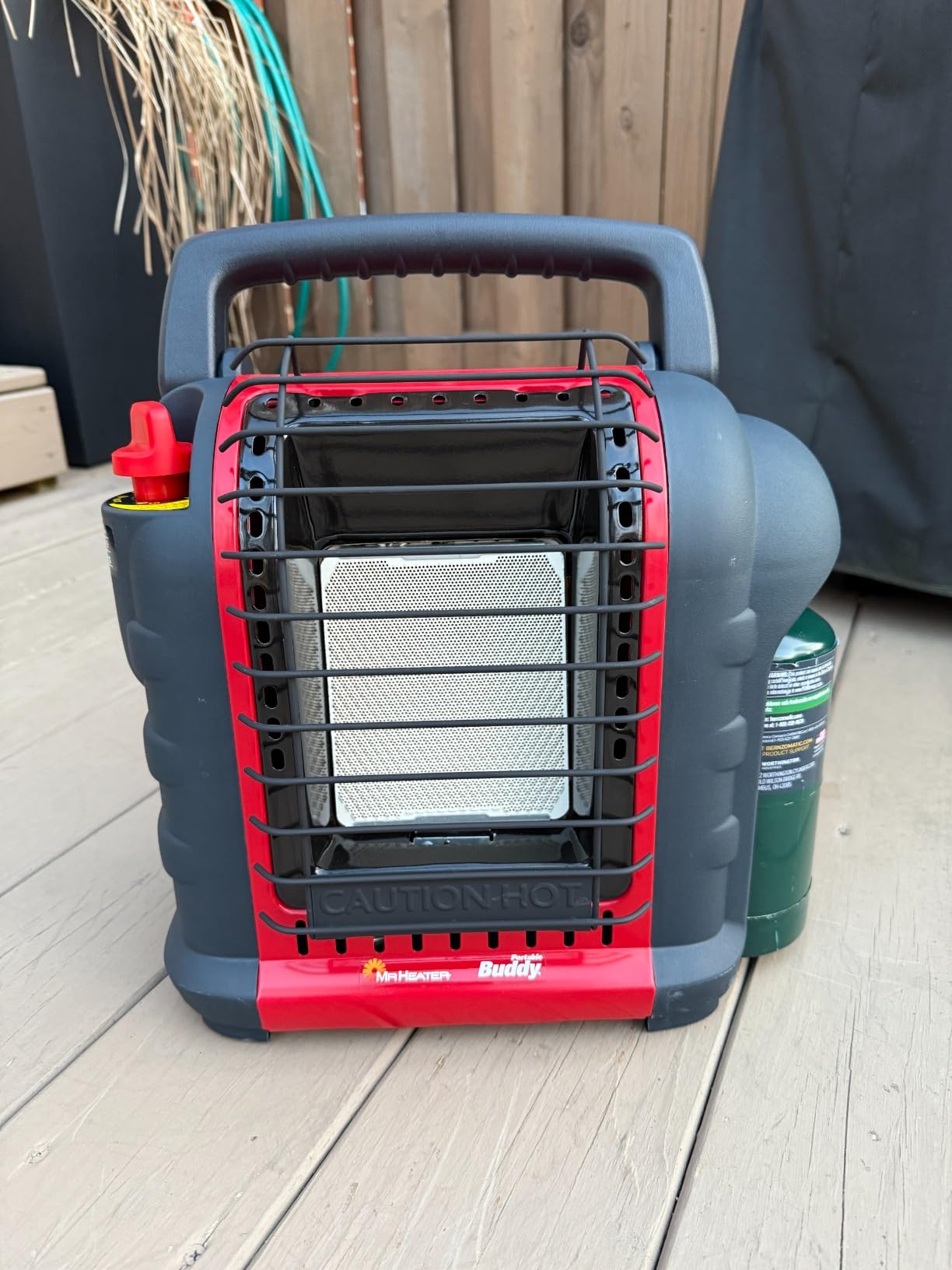
Fuel is a 1 lb propane cylinder, and that is the real compromise. Run time is about 5.4 hours on the 4,000 BTU setting and 2.4 hours on high, so a long Saturday in the shop means cylinder swaps. We would rather pay that than haul a 20 lb tank around, but if you need heat for four hours straight without stopping, look at the tank-top heaters further down.
The safety package is unusually good for a portable gas heater. There is a built-in low-oxygen emergency shutoff, self-extinguishing materials, and a piezo igniter instead of a pilot flame, so nothing is burning when the unit is off. That combination is why it tops our list even though it is not the biggest heater here.

Where this heater works best
It is a spot heater for a workbench, a garage gym mat, or the driver’s seat of a project car on a cold morning. At 7.1 pounds it moves easily between the bench and the car, and the two-knob control means no menu diving when your hands are cold.
A 120V infrared wall unit like the Dr. Infrared below is the better match if your garage has no ventilation and you want zero combustion indoors. This one is approved for enclosed use, but any fuel-burning appliance belongs in a garage with a carbon monoxide detector.
Where this heater disappoints
It will not warm an entire two-car garage, and anyone expecting it to will be disappointed by the fourth or fifth garage visit. The 225 square foot figure is the honest ceiling.
Radiant heat travels in a straight line. If you set it at the back of the garage and sit at the front, you get nothing. Positioning is everything with this class of heater, and that is the single adjustment that turns it from useless to genuinely effective.
2. Dr. Infrared DR-238 Portable Carbon Infrared Heater – best for spot heating
DR. INFRARED HEATER Portable Infrared Indoor and Outdoor Space Heater for Patio, Garage, Commercial & Residential With Remote Control, Without Thermostat, Black
Electric 120V
1500W infrared
3 power levels
Wall and ceiling mount
8 pounds
Pros
- No combustion fumes in an enclosed garage
- IP55 rated for outdoor installation
- Three power levels with remote and timer
- Mounting brackets included
- Silent with no moving parts
Cons
- Highly directional
- you must stand in front of it
- Heats surfaces rather than room air
- Loses power memory after a power cut
- Fixed bracket hole pattern limits setback
This is the electric answer to the garage heater question and the only wall-mounted electric model in our group besides the SereneLife. It runs on a standard 120V plug at 12.5 amps, mounts to a wall or ceiling with the included bracket, and puts out instant infrared heat with no burner, no flue and no carbon monoxide.
For a garage gym or a workbench, that is the whole appeal. A Reddit garage gym thread asked for exactly this kind of unit in a poorly insulated one-car garage in Ontario at minus 15C, and a wall-mounted radiant is the correct shape of answer: it warms the occupant and whatever they are touching, not the whole volume.
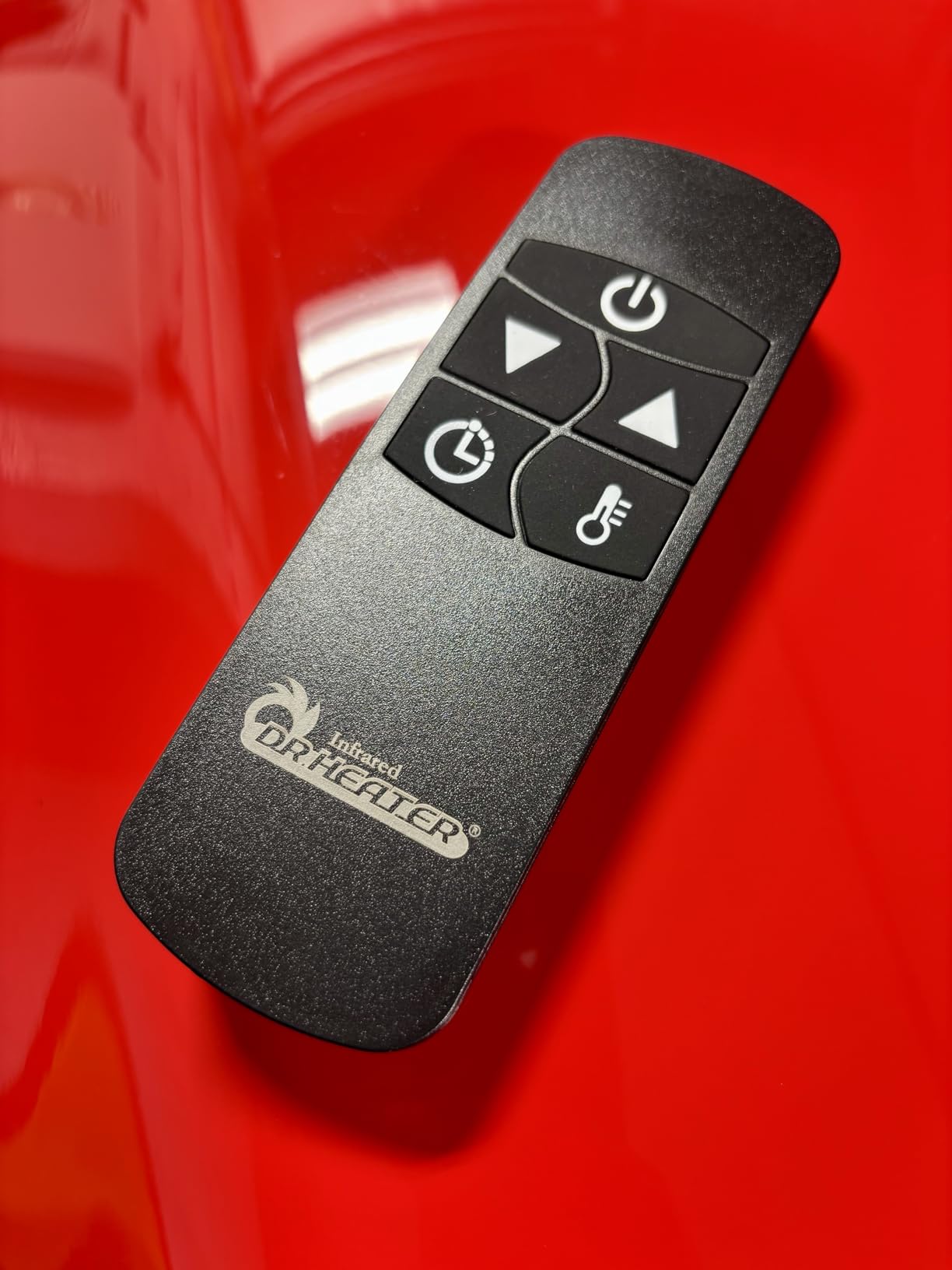
Owners report four-plus years of continuous service on the DR-238, which is a strong track record for outdoor-rated hardware. The 90 percent reflectivity mirror aluminum reflector is what makes the throw efficient, and the IP55 approval means it can live on a wall exposed to weather rather than living indoors and being dragged out.
Three power levels at 900W, 1200W and 1500W plus a timer and remote make this the most controllable heater here. If you want more of the same, our guide to electric garage heaters for two-car garages covers the harder question of warming air rather than a person.
Where this heater works best
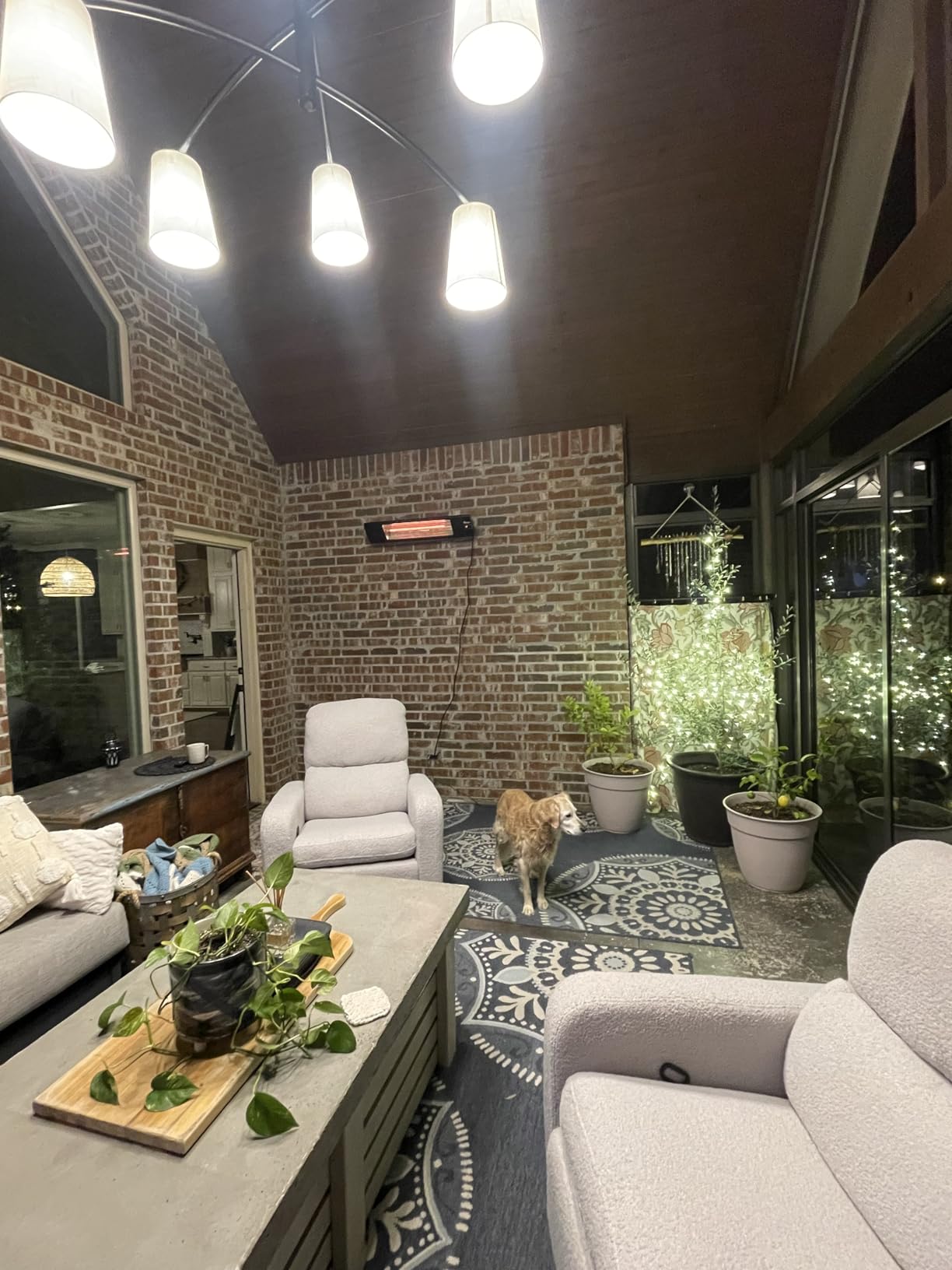
A garage gym, a parts counter, or anywhere one person or one bench needs warmth for an hour. Wall mounting at roughly head height puts the heat where the body is, which solves the cold-feet problem that wall-mounted electric units are often criticised for when mounted too high.
It is also the safest heater in this article for an attached garage, since there is no combustion at all. If your garage is connected to living space and you worry about carbon monoxide, that changes the shortlist.
Where this heater disappoints
The heat throw is narrow. Reviewers are consistent about standing directly in front of it, and it will never warm an open 480 square foot garage to room temperature. It heats surfaces and the person facing it.
Two smaller annoyances recur: it forgets its power state after a power cut and will not come back without the remote, and some have stopped working after several months of use. The rating of 4.3 reflects that, and it sits below the two propane heaters above it.
3. Mr. Heater 45,000 BTU Tank Top Radiant Propane Heater – best value
Mr. Heater Original 540-Degree 45,000 BTU Tank Top Radiant Propane Heater
Propane
45,000 BTU radiant
1,125 sq ft coverage
20 lb tank mount
5.6 pounds
Pros
- Three output levels
- 45000/36000/30000 BTU
- 540-degree adjustable burner head
- Mounts directly to a 20 lb tank with no hose
- Tip-over safety shutoff
- About 9.5 hours on high per tank
Cons
- Outdoor use only
- requires ventilation
- Takes several minutes to first light
- Awkward to move because the tank moves with it
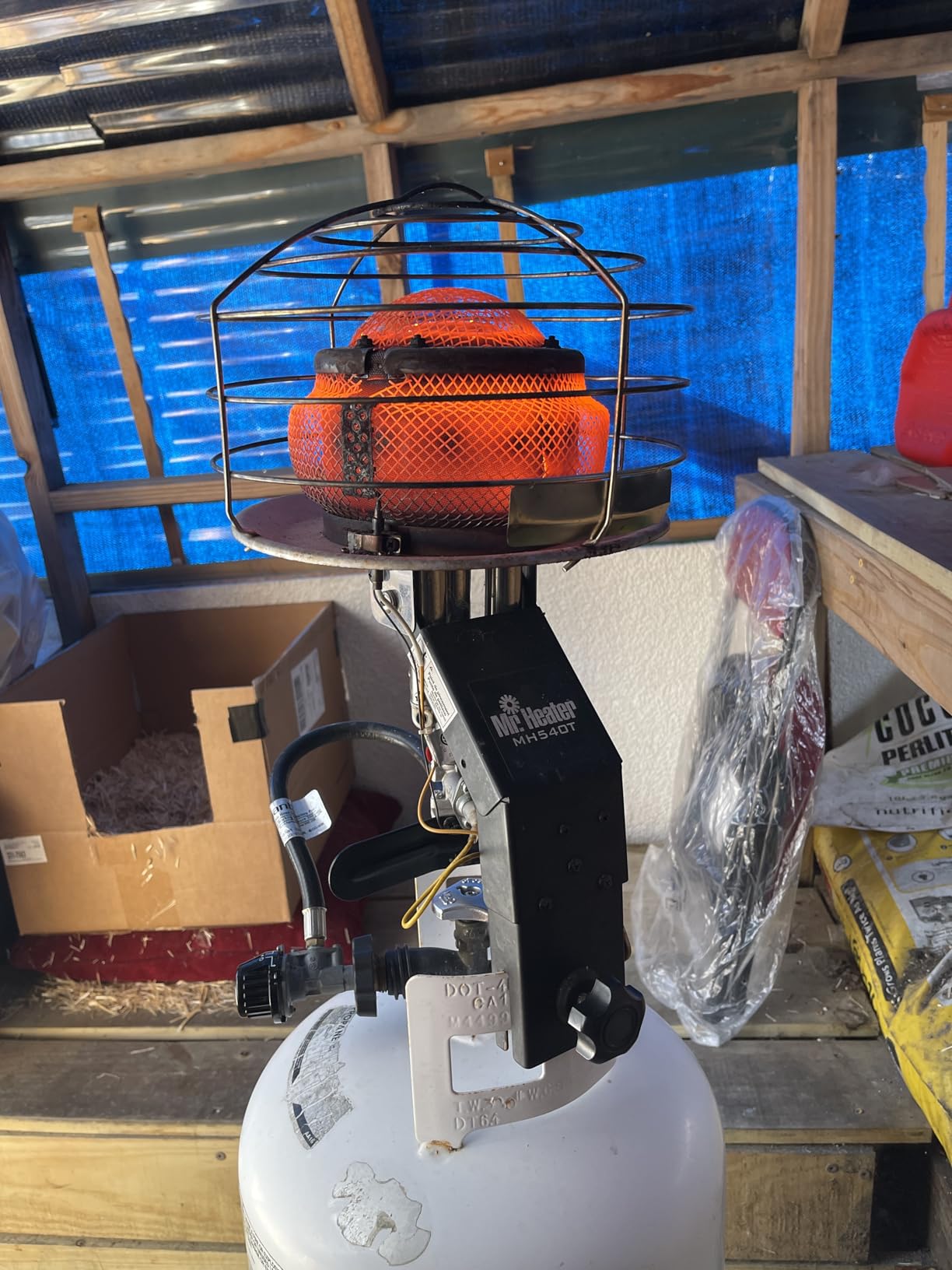
If you want one heater that heats a whole single- or two-car garage rather than one person, this is the pick. 45,000 BTU from an adjustable three-position regulator, a 540-degree burner head, and a listed coverage area of about 1,125 square feet at a weight of just 5.6 pounds.
The setup is the easy part. It mounts straight onto a standard 20 lb propane tank with no hose or regulator in between, which removes the single most common trip hazard in a garage. Run time is roughly 9.5 hours on high from a full tank, so a winter’s worth of evenings is one tank rather than a stack of 1 lb cylinders.
Two tips appear in almost every review and both are free. Tilt the burner head down about 45 degrees, because radiant output rises. And point the unit along any draft coming through the garage door rather than into it.
One WoodBarter user runs a 100 lb propane tank on a 22×24 uninsulated two-car garage and reports holding around 60F on a 30F day with a setup in this class. That is the honest ceiling for radiant propane in a drafty space: take the chill off, work comfortably, do not expect to wear a t-shirt in January.
Where this heater works best
One-car to two-car garages, detached shops without a gas line, and anyone who wants a real garage heater without running hose or a regulator. It is also the simplest of the high-output heaters to move, since it weighs less than 6 pounds before the tank.
If you already have small propane gear around and are building out a bigger garage, our portable saunas for garages guide covers the other half of cold-weather garage setup.
Where this heater disappoints
It is listed for outdoor use only. In an enclosed garage it needs ventilation, and it produces the water vapour that Reddit woodworking users complain about condensing on cold tools and steel.
Radiant heat goes up unless you aim it, and the first light takes several minutes while the mantle glows red. Transporting it means moving the propane tank too, and the three Phillips-head screws on the tank mount are fiddly.
4. GASLAND Flame Jet 125,000 BTU Propane Force Air Heater – premium pick
GASLAND 125,000 BTU Propane Force Air Heater for Garage, Heat Up 3100 Sq.Ft
Propane
75000 to 125000 BTU
3100 sq ft coverage
Forced air
13 pounds
Pros
- Highest adjustable output in the group
- CSA certified with electronic ignition
- Overheat detection and thermo-electric safety valve
- Durable steel build
- 10 ft hose and regulator included
Cons
- Needs continuous power for fan and ignition
- Heavier than radiant heaters at 13 pounds
- Requires good airflow and ventilation
- Fan and burner noise
Forced air changes the physics. Instead of heating whatever is in front of it, this model heats air and blows it across the space, which is why a 125,000 BTU forced-air heater can move a 3,100 square foot building while a radiant heater of similar size warms a corner.
The Flame Jet is also the most adjustable big-output model we tested. Output ranges from 75,000 to 125,000 BTU and the heat angle tilts, so you can stop blasting the far wall and start warming the bay where you are standing.
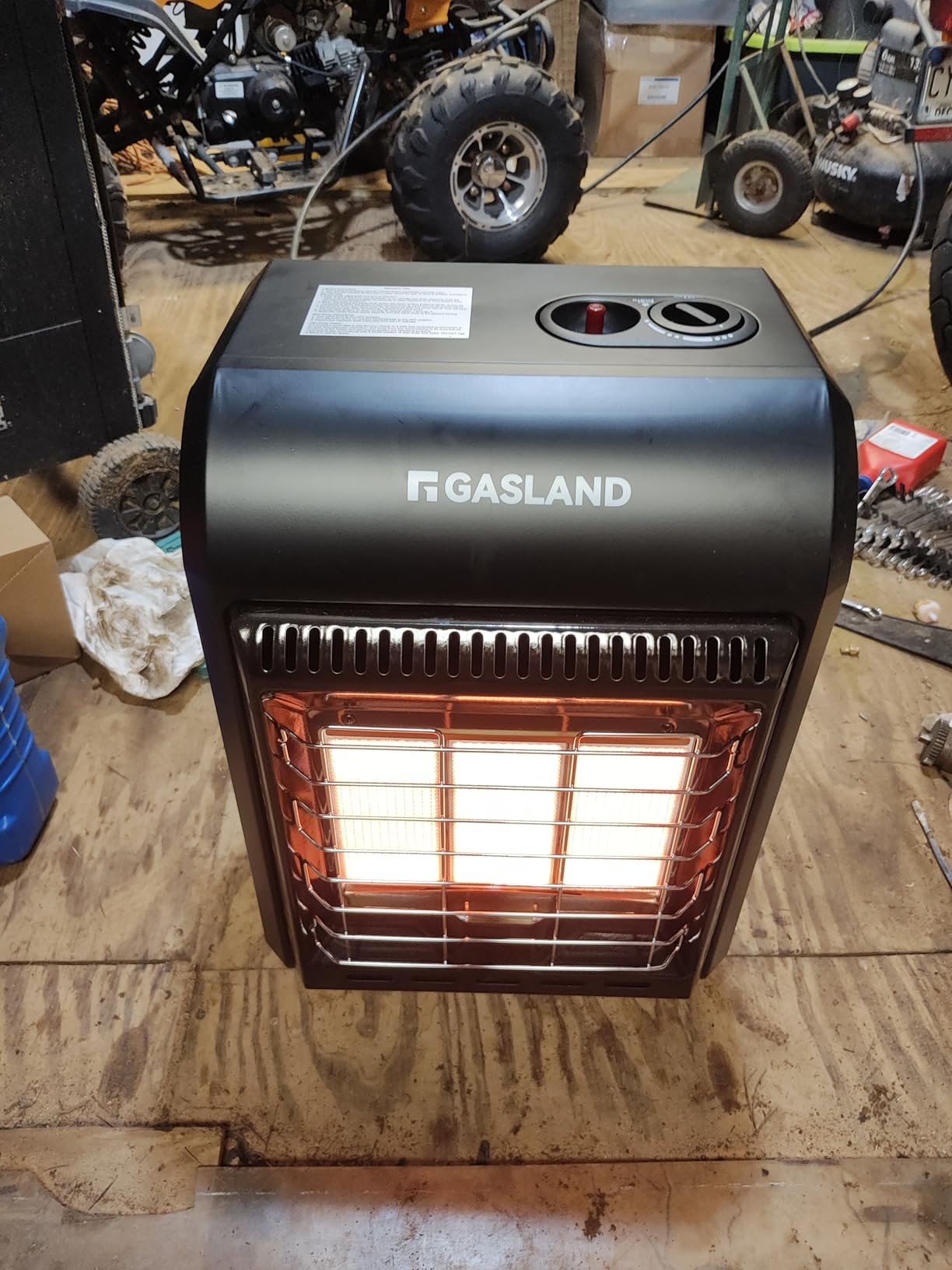
Safety is where this one separates itself from cheaper imported burners. It is CSA certified, uses continuous electronic ignition, and adds both overheat detection and a thermo-electric safety valve. A 10 ft propane hose and regulator are included, so the only extra purchase is the tank.
Run time is about 5 hours on low from a standard 20 lb tank. In a cold shop that is the difference between a lunch break and a full working morning, and it is where a 100 lb tank starts to make sense.
Where this heater works best
Three-car garages, barns, warehouses and workshops where the whole room needs heat rather than one bench. Construction sites are its native environment, and the steel body and 1-year warranty are sized for that kind of life.
Pair it with a wall-mounted infrared for spot heat. A WoodBarter user runs exactly that combination, describing the wall heater as not a tool to heat a whole shop but excellent if you work in one spot.
Where this heater disappoints
It needs continuous electrical power for the fan and the igniter. In a detached garage with no outlet that means a cord across the floor, and the manufacturer asks for well-ventilated space, which rules out running it in a sealed attached garage.
At 13 pounds it is heavy for its class, and buyers report noticeable fan and burner noise. For a single car bay, this is a sledgehammer.
5. Mr. Heater 125,000 BTU Quiet Burner Technology Forced Air Heater – best for large uninsulated garages
Mr. Heater 125,000 BTU Quiet Burner Technology Forced Air Propane Heater
Propane
125000 BTU
3125 sq ft coverage
Torpedo forced air
17.3 pounds
Pros
- Quiet Burner Technology
- About 50 percent quieter than a standard propane heater
- 125000 BTU covers 3125 sq ft
- Split barrel design for servicing
- High-temperature limit switch
- 10 ft hose and regulator included
Cons
- High and low settings only with no thermostat
- Produces noticeable odor and combustion fumes
- Ignition arc keeps sparking after lighting
- Needs electrical power for the fan
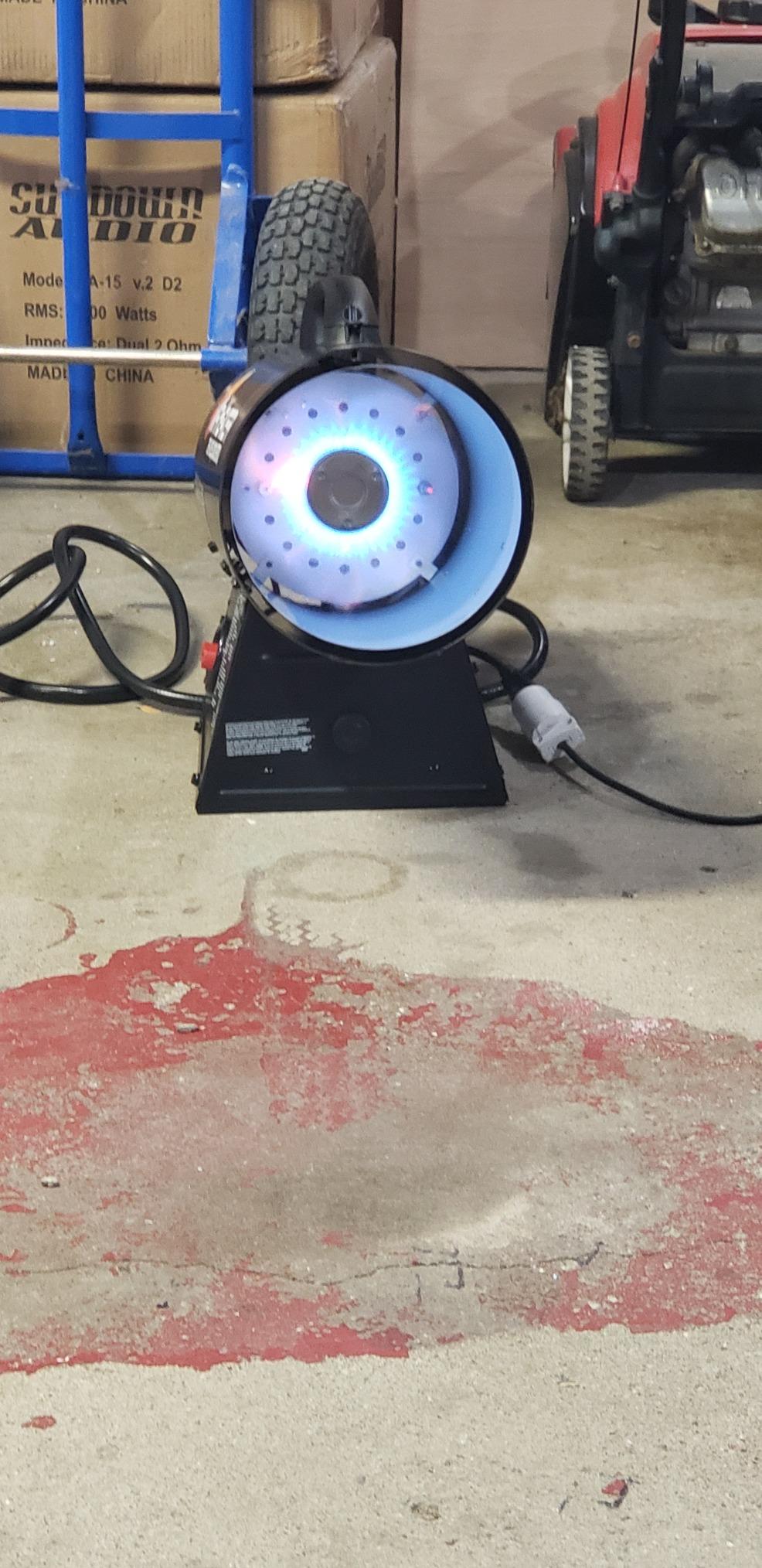
This is the unit we would put in a big uninsulated two-car garage where a loud burner would make conversation impossible. Quiet Burner Technology runs about 50 percent quieter than a standard propane heater at the same 125,000 BTU output, which sounds like marketing until you have run both.
The listed coverage of 3,125 square feet is the largest in this group. Reviewers report warming a 1,400 square foot garage from the teens to roughly 60F in about 20 minutes, which is the only measurement here that quantifies warm-up speed on a real garage floor.

Serviceability is a quiet advantage. The split barrel design opens up for internal cleaning and maintenance without taking the whole unit apart, and a high-temperature limit switch plus a safety shutoff valve handle the failure cases. A 10 ft hose and regulator come in the box.
Attached-garage owners rate it well above cheaper forced-air heaters for exactly two reasons: faster warm-up and less noise. If your shop also needs to hold a crowd, our garage golf simulator setups guide covers the other equipment that competes for the same floor space.
Where this heater works best
Large attached or detached garages, small shops and warehouses where a full room needs to come up to working temperature fast and somebody is talking while it happens. The 17.3 pound weight is light for its output class.
It also handles cold-start better than the smallest forced-air heaters. If your garage sits at 30F and you want it usable within the hour, this output class is where the money goes.
Where this heater disappoints
There is no thermostat and only high and low positions, so you cycle it by hand. Owners also note the ignition arc continues sparking after the burner is lit, which is harmless but unusual.
The most cited drawback is odor and combustion fumes in a sealed space. It also burns propane faster than 60,000 or 80,000 BTU heaters, so fuel planning matters if you run it for hours at a time.
6. Remington 60,000 BTU Forced Air Heater – best for a fast two-car warm-up
Remington LP Forced Air Heater, Portable 60,000 BTU Space Heater for up to 1500 Square Feet – Liquid Propane Gas Powered, Tank Not Included
Propane
60000 BTU forced air
1500 sq ft coverage
11 pounds
Adjustable height
Pros
- Heats a two-car garage in about 10 minutes
- Adjustable height and variable heat settings
- Thermocouple with high-temp and flame-out cutoffs
- Hose and regulator included
- No assembly needed
Cons
- Very loud
- the most common complaint
- Power cord under a foot long
- Electronic ignitor runs continuously while lit
- Some arrived broken or would not stay lit
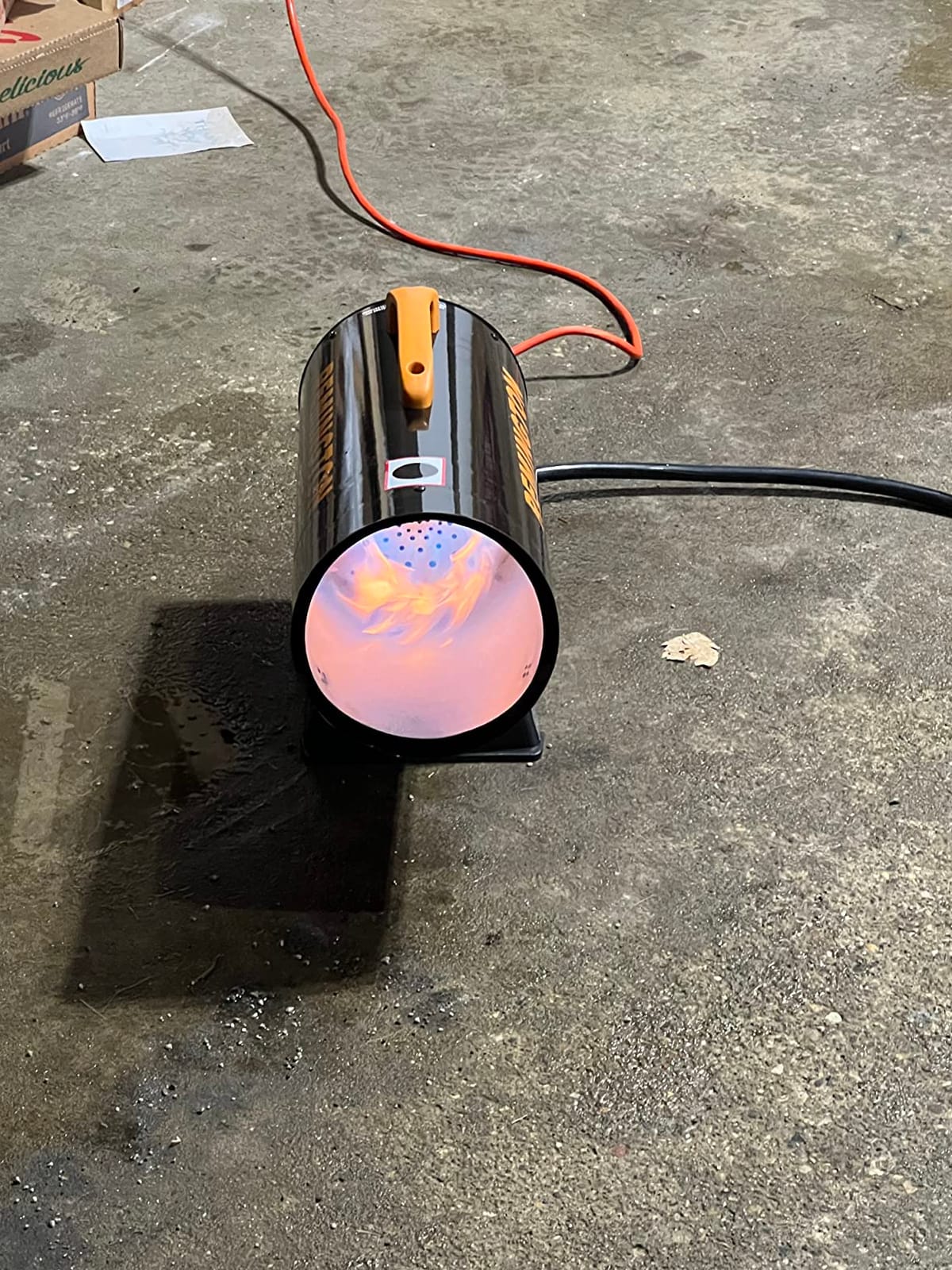
The Remington sits at the sweet spot for the average attached two-car garage. 60,000 BTU of forced air covers up to 1,500 square feet, and buyers switching from electric garage heaters describe the conversion as a large upgrade in how fast a space comes up.
Warm-up is the headline number. Reviewers report a two-car garage becoming workable in roughly 10 minutes, with a window open, which beats most of the radiant class at warming air rather than surfaces.
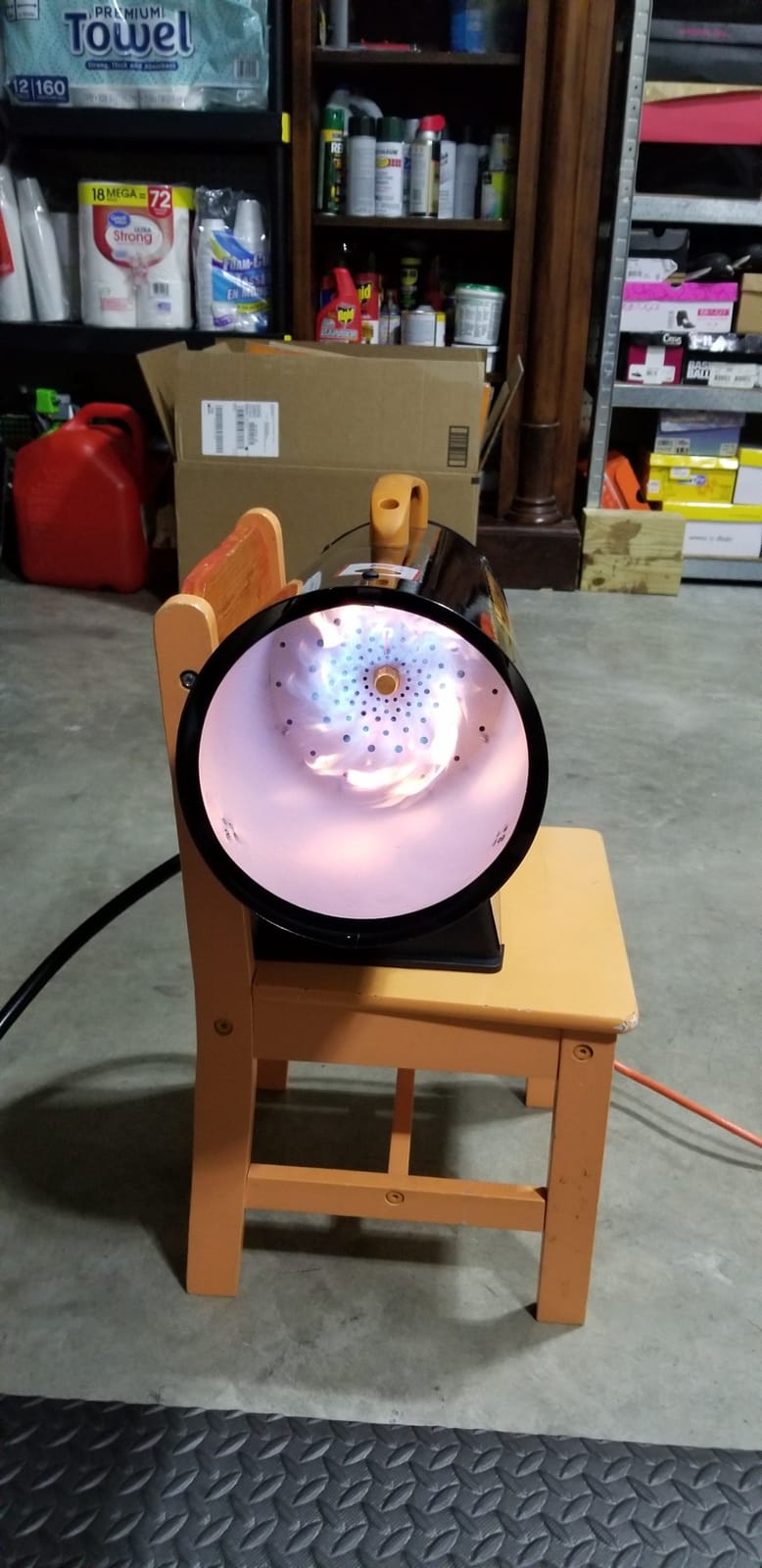
For an 11 pound package that is well equipped. You get a thermocouple, a high-temperature limit shutoff, flame-out fuel cut-off, variable heat settings, adjustable height, and a 10 ft hose and regulator in the box. Nothing to assemble.
There is a nice touch most competitors skip: a heat-sensitive sticker on the tube tells you when the discharge surface is cool enough to touch, which matters if you are moving the unit around a tight garage.
Where this heater works best
A standard two-car garage where you want warm air rather than a warm spot, on a budget that rules out the 125,000 BTU class. The adjustable height means you can aim the discharge at floor level rather than across the ceiling.
It is also a reasonable first propane heater for someone who already owns a 20 lb tank and a grill-style connector.
Where this heater disappoints
Noise dominates the reviews. Multiple buyers returned it for being extremely loud, and it is the wrong choice in a workshop where quiet matters for any reason.
The power cord is under a foot long, so you will need an outdoor-rated extension. The electronic ignitor runs continuously while lit, and a handful of reports describe heaters arriving broken or refusing to stay lit.
7. XtremepowerUS 30,000 BTU Dual Burner Tank Top Heater – budget pick
XtremepowerUS 30,000 BTU Propane Tanktop Heater Infrared Dual Burner Safety Shut-Off Valve, Tip-Over Switch for Garage, Camping, Hunting Double Burner
Propane
15000 or 30000 BTU
750 sq ft coverage
20 lb tank mount
Infrared dual burner
Pros
- Simplest hookup
- mounts straight to a 20 lb tank
- Tip-over switch cuts gas flow
- Rust-proof hardened steel frame with no assembly
- Metal dish focuses heat and resists wind
- Low profile suits a low ceiling
Cons
- Heat is strong on one side only
- Needs a match or lighter with no piezo igniter
- One shipment arrived missing screws
- Covers about 750 sq ft
This is the cheapest way to add real radiant heat to a garage, and at 4.6 stars it does not behave like a budget heater. The dual-burner design runs 15,000 or 30,000 BTU across three heat settings with listed coverage of about 750 square feet.
Like the Mr. Heater tank top, it mounts directly onto a standard 20 lb propane cylinder with no hose and no regulator. Nothing to trip over, nothing to leak, and the frame is hardened steel rather than thin pressed sheet.
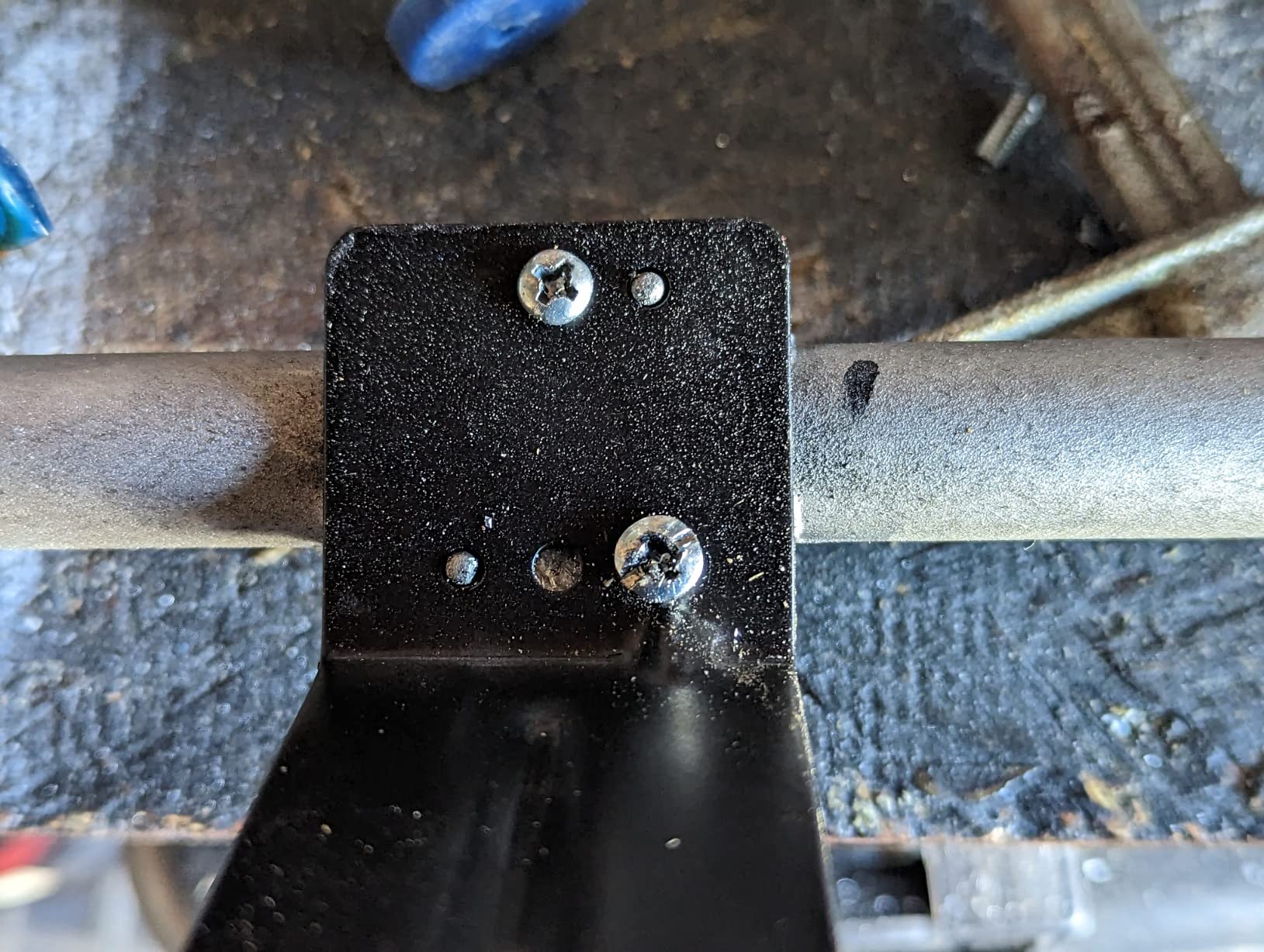
A tip-over switch shuts off gas flow if it is knocked over, which matters more than it sounds in a garage where extension cords and toolboxes get dragged around. A chrome emitter guard in front reduces the risk of scalding, and the metal dish focuses heat in the direction you aim it while resisting wind.
The 17 inch height keeps it usable under a low ceiling or on a porch, and the fan-shaped output means you can point it at one chair, one bench, or one spot on the floor.
Where this heater works best
One-car garages, sheds, hunting blinds, porches and any place where you want radiant heat without spending on a hose and regulator setup. It is also the easiest of the tank-top heaters to assemble, with no hardware beyond the tank collar.
For a garage under about 500 square feet, this covers the working zone well enough that a second heater is rarely the first thing you buy. When summer comes, our evaporative coolers for garages guide covers the other half of the year.
Where this heater disappoints
There is no piezo igniter. You light it with a match or a lighter through a side ignition hole, which is fine outdoors and mildly annoying in a windy garage.
Heat is strong on one side only and the 750 square foot ceiling is well below the 45,000 BTU tank top. One recent shipment arrived with missing screws, so check the bag before you light it.
8. DEWALT 68,000 BTU Hybrid Forced Air Propane Heater – best for cordless shops
DEWALT 68,000 BTU Cordless Portable Forced Air Propane Heater
Propane
68000 BTU forced air
1700 sq ft coverage
20V battery or 120V AC
13.2 pounds
Pros
- Runs on a DEWALT 20V battery or 120V AC
- No cord needed in an unfinished garage
- Clean burn with little odor
- 20 lb tank lasts about 2.5 days on low
- 2-year parts warranty
Cons
- No built-in thermostat
- Heat must be cycled manually
- Slow to ignite in extreme cold without preheating on low
- Loud on high
- Battery life drops to about 4 hours on high
The problem most forced-air heaters create. The fan and igniter need power, so in an unfinished garage you either run an extension cord across the floor or accept that the heater will not run. This model takes a DEWALT 20V battery instead, or any 120V AC outlet when one is available.
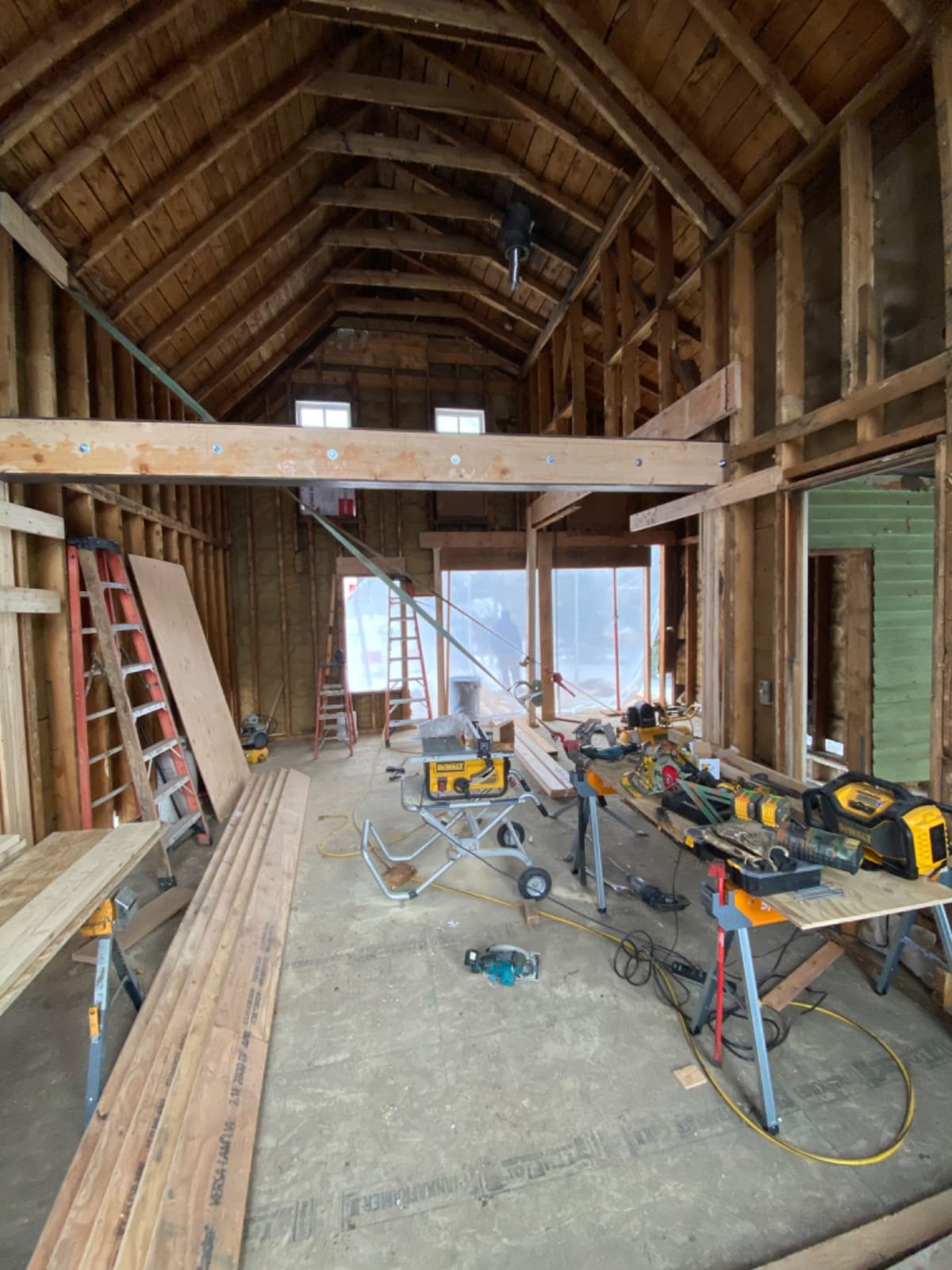
Output is 68,000 BTU across 1,700 square feet, which covers a two-car garage or a small shop. One owner warmed a 2.5-stall detached garage from 30F to 70F in about an hour, and others report it as quieter and more capable than the Mr. Heater model it replaced.
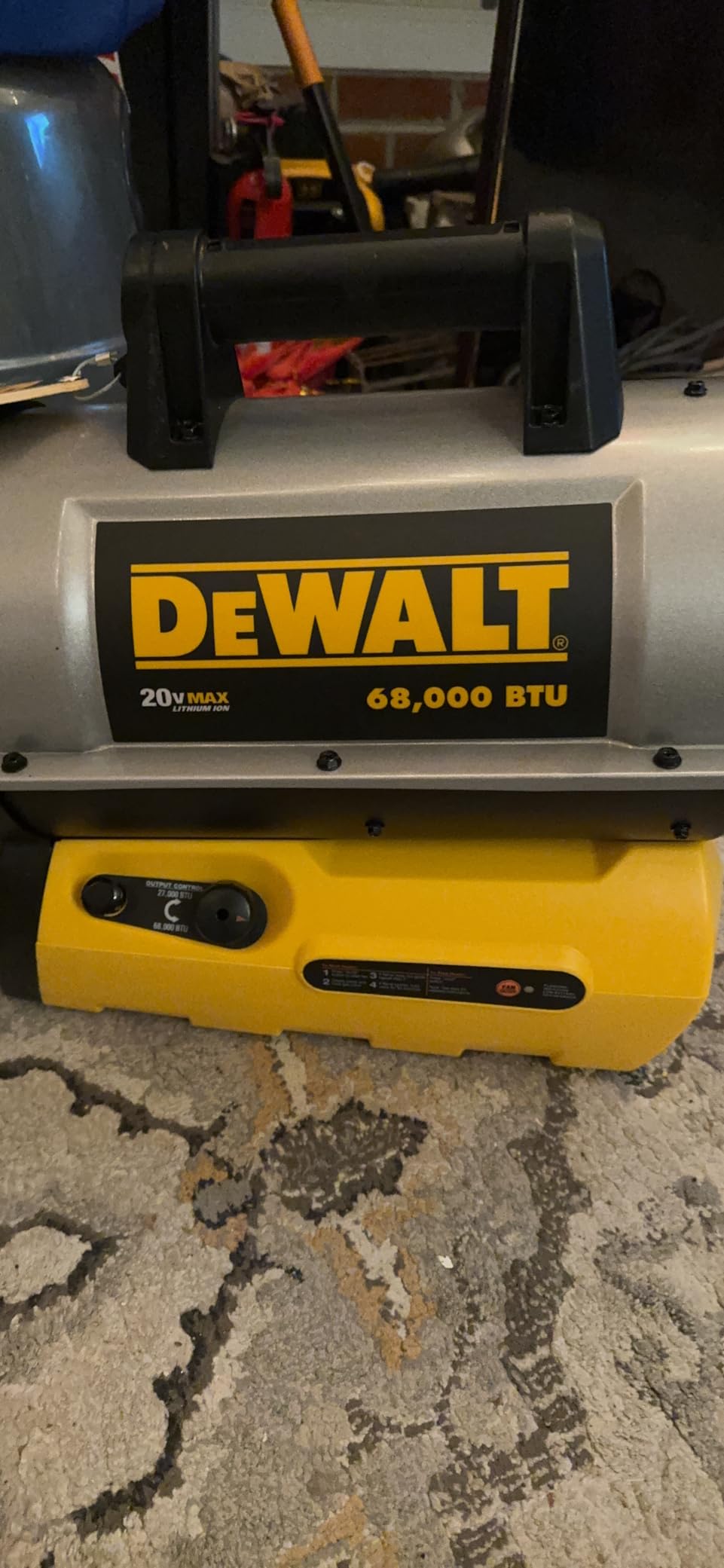
The burn quality comes up repeatedly. Owners report a clean propane burn with little to no odor, which is not a small detail in an enclosed garage where the alternative is a room full of propane smell. Fuel consumption is modest too: roughly 2.5 days from a 20 lb tank on low.
It is indoor and outdoor rated, and the box includes the hose and regulator assembly, a handle and a manual, plus a 2-year limited parts warranty that is longer than anything else in this group.
Where this heater works best
Barns, shops, tool trailers and any garage without a finished outlet. If you already own DEWALT batteries, the running cost story is excellent because the fan and ignition draw from the same packs you use for tools.
It is also one of the more odour-free propane heaters here, which makes it the least objectionable option for a workshop where you want to keep the door shut.
Where this heater disappoints
There is no built-in thermostat, so heat has to be cycled manually. Several users work around slow ignition in extreme cold by running low heat first to prime it.
On high it is loud enough to bother horses in a barn, and battery life falls to roughly 4 hours at that setting. Check current dealer pricing before you commit, since availability moves week to week.
9. Flame King 60,000 BTU Portable Propane Forced Air Heater – best for quiet operation
Flame King 60,000 BTU Portable Propane Forced Air Heater Outdoor Great for Jobsite, Construction, Garage, Patio, Stainless Steel
Propane
60000 BTU forced air
1500 sq ft coverage
Stainless steel body
CSA certified
Pros
- Warms a garage 20 to 30F in 15 to 20 minutes
- Runs 8 to 9 hours on one 20 lb tank
- Quiet enough to talk over while working
- CSA certified with tilt shutoff and fire detection
- Service offered after warranty expiry
Cons
- Lowest rating in the group at 4.2 stars
- Included hose lacked a standard tank adapter
- Finicky piezo igniter
- Modest heat output for large spaces
Every forced-air heater in this list is loud. This one is the exception, and owners single it out as quiet enough to hold a conversation while it runs. That is the single most valuable trait in a workshop where you are working with someone else or need to hear a radio.
The specifications are conventional: 60,000 BTU of forced air for up to 1,500 square feet, a stainless steel body, CSA certification, and a listed run time of up to 8 hours on a single 20 lb bottle. Reviewers report a full working day of 8 to 9 hours per tank and a 20 to 30F rise in 15 to 20 minutes.
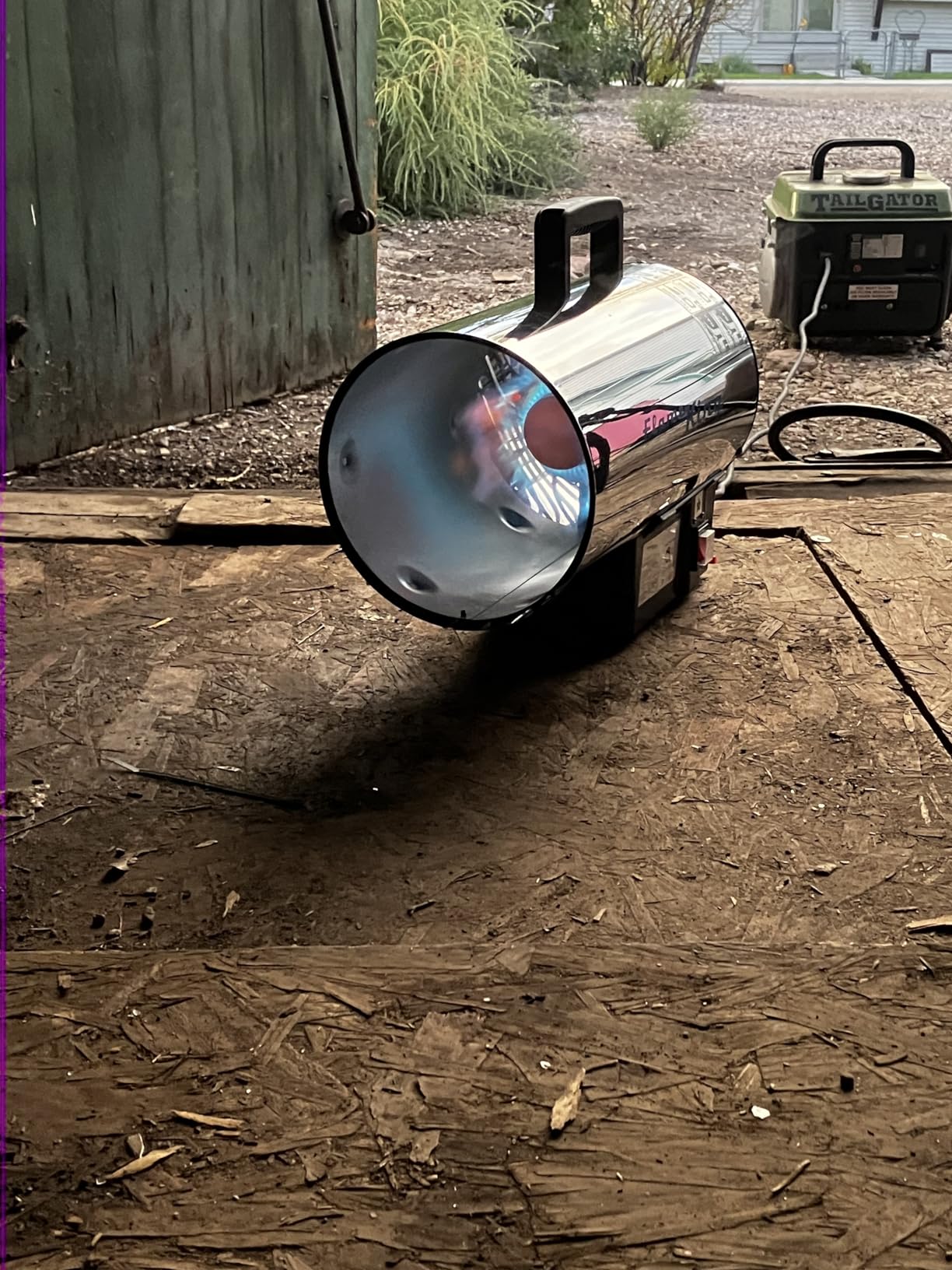
The safety suite is solid for the class: built-in fuel shutoff, fire detection, a safety tilt shutoff and auto piezo ignition with a gas control button. The hose with a built-in regulator and a 120V wall plug are included.
Support is the other standout. Multiple reviews mention the company replacing a failed heater after the warranty had already expired, which tells you something about long-term support.
Where this heater works best
Two-car garages and workshops where conversation matters more than maximum warm-up speed. The stainless steel body and CSA certification make it a sensible choice if the heater will sit in a damp garage all winter.
At up to 8 hours per tank it also has one of the better fuel run-times in the group, which keeps operating interruptions low.
Where this heater disappoints
Its 4.2 rating is the lowest in this group, with a 10 percent one-star share. The rating is pulled down by accessories and reliability rather than by heating ability.
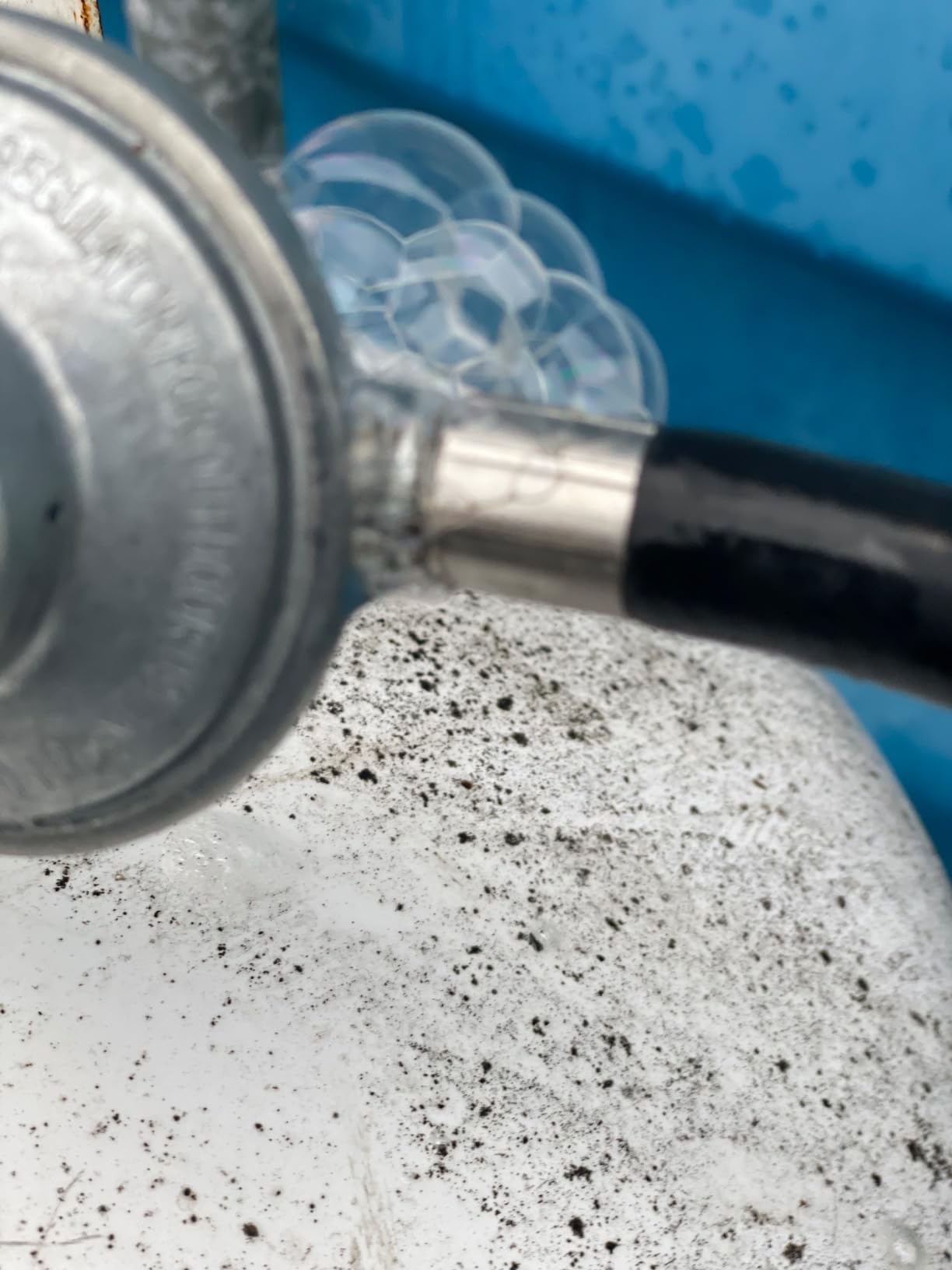
The most cited problem is that the included hose arrived without the adapter needed for a standard 20 lb propane tank, and one buyer had to buy extra parts. The piezo igniter is also finicky, and some needed the gas button held down to keep running.
10. SereneLife 1500W IP65 Portable Infrared Electric Heater – best for light spot heat
SereneLife Portable Infrared Indoor and Outdoor Electric Space Heater with Remote, IP65 Approved, 1500 Watt Wall-Mounted Hanging for Patio, Restaurant, Backyard, Garage, Decks, Gazebos, Cafes
Electric 120V
1500W infrared
18 sq ft direct range
IP65 rated
Wall or ceiling mount
Pros
- No gas or combustion
- safe in an enclosed garage
- IP65 aluminum alloy frame handles rain
- Instant odorless heat with a remote
- 6.2 pounds with mounting hardware
- ETL certified 88 percent efficient element
Cons
- Lowest rating in the group at 4.0 stars
- Cannot be switched off
- standby light stays on
- Highly directional
- Single heat setting
- Metric-only instructions
The SereneLife is the lighter electric option, and it earns its place for one reason: it is the only heater here with a documented 4.0 rating and the only one whose complaints are about fittings rather than heat. For a garage bench, a covered bay, or a gazebo, it works.
Output is 1500W on a single speed through an 88 percent efficient carbon fiber element, with a listed direct heating range of 18 square feet. The IP65 aluminum alloy frame has held up in real weather, with owners reporting models left outdoors through rain without failing.
Safety features cover the usual ground: a 360-degree tip-over switch, overheat protection and a mesh guard, plus ETL certification. At 6.2 pounds it is the lightest electric heater here, and wall or ceiling mounting hardware is included.
Owners running two of them report an uninsulated garage becoming comfortable within an hour, which is the strategy that makes a 1500W model viable in a cold space.
Where this heater works best
Benches, covered bays, sheds, patios and gazebos where you want warm hands and a warm work surface rather than warm air. The IP65 rating means it can stay mounted outside rather than being stored away between uses.
If your garage is attached and you are wary of combustion appliances indoors, an electric model removes the carbon monoxide question entirely.
Where this heater disappoints
It cannot be switched fully off. It sits in standby with a constant flashing blue light that owners report is visible through windows at night.
Heat is highly directional and there is only one setting, so you cannot modulate output. Installation is also friction: metric-only instructions and awkward hardware, plus four foam shipping inserts that must be removed before use or they scorch.
How Many BTUs Does Your Garage Need?
Match the output to the square footage you actually want to work in, not the total footprint. For an insulated or semi-insulated space, 45,000 to 60,000 BTU covers a two-car garage. For a drafty uninsulated garage, aim for 68,000 to 125,000 BTU and accept that you are heating yourself and the working zone rather than the whole room.
One-car garage, about 240 square feet – a 9,000 BTU radiant cylinder or a 1500W infrared heater. You are warming a person and a bench, and anything larger is wasted fuel.
Two-car garage, about 480 square feet – 45,000 to 60,000 BTU. The 45,000 BTU tank top and the 60,000 BTU forced-air heaters both sit here.
24 by 24 garage, 576 square feet – 60,000 to 68,000 BTU if the ceiling is insulated or the door is sealed. Push toward 125,000 BTU if it is uninsulated.
Three-car garage, about 720 square feet – 68,000 BTU minimum, and the 125,000 BTU torpedo heaters are the sensible choice for a cold climate.
Electric heaters are sized differently because they do not throw heat across a room. A 1500W wall-mounted infrared model covers roughly 18 square feet of direct range, so count how many zones you want to heat rather than dividing total area by output.
Insulation First: Why a Bigger Heater Underperforms
The most repeated piece of advice in the garage heating forums is not about heaters at all. A WoodBarter moderator closed his thread with the line that decides most garage heating arguments: insulate the ceiling, because a lot of heat loss happens there. The overhead door is close behind.
That is physics, not opinion. A bare ceiling and a thin steel garage door have almost no resistance, so every BTU you burn leaves through the ceiling and gets dragged out under the door. A 125,000 BTU heater in an uninsulated 480 square foot garage will raise the air temperature and lose the argument within minutes.
One moderator put the realistic expectation plainly: a portable heater knocks the chill off a 12 by 24 building and will not warm it up. Judge heaters on that basis. If your goal is a garage you can work in for an hour, the 45,000 BTU class is plenty. If your goal is a warm room, buy insulation first and a heater second.
Propane vs Electric vs Natural Gas for a Garage
Electric wins on safety and control. There is no combustion, no carbon monoxide, no fuel line, and a wall-mounted radiant with a remote gives you instant heat at the flip of a switch. It costs more per hour to run and it heats surfaces rather than air, so it suits a spot rather than a whole garage.
Propane wins on output and independence. Forced-air propane heaters warm air fast, work in a detached garage with no wiring, and keep running through a power cut. The trade is combustion fumes, ventilation, fuel logistics, and the condensation that Reddit woodworking users report collecting on cold tools and steel surfaces.
Natural gas needs a gas line, a higher efficiency over a full season, and professional installation. It is rarely the right answer for a garage, and none of the heaters in our group run on it.
On the electrical side, every heater here is a 120V plug-in, drawing around 12 to 12.5 amps, which fits a standard 15 amp circuit. Anything above 240V is a hardwired install with a permit and an electrician. The DEWALT hybrid is the interesting middle case: it runs on a 20V battery when there is no outlet at all.
Is It Safe to Run a Garage Heater Indoors?
Electric heaters are safe in an enclosed garage because there is no combustion. Every propane heater in this group needs ventilation, and a carbon monoxide detector is not optional in any garage where a fuel-burning heater runs, including the indoor-rated Mr. Heater Buddy.
Two specifics matter more than the rest. First, sealed-combustion heaters are preferred in dusty workshops: one WoodBarter user described sealed combustion as completely unaffected by dust, where an open-flame heater in a woodshop is a documented sawdust ignition risk. Every propane heater here is vented or radiant open-flame, so keep combustible dust and rags away from all of them.
Second, clearance and shutoff features are what separate a good heater from a bad one. Look for a tip-over or anti-tilt switch, an over-temperature cutoff, a flame-failure safety shutoff, and a recognised certification: CSA on the GASLAND and Flame King heaters, ETL on the SereneLife. Keep a fire extinguisher within reach, and never leave a combustion heater running unattended.
Frequently Asked Questions
What is the best heater to heat up a garage?
A 45,000 to 60,000 BTU propane forced-air heater is the best general choice for a one or two-car garage, because it warms air rather than surfaces. For a large uninsulated garage, step up to 68,000 or 125,000 BTU. For spot heat at a workbench or over a garage gym mat, a 1500W 120V infrared wall heater is cheaper to run and produces no combustion fumes.
Which outdoor heater gives off the most heat?
The GASLAND Flame Jet at 125,000 BTU and the Mr. Heater 125,000 BTU Quiet Burner give off the most heat in this group, with listed coverage of 3,100 and 3,125 square feet respectively. The GASLAND is adjustable from 75,000 to 125,000 BTU and tilts its heat angle, while the Mr. Heater runs about 50 percent quieter than a standard propane heater at the same output.
How many BTUs do I need to heat a 24×24 garage?
A 24 by 24 garage is 576 square feet. Plan on 60,000 to 68,000 BTU if the ceiling is insulated or the overhead door is sealed, and move toward 125,000 BTU if the space is uninsulated. In every case, insulate the ceiling and door first, because heat loss there will outweigh any increase in heater size.
What is the cheapest way to heat a garage in the winter?
Insulate the ceiling and the garage door before buying a bigger heater, then run a mid-output propane heater only for the hours you are working rather than all day. Electric is cheapest per hour to run but heats spots rather than rooms, and a 1500W infrared heater is the least expensive option for a bench or a workout mat.
What is the safest heater to use in a garage?
An electric infrared heater is the safest, because it involves no combustion and produces no carbon monoxide. If you use propane, pair it with a battery carbon monoxide detector, keep the space ventilated, confirm a tip-over or tilt shutoff and an over-temperature cutoff, and check for CSA or ETL certification.
Is propane or electric better for a garage heater?
Propane gives far more heat per dollar and warms air in a detached garage with no wiring, but it needs ventilation and produces water vapour that condenses on cold tools. Electric is cleaner, quieter and safer indoors, and it is the better choice for spot heat at a bench, a garage gym mat, or an attached garage. Most owners run both.
Is it safe to heat your garage with a propane heater?
It is safe when the garage is ventilated, the heater has tip-over and flame-failure shutoffs, and a working carbon monoxide detector is installed. Never run a fuel-burning heater unattended or in a sealed attached garage. Sealed-combustion designs are the safer option in dusty workshops, where open-flame radiant heaters pose a sawdust ignition risk.
Our Verdict on Outdoor Heaters for Garages
The Mr. Heater 9,000 BTU Buddy is our editor’s choice because it combines the highest rating with the deepest review history in the group, and it is one of the few heaters here rated for enclosed indoor use. It heats a person, not a garage, and that is exactly what most people need.
For whole-garage heat, the Mr. Heater 45,000 BTU tank top is the best value and the Remington 60,000 BTU forced-air heater is the fastest way to a warm two-car bay. Step up to the GASLAND Flame Jet or the Mr. Heater 125,000 BTU Quiet Burner when the ceiling is uninsulated, and mount a 1500W infrared wall unit over the bench or the workout mat for the spot heat that makes an hour of work bearable.
Insulate the ceiling before you upgrade. Whatever you choose in 2026, a heater cannot outrun heat leaving through an uninsulated roof.