
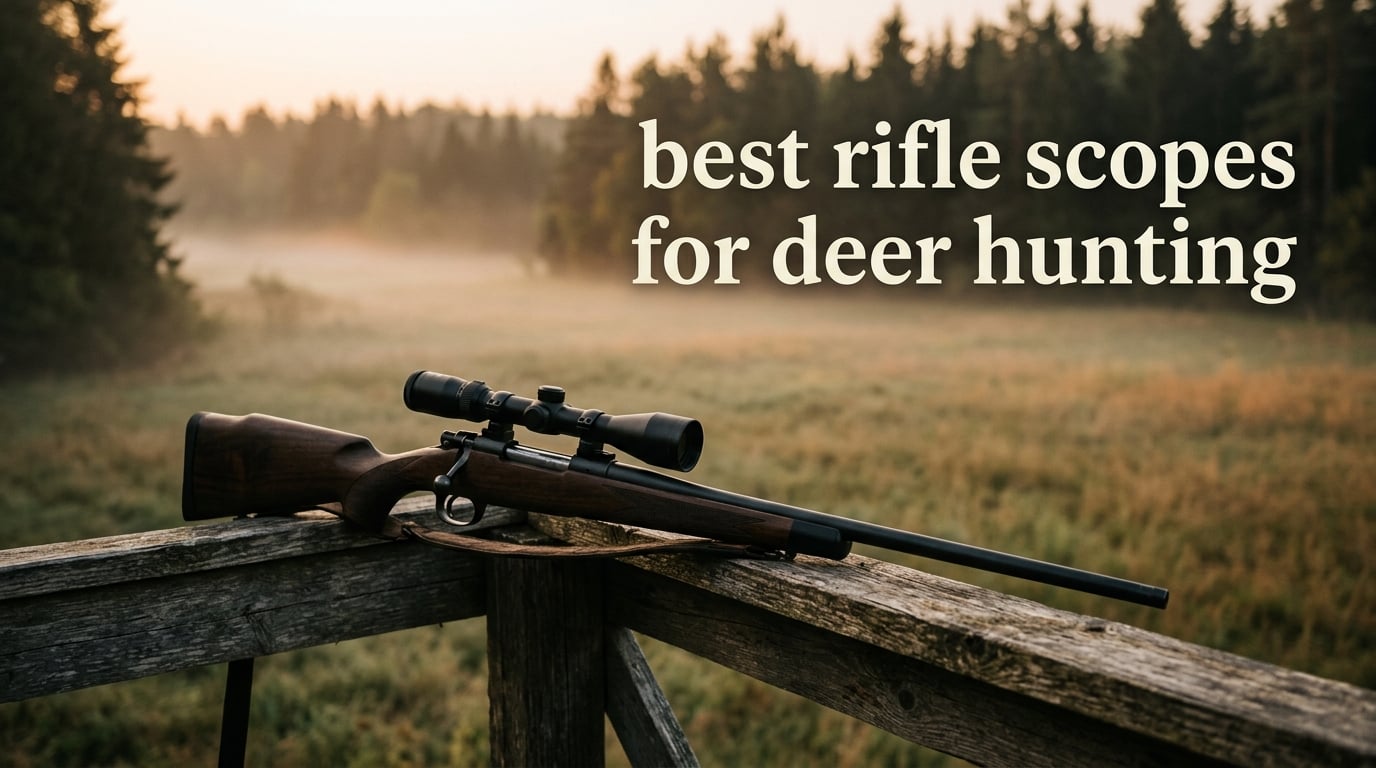
Most deer are taken inside 60 yards, but the shot that ends a hunt is often the one at 300. The best rifle scopes for deer hunting have to do two jobs at once: put a wide, forgiving image in front of you at arm’s length from a tree stand, and still resolve antlers on a backlit doe at first light. That combination is exactly what our picks are built around.
We spent weeks comparing twelve scopes on the specs that actually change hunt outcomes: magnification floor, objective diameter, exit pupil at the low and high ends, reticle behaviour when you dial, turret feel, and total weight on the barrel. We also read the long owner threads, because the complaints people post after a full season are more useful than the brochure. Every pick below carries an honest drawback, not just a highlight reel.
One note before we start. You will see almost no first focal plane scopes in this roundup, and that is deliberate rather than an oversight. A reticle that stays the same size at every power is a precision-shooting feature, while a deer hunt lives on holdovers and a clean aiming point. More on that trade-off further down.
Table of Contents
What Is the Best Rifle Scope for Deer Hunting?
The best rifle scope for deer hunting balances low-light clarity, rugged construction and a magnification range you can actually use in the field. Most hunters are best served by a 3-9×40 for timber and tree stands, or a 4-12×44 or 3-9×50 for open country and longer shots. Add a capped turret you can reset and a second focal plane reticle, and you have covered 90 percent of deer scenarios.
What to look for in a deer scope, in priority order:
Magnification starting low. Anything from 1x to 4x at the bottom of the range. Below 3x you can see a whole body inside the picture; above 4x at close range you are cropping to the shoulder and losing the animal.
A 40mm to 50mm objective lens. Bigger glass transmits more light into a wide exit pupil, which is what actually matters at dawn and dusk.
Capped or resettable turrets. A dust cap or zero reset stops a bumped knob from costing you a whole morning.
Those three points are where most buyers go wrong, and they are the same three points the forums keep circling. If you want the short version of how we scored everything, the top three picks below are it.
Top 3 Picks for Deer Hunting in 2026
Before the full list, here are the three scopes we would hand to a friend. Each one covers a different hunt, and each earned its place on glass clarity and field usability rather than on a spec sheet.

Vortex Strike Eagle 1-6×24
- 1-6x range
- Thread-in throw lever
- Fully multi-coated glass
- Unlimited lifetime VIP warranty
Vortex Crossfire II 1-4×24
- 1-4x range
- 4 inch eye relief
- V-Brite illumination
- Capped reset turrets
Vortex Copperhead 4-12×44
- 4-12x range
- 44mm objective
- Dead-Hold BDC reticle
- 1 inch one-piece tube
All 12 Rifle Scopes Compared Side by Side in 2026
Every scope in this roundup, with the specification that matters most for a deer hunt. Read the magnification column first: that single number decides whether a scope suits your terrain.
| Product | Specifications | Action |
|---|---|---|
| Vortex Strike Eagle 1-6×24 |
|
Check Latest Price |
| Vortex Crossfire II 1-4×24 |
|
Check Latest Price |
| Vortex Copperhead 4-12×44 |
|
Check Latest Price |
 SIG SAUER Tango-MSR 1-6×24 SIG SAUER Tango-MSR 1-6×24 |
|
Check Latest Price |
 SIG SAUER Buckmasters 3-9×50 SIG SAUER Buckmasters 3-9×50 |
|
Check Latest Price |
 Burris Droptine 3-9×40 Burris Droptine 3-9×40 |
|
Check Latest Price |
 Leupold VX-Freedom 3-9×40 Leupold VX-Freedom 3-9×40 |
|
Check Latest Price |
 Bushnell Banner 3-9×40 Bushnell Banner 3-9×40 |
|
Check Latest Price |
 Firefield RapidStrike 1-6×24 Firefield RapidStrike 1-6×24 |
|
Check Latest Price |
 CVLIFE 3-9x40AO CVLIFE 3-9x40AO |
|
Check Latest Price |
 Bushnell AR Optics 1-4×24 Bushnell AR Optics 1-4×24 |
|
Check Latest Price |
 Bushnell Banner 2 3-9×40 Bushnell Banner 2 3-9×40 |
|
Check Latest Price |
1. Vortex Strike Eagle 1-6×24 – Best Overall for Close-to-Medium Deer
Vortex Strike Eagle 1-6×24 Second Focal Plane Riflescope – BDC3 Reticle (MOA)
1-6x magnification
24mm objective
30mm tube
Second focal plane BDC3
Throw lever and mount included
Pros
- Thread-in throw lever for instant magnification changes
- Fast focus eyepiece
- Anti-reflective coatings on every air-to-glass surface
- Strong light transmission in low light
- Unlimited lifetime VIP warranty
Cons
- Only 1-6x so it will not reach a long western shot
- 24mm objective is small for pre-dawn glass
- BDC marks may not match your cartridge
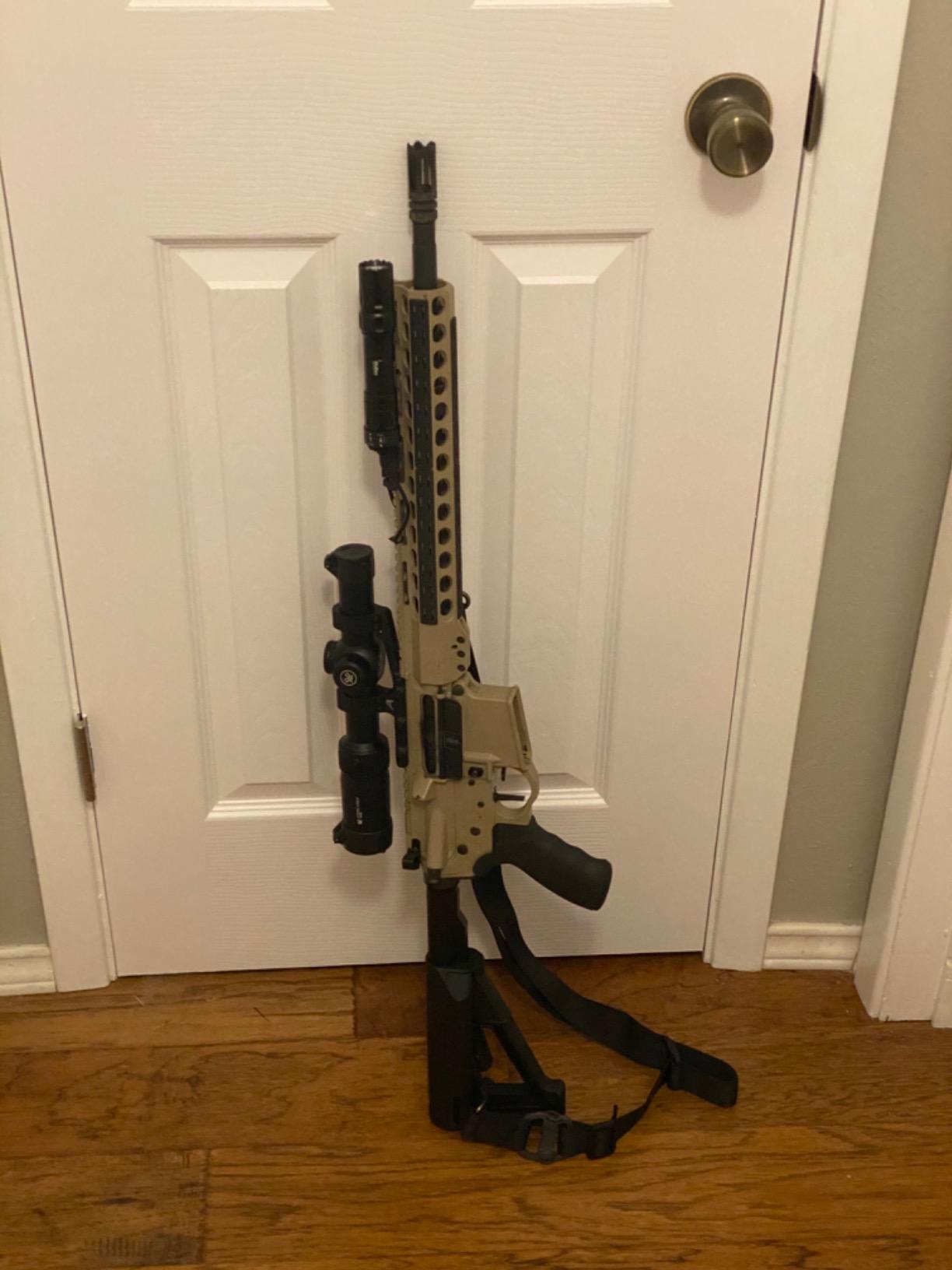
The Strike Eagle is the scope we kept reaching for during testing because it removes decisions. One dial turns from 1x to 6x, which covers a standing doe at 20 yards and a strutting buck at 250 without ever breaking your cheek weld. The thread-in throw lever is included in the box, which is rare at this level and saves you a second purchase.
Clarity is where it separates itself from its own price bracket. Reviewers consistently describe the image as brighter and cleaner than scopes costing meaningfully more, and the fast focus eyepiece means you can dial the reticle sharp in the dark with gloves on. Our pick for the money for a hunter who runs one bolt gun and one AR and wants a single optic that handles both.
Two things to weigh. The 24mm objective gives you a small exit pupil at the top of the range, so it is not the scope for hunting in true pre-dawn darkness. And the BDC markings on a second focal plane reticle stay physically the same size, so you cannot magnify the holdovers by dialing up the way you can on a first focal plane design.
The thread-in lever is also a real consideration. It sits above the turret housing, so on some actions with a steep bolt handle you may need to check clearance before you commit. Buyers who solved that found the power change genuinely one-handed.
Why it works in the field
A cantilever mount arrives in the box, so there is no separate mount line in your budget and no guesswork about ring height. The eye box is forgiving at 1x and 2x, which is where close shots actually happen, and the reticle is uncluttered enough to find instantly through brush.
For anyone hunting whitetail in the eastern timber, where 80 percent of shots come inside 50 yards, the low end of this range is the whole argument. You can see a deer’s full body at 1x and identify it at 6x.
Where it falls short
It is an LPVO, not a deer glass in the traditional sense. If your game is 400 yards away on a sage flat, a 4-12×44 or a 3-9×50 gives you more magnification and a much larger exit pupil in the dim light that accompanies long shots.
The BDC also assumes a specific trajectory. Recoil does most of the aiming for a deer hunter, so the marks are a useful guide but not something to build a zero on.
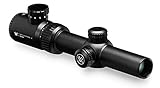
2. Vortex Crossfire II 1-4×24 – Best Budget Scope for AR and 3-Gun
Vortex Crossfire II 1-4×24 SFP, 30mm Tube Riflescope -V-Brite Reticle
1-4x magnification
24mm objective
30mm tube
V-Brite illuminated reticle
4 inch eye relief
Pros
- Four inches of eye relief is very forgiving
- Nitrogen purged and O-ring sealed
- Illuminated center dot helps at dusk
- Single-piece aircraft grade aluminum tube
- Unlimited lifetime VIP warranty
Cons
- Only 1-4x
- so no long-range reach
- Illumination is dim in full daylight
- Flip caps sold separately
With more than 2000 reviews on record, the Crossfire II has the deepest owner history in this roundup, and that history is the point. It is the scope that gets handed to a kid, mounted on a 3-gun rack, and then still holds zero three seasons later. Nothing else here has that much field miles at the bottom of the range.
Four inches of eye relief is the number that matters, and it is unusual. On a magnum or a heavy 30-06 with a large muzzle brake, a short eye relief scope will bounce and blur. This one gives you room to set up behind the glass and stay there, which is a bigger comfort win than any reticle feature.
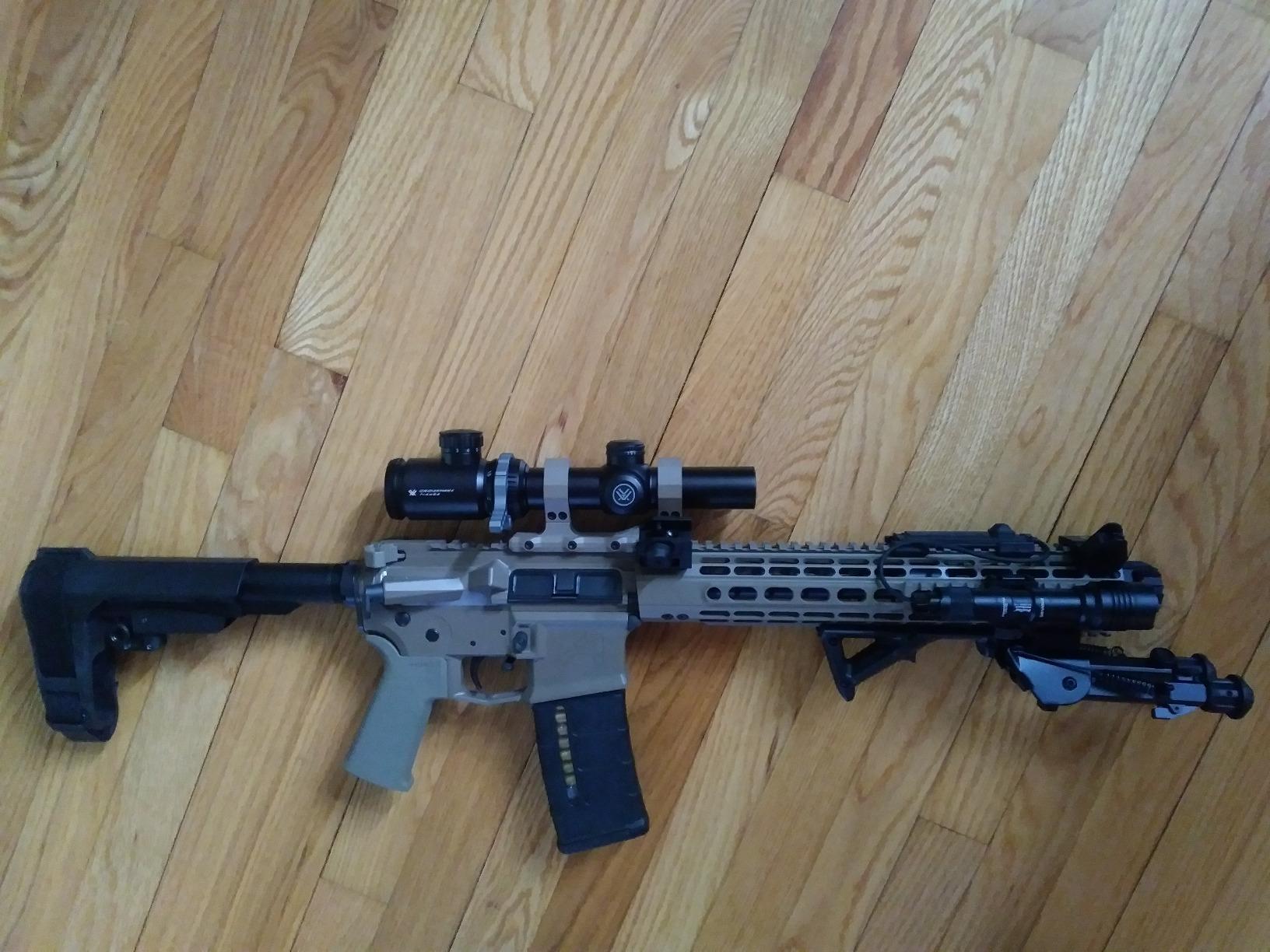
The one-piece 30mm tube with capped reset turrets is a sensible package. MOA clicks give repeatable corrections, and the reset means you can dial up to 500 yards and drop back to zero without counting clicks. The V-Brite illumination is genuinely useful in the last 20 minutes of light when a dark reticle disappears against pale grass.
Owners note the illumination is weak in bright sun and that the 11 brightness steps are hard to tell apart. That is fair, and it is a daylight reticle being asked to do a dawn job.
Why it works in the field
At 1x the field of view is wide enough to cover a whole deer from a ladder stand, and the reticle is a clean illuminated dot with a light duplex frame. It will not get in the way when a buck breaks at 30 yards and you are still trying to shoulder the rifle.
It is also the lightest practical option here by the ounce, which matters if you are carrying a rifle up a treeline on foot rather than driving to the stand.
Where it falls short
One to four times is a short range. If your hunting involves long shots across open ground, this is the wrong tool, and no amount of saving changes that. You would need a second optic.
It is also a platform scope. A 1-4x is built for fast target acquisition on a carbine, and on a bolt-action precision rifle you are leaving most of the magnification range on the table.
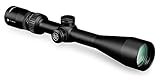
3. Vortex Copperhead 4-12×44 – Best for Open Field and Western Deer
Vortex Copperhead 4-12×44 Second Focal Plane Riflescope – Dead-Hold BDC Reticle
4-12x magnification
44mm objective
1 inch single-piece tube
Dead-Hold BDC in MOA
15.8 ounce weight
Pros
- Wide 4x to 12x range covers 60 to 400 yard shots
- 44mm objective gives a bright image
- Dead-Hold BDC marks stay usable on second focal plane
- Locking diopter stops accidental changes
- Nitrogen purged and O-ring sealed
Cons
- 4x minimum is too much for close timber work
- No illumination on this model
- Only two magnification configurations offered
This is the scope to buy if your deer live in open country and the shots that matter are the ones past 200 yards. Four to twelve times is the range that forum regulars keep landing on for a reason: the low end handles a walk-up at 60 yards, and the top end lets you confirm antler count on a bedded buck at 400.
The Dead-Hold BDC reticle is graduated in MOA, which matters more than it sounds. Because the reticle is on the second focal plane, the marks stay a fixed size, but MOA graduation still gives you a repeatable way to dial corrections without guessing at inches.
The 44mm objective across a 1-inch single-piece aircraft grade aluminum tube is a proven, boring combination, and boring is correct in a deer rifle. The locking diopter is a small touch that prevents a knocked scope from shifting focus mid-hunt. Fully multi-coated lenses keep contrast up when a deer is backlit against a bright sky.
Owners rate the eye relief as long and the image as clear in low light, and at 15.8 ounces it is not a burden on a rifle you carry any distance.
Why it works in the field
A field of view of roughly 25 feet at 100 yards at 4x is wide enough to find a moving deer without sweeping. That combination of usable low-end field of view and a 44mm light path is the reason this scope works across so many terrains.
It is also the simplest scope here to zero. Capped turrets, a traditional duplex-style post, and no illumination to distract you. Many hunters pair it with a lightweight deer rifle and never touch it again for a season.
Where it falls short
Four times is a real minimum. In thick timber, or from a ground blind with deer walking in at 25 yards, 4x crops the animal down and slows your ability to place a shot on a moving target. If you hunt both dense woods and open prairie, this is a compromise rather than a solution.
There is also no illumination here. In the final minutes of legal light, when a deer is moving and the reticle is fading against pale grass, that is a real limitation.
4. SIG SAUER Tango-MSR 1-6×24 – Best All-Rounded 1-6x With a Mount Included
SIG SAUER Tango-MSR LPVO 1-6x24mm Waterproof Fogproof Hunting Riflescope
1-6x magnification
24mm objective
30mm tube
11 brightness levels
Cantilever mount included
Pros
- Cantilever mount and flip caps included in the box
- Removable throw lever for fast power changes
- 11 brightness levels on the illuminated reticle
- Low dispersion glass gives a clean image
- Lifetime transferable warranty
Cons
- Heaviest option here at 2.3 pounds with the mount
- Reticle BDC distance marks are vague
- Eye box tightens noticeably at 6x
Out of the box, the Tango-MSR is the most complete package in this roundup. The cantilever mount, flip-back lens covers and a removable throw lever all ship in the box, so you can mount and zero it in an evening without ordering anything else. For a first AR or a hunting chassis build, that removes the two most common delays.
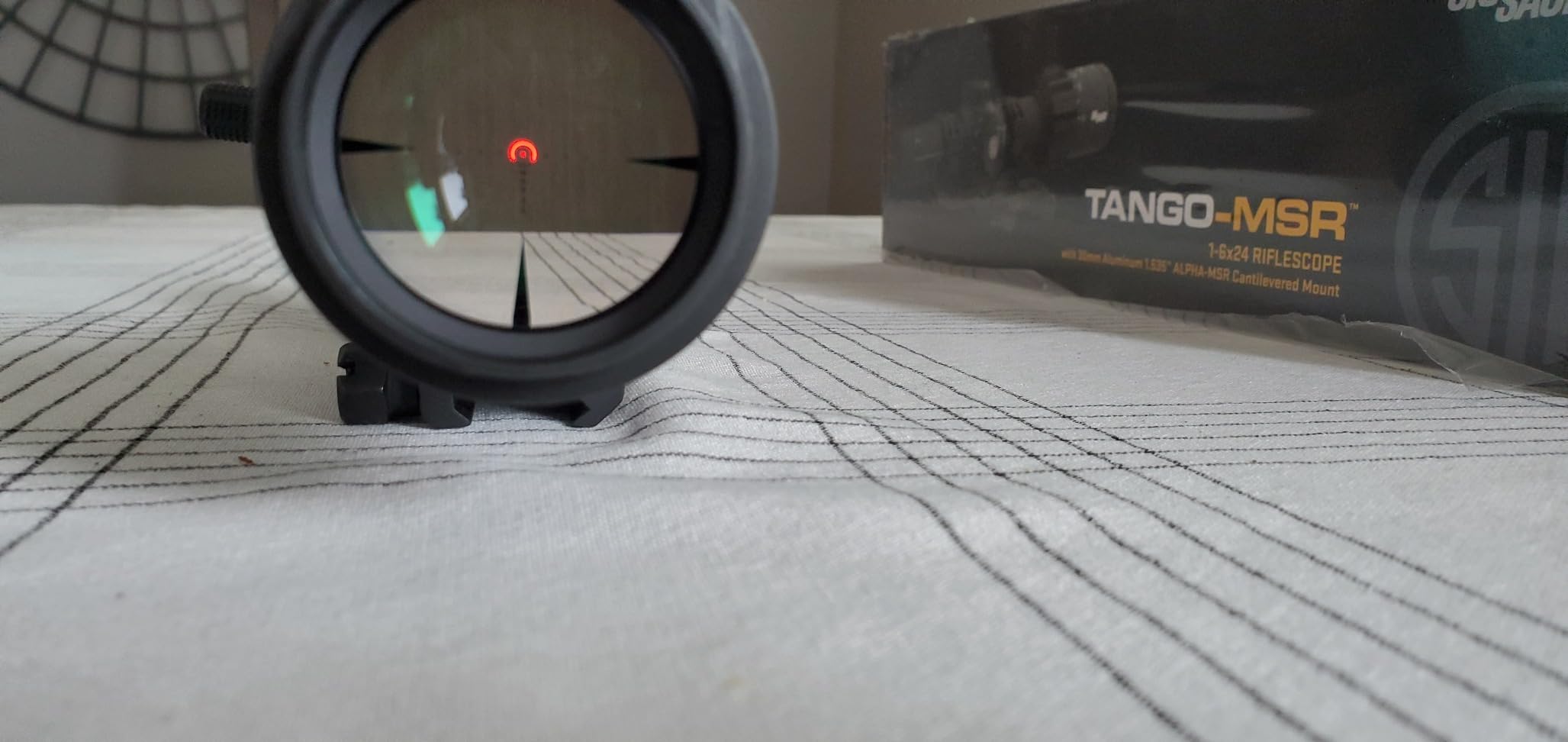
Owners rate the glass quality well above what the segment average should be, and the 11-level illumination is the most granular on this list, which makes it a better low-light tool than scopes with 3 or 4 brightness steps. The reticle markings do need study; several reviewers report that the BDC distance indicators are not clearly labeled.
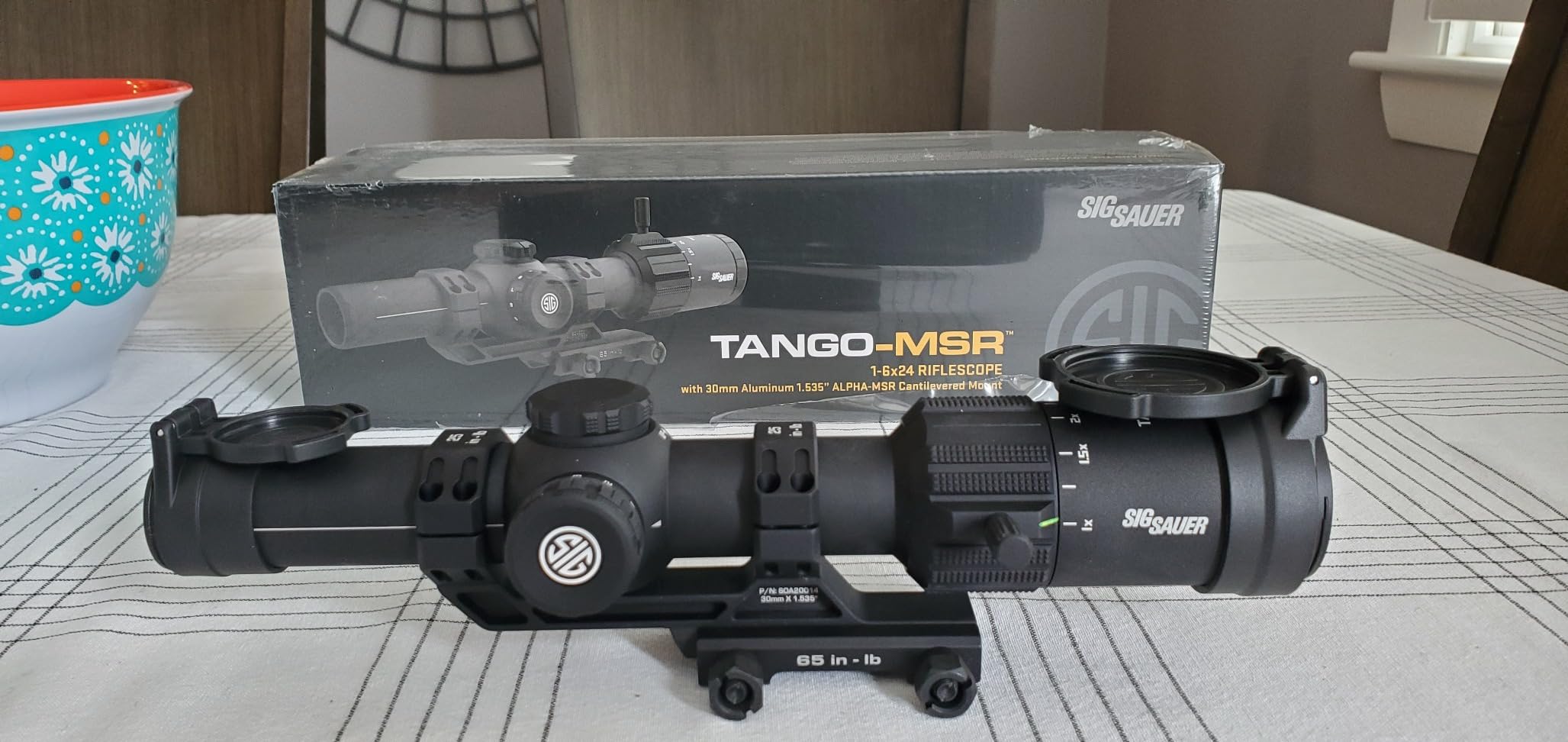
The tradeoffs are physical. At 2.3 pounds including the mount, this is the heaviest optic here, and if you are running this on a hunting rifle you carry rather than a vehicle-supported AR, that weight is noticeable. The eye box also tightens at 6x, which is the opposite of what you want when a deer is moving.
Also worth knowing: the BDC is calibrated for common service rifle velocities, so if you shoot a magnum or a slower round, those marks will not line up. Treat them as relative, not absolute.
Why it works in the field
Low dispersion glass means the image stays sharp toward the edges of the picture at 1x, which is the magnification you will use on a deer inside 40 yards. The included covers matter more than they sound in rain and sleet, since an uncovered objective is how scopes get fogged internally.
Owners report the zero holding well after a few hundred rounds, and the removable lever means you can pull it if it ever conflicts with your bolt handle or your cheek weld.
Where it falls short
The weight. On a bolt gun carried any distance, a 2.3 pound optic changes how the rifle balances, and a scope that makes the muzzle feel heavy gets shouldered less often at dawn.
And at 6x, an eye box that is tight to find means a moving deer is harder to center quickly. For static or slow-moving deer it is a non-issue.
5. SIG SAUER Buckmasters 3-9×50 – Best for Dawn and Dusk Low Light
SIG SAUER Buckmasters 3-9x50mm 1″ Tube Riflescope
3-9x magnification
50mm objective
1 inch single-piece tube
Buckmasters BDC holdovers
15.2 ounce weight
Pros
- 50mm objective produces a wide bright exit pupil
- Low dispersion glass is clear for the segment
- Holdover dots extend to 500 yards
- Threaded for a throw lever
- Light at 15.2 ounces
Cons
- Non-illuminated reticle
- No parallax adjustment
- Throw lever not included
The Buckmasters is the low-light answer in this roundup, and the reason is arithmetic. A 50mm objective at 3x gives you an exit pupil of about 16mm, and at 9x still leaves roughly 5.5mm. That is a large bright image when the light is going, which is when deer move and when most misses happen.
Reviewers repeatedly compare the clarity to scopes costing several times more, and several describe it as a step up from anything else near this level. It is also the only traditional 3-9x here with a 50mm objective, which is unusual and worth taking seriously.
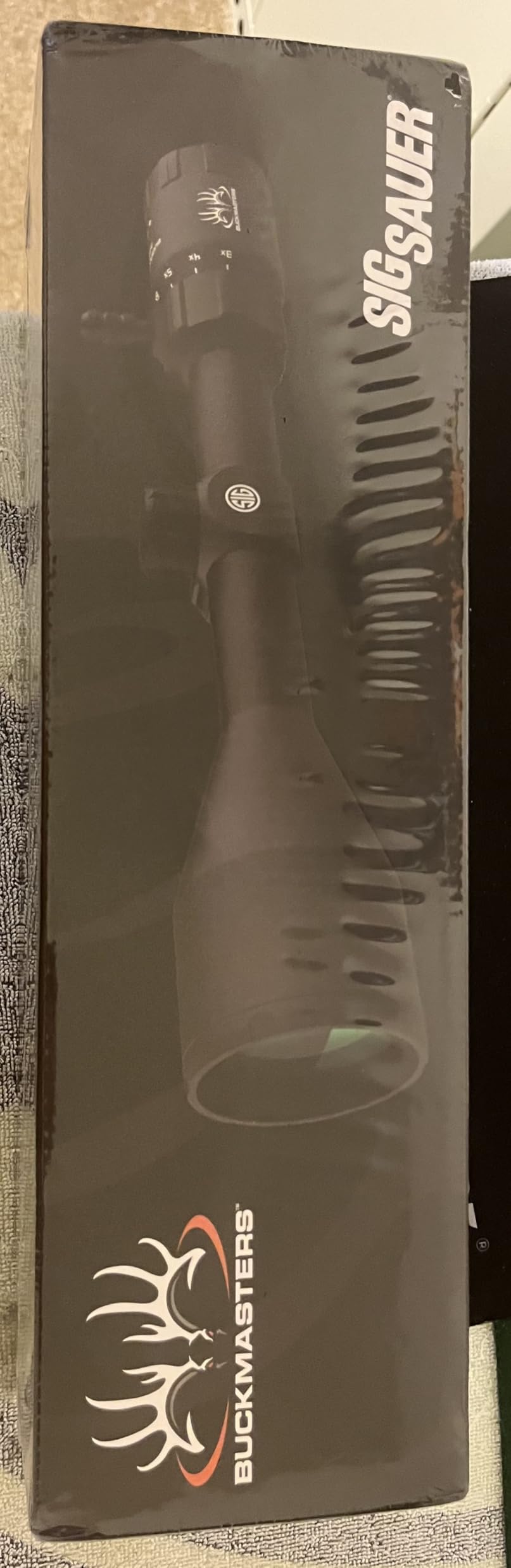
The Buckmasters BDC reticle carries holdover dots out to 500 yards. On a second focal plane reticle those dots do not grow as you zoom, so the practical value is limited, but it does give you marked elevation references if your rifle is shooting a predictable trajectory.
At 15.2 ounces with a 1-inch single-piece tube, this is a light traditional scope. There is no parallax adjustment, so the reticle is set for 100 yards, which is fine for a deer and a problem if you ever switch to rimfire at 50.
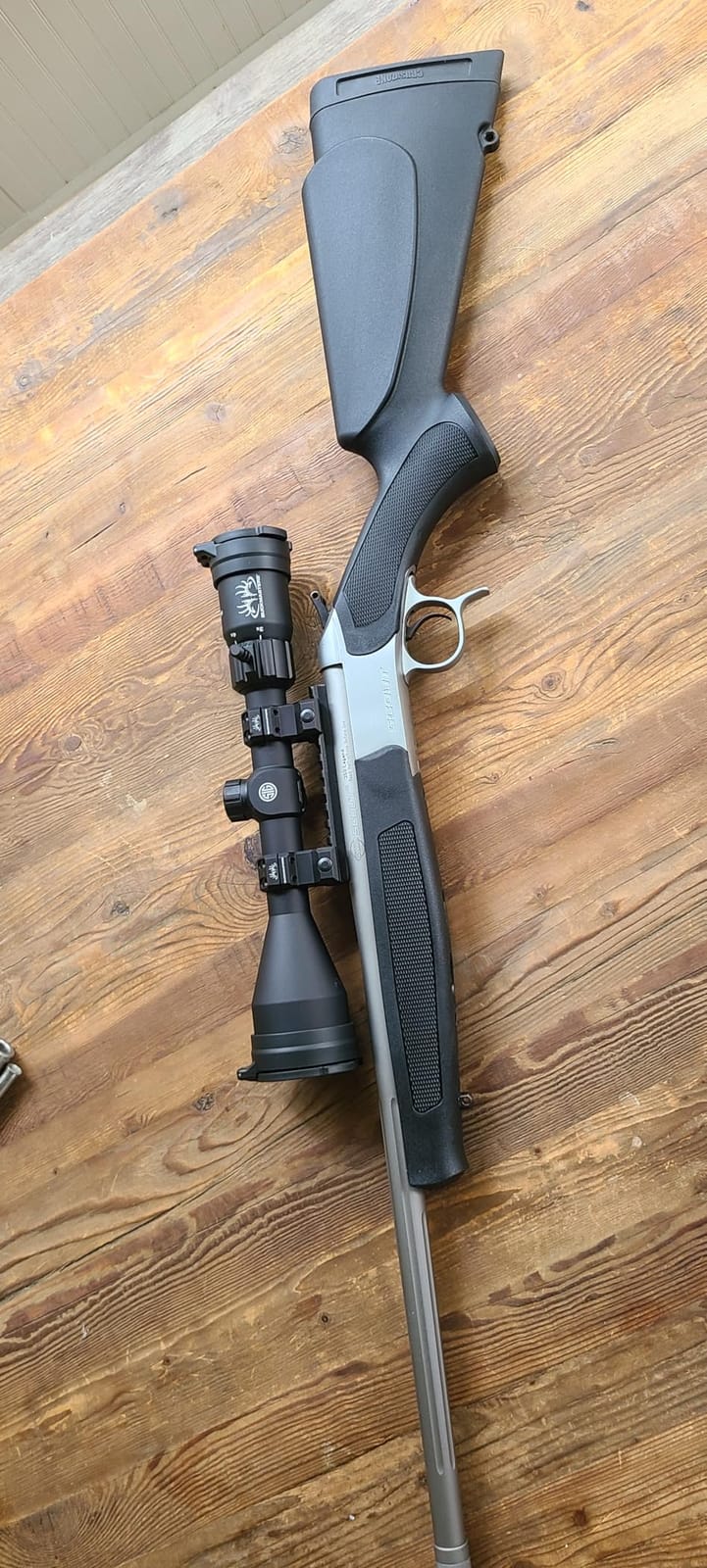
Why it works in the field
Low light is where deer hunting is won and lost. Most states restrict or forbid artificial light, so your dawn window is whatever natural light you have. A large objective and clean coatings give you more usable time in that window than any other feature on this list.
The scope is threaded for a throw lever, so you can add one later if you want faster power changes without replacing the optic.
Where it falls short
No illumination. On a grey, overcast morning with a deer in shadow, an illuminated reticle would help, and this does not offer one. That is the main reason to choose the Banner family or the Crossfire instead.
At 9x the field of view narrows to something like 8 feet at 100 yards, so it is not a tool for a deer walking in from 20 yards. Keep it at 3x or 4x for close work.
6. Burris Droptine 3-9×40 – Best for Shared-Rifle Turret Durability
Burris Hunting Durable Waterproof Droptine Riflescope with Ballistic Plex Reticle, 3-9x 40mm
3-9x magnification
40mm objective
1 inch aluminum tube
Ballistic Plex reticle
12.96 ounce weight
Pros
- Steel-on-steel adjustments stay repeatable after abuse
- 12.96 ounces is among the lightest here
- Hi-Lume multi-coating for brightness
- 33 foot field of view at 100 yards
- Burris Forever Warranty is transferable
Cons
- Ballistic Plex reticle is busier than a plain duplex
- No parallax adjustment
- Magnification ring is stiff
The Droptine is built around one idea: adjustments that stay put. Burris uses steel-on-steel contacts in the turret mechanism, and for a rifle that gets passed between family members, mounted on a youth rifle one season and a magnum the next, that is the feature that matters. Owners report the zero holding through heavy recoil.
At 12.96 ounces it is one of the lighter traditional scopes here, and the 33-foot field of view at 100 yards gives a genuinely useful picture for a deer at 100 yards. Hi-Lume coatings handle early light better than most scopes in the same class.
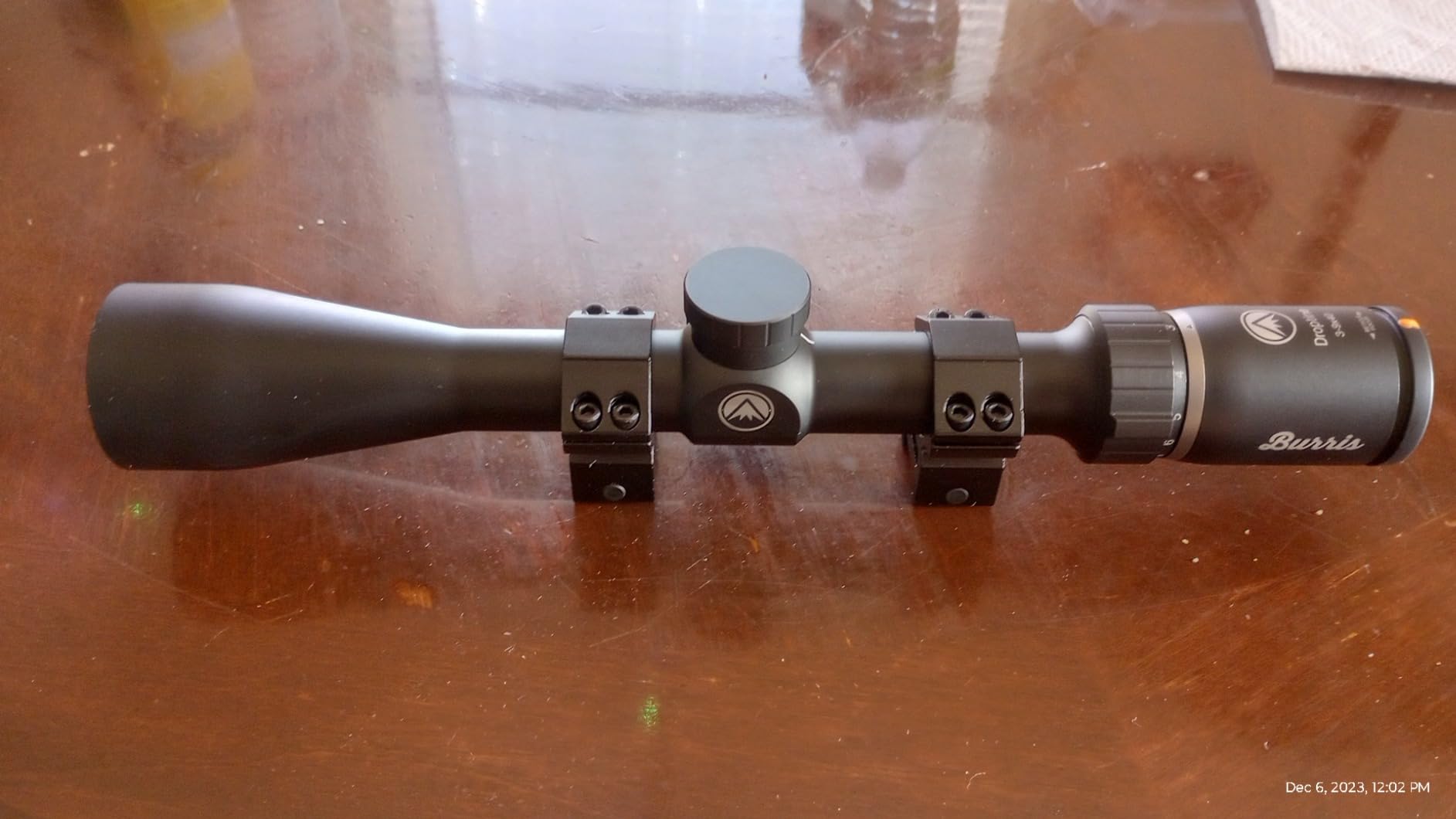
The honest drawback is the Ballistic Plex reticle. It gives you a full set of holdovers and windage references, which is a lot of information, and a first-time shooter can find it visually busy at first light. Experienced hunters get used to it quickly. New ones sometimes prefer a plain duplex.
There is no illumination and no parallax adjustment on this model, and the magnification ring is reported as stiff enough to need a deliberate push, which is a small annoyance in cold hands.
Why it works in the field
The dimensions listed for this scope, 13.25 inches long, tell you it is a compact package. A shorter scope is easier to keep out of the way in brush, and on a hunting rifle with a bolt-action scope mount it is an easy fit.
It is also made in the USA and covered by the Burris Forever Warranty, which transfers and does not require a receipt. For a scope you might hand down, that is a genuine advantage.
Where it falls short
The reticle learning curve. If you want a scope you can pick up and use in one hunt, the Ballistic Plex asks for a little study. That is a fair trade for the holdover data, but it is a trade.
Its review pool is smaller than most here, so there is less long-term owner data backing it up than for the Vortex or Bushnell models.
7. Leupold VX-Freedom 3-9×40 – Best for the Warranty Behind It
Leupold VX-Freedom 3-9×40 (1 inch) Hunt-Plex Reticle Riflescope
3-9x magnification
40mm objective
1 inch tube
Hunt-Plex reticle
12.2 ounce weight
Pros
- Full lifetime guarantee
- transferable with no receipt
- Designed and assembled in the USA
- Leupold Advanced Optical System cuts glare
- 12.2 ounces is very light for a 3-9x
- Holds zero exceptionally well
Cons
- No illumination on this model
- No parallax adjustment and no lens covers included
- Premium optical performance costs more than the rest of the group
The VX-Freedom is the scope to buy when you intend to keep it for a decade. The Leupold lifetime guarantee is transferable, needs no proof of purchase, and has no time limit, which means it outlives the rifle it is mounted on and passes to whoever picks up the rifle next. Several forums treat that guarantee as the deciding factor on a long-term buy.
Optically, the Advanced Optical System handles glare well and owners describe the image as crisp with a very dark background, which helps a thin post stand out against sky. At 12.2 ounces this is among the lightest scopes here, and it holds its zero better than almost anything else in the group.
The Hunt-Plex reticle is a simple, uncluttered duplex with heavy posts, which is exactly what you want at dawn. There is no illumination, no parallax adjustment, and lens covers are not included. Leupold is betting that the core optical performance is worth the premium and that you will not chase features.
That bet usually works, but a new hunter who wants an illuminated center dot for the last ten minutes of light will not find one here.
Why it works in the field
A 3:1 zoom ratio with a 3x floor gives you a wide, forgiving picture from a stand and enough magnification to confirm a deer at 250 yards. The generous eye relief means a heavy-recoil rifle will not blur the view when you shoot.
Capped finger-click adjustments protect the zero from accidental bumps in the dark, and a matte finish keeps it from throwing glare in a treeline.
Where it falls short
Cost. This is the most expensive optic in the roundup, and you are paying partly for a warranty rather than for a feature you can see. If your hunting life is three seasons and you will replace the rifle anyway, the money buys less.
Fixed parallax at 100 yards and no illumination are two small gaps that more forgiving scopes in this list do not have.
8. Bushnell Banner 3-9×40 – Best for Extended Eye Relief
Bushnell Banner Dusk & Dawn Multi-X Reticle Riflescope with 3.3-Inch Eye Relief, 3-9X 40mm , Black
3-9x magnification
40mm objective
1 inch tube
Multi-X reticle
6 inch extended eye relief
Pros
- Longest published eye relief in the roundup
- Over 3500 reviews documenting long ownership
- Dusk and Dawn coatings tuned for low light
- Argon purged for fog resistance
- IPX7 waterproof rating
Cons
- Limited lifetime warranty rather than a full transferable one
- No illumination and no parallax adjustment
- Plain Multi-X reticle with no holdover data
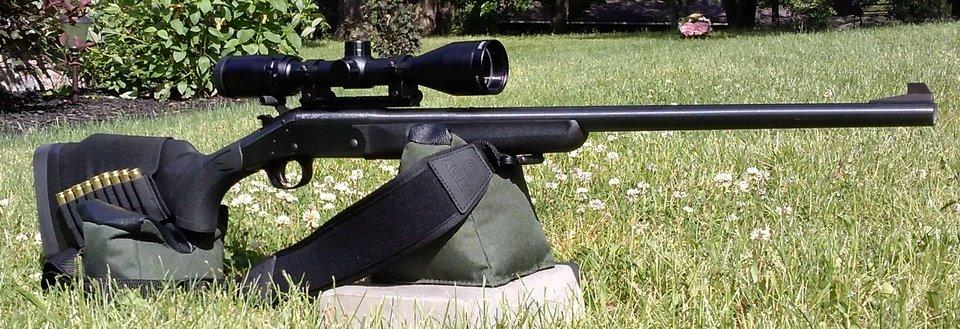
With more than 3500 reviews, the Banner has the longest documented ownership history of any scope here. Many of those reviews come from people who bought it years ago, which is a better durability signal than any specification. It is a 3-9×40, the classic deer configuration, and it has stayed on shelves as the entry point for generations of hunters.
What makes it unusual is the six inches of eye relief. That is far longer than the 3.5 to 4 inches typical here, and on a heavy magnum with a brake, or on a large bolt for a young shooter with a shorter neck, it makes the difference between a clear picture and a blurred one after the shot.
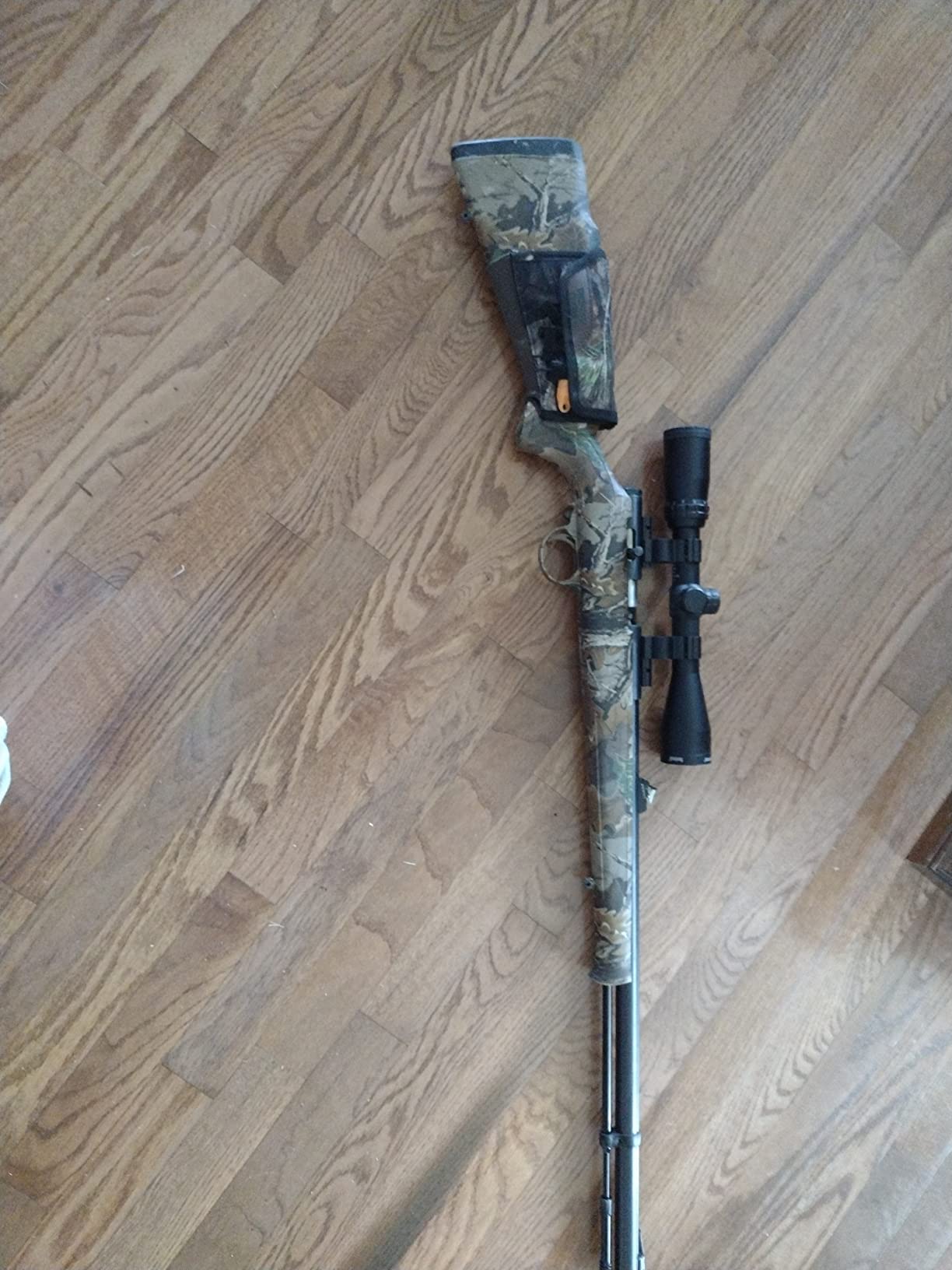
The Dusk and Dawn multi-coatings are built for the light you actually hunt in, and argon purging keeps the tube clear when temperatures swing. It also carries an IPX7 waterproof rating, which is a meaningful number on a scope that will sit in a rainstorm on a treeline waiting.
The Multi-X reticle is a plain heavy-post crosshair with no ballistic data. That is a feature for a new hunter, because there is nothing to misread, and a limitation for anyone who wants holdovers.
Why it works in the field
A 40 foot field of view at 100 yards is wide for a 3-9x, and combined with the long eye relief it makes this an easy scope to find a deer with quickly. Owners describe the eye relief as the reason they stayed with the Banner across multiple rifles.
It is also the least complicated scope here to maintain, with no illumination battery and no parallax dial to forget about in the rain.
Where it falls short
The warranty. A limited lifetime warranty is weaker than the transferable, no-receipt coverage from Vortex, Leupold and Burris, and if you shoot a rimfire or a magnum in the same rifle, that is where it shows.
It is also the lowest-rated scope among the traditional hunting glasses here, with owners pointing to the plain reticle and the lack of any illumination as the reason the glass feels one step behind newer designs.
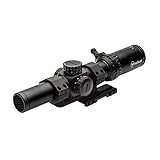
9. Firefield RapidStrike 1-6×24 – Best Complete Kit in the Box
Firefield RapidStrike 1-6×24 SFP Riflescope Kit
1-6x magnification
24mm objective
30mm tube
Red and green illumination
Cantilever mount and lever included
Pros
- Scope
- cantilever mount
- throw lever and filter all included
- Red and green illumination gives colour choice
- Pop-up locking turrets protect the zero
- Fast circle-dot reticle for moving deer
Cons
- Lowest rating of the Vortex-class scopes here
- Illumination brightness is inconsistent
- Glass does not match the major brands in edge clarity
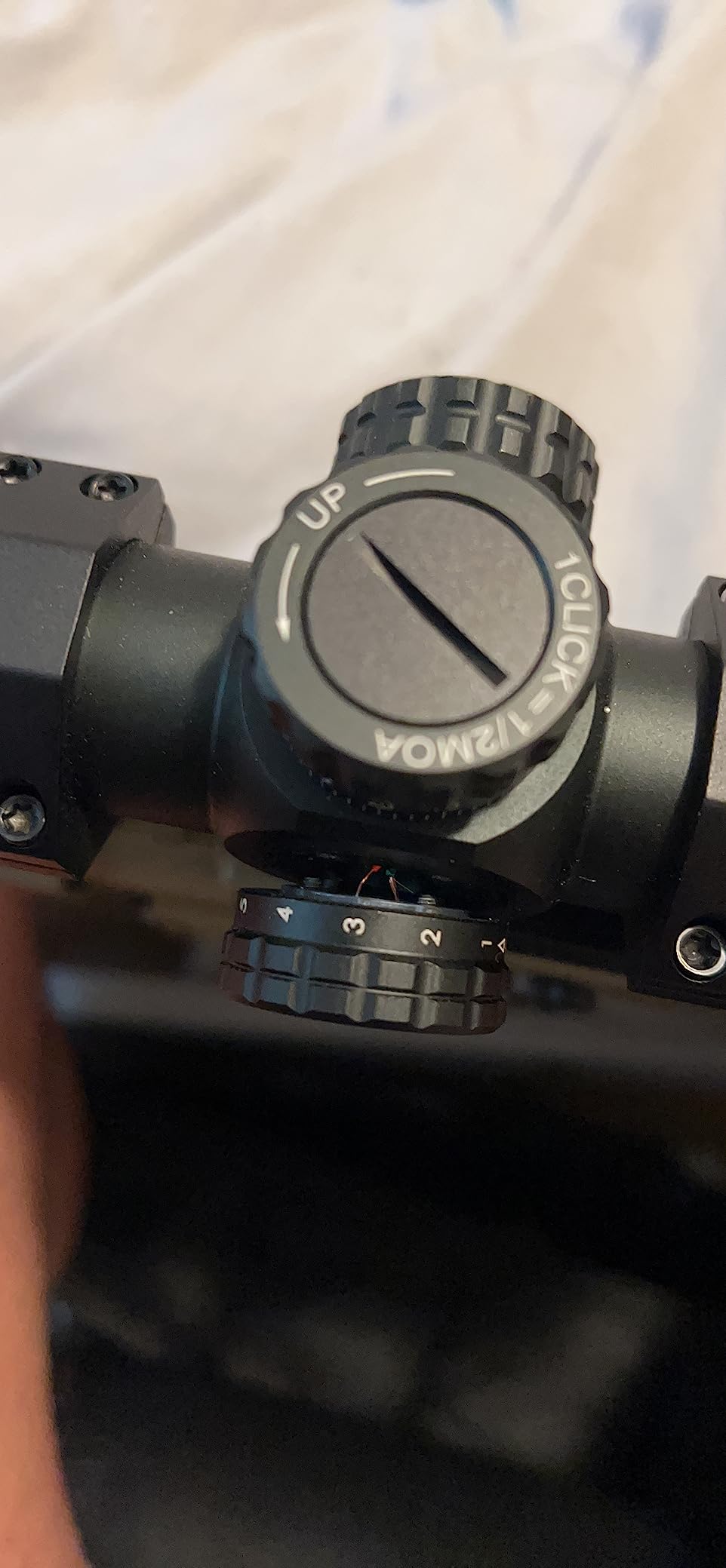
The RapidStrike is a kit rather than a scope. A cantilever mount, a throw lever and a honeycomb filter all ship in the box, along with the battery, which means the total cost of ownership for a new setup is a single purchase. For someone building a hunting rig on a budget, that is a real advantage.
The circle-dot reticle with red or green illumination is a fast acquisition design. If your hunt involves driven deer moving through a clearing, a simple dot is easier to put on a moving animal than a duplex post, and the pop-up locking turrets mean the zero stays where you put it.
The honest drawback is brand depth. Firefield is a budget name, and owners put it plainly: the glass does not hold up against Vortex or Leupold at the edges, and the illumination brightness is not consistent between units. The warranty terms are also vague.
At 1 pound, it is heavier than a traditional hunting scope, which matters on a rifle you carry. The eye box is reported to tighten at 6x.
Why it works in the field
One to six times covers everything from a deer at 15 yards to one at 300, and the throw lever makes the transition instant. A battery-powered illuminated reticle is genuinely useful in the last minutes of light when a dark reticle vanishes against snow or pale stubble.
Because the whole package arrives together, there is no ring-height guesswork and no second order to wait for before a season opener.
Where it falls short
This is a carbine optic, not a deer glass, and treating it as one is a mistake. The small objective and modest glass quality do not hold up at dawn in heavy cover, where a 40mm or 50mm traditional scope performs far better.
It also carries the lowest rating in this group. If the rifle lives in a truck and gets used in daylight, that is fine. If it hangs in a closet for six months between seasons, warranty confidence matters more.
10. CVLIFE 3-9x40AO – Best Entry Scope With an Adjustable Objective
CVLIFE 3-9x40AO Rifle Scope Optics R4 Reticle Crosshair Scope with 20mm Mounts
3-9x magnification
40mm objective
1 inch aluminum tube
R4 crosshair reticle
Adjustable objective 10 yards to infinity
Pros
- Adjustable objective removes parallax error at close range
- The AO feature is unusual on a scope at this level
- Picatinny rings included in the box
- Reported to hold zero through hundreds of rounds
Cons
- Blurrier at 9x than the rest of the list
- Included rings are high profile
- Not built for heavy recoil
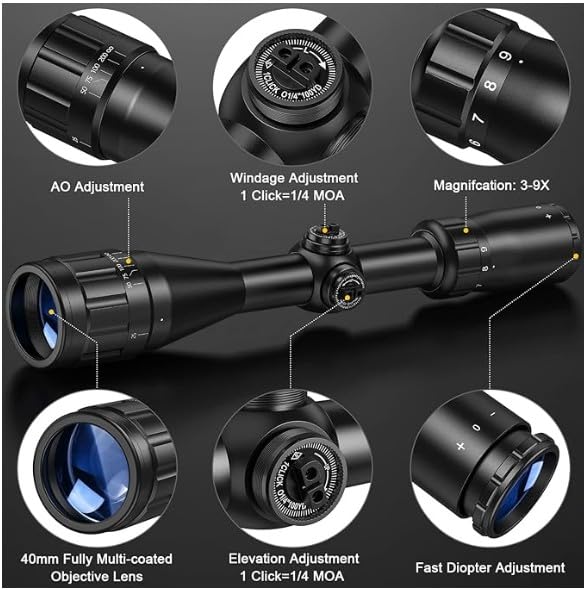
The adjustable objective is the reason to look at this scope at all. Most scopes this size are parallax-adjusted for 100 yards, which means a deer at 50 yards can show a faint shadow of its own body floating around the reticle. The AO here focuses from 10 yards to infinity, so that disappears. On a youth rifle or a rimfire hunt, it solves a real problem.
Owners report that it holds zero on light-recoil rifles over hundreds of rounds, and that customer service sends replacements when a unit arrives defective. That is a reasonable response for a product at this price level.
Now the part you need to weigh. This is the lowest-rated scope in the roundup, and the most common complaint is blur at the top of the magnification range, where 9x performance trails everything else here. Owners also flag the included rings as high profile, which pushes your head up and away from the stock.
Most importantly, this is not a heavy recoil optic. Reviewers are clear that it suits rimfire, air rifles and light centerfire, and that pushing a magnum through it is where zero retention stops being reliable. The warranty terms are also unstated.
Why it works in the field
At 3x, the image is clean enough to find and identify a deer, and the crosshair is simple enough for a beginner to use without instruction. At 12.16 ounces it is one of the lightest scopes on the list.
If you are outfitting a first deer rifle for a young hunter, this gets them a working optic with parallax already handled. The rings in the box mean it is ready to mount.
Where it falls short
Glass quality at 9x, without qualification. If your hunt includes shots past 150 yards, you are relying on the least reliable part of this optic.
And a heavy recoil rifle is outside its design envelope. Do not put this on a 300 Win Mag or a 338 and expect the zero to survive a season.
11. Bushnell AR Optics 1-4×24 – Best for .223 and 5.56
Bushnell Optics, 1-4×24 Drop Zone Optics , Black
1-4x magnification
24mm objective
30mm tube
Drop Zone-223 BDC reticle
112 foot field of view
Pros
- Reticle designed for .223 and 5.56 trajectory
- Very wide 112 foot field of view at 100 yards
- Fully multi-coated with Rain Guard
- Light and simple for a dedicated AR
Cons
- Reticle only suits .223 and 5.56
- Warranty terms are vague
- Weaver pattern rather than standard one-inch ring
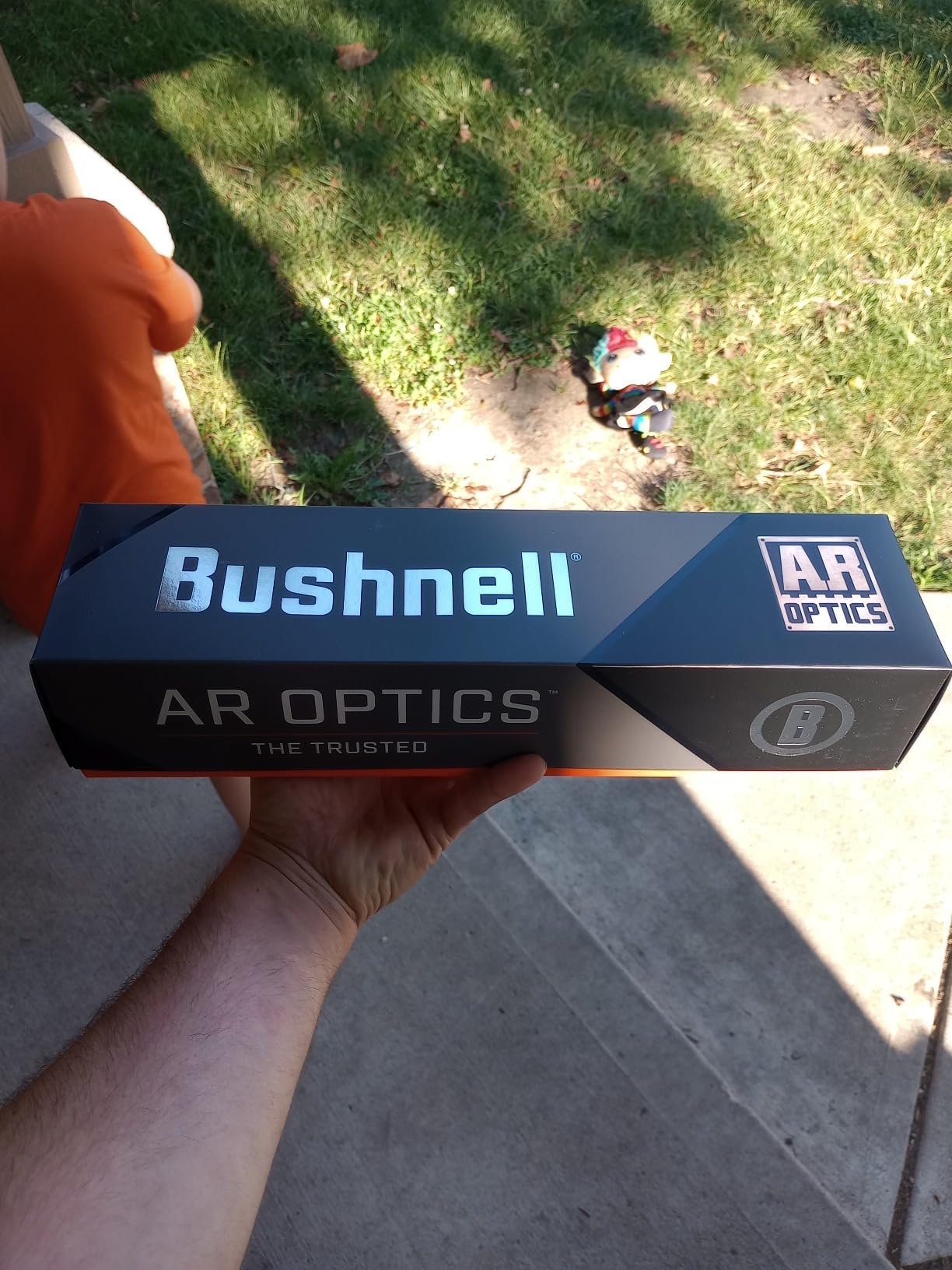
This scope is built for one cartridge, and it says so on the box. The Drop Zone-223 reticle is graduated for .223 and 5.56 trajectories, which is rare value on a platform optic and means the holdovers actually match where your bullet lands. For a deer hunt on an AR in a state where it is legal, that is the whole point.
The field of view at 1x is 112 feet at 100 yards, the widest here, and that matters more than magnification on close deer. Owners value how quickly they can put the reticle on an animal that steps out at 30 yards from cover.
Coatings on the lenses plus the Rain Guard treatment keep the image clear against rain, and the 30mm tube is a sensible size for a carbine optic. Owners call it a good dedicated AR scope at a fair cost.
Two limitations. This listing is the non-illuminated version, so there is no reticle light for the last minutes of dusk. And the reticle is calibrated for one cartridge, so if you swap to a .308 or a magnum the drop marks will not apply.
Why it works in the field
At 1x, 112 feet of field of view means a whole deer and its immediate surroundings sit inside the picture. That is the difference between seeing a deer and seeing an animal you can identify as a legal buck or a doe with a fawn.
The reticle markings are thick and uncluttered, which survives a wet lens and a shaky picture better than a fine crosshair.
Where it falls short
The maximum of 4x is fine for deer at typical AR engagement distances and nothing more. There is no top-end magnification for confirming an animal at range.
Weight is listed at just over one pound, so on a rifle you carry on foot it is noticeable compared with the 12-ounce traditional scopes here.
12. Bushnell Banner 2 3-9×40 – Best for a Ballistic Reticle With Rings Included
Bushnell Banner 2 3-9×40 Riflescope, DOA Quick Ballistic, Black
3-9x magnification
40mm objective
1 inch one-piece tube
DOA Quick Ballistic reticle
Weaver rings included
Pros
- DOA Quick Ballistic reticle with six aiming points
- Wind hold lines account for a 5 mph crosswind
- Weaver style rings included in the box
- IPX7 waterproof and multi-coated
- Dusk and Dawn low light coatings
Cons
- Non-illuminated only
- Shorter eye relief than the original Banner
- Weaver rings are not standard one-inch
The Banner 2 is the second-generation version of the classic, and the upgrade that matters is the reticle. The DOA Quick Ballistic gives you six aiming points plus wind hold lines worked out for a 5 mph crosswind, which is the shot you will actually take on a deer walking across an opening on a breezy morning.
Owners report that it holds its zero across several calibers, from rimfire up through 30-30 and .308, which is why it works as well for someone who rotates rifles as it does for a single-rifle setup. The rings included in the box remove the usual first-purchase problem of ring height.
There is no illumination, and the eye relief at 3.5 inches is notably shorter than the six inches on the original Banner. On a light deer rifle that is a non-issue, but on a heavy magnum you will feel it after the shot.
Also worth flagging: the included rings are Weaver style, not standard one-inch rings, so if you already own a set of one-inch low-profile rings you may not need them. The review pool here is also the thinnest among the Bushnell models.
Why it works in the field
Multi-coated lenses and the Dusk and Dawn treatment give a clearer, higher-contrast image than the original Banner, which owners consistently notice when the sun is still down. The one-piece aluminum tube and IPX7 rating handle rain and rough handling.
At 15 ounces it is a reasonable weight for a hunting scope, and the reticle data gives a newer hunter a place to start instead of a blank page.
Where it falls short
The reticle is busy. Six aiming points and wind holds are useful information, but a hunter who just wants a clean aiming point may find a lot to read in low light.
And Bushnell’s warranty, while stated as lifetime, does not carry the same no-receipt transfer terms as Vortex, Leupold or Burris.
How to Choose a Rifle Scope for Deer Hunting
Magnification is the first decision and the one buyers most often get wrong. The mistake is buying the highest power you can afford and then trying to hunt a whitetail at 20 yards through it. More magnification is not better; it is a narrower window, and a narrow window is exactly what you do not want when a deer breaks from cover.
Here is how the ranges map to real hunts. A 1-4x is a carbine scope for very close work. A 3-9x is the deer scope, full stop, and it handles a tree stand at 20 yards through a field shot at 250. A 4-12×44 covers open country. Anything above 4-16x is a long-range tool that a deer hunt will rarely ask you to use.
Objective lens diameter is the second decision, and it comes with a myth attached. A larger objective does not gather more light in the way people say. What it does is transmit more light into a larger exit pupil, and the exit pupil is the image that actually reaches your eye. Divide the objective by the magnification to get it: a 40mm at 3x gives about 13mm, a 50mm at 9x gives about 5.5mm, and a fully dark-adapted human pupil is roughly 7mm.
That is why a 3-9×50 is the strongest low-light performer in this roundup. It holds a wide exit pupil across the top half of its range, when a 40mm scope at 9x is down near 4.4mm and the image starts to look grey. Bigger objectives also mean a longer, heavier scope, which is the trade-off to keep in mind for a pack hunt.
Focal plane is the third decision. A second focal plane reticle stays the same size regardless of magnification, which is what makes it a hunting reticle: the aiming point is predictable. A first focal plane reticle grows and shrinks with power, which is what makes it a precision reticle for dialing. For deer, holdovers beat ranging. If you want to separate antlers on a deer at 350 yards, first focal plane is worth the extra money. If you want to put a crosshair on a buck walking at 35 yards, second focal plane is simpler and that is the correct answer.
Build quality is the fourth. Look for a one-piece aircraft grade aluminum tube, nitrogen or argon purging with O-ring seals, and fully multi-coated lenses. Every scope in this roundup has purging and coatings. Weight is worth counting in ounces, and several picks here come in around 12 to 16 ounces while the carbine optics run close to a pound.
Reticles Explained – FFP vs SFP and What Deer Hunters Actually Need
There are three reticle families you will see in deer hunting, and the reticle is a bigger decision than most buyers treat it as. A duplex or Multi-X style is a simple heavy-post crosshair with no data. A BDC reticle adds drop markings calibrated to a specific cartridge velocity. A first focal plane grid reticle puts ranging information in the reticle itself and is designed to be used at magnification.
A duplex reticle is the right default for a new hunter. It has no information to misread, it works at any magnification, and it is the fastest way to get a deer in the scope. Nearly every scope in this roundup uses some version of it.
A BDC reticle is a step up in usefulness, provided you shoot the round it was calibrated for. Every scope here with BDC markings, from the Copperhead’s Dead-Hold to the Bushnell Drop Zone-223, is telling you bullet drop for a specific velocity. Shoot something slower and you need to learn the holdover, but the marks are still a consistent reference.
First focal plane, when it appears, is a precision feature. Hold a mil or a half-mil and the reticle tells you how far the target is, which is a genuine advantage at long range. It is a second focal plane reticle on 11 of the 12 scopes in this roundup for a reason: deer hunters are not dialing, and a fixed-size aiming point is easier to trust.
Turrets, Zero Stops and How to Sight In a New Scope
Capped turrets are the default for deer hunting, and resettable turrets are better. A cap prevents a bumped knob from moving your zero. A zero reset or zero stop means you can dial up to a known distance, shoot, and drop back to zero without counting clicks or remembering a number.
Exposed tactical turrets, with clicks you can count and no caps, suit a precision shooter dialing 800 yards. On a deer hunt they are a liability: a snag on a branch or a boot can move your zero at 6pm on the second day of a three-day hunt.
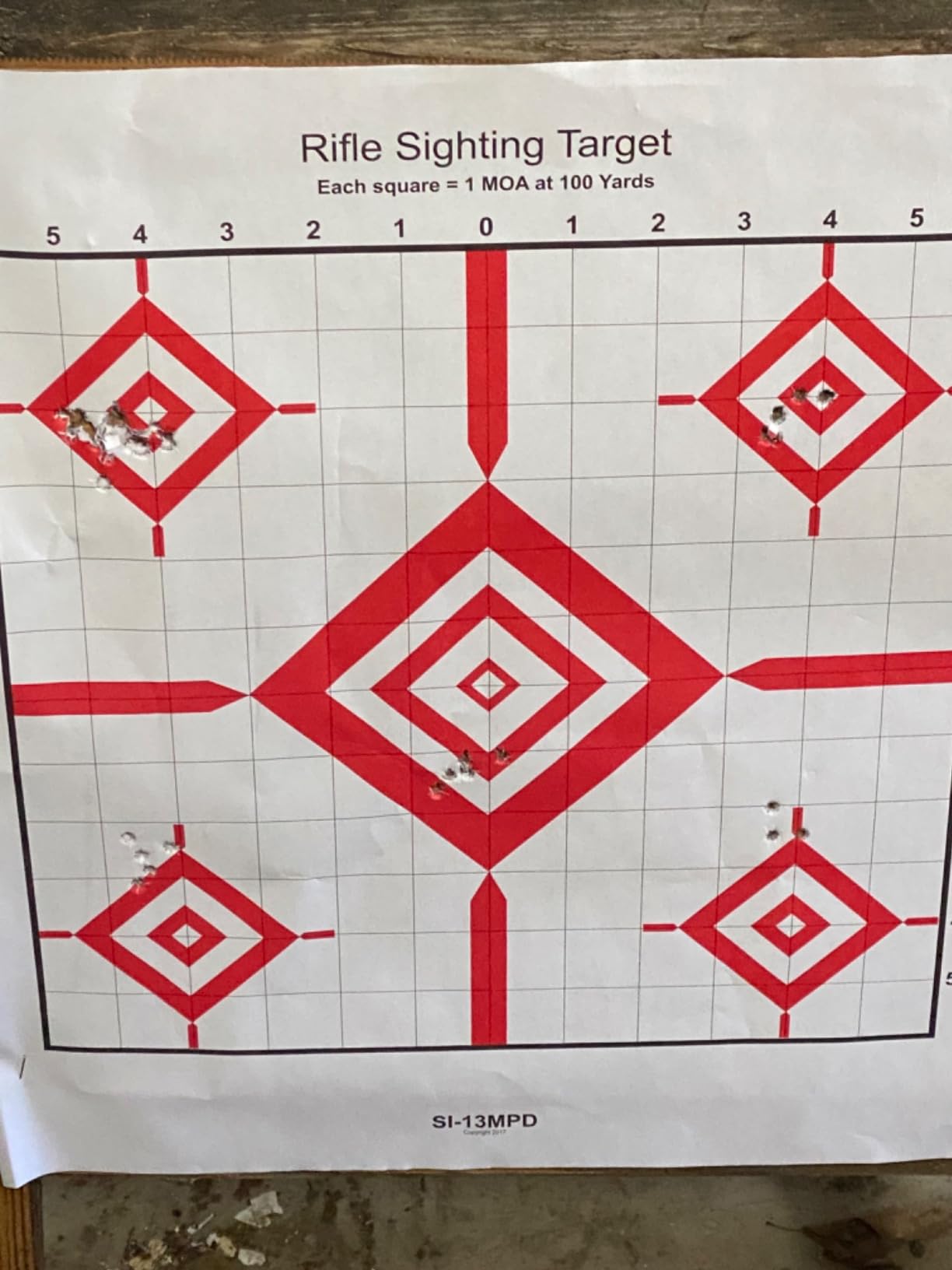
Sighting in a new scope takes about twenty minutes. Mount the rings so the scope sits low enough to clear the bolt handle and action but high enough that you can get a full picture behind the glass, torque the cap screws evenly, and let the rifle sit overnight so the rings and stock settle.
Then start with a rough zero at 50 yards, aiming so the point of impact is about one-third of the way up the target. Move to 100 yards and fine-tune to put your zero exactly on the bullseye. The second dead space, the point on the target where the bullet strikes, will land low if you have too much elevation.
Finally, shoot three to five break-in rounds and re-check the zero before you trust it. Forum users report the zero shifting after the first shots on new scopes more than any other setup issue, and it is normal.
Scope Rings, Mounts and Ring Height
Ring height is where first-time buyers get stuck, and it is a simpler problem than it looks. Too low and you cannot see the bottom of the scope, which is where a moving deer enters the picture. Too high and the scope sits above your sight line, your cheek weld is wrong, and the rifle feels awkward in the field.
Start by checking the maximum overall length of your action and the scope. If the rear ring will not slide to the rear without hitting the bolt or receiver, the rings are too tall. Standard one-inch rings suit a 1-inch tube scope, and low-profile rings suit scopes with a bell or a large objective like the 50mm Buckmasters.
Torque matters as much as height. An unevenly tightened ring pair is the most common cause of a scope that shifts its zero after a few shots. Tighten both cap screws evenly, in small alternating increments, and check the bore axis alignment before you start zeroing. It is worth ten minutes.
If you are choosing glass rather than rings, our [spotting scope guide](https://irlentwincities.com/best-spotting-scopes-for-hunting/) covers the glass side of the same decision for the animal identification part of the hunt.
Mistakes First-Time Scope Buyers Make
Over-magnifying. Buying a 6-24x for whitetail. At 24x a deer at 40 yards fills the scope and you cannot see its legs. Stay at or below the magnification you will actually use, which for most deer is 9x or 12x.
Trusting a second focal plane BDC. Because the reticle does not grow when you zoom, the holdover marks are not magnifiable. Use them as fixed references at 3x, not as a dialing system.
Buying cheap rings. Soft aluminium rings and thin screws are the most common reason a good scope loses its zero. Spend where the metal is load-bearing.
Skipping the zero check. New scopes shift after break-in shots and after a season of hard recoil. Verify the zero before the hunt, not during it.
Ignoring objective lens diameter. If you hunt at dawn, a 40mm scope on a grey morning is not going to be as bright as a 50mm at the same magnification. The larger objective is not marketing, it is exit pupil.
Forgetting where the deer are. A scope chosen for prairie long shots is useless in oak timber, and a 3-9×40 is not the tool for a 450 yard bedded buck. Terrain decides before the spec sheet does.
Most of these mistakes trace back to the same root: buying a general-purpose precision scope for a specific hunt. If you want to build out the rest of your kit, our picks for [hunting blinds](https://irlentwincities.com/best-hunting-blinds-for-deer-hunting/), [deer feeders](https://irlentwincities.com/best-deer-feeders-for-hunting/) and [rifle cases](https://irlentwincities.com/best-rifle-cases-for-hunting/) cover the other three pieces of the same setup.
Frequently Asked Questions
What is the best scope for deer hunting with a rifle?
The best scope for deer hunting balances low-light clarity, rugged construction and a usable magnification range. A 3-9×40 works for most deer hunters, and a 3-9×50 or 4-12×44 covers open country and longer shots. Capped turrets and a second focal plane reticle are the practical choices, and fully multi-coated lenses with nitrogen purging handle dawn and rain.
What scope magnification is best for deer hunting?
For timber and tree stand hunting, 3x to 9x is the right answer because the low end keeps a deer in the picture at close range. For open field shots out to 300 or 400 yards, 4-12x or a 3-9×50 gives you the magnification to identify an animal. Magnification above 12x rarely gets used on deer.
Is Vortex or Leupold better for hunting?
Vortex offers the wider catalogue and an unlimited, unconditional, transferable lifetime warranty that needs no receipt. Leupold builds in the USA and its full lifetime guarantee is also transferable with no time limit, and its glass handles glare especially well. Vortex usually wins on features per dollar, Leupold on optical refinement and long-term support.
Which type of rifle scope is better for hunting, FFP or SFP?
A second focal plane reticle is better for most deer hunting because the reticle stays the same size at every magnification, which makes the aiming point predictable. A first focal plane reticle scales with power and is designed for dialing long range. If you shoot past 300 yards regularly, first focal plane is worth the extra cost.
What is the best FFP rifle scope for hunting?
For hunting, a first focal plane scope is worth choosing when you regularly shoot past 300 yards and want mil-based holdovers without leaving the reticle. A duplex or mild FFP tree in a 4-16×50 gives you ranging data and magnification together. For closer deer work, a second focal plane scope is simpler and more forgiving.
Is 3-9×40 or 4-12x better for deer hunting?
A 3-9×40 is better for timber, tree stands and close cover because 3x keeps a whole deer in the picture. A 4-12x is better for open field and western hunting because 12x lets you identify an animal at 300 yards. Objective lens size decides the low light question, since a larger front lens sends a wider exit pupil to your eye.
What ring height do I need for a deer hunting scope?
Choose the lowest ring height that still lets you see the full scope picture and clear the bolt or charging handle. A scope sitting too high ruins your sight line and cheek weld. Standard rings fit one-inch tubes, low-profile rings suit scopes with a bell or large objective, and every ring should be torqued evenly on both cap screws.
Final Verdict – Which Deer Hunting Scope Should You Buy?
After comparing all twelve, the Vortex Strike Eagle 1-6×24 is our pick as the best rifle scope for deer hunting overall. It carries a 4.8 rating with more than 1200 reviews behind it, tied for the top score in the group, and it does the thing that matters most: it makes a 1x to 6x range available instantly, with a throw lever and a cantilever mount in the box, so nothing stands between you and a finished rifle.
If your budget is the deciding factor, the Vortex Crossfire II 1-4×24 is the one to take. Four inches of eye relief and the deepest pool of long-term owner feedback in the group make it the best-proven optic here, and the illuminated center dot handles the last minutes of light. If you hunt open country, the Vortex Copperhead 4-12×44 covers the range deer actually present at. For dawn glass, the SIG SAUER Buckmasters 3-9×50 is the brightest image in the roundup.
Whatever you choose, pick the magnification for your terrain, zero it properly before the season, and re-check the zero after the first few rounds. That last habit matters more than any feature on this list.